

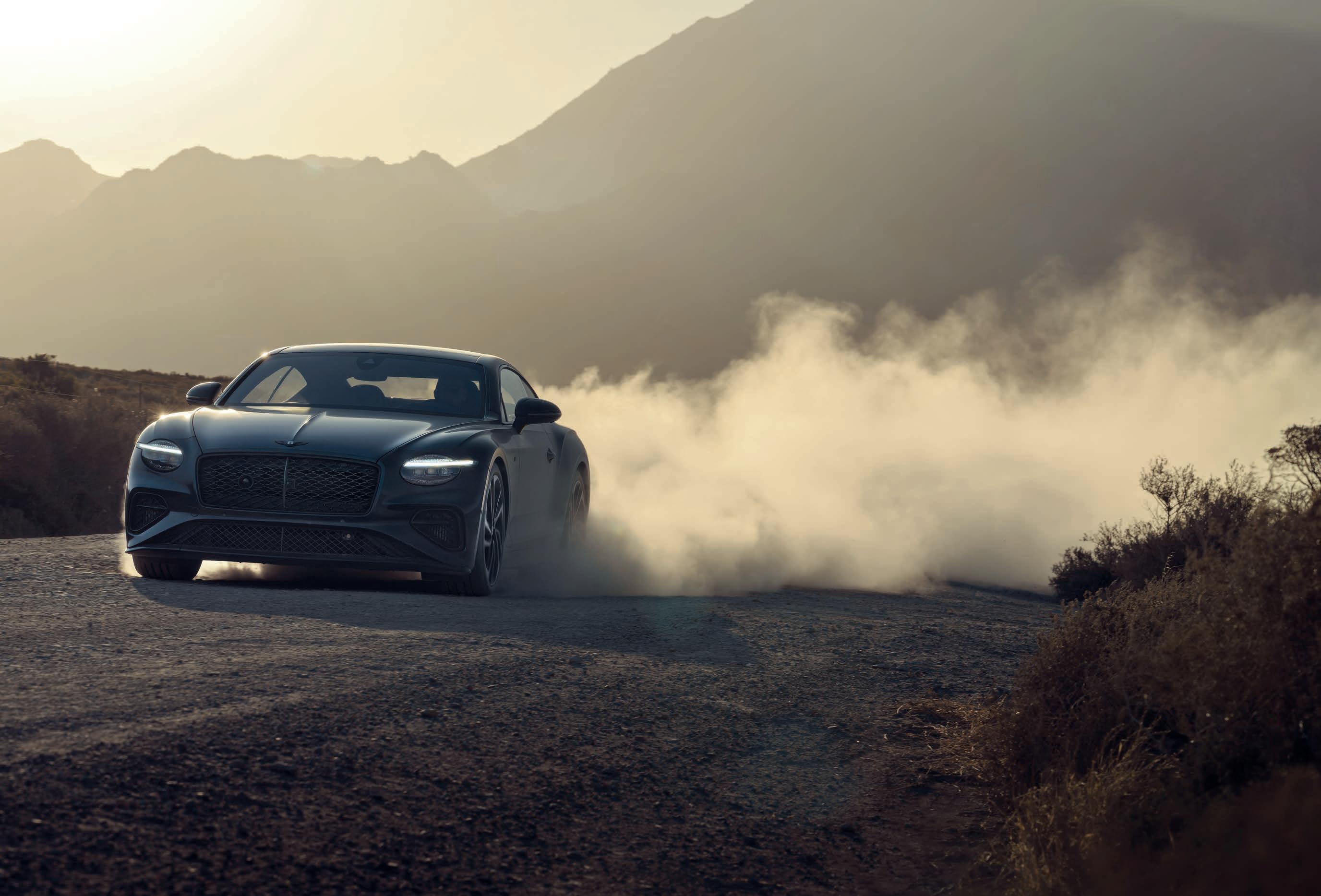
The new Continental GT S. CO₂ Emissions and fuel consumption data for EU27 are pending, subject to EU Type Approval. The name ‘Bentley’ and the ‘B’ in wings device are registered trademarks. © 2026 Bentley Motors Limited.






The new Continental GT S. CO₂ Emissions and fuel consumption data for EU27 are pending, subject to EU Type Approval. The name ‘Bentley’ and the ‘B’ in wings device are registered trademarks. © 2026 Bentley Motors Limited.
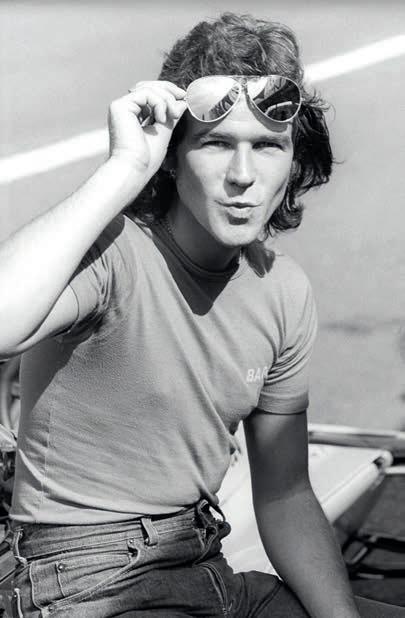
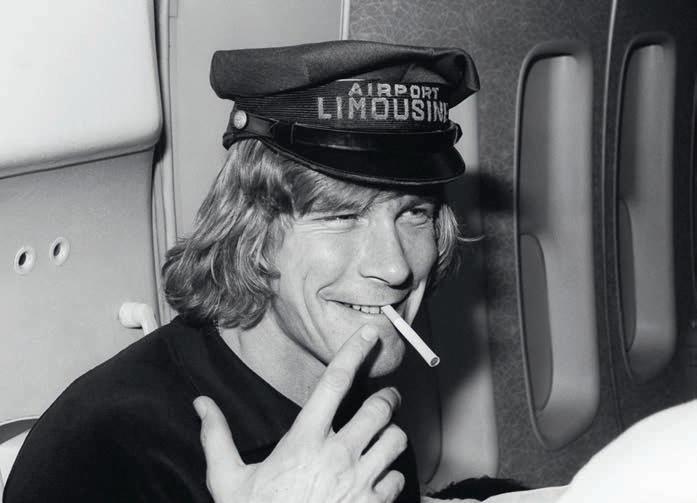
WELCOME TO GOODWOOD MAGAZINE’S FIRST ISSUE OF THE YEAR. Although the Estate is a hive of activity year-round, it is in April that things step up a gear as the event season begins. The 83rd Members’ Meeting is set to be a particularly memorable one. Jenson Button, who talks in this issue about family life in California, his F1 glory years and his special bond with Goodwood, will reunite on the track with his Brawn BGP001. We will also celebrate two other motorsport heroes, with 2026 marking the 50th anniversary of James Hunt’s triumph in the F1 World Drivers’ Championship and Barry Sheene’s in the 500cc World Championship. Read about their exploits on and off the track, and the extraordinary summer of ’76, on p54.
Horses and dogs are a huge part of life here at Goodwood, and we have fascinating stories in this issue about both. The 18th-century equine artist George Stubbs is especially close to our hearts, as we have some of his finest works in our Collection. With a new Stubbs show opening at the National Gallery, art critic Rachel Campbell-Johnston analyses what made him such a singular observer and interpreter of equine beauty (p64). And, with Goodwoof on the horizon, we also delve into the work of another animalloving artist: the legendary Magnum photographer Elliott Erwitt. Alongside his work in war zones and the corridors of power, Erwitt always made time to capture the big characters and amusing moments of the canine world, which have endured as some of his most memorable images.
For readers who are eagerly awaiting our “La Dolce Vita” theme at this year’s Revival (and perhaps pondering their outfits), look no further than the work of newly rediscovered Italian photographer Paolo Di Paolo. We talk to Silvia, the daughter of this pioneering chronicler of Italy’s post-war years, about his long-forgotten work and how she helped bring it back to life (p70).
Elsewhere in the issue, read about the ancient art of scything, why bats are a sign of the healthy biodiversity of our countryside, and the inspiration behind chef Harry Cartwright’s menus at 24 at Goodwood Art Foundation. Spring is finally here, and we look forward to welcoming you (and all our four-legged friends, such as cover star Dolly) to Goodwood very soon.


Sachin Rao
Sachin is a travel, food and motoring writer who has been published in magazines and newspapers in the UK, UAE and India. He has edited titles for motoring brands such as Jaguar Land Rover, and has created editorial campaigns for the Guardian and the New York Times. For us, he spoke to Harry Cartwright, chef at 24 at Goodwood Art Foundation.

Richard Mellor
Freelance journalist Richard Mellor has contributed to titles including the Times and Condé Nast Traveller. A nature lover whose favourite assignments have included getting close to chimpanzees in Uganda, in this issue he turns his attention to a creature closer to home, investigating the fortunes of the British bat, many species of which reside at Goodwood.

Oliver Bennett
Oliver Bennett is a journalist whose specialities include design, art and architecture, and whose writing has been published in newspapers including the Daily Mail, the Independent and the Telegraph A longtime dog-lover, he was delighted to dive into the history of the strange world of canine space travel ahead of this spring’s Goodwoof event.

Jess Bonham
London-based still life photographer Jess has shot for fashion brands including Hermès, Bottega Veneta and Stella McCartney, and for titles including AnOther Magazine, Vanity Fair and British Vogue For this issue of Goodwood, she brought her eye for beauty to the rescue dogs of Battersea Dogs & Cats Home, to capture our loveable cover star, Dolly.

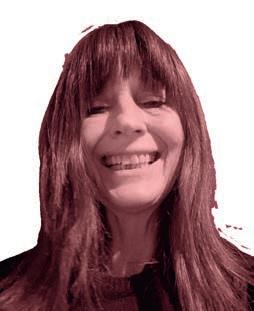
Rachel CampbellJohnston Freelance art writer Rachel Campbell-Johnston was chief art critic for the Times for 20 years and now lives on a small farm on Exmoor. In this issue, ahead of a new show at the National Gallery, she considers the extraordinary lengths the artist George Stubbs went to in his efforts to accurately portray the anatomy of horses.
Editor
Sophy Grimshaw
Design director
Vanessa Arnaud
Editorial directors
James Collard
Gill Morgan
Creative director
Sara Redhead
Sub-editor
Damon Syson
Picture editor
Lyndsey Price
Project director
Sarah Glyde
Goodwood content director
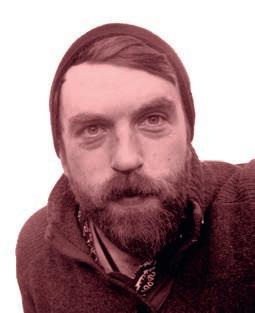
Nick Hayes
A celebrated illustrator, writer and environmental campaigner, Nick is the author of graphic novels and the non-fiction nature writing of The Book of Trespass. In 2020, he was a cofounder of the Right to Roam campaign for public access to rural land. In this issue, he uses his unique graphic style to pay tribute to British bats, which are finding refuge at Goodwood.
Will Kinsman
Goodwood managing editor
Jennie Gott
Goodwood picture editor
Max Carter
For all advertising and editorial queries, please contact Goodwood via magazine@goodwood.com
Goodwood Magazine is published on behalf of The Goodwood Estate Company Ltd, Chichester, West Sussex PO18 0PX, by Uncommonly Ltd, 30-32 Tabard Street, London SE1 4JU. For enquiries regarding Uncommonly, contact Sarah Glyde: sarah@uncommonly.co.uk © Copyright 2026 Uncommonly Ltd.
permission from the publisher. While

The Ultimate Driving Machine
“There’s a rawness to historic racing… it’s just you and a piece of machinery that you 100 per cent understand”
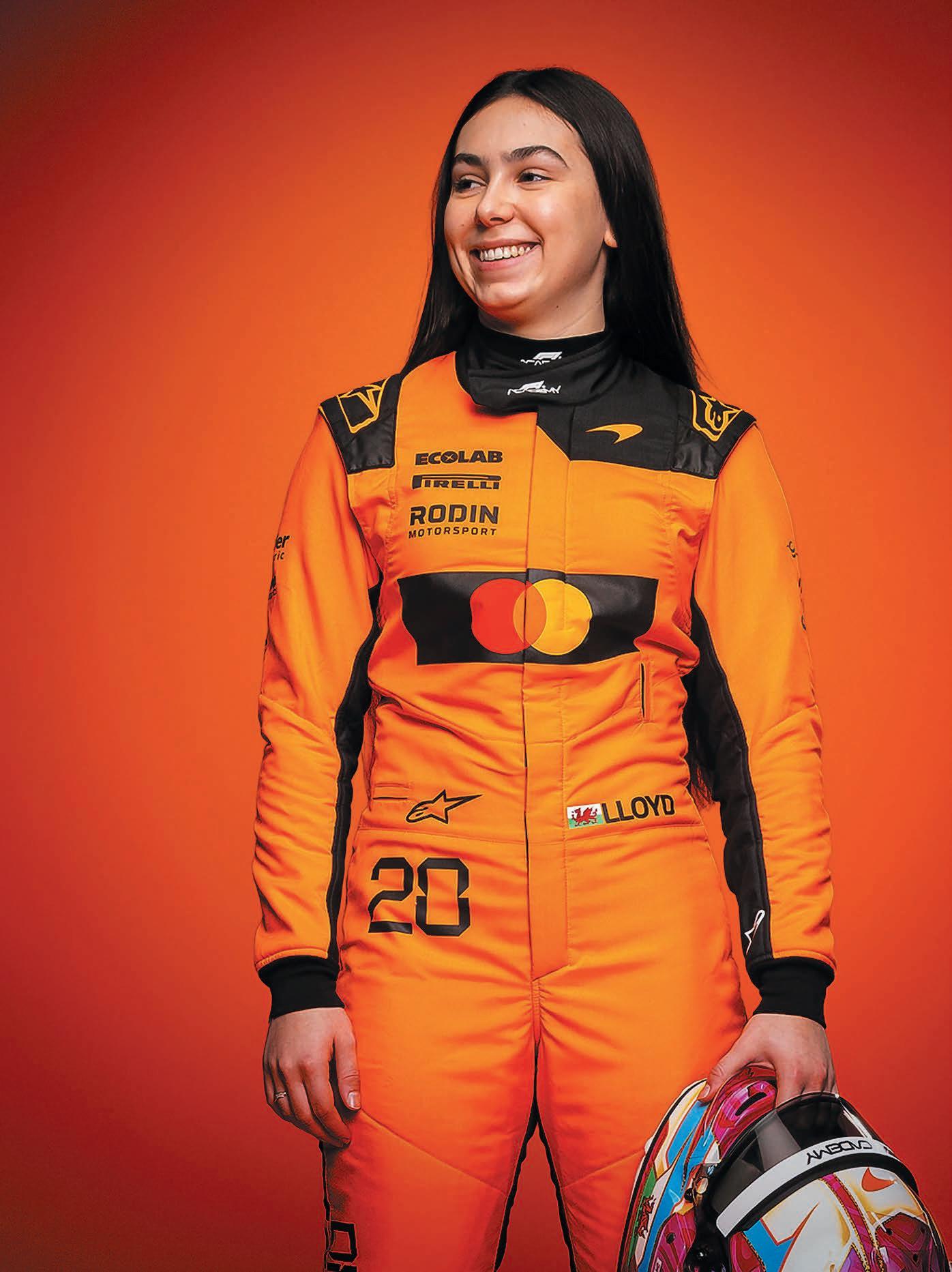
Mastercard is proud to champion women in motorsport, celebrating the heroes of today and inspiring the trailblazers of tomorrow.
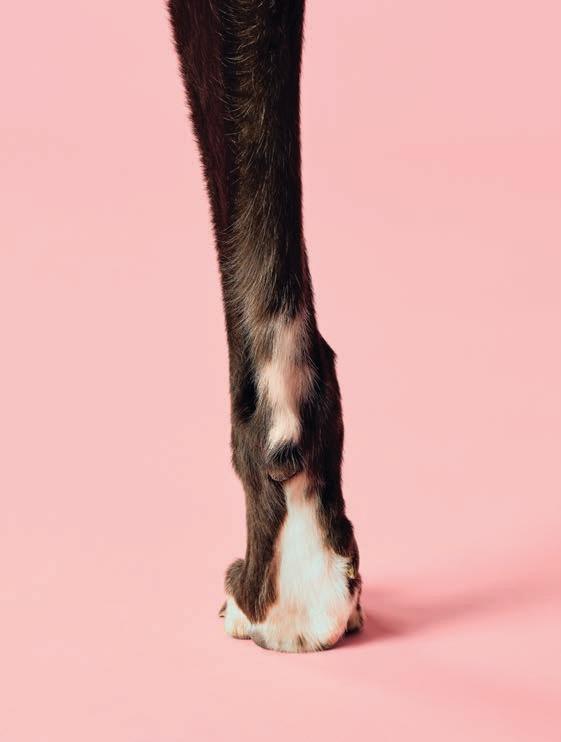
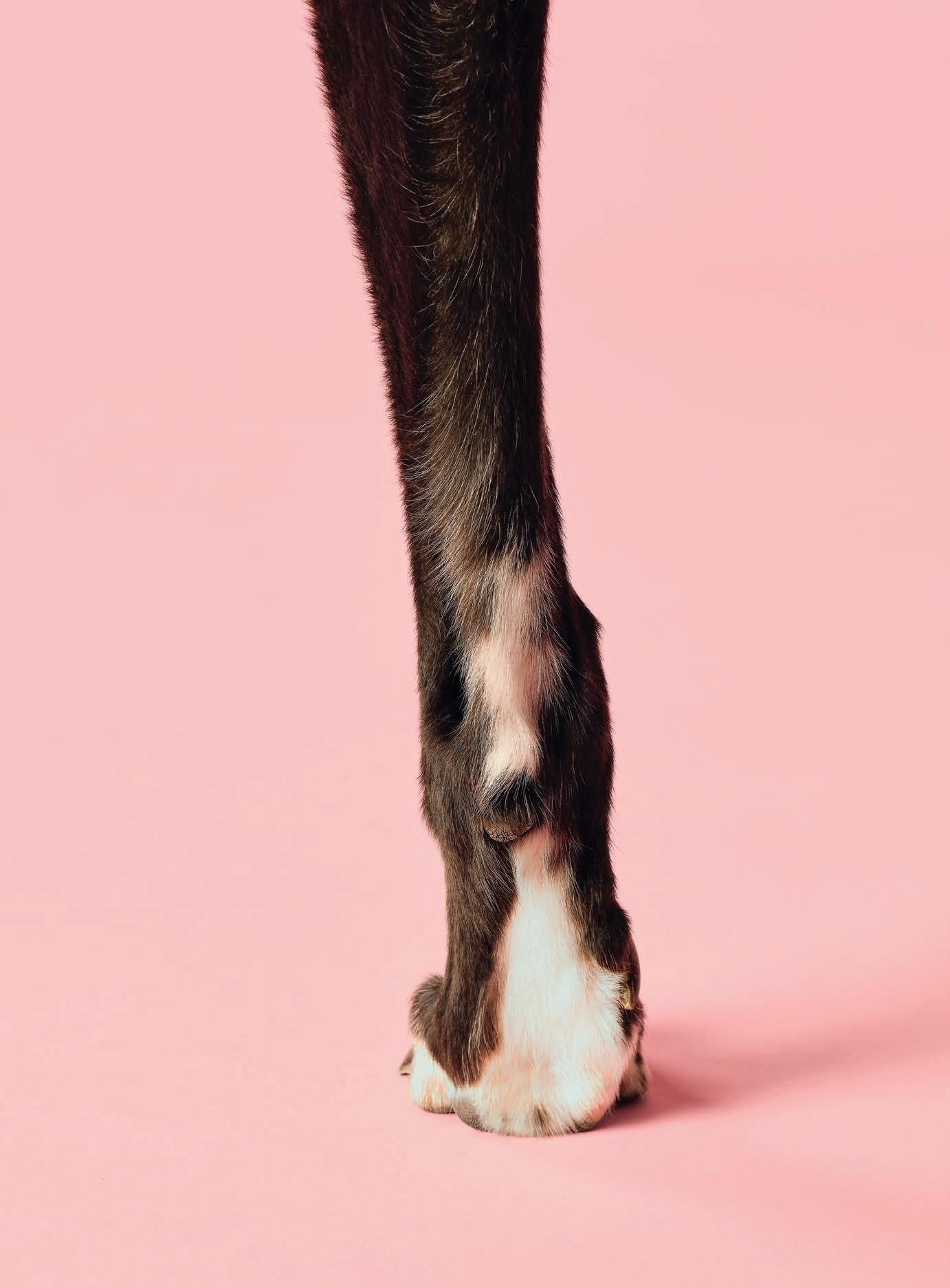
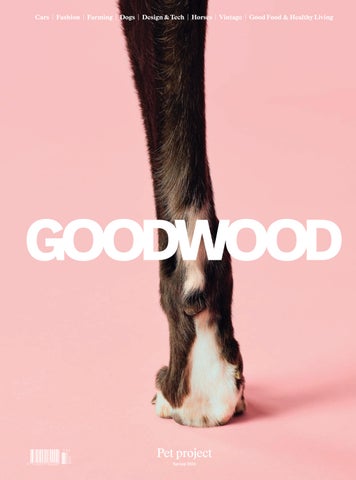
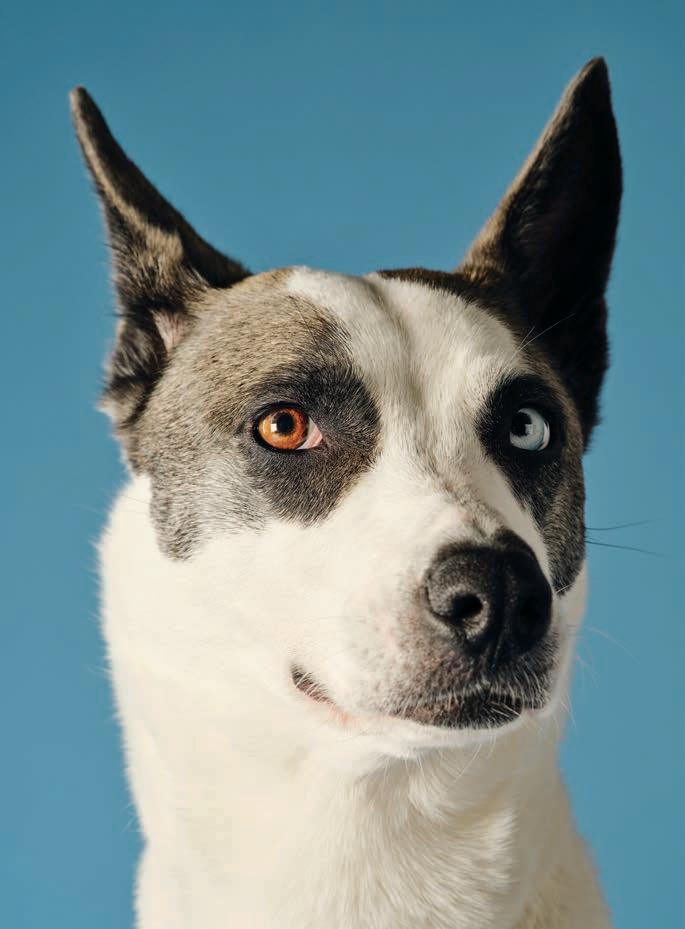
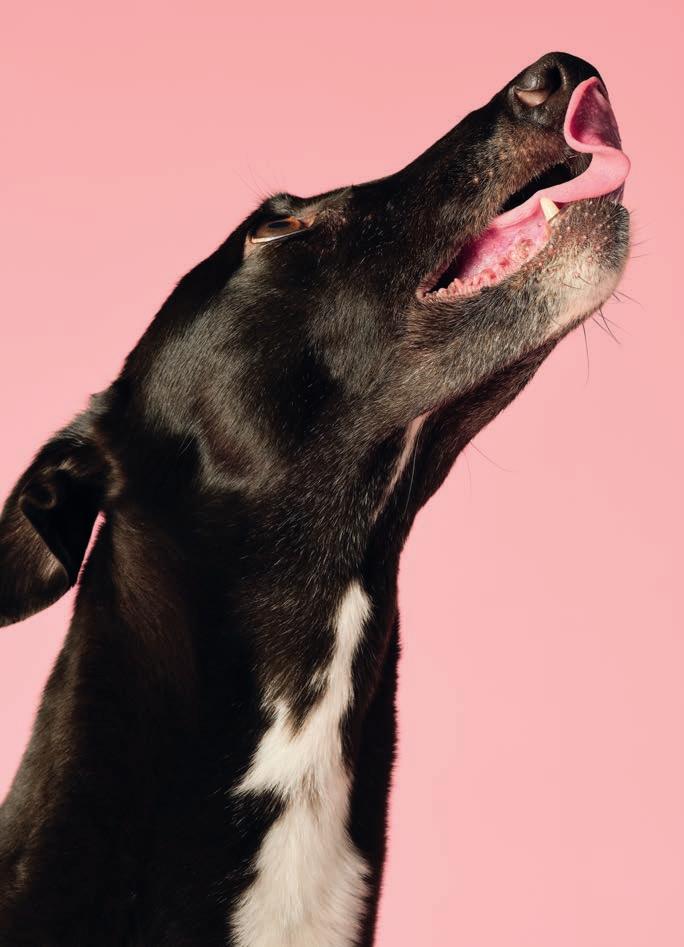
THE DOG WHOSE PAW GRACES OUR COVER is called Dolly Parton. She was photographed for Goodwood on location at Battersea Dogs & Cats Home, but has since moved to her forever home. Founded in 1860 as the Temporary Home for Lost and Starving Dogs, the charity has cared for more than 3.1 million animals at its three centres, and helped millions more around the world. That’s why Goodwoof is so proud to support Battersea Dogs & Cats Home as its official charity partner this year.
Hosted on the Goodwood Estate, 16-17 May 2026, Goodwoof is a two-day celebration of all things canine. In place of our usual featured breed, Goodwoof 2026 will celebrate the joy that rescue dogs bring. Returning favourites include our internationally renowned Barkitecture kennel design competition, which this year, in response to the “Dogs in Space” theme, features an entry from The LEGO Group called the “U-Woof-O”. Goodwoof guests can also attend prebookable mini-build LEGO workshops running across the weekend. There will be a chance to hear from top authors and celebrities at our Literary Corner, and toymaker Jellycat will be visiting – with two new soft pups to introduce to us. For dogs, our guests of honour, exciting have-a-go activities include flyball and hurdles. We think Dolly is going to love it. Discover Goodwoof activities and book tickets at goodwood.com; learn more or donate to Battersea Dogs & Cats Home at battersea.org.uk



Noted: people, objects, news and ideas, from the E-type Jaguar’s starring roles to Marilyn Monroe’s hidden talents and the return of the scythe to British gardens
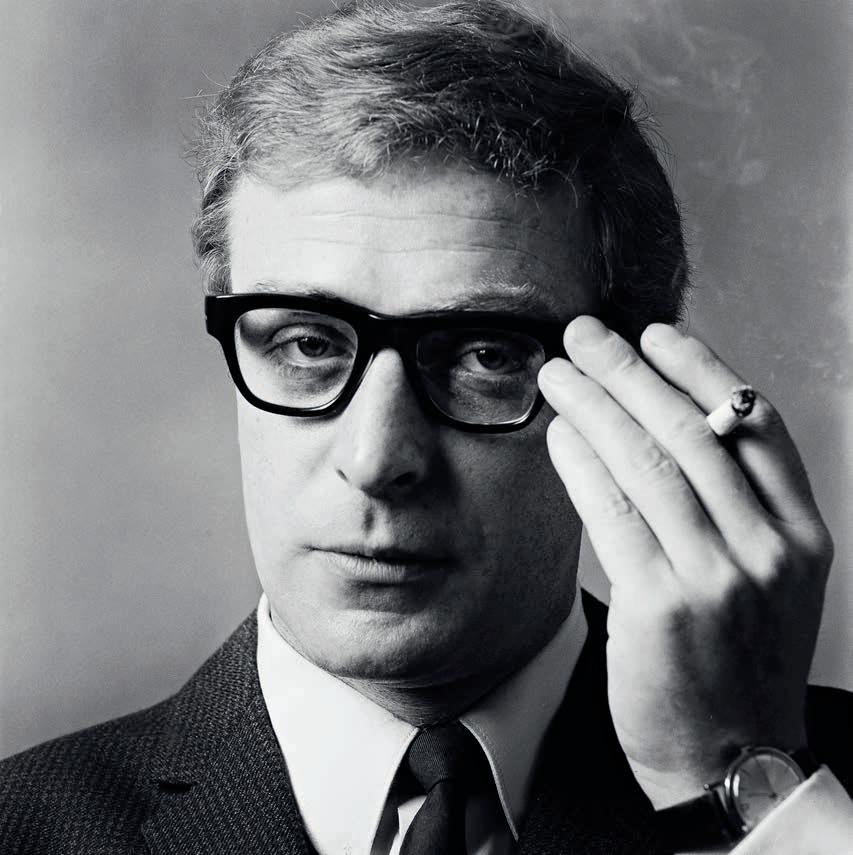
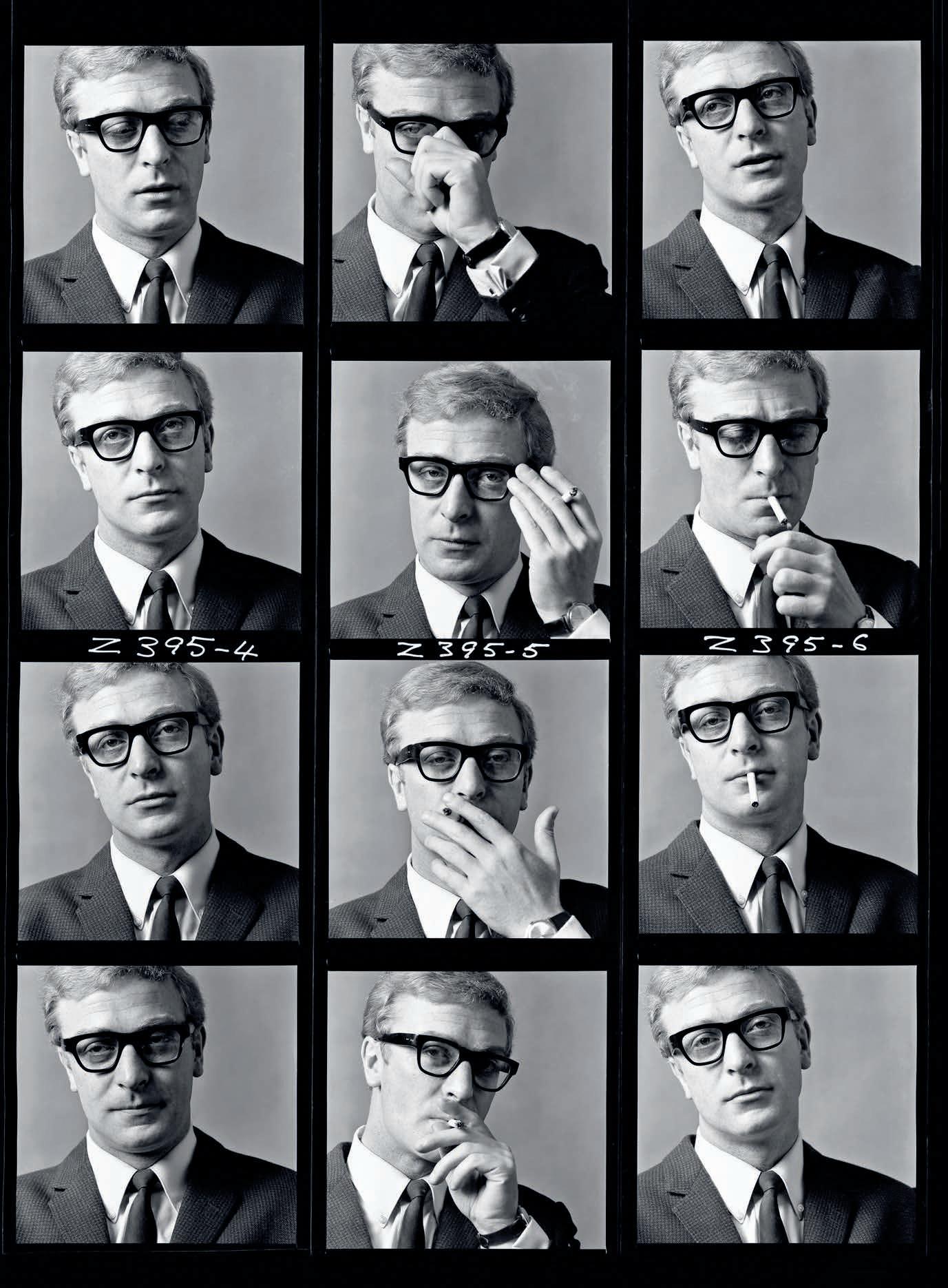
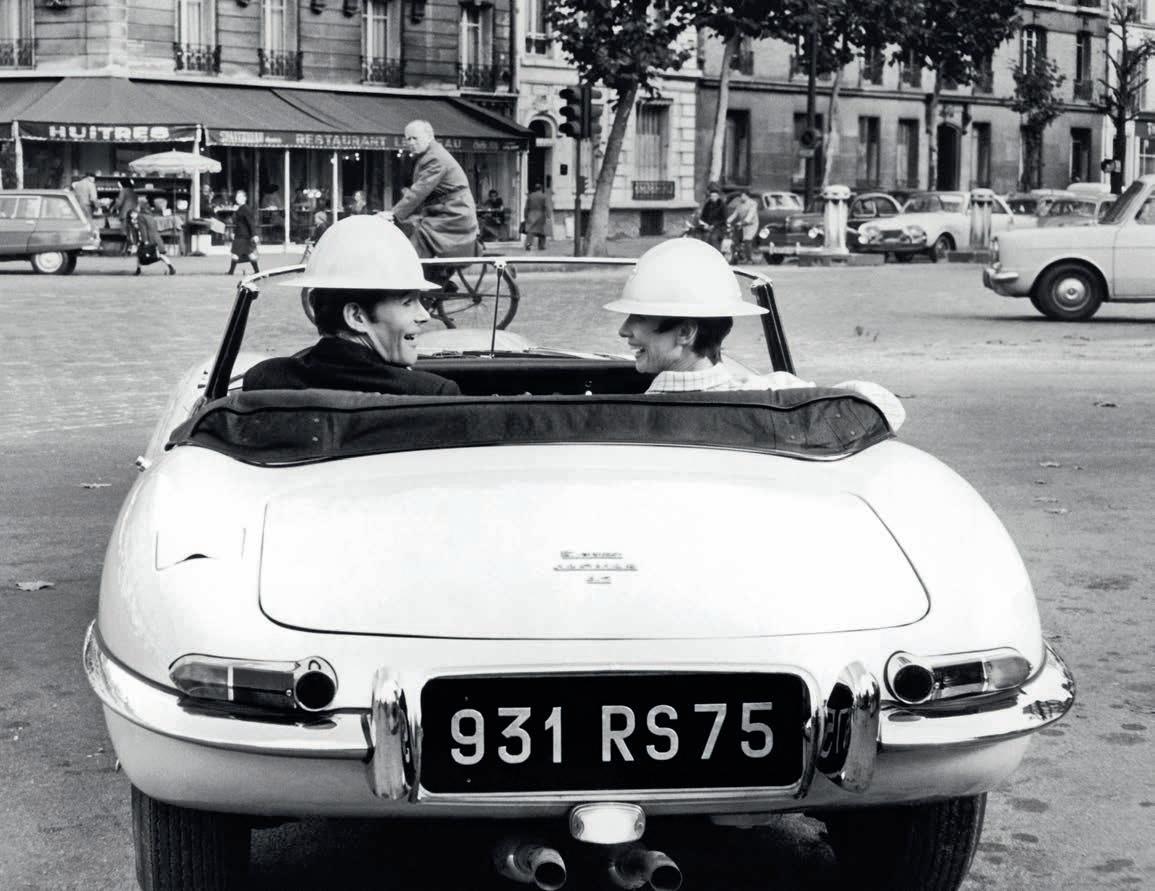
This page and opposite: Caine’s thick-rimmed specs and sharp suit would become his signature look after The Ipcress File in 1965
WORDS BY MATTHEW DAVIES
Taken five years before his unforgettable turn in The Italian Job, these photos capture the actor’s insouciant charisma
Michael Caine will forever be associated with The Italian Job and its marvellously manoeuvrable Mini Coopers, but the 31-year-old actor had only just started blowing the bloody doors off British cinema when Brian Duffy took these photographs in 1964. The shoot came after Caine’s movie breakthrough as a heroic officer facing impossible odds in Zulu, but the thick-rimmed specs, sharp suit and air of knowing insouciance offered a preview of the role that would make him an international star and icon of Swinging Sixties style – the working-class “anti-Bond” Harry Palmer in The Ipcress File, released in 1965.
Typically known by just his surname, Duffy was a key figure in the photographic revolution of the 1960s, alongside David Bailey and Terence Donovan, but he is perhaps best known as the man behind the cover image for David Bowie’s Aladdin Sane album – lightning bolt and all. Caine, meanwhile, has been
a constant presence on the silver screen, from the zeitgeisty comic drama Alfie in 1966 to Christopher Nolan’s Tenet in 2020, via films as varied as Educating Rita, The Cider House Rules, Batman Begins and A Muppet Christmas Carol. For the super-spy pastiche Kingsman in 2014, he revisited those chunky glasses, as did co-stars Taron Egerton and Colin Firth – an affectionate, and immaculate, tribute to the master.
Though he played charismatic cockney criminal Charlie Croker in one of the most car-centric movies of all time (the Minis were joined by a stellar automotive roster that included a Lamborghini Miura, a pair of Jaguar E-types and an Aston Martin DB4) Caine didn’t pass his driving test until he was 50. The examiner took an unconventional approach to the rules of the road, as the actor recalled in 2011: “I got in the car and the guy looked at me and went, ‘I loved you in The Man Who Would Be King. You’re going to have to be s*** to not pass this test.’”
WORDS BY DAMON SYSON
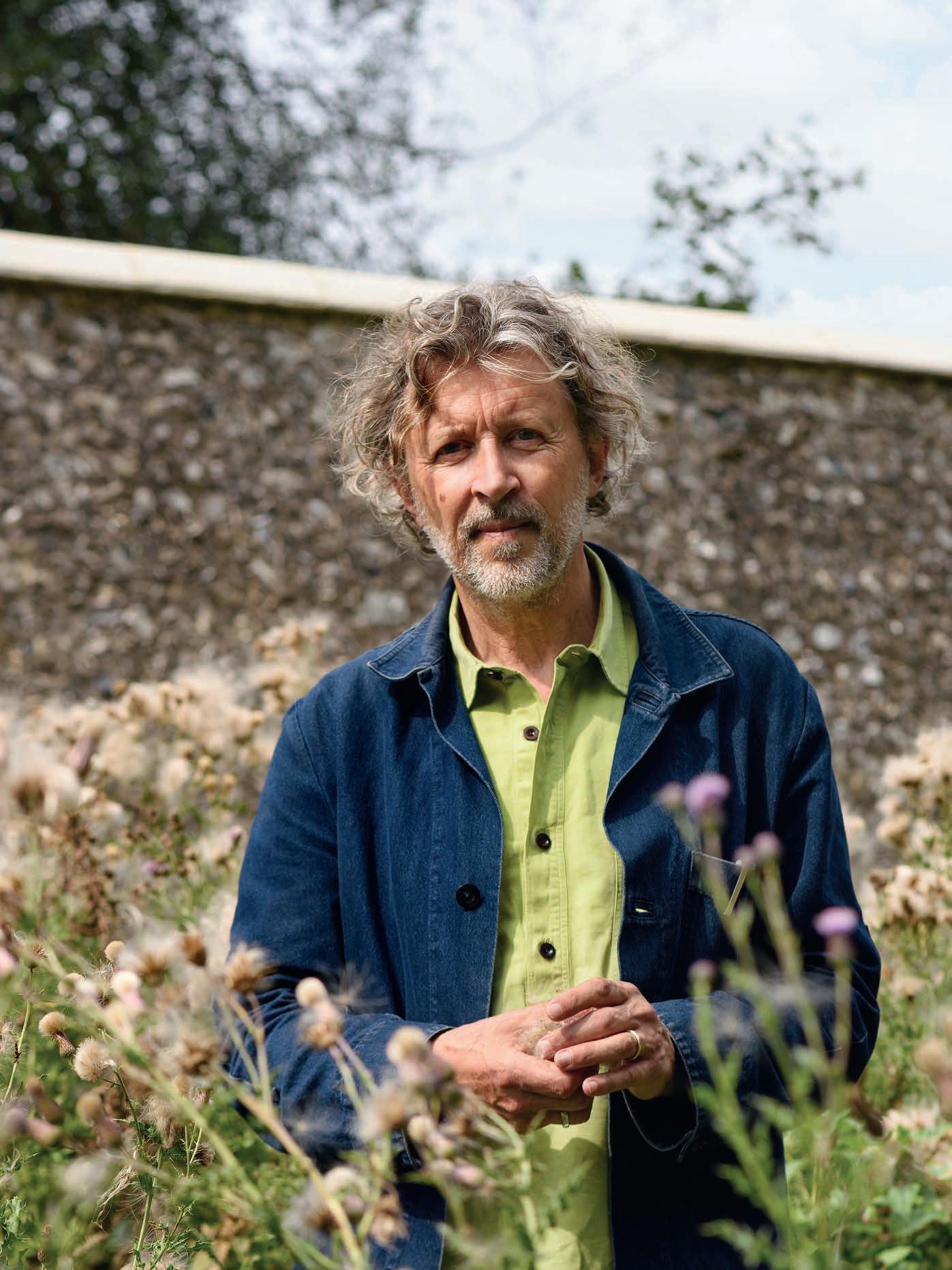
When creating a new concept for the grounds of Goodwood Art Foundation, landscape designer Dan Pearson abandoned the traditional horticultural framework in favour of 24 “seasonal moments”
All gardeners would agree that any outdoor space – from the grandest of parks to a modest back yard – should have something of interest to look at each season. The question is, how do you define “season”? Dan Pearson, the award-winning horticulturist and landscape designer, believes that instead of thinking about spring, summer, autumn and winter, a new approach is required.
“I’ve always been interested in the Japanese idea of there being 72 microseasons, marked by a little shift or change that happens, on average, every five days,” he says. “When we were approached by Goodwood Art Foundation, we thought, ‘How can we make that work here, but in a slightly simpler manner?’ So we chose for there to be 24 ‘seasonal moments’, with some lasting longer than others. Think of the way bluebells light up the floor of a wood for three weeks. Then they dim, but for those three weeks they set the mood of the space.”
Conceived in 2020, Goodwood Art Foundation – which opened its doors last summer with an art programme featuring Rachel Whiteread, Rose Wylie and Veronica Ryan – aims to provide a unique setting in which to appreciate an inspiring fusion of art and nature, in addition to offering an ambitious art education programme. New for spring 2026 is one of Japanese artist Yayoi Kusama’s signature oversized pumpkin sculptures and the first UK presentation of American land artist Nancy Holt.
The not-for-profit contemporary art centre’s 70-acre grounds, renamed the Schwarzman Gardens in recognition of the generosity of the Stephen A Schwarzman Foundation, feature a range of contrasting environments that artists are invited to respond to. The curators carefully select positions for the artworks within the ancient woodland, leafy glades, wildflower meadows or even a small, disused chalk quarry.
Despite the fact that he was awarded an OBE in 2022 and is one of the UK’s most celebrated landscape designers, Pearson’s work for the Foundation was never intended to compete with the main event. “We were very aware that what we designed had to be subservient to the artworks,” he says. “The landscape isn’t supposed to be the primary talking point – it’s enabling an opportunity for someone else.”
Book your visit at goodwoodartfoundation.org; to discover the foundation’s unique on-site restaurant, see page 92
WORDS BY OLIVER BENNETT
With this year’s Barkitecture challenge themed around “Dogs in Space”, we look back at the brave canine cosmonauts of the 1950s and ’60s
The summer of 2026 marks 75 years since a dog first went into space. In July 1951, the pioneering Soviet strays Tsygan and Dezik flew to an altitude of about 68 miles in a sub-orbital rocket. Their capsule descended and from two miles up, was parachuted down with both dogs safe and sound inside.
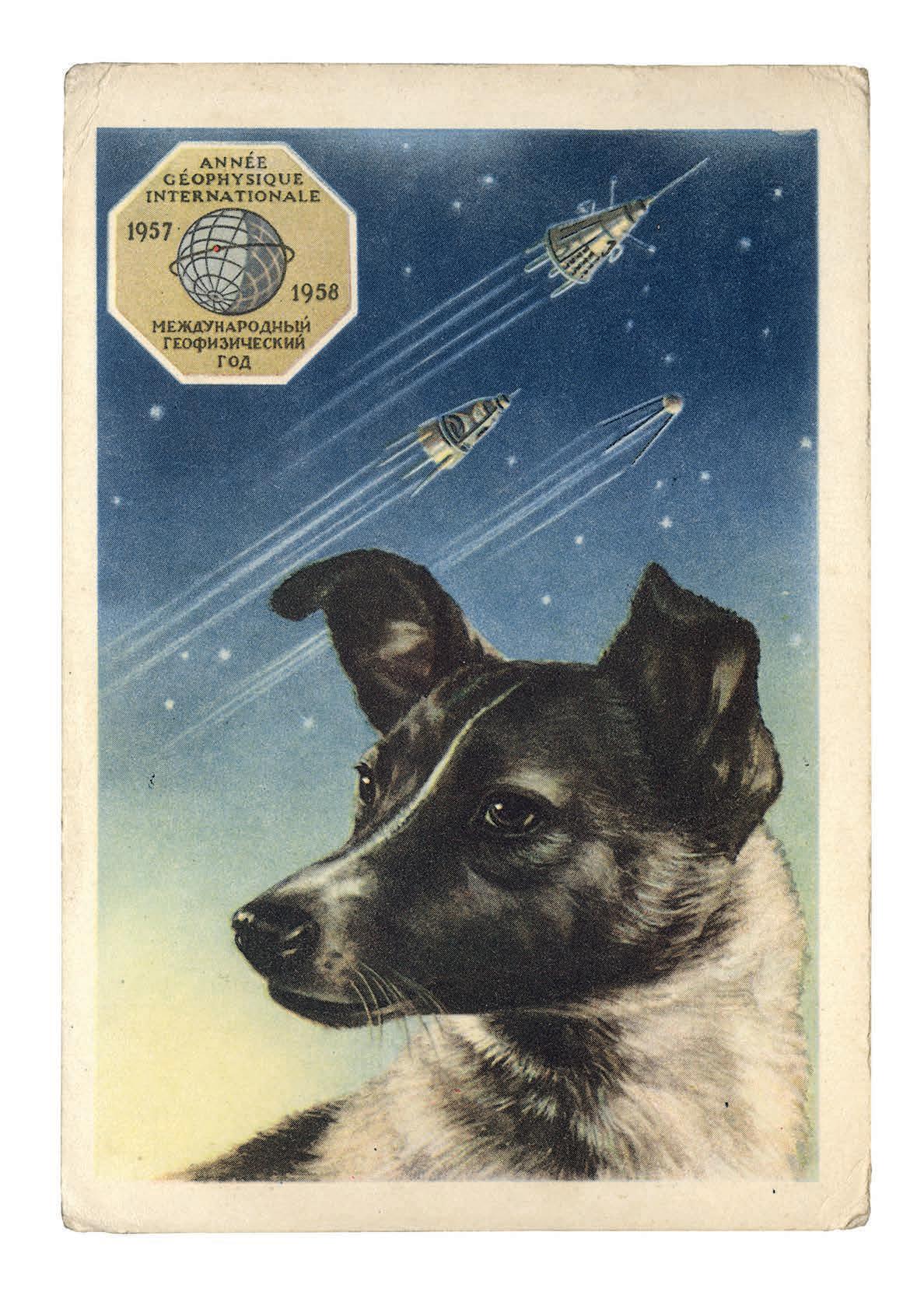
Such furry fairytales will be commemorated at this year’s Goodwoof, with the event’s eagerly awaited annual “Barkitecture” kennel design challenge inviting world-renowned architects, designers and artists to respond to the brief “Dogs in Space”. Sadly, for almost every lucky doggy cosmonaut, there was a casualty: of 36 sub-orbital dogs, 15 died in transit. One of these was a female terrier cross called Laika, who in 1957 became the first canine to make an orbital space flight on Sputnik 2 and thus the most famous space dog in history. Chosen according to strict criteria – no more than 14 inches long, light-coloured, short-haired and female to avoid cocked legs – her real name, Curly, was changed to nom-de-guerre Laika, meaning “Barker”, after a series of noisy media performances.
A Cold War cult was born. The US press called her “Muttnik” and the world’s “most miserable dog”. (They could hardly talk: the US sent monkeys instead). But there was something deeply sympathetic about Laika and her canine comrades, inspiring much merchandise. The late photographer Martin Parr declared himself “hooked” on space-dog ephemera, likening the interest in his book Space Dogs to “The Beatles or Mickey Mouse… icons that
generated huge quantities of memorabilia”. Another book, Soviet Space Dogs, is an exhaustive catalogue of astro-dog graphics, from cigarette packs to stamps and postcards.
After Laika, the next celebrities were Belka and Strelka, the first orbital dogs to return safely in 1960, ushering a moment of US-USSR détente. One of Strelka’s six puppies, Pushinka, was given to US President John F Kennedy in 1961 after being cleared for hidden mics by the CIA. By 1966, 48 Soviet and two Chinese dogs had served. But times changed, and the ethics of sending dogs into orbit were (understandably) questioned. The last canine space flight came in 1966, when Veterok and Ugolyok boarded Cosmos 110 for a marathon 22-day space ride. By then the Soviets were already mindful about bad PR: indeed, top CCCP space scientist Oleg Gazenko later claimed regret, saying, “The more time passes, the more I’m sorry about it.”
The era of sending dogs into space was short, but it has captured the human imagination for decades. There’s something so moving about our most loyal friend, who has helped guard us for millennia, pioneering forays into the unknown and acting as the unwitting agent of our technological future. China, it seems, is now training AI-powered robot “dogs” to scout potential moon bases. Less memorable perhaps, but surely more humane. Goodwoof, our annual celebration of dogs, takes place on 16 and 17 May 2026; goodwood.com
Opposite: postcard, USSR (1958). A portrait of Laika by the artist E Gundobin, with the first three Sputniks in the background
WORDS BY PETER HALL
Set for a starring role at the 83rd Members’ Meeting, the Jaguar E-type is a go-to symbol of the Swinging Sixties for filmmakers
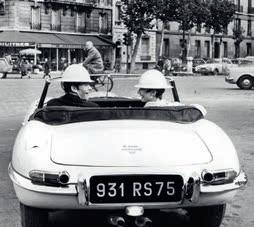
Upon its launch, Enzo Ferrari reportedly declared that Jaguar’s E-type was the most beautiful car ever made. Perhaps some Ferrari owners would disagree, but the car had many fans. Some 72,515 E-types were sold between 1961 and 1975 – unsurprisingly, given its sleek, aerodynamic looks, cutting-edge technology, outstanding performance and, by some measures, affordable price point.
The car’s signature bonnet was longer and leaner than the voluptuous D-type racer which preceded it, and a former aircraft engineer, Jaguar’s Malcolm Sayer, was the creative force behind the car’s sleek curves (Ferrari was simply a fan). Those curves were indeed inspired by the design language of aviation, with the use of a bullet-like shape for low drag.
Having captured the popular imagination, the E-type would become an enduring symbol of the Swinging Sixties, appearing frequently on movie screens as a leading character’s vehicle of
choice. “E-types appear most prominently in nostalgic films – the makers chose the car they thought the character should have been driving in the 1960s – so Austin Powers had one, even though Bond drove an Aston, and Uma Thurman drove one in The Avengers, when Diana Rigg’s Mrs Peel had a Lotus Elan,” says motoring journalist Liz Turner. “Then there was Twiggy, a 1960s icon, driving one (admittedly a 1970s Series III) in The Blues Brothers.”
We can no longer ask Grace Kelly or Tina Turner why they drove one in their personal lives (nor Steve McQueen, Peter Sellers or Frank Sinatra for that matter), but the E-type is surely even more desirable today. Dwarfed by the motors of our time, it is a luxury vehicle – but with an air of tasteful understatement.
The 83rd Members’ Meeting, on 18-19 April 2026, celebrates the model’s 65th anniversary with a new race, the Protheroe Cup, exclusively for pre-1963 Jaguar E-types
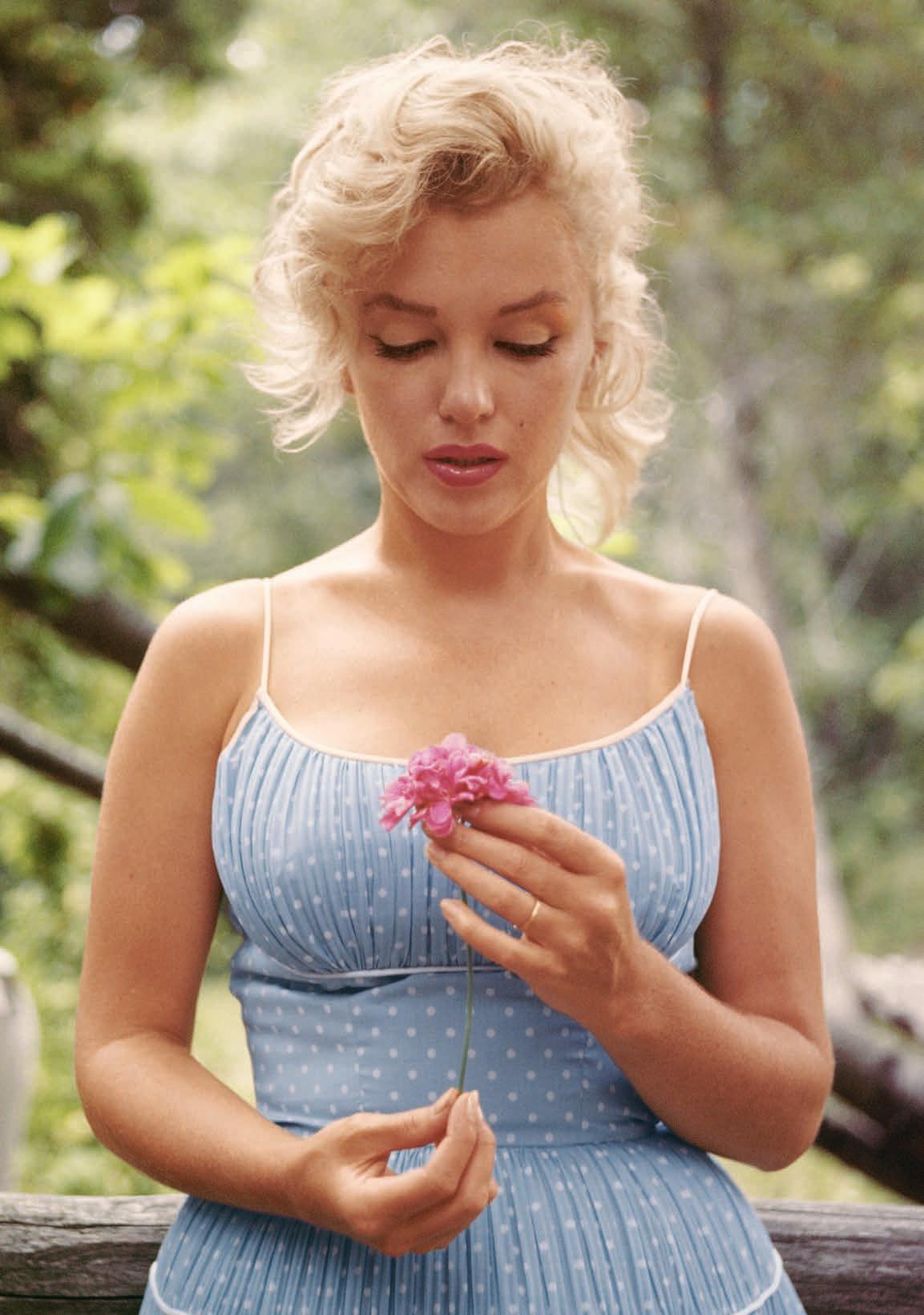
A new exhibition at the National Portrait Gallery highlights the active role Marilyn Monroe played in shaping her own iconic image
She was one of the most photographed women in the world, and more than 60 years after her death, the image of Marilyn Monroe remains instantly recognisable. Luminously charismatic onscreen in seminal movies such as Gentlemen Prefer Blondes, Some Like It Hot and The Seven Year Itch, in still images she appears by turns commanding and vulnerable. Monroe is one of the few real-life movie stars one might even recognise just from a silhouette; she’s a 20th-century icon, like Mickey Mouse, or a Coca-Cola bottle. But any nuanced sense of her personality – by many accounts the actress was witty, reflective, intelligent and creative – is often lost.
This spring, a new exhibition at the National Portrait Gallery will bring together images of Monroe by some of the 20th century’s most significant photographers and artists, from Richard Avedon to Pauline Boty. The exhibition will foreground Monroe’s collaborative approach to imagemaking and the creative skills that undoubtedly contributed to her success, yet are typically overlooked in the telling of her story. “This exhibition seeks to reposition Monroe as a creative force – as an active participant in the making and shaping of her image,” says Rosie Broadley, its curator. “We have chosen to focus on photographers with whom she worked in a particularly collaborative way, from André de Dienes at the beginning of her career to Eve Arnold, Milton H Greene, Sam Shaw, Philippe Halsman and George Barris towards the end of her life. These photographers have often talked of her superlative knowledge of photography techniques, of lighting and the art of gesture and expression. She was able to shape and edit work in a way that gave her control, which was in contrast to her experience of working with directors in film.” Constrained by the limitations of the Hollywood studio system and the structural sexism of the era, Monroe notably broke away from 20th Century Fox in 1955, making a pioneering move to form her own production company.
Broadley is understandably hesitant to choose a “favourite” image, but says, “We have fallen in love with Sam Shaw’s archive of Marilyn photographs, black and white and colour, taken in the early years of her marriage to Arthur Miller. They are so fresh and optimistic – and speak to their friendship and mutual trust.”
Ultimately, Broadley says, “I would like visitors to see, through the photographs she made, how much of a creative force Monroe really was, and how active she was in making herself into the great star she became.” “Marilyn Monroe: A Portrait” is at the National Portrait Gallery, London from 4 June to 6 September 2026; npg.org.uk
WORDS BY JOHANNA DERRY HALL
From tea to tonics, foraging fresh ingredients for drinks is having a moment
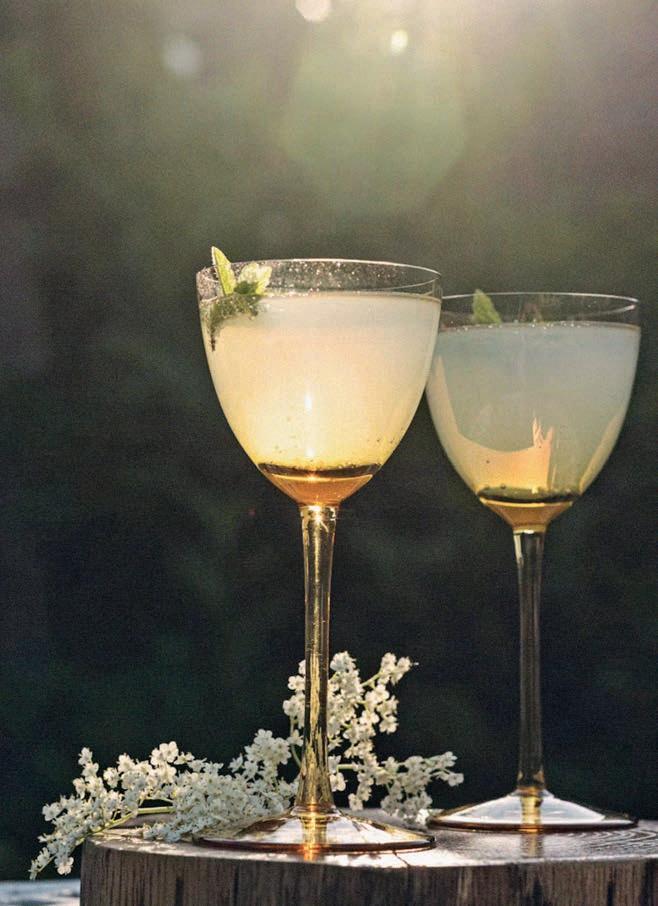
Bright green new leaves, chubby buds about to pop, and the bobbing white of hawthorn blossom. Spring is here, and for Liz Knight, author of A Forager’s Guide to Wild Drinks, it’s the ideal season to introduce others to some simple foraging. If gathering the equivalent of your supermarket shop sounds tricky, why not join the recent vogue for foraged drinks, from the chic “forest bars” for outdoor cocktails popping up in Sweden (whose tourist board now bills the country as the “world’s largest open-air bar”) to the return of tried and trusted British wartime recipes here in the UK. “You can go out and gather a handful of nettles and it’s literally as simple as pouring some boiling water over them to make a tea,” says Knight.
For some, there’s a medicinal incentive, too. “One of the reasons foraging is so brilliant is that plants are responding to the same environmental changes as people,” says Knight. “You’ll often find that the plants which people need at a certain time of year are in season exactly when you need them. The leafy greens of spring are full of all the nutrition, electrolytes and different minerals we need because our bodies are depleted through the winter.” She points out that elderflower, for example, is good for treating hayfever and blooms just as the warm weather comes along.
With foraged drinks having a moment in the spotlight in some quarters, longtime foraging enthusiasts such as writer and horticulturalist Poppy
Okotcha are happy to see more people discovering the pleasures of choosing your ingredients straight from the natural world, whether for a tea, syrup or tonic. “Normally, I’ll pick something when I’m out on a walk, filling my pockets or clean bags. It’s not all wicker baskets. I’m just going from A to B, with my toddler or my dog, picking along the way.”
She also recommends nettles as a starting point, but for something more unusual she suggests hawthorn blossom. “Hawthorn is associated with the heart and is good for soothing anxiety,” she says. But more simply, “The flowers are really nice to gather and put in tea. Just look at them. Enjoy the experience; smell it and drink it.”
“A Forager’s Guide to Wild Drinks” by Liz Knight is out now; “A Wilder Way” by Poppy Okotcha will be out in paperback in May 2026; for foraging experiences at Goodwood for members, such as picking wild garlic in April, see goodwood.com
Above: popular ingredients for drinks include elderflower, nettles and hawthorn blossom




WORDS BY SKYE SHERWIN
This year’s hot ticket for fashion fans is a new V&A show dedicated to the genius of Schiaparelli
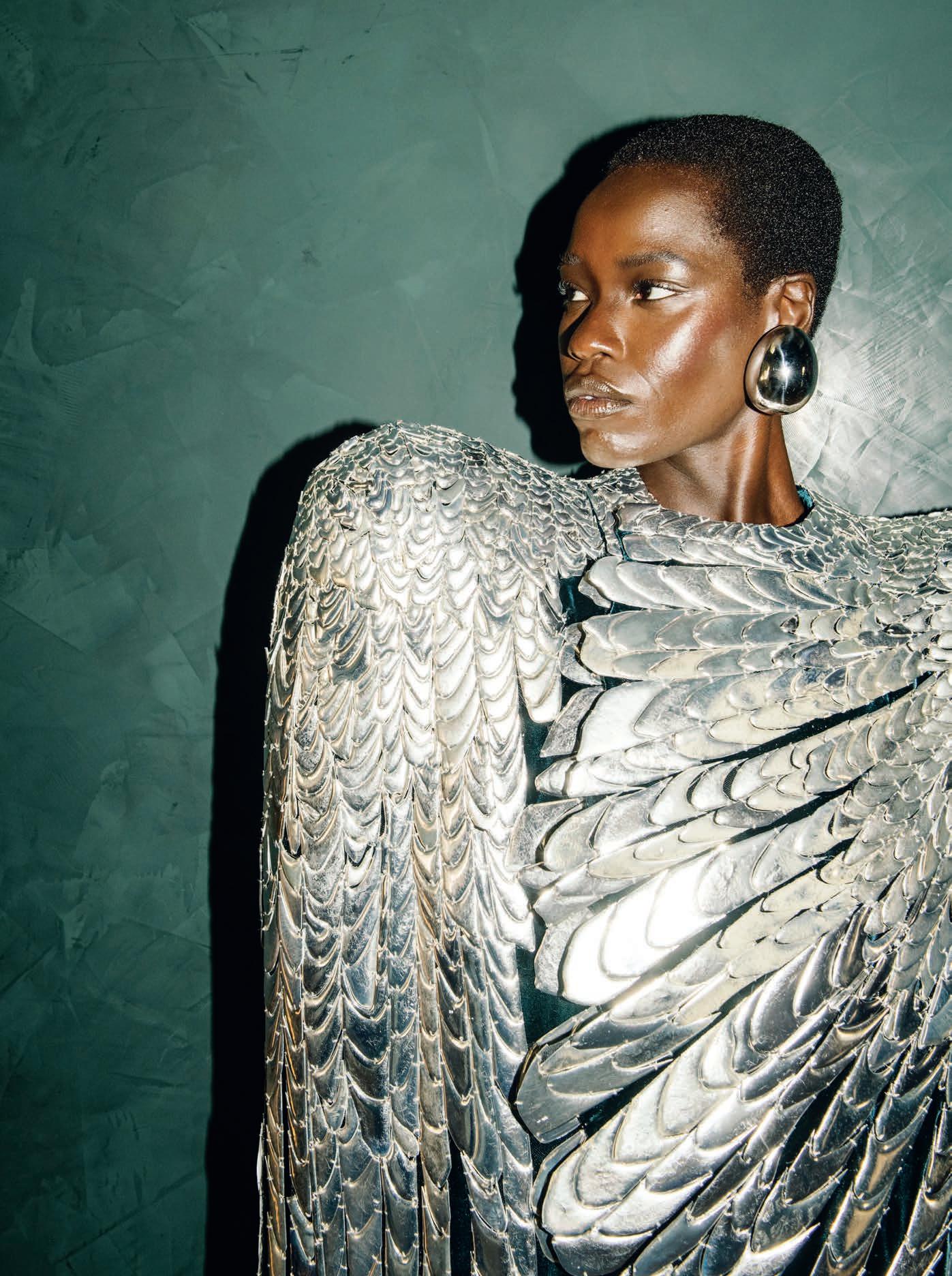
During Europe’s heady, uncertain interwar years, fashion designer Elsa Schiaparelli’s signature colour, “shocking pink”, was the least of her sartorial jolts. As the first UK exhibition to unpack her influential career, Schiaparelli: Fashion Becomes Art at London’s V&A, will show, she created what nobody had previously dared to imagine. There were dresses with uncanny skeleton-shaped padding and prints in camouflage or made from her own favourable press cuttings. She experimented with new materials like plastic. Famously, she made a hat in the shape of an upturned shoe.
According to the museum’s senior curator of fashion, Sonnet Stanfill, Schiaparelli was “a rule breaker and a designer who helped her clients to dare to dress differently, in a way that demanded that people look twice”. A lynchpin of the Surrealist art movement, her collaborations with Salvador Dalí included adapting his erotically charged lobster to shake up the virginal white dress. Few can have doubted the subtext when this hot red crustacean snaked across the nether regions of the silk slip gown worn by the twice-divorced Wallis Simpson in a Vogue shoot, shortly before she married the recently abdicated king, Edward VIII.
“Dalí lauded Schiaparelli’s premises on Place Vendôme as the beating heart of Surrealist Paris, while another collaborator, Jean Cocteau, characterised it as an otherworldly laboratory,” Stanfill explains. But the exhibition will also explore the designer’s sizeable influence in Britain. According to the curator, her Mayfair outpost, which she ran from 1933 to ’39, was “the capital’s first Surrealist space, ushering the art movement into the city”. Here, British Surrealists like Edward James became dedicated patrons. The Sussex poet’s purchases from the couturier for friends like Gala Dalí, wife of Salvador, once ran to the equivalent of £450,000 in today’s money, in just a six-month period.
Stanfill affirms that “so much of the social and aesthetic change of the mid-20th century is reflected in Schiaparelli’s designs”, and in the intervening years, fashion leaders from Yves Saint Laurent to Jean Paul Gaultier, Vivienne Westwood to Miuccia Prada, have channelled her radical energy. Schiaparelli’s iconoclastic instincts seem ever more pertinent today, and not only because of the spectacular collections from Daniel Roseberry, creative director of the newly revived Schiaparelli fashion house, who is co-curating the exhibition. As Schiaparelli herself put it, “In difficult times, fashion is always outrageous.” “Schiaparelli: Fashion Becomes Art” is at Victoria and Albert Museum, London, from 28 March to 8 November 2026; vam.ac.uk; explore the V&A exhibition with a talk by senior curator Sonnet Stanfill at Goodwood Revival on Saturday 19 September

WORDS BY PAUL WILSON
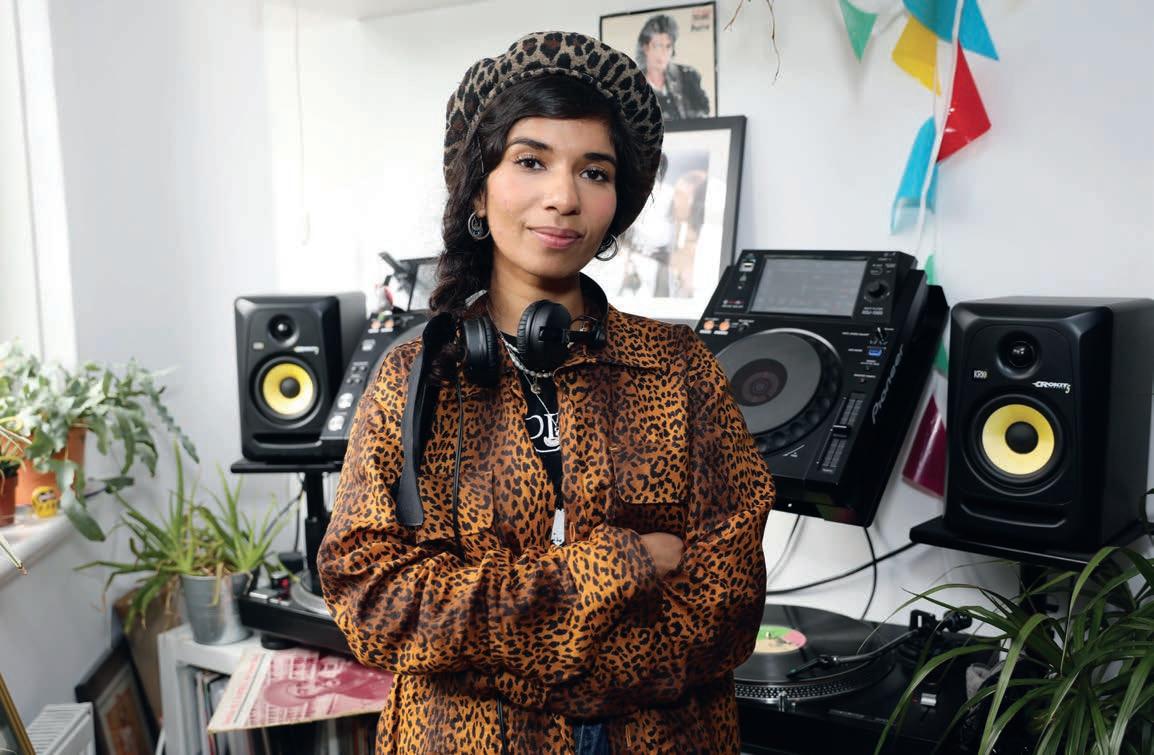
Musician Nabihah Iqbal is creating new work that draws direct inspiration from Goodwood Art Foundation
In its first year of life, Goodwood Art Foundation has quickly become a place of inspiration, with its combination of varied contemporary art and an immersive Sussex landscape set within the Foundation’s Schwarzman Gardens. At the Foundation’s opening event in May 2025, British musician Nabihah Iqbal performed her own classical composition for string quartet and electronics, What Psyche Felt. This has since led to her creating new work in collaboration with the Foundation.
“When I performed in the beautiful setting of Goodwood Art Foundation, in the outdoors, it just felt perfect,” she recalls. “From there came the idea for me to spend time on the Goodwood Estate as part of a residency – to soak up inspiration, so that it can manifest itself in musical ideas.”
Iqbal, who is also a radio and live DJ, as well as being on the board of trustees for the ICA, has worked extensively in the space where art meets music, composing for the Turner Prize and collaborating with institutions like Tate Modern and the Barbican, and with visual artists such as Wolfgang Tillmans. This summer, she will return to Goodwood Art Foundation
to premiere a specially commissioned piece uniquely inspired by its surroundings – a work of art not simply about a place, but forged within it.
“I’ll be in the Goodwood archives,” Iqbal says, “and talking to the groundsmen and the historians, tapping into the deep knowledge of the Estate – all the different animals and types of trees. I’ll be spending time with the people who know the history and the nature of it inside out, and as well as doing the research I’ll also be working in situ, making the music.” Ultimately, she says, a residency means “taking in as much as possible of the surroundings and then funnelling that into the composition”.
The ambitious work – a 40-minute piece for which Iqbal will also work with costume designers, lighting technicians and florists – continues a long tradition of art linked to the English countryside. “Nature is the fundamental source of all human inspiration,” she says. “At Goodwood, I can clear my mind and there’s room to experiment. It really does take your breath away.” For more on Goodwood Art Foundation and updates on Nabihah Iqbal’s performance in May, visit goodwoodartfoundation.org
WORDS BY JAMES COLLARD
An 18th-century temple to Neptune and Minerva on the Goodwood Estate? Watch this space...
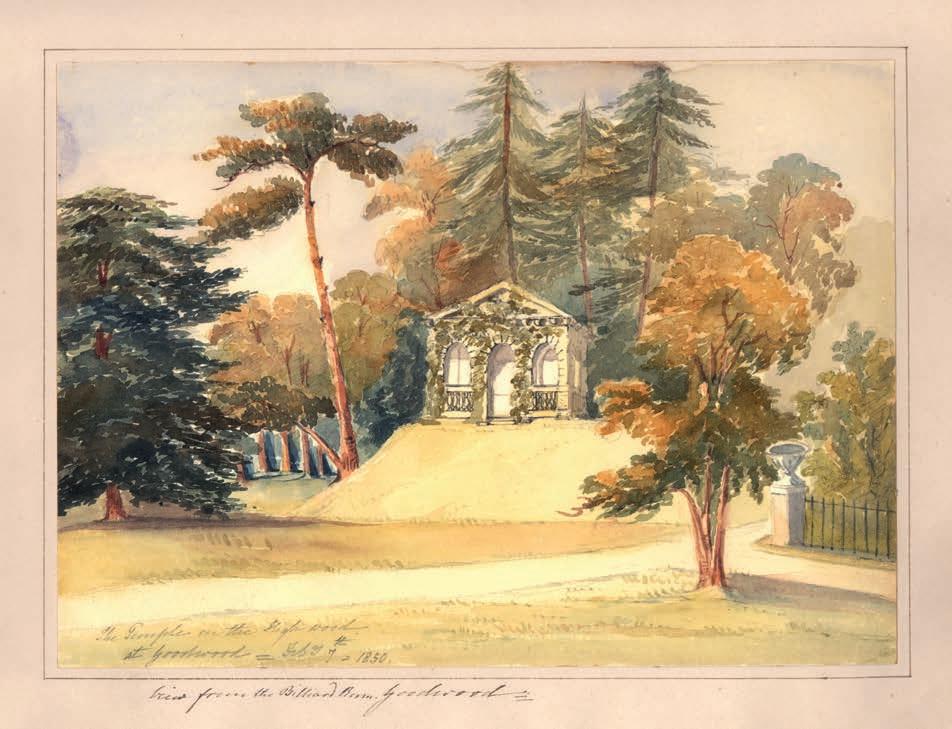
In the heart of the Sussex countryside there is a temple dedicated to deities of ancient Rome – only this one hasn’t been excavated by archaeologists; it’s being built instead with the help of laser mapping and digital models.
Like many aristocrats of his era, in 1720 Charles Lennox, the 2nd Duke of Richmond, visited Rome as part of his “Grand Tour”. Impressed by the classical ruins, these very grand tourists often returned with a burning desire to create Arcadian scenes in the green and pleasant English countryside – perhaps with a ruined temple to offer a focal point for their pastoral-looking yet entirely artificial landscapes. Imagine Lennox’s delight three years later then when a genuine Roman antiquity was discovered in Chichester, down the road from his country home – a tablet commemorating a temple dedicated to Neptune and Minerva, built by a local king to proclaim his loyalty to the Pax Romana. The good townspeople presented the Duke with the tablet, for which he later built his own Temple of Neptune and Minerva, just the thing to add a fashionable neoclassical vista to Goodwood’s parkland.
Fashions change, however, and the Duke’s folly was taken down in the early 1900s, rumour has it because his frequent house guest Edward VII felt it spoiled the view. (The monarch also did for the Egyptian dining room, which the 7th Duke had remodelled with more conventional Georgian-
cum-Edwardian décor at Edward’s behest.) An over-entitled house guest? Perhaps. But he was the King, after all, and his appearance during Race Week added both cachet and ticket sales
Whatever the cause, down came the temple. Its masonry was dismantled, much of it scattered and buried around the Estate. It was more or less forgotten until parts of it started to turn up “from the 1970s onwards”, explains Patrick Pica, who heads up the repairs team at Goodwood House and Estate. The ancient tablet, meanwhile, was returned to Chichester, where it remains, displayed on an exterior wall of the town’s Council House.
“The idea to rebuild the temple [using the original stones] came from the Duchess; she was the driving force,” explains Pica. Janet, Duchess of Richmond also came up with the plan to rebuild it in a new location: beside the stone lion that the 2nd Duke had placed in the grounds to mark where his pet lion was buried. Distinctly 21st-century laser mapping technology was harnessed to solve the 3D jigsaw puzzle of putting this 18th-century temple back together and filling in the gaps left by missing or broken pieces. So Goodwood will soon have its classical folly again – a South Downs nod to the gods of ancient Rome, though as Pica adds, “It also has a wonderful view towards the spire of Chichester cathedral.”
Work to restore Goodwood’s Temple of Neptune and Minerva is in progress
WORDS BY GILL MORGAN
Grass in need of a trim? Time to ditch your lawnmower – the ancient skill of scything is making a comeback
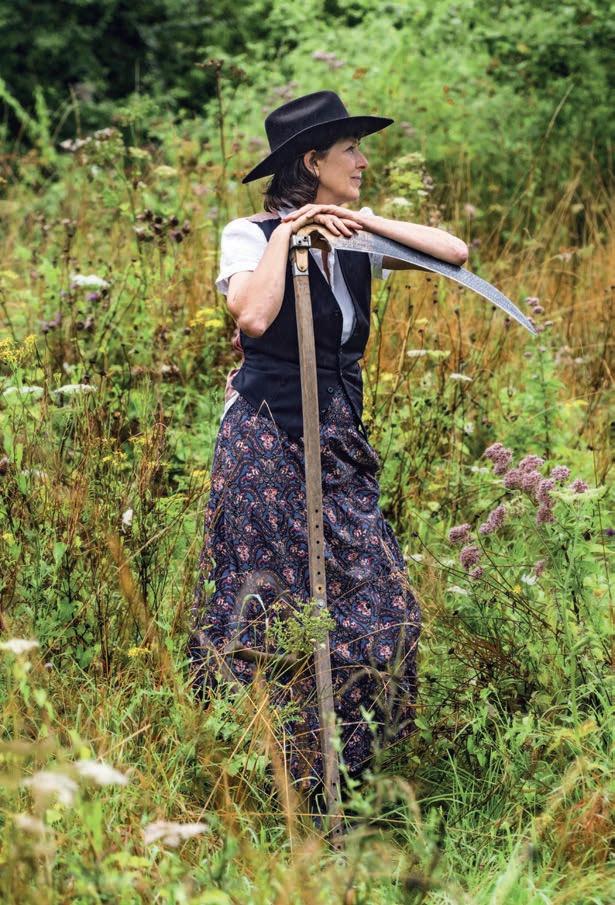
In her magical 15th-century cottage, perched high up in ancient Hampshire woodland, Lucy Ogilvie-Grant is extolling the virtues of scything. “Its moment really is now. It’s so much better for the land and wildlife than using a mower. When I’m scything I can see an orchid there and go round it, a toad here, or a dormouse’s nest. And it’s so easy – no dragging big heavy machines out of sheds – so you can just do little parcels of land at a time, and allow some areas to grow long, others to be cut, and maintain a very natural landscape; a kind of patchwork.”
Ogilvie-Grant, a former interiors stylist who splits her time between myriad creative projects including rush mat weaving and bookbinding, grew up in Northumberland with first-hand knowledge of this traditional rural skill that has gradually died out over the past century. “My grandfather scythed, as lots of grandfathers did, and my father, so I learned to do it too when I was about ten. It was just normal; we’d do the orchard when it was too annoying to get the big mower out.”
She rediscovered the art when she moved to Hampshire more than a decade ago and heard about a scything festival held on the Somerset Levels. She went along and found an extraordinary and growing community of scything aficionados: people who are committed to reviving the skill and explaining its environmental benefits. “The Green Scythe Fair happens every year,” she says. “It’s the epicentre of everything, a kind of festival with great stalls and music and local cider. People give demonstrations and classes and enter competitions. It’s a celebration and a place for everyone to get together and talk about what they’re up to, and share their plans.”
For Ogilvie-Grant, the game-changer was discovering Austrian scythes, which are lighter and easier to use than traditional English tools. Key to all this is the man she jokingly calls “our lord and master of the scything world”, Simon Fairlie. The writer, campaigner and publisher of The Land magazine now imports and sells Austrian blades to all would-be scythers.
As well as scything her own plot, Ogilvie-Grant tends to friends’ land locally and is happy to share her knowledge and skills. “There’s nothing complicated about it, no really special technique,” she says, jumping up to take me outside for a quick demo. Watching her tackle a section of long, straggly grass, the appeal becomes clear: with strong, smooth, rhythmic strokes, she quickly clears a patch with graceful efficiency. No noise, no heavy machinery, no fumes. Good for body and mind as well as the land.
Last summer Ogilvie-Grant went to an international scything festival in Romania, where, in spectacular mountain countryside, scythers young and old gathered from across the world. “I would love to create a book that celebrates scything,” she tells me. “Can you imagine how beautiful it would be… there are enclaves in all these incredible landscapes across the world – Rajasthan, America, Romania, Russia, even Orkney.” It would indeed be a beautiful book, and perhaps also a call to arms: scythers of the world unite. For more Information and courses contact scytheassociation.org
WORDS BY ALEX MOORE
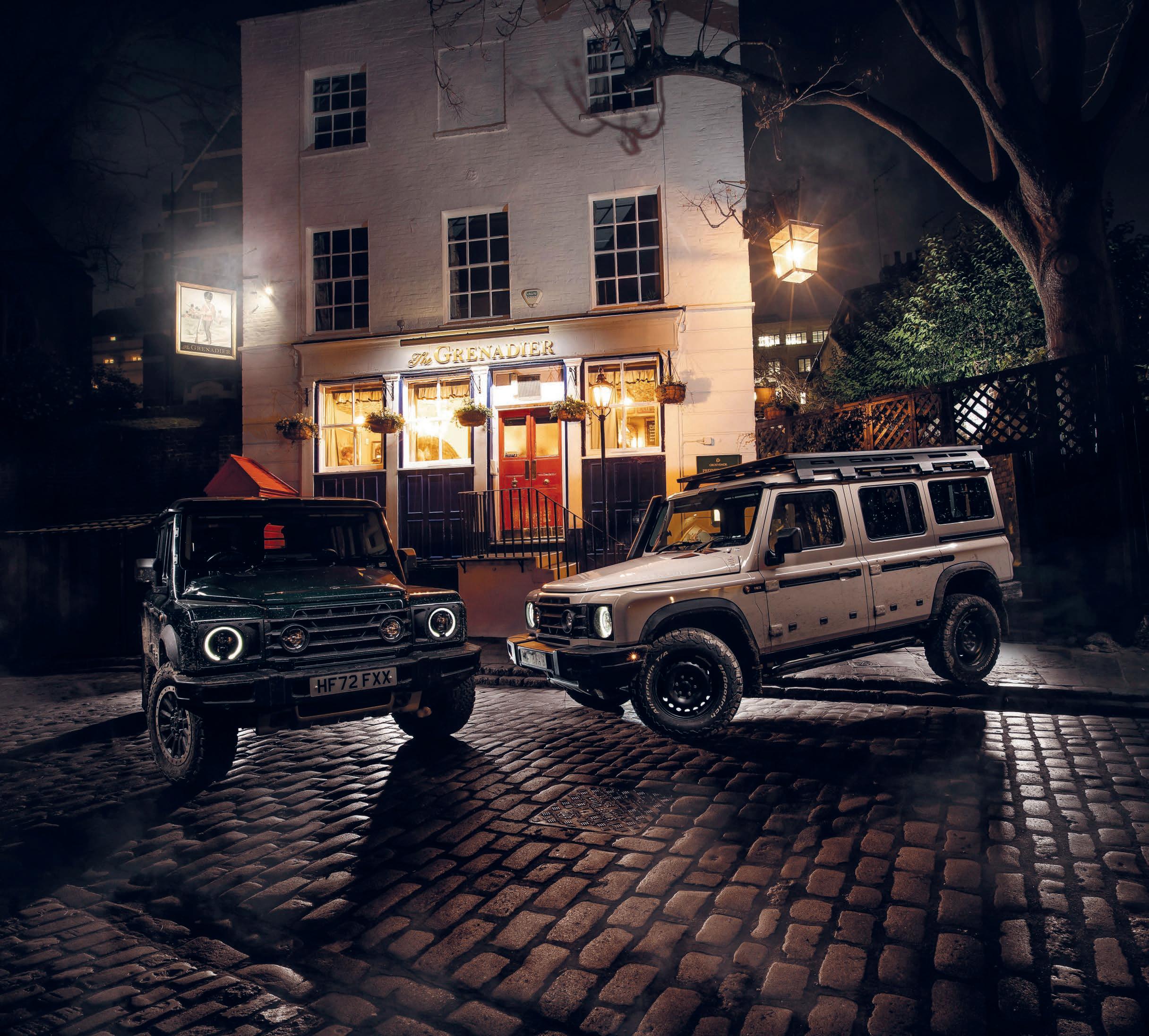
Creating the perfect gym isn’t just about filling it with cutting-edge AI-enhanced equipment – fostering a sense of community makes all the difference
“Gyms can be terrifying,” says Jen Evans-Brewer, Goodwood’s Head of Health & Wellbeing, “but we’ve spent a lot of time making sure that ours feels welcoming.” Open since early 2026, the much-anticipated space at Goodwood Health & Wellbeing is billed as “the South Coast’s most intelligent gym”, due to the presence of some of the most advanced Technogym equipment on the market. Much of the tech available is enhanced by AI in ways that even seasoned gym-goers won’t have encountered before. “This is preventative health at a level previously only accessible to professional athletes,” says Evans-Brewer, “and it’s all set against the restorative backdrop of 11,000 acres of West Sussex countryside. There really is nothing else like it.”
Members are invited to start their journey with a Technogym Checkup, an advanced and comprehensive assessment that measures strength, mobility, cardiovascular fitness and cognitive function (among other things). “Bio sensors can detect injuries you might have picked up 30 years ago,” explains Evans-Brewer, “but at the same time we’re testing memory and neuroplasticity. All of this information is fed into a dedicated app, which creates your individual
protocol, which links to the kit in the gym, and with you as you train.”
The more information the app can gather, the more it will develop and understand you, in order to better tailor your sessions. Offering this level of total personalisation at Goodwood, says Evans-Brewer, “reflects our philosophy of 360° wellness to a tee”.
If a space full of cutting-edge AI supertech sounds sparse or robotic, it’s not. Crucially, a team of skilled coaches and other professionals is on hand. For members, the gym sits within a broader ecosystem of personalised wellness, where access to nutritionists, physiotherapists and even a GP appointment is also available.
As Evans-Brewer sees it, “Everyone here is on the same journey. The way our team supports and interacts with our members creates this genuinely warm vibe that you don’t normally associate with a gym.” Beyond the technical excellence, she adds, “We’re interested in long-term vitality, functional strength and holistic health and wellness; a place where a community can blossom.”
For more details, see goodwood.com/visit-eat-stay/health-wellbeing/ health-club/membership/



Tales worth telling, from the sporting triumphs of 1976 to how equine artist George Stubbs honed his craft. Plus: The Goodwood Interview with Jenson Button
“It is you and a piece of machinery that you 100 per cent understand”
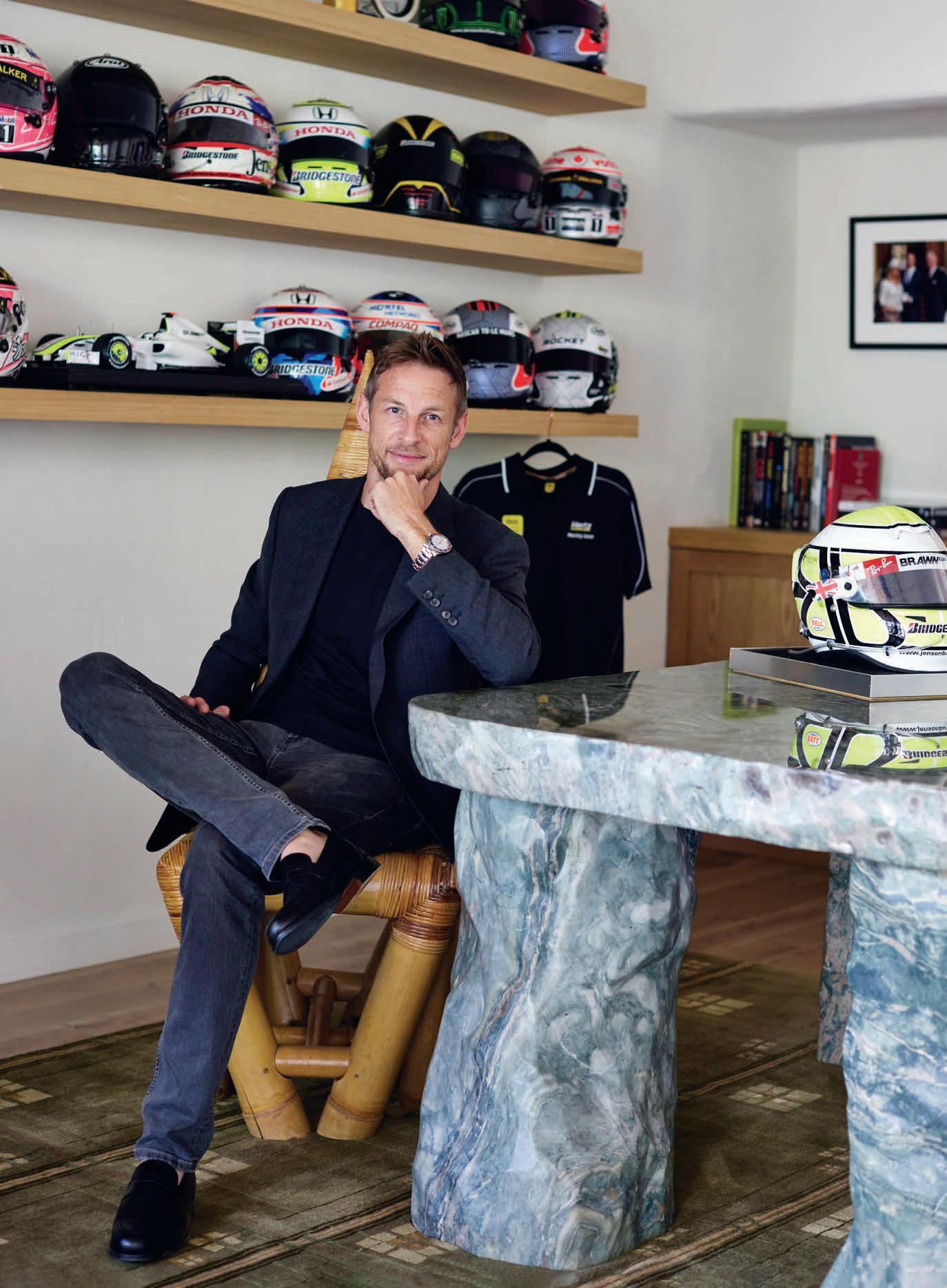
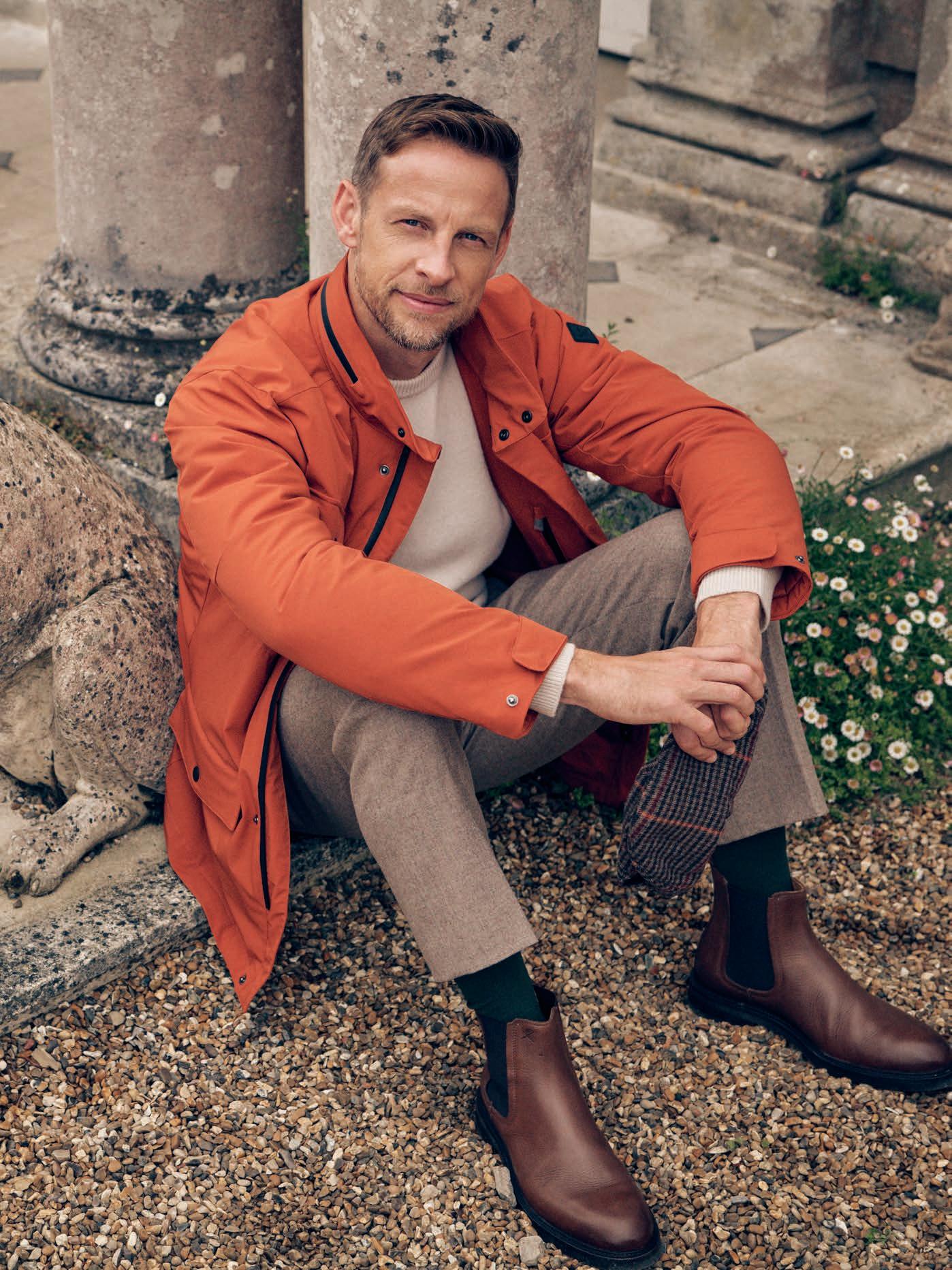
Jenson Button has retired and headed to sunny California to concentrate on his young family, but as the British motorsport champion explains ahead of a headline appearance at this spring’s Goodwood Members’ Meeting, he still gets behind the wheel when the time and place are right
Barely two months since his retirement from competitive professional motorsport, after the close of the World Endurance Championship season in Bahrain, Jenson Button is already back in the driver’s seat. And this sunny late January morning on the Californian coast, urgent instruction has come into the 46-year-old’s cockpit. He has to make an immediate pit-stop.
“I’ve just been told our daughter’s sick so I might have to go and pick her up from school,” he says, sitting up from the plush embrace of his (parked) Range Rover, both hands leaving the steering wheel as he scrolls through his phone. After a brief interlude to take care of five-year-old Lenny – named, like six-year-old brother Hendrix, after a guitar shredder (in her case, Lenny Kravitz) – Button is soon back with me. It was just an unexpected familial interlude of the kind any working parent can relate to; and it speaks to the reasons why, last year, Button finally lifted the visor on one of the great racing careers of the modern era.
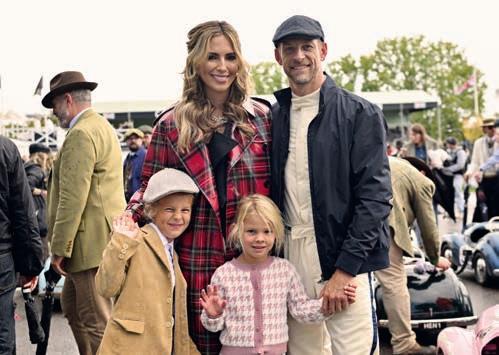
“This is such an important time in their life, and for me,” he says of his children with his wife of four years, Californian interior designer Brittny Ward. Now the priority is about “spending time with them, because they’re growing up so fast. That’s why everything stopped in terms of racing. The love for racing is still there,” he clarifies, “and that’s why I’m still doing historic races. That’s why I’m going to be at Members’ Meeting and Revival: because I still love racing. It’s just that I have to cut back on races that I’m not really excited about.”
Make no mistake: nearly a decade since he left F1, Button is more than ready for his appearance at Goodwood’s 83rd Members’ Meeting this spring. That’s where the 2009 Formula 1 World Drivers’ Champion will be reunited with the Brawn BGP001 in which he triumphed in that most remarkable of seasons, the full story of which is told in suitably gripping style in the Keanu Reeves-fronted 2023 documentary Brawn: The Impossible Formula 1 Story (currently available to stream on BBC iPlayer). It is set to be a memorable occasion for driver and crowd alike. “I’ve only driven it once, seven years ago, since I jumped out of the car in Abu Dhabi,” he says of the car that carried him from unemployment to the world championship in less than nine months. “Every single race, I raced that car. So, yeah, it’s pretty special. And it’s the only one [of three chassis built] that has a running engine and gearbox, and it’s the only one that can actually drive.”
Perhaps unsurprisingly, Button thinks the F1 cars of that time were better than today’s, citing their “simplicity… They’ve moved on so far with the technology. It’s very impressive what a current F1 car can do. It’s 200kg heavier than what we raced, and they’re still going way faster, especially in qualifying. But from the drivers’ comments, they’re trickier, because the car is so heavy. You have so much weight out the back that you can’t drift the car. You have to set it up with a bit of understeer. You can’t balance the car on the rear through a corner. Because if it goes, it goes, and you’re in the barriers. Whereas when we were racing, it was lighter; more manoeuvrable; nimble. You could move it around a little bit more, you could drive it in very different styles. You look at Fernando Alonso – he was so aggressive,” he says of his former McLaren teammate. “And it worked. I was smoother and it worked. So that’s what I liked about those cars. I’m sure if I got in a current [F1] car, I’d be blown away by the power, by the downforce, by the grip. But I think for the [driver-car] connection, I definitely had the best era in the sport.”
That previous post-F1 drive in his Brawn was a 10th anniversary outing at Silverstone during the 2019 British Grand Prix weekend. As part of the
in-cockpit footage of that decade-down-the line victory lap (available on YouTube), Button says, as he hits the Hangar Straight, “Everything feels just as I remember.” Seven years on, will that muscle memory still be there?
“Definitely. Obviously, my reaction wouldn’t be as good now as when I was 29 years old. But I’m probably fitter now than I was then, so the fitness is there. But it would feel 100 per cent natural. Every time I jump in a car that I’ve raced before, it feels the same.”
That said, in a wholly positive way, not entirely the same. “When you’re in it, when you’re racing, a lot of the time it’s not fun. Because you’re working hard, basically. You’re developing the car, trying to get the best out of it. There are flashes of excitement and adrenaline. That’s normally when you win races or get a good result or good qualifying.
“But most of the time, it’s just hard work. So you don’t really enjoy it for what it is. That’s why events like [those at] Goodwood are great: it gives us the chance to feel the car for what it is and actually enjoy the moment.”
The casual observer might be forgiven for thinking that Jenson Button – watch ambassador (Rolex), whisky entrepreneur (Coachbuilt), fashion investor (Lestrange) – has thoroughly enjoyed every moment of his quartercentury career. The Somerset-born driver entered the public consciousness in 2000, when, straight from Formula 3, he signed for the Williams F1 team, at the then unusually young age of 20. His arrival was meteoric, becoming the youngest points scorer in history, in only his second Grand Prix. But a combination of bad luck and bad choices meant it took until 2006 for him to reach the top step of the podium, when a characteristically imperious drive in tricky conditions saw him win the Hungarian Grand Prix. Along the way, the handsome, dashing, twentysomething Button was quick to embrace the fruits of his chosen profession, with a yacht-going, champagne-lubricated, playboy-adjacent, Monaco-based lifestyle. But the French Riviera-loving Englishman, il ne regrette rien
“I’m amazed how much money I sank into boats!” he admits with cheerful candour. “It’s unbelievable. It’s just a bottomless pit. But also, some of the most amazing time you’ll spend with your mates is on a boat. So many great memories. I had a boat in my early days, which was a 66-footer, and then I got a 90-footer in my McLaren years. It was the coolest thing. And we had a lot of fun travelling from Monaco to Saint-Tropez and Italy in it. I wouldn’t change it for the world.”
As for what’s occupied him since, as Button puts it: “I wanted to leave F1 at an age where I was still competitive and could race in other categories. I was also just a bit bored of doing the same thing over and over and over again.” To meet that adrenaline void head-on, he jumped into sportscar racing, spending two years in Japan driving Super GT cars for Honda, and winning the championship in his first full season.
In 2018, Button took part in Le Mans for the first time – “That was always a dream” – and in 2023, he participated in three NASCAR races. Other post-F1 adventures included fronting an Extreme E (electric, off-road) team, and racing the one-off Le Mans NASCAR in 2023. But eventually, in 2025, having been based in California for 10 years, it was time to go home and (mostly) stay there. For one thing, his wife had completed work on the mother of all fixer-uppers, Casa Encanto, an 8,368-sq-ft property set in 2.3 acres in Calabasas. Talking to Australian Vogue in 2024, Brittny said: “Jenson gave me complete creative freedom. If it were up to him, we would have had a car hanging from the ceiling.” Fair comment? “Yeah, totally!” he agrees. “And I didn’t push on anything. She’s like: ‘Your office is your space. You can put your crash helmets and trophies in there.’ I’m like: ‘OK, that’s all right.’ And the house was stunning.”
So stunning that they promptly sold it. Now they’re nearing the end of a two-year renovation in the same area of California coastline. The new property is “our ‘forever home’,” he says, the quote marks audible. “We’ll see. But it’s amazing because I went in two months ago and the GC [General Contractor] said: ‘Have you seen this?’ We walked into one of the living rooms – there are two – and it’s got the bar and stuff. It’s the fun room. And he said: ‘You see that shelf all around the top? That’s backlit. That’s for your crash helmets.’” Button admits he had to check what the builder meant: “My wife gave me some space and I can have some motor racing [stuff] in the house?” Having confirmed that this was indeed the case, he adds: “I’m going to have to find 60 helmets to put there. But I thought that was so cool.”
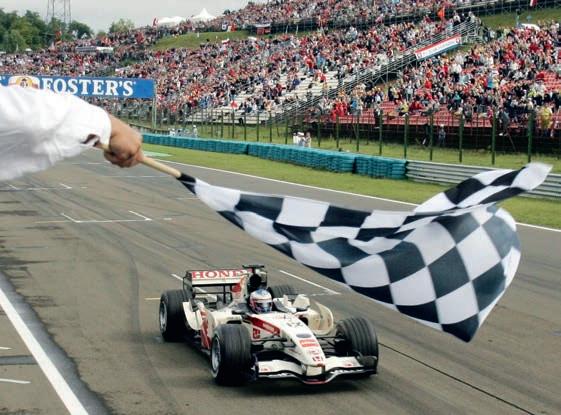
“I wanted to leave F1 at an age where I was still competitive and could race in other categories. I was also just a bit bored…”
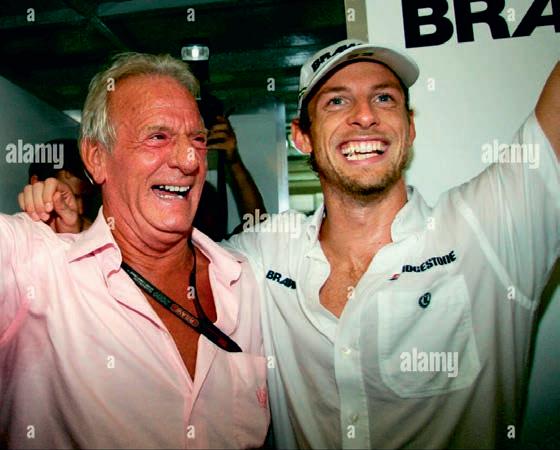

“I’ve never driven around Goodwood in anything fast! So it’s going to be a little bit nerve-wracking”
Naturally, the new property also features a capacious garage. “The wife’s very understanding. She’s got a pink Land Rover coming – really light pink, almost white, a 1996 [model] but completely redone.” There are, too, new, bespoke pink-and-white leather seats, made by Scottish craftspeople Bridge of Weir Leather. “It’s going to be epic. That should be arriving in the next four weeks. She’s got her car, so it means I can have mine!”
But which car, Jenson? The Range Rover we’re talking in? The Lotus Cortina that he’s bringing to Revival to race alongside his old primaryschoolmate Richie Williams? The Dodge Viper that has raced at Le Mans? The “little” Alfa Romeo GT Junior that he throws round the track at Laguna Seca in California? The “classic” Singer? This, he insists, is a downscaling from the “big collection of cars” he owned 10 years ago. It seems he means he’s rid himself of non-competitive motors, flash acquisitions that looked good but just sat at home. “I sold everything because I was like, [if] I don’t drive it, what’s the point? It’s such a waste. I’d rather buy racing cars. Because I know I’m actually going to drive them.”
Which brings us back to the car that means more to him than any other. “Obviously, I’ve never driven around Goodwood in anything fast! So it’s going to be a little bit nerve-wracking. But I’ll feel very comfortable in what
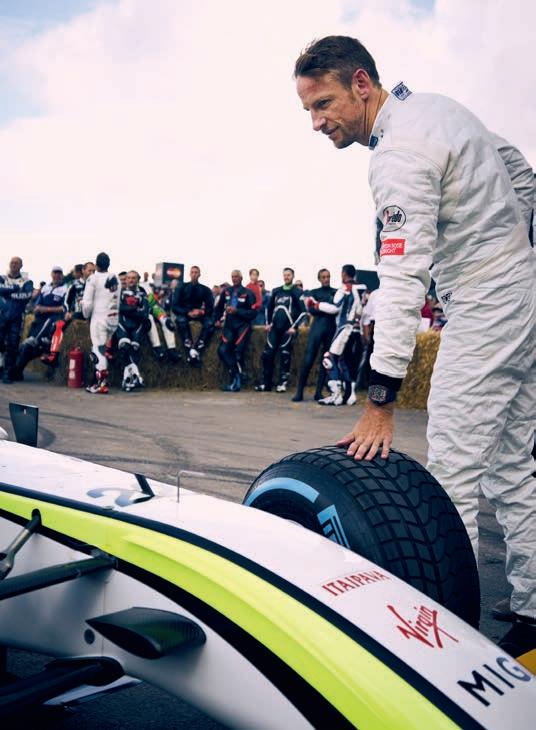
I’m driving. I just hope it’s dry!” he adds, laughing. “Although to be fair, an F1 car in the wet is the best thing; it’s got so much downforce.”
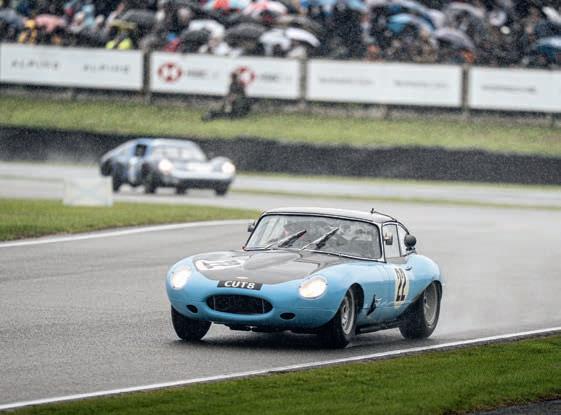
In his talk of wet tracks and (by his standards) non-super-speedy motors, Button – a long-standing friend of Goodwood – is referring to his last appearance here: his triumph in the Freddie March Memorial Trophy at Revival 2025. In conditions ranging from soggy to torrential, he and codriver (and lifelong friend) Alex Buncombe bested a field of 1950s sportscars in Button’s own Jaguar C-type, formerly owned by five-time Formula 1 World Champion Juan Manuel Fangio. He also raced a 1962 E-type, bought specifically for the occasion, in the meeting’s blue riband race, the Royal Automobile Club TT Celebration. “It was chucking it down!” he recalls, going on to describe “aquaplaning on the straight, which was awesome”.
What does he like so much about historic racing? “It’s that rawness to it. It is you and a piece of machinery that you 100 per cent understand. There’s no electronics to get in the way of feeling. So for me, the E-types and the C-types are more engaging than most racing cars.” It is, too, the “racing aspect”. For this super-charged epitome of the competitive dad – where it doesn’t matter what kind of wheel he’s behind as long as it’s fast and/or classy – Goodwood presents races of the type you can’t find anywhere else.
“You have the best drivers from every category around the world: F1, NASCAR, IndyCar, touring cars, endurance racing. It’s nuts. You line up on a grid in a little Alfa Giulietta and you’re next to a big Ford Galaxie and a Mini. It’s random cars and such talented drivers jumping in them and giving it their all. It’s a fun weekend.”
Well, up to a point. “As soon as the visor goes down, it’s proper serious.”
Jenson Button will return to his title-winning Brawn Grand Prix car for a demonstration around the Goodwood Motor Circuit at the 83rd Members’ Meeting presented by Audrain Motorsport




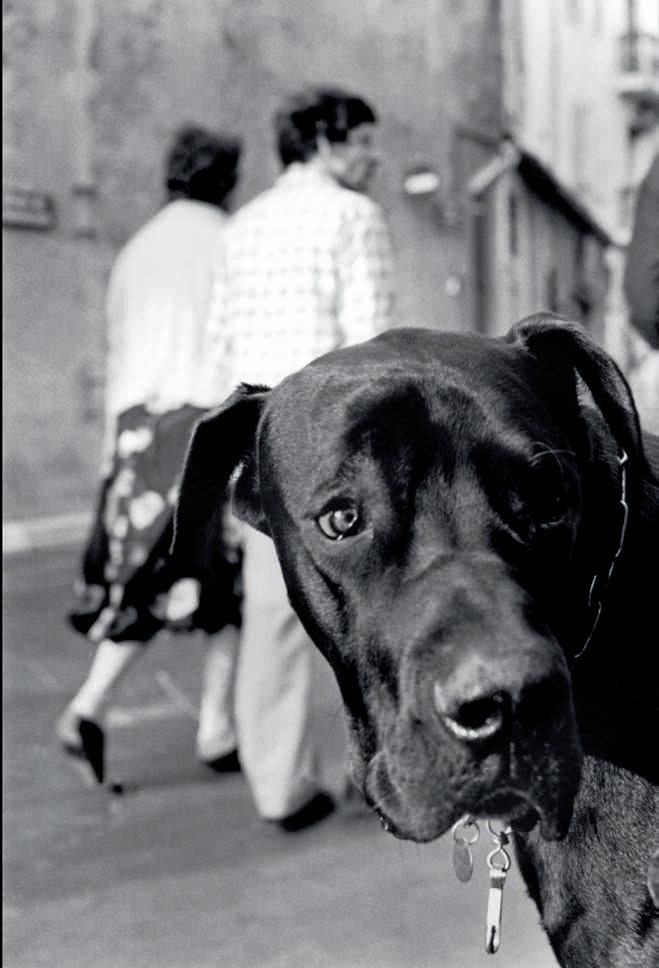
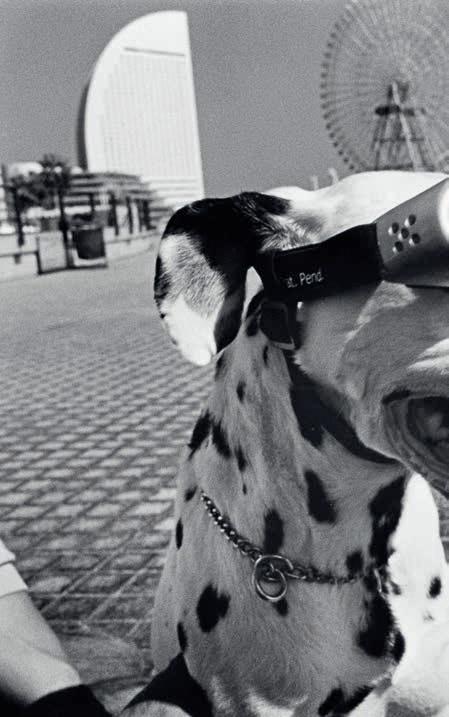
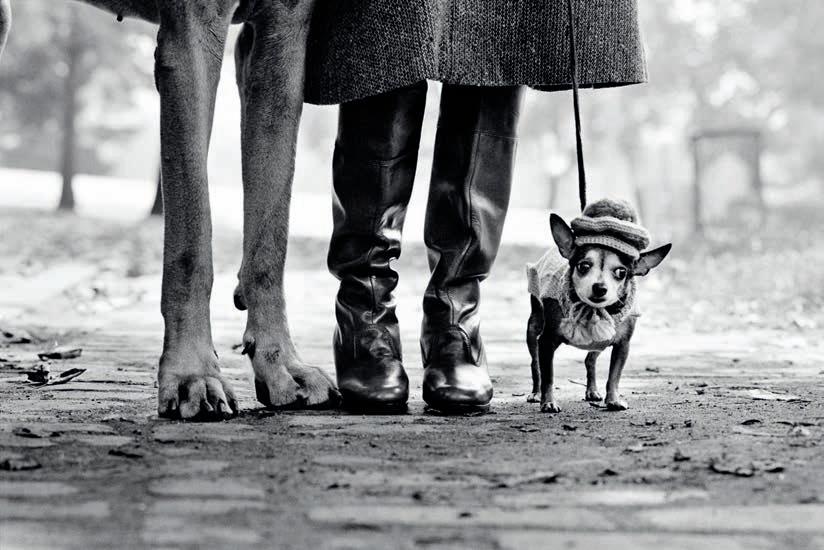
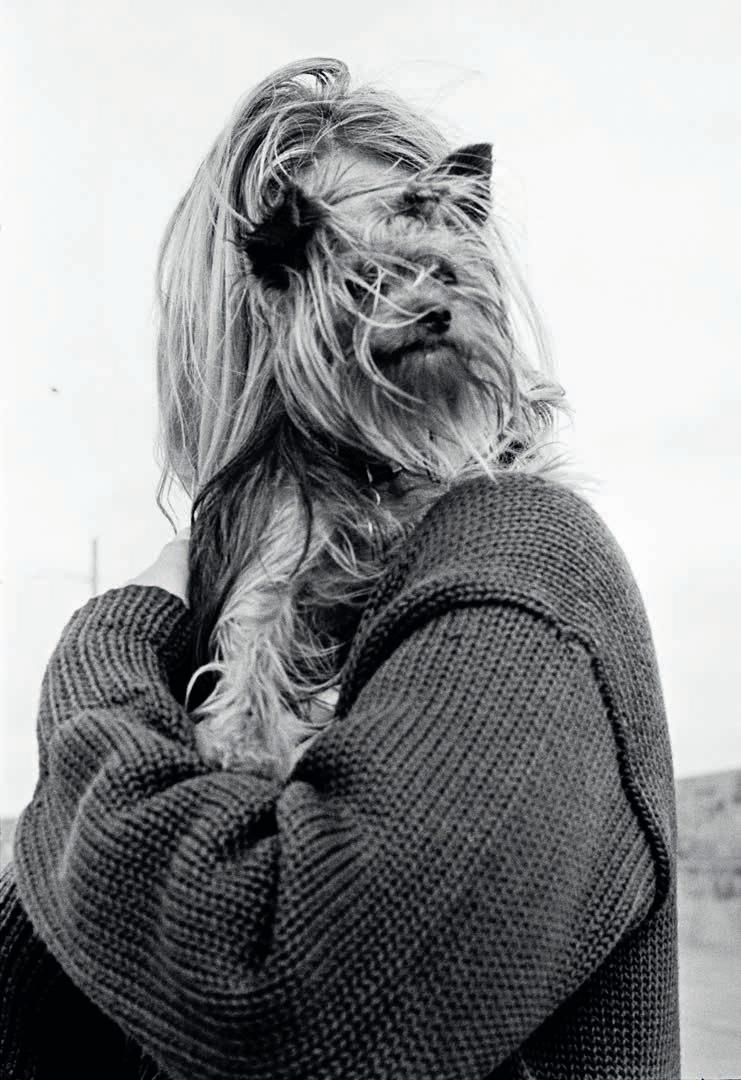
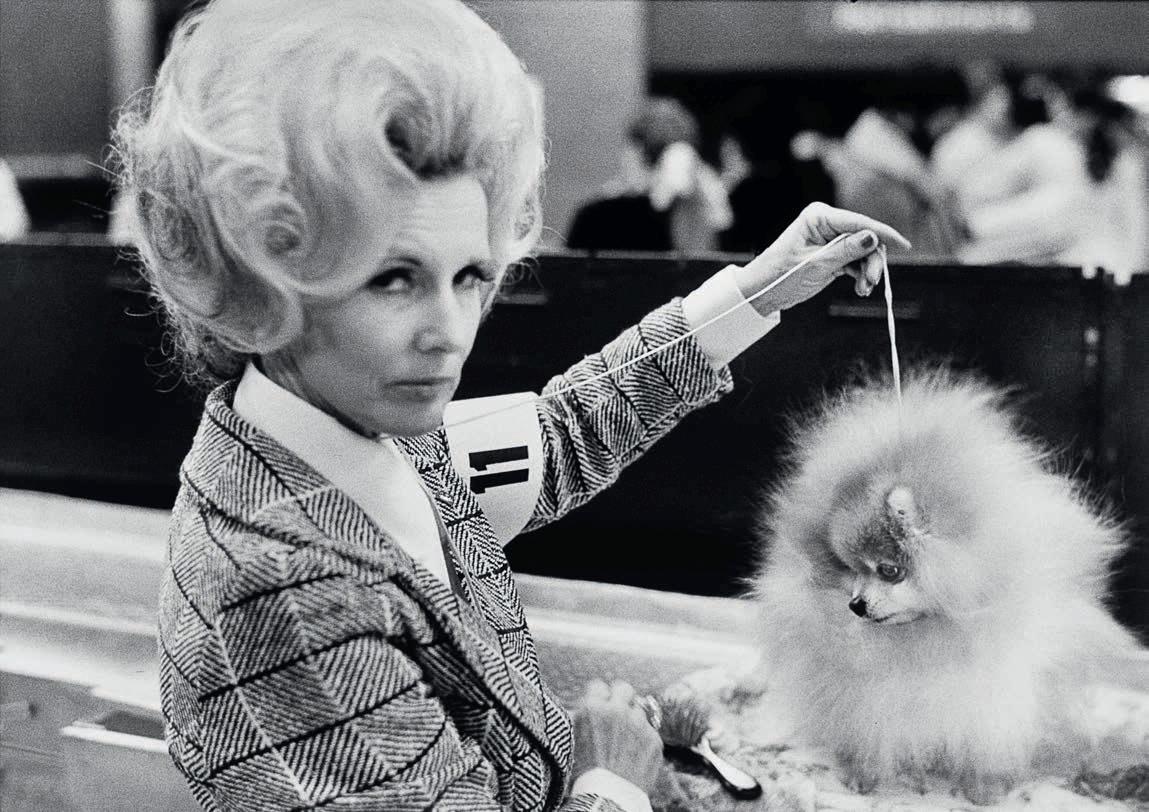
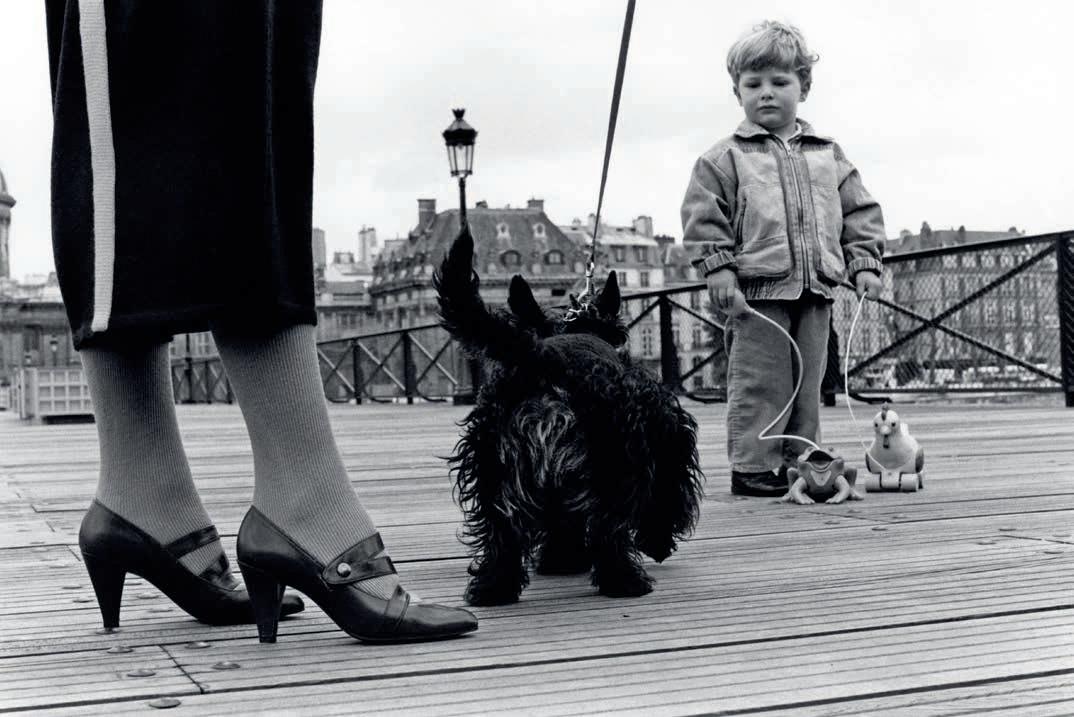
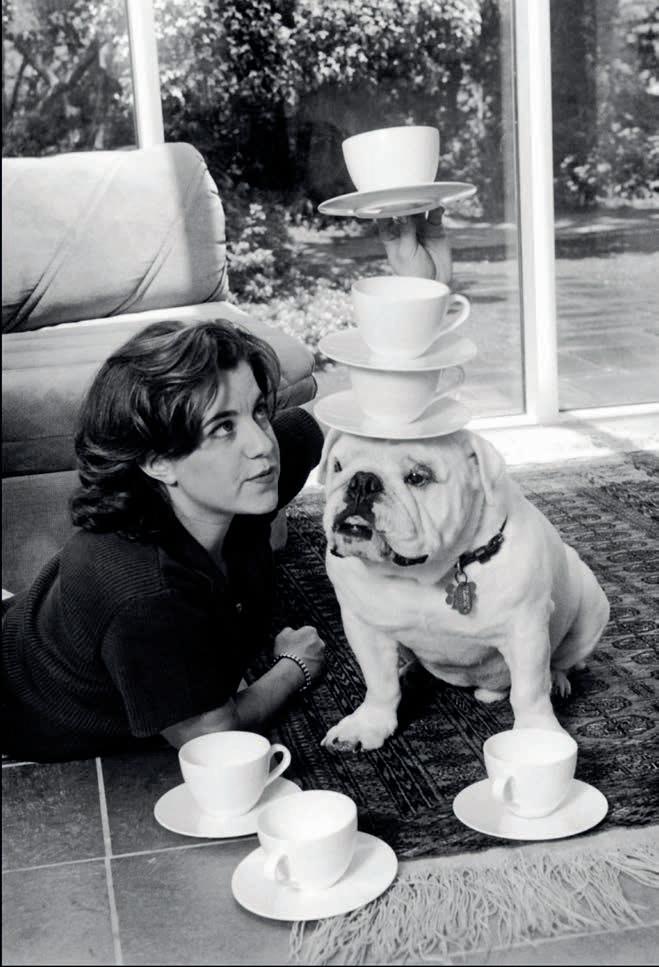
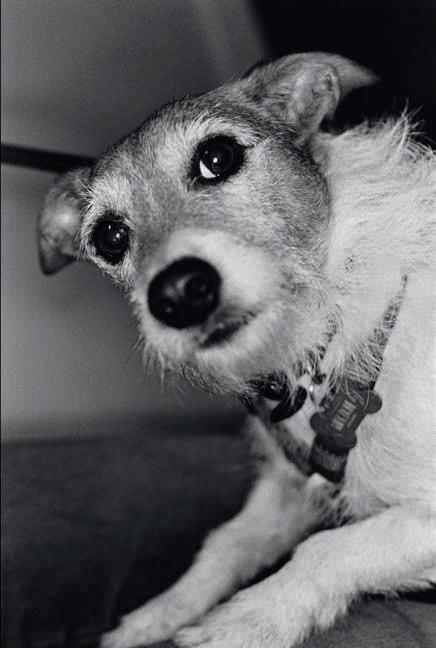
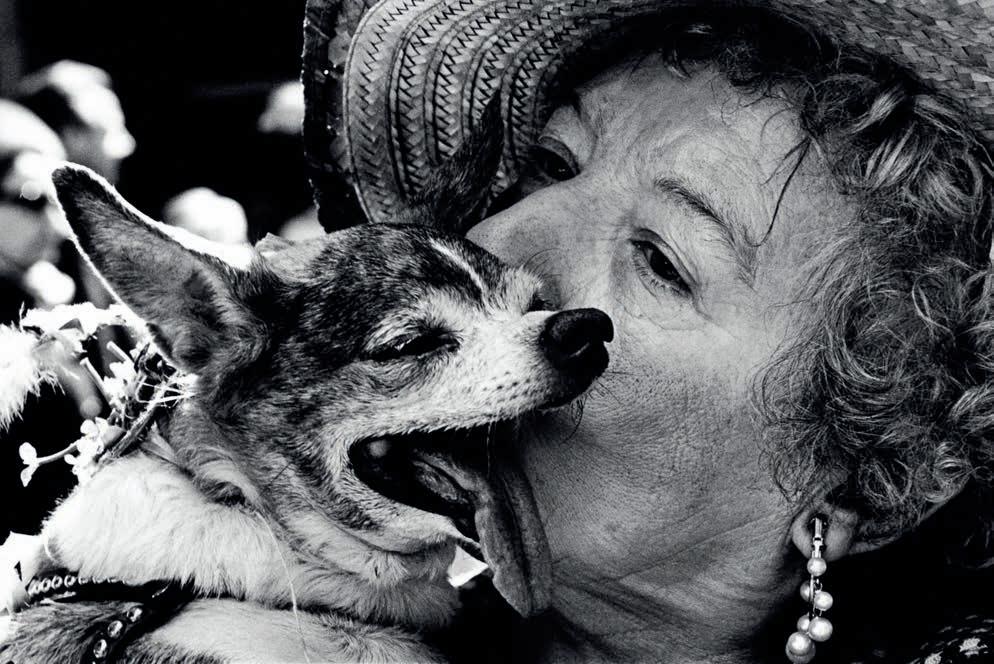
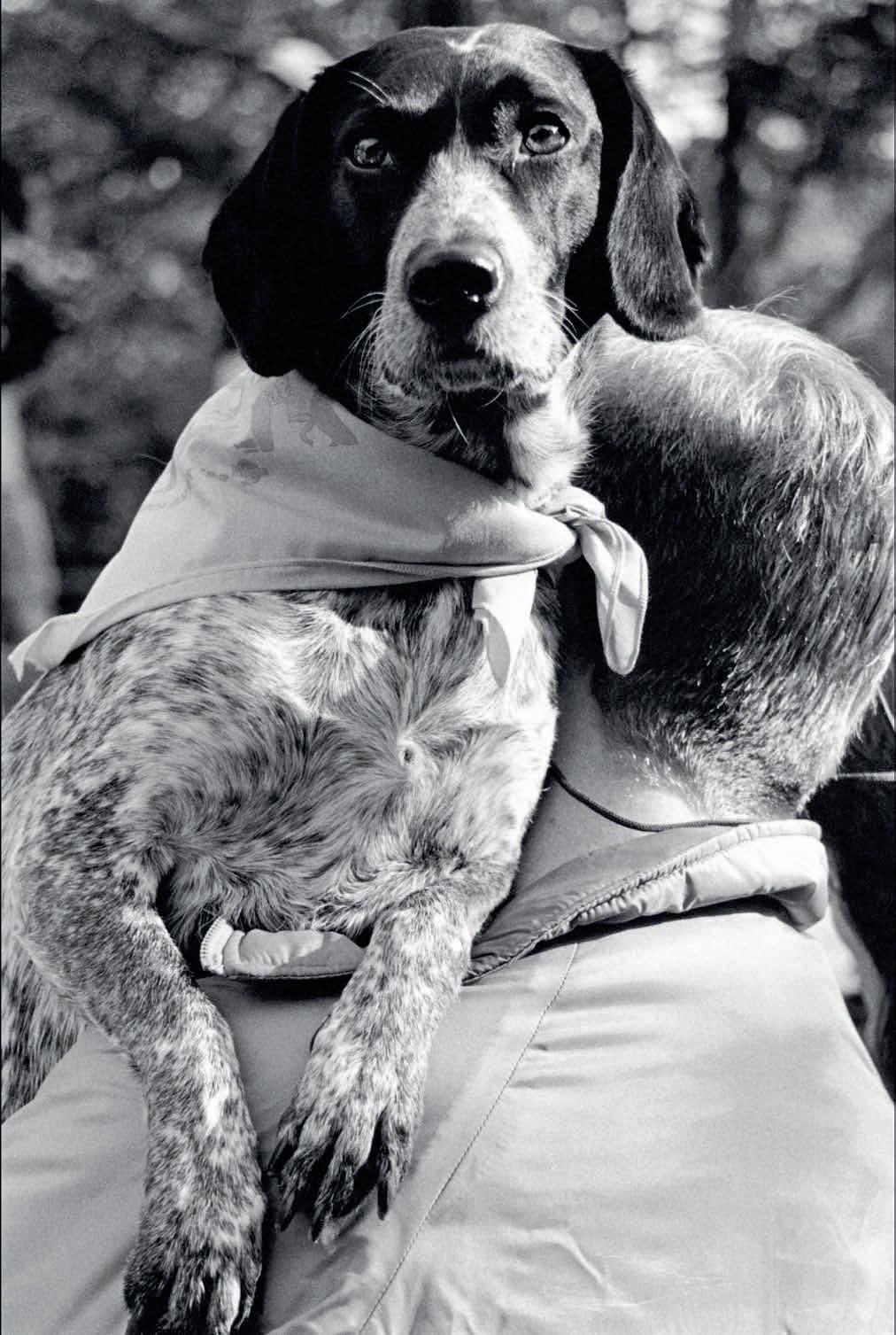
Over the course of seven decades, Magnum legend Elliott Erwitt photographed many of the world’s most prominent politicians and celebrities. Yet his best-loved images, and his favourite subjects, were always canine
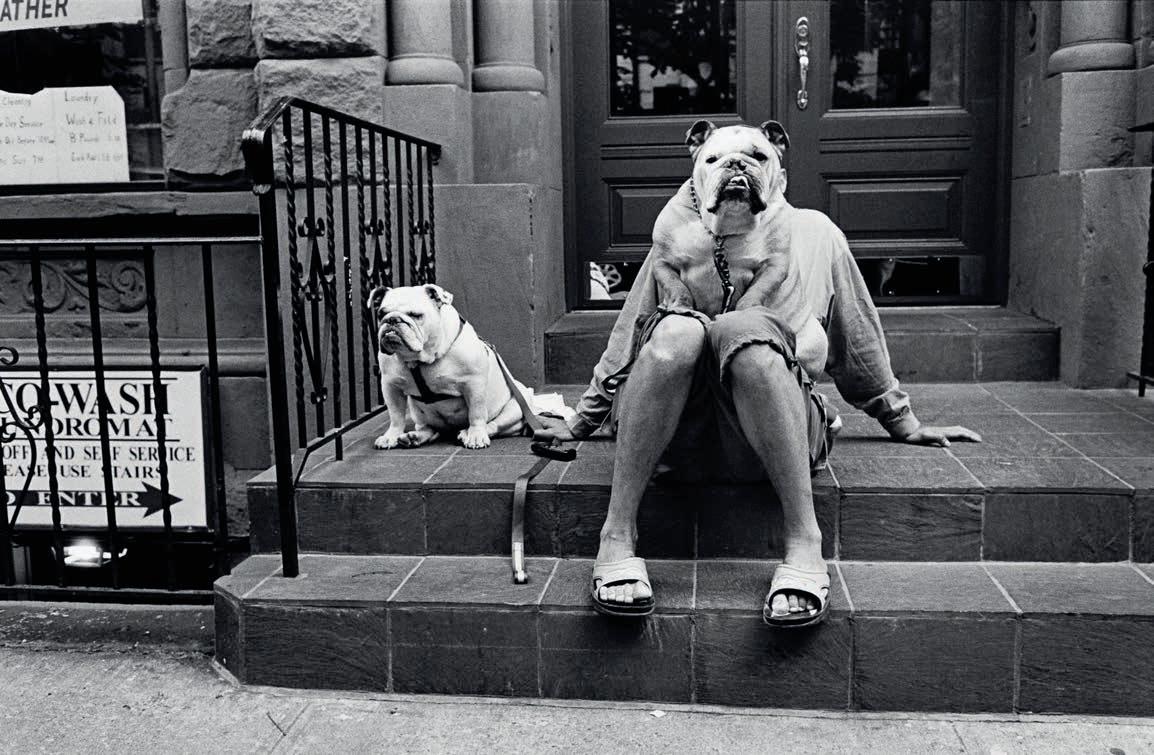
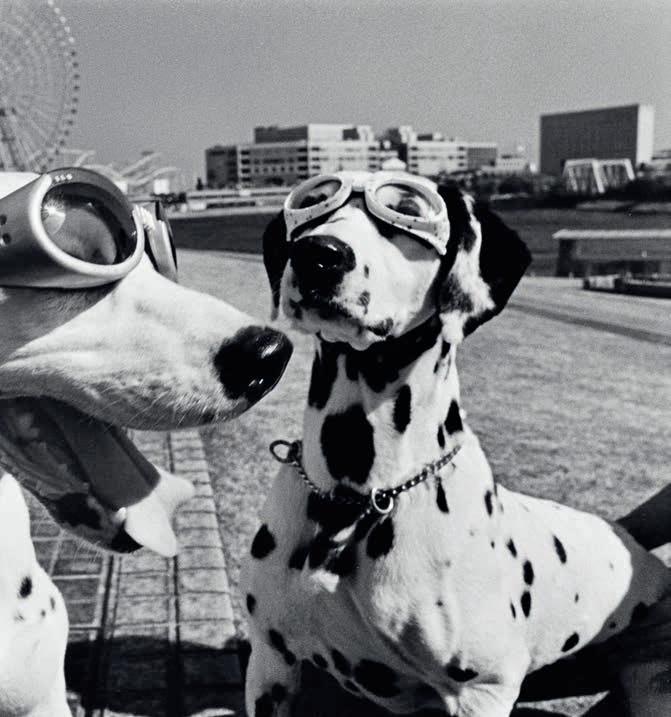
Elliott Erwitt’s famous motto was: “The best things happen when you just happen to be somewhere with a camera.”
During the 70 years the Paris-born, New York-based photographer was a member of the fabled Magnum agency – the international photographic cooperative whose luminaries included Robert Capa and Henri Cartier-Bresson – he produced portraits of icons like Marilyn Monroe, Richard Nixon, Humphrey Bogart and Jacqueline Kennedy. But at the same time, almost by accident, he built up what is perhaps the world’s finest portfolio of canine images.
“Most of the time, when I am out of the house I carry a small unobtrusive camera and I snap away obsessively at things that interest me,” he wrote in his 1998 book DogDogs. “Until recently, I have never especially set out to take dog pictures, but somehow dogs appeared in large numbers on my contact sheets. Obviously, my sympathy for the creatures was deeper than I had imagined.”
Having joined Magnum in 1953, Erwitt travelled extensively, and his canine portraits were captured across the globe, from the Hamptons to Japan. For many of them, he would crouch or lie down, explaining, “I decided to photograph from a dog’s point of view because dogs see more shoes than anybody.”
DogDogs, which was preceded by his other collections of canine portraits, titled Son of Bitch, To the Dogs and Woof, was re-issued by Phaidon Press in 2025, two years after the photographer’s death at the age of 95. Part of the appeal of dogs, Erwitt joked, was that unlike humans, they didn’t complain when you took their photo, but his admiration ran much deeper. “I don’t know of any other animals closer to us in qualities of heart, sentiment and loyalty,” he wrote. “Some people say elephants come close. Personally, I find elephants too bulky, unwieldy and inaccessible for everyday photography… Besides, they do not roam the streets in every town and country like dogs do.”
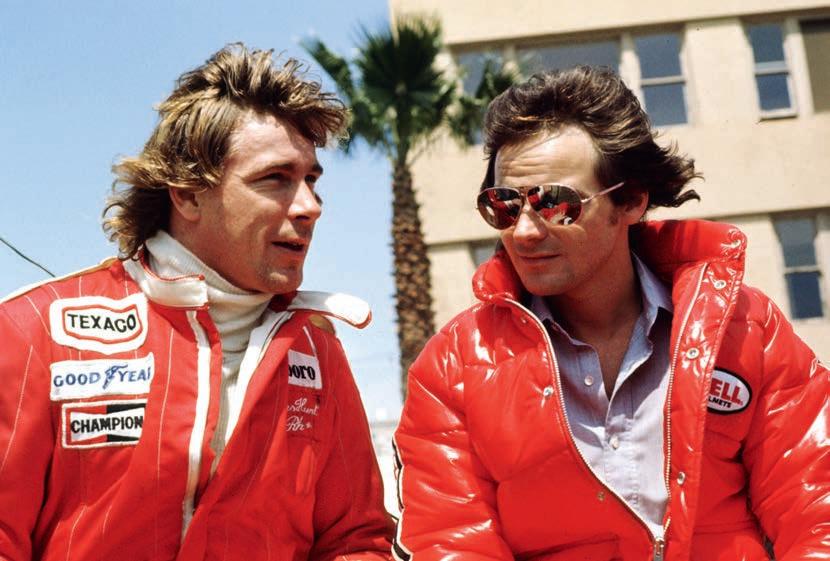
Itwasayearofrecord-breakingtemperaturesand sportingtriumphs.RichardWilliamsrecallsascorching summerwhenbestfriendsJamesHuntandBarrySheene –twoofthemostcharismaticmotorsportstarstheworld haseverknown–wereattheirmischievouspeak
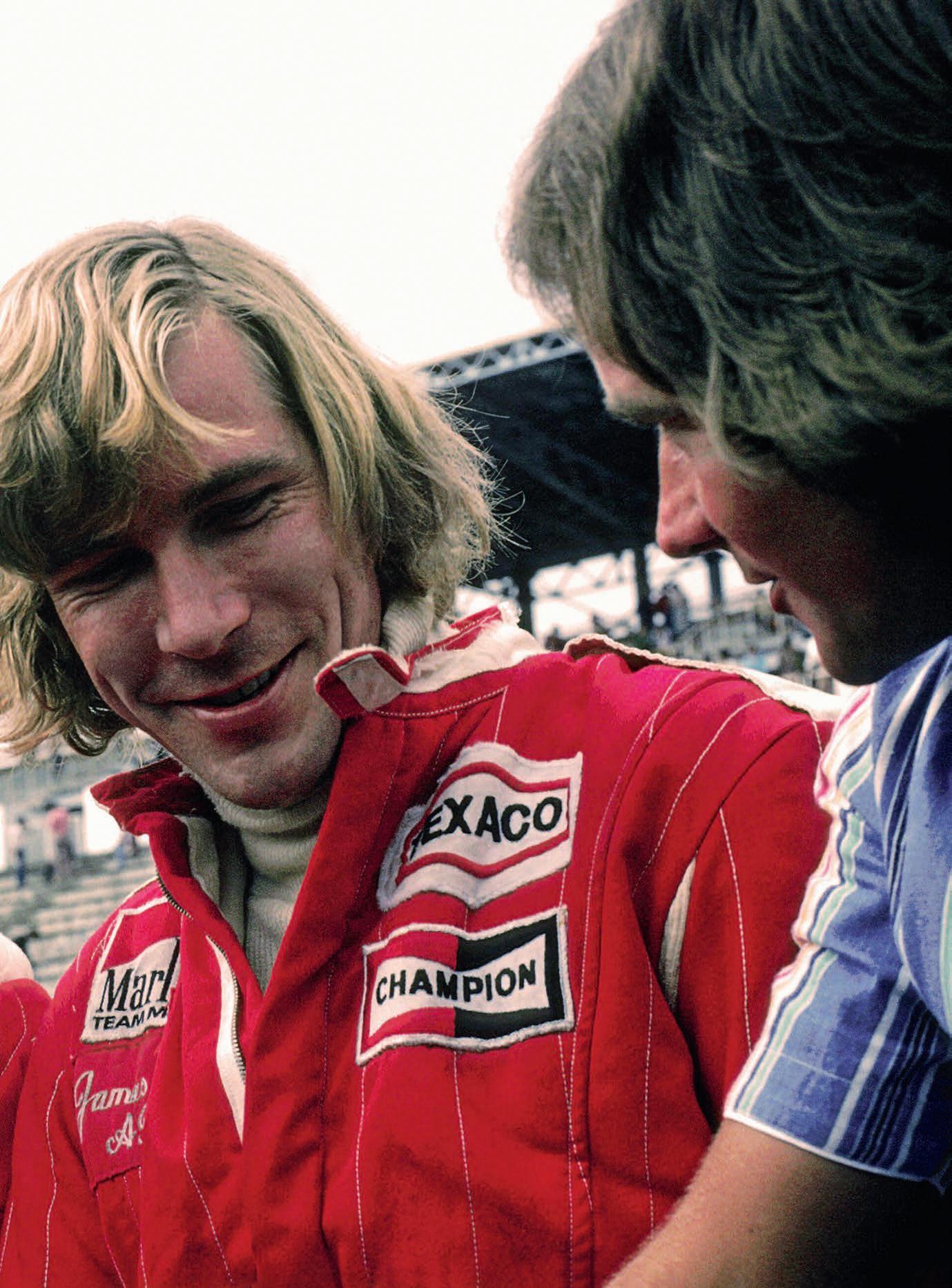
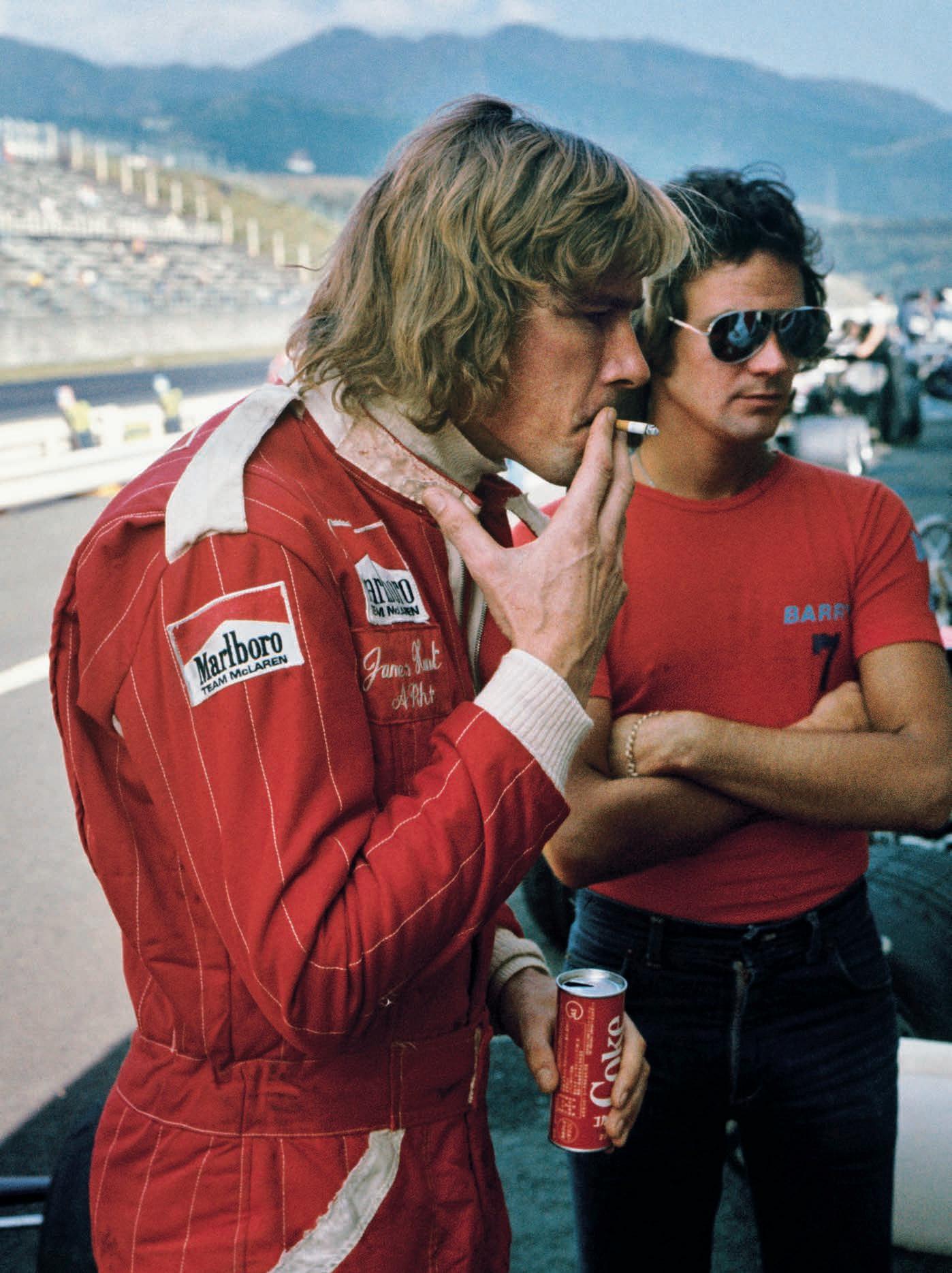
he year 1976 was hot, in all senses. A sweltering summer in Britain – the hottest of the century – produced nine weeks of record temperatures, drying up the reservoirs and leading a panicked government to appoint a Minister for Drought. It was a summer of halter-tops and hot pants, of hardware stores selling out of electric fans, and of queues to draw water from municipal standpipes. Sex was hitting the headlines, too, and few public figures embraced the new standards of liberation more wholeheartedly than the two British sportsmen whose exploits led them to be crowned the world champions on two wheels and four at the end of the year.
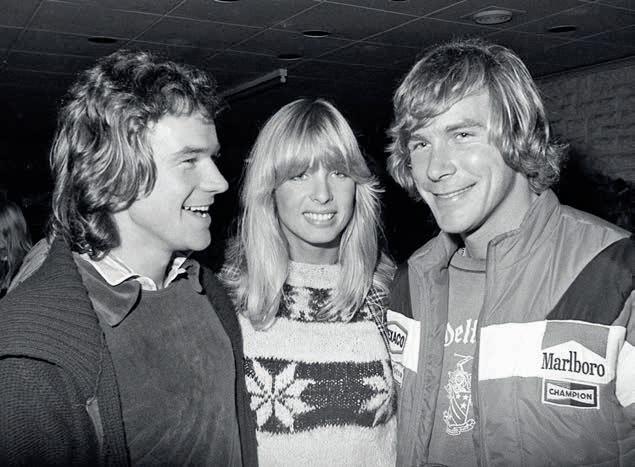
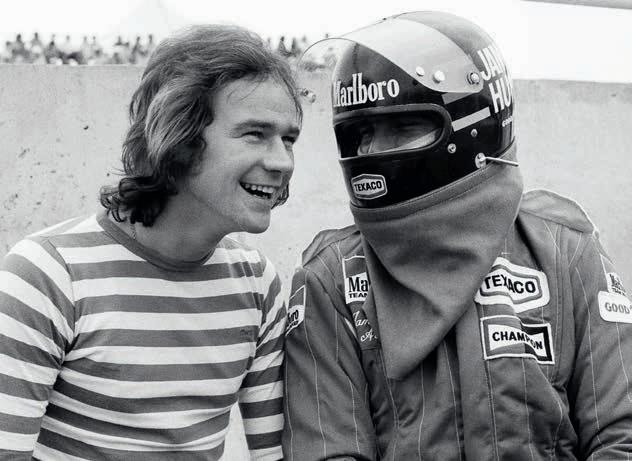
From Monaco to Monza, Assen to Anderstorp, James Hunt and Barry Sheene burned up the Grand Prix circuits. While their racing successes were recorded in the sports pages, they commandeered the front pages of the tabloid press for their exploits off the track. Handsome, long-haired and louche, they could have been brothers rather than the great friends they became. “I got on well with James because we had the same kind of daft mentality,” Sheene told Hunt’s biographer, Gerald Donaldson. “We were both sportsmen and we drank and smoked and chased women. We went to places you shouldn’t go and did things you shouldn’t do. We had a lot of laughs.”
They were like nothing before them and nothing that followed. Hunt broke the mould created by the public image of Britain’s previous F1 world champions, from Mike Hawthorn to Jackie Stewart. Equally, Sheene provoked more vivid headlines than Britain’s previous 500cc worldtitle holders, such as Geoff Duke and John Surtees. Not to say that the champions of earlier generations necessarily behaved like monks. But chaps like Hawthorn enjoyed their good times discreetly, away from the public gaze. Sheene and Hunt, growing up in the spotlight of what was known to Mary Whitehouse and her fellow morality campaigners as the Permissive Society, saw no reason to hide the fun they were having. They exemplified the end of an age of deference whose decline had been announced by the arrival of the Beatles more than a decade earlier.
For society in general, revolution was in the air in 1976. Riots in Soweto and at the Notting Hill Carnival, the deposing of Isabel Perón in Argentina, the shock resignation of Harold Wilson, renewed civil war in Lebanon, the arrival of SAS units in Northern Ireland and of the shock troops of the punk movement on the streets of London, led by the Sex Pistols, who swore at Bill Grundy on TV, all mirrored the rise in temperature.
The year began in the cooler climes of the stratosphere, where the needle-nosed supersonic Concordes of British Airways and Air France carried their first commercial passengers, and of the Innsbruck ice rink where John Curry’s artistry took him to a gold medal for Britain in the men’s figure skating at the Winter Olympics, his achievement marking the start of a year in which sport was seldom out of the headlines.
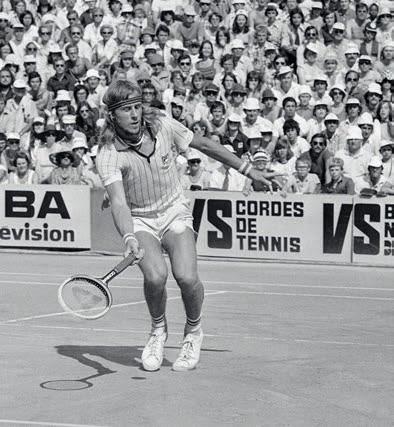
At Wimbledon, where 400 people were treated for heatstroke in a single day, 20-year-old Björn Borg of Sweden defeated Ilie Năstase of Romania in straight sets to become the youngest men’s singles champion in 45 years, and the new idol of the Centre Court. In the summer-long Test series, West Indies revelled in the conditions as they forced England’s captain, Tony Greig, to pay dearly for his promise to make his opponents “grovel”. Crumbling to a 3-0 series defeat, the home side had no answer to the thunderous batting of Viv Richards and the lightning-fast bowling attack of Andy Roberts and Michael Holding.
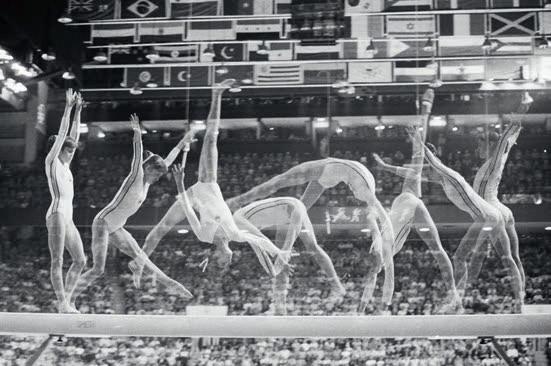
The star of the Summer Olympics in Montreal was a 14-year-old Romanian sprite named Nadia Comăneci, awarded the first perfect mark of 10.00 in the history of the Games for her performance on the asymmetric bars and then given five more perfect 10s on her way to three gold medals. Queen Elizabeth II, opening the Games as Canada’s head of state, could watch one of her own horses, Goodwill, ridden by her daughter, Princess Anne, competing in the three-day event.
It was amid the smoke and noise of motorsport, however, that the competition was hottest, fuelled by the charisma of the two freshly minted British idols whose backgrounds were as dissimilar as could be.
Hunt was the elder, born in 1947 to a prosperous family in the leafy London suburbs. His father, a stockbroker, had served as a lieutenant in the 11th Hussars during the war; his mother was a magistrate and school
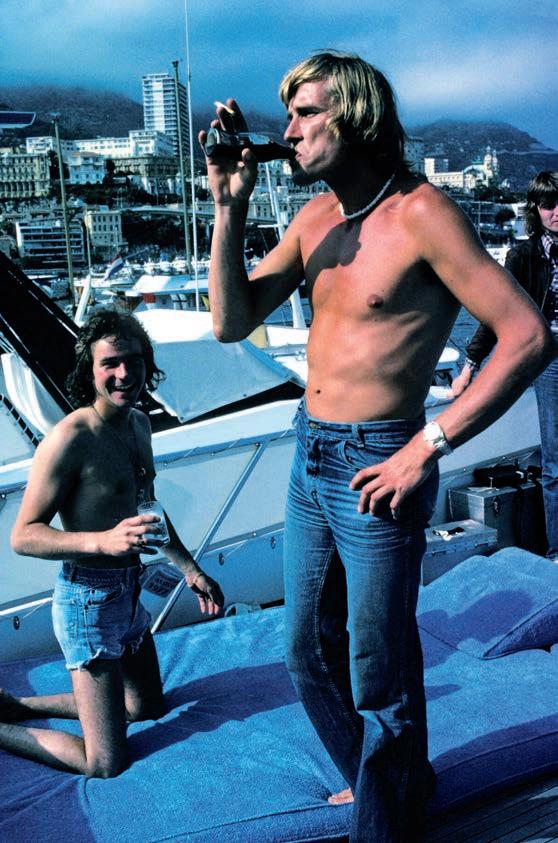
“WEWEREBOTHSPORTSMEN ANDWEDRANKAND SMOKEDANDCHASED WOMEN.WEWENTTOPLACES YOUSHOULDN’TGOANDDID THINGSYOUSHOULDN’TDO. WEHADALOTOFLAUGHS”
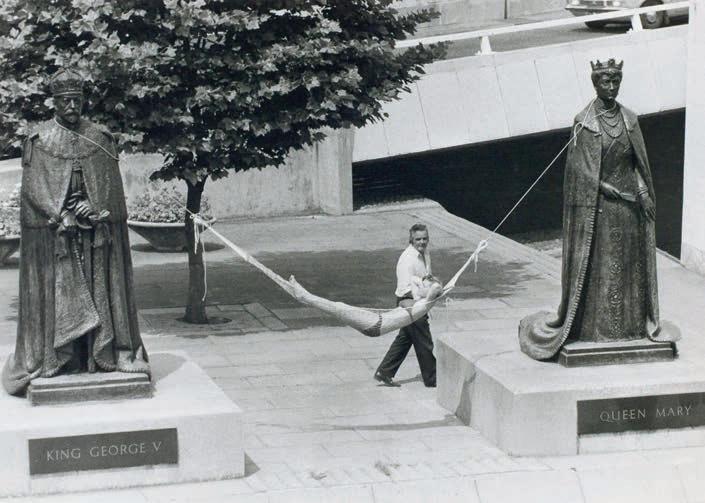
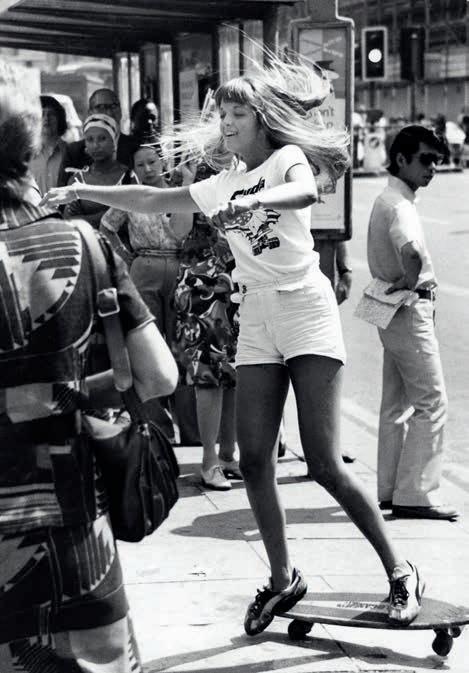

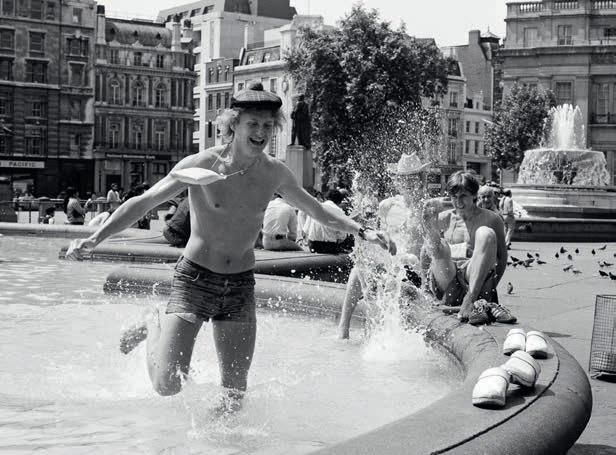
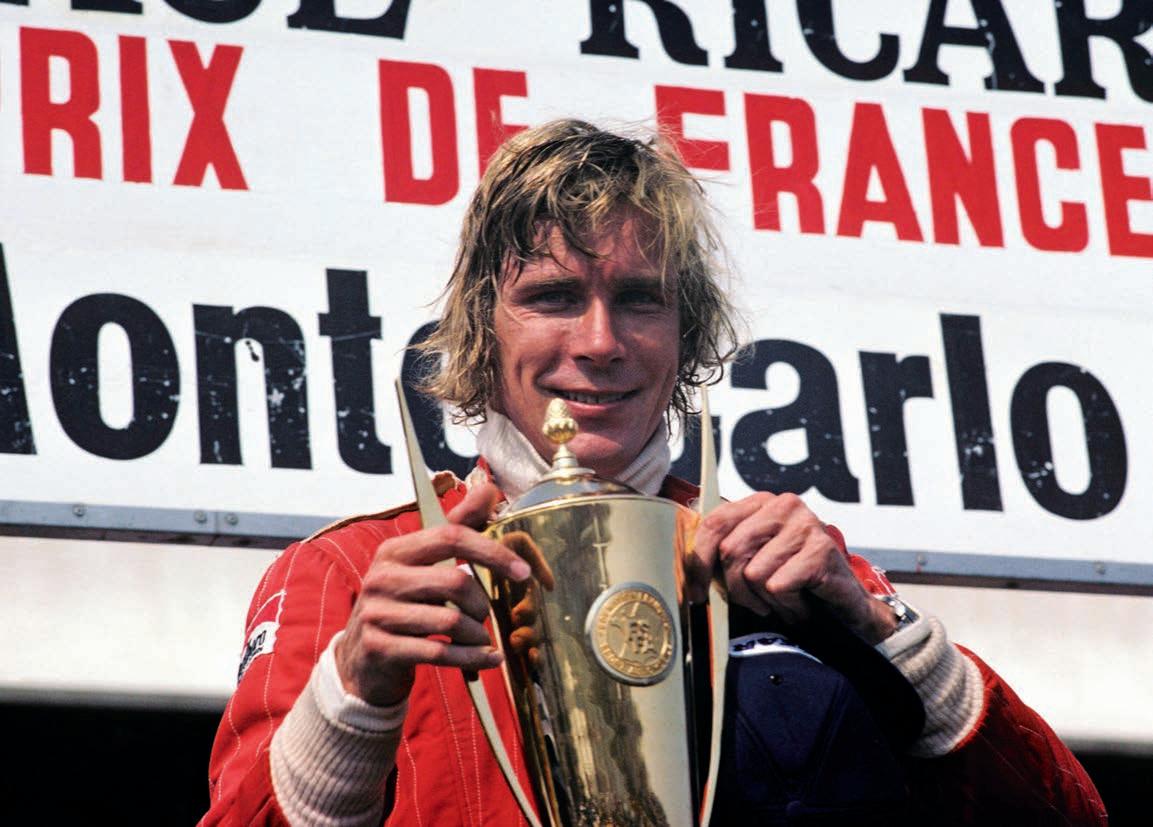
governor. Like his father, James attended the fee-paying Wellington College, where his skills on the tennis court and with the trumpet were more marked than his academic gifts. Having passed his driving test at 17, the most spectacular early example of the many crashes that would give him the nickname “Hunt the Shunt” came when he rolled the family’s Mini into a rose garden, finishing upside down.
His parents’ plan for him to study medicine were thwarted the day after his 18th birthday, when he announced his intention to become a racing driver and, one day, to win the World Championship. Horrified, they declined to provide the backing for what they saw as a reckless ambition.
James was by no means a toff, although it suited newspapers to play up the public-school angle as he worked his way up towards Formula 1. And when he became a fully fledged Grand Prix driver, it was with the patronage of the equally young Alexander Fermor-Hesketh, 3rd Baron Hesketh, who may have entered motor racing as a lark but soon found himself taking it seriously enough to have his own F1 car built in the stables at Easton Neston, his country house in Northamptonshire, located conveniently close to Silverstone.
By now his driver was wearing patches on his overalls that proclaimed “Sex – Breakfast of Champions” and “Sex is a high performance thing” and turning up at formal occasions in shorts and flip-flops. Not everyone in the F1 paddock approved of his behaviour, although even the easily scandalised could hardly withhold acknowledgement of Hunt’s talent when he notched up his first Grand Prix victory at Zandvoort in 1975 after fending off the challenge from the Ferrari of his friend and rival Niki Lauda, who went on to win that year’s title.
By contrast with Hunt’s middle-class background, Sheene was born in 1950 in central London, where his father, Frank, was working as an engineer at the Royal College of Surgeons. Also distinctly averse to formal education, Barry started his working life as, in his own words, “an £18-a-week truck
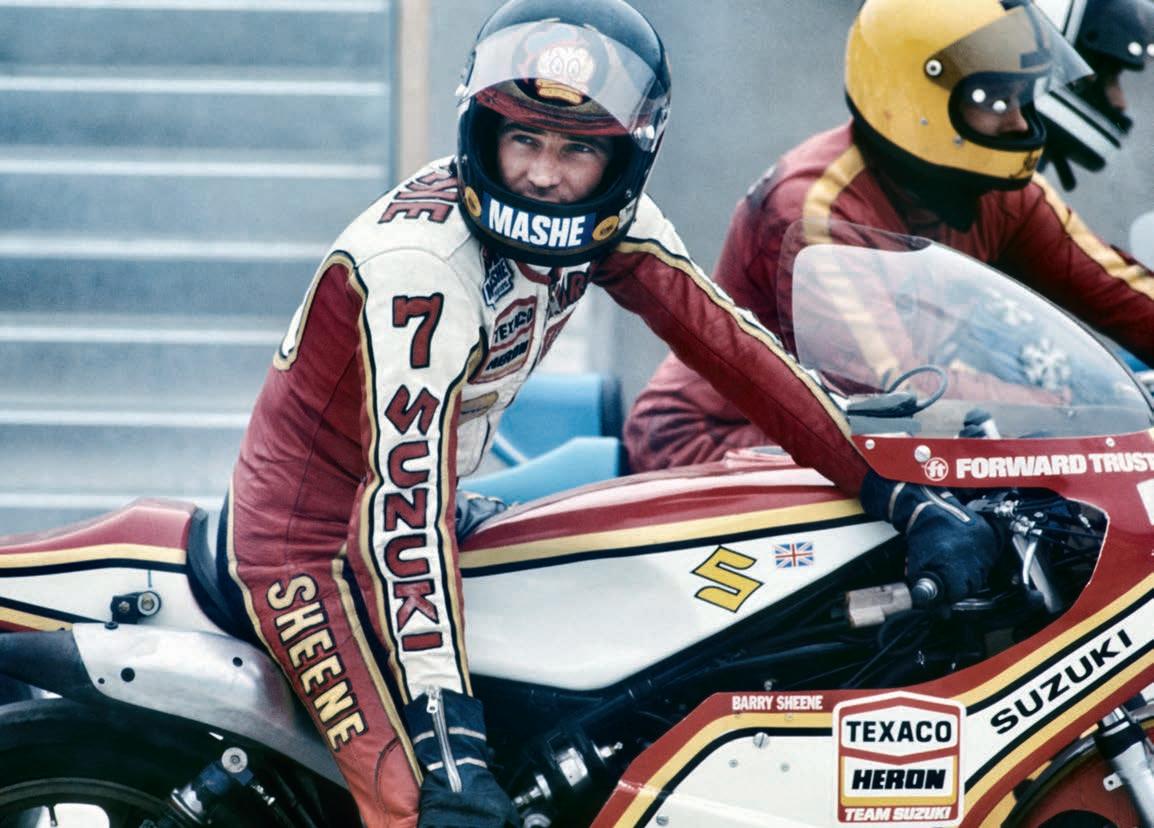
driver”. Frank Sheene, a former motorbike racer, had built his five-year-old son a child-sized bike and then watched the teenager’s talent develop as he competed in motorcycle trials. Barry raced on a circuit for the first time in 1968, aged 17, and won a race at his second meeting at Brands Hatch, his home track. By 1970, with his father as mechanic, he was winning the British 125cc championship.
As raffish a character as Hunt, and similarly resistant to authority, he wore a Donald Duck sticker on his helmet and drilled a hole in the chin bar through which he could smoke a cigarette while on the grid, waiting for the start. His rise through the ranks was fast; by 1973 he was appointed Suzuki’s number one rider, competing primarily in the 750cc class. Turning down an offer to join the all-conquering MV Agusta team for 1974, he stayed with Suzuki in order to help them to develop their new RG500 bike.
It was a lengthy process, interrupted at the beginning of 1975 when he crashed heavily in practice for the Daytona 200 after a rear tyre failed at 170mph. His injuries – broken left femur and right arm, collarbone and two ribs – kept him out for three months, but it was while he was on crutches, doing an advertising photo-shoot, that he met Stephanie McLean, a model and former Penthouse Pet of the Year, who was soon leaving her husband to be with him, sending the tabloids into a frenzy.
Hunt had married his first wife, Suzy Miller, a model and dancer, in 1974, but by the end of 1975, tired of being the wife of an absentee racing driver husband, she had left him for the actor Richard Burton, one of the world’s biggest celebrities – another gift to the tabloids. When Hesketh failed to find a sponsor for 1976, Hunt was a free agent in more than one sense. After signing with McLaren, the intensity of his season-long duel with Lauda for the championship was heightened first by his disqualification – and later reinstatement – from victory in the Spanish Grand Prix, after his car was found to be 1.5cm too wide. Then came furious protests from the highly partisan Brands Hatch crowd against the possibility that he would be barred from taking part in a restarted race after the Ferraris of Lauda and Clay Regazzoni had collided at the first corner, triggering a mass pile-up that damaged the McLaren. He was allowed to race, and he won, but was disqualified two months later.
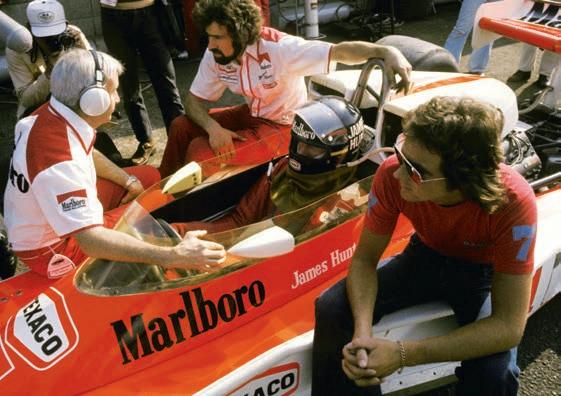
Lauda’s near-fatal crash at the Nürburgring added a further element of drama and, after Hunt had won in Germany and Holland, came the Austrian’s impossibly brave comeback at Monza, where Hunt was made to start from the back of the grid after accusations – later found to be spurious – of fuel irregularities. At the end of a season which Lauda had led throughout, all eyes were on the finale in Japan.
Sheene won the first three races of the 1976 series, followed by the two more Grands Prix that gave him the two-wheeled title, way ahead of the Finn Teuvo Länsivuori. That October he travelled to Japan to support his pal James’s bid to secure the F1 championship in a downpour at Fuji, looking on as Lauda’s understandable decision to pull in and retire (“My life is worth more than another world championship,” reckoned the straighttalking Austrian) allowed Hunt to achieve his ambition at the end of a hugely thrilling and often controversial campaign.
Attempting to defend his title, Hunt won three rounds of the 1977 campaign but, hindered by inadequate machinery, was destined never to repeat his greatest success. Disenchanted with unreliable cars and depressed by the death of his friend Ronnie Peterson after a crash at Monza in 1978, he retired from the track midway through the 1979 season before embarking on a successful second career with the BBC as Murray Walker’s co-commentator. In 1983 he married Sarah Lomax, with whom he had two sons before they divorced in 1989. He was 45 years old and planning his third marriage, to Helen Dyson, when he died of a heart attack at his home in Wimbledon on 15 June 1993.
A second 500cc title for Sheene in 1977 would prove to be the last to date for a British rider at the top level of two-wheeled Grand Prix racing. He retired in 1984, feeling the effects of another heavy crash, this time in practice at Silverstone, in which both legs were badly broken. He and Stephanie and their two children went to live on Australia’s Gold Coast, where he, too, enjoyed a successful media career. His return visits to Britain included victory in his final race, at the 2002 Goodwood Revival, where the Barry Sheene Memorial Trophy is now named after him. He died of throat and stomach cancer on 10 March 2003, aged 52.
Unlike Sheene, Hunt had many successors, most recently Lando Norris, the newly crowned 11th British champion – who, like the rest of his F1 generation, is highly unlikely to be seen smoking a cigarette in the cockpit or wearing overalls celebrating the performance-enhancing qualities of sex. Times change, and we change with them, but that double triumph of 1976 remains bathed in the golden shimmer of a very special heat-haze.
Fifty years after James Hunt was crowned the 1976 F1 World Champion, Goodwood will welcome a host of his cars, and those of his rivals, to the 83rd Members’ Meeting presented by Audrain Motorsport, 18–19 April 2026
SUZUKI, ON SHEENE BEHIND THE SCENES. INTERVIEW BY ROB WIDDOWS
“Barry was Jack the Lad, a showman, very funny, but he was also astute, very smart. He learnt the languages of his mechanics, including Italian, French and Japanese, and he was clever in the way he marketed himself. I trained with him and he kept himself fit. What was weird was that he smoked about 40 a day, but he had really good lungs, could swim a length underwater.
“We were teammates at Suzuki and I learnt a lot from him, about life as well as racing a bike. He was already a honed professional when I got to know him and he showed me the tricks of the trade – how to treat people – and although I may have been in his slipstream, it was a hell of a good tow.
“Barry was my hero before we raced together. I had a poster of him on my bedroom wall, so to be his teammate was very special. The only downside was that it was like being Max Verstappen’s teammate, or Marc Márquez’s: they can destroy you as well. I was a good bike racer but Barry could put me in my place. I think he had more fire in his belly than me, he was very determined, had his goals, and in 1976 and ’77 he pretty much dominated the World Championship.
“Of course, with Barry winning the title in 1976 and Hunt winning the Formula 1 title, it was a great year for us Brits on bikes and in cars. They really did break the mould, and in the years that followed – after Barry and Kenny Roberts – there weren’t as many great characters around. It all became a lot more corporate and the youngsters we see today start so early, they’ve never had a life outside racing.
“I’ve ridden Barry’s bikes at events and I did a demo run at Mallory Park with his son Freddie. He and I also shared Barry’s Manx Norton when we raced in the Barry Sheene Memorial Trophy at Goodwood. That was really very special and hugely emotional. Not many days go by, you know, when I don’t think to myself, ‘I wonder how Barry would do this, or that?’ He was my best mate, my brother and my father all rolled into one. We had a lot of fun.”













McLaren Ascot 01344 292000 info@ascot.mclaren.com


McLaren New Forest 02380 082160 info@newforest.mclaren.com Uncompromised



McLaren Birmingham 01564 787180 info@birmingham.mclaren.com
McLaren Leeds 01134 879710 info@leeds.mclaren.com




McLaren Glasgow 01698 303390 info@glasgow.mclaren.com
McLaren Manchester 01625 324931 info@manchester.mclaren.com

McLaren Hatfield 01707 682700 info@hatfield.mclaren.com




No painter before him had ever captured the horse as realistically and heroically as George Stubbs. As the National Gallery, London prepares to exhibit some of the revered English artist’s best-loved works, including the incomparable Whistlejacket, Rachel Campbell-Johnston reveals the painstaking research Stubbs carried out to achieve his game-changing insights into anatomy, which still resonate today
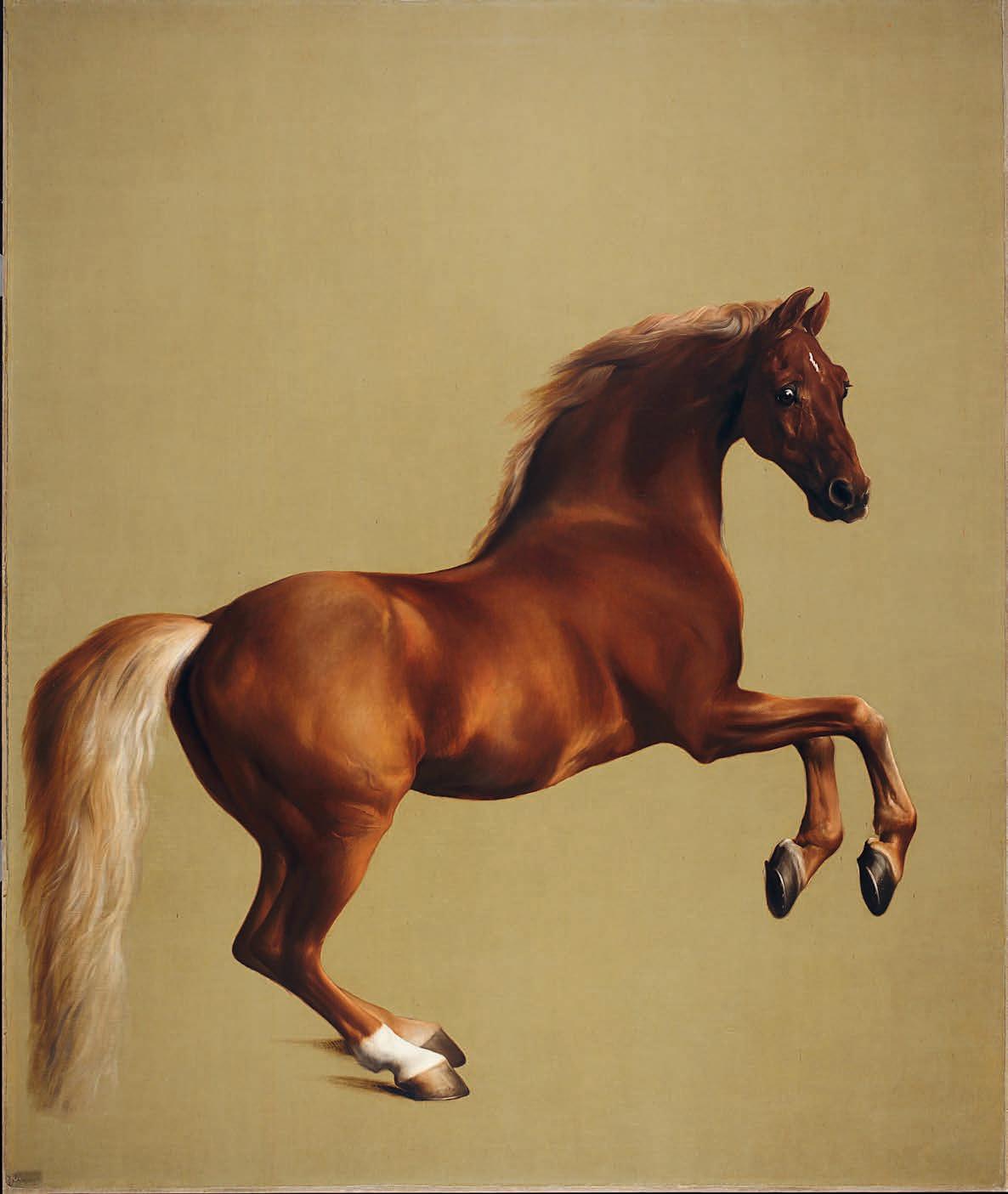
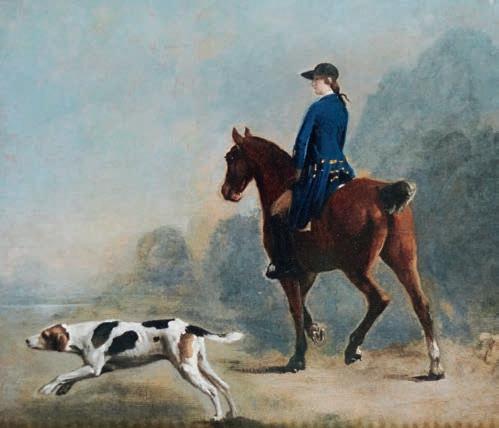
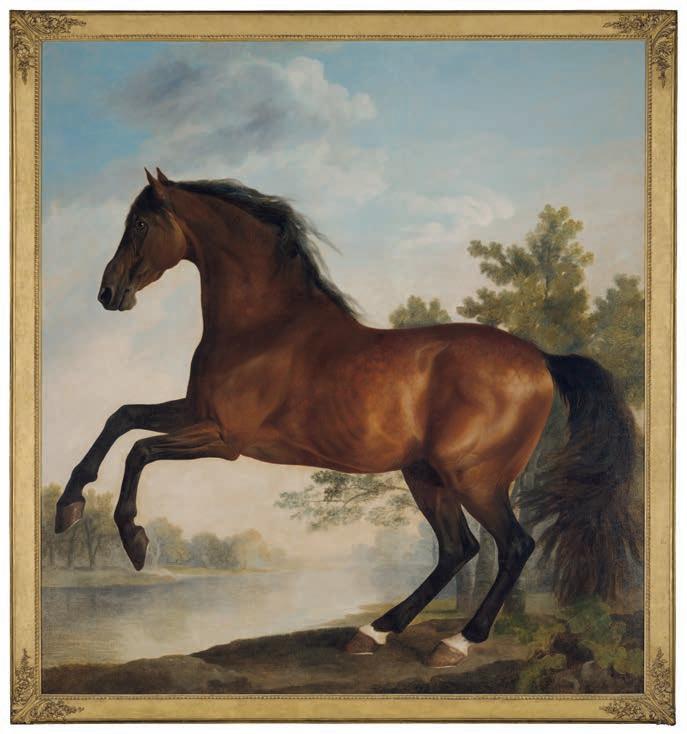
At the National Gallery this spring, the exhibition Stubbs: Portrait of a Horse will stable two of the painter’s most spectacular equines side by side. Whistlejacket, that world-famous flaxen-maned chestnut Arabian, will be brought together for only the second time ever with the perhaps less well-recognised but just as flamboyant bay thoroughbred, Scrub. They rear up before you, quite literally large as life, in a tightly focused show that sets out to explain why their creator, George Stubbs, found renown as our greatest equine portraitist. “With Stubbs, the spirit of horse painting was altered forever,” says curator Mary McMahon. “Everyone who drew horses from then on drew from Stubbs.”
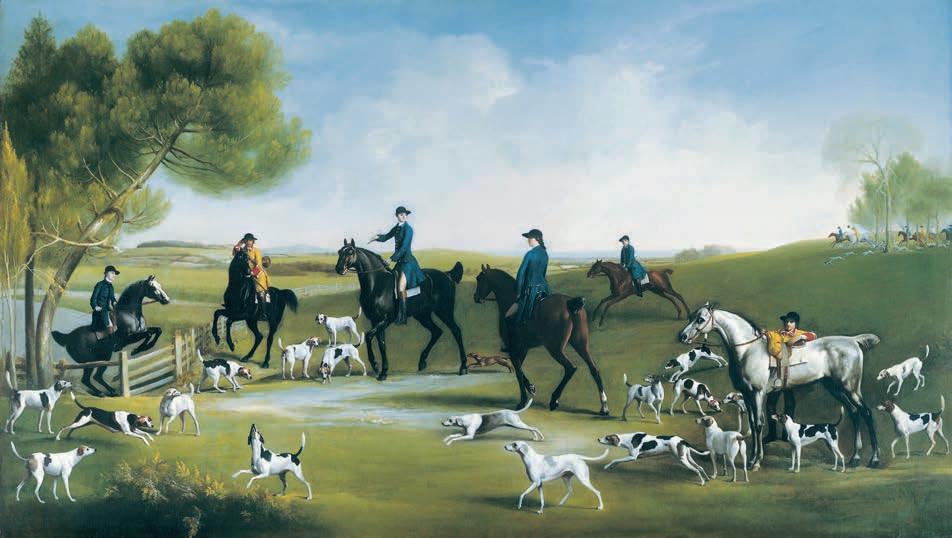
Stubbs is now feted as the quintessential English artist. No country mansion is complete without one of his canvases. Goodwood itself possesses a remarkable trio, including a picture of racehorses exercising while family members look on from their mounts, and a fox-hunting scene in which the 3rd Duke of Richmond and his brother draw up for a breather amid milling hounds. (More on Goodwood’s unique connection to Stubbs shortly). Meanwhile, Stubbs’s prints adorn country house corridors, hotel lobbies and pub loos; as much a part of our rural heritage as wet Labradors in the hall. But it was not always so.
Born in 1724, the son of a Liverpudlian leather worker, Stubbs was of humble stock. A portrait, taken by his friend, Ozias Humphry, introduces a decidedly stolid-looking figure: portly and balding with lumpen nose and double chin. Stubborn, laconic, ill-tempered and, for the last 40 years of his life, completely teetotal, he was hardly the sort to slip effortlessly into fashionable society. In cultural circles he was also a misfit. The Royal Academy, to which he would only be elected in his late fifties, dismissed him as “a mere horse painter”. So-called history painting – great mythical dramas and grand battle scenes – was considered the most desirable genre.
Upon the death of his father, the 16-year-old Stubbs briefly entered the family business. But he carried on with the art he had practised since childhood and, by his twenties, he was married and earning a living as a jobbing portraitist. The odd local dignitary commissioned him, and Stubbs’s lively observations of the stable lads, jockeys and grooms who were later to take such vivid bit-parts in his pictures probably stems from this time. It was his knowledge of equine anatomy, however, gained not through books but through dissections of cadavers, that was to make him an incomparable painter of horses. The details of his research, undertaken between 1756 and 1758 in a farmhouse near Horkstow in Lincolnshire, are decidedly unprepossessing. His skill would appear to belong as much to the butcher as the painter.
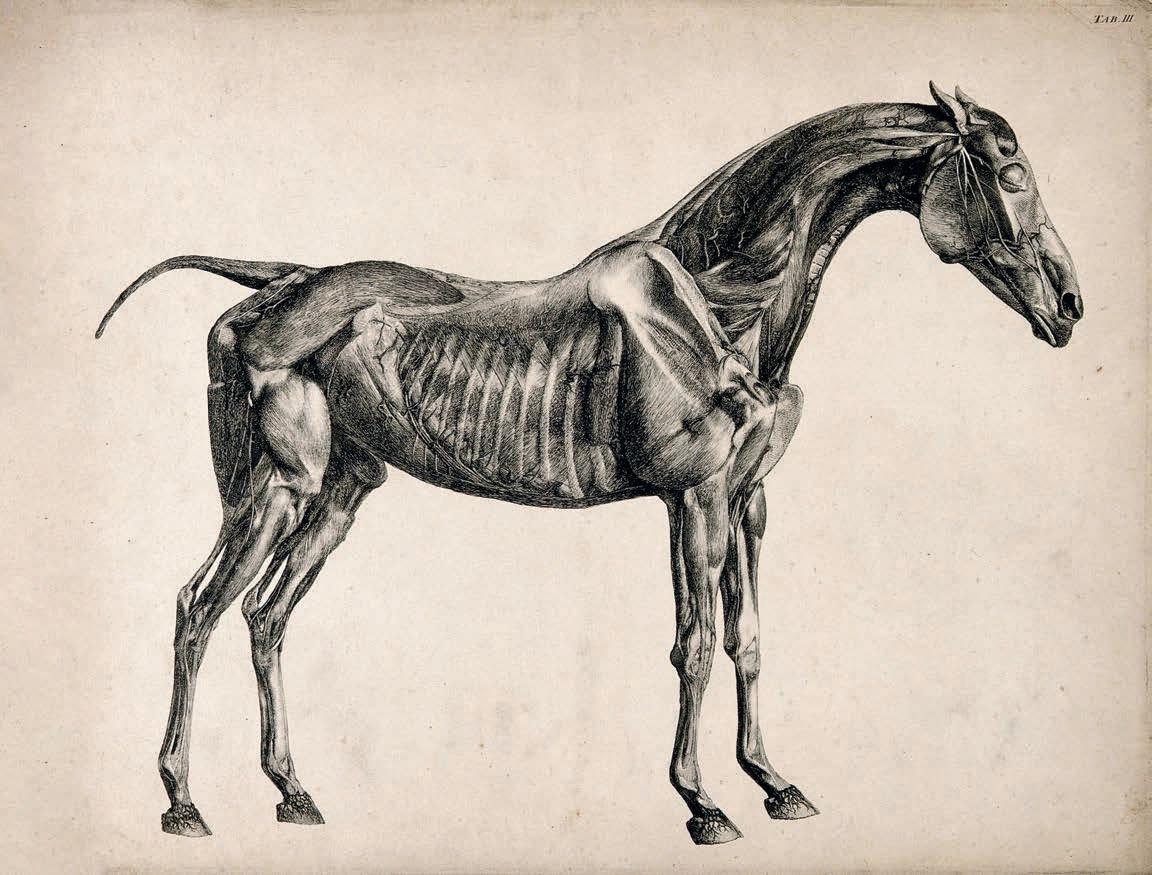
The horses came to him alive. He began by cutting their throats. It was not the quickest way to dispatch them, but it served Stubbs best because it left no marks. He would then pump their blood vessels full of a chemical solution which, hardening, preserved them, before hauling the carcasses up on iron hooks and arranging them in lifelike positions. Over the course of six or seven weeks, he would work on the suspended corpses, slowly peeling them, layer after layer – like an onion, only far more malodorous. Even when the stench of putrefaction was overpowering, he continued, accurately recording the venous system and musculature at every stage of exposure until he had got down to the skeletal hulk.
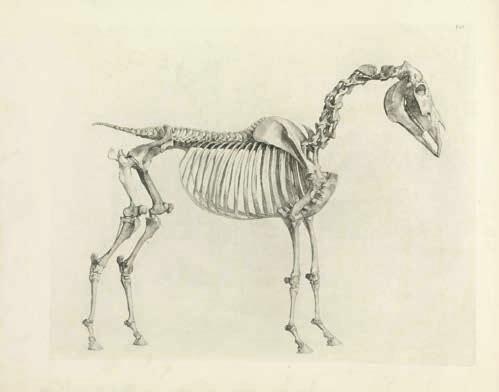
From this gruesome mess arose a masterpiece of empirical analysis. Stubbs’s 1766 The Anatomy of the Horse was the equivalent of Albinus’s dissection of the human body, which had been published in England some 15 years earlier and to which Stubbs’s carefully labelled etchings and detailed accompanying texts were much indebted.
Stubbs’s engravings, their ghostly equines parading across page after page, certainly did a lot to advance the cause of the horse, which until then had suffered heinous brutalities at the hands of ignorant farriers whose medicinal knowledge was informed by nothing more reliable than folklore. But it also advanced Stubbs’s own cause.
Armed with his portfolio, he moved to London in about 1760 and quickly attracted the attention of ebullient young aristocrats, aficionados of horseflesh. His first major patron, Charles Lennox, 3rd Duke of Richmond, was among them and his early commission of three large canvases for Goodwood House – they now hang in the state apartments – proved so successful that Stubbs’s career was launched. Racing and gambling were massively popular in the 18th-century era. Horses were stars in their own right and it was Stubbs who depicted them. The same wealthy landowners
who hired Joshua Reynolds to paint their wives or mistresses paid Stubbs to paint horses with pedigrees as distinguished as any nobleman’s. In his ambitious The Turf Review, a series of paintings that Stubbs started at the age of 69 – they will also be a focus of the National Gallery show – he set out to chart the long history of racing’s bloodlines.
The 3rd Duke’s rakish friend the 2nd Marquess of Rockingham – the centre of a dashing society circle nicknamed the Rockinghams – became, thanks to the Goodwood commission, another major patron. In 1762, he commissioned Stubbs to paint commemorative portraits of his two most successful racers: Whistlejacket and Scrub. The latter, now in the collection of Lord Halifax, is the only one of Stubbs’s life-size animal portraits to remain in private hands. Whistlejacket, meanwhile, saved for a nation that regularly features it on “favourite” lists, was acquired by the National Gallery almost 30 years ago. It has been suggested (wrongly, in all likelihood) that it was originally intended to have a rider and landscape later added. But, as the story has it, Whistlejacket, seeing his portrait (Stubbs famously painted from life), supposedly mistook it for a rival and reared up to attack. Stubbs had to ward off the stallion with brandished mahlstick. The Marquess, hearing the tale, requested that the painted Whistlejacket be left, unrestrained and majestic, free of rider or tack or distracting backdrop. This is just one of several stories suggesting that Stubbs’s paintings were so lifelike that they could be mistaken for the real thing. Perhaps it was Stubbs himself who encouraged them. “Lots of people say Stubbs flattered his subjects,” says Newmarket trainer Sir Mark Prescott. “They claim he takes artistic license, that horses don’t look like that.” Certainly, horses don’t gallop in the way Stubbs shows them, with legs at full stretch as if lying flat on the wind. It was only later, in 1872, that the photographer Eadweard Muybridge set up a line of cameras with tripwires that could trigger a splitsecond picture and so for the first time revealed how a horse really moved. But, as far as he knew how to be, Prescott argues, Stubbs was faithful to life. Prescott takes Eclipse – “the greatest horse that Stubbs painted” – as an example. The undefeated Eclipse is now dubbed “the grandfather of modern racing”, but today’s aficionado might not guess it. “Eclipse was
Scrub, a bay horse
only 14.2 hands; he had very straight front legs and his feet were very upright and very small,” says Prescott, “but there’s no doubt that Stubbs portrayed him exactly as he was.” Similarly, Stubbs captures the stress of the triumphant Hambletonian. The owner wanted a glorious celebration of his horse’s victory, but Stubbs painted a creature in a state of nervous post-race exhaustion. The image is made poignant by its painter’s manifest compassion for an animal that has been all but run into the ground.
Stubbs captures every curve of musculature in the polished gleam of the grey that stands to one side of his Goodwood hunting scene; he includes the flecks of white on a coat where a saddle has chafed; he shows how the yank on chifney bit makes a stallion balk and how a group of brood mares lay their ears back not, as art historians have speculated, because a storm is brewing, but because they’re expecting trouble between a pair of nippy foals.
Stubbs also drew from culture. He had visited Rome, acquainting himself with the lineaments of classic equine beauty. His depictions of a lion leaping upon a horse are directly modelled upon a famous Hellenistic marble. As the demon-eyed cats pounce with raking claws upon their prey, Stubbs appeals to contemporary Romantic taste and its penchant for grand elemental dramas. Certainly, to a contemporary audience, nerves atremble with a newly awakened awareness of Edmund Burke’s sublime, these pictures will have evoked a highly fashionable sense of spellbinding terror glimpsed from a safe distance.
Yet for all the art history, “all from nature” was Stubbs’s fundamental boast. The horse, the symbol of beauty, energy and power that had galloped across the frieze of the Parthenon, pawed and stamped in the works of Leonardo, wheeled and reared in Rubens’s battles and carried Van Dyck’s kings – and which would go on to prance through Delacroix’s grand visions and stream across the canvases of Degas – found its most trusted friend and faithful ally in the humble “horse painter” Stubbs.
The exhibition “Stubbs: Portrait of a Horse” is at the National Gallery from 12 March – 31 May 2026; nationalgallery.org.uk. You can view Stubbs’s paintings at Goodwood year-round, as part of the fine art collection at Goodwood House
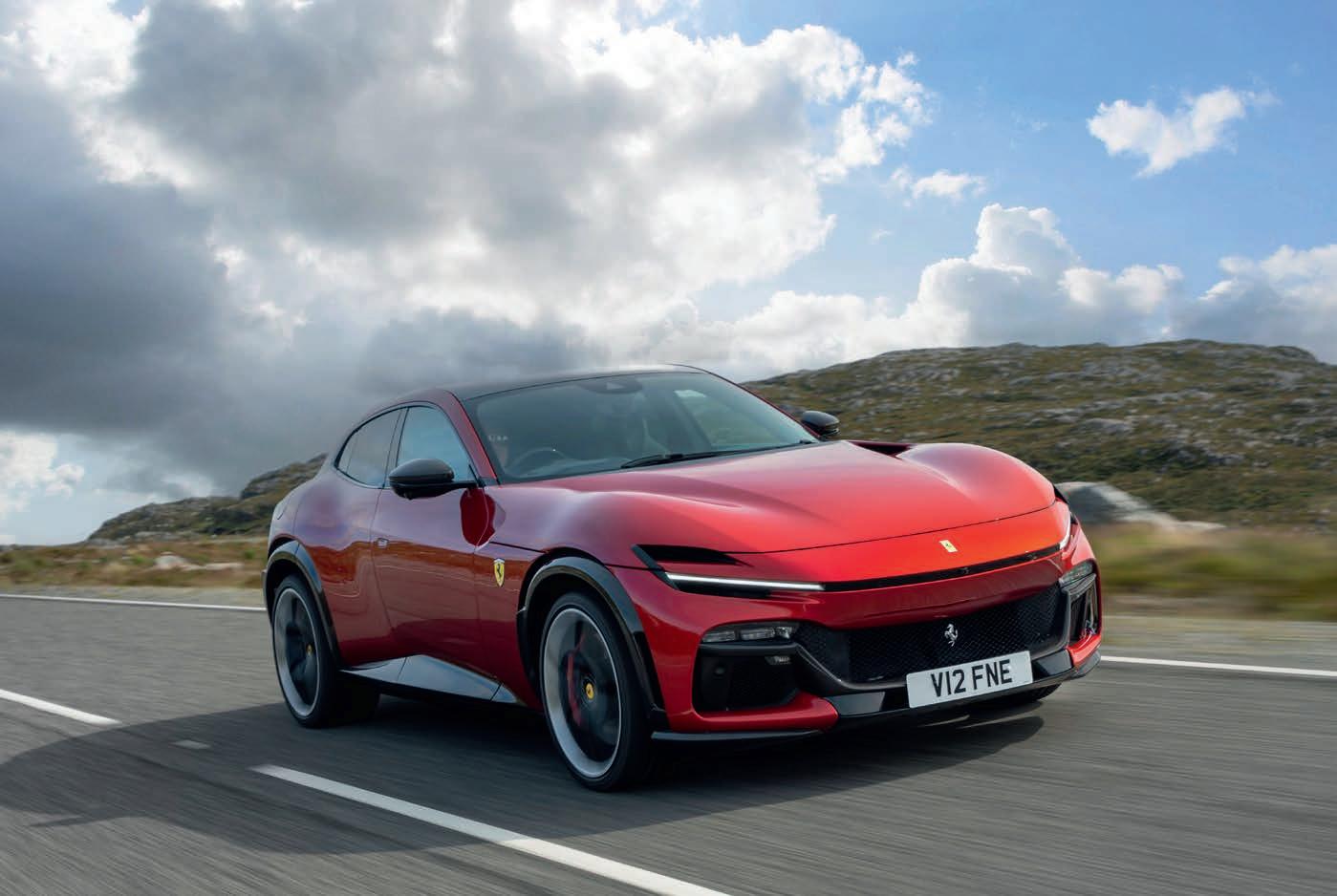
The Ferrari Purosangue is a new kind of thoroughbred, a masterpiece that defies convention and commands the road.
The first of its kind with four doors, four seats and unmistakable Ferrari soul, it unites elegance, performance and versatility in a form that is as beautiful as it is purposeful. Its sculpted silhouette moves with effortless presence, while the sumptuous hand-crafted interior offers space, comfort and refinement for every journey.
A new generation of Ferrari that does not simply respond to the road, it defines it.
Discover the Purosangue at your official Ferrari dealer.
Fuel economy and CO2 results for the Ferrari Purosangue in l/100km: 14.8 to 27.8. CO2 emissions: 336 to 677 g/km. Figures shown are for comparability purposes; only compare fuel consumption and CO2 figures with other cars tested to the same technical procedures. These figures may not reflect real life driving results, which will depend upon a number of factors including the accessories fitted (post-registration), variations in weather, driving styles and vehicle load.
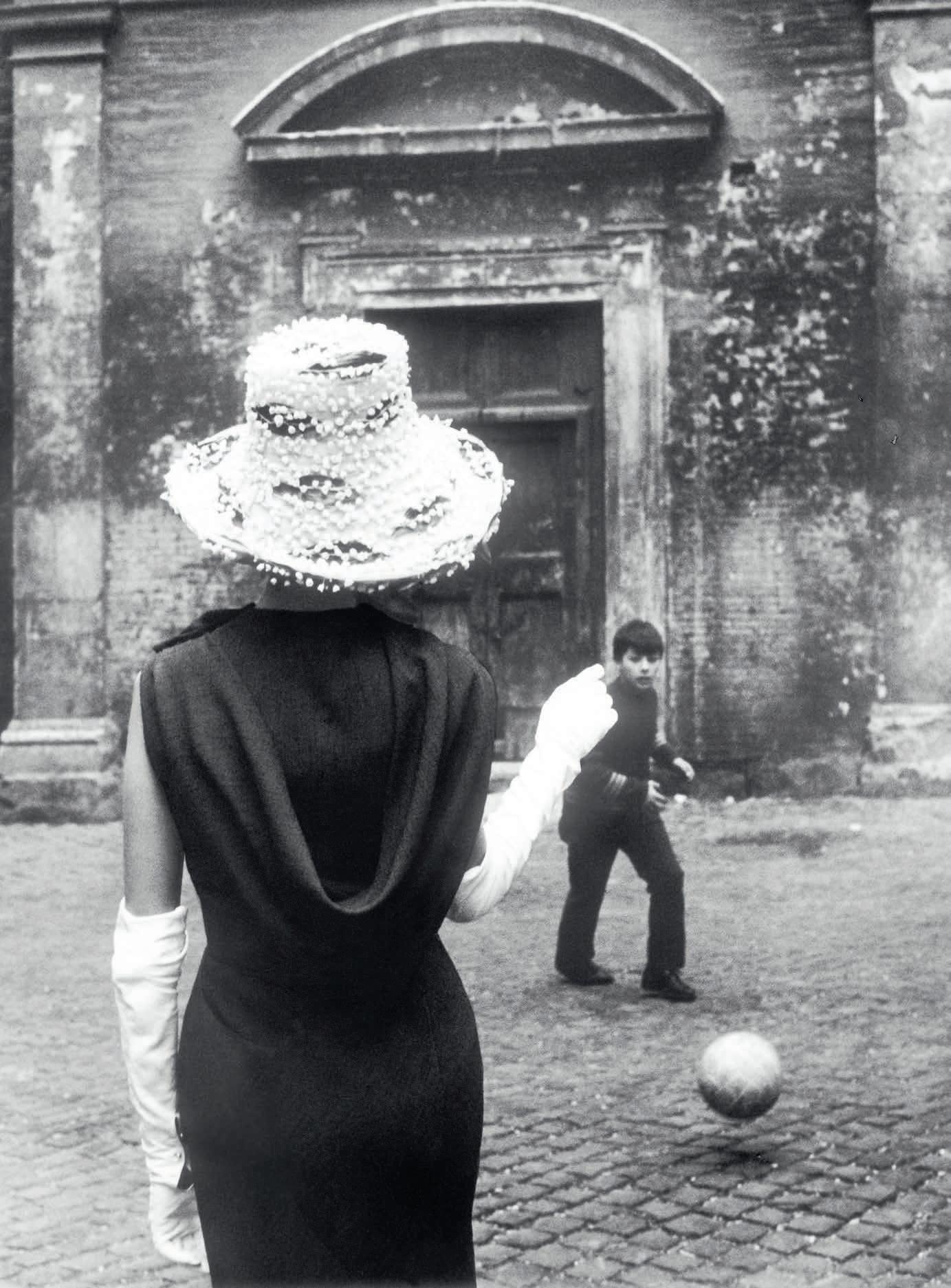
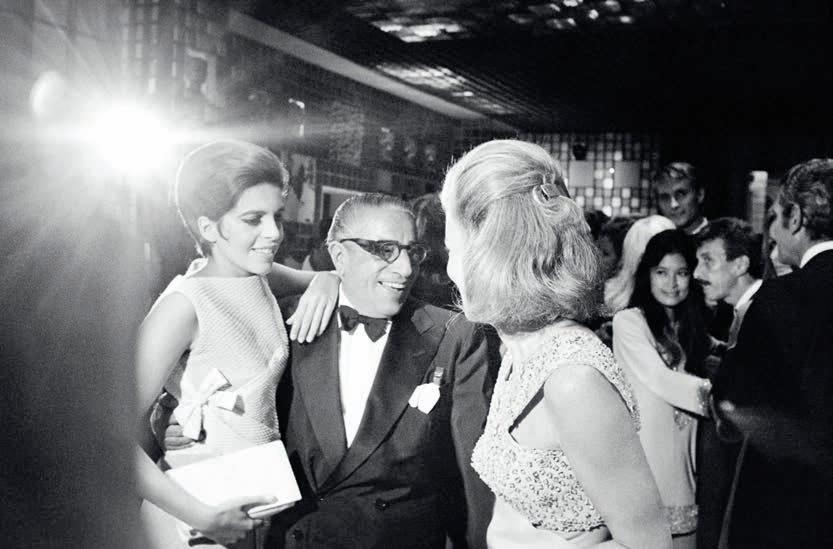
Italian photographer Paolo Di Paolo chronicled the dawn of La Dolce Vita before hanging up his camera and disappearing from view. Damon Syson talks to Di Paolo’s daughter Silvia about her late father’s life and work, which is now being enjoyed by a new generation
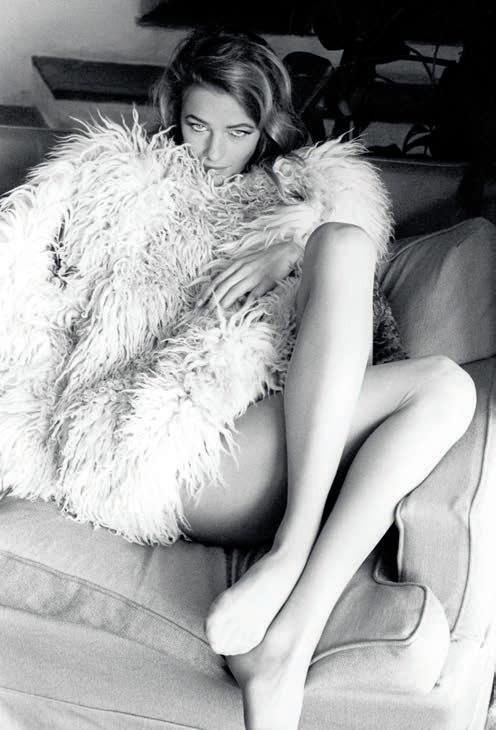
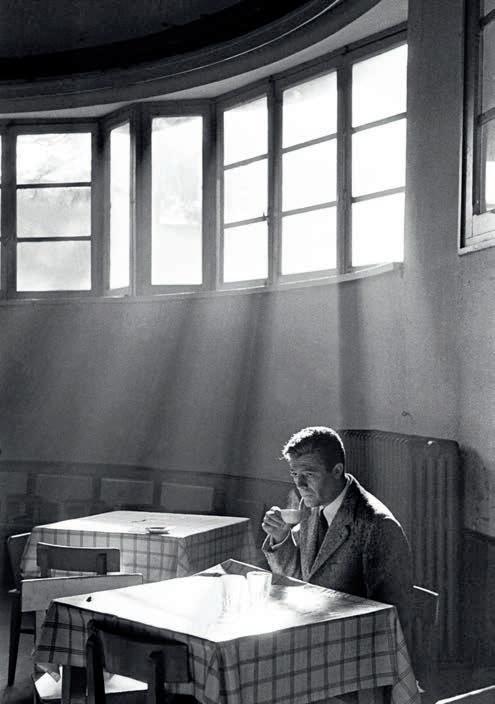
Few people have captured the essence of La Dolce Vita with as much style and panache as Paolo Di Paolo, yet for decades the Rome-based photographer was a forgotten figure, his vast body of work languishing in a trunk in his cellar. It was only when his daughter Silvia was searching for a pair of skis that she happened upon this treasure trove of 250,000 negatives. Before that, she had no idea her father had even worked as a photographer, let alone been one of the leading lights of his generation.
In 2022, photographer and filmmaker Bruce Weber released The Treasure of His Youth, a documentary about Di Paolo’s life and work. Weber had discovered his predecessor’s genius by chance: visiting a small bookshop and gallery in Rome in 2016, he realised that all the pictures he loved most were by the same photographer – a name he’d never heard before.
Di Paolo’s arresting images of postwar Italy in all its grit and glamour later came to the attention of Alessandro Michele, then creative director of Gucci. Having bought some prints in the same shop, Il Museo del Louvre, the designer became fascinated by the work of this forgotten maestro, which resulted in Gucci sponsoring the first ever retrospective of Di Paolo’s work at Rome’s MAXXI museum in 2019.
Born in Larino, Southern Italy, in 1925, Paolo Di Paolo moved to Rome in 1949 to study philosophy. He was working for a tourism magazine in 1953 when he spotted a Leica IIIC camera in the window of an optician and “fell in love”. The following year, he began contributing to Il Mondo, one of the era’s most influential magazines. This weekly publication was the birthplace of reportage photography in Italy, largely thanks to the vision of its editor, Mario Pannunzio, who recognised that photography could tell its own stories rather than being subordinate to text.
Over the next 14 years Di Paolo became Il Mondo’s most prolific photographer – at a time when his country was emerging from the horrors of fascism and taking its first steps towards the “economic miracle” that would transform this agrarian nation into an industrial power. As he told Weber, “Italy was in a period of rebirth, and I and other friends were fortunate enough to record it.”
These years also marked the dawn of a new spirit of optimism. As Federico Fellini showed so memorably in his 1960 film La Dolce Vita, it was an intoxicating time to be young. “To summarise that period,” Di Paolo commented in The Treasure of His Youth, “we went everywhere with our imagination. Our huge wealth was our fantasies, the ability to dream… We
“Italy was in a period of rebirth, and I and other friends were fortunate enough to record it”
wanted to escape from this cage that had oppressed us for so many years, and we did. Often, we couldn’t afford lunch or dinner. But at night, we’d become artists, painters, writers, actors – and we were happy to be alive.”
“My father was a photographer from about the age of 25 until he was 40,” says Di Paolo’s daughter Silvia, who now manages the archive she uncovered in the cellar, “and he told me it was the most beautiful time of his life. There was an explosion of creativity and enthusiasm. The new economy was beginning, Cinecittà [Rome’s film studio] was booming, and for young people it felt like anything was possible.”
Di Paolo’s talent was swiftly recognised, and for the next 14 years, he photographed every major Italian luminary. Cutting a dashing figure in his tailored suits, he possessed a unique ability to gain the trust of his subjects, who included movie stars like Gina Lollobrigida, Elizabeth Taylor, Marcello
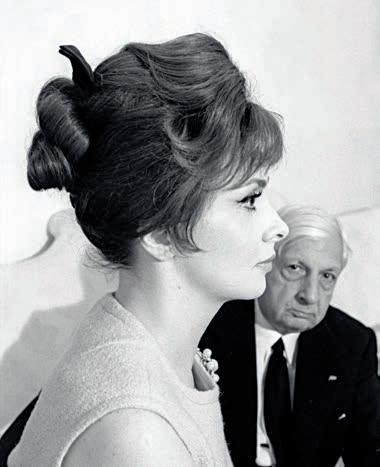
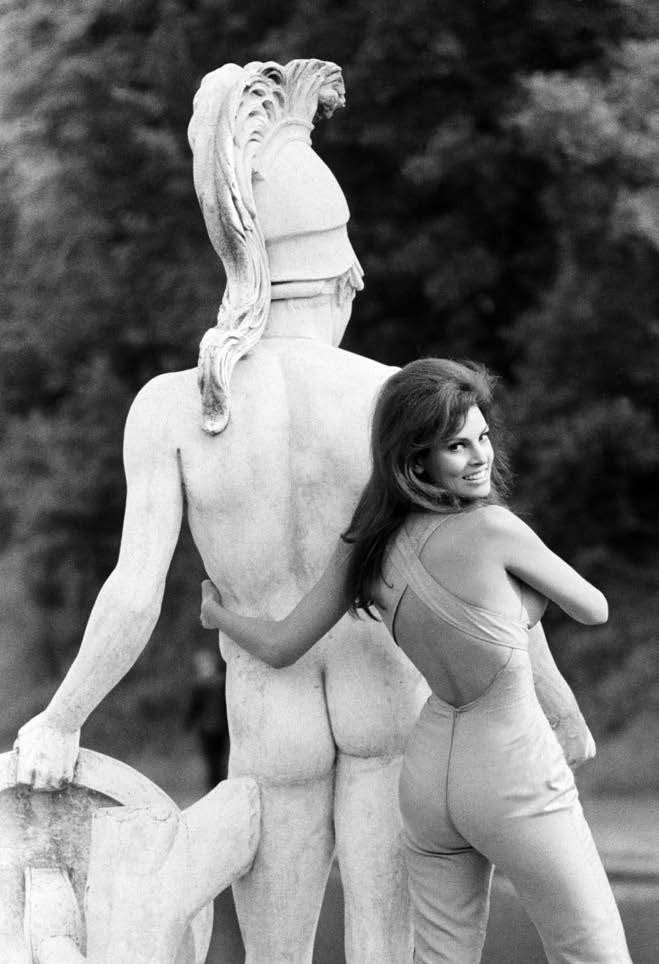
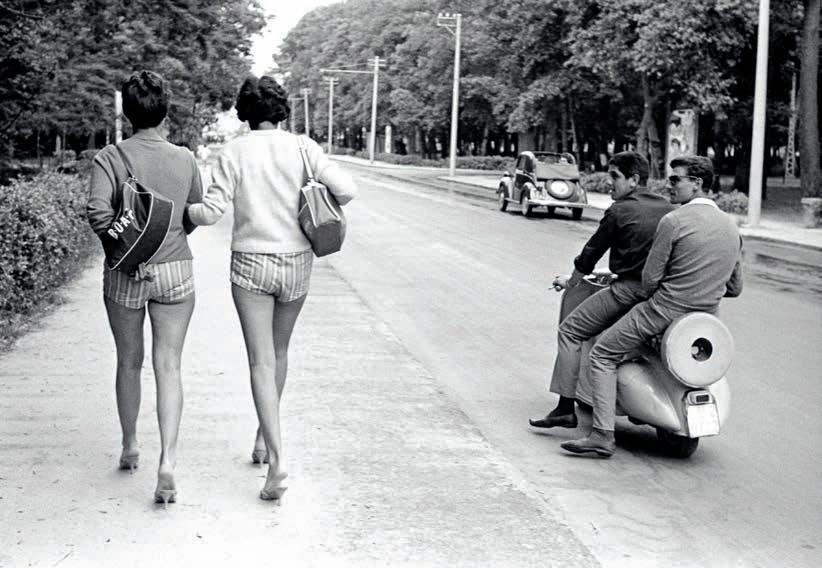
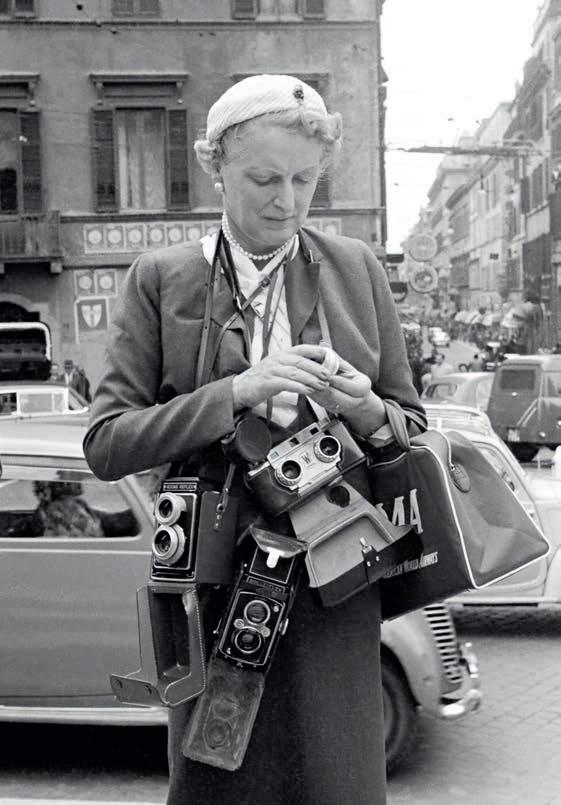
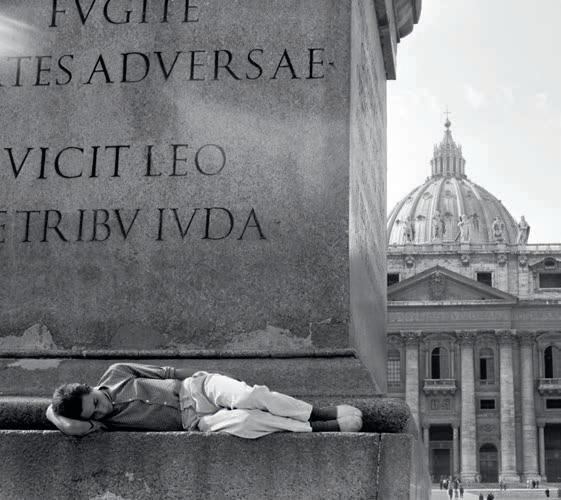
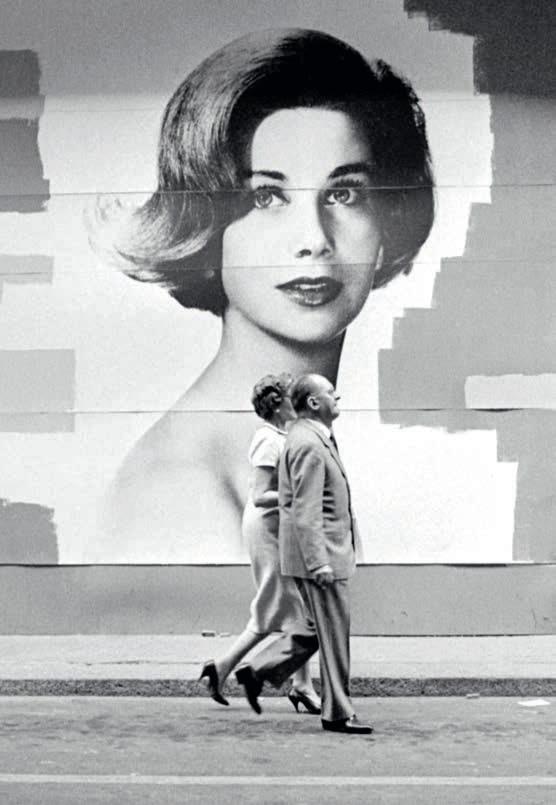
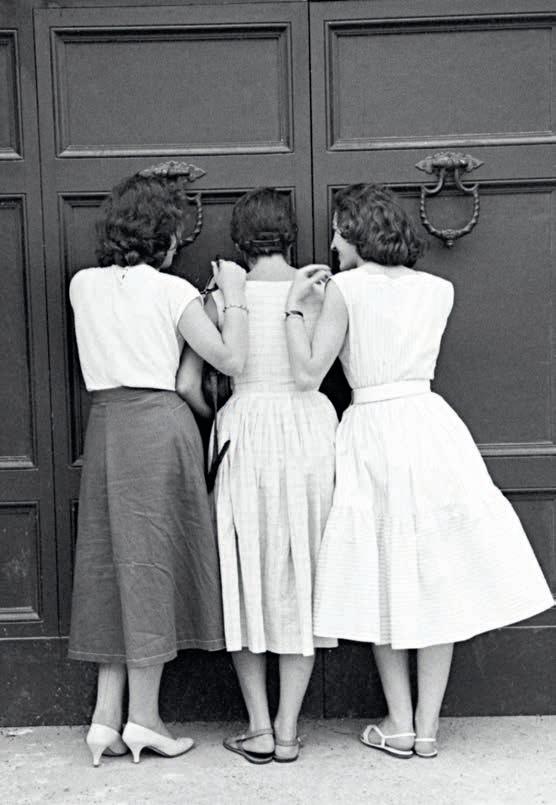

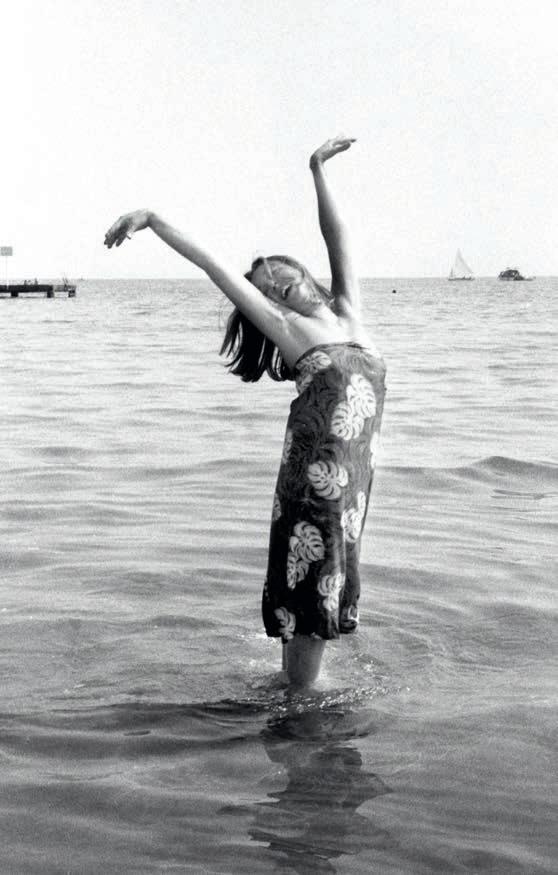
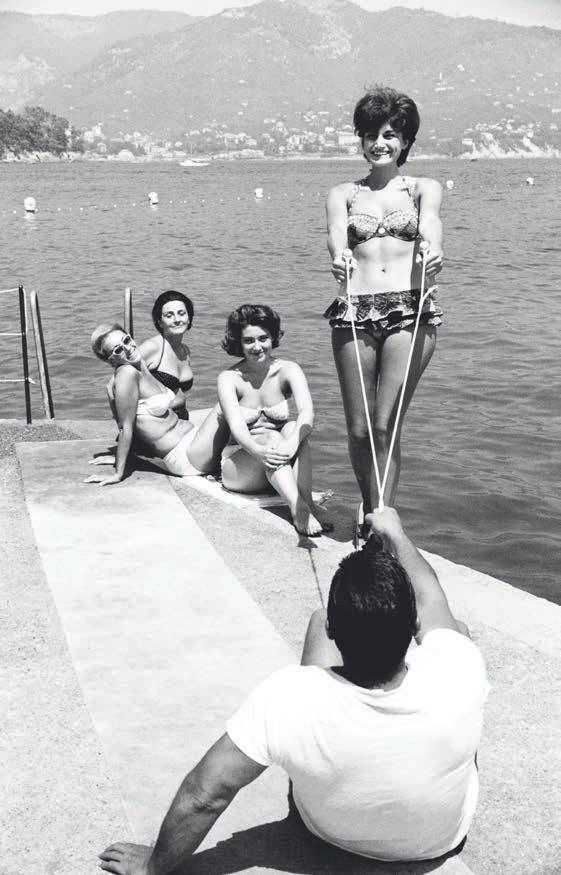
Wherever Di Paolo photographed his compatriots, he captured a sense of fun, pride and defiant optimism
Mastroianni and Sophia Loren; writers and painters such as Tennessee Williams and Giorgio de Chirico; and automotive titan Enzo Ferrari, who he photographed in the workshops at Maranello.
He often forged close bonds with the people he worked with, notably Anna Magnani, the Oscar-winning star of neorealist movie classics like Rome, Open City. But even more impressive than his portraits of celebrities are the images he captured of ordinary people: nuns, fishermen, agricultural workers, children at play in the piazza. Wherever he photographed his compatriots, Di Paolo captured a sense of fun, pride and defiant optimism. His reportage captures an era, too, when ordinary Italians had the charisma of movie stars, thanks to the flowering of la bella figura, that legendary Italian sense of style.
One of Di Paolo’s most memorable assignments was a collaboration with writer and (later) filmmaker Pier Paolo Pasolini. In the summer of 1959, the pair set out from Ventimiglia in an Arnolt-MG by Bertone on a three-month journey along the Italian coast. The resulting travelogue, La Lunga Strada di Sabbia (The Long Road of Sand), documented the life of holidaying Italians during this time of social upheaval.
During the latter stages of his photography career, Di Paolo worked increasingly in the world of fashion, which included shooting the Valentino haute couture show in 1967. But the Italian press had begun to change, becoming increasingly aggressive and salacious. The final straw was when he went to see a photo editor who suggested he use his personal contacts to procure “some spice”. In 1968 he made the decision to hang up his camera.
Silvia recalls asking her father how he could walk away from something he loved so much. “He told me for the first months or years he would dream every night that he was about to take a photo, but when he tried to press the shutter, he couldn’t do it,” she says. “It was so frustrating for him. He said: ‘In the end I stopped dreaming about being a photographer, but in all the years after that, I carried on taking pictures with my eyes.’”
Di Paolo may have stopped taking photos, but he transferred his visual skills, becoming the art director for the Carabinieri. For more than 40 years, he edited, wrote and designed 60 books for Italy’s national police force. “In a way, photography was just a brief moment in his life – just 15 years,” says Silvia. “It was just something he did in his youth, so he never talked about it. And I also got the impression my mother was a little jealous about it.”
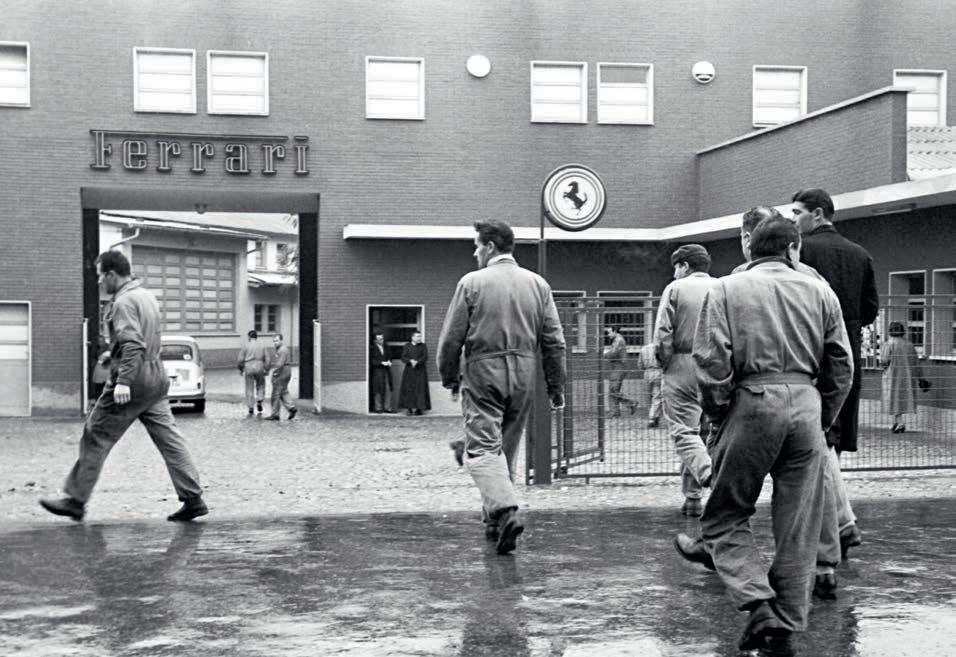
In 1973, Di Paolo married Elena Marcelli, his former assistant, and moved to the countryside outside Rome, to a large house “with seven or eight dogs”. This less frenetic new life allowed him to concentrate on his other great love, collecting and restoring vintage automobiles, a passion his son Michele has inherited. “My father was obsessed with classic cars,” says Silvia, “particularly racing cars from the 1920s and ’30s [from marques such as Itala] though his favourite car, a BMW 507, was from a little later.”
Silvia remembers her father phoning her and announcing: “I’ve found it!” He had seen the same Arnolt-MG that he and Pasolini had taken on the road, up for auction. “He said, ‘It’s in Texas, but we have to buy it.’ I’ll never forget how excited he was when he was reunited with the car at the port.”
Even after she unearthed his archive, it took Silvia many years to persuade her father to allow his pictures to be exhibited. “It was strange,” she says, “because, in a way, he always wanted to keep his archive safe – he
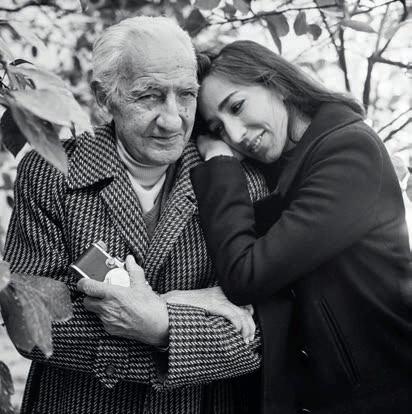
knew it was important – but at the same time, he didn’t want to push himself forward. When he did, he was amazed by the reaction. After the MAXXi show, he Googled himself and he said to me: ‘Silvia, look! They’re calling me an artist. Can you believe it?’”
Pierpaolo Piccioli, then creative director of Valentino, visited the exhibition and was so impressed by Di Paolo’s 1967 Valentino images, he invited him to shoot behind the scenes at the house’s 2020 spring/summer haute couture show. “So, 50 years after he gave up being a photographer, at the age of 94, my father was once again taking pictures in Paris,” Silvia smiles. “For him, it was so unexpected – it was like he was reborn. He’d had a heart attack when he was about 80, and while we were in Paris, he said: ‘You know, I could have died 15 years ago and never witnessed my success.’”
Paolo Di Paolo died in July 2023 at the age of 98, two years after the release of The Treasure of His Youth. While Silvia is full of admiration for the documentary, she feels there are still so many untold stories that should not remain hidden. For that reason, she has written a family memoir focused on her father’s life, which has just been published in Italy.
It’s easy to see why Silvia felt compelled to continue the story, because despite the recent interest in his oeuvre, her father’s reputation still hasn’t reached the heights his legacy deserves – though a 2026 retrospective in Genoa may help to bring his images to a wider audience. Indeed, in his film, Bruce Weber argues that Di Paolo deserves a place in the pantheon of greats, that he should be viewed as “a national treasure for Italy, just as Cecil Beaton is for England and Henri Cartier-Bresson is for France”.
Celebrate mid-century Italian style at Goodwood Revival in September, as the track action, set dress and style stories honour “La Dolce Vita”. “Fotografie ritrovate” (Found Photographs) is at Genoa’s Palazzo Ducale until 6 April 2026, accompanied by a book published by Marsilio Arte. Silvia’s memoir “Qualcosa dovrà succedere” (Something has to happen) is published by Marsilio. Bruce Weber’s “The Treasure of His Youth” is available on Amazon Prime Video

Use code GW15 for 15% off all in-clinic tests


Living well, Goodwood-style: vintage looks, ways to wellbeing, news from the farm, and how chef Harry Cartwright is celebrating seasonal produce at Goodwood Art Foundation
Everyone has a vision of the visor. The sun-safe headwear, originally designed to ward off UV rays while letting heat escape from the crown, could spark memories of neon-flecked roller discos, summer holidays accompanied by brightly coloured beach souvenirs, afternoons spent cheering on tennis greats at Wimbledon, or watching golfers teeing off at St Andrews. For us, visors hark back to a specific time when sportswear was not the high-tech arena it is now, but a decidedly chic sartorial proposition that could, quite possibly, take someone from the court to high tea.
The 1920s and ’30s saw racket sports star Helen Wills Moody, nicknamed Little Miss Poker Face due to her steely disposition, dominate tennis courts and Tatler magazine covers in her signature sailor-style get-up, comprising a boxy, open-collar shirt, a louche pleated skirt, prim shoes and a crisp white eye shade. Thanks to the record-breaking champ, who also turned her hand to poetry, writing and illustration, visors became a mainstay on tennis lawns of the era as other players tapped into Wills Moody’s innate on-court cool.
By the 1960s, fashion had stolen those functional-yet-jaunty brimmed headpieces from the court, rendering them in coloured plastic to complement the playful style of the decade, during which designers like André Courrèges experimented with unexpected garment materials, such as vinyl. Indeed, there was something vaguely futuristic about a colour-block headband with an extended transparent brim when paired with a minidress and knee-high boots – even if said outfit-toppers were bought from Fenwick or Lillywhites.
While stylists have often borrowed the visor as a playful prop for editorial shoots, it enjoyed a major resurgence in 2018 via the then-Dior creative director Maria Grazia Chiuri, a true master of viral accessories. The new-look visor boasted heavy branding and served as an easy entry-point into the luxury sphere, much in the same way that small leather goods do. Brands like Burberry and Tommy Hilfiger bought in, styling the athletic accessory with sports luxe looks that were far too fabulous to play games in. Match point to fashion.
In recent seasons, however, the visor has been usurped by the baseball cap, owing to the industry’s predilection for “merch”. While the first face-shielder leaves little room for experimentation, caps offer greater surface area for logos, slogans and personalised messages that telegraph so much about their wearer, from their favourite niche bookstore to an allegiance to Ralph Lauren (the polo player emblem has come out on top in the cap comeback). Nothing, however, posits a hair conundrum quite like the baseball cap, aka the “dad cap”, where even the position of a ponytail (through the hole says “Sloaney” while underneath skews “off-duty celebrity”) can be a styling trick too troublesome for many. A visor, in contrast, leaves one’s hair largely unobscured.
Hat trends come and go, but none have the timeless allure of the visor – an accessory that has always championed looking one’s best even when exerting oneself. Not all headwear is made equal. This mere slice of a hat is loaded with so much nostalgia and yet it still looks fresh for now.
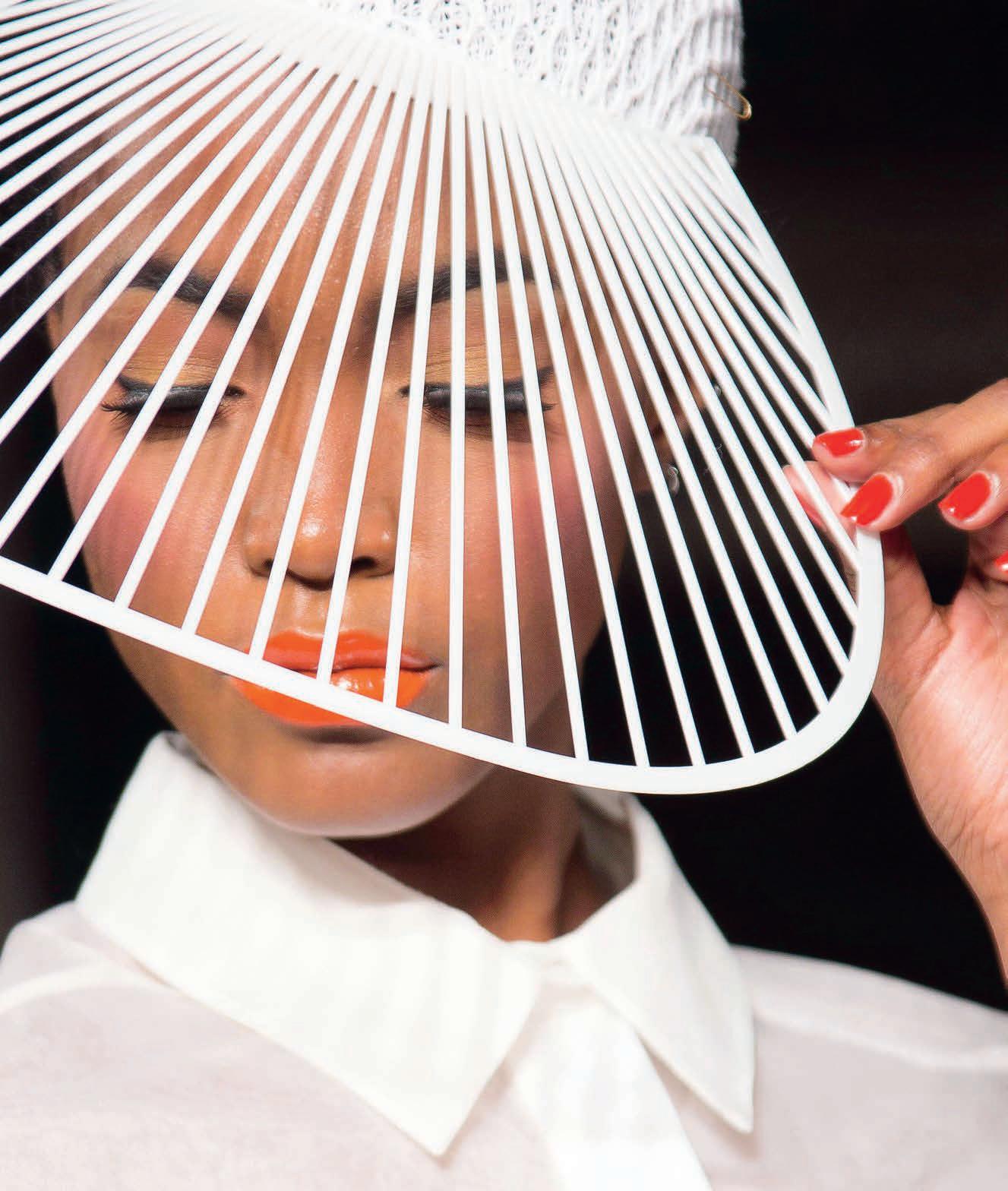
All of us harbour vintage style icons, whether Marlene Dietrich, Cary Grant or Grace Jones: men and women of years gone by over whose dress sense we swoon. The truly stylish will never be seeking mere retro replication. Instead, they will be inspired by the spirit of their muse in terms of how to dress now. To become one’s sartorial role model, one’s idol must be a fit by way of both garb and attitude.
My fashion pashes are on women who understood the power of clothing to transform. Compare Wallis Simpson’s remark: “I’m nothing to look at, so the only thing I can do is dress better than everyone else.” And so she did, via Dior, Givenchy, Schiaparelli and Cartier. Simpson, however, will never not feel problematic, so I settle instead for the selffashioning 1930s screen star Norma Shearer.
No beauty, Shearer determined that clothes would be her weapon. Her informal publicity shots are cruise-wear bliss: sleek sailor pants, fitted jerseys, berets and polka-dot scarves. When “on” she was seriously on in velvet, brocades, chinchilla and ermine, artfully festooned with jewels. At Hollywood’s illustrious Mayfair Ball of 1936, held at the Victor Hugo Cafe in Beverly Hills, the dress code for women was white. Shearer arrived late, swathed in strapless scarlet.
My second icon is Audrey Hepburn – as for so many – but for my own particular reasons. My Audrey isn’t the off-duty princess of Roman Holiday (1953); the Givenchy Cinderella of Sabrina (1954); or the little black dress and pearls of Breakfast at Tiffany’s (1961). Instead, I admire the beatnik chic of 1957’s Funny Face. We’re meant to laugh at the cartoon existentialism of Hepburn’s black polo-neck and cigarette pants. Instead, it always strikes me as the most impeccable uniform, offset by her ballet macquillage – all kohl and brows.
Her son, Luca Dotti, told me that his Hepburn existed in a similarly pared-back get-up of jeans and sweaters, albeit still with eyeliner. Yet, even in gardening garb, she had it. “She was very elegant,” he confirmed. “In every situation, she looked right… That is something you cannot buy.”
The final figures on my mental mood board are a pair of 1990s paragons. Sharon Stone’s outfit for the 1998 Oscars ceremony was the epitome of insouciant elegance: a long, lavender satin skirt by Vera Wang teamed with a white Gap shirt borrowed from her then-husband, Phil Bronstein. Two years earlier, Stone had sported a charcoal Gap turtleneck under a Valentino ensemble. How glorious for a Hollywood goddess to exemplify high-low dash.
And while I’ll never be as svelte and as soigné as Carolyn Bessette Kennedy, her singularity, selfdom and sprezzatura provide a textbook example of emphatic statements conveyed with appealing ease. Clearly, beneath my maximalism, there lies a minimalist struggling to emerge.
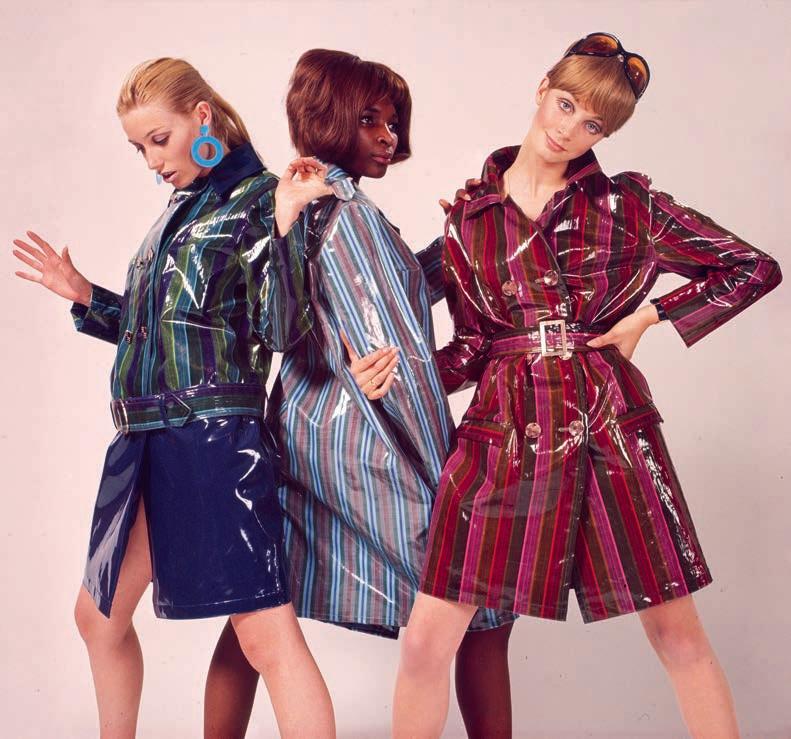
WORDS BY OLIVIA HALL
Waterproofs are always part of Britain’s fashion forecast, but the report isn’t as dreary as it once was thanks to the cross-pollination of designer brands and outdoor labels (think Gucci’s collaboration with The North Face and Moncler’s Genius line). Charles Macintosh, who first set about creating a rain-resistant fabric back in 1823, would be delighted.
The story goes that Glasgow-based chemist Macintosh was trying to evolve the use of naphtha, a tar by-product, within his family’s textile plant. He landed on a lamination process, squeezing the rubber chemical between two layers of wool to waterproof the material from the inside out. It was stiff, often perishable and uncomfortable, but no matter, the Mackintosh coat (the mystery around adding a “k” into the family name has never been resolved) was born, with military and police forces adopting the patented material as part of their uniforms. In 1843, a new, long-lasting vulcanised rubber using sulphur usurped the original formulation, and it wasn’t long before brands like Aquascutum and Burberry began propelling raincoats into the fashion arena. The 1960s would see the arrival of a new era of rainwear: in 1963 Mary Quant launched the “Wet Collection” in bright, futuristic colours, made from unapologetically synthetic materials, including PVC (aka “vinyl”). This was the moment that macs went pop.
Today, Burberry rarely skips a season without showing a mac, but the British brand faces stiff competition from the likes of Prada, Celine and Tod’s, whose overcoats all manage to toe the line between bougie and blizzard-proof. When waterproofs look this good, make it rain.
Once known as fashion’s “trainer” heel, the stiletto’s younger sister (which uses the same metal pole inside a narrow plinth to prop up the shoe) graduated into its own entirely chic proposition thanks to Audrey Hepburn, who wore Roger Vivier’s point-toe pumps in Breakfast at Tiffany’s. The cat was out of the bag: kitten heels were the perfect foil to the little black dress, and much
easier to wear than the vertiginous models popularised by Hollywood stars like Marilyn Monroe, who saw high heels as a symbol of empowerment and seduction. The kitten, by contrast, was polite, elegant and discreet – nothing like the girly associations that come with a “starter” shoe. Ask any fashion editor: a one-to-two-inch heel is the backbone of a good shoedrobe. Never mention a stiletto.

Nothing says “retro glamour” like a silk gown, but vintage silk fabric needs particular TLC. For long dresses or heavy garments, ditch clothes hangers entirely. Flat storage means no pressure is put on a garment’s seams, and layers of acid-free paper can be used to protect silk within your chosen storage shelf or box. This pH neutral paper helps to prevent acid degradation, protecting against colour-fading. Websites such as Total Wardrobe Care sell 25 sheets for £10.
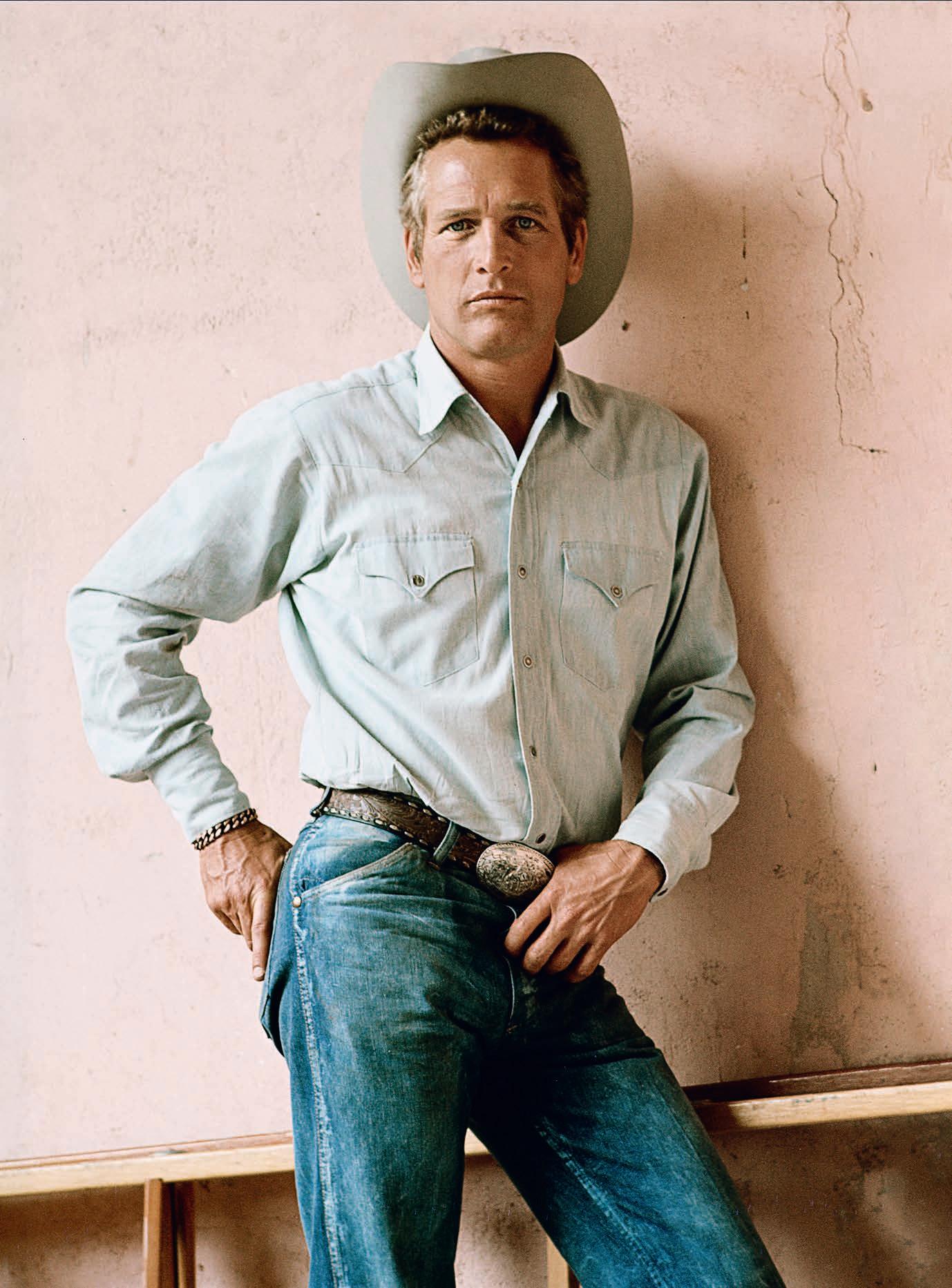
RUGGEDLY STYLISH AND EMBODYING FREEDOM AND REBELLION, BLUE JEANS HAVE BEEN AROUND FOR MORE THAN 150 YEARS – AND THEY’RE STILL GOING STRONG. JOSH SIMS TRACES THEIR ENDURING APPEAL
“Have you ever had a bad time in Levi’s?” asked a 1970s ad for the denim giant. By that decade it was perhaps a pertinent and serious question. For all that the pop cultural spotlight tends to be directed to 1950s Americana or youth turning on, tuning in and dropping out a decade later, it was the 1970s – when even grown-ups wore casualwear – that saw denim fully come to be regarded not just as the preeminent fabric of fashion, but as the fabric that somehow embodied a sense of freedom.
Sure, your jeans might be bell-bottomed, patched, embroidered, cut-off, rolled or faded – as the particular fashions of the time dictated – but inherent to denim itself was an enduring rakishness, a sassiness that was hard to dispute. Denim gains character with wear, is hard-wearing, inexpensive, workmanlike in its roots, yet so often provocative in its expression.
No wonder that, by the 1970s, the trend went way beyond jeans until every possible garment – from cowboy boots to bikinis – was being made of denim; or that denim would be found everywhere. The Formula 1 driver James Hunt – who modelled for the Lois denim brand and liked to match his flared jeans with a denim shirt – was ahead of the style chicane in refusing to agree to his team McLaren’s demands that he represent them at sponsor functions wearing a suit and tie. Hunt knew he wouldn’t be refused at the swankiest of clubs for wearing what would once have been deemed too proletarian a choice of attire. Denim, as another advert of the period had it, “is mighty sexual stuff”, and the much-fancied Hunt knew it – especially perhaps if, like him, one preferred option was to wear your jeans with nothing above the belt.
Indeed, while the other James, Dean, may have established the now somewhat obvious model of the iconoclast in turnups in Rebel Without A Cause, with his countercultural indigo vibe embraced by the hippies, civil rights activists and celebrities who followed, it’s the 1970s – a time somewhat derided, in retrospect at least, as a decade of poor taste – that allowed denim to also break free from the clichés.
That was when denim became the truly everyman, and everywoman, fabric, crossing boundaries of class, wealth and – slowly – even age. Denim was ceaselessly adaptable to shifts in fashion. It became a foundational fabric and, with what the industry refers to as “five-pocket western” jeans, a foundational style. And that has remained solidly the case for the half century since.
This is all the more remarkable given that those five-pocket western jeans date to 1901, when Levi’s introduced what would become its iconic style (having patented riveted blue jeans in 1873). Tellingly, that diminutive pocket at the hip, still a feature of jeans today, was for keeping your pocket watch safe. To put that in further context, the turn of the 20th century would have seen (well-to-do) women in corsets and full skirts with trains, men wearing frock coats, shirts with detachable collars and – lest one risk social opprobrium – always a hat.
The idea that we still wear a garment that belongs to another age – let alone a garment designed for miners, railworkers and gold prospectors – is preposterous, at least in fashion terms. Yet we don’t just wear it. We live in and through it. Jeans remain, by far, the most popular trousers of all time. And for all their ubiquity, they’re the item of clothing in which many of us still most feel our individual selves.
Opposite: Paul Newman perfects cowboy chic for photographer Terry O’Neill in this publicity still for 1972 comedy western Pocket Money
At your service:
SOURCING A SUIT FROM A TAILOR WHO CAN ALTER IT AS YOUR SILHOUETTE CHANGES IS A MARK OF QUALITY THAT, REPORTS JAMES COLLARD, IS NEWLY RELEVANT IN THE RAPID-WEIGHT-LOSS ERA OF “THE PEN”
“That’s a myth,” replies Anderson & Sheppard’s Colin Heywood, politely but firmly, when asked if it is true that Savile Row tailors only charge for alterations when they’re letting out a suit, not when it needs taking in. “For the first year or so after it has been made, we do alter a suit for no charge.” But this, he explains, is in response to the kind of settling-in process that happens when even the best of tailoring and a client’s physique get better acquainted, after which fine-tuning is all part of the service that comes with buying a bespoke suit.
Thereafter, alterations come with a charge – which, when added to the initial investment of a few thousand pounds, can be seen nonetheless as a reasonable cost per wear for exquisite, flattering tailoring that can be worn over several decades. “Which many of our customers do,” says Heywood, now MD of the leading tailoring house he joined back in 1990 – one of four Savile Row institutions that today hold a Royal Warrant. And come to think of it, His Majesty is precisely the kind of customer who is famed for wearing a good piece of tailoring over many decades.
Alterations and repairs are always a key element in a suit’s longevity, with bespoke tailoring coming with what’s called a “seam allowance” – extra fabric built into the original suit which tailors let out, perhaps when clients have let themselves go a little, so to speak, or thickened out. And if, in the era of weight-loss injections, some clients’ shapes are heading in the other direction, Heywood is too discreet to be drawn on the subject of nips, tucks or “the pen” being mightier than the sword when it comes to eliminating paunches.
Bespoke tailoring can even be handed down within families. “Men are often a similar shape to their fathers,” explains Heywood, or even their grandfathers – think Fiat heir Lapo Elkann looking dapper in his grandfather Gianni Agnelli’s suits (by Caraceni). Though evening wear is the typical hand-me-down, explains Heywood, “as that doesn’t get so much wear and tear”. So what could be thriftier in terms of cost per wear than a multi-gen Savile Row tux?
Details on display – N07
The buttonhole flower or boutonniere came into its own during the Romantic era, that moment in 19th-century culture when it became chic to associate oneself with all things natural and pastoral. A fashionable accessory, it could also be a subtle or none-too-subtle political statement. Parisian gents sported violets, for example, to signal loyalty to the heirs of Bonaparte. It might even be a statement of one’s sexuality, with Oscar Wilde’s aesthete friends wearing the classic white carnation dyed a vivid green – a signal that only meant something to those who knew what it meant. Such hidden implications are largely a thing of the past, but in the 21st century the buttonhole flower occasionally makes an outing again, for weddings, gala nights or perhaps a day at the races. Say it with flowers, why don’t you.
FEDERICA AMATI HAS EMERGED AS ONE
CONTRIBUTED
“If the majority of the public is exposed to often incorrect health information through social media, then the people who have the correct information need to step up and make content,” says Dr Federica Amati. “On social media, health information about nutrition is probably the field that has the most noise. Many people are trying to make you buy something or trying to change your behaviour. On one hand, that’s quite scary. The flip side is that qualified scientists are increasingly getting on the internet to share their knowledge, not just sitting back in academia.”
Amati has emerged as a leading UK voice for evidence-backed nutrition and public health advice, with a Sunday Times-bestselling book, Every Body Should Know This, and 90,000 Instagram followers. “I always had this desire to try to have an impact on people – as many people as I can – positively in my work,” she says.
Born in Rome, but raised and educated in the UK, Amati is the Nutrition Lead at Imperial College London and Head Nutritionist at Zoe, the personalised nutrition brand and research organisation founded by Professor Tim Spector. Her credentials include a PhD in medical science, Master of Public Health (MPH), an MSc in nutrition and a BSc (Hons) in endocrine pharmacology. But what has set her career apart is a rare ability to make sense of complex data in simple, useful terms, in a relatable tone that audiences can connect with.
“Working at Imperial College humbles you because of the geniuses who roam the halls; that place is full of absolutely brilliant minds and people with incredible statistical analysis skills,” says Amati. “I realised early on that although I was good enough to be there, I was often not the best scientist in the room. But what I had was an ability to communicate, and an empathy and caring for people. For a long time, I doubted myself and didn’t feel like I could contribute my voice. But once I had my PhD, and my Master’s in nutrition, I felt, ‘OK, I can be more visible in the public space and talk about the research I’ve done, and I can also help to interpret science and guidelines for others.”
Social media aside, Amati’s work as a public speaker has included a popular 2024 TED talk, “Unlock the science of nutrition to transform your health”, and she was a guest expert at the 2025 Goodwood Health Summit. In part, Amati’s media-friendly style has been honed by her academic work, which includes teaching evidence-based nutrition to medical students at King’s College London. One of her lesson aids is a graphic that shows the striking, and yet meaningless, similarity of graphs plotting the release of Nicolas Cage movies with incidences
of swimming-pool drowning accidents. “That’s always a fun one,” she laughs, the lesson being: “Don’t assume causation.”
In late 2025, Amati made waves as part of the team – at Zoe and King’s College London – behind a genuinely ground-breaking piece of new research into the gut microbiome (published in Nature, the paper is titled Gut micro-organisms associated with health, nutrition and dietary interventions). “I’m really excited about recent work that I’ve been a part of, because it shows just how much our gut microbiome can tell us about our health,” says Amati. “We have identified some gut microbial species that are entirely new to microbiologists. That test is enough to give us a great deal of information about a person’s gut microbiome. And we are increasingly seeing how the microbiome can be predictive of all kinds of other aspects of health – for example whether your gut microbiome composition is associated with better blood pressure or improved blood fats to reduce heart disease.”
And while some measures of internal health can be invasive or expensive (or both), analysing the microbiome is relatively accessible. “It’s a simple poo test, basically,” says Amati. “Reaching a better understanding of the gut microbiome is a hugely exciting area of fastdeveloping science, and there’s a lot we can do with that knowledge.”
When it comes to seeking professional guidance on diet and nutrition, Amati recommends due diligence. “A “dietitian” is a protected term but a “nutritionist” is not, and some people set up as a nutritionist without any real scientific education or training at all,” she explains. “So if you are going to see a professional about your diet, I always advise people to look carefully at who that person is first.”
Even through the limited medium of today’s Zoom call from her home office, one can’t help but notice that Amati herself appears palpably healthy and nutritionally well-adjusted: a woman with clear, radiant skin and a sharp mind at this late afternoon hour when many of us hit a blood-sugar slump. But for all its benefits, Amati doesn’t recommend overthinking one’s diet. “There is a trend for ‘optimisation’ and trying to get everything you eat to be perfect. I was asked recently about what might be precisely the best way to cook an egg to maximise its benefits. But the majority of adults in the UK are not eating the recommended amount of fruit and vegetables, so it’s best to start there. It’s amazing how effective simply eating more plants will be for most people’s diets. If we can get the basics right first,” she says, “then we can all build out from there.”
“Every Body Should Know This” by Dr Federica Amati is out now

“I can use my voice to help interpret science for others”
24, THE NEW RESTAURANT AT GOODWOOD ART FOUNDATION, CELEBRATES SEASONAL PRODUCE AND THE LANDSCAPE THAT CREATES IT. SACHIN RAO FINDS OUT HOW HEAD CHEF HARRY CARTWRIGHT CREATES SMALL PLATES WITH BIG FLAVOURS
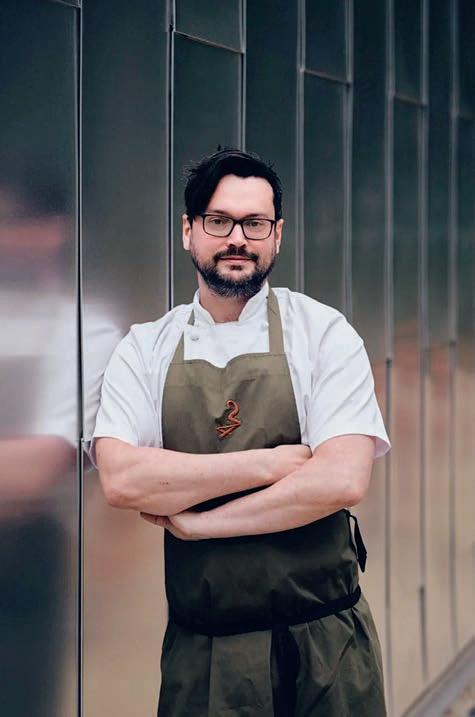
Art nourishes the soul – but don’t forget the body. A new restaurant is now bringing a delicious pit-stop to a day well spent wandering the tranquil grounds of Goodwood Art Foundation taking in works that include outdoor sculptures by Yayoi Kusama and Rachel Whiteread.
24, named for the number of “seasonal moments” in Dan Pearson’s landscape design concept for the grounds of Goodwood Art Foundation (see page 18), is a work of art in itself. The glassand-aluminium building is set amid dense woodland, immersing it into the environment. That outlook carries through to the menu, which stars a variety of small plates that aim to showcase fresh seasonal ingredients sourced locally and presented beautifully.
The small-plates philosophy is a point of passion for 24’s head chef Harry Cartwright. “When you share dishes together, you’re sharing the experience at the same time, and it inspires questions and conversation,” says the 33-year-old Hampshire native. This affinity took hold early in his career, when he worked at a tapas restaurant in Melbourne. “How I like to cook is how I like to eat; I love to share food and to try different dishes.”
Before 24, Cartwright ran his own small-plates restaurant, The Mulberry in Falmouth, earning two AA rosettes and a Michelin Bib Gourmand in three years. He also had stints in kitchens as varied as The Pig at Harlyn Bay hotel in Cornwall and a beachfront restaurant in the Isles of Scilly. When his fiancée was pregnant, the couple decided to move back to Hampshire to be closer to family – and the new opening at Goodwood in nearby West Sussex, with a concept centred around seasonal produce, was right up his street.
Cartwright is keen to let his food speak for itself – and in turn, the quality of the ingredients. “We have fantastic produce and organic meat here at Goodwood,” he says, “so we pay homage to that by treating it honestly and simply, and letting it be itself.”
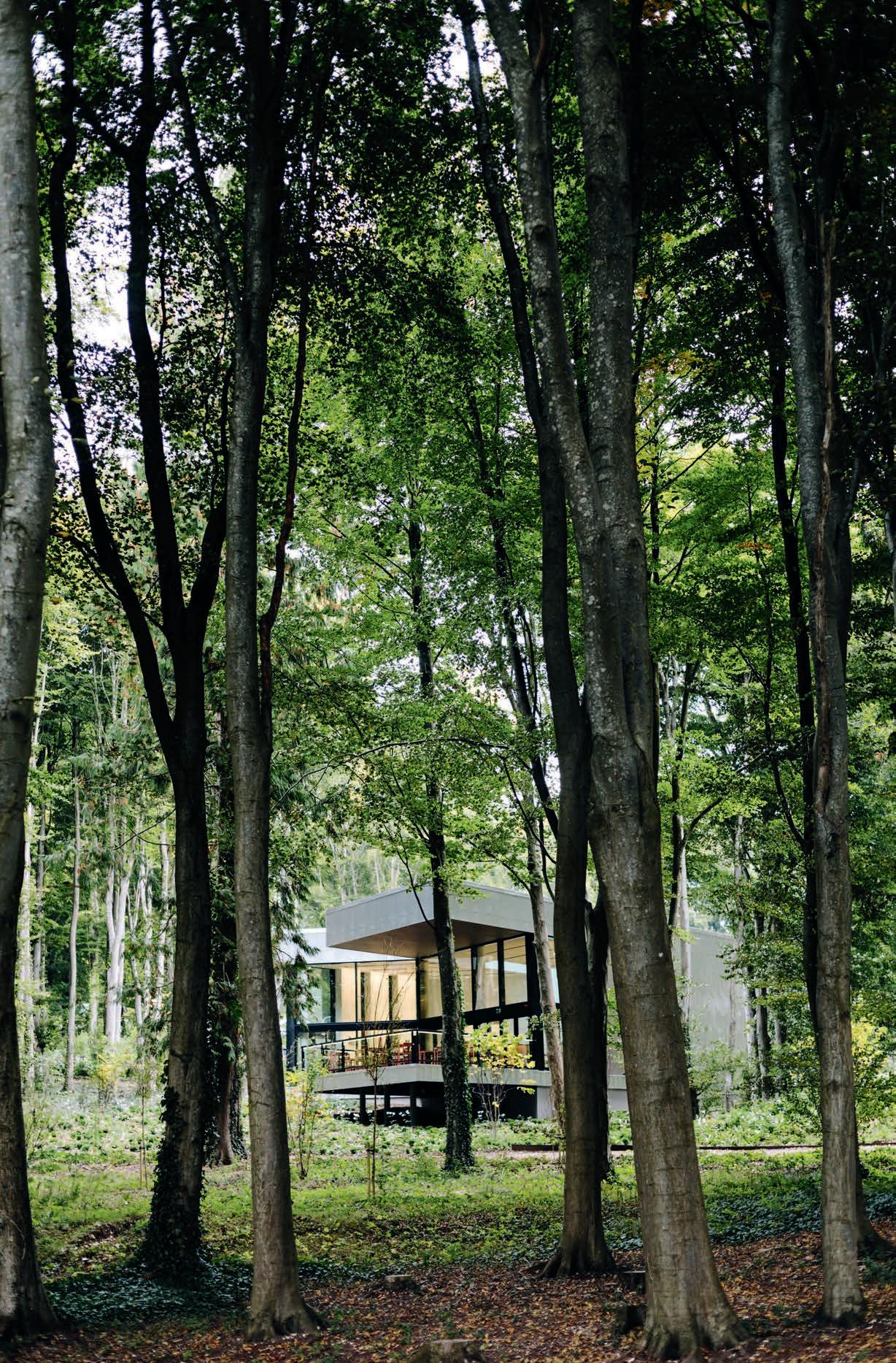
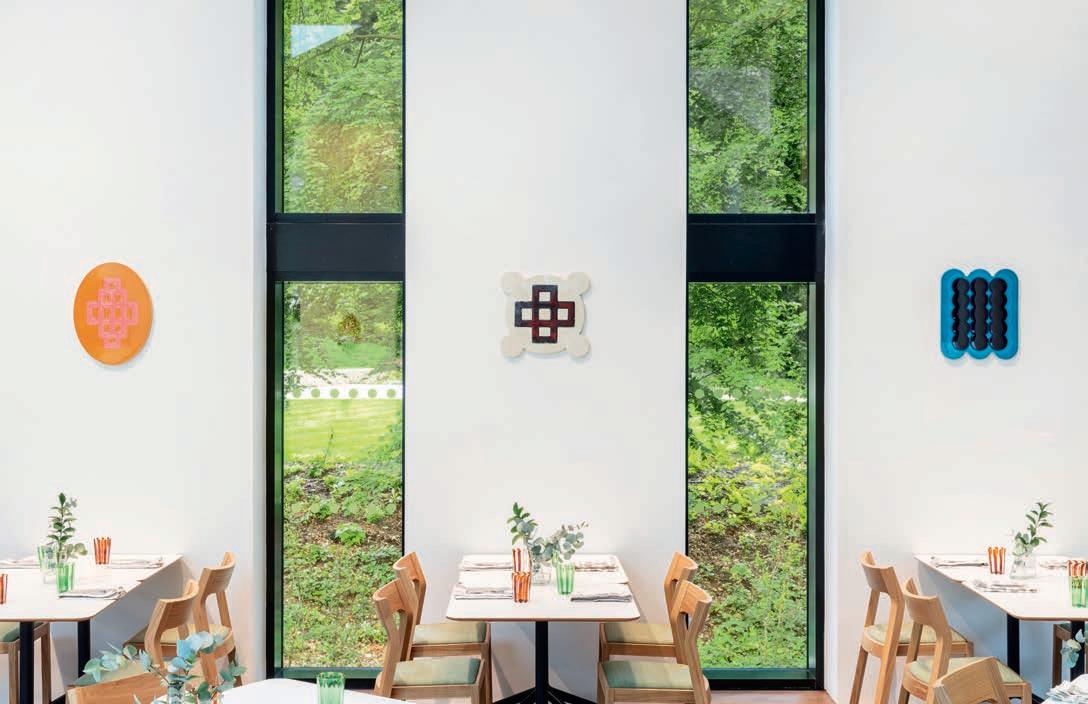
“The menu constantly evolves as we make the most of what our own landscape has to offer”
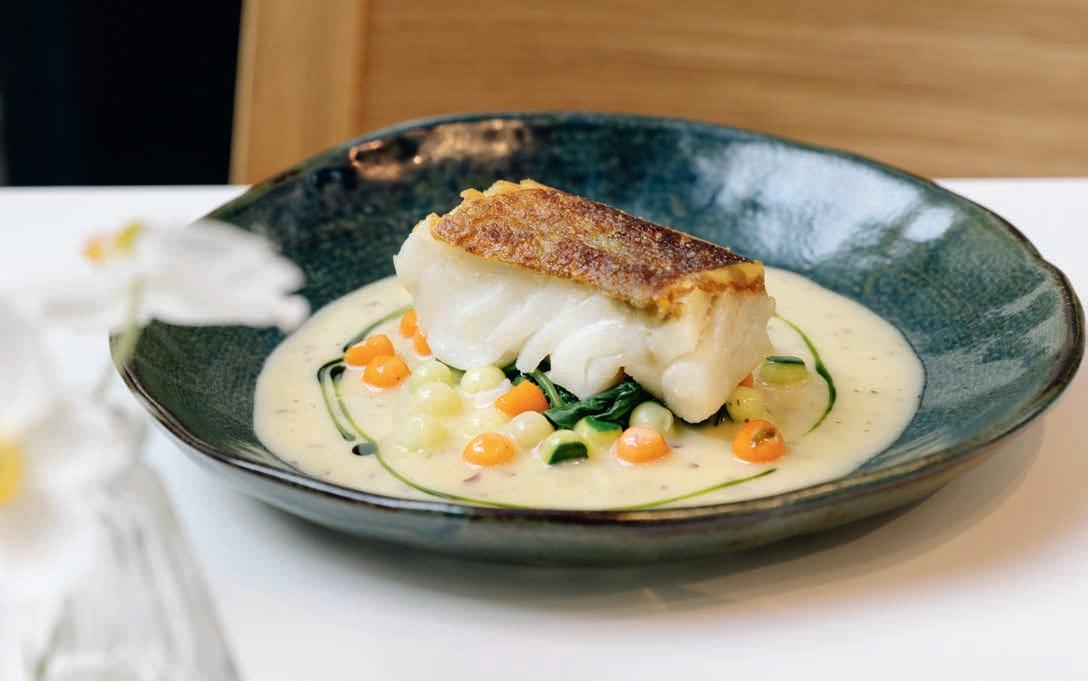
The single-estate origins of the menu – “beef, pork and lamb from our organic farm, or game that’s shot on the Estate, like local pigeon, pheasant or venison” – ensure the highest quality and sustainability. Menus are inspired by seasonality and availability: “I’ll go and see what the farm manager has got an abundance of, and we’ll invent a dish around that. And it becomes fun, to innovate with what we’ve got.”
As well as fruit, vegetables and fish from local suppliers, the 70 acres around Goodwood Art Foundation yield a bounty that is ideal for use in the restaurant, from birch syrup and wild garlic to mushrooms. “The menu constantly evolves as we make the most of what our own landscape has to offer,” says Cartwright. The menu, typically comprising fewer than 15 dishes, is economical in its descriptions, to “leave something to the imagination” until the food hits the table. (One dish, for example, is billed simply as “Goodwood beef featherblade, peppercorn, beetroot, turnip”.)
For Cartwright, landscape, art and food are all part of a continuum. “It flows naturally,” he says. “People can look around the galleries and see all the art, and then we carry on that immersion onto the plate of food they have.” That said, he shies away from unnecessary embellishment. “We make our dishes elegant and pretty, but first and foremost the food has to taste delicious. Every element has to be on there for a reason. It’s all about honesty and simplicity.” The restaurant layout, with an open kitchen, offers some reassuring transparency to diners. For Cartwright, this is a big part of 24’s charm. “We get to see and hear people’s reactions to the food; it makes it a pleasure to cook,” he says. “It also makes this a beautiful place to work, with amazing views out of the windows, over the trees.”
Discover more about 24 at goodwoodartfoundation.org
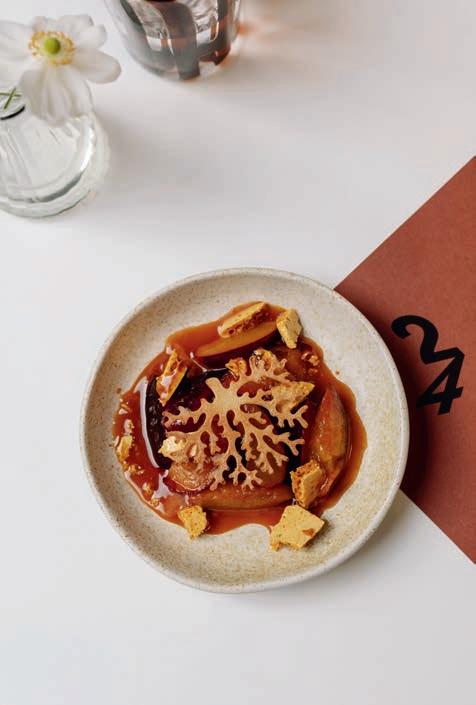
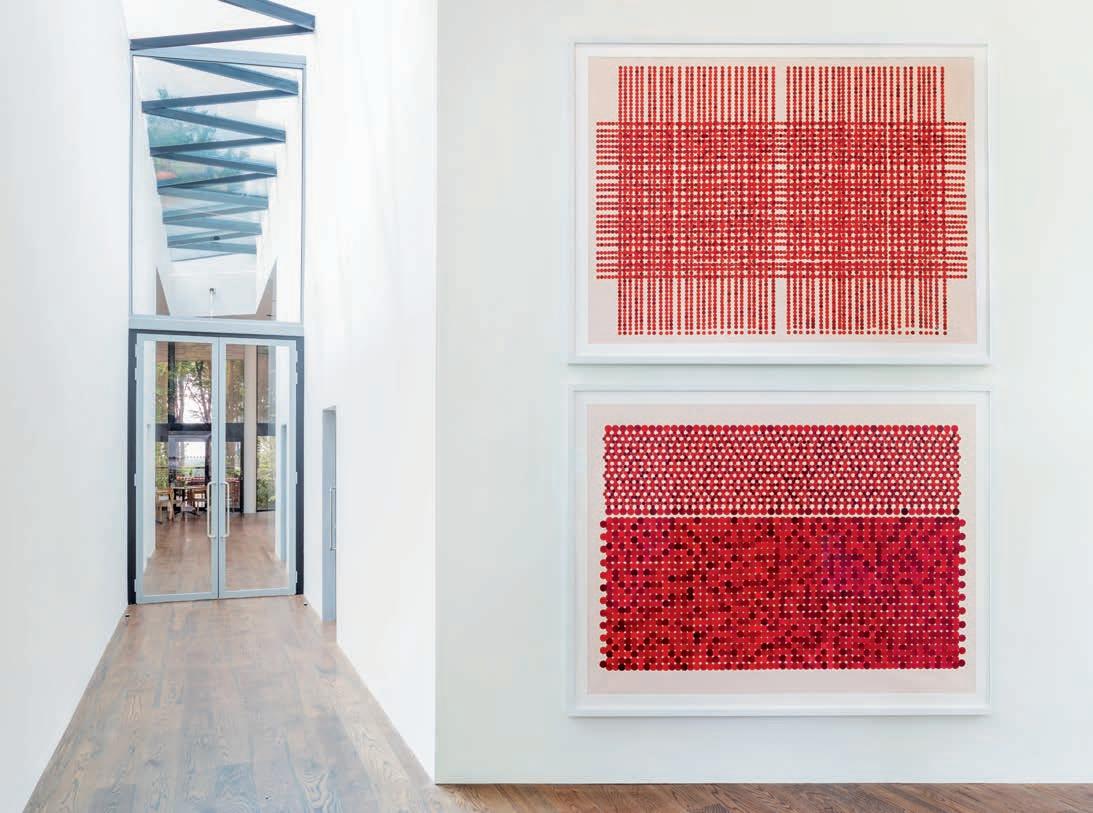
UNDER THREAT DUE TO CLIMATE CHANGE, PESTICIDES AND HABITAT LOSS, BATS ARE ENJOYING POCKETS OF RESURGENCE –NOTABLY ON THE GOODWOOD ESTATE, WHICH IS HOME TO A “BAT SUPERHIGHWAY”. RICHARD MELLOR TAKES A CLOSER LOOK AT THESE FASCINATING FLYING MAMMALS
Less than half a century ago, British bats were in serious jeopardy. Not only had all 18 resident species of these iconic flying mammals declined in number since the end of the 1800s, but the problem was worsening. Take common and soprano pipistrelles, our two most common bats: between 1978 and 1993, their population plummeted by around 70 per cent.
However, things have started to improve for some UK species since the Bat Conservation Trust commenced its National Bat Monitoring Programme in 1996. “We’ve seen long-term increases in five of them,” confirms Kit Stoner, its chief executive.
In part, the increase in the protection of bats has been mandated, with protective legislation and policies related to bats introduced in the 1980s and ’90s. Most critical was 1981’s Wildlife and Countryside Act, which made it illegal to disturb or obstruct bats’ access to breeding or resting places, with strict penalties for doing so. “Landowners are generally happy to try and be nature-friendly these days,” says Stoner. “The trick is ensuring that bats are considered early on in the process.”
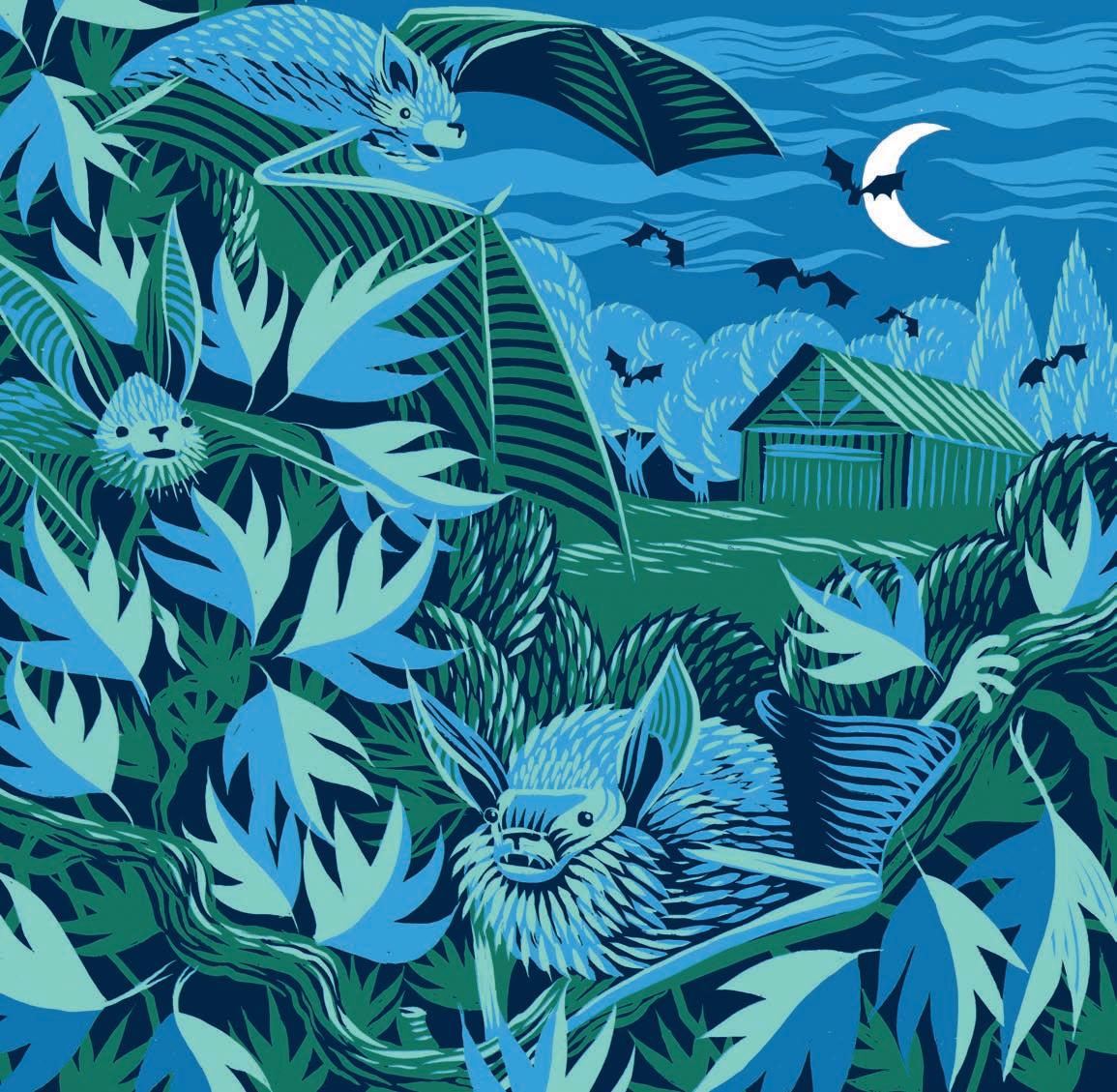
Even King Charles III is involved, having freshly installed bat boxes in Dumfries House’s grounds after potential roosting sites were uncovered during the preparation of a new wedding venue. Public awareness of the wonders of bats has also much improved over the past few decades, Stoner says, aided by media exposure highlighting bats’ importance. A vital cog in the ecosystem, bats have a role, for example, in providing a natural pest control, dispersing seeds and aiding the pollination of plants.
But they remain under threat. Climate change and the use of pesticides means that insect populations – every UK bat eats insects – are suffering, while habitat loss remains an issue. Some of the legislation that protects bats is also under threat from proposed government reforms, and some developers bemoan having to spend money or change plans just to accommodate bats.
One place bats do find sanctuary is Goodwood, where it’s thought as many as 15 of the 18 UK-resident species may be found. Some have been recorded on the Estate, while others roost in four disused South Downs railway tunnels just outside it – meaning that they almost certainly fly over Goodwood’s grounds.
Few other places in Britain can match such numbers. And anyone who thought “bats” were simply one animal will have quite a surprise if they take a look at the long list of species that call Goodwood home; these vary in size and appearance, and also in diet, habitat, and even echolocation frequency range. Twelve bat species have been positively identified by sightings or trapping, namely: barbastelle, Bechstein’s, brown long-eared, common pipistrelle, Daubenton’s, greater horseshoe, Nathusius’ pipistrelle, Natterer’s, noctule, serotine, soprano pipistrelle and whiskered bats. It is also suspected from sonic bat detector evidence that three other species are likely visitors to the Estate.
“It’s a perfect combination,” smiles Lloyd McNeill, the Estate’s managing director. “We’ve got those abandoned tunnels nearby. We’ve got old, craggy trees in which some species, such as barbastelles, like to roost. We’ve got 11,000 uninterrupted acres of organically managed farmland and forest, providing enhanced feeding opportunities. And we’re near to water-logged former gravel pits and Chichester Harbour, which are both a brilliant food source for them.”
Goodwood added a new roosting site in 2024, converting a dilapidated barn into, effectively, a bat hotel
The result, he reveals, is “a sort of bat superhighway”. Skirting Goodwood House and the Motor Circuit, this well-flown route joins up the aforementioned tunnel sites with woodland, chalk grassland and landmarks like the Trundle, an ancient hill fort covered in insect-rich wildflowers.
In addition to planting 200,000 trees, partly to enable more bat highways, Goodwood added a new roosting site in 2024. “We converted a dilapidated barn into, effectively, a dedicated bat-hotel,” McNeill explains, “chiefly because endangered greater horseshoe bats were occasionally roosting there and we wanted to safeguard them. There have already been a couple of sightings since.”
While guided tours to see bats aren’t available – these would be too invasive – McNeill suggests that chiropterophiles come to Goodwood with bat detectors and roam footpaths or open-access areas. “Around the Motor Circuit is a good bet,” he advises, “or up the Trundle and on Levin Down.”
Those keen to help bats could consider adding plants or water features that attract nocturnal insects, erecting bat boxes or volunteering for one of the Bat Conservation Trust’s surveys. At Goodwood, McNeill aims to increase bat populations and connectivity alongside a more specific goal. “My hope,” he says, “is that the work we’re doing helps some of the more vulnerable or endangered species of bats an opportunity to recover. That would be wonderful.”
BY SAM KERR

HARRY HOLT, FARM MANAGER AT GOODWOOD, ON THE IMPORTANCE OF SOIL FERTILITY
It was a long winter, and spring feels especially welcome this year. In the coming weeks, the sheep are going to start lambing outside; that’s always a lovely sign of the season, and that sunnier weather is on its way.
Soil fertility continues to be a priority for us at Goodwood. Everything starts with the soil; if it isn’t in very good shape, we can’t have a sustainable farming business. One of the ways we can improve soil fertility is through “short-term forage leys”. These are leys of grass and clovers and herbs, so a real mix with a diversity of plants, that will be in the ground for three to five years. These help to increase the organic matter in the soil. That’s because every time a cow bites a mouthful, what then happens underground is that the plant starts “sloughing off” roots it no longer needs. Suddenly, it finds it has reduced in size and it will shut some roots down and they will decompose underground. Although you can’t see anything, the real magic is happening underground.
Improving our soil fertility also goes hand in hand with not having animals intensively grazing on our downland pastures. We want to encourage these pastures to go to seed and self-regenerate, so we need to allow them to grow to maturity. When the cattle and sheep eat the plants, they are ingesting those seeds, which will then be in their cowpats, so they’re helping to spread those plants. When a seed lands in a cowpat, it’s got a perfect little starter, a bit of compost to help it get going for the year.
And it’s not just grasses; there are other chalkland plants up there, some of them quite rare, that we also want to promote. The wildflowers, and the butterflies they attract, are all part of what we’re doing here this spring, too.


The right kit transforms your time outdoors into moments you’ll never want to forget. Tried and tested by guides who live for the elements, choosing good-quality kit is an investment in yourself. For yourself.









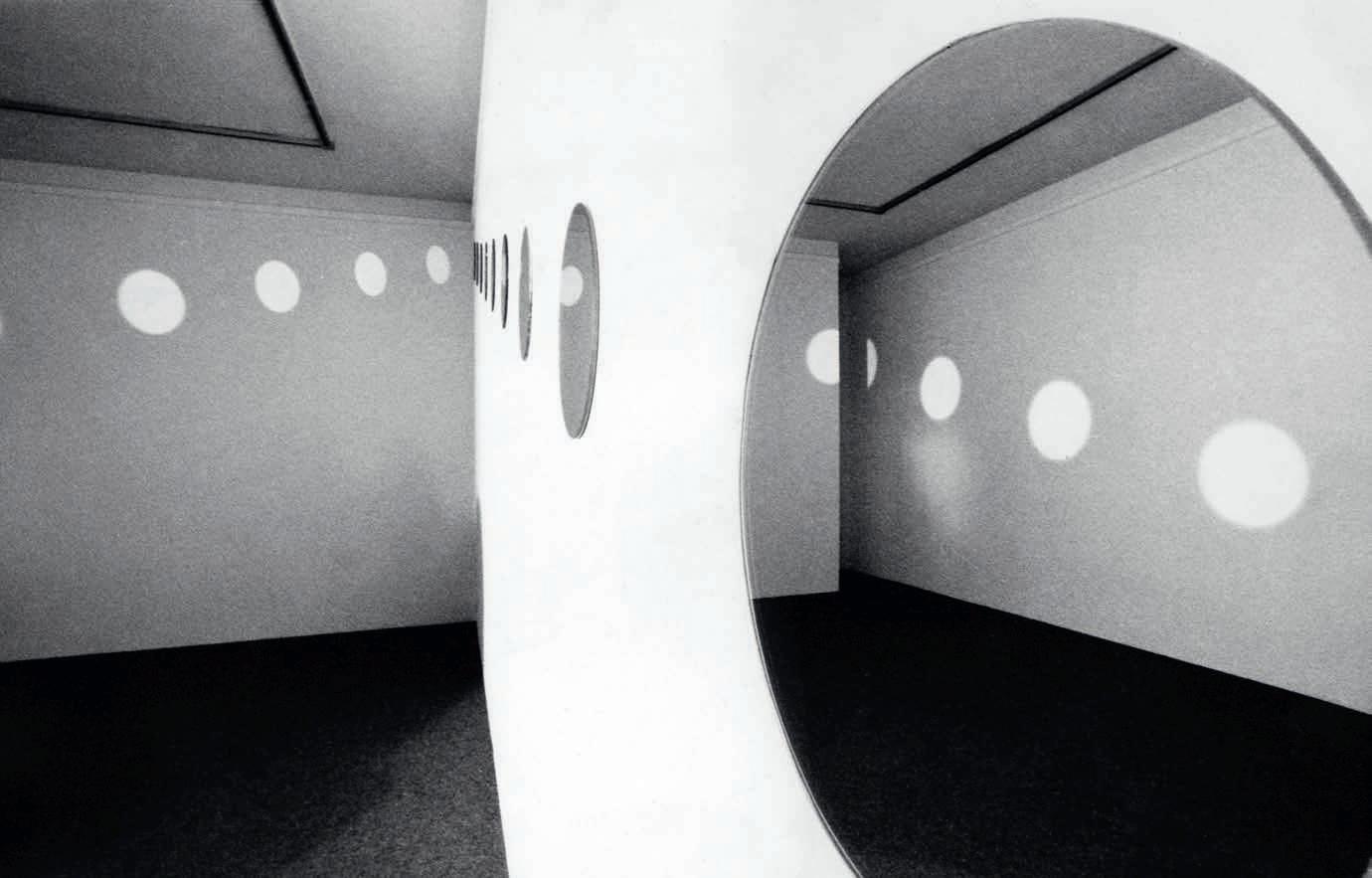
26 APRIL RUN THE TRACK
Follow in the slipstream of legends as you race 5km or 10km around the Goodwood Motor Circuit. Chase personal bests along this flat and fast route.
28 APRIL , 26 MAY, 30 JUNE PRO DRIVER
Precision engineering meets expert coaching for a series of track days like no other – designed for those who seek the extraordinary.
2 MAY–1 NOVEMBER SUMMER SEASON AT GOODWOOD ART FOUNDATION
Discover a new season of world-class art including works by Nancy Holt, Yayoi Kusama and Eva Rothschild across the Foundation’s galleries and 70-acre Dan Pearson landscape – brought to life with a thrilling roster of events for all ages.
3 MAY, 31 MAY GOODWOOD BREAKFAST CLUBS
An inclusive motoring meet, open to all and held on select Sunday mornings at the Goodwood Motor Circuit. Each themed event brings together remarkable cars, passionate enthusiasts and families to enjoy Sunday breakfast the Goodwood way, while supporting the local community. The themes this spring are “20th Anniversary” (3 May) and “Super Sunday” (31 May).
10–15 MAY GUT HEALTH PROGRAMME
Our five-day transformative gut health overhaul combines targeted therapies, mindful movement and nutrition to help you understand your body, receive science-backed guidance and make lasting changes from the inside out.
5, 12, 19 JUNE THREE FRIDAY NIGHTS
Featuring a unique combination of racing and music, Three Friday Nights hosts a series of unforgettable DJ sets across June (in order of appearance: Sub Focus, Riordan, DJ Luck & MC Neat). Enjoy dancing the night away in our Parade Ring as the sun sets.
6–8 JUNE ART & ICE RETREAT
A transformative two-day Wim Hof Method and creative mindfulness retreat, where breathwork, cold water immersion and creative expression come together to soothe the nervous system and restore deep clarity, calm and inner balance.
APRIL, MAY, JUNE GRRC INTERNATIONAL DRIVING TOURS AND TRIPS
Exclusively for GRRC Members, international driving tours and trips bring together world-class motorsport thrills, serene luxury escapes and extraordinary off-the-beaten-path adventures. From breathtaking scenery to iconic race access, each tour delivers experiences that you simply couldn’t book yourself.
27 APRIL TO 1 MAY
The Ardennes Adventure
A five-day driving tour through Germany, Luxembourg and Belgium.
5–12 MAY
The Andalusian Way
Explore Spain’s most breathtaking routes, from coastal curves to mountain passes.
18–23 JUNE
San Diego NASCAR: Operation Checkered Flag
A once-in-a-lifetime motorsport experience – a NASCAR race at Naval Base Coronado to celebrate the United States Semiquincentennial.

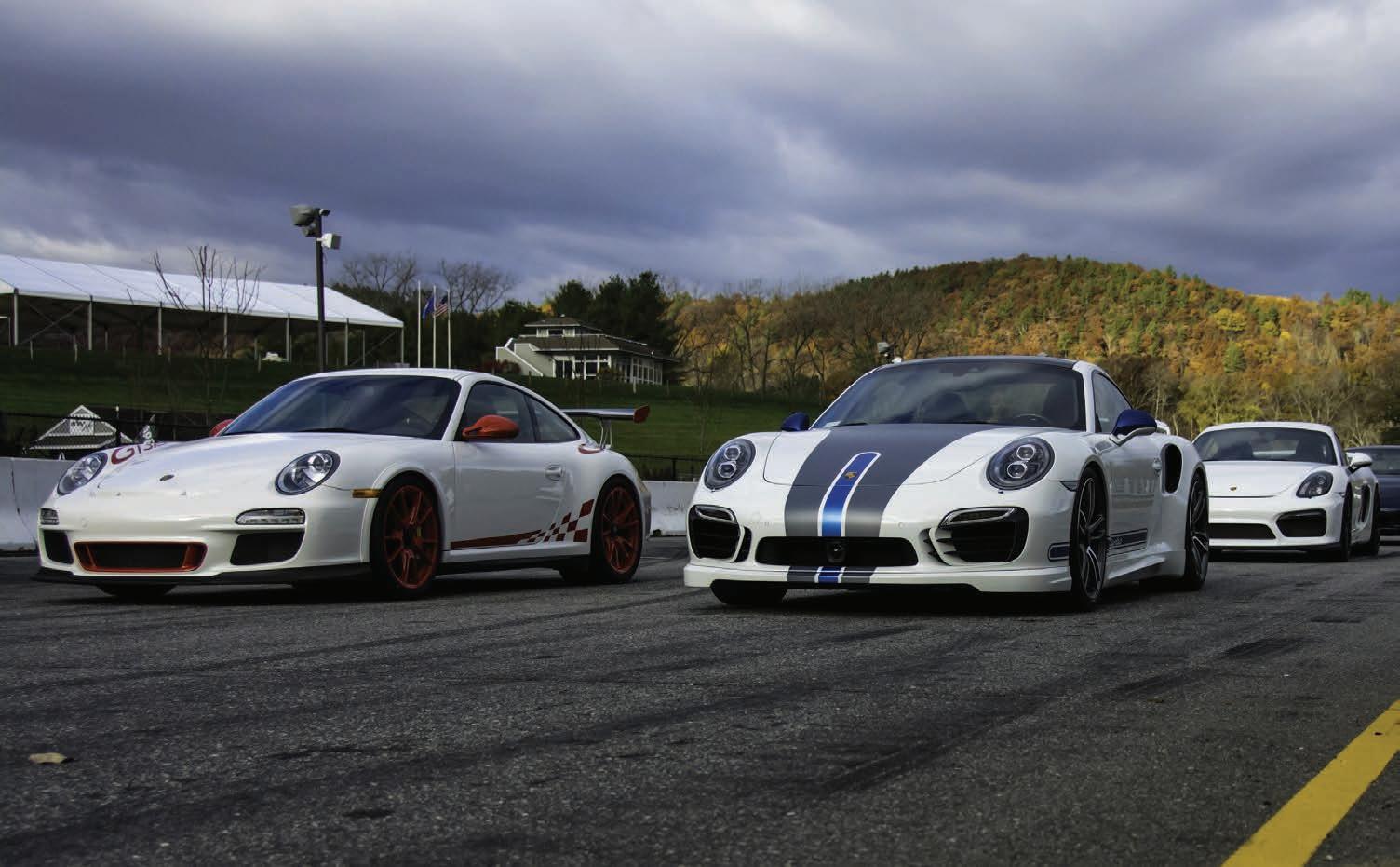
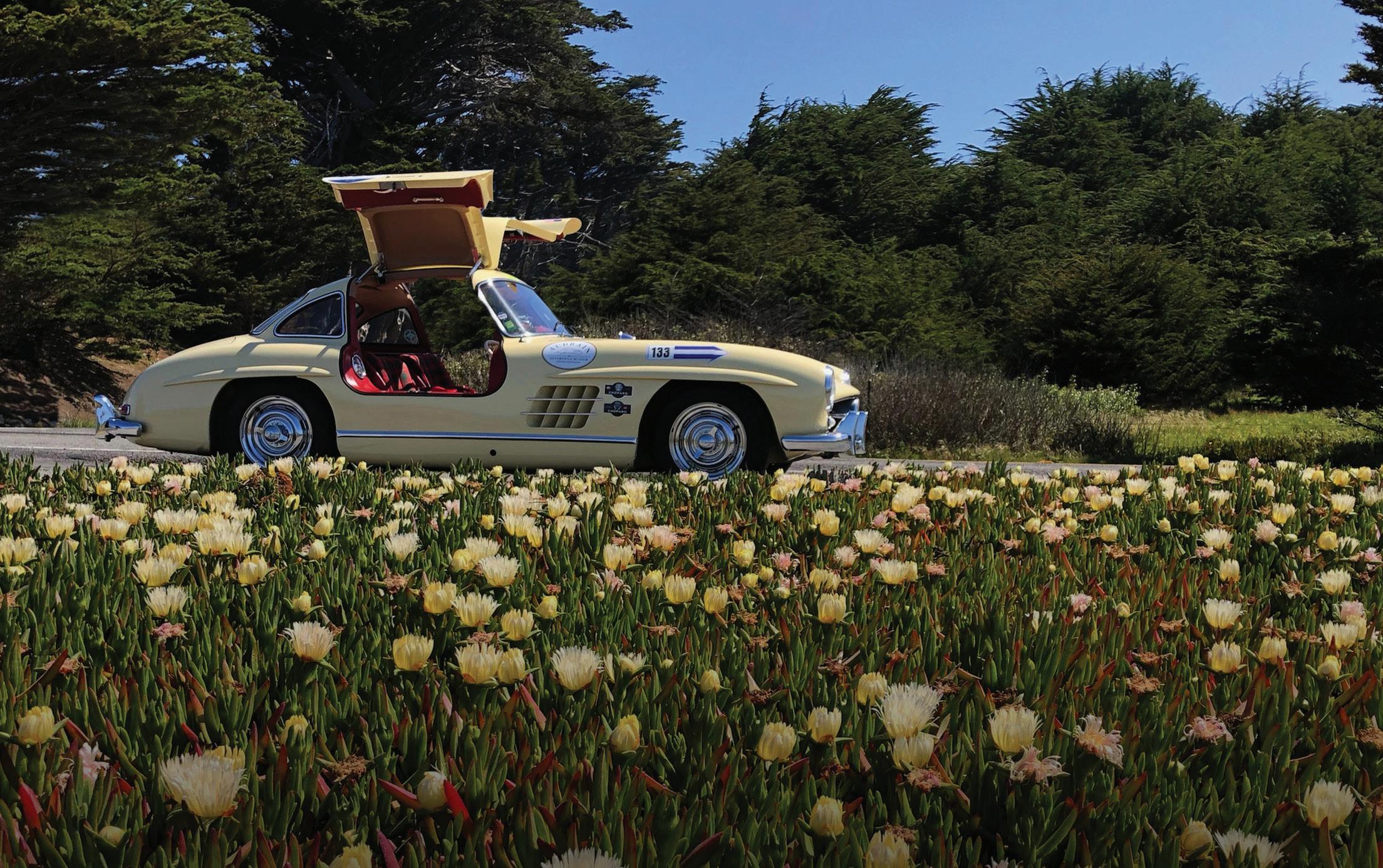


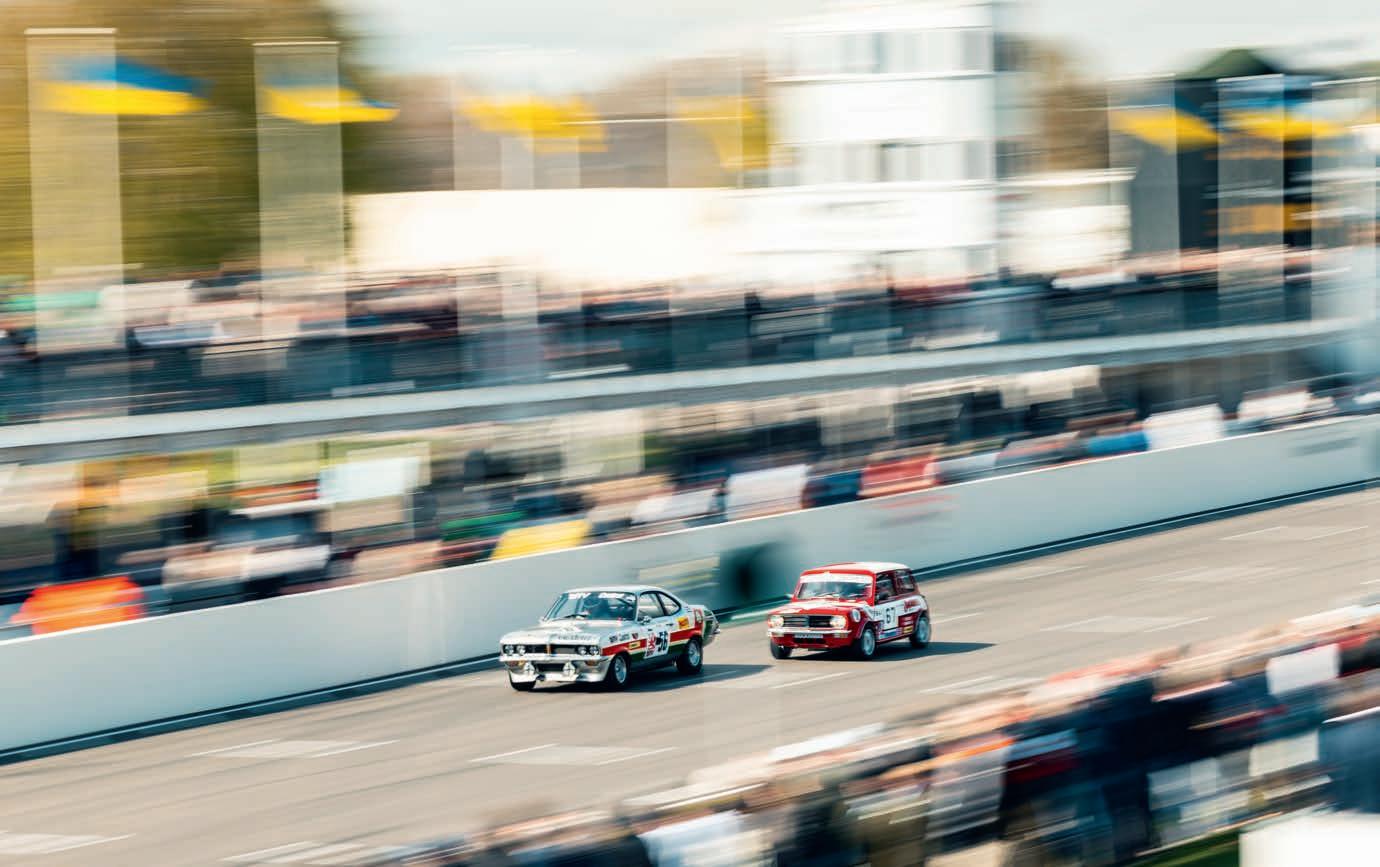
From emotional reunions to previously unseen celebrations, the 83rd Members’ Meeting presented by Audrain Motorsport promises to be an unforgettable event.
On the 50th anniversary of his world championship triumph, Members’ Meeting will celebrate the life and career of James Hunt with an array of cars spanning the duration of his time in F1, from 1973 to 1979. The event will also host its first ever two-wheeled demo, when a collection of 500cc Grand Prix motorcycles from 1974-84 will take to the track to honour the legendary Barry Sheene, who also won the first of his two world championships in 1976. The spirit of ’76 will be brought to life with theming around the paddock, music, and even a recreation of James Hunt’s Marbella night club, Oscar’s (named after his beloved Alsatian)!
A wave of Nineties nostalgia will sweep Goodwood courtesy of the Super Touring ShootOut. The golden era of touring car racing will be celebrated with around 20 Super Tourers unleashed on the Motor Circuit for a high-speed demonstration, before the fastest cars are pitted against each other in a head-to-head shoot-out over a single flying lap.
Last, but certainly not least, Jenson Button will be reunited with his Brawn as he makes his Members’ Meeting debut this spring. He will climb back into the cockpit of the BGP001, the actual car in which he conquered the world of F1 back in 2009, for demonstrations across the weekend. It will be seven years since he was last at the wheel of the car that took him to the top, and the first time he will have driven it at Goodwood.
With the traditional Saturday night festivities and fireworks, the hard-fought House Competition to be tussled over, Bonhams Cars Members’ Meeting sale, loads of track action and plenty to do off-track, this is an unmissable event for GRRC and Fellowship members. goodwood.com/motorsport/members-meeting/
Spaciously Intimate All-Suite, All-Balcony Ships
Welcoming No More Than 816 Guests
Nearly One Dedicated Crew Member Per Guest
Exquisite Fine Dining, Wines and Spirits
Sailing the World with Over 4,000 Included Excursions
One All-Inclusive Fare

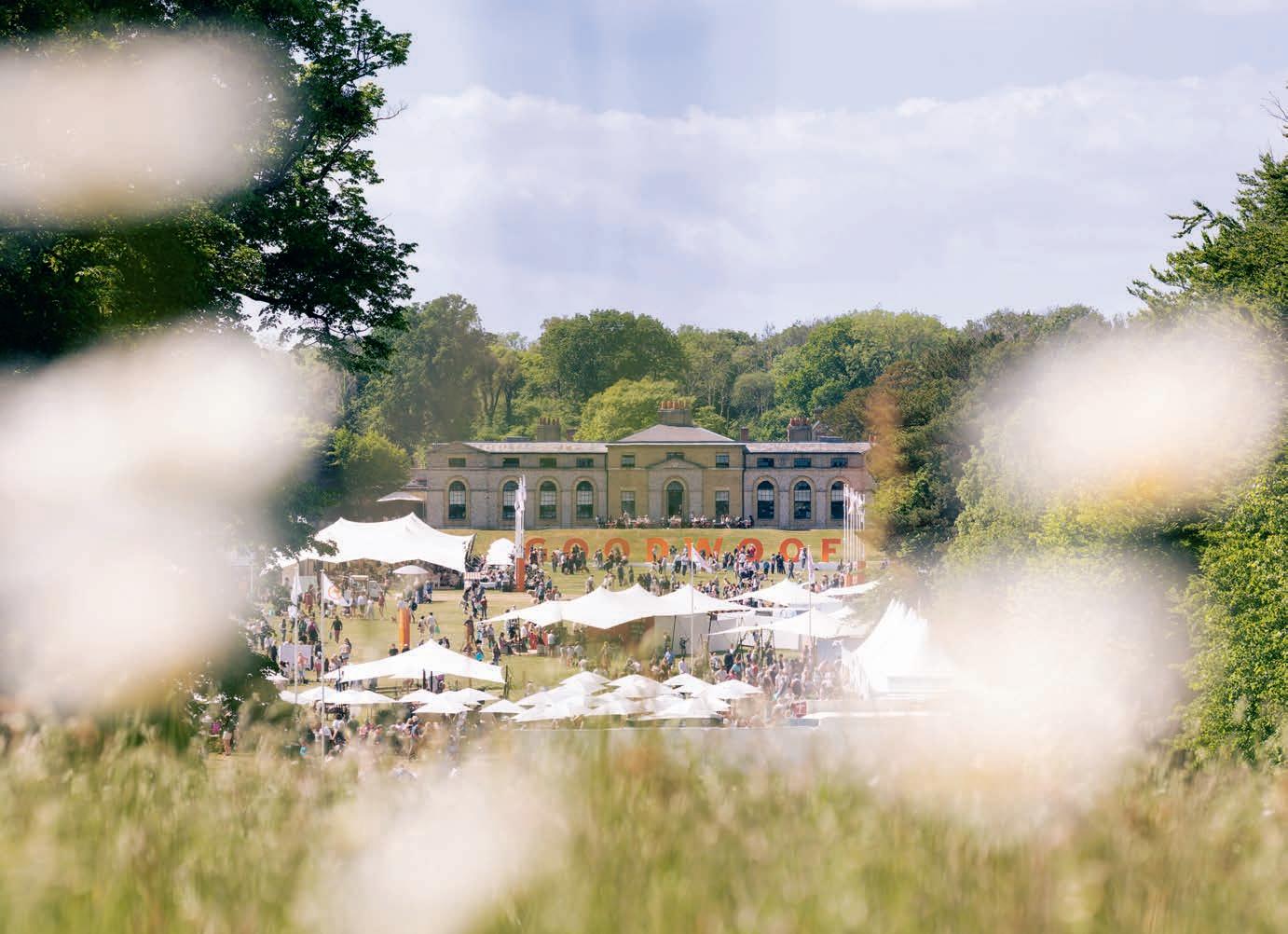
The dog event like no other is back, celebrating its fifth edition and shining a spotlight this year on rescue dogs. The event will open each day with hundreds of these adorable companions walking with The Duke of Richmond and celebrity guests from Goodwood House to the heart of the event.
Barkitecture will be truly out of this world as architects, designers and artists – together with a very special entry from our friends at LEGO – will display cosmic kennels based on the theme of “ Dogs in Space”. Visitors will even be able to spot a real-life astronaut as Tim Peake lends his expertise as a judge, all curated by design guru Kevin McCloud.
Brand new for this year will be the Training and Behaviour stage hosted by dog trainer extraordinaire Steve Mann and his team from the Institute of Modern Dog Trainers. Visitors will be able to book individual ten-minute sessions to iron out any canine quirks.
Another new and must-visit spot will be the Zen Den, home to all things holistic and calming, brought together in one super-chilled space.
Literary Corner will boast a stellar line up once again, including Martin Clunes, Michael Morpurgo and Charlie and Lola creator Lauren Child. There will also be not-tobe missed LEGO Make and Take workshops hosted in the Art Café.
All workshops and activities are included in the ticket price. Children aged 12 and under – and dogs! – go free. goodwood.com/goodwoof/
Every picture tells a Goodwood story
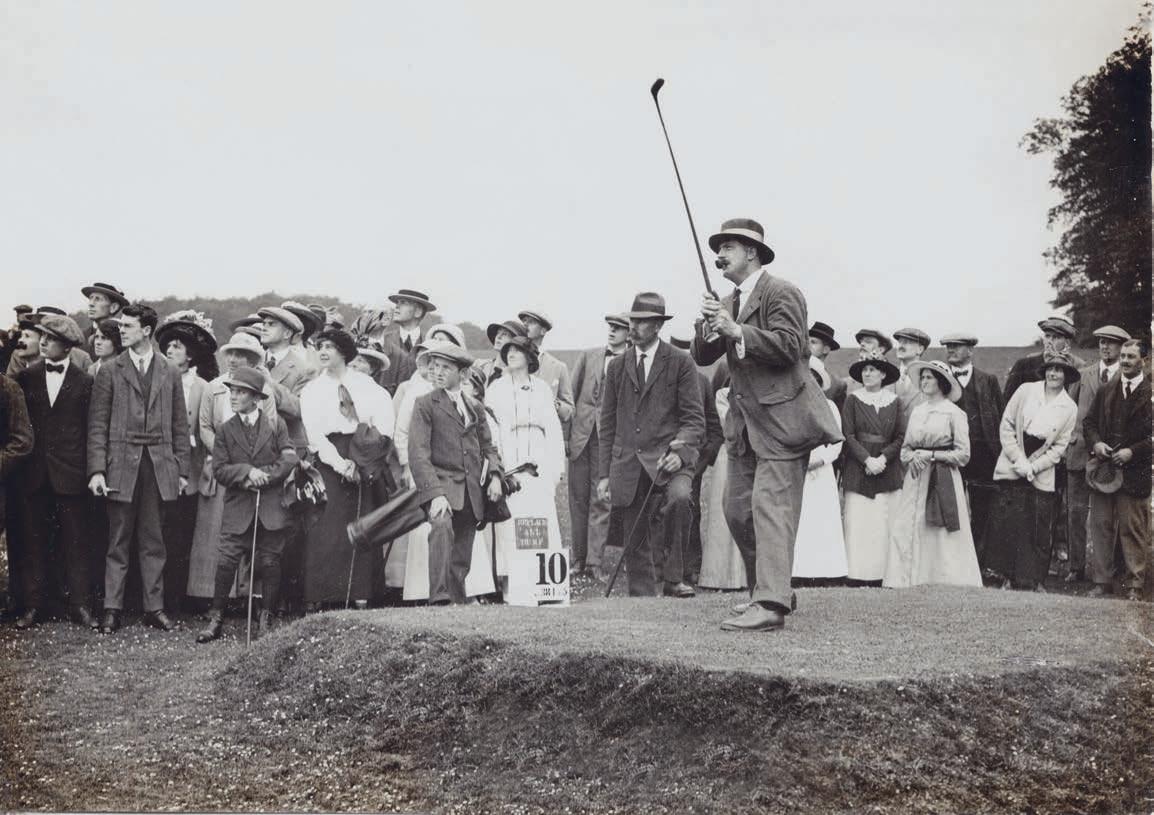
PLAYING GOLF ON A SPRING DAY IN THE SUSSEX DOWNS… What could be nicer?
This photo conveys some of the excitement of the early stages of golf at Goodwood, with the champion-turned-golf-course-designer James Braid playing in the tournament that inaugurated his new course. But this being May 1914, we can also see this as the final days of a certain kind of pre-war British life – at this point four years into the reign of George V, but still in spirit representing that high point of leisure for the leisured classes that characterised the Edwardian age. Edward VII had helped popularise golf from the 1880s onwards and the 7th Duke of Richmond and Gordon had invited the Chichester Golf Club to relocate to Goodwood, with family members such as Lady Helen and Lord Bernard Gordon Lennox (who had invited Braid to work on the course) taking up the sport with enthusiasm. Yet within a few months of this fine day, war was declared, with Lord Bernard among the early casualties at the front. Today golf flourishes at Goodwood, however, with this most peacable of sporting pursuits still a key element in this most sporting of estates.