Department of Otolaryngology/Head & Neck Surgery


Department of Otolaryngology/Head & Neck Surgery
June 2024-July 2025
Advancing Excellence in Otolaryngology
Our Mission is to improve the health of North Carolinians and others whom we serve. We will accomplish this by achieving excellence and providing leadership in the interrelated areas of patient care, education, and research.
UNC Department of Otolaryngology-Head & Neck Surgery
What an extraordinary year it has been for the Department of Otolaryngology/Head and Neck Surgery at UNC! Since our last annual report, we have continued to expand our clinical reach, while deepening our commitment to providing care to patients with the most complex problems of the upper aerodigestive tract in North Carolina and beyond.
Our hearing team led the nation in the number of patients treated with cochlear implants, and our mobile unit has been instrumental in reaching children in rural communities, bringing essential hearing diagnostics, audiology, and speech services directly to those who need them most.
As we care for more patients than ever before, each division within the Department continues to push the boundaries of what’s possible—advancing care through groundbreaking research and training the next generation of surgeons and scientists across the full continuum of medical education. Our residents and learners continue to excel in all areas: earning accolades in national surveys, providing foundational care, publishing and presenting research advances, and receiving two Academy research awards.
We invite you to explore this year’s annual report, which highlights our unwavering dedication to clinical excellence, research innovation, and educational leadership. Of course, the remarkable growth, innovation and impact of Otolaryngology/Head and Neck Surgery are a testament to our dedicated faculty, staff, and trainees.
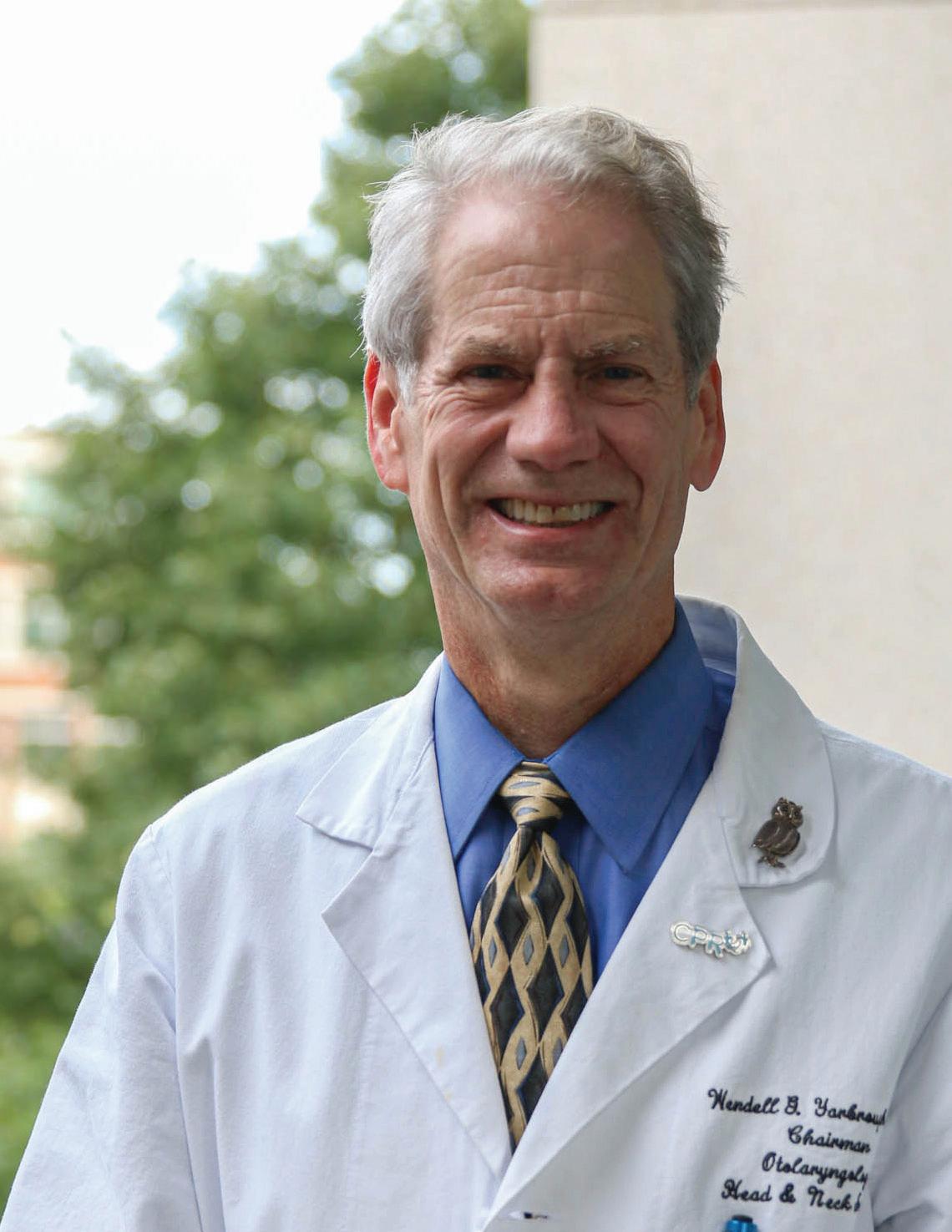
Wendell G. Yarbrough, MD, MMHC, FACS
Thomas J. Dark Distinguished Professor and Chair Department of Otolaryngology/Head and Neck Surgery
UNC
School of Medicine

UNC Department of Otolaryngology-Head & Neck Surgery
UNC Hospitals’ Otolaryngology/Head & Neck Surgery was recognized with a No. 44 national ranking in U.S. News & World Report. This distinction underscores the department’s reputation for excellence in clinical care, innovation, and patient outcomes and extends continuous ranking for more than twelve years.
FY25 marked a historic milestone: UNC’s scale, research integration, and clinical achievements position the program as a national leader in hearing restoration.
Several faculty members served in high-impact national and editorial leadership positions:
• Brent Senior, MD, FACS, FARS
– Selected as the Executive Vice President of the American Rhinologic Society.
• Robert Ferris, MD, PhD – Immediate past President of the American Head & Neck Society, Co-Chair of the NCI Head & Neck Cancer Steering Committee, advisor to leading U.S. cancer centers (MD Anderson, UPenn, Georgetown), Director of the Lineberger Comprehensive Cancer Center at UNC, and Leader of the Cancer Service Line for UNC Health.
• Carlton Zdanski, MD, FAAP, FACS –
UNC Department of Otolaryngology-Head & Neck Surgery
Program Chair for the 2026 ASPO National Meeting, Scientific Program Committee member for CEORLHNS and ESPO, and ABO-HNS Oral Examiner.
• Kevin Brown, MD, PhD– National leadership roles including Board Member & Treasurer of the American Cochlear Implant Alliance, Senior Examiner for ABO-HNS Neurotology, and Scientific Director for the International Fall Cochlear Implant Meeting
These positions elevate UNC’s influence on national policy, education, research direction, and clinical standards.
FY25 continues the Department’s tradition of high impact scholarly contributions:

110
Peer-Reviewed publications

134 Presentations at national & international meetings
$835,799.30 in active NIH grants


10 Active Clinical Trials
Together, these metrics reflect UNC’s broad national impact on scientific discovery and clinical research.

UNC researchers, including Adam Kimple, MD, PhD, FACS, FARS were chosen as one of only fourteen teams worldwide for the prestigious 100 Million Cell Challenge, supported by Scale Biosciences and the Chan Zuckerberg Initiative.
The project will develop the first comprehensive single-cell atlas of the pediatric airway, creating a global dataset to transform understanding of childhood respiratory disease.
The Head & Neck Oncology Research Laboratory led NIHfunded studies on newly defined molecular subtypes of HPV-positive oropharyngeal cancer and is advancing this concept for new therapies and de-escalation trials. A novel immunocompetent mouse model developed at UNC is being used for preclinical testing of combination therapies targeting aggressive tumor types.
UNC’s contributions directly support national cancer research and treatment innovation.
UNC Department of Otolaryngology-Head & Neck Surgery
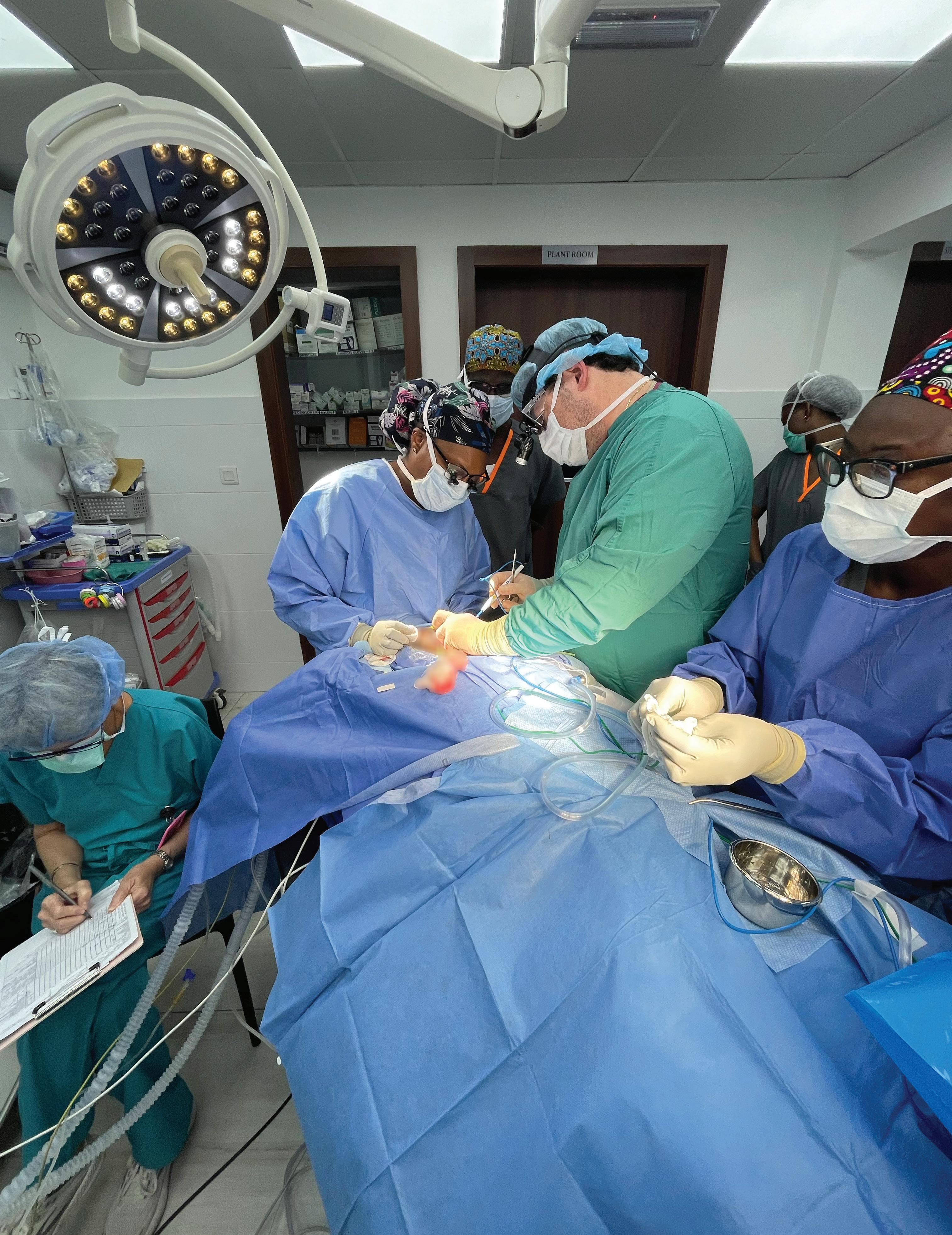
Care, access, education, and science—moving together. The Division of Head and Neck Oncology delivers comprehensive oncologic and reconstructive care with fellowshiptrained microvascular and TORS expertise for early stage and advanced cancers of the upper aerodigestive tract (nose, sinus, pharynx, and larynx), as well as thyroid and salivary disease, facial reanimation, and complex ablative and reconstructive surgery. In the most recent year, the division performed close to one hundred sixty complex microvascular reconstructions while collaborating with specialists to provide the best multidisciplinary cancer care reflecting the teamwork required to provide the best and most durable outcomes in service of the people of North Carolina.
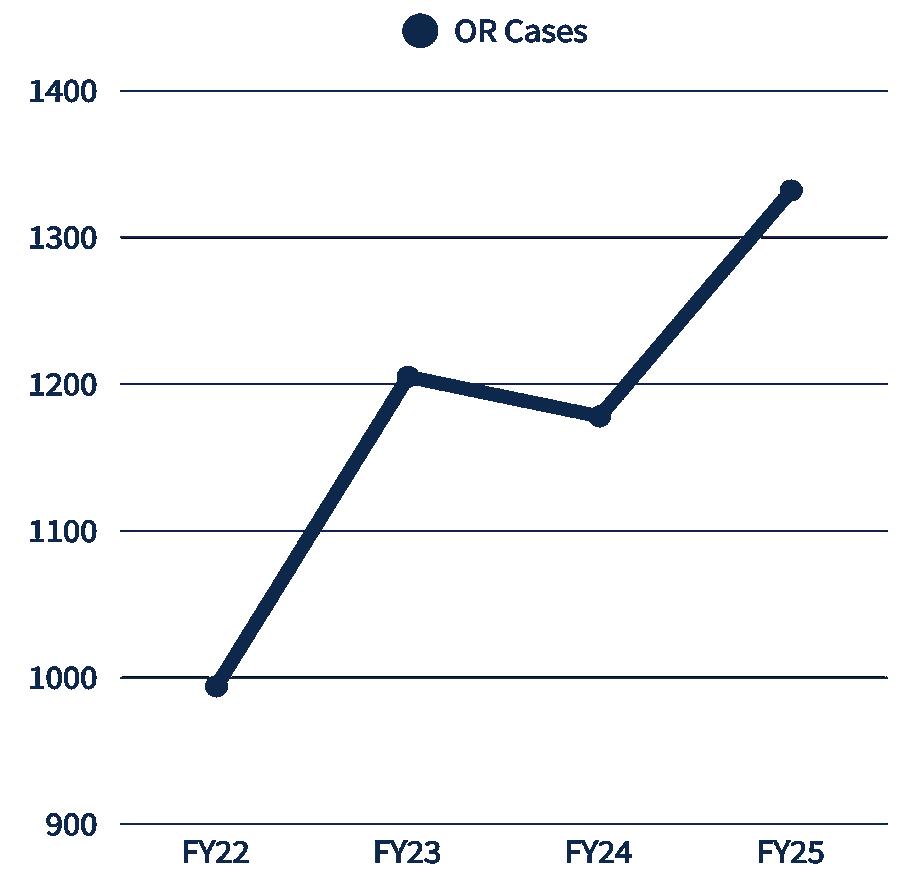
4,709 OR cases in the past 4 years
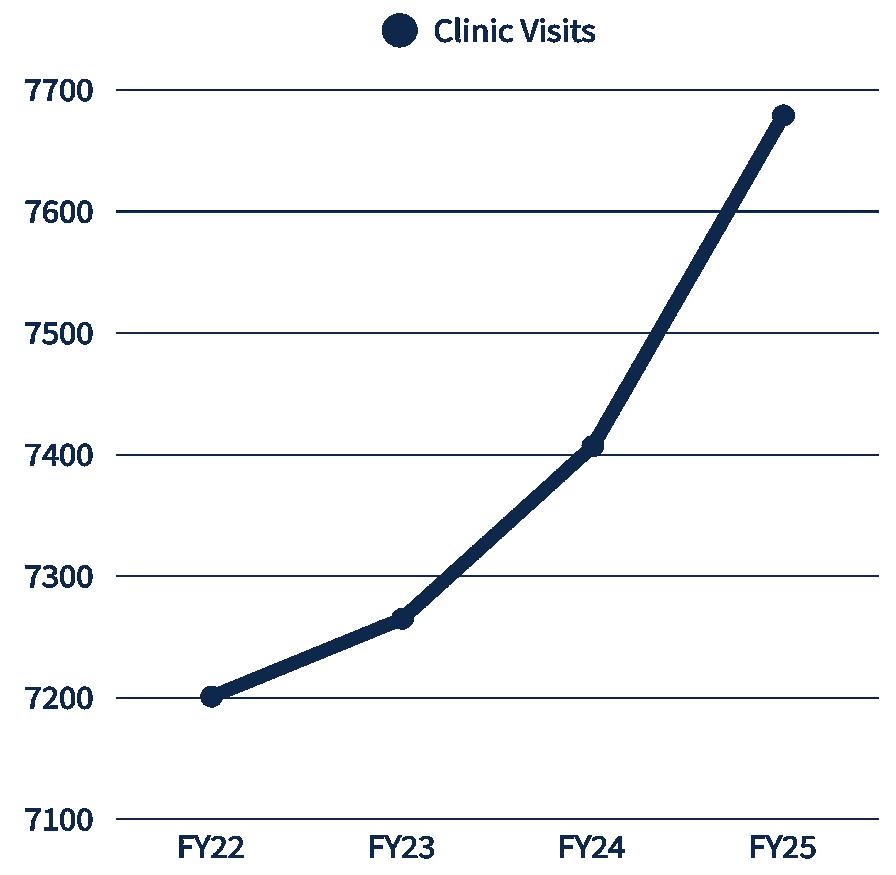
29,552 Clinic Visits in the past 4 years
OR case volume reached its highest level in FY25. Clinic visits rose steadily each year across the four-year period, with the most pronounced growth occurring between FY24 and FY25. Together, these trends reflect sustained and growing demand.
UNC Department of Otolaryngology-Head & Neck Surgery
Rachelle Gish-Johnson, FNP-BC, serves as Lead APP for the department, Hannah Eadie, FNP-C, serves as Lead APP for the inpatient team and Caitlyn Heredia, PA-C, joined the APP group this year. With this complement, the division is launching APP-led initiatives, including a Survivorship Clinic, to expand access for head and neck cancer patients with the goal of further strengthening longitudinal care and quality projects for patients in the postoperative period.
The division has expanded its footprint at the UNC Rex Cancer Center where members collaborate with medical and radiation oncology colleagues providing multi-disciplinary care at this site. Services, including clinical trials and point-of-care ultrasound-guided biopsies, are in process with the goal of decreasing time-to-diagnosis and the travel burden for patients.
The goal is evaluation of new oncology referrals within seventy-two hours. To help expedite care, the access team streamlines referrals, focusing on newly diagnosed cancer patients and other high-risk diagnoses. The access team works with referring physician offices to rapidly attain records and upload existing outside imaging to avoid repetitive testing and shorten the time between initial visit and initiation of therapy.
The FDA recently approved treatment of advanced head and neck squamous cell carcinoma patients with immune checkpoint inhibitors before and after surgery. Published results of a landmark clinical trial (Keynote 689), proved that addition of Pembrolizumab in the perioperative period significantly improved event-free survival in resectable, locally advanced HNSCC. The multi-disciplinary head and neck cancer care team is focused on streamlining this new therapeutic approach at the Basnight Cancer
UNC Department of Otolaryngology-Head & Neck Surgery
Hospital on the main campus in Chapel Hill, and at the UNC Rex Cancer Center in Raleigh so that patients have ready access to this new therapy.
The multi-disciplinary head and neck cancer team offers a palette of cuttingedge clinical trials.
CURRENTLY AVAILABLE TRIALS (QUICK GUIDE)
H&N NEO-COMBAT XL (PI: Sid Sheth, DO, Medical Oncology) – pre-operative immunotherapy with a novel tyrosine kinase (TKI) inhibitor for oral cavity SCCa
• Who: Adults with Stage III–IV HPVnegative oral cavity squamous cell carcinoma (newly diagnosed or recurrent, per screening).
• What: Zanzalintinib (XL092) plus pembrolizumab (targeted therapy + immunotherapy).
NRG-HN014 (Site PI: Catherine Lumley, MD) – perioperative immunotherapy for cutaneous SCC
• Who: Resectable stage III–IV cutaneous squamous cell carcinoma (primary or resectable recurrent).
• What: Cemiplimab with responseadapted definitive treatment
compared with standard surgery ± adjuvant RT.
NRG-HN006 (Site PI: Trevor Hackman, MD, FACS) – Sentinel lymph node biopsy vs elective neck dissection in early oral cavity SCC
• Who: Early T stage without nodal metastases (cT1–2 N0) oral cavity SCC planned for primary surgery (imaging N0).
• What: Randomized comparison of sentinel lymph node biopsy versus elective neck dissection; quality-oflife and disease-control endpoints.
ECOG-ACRIN EA3132 – adjuvant RT ± weekly cisplatin after surgery (addition of cisplatin guided by mutations in the TP53 tumor suppressor)
• Who: Resected stage III–IVA HNSCC with intermediate-risk pathology (no positive margin or ENE) and TP53
“UNC Department of Otolaryngology-Head & Neck Surgery
This year, our Head & Neck Oncology Division set out to do something simple: get patients the right care, faster— through true multidisciplinary coordination, expanded access, and excellence in complex surgical oncology and reconstruction. What I’m most proud of is how our team delivers on that promise every day—our advanced practice providers (APPs) providing frontline inpatient and outpatient care, and our surgeon-led clinical trials bringing the next standard of care to patients now. In the year ahead, we will scale Rapid Access and broaden trial enrollment by streamlining referral-to-treatment pathways so every eligible patient can be seen quickly and treated with precision.
— Mihir R. Patel, MD, Division Chief
sequencing to determine mutational status
• What: Postoperative RT (about 60 Gy) with or without weekly cisplatin; prospective evaluation of the benefit of cisplatin for patients with disruptive TP53 mutations.
LCCC1835 (UNC; with Natera Signatera)
– personalized monitoring of circulating tumor derived DNA (ctDNA)
• Who: Stage III–IV HNSCC heading to curative-intent upfront surgery at UNC (no prior definitive therapy).
• What: Testing utility of tumorinformed, personalized ctDNA assay for predicting response and early detection of recurrence
RTOG 1216 – adjuvant trial with an
immunotherapy-containing arm
• Who: Pathologic high-risk, HPVnegative HNSCC after definitive surgery (positive margin and/or extranodal extension), typically oral cavity, larynx, hypopharynx, or p16negative oropharynx
• What: Randomized adjuvant IMRT with one of the following: cisplatin (standard), docetaxel-cetuximab, or cisplatin-atezolizumab (new IOcontaining arm).
What patients remember isn’t just the operation, it’s how the team reduces fear and friction. Nurse Navigators are the backbone of that work. They triage new referrals, coordinate record and image retrieval, arrange interpreter support, complete teachback on next steps, and send sameday MyChart summaries with direct contact information. They also close loops with the multiple services in the multi-disciplinary teams including speech-language pathology, dental, smoking cessation, pain management, and nutrition, while arranging transportation and are often the first after-hours call families receive.
The division is expanding its navigator complement to support Rapid Access efforts and assure caring and timely diagnosis and treatment for the people of North Carolina. Goals are reducing time-to-first visit, decreasing time to treatment initiation, decreasing the number of repeat tests and imaging, and easing transitions between surgery, radiation, and chemo/immunotherapy.
Referring providers should use the standard Epic referral (“Head & Neck Oncology—Clinical Trials”), mark it as Urgent, and upload outside imaging via PowerShare when available. Rapid Access will triage and schedule incoming cases.
Speed to care, science at the point of decision, and access where patients live. Over the next year, the division aims to compress timeto-treatment, embed biomarkers (including circulating tumor DNA) in routine decision-making, grow multidisciplinary trial accrual, and scale its UNC Rex Cancer Center presence so patients can receive diagnostics, biopsies, and survivorship support closer to home, without compromising the multidisciplinary rigor that defines UNC.
UNC Department of Otolaryngology-Head & Neck Surgery
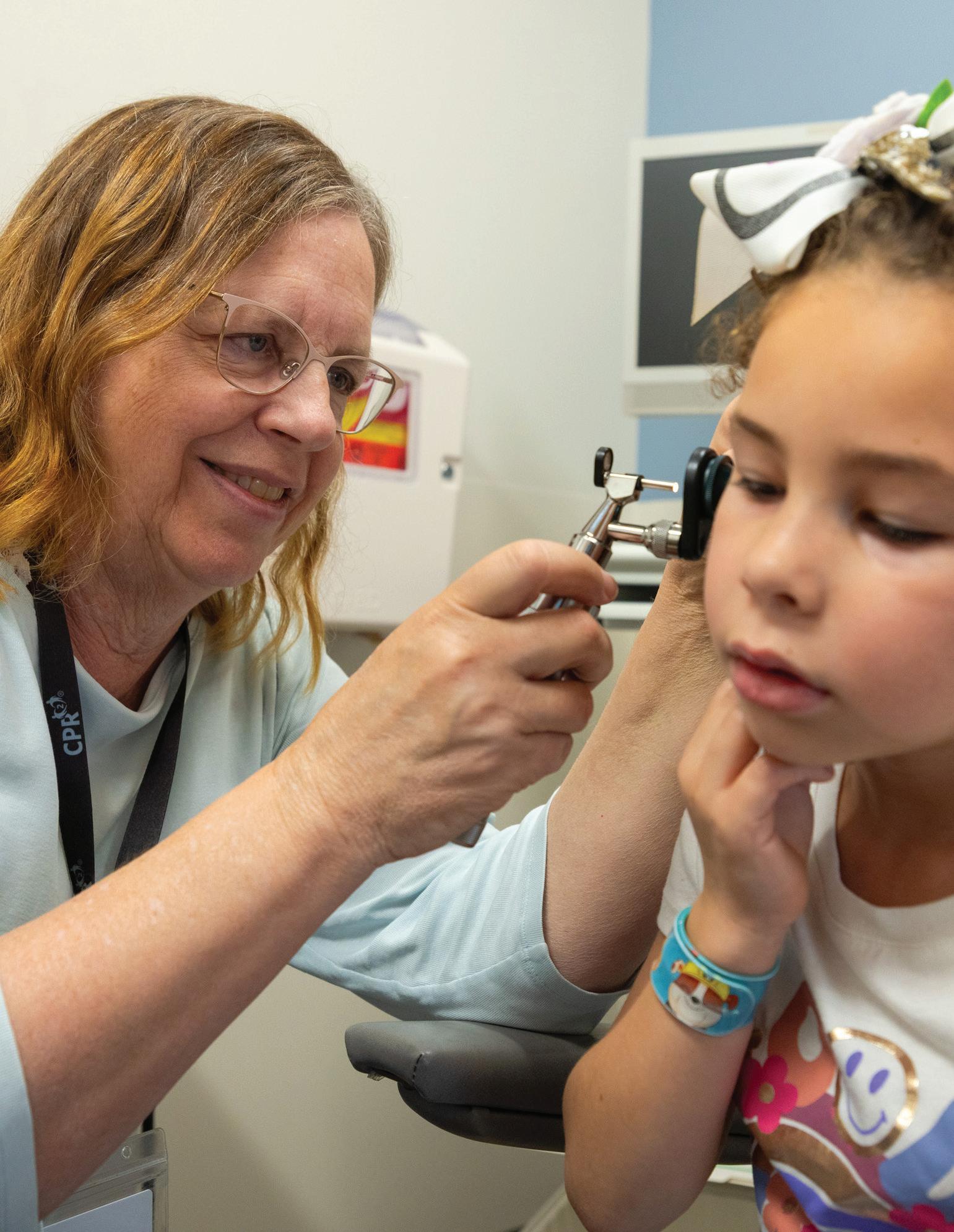
The Division of Pediatric Otolaryngology provides expert care for children across North Carolina and beyond, while training the next generation of otolaryngologists and advancing research in airway, hearing, craniofacial, and multidisciplinary care. Faculty lead nationally recognized programs and play influential roles in clinical innovation, research networks, and professional societies worldwide.
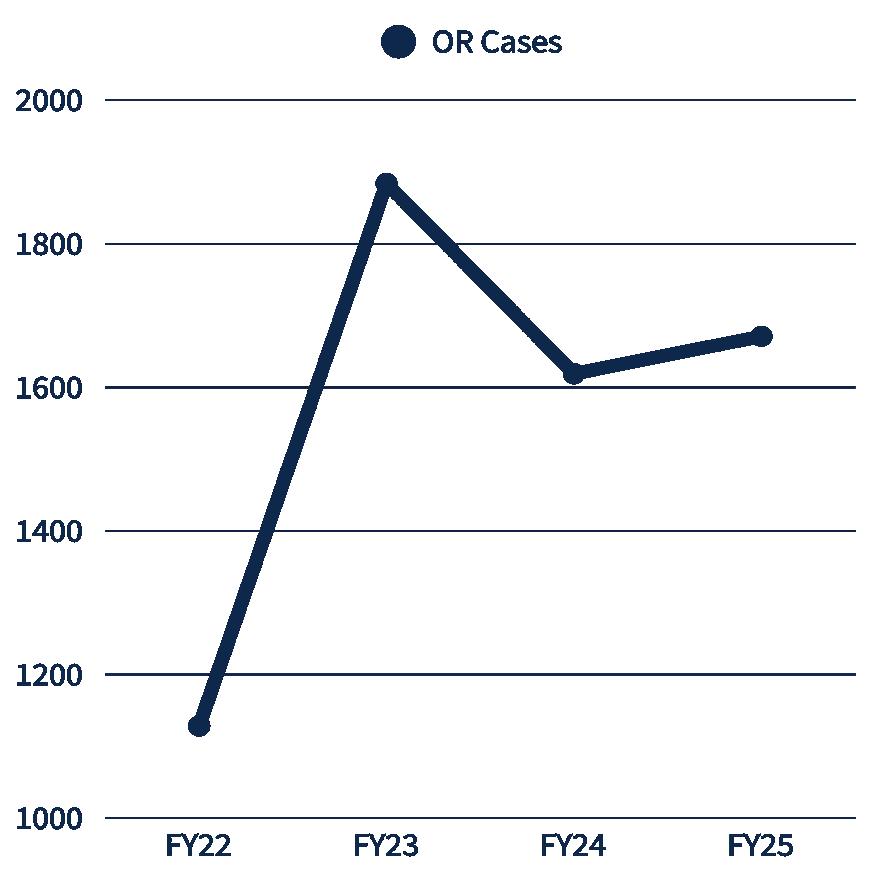
6,302 OR cases in the past 4 years
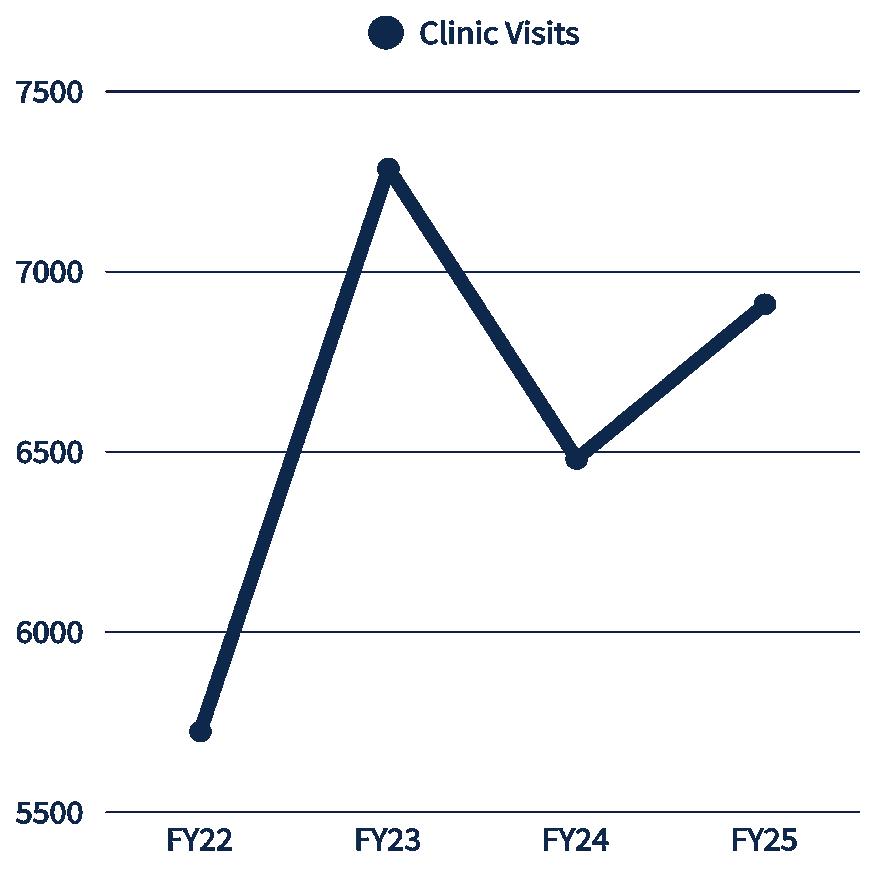
26,399 Clinic Visits in the past 4 years
OR case volume and clinic visits both increased significantly in FY23, with volumes remaining strong through FY25. These year-over-year changes highlight growing clinical demand and sustained patient access.
12 Presentations & Posters
Peer-Reviewed Articles
4 Book Chapters
UNC Department of Otolaryngology-Head & Neck Surgery
Faculty play critical roles within the Cochlear Implant Program, the NC Children’s Airway Center, and the UNC Craniofacial Center, while also expanding services with the introduction of three new multidisciplinary clinics. These include the Pediatric Dysphagia Clinic led by Claire James, MD, the Pediatric Thyroid Clinic directed by Wade McClain, DO, and involvement in the Down Syndrome Clinic. The Division remains committed to advancing both routine and complex pediatric otolaryngology through integrated, family-centered care.
In addition to these expansions, Carlton Zdanski, MD, FAAP, FACS authored the new “Guidelines for Pediatric Post Airway Reconstruction and Critical Airway Patients” at UNC Children’s Hospital, reflecting the division’s leadership in setting institutional standards of care. Clinical services have outreach partnerships at Rex Outpatient Surgery Center, Lake Boone Trail, and through engagement with specialized teams such as the UNC Microtia Team and the UNC Vascular Malformations Team.
The Division continues to shape the next generation of pediatric otolaryngologists, leading resident training and contributing to national and international symposia. This year, contributions of medical students were highlighted within Divisional research presenting their work on airway, cleft care, and access to treatment at national meetings and publishing in peer-reviewed journals. Division faculty hold influential roles across leading professional societies: Amelia Drake, MD, FACS, Past President of the American Cleft Palate Craniofacial Association, now serves on its Management and Finance Committee, while Zdanski serves on the Program Committees for ASPO (2024, 2025) and will chair the ASPO 2026 Program. He also holds leadership roles on the Standing Scientific Committee for ESPO and CEORL-HNS and is an examiner and item writer for the American Board of Otolaryngology – Head and Neck Surgery. Together, these efforts showcase the division’s academic and educational reach that extends well beyond Chapel Hill, influencing the field
UNC Department of Otolaryngology-Head & Neck Surgery
The Division of Pediatric Otolaryngology/Head and Neck Surgery is proud to advance the field through outstanding clinical care, education, and research within the North Carolina Children’s Hospital, the state of North Carolina, and through national and international efforts.
— Carlton J. Zdanski, MD, FAAP, FACS, Division Chief
on both a national and international scale.
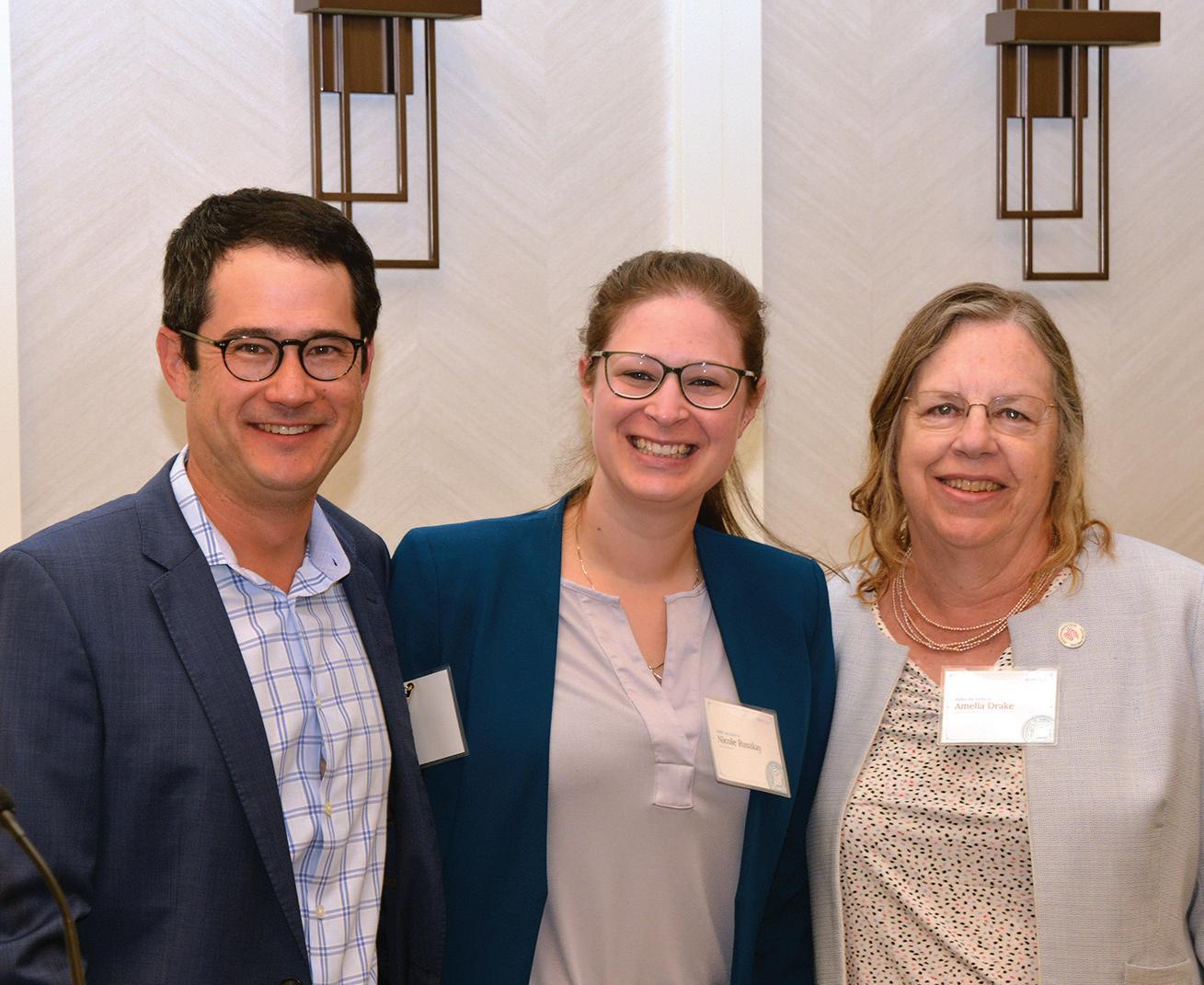
The fellowship program continues to prepare the next generation of leaders in pediatric otolaryngology. Nicole Ruszkay, MD completed her fellowship this year and has since joined the faculty at Pennsylvania State University. Her graduation was marked not only by academic success but also by her time in the operating room with the faculty of the Division, a moment that underscored the division’s commitment to mentorship and support. Looking ahead, Liz Silber, MD, of Boston University is set to begin her fellowship in the summer of 2026.
The division’s faculty mentored five medical students, three PhD candidates, and multiple residents and fellows during the year. Their
guidance supported a variety of research projects. The topics spanned from 4D CT analysis of airway collapse (tracheobronchomalacia), robotic airway surgery, and vestibular disorders in children. Graduate students and postdocs from Biomedical Engineering and Computer Science also contributed to ongoing NIH-funded projects, further strengthening translational collaborations. The success of these learners illustrates the division’s enduring commitment to cultivating the next generation of physician scientists.
Collaboration is a hallmark of the division’s work. Faculty direct and participate in multidisciplinary clinics, including craniofacial, thyroid, sleep, and airway care programs. The division is also deeply engaged in research
UNC Department of Otolaryngology-Head & Neck Surgery
partnerships through NIH-funded studies, such as Zdanski’s multi-PI R01 project predicting surgical needs in pediatric subglottic stenosis and collaborations with NC State University on innovative drug delivery to the inner ear. Drake serves as consultant for CARE 2.0, a long-term study on craniofacial microsomia.
The division’s reach extends globally as well. Zdanski contributed to humanitarian surgical initiatives through the Malawi Surgical Initiative, the Global Smile Foundation in Ecuador,
and as a liaison for UNC studies on infectious diseases in West Africa. These efforts reflect the division’s commitment to global child health as well as local excellence.
Research productivity remains a defining strength of the division. The faculty produced 11 peer-reviewed
This fiscal year saw the launch of several new initiatives:
• James initiated the Multidisciplinary Pediatric Complex Sleep Clinic, including leadership of the Inspire Program, as well as the Voice and Dysphagia Clinic.
• McClain assumed the role of Surgical Director for the Pediatric Thyroid Clinic.
• Drake continued leadership as Director of the Craniofacial Team.
• Zdanski remains Surgical Director of the NC Children’s Airway Center.
Lauren Leeper, MD, FACS, continues to serve as the program director of the Pediatric Otolaryngology fellowship.
These initiatives strengthen the division’s capacity to provide highly specialized care while expanding access to multidisciplinary treatment models.
UNC Department of Otolaryngology-Head & Neck Surgery
articles, twelve oral presentations and posters, and four book chapters over the past year. Highlights include innovative work in robotic laryngeal cleft repair, 4D CT imaging of pediatric airways, and novel approaches to airway elastography.
Major ongoing projects are supported by competitive federal grants:
• Predicting the Need for Surgery in Pediatric Subglottic Stenosis (NIH R01, PI: Oldenburg/Zdanski, $3.96M)
• Large Animal Model for Inner Ear Drug Delivery (NIH R21, PI: Greenbaum, Investigator: Zdanski)
• Pediatric Atlas of Upper Airway Shape (NIH R21, mPI: Zdanski)
• Next-Gen 3D Modeling of Endoscopy Videos (NIH R21, PI: Sengupta; Investigator: Zdanski)
• CARE 2.0: Long-term Outcomes of Children with Craniofacial Microsomia (Site Investigator: Drake)
Collectively, these federally funded studies span next-generation 3D modeling of endoscopy videos, development of large animal models for inner ear drug delivery, and longterm outcome studies in craniofacial microsomia. They illustrate the division’s ability to translate scientific innovation into tools that directly improve pediatric outcomes.
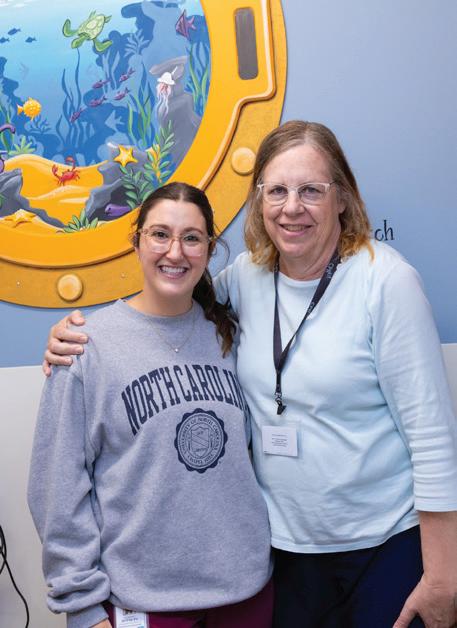
This year showcased milestones that reflect the division’s leadership and impact. Faculty expanded services with innovative multidisciplinary clinics addressing thyroid disease, dysphagia, sleep, and voice disorders; leadership roles in major international societies; and humanitarian outreach that extends the division’s expertise worldwide. The division celebrated Nicole Ruszkay’s, fellowship graduation and transition to a faculty role, while also highlighting national recognition through faculty leadership roles in societies, editorial boards, and symposia.
Collectively, these achievements underscore the division’s commitment to advancing pediatric otolaryngology through clinical innovation, research excellence, and mentorship of future leaders.
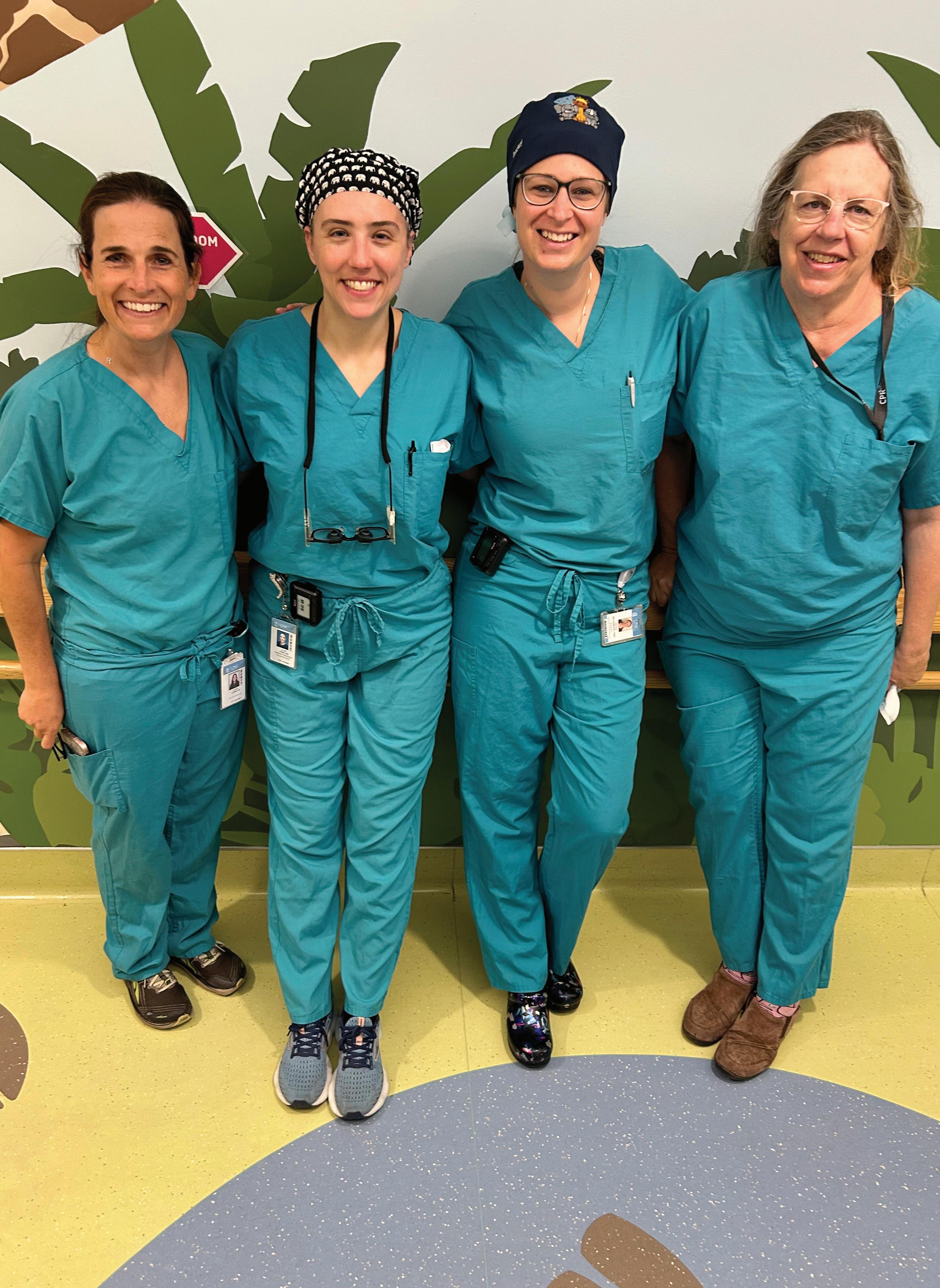
“We are excited to advance the field of pediatric otolaryngology in terms of clinical care, research, education and coordination of services within the N.C. Children’s Hospital”
— Amelia F. Drake, MD, FACS
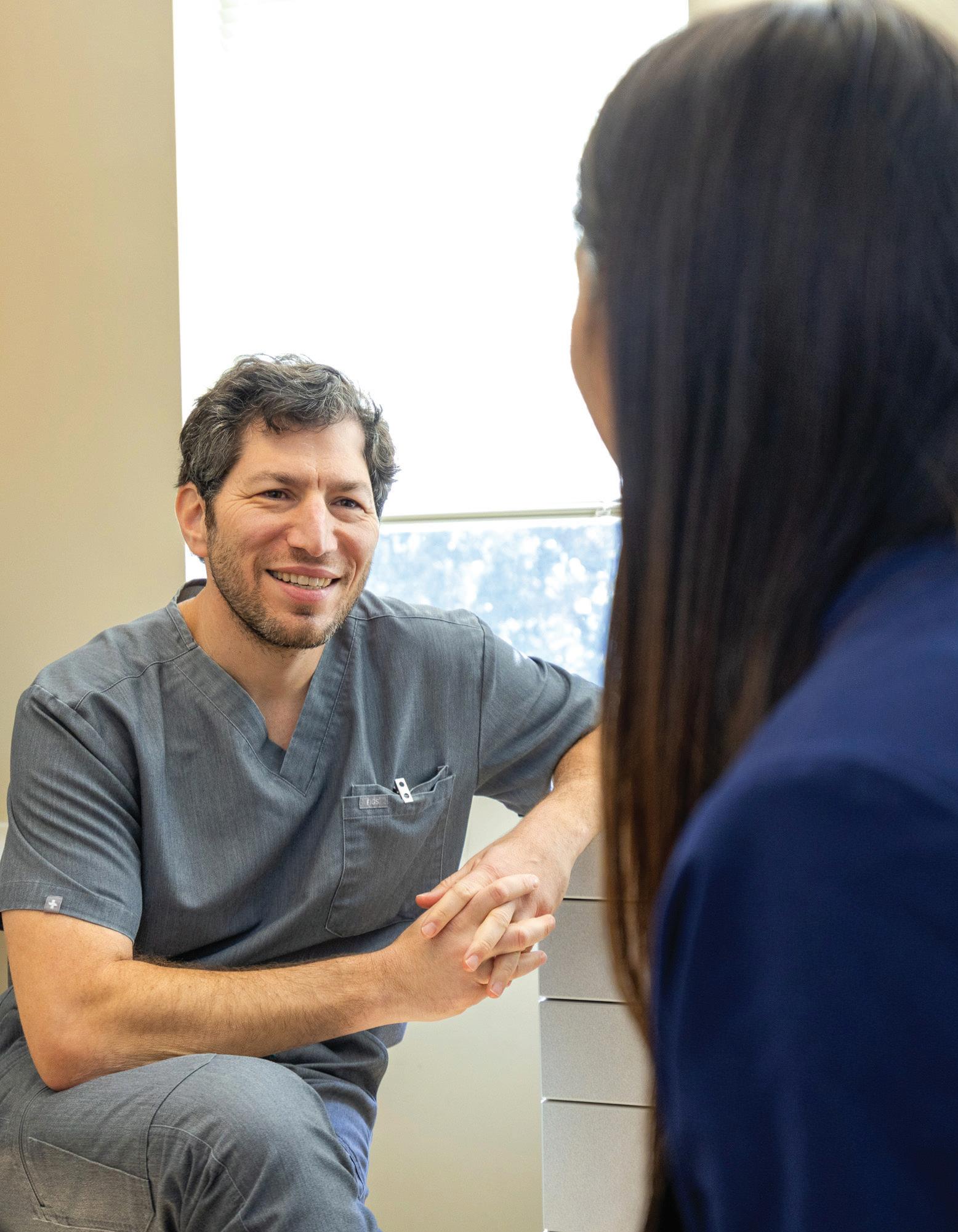
The Rhinology, Allergy, and Endoscopic Skull Base Surgery Division provides specialized clinical care for patients with disorders of the nose, sinuses, and related structures. Our team focuses on innovative approaches to improving nasal breathing, treating sinus and orbital conditions, and managing complex rhinologic cases. In addition to clinical services, the division emphasizes mentorship and research, training medical students, residents, and international visitors.
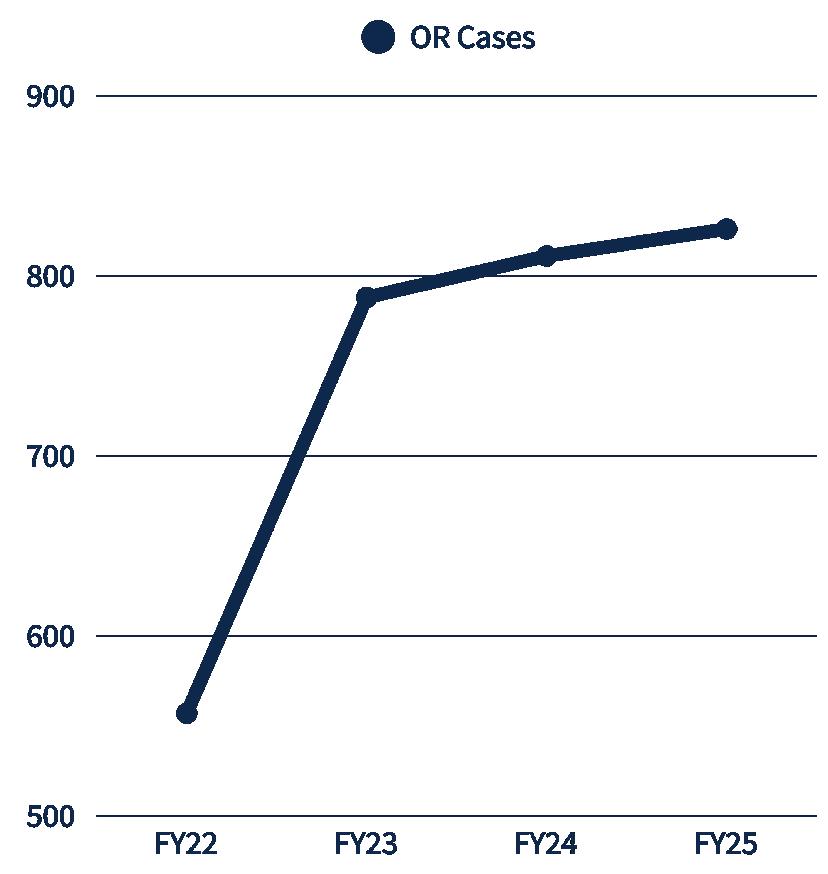
2,982 OR cases in the past 4 years
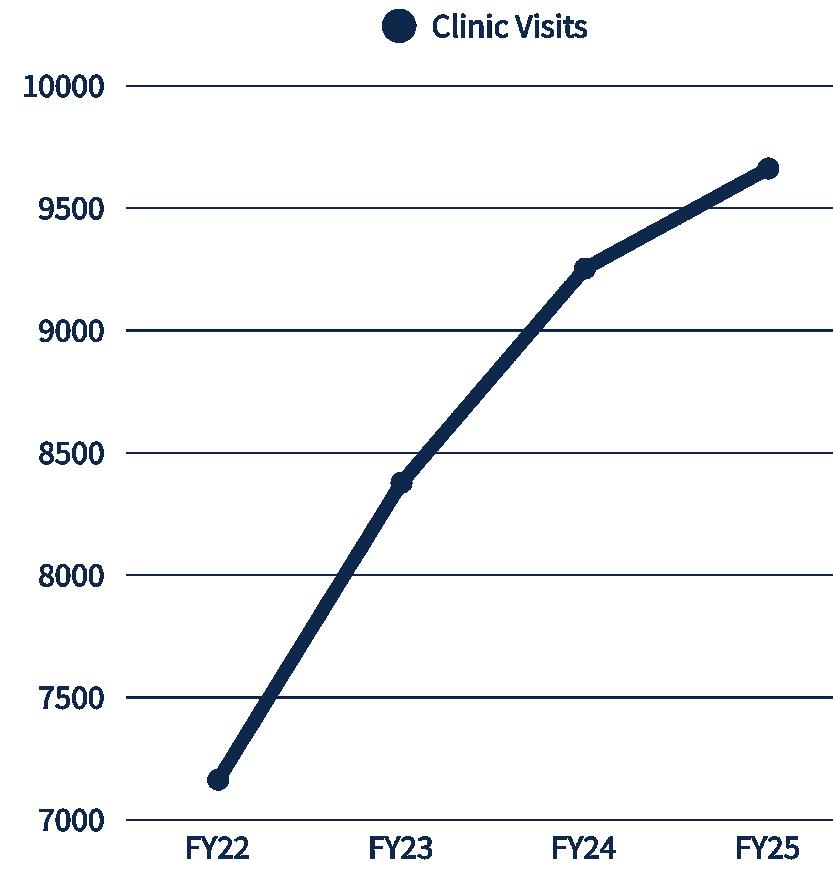
34,457 Clinic Visits in the past 4 years
OR case volume increased sharply from FY22 to FY23 and continued to rise more gradually through FY25, while clinic visits increased steadily each year across the four-year period. Together, these trends reflect sustained growth in both surgical and outpatient activity and continued demand.
32 Peer-Reviewed articles for Mentees
UNC Department of Otolaryngology-Head & Neck Surgery
The Rhinology, Allergy, and Endoscopic Skull Base Surgery Division of the Department of Otolaryngology/ Head and Neck Surgery provides comprehensive care for patients with the entire spectrum of nasal and sinus conditions. Our physicians manage chronic rhinosinusitis with and without nasal polyps, as well as challenging cases related to cystic fibrosis, primary ciliary dyskinesia, aspirin-exacerbated respiratory disease, and allergic fungal sinusitis. Patients with odontogenic sinusitis, invasive fungal infections, fungal balls, benign nasal tumors, ANCA vasculitis, and sarcoidosis benefit from our specialized expertise.
In addition to medical management, we perform surgical procedures such as septoplasty, inferior turbinate reduction, and nasal valve repair to improve airflow and relieve obstruction in both the OR and in the office. While procedures for chronic sinusitis like functional endoscopic sinus surgery (FESS), complex revision FESS, removal of benign and malignant
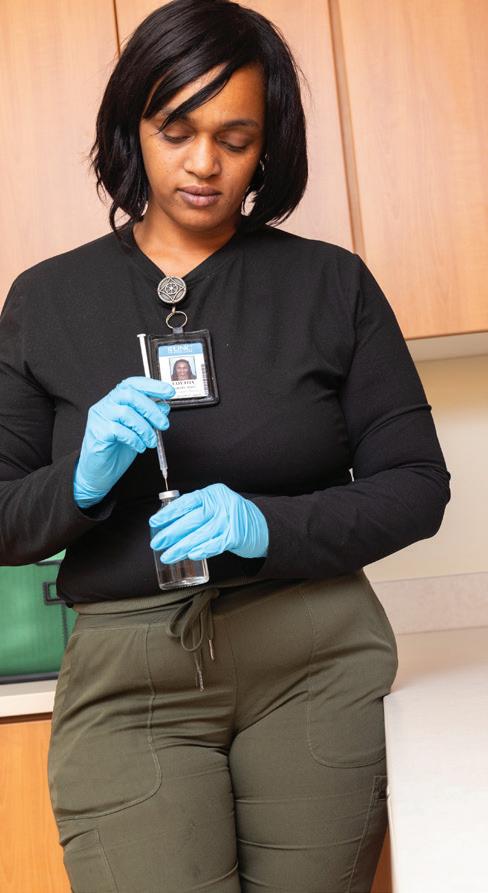
tumors, and orbital surgeries such as dacryocystorhinostomy are performed regularly in the OR with life-changing outcomes. For patients with obstructive sleep apnea who struggle with CPAP therapy, our team offers surgical solutions tailored to restore breathing and quality of sleep. So, whether managing common conditions or performing complex procedures to treat uncommon diseases, our Division of Rhinology, Allergy, and Endoscopic Skull Base Surgery combines innovative approaches with compassionate care.
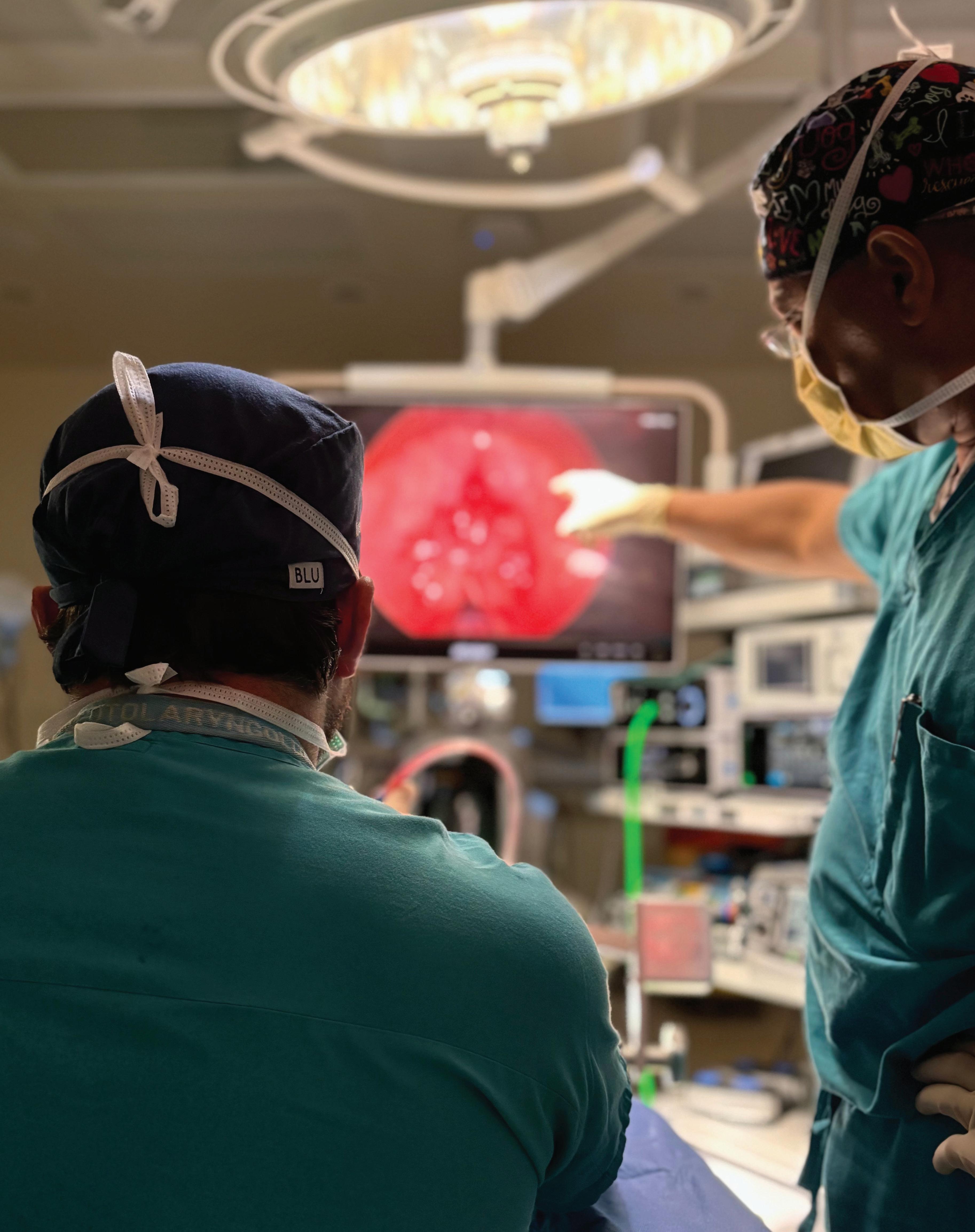
The Division offers state-of-the-art, minimally invasive surgery for tumors and other complex disorders of the skull base. Many conditions, including pituitary tumors, craniopharyngiomas, sinonasal and skull base cancers, meningiomas, CSF leaks, encephaloceles, and meningoceles can be effectively treated through
UNC Department of Otolaryngology-Head & Neck Surgery
“This year has once again demonstrated our division’s commitment to serving the people of North Carolina through cutting-edge research, comprehensive clinical care, and leadership that extends far beyond our state. I’m proud of our international impact through our leadership of organizations like the American Rhinologic Society, North American Skull Base Society, American Academy of Otolaryngic Allergy and the International Rhinologic Society; our innovative research that’s advancing the field of endoscopic skull base surgery; and our dedication to mentoring students and fellows who will carry this mission forward. As we look ahead, we remain focused on ensuring that North Carolinians have access to world-class rhinologic care while continuing to shape the future of our specialty through education, discovery, and global collaboration.”
— Brent A. Senior, MD, FACS, FARS Division Chief
endoscopic approaches. Appropriate interventions using endoscopic surgical techniques result in shorter hospital stays, decreased morbidity, and improved outcomes. Surgeons in the Division work within a multidisciplinary program that brings together experts across surgical and nonsurgical specialties. This collaborative model ensures patients receive the highest quality of care while benefiting from shorter hospital stays, fewer surgical complications, and faster recoveries. The division continues to be a leader in advancing minimally invasive
techniques that improve outcomes and quality of life for patients facing complex diagnoses.
EXPANDING CLINICAL CAPABILITIES WITH NEW UNC COMPREHENSIVE SMELL CLINIC
The UNC Comprehensive Smell Clinic opened this year to provide comprehensive evaluation and compassionate care for individuals experiencing smell loss. Led by our experienced rhinology team, the clinic specializes in addressing chronic anosmia, hyposmia, and other smell impairments, drawing on a range of
UNC Department of Otolaryngology-Head & Neck Surgery diagnostic tools, from in-clinic olfactory testing to tailored management plans.
Our multidisciplinary approach provides patients with personalized support, covering underlying causes such as post-viral effects (including COVID-19), sinus disease, allergies, and neurological contributions. We offer innovative treatments including smell training, targeted medical therapies, and when needed, referrals for surgical interventions. All efforts are designed to restore quality of life and safety for those affected by smell disorders.
Located at our Meadowmont campus in Chapel Hill, the clinic offers both inperson and telehealth options to ensure access across the region.
Our Rhinologic surgeons are leaders regionally, nationally, and internationally in their field. Brent A. Senior, MD, FACS, FARS, serves as Executive Vice President of the American Rhinologic Society, while also serving as Secretary General of the International Rhinologic Society. Charles Ebert, Jr., MD, MPH, FARS,
FAAOA, FACS, is the President of the American Academy of Otolaryngic Allergy Foundation, and Brian Thorp, MD, FACS, FARS, serves on the Program Committee for the North American Skull Base Society.
Our Rhinologic surgeons are leaders regionally, nationally, and internationally in their field. Ebert serves as Executive Vice President of the American Rhinologic Society, while also serving as Secretary General of the International Rhinologic Society. Ebert is the President of the American Academy of Otolaryngic Allergy Foundation, and Thorp serves on the Program Committee for the North American Skull Base Society.
UNC Department of Otolaryngology-Head & Neck Surgery
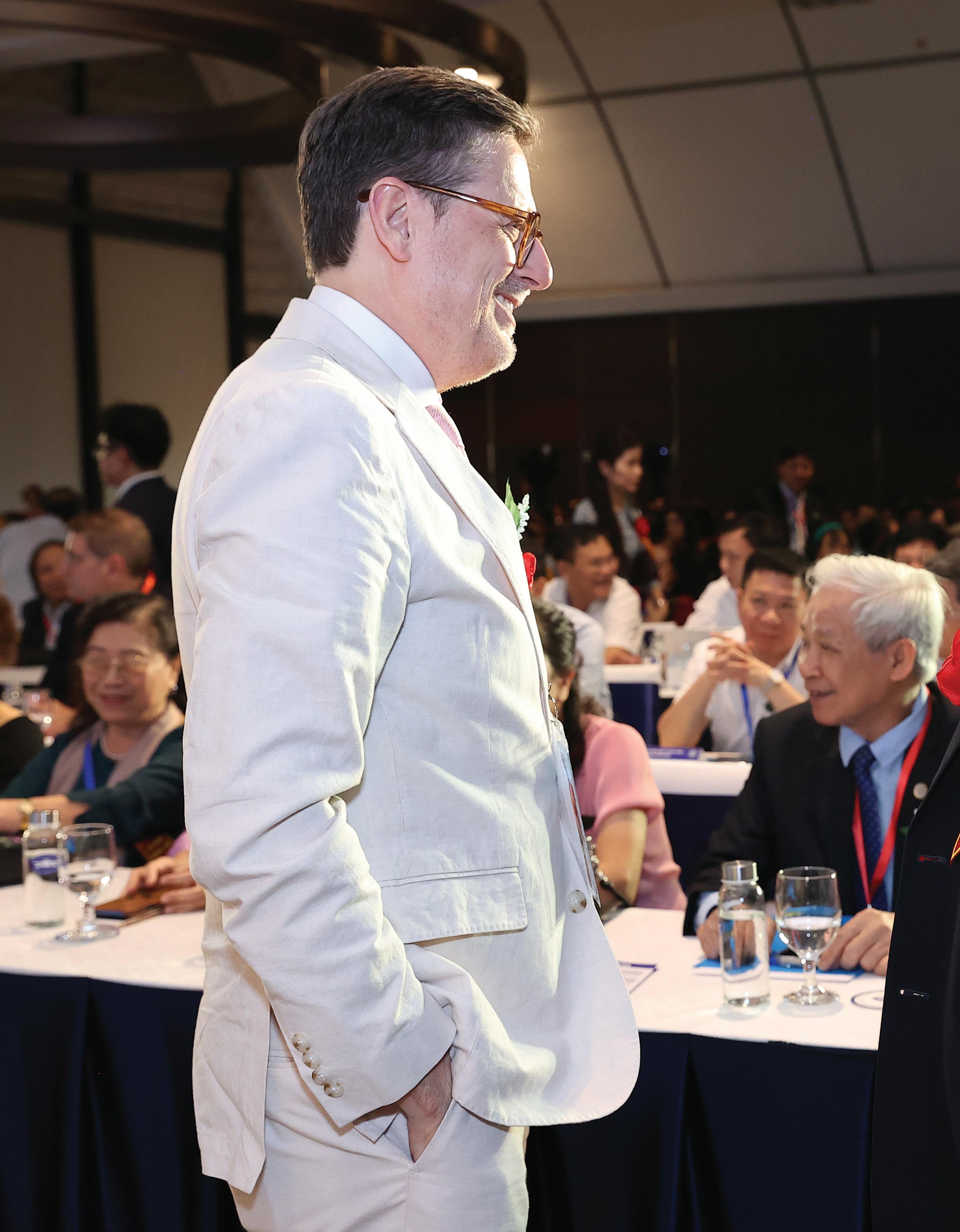
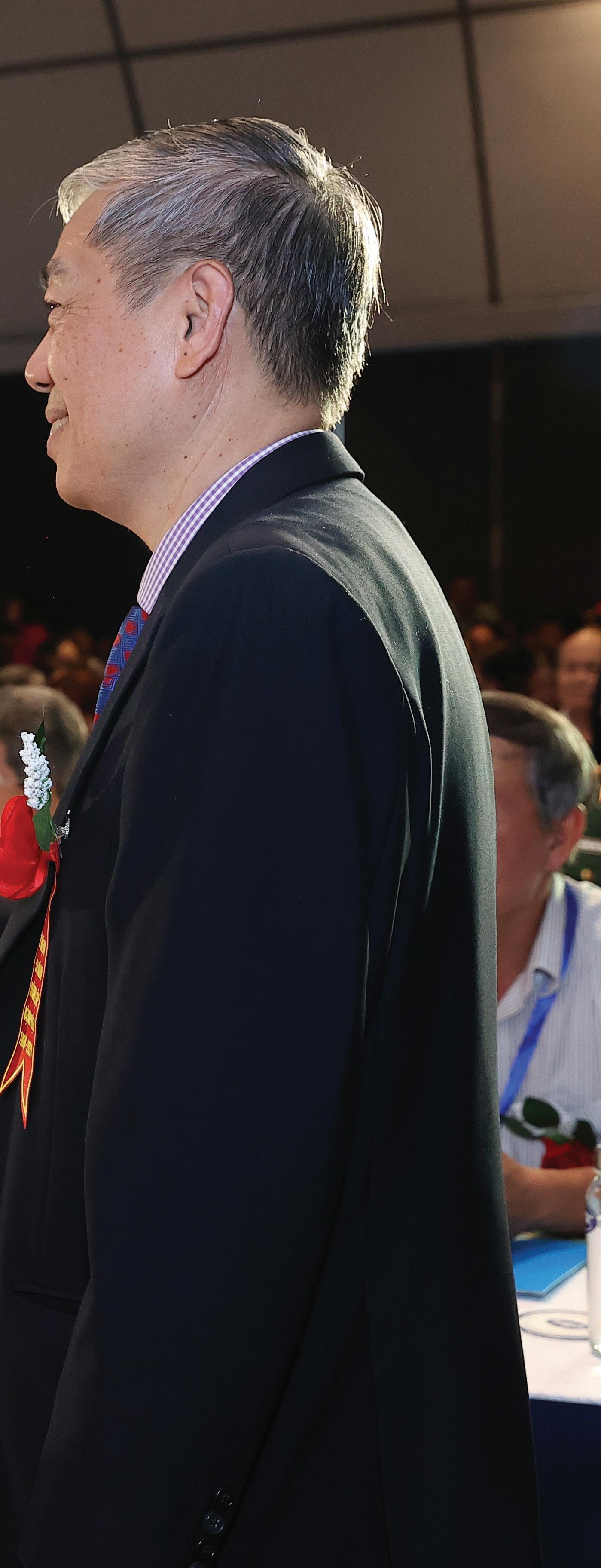
Senior led a team of otolaryngologists to Hanoi, Vietnam marking his 27th year of outreach leadership. Further, over the past year, the Division hosted five international otolaryngologists for extended visits, including Dr. Rosita Jafari from Iran, Dr. Peter Molsi from Albania, and Dr. Teppei Takada and Kosuke Tochigi from Tokyo. Faculty also delivered Grand Rounds at New York University and the University of Geneva, sharing their expertise on a global stage.
Strong research and education collaborations domestically and around the globe remain a hallmark of the Division. Over the last year, faculty have advanced collaborative research through NCI and NIH funding, while also internationally collaborating with colleagues in Vietnam, Japan, and Turkey. Overall, these partnerships enhance both patient care and research, positioning the division at the forefront of rhinologic innovation.
UNC Department of Otolaryngology-Head & Neck Surgery
The division mentored three medical students- W. Jared Martin, Yasine Mirmozaffari, and Lauren Cook-whose projects produced more than sixteen presentations & thirty-two peerreviewed publications.
The topics of these papers included Clinical trial on sodium citrate for COVID-related smell loss, development of new devices to improve nasal breathing, and innovative approaches to treating conditions around the eye (the orbit).
This year marked an exciting period of transition for the Advanced Neurorhinology Fellowship. Michael Armstrong completed his fellowship and headed to Richmond, Virginia, where he joined the faculty at Virginia Commonwealth University under former fellow Ted Schuman. As we look ahead to the new year, we’re thrilled to welcome two new fellows to the team — Dr. Joe Lebowitz from New York University and one of UNC’s own, Heidi Martini-Stoica. They join Tom Raz Yarkoni, who hails from Israel and will be continuing her fellowship at UNC.
UNC Department of Otolaryngology-Head & Neck Surgery

• Senior delivered the keynote at the 55th Anniversary Celebration of the National ENT Hospital in Hanoi and presented Grand Rounds at NYU and University of Geneva. He now serves as Executive Vice President of the American Rhinologic Society, Secretary General of the International Rhinologic Society, and editor-inchief of Rhinology Online.
• Thorp was promoted to Professor and named editor-in-chief of Oto-RhinoLaryngology, Head and Neck Surgery. He continues to advance the field through leadership roles in national task forces, oral board examination, and as Visiting Professor for Cleveland Clinic’s Skull Base Course.
• Kimple, Director of Rhinologic Research, presented at the European Society of Pediatric Otolaryngology, expanding the Division’s presence in pediatric subspecialties.
• Meghan Norris, PA was honored as a finalist for UNC’s APP of the Year and contributed to the establishment of the Rhinology Advanced Practice Providers group within the American Rhinologic Society.
UNC Department of Otolaryngology-Head & Neck Surgery
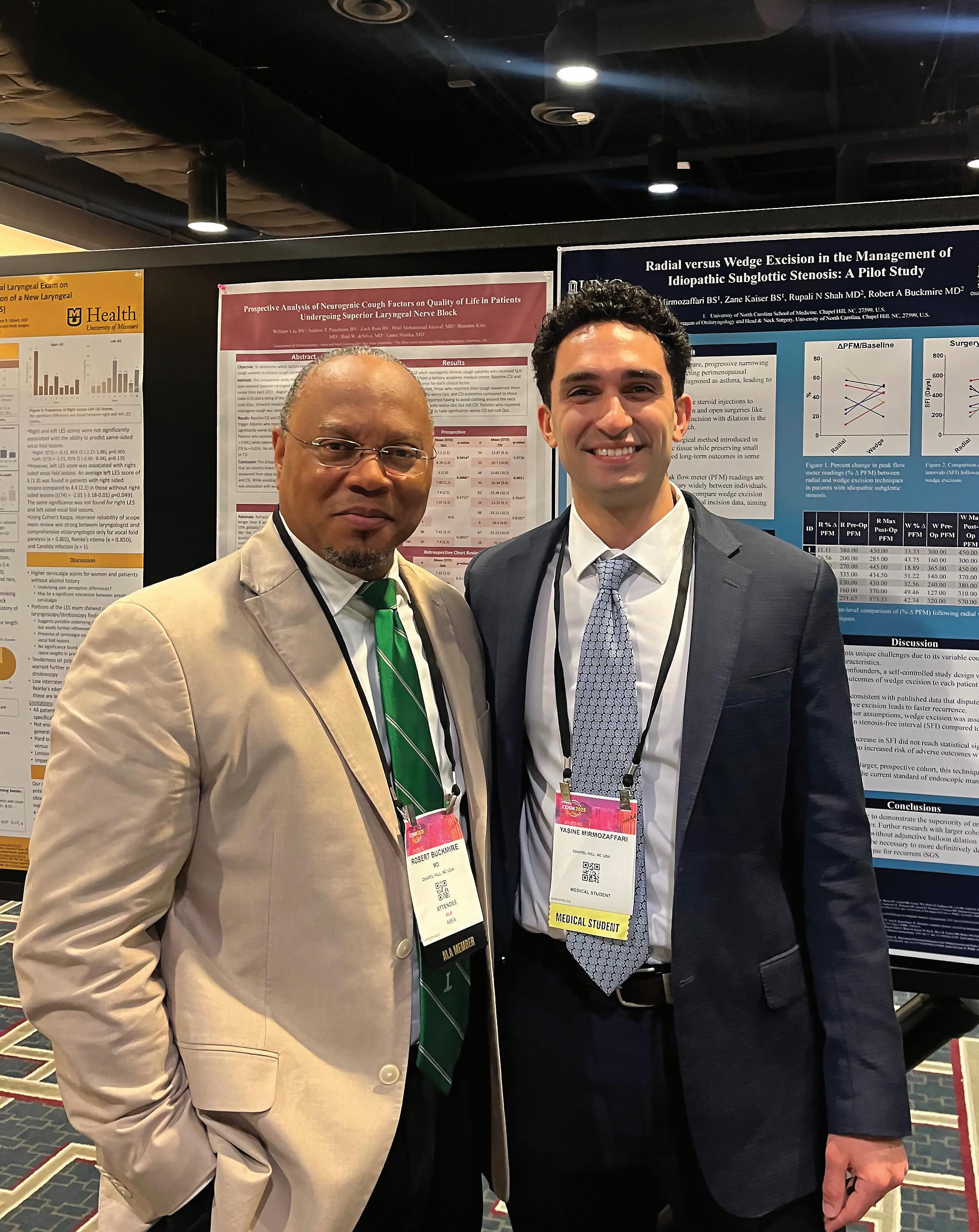
The Division of Voice and Swallowing continues to provide state-of-the-art, multidisciplinary care for voice, airway, and swallowing disorders for patients across North Carolina. The team includes fellowship-trained laryngologists, Rupali Shah, MD and Robert Buckmire, MD, as well as speechlanguage pathologists with specialized training in speaking and singing voice, swallowing, and respiratory disorders (Alden Pridgen, CCC-SLP, Joseph Hall, CCC-SLP and Heather Davis-Cuevas, CCC-SLP). Together, the multidisciplinary Voice and Swallowing team offer comprehensive diagnostic and therapeutic services across the full spectrum of voice, swallowing, and airway disorders.
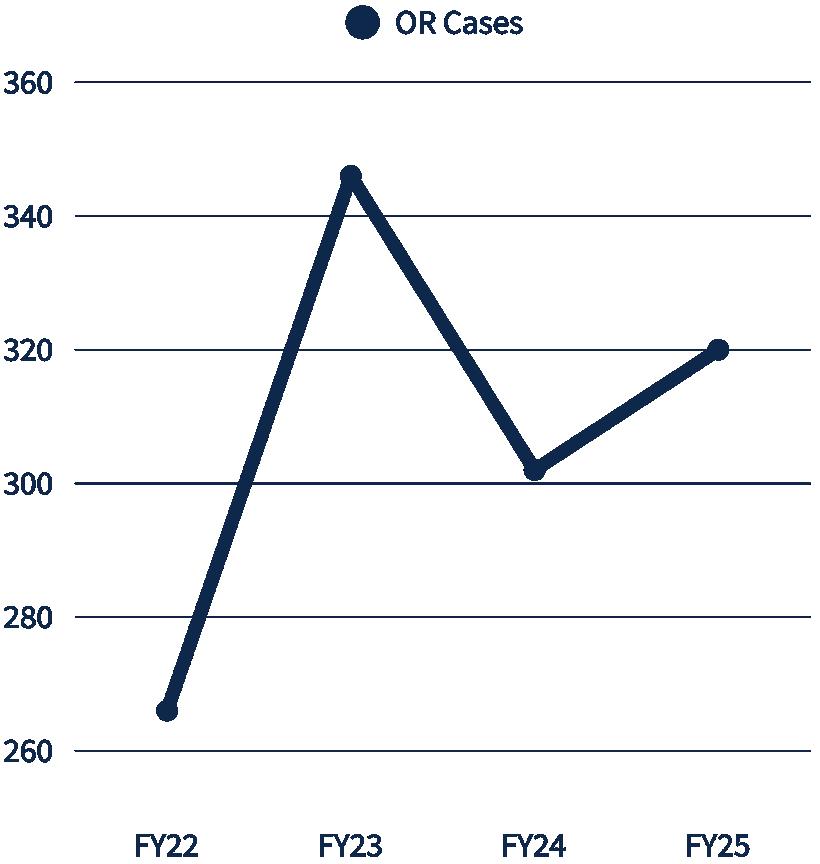
1,234 OR cases in the past 4 years
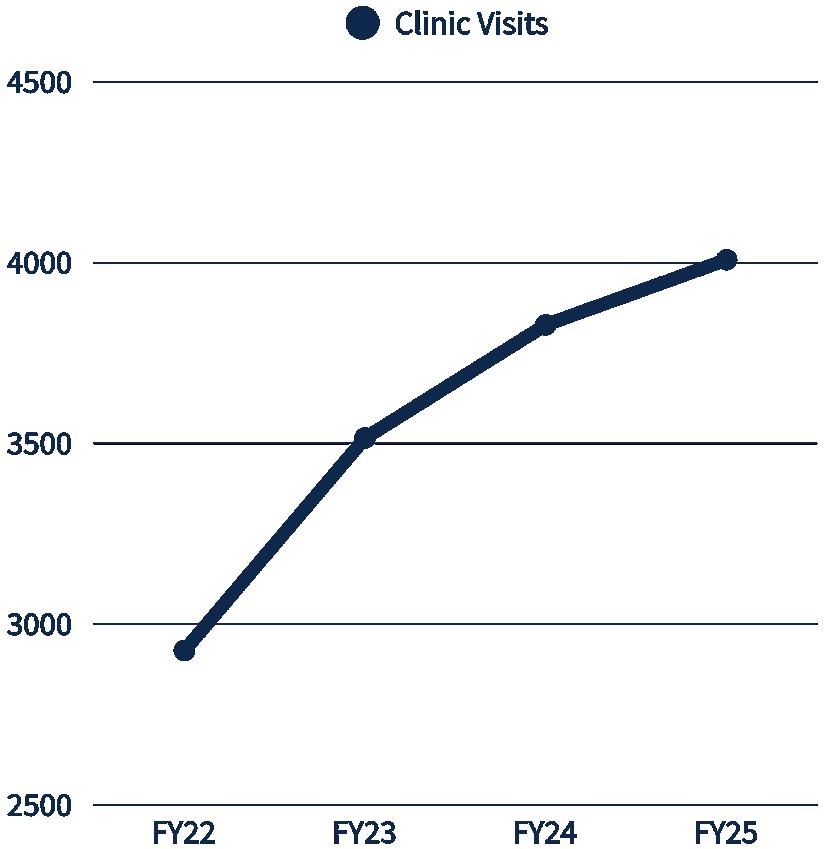
14,378 Clinic Visits in the past 4 years
OR case volume peaked in FY23, followed by a dip in FY24 and a rebound in FY25, while clinic visits increased each year from FY22 through FY25. These trends indicate sustained clinical demand and continued patient access within the division.
UNC Department of Otolaryngology-Head & Neck Surgery
The division fosters collaborations across multiple UNC departments and external institutions. Current partnerships include ongoing work with the UNC Department of Health Sciences (Speech and Hearing Sciences), the Department of Applied Physical Sciences, and NC State University’s College of Engineering. Recent collaborations focus on research areas such as chronic cough, tissue healing, and engineering, and the development of wearable voice monitoring devices.
The UNC Voice Center continues to contribute to the advancement of the field through high-impact research and education. Faculty published and presented work in areas including airway stenosis, gender-affirming voice care, image-guided intralaryngeal injection trainers, and innovations in medical education. These efforts led to multiple local, regional, and national presentations and publications in
leading specialty journals.
Notable publications in our premier peer reviewed journal, The Laryngoscope, include: “Novel ImageGuided Simulator for Transcervical Intralaryngeal Injection Training.” (featuring a fourth-year medical student, Zane Kaiser as first author), and recently, accepted: “Missed Opportunities: Laryngologists and Lung Cancer Screening in Early Glottic Cancer Patients”, first authored by our PGY2 Otolaryngology resident, Taylor Stack.)
For the tenth consecutive year, the division faculty mentored several medical students, including one recipient of the Carolina Medical Student Research Program Grant, a competitive research initiative for first-year medical students. Current research topics include the role and outcomes of behavioral voice therapy in patients after undergoing Gore-Tex medialization thyroplasty.
Faculty research leadership continues to grow nationally and internationally. Donald O. Freytes, PhD, was appointed Adjunct Professor at NC State University and received an R01 grant for developing optimized tissue engineering approaches for vocal fold
UNC Department of Otolaryngology-Head & Neck Surgery
repair. Shah and Buckmire serve as coinvestigators on a multi-institutional grant, RRP-331, a randomized Phase three trial for patients with Recurrent Respiratory Papillomatosis.
Shah was appointed MedExcel Program Advisor, in addition to serving as Academic Career Goal Advisor and Head and Neck Career Goal Advisor in the UNC School of Medicine. She also served as a panelist for the North
Carolina/South Carolina Otolaryngology Society on managing patients with cricopharyngeal dysfunction.
Buckmire, Treasurer of the American Laryngological Association, participated in the organization’s strategic planning initiative, helping shape the future direction of this historic professional society. He also contributed to the 2025 Fall Voice Conference as both a member of the program committee and co-program chair for the “Late Career Laryngology” section.
In 2025, the Division of Voice and Swallowing Disorders continued to provide state-of-the-art, multidisciplinary care for individuals with complex laryngeal, swallowing, and airway disorders. Our current research enterprise includes a broad, innovative spectrum of topics, including novel, image-guided simulation training, (changing the learning paradigm for intra-botulinum toxin injections); medical education focusing on the effectiveness of early simulation exposure in otolaryngology for medical students; and a nationwide evaluation of the adequacy of lung cancer screening practices in fellowship-trained laryngology practices. We have proudly added an adjunct faculty member to our research enterprise: Donald O. Freytes, PhD, a professor of Biomedical Engineering, performing cutting edge research in the area of vocal fold injury and repair.
— Robert Buckmire, MD, Division Chief
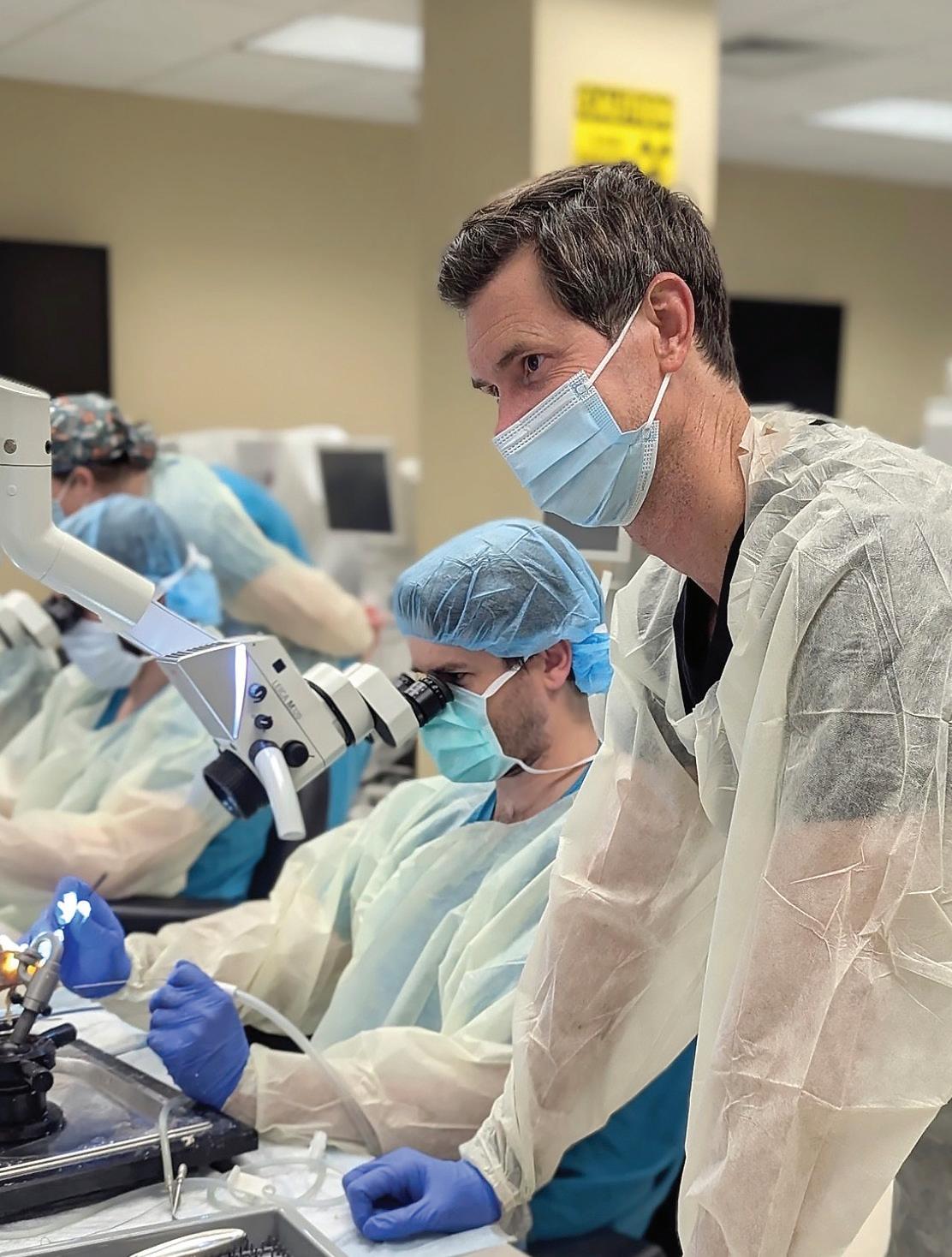
The Division of Otology/ Neurotology and Lateral Skull Base Surgery continues to advance patient care, education, and research in the treatment of hearing loss, balance disorders, and skull base pathology. Faculty members provide comprehensive care for both adult and pediatric patients, with expertise spanning cochlear implantation, implantable hearing devices, skull base tumors, and complex ear surgery. The team remains nationally recognized for its commitment to innovation, collaboration, and leadership within the field.
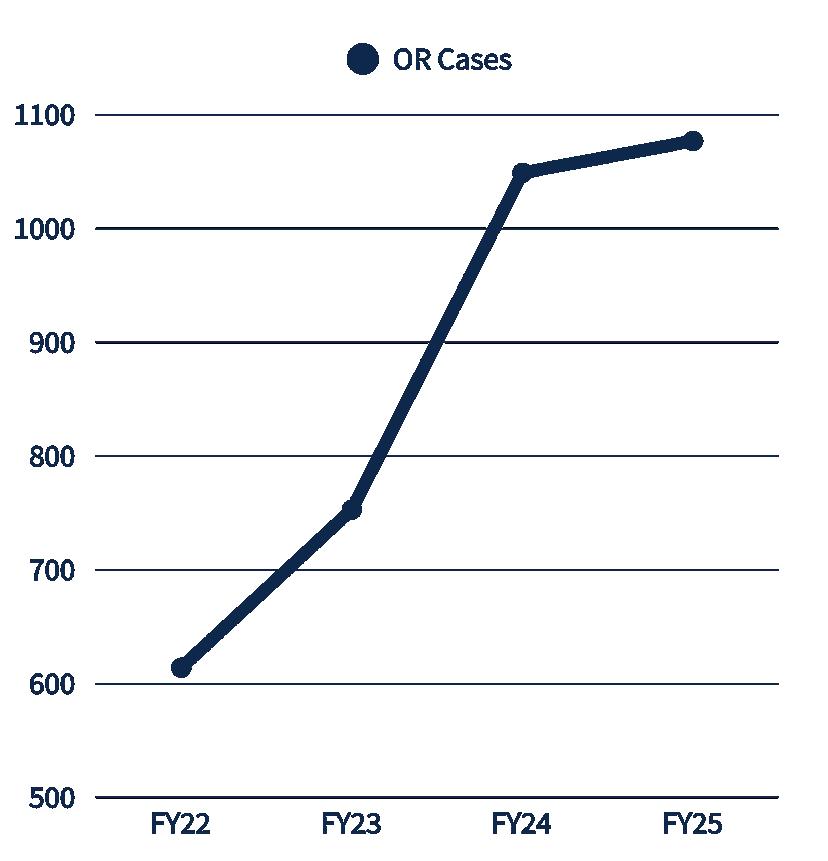
3,493 OR cases in the past 4 years
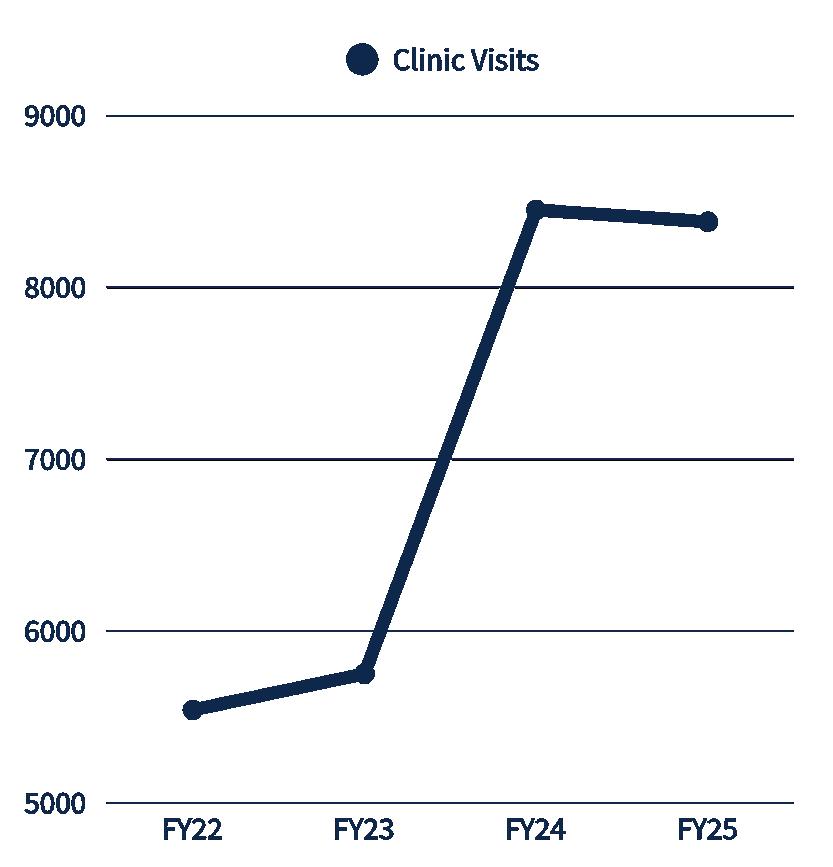
28,127 Clinic Visits in the past 4 years
OR case volume increased steadily from FY22 through FY25, with the largest year-overyear growth occurring between FY23 and FY24. Clinic visits rose modestly from FY22 to FY23, increased sharply in FY24, and remained high in FY25 with a slight decrease. Overall, clinical activity across the four-year period reflects sustained demand.
14
Articles in Peer Reviewed Journals
22 Oral Presentations & Posters
UNC Department of Otolaryngology-Head & Neck Surgery
The Cochlear Implant Program at UNC Health is one of the largest and most prestigious cochlear implant centers in the country. For more than thirty years, UNC Health has been the trusted choice for patients with hearing loss seeking cochlear implantation. The UNC cochlear implant team performs over four hundred adult and pediatric cochlear implant procedures each year and conducts cutting-edge research aimed at improving patient outcomes. Recent areas of research include evaluating how cochlear implant programming can improve speech perception by aligning frequencies produced by the cochlear implant with the location in the cochlea. Our group is also one of the first to conclusively demonstrate that cochlear anatomy can predict hearing preservation after cochlear implantation.
With more than two-thousand implants completed, UNC’s pediatric cochlear implant program is one of the largest in the world. For over three decades, UNC Health has been the trusted choice
for children with hearing loss and their families. The UNC implant team leads innovative research to advance hearing preservation and long-term outcomes for children in North Carolina and surrounding areas.
The Skull Base Center provides multidisciplinary care for patients with benign and malignant tumors involving the lateral and posterior skull base and cranial nerves. The team specializes in complex procedures including acoustic neuroma tumors, meningiomas, facial nerve tumors, CSF leaks, and other skull base pathologies.
In 2025, the division co-hosted the International Fall Cochlear Implant Conference in Asheville, North Carolina, in collaboration with Vanderbilt University. Kevin Brown, MD, PhD, served as the meeting codirector and Matthew Dedmon, MD, PhD, contributed as a member of the scientific committee. Brown, Morgan Selleck, and Nicholas J. Thompson, each presented at the conference.
UNC Department of Otolaryngology-Head & Neck Surgery
I continue to be very proud of what our group is able to accomplish in improving cochlear implant outcomes with the ongoing collaboration of surgeons, research audiology, clinical audiology, and speech language pathology. Because of these continued efforts, we are now the largest cochlear implant center in the United States and one of the largest in the world. We look forward to continued growth, discovery, and innovation in the coming year.
— Kevin D. Brown MD, PhD, Division Chief
The division also maintains active participation in national societies. Selleck continues her leadership roles within the American Academy of Otolaryngology–Head and Neck Surgery, serving on the Hearing and the Otology/Neurotology Education Committees, as well as a member of the Women in Otolaryngology Leadership and Mentorship Committee. Brown serves on the Implantable Hearing Devices Committee and the Finance Committee of the American Otologic Society and was on the program committee for both the 2025 Triological Society Combined Sections Meeting and the 2025 American Otologic Society Annual Meeting.
The division continues to lead multiple clinical trials with industry partners. Current studies include bone conduction hearing aid implantation in young children (PI: Selleck), cochlear implantation for single-sided deafness in children (PI: Brown), robot-assisted cochlear implantation (PI: Brown), and cochlear implantation in infants and toddlers (Co-PI: Brown).
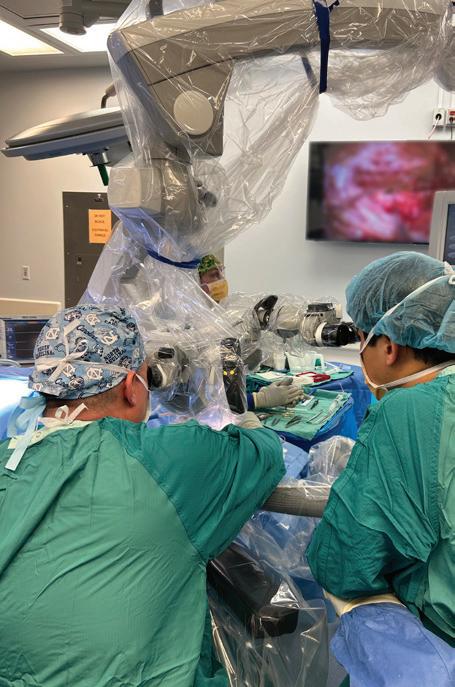
Division members continue to contribute substantially to national and international research. Brown presented invited lectures across the globe, including the Triological Society Meeting in Chicago on cochlear implantation for single-sided deafness, the Asia Pacific Cochlear
UNC Department of Otolaryngology-Head & Neck Surgery
Implant Meeting in Korea on pediatric single-sided deafness and place-pitch mapping, and the North American Skull Base Society Meeting in Atlanta on the translabyrinthine approach for acoustic neuroma. Amongst the many keynote lectures he delivered, Brown also delivered keynote lectures at the Arab Cochlear Implant Conference in Abu Dhabi and OSSEO 2025 in Vienna.
Brown continues to serve on the Editorial Board of Otology & Neurotology and recently completed his term on the Board of the American Cochlear Implant Alliance.
The division’s clinical capabilities continue to grow through participation in advanced device trials and the integration of robotic and image-guided surgical techniques. Neurotology division faculty remain at the forefront of pediatric and adult implantable hearing technology and complex skull base procedures.
Tram Tran, FNP continues to work as an invaluable member of the neurotology team. She evaluates and treats medical
otology patients, helping facilitate access to care across three outpatient clinic locations.
Dedmon was appointed Professionalism Lead for the Department of Otolaryngology, Head and Neck Surgery and continues to direct the department’s temporal bone course for residents. Thompson serves as the Clinical Liaison for the clinic in Cary, ensuring coordinated, highquality care across clinical locations.
Brown and Selleck continue to co-direct the ACGME-approved Neurotology Fellowship, one of the leading training programs in the nation, preparing fellows for academic careers in neurotology and skull base surgery.
Faculty provide specialized instruction in temporal bone anatomy, implantable device techniques, and skull base surgery. The annual temporal bone course directed by Dr. Dedmon continues to serve as a cornerstone of resident surgical training.
UNC Department of
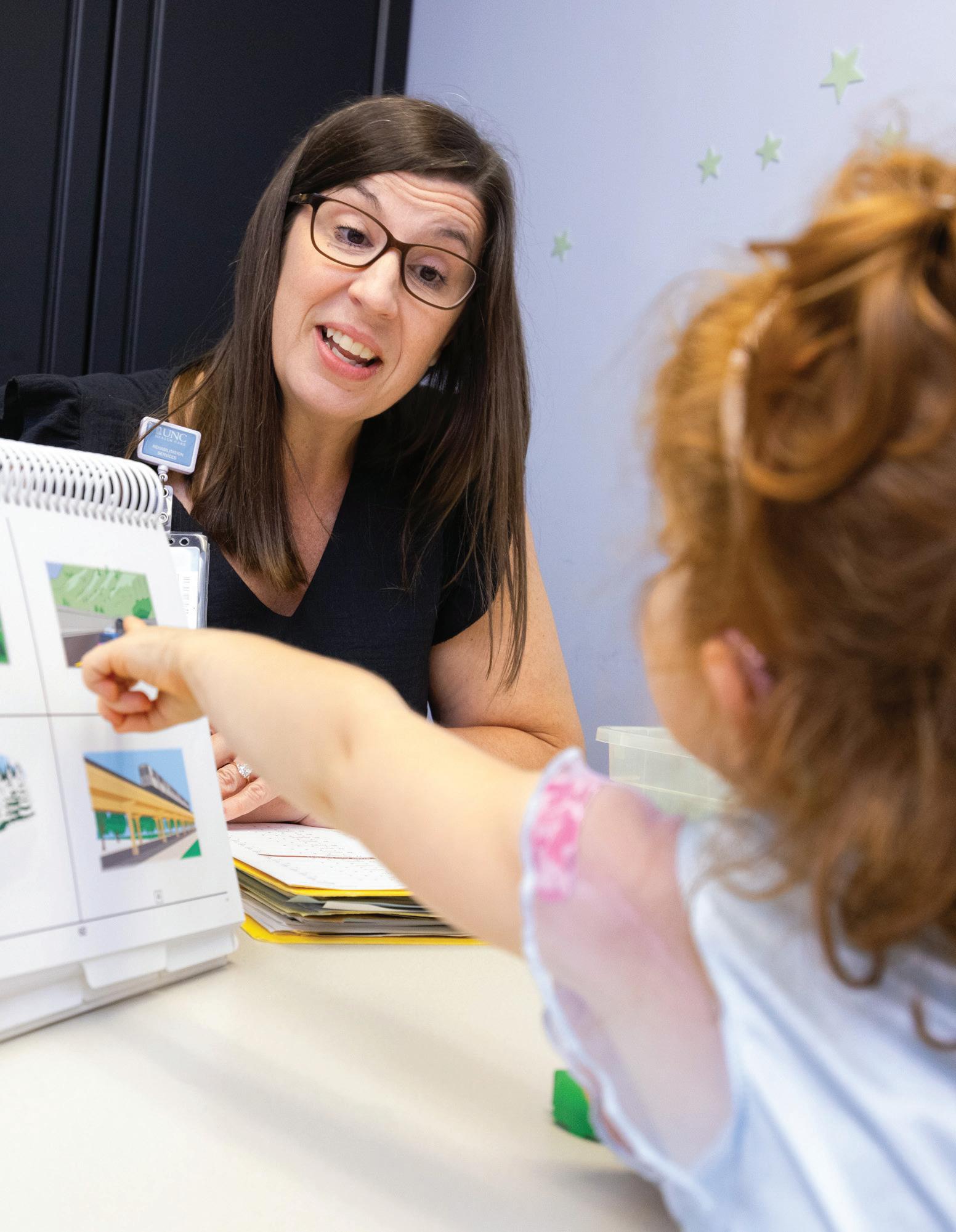
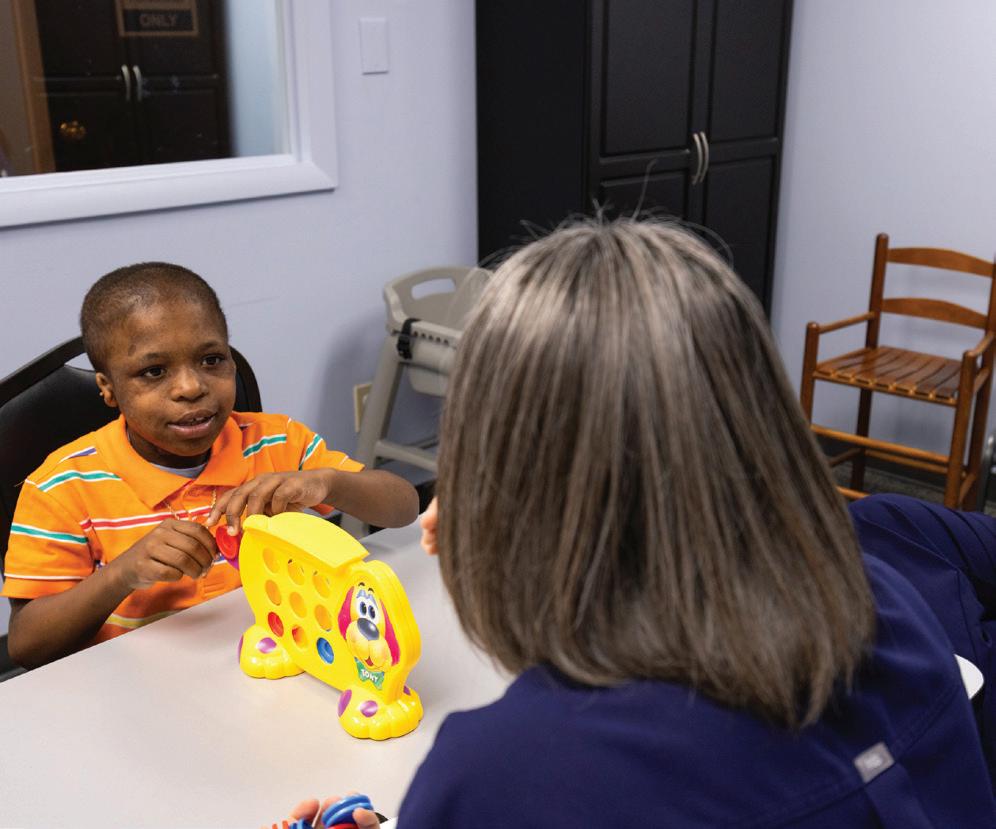
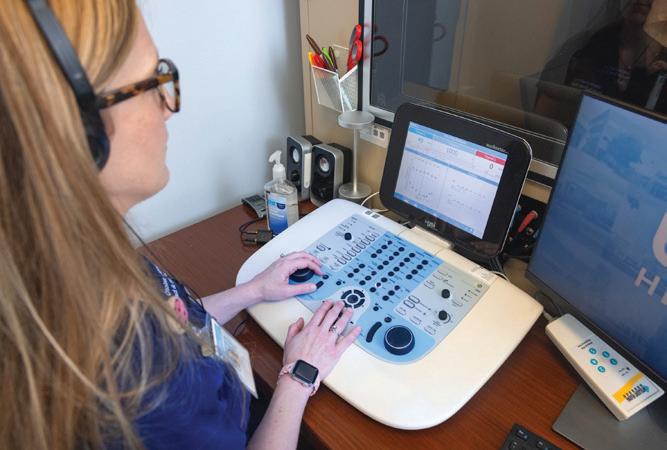
The Children’s Cochlear Implant Center(CCIC) at UNC provides evidence-based audiology and speech pathology services to children with hearing loss. Our speech pathology team are certified Listening and Spoken Language Specialists, which focus on helping people with hearing loss learn to listen and talk. We perform speech and language evaluations and speech therapy services including rehabilitation for adult cochlear implant recipients. The audiology team provides cochlear implant evaluations and followup cochlear implant programming to children, birth to early adulthood.
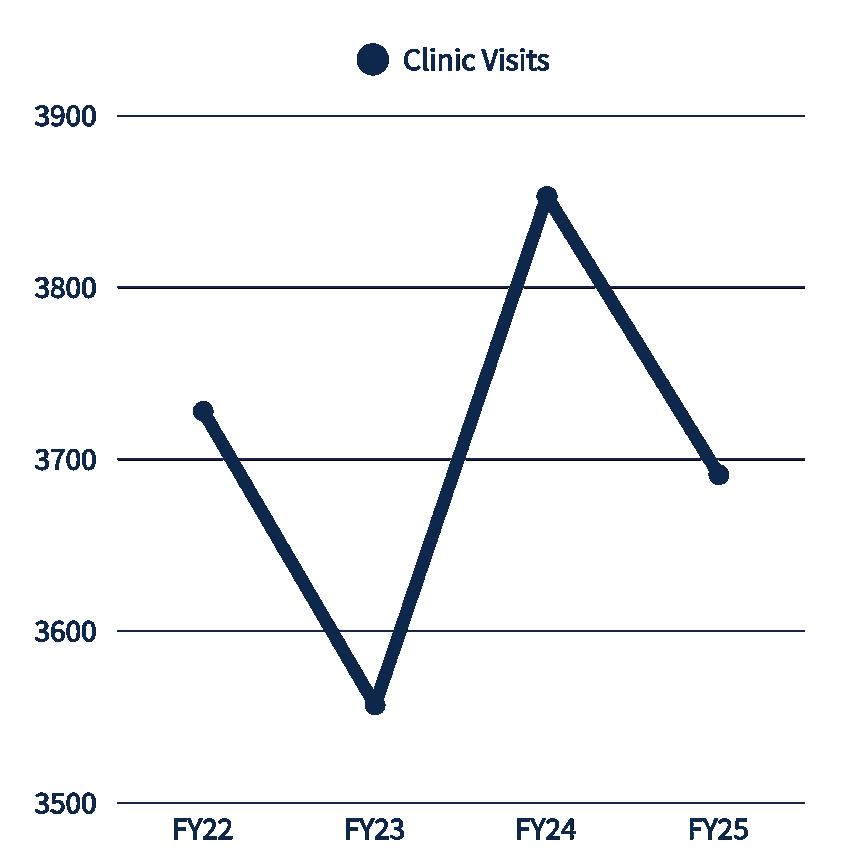
14,378 Clinic Visits in the past 4 years
Clinic visit volume fluctuated across the four-year period, with a decrease in FY23 followed by a peak in FY24 and a modest decline in FY25. Overall visit volumes remained relatively stable across the period, reflecting consistent demand.
UNC Department of Otolaryngology-Head & Neck Surgery
The CCIC continues to expand its global impact through professional outreach and education. Members of the SpeechLanguage Pathology team partnered with the Global Foundation for Children with Hearing Loss to provide training programs in Nairobi, Kenya, equipping local clinicians with tools to support children with hearing loss. Locally, a community knitting guild donates handmade “Love Monsters” to give to children on their cochlear implant activation day, adding a personal touch to each milestone celebration.
The surgical team performed one hundred twenty-five pediatric cochlear implants in both years, maintaining UNC’s standing as one of the most active cochlear implant programs in the nation.
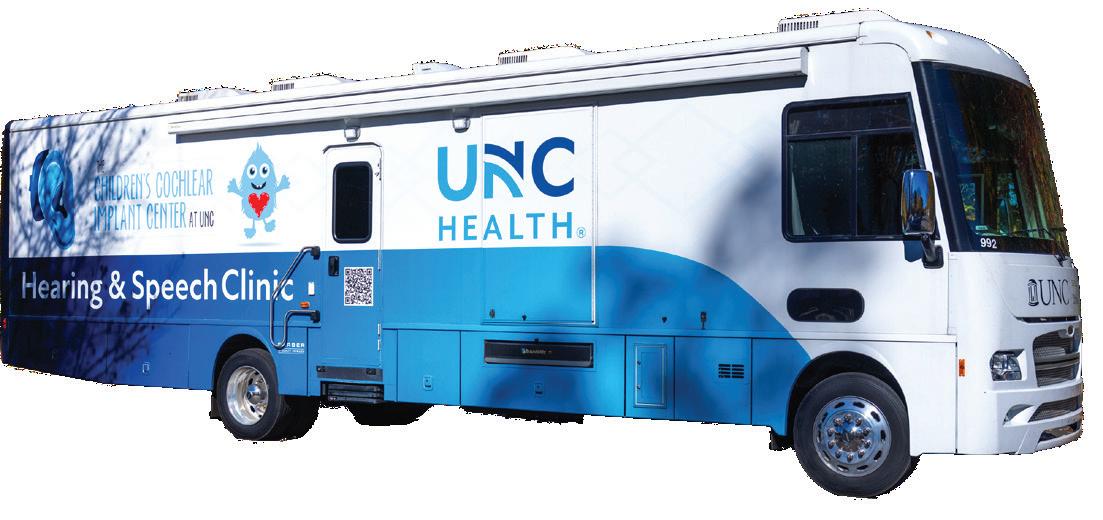
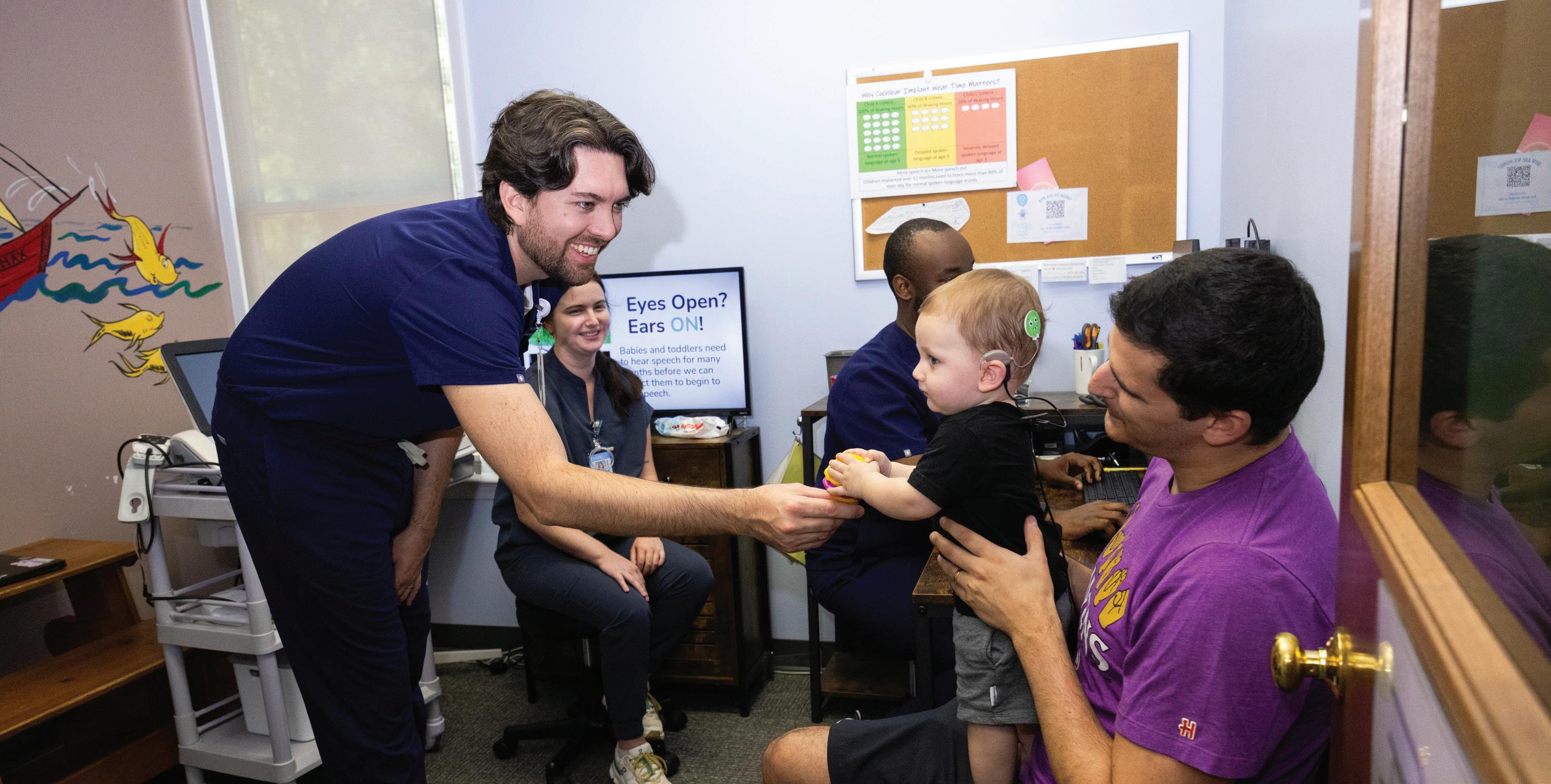
A major highlight of the year was the relaunch of the UNC Mobile Hearing and Speech Unit, a “clinic on wheels”
that brings healthcare to rural North Carolina. Under the coordination of James Proctor, the Mobile Unit now travels to UNC Blue Ridge, UNC Lenoir, UNC Caldwell, and the Cumberland County Health Department, expanding access to families who might otherwise face barriers to care. Through a Junior Faculty Grant, Lillian Henderson, MSP, supplied the unit with books, Learning 2 Listen Kits, and hearing technology retention materials for children across partner locations.
The division remains at the forefront of research in pediatric cochlear implantation and hearing preservation. Over the past year, CCIC faculty
UNC Department of Otolaryngology-Head & Neck Surgery
We are most proud of the relaunch of the UNC Mobile Speech and Hearing Unit. On the unit we diagnose hearing loss and fit hearing aids and cochlear implants closer to patients’ homes, reducing the travel burden for people in rural North Carolina. As we look to the year ahead, we want to support children enrolled in the CCCDP Grant and make the most of the hearing technology funds we have available for these children.
delivered thirty-one presentations and posters, produced seven podcast episodes, published six peer-reviewed articles, one book chapter, and one trade journal article.
Their research emphasizes hearing preservation in children receiving implants, outcomes for children with single-sided deafness, and expanded referral criteria for cochlear implant candidacy. Lisa Park, AuD led two manufacturer-sponsored research grants and served as Co-Principal Investigator on a multi-center IDE clinical trial, “Cochlear Implantation in Infants and Toddlers with Single-Sided Deafness.” She also oversaw the study “Expanded Indications in the MED-EL Pediatric Cochlear Implant Population.”
— Erika Gagnon, AuD, CCC-A
”
This year marked a historic milestone as the combined Adult and Pediatric Cochlear Implant teams celebrated four hundred implants in a single year, making UNC the largest Cochlear Implant Center in the United States.
Several faculty members received national recognition for their leadership and expertise. Dakota Sharp, AuD, CCC-A, was elected Vice President of Audiology for the North Carolina Speech, Hearing, and Language Association. Park was named CoChair of the Cochlear Implant Patient Access to Hearing (CI-PATH) pediatric
collaborative. Erika Gagnon, AuD, CCC-A, received the Visionary Session Award at the American SpeechLanguage-Hearing Association National Convention.
CCIC faculty presented at multiple national and international meetings, including the University of Michigan Sound Support Conference, the American Cochlear Implant Alliance Meeting, and the European Symposium on Pediatric Cochlear Implants in Hanover, Germany, where Park led a panel of global experts on pediatric singlesided deafness.
Education remains central to the CCIC mission. The division mentored two audiology externs, Hannah Joslin and Brianna Grovenger, along with fourteen audiology students, two speech pathology students, and five Listening and Spoken Language therapists from across the United States pursuing professional certification. Sarah Spencer, MS, joined the speechlanguage pathology team this year, bringing valuable experience and warmth to patient care.

UNC
The General Otolaryngology Division provides comprehensive ear, nose, and throat care for patients with office locations in Orange and Chatham Counties. The division is composed of Christine DeMason, MD, Doris Lin, MD, and Ann Bogard, MD, who joined the practice in July 2025.
DeMason and Lin provide medical and surgical care to patients in Chapel Hill and Chatham County, while Dr. Bogard offers medical otolaryngology services. Over the past year, the division experienced continued growth, completing nearly two-thousand clinic visits at the Chapel Hill site and performing two hundred eleven surgical cases at Chatham Hospital.
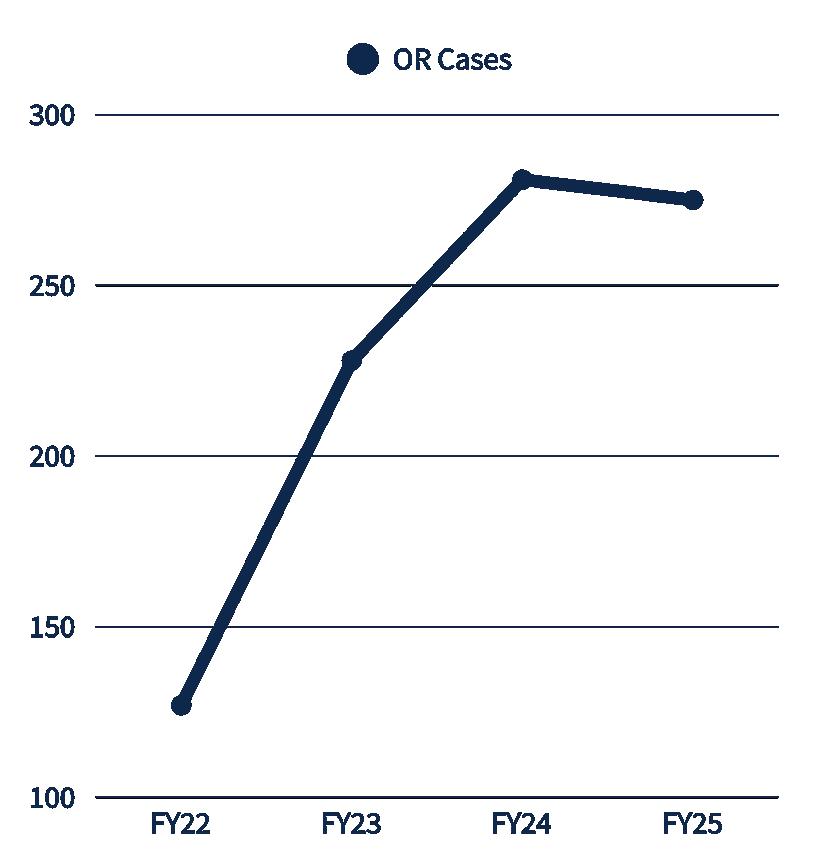
911 OR cases in the past 4 years
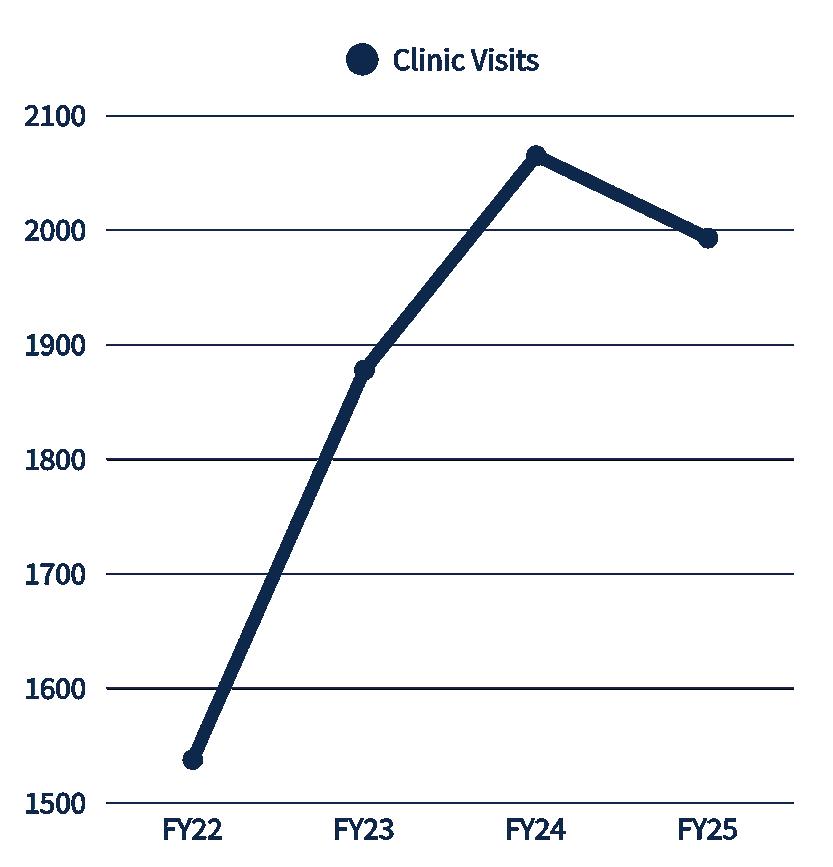
7,474
Clinic Visits in the past 4 years
OR case volume increased from FY22 through FY24, followed by a slight decrease in FY25, while clinic visits rose steadily through FY24 and declined modestly in FY25. Despite these year-to-year changes, overall activity across the four-year period remained elevated compared to FY22, reflecting sustained demand.
10 Oral presentations & Posters
5 Peer-reviewed Publications
UNC Department of Otolaryngology-Head & Neck Surgery
The division continues to collaborate with the Laryngology and Rhinology divisions through monthly education and research meetings. These sessions bring together faculty, residents, and medical students to discuss ongoing research and enhance educational collaboration.
One notable project from these collaborations—“Promoting ENT-erest: Evaluating the Effect of Early, Focused Exposure to Otolaryngology”—was recently accepted for publication. The study was co-first authored by medical student Makayla Matthews and resident Kayla Hicks, demonstrating the division’s strong commitment to mentorship and scholarly development.
DeMason also works closely with sleep medicine providers in the region to deliver advanced care for patients with obstructive sleep apnea, ensuring comprehensive, multidisciplinary management of complex conditions.
The General Otolaryngology Division is dedicated to expanding access to high-quality care across North Carolina. Lin and DeMason divide their time between Chapel Hill and Chatham County, offering clinic appointments in Pittsboro and performing surgeries at Chatham Hospital in Siler City. These outreach efforts bring essential otolaryngic care to rural areas, reducing barriers to specialty care for underserved populations.
This year was marked by strong
UNC Department of Otolaryngology-Head & Neck Surgery
The General division is very proud of our continued growth of comprehensive otolaryngic care to the Triangle area as well as being a leader in sleep surgery. This along with our dedication to resident and medical student education continues to be our top priorities for the coming year.
— Christine DeMason, MD, FAAOA, Division Chief
academic productivity and mentorship within the division. Faculty collectively mentored six medical students and two residents on research projects, resulting in ten oral presentations and posters and five peer-reviewed publications— each first-authored by a medical student or resident.
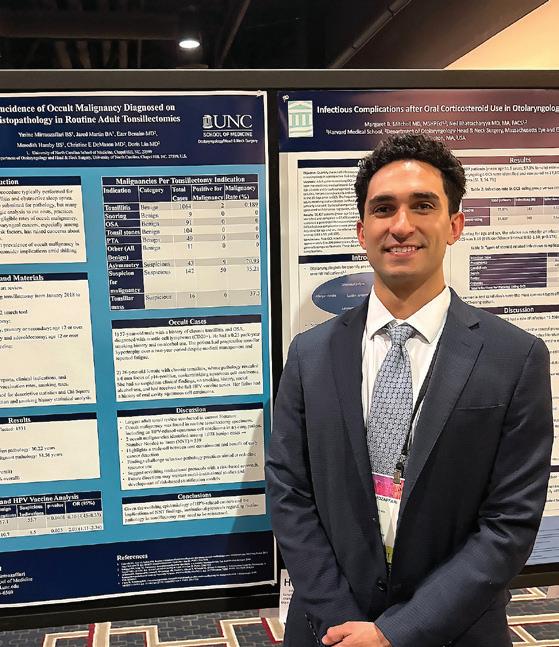
One of the division’s recent publications, “Incidence of Malignancy Diagnosed on Histopathology in Routine Adult Tonsillectomies,” was published in The Laryngoscope and led by medical student Yas Mirmozaffari, under the mentorship of Lin and DeMason.
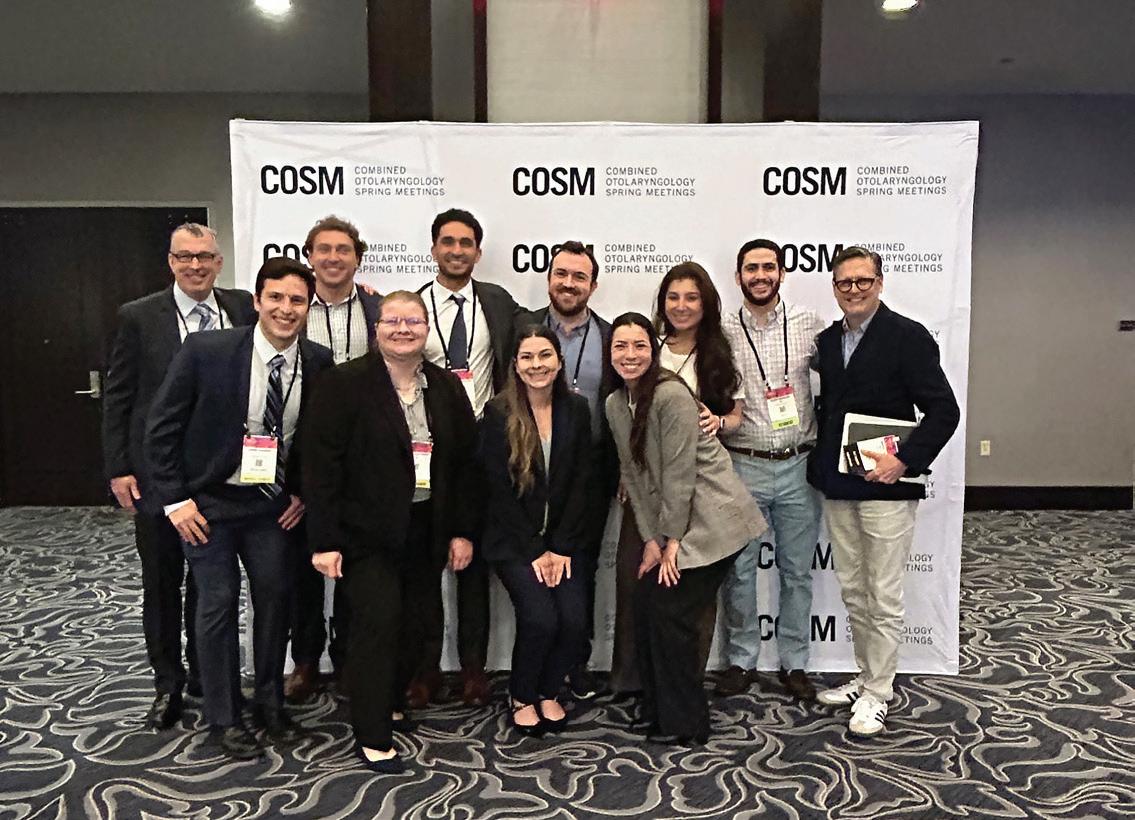
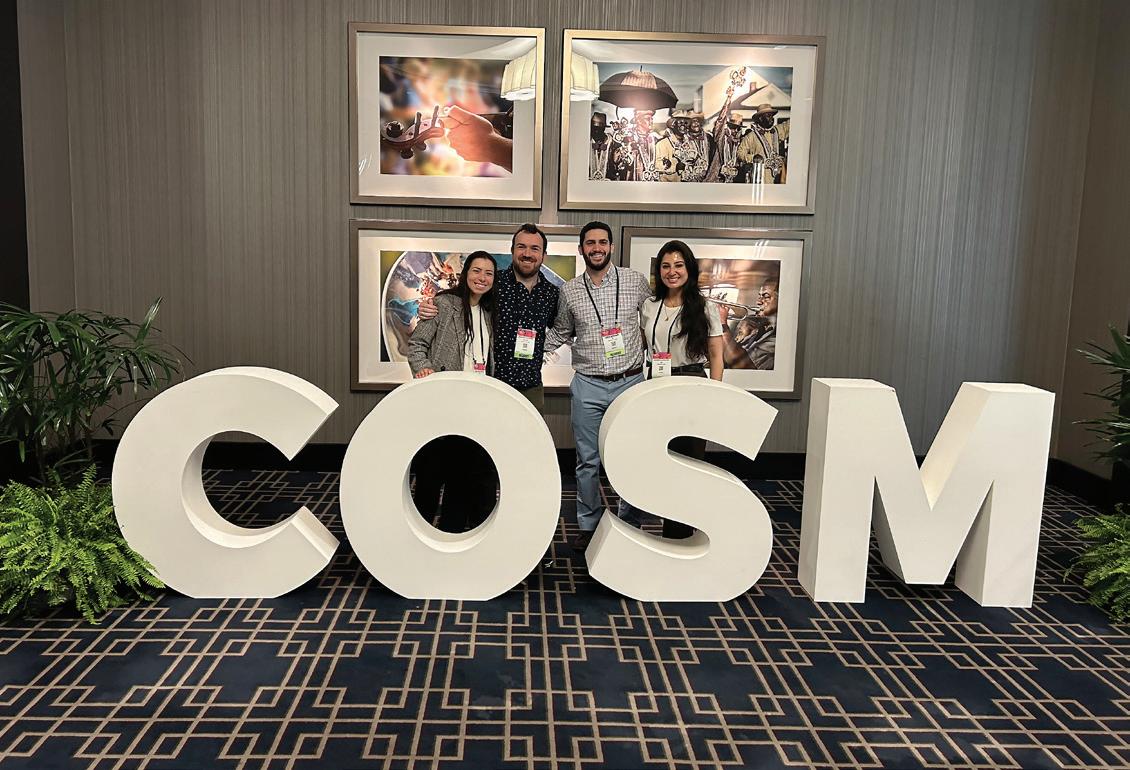
In addition, Matthews presented her project on early exposure to otolaryngology—later accepted by Oto Open—at the Combined Otolaryngology Spring Meetings in May 2025.
Looking ahead, multiple new research projects have already received IRB approval, with medical students serving
as lead investigators. Faculty also have upcoming presentations at the largest national meetings, AAO-HNS and AAOA, reflecting the division’s continued impact in academic otolaryngology.
The General Otolaryngology Division has embraced innovative technologies to improve patient access and care. This year, all faculty members fully implemented AI-assisted clinic note documentation, transforming the division’s workflow. DeMason and Lin are among the department’s top utilizers of this new system.
DeMason also became the first clinician at UNC to use Septalign, a minimally invasive treatment for nasal septal deviation, offering patients improved comfort and faster recovery times.
UNC Department of Otolaryngology-Head & Neck Surgery
The division had a year of notable professional recognition and contributions to the field:
• Lin was invited to speak at the Tinnitus Conference in the United Kingdom.
• DeMason presented on obstructive sleep apnea at the American Academy of Otolaryngic Allergy (AAOA) Advanced Course in March 2025.
• DeMason also became Chair of the AAOA Socioeconomic Committee and received an American Academy of Otolaryngology–Head and Neck Surgery (AAO-HNS) Honor Award for her volunteer service.
The division continues to demonstrate strong research engagement, with multiple ongoing projects and growing contributions at both national and international levels.
Education remains a cornerstone of the General Otolaryngology Division.
• Lin serves as Course Director of the ENT for Primary Care rotation, helping train non-specialist physicians in otolaryngologic care.
• DeMason continues to serve as Associate Program Director for the Otolaryngology Residency Program and Director of Medical Student Affairs for the department.
Both faculty members actively mentor medical students and residents, fostering early interest in otolaryngology and guiding trainees through meaningful research experiences.
UNC Department of Otolaryngology-Head & Neck Surgery
The Facial Plastic and Reconstructive Surgery (FPRS) division provides comprehensive cosmetic and reconstructive procedures for the face and neck. Our surgeons are highly specialized and nationally recognized, committed to delivering exceptional care and results in all aspects of facial plastic surgery for the people of North Carolina.
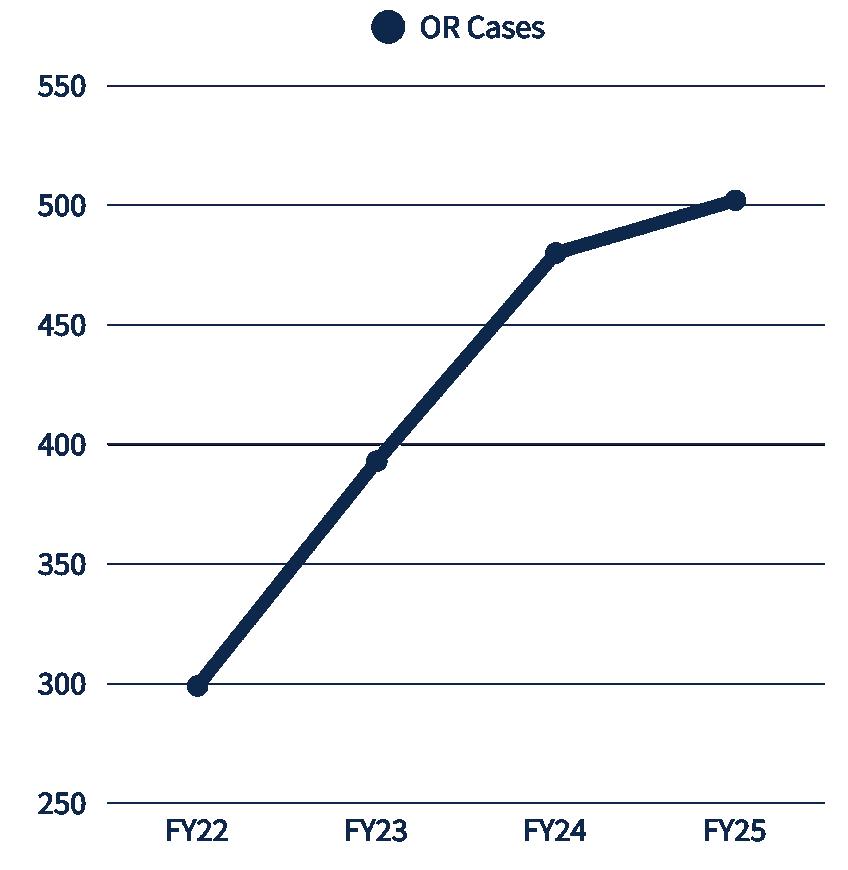
1,674 OR cases in the past 4 years
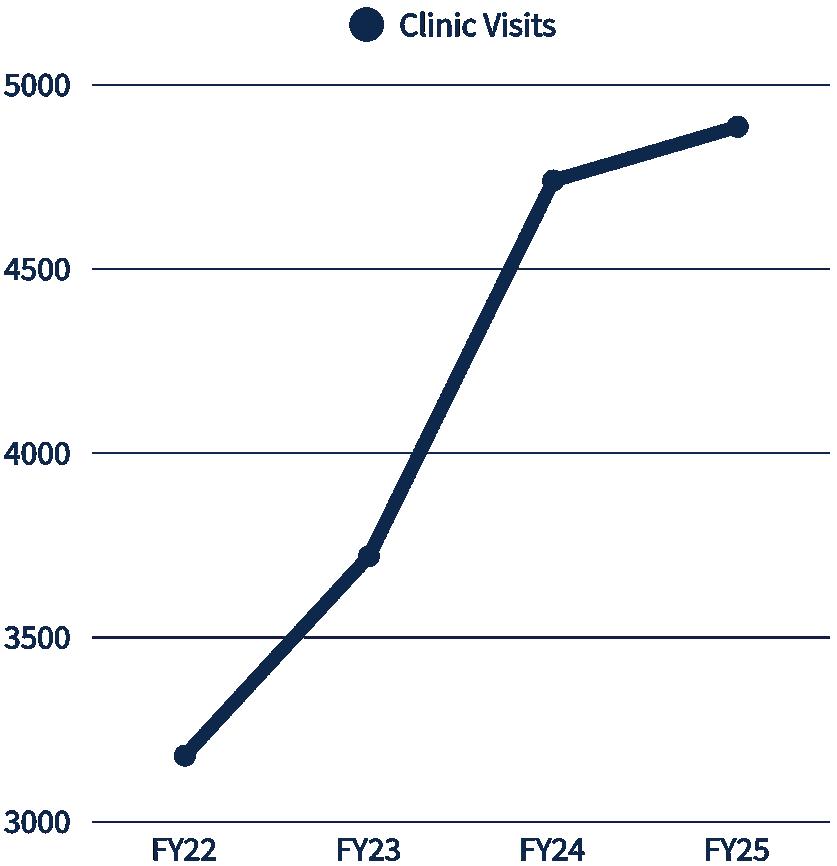
16,526 Clinic Visits in the past 4 years
OR cases rose each year, reflecting consistent growth in surgical activity, while clinic visits showed a marked increase beginning in FY23 with continued growth through FY25. Together, these trends demonstrate sustained clinical demand and expanding access to facial plastic and reconstructive surgery.
20 Oral presentations & Posters 12
Peer-reviewed Publications
UNC Department of Otolaryngology-Head & Neck Surgery
The division offers the full scope of facial plastic and reconstructive care, including reconstruction of all types, facial nerve reconstruction and rehabilitation, complex eyelid reconstruction, rhinoplasty, and cosmetic surgery (ie-deep plane and SMAS facelifts, cervicoplasty, brow lifts, blepharoplasty, ptosis repair) and inoffice procedures such as fillers and neuromodulators.
The UNC Facial Nerve Center, a key component of the division, provides coordinated highly specialized multidisciplinary care with Speech and Language Therapy to support patients in achieving optimal functional and aesthetic outcomes following acute facial nerve injury or longterm sequelae of facial paralysis and synkinesis.
The division maintains active collaborations with the Plastic Surgery and Oral and Maxillofacial Surgery (OMFS) departments in the comprehensive management of facial trauma. The Facial Nerve Center collaborates with Ophthalmology and
Oculoplastic Surgery on the corneal neurotization program.
Additionally, FPRS faculty conduct ongoing research collaborations with Dennis Frank-Ito (Duke University Department of OHNS) on Computational Fluid Dynamics, leading to multiple joint projects and publications involving fellows, residents, and medical students. Similar collaboration with Matthew Ridley on the psychological impact of facial deformities has resulted in international presentations.
The division’s academic influence also expanded through new national journal and society leadership roles.
• Madison Clark, MD, FACS, joined the Editorial Board of The Laryngoscope and was appointed Associate Editor for the World Journal of OHNS.
• Virginia Drake, MD was appointed Associate Editor (FPRS) for ORL.
• Matthew Miller, MD now serves as Associate Editor for the Facial Paralysis Section of FPSAM and as a member of the ENT Today Editorial Board.
In national societies, Clark serves on the ABO–HNS Exam Council, the AAFPRS Fellowship Committee (Chair), the
UNC Department of Otolaryngology-Head & Neck Surgery
The growth of the division provides the full scope of FPRS subspecialty care, ensuring timely and convenient access to the highest quality care for the citizens of North Carolina and beyond.
— J. Madison Clark, MD, FACS, Division Chief
Triological Society Southern Section (Secretary), the Otolaryngology Health Policy Advisory Committee (Executive Board), and the NCBCBS OHNS Medical Policy Review Board.
Our faculty have established strong relationships with colleagues across the state and beyond, serving as a reliable resource for consultation and support.
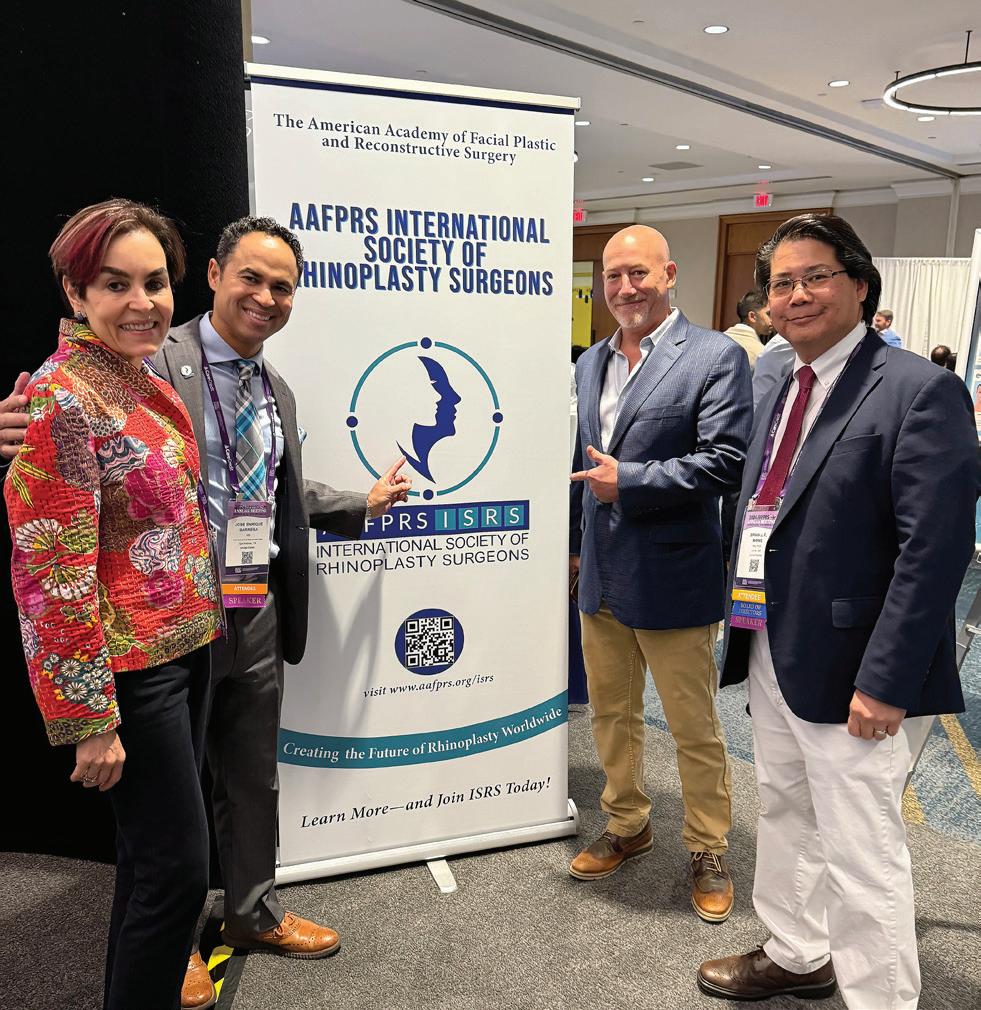
We value opportunities to connect at the NC/SC OHNS Annual Meeting and through ongoing collaboration throughout the year.
FPRS faculty continue to advance research initiatives, particularly in computational fluid dynamics and surgical innovation.
This year, the division produced twenty oral presentations and posters and twelve peer-reviewed publications, eleven of which were first-authored by medical students, residents, or fellows. The division also mentored six medical students engaged in ongoing research projects, reflecting its strong commitment to academic development.
NOTABLE RECOGNITION:
• Nine podium presentations
UNC Department of Otolaryngology-Head & Neck Surgery
from UNC FPRS faculty at the International Facial Nerve Symposium (IFNS) — the most prestigious meeting for facial nerve disorder management.
• Miller was invited as a Keynote Speaker at the AAFPRS COSM.
• First Place Scientific Program Poster – American Academy of Facial Plastic and Reconstructive Surgery Section, Combined Otolaryngology Spring Meeting (March 16, 2025):
• Lee YU, Miller JR, Russel SM, Clark JM, Frank-Ito DO. Computational Analysis Investigating Penetration of Intranasal Drug Delivery Following Functional Septorhinoplasty.
• Published novel information highlighting the need to care for the less fortunate in our state (and beyond).
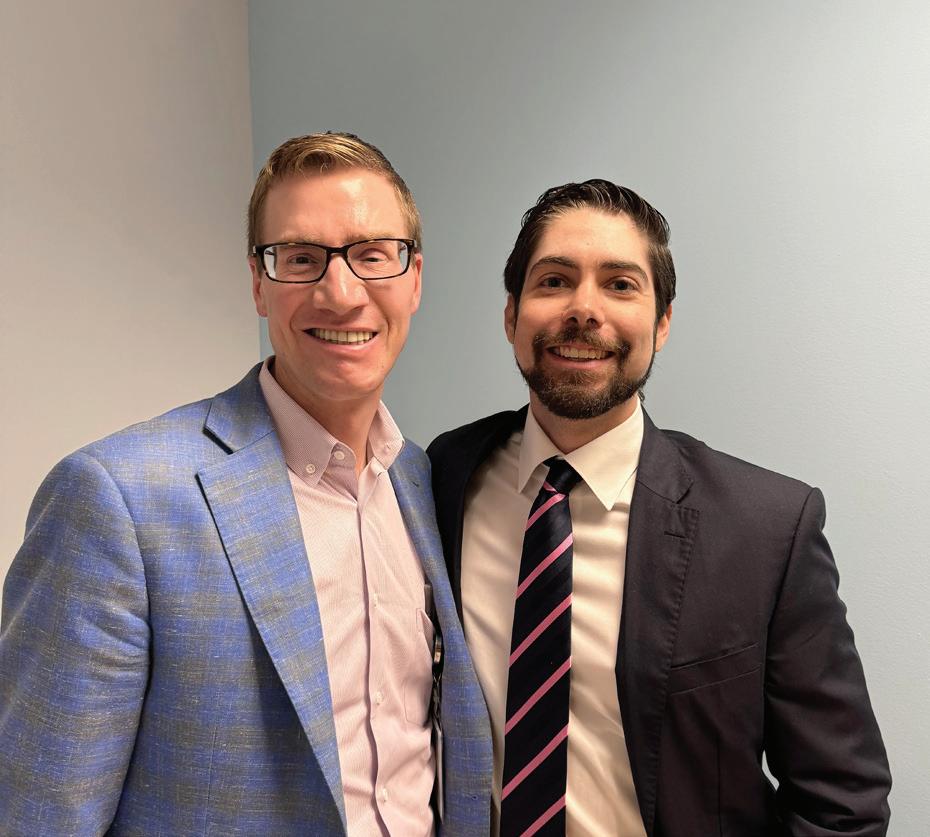
3 division members received Carolina Care Excellence Awards for outstanding patient satisfaction.
• The Carolina Crossing Clinic, where the FPRS team treats patients, consistently ranks among the top performers in patient satisfaction metrics.
• Dr. Miller completed the UNC Center for Faculty Excellence Leadership Fundamentals Course and was accepted as a Triological Society Candidate.
Kandahari N, Robinson DP, Dillon MT, Davis AG, Miller MQ. Exploring Disparities in Facial Reanimation Surgery. Facial Plast Surg Aesthet Med. 2024 Oct 28. doi: 10.1089/ fpsam.2024.0142. Epub ahead of print. PMID: 39463259.
• Two consecutive years of winning the John Orlando Roe Award-the most outstanding clinical fellowship research paper by a fellow (Dr. Virginia Drake and Dr. Rahul Varman).
UNC Department of Otolaryngology-Head & Neck Surgery
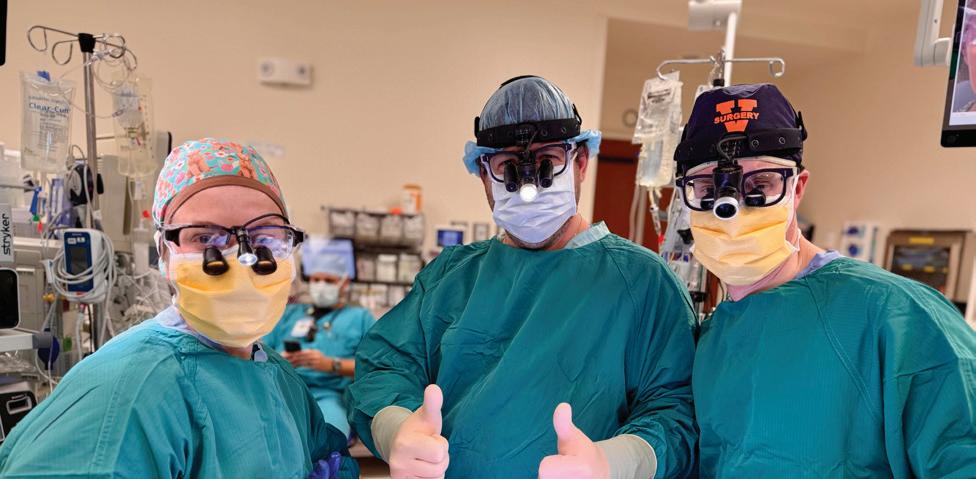
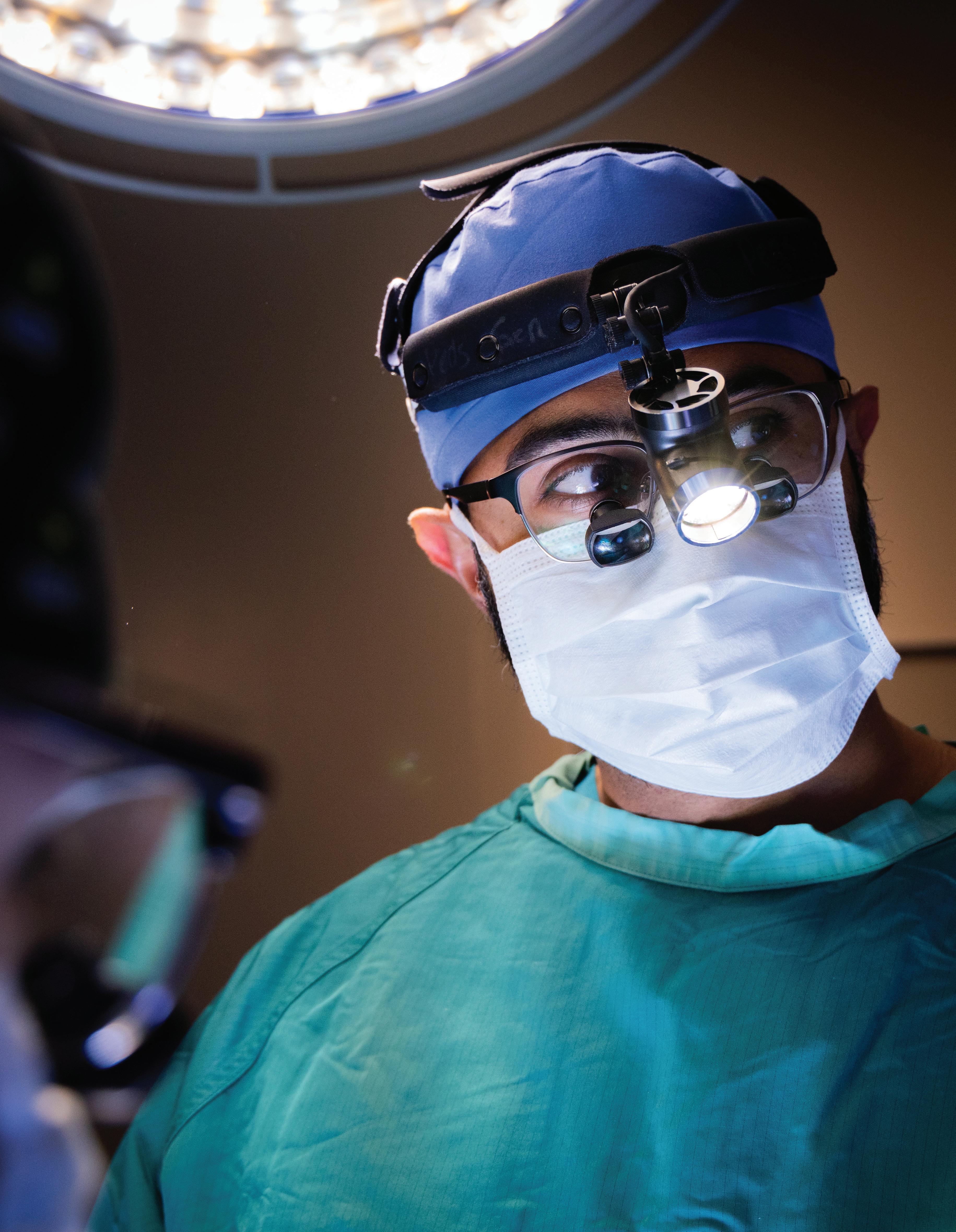
Multiple surgical innovations developed by FPRS faculty continue to be refined and shared through teaching of fellows, residents, and visiting international surgeons.
Additionally, eye-tracking software was integrated into the division’s research equipment portfolio to support advanced analysis and procedural development.
The Facial Plastic and Reconstructive Surgery (FPRS) Fellowship at UNC remains one of the most prominent academic fellowships in the country, with all graduates holding academic positions across the United States. This
year marked an important milestone as former fellow Brittany Howard became the first graduate to accept an Otolaryngology–Head and Neck Surgery Department Chair position.
Fellow, Lauren Gardiner, accepted a faculty position with the University of Pittsburgh. Looking ahead, our next fellow, Sarek Shen, currently serves as Chief Resident at Johns Hopkins University and will be joining the program next year.
Our division continues to support the SOM mission through education and mentorship for medical students, including ongoing mentorship to eleven medical students. Many of these medical students will pursue OHNS residencies.
Our primary clinical goal is to provide collaborative support to colleagues across the state in all aspects of Facial Plastic and Reconstructive Surgery. Our primary research goal is to advance patient care through surgical innovation and enhanced treatment of paradigms.
UNC Department of Otolaryngology-Head & Neck Surgery
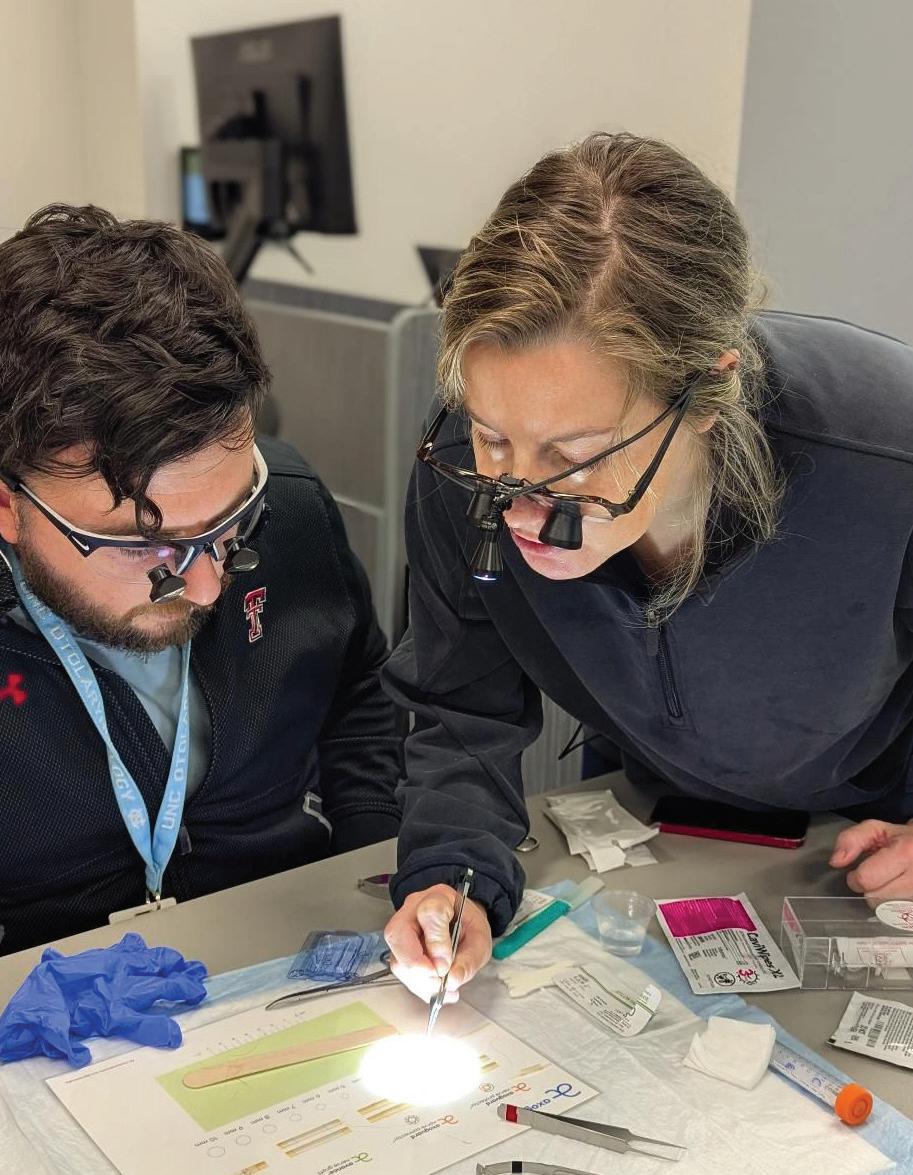
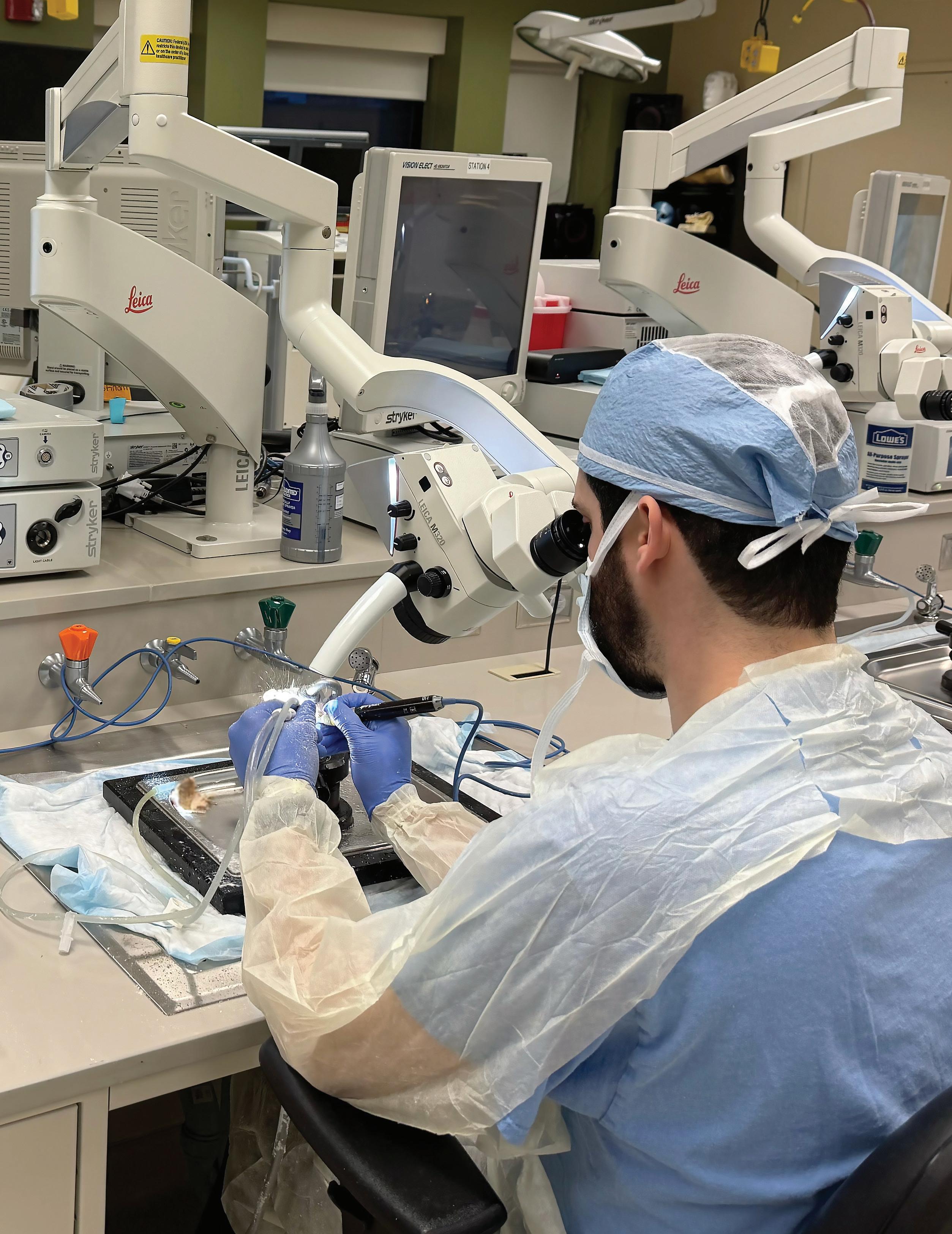
UNC Otolaryngology/Head & Neck Surgery is excited to announce that the residency will expand from four to five categorical residents beginning with the 2025–2026 match cycle. The department will be interviewing its first class of five residents in the coming months and is thrilled to expand its footprint across the hospital and institution. A growing resident cohort, coupled with their passion for education, research, and surgical training, will further equip the program to exceed its own high standards of excellencee Hearing Research Laboratories, the Manis Laboratory, the Head and Neck Oncology Lab, and the Cochlear Implant Research Laboratory.
UNC Department of Otolaryngology-Head & Neck Surgery
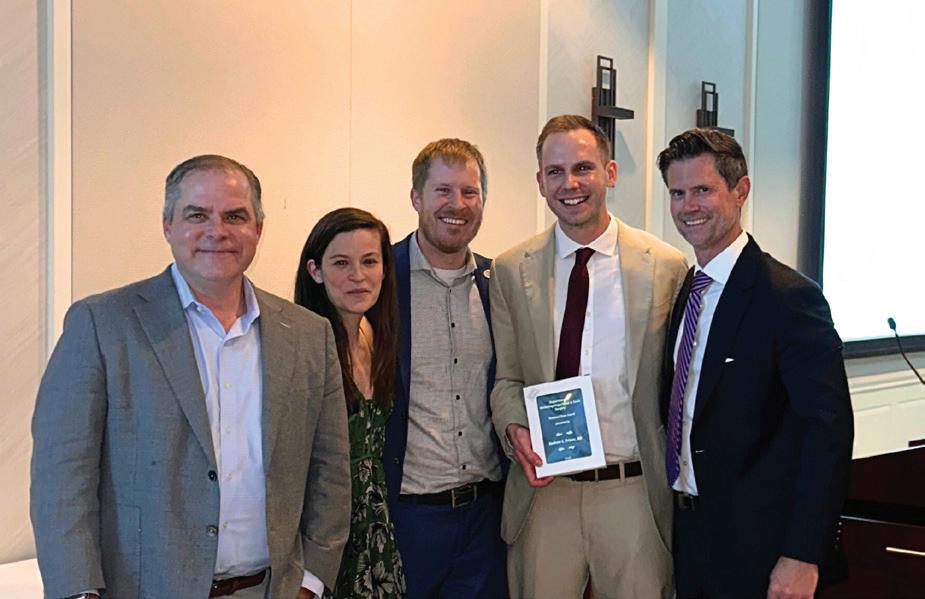
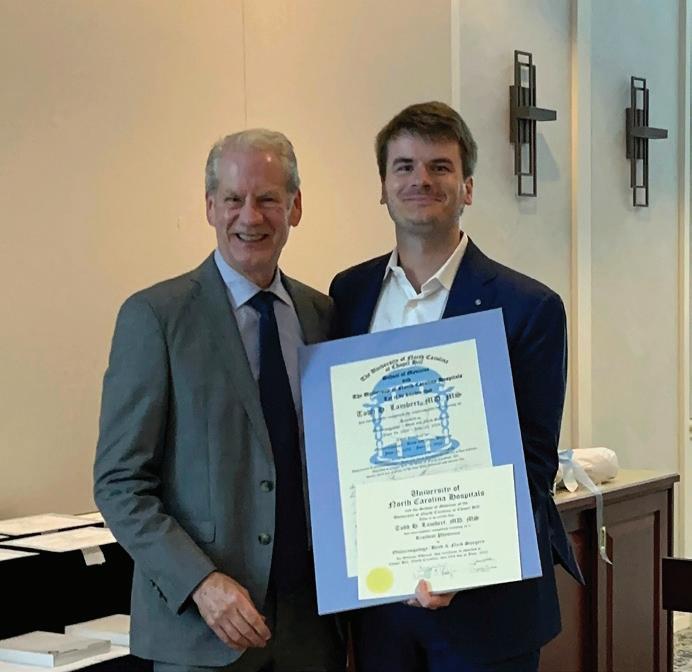
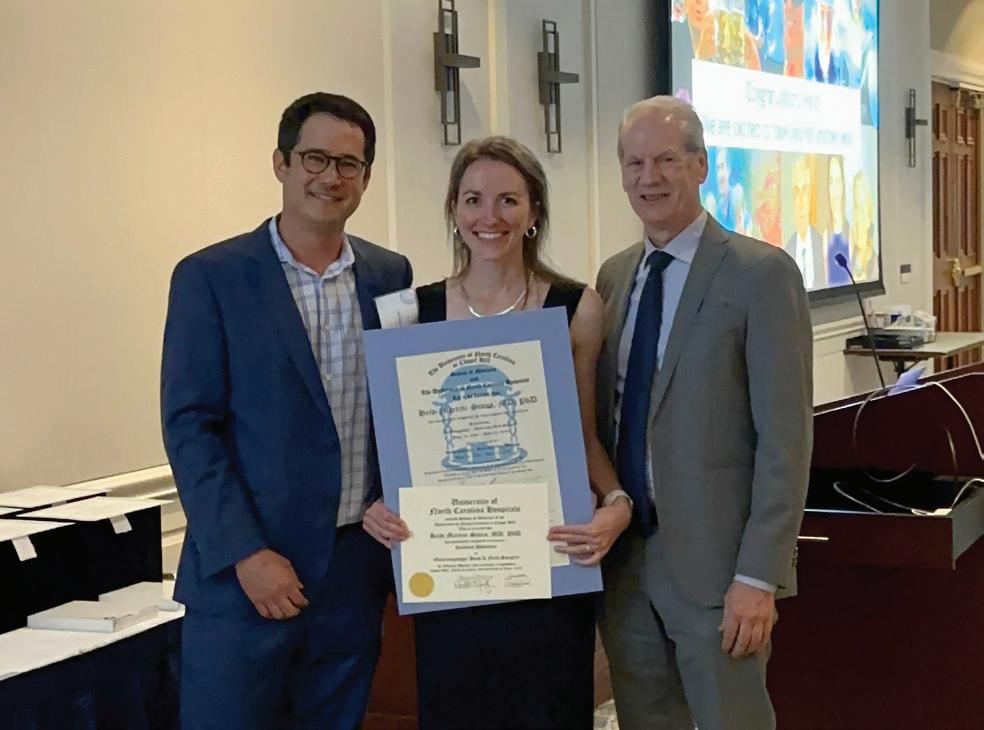
The department celebrated the graduation of four otolaryngologists in June 2025 during the annual Newton Fischer Society Meeting. Each of the 2025 graduates transitioned seamlessly into the next phase of their careers:
• Heidi Martini-Stoica – Fellowship in Rhinology at UNC (graduating June 2026)
• Eric Lee– Fellowship in Neurotology at UNC (two-year program)
• Andrew Prince – Fellowship in Head & Neck Oncology at NYU Langone
• Todd Lambert – Joined Piedmont Ear Nose & Throat Associates (PENTA) in Winston-Salem, NC
The department is immensely proud of these accomplished surgeons, who have helped define the program’s culture of academic rigor, teamwork, and excellence over the past several years.
My time at UNC provided me with a strong clinical and surgical foundation that made the transition to fellowship seamless. I’ve felt confident independently managing patients during my attending call weeks and running my own clinic, which speaks directly to the depth of training and mentorship I received at UNC.
— Andrew Prince M.D.
Biggest highlight of my time at UNC for residency was the family of residents, faculty and staff. The UNC ENT family helped me become the physician I am today and I am thankful for all of those continued relationships.
— Todd H. Lambert M.D.
UNC Department of Otolaryngology-Head & Neck Surgery
Phenomenal mentorship in all the subspecialities of otolaryngology during my residency training at UNC allows me to feel comfortable with all aspects of general otolaryngology and has positioned me well for success in fellowship.
— Heidi Martini-Stoica, MD, PhD
Resident scholarship continues to thrive, demonstrating our program’s dedication to research, innovation, and leadership. Over the past year, residents collectively:
• Published twenty-three peerreviewed manuscripts, six additional
UNC residents continue to lead at the national level, advocating for the field of otolaryngology and for patients.
Dr. Sarah Russel currently serves as Chair, and Kayla Hicks as ChairElect, of the Section for Residents and Fellows (SRF) within the AAOHNSF.
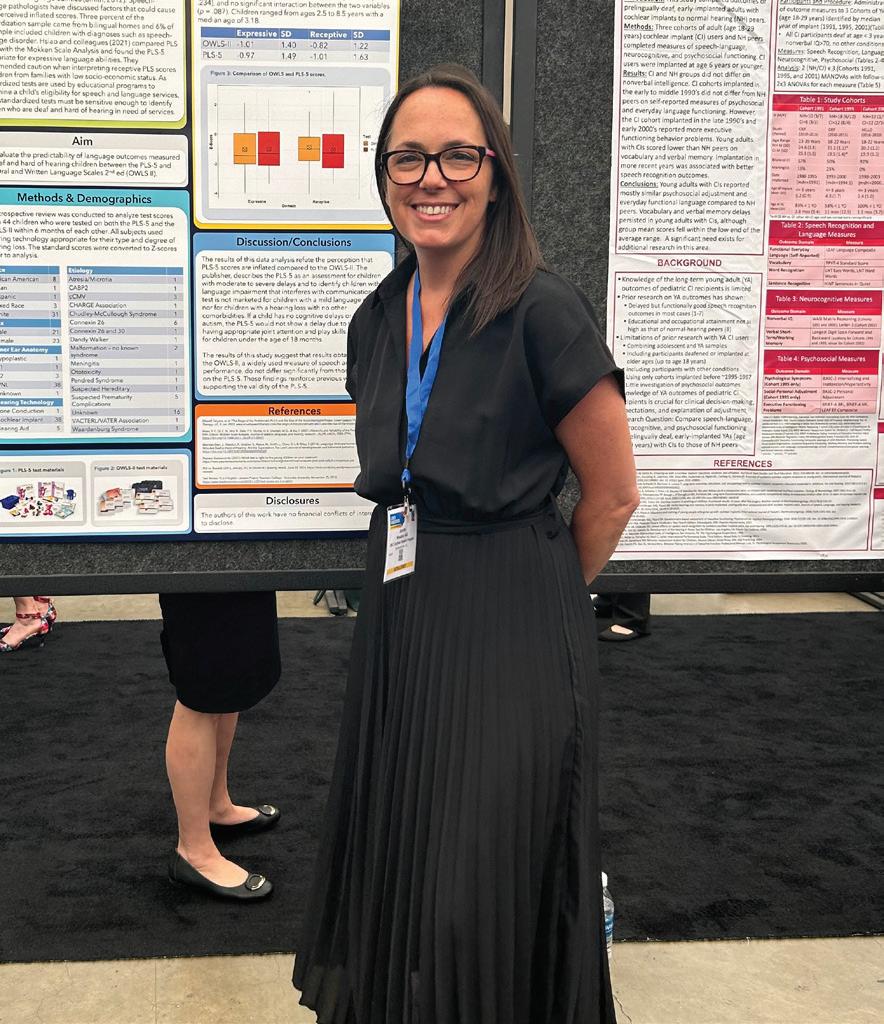
In July 2025, Hicks was featured in an episode of the AAO-HNSF “Voices of Otolaryngology” podcast titled “From Clinic to Capitol Hill: Essential Advocacy for ENT Physicians and Residents.” The episode highlighted the importance of resident engagement in shaping the future of the specialty.
manuscripts, and one textbook chapter.
• Presented thirty five oral and poster submissions across major academic conferences, including the AAO-HNSF Annual Meeting, COSM, Triological Society, and CI2024 .
UNC Department of Otolaryngology-Head & Neck Surgery
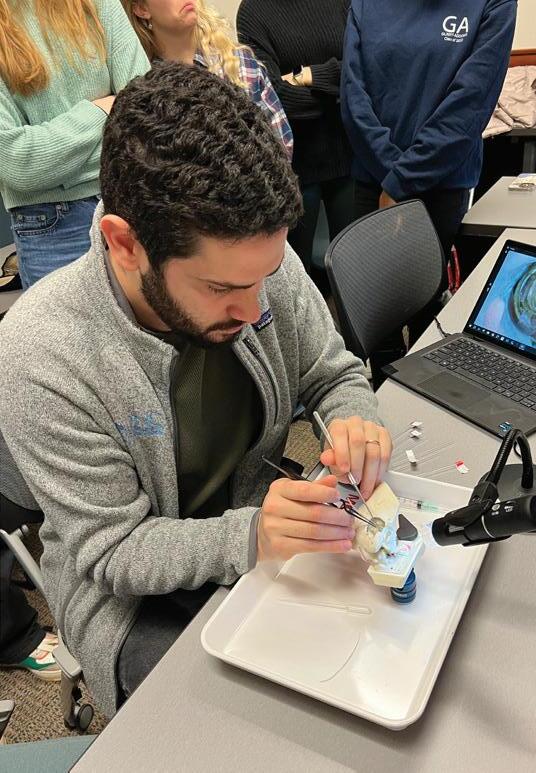
Collaboration between medical students and residents remained a hallmark of the program, with multiple co-authored publications and presentations emphasizing UNC’s commitment to mentorship and early academic engagement. Residents and students also shared their work at the annual Newton Fischer Society Meeting.
Graham Cochrane received the Nicholas Torok Vestibular Award for his research, “Clinical Vestibular Function in Children with and without Sensorineural Hearing Loss”.
Ezer Benaim earned 3rd Place in the Annual Triological Society Quiz Bowl (January 2025) and received a 2024 CORE ARS Resident Research Grant for his project “Integrated Transcriptomics/ Exposomics Analyses of Inhalational Exposures in CRS”.
AAO-HNSF BOBBY R. ALFORD ENDOWED RESEARCH GRANT: AMERICAN RHINOLOGIC SOCIETY (ARS)
The department is proud to announce that two residents received the prestigious ARS Resident Research Grant.
Martini-Stoica will be completing her fellowship in Advanced Rhinology and Skull Base Surgery at UNC. She completed a B.S. in Biochemistry and Cell Biology from Rice University, graduating Summa Cum Laude, and completed her MD/PhD training at Baylor College of Medicine. She plans to pursue a career as a surgeon scientist in rhinology. Her current work is under the mentorship of Adam Kimple, MD, PhD, studying factors underlying recalcitrant CRS in primary ciliary dyskinesia.
• Project Title: Characterization of neutrophils in CRS secondary to primary ciliary dyskinesia
Taylor Stack is a first-year Otolaryngolog/ Head and Neck Surgery resident at the University of North Carolina at Chapel Hill. She is originally from Cullowhee, North Carolina. She graduated magna cum laude from Western Carolina University with a B.S. in Chemistry and attended the UNC School of Medicine at Chapel Hill.
UNC Department of Otolaryngology-Head & Neck Surgery
Under the guidance of Dr. Adam Kimple, her project will explore immunological and molecular mechanisms underlying PCD-related CRS.
• Project Title: Characterizing the Immunopathology of PCD-Related CRS
• AJ Meadows - Medical University of South Carolina (MUSC)
• Catherine Nguyen - Eastern Virginia Medical School (EVMS)
• Nick Melott - Des Moines University of Osteopathic Medicine
• Priya Arya - Mercer University
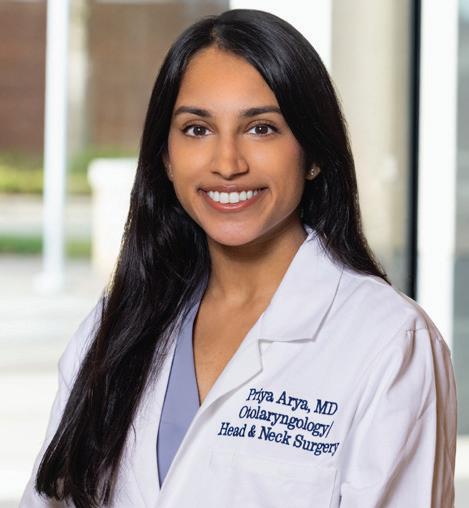
Priya Arya, MD
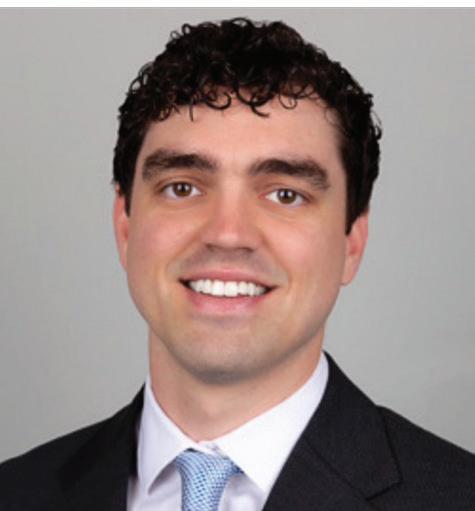
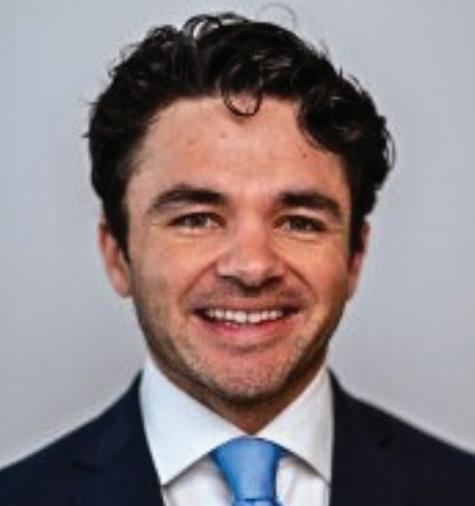
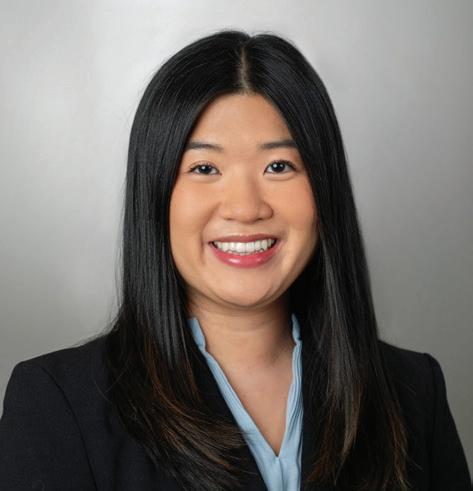
• Heidi Martini-Stoica, MD, PhD - NeuroRhinology and Endoscopic Skull Base Surgery Fellow
• David Strum, MD - Advanced Surgical Head and Neck Oncology and Microvascular Reconstruction Fellow
• Lauren Gardiner, MD - Facial Plastic and Reconstructive Surgery Fellow
• David Strum, MD - Advanced Surgical Head and Neck Oncology and Microvascular Reconstruction Fellow
• Eric Lee, MD - Otology, Neurotology & Lateral Skull Base Surgery Fellow
UNC Department of Otolaryngology-Head & Neck Surgery
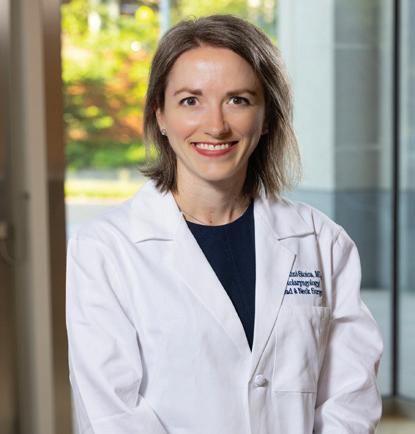
Heidi MartiniStoica, MD, PhD
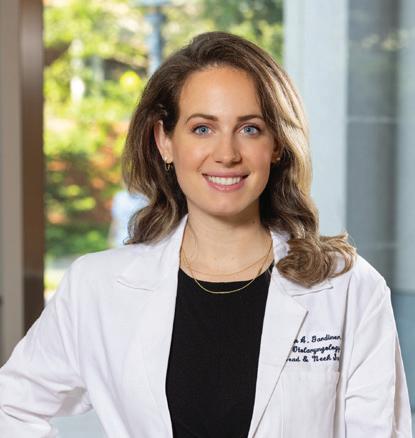
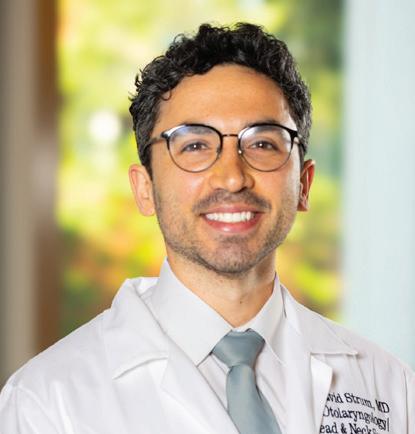
Strum, MD
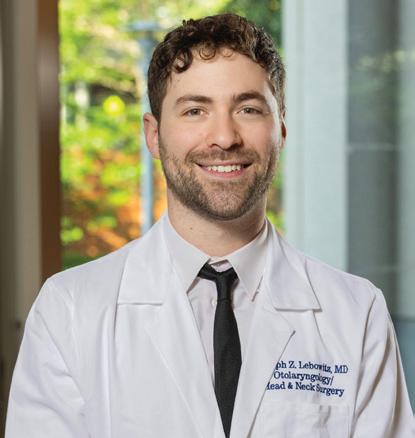
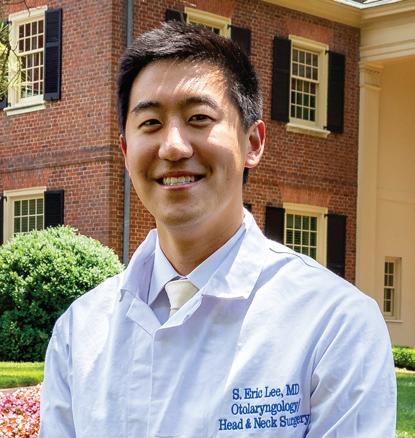
Gardiner, MD Joseph Lebowitz, MD Eric Lee, MD
After 28 years of dedicated service, Ellen Doutt, Residency Program Manager, retired on June 30, 2025.Over nearly three decades, she became an indispensable pillar of our residency program. Her unwavering commitment to resident education and her genuine care for each trainee shaped the experiences of more than one-hundred residents who passed through our program during her tenure. Her retirement marks the end of an era, and while she will be deeply missed, her legacy will continue to resonate through the careers of the residents whose lives she touched.
Doutt’s dedication to excellence, her institutional knowledge, and her genuine investment in the success of our residents have left an indelible mark on our program. We extend our heartfelt gratitude for her years of service and wish her all the best in her well-deserved retirement.
UNC Department of Otolaryngology-Head & Neck Surgery
In reflecting on her time with the department, Doutt shared:
“...During my 25+ years in the department, I have had the pleasure of being an integral part of over 115 young doctors in training. It was my goal to provide the guidance, support, and friendship they needed to become the best of the best in ENT. I will always fondly remember each and every resident I have worked with over the years and remember the impact they have had on my life, as I enjoy following their careers across the country. I will never forget all the crazy times we’ve shared, and I am truly honored to call each of them my friend!”
— Ellen Doutt, Residency Program Manager
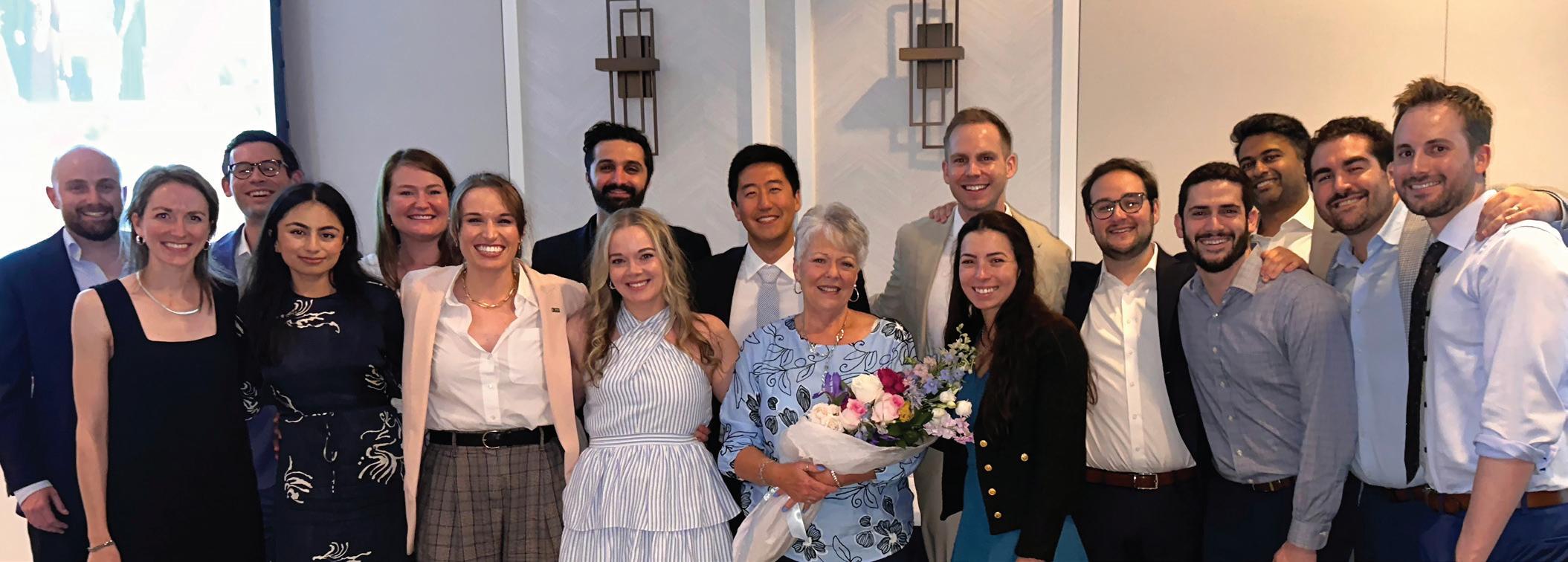
Following Ellen Doutt’s retirement, the department hired a new Residency Program Coordinator in FY26 to support the residency program moving forward. In March 2026, the department will welcome its first class of five residents, marking a milestone in continued growth and commitment to training exceptional surgeons, researchers, and leaders in Otolaryngology/Head & Neck Surgery.
UNC Department of Otolaryngology-Head & Neck Surgery
Otolaryngology has a vibrant and diverse research portfolio. In addition to the work conducted by our dedicated research faculty, most of our clinical faculty, medical residents, and fellows are actively engaged in scholarly research related to their clinical interests. Together, we cover a wide range of topics, including basic and applied research in hearing, rhinology, facial plastics, airway, voice, and head and neck cancer. Research features in many of the other divisions, so the focus here will be on activities of research faculty in the Hearing Research Laboratories, the Manis Laboratory, the Head and Neck Oncology Lab, and the Cochlear Implant Research Laboratory.
UNC Department of Otolaryngology-Head & Neck Surgery
MANIS LABORATORY: NEURAL MECHANISMS OF HEARING LOSS AND AUDITORY PROCESSING
The Manis Laboratory (Paul Manis, Michael Kasten, Ken Hutson, and Reginald Edwards) investigates how age-related and noise-induced hearing loss alter brain function. The lab has developed high-resolution methods to analyze neuronal excitability and synaptic connectivity and has demonstrated that, despite age-related hearing loss in mouse models, neurons in the cochlear nucleus undergo significant changes in electrical excitability and dendritic structure with aging (Edwards et al., bioRxiv, 2025).
In complementary work, a collaboration with Hiroyuki Kato, PhD, (Psychiatry) identified a previously unrecognized auditory pathway that delivers sound information to the auditory cortex more rapidly than known circuits. This pathway was traced back to its origins in the cochlear nucleus, advancing understanding of how auditory information is processed in the brain (Garcia et al., Nature Communications, 2025).
LABORATORY: SPATIAL HEARING ASSESSMENT
Researchers in the Cochlear Implant Research Laboratory have begun developing a clinically feasible test of spatial hearing that uses two loudspeakers and an audiometer. Patients with hearing loss often complain that they cannot tell where sounds are coming from. While a desire to improve spatial hearing can be a primary motivating factor for pursuing treatment with a cochlear implant or hearing aid, this outcome is not measured in the clinic. Preliminary data using our new procedure are promising, and our next step is to trial these new procedures on a larger population of patients.
HEAD AND NECK ONCOLOGY LAB: HPV+ OROPHARYNGEAL CANCER SUBTYPES
The Head and Neck Oncology Lab has been exploring two recently identified subtypes of human papillomavirus positive (HPV+) oropharyngeal squamous cell carcinoma (OPSCC) that have marked molecular and biological differences: one with poor prognosis representing a classical HPV carcinogenesis and one with
UNC Department of Otolaryngology-Head & Neck Surgery
This department has an impressive track record of research engagement across divisions. We are proud of the resilience our research teams have shown in the face of an uncertain and evolving funding landscape. Maintaining existing research programs and expanding into new areas is key to advancing our academic mission.
— Emily Buss, PhD, Vice Chair of Research
good prognosis driven by alternative HPV-associated carcinogenesis. The discovery of these intrinsic subtypes defined a critical prognostic biomarker in HPV+ OPSCC and identified a novel molecular target with potential to improve outcomes for the treatmentresistant tumors. To support NIHfunded pre-clinical studies, the Lab developed a novel immunocompetent mouse model of the high-risk subtype of HPV+ OPSCC that is being used to test combinatorial treatment strategies. This research is led by Drs. Yarbrough, Issaeva, and Schrank.
Our research is funded by NIH and by industry grants, including a longstanding program of clinical research in cochlear implant outcomes sponsored by MED-EL Corporation.
ACTIVE MAJOR GRANTS
R01DC019444: Binaural Processing and Spatial Hearing: Effects of Age and Hearing Loss
• Principal Investigator: John Grose
• This project advances our understanding of the hearing difficulties experienced by older listeners, both with and without hearing loss, in everyday settings where multiple sound sources are present at the same time. Social wellbeing relies on the ability to communicate in this complex soundscape, so it is essential to understand the spatial hearing skills necessary to function successfully in these environments.
R01NS128873: Cortical circuits for the integration of parallel short-latency auditory pathways
• Principal Investigators: Hiroyuki Kato & Paul Manis
• Our brains generate a coherent perception of the sensory world by integrating information from parallel
UNC Department of Otolaryngology-Head & Neck Surgery
sensory channels. This project will delineate parallel auditory pathways that convey different aspects of acoustic information in our brain and elucidate how they converge in the cerebral cortex to generate unified sound representations. Our research will reveal neural circuit mechanisms underlying auditory integration, the knowledge of which could point towards novel targeted treatments for hearing disorders.
R01DE031297: Dissecting NF-kB pathway in HPV-associated head and neck cancer
• Principal Investigators: Wendell Yarbrough and Natalia Issaeva
• In the past few decades, the human papilloma virus (HPV) has been driving an epidemic of head and neck squamous cell carcinoma (HNSCC) emphasizing the need for a clear understanding of HPVdriven carcinogenesis in these tumors. The goals of this proposal are to characterize a previously unrecognized subset of HPVassociated HNSCC that harbors somatic inactivating mutations in NF-kB regulators and to explore roles of NF-kB signaling in an alternative mechanism of HPV tumorigenesis. This work should help to define an
alternative mechanism through which HPV causes cancer in the head and neck, personalize cancer care and de-escalate therapy to improve quality of life amongst survivors.
EDITORIAL LEADERSHIP
Emily Buss, PhD, serves as the Coordinating Editor for Psychological and Physiological Acoustics at the Journal of the Acoustical Society of America.
Margaret Dillon, AuD, PhD, serves as an Associate Editor for the journal Trends in Hearing.
INVITED LECTURES
ARO Seminar Series (Virtual Presentation)
• Presenter: Paul Manis
• Title: “The Cochlear Nucleus: A Perspective”
• Date: June 25, 2025 15th International Workshop on Auditory Processing (In Person)
• Presenter: Paul Manis
• Title: “The Cochlear Nucleus: in aging and deafness. But, what is the pathway that drives short latency
UNC Department of Otolaryngology-Head & Neck Surgery responses in the auditory cortex?”
37
Peer-reviewed publications
22
Posters presented at national/ international meetings
• Location: Cody, Wyoming
• Date: August 22, 2025
5th International Symposium on Pediatric Auditory Brainstem Implant
• Presenter: Paul Manis
• Title: “Considerations in the stimulation of the cochlear nucleus: Cells, excitability, circuits and their relationship to hearing”
• Location: New York University, New York
• Date: May 2, 2025
AWARDS AND RECOGNITION
Reginald Edwards received an award in the UNC Art In Science competition in September. Shortly after that he defended his dissertation and will receive his PhD officially in midDecember.
Grace “Gigi” Rowland received the meritorious poster award at the
18 Conference participation
27 Oral presentations
American Speech-Language and Hearing Association meeting for her presentation, “Spread of Excitation Patterns and Benefit with Individualized Maps for Cochlear Implant Users.”
In the coming year we hope to recruit a new research faculty member with expertise in vestibular function. This area has long been an interest for the department, with numerous opportunities for clinical collaboration. In FY26, we will continue to retain and expand our portfolio of external research funding. Despite recent changes and pauses in NIH funding, we are adapting quickly and creatively, while pursuing a broad range of funding opportunities.
UNC Department of Otolaryngology-Head & Neck Surgery
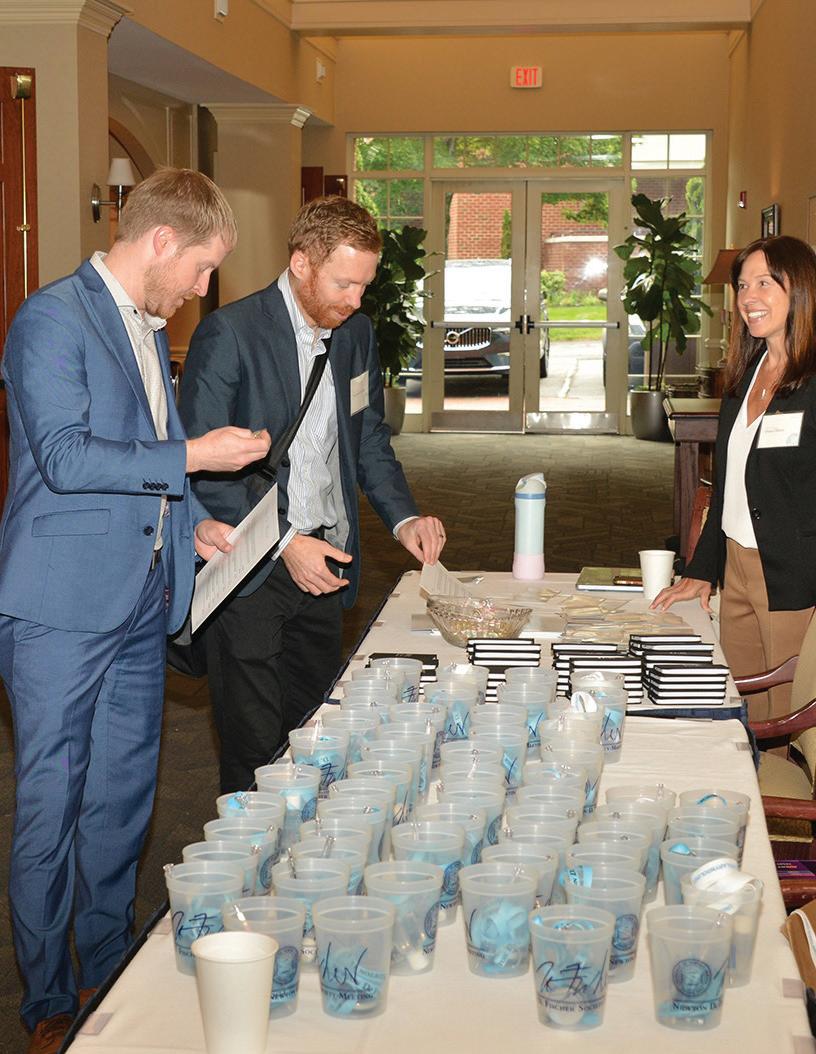
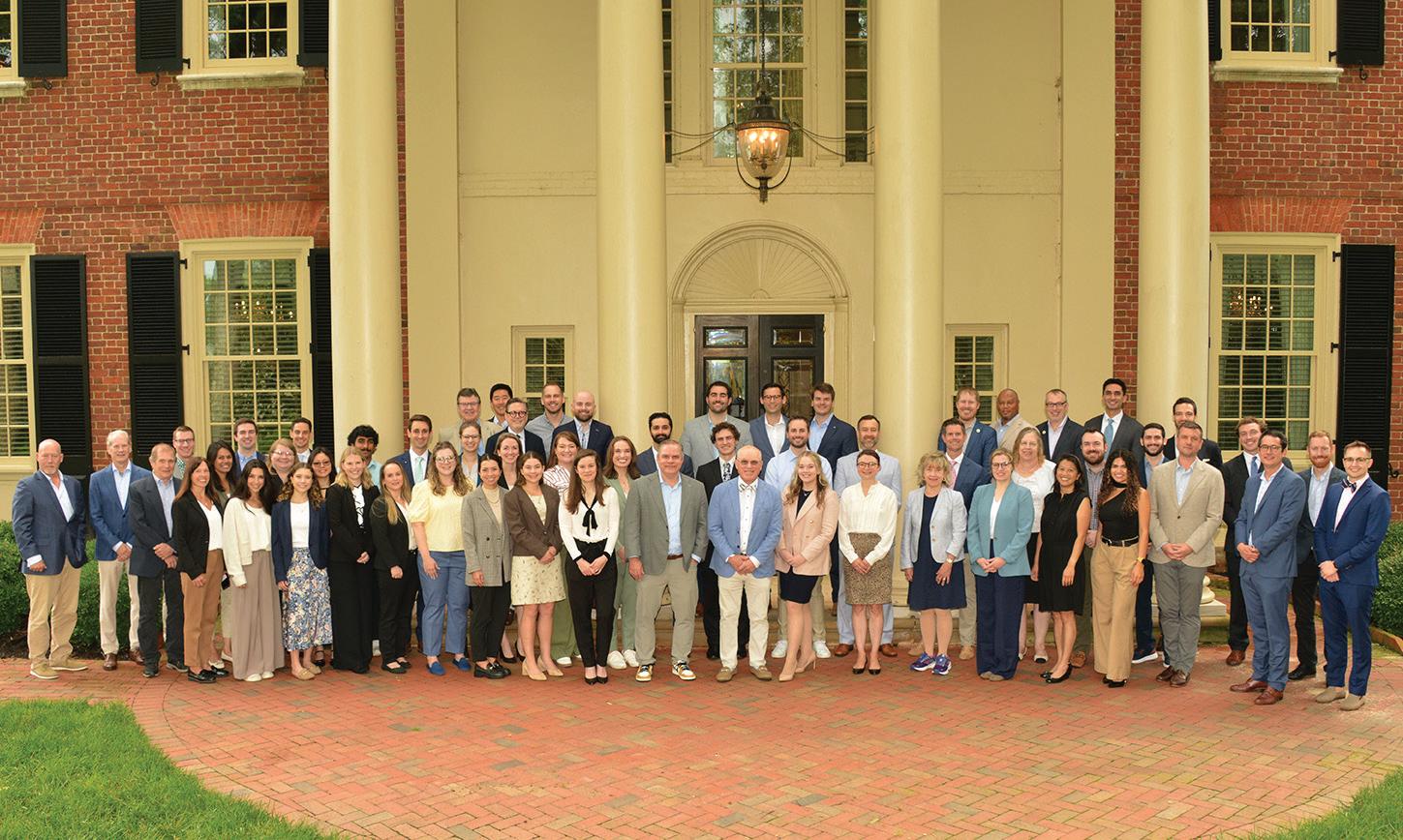
The annual Newton D. Fischer Society Meeting opened on a Saturday morning in June with the energy that comes from gathering generations of surgeons under one roof. Established by residency alumni during Newton D. Fischer’s, MD, tenure as the first chief of the Division of Otolaryngology/ Head & Neck Surgery, back when it was still part of the Department of Surgery, the society has become a vital thread connecting past, present, and future.
Fischer’s founding emphasis on medical student and resident education, coupled with rigorous research, continues to shape the department’s identity decades later. This year’s meeting was delivered on that legacy in full measure.
UNC Department of Otolaryngology-Head & Neck Surgery
The day began at 7:30 a.m. with breakfast, followed by a rapid-fire session showcasing cutting-edge students and resident research. Morgan McCain kicked things off with a talk untangling the nomenclature around Kartagener syndrome, immotile cilia syndrome, and primary ciliary dyskinesia, proving that clarity in definition matters as much as discovery itself. Nina Westcott followed with an investigation into lifetime inhalational exposure burden and its associations with chronic rhinosinusitis, while Yasine Mirmozaffari presented cadaveric CT and fast anatomic mapping data on balloon dilation systems for sinonasal airway enhancement.
Jared Martin explored acoustic vibratory devices for nasal congestion,
and Ezer Benaim, already a national quiz bowl medalist and CORE grant recipient, shared his proteomics analyses of inhalation exposures in CRS.
Molly Poole compared temporal bone thickness across CT and MRI modalities.
Elena Quinonez Del Cid introduced 4D computed tomography as a tool for evaluating dynamic tracheal obstruction in pediatric patients, a pilot study with real clinical promise. Victoria Fonseca presented her work developing and pilot-testing a multilingual educational pamphlet on pediatric foreign body aspiration, bridging the gap between academic medicine and community health literacy.
At 10:20 a.m., the tone shifted. William Shockley, MD, FACS, took the podium to share “Principles of Lip Reconstruction: My Tips and Biases”. A master class from a surgeon whose technical wisdom is matched only by his willingness to share it. The session then pivoted back to the lab, with Sri Prahbas Vemulamanda presenting the development of a novel immunocompetent mouse model to study treatment response in HPVpositive head and neck squamous cell carcinoma.
UNC Department of Otolaryngology-Head & Neck Surgery
After a mid-morning break, the agenda turned to the breadth of otolaryngologic practice. Adam Sheikali discussed facial paralysis in GuillainBarré syndrome. Makayla Matthews examined evolving demographic trends and treatment practices in anaplastic thyroid cancer. Elizabeth Crowder and Zachary Elliott both addressed facial reanimation, Crowder focusing on communication and articulation outcomes, Elliott introducing a novel classification scale for the nonflaccid smile.
These weren’t just presentations. They were snapshots of a field managing everything from the very common to the very rare, chronic rhinosinusitis, auditory neuropathy, squamous cell carcinoma of the neck, using novel research and emerging technologies,
from endoscopic techniques to external approaches, to change how disease is understood and treated.
The morning closed with the highlight many had been waiting for: a fireside chat with Charles Cummings, MD, the kind of conversation that only happens when a giant in the field sits down to reflect, advise, and inspire.
This meeting did more than showcase research. It celebrated the four graduating residents transitioning to fellowships and practice. It welcomed back alumni who remember when the division was still finding its legs. And it reminded everyone in the room about why Fischer’s vision of education, research, and community still matters.
UNC Department of Otolaryngology-Head & Neck Surgery
Like all clinical departments, the success of UNC Otolaryngology/Head and Neck Surgery depends on and is enhanced by the strength of its administration. Through strategic hiring and expanded communication efforts, our administrative team has created the operational foundation that allows our clinicians, researchers, educators, and learners to focus on our mission.
During FY2025, the department strengthened its administrative infrastructure through the addition of key roles, including an Administrative Coordinator, Business Manager, Public Communications Specialist, and Executive Assistant. These positions expanded capacity in daily operations, financial oversight, communications, and executive support, strengthening the department’s ability to serve patients, advance research, and train the next generation of otolaryngologists.
We are fortunate to have an exceptional team of staff members dedicated to supporting our outpatient clinical care. This year’s achievements would not have been possible without the remarkable support and resilience of our clinical staff. Their expertise, compassion, and adaptability continue to elevate the care we provide to every patient.
Our Public Communications Specialists drove remarkable growth across all social media platforms throughout the fiscal year. This digital engagement strategy has
Instagram significantly elevated our department’s visibility within the medical community and among prospective patients, while showcasing our clinical expertise, research achievements, and educational programs to broader audiences.





UNC Department of Otolaryngology-Head & Neck Surgery
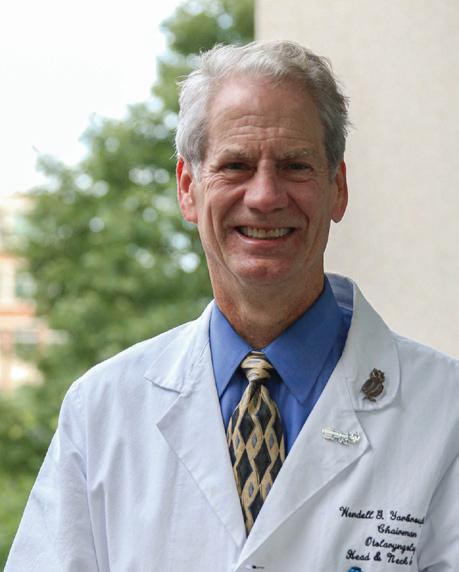
Wendell G. Yarbrough, MD, MMHC, FACS
Head & Neck Oncology

Brent A. Senior, MD, FACS, FARS
Rhinology, Allergy and Endoscopic Skull Base Surgery
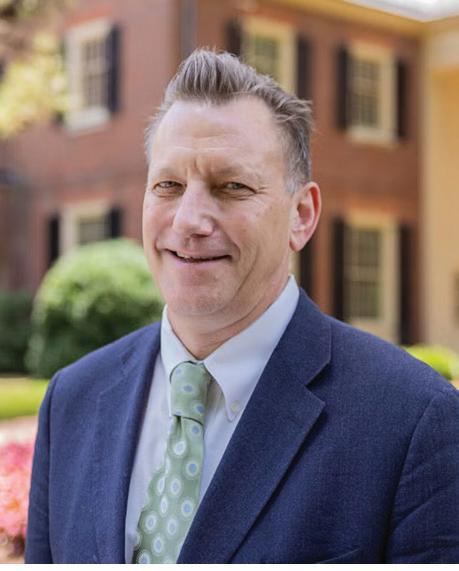
Carlton J. Zdanski, MD, FAAP, FACS
Pediatric
Otolaryngology/ Head and Neck Surgery
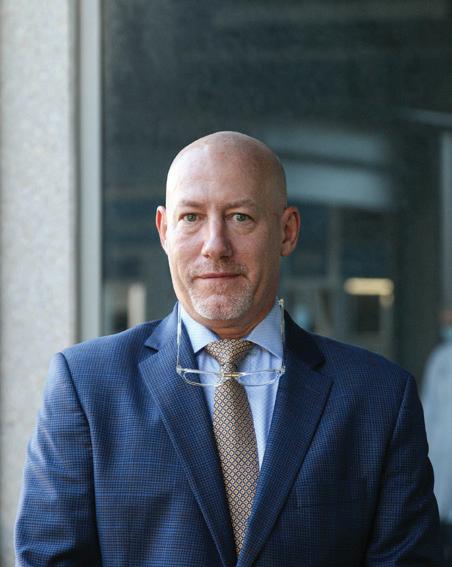
J. Madison Clark, MD, FACS
Facial Plastic and Reconstructive Surgery
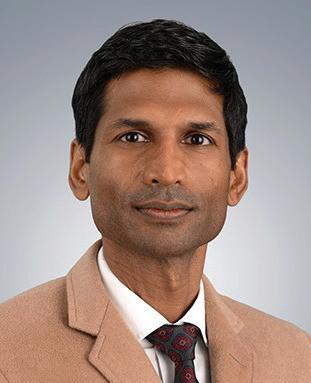
Mihir R. Patel, MD
Head & Neck Oncology
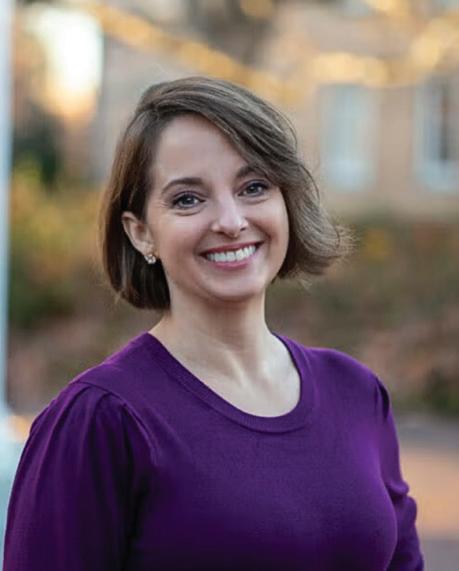
Lisa Park, AuD Children’s Cochlear Implant Center
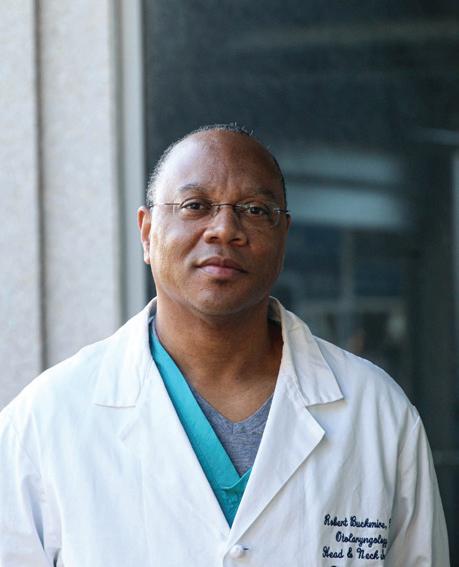
Robert A. Buckmire, MD
Voice & Swallowing
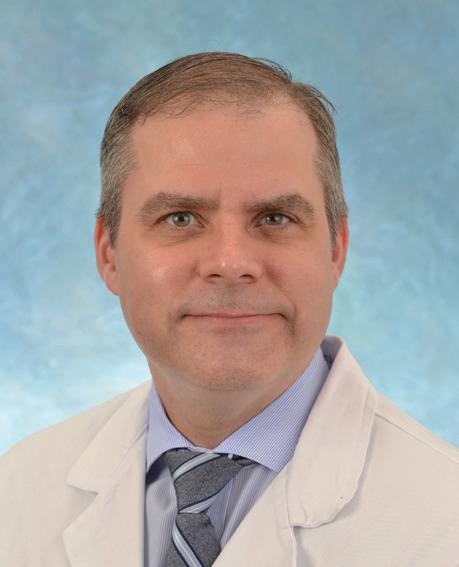
Kevin D. Brown, MD, PhD
Neurotology & Skull Base Surgery
UNC Department of Otolaryngology-Head & Neck Surgery
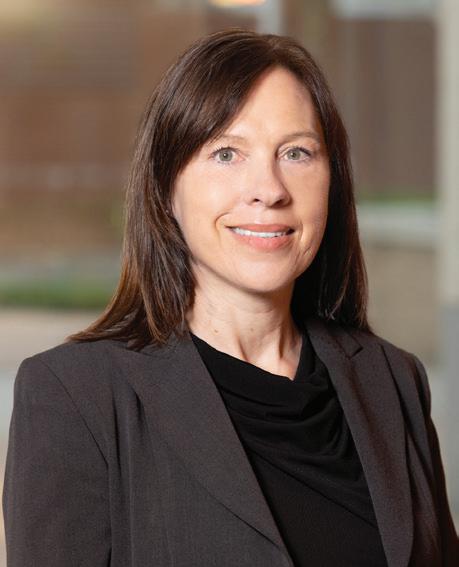
Dana Clifton, MEd Associate Chair of Administration
Hannah R.
Eskridge,
The Department of Otolaryngology, Head & Neck Surgery is guided by a collaborative leadership team that supports clinical excellence, research innovation, and education. Together, these leaders set strategic priorities, foster interdisciplinary collaboration, and ensure high-quality care across all subspecialties.
MSP, CCC-SLP Clinical Director of Outpatient Clinics
UNC Department of Otolaryngology-Head & Neck Surgery
Abousaud, M., Pamulapati, S., Rashid, S., Lozano, F., Shepherd, M., Fowowe, B., Cao, Y., Kim, P., Liu, Y., Bates, J. E., McDonald, M., Rudra, S., Stokes, W. A., Gross, J., Schmitt, N. C., El-Deiry, M. W., Patel, M. R., Hammond, A. L., Teng, Y., Steuer, C., Shin, D. M., & Saba, N. F. (2025). Radiotherapy with cisplatin vs carboplatin paclitaxel for head and neck squamous cell carcinoma. JAMA Otolaryngology–Head & Neck Surgery, 151(8), 769-776. https://doi.org/10.1001/ jamaoto.2025.1706
Benaim, E. H., Canfarotta, M. W., Richter, M. E., Dillon, M. T., & Thompson, N. J. (2025). Prevalence of cochlear-facial nerve dehiscence and facial nerve stimulation for adult cochlear implant recipients. Laryngoscope Investigative Otolaryngology, 10(3), e70181. https:// doi.org/10.1002/lio2.70181
Benaim, E. H., Cook, L. M., Monk, A., Worden, C. P., Henrich, J. B., Wang, K. C., Li, D., Shah, R. N., Kimple, A. J., Buckmire, R. A., Leeper, L. K., DeMason, C. E., & Thorp, B. D. (2025). Otolaryngology residency application trends and match outcomes at a large academic
medical center. ORL Journal for OtoRhino-Laryngology and Its Related Specialties, 87(4), 180-192. https://doi. org/10.1159/000548976
Benaim, E. H., Kallenberger, E. M., & Thorp, B. D. (2025). Surgical management of moderate to severe epistaxis in HHT: Systematic review & meta-analysis. American Journal of Rhinology & Allergy, 39(2), 159-168. https://doi. org/10.1177/19458924241308952
Benaim, E. H., O’Rourke, S., & Dillon, M. T. (2025). What do people want to know about cochlear implants: A Google analytic study. Laryngoscope, 135(2), 840-847. https://doi.org/10.1002/ lary.31741
Benaim, E. H., Worden, C. P., Bantumilli, S., Ramjee, V. G., & Zdanski, C. J. (2024). Large nasopharyngeal hairy polyp causing immediate respiratory distress at birth. Laryngoscope, 134(9), 41184121. https://doi.org/10.1002/lary.31419
Buckmire, R., Kaiser, Z., Shah, R., & Zeatoun, A. (2025). In response to novel
UNC Department of Otolaryngology-Head & Neck Surgery
image-guided simulator for transcervical intralaryngeal injection training. Laryngoscope, 135(6), E29. https://doi. org/10.1002/lary.32034
Buss, E., & Freyman, R. (2025). Spectral weights for localization and speechin-speech recognition with spatial separation of talkers on the horizontal plane. Journal of the Acoustical Society of America, 158, 186-200.
Buss, E., & Freyman, R. (2025). Spectral weights for localization and speechin-speech recognition: Does phonemic content of speech targets matter? Proceedings of Meetings in Acoustics, 56, 050002.
Buss, E., Hall, S. C., Garcia, S., Capretta, G. S., & Calandruccio, L. (2025). English band importance functions in competing speech for Spanish-speaking secondlanguage learners of English. Journal of the Acoustical Society of America, 158, 1367-1376.
Buss, E., Richter, M. E., Sloop, A. D., & Dillon, M. T. (2025). Estimating cochlear implant users’ sound localization abilities with two loudspeakers. Trends in Hearing, 23312165251340864.
Cai, Y., Leitz-Najarian, G. M., Rosen, R., Hutson, K. A., Moatti, A., Li, C., Fitzpatrick, D. C., & Greenbaum, A. (2025). Spiner, deep learning-based automated detection of spiral ganglion neurons in intact cochleae. iScience, 28, 112929.
Calandruccio, L., Hariri, M., Buss, E., & Chaudhary, V. (2025). Masked-speech recognition using human and synthetic cloned speech. Trends in Hearing, 29, 23312165251403080.
Calandruccio, L., Weidman, D., Leatherwood, A., & Buss, E. (2025). Testing sentence-in-noise recognition with synthetic speech and automatic speech recognition. Journal of Speech, Language, and Hearing Research. Advance online publication.
Canfarotta, M. W., Dillon, M. T., Selleck, A. M., & Brown, K. D. (2025). Scala tympani volume influences initial 6-month hearing preservation with lateral wall electrode arrays. Laryngoscope, 135(5), 1781-1787. https://doi.org/10.1002/ lary.31917
Canfarotta, M. W., Dillon, M. T., Thompson, N. J., Selleck, A. M., Dedmon, M. M., & Brown, K. D. (2025). Effects of insertion depth and modiolar proximity on cochlear implant speech recognition
UNC Department of Otolaryngology-Head & Neck Surgery outcomes with a precurved electrode array. Otology & Neurotology, 46(3), 272-278. https://doi.org/10.1097/ MAO.0000000000004405
Chen, H., Fischer, J. L., Tibbe, T. D., & Beswick, D. M. (2025). Abridging the 22-item sino-nasal outcome test (SNOT-22) in people with cystic fibrosis. International Forum of Allergy & Rhinology, 15(8), 865-868. https://doi. org/10.1002/alr.23591
Choudhury, N. J., Kothari, A., Bestvina, C. M., & Issaeva, N. (2025). Bridging EGFR/ TGF-β signaling to bypass resistance to immune checkpoint blockade. Clinical Cancer Research, 31(22), 4617-4619. https://doi.org/10.1158/1078-0432.CCR25-2727
Costa, B., Stock, N. M., Johns, A. L., McKinney, C. M., Drake, A. F., Schefer, A., & Heike, C. L. (2024). “I can’t provide what my child needs”: Early feeding experiences of caregivers of children with craniofacial microsomia. Journal of Pediatric Nursing, 77, e366-e374. https:// doi.org/10.1016/j.pedn.2024.04.053
Cowan, T., Buss, E., Leibold, L., & Lalonde, K. (2025). Effects of low-pass filtering on English speech recognition in noise in auditory-only and audiovisual modalities
for late bilinguals and monolinguals. Bilingualism: Language and Cognition, 1-12.
Cowan, T. M., Buss, E., Leibold, L., & Olmstead, A. J. (2025). Effects of exposure to diverse linguistic input on L2-accented English sentence recognition among monolingual and Spanish-English bilingual children and adults. Journal of Speech, Language, and Hearing Research. In press.
Cowan, T. M., Leibold, L., & Buss, E. (2025). Effects of stimulus repetition on L2-accented English sentence recognition thresholds and psychometric function slopes. Proceedings of Meetings in Acoustics, 56, 060001.
Dagher, I., Kimple, A. J., Ferkol, T. W., & Davis, S. D. (2025). Progression of otologic and nasal symptoms in primary ciliary dyskinesia. OTO Open, 9(1), e70079. https://doi.org/10.1002/ oto2.70079
Dillon, M. T., & Park, L. R. (2025). Case studies. In J. Wolfe & E. Schafer (Eds.), Programming cochlear implants (3rd ed.).
Dillon, M. T., Buss, E., Richter, M. E., & Brown, K. D. (2025). Effects of interaural
UNC Department of Otolaryngology-Head & Neck Surgery latency and frequency mismatch on speech recognition for bimodal cochlear implant users. Laryngoscope, 135, 21392145.
Dillon, M. T., Buss, E., Thompson, N. J., Richter, M. E., Davis, A. G., Overton, A. B., Rooth, M. A., Canfarotta, M. W., Selleck, A. M., Dedmon, M. M., & Brown, K. D. (2024). Speech recognition and subjective hearing abilities for electric-acoustic stimulation users with unilateral hearing loss. Otology & Neurotology, 45(9), 1006-1011. https://doi.org/10.1097/ MAO.0000000000004281
Dillon, M. T., Smilsky, K., Dunn, C. C., Sheets, J. J., Cosetti, M. K., Zeitler, D. M., & Brown, K. D. (2025). Improvements in perceived abilities and speech recognition in quiet and noise for older adults with single-sided deafness or asymmetric hearing loss: A multi-center investigation. Otology & Neurotology. Advance online publication. Special Issue.
Dornhoffer, J. R., Marinelli, J. P., Lohse, C. M., Cottrell, J., Roland, J. T., Thompson, N. J., Brown, K. B., Lucas, J., Babu, S. C., Lindquist, N. R., Perkins, E. L., Rahne, T., Plontke, S. K., Tan, D., Hunter, J. B., Harvey, E., Deep, N. L., Cerasiello, S. Y., Kircher, M. L., Espahbodi, M.,
Tooker, E. L., Lloyd, S. K., & Carlson, M. L. (2024). Comparing cochlear implant outcomes in 100 patients with sporadic vestibular schwannoma managed with observation, radiosurgery, or microsurgery: A multi-institutional review. Otology & Neurotology, 45(10), e719-726. https://doi.org/10.1097/ MAO.0000000000004222
Easter, Q. T., Alvarado-Martinez, Z., Kunz, M., Matuck, B. F., Rupp, B. T., Weaver, T., Ren, Z., Tata, A., CaballeroPerez, J., Oscarson, N., Hasuike, A., Ghodke, A. N., Kimple, A. J., Tata, P. R., Randell, S. H., Koo, H., Ko, K. I., & Byrd, K. M. (2025). Polybacterial intracellular macromolecules shape single-cell inflammatory profiles in upper airway epithelia. NPJ Biofilms and Microbiomes, 11(1), 100. https://doi.org/10.1038/ s41522-025-00735-5
Edwards, R. J., Kasten, M. R., Hutson, K. A., Lutz, M. P., & Manis, P. B. (2025). Fusiform cells in the dorsal cochlear nucleus change intrinsic electrophysiological properties and morphologically remodel their basal dendrites with age. bioRxiv [Preprint]. 2025.07.16.665173.
Farzal, Z., Sullivan, K. M., Zariwala, M. A., & Kimple, A. J. (2025). Olfactory
UNC Department of Otolaryngology-Head & Neck Surgery dysfunction in primary ciliary dyskinesia. OTO Open, 9(1), e70084. https://doi. org/10.1002/oto2.70084
Fisher, W. A. M., Faraj, D., Franklin, D., Prince, A. C., Blumberg, J. M., & Galgano, M. (2025). Laryngo-pharyngeal-vertebral extirpation: A radical multidisciplinary surgical approach to managing complications from oropharyngeal squamous cell carcinoma treatment. Illustrative case. Journal of Neurosurgery Case Lessons, 10(6), CASE25203. https:// doi.org/10.3171/CASE25203
Fokkens, W. J., Backer, V., Lund, V. J., Hellings, P. W., & Senior, B. (2025). Pocket guide: Biologics in upper and lower airways in adults. Rhinology, 63(2), 242244. https://doi.org/10.4193/Rhin24.510
Garcia, M. M., Kline, A. M., Onodera, K., Tsukano, H., Dandu, P. R., Acosta, H. C., Kasten, M. R., Manis, P. B., & Kato, H. K. (2025). Noncanonical short-latency auditory pathway directly activates deep cortical layers. Nature Communications, 6(1), 5911.
Gidumal, S., Chen, S., Wang, A., Drake, V., Desai, S., Rosenberg, J., & Gray, M. (2024). The lip lift island flap: A novel technique for nasal sill and columella reconstruction. Facial Plastic Surgery
& Aesthetic Medicine. Advance online publication. https://doi.org/10.1089/ fpsam.2024.0226
Grose, J. H., Folkerts, M., & Buss, E. (2025). Minimum audible angle and the acoustic change complex elicited by azimuthal shifts in low-frequency sounds: Effects of age. Trends in Hearing, 23312165251385017.
Grose, J. H., Martini-Stoica, H., Folkerts, M., Kane, S., & Buss, E. (2025). Psychophysical and electrophysiological measures of frequency modulation sensitivity: Effects of age and interaural modulator phase. Ear and Hearing, 46, 1295-1304.
Gudis, D. A., Bleier, B. S., Thorp, B. D., & Choby, G. (2025). June 4: International skull base surgery day. International Forum of Allergy & Rhinology, 15(5), 481482. https://doi.org/10.1002/alr.23545
Gudis, D. A., Bleier, B. S., Thorp, B. D., & Choby, G. (2025). June 4: International skull base surgery day. Journal of Neurological Surgery Part B: Skull Base, 86(3), 243-244. https://doi. org/10.1055/a-2538-4080
Hellings, P. W., De Corso, E., & Senior, B. (2025). Remission in chronic
UNC Department of Otolaryngology-Head & Neck Surgery rhinosinusitis with nasal polyps (CRSwNP). Rhinology, 63(2), 239-241. https://doi.org/10.4193/Rhin24.457
Hollingsworth, E., Shields, B. H., Rutter, C., Fox, L., Evans, K. N., Willging, J. P., & Drake, A. F. (2024). Improving craniofacial team collaboration: A multicenter interview study of effective team meetings. Journal of Multidisciplinary Healthcare, 17, 3589-3603. https://doi. org/10.2147/JMDH.S457581
Jaber, J., Gould-Suarez, M., Tran, C., Lee, E., White-Satcher, D., Okoh, J., Morrow, A., Poythress, E. L., Appelbaum, N., & Lin, D. (2025). Utilizing learning communities to implement a wellness-inaction session in undergraduate medical education. Southern Medical Journal, 118(9), 644-648. https://doi.org/10.14423/ SMJ.0000000000001871
Johnson, B. R., Benaim, E. H., Thompson, N. J., Marouf, A., Dedmon, M. M., Anderson, M. R., Selleck, A. M., Brown, K. D., & Dillon, M. T. (2024). Management of cochlear implant electrode arrays misplaced in the internal auditory canal: A systematic review. Otology & Neurotology, 45(6), e460-e467. https:// doi.org/10.1097/MAO.0000000000004222
Johnson, B. R., Dillon, M. T., Thompson,
N. J., Richter, M. E., Overton, A. B., Rooth, M. A., Davis, A. G., Dedmon, M. M., Selleck, A. M., & Brown, K. D. (2025). Benefits of cochlear implantation for older adults with asymmetric hearing loss. Laryngoscope, 135(1), 352-360. https:// doi.org/10.1002/lary.31718
Kandahari, N., Robinson, D. P., Dillon, M. T., Davis, A. G., & Miller, M. Q. (2025). Exploring causes for disparities in facial reanimation surgery. Facial Plastic Surgery & Aesthetic Medicine, 27(3), 234-236. https://doi.org/10.1089/ fpsam.2024.0142
Kane, S. L. G., Leibold, L. J., Porter, H. L., Grose, J. H., & Buss, E. (2025).
Temporal and spectral cues for phoneme perception in children with normal hearing, cochlear hearing loss, and auditory neuropathy. Journal of Speech, Language, and Hearing Research, 68, 4447-4459.
Kim, S. G., Tasoulas, J., Sheth, S., Yarbrough, W. G., Hackman, T., Amelio, A. L., & Sullivan, C. B. (2025). The role of immunotherapy in salivary gland cancer: A systematic review. Ear, Nose & Throat Journal. Advance online publication. https://doi. org/10.1177/01455613251324353
UNC Department of Otolaryngology-Head & Neck Surgery
Kuan, E. C., Talati, V., Patel, J. A., Thorp, B. D., & Su, S. Y. (2025). Expert strategies: Skull base reconstruction—Global perspectives, insights, and algorithms through a mixed methods approach. International Forum of Allergy & Rhinology, 15(10), 1032-1069. https://doi. org/10.1002/alr.23596
Lamm, S. A., Buckmire, R. A., & Shah, R. N. (2025). Office-based laryngology. Otolaryngologic Clinics of North America, 58(4), 623-640. https://doi.org/10.1016/j. otc.2025.01.012
Le Tourneau, C., Takácsi-Nagy, Z., Nuyts, S., Thureau, S., Liu, F., Hoffmann, C., Hackman, T. G., Lesnik, M., Debard, A., Finzi, L., Devisetty, K., Vivar, O. I., Farber, L. A., Nguyen, F., Liem, X., Natelauri, E., Psyrri, A., Burian, M., Yu, J., & Yom, S. S. (2025). Nanoray-312: Phase III study of NBTXR3 + radiotherapy ± cetuximab in elderly, platinum-ineligible locally advanced HNSCC. Future Oncology, 21(12), 1489-1499. https://doi.org/10.108 0/14796694.2025.2496131
Lee, S. E., Brown, K. D., Overton, A. B., Thompson, N. J., Sloop, A. D., Richter, M. E., Camarota, M. W., Selleck, A. M., Dedmon, M. M., & Dillon, M. T. (2025). Association of tonotopic mismatch with the speech recognition of cochlear
implant users with unilateral hearing loss. Otology & Neurotology, 46(8), e302-e306. https://doi.org/10.1097/ MAO.0000000000004543
Leibold, L. J., Browning, J., Benson, E., & Buss, E. (2025). Development of the binaural intelligibility level difference for speech-in-speech recognition. JASA Express Letters, 5, 104402.
Liu, C. M., Fischer, J. L., Lee, M. J., & Beswick, D. M. (2025). Olfaction, eating preference, and QOL in cystic fibrosis chronic rhinosinusitis. Laryngoscope, 135(7), 2476-2488. https://doi. org/10.1002/lary.32155
Marinelli, J. P., Rahne, T., Dornhoffer, J. R., Lohse, C. M., Cottrell, J., Roland, J. T., Thompson, N. J., Brown, K. B., Lucas, J., Babu, S. C., Lindquist, N. R., Perkins, E. L., Tan, D., Lane, J. I., Hunter, J. B., Harvey, E., Deep, N. L., Cerasiello, S. Y., Kircher, M. L., Espahbodi, M., Tooker, E. L., West, N. C., Caye-Thomasen, P., Carlson, M. L., & Plontke, S. K. (2025). Cochlear implantation with sporadic inner ear schwannomas: Outcomes in 106 patients from an international multi-institutional study. Otology & Neurotology, 46(1), 10-18. https://doi.org/10.1097/ MAO.0000000000004222
UNC Department of Otolaryngology-Head & Neck Surgery
Martin, W. J., Cook, L. M., Mirmozaffari, Y., Benaim, E. H., Vuncannon, J. R., Klatt-Cromwell, C., Senior, B. A., & Ebert, C. S., Jr. (2025). A review of postoperative care following endoscopic sinus surgery for chronic rhinosinusitis. Ear, Nose & Throat Journal. Advance online publication. https://doi. org/10.1177/01455613251342957
Martin, W. J., Mirmozaffari, Y., & Kimple, A. J. (2025). The role of the environment and occupational exposures in chronic rhinosinusitis. Current Allergy and Asthma Reports, 25(1), 16. https://doi. org/10.1007/s11882-025-01197-7
Matthews, M. (2025). Promoting ENTerest: Evaluating the effect of early, focused exposure to otolaryngology. OTO Open. https://doi.org/10.1002/ OTO2.70167
Matthews, M. R., Abdulbaki, H., Ryan, W. R., Hackman, T. G., & Farzal, Z. (2025). Oropharyngeal cancer and the HPV vaccine: Analysis of social media content. Laryngoscope, 135(8), 2770-2776. https:// doi.org/10.1002/lary.32076
Matthews, M. R., Fonseca, V. I., Eadie Reid, H. L., & Hackman, T. G. (2025). Reconstructing perioperative patient education in head and neck
surgery. Laryngoscope Investigative Otolaryngology, 10(4), e70249. https:// doi.org/10.1002/lio2.70249
Miller, M. Q. (2024). Invited commentary: Ozucer et al.’s “Tips and tricks for safe and precise decision-making during modified selective neurectomy surgery”: An innovative technique that improves but does not resolve unpredictability in neurectomy surgery. Facial Plastic Surgery & Aesthetic Medicine. Advance online publication. https://doi. org/10.1089/fpsam.2024.0170
Miller, M. Q., & Pepper, J. P. (2025). Collaboration: The past, present, and future of facial nerve research. Facial Plastic Surgery & Aesthetic Medicine, 27(5), 400-401. https://doi. org/10.1177/26893614251369821
Mirmozaffari, Y., Martin, W. J., Benaim, E. H., LaSpaluto, M. H., DeMason, C. E., & Lin, D. (2025). Incidence of occult malignancy diagnosed on histopathology in routine adult tonsillectomies. Laryngoscope. Advance online publication. https://doi. org/10.1002/lary.70046
Monk, A. S., Hollingsworth, E., Benaim, E. H., Fox, L., Leeper, L. K., & Drake, A. F. (2025). Quality
UNC Department of Otolaryngology-Head & Neck Surgery
improvement of single-institution craniofacial center multidisciplinary meetings using standardized meeting guides. Laryngoscope Investigative Otolaryngology, 10(1), e70099. https:// doi.org/10.1002/lio2.70099
Monk, A. S., Larabee, L., Bacon, D. R., Woodard, A., Kimple, A. J., & DeMason, C. E. (2025). Face and content validity of tympanostomy tube simulator. OTO Open, 9(1), e70066. https://doi. org/10.1002/oto2.70066
Musicant, A. M., Billington, J. M. R., Damrauer, J. S., Modliszewski, J. L., Landau, L. J. B., Tsai, Y. H., Mehta, J. H., Powers, J., Betancourt, R., Sekhri, R., Padilla, R. J., Hernandez-Prera, J. C., Hayes, D. N., Hackman, T. G., Gokcumen, O., Knox, S. M., & Amelio, A. L. (2025).
Correction: An FGFR-p53 developmental signaling axis drives salivary cancer progression. Oncogene, 44(32), 2924. https://doi.org/10.1038/s41388-02503478-x
Nix, E. P., Davis, A. G., Brown, K. D., Panoncillo, S. G., Thompson, N. J., Overton, A. B., Dedmon, M. M., & Dillon, M. T. (2024). Demographic representation in clinical research relative to a cochlear implant patient population. Laryngoscope, 134(9), 4101-4110. https://
doi.org/10.1002/lary.31467
O’Rourke, S. P., Dillon, M. T., Overton, A. B., Sloop, A. D., Richter, M. E., Thompson, N. J., Dedmon, M. M., & Brown, K. D. (2025). Association of tonotopic mismatch and cochlear implant use on outcomes for adults with unilateral hearing loss. Laryngoscope. Advance online publication.
O’Rourke, S. P., Dillon, M. T., Scharf, S. P., Overton, A. B., & Dedmon, M. M. (2025). Elective versus corrective cochlear implant revision surgery of legacy internal devices. Otology & Neurotology, 46(4), 388-392. https://doi.org/10.1097/ MAO.0000000000004444
O’Rourke, S. P., Richter, M. E., Park, L. R., Buss, E., Brown, K. D., & Dillon, M. T. (2025). Speech recognition for pediatric electric-acoustic stimulation with unilateral hearing loss. Otology and Neurotology, 46, 499-504.
O’Rourke, S. P., Stack, T. J., Miller, J. R., & Miller, M. Q. (2024). Changes in perceived emotions in facial paralysis patients after depressor anguli oris excision. Laryngoscope, 134(9), 4028-4035. https:// doi.org/10.1002/lary.31471
Park, L. R., Richter, M. E., Gagnon, E. B.,
UNC Department of Otolaryngology-Head & Neck Surgery
Culbertson, S. R., Henderson, L. W., & Dillon, M. T. (2025). Benefits of cochlear implantation and hearing preservation for children with pre-operative residual hearing. Ear and Hearing. Advance online publication. https://doi. org/10.1097/AUD.0000000000001636
Patel, K. S., Ebert, C. S., Jr., & Kong, K. A. (2025). Comparative review of olfactory assessment methods. Ear, Nose & Throat Journal. Advance online publication. https://doi. org/10.1177/01455613251351770
Porter, H. L., La Spada, E., Buss, E., & Leibold, L. J. (2025). Test-retest reliability for repeated audiometric assessment in individuals with Down syndrome. American Journal of Audiology. Advance online publication.
Richter, M., Scharf, S., & Dillon, M. (2025, November 11). Modifying the loudness scale eases cochlear implant mapping for users with low vision. The ASHA Leader. https://leader.pubs.asha.org/ do/10.1044/leader.AEA.30112025.audcochlear-implant-loudness-scale-cimapping.16/full/
Ring, S., Colwell, N., Bowen, A. J., Arroyo, N., Lakpa, K. L., Faus, J., Rasmussen, M., Nordby, P., Zhao, J., Francis, D. O.,
& CoPE Collaborative. (2025). Trends in treatment of acute unilateral vocal fold paralysis at tertiary care voice centers. Laryngoscope Investigative Otolaryngology, 10(2), e70135. https:// doi.org/10.1002/lio2.70135
Rist, T. M., & Clark, J. M. (2024). Indications and evolution of the butterfly graft. Otolaryngologic Clinics of North America. Advance online publication. https://doi.org/10.1016/j.otc.2024.07.026
Roca, C., Mirmozaffari, Y., Martin, W. J., Capps, N., Sullivan, K. M., Thorp, B. D., Ferkol, T. W., Davis, S. D., Kimple, A., & Wolfgang, M. C. (2025). Advances in sinonasal microbiome analysis. Ear, Nose & Throat Journal. Advance online publication. https://doi. org/10.1177/01455613251341711
Roland, L. T., Damask, C., Luong, A. U., & Levy, J. M. (2025). Allergic fungal rhinosinusitis: Summary of a multidisciplinary workshop. International Forum of Allergy & Rhinology, 15(6), 626-641. https://doi. org/10.1002/alr.23582
Sannigrahi, M. K., Raghav, L., Rich, D. J., Schrank, T. P., Califano, J. A., Lukens, J. N., Sun, L., Morgan, I. M., Cohen, R. B., Lin, A., Liu, X., Brown, E. J., You, J.,
UNC Department of Otolaryngology-Head & Neck Surgery
Mirabello, L., Mishra, S. K., Shimunov, D., Brody, R. M., Pearson, A. T., Gimotty, P. A., Diab, A., Jalaly, J. B., & Basu, D. (2025). Tumor-intrinsic and immune-related features associated with treatment failure in human papillomavirus-related oropharyngeal cancer. Journal of the National Cancer Institute, 117(7), 13661376. https://doi.org/10.1093/jnci/ djaf053
Scharf, S. P., & Dillon, M. T. (2025). Cochlear implant recipients and functional hearing preservation: Candidacy criteria, management considerations, and device fitting. The Hearing Journal, 78(11), 5-8.
Schmitt, N. C., Stokes, W. A., Bates, J. E., Kinney, B. L. C., Remick, J., McDonald, M. W., Rudra, S., Steininger, M., Oyewole, M., Patel, M. R., Kaka, A. S., Gross, J. H., Switchenko, J., Steuer, C. E., Shin, D. M., & Saba, N. F. (2025). Early-phase trial of IAP antagonist tolinapant and definitive radiation in cisplatin-ineligible patients with advanced head and neck cancer. Clinical Cancer Research, 31(14), 29102918. https://doi.org/10.1158/1078-0432. CCR-25-0429
Senior, B. A., Ow, R. A., Major, M. S., & Nieman, R. (2025). Evaluation of LYR220 mometasone sinonasal implants…
BEACON phase 2 study. International Forum of Allergy & Rhinology, 15(8), 818827. https://doi.org/10.1002/alr.23567
Shah, P. M., Miller, M. Q., & Rubinstein, D. E. (2025). Corneal neurotization: Paving the path to reinnervation. Otolaryngologic Clinics of North America. Advance online publication. https://doi. org/10.1016/j.otc.2025.03.015
Stack, T. J., McCain, M. N., O’Rourke, S. P., & Kimple, A. J. (2025). Two decades at 21%: Unchanging gender disparities in rhinology fellowships. American Journal of Rhinology & Allergy, 39(4), 266-270. https://doi. org/10.1177/19458924251324238
Stapleton, A. L., Kimple, A., Goralski, J. L., & Zemke, A. C. (2025). Elexacaftortezacaftor-ivacaftor improves sinonasal outcomes in young children with CF. International Forum of Allergy & Rhinology, 15(7), 706-714. https://doi. org/10.1002/alr.23555
Stock, N. M., Herring, B., Magee, L., Johns, A. L., Crerand, C. E., Heike, C. L., Schefer, A., Drake, A. F., Tumblin, M., & Feragen, K. B. (2025). Surgical decision-making regarding hearing and ear reconstruction in craniofacial microsomia: Exploring
UNC Department of Otolaryngology-Head & Neck Surgery
caregiver narratives. Journal of Craniomaxillofacial Surgery, 53(5), 642-650. https://doi.org/10.1016/j. jcms.2025.01.019
Succop, B., Thompson, N. J., Dedmon, M. M., Gelinne, A., Selleck, A., Reed, S., & Sindelar, M. B. D. (2024). Noninvasive treatment of venous pulsatile tinnitus with an internal jugular vein compression collar. Laryngoscope, 134(7), 3342-3348. https://doi. org/10.1002/lary.31326
Takeda, T., Hardison, S., Omura, K., Ishii, Y., Mori, R., Kimple, A. J., Senior, B. A., Otori, N., Klatt-Cromwell, C., & Thorp, B. D. (2024). Innovative orbital periosteum suturing technique for endoscopic medial orbital wall reconstruction. Journal of Neurological Surgery Part B: Skull Base, 86(5), 556-561. https://doi. org/10.1055/a-2413-3051
Tariciotti, L., Rodas, A., Patel, B., & Pradilla, G. (2025). Volume of operative maneuverability… neuroanatomical research. World Neurosurgery, 196, 123761. https://doi.org/10.1016/j. wneu.2025.123761
Tasoulas, J., Schrank, T. P., Bharambe, H., Mehta, J., Johnson, S., Divaris, K., Hackman, T. G., Sheth, S., Kirtane,
K., Hernandez-Prera, J. C., Chung, C. H., Yarbrough, W. G., Ferrarotto, R., Issaeva, N., Theocharis, S., & Amelio, A. L. (2024). Molecular characterization of the salivary adenoid cystic carcinoma immune landscape by anatomic subsites. Scientific Reports, 14(1), 15821. https://doi.org/10.1038/s41598-02466709-3
Thompson, N. J., Gurgel, R. K., Dillon, M. T., & Brown, K. B. (2024). CI in older adults with asymmetric hearing loss. Bulletin, The American Academy of Otolaryngology-Head & Neck Surgery, 43(20), e1-e5.
Trine, A., Delaram, V., Ananthanarayana, R. M., Miller, M. K., Buss, E., Stecker, G. C., & Monson, B. B. (2025). The role of talker sex and physical dimensions in horizontal speech directivity. Journal of the Acoustical Society of America, 158, 1146-1155.
Varman, R. M., Miller, J. R., & Clark, J. M. (2025). Secondary contouring for the butterfly graft: Improving form and preserving function. Laryngoscope, 135(3), 1066-1071. https://doi. org/10.1002/lary.31804
Wiseman, K., Cowan, T., Calandruccio, L., Buss, E., Walker, E., Rodriguez, B.,
UNC Department of Otolaryngology-Head & Neck Surgery
Oleson, J., McCreery, R., & Leibold, L. (2025). Device use of Spanish-English bilingual and English monolingual children who are deaf or hard of hearing. Journal of Speech, Language and Hearing Research, 68, 282-300.
Witsberger, C. A., Dermody, S. M., Kim, J. C., & Drake, V. E. (2024). Quantifying the effect of the cross-facial nerve graft on the nonparalyzed side. Otolaryngology–Head and Neck Surgery. Advance online publication. https://doi.org/10.1002/ ohn.1054
Worden, C. P., Prince, A. C., Kirse, S. N., Rutter, C., Hackman, T. G., Yarbrough, W. G., Zanation, A. M., & Zdanski, C. J. (2024).
Pediatric robotic laryngeal cleft repair. Otolaryngology–Head and Neck Surgery, 171(1), 254-260. https://doi.org/10.1002/ ohn.723
Worden, C. P., Prince, A. C., Kirse, S. N., Rutter, C., Shields, B. H., Hackman, T. G., Yarbrough, W. G., Zanation, A. M., & Zdanski, C. J. (2024). Transoral robotic surgery for pediatric upper airway pathology: An institutional update. International Journal of Pediatric Otorhinolaryngology, 184, 112073. https://doi.org/10.1016/j. ijporl.2024.112073

UNC Department of Otolaryngology-Head & Neck Surgery
by Dr. Reginald J. Edwards

This pseudo-colored image highlights a fusiform cell, an excitatory neuron found in the dorsal cochlear nucleus—the brain’s first central hub for processing sound from the cochlea. Fusiform cells play a key role in sound localization, acting as primary output cells that transmit auditory information through the brain’s ascending pathways, allowing us to perceive sound.
As we age, changes occur within this auditory pathway that contribute to age-related hearing loss. The featured image shows a fusiform cell from a 216-day-old mouse brain slice, recorded for its electrical activity and filled with a fluorescent dye (Lucifer yellow) to visualize its structure. The sample was imaged at the UNC Neuroscience Microscopy Core (RRID:SCR_019060) using Z-stack, tiled imaging with a 63x oil objective and a 633 nm laser.
This image represents ongoing research comparing fusiform cells across ages—from 19 to 578 days—to uncover how their function and morphology evolve over time. These insights deepen our understanding of how hearing changes with age and the mechanisms that help maintain auditory function throughout life.
Funding for imaging was provided in part by the NIH-NINDS Neuroscience Center Support Grant (P30 NS045892) and the NIH-NICHD Intellectual and Developmental Disabilities Research Center Support Grant (P50 HD103573).
Thank you for Reading!

Your support advances patient care, research, and education within the UNC Department of Otolaryngology, Head & Neck Surgery.
Scan to explore ways to give.


CONTACT US!
For comments, questions, or to be added to our newsletter or mailing list, please email Yesy Lopez at yesy_lopez@med.unc.edu.
Produced by the UNC Department of Otolaryngology/Head & Neck Surgery.
Address: 170 Manning Dr, Chapel Hill, NC 27599
Editor: Yesy Lopez
Contributors: Faculty and residents of UNC Department of Otolaryngology/Head & Neck Surgery
Photography: Paul Braly, UNC Department of Otolaryngology, faculty, staff, and trainees.
Patient images are used with permission. www.med.unc.edu/ent
© 2025 The University of North Carolina at Chapel Hill. All rights reserved.
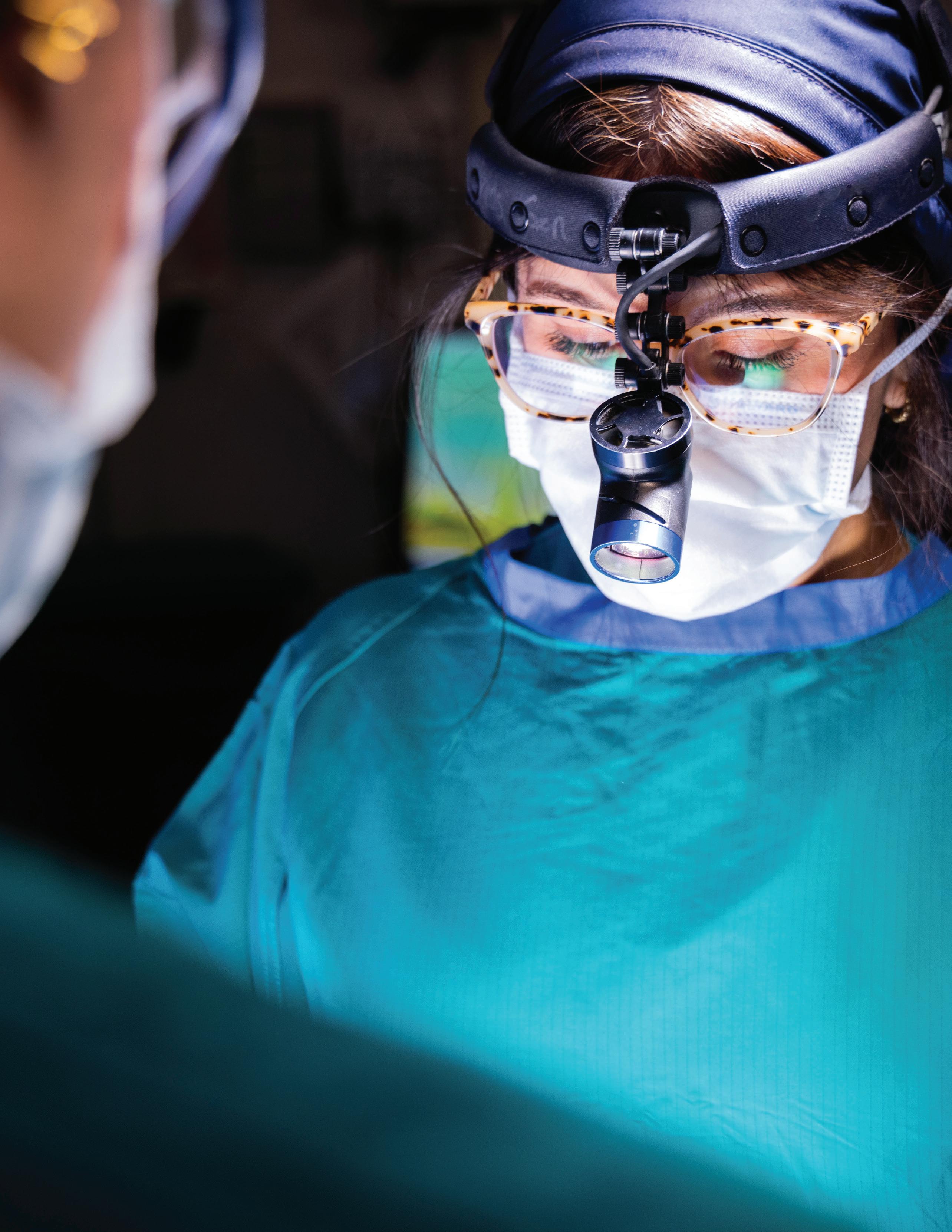
Department of Otolaryngology/Head & Neck Surgery