DISCOVER WHERE ENGINEERING AT UNB CAN TAKE YOU VIEWBOOK
LEADING DISCOVERY AND INNOVATION SINCE
1785.
YOUR FUTURE STARTS AT UNB ENGINEERING
As the oldest engineering program in Canada, UNB engineering has a proud legacy of excellence, innovation and leadership. If you’re passionate about solving real-world problems, building a better future and making an impact through engineering — UNB is the place to start.
At UNB, you’ll gain more than just a degree. You’ll join a vibrant community of innovators, creators and future leaders. Our programs combine hands-on learning, cutting-edge research and real-world experience to give you the skills and confidence to thrive in today’s evolving world. Whether you want to design sustainable energy solutions, build smarter technologies or engineer for social good — your ideas can come to life here.
You’ll learn from professors who are not only experts in their fields but also passionate mentors. With 14% of our researchers ranking among the top 2% globally, you’ll have the opportunity to study alongside some of the brightest minds in engineering. From day one, you’ll have access to state-of-the-art labs, collaborative projects and connections with industry leaders.
At UNB engineering, we don’t just prepare students for jobs, we prepare them to lead, to innovate and to shape the future of engineering.
ENGINEERING AT UNB: A LEGACY OF INNOVATION
The University of New Brunswick’s engineering faculty has a proud history that goes back to 1854, when the first lectures in engineering were offered under the encouragement of community leaders and funding from Lieutenant Governor Sir Edmund Head. Over time, this evolved into a full faculty, making UNB home to what is the oldest engineering school in Canada.
ENGINEERING
”Are you ready to discover where engineering at UNB can take you?
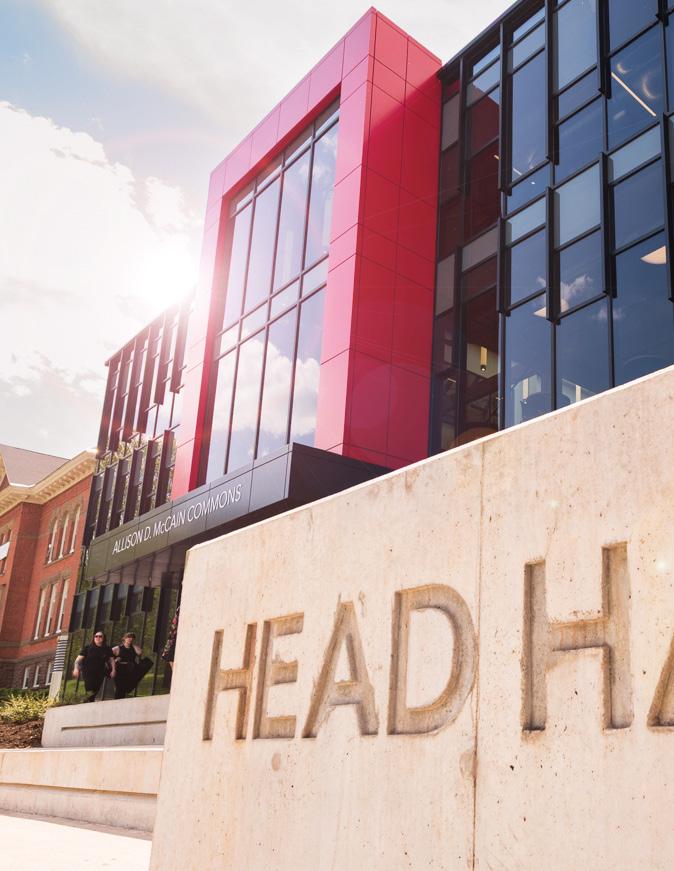
From humble beginnings, UNB engineering has grown into a modern and dynamic faculty. On May 27, 2025, it celebrated a significant milestone: the opening of the Allison D. McCain Commons, an 18,400-square-foot facility designed for collaboration, innovation and learning. As the newest addition to the Head Hall complex, the Commons strengthens the faculty’s infrastructure and provides a central hub where students, faculty and staff can come together.
With nine programs across five disciplines, UNB engineering offers a broad, diverse, and comprehensive range of opportunities for students to choose from:
Bachelor of Science in Engineering (BScE)
Programs: chemical engineering, civil engineering, electrical engineering, engineering physics, environmental engineering, geological engineering, geodesy and geomatics engineering, mechanical engineering, software engineering
DR. JOSHUA LEON P.ENG Dean of Engineering
WHY UNB ENGINEERING?
UNB engineering is one of Canada’s leading engineering schools, recognized for its world-class research and state-of-the-art facilities.
With our common first year, you’ll have the flexibility to explore different disciplines before choosing the path that best fits your passion.
Our faculty is home to cutting-edge labs, research centres and interdisciplinary collaborations, supporting hands-on learning and research opportunities for both undergraduate and graduate students.
Looking forward, the engineering faculty at UNB continues to build upon its heritage, combining strong traditions with modern facilities, research strength and a student-centered culture, to prepare graduates ready to lead, innovate and solve society’s pressing challenges.

STATS AT A GLANCE
TOP 300
ACADEMIC RANKING OF WORLD UNIVERSITIES
(Shanghai Ranking)
RANKED #1 UNIVERSITY IN ATLANTIC CANADA
(TIME Magazine’s 2026 World’s Top University Rankings)
90 % OF OUR FACULTY MEMBERS ARE INVOLVED IN RESEARCH
14% RESEARCHERS RANK AMONG THE TOP 2% GLOBALLY OF OUR
#1 IN RESEARCH QUALITY IN ENGINEERING IN CANADA
(Times Higher Education World University Rankings 2026)
15:1
STUDENT-TO-FACULTY RATIO
Data: Oct. 2025
YOUR FIRST YEAR OF ENGINEERING
All students who enter engineering directly from high school are enrolled initially as undeclared students (BScE) and take a “common first year” of 14 courses.
As a first-year engineering student, you will be automatically registered in your first-year courses. This process begins in late spring (approximately May) after you have confirmed your spot for the fall.
Be aware that it could take up to 14 days after you confirm your enrolment for your courses to appear on your schedule.


WHAT TO EXPECT IN YOUR FIRST YEAR:
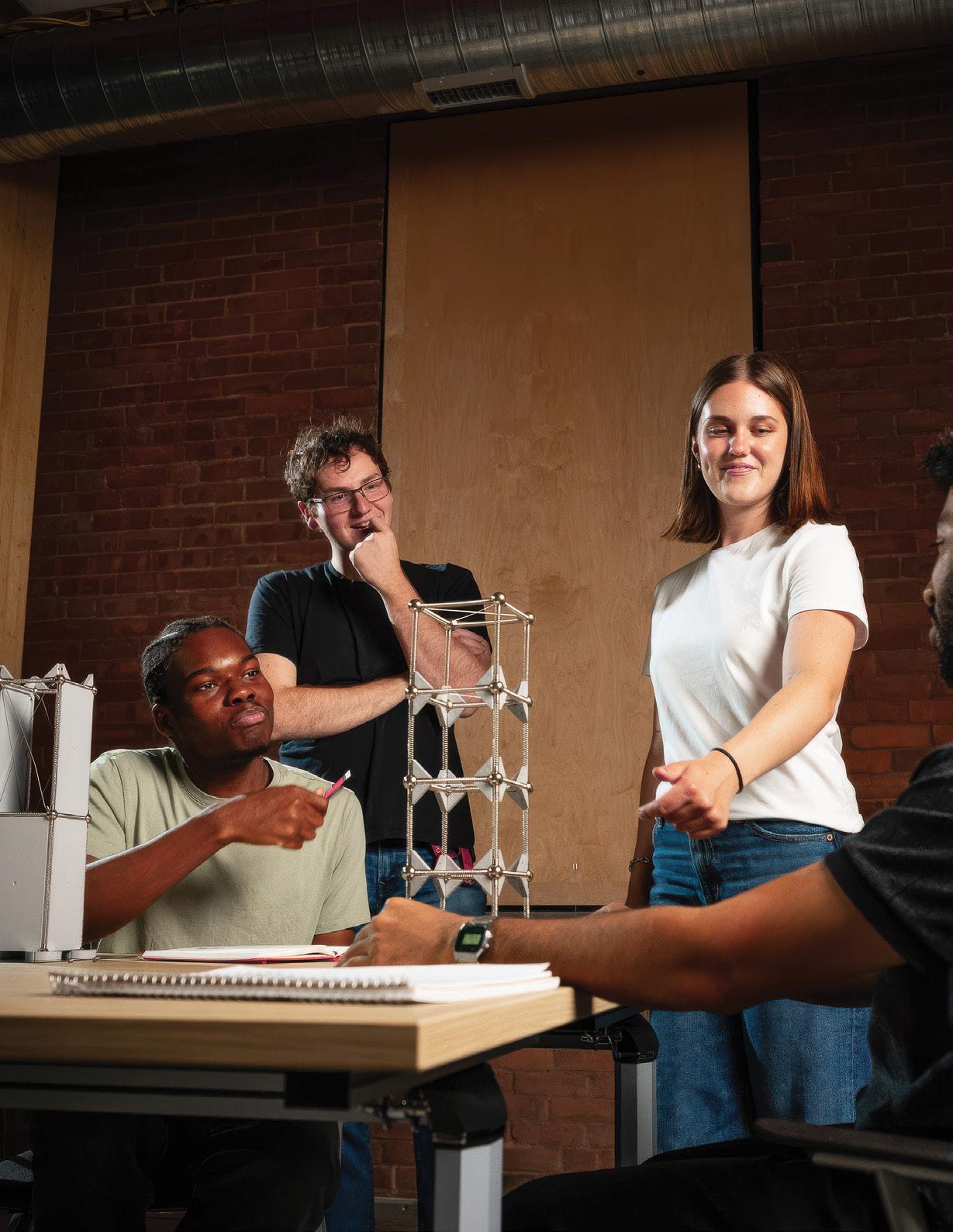
You’ll experience collaborative, hands-on learning through tackling real-world engineering problems. By learning through action, you’ll have opportunities to build your problem-solving, teamwork and technical skills in math, natural sciences, physics and computer programming.
In ENGG1001, ENGG1002 and ENGG1302, you will learn about the engineering profession and explore all nine engineering programs offered at UNB through engaging labs, lectures and presentations led by professors and practicing engineers. Then, in ENGG 1101 and ENGG 1102, you’ll put what you learned in the classroom into practice by applying engineering concepts to hands-on design challenges in the lab, developing the technical and professional skills needed for success in upper-year courses and your future career.
By the end of your first year, you’ll have explored all nine engineering programs offered at UNB in depth, building the insight and experience to choose your program with confidence.
YEAR 1-TERM 1 (FALL)
MATH 1003
Calculus I: Differential Calculus
MATH 1503
Intro to Linear Algebra
ESCI 1003 (FR)/ENVE 1003 (SJ) Earth Sciences and Sustainability for Engineers
CS 1093 (FR)/CMPE 1093 (SJ) Programming for Engineers
YEAR 1-TERM 2 (WINTER)
MATH 1013
Calculus II: Integral Calculus
PHYS 1082 (FR)/ PHYS 1012 (SJ) Waves and Electromagnetism
CHEM 1982 (FR)/CHEM 1872 (SJ) Chemistry for Engineers
ENGG 1001
Engineering Profession Lecture Series I
ENGG 1101
Cornerstone Design Principles
ENGG 1201
Mechanics for Engineers I
ENGG 1002
Engineering Profession Lecture Series II
ENGG 1102
Cornerstone Design Applications
ENGG 1202
Mechanics for Engineers II
ENGG 1302
Multidisciplinary Engineering in Practice
See the following pages for an overview of UNB’s various engineering programs.
CHEMICAL ENGINEERING
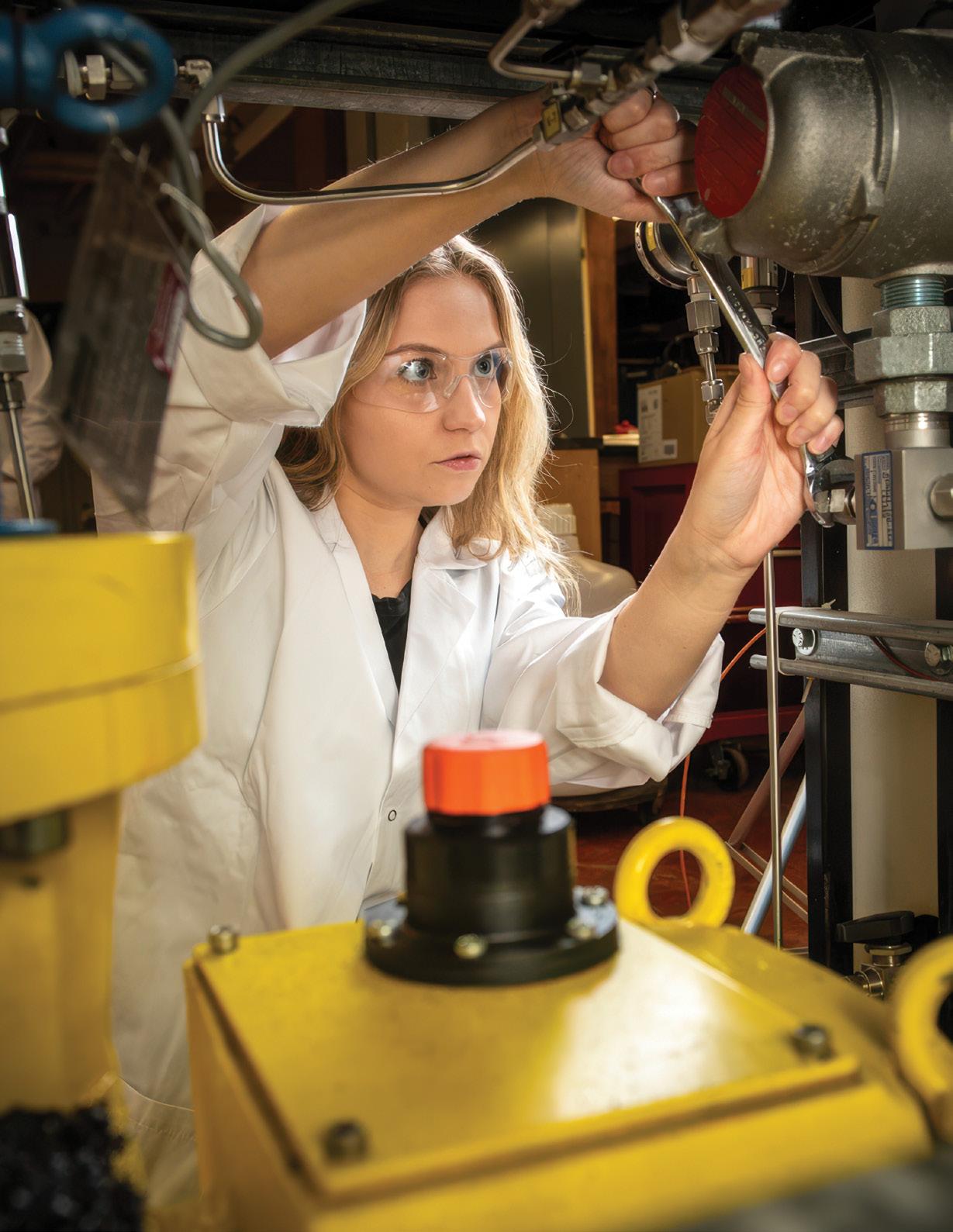
Chemical engineers play a vital role in solving real-world problems, from developing clean energy alternatives to creating new materials for industrial products we all depend on. The field continues to grow as society transitions to a low-carbon economy, with chemical engineers leading the way in sustainability, energy innovation and human health. With skills that span multiple industries, chemical engineering opens the door to a wide range of career paths.

As a chemical engineer, you could work in:
• Aeronautics
• Biotechnology
• Chemical Manufacturing
• Design and Construction
• Energy and Fuels
• Pharmaceuticals
AREAS OF SPECIALIZATION
• Pulp and Paper
• Environmental Safety and Health
• Food and Healthcare
• Law and Government
• Electronic Device Manufacturing
• Nuclear Energy
• Research and Development
UNB’s chemical engineering program offers students the chance to specialize in areas that reflect today’s pressing global challenges:
ENERGY CONVERSION ENGINEERING
Focus on environmental stewardship by studying how to convert energy resources into useful products and services. Explore new technologies and societal issues in the energy sector, preparing for careers in emerging energy systems and the transition to a decarbonized economy.
BIOMEDICAL ENGINEERING
Explore how technology interacts with human health and medicine to create new devices and equipment. Learn how to run computer simulations to test drug therapies and design medical technologies to improve lives.
NUCLEAR POWER ENGINEERING
Work at the forefront of energy innovation by designing and running nuclear power plants or developing Small Modular Reactors (SMRs). Nuclear energy is essential for the transition to a decarbonized energy system.
CAREER OPPORTUNITIES
Chemical engineers shape the world for tomorrow by addressing critical social and environmental challenges. As a chemical engineer, you might:
• Optimize chemical processes to reduce waste and increase efficiency
• Develop technologies that reduce carbon emissions
• Create and manufacture biofuels, biodegradable polymers and other green products
• Work in carbon capture and storage to pull carbon out of the air
• Work on renewable energy solutions and emissions reduction
• Ensure industrial processes comply with safety and environmental regulations
Beyond industry, chemical engineers also contribute to healthcare, medicine and research, addressing global challenges like climate change, the energy transition and human health. As we move toward a decarbonized economy with greater emphasis on sustainability, their expertise is crucial in meeting the challenges ahead.
CIVIL ENGINEERING
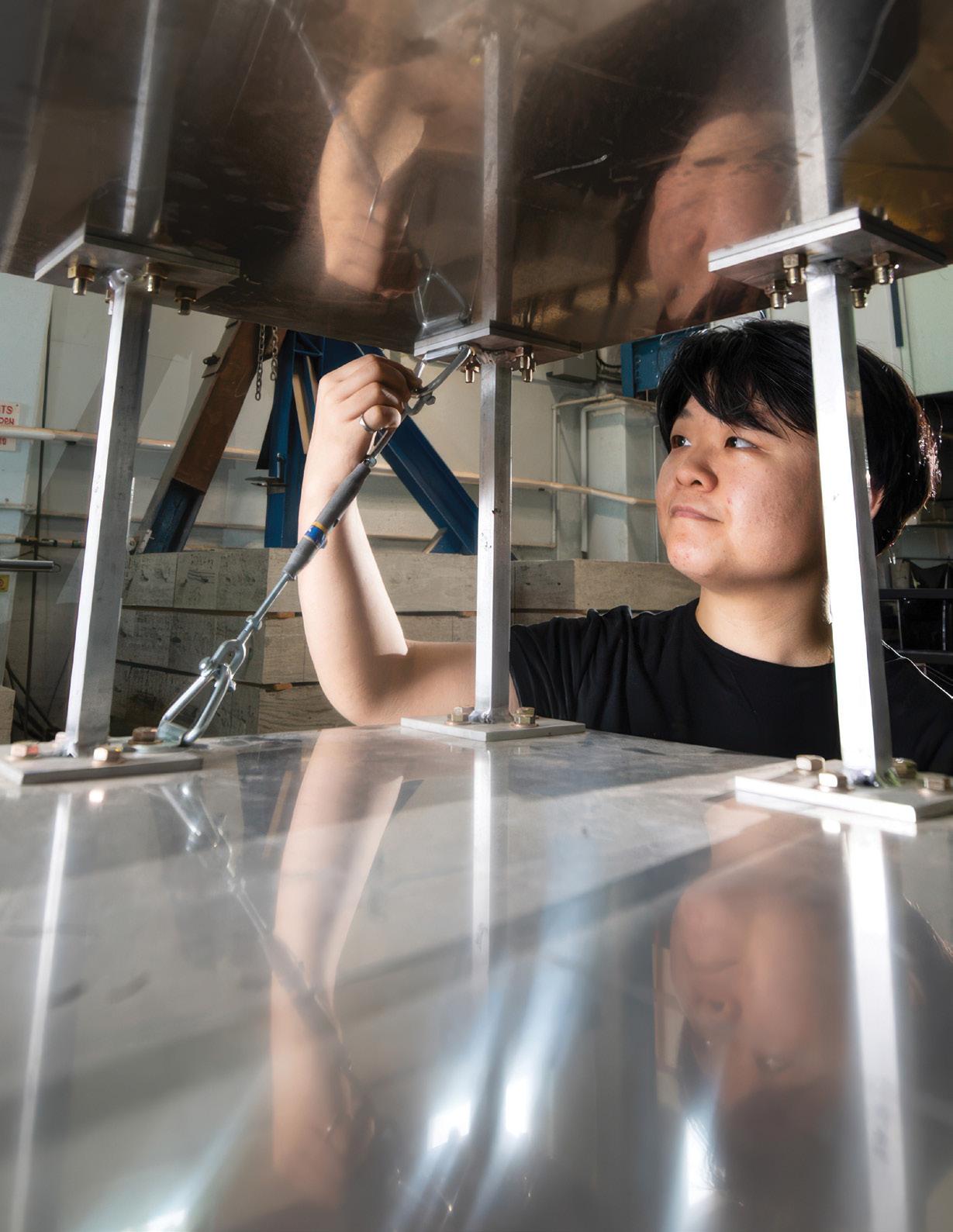
Civil engineers build the infrastructure that makes modern life possible, from roads, bridges, and water systems to transportation networks and renewable energy facilities. They ensure safety, resilience, and sustainability in everything from clean water delivery to climate adaptation and disaster recovery.
UNB has been training engineers for 170 years, since Canada’s first engineering lecture in 1853. Today, civil engineering at UNB prepares students to tackle a climate-adapting world and address global challenges.
civil-ug@unb.ca

As a civil engineer, you will work in:
• Building sustainable communities by designing resilient roads, bridges, and buildings
• Delivering clean water and sanitation through dams, pipelines, and treatment systems
• Enabling safe, low-carbon mobility with efficient transportation networks to reduce congestion
AREAS OF SPECIALIZATION
UNB’s civil engineering program offers six specializations, each designed to give you a path to a great career.
CONSTRUCTION ENGINEERING
Civil engineers in construction turn designs into reality — managing projects, people, and materials to build safe, efficient, and sustainable roads, bridges, and buildings. They optimize cost, schedule, and quality while reducing waste and environmental impact.
GEOTECHNICAL ENGINEERING
Geotechnical engineers study soil and rock to design stable foundations, tunnels, and slopes. Their work ensures that everything built above or below ground rests on solid, safe ground, preventing failures and protecting communities
MATERIALS ENGINEERING
Materials engineers develop and test concrete, steel, asphalt, and composites to ensure strength, durability, and sustainability. They advance innovations like low-carbon materials that extend infrastructure life.
• Protecting people and the environment with flood control, erosion prevention, and renewable infrastructure
• Rebuilding and modernizing infrastructure to be safer, greener, and more equitable
STRUCTURAL ENGINEERING
Structural engineers create strong and resilient buildings, bridges, and towers that withstand loads while performing optimally for their intended purpose. They combine creativity and analysis to design efficient structures and rehabilitate aging ones for future use
TRANSPORTATION ENGINEERING
Transportation engineers design highways, railways, airports, and public transit systems that move people and goods safely and efficiently. They enhance mobility, improve safety, and integrate smart technologies for sustainable travel.
WATER AND ENVIRONMENTAL ENGINEERING
Engineers in this field ensure access to clean water, manage floods, and protect ecosystems. They design water treatment systems, stormwater networks, and environmental restoration projects that help communities thrive sustainably.
CAREER OPPORTUNITIES
Civil engineers design and manage everything from bridges to buildings, highways to harbours, and water systems to wind farms. Their work spans planning, design, construction, and project management across industries in both the public and private sectors, such as:
• Construction companies
• Consulting firms
• Transportation agencies
• All levels of government
• Water and wastewater utilities
• Energy and infrastructure developers
• Geotechnical and environmental services
• Ports, airports and rail systems
They also play a vital role in tackling climate change and advancing sustainability — building safer, smarter, and more resilient communities for the future.
ELECTRICAL ENGINEERING
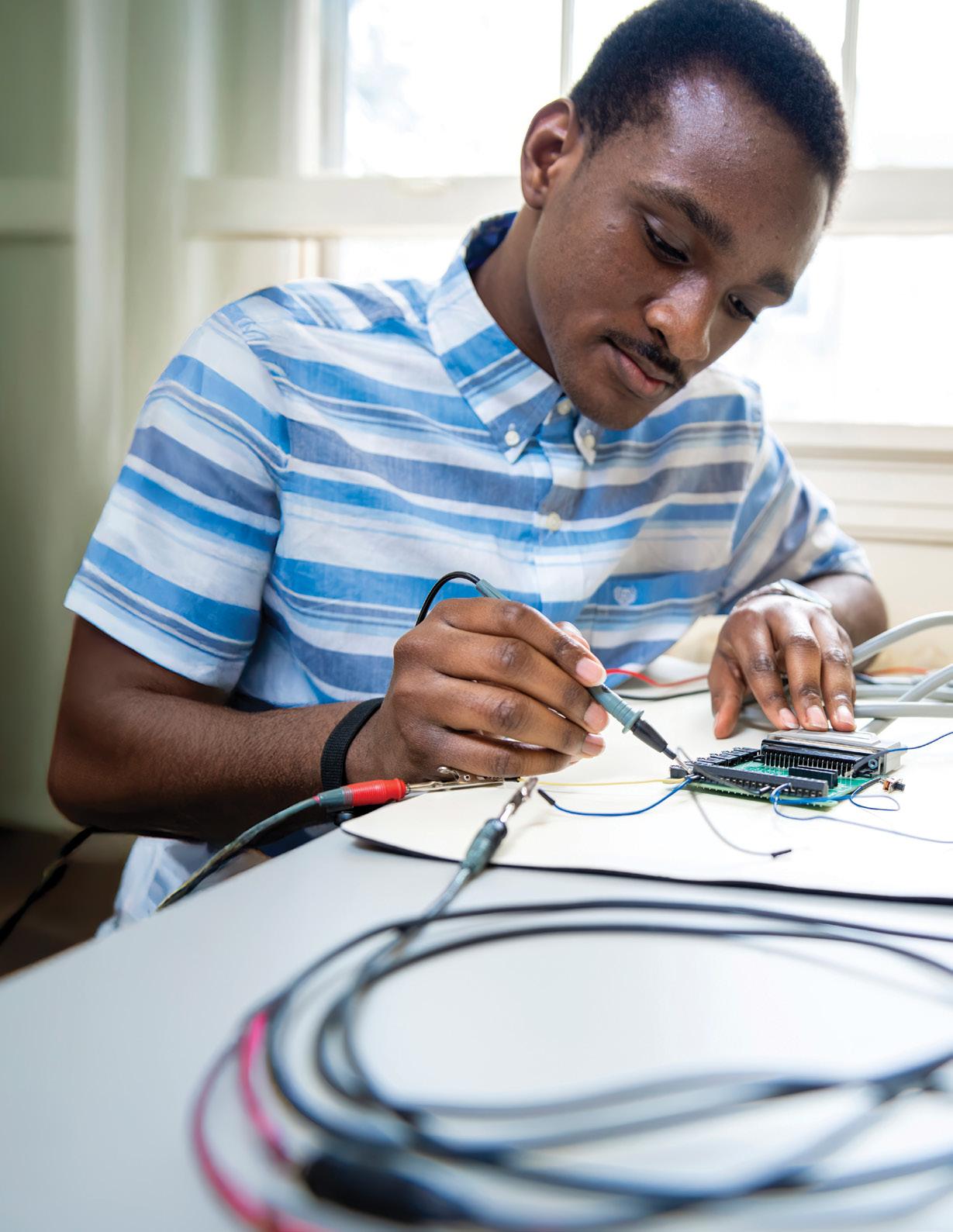
Electrical and computer engineers power modern life. From renewable energy and space systems to biomedical devices and gaming apps, EE graduates design the technologies that keep our world connected, safe and innovative.

As an electrical engineer, you could:
• Improve lives through biomedical innovations and wearable technologies
• Develop robotics controls and instrumentation
• Advance renewable energy systems and smart grids
• Enhance wireless communication and networking
• Transform digital data through signal processing in smartwatches, cell phones, hearing aids, and self-driving cars
• Create circuit boards that direct spacecraft
IMPROVING LIVES THROUGH TECHNOLOGY.
PROGRAM OPTIONS
BIOMEDICAL ENGINEERING
Biomedical engineering applies engineering principles to biological systems. This option focuses on electrical engineering applications in healthcare, introducing key biomedical concepts and preparing students for advanced study and careers in health-related fields.
COMPUTER ENGINEERING
Computer Engineers use a combination of hardware and software to apply digital systems to solving real-word problems in many applications areas. The Computer Engineering (CMPE) Option allows EE students to enhance their electrical engineering fundamentals with software design and embedded hardware knowledge.
CAREER OPPORTUNITIES
With an electrical engineering degree from UNB, you’ll be prepared for a wide range of exciting careers across sectors like electronics, IT, aerospace, telecoms, healthcare, energy, gaming, manufacturing and construction. Graduates design everything from cybersecurity software and renewable energy systems to robotics, satellites and next-generation communications.
• Space systems or aerospace engineer
• Communications and optical systems engineer
• Biomedical innovator or robotics specialist
• Energy systems and renewable technologies engineer
• Policy advisor, analyst, or patent professional
From designing satellites and renewable energy solutions to developing apps, medical devices and next-generation communications networks, EE graduates are at the heart of modern innovation. With so many paths to explore, your career opportunities are limited only by your imagination.
ENGINEERING PHYSICS
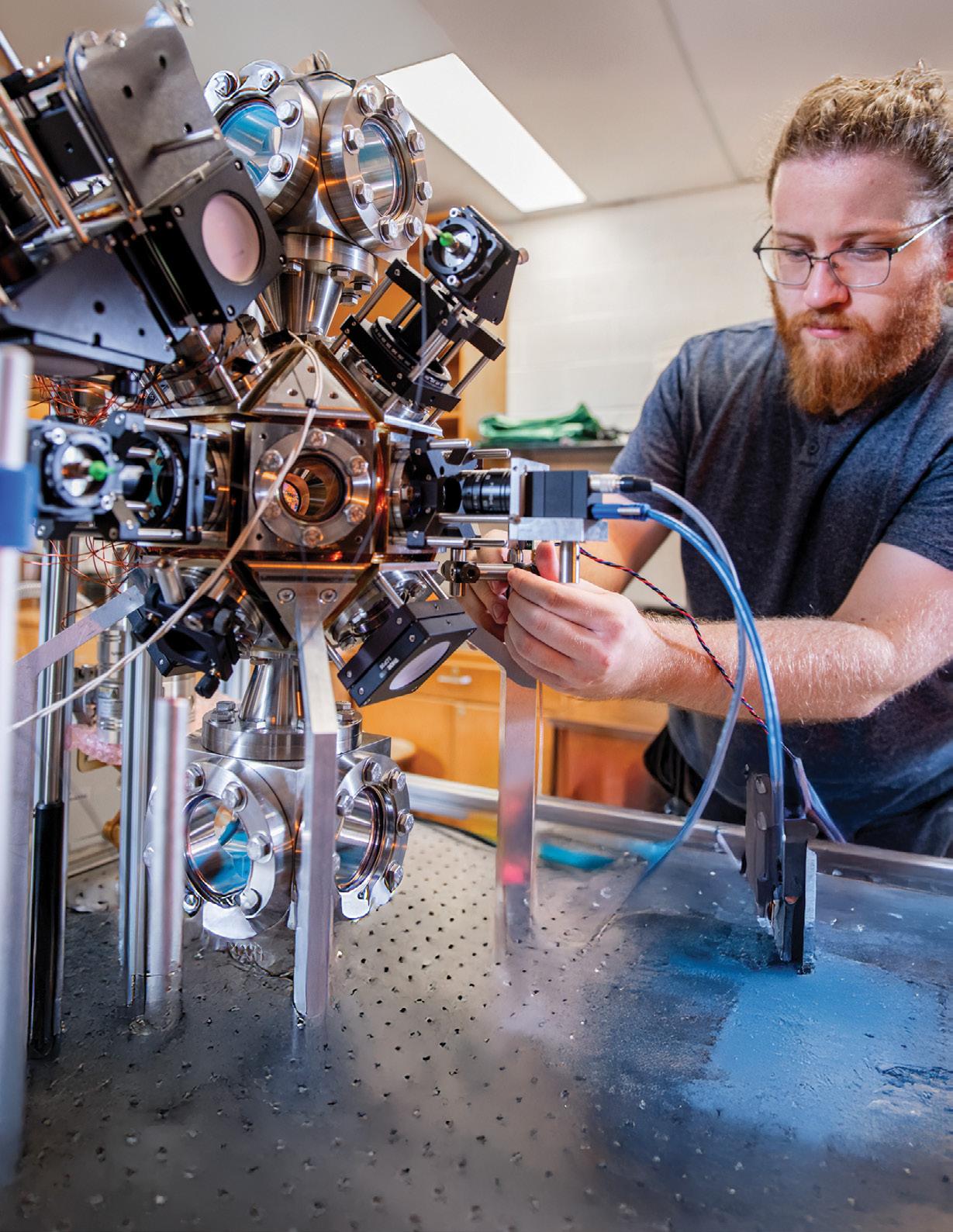
Engineering Physics – offered in collaboration with the Faculties of Science and Engineering – is unique in Atlantic Canada. Learn how fundamental physics is applied to design, analyze, and innovate realworld technologies. You will build a strong theoretical foundation and hands-on problem-solving skills preparing you for in-demand careers in a wide range of industries, including space, optics, and communication systems.
engphys@unb.ca UNB.ca/engphys

TURNING FUNDAMENTAL PHYSICS INTO SOLUTIONS FOR A COMPLEX WORLD.
AREAS OF SPECIALIZATION
SPACE SYSTEMS ENGINEERING
Learn about the design and operation of satellites and spacecrafts that explore space and support everyday technologies on Earth. You will combine knowledge of satellites and instrumentation to develop smart navigation, radar, and control systems for extreme environments. Engineers in this field help make navigation systems, weather monitoring, communications, and space exploration possible.
OPTICAL ENGINEERING
Design instruments and systems that use light to transmit information and control modern technologies. You will learn about fibre-optic communications, lasers, and photonic s ystems that enable high-speed internet, medical devices, and advanced sensing. Here you will gain hands-on experience and a strong technical foundation to prepare you for careers in technology, healthcare, and research
CAREER OPPORTUNITIES
• Space Systems Engineer/Scientist
• Aerospace & Defense Engineer/ Scientist
• Photonics/Optical Engineer/Scientist
• Quantum Technology Scientist
• Quantum Computing Engineer
• Communications Engineer
• Science & Energy Policy Writer
• Advanced Product Sales
• Artificial Intelligence & Machine Learning
Students completing the Engineering Physics degree program will have fulfilled the academic requirements for licensure as a professional engineer in Canada.

ENVIRONMENTAL ENGINEERING
Our four-year degree in environmental engineering has been designed to prepare you for a future defined by climate change. Through the first four-year engineering degree at our Saint John campus, you will learn how to develop innovative ideas and sustainable practices.
You will learn about water, soil and air pollution problems, and develop technical solutions in response to these challenges in a manner that adheres to government regulation while also addressing economic and social concerns.
Upon graduation, you will be prepared to serve the community, government and industry leaders by ensuring society is equipped to face the climate challenges of the future.
env-eng@unb.ca
Saint John campus

As an environmental engineer, you will:
• Design and optimize water and wastewater systems to protect human health and the environment
• Address climate and environmental challenges through mitigation, adaptation, and sustainable resource recovery
• Develop strategies to monitor, control, and reduce air pollution for healthier communities and ecosystems
• Develop solutions for waste management that reduce environmental impacts
• Apply data, modeling, and monitoring technologies to support informed decision-making
TACKLE REAL-WORLD ENVIRONMENTAL PROBLEMS WHILE SHAPING A SUSTAINABLE FUTURE.
PROGRAM DETAILS
This program is tailored to provide you with the knowledge and skills required to contribute to societal progress while respecting the need for sustainable practices and ecological protections.
You will complete courses in engineering and science to fulfill the program requirements and to meet the educational requirements for registration as a professional engineer. By the end of your degree, you will be able to assess the impact of engineering solutions in a global, environmental, economic and societal context.
CAREER OPPORTUNITIES
Environmental engineers protect public health and the environment by designing and managing systems that control pollution, restore ecosystems, and ensure sustainable resource use. Their work spans planning, design, implementation, and management across industries in both the public and private sectors, such as:
• Environmental consulting firms
• Government regulatory and environmental agencies
• All levels of government
• Water and wastewater utilities
• Water supply management
• Air quality and pollution control agencies
• Waste management and remediation
• Climate resilience and sustainability-related projects
GEODESY & GEOMATICS ENGINEERING
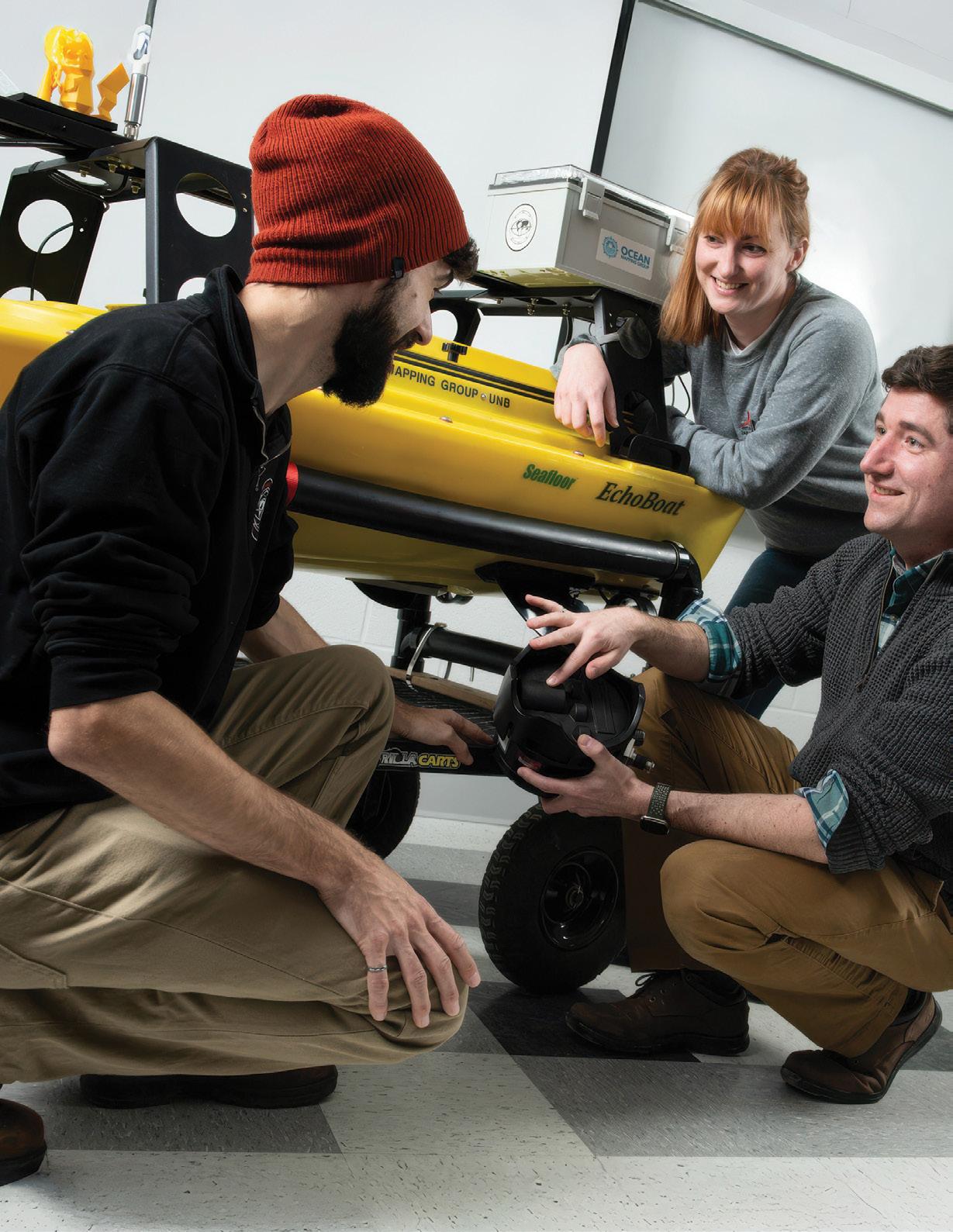
Geomatics engineering blends exploration and technology to address human needs. UNB offers one of only two accredited geomatics programs in Canada, known for its quality teaching and pioneering research.
Geodesy is the science behind geomatics—measuring Earth’s shape, gravity and changes over time. It supports applications from earthquake and sea-level monitoring to space exploration and advanced positioning systems.
Geomatics blends science, art and technology to manage georeferenced data. It includes surveying, GIS, GNSS, remote sensing, photogrammetry, hydrography and more—solving complex challenges in land management, environmental monitoring, and infrastructure. With evolving tech, demand for geomatics expertise continues to grow.
gge@unb.ca

USING SPATIAL DATA TO UNDERSTAND OUR EARTH.
PROGRAM OPTIONS
BScE IN GEOMATICS ENGINEERING
Optional specializations:
• Cadastral Surveying accredited by CBEPS; leads to professional surveyor status.
• Hydrographic Surveying
IHO Category S5-A; prepares for global ocean mapping careers.
BACHELOR OF GEOMATICS (3 YEARS, NON ENGINEERING)
The three-year BGeom offers a faster path to employment, with CBEPS-accredited cadastral surveying and credit for prior studies. Students gain skills in remote sensing, GIS, GPS, ocean mapping and land management.
DIPLOMA IN GEOMATICS D-GGE (2 YEARS)
Build your own diploma or choose from specializations including cadastral studies, engineering and exploration surveying, geodetic surveying, land information management, mapping and geographic information systems.
MINOR IN GEOMATICS (1.25 YEARS)
Pair with civil engineering, earth sciences, computer science or other degrees. Here too you can specialize in land administration and information management, mapping and geographic information systems, hydrography and oceanography, positioning.
GGE REMOTE STUDY
Core undergraduate courses and select electives are available via live stream or recorded lectures. Students can complete all coursework remotely, making it possible to earn a three-year geomatics degree without relocating to Fredericton.
CAREER OPPORTUNITIES
Geodesy and geomatics is a quickly growing field. These are just a few of the career options open to you.
• Global Navigation Satellite Systems (GNSS)
• AI and Satellite imaging
• Ocean mapping
• Geographic information systems (GIS)
• Laser scanning & autonomous systems
• Land & engineering surveys
• Drone mapping & Photogrammetry
• Land administration & management
• Geodetic surveying
UNB’s geomatics graduates are in demand across civil engineering, environmental science, geology, forestry, agriculture, defense and tech. With accreditation from the Canadian Board of Examiners for Professional Surveyors (CBEPS) and International Hydrographic Organization (IHO), you’ll be ready to register as a professional and pursue opportunities worldwide.
GEOLOGICAL ENGINEERING
UNB’s geological engineering program —offered in collaboration with the Faculty of Science’s Department of Earth Sciences— is the only GE program in Atlantic Canada. Students gain a broad foundation in science, engineering and design, enriched by hands-on labs and field schools across New Brunswick. The program is tailored to provide students with the education they need to play key roles in the socially and environmentally responsible exploration, protection and development of Earth’s water, mineral and energy resources and energy resources.
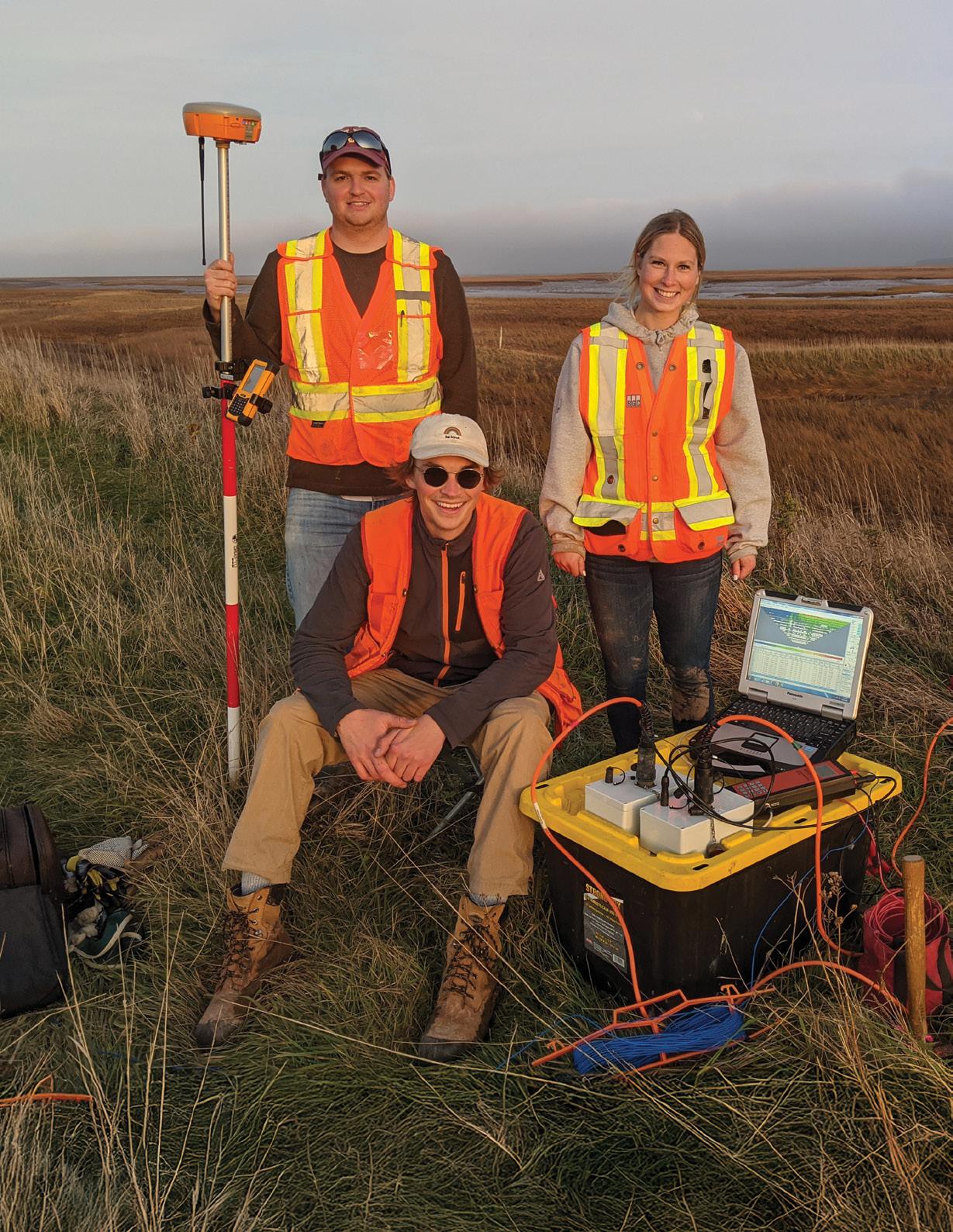
Geological engineers have the skills to investigate beneath the surface and predict the behaviour of highly valuable earth materials. They ensure long-term stability and safety for structures like bridges, dams and buildings, while considering geological conditions and hazards. They also conduct environmental impact assessments, develop and protect groundwater resources and remediate contaminated sites.
ge-program@unb.ca

Graduates are in high demand in both public and private sectors, and meet the academic requirements for professional engineering registration in Canada.
With appropriate course selection, graduates may also meet the academic requirements for registration as professional geoscientists.
WORKING WITH THE PLANET.
GEOLOGICAL ENGINEERS INTEGRATE A WIDE VARIETY OF DATA WITH KNOWLEDGE OF GEOLOGICAL, GEOTECHNICAL AND ENVIRONMENTAL PROCESSES TO MAKE INFORMED RECOMMENDATIONS AND DECISIONS.
As team players, frequently working with scientists and engineers from other disciplines, they also develop strong communication and people skills.
CAREER OPPORTUNITIES
A degree in geological engineering can lead to employment in the following areas:
• Earth material characterization for safe infrastructure design
• Engineering for a cleaner environment
• Protecting communities from natural hazards
• Sustainable, equitable extraction of critical minerals
• Surface and groundwater protection and management
• Designing nature-based solutions for a changing climate
• Reducing the environmental impact of energy production
• Sustainable design of coastal/seabed facilities
• Subsurface exploration with advanced technology
• Exploring Earth and planetary processes
Geological engineering students gain a comprehensive understanding of earth sciences and engineering, developing skills in field techniques and laboratory analyses, including advanced technologies.
MECHANICAL ENGINEERING
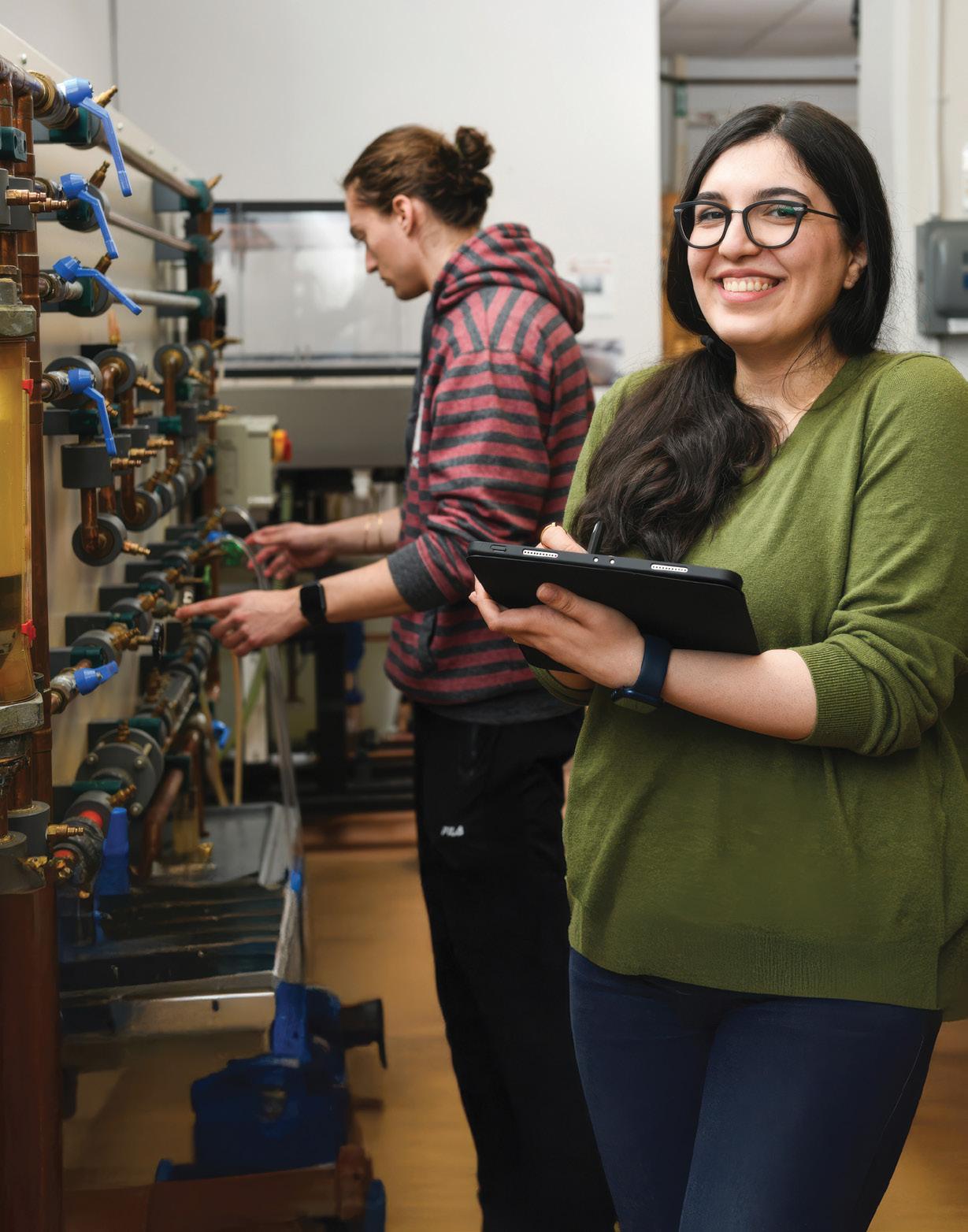
Mechanical engineers are behind much of what keeps modern life functioning. From safe energy generation to reliable transportation, advanced manufacturing to prosthetic design, and from robotics and automation to intelligent systems integration, they ensure systems and products work as they should.
meceng01@unb.ca

As a mechanical engineer you could:
• Improve manufacturing processes
• Create smart systems and robotics
AREAS OF SPECIALIZATION
• Test and develop new materials
• Explore nanotechnology
• Decarbonize the world with renewable energy
• Contribute to aerospace and automation
UNB’s mechanical engineering program offers students the chance to specialize in areas that reflect today’s pressing global challenges:
BIOMEDICAL ENGINEERING
Applies engineering principles to medicine and biology. Students design medical devices, prosthetics and health technologies that improve quality of life for many. This specialization can also help prepare for a career in medicine with additional required science courses. Choosing this option extends the degree to 4.5 years.
MECHATRONICS
Integrates mechanical, electrical and computer engineering to design smart products and intelligent manufacturing systems. Students solve problems for robotics, control systems and electro-mechanical systems. Students design robotic equipment, prototypes, automatic systems and manage electrical and mechanical systems. Choosing this option extends the degree to 4.5 years.
CAREER OPPORTUNITIES
Mechanical engineers are versatile problem-solvers, prepared to innovate in diverse sectors.
• Biomedical devices
• Robotics and mechatronics
• Aerospace and transportation vehicles
• Technology for power generation
• Technology for predictive maintenance and reliability
• Precision machinery, lasers, and heat exchangers
With access to cutting-edge labs and supportive faculty, UNB mechanical engineering students graduate ready to tackle global challenges and shape the future of industry, healthcare and technology.
SOFTWARE ENGINEERING

swe@unb.ca
The Bachelor of Science in Software Engineering (BScSwE) at UNB is a joint program between the Faculty of Computer Science and the Department of Electrical and Computer Engineering. This degree focuses on designing, implementing, testing and maintaining software for diverse technologies. Graduates are eligible to register as both licensed professional engineers and Information Systems Professionals. UNB.ca/software

SOFTWARE ENGINEERING GOES BEYOND PROGRAMMING. IT’S ABOUT WORKING WITH OTHERS TO HARNESS DIGITAL TECHNOLOGIES AND INTELLIGENT SYSTEMS IN A WAY THAT ENABLES TRANSFORMATIVE INNOVATION IN ALL SECTORS OF SOCIETY.
PROGRAM DETAILS
The BScSWE is one of nine engineering degree programs offered at UNB. To graduate, students complete a set of core courses offered through the faculties of computer science and engineering and also choose from a variety of elective courses in areas such as cybersecurity, embedded systems, artificial intelligence and biomedical engineering.
Software engineering graduates go on to work in sectors such as healthcare, finance, education, aerospace, gaming and energy – developing the software behind emerging technologies such as autonomous vehicles, robotics and intelligent infrastructure.
ENHANCE YOUR ENGINEERING DEGREE
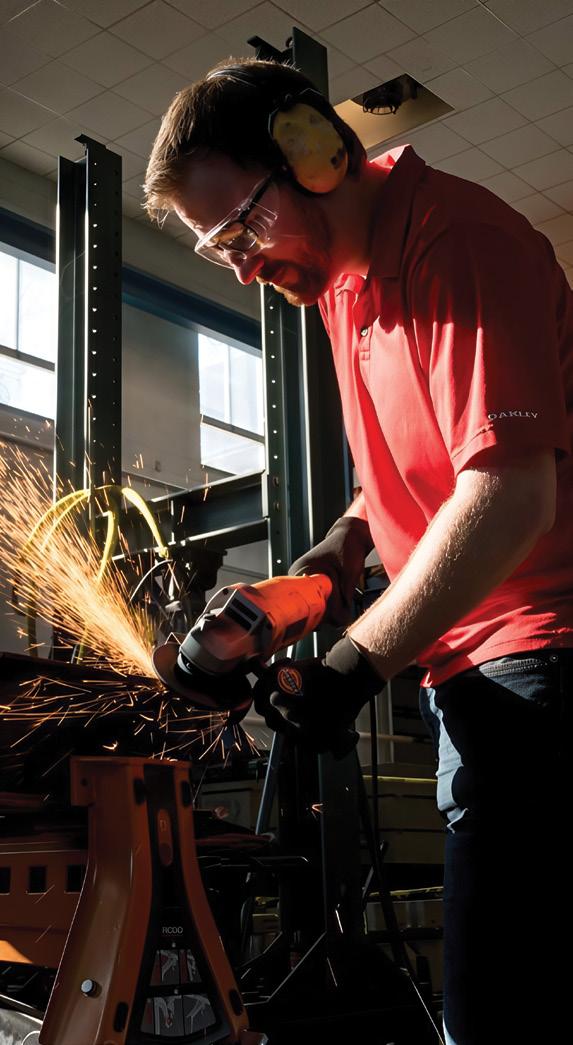
tme@unb.ca
UNB.ca/dtme
DIPLOMA REQUIREMENTS
The program is housed in the Faculty of Engineering and is open to students from science, technology and business backgrounds. Admission requires 80 credit hours from an approved post-secondary program, relevant business experience or approval from the TME chair.
TME electives and non-TME pre-approved electives may be taken at any point during a university program, but undergraduate students are encouraged to apply in their first and second years.
DIPLOMA IN TECHNOLOGY MANAGEMENT & ENTREPRENEURSHIP
The Diploma in Technology Management & Entrepreneurship (DTME) helps you enhance your science and engineering skills while learning how to lead in a technology-driven world. Designed to prepare you for careers in management or to launch your own technology-based business, this flexible five-course program is open to all undergraduate students and professionals.
DIPLOMA DETAILS
Students gain valuable skills in business management, entrepreneurship and financial literacy, while expanding their networks through workshops, seminars and hands-on projects with community leaders.
There are two pathways to get a TME diploma:
• Undergraduate students can complete the DTME alongside their degree by selecting five TME courses as electives.
• Professionals can complete the diploma in as little as two semesters with part-time or flexible study options.
The diploma requires five courses with a minimum grade of C:
THREE CORE TME COURSES
TWO ELECTIVES, WHICH CAN BE CHOSEN FROM TME CORE COURSES, TME ELECTIVES, OR PRE-APPROVED NON-TME ELECTIVES.
tme@unb.ca
A maximum of 12 credit hours may count toward both the DTME and a degree program.
One highlight of the DTME is Product Design and Development (TME 4025), a full-year course that can be taken in place of the final-year capstone design course in most engineering programs. Students work in teams to conceive, design and prototype a product, gaining experience in customer validation, community mentorship and hands-on innovation.
/renaissancecollege
THE CO-OP PROGRAM
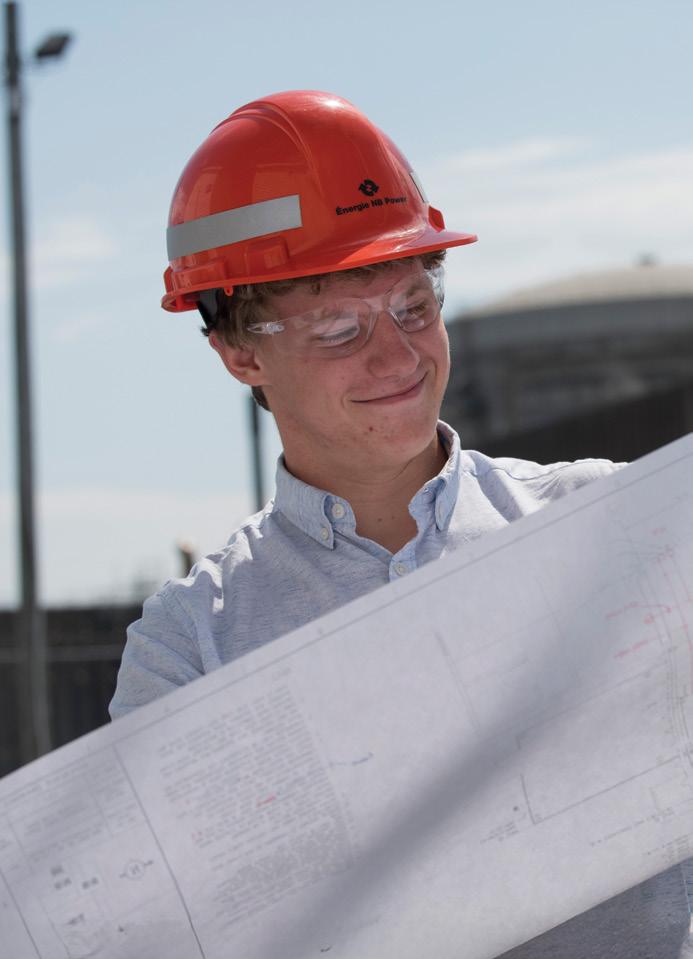
Co-op integrates paid, career-related work experience with academic studies. It gives you the opportunity to take what you’re learning in the classroom and apply it in a real work setting—expanding and reinforcing your university education while building your resume.
Through co-op you will:
• Apply academic learning in real workplace settings
• Explore diverse career opportunities within your field
• Strengthen professional and interpersonal skills
• Build valuable industry connections
• Earn income while completing your studies
• Enhance your resume with relevant, hands-on experience
• Graduate with the confidence and skills needed to launch your career
UNB.ca/eng/co-op
PROGRAM DETAILS
As a new student, you should begin your co-op journey by attending a Fall orientation session. You’ll become eligible to apply for co-op positions after receiving your first-term grades in January and once you’ve completed the necessary co-op requirements. This timeline helps you adjust to your program and establish a strong academic foundation.
Throughout your degree, you can complete up to six co-op work terms — totaling 24 months of paid, careerrelated experience. Students who successfully complete at least three work terms (12 months) will graduate with a Co-operative Education designation, demonstrating to employers that they possess meaningful, hands-on experience and are career-ready from day one.
unbcoop@unb.ca
RESOURCES AND STUDENT SUPPORTS
At UNB engineering, we’re here to support you every step of the way, from application to graduation, as you begin your university journey. With a variety of resources and a knowledgeable team ready to help, we’re dedicated to ensuring you have everything you need to succeed on our Fredericton campus.
ACADEMIC ADVISING
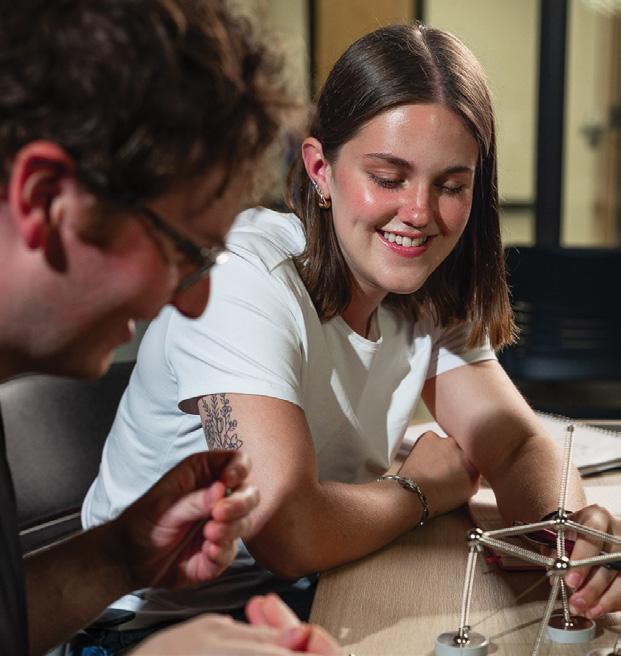
Academic advising will help guide you toward achieving your academic goals.
THE WAYNE CARSON STUDENT SUCCESS CENTRE
The Wayne Carson Student Success Centre is UNB’s hub for thriving in engineering. It provides academic and wellness support through peer mentoring, tutoring and workshops led by learning strategists, counsellors and other campus experts. You’ll also find wellness pop-ups, mental health events and sessions with partners like the Writing and Study Skills Centre, Student Health Centre and International Student Advisors Office. It’s a welcoming space to build skills, access resources and connect with a supportive community— helping you succeed in class and beyond.
Academic advisors help students:
• Make sense of their plans and aspirations
• Access campus resources
• Harness their strengths and interests
• Learn and understand academic regulations and policies Every student is assigned an academic advisor. To find your advisor, visit the academic advising webpage.
REGISTRAR’S OFFICE
The Registrar’s Office supports the academic mission by providing information about the services related to academic programs and degree requirements, registration and enrollment verification, transfer credit evaluation, graduation audits and degree conferrals and maintenance of permanent academic records.
UNB.ca/registrar
STUDENT ACCESSIBILITY CENTRE
The Student Accessibility Centre (SAC) provides a variety of on-campus services and supports to UNB students with disabilities. Please note that many of the services require registration with the centre.
Services offered: disability guidance, support and advocacy; arrangements for instructional, classroom and test/ exam accommodations; referrals to oncampus or community-based services; assistance with Canada Student Grant for Students with Permanent Disabilities applications; Learning Strategist support; Assistive Technology support.

COUNSELLING SERVICES
LIBRARIES
UNB is home to five libraries across its two campuses:
• Harriet Irving Library
• Head Hall Library
• I.U.C. Library
• Hans W. Klohn Commons (Saint John)
• Gerard V. La Forest Law Library
Each library offers a variety of spaces and services for students, extensive collections of electronic and print resources, and a team of knowledgeable and enthusiastic librarians ready to assist with research and coursework.
The Head Hall Library is the primary resource hub for students in Engineering and Computer Science, offering specialized materials and services to support those programs.
UNB Counselling Services provides a range of free, confidential short-term mental health services to students at UNB. Appointments are offered in-person, over the phone or by video (Microsoft Teams).
For more information and to request an appointment, visit: UNB.ca/sas/wellness/counselling
FINANCIAL AID
The Financial Aid Office provides advice and financial support to students requiring assistance to finance their university education. The Financial Aid Office provides information and assistance on:
• Bursaries and awards
• Federal and provincial government student loan programs
• Preparing a budget and developing a financial plan as well as financial literacy presentations and resources
UNB.ca/sas/finance

HEALTH PLAN AND INSURANCE
Full time undergraduate students are automatically enrolled in the Student Health & Dental insurance plan through WeSpeakStudent.
UNBsu.ca/health-dental
MONEY MATTERS
Visit the Money Matters webpage for more information on:
• Tuition and fees
• Residence and meal plans
• Financial aid
• Scholarships
• Budgeting
• Student employment
UNB.ca/moneymatters
STUDENT HEALTH CENTRE
The UNB Student Health Centre is committed to providing quality primary health care. The Student Health Centre on our Fredericton campus is open year-round to full-time students. Students must present valid health insurance to cover services provided at the student health centre. Students must also provide valid Student ID to receive services.
Call or visit the office to book an appointment with a physician, nurse practitioner or dietitian.
PEER MENTOR PROGRAM
The Peer Mentor program is designed to help fist-year engineering students by introducing them to various resources available on campus and events organized by the EUS or other sub-societies. The program also offers a valuable platform for firstyear students to connect with their upper-year peers, ask questions, and gain insight or advice into common challenges and practices to navigate their degree successfully.
UNBeus.com/peer-mentor-program
Appointments are confidential, available in-person, online, or over the phone.
C.C. Jones Student Services Centre | 3rd floor 506-453-4837
UNB.ca/sas/wellness/healthcentre
MI’KMAQ-WOLASTOQEY CENTRE
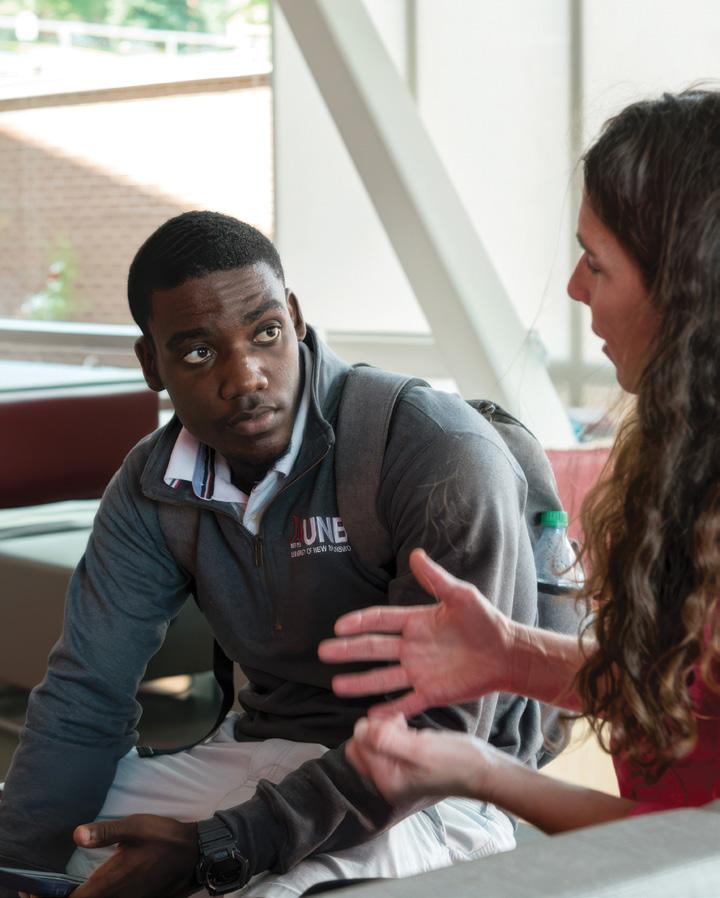
The Mi’kmaq-Wolastoqey Centre (MWC) offers a wide range of services, including academic advising, tutoring, mentoring, counselling and cultural programming to all Indigenous students pursuing higher education at UNB.
UNB.ca/mwc
RESIDENCE
UNB has 16 residences to choose from, including traditional-style (single and double rooms), suite-style options and residences designed for mature students and families. More Information is provided on the UNB Residence webpages for:
• How to apply
• What to know before you arrive
• Important dates
• Rates & fees
• Services
• Meal plans
UNB.ca/studentlife/ living-in-residence/index.html
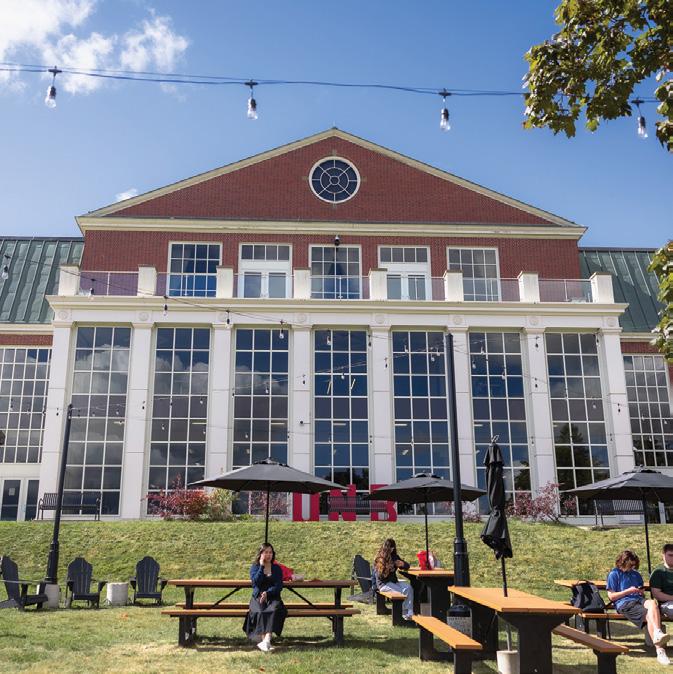
OFF CAMPUS LIVING
Students can find resources and options for living off-campus on UNB’s website:
UNB.ca/studentlife/living-off-campus
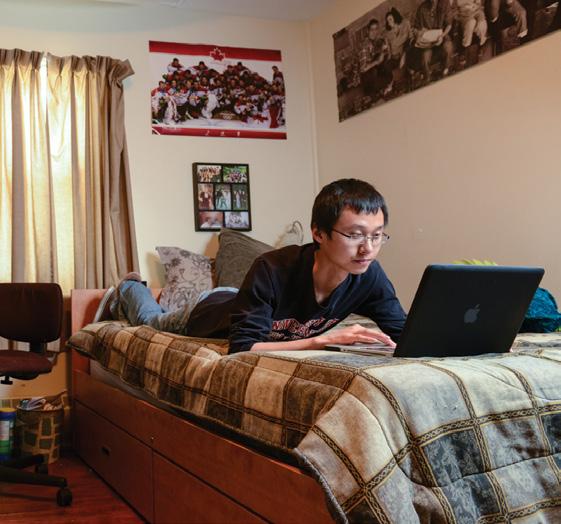
STUDENT UNION BUILDING (SUB)
The Student Union Building is home to the UNB Student Union, the campus radio station, our campus newspaper, The Brunswickan, several independent stores and shops and other student representative groups as well as meeting rooms and lounge spaces.
unbsu.ca/sub
OTHER RESOURCES AND STUDENT SUPPORTS INCLUDE:
• Career Development and Employment Services
• IT Services
• Writing and Study Skills Centre
• Math Learning Centre
• Student Affairs and Services
• UNBSafe App
• Welcome Centre
• Pharmacy
• Bookstore
• The University’s Women Centre
• The 203 Centre for Gender and Sexual Diversity
• Human Rights and Equity
• International Student Advisors Office (ISAO)
• UNB Campus Ministry
• REDS Recreation
STUDENT INNOVATION AND ENTREPRENEURSHIP
MAKERSPACE
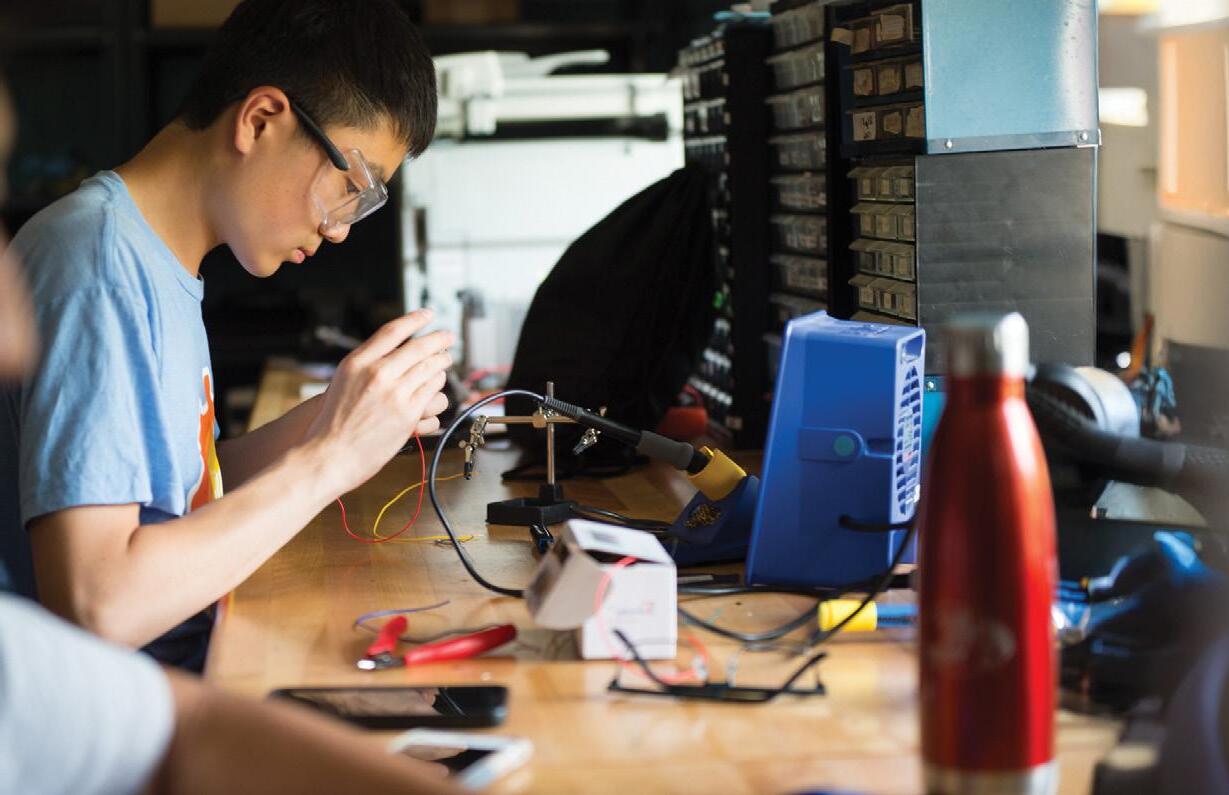
Have an idea or design you want to bring to life? Makerspace is a workshop and design studio all together in the same spot that is open to all students, regardless of faculty or department. It provides an inclusive and supportive space for makers to share ideas and techniques and to create prototypes or projects. It has high quality 3D printers, a laser cutter and a huge selection of electronic devices, parts and tools. Welcome to your source for innovation, design and collaboration.
SUBSOCIETIES
• Chemical Engineering Undergraduate Society (ChEUS)
• Civil Engineering Undergraduate Society (CSCE)
• Electrical, Computer, and Software Engineering Society (ECSES)
• Geological Engineering Society (GES)
• Geomatics Undergraduate Engineering Student Society (GUESS)
• UNB Student Society of Mechanical Engineers (UNB SSME).
• UNBSJ Undergraduate Engineering Society (UNBSJ UES)
OTHER STUDENT ENGAGEMENT CLUBS AT UNB ENGINEERING:
• Atlantic Student Research Journal (ASRJ)
• Diversity Within Engineering (DWE)
• Engineers Without Borders (EWB)
• Women in Computer Science & Engineering (WiCSE)
• Institute of Electrical and Electronics Engineers at UNB (IEEE)
• Girls STEM Up

The full list of student clubs and societies can be found at unbsu.ca/clubs-and-societies Learn more about UNB by joining us for a campus tour, open house, webinar, information session or other interactive event where you can meet prospective and current students and get a feel for what it’s like to be a part of our community.
AT UNB
ENGINEERING UNDERGRADUATE SOCIETY (EUS)
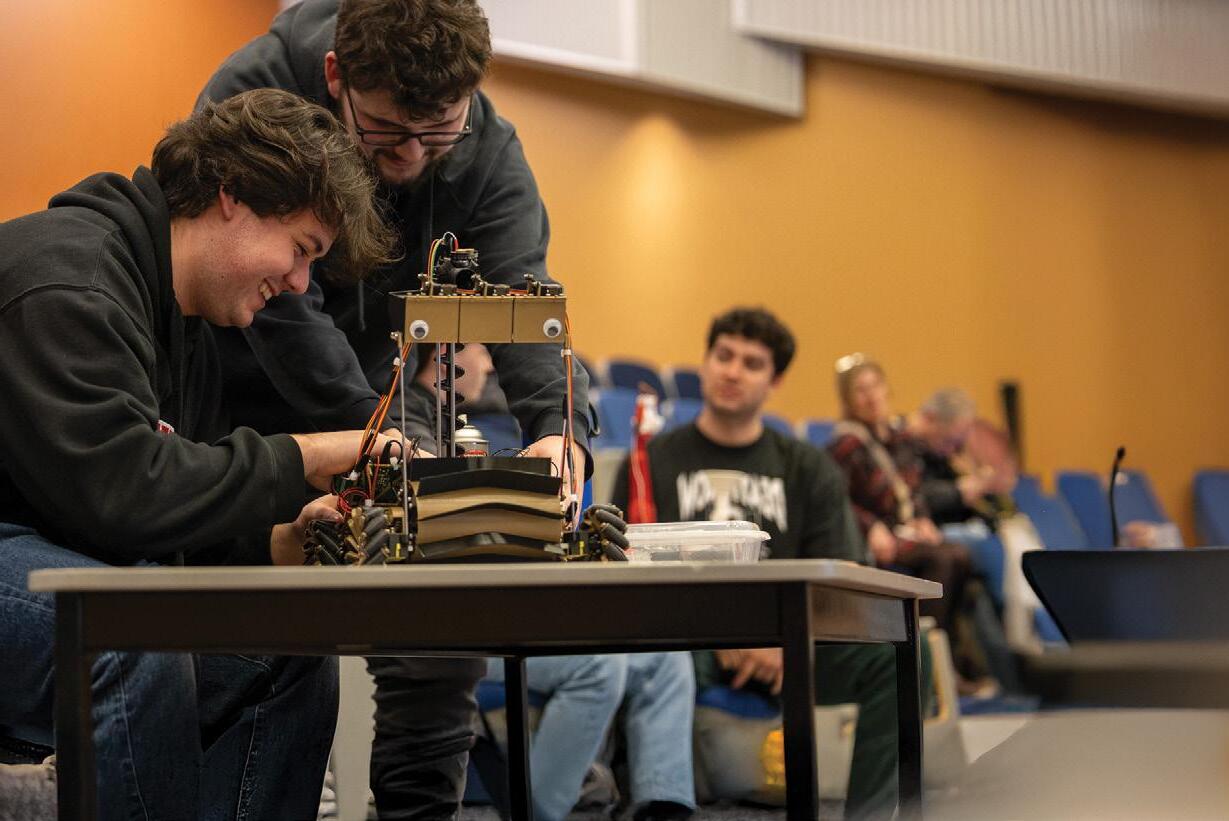
The UNB Engineering Undergraduate Society (EUS) represents all undergraduates of the faculty of engineering and works to make the university experience more enjoyable. The EUS organizes student events throughout the year, as well as offers valuable academic services and a wealth of knowledge on topics such as academic advising, course selection and more.
www.unbeus.com
ADMISSION REQUIREMENTS
BACHELOR OF SCIENCE IN ENGINEERING (BSCE)
Admission to UNB’s engineering programs is competitive. All students begin in a common firstyear program, with entry into a specific discipline (chemical, civil, electrical, environmental, geological, geodesy and geomatics, mechanical or software engineering) based on academic performance in their first year.
Key Requirements:
• Admission is based on your average in university preparatory high school courses.
• Meeting minimum requirements does not guarantee admission.
• All required subjects must be completed at the grade 12 academic (level 2) level or higher. General/open-level courses are not accepted.
• Students whose first language is French must offer French in place of English in the required subjects and may offer English as an elective.
NEW BRUNSWICK REQUIREMENTS:
The New Brunswick requirements for admission into the Bachelor of Science in Engineering program are listed below:
• English 122/Français 10411 (min. Grade of 70%)
• Pre-Calculus A 120/ Mathématiques 30331C (min. Grade of 70%)
• Pre-Calculus B 120/Mathématiques 30411C (min. Grade of 70%)
• Chemistry 122/Chimie 52411 (min. Grade of 70%)
• Physics 122/ Physique 51411 (min. Grade of 70%)
• One elective- Group 1,2, or 4 (min. Grade of 60%)
• Minimum admission average of 75%
MATH NOTE:
Students who haven’t taken math in over two years or scored below 75% in Pre-Calculus A120/B120 are encouraged to take MATH 1863 (Precalculus) before starting first-year calculus.
The faculty of engineering strongly supports diversity and encourages applications from all qualified individuals.
Applicants from outside of New Brunswick can find more information on the UNB website:
UNB.ca/admissions/requirements/ index.html
IMPORTANT DATES
APPLICATION DEADLINES
See the admissions page for the current application deadlines for our programs UNB.ca/admissions-dates
FIRST YEAR ORIENTATION
Orientation takes place before classes begin to help you feel welcomed, at home and guide you through your first days at university. Through fun activities, you'll meet new people, explore campus and learn about key resources to confidently start your journey at UNB engineering.
MY NOTES