Cultural Constellations
Cultural Constellations An International Literary Review

University of Maryland Global Campus in Europe, Edition 2

Cultural Constellations An International Literary Review
University of Maryland Global Campus in Europe, Edition 2
A literary journal founded in celebration of writing and art produced by members of the U.S. military community, Cultural Constellations is an annual publication of University of Maryland Global Campus in Europe (UMGC in Europe). Outside editorial notes, the views voiced on these pages are solely the responsibility of the author and do not reflect views and opinions held by UMGC as an institution nor by personnel associated with this publication.
©2026 Cultural Constellations: An International Literary Review, All Rights Reserved.
The 2026 issue of Cultural Constellations gathers work that begins with the simple act of making marks on paper, turning thought into language and drawing points of clarity from shifting identities, difficult histories, and uncertain futures. Across poetry, scholarship, and visual thinking, this collection asks what it means to create in a time when language is being reshaped by memory, migration, technology, and cultural change. The works in these pages move in many directions, yet together they form a pattern—voices that, when read side by side, reveal connections that might otherwise remain unseen.
We begin with the tools of creation themselves. Ariana Stroop’s “Signature” imagines the life of a pen, tracing the quiet journey of the instrument that carries thought into visible form. Tanya Ramey’s meditation on “64 Crayons” follows, celebrating the early enchantment of making marks that become stories and worlds. These opening pieces remind us that writing and art begin not with grand declarations but with small gestures: a child’s hand reaching for a crayon, a woman searching for her pen.
From there, the constellation expands into questions of language and identity. Dylan H. T. Chan’s “Between Tongues” reflects the experience of living across languages, where meaning shifts with every act of translation. Cairo A. Maxwell’s “Palmares” turns to history and heritage, exploring layered identities shaped by diaspora and cultural memory. Poems mapping the self.
And as these works show just how important literary mediation is to self-creation, we have poems looking at the rapidly evolving relationship between creativity and technology. Poems such as “Touch Grass” and “Using AI to Make Visuals for Class in 2025” examine the promises and tensions surrounding artificial intelligence in artistic and educational spaces. These works raise thoughtful questions about how emerging tools might reshape creative practice and temper our intellectual labor.
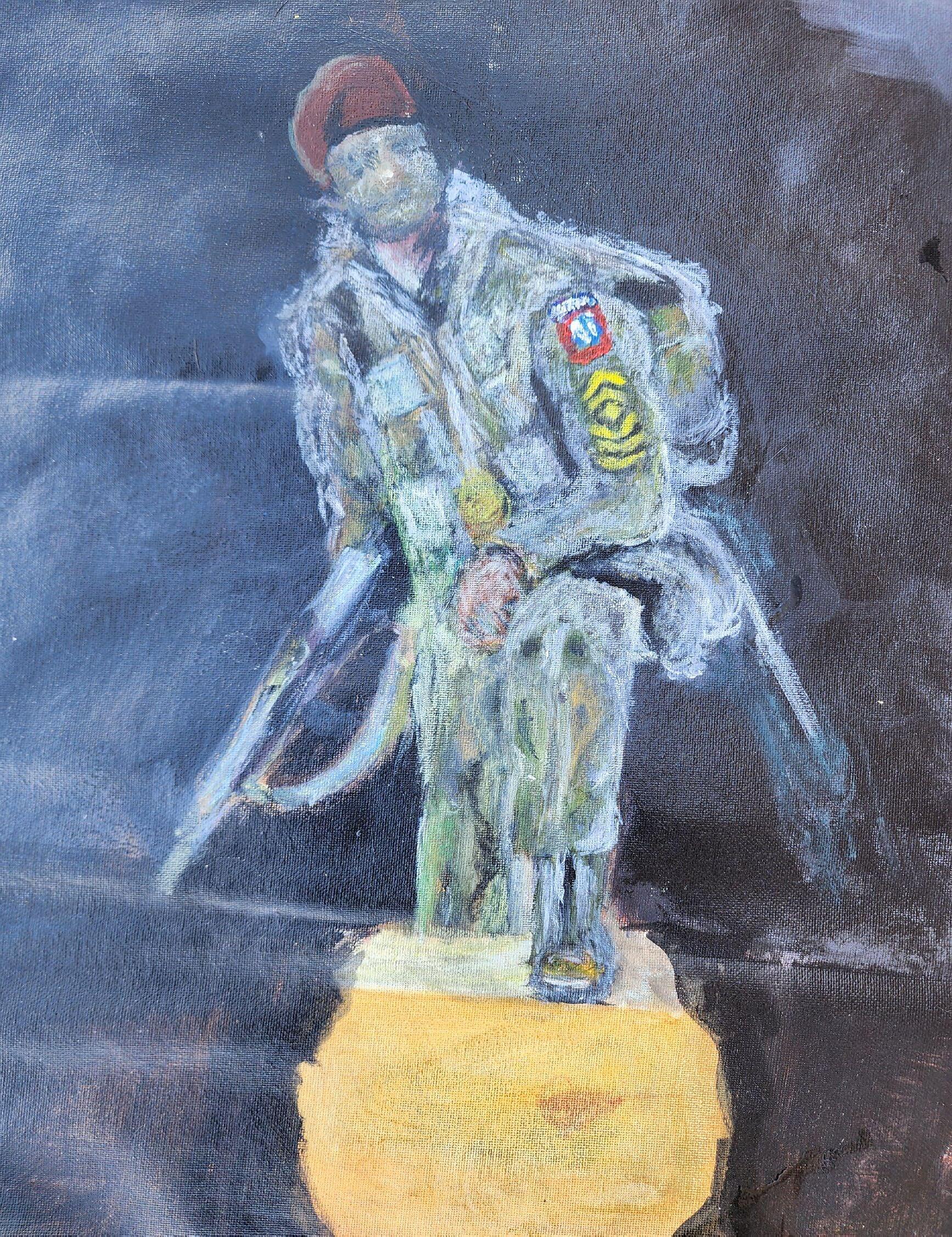
Original art of a combat soldier introduces our series on creativity and war, while literary theory examining Black veterans considers how art and cultural production interpret the layered realities of service, race, and patriotism. Alongside this work are poems and narratives that navigate trauma, memory, and the enduring weight of military life. In these pieces, writing becomes both witness and reflection.
The collection closes with “The Last Library on Earth,” which asks difficult questions about fading literacy and the fragile future of shared knowledge. In its vision of a final repository of books, the poem offers a striking image: “Every book here is a star, ink burning in paper skies.” The line echoes the spirit of this publication’s title. Like stars in a constellation, individual works of writing gain meaning through their presence among others. Together they illuminate a cultural sky, guiding our readers. We invite you to move through these pages with curiosity, following the connections that emerge between pieces and voices. As in the night sky, the pattern becomes visible only when we look long enough to see how each point of light relates to the others.
Jessica Stock, PhD, Overseas Collegiate Faculty
Nicola Wentholt, Academic Affairs Coordinator
Christine Lockhart, PhD, Overseas Collegiate Faculty
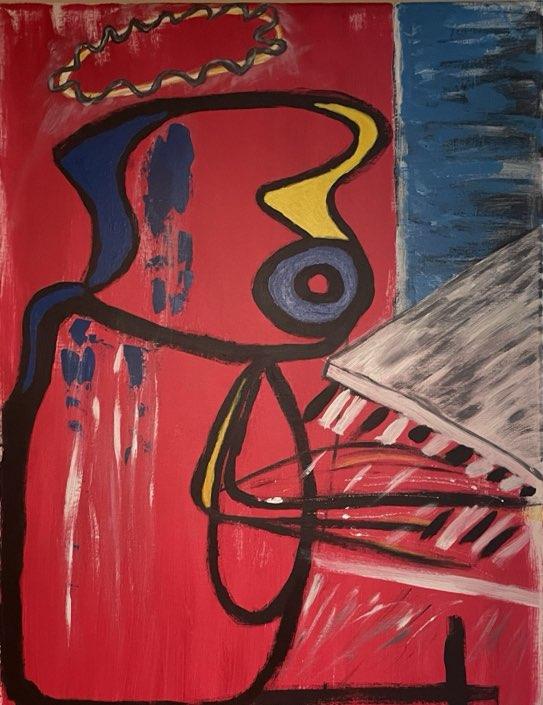
Ariana Stroop
The pen started in an office. Maybe it was a business office, an auto shop, a department store, university admissions, perhaps a bank. How did it get there? No one truly knows. It was remarkably unremarkable. A simple ballpoint pen with a jet-black clip and white name stamped barrel, which could have been the manufacturer or the business from which it originated, maybe even a stylish personalized pen, but the years of contact with human hands left it faded and illegible. It was just one of life’s tiny unsolved and unnoticed mysteries This pen often signed for packages, filled out documents, added hurried signatures, and left little stains and stroke marks on varying hands as employees scribed small notes and memos. It stood unobtrusively in a black wire jar amongst other office supplies; dry erase pens, scissors, sharpies, pencils, erasers, and of course other pens, were awaiting usefulness.
The routine of this little pen changed abruptly when one day it was picked up, placed into a pocket or purse, carried between the glass doors and taken away from the world it knew. This person often used this pen to write checks, scribble out phone messages, absentmindedly doodle, jot grocery lists, and other mundane daily writings. Absolutely nothing phenomenal. There it rested on the desk, inside a modest home where it fulfilled its small purposes and sometimes found itself back inside that pocket or purse. It was on such an occasion that the pen became abandoned in a new, unfamiliar place. A bustling restaurant claimed it as its own after it was roughly extricated from its solitary domain to sign a receipt and so forgotten atop the dirty table. The waitress who had attended to the pen-keeper had noticed it laying in a sticky ring of watery beer, and being a notorious pen-hoarder, she carelessly dropped it in her apron pocket and bussed the table, her damp cloth wiping away leftover crumbs and watery rings with furious speed. The pen jostled and bounced alongside her impressive collection of brightly colored pens. Even though the apron had a black interior, the waitress had failed to click the tip back inside the casing, so the pen left its tiny invisible marks on the interior fabric as she moved. Every so often, the pen was brought back out to the light and scribbled down hasty shorthand style orders of dinner specials, cocktails, beer, appetizers, and the accompanying bills where it signed messy names. It stayed faithful to the waitress for a while, glad to be of service, until one day the clasp broke as she jammed it on the waistband of her apron. The waitress didn’t notice as the pen clattered to the floor, and so the pen was kicked aside to rest on the dirty floor underneath a corner table. Eventually, a curious toddler rescued the pen and began haphazardly scribbling on a tabletop, but then their mother snatched the pen away and violently threw it back to the floor, hissing in disgust.
The pen now lay unnoticed for weeks by the front entryway of the restaurant, gathering dust and grime. Days and nights passed. The pen stood guard by the door as people filtered in and out of the restaurant. Their shoes became stories to the pen: black stiletto heels, sneakers, sparkly Mary Janes, light-up tennis shoes, high tops, flats, pumps. The pen watched and waited from its squalid domain, wondering who might recover it next. It was tired, so tired without a purpose, and time was taking its toll. The white barrel was now covered in scratches and dirt, the faded logo now completely gone, and small cracks in the plastic had appeared after its assault.
Beaten down and forgotten, the pen might have stayed a relic in that lonely corner if not for a clumsy student passing through. She had dropped her bookbag and let out a frustrated cry as her belongings spilled out across the floor. More pens rolled into the corner Embarrassed, the student hurriedly gathered her things and snatched the dirty white pen from its solitary realm, throwing it into her bag without a second thought. Rescued, but now lost inside an academic wasteland, the pen sank into a dark world of books, papers, too many writing implements, headphones, cords, and a laptop all jumbling around together. After an eternity at the bottom of the bag, it resurfaced in the grip of the student, ready for more mundane penning. However, it was used for so much more. The pen relished the flow of long, languid sentences the student crafted with care, seeming to revitalize its ink as the sure and steady hand of the student gracefully guided it across the page. It drafted essays, composed poetry, transcribed class notes, consulted on journal entries--everything that one can write, it wrote with an unparalleled vivacity. After a year of blissful service, the cracks in the barrel at long last splintered away and the ink dried out after one last signature. The little pen was relinquished to a wastebasket. Though its plastic will eternally flake apart into a microcosm of its own buried unknown in a nameless dump, the words it crafted and the memory of the innumerably ephemeral lives it passed through will also forever remain.
Tanya Ramey
“How many crayons came in the original box of Crayola crayons?”
“12,” I said.
“That’s the same wrong answer a contestant just gave. It’s six or eight,” and she headed out of the room.
Momma was watching Greed, a game show I never heard of on cable tv.
When she returned to the room, she said, “Eight.”
And that was the correct answer.
All I remember is a box of 64 crayons meant your parents had money. You got those special colors, like peach, silver, gold, and best of all, a crayon sharpener! You didn’t get fancy colors in the box of eight crayons, and you could forget about a sharpener. You kept coloring until your crayon’s point turned round, so your circles always came out wobbly instead of neat.
Crayon smells were magical, like the Midnight Blue crayon I used to color the night sky.
Burnt Sienna reminded me of the clay that me and my younger sister and brother dug up in our backyard. I liked saying the words, Burnt Sienna and wondered why they named it that, but my child’s mind didn’t really care.
All I know is we had 64 crayons, and we were rich.
Ruben Trevino
“Gratitude:
Some days, gratitude is quiet— a warm cafecito in Abuela’s chipped mug, steam curling like blessings before the first sip.
It’s Dad’s old radio crackling boleros in the kitchen, or the smell of tamales Mom swears aren’t ready yet.
Gratitude is the sun spilling gold over cracked sidewalks, turning even the stray dog’s shadow into something worth keeping.
It’s the breath you catch after laughing too hard, the kind that makes your ribs ache in the best way possible.
Gratitude is knowing that even with the weight of the world, you still have hands to hold, voices to miss, and dreams stubborn enough to stay.
So I let it fill me— like sunlight on cold skin, like a song you didn’t know you needed— until I am warm enough to pass it on.
Because in every momento— no matter how small— there’s a little light waiting to be noticed.
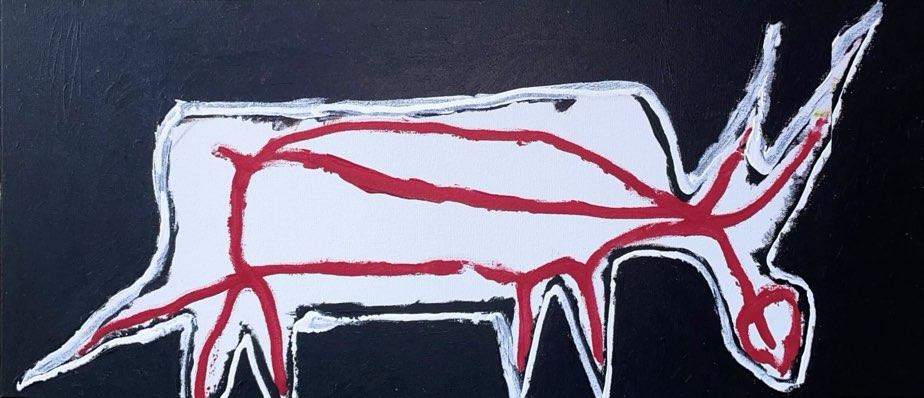
Dylan H.T. Chan
In Hong Kong my mouth carried three voices— Cantonese quick as rain, English clipped and careful, Mandarin folded in late.
In London, I bent Shakespeare’s lines around my accent— cables creaked, planks groaned, each syllable a swaying bridge.
Some words refused to cross: a joke that died in translation, a proverb met with blank stares. I laughed alone; silence taken for shyness.
Between tongues a current of belonging forms. I live in the pause, in the unfinished gesture, where both languages arrive together.
“Between
Cairo Alexander Maxwell
Calhambolas’ hands, scattered feed, Loosely gripped cachaça bottlenecks, Wrung necks of brazen roosters, pecks
Against the earth, a rusty blade to bleed
It on an altar, atabaques beat
With open palms, the verdant, palm-shaded
Serra da Barriga, tattered, faded
Indigo, cadent naked feet
Before the bandeirantes’ violent torches
Bode the eruption of a musket flash
Ignites an expeditious fire scorches
Huts collapse on piles of the dead
Perfume the air suspends pillars of ash
Crown the hair on Zumbi’s severed head.
Jacqueline E. Grant
Coasting along the quiet country roads
Blanketed by fall's rainbow,
The warm sun high in the calm firmament
Peeks through the trees.
Oh, it is so warm.
A gentle breeze blows over my skin
As I drive through,
A feeling of deja vu
Reflecting on my childhood days
Running along this same path
Tumbling down the hill, laughing.
Those hills, once upon a time
Unpaved and virgin to modern hands
Are less rolling now.
It's nearly the weekend
A bustling trail of campers, hikers and onlookers
Yearning for oneness with nature occupy it
Unaware of the peaceful and quiet
Memories of a pure and natural existence
As a child sheltered from the larger world
And perfectly happy roaming free in mind and body
Only I will ever know and understand the deepness
Of that time as an innocent child.
Neha Yadav
“Resilience
Humanity's heart and hearth have heard the habitual silence, Of hands hovering hesitantly over honored habitats. What words were written when world Spoke of songs and sentiments?
Could cherished cradle song curdle or compose
Musician's magical music or make morose?
Do decibels declare dominance and Should singers sing soundly or softly?
How heavy has her hand held Words which were wrestled Away once again?
Pages plenty pull palms
Together to teach teething Voices, words, and letters; Waking warm writings and words with Strength-sounding syllables, Emerging in empathy and Enlightened encouragement of equality.
All arise to awaken, emerge around arms akimbo. Rudimentary words read 'round rising reservoir of resilience. Overcoming onslaught of omitted oration. Her heart has held hope and happiness of humanity, With words within voice welcoming a wondrous world.
Neha Yadav
Our phones are guiding the known and lost, Our trees are peering into them, Their branches scraping at screens, one reel after another, The sun is confused to see the distracted trees, The leaves are seeking the latest trend, The fit checks have kept the weather late, The harmonious clouds are not feeling the vibe, Toxic smoke and waste eroding, yeeting retronyms around.
The phones discarded, a travel trek decided. The trees are swaying in the rustling wind, The leaves are green in summer, yellow in summer, brown in winter. We stop, we wait, we go. Our phones discarded, boredom sets in, but nature calls, And hence we proceed to touch grass.
Toni McLaughlan
“Using AI to Make Visuals for Class in 2025: An Autobiographical Memoir in the Form of a Shakespearean-Style Sonnet"
They say: its skill, unmatched; your prompt, PRECISE. For writers, this is not a tough demand! I proceed with care, and I heed advice: Create a puppy, pile of books in hand.
Just awaiting image generation…
For sure, a masterpiece! Um, wait—what’s that? Extra tails? But not in my dictation! Hey, Gemini! Revise this puppy, stat!
Ugh, worse?! With human hands and seven ears?! Again: revise the prompt, transparently! But then, the dreaded message, BOLD, appears: My limit, REACHED! Must pay, apparently.
Workday >> expense repor ts >> delivery! … REJECTED. Seven ears? Looks fine to me.
Tanya Ramey
“Shining
Isolation a constant reminder of how I don’t fit in Courage, belief, and perseverance— words wallpapering my workspace doesn’t seem to be enough
I see them in my rearview mirror affixed to my monitor “I don’t want to be here anymore” Someone always asks something of me but who do I turn to?
There’s no one here who I can glean from.
“You’re here for a reason,” she said.
“Do you know where I would be had you never came here? It hasn’t gone unnoticed what you’ve taught me. Alone, you are a lighthouse. Shining for all to see guiding others to the light.”
Cubicle life.
German R. Cayabyab, Jr.
“My
I walk with courage, steadfast and bright, Through trials faced, I find the light. At UMGC, my wisdom grows, Where masters’ guidance richly flows.
I rise from setbacks, time and again, Each loss a lesson, each struggle a gain. The path is steep, the journey long, But I endure, for I am strong.
With perseverance, I meet each test, Not seeking less, but giving my best. I sharpen my mind, I strengthen my will, Each challenge conquered, a climb uphill.
In the face of change, when storms arise, I hold my ground, I claim the prize. For life is a river, swift and wide, And I am its sailor, with hope as my guide.
I seek not glory for myself alone, But to light the way where others are shown. To lift, inspire, and help them see, The power of courage inside of me.
In this fast world, where tides may roar, I stand prepared, embracing more. A role model true, I strive to be, For the future awaits with destiny.
So hear my vow, both bold and clear: I will not falter, I will not fear. Through wisdom, courage, and purpose divine, The triumph of perseverance shall always be mine.
Cynthia McGinnis

This photograph is of the suspended prayer lanterns and wish papers at Haedong Yonggung Temple in Korea, revealing the mathematical beauty inherent in this sacred display. The cylindrical paper lanterns demonstrate basic geometric forms, circles and cylinders, while their three-dimensional suspension creates depth through linear perspective. The overlapping translucent materials follow principles of additive color theory, where red and blue transparencies combine to create purple hues, and yellow filters warm the transmitted light. The heart-shaped wish papers introduce curved geometry alongside the linear forms, while their random orientation creates an organic contrast to the structured circular lanterns. The photograph's upward angle emphasizes the mathematical concept of perspective convergence, where parallel hanging lines appear to converge toward vanishing points above the frame. This sacred installation demonstrates how fundamental geometric principles naturally organize human expression of hope and faith into a visually harmonious mathematical composition.
Md Mozaffor Hossain
They gave me two conditions: One – if you fast, you will have iftar. Two – if you do not fast, you will have no iftar. I was only a little piece of a boy.
They had their beloved kids Some were about my age, some less Unlike me, they had their choices I could not afford, for they were not my parents.
My father was behind the bars
While my mother was poor I had to be taught the gratitude of life I had to choose either of the requisites therefore.
I chose to fast
Not for my salvation in afterlife but for iftar It was my perennial penalty if unserved The world around me would relish it I was the only mouth uninvited and unfed.
Not because it gave me hunger or any taste
But its absence gave me shame The universe would stare at me It would display me in a disgracing fame.
Neither my unseasoned body nor my unripe mind Could fathom the days stretched farther Day-long draught would taunt me anew Fasting was as good as being slurred at iftar
Then I chose not to fast
They were extremely kind to leave me the spare food
Not fasting too tasted as fasting
My only reward was being singled out at evening.
Ivan de Monbrison
At the time of my birth I still wasn't quite born nothing not even a fetus less than an atom less than nothing
At the time of my bir th I was already dead yet I saw myself as a bit of a prophet so I was already bipolar but without knowing it
At the time of my birth they should have already put Tercian
Prozac and Risperdal in my milk and shake everything together
At the time of birth I was bugging flies as they say (in French) to say that there's nothing to do at all and that there is no reason for him to be here him... the other one... the baby
At the time of my birth I saw after my first poop immediately that my body was completely covered with long black hair in the mirror at the maternity And I hated myself right away.
Bryon L. Garner
From Service to Story: Black Veteranality, Creative Intervention, and the Cultural Constellations Model
Introduction
The video is less than a minute long.
A Black veteran sits in a parked car outside a clinic, phone balanced on the steering wheel. You can hear the VA hold music bleeding faintly from the speaker. He looks into the camera and says, “They told me I’ve got to calm down if I want my claim processed. I’ve already done all the calm they asked for in uniform.” He laughs once—sharp, tired—and then he starts to talk about deployments, about coming home to a neighborhood already in crisis, about the counselor who tells him race is “a separate issue” from his PTSD.
By the time he hits “post,” the caption reads: I did everything they asked. What do they owe me back? Within hours, the video is stitched, dueted, and shared across veteran TikTok and Instagram. Other vets—Black, Brown, queer, disabled, spouses—add their own fragments. The comment threads fill with stories that never make it into official histories or recruiting commercials.
That short video is more than a vent. It is testimony. It is historical evidence. And it is exactly the kind of creative intervention this essay is about.
In Black Veteranality: Military Service and the Illusion of Inclusive Patriotism, I use Black veteranality to name the paradox at the center of Black military life. Black servicemembers are asked to fight for a nation that treats them as both essential and expendable—the face of patriotism and the target of racialized suspicion, policy violence, and premature death (Garner). Drawing on Du Bois’s double consciousness and Veteran Critical Theory’s analysis of institutional power, Black veteranality shows how race and veteran status together make Black veterans both hypervisible and disposable (Du Bois; Phillips and Lincoln; Garner).
This essay extends that framework into the creative sphere. I argue that Black veterans’ creative practices—fiction, poetry, memoir, performance, digital storytelling—function as historical interventions that disrupt official military narratives and contest the futures that military and civilian institutions script for us. To make that case, I bring three frameworks into conversation:
• Black veteranality, which fuses Du Bois’s “two-ness” with Veteran Critical Theory to read veteran identity as a racialized position within systems of power (Du Bois; Phillips and Lincoln; Garner);
• Kodwo Eshun’s chrono-politics, which explains how power operates by producing “reliable futures” and “predatory” scenarios that keep Black and global South communities trapped in hostile projections (Eshun);
• Tanisha Hill-Jarrett’s Black radical imagination, which describes how Black communities cultivate alternative futures, radical hope, and collective courage in ways that support both brain health and social change (Hill-Jarrett; Hill-Jarrett et al.).
Taken together, these frameworks ground what I call the chrono-political radical imagination of Black veterans: a particular capacity to expose how American futures are built on Black military labor and to imagine otherwise futures that refuse Black disposability.
Black veteranality names how being both Black and a veteran shapes what the nation asks of us, what it withholds from us, and how it decides whose lives are worth remembering. Chrono-politics reminds us that those decisions are not just about the past; they are about who is allowed to have a future, and on what terms. The Black radical imagination insists that Black communities have always used art, ritual, and story to crack those timelines open and make room for different futures. When Black veterans write, speak, and create inside this mix, we are not just telling war stories—we are arguing about whose lives count when the nation plans its next tomorrow.
Within this framework, I examine three primary methods of creative intervention:
• Counter-narrative production, where writers challenge official military histories with stories grounded in lived experience;
• Speculative reimagining, where Afrofuturist and other speculative forms allow military writers to envision liberated futures rooted in service;
• Community-based healing, where creative practices function as therapeutic tools and sources of solidarity, with the UMGC Military Community Writers / Cultural Constellations ecosystem as a concrete model.
My claim is that from service to story is not a retreat from duty. It is another form of service: repairing the archive, disturbing predatory futures, and building infrastructures of care in and through creative work.
Black veteranality begins with Du Bois’s description of Black life as a “double consciousness” marked by “two souls, two thoughts, two unreconciled strivings” (8). In uniform, that double consciousness intensifies. Black servicemembers wear the flag on their sleeve, and the White gaze on their back—expected to perform ideal patriotism while absorbing racialized scrutiny of their competence, demeanor, and even grief (Garner).
Veteran Critical Theory (VCT) gives us one structural map of this terrain. Glenn Phillips and Yvonna Lincoln describe VCT as a framework that “problematizes veteran identity in relation to civilian privilege,” examining how institutions categorize veterans as either heroes or damaged subjects in need of management (Phillips and Lincoln 657–58). When we center race within that analysis, Black veteranality asks a sharper question: What happens when veteran status itself is experienced through the long afterlife of slavery, Jim Crow, redlining, and mass incarceration? (Garner).
Black veteranality is therefore not just an identity marker but a diagnostic tool. It reveals how the state leverages Black bodies as proof of inclusive patriotism while designing policies that undermine Black veterans’ access to education, housing, and health. It insists that creative texts—memoirs, speculative fiction, visual art, digital videos—are not “extras,” but key sites where these contradictions are named, contested, and theorized.
Eshun’s discussion of chrono-politics adds a temporal dimension. He argues that contemporary power “operates predictively as much as retrospectively,” employing futurists, scenarios, and economic forecasts to generate “futures industries” that naturalize certain outcomes (Eshun 289–90). For African-descended peoples, those futures are too often “predatory”—projecting demographic crisis, environmental catastrophe, or endemic poverty that justify present-day austerity and militarization (Eshun 291–92).
Hill-Jarrett’s work on the Black radical imagination provides a different perspective. Studying aging Black adults, she identifies three interconnected processes—“imagining alternative Black futures, radical hope, and collective courage”—as essential to a radical imagination that supports both mental health and social change (Hill-Jarrett 2–3). In her later work with colleagues, she demonstrates how Afrofuturism and arts-based interventions can be structured programs aimed at promoting Black women’s brain health and wellness (Hill-Jarrett et al. 2–4).
When we hold these frameworks together, Black veterans appear as uniquely positioned chrono-political subjects. We operate within institutions that shape “reliable futures”—the Department of Defense, the VA—while living in communities repeatedly targeted by harmful
predictions and punitive policies. Our creative work carries what I call chrono-political authority: the moral and experiential power to say, “This is how your futures industry feels on our bodies, and here are the futures we refuse.”
The following sections trace how that authority operates through counter-narrative, speculative reimagining, and community-based healing.
Official military history prefers clean stories. It names campaigns, counts casualties, celebrates medals, and occasionally inserts a “first Black” or “first woman” as a sign of progress. What it rarely does is linger on how racism, sexism, homophobia, and class shape whose service is legible and whose sacrifice is disposable.
Counter-narrative production is the work of refusing that selective memory.
Within a Black veteranality framework, counter-narratives perform at least four key functions.
First, they document the underside of military life. VCT reminds us that institutions tend to frame veterans as objects of policy rather than experts on war’s costs (Phillips and Lincoln 659–60). Counter-narrative texts—whether a short story about racially coded “professionalism” evaluations or a poem about a denied VA claim—record the granular details that official reports omit. These details are not incidental; they show how race and rank intersect to structure who advances, who stalls, and who is quietly pushed out.
Consider the case of Sergeant Henry Johnson of the Harlem Hellfighters. Celebrated in 1918 for single-handedly fighting off a German raiding party, Johnson was denied U.S. military recognition for decades; he died in poverty in 1929 (National Museum of the United States Army). Only in 2015 did he receive the Medal of Honor, nearly a century late (National Guard Bureau). Recent reporting notes that Johnson’s willingness to speak openly about discrimination likely contributed to his erasure from official honor rolls (Churchill). His story, often recovered now through documentaries, murals, and songs, exemplifies how Black veterans’ testimony about racism is punished even as their battlefield heroism is exploited.
Second, counter-narratives reframe patriotism. In Black Veteranality, I argue that dominant patriotic myths depend on Black veterans’ silence about racism; the appearance of unity is sustained by our willingness to absorb contradiction (Garner). Creative texts break that bargain. A lyric essay in which a Navy yeoman maps their deployment schedule against waves of police violence at home, or a cycle of poems that refuses to stand for the national anthem, insists that patriotism cannot be separated from how the nation treats its “borrowed warriors” after the war ends.
Third, counter-narratives expand who counts as a veteran subject. Too much military literature still centers combat arms and “door kickers” as the only authentic narrators. Counter-narrative work brings cooks, logisticians, admin staff, medics, spouses, and caregivers into focus, insisting that the war machine runs on forms of labor the nation rarely romanticizes. When Black veteranality names the “monolithic veteran narrative” as a problem, this is part of what it means: a narrative that equates direct combat with legitimacy and treats all other service as peripheral (Garner).
Fourth, counter-narratives function as counter-archives. Stories, poems, and digital testimonies become alternative records, preserving material that official archives do not prioritize: the language of a racist joke in the barracks, the sound of laughter after a too-close incident, the flat voice of a claims officer explaining why a clearly service-connected condition is “not in the record.” These fragments add up. They tell historians and communities that any honest account of U.S. military history must include not only deployments and doctrines but the racial politics of belonging and exclusion that shape every phase of service.
UMGC Europe’s Military Community Writers group explicitly acknowledges the importance of veteran storytelling. Their mission statement highlights that “storytelling is at the heart” of their efforts, stressing that generations of war veterans have used fiction, poetry, and memoir to turn traumatic memories into “fictionally truthful renderings” that both preserve factual accounts and go beyond them (University of Maryland Global Campus Europe, “UMGC Military Community Writers”). That phrase—“fictionally truthful”—perfectly captures what counter-narrative production aims to do: it conveys the truth of military experience in ways that official reports often cannot or will not express.
In short, counter-narratives do not simply supplement official history; they correct and confront it.
If counter-narratives wrestle with the past and present, speculative reimagining wrestles with the future.
Chrono-political power depends on making certain futures feel inevitable: endless war, austerity, militarized borders, a democracy that treats Black neighborhoods as acceptable sacrifice zones. Eshun argues that such “futures industries” are not neutral; they are part of how capital and empire reproduce themselves (Eshun 289–90). For Black communities, these projections often appear as demographic panic, environmental doom, or “crime wave” narratives that justify preemptive policing and disinvestment (Eshun 291–92).
Afrofuturism responds by refusing inevitability. As Ytasha Womack notes, Afrofuturism is a framework that weaves together science fiction, historical recovery, and Black cultural practice to imagine futures in which Black life is not backdrop but center (Womack 7–10). It uses alien abductions, time travel, and cosmic journeys to talk about very terrestrial histories of enslavement, migration, and survival.
When Black veterans of the U.S. military draw on Afrofuturism and related speculative modes, we get what I call Speculative Veteranality. Here, military experience is not only material for a realist memoir but also a launching pad for alternate timelines and other worlds.
Speculative Veteranality shows up when:
• A story imagines a diasporic starship crew made up of former soldiers who have deserted from a planetary empire and are now tasked with dismantling extractive colonies rather than defending them.
• A poem stages a dialogue between a current-day Marine and an ancestor who fought in the Union Army, both preparing to testify before a future truth commission on the long arc of U.S. wars.
• A comic book reimagines the GI Bill as a sentient system that can be hacked, rewritten, and repurposed by Black veterans and their descendants.
These are not simply “entertaining twists.” They are chrono-political interventions They take the predictive logics that say, “Your neighborhood will always be poor; your children will always go to war; your community will always be behind,” and ask, “What if we wrote a different timeline?”
Hill-Jarrett’s study of the Black radical imagination underscores why this matters for both brain and community health. She describes the radical imagination as a “portal through which aging Black adults experience hope and envision futures that drive social change” (Hill-Jarrett 2). In later work, she and her co-authors show that Afrofuturist and creative aging programs can help Black women practice alternative futures in ways that support cognitive and emotional well-being (Hill-Jarrett et al. 3–4). Speculative storytelling becomes, quite literally, a practice of survival.
In a military context, speculative work allows veterans to move beyond the constraints of documentary realism, which sometimes traps us in a narrow loop of trauma narration. Science fiction, superhero narratives, alternate histories, and hybrid digital forms (VR experiences, interactive fiction, game mods) create room to explore questions like:
• What would a demilitarized future actually look like for communities whose primary economic base is the military?
• What forms of reparative policy might exist in a universe where Black veterans design the rules?
• How might our descendants look back on this era and judge our complicity or resistance?
UMGC’s Cultural Constellations journal explicitly invites this kind of work. The call for submissions describes the journal as “a platform for writers of fiction, nonfiction, and poetry and for visual artists” whose goal is “to nourish the magic of artistic expression” and offer “ a passage through which the literary arts may thrive and blossom” for the military community (University of Maryland Global Campus Europe, “Cultural Constellations: A Journal”). That language of “constellations” and “passage” is itself speculative: it imagines a network of voices charting new routes across the familiar sky of military storytelling.
Speculative Veteranality, then, is not a diversion from “real” military writing. It is one of the ways Black veterans reclaim the future from futures industries that have long assumed our disposability.
The third mode of creative intervention is community-based healing—the work that happens not just on the page, but in rooms, Zoom calls, and writing circles where veterans and their families gather.
Traditional approaches to veteran mental health in the United States have largely followed a medicalized model: diagnosis, treatment, individual resilience. That work is important, but it often isolates trauma and leaves structures intact. It can also miss how racism, sexism, and other forms of oppression shape what counts as “trauma” and whose pain is taken seriously.
Community-based creative practice takes a different approach. Writing groups, art workshops, theater ensembles, and music circles become spaces where veterans can process moral injury, grief, and rage in relation to each other, rather than alone. Research on arts-based interventions with service members and veterans has found that integrated creative arts therapies—including writing, music, movement, and visual art—can help reduce PTSD symptoms, support emotional regulation, and improve reintegration (Arts and Mind Lab; “Creative Forces”; “PTSD and the Arts”; “Writing Can Help Veterans Deal with PTSD”).
The UMGC Military Community Writers / Cultural Constellations model offers a concrete example of how community-based creative work can be structured around the military community. The Military Community Writers (MCW) program describes its mission this way:
“Storytelling is at the heart of UMGC’s Military Community Writers’ (MCW) mission to promote, nurture, and advocate for a community of writers who will share their stories, their knowledge, and their humanity,” noting that generations of war veterans have used creative writing to transform traumatic memories into “fictionally truthful renderings” (University of Maryland Global Campus Europe, “UMGC Military Community Writers”).
MCW supports this mission through no-cost writing seminars, feedback workshops, and weekly meetings that connect geographically dispersed members of the U.S. military community (University of Maryland Global Campus Europe, “Writing Workshops and Seminars”). Cultural Constellations then serves as a publication outlet—an annual literary review that “celebrates writing and art produced by members of the U.S. military community” and is managed by faculty connected to MCW and the UMGC Europe Book Club (University of Maryland Global Campus Europe, Cultural Constellations; “Cultural Constellations: A Journal”).
Taken together, MCW and Cultural Constellations form a constellation-model of community based healing:
• Generative spaces (workshops, prompts, circles) where stories are created and shared in real time;
• Developmental spaces (seminars, feedback sessions) where writers learn craft and deepen their voices;
• Publication spaces (the journal itself) where those voices enter the broader cultural record, shifting what counts as military literature.
Within a Black veteranality framework, these spaces matter because they refuse isolation as policy. Policy violence often individualizes harm—turning systemic discrimination into “anger issues,” housing precarity into “poor choices,” and denial of benefits into “misunderstanding.”
Community-based creative work counters that by making patterns visible: when multiple Black veterans in a writing group describe similar experiences with promotion boards, discipline, or post-service employment, the problem becomes structural, not personal.
These practices also reshape authority. Chrono-political authority in this context is not about rank or medals; it is about veterans’ willingness to leverage lived experience to challenge predatory futures and imagine alternatives. When a Black veteran leads a workshop, mentors younger writers, or co-edits a journal issue, they perform another form of service—stewarding memory, curating narrative, and tending to the moral imagination of the community.
Finally, community-based creative work reframes healing as relational and political. A poem about the uneven legacy of the GI Bill is not a detour from mental health; it is part of understanding why a particular family line has been denied wealth accumulation for generations. A speculative story about a future without endless wars is not a fantasy to be dismissed; it is a rehearsal for policy and organizing discussions that might move us closer to that world.
In this sense, the Cultural Constellations model is not only a venue for creative expression; it is an infrastructure of care where the military community can practice what I elsewhere call anchored resilience—holding fast to dignity and clarity even as institutions waver.
“From service to story” names more than a personal journey from uniform to authorship. Within a Black veteranality framework, it marks a shift in how we understand military literature as democratic infrastructure.
This essay has argued that Black veterans and other marginalized military community writers are doing at least four things at once:
• Diagnosing the present. Through Black veteranality and VCT, they expose how veteran identity is managed in ways that reproduce racial hierarchy, showing how official histories flatten difference and shield institutions from accountability (Garner; Phillips and Lincoln).
• Documenting the underside of history. Through counter-narrative production, they record experiences that official archives have either minimized or erased—from Henry Johnson’s silencing after World War I to contemporary veterans whose careers stall when they name racism directly (National Museum of the United States Army; National Guard Bureau; Churchill).
• Disrupting predatory futures. Through speculative reimagining informed by Afrofuturism and the Black radical imagination, they refuse futures in which Black communities are always already doomed, staging instead alternative timelines where Black veterans and their families are architects of justice rather than collateral to empire (Eshun; Hill-Jarrett; Hill-Jarrett et al.; Womack).
• Building infrastructures of care. Through community-based healing practices modeled by programs like UMGC’s Military Community Writers and Cultural Constellations, they transform creative work into ongoing service—supporting one another’s mental health, mentoring new voices, and ensuring that the archive of U.S. military life is not owned by the state alone (University of Maryland Global Campus Europe, “UMGC Military Community Writers”; “Writing Workshops and Seminars”; Cultural Constellations).
Seen together, these practices show that Black veterans are not merely the subjects of someone else’s policy debates or commemorative ceremonies. We are archivists, critics, and futurists of American democracy. Our creative work refuses to separate war from housing policy, deployment from policing, mental health from racial justice. It insists that any honest accounting of U.S. democracy must be measured not by its rhetoric of gratitude but by the futures it is willing to make possible for those who have already paid its blood price.
The opening vignette of the veteran in the car is not an isolated cry. It is one node in a growing constellation of narratives—on screens, in journals, on stages, in classrooms— through which Black veterans and our communities testify to what has been done in our names and to our bodies. When those stories move from phones to workshops, from workshops to journals like Cultural Constellations, and from journals into broader public discourse, they help bend the temporal arc of military memory away from denial and toward reckoning, repair, and re-imagined futures.
From service to story, and from story back to service, the work continues.
References
“Art Therapy for Military Veterans.” Operation We Are Here, www.operationwearehere.com/arttherapy.html. Accessed 4 Dec. 2025.
Arts and Mind Lab. “PTSD and the Arts: A Path to Healing Our Healers.” Arts and Mind Lab, 2019, www.artsandmindlab.org/ptsd-and-the-arts-a-path-to-healing-our-healers Accessed 4 Dec. 2025.
Churchill, Chris. “We Need a Greater Honor for Albany’s Henry Johnson.” Times Union, 2025.
Creative Forces: NEA Military Healing Arts Network. “Creative Forces: NEA Military Healing Arts Network.” National Endowment for the Arts, www.arts.gov/initiatives/creative-forces Accessed 4 Dec. 2025.
Du Bois, W. E. B. The Souls of Black Folk. 1903. Restless Books, 2017. Eshun, Kodwo. “Further Considerations on Afrofuturism.” CR: The New Centennial Review, vol. 3, no. 2, 2003, pp. 287–302.
Garner, Bryon L. Black Veteranality: Military Service and the Illusion of Inclusive Patriotism. Routledge, 2025.
Hill-Jarrett, Tanisha G. “The Black Radical Imagination: A Space of Hope and Possible Futures.” Frontiers in Neurology, vol. 14, 2023, article 1241922.
Hill-Jarrett, Tanisha G., et al. “Radical Imagination: An Afrofuturism and Creative Aging Program for Black Women’s Brain Health and Wellness.” International Journal of Environmental Research and Public Health, vol. 22, no. 6, 2025, article 875.
National Guard Bureau. “Long-Delayed Medal of Honor Awarded to Harlem Hellfighter’s Sgt. Henry Johnson.” National Guard, 2015, www.nationalguard.mil/News/Article/628440/long-delayed-medal-of-honor-awarded-toharlem-hellfighters-sgt-henry-johnson-di/.
National Museum of the United States Army. “Henry Johnson.” National Museum of the United States Army, www.thenmusa.org/biographies/henry-johnson/. Accessed 4 Dec. 2025.
Phillips, Glenn A., and Yvonna S. Lincoln. “Introducing Veteran Critical Theory.” International Journal of Qualitative Studies in Education, vol. 30, no. 7, 2017, pp. 656–68.
University of Maryland Global Campus Europe. Cultural Constellations: An International Literary Review. UMGC Europe, 2024.
---. “Cultural Constellations: A Journal of Literature and Art (Call for Submissions).” Call for Papers, 20 Aug. 2025, call-for-papers.sas.upenn.edu/cfp/2025/08/20/culturalconstellations-a-journal-of-literature-and-ar t. Accessed 4 Dec. 2025.
---. “UMGC Military Community Writers.” UMGC Europe, europe.umgc.edu/military-writinggroup. Accessed 4 Dec. 2025.
---. “Writing Workshops and Seminars.” UMGC Europe, europe.umgc.edu/military-writinggroup/writing-workshops-and-seminars. Accessed 4 Dec. 2025.
“Writing Can Help Veterans Deal with PTSD.” AARP, 30 Oct. 2019, www.aarp.org/veterans/helping-deal-with-ptsd/. Accessed 4 Dec. 2025.
Womack, Ytasha L. Afrofuturism: The World of Black Sci-Fi and Fantasy Culture. Lawrence Hill Books, 2013.
Brennan Thomas
My father would have gone for sure. His birthday is May 12th, and that date was plucked from a plastic barrel like a bouncing Bingo ball. It was pulled 133 out of 366 possible birthdays. It and he were in that top half, that exposed echelon of young boys fresh out of high school’s jelly pool, birthdays popped open by soft fated fingers. He would have gone with that first wave of draftees in 1970 and maybe he would have come back whole but with parts changed. Maybe he wouldn’t have come back at all.
But he didn’t go, thank God. My father had flat feet, a physical deformity ill-fitted to young, tromping boots, but even more problematic was his high blood pressure. Bad in the jungle heat, the medical staff declared. He’d feel all of it. He’d feel his heart cook, they said, and grab his chest in that dark wet jungle and keel over. They told my father he would have made a poor soldier.
They ran his physical that first night on a weekend training camp, noted his flat feet and hard-pumping heart, but they were too fatigued to finish the paperwork that night. They wanted to run his physical one more time the next morning. So my father stayed an extra day and at breakfast in the mess hall, he ate salted bacon and eggs squished in salt. He dumped salt on his sausage and stirred it into his lukewarm tap water. Decades later, my father would tell me, “Brennie girl, I took about as much salt as you can without going blind.”
Of course, he flunked his physical. God, his blood pressure is screamingly high! they cried.
And my father stayed stateside—married my mother less than three years later, never touching the war after that one weekend brushstroke with salt.
My uncle, just two years older than my father, would not be so lucky.
Dylan H.T. Chan
“Silence
Rows of markers, each stone a syllable earth repeats— the tang of damp soil, crumbled lichen between cracks.
Flags fray to ribbons, color drained by sun. No anthems here— only the low hum of roots stitching stories uniforms can’t silence.
I trace rough edges of moss-blurred names. What remains is not rank but the tilt of a stone at dusk. Still, the earth remembers what nations forget.
Every grave speaks without flag, without language.
Dylan H.T. Chan
“Unarmored
The notebook wasn’t mine— its cover battered, spine loose. Half-drawn faces waited: a boy reaching for bread, a mother leaning over a cradle.
Generators hummed through blackout.
I eased a stub of charcoal from my pocket to finish what was begun.
Mor tar blasts receded into scratches of lines, rain across dry earth.
One dawn a round struck close; dust filled my mouth, the notebook flew from my grasp— pages like startled wings.
I pressed it to my chest, an unarmored shield.
Now charcoal clings to my palms, proof I carried another life forward.
Paul Marchand
The frost-kissed shrubbery crunched beneath his feet as he pushed up the trail. Left right, left right, left right. He listened to his labored breathing match the rhythm of his stride. Left right, left right, left right. Running had always been a resort to Paul. It was the only place where he could really clear his head—or, perhaps more accurately, the only place where he could be honest with himself. Why did he like running? Left right, left right. Maybe it was the way he grew up—running with his brother through the woods down the street. Unlikely. It was probably the forced habitual exercise beaten into him by the Army every morning. Left right, left right. Maybe he just liked suffering. Left, right
“Fuck” he muttered under his breath as he slowed to a stop. Paul was on top of Bird Ridge, a cliffside trail he had run hundreds of times. Looking over the ocean, he saw his heavy breath hanging in the April mist as he sauntered to the edge. This was the world he lived in— and what an ordinary world it had become.
The death of his father still weighed heavily on him, but he didn’t know how to process the grief. When he had first heard the news, he felt nothing. He had lost his mentor. He had never seen eye to eye with him, challenging him at every corner, rejecting every piece of wisdom he attempted to pass down. As Paul grew, he started to understand his father. He began to heed his advice and listen to the lessons that life had taught him. Just as he had made peace with him- just as he had found atonement with the man that he had always lashed against, he was gone.
Slowly, through the months of the past winter, Paul’s life spiraled into a series of personal trials. The mirror of mortality and how poorly he had lived his own life had become acutely clear. His arrogance had protected him as a young man. Living in the denial of failure allowed him to avoid the constant voice reminding him that he wasn’t where he was supposed to be. He wasn’t who he was supposed to be. He had long felt a calling toward something greater. He didn’t know what it was, yet he could hear it quietly whispering to him: There is more.
Waves crashed against the rocks hundreds of feet below. Paul looked out into the inlet— an endless continuum of blue and grey cast out into the horizon, surrounded by jutting green mountains that held the unknown of the Alaskan wilderness. He deeply inhaled the cool spring air. Home. Why had he gripped onto this place so tightly? Was he afraid to leave? Next thing I knew we were halfway to my house. We left in such a hurry I didn’t grab any of my belongings.
No, he thought, shaking his head with disappointed realization. You’re not afraid to leave You’re afraid to fail. That was the truth. Paul had refused the draw he felt toward adventure. He had refused to give failure the opportunity to teach him. He had refused the call.
Alaska wasn’t a different place—it was a different world. Memories of his childhood rushed through his head. He drifted back to playing in the clear, clean waters of the Eklutna River as the midnight summer sunset painted the sky orange. Fields of deep purple fireweed would flush across the hillsides, slowly evolving into a rich burning red as August drew in the fall. An endless jungle of green and white birch trees would sway back and forth in the warm summer breeze.
Paul would spend hours on the towering old swing set behind his house, pumping his legs back and forth with determination while he stared at the sky. It was as if he believed that if he went high enough, he could break free and fly into the clouds. That Paul couldn’t wait to see what was out there. That Paul was ready to take off running and never look back. What had happened to him?
Home was as terrible as it was beautiful. Every year, the short burst of a seemingly dream-like summer would eventually give way to the cruelty of the Arctic. Winter was eternal. The harsh bite of sub-zero temperatures, compounded with the complete absence of sunlight, ensured desperation. Violence, alcoholism, and depression ran rampant through the city and the people who called it home. No, this was no place to spend his life. He did not know what lay out there for him, but he knew that there was more than this.
BVVVVVV.
He flicked his wrist up, hoping for an incoming text message notification on his smartwatch. No such luck. Just his overcomplicated wrist computer telling him that his heart rate was dropping. Damn it. His hopes sank a little. He had told Katy not to call or text him anymore, but he always said that, and she always did anyway.
“Katy” he scoffed. “Fuck her.”
Paul had always been relatively heartless, and he knew it. It’s not that he admired being emotionally shut off—he just was. He never really understood the entanglement of feelings people would experience when they met a new love interest… until her.
Katy Jade Foster—the subject that occupied most of his conscious thoughts and the bane of his existence. Needless to say, their relationship was destructive. The moments they spent together were intoxicating, but when they were at odds, it was total war. Two independently aggressive people ready to cut the throat of the person they swore they cared about the most.
Katy had been born into poverty in rural China and was abandoned at a railroad station by her birth parents. Her adoptive parents, Mary and Tom, were aristocratic socialites and esteemed advisors to the Alaskan Democratic Party. Katy grew up with class and high expectations. She was a trophy, a project—a prized accomplishment to brag about at weekly party dinners and cocktail hours. This resulted in the development of a very beautiful, very impressive, and very toxic woman. A temptress that Paul could never escape.
He had often been distracted by her beauty and what he felt for her—chasing after her affection while ignoring the path he knew he should be following.
Paul drank in the familiar overview one more time. He took a deep breath, closed his eyes, and exhaled. All his life seemed to accumulate in this moment. He thought of family camping trips as a kid and the recklessly memorable life he chased as a teenager. He thought of his time overseas and the friends who were there to welcome him when he came home. He thought of his brother’s addiction, his mother’s suffering, and his father’s quiet guidance that had been there all along. His father always seemed to be present with sound advice when needed—advice that usually fell on deaf ears.
As he stood there, lost in his own contemplations, he remembered his father saying, “Your life is created out of the choices you make” and in that moment, Paul Marchand made a choice. It was as though he had reached down from the heavens with a final piece of guidance. It was a divine intervention showing him the right direction and this time, Paul would listen.
He opened his eyes, turned around, and waded through the wet grass back toward the trail. He kicked off the soft dirt into an easy stride down the cliffside. Cool wind brushed past his face as he opened his arms and let gravity pull him down the descending path. The sun had peaked through the clouds, and he felt the day’s first warmth on the back of his neck as he came jetting out of the tree line. After a long, cold winter, spring had finally come. New life, new growth, and new opportunity were at his doorstep. Paul Marchand was ready to answer the call. He was ready to cross the threshold into adventure.
The end of the trail was in sight, and he could make out the faint outline of his car in the parking lot. As he grew closer, a smile broke across his face. There she was—his trusty old Mercedes. He loved that car. But it wasn’t just the car—it was what it stood for. It had four brand-new tires, a fresh maintenance service, and everything he owned was packed inside of it. As of this morning, when he said goodbye to his friends, that car was his entire life – a new life. He had no other attachments, belongings, or responsibilities. Just that car, tomorrow, the road to Colorado.
Shanda T. Buterbaugh
It’s important to know that red hair runs in his family.
Sixty-five years later, and having said very little about it in all those years, He comes out of the anesthesia and tells me it’s all still so vivid.
He remembers how Frankfurt reeked, and how it looked like a strip job as he worked the levers of the D9, shoving rubble and bricks and parlour couches books and broken china and once a little red-haired girl.
I asked him what he thought when he turned her over, many weeks gone, with red hair like faded feathers.
He said he smelled her first, and knew what was coming, but still he had to get off the dozer and walk away.
So he left the machine where it was and went back to his lieutenant and said that’s about enough of that.
Since he had proven to be self-contained and resourceful, the lieutenant made him acting mess sergeant.
In the kitchen, he could create order out of chaos and arrange deals, get rid of slackers and use the kitchen jobs as collateral to collect hard workers and those who appreciated being alive, as opposed to being found in the rubble.
Every night after the line had gone down and the soldiers had scraped their trays, he noted that a woman who hadn’t seen soap in six years came with two small, scraggly boys, to dip into the garbage cans.
So he got two 50-gallon bins, labeled one for food and one for liquid, and placed them out back behind the mess hall.
They crept in at dusk, the mother and the two boys: one dark haired and round faced but not fat and the other one blond and blue eyed.
They took away two small buckets of liquid containing coffee grounds, food bits, human backwash, and sometimes tea leaves and tobacco leavings.
The mother carried all the discarded, edible sustenance she could manage, and every night as they turned away, she’d say God bless you always.
Back at Altoona General, I tell him you couldn’t do anything about what you found in the rubble, but somewhere in Europe there’s probably a couple of silver-haired grandpas telling their fourth generation how they survived the end of the war on the kindness of a German-American GI Joe. And all the good they’ve done since then, the lives they’ve had, has something to do with you being in charge of the mess hall at that specific time.
Sixty-five years of pretty good living and a very comfortable retirement might cushion the blows of remembrance, but he still sees them. The used food and effluvia in their patched-up pails, the woman with her grateful face and bare feet, the flimsy, stringy remains and the fluff of red hair on the edge of the raised bucket of the D9, raised in preparation of dumping, more shoving, restructuring. He wonders when he won’t think of them anymore.
How many years does it take?
He’d sectioned it off all this time, hoped it would dry up, but suddenly there’s blood going to the wound.
For the heart wide open, there is no statute of limitations.
Cynthia McGinnis
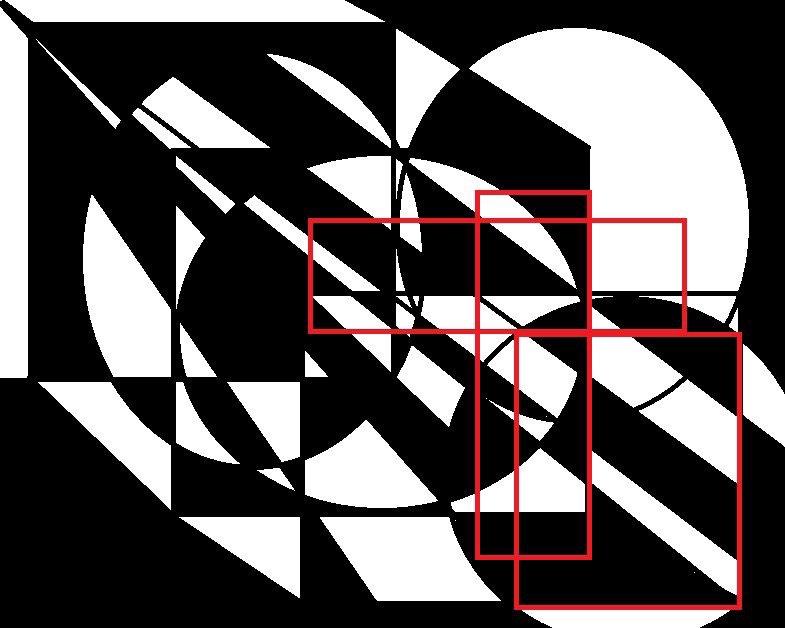
This piece is built from the language of mathematics, an interplay of circles, squares, diagonals, and rectangles woven through reflection, rotation, and translation. The blackand-white contrasts emerge from Boolean operations on shapes, where intersections and subtractions transform simple forms into layered geometries. The red rectangles overlay like windows, suggesting both containment and passage. At its core, the work demonstrates how mathematical structures, such as set theory, Euclidean geometry, and linear transformations, can generate visual rhythms that echo the same patterns of order and disruption found in culture and literature.
Samantha Gorman
Assignment 041412
13:45
SOA lingers outside the radio cabin, listening to the soft clanking and scraping of metal tools as Jack Philips and his partner struggle to fix a few faulty wires. While the radio was silent, SS Amerika’s message of passing two large icebergs has been lost in the airwaves. Before leaving the dock, the men were instructed that the passengers’ messages took precedent over weather warnings. Even if the warning had made it to their ears, it would have been shortly forgotten. SOA realizes that it would not take much to engineer this outcome; the humans were dooming themselves without her slight interferences. Captain
SOA heads out to the deck. The sun is high in the sky but does not compete with the cold whip of the ocean. Despite the bite, the passengers of the ship enjoy the vast view. Children play with tops on the deck floor, embedding shallow scratches into the fresh wood. Excited murmurs and soft laughter fill the deck, which in less than 12 hours will be resting on the crushing ocean floor. SOA walks to the back of the ship to take in the grandeur of the vessel. The steel panels sparkle in the sun.
For this assignment, SOA finds herself physical, able to play human. She enjoys the feeling of this form. Her goal is to appear average—average height, average weight, average level of beauty. She blends in and is never given a second glance by passengers or crew members. She can navigate where she must to accomplish her tasks. She does not believe that anyone has said any words to her since she arrived on the ship this morning. Unnoticeable and unmemorable. When passengers and crew are interviewed for newspapers books, she will never be brought up. Which is vital to someone in her position.
The human world is a stunning place. And this voyage will be historic for many reasons. As she drinks in the sight, unease seems to bubble in SOA in a way that no other assignment has made her feel. Maybe it is the elation of the passengers of sailing on the maiden voyage that is about to be abruptly halted. Perhaps it is SOA’s status as an entity. Beings that work Universal Timeline Management do not function forever. Maybe she will be retired soon, though SOA is not sure how long she has been working. Time is a complicated concept for all entities. SOA, her formal identifier being Situational Outcome Administrator-72798, has engineered countless historical events to specified conclusions to ensure that time proceeds as intended.
SOA watches a young woman sitting by herself on a bench tucked near the last smokestack. Her back and expression are taut as she stares out into the ocean with vacant eyes, the fuzzy Pomeranian in her lap snoozing as she strokes its body.
“No way!” a young man shouts further down the deck and the young woman’s head snaps to attention, searching for the man. Her sharp eyes settle on him and her shoulders release. She fumbles with the clasp of her small, black beaded bag, sliding out a silver flask that she tilts to the sky as if to toast the waves of the ocean. She brings it to her lips, takes a large swallow, grimaces. She covertly tucks the flask away and positions the dog under one arm. Her long ivory dress glitters like a waterfall as she rises and with her one free hand arranges her luscious black fur coat. She sweeps across the deck.
SOA has a few hours until she is needed at the crow’s nest, so she follows the young woman and her small dog.
The young woman walks with her head high. “Mrs. Hayes,” an elderly gentleman says as they pass. She acknowledges his greeting with a slight nod and cold expression.
“For now,” Mrs. Hayes says to herself.
Entities that work for the UTM are not omniscient and are given intel that pertains only to their current assignment. SOA does not know this woman or her past or her future but finds herself enamored with her. She follows the woman until she comes to a first-class cabin door and disappears behind it. SOA ensures she is alone in the hallway and focuses on her outward appearance. Her black high collared dress morphs into a starched maid’s uniform. When she is satisfied, she raises her hand to knock on the rich oak door. After she knocks, she recalls that the crew was limited to 23 female members, but the pull to the woman is too demanding.
“Come in,” echoes out, intertwined with high-pitched barks. SOA slides through the door. The cabin is stunning, the decadence almost too powerful.
“Maid service, ma’am. Just checking to see if you needed anything.”
The woman looks mildly surprised before scooping up the noisy dog. “Cake.”
“Cake, ma’am?”
“I’m celebrating. An impending divorce.”
SOA does not know what to do with her face, and the woman smirks before shaking her head and approaches her. “Everything’s just fine, dear,” she says, slipping a sixpence into SOA’s hand and ushering her out. SOA listens to the cabin door shut behind her while she stares at the coin in her hand.
19:30
SS Californian reports, “Three large bergs.”
SOA has returned to her post outside the radio room. This message dies within the room, and SOA documents the occurrence. She has changed back to her average black dress and is gripping the sixpence until the impression of George V is embedded into her soft flesh. SOA heads to the starboard railing and stares down into the ocean. She opens her hand and traces the profile on the coin. She longs to keep it, but she cannot. She does not own things like humans do. There is no wealth or fancy clothes in SOA’s existence, and this sixpence does not mean anything to her. But the entrancing woman gave it to her, and she yearns to keep it. She places the coin in the pocket of her dress. When the job is complete, she will leave it behind. But for now, the weight of it along her thigh comforts her.
21:40
Mesaba reports, "Saw much heavy pack ice and great number large icebergs. Also field ice.”
Twenty minutes until the crew members are to rotate shifts in the crow’s nest. SOA sits on a deck bench, feeling the icy air blow across her face. Time is running short for the ship and for SOA’s physical form. Many passengers have retreated to their cabins for the evening while others are comparing fortunes in the dining room.
Footsteps climbing down the ladder of the crow’s nest are unnoticeable, and SOA is startled to see two men emerge from the small door.
“Freezin’ me arse off,” says one of the men, arms crossed in an attempt to keep the small amount of heat his body generates safe inside him. They walk towards the officer’s cabin, leaving the crow’s nest abandoned. SOA finds that she is annoyed at how careless these people are. How conceited, arrogant.
She slips in the door and hurries up the ladder to the lookout. When she emerges, she realizes that the temperature is colder above the deck floor. The area is empty except for a large bell adhered to a pole and a pair of small binoculars on a hook below it. The binoculars sway with the ship’s motion. SOA grabs them from their place and presses them to her eyes. Nothing on the horizon to see yet. She scurries back down the ladder and is hiding in the shadows when the replacement watchers emerge and head up the ladder.
“Officer Lightoller says to watch for small ice tonight.”
“Right clear night, shouldn’t be too difficult.”
Then, SOA finds another new emotion stirring—sorrow. She knows that guilt is bearing down on them at 20 knots.
22:30
SS Californian reports, “Halted for the night in an ice field.” Jack Phillips is frantic and cuts the message off before signaling back, "Shut up! Shut up! I'm working Cape Race.”
Almost there. SOA must see the kind woman with her fuzzy dog one last time. She finds herself back at the woman’s cabin door in her maid’s uniform, still clutching the binoculars. She taps on the door and is met with the dog’s yapping, but no one invites her in. She turns the knob and peeks in. The dog attempts to escape the room, so SOA scurries in closes the door behind her. The woman is asleep on the sofa, the flask held to her chest, moving up and down with her deep breaths. An empty champagne bottle rests on the table in front of her. Celebrate indeed, SOA thinks. The dog jumps against SOA’s legs and she scoops him up in her arms after rearranging the binoculars to hang from her neck. The dog licks her face, and SOA smiles.
SOA then interferes in a way she should not. She walks to the closet and pulls out the heavy sterile lifejacket and places it on the empty chair across from the sleeping woman, ensuring it is easy to see.
The woman will be pulled from her sleep soon; SOA leaves the cabin cradling the dog in her arms. She walks to the bow of the ship and pauses. From this vantage point, SOA marvels at the stillness of the ocean, can see the iceberg towering over the ship, can hear the bell screaming from the crow’s nest. Thirty seconds. They have spotted the berg with no chance to alter course. Fifteen seconds. She cradles the dog into her chest, binoculars hanging from her neck, the coin against her thigh. Ten seconds. Her physical form dissipates.
23:40
Michael J. Neely
“Well, well, what do we have here? No ship that old should still exist; that fleet was decommissioned and salvaged eons ago,” Captain Rourke Hale of the salvage ship Argos muttered, his voice barely carrying over the low hum of the command deck. Through the thick blast-proof glass viewports, a mysterious ship of unknown origin loomed as a colossal derelict remnant of a much earlier design and time. It was nothing but a scarred old vessel adrift in the star-pocked black void of deep space. The ship’s huge, jagged silhouette was back-lit by the pale wash of a distant moon, highlighting rows of dark windows that gleamed like cold, dead eyes.
“Relative drift is steady, and docking clamps are on standby, Captain. It’s just…drifting.” From her pilot chair at the helm, Moth cleared her throat over the comm. “Everybody look for a name so we can check the registration”, the Captain remarked.
“Floating’s fine. Means salvage. Look at that hull, old alloys, reinforced plating. We can strip it clean.” Kade Mercer leaned against a console, squinting at the blinking returns, and let out a slow whistle.
“That’s the funny thing about coffins, they’re reinforced too.” Doc exhaled smoke from his corner seat, the cigarette tip burning like a distant, dying sun.
Sergeant Ketter laughed in his usual loud and brash manner, thumping his rifle against the deck and disturbing the reverent hum of the deck, “Coffin or castle, doesn’t matter. Both got shiny, valuable stuff inside.”
“What do you think, Cap? Worth a look?” Tamsin, the Argos’ navigator, asked softly, her voice almost swallowed by the low hum of the command deck. She stood beside Hale, hands clasped behind her back, eyes locked on the void beyond the viewport.
Captain Hale didn’t answer. He just rubbed his chin; his gaze fixed on the drifting behemoth before them. A red position light blinked on its hull every fifteen seconds, steady, patient, unblinking. Not a beacon. Not distress. More like a pulse.
“Life signs?” Hale asked at last, turning to their thin, dark-haired pilot.
Moth hunched lower into her chair, shoulders tight, eyes flicking over the scan readouts. She shook her head once.
“Not a heartbeat on board,” she said, voice hushed, as though the ark itself might overhear. Her fingers danced across the console, cycling through wavelengths and filters.
Static.
More static.
Then a spike.
“Power. Something’s still drawing. Positive for electrical… likely an AI. No gravity, and no life-support, all off-line”
“We’re going in. Suit up.” Captain Hale’s nod was enough, Sergeant Ketter whooped like a new private on leave, while the others moved with brisk economy, clipping weapons, tools and tether-lines onto the fasteners of their boarding-suits. The hiss of seals locking shut filled the staging room just before the air lock chamber. Each member of the away-team looking sharp as their helmet visors slammed shut with loud clacks
At the helm, Moth inched them forward. The ark’s vast hull swallowed the viewport until the stars and the pale glow of the moon were gone, leaving only shadow, an artificial night. The occasional emergency light winked inside the derelict like a candle in a mausoleum, but no movement stirred in any of the windows. No sign of any Myrmex either, the tireless maintenance drones that should have scuttled through its’ guts. Just the steady blink of the blood red SOS pulse, counting out silence.
A docking arm jutted from the hull like the splintered limb of some long-dead tree, twisted and skeletal. Its plating was corroded through in places, cables hanging like vine-strands or exposed sinew.
Moth guided the Argos in steady, fingers white on the controls. The scavenger ship drifted close until the hulls almost kissed, then the boarding clamps bit down with a shudder. Metal on metal, a groan that reverberated through their boots, like the ark itself resented being touched by something living.
The clamps locked with a final thud, and the deck plates beneath their boots thrummed as pressure seals whined through their cycle. The airlock tunnel extended, telescoping out from the Argos’ side with a groan of stressed metal.
Inside their helmets, the crew’s breathing filled the silence. The sound of their own hearts suddenly seemed too loud.
“Pressure equalizing,” Moth’s voice crackled over comms, low and uncertain. The boarding tube shivered as it latched to the ark’s docking hatch, a dull clang echoing back through the Argos’ hull.
“Green light,” Tamsin reported, her voice steady but nervous.
Sergeant Ketter stepped forward, his large rifle up and heavy against his chest plate. “First one in finds the treasure, eh?” he said, grinning.
“Or a breaching trap.” Doc scoffed and nudged Sergeant Ketter, putting a hand on his shoulder and standing behind him. “You’ll be lucky if you don’t find a corpse instead.”
“Enough.” Captain Hale said. He drew a worn coin from his pocket, thumb brushing the worn face once before tucking it away. “We go silent inside. Eyes open. Hands off until I say.”
The docking hatch shuddered, a long metallic sigh, before it cracked open. A single breath of stale air escaped into the boarding tube, dry as bone dust from an ancient Egyptian crypt. Beyond the threshold, the ark waited. Its interior was black, lit only by the faint pulse of the failing emergency lights.
The hatch ground open with a drawn-out screech, flakes of rust spinning into the boarding tube-like ash in low gravity. Captain Hale lifted his rifle and gestured. “Ketter, on point. Doc second, Kade and Tamsin behind me.”
“I’ll keep us steady.” Moth’s voice sounded in their helmets over the comm system. “If that hulk twitches, we are out of here.”
Ketter thumped his chest plate and laughed. “Stay scared, sweetheart. Better for all of us.”
Doc gave him a look that could strip paint. “You’d be the first to piss yourself if something twitched.”
Captain Hale ignored them both, stepping into the docking tube. The others adjusted, Sergeant Ketter going first, and they made their way into the ark, magnetic boots clanging hollowly against the metal.
“Good luck in there,” Moth murmured into her mic.
The boarding tube vibrated once more, then stilled. The crew stood at the edge of the ark’s hatch, staring into its lightless throat. The pulse light from outside bled weakly down the corridor, painting the walls red every few breaths. Nothing moved.
The first corridor of the lifeless hulk was a silent grave. The air was stale, but it became readily apparent that the ship had no gravity balance active; random bits of the ship’s interior floated around. Sergeant Ketter crossed first, his rifle raised and steady, and the others followed. The corridor stretched on in silence, narrow and long, its walls blistered with age. Dust floated in thin clouds with each step, refusing to settle back on the floor.
“Coffin corridor,” Ketter muttered, half-laugh, half-warning.
“Not a coffin. A crypt.” Doc’s voice drifted over the comms.
Kade stepped past Tamsin for a moment, scanning the scorched plating and exposed cables of the corridor. “All I see is alloys. Scrap that’s worth a fortune if it still cuts.”
Hale raised a fist, halting them, his voice even and unshaken. “Stay tight, eyes forward.”
They moved deeper as one, helmets bobbing in the dark, beams of light pushing the shadows back in thin, feeble cones. Behind them, the pulse-light flared again, a heartbeat fading into the black. The ark’s silence pressed in around them, vast and unbroken, as if it had been waiting for their footsteps.
The corridor spilled into a wider chamber, and their helmet lamps swept across rows of cryopods lining both walls. Hundreds of them, stacked in tiers, their surfaces clouded with frost and time. Some had shattered long ago, jagged plex-like teeth. Others stood intact, but the figures inside were no more than dried husks, collapsed and slumped in place.
Tamsin slowed, her breath catching in her mic. “God…”
Sergeant Ketter swung his lamp across the chamber, jaw tight now despite the rifle clutched in his hands. “Guess they didn’t wake up for dinner.”
“Keep your jokes,” Doc said, stepping past him. His visor beam lingered on a cracked pod. Inside, a pair of fingernail scratches trailed white lines down the glass. He adjusted his grip on his med-kit. “These are coffins now.”
“How long have they been dead?” Hale asked. Doc was quiet for a moment, leaning in to look around the closest cryopod.
“Easily a few centuries, at the very least.” Doc whistled. “This ship is older than we thought.”
They pushed deeper. Every surface was coated in a fine film of dust that drifted with their movements, hanging in the air like pale smoke. Signs of lives long gone clung in small details; a wedding ring taped to the inside of a pod. A child’s shoe floating near a vent. A strip of cloth knotted like a charm around a wrist bone.
“Whole damn ark’s a grave,” Kade muttered, scanning with his HUD. “And all I see is scrap no one bothered to pick clean.”
Ahead, another corridor stretched into darkness, emergency lights guttering every few seconds—each blink of red carved long, blood-tinted shadows across the dead.
Captain Hale raised his rifle, his voice flat when he spoke, “Move. Command spine’s ahead, we need to check it out first.”
The next corridor bent sharply upward and ended at a heavy blast door half-ajar, its pistons frozen mid-strike. Hale forced it wide enough to squeeze through, and the crew followed quickly behind him into the ark’s command deck.
For a moment, it was almost ordinary. Consoles still glowed faintly on emergency power, cracked screens casting a soft light over dust-caked keyboards, chairs, and panels. Their void-suits filtered most of the air, but the intakes carried the sharp tang of ozone and burnt wiring.
Suddenly, the speakers crackled.
A woman’s laugh burst out, clear and startling in the silence. It echoed across the bridge, freezing every man and woman in place, rifles snapping upward. The laugh cut off, replaced by the warbling notes of a birthday song. Off-key. Joyous. Children’s voices. It l ooped twice, skipping like a broken record before dissolving into static.
“The hell was that?” Sergeant Ketter muttered, voice low and uneasy, rifle sweeping the shadows.
The static cleared. Another fragment spilled through: a lullaby, hummed softly, words lost, the tune unmistakable. It broke midway, distorted, then replayed from the beginning. Again. And again.
Then a new voice cut in, neutral and mechanical, broken: H-h-home. Home. H-h-h-h… home. G-g-going.
The main command screen suddenly flared to life. Ketter raised his rifle and aimed at it like he could shoot the noise dead.
“Scrap it. It’s haunted, rip the core out and shut it up,” he barked.
“No.” Hale’s voice cut sharply. He stepped closer, rifle lowered but ready. “It’s not hostile. It’s…the ship’s records on auto-playback.” He trailed off as the monitor flickered and bloomed with new color.
A man’s voice, warm and confident. “When we land, I’ll build you a porch, and we’ll sit there every night.”
The feed appeared, the same man smiling into the lens, holding someone’s hand just out of frame. Cramped bunks behind him, children’s drawings taped to the wall. His face froze mid-smile, fractured into vertical lines, then vanished.
A child’s voice, delighted. “Oh, look! Otto floats! Look, Papa!”
A little girl spun slowly in low gravity, her cryosuit bulky, a stuffed otter drifting in front of her. She giggled as she pulled it back to her chest, hair floating around her face. The image looped twice before collapsing into static.
The screen shifted again. A birthday table, crowded with children in crumpled paper hats, candles burning on a cake. The footage froze with the flames still dancing. A woman rocking an infant, singing the same lullaby that now hissed through the speakers, her smile small but radiant as the baby’s hand curled around her finger. Then the image cut, frozen in half-glitch. A wide cryopod chamber, still lit, still orderly, colonists smiling and waving before sealing themselves in.
The crew stood silent, helmets reflecting ghostly flickers of lives lost centuries ago.
Hale’s voice was low, almost reverent. “This is a generation barge. These people were going somewhere to settle.”
The next feed stuttered in. Colonists gathered in a mess hall, mugs raised, voices singing, though unease rippled behind their smiles. The projection jumped: the same hall again, fewer faces, paler skin, mugs untouched.
Another flicker. A mother in a cryopod chamber, stroking her child’s hair. “Close your eyes. I’ll be right here when you wake up.” The baby sobbed, clinging to her as she whispered.
Flicker. Static. Vertical lines.
The same chamber, but wrong now. The child, clawing weakly at the cryopod glass, her mother collapsed beside her, unmoving. No sound, only the silence of sealed plex, but her frantic pounding was deafening all the same.
Tamsin swore under her breath, tearing her gaze away and gagging into her mic.
Then the bridge filled with coughing. Harsh, ragged, wet. A man’s voice gasped for air, pale face materializing on the main display. “Life support… someone fix the cycle, it’s failing and I—” Static devoured him.
The screens flickered again. For a moment, nothing came, only static hissing across the bridge. Then a new file opened, grainy and unsteady.
A little girl sat cross-legged on the deck, knees drawn so tight to her chest it looked like she was trying to vanish inside herself. Her cryosuit sagged off her bones, too big now for her wasted frame. The helmet lay beside her like a useless toy. Her lips were cracked and bleeding. Her cheeks were hollow, her eyes rimmed raw from weeping. Every breath came shallow, like it cost her too much to keep trying.
In her arms, she clutched a stuffed otter, its fur matted, one button eye worn smooth to a dull circle from years of love. She tried to smile for the camera, but it broke halfway into a sob.
“If anyone hears me… please,” she whispered, the word shattering in her throat. Tears welled, cutting thin tracks down her sunken cheeks. “Mama and papa are asleep and they won’t wake up. Everyone’s asleep. I sang to the ship, and it sang back once… but now it’s quiet. It won’t sing to me anymore.”
Her thin fingers stroked the otter’s face as if it could answer her. She bent her head and murmured something into its ear, the mic catching only fragments of her cracked voice. Then she looked up again, staring straight into the lens.
“Please don’t leave us here. Please take us home. I don’t want to be alone anymore. Please. Please. Please.” The last word hitched on a sob, her voice breaking into ragged gasps. Desperation filled every syllable.
Her arms shook as she hugged the otter tighter, squeezing it weakly to her chest. The effort made her sway as if she might topple over.
The file cut off mid-sob, frozen on her tear-streaked face for a single heartbeat before collapsing into static.
For a long time, no one moved. The bridge was silent except for the faint hiss of their breathers.
Something drifted across the command deck. Doc reached out automatically and caught it. In his glove was a small stuffed otter, one button eye scuffed, the stitching frayed along its paw.
His voice was low, roughened by awe. “This was hers.”
Sergeant Ketter swallowed hard, his earlier bravado gone. Tamsin’s hands shook as she turned away, visor hiding her eyes. Even Kade said nothing.
The ark’s screens blinked once more, the broken voice of the AI crawling through the silence.
H-h-home. Home. Going Home.
Captain Hale crossed to the navigation console without saying a word and brushed a layer of dust from the cracked screen. His gloves tapped the controls until the navigation logs shuddered awake. The crew gathered behind him, their helmet lamps painting the console in dim light.
The display stuttered, lines of corrupted code crawling by, then steadied into a single star chart. A blinking marker traced a looping trajectory across the void.
Tamsin leaned closer. “It never finished the jump. It’s been trying to course correct for centuries. A simple code correction was all they needed.”
Hale’s jaw tightened. He magnified the destination, the name flickering into clarity in glowing letters scarred by time, dust, and age. It lingered there, impossible and undeniable on the faintly glowing and broken screen.
No one spoke. The ark’s failing systems hummed, the only voice left to carry the dream of a people long gone.
The speakers crackled one final time, the broken voice of the AI whispering through the static.
H-h-h-h-home. Home.
Captain Hale’s gloves moved across the console, steady and deliberate. The ark’s navigation screen flickered, its corrupted lines shuddering as he forced a final correction into place. For the first time in centuries, the trajectory straightened, aligning toward the faint, long-forgotten star of humanity’s first home.
The ship groaned in response, as if waking from a dream. Thrusters coughed, shivered, and then burned with a weak but steady pulse. The bridge trembled underfoot as the ark began to turn, ancient engines pushing it once more into the void.
The crew stood behind Rourke Hale in silence. No one reached for the panels, no one claimed a prize. Doc took the little stuffed otter and tucked it into a cubby next to the command chair. They watched as the dead ship carried its memories forward, a reliquary set adrift with its course finally true.
When the clamps were released, the Argos drifted free of the dark, leaving it behind. The two vessels parted slowly, the scavenger falling back while the massive grave-ship pressed onward, its hull lit by the fading red pulse.
Inside the ancient ark, the navigation screen blinked one final word before cutting out:
Dylan H.T. Chan
Private First Class Elena Marquez never imagined she would miss the hum of her Brooklyn studio. Yet here she was, stationed at Camp Al-Noor of a desert village, the air, the nights broken by mortar fire. At dawn, the sun rose like molten gold over the dunes; by noon, heat radiated from every metal surface. One afternoon, while unloading rations in the supply tent, Elena uncovered a battered Moleskine notebook wrapped in plastic inside a forgotten crate. Its black cover was scuffed, the elastic loop gone. She flipped it open beneath the flickering lamp and discovered half-finished charcoal sketches: an old man selling dates beneath a makeshift awning, a mother rocking her baby under a lemon tree, children chasing a soccer ball across cracked pavement.
The images felt like whispers from another life—lives lived beyond the base’s razor wire. Memories of her last gallery show in Brooklyn surfaced: charcoal smudges on her fingertips, the smell of turpentine, the hush when visitors paused to study her lines. That night, in the hush before lights-out, Elena perched on her cot and retrieved the stub of charcoal she’d sewn into her uniform pocket before deployment. She set the notebook on her lap and studied the date vendor’s lined face. Each stroke she added—darkening the shadows beneath his brow, refining the gentle curve of his weathered hands—felt like stitching a bridge between their worlds. As she worked, the distant rumble of generators and the crackle of the security radio faded away, replaced by the soft whisper of charcoal on paper.
Over the next weeks, Elena returned night after night to the notebook, filling it with fragments of village life: a barefoot boy on tiptoe, hand outstretched toward a round of bread hot from the oven; a donkey cart piled high with water jugs, its driver paused mid-sip of steaming tea; mottled walls of alleyways where laundry fluttered like flags. She added a sketch of the local mosque’s ornate wooden door, the carved patterns catching light and shadow as though dancing. Each drawing was an act of quiet rebellion, a testament to the humanity that persisted beyond the sand and steel around her.
Still, war was never far. Before dawn one morning, a mortar slammed into the training field, the shock shuddering through the barracks. Elena’s cot rattled violently; the notebook leapt to the dusty floor, pages splayed like startled wings. She tasted grit in her mouth as she stumbled outside, boots pounding the hard-packed earth, ears ringing with shouted orders. Her squad assembled swiftly, checking gear and comrades under the red glow of emergency lights. Shaking off debris, Elena pressed the notebook to her chest, guarding it as if it were a fragile truce between soldier and civilian.
By the time her tour entered its final month, Elena’s hands bore the constant smudge of charcoal, her uniform carried fine gray dust, and her heart ached with impending goodbye. She lay awake in the late-night stillness, listening to the wind sweep across sand-filled track, wondering if she would ever see these faces again. One balmy evening, after the sun dipped below the dunes and the sky glowed lavender, she slipped beyond the base perimeter, notebook and charcoal in hand. Hesitation caught her breath as she paused beneath the watchtower’s shadow, fingers clenched around the charcoal. But her memory guided her—footsteps tracing familiar paths through narrow alleys until she reached the date vendor’s stall.
The old man stood as he always had, steam curling from the kettle behind him, the air rich with the sweetness of dates and spice. He looked up at the uniform, then at the woman in dust-caked boots whose face was drawn with exhaustion. Slowly, he set aside the steaming cup and motioned for her to approach. She extended the portrait she’d finished days before: his lined face rendered in deep blacks and grays, his eyes shining with quiet dignity. He froze, breath catching, as though the lines might vanish if he blinked. Then his face softened, disbelief shading into wonder. He reached out and traced a fingertip along the charcoal stroke of his brow. “Ana Afghan,” he whispered as he lifted the kettle lid, the saffron steam rising between them. “You…you see me.”
Elena nodded, voice catching in her throat. “Your story matters.”
They lingered beneath the lantern’s glow, silence speaking what words could not. In that moment, months of fear and distance crumbled away.
The next morning, Elena sketched herself in the barracks—helmet off, charcoal smudged across her cheek, eyes reflecting both exhaustion and quiet resolve. Beneath it she wrote, On both sides of this wall, we draw humanity. She left the final page blank, space for stories yet untold.
When her deployment ended, Elena returned to New York with the notebook tucked safely in her duffel. In her small studio apartment, she unwrapped the pages and traced each line: the old man’s gentle gaze, the mother’s tender sway, the boy’s hopeful reach, the mosque door’s intricate patterns. She remembered the bustle of the supply tent, the hush of late-night sketches, the blast that scattered her world. Inspired, she prepared an exhibit of charcoal drawings paired with short narratives—The Last Sketch she titled it.
At the opening, veterans, students, and families drifted between easels, pausing before each work. Ahmad’s photograph, sent by a local liaison, hung beside Elena’s portrait of him. A cluster of visitors gathered around the final page—the blank sheet bearing only the promise of more stories. Just before the exhibit closed, a letter arrived on creamy paper in careful English:
“Dear Elena, Your gift reached me beyond words. Here, each sketch feels like home. Thank you for seeing me. “
– Ahmad
Elena folded the letter gently and pinned it beside her drawings. In her final journal entry before shipping out again, she wrote:
“ Art survives war. It lives in the spaces between us, in silent sketches beneath a gunmetal sky. Every line drawn is a promise: to remember, to connect, and to hope. "
And so it did.
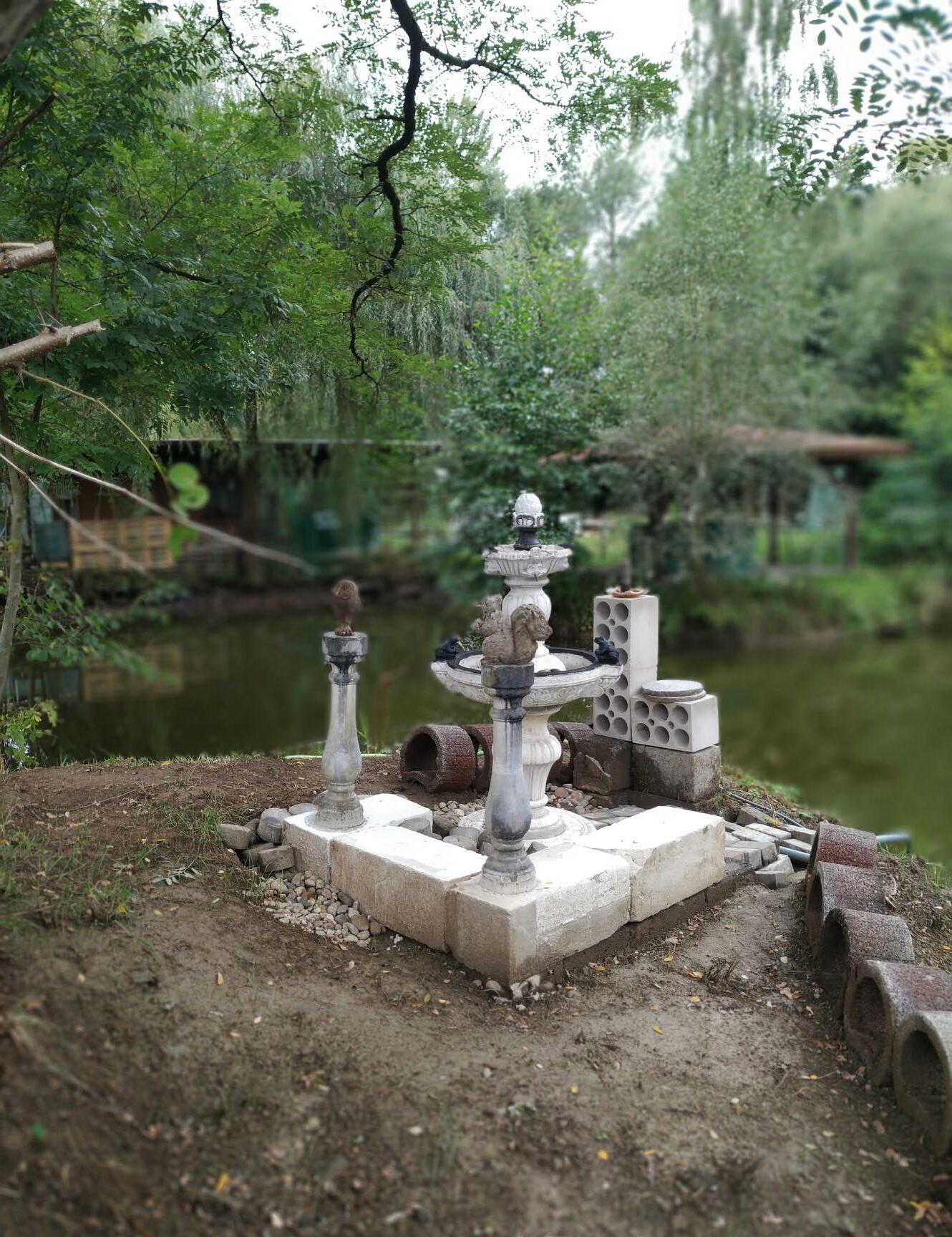
Daniel Ross
The soft mud, spongy; calming water ebbs at the edge of oak trees and the like, licking at protruding roots and fallen branches that wade in the shallows like broken serpents.
A lone dog, streaks through the water like a heaven-bound cutlass. She searches for geese and soft singing mallards, longing to find a mate.
The susurrant shrubbery, reserved but uncomposed, brings meaning to the words: hushed beauty.
This lonely place, hides from the city lights in repose. I am lost when I meander through its enticing obscurity; lost like the long-forgotten train tracks and the monolithic dam-gatehouse.
The water rushes near the landing, like a mind unbridled, searching for deep counsel.
Here, everything else recedes.
“Seeking Counsel”
Daniel Ross
It was not death, for I stood up, And all the dead lay down; Round cobbled paths, And graven slabs of stone
Thrust from the clay and grime
Like the smooth stone well
Where he would take water.
The solemn Weller; Hands worn rough From firm ropes And splintery buckets.
He would ponder on the wheaten knoll, And sip slowly
As he tipped the bucket back.
The smoke-soaked drapery rags
Sagged over his shoulders
Like his own sunned skin; Wrinkled with weather, And dusted from work.
He would liberate the water, Gently cast down the wooden scuttle
Into the darkness and murk, And hand over hand
The tired old Weller
Would heave and heave
The load upward to light. Glistening, The water would swell
In the torrid sunshine, The sparkle of a cloud
Or a mild rain droplet: Parched dew that licks the grass blades.
The old Weller; Meanderer of old graves, Where his cow-leather boots
Beat the old stone path daily.
The water in its vessel,
“The Weller”
He would walk away from the sun
Towards the soft mountains
Always disappearing in the dim light
Or an occasional mist. He was no ghost of my mind, Creation of the fiery sun
Flowing forth from The waters of my soul: The Weller smiled; And then I knew, It was not death, For I stood up, And all the dead still lay down.
Nobukazu Tanaka
“Untitled”
The sky sparks in the season. Downpour, blaster, and thunder awfully get us. Mushrooms grow up cheerfully aside.
Eva Pagoulatos
“Once
Once upon a moonlit dream
A stranger walked my way
He took my hand and told me
The shadows will part away
The load you bear is heavy
The looking at the scars
Yet there is benefit in reflection
As frightened as you are
Surprise! Said life one morning
With the wind you’ll bow and bend
You’re stronger than you thought yourself
Truly resilient.
German R. Cayabyab, Jr.
“The Last Library on Earth”
I breathe in dust— the perfume of forgotten dreams. My shelves? Ribs. Cracking with the weight of silence.
Every book here is a star, ink burning in paper skies. Once— voices thundered through me: kings, lovers, prophets, fools! Now?
Only cobwebs whisper back.
Outside— machines glow brighter than dawn. People scroll— but they don’t turn. They post— but they don’t speak. They echo— but they don’t listen.
And still— I wait. I keep the vigil. I clutch their stories like a hear t clutching its final beat.
Until— the door groans open. A child steps through. Dust explodes like galaxies.
She lifts a book— and BOOM— a spark leaps! The silence cracks! Her eyes—ignite. And just like that… the universe breathes again.
Cynthia McGinnis
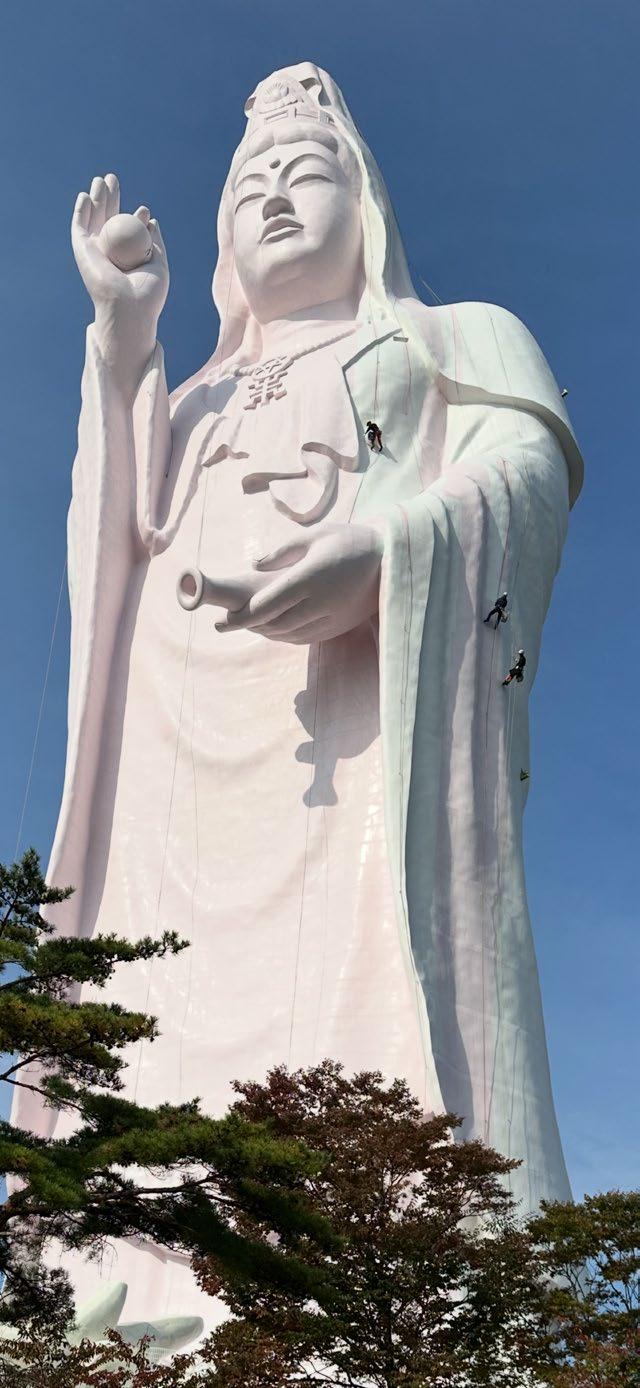
This photograph captures the juxtaposition of human dedication against monumental spirituality at the Sendai Dai Kannon, Japan's White-Robed Colossus. The tiny figures of maintenance workers, suspended on ropes against the massive white statue, reveal the intimate human labor required to preserve this 100-meter sacred monument. Their presence transforms this image from simple documentation into a meditation on service, scale, and the quiet devotion of those who maintain cultural treasures. The workers are pilgrims of preservation; their careful tending of the statue reflects the same reverence as traditional worship, reminding us that caring for sacred spaces is itself a form of prayer
Shanda T. Buterbaugh is a retired teacher and nurse who lives among the abandoned coalfields and lovely Mennonite farms of western Pennsylvania’s woods. She participates in veteran memorial activities and the rehoming of historical artifacts. She is currently researching local history related to the twenty-six names found on a homemade honor roll rescued from the belfry of an old Allegheny Wesleyan Methodist church. Her husband was a veteran of World War II (1967 Labor Supervision) whose last assignment was in Frankfurt.
German R. Cayabyab, Jr. is a journalist, freelance writer, and public relations professional currently pursuing an MS in Intelligence Management at UMGC. His creative and professional work explores resilience, truth, and the enduring power of storytelling. As the founder of Integrity & Competence Communications (integrityandcompetence.com), he champions informed leadership and ethical communication. His poetry and essays have been featured in academic and cultural publications worldwide.
Dylan H.T. Chan is an undergraduate student majoring in Comparative Literature. His academic interests include world literature, cultural studies, and the relationships between literature, media, and society. He is particularly interested in how literary texts circulate across languages, cultures, and historical contexts. His work often explores questions of interpretation, translation, and the evolving role of literature in a globalised and digital world. Through his research and writing, he aims to examine how narratives shape cultural understanding and critical thought.
Ciara Costanzo is a proud San Francisco native with a deep love for the ocean and the energy of the California coast. As a devoted dog mom to her beloved dachshund, Phillip, she cherishes the simple joys of long walks, salty air, and meaningful connection. She is passionate about exploring the human experience and elevating collective consciousness through art, spirituality, and psychology. Whether reflecting by the water or engaging in heartfelt conversation, she is inspired by growth, authenticity, and the beauty of the human experience.
Ivan de Monbrison lives with severe psychiatric disorders that prevent him from having what others might call a “normal” life. Writing has become an outlet—perhaps a window—from which he can glimpse a small square of blue sky. His work often reflects the chaos within him, yet through pen and paper he is able to give that chaos a visible form. Writing can feel like a slow death, he says, but it is still better than silence.
Bryon L. Garner, PhD, is a U.S. Navy veteran advances the understanding of veteranality as a fluid construct shaped by race, gender, and societal perceptions of service. A scholar in Veteran Studies, he recently published Black Veteranality: Military Service and the Illusion of Inclusive Patriotism (Routledge, 2025), which examines the intersection of race, patriotism, and military service. Dr. Garner is an adjunct professor at Barber-Scotia College and hosts the web series American Paradox: Black Veterans and America 250
Samantha Gorman, a lifelong lover of books and storytelling, lives in Western Pennsylvania. After taking several creative writing classes, she discovered her voice and embarked on the adventure of becoming a writer. She writes poetry and short fiction and is currently working on her first novel. Her work has appeared in The Ekphrastic Review and has been nominated for the Best of the Net Anthology.
Jacqueline Grant is an English graduate of UMUC and a native Caribbean islander. She grew up in a small, wellconnected village nestled in lush, mountainous terrain overlooking the turquoise Caribbean Sea. Adventure was plentiful and imagination endless. Play was always educational; Jacqueline learned the tools of many trades by watching builders, farmers, carpenters, storekeepers, teachers, and fishermen at work. She is grateful to the people in her village who helped make her childhood so remarkable.
Anthony Jerome Hampton served twenty-six years in the military. During that time, it took him twenty years to complete a bachelor’s degree in Management Studies due to numerous assignments and deployments. When upperlevel courses were unavailable locally, he often traveled throughout Germany to attend them. He remains grateful to the University of Maryland University College for providing the opportunity and encouragement to succeed. That experience inspired him to pursue and obtain a graduate degree in Information Systems Management.
Md. Mozaffor Hossain is an international graduate student from Bangladesh currently pursuing a PhD in Rhetoric and Composition in the English Department at Ohio University. He completed an MA in English at North Dakota State University in summer 2025. Prior to that, he earned a BA (Honors) in English and an MA in English Language Teaching from Rajshahi University in Bangladesh and taught English literature and language at several universities there for about twelve years. His research interests include AI and writing, composition pedagogy, critical pedagogy, digital rhetoric, literary criticism, literary theory, and social justice. He also enjoys reading and writing poetry.
Paul R. Marchand biographical information unavailable.
Cairo A. Maxwell, is a native of Southeast Virginia, formerly a middle school English Teacher, and is currently a graduate student at the University of Virginia pursuing a Master of Arts in English with a concentration in Teaching Literature and Writing. He plans to pursue a PhD in the humanities. His research interests span American and African American literature, Black studies, and transatlantic history. He is also an avid poet, with his first collection, Sparrow, currently in progress.
Cynthia McGinnis is an Associate Professor of Mathematics and Computer Science at the University of Maryland Global Campus who explores the intersection of mathematics and art through digital design and visual mathematics. With a background in art, music, and dance, she creates work that bridges analytical and creative disciplines. Her digital piece “Fibonacci Mod 4” was presented at the 2012 Bridges International Conference and published in the Journal of Mathematics and the Arts. Her recent work, “Symphony of Transformations,” was accepted for the 2024 Bridges Conference. As both a poet and digital artist, she continues to inspire students and art enthusiasts.
Toni McLaughlan teaches Oral, Written, and Organizational Communications courses downrange as an Overseas Collegiate Faculty member of UMGC. With a PhD in Higher Education Research, she further developed her writing skills as a Communications Intern with the United Nations following service in India with the U.S. Department of State as an English Language Specialist and Fellow. She continues to publish and review research on educational technology, the internationalization of higher education, and intercultural communication, with a focus on intercultural sensitivity.
Anthony Miller is an active grandfather and a veteran of the United States Army, the Indiana National Guard, and the United States Navy. A University of Maryland Global Campus Europe student, he is currently pursuing a master’s degree. Anthony considers being a grandfather the best work he has ever had and enjoys it above all else. He is passionate about helping build a healthier world for future generations.
Michael J. Neely was born in El Paso, Texas, where his love of literature began early. As a student he devoured novels so relentlessly that he often treated classes as background noise—sometimes with spectacular academic consequences. In 2014 he joined the U.S. Army as a medical laboratory technician, serving two tours in Korea and working in the laboratory through the peak of the COVID-19 pandemic. He now serves as the Ancillary/Laboratory NCOIC at Grafenwoehr, Germany. Happily married with three children, Mike balances duty, family life, running, and writing novels he hopes to publish someday.
Marva Oxley is an educator serving more than 190 diverse high school students across multiple subjects. Before entering education, she built a distinguished thirty-year career in operational leadership, managing complex projects and developing technical documentation and training materials. She holds an MA from Liberty University, a Graduate Certificate in Acquisition and Contracts Management, and a BSc in Criminal Justice from UMGC. She has also completed specialized training in mediation and public speaking. This is her first publication.
Eva Pagoulatos was born in the United States and raised in Greece. She completed her undergraduate degree in psychology at the American College of Greece and earned her doctorate from Albizu University in Miami, Florida. She has been teaching for more than a decade and enjoys expanding her students’ perspectives while gaining new insights from them. Psychology has always been her passion, particularly the mind–body connection. She is also a licensed clinical psychologist specializing in psychological and psychoeducational evaluations for children and adolescents. She is a book lover, coffee enthusiast, and avid traveler.
Tanya Ramey, is a writer based in Washington, DC and a UMGC student pursuing a second BA in English (2026). She previously earned a BA in Communication Studies from UMUC and an MA in Integrated Design from the University of Baltimore. A retired Defense federal employee, she later worked as a contractor for the GSA, the Library of Congress, the Department of Labor, and NASA. Her earlier works, “Toilet Tree” and “The Kiwi Handbag,” were published in UMUC’s Constellations. She is pleased to share new creative work in Cultural Constellations, the literary publication of UMGC Europe.
DeShaun Rash is a poet who writes from the intersections of reflection, resilience, and lived experience. His work explores identity, time, and quiet transformation, often finding meaning in moments that might otherwise go unnoticed. Through deliberate language and honest emotion, his poetry invites readers to pause and listen closely. He approaches writing as an ongoing conversation between self and world, shaped by curiosity, vulnerability, and purpose.
Daniel W. Ross, DM, is from Baltimore, Maryland, where he developed a love for poetry and creative writing at Gilman School and Goucher College. His poetry has been published by Washington Writers’ Publishing House, Mouthful of Salt, Plants & Poetry, and As You Were: The Military Review. His upcoming work will appear in Line of Advance and in the Poetry Society of Virginia anthology Perseverance and Resilience. He currently lives in North Carolina with his wife and daughters.
Sebastian Sanchez wrote “Time at Sea” while stationed overseas aboard the USS Howard (DDG-83) in Yokosuka, Japan. He composed the poem one night while on watch and looking up at the stars. The poem reflects the mix of emotions he experienced at sea—the peace and clarity it can bring, as well as the mental strain and exhaustion. It also captures the sudden return to reality when land appears, reminding sailors that the passage of time at sea does not erase the challenges waiting ashore.
Ariana Stroop is a writer and Master of Ar ts in English candidate currently living in Okinawa with her active-duty spouse and two cats. Surrounded by azure waters and subtropical beaches, she draws creative energy from island life. The rhythm of the ocean, the salty air, and the island’s vibrant cultural landscape shape both her imagination and her work. When she is not exploring nature or reading, she enjoys collaborative storytelling through an ongoing Dungeons & Dragons campaign with friends.
Nobukazu Tanaka was born and raised in Aomori in northern Japan. He works as a truck driver and earned a BA in Communication Studies from UMGC in 2024. He enjoys listening to English-language radio broadcasting services from around the world and frequently shares his comments, opinions, daily activities, and haiku through email and social media.
Brennan M. Thomas is a Professor of English at Saint Francis University. She has published short fiction and poetry in literary magazines including Right Hand Pointing, Rue Scribe, Short Beasts, and Eunoia Review, as well as more than twenty articles on film and media studies in collections published by Palgrave, Routledge, and McFarland.
Ruben Trevino is a proud veteran and bilingual poet shaped by borderlands culture and late-night travesuras. His writing grounds identity in color and sabor, where contradictions share the same table. A husband and rescued-dog lover, he is also a keeper of temazcal rites—hombre de fuego. His poetry asks hard questions and speaks to those who have crossed to the other side, as well as those still mid-bridge, boots laced and eyes forward, where dreams meet the real world.
Merci B. Trezzo is a Congolese-born painter whose work explores raw emotion through abstract figurative forms. Using bold, saturated colors and expressive compositions, Merci B. invites viewers into spaces where dreams meet nightmares. The figures in these imagined worlds convey vulnerability and strength, reflecting layered identities shaped by memory and cultural experience. Working primarily in acrylic and oil, Merci B. builds texture and intensity through dynamic brushwork. Influenced by Pablo Picasso and Jean-Michel Basquiat, the work merges abstraction with figuration to challenge traditional portrayals of the human form while reflecting resilience, transformation, and emotional truth.
Jean-François Vernay is a multifaceted author who writes fiction, nonfiction, and creative nonfiction. His work been published internationally in Australia, France, the United States, England, and elsewhere, and has appeared in English, Arabic, Korean, and Mandarin. The Mandarin rights to The Seduction of Fiction (Palgrave, 2016) were acquired by Chongqing University Press in 2022, with the translation released in 2025. His latest fiction book, Island Fortresses (Forteresses insulaires), was published in Paris in April 2022 by Sans Escale.
Neha Yadav holds a Master of Arts in English from Jadavpur University. Her creative interests explore psychology and intersectional identities shaped by migration. Through writing, she examines these themes within literature and personal expression. Her poetry has recently appeared in the Woman Scream Collection. She also enjoys designing dresses and writing stories.
EDITORS: Jessica Stock, Nicola Wentholt, and Christine Lockhart
GRAPHICS/LAYOUT: Shadia Hossain