Legacies
INDIVIDUAL RETIREMENT ACCOUNTS:
InsIde ThIs Issue

Somepeople make an impact loudly. Others, like James E. “Jim” Wyche III, do it quietly, faithfully and consistently over a lifetime.
Jim, who passed away in February at age 88, lived a life marked by service, generosity and stewardship. A longtime member of First United Methodist Church in Lake Charles, Jim served in nearly every capacity imaginable — chairman of the administrative board, finance committee chair, choir member, usher and trusted advisor. Beyond the church walls, he gave his time and expertise to countless ministries and nonprofits, including Samaritan Counseling Center, Calcasieu Community Clinic and numerous community outreach efforts.
Rev. Weldon Bares, long time pastor at First UMC of Lake Charles said, “Jim was the kind of church member every pastor hopes for — faithful, dependable, generous and deeply committed to the mission of the church. He served wherever he was needed and gave with a servant’s heart.”
His legacy of giving was deeply rooted in family. Jim’s father, James Wyche Jr., established a Charitable Remainder Trust with the Foundation that benefited First Lake Charles — a testament to the family’s commitment to faithful generosity across generations.
That spirit continued with Jim’s own estate plan.
In addition to a bequest in his will to directly benefit First Lake Charles, Jim designated two Individual Retirement Accounts (IRAs) to the Foundation to further support ministry. It was a thoughtful and strategic
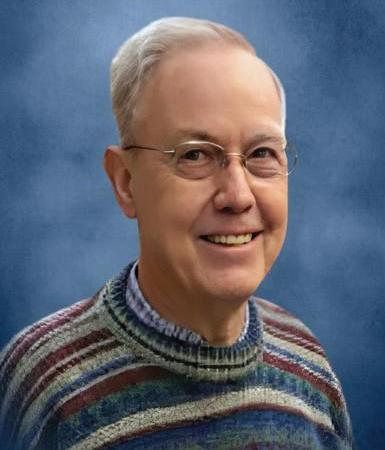
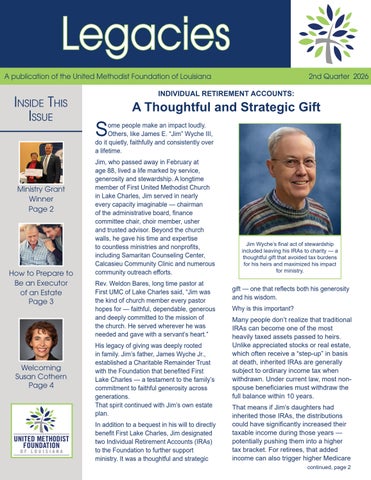
Jim Wyche’s final act of stewardship included leaving his IRAs to charity — a thoughtful gift that avoided tax burdens for his heirs and maximized his impact for ministry.
gift — one that reflects both his generosity and his wisdom.
Why is this important?
Many people don’t realize that traditional IRAs can become one of the most heavily taxed assets passed to heirs. Unlike appreciated stocks or real estate, which often receive a “step-up” in basis at death, inherited IRAs are generally subject to ordinary income tax when withdrawn. Under current law, most nonspouse beneficiaries must withdraw the full balance within 10 years.
That means if Jim’s daughters had inherited those IRAs, the distributions could have significantly increased their taxable income during those years — potentially pushing them into a higher tax bracket. For retirees, that added income can also trigger higher Medicare
continued, page 2
Rev. Jo Cooper Chairman
Michael Belanger
Rev. Katie Black
Abby Cochran
Rev. Clifton Conrad
Brent Graham
Michael Kearney
Drew Kennedy
Bob Kimbro
Eunice Val Lavigne
Richard Lewis
Rev. Mimi McDowell
Sen. Willie Mount
Sabrina Short
Dr. Van Stinson
Rev. Drew Sutton
Chris Spencer President 8337 Jefferson Hwy. Baton Rouge, LA 70809
Phone: (225) 346-1535
Email: information@umf.org
Web Addresses: www.umf.org www.umfgiving.org
Legacies Editor: Kelly Johannessen kellyj@umf.org
“A Thoughtful and Strategic Gift,” continued from page 1
Part B and Part D premiums, creating an additional financial burden.
By naming a charity as the beneficiary of his IRAs, Jim avoided passing along that tax burden to his family and ensured that 100% of those assets would go directly to ministry.
It’s often one of the smartest ways to give.
For families who want to leave retirement assets to loved ones, there is another option to consider: converting a traditional IRA into a Roth IRA during life.
A Roth conversion allows the owner to pay the income tax now, often at a time when they may be in a lower tax bracket than their heirs. Once converted, the funds can continue to grow tax-free,
and heirs can inherit those assets without owing income tax on the distributions. While heirs must still follow distribution rules, the withdrawals are generally tax-free. This creates a powerful strategy: leave Roth assets to family and traditional IRA assets to charity.
Jim Wyche understood that good stewardship doesn’t end in life. Through thoughtful planning, it can continue blessing others long after we are gone.
If you would like to learn more about naming your church or a favorite ministry as the beneficiary of your IRA — or whether a Roth conversion might make sense as part of your estate plan — the Foundation is here to help.
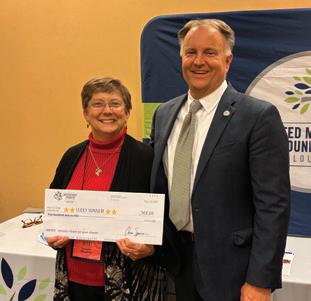
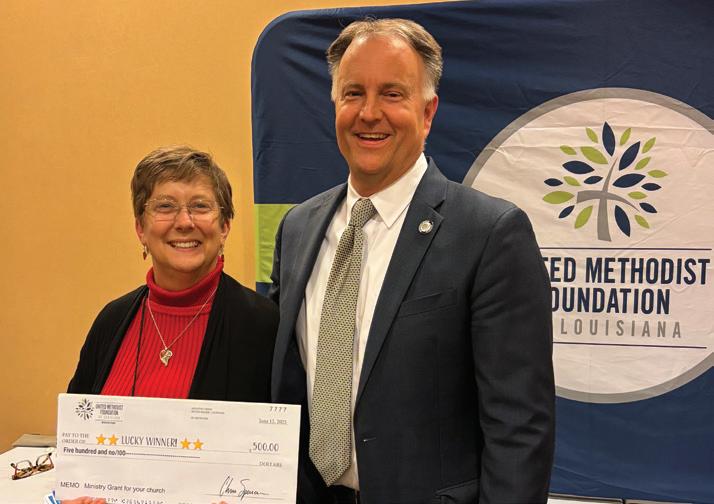
Each year at Annual Conference, the Foundation hosts a prize drawing at its exhibit booth as a way to connect with clergy and church leaders and share resources for ministry. One of those prizes is a $500 Ministry Grant— separate from the Foundation’s regular grants program, which awarded more than $279,000 to ministries last year.
The 2025 ministry grant winner was Rev. Laraine Waughtal of First United Methodist Church in DeRidder.
After prayerful consideration about how to best use the grant, Rev. Waughtal found the perfect opportunity. “We spent time praying over how to use this grant because we wanted to follow where God was leading and make the greatest impact possible,” she said.
The funds will help support Dash and Bash, a community event set for June 27 at West Park in DeRidder.
Designed as a fun, family-centered morning, the event will feature a one-mile walk/run, bounce houses, games, health checks and more. It will also serve as a fundraiser for the church’s preschool program, which serves more than 90
children each week and is in need of replacing toys and equipment. But the impact doesn’t stop there. Using the Foundation grant—and adding additional church funds—First UMC will provide approximately 75 hurricane preparedness kits to families at the event. Each kit will include emergency supplies such as flashlights, batteries, first aid kits, blankets and more.
What began as a simple prize drawing has become an opportunity to strengthen families, support children and equip a community for the challenges of hurricane season—a wonderful example of ministry in action.
Dear Savvy Living,
My uncle recently asked me to be the executor of his will when he dies. I feel honored that he asked me, but I am not exactly sure what the role entails. What can you tell me about it?

Being named executor of a will is an honor that reflects your uncle’s trust in you, but it can also be a significant responsibility— especially if the estate or family situation is complex. Here’s a quick look at what the role involves to help you decide if you’re prepared to take it on.
As executor, you are responsible for settling your uncle’s affairs after his death. This may include:
• Filing paperwork with the probate court to validate the will and officially open the estate.
• Locating and taking inventory of all assets.
• Paying outstanding bills, funeral expenses and any taxes owed using estate funds.
• Notifying banks, government agencies (including Social Security), credit card companies and the post office of his death.
• Preparing and filing his final income tax return.
• Distributing remaining assets to the beneficiaries named in the will.
Keep in mind that an executor’s responsibilities and deadlines vary by state. Numerous websites
provide probate guides or checklists that detail the laws of the state in which your uncle lives.
If you agree to serve, one of the best things you can do now is help your uncle get organized. Make sure his will is up to date and find out where important documents are stored, such as deeds, financial account statements, insurance policies, passwords and contact information for advisors. Having quick access to these items will save you time and stress later.
If the estate is complex, you do not have to handle everything alone. An estate attorney or tax professional can guide you through the process. Fees will vary and are typically paid by the estate. To find qualified help, you can search directories through the National Association of Estate Planners & Councils (naepc.org) and the National Academy of Elder Law Attorneys (naela.org).
One of the biggest challenges an executor often faces is family tension. Encourage your uncle to clearly communicate his wishes to beneficiaries ahead of time, including who will receive personal
belongings and family heirlooms. Wills often leave these decisions to the executor, which can create unnecessary friction.
If he has not done so already, suggest he create a written list outlining how personal property should be distributed. Clarity now can help prevent potential conflict in the future.
Executors are generally entitled to compensation, which is paid by the estate. In many states, fees are based on a percentage of the estate’s value, often ranging from 1% to 5% and potentially higher, depending on the size and complexity of the estate.
However, if you are also a beneficiary of your uncle’s estate, you may choose to waive the fee. Executor compensation is taxable income, while inheritances typically are not subject to income tax.
Serving as executor can be timeconsuming. With good organization and clear communication, it is a manageable responsibility, and a meaningful way to honor your uncle.
“Savvy Living” is written by Jim Miller, a regular contributor to the NBC Today Show and author of The Savvy Living book.
8337 Jefferson Hwy. n Baton Rouge, LA 70809
Address Service Requested

To receive Legacies electronically, let us know: information@umf.org
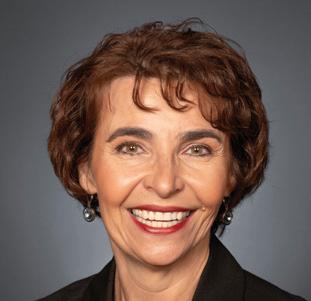
TheUnited Methodist Foundation of Louisiana is pleased to welcome Susan Cothern to the staff as Director of Development Ministry. In this role, Susan will work closely with churches, individuals and ministries to encourage stewardship, generosity and planned giving that supports the future of United Methodist ministry across Louisiana.
Susan chose the title “Director of Development Ministry” because she views her work as a ministry of helping people connect their faith and values with lasting impact. Her passion for serving the church and helping others create meaningful legacies makes her a natural fit for the Foundation’s mission.
Susan previously served with the United Methodist Foundation of Western North Carolina, where she held multiple leadership roles, including Director of Client Relations, Director of Ministry Services, Assistant Vice President and later Chief Operating Officer.
Before joining the Foundation in North Carolina in 2017, she served nearly 16 years as Executive Director of Development at Brevard College, a Methodist-related college in western North Carolina.
“We are thrilled to welcome Susan to our team,” said President Chris Spencer. “She brings a wealth of experience, wisdom and relationshipbuilding skills that will strengthen the work we do with churches and church members across the state. Most importantly, Susan understands that this work is ministry, and that a heart for service will be a tremendous blessing to those we serve.”
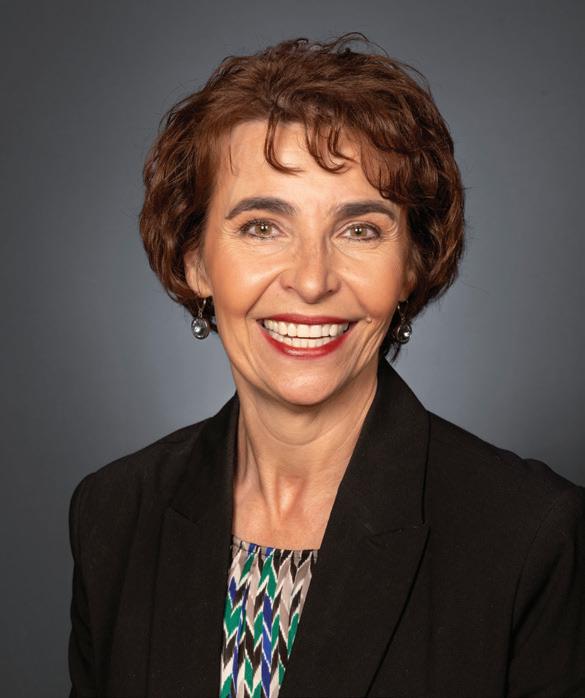
Susan Cothern joined the Foundation staff in April.
Susan’s leadership and expertise will help expand opportunities for generosity, stewardship and legacy giving as the Foundation continues its mission of supporting United Methodist ministries throughout Louisiana.