MESSAGE FROM THE PRESIDENT
Hey ODK!
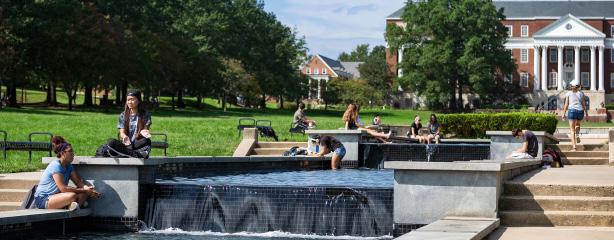
Although the weather hasn’t been exactly cooperating, I am starting to feel the beginning of spring on campus. I am excited to see students head to McKeldin Mall when it gets warm, to see the animals at the farm, and to truly see our campus in bloom. There is also a feeling of change in the air, where my fellow seniors and I are trying to make the most of our final months at the University of Maryland. I’ve been incredibly honored to represent the Sigma Circle this year, and have learned so much by holding this position.
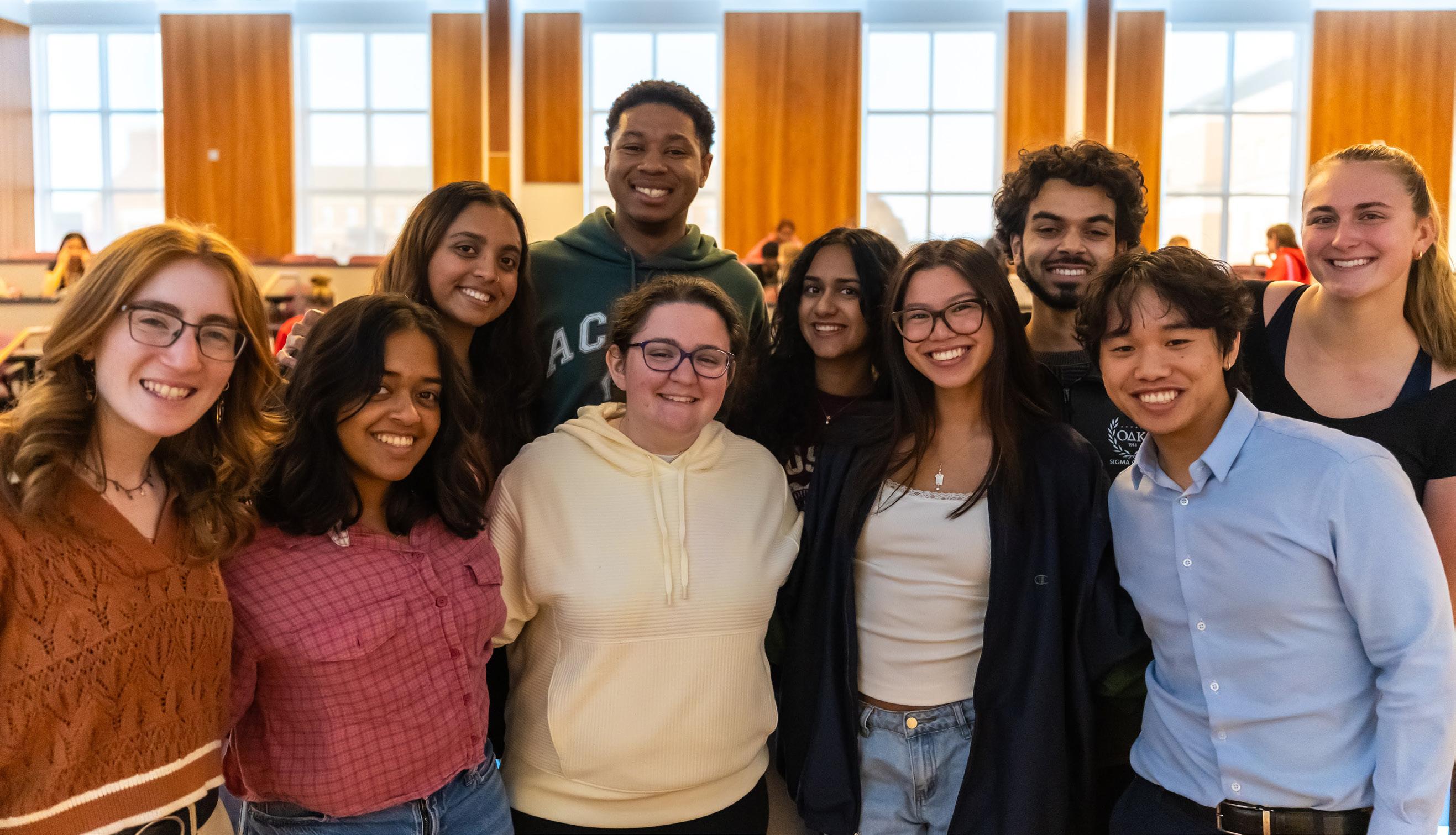
I am thrilled to announce that we will be welcoming 5 honorary inductees, 3 graduate students and 57 undergraduate students to our organization. These inductees show me how leadership is not a fixed idea, and that it can be represented in so many different ways. Every semester I feel my own leadership evolve after seeing all of the amazing work our new inductees have done. We will be inducting our new members at our induction ceremony on Sunday, April 12.
Through ODK, I have been able to work with extremely dedicated members on our executive board, and I want to thank them for all of their hard work. Last semester, we hosted an ODK candle making event and a service event making tie blankets for Trials of Color. We also held our annual Cookies and Crafts night to de-stress before finals, and worked with other campus partners to host the Back to School Lecture featuring Giancarlo Esposito. We will be having some more exciting events this semester, which is always a great way to bring our organization together!
I want to thank the executive board again for their collaboration and innovation, the advisors that help keep everything together, and the Sigma Circle for being an engaged community! I have loved serving as your president this semester, and I can’t wait to see what future leaders become a part of this organization.
Terps Forever,
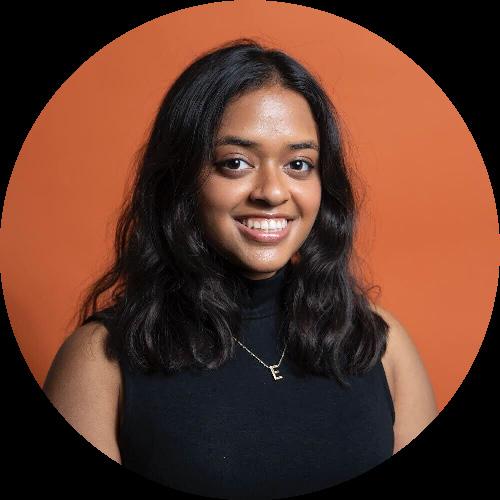
Ela Jalil
ODK Sigma Circle President
ODK Executive Board 2025-2026
Ela Jalil
President
Matthew Adjodha Vice President
Madeline Loughlin Alumni & Member Engagement Chair
Catherine Furtado Philanthropy & Community Service Chair
Kevin Lam Events & Lectures Chair
Stella Henson Membership & Induction Chair
Pragya Kumar Recruitment & Community Outreach Chair
Sophia Vallandingham Public Relations Chair
Latrell Cook Digital Communications Chair

Jess Daninhirsch Historian
Dr. James McShay Circle Co-Coordinator
Sarah Williamson Circle Co-Coordinator
MESSAGE FROM THE CIRCLE COORDINATORS
Dearest ODK Members,
Spring at the University of Maryland is always a season of momentum. Across campus, student leaders are launching new initiatives, deepening their involvement, and preparing to pass along the traditions that shape our community. For Omicron Delta Kappa, it is also a time to celebrate the many ways our circle continues to grow and evolve.
One of the highlights of this semester was our participation in UMD Giving Day, where the generosity of alumni, members, and friends helped us raise $5,585 across our ODK funds. These gifts directly support leadership programs, lectures, scholarships, and opportunities that empower the next generation of Terp leaders. We are deeply grateful for every contribution that helps sustain and expand the work of our Sigma Circle.
This year has also brought renewed opportunities to strengthen our connections beyond College Park. We have continued engaging with ODK circles at other institutions, sharing ideas and best practices that enhance how we recognize and develop leadership on our campuses. These conversations remind us that ODK’s impact reaches far beyond any one institution – our collective commitment to collaborative leadership strengthens communities across the country.
Here at Maryland, that commitment remains strong. Each semester, students continue to step forward with a desire to lead with purpose, integrity, and service. As we prepare to welcome new members into the Sigma Circle, we are reminded that the strength of ODK lies not only in its history, but in the leaders who continue to shape its future.
That future includes an exciting milestone ahead. In 2027, the Sigma Circle will celebrate its 100th anniversary. As we approach this centennial year, we look forward to honoring the generations of members who built this circle and to creating opportunities for alumni and current students to reconnect with the traditions that make ODK so meaningful at Maryland.
We hope you enjoy this edition of The Leader and the stories that highlight the leadership, service, and collaboration that define our community. Thank you for continuing to be part of the Sigma Circle’s legacy.
Warmly,
Dr. James McShay & Sarah Williamson ODK Sigma Circle Co-Coordinators
P.S. Save the date—Maryland Day returns on Saturday, April 25, 2026. We’d love to see you at the ODK Fountain!
MEET OUR NEW EXECUTIVE BOARD MEMBERS
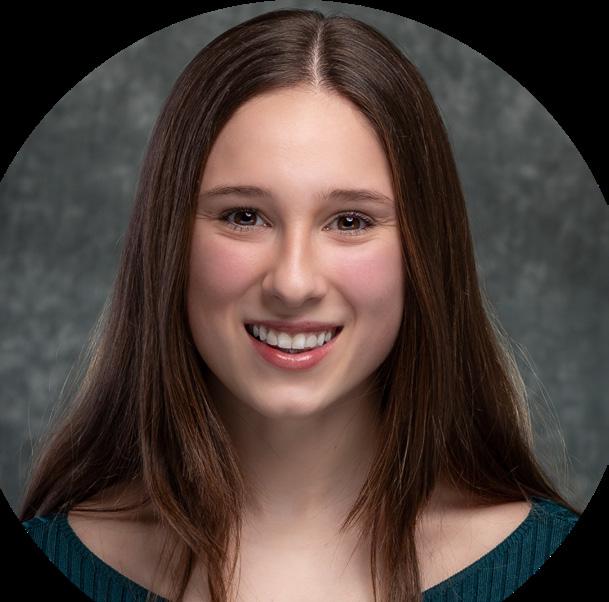
Madeline Loughlin
My name is Madeline Loughlin, and I am delighted to be serving as the Alumni & Member Engagement Chair. I am a junior from Annapolis, Maryland, pursuing a degree in Biology, with minors in Vocal Performance and Health, Humanities and Medicine on the Pre-Medical track.
At the UMD, I am passionate about building meaningful campus connections through leadership, mentorship and interdisciplinary learning. Through my internship at the Joint Institute of Food Safety and Applied Nutrition, I contribute to research projects at the FDA. I serve as a CMNS Peer Mentor, where I support students navigating academic and personal transitions within the College of Computer, Mathematical and Natural Sciences. I also work as an Undergraduate Teaching Assistant within the Biology Department, facilitating student engagement and supporting instruction within the classroom. Beyond the classroom, I am the founding Vice President of Programming for Brighter Bites Champions at UMD, a member of the University Chorale, and a proud Intramural Athlete.
In my free time, I enjoy experimenting with new recipes, lifting weights and hosting musical theatre karaoke sessions with my friends in ESJ lecture halls. In the future, I plan to take a gap year working in a clinical setting before applying to medical school!
Favorite Place on Campus: Michelle Smith Performing Arts Library
Current Favorite Song: “Dark Necessities” by Red Hot
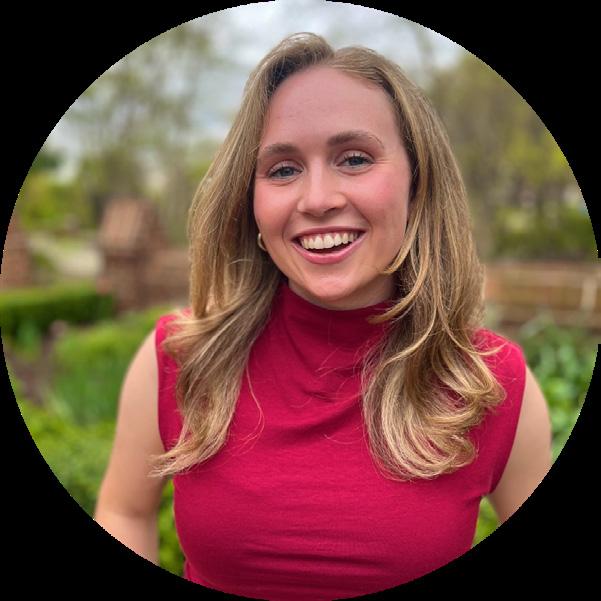
Stella Henson
My name is Stella Henson, and I am excited to serve as the Membership & Induction Chair! I am a senior from Frederick, Maryland, pursuing a degree in History and a minor in Middle Eastern Studies, on the Pre-Law track.
During the past four years, I have been actively involved all across campus. I received my honors citation from the University of Maryland’s Honors Challenges and Solutions program. In this program, I served as Vice President of the Global Communities Student Association, where I worked to build community and organize events for the students. I was a student in the U.S. Diplomacy Concentration within the Global Fellows Program and worked as a legislative intern for the Maryland Department of Budget and Management. I have been a tour guide for the University for the past four years, taking on multiple leadership roles and leading over 100 tours for prospective students and families. Finally, I am part of History Honors, a two-year program that culminates in a senior thesis written under the supervision of a faculty mentor.
In my free time, you can catch me trying a new craft, baking, or running long distances. Following graduation, I plan on taking a gap year to travel, volunteer, and apply to law school!
Favorite Place on Campus: The Memorial Chapel
Current Favorite Song: “Chains of Love” by Charli xcx
Chilli Peppers
Fall 2025 Inductees
Get a closer look at the Fall 2025 inductees. This class features students achieving in all five pillars. Here is a quick look at some impressive statistics:





INTERVIEW WITH OUR 2026 COL. J. LOGAN SCHUTZ ODK LEADER OF THE YEAR
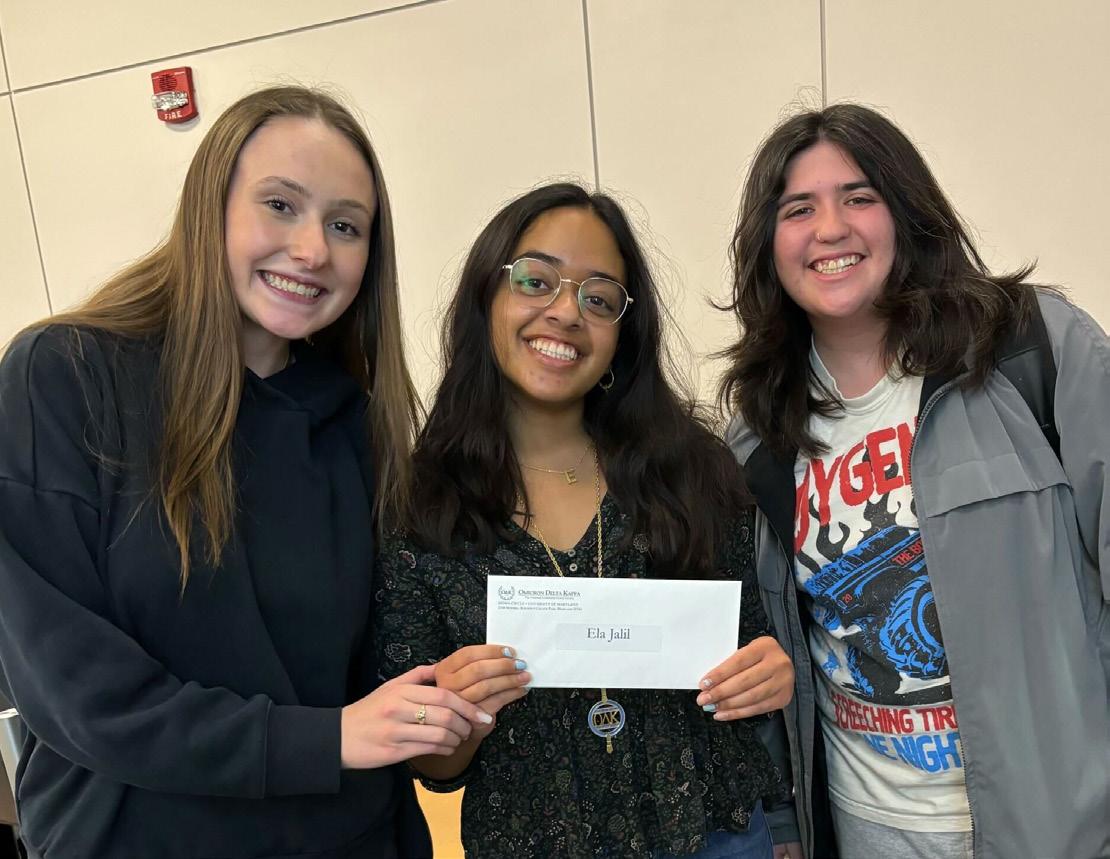
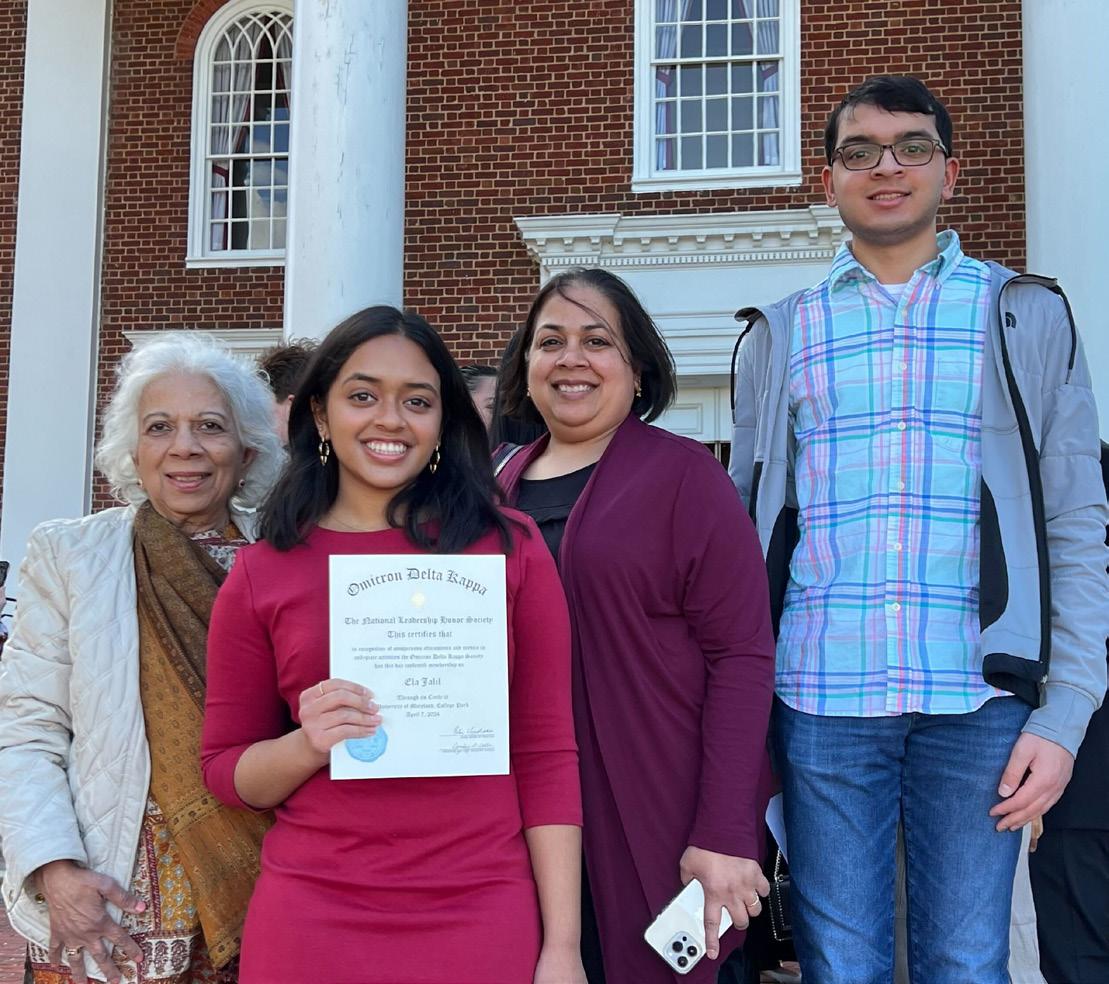
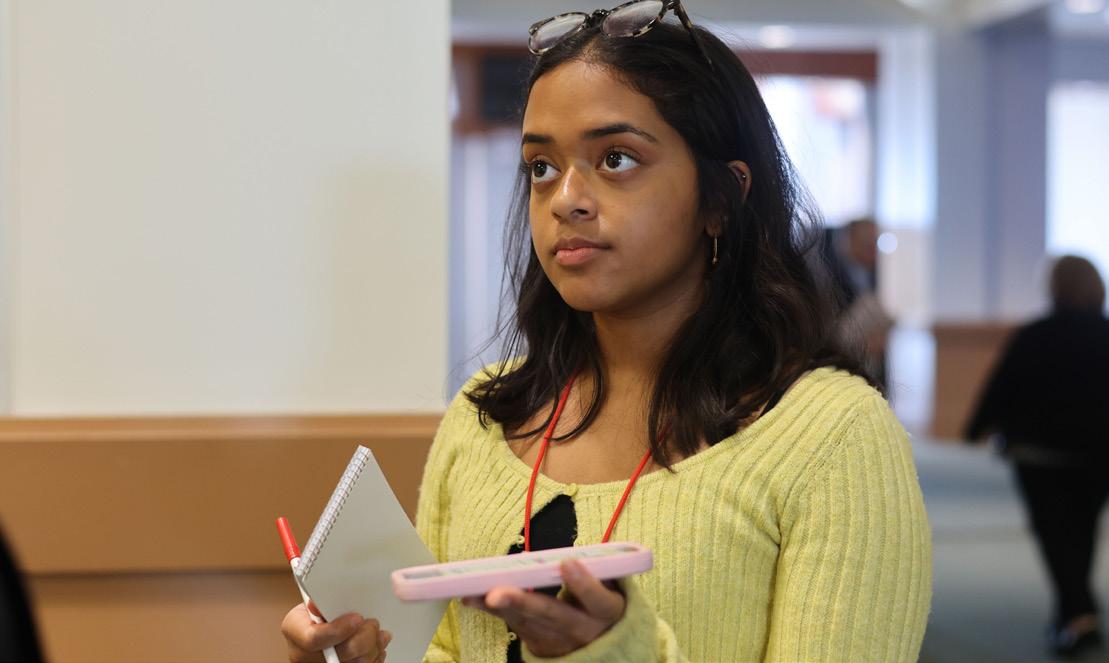
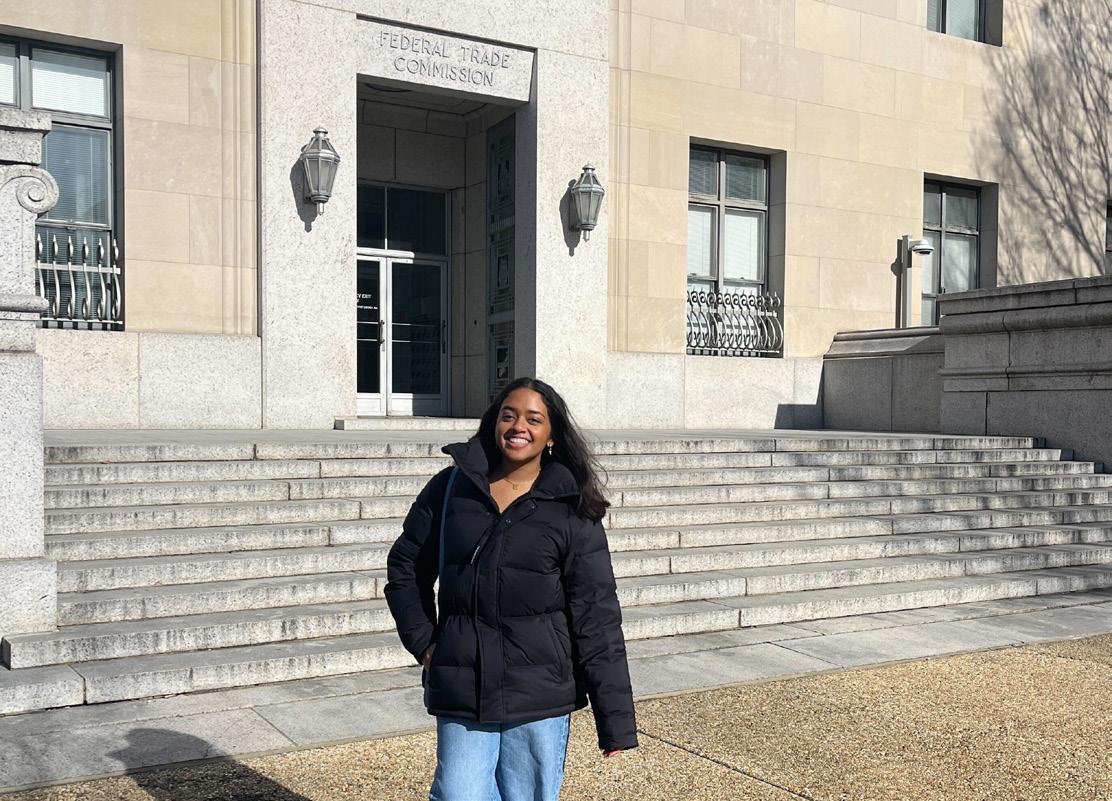
Meet our 2026 Col. J. Logan Schutz ODK Leader of the Year, Ela Jalil, a senior whose leadership has shaped the Sigma Circle in lasting ways. No stranger to ODK as she has served on the executive board for two years, the Sigma Circle voted her for this award in January. After graduation, she will be a Dow Jones News Fund intern with the IRW and the Washington Post. She hopes to become a business or data journalist. We are thrilled to share a bit more about her journey with leadership.
Q: Looking back on your time at UMD, how has your definition of leadership evolved?
When I first came to the UMD, I carried a high school mindset of how I should be a leader on campus. I felt like getting involved with one activity would make or break
my college career, and that some activities were “better” than others. I soon realized that this line of thinking came from the college application process, and that college itself allowed a lot more freedom. I learned how to take rejections in stride, and how to pivot into new and exciting opportunities. I also learned that doing what I’m interested in is exactly what leads to success.
One thing I am glad that I didn’t shake from high school was my interest in serving on the executive board of the organizations I am a part of. I am so proud to see my progression through the organizations I am a part of, and see the product of my time and energy. I feel that my definition of leadership also places a great importance on
teamwork, as many of my activities on campus revolve around a group effort. Leadership is not just managing others, but being able to work well with others to reach a common goal.
Q: Was there a moment when you realized your leadership was making an impact beyond your organization or role?
As the Deputy Engagement Editor for The Diamondback, I am responsible for putting together the newsletter and posting on all social media platforms. I have been told by various students and faculty members that they recognize me from the newsletter, which means that my work is truly reaching the campus community.
Q: Which of the five ODK pillars has most shaped your leadership – and how?
I believe that the fourth pillar, dedicated to journalism, speech, and the mass media, has most shaped my leadership. I entered the Philip Merrill College of Journalism as a freshman unsure if I wanted to become a journalist. Through my four years at UMD, I have had countless journalism opportunities on and off campus that have cemented my interest in working as a journalist after graduation. For the Merrill school itself, I served as a tour guide and a peer mentor, where I was able to support future student journalists. I get excited when I see a student I mentored posting about their success. I was able to find my interest in investigative, data, and business journalism through the projects I was a part of on campus. Through The Diamondback I found a community of student journalists, and was part of important coverage
on campus. Finally, through my internships I learned that journalism fulfilled my passion for helping others. Because of journalism, I have become a more creative, inclusive and structured leader on campus.
Q: If you had to describe your leadership philosophy in three words, what would they be, and why?
I would say that my leadership philosophy is to follow your interests. My friends always say that I seem to know everyone on campus, but that’s only because the activities I’m involved in allow me to connect with a variety of groups around UMD. I have worked really hard on allowing myself to do something because I am interested in it, even if it means doing something where I don’t know anyone. I allowed myself to explore my diverse set of interests, and learn where I wanted to dedicate my time in the organizations I was a part of. All of that paid off, and I am ending my senior year holding leadership positions in things I genuinely enjoy and care about.
Q: What is one piece of advice you would offer to future Terp leaders?
Building connections is one of the most important things you can do on campus! I have been given so many amazing opportunities because of the relationships I built with professors, editors, student leaders, and friends. It’s also significant to note that these relationships are not just self-serving, I am always grateful for when I am able to help someone within my network.
Another important piece of advice I got from a now ODK alum is that I should be clear and advocate for myself. The only way you know for sure that you won’t get something is if you don’t apply or ask for it in the first place. This piece of advice has now brought me to two school-sponsored conferences around the country this semester, which I am incredibly grateful for.
Q: As you move into your next chapter, what part of your UMD leadership experience do you think will stay with you the longest?
One of my favorite parts of being a leader at UMD was my ability to work on a team. Throughout my four years on campus I held various leadership roles that allowed me to view different ways teams operate. I have been lucky to be a part of some amazing executive boards and journalism teams, and I will take my ability to collaborate well with others into my professional skillset. Journalism is a very team-oriented field, and I am glad that I have been able to work with people from all across the university to prepare me for this. I also remember that a professor said in my class last semester that this will be one of the last times that someone is genuinely interested in what you have to say. I want to urge my fellow students to share their ideas while they are here, but also to remember that no matter what anybody says your voice is always important.
OUT OF MANY, MINE: LESSONS OF IMMIGRANT LEADERSHIP
By Matthew Adjodha ‘26
The water had a swarthy froth as it rocked our boat on the current. I looked out, more captivated by the way the bow cut softly across the greenish depth than by the greenish woman standing proudly above me. It was the Statue of Liberty, aging yet standing just as strong. This memory is from one of my many childhood family trips to New York to visit my Caribbean extended family living there during one of our school breaks. I passively absorbed these stories of my mother, an immigrant, first–generation college student, and aspiring businesswoman, and her arrival at Ellis Island from Trinidad and Tobago. How dramatic could a boat ride really be? How could you have that little cash and make it in New York? The whole scenario, even while we re-enacted it, seemed a little done up.

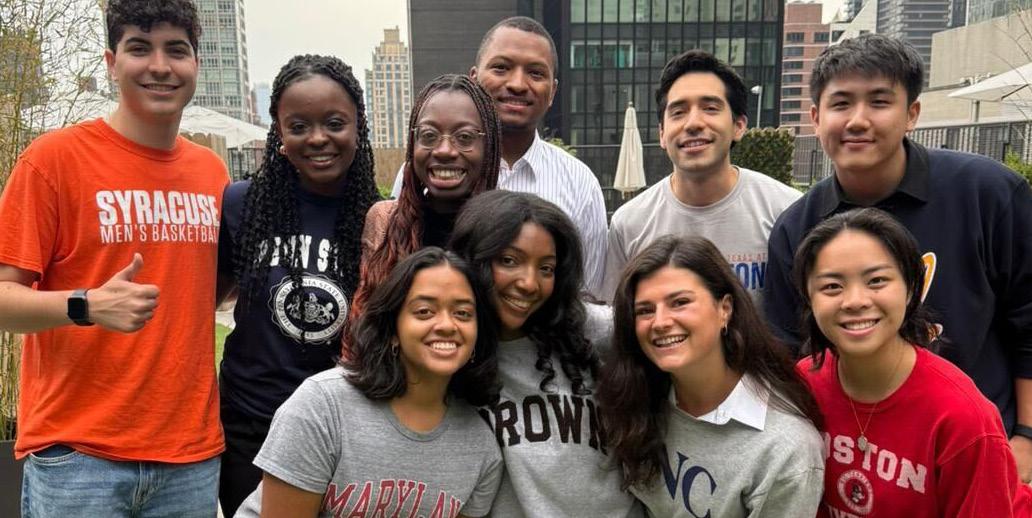
My father grew up just nearby in Brooklyn, working as a bicycle-bound paperboy, law clerk assistant, and other citywide odd jobs to support his first-generation chemical engineering education later on as the youngest in his Guadeloupean and St. Lucian immigrant family. Now that I am roughly the same age they were then, my perspective has shifted. At a time when immigrant communities continue to face significant challenges, this makes immigrant Americans no less leaders in their own right. I realize that my family’s ingenuity, steadfastness, and joy were not only dauntless, they were my first examples of leadership.
Ingenuity is key for leaders to adapt to new and unfamiliar challenges. My favorite home cooked dish is curried lamb, so imagine my surprise when I couldn’t find it on vacations to the islands. The actual cultural staple, curried goat, was adapted to lamb because my Trinidadian family could not afford the price of goat when they first came to the United States. The popular aphorism that adversity breeds innovation holds true both in the immigrant experience and in leadership. Scientific leaders like Jenna Zamil (University of Houston Circle, 2022) and Dr. David Fajgenbaum (Georgetown University Circle, 2007) have devised novel methodologies on sparse available knowledge and found repurposed uses for drugs on limited budgets. Artistic leaders often live and die ascetically, only for their work to resurface as inspired masterpieces.
With ingenuity, creativity becomes a steadying force for resilience.
Steadfastness is another hallmark of the immigrant experience. Good leaders are those who are willing to sacrifice their time and energy to do the grunt work others won’t, paying painstaking attention to detail for the sake of better outcomes, and using patience in resolving complex issues. My family saved for years while living in a condominium before buying new construction that my younger brother and I now call our childhood home. This is a privilege few immigrants in the United States housing market are able to achieve. Yet, whether it’s immigrant political leaders advocating for decades to pass a single piece of legislation, or educational leaders taking hours of unpaid labor to write individualized notes to students, this patience is strengthened by the connection to community.
Joy is the final and most important aspect of this leadership. When we sustain joy in and outside our leadership, the work itself starts to be less of a task and more of a conviction to ourselves and the people we’re working for. My mother found a lot of joy in shopping for clothes, perfume, jewelry, and talking to her sisters for hours on end during the weekends. My father found joy in his routines, whether it was gardening, cooking, taking a nature walk for lunch, or rewatching his favorite scenes from Star Wars over and over. Musical leaders find joy in becoming better in their craft whilst sharing their gifts to uplift others. Athletic leaders like Dawn Staley (University of South Carolina Circle, 2017) and Jill Anne Ellis (William & Mary Circle, 2019) find joy in the rush of steadied improvement, victory in competition, and connection with teammates.
As for myself, none of the work I do as a leader in science or advocacy would be possible if I didn’t sustain myself in the joy of working with such curious, compassionate friends (enjoying The Pitt or Bridgerton on the weekends helps, too). Immigrants have and will remain to sustain this land alongside Indigenous peoples for centuries, aging yet standing just as strong. Just a couple minutes away from Ellis Island, you’ll find the NYC Mayor’s Office, where Zohran Mamdani sits as the city’s first and youngest Muslim, Desi, African-born immigrant American mayor. In Santa Clara, California, Bad Bunny’s performance became the first to use an entirely Spanish set, championing the Latin and Caribbean immigrant diasporas at Super Bowl LX. In Milano Cortina, Italy, Alysa Liu, Ilia Malinin, and countless other children of immigrants graced our screens at the Winter Olympics. In a year filled with nothing short of turmoil for immigrant communities from working-class food service and transportation workers to celebrity politicians and actors, these representations remind us just how fundamentally our country relies on immigrant advocacy, art, athleticism, and culture. Doing right by immigrant Americans beyond hollow celebrations of our representation means that it is time we combat all threats to immigrant livelihood and recognize immigrant American ingenuity, steadfastness, and joy as leadership, too.
LEADERSHIP ABROAD: GROWING AS A LEADER WHILE ADAPTING TO GLOBAL SETTINGS
By Stella Henson ‘26
Studying abroad in Florence, Italy, during my junior year was one of the most pivotal experiences of my college career. Not only did I visit 11 countries and over 20 cities, enjoy incredible food, and meet extraordinary people, but the experience also fundamentally strengthened my leadership skills and helped me become a more wellrounded global citizen.
Arriving in Florence with two suitcases, a backpack, and a desire to have the semester of a lifetime, I was nervous. Nervous to be in a brand new country with a new language, food, and people, leaving behind the comfort and familiarity of UMD. However, I was also excited to embark on the semester and fully immerse myself in Italian culture. Given my experience as a leader on Maryland’s campus, I knew I wanted to find ways to get involved and hone my leadership skills, including engagement, communication, and cultural intelligence. It was this desire that led me to seek opportunities in my Maryland-In program to grow as a leader and step out of my comfort zone. Upon reflection of my time in Florence, three experiences in particular helped me cultivate my leadership skills while abroad.
Become One with the Community
The most important thing I did to feel connected to Florence was to become part of the community, which simultaneously helped me to have a greater understanding of the city as a whole. This can be done in a variety of
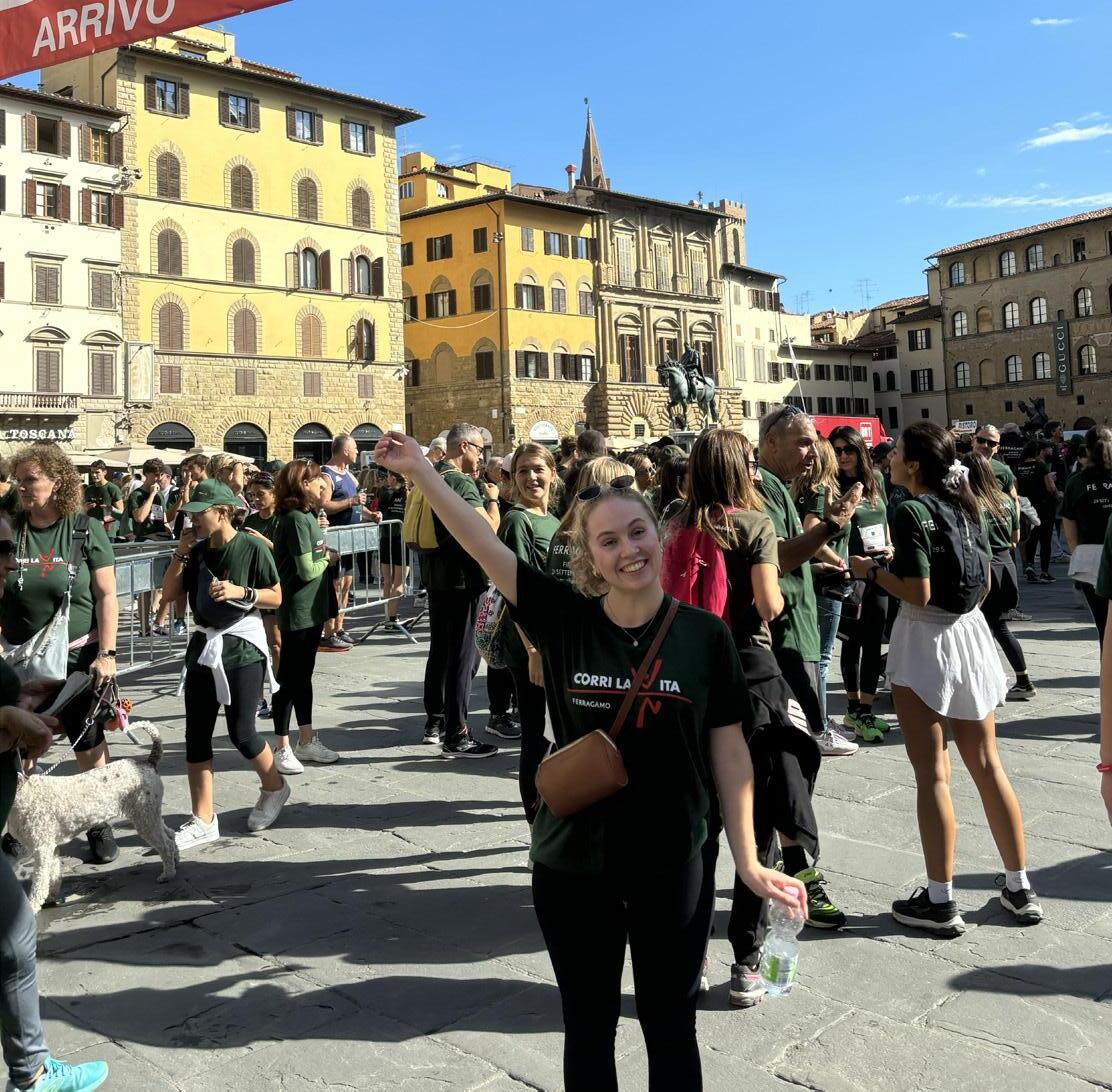
ways, but for me, it meant branching beyond the touristy attractions and participating in local traditions and events. For example, on the first weekend, my roommate and I joined the Festa della Rificolona, the Festival of the Paper Lanterns, a centuries-old community celebration. I also participated in the annual Corri La Vita, a citywide race supporting women affected by breast cancer. These experiences taught the importance of presence and engagement, two essential leadership skills.
Volunteer
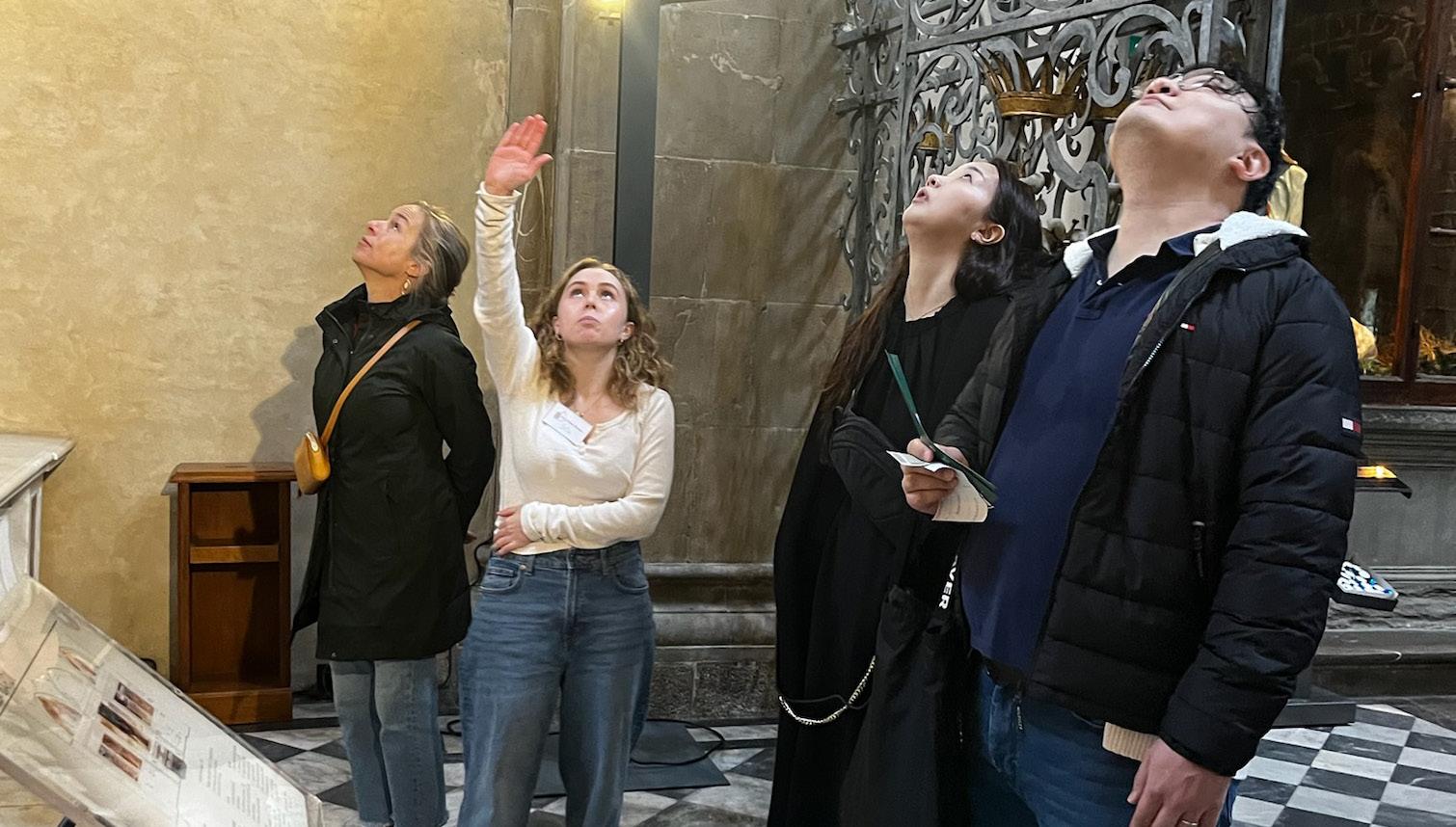
Volunteering further strengthened my connection with the Florence community and allowed me to practice leadership through service. While my program offered ample opportunities to volunteer, including trash pickups and clothing drives, I chose to volunteer as a tour guide at the Basilica of Santa Maria Novella because I had experience as a tour guide for UMD since my freshman year. As a volunteer, I led free English tours of the basilica for visitors from around the world. This was the highlight of my experience abroad because not only did I become more competent in understanding the church’s history, but I also cultivated my language and intercultural communication skills, as well as my confidence as a public speaker, which ultimately helped me become a better UMD tour guide.
For me, immersing myself in Italian culture was crucial to developing my cultural intelligence and awareness. One of the biggest ways that I immersed myself was through food! Not only did I love trying new restaurants and dishes, but I also tried to cook traditional Italian food to connect more with the culture. I was in Florence during chestnut season, so I decided to bake castagnaccio, a traditional Tuscan chestnut cake. Learning about the history, buying the ingredients at the local market, and sharing with my roommates was an excellent way to fully immerse myself in Italian culture. Having a greater cultural understanding is imperative to fostering empathy, a critical leadership skill.
Leadership is not confined to UMD’s campus; it extends globally, especially when studying abroad. While living in a new country can be intimidating, it also presents a powerful opportunity for growth. My experiences in Florence taught me resilience, adaptability, and cultural awareness, strengthening my leadership skills and shaping me into a more confident and globally minded leader.
Immerse Yourself in the Culture
DATE YOURSELF: THE IMPORTANCE OF SELF-LOVE FOR LEADERS
By Catherine Furtado ‘26
As I am writing this article, I am surrounded by the colors of red and pink, heart decorations are put up in stores and restaurants, and the flower and card sections of grocery stores are fully stocked in anticipation of the big day: Valentine’s Day. With this holiday, it is natural to think about all of the love that one experiences in their life –romantic, familial, and friendship. But one type that is often neglected, especially in the busy life of a leader, is selflove.
While I was scrolling through social media, I came across a video of someone taking herself out on a solo date. This concept of “dating yourself” is sometimes viewed as selfish or isolating yourself from others, but its true meaning is about setting intentional time for self-reflection, recharging, and reconnection. So, I decided to put this concept into practice by hopping on the metro to Washington D.C. and taking myself out on a little date. Here’s what I learned during my solo day out!
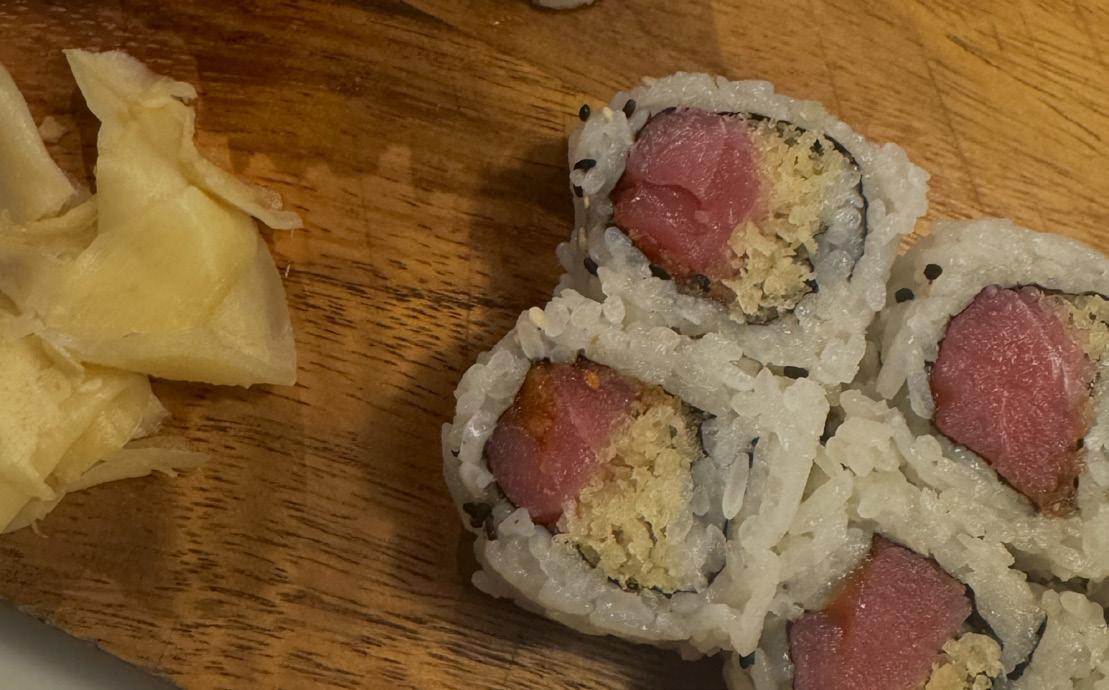
Discomfort is Necessary for Growth
One of the challenges of the day was deciding to dine out alone. It felt very awkward at first, and I found myself constantly thinking that people would notice I was alone, and was instinctively reaching for my phone to feel less exposed. But this discomfort taught me something invaluable: growth rarely feels comfortable at first.
As leaders, there will be times when we are put into uncomfortable situations: speaking up in front of an audience, taking accountability when things don’t go to plan, and having tense conversations with peers. But, we must be able to stand with confidence in our decisions, even if that means standing alone at times. Dating yourself helps build this independence and confidence, teaching yourself to be comfortable in your own presence, and that alone is enough.
Do it For Yourself, Not Others
While on my date, I immediately noticed that my experience felt a lot more authentic when I realized that I did not have an “audience” to perform for. I did not have to adjust my behavior for someone or even perform for social media. I was simply present.
Nowadays, it is not uncommon for leadership to become performative – chasing titles, recognition, and praise from others. But, it is important to remember that true leadership is built on integrity and leading with confidence in your choices even when no one else is watching. By doing things alone, you learn the importance of doing things for yourself, not for the approval of others.
Rest and Reflection is Strategic, Not Selfish
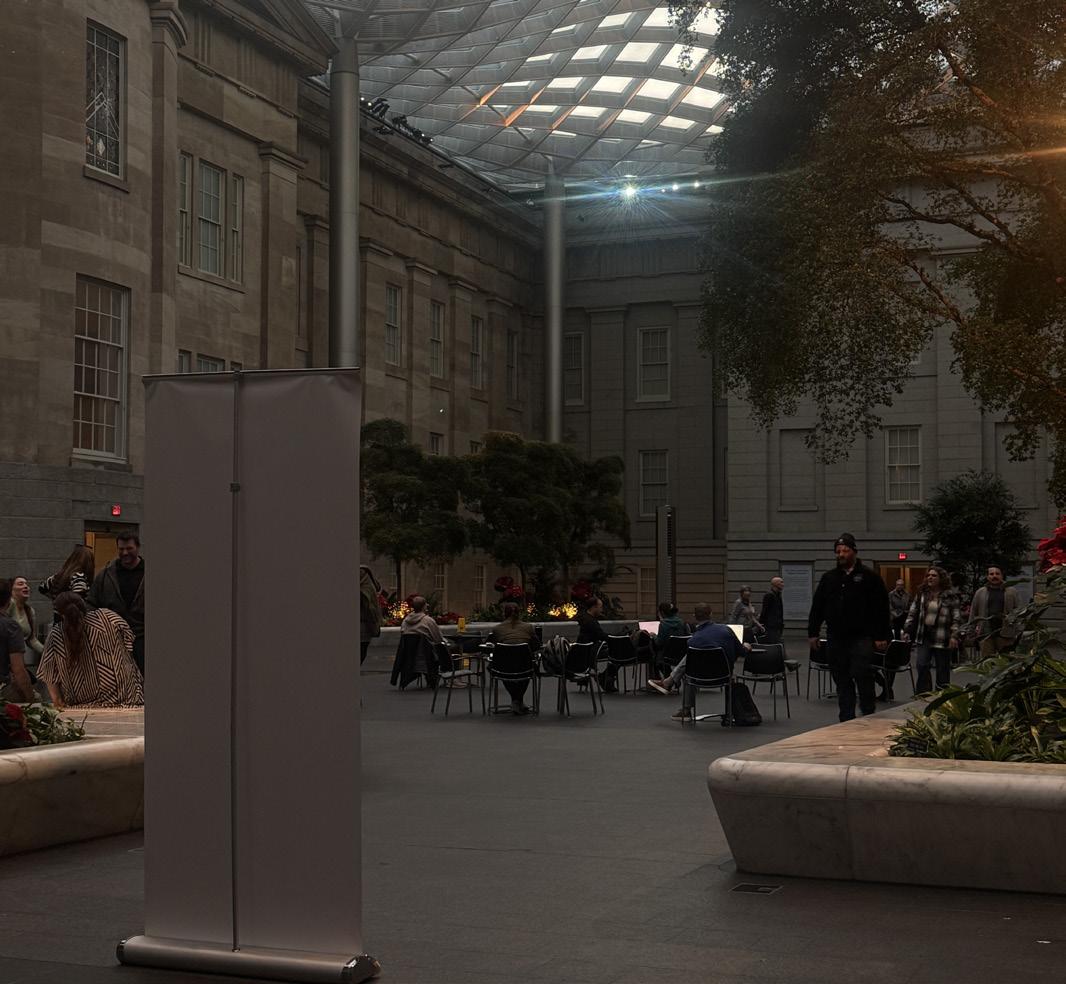
As I sat in the courtyard of the National Portrait Gallery, I began to reflect and write down my thoughts in my journal. I felt a peaceful pause, allowing my mind to process, evaluate, and reset. However, a part of me couldn’t help but feel guilty knowing that I could have been doing something more “productive” with this time I was taking.
This made me realize how we frequently glorify overworking and constant productivity as leaders. We often get so engulfed in our responsibilities and tasks that we forget that exhaustion doesn’t make us better leaders. The most effective leaders take time to rest and reflect on their actions, gaining clarity not in the chaos, but from the stillness.
Although Valentine’s Day is when love in all forms is celebrated, let us not forget to nurture the one with ourselves all year long. When we choose to date ourselves, we are choosing growth over comfort, integrity over performance, and rest and reflection over burnout. By doing so, we become stronger and more resilient leaders, ready to lead others to do the same.
THE GROWING NEED FOR AUTHENTICITY AND PERSONABILITY IN LEADERSHIP
By Latrell Cook ‘27
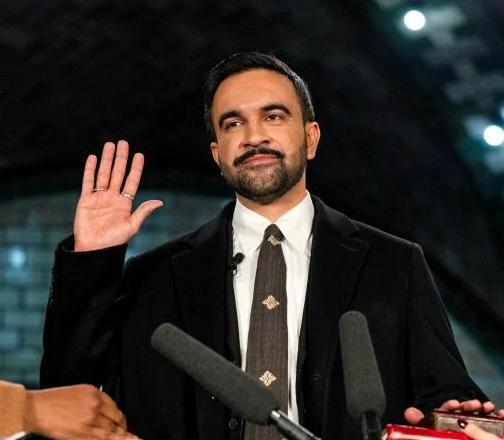
The world watched as Zohran Mamdani became New York City’s first Muslim mayor and its youngest leader in more than a century. Regarded as the conclusion of a remarkable campaign, his victory reshaped traditional ideas of leadership.
So, how did he do it?
Many attribute his progressive platform to his success, but what about his personality?
Throughout his campaign, Mamdani prioritized genuine connections with New Yorkers. He participated in citizens’ street interviews, openly interacted with people in public, made an appearance at NYC Pride, and filmed campaign videos in Spanish, Arabic, Bengali, Urdu, and other languages, reflecting New York’s cultural diversity. These videos displayed his commitment to serving all New Yorkers, not just those of exclusive backgrounds. In addition, videos resurfaced of Mamdani tributing his grandmother in a 2019 rap song, titled “Nani”, which showcased his whimsy. While political opponents attempted to frame these instances as evidence of Mamdani’s “incompetence”, it provided a glimpse into the various offerings of his character.
As Gen Z’s political influence continues to grow, Mamdani’s relatability resonated with young voters, even beyond New York City. Who knew humor was that powerful? Millions expressed excitement following the official announcement of Mamdani’s victory, which shows evidence of how leadership is shifting. Furthermore, Mamdani’s decision to swear by the Quran was monumental. In a political climate where racial and religious minorities continue to face scrutiny, Mamdani’s commitment to his values provided more visibility for Muslim Americans in the public sphere and the ability for leaders to establish public trust without abandoning personal identity.
Why is this important?
Mamdani’s historic campaign exemplifies the importance of personable, authentic leadership. In an era when trust is needed, leaders need to prioritize connection. As the next generation of trailblazers in science, medicine, law,
politics, education, entrepreneurship, and business, college students have the opportunity to follow Mamdani’s example and remember that effective leadership does not require losing themselves.
What does this mean for college students and beyond? Authenticity and personability are present in student organizations, peer relationships, and self-expression. It’s in the clothes we wear, the music we play, and the hobbies we enjoy – even if it does not make sense for other people. Since becoming a student at UMD, I have learned the importance of remaining unapologetic in my leadership roles and how that can further support the growth of other students.
In most of my college classes so far, I have been one of few Black students. While initially intimidating, I have learned to embrace the experience. It has taught me to challenge biased perceptions in academic spaces and model the importance of collaboration. I love to joke, talk about music, and make “chronically online” references. I love being unserious. As college students, we need to show these qualities because they remind others of our youth and humanity. It reflects the true diversity of leadership and may inspire individuals who share these traits. Expressing my true self has helped me develop closer connections with my mentees, and create spaces where they feel comfortable being themselves.
Furthermore, navigating these spaces has strengthened my ability to listen and understand different perspectives. Soon to join the 26% of Black Americans who earn a bachelor’s degree and continuing into the 7.5% who earn a doctorate, I hope to be a source of motivation for students with similar backgrounds. I also hope to support my peers who may need additional guidance in their journeys. As someone who wants to use biomedical research to work toward a future of universal access to healthcare, building genuine connections is important. I must understand the diverse societal pressures and unique needs of communities to ensure solutions are positively impactful. These values are fundamental aspects of my approach to leadership and continue to show up in my daily interactions with other students, faculty, and the communities I’m involved in.
As rising leaders, we need to be authentic and empathetic. Through our preservation of identity, we inspire future generations. Through our connection, we build trust. As you may enter unfamiliar spaces in the future, remain true to yourself, appreciate the humanity of others, and never forget your roots.
BURNT TOAST AND RED LIGHTS: YOU’RE ON THE RIGHT PATH
By Sophia Petricoin ‘26
As 20-somethings, we are at war. War with ourselves, war with each other, war with the world. The war is comparison. Are we better than ourselves from last year? Are we more efficient, more productive, more successful? How do we stack up with our peers? Will we find our place after we graduate and beyond?
The war is stress. There is a mold we are meant to fit in order to claim success and comfortability. Yet, if we are too successful, then we don’t have enough balance, and if there is too much balance, then we “aren’t serious professionals.” It feels like a never-ending battle with an unclear resolution. This Sisyphean battle drives us crazy, but it also deters us from living a fulfilling life. Ultimately, it can impact confidence and the ability to find your position as a leader. If you are consistently convincing yourself that there is a next best thing, or that you haven’t reached your final destination, you miss the wonderful opportunities in front of you.
The “Burnt Toast Theory” is an important lesson to ease this war. You burn your toast while running late, and you curse yourself and think, “Everyone else will be on time, and I’m going to look unprofessional.” You decide to quickly make a new piece and rush out to the car. You hit every red light, and your stress and self-frustration rises each time. “Why did I forget about the toast? If only…”
What you don’t realize is that those “obstacles” may have prevented you from more serious trouble (e.g., a truck that ran a red light earlier or a deer you could’ve hit). More philosophically, perhaps the meeting you were rushing off to would’ve led to a position you would’ve despised and have been miserable in. Maybe it seemed like your dream job, but you can’t foresee every turn of the path ahead. The applicability of the “Burnt Toast Theory” to your future is that you cannot compare your path to others, because you cannot possibly foresee the consequences of what might seem “right.” Our future is wrought with passions, with loss and rejection, and redirection of our journey. If that rejection from graduate school is your burnt toast preventing you from access to spaces you want to be in, perhaps there is another space you are meant to be in that will provide you with happiness tenfold.
The “Burnt Toast Theory” has notes of determinism and spirituality that not everyone aligns with, but in reality, it is more psychological than it may present as. It is more of a mindset shift. Instead of criticizing yourself for a bad grade, think of the lessons you learned from the preparation for the exam. Perhaps those lessons will set you up later in life
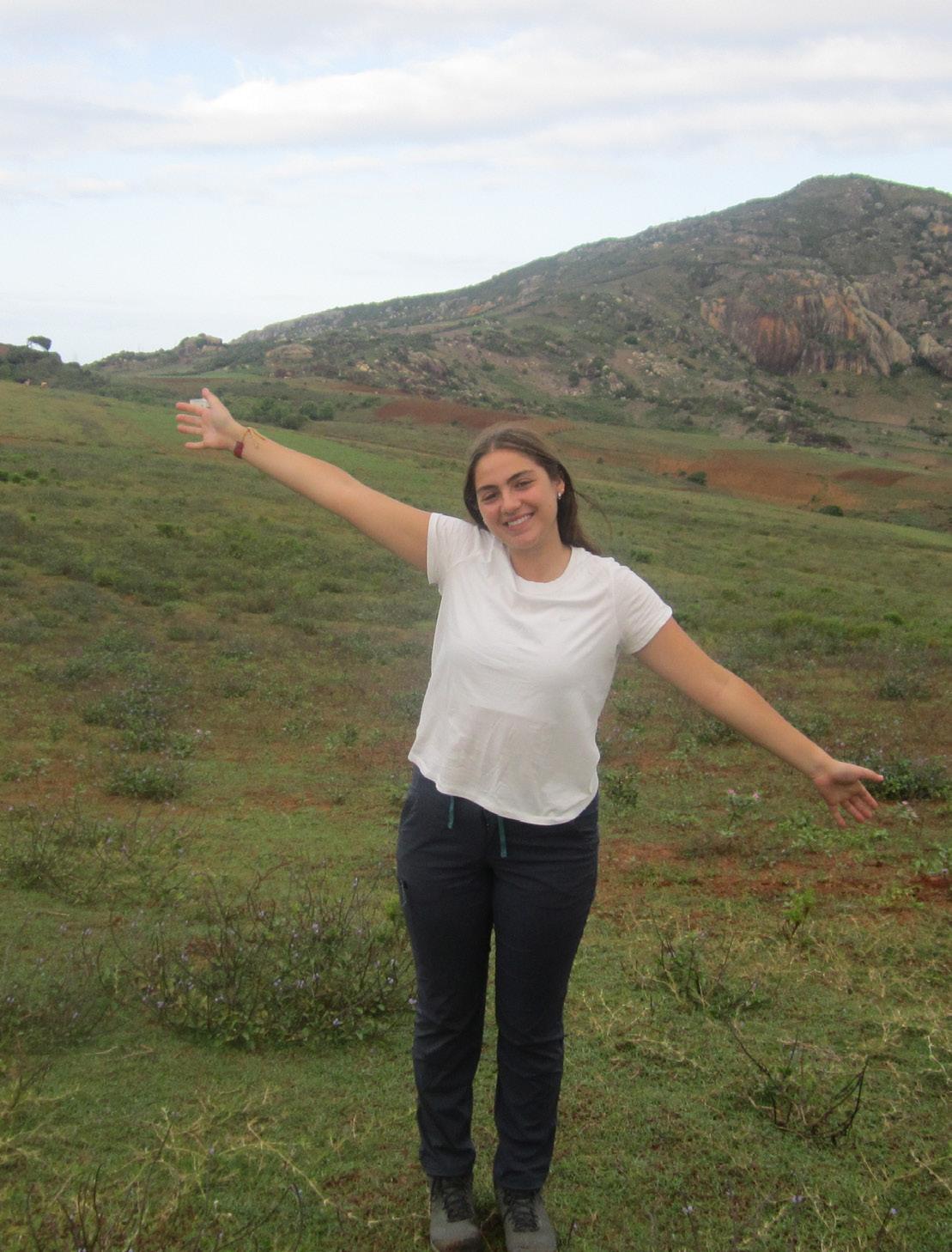
when you really need them. Instead of comparing yourself to someone who got a job you wanted, think of the new opportunities that have become available because of the freedom you have to explore. That process might lead you to discover a new passion of yours, something you want to pursue. Injuries of mine have led me to leave behind the sports I thought were my whole joy, but then I found writing. A rejection from an internship allowed me to travel to Madagascar, where I realized I wanted to change my entire career path to public interest law. Maybe one day I won’t get into law school anywhere, or have to drop out. Instead of feeling like I failed myself, I’ll remember that there are other ways for me to thrive, and my next leadership opportunity is waiting for me in another space.
If you focus on the positive, you will see where to lean in. Relinquish some control and your subconscious will guide you to where you are meant to be. Rather than putting yourself through that war of comparison, try to remember that each obstacle might have an important, positive role in your learning. Being a leader doesn’t always mean being the top position at a prestigious institution. It may mean being an art mentor for kids at a local nonprofit, or the head volunteer for a food bank. It may mean being the captain of your club ping pong team or CEO of your start up bakery business out of your kitchen. Burnt toast and red lights feel like obstacles in the moment, but they may be redirecting you to the spaces in which you are meant to be, or the leadership opportunities you never foresaw for yourself.
THE IMPORTANCE OF MENTORSHIP AND HOW TO SEEK IT
By Kevin Lam ‘26
A mentor is someone with direct experience and knowledge in a field or topic, who can complement your journey toward achieving your goals. Many people underestimate how establishing a mentor-mentee dynamic can support personal, academic, and professional growth. We often overlook the fact that mentorship already exists in many of our relationships. For example, an older sibling or parent who helped guide you through the college selection and application process may already serve as a mentor. Similarly, an athletic coach who observes your technique and offers feedback to improve performance is another form of mentorship.
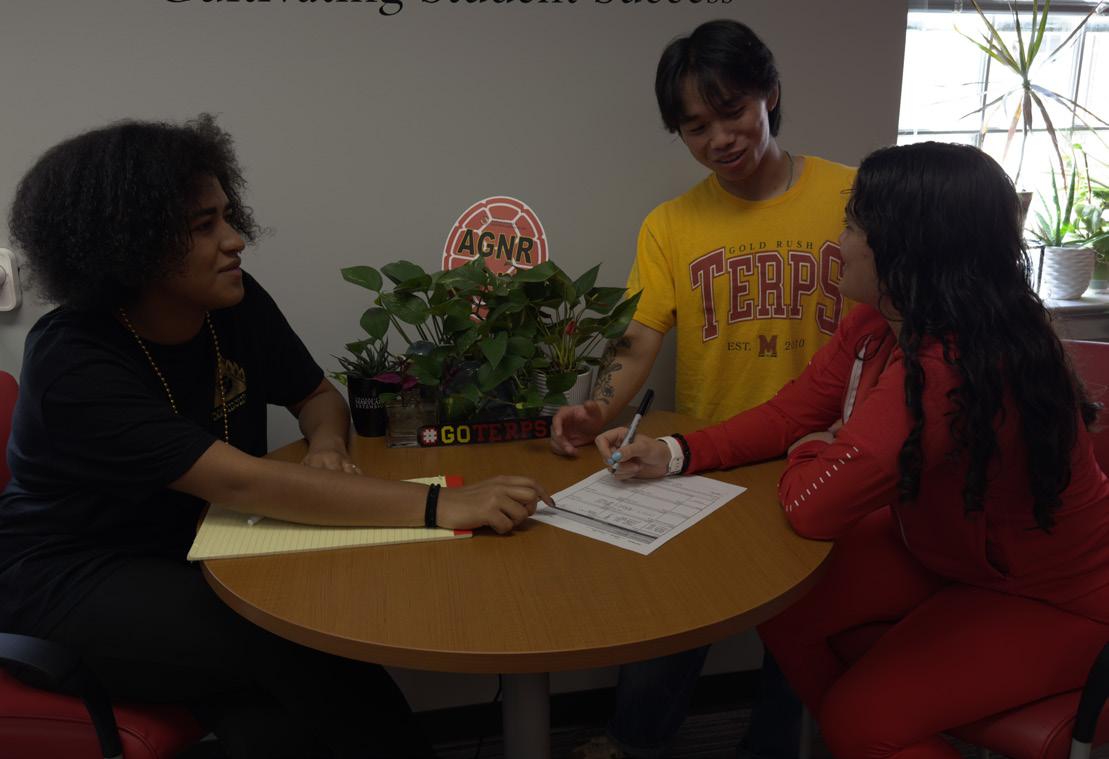
Mentorship is transformative. While you may be the one steering your ship toward your goals, having guidance from someone more knowledgeable can be invaluable. Learning and growth take time and effort, and mentorship helps accelerate that process by placing you on a more efficient path toward improvement. It reduces unnecessary trial and error, saving both time and mental energy. Many of the goals and milestones I have achieved are the result of longlasting advice and guidance from mentors. For example, the relationship I established with my food microbiology professor allowed me to conduct independent research my freshman year, and eventually set me up to intern at the Food and Drug Administration the next year. After newstudent orientation, I made sure to maintain communication with my academic advisor, which helped me land a role as the student ambassador for the Nutrition and Food Science Department, and eventually a student speaker at a recent scholarship luncheon. Ultimately, recognizing the impact mentorship can have is essential to seeking and maintaining the right relationships and accomplishing the goals you seek.
When should I seek mentorship?
You should seek mentorship continuously. As you progress through different stages of your academic or professional journey, you will encounter new challenges and roadblocks. Mentors are often already integrated into our lives as advisors, professors, peers, or family members. However, as circumstances change, these relationships may naturally fade, making it your responsibility to seek out new mentors who can help you clarify and pursue new goals.
How should I start?
Begin by clearly identifying the goals you want to accomplish. You may be seeking guidance on navigating your academic path, securing an internship or postgraduate position, or developing a new skill or hobby. Regardless of the size or stage of your goal, a mentor can help you move forward. Take time to identify your weaknesses and knowledge gaps, and prepare thoughtful questions. Clearly defining your objectives will help align expectations and make your mentorship more effective.
How do I find a mentor?
Start by looking within your existing network for individuals with experience in areas you find challenging. Do not hesitate to reach out to family members, friends, professors, or advisors – many people are more willing to help than you might expect. Once you identify a potential mentor, choose an approach that aligns with your relationship and goals.
Here are some examples of how you could initiate a mentorship:
• Writing a professional email expressing your interest in learning from the individual
• Sending a concise LinkedIn message introducing yourself and your goals
• Asking a knowledgeable friend for guidance in a skill they excel at
• Speaking with a professor after class about their career path and how it aligns with your aspirations
Once a mentorship is established, create a system for consistent communication. Regularly update your mentor on your progress, share any changes to your goals, and approach the relationship with humility and openness to feedback.
Ultimately, mentorship is not a passive experience; it is an intentional commitment to constant growth. By actively seeking mentors, nurturing those relationships, and approaching them with initiative, you can position yourself to grow faster and more confidently. Throughout your academic and professional journey, mentorship is a practical and reliable means of gaining meaningful experience and valuable connections. Even more so, consider the thought of becoming a mentor yourself. As I have continued my other roles as a peer mentor on campus and beyond, I have been able to truly appreciate the significance of mentorship for what it can do for our personal growth and the growth of our community.
LIVING THE IDEALS: LEADERSHIP, LEGACY, AND THE POWER OF COMMUNITY
By Sarah Williamson
For more than a century, the Sigma Circle of Omicron Delta Kappa has recognized individuals whose leadership extends beyond titles or accolades. Rooted in scholarship, service, and integrity, ODK exists to identify, honor, and develop leaders who strengthen their communities and inspire others to do the same. At Maryland, that mission continues to shape generations of students whose experiences reflect the enduring power of collaboration, inclusivity, and shared purpose.
Across campus, many initiatives contribute to that same vision of opportunity and growth. Among them is the Maryland Promise Program (MPP), which supports students as they pursue their academic journeys while building a strong sense of belonging and leadership. While ODK and MPP serve different roles within the university, both reflect a shared belief that leadership grows when opportunity, mentorship, and community come together.
Where Leadership Takes Root ODK members come from every corner of campus life, united by the Society’s five pillars:
• Academics and Research
• Athletics
• Service to Campus and Community
• Communications
• Creative and Performing Arts
These pillars are less about categories and more about the many ways leadership takes shape at Maryland. A researcher mentoring younger students. A performer using creativity to build connections. A student-athlete modeling resilience and teamwork. A communicator shaping dialogue and amplifying voices. Each path is unique, yet all are grounded in a shared commitment to excellence and service.
Students engaged in programs like Maryland Promise similarly bring experiences of perseverance and growth that strengthen the fabric of campus life. Through mentorship, academic focus, and community engagement, they help create an environment where leadership is nurtured, challenged, and celebrated.
Leadership, in this sense, is not confined to a single organization or title – it is a culture that evolves when students lift one another up and strive together toward a common purpose.
A Legacy That Connects Us
The Jaime Dannemann Maryland Promise Scholarship offers one example of how these communities intersect. Established in memory of Jaime Dannemann ’99, a member of the Sigma Circle whose life reflected ODK’s ideals, the fund continues a legacy rooted in connection, opportunity, and service.
Yet this story extends beyond any one individual. Jaime’s legacy serves as a reminder of what happens when leadership values take root and ripple outward – through mentorship, collaboration, and the quiet moments of encouragement that shape a student’s path.
ODK’s founding member Rupert Nelson Latture once described the Society’s purpose as bringing campus leaders together into a constructive force for service. Decades later, that vision still resonates. Whether through alumni panels, mentorship conversations, or shared celebrations of achievement, the Circle remains a space where leaders learn from one another and carry those lessons into the world.
The Ideals in Action
The connection between ODK’s leadership values and the broader work happening across campus is most visible in the everyday actions of students and alumni:
• Collaboration emerges when members bridge disciplines and perspectives to solve challenges together.
• Inclusivity grows when diverse voices are welcomed and elevated within leadership spaces
• Integrity guides decisions both large and small, shaping how leaders engage with their communities.
• Scholarship fuels curiosity and lifelong learning, encouraging members to pursue excellence beyond graduation.
• Service reminds us that leadership is ultimately about giving back.
These ideals are not static. They evolve with each generation, shaped by the experiences of students who step forward to lead in their own way and carry those lessons far beyond campus.
A Legacy We Carry Together
One of the most powerful aspects of ODK is its multigenerational nature. Alumni return not only to celebrate milestones, but to invest in the future – offering mentorship, sharing career insights, and strengthening the network that makes the Sigma Circle more than an honor society. It becomes a lifelong community grounded in shared purpose.
Programs like Maryland Promise reinforce the idea that leadership flourishes when opportunity is accessible and support is intentional. When students are encouraged to grow academically, personally, and professionally, they become the leaders who shape what comes next.
As we reflect on the values that unite our community, we invite you to consider your own ODK story. How did the Circle influence your path? What moments of collaboration, creativity, or service still resonate today?
By sharing your reflection – or by supporting initiatives such as the Jaime Dannemann Maryland Promise Scholarship – you help ensure that future Terp leaders continue to discover what ODK has always represented: a community committed to excellence, connection, and purpose.
Share your reflection or make your gift today at the giving page. Your engagement strengthens the Circle and helps carry forward the ideals that have defined ODK for more than a century.
LEARNING TO LEAD BEFORE I FELT READY
By Pragya Kumar ‘26

If you’re waiting to feel “ready” before stepping into leadership, you might be waiting forever.
I know that because I did.
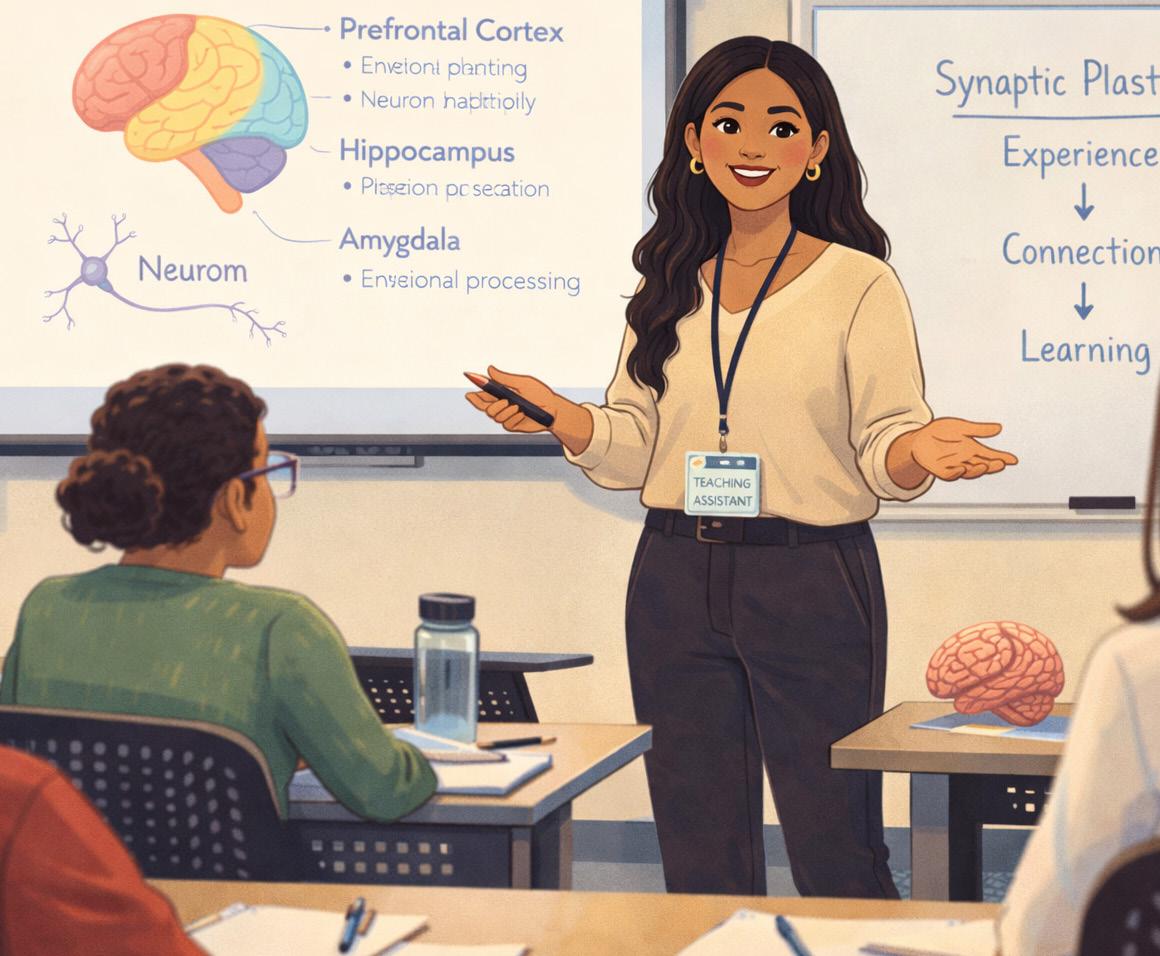
The first time I led an active learning session as a teaching assistant for a neuroscience course, I remember standing at the front of the room thinking, Who decided I was qualified to do this? Just months earlier, I had been the one nervously scribbling notes in that same class. Now, students were looking at me for clarification and reassurance.
I thought leadership meant having every answer prepared in advance. I thought it meant never pausing, never second-guessing, never admitting uncertainty. But what I learned very quickly is that leadership is not about knowing everything – it’s about being willing to learn in
public.
There were moments when I didn’t know the answer to a question. Instead of shrinking, I learned to say, “Let’s figure this out together.” And something surprising happened: the room didn’t lose confidence in me. If anything, it became more collaborative. Leadership isn’t about perfection; it is about steadiness.
The same lesson followed me into clinical settings. When I was first thrown into working as a medical assistant and intern, the pace was overwhelming. There were new systems, unfamiliar terminology, and patients with real concerns, real pain. I felt the pressure of responsibility immediately. No classroom can fully prepare you for the weight of real-life care. I didn’t feel ready either.
But experience doesn’t arrive before action; it arrives because of it.
The first week felt chaotic. The second felt manageable. By the third, I was anticipating needs before being told. What once felt intimidating became routine. Not because I suddenly became smarter, but because I stayed. That’s the part of growth we underestimate: resilience grows quietly. Competence builds in layers, and comes with repetition, not just reflection.
Often, we hide behind the veil of perfectionism, choosing to not participate in opportunities because of a fear we do not feel fully prepared. But growth rarely happens from the sidelines, and you are far more adaptable than you think. You are capable of learning faster than you give yourself credit for. And you do not need to be the most experienced person in the room to begin to lead.
You just need to be willing. So step in before you feel ready, and stay when it feels uncomfortable. Trust that experience will catch up to your courage.
It always does.
GUIDE TO GETTING YOUR DREAM INTERNSHIP, NETWORKING, AND MAKING MEANINGFUL CONNECTIONS AS AN INTERN
By Jess Daninhirsch ‘26
Many majors at Maryland require students to have an internship during their time in college in order to graduate, but sometimes, landing that internship can be tricky.
My best advice is to just keep applying and powering through applications. Trust the process, and your hard work will speak for itself.
Or at least, that’s what I would’ve said a year or two ago. I still very much stand by that statement, but nowadays, making connections has become equally important as your application alone.
I’ve had five internships in college, and my current one was once beyond my wildest dreams. I am an intern at the longest-running show in television history: NBC’s Meet the Press. Here’s what I did differently to land that specific internship and some tips that might help you:
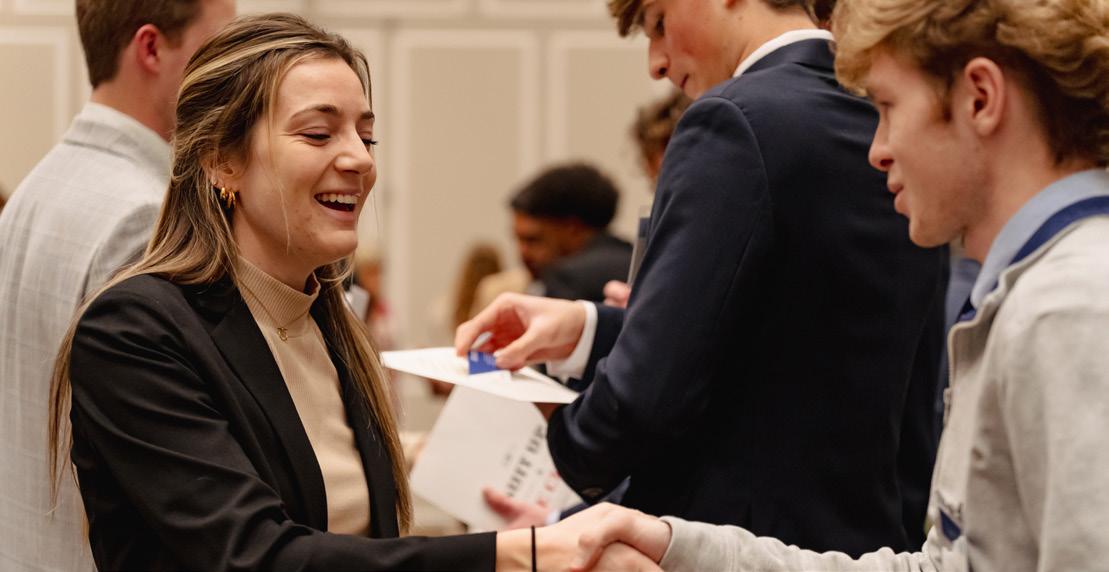
1. For my dream internship, I showed passion in every stage of recruitment. I reached out to the hiring manager, other employees who work there, and people who had the position before me. This showed my strong interest in learning more about the position.
2. I reached out to someone who works at the company on LinkedIn and asked if I could chat about it. He made time to talk to me on the phone for half an hour, helping me prepare for the interview and informing me of what to expect when working there. I honestly think that asking questions to employees and former interns helped me land this role. LinkedIn is such a helpful tool in these situations. More often than not, you may find that a lot of people are willing to talk about the things they do that you’re also interested in. Be polite and thankful for their time when reaching out!
3. When applying for a lot of internships at once, it’s
helpful to have cover letter templates that you can tweak and tailor to each position.
4. Research the position thoroughly, and explain not only what makes you qualified and what you want to get out of the internship, but also what you are going to contribute to the company.
5. Even if you think you’re not qualified, if you have any interest in the position, just apply! What’s the worst that could happen? Every rejection is just a step closer to the opportunity that’s right for you.
6. Practice! Practice for your interview, whether it’s a virtual meeting, an in-person interview, or just a video interview. The more practice you have, the more comfortable you will feel.
7. And most importantly, be yourself! Interviewers love to see that you’ve prepared, but also that you can express yourself in a way that feels authentic to you.
Now, once you have your internship, make the most of it by creating a strong network. Connect with your coworkers on LinkedIn, ask coworkers to have coffee chats and get to know what they do, and have regular check-ins with your supervisors. Talk to as many people in your company as you can and absorb anything they have to share with you.
In a lot of professions, networking can get you far, to places you may have never imagined. You never know who you’ll meet. Every professional connection made may help you in the long run, even if the person you meet isn’t in the same field as you. As an aside, that’s why spaces like ODK are so wonderful; they can expand your horizons and let you connect with people you may never have thought to seek out. You can learn new things by connecting with people who have different interests and skills. It may even inspire you to learn new skills of your own.
If you receive a company email address, use it to your advantage! In some cases, you may be able to see a directory of everyone with a company email address in whatever software your company uses. Search for the people who you want to learn from and send them a polite email and ask if they’re willing to have a short phone conversation or meet up for coffee. But, this should not be transactional or one-sided. When you make a connection with someone who you think could help you in your career, see if you can offer up something in return. It could be a service of some kind, or just enthusiasm and willingness to help them out whenever possible.
Give handwritten thank you notes to your supervisors and other coworkers who impacted your experience at the end of your internship. Going the extra mile at the end of your internship will help people remember you – especially in the case that you want to reach out to them in the future for recommendations. Keep in touch with your coworkers, too, every once in a while after leaving.
Overall, kindness can get you very far, not just in your career, but in life. Trust the process; remember that when one door closes, another opens.
BUILDING A PERSONAL BRAND THAT LASTS
By Madeline Loughlin ‘27

Each and every student that walks on campus is building a personal brand, even the people who swear they’re not. It’s not from a bio, a curated post, or a catchy LinkedIn profile. Personal brands show up in group projects, late-night meetings, missed deadlines, and quiet saves. A personal brand isn’t something you fabricate, it is something you craft through consistent action.
The term “personal brand” may feel arrogant and performative. However, there is a fine line between humility and visibility – effectively contributing versus seeming pompous. This discomfort often leads to people blocking out the concept entirely. Disengaging does not mean brands are not applicable. Rejecting the idea of a “personal brand” does not make you more conformant, it makes your reputation less intentional. If students choose to redefine personal branding as character visibility, actions to build reputation become more authentic.
Personal branding is the sum of your interactions with others over time – it is the impressions you leave behind. These assumptions influence how people directly perceive your actions, and they are the reason they identify you as a leader. Your actions, curated through reliability, tone, and preparation, define your personal brand. Résumés list your experience, where your personal brand reflects your carefully developed narrative.
As a Terp, we attend a world-renowned institution, with over 30,000 undergraduates and 10,000 graduate students. This massive campus is a hub for innovation, collaboration, and community. Due to its size, people rely on word of mouth exchanges for all sorts of information. Classes, student organizations, laboratories, internships, and jobs
all overlap, causing this information to travel quickly and quietly, especially regarding collaboration, dependability, and professionalism. Your brand is forming across each of your campus experiences, even when you don’t realize they are connected.
Soft skills versus hard skills are highly discussed during the hiring process, however, soft skills can only be assessed in action. A person can list all the things they value, but values only matter if they are maintained in action. Consistency turns these actions into expectations. One impressive moment or impression does not define your entire brand, reputation does. Patterns prove competency and reliability. Leaders aren’t perfect, however, true leaders are steady.
Personal brands are not fixed entities, they are designed to be shaped by a variety of experiences. College is meant to be a period of experimentation and change. A student’s purpose is to evolve beyond past experiences, leveraging these experiences to build their authentic reputation. A strong brand encourages growth, leaving room for evolution without losing integrity. However, the pressure to constantly appear “accomplished” can quietly contribute to burnout. Rest and establishing necessary boundaries are vital to ensuring a healthy and effective brand. A personal brand that comes at the cost of well-being is not sustainable leadership.
A meaningful personal brand is not created, it is cultivated throughout your time at UMD and beyond. So fellow Terps, whether you are a student, alumni, or a member of our broader campus community, continue to take chances and explore your own identity. Take that fun class, join that preprofessional club, mentor a student, reconnect with your network, and lean into experiences that shape you. Proudly embrace your personal brand and carry it forward as a leader in every space you enter.
MILKING THE MOST OUT OF EVERY “YES”
By Raven Herron ‘26
College often makes leadership feel like something you need to plan carefully, choosing the right major, joining the right organizations, and building the perfect résumé. But in my experience, some of the most meaningful leadership growth doesn’t come from a master plan. It comes from saying “yes” to one opportunity and being open to where it leads.
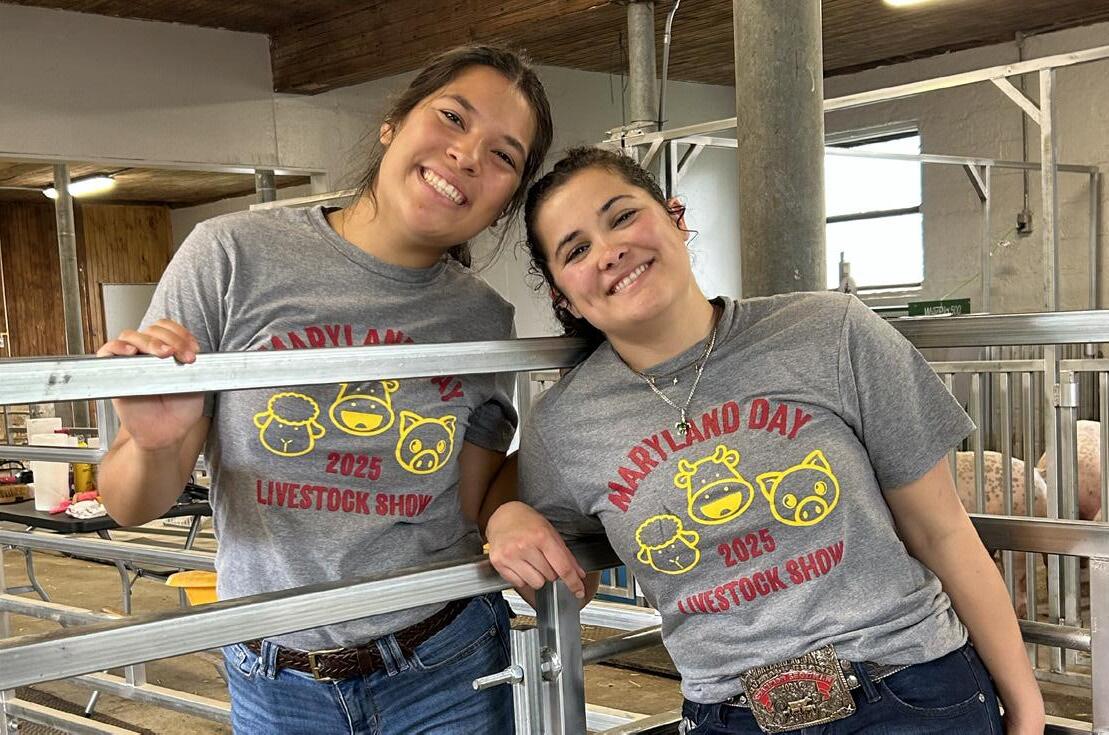
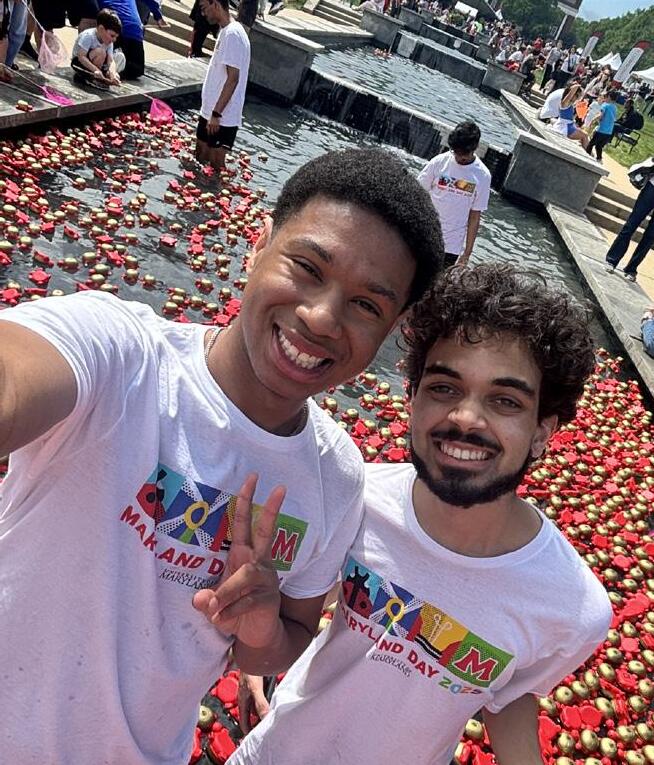
For me, that first “yes” was when I showed a heifer, a cow that has never had a calf, on Maryland Day. Fun fact: before Maryland Day was orchestrated by the entire university, it started as “Ag Day” in the College of Agriculture and Natural Resources. This upcoming year will be the 101st year of Ag Day! When I first signed up to show, I wasn’t thinking about leadership or career development – I simply wanted to try something new and gain hands-on experience outside the classroom. I had never shown dairy cattle before, and I knew it would push me out of my comfort zone. What I didn’t realize was that this single decision would shape much of my undergraduate experience.
That first year, I was a learner in every sense. I learned how to get my heifer to walk on a halter, how to communicate clearly and patiently, and how to stay consistent, even when progress felt slow. Working with a heifer required responsibility and self-awareness; there were no shortcuts, and mistakes were part of the process. By the end of Ag Day, I gained more than practical skills and the fancy Grand Champion Showman title; I gained confidence in my ability to learn through experience.
The following year, that initial “yes” turned into a second opportunity. Instead of showing an animal myself, I became a student coach, helping other students, many of whom had never worked with livestock, prepare their heifers for Ag Day. My role shifted from student to mentor, and
teaching others challenged me to think about the activity I loved in a new way. Leadership was no longer about my own performance and ability to be taught, but about supporting, encouraging, and coaching others. I learned to explain concepts clearly and adapt to different learning styles. I also created a safe environment where students felt comfortable asking questions and responsibly handling animals. Watching other students grow more confident reminded me how powerful mentorship can be, and how leadership often means stepping back so others can step forward.
That second “yes” led to a third opportunity. I applied for the Central Maryland Research and Education Center (CMREC) Dairy Intern last summer. The hands-on experience, responsibility, and leadership skills I developed through Ag Day directly prepared me for working in a professional dairy research setting. What began as a single decision to try something unfamiliar turned into a pathway of learning, leadership, and career development. Being a Dairy Intern allowed me to pick up new skills such as handling full-grown (2,000 lbs!) cows, feeding and caring for day-old babies, and helping the center milk the cows twice a day. My showing skills from the first year and my teaching skills from the second prepared me for showing and being at the Maryland State Fair’s dairy exhibit with our cows. Many people from the public came to look, ask questions, and spin the trivia wheel at the Fair!

Looking back, while it might have been the most fun, the most important lesson wasn’t about the cows; it was about momentum. Leadership doesn’t always come from holding a title or knowing exactly where you’re headed. Sometimes, it comes from being willing to take the first step and trusting that growth will follow. You don’t need to have everything figured out to start; you just need to say “yes” to the opportunities in front of you and commit to making the most of them.
For those who feel unsure about their path, my advice is simple: try the thing you’re curious about. Join the organization, attend the event, and volunteer for the role that feels just slightly intimidating. One “yes” may turn into two, then three, and before you know it, you’ll find yourself milking the most out of every opportunity.
WHEN THE MODEL DOESN’T FIT THE DATA
By Tal Bresler '26
Humans develop models for almost every aspect of our lives, from understanding the patterns of history to predicting how a particular protein will fold. The fundamental process of learning is careful observation, creation of a model based on that information, and then applying that model to predict future results. Models can include anything from weather patterns and our friends’ personalities, to political tensions and reactions. Many academic fields use different words for these models whether it be understandings, theories, concepts, representations, ideologies, or frameworks, but when different disciplines are stripped back to their essence, they all use models.

As we live, our models are constantly being compared against our direct experience and the information relayed to us by others. We test boundaries and gauge reactions to fine tune our model with more and more data. When children do this, it’s called exploratory play. A child will bang a cup and plate together for ten minutes, learning the relationship between how hard they hit them together and what kind of sound it makes, if it changes how the cup and plate look, how others around them react to the banging, and if they can manipulate their shape in any way. When scientists do this same process, it is called research. Researchers will develop a question, look for existing models that explain it, find an aspect of the model to tweak, and use the results to inform the model in the future.
When the data we find confirms our model, it is strengthened and we believe in it more. The second time the toddler is able to drop a plate and break it, or fit two legos together, they know that they’ve been able to understand how that item works. When a scientific model has many studies with a range of locations and labs that support it, it becomes more prevalent, is cited more, and is taught more widely.

When presented with data that doesn’t fit our existing model, there are three choices: discredit the data, abandon the model, or change the model. Options one and two are often cognitively easier. We can ascribe our cognitive dissonance to faulty experimental design, mistaken data analysis, or a totally misconstrued understanding, skirting around any intellectual turmoil or major reconciliation. In some cases, one of the first two options can be true. There is incorrect data and some false models that warrant abandonment. But often, to be a leader is to choose the third option, to see the merits in the current situation and keep it accountable to the data available, to constantly evolve your model with new data while preserving the fundamental strengths of the original.
This takes different shapes depending on the discipline. Whether it be legal reform, modification of a scientific theory, or reformatting a business plan. In every case, it requires nuance and careful consideration of both the data and the model, with the courage and clarity to admit where either is wrong. Rather than a dogmatic attachment to the model or rebuilding the wheel from the new data, this approach shows commitment to the truth as we can best approximate it, refusing to throw out the progress from the previous version while remaining grounded in the available data and constant improvement.
The next time each of us is presented with data that doesn’t fit our models, I challenge each of us to find the third path. To chart a path of balance, preserving the strengths of our existing models and being unafraid to change course based on new information.
REDEFINING SUCCESS AS A LEADER: FROM ACCOLADES TO COMMUNITY IMPACT
By Noora Ghahremani ‘26
You have been told a lie. Worse still, you have come to believe that lie: that your success as a leader is measured by how people see you – by the awards you’ve won, the articles you’ve published, the interviews you’ve starred in. Modern society pushes us to move too quickly through each experience, always in a rush to check off the next role, the next title, the next accolade. We become restless to climb and climb and climb the ladder of leadership until we can say, “There, I made it!” with a satisfying, dramatic check off our metaphoric list. But in this litany of “go go go” and “next next next” we lose the true meaning of successful leadership: community impact.
Do not misunderstand me: experiences are good. Ambition is good. But success as a leader goes beyond filling a role – it requires transformation: a deliberate, conscious decision to invest one’s whole heart in the endeavor at hand, to leave it permanently better than it was before, and to feel change reverberate through an entire organization or community.
I learned this through my own leadership experiences. As President of Sigma Tau Delta, UMD’s chapter of the International English Honor Society, I had a choice: fall into the easy routine of tradition or reimagine and act. I had the title of president, but the title itself did not constitute success. The organization had been stagnant for years, and stepping into leadership meant committing to transformation – to expand membership, build literary prestige, create meaningful opportunities for members, and secure funding for new initiatives. The chapter had never received funding from the English Department for graduation cords, and when I saw that many members struggled to afford them, I decided that would change.
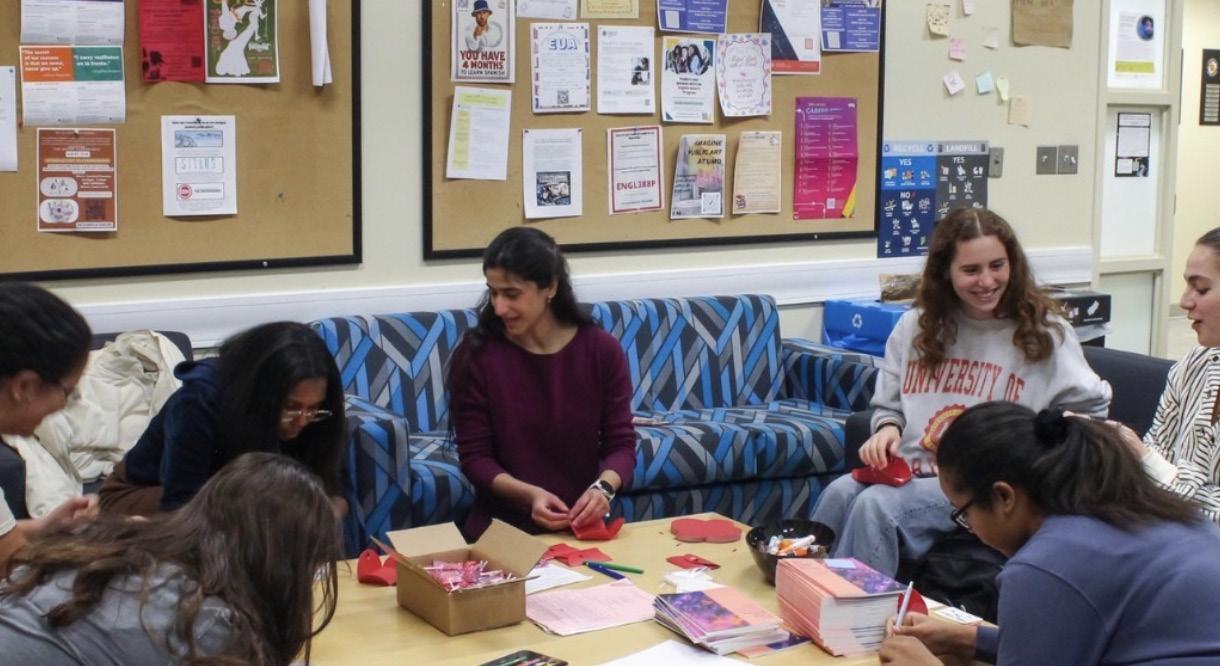
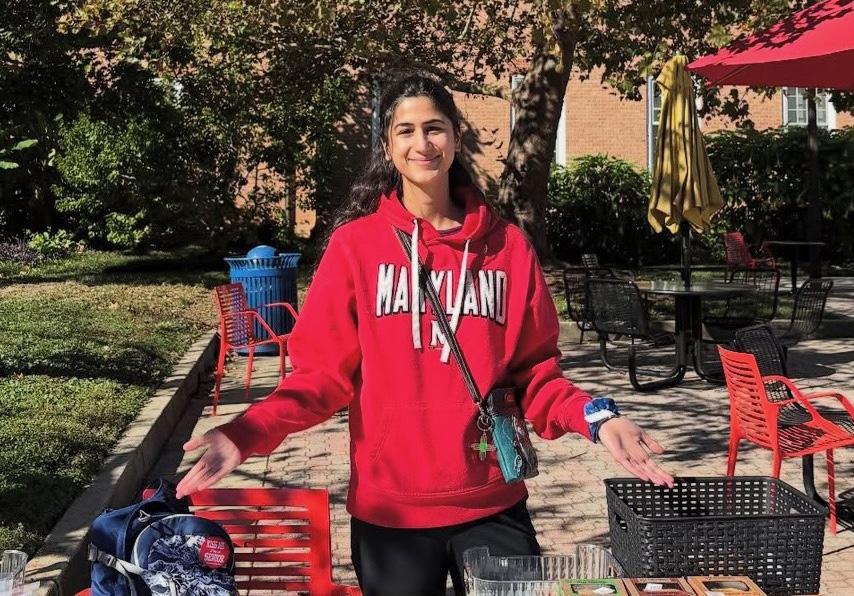
In just the first few weeks of my presidency, I worked with the executive board to organize multiple bake sales – mobilizing members, reserving campus spaces, and coordinating tabling logistics – to raise hundreds of dollars for cords. I also introduced incentive challenges so our most engaged members received cords first – a huge motivator in our increased membership – and formed a committee to design merchandise. I also applied for and secured grants to fund activities and supplies, allowing us to offer entirely new experiences: antique writing sets with wax seals, Book Lab visits, catered events, and Englishthemed craft nights. Membership doubled, then tripled.
Entering my second semester as president, I was motivated to continue elevating Sigma Tau Delta – not in search of an award, but because I wanted this community to shine. I wanted members to receive benefits and opportunities that had not previously been afforded to them. Recognizing that Sigma Tau Delta had no official publication – no space for members to be published under the organization’s name – I applied for and secured a second grant to fund the chapter’s first-ever literary and arts magazine. I organized a magazine committee of nearly a dozen members, delegated responsibilities, and helped guide the project’s development.
Although my time as president is coming to an end, I have worked intentionally to ensure that Sigma Tau Delta’s transformation does not end with me by mentoring the incoming executive board closely. This rising leadership is highly motivated to continue creating opportunities and developing connections, and they will continue expanding membership, securing funding, and adding their own brilliant ideas and creative visions to further benefit the organization.
Success in leadership is to “suck all the marrow out of life,” as Henry David Thoreau wrote – and channel that passion and richness into the community. It is to get to the heart of an institution and transform it. Awards and accolades often follow, but the trap is in thinking the achievement lies in the recognition and title itself. But the title is only half the leader’s work; the rest lies in fearlessly reimagining to create meaningful change for everyone that leadership touches.
PLEASE CONSIDER MAKING A GIFT TO ODK
Your support of Omicron Delta Kappa will not only help offset the cost of honoring the university’s best and brightest students, but will support the educational and leadership development programs that ODK sponsors, including the ODK Lecture Series, ODK Scholarships, and awards, like the annual Col. J. Logan Schutz Leader of the Year award.
Vist our website to give to the ODK Discretionary Fund or send a check, made payable to the University of Maryland, College Park Foundation, to:
Sarah Williamson Circle Coordinator
Omicron Delta Kappa Sigma Circle 7999 Regents Drive 2108 Clarence Mitchell Building College Park, MD 20742
CONSIDER SUPPORTING THE ODK SIGMA CIRCLE WITH A CORPORATE SPONSORSHIP!
Sponsorship benefits include the opportunity to network with ODK members and alumni, speaking opportunities, recognition at ceremonies and receptions, tabling at signature UMD events, brand awareness in our online media, and invitations to our programs.
Please contact us for more information at odk@umd.edu.


MEMBER HIGHLIGHTS
Brian Perlberg ‘94 was appointed Chief Executive Officer of Lean Construction Institute (LCI), a nationally recognized leader in construction law and collaborative project delivery in October 2025.
Shari Cohen Chase ’79, former UMD track letterman and US Maacabiah Olympic dual medalist, represented Maryland in the National Senior Olympics in July 2025. She ran the 50m, 100m, and played doubles pickleball.
DONOR HONOR ROLL 2025
We are so grateful for all of our alumni and friends who support the Sigma Circle of Omicron Delta Kappa. Thank you for all of your continued involvement and support.
Founder’s Circle (Gifts of $1,000 or more)
Mrs. Susan W. Goldberg and Mr. Robert A. Goldberg
Mr. Devin H. Ellis
Mr. Khalil M. Pettus
Dr. Sara E. Brooks and Dr. Efi Kessous
Mr. Gerard E. Evans, Esq.
Mr. Paul S. Mandell and Mrs. Lisa Mandell
Mrs. Linda A. Koffenberger and Mr. Richard T. Koffenberger
Leaders Circle (Gifts of $500 or more)
Mr. Jason A. Ward and Mrs. Joana C. Ward
Susan L. Bayly, Esq. and Dr. Brian S. Bayly
Dr. Faye D. Soderberg and Mr. W. Donald Soderberg
Dr. Maurice W. Dorsey
Dr. Richard P. Stimpson and Mrs. Evelyn A. Stimpson
Mr. Jeffrey M. Bonner
Mr. Stephen R. Kallmyer
Mrs. Sarah C. Williamson
Supporters Circle (Gifts of $100 or more)
Mr. Zimri A. Diaz
Dr. Greig M. Stewart and Mr. Jake Hudson
Mr. Jeffrey J. O’Neal
Mr. Timothy P. Lynch and Ms. Katherine J. Lord Lynch
Mrs. Danielle M. Feinblum and Mr. Daniel E. Feinblum
Richard H. Hunn, M.D. and Mrs. Michele Barone Hunn
Ms. Kelly Lincoln-Falcone
Mr. Edmund J. Kenny and Mrs. Brooke W. Kenny
Dr. Drury G. Bagwell, Jr.
Dr. Norman M. Wereley
Mr. David Francis Buckingham
Mr. Jack P. Kaufman
Mr. Leon A. Boulavsky, Jr. and Mrs. Diane W. Boulavsky
Mr. Myron A. Dutterer
Mr. Pranav Saha
Mr. Robert B. Schaftel
Mrs. Erin M. Velandy
Mrs. Karen B. Haron, Esq.
Mrs. Renee Edelen Cruciani
Members Circle (Gifts of $50 or more)
Mrs. Alexandra L. Gilbert Rudy
Ms. Jill S. Josephson
Alan I. Kirschbaum, P.E.
Dr. Edward L. Fink and Dr. Deborah Cai
Dr. Jan V. Sengers
Dr. Roy L. Eskow, D.D.S.
Jared B. Goldberg, M.D. and Ms. Justine Young
Mr. Gregory D. Hollen
Mr. James J. Rychner
Mr. John C. Ford
Mr. John E. Prevar and Mrs. Pamela J. Prevar
Mr. Joseph F. Mullineaux and Mrs. R. Lynn Mullineaux
Mrs. Jo Ann D. Chin and Mr. Wesley M. Chin
Mrs. Valerie Kipnis Eisenstein and Mr. Eric B. Eisenstein
Sigma Circle Contributors
Mr. James E. Bond
Mr. Thomas B. Trask
Mrs. Denise M. Lewis
Ms. Lauren K. Silverman
Ms. Ruth Ann Newton
Ms. Moriel Daniel
Miss Raakhee Sharma
Thank you to all the Terps who supported the University of Maryland’s Giving Day!
On March 4th, 2026, ODK alumni, students, parents, friends, faculty, and staff came together to raise $5,585 for our scholarships, awards, lectures, and programs.
STEWARD OF THE FOUNTAIN SOCIETY
ODK established the Steward of the Fountain program so that ODK members and alumni can contribute to the organization and the University with a gift to support the educational and leadership programs of ODK. The generosity of the Stewards of the Fountain ensures that ODK can continue to recognize achievements of student leaders and provide them with the framework to leave a lasting legacy at the University of Maryland, and their communities.
2012-2013 ODK Executive Officers
2014-2015 ODK Executive Officers
2015-2017 ODK Executive Officers
2018-2019 ODK Executive Officers
Phil Aronson
Dru Bagwell
Brian Bayly & Susan Bayly
Katherine Pedro Beardsley
Kyle Beardsley
James E. Bond
D.Stuart Bowers
Sue Briggs
Sara Brooks
Kenneth Brown
Caroline Carrick Pisano
Adam Chepenik
Zimri Diaz
Devin Ellis
The Honorable Gordon England
Terry Flannery
William Fourney
Eric S. Francis
Michael Freiman
Susan Wachs Goldberg & Bob Goldberg
Barry Gossett
Lance Governale
Marc Greenberg
Alden Gross
Jeff Hathaway
Rick Jaklitsch
The Kenny Family
Kelly Kish
Nick Kovalakides
Kevin Kruger & Lisa Hanson
Phil Livingston
Paul Mandell & Lisa Mandell
Deven McGraw
Joan Meixner
Hillary Cherry Mintz & Doug Mintz
Dawn Nichols
James Osteen
Khalil Pettus
Philip Rever
James Rychner
Phil Schneider & Joyce
Schneider
Mark Sobel
Marc Solomon
Dick Stimpson
Bob Stumpff
Brooke Lecky Supple & Matt
Supple
Ann Tatsios Mowrey
Lee Thornton
Carl Tretter
Joseph Tydings
Jason Ward & Joana Ward
Norman M. Wereley
Joel Willcher
Wayne Willoughby & Gail
Smelkinson Willoughby
Bruce J. Winter
Gabriela Winter
Eric Young & Julia Young
Terry Zacker & John Zacker