ABOUT THE PROGRAM
Fenix
Polina Nazaykinskaya
“My mom,” recalled Russian-born Polina Nazaykinskaya of her earliest musical experiences, “loves to tell the story of how, at age two, I crawled to the piano and played a melody from Glinka’s opera A Life for the Tsar. I had heard my older siblings practicing the piece and managed to replicate the notes by ear, despite never having touched the piano before. At four, my parents enrolled me in a local music academy, where I learned to play the violin, piano and flute. By seven, I was a regular performer at music festivals. I vividly remember the day my mother brought home my first ‘real’ violin. Its beautiful, opulent sound fueled my passion for music even further.” Polina learned quickly, and as a teenager she worked part-time as a violinist to bolster the family’s finances and won several violin competitions. At 17, she was admitted to the Tchaikovsky Conservatory in Moscow, where, she said, “I enrolled with dreams of becoming a concert violinist. However, I soon realized that my true passion lay in music composition. Music would often ‘visit’ me and practically write itself…. Unfortunately, being a woman creator wasn’t something my teachers would understand or support so I applied to several universities in the United States. I was admitted to the music composition program on a full scholarship to the prestigious Yale School of Music.” After earning her master’s degree at Yale, Nazaykinskaya continued her advanced studies at the University of Texas at Austin and the CUNY Graduate Center in New York, where she studied with Pulitzer Prizewinning composer Tania León and completed her doctorate in 2023.
Since arriving in America in 2008, Nazaykinskaya has received commissions and performances of her symphonic works, ballets, operas, chamber music and art songs by leading ensembles and soloists, and is a Lecturer in Composition at the Brooklyn College Conservatory (CUNY) and Teaching Artist at the Educational Center for the Arts in New Haven. Her honors and awards include the Charles Ives Scholarship from the American Academy of Arts and Letters and the Paul & Daisy Soros Fellowship for New Americans.
The Phoenix of ancient myth, perhaps emblematic of the sun’s daily fading at dusk and reappearing at dawn, is the immortal bird that perishes in a fiery blaze only to be cyclically reborn from its own ashes. (Phoenix, Arizona was founded in 1868 on the ruins of an ancient Hohokam settlement.) Nazaykinskaya
wrote that her tone poem Felix (“Phoenix”), which adopts the imagery and symbolism of the mythical bird, “is an emotional journey through the darkness towards the light. As an artist, I’m drawn to the experience of overcoming adversity, surviving the loss, and with the power of inspiration and spirituality emerging from the ashes renewed, reborn and ever more compassionate.
“I feel that right now we very much need the sense of sympathetic compassion among people, and music has the power and emotional intelligence to help us find a connection to our own hearts as well as to those around us. We are defined by our mortality, yet it is the promise of soul everlasting that defines our humanity. Fenix (Spanish for Phoenix) is an ancient symbol of renewal that lends a powerful and poetic image to this catharsis: a majestic creature that spreads its wings and soars to new heights. I hope Fenix will inspire the audience to look inwards and find such renewal in their hearts.”
— Polina Nazaykinskaya
The Firebird: Suite (1919 Version)
Igor Stravinsky
The story of Stravinsky’s ballet deals with the glittering Firebird and the evil ogre Kashchei, who captures maidens and turns men to stone if they enter his domain. Kashchei is immortal as long as his soul, which is preserved in the form of an egg in a casket, remains intact. The plot shows how Prince Ivan wanders into Kashchei’s garden in pursuit of the Firebird; he captures it and exacts a feather before letting it go. Ivan meets a group of Kashchei’s captive maidens and falls in love with one of them. The princesses return to Kashchei’s palace. Ivan breaks open the gates to follow them, but he is captured by the ogre’s guardian monsters. He waves the magic feather and the Firebird reappears to smash Kashchei’s vital egg; the ogre expires. All the captives are freed and Ivan and his Tsarevna are wed.
Stravinsky drew three concert suites from The Firebird. The 1919 suite includes six scenes from the complete score. The first two, Introduction and The Dance of the Firebird, accompany the appearance of the magical creature. The Round Dance of the Princesses uses the rhythm and style of an ancient Russian dance called the Khorovod. The Infernal Dance of King Kashchei depicts the madness engendered by the appearance
of the Firebird at Kashchei’s court after the revelation to Ivan of the evil ogre’s vulnerability. The haunting Berceuse is heard when the thirteenth princess, the one of whom Ivan is enamored, succumbs to a sleepcharm that saves her from the terrible King while Ivan destroys Kashchei’s malevolent power. The Finale, initiated by the solo horn, confirms the life-force that had been threatened by Kashchei.
Symphony No. 10 in E Minor, Op. 93
Dmitri Shostakovich
The resilience of Dmitri Shostakovich is astounding. Twice during his life he was the subject of the most scathing denunciations that Soviet officialdom could muster, and he not only endured both but found in them a spark that renewed his creativity. The first attack, in 1936, condemned him for writing “muddle instead of music,” and stemmed from his admittedly modernistic opera Lady Macbeth of Mzensk. The other censure came after World War II, in 1948, and it was part of a general purge of “formalistic” music by Soviet authorities. Through Andrei Zhdanov, head of the Soviet Composers’ Union and the official mouthpiece for the government, it was made known that only simplistic music glorifying the state, the land and the people would be performed.
Shostakovich saw the iron figure of Joseph Stalin behind both condemnations. After the 1936 debacle, Shostakovich responded with his Fifth Symphony and kept composing through the years of World War II, even becoming a world figure representing the courage of the Russian people with the lightning success of his Seventh Symphony (“Leningrad”) in 1942. The 1948 censure was, however, almost more than Shostakovich could bear. He determined that he would go along with the Party prerogative for pap and withhold all of his substantial works until the time when they would be given a fair hearing–when Stalin was dead. About the only music Shostakovich made public between 1948 and 1953 was that for films, most of which had to do with episodes in Soviet history (The Fall of Berlin, The Memorable Year 1919), and some jingoistic vocal works (The Sun Shines Over Our Motherland ).
With the death of Stalin on March 5, 1953 (ironically, Sergei Prokofiev died on the same day), Shostakovich and all Russia felt an oppressive burden lift. The thaw
came gradually, but there did return to Soviet life a more amenable attitude that allowed significant compositions again to be produced and performed. Shostakovich set to work almost immediately on a large, bold symphony, a composition that was to prove the greatest he had written to that time–the Symphony No. 10.
The Symphony’s first movement grows through a grand arch form whose central portions carry its greatest emotional intensity. The music is built from three themes, each of which undergoes a certain amount of development upon its initial presentation. The first is a darkly brooding melody that rises from the depths of the low strings immediately at the beginning. The second theme appears in the clarinet; the third emerges in the breathy low register of the solo flute as a sort of diabolical waltz. These three elements–low string, clarinet and flute melodies–provide the material for the rest of the movement.
The menacing second movement, a musical portrait of Stalin, is, in the words of Ray Blokker, “a whirling fireball of a movement, filled with malevolent fury.”
The opening gesture of the third movement, three rising notes, is related in shape to the themes of the first two movements and provides a strong link in the overall unity of the Tenth Symphony. As a tag to this first theme, Shostakovich included his musical “signature”–DSCH, the notes D–E-flat–C–B. (The note D represents his initial. In German transliteration, the composer’s name begins “Sch”: S [ess] in German notation equals E-flat, C is C, and H equals B-natural.) The movement’s center section is dominated by an unchanging horn call that resembles the awesome riddle of existence posed by the solo trumpet in Charles Ives’ The Unanswered Question. The opening section returns in a heightened presentation. The movement closes with Shostakovich’s musical signature, played haltingly by flute and piccolo, hanging in the air.
The finale is both festive and thoughtful while recalling thematic material from earlier movements to serve as a summary of the entire work. Concerning the ending of the Symphony, the British writer on music Hugh Ottaway wrote, “The impact is affirmative but provisional: anti-pessimistic rather than optimistic.”
— Notes by Richard Rodda
ABOUT THE CONDUCTOR
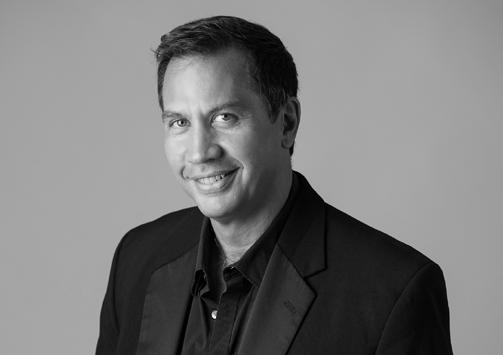
Daniel Hege
Daniel Hege is widely recognized as one of America’s finest conductors, earning critical acclaim for his fresh interpretations of the standard repertoire and for his commitment to creative programming. He served for 11 seasons as the Music Director of the Syracuse Symphony and in June 2009, was appointed Music Director of the Wichita Symphony. He held the position of Principal Guest Conductor of the Tulsa Symphony from 2015–2021, and in May 2018 was appointed to the position of Music Director of the Binghamton (NY) Philharmonic.
Additional positions include a five-year tenure with the Baltimore Symphony where he held the titles of Assistant, Associate and Resident Conductor; Associate Conductor of the Kansas City Symphony; Assistant Conductor of the Pacific Symphony; Music Director of the Encore Chamber Orchestra in Chicago; and Music Director of the Chicago Youth Symphony, where he was twice honored by the League of American Orchestras for innovative programming.
In addition to programming and conducting the subscription concerts in Wichita, Hege has conducted a number of cutting-edge concerts, including Bartok’s Bluebeard’s Castle with the legendary Samuel Ramey in the title role and sets by the glass sculptor Dale Chihuly; and semi-staged productions of Rodgers and Hammerstein’s Carousel and South Pacific in collaboration with the Music Theatre Wichita. He is also active in Wichita as a lecturer and prepares the pre-concert talks for each of his classical programs.
Daniel Hege has guest conducted the Detroit, Seattle, Indianapolis, Oregon, Colorado, San Diego, Columbus and Phoenix symphonies,
as well as the Calgary Philharmonic, among others. International engagements include performances with the Singapore Symphony and the St. Petersburg Symphony at the Winter Nights Festival. Hege has also worked with the Syracuse Opera with which he led productions of Madame Butterfly, La Traviata, Tosca and Don Pasquale. Past and upcoming guest conducting engagements include appearances with the Rochester, Buffalo, Oklahoma, Rhode Island and Naples philharmonics; the Louisville, Sarasota and Florida orchestras; and the Houston, Edmonton, Pacific, Puerto Rico, Hartford, Stamford, Omaha, Madison, Tucson, Spokane and Springfield, MA symphonies.
A much sought after mentor and educator by many of America’s orchestral training programs for highly talented young musicians, Daniel Hege has conducted at the Texas Music Festival, Music Academy of the West, National Repertory Orchestra, Brevard Music Festival, Aspen Festival and School, and the National Orchestral Institute + Festival at the University of Maryland.
Daniel Hege received his Bachelor of Arts Degree in 1987 from Bethel College, Kansas where he majored in music and history. He continued his studies at the University of Utah, where he received a Master of Music degree in orchestral conducting, founded the University Chamber Orchestra and served as Assistant Conductor of the University Orchestra as well as the Music Director of the Utah Singers. He subsequently studied with Paul Vermel at the Aspen Music Festival and School and in Los Angeles with noted conductor and pedagogue Daniel Lewis.
A native of Colorado, Mr. Hege is proud of his Native American Heritage; he is Nez Perce, a member of the Colville Confederated Tribes, and his grandfather, Boyd Eagle Piatote, was a jazz musician and composer.