Alsop Conducts Ortiz, Bernstein & Puts ft. Time for Three
Saturday, June 20, 2026 | Dekelboum Concert Hall
Marin Alsop, conductor
Time for Three, string trio
Nicolas “Nick” Kendall (violin, vocals)
Charles Yang (violin, vocals)
Ranaan Meyer (double bass, vocals)
Program
Gabriela Ortiz (b. 1964)
Kevin Puts (b. 1972)
INTERMISSION
Leonard Bernstein (1918–1990)
Bernstein
Antrópolis
Contact The Call Codes (scherzo)
Contact Convivium
Time for Three, string trio
Symphonic Dances from West Side Story
Prologue (Allegro moderato)
Somewhere (Adagio)
Scherzo (Vivace e leggiero)
Mambo (Meno Presto)
Cha-cha (Andantino con grazia)
Meeting Scene (Meno mosso)
Cool Fugue (Allegretto)
Rumble (Molto allegro)
Finale (Adagio)
Three Dance Episodes from On The Town
The Great Lover Displays Himself
Lonely Town: Pas De Deux Times Square: 1944
ABOUT THE PROGRAM
Making Contact
by Maggie Molloy
Music has a way of bringing people together! Bursting with ecstatic color, this program revels in the dance and drama of community. We hear composers past and present celebrating the power of love and the beauty of human touch—whether we find it in the dance halls of Mexico City, on the fire escapes of New York City, or across the furthest reaches of outer space.
Antrópolis
Gabriela Ortiz
From its ancient Aztec roots to its mouthwatering street tacos and tamales, Mexico City is known for many things. A bustling metropolis brimming with vibrant arts, culture, cuisine, and of course: nightlife. Gabriela Ortiz brings us a tantalizing taste of her hometown in Antrópolis, a musical club crawl through the dance halls of Mexico City. But first, a quick Spanish lesson.
The word antro comes from the Latin antrum, meaning “grotto” or “cavern.” Up until the 1990s, the term antro was Mexican slang for a seedy bar, a shady nightclub, or, in Ortiz’s words, any entertainment spot “of dubious reputation.” She remembers four of them fondly in Antrópolis. It’s music that celebrates a special moment in time and space: 1980s Mexico City coming alive each night to the delicious (and at times dubious) rhythms of Latin music. Don’t forget to hydrate! Our night out on the town goes a little something like this:
After a long day at the office, we jump out of the frying pan and into the fires of “Los Infiernos” (“The Hell”), where flames and devils dance along the walls, beckoning us to join in the diabolical bacchanale. A timpani solo sets the stage, evoking the rumble of the dance floor as a crowd of dancers’ hips begin to sway to the infectious rhythm of cumbia.
A twirl too far and we find ourselves dancing beneath the shimmering lights of “El Bombay,” the metallic twinkle of vibraphone and cowbells transporting us to an intoxicating fantasy of the East. We slip through the back door to the “Tutti Frutti,” the local punk spot known for experimentation in both fashion and sound— plus a rollicking dance floor that speaks to the urban pulse of Mexico City.
And hey, it wouldn’t be the ’80s without a little excess: we end our evening at “Salón Colonia,” the big band bursting with color, joy and plenty of juice as we mambo the night away, sweaty, breathless and full of life.
It’s a love letter not only to the rich culture of music and dance in Mexico City, but to the many different people who have laughed, danced, and dreamt together to build this beautiful Antrópolis.
Contact
Kevin Puts
How we “keep in touch” with one another has taken on new significance since the COVID-19 pandemic. After years of masks, video calls, vaccines and social distancing, we’ll never take a hug or a handshake for granted again. But global health crises are far from the only thing dividing us. As the latest news headlines continue to filter down into our daily lives, it can feel as though humanity itself is ripping apart at the seams. How can we continue to connect, create and collaborate in a world that makes us feel increasingly isolated, alienated and divided? These were among the questions that framed Kevin Puts’ composition Contact, commissioned by the ensemble Time for Three.
“The word contact has gained new resonance during these years of isolation,” Puts writes in his program note for the piece. “It is my hope that this concerto might be heard as an expression of yearning for this fundamental human need.” Often, we find these precious moments of connection in unexpected places, like while sitting at a cabaret table at Joe’s Pub in New York City, the small stage aglow behind a trio of musicians, the air ripe with new musical discoveries. In fact, that’s precisely where Puts first heard Time for Three perform in April 2017.
“After hearing them play, sing, improvise and perform their own arrangements and compositions that evening, I felt both elated— by the infectious energy and joy they exude as performers—and also rather daunted by the thought,” he writes. “I simply couldn’t imagine conceiving any music they couldn’t improvise themselves.” That very performance would give shape to the opening movement of Contact. “The Call” captures the excitement of a new collaboration, the individual voices of Time for Three each echoed and transformed by their interactions with the orchestra and with one another. It’s music that revels in the questions, the reflections, the sense of wonder
that comes from making that first “hello”— and then following where the music leads. What follows is the flurried, frantic “Codes,” a breathless scherzo that yo-yos across the stage, unable to contain its excitement. The energy builds to a restless climax before exploding into the stark, floating expanse of “Contact.” Puts describes this third movement like “an abandoned vessel floating inert in the recesses of space.”
In a way, the isolation of outer space mirrored our everyday lives in the early days of the pandemic, unable to gather or share space at concerts. As the initial premiere date of Contact was pushed back due to COVID-19 concerns, Puts began hearing how this concept of space (both physical and cosmic) echoed throughout the entire concerto. “Could the refrain at the opening of the concerto be a message sent into space, a call to intelligent life across the vast distances containing clues to our DNA, to our very nature as Earth people?” he writes. “Could the Morse code-like rhythms of the scherzo suggest radio transmissions, wave signals, etc.? And might the third movement (originally called simply ‘Ballad’) represent the moment of contact itself?”
In that light, the quiet tenderness of the third movement speaks to the wondrous beauty of opening our minds and connecting with one another—whether it be with aliens from a distant planet, musicians from across the ensemble, or neighbors from another culture. Puts found moments of connection, too, in a recital for his (then) 10-year-old son’s cello studio, where a gaggle of at least a dozen young cellists performed a blazing rendition of a traditional Bulgarian folk melody known as Gankino Horo (Ganka’s Dance). The concerto’s finale, “Convivium,” became an exuberant fantasy on this tune, a joyous testament to the power of music to bring people together—no matter the space between.
Symphonic Dances from West Side Story
Leonard Bernstein
It’s a tale of two star-crossed lovers—this one set not on the cobblestone streets of Verona, Italy, but instead amid the heat and heartbeat of 1950s New York City. Our ill-fated lovers are not Romeo and Juliet, but Tony and Maria. Born not of William Shakespeare’s romantic world of Montagues and Capulets, but instead of two rival gangs:
the Jets (the white, working-class Americans) and the Sharks (the Puerto Ricans).
When Leonard Bernstein premiered his new musical West Side Story on Broadway in 1957, it marked a milestone in American music history. From the seamless integration of music and drama to the vibrant blend of classical, jazz and Latin rhythms, Bernstein created a world onstage that was both sophisticated and distinctly urban. Not only was the music innovative, but the subject matter was bold. Gang violence, racial tensions and contemporary politics were not standard fare for the theatergoing audiences of the 1950s. West Side Story proved that popular stage musicals could engage with issues of immigration, race, and urban violence without sacrificing artistic ambition. The cultural impact can still be felt today (look no further than the success of Lin-Manuel Miranda’s Hamilton, one of the top-grossing musicals of all time).
Of course, if you’re going to write a musical set in the middle of 1950s New York City, at the intersection of jazz and Latin music, there’s going to be some serious dancing. Bernstein’s West Side Story, with choreography by Jerome Robbins, was artful in its depiction of conflict through dance, not dialogue. The posturing of each gang, the Sharks and the Jets, are likewise rooted in the cultural distinctions between them. The Jets claim space through quick movements, strong lines, kicks and jumps—while the Sharks move in the fluid, grounded rhythms of Latin dance.
And so, the drama unfolds on the dance floor. From the tender, butterflies-in-your-stomach beauty of Tony and Maria’s “First Meeting” to the charming “Cha-Cha,” the rough and tumble “Rumble,” and the rhythmic rainbow of the “Mambo,” Bernstein’s Symphonic Dances capture all the drama of Shakespeare—alive in vivid color.
“There’s a place for us,” as Tony and Maria sing in West Side Story, imagining that maybe, just maybe, love might finally triumph over hate. Though we know how their story ends, with a song in our hearts and a dream in our heads, we still hope that things might turn out differently. We still believe there might one day be a happy ending for these two star-crossed lovers on the stoops, streets, and fire escapes of 1950s New York City.
“Hold my hand and I’ll take you there, somehow, some day, somewhere.”
Alsop Conducts Ortiz, Bernstein &
ABOUT THE ARTISTS
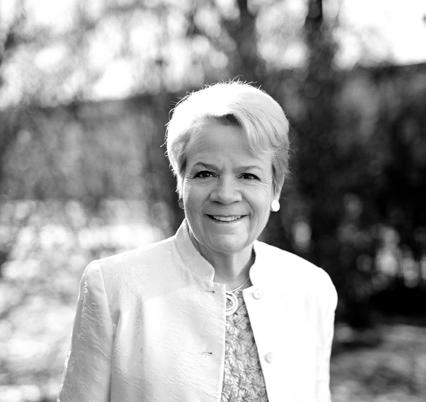
Marin Alsop
One of the foremost conductors of our time, Marin Alsop is the first woman to serve as the head of major orchestras in the United States, South America, Austria and Great Britain. Winner of the 2025 Golden Baton Award from the League of American Orchestras, Alsop is also the first and only conductor to receive a MacArthur Fellowship.
Alsop serves as Artistic Director and Chief Conductor of the Polish National Radio Symphony Orchestra, Principal Guest Conductor of the Philharmonia Orchestra, Principal Guest Conductor of The Philadelphia Orchestra and Chief Conductor of the Ravinia Festival.
Alsop’s Summer 2026 highlights include conducting the London Philharmonia at the inauguration of the Tower of Jesus Christ at the Sagrada Família as well as at the BBC Proms. Alsop concludes her Carnegie Hall Perspectives Artist season with the National Orchestral Institute Philharmonic at Carnegie Hall. She also
returns to the Hollywood Bowl with the Los Angeles Philharmonic; Bravo! Vail Music Festival and Saratoga Performing Arts Center with The Philadelphia Orchestra; and the Ravinia Festival with the Chicago Symphony Orchestra in her role as Chief Conductor. Alsop will also conduct the composition portion of the George Enescu International Competition marking her first appearance with the Romanian Radio National Orchestra.
To nurture the careers of women conductors, Alsop founded the Taki Alsop Conducting Fellowship to empower extraordinary women conductors through intensive coaching, mentoring, and financial support. Among the 42 award winners, 32 Music Director/Chief Conductor titles are held with orchestras around the world.
In 2021, Alsop assumed the title of Music Director Laureate of the Baltimore Symphony Orchestra. During her 14-year tenure as Music Director, she led the orchestra on its first European tour in 13 years, conducted more than two dozen world premieres, and founded the music education program OrchKids.
Time for Three
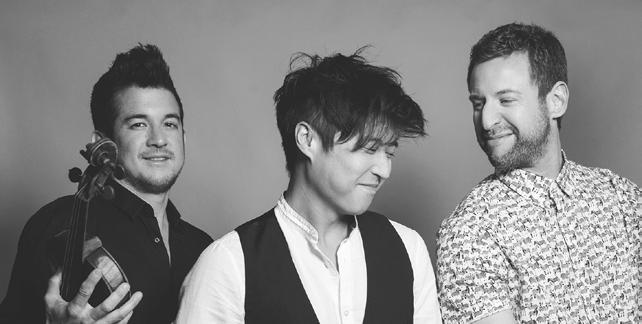
Grammy and Emmy-winning ensemble Time for Three (TF3) defies convention and boundaries, merging classical, Americana, and singer-songwriter traditions into a singular, remarkable sound. Consisting of Ranaan Meyer (double bass, vocals), Nicolas “Nick” Kenall (violin, vocals) and Charles Yang (violin, vocals), TF3 captivates audiences worldwide with their virtuosic playing and insatiable appetite for creativity that expands typical perceptions of a string trio. TF3’s collaborations with major orchestras and conductors continue to flourish, including appearances this season with The Philadelphia Orchestra and Marin Alsop, Louisville Orchestra and Teddy Abrams, St. Louis Symphony and Stéphane Denève, New Jersey Symphony, Vancouver Symphony and Nashville Symphony. They have previously appeared with the San Francisco Symphony, Boston Pops, Colorado Symphony, Seattle Symphony and were Artist in Residence with the Indianapolis Symphony for over a decade. They have additionally been championed by conductors including Sir Simon Rattle, Keith Lockhart, Krzysztof Urbanski, James Gaffigan and Lio Kuokman.
The trio’s history of groundbreaking commissions has entered a new chapter with Silicon Hymnal, a genre-blending concerto by the highly sought after composer Mason Bates that integrates electronica into the orchestral fabric. The concerto received its premiere at Arizona Musicfest, with subsequent performances with San Francisco Symphony, The Philadelphia Orchestra at SPAC, Louisville Orchestra, Nashville Symphony and with orchestras in Brevard, Sun Valley, Visalia and Sioux City.
Time for Three also embarks on a highly anticipated new project with Grammy and Olivier-winning mezzo-soprano Joyce DiDonato, titled Emily – No Prisoner Be. Written by Pulitzer Prize-winning composer Kevin Puts and inspired by the vivid and introspective poetry of Emily Dickinson, the work received its world premiere at the Bregenzer Festspiele in August 2025. It tours across the U.S. this season, including performances at Carnegie Hall, Berkeley’s Zellerbach Hall and Chicago’s Symphony Center.
Alsop Conducts Ortiz, Bernstein & Puts ft. Time for Three
TF3’s previous collaboration with Puts helped earn the trio their first GRAMMY Award, winning in the category of “Best Classical Instrumental Solo.” The commissioned work, titled Contact, was recorded with The Philadelphia Orchestra and Xian Zhang and released on the Deutsche Grammophon label under the album title Letters for the Future. The album also included Jennifer Higdon’s Concerto 4-3, written specifically for the trio. Time for Three has enjoyed additional collaborations with composers Chris Brubeck and William Bolcom, as well as a wide range of artists including Ben Folds, Branford Marsalis, Joshua Bell, Aoife O’Donovan, Natasha Bedingfield and Arlo Guthrie.
Time for Three’s solo shows have been praised for their “joy, mastery, creativity and supreme artistry” (The Strad), featuring original songs with imaginative arrangements of beloved classical and mainstream works. As described by National Public Radio, “In person, the members of Time for Three come off as just three dudes in a band. But with their staggering technique and freewheeling genre-crossing, it’s hard not to be swept up in the force of their contagious energy.” Their concert special, Time for Three In Concert, was produced by PBS and earned the trio an Emmy Award. Time for Three’s affinity for new experiences led them to collaborate with cellist and composer Ben Sollee to create the soundtrack for Focus Features’ film Land, which was directed by Robin Wright and premiered at the 2021 Sundance Film Festival. For the past two seasons, they have worked with choreographer Lauren Lovette for special performances with the Paul Taylor Dance Company at Lincoln Center. On the recording side, TF3 teamed up with Grammy-winning songwriter Liz Rose and Grammy-winning producer Femke Weidema for new recordings released through Warner Music and contributed to Summer Walker’s R&B hit, Constant Bullsxxt.
Both on- and off-stage, TF3 is committed to encouraging the next generation of musicians. In conjunction with their performances, TF3 hosts masterclasses, workshops and musical conversations. They have been invited for multi-day residencies by universities and youth orchestras. As part of their performances, Time for Three regularly welcomes local student musicians to share the stage with them, creating collaborative moments that are both empowering and inspiring.
Ranaan Meyer and Nick Kendall are both graduates of the Curtis Institute of Music. Charles Yang is a graduate of The Juilliard School.