4 minute read
Workforce Development Helps Caregivers and Community Members Grow Their Careers

It’s no secret that the health care workforce faces ongoing challenges, including widespread shortages worsened by the COVID-19 pandemic. These shortages lead to longer wait times for patients and contribute to health care workers leaving the field.
To address these critical needs, UMass Memorial Health has a workforce development team within the Human Resources department to help caregivers advance into vital roles, meet evolving workforce needs and promote equitable access to career pathways.
Our workforce development programs offer a variety of benefits for caregivers and community members, including:
Free training and education needed for career advancement
Part- or full-time employment and benefits
Paid learning time to gain new skills and knowledge
The Patient Care Technologist Pathway Program trains caregivers and community members to become patient care technologists (PCT) through job readiness support from the JVS Boston Healthcare Training Institute, classroom education at Quinsigamond Community College, and clinical skills training at UMass Memorial Medical Center. In 2025, 31 caregivers and community members participated. The retention rates of this program are strong: with 73% of Cohort 1 still on the job at UMass Memorial Health at the one-year mark, 83% of Cohort 2 still working here at eight months, and 100% of Cohort 3 remaining on our team at four months after the program ended.
Our Medical Assistant Registered Apprenticeship program trains caregivers to become certified medical assistants. This is Central Massachusetts’ first health care-registered apprenticeship, and it partners with the SHARE union and Quinsigamond Community College. In FY25, 27 caregivers participated. Eleven months after completing the program, these caregivers also are choosing to stay with UMass Memorial with 80% of our first cohort still on board, and 93% of our second cohort still here after five months.
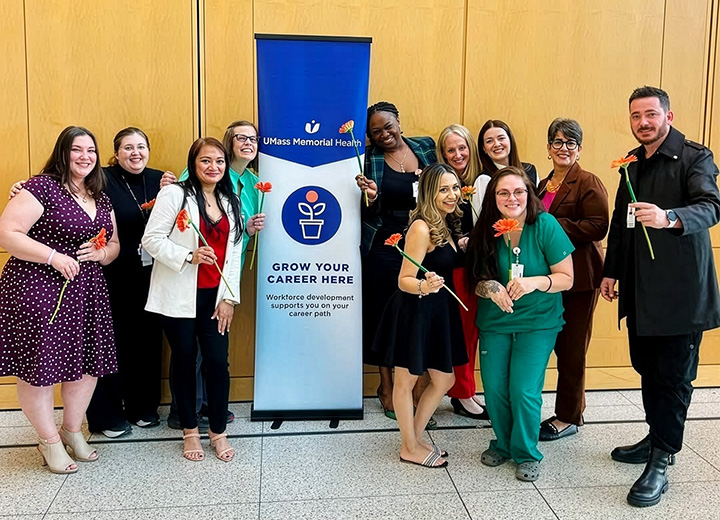
Our Frontline Scholars Program for Surgical Technologists supports caregivers returning to college to become surgical technologists. Over the last two years, the program has trained 19 caregivers. Seven caregivers passed the national exam and advanced to surgical technologist positions, while 12 continue to study.
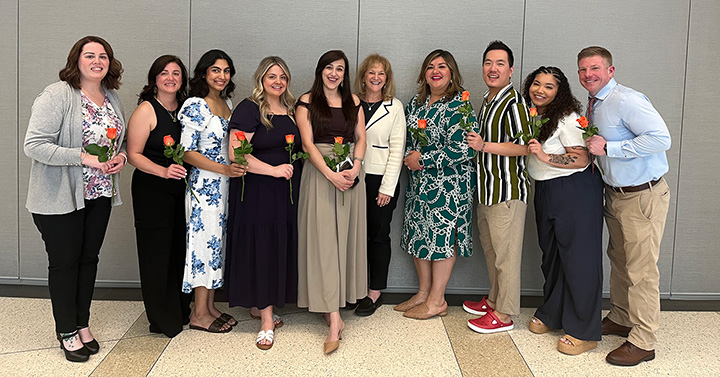
Our NextGen Workforce program provides summer jobs, cooperative education and internships for young adults exploring health care careers. In 2025, 24 high school students participated in a six-week summer jobs program that helps build the next generation of health care professionals.
This year we also offered foundational courses to help caregivers build essential skills with courses such as Introduction to Health Care Careers, Workplace English, and U.S. Citizenship Interview Preparation. Over the last two years, 40 caregivers from 13 countries completed the nine-month Workplace English program (17 languages spoken). 93% of the first cohort of caregivers remain at UMass Memorial one year after graduation with two advancing to higher positions.
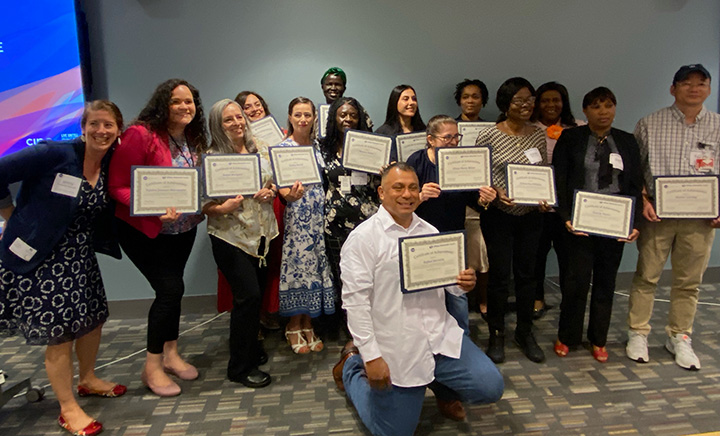
Since UMass Memorial Health launched its workforce development efforts, more than 2,000 caregivers have expressed interest in programs and courses, with 350 participating so far. By providing career pathways, partnering with local organizations, and offering hands-on training, UMass Memorial Health is building a stronger workforce, helping caregivers thrive and ensuring patients receive high-quality care.
These workforce development initiatives are a cornerstone of our Anchor Mission — an ethos that guides us to align our resources for greater community impact and shared prosperity.
One crucial pillar of our Anchor Mission is hiring. Our workforce development team’s work signifies the first phase in developing a robust pipeline of qualified staff, empowering local individuals to advance their careers within UMass Memorial and striving toward the goal of improving the long-term health and economic well-being of Central Massachusetts communities. •