2 minute read
The eICU: Nearly 20 Years of Innovation at UMass Memorial

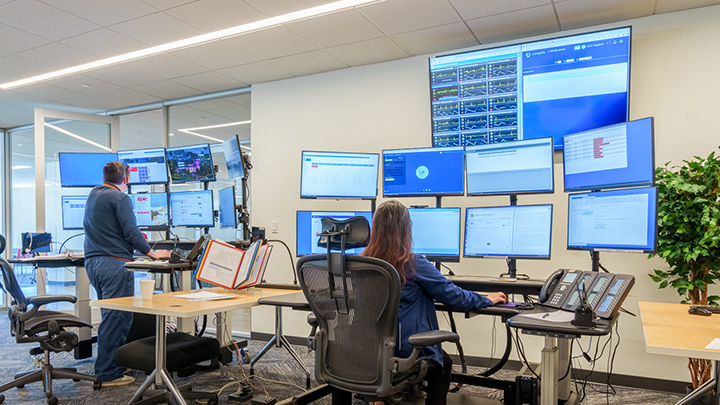
When UMass Memorial launched our electronic intensive care unit (eICU) in 2006, the idea was revolutionary: could clinicians care for critically ill patients from a digital hub miles away? Now, in 2025, nearly two decades later, the answer is clear.
“We’re now monitoring about 150 ICU beds 24/7/365,” said Eric Cucchi, Operations Director of the eICU Support Center. “Board- certified intensivists, advanced practice providers, pharmacists and digital hub assistants all work together to support bedside teams.”
The eICU started off at UMass Memorial Medical Center’s Memorial Campus and quickly grew. By 2007, it covered ICUs across the Medical Center and later extended to community hospitals like Marlborough Hospital and Milford Regional Medical Center. Today, the eICU also supports hospitals that are not part of the UMass Memorial Health system, including Heywood Hospital in Gardner and Tobey Hospital in Wareham.
The impact is real. Eric recalled one patient who had overdosed on an antidepressant at Marlborough Hospital. “She went into cardiac arrest multiple times. From the eICU, we led CPR efforts, coordinated with toxicology, helped obtain a rarely used medication called intralipid, and activated our extracorporeal membrane oxygenation team at the Medical Center. Working together with the bedside team, we stabilized her safely.”
This year, the eICU completed a major technology upgrade. Every ICU bed is now equipped with high-definition cameras and digital tools that allow seamless, secure communication.
“Nurses can text a family member a secure link so they can join their loved one’s room virtually,” explained Eric. “We can instantly bring in interpreters or even consult a neurosurgeon from their home. The system gives us tremendous flexibility.”
The eICU also ensures consistent, preventive care. Continuous monitoring helps teams remove central lines at the right time to reduce infection risk, provide proper blood clot prevention, and identify complications before they become critical. Independent studies confirm the results: lower mortality, shorter ICU stays and safer recoveries.
Traditionally, the eICU has been reactive — responding when a patient deteriorates. The next frontier is prediction. “We’re upgrading systems to make millions of data points actionable,” Eric said. “By using AI and predictive analytics, we can intervene earlier, keeping patients safer and improving outcomes. The more proactive we are, the better our patients do.” •