Momentum
THE MAGAZINE OF THE UNIVERSITY OF MARY SPRING 2016
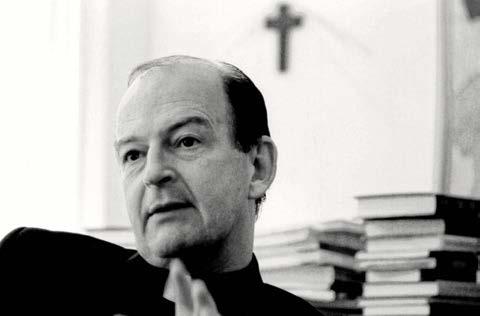
Neuhaus
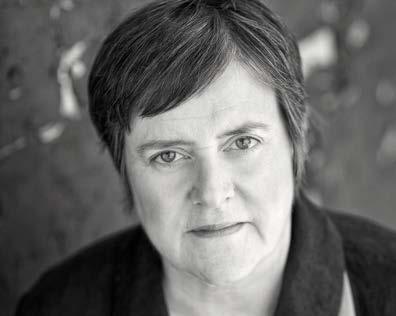
Norris
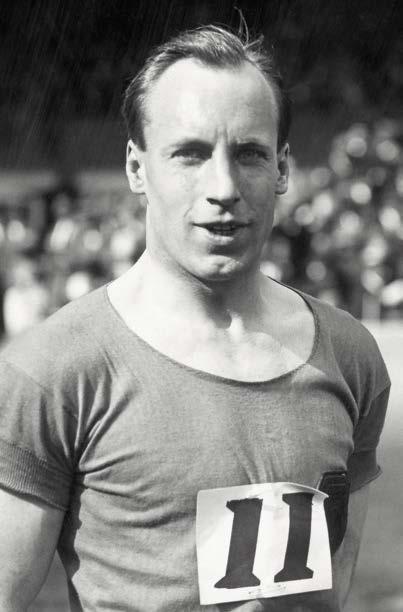
Liddell
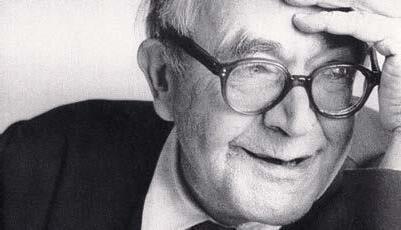
Barth
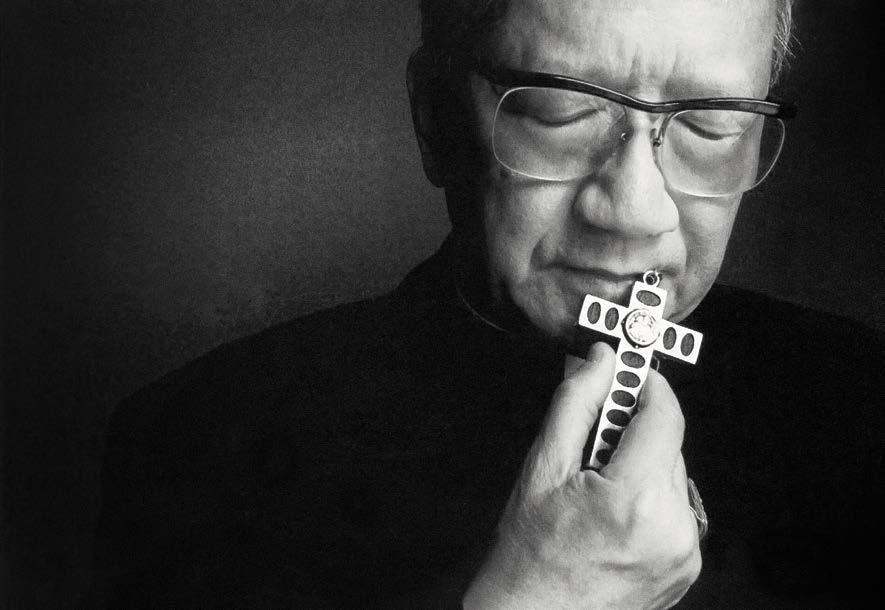
Cardinal Nguyễn Văn Thuận
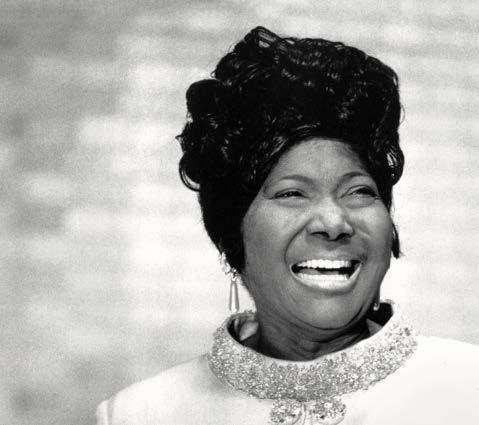
Jackson
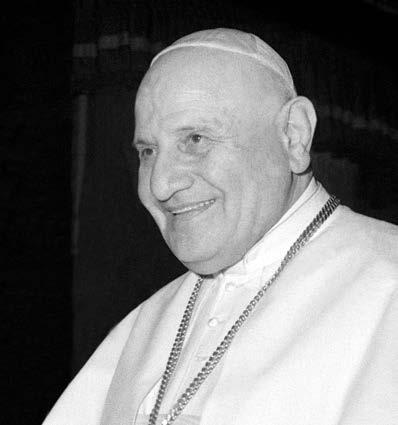
Pope Saint John XXIII
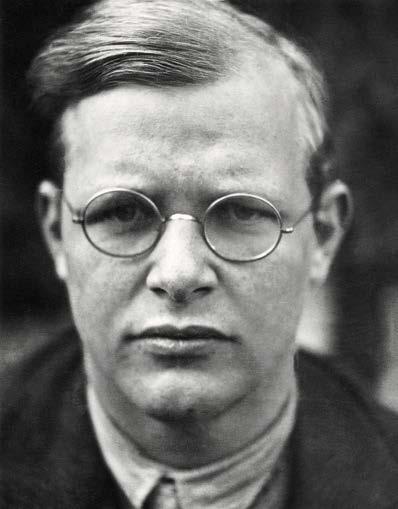
Bonhoeffer

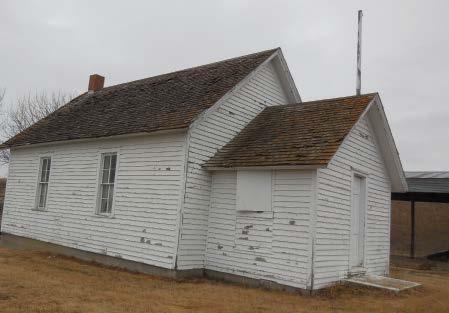
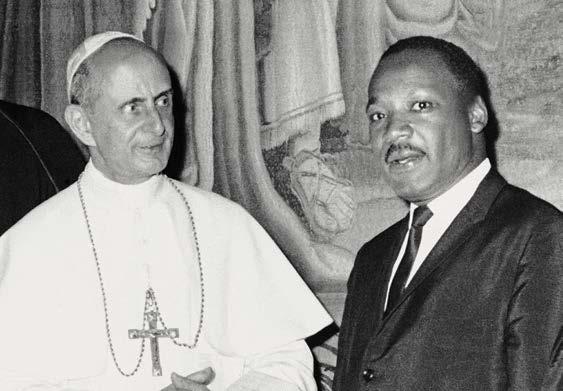


Cover photo collage: selected photos from art in the newly renovated University Ministry Christian Leadership Center.
Cover, clockwise from top left:
Eric Liddell. Scottish athlete and missionary who stood true to his religious beliefs by refusing to compete in an Olympic race on a Sunday. He served as a missionary in China until his death in 1945 in a Japanese civilian internment camp. Liddell’s life was featured in the Oscar-winning 1981 film, Chariots of Fire.
Kathleen Norris. Poet, essayist, and explorer of the spirituality of the Great Plains. The best-selling author became a Benedictine oblate at Assumption Abbey in Richardton, ND, and spent extended periods of time at Saint John’s Abbey in Collegeville, MN. Her nonfiction book, Dakota: A Spiritual Geography, published in 1993, was awarded “Notable Book” status by The New York Times.
Richard John Neuhaus. As a Lutheran pastor who became a Roman Catholic priest, Neuhaus founded the journal First Things, authored several books and was an unofficial adviser to President George W. Bush on bioethical issues.
Cardinal François-Xavier Nguyễn Văn Thuận. Roman Catholic Cardinal imprisoned by the communist government of Vietnam for 13 years because of his faith – nine in solitary confinement. A book, The Road of Hope, was
compiled from scraps of writing smuggled out of prison. Following a visit to Rome in 1991, he was prevented from returning to his see, Ho Chi Minh City. The Church began his beatification process in 2007.
Pope Saint John XXIII held the papacy from 1958 to 1963 and opened the historic Second Vatican Council. His famed encyclical Pacem in terris was completed two months before his death. He was beatified in 2000 by Pope John Paul II. In 2013, Pope Francis declared him a saint for the virtuous life he lived. He was canonized in 2014.
Mahalia Jackson. Considered one of the most influential gospel singers in the world, the powerful contralto was deeply committed to the civil rights movement and was present at Martin Luther King Jr.’s March on Washington and the bus boycott in Montgomery, Alabama. She recorded 30 albums and a dozen millionselling 45s. In 1950, she became the first gospel singer to perform at Carnegie Hall.
Dietrich Bonhoeffer. German Lutheran pastor and theologian. His writings are widely known, including the classic The Cost of Discipleship. Bonhoeffer was a staunch resister of the Nazi regime. Arrested by the Gestapo in 1943, Bonhoeffer was placed in a concentration camp. Letters written by Bonhoeffer were smuggled out of prison and published posthumously as Letters and Papers from Prison. He was executed by hanging in 1945.
Karl Barth. A Swiss Reformed theologian called by Pope Pius XII ‘the most important Christian theologian since St. Thomas Aquinas.’ A fierce critic of Christians who supported the Nazis, Barth was a prolific and influential theologian and the author of the famed The Epistle to the Romans commentary and the massive 13-volume work, Church Dogmatics.
This page, left:
Blessed Pope Paul VI served as pope from 1963 to 1978, continuing the work of the Second Vatican Council, implementing its reforms and fostering ecumenical relations with Eastern Orthodox and Protestant Christians. He sought dialogue with groups and religions throughout the world and issued the 1968 encyclical Humanae vitae. Declaring that he lived a life of heroic virtue, Pope Benedict XVI conferred the title of Venerable on him and he was beatified by Pope Francis in 2014.
Martin Luther King Jr. American Baptist minister, humanitarian, and U.S. civil rights leader. His credo of nonviolent civil disobedience was based on his Christian faith and he is famous for his “I Have a Dream” speech in Washington, DC. In 1964, he received the Nobel Peace Prize for his civil rights activism. Assassinated in 1968, King was posthumously awarded the Presidential Medal of Freedom and the Congressional Gold Medal. Martin Luther King Jr. Day was established as a federal holiday in 1986.

You are like light for the whole world.
A city built on top of a hill cannot be hidden, and no one would light a lamp and put it under a clay pot. A lamp is placed on a lampstand, where it can give light to everyone in the house.
Make your light shine, so that others will see the good that you do and will praise your Father in heaven.
— Matthew 5:14-16
It’sa cliché for people to say, when looking up into the night sky, that they feel small.
But if we want to feel really, really small, we can contemplate the physics of light.
‘Optical light’ — the wavelengths that the human eye can perceive — is a vanishingly thin slice of the electromagnetic spectrum, which ranges on one hand from waves that are fractions of the size of atoms, and on the other hand, waves so vast that they can be as long as the universe itself.
How marvelous to know that beyond our human senses extends a vast reality that surpasses our understanding!
How marvelous to know that though our sight is finite, we are the beloved beneficiaries of a generous God who sheds light so lavishly.
As followers of Christ, God asks us to be people of light.
That inner illumination should shine forth in the entire spectrum of our lives — in private spaces and in public places. It is vital that this inner light encompasses the workshop and the boardroom, the office and the break room.
The University of Mary is continually inspired by the courageous example of our founders and sponsors, the Benedictine Sisters of Annunciation Monastery, in their unswerving commitment to meeting the needs of our time and place.
Today’s intricately connected world has an urgent need for leaders who are models of good, who shine with a true light, whose lives counter the insidious and pervasive message that success in business means – requires! – dishonesty, ruthlessness and exploitation.
This is why the university’s Gary Tharaldson School of Business has created a new MBA with a concentration in Virtuous Leadership and intentionally integrates the teaching of virtuous leadership throughout the curriculum.
We believe there is a moral law that undergirds all things, a moral law etched into the human heart, revealing to us the will of God. We believe that God’s will is that humans treat one another with kindness and honesty, with generosity and mercy.
The workplace is not an exception. No justifications such as ‘everyone does it,’ or ‘that’s what it takes to make it in this world’ will do. We are not excused from living Christ’s values between the hours of 9 to 5.
‘Success,’ in the workplace as everywhere, in the eyes of God, is the uncovered light of love shining through us in acts of mercy, honesty and fidelity to the good.
Integrating virtue into our curriculum is this university’s wholehearted rejection of the cynical acceptance of callousness and deceit as ‘business as usual.’
At the University of Mary, our daily work includes instilling in our graduates the conviction that virtue, in spirit and in conduct, carries the light of Christ into all corners of our lives.
Living in the light as servant leaders, as virtuous leaders, must be, and become, the true standard of ‘business as usual.’

Monsignor James P. Shea President

The story above is often left here. But I wonder, “What if?” What if the woman looked around and found other people hanging onto tree roots? What if she found others in similar situations? What if she saw:
Mary of Nazareth letting go at the Annunciation?
Benedict of Nursia letting go in the 5th century?
The local football coach, the CEO of her place of employment, neighborhood families - all letting go?
What if she saw others hearing God’s invitation and letting go, one by one?
I think their witness would help her to follow the Voice she heard and allow herself to take a risk on God. Everything within may cry out "Is there anyone else out there?" … and she discovers that there is.
There is a community of service. Community has been my experience.
While hiking in the mountains, a young woman slipped and fell from a cliff. As she was falling, she grasped a tree root and hung on for dear life. Over and over she cried out ‘Help, is there anyone out there?’ and received no answer.
Finally, she heard a voice … it was God! The young woman cried out, “God, I’m in real trouble here. Please help me. I’ll do anything you want.” God answered, ‘Let go.’
After a moment of thought (and looking at the long drop to the ground), the woman loudly tried again, “Is there anyone else out there?”
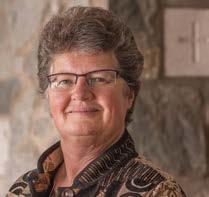
When asked how my family came to be so involved with service, I can simply answer – ‘Do you know my parents, Myron and Marge?’
They gifted me with: the stability that allows creativity and risk
the belief that family is primary and family extends beyond 'just us’ to include the community of Bismarck and beyond the experience that service, faith, and gratitude is just the way of living.
When asked what drew me to the community of Annunciation Monastery, I can simply answer - "Do you know the story of the pioneering Sisters?"
They gifted me with their legacy of vision and passion the strength to build in stone on these wind-tousled prairies
the centrality of prayer as the core of who we are and all that we do.
How are you called to be a member of this community of service? Freed from fear and clutching, we look around to see others. We allow ourselves to be inspired by their example. We allow ourselves to be moved by their need. We allow ourselves to be used by God. The call is not monumental; the call is living with faithfulness each moment.
The moment to serve is now; there just is no other.
— Sister Kathleen Atkinson, OSB, is a member of Annunciation Monastery in Bismarck and the founder of Ministry on the Margins, a volunteer-based ecumenical ministry of support for those who ‘fall through the cracks’ during times of transition.
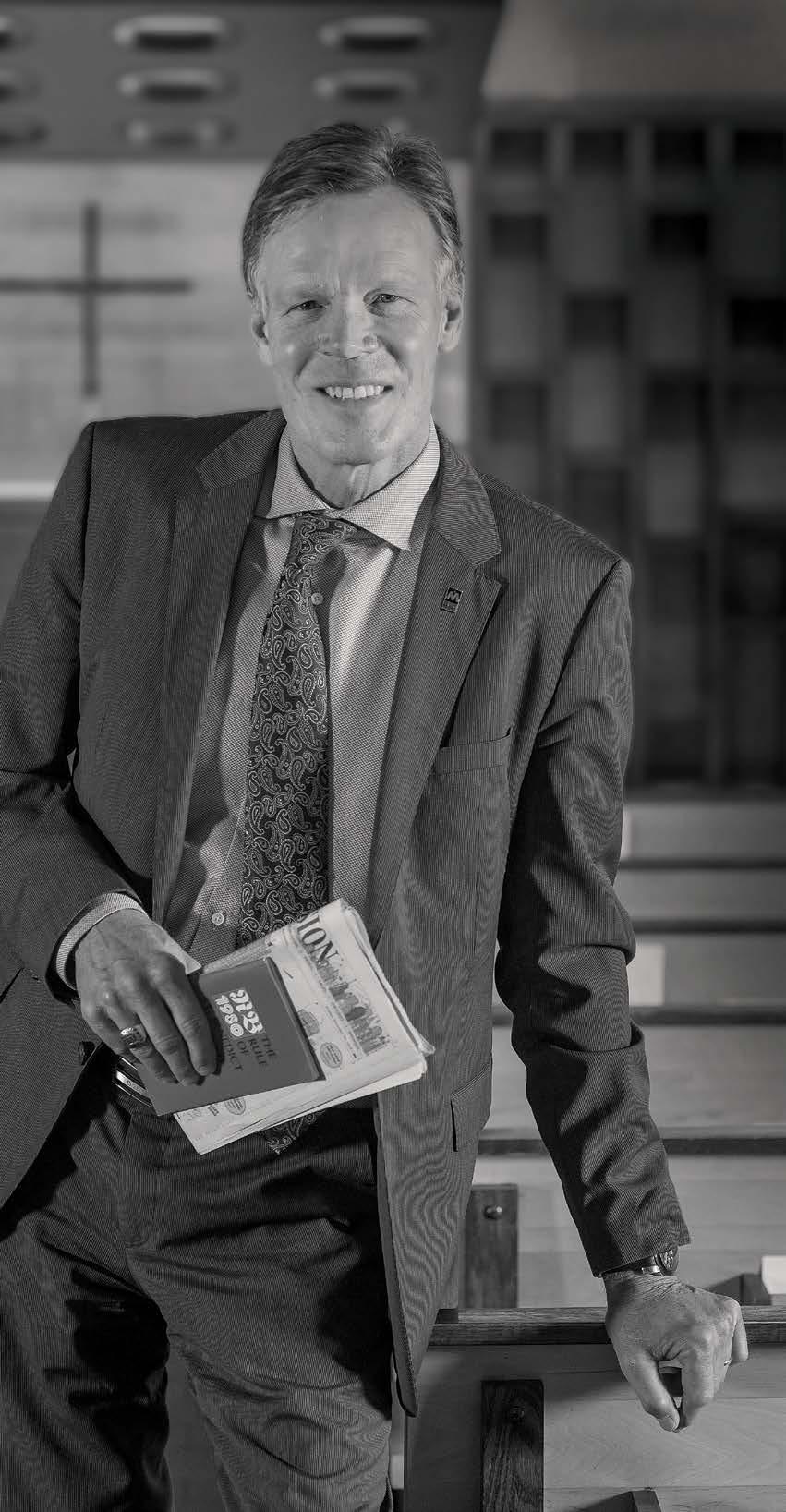
University adds a Virtuous Leadership concentration to its MBA offerings
WhenDr. John Warford says ‘business should be a force of good,’ what he means is that the University of Mary teaches students not just the craft of business, but also a base of ethics, a base of morals and the courage to make the right decisions.
Inspired by the work of Alexandre Havard, author and founder of the Havard Virtuous Leadership Institute, the university’s new MBA concentration in Virtuous Leadership was created to nourish those aspirations.
“Virtuous leadership — magnanimous leadership — is about bringing out the best in others, giving back,” said Warford, Dean of the university’s Gary Tharaldson School of Business.
‘The idea is to take servant leadership, which is in the fabric of this university – it’s been in our DNA for 20 years now - and taking it to the next level.
‘That’s what sets us apart.
“We are creating a unique business student,” Warford said. ‘These generations of students are interested in that inner part, that inner beauty, respect for fellow workers, for the less fortunate — making that difference.”
The supreme quality for leadership is unquestionably integrity. Without it, no real success is possible, no matter whether it is on a section gang, a football field, in an army, or in an office.
— Dwight D. Eisenhower
It is better to lead from behind and to put others in front, especially when you celebrate victory … You take the front line when there is danger.
— Nelson Mandela
Dr. Karel Sovak tells the following anecdote about wise leadership:
The wisdom of a wolf pack is revealed in its peculiar mode of travel.
The pack places the elderly in front of the line. They set the pace.
Next in line are the strong warriors of the pack. From the middle, they can defend the elderly from any side.
Finally, at the back, comes the lone wolf. From that vantage, he can survey ahead, sense trouble, watch for attack.
That’s ‘the leader that follows,’ said Sovak, associate professor at the Tharaldson School of Business.
This kind of ‘followership’ is the key to being a servant leader, Sovak said. This kind of leader has the long view and guides the pack safely.
“That is going to be key to our future students,” Sovak said. “We are building skill sets beyond the spreadsheet or the balance sheet. Virtues are the keys that help restore a quality culture.”
This generation is looking for a sense of purpose to answer the question, ‘why do I exist?’ Sovak said.
“They see ‘virtuous capitalism’ as a way to produce things that are good, do good with their wealth, provide for the vulnerable.”
Practicing the cardinal virtues of courage, prudence, temperance and justice creates a leader worth emulating, someone who does good for others, practices wisdom, displays self-control and treats others with fairness, Sovak said.
Great leaders bring out the best in others, Sovak said, treating each of them as
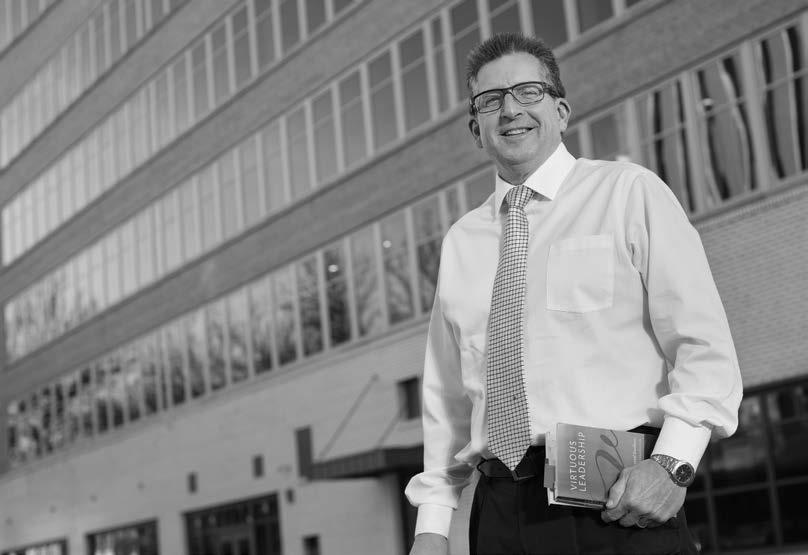
someone created in the image of God.
“Humility is the realization that all gifts are from God to share with the rest of the world.”
Even though it may seem that wrong behavior gets rewarded, in the long run it is virtue that endures, Sovak said. “This generation understands that. We’re crafting a generation of students with the moral courage to stand up and say ‘that’s wrong,’” he said.
Today’s generations of students see selfishness and greed and ask, ‘why does it have to be that way?’
“They want to find a better way.”
Students’ No. 1 job preference today is freelancing, Sovak said.
“This generation says, ‘I think I have a better way to do something and I want to try it, build it on my own.”
Collaboration is also a hallmark of this generation, Sovak said. “They are working with one another, trusting each other,” he said. “It’s the ‘shared economy,’ in models such as Uber and AirB&B.
Capturing the usefulness of social media, this generation uses the experiences of others in aggregate to make their decisions, he said.
“This generation grew up with that
Learn more about the University of Mary’s new MBA with a concentration in Virtuous Leadership at a
in Bismarck June 10-13.
Explore how the classical virtues and Christian faith successfully apply to best business practices.
Learn in partnership with world-class faculty—including Havard Virtuous Leadership Institute founder and author Alexandre Havard.
Completion of the immersion weekend also includes credit for the MBA with Virtuous Leadership Concentration and Virtuous Leadership Certificate offerings from the University of Mary.
Online courses are available after the immersion weekends to complete the concentration.
Visit umary.edu/virtue to register.
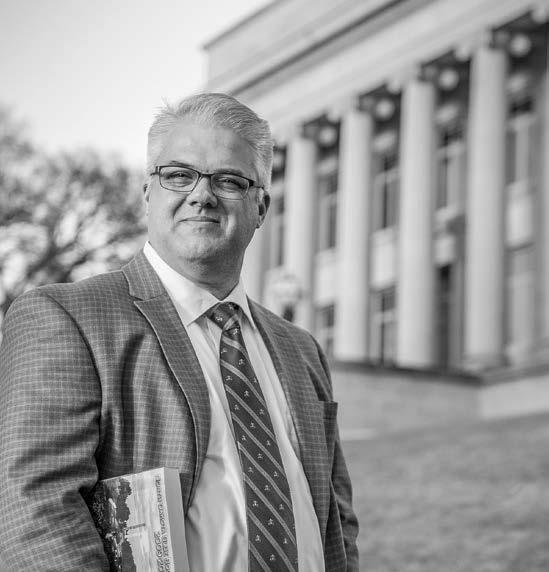
“State and local governments have many upper level management and administrative positions that require or prefer individuals with advanced degrees in management or business.
“Mary’s MPA program is especially designed to offer that public administration-specific training.”
— Charles Whitman, Bismarck City Attorney
Educating the next generation of able public servants is more important than ever before, because a crisis in public management is approaching fast, said Dr. Jim Long, associate professor and chair of Graduate and Distance Education at the University of Mary.
For this reason, the university’s Gary Tharaldson School of Business has launched a new Master’s in Public Administration degree.
Right now, Baby Boomers occupy an outsized share of the administrative jobs in government, tribal and nonprofit sectors, Long said.
And Boomers are heading into retirement, fast. According to Long, 26
“The University of Mary MPA program provides the opportunity to students to learn about the big picture in local government.
“It teaches you how to put an analytic framework on things such as leadership, ethics, teamwork, human resource management, and budgeting – important competencies and skills for a successful public administrator.”
— Keith Hunke, Assistant City Administrator, City of Bismarck
percent of that generation of public servants is planning to retire in the next 5 to 10 years.
What that means for North Dakota, with 81,000 public employee jobs, he said, is that 21,000 public sector positions will be vacant.
“So those numbers will drop off en masse,” Long said. “There will be a crisis with public sector employees.”
The University of Mary’s location is a perfect fit for this new MPA degree, said Dr. John Warford, Dean of the Tharaldson School of Business.
“In Bismarck-Mandan, many thousands of people are employed in government. In this MPA, you get real skill sets that public employees need to move up,” he said.
“If, for example, you want to move up in the police department, in city government, or be a department head, you need a master’s degree,” Warford said.
“It’s a good class for people who want to run for office,” Long said, “become agency heads, or manage nonprofits, such as God’s Child, the ASPCA, the Sierra Club, or whatever.”
‘This MPA is going to be a great tool for employees and organizations, a win-win,” Warford said.
The MPA will be anchored on three ‘legs,’ Long said — public administration, tribal administration and nonprofit administration.
The value of a specific master’s degree in public administration is the exposure to issues such as open records, public meetings, and procurement, request for proposals (RFPs), crafting laws or ordinances, project oversight, civil service human resources, budget-building, and legislative appropriations.
Nonprofit administrators and Native American leaders will benefit from education about fundraising, grant writing, consolidated information technology and tax-exempt statuses.
To find extraordinary instructors, GTSB sought out public servants with expertise and experience, “the best and the brightest public servants in Bismarck-Mandan, a starstudded list of qualified instructors,” Warford said.
“The MPA program will play a vital role in helping our local, state and tribal governments run effectively.
“Educating bright minds and future servant leaders will strengthen our tribal, state and local governments for the next generation.”
— Scott Davis, Executive Director, North Dakota Indian Affairs Commission
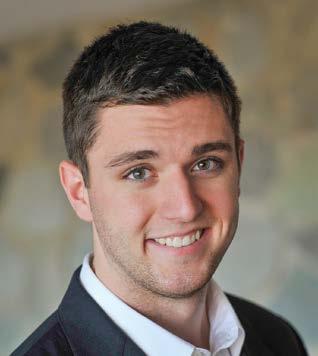
Detroit Lakes, MN
Senior, Accounting
“Usually the investment world, for good reason, gets a bad rap for not having ethics, not having values, not being virtuous. If you have seen The Wolf of Wall Street, it shows basically the antithesis of virtuous leadership. At the University of Mary I have learned to take those core values that you are taught here, the values that are instilled by the example of Monsignor Shea, the Sisters, a lot of the faculty and professors as well, and apply it to the business world.
“The other thing that the University of Mary is very good at, especially through the Sisters’ examples, is an exemplary model of giving. One of my biggest goals is to be successful in business and to give back. The ‘return on investment,’ so to speak, is so much more when you give than when you receive.
“Part of the reason I chose a smaller business school was so that I could interact with the teachers and get to know them, rather than just being a random student they didn’t know. Students need to take the initiative to stand out and be known by the teachers, which comes with time, but I have found it much easier to do at a smaller school.”
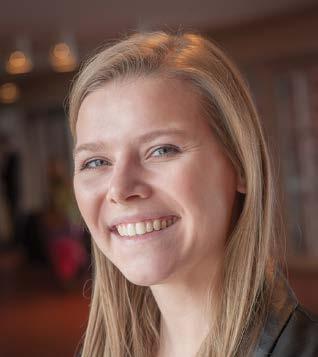
Burnsville, MN
Junior, Business Administration
“Virtuous leadership is one of the reasons I chose nonprofit work. I want to be able to lead people by my example of giving back through business practices and really serve people through my future career.
“I’m not going to do it because I want to look good but for the sake of helping other people, not myself, which I think should be true for all business people.
“I am considering going back to graduate school solely because of the Virtuous Leadership program.
“What draws me to the Virtuous Leadership program is its goal of teaching how to apply Catholic social teaching to the workplace and lead virtuously through it.
“As a Christian, my faith is at the forefront of everything I do.
“This program would teach me how to lead through my faith in the workplace –apply that Catholic social teaching to my career, wherever it may be.”
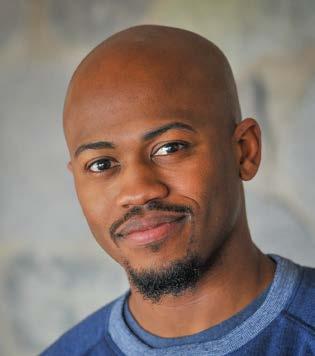
Las Vegas, NV Graduate student, Master in Science of Business
“People need to insure their business just like they need to insure their homes or their cars. I can serve them by providing them with the security of insurance. The University of Mary does a great job of emphasizing that throughout the whole graduate program, tying in the Benedictine values and servant leadership to our studies.”
Good management is the art of making problems so interesting and their solutions so constructive that everyone wants to get to work and deal with them.
— Paul Hawken
— Student interviews coordinated by Katrina Gallic, a junior marketing major from New Jersey

The University of Mary’s new 276-bed residence hall is rising quickly on campus. The new residence hall, just east of Welder Library, will house women students living in the faithbased St. Scholastica Hall on the top floor, with freshmen women occupying the lower two floors.
This year’s mild winter weather has allowed construction of the 60,000-square-foot building to continue on schedule. The residence hall is expected to be open for the fall 2016 semester with a completion date of Aug. 1.
The residence hall’s location will form the east face of a landscaped quad consisting of Welder Library, Greg Butler Hall and Hillside Hall. The residence hall will have its own chapel as well as other amenities to make the building maximally functional, including four-person suites with separate entrances and a new residence director suite designed to be more family-friendly.
As the new residence hall looks more and more complete, another building project is underway nearby — a new fieldhouse is under construction that will house a regulation track,
The new residence hall is part of the first phase of construction for the university’s Vision 2030 campaign, which will add both needed facilities and state-of-the-art programs to meet the region’s growing needs.
student fitness facilities and more.
Moving the current fieldhouse will open up its current space to reconfiguration as a Campus Center at the heart of the university, where students can dine, study, gather and interact, experiencing the best aspects of campus life.

The University of Mary is acutely aware of the chronic shortage of health care professionals in rural North Dakota and is continually innovating new ways to help meet that need.
Now, the Margaret A. Cargill Foundation is boosting that effort with a $500,000 grant, which provides the university with a state-of-the-art SynDaver ™ Lab .
SynDaver technology creates realistic, synthetic human tissues and parts that are flexible and durable.
The models are manufactured in Florida and are expected to be in place by this summer for healthcare students to use. The six SynDaver humanlike models will be valuable in a whole array of educational uses.
“This is cutting edge. It will put us on the map,” said Dr. Jodi Roller, Dean of the School of Health Sciences at the university. “It’s an up-and-coming thing.”
Health care programs that are attached to medical schools have access to cadavers to teach anatomy, she said.
“It is a huge gift when people donate their bodies, and they need to be respected. Thus it requires a tremendous amount of paperwork and expense to run,” she said.
“This is an alternative.”
Currently, anatomy at the University of Mary is being taught using models of joints and muscles and
with software that allows students to perform virtual dissection on a computer. The computer model, however, is one-dimensional, Roller said.
“The SynDaver replicates the human body, with all the parts in the right order,” she said. “Students can get that depth - seeing what’s under the surface. And the SynDaver models come apart. You can see where muscles are attached to the joints. The nerves are there, the blood supply.”
The Cargill Foundation invited the university to write a grant making the case for ways this lab can help meet the need for rural health care workers.
“We had to prove that we are a growing school, which we are. And that our enrollment was healthy, which it is,” she said.
When the models arrive, two in May, two in June and two in July, the university will house the most SynDaver models in the Midwest.
The models will have great value for physical and occupational therapy students, as well as speech/ language pathology students, since they will be able to study the structural anatomy of the mouth.
SynDaver models will be used in undergraduate anatomy classes and for Doctor of Nursing Practice students, as well. Junior high school and high school students across the region will be invited to Mary to experience the SynDaver Lab firsthand with the hope that it will pique their interest in science and medicine and healthcare careers.


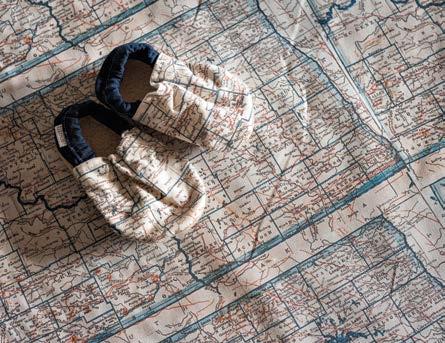
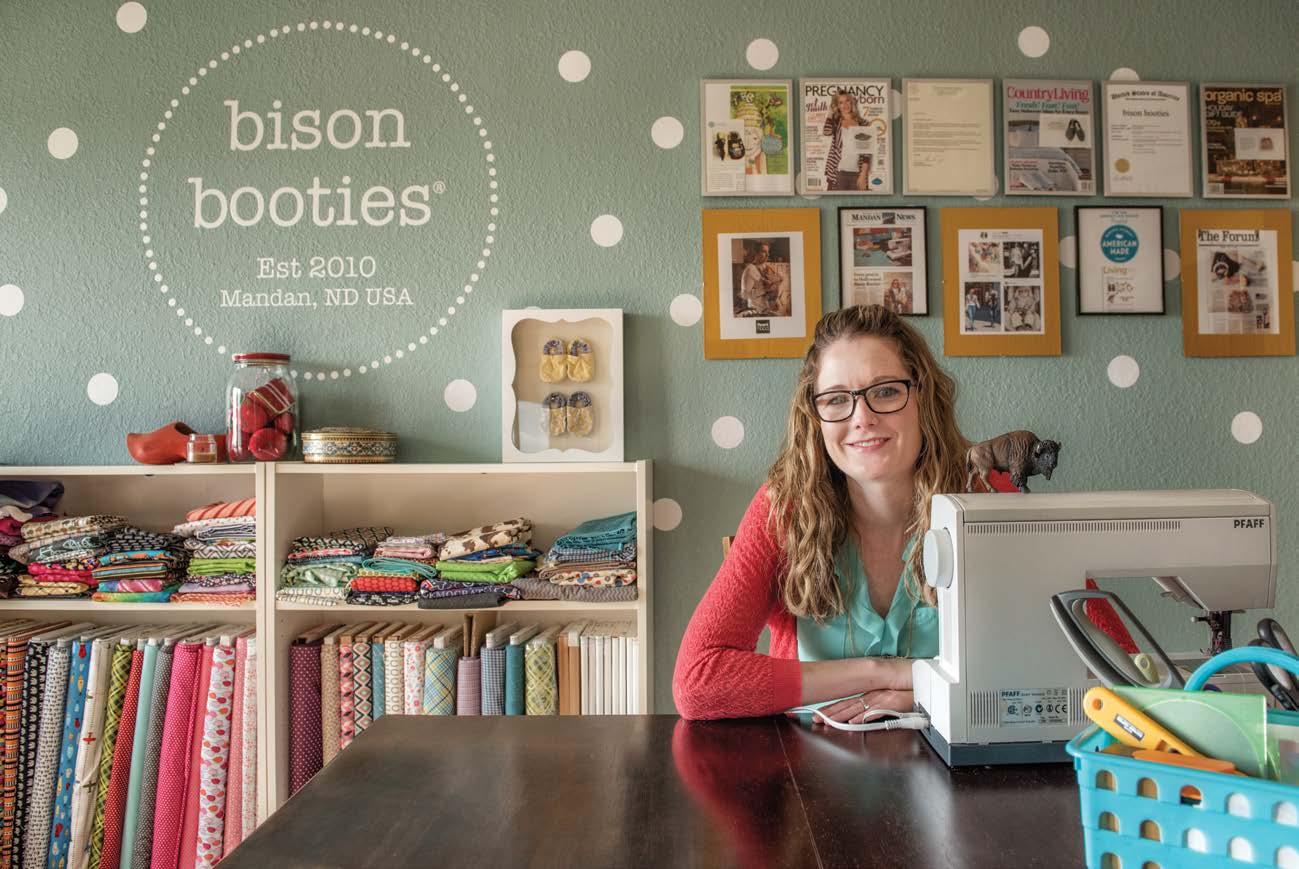
EricaHager’s sunny, colorful workspace has come a long way from the early days of her home business.
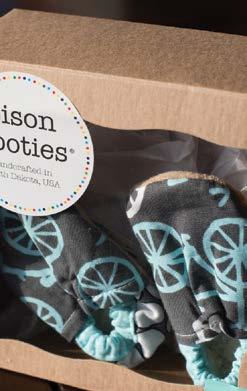
Erica launched her children’s footwear line, Bison Booties, in 2010 in the unfinished basement of her family’s home north of Mandan. She set up shop on a bare concrete floor with just a sewing machine, a folding table and a collection of scrap fabrics. Extension cords snaked across the floor to power her sewing machine.
In just a few years, Bison Booties has gone worldwide.
The phenomenal success of Bison Booties has been the result of a happy convergence of ideas, hard work and expertise.
A native of California, Erica learned basic sewing in home ec and became truly proficient in advanced sewing in high school.
She graduated from the University of Mary in 2004 with a degree in business communication, and earned her master’s in business management from Mary in 2007.
She honed skills in graphic design, public relations and photography during her time as a Mary employee.
While on maternity leave with her firstborn, Kya, now 6, she began making baby garments, including a pair of baby booties.
“When (Kya) was a couple of months old, I realized those cute baby shoes came off too easily,” she said.
So she traced Kya’s foot and reworked the pattern to create booties that stayed on.
“I probably made 20 pairs or so until I perfected the pattern,” she said. “Necessity is the mother of invention.”
Two of her friends were also having babies, so she sent each of them a pair.
They both wrote back immediately — ‘These are amazing. We love them. Can we get another pair?’
“This was the ultimate compliment,” she said, “that somebody wanted to buy something I made.”
Erica had started a blog to keep in touch with family and friends in California. She truly loved the North Dakota experience and so named her blog “Bison Girl.”
So naming her startup business “Bison Booties” made sense, she said.
Erica decided to market on the Etsy website starting in November 2010. She sold all the pairs she had posted and by February, had gotten an inquiry from a woman who wanted to carry the booties in her store.
“This was not in the plan when I left Mary, but everything came together like a perfect storm, with my background and degrees from Mary,” she said.
For the next couple of years, Erica spent a lot of time sewing in the family’s unfinished basement.
When she was expecting the couple’s second child, Gavin, now 2, they decided to finish the basement. The exhausting
schedule led to another turning point, another decision — whether or not to slow down the business, pull in the reins.
“I was selling wholesale around the region and as far as Australia, and shipping every day — 20 to 30 packages a day during Christmas.”
Other entrepreneurs asked her, ‘can you get someone to help you?’
Turns out she could. One by one, she found other women, many stay-at-home moms, to do some of the cutting, ironing and piecework.
“Now I have 12 women in BismarckMandan who do contract work for Bison Booties and a couple of quality control people at the end,” she said. “But everything originates here.”
Her graphic design experience has allowed her to create her own attractive packaging, and also create unique and fun fabrics.
“Busy people are more productive, is the saying. I fully believe that,” Hager said. “During the two hours of nap time for
Gavin, I get a tremendous amount done.
“The booties are made in batches of 200 pairs and I have about 1,000 pairs in the works right now,” she said.
Erica has come to love North Dakota.
“There are a lot of misconceptions and unknowns about North Dakota,” she said. “I represent North Dakota to a worldwide audience — a positive, tangible representation.
“With my passion for North Dakota, I mention things about it on my blog. That’s how I became connected with North Dakota Tourism, which now sponsors the blog.
“Bison Booties had become a North Dakota family brand without even realizing it.”
While Facebook and Etsy were integral in her startup, Bison Booties has become so successful that it is now a standalone entity at bisonbooties.com. Her products have gone as far as the TV show “Parenthood,” which featured 10 different pairs of Bison Booties.
“The local support for my global audience took it to where it is,” she said.
Businesses like Bison Booties are ‘lifestyle businesses,’ she said, models that can work for teachers or for military spouses — an untapped stay-at-home workforce.
Other entrepreneurs have told her that she could take Bison Booties ‘big,’ she said.
“But that would mean not being here. I’m a homebody. And the moms I contract with need this income.”
Going big would mean drastically changing the business, she said. “I’m not interested in doing that.”
At this point, “I’m happy with where (the business) is,” Erica said. “I’m wanting to sustain it and grow slowly.
“My priority is as a mom.”
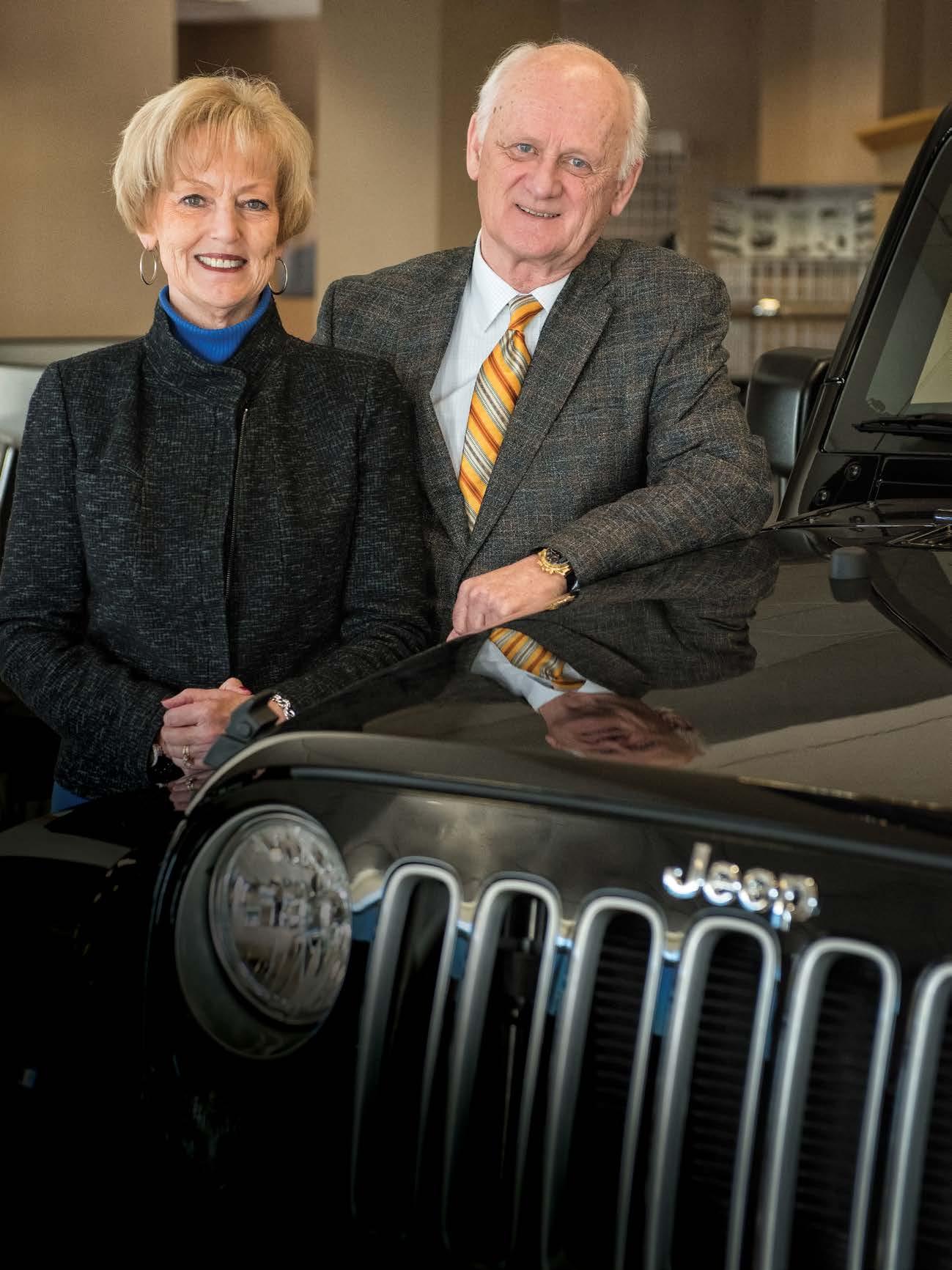
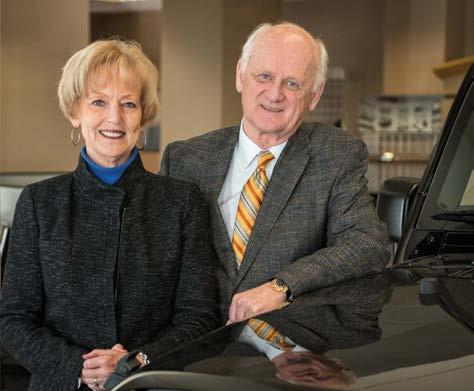
Kathy Gaddie is a member of the University of Mary’s Board of Trustees, and volunteers on the Major Gifts subcommittee of the Vision 2030 capital campaign.
“It goes back to my father’s philosophy,” Kathy said. “Treat others the way you want to be treated. Don’t ask something of someone you wouldn’t do yourself. That falls in line with exactly the concepts of the University of Mary.”
In1973, after a long career in auto sales management, at the relatively mature age of 54, Jim Ryan decided to purchase a dealership in Minot.
Ten years later and looking ahead to retirement, Jim, with five daughters, began thinking about how to pass the business along to the next generation.
In 1983, it was rare to find a woman in a leadership role in the dealership business, so Jim began looking at his sons-in-law.
His daughter Kathleen, was married to Michael Gaddie. Michael had a degree in business, so the invitation was extended to him, Kathleen said.
So in 1983, Kathy and Mike moved their family to Minot to join the business. For the next two years, Kathy devoted herself to raising the couple’s three children.
“After being at home, I wanted to do something, so I started working part-time at the dealership,” she said.
At this time, a woman in this very maledominated field found herself on many occasions breaking new ground.
“At first, at most meetings, I was always one of one or two women in a sea of men,” she said.
Respect was not automatic, and as ‘the daughter’ of the owner, she had an additional hill to climb.
Which she did — “with time and tenacity,” she said.
And the family business has thrived. There are now five Ryan auto dealerships
in North Dakota – in Minot, Williston and Bismarck – and the company employs more than 300 people.
“What I found,” she said, “is that the auto business is so addictive, especially if you have a competitive streak.”
Kathy’s parents were involved with the University of Mary and the couple’s children have gone to Catholic schools.
“We both have always valued Catholic education and what it does for students,” she said.
“(The University of) Mary is such a powerful private university in this state. It is a massive asset to North Dakota.
“I enjoy the vision of Monsignor Shea,” she said. “He sees the needs of education in North Dakota …”
“… and actually throughout the U.S.,” Mike added.
“He has his finger on the pulse of education,” Kathy said. “He’s done some wonderful progressive things.”
“I guess more than anything, I want to see Mary grow and prosper.”
Mike and Kathy believe in business practices that are nimble in meeting changing conditions. They describe their challenges and the role of servant leadership in the workplace.
During the height of North Dakota’s oil boom, Kathy and Mike faced tough
challenges head-on, particularly in their Williston dealership.
“There was so much demand,” Mike said, “and we were working so hard to try and handle it. You could sell the vehicles, but then we needed to try and meet all the service needs. And to try and find employees,” he said. “Everybody wanted the same skill sets we wanted.”
“Servant leadership (here) is demonstrated in customer satisfaction,” Kathy said. “How can I serve customers in a respectful and helpful way?”
Servant leadership extends to the management team as well, Mike said.
“The success of management and employees is about taking care of people,” Kathy said.
“You have to grow and be profitable or you cannot do the things you need to,” Mike said. “We’ve plowed lots and lots of money into our stores, to make the business better.”
The dealerships’ communities “have been very good to us,” Kathy said. “We’re always looking at ways to give back.”
In 1998, Ryan dealerships’ founder Jim Ryan retired. The company he started is now in its third generation — all three of the Gaddies’ children are involved in the business today.
“That’s a bright spot for the future,” Mike said. And with 10 grandchildren, a fourth generation is already on the horizon, he said.

“She was just the sweetest little girl, such a good baby. Everybody loved her.”
Her smiling face beams in pictures on display on the furniture and fills stacks of photo boxes in Abby’s family’s home in Lincoln.
A bright red ladybug plant stake adorning a potted philodendron by a sunny south window speaks to Abby’s love of ladybugs.
Among Abby’s other loves are Mickey and Minnie Mouse and the movie Toy Story. And then there’s Bear.
based engineering company, KLJ.
“They loved her,” Sandy said. “She was just starting out; she had big plans. We knew she was going to do something big.”
Beautifully photogenic, with her mother’s looks and her father, Jason’s, height, Abby made friends with ease. She had a quick wit and always had a ready comeback. Teachers loved her and her employers raved about her.
“This did not have to happen,” Sandy said. “She always did the right thing. She was responsible. That was just her.”
‘missed every day’
“Abby was one of those students who made me realize why I went into teaching.
“She had a contagious smile and always came into the room with a positive attitude.
“The coolest thing about Abby was her willingness to share her lifewhether it was what she planned to do over the weekend or during spring breaks or summer. She talked about her siblings and made me feel like I was part of the family.
“I took the news hard when I heard of her death; I didn't want to believe it was true. In a way, a little piece of the world died with her. She was not just another student — she was one of those students who made not only the University community better, but any place she was, better.
“She is missed every day.”
— Karel Sovak, associate professor, Gary Tharaldson School of Business
Abby Renschler had her heart set on getting a dog. Not just any dog, but a Goldendoodle she had picked out from a breeder in South Dakota. Bear’s loving presence is part of Abby’s legacy.
“She was adamant to get this dog,” said her mother, Sandy Renschler. “That connection with Bear is wonderful.”
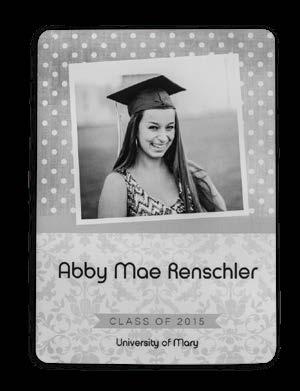
Her family went to South Dakota to pick up Bear and bring him home. Abby was planning to do so herself, but tragically was killed, with her friend, Taylor, in a car accident June 27, 2015. She was 22.
They and their friend, Shayna, who survived, were struck on Bismarck Expressway by a vehicle going the wrong way on an exit ramp.
She had just graduated in May 2015 from the University of Mary summa cum laude with a degree in business and banking and had started her full-time job in the finance department at Bismarck-
“My mom and Abby were very close,” she said, speaking of her parents, Don and Mary Nicholson. “She spent time on her school breaks with my parents. My mother was a NICU nurse and she was there when Abby was born.”
Abby has a brother, Tim, 17, and a sister, Ally, 16.
“Tim and Ally were 14 months apart, and she immediately became the little mother,” Sandy said. “She was a very loving, amazing kid, very responsible.”
In coping with Abby’s loss, her brother and sister are doing well, Sandy said. “Sometimes they help me more than I help them.”
Grieving’s not a straightforward thing.
“Some days are really good,” Sandy said, “and some days are worse, worse than right away.”
Sandy also deals daily with the extreme fatigue and joint pain that go with lupus, with which she was diagnosed in 2008.
She appreciates it when people ask how she is, how the family is doing. “Other people have been just amazing,” she said. “When somebody asks, ‘how are you
doing?’ … they’re just wonderful to me. I will usually thank them. I’ll say, ‘I’m so glad you mentioned it.’ It means a lot.”
And Abby’s work family at KLJ has been awesome, Sandy said — “so supportive. So much kindness.
“You just never, ever, think it’s going to happen to you.”
At KLJ, no one has been able to take down the papers on the walls of Abby’s cubicle.
“We have tried to fill her position, but we just miss her so much,” said Miranda Grayson, accounts receivable supervisor at KLJ.
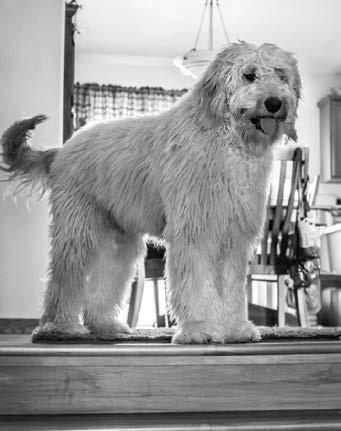
Bear is now a 10-month-old 80-pound ‘puppy,’ the eager greeter of visitors to the family home.
Miranda first met Abby at a Bismarck afterschool program. When a position opened at KLJ, Miranda thought of Abby.
“I know she was probably working a lot of hours at (her other job) at Fiancée Bridal during prom time, working here and going to school, while maintaining a 4.0 grade point average,” Miranda said. “And always with a smile.
“She was a special person. She was so willing to learn. She was so responsible — the first to volunteer for projects and just a joy to work with. She was not just a coworker, but a close friend.
“We miss her so much.”
Miranda and other coworkers who knew that Abby liked to walk along the river requested that KLJ place a bench along the river, “so there’s a place for friends and family to go and reflect,” she said.
A plaque is attached to the bench engraved with a song Abby loved from the movie Toy Story —
“You’ve Got a Friend in Me.”
Abby worked at Fiancée Bridal in Bismarck for five years while she was in school.
With Abby, there was never a dull moment, said Kinzey Whitty, owner of Fiancée. “I saw a lot of potential in her,” Whitty said.
“She was so mature in her manner, so calm. At the end of the workday Saturday,
she’d have everything done, QuickBooks finished and the deposit ready to go.” The girls who work at Fiancée get to be like family, Whitty said.
They were heartbroken when Abby died, she said. “They idolized her as a mentor.”
“I got to know Abby in my insurance and risk management class. Abby was one of my favorite students. She always asked thought-provoking questions. ‘Just because’ wasn’t a good enough answer for her. She would frequently mention that she would discuss our class with her family at suppertime. It amazed me that she would visit with her parents since most college kids are so busy, but she made the time. The type of person she was is a direct reflection of the upbringing that she had.
“I miss Abby. Going to class the first time and not seeing her in her seat was harder than I realized. I feel very blessed to have had the honor of knowing Abby. She is a beautiful young woman who will be remembered and missed forever.”
— Terry Richter, Agent, State Farm Insurance, Bismarck
The University of Mary is working with Abby’s family to set up a scholarship in her name. For more information or to make a contribution to the scholarship fund, contact Paul Keeney at plkeeney@umary.edu, Corby Kemmer at cmkemmer@umary.edu or call 701-355-8263.
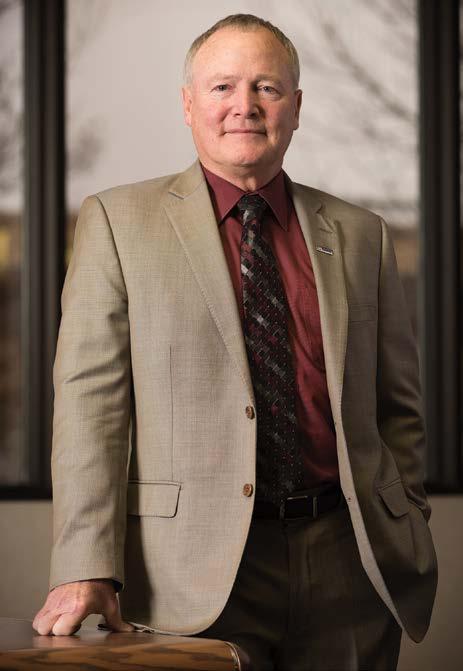
Tim Hennessy grew up in North Dakota south of Berthold as the oldest of seven children on a typical small farm, growing small grains and raising cattle and other livestock.
“In this upbringing, you learn how to work, how to be responsible for things.”
After graduating from UND-Williston, where he played basketball for two years, he was recruited to then-Mary College’s basketball squad.
After earning his degree from Mary in business administration with a minor in accounting, Hennessy accepted an offer from the State Bank of Burleigh County.
There, he was able to learn the banking business from the ground up, “doing it all,” he said. Starting out in the back room filing checks and doing all the basic work involved in banking, “I’ve been a teller, in customer service, in lending, in management,” he said. “I’ve had a chance to do a lot in banking.”
“You always do the right thing. You do the right thing, always. You play by the rules,” he said. “That is one of our core principles. Our business code of conduct is what we work from every day.”
For young people interviewing for jobs, Hennessy believes having that sports background is an asset.
Sports teach team and individual attitudes that apply to business, he said: “teamwork, collaboration, communication, working toward goals, accomplishment, celebration.
“You learn how to win, what it takes to win; you develop a competitive spirit and you learn how to lose — the right way.”
In business, Hennessy also believes in working the right way.
“You always do the right thing. You do the right thing, always. You play by the rules,” he said. “That is one of our core principles. Our business code of conduct is what we work from every day.”
To students considering a career in banking, in addition to an understanding of business, finance and accounting, the ability to effectively interact with people and communicate well is probably their biggest asset, he said.
“You need more than technical skills. You need those interpersonal skills.”
“The unemployment rate (here) is still quite low,” he said. “We work very hard to attract, develop and retain top talent.”
Part of that retention and development is hiring people who will fit within your business culture, he said.
Leadership includes treating people with respect, Hennessy said, “treating
customers the way they want to be treated.
“We’re always thinking about that.”
Inhis role with the university’s Vision 2030 capital campaign, Hennessy sees a great deal of excitement about Mary’s growth.
The University of Mary is now at an important moment in its life, he said.
“The (university) has the ability and opportunity to influence a generation of young people … instilling the principles of servant leadership in those students who will be business and community leaders one day.
“The university can really make a difference.
“When I think of all the years I’ve been in Bismarck, I would never have been here if not for the University of Mary. I’m thankful. I’m lucky I’ve gotten to live in Bismarck.”
As time goes along, Hennessy said that graduates of the university really grow to appreciate the Benedictine Sisters and Benedictine values more and more.
That appreciation is a factor in the university’s development now.
“The Sisters are very special,” he said.
Tim and his wife, Eve, have three children and four grandchildren under the age of 6. He loves hunting and golf, and spends his off time ‘chasing grandkids,’ he said.
ELLEN SCHAFER, ’82, CHI St. Alexius Health Home Health and Hospice nurse, recently received the American Cancer Society's St. George Award in Washington, DC, for her lifelong dedication to helping cancer patients as an oncology nurse and her role as a volunteer, advocate and state lead ambassador for the American Cancer Society (ACS) and the American Cancer Society Cancer Action Network (CAN). She has been an American Cancer Society volunteer for more than 24 years.
DAVID GRAY, ’88, retired as a Captain in October 2015 from the United States Navy, following a 27-year active duty career. Before his Navy career, David worked as an archivist for the Ohio Historical Society, the State Historical Society of North Dakota, and archivist for the Diocese of Bismarck. In October 2015 David was appointed as the Director of Library Services for the University of Mary in Bismarck, ND. David leads the Welder Library, named after Sister Thomas Welder, President Emerita of the University of Mary.
DONALD KOSIAK JR., MD, ’96, was appointed as the Senior Vice President and Chief Medical Officer of Leidos, a health, national security, and engineering solutions company, effective Feb. 8, 2016. Prior to joining Leidos, Kosiak served as the Vice President for Medical Development and Avera eCARE Executive Medical Director for Avera Health, a 32-hospital integrated medical system based in Sioux Falls, SD.
PAUL MARKEL, ’90, serves as a professor of psychology at Minot State University. Paul has also served as interim Dean of the College of Education and Health Sciences at Minot State University, was elected to the board of directors of North Dakota United, the board of directors and as treasurer for the North Dakota Council of the United States Navy League, and was elected to the board of trustees of the Bismarck-Mandan Unitarian-Universalist Church. Markel also published a scientific research article in “Transactions on Haptics,” Institute of Electrical and Electronics Engineers, the world’s largest professional association for the advancement of technology.
LONNIE WANGEN, ’09 & ’10, was commissioned as a Kentucky Colonel on Oct. 1, 2015. The Kentucky Colonel is the highest title of honor bestowed by the Commonwealth of Kentucky honoring those who have dedicated their lives to civic service. Lonnie has dedicated 27 years to the North Dakota Army National Guard, and is currently serving as the North Dakota Department of Veterans Affairs Commissioner.
ADAM NEVEAU, ’11, accepted a new position at Peru State College in Peru, NE, as the Director of Residence Life in January 2015.
ALICE KASEMAN, ’85, Bismarck, ND, Jan. 26, 2016
JENNA (HELVIK) ETZOLD, ’08, & BJ Etzold, a boy, Boden, born Oct. 10, 2015
ELIZABETH (ODERMANN) WATSON, ’08, & Travis Watson, a boy, Benjamin Harold, born Nov. 23, 2015
ADAM NEVEAU, ’11, & Annie Neveau, a boy, Stanley Charles, born July 6, 2015
PAUL MARKEL, ’90, and Tamera Markel, a girl, Frida Alice, born November 7, 2015
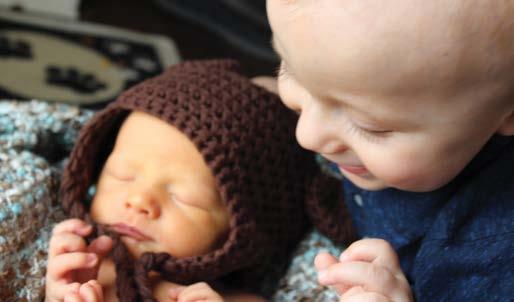
THOMAS SEIFERT, ’11, & Elizabeth Seifert, a boy, Gabriel, born March 4, 2016, pictured with big brother, George
KEEP IN TOUCH! HERE’S HOW.
Submit your information at: umary.edu/forms/alumni or mail to:
Alumni Office, University of Mary 7500 University Dr. Bismarck, ND 58504 alumni@umary.edu
Please include: Your name, address, email address, year of graduation, home and work phone number, alumni spouse’s name and class year
Photos sent electronically should be print quality. Sorry, we can’t return photos sent by mail.
MOMENTUM is published by the Office of Public Affairs, University of Mary, 7500 University Drive, Bismarck, ND 58504
CHANGE SERVICE REQUESTED
JUNE 5-8, 2016 UNIVERSITY OF MARY
At the 2016 University of Mary Business Challenge June 5-8, high school students will have an opportunity to challenge their creativity in hands-on workshops that develop their entrepreneurial and teamwork skills.
Register at: umary.edu/businesschallenge