Lo ve
THE MAGAZINE OF THE UNIVERSITY OF MARY FALL 2016 in
inside this issue
Top left:
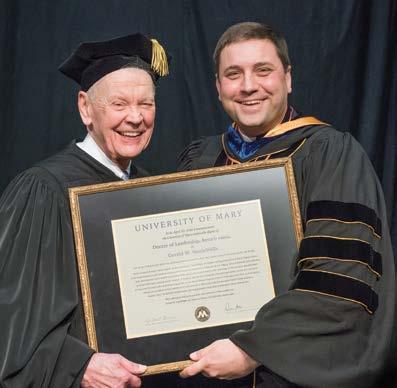
Supreme Court Chief Justice Gerald VandeWalle was presented with the degree Doctor of Leadership, honoris causa, at commencement ceremonies at the University of Mary on April 30, 2016. VandeWalle was appointed to the North Dakota Supreme Court in 1978 and was elected Chief Justice in 1993. He remains on the Court as Chief Justice, having served for more than 37 years. Honest and straightforward, an active and engaged jurist, he believes that the highest calling for a lawyer is service to others.
Well-known as a warm and compassionate man, renowned for his quiet dedication to mentoring new attorneys, Chief Justice VandeWalle is respected as an excellent jurist, as well as an excellent human being.
North Dakota

… mercy is a key word that indicates God’s action towards us.
He does not limit himself merely to affirming his love, but makes it visible and tangible.
Love, after all, can never be just an abstraction. By its very nature, it indicates something concrete: intentions, attitudes, and behaviors that are shown in daily living.
The mercy of God is his loving concern for each one of us. He feels responsible; that is, he desires our wellbeing and he wants to see us happy, full of joy, and peaceful.
This is the path which the merciful love of Christians must also travel. As the Father loves, so do his children. Just as he is merciful, so we are called to be merciful to each other.
HIS EYE IS ON THE
sparrow
Thehuman heart is a place of both light and shadow. Those shadowy corners, where fretfulness and doubt lurk, tempt us to pick at the garment of our faith, fearfully testing for loopholes in the promises God has made.
‘What if God is not willing to love me in my weakness and inadequacy?’ ‘What if God’s love is only humansized — petty and unpredictable?’
These are the qualms of the anxious heart, seized by a primordial human terror — abandonment in a lightless, loveless abyss. These are the wounds of sin.
But in the Gospel of Luke, Jesus reassures His disciples, and us.
“Don’t be afraid.
“Are not five sparrows sold for two pennies? Yet not one of them is forgotten by God. Indeed, the very hairs of your head are all numbered.”
Jesus’ words throw a dazzling light into our dark corners. In that brilliance, in the assurance of the titanic, the lavish love of God for His creatures, our shadows take flight.
These beautiful verses from Luke were the inspiration for the beloved Gospel hymn, “His Eye is on the Sparrow:”
“Why should I feel discouraged, Why should the shadows come, Why should my heart be lonely, And long for Heav’n and home, When Jesus is my portion?
My constant friend is He: His eye is on the sparrow And I know he watches me; His eye is on the sparrow, And I know He watches me.”
God, whose eye is on all creation, gave His sparrow a song.
God gives humanity a song as well.
The song is ‘love.’
Love your neighbor. Love the stranger. Love ‘the other.’
God gives humans both the opportunity and the mandate to receive and transmit the love that is beyond all understanding. Through our fleshliness, our eyes and ears, voices and hands and feet, we become open avenues for love to flow.
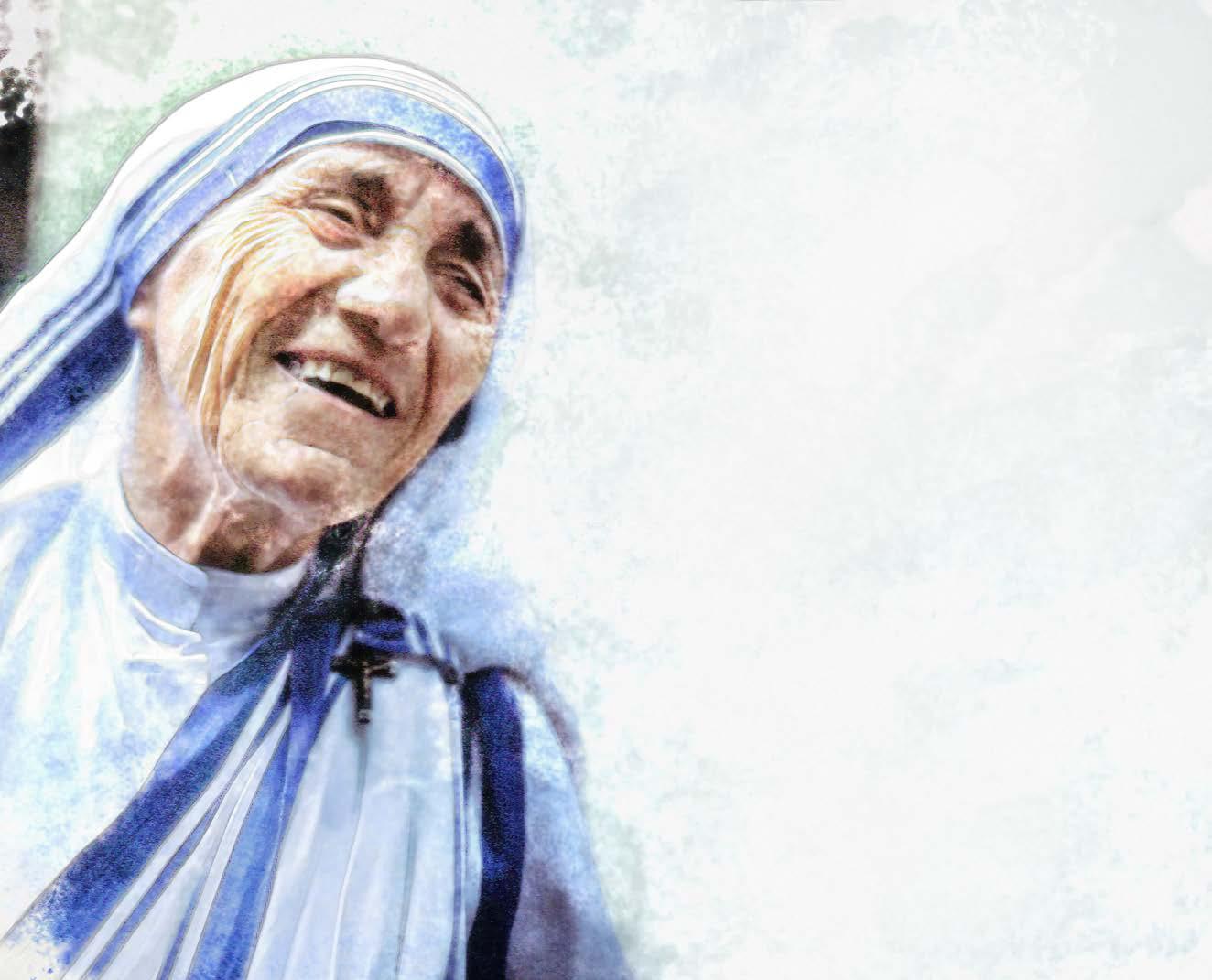
At the University of Mary, we believe we are called to be carriers of God’s love through acts of care and mercy. Saint Mother Teresa, who was just canonized a saint this September, used to use that phrase a lot: “carriers of God’s love.” Whether we build houses and bring medical help to places and people in need, or support and care for students and for one another — in all our acts and deeds we believe, as Pope Francis has said, “Love can never be just an abstraction.”
At the University of Mary, we strive to become God’s love in action. And we ask His grace and help along the way.

Monsignor James P. Shea President

— Pope Francis writing in Misericordiae Vultus, on the announcement of the Extraordinary Jubilee of Mercy

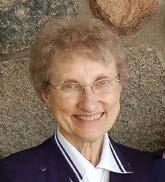
Sister Renee Zastoupil, OSB Board Certified Chaplain
Theright words
Precision matters to Sister Renee Zastoupil. So when she talks about prayer, she selects words with deep connotations — Steeped. Ruminate. Fuel. Docility.
Steeped – saturated with some strong or pervading influence
Centered on the Eucharist, the gathering of the monastic community for prayers, morning, noon and evening, is part of the Benedictine heritage and of living the monastic life as a Benedictine.
Prayer is about taking time out each day exclusively for God. The purpose is to steep oneself in the presence of God in order to maintain the gift of God’s presence. By our faithfulness to prayer, we ready our hearts and our lives so that, when we come to prayer, we’re more open to God to receive and be in communion with God. We do this by emptying ourselves so we can be filled with God’s grace and strength.
We ask anyone who comes to our community if they seek God. This also holds true for all of us who have been here for a long time. As Benedictines we are always seeking God in everyday life
and the prompting of the Spirit. For me, prayer was key in living my monastic life and being actively involved in my ministry. I needed to spend an extensive time in prayer prior to beginning my day. I believe in it very strongly; if you put God first, the rest will follow. God is never outdone in His generosity.
Rumination – to think carefully and deeply about something
Prayer is just ‘wasting time with God’ and it is the best thing we can do.
Doing lectio divina — the meditative reading of a passage of God’s word — is like ‘chewing on’ (the literal definition of rumination) whatever strikes us in that moment and in that scripture passage.
Then we sit and listen. This doesn’t mean that God’s going to speak to us in words; it may be more like a desire propelling us forward. God’s grace will lead us to the prayer he wants for us.
Ask the Lord to give you the spirit to lead you where you need to go.
Fuel – something that gives support or strength
Spiritual reading is fuel, propelling us to go forward.
In my 47 years of ministry, I have always told my students and the employees – ‘It’s not about me. It’s about doing God’s work, furthering the Kingdom of God. We are His instruments.’ St. Teresa says, “He has no other hands, no other feet but our own.”
My prayer life is the catalyst, the fuel, to do what others have asked me to do. Prayer is what prompts us to do something outside of ourselves, with the goal of furthering the kingdom of God so that God may be glorified. That’s where prayer should lead us, in growing closer to the Lord. It is in those daily practices that we find the glue that sustains us and brings us to life everlasting.
Docility: orig. meaning, ‘readily absorbing something taught.’
The Lord always answers our prayers, not in the way we imagined them to be perhaps, but instead for our conversion or a change of heart. Sometimes we pray for others to change, but it’s not about the other person, it’s about the conversion I need.
Lives
TRANSFORMING
(theirs and ours)
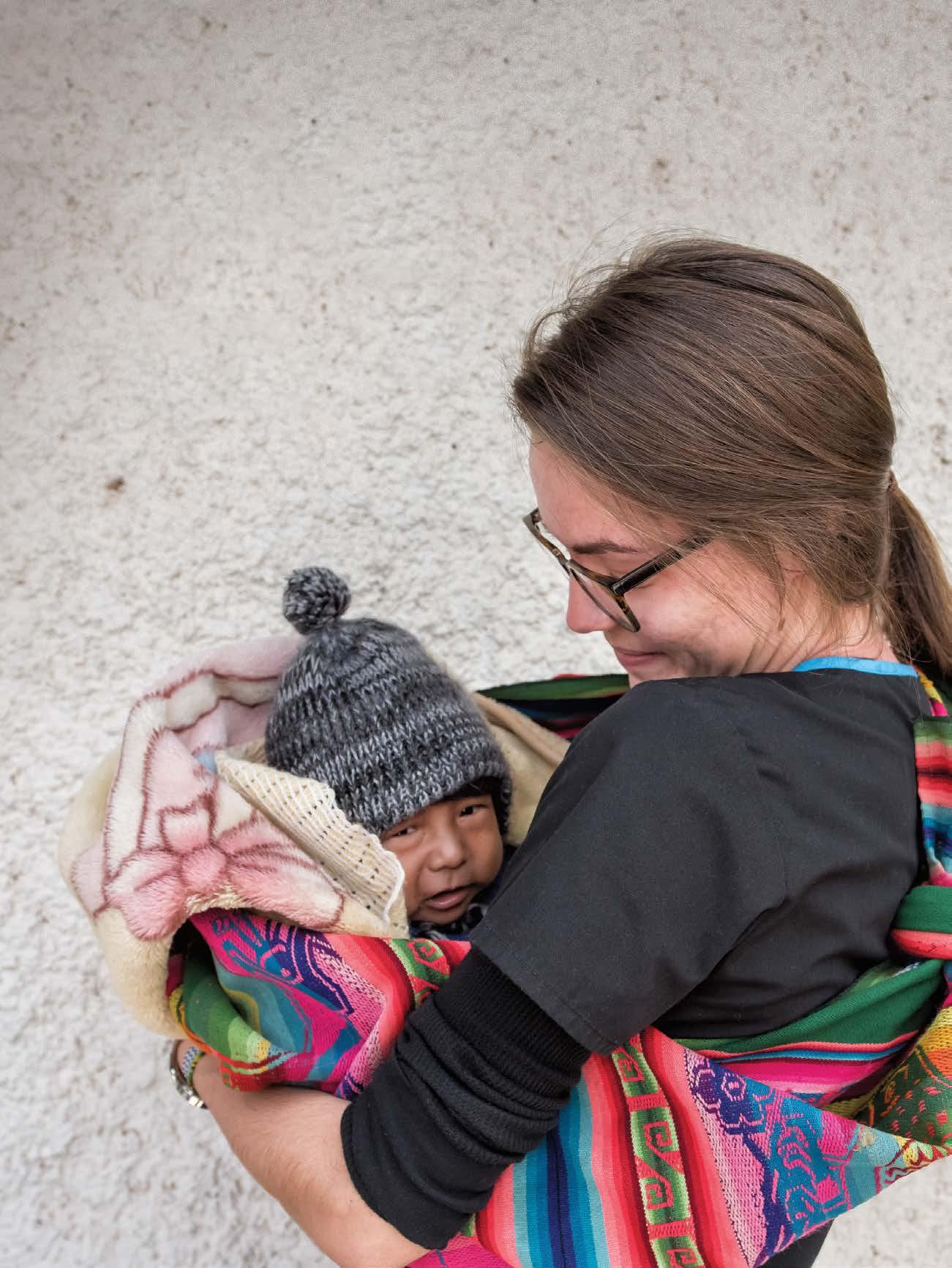
In 2014, the University of Mary launched a new major study abroad campus in Arequipa, Peru.
The university’s program at its campus in Rome is in high demand, which inspired the idea for the Peru program, said Kemerly Grau Meland, coordinator of the university’s Office of Global Studies.
“In Peru, the door is open for many opportunities, not just academics but immersion in the culture,” Grau Meland said.
The Peru academic program is open for any sophomore and includes five core classes, but the cultural immersion is different from Rome, she said.
“In Rome, students live together, but in Peru they live with host families and go to the local university, which offers opportunities for students to do service through the school.”
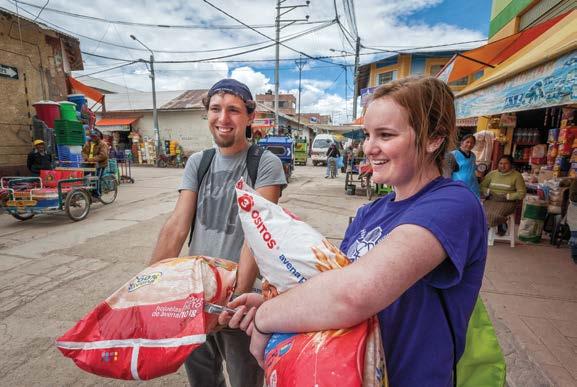
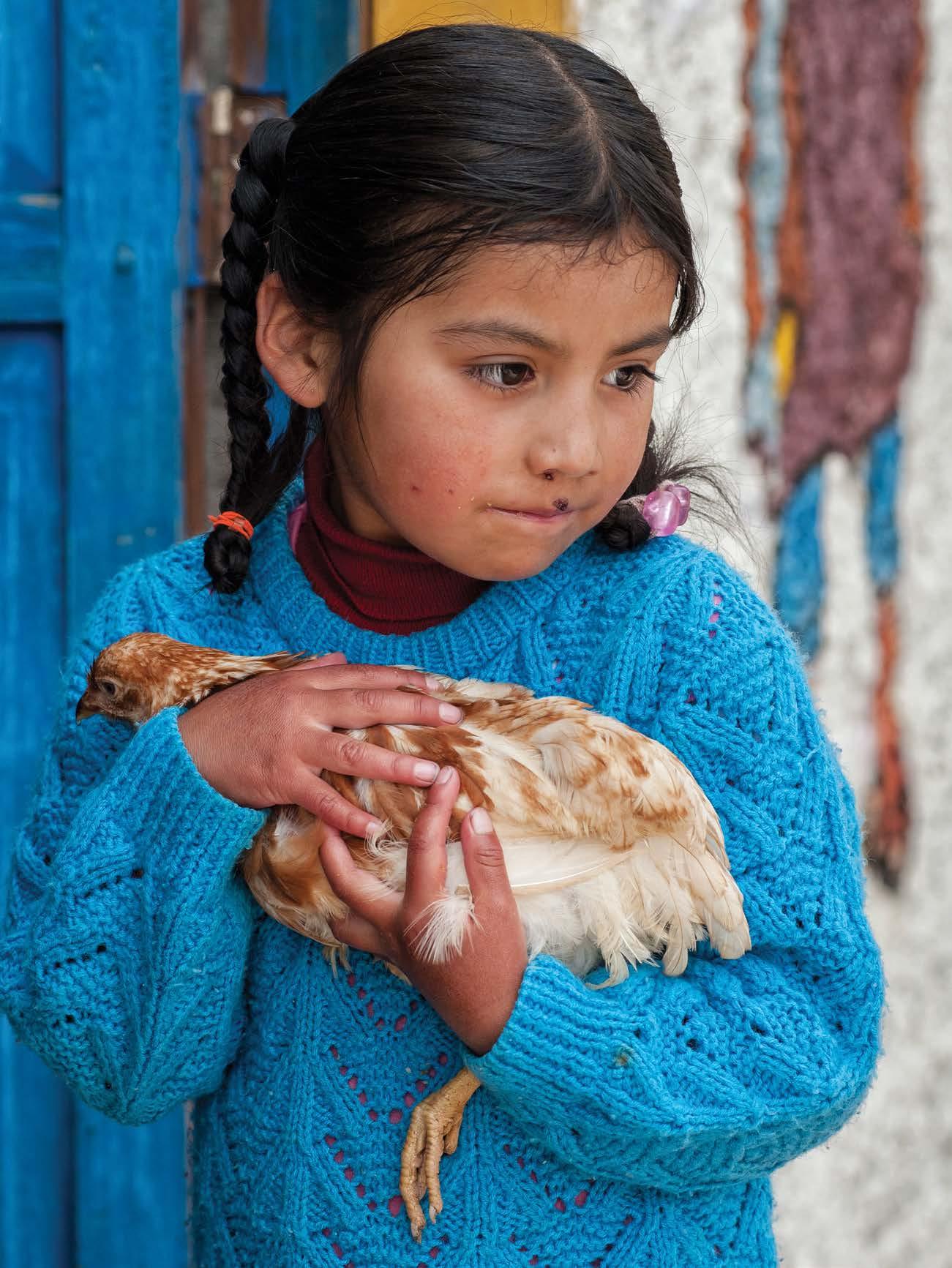
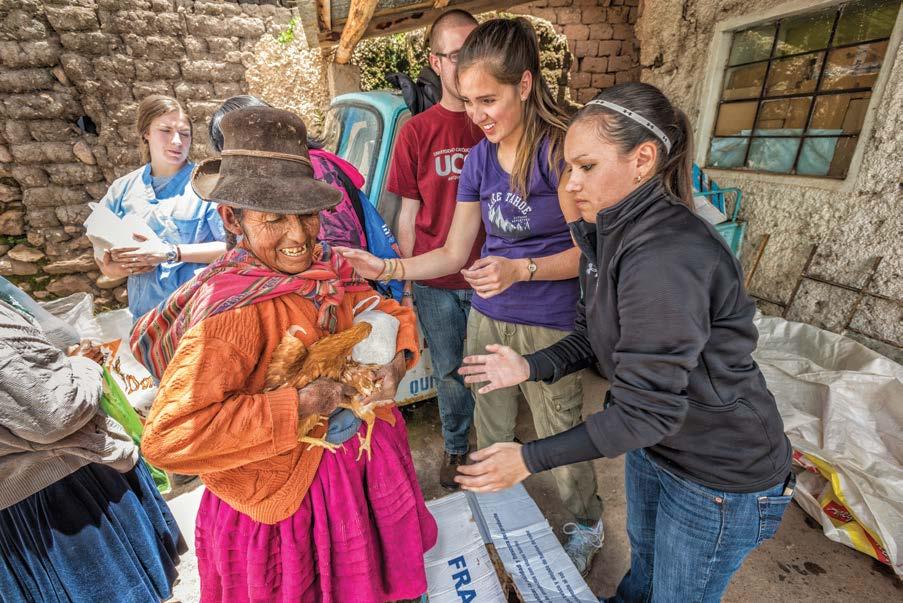
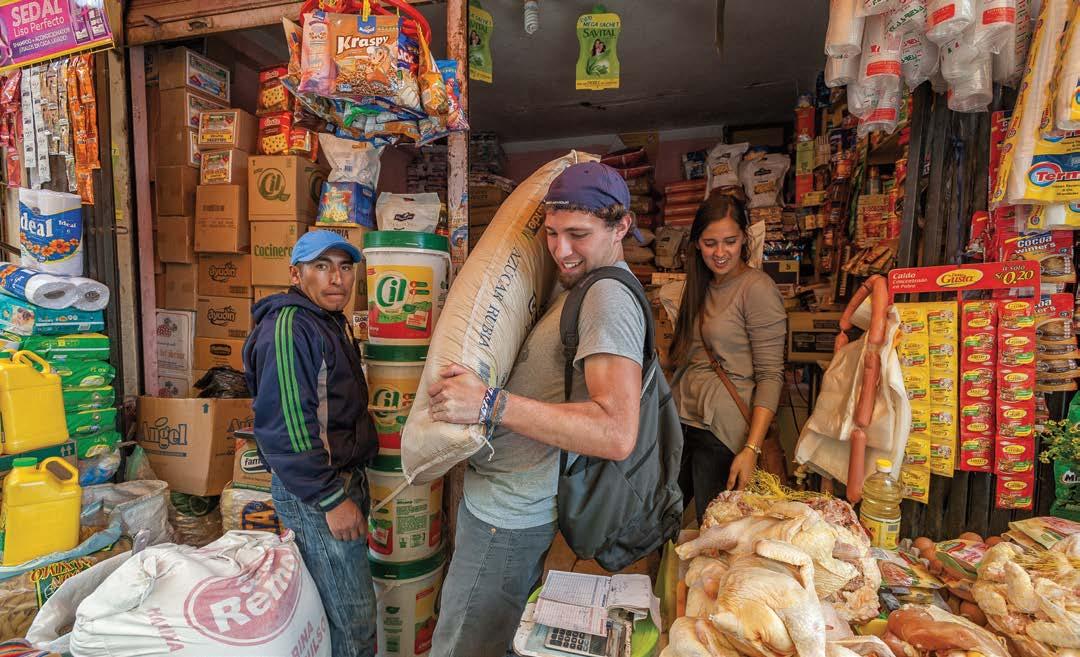
Above and opposite: University of Mary students distributed food supplies and chickens to families during their mission trip to Peru. In addition to providing eggs, chicken is a staple of Peruvian meals.
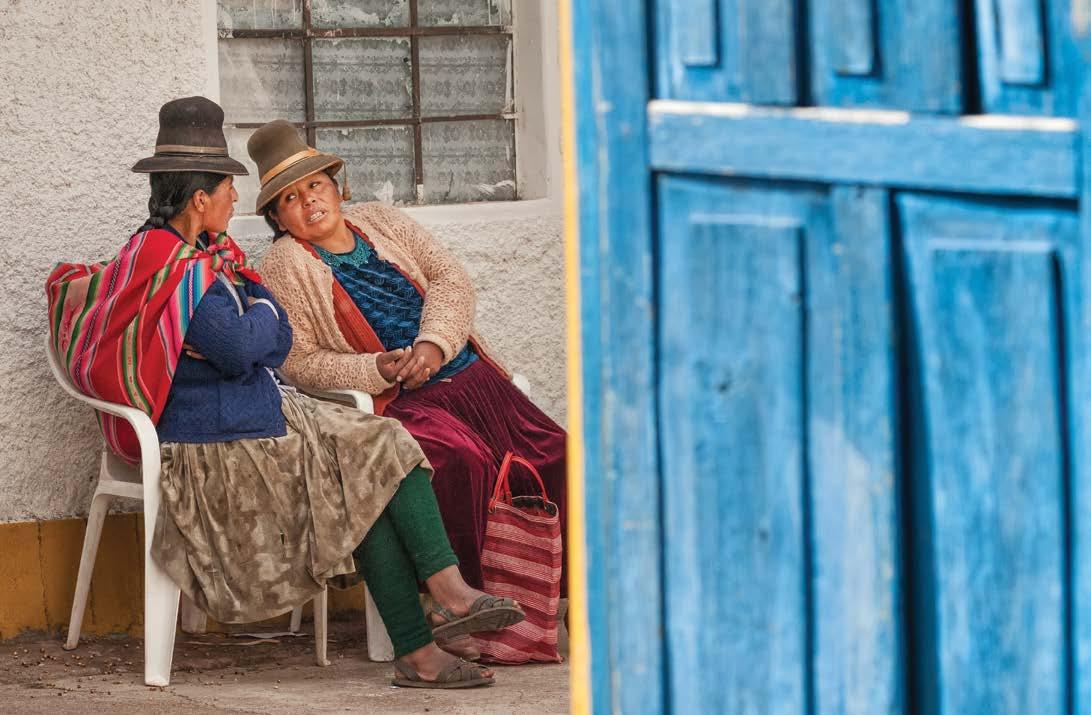
In Peru’s urban areas, such as the large cities of Lima and Cuzco, life expectancy is in the 70s, similar to the U.S., but in the Andes, it falls to only the 60s.
“The people of the Andes – these are the forgotten people.”
Jenna Herman is speaking of the rural people of Peru, with whom University of Mary students are forming a relationship through annual service projects.
“Peru is both urban and rural and the health disparities are much greater than here (in the U.S.),” said Herman, coordinator of the University of Mary’s Family Nurse Practitioner Program.
In Peru’s urban areas, such as the large cities of Lima and Cuzco, life expectancy is in the 70s, similar to the U.S., but in the Andes, it falls to only the 60s, she said.
For the university’s service component in Peru, “we wanted
to target somewhere with that health disparity,” Herman said.
In 2015, the first group of 10 School of Health Science students traveled to Peru and there met up with five students already studying in Arequipa, Herman said. The group chose a small village in the Andes, Ayaviri, a five-hour bus ride away, for the four-day mission.
“We did a needs assessment as to where we could help the most,” Herman said. “We sorted supplies, bought food and boxes of medication, set up a pharmacy with donated items such as painkillers, eye drops, antibiotics, stomach medications and vitamins. We bagged up food for families, and sorted and boxed chickens,” which they distributed to the families.
In another village, Quishuara, “the first day I saw 300 patients, with the help of a
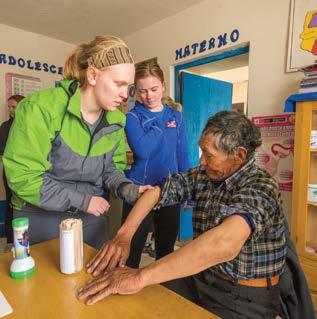
School of Health Sciences students provided medications and health assessments during their time in Peru.
local doctor, a couple of dentists, and the OT professor,” Herman said.
In 2016, another group of undergraduates also took the trip, this time to the village of Kana, where they spent two days working with the people there.
Both groups of students also helped a girls’ school run by the Salesian Sisters by doing painting and electrical work, “things they don’t have time to do when taking care of the girls,” she said.
“And of course, there’s always time to go to Macchu Pichu,” she said. “And cuisine can include alpaca and guinea pig — if you want,” she said.
“People (in rural Peru) do a lot of manual labor and carry everything on their backs — it’s amazing,” Herman said.
So the Mary students in 2016 also led group physical therapy classes working with people’s muscular/skeletal problems and teaching healthy life habits, with Dr. Mary Dockter, the university’s physical therapy program director, leading the classes.
Looking to the future, the university hopes that students who go on these trips
will eventually go back to Peru as alumni to run these missions, she said.
“We plan to go back to Kana,” Herman said. “Mission trips are good, but followup and follow-through are important.
“For a lot of students who are pre-med, we encourage them to become part of this mission when they become doctors. It would be great for them to be part of that — to have our own Mary doctors come back,” she said.
“We will also try to open Peru to students who are not health science majors, to be ‘hands in service,’ to be with local people and see a different reality,” Herman said.
“We’re happy about Peru and have options for several other programs. Speaking Spanish is helpful, but not a requirement,” she said. “The trip is a really nice balance of service and immersion.
“That’s the beauty of Peru. It has many opportunities for experiences and service upon a base of spiritual life for our students.
“It’s changing lives — theirs and ours.”
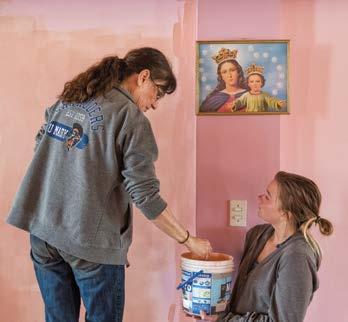
Students and faculty helped paint a girls’ school run locally by the Salesian Sisters.
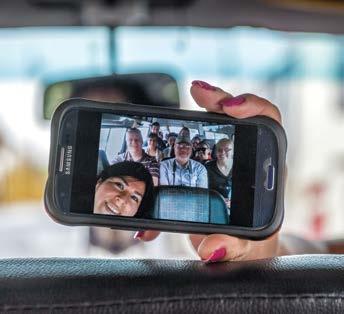
Kemerly Grau Meland, pictured lower left with University of Mary staff in Peru, directs the missions to Peru as coordinator of the university’s Office of Global Studies.
3Danatomy in
‘you can see what’s deep’
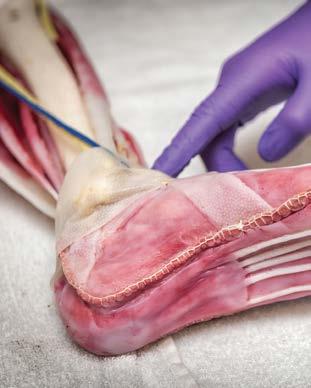
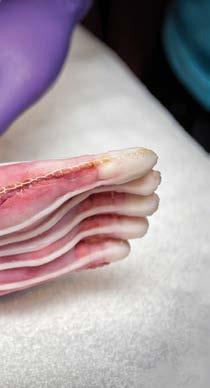
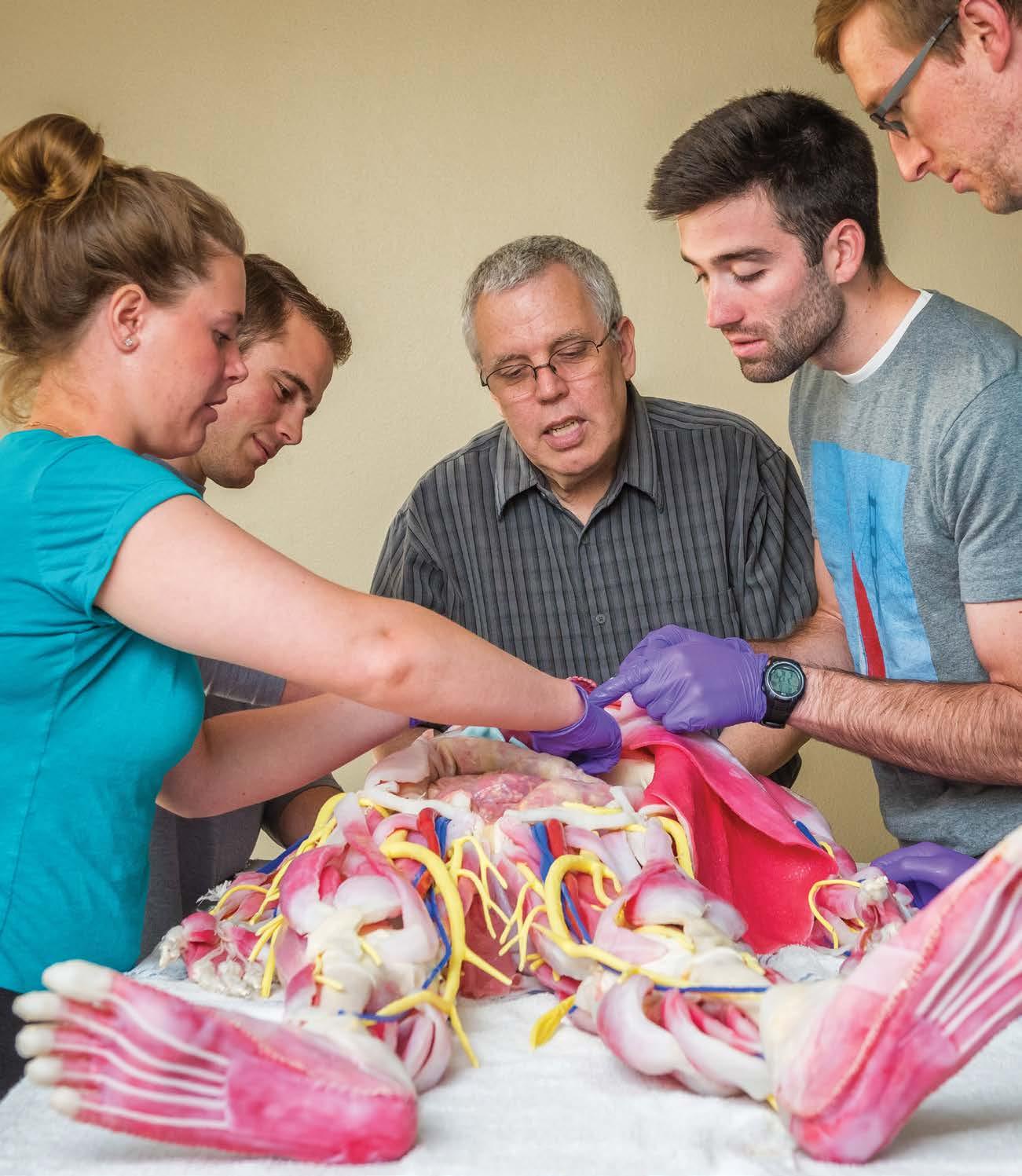
Soaking in a bath of tap water, algaecide and a touch of Downy fabric softener, six Syndavers in olive drab cases are stored in a classroom at the University of Mary Physical Therapy building in east Bismarck.
With six Syndavers, the University of Mary has more of these amazingly realistic anatomical models of the human body than any single university in the country. The models, costing $40,000 apiece, were acquired as part of a $500,000 grant from the Margaret A. Cargill Foundation. The grant was awarded to the University of Mary through the efforts of Dr. Jodi Roller, dean of the university’s School of Health Sciences.
The teaching impact of these threedimensional models is enormous, allowing students to examine human tissue in depth.
For physical therapy, occupational therapy and anatomy and physiology students, the Syndavers provide a tremendous cutting-edge learning experience.
The Syndavers come from the manufacturer already named, so the university one male and five female models — personalized as Hilda, Ikea, Jem, Kylo, Omar and Gina.
To examine “Hilda,” four University of Mary physical therapy students, wearing purple plastic gloves, hefted one of the 100-pound Syndavers from its water-filled case onto a table to examine its color-coded muscles, nerves, blood vessels, ligaments, bones, and internal organs, loosely tied onto the skeletal framework with dental floss.
In a haze of Latin terminology, Dr. Don Allen, associate professor at the University of Mary, and the students examine the Syndaver, gently lifting the surface tissues to identify the deeper structures underneath.
Students have been using a computer anatomy program called A.D.A.M., but since it’s two-dimensional, “it doesn’t offer the perspective of what’s deep and what’s superficial,” Allen said. With the Syndavers, “you can see what’s deep.”
The learning opportunities of the Syndavers will benefit others besides University of Mary students, Allen said, including other students, faculty, and area professionals.
A major goal of the acquisition is to meet the healthcare needs of western North Dakota and to get people interested in health care careers, Roller said.
Clockwise from left, students Hailey Hudson and Cole Schram, associate professor Dr. Don Allen; students Andrew Moran and Mark Vander Hulst.
“You’re there to do what God intends in that moment. That they weren’t alone, that the family knows that someone cares, to provide what care and comfort God intended.”
Kelly Suter’s caring for others was learned at home.
“When my youngest sibling was born with Down syndrome, I didn’t see what the rest of the world saw,” she said. “I saw beauty in his ‘imperfection’ before I understood that I was meant to see defect. “The first time I had to defend my little brother because of his disabilities, I was 8,” Suter has said. “That was the first time I saw a human being decide another life was of less value than their own and I was determined to never allow that to happen again.”
‘I wanted to
do more’
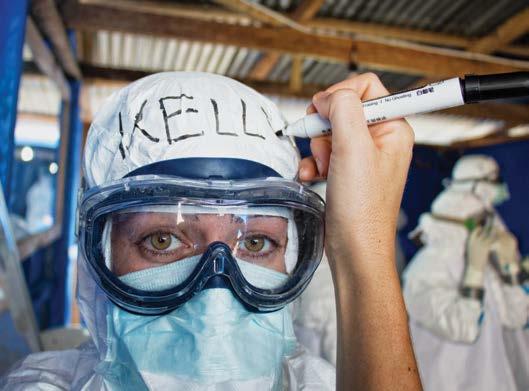
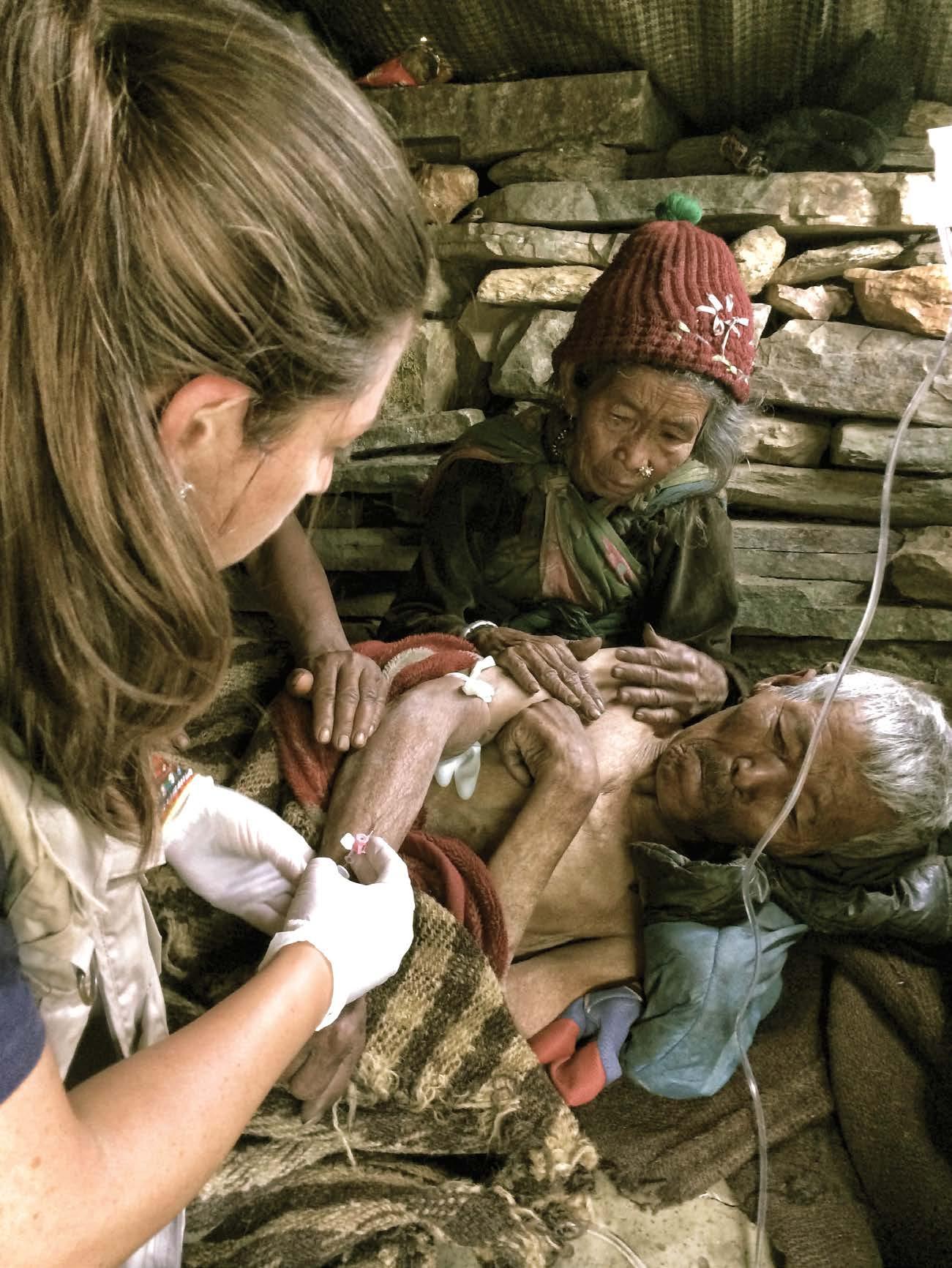
For the past six years, relief nurse Kelly Suter has worked in the very thick of disaster, always on standby to deploy within 72 hours to a war zone or medical crisis anywhere in the world.
Her most recent deployments include the war in South Sudan, the Ebola outbreak in Liberia and Sierra Leone, an earthquake in Nepal and Ebola preparedness in Guinea Bissau.
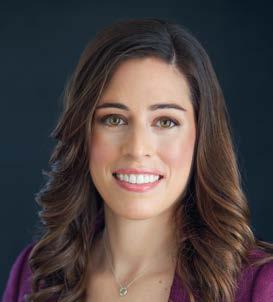
As the Senior Nurse of Medical Planning and Preparedness on the Emergency Response Team of the International Medical Corps (IMC), Suter is based in Washington, D.C. She is one of two recipients of a scholarship to the University of Mary’s Master of Science in Bioethics program, one of only two such programs in the U.S. Suter, who grew up in Michigan, finished high school early and then did two years of humanitarian work. “I loved humanitarian missions, but I wanted to do more, and so I chose to become a nurse,” she said.
It was when she volunteered to help in the aftermath of the devastating 2010 earthquake in Haiti that she discovered that full-time disaster relief work was what she wanted to do.
“God gives you those moments,” she said. “This work is much more intense; that’s the nature of the beast,” she said. “I have a Type 1 personality. It suited me.”
Reliefwork has its undeniable challenges.
For one, “I’m close to my family and it’s difficult to be away from them,” she said. On relief sites, the first challenge is getting used to a lack of sleep, but the important thing, she said, “is to learn is to manage your own emotions.”
Many relief workers feel a lot of guilt that they can’t save everyone, she said.
“That’s a big burden and a big cross.”
For her, however, she said, “I have my faith, which allows me to take the burden off me and give it back to God.
“My job is not to save everybody. Lots of them are going to die,” she said. “You’re there to do what God intends in that moment. That they weren’t alone, that the family knows that someone cares, to provide what care and comfort God intended.”
“It took me a while to learn that.” People sometimes glamorize what Suter does, but the reality, she said, is “hard, awful and ugly.”
Both war and epidemics are difficult, Suter said.
War, however has its own special psychological burden, she said. “Natural disasters happen. Epidemics can be stopped and you can rebuild. But war is senseless violence and it doesn’t end. It’s like putting a Band-Aid on a big gaping wound.
“I try to stay close to my faith. I believe in the value of every single human life, and that everybody has goodness within them.”
People in relief work can get jaded and cynical, she said. “They have to build a wall. That’s why they create a tough persona. That’s how they protect that vulnerability.”
For herself, Kelly says, “God is that wall for me. I’m just his sidekick.
Coming back to the U.S. with its abundance is at first overwhelming but fades quickly, Kelly said.
“That reality doesn’t bother me. God puts everybody in a spot for a reason, and you have to discover that reason. People can do good wherever they are,” she said.
“God has given me this opportunity and God has given you as much opportunity to do good in your life,” she said. “Every gift given by God is intended to be used for good.”
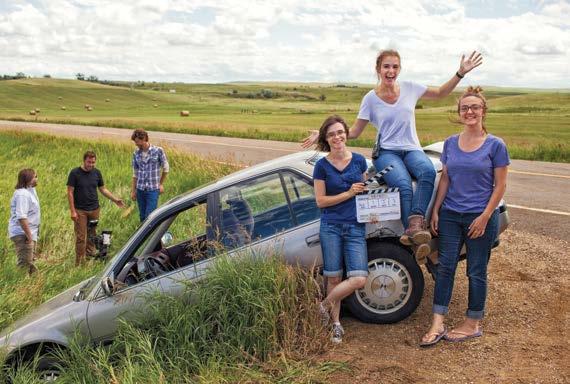
“I am convinced that the only way to truly understand and appreciate a field of study is to experience it first-hand. Working on the set of this film has provided me with the invaluable chance to explore the art of filmmaking as an active participant, and I will be forever grateful for that.”
— Shannon McClernon, junior
YOU Beautiful,CRAZY, BLIND CRIPPLE
“I wanted to make a North Dakota film, and my wife told me to write a comedy for once,” said Daniel Bielinski, director of theater at the University of Mary.
The plot: Walter is a first-time criminal on the run. Mia is an eccentric blind woman living in an isolated farmhouse. When Walter’s car breaks down, he sees his chance to steal her pickup. But his plan goes off the rails in a way he didn’t expect.
As the 30-minute film unfolds, a third character emerges as a co-star: the North Dakota landscape.
Following the success of Bielinski’s film “The Good Father,” which has won awards throughout the country, the theater and communications departments at the University of Mary are forging ahead to create more films, which are rare opportunities for university students to experience a real working film set.
“The great thing about this production is that it’s valuable for so many people in so many ways,” he said. “Students get to experience working creatively in the trenches with their professors and with working professionals in the industry.
“This is an experience outside the classroom that just blew their minds. The opportunity to be on a real film set is extremely unique, especially for a liberal arts university in the Midwest.
“Just a handful of schools in the country give them this opportunity.”
Bielinski, a working actor with national experience on stage, in television and movies, has connections in New York —
actors, an excellent cinematographer and state-of-the-art equipment, that he can call on. Bielinski wrote, produced and designed the film, which was directed and edited by Professor Marek Dojs. Professor Chris Franz was the key grip, still photographer, and co-director of the marketing campaign.
When scouting locations, the group discovered a beautiful isolated farm near New Salem.
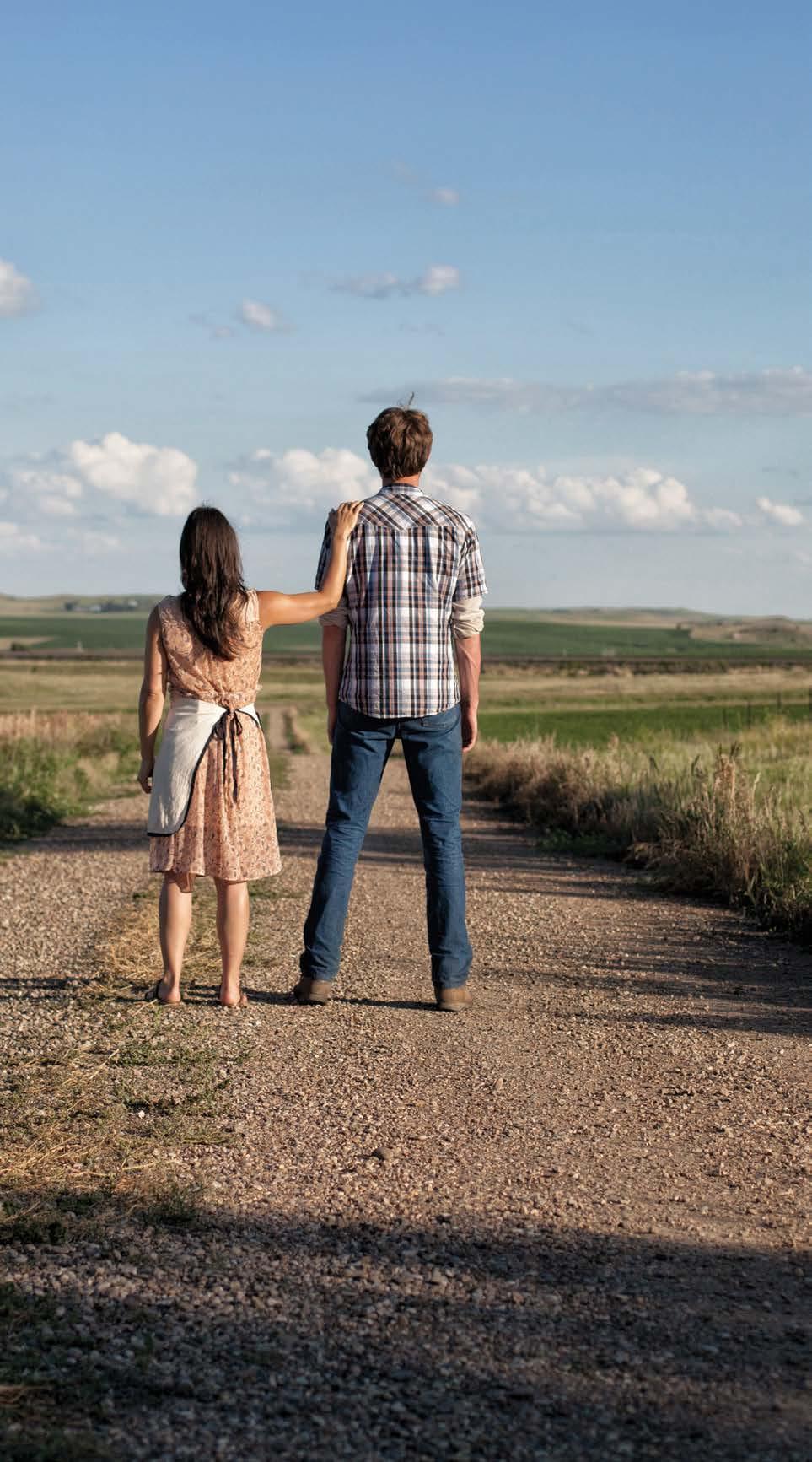
The landscape was gorgeous, Bielinski said. Vast wide shots make the landscape very much a character, he said. The film is distinctly North Dakota, which to Bielinski, means having an attachment to the land in a really tangible way that other cultures may not have.
“Nobody’s going to watch this film and not know you’re in North Dakota,” he said. “The landscape and the people and spirit of North Dakota are very important parts of the film.”
As the university explores new art forms, practical experience is valuable for students, he said.
“It was grueling,” he said. “Students worked 13-16 hours a day on a five-day shoot starting July 11.
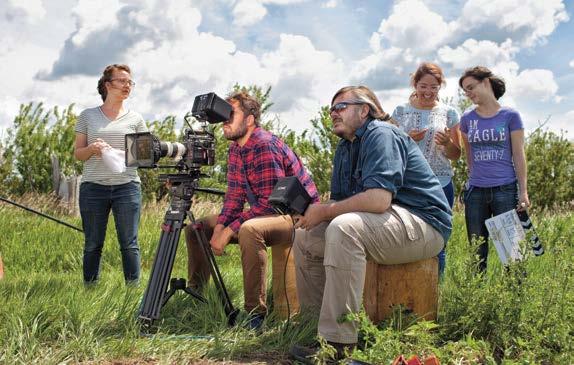
“They did everything from handling lights to fetching meals to being script supervisors, grips, doing call sheets. We’re going to have students in the post production process as well, and an alumnus will score the film.”
A local premiere of the film is planned this fall.
See more about the film at beautifulcrazymovie.com
Daniel Bielinski’s latest film is billed as “a romantic comedy short film set in the West.”
“It was impossible not to take something away from that week. It could be helping the gaffer set up lights, learning about not only how to assemble them, but also how to create just the right mood for a scene. It could be following the cinematographer to learn more about how different shots evolve in order to show the mental processes of the characters. It’s even learning about the technology used in order to record sound. What a blessing it was to have this opportunity at the University of Mary.”
— Emme Hulm, senior, Mass Communications
Continuing
THE MISSION
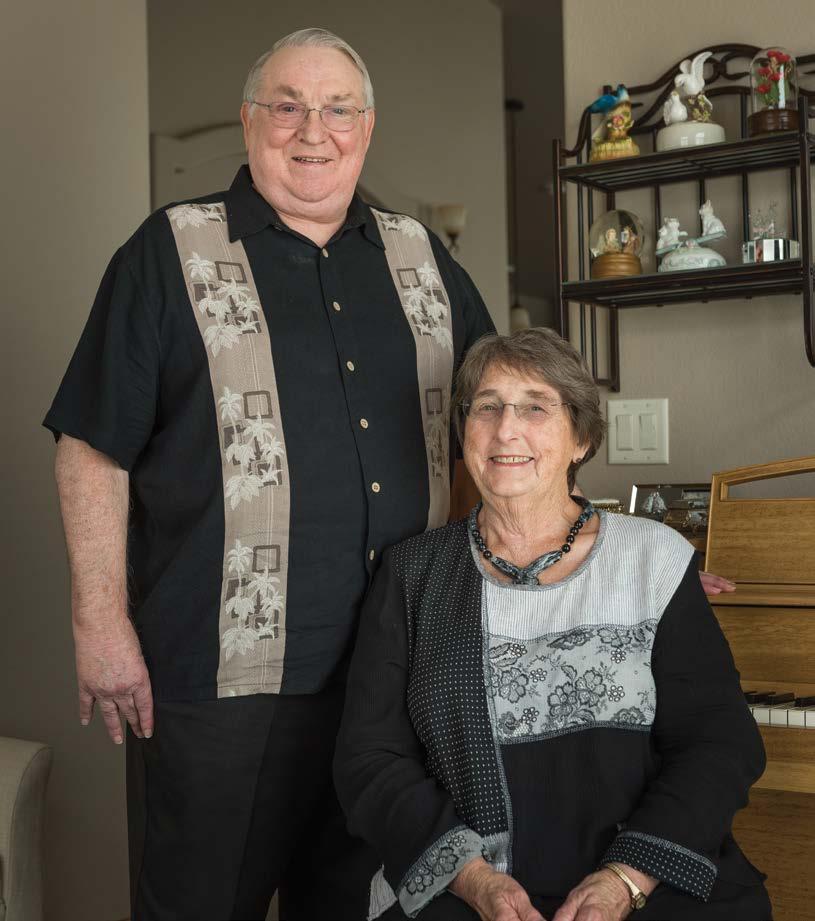
Jerry and Shirley Fischer have been involved in the life and growth of the University of Mary for the bigger part of the university’s life.
Both Jerry and Shirley grew up in Golden Valley County — she in Beach and he in Golva.
Growing up on a grain and hog production farm as the oldest of six children, Jerry feels that upbringing was a special blessing: “You know the community and the families are close,” he said.
The youngest of three children, Shirley’s father passed away when she was 12. She remembers how hard he worked, on the railroad at a time when water was still used to power the steam locomotives, and then as a Texaco bulk dealer.
Both Jerry and Shirley worked hard from childhood on, including working their way through college at Dickinson State, which Jerry remembers as costing at that time, $150 per quarter.
“My parents placed a high value on education,” Jerry said. “They encouraged
Between them, Jerry and Shirley Fischer have dedicated more than 60 years to the Benedictine vision and mission at the University of Mary and Annunciation Monastery.
me to go to school. They didn’t really want me to come back to the farm.
“I think that came from my grandparents. When I was small, they spoke German and neither had gone beyond the middle of grade school. I was always told, ‘we don’t want you to have the same struggles we had,’” he said.
Shirley received the same advice from her mother. “With my dad passing away, she didn’t want me to struggle the way she did to make a living. Education was very important to her.”
“With no money to go to college, I worked two jobs all through college,” she said.
Both went to school all year round, graduating in three years to begin earning a living as soon as possible.
Majoring in education was one of Jerry’s choices, but he also wanted to get a business degree: “I felt in the future it would create a lot more flexibility.”
And during his first years teaching at Assumption Abbey in Richardton, Jerry spent summers working on earning his master’s degree in accounting at the University of North Dakota.
Shirley’s dream was to work with handicapped children, and in her choice of business and music as majors, she was able to include work with handicapped children in her teaching.
Jerry had been teaching at Assumption Abbey’s two-year college when he learned that then-Mary College was looking for faculty.
“We had learned a lot about the Benedictines,” during that time at
Jerry and Shirley Fischer
Assumption Abbey, he said. “We were very comfortable with them.”
So in the 1971-72 school year, he and Shirley, came to campus, where Jerry taught in the business division.
After a two-year return to Richardton for a business venture with friends, Jerry and Shirley returned to Mary, where Jerry took the role of vice president for finance from retiring Sister Miriam Schmitt.
Jerry remained in the role for the next 34 years. During that time, the university took great strides in expansion. In the process, “we had to build infrastructure, bringing water in from Bismarck, for example — as part of the university being able to grow and expand.”
Building a new monastery south of the current Benedictine Center was one of the projects completed by the Sisters during Jerry and Shirley’s years at the university.
“We were always concerned that the Sisters be taken care of adequately,” Jerry said.
“I was involved in every building project at Mary except the original set of buildings which included the Miller Science Center,” Jerry said. “I saw a great physical change,
and I think the reason for that change is because of the need for private education.” Shirley also invested decades of her life serving this Benedictine mission on the prairie. She worked in the business office at Annunciation Monastery for 27 years, earning the affectionate title, “Sister Shirley.”
Jerry reflected on the qualities that fueled the growth of the University of Mary.
“I think the Benedictine philosophy helped the school become grounded in a very significant way,” Jerry said. “One of the greatest things is that Mary was a liberal arts school that offered professional majors, filling a real need.
“I think the mission of the University of Mary is to continue to serve the needs of the people in the area, and I think that it is extremely important for all of us to remember the Benedictine foundations behind the university,” he said.
“Vocations in monasteries, men or women, go in trends,” Shirley said. “The university is wonderful exposure to young women to explore a vocation.”
With a limited number of private schools in
Lumen Vitae
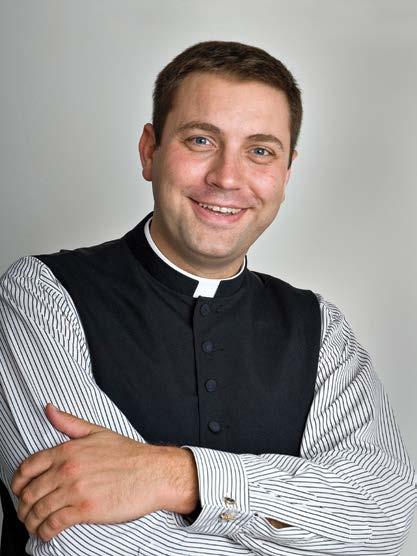
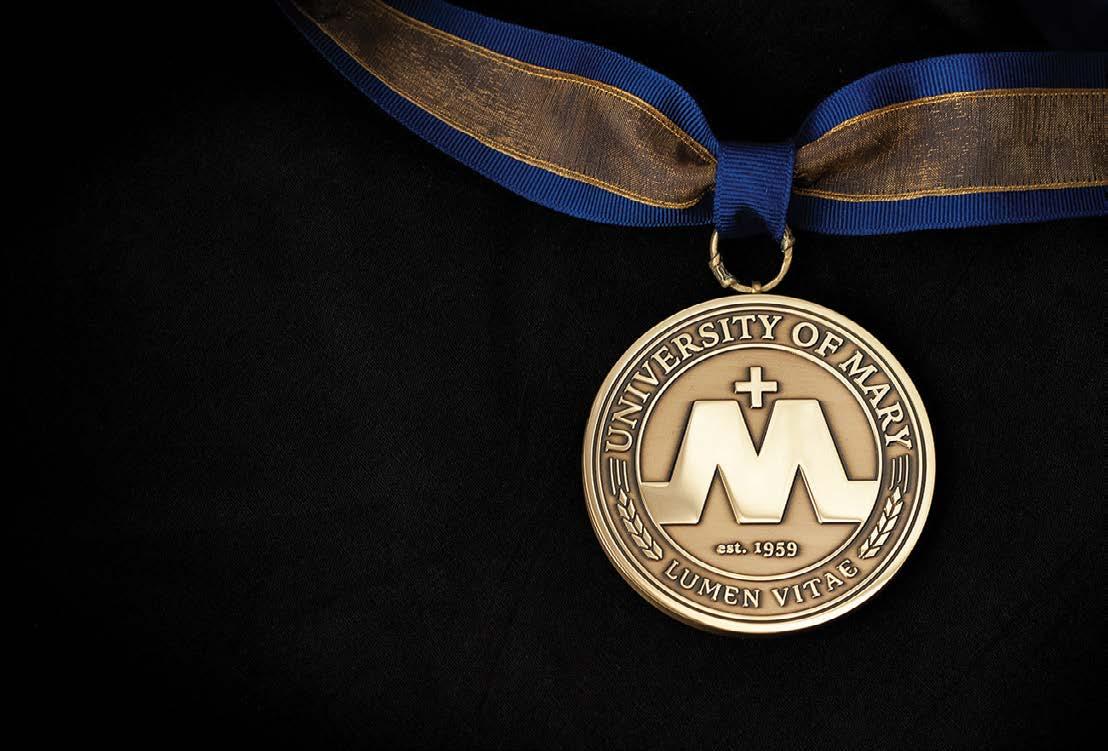
Robert Barron, creator of “Word on Fire Ministries,” whose mission of “evangelizing the culture” has made him one of today’s greatest Catholic communicators, was the 2016 recipient of the University of Mary’s prestigious Lumen Vitae Medal. The medal’s inscription is Latin for ‘ The Light of Life,’ and is given to those who are champions of Catholic education and who bring others closer to Christ and His Church.
Pope Francis appointed Barron, along with three other priests, as auxiliary bishops for the 5-million-member Archdiocese of Los Angeles, the largest in the United States.
“ ”
I think the mission of the University of Mary is to continue to serve the needs of the people in the area, and I think that it is extremely important for all of us to remember the Benedictine foundations behind the university.
this area and the projected growth of North Dakota itself, Mary continues to serve a more and more important role, Jerry said.
“It’s important to have that choice,” Shirley said. “It’s what a lot of students need and wish for. I want to see it remain there for them. I think about the small communities where a lot of students have grown up.
“A school that isn’t so large — it fits for many of them.”
WhenVonnie Johnson and Anita Pedersen took the plunge in 2012 to open their nurse practitioner clinic in Watford City, the oil boom was creating a deluge of need for health care.
That was evident before Vonnie and Anita even had equipped their first tworoom location on Watford’s Main Street. People came by and begged them for treatment: “Will you please see us?” “Will you see our baby?” they said.
“That’s how desperate people were for health care at that time,” Vonnie said.
On September 11, 2012, they officially opened Anova Family Health Center — two rooms and a reception area shared with a drug-testing company — and within a month were operating at full capacity.
“They found us and they came,” Vonnie said.
Anova, a name created from letters from Vonnie and Anita’s first names, moved into a new larger location last year with eight exam rooms, a reception area, kids’ waiting room, and offices. A cozy lounge offers staffers’ kids a place to have a snack, watch TV, and do homework.
Everything Vonnie and Anita have done both in their building and in their practice is deliberately designed to model a loving family.
From their ‘list of rules’ for potential employees, the most important is the Golden Rule.
“Employees sign that – that they will
the business of
treat people the way they want to be treated,” Anita said. That rule goes for everyone, from providers to front desk, she said.
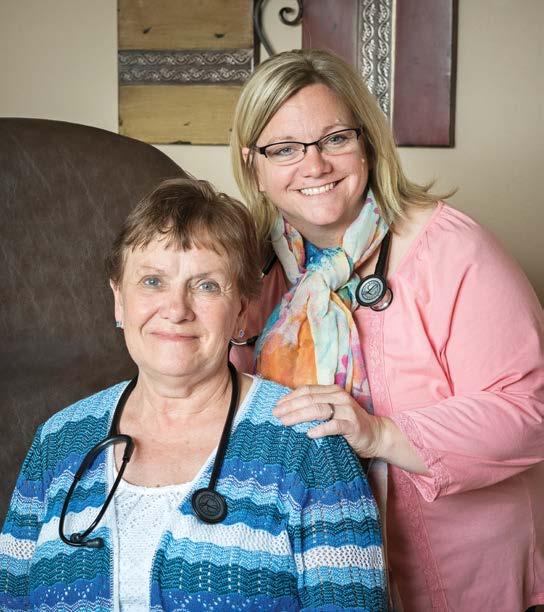
BothVonnie and Anita were born and raised in the Watford City area. Vonnie, who has worked in health care for more than 40 years, has known Anita and her family since Anita was a baby and has mentored and supported her from her days as a nurse’s aide to earning her doctorate in nursing practice.
“Vonnie was my nursing cheerleader,” Anita said. “I always looked up to her. She encouraged me to go forward.
“She makes you think you can do anything.”
In turn, Vonnie says she’s hoping that Anita will be a role model for others as the Benedictine Sisters at the University of Mary were for her.
WhenVonnie graduated from the University of Mary in 1999, her plan was to open her own clinic.
Opening a clinic for the two nurse practitioners became possible in 2011, when the North Dakota legislature voted to allow nurse practitioners to operate clinics without working under a physician.
The legislation was a game-changer, Vonnie said.
“When we started, there was only one nurse practitioner program in North Dakota (at Saint Alexius in Bismarck). We were really the first ones in North Dakota to start from the ground up,” Vonnie said.
“We had to work hard for it,” she said, “weather the bumps.”
“Somebody above was looking out for us,” Anita said.
In her 40-plus-year career in health care, Vonnie worked in towns all across the northwest area of the state.
“Then oil came,” she said. “Infrastructure was overwhelmed. People from Grassy Butte, Stanley, Watford, couldn’t get in to get medical care.”
Watford City’s population exploded from 1,200 to 18,000, she said.
“At first it was just a lot of guys,” Anita said. “Then after a couple of years, they started to bring their wives and families. “The roughneck jobs — those are moving on. We’re getting a more stable workforce.
“We no longer have to turn 60 people away some days, as we did at first.”
“People say, ‘I like the way it feels here. You’re interested in me,” Vonnie said. “We can set our own schedules and the type of patients we see and how much time we want to spend with them.
“People say they love the time and attention they get from us. Neither of us wanted to do it to get rich. I wanted a clinic where people are treated as family, not rushed, and we want staff to bring the same attitude.”
The two have gone through the oil boom and have seen Watford grow, “but we are as big as we’re going to get,” Vonnie said.
“We are as busy as we can be and still have that small town feel. If you grow too much, patients just become a number. The person is lost.
“We also like to be involved in the
“I loved my time at Mary,” Vonnie said. “The Sisters were so nice. They made me feel part of a family. They take care of their students.”
community,” she said. “You have to have time to do that, too, balancing your work and your family life.
“It’s nice to have a little bit of small town family feel.”
Vonnie Johnsom and Anita Pedersen
1990s
ANGIE (KUHN) BAKKE, MBA, ’91, was named the Chief Program Officer of EmBe in Sioux Falls, SD. Bakke oversees aquatics, childcare and preschool, school-age care, health and wellness, women’s programs including leadership, Dress for Success and youth and rec programming.
2000s
JUSTIN DECOTEAU, ’00, was presented with the Milo Trusty award. The Milo Trusty award is given in recognition of an individual for outstanding contributions made to USA Wrestling North Dakota. Justin is the lead business analyst for the North Dakota Department of Health and Human Services. Justin and his wife, Vanessa, live in Bismarck.
MAKAYLA (JOHS) VAUGHAN, ’08, was a member of the first graduating class of the University of Mary’s Doctorate of Nursing Practice class. She received her degree on April 30, 2016. MaKayla is currently working at CHI St. Alexius in Bismarck, ND.
MICHAEL MULLOY, ’09, was awarded the 2016 Client Satisfaction Award from the American Family Law Institute. Mike currently works at Stebbins Mulloy Law Firm in Bismarck.
JOSH KRAMER,’04,’ 09, Bismarck, has been named executive vice president and general manager of the North Dakota Association of Rural Electric Cooperatives (NDAREC), based in Mandan.
Kramer, who previously served as the deputy state director for USDA Rural Development, started July 1. Kramer has been with USDA Rural Development since 2010. Prior to this time, he worked for North Dakota Farmers Union. He has also served on the board of directors for Capital Electric Cooperative, Bismarck.
A veteran of the North Dakota Army National Guard, Kramer was deployed to Afghanistan in 2006 in support of Operation Enduring Freedom.
2010s
JENNIFER (ANDERSON) JOYCE, ’10, was commissioned as a second lieutenant in the North Dakota Army National Guard on March 30, 2016, after nearly six years as an enlisted soldier. Jennifer was sworn in by her husband, Capt. Patrick Joyce, a 17year veteran of the North Dakota Army National Guard. Jennifer is Public Affairs Specialist/Editor with the ND Army National Guard. Jennifer and Patrick reside in Mandan with their 16-month-old twins, Sterling and Kenlee, and Jennifer’s stepchildren, Amanda, Garrett, and Isabelle.
STEPHANIE (SANDVICK) WEYRAUCH, ’11, graduated on May 15, 2015 from Washington University in St. Louis, MO, with a Doctorate of Physical Therapy and Master of Science in Clinical Investigation. She received honors of the Director’s Award and Steven J. Rose Research Award. Stephanie and her husband, Deland, live in Grand Forks, ND.
BRANDON VAUGHAN, ’15, was named Controller in Fiscal Operations at CHI St. Alexius in Bismarck, ND. Previously, Brandon was the Chief Financial Officer at Jamestown Regional Medical Center.
SMALL BLESSINGS
TARA MILLER, ’04 & ’11, & Kurt Wharton, MD, a boy, Lennan, born November 10, 2015
JACINTA (HAVELKA) BOTTRELL, ’10, & Troy Bottrell, a boy, Quintin James, born March 31, 2016
KAYLA EMTER, ’10, & Eric Gerving, a girl, McKenzie Fae, born February 29, 2016
ALLISON (HAYNES) STREETER, ’10, & Paul Streeter, a boy, Carter James, born December 11, 2015
ROSE (KRAMER) FRIEDT, ’94, & Jared Friedt, a girl, Veronica Rose, born March 24, 2016
SCOTT RITTER, ’08, & Alisha Ritter, a girl, Lydia Catherine, born January 20, 2016
EVAN GROSS, ’13, & Jessa Gross, a girl, Gretta Ann, born June 27, 2016
MINDY (GONZALES) FACIANE, ’03, & Jon Faciane, a boy, Gabriel Anthony, born February 26, 2016
TO HAVE AND TO HOLD
MELISSA (KRAMER) CARLSON, ’14, to Jon Carlson on October 3, 2015
KATHERINE SATHER, ’12, and Jonathan Paul, May 26, 2016, in Kauai, Hawaii. The couple lives in Bismarck. KEEP IN TOUCH! HERE’S HOW.
Submit your information at: umary.edu/forms/alumni or mail to:
Alumni Office, University of Mary 7500 University Dr. Bismarck, ND 58504 alumni@umary.edu
Please include: Your name, address, email address, year of graduation, home and work phone number, alumni spouse’s name and class year
Photos sent electronically should be print quality. Sorry, we can’t return photos sent by mail.