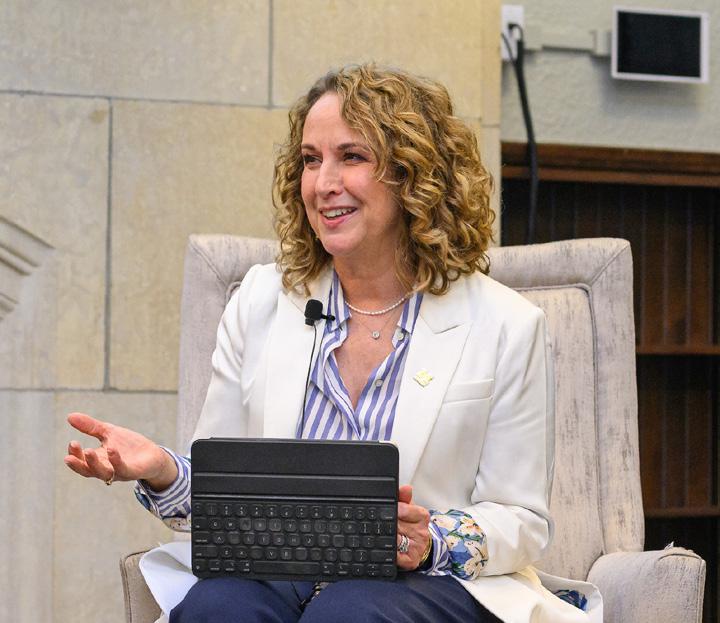
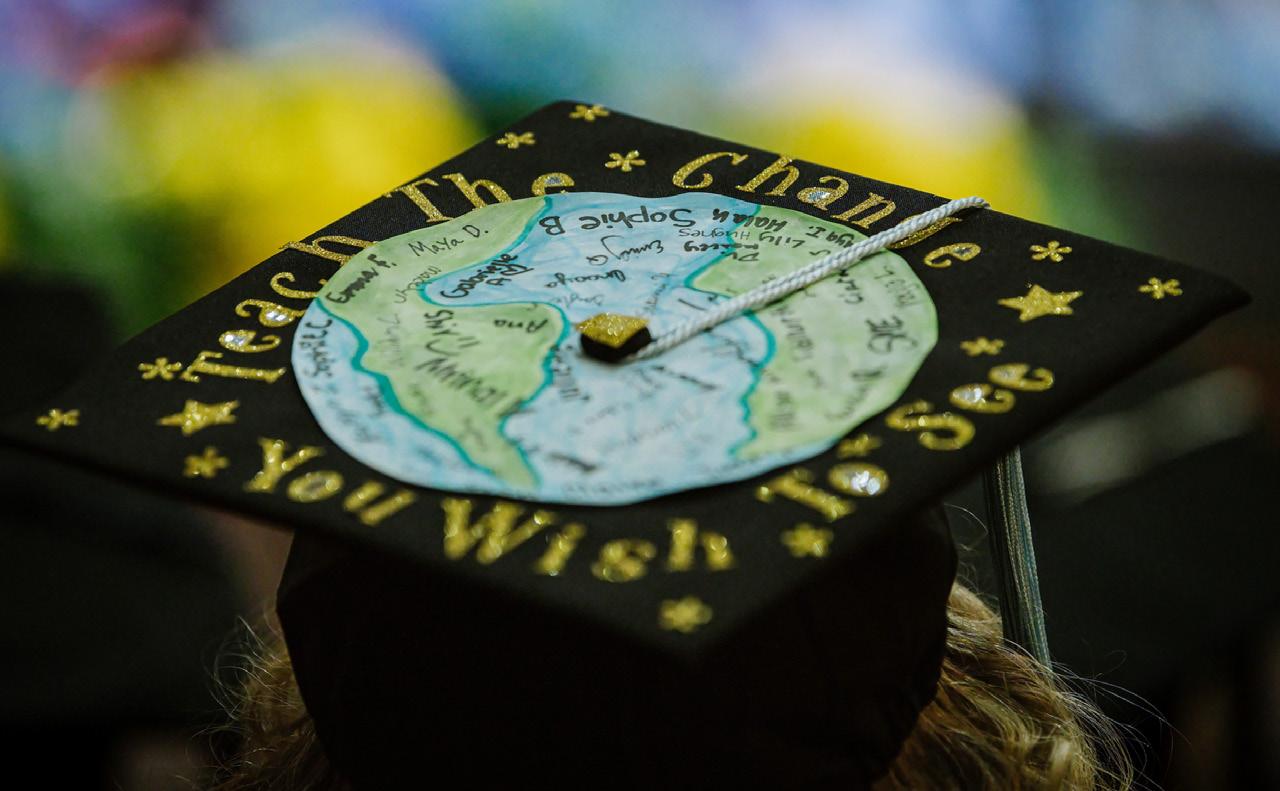
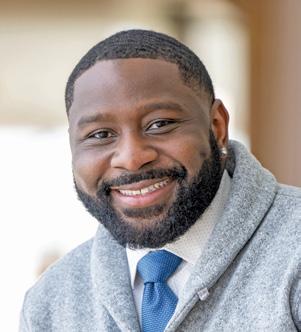
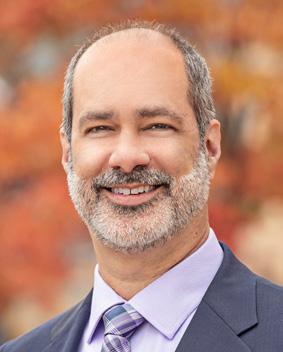
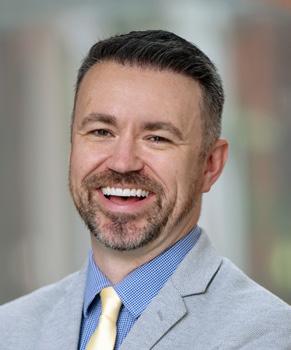
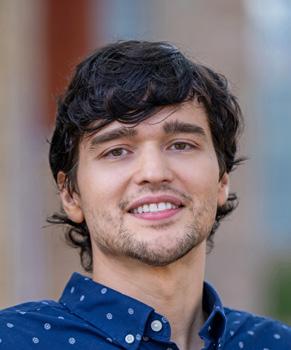
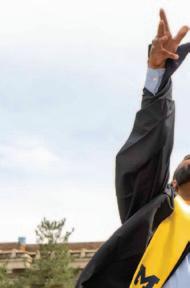
Launched in the fall of 2025, the University of Michigan’s Life-Changing Education theme year, during which the university has committed itself to crafting the future of learning, represents a university-wide dedication to understanding, elevating, and reimagining the impact of education in people’s lives. More than a celebration, it is an invitation—to faculty, students, and partners across disciplines—to recognize how their work already expands opportunity and to envision how it might do even more. Our Marsal Education colleague Dr. Demetri Morgan is the faculty director of this cross-campus initiative.
By bringing together teaching, research, and practice, the initiative highlights how education shapes not only individual trajectories, but also the systems and policies that influence communities at scale. Just as important, we ask a deeper set of questions: What does it truly mean for education to be “life-changing,” how can we see and measure that impact, and how do we ensure that it is available to all people, not just those who are fortunate enough to attend our amazing university? In exploring these questions, the theme year underscores Michigan’s belief that education is always evolving—driven by evidence, grounded in experience, and capable of transforming both lives and society.
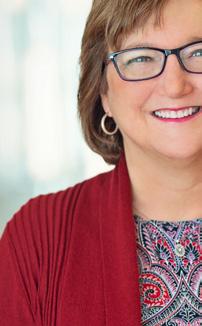
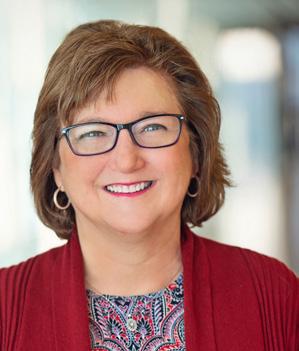
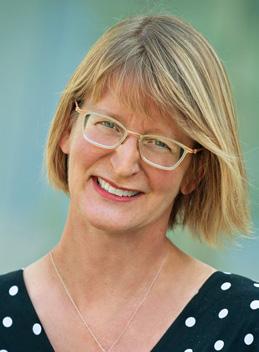
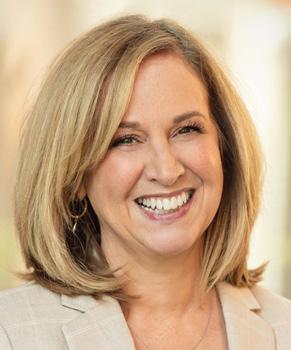
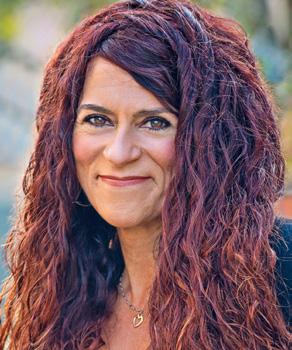
In this issue, several of my Marsal Education colleagues and I share our reflections on “life-changing education,” drawing on our own areas of expertise. These insights offer a glimpse into the wide range of perspectives education experts bring to conversations about life-changing education. Together, they underscore the depth and complexity of defining what makes education truly transformative.
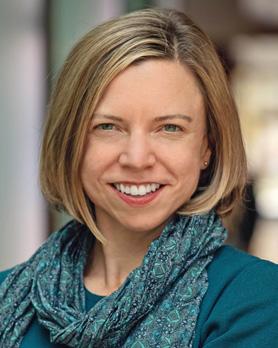
This issue highlights the important connection between education research and policy and practice. Drawing on years of using social network analysis theories and methods, Dr. Kara Finnigan’s work reveals an often overlooked driver of change: the relationships that connect educators within and across schools and districts. Her studies show that when those networks are shallow, fragmented, or overly centralized, even well-designed curricular, instructional, or organizational changes may struggle to take hold. But when trust, collaboration, and meaningful exchange are present, ideas can spread, deepen, and endure. Her research also demonstrates how policies can facilitate or disrupt social cohesion not just in schools but in broader communities. This work is critical for developing policies that are more likely to result in transformative change.
Marsal alumna and U-M research professor Dr. Suzanne Perkins’s research bridges neuroscience
and education to better support children who have experienced abuse and neglect. She is advancing a multi-year study to understand how childhood maltreatment shapes brain development and cognitive functioning—particularly skills like memory, focus, and planning that are essential for success in school. Drawing on large-scale data and brain imaging, her work aims to translate scientific insight into practical strategies educators can use to support recovery in the classroom. Schools are not just sites of learning, but critical spaces for healing, growth, and long-term opportunity. As we envision the future of learning, we must support schools and educators to provide youth with the resources they need to have educational experiences that change their lives for the better.
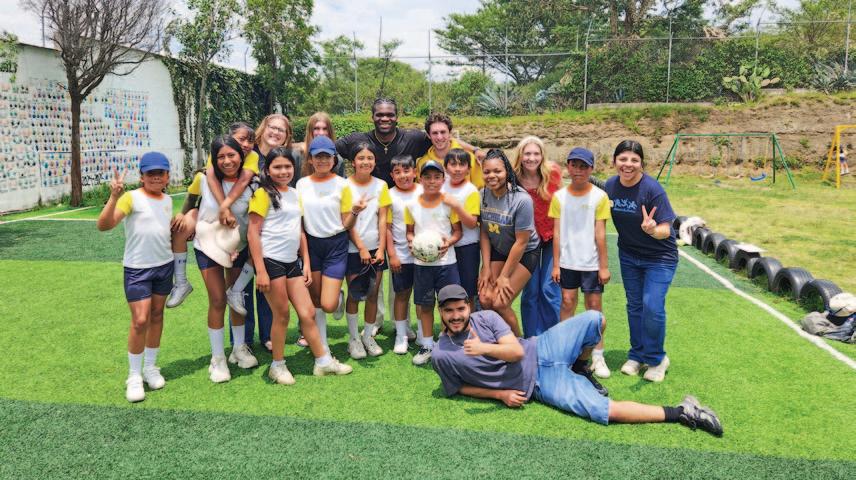
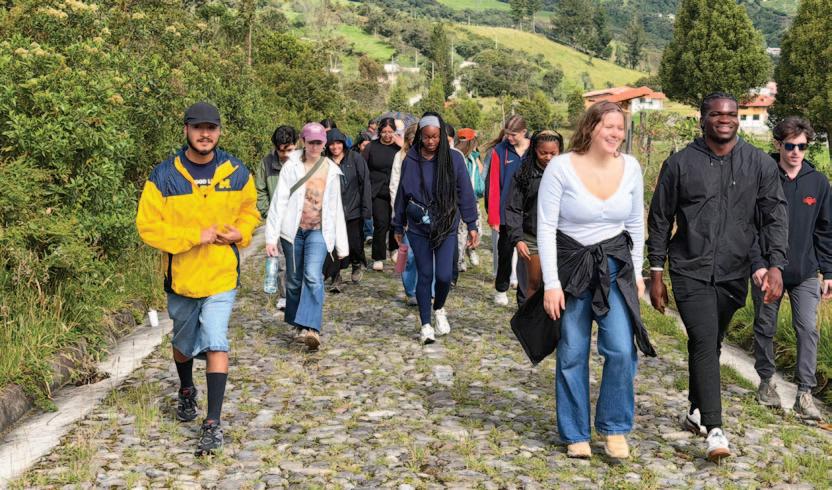
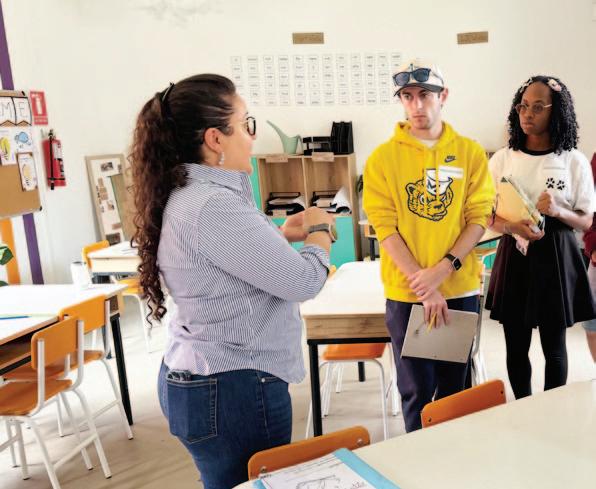
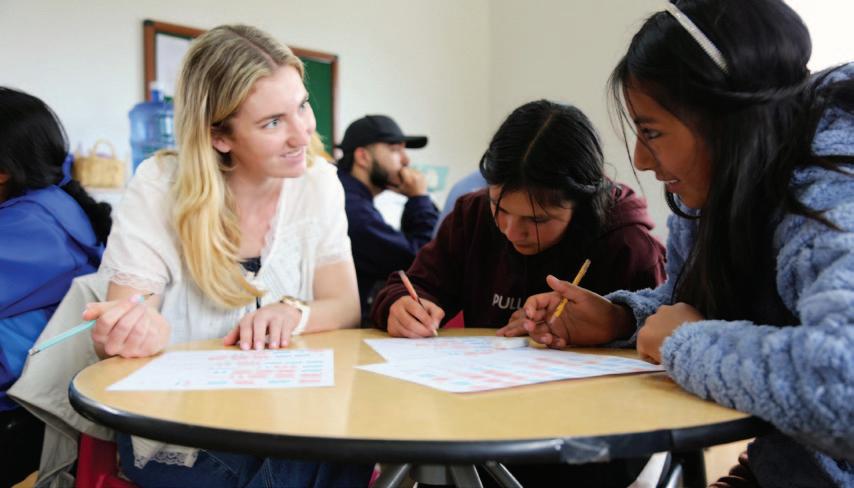
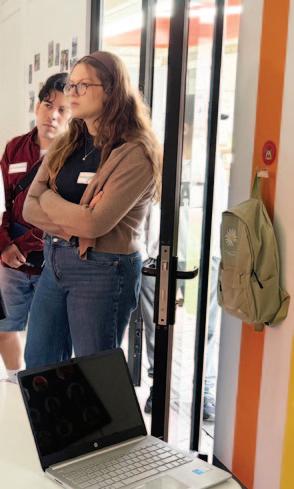
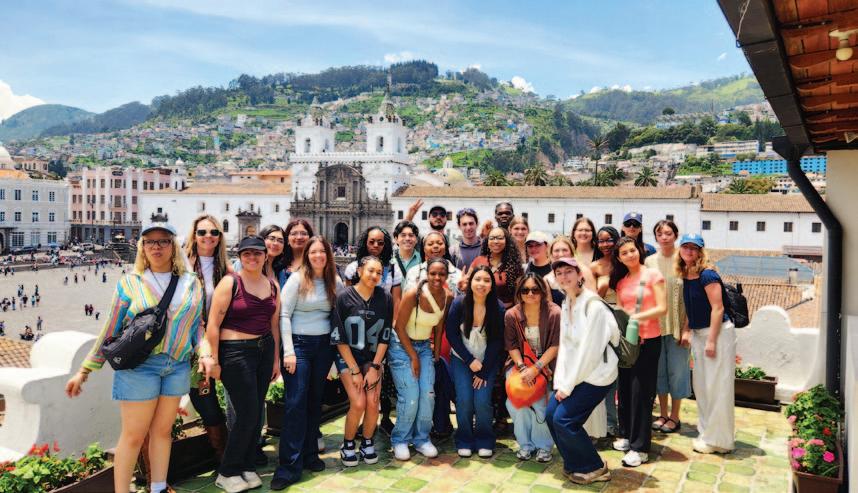
We also follow University of Michigan students far beyond campus—to classrooms in Ecuador. Through a Marsal School course taught by Marsal lecturer, Dr. Susan Atkins, undergraduates from a range of majors across campus experience firsthand how education is shaped by local context, from Indigenous language preservation and hands-on environmental learning in Otavalo to innovative teaching practices in Quito. Alongside Ecuadorian educators and youth, our students witness education grounded in trust, community, and real-world application—approaches that transcend language and geography. These experiences challenge students to think more broadly about equity, access, and the purpose of education, while also expanding their own sense of what teaching and learning can be. The result is a powerful reminder that education is not a one-size-fits-all endeavor and that some of the most lasting lessons come from stepping outside familiar systems to see schooling anew.
Much of our work is made possible through the support of our donors, whose belief in life-changing education makes so much of it possible. We are proud to share some of their stories in each issue of Marsal Educator.Their partnership fuels our most ambitious work. Together, we are building the conditions for education that not only informs, but transforms—opening pathways, strengthening communities, and shaping a more just and hopeful future.
As a university, we will continue to shape the future of education long after the theme year has concluded, leveraging new ideas and collaborations that have come from our current efforts. Although Marsal Education has proudly been a leader in this initiative, our sights have always been set on advancing the education of all people, everywhere—and on the limitless possibilities we have to create meaningful, positive change for learners. ■
Crafting the Future of Education During the Year of Life-Changing Education
Dean Elizabeth Birr Moje
Editor Danielle Dimcheff
Associate Editor Jeanne Hodesh
Contributors
Fernanda Pires
Tevah Platt
Design
Savitski Design, Ann Arbor
Hammond Design, Ann Arbor
We invite you to join the conversation by submitting ideas for future issues, letters to the editor, and class notes. marsal.umich.edu/magazine
Stay connected!
Web: marsal.umich.edu
Facebook: UMichEducation
X: UMichEducation
Instagram: UMichEducation
Office of Communications
610 East University Avenue
Ann Arbor, Michigan 48109-1259
soe.communications@umich.edu
Anoteoneditorialstyle:TheMarsalSchool strivestoestablishconsistencyacross materialsanddocuments,however,we acknowledgethatterminologyandstylingare personal.Wemake the intentional choice to honorthepreferencesofthesubjectswhoare interviewed for articles and we wish to accommodatethosepreferenceswherepossible.
Everyone is invited to participate in a theme year designed to highlight Michigan’s many contributions as a public institution—and imagine its future students’ needs for learning
Mapping the Invisible
How relationships shape practice and policy
Ecuador: Classroom in the Clouds
A ‘Pedagogy of Love’ rewires the lesson, students are taking note
A Research Career Reignited
Suzanne Perkins is crafting the future of learning for abused and neglected children
Happenings
Champions for Education
Class Notes
Mapping the invisible web of relationships inside schools and districts on page 12
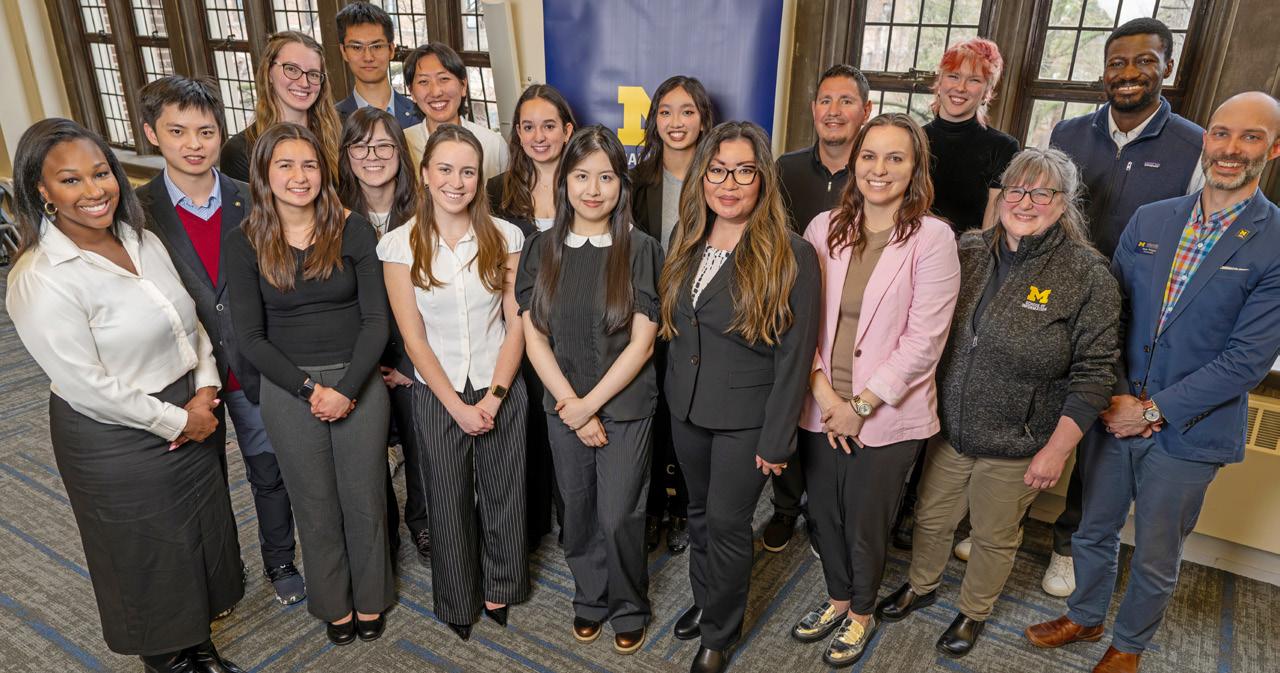
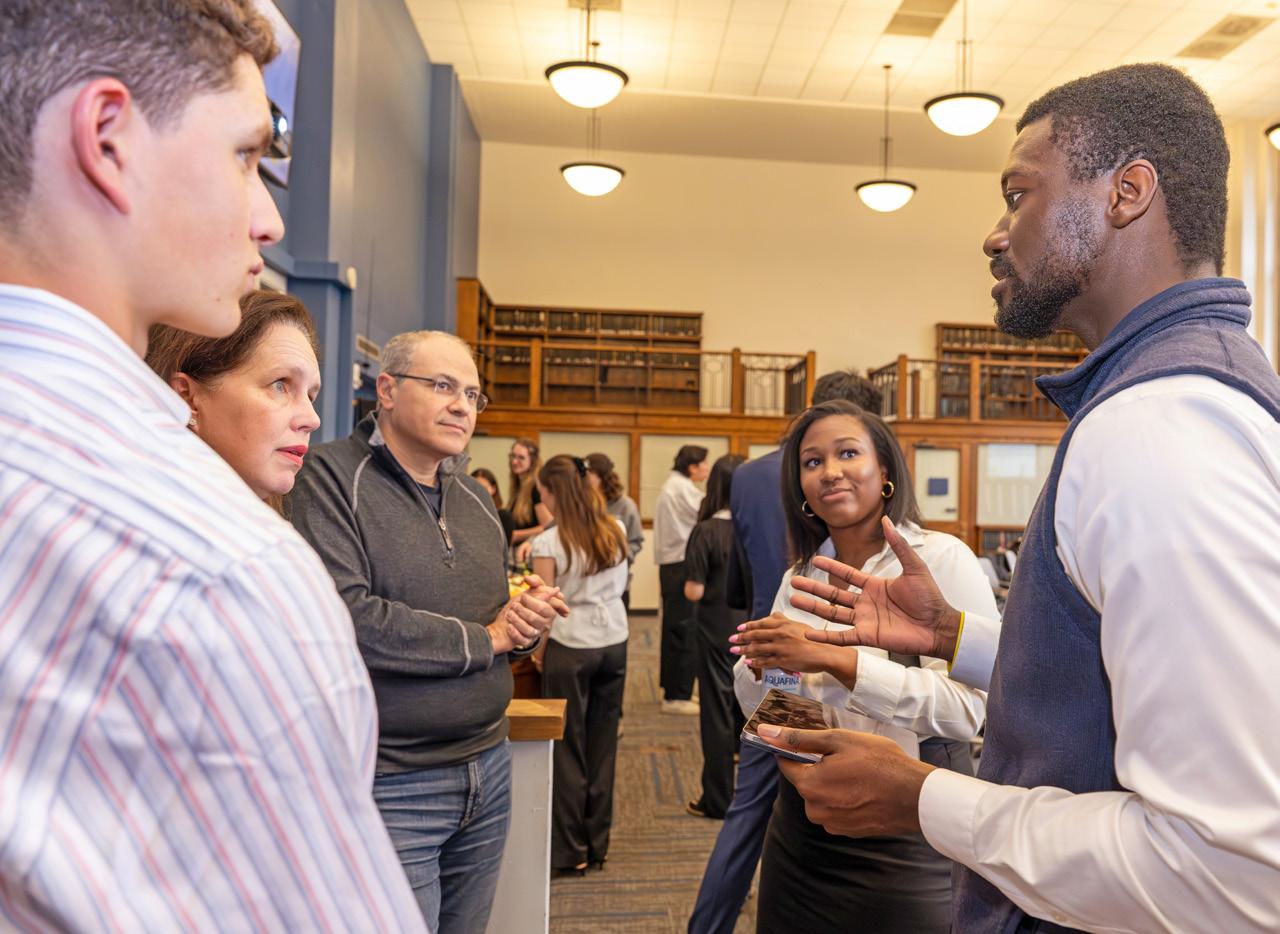
Above and previous page MBA candidates Anino Oritsejafor and Jaenelle Lauture won this year’s James A. Kelly Learning Levers Prize. The grand prize of $10,000 will help them continue to build their product, Krik Krak, a shared reading platform that connects children (grades K–6) and trusted adults in real-time synchronized reading sessions, with in-the-moment prompts that help caregivers guide comprehension and phonics.
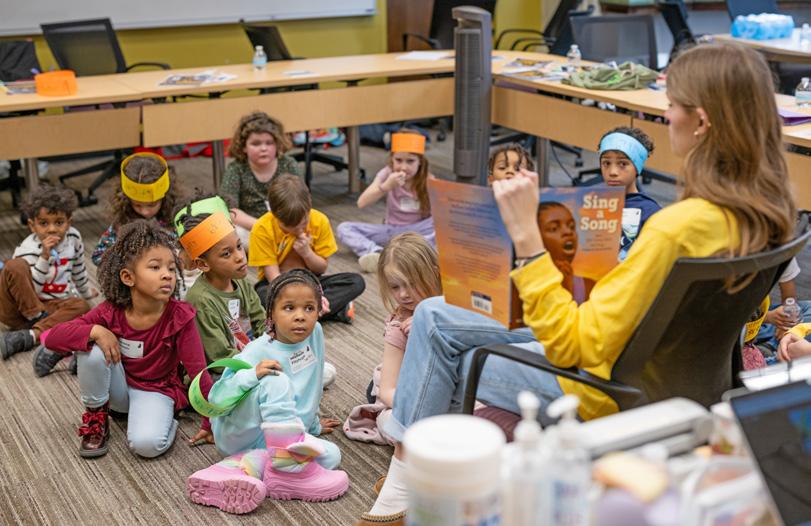
Above The annual Martin Luther King Jr. Children and Youth Program hosted by the Marsal School invited learners from pre-kindergarten through grade 12 to learn about, engage with, and celebrate the legacy of Dr. Martin Luther King Jr. through fun and educational activities.
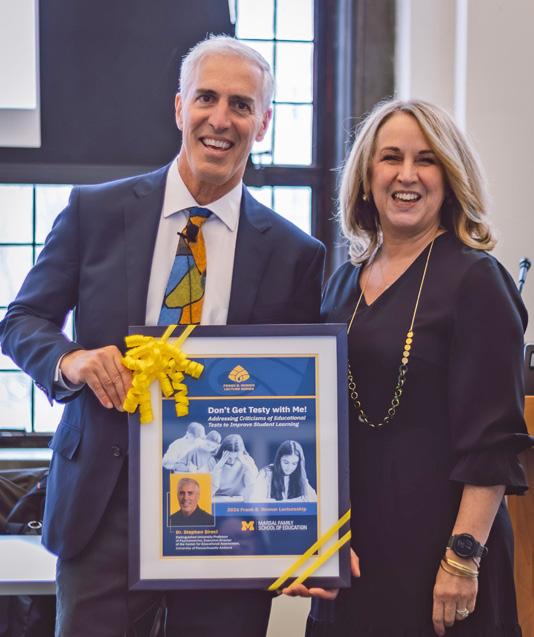
Above Dr. Stephen Sireci, Distinguished University Professor of Psychometrics and Executive Director of the Center for Educational Assessment at the University of Massachusetts Amherst, presented the 2026 Frank B. Womer Lecture. His talk, “Don’t Get Testy with Me! Addressing Criticisms of Educational Tests to Improve Student Learning,” explored testing criticism, including changes in the way the public perceives educational testing.
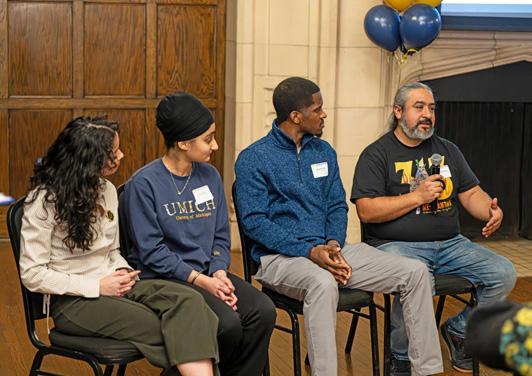
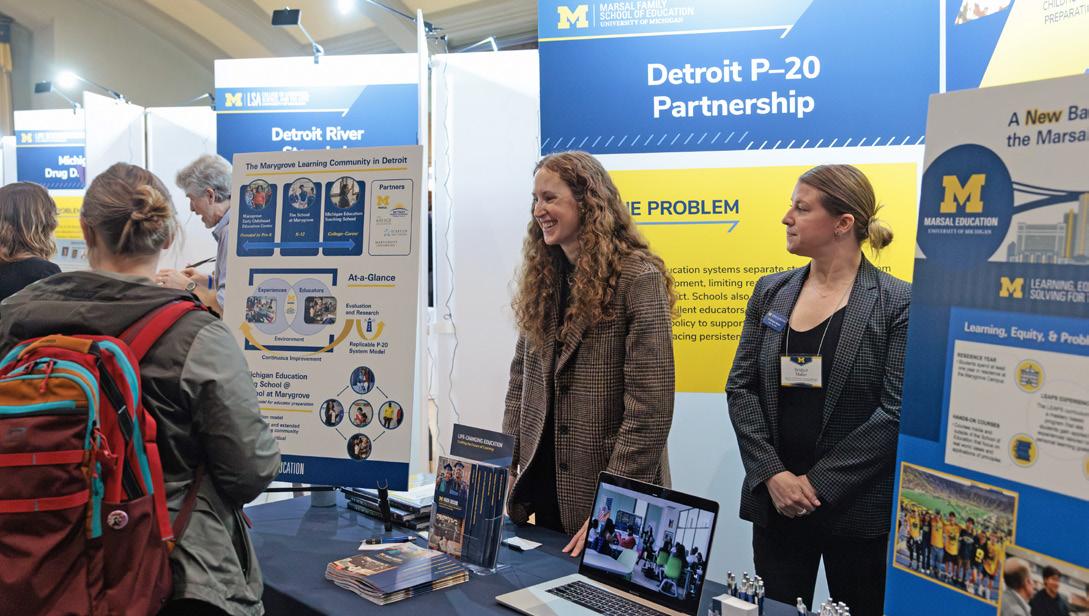
Above LEAPS with Detroit: Building the Future of Learning, Equity, and Community Partnership brought together current students, faculty, staff, and community partners to showcase their collaboration and learning in the Learning, Equity, and Problem Solving for the Public Good undergraduate program. The event was designed to help prospective students see themselves in this bold, new model for undergraduate education.
Above At the U-M President’s Symposium on Research Impact and Policy Leadership, Drs. Bridget Maher and Rachael Gordon presented data on the development, research, and evaluation program focused on the Detroit P-20 partnership. “We are seeing positive outcomes for students, teachers, and a lot of satisfaction by families,” says Maher.
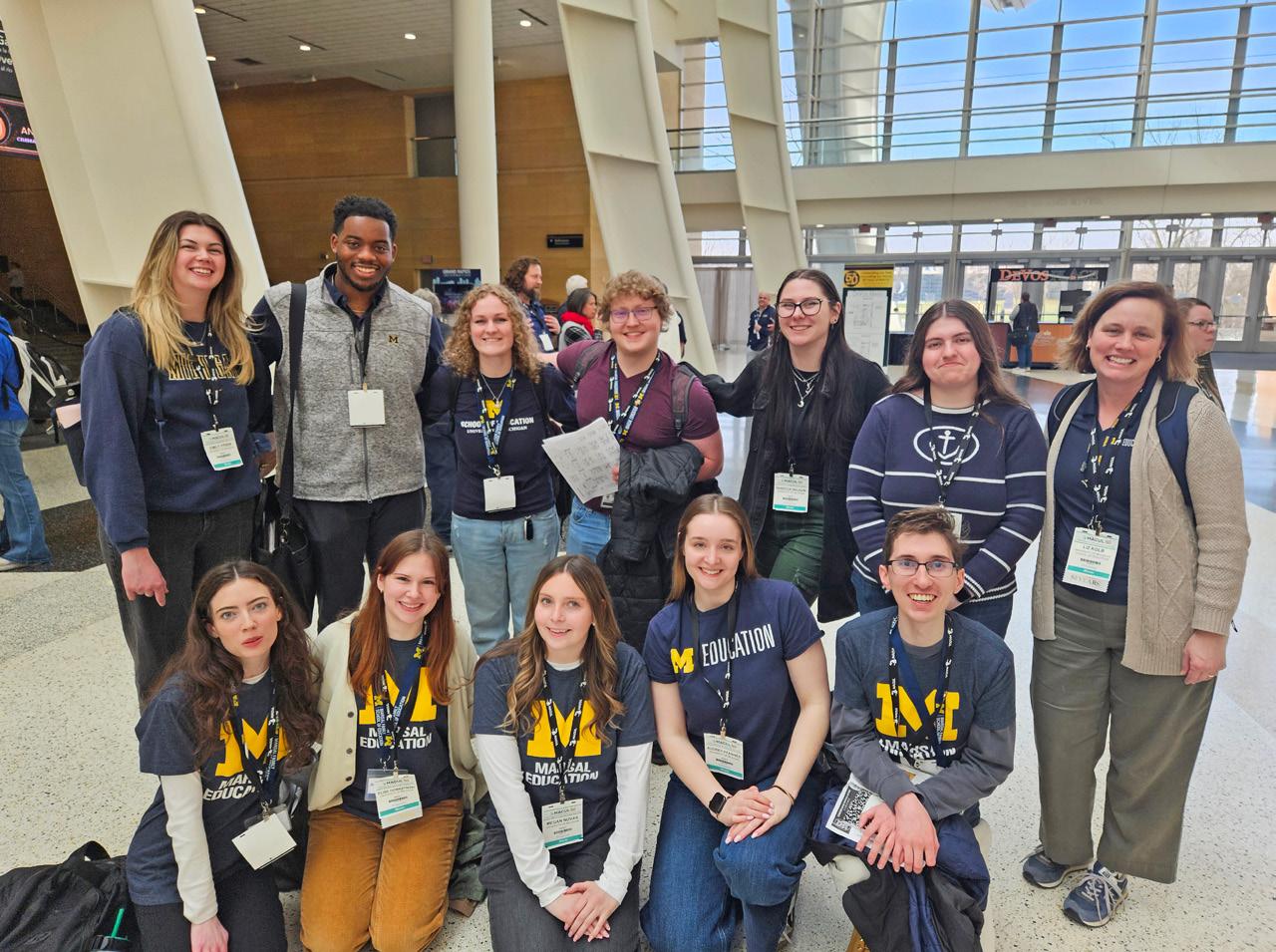
Above Marsal School Secondary Education undergraduate students and MAC interns attended the Michigan Association for Computer Users in Learning conference in Grand Rapids. There, they had the opportunity to network with over 2,800 K-16 educators from across Michigan.
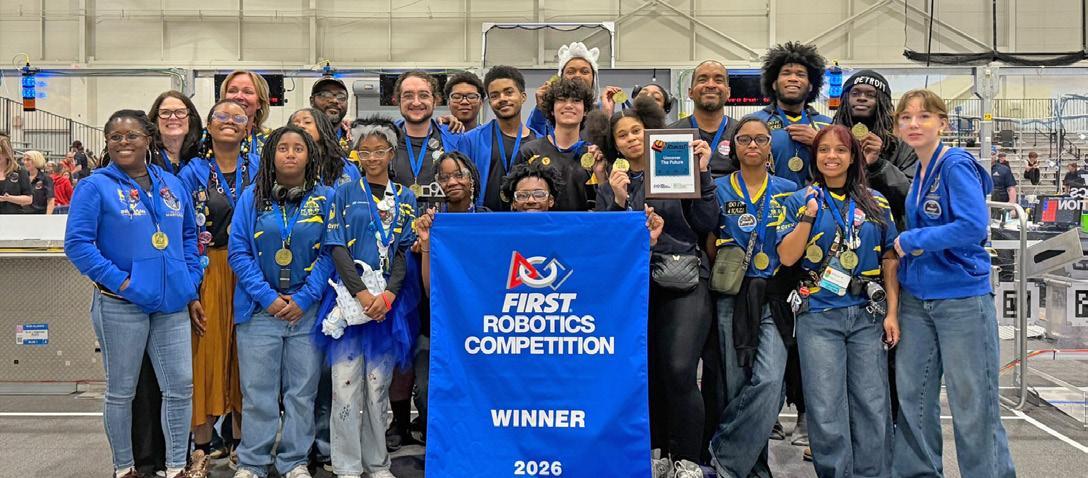
Above Team 8280 K9.0 Robotics, The School at Marygrove’s high school robotics team, took first place in their division at the state tournament. The win qualified the team to compete in Houston at the FIRST Robotics World Championships—the first Detroit Public Schools Community District school to do so in 18 years.
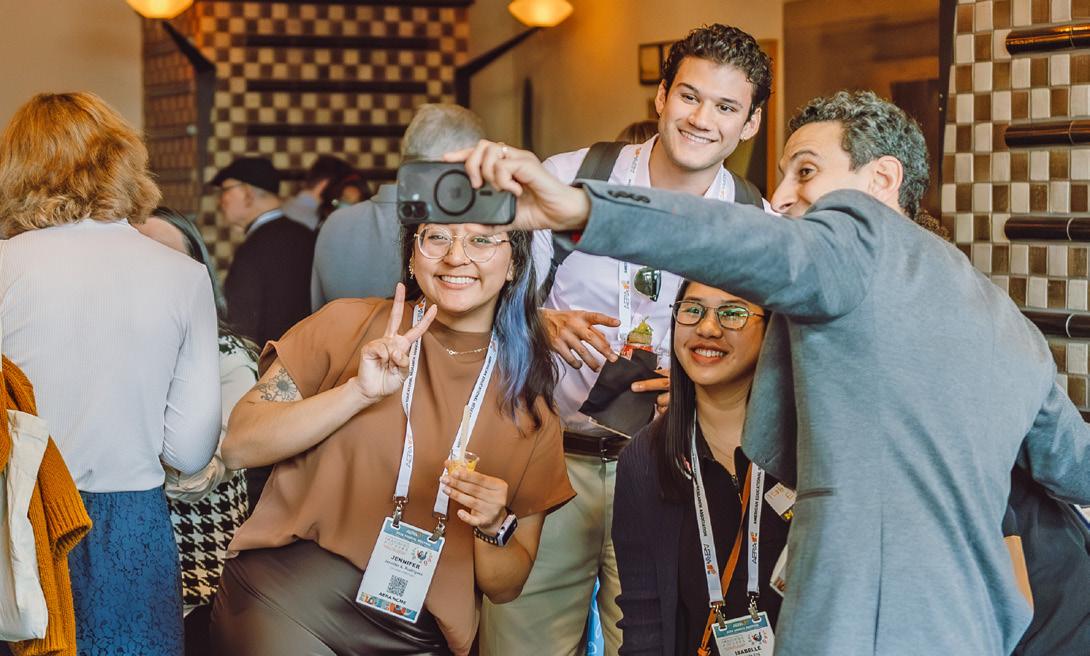
Above Marsal School alumni and community members gathered at a reception in Los Angeles during the 2026 AERA Annual Meeting to enjoy hors d’oeuvres, drinks, and the opportunity to reconnect with colleagues.
Above The “MarsOwl” touched down outside the Office of Student Affairs to share its wisdom with students as the winter semester wound to a close.
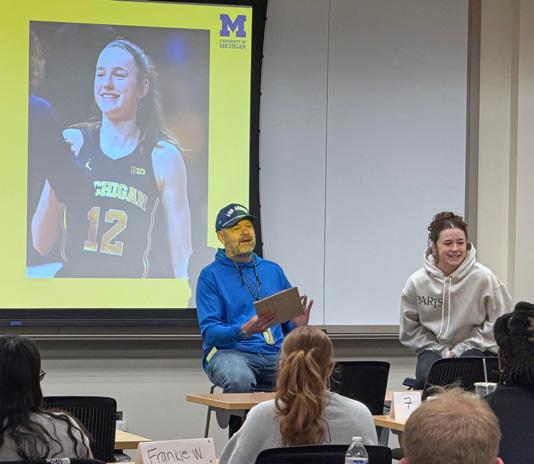
Above Michigan Women’s Basketball guard Syla Swords visited Greg Dooley’s EDUC 335: Name, Image, and Likeness course to share her perspective and experience around collegiate NIL as an international student-athlete, bringing real-world insight into the classroom.
Crafting the Future of Education During the Year of Life-Changing Education
everyone is invited to participate in a theme year designed to highlight michigan’s many contributions as a public institution— and imagine its future students’ needs for learning
at the University of Michigan, we see every day how education expands what’s possible. In classrooms, it opens pathways for individual students; through research, it informs the policies, practices, and systems that shape opportunity at scale, from literacy to college access and beyond. At a time when higher education is under pressure, the university is bringing its impact into sharper focus through its theme year, “Life-Changing Education.”
Life-Changing Education (LCE) is a twoyear, university-wide effort to highlight the many ways in which education improves society and the quality of life for people in Michigan and beyond. It also aims to redefine what education can look like. A shared initiative of the Office of the President and the Office of the Provost, LCE is led by three cochairs: Elizabeth Birr Moje, dean of the Marsal Family School of Education; Angela Dillard, vice provost for undergraduate education; and Michael Solomon, dean of the Horace
H. Rackham School of Graduate Studies.
Demetri Morgan, associate professor of higher education at the Marsal School, serves as the LCE faculty lead.
“The purpose of a theme year,” says Morgan, “is to offer broad concepts that cut across all
Associate
Professor, Center for the Study of Higher and Postsecondary Education demetri morgan
the university’s campuses and different academic units, allowing people to see the work they’re already doing, and feel proud of, and envision the work that might come next. As a strategy to create change on campus, the theme year is a way to invite people in to become part of the change.”
“Life-changing education” can mean something different to everyone. But what does it mean empirically? What evidence proves that lives have, in fact, been changed by education? What constitutes “change” itself? Because ours is a school of educators and education researchers, we asked faculty and staff members to reflect on the following questions:
■ What makes education life changing?
■ How do we know when education is life changing?
Read on to hear a diversity of approaches to these questions that are informed by different education expertise.
Life-changing education expands how we see ourselves and what we believe is possible. My own path illustrates this. I earned two degrees in music and continued to perform as a professional opera singer, while also pursuing a PhD in higher education and building a career in program evaluation. The skills I developed through music, careful listening, interpreting complex patterns, disciplined practice, and collaboration translate directly into research and evaluation.
Life-changing education helps people recognize that learning in one domain can open doors in another. It cultivates a growth mindset and the confidence to apply one’s skills in ways that may not have seemed possible before.
We see it when people shift their expectations about what is possible and begin to imagine new trajectories for themselves. In my work evaluating college access initiatives across Michigan, I often observe students moving from uncertainty about whether college is possible to actively planning their educational and career pathways. That shift from doubt to agency is one of the clearest indicators that education has been transformative. I saw a similar transformation when I coordinated certification and master’s programs for educators. Many participants began as long-term substitute teachers and went on to become fully certified teachers serving their own communities. In those moments, education expanded what people could imagine themselves becoming.
Education is life changing when it makes you think or be a little bit different. In my work as a science teacher educator, I see teaching interns learn new knowledge and practices—but at least as importantly, many of them shift their perspectives. Some interns enter our program being science-averse, but they leave excited to teach science, and to use their science teaching as a way to work toward their commitment to more just and equitable education for children.
Professor and Chair, Learning, Equity, and Problem Solving for the Public Good
Education is life changing when it supports learners in discovering their own paths and helps them acquire the mindsets and capabilities to travel that path. Life-changing education is about experience, empathy, engagement, and experimentation. Lifechanging education is empowering.
“The purpose of a theme year is to offer broad concepts that cut across all the university’s campuses and different academic units, allowing people to see the work they’re already doing, and feel proud of, and envision the work that might come next. As a strategy to create change on campus, the theme year is a way to invite people in to become part of the change.”
Demetri Morgan
Evaluation Coordinator
Professor, Educational Studies
B arr Y F i SH man
victoria B igelow
B et SY davi S
Education is far more than a pathway for individual students. It is a transformative force that shapes our communities, nations, and the broader world.
Education shapes a society with a degree of shared knowledge, accepted facts, cultural norms, and societal values that are foundational to our communities. Especially with a fractured media landscape and declining trust in institutions, schools today play an even more crucial role in developing societal cohesiveness.
Education also plays a central role in developing a workforce that meets the needs of our communities. The economic benefits of high-quality education can lift whole communities and even countries out of poverty and fundamentally alter lives. Across the world, education plays an especially critical role during times of rapid technological change (as with the rise of AI) in preparing the workforce of the future. When grading how well an education system does, we can—and should—consider individual students’ success. But just as important a question that we often overlook is “Are our schools nurturing the culture, economy, government, and society we aspire to build?” Ultimately, perhaps the most meaningful evaluation is found in the communities shaped by the citizens our education system produces.
ECenter for the Study of Higher and Postsecondary Education
ducation is life changing when it shifts our perspective, both in how we think about something in our lives, or our broader world, and how we respond to it. Perhaps most importantly, it prompts us to ask different questions—bigger, deeper, more openended questions. Sometimes these questions have clear answers, and sometimes they don’t. Life-changing education helps us learn to live with the “both-and,” beyond just the “either-or” view.
This is especially vital in today’s landscape, amid our sociopolitical context and as AI and related technology surges into the crevices of our lives. We could seek easy answers, but sometimes the right thing is to ask more questions as we approach challenges thoughtfully and critically.
“Life-changing education helps us learn to live with the ‘both-and,’ beyond just the ‘either-or’ view.”
Katie
Madden
At its core, education builds the capacity to think critically, collaborate effectively, and act with purpose in the world. For education to change lives, learners must gain access to new pathways—higher education, civic participation, and meaningful careers. Research shows that expanded opportunity drives long-term impact, but also demonstrates that not all opportunities are accessible. Life-changing education recognizes that learners need different kinds and levels of support to fully access and benefit from the opportunities available to them. Finally, life-changing education is concerned with justice, with making the world a better, fairer, and more inclusive place.
In this sense, life-changing education is measured not only by what students achieve, but by who they become, the sense of agency they develop, and by what they are empowered to do next. It is not the product of a single teacher, a single moment, or even a single institution. Nor should it be left to chance. As a public research university, we understand that life-changing education emerges from systems intentionally designed to work through practices grounded in evidence and enacted by educators who are deeply prepared to lead.
Master’s Program Manager,
George Herbert Mead Collegiate Professor of Education, Arthur F. Thurnau Professor, and Dean, Marsal Family School of Education
Assistant Professor, Center for the Study of Higher and Postsecondary Education walt ecton
katie madden
e liza B et H Birr m oje
“As a public research university, we understand that life-changing education emerges from systems intentionally designed to work through practices grounded in evidence and enacted by educators who are deeply prepared to lead.”
Elizabeth Birr Moje
This is where the University of Michigan plays a vital role—advancing research, shaping practice, and helping to reimagine the future of learning so that life-long, lifechanging education is not the exception, but the expectation, especially for those who have not been well-served in the past.
etting an education and earning a degree are in and of themselves life changing. Everything in the world is uncertain and impermanent. People come and go, jobs change, the world powers shift, and the nature of everything is to change. The one thing that is permanent is getting an education and earning a degree. A degree is forever. It is a gift that you give to yourself and to all of your ancestors before you and descendants after you. It never goes away. It is yours always. That is life changing.
WStudent Support Specialist
e know education is life changing when we see students taking action to make the world better both for those around them and for themselves. At first with the support of educators, then with the support of their peers, and ultimately in support of their communities.
Life-changing education is any moment when you or I experience something that shifts how we know ourselves and others. We expand on this knowledge as we move through the world, and it often happens in moments when we are most open and vulnerable, navigating conflict, joy, confusion, support, grief, and love. Given that lifechanging moments often occur in moments of vulnerability, we have the opportunity to either damage or heal our relationships with ourselves and others. Celebrating our areas of growth and those where we can continue to grow is key to sustaining a life-changing mindset, especially when we inevitably feel uncertain, clunky, and imperfect.
“Life-changing education is any moment when you or i experience something that shifts how we know ourselves and others. We expand on this knowledge as we move through the world.”
Tyler Theel
In reflecting on whether a moment is life changing, we could ask ourselves a few questions about how we are, in fact, changing. These questions center on the Seven Grandfathers Teachings. In this moment, am I becoming:
■ more humble and willing to understand myself or others? Acknowledging the limits of my own knowledge and experiences?
■ more honest with myself about who I am, my identity, and my relative power, and how that informs my relationships?
■ more respectful in acknowledging and balancing my own and others’ boundaries and needs?
■ more brave in being vulnerable and open to challenging ourselves and others, or in sticking up for someone?
■ more truthful in acknowledging what emotions, insecurities, gaps in knowledge, motivations, and other very human emotions I bring with me into a conversation?
■ more loving, and know this when I feel more care toward myself or someone else? Or even acknowledge ways we could be caring much more?
■ more wise in how I am putting the above considerations into practice? ■
t Y ler t H eel
Mapping the i nvisible
How relationships shape practice and policy
in education, improvement is often framed as a matter of better curriculum, stronger instruction, or more rigorous accountability. What if the real story of school improvement, or any change process for that matter, lies not solely in what people do—but in how they are connected?
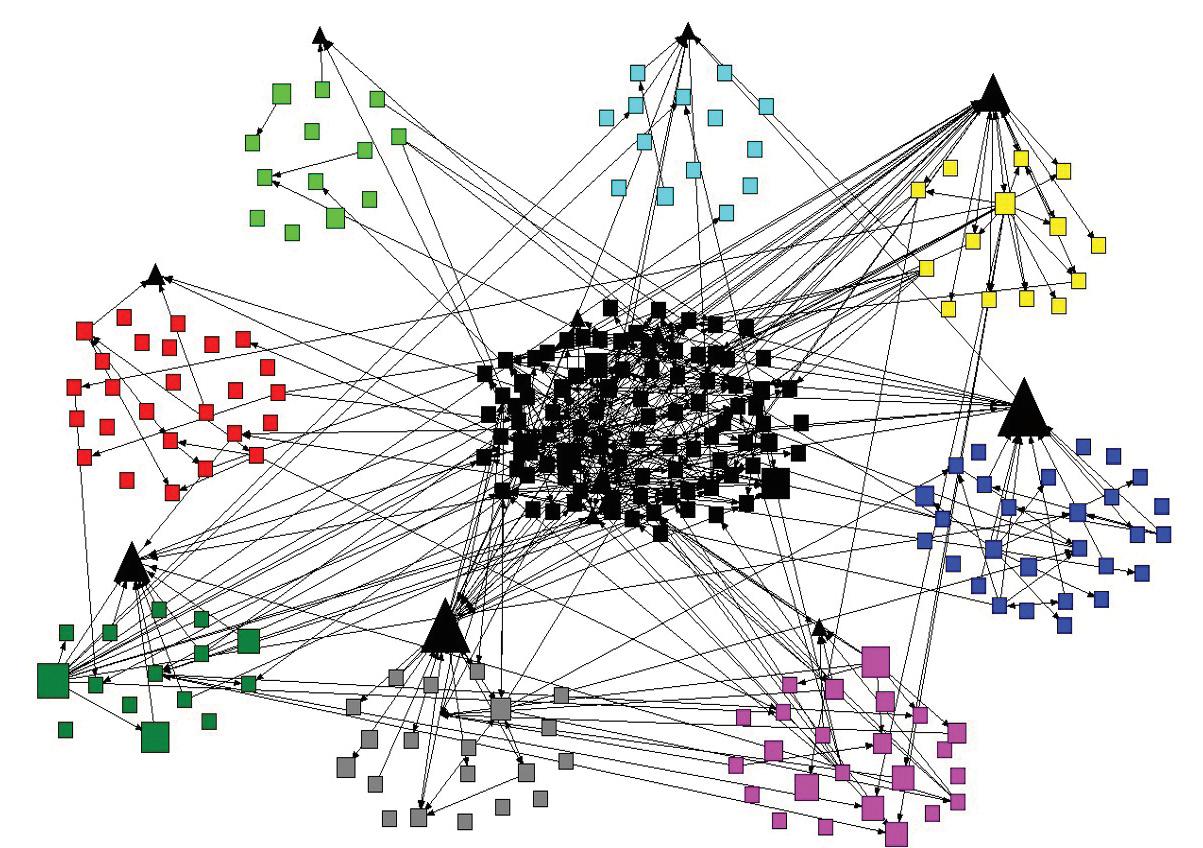
Through years of work using social network analysis, professor and associate dean Kara Finnigan has been mapping the invisible web of relationships inside schools and districts and across communities. The findings point to a powerful—and often overlooked—truth: meaningful change depends not just on expertise or effort, but on the strength and structure of the relationships that connect people to one another.
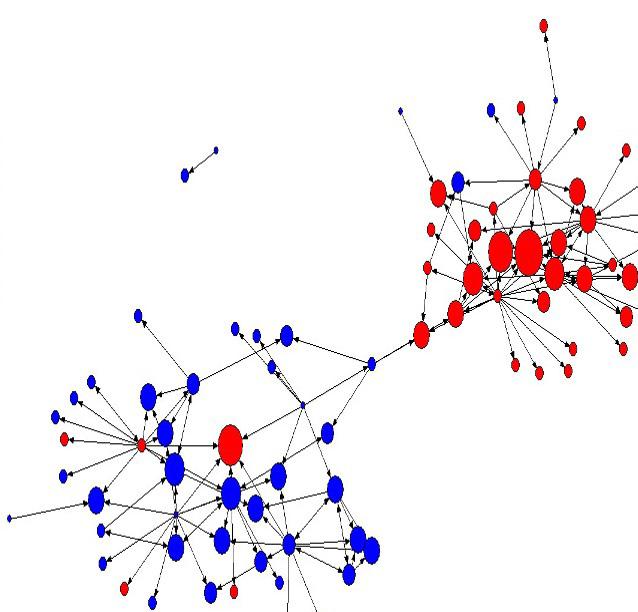
Social network analysis, which is used in many fields, although less common in education research, is a powerful method for understanding relationships. This method shifts attention from individuals to the connections between them, showing how information, influence, and resources flow through or across organizations. It demonstrates that an individual’s position within a network—such as being highly connected or serving as a bridge between groups—can significantly shape whether new ideas and reforms spread or stall. This approach provides both conceptual and practical tools for analyzing leadership, collaboration, and decision-making in schools and districts as well as for analyzing policy implementation.
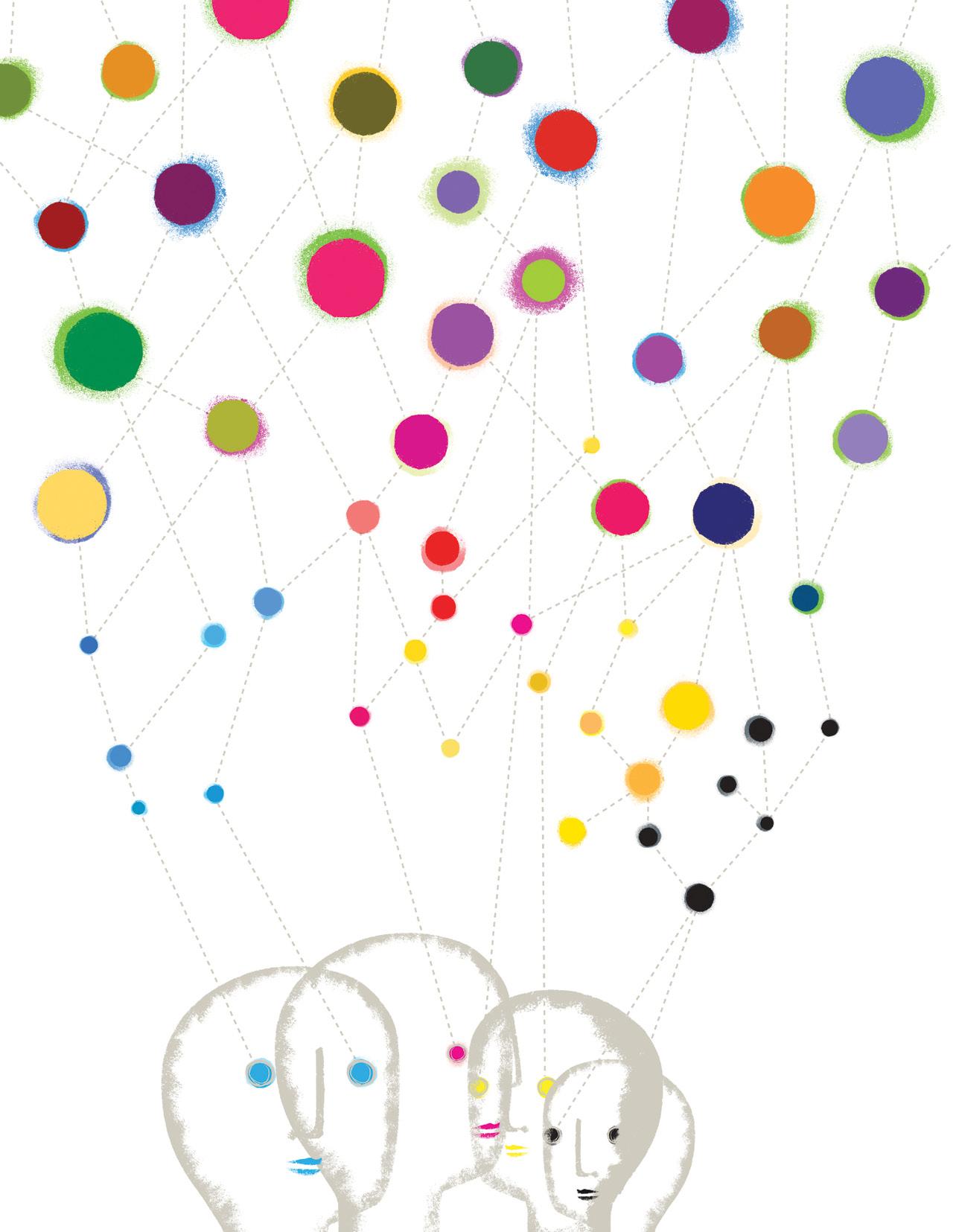
“Who do you turn to? Who do you go to for advice? For best practices? And importantly, who do you trust when you have a problem?” Questions like these form the backbone of network analysis which uses matrix algebra and graph theory to measure particular social structures. Through network visualization—for example, with dots representing people and lines representing relationships—her studies reveal how information, support, and trust flow.
What those maps reveal can be surprising. In many school systems, particularly those that have historically come under pressure under state accountability systems, educators are connected, but not always in ways that help them jointly work toward change. Teachers and leaders may exchange information, attend meetings, and share resources. But deeper, trust-based relationships are often missing. Through qualitative interviews, she found that both internal and external pressures and blame had deteriorated trust.
Over nearly a decade of studies in several districts, Finnigan and her colleague Alan J. Daly at UC-San Diego found a common pattern: the district leadership network was sparse and highly centralized, with most communication and knowledge-sharing concentrated within the central office rather than distributed across schools. Principals were positioned on the periphery of the network, limiting collaboration, joint learning, and the spread of effective practices. And, finally, the reciprocal exchange of ideas and practices between central office leaders and principals was rare.
While centralized structures can efficiently transmit routine, technical information, they are poorly suited for sharing complex knowledge and supporting the kind of deep, system-wide change required for school improvement. Complex change—such as improving literacy instruction or rethinking classroom practice—requires more than transactional exchanges. It depends on relationships where people feel safe to ask questions, admit uncertainty, and learn from one another. Without that foundation, even well-designed reforms can stall.
In any organization, the informal, underlying relationships can facilitate or hinder the overall work of its members. Some of Finnigan’s work has focused on the ways
An individual’s position within a network— such as being highly connected or serving as a bridge between groups— can significantly shape whether new ideas and reforms spread or stall.
Kara Finnigan
that groups are connected through individuals who are able to link different groups. These are called brokers, and they are important to the structure of relationships.
Compounding the problem is turnover. Each departure disrupts existing relationships. High levels of churn disrupt networks, frequently causing loss of trust, institutional knowledge, stability, and productivity across
schools and districts. Finnigan’s research found that churn weakened both professional and emotional connections among leaders while leaving others isolated and limiting collaboration.
brokers can help bridge divides and spread knowledge across a system.
The goal is to create a network where information and trust can flow—where no one is isolated, and where relationships support, rather than hinder, the work of improvement.
Ultimately, this research challenges a common assumption: that schools fail because of what educators are or are not doing. Instead, it points to a more complex
“When we talk about improving schools, we often ignore the systems around them. Housing, health, transportation, employment— these all affect what happens in schools. And schools are often left out of those broader conversations.”
Kara Finnigan
This churn is not simply a matter of individual choices: it reflects broader systemic pressures. High-stakes accountability, resource constraints, and the challenges of working in under-resourced communities all contribute to instability. Yet, too often, the response focuses on fixing individuals rather than addressing the conditions that make stability—and strong relationships—so difficult to maintain. “It is difficult but not impossible to build ties when there is little trust,” says Finnigan, “but this requires deep attention to the culture of the organization and opportunities for organizational members, like teachers, principals, or central office staff, to share knowledge and build connections. Unfortunately, the pressure and burnout of educators and leaders in the current climate makes these practices more challenging than ever.”
Although there is no single solution to address the fragmented relationships that exist in many contexts, there are promising directions. Stabilizing school environments is one critical step. Reducing turnover and creating conditions where educators can build trusting and collaborative relationships can strengthen the foundation for their work.
Leadership also plays a key role. Leaders who foster trust, follow through on commitments, and create opportunities for meaningful interaction can help build stronger networks. At the same time, the informal
reality, one where the structure of relationships, shaped by broader systems and policies, plays a decisive role.
“We put a lot of pressure on schools to improve,” Finnigan reflects, “without understanding the conditions that work against that.”
That insight points to a larger takeaway: schools do not operate in isolation. They are embedded within broader social, economic, and policy contexts that shape what is possible inside their walls.
“When we talk about improving schools, we often ignore the systems around them,” Finnigan says. “Housing, health, transportation, employment—these all affect what happens in schools. And schools are often left out of those broader conversations.”
Both regional and cross-sector approaches to policy are another pillar of Finnigan’s work and the topic of her book, Striving in Common: A Regional Equity Framework for Urban Schools, written with Jennifer Jellison Holme from UT-Austin. Their research draws on examples from cities like St. Louis, Milwaukee, and Minneapolis, showing how decades of policy decisions have resulted in competition for funding, students, and resources between districts in these larger metropolitan areas. These dynamics reinforce racial and economic segregation, leaving urban schools with fewer resources and greater challenges. Addressing these metropolitan inequities, along with collaborating across sectors, are key to creating more equitable opportunities for students.
schools do not operate in isolation. They are embedded within broader social, economic, and policy contexts that shape what is possible inside their walls.
This perspective informs Finnigan’s most recent research in Detroit, where she and her collaborators Sarah Lenhoff (Wayne State University), Huriya Jabbar (University of Southern California), and DeMarcus Jenkins (University of Pennsylvania) are applying social network analysis as part of their multi-year project studying the Choice Neighborhoods Initiative in the Corktown neighborhood and its impact on housing, neighborhoods, and schooling. This study examines two types of networks. The first is
the networks of families in Corktown, where researchers want to understand how this housing initiative affects social cohesion. As neighborhoods are reshaped and residents relocate, longstanding social ties, particularly for the Black and Latinx families who have lived in the area for a long time, can be disrupted, potentially altering the networks of support those families rely on.
The second focuses on the larger structure of individuals and organizations involved in the planning and implementation of the initiative, with a focus on both Corktown residents themselves, and education-related organizations and their role during each of these stages.
By making those conditions visible, social network analysis offers both a new lens for understanding communities and new insights for building stronger paths toward positive change. This type of analysis reveals
the connective tissue that allows people and ideas to move, take root, and grow, and helps to uncover ways that policy and practice reinforce or disrupt inequities in terms of who has access to resources and information. Finnigan notes that when people are part of networks defined by trust, reciprocity, and shared purpose, they are better positioned to navigate complexity and sustain meaningful change.
Finnigan’s work invites a shift in how we think about educational policy and practice—not as a series of isolated actions, but as an effort to build the relationships and conditions that make complex change possible in the first place. By mapping the invisible, her research leverages social network analysis to bring about equity-oriented systems change. ■
Right: A figure representing Finnigan’s social network analysis research.
Ecuador: Classroom in the Clouds
A ‘Pedagogy of Love’ rewires the lesson, students are taking note
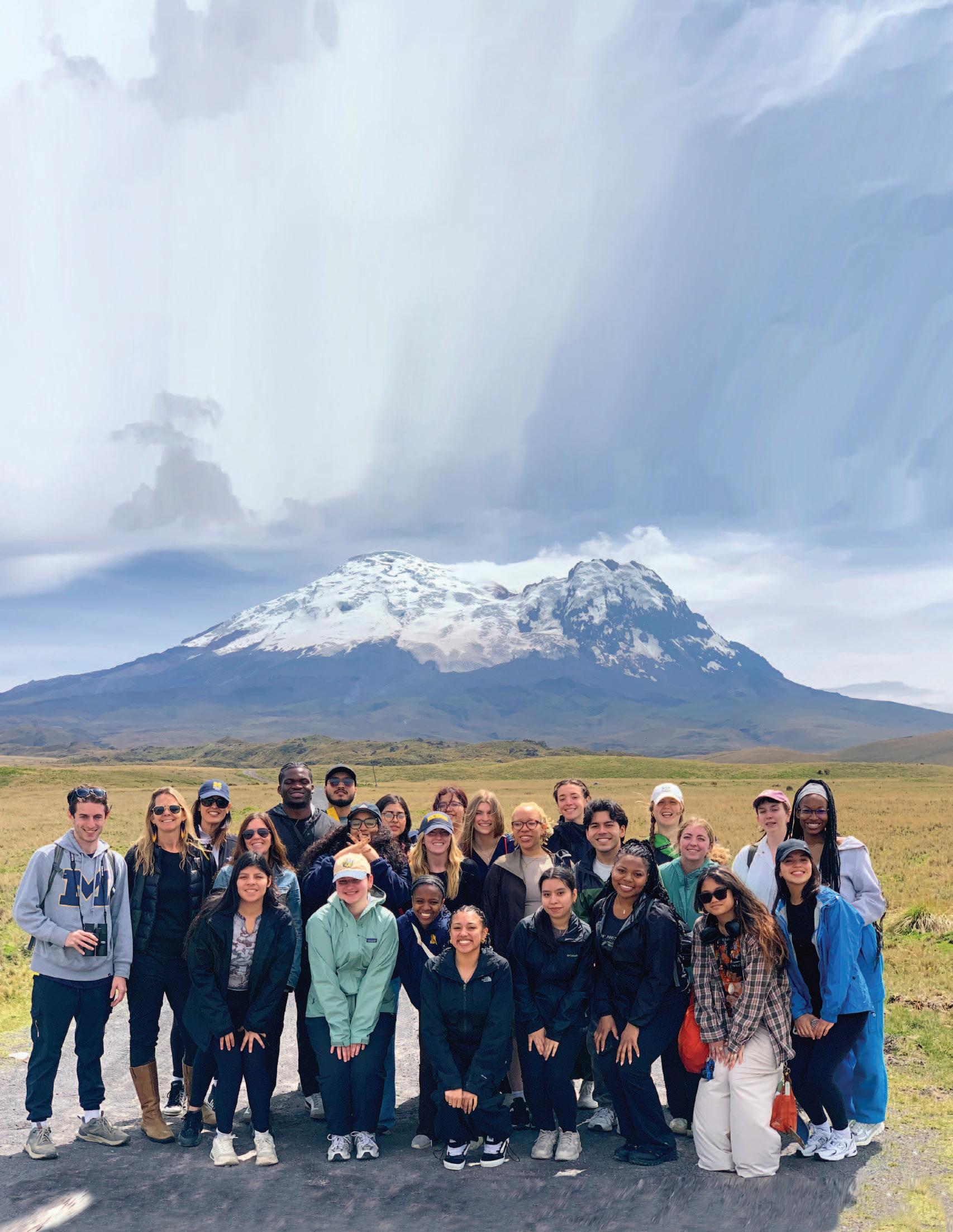
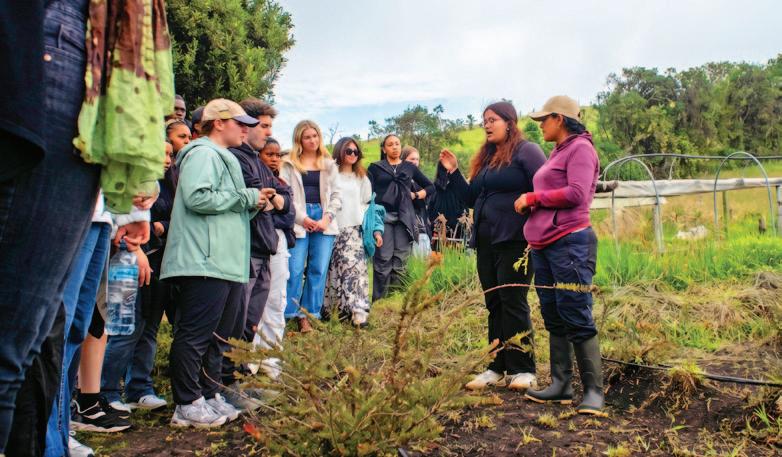
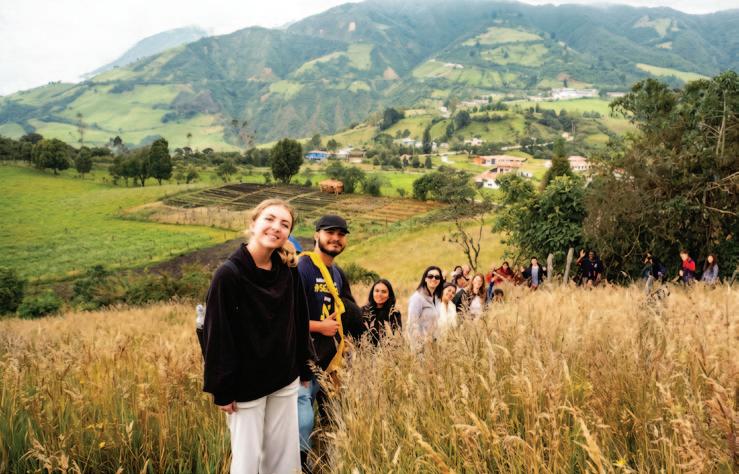
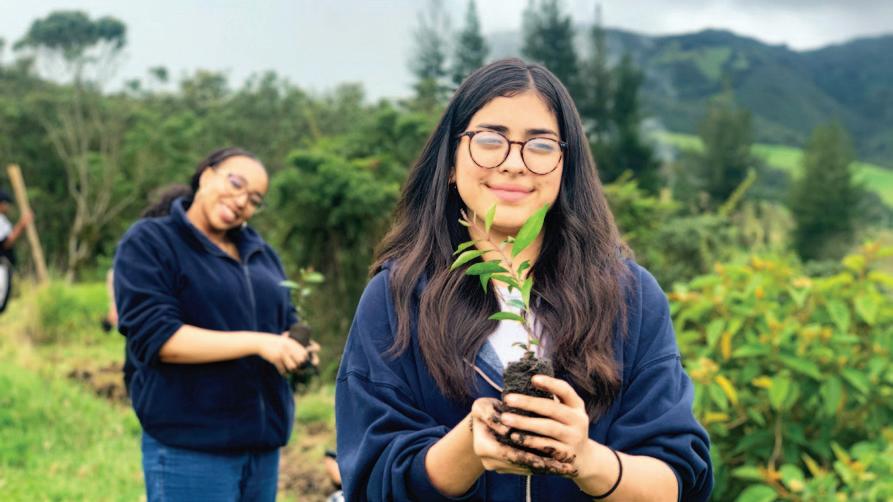
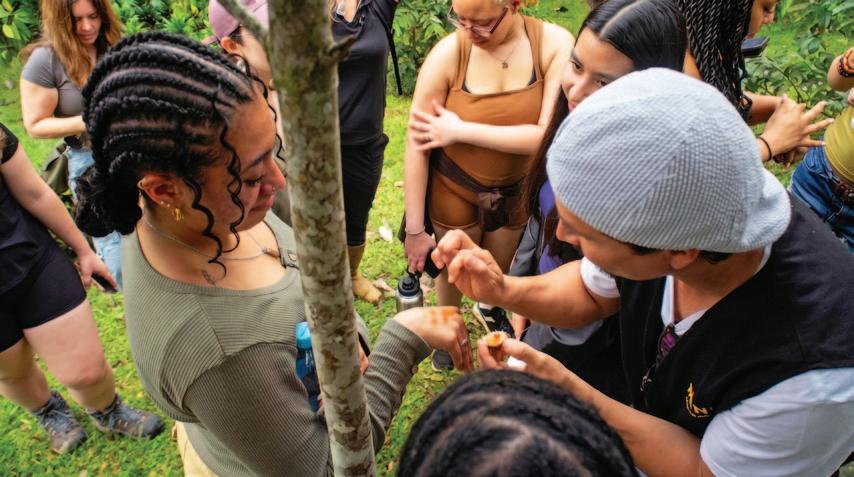
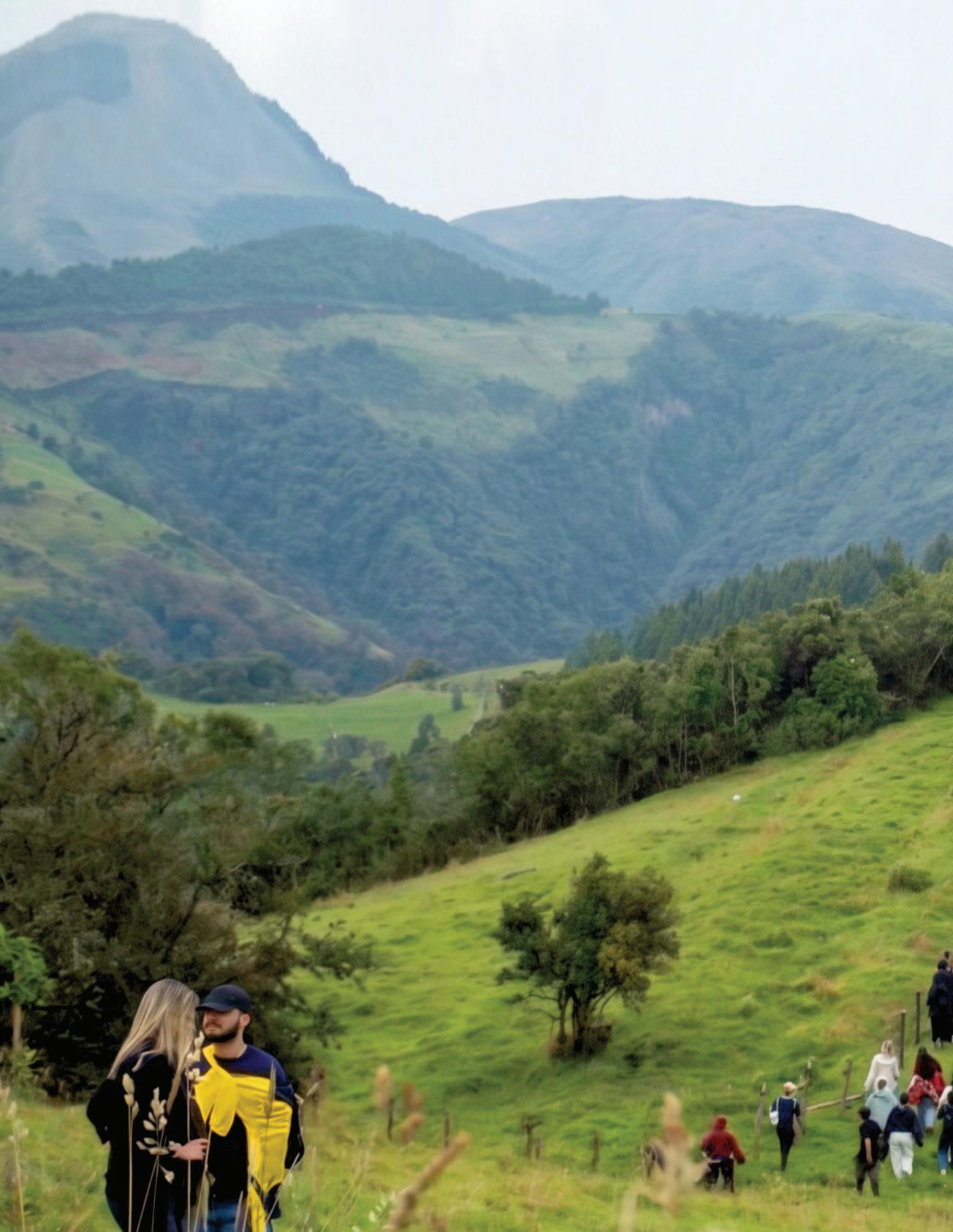
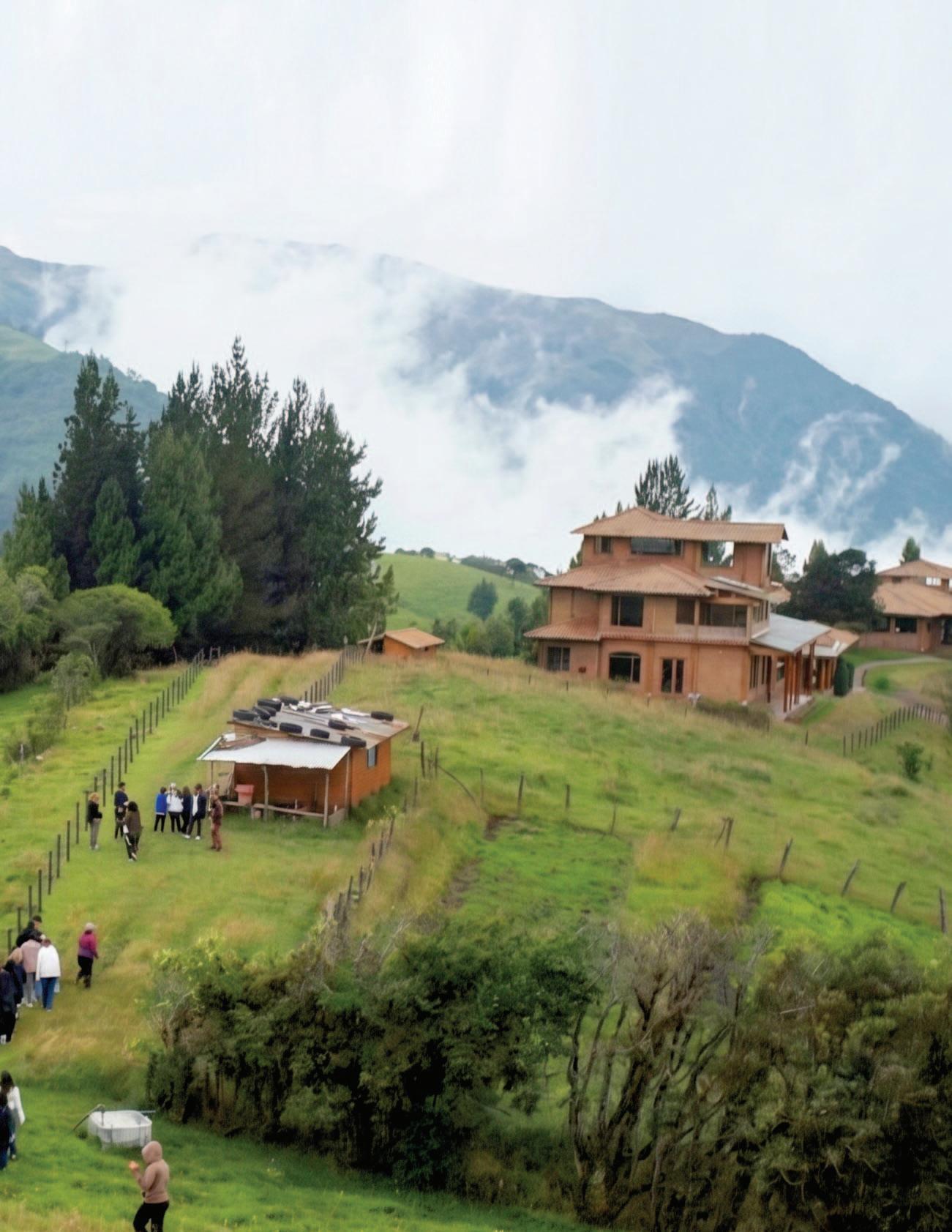
Nearly two miles up in the Andes, a rural high school turns its surrounding forest and mountain ridges into a living classroom. Beside a volcano, University of Michigan students walk with local educators and Indigenous youth to see what a typical school day looks like in this remote community near Otavalo.
By Fernanda
Pires, Michigan News • Images by Janis Carrion-Paute and Fernanda Pires
The 24 U‑M undergraduates traveled to Otavalo and Quito, Ecuador’s capital city, as part of a Marsal Family School of Education 3‑credit course examining how schools navigate cultural and economic realities. They are pursuing different majors, though many were drawn by an interest in education.
Working alongside Ecuadorian students, the group explores how Indigenous traditions and global education models intersect in everyday classroom practice.
“We teach a range of disciplines at this mountain farm—from irrigation systems and crop production to business and envi ronmental stewardship,” said Jorge Fuentes, principal at the local school, Saminay El Legado. “It’s all learning by doing. Our goal is to increase economic and social equity, improving our students’ quality of life and strengthening their communities.”
By the farm’s retention pond, all the
attention goes to teacher Shirassa Conterón as she explains the importance of capturing water during the rainy season.
“We built a system to catch the rainwater in the roofs of the buildings,” Conterón said. “During almost six months, there is no rain, so we teach our students how to prepare for the dry season. From this pond, we irrigate all our plantations.”
Each day, a cohort of high school students is on the farm, cycling through different field sites. Vegetable production, Andean crops, dairy, organic fertilizer, and guinea pig husbandry are some of the agricultural practices students have.
By integrating natural resource manage ment into the coursework, the school’s staff and parent volunteers provide 89 high schoolers with a practical path toward self sufficiency, fostering both a sense of purpose and long term personal well being.
“There is a profound sense of warmth and kindness, a ‘pedagogy of love,’ that becomes a major takeaway for those entering the profession.”
susan aT kins
The U M students join the class and follow the lesson plans in the vast forest.
“We’re exposing our students to many different ways that education can look and feel,” said Susan Atkins, a lead faculty mem ber for the English Language Development coursework in the Educator Preparation Program at the Marsal School.
Because the class is open to all majors, students in other fields also find value in this approach, she said.
“We almost use this course as a commer cial for the field of education,” Atkins said.
“While many of our students are already dedicated to becoming teachers, they come here and are deeply inspired by the unique pedagogy and the genuine connections they see in these classrooms. There is a profound sense of warmth and kindness, a ‘pedagogy of love,’ that becomes a major takeaway for those entering the profession.”
Trust, visual learning
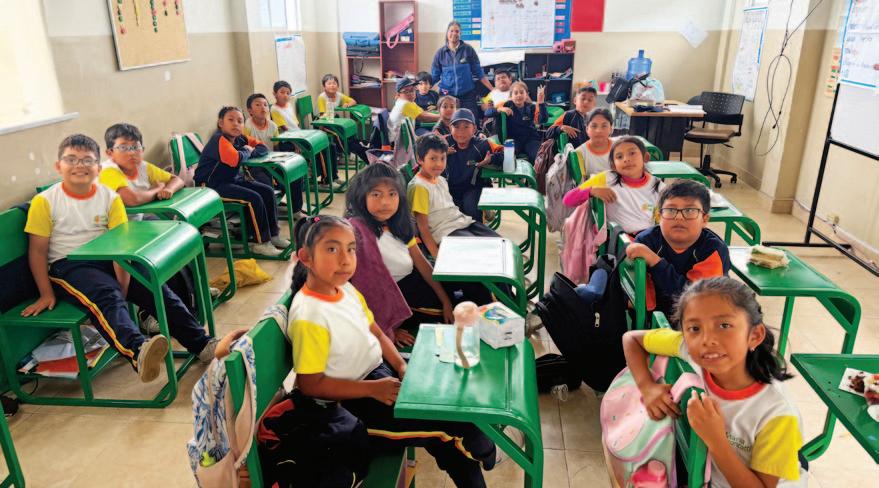
On days they are not at the mountain farm, the high school students follow an intensive academic schedule, typical of any Ecuadorian high school, with tradi tional subjects like physics, geography, and English, with specialized classes in music, chess, and the Kichwa language.
By centering on Kichwa—the primary Indigenous tongue of the Andean high lands—the school ensures that modern education remains rooted in the region’s ancestral identity.
U M student Megan Woelkers, of Flat Rock, Michigan, who wants to be a math teacher, sits in a class and is struck by the room’s physical and social layout.
“By placing her desk among the students and speaking to them as equals, the math teacher builds a foundation of trust,” she said. “This removes the boss dynamic, making students feel safe enough to ask questions.”
The teaching is clear and visual, and Woelkers quickly understands the math despite the language barrier.
“The creative ways of explaining x³ prove that good pedagogy can speak louder than words,” she said. “The teacher used base 10 blocks—cubes for x³ and flats for x²—tools we usually stop using in elementary school. She also plays music to make math feel less heavy. I realize we can use these resources and this sense of community all throughout our education.”
The power of presence
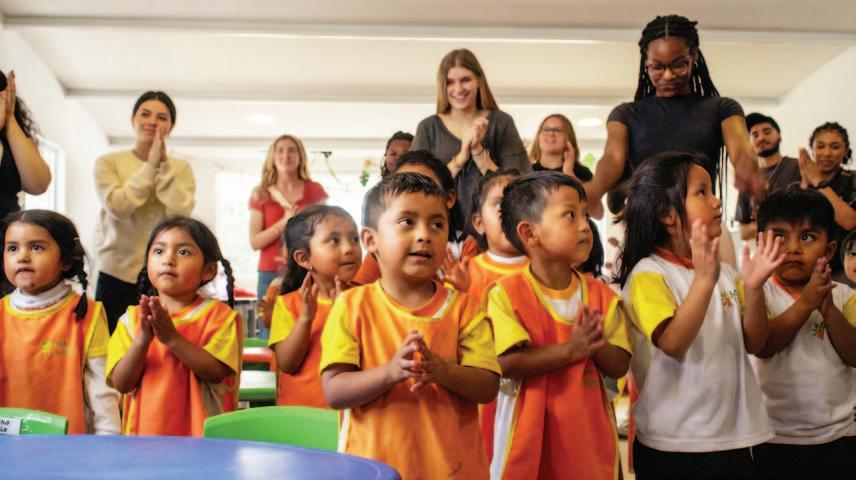
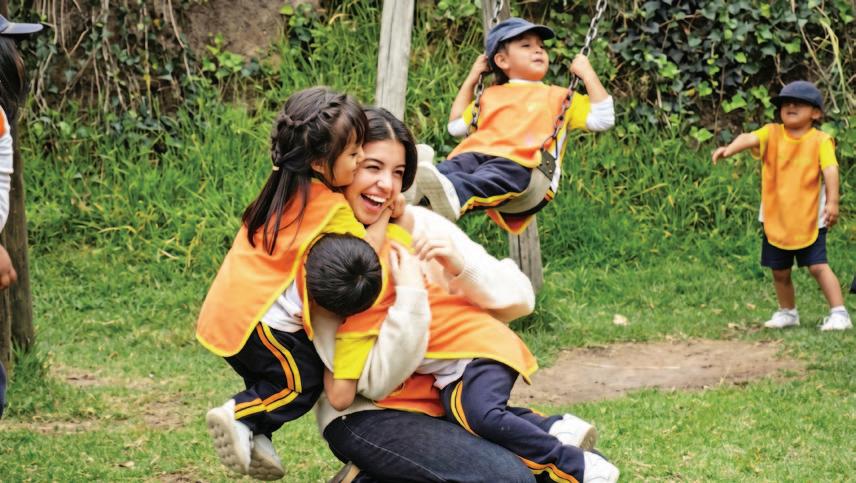
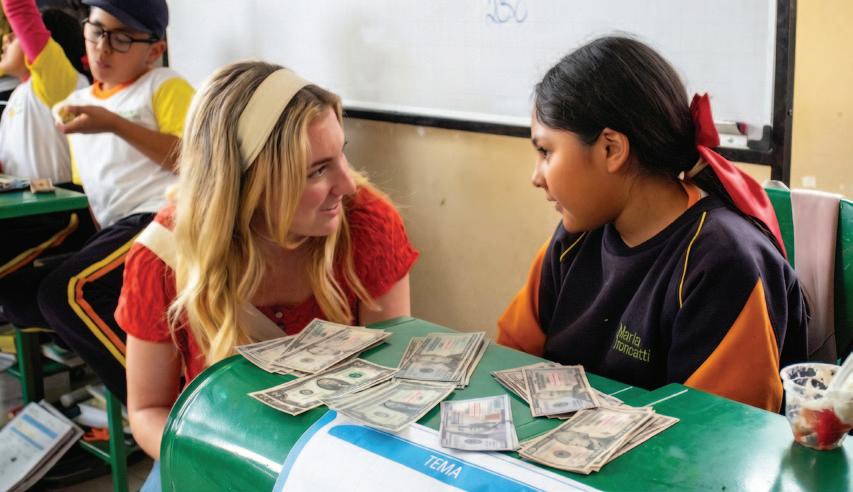
about 65 miles south of Otavalo in Quito, the classroom at Caminitos de Luz, a nonprofit elementary school, hums before the lesson begins. Sixth graders move between desks, cutting paper, writing prices, drawing food, and arranging handmade posters.
At the front, Melissa Muñoz, an English teacher, guides them through an exercise
that blends language, math, and daily life.
The posters display recipes scribbled, alongside prices scrawled in large numbers. The room becomes a marketplace. Students use fake money to buy and sell food items they had researched and prepared. They practice numbers and negotiate prices, all in English.
“I designed the lesson to make learning tangible and fun,” Muñoz said. “A place where they can be happy, share their experience with classmates, and have a real experience of how to say things in English.”
For the teacher, the value extends beyond vocabulary. She sees visits from international students as part of that process and her middle schoolers gain something equally important.
“My students can share their experience and see another reality,” Muñoz said. “They can practice and use what they are doing. I believe that when they learn a new language, they have more opportunities in life.”
“For u-M students, to observe the ways that school funding impacts Ecuadorian students has set them on a path to think critically about schooling in both the u.s. and globally.”
aM
Ecuador’s education system includes public and private schools, along with nonprofit run institutions that operate between the two. Nonprofit schools, such as those run by foundations, are privately managed but focus on expanding access for low income communities, often relying on donations and partnerships to provide low or no cost education.
“For U M students, to observe the ways that school funding impacts Ecuadorian students has set them on a path to think critically about schooling in both the U.S. and globally,” said Amy Frontier, global education adviser and Atkins’ partner in the program. “We see how impactful this course is for them, whether they go on to become educators, school administrators, or leaders in fields that can partner with or support education in the future.”
Born and raised in Texas, LSA pre law student Giovanni Salinas plans to use what he learned on this trip back in the U.S. As a
first generation college student, he hopes to advocate for marginalized communities.
“The people we met value education— they just don’t have the resources or opportunities, which is really unfortunate,” Salinas said. “It’s the same story my parents lived. My mom finished high school but couldn’t go to college because my grandparents needed her to work in the fields. She didn’t even attend her gradu ation because she had to work. My dad didn’t finish middle school for the same reason: he had to work to support his family.”
Secondary school enrollment in Ecuador has reached approximately 1.95 million students for the 2025 26 academic cycle, according to the latest figures from the Ministry of Education and recent market reports
“Even though there are a lot of students enrolled in K 12 schools here, only 17% of adults hold a bachelor’s degree. Financial pressures are a major factor in dropout,”
Salinas said. “They still have to pay for textbooks, housing, and have commitments besides finances, like taking care of siblings or a job they already have. Continuing school is a great accomplishment, but it’s also a risk when you’re the first in your family to go to college.”
Domes, tents and freedom:
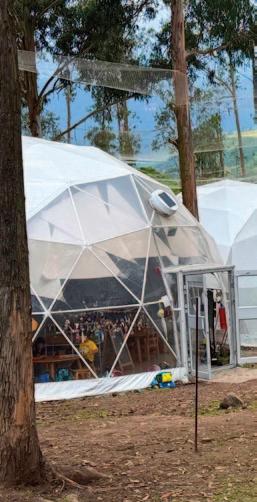
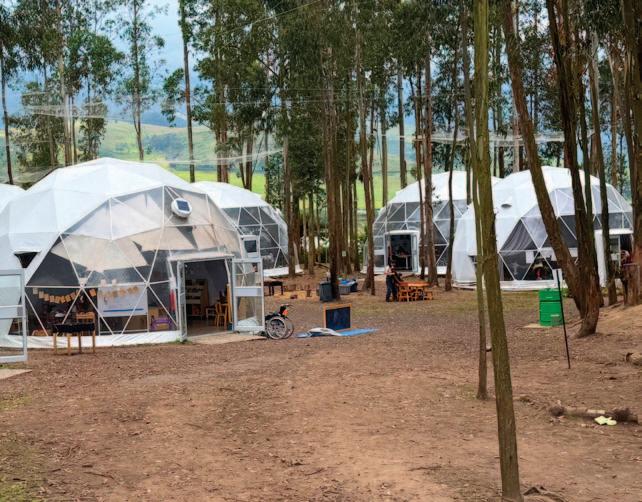
The systems behind the gates u M students also visit two private schools in Quito, both Montessori inspired and enclosed behind tall gates. In one of them, the elementary classrooms are set up inside tent like structures, while older students learn in dome shaped spaces. They move with freedom—choosing what to study, how to spend their time, and often pursuing hands on projects like community gardens or culture based crafts. The experience emphasizes creativity and individual interests.
“Ecuador
is about the people and nature. The country’s diverse climate allows visitors to reach the ocean or a volcanic hiking trail in just four hours. This accessibility, paired with a culture of hospitality, serves as a living classroom for how tourism and geography define the Ecuadorian experience.”
PauL BusTOs insuasTi
“. . . here, in the private, rural, and public schools—i’ve seen a real sense of care and community, despite their own problems and differences. Everyone i’ve met is deeply committed to helping these kids succeed.”
Z OE Wrigh T
Seeing the systems side by side provides a firsthand perspective of how location and resources shape learning. Jaynie Reyes, a freshman at Marsal from Chicago and the daughter of immigrant parents from Mexico, sees that contrast immediately.
“I feel in my heart that I need to make an impact and help students who are underresourced in different countries,” she said. “I want to give back because I received so much in my own education, especially from my fourth grade teacher and our prin cipal. I know it is still early and I have lots of learning ahead of me, but I am counting the days until I have my own classroom and, why not, my own school abroad.”
Edutourism in action: Mapping nature, culture, and history
By traveling from the volcanic highlands to lowland cacao plantations, the U M students analyze how physical location shapes national identity. At the Equatorial
line in Calacalí, they study how the Andes Mountains split the nation into three dis tinct regions—the Amazon, the Andes, and the Pacific coast—creating unique ecologi cal zones within a small geographic area.
Beyond the geology, the group visits Quito’s Old Town to see colonial churches like San Francisco, which were built over layers of pre Inca history, burial sites, and artifacts.
“Ecuador is about the people and nature,” said local tour guide Paul Bustos Insuasti.
“The country’s diverse climate allows visitors to reach the ocean or a volcanic hiking trail in just four hours. This accessibility, paired with a culture of hospitality, serves as a living classroom for how tourism and geography define the Ecuadorian experience.”
Majoring in ecology, evolution, and bio diversity, with a minor in museum studies, U M senior Benjamin Thaler joined the trip knowing Ecuador was home to wildlife in general.
“From the forests to the local schools, I am seeing birds I’d never even imagined, including a toucan, eagles, and 40 types of hummingbirds,” he said. “I am spending every bus ride studying and that knowledge of different global habitats will definitely come in handy if I pursue a career in wild life. These experiences are going to stick with me.”
Inspired by what he learned about teaching and education during this trip, Thaler has now decided to apply to master’s programs in secondary education.
“With my majors, I mainly just imagined myself working in a zoo or museum as a career,” Thaler said. “This trip really opened my eyes to the possibility of education and teaching as a different path. I never really liked being in school, but observing it from the outside gave me a more positive view. If this sticks, I would love to end up as an animal behavior teacher or something similar.”
Learning in motion
Every morning, the group follows a different itinerary that moves them through a variety of experiences, from immersing in local culture and the environ ment to visiting schools and engaging with teachers and students.
For U M senior Zoe Wright, a biopsychology, cognition, and neuroscience major with a minor in education for empowerment, the study abroad program has reshaped how she sees learning.
“Even with all the institutions, policies, and programs we have, so many people still slip through the cracks and are harmed by the U.S. education system,” she said. “But here, in the private, rural, and public schools—I’ve seen a real sense of care and community, despite their own problems and differences. Everyone I’ve met is deeply committed to helping these kids succeed. And that’s the type of love I feel for kids.”
Those observations and thoughts prompt Wright—who wants to be a school social worker and will start a master’s program in the fall—to ask, “How do we all actually come together to make the big changes that need to happen in America?”
“I want to bring that sense of care—the emphasis on community and how we show up for one another—into my work,” said Wright of Ypsilanti.
“In the U.S., there can be a real discon nect—we don’t always think about the collective. In my practice, I hope to help students see that community matters and that how you show up within it truly makes a difference.” ■
A Research Career Reignited suzanne Perkins is crafting the future of learning for abused and neglected children
By Tevah Platt, Communications Manager, University of Michigan Institute for Social Research
suzanne Perkins (MS ’02, PhD ’07) has planned her career around the insight that educators can play a key role in recovery for children who have been maltreated. • An estimated 37 percent of children in the U.S. are referred for investigation of abuse or neglect in their lifetimes, often leading to well documented cognitive and academic deficits that last until adulthood.
The future of learning
Perkins, Research Assistant Professor of the Research Center for Group Dynamics (RCGD) at the University of Michigan Institute for Social Research, has received a 5 year (K01) career award from the Eunice Kennedy Shriver National Institute of Child Health and Human Develop ment (NICHD) to develop a theory of the brain mechanisms that underlie the impact of childhood maltreatment on cognitive functioning. She will test these ideas using fMRI brain scanning, and share insights that could craft the future of learning for children at risk.
The project will unfold in two phases—analysis of data from the Adolescent Brain Cognitive Development (ABCD), the largest long term study of brain development in the U.S., and brain modeling on a small cohort of children known to have experienced maltreatment, to develop an understanding of how the brain responds to tasks distinctly for children who have been maltreated. The findings could directly help kids who struggle in school because of deficits in executive functioning, like planning, memory, and focus.
This work exemplifies how Michigan’s Life Changing Education initiative connects research and practice to improve lives.
A research career reignited
Perkins has first hand experience teaching children at risk in the classroom and in social service settings. She developed her own undergraduate major in sociology of education at Hampshire College, and after working in the field, returned to her native Ann Arbor to complete a doctorate in the University of Michigan’s Combined Program in Education and Psychology (CPEP).
Her 2007 dissertation work on cognition and disabilities used data she collected from 115 incarcerated youth, a cohort with heavy histories of abuse and neglect; some 40% of these children had reported severe sexual abuse, Perkins said. Perkins developed new skills in translational neuroscience, examining cognitive processing
Perkins
Photograph by Madelyn Kerr
in childhood post traumatic stress disorder, during a postdoc with the Michigan Institute for Clinical and Health Research (MICHR).
But Perkins’s burgeoning research career came to an eight‑year halt following a breast cancer diagnosis in 2012.
A long research hiatus could easily end an academic career. But educators can play a key role in recovery.
In 2022, Perkins secured a rare reentry grant from NICHD—an opportunity to return to a research career that would have remained out of reach without acrobatic orchestration by RCGD Director Rich Gonzalez.
“It’s a tribute to Rich specifically, and ISR in general, that they helped me to come back from having been out of research altogether,” said Perkins. “They supported me to be able to return to a productive research career.”
Cognitive insights
Since then, Perkins’s work has led to important insights on how poverty affects language function‑ ing in adults; what existing data show about brain regions affected by childhood maltreatment; and
means of identifying probable cases of maltreat‑ ment that can lie hidden in health histories within large‑scale studies, such as ABCD.
Researchers often look at the psychological outcomes that result from child maltreatment; very few are looking at cognitive or educational outcomes, Perkins said, but their work will be important to educators in the field who work every day with kids who have experienced abuse and neglect.
Children are surprisingly resilient, she said; they can flourish in spite of horrific histories.
“It’s powerful to really help kids from an educa‑ tional standpoint,” said Perkins. “Helping abused or neglected children to thrive in school is really part of the recovery.” ■
“The promise of neuroscience is that you could target interventions that could really support what you feel is going wrong. if you know what the data shows is going wrong in the brain, you can start to improve that function and help them to thrive in school.” Suzanne Perkins
Ch AMP ion S for E D u CAT ion
New g ifts, endowments, and Bequests
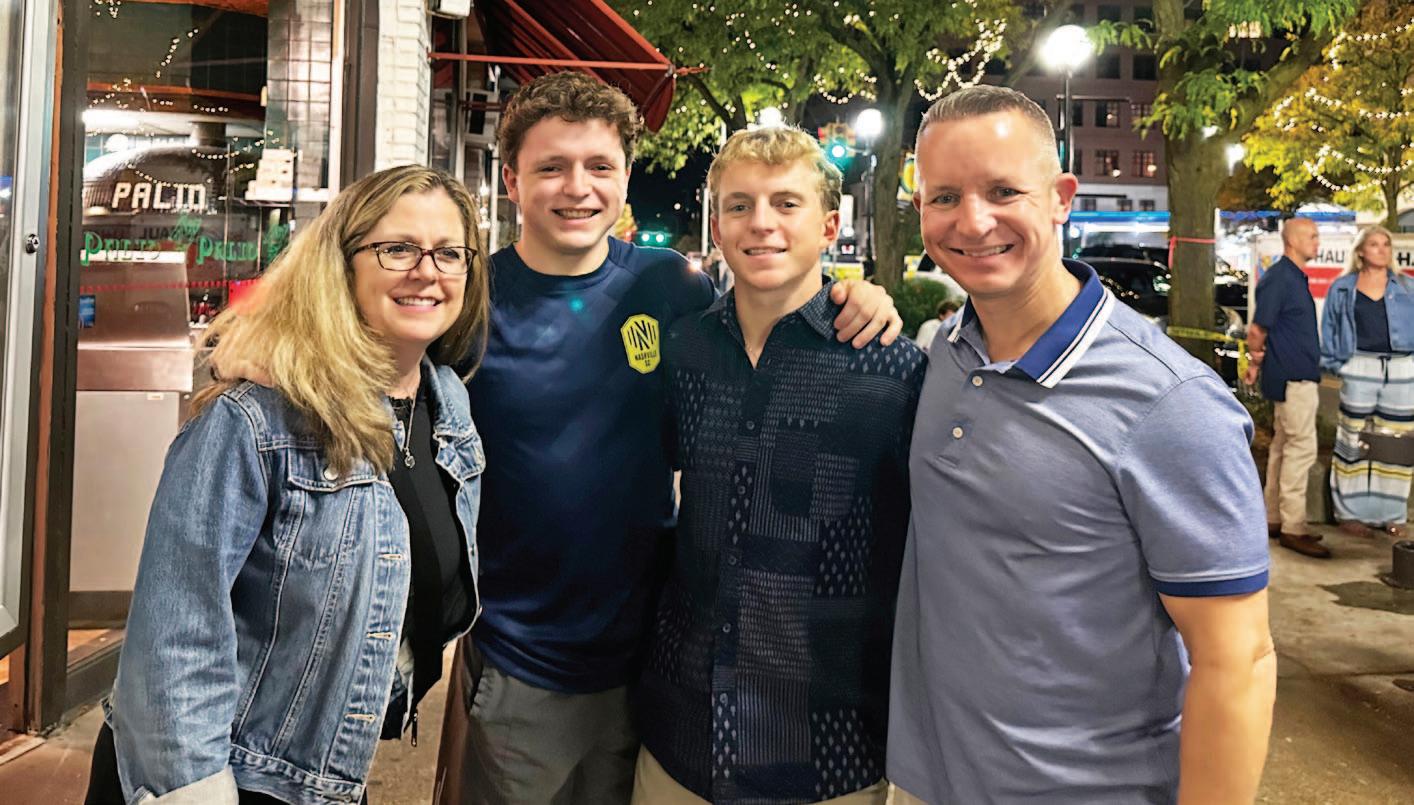
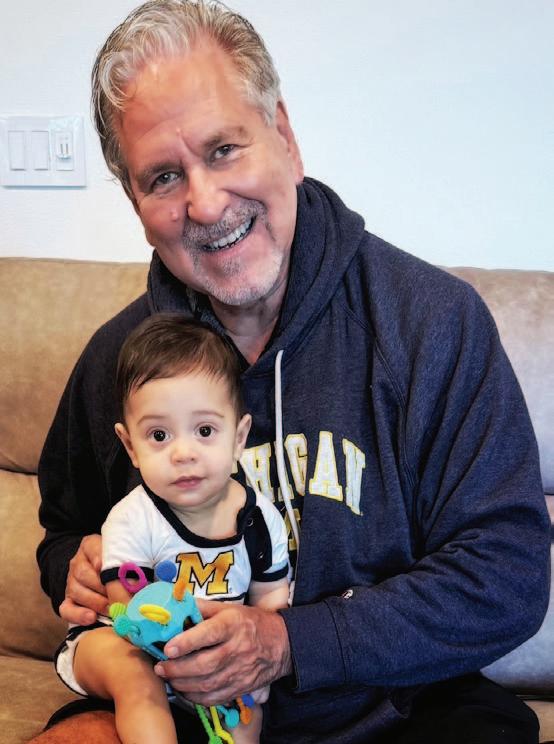
tyler Barrett (BS ’97) and Kelly McGillBarrett (BBA ’97) met at the beginning of their senior year as undergrads at the University of Michigan. He was a bouncer at Rick’s American Cafe where he checked her ID in line. The rest is history.
They settled in Nashville, Tennessee, where Tyler attended medical school and Kelly pursued a career in the business world. When their first son, Ryan, was born, he was dressed in a Block M onesie within the first few days of his life. Frequently visiting Ann Arbor for U-M sporting events, it didn’t take much for Ryan and his younger brother to adopt their parents’ unbridled enthusiasm—the entire family was “all in” for Michigan.
“And then, as he got closer to high school, we were like, ‘Oh, we have to dial it back a little bit,’” says Kelly. They were well aware of the school’s competitive admissions process, but just as importantly, “we wanted him to make his own
choice about where he’d go to college.”
In high school, Ryan was particularly inspired by his AP U.S. history teacher, whom he was eventually able to work alongside as a teaching assistant.
“I remember he came home after he had taught his first class and he was beaming,” says Tyler. “He just loved it.”
When Ryan announced to his parents that he wanted to pursue the field of education and become a high school history teacher himself, there was no question in his mind about where he wanted to study. “Michigan has the best education college in the country,” he told his parents.
“I didn’t know that at the time,” says Tyler, “but why would I have expected anything different from the University of Michigan? Of course it does. It’s been a great match.”
Ryan is currently a secondary teacher education undergraduate student at the Marsal School, where he is pursuing an endorsement in social studies.
When Tyler and Kelly came to visit for Parent & Family Weekend, they could feel his passion for the school and Ryan’s chosen path emanating from him as he walked them through the School of Education building, showing them his favorite places to study.
Recently, they have established the Barrett Family Scholarship Fund to provide scholarship support to Marsal teacher education students.
“We need more teachers, so we want to do anything we can to make teaching and getting a good education more accessible for anyone who wishes to pursue the profession,” says Kelly.
cynthia “Cindy” Martinez-Harner (ABEd ’77, TeachCert ’77) has long understood education as both a privilege and a responsibility. “My entire life, I loved school. It was very important,” she says. Her parents, neither of whom had the opportunity to finish high school, instilled in her a deep respect for learning.
The Barrett family
ChAMPionS for EDuCATion
After moving from Texas to Pontiac, Michigan, they made sure Cindy and her sister had access to excellent schools, libraries, museums, and other educational opportunities they themselves had never been exposed to.
At the University of Michigan, Martinez-Harner found both academic preparation and lifelong community. She lived in Mosher-Jordan Hall and formed close friendships with two roommates who remain central to her life today. “We’ve been godmothers, maids of honor. We’ve gone through life together,” she says. Her path to teaching was reinforced through summer work in the City of Pontiac’s Parks and Recreation department, leading story time and
helping children with reading and math; she also served in an assistant teaching role with children of migrant workers in Leelanau, Michigan. “It was a wonderful experience, and it reaffirmed that teaching was what I wanted to do,” she says.
Martinez-Harner credits the Marsal School with preparing her for the classroom, from student teaching at Thurston Elementary School in Ann Arbor to mock interviews with practicing school leaders. After graduation, she began her teaching career in the Troy School District and later taught at the Winchester Thurston School in Pittsburgh, Pennsylvania, where she and her husband, Dr. Chris Harner (MD ’81), settled and raised their three
children. Dr. Harner, who comes from a family of teachers, has also devoted much of his career to education and mentorship, training hundreds of future physicians, residents, and fellows in orthopaedic surgery and sports medicine. To this day, he remains mindful of the challenges he and many others faced in supporting themselves throughout their medical education.
Together, the Harners have created The Cynthia Ann Martinez-harner Fund to provide need-based support to undergraduate students in the teacher education program at the Marsal School. Inspired by Cindy’s lifelong love of learning, her parents’ belief in the power of education, and the couple’s shared commitment to teaching and mentorship, the fund will help ensure that financial need does not stand in the way of aspiring teachers preparing to serve the next generation.
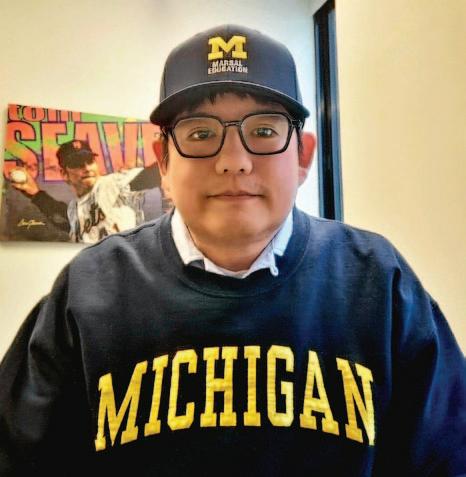
eric Huang (BSEMS ’90) was born in New York City and grew up attending New York City Public Schools. “I had the benefit of, in my view, an outstanding educational system, and also specific educators,” he says.
In first grade, his teacher, Ms. Dyer, provided individualized instruction and varied reading assignments to meet students at their respective levels—something not common in public school back then. “That was my earliest experience, and it just carried through.” From P.S. 165 in Manhattan to District 26 in Queens to The Bronx High School of
Martinez-harner and harner
Ch AMP ion S for E D u CAT ion
Science, Huang was shaped by “distinct memories and lessons” from the teachers he had throughout his experience as a student. “I wouldn’t have gotten into Michigan without that,” he says.
Following his interest in math and science, Huang studied materials science at the U-M College of Engineering. He began his career as an engineer, but eventually decided to change course and attend law school at George Washington University. “Law school opened my eyes to the broader impact that I could have,” he says.
Once he became a parent, Huang turned his focus to education, seeking to make a meaningful impact in the lives of young people. He became involved with his daughter’s school—The Blue School—an NYC independent pre-K through 8th grade school founded by the Blue Man Group to create an educational experience that integrated the arts, neuroscience, and social-emotional development in a rigorous academic framework. Serving on the school’s board “taught me a lot about being a member of a nonprofit board, as well as the importance of what goes on behind the scenes at schools,” says Huang.
From there, he joined the board of New York Lawyers for the Public Interest where he serves as board treasurer. He is president of the Council of the Plymouth Church in Brooklyn, which is home to a renowned early childhood program, the Plymouth Church School. And he serves on the board of Young Advocates for Fair Education (YAFFED), an education advocacy group dedicated to improving secular education in Hasidic schools.
“Seeing what was possible for my daughter and for other kids through The Blue School has prompted me to want to do more,” says Huang. Recently, Huang established the Jampabam Family Fund—so named for the way his daughter pronounced “pajamas” when she was young. The gift will support scholarships for Marsal School students who are preparing to become teachers.
“Teachers are on the front lines, providing more than just education to children—they are trying to protect their students in so many ways,” says Huang. “I’m hoping we can give future teachers a leg up to help them reach their full potential, whether it’s helping with expenses so they can stay in school or getting professional development. My goal is to help them reach their dream. Every teacher is a force multiplier in terms of the impact they can have to change society.”
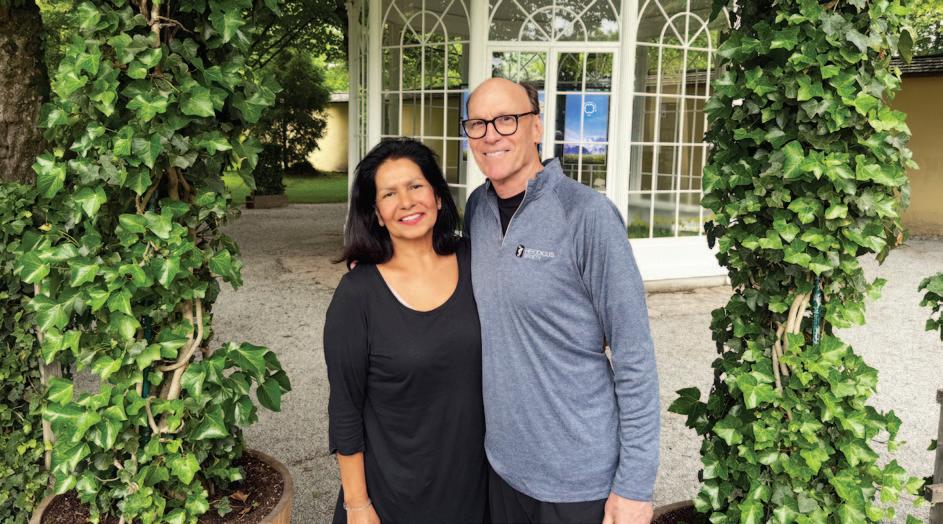
dr. Dave Pribich (BSChem ’79) knows well that no one gets to Michigan—or anywhere in life—on their own.
After graduating with a degree in chemistry from U-M, Pribich went on to earn a PhD in organic chemistry from the University of Florida, and pursued a career in research and development for
a major chemical company and an oil company. He and his family moved multiple times, ultimately landing in Texas, where he raised three daughters. Throughout it all, Pribich has taught chemistry in various settings—from a Title One high school to a local junior college. He enjoys the process of teaching content and critical thinking skills.
“There are some students who want to become engineers and doctors. But most don’t even want to be in the class. ‘Why are we doing this? When are we ever going to use this?’ To teach kids who don’t even want to be in the class is a tremendous challenge. The content is secondary to experience. Whatever they go on to do, it will be important for them to know how to process information. So whatever I can do to help, that appeals to me.”
“My dad, mom, and sister drove me to Ann Arbor in August of 1975 and supported me and all things M forever,” wrote Pribich in a recent letter to family and friends.
Just as his loving family supported him, Pribich is now calling on his community to join him in supporting future teachers. He has established the Pribich Family Scholarship Fund to provide scholarship support to Marsal teacher education students who intend to teach in a STEM field at the secondary level. After providing the funds to start the scholarship, Pribich sent a passionate letter to those closest to him encouraging them to follow his lead and contribute even more, making it a group effort. As technology evolves and the economy continues to change, Pribich is aware that the students of today and tomorrow face a different career trajectory than he did. Teachers and mentors have a significant role to play, he says. “The goal is to teach young people how to process information, analyze data, and make decisions. Memorizing facts is no longer a path to success, if it ever was.”
He had long planned to allocate part of his estate to the University of Michigan, but in reflecting on his own mortality and his legacy, he had a change of heart. “I decided, let’s do something while I’m alive, to see some good done sooner rather than later.” ■
huang
Pribich
To submit class notes, update your contact information, communicate with the editor, or connect with the Marsal Family School of Education, please visit marsal.umich .edu/magazine.
Dr. ismael Cantu (PhD ’75) enjoyed returning to Ann Arbor to celebrate his 50th class reunion in the fall of 2025. “It was so refreshing to return to campus and reminisce about our days on campus. In 1975, upon graduating with high expectations, the uncharted road began with a firm belief and trust that the University of Michigan had prepared us in a manner that would positively impact children during our lifetime,” he said.
Over the course of his career, Cantu served as a school principal, central office administrator, superintendent, and university professor, and also worked in the Texas Education Agency’s School Accountability Division. In each role, he realized the importance of the training he received at the School of Education, which prepared him to serve populations that have traditionally been underserved in public schools in America. “There is no question in my mind that the quality of education that I received while a doctoral student at the University of Michigan contributed to my ability to impact students in many capacities,” he said.
Now fully retired, Cantu has written a book entitled Unhyphenate Me (Fulton Books), which touches on inequities within systems that led to systemic failures as they relate to equal protection of hyphenated, marginalized Americans, with a focus on Americans of Hispanic descent.
Randall Faber (BMus ’77, MMus ’87, AM ’89) and wife Nancy, authors of the Piano Adventures curriculum, received the Music Teachers National Association (MTNA) Achievement Award for 2026. This award is MTNA’s highest honor, only bestowed upon individuals and entities that have made significant and lasting contributions to music and to the music teaching profession. Brian Shepard, CEO of MTNA, said, “Through their visionary work in piano pedagogy, Nancy and Randall Faber have transformed the way teachers teach and students learn, inspiring generations of musicians around the world. Their commitment to excellence, creativity, and the empowerment of music teachers embodies the mission of MTNA. We are deeply grateful for their enduring contributions to our profession and are delighted to recognize their remarkable legacy.”
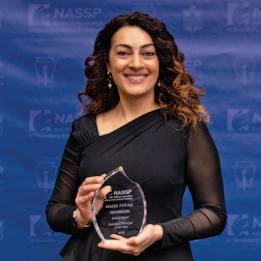
O.L. Smith Middle School Assistant Principal Maha Fayad (BS ’01, TeachCert ’01) and Principal Mark Rummel made history this year when they were recognized respectively as Middle School Assistant Principal of the Year and Middle School Principal of the Year by the Michigan Association of Secondary School Principals. It was the first time in the history of the organization that the two top awards were given to leaders at the same school. Of Fayad, a Marsal Education graduate, her colleague Dr. James B. Radcliffe said, “What sets Ms. Fayad apart is her ability to lead with both head and heart. She is highly respected by teachers for being a supportive instructional coach and by students for being a steady, approachable mentor.”
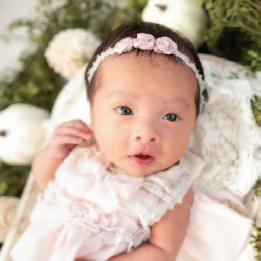
Qiu Fogarty (AM ’17) and her husband, noah Fogarty (AM ’17), welcomed their baby Kiki on October 2, 2025. Fellow alumnae LaSabra Williams (AM ’17) and Meshay Long (AM ’17) attended Kiki’s baby shower in late September.
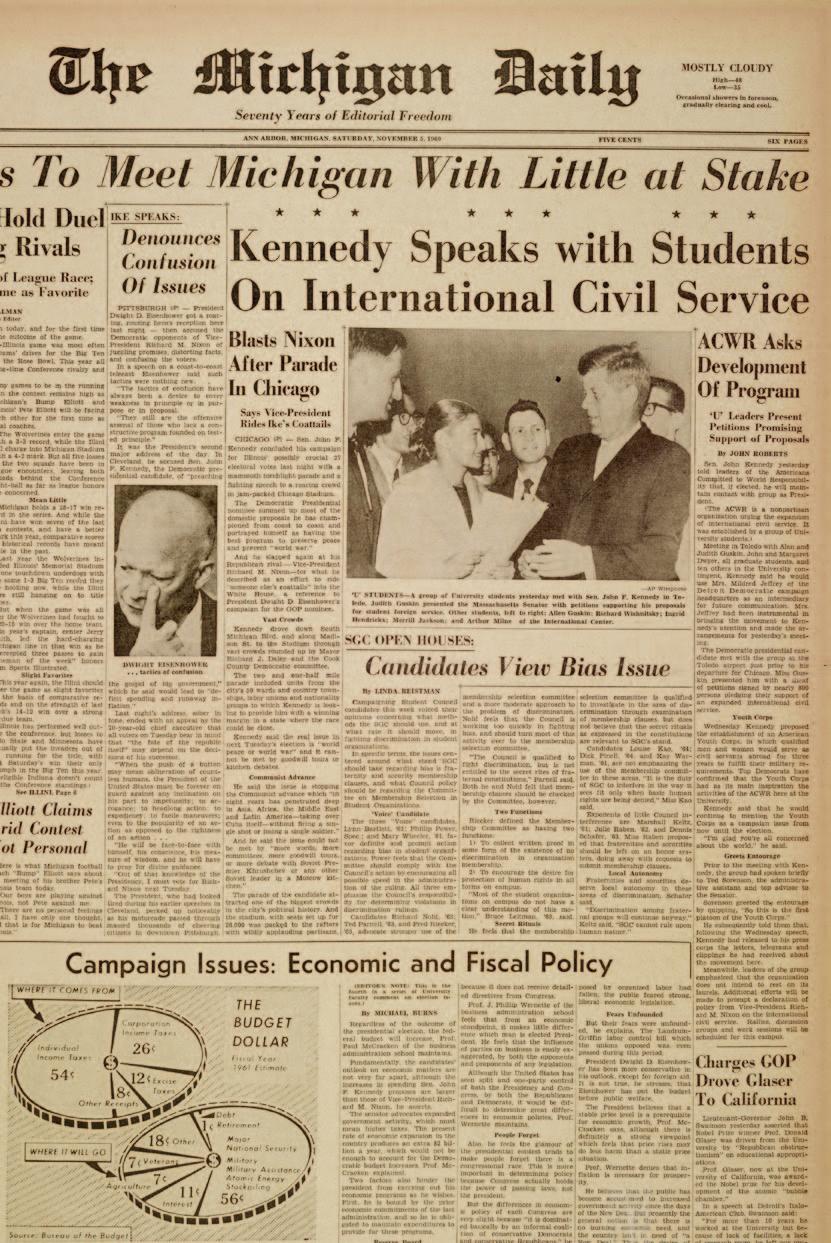
Dr. Judith Guskin (AM ’61, PhD ’70) is raising funds to complete a Peace Corps Commemorative Park at the National Mall. On the steps of the Michigan Union in October 1960, when Guskin heard John F. Kennedy speak about the importance of students engaging as citizens with the issue of anti-colonial revolutions in Africa, Asia, and Latin America, she was moved by his passion. She helped organize students on the University of Michigan campus, quickly got 1,000 signatures, and met with JFK in person to show him that Michigan students were ready to go. As he looked at the names on the petition, he promised her if he
was elected, he would establish a Peace Corps.
Once Kennedy was in office, Guskin helped Sargent Shriver establish the agency, and served in the first group of Peace Corps volunteers in Thailand. The Peace Corps still exists 65 years later. Over 250,000 volunteers have served, returning to the U.S. with skills and knowledge that enriched their work and lives. Guskin is now raising funds to complete a Peace Corps Commemorative Park. Congress has approved it and over $8 million has been raised. Guskin encourages all who are interested to visit peacecorpspark.org to make a donation.
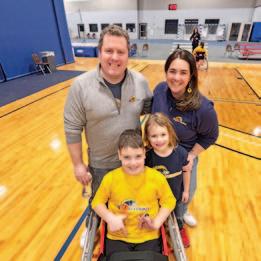
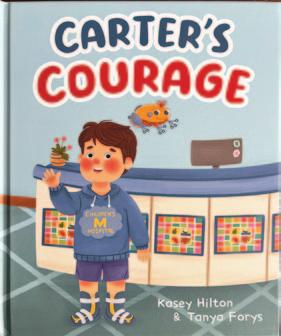
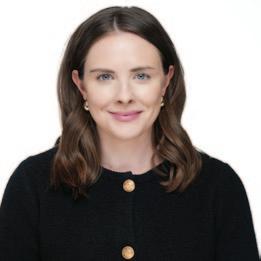
Kasey hilton (AM ’11) published a children’s book, Carter’s Courage, inspired by her son, Carter’s, experience with childhood surgeries. The story shares an honest and reassuring perspective on pediatric surgeries that speaks to young people and families. Hilton has dedicated her career to education and disability advocacy.
promote
She works to promote inclusion and support for people with developmental disabilities and their families. She was the first person in Michigan to undergo fetal surgery for spina bifida at C.S. Mott Children’s Hospital, an experience that profoundly shaped both her family’s story and her passion for helping others understand the power of inclusion, empathy, and hope.
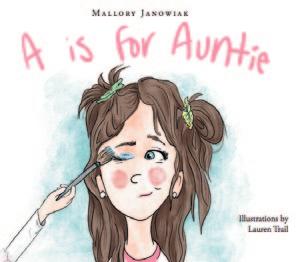
In the fall of 2023, Mallory Janowiak (ABEd ’13, TeachCert ’13) reached out to the Stamps School of Art & Design alumni network seeking an illustrator
for her first children’s book, A is for Auntie. She connected with Lauren Trail (BFA ’22) who helped bring Janowiak’s story to life. “A is for Auntie explores the extravagant but sometimes daunting role of the modern-day aunt in a rhythmic adventure through the alphabet,” says Janowiak. The book was officially published in fall 2025 and is now available for purchase on Amazon and at Barnes and Noble.
Through her work in the U-M School of Information Career Development Office, Carina Wilson (AM ’23) was invited to present three sessions (two round tables as a lead facilitator, and one presentation as a co-facilitator) at the upcoming 2026 National Career Development Conference. Her sessions are titled “Sustaining Workplace Well-Being to Drive Community-Building Initiatives,” “Creating Personable, Trustworthy, and Welcoming Communication Practices Using Relational-Cultural Theory (RCT) and Psychological Safety (PS),” and “Guiding Student Career Success: Scalable, Asynchronous Career Development Through Strategic Guidebook Design.”
In Memoriam Lin Chu Wong , 1929–2025
she was a Chinese laundry girl, born in New York City, and—as she once pointedly told a colleague who complimented her flawless English—her family had been in the United States for six generations. She was a Chinese American girl whose mother brought her to St. Bartholomew’s Catholic School in their Elmhurst, Queens neighborhood at the start of the school year, and who, when the principal, Sister Alexandrine, said there was no room in first grade, replied, “Then put my daughter in second grade. She’s a fast learner.” She was. She ironed the linens for St. Bartholomew’s Church while in elementary school, went on to St. Jean Baptiste High School in Manhattan, entered Hunter College at 16, graduated, and later earned a degree from Fordham University.
In 2022, Lin Chu Wong (AM ’80, PhD ’90) received the Centennial Scholar Award from the Marsal Family School of Education at the University of Michigan. She was a public school teacher and a teacher of future teachers at the University of Michigan.
She married James Paul Wong, a decorated U.S. Navy veteran of World War II, in 1952, in the same church whose altar linens she had ironed as a girl. After their wedding reception at Forest Hills Country Club, they boarded a train for their honeymoon in…Ann Arbor, Michigan, where Jim was beginning his studies at the University of Michigan School of Architecture.
Lin raised four children—Kim, James Jr., Thérèse, and Matthew—in the 1950s and 1960s. Then, inspired by the women’s liberation move ment of the 1970s, she earned her teaching certificate and began teaching elementary school, first in the Detroit area and then, for most of her career, in the Ann Arbor Public Schools. She served as principal at Bader Elementary School. She completed her PhD, “An Ethnographic Study of Literacy Behaviors in Chinese Families in an Urban School Community,” while working full time and helping send her children to college. She taught her students about racial equality and multiculturalism.
Lin and Jim were married for 67 years. New Yorkers by birth and temperament, they grew to love Ann Arbor. Jim designed—and Lin and the children helped build—the house where they lived for 53 joyful years, welcoming their children and grandchildren back for reunions. Their home radiated their happiness and good fortune. They delighted in the Japanese maples the family planted and watched through every season. They savored pastrami on rye at their favorite outdoor table at Zingerman’s on sunny days. They walked along the Huron River in the evenings. They took their young children to the museums of New York City at Christmastime, then to an automat or to Chinatown to eat fried noodles on Mott Street, where Lin spent her earliest years.
Lin’s life was celebrated on Saturday, November 29, 2025, at Saint Francis of Assisi Church in Ann Arbor—the church Jim designed, and where her sons Kim and Nunu served as altar boys at its groundbreaking ceremony in 1968.
Lin: “I still see my father ironing in the store window. My mother is ironing shirts with the youngest of her seven children strapped on her back in a red silk fringed sack. She writes ‘lessons’ on shirt cardboard. This is how she taught me to love learning.
“The laundry was punishing work. Still, my father entertained us with stories and songs while throwing shirtsleeves over wire clotheslines. We did laundry work and then schoolwork. Afterwards, we played on the sidewalk in front of the laundry and in the empty lot in back. Eventually, we went to college.”
Kim, Carol, and their children; Matt; Terry and her son; Nunu and Young hae loved Lin as fiercely as she loved them, and took joy in her long, rich, and richly deserved life. ■
university of Michigan Regents
Jordan B. Acker, Huntington Woods
Michael J. Behm, Grand Blanc
Mark J. Bernstein, Ann Arbor
Paul W. Brown, Ann Arbor
Sarah Hubbard, Okemos
Denise Ilitch, Bingham Farms
Carl J. Meyers, Dearborn
Katherine E. White, Ann Arbor
Domenico Grasso (ex officio)
The University of Michigan, as an equal opportunity employer, complies with all applicable federal and state laws regarding nondiscrimination. The University of Michigan is committed to a policy of equal opportunity for all persons and does not discriminate on the basis of race, color, national origin, age, marital status, sex, sexual orientation, gender identity, gender expression, disability, religion, height, weight or veteran status in employment, educational programs and activities and admissions. Inquiries or complaints may be addressed to the Equity, Civil Rights and Title IX Office (ECRT), 2072 Administrative Services Building, Ann Arbor, Michigan 48109-1432, 734-763-0235, TTY 734-647-1388.
Support our school—become an Annual Giving Society member today.
Annual giving plays a vital role in sustaining the Marsal Family School of Education’s vision and mission by providing the flexible funding necessary to support innovative programs, research, and community partnerships and offer scholarships to talented students.
The Marsal EducationAnnual Giving Society recognizes two categories of generous annual donors:
Annual Donors
Give $1,000 or more to the Marsal School in a given fiscal year. Recognition begins July 1 each year and is based on gifts made during U-M’s previous fiscal year (July 1–June 30).