No part of this publication may be used or reproduced, distributed or transmitted in any form or by any means whatsoever without the prior written permission of the publisher, except in the case of brief quotations in critical articles and review and certain non-commercial uses permitted by copyright law.
Printed in the U.K.
Issue Zero
ISSN 2059-1543
Multiplexer is a biannual book-zine, produced by Vehicles for Experimental Practice as a place where the signs describing and constructing reality - graphics, texts, scores, comics etc - get analysed, manipulated, compressed and collided, to generate new forms and directions; each issue activated by a password acting as common denominator and entry-point to its content.
Multiplexer is curated through an open call to academics, writers, artists, designers, recent graduates or research students. For submission guidelines visit www.multiplexer.network
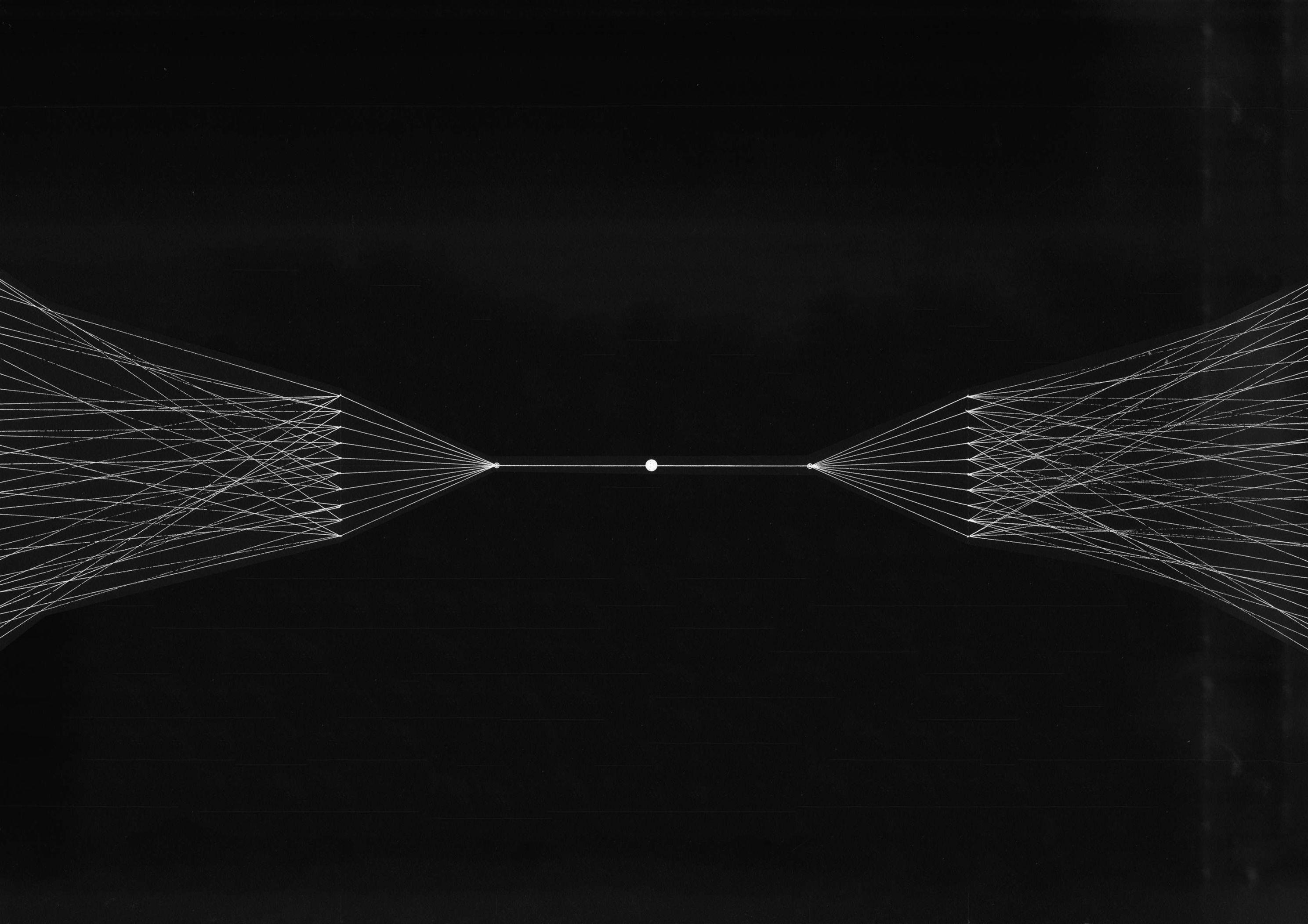
MULTIPLEXER AS A CONCEPT, DERIVES FROM AN ANALOGY BETWEEN THE CREATIVE PROCESS AND THE WORKINGS OF THE ELECTRONIC MULTIPLEXER (A DEVICE THAT CONVERTS MULTIPLE SIGNALS INTO A SINGLE ONE, WHICH IN TURN, IS CONVERTED BACK INTO MULTIPLE OUTPUTS BY A DE-MULTIPLEXER) AND IT IS THA INBETWEEN MOMENT WHICH WE CALL MULTIPLEXER.
THE MULTIPLEXER IS, THEREFORE, THE PLACE WHERE ALL ‘TEXTïïïïCONVERGE. THE PLACE WHERE WE CAN OBSERVE THEM ALL AT ONCE, NO SIGNAL BEING STRONGER THAN THE OTHER MERGING THE WORLD INTO A FICTITIOUS SENSE OF MANAGEABILITY. IN THE MULTIPLEXER TIME AND SPACE COLLAPSE INTO MOMENTOUS ARTIFICE THAT BECOMES PART OF THAT PERMANENT FLUX OF APPROXIMATIONS THAT WE CALL REALITY.
WE COULD VISUALISE IT AS A KIND OF CAMERA OBSCURA, A DARK CHAMBER, WHERE LIGHT COMES IN AT 300,000 KM/SECOND BRINGING WITH IT AN INVERTED REPRESENTATION OF THE WORLD OUTSIDE THE CHAMBER. THIS IMAGE IS NOT REALITY ITSELF BUT A REPRESENTATION, MADE ACCESSIBLE TO US BY THE MATERIALITY OF THE CHAMBER ITSELF, WHICH ALLOWS FOR THE PHOTONS TO CRASH AND THE IMAGE TO FORM, NO LONGER AS AN INDECIPHERABLE THREE DIMENSIONAL ENTITY BUT A READABLE TWO DIMENSIONAL ONE. THIS LOST RESOLUTION, THIS TRANSITION FROM AN INFINITELY COMPLEX THREE DIMENSIONAL REALITY COMPLEXITY INTO A FINITE TWO DIMENSIONAL REPRESENTATION IS WHAT MAKES IT APPRAISABLE AND COMPREHENSIBLE. THE TWO DIMENSIONAL REALITY IS ‘PER SEïïA HUMAN CONSTRUCT.
THE PLAY BETWEEN LIGHT AND SHADOW PROVIDED US WITH THE FIRST BINARY LANGUAGE. IT ALLOW US TO CAPTURE, EXPRESS AND RATIONALIZE AND OWN THE WORLD AROUND US. SO IT IS NOT THE TOOLS THAT ALLOW US TO INTERVENE IN THIS REALITY, BUT THE MEANS THAT WE USE TO UNDERSTAND AND COMMUNICATE IT WHICH REALLY DEFINES US AS HUMANS.
THE PURPOSE OF THE MULTIPLEXER IS NO LONGER THE PROVISION OF FINITE ANSWERS BUT THE CONSTRUCTION OF PARALLEL COMPLEXITIES.
MULTIPLEXER IS BOTH THE VEHICLE AND THE OBJECT OF THIS EXPLORATION..
...THE CONCEPT IS EXPLORED BY MEANS OF ITS PRODUCTION, THEREFORE ITS DEFINITIONS WILL BE FLUID AND ALLUSIVE, ONLY FULLY READABLE WHEN LOOKING BACK TO FUTURE ISSUES.
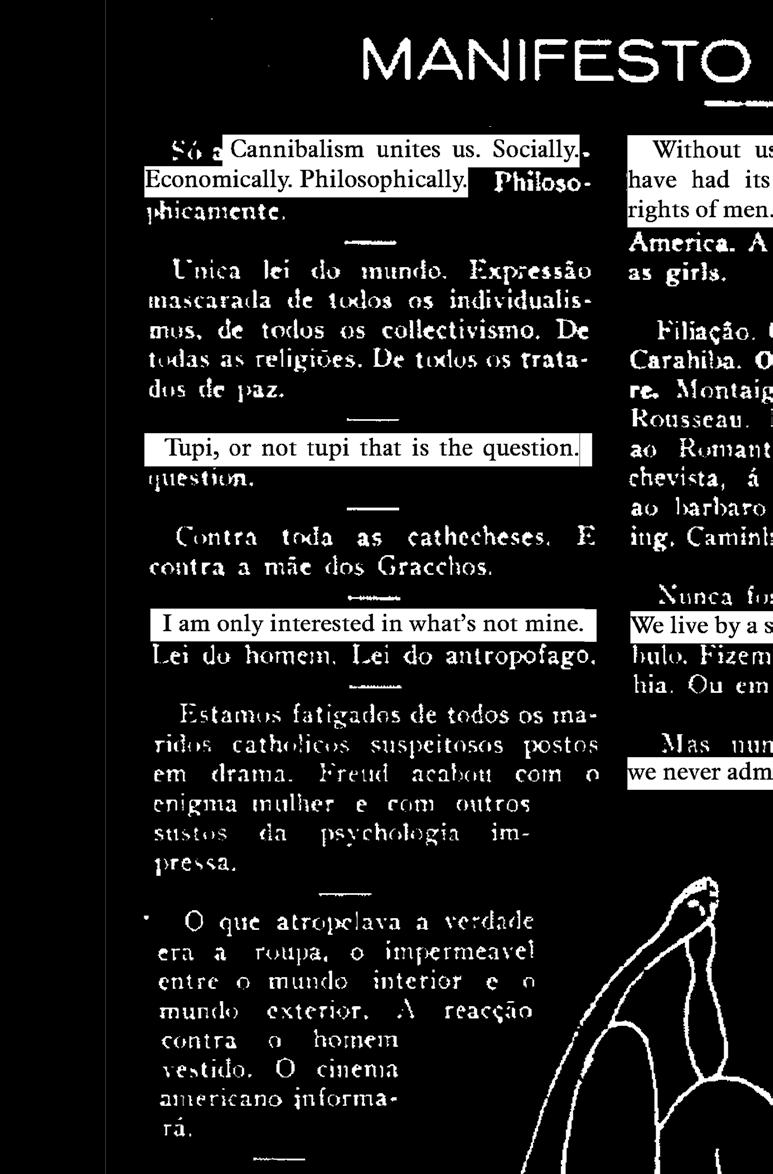
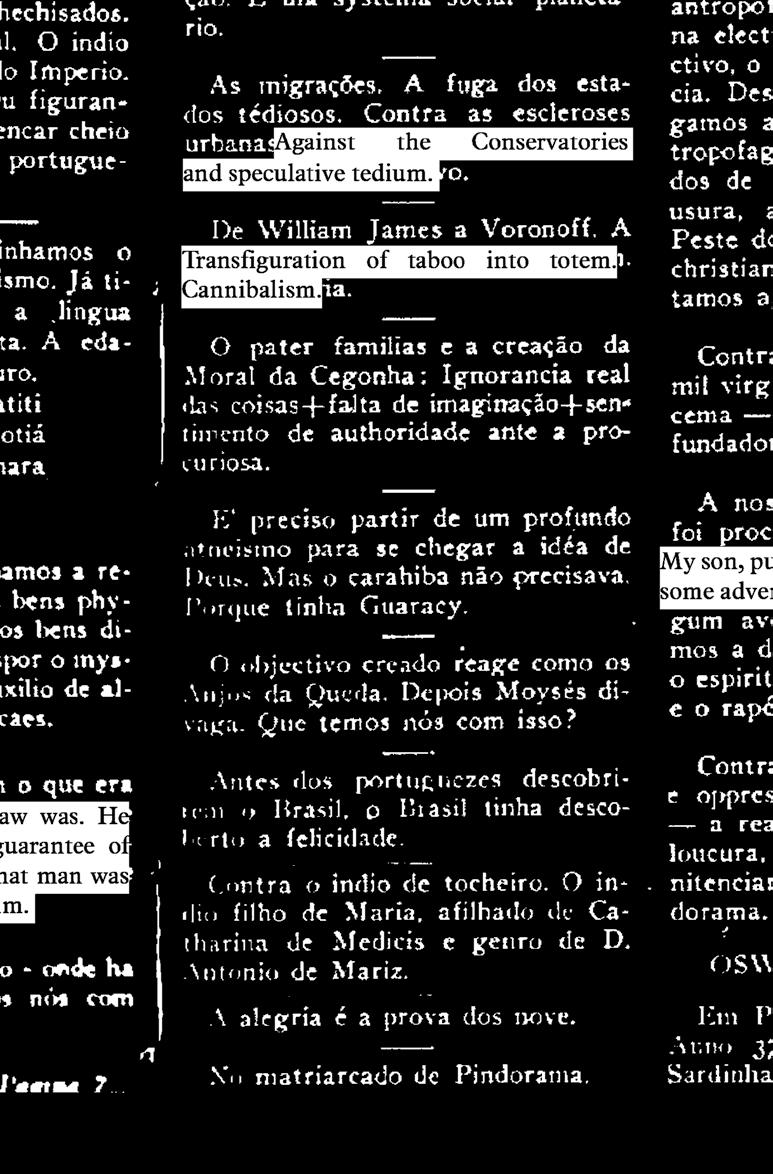
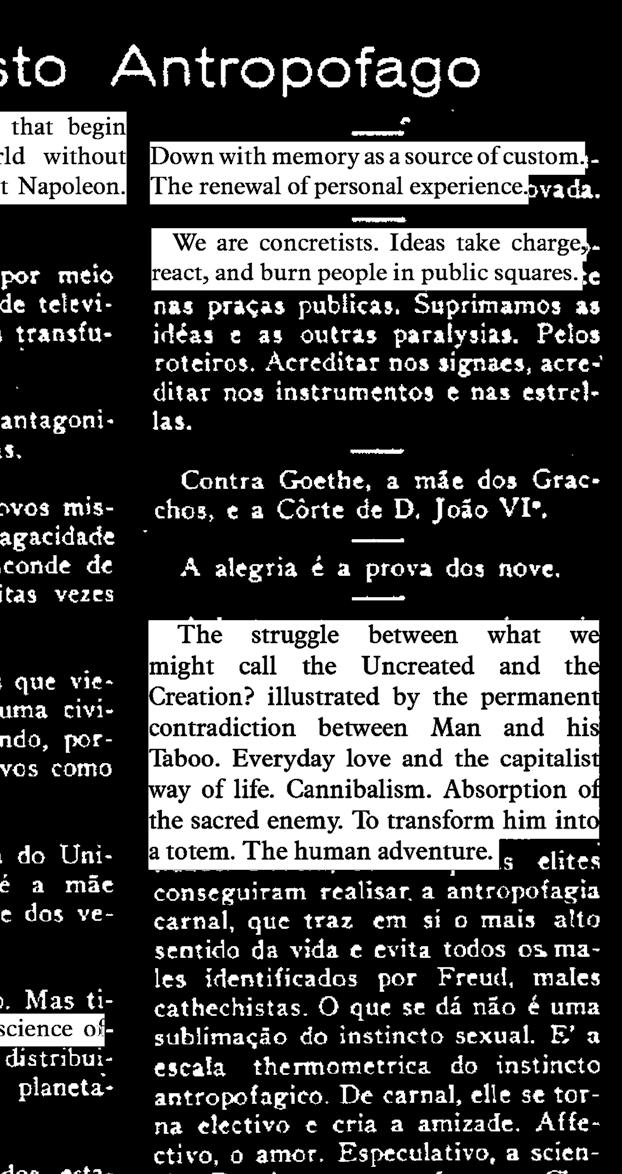
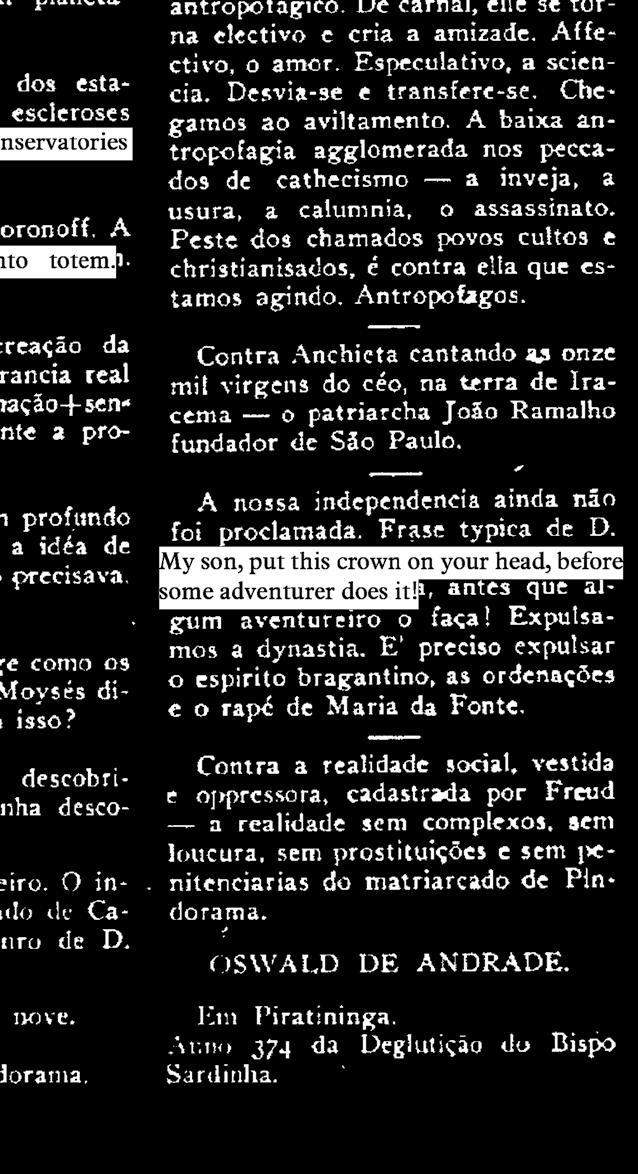
Password:* Cannibalism
*Towards Our Own Baudrillardian Dictionary.
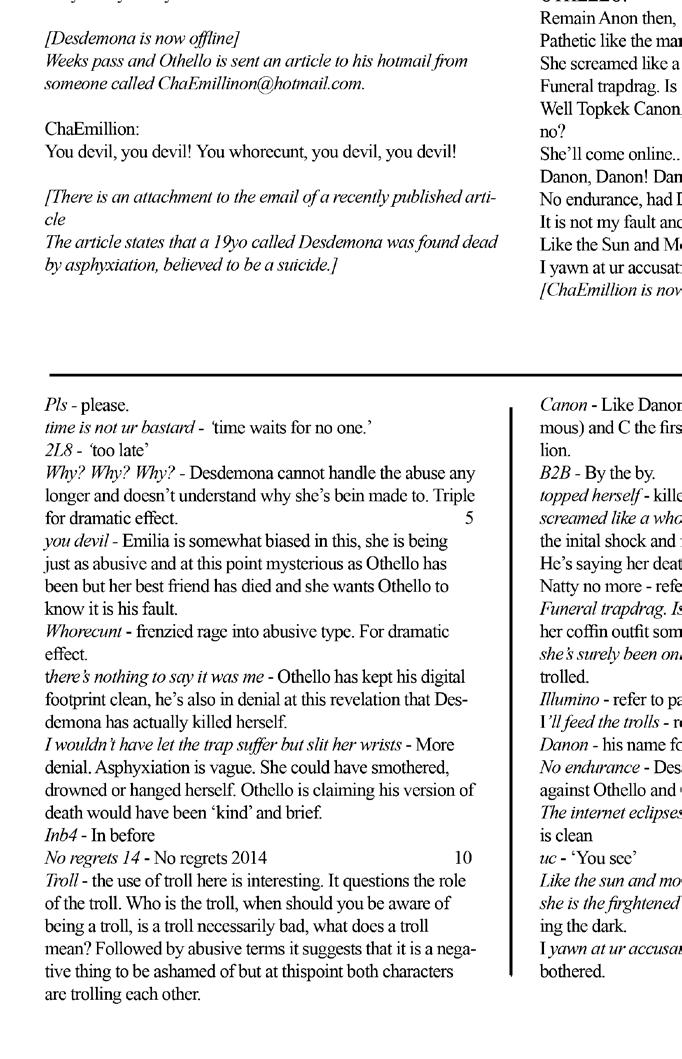
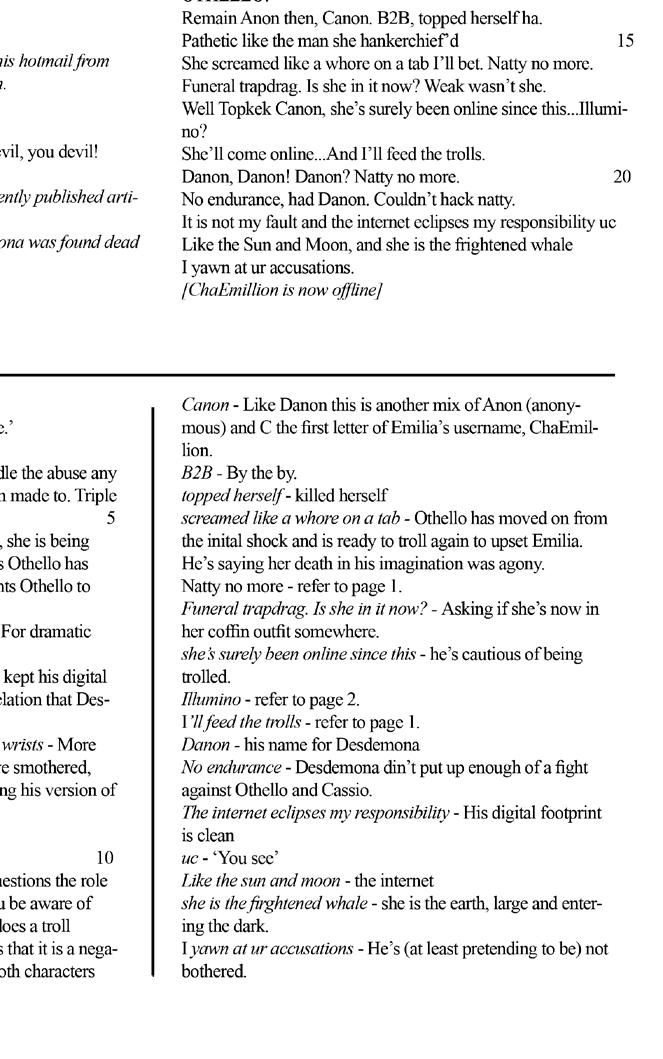
“cool...man”
“hey...friends”
“I am it!”
“Let me tell you one thing”
“Listen, listen”
The Grand Narratives Have Gone, Dissipated Into a Culture of Ephemeral Social Documents, The End of Art is Here.
E.B – Originally published in Charcoal 6th ofApril 2013
As mechanical reproduction has developed, the value of an artwork has changed as it can now be recreated, it no longer remains an issue of proximity to the object, or a question of authenticity, the relevance to its audience now lies in its perceived worth or value as a social document, whether it helps develop an ontological commentary relevant to the viewer. The viewer or audience has until now been in allegiance with the artwork, as the locus of value moves from the artwork, the bond between audience and artifact breaks down. An original artwork is an important artifact, but it now exists both above and amongst the pile of all its other reproductions.
The trend stemming from literary theory of alienating the text from both the author and reader has shattered the prestige of genre forms, or rather, relegated all written word to text or social documents, open to the same critique and therefore open to value arguments, Freud and Plato have been stripped of their value in respective scientific and philosophical fields and now face the same critical interpretation as any other form of media with perceivable symbols.
Freud and Plato become literature, open to investigations in style and form, no longer meaningful or relevant as philosophy or science. With its value externalized and lifted from the original artifact, which has now been reproduced, or dislocated from the author, ‘content’ can now gain new meanings or value judgments. We can now see the beginning shift where philosophy becomes written word and artwork become images, all interpretable as social documents.
The art critics and literary theorists of old have become concerned with cultures as material forces, with all the soft sciences nestling under the blanket of cultural theory/ critical theory. Having torn high culture from its grand and over arching narratives by removing the value from the language, undermining the concept of a universal or accurate oral history on the basis of power bias, and even by defeating the accepted historical documents as misunderstood or mis-understandable, they now find the ontological value among cultural objects, images and documents, everyday ephemera, a ‘lowly’ cultural document, opposed to high art that is.
The audience moves fluidly around this evolution, the discerning art critic becomes a cultural critic reading ontologically into popular culture as the popular culture reads the high art as images devoid of
the old ‘high’ archetypal meaning.
Ontological high art values have been taken from the efforts of the artists and redistributed amongst the fruits of a post industrial society, meanings can be read everywhere, perhaps the questions posed by staring at Rothko’s monolithic paintings can be found answered in the phenomena of binge drinking or the search for relevance in celebrity magazines. The venerated role of the artist, that of being self aware when perhaps others couldn’t be, has been relocated into society oversaturated with images and inter- pretations, where everybody with a Facebook account becomes a autobiographer and self portrait painter, controlling their self image by mediating images and text.
Where we once needed artists and philosophers to reveal the strange mores unique to being human, to highlight the pains and pleasures of being a conscious and thinking being, we now have been taught to bypass these people, instead we can see it in the stupid headlines that get recirculated, where once Goya exposed the disasters of war, we now subvert that angst into either videogames or charity donations, diluting the real reactions artists and philosophers once had.
‘“We have discovered happiness,”--say the last men, and blink thereby.—’
The artist has no ground left to cover, no comment can be contributed to a study of culture that cannot be found in thrown away litter or deviant internet behavior, perhaps except to, futilely, convey what it’s like to be monad.
‘What we are doing is just a drop in the ocean. But if that drop was not in the ocean, I think the ocean would be less because of that missing drop’.
Dark Conciousness
H.M– Originally published in Charcoal 8th of March 2013
Our perceptions are undoubtedly interlaced with memories, the recollections of which serve in defining our judgments and intui- tion; a process of subconscious filtration by the brain, selecting images appropriate for the overcoming of situations, ones concerning the understanding of our immediate perception. We might therefore assume, that embedded within the image that currently occupies the space in front of ones eyes, there sits a chronology of images, each preceding the other, marking a pathway that leads from the beginning of personal conception as a being as one who consciously perceives, towards the present image, and that every glance we make towards a different subject catalogues the image seen before that new image, for recollection, within the images that succeed it.
If the present image, that is the one in our immediate perception, and which from here forward shall be referred to as live, draws through itself in our minds the subconscious recollections that each within themselves contain, the fundamental elements of its understanding, then we can propose that this
image now perceived through which recollections are drawn, could be considered therefore as the sum-of these recollections, and as such while existing in itself, rather exists more substantially – in a durational sense - for the purpose of becoming itself a recollection for live images future.
Might we deduce from an experience of images understood through recollection, that the first image our eyes perceived was unable to be contextualized though an image memory because it did not exist, and therefore became an indecipherable image? Is this due to the storage compartments of the brain being empty of substance, or an inability related to the inexperience of an infantile self-educated image receptor? Thus can we perhaps begin to doubt the existence of things when we do not see and relate them to experience, was anything at all perceived, or simply seen and instantly stored, bypassing the future subconscious image library in order to reach the deepest corner of a mind which is craving to saturate its porous foundations of perception? These images if so do not form memories, but something more fundamental in establishing the unchanging laws of the livings pre-communication.
A nothingness is filled with circumstantial imagery of our cultural assemblages, things over which we have no control and no apparent memory, this is like the dark matter of the universe, where unknown substances form the backdrop onto which all the known matter exists. Expansion upon consciousness therefore requires further investment towards understanding this dark matter, the subjects of which are consciously inaccessible in a realtime, and therefore like stars must themselves be representations of an extinct thing, requiring further
magnification for their understanding. What role can creativity play in this context? The role of contributing, and projecting forth new images to be perceived in the eyes on an Other, perhaps to align an entirely new system of recollected perceptions, en-route to exhausting them entirely? But so long as the inputs to our work remain created out of the fundamental elemental library of our own conscious perceptual existence, the results shall never be dark matter equivalent, and the resulting perceptions of the Other from it, never ultimate and pure like those first unreasoned images. What I think is required is suppression of both the systemic and expressive concepts influencing creativity, and reform its narcissistic tendencies, in order to advocate rather a creative inexpression,which despite creating an indecipherability of the work to the self, stands more chance of becoming the dark matter of the Other.
Fiction, The Primer
M.M– Originally published in Charcoal 11th of January 2014
Fiction, telling stories and listening to stories is a big part of our cultural identity. It’s how we associate with the exterior world; with people who think but whose thoughts are unknown to you, and to the world which exists and changes but is also unknowable in its entirety, and if not known in its entirety is somewhat unpredictable.
It seems that story telling is offering us a position in the world (immediate physical and mental environment) through identity, if you believe in bible stories you identify as a Christian and make sense of your existence as such, applying unknowable concepts like death with properties like positioning (heaven) and qualities (bliss), and so on and so forth. Because of this it gives us a greater sense of participation in this ‘world’ or situation we find ourselves in. We are then left able to affect things. We plan, predict, control and act, at the end of a sequence of actions we hope we are able to indulge in the benefits of our expectations, maybe the crux of human angst could be the imbalance between expectation and return. Based on how we have
identified, we manage our expectations.
As historically our angst about the physical world and our physical selves has waned, due to more sophisticated science, we have shifted from belief in the unknown absent to belief in the present, in remuneration for the present, a belief in exchange of material objects or between material beings. With this the significance of stories has changed from allegorical and didactic to something else. The identity derived from understanding a position shown through fable or story has moved from its root in the world of belief, to a more immediate and material root. Where once we would have identified with an understanding or interpretation of a mechanism beyond our knowledge (the rising of the sun, the purpose of sex), we now identify with more personal themes, for example, we all understand love as a phenomena of the world, we’d like to hear about how we gain access to it, for our own ends.
It is at this point where a split appears between old myth and new fiction. Freed from supporting community identity or purpose, fiction breaks from its traditional themes or forms, it begins to posit hyper real situations, hyper real themes and drops its allegorical content. Because the physical no longer has the mystery and allure for exploration, hyperbole becomes easier, and necessary for novelty, new fiction services the needs of an individual searching for individual validation instead of reinforcing cultural bonds.
There is obviously still good ‘high’ literature/ fiction etc., but when the pursuit for a story or idea becomes shear novelty or parody, it seems the pursuit ceases to seek a root from a unique and personal experience, instead referential to a scaffold
of social memes. An example being the fascination with aliens and monsters, where they were once thought up to give explanation for strange noises or the things which inhabit the dark, giving a face or presence to something foreign and scary, to at least make it a little less unknown, now as a real life exaggeration of my point, we have ‘Mega Shark versus Giant Octopus’, part of an enterprise which seems entirely devoid of allegory. Nobody will assimilate into their knowledge of the sea the chance of ‘Mega Shark’, it is clearly demonstrable that a rupture has occurred somewhere between ‘Jaws’ and ‘Mega Shark’. Whilst ‘Mega Shark’ is clearly not synonymous with ‘fiction proper’, it is indicative of the direction we seem to be sliding.
There are other key themes of fiction that are on this trajectory, and although showing it in quieter ways, the results are the same. Devoid of allegorical content, the work ceases to be part of a lineage of culturally affecting work, it becomes alienated and therefore viewed in isolation. The aspect of participation has been dropped from new fictions, no longer do fictions inform us about how to act in a given circumstance, for rightly or wrongly. Stories are now viewed in isolation from a community of action and reaction, consumed by individuals looking for individual gratification or entertainment.
Just as consumer objects are once fresh and useful, novel or original, mass production will step in to reproduce the object with cheaper materials, cheaper technologies and broader limits on quality or concept, the end result being something that appears to be enough of a facsimile of the original concept, to pass as a desirable object, but anyone with an eye for detail will know the value of the object has been lost.
The acceptance of the facsimile denotes the users lack of appreciation or awareness for the original, therefore severing any lineage between original and facsimile, creating an object to be consumed just at that instant.
Just as we need mass housing these days for living in, there is a need for mass accommodation in the imagination, a place people feel secure, what better place than a theatre of hyperbole, a cinema to indulge curiosities without ramification or consequence, to fantasize about murder and crime, love or action, but a place you can leave without being provoked to action.
So it becomes a question of response to indulgence, is there a limit to what we indulge in? We know the consequence of over eating or drinking too much. No longer is fiction an active or important cultural engagement, it’s now a cerebral escape, indulgence in a soma of cultural motifs. Can expecting unreal/ hyperreal situations in our lives be beneficial for our wellbeing? Or conversely, could expecting the unreal situations from fiction as being forever unobtainable be anything other than fatalistic?
Imagination is a tool to use, to enable a capacity for play. Freedom of thought leaves us with the potential to imagine different possibilities, but it must service action and not escapism, otherwise all actions in reality will become subordinate to fantasy. Fiction could show us how to get to these different versions of ourselves that we strive for. Or it could subdue our sensibilities by rendering us all too ordinary in a world of supermen and fantasy, a world where moral actions are only prompted by total chaos, destruction and villainy and not the everyday decisions that affect us all.
These themes clearly come from what was a concern for how we operate in the world; socially, morally and materially, but the themes have been dissected and extracted from any meaningful application and trivialized be- yond all significance, allowing them to be consumed in a trivial manner, to become entertainment, un-ironic parody, caricature, pornography for the imagination, white noise.
The imagination now yields its greater returns when it delivers greatest satisfaction. Where the myths and stories once explained away fears, now we rid ourselves of fears by satiating our over developed need for grati- fication with downloadable fulfillment, with happy-ever-afters and good guys riding off into the sunset. Worldly hopes and fears remain unnoticed.
The Unreal and the Non-Fiction
Laura Potter - Originally published in XV 2015 Undergraduate Goldsmiths Design Show Catalogue
What follows is a fictional (over the fence) exchange using real quotes by J. G. Ballard and Ursula K. Le Guin, on the relationship between fiction and reality. Type any of these quotes into a search engine to find the source.
JGB:
My novels offer an extreme hypothesis which future events may disprove — or confirm. They’re in the nature of long-range weather forecasts.
UKLG:
The weather bureau will tell you what next Tuesday will be like, and the Rand Corporation will tell you what the twenty-first century will be like.
I don’t recommend that you turn to the writers of fiction for such information. It’s none of their business
JGB:
A
lot of my prophecies about the alienated society are going to come true...
UKLG:
Prediction is the business of prophets, clairvoyants, and futurologists. It is not the business of novelists.
JGB:
We live inside an enormous novel. It is now less and less necessary for the writer to invent the fictional content of his novel. The fiction is already there. The writer’s task is to invent the reality.
UKLG:
A novelist’s business is lying.
JGB:
I believe in the power of the imagination to remake the world, to release the truth within us…
UKLG:
But our society, being troubled and bewildered, seeking guidance, sometimes puts an entirely mistaken trust in its artists, using them as prophets and futurologists.
JGB:
Everything is becoming science fiction. From the margins of an almost invisible literature has sprung the intact reality of the 20th century.
UKLG:
I think hard times are coming when we will be wanting the voices of writers who can see alternatives to how we live now and can see through our fear-stricken society and its obsessive technologies to other ways of being, and even imagine some real grounds for hope. We will need writers who can remember freedom: poets, visionaries, the realists of a larger reality.
JGB:
Reality is no longer going to be the stuff out there, but the stuff inside your head.
UKLG:
I write science fiction, and science fiction isn’t about the future. I don’t know any more about the future than you do […]
“It DOES Speak”: Between Silence and Logorrhea,
the Secret History of the Telephone 1
Alexandra Midal - Originally published in Talk to Me: Design and the Communication between People and Objects 2011, The Museum of ModernArt, New York.
On July 2, 1875, Alexander Graham Bell and Thomas A. Watson invented the telephone. “I wanted to hear it talk,” Watson explained in his autobiography. 2 We might wonder if he was admitting to the desire to hear the telephone speak rather than someone speaking on it. 3
Communication was an integral part of Bell family history. Bell’s grandfather invented a system to alleviate stuttering, and his father taught elocution and created a system of phonetic notation. The young Bell became a professor of vocal physiology and elocution at Boston University and in 1874 conceived an artificial head capable of pronouncing words,
a work in the lineage of speaking automatons such as the Marvelous Talking-Machine, or Euphonia (1845), created by the astronomer Joseph Faber: a woman’s head that could speak when pedals and keyboard were moved, much like playing a piano; each touch produced a different syllable, allowing the machine to utter words in a mechanical, indeed, absent, tone and even sign. 4
The family tradition culminated in the birth of the telephone, which united technology, design, and communication in the unusual form of a small setup, almost eight inches in length, equipped with wires and a transmitter-receiver that allowed a person to speak and listen to someone else. In order to demonstrate the power of the telephone, Watson and Bell liked to have people use it to listen to recorded theatrical spectacles.
This idea was later perfected by Clément Ader with the Théâtrophone, which at the Exposition Internationale d’Électricité in Paris in 1881 linked the Opéra de Paris to the homes of Parisian subscribers. 5 Evening performances at the Palais Garnier, the Opéra Comique, the Musée Grévin, and the Théâtre Français were also transmitted at a distance to an enchanted public. But in spite of its capacity for seductoin and then-unequaled technology, the telephone is one fo the forgotten systems of the quasi-encyclopedic research conducted by Siegfried Giedion, the historian of the origins of the mechanization of design. 6 In reconstructing the genesis of industrialisation, relying on documents and patents registered by engineers or inventors, both famous and not, Giedion makes no mention of the tools of communication, neither the telephone not the phonograph.
The telephone brought the infiltration of the
outside world into the home, an unheard-of noisy invasion of interiority. The dream of recording and transmitting the voice has given structure to visions from the Telephonoscope proposed by Albert Robida in is novel The Twentieth Century (1882) to the apparatus described by Edward Bellamy in Looking Backward (1888) to the science fiction inventions of Hugo Gernsback or in the musical comedy Just Imagine (1930) by David Butler. Thus this disruptive innovation-which should not be relegated solely to the realm of modern science fiction-sheds light on the meaning of societal transformations. By intertwining mechanization and works of art in his analysis of design, Giedion persuades us that the process of mechanization is an artistic act. And one only need to think of Marshalll MacLuhan’s idea that the proliferation of technology creates upsetting new environments to see that the only valid antidote is to rely on counterenvironments-namely, art-to oppose the intrusion of a speaking object and the repercusions of its presence, especially since this instrusion extends into internal worlds.
New light on the telephone’s invention is shed by the fact that Bell was the son and the husband of hearing-impaired people, and that young Edison had scarlet fever as an adolescent and was hard of hearing as a consequence. Do we assume it is a coincidence that Bell and Edison were both attuned to the deprivation of the senses? And thus registered the patents for the telephone and for the phonograph, the telegraph, the Vitascope, and the Kinetoscope?
The invention of the telephone can also be seen as a way of thinking about strange and idiosyncratic behaviours:Bell was in the habit of carrying around a dead man’s ear, while Watson, entirely enamoured of
the world of mediums and spiritualism, was described as someone “susceptible to the unearthly curls, spectral cats, and nocturnal horses. He was haunted from the start, invaded and possessed.” 7 The bizarre led to the extraordinary, underscoring that one of the telephone’s great achievements ws the successful new affinity between technology and the paranormal. In his autobiography Watson added that the invention of the telephone was also in part aimed at establishing contact with his deceased brother; as children they had promised each other to find a way to communicate if one of them died, an attempt that testifies to a tension between communication design and the occult. Moreover, the phenomenon of a parallel communication with the dead undermines the dynamic of technical rationalism and formalism associated with design and attempts to unite reason, aesthetics, and the psychological experience. The telephone abolishes physical frontiers, including those that separate the private domestic sphere and mental landscape, transforming identity and behaviour in a metamorphosed environment. Like the spatialisation of affect described by Le Camus, Loos, and others, Bell and Watson’s proposition substitutes the activity of the psyche for the stranglehold of rationalisation.
Around the same time, in 1895, Henry van de Velde was having a similar change of heart, putting forward the ideas of a house that would reflect the spirit or humor of its inhabitants:” There is an absolute correlation between man in particular and the house, the room in which he lives.” 8 He thus created a cartography of sensory connections between subject and environment. Returning to these ideas allows us to reconsider design in light of the emergence of a
new, modern, and intensely psychological individual, one capable of amplifying vibrations and movements in new spaces of sensual and sensorial representation.
1William Thomson, quoted in Anton A.Huurdeman, The Worldwide HIstory of Telecommunications (Hoboken,N.J.:John Wiley & Sons, 2003),p.163.
2Thomas Augustus Watson, Exploring Life:The Autobiography of Thomas A.Watson (New York:D. Appleton, 1926),pp.69-70.
3-
On Watson’s belief that the telephone itself is speaking, see Avital Ronell, The Telephone Book:Technology, Schizophrenia, Electric Speech (Lincoln:University of Nebraska Press, 1989),P.257.
4-
On Alexander Graham Bell’s talking head, see Herbert Newton Casson, The History of the Telephone (Chicago: A.C.McClurg, 1910),p.15.
5-
One such subscriber, in 1911, was Marcel Proust. See Proust, entry for February 21, 1911, in Lettres ~~a~~ Reynaldo Hahn (Paris:Gallimard, 1956), p.199.
6-
See Siegfried Giedion, Mechanization Takes Command: A Contribution to Anonymous History, 1948, reprint ed.(New York:W.W.Norton,1969).
7-
Ronell, The Telephone Book, p.276.
8-
Henry Van de Velde, Apercus en vue d’une synthese d’art (Brussels:Monom, 1895); cited in Pascal Rousseau, “Home Sweet Home:La Maison uterine, antre primitif de la modernite,”Expose,no.4 (2004):92.
An Open Letter on the Subject of Life on Mars
Sarah Kember
Since all other channels are now closed to me, I am forced to serve this notice courtesy of the press. This would be considered unorthodox for any reputable scientist, but for me it is also ironic. I do not have time to summarize the history of my relationship with the media, although I expect it will become more widely known, along with every other irrelevant detail of my life, in due course. I have lived a long time, but I’ve only ever understood one thing, namely that the quest for truth is all that matters. I have held on to this principle. Indeed, I’ve had to. I can’t think what would have happened to me otherwise, where the battles and insults might have left me. I don’t know where the strength came from, to be honest. I have no partner or family and have always worked alone. Please don’t misunderstand me; I have no cause for bitterness. On the contrary, my life’s work is now complete. I’ve done it despite them, the so-called journalists, the space agencies and their ever-shifting criteria for
success, the scientific community – my peers. I have no peers, not any more. That will become apparent soon enough.
The discovery was made six months ago but withheld from the public. I now realize that they were never meant to know. Classiforum Louellian: I named it after myself, as was my prerogative. I would describe it, simply, as a strain of bacteria akin to its Earth-based counterpart but with one key difference, concerning the rate of cell division and subsequent mutation. I made all of the formal announcements, needless to say. My paper was published in Nature and presented at the Spring Symposium on Astrobiology in Phoenix, Arizona – close to my home. I’m a veteran of the conference circuit, familiar with many of its venues and even more of its idiosyncrasies. I became inured to them, the cliques, the fads, the selfappointed leaders and their disciples. Popularity has nothing to do with science. I found it ridiculous, so I ignored it. I had allies, people who would get in touch with me privately, usually after I’d spoken at an event. In the past, I’d even considered writing with one or two of them, but not on this occasion. On this occasion I actually wanted to have the stage to myself. I’ve never sought the spotlight, it wasn’t about that, but after so many years and a great deal of discouragement, I thought I’d earned the right to silence my detractors. Instead, I merely silenced the room.
There were two experiments and mine was the second. I wouldn’t call it minor but the primary goal of the mission was to test for the presence of organic molecules on Mars. Should these be found, the second experiment was designed to see if these molecules had a biological source. In other words, mine was
the life detection experiment and it ran, in effect, independently at the same two landing sites, some five thousand miles apart. I used probes shaped like arrows to collect the soil, add water and nutrients and analyze the result. Most of them could do this remotely, using radio transmitters to convey data to the orbiter and then back to Earth. One probe was retrieved from about four inches under the surface by the robotic arm of the rover, Beagle 3. This was the European rover. NASA’s were bigger and more expensive but they were only ever geologists. They were not looking for life, but for the conditions that could support life, or could have supported life in the past. For reasons I could never fathom, NASA chose to ignore the inevitable consequences of what we have known for several decades, which is that there is liquid water on Mars. Where there is water there is always, necessarily, life. I found it in the form of a species of green sulfur bacteria. Terrestrial equivalents collect in clumps, or aggregates around a single-celled, often nameless organism. In this case, that organism closely resembles the virus E. Coli. The detailed classification of my discovery wasn’t done in situ but once the sample had been returned to Earth. I announced it with the publication of my paper and at the symposium a few weeks later. Nobody has spoken to me or contacted me since. I want to make a couple of things perfectly clear. The results of my experiment satisfy pre-mission criteria for life on Mars. The results were consistent, controls were in place and the sites had been agreed upon many years in advance. The design was selected from hundreds of submissions and no-one with any scientific training has questioned how the experiment was conducted or even what it found. It is not the
results themselves but my interpretation that seems to be the problem – again. Yes, it has happened before. I’ll come to this, but first let me clarify what has occurred in the interim. In between then and now, there have been a number of major developments. One such is the undisputed identification of liquid water that was made toward the end of the ‘90s. Another development concerns the discovery of what we call extremophiles on Earth. These are plants and animals that live in conditions that were previously thought inhospitable, even hostile to life: the deep sea where there is no light or oxygen but only sulfur and methane, the desert.
There were four experiments originally and so, statistically, I stood a better chance of being believed this time around. Still, I knew the dice were loaded. It hurts me to say this, so allow me to explain. I’ll keep it simple, but for further reference, I have written many more detailed papers on this subject. One of the original experiments was the GC-MS (Gas Chromatography-Mass Spectrometry) test. It was given the casting vote in the dispute between myself and the other experimenters. I subsequently found, in fact I was able to prove, that it lacked adequate sensitivity. In other words, the reason why it did not find organic molecules on Mars and so effectively cancelled out my own positive findings was that it was simply unable to. Instead of accepting that there was a fault with the test, NASA put my own results down to chemical rather than metabolic reactions. They simply explained them away. The fact that I’ve been disproving the possibility of a chemical explanation ever since would seem to count for nothing. How is it even possible for science to be conducted this way?
I have made one of the most important discoveries known to science and to humankind and I have done it twice. It should never have been necessary for me to do it twice! For the last half century, I have stood my ground and answered every question using only – only – the agreed methods and techniques of my field. In this way I’ve countered every alternative interpretation of my original results. When it comes to rigor, diligence, sheer patience, I have nothing to reproach myself for. What I do regret is being cautious. I was still a young person back then and the selection of my experiment on the Mars mission was a very great honor. I was not overwhelmed or unconfident, even in relation to my perhaps more illustrious colleagues, but I was, as I have always been, careful. I was careful enough to design the only experiment that worked, that was sensitive enough to detect life in conditions that are certainly harsh, if not outright hostile. I do not need to tell the readers of this publication that the subject of life on Mars has been disputed for centuries. I feel a certain affinity with some of my predecessors, such as Lowell, who was wrong, of course, about the canals but not about the general conditions that have turned out to be at least sufficient for alien life. Lowell’s detractors declared the planet dead and their opinion dominated three quarters of the twentieth century. My response to them was understandably circumspect, but when I announced that my results were compatible with life, I allowed the debate to remain open. I recognized, if anything too clearly, the significance of what I had found. What I didn’t see was that I’d given my opponents enough room to deny it. Well, not this time. I managed to persuade ESA, the European Space Agency, to take a modified version of my original
experiment. How? Because Mars has been returned to Lowell. Where there is water there has to be life and it was I – and I alone – who found it last time. What else were they going to take apart from my experiment? A modified GC-MS test, naturally. Did it find its organic molecules this time? No, it did not. The results were negative, as they were always meant to be. How could they have been otherwise? The test has proved only its own inadequacy, so why choose it again unless the real goal of a life detection experiment is to discover no life on Mars or, better still, to undermine the discovery of life on Mars, however unequivocal, however certain it is.
What else could I do? From my room I survey this arid landscape that looks like nothing but dust and rock, and I know that it is teeming with life. I can prove it but my proof makes no difference. How can that be? These are the rules I have lived by. They are universal but with, so it seems, one exception. I’ve only ever understood one thing and I could not allow it to be destroyed, even if that meant breaking the rules that didn’t, in any case, apply to me.
One newspaper, if I can call it that, implied that I had falsified my results. Even my former colleagues have never done that. It didn’t give any of the relevant facts, but the public has a right to know. Most people don’t read specialist journals like Nature and in any case the editors printed a retraction. That was the worst thing. They tried to take it back. Luckily, I figured out how to do that too. I requested access to the sample that had been returned to headquarters. They couldn’t very well refuse – though believe me they tried. I made the trip, I conducted what I said would be a follow-up experiment,
comparing the Mars sample more closely with terrestrial viruses and bacteria. I wanted to say more about the remarkable speed at which the Martian cells divided and account for the mutations that had taken place. But there was no longer any point doing it in writing. I left the Earth sample in place of the Martian one and returned home.
The desert is a natural habitat for many unseen organisms and you don’t need to look far to find them. Just lift a rock or dig a few inches down. The air condenses at night and moisture gets trapped underground. Whatever is out there is changing now, evolving much faster, accelerating toward some unknown form, just like me. I needed to be certain.
ATRIP TO EUROPA
H TH T
Design Blockbuster
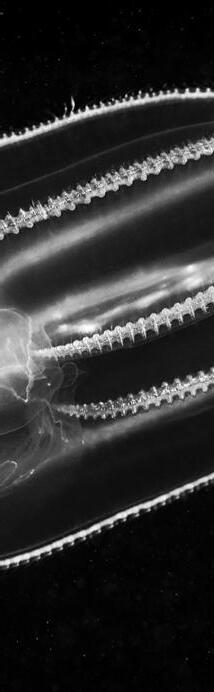
ATriptoEuropais a design odyssey inspired by the rumour that creatures are living under the ice cap of Jupiter’s icy moon Europa.
ATriptoEuropa forms the second chapter in a design trilogy, further exploring the possibility of communication between worlds and the means by which knowledge is generated through the impossibility of reaching the object of investigation—it being extinct, unknown or physically inaccessible.
The project is a fictional trip to Europa
performed as a real expedition to Antarctica. It could be seen as a contemporary homage to Georges Mélies’sATriptothe Moon.
The ‘Black Smokers’—i.e. underwater volcanoes—of Antarctica are thought to be the closest equivalent on Earth to Europa’s mysterious depths.
The East Scotia Ridge, located near the Antarctic ice cap in the South Atlantic ocean, is therefore used as a test bed for the exploration of Europa and as a location for the project.
About two years ago, against all expecta-
tion, unidentified species were found living in these ‘Black Smokers’, without any oxygen or sunlight. The dream of encountering extra terrestrial life came true… and the idea of communicating with these beings became the resulting project ambition.
NARRATOR
The rumour of beings, similar in every aspect to creatures from outer space, living here on Earth, in these volcanoes, became an idée fixe.I would find a way to communicate with them. I would travel to these underwater volcanoes and bring back evidence of their existence.
Vostok Lake to Marguerite Humeau, in New York 11 / 01 / 2012
Dear Marguerite.
As you may know already, the Vostok Lake in Antarctica is one of the hundreds of lakes trapped under a thick layer of ice. It could contain million-year-old lifeforms. Scientists are tempted to go and find out, but until now they have forbidden themselves to do so. Drilling through the ice to penetrate the lake might immediately alter its pristine waters and ecosystem. It is therefore – with modern technologies – impossible to verify the truth behind the speculations.
Vostok Lake Department 11/01/2012
Letter 3 : Department of al Life to Marguerite 29/02/2012
Dear Marguerite, I hope this vironment on ropa's ocean is ca. Its liquid water kilometres. It four kilometres It is thought may have one ble organisms of geothermal liquid body, could energy and temperatures to life and growth. ditions would rounding deep Scientists itself, but a project just that. Not vide insight into in the extreme lake, but it will useful Earth-based for technology manned planetary With best Department
LAKE VOSTOK
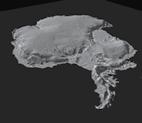
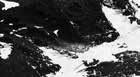
This lake contains an environment which has been sealed off below three kilometres of ice for millions of years; the conditions could resemble those of the hypothesised ice-covered ocean of Jupiter’s moon Europa. Using the RADARSAT dataset of Antarctica, the abandoned Russian station on top of Lake Vostok is visible. It is in the left section of the lake in this image.
26 September 1997, Satellite image
Source: https://upload.wikimedia.org/wikipedia/commons/2/23/Lake_ Vostok_NASA.jpg (7 October 2013)
Credit: NASA/Goddard Space Flight Center Scientific Visualization Studio. Additional credit goes to Canadian Space Agency, RADARSAT International Inc.
LAKE VOSTOK
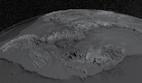
2004, Computer generated image
Source: http://www.americanpolar.org/wp-content/uploads/2011/01/lake_ vostok_1big.jpg (7 October 2013)
Vostok of It lifeforms. out,to alisspec-
2
100 BLACK SMOKERS
Letter 3 :
Department of Research for Extraterrestrial Life to Marguerite Humeau, in Santa Barbara 29/02/2012
Dear Marguerite,
I hope this will help. Perhaps the environment on Earth most analogous to Europa's ocean is Lake Vostok in East Antarctica. Its liquid water body spans 10,000 square kilometres. It lies beneath approximately four kilometres of slow moving glacial ice. It is thought that subglacial lakes may have one of the lowest stocks of viable organisms on Earth. However, hotspots of geothermal activity, which maintain the liquid body, could provide local sources of energy and temperatures more favourable to life and growth. Such environmental conditions would be comparable to those surrounding deep sea hydrothermal vents.
Scientists have yet to tap into the lake itself, but a project has been initiated to do just that. Not only will Lake Vostok provide insight into life sustaining processes in the extreme conditions of the subglacial lake, but it will also provide scientists with a useful Earth-based analogue and a test-bed for technology to assist in the design of unmanned planetary missions to Europa.
With best regards,
Department of Research for Extrater-
restrial Life
al Life to Marguerite Humeau, in Los Angeles
canic cones and also apparent around neys of variable tall and venting measured temperature formed focused tact with cold seawater. neys have expan id (>300°C) emanating similar to the flanges Pacific vents. Diffuse at a variety of locations, varying from 3.5 background temperature the periphery of ture vents and diffuse bial mats that form ing area.
The vent 60° 02.5 and 60° and 29° 58.6W, at relatively flat sheet major collapse Punchbowl). The vassed and fissured, lapse features, and broken pillow sures run north-northwest–south-south east through the wise flat and unvaried highs in the centre sibly dead mag thermal activit active venting the smaller fissures, south trending black smokers mittently, but and dies away far “punchbowl” itself. ther emitting high-temperature a maximum temperature ry Tower) or had flow between 5 Low-temperature ed with fissures lava; the backg from −0.11°C to −1.3°C.'
(source: gy.org/article/info:doi/10.137 pbio.1001234, Credit: of Oxford and NERC
With best regards, Department of Research for Extraterrestrial Life
Letter
4 :
Department of Research for Extraterrestrial Life to Marguerite Humeau, in Los Angeles
02/03/2012
Dear Marguerite,
To answer your questions, in the past few decades scientists have come to a realisation that where there is liquid water on Earth, life does exist. They have found that this in true in virtually any extreme condition. Extremes in temperature, radiation, pressure, and salinity have all been overcome by lifeforms on Earth in the presence of liquid water.
Europa lies well outside of the conventional notion of the habitable zone in the Solar System. However, with the revelation that life thrives in the most extreme environments on Earth, the possibility that life could be sustained in similar environments on Europa becomes greater.
Two examples of extreme environments of Earth: Lake Vostok and the hydrothermal vent community in the Gulf of Mexico.
There might therefore be good chances that life is found on Europa. Moreover, life was discovered recently in the deep: in the East Scotia Ridge hydrothermal vents of Antarctica.
We might be able to meet extraterrestrial life soon.
Best regards, Department of Research for Extraterrestrial Life
Letter 5 :
Department of Alien Worlds to Marguerite Humeau, in East Antarctica12/03/2012
Dear Marguerite,
Please find a depiction of a place that truly looked like an extraterrestrial world: the hydrothermal vents of Antarctica.
'Hydrothermal vents appear as black chimney-like structures that emit a cloud of black material. Hydrothermal vents typically emit particles with high levels of sulfur-bearing minerals. Hydrothermal vents are formed in fields hundreds of meters wide when superheated water from below earth's crust comes through the ocean floor. Compared to the surrounding sea floor, hydrothermal vent zones have a density of organisms 10,000 to 100,000 times greater. The temperature at this depth is just above freezing, 34-37 degrees ºf.
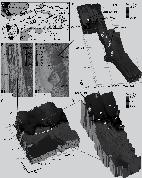
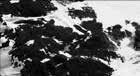
The vent sites lie just south of the segment axial high (called the Mermaid's Purse), between 56° 5.2 and 56° 5.4 S and between 30° 19 and 30° 19.35W at ~2,600 m depth. Prominent north–south structural fabric to the seafloor defines a series of staircased, terraced features that are divided by west-facing scarps. A major steep-sided fissure runs north–south through the centre of the site, between longitude 30° 19.10W and 30° 19.15W. The fissure is filled in places by lobes of pillow basalts, and the main hydrothermal vents are located at the intersection between this main fissure and a west–east striking fault or scarp, consistent with the expected location of active venting on back-arc spreading ridges. Relict (extinct) and actively venting chimneys are resolvable in the high-resolution multi-
BLACK SMOKERS
beam bathymetry obtained by the ROV Isis, clustered in a band running approximately northwest–southeast. Numerous volcanic cones and small volcanic craters are also apparent around the vent field. Chimneys of variable morphology were up to 15 m tall and venting clear fluid with a maximum measured temperature of 352.6°C, which formed focused black smokers on contact with cold seawater. Some of the chimneys have expanded tops with hot vent fluid (>300°C) emanating from the underside, similar to the flanges found at North East Pacific vents. Diffuse vent flow was observed at a variety of locations, with temperatures varying from 3.5 to 19.9°C, compared with a background temperature of ~0.0°C. Around the periphery of the active high-temperature vents and diffuse flow sites are microbial mats that form a halo around the venting area.
Extraterrestriin Santa Barbara
Perhaps the enanalogous to Euin East Antarctispans 10,000 square approximately oving glacial ice. subglacial lakes lowest stocks of viaHowever, hotspots which maintain the local sources of more favourable environmental concomparable to those surdrothermal vents. tap into the lake been initiated to do Lake Vostok prosustaining processes of the subglacial scientists with a analogue and a test-bed
The vent sites are situated between 60° 02.5 and 60° 03.00S and between 29° 59 and 29° 58.6W, at ~2,400 m depth, amongst relatively flat sheet lavas to the north of a major collapse crater (named the Devil's Punchbowl). The ridge axis is heavily crevassed and fissured, with numerous collapse features, lava drain-back features, and broken pillow lava ridges. Major fissures run north-northwest–south-southeast through the site, breaking up an otherwise flat and unvaried terrain. Topographic highs in the centre of the study site are possibly dead magma domes, with no hydrothermal activity around these sites. Most active venting appears to lie along one of the smaller fissures, west of a main north–south trending feature. Diffuse flow and black smokers line the feature intermittently, but activity becomes reduced and dies away farther south, towards the “punchbowl” itself. The chimneys were either emitting high-temperature fluids with a maximum temperature of 382.8°C (Ivory Tower) or had lower temperature diffuse flow between 5 and 19.9°C (Car Wash vent).
Low-temperature diffuseflowwasassociat-
BLACK SMOKERS
The Discovery Southern Oce 2012, Photogr
Source: Roge (2012) The Disc the Southern Ocean and Implica Credit: A. D. R BLACK SMOKERS
Photogr
drothermal vents. tap into the lake initiated to do Lake Vostok prosustaining processes the subglacial scientists with a and a test-bed the design of unto Europa.
Research for ExtraterExtraterrestriLos Angeles
mittently, but activity becomes reduced and dies away farther south, towards the “punchbowl” itself. The chimneys were either emitting high-temperature fluids with a maximum temperature of 382.8°C (Ivory Tower) or had lower temperature diffuse flow between 5 and 19.9°C (Car Wash vent). Low-temperature diffuseflowwasassociated with fissures and fine cracks in the sheet lava; the background temperature varied from −0.11°C to −1.3°C.'
(source: http://www.plosbiology.org/article/info:doi/10.1371/journal. pbio.1001234, Credit: AD Rogers University of Oxford and NERC CHESSO project) 0
questions, in the past come to a realliquid water on have found that extreme contemperature, radiation, all been overin the presence of the convenble zone in the the revelation extreme envipossibility that life environments
extreme environVostok and the hycommunity in the Gulf of be good chancropa. Moreover, in the deep: in hydrothermal vents of meet extraterres-
Research for Extrater-
BLACK SMOKERS
Hydrothermal vents tres below sea lev 2012, Photograph Source: http://ww jpg (7 October 20 Credit: MARUM
ICE CAP
2013, Satellite image
Source: https://upload.wikimedia.org/wikipedia/commons/2/23/Antarctica Ice Cap_NASA.jpg (7 October 2013)
Credit: NASA
UNDER THE ICE CAP 2013, Satellite image
Source: http://www.wired.co.uk/news/archive/2013-06/07/antarctica-bedmap2 (7 October 2013)
Credit NASA/Goddard Space Flight Center
Credit NASA/Goddard Space Flight Center
BLACK SMOKERS
The Discovery of New Deep-Sea Hydrothermal Vent Communities in the Southern Ocean and Implications for Biogeography 2012, Computer generated images
Source: Rogers A. D., Tyler P. A., Connelly D. P., Copley J. T., James R. et al. (2012) The Discovery of New Deep-Sea Hydrothermal Vent Communities in the Southern Ocean and Implications for Biogeography (7 October 2013)
Credit: A. D. Rogers University of Oxford and NERC CHESSO project
BLACK SMOKERS
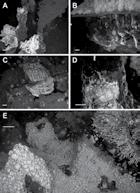
The Discovery of New Deep-Sea Hydrothermal Vent Communities in the Southern Ocean and Implications for Biogeography 2012, Photographs
Source: Rogers A. D., Tyler P. A., Connelly D. P., Copley J. T., James R. et al. (2012) The Discovery of New Deep-Sea Hydrothermal Vent Communities in the Southern Ocean and Implications for Biogeography (7 October 2013)
Credit: A. D. Rogers University of Oxford and NERC CHESSO project
Dear Marguerite, My apologies sponding to your representing and you've asked tions, we can talk Having ity, I'd be happy communicate Vostok. I'm delighted one read about Our design Europa, but we probe could prove Vostok. My contribution the communication tween the probe ice surface. The cies, not acoustic ice and sound what I have read I may be that was working was an expert provide you with tion. He has since find his contact time, I'd be happy the acoustic vibration lenges.
Sincerely
Hello Marguerite, I've done es for bacterial waves. I found Allan Widom: http://ph oretical-physicists-expla ria-radio.html Is this what dio frequencies which penetrates quencies
was talking about the possibility of finding life in the only unexplored place on Earth: the deep and dark waters of Antarctica. The expedition leader was speculating on microbes and other unfamiliar creatures living in these obscure lakes and rivers. He was explaining that these creatures may be trapped under the ice in the subglacial waters or in the cold oceans around the continent, as close as one could imagine to the centre of the Earth.
the communication tween ice surface. cies, not ice and what I I that was was an provide tion. He find his time, I'd the acoustic lenges.
es for bacterial waves. Allan Wi http://ph oretica ria-radio.html Is dio frequencies which quenci need to pers on getting ter boundard, boundary lakes. trate the However, searchers could ge T terial radio ably going It's possible ry, but eters of of equipment receiving er that frequencies ers are na would built h must be. If a signal how big However, sensing eral kilometers ing radio sense radio across Do nal you
Had they been to Antarctica to land Nazi treasure or officials?
It has been demonstrated: that the two U-Boats could not have reached Antarctica; that there was no secret wartime German base in Dronning Maud Land; that SAS troops did not attack the alleged German base; that the SAS men in the region at the time had civilian jobs; that Operation Highjump was designed to train the US Navy for a possible war with the Soviet Union in the Arctic, and not to attack an alleged German base in Antarctica; and that Operation Argus took place over the ocean more than 2000 km north of Dronning Maud Land. Activities that were classified have subsequently been declassified and it is no longer difficult to separate fact from fancy, despite the fact that many find it attractive not to do so.
Best regards, Department
of Cold Histories
NAZI STATUE
An attempt to design the Nazi treasur blockhouse. 2013, Computer generated image
despite the fact that many find it attractive not to do so.
Best regards, Department of Cold Histories
MYSTERIOUS MISSION
The seal of the German Antarctic expedition 1938–1939, Distorted image
BLOCKHOUSE
An attempt to design the blockhouse which is supposedly stuck in the ice in Antarctica, near the Vostok Lake. 2013, Computer generated image
Department of Conspiracies (Michael United Nations) to Marguerite Humeau, in Nevada 30/11/2012
Marguerite
yes the object is like the face on mars. there is also an ancient vimana that was recovered by us military. it had been taken out of the air with byrds nuclear blast. from 1932-1961 between 4-6 us nuclear bombs were detonated in east antarctica. byrd spoke of craft on tv and unbelievable things they later removed satallite data from ge. it is the place germans supposedly met a race of beings then built an underground base still in use today. there wre 3u boats with snorkles and germany now has mini subs for traveling to this base. I do know a lot more like the tunnels in poland hitler planned a lhc to destroy god after the tunnels was completed russians and uk us were destroying facilities so hitler had it made into weapons facilities. the bells were later operated from there. we learned genetic engineering from german scientist and later before 1978 we began a genetically mod
Extract from : Close Encounters of the Third Kind, Steven Spielberg 1977
• Oh my god.
• Amazing.
• Mothership. Mince alors.
• Is everything ready here on the dark side of the moon?
• Play the five tones.
• X X X X XXXXXXXXX
LOW
Letter Department
Marguerite
Hi It
Your previous tribution your suggestion Vostok zy for me. found nothing not in the if you want acoustic with the is potentially pensive. under ground high resolution. Be Departm Vibra
Letter Department
Marguerite
17 SHOOTING IN THE VOID
Letter 54 :
Department of Applied Ocean Physics and Engineering to Marguerite Humeau, in Sacramento 01/03/2013
Hi Marguerite,
Thank you for your very interesting letter.
I have followed the US drilling project, which was reported in summary form here, likely you've seen this as well:
They have taken considerable care to not contaminate the lake, and hopefully they were successful in that regard. There have been worries that the Russians have not been so careful in their project on Lake Vostok.
On communications: I don't believe that the microbes have any means of communication, and news of any more advanced forms of life (e.g. aliens), has not made it into the mainstream science press, so I'm not sure any means of communications would be relevant yet.
Just to answer your question however, pressure waves do travel through ice, but as you correctly observe they need to be similar to those used for seismic exploration, e.g. air guns or explosive charges which are impulsive. The methods that we employ for acoustic communications work well in the ocean, and though low frequency acoustic signals do travel as shear waves in Arctic ice, I'm fairly sure they would not travel well through hundreds of meters of ice.
So modulating a communications signal would require a means of creating a high pressure wave that could then contain 'data' of some kind. This is certainly feasible, for example using a vibrator such as developed for seismic exploration. There are several patents for this type of equipment, including: http://www.google.com/ patents?hl=en&lr=&vid=USPAT4014403&id=v0YuAAAAEBAJ&oi=fnd&dq=vibrator+truck,+seismic+exploration&printsec=abstract#v=onepage&q=vibrator%20truck%2C%20seismic%20 exploration&f=false
Regarding detecting creatures in the lake: Use of seismic signals for detection of small objects would be very, very difficult because their resolution is low. That is one reason why the depth of the water under the ice for the US drilling project was overestimated (it was found to be 2 m while the seismic study estimated 10-25). So even detecting something as large as a whale would be very difficult.
So I'm afraid I can't be of much help, but thanks again for your email which alerted me to your success in recreating the 50M year old dinosaur vocalisation, which was fascinating and extremely creative!
Best regards, Department of Applied Ocean Physics and Engineering
VIBRATIONS IN BETWEEN
Letter 55 : Department of Seismic Sounding to Marguerite Humeau, in Sacramento 10/03/2013
Marguerite, I don’t deal with 'natural ice' at all. You may try to contact Prof. Georgia Esther, whom I am copying with this email.
Department of Seismic Sounding
Marguerite
all.
Esther,
19 THE ASTRONOMICAL FACTOR
Letter 56 :
Department of Seismic Sounding to Marguerite Humeau, in News Orleans12/03/2013
Hello Marguerite,
I am not a specialist on seismic sounding, but I don’t think it could discern between a creature and other stuff on the bottom of the lake.
Best wishes, Department of Seismic Sounding
Letter 57 :
Department of Physics and Physical Oceanography to Marguerite Humeau, in Dallas 22/03/2013
Hi Marguerite; in my usual behind on everything mode and yup tight for time ...
There is ice penetrating radar (microwave) but it would not even resolve a fish, forget about any possible microscopic life in lake Vostok. Seismic probing is also very coarse resolution. I just did a quick calculation for sound: a 1 kHz signal (which couldn't resolve anything less than a few meters in size) would be attenuated by any astronomical factor in traveling through 3 km of ice (@ 3* 10^133). Note, resolution abilityis inversely proportional to frequency. A 10 Hz signal would be attenuated by a factor of 20 in straight line travel, but signal spreading on top of that would increase the attenuation by a much larger amount (by a factor of order a million or so). So sound communication is highly unlikely (and for sure we could not detect any signal from the lake).
Department of Physics and Physical Oceanography
Letter 58 :
Department of Physics and Physical Oceanography to Marguerite Humeau, in Dallas 08/04/2013
Hi Marguerite;
They can map at coarse resolution. The wavelength of the vibrations (inversely proportional to frequency) must be smaller than the required resolution. Short wavelength signals (e.g. millimetre, corresponding to potential organisms in the lake) get attenuated very strongly. The seismic mapping must have been done at 100 metre or larger wavelengths. I've attached an example article, and you can see that the horizontal resolution is only about a km (otherwise there would be much higher spatial variability in the signal).
Department of Physics and Physical Oceanography
TELEPATHY I
Letter 59 :
Department of Human Counsciousness to Marguerite Humeau, in Santa Fe 01/04/2013
Re/ Song of the Siren: A parapsychological Odyssey
I am about to leave town but will forward your letter to some colleagues who might be interested in this project. I will read it again when I return.
Department of Human Counsciousness
Letter 60 :
Department of Telepathic Interspecies Communication to Marguerite Humeau, in Santa Fe 10/04/2013
Hi Marguerite
I’m a PhD candidate psychology student of The Song of the Siren, who thought we might have a shared interest. (He’s off to a conference until the end of next week and forwarded your email.) My dissertation research to begin soon will explore telepathic interspecies communication between human and animals. From what I have read about Vostok Lake and the hydrothermal vents, it seems that scientists may have found a bacterial form of life not previously identified, which, frankly, also describes many of the plant and life forms in Peru. I’m interested in why you think this bacterium may be an (almost) alien life form?
I’d be happy to have a conversation about telepathic communication with other life forms, via email or Skype. You might want to also review some of my published and unpublished work on my website .
Looking forward to hearing from you!
Department of Telepathic Interspecies Communication
“Lots of people talk to animals,” said Pooh.
“Not many listen, though, that’s the problem.”
Benjamin Hoff, The Tao of Pooh, pg. 29
Letter 61 :
Department of Telepathic Interspecies Communication to Marguerite Humeau, in Santa Fe 12/04/2013
Hi Marguerite;
Sorry for the delayed response. I started my recruiting efforts for my dissertation research and was hoping for 20 human guardian/canine teams. I was overwhelmed with responses and now have 50 signed up and another 30+ on a wait list for future research projects. So it’s been quite an administrative task keep track of all these people and get sessions scheduled and conducted…..
How about next Saturday, 5/18 at 3 pm Pacific time? That would be a good time for me, does this work for you?
DepartmentofTelepathicInterspecies Communication
“Lots of people talk to animals,” said Pooh.
“Not many listen, though, that’s the problem.”
Benjamin Hoff, The Tao of Pooh, pg. 29
N NARRATOR
Proposal for :
Serenading Extraterrestrial Creatures with Stunts, Vibrations, Light, Chemistry, and Live Magic.
My intention would be to coax the creatures to reveal their secrets by re-enacting stories that happened in Antarctica that the creatures might have witnessed. By adding a fantastical twist to each of these stories, specially crafted fictions would be invented for these beings.
reveal their re-enacting happened that the might have add-
21
TELEPATHY II
Letter 62 :
Department of Telepathic Interspecies Communication to Marguerite Humeau, in Santa Fe 15/04/2013
Ok, we’re on for Friday the 14th at 3 pm Pacific Coast time.
See >> below for other…..
d
From: marguerite humeau
Sent: Monday, May 27, 2013 10:13 AM
To: Department of Telepathic Interspecies Communication Subject: Re: Serenade for (almost) aliens in the Vostok Lake
Dear Department of Telepathic InterspeciesCommunication,eitherSaturdaythe 15th or Friday the 14th would work. Let me know what is better.
I would like to ask you a simple question: Do you think it is actually possible to do telepathy with a bacteria?
>>> I believe a telepathic connection can be made to trees, rocks, all objects of nature as I’ve done it. You don’t get “meaning of life” information from them but trees in particular sometimes have a lot to say. Why not with bacteria? Connecting with swarm insects like ants, wasps or bees you are basically connecting with the hive consciousness, not with an individual ant, wasp or bee. I would suspect bacteria would be similar…..
Can a robot do telepathy? (If I would like to send remotely controlled robots in Antarctica, do you think they could do telepathy with the bacteria?
>>> Hmmm I would guess not, only because a robot is not organic. Can a metal lamp communicate with a wood chair?..... Hmmmm not in my perspective. One or both sides of the communication have to be at least organic, if not sentient.
“Lots of people talk to animals,” said Pooh.
“Not many listen, though, that’s the problem.”
Benjamin Hoff, The Tao of Pooh, pg. 29
Letter 63 : Department of Telepathic Interspecies Communication II to Marguerite Humeau, in Las Vegas 20/04/2013
Hi Marguerite, Thank you for your email and thank you for resending it because your first email did not arrive here.
What kind of language they use and how do you translate it?
Iusetelepathy.OvertheyearsIhave tounderstandthislanguagewell. anyotherlanguage.Practicemakes Can you "ask questions" the animal you are talk ing to?
Absolutely,againitisliketalking Icanask,tellandviceversa. Do you think you could this from a distance? Ihaveclientsallovertheworldand alsocommunicatewithsoulswh bodyatthistime,sodistanceor notanissue.
Do you have any idea/ vices on how I could pro ceed to communicate the potential creatures habiting this lake? Youreallyhavetopractice.Some takesyears,otherswillneverreally entinit,eventthougheveryoneis lepathyallthetime. Youwillcommunicatewiththes youprobablywillnotbeaware beginningandsoprobablywillnot theyaresaying. Itisalsoimportanthowyoucommunicate, i.e.whatyouaresaying.
Thanks for your help! It would credibly valuable to have your opinion your advices on this project I hope my answers are of help Please keep me posted on thi
Many thanks.
Have a lovely day, and all the Marguerite
Have a wonderful day too.
Department of Telepathic Interspecies Communication
Letter 65 :
Department of Telepathic Interspecies munication II to Marguerite Humeau, gas 26/04/2013
Hi Marguerite, You are so welcome. On 2013-05-01, at 5:42 AM,
humeau wrote:
Dear Department of Telepathic species Communication II, Thanks a lot for all your answers. There is a last set of questions like to ask if you don't mind. I wo terested on having your take on this. Let's say I want to organise a telepathic session with the creatures inside the Vostok Lake. I want to them questions like "Are there ancient palmtrees the Vostok Lake?" How would you do this? Would there need to be many people trying to to them or only one person would be enough? Youcanhaveasmanypeopletalking themasyouwish.However,Iwould chooseoneortwopeopleIreallytrust.
Don'tforget,peoplewill'hear'
literallysensethatthere presentto“attack”the surface,whichisdetthatneedstoexchange rface(bacterialcoloniexchange). So,whatisa supposedtodo? Well, mechanismwhereby atmimicksthequousedbythebacteria toattack,butmimjustenoughtoblock bacterialcellsurface operlysensedbutthe triggertoattack. The n-disguisechemicalsignal quorum-sensingandsaves ialattack/colonizamaginationrunwiththat... we could about that? I that you must be busy, I would appreciate it if we exchange maybe you ne else who me.. “pitched”theabovedisderstandablelevelornot, potentialhereforyour hopethishelps. With coulddreamupthe ienskindofscenario that’syourjob,no?! about--thanks, UnderwaterCommunication
Communication oplankton) to MarOrleans 22/06/2013
esting question, but I me... communities are lumiinvolvement of bacteria. surprised if the subglacial luminous bacteria (which hydrothermal vents minous bacteria. artificialbacteria to comproduce bi? organisms:bacterialare organisms. ioluminescence only movement (for flow) or triggered by ? Or by sendartificial pherochemicallyorby
any other way see/ hear that communicate? bioluminescent only ones to see them communicate? communicationisnotbylight, chemicalsignals. believe that exlike the ones subglacial different ways municating togeththink there language microbs? widespreadamong
think we could about that? I that you must be busy, I would appreciate it if we
32 BLOCKBUSTERS
IN THE VENTS
Letter 91 :
Department of Underwater Soundsystems to Marguerite Humeau, in Miami 25/06/2013
Hi,
You should have no problem buying an underwater sound emitter for frequencies 0.9 to 20 or 40 kHz. This would not cover low frequencies and fundamental human voice frequencies in the hundreds or hertz range. These are standard sound emitting devices designed to be used underwater (wet, in electrically conductive seawater, under pressure, and so on). You can make any sound you like, in the frequency range of the device. (Transmitters below 900 Hz get very expensive and transmit tones, not broad ranges of frequency.) Some can be dipped to any depth, some not. Keep in mind that sound absorption in sea water is a function of frequency, which you should be able to look up, so if you make sound far from the place where you want it to go, it can be distorted, with the high frequency sound being attenuated. Any audio technical person will understand how to correct for this.
I really can’t help you much beyond that, I am not an engineer or equipment builder.
Are these vents on the East Scotia Ridge?
Best,
Department of Underwater Soundsystems
Letter 92 :
Department of Autonomous Underwater Vehicles (AUV) to Marguerite Humeau, in Miami 25/06/2013
Hi Marguerite
Someone forwarded me your email, and it looks very interesting!
It sounds like you’re attempting to provide audio and visual displays at a certain depth in the ocean. What depth is this? Out of kindness to the aquatic life, it would be better if you brought the projection equipment to the necessary depth and transmitted at low power than to sit on the surface and transmit at high power.
There are a variety of depth-rated hydrophones available commercially (e.g. http://www.benthos.com/index.php/product_ dashboard/hydrophones).
There are also several options you might use to be able to project light from a glass pressure vessel. The right equipment for you will depend on what your specific goals are.
Am I addressing the right questions?
Best, Department of Autonomous Underwater Vehicles
33
EXTRA TERRESTRIAL APPLAUSE
Letter 93 :
Department of Hydrothermal Vents to Marguerite Humeau, in South Antarctica 29/06/2013
Marguerite
To answer your questions, if you trick them into thinking that you are part of them in order to trigger a response using sound and artificial chemicals (in this case, lactone), the creatures might respond in these ways: light or chemicals, (and maybe sound). There might be other ways, as most of these creatures are still alien to us (some of them are still to be discovered). But it is likely that you will get at least chemical responses, as quorum sensing is a widespread means of communication among micro-organisms.
Proposal for : Serenading Extraterrestrial Creatures with Stunts, Vibrations, Light, Chemistry, and Live Magic.
In a few months, an expedition yacht will depart from the southern point of South America with the destination of Antarctica. Its mission: to produce the first blockbuster for these creatures.
Typeset in : Sallando Headline by MAAD, Suisse by Swiss Typefaces
Printed : Printing Workshop, Renens
Production : The Warped M
Thanks to Le Studio Humain for their precious help.
The Melendez Family
Noam Toran
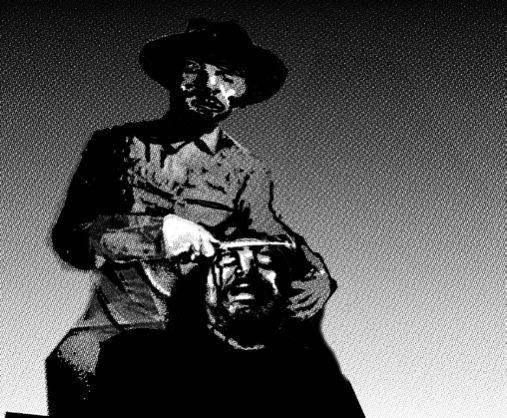
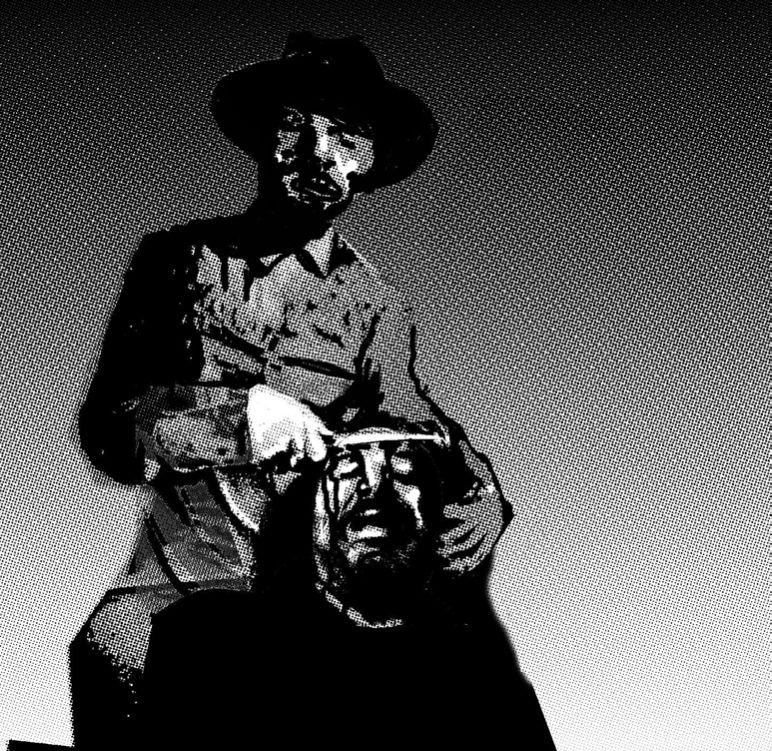
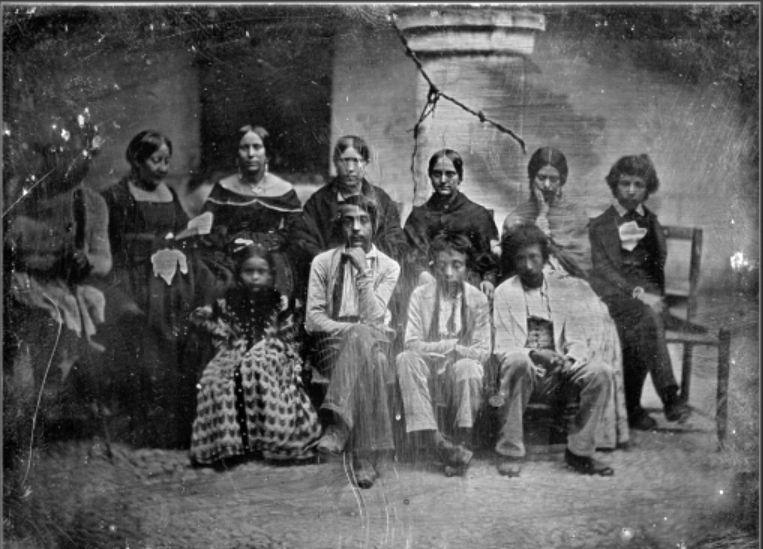
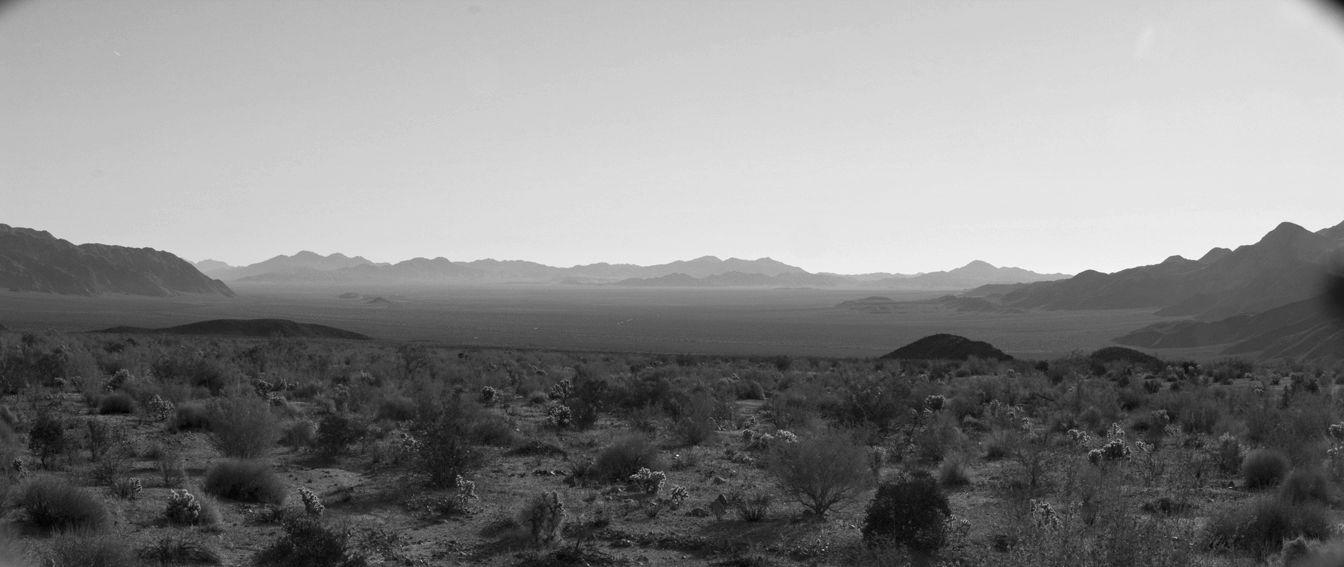
The work was produced during a two month residency in Marfa, Texas, and is part of the project Two Rivers and a Desert in Between, a narrative and cinematic meditation on the ‘West’ as a problematic imaginary geography, more ideal than place.
With the grateful support and generosity of Alexandra Midal, the Fieldwork:Marfa residency program, Keith R. Jones and Richard Glover.
THE MEL ENDE Z FAM IL
THE MEL ENDE Z AM ILY
BALL ADS FOR LOS SCAL PS
ALL ADS FOR LOST CAL PS
In the Albuquerque suburbs:
They saw a mountain lion poach a three-year old boy, who was riding his tricycle on Ponderosa Street.
His father ran after the lion and scared it off.
The child survived, but was scalped.
And once:
They drifted through the White Sands of Otero, a vast gypsum desert which had swallowed up the remains of an ancient race.
Occasionally terrible windstorms would unearth artefacts: Yellow, thin, diamond shaped totems, upon which were painted black symbols which had yet to be deciphered.
Above the mines of Caldera:
After passing through three natural tunnels, they emerged into a narrow canyon made completely of granite rock. At the end of the canyon stood a 50-foot waterfall. At the base of the waterfall was a giant boulder.
On the giant boulder was written in white paint:
“Go home, you fucking tourists”.
The prisoner said:
I came from Kansas, was too old to work and had no pension. I was desperate. A local told me about a scheme running drugs across the border: Four drivers, Four cars, Ten thousand dollars. You drive into Mexico, pick up the drugs, and head back over the border.
The Border Patrol is aware the four of you are coming, and has pre-arranged to stop only one of the four cars. It’s like an import tax. None of the drivers know which car will be stopped, they just know they have a three in four chance of getting past and making their money.
So, here I am.
A week later:
They stumbled across the Sonoran desert at night, saddles in hand, needing to keep moving or else die of cold. The sky was so clear that the Milky Way itself made them cast a shadow on the ground. Three days later and dying of thirst, they came upon a trapper who gave them water and jerky, but had no good news to tell them. He had come deep into the desert to die alone.
The trapper spat and said,
You can look in any direction and see nothing for 50 miles. If you stand on a tin can, you can see it for 100 miles. I came this far to spend my days with the maker, and I’ll be damned if I’m going to spend my days with you instead.
He gave them five days rations and bade them good day.
The story goes:
Little Boy was a half-wit and mean, and unaccepted into the small world of the pueblo. He lived wild in the Jemez canyons.
They caught him one night, screwing Bear Robe’s dog in the community barn. The dog had been muzzled and tied. When asked why, he just said: Revenge.
In the Big Bend:
As night fell they came across an old abandoned pueblo and sought refuge from the storm in a derelict church, empty even of pulpit or pews but with a strong roof.
In the morning they investigated the pueblo to discover, where the stucco had cracked away, everything to be made of masonry blocks. It was a film set.
Driving up the Mesilla Valley:
They came across the Caballo cemetery, where they saw an infant’s grave overwhelmed by yellow toy dump trucks, tractors and diggers.
The caretaker said,
The parents come every Sunday to play with the child, who is now five, and interested in construction.
Later that evening:
They ate dinner with the Melendez family. Blood forever pouring into their eyes from their severed foreheads, the father, mother, daughter and son walked blindly, arms outstretched, one foot cautiously in front of the other, surviving of the charity of others, towards what they thought was Juarez, with the hope that they would one day reclaim their scalps.
On the road:
They visited the fresh grave of Shorty Lee, a cowboy struck by lightning while riding his horse in Lincoln County, New Mexico.
The horse was found dead two miles away, having caught fire.
Making slow progress through a sandstorm:
They saw the ghosts of a man and his boy wandering across the dunes, hand in hand. Every now and then the boy would tear away from the father and run down a sand embankment, tumbling head over heels until reaching the base. Then the child would pretend to dust his ghostly body off, and hike back up to his waiting father.
The nurse said:
I had to remove the pellets from her back, 33 of them. She didn’t scream once. She just stared straight ahead.
Let me tell you something. If you shoot a woman you better kill her.
Horseless: ough the nada del Muerto desert t
Walking northwest through the Jornada del Muerto desert towards Socorro, they came upon an immense crater, seemingly lacquered with a green glassy substance, that glowed faintly at night.
Like something out of science fiction.
Dead now many years:
They floated over a band of twenty San Elizario farmers heading to the salt lagoons below the Guadalupe Mountains. Upon arriving to this ancient seabed of salt, the farmers split into two groups. One group mined the graben and filtered the salt into pack bags. The other group hunted game in the region and returned at dusk to the salt beds to preserve meat and cure hides.
This went on for a week until everything was loaded onto the burros, the intent then being to head south to sell at the Chihuahua and Sonoro markets. But just as they were set to leave, a band of Apaches, who had been patiently waiting for the farmers to do all the hard work, rained down upon them from the mountains, killing all and guiding the weighed down burros back up to their encampment.
IN EQUILIBRIUM
Illegal Town Planning
Jimmy Loizeau
Prototype: Rhyl: Mk-1
This proposal explores the development of a “fictional town plan” and how this might be used as a platform or working structure to assemble and represent large scale fictional visions of the local community.
Individuals who are affected or implicated through town planning are rarely offered an opportunity to comment on the organization and direction of their communities, it’s architecture and it’s economic infrastructures. This project aims to create a review of a towns history and playful speculation of various futures.
The intention of the proposal is not to present a viable scheme to be physically realised, but to create a forum through which local ideas and critiques of the history and the future of the town might be discussed and presented through a tangible outcome that will take the form of a Fictional Town Plan.
I’m from a seaside town that was in slow decline since its zenith in the late 1900’s. I grew up in a
town that had lost its way, lost it’s seaside allure and anyway to cope with itself. Its identity slowly eroded and attempts to reinvigorate it were misguided and only sped up its demise. In this town, it seemed that a whole youth population was indifferent and immune to the machines and rides that enticed holidaymakers and day-trippers to the town. Existing on the same stretch of street as the amusement arcades where we were conditioned to gamble was Woolworths: the function of which blurred from paid for commodity to adventure playground. We lost our money in the Arcades and then went to Woolworth seeking thrill by stealing what we had no money left to pay for. The arcades were where we ‘hung out’; Woolworths with the amusement arcades blinking lights still imprinted on our eyes was where we got Dexy’s Midnight Runner tapes our excitement. First exploration of the history of Rhyl reveal multiple, failed visions of Architecture and ‘progressive, futuristic’ transportation. The mono-rail that ran along the promenade occupied a stretch where traditionally you were to meant stroll leisurely with a view of the sea and the wind and salt on your face.
Monorail Mania
The mono-rail wasn’t really anything apart from a slow motion ride that transported people to the fairground; slow, stunted, ‘pseudo-futuristic’ transport carrying people from East side amusement arcades to West side amusement arcades, or from West parade hotdog stands to the East parade hotdog stand.
The mono-rail despite it’s retro-space aesthetic did nothing except perhaps contribute to a few holiday waistlines. It went almost nowhere.
Meanwhile economies of cheap air-fares were being built as a way to transport the masses to overseas holiday destinations. Rhyl was about to compete with the Costa del Sol and Benidorm in a mis-matched holiday destination bout. Rhyl quaked in cold damp shoes and tried to compete by creating heated indoor seaside architectures with synthetic waves and yet another monorail that served even less of a purpose than the failing outdoor version.
The custodians of reality have failed. We need to look at something else.
In this exploration, failed visions are reviewed and become the material content for the production of a new fictional architectural narratives, narratives with increased ambition and an amplified sense of spectacle, they are unhindered by budgets, bureaucratic compromise and planning regulations. In short they are released from reality.
Like the fairground along the beach they operate in a space of suspended reality.
The mono-rail was that it was not really a transport system and it was not a fairground ride, it went nowhere, it was slow and no-one really knew if they wanted to get there anyway. A destination usually requires a journey and the monorails’ route did not really constitute a journey. Its sole function was to serve as a transport for punters to go between gambling venues and candyfloss vendors. The sea and the sunset to be experienced for a moment on a slow rolling, single railed vehicle with curved glass. The mono-rail had no destination no real function or a real reason to exist. It stood as a relic
from a trade fair set even further back in history. With financial limitations and a lack of understanding of shifting economies and the emergence of affordable destinations, too many of Rhyl’s attractions failed due to historical and cultural distancing, limited ambition, direction or destination.
The arrival of cheap air fares that provided cheap access to Ibiza, Majorca and the Costa del Sol and their promise skin reddening climates. The promise of good weather for the mono-glot masses, along with imported Chicken and Chips and menus translated into English circumnavigated any cultural challenge and proved too tempting for the hedonistic British masses who quickly saw the town for it’s failing spectacles, house biased gambling machines and the polluted Irish sea. The damp North Welsh coast could not compete with the new accessibility of Spanish beaches.
Seemingly encumbered with it’s crumbling Victorian history and architecture at the mercy of time, developers and fading allure of the arcades and fairground, Rhyl no longer needed a monorail or a hover-craft service, it needed an airport and a departure lounge to Spain or an alternative plan.
Atemporal image. Cross referenced extended Victorian glass structure, 1970’s post card (repeat cut and paste) with Google street view. Foryd bridge time condensed and scaled up showing elephants, free runners and non-organised transgressors.
5 - 7 Seater Vollwagon Sharan. Proposed route A to B to C. With deviation to anecdotal POI’s along route included in Taxi fare. Max fare £75 +tip.
Taxi driver.
Archiver.
Historian. Journalist.
Designer. Local Artist.
A new kind of ‘planning team’ is proposed as an alternative to the present bureaucratically and economically stunted system. The normal development consortium made up of town officials, planners and investors are replaced with a new specialist team made up of photographers historians taxi drivers and journalists and amateur artists. The designer exists as a kind of compere initiating threads and trying to build a cohesive fictional planning narrative. It is hoped that the team will provide anecdotal stories about the local town that include its history of the places and the people that can be mined and deployed as fictional building materials. These building blocks will then be arranged and constructed into a new vision with an expanded or totally new programme for the town.
The first consultation of this team should take place in a 7 seater taxi Vauxhall Sharan or Toyota Lucida or a Skoda Octavia. A route will be planned based on suggestions from the participants with the intention of generating a broad spectrum of narrative. The first consultation will be limited by the taxis
tacometer and the journey will end at £75 the route and activities on the way will be organised through a ‘content timeline’ during the ride we will film the route and where possible film and record conversation and subject matter.
In this prototype exploration of the re-design of Rhyl, the town exploits its own history as a material building block in conjunction with the technologies of the present and future. Instead of the controversial wind-farm, situated some 5 miles off the coast, being treated as a blight on the sea-scape, it becomes a destination that celebrates it’s own spectacle of massive kinetic scale. The eighty-meter blades of these turbines reach further into the sky than the ambitiously named Sky Tower, which now lies in a state of dereliction on the promenade, a mobile phone antennae strapped to its top is its only revenue.
In the new town plan people are transported to the wind turbines via a five-mile pier reminiscent of the floral hall where they will find an offshore gambling centre and fair ground set between the spinning turbines. The new sea-view now relates to the view of another time and with our backs to the turbines we can watch an un-disturbed sunset as it drops into the Irish Sea.
Over time, the aesthetic of fairground, amusement arcade and wind turbine might begin to merge in a spectacular kinetic light show. Served by a five mile sea walk through a partially glazed neo-Victorian structure that is occupied by exotic plants that create a backdrop for Spanish dishes, quaint mechanical gambling and various interspersed fairground inspired modes of transport.
The promenade was a repeating stretch of blinking electric lights of the arcades, punctuated by kiosks
selling mechanical meat served between synthetic bread in a flashing, mile long facade that faced North West towards the sea. Pockets were emptied of considerable amounts of change and slotted into the thousands of fruit machines that extended along the entire length promenade. We didn’t spend our money on beef burgers, candy floss and seaside confectionary because we’d spent our money on seeking some kind of gratification though low level gambling.
THE SOCIAL MINING UNION
The rule book
RULE. 01
RULE. 02
RULE. 03
RULE. 04
RULE. 05
RULE. 06
RULE. 07
RULE. 08
RULE. 09
RULE. 10
RULE. 11
RULE. 12
RULE. 13
RULE. 14
RULE. 15
RULE. 16
RULE. 17
RULE. 18
RULE. 19
CONTENTS
INTRODUCTION
OBJECTS
MEMBERSHIP
MEMBERSHIP DONTATIONS AND BENEFITS
OBLIGATIONS OF MEMBERS
LAY OFFICE
REGIONS
EQUALITIES
POLICY CONFERENCE
RULES AMENDENT
EXECUTIVE COUNCIL
GENERAL SECRETARY
ELECTION OF EXECUTIVE COUNCIL MEMBERS & GENERAL SECRETARY
SCRAP / DUTIES AND REPRESENTATION
FUNDS
MEMBERSHIP DISCIPLINE
OFFICIAL ANNOUNCEMENTS
VOLUNTARY DISSOLUTION
TRANSITIONAL PROVISIONS FOR SUPER ANNUATION
INTRODUCTION
The Union formed under these rules (hereinafter called the Union) shall be known by the title of “ The Social Mining Union”.
This Rule Book applies to all members of the Union, and represents the entirety of the rules applicable to members of the Union, save as explicitly provided for under this Rule Book.
The Registered Office of the Union shall be The Social Mining Union 37 Highclere Street Sydenham London SE26 4EX, or such other place as may be decided upon by the Executive Council.
OBJECTS
The objects of the Union shall, so far as may be lawful, be:
To organise, recruit and encourage the legal collection of scrap or waste and discarded metals, and strengthen social and community value within existing organisation and individuals to achieve access and power through the purchase of shares of publicly traded mining companies for its members and society in (general).
To defend and improve cultural capital of any given area where the union is applicable, including the pursuit of accessibility within global mining corporations as a shared and mutual asset for all union members.To help our members venerate a cultural understanding of their area, using the union’s resources to assist in individual support and combined members strength to aid in new social capital.
To defend and improve the socio-cultural, economic and environmental well-being of its members and the shared interest of all of humanity that wishes for cultural redevelopment, and or realises the importance of micronization in relation to the culturally rich communities that once existed around the peripherals of the mining industries.
To have a strong political voice, fighting on behalf of working and non working peoples’ interests, and to influence both the political and social agendas locally, regionally, nationally and internationally, so as to promote a culture within the global markets and industries.
To further political objectives including any governing bodies within localised and centralised departments of the areas with in which this union operates.
To promote equality and fairness for all, including actively opposing prejudice and discrimination on grounds of gender, race, ethnic origin, religion, class, marital status, sexual orientation, gender identity, age, disability or caring responsibilities.
To affiliate to any active membership groups and activist groups and other appropriate trade union cooperation/coordination bodies domestically and internationally.
To promote constructive cooperation between activist groups and applicable trade unions internationally to further the interests of members of The Social Mining Union and those in other unions in dealing with the direct and indirect impact of globalisation.
2.1.7 3.1 3.2 3.3 3.4
2.1.9 To promote education and training; both vocational and industrial and otherwise as conducive to these objects.
2.1.10 To do all such other things as may in the opinion of the Executive Council be incidental or conducive to the attainment of these objects.
MEMBERSHIP
The Executive Council shall define the categories of membership. Where the Union organises or represents persons engaged in an occupation or seeks to do so, any person engaged in that occupation shall be eligible for membership of the Union, subject to these rules.
3.2 There shall be a category of membership for those members who are unable to follow employment because of ‘any’ personal or non personal reasons.The Executive Council shall accept all applicants who seek membership.All membership shall accord an entitlement to vote in any ballot or election held by the Union including election to the office of General Secretary under rules 15 and 16, an election to any position within the Members’ Association or any ballot or election in which all members must by statute, be accorded an unconditional entitlement to vote, unless otherwise specified in these rules.
Any person may apply for membership by completing the appropriate application form agreeing to be bound by the rules of the Union and submitting it to the Union office or by electronic means as may be provided for via the Union’s website or directly given to a member of the Union including the General Secretary.An applicant shall become a member when his/her application has been approved and he/she has been entered into the register of members. Such approval process may require receipt by the Union of their voluntary donation if applicable under these rules.
Each member must notify the Union’s membership department of any subsequent change of address, and in the absence of such notice the Union shall be entitled to treat the address shown on that member’s application form as the member’s address for all correspondence. It is in the best interests of the Union to keep all personal information private and confidential and will not be given out to any third parties.
3.5 3.6
If an applicant has previously been a member of the Union (or any of its predecessors) or any other organisation including local community groups, activist groups and any such organisation,The Executive Council may, as a condition of admission or re-admission, require the applicant to give information that may help towards the Union’s goals, as stated in the rules.
The Executive Council may reject or remove membership if an applicant or member in its opinion has conducted or presents the motivation to conduct any illegal activity that would breach British and international law.The General Secretary will also take immediate action against the individual/individuals with the law and help to prosecute where applicable.
MEMBERSHIP DONTATIONS AND BENEFITS
4.1 4.2 4.3 4.4 4.5 4.6 4.7
It shall be the personal responsibility of the member to voluntary maintain scrap contributions. Members who are consistent in their donations will be awarded at the General Secretaries discretion.
The Executive Council and General Secretary shall determine the period of membership necessary, and any period during which any member is active within the Union.
The Executive Council and General Secretary shall determine the level of donations for each category of membership.
A member who requires advice and/or representation on a problem relating to the member’s social situation.The Union may provide such advice and/or representation as The Executive Council shall consider appropriate, whether by a full-time officer or otherwise, and on such terms as the Executive Council shall consider appropriate.
The Executive Council and General Secretary may provide such additional legal or non legal advice and representation to members and to members’ families as it may consider appropriate.
A member who is given advice and/or representation under this rule shall provide all relevant information and co-operate fully with the compilation of evidence for any legal proceedings and shall comply with any other obligations and/or conditions set out in any arrangements for the provision of legal assistance. If a member fails to do so or provides false or misleading information or fails to act upon the advice of those appointed to represent him/her, the Executive Council may at its absolute discretion annul all legal assistance or withdraw any further legal assistance to that member.
The Executive Council and General Secretary shall have discretion to provide additional benefits.
OBLIGATIONS OF MEMBERS
A member of the Union must comply with these rules and with any duty or obligation imposed on that member by or pursuant to these rules whether in his/her capacity as a member, a holder of a lay office or as a full-time officer.
A member must not knowingly, recklessly or in bad faith provide the Union with false or misleading information relating to a member or any aspect of the Union’s activities.
A motion shall not be submitted by or on behalf of the Union or any group or body within the Union to an organisation or body outside the Union if that motion is morally or directly opposed with existing Union policy.
When acting as a representative of the Union at a meeting of an organisation or body outside the Union a member shall speak and vote in accordance with the policy of the Union and with any decision taken by the Union’s representatives at that meeting which is consistent with the Union’s policy.
LAY OFFICE
The Executive Council shall make provision to ensure accountability of Regional and Industrial Executive Council members and those Executive Council members elected pursuant to rule shall meet with their respective National Committees at least four times per year.
In order to be eligible to be a candidate for election to, or hold office on, the Executive Council and/or any committee, council, or other body of the Union provided for by these rules, the member in question must be an accountable representative of the Unions cause, with the exception of Area Activists Committees and Regional Political Committees as specified elsewhere in these rules.
The definition of the term “accountable representative of workers” shall be in the exclusive power of the Executive Council, which is empowered to take into account changing economic and social realities and the unique nature of some industries (e.g. mining, marketing, PR, rural etc) in formulating such a definition.
It is further required that a fair procedure be developed by the Executive Council to deal sympathetically with cases where a member’s eligibility to stand for election or continue to hold office may be affected by personal or work-related issues.
The electoral period to hold lay office shall be three years unless otherwise provided for under these rules.
REGIONS
For the purpose of administration the Union shall constitute for local residents at current in the United Kingdom only with its direct focus on the Borough of Lewisham and its associated areas as follows:
1. Bellingham
2. Blackheath
3. Brockley
4. Catford
5. Crofton Park
6. Downham
7. Evelyn
8. Forest Hill
9. Grove Park
10. Ladywell
11. Lee Green
12. Lewisham Central
13. New Cross
14. Perry Vale
15. Rushey Green
16. Sydenham
17.Telegraph Hill
18.Whitefoot
Each area shall have a the same Committee of lay members.
The Committees shall have responsibility for the management of the Union’s affairs in all areas in conformity with their decisions as the acting Executive Council.
The area Committee shall have power to appoint one or more sub-committees from among its members of the Executive Council choice.
EQUALITIES
8.1 All constitutional conferences and committees of the Union shall have a gender and ethnic balance of elected representatives to the Union’s number of members which reflects the proportion of black,Asian and ethnic minority and female membership.The Executive Council shall ensure the implementation of this rule and shall report on its implementation to the policy conference of the Union.
POLICY CONFERENCE
The supreme policy making body of the Union shall be a policy based upon the original concept of the Union’s role within the global industry, this policy can at any time be adapted through proper discussion with Union members via The Executive Council members if they feel this is applicable to better the Union’s direct action and theoretical position in society for the greater good.
The General Secretary will produce a report if it becomes relevant in the form of a viva voce to present any alterations of policy or indeed findings from the Union’s members and activities.The opening policy will be carried out on the 23 of May 2014.
RULES AMENDENT
For the revision of the rules and constitution of the Union there shall be a rules conference which shall meet in every fourth year.The first rules conference shall take place in the days following the first policy viva voce which will be held at an exhibition space with any member or applicant who wants to change or effect the current rules in place. The rule changes must apply with Union ethos and morals and will only be considered if The General Secretary or a majority vote by Union members decide they are applicable with Union policy.
The rules conference shall be constituted as a general discussion with The General Secretary charing this meeting.
Amendments to rules may be approved by a simple majority of those voting.All current members may vote for new rules to be implemented.
The Executive Council including The General Manger shall be entitled to submit motions and amendments to motions to amend any new rules voted for by Union members if they,The Executive Council feel amendments or motions are needed within reason.
10.5 If in the opinion of The Executive Council there is an urgent need to amend the rules between rules conferences,The Executive Council may amend the rules by a resolution supported by not less than 75% of its members, provided that amendment shall cease to have effect at the end of the next rules conference unless it has been ratified by a resolution of that conference.
The Executive Council shall determine the procedure for nomination, qualification and election of delegates and the constituencies from which they shall be elected.
The Executive Council shall be in attendance at any rules conference, and its members may speak upon but may not vote on any subject.
Each delegate shall hold office until the next rules conference.
The Executive Council shall determine the number of rules motions which may be submitted by from the Union members at any time.
The rules conference shall be chaired by the chair of The Executive Council who is also acting General Secretary.
EXECUTIVE COUNCIL
Election of The Executive Council.
The election of The Executive Council shall be on the basis of representatives from the Union’s structure, representatives from the Union will all be considered for Executive Council if they themselves or another member of the Union put their name forward.
Elections to The Executive Council shall be conducted in conformity with guidance issued by the General Secretary from time to time.
The term of office for The Executive Council shall be three years.
No current or former employee of the Union, nor any current employee of any other union, is eligible to stand for, or hold office on, The Executive Council.
Members of the Executive Council who do not attend two consecutive meetings to which they are summoned, may be removed from office by The Executive Council if they fail to provide a written explanation of that absence to The General Secretary or if any written explanation provided is in the opinion of The Executive Council unsatisfactory. The Executive Council shall determine the guidance on the application of this rule.
The Executive Council shall elect a finance and general purposes committee provided that it shall include the chair of The Executive Council and the acting General Secretary.The Executive Council shall determine the number of members thereof.This committee shall meet not less than six times a year.This Committee shall also act as an emergency committee, and The Executive Council shall delegate to such Committee all or any of its powers and duties as it may determine, and may modify or revoke such powers.
At the first meeting of The Executive Council following its election there shall be appointed by and from the members a chair. The Executive Committee will have the power to remove and replace its chair at any time, and to appoint one or more Vice Chairs for such business and period as it deems fit from time to time.
The chair shall preside over all Executive Council meetings, see that the business is properly conducted, and sign the minutes of each meeting when passed.The chair shall also preside at the Biennial Policy Conference, the Rules Conference, the Finance and General Purposes Committee.
The management and control of the Union shall be vested in the Executive Council collectively with guidance from the acting General Secretary, which may do such things consistent with the rules and objects of the Union as it may consider expedient to promote the interests of the Union or any of its members. In particular and without limiting the general powers conferred on it by these rules The Executive Council shall have the power to:
Ensure that properly prepared management accounts and annual statements of account relating to all financial affairs of the Union are presented at its regular meetings, and it may call for the production of any book, vouchers, or documents.
Direct that special audits or examinations of the books or finances of any part of the Union shall be made by special auditors appointed by The Executive Council.
Appoint and remove the Union’s auditor for which purpose the members of The Executive Council shall act as the delegates of the members by whom they were elected.
Appoint all officers who are employed as such by the Union (who shall have been members of this Union immediately preceding the date of application) other than The General Secretary. The promotion of individual officers (up to but excluding the level of General Secretary) and the allocation/reallocation of officer roles shall be subject to the approval of The Executive Council in each case.
Consider all appeals and resolutions addressed to it, subject to where it deems appropriate.
Require reports to be submitted to it of all disputes, and shall take such action with regard thereto as it shall deem fit.
In addition to any express powers in these rules provided, The Executive Council shall have power generally to carry on the business of the Union, as it may deem necessary. 11.10.7
Raise or borrow, or gain sponership money and secure the payment of money or the carrying out of any other obligation of the Union on any of the properties or securities of the Union in such manner as it shall think fit.
Send delegates or deputations to represent the Union, and to delegate power to any person to act on behalf of the Union for any purpose.
Expend moneys on any of the purposes authorised by these rules, or on any other purpose which, in their opinion, is expedient in the interests of the Union or its members, including, at its discretion, the provision of legal services to members (and where it additionally and severally sees fit, to members’ families), and the taking and defending of legal action by the Union.
Suspend, or impose any other penalty on any area, or other administrative section of the Union for such reasons and on such terms as they deem expedient and their decisions, save as herein provided, shall be final and conclusive for all purposes provided that every area, or other administrative section shall have the right within 14 days, of the date of notification of the decision of The Executive Council to give notice of appeal, and until the hearing of such appeal the decision of The Executive Council shall be binding.
Delegate to any committee constituted under these rules such of their powers as are necessary or expedient and consistent with the powers and duties of such committee as in these rules provided, and may modify or revoke such powers and duties from time to time.
Provide training for all representatives, activists and its members.
Decide its own Standing Orders and procedures in all matters not expressly provided for in these rules. Make standing orders, consistent with these rules, governing the proceedings of area Committees, and any other body provided for by these rules, as it sees fit.
Decide any question relating to the meaning and the interpretation of these rules or any matter not expressly provided for by these rules which decision shall be binding on all members of the Union.
GENERAL SECRETARY
All elections for the General Secretary shall be on the basis of a ballot of the whole membership of the Union.
The General Secretary shall not hold office without re-election for more than five years from the last day on which the votes were cast in his/her previous election.
The General Secretary shall be responsible for the administration of the affairs of the Union; including convening the meetings and implementing the decisions of the Executive Council, and such other duties as may be determined by The Executive Council.
All employees of the Union shall be under ultimate control of The Executive Council whose approval shall be required before changing their terms and conditions of employment or superannuation arrangements. Subject to that ultimate control The General Secretary shall be responsible for managing all employees of the Union who, subject to their terms and conditions of employment, shall perform such duties and work from such locations as The General Secretary may direct.
The General Secretary shall be under the control of, and act in accordance with, the directions of The Executive Council guidance and will intervene if they feel a decision has been made that is not in accordance with the moral ethics of the Union.
The General Secretary may delegate to any employee of the Union such of The General Secretary’s powers as The General Secretary may consider appropriate.
The General Secretary shall be entitled to attend all meetings of the Union and to take part in their deliberations including the power to vote.
Unless otherwise provided for by these rules, the retirement age for the General Secretary shall be 65.
ELECTION OF EXECUTIVE COUNCIL MEMBERS & GENERAL SECRETARY
Subject to the provisions of these rules and the powers of the independent scrutineer, the election of members of The Executive Council and The General Secretary shall be organised and conducted in accordance with the directions of The Executive Council.
The General Secretary shall appoint an independent scrutineer to supervise the production, storage and distribution of voting papers, to receive and count the voting papers, to report on the election, to retain the voting papers for an appropriate period and to perform such other duties as the Executive Council may specify.
The Executive Council shall appoint a suitable, independent person to act as Election Commissioner to adjudicate. In the event that the Electoral Commissioner finds it necessary to carry out an investigation in the conduct of his or her duties under rule all members and employees of the Union are required to afford him or her every assistance in this regard.
A member is required to receive at least three nominations. On receipt of such nominations the candidate shall be invited to confirm in writing that she/he accepts the nomination. Each member who does so and who is otherwise eligible shall be a candidate in the election for that constituency.
Executive Council candidates for election to represent a constituency under any equalities provision of these rules shall be nominated by Union members within the particular constituency concerned.
Executive Council candidates must be a member of the electoral constituency they wish to represent.
Nominations of Candidates for election of General Secretary may be made by any Union member.A candidate must be eligible to vote in the election; have at least one year.The Executive Council guidance will state whether and how a nomination may be made by by Union Members
If the number of candidates does not exceed the number of vacancies to be filled by that constituency, the candidate(s) shall be declared elected. If there are more candidates than vacancies, the election shall be conducted by a secret postal ballot.
The election shall not be concluded until The Executive Council has received the independent scrutineer’s report and declared which candidate(s) has been elected.This should take place as soon as reasonably practicable after the votes have been counted. If The Election Commissioner advises The Executive Council that it should not declare the outcome of an election until he/she has adjudicated on a complaint, it shall comply with that request.
The Executive Council may decide that members who have joined the Union after a prescribed date shall not be eligible to vote, provided the date shall not be more than ten working days before the first day on which voting is due to take place in that election.
Each candidate shall be entitled to attend as an observer the counting of the votes from the constituency in which he/she is a candidate.
If at any stage during an election or within 28 days of the declaration of the outcome a candidate in an election or The Executive Council considers that there has been a breach of these rules or of any other legal requirement relating to the conduct of the election or any other interference with the conduct of the election and that the breach or interference may materially affect or may have materially affected the outcome of the election, he/she or The Executive Council may submit a complaint to The Election Commissioner.
A complaint to The Election Commissioner should be made as soon as is reasonably practicable.The Election Commissioner shall not consider any complaint made more than 28 days after the date on which The Executive Council declared the outcome of the election.
SCRAP / DUTIES AND REPRESENTATION
All members that are in current employment and one that are not will be entitled to training of the following from Union representatives and where applicable The General Secretary:
(WEEE) Waste Electrical and Electronic Equipment representatives
Safety representatives
Precious metals representatives
Collection representatives
Sales representatives
14.1.6 Magnetic and scrap information representatives each of these representatives shall be chosen by The General Secretary who will also supply any necessary equipment and appropriate attire.
15.1 15.2 15.3
FUNDS
The General Secretary and employees of the Union authorised by him/her shall subject to the endorsement of The Executive Council have authority to open and operate such bank accounts and trading accounts on behalf of the Union as he/she may consider appropriate.
No member shall be entitled to sums in excess of the agreed share holding amount which will be stated to each candidate member when signing up.
The Executive Council shall publish an annual financial report providing details of the Union’s income and expenditure in the previous year, this shall include an audited account of all Officers and Organisers remuneration including the pay, benefits and expenses including Officers, Directors, Executives,Assistant General Secretaries, Deputy General Secretaries and The General Secretary, as well as details of Departmental spending, campaign costs and any other significant union expenditure.
The Executive Council shall cause to be kept proper accounting records with respect to the Union’s transactions, assets and liabilities and establish and maintain a satisfactory system of control of its accounting records, its cash holdings and all receipts and payments in accordance with Sections 28 and 29 of The Trade Union and Labour Relations (Consolidation) Act 1992.
The Accounts of the Union shall be audited at least once a year. The auditor shall be qualified in accordance with Section 34 of the Trade Union and Labour Relations Act (Consolidation) 1992.The appointment and removal of the auditor shall be subject to the provisions Section 35 of the Trade Union and Labour Relations (Consolidation) Act 1992.
No member or members, or any committee of members shall be permitted to use the name of the Union, or any machinery of the Union, in connection with any appeal for funds or establishment of any subsidiary benefit connected with an individual, unless the conditions stated hereunder are accepted and the requisite official sanction obtained:-
1 That the accounts of such funds and all documents in connection therewith shall be open at all times to inspection by the Union accountants.
In accordance with Section 30 of the Trade Union and Labour Relations (Consolidation) Act, 1992, any member of the Union has the right to access to any accounting records of the Union which are available for inspection and which relate to periods including a time when that person was a member of the Union.
MEMBERSHIP DISCIPLINE
A member may be charged with:
Acting in any way contrary to the rules or any duty or obligation imposed on that member by or pursuant to these rules whether in his/her capacity as a member, a holder of a lay office or a representative of the Union.
Being a party to any fraud on the Union or any misappropriation or misuse of its funds or property.
Knowingly, recklessly or in bad faith providing the Union with false or misleading information relating to a member or any other aspect of the Union’s activities.
Inciting, espousing or practising discrimination or intolerance amongst members on grounds of race, ethnic origin, religion, age, gender, disability or sexual orientation.
Bringing about injury to or discredit upon the Union or any member of the Union.
Obtaining membership of the Union by false statement material to their admission into the Union or any evasion in that regard.
Disciplinary Hearings shall be organised and conducted under directions issued by the Executive Council.These directions ensure that the process is fair and conducted in accordance with the principles of natural justice.
The Executive Council or the General Secretary may suspend a member charged under this rule from holding any office or representing the Union in any capacity pending its decision.A member shall be given written notice (or, if the member was informed verbally confirmation in writing) of any such suspension as soon as is reasonably practicable.
The range of disciplinary sanctions shall include the following: censure; withdrawal of tools and duties; removal from office; barring from holding office; expulsion.
The full range of disciplinary sanctions shall be available to The Executive Council, and General Secretary and are as follows:
General Secretary, shall have the power to censure;
Appeals
A member shall have the right to appeal against any disciplinary sanctions.
In the case of a sanction imposed by The Executive Council the appeal to shall be to the Appeals’ Tribunal, whose decision shall be final.
The Appeals’ Tribunal shall have the power to decide its own procedures for dealing with the appeal. Providing that the process is fair and conducted in accordance with the principles of natural justice.
There shall be no further appeal from a decision of the Appeals’ Tribunal.
The Executive Council shall comply with any decision of the Appeals’ Tribunal made in accordance with this rule.
Any appeal against a decision on a charge or a complaint shall be referred to the Appeal Tribunal constituted in accordance with the provisions of this rule and shall be dealt with in accordance with the provisions of this rule.
OFFICIAL ANNOUNCEMENTS
The Union shall maintain a website and posting information on this website, this shall be the official means of making announcements to members on matters of general interest concerning the affairs of the Union.
VOLUNTARY DISSOLUTION
The Union may be dissolved by a resolution supported by not less than 10% of votes cast in a postal ballot of all the members and in accordance with The General Secretaries judgement.
After discharging all debts and liabilities the remaining assets of the Union, if any, shall be distributed equally between the members at the date of dissolution unless the members when voting for dissolution shall have resolved to the contrary.
TRANSITIONAL PROVISIONS FOR SUPER ANNUATION
The General Secretary hereby adopts the trust deeds and rules (including any amendments) which respectively govern the state of the union, it will take control of any paper work legal and non legal documentation.
25
www.socialminingunion.com
THE SECOND SUN
At the beginning of everything there was nothing but a big white sun, a round ball of light that was floating in emptiness. Suddenlyatinystaremergedoutoftheemptiness, it was shooting towards the sun and shattered it. Silently and very slowly a pitch black darkness unravelled, different planets, stars and also two new smaller suns emerged. The suns were in the centre and the other planets and stars started to circulate around them, a solar system with two centres. In every planet and star lived a god that guided the planet and took care of it. The two suns were guided by two goddesses, twin sisters with curly blond hair, serious faces and dark blue gowns. They carried the suns like crowns proudly on their shoulders. The goddesses were the wisest and most great-hearted of all the gods in the universe. They guided the suns and with them the whole universe. Only one small planet in the universe was not inhabited by a god, instead there were small creatures living on it. They called themselves humans and they named their planet earth. The light and warmth of the red sun reached to the earth, where the humans needed them to live. But the humans were always greedy and wanted to have more than what they had. They were longing for more light and more warmth. They saw at the second sun and wondered if it’s mysterious energy was be as strong as the energy of the red sun or maybe even stronger. So they waited for the moment when the suns were going down and almost touched the horizon. The humans did not know about the goddesses, they did not know about any gods and could not even see them when their feet almost touched the horizon. The humans believed in themselves, but often they did not trust each other, were skeptical and refused to listen to the knowledge and the experience of others. Most of them were sure that everything in theuniversewasmeantforthemselvesandpeople who thought about this differently were wrong. So it happened one night that the humans stole the second sun from the sky. In the moment when the humans wanted to have a closer look at the sun, the sun shattered into millions of small burning pieces. The heart of the goddess broke
THE SECOND SUN
as well when she saw her broken sun. Her sorrow and her pain lead her to the deepest cave of the earth, where she stayed and hid far away from any human. The humans soon understood how to make fire from the broken pieces of the sun and started to use it for all kind of things. But they could not understand the power of the burning pieces and the danger they could bring.
A lot of time passed until they realised that the fire of the burning pieces were making the humans sick and that it was a lot stronger than they had imagined. That it was strong enough to turn the whole planet and all humans into dust.
Some humans understood that they were dealing with something that was a lot stronger than anything else they knew on earth and they understood that it must have been a goddess that had carried the sun in the sky before the humans stole it. They started to search for her and one day finally found a goddess hiding in the deepest cave of the world. They shouted into the darkness and asked her for help. They begged for forgiveness, cried and told her about the horrible things that had happened. They told her of sickness and death, and that at all places where the humans had used the broken pieces of the sun a fire burning that made the place uninhabitable. The sun goddess listened and felt sorry for the humans and also began to worry about the broken pieces of her sun. She left the cave and started to collect the broken pieces, brought them into her cave, deep inside the earth far away from the humans where they could not harm them anymore. The sun goddess started to build her sun again. But there were too many pieces scattered all around the whole world. And until today she has not found all of them. It will take much longer until the sun is mended back together again.
The humans who believed in her, worshipped her and acknowledged her power. They came together in groups and prayed to the sun goddess, and told the story of her sun to their children and their friends. And they told the story to their children and they will tell them to their grandchildren until the very day when there will be two suns back in our sky.
The Nuclear Evangelism
by Naho Matsuda
2013/2014
First Published in December 2013
Illustrations, prayer and text of “The Second Sun”, the holy book of the Nuclear Evangelism, with photographs of performance and exhibition.
Based on Thomas A. Sebeok 1984. Communication Measures to Bridge Ten Millennia. Office of Nuclear Waste Isolation. Battelle Memorial Institute
Tall Tales in High Environs
Abridged and Uncredited
New York city USA with all its unassailable modernity, its gridded uniformity, home of the high-risen.
Oblongs for living, rendered in flat faced international style. It is these elongated complexes; sky scrapers, apartment blocks and office towers, of which the exteriors at least are so essential to Spiderman’s agency. The built as much as the bite is fundamental to his self actualisation from aspiring photographic journalist to super hero. His practice, that is, his particular brand of city based heroism, is predicated on easy access injustice, wrong doers located at arms length, a few blocks over, a web and swing away. Simultaneously denying and exploiting the city’s grid, Spider-Man might be seen as some kind of hyper situationist - a flaneur on silken wire. 1
As such, without a city as densely populated, its denizens boxed so neatly, its criminal element in relative disarray, Spiderman would amount inevitably to something very different. A bored and underachieving sub-hero-sub-urbanite perhaps?
This NYC dependency becomes unequivocal in The Amazing Spiderman Issue 95 “Trap for a Terrorist!” (1971), Spiderman finds himself in London “criss crossing the city” [...] “for the next few hours” in search of a group of terrorists. Swinging from St James’ palace along the river we catch a brief sight of one of the Sturgeon Lamps that line the Themes Embankment, before looping back around to the billboard clad Piccadilly Circus, bustling with pedestrians, Hackney carriages and Routemaster busses. 2 Sometime later having picked up the terrorist’s trail, arriving at Tower Bridge Spiderman finds time to setup his “automatic camera” to catch the action on film, which is essential as these heroic selfies will be later sold on by Peter to The Daily Bugle and in this instance as is implied in a later panel The Daily Times. Promptly dispatching with the terrorist threat and retrieving his camera intact - “have to move fast before a stray bullet smashes my camera”, he hurries onto the Palace of Westminster and up the Clock Tower (Big Ben) where the two hostages are being held, tied to the bell itself.
It’s unreasonable to expect that this adventure be panelled in real time, that Spiderman’s exact movements be accounted for web by web, building by building, over a three or four hour commute, (although I would definitely read that particular patience trying, but topologically accurate tome of an escapade). It is however claimed by Spiderman at one point “I must have covered every inch of this town by now”, and so judging from the concretely identifiable locations in contrast with the London landmarks that have been left out he is most likely referring and confined to The City of Westminster. The architectural anomaly here being Tower Bridge which straddles the
boroughs of Tower Hamlets and Southwark. We can locate Spiderman in a collapscaped 3 Westminster, as to cover the entirety of London in such a relatively short expanse of time is implausible but genuinely impossible for a different reason.
70’s London is squat in stature and topographically chaotic compared to New York, London simply cannot properly accommodate a free roaming genetically altered, wall scaling, web spinner. The tallest building in London in 1971 was the BT Tower (177m) as compared to New York’s almost twice as tall Chrysler Building (319m), the disparity in these buildings and their surrounding cities heights can be accredited to both denizeninal disposition (the overly attached ‘Englishman’ in his much loved two-up two-down terraced castle) and of course policy. The incidentally anti Spidey regulations are The London Building Act of 1894 which prohibited buildings over 80-ft, later raised in 1930 to 100ft, and from 1938 onwards a series of policy’s such as the ‘St Paul’s Heights’ implemented to preserve and enhance certain vistas, ‘viewing corridors’ of monuments and structures [...]
And so, if you want to incubate the super you need to build tall. Tall and dense. Which somewhat reframes the claimed utile function of the currently growing heights of London’s skyline. “If you build it, they will come”, the heroes that is, but not the Randian breed, 4 not the economy growing businessman, “in his Suit and tie” 5 but the Lycra and spandex wearing kind.
1 -
It isn’t really acceptable to make this comparision in 2015, it’s a lazy curatorial choice, because although The Situationists pre date Spiderman by five or so years, Spiderman is more important than the Situationists {{Citation needed}}. It’s very much like comparing The Sex Pistols (1975) to Crass (1977) but for inverse reasons, that is to say Crass was more important than The Sex Pistols {{Citation needed}} but less people have heard of Crass. It just doesn’t make sense, and yet the comparison stays, because those who have heard of the three piece outfit (Bernstein, Debord, and Jorn) revel (as I guiltily do) in the dropping the ‘S-bomb’.
2 -
The Routemasters depicted here furnishing the streets of London are coloured green, as opposed to the more iconic ‘Bus Red’. It might be that the busses we are seeing are part of the Green Line fleet, more probable is that they are coloured green to better contrast the Red in Spiderman’s suit.
3 -
Collapscape is a term coined by POI in 2011. It describes the compression of space and time into new architectural forms to facilitate (industrial and narrative) production.
4 -
The Randian Hero as ascribed to Ayn Rand.
5 -
The disgusted tone with which this line should always be delivered is that of Richard Herring as he did in TMWRNJ (təˈwʌmrəndʒə) broadcast on BBC2 in the late 90’s.
When Shakespeare Met the Internet Troll
Courtesy ofAlicia Simpson
Originally produced for Goldsmiths BA Design Brief: ‘Design and the Zombie Dawn’ (2014)
ROORORORORROROOORO
!!!!!!!!!!!!!!!!!!!!!!!grRRRRRRRRRRRRRReat to Ar ANtIciPAte --///////////////////// ereRE:directPRAXIS..... please put 2 LOGos on one 1 page BIG TOP + BIG DOWN //sometimes more xxor more /just paste paste paste HOHOHO ;pppp anD on, AND on, and on, anD on anD on.../............/........ ../.............. -
aNDo CUTs :)) XXXXXXXVVVVVVVVVVVVVVVVWW
WWWWWWWWWWWRRtrash%&&& zzenjoi SWW
WWWWWWWWWWWRRtrash%&&& zzenjoi SWW
WWEET **EVOLL DDIJOID dd ;)=) pZZs.lower.img is bestttttt
*Hope you received our COntribution RAW filez-/-/-/-/-- centered aorund Namez giving Authorities on the internet and the $seduction of Logoz etc D D D D
=b=5EStwww.`:/AU sh.d oi---rrrrrrrrrrrrrrrrrr rrrrrrrrrrrrrrrrrl`lkkl d `O ijdf HTTTTTTTTTT
The Grand Narratives Have Gone, Dissipated into Ephemeral Social Documents, the End of Art is Here (2013)
E.B
Originally published in Charcoal 2
Dark Conciousness (2013)
H.M
Originally published in Charcoal 1
Fiction, The Primer (2014)
M.M
Originally published in Charcoal 3
The Unreal And The Non-Fiction (2015)
Laura Potter
Originally published in XV 2015
Undergraduate Goldsmiths Design Show Catalogue
“It DOES Speak”: Between Silence and Logorrhea, The Secret History of the Telephone (2011)
Alexandra Midal
Originally published in Talk to Me: Design and the Communication between People and Objects (New York: The Museum of Modern Art, 2011). 2011, The Museum of Modern Art, New York.
An Open Letter on the Subject of Life on Mars (2013)
Sarah Kember
Originally published in nomorepotlucks.org
The Things?_A Trip To Europa (2013)
Marguerite Humeau
The Melendez Family (2015)
Noam Toran
In Equilibrium (2015)
Michaël Mouyal
Illegal Town Planning (2015)
Jimmy Loizeau
The Rule Book (2014-2015)
The Social Mining Union
The Nuclear Evangelism (2013)
Naho Matsuda
The Amazing City (2014) City Strips
Tall Tales in High Environs (2015) Uncredited
THIS IS A CHORD... (1977)
Drawn by editor Tony Moon
Originally published in Sideburns 1
When Shakespeare Met the Internet Troll (2015)
Courtesy of Alicia Simpson
Originally produced for Goldsmiths BA Design Brief: ‘Design and the Zombie Dawn’ (2014)