




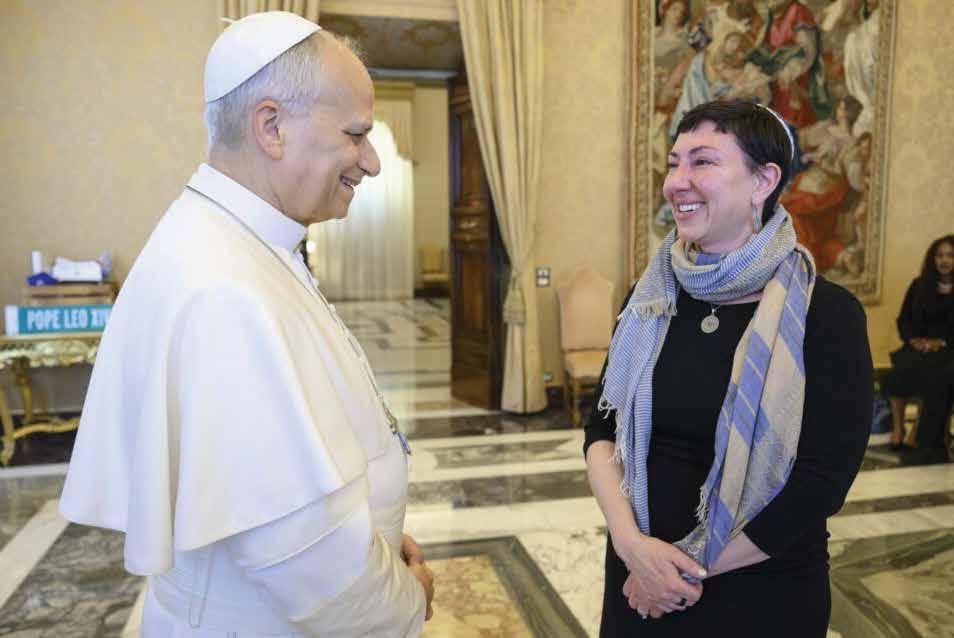
Grace Gilson (JTA) — Lizzi Heydemann didn’t plan what she was going to say to Pope Leo XIV.
But when the Chicago rabbi found herself face-to-face with the new pontiff during a Vatican visit alongside a delegation of Chicago leaders, she thanked him for the way he has spoken about the war in Gaza.
“I said, you know, it’s been a hard time over these past two years to be a rabbi, but I want to thank you for, in the midst of conflict, holding the humanity of everyone involved in the conflict,” Heydemann recounted.
Leo, the first American pope and a native of Chicago’s South Side, repeatedly advocated after his election last year for the release of the Israeli hostages as well as a ceasefire in the war in Gaza, which he has referred to as “vengeance” and “barbarity.” The comments angered some Jewish leaders who have interpreted them as unfairly targeting Israel, but for others including Heydemann, they have offered a template for how to criticize the war.
“You may be anti-war, but I do not hear you denouncing or degrading people,” Heydemann said she told Leo. “Thank you for holding the humanity of Israelis and Palestinians in the same breath and the same thought. It’s not something that is modeled very often.”
She added, “He seemed grateful, and like he knew exactly what I was talking about.”
Heydemann, the founder and leader of Mishkan Chicago, an independent Jewish spiritual community, had been invited by Chicago Mayor Brandon Johnson to join a delegation of civic, business, and faith leaders traveling to Rome late last month.
(Johnson has been a vocal critic of Israel who has drawn criticism himself from some Jewish leaders in Chicago.) She said she was the only rabbi to take part in the trip.
As she waited for the pope to enter a room where the delegation was assembled on Heydemann says she began weeping.
“What I reflected on is that he, maybe more than anyone in the world, is a religious leader with the world’s eyes on him,” Heydemann says. “He is
beloved and critiqued constantly, and every rabbi in America has had a little taste over the last few years of that weight.”
There’s too much at stake in our world for us to not be continuing to be in relationship with one another in the presence of differences
While the interaction carried an unexpected emotional weight for Heydemann, it also came with a distinctive Jewish Chicago touch: a White Soxthemed kippah.
She says she included the kippah, which featured the Chicago White Sox logo on the exterior as well as a pomegranate on the inside, in a chest of Chicagothemed gifts presented to the pope on Thursday, May 28 during the visit as a nod to his lifelong devotion to the baseball team.
“We thought that would be a sweet point connection
between me and the pope,” Heydemann says, adding that the pontiff’s typical white zucchetto looks “awfully like a kippah.”
“It brings us all joy to imagine that after a long day at work wearing the cream-colored one that matches his robes, maybe at the end of the day he’ll switch it out for a jersey material, White Sox kippah, and thinks fondly of sweet home Chicago, and the Jewish spiritual community gave it to him,” Heydemann adds.
A list of gifts that circulated in local media included another piece of Jewish paraphernalia: a tote bag with the words “Resisting tyrants since Pharaoh.” That’s a catchphrase from T’ruah, the rabbinic human rights group where Heydemann has been on the board. But the rabbi says the inclusion was an error: She was carrying the bag, not giving it to Leo.
Looking back on the meeting with the pope, Heydemann says her experience reflected a broader conviction about “building bridges, even in the presence of difference.”
“There’s too much at stake in our world for us to not be continuing to be in relationship with one another in the presence of differences,” Heydemann says.
A couple of weeks ago, Art Sandler casually, but enthusiastically, said, “We should publish a paper with all good news!”
My response was something like, “Yeah. Right. Nothing about security or antisemitism or Israel or wars or . . .”
“We’ve got so much good going on in the area!” he broke in.
I nodded and kept on walking.
Afterall, the paper’s mission statement, I mused, is to inform our readers, not gloss over realities. But today, reporting on current world events, especially where Jews and Israel are concerned, scores high on most anyone’s depression meter. Plus, the abundance of negative stories is off the charts and seem to be everywhere and in every segment of life – media, arts, education, politics, even retail. It feels endless.
Later, though, thinking about Art’s idea, I recalled Some Good News, a series created and hosted by actor and filmmaker John Krasinski on YouTube during the early days of the COVID-19 shutdown. For those who missed it, the show was 100% upbeat (something totally lacking and therefore greatly appreciated during those dismal news days of 2020). Perhaps, I thought, Art’s idea isn’t so silly. . . and is potentially possible. A challenge!
So, this is the first (of perhaps more, but we’ll see) GOOD NEWS issue of Jewish News.
With that goal in mind, we’ve found and written articles that reflect positivity throughout the Jewish world.
a Michelin star? Or that Pope Leo now has a White Sox kippah? Even the Briefs on page 4 lean pleasant.
Closer to home, the paper features articles about the Sandler Family Campus’ new playground, new fitness equipment, and the summer opening of its outdoor pool.
Articles about United Jewish Federation of Tidewater’s largest ever Community Campaign, the new Shinshinim coming to town, and an art exhibit taking place in the Leon Family Gallery are just some of the paper’s features.
The issue’s Healthcare section is packed with news of the important efforts and breakthroughs Jewish physicians are making around the world.
And, the truth is, these pieces only scratch the surface of all the wonderfully positive, meaningful, and fun activities taking place in Jewish Tidewater and beyond.
Don’t worry, the next issue of Jewish News will surely feature more of the not-so-bright-and-cheery news we’ve all grown accustomed to. For now, though, enjoy this issue of all good news!
Thanks for reading,

Who knew, for example, that there’s a kosher restaurant with
Editor
jewishnewsva.org
Published 18 times a year by United Jewish Federation of Tidewater.
Reba and Sam Sandler Family Campus of the Tidewater Jewish Community
5000 Corporate Woods Drive, Suite 200 Virginia Beach, Virginia 23462-4370 voice 757-965-6100 • fax 757-965-6102 email news@ujft.org
Terri Denison, Editor
Michael McMahon, Art Director
Haley Bartel, Copywriter
Sandy Goldberg, Ad Sales
Patty Malone, Circulation Teresa Knecht, Digital Manager
United Jewish Federation of Tidewater Mona Flax, President
Jason Hoffman, President elect Robert Friedman, Secretary Alvin Wall, Treasurer Betty Ann Levin, Executive Vice President JewishVA.org
The appearance of advertising in the Jewish News does not constitute a kashrut, political, product or service endorsement. The articles and letters appearing herein are not necessarily the opinion of this newspaper. ©2026 Jewish News. All rights reserved.
Subscription: $18 per year For subscription or change of address, call 757-965-6115 or email pmalone@ujft.org Issue Deadline July 13 Seniors June 19 August 10 Guide July 17 August 31 Rosh Hashanah August 14 September 14 Yom Kippur August 28
After years of hostile relations with Israel, Slovenia’s new prime minister signals diplomatic reset
Less than an hour after Slovenia’s newly elected prime minister, Janez Janša, was sworn into office by the country’s parliament, he had the Palestinian flag lowered from a government building.
The move marked the first step in a sharp reorientation of Slovenia’s posture towards Israel under Janša. The right-leaning prime minister, who previously held office in 2022, replaced a prime minister for the liberal Freedom Movement party.
Israeli Foreign Minister Gideon Saar announced on June 4 that Israel would open its first-ever embassy in Ljubljana, Slovenia’s capital, writing in a post on X that the move was a statement of “friendship, dialogue, and a shared belief in freedom, democracy, and security.”
“The election of Prime Minister @JJansaSDS marks a new chapter in relations between Israel and Slovenia,” Saar wrote. “After years of the hostility of the previous government, we now have an opportunity to rebuild, strengthen, and deepen a real partnership.”
Saar wrote in another post on X that he had spoken with Tone Kajzer, who was appointed as Slovenia’s minister of foreign affairs under the new administration, and that he had “pledged all the assistance necessary” to ensure the “swift establishment” of the embassy.
Janša replied to Saar’s post, “Welcome to Ljubljana. Looking forward to a new era in Slovenia-Israel relations.”
Under Slovenia’s outgoing prime minister, Robert Golob, the country voted to recognize a Palestinian state in June 2024 and became one of the few European Union countries to label Israel’s war in Gaza a “genocide,” a charge Israel firmly rejects. It was one of five nations to boycott the Eurovision song contest this year over Israel’s participation.
Last year, Slovenia also became the first EU country to impose a travel ban on Israeli Prime Minister Benjamin Netanyahu, as well as far-right ministers Itamar Ben Gvir and Bezalel Smotrich.
For the country’s Jewish population, which numbers just 100, the spate of anti-Israel measures adopted by the former government contributed to a growing sense of isolation.
But now, Janša, an admirer of President Donald Trump and an ally of former Hungarian Prime Minister Viktor Orbán, appears eager to reset relations with Israel.
“The time has come for a responsible Slovenian foreign policy based on facts, Slovenian national interests and international law,” Janša wrote on X, adding that the “politically and economically harmful period of government support for activist antiSemitism” had ended. (JTA)
Anew Talmud of America celebrates the 250th anniversary of the founding of the United States by exploring new commentaries on key phrases from the Declaration of
Independence. These commentaries and connections to Jewish texts are provided by leading rabbis and educators at the Pardes Institute of Jewish Studies.
“There will be no shortage of pomp and circumstance to mark this anniversary—as there should be,” says Rabbi Leon A. Morris, president of Pardes. “We wanted to offer something different. For Jews, text study that reveals complexity, challenges readers, illuminates contradictions, and embraces different perspectives are an integral part of how we reflect on the past and think about the future. The United States has been a refuge and a home to Jews since its founding. Sharing our interpretation of words that both define and reflect aspirations of the nation’s character is a fitting way for us to mark 250 years.”
Hundreds of rabbis and educators shared the special Talmud during Shavuot. Pardes is partnering with organizations, including Civic Spirit, to engage audiences in the lead-up to July 4 and in the months that follow.
Each essay introduces a seminal phrase and offers insight on its meaning, historical significance, and implications for the present and future of the U.S. Examples of phrases include:
“That All Men Are Created Equal,” by Rabbi Rahel Berkovits, a senior faculty member at the Pardes Institute in Jerusalem. Berkovits writes, “The Divine understood that the nature of humans is to fight for dominance over one another. To ensure that people would not truly have a claim of superiority, God purposely created the first human, from which all people descend, as one sole individual, encompassing all genders and all future nations and ethnic groups. As all people descend from the same single being and share the same ancestry, they are all equal.”
“Life, Liberty, and the Pursuit of Happiness,” by Yiscah Smith, a spiritual activist, educator, mentor, and meditation guide. Smith writes, “The Jewish tradition values the individual’s decision and dedication to earn the blessing of liberty. Freedom is neither bequeathed nor guaranteed to the individual. However, the joy of experiencing freedom is not limited to a certain personality, a specific living environment or educational/economic status.”
The Talmud of America is available at: pardes.org.il/talmud-of-america/.
Yad
For the first time in its 73-year history, Yad Vashem, Israel’s Holocaust memorial museum and archive, is establishing educational centers outside the Jewish state.
The first centers will be in Germany — one in Munich, and a subsidiary in Leipzig.
The Conference of European Rabbis, which moved to Munich from London in 2023, said it looked forward to working together with the new center.
Rabbi Zsolt Balla, State Rabbi of Saxony, said the decision to open an extension in Leipzig “sends a strong signal in support of a culture of remembrance, education, and the protection of Jewish life.”
The sites will be shaped in consultation with partner
organizations in Germany. A brainstorming meeting is tentatively planned for early next year, with programming expected to begin in three years.
“Working together with our German partners, this center will help ensure that the truth of the Holocaust is preserved and passed on to future generations,” said Dani Dayan, Yad Vashem chairman.
“We’re coming to an era where the witnesses are dying,” Wenzel Michalski, chair of the Berlin-based Friends of Yad Vashem said. His late father, Franz, spoke with many school groups in Germany about his experiences during the Holocaust.
German Education Minister Karen Prien, who has Jewish roots, said that one of the goals of the centers is to help “combat antisemitism across Germany and Europe.” She added that many young people in the country “still know too little about the Shoah.” (JTA)
The official safety and security organization for the Jewish community in North America, Secure Community Network, was awarded Designation under the U.S. Department of Homeland Security (DHS) Support AntiTerrorism by Fostering Effective Technologies (SAFETY) Act of 2002.
SCN is the first faith-based organization and the only Jewish community security organization in the United States to receive this prestigious and consequential federal recognition.
The SAFETY Act Designation formally identifies SCN’s security programs and services as Qualified AntiTerrorism Technologies (QATTs) — services that meet rigorous federal standards for reducing risk and enhancing preparedness — and places SCN in the company of a select group of technology firms, defense contractors, security specialists, and facilities that host critical events. DHS has determined that SCN’s and these organizations’ capabilities are effective in preventing acts of terrorism.
Designation also provides SCN and its formal partners with critical liability protections in the event of a terrorist attack, ensuring that the threat of costly litigation cannot impede the deployment of life-saving security services.
“This designation is a historic milestone — not only for SCN but for the entire Jewish community and for faith-based security in America. The federal government’s formal recognition of SCN’s efforts sends a powerful and unambiguous message: the security infrastructure SCN has built is not only necessary — it is effective,” said Michael Masters, SCN National director and CEO. “It validates our threat management and information-sharing capabilities, assessment and physical security protocols, grant support efforts, and training programs, as well as the deep partnerships we have built with law enforcement at every level, as second to none. Most importantly, it strengthens our ability to protect every synagogue, Jewish school, community center, and family we serve.”
Amy Zelenka
As this article goes to press, the 2026 Community Campaign of the United Jewish Federation of Tidewater has passed the $5.2 million mark for the very first time. It’s a major milestone, and the Federation is incredibly grateful to the donors and community members who have brought the campaign to this amazing total. With three weeks left of the campaign, the Federation hopes for additional pledges and donations at all levels.
“Reaching $5.2 million is certainly impressive, but what’s more impressive and more important is the additional work which can be done by the agencies and programs who receive funding from the campaign,” says Jason Hoffman, 2026 UJFT Campaign chair. “These are the frontline organizations that build and strengthen Jewish life – here at home and around the world.”
This increase comes at a time when additional funds are greatly needed. The costs of hardening and securing the community are real and growing. But UJFT’s commitment to enhancing Jewish life and celebrating the things that bind Jewish Tidewater as a people cannot suffer as a result. So, the Federation continues to work hard to balance the safety of the community with programs, events, and opportunities to bring people together in strength, celebration, and shared remembrance; in classes that bring everyone closer to Judaism; in gatherings which ensure the well-being of senior adults; and in many other ways.

The Tidewater Jewish community is truly special, and it is made so not by the size of the campaign, but by the dedication of community members ensuring its health and wellbeing. Doing so requires “time, talent, and treasure.”
So, through the lens of pure gratitude and appreciation, the Federation thanks its donors, its volunteers, and its lay and professional leaders for all that they have done and continue to do each year to make Jewish Tidewater the remarkable community that it is. Working together, in service to the Jewish People… is there anything better?
If you’d like to help strengthen and secure the Jewish community with a gift to the 2026 UJFT Community Campaign, there is still time. Visit www.jewishva.org/donate, call Amy Zelenka, UJFT’s chief development officer, at 757-965-6139, or mail a check to the Federation with the note: “2026 UJFT Campaign” to 5000 Corporate Woods Drive, Suite 22, Virginia Beach, VA 23462
Thank you in advance for your caring and support.
Report an antisemitic incident at www.Federation.JewishVA.org/IncidentReporting
In an emergency, always call 9-1-1 first.
If online reporting is not practical, contact local law enforcement and/or the relevant suspicious activity reporting authority.
Also contact Mike Goldsmith, Tidewater’s SCN Regional Security Advisor, at MGoldsmith@ujft.org or 844-SCN-DESK.
Our community funds support all kinds of causes, such as the arts, education, and civic leadership.
You can donate in honor of a friend or loved one for any special occasion.
HamptonRoadsCF.org/ giving-your-way/giving-today
Deborah Danan (JTA) — When David Freedman discovered a long-forgotten photo album in his parents’ Montreal basement last year, he found nearly 100 pages of centuryold photographs from his grandfather’s year in British Mandate Palestine, capturing Jerusalem street scenes, market stalls, and holy sites.
The photographs were not only centuryold and in near-perfect condition, but included figures who would later become central to Jewish medical and political history, among them Israel’s future first president Chaim Weizmann, Jerusalem ophthalmologist Abraham Ticho, malaria researcher Israel Kligler, future British prime minister Winston Churchill, and Herbert Samuel, Britain’s first high commissioner for Palestine.

is a structure of ancient stones. Yet its true meaning has never resided in the stones alone — it has been shaped and elevated by the countless individuals who have stood before it over the centuries,” Eilat Lieber, the museum’s director and chief curator, said in a statement.
took his photographs before the site was so contested. He arrived in Palestine in July 1920, just as Britain was replacing military rule with a civil administration, and stayed until 1922, serving during that period as managing director of Hadassah Hospital. His grandson David, also a doctor, said the album’s timing gives it much of its historical value, with photographs that capture people in the streets, as well as the terrain and buildings of Jerusalem during the nascent years of the British Mandate.
David Freedman said he knew he had “struck gold” when he found the album, which had been untouched for decades. “I realized in disbelief I was looking at extraordinary images of Jerusalem,” he said.
Though Freedman said the album showed his grandfather’s “passion for skillful, impromptu photography,” it was images of a site that epitomizes endurance that are having the broadest impact.
Freedman’s pictures of the Western Wall has inspired a public appeal by the Tower of David Jerusalem Museum, which is asking people to look through old albums and attics for photographs, postcards, and other visual material that could help expand the historical record of Judaism’s holiest site.
The request comes ahead of a major exhibition opening in 2027 marking 60 years since the 1967 SixDay War brought the wall, known in Hebrew as the Kotel, under Jewish control for the first time in nearly two millennia.
Although the Western Wall is now one of the most photographed sites in the world, museum curators say the visual record of earlier decades remains surprisingly fragmented, with many of the most intimate images likely still tucked away in private collections and family albums.
“The Western Wall, the Kotel, in its simplest form,
Next year’s exhibition, titled “Eyes on the Wall” and curated by Shimon Lev and Yael Brandt, will be the first large-scale exhibition dedicated entirely to the Western Wall, the museum said, and will trace its transformation over nearly 2,000 years. It will be one of the major exhibitions staged by the Tower of David Museum since it reopened in 2023 after a $50 million renovation of its ancient citadel complex.
The wall, the exposed section of an ancient retaining wall around the Temple Mount, the site of the biblical Jewish temples, has long been Judaism’s most sacred places of prayer and pilgrimage. From 1948 until the 1967 Six-Day War, when Israel captured the Old City and East Jerusalem from Jordan, Jews were barred from going there.
Among its most iconic images was David Rubinger’s photograph of three Israeli paratroopers standing at the wall shortly after its capture, looking upward in a mixture of awe and disbelief. The picture was taken 59 years ago last month.
Abraham Orkin Freedman, a Canadian physician and Zionist activist,
Among the images Freedman uncovered, the one that struck him most was a photograph of women praying side by side with men at the oldest part of the Western Wall, a scene far removed from the gender-separated prayer sections at the site today. The question of mixedgender prayer at the Wall remains politically charged, with a recent High Court order to advance the egalitarian section followed by Knesset moves to strengthen Chief Rabbinate control over prayer at the site.
After recognizing the album’s significance, Freedman met with his family who decided collectively to give it to the Tower of David Jerusalem Museum for safekeeping, research, and public access. Freedman said the family was proud the album had found “a new home, not many meters from where my grandfather once stood.”
There is something profoundly moving in the moment when an intimate private photograph transcends its original purpose.
Lev said he hoped the appeal would bring more discoveries like Freedman’s into public view, expanding the visual record of the Western Wall beyond official archives.
“There is something profoundly moving in the moment when an intimate private photograph transcends its original purpose and becomes an important historical testimony,” Lev said.
The fifth cohort of Shinshinim will arrive in Tidewater later this summer. Shinshinim is an acronym for Shnat Sherut, a year of service undertaken between high school and army service— when Israeli teens spend a year connecting with Jewish communities around the world, sharing Israeli culture, identity, and personal experiences.
Through a partnership between United Jewish Federation of Tidewater and the Jewish Agency for Israel, two Shinshinim spend a year in Tidewater.
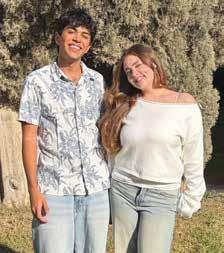
This August, UJFT welcomes Liel Aisikowitz and Evyatar Olswang, two dynamic and passionate young leaders who are eager to build relationships across the community.
Liel, 17, grew up in Yerucham and brings a global perspective shaped by her eight years living in Canada before returning to Israel. Growing up between cultures, she developed a deep appreciation for connection, identity, and community— values that inspire her work as a Shinshin.
In high school, Liel majored in chemistry and mechatronics, while also dedicating her time to youth leadership through Tzofim and volunteering in a Hebrew school abroad. She is a thoughtful and adaptable individual who enjoys reading, traveling, and spending time with others.
She says she applied for the Shinshinim program because “I know what it feels like to live outside of Israel and not really understand what’s going on. I want to be someone people can turn to—to ask questions and form a real connection, beyond what they see online.”
Liel is especially passionate about sharing what she loves most about Israel: its hospitality, its food, and the sense of unity that connects people across differences.
Evyatar, 18, comes from the moshav of Kidron and brings a strong passion for creativity, leadership, and communitybuilding. A self-described “creative and social person,” he has spent years involved in youth leadership, guiding both younger children and teens in his local youth movement.
In school, Evyatar majored in philosophy and theater fields that reflect both his intellectual curiosity and his love for artistic expression. He is also an outdoor enthusiast who enjoys hiking, drawing, journaling, and spending time in nature.
Evyatar has already built strong connections to American Jewish life. He attended a Jewish summer camp in Pennsylvania and participated in a Bronfman Fellowship seminar in New York, where he engaged in conversations about Jewish identity and community.
“
MEET: Paul R. Hernandez
Liel describes herself as both structured and spontaneous—organized when it comes to responsibilities, but always ready for a last-minute adventure. Her perfect day, she says, is “relaxing at the beach, soaking up the sun.”

“This area is our home and we are committed to supporting it. Our lawyers are actively involved by donating their time to programs that help the community, especially in the schools with young drivers. I am very involved with End Distracted Driving, spending 20 days a year in the schools educating students about the dangers of using a cell phone while driving. The other major program we work on is Every 15 Minutes which highlights how every 15 minutes someone dies in a car crash and helps teens understand the consequences of drinking and driving.”
“Payday is very forward thinking and is always up on potential changes. We have also been impressed by Payday’s contingency planning. Whenever there is a potential natural disaster in our region, such as a large storm, Payday is proactive and works with our staff to make sure that everyone will be paid without interruption.”
Our client relationships are anything but transactional. We are long-term partners, dedicated to the success of our clients, and most importantly, their people.

PD-ad-three-eighths-V-color-Jewish News-111320.indd 8 11/13/20 2:56 PM
He says he applied for the Shinshimim program because “I care deeply about people, community, and Jewish life. I want to create spaces where people feel comfortable asking questions, expressing themselves, and building real connections.”
His experiences volunteering, especially after October 7th, when he helped organize aid efforts and community initiatives, have strengthened his commitment to meaningful service and leadership.
When he’s not leading or creating, Evyatar is likely found hiking outdoors, cooking, or planning his dream future travels around the world.
Both of these young Israelis share a deep desire to connect with the Tidewater community—not just by sharing facts
about Israel, but by building authentic relationships that bring Israel to life in personal and meaningful ways. Throughout the year, they plan to lead programs, visit schools and synagogues, and engage with people of all ages. Whether through conversation, culture, or creativity, their goal is to strengthen the bond between Israel and the Tidewater Jewish community.
To learn more about the program, apply to become a host family, or find ways to get involved, visit JewishVA.org/Shinshinim or contact Nofar Trem at NTrem@UJFT.org.



Sierra Lautman
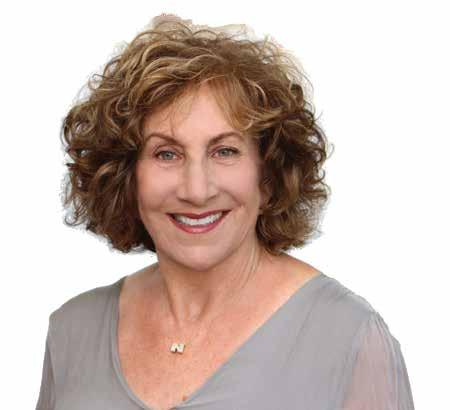
Bettie Minette Cooper remembered every person she met.
Always known as Minette, she died on October 14, 2025, at 87 years young, leaving a legacy of commitment to family, her synagogue, the arts, and a variety of civic organizations and projects.
Cooper’s story began in New York – but just for her birth – as it really took root in Vicksburg, Mississippi, where she was raised as an only child in a small, but vibrant Jewish community. Her upbringing was shaped by two powerful forces: a mother who instilled a love of music and Jewish life, and a father who modeled civic responsibility as a respected businessman and community leader.

















































































In Vicksburg, she regularly attended Shabbat services and experienced a uniquely integrated Southern Jewish life, where Jewish and non-Jewish friends often attended one another’s services. That sense of openness and belonging stayed with Cooper throughout her life, impacting many of her future endeavors.










When Cooper was just 10 years old, her mother died, and her father struggled to raise her alone. After his remarriage, when she was 12, she attended The Knox School, a boarding school in upstate New York. There she developed an early independence without losing her connection to Jewish life, continuing her religious education, writing essays to her rabbi and preparing for confirmation from afar. Cooper attended Smith College for two years, then transferred and graduated from Barnard to be in New York City with her new husband, Charles Cooper, who was studying at Columbia Law School.
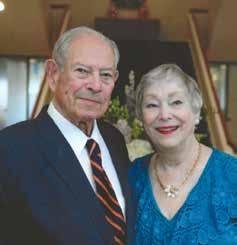
When the couple moved to Norfolk in 1962 to be near his family, she immediately became a part of the community, especially at Ohef Sholom Temple, where she made history as the first female president of the congregation, serving from 1985 to 1987.


For Cooper, leadership was never about authority. It was about inclusion, and that philosophy extended into nearly every corner of Jewish communal life. She served on the Jewish Community Center of Tidewater board, the National Federation of Temple Sisterhoods board, the Goldring/Woldenberg Institute of Southern Jewish Life, and the Southern Jewish Historical Society board, eventually serving as president. And that wasn’t all.
She was also deeply involved in the Jewish Museum & Cultural Center in Portsmouth. Cooper championed Ohef Sholom Temple’s Archives, supported the creation of oral-history video interviews in the 1980s and 1990s, and worked to ensure that institutional memory would not depend solely on individual recollection, spearheading the congregation’s 150th celebration, complete with a museum-like display of its history, which continues to adorn the synagogue’s halls.
That commitment to community also found expression through music. More than 30 years ago, Cooper proposed establishing a congregational choir at OST.
“For Minette, I believe the temple choir was an intersection of two very meaningful elements in her life –music and faith,” says Chuck Woodward, Ohef Sholom Temple’s music director. “For its members, the choir became a community. Minette sang with the choir for nearly 40 years, helping nurture a space where relationships formed alongside the music.”
Cooper’s belief in building community extended far beyond Jewish life. She saw the arts as another way people could gather, connect, and understand one another. Her most enduring impact came through Arts for Learning Virginia (formerly Young Audiences), where she served as a donor, program leader, and board president, and as a member of the organization’s national board of directors. Under her influence, the organization grew to more than 600 performances annually, bringing arts education directly to more than 38,000 students in schools across the state.
– receiving multiple awards for her effectiveness and contributions as a board member and leader.
Her influence expanded from local organizations to statewide advocacy efforts, including the creation of the Cultural Alliance of Greater Hampton Roads and as a board member of Virginians for the Arts, where she helped demonstrate the civic and economic importance of the arts.
Leadership aside, Cooper never stopped being a participant. She continued to attend board meetings, serve on committees, sing in the Virginia Symphony Chorus, and subscribe to an array of arts performances across Hampton Roads, regularly bringing family and friends along.
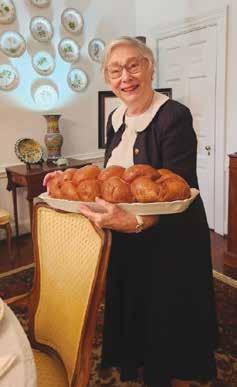
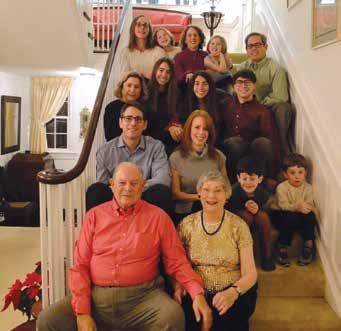
“She saw Judaism as family,” says her son, Erik. “Her goal was always to make sure everyone felt heard.” The mother of three – Brooke, Erik, and Jeff – she was known for hosting family seders and break the fasts that included extended family and friends.
“She took pleasure in seeing her kids and grandchildren build their own Jewish lives,” says Erik.
Through her involvement with the Elizabeth River Project, she participated in oyster-raising efforts from her pier and later delivered them for environmental monitoring. Her grandchildren joined her in this work, and several continued it in their own B’nai Mitzvah and civic projects.
She was, Jeff says, the “rock” of the family, quietly managing logistics, gatherings, and connections.
upwards of 2,500 people each year. Long before digital networks, she built her own, an expansive web of connection sustained through the relationships she carefully tended. In every corner of her life across more than half a century in the Jewish community, the arts, and civic institutions across Tidewater, Cooper practiced her most defining qualities: a relentless curiosity about people and a determination that no one should ever feel forgotten.
“Her small family growing up shaped everything,” Jeff says. “It’s why she built so much community around her.”
Perhaps most powerfully, Cooper lives on in her family by the habits she demonstrated: showing up, staying connected, and believing that community is something you actively create every day.
As her granddaughter Hannah reflects,
she was “a once-in-a-generation person.” Cooper’s impact cannot be contained in a single organization, title, or decade. It lives in the institutions she strengthened, the cultural life she expanded, the Jewish history she preserved, and the thousands of people who received a handwritten note, a remembered detail, or an invitation that made them feel included.
Minette Cooper spent her life making sure people felt remembered. In the process, she created communities that will remember her for generations.
Interested in nominating someone to be recognized as an Outstanding Jewish American in Tidewater? Visit JewishVA.org/TidewaterHeroes or contact Sierra Lautman at SLautman@UJFT.org.
She also worked closely with the Virginia Symphony Orchestra (serving as president the same time she was president of Ohef Sholom) as well as numerous regional arts and educational institutions
“I relied on her to do a lot of stuff without realizing all the stuff I relied on her to do. She just did it,” says Erik.
She maintained a meticulously organized system for the family’s annual holiday card, the Cooper Gazette, which reached

Haley Bartel
Naturally curious creatures, children interact with the world around them through play. This instinctive engagement becomes even more pronounced in natural environments, where exploration is open-ended and sensory-rich.
As one study by the National Wildlife Federation found, children who play in nature “do so with more vigor, engagement, imagination, and cooperation than in wholly artificial environments, and the symptoms of attention deficit and depression are reduced.”
This philosophy was central to the vision behind the new playground on the Sandler Family Campus, which resembles a small woodland city more than a traditional play area.
“We wanted something much more natural than a traditional playground,” says Joe Frissora, Sandler Family Campus facilities manager.
Primarily designed to be used by Camp JCC campers and Strelitz International Academy’s students, the playground is another component of the Sandler Family Campus’ array of outdoor features – including the pool, Gaga pit, miniature golf course, tennis courts, and Marty Einhorn Pavilion.
“We wanted a playground that really allowed children to take safe risks and kind of create their own play,” says Elyssa Brinn, Strelitz International Academy’s director of the early years program. “There is no set right way to do anything, which is exactly what we wanted.”
are arranged in varied formations for climbing—some laid side by side, others set upright with monkey bars between them. Two small slides descend from a low hill, and additional stumps double as tables for toys. Nearby, children use bowls and spoons for sand play or build with wooden blocks from a self-serve storage cabinet.
On the other side of the playground, older children pile onto large woven green basket swings suspended from timber structures. Like the younger area, it includes large sand areas but also adds a water pump and more advanced climbing features. Chalkboards and music
former facilities director for the Sandler Family Campus, Bienenstock Natural Playgrounds was selected after reviewing several competing proposals.
What ultimately set Bienenstock apart was its clear understanding of early childhood development and the essential role of natural environments in shaping how children learn, explore, and make sense of the world around them.
Although the company was responsible for the design and installation of the play structures, the campus served as its own general contractor, coordinating multiple local teams to complete the project. “We got the landscapers, the concrete guys, the fence guys, and we coordinated all of that,” Saucier says.


Natural playgrounds are designed to foster cognitive, physical, and emotional growth in children while also strengthening environmental awareness. As with traditional playgrounds, they offer opportunities to climb, slide, swing, and crawl, but they also surround children with natural elements that help calm the nervous system and create a sense of ease.
“It just feels good to be out there and look at,” says Veronica Samonte, SIA assistant director of the early years program. “There’s just a calm to it.”
This shift also reflects a broader move at Strelitz toward inquiry-based learning. “Our philosophy is childoriented and child-centered, and the play goes in the direction that the children take it,” Brinn says. “We’re just facilitators of that learning.”
One look at the new playground makes its design clear. In some ways, the layout mirrors the old space, with a fence separating play areas by age. In the section for younger children, tree stumps are hollowed out into small playhouses topped with triangular wooden roofs. Logs
makers offer points of creative exploration. From the previous playground, only the paved pathways and tyke bikes remain, allowing children to move through the space as they would a small town.
Children use the variety of resources at their disposal to create worlds of play at their own discretion. “They have to problem-solve to move things around and make things work a different way, and they have to work together. It’s really, really cool to see,” Brinn says.
The open-ended nature of the new playground allows imagination to run freely. “I just like watching them use their brains to play,” says Carin Simon, SIA director of advancement. “The old school playground… it told you what to do. That’s what the structure was. With this one, they get to do what they want.”
Behind the design of the new playground was a complex construction process involving multiple contractors, site challenges, and long-term planning from campus leadership. According to Glenn Saucier, the
From there, the project moved through design selection and into a phased construction process that stretched from early site preparation through final installation. Saucier estimates that the active build took place over roughly four months, though groundwork began earlier with excavation and soil preparation.
However, the project encountered significant infrastructure challenges, particularly related to a crack in the storm drain.
Rather than halt construction, the team adapted the design and repair strategy to keep the project moving.
Despite the challenges, Saucier describes the finished playground as a standout addition to the campus. “It’s probably the showcase around this area for a playground.”
What stands out most is not just the design of the space but the way children inhabit it. “The things that they are creating and doing… we’re surprised every single day when we go out there,” Brinn says.
Even features like the large woven swings were intentionally designed to support social development and encourage collaboration. “Not only is it allowing children to get the needs met that they need, but they also have to figure out how to work with four other children,” Brinn says.
The impact has extended beyond the children themselves. “I’ve noticed a new freedom, not just with our children, but our teachers as well,” Brinn says. “It’s really helped our teachers embrace the philosophy of watching the children and letting the children guide them rather than them guiding the children.”
Ultimately, the playground is exactly what it was designed to be: a place where imagination sets the boundaries and play is entirely their own.






Haley Bartel
Jewish community has long extended beyond geography, linking people across continents who often recognize a shared sense of belonging.
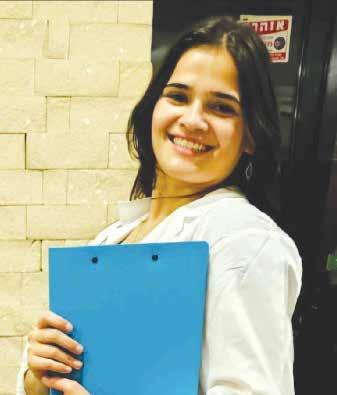
Liora Zerbib knows about this feeling of belonging after spending several weeks with a Jewish host family in Ghent.
Zerbib, an Israeli medical student in her final year at the Azrieli Faculty of Medicine at Bar-Ilan University, is one of two Israeli students participating in a monthlong exchange program in Norfolk. The program was founded by obstetriciangynecologist Dr. Steven Warsof.
visits gradually developed into a student exchange supported by local donors.
“It’s been one of the highlights of my professional career,” says Warsof. “The relationships are real. The students gain exposure to a different healthcare system, and the host families gain meaningful personal connections. It’s rewarding on both sides.”
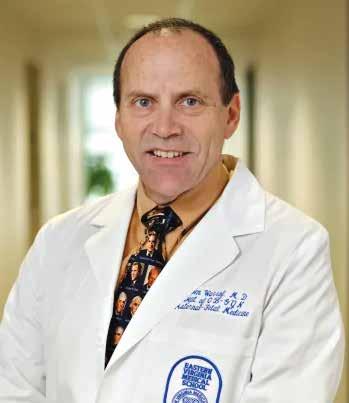
Through the exchange, Israeli medical students shadow obstetricians and gynecologists at EVMS, gaining firsthand exposure to American women's healthcare while forming tight knit, sometimes unexpected connections with local physicians and the Jewish community.
“Coming here, you’re a little bit cautious, like ‘Should I be my true self, should I share this identity?’” she says, describing the uncertainty many Israelis feel when traveling abroad during a time of heightened tensions. “And then when the director of the program and the families that are hosting you make you feel like you can... you feel like you’re with family in some sort of way, even though you’re far away from your actual family.”
The program began more than a decade ago after Warsof learned about a new medical school in Safed, Israel, and reached out to establish a professional collaboration. What began as lectures and
Warsof believes the program’s value extends beyond medicine. “People get to meet Israelis as individuals, not headlines,” he says. “They see students, future doctors, people who are living real lives. That kind of connection matters, especially now.”
Another participant, final-year medical student Anna Sirota, says the experience offers insight into both American medicine and Jewish community in the United States.
“I think this program is great, not only for our medical education, but also by bringing us here and letting us see how a Jewish community functions in America,” she says.
Sirota says she is struck by the diversity of Jewish practice she has encountered in Norfolk.
“We have a lot to learn from Jewish communities
in America because they’re so open to other people’s view of religion,” she says.
Zerbib echoes that sentiment. “It’s been nice to hear their opinions and the way they see Judaism,” she says. “I’ve really appreciated their openness and acceptance.”
While long-distance community building is a central goal of the program, the students also gain firsthand experience with a healthcare system very different from their own.
“These comparisons are important because they broaden your worldview,” Zerbib says. “People think the American system is the most advanced, and in some ways that’s true.. but in Israel, preventive care is very common, and community medicine is very strong. Each system has things the other can learn from.”
Sirota says she was impressed by communication systems in U.S. hospitals and the benefits of shorter physician shifts, but noted the prevalence of chronic illness among younger patients.
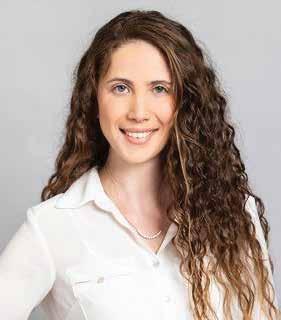
“I was surprised to see the volume of patients that had very complicated background diseases,” she says.
“For us in Israel, it’s relatively rare for women in their mid20s and 30s to have conditions like Type 2 diabetes, chronic hypertension, and
chronic kidney disease.”
The exchange comes as many Israeli medical students complete portions of their education amid war and instability.
Sirota recalls taking exams during missile alerts.
“During those tests, you suddenly hear a siren,” she says. “You stop the test, go to the shelter, come back after 10 or 15 minutes, and then you have to continue the test.”
This reality, she says, required constant mental adjustment. “You have to change your mindset very fast. You’re in danger, and suddenly everything is okay, and you have to be focused for your test.”
Those experiences have shaped the students’ understanding of the role physicians play during times of crisis.
“During war, patients don’t always come just for physical symptoms,” Zerbib says. “Sometimes they come just to talk, to share the stress they’re feeling. The doctor might be the only person they speak to that day. The human connection becomes much more important during times of uncertainty.”
Warsof says programs like this one serve as a reminder that those connections can endure despite distance and conflict.
“Medicine, education, and community don’t stop during war,” he says. “Relationships continue. Learning continues. And those connections help strengthen Jewish communities on both sides of the ocean.”
For both students, the impact is immediate.
“It really felt like when we got here that there’s some sort of flow of connection that’s being kept through us just coming here,” Zerbib says.
Haley Bartel
From postpartum recovery to perimenopause, women experience a range of life stages that can affect hormones and overall health.
Dr. Kellie Frissora, a nurse practitioner and mother of three young children, understands how easily personal health can take a back seat during these life stages.
“I commonly saw patients for the same issue repeatedly,” Frissora says. “I heard over and over again, ‘My primary care said that my labs are normal, but I just don’t feel like myself. I don’t have the energy I once had. I’m just getting more exhausted than I usually do.’”
This reality led her to launch Frissora Functional Wellness, a fully virtual concierge functional medicine practice focused on hormone health and whole-body wellness. Frissora conducts all patient visits through virtual consultations.
Frissora worked as a nurse in a primary care setting for three years before becoming a nurse practitioner.
She earned her Doctor of Nursing Practice degree as a family nurse practitioner in 2019 and has since worked in primary care and medical weight loss settings. She has also completed additional training through the Institute of Functional Medicine and the Bioidentical Hormone Replacement Therapy Training Academy.
Frissora says she often encountered patients whose symptoms persisted despite standard treatment. Many reported ongoing fatigue, brain fog, weight gain, anxiety, sleep issues, and other concerns – even when routine lab work appeared normal.
Those experiences steered her toward functional medicine, an approach that seeks to identify underlying causes rather than simply manage symptoms.
“Functional medicine really gives you not only the education but the desire to figure out why the patient is feeling the way they are and help get to the root cause,” Frissora says.
Unlike traditional visits that may center on a specific
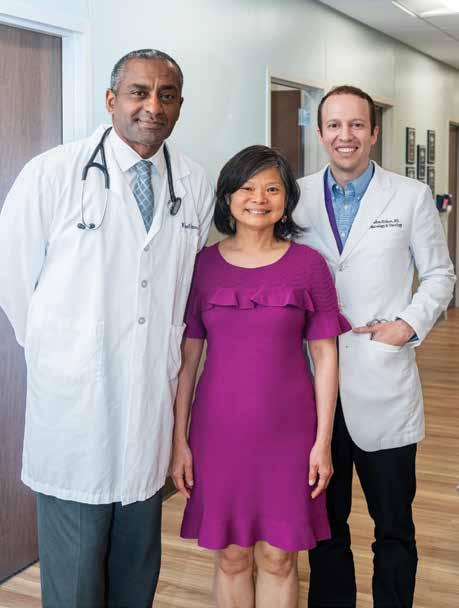
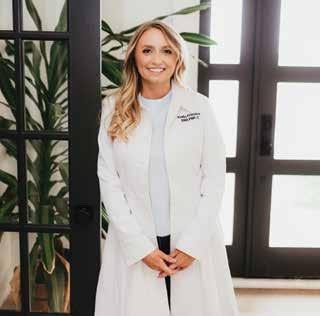
At Virginia Oncology Associates, we recognize all of our patients as individuals with a need for caring, personalized treatment. We are dedicated to finding new and better ways to treat cancer through ongoing research and clinical trials. Our team of specialized physicians and sta work together and collaborate to create a plan that will help navigate each person’s journey.
diagnosis, Frissora says her approach explores multiple systems at once.
“We look at your lifestyle factors and your environmental factors, because what people don’t realize is that if they have a thyroid issue or a gut issue, or a hormone issue, it’s usually just one piece of the puzzle,” she says.
Frissora emphasizes that hormones affect people of all genders, influencing everything from brain and bone health to metabolism and stress response.
While functional medicine is sometimes viewed as alternative medicine, Frissora says her practice remains grounded in evidence-based care.
“We still use evidence-based medicine. We still use lab testing. We still go by clinical guidelines,” she says.
The process begins with a free 15-minute discovery call to determine whether a patient’s needs align with the services offered. Patients then complete a comprehensive wellness consultation, typically lasting about 90 minutes, during which Frissora reviews medical history, symptoms, and health goals before ordering individualized laboratory testing.
fog. She had previously been told her lab work was normal, but her symptoms were significantly affecting her quality of life.
Using a functional medicine approach, Frissora evaluated nutrition, blood sugar regulation, stress, sleep habits, hormone balance, and lifestyle patterns. The patient was given a personalized plan that included targeted nutrition changes, lifestyle interventions, and evidence-informed supplementation.
We still use evidencebased medicine. We still use lab testing. We still go by clinical guidelines, she says.
Services are not covered by insurance and are paid for out-of-pocket.
Depending on the testing required, results are generally reviewed within two to four weeks. From there, patients receive personalized recommendations that may include lifestyle modifications, nutritional support, and supplements or prescriptions when appropriate.
Frissora tells of an anonymized example of a patient who benefited from this approach:
A woman came in experiencing fatigue, weight gain, poor sleep, and brain
Over time, the patient experienced improvements in energy, sleep quality, mental clarity, and overall well-being.
Frissora notes that while results vary, this type of approach can help identify contributing factors that may not be addressed in traditional symptomfocused care.
Frissora emphasizes that patient safety remains central to her practice.
“If I identify a condition that requires further evaluation, specialized treatment, or urgent medical attention, I coordinate care with the patient’s primary care provider and appropriate specialists,” she says. “This may include cardiology, oncology, endocrinology, gastroenterology, mental health providers, or other specialists.”
She says she views functional medicine as complementary to conventional care, with the goal of ensuring patients receive comprehensive treatment that addresses both medical conditions and lifestyle factors.
“It’s a partnership,” she says. “I want you to be as invested in your health as I’m going to be.”
Ultimately, she says, the aim is not just to treat symptoms, but to help patients return to a place where they feel good in their bodies.
“They can still feel like themselves. They can feel good, and they can love the way they feel.”

The Feldman Family Medical and Health Professions Student Scholarship
AWARDED TO 2 STUDENTS EACH YEAR!
Apply by July 1 to Secure up to $40,000 in Scholarship Funding
Up to $10,000 a year for each recipient
The Feldman Family Medical and Health Professions Student Scholarship is awarded to Jewish students, or those who identify as Jewish, entering a qualifying Health Care Degree Program. Recipients must currently reside in Southeastern United States, with a preference for residents of Hampton Roads.
Apply at: foundation.jewishva.org


A strong community is a healthy community.
Thursday, October 29, 6 pm Sandler Family Campus
Julie Kievet
To support Tidewater’s growing Jewish community, Jewish Family Service of Tidewater is partnering with JScreen to host a life-saving educational event this fall. Whether planning a family or looking to understand personal hereditary cancer risks, proactive screening and access to preventative genetic testing can help secure healthier futures.
Centuries of shared ancestry mean that people of Ashkenazi Jewish descent face significantly higher genetic health risks than the general population. Consider:
• One in three to one in four Ashkenazi Jews carry a gene mutation for serious recessive conditions such as Tay-Sachs or Canavan disease. This is 10 times higher than the general population.
• No symptoms. Most carriers show zero symptoms. Testing is the only way to know one’s status.
• A 25% risk. If both parents carry the same recessive gene, there is a one-in-four chance their child will inherit the disease.
• Cancer risks. Ashkenazi populations also face a much higher prevalence of BRCA gene mutations, which are linked to hereditary breast and ovarian cancer.
The event offers affordable genetic testing, emphasizing that knowledge is a key tool in early prevention and proactive health management. Attendees will gain insights into two primary screening options:
1. Hereditary Cancer Testing: Screens for BRCA1, BRCA2, and more than 60 genes associated with inherited cancer risks.



2. Reproductive Carrier Screening: Tests for Tay-Sachs, cystic fibrosis, and more than 260 other conditions passed to children.
Participants will receive genetic test kits to provide and submit a sample directly at the event. The kits can also be mailed from home using a prepaid mailer. Once submitted, Jscreen’s partner, Myriad Genetics, will provide a personalized cost estimate for the test. Since some insurance carriers do not cover the cost of the test, participants can self-pay a flat rate of $249. JFS will have limited financial assistance to cover the cost of testing for participants who cannot afford the fees.
Knowledge is one of the most powerful tools when it comes to protecting one’s personal health and supporting future generations. Bringing JScreen to Tidewater gives individuals and families access to information that can truly save lives.
And, since October is Breast Cancer Awareness Month, this is the perfect time to make the commitment to dive into this important information. An $18 subsidized event entry fee covers case review and physician test order. The standard fee is $49.
Pre-registration is highly encouraged so testing kits can be prepared in advance. On-site registration will also be available.
For additional information, contact Julie Kievit, Jewish Community Relations Manager at JFS of Tidewater, at jkievit@jfshamptonroads.org.
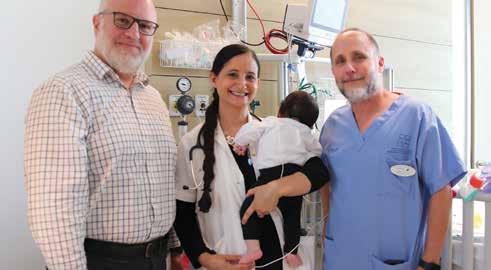
An eight-month-old baby from Israel is the first human ever to receive an experimental gene therapy designed to replace a missing gene responsible for a devastating neurological disease that until now offered no hope of survival.
The treatment was performed at ClalitSchneider Children’s Medical Center, part of Clalit Health Services, Israel’s largest health organization running 14 hospitals and 1,600 community clinics nationwide. It took part after an extraordinary international effort involving physicians, researchers, regulators, and biotech leaders who moved urgently to make the impossible possible for one small child.
The breakthrough began with Dr. Naama Ornstein, head of genetics unit at Clalit-Schneider, who immediately recognized the rare disorder after the baby was hospitalized with seizures and severe developmental decline. Years earlier, Dr. Ornstein had treated another child with the same condition, but at the time, the experimental therapy had not yet been

• Family owned and operated since 1917
• Affordable services to fit any budget
• Advance funeral planning
• Professional, experienced, caring staff
• Flexible burial options
• Flexible payment options

available, and the child died. Alongside the genetic team, Dr. Dror Kraus, senior physician in the Neurology unit at ClalitSchneider Children’s Medical Center and an epilepsy specialist, had been closely monitoring and treating the child since the day he arrived at the hospital.
Determined not to lose another patient, Ornstein reached out to the scientist who originally developed the therapy, Professor Rami I. Aqeilan, an Arab researcher from the Hebrew University of Jerusalem, whose academic discovery had since evolved into a clinical treatment acquired by a U.S. biotech company led by an Israeliborn physician and CEO.
Together, the unlikely team crossed borders, systems, and bureaucracies to secure special emergency approval for the treatment, despite the fact that it had never before been administered to a human being.
In a delicate neurosurgical procedure, Dr. Ido Ben Zvi, from the Neurosurgery Unit at Clalit-Schneider Medical Center, injected a functioning copy of the missing gene
Approved by all area Rabbis and Chevrah Kadisha
directly into the baby’s brain, using a specially engineered viral vector designed to deliver the healthy gene into the central nervous system.
The operation required unprecedented medical and regulatory coordination, including special approvals from Israeli health authorities and international oversight bodies. Doctors say even the dosage calculations were extraordinarily sensitive, as the amount had to be tailored precisely to the infant’s brain size.
“This was much more than a medical procedure,” says Ornstein. “It was a fight for a child’s chance to smile, develop, and live. Families often ask us: if a child is missing a
working gene, why can’t we simply give them one? Usually, we have no answer. This time, for the first time in the world, we could.”
The baby has since been discharged home, while doctors continue closely monitoring his neurological condition.
At Clalit-Schneider Children’s Medical Center, the case is already being described as a landmark moment in the future of personalized genetic medicine, and a rare story of science, humanity, and cooperation overcoming every possible barrier in order to save a child’s life.
Many people invest considerable time and effort in physical exercise with the goal of losing weight, but the results often fall short of expectations. A new and groundbreaking international study led by researchers from Tel Aviv University provides a comprehensive scientific explanation for a question that troubles many: Why doesn’t physical activity alone lead to significant weight loss, despite sustained training efforts?
The researchers found that, as exercise increases, the body becomes more energy-efficient. Key energyconsuming organs, such as the liver and kidneys, shrink in size, while energy expenditure in other daily activities declines.
The study was led by Dr. Tzachi Knaan as part of his doctoral research
in the laboratory of Professor Yftach Gepner of the School of Public Health at TAU’s Gray Faculty of Medical & Health Sciences and Sylvan Adams Sports Institute. It was conducted in collaboration with Professor Ed Melanson of the University of Colorado, Professor Gal Dubnov-Raz, Professor Carmit Levy, Professor Chen Luxenburg, and other students from the participating laboratories. The findings were published in the journal Communications Medicine.
Participants who were overweight were recruited for the study and completed a supervised aerobic walking program over a 12-week period. Throughout the study, energy expenditure, activity levels, dietary intake, and even changes in body
Our community funds support all kinds of causes, such as the arts, education, and civic leadership.
You can donate in honor of a friend or loved one for any special occasion.
HamptonRoadsCF.org/ giving-your-way/giving-today
composition were precisely measured using advanced technologies.
Despite burning hundreds of calories per week through physical activity and improving their overall fitness, participants did not lose weight. However, they did show improvements in body composition, with reductions in fat and increases in muscle mass.
So why didn’t their body weight change? According to the researchers, the body simply adapted to the new situation. Among other findings, they observed a decline in resting metabolic rate, indicating that the body offset the increased activity by burning fewer calories at rest. In addition, participants became more efficient in their movements, expending less energy while performing the same daily activities.
Another surprising finding concerns the body’s internal organs. The researchers found a decrease of about 5 percent in the volume of the liver and kidneys — major energy consumers — while the brain remained unchanged. The implication is that the body reduces its internal energy expenditure to compensate for the increased demands of physical activity.
Physical activity is very important for good health, but when it comes to weight loss, it is not always sufficient on its own.
itself to maintain balance,” Dr. Knaan explains. “Physical activity is very important for good health, but when it comes to weight loss, it is not always sufficient on its own. The implication for the public is clear: Exercise is a vital component of a healthy lifestyle — it improves fitness, reduces fat, and improves health indicators — but to see significant weight loss, it must be combined with the appropriate nutrition.”
The researchers note that the new study sheds light on one of the major questions in health and fitness and may even change the way we think about weight loss. Instead of relying on exercise alone, the most effective approach is likely to involve a proper combination of physical activity, nutrition, and an understanding of the body’s mechanisms.
However, contrary to common assumptions, the researchers found no significant increase in food intake. In other words, the observed compensation does not stem from eating more, but from physiological and metabolic adaptations that reduce total energy expenditure.
“The human body is extremely sophisticated — it knows how to adapt
“This study offers a window into an evolutionarily rooted mechanism of energy compensation,” Professor Gepner adds. “In the past, when food was not available near the tribe, hunters and gatherers had to travel considerable distances, necessitating a reduction in energy expenditure to successfully return to the tribe with food. The central message is that physical activity alone is not designed to reduce weight. For years, science has shown that weight loss resulting from exercise is more limited than commonly expected, and in this study, for the first time, the mechanism of organ shrinkage that explains this phenomenon was observed. It is important to emphasize that physical activity has unique and substantial health benefits — but it is not intended, on its own, to lead to weight loss.”
A Jewish not-for-profit organization, Sharsheret is looking for volunteer bakers to coordinate local bake sales in their communities.
Sharsheret’s Pies for Prevention bake sale is part of the organization’s efforts to raise awareness about ovarian cancer and support women and families affected by the disease.
Launched in 2008 by sisters Adeena Sussman and Sharon Wieder in memory of their mother and grandmother, both lost to ovarian cancer, Pies for Prevention sales take place in cities across the country in the days leading up to Thanksgiving. Proceeds benefit the Stephanie Sussman and Ann Nadrich Memorial Jewel and Sharsheret’s Ovarian Cancer Program.
“The first year I baked for Pies for Prevention at my own home, after all the measuring and mixing and baking was done, I discovered the unexpected joy of distribution day,” says Julie Fax.
“All day, as I prepared for my own




Asaf Elia-Shalev (JTA) — A growing number of Americans are injecting themselves with peptides they ordered online, often with no idea what’s in the vial, hoping to cure ailments and reverse aging. And for reasons that will soon be made clear, some of the peptides that make their way into the faddish and often gray-market concoctions have what appear to be Yiddish names.
But first, Pinchas Cohen, the pioneering scientist responsible for the naming quirk, wants to say a few words about the real potential for mitochondrial-derived peptides.
Peptides represent a revolution in medicine, with potential for major new drug discoveries, the University of Southern California professor says. And the gray market fad worries him.
“These are potent biological molecules,” Cohen says. “They should be used under the supervision of a physician, and when they’re being produced in reliable manufacturing facilities — most of which is not happening right now.”
That said: about those names.
Cohen’s lab at USC has given the world SHLP (pronounced “schlep”), SHMOOSE, MENTSH, and a few others not yet published — including one called NOSH and another PUTZ. Each is a legitimate scientific acronym, carefully reverseengineered to land on a Yiddish word.
SHLP stands for Small Humanin-Like
Peptide. SHMOOSE expands to Small Human Mitochondrial ORF Over SErine tRNA. The names are light-hearted, but the science is serious. Naturally occurring SHMOOSE has been linked to a 30% increased risk of Alzheimer’s disease. MENTSH, after Cohen also named a company he founded, shows promise for treating diabetes.
Cohen has a rule that he doesn’t name things himself. That’s the students’ job. “I always give the students and postdocs the chance to name the project they’re working on,” he says. “But I get veto power. They’ve already learned that the best way to get me to say yes is to come up with something really cute.”
Not every Yiddish name comes from a Jewish lab member. MENTSH was coined by a Taiwanese-American colleague who grew up in the Bay Area. “Surrounded by Jews,” Cohen notes. “He probably knows more Yiddish words that I do.”
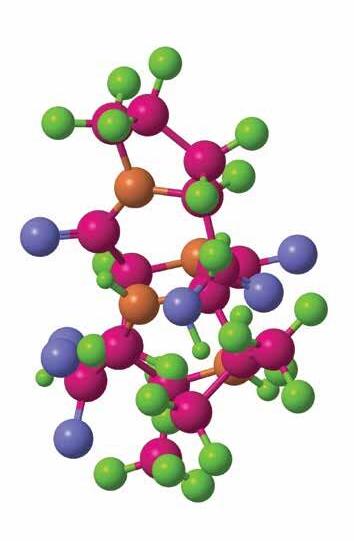
second was Cohen’s subtle nod to Jewish tradition. MOTS-c, pronounced “mots-see,” was quietly crafted to echo the Hebrew word motzi, as in the blessing over bread. “That was subtle,” Cohen says, “but it was on purpose.”
The Yiddish names, he says, are less about heritage than about fun, and about giving his team a sense of ownership over their work.
The discovery of MOTS-c and the peptides that followed represented something genuinely new in science. Researchers had known about peptides for generations — insulin, the diabetes treatment, is one — but those were found through conventional means, in glands and tissues where scientists knew to look. Cohen’s innovation was finding that mitochondrial DNA, the tiny separate genome inside mitochondria long thought to encode only energy-related proteins, secretly harbored an entirely hidden library of bioactive peptides. In places scientists weren’t looking, and in parts of the genome dismissed as structural, there were functional molecules with potential to treat disease.
institutions in pre-state Israel.
Cohen did his medical training at the Technion in Haifa, then Stanford, then the University of Pennsylvania and UCLA, before joining USC 14 years ago as dean of the Leonard Davis School of Gerontology.
Though his family is Ashkenazi, Cohen didn’t grow up speaking Yiddish — his father studied at Berkeley, his mother at the London School of Economics — and his accent bears little trace of his origins. The Yiddish names, he says, are less about heritage than about fun, and about giving his team a sense of ownership over their work.
“My identity is deeply rooted in my Jewish and Israeli heritage,” he says. “I am delighted your publication took an interest.”
The key to healthfully aging, Cohen says, is diet and exercise. “And the best diet is the Mediterranean diet,” he says, noting Israel’s high life expectancy.
He belongs to Kehillat Israel synagogue in Pacific Palisades, though the fires that swept through the neighborhood last year, he says, “slowed things down a bit.”
The first peptide Cohen co-discovered was named by someone else — a Japanese scientist who called it humanin. But the

Uncover root causes, restore balance, & build lasting health Book your complimentary discovery call today! FrissoraFunctionalWellness.com

His lab has now published about a dozen such peptides, with another dozen or two in preparation. The number of these microproteins that may ultimately exist in the human genome, Cohen says, could reach into the millions, transforming biology in ways that are only beginning to be understood.
Cohen, who goes by the nickname “Hassy,” was born in Israel and moved to the United States at 14, when his parents were posted to the Israeli embassy in Washington. He comes from deep Zionist roots. His father’s family has been in Israel since the 1880s, among the founders of the first Jewish community in Haifa. His grandfather studied biology in Berlin in 1904 and helped establish agricultural
Despite Cohen’s warnings about treatments that are so far unproven, wellness influencers keep pushing peptide treatments, and Health Secretary Robert F. Kennedy, Jr. has vowed to loosen regulations on peptides. The Food and Drug Administration announced that it will hold a meeting to weigh easing restrictions on more than a half dozen peptide injections.
Cohen is careful not to let enthusiasm for the science bleed into endorsement of the wellness industry that has appropriated it. Each peptide, he says, is its own unique compound with its own effects and risks, not a supplement to be ordered from a TikTok link. The revolution he envisions runs through clinical trials and FDA approval, not gray market vendors and cryptocurrency payments.
But he is optimistic. Somewhere in the vast molecular landscape his lab is mapping, he says, there are more discoveries waiting, and, almost certainly, more Yiddish words to find them.
A new study led by Tel Aviv University (TAU) offers new hope to millions of people affected by spinal cord injury (SCI), a devastating condition in which damage continues to spread after the initial trauma, often resulting in longterm and irreversible disability.
The study, published earlier this year, in the journal Inflammation and Regeneration, presents an innovative therapeutic approach that reduces post-injury damage to nerve cells, reduces inflammation and scar formation, and significantly improves functional recovery. The study was led by Dr. Angela Ruban of the Stanley Steyer School of Health Professions at TAU’s Gray Faculty of Medical & Health Sciences and Sagol School of Neuroscience, together with Dr. Yona Goldshmit and students Josef Levin, Rosemary Lavender, Alexander Yakovchuk, Evgeny Banyas, and Ruth Baltovska.
One of the main problems in SCI is a process that occurs within minutes of the injury: the accumulation of a neurochemical called glutamate that further damages nerve cells, generating a local inflammatory response and degeneration that lead to scarring and extensive progressive damage. To date, no treatment has been approved by FDA/EMA to stop this process and prevent a permanent disability. This is where TAU’s novel therapeutic approach comes in: Instead of attempting to block harmful activity in the brain, the researchers found a way to remove excess glutamate through the bloodstream in the first hours after injury.
In experiments using animal models, the new treatment dramatically reduced post-injury glutamate levels, minimizing inflammation and nerve cell death, and preserving the structure of neural tissue, such as axons and synapses. Perhaps most impressive was the functional outcome: The treated animals showed marked improvement in walking and movement abilities within two days, achieving up to 80% of normal motor functioning two months after treatment, compared to around 30% in the untreated group.
Another important advantage is
the wide therapeutic time window. The researchers found that the treatment remains effective when given as long as eight hours after injury, a timeframe considered realistic in real-world medical emergencies. Administered via a simple intravenous injection, the treatment may feasibly be provided by first responders in the field, thereby halting the damage cascade in its earliest stages.
Dr. Ruban notes that the importance of the study “is not only the functional improvement, but the very ability to impact secondary damage — for which no effective treatments have been discovered so far. This suggests a potential for halting the ‘chain reaction’ that aggravates patients’ condition, thereby preserving neural functions that would otherwise be lost.
If we are able to confirm our results in humans, the new approach will represent a true paradigmatic shift — from supportive care alone to treatment that actually reduces and maybe even completely prevents the extent of the damage.”
Dr. Goldshmit, an expert in SCI treatment and rehabilitation, adds that this novel method can revolutionize treatment not only for SCI, but also for other brain injuries, caused for example by stroke or trauma. Significantly reducing neural damage, the new treatment can enable much more successful rehabilitation later on.
“Our main findings show that it is possible to intervene in the harmful process occurring immediately after injury — not just try to deal with its consequences after the fact,” Ruban says. “By reducing excess
glutamate, we were able to protect nerve cells and significantly improve motor/ cognitive functions in multiple preclinical models. If we can obtain similar results in humans, this study can potentially revolutionize the therapeutic approach to SCI and other neurological conditions. Together with other advanced medical and rehabilitation technologies being introduced into clinics, our innovation can help create a future in which SCI no longer condemns individuals to life in a wheelchair.”
Tel Aviv University (TAU) is a globally topranked university, a leading research institution, and a center of discovery. As Israel's largest public institution of higher learning, TAU is home to 30,000 students, including 2,100 international students from over 100 countries.


"Recently my mother required 12 hour per day personal care assistance On short notice, Changing Tides Home Care provided the necessary assistance. They have been responsive to my mother's needs and have kept the family informed by telephone, text and portal. I am very pleased with their services."

Haley Bartel
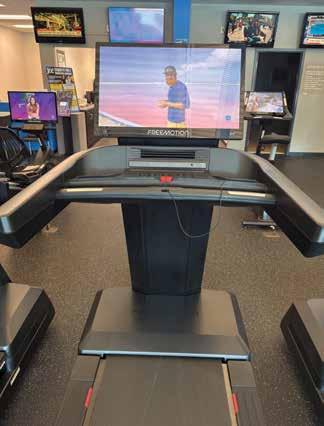
The Simon Family JCC Fitness Center recently upgraded its cardio equipment with new treadmills, ellipticals, and rowing machines featuring iFit technology. These machines offer interactive global workouts and studio classes, with systems that automatically adjust incline, decline, and speed to match terrain or instructor guidance.
The new Freemotion incline trainers allow users to move between a -3% decline and a 30% incline, expanding the range of workout intensities.

Users can also access interactive coaching programs that simulate real-world routes, such as running or cycling through cities (the streets of Barcelona, for instance) or along mountain trails, with the machine adjusting resistance and incline in real time. For high-intensity workouts, 1-Step controls allow quick adjustments to speed
To reduce strain on joints, the machines include Freemotion’s Reflex deck, designed to absorb impact during each stride and provide added support for knees, hips, and ankles.
“The equipment is built for high-traffic use, a feature that helps improve durability and reduce downtime for maintenance,” says Tom Purcell, director of fitness
The new machines feature 24-inch screens that, in addition to the coaching programs, offer entertainment options such as Netflix, Pluto TV, Spotify, and Google Maps, allowing users to stream content or virtually explore different locations while working out.

Members have responded positively, Purcell says, while many are still familiarizing themselves with the new features.
“There’s a learning curve with all the technology and what it can do,” Purcell notes. “It’s similar to getting a new computer or new vehicle—you have to get used to it.”
And the way to get used to it, of course, is to use it.
Ira Pearlman
My journey with the arts began in 1958, born out of a weekly compromise. Every Saturday, my childhood was split between the spiritual tradition of the temple and the creative freedom of the art studio. This early dual education shaped my perspective, and by the age of eight, I received my first formal recognition: an award for a painting of a red flying chicken. It was a whimsical start to a lifelong fascination with visual expression.
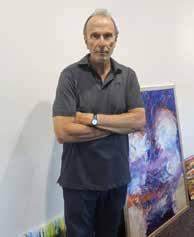
When it came time to choose a professional path in college, I felt pulled between the rigor of the natural sciences and the fluidity of the arts. I ultimately found my home in psychology, a field that allowed me to bridge those two worlds. While the scientific elements of the discipline were clear, I always viewed clinical practice as its own form of theater— an “art of the hour” built on empathy, therapeutic alliance, and the delicate work of witnessing another's experience.
As I dedicated myself to building a career and raising a family, my personal practice in the arts moved to the periphery for a time. However, as life became more established, I found my way back through photography, eventually having the privilege of seeing my work exhibited in several galleries.
Since transitioning into semi-retirement eight years ago, I have come full circle to my first love, painting. In recent years, I have delved more deeply into the medium, formalizing my study through lessons and serious practice. Today, my work is often filtered through the rich lens of Jewish mysticism, reflecting a lifelong journey back to the canvas. What you see in my work today is the culmination of that journey, a sincere inscription of the joy I find in the creative process.

Pearlman’s work will be on exhibit in the Leon Family Gallery on the second floor of the Sandler Family Campus through August. Join the artist for an opening reception in the gallery on Thursday, June 25. The exhibition is supported in part by the citizens of Virginia Beach through a grant from the City of Virginia Beach Arts and Humanities Commission. Thanks to the generosity of the artist, 100% of proceeds from art sales will benefit Arts + Ideas programming at the UJFT. For more information or to RSVP for the reception, visit JewishVA.org/Gallery or contact Hunter Thomas, UJFT director of Arts + Ideas, at HThomas@UJFT. org or 757-965-6137.
Members of United Jewish Federation of Tidewater’s Patrons of the Arts gathered at Aviva Pembroke on Wednesday, May 20 for a screening of Once Upon My Mother. The film tells the story of a mother’s unwavering devotion as she helps her son, born with a clubfoot in 1963, overcome physical challenges and social barriers while navigating life’s ups and downs.
Patron of the Arts donors, Beth Scharlop (co-chair of the Jewish Film Festival) and Roger Schultz attended the event.
“We appreciate the Patron of the Arts program for its support of the Jewish Book Festival, Jewish Film Festival, and other Jewish cultural programs that enrich our lives in Tidewater,” says Scharlop.
As part of a broader collaboration with Beth Sholom Village and Aviva Pembroke, attendees were also given the opportunity to tour Aviva’s facility.
Sholom Village Board was grateful for the opportunity to support the Jewish Film Festival this past year. Providing meaningful Jewish-themed stories and cultural experiences is an important part of our community outreach and engagement efforts.

“We really enjoyed the screening of Once Upon My Mother and tour of the Aviva residences. As always, it is a more meaningful experience to watch films together and discuss them with community members,” says Schultz.
Fay Silverman, chair of Beth Sholom Village’s board of directors, says, “The Beth
“We also want to congratulate the Patron of the Arts community on a very successful year. Beth Sholom Village is especially appreciative of the opportunity to share several of the films with residents at Aviva Pembroke, helping to bring these enriching experiences directly to our senior community,” says Silverman.
The film screening was part of the enhanced Patron of the Arts donor benefit structure, introduced for the 2025 - 2026 season, which focuses on creating exclusive artistic and cultural experiences for supporters. In addition to the film screening, qualifying donors receive increased access to Arts + Ideas guest speakers, pre-sale access to Jewish Film Festival tickets, and other opportunities.
The 2026 - 2027 Patron of the Arts season launches in July.
To learn more about supporting Jewish arts and culture throughout Tidewater, contact Heather Nevins, UJFT’s development manager, at HNevins@UJFT.org or 757-452-6925, or visit JewishVA.org/SupportTheArts.
TJF staff
Tidewater Jewish Foundation’s Simon Family Legacy Celebration on Wednesday, May 27 was an opportunity for communities to converge, gathering around a shared vision, shared responsibility, and shared purpose.
More than 100 TJF fundholders, community leaders, philanthropists, and Life & Legacy Ignite the Flame participants came together for an evening that felt less like a traditional event and more like a collective affirmation of where Jewish Tidewater is headed.
In addition to highlighting what has already been accomplished through TJF, the evening focused on what is now possible because of the community’s willingness to think bigger, lead boldly, and invest intentionally in the future of Jewish education,
security, and cultural life.
In opening remarks, Britt Simon, president of the Simon Family Foundation, which sponsored the evening, reflected on the meaning of legacy and the responsibility of carrying values forward through philanthropy and communal leadership.
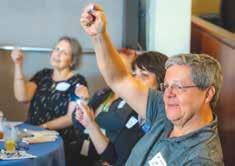
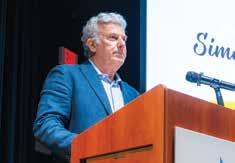
“Legacy is not measured only by what we build, but by the values we pass forward,” Simon said. “The true strength of any legacy is found in people; in the commitments we make to one another and to the communities we serve.”
During the
event, attendees heard about the momentum Tidewater Jewish Foundation is building throughout the community and its vision to grow $500 million in permanent endowment with assets dedicated to strengthening and securing Jewish life in the region. Doing so follows TJF’s mission to build and guide more resources to empower Jewish life in Tidewater and beyond.
Keynote speaker Rabbi Daniel Cohen brought both inspiration and challenge to the evening, encouraging attendees to think deeply about purpose, impact,
and the lives they are actively shaping.
The evening also marked a moment of continuity and leadership as Eddie Kramer, outgoing TJF chair, ceremonially passed the torch to Paul Peck, incoming chair, during a moving “passing of the light” ceremony that symbolized stewardship, trust, and the continuation of vision from one leader to the next.
A particularly joyful moment of the evening took place when guest Cantor Jason Schachter McKinney performed two spirited musical pieces that energized the room and inspired a sense of forward movement.
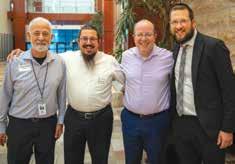
As flashlights illuminated the room during a communal rendition of This Little Light of Mine, the message of the evening was clear: the future of Jewish Tidewater is not something to wait for. It is something being built now –brighter together.
Rashi Brashevitzky
This year, Shavuot celebrated 3,338 years since the giving of the Torah at Mt. Sinai. To this very day, Jews continue to study the Torah, cherish it, and hold it close. The Torah serves as guidance on how to live and make the world a better place.
SIA’s Primary Years students prepared for Shavuot with a celebration sponsored by the Glasser family in memory of Richard Glasser, whose mantra was, “Do the right thing, the right way, for the right reason.” Glasser understood the value in being a “mensch” and leading a life based on values and doing good in the world. The Torah, which teaches how to do the right thing, was given on Shavuot, making this holiday the perfect time to honor Richard Glasser’s memory.
The Shavuot celebration included a variety of activities designed to foster a love of Torah, Jewish
tradition, and helping others. Students learned to help those in need by packing lunches to be distributed to families in the ForKids family shelter. Students created paper flowers for a Shavuot service at a local senior living community, encouraging students to value and brighten the lives of others. Mt. Sinai cupcakes, complete with flower sprinkles and alef-bet cookies, served as a reminder to serve with joy. The celebration was rounded out with students decorating and filling vases with flowers as part of the tradition to decorate with flowers for Shavuot.
The Shavuot celebration was a beautiful way for students to recognize the gift of the Torah and learn how to put Torah teachings into practice.
Rashi Brashevitzky is Judaic Studies director at Strelitz International Academy.
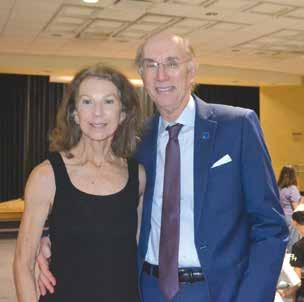
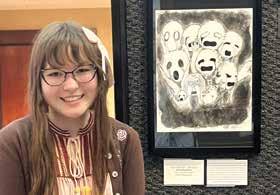
Kyleigh Eyl
Throughout May, area students visited the Sandler Family Campus to view their artwork displayed in the Cardo.
The exhibit featured pieces from the Holocaust Commission of the United Jewish Federation of Tidewater’s annual Elie Wiesel Writing & Visual Arts Competition. For 29 years, students from around the world have submitted powerful entries inspired by the lessons of the Holocaust and the importance of remembrance, humanity, and hope.
The artwork on display reflected a wide range of emotions and perspectives, with students using different artistic styles and mediums to tell stories, honor survivors, and explore the impact of history through their creative expression.
In addition to celebrating the creativity and talent of the student artists, the exhibit also served as a meaningful reminder of the importance of preserving memory through the arts.
For more information about the Holocaust Commission or the Elie Wiesel Writing & Visual Arts Competition, contact Elka Mednick at emednick@ujft.org.
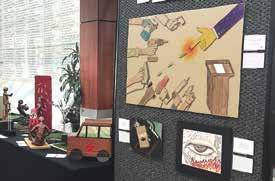

Ally St. Pierre
Graduation is always a meaningful and emotional milestone at Strelitz International Academy. For the fifth-grade students, many of whom have been part of the SIA community since infancy, it is a time to reflect on their growth, celebrate their accomplishments, and prepare to spread their wings as they embark on their middle school journey.
On Wednesday, June 3, SIA hosted its annual graduation ceremony, celebrating the accomplishments of the Class of 2026. Head of School Heather Moore opened the program with reflections on the successes of the past year and shared future plans. The ceremony also marked leadership transition as Amy Weinstein presided over her final board of trustees meeting, welcomed new board members, and officially installed Steve Zuckerman as board president.
Ari Mulligan, Student Government Association president and Andrew Dodge, vice president, delivered a heartfelt tribute on behalf of their classmates. They spoke about their International Baccalaureate Primary Years Programme Exhibition, which focused on technology, and expressed gratitude to the teachers, both past and present, who guided and supported them throughout their SIA years.
“We have had so many amazing memories from this year,” Andrew said. “Our class loved our time with Mrs. Bruns, all our field trips, and all of our extracurriculars at this school. This class has become like siblings. We have had such a great time at SIA, and
Graduation Award Winners
Abe and Anna Rudolph Award for Excellence in Mathematics – Lena Aftel
Rabbi Charles J. Mantel Memorial Award for Excellence in Judaic Studies – Niv Rubin
Harold and Jacqueline Spiro Goodman Award for Excellence in General Studies – Avi Weinstein
Hyman J. Stromberg Memorial Award for Academic Excellence – Ari Mulligan
I. James London Memorial Athlete of the Year AwardLevi Cohen
Lorna Legum Rising Star Award – Hadley Karpielian
Rabbi Philip Pincus Memorial Award for Excellence in Hebrew Studies – Harper Warranch
Shirley Helfant and Ruth Josephberg Award for Visual Arts – Ella Gladstein
SIA Inquirer IB Learner Profile Award – Lena Aftel
even though we are splitting up, I hope we will remain in touch. We will continue to use what we have learned here in the future.”
This year’s Commencement Speaker was Shayna Friedman, a member of SIA’s Class of 2019 and a recent graduate of Kempsville High School Class of 2026. Shayna offered heartfelt wisdom and encouragement to the graduates, drawing on her own experiences and cherished memories of SIA.
“When I think about my elementary school years,” said Shayna, “a lot of memories come to mind. One that stands out is singing Hatikvah every morning. At the time, it just felt like part of the routine. But looking back now, I realize it was something much bigger. Hatikvah means hope. To me, it represents the hope people carry through their lives, especially when things feel uncertain. That is something I hope you all carry with you as you move forward into this next chapter. I hope you keep the ability to stay hopeful no matter the challenges you face.”
The graduation ceremony was a reminder of the lasting impact of an SIA education—one grounded in community, compassion, Jewish values, and a love of lifelong learning. As the Class of 2026 turns the page to its next chapter, the entire SIA community celebrates their achievements and looks forward to all they will accomplish in the years ahead.
Ally St. Pierre is admissions and marketing manager at Strelitz International Academy.
SIA Inquirer IB Learner Profile Award – Levi Cohen
SIA Reflective IB Learner Profile Award – Andrew Dodge
SIA Balanced IB Learner Profile Award – Ella Gladstein
SIA Caring IB Learner Profile Award – Avery Goldstein
SIA Risk-Taker IB Learner Profile Award –Honzi Hodicky
SIA Thinker IB Learner Profile Award – Hadley Kaprielian
SIA Communicator IB Learner Profile Award –Quinn Margulies
SIA Distinguished IB Scholar Award – Ari Mulligan
SIA Performing Arts Award – Avery Goldstein
SIA Risk-Taker IB Learner Profile Award – Mia Pinto
SIA Principled IB Learner Profile Award – Niv Rubin
SIA Open-Minded IB Learner Profile Award –Harper Warranch
SIA Knowledgeable IB Learner Profile Award –Avi Weinstein
Sunday, July 26, 12 – 4 pm
Hannah Yasemsky
United Jewish Federation of Tidewater’s NextGen community teams up with PJ Library to celebrate Tu B’Av, the Jewish holiday of love, through meaningful action, music, and poolside fun tailored specifically for young adults (ages 22-45) and families.
Start the day by putting love into action through hands-on community service projects. Kick the day off with a high-energy, high-impact time at The Mitzvah Hub, where participants will put love into action through community service projects: Custom-pour scented candles, craft hopeful bracelets and cards for local kids in need, and pack essential gear and snack kits to support local heroes and shelters. The energy then shifts to the pool for Poolside & Pavilion Recreation.
Once the mitzvah projects are complete, cool off with open swim time, grab a sweet tropical treat from the Kona Ice Truck, and dive into giant lawn games led by Jewish Tidewater’s energetic Shinshinim. Plus, a brand-new volleyball net is finally being brought out for epic pick-up games on the grass. This is a chance to vibe with old friends, make new connections, and celebrate the Jewish holiday of love in the absolute best way possible. To attend the biggest NextGen party of the summer, register at JewishVA.org/NextGen.
Jewish News wants to celebrate Jewish Tidewater’s students as the Class of 2026 graduates from high school, college, and graduate schools.

To help us to continue to acknowledge as many graduates as possible, please submit, along with a photo, this information by Friday, June 19:
• Name
• School
• Awards
• What’s next (college, grad school, job)
• Parents
Send to news@ujft.org with Graduate in the subject line. You will receive an email acknowledging receipt. If you don’t, please call 757-965-6132.
Sunday, June 28,
Hannah Yasemsky
Trade the usual Sunday evening for an unforgettable experience on the water with United Jewish Federation of Tidewater’s NextGen community (ages 22–45) for this next adventure: Sunset on the Water: Kayaking, reflection and Jewish learning. The evening is designed to nourish the body, mind, and spirit through nature and community connection.
the great outdoors
A long-standing Jewish tradition speaks of finding spiritual clarity and divine connection within the natural world. From the patriarchs meditating in the open fields to the prophets seeking
pm, Norfolk’s waterways | Optional afterparty: 9–10 pm
wisdom in the wilderness, Jewish tradition teaches that stepping outside can help look inward.
As kayaks are launched into Norfolk’s scenic waterways, the rhythmic dip of the paddles will set the pace for mindfulness and shared exploration. Surrounded by the peaceful beauty, the group will engage in an interactive session of Jewish learning and reflection. Whether a seasoned scholar or just curious about exploring Jewish values through a fresh lens, this event offers an open, accessible space for everyone.
The evening
• 6:30 pm: Arrival and check-in. Participants will receive a safety
briefing and gear fitting.
• 7 pm SHARP: Launch kayaks onto the water. Arrive on time to not miss the fleet departure!
• 8:13 pm: The Golden Hour. Pause on the water to watch the sunset, anchoring the learning in a moment of quiet gratitude.
• 9 pm: Return to shore.
The connection does not have to end when the boats are pulled out of the water. The group will head to The Bird (located at 4314 Colley Ave in Norfolk) for an optional afterparty. Known for its cozy neighborhood feel and atmosphere, it is a great spot for the
NextGen community to unwind. Relax, grab a refreshing beverage or a late-night bite, and continue the conversations sparked on the water. Event NextGen participants will receive 10% off their orders at the venue for the night.
Pre-Registration is required. Availability is limited, so lock in a kayak now at JewishVa.org/NextGen to be a part of this evening of community, Torah, and natural beauty.
For pricing, registration links, and launching location details, visit JewishVa.org/ NextGen or contact Hannah Yasmsky at Hyasemsky@ujft.org.
JUNE 15, MONDAY
Book Club. The book of the month is Monday of the month at 1:30 pm. Sandler Family Campus. Information: Jewishva.org/Adults or contact Sarah Cooper at SCooper@ujft.org.
Camp JCC opens its doors for the first day of summer camp. Campers will dive into a full day of classic camp fun, including sports, swimming, arts, outdoor adventure, and community building with friends old and new. Held on Sandler Family Campus, kickoff day sets the tone for a season filled with energy, friendship, and unforgettable experiences. Registration and information: CampJCC. or Kate-Lynn Cipolla, Camp JCC director KLCipolla@UJFT.org.
JUNE 17, WEDNESDAY
Edgar Cayce Museum Tour.
Cayce A.R.E. Campus. Membership of the Senior Club is not required. $10 plus lunch. Bus will board at the Simon Family JCC at 12 pm and return by 4 pm. Information and registration: www.jewishva.org/Edgar or Sarah Cooper at SCooper@ujft.org.

JUNE 18, THURSDAY
Roundtable Conversation. Join community members of all ages for conversations involving current events, politics, and more. Meets every first and third Thursday of the month. 1 pm. Sandler Family Campus. Information: www.jewishva.org/Adults or Sarah Cooper at SCooper@ujft.org.
JUNE 19 AND 26, FRIDAY
Baby & Me. A relaxed hour of coffee, treats, and playful activities for babies up to 24 months and their caregivers. Connect with other caregivers while little ones explore and play with friends. Free, no membership required. 9 –10 am. Simon Family JCC. Registration required: JewishVA.org/BAM or Blake Sisler at BSisler@ujft.org.
VARIOUS FRIDAYS
JNextGen Pop-Up Shabbat. Join Shabbat gatherings hosted in homes across the community for young adults (and their families), designed for those roughly ages 22–45(ish). Enjoy a warm evening of Shabbat traditions, meaningful conversation, and a shared meal in a relaxed, welcoming setting. To see dates and host information, visit JewishVA.org/PopUpShabbat.
JULY 7, TUESDAY
Yiddish Club. Embrace Yiddish culture, language, and history through music, film, poetry, and literature. Usually meets on the first Tuesday of each month. 1 pm. Sandler Family Campus. Information: www.jewishva.org/Adults or contact Sarah Cooper at SCooper@ujft.org.
(JTA) — As golden confetti rained down around him Thursday, May 28, Israeli chef Raz Shabtai broke down in tears and was embraced by his cheering staff.
Moments earlier, a livestreamed Michelin ceremony had announced that his Miami restaurant, Mutra, had become the first kosher restaurant ever awarded a Michelin star, long regarded as the highest honor in the restaurant industry.
“It’s a moment of joy, it’s a moment of pride, it’s a moment of relief, it’s a moment of confirmation,” Shabtai says. “It’s not just about Mustra getting that star, but it’s about the entire Jewish community getting that, and I felt a lot of responsibility.”
Shabtai, who has worked in kitchens across New York and Israel, opened Mutra in February 2025, naming the kosher eatery after his Jerusalem-born grandmother whose cooking he says heavily inspires its menu.
“I really like to call the restaurant Jerusalem cuisine versus Mediterranean and Middle Eastern or Israeli or stuff like that, because the flavors that I’m trying to bring to the table, it’s flavors that came from memories and visiting in the market with my grandma,” Shabtaiww says. “I have to be very loyal to what my grandma fed me.”
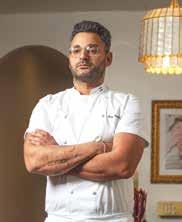
A description of Mutra on the Michelin website praised the restaurant’s “show-stopping plate of beets in a pool of ajo blanco and topped with beetroot sorbet” and “signature lamb kebab with smoked aubergine cream and tomato oil.”
“Israeli Chef Raz Shabtai has brought his take on Middle Eastern cuisine to Miami,” the Michelin inspectors write. “Named for his grandmother, this is a place where snagging a seat at the chef’s counter is a must.”

The award places Mutra among the world’s most celebrated restaurants and marks a breakthrough for kosher cuisine, which operates under strict dietary rules. For Shabtai, who has kept kosher for more than a decade, the award proved that culinary excellence can thrive under those constraints.
The recognition arrived after months of suspense. Shabtai says that Michelin inspectors visited the restaurant several times before sending an email in February requesting information and photos about the establishment, a sign he says alerted them that they were under consideration.
For Noa Figari, Mutra’s director of operations who joined the team after first working as Shabtai’s real estate agent to find the Miami location, the announcement was a “release.”
“All the hard work that we put has been, you know, validated,” Figari says. “We carry a responsibility not only just for Raz’s cuisine, but for the whole entire Jewish community and kosher world we made history.”
Looking ahead, Shabtai says he hopes the achievement would inspire other kosher chefs.
“Be proud of where you’re coming from, get connected to those roots that you have,” Shabtai says. “Sometimes it’s not going to be a smooth sail. It’s okay, learn how to fix it, but believe in yourself. Don’t ever compromise, and don’t let other people compromise you.”
Joan Carole Bass Baydush
LEWISVILLE, N.C. – Joan Carole Bass Baydush, 82, recently of Lewisville, N.C. and formerly of Norfolk, Va., died peacefully after a prolonged illness.
A warm welcoming smile, a tender touch, a kind manner, a keen intelligence, a passion and excitement for life and a future with her loving husband-to-be Jerry Baydush, marked Joanie’s early life history.
Blessed with two wonderful children, Helen and Alan, and precious grandsons Alex and Aidan, and a loving family and friends, her life unfurled as it is apt to do with a combination of great joy and sadness, pleasure, and pain. However, Joan centered her life with her family and her home. Jerry was a very kind, attentive, loving husband who married Joan in September 1963. Words cannot possibly express how special a husband he was to his forever sweetheart, Joanie. They catered to each other with love and respect and were always at each other’s side and in each other’s heart. They were
best friends and spouses.
They cherished their son, Alan Baydush, their late daughter Helen Baydush Kehayas Verhurlst, deceased brother Philip Stephen Bass, and grandsons Alexander Kehayas and Aidan Baydush. They were treasures beyond words and the lights of their life. Alan’s wife, Lori Tebbets Baydush, was as adored as an actual daughter would be. Joanie was predeceased by her father Abraham Milton Bass, mother Helen Feldman Bass, and second mother, Naomi Legum Bass.
To cherish Joan’s memory were siblings, Robin Feldman Kyle, husband Rickie, and nephews Philip and Lance, Brian Feldman and wife Terri, and nephews Philip and Max and niece Erin, and Howard Feldman and his life partner Maria Winn and niece Lexie and nephew Robin and numerous other cousins, nieces, and nephews on both sides and many friends. We will all miss Joan dearly.
She and Jerry had a deep interest in spirituality and helped guide their two grandsons toward Torah and Judaism. Alex and Aidan brought light to her eyes, a big

smile and constant joy. Joanie could look at you and tug your heartstrings like none other. Alan, her cherished, loving attentive son became the family patriarch early and he was a blessed honored gift every day.
Graveside services were held at Forest Lawn Cemetery in Norfolk. Rabbi Rosalin Mandelberg officiated. Memorial donations in Joan’s name may be made to either Trellis Supportive Care (Hospice), 101 Hospice Ln, Winston-Salem, NC 27103 or Children’s Hospital of The King’s Daughters, 601 Children’s Lane, Norfolk, VA 23507.
Online condolences may be offered to the family at hdoliver.com.
Rita Gamsey Burnat
ATLANTA – Rita Gamsey Burnat, daughter of the late Milton Linwood Gamsey and Rosalind Gamsey, passed away on June 5 at her home in Atlanta, at the age of 74.
She was predeceased by her son Kyle Burnat. Rita is survived by her son Lawson Burnat and daughter-in-law Laura Burnat of Milton, Ga; grandchildren Kyla Burnat and Weston Burnat; brothers Dr. Alan Gamsey (Helen) of Norfolk, and David Gamsey (Carrie) of Sandy Springs, Ga; nephews Mark Gamsey, Jeff Gamsey (Elise), Brian Gamsey (Katie); nieces: Robyn Gamsey and Elizabeth Deutsch (Isaac). In addition, she is survived by numerous other cousins, relatives, and friends.
Rita was born on November 22, 1951, in Norfolk, and graduated from Granby High School in 1969. She was very active in school activities acting as the Granby High School SCA (Student Council) president. She graduated from Emory University with a B.A. in Economics in 1973 where she met her future husband, Larry Burnat. They married and raised two children in Atlanta. After college Rita worked as an economist at Trust Company of Georgia, and later as a vice president of Commercial Real Estate at the First National Bank of Atlanta. She later worked as a mortgage broker for many years.
Rita was a devoted mother whose love knew no limits. She was her children’s greatest supporter – cheering from the sidelines and driving her kids all over town to numerous sporting events. She surrounded herself with a wide, vibrant circle of friends playing Alta Tennis, participating in Stock Club, attending ladies’ birthday lunch groups, traveling to
Europe and other destinations around the globe, and spending time at art museums. She was a member of Temple Sinai and attended services regularly.
Rita will be remembered for her remarkable gift for caring – the kind that wasn’t loud or showy, but steady, instinctive, and deeply felt by everyone around her. Her friends knew they could lean on her without hesitation, because she always made space for their worries, their joys, and their stories. Her children grew up wrapped in that same unwavering love, guided by her gentle strength and her belief that their needs came before her own.
She moved through life with a heart tuned to the well-being of others. Whether it was offering a listening ear, showing up when someone needed her most, or quietly putting aside her own burdens to lift someone else’s, she gave of herself freely. Caring wasn’t something she did – it was who she was.
One of her greatest joys in life was being a grandmother. She was endlessly proud of her grandchildren Kyla and Weston – proud of who they were, what they were becoming, and every milestone they reached. They brought her light, laughter, and purpose, and she poured her love into them in the same selfless way she cared for everyone she loved. Her grace in hardship and her boundless love for her grandchildren will remain among the most beautiful parts of her legacy.
Funeral services were held at Temple Sinai with burial at Arlington Memorial Park in Sandy Springs. Contributions to Woodward Academy in support of the endowed Kyle Burnat ’01 Scholar Athlete Award would be appreciated. Memorial gifts may be made online at woodward. edu/giving (indicate tribute gift) or by check made payable to Woodward Academy and mailed to: Woodward Academy Advancement Office, 1662 Rugby Avenue, College Park, Georgia, 30337 (noting Kyle Burnat '01 Scholar Athlete Award in memo line).
NORFOLK – Dean Joel Casper, age 86, was born on August 22, 1939, in Brooklyn, N.Y., to Jennie Goodman Casper and Israel Casper. He passed away on May 29, 2026, at Beth Abraham Homes.
He is survived by his partner, Anna Karp, and his children: Scott Casper, Tracy Casper Lang (Eric Lang) and Andrew Casper; his grandchildren, Audrey Lang, Emily Lang, and Oliver Lang. Also, his sister Carol Casper Kadanoff, his nieces and nephews Paula Kadanoff (Eric Wolfe) and Orion Kadawolfe; Allison Kadanoff; David Kadanoff (Annie Chartrand Kadanoff), as well as numerous cousins.
Dean was a toddler when his family moved from Brooklyn, N.Y., to his mother’s hometown in Portsmouth, Va. True to the smaller town traditions, he attended Green Street Elementary School and was taught by the beloved three teachers – Miss Downey, Miss Tea, and Miss Ernest. They are the same teachers who taught his mother and later his younger sister Carol. Dean graduated from Woodrow Wilson High School and attended Old Dominion College and began working in the retail market until he joined his father in the growing Abby Sales Company. Throughout his life, he lived and worked in the Tidewater area.
Retirement brought a great life filled with books, learning, and conversations. His sometimes gruff voice hid the loving man that he was. His health brought him to Beth Abraham Home, where he passed away in his sleep.
A graveside service was held at Gomley Chesed Cemetery. Online condolences may be offered to the family at hdoliver.com.
Alan David Galumbeck
TAZEWELL, VA – Alan David Galumbeck, 81, a technical guru for Landmark Communications at The Virginian-Pilot in Norfolk and with The Weather Channel in Atlanta, died June 7 in Tazewell, Va, after a battle with cancer.
Alan was predeceased by his parents, Ella and Edward Galumbeck of Norfolk.
He is survived by his brother, Robert (Annabelle); his two nieces, Dori Hazan (Mark) and Paula Gravitt (Mark); his great-nephews Evan and Ethan Gravitt; his great-nieces Sophie and Olivia Hazan; his great-nephew Parker Hazan; and his best friend and “brother from another mother,” Larry Kabo.
Alan had a lifelong interest in gadgetry, starting as a HAM radio operator as a teen. He was always the first to adopt new technology, including calculator watches, Mac computers, and Blackberry phones.
Seeking to put his math and engineering skills to work, he attended Virginia Tech and Old Dominion University, where he founded the campus’ Jewish fraternity, AEPi.
On a job interview with The Pilot, Alan made a design-altering suggestion for the newspaper’s new press/distribution facility. Not only did Alan get the production manager job, but the idea created a big cost savings for the company. Later, Alan patented a system for transmitting pages from the composing room in downtown Norfolk, via microwave, onto metal plates at the pressroom in Virginia Beach.
Alan then got in on the ground floor of Landmark’s creation of The Weather Channel in the early 1980s. He moved to Atlanta where he patented software to enable “local weather on the 8s” during the national cable broadcast. He was promoted to vice president of new technology on Landmark’s corporate staff.
During his early retirement in Atlanta, he became an entrepreneur and partnered on the purchase of an old movie theater. Alan really liked movies, the perfect popcorn recipe, and hosting the Rocky Horror Picture Show.
Around 2015, Alan moved from the big city to small town, Tazewell, to be near his brother Robert and sister-in-law Annabelle. He became involved in book club, game nights — “he was a stickler for rules” — and enjoyed a broad social life.
A graveside service was conducted by Cantor David Proser at Norfolk’s Forest Lawn Cemetery. Donations are suggested to Covenant House.
VIRGINIA BEACH – Linda Louise Lillian Linde Sinowitz, 75, passed away peacefully on May 22, 2026, after a long and courageous battle with kidney disease and several other conditions.
Born on December 12, 1950, in New York, Linda was the beloved daughter of William Linde and Lillian Veidt. She carried with her throughout life the warmth, resilience, and deep love of family that would become the center of everything she did.
After graduating high school, Linda earned her undergraduate degree from Molloy College before continuing her education at Adelphi University, where she received her master’s degree. She devoted
• Family owned and operated since 1917
• Affordable services to fit any budget
• Advance funeral planning
• Professional, experienced, caring staff
• Flexible burial options
• Flexible payment options
Approved by all area Rabbis and Chevrah Kadisha
more than 30 years of her life to serving others as a social worker, beginning her career in a long-term care facility in New York. It was there that she met the love of her life, Allen Sinowitz, who worked at the same facility as a dietitian and administrator. Together they built a loving marriage that spanned 42 years, full of partnership, laughter, traditions, and unwavering devotion.
In 2006, the family relocated to Virginia for Allen’s career. No matter where life took her, Linda created a home filled with comfort, warmth, and unforgettable meals. Her family will forever remember the love she poured into every dish she
made, from her matzo ball soup to lasagna, chicken cutlets, and countless other meals that nourished both body and soul. Her kitchen was less a room and more a sacred little kingdom of aromas, simmering pots, unsolicited second helpings, and absolute refusal to let anyone leave hungry.
Linda embraced life with enthusiasm and authenticity. She faithfully observed every Jewish holiday and treasured the traditions and history of Judaism. And in her spare time, she loved volunteering, serving as the Sisterhood president at Temple Emmanuel in Long Beach, N. Y. and Congregation Beth Chaverim in Virginia Beach, Va. She was also the director of the
religious school at Beth Chaverim, where she loved working with children. She also loved jazz music, summer sunshine, water aerobics, sunbathing, and curling up with a good book, especially horror novels, romance stories, nonfiction, historical works on Judaism, and books by Stephen King and Jodi Picoult. She adored horror and witch or vampire films, especially The Shining, Queen of the Damned, and the classic Bell, Book and Candle. She also enjoyed cooking competition shows, though she maintained a spirited and very firm dislike of Bobby Flay, a stance that amused everyone who knew her.
Even though she really disliked the end of summer, Halloween was one of Linda’s favorite times of year. She delighted in dressing up and creating matching costumes with Allen, embracing the fun and joy of the season with the same wholehearted spirit she brought to everything she loved.
Above all else, Linda cherished her family. She created a life filled with memories, traditions, laughter, and deep affection. Her presence brought comfort and steadiness to those around her, and the love she gave so freely will continue to live on in the hearts of all who knew her.
Linda is survived by her devoted husband, Allen Sinowitz; her daughter, Whitney; her son, Scott; and her daughterin-law, Anne, as well as her beloved animals, Bailey Rae, Gillian Pyewacket, and Oliver.
Services were private. Arrangements were entrusted to Altmeyer Funeral Home Southside Chapel.
Marsha Del Rosario Wilks
VIRGINIA BEACH – Marsha Del Rosario Wilks, 87, passed away in her home on April 12, 2026.
She was born in California to Gregorio and Stella Del Rosario.
She is survived by her husband Jay Wilks of 40 plus years, sister Triva Stanton, brother Jessel Curry, one grandson Stuart Wilkins, and many nieces and nephews.
She was predeceased by her sons Damon Wilkins and Steven Wilkins.
The funeral service took place at Hollomon-Brown Funeral Home Great Neck Chapel. Donations may be made to the Friends of Virginia Beach Mounted Police. Condolences may be offered to the family at www.hollomon-brown.com.
Remembering the Liberation of Auschwitz, an article by Rabbi Israel Zoberman was inserted in the Congressional Record by Congresswoman Jen Kiggans in honor of International Holocaust Remembrance Day.
The article focuses on a book written by Marc Saperstein, a distinguished rabbi, author, and scholar, titled Agony in the Pulpit: Jewish Preaching in Response to Nazi Persecution and Mass Murder, 1933-1945. Rabbi Zoberman draws attention to the relevance of the book today, amidst a surge of antisemitism, calling upon readers to learn from history, speak up, and act out before it’s too late.
A second article, Israel at 78, was inserted in the Congressional Record by Congresswoman Jen Kiggans in honor of Israel Independence Day. The article begins, “The world’s only Jewish state celebrates its 78th anniversary in the shadow of existential war with Iran and its proxies, fighting along its great American partner with shared values and interests.”
Rabbi Dr. Israel Zoberman is the founder and spiritual leader of Temple Lev Tikvah, a reform synagogue in Virginia Beach, as well as Honorary Senior Rabbi Scholar at Eastern Shore Chapel.
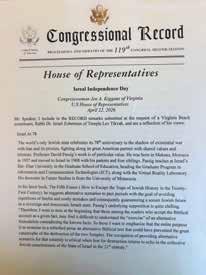
Tidewater Jewish Foundation is guided by a board and network of community leaders whose professional excellence and civic commitment help shape the way it stewards legacy, philanthropy, and the future of Jewish life in Tidewater. Their accomplishments extend far beyond the boardroom, strengthening institutions and communities throughout Hampton Roads.
Neil L. Rose, Esq., TJF’s treasurer and a board member, was recently named the 2026 recipient of the Hampton Roads Estate Planning Council’s Distinguished Estate Planner Award. The honor recognizes individuals who demonstrate exceptional leadership and longstanding contributions to the field of estate planning.
A former IRS and Treasury Special Attorney, Rose has spent decades advising families, businesses, and nonprofits with integrity and expertise while also serving countless civic and Jewish communal organizations across the region.
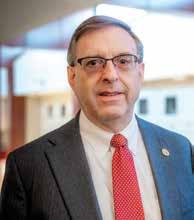
At the same event where Rose was honored, Randy Parrish, TJF’s vice president and CFO, was recognized for his service as a past president of the Hampton Roads Estate Planning Council.
“These recognitions reflect the caliber of leadership that exists within our community,” says Naomi Limor Sedek, president and CEO of Tidewater Jewish Foundation. “We are proud to work alongside individuals whose professional achievements are matched by their commitment to service, stewardship, and impact.”
We all carry certain books with us long after childhood ends. They sit quietly on the shelves of our memory; dog-eared, underlined, loved, while shaping who we become and teaching us how to dream. Some stories came easily. Others were challenging, the kind where you held an encyclopedia in one hand and the book in the other. But every one of them mattered.
For me, one of those books was Anastasia Krupnik by Lois Lowry. Anastasia was smart, funny, opinionated, and wonderfully imperfect, and I loved following her adventures. In fact, I read every Anastasia book as it was published. When the final book was released in 1995, I made sure to buy it on its release date, even though I was almost 30. That is the kind of connection a truly great book can create.
About a decade after discovering Anastasia, I wrestled with William Shakespeare’s The Taming of the Shrew. Shakespeare was not easy reading, but there was something powerful about working through the language and discovering the rhythm and wit beneath it. That challenge built confidence and curiosity (and the absolute personal belief that Kate’s sister, Bianca, was a brat, but I digress).
Books can transport you anywhere. More importantly, they can change your life. When we pass that love of reading on to a child, we do more than help them sound out words, we open doors. We show them that stories belong to them, that imagination is a gift, and that perseverance pays off.
Looking back now, I realize those books did more than fill my shelves. They helped me Be A Reader. They taught me that reading is not just a skill; it is a doorway to knowledge, imagination, confidence, and possibility.
That belief is at the heart of the BeAR Literacy Project. As we look ahead to the 2026 - 2027 school year, we are seeking volunteers willing to spend just one hour a week helping a second grader strengthen their reading skills.
Are you interested in becoming part of a child’s reading story? Contact Robin Ford at 757-321-2304 or rford@ujft.org. It’s never too early to think about making a difference.

If you’re feeling ready to beat the summer heat poolside, you’re in luck. The Metzger Outdoor Aquatic Center opened on Saturday, June 6, marking the start of the Simon Family JCC’s seven-day-a-week summer pool season.
The outdoor pool opens daily at 11:30 am, closing at 7 pm Monday through Thursday, and it closes at 5:30 pm, Friday through Sunday.
“We have a full staff of nearly 40 lifeguards, most
of whom are JCC veterans,” says Tom Edwards, director of athletics. “They bring a variety of experiences and international cultures and range from high schoolers to retirees.”
The summer pool season continues through Labor Day, offering members a daily chance to cool off and enjoy the facilities. August 17 through Labor Day on September 7, hours will be adjusted to 11:30 am until 5:30 pm daily.
To honor the role of service throughout the United States’ 250 years, Repair the World is launching Serve 250 with communities around the country offering service and learning opportunities from mid-June through July 10.
“Throughout U.S. history, neighbors have shown up to serve alongside each other,” says Anyu Silverman, senior director of Bridge-Building at Repair the World. “Service brings people and entire communities together across differences for a shared purpose: to strengthen our community fabric. By embodying the Jewish value of hitchazkut, strengthening one another, we are building trust and service that connects communities across the nation.”
Serve 250 programs include:
• Curated Service Opportunities: Nationwide service and learning initiatives led by Repair communities and young adult Service Ambassadors, who mobilize their peers to address pressing community needs.
• $250 Microgrants: Exclusive microgrants awarded to Jewish organizations supporting local service and learning activations, including local chapters of Jewish Service Alliance partners such as Hillel
International, MemGlobal, JCCA Association of North America, and more.
• Together Tuesday: Giving Tuesday’s national day of service (June 23), where Repair the World communities will come together for a shared day of action.
• Service Matters: America at 250 Webinar: Tuesday, June 30 Webinar with leaders to explore research on service as a unifying force for connection and belonging.
• Democracy Ballot: Timely, regularly updated resources and opportunities from A More Perfect Union to engage in democracy-strengthening and civic engagement actions.
Serve 250 is modeled on Repair the World’s National Days of Jewish Service, three annual service activations that have empowered nearly 50,000 volunteers in nearly 50,000 acts of service and learning in more than 1,400 service opportunities this year. This initiative builds on that momentum and meets a moment of division with something real: Jewish service that brings communities together across differences to strengthen America with each act of service.