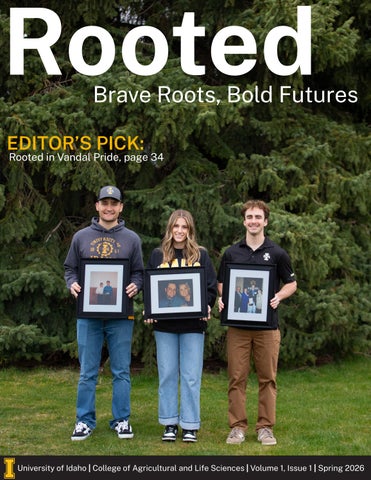
Rooted
Brave Roots, Bold Futures
EDITOR’S PICK:
Rooted in Vandal Pride, page 34
of innovating, leading, exploring, and providing practical, researchbased information to Idaho communities.

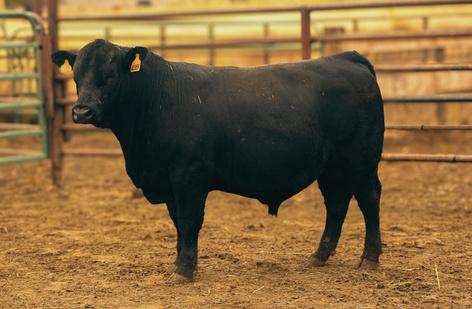
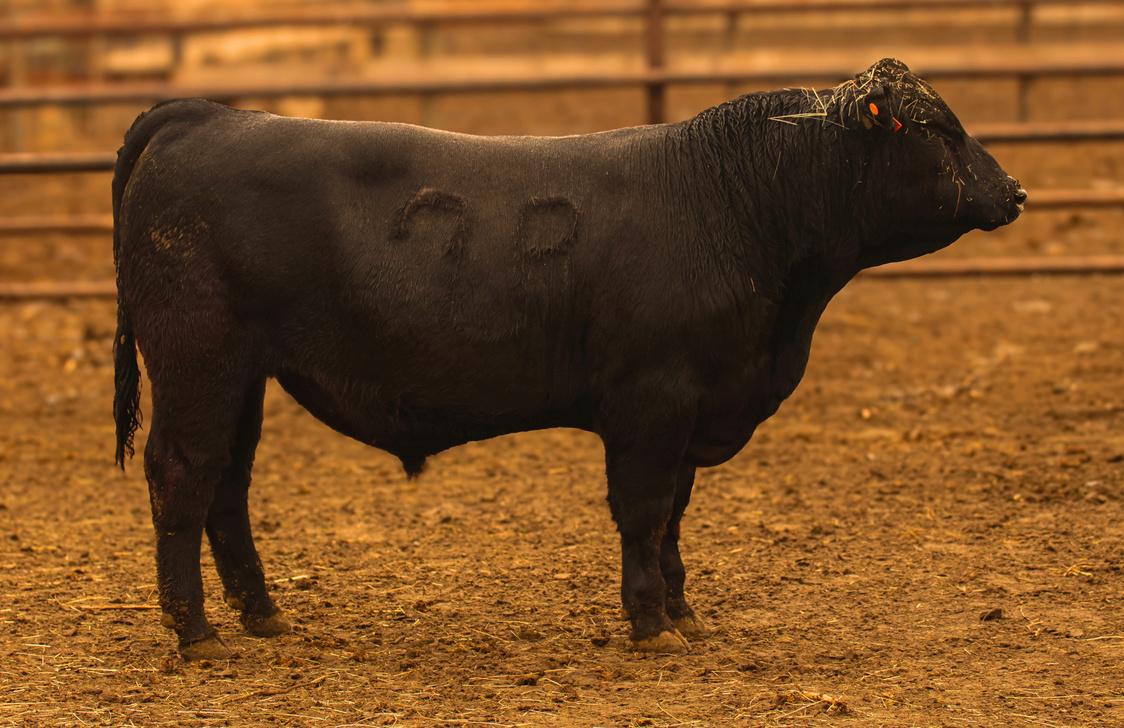
7 UP Bulls
Ag Enterprise Supply, Inc.
Alpha Gamma Rho - Beta Phi Chapter Idaho
Analytical Sciences Laboratory
College of Agricultural and Life Sciences
Columbia Bank
FarmHouse Fraternity Idaho
Ferdinand Veterinary Clinic
Guardian Angel St. Beniface School
Holwege Consulting LLC
Jack Jack’s Diner
Laurel’s Crown Farmstead Cheese
MJ Neal Associates, Architects PLLC
Moscow Farmers Market
Rivaura Winery
Shaw Cattle Company
Sigma Alpha Beta Eplison Chapter Idaho
Stonebraker McQuary Insurance
Superior Livestock Auctions
The Barn at Mader Farms
The McGregor Company
University of Idaho Extension Tuesday Market
Trans Ova Genetics
USA Dry Pea and Lentil Council
uidaho.edu/cals
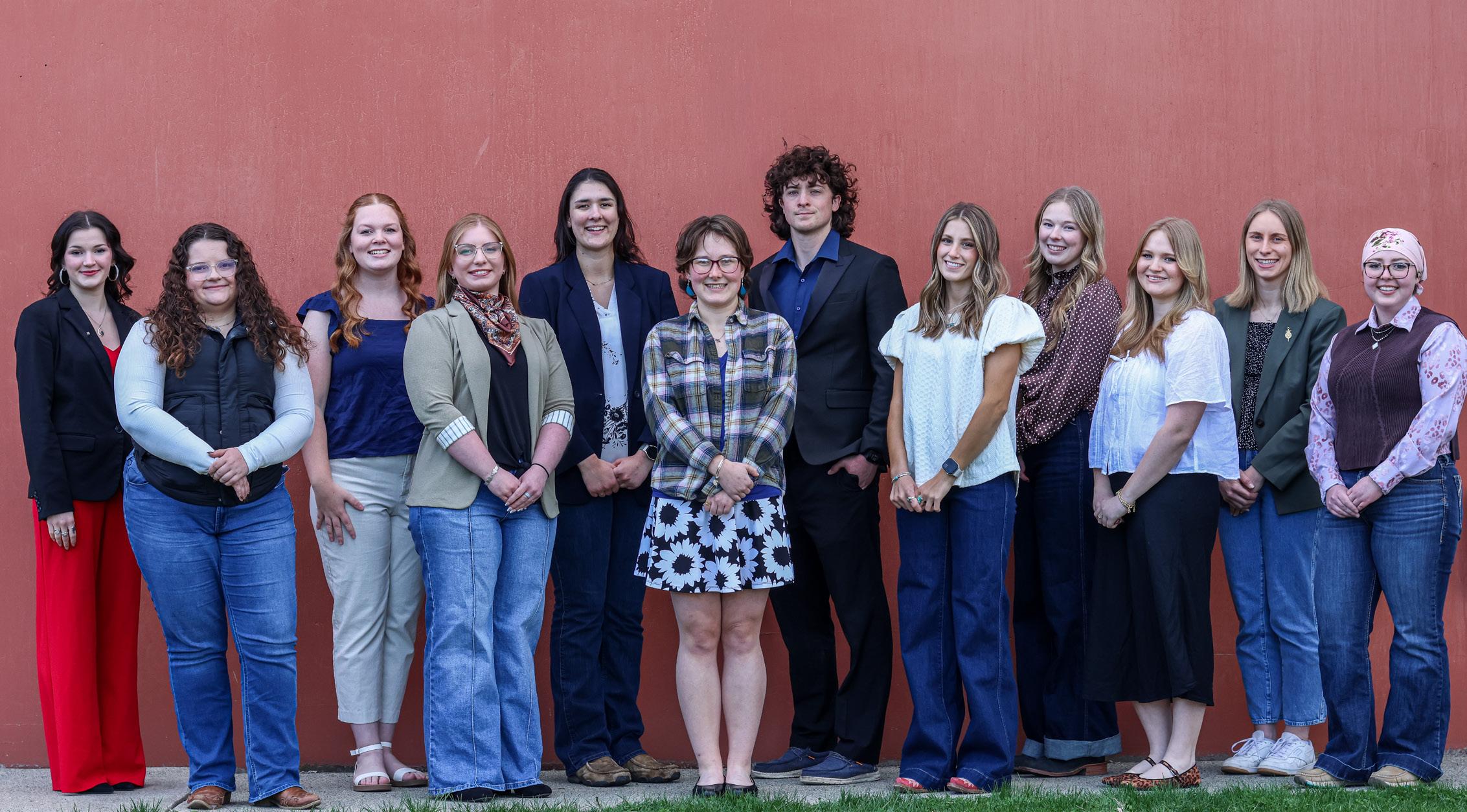
MEET THE STAFF

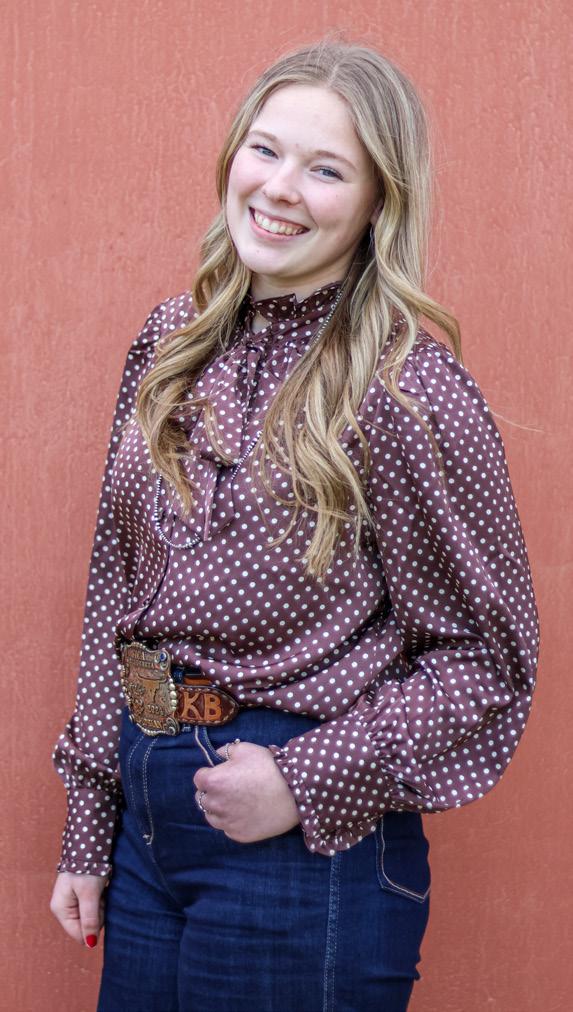
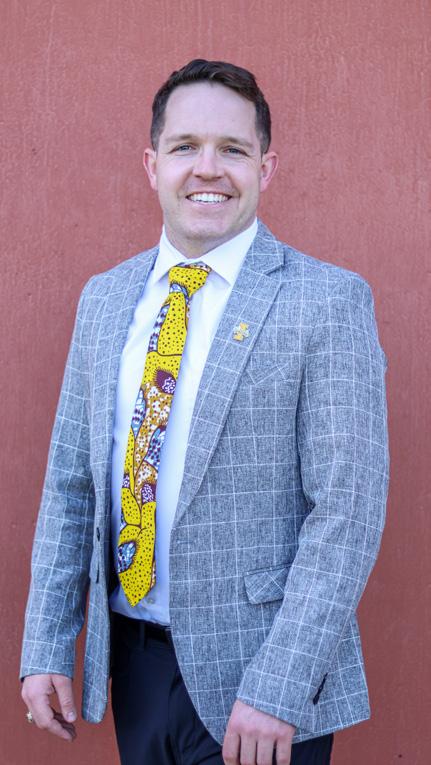
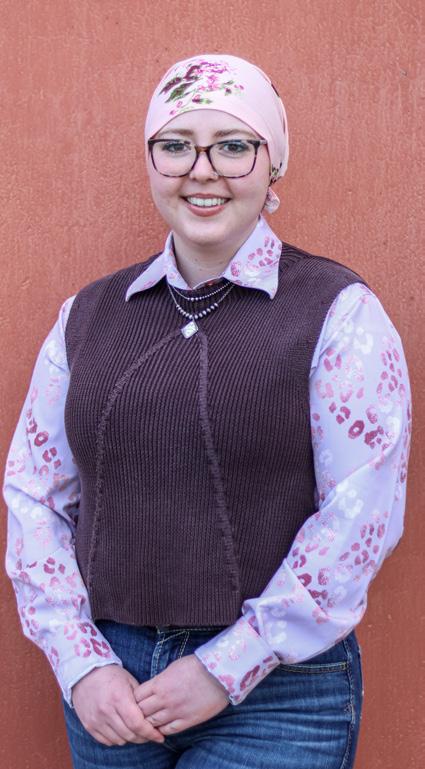
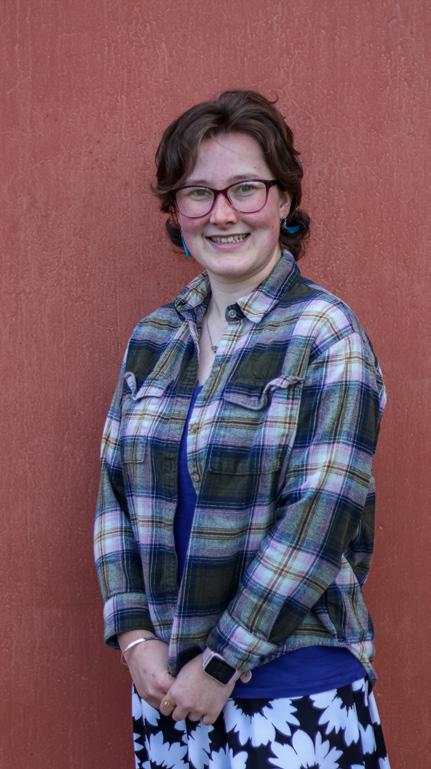
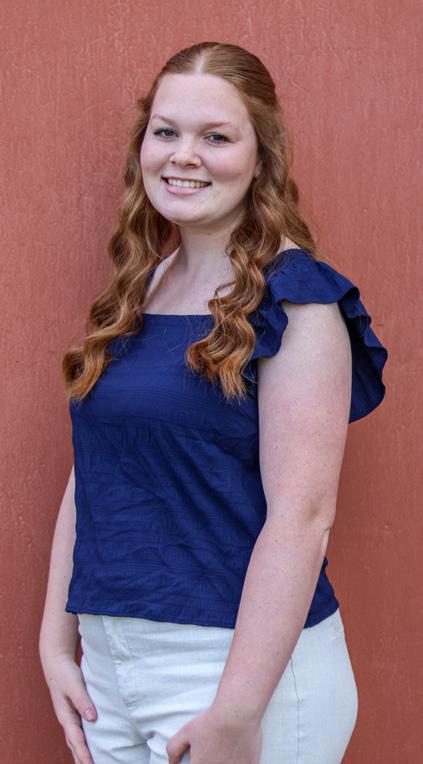
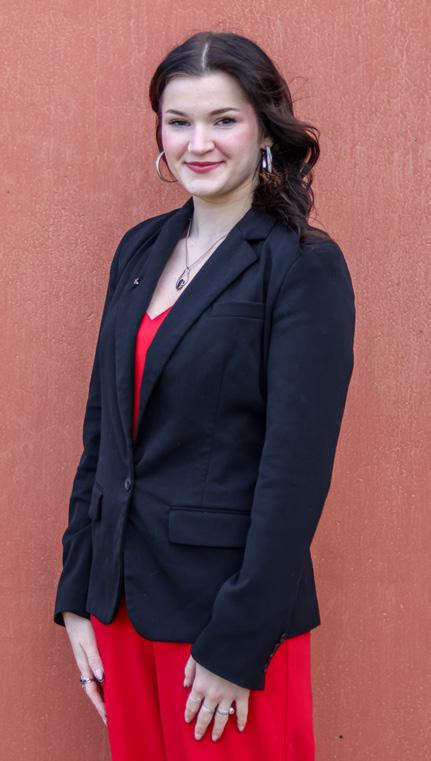
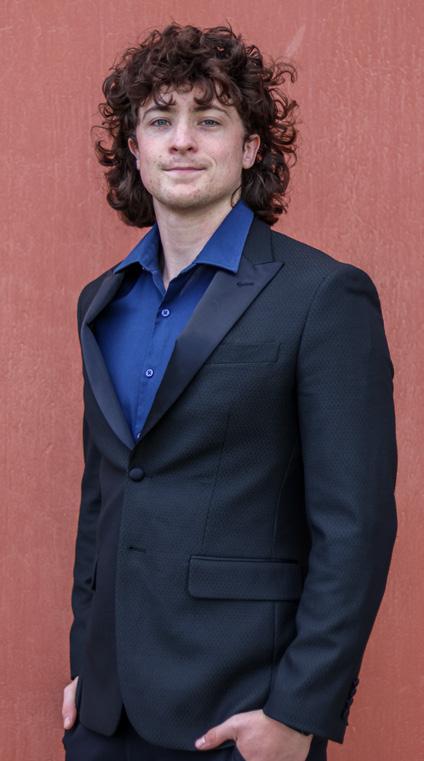
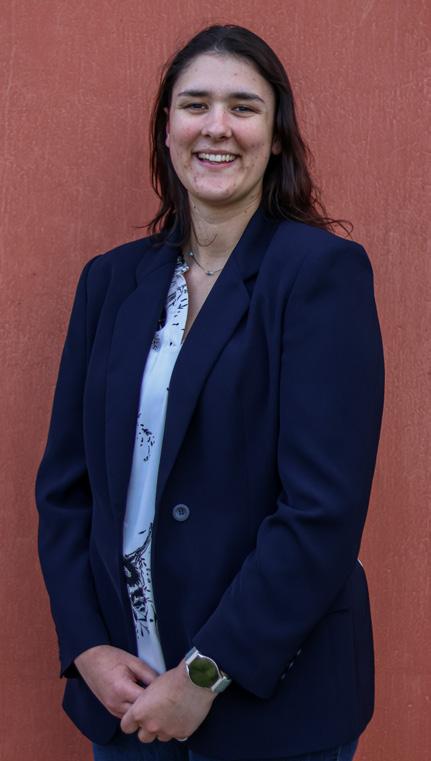
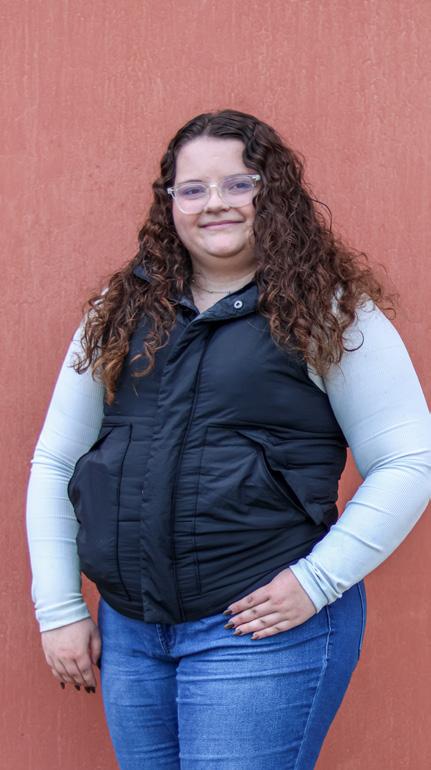
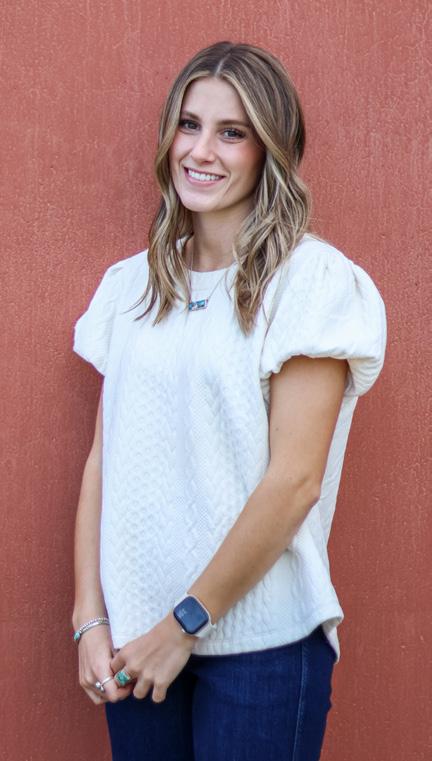
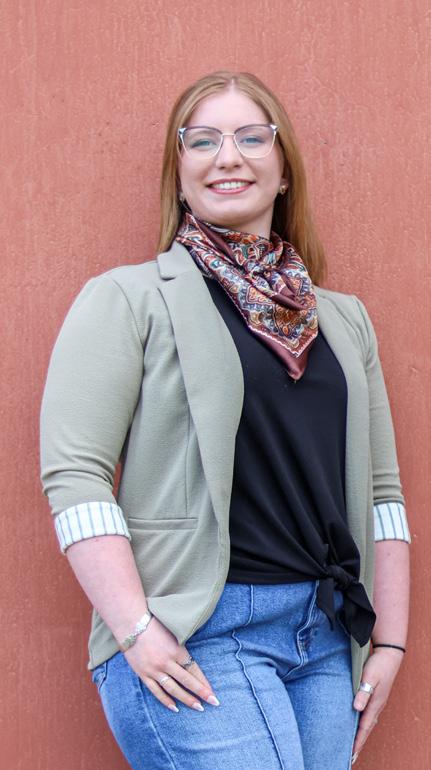
HANNAH
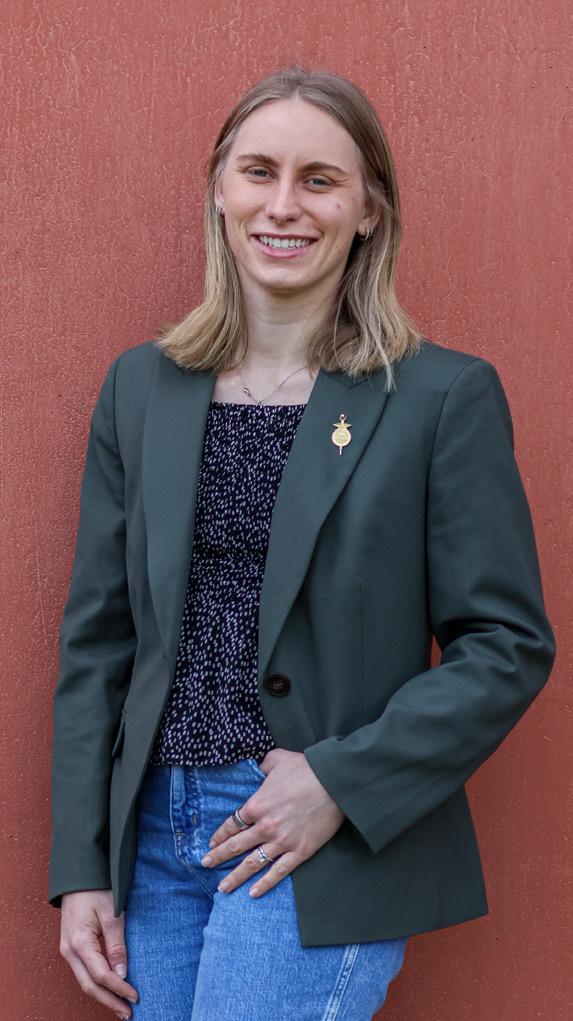
AMBER LEMRICK Editorial Staff Caldwell
KAYLEE
LETTER from
the
EDITORS
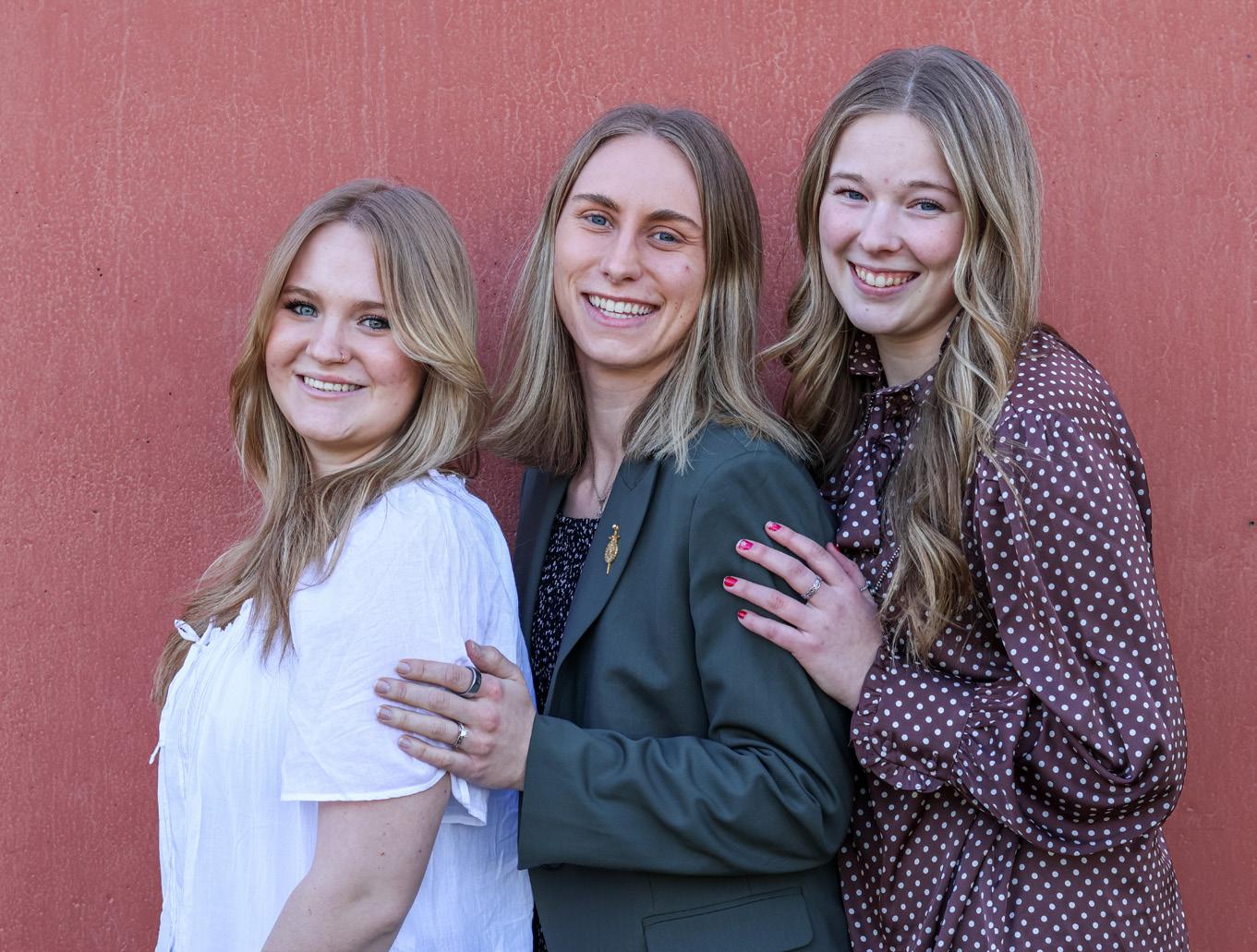
Being a part of this team and helping create the first edition of the CALS “Rooted” magazine has been incredibly meaningful. This group of talented writers and designers has taught me so much along the way. I am proud of this team and the dedication so many people have poured into this project. Knowing that this magazine will be appreciated by donors, students, and alumni makes me especially proud, because at its root is a passionate team that I have had the privilege to be a part of.
Being a part of the first edition of the CALS magazine has been a meaningful experience for me. Throughout my time here at the University of Idaho and CALS. I have seen how much heart, passion and hard work go into this college, and community. This magazine is a reflection of the students, faculty and ideas that make CALS what it is. Our team has been working hard to showcase all the amazing things our college does through design, advertising and editorials.
Being a co-editor on the inaugural issue of the magazine has been an amazing experience. I am beyond proud of the teamwork our staff has put into piecing together the stories, design and advertising spaces. The experience has allowed us all to showcase and grow our skills through time and dedication. My time at the University of Idaho and in the College of Agricultural and Life Sciences has been nothing short of amazing. I am proud to give back to the college and Vandal families by sharing their story in the first edition of the magazine. I am excited to see where the future of the magazine continues to go in my following two semesters and beyond.


YOUR FUTURE TAKES SHAPE BEFORE YOUR CAREER BEGINS.
ARE YOU READY FOR WHAT’S
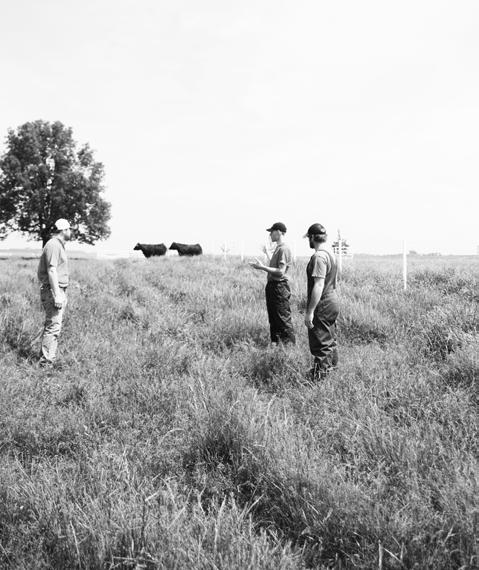
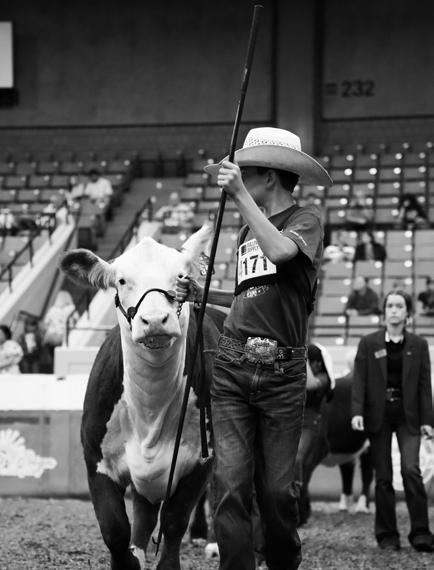
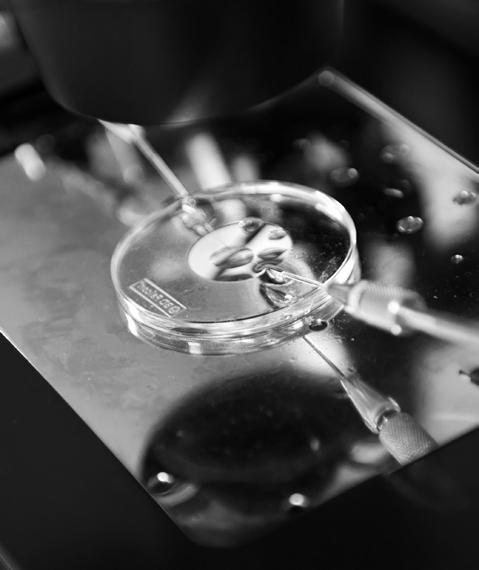
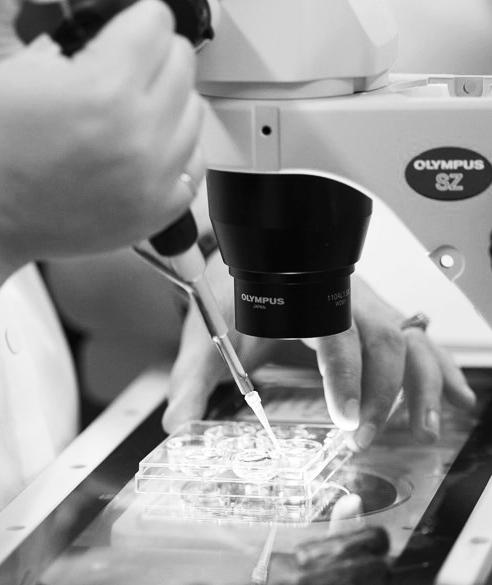
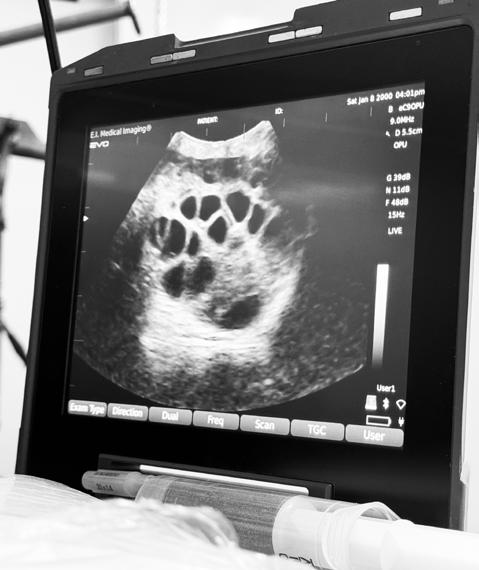
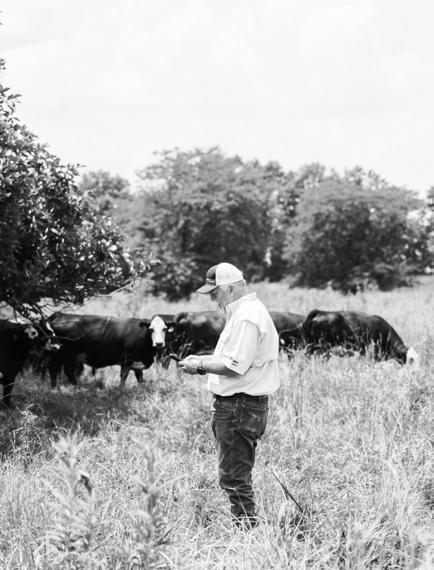
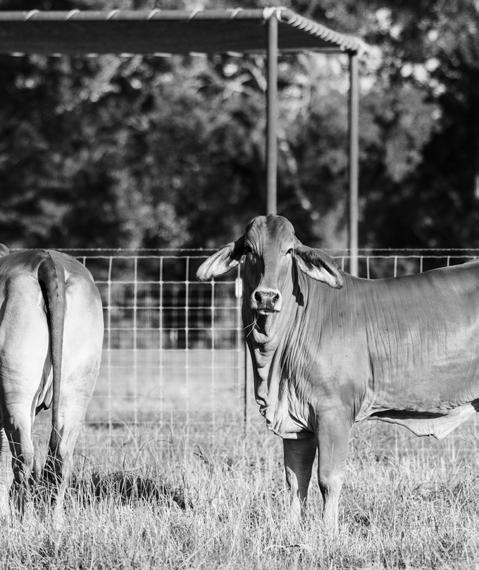
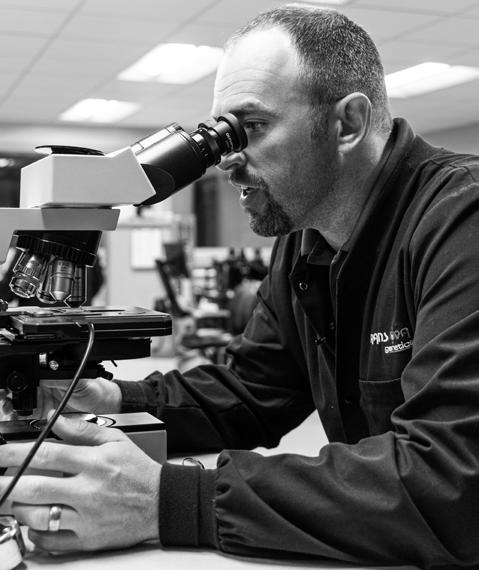
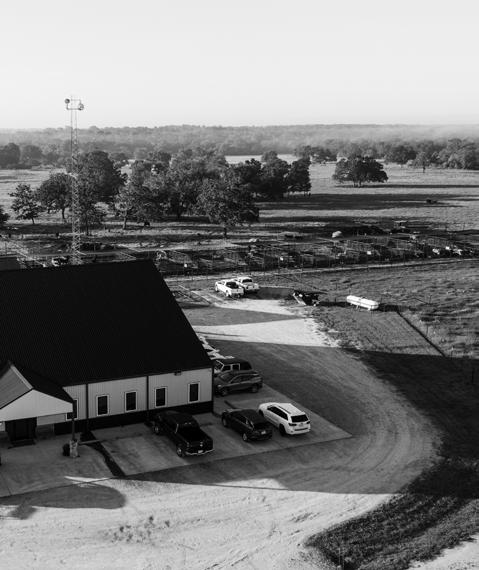
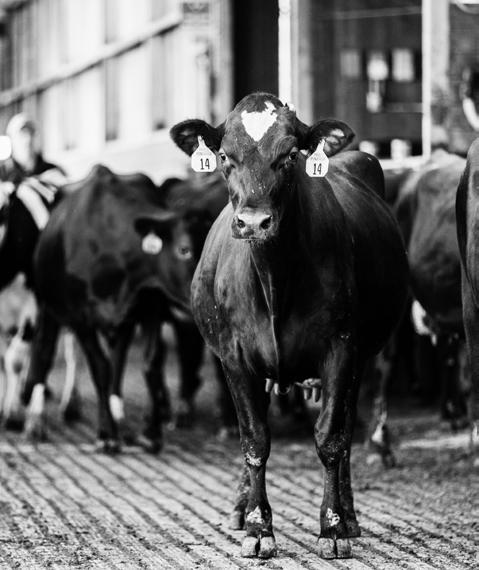
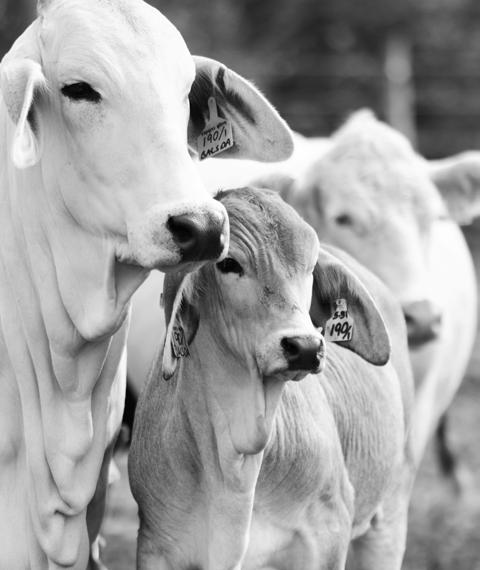
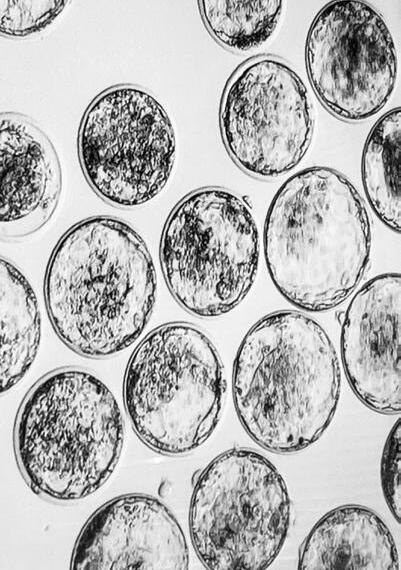
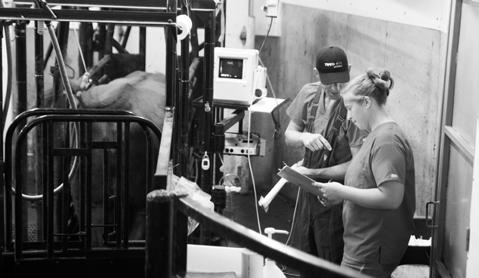
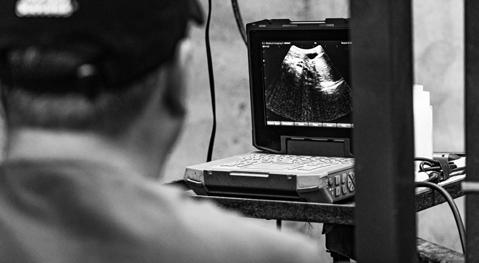
The next generation of agriculture is built by people willing to prepare, learn, and step forward. Through scholarships, hands-on opportunities, and industry engagement, Trans Ova supports students who are already investing in their future and the future of livestock production. Growth starts by showing up and being ready to take the next step. Your path forward starts here. Are you ready for what’s next?

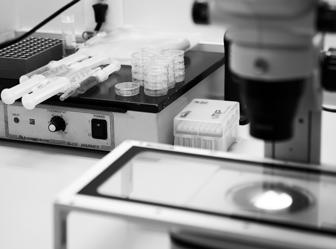
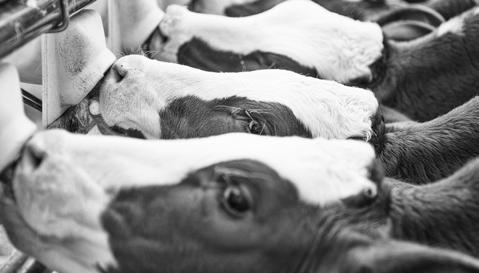
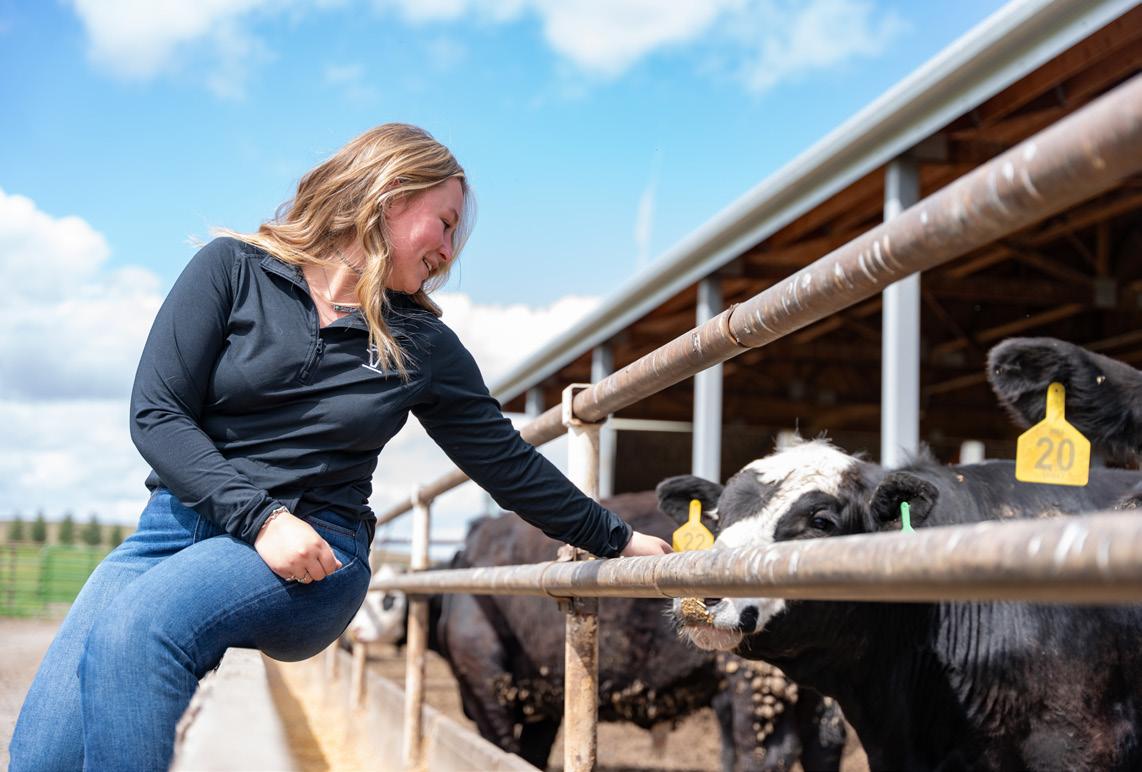
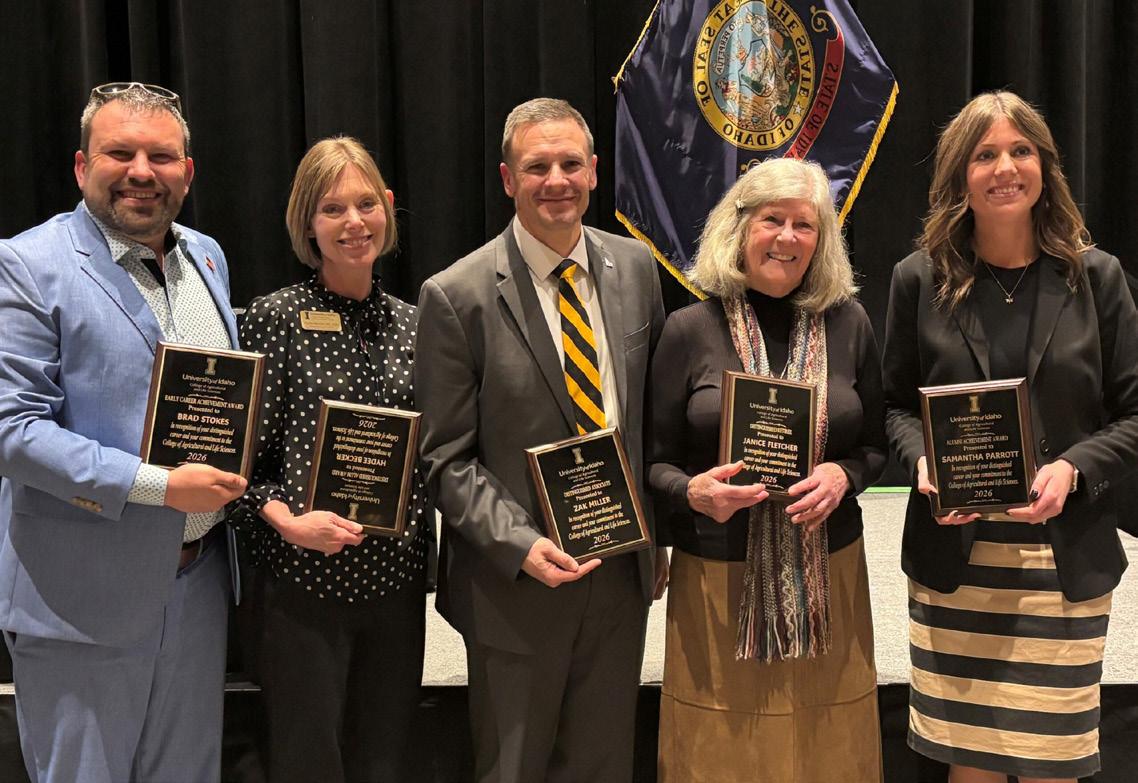
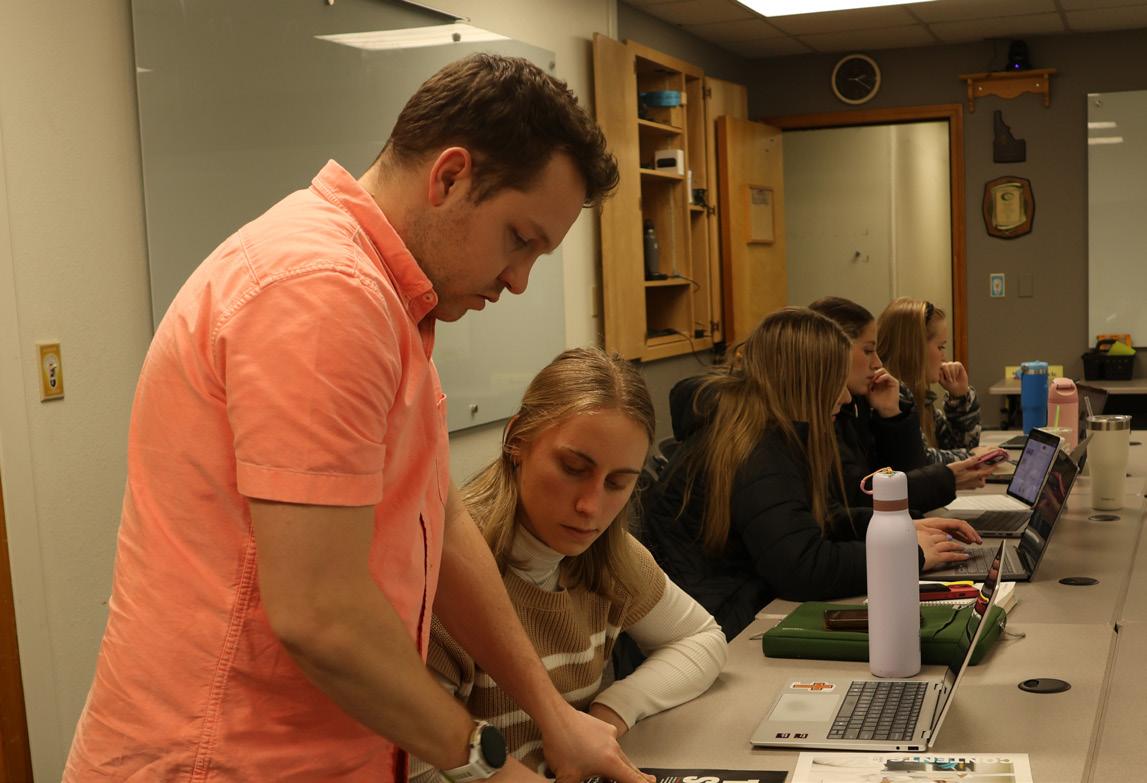
Rooted magazine produced by students in
Design and Publication of Agricultural Communication and Media Materials, Rooted features the accomplishments of current students, the journeys of alumni and the ongoing work shaping programs in the College of Agricultural and Life Sciences.

STUDENTS IN CALS
75,000
$1.5 Million
476,000

14,000

Putting it all Together
Message from J.R. Simplot Endowed
Dean Leslie D. Edgar
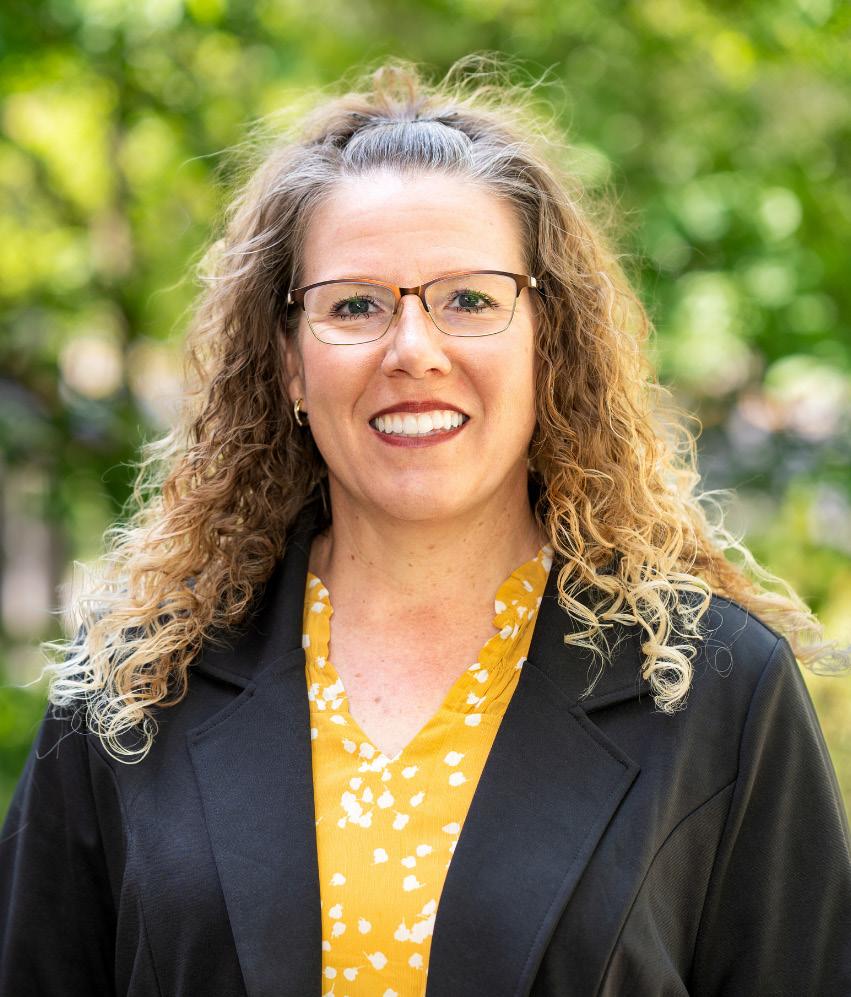
During my tenure as an agricultural communications faculty member at University of Arkansas, Fayetteville, our students had the opportunity to apply the breadth of skills they gained from their classes into a single, capstone project. We offered a magazine-production course every other year, involving students in all aspects of creating a quality publication — including selling advertisements, marketing, layout, design, graphic production, photography, content selection, news and feature writing and editing. The magazine provided an outstanding marketing and promotions tool for the department and college. The students benefited from having published work to lay the cornerstone for a professional portfolio.
I’m elated that our students within University of Idaho’s Department of Agricultural Education, Leadership and Communications (AELC) now have a similar opportunity to test their mettle and grow in confidence by producing their own publication. The title, Rooted, references how AELC and the College of Agricultural and Life Sciences (CALS) are both rooted in Idaho agriculture and Vandal tradition. The 12 students who enrolled in the inaugural magazine production course have chronicled some of the major, recent developments within CALS.
This first edition includes student-written stories covering multi-generational Vandal families, the new Meat Science and Innovation Center Honoring Ron Richard, how our new Deep Soil Ecotron will raise the bar for studying soils at great depths, the reemergence of U of I’s rodeo club, University of Idaho Extension programs, alumni award winners and an innovative spider-silk swimsuit developed by the apparel, textiles and design program within our Margaret Ritchie School of Family and Consumer Sciences. Assistant Professor Garrett Brogan, who joined the department in September 2024, has led the effort, with support from his graduate assistant, Hannah Stolfus.
Magazine production was offered this spring as a three-credit special topics class, but next spring it will be made into an official course, to be called Design and Publication of Agriculture, Communication and Media Materials. It’s the only course of its kind on campus and will likely draw students from outside of CALS, including journalism and mass media majors. This spring, the class met twice per week and covered the basics of newswriting, feature writing, use of design software and other relevant skills. However, most of the class time was reserved for planning and producing content. Every student was asked to write a story and choose
a specialty — design, writing or advertising. Each of the three teams was overseen by a student editor. Student advertising sales helped cover the cost of printing copies, for distribution at graduation and throughout campus.
I consider it especially fitting that AELC is launching the Rooted magazine on the 125th anniversary of CALS. Throughout our long history, we’ve steadfastly fulfilled our tripartite mission as a land-grant university of teaching, research and public service. That mission is becoming increasingly imperative as Idahoans and Americans in general become more disconnected from farms and food production. Perhaps our greatest contribution toward addressing that trend is graduating outstanding agricultural communicators, who proudly educate the public and correct the rampant misinformation about the industry they love. They go on to share agriculture’s true story as professional writers, public relations specialists, marketing specialists, communications managers, data analysts and social media strategists, just to name a few of the jobs they’re equipped to fill.
AELC majors, thank you for setting the record straight about agriculture, and thanks for all you’re doing to promote your department and our college. Congratulations on completing the first of many editions of Rooted magazine.
Go Vandals!

Built from the Block Up
Rooted in Idaho, raising the standard of meat production
STORY BY KENZIE BARTA
Traditions are rooted deep at the University of Idaho. On fall game days, the roar of the students, alumni and community echoes across the campus and Kibbie Dome for the Vandals football team and for a game day staple, the “Vandal Dog.” For many, it is simply part of the Vandal experience with flavor and Idaho pride wrapped in a bun, but few realize that “Vandal Dogs” are crafted right here on campus at Vandal Brand Meats (VBM).
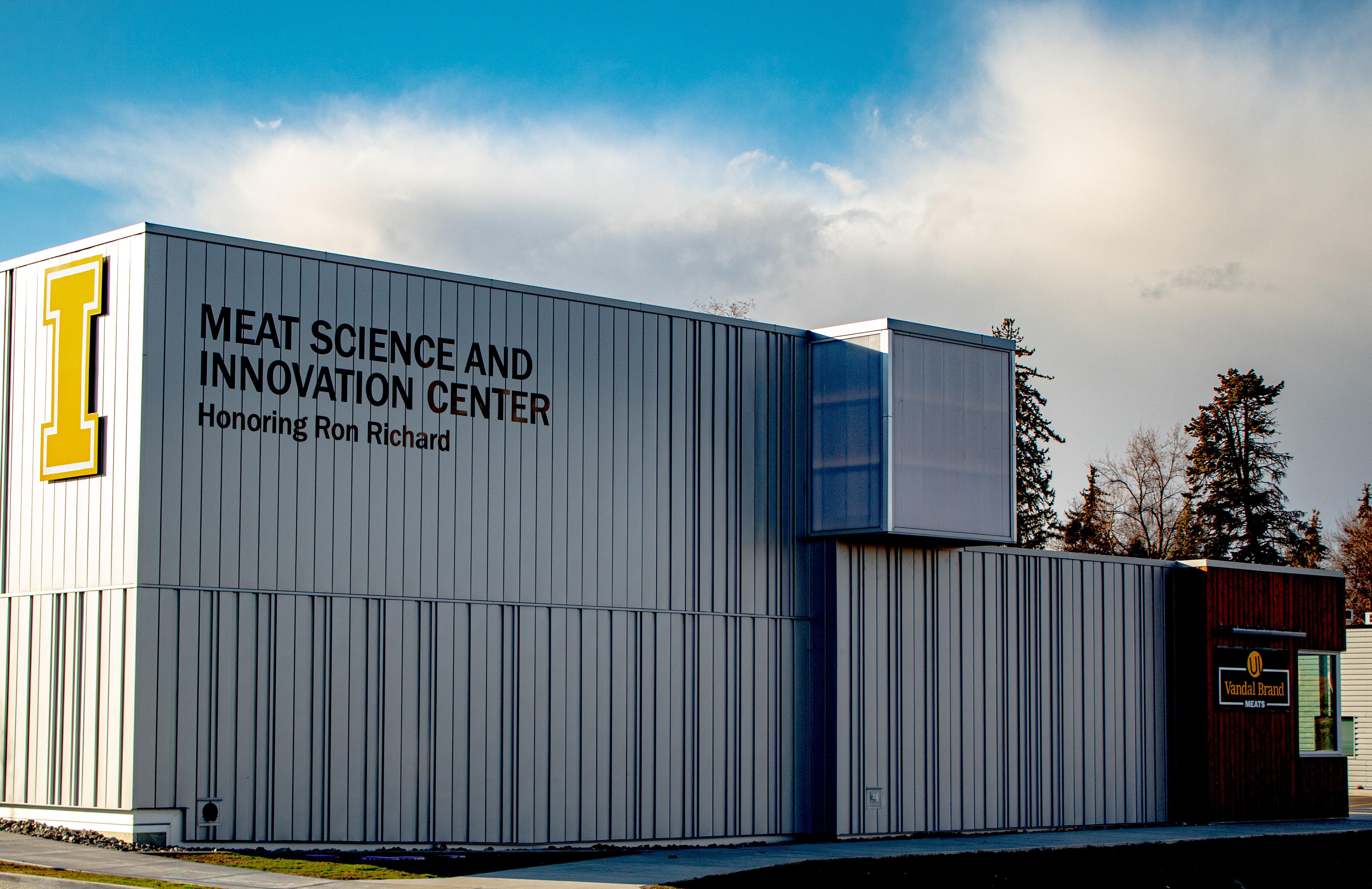
Previously hidden to most, behind the barns on campus, VBM is turning from a hidden gem to a new spotlight on campus. Right off Perimeter Drive, the new Meat Science and Innovation Center Honoring Ron Richard stands strong with new opportunities ahead.
The opening of the new state-ofthe-art facility and storefront will help expand opportunities in the meat science program and enable more Vandals to give back to their college and community roots.
A lasting impact
The talk of the new VBM has been an exciting topic on campus since the groundbreaking ceremony on Oct. 14, 2023, but the idea has been in the works since Ron Richard, the previous VBM manager, was at U of I.
“Ron Richard was the inspiration for the new meats lab,” said Phil Bass, an animal, veterinary and food science (AVFS) associate professor. “He built the program and coined the term Vandal Brand Meats.”
Thanks to Richard, the program
grew leaps and bounds due to his involvement and hard work. His memory and legacy continue to live on and are the reason U of I now houses this new and improved facility.
The growth and progress Richard made for the meat science program have touched the hearts of many at the college, including the current VBM manager, James Nasados. Nasados followed Richard’s footsteps after his unexpected passing in 2018. Nasados’ plan with the position was, and continues to be, honoring Richard.
“One of my goals after taking on the manager position was to see the completion of the new meats lab to honor my mentor Ron,” said Nasados.
His impact on the AVFS department and the college as a whole was something the faculty on campus wanted to continue to remember. This led to the new facility being named the Meat Science and Innovation Center Honoring Ron Richard.
Establishing roots
The old meat science facility was built in the 1960s, with VBM opening in 1988. Since then, it has been serving the Vandal community through its United States Department of Agriculture inspected beef, lamb and pork processing. The current facilities have played a prominent role in teaching classes for students and industry professionals to advocate for meat science. Research to support the university’s land grant mission is also an important part of the facility.
Whether it is helping with an Idaho FFA event on campus by displaying carcasses, feeding Vandals at College of Agricultural and Life Sciences (CALS) events or selling items in the storefront, VBM has consistently stayed involved with the community and will continue to increase its involvement.
“We have done great things with the older building,” said Nasados. “With the new building, it’s only going to allow us to do more great things and reach more people.”
The old meats facility will still be utilized on campus within the AVFS department. It will be used for labs and classes to continue furthering animal anatomy and physiology studies within the college.
New beginnings
Due to an increase of 7,500 square feet in the new Meat Science and Innovation Center design has enabled state-of-the-art layouts and equipment. From creating a safe and sanitary environment to expanding learning opportunities, everything was carefully designed and considered.
The new animal handling facilities were a major highlight for Bass. High walls and vents create a lowstress and comfortable environment for housing livestock. Some additions include textured and grooved concrete floors for traction and fans and heaters for the various weather conditions and temperatures Moscow encounters.
The Arrow Quip brand panels show which direction to move livestock helping students incorporate lowstress handling tactics.
“Animal handling and welfare is a top priority,” said Bass. “The new pens will help us move livestock more easily, not only for processing, but also when presenting them to classes.”
For AVFS doctoral student Claire Shaw, her favorite additions to the facility are a new classroom with 22 more seats than the old one, a rail from the cooler to the classroom and a fully functional kitchen.
“The new classroom allows us to rail in a carcass to teach the class or even hold a full cooking demonstration to help students and consumers learn how to have the best eating experience,” said Shaw.
Shaw originally chose to further her education at U of I because of the small-town feel with a large meat science focus. She said the program is unique due to the opportunity to get involved in various aspects of the industry. Shaw is
areas. This allows for easier sanitation and elevated food safety practices for consumers.
The final room in this design? A Ready-to-Eat (RTE) designated room; ensuring cooked products will never cross paths with raw products. The facility’s design adds a modern look and creates an inviting learning environment. Windows within the facility were one of the additions implemented to help lead tours and advocate for the meat industry.
The design allows viewing at different stages to teach while maintaining safety, comfort and sanitation.
“The windows are a huge draw to help teach the process, especially for those who might not be comfortable with being up close and personal with livestock harvesting,” said Shaw. “With the programs’ encouraging and can-do attitude, it can help change perceptions and educate about the process.”
excited to see those points carried into the focus and design of the new facility.
“The new facility is a night and day difference from the old one,” said Nasados. “The biggest benefit in my mind is that we will have multiple processing areas, instead of experiencing a bottleneck.”
The old facility had one room that required sanitation and an increase in time commitment when moving from processing the livestock to packaging the finished products.
“The 1960s model in the old facilities was effective, but not efficient,” said Bass.
The new multi-room processing layout allows for meat to go from animal processing to storing carcasses in the cooler and traveling through the brand-new smokehouse, while never having products backtrack through the same
the updated storefront will help VBM continue to not only serve campus and students, but the surrounding community as well. The new location makes it easy for individuals to find and support VBM.
“The old location you do not just happen to come across. With the new VBM, if you look across the street at a tailgate, you will easily see the storefront,” said Nasados.
Purchasing products won’t be the only way to help support the program. Bass and Shaw both elaborated on the idea of creating a VBM merchandise line.
“We have been working on creating merchandise to help get the Vandal Brand Meats name out to the public because it was so hidden before,” said Shaw.
ity is visible throughout the AVFS department and the college as a whole.
“The new facility is set up very well to expand research,” said Bass. “The great thing is we will be able to teach classes, put on workshops, process product and do research all at the same time.”
The larger space and an increase in the number of individuals who can become involved with VBM will allow for these multitasking opportunities.
“The thing I am most looking forward to is the new opportunities that come with it. The bigger space will allow us to help more customers on the retail side of things and expand what we offer,” said Karley Krasselt, a junior studying animal and veterinary science with an emphasis in production. She has worked at VBM for the past year after being raised in the meat processing industry.
The visibility of the windows is not commonly seen in a meat processing facility, but it is an exciting advancement for education.
“If we have a school group who wanted to tour, the windows make it so they can see everything from harvest to fabrication to RTE technologies,” said Nasados.
The new facility technologies will be key in helping Bass and the rest of the VBM team meet their goal of teaching the community and beyond about the safety and humane practices that occur in the meat processing world.
“I want people to understand how precise, clean, controlled and effective the meat processing world is,” said Bass.
Serving the community
With the expansion and revamping of the classroom, animal handling facilities and the processing floor,
Alongside the merchandise, the storefront will include a variety of products and flavors for the community that can be enjoyed from tailgates full of Vandal pride to carrying a piece of campus back home to serve the family on holidays and every event in between.
Another benefit of the community being involved is that the profits from the VBM storefront are funding student workers.
VBM employs university students to help with processing, sanitation, working at the storefront or any other jobs that help make the facility run. It grants them the opportunity to work with their school schedule and learn more about meat processing, while gaining industry experience.
The older facility could accommodate 12 student employees. With the new facility, VBM will be able to employ 20 or more students on the team, with the possibility of expanding this number in the future.
The future ahead
The excitement for the new facil-
Previously, they would wait to hold UI Extension events for industry workshops until the summer months due to a lack of space and VBM’s busy schedule. Now, the options to expand varying opportunities in meat science will become available throughout the year to fit different individuals’ schedules.
A unique aspect of meat science is the multiple factors that play into carcass quality, grade and yield.
“The new building opens the door not only for meat science, but potentially other areas of the animal science department,” said Shaw.
Student workers are also excited about the opportunity to expand and work with the new facility design and set up.
VBM and the Meat Science and Innovation Center are paving the way to expand and grow to make a lasting impact on the community, and this is just the beginning.
The new facility is more than the new stainless-steel equipment or expanded square footage. It is about momentum for creating a place where education, industry and community can come together.
“This is going to be the premier meat science program in the west, no question,” said Bass. “We are going to continue building momentum and let people know this place is here.”
VBM is positioning itself not just to grow, but to define what meat science education can look like in the region. It will give students handson experience that prepares them to lead in the industry.

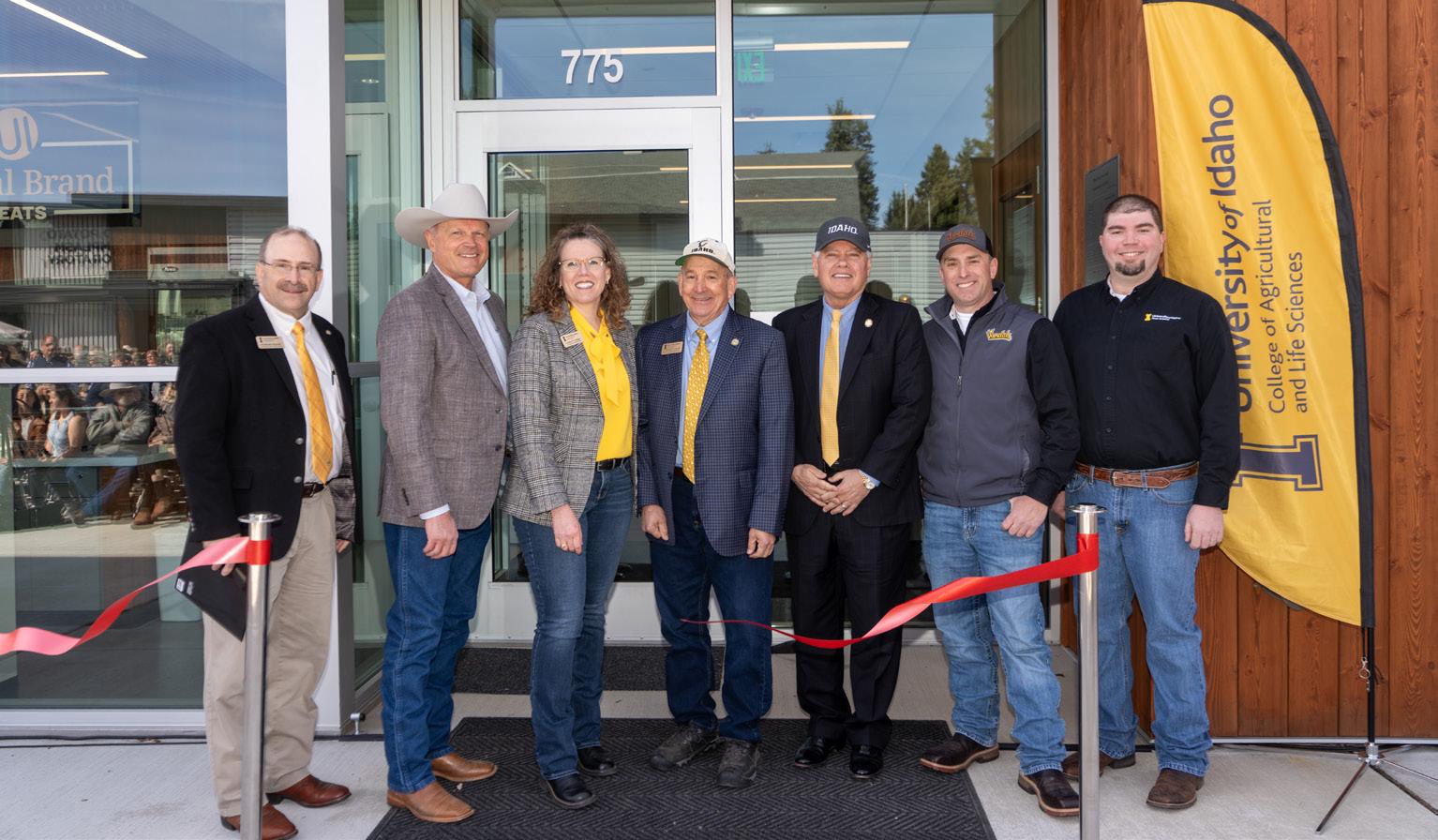
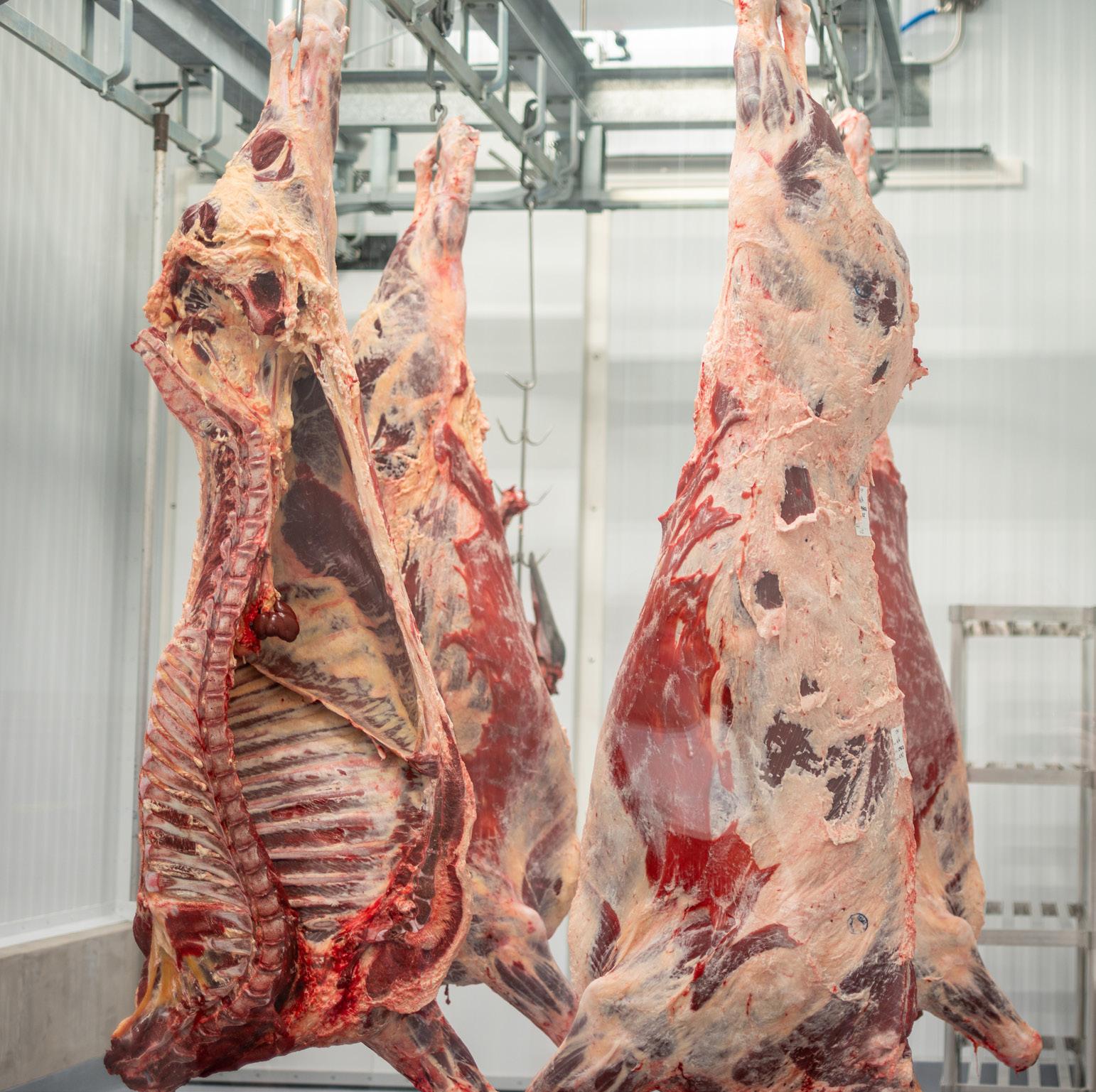
Beef carcasses hanging in the new Meat Science and Innovation Center.

















Small Scale Operation, Lifelong Impacts
Inside the Steer-A-Year program
STORY BY BELLA STOUFFER
Ranking No. 15 for best colleges for agricultural sciences in the United States in 2025, the University of Idaho is a leader in agricultural studies, innovation and hands-on learning. These programs create an impact much larger than you may think.
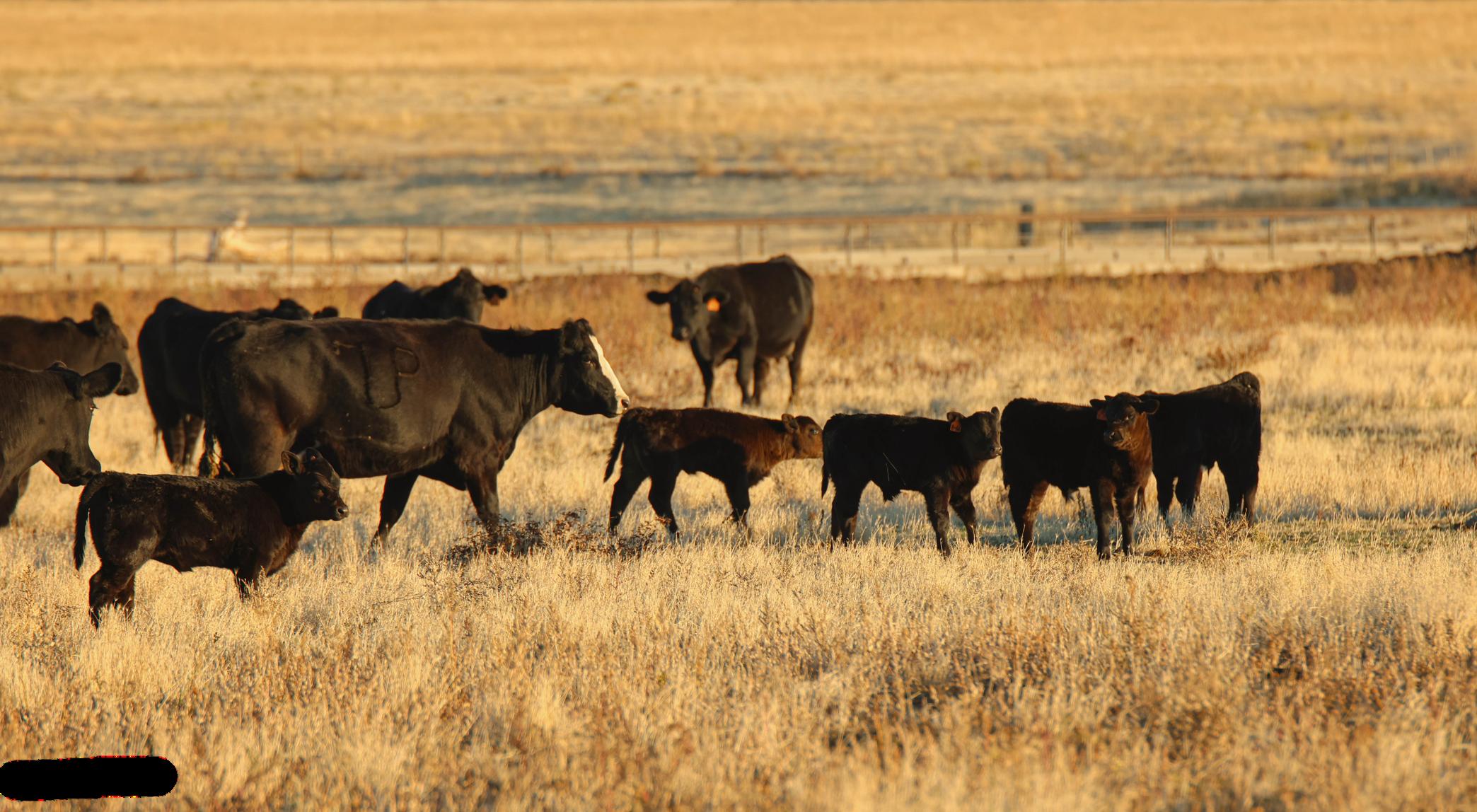
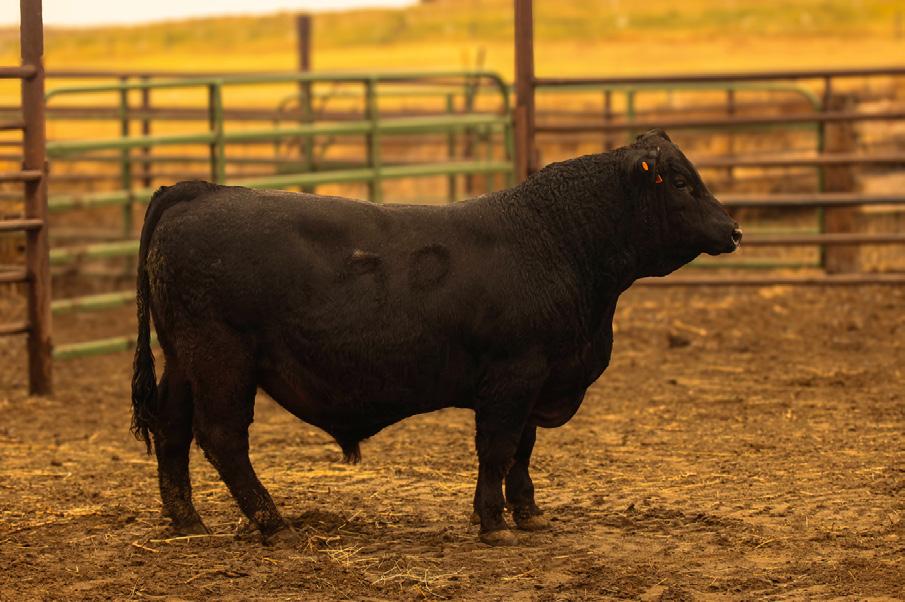
The Steer-A-Year (SAY) program is a small-scale feedlot operation on the Moscow campus designed to provide students with handson learning opportunities and real-world experience in a feedlot environment. Conducted by the Department of Animal, Veterinary and Food Sciences with support from the Idaho Cattle Association (ICA), the steers are used in animal science classes and 4-H and FFA judging contests.
The steers used in this program come from donors and producers in Idaho and Oregon. This year, 24 steers were purchased from the University of Idaho Nancy M. Cummings Research, Extension and Education Center (NMCREE) located in Salmon. The NMCREE is the primary cow-calf and forage research station of U of I with a herd of 330 cows and 110 replacement heifers. Purchased cattle are then sold back to donors who want to be involved but do not own cattle.
Building careers
Taylor Dixon, a feed assistant manager at Five Rivers Cattle Feeding Interstate Feeders, graduated from U of I in 2024 with her bachelor’s degree in animal and veterinary science with an emphasis in production.
During her undergraduate program at U of I, Dixon was a SAY student employee who worked her way up to a student manager and was later asked to fill in the role of program manager for a short
time. Dixon feels as though this program had a direct impact on her post-graduate future, as well as on her confidence.
“To this day I still tell people that SAY had the largest impact on me in college. It helped me gain leadership skills and helped me gain the knowledge that led me to my career,” said Dixon.
Being in a hands-on environment and learning skills in the moment often increases one’s faith in themselves. In addition to that, performing a new skill in a smallscale lower stress environment builds the foundation to handle higher stress levels and larger environments.
“SAY provided an environment where I could grow, take initiative and learn how to guide and support others,” said Dixon
Having been heavily involved in her local FFA chapter in high school, Dixon knew she wanted to pursue a career in agriculture before attending U of I.
“I initially heard about the SAY program in a classroom my sophomore year…I immediately knew I wanted to be part of the program,” said Dixon.
Despite not coming from a background rooted in the cattle industry, Dixon knew where her passion lay and wanted to follow it.
“I knew that I wanted to be involved in the cattle industry. I also wanted to get experience in the feedlot industry because I was starting to gain interest in that field. This ended up being the pathway I am currently on and led me to my current career,” said Dixon.
as the beef feedlot manager at SAY, assistant manager for the U of I Beef Center and an instructor. Prior to starting with U of I in 2024, Harrison worked for Agri Beef as the Feed Department manager. She feels that the SAY program has had and continues to have a huge impact on her and the students involved, as well as the university as a whole.
Harrison graduated from U of I with a bachelor’s in animal and veterinary science with an emphasis in production in 2021. As an undergraduate, Harrison was unsure what she wanted to do in the agriculture industry. Having grown up with a minimal agricultural background, she was unaware of the various opportunities the industry had to offer.
She was encouraged by her advisor, Michael Colle, to take internships over the summer and step out of her comfort zone. This led Harrison to two different internship experiences. After her first internship with Agri Beef, Harrison became involved with the SAY program the following fall.
“The internship made me think I would enjoy feedlots, and SteerA-Year kind of solidified that,” said Harrison.
How they change
Whether you are the fifth generation of your family farm or have never been around cattle, the SAY program provides a space to grow, learn and solidify your place within the agricultural community in a slower-paced environment.
“I think the biggest thing I enjoy seeing in the students is them learning and growing. I think it’s really fun to get students that don’t necessarily have a lot of background in ag,” said Harrison.
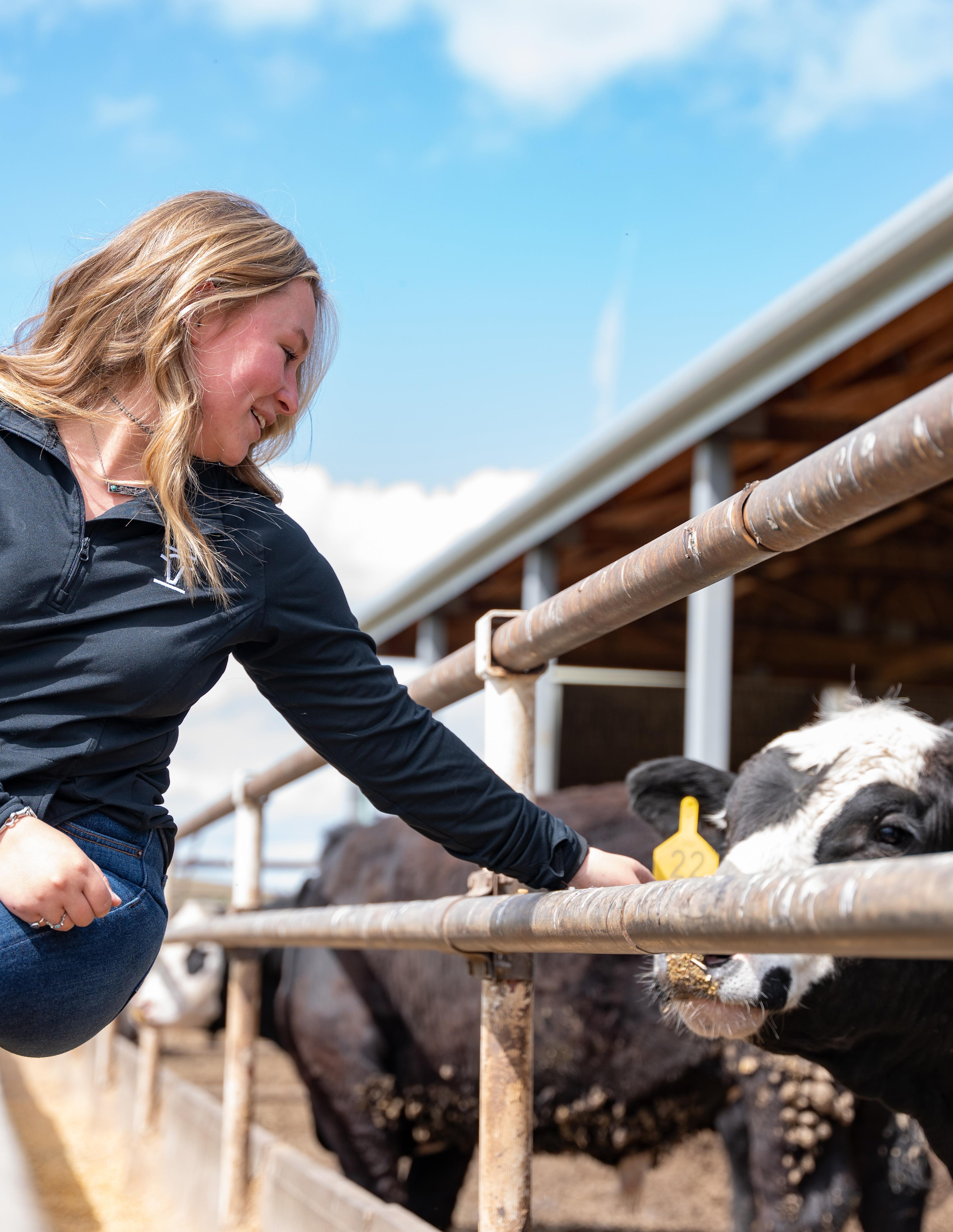
Steer-A-Year student getting hands on experience with steers in the program.
Makayla Harrison serves U of I
“I like letting those students grow their confidence in the area because sometimes when you don’t come from a really heavy background in ag, it can be intimidating trying to get into the industry.”
This growth in students’ skills can be seen in many ways; from problem solving to quick decision making.
“As students gained experience, they started thinking more critically about situations, asking thoughtful questions, and taking more initiative when challenges came up,” said Dixon.
Whether the students were in the program for one year or three years, the start to finish change is undeniable.
“By the end of the program, many of them had developed a level of confidence and practical skill that was completely different from when they first started,” said Dixon.
Student perspective
Each year, there are roughly eight student employees within the program. This year the student employees are Allison Markley, Nathan Rainey, James Wise, Reagan Bybee, Katelyn Suta and
Sammy Martin. They oversee daily feeding, health checks, vaccination management and doctoring any injured or ill steer. These skills prepare students for roles in the cattle industry and provide a solid foundation for other pursuits.
Markley, a junior studying animal and veterinary science, dairy science option and agricultural education, has been a SAY student employee for the past three years. Markley, like Harrison, did not know what opportunities the agriculture industry had to offer. This led to her joining the SAY program during her freshman year. Markley saw this as an opportunity to step out of her comfort zone.
“I didn’t really come from an ag background, so this really set good basics for me, such as animal handling, how to give vaccines, how to give implants, literally building my entire resume, which was really cool,” said Markley.
With U of I’s SAY program being small in scale, students can build and develop their skills and get more one-on-one training with managers.
“I think for me personally it was really good for me to learn in a slower environment, Taylor took the time to be like, this is what we do, and this is why we do it,” said Markley. “I do all the social media, and I’m not afraid to post things about beef information because I know they’re not wrong because I’ve experienced it and have seen it.”
The lasting impacts
This program benefits students for the rest of their lives. It catches their interest and offers them endless opportunities. SAY encourages the next generation of agriculturalists and gives them access to an industry that can be intimidating to break into. SAY can often be the building blocks to a career rooted in agriculture.
Because of the SAY program and
the encouragement from faculty, students who weren’t previously exposed to agriculture were able to get involved, foster that interest and create a lifelong connection to the agriculture industry.
“I find that SAY benefits me most when I am teaching others new skills associated with the feedlot
ly, but it’s still treated that way. I like to say ‘you know if you can handle this small group of misfit cattle, you can handle just about anything,’” said Phil Bass, associate professor in the Department of Animal, Veterinary and Food Science (AVFS).
Students can build their resumes
go through at least one of his classes. Many start as freshmen with his courses, then continue to learn from him later as they move through their undergraduate programs. It is in this transition that the increase in confidence becomes apparent.
“They go out, and maybe they
industry. I also benefit from the initial knowledge and challenges I faced during my time at SAY,” said Dixon.
It’s not just the students themselves or the managers who notice the change in students or the impact of the SAY program. Professors can see it, too.
“Their confidence greatly increases because everything that happens out at Steer-A-Year is still treated like a commercial operation. It’s very small, obvious-
and gain connections in the beef industry. They also become ideal candidates for jobs within the beef industry, securing a potentially lifelong career.
“The Steer-A-Year program in general is fantastic because those students have zero problem finding a job if they want to go work in a feed yard,” said Bass. “I think it’s an amazing chance to hone their trade and learn a lot.”
Bass has had many, if not all, of the students in the SAY program
Since all the steers in the program, all feed and vaccines are donated, the SAY program has little to no input costs.
“Last year for the Steer-AYear season 2024-2025 we put $160,317 towards scholarships, 21% of that went to the Vandal Scholarship Fund that is through the athletic department, and then 40.99% went to the Idaho Cattle Association (ICA) scholarship and that scholarship gets distributed to students in CALS and then we also put 37% of that money into a beef industry research endowment,” says Harrison.
Big picture impacts
Beyond the financial impacts, the SAY program also benefits the community beyond CALS and U of I.
“The Latah County Fair 4-H steer weigh-ins we hold out at the barn. They use our chute and scale system for the Idaho FFA livestock and carcass judging contest, and we provide the steers for the carcasses,” said Harrison. “We also provide steers for a feeder cattle or fat cattle live evaluation course and we have a handful of different workshops that are done at the barn through FFA and 4-H.”
don’t know much about the cattle industry, but they’re willing to learn and that’s what we need,” said Bass. “We need hard workers that are willing to learn, and their confidence greatly increases.”
How the university feels the impact
“I think Steer-A-Year specifically has a really large impact on CALS as a whole and on the university,” said Harrison.
SAY sets students up for prospective jobs in a feedlot environment, builds their resume and confidence, and fosters lasting connections. It creates space for students with little to no experience in agriculture to foster their love of livestock and gives them a way in.
The Steer-A-Year program is more than just a small-scale feed lot operation. It is an environment that cultivates knowledge, confidence and community and is a steppingstone to a future career.
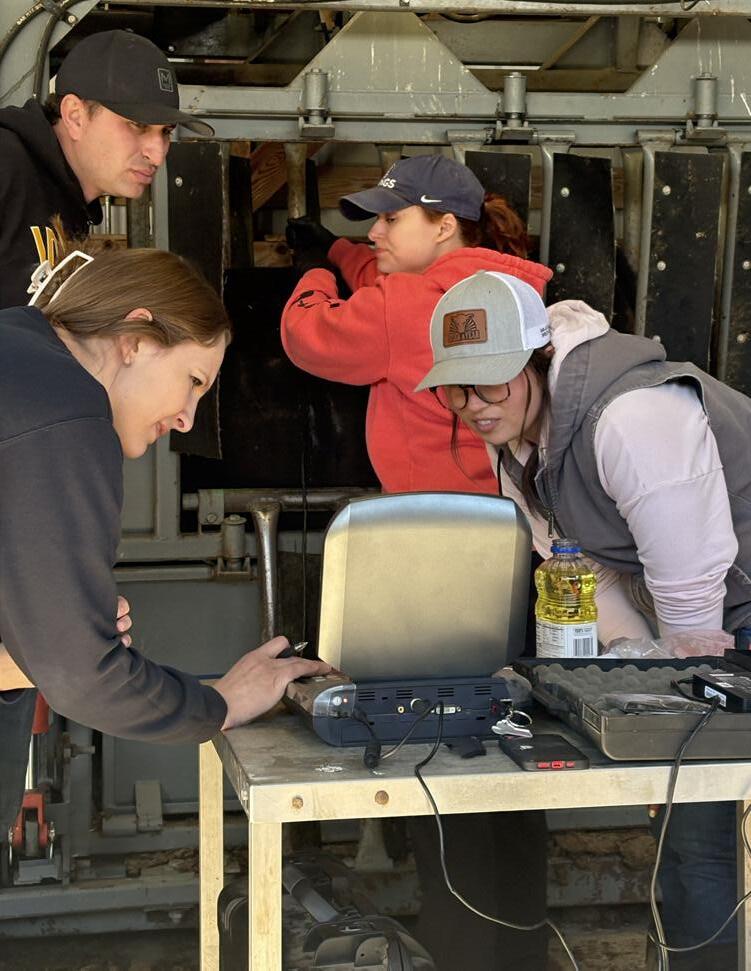
Steer-A-Year members performing an ultrasound on the brisket of steers.
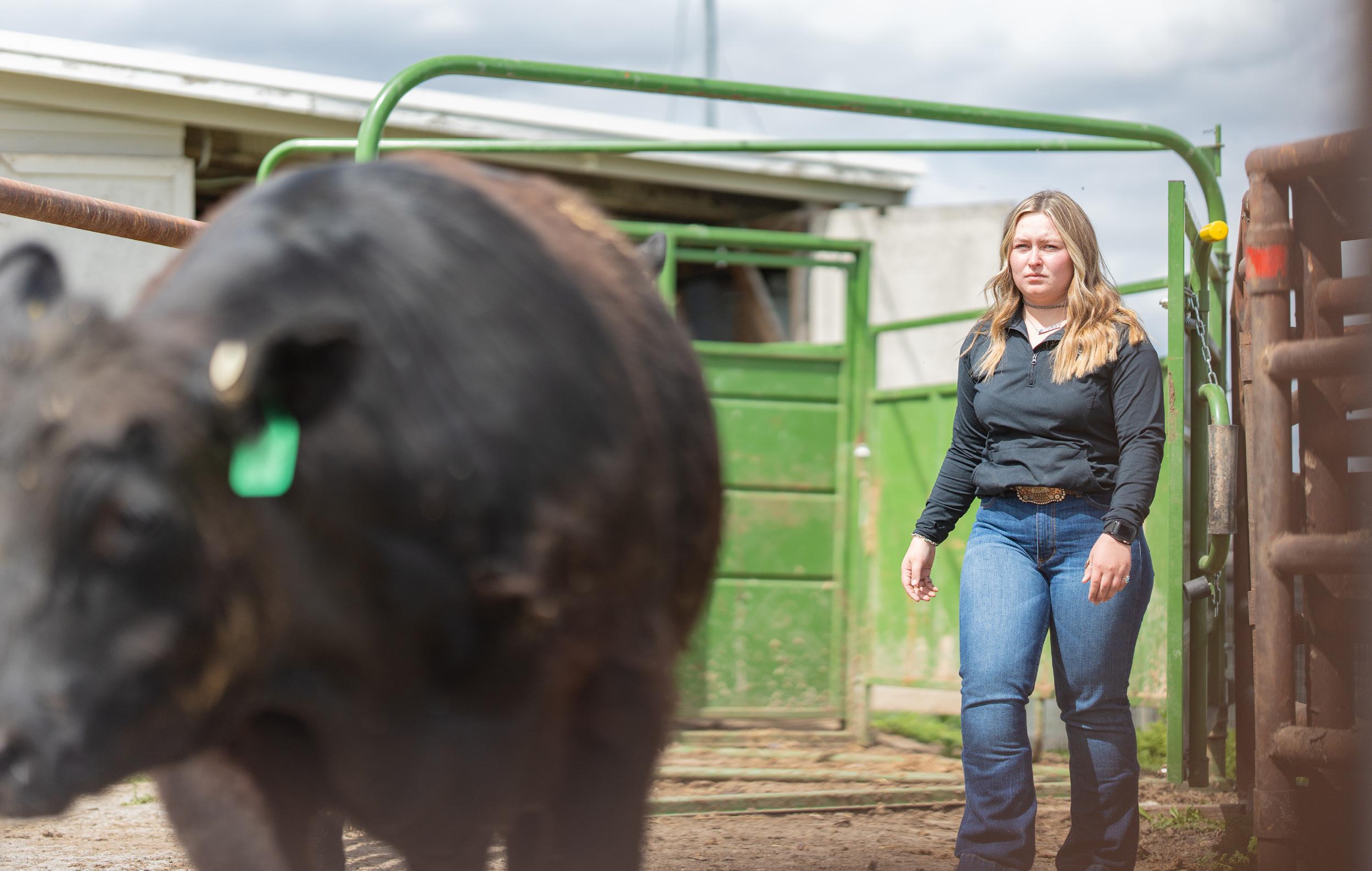
Steer-A-Year student working with steer in chute system on campus.

, Business, and Consumer Banking Needs. At Columbia Bank, we are here to serve your
Custom solutions, relationship oriented, and in-depth local knowledge to support your needs.
Leverage the expertise of a Top Farm Lender* with 30-plus years in ag financing to advance your operation. The Palouse Commercial Team and retail branches of Moscow, Pullman, and Colfax are here for you. Our dedicated teams understand their local markets and tailor financial solutions to your needs.
*FDIC Data as of 1Q 2025







































and

















and












Grounded
How U of I takes innovation a level deeper
STORY BY BRYNN KELLEY
The state of Idaho spans roughly 53 million acres, covered in rich fields and abundant forests, yet most people have little idea what happens deep underneath the surface. At the University of Idaho, students are learning more about the world of soils, above and below the surface, through Digging further in their academics
The U of I Department of Soil and Water Systems offers multiple clubs for students that allow them to travel, engage in competition, grow their leadership abilities and improve their professional development skills. At the forefront of these clubs is the Soil Judging Team, co-coached by doctoral student, Paul Tietz, a native of Wisconsin.
“I was prepared to spend my entire career chasing a soil judging national championship. I had zero expectations of it even being possible, but that changed quickly as we built the 2025 team,” said Tietz.
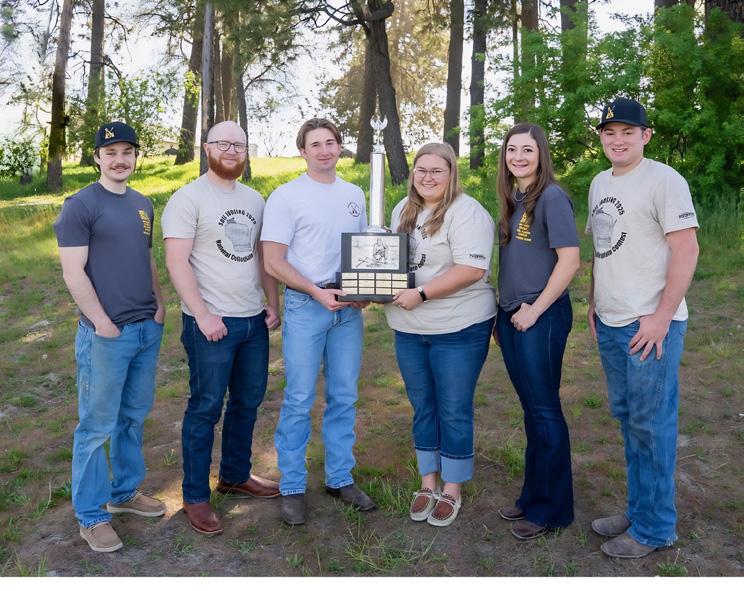
The U of I 2025 National Champion Soil Judging Team consisted of students from different majors across the university and the College of Agricultural and Life Sciences (CALS): Jacob Flick, mechanical engineering, Tegan Macy, crop science, Logan Mann, chemistry and environmental soil science, Daniel Middelhoven, crop science, Hannah Poland, agricultural economics, Sky Reinhardt, agricultural systems management.
The competition consists of a two-day event where collegiate students from across the nation compete individually and with their team. This academic competition takes place outdoors, where competitors can put their knowledge to the test. Students assess soil trenches, referred to as “soil pits.” Then they complete classifications, descriptions and their own interpretations of the soil to industry and government standards.
The competition encourages students to use their skills to categorize soils with the correct technical descriptions and classifications for use. Descriptions of these mediums are based on the national standard of soil taxonomy, an essential system for categorization. The real-world importance of soil judging is especially vital to agricultural management practices and urban land development.
The student assessments are then compared against answer keys and a master scorecard created by local soil scientists prior to the competition. The U of I Soil Judging Team dates back to 1980, but 2025 was the first time that a U of I team had won the national title.
“Winning the national contest was so amazing and I am extremely proud that we did it as Vandals,” said Tietz. “Not only was it our first victory in school history, but it was the first time a school west of Texas had ever won.”
Historically, collegiate teams from the eastern U.S. have been the top-ranking competitors in the national competition.
Poland, now a U of I alum, remembers the excitement and surrealness as the team waited for the announcement of the national champions.
“It felt silly, since a few days ago it felt like we were kids playing in the dirt. Then we got announced as champions and everything was real again,” Poland said.
With a trophy and a national title under their belt, the U of I team brought their victory back to campus. With a win this big for CALS, it begs the question: what goes into a quality soil judging team? As it turns out, a lot.
Building global exploration from the ground up
On campus, there are several ways
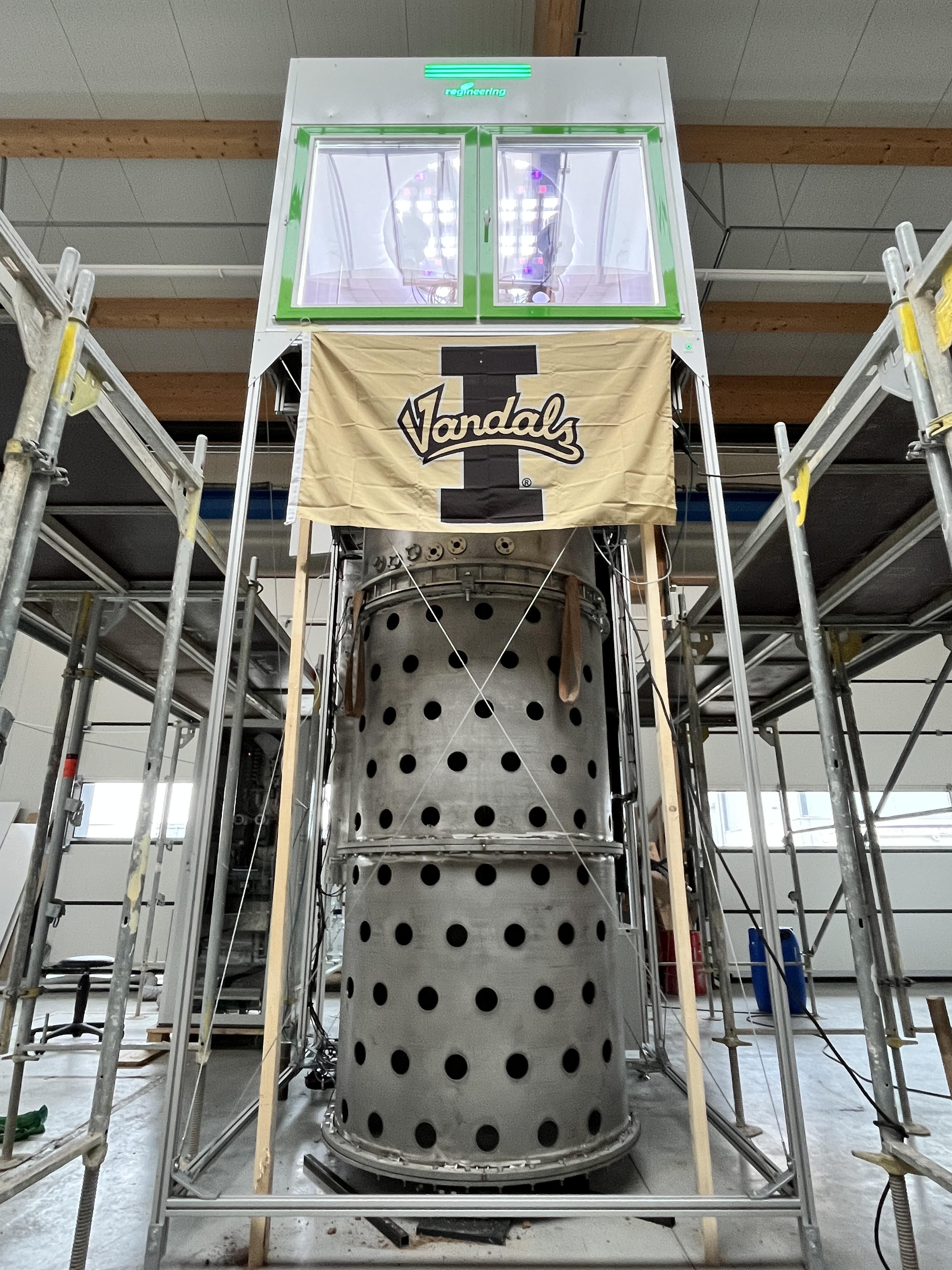
to collaborate globally through hands-on research. One of the largest global collaborations has been the development of the Deep Soil Ecotron (DSE), directed by Professor Michael Strickland and Associate Professor Zachary Kayler. This cutting-edge facility is one of the only in the world capable of measuring soil depth to three meters.
The DSE facility has been a source of major scientific advancements for U of I. Housed in the J. W. Martin Lab on the Moscow campus, the DSE is a series of soil cores imported in steel casings that allow scientists, researchers and students to explore underground soil structures. Storing the soil cores above ground allows for more indepth and controlled research to be done.
“Everybody knows we have soil that goes down deep,” said Kayler, “but we’re trying to say we need to look at it again.”
Encasing the soil cores is important to research as it allows the monitoring of both abiotic and biotic factors, especially when conducting research that cannot be recreated again or at all in the natural environment. Inside the soil housings, sensors and hyperspectral cameras monitor every second of information that is produced. The information is returned to a system of servers that store the produced data so it can be accessed again for further research.
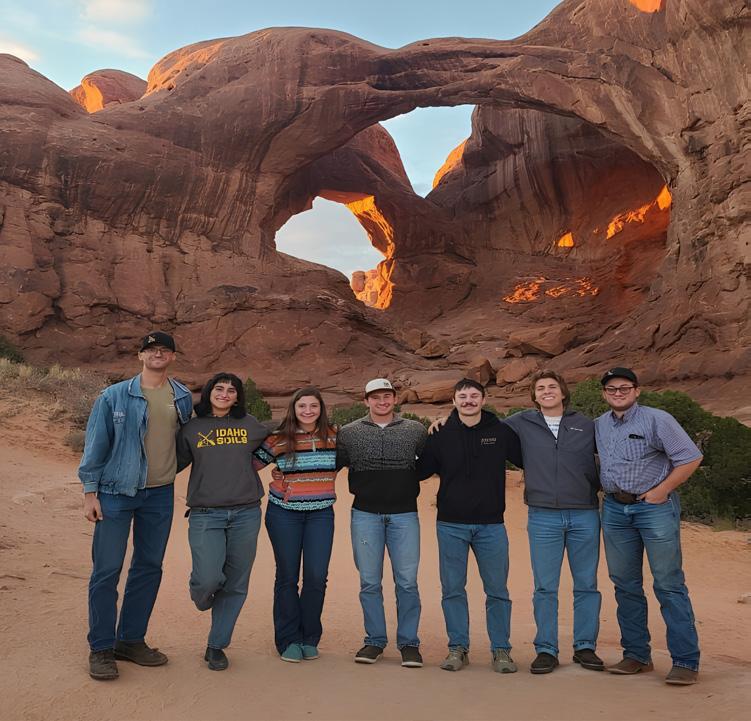
The soil judging team in Arches National Park on the way to Colorado.
Photo courtesy of DSE: Prototype Ecotron unit (2022). The Deep Soil Ecotron now includes 24 stainless steel lysimeters used to study changing soil and environmental conditions.
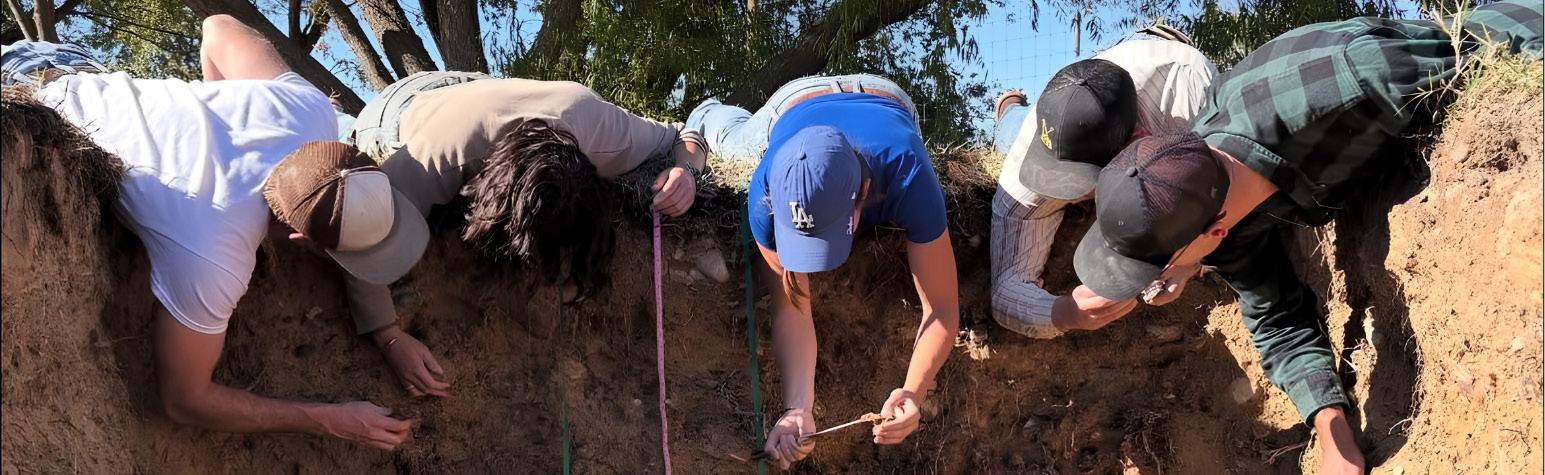
“It’s very cool, it’s my favorite analogy: the time machine, that you can embody both future and past conditions within these,” Strickland said.
One of the most unique features of the DSE is its ability to enable other avenues of research in addition to soil research. One of the ways the DSE promotes collaboration is through the College of Engineering, where undergraduate students have the ability to study soundwaves travelling through the soil in order to visualize underground structures. Both Strickland and Kayler hope to collaborate with more local industries and students from more colleges in the future.
“This facility isn’t just advancing research in expected areas. It’s opening up entirely new avenues of discovery that wouldn’t have been possible without it,” Strickland said.
In addition to collaborative research within the university, the DSE is partnering with universities across the nation, including the University of Colorado Boulder,
University of Hawaii, University of Wyoming and North Dakota State University, among other co-principal investigators.
Globally, the DSE’s scientific advisory board spans the U.S. to Europe, bringing together experts from all over the world.
Deeper than roots grow
A fourth-year competitor on the Soil Judging Team, Reinhardt, a senior studying agricultural systems management, is also actively involved in advancing his own education inside and outside of the classroom. During spring 2026, he traveled to Tanzania in East Africa,
on a three-week directed study credit with the help of his academic advisor, Marvin Heimgartner.
A directed study credit is offered to students who wish to complete a form of specialized study outside the typical classroom learning environment. With a few connections from his networking at U of I, Reinhardt was able to travel abroad to intern and receive an excused absence from his other classes.
Reinhardt’s internship consisted of helping with drone spraying, calculating production costs, managing employees on 22,000 hectares of crop production land and assisting with other crucial tasks to run a large-scale operation.
“I would just impress upon students how important the soils team is for somebody who is going to return to production agriculture,” said Reinhardt, “It’s handson practical experience that is invaluable.”
With all his newfound experiences, Reinhardt plans to stay in Idaho and run his own agricultural business.
Back down to Earth
With all the research that goes on at U of I, it cannot be done without the help of dedicated faculty members. Nabila Wildman, a master’s student in the Soil and Water Systems department, said they were drawn to U of I for graduate school, in addition to working with their advisor, Professor Dan Strawn.
“I am grateful for the opportunities here, including being an instructor, a soil judging coach and getting to do meaningful research with an excellent advisor,” said Wildman.
Wildman’s graduate research consists of a project in conjunction with the United States Geological Survey (USGS). They are studying a chromium contaminated site and the effects of the chemical in soils in addition to co-coaching this year’s soil judging team with Tietz and MaryBeth Gavin, a master’s student in the Soil and Water Systems department.
In addition to his work as head coach of the soil judging team,
Tietz is conducting his Ph.D. research by exploring the long-term use of biochar, a form of charcoal used in soil to help reduce compaction, sustain water holding capabilities and add to the nutrient composition of the soil. These benefits also support the soil’s capabilities to sequester carbon to help combat climate change.
Although it is intensive research to conduct, Tietz is grateful for all of the support he has received.
“I am thankful to my M.S. and Ph.D. advisors, Dan Strawn and Zachary Kayler, for giving me these academic opportunities. In addition, Robert Heinse has been my num-
ber one role model. I look up to Robert as an educator, scientist and a leader and am so grateful for his support,” said Tietz.
Groundbreaking effort
At U of I, students are equipped with strategies and knowledge to be prepared for whatever the future may hold. Through their endless amounts of effort and dedication, students continually show that hard work yields great results, but with great students comes great support. Without the help of faculty, graduate students and university collaborators, none of this work or research would be possible.
2025 National Champions. From left to right: Logan Mann, Jacob Flick, Sky Reinhardt, Hannah Poland, Tegan Macy and Daniel Middelhoven.
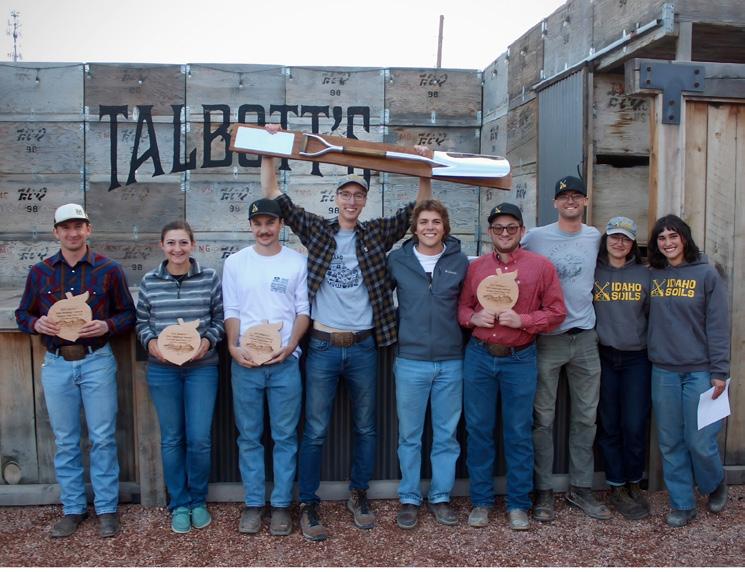
Results ceremony for the 2025 Northwest Regional Soil Judging Contest in Grand Junction, Colorado last October.
Kim Heezen, DVM Megan Stutes, DVM
Kathyrne Blair, DVM Tesa Blewett, DVM
Virgil Frei, DVM
312 Main Street Ferdinand, ID 83526
208- 962- 3300
office@ferdinandvetclinic.com
In business since 1985, the Ferdinand Veterinary Clinic offers a wide range of services for all types of companion and food animals. Our doctors specialize in high quality, compassionate and affordable surgical and medical care for dogs, cats, horses, catt le, small ruminants, pigs, camellids and some small mammals. Nutritional and management counselling for all types of animals is also available.


At FarmHouse Fraternity at the University of Idaho, we believe in the strength of brotherhood built on trust, shared purpose, and suppor t. Our house is a place where men grow in both knowledge and character while striving to make a positive impact on campus and beyond. While our roots are in agriculture, we proudly welcome men from all majors who share our values and want to grow as leaders and brothers.
Website:https://www.uidahofarmhouse.com
(208) 739-7055, Colton Smith, VP of Recruitment
Est. 1957
From Fear to Fascination
Inside the University of Idaho’s Department of Entomology, Plant Pathology and Nematology
STORY BY MADI KNAPP
Between 3-15% of the global population say spiders are their top fear. For many, this fear means avoiding cobwebs, basements or anything with too many legs.
Fortunately, bravery is found within the University of Idaho’s Department of Entomology, Plant Pathology and Nematology (EPPN). While many people consider insects their greatest fear, students and faculty in EPPN see the bigger picture. The department is more than just creepy crawlers. They house one of the most impressive entomology museums in the country and conduct research on public health and pathogenic diseases.
Without the fearless work of entomologists, our understanding of the vital role insects play in human interactions would be dangerously limited. EPPN is home to dedicated students and faculty working to make the world safer and healthier through research, educational programs and community outreach.
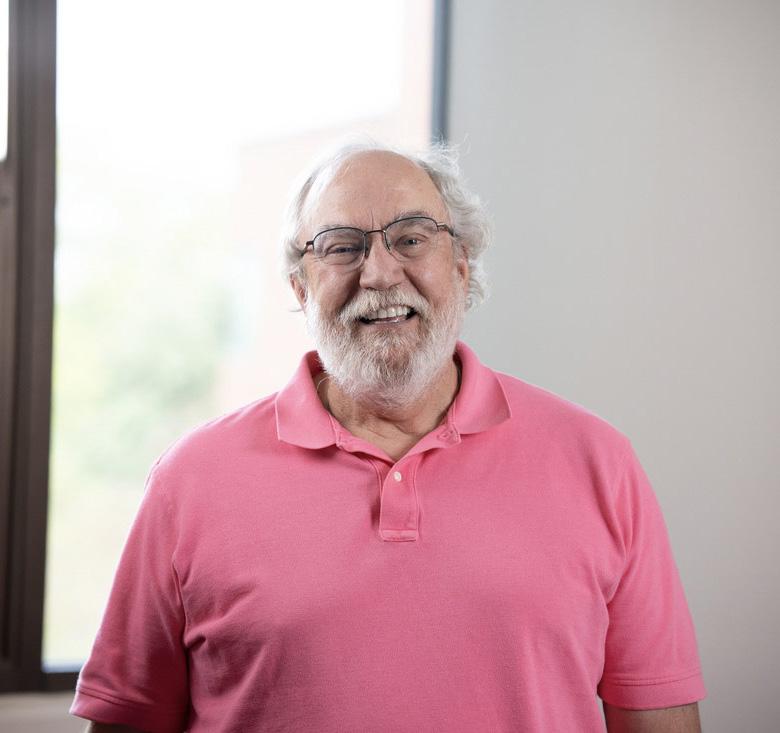
“Many universities lack undergraduate entomology degrees. Ours is one of only 16 in the U.S. Despite being small, the field has enormous global impact,” said EPPN Department Head Stephen Cook.
The experts behind the science
Luc Leblanc, curator and manager of the U of I’s William F. Barr Entomological Museum, conducts outreach with schools and community groups and instructs classes where students create their own insect collections. In collaboration with the Idaho insect survey teams, he develops checklists, distribution maps, identification guides and produces education posters with undergraduate students. He also researches tropical fruit flies and works internationally, training personnel from the United States Department of Agriculture.
Cook’s specialty is insects and their interaction with trees. Currently, his research focuses on native pollinators and food resources used by indigenous communities. Additionally, he works on huckleberry research.
A million specimens and counting
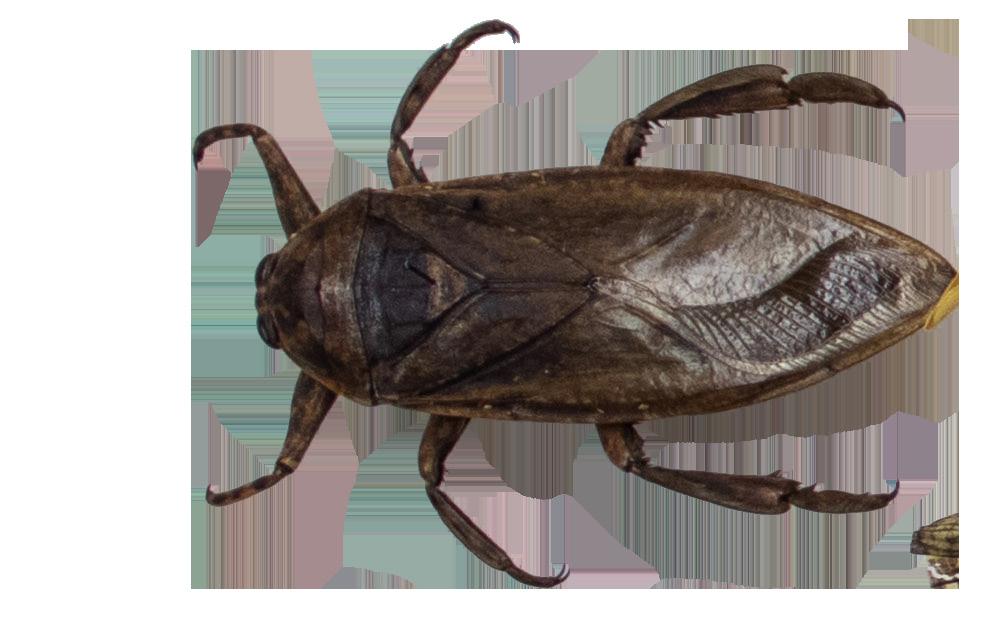
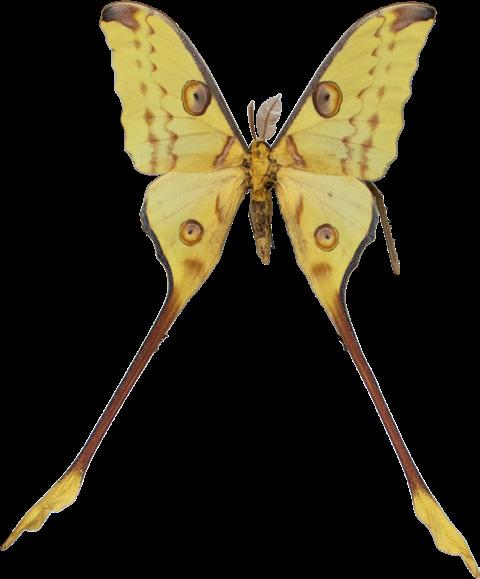
EPPN is known for its vast entomology museum, which is recognized by the Moscow community and the country. Established in 1947 by Professor William F. Barr, it continues its legacy today with over 1 million specimens. Although the museum is easily accessible, tours are by appointment only.
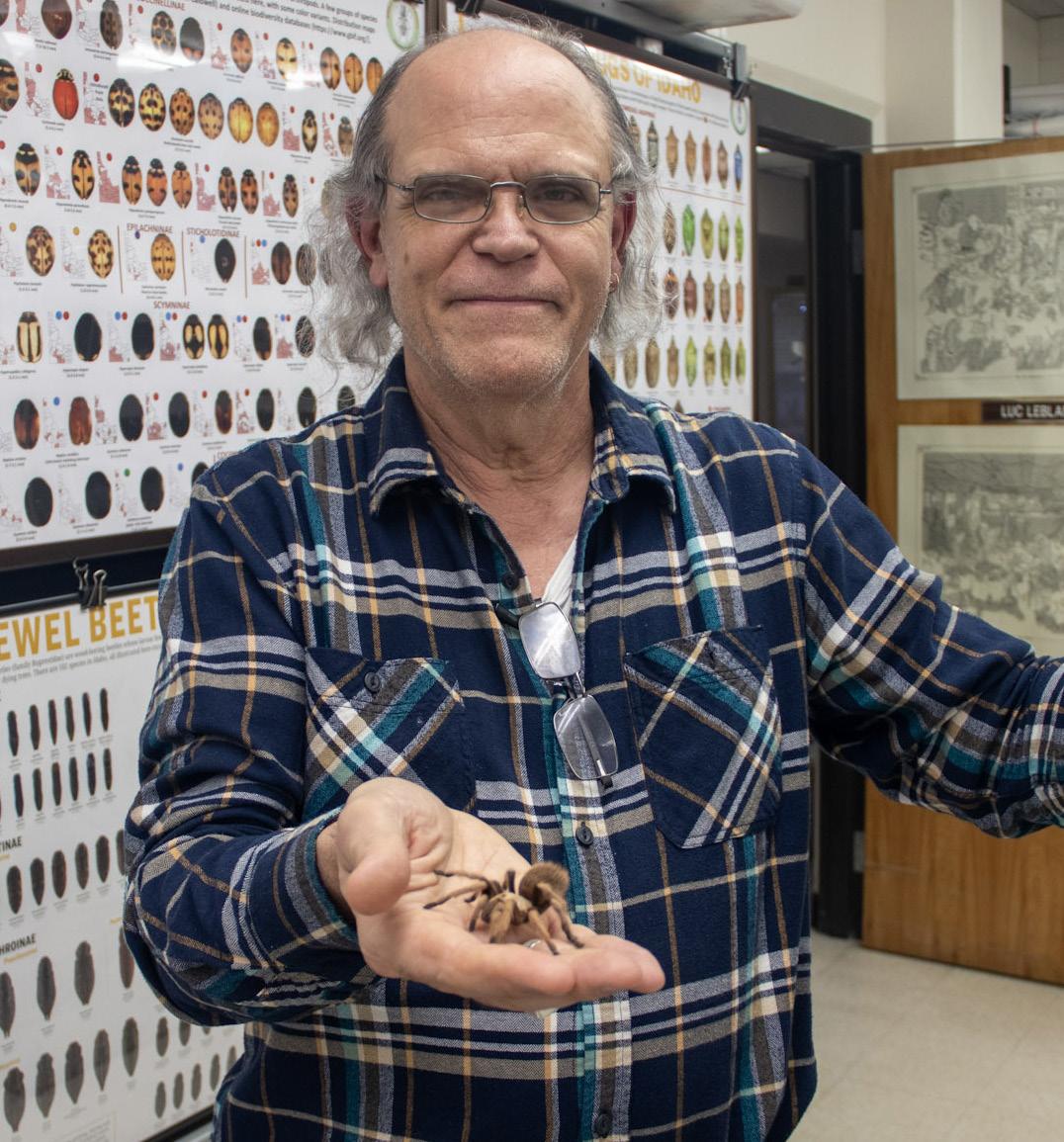
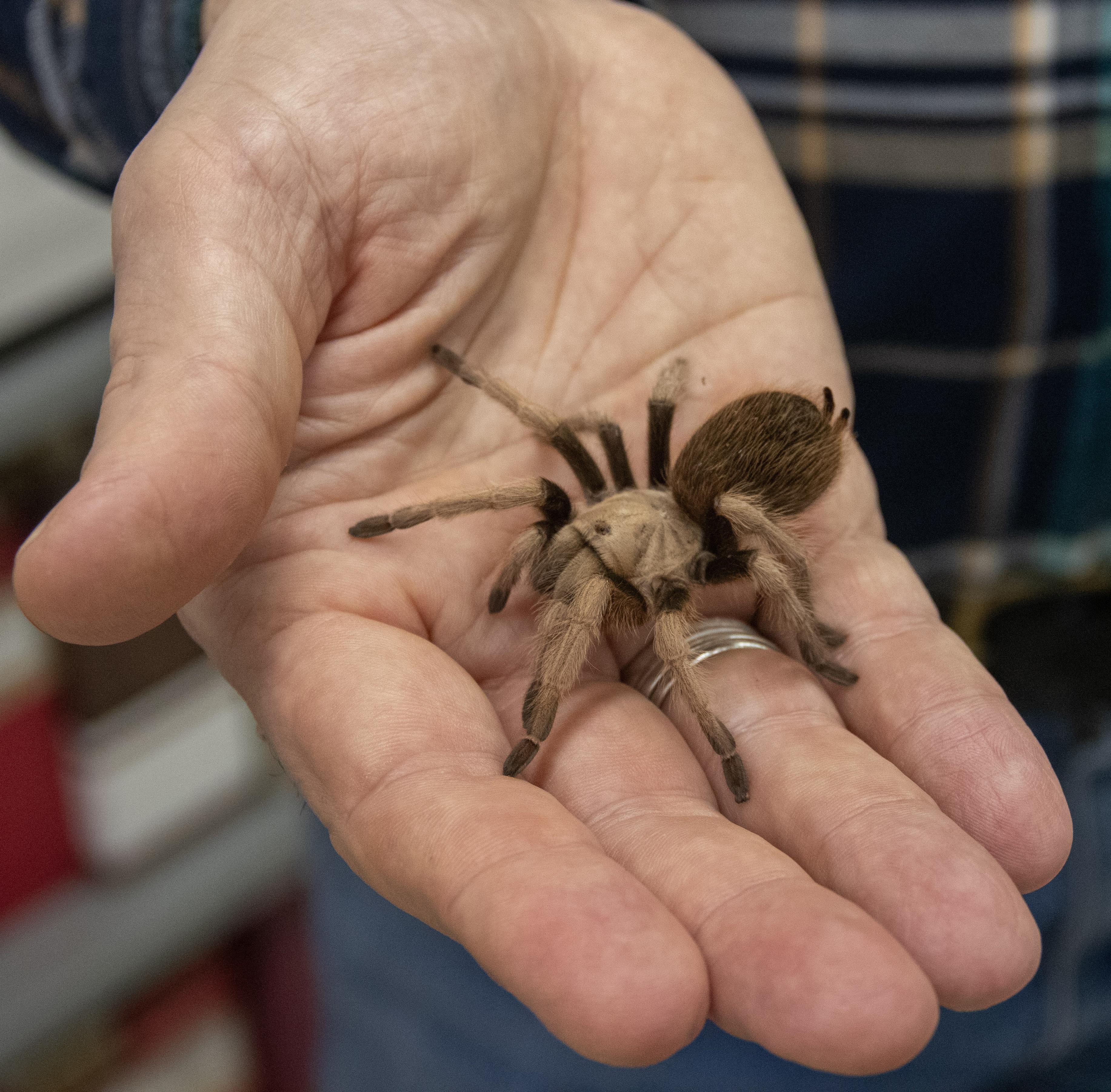
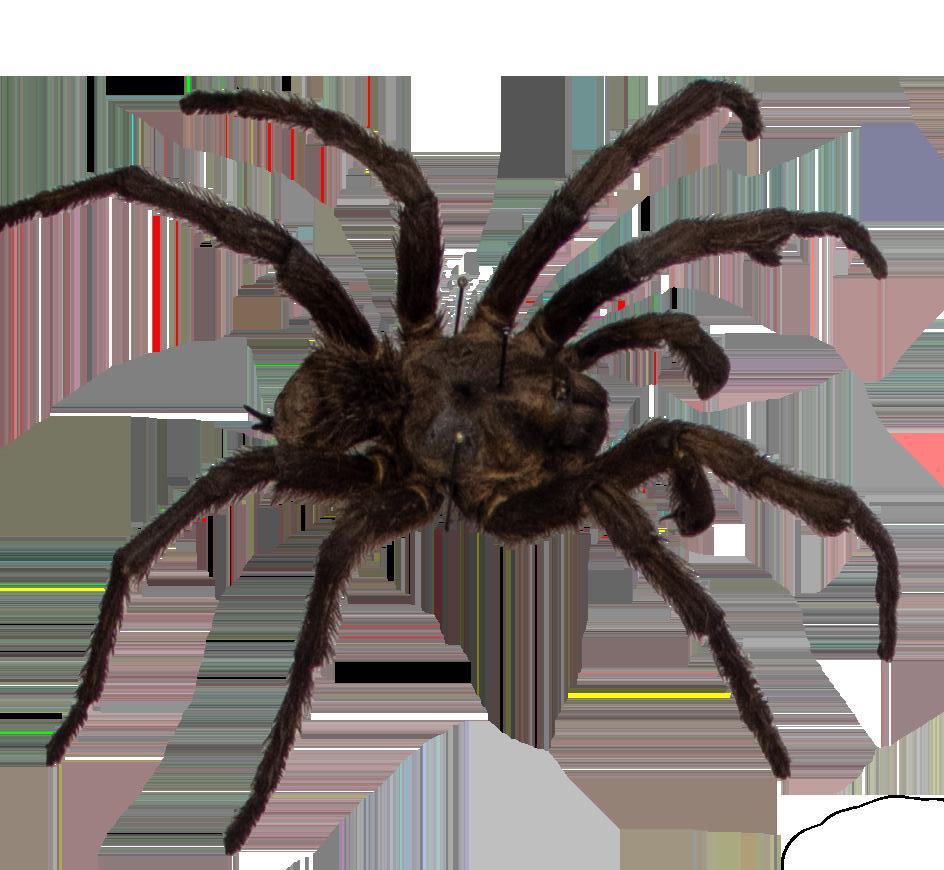
When touring, you will likely find yourself being offered to hold a small, yet strong creature: Brown Sugar, the tarantula. This wellknown tradition of holding Brown Sugar is done by many brave elementary school students in the community.
“This museum is a repository of insect specimens collected in Idaho, nearby states and globally,” said Leblanc. “It documents biodiversity in the region and holds many undescribed species waiting for study. Students conduct research projects using specimens.”
The public can also access all the data held by the museum.
“All specimen data are cataloged and uploaded to public databases,” said Leblanc.
“Current work includes mapping insect ranges within Idaho, allowing us to track expansion or decline– important for pest management and ecological studies,” Cook said.
Luc Lebland holding an Arizone Blonde Tarantula Spider. Native to Arizona and New Mexico. This one’s name is Brown Sugar.
Stephen Cook, Department Head and Professor of Entomology, Plant Pathology and Nematology.
Luc Leblanc, Curator and Manager of William F. Barr Entomological Museum, holding “Brown Sugar.”
This department may be one of the smallest in the College of Agricultural and Life Sciences (CALS), however, it brings more value to the college than many realize.
When asked what misconception about entomology he wished people would stop believing, Leblanc replied, “The idea that insects are pests. Insects evolved for reasons and fulfilled essential ecological functions, often benefiting agriculture and forestry.”
Cook agreed with this sentiment.
“Even mosquitoes serve ecological roles as food sources and contributors to nutrient cycling,” said Cook.
“Insects become pests because humans create ideal conditions such as crop monocultures for them to thrive,” Leblanc said. “‘Pest’ is an anthropocentric term.”
Faculty in EPPN are dedicated to research, education and outreach to inform students and the community about the natural world.
Learning beyond the classroom
“Students gain practical experience in research labs that extend beyond pest management into ecosystem services,” Cook said.
Cook and Leblanc shared how they appreciate that because of the tight knit culture within their department, students establish strong connections with their faculty and peers.
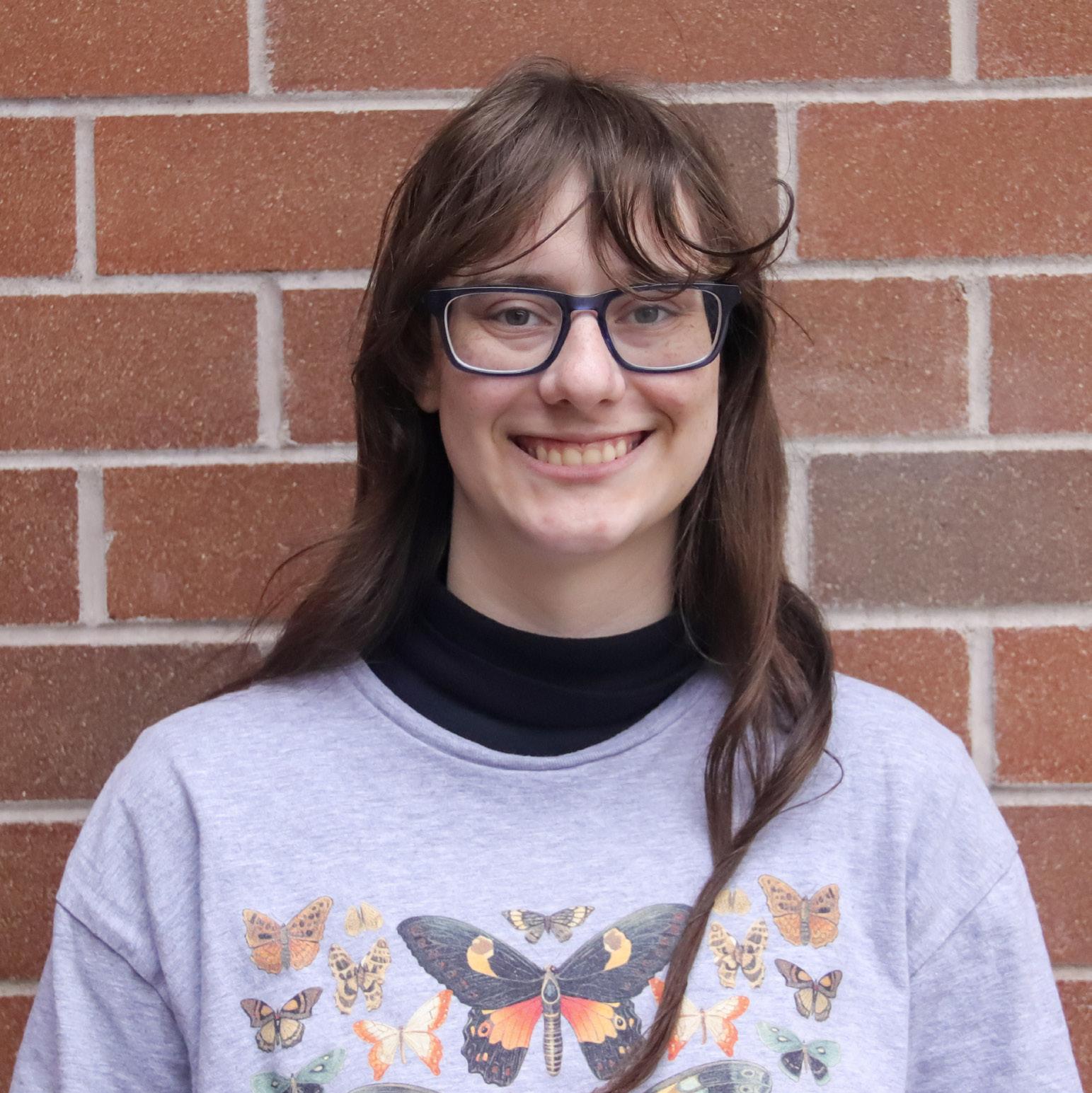
One student who has taken advantage of the opportunities within EPPN is Abigail Leavitt, a freshman studying entomology. She was drawn to CALS because EPPN aligned perfectly with her interests.
“My favorite hands-on experience I have had is going out to Elk River to do some field collection for an entomology class I took last semester,” she said.
Leavitt also appreciates the community that the department provides.
“Even though I have gone out to collect insects many times at home or in the arboretum on campus, it felt different to go a few hours out to collect in a group,” Leavitt said.
EPPN has helped students strengthen their previous skills and build on them. Leavitt has seen personal growth in her entomological skills since joining U of I.
“Some skills I have gained are more entomology-focused, like identification or how to better use a microscope,” Leavitt said. “I have also gotten better at not caring about how silly I may look when
I am carrying around a big net or chasing down an insect.”
For Leavitt and other students alike, diverse aspects of the entomology curriculum outside of physically working with bugs are also vital in their career preparation.
“The other curriculum is interesting too, and having knowledge and experience in fields related to entomology helps make for a more well-rounded education.” Leavitt said.
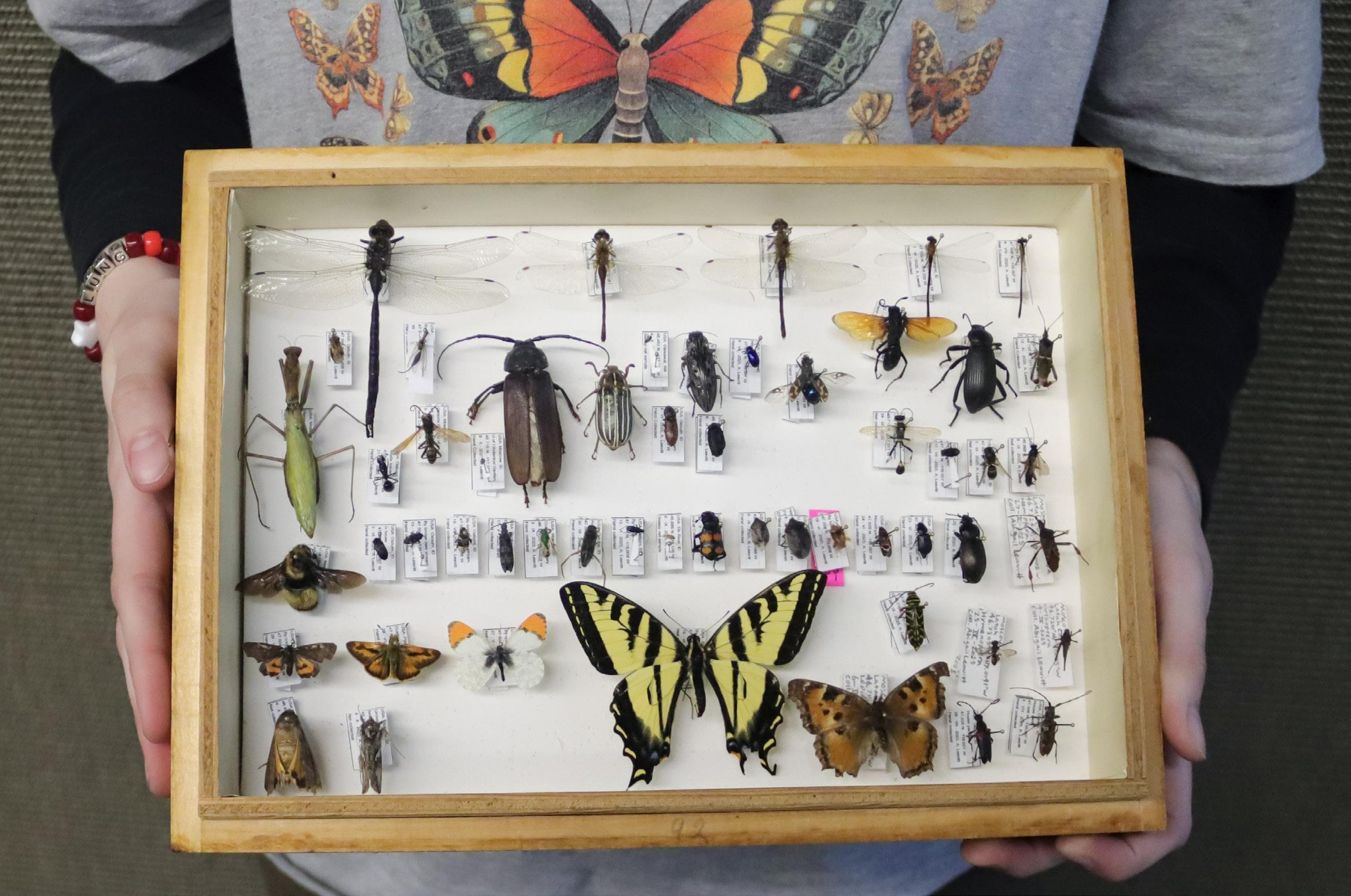
Leavitt is an advocate for the entomology industry. She knows that many people do not understand how important their work is.
“It feels kind of like some people think it is an unnerving pastime,” said Leavitt. To her and many others, collecting insects is not a hobby; it is a form of data collection.
She finds beauty in preserving the insects as an educational tool by recording when, where and how
A fearless future
From preserving millions of specimens to challenging the way we think about insects, the EPPN department reminds us that even the smallest organisms play a powerful role in agriculture, ecosystems and everyday life.
Although some may let their fears get the best of them, these brave individuals represent an industry that is shaping our future.
Leavitt holding her collection of insects.
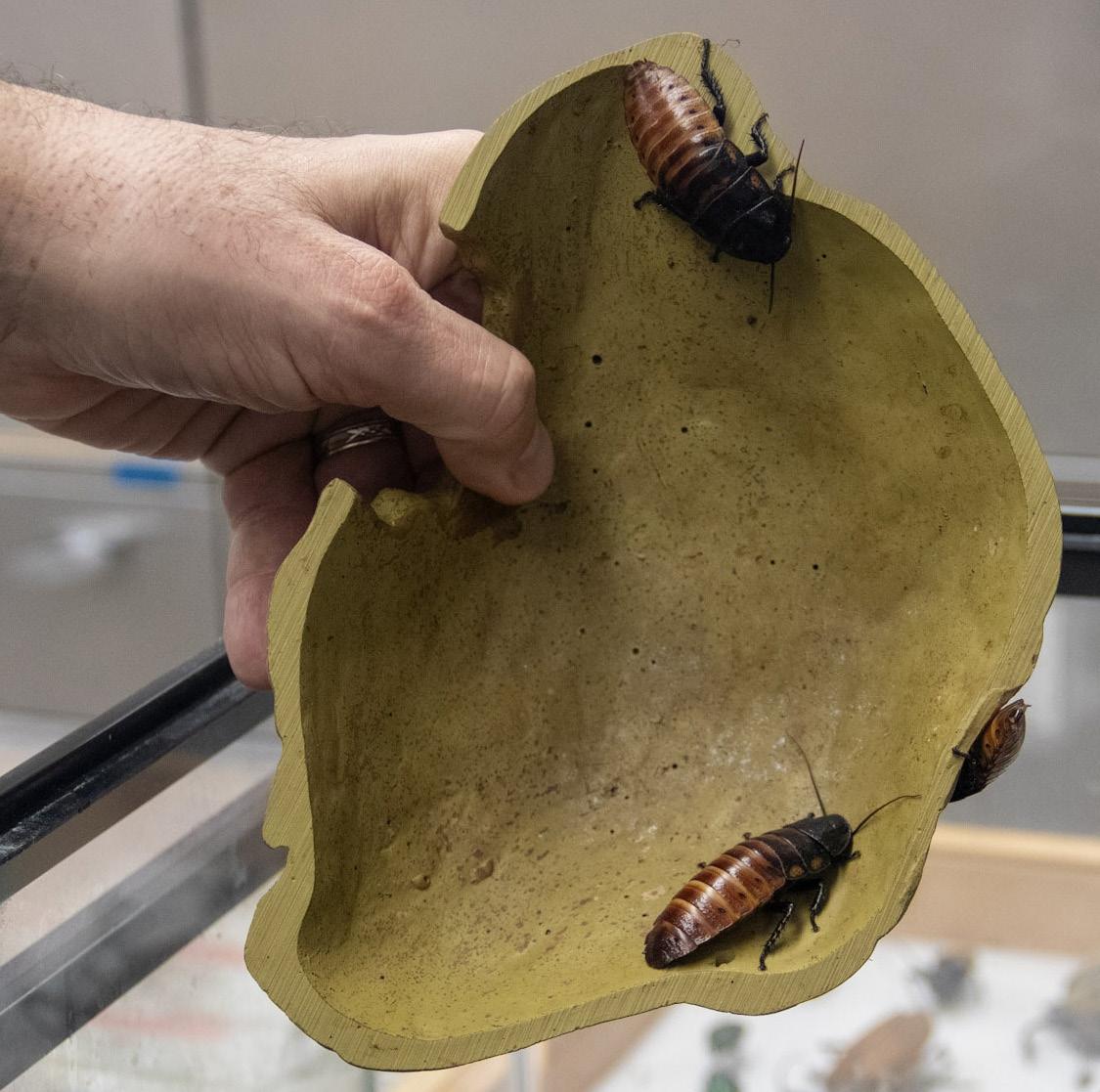
Leblanc holding a plate with Madagascar Hissing Cockroaches above their habitat.
Abigail Leavitt, freshman within the entomology program.

Precision at Work
Inside the Analytical Sciences Laboratory
STORY BY AMBER LEMRICK
Tucked quietly into the University of Idaho’s research landscape is a laboratory whose work shapes agriculture, environmental policy, food safety and scientific discovery across the Northwest.
It does not attract headlines, conduct public tours or have dramatic experiments bubbling in glassware. Instead, the Analytical Sciences Laboratory (ASL) is a place where precision rules, data matters and the smallest chemical signatures can tell the biggest stories.
For decades, ASL has been the backbone of Idaho’s scientific infrastructure. Established over 50 years ago through a multi-state agreement, the lab has long provided analytical services for researchers, agencies and industries. Today, ASL is undergoing a transformation, driven by new leadership, new technology and a renewed commitment to serving the state.
At the center of that transformation is Ryan Foster, ASL’s laboratory services manager. Foster joined the lab three years ago, stepping into a facility that was overworked, under-equipped and in need of modernization. What followed was a complete revamp, one that is reshaping ASL’s future and expanding its impact across Idaho.
ASL’s mission has always been rooted in service. It provides accurate, defensible analytical data to support the university, the state and the region.
and more intricate,” Foster said. “Our mission now is not just to run tests, it’s to help people solve problems and that mission touches nearly every corner of Idaho’s scientific landscape.”
What they do
ASL analyzes toxicology samples, conducts soil fertility testing, measures trace metals in soils, plants, blood and environmental samples and supports research across disciplines. The lab’s work is essential for farmers who need to understand nutrient levels in their fields, researchers studying environmental contaminants, agencies monitoring water quality and students learning the fundamentals of analytical chemistry.
Much of ASL’s work happens behind the scenes, but its impact is far-reaching. Trace metals analysis remains one of the lab’s most in demand services, helping identify contamination, assess nutrient levels and support environmental monitoring. Polyfluoroalkyl Substances (PFAS) detection, one of the most pressing environmental issues of the decade, is becoming a growing part of the lab’s portfolio as Idaho and the nation grapple with the presence of forever chemicals in soil and water.
Agricultural support is another major pillar of ASL’s work. Idaho’s agricultural economy depends on accurate, timely data. The lab plays a key role in updating fertilizer guides, supporting hop growers with industry specific testing, helping farmers optimize nutrient management and ensuring food safety and crop quality.
ASL also serves as a crucial research partner for faculty and students. The lab assists with method development, instrument training, sample analysis and data interpretation. Its recent equipment upgrades have expanded its ability to support high-end research across the university. For Foster, some of the most exciting work comes from these collaborations.
When asked about the coolest project he’s worked on, he immediately mentioned a recent collaboration with the Center of Biomedical Research Excellence (COBRE) in Nutrition and Women’s Health involving metals analysis in human breast milk.
“It was meaningful work, technically challenging and scientifically important,” Foster said.
Another standout project involved detecting 6PPD-quinone (6PPQ) in crawfish, a compound linked to fish mortality events in the Pacific Northwest. Detecting it in biological tissues requires advanced instrumentation and creative method development.
“These kinds of projects are puzzles,” Foster said. “You have to figure out how to get the method to work, how to get clean data, how to push the instrument to its limits. That’s what I love.”
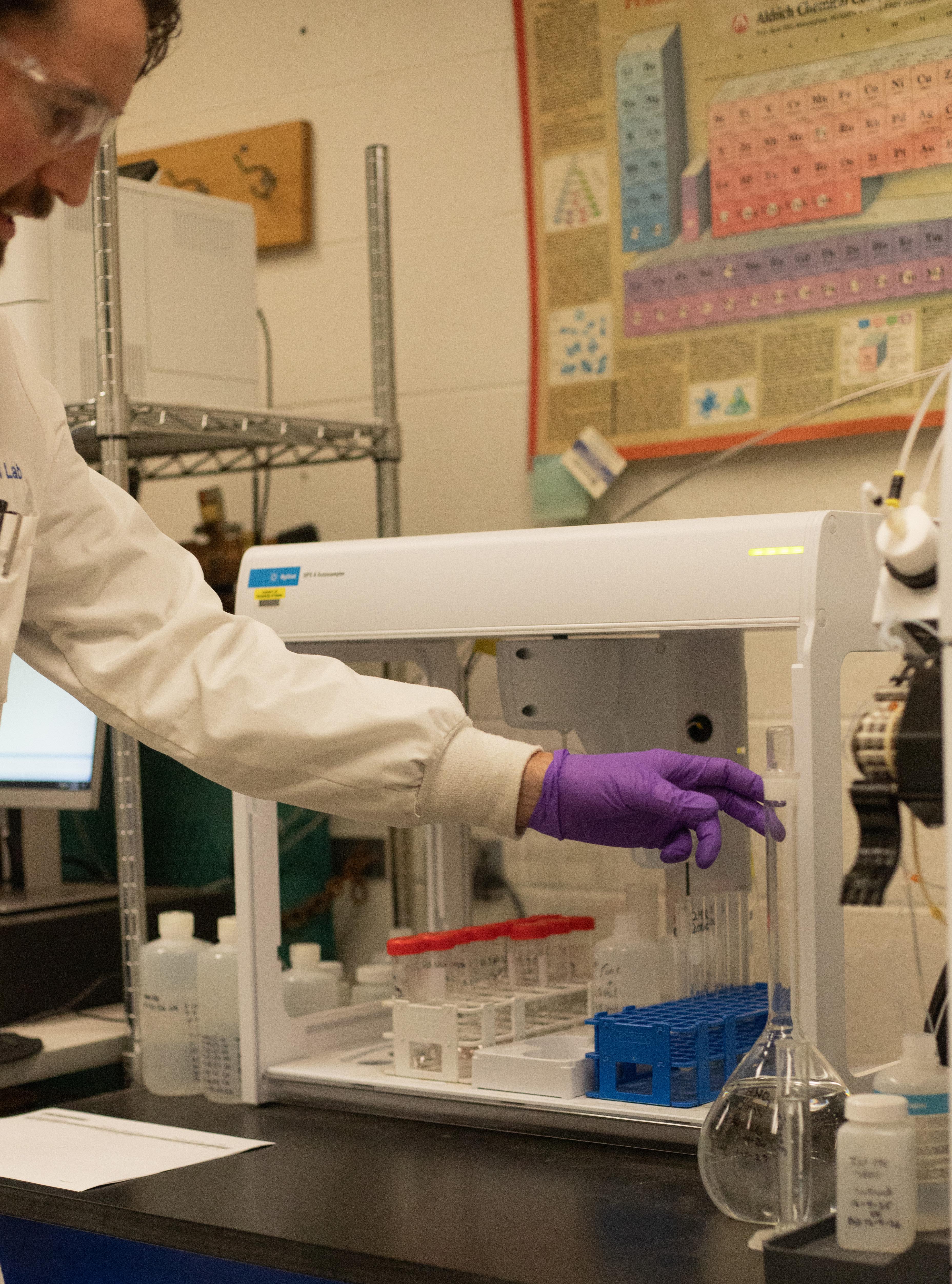
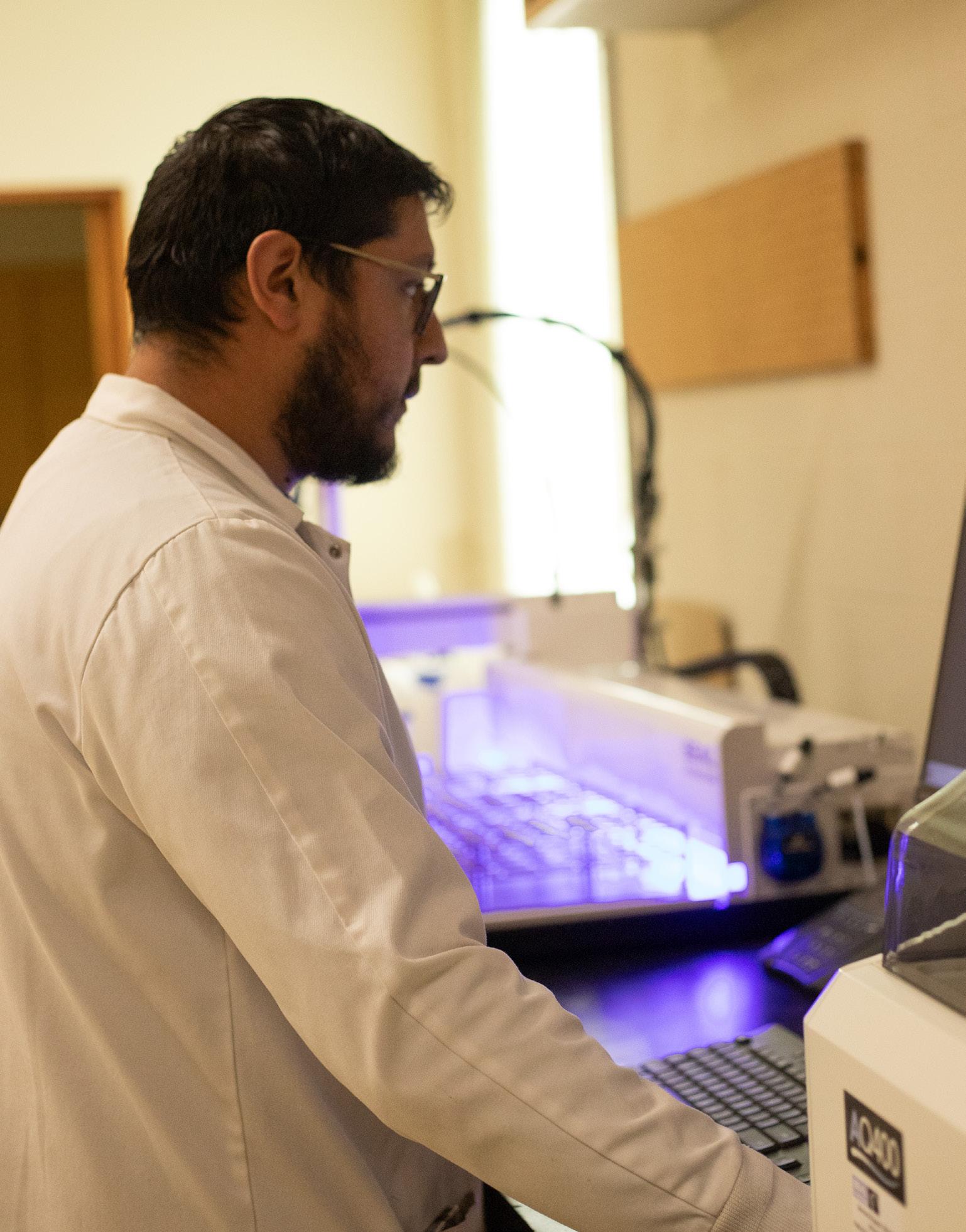
Scientist in the Analytical Sciences Laboratory performing an experiment.
“The mission has grown more complex over time. Environmental concerns are shifting, agricultural demands are evolving and the scientific questions people are asking have become more urgent
“We’re trying to be more supportive of farmers,” Foster said. “We want to help them make decisions that improve yields and protect their land.”
Behind every test ASL performs is a commitment to scientific integrity. The lab maintains multiple certifications and accreditations, which shape every aspect of its operations. These standards ensure that the data ASL produces is accurate, reproducible, defensible and compliant with regulatory requirements. Quality assurance is woven into the lab’s daily workflow.
“If the data isn’t right, nothing
else matters,” Foster said. That commitment to quality extends to the lab’s collaborations with state agencies, private industry and university researchers.
ASL provides environmental and regulatory data, supports food production and agricultural industries and contributes to grant projects and publications. It also plays a key role in student training, offering internships, handson experience and exposure to advanced analytical techniques.
One of the lab’s current priorities is helping update Idaho’s fertilizer guides, critical tools that farmers use to determine nutrient needs and optimize crop production. ASL
is also expanding its support for the state’s hop industry, which relies on precise chemical analysis to meet market demands.
“We want to be an integral part of Idaho’s agricultural future,” Foster said. “Farmers deserve fast, accurate data they can trust.”
The re-brand
Like many analytical laboratories, ASL faces significant challenges. Environmental concerns are evolving rapidly, and the demand for PFAS and emerging contaminant testing continues to grow.
Modern mass spectrometry is increasingly complex, requiring
continual training and investment. Equipment must be upgraded regularly, and sample volume can strain capacity. ASL is meeting these challenges head-on. The lab has invested in new instrumentation, improved workflows and faster turnaround times, now often 10 to 15 days.
“We’ve drastically cut prices and improved speed,” Foster said. “We want people to know they can reach out, ask questions and work with us to determine quotes.”
Revamping it required not just technical expertise, but vision.
“We had to rebuild ASL from the ground up,” he said. “We want to become net-zero, bring in enough work to support our staff and keep upgrading our equipment.”
ASL is self-funded, meaning it pays for its own equipment and wages through the work it brings in. That model demands efficiency, innovation and strong client relationships. Looking ahead, Foster envisions a lab that is more visible across campus and the state, a leader in PFAS and emerging contaminant detection, a hub for agricultural and environmental research, a training ground for future scientists and a model of sustainability and scientific excellence.
“People don’t always realize how extensive our testing capabilities are,” Foster said. “We can help with method development, sample analysis, research design, you name it. We’re here to support faculty, students and the state. Don’t be afraid to reach out.”
Collaboration across campus
With new equipment, faster turnaround times, and a renewed mission, the ASL is emerging as one of the university’s most valuable scientific assets. Few researchers have witnessed this transformation as closely as Adrianne Griebel-Thompson, whose collaboration
with the ASL became a model for what on campus scientific partnerships can achieve.
The project began with a series of planning meetings between Griebel-Thompson and the ASL team. Those early conversations established a shared vision for the study and set the tone for a highly collaborative process.
“ASL also allowed us to assist/ watch in the lab while they worked on developing the methods,” Griebel-Thompson said.
This access proved especially valuable for her graduate student, who gained firsthand exposure to method development and daily lab operations.
“Because we were able to do this analysis on campus, my graduate student was able to be involved in the development of these methods and observed how an analytical lab works,” said Griebel-Thompson.
When the samples were ready for analysis, the workflow moved efficiently.
“When it came time to work on our milk samples, my research sup-
port specialist weighed out the samples, and handed them off to the chemist for analysis,” Griebel-Thompson said.
Once the instruments were running, ASL moved quickly.
“It took approximately two weeks to run 211 samples through three methods,” Griebel-Thompson said.
ASL’s contribution extended far beyond routine testing. The lab developed and validated three specialized methods specifically for this project.
The first was an ICP-MS method for measuring iodine in human milk. A second ICP-MS method followed, designed to quantify iron, zinc, selenium, copper, manganese and molybdenum. Finally, the ASL developed an ICP-OES method for measuring calcium, magnesium, phosphorus, potassium and sodium.
Only after each method was fully validated did the ASL begin analyzing the full set of 211 samples, ensuring the highest level of accuracy and scientific rigor.
For Griebel-Thompson, the decision to work with ASL is rooted in
her belief that research is strongest when it stays on campus. Conducting the analysis locally allowed her team to stay closely involved in the process and maintain greater control over data quality. It also gave her confidence in the results, confidence she says she wouldn’t have had to the same degree with a third-party lab.
There were practical advantages as well. By hand delivering samples directly to the ASL, her team avoided the risks of shipping biological materials, such as thawing or loss during transit.
Looking ahead, Griebel-Thompson sees her collaboration with the ASL as a blueprint for future campus-based research. The partnership strengthened her study, enriched her students’ training, and demonstrated the value of investing in on-site analytical capabilities.
As the ASL continues to expand its instrumentation and expertise, it is poised to play an even greater role in advancing scientific discovery across the university and the state, one collaborative project at a time.
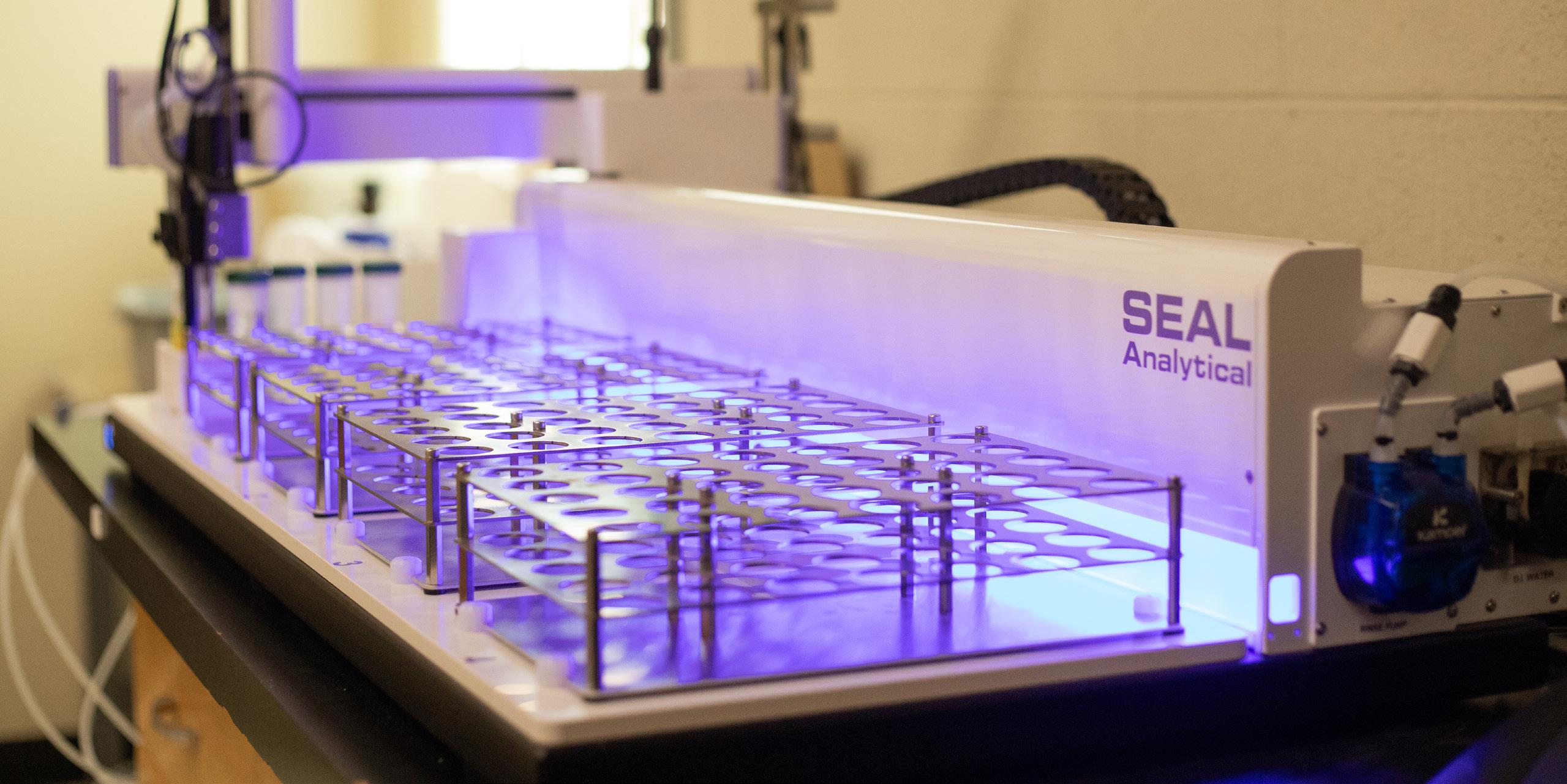
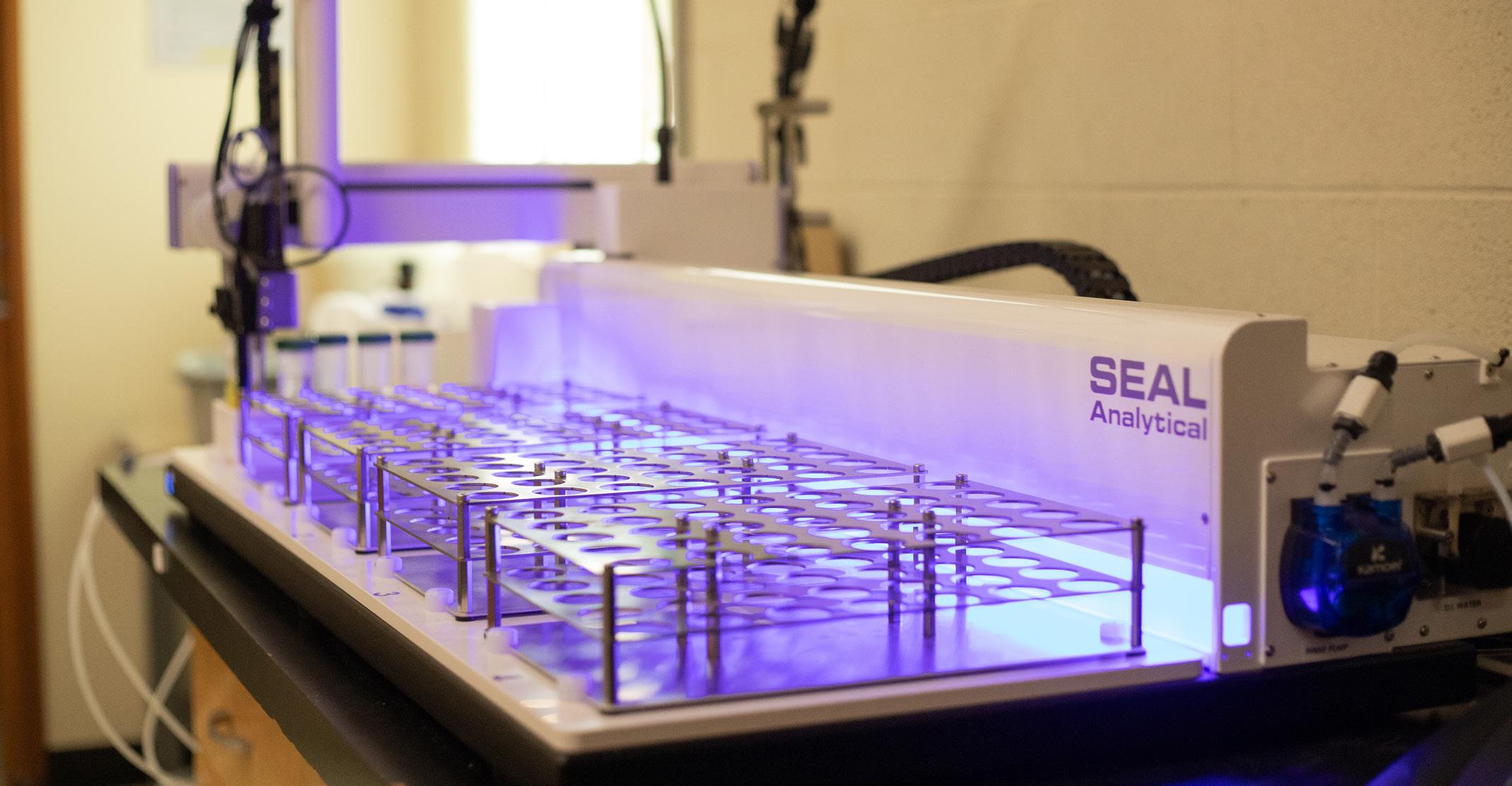
SEAL Analytical Nutrient Analyzer used to test environmental samples.
Rooted in VANDAL PRIDE
Where family history and Vandal heritage grow side by side
STORY BY KENZIE BARTA, MADI KNAPP AND GRACIE SWOPE
Some families pass down recipes, heirlooms and traditions. Families at the University of Idaho pass down a tradition that is a little louder than most, their Vandal pride. On campus, it is common to find families with roots running deep through multiple generations of Vandals. During homecoming, campus spirit is all around, creating a space for a family reunion with multiple generations.
Past generations and children who are current students walk the same campus paths at U of I, proving that some families do not just attend the university, they are rooted in silver and gold. This includes families of current College of Agricultural and Life Sciences (CALS) students like the Shaw, Tesnohlidek and Crossley families.
These families not only come together based on past stories and memories, but also by the newest generations of students who will continue to showcase their Vandal pride.
The Shaw family
From grandparents, parents, cousins, siblings and beyond, the Shaw family has been involved with U of I for generations. What began decades ago with an excit-
ed freshman moving on to campus has now grown into a multigenerational tradition of attending this historic university because of the stories and memories that have been passed down.
The campus has changed over the years, but the love for the university has remained the same. For the Shaw family, the university is more than a place on a map, but a common thread that ties family and generational pride into one continuing story.
The start of a tradition
Lydia Shaw, a junior in agricultural science, communication and leadership, has been surrounded by Vandals on both sides of the family. Her grandma, Patti Silflow, graduated from the Margaret Richie School of Family and Consumer Sciences in 1973 before the school moved to the CALS in 1983. Silflow’s Vandal roots were established when her dad, uncle, aunts and cousins attended U of I.
For Silflow, campus life has changed since she attended, but the morals and community values have remained the same.
“Students are not just a part of campus life, but they are also involved in the Moscow community
by homecoming traditions, observation and participation in Moscow classrooms and working in local businesses,” said Silflow.
Building their own story
When Silflow’s daughter, Janel Shaw, was exploring options for university outside her hometown of Kendrick, she was looking for a second home, and she happened to find out that it was not too far down the road.
“I wanted to travel and go somewhere far away to school,” said Janel Shaw. “Then I realized I didn’t need to be that far away. U of I is close and a great education, so why not go there?”
Janel Shaw studied plant science and quickly found her people on campus, including her husband, Sam Shaw.
“My best memories are the people and connections that I still see or chat with today,” said Janel Shaw. “U of I has given me so many connections to the Pacific Northwest that I never, ever would have made otherwise.”
Sam Shaw and his brother Tucker Shaw were the first on their side of the family to come to the university, with their sister Jamie Shaw soon following. Sam Shaw said that even though they had different paths, they often found connections in the same group of friends.
CALS holds many fond memories for Sam Shaw, from his time with Farmhouse Fraternity to his favorite– meeting his wife.
Now operating Shaw Cattle Company in Parma, Idaho, Sam and Janel Shaw get to see their daughter, Lydia Shaw, live out her time as a Vandal.
“We never twisted her arm that she had to go there, but we did always say, ‘Go Vandals,’” said Janel Shaw.
Even Sam Shaw and Janel Shaw’s younger children are filled with Vandal spirit. That spirit is something that influenced their older sister to attend U of I. Lydia Shaw was exploring other options for college, but the moment that helped shape her decision came unexpectedly.
Lydia Shaw and her younger sister were walking past a bulletin board of flyers that included a recruitment flyer for Boise State University. Her sister took one look at the flyer and said, “Eww. Go Vandals.”
It was that small comment made without hesitation that provided clarity for Lydia Shaw to realize she did not have to look far to find out where she was meant to go.
Seeing her younger sister’s Vandal spirit was a clear answer for Lydia Shaw on where she would spend her next four years.
“I realized my family has always been ‘Go Vandals,’” said Lydia Shaw. “The university is like a second home.”
Further family roots
Lydia Shaw has spent her time on campus staying active in her sorority, Kappa Alpha Theta, and enjoying time with her fellow U of I cousins Elizabeth Shaw (20222025), Maggie Shaw (2021-2024) and Morgan Silflow. Lydia Shaw even got to spend time living in the same sorority with all three cousins.
“Getting to attend the University of Idaho alongside Lydia and Maggie made the experience so much more meaningful,” said Elizabeth Shaw. “Walking the same campus as my dad and his siblings and now sharing it with my sister and cousin makes me feel connected to something bigger than just four years at college.”
Next year, another Shaw will continue the Vandal family legacy as Elizabeth Shaw and Maggie Shaw’s younger brother, Josh Shaw, starts his academic journey.
Being a Vandal family
Even though the Shaw’s Vandal family is not all on campus now, they reunite at football games and commencement celebrations, serving as a reminder of their love for campus and their experiences in Moscow.
To them, Moscow will forever be known for their time within CALS. The family is proud to have alumni and students spanning multiple generations who continue to invest in agriculture.
“Being in the business of agriculture, it’s important to continue ag education for younger generations,” said Sam Shaw when reflecting on what the college meant to him and his family.
The campus, classes and traditions are all key pieces of their family story. The Shaw family will continue to make memories and express their Vandal pride at their cattle business in Parma, family gatherings and whenever they visit campus.
“Take the time to enjoy your college experience,” said Sam Shaw. “It’s a place where you make lifetime friends with common interests in agriculture.”
The Tesnohlidek family
Dwaine Tesnohlidek enrolled at U of I in the 1950s. Here he met his wife, Carol Flatters, and what started as one student’s college experience soon became the beginning of a lasting family legacy. To date, 34 members of the family have attended U of I. This connection between the Vandal family and their family has created a shared bond amongst one another that endures long after walking across the stage at graduation.
For the Tesnohlideks, attending U of I has become a family tradition that continues to bring generations together. Whether it’s tailgating at homecoming games, never wearing orange and blue
together, or everyone returning to campus for big milestones, the family has continued to stay connected through U of I.
Memories made
Mike Tesnohlidek attended U of I and graduated with a bachelor’s degree in agricultural education. During his time at U of I, some of his favorite memories include meeting his wife, Lisa Kevan, nights at the Corner Club playing shuffleboard and his first year walking to class in over 3 feet of snow and temperatures around minus 20 degrees Fahrenheit.
Mike Tesnohlidek and Lisa Tesnohlidek’s three children, Austin Tesnohlidek, Madison Tesnohlidek and Ellie Tesnohlidek are currently attending U of I. Austin Tesnohlidek is a freshman studying agricultural economics, with an emphasis in agribusiness. Madison Tesnohlidek is a senior studying exercise health, human sciences and physical education and Ellie Tesnohlidek is currently finishing her master’s in agricultural education with plans to graduate this spring. Although this isn’t Ellie’s first degree through CALS, she also received her bachelor’s degree in animal and veterinary science production option.
Ellie Tesnohlidek said some of her favorite memories at U of I involve homecomings.
“Just seeing all your friends and family in one spot is my favorite part about homecoming,” said Ellie Tesnohlidek.
Having all three Tesnohlidek siblings on campus at the same time added another layer to the family’s legacy. What began decades ago with grandparents and continued through parents has now become a shared experience between siblings.
For many of the Tesnohlideks, U of I was an easy choice. They all have fond memories of visiting Moscow, attending football games and
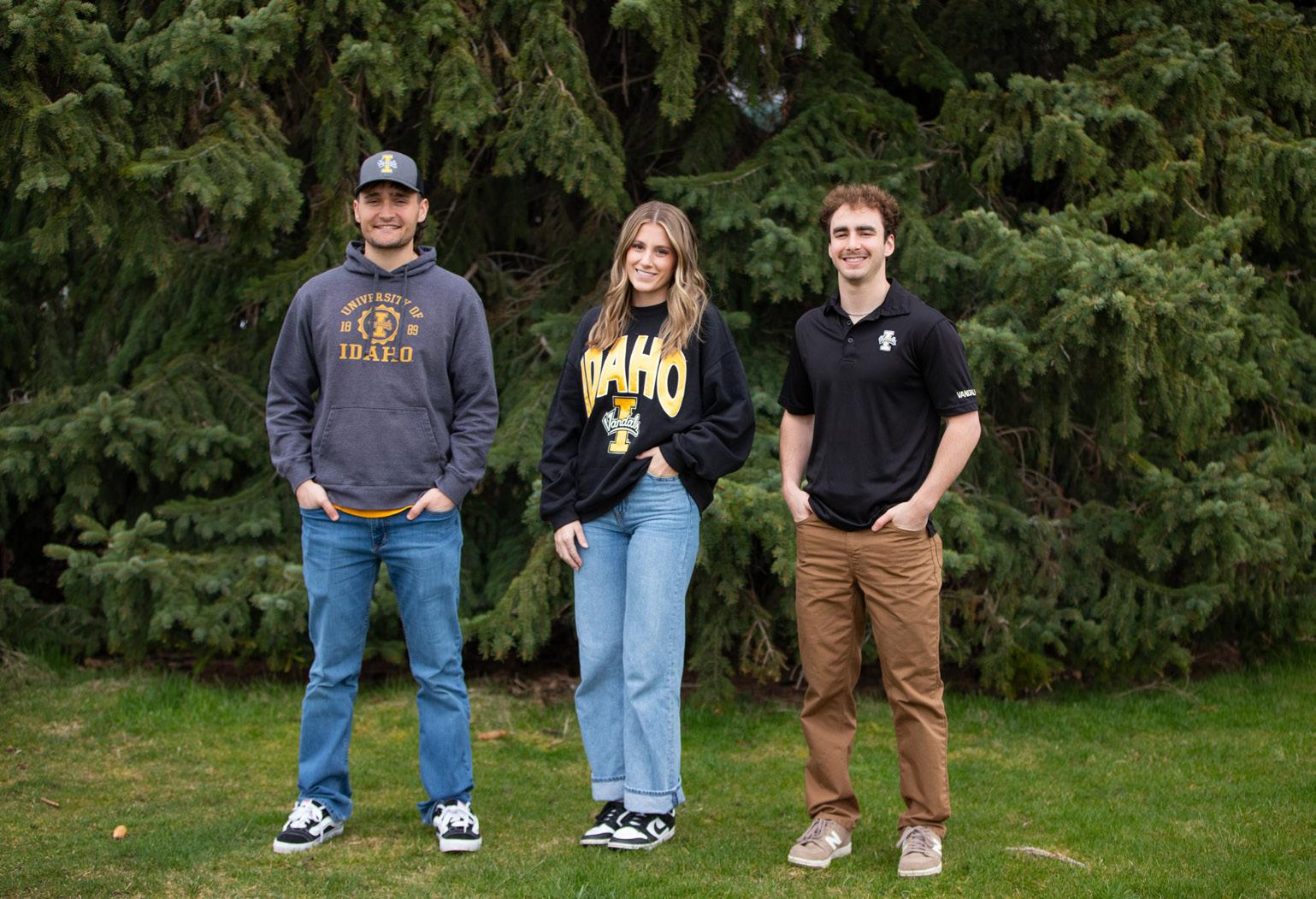
Vandal grads.
competing in FFA competitions on campus. Beyond that, the quality of education and the strong sense of community stood out. Many family members built lasting relationships during their time here, and those connections continued long after graduation.
A legacy lasts a lifetime
The core values of U of I have stayed consistent across generations – a strong sense of community, deep-rooted school spirit and the CALS family-like support. Most importantly, the feeling of being a Vandal never ends. Once a Vandal, always a Vandal.
Beyond education, being a family of Vandals means a lifelong community shared across generations. For the Tesnohlidek family, U of I is a place to return to again and again, with lasting memories. Not only is the Vandal community strong in Moscow, but wherever alumni call home.
The Tesnohlideks operate a family catering business, Meat and Potatoes Catering. They cater many events, but their favorite is Vandal weddings. While they cater, they often wear Vandal gear, and they always hear a proud “Go Vandals” from customers. This is something
special for the Tesnohildek family when reflecting on their time at U of I. It shows how big the Vandal family is.
“Wherever you go, if you have Vandal gear on, every Vandal you see will say ‘Go Vandals’ or give the Vs up sign,” said Mike Tesnohlidek.
This university is not just where this family furthers their education. It is where relationships grow, traditions are formed, and generations are connected.
The Crossley family
The Crossley family’s Vandal pride roots began in the 1960s when the first member of the Crossley family, Ferrel Crossley, started school. Ferrel Crossley met his wife Doris Guiles, and the love of silver and gold grew from there. The generations have continued to grow a love for U of I and alongside that, a hatred for the colors orange and blue. Since then, there have been two more generations proudly cheering for the Vandals.
Similar paths to success
Currently, Justis Crossley attends U of I and is studying agricultural education, a similar path to his father, Larin Crossley, an agricul-
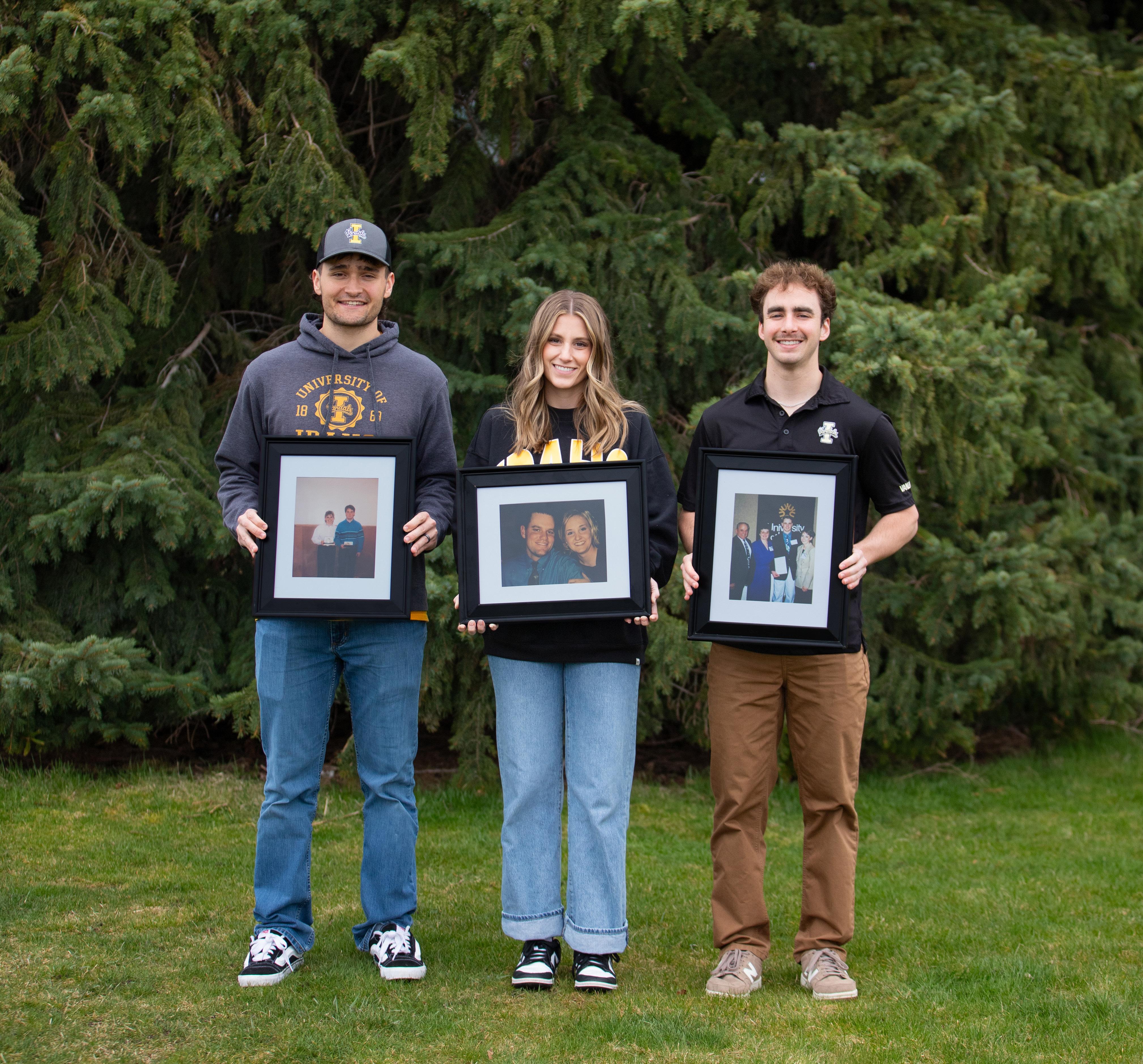
Crossley, Shaw and Tesnohlidek are carrying on their family legacies as future
tural educator at Preston High School in Preston. Justis Crossley not only learned from his father at home but also in the classroom. This led to an inspiration for finding a path not only to agricultural education but also to U of I.
When asked if having family ties to U of I influenced his decision to attend Justis Crossley said, “That was a big influence on my sister and me coming here, it is like our home away from home.”
Justis Crossley’s ties to U of I began at a young age. “Since I was probably six I knew I would go here,” said Justis. “I only applied for the University of Idaho.”
Vandal pride from the start
One story that Justis Crossley looks back on fondly is when he wasn’t a student yet. In 2016, his family attended the Famous Idaho Potato Bowl in Boise to watch the Vandal football team play Colorado State. Thanks to his uncle, they had third row seats right behind the 50-yard line.
“It was awesome, and we won. It was perfect,” said Justis Crossley.
For the Crossley’s, the trip across the state is well worth it to attend the best classes, watch their favorite players and continue the legacy of many generations of Vandals.
Larin Crossley had deep roots in
the Vandal family with his parents, his siblings Danny Crossley, Ethan Crossley and Nadine Crossley attending. Additionally, during his time at U of I he met his wife, Becky Crossley. Together they raised Justis Crossley and Jenna Crossley.
“My kids knew I was a Vandal for life, but they chose the university that best fits their career goals,” Larin Crossley said.
Since 1993, Larin Crossley has had the opportunity to watch the university grow.
Looking back on his time at U of I, Larin Crossley appreciated the lifelong friendships he gained through his agricultural education cohort.
Family ties in education
The Crossley family was able to not only attend classes at the U of I as part of the Vandal family, but also with their actual family.
“My younger brother and I were both ag ed majors, so we were able to take many classes together,” said Larin Crossley.
Additionally, Justis Crossley and Jenna Crossley have shared many meaningful college experiences together through attending clubs and sporting events.
The Crossley family truly embodies Vandal pride. Previous generations inspired the love of the
school, the high-quality faculty, educational opportunities and campus environment are what have continued this legacy.
Tradition always comes home
Returning to the U of I Moscow campus for families like the Shaws, Tesnohlideks and Crossleys reminds them that their connection to the university is more than just a chapter in the past. It is a story still being written for their families.
Grandparents, parents, aunts, uncles and beyond return to the same sidewalks they once roamed and see their younger generations attend classes in the buildings they once spent hours in. The new Vandals gain a piece of their own story to be added to the ones already shared at tailgates, family dinners and the well-known homecoming weekends.
Campus may have changed and will continue to do so, but the sense of community and pride remains constant. These families are proof that the Vandal spirit lives beyond their time on campus.
The past generations who built the tradition and the students who carry it forward ensure the Vandal legacy remains rooted in brave roots and bold futures.
THE BEST AGRONOMY TEAM IN THE PNW
NOW HIRING FOR MULTIPLE LOCATIONS.
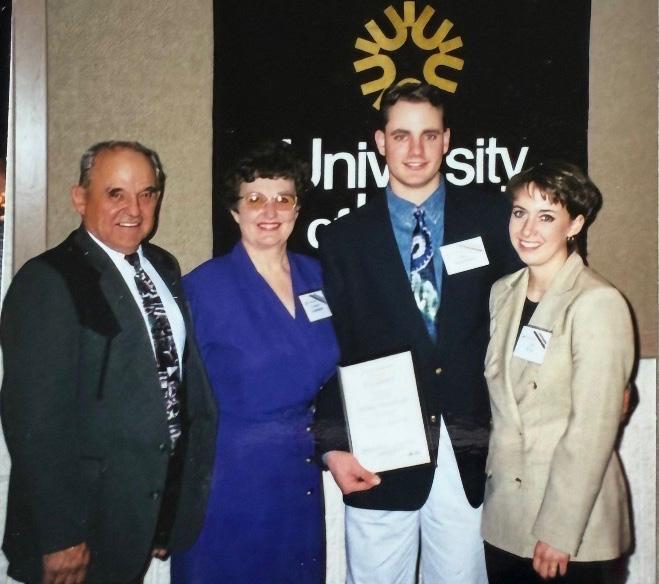

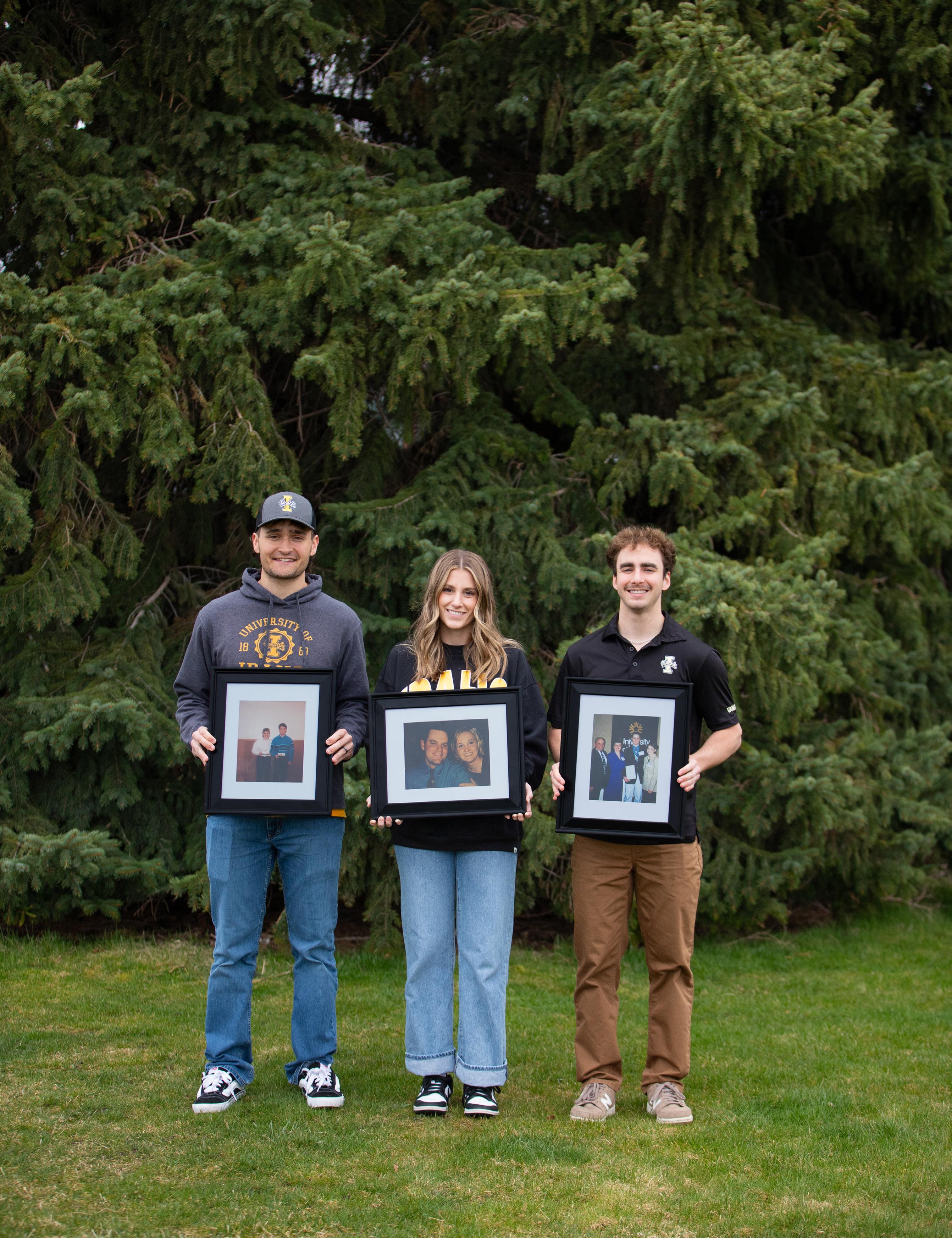
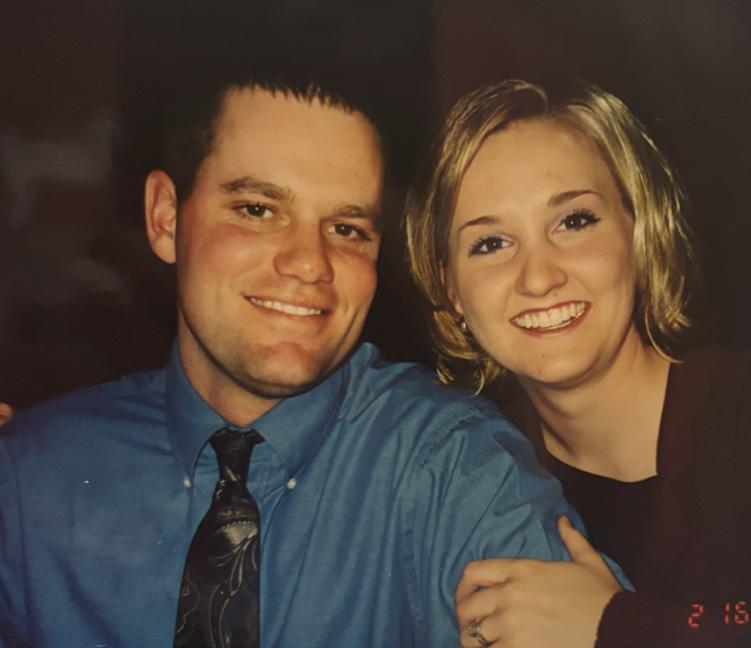
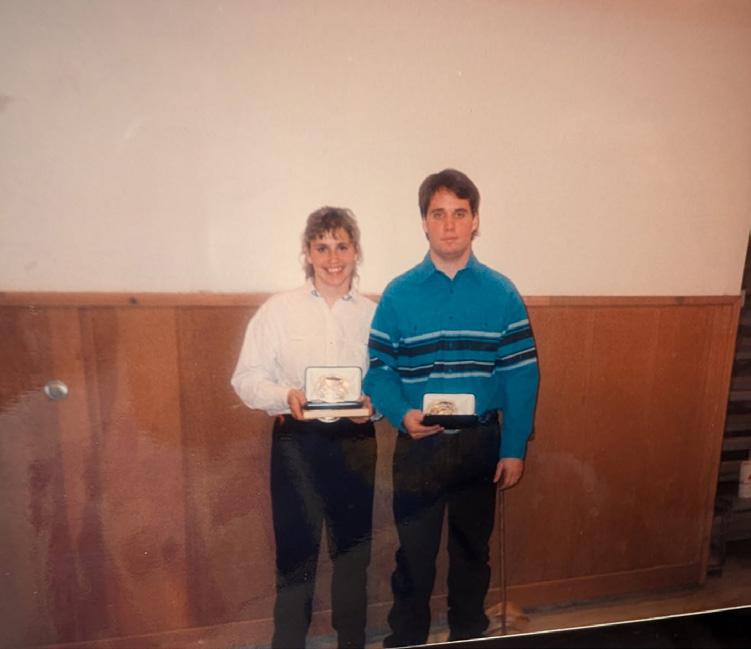
The Crossley family, also pictured in photo frames with Justice.
The Tesnohlidek family, also pictured in photo frames with Austin.
The Shaw family, also pictured in photo frames with Lydia.

A Century of SOLUTIONS
100 years of innovation at the Parma Research and Extension Center
STORY BY LYDIA SHAW
In February 2024, the University of Idaho Parma Research and Extension Center celebrated the opening of a new $12 million research facility, the Idaho Center for Plant and Soil Health. This milestone is more than just a celebration for the generations of faculty at the center and the community that relies on it. It represents a century of partnership between the agricultural community and U of I.
Local growers asked U of I for help fighting devastating insects and pests in 1925, which led to the founding of the center. The mission was to solve problems farmers were facing in their fields. That mission has stayed the same for the last 100 years. Today, the community and stakeholders are investing in modern tools to help prepare for the next wave of diseases and pest threats.
A career in research and leadership
The former superintendent of the Parma Research and Extension Center, Professor Emeritus Mike Thornton, began his career at the station in 1990 after earning his Ph.D. from U of I. He started as a potato and onion specialist where he conducted research in disease and insect control, nutrient management and variety trials.
He later became the superintendent of the station and retired in April 2025. Thornton is passionate about supporting local agriculture and ensuring growers have practical solutions to the problems they face in their field.
“When I came back as superintendent, about half my role was administration, managing the station and supervising staff, but research and Extension was always the core of what we did,” Thornton said.
Responding to a major threat
In the 1990s, the late blight pro-
gram began and tackling this problem became one of the most important moments in the station’s history. Late blight is the same disease that caused the Irish Potato Famine, and it was spreading in neighboring states, which was a threat to Idaho’s potato industry. The Parma center helped create a statewide monitoring program to track the disease and respond quickly.
Researchers identified one of the first infested fields in 1995 and quickly provided management
recommendations. Early detection helped prevent what could have caused severe crop losses. The program continued for years and still influences potato disease management today.
Research at the center has continued to evolve alongside the needs of the agricultural industry. The center supports a variety of research programs including entomology, soils, horticulture, crop management, pomology, viticulture, nematology and plant pathology.
Partnership with local farmers
Scientists work directly with growers on crops like onions, potatoes, hops and wine grapes. The close relationship with growers is one of the most important aspects of the center’s work for many researchers and staff members. Mike Kiester, an operations manager who has been with the center since 2010, said collaboration between producers has been consistent. Kiester farmed on his own before
he took a position at the center.
“There has always been a good bond between the industry itself and the researchers here. I remember taking the research that came out of here and using it to decide what I was going to plant on my own farm,” Kiester said.
Improving crops and practices
Researchers study fruits in the pomology program such as apples, peaches, pears, nectarines and grapes, along with a few alternative crops like quince and persimmons. They have conducted trials examining tree nuts, such as almonds and walnuts alongside studies on orchard practices including rootstock selection, growth regulators and tree spacing.
The center doesn’t just conduct research on agricultural crops. For more than a century, the center has contributed to research and tracking climate data. The center records daily weather observations for the National Weather Service such as temperature, rainfall and other conditions that are valuable for farmers and ranchers.
A fight to stay open
The station has faced many challenges in the past. In 2008-2009, during the state budget crisis, there were serious discussions about shutting the station down due to funding cuts. The community and its members stepped in and played a significant role in keeping the center open.
Growers and leaders in the agricultural industry advocated for the station and contributed financially to ensure that the center stayed open. Margie Watson of JC Watson Company was one of many who helped lead the effort. She and her husband, Jon, were part of the community that helped advocate for the center during this time. Watson explained that agriculture across the Treasure Valley has
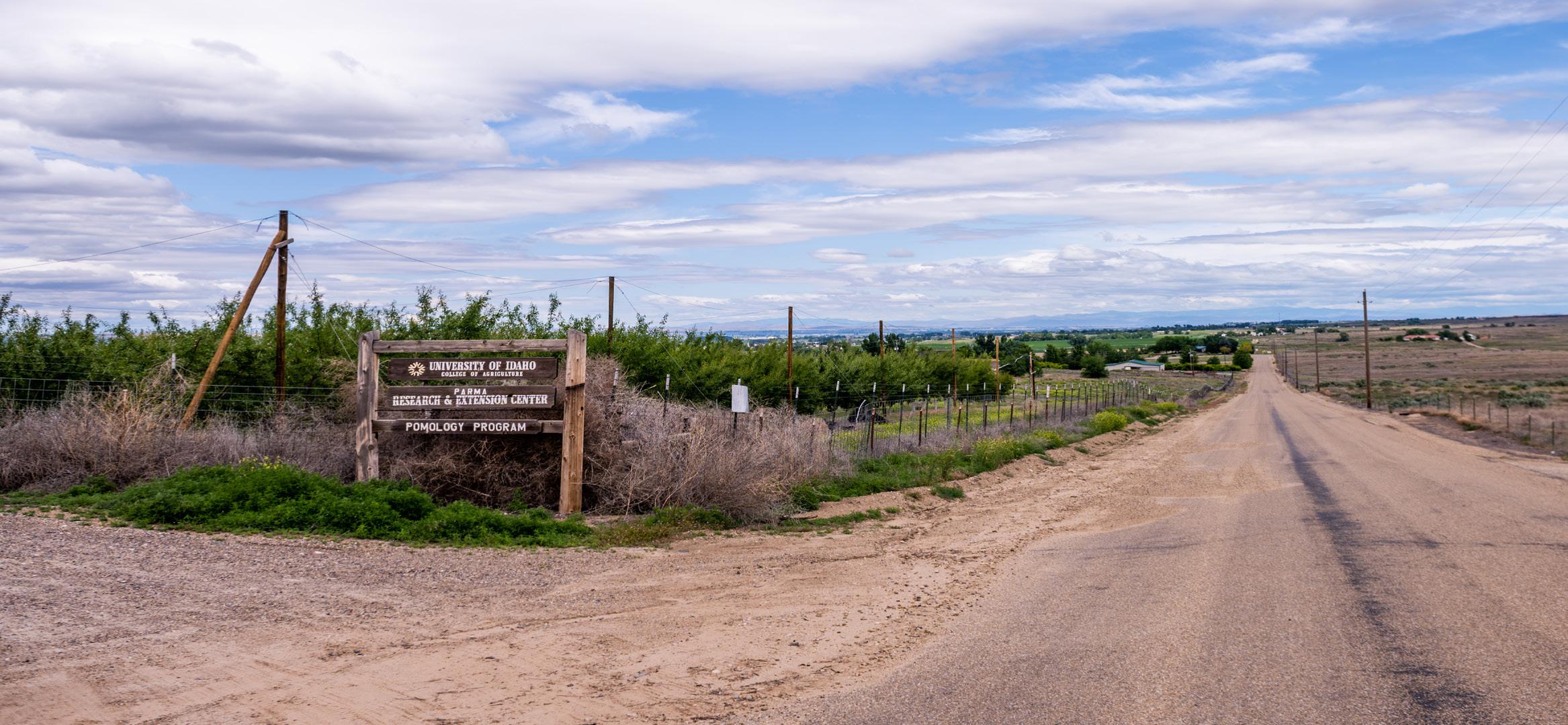
long relied on U of I for research and expertise.
“The Treasure Valley has a microclimate where we can grow almost every crop the state produces. Because of this, the industries in the Treasure Valley and across the state of Idaho have depended on the University of Idaho and the Parma Research and Extension Center for their expertise,” said Watson.
Backed by the community
During the recession, many agricultural industries were struggling, but agriculture continued to produce and support the state’s economy. Watson explained that the agricultural industry and community members across the valley had to work together to help keep the station operating. The support didn’t just come from locals, but from across the region. Students and young people also wanted to help protect the future of agriculture.
“During the recession, everybody was hurting, but agriculture stepped up to keep the station alive. We had kids bringing jars of money to help keep the research center open,” Watson said.
During this difficult time, the effort to protect the research center showed how important the partnership between agriculture and the university has been. The center provides growers with direct access to support and research. Growers can bring the challenges they face in their fields directly to the researchers at the station.
“If there’s a problem, you take it to the center and they are willing to go the extra mile to find a solution to something that’s never had a solution. The university needs us, but we need the university too,” Watson said.
Immense support from the community showed the mutual benefit between the community and the center. The station provides research that helps strengthen the local agriculture community. The research center and the Parma Community share a mutual relationship, built on trust and a shared commitment to advancing local agriculture.
Building for the future
The new Idaho Center for Plant and Soil Health represents the next chapter for the station. The $12 million facility is home to modern research tools that enable researchers to detect pests and

diseases more quickly and recommend more efficient management strategies for growers. This building represents the next generation of researchers and represents new opportunities to support agriculture. For Thornton, the new building is a symbol of the station’s long history and its continued importance to Idaho agriculture.
“To me, 100 years represents the value of having that kind of resource in your community. A place you can go for answers to very applied questions,” Thornton said.
The Parma Research and Extension Center remains as it was originally created to be after a century of service. It has always been, and will continue to be, a trusted source for growers and a place where research is directly connected to the people whose way of life depends on it.
The College of Agricultural and Life Sciences will be hosting a free community event at the center on June 12, 2026, to celebrate Parma’s 100th Anniversary.


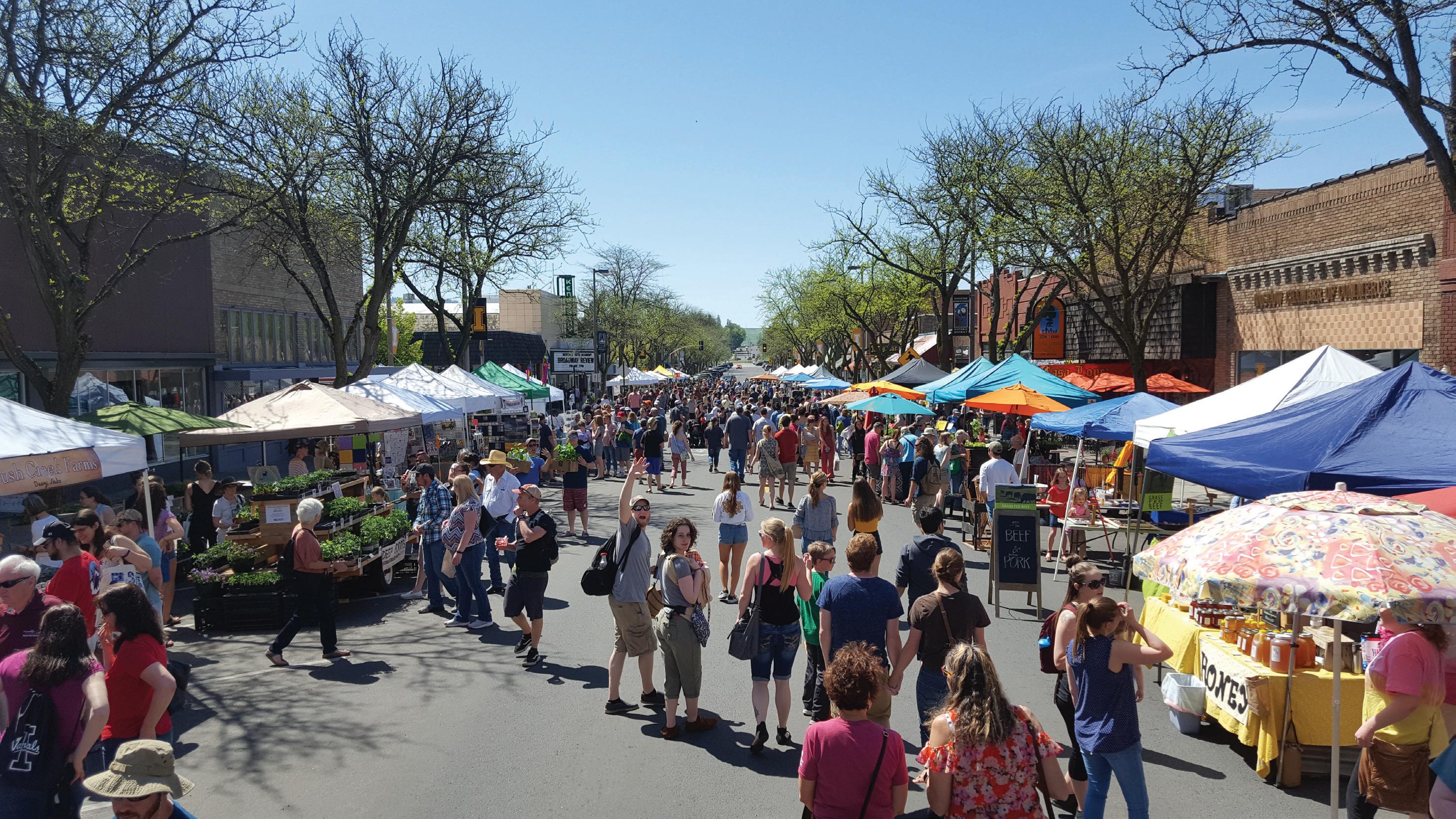

The entrance to the Parma Research and Extension Center.
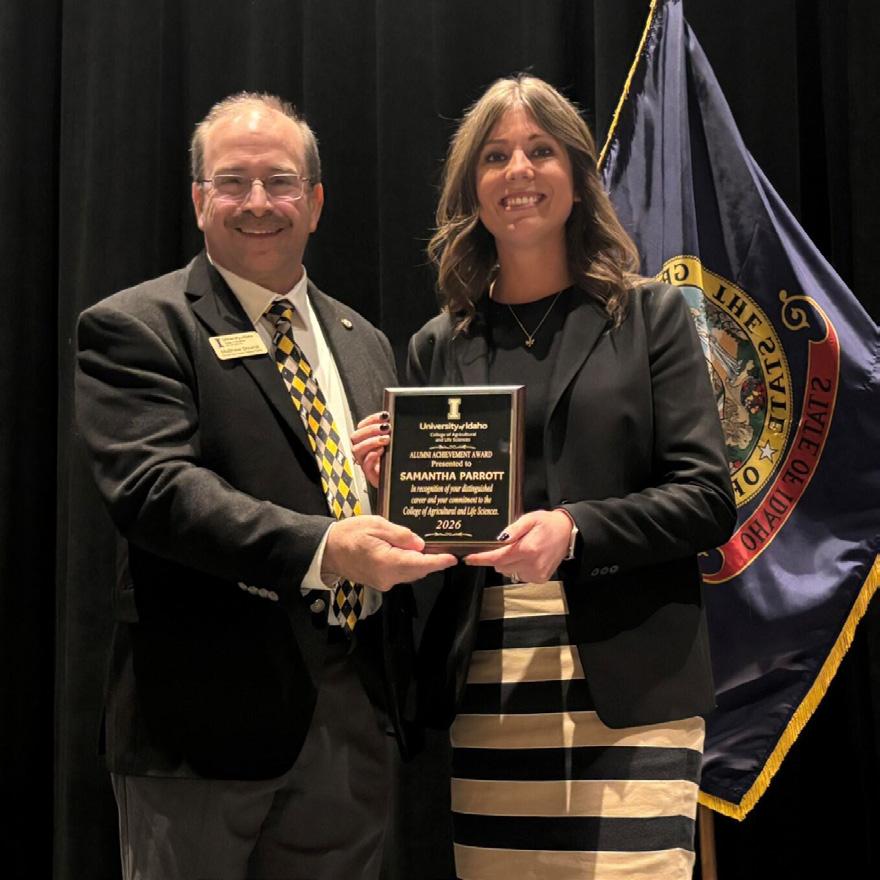
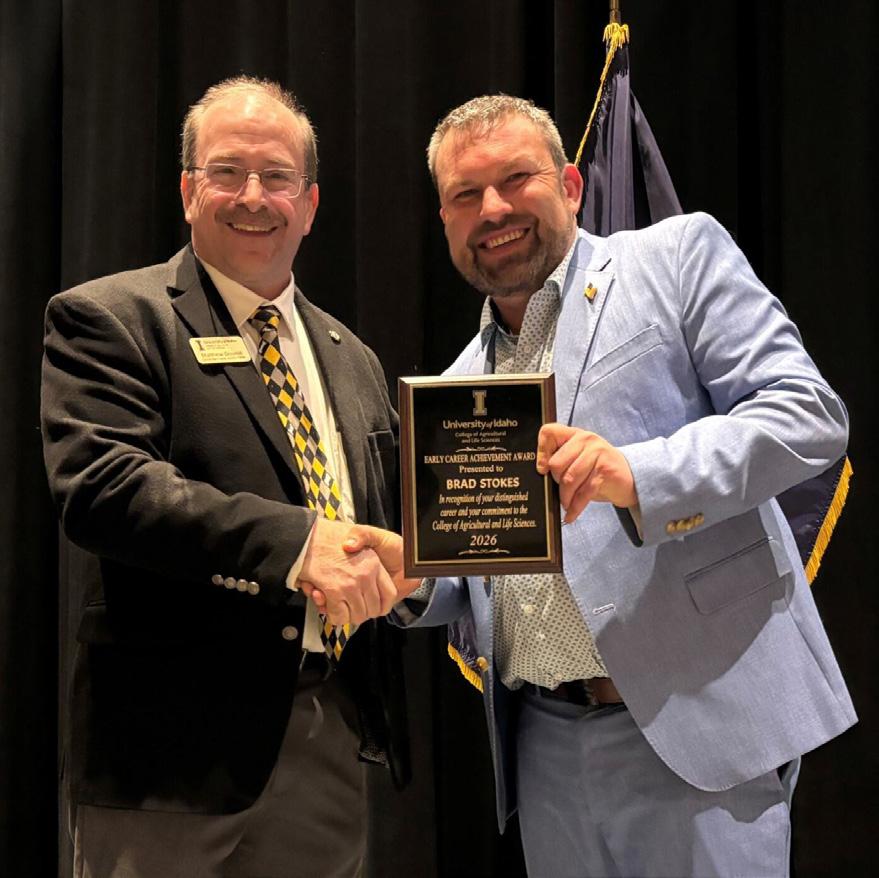
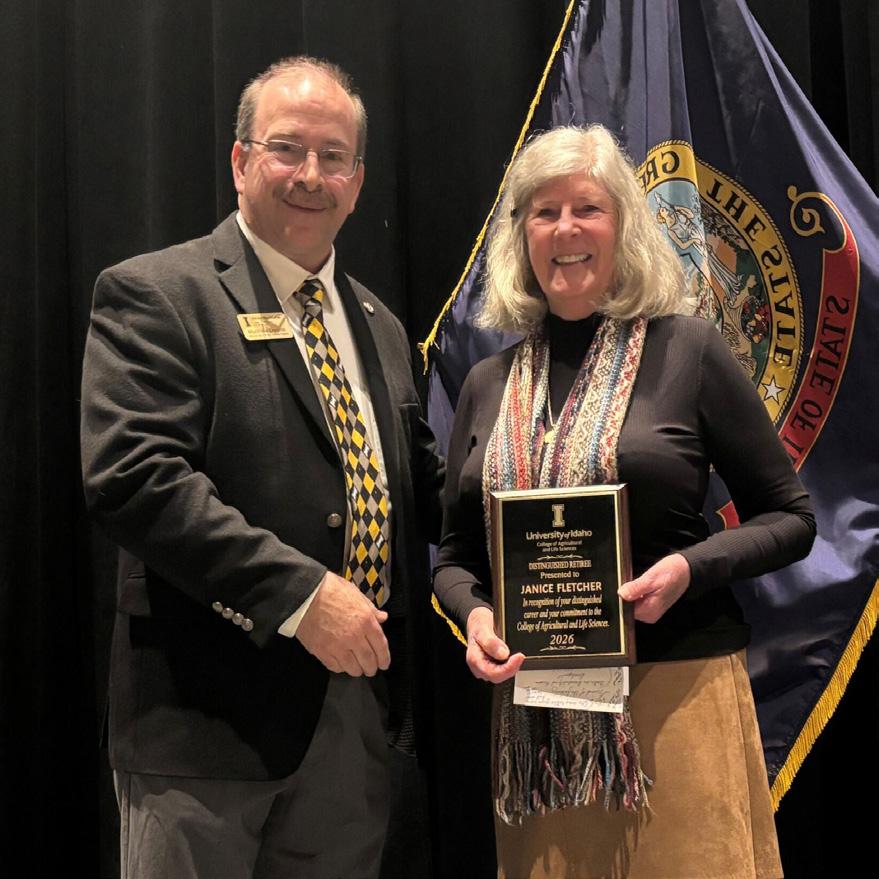
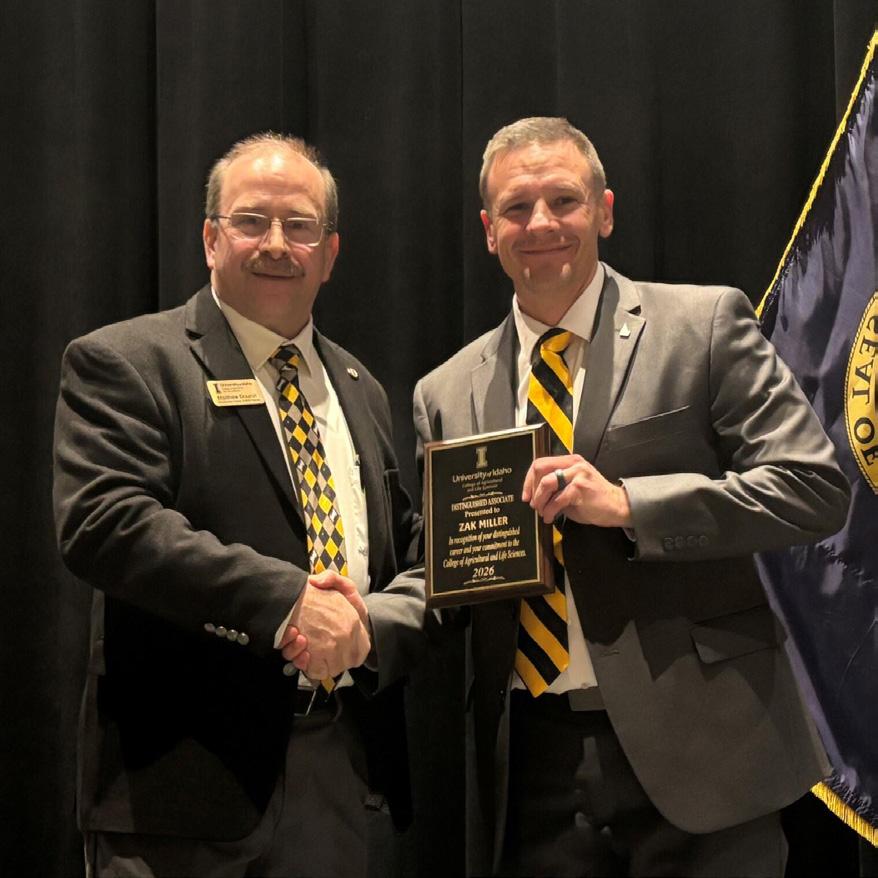
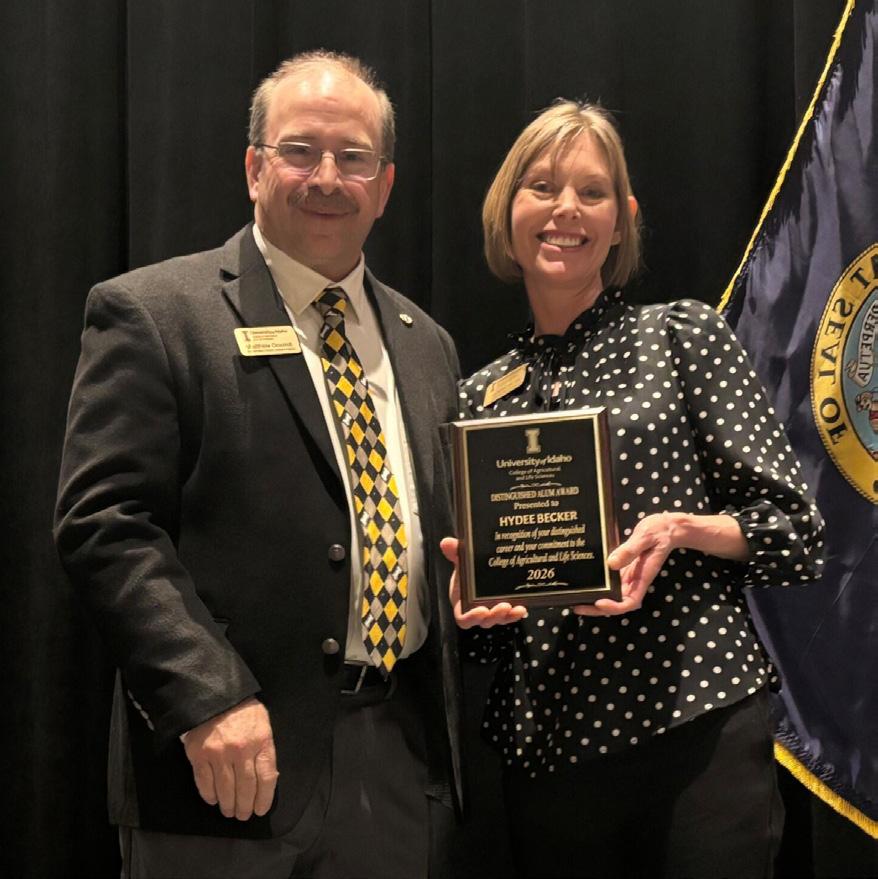
From Vandals to VISIONARIES
CALS alumni recognized for distinguished achievements
STORY BY HANNAH STOLFUS
The 2025 College of Agricultural and Life Sciences (CALS) Alumni Awards were presented to alumni who have brought honor and recognition to CALS. This year, the CALS Alumni and Friends reception was held on February 17, 2026, in Boise.
There were six award recipients who represented different achievements including career or community service, affiliations and relations with the University of Idaho (U of I) and long-term career or retirement recognition. These awards are merit based.
Honoring excellence across Idaho and beyond
Bradley Stokes, from Boise, currently works for U of I as an Extension educator in horticulture and entomology. Stokes earned his bachelor’s degree in plant science in 2008 and his master’s degree in entomology in 2012 from U of I. Stokes was awarded the Early Career Achievement Award for his work done through Extension.
He has been in his current role for three years and in Extension for nine years. Stokes educates the public through workshops, presentations and working on scholarships and grants.
“It’s been quite a bit of fun with a lot of freedom. I see it as a way to educate volunteers and the public,” said Stokes.
Some of his notable career achievements include collaboratively working with colleagues
Jason Thomas and Armando Falcon-Brindis to build the UI Extension Idaho Insect Identification website. Stokes also has multiple publications on entomology and plant science research which have received a lot of praise.
“They [publications and projects] are very important for education, so that has been my biggest accomplishment, as well as the friendships that I have created through this job,” said Stokes.
Samantha Parrott, from Rigby, is the executive director of the Snake River Sugar Beet Growers Association. She earned her bachelor’s degree in agribusiness in 2012 from CALS, then her master’s degree from the College of Education, Health and Human Sciences in adult organizational learning and leadership. Parrott earned the Alumni Achievement Award for her efforts with the Snake River Sugar Beet Growers Association and her previous position working with U of I to fundraise for the Parma Research and Extension Center.
Parrott’s role in the director’s position allows her to lobby on a state and federal level, work with sugar beet growers and communicate with the press. She said that her job has allowed her to wear many hats, which allows her to educate
the public about agriculture and sugar beets.
“I’m so lucky to work in a job where I get to work directly for growers and they’ve placed their trust in me to really dig in and understand their issues,” Parrott said. “They trust me to tell their story, which is incredibly humbling.”
When reflecting on some of the biggest achievements she is proud of, Parrott talked about her work with the Parma Research and Extension Center. She was able to raise a significant amount of money for the center while bringing multiple different commodity groups, donors and growers together.
“It’s really fitting that I helped make that building come to fruition and now I’m representing an industry that benefits from that building every single day,” said Parrott.
The impact of being recognized
Receiving the Early Career Achievement Award is deeply meaningful to Stokes. He attributes his success to the community around him that helped shape his academic foundation.
“I think it’s quite an honor to receive it from the college I went to,” said Stokes.
CALS Alumni Award recipients with Matt Doumit, associate dean and director of academic programs.
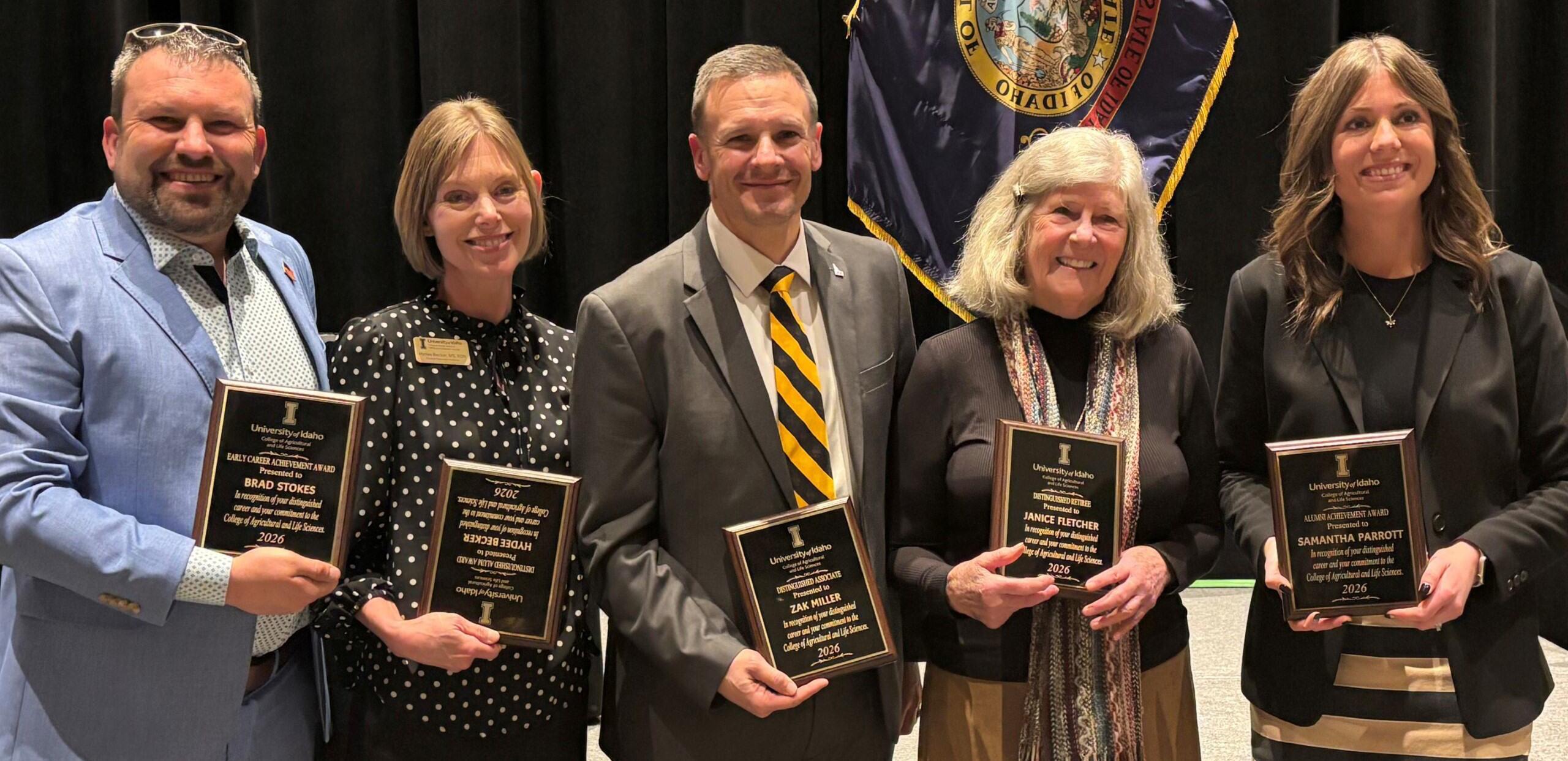
CALS Alumni and Friends Reception in Boise
When Parrott was awarded the Alumni Achievement Award, she said it was humbling and she felt honored to receive the award. She reflected on her time as a student – where she was the first of her family to earn a degree. Now she can represent CALS as an alumna.
“I hope this award means that I have brought back recognition and honor and pride back to the institution that has given me so much,” said Parrott.
Inside the selection process
Melinda Jean Stafford, from Oreana, currently serves as the interim senior director of development for CALS at U of I. Stafford is a U of I alum earning her bachelor’s degrees in clothing, textiles and design as well as communication studies in 2011. She then earned her master’s degree in college administration from the University of Georgia in 2013.
Stafford assists the CALS Dean’s Advisory Board with the award
process by receiving nominations for the awards. The board looks for alumni who bring honor and recognition and value to CALS. While each award category has specific criteria, the board prioritizes candidates whose work, whether in early career roles, long-term service, or advocacy and partnership, reflects excellence and impact.
“We are looking for someone who has brought a lot of recognition and value to the College of Agricultural and Life Sciences,” said Stafford.
This year’s recipients also reflect the many subject areas that CALS encompasses. Stafford said that the group represents the full scope of CALSs, spanning horticulture, family and consumer sciences, agricultural policy, early childhood development and production agriculture.
To the board, these alumni embody CALS’ mission because their careers show how CALS programs prepare graduates for
Lessons in leadership and lasting impact
When asked what advice Stokes would give to students and new graduates hoping to make an early impact in their careers, he emphasized that creating an impact comes from your inner drive.
“You can’t teach motivation,” Stokes said, “It has to come from within someone’s soul.”
For Stokes, meaningful impact comes from showing up ready to work hard and be innovative in what you do.
Parrott also contributes some advice for those looking to make a difference in their work. She encourages students to be flexible and open to potential opportunities that lead them to pursue their passion.
“Whatever work you’re going to
wide-ranging, impactful roles. Stafford mentioned how students pursuing agricultural degrees may not initially envision themselves leading organizations like the Farm Bureau or Dairy West, but she hopes students are inspired by these honorees to think about their career pathway as broader than we often do.
For alumni, Stafford said the awards serve as a reminder that Vandals go into the world and do incredible things, reinforcing pride in their own journeys.
Celebrating the success of these award recipients is also meaningful to CALS and the board members. Stafford noted that the honorees keep her motivated to care for and serve the university because of the impact they have made. She said that honoring all types of alumni success matters because everyone has something to offer, whether through bold achievements early on or decades of dedication to their field and to Idaho communities.
do, it’s important that it’s something that fills up your cup, that’s fulfilling to you as an individual,” said Parrott. “I encourage people to show up, speak up, share your ideas, share your passion and just work hard.”
Both Stokes and Parrott would like to recognize some of the people who have impacted them during their time as a student at U of I. Stokes mentioned Bob Tripepi, Ph.D., Edward Bechinski, Ph.D., Sanford Eigenbrode, Ph.D., Steve Cook, Ph.D., James (Ding) Johnson, Ph.D. and Luc LeBlanc, Ph.D., as mentors and great people to work with.
Parrott would like to recognize Chris McIntosh, Ph.D., as someone who impacted her time in school as her advisor as well as her career.
Together, this year’s CALS Alumni Awards recipients reflect the college’s mission to advance
knowledge, serve communities and lead with integrity. Through careers spanning the agricultural and life sciences industries, public service and innovation, the honorees continue to uphold the values they developed at U of I, leaving a lasting impact on the profession and on future generations of Vandal alumni.
Congratulations to those alumni who have excelled within their respective fields and represent U of I through their hard work.


Honorees included (l-r): Bradley Stokes (‘08, ‘12) Early Career Achievement, Hydee Becker (‘97, ‘00) Distinguished Alumni, Zak Miller Distinguished Associate, Janice Fletcher Distinguished Retiree, Samantha Parrott (‘12, ‘19) Alumni Achievement, not pictured is Crystal Wilson (‘97, ‘04) Distinguished Alumni.
Beyond the Letters
How agricultural fraternities and sororities connect, shape leaders and build lifelong connections
STORY BY RACHEL BECKER
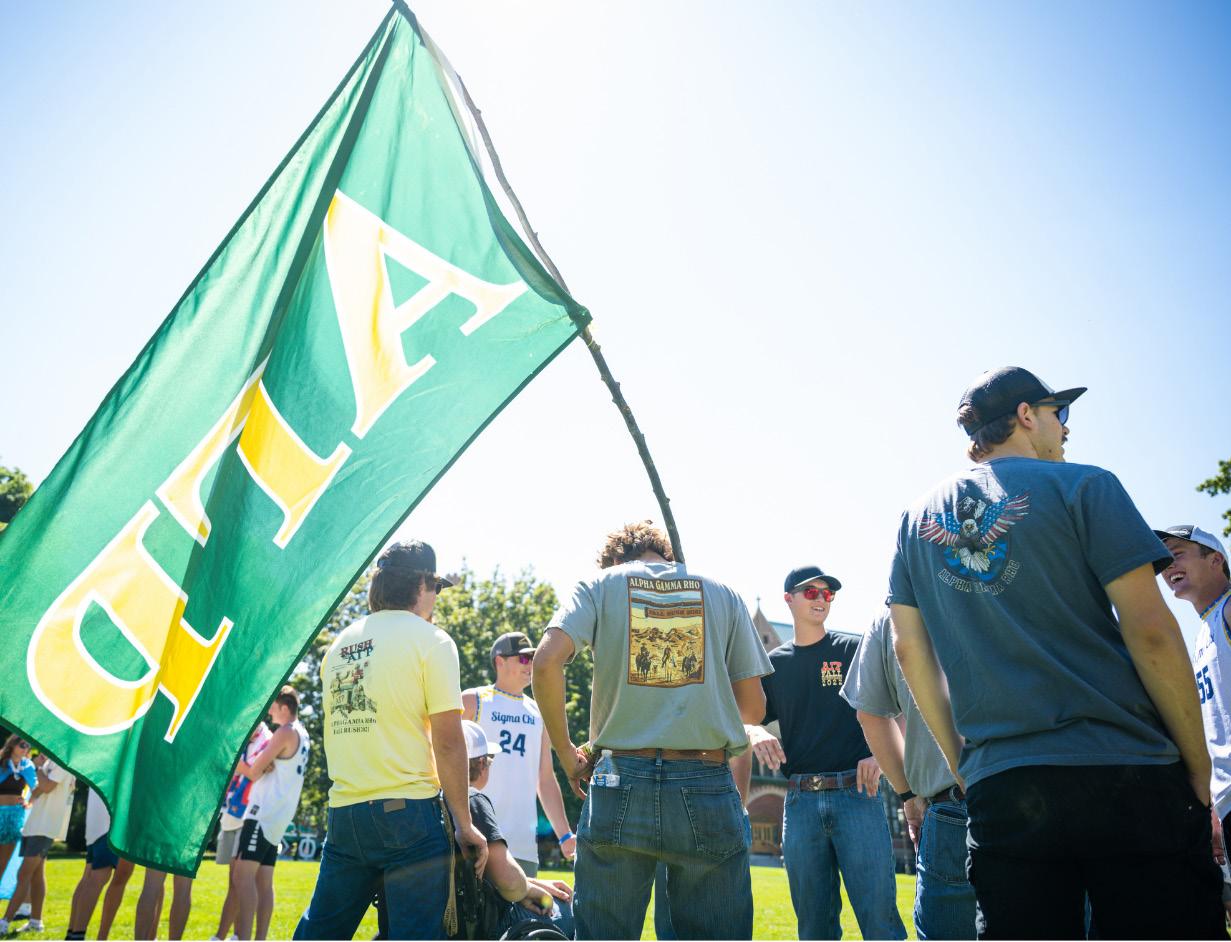
From producers and processors to educators and consumers, the agricultural industry depends on connection and relationships. At the University of Idaho, agricultural fraternities and sororities reflect that same foundation by bringing students together through professionalism, community involvement, social interaction and a shared passion. Organizations such as Alpha Gamma Rho (AGR), FarmHouse (FH) and Sigma Alpha (SA) provides members with more than letters to wear. They offer a sense of belonging within the College of Agricultural and Life Sciences (CALS) and the University as a whole, along with opportunities that extend far beyond graduation.
Finding a home away from home
For many new Vandals, starting
college can feel overwhelming before it ever feels familiar.
Students who join a fraternity or sorority often find that transition easier when surrounded by people who share similar interests and career goals. These organizations are not only welcoming to firstyear students but also provide a close-knit community for upperclassmen looking to deepen their involvement. They offer a place to find your people and build relationships that last well beyond four years.
Members consistently point to the strength of that community. Current AGR advisor and alumnus, Tyler King, has always seen the impact of his fraternity both in his time as a member and as an advisor.
“I think it is important for peo-
That same sense of belonging is echoed across agricultural fraternities on campus. Joseph Doumit, current president of AGR, double majoring in animal and veterinary science and agricultural economics, describes brotherhood as something that extends far beyond shared letters.
“To me, brotherhood is being able to count on others to support you in every aspect of life,” said Doumit. “It is knowing you have brothers who have your back in difficult situations and are all working toward bettering themselves and each other.”
Together, their experiences reflect that students are not simply joining organizations – they are finding a home within CALS.
Guided by experience
For many alumni, the confidence and leadership skills developed during their time in their organizations continue to shape their careers and communities for decades.
Ling Messer, a founding member of the U of I SA chapter, reflects on how those same leadership opportunities shaped her career and community involvement long after graduation.
“After college, and even decades later, the leadership skills I developed while starting the chapter are still applicable in my work,” Messer said, “I’ve been able to start new groups in my community, encourage others to work toward a common goal, and support farms in my area.”
management, credits the fraternity’s professional network as a key part of his preparation for the next step in his career and is preparing to celebrate the fraternity’s 70th anniversary.
For many, professional influence extends far beyond a single internship.
“I know for a fact that my life after college will be affected by my time in AGR,” Doumit said.
“Alpha Gamma Rho is a lifelong membership with members across the nation in ag-related fields. I have already interacted with many Alpha Gamma Rho alumni in professional settings.”
ple to belong to something,” said King. “Every day you wake up in a place where you are surrounded by people who care about you and want you to succeed. No matter what you are going through, there is someone there to lean on and be a brother to you.”
Brandy Ferguson, a member of SA studying crop science and agricultural economics with an
agribusiness emphasis, said her favorite part of the sorority is the friendships she has built during her time at U of I.
“These girls are constantly looking out for each other, whether it be giving them a ride when needed or introducing them to internships or potential career options,” Ferguson said. “We always have each other’s best interests at heart.”
Beyond peer friendships, these organizations are supported by advisors and alumni who invest in the next generation of agricultural leaders. These mentors play a critical role in guiding members both personally and professionally; offering experience, perspective and encouragement that extend beyond the classroom.
As the current advisor for SA at U of I, Hannah Doumit sees firsthand how mentorship shapes members’ growth and confidence.
“The experience of being an advisor has meant more to me than I could’ve ever imagined,” said
Doumit. She is an SA alumna and has served as the current advisor for the past two years.
She says, “one of my favorite parts of being an advisor thus far has been watching the growth of these women throughout their time in the sorority and college, go from timid freshmen, to women who I believe will be true leaders and successful in whatever capacity life takes them in after their time at U of I.”
Both alumni and advisors serve as bridges between generations, ensuring that leadership development within agricultural organizations continues to evolve while remaining rooted in mentorship and service.
From campus to career
Professional development is often woven into chapter events, including résumé workshops, visits from industry leaders and interview preparation nights.
In an industry built on relationships, networking is an essential tool for success. Through their fraternity or sorority, members regularly connect with alumni and industry professionals who offer guidance, mentorship and career insight.
Daniel Middlehoven, current president of the FH fraternity at U of I, has seen that impact firsthand.
“My life after college has already been helped by an alumnus of FarmHouse,” Middlehoven said, “I was able to get an internship with a seed company.”
Middlehoven, who will enter his senior year this fall studying crop
This sentiment is echoed by animal and veterinary science, pre-veterinary senior and SA member Savanah Szupello.
“Learning how to manage responsibilities, communicate effectively, work through challenges and support a team are skills that extend far beyond college,” Szupello said. “Sigma Alpha hasn’t just prepared me for the next step – it has helped shape the kind of leader and professional I want to be.”
These organizations ensure students graduate not only with a degree, but with a network that extends far beyond campus.
A bond that lasts
For many members and alumni, the friendships formed within agricultural fraternities and sororities become lifelong relationships.
James Nasados, an AGR alumnus
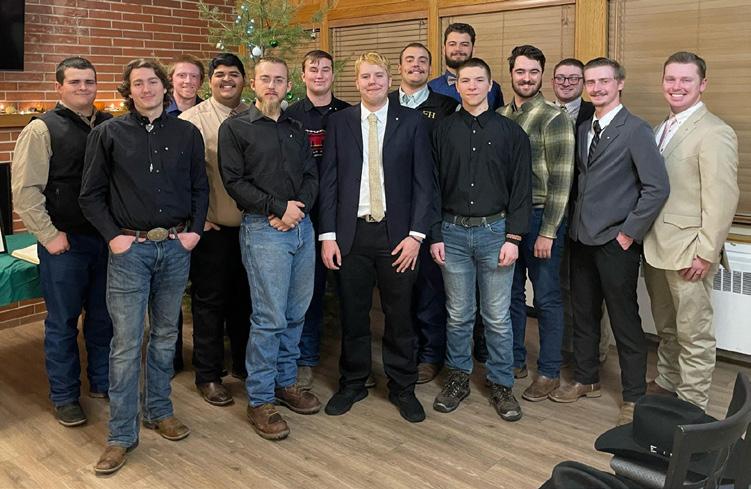
Alpha Gamma Rho members wait outside the Administration Building to meet their newest members during recruitment.
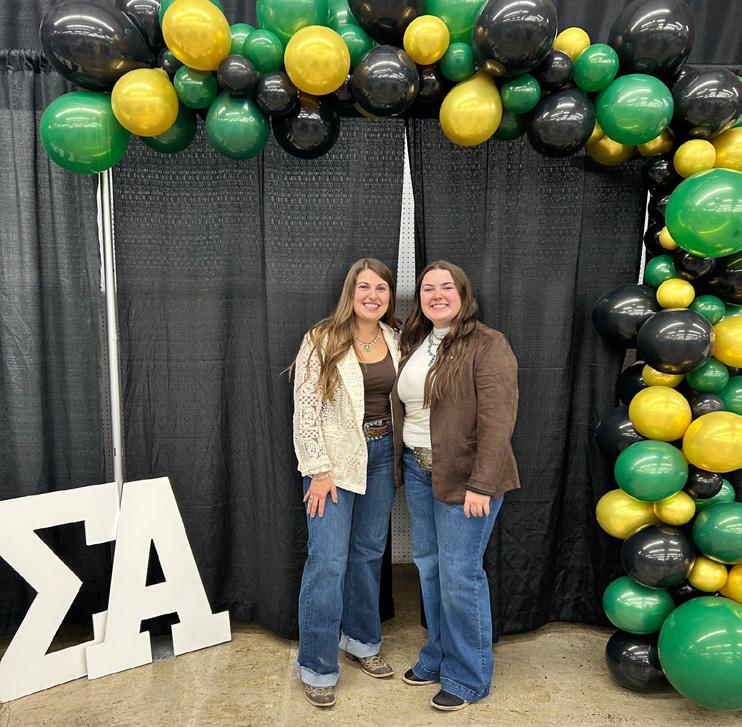
and current manager of Vandal Brand Meats, reflects on these formed bonds, “of all my memories being a student, many of them relate back to AGR.”
The memories he shares from his time in AGR will always stick with him. He said, “getting to spend that quality time talking together and fly fishing is a memory I will always have.”
Nasados is not the only one who remembers the bonds made in their college days. Sam Shaw, a FH alumnus and cattle rancher recalls the benefits of building those relationships at a young age.
“Everything in life revolves around relationships,” Shaw said, “I think I realized this, first, in college while living in FarmHouse. Many of the friendships are truly a brotherhood. It’s a stronger connection than just a roommate or an acquaintance.”
Shaw has seen these friendships become lifelong connections.
“You build this bond with those guys and 30 years later you can still call them friends,” he said.
King notes much of his time in the fraternity changed his life.
“I met my wife through a fraternity event,” said King. “All the men that stood by my side at our wedding were members of AGR.”
Their stories, and many others,
illustrate that beyond leadership roles and internships, it is the shared experiences and deep-rooted friendships that make these organizations truly meaningful.
Shaping the Vandal experience
At U of I, many opportunities are available that can change a student’s whole experience. These organizations do just that. For many members, they shape their entire college experience.
Nasados said his affiliation strengthened both his education and personal growth.
“Being in AGR helped us learn how to overcome differences to still achieve our goals,” Nasados said. “Those bonds mean as much to me as the education I received.”
The emphasis on growth beyond academics is echoed across all these organizations.
“College is about coursework in many ways, but it’s also about so much more,” she said. “The connections you make in college you will carry with you for a lifetime.”
For Shaw living among peers with different interests and personalities offered an equally valuable lesson.
“It helped me be more open-minded,” Shaw said. “That’s an important part of life – seeing there is more than one way to complete a project.”
Those shared living and leadership communities are reflected in broader perspectives and stronger communities.
Ferguson sees that impact not only on individual members, but across the college.
“Sigma Alpha adds value to CALS and the university as a whole,” she said, “it brings together women from many degree programs and backgrounds and gives them a
place to collaborate, grow and support one another.”
These stories and many more show the tremendous impact these organizations have on members during their time at U of I and years after.
Carrying it forward
For generations of students at U of I, agricultural fraternities and sororities have offered more than social involvement. They have created spaces where leadership is valued, relationships are formed and confidence is built.
As alumni continue to mentor current members and graduates step into careers across the industry, the impact of these organizations reaches far beyond campus. What begins as letters worn during college becomes a lifelong influence, where members are rooted in service and strengthened by their communities.
As each new class steps onto campus, the legacy continues. It is carried forward by students who will one day become mentors, professionals and leaders shaping the next generation of the agricultural industry.
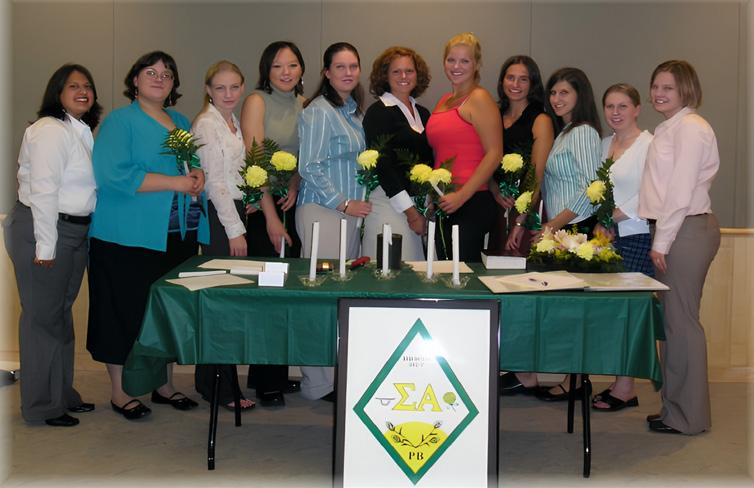



The first U of SA activation in 2005 with members, including founder Ling Messer.
SA advisor, Hannah Doumit and SA president, Cadence Monson at Annual Banquet.
Growing Leaders
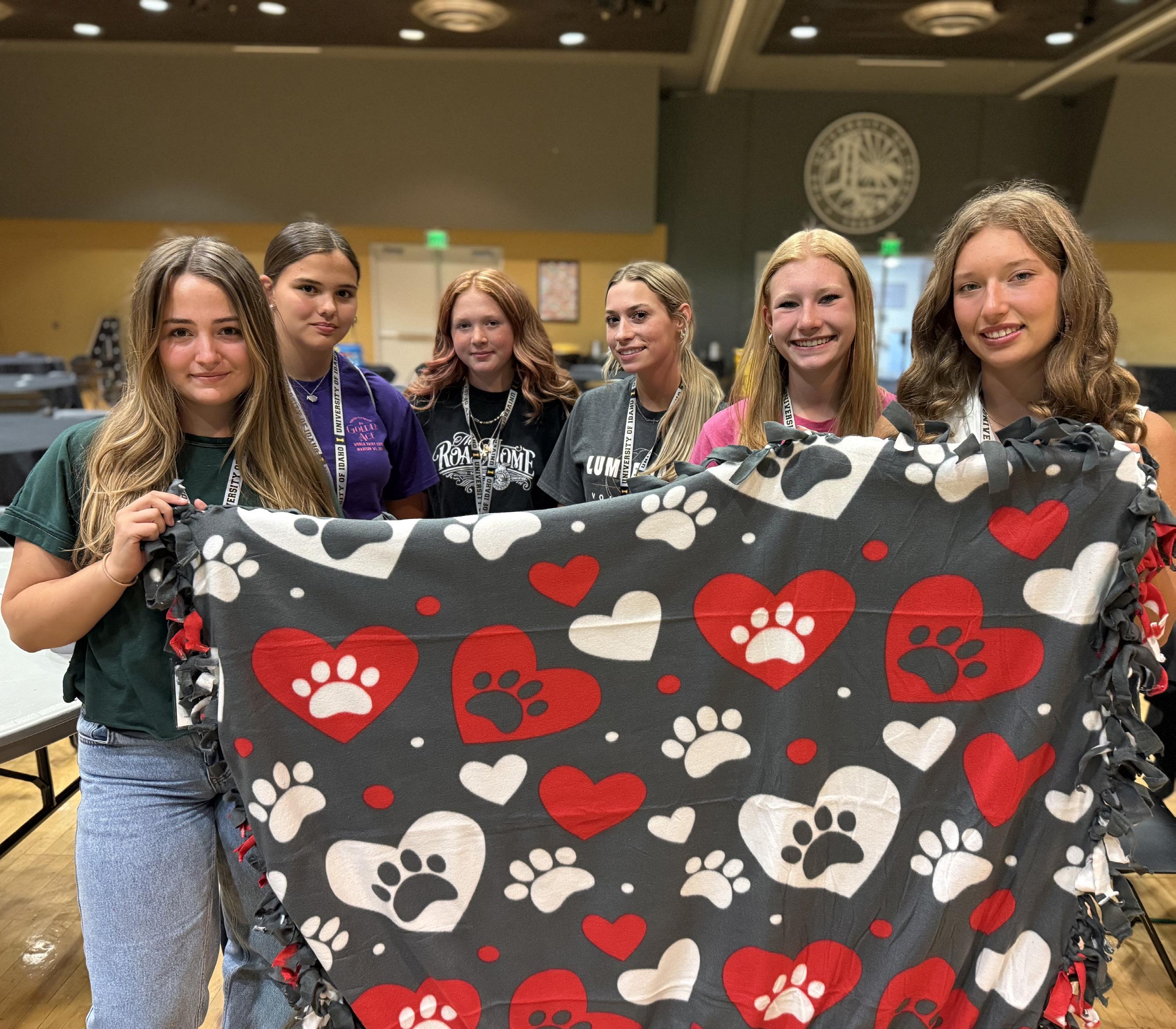
How the University of Idaho Extension 4-H Youth Development prepares youth for civic and community life
STORY BY ALLISON KINZER
Across Idaho, University of Idaho Extension 4-H youth development programs are shaping the next generation of leaders by blending experiential learning, civic immersion and meaningful community engagement. Know Your Government (KYG) Conference, the State Teen Association Convention (STAC) and Providing Educational Agriculture to Rural Schools (PEARS) are three programs that illustrate how intentional design and educator commitment can help young 4-H members.
The programs build members’ confidence, develop their communication skills, strengthen their leadership capacity and deepen their understanding of the real world. Through experiential education and sustained mentorship, these initiatives create transformative opportunities for youth statewide.
Experiencing government through KYG
Each February, 4-H members ages 14 to 18 from across Idaho gather for four days at the Boise Riverside Hotel for the Know Your Government Conference. During the event, teens participate in legislative, judicial and media simulations, attend workshops led by University of Idaho Extension educators and engage in discussions about civic responsibility.
KYG is designed to help youth understand and engage in civic processes through structured leadership roles and immersive educational experiences. The program emphasizes communication development, confidence-building and essential life skills while placing teens at the center of realistic government simulations.
Leadership is organized through
a 24-member statewide youth steering committee. The 4-H Youth Steering Committee serves as the core leadership body for KYG, modeling collaborative, communication-based leadership and giving teens a direct role in shaping statewide 4-H civic education initiatives. Members serve as judges, justices, legislators, reporters and the speaker of the House, while also planning sessions, leading icebreakers and supporting district meetings.
Area Extension Educator Mike Knutz has dedicated his career to creating inclusive, growth centered environments for Idaho youth that emphasize practical skill development and leadership training in partnership with families, U of I law students and 4-H volunteers.
“Programs like Know Your Government give young people the chance to practice leadership in real situations and see how their voices matter,” Knutz said.
At the heart of KYG is direct engagement with the judicial and legislative process. Youth prepare for and take part in a full mock trial, gaining a working understanding of courtroom procedures and legal decision-making. Legislative workshops further immerse participants in bill hearings and debates, guided by sitting state legislators. These experiences move civic concepts beyond theory, allowing youth to practice leadership, deliberation and public service in meaningful ways.
KYG takes place during Idaho’s legislative session over President’s Day weekend, providing youth with rare access to elected officials and authentic government spaces. During the legislative breakfast, as many as 75
public leaders meet with 4-H members for discussion and questions. A later capitol visit allows participants to see lawmaking in action, reinforcing their understanding of how individual voices contribute to broader democratic systems.
Youth development is one of KYG’s most visible outcomes. Many participants arrive new to overnight, multi-day programming, but the program’s intentional emphasis on growth mindset and peer support helps them quickly build comfort and confidence. Returning delegates often show notable leadership growth, taking on expanded responsibilities and mentoring newer participants.
Through its intentional design and immersive structure, KYG offers youth a powerful foundation for leadership and civic engagement. Participants are encouraged to challenge themselves, take on responsibility and build confidence through meaningful involvement in government processes.
“KYG opens doors for youth, especially those connected to Idaho’s agricultural communities, and pushes them to rise to new challenges,” said Hannah Harrington, president of the Ag Law Society.
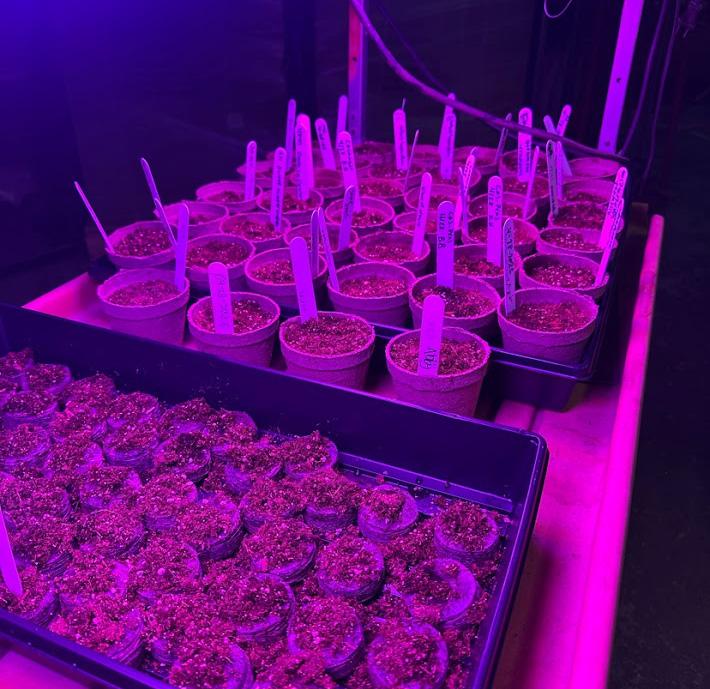
Seed starting project with PEARS students in Latah County.
Building leadership and connection at STAC
STAC offers another powerful model of youth development in Idaho. The program’s design supports leadership, confidence, friendship formation and academic and career exploration, reflecting Knutz’s broader vision for preparing youth with skills that will support their success in work and life.
STAC prioritizes genuine relationship building, creating an environment where teens form meaningful, lasting connections that often extend well beyond the convention itself. The program is intentionally structured to help participants discover something personally meaningful through a wide range of workshops, from agricultural simulations to creative service projects. This approach ensures each teen finds their place within the experience.
Research consistently shows that time spent on a college campus increases the likelihood that young people pursue higher education, a principle reflected in STAC’s campus immersion model. Participants engage with faculty, explore labs and picture themselves in future academic pathways, much like Knutz himself did as a young attendee of campus-based events that helped transform uncertainty to confidence.
“Being on a college campus helped me realize that higher education was possible and that I belonged there,” Knutz said. “That moment of exposure can change how a young person sees their future.”
Teens take initiative at STAC through roles such as leading the 4-H pledge and aiding guests at the Clover Banquet. Leadership development is built into the conference structure, with district representatives guiding meetings, state officers overseeing sessions and participants stepping into ceremonial and hospitality roles that
reinforce shared values of head, heart, hands and health.
In 4-H, leadership is guided by the four pillars of the 4-H pledgehead, heart, hands and health. Head represents clear thinking and decision-making; heart stands for compassion and connection; hands symbolize service and action; and health reflects balance and well-being. Togeather, these values shape how teens lead, learn and serve within programs like STAC, where every role embodies the 4-H commitment to thoughtful, caring and community-minded leadership.
Workshops and service-learning activities allow teens to form friendships across geographic and social boundaries, further blending groups and strengthening the bonds of community culture at these events.
“STAC inspires teens to step outside their comfort zones, develop leadership skills and build lifelong friendships through experiential activities, workshops, recreation and mealtime interactions,” said Halee Rowland, a STAC youth leader.
Together, these experiences prepare teens to apply their leadership skills beyond the convention. Each June, 4-H members ages 14 to 18 from across Idaho gather for four days at the University of Idaho campus for STAC. During
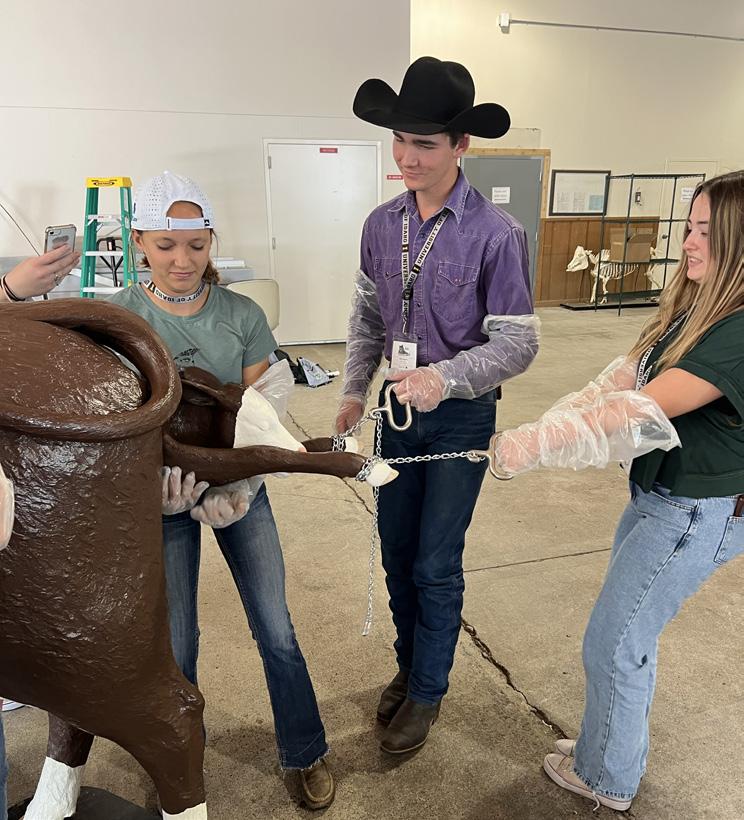
the event, teens attend leadership workshops, participate in service projects and engage in recreational and networking activities that build confidence and connection.
Participation in STAC continues to build as teens seek opportunities for leadership development, connection and exploration within a statewide setting. Program leaders are focused on expanding access and enhancing the experience through innovative programming, including integrating statewide competitions and collaborative efforts such as hosting a joint evening session with the Washington State 4-H Teen Conference.
Connecting youth to agriculture through PEARS
Each semester, youth and University of Idaho students collaborate with educators and local farmers to bring the Providing Educational Agriculture to Rural Schools (PEARS) program to life in schools across Latah County. The initiative reaches students in the Genesee and Troy school districts, combining classroom lessons with hands-on agricultural experiences that connect youth directly to Idaho’s food systems.
The PEARS program brings agricultural literacy to rural students by combining fresh food distribution, experiential learning and community partnerships. The interdisciplinary project is led by Xiaoli Etienne, a U of I professor and the Idaho Wheat Commission Endowed Chair in commodity risk management. The team also includes Extension educators Iris Mayes and Jessie Van Buren, along with College of Education, Health and Human Sciences faculty members Taylor Rainey and Jue Wang. The initiative connects schools with local farms while integrating classroom-ready materials and experiential activities.
The PEARS program brings agricultural literacy to rural students
by combining fresh food distribution, experiential learning and community partnerships. The interdisciplinary project is led by Xiaoli Etienne, a U of I professor and the Idaho Wheat Commission Endowed Chair in commodity risk management. The team also includes Extension educators Iris Mayes and Jessie Van Buren, along with College of Education, Health and Human Sciences faculty members Taylor Rainey and Jue Wang. The initiative connects schools with local farms while integrating classroom-ready materials and experiential activities.
Mayes, who oversees both the Idaho Master Gardener and small farms programs for Latah County, helped launch PEARS through a United States Department of Agriculture Foreign Agricultural Service-Learning grant designed to bridge schools with local producers. Weekly snacks, including fruit, soup kits and honey sticks, are paired with worksheets that help students learn about agriculture and food systems.
The primary goal of PEARS is to help students understand where their food comes from. Activities such as seed starting and greenhouse planting allow youth to see agricultural processes up close, transforming school greenhouses into spaces for growing both real food and decorative plants.
Students also learn about regional crops by introducing garbanzo beans and lentils, gaining handson experiences that deepens their understanding of local legumes. The program’s alignment with local FFA chapters further strengthen these agricultural connections.
PEARS encourages healthier eating habits by giving students fresh fruit and snacks they can take home. For many youth, items such as peaches or pears may be entirely new experiences, making these food moments significant.
“When a student bites into fresh fruit they’ve never tried before, it
becomes more than a snack-it’s a moment of discovery and connection to where food comes from,” said Mayes.
PEARS also runs children’s activities at a midweek farmers market, where University of Idaho Extension interns teach youth about produce and food systems. Students often take home seedlings they planted during the activity, reinforcing classroom connections to local markets.
Evaluation efforts show strong family enthusiasm for the program, with parents highlighting both the learning and the shared cooking experiences from soup kits. Students reported excitement about the fruits they received, especially Cosmic Crisp apples. With funding secured for a third year, leaders hope elements of the program, including greenhouse projects and periodic fruit distributions, can become longterm practices in schools.
U of I students play a vital role as service-learning assistants. They coordinate deliveries and manage logistics while forming the operational backbone of the program.
Samantha Smith, a freshman studying agricultural science, communication and leadership, brings a unique agricultural background to her role, emphasizing collaboration among farmers, teachers and program staff. Smith’s perspective as a seventh-generation agriculturalist enriches her work delivering food and educational materials, al-
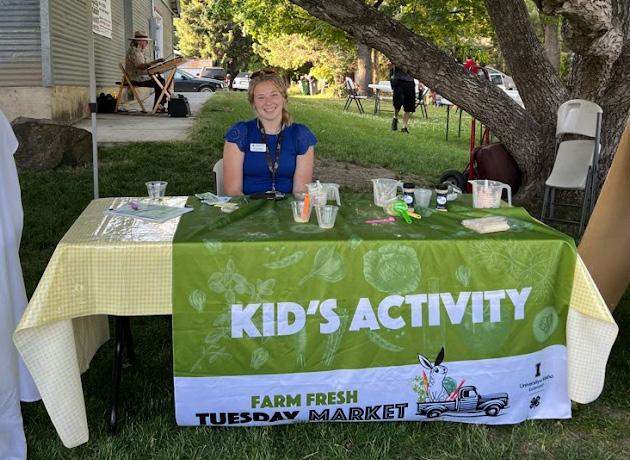
lowing her to connect classroom learning with real-world farming practices.
“Growing up in agriculture, I’ve seen how much work and care goes into producing food,” Smith said. “Being part of PEARS lets me share that story with students and watch them make those connections for themselves.”
By connecting with schools that already integrate agriculture, such as those with active FFA programs, PEARS strengthens existing learning pathways and supports experiential program growth, allowing more student workers to join the effort and sparking conversations about developing curriculum materials for statewide use.
Shared impact, lasting lessons
For Idaho youth, leadership does not begin with titles or positions, but with moments such as standing to speak in a legislative chamber, finding belonging among peers on a college campus or tasting fresh fruit grown by local farmers. Through KYG, STAC and PEARS, young people are invited into spaces where learning feels real and personal, guided by educators who believe in their potential before they fully see it themselves. These experiences leave students with more than new skills or knowledge – they leave with confidence, curiosity and a sense of connection that continues to shape how they engage with their communities long after the programs end.
STAC workshops provide hands-on learning opportunities for 4-H youth.
College interns like Kenzie Barta supporting the Tuesday Market in Moscow.
Textiles with a Purpose
The apparel and textile design major’s commitment to sustainability
STORY BY GRACIE SWOPE
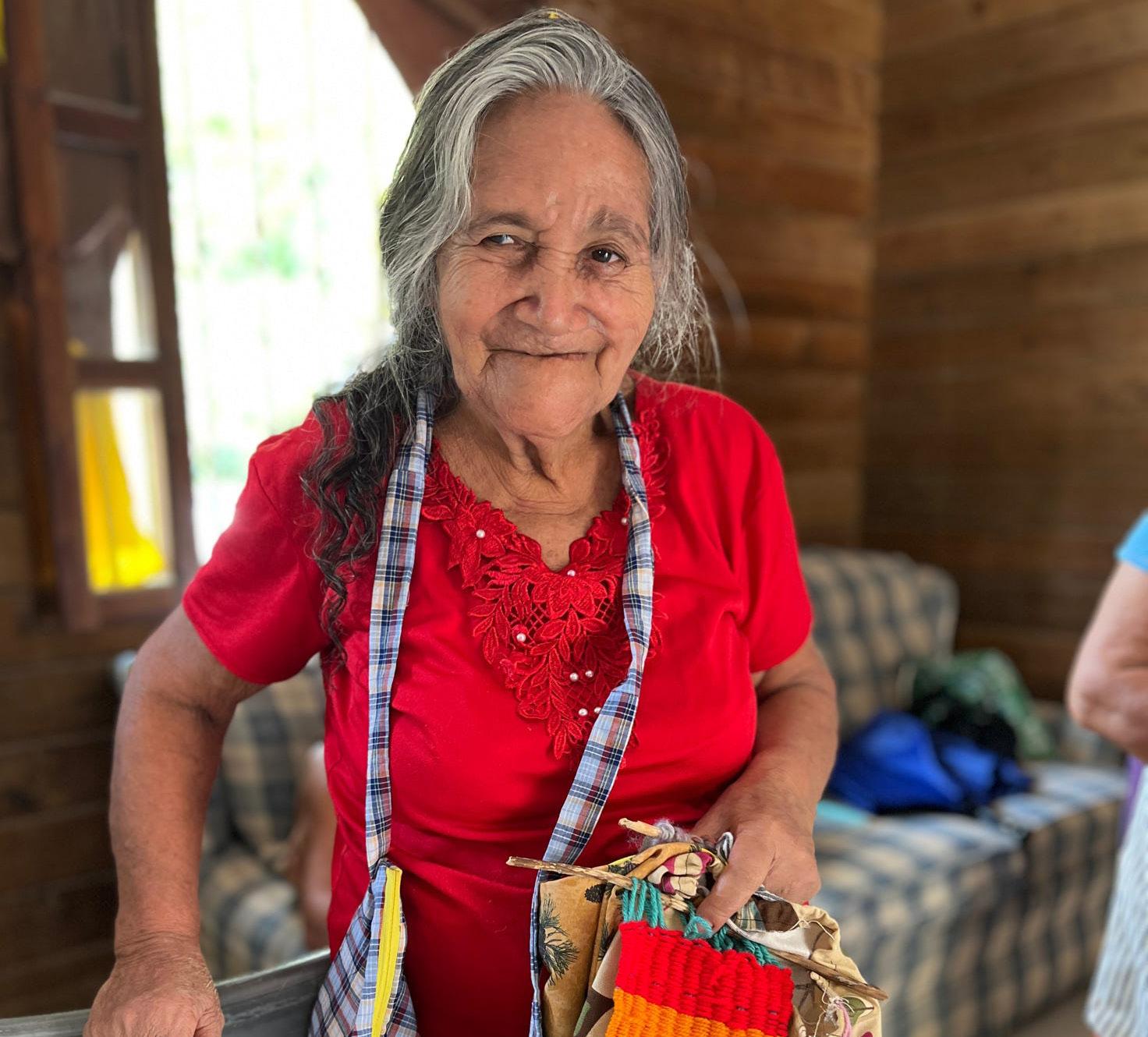
The fashion industry is one of the world’s largest contributors to environmental waste, prompting students at the University of Idaho to rethink how clothing is made and used. Within the apparel, textiles and design (ATD) undergraduate program, student research projects are addressing sustainability through new approaches, materials, design and production. Together, these projects approach innovative ideas to reducing environmental waste, all while being functional and meeting consumer needs.
Spider silk research explores future of sustainable textiles
Forget synthetic fibers and fast fashion. The next breakthrough in sustainable textiles might come from one of nature’s smallest engineers and the silk they spin.
Tailia Hart is a senior at U of I studying apparel, textiles and design with a minor in music. Originally from Albany, Oregon, Hart is doing exploratory research on spider silk and its use in textiles. Future-forward textiles, such as this, are critical in addressing textile waste.
Spider silk is a filament fiber produced by spiders known for its strength, elasticity and durability. Outside of textiles, silk is also used in medical fields and for defense. The material is also biodegradable and seen as more ethical compared to silk from silkworms. The downside of pure spider silk is that it is not an abundant material – that’s where research into synthetic spider silk comes in.
Hart was originally inspired to pursue this project in her intro to fashion class. Her professor showed a video about a large textile piece at the Victoria and Albert Museum made entirely of spider silk. The video also showed a project by Utah State University that created synthetic spider silk from goat milk, which sparked Hart’s interest in investigating
the material further.
Natural spider silk
There is no way to mass-produce spider silk in textiles, so Hart began researching synthetic methods to utilize spider silk. The project was exploratory and involved compiling existing scientific research and industry developments into a single source.
Hart contacted multiple companies worldwide, including professionals in Australia and Taiwan. The companies purchased spider silk and discussed her research. Eventually, Hart obtained spider silk from a company and was working to turn it into a fabric swatch.
Although spider silk is a good alternative to silk harvested from silkworms, farming spiders proved to be difficult. Spiders cannot be housed together because each spider produces little silk and requires manual harvesting, making the process difficult at scale. The spider silk is also difficult to work with. The material sticks to itself, is hard to unwind and is so thin that it is difficult to turn into fabric.
This is where synthetic spider silk comes in. Many companies are beginning to work with synthetic fiber. SPIBER, a Japanese company, worked with The North Face to create the Moon Parka, a jacket made from synthetic spider silk filaments.
The United States military is working to create genetically engi-
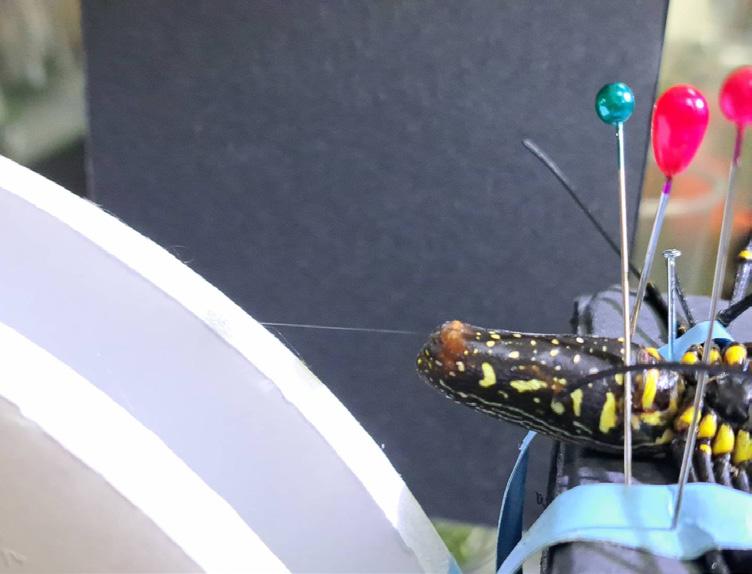
neered spider silk for gear, which would be impactful.
“The fiber is very light to reduce weight, stronger than steel and it can theoretically be bulletproof,” said Hart.
Personal growth through research
Hart reflected on her personal experience conducting research, while gaining expertise throughout the process, including research skills, real-world professional communication and presentation skills.
After conducting research, Hart has been focusing more attention on the fabric she uses. She finds herself becoming more interested in researching the fabric she uses in her own projects and its origins.
The most rewarding moment for Hart was receiving her natural spider silk sample at her undergraduate research symposium, where she presented her research on this project.
Hart offers this advice for students interested in pursuing their own research project: “Don’t be afraid of the no, or the lack of communication. There is always information to find. Being able to take what you have and pivot is an important skill.”
Hart’s next goal is to turn the silk into a fabric sample.
“I’d like to continue working with researchers internationally and explore synthetic production methods,” said Hart.
Harts’ spider silk research highlights the ATD programs’ drive to reimagine fashion for a sustainable future.
Guatemala reusable menstrual pad project
A sewing machine, a stack of cotton and an ambitious student
Workshop participants like Martha learned basic sewing skills from ATD students.
Photo by Vic Chang: Extracting silk from spiders.
are creating a solution for women’s health. Although women’s menstrual cycles may be a taboo conversation, U of I is embracing the topic and working towards creating a sustainable product to solve a long-standing issue.
Kenzie Eppey is a senior studying apparel, textiles and design at U of I, from Hayden. She applied her textile knowledge to help solve a problem many women face worldwide — having access to quality feminine products. Her work and research focus on reducing textile waste, improving access to essential products and creating durable, reusable designs for feminine products.
Eppey worked on the Guatemala reusable menstrual pad project through the U of I Margaret Ritchie School of Family and Consumer Sciences (FCS). This service trip is a learning experience organized by the non-profit organization Hearts in Motion (HIM) and FCS faculty at U of I.
The goal of this trip was to address barriers to women’s health that affect their ability to work and attend school. Without access to menstrual pads, these women are forced to put their lives on pause.
U of I students, like Eppey, provided women with access to resources to help make everyday
life easier. The reusable pads also help them financially and align with the ATD program’s goal of a more sustainable future. Part of Eppey’s decision to work on this project was her love of travel and her recognition of the important work they were doing.
“I’ve always been interested in sustainability and making an impact. I want to create something that actually helps people,” said Eppey.
Starting the project
Two U of I seniors began researching how to create a reusable menstrual pad a few years ago. They originally used waterproof tent fabric donated to create the design. When they went from clinic to clinic in Guatemala, they helped distribute the products and ran workshops.
While in Guatemala, they realized the climate is very hot and the material on the tent fabric melted away in the heat. When they returned to Moscow, the team began working on a durable, biodegradable product that could withstand the high temperatures and blazing sun.
Since the new design was created, students have produced and distributed over 500 pads.
“The menstrual pad itself was
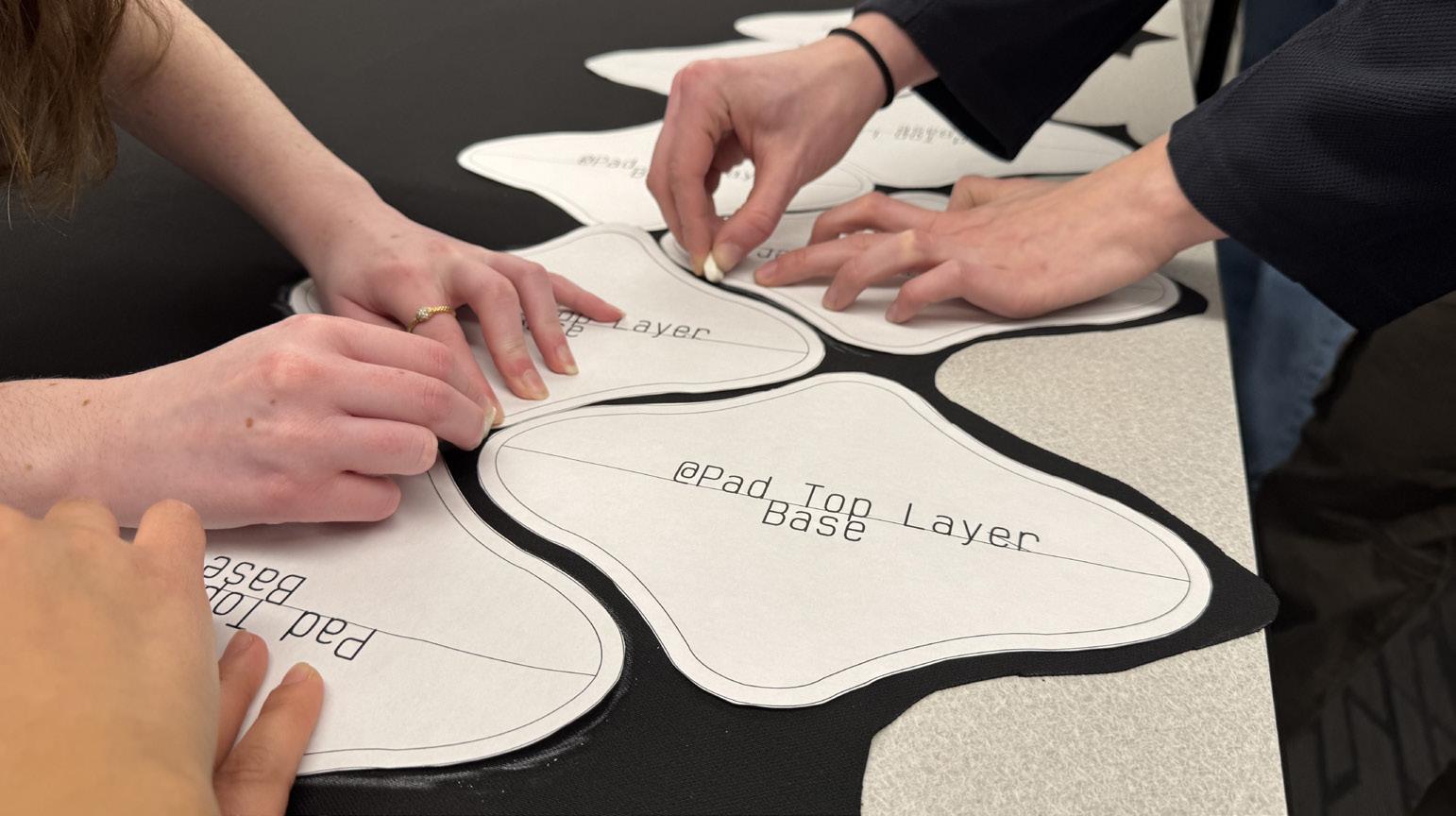
designed with comfort, coolness, durability, sustainability and quick dry in mind,” said Eppey.
While traveling abroad, students not only distributed reusable pads but also made a positive impact through workshops. The workshops taught women how to sew, weave and bead, helping them create their own bags and skirts. Additionally, they were taught how to perform textile maintenance, enabling the long-term use of the pieces they created.
These workshops successfully hosted many people each day. Eppey recalls an elderly lady named Martha who would show up every day. She would bring food to Eppey and all the students would help. Towards the end of their time in Guatemala, Martha approached Eppey and opened her wallet. It was empty, except for a single photo of her from when she was younger.
“She gave me the only thing she had, a photo of herself. That moment stayed with me, I carry it with me in my wallet everywhere I go,” said Eppey.
Community impact
Before Eppey traveled to Guatemala, she didn’t fully understand the impact of sustainability. While she was there, she learned how other countries are affected, which changed her mindset on sustainability. Sustainability extends beyond materials – it includes accessibility, education and product longevity.
Eppey plans to continue sustainability-focused work after graduation. She also encourages other students to pursue opportunities that create meaningful change, even when uncertain.
“Overall, the impact of that trip was a life-changing experience for everyone. It was something that changed their own lifestyle after it and changed their outlook on life,” Eppey said.
Rewearing the future: digital threads
Fashion trends come and go in a matter of weeks, but the aftermath of clothes lingers on for decades. Clothing waste is often a subject not thought of by consumers when restocking their wardrobes. New research at the university is working towards a solution to not just keep your closet trends in top shape, but also the environment.
Aayushree Lama is a fourth-year student who is combining fashion, technology and sustainability. She is from Nepal and is majoring in ATD as well as virtual technology and design. Her work explores how virtual garments and biodegradable materials can shift fashion from disposable to sustainable.
Lama was initially unaware of the importance of sustainability before joining U of I. As an ATD major, her interest in environmental responsibility and design innovation was sparked and she decided to merge her two majors and work on a project focused on digital creativity and sustainable practices.
Her project combines garments made from sustainable, biodegradable materials, with digital clothing overlays added. Her goal is to reduce the pressure to buy new outfits to stay trendy on social media and shift fashion from consumption to creativity.
This idea enables people to purchase a piece of clothing and utilize digital media to customize it.
“Fashion has always been about self-expression and presentation. Digital clothing allows people to explore those desires while minimizing the environmental footprint of traditional fashion,” said Lama.
Sustainability through technology
As exemplified by the various
projects done through ATD, traditional fashion generates waste at every stage of production, not just through consumerism. The digital garments Lama works with eliminate the need for material production while allowing people to express themselves without a carbon footprint.
Lama uses biodegradable, recyclable filament to create 3D-printed pieces which resemble the digital element of clothing. This project helps to address the overproduction and short lifespan of fashion in today’s world encouraging longevity, self-expression and reuse.
Lama has a creative process for beginning her garments. She begins with a theme and sets the mood by creating a playlist that fits it. Getting the mood set is an important part of Lamas’ process – once it’s set, she can start designing.
“I usually begin with the design’s core concept and build a playlist around the mood I want the piece to convey. Listening to it while I work helps me visualize the garment and refine the idea,” said Lama.
This project opened Lamas’ eyes to what is already out there in the world of digital fashion. Many people are already leaning towards this innovative idea, and many companies are rapidly developing it.
Lama learned about a digital fashion week with QR codes that let audience members scan them to view the digital fashion on their devices. Many companies have also begun creating tech merchandise for use in video games.
“If big companies keep working and create digital garments for everyday use, the transition will be a fast process,” said Lama.
Lama encourages other students to build on existing solutions to ensure their ideas are truly in-
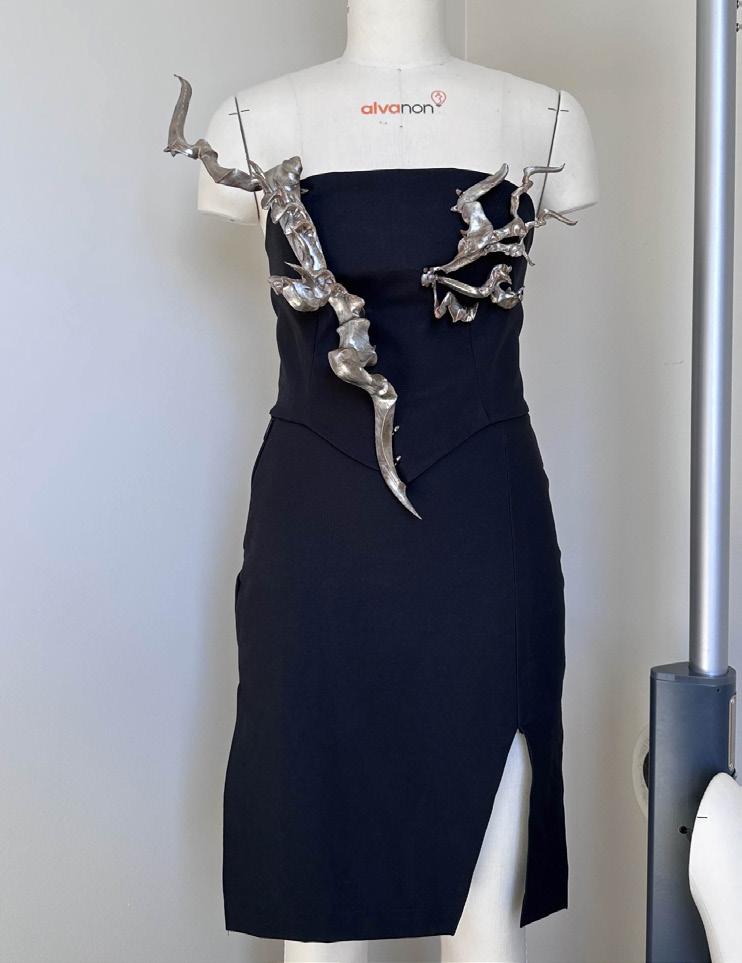
novative. She also encourages students to learn about the importance of marketing.
“Designers need to learn marketing because it is complex,” said Lama. “It combines strategy, ethics and storytelling to ensure their work reaches the right audience.”
This project has reshaped Lamas’ understanding of fashion’s environmental impact. Her long-term goal is to continue integrating virtual technology with sustainable fashion.
Designing a more sustainable future
With projects ranging from spider silk, community impact and digital clothing lines, the ATD program is moving toward a more sustainable future. All these projects are a part of something bigger, where each student’s work contributes to one goal: challenging traditional practices and imagining new possibilities. These designers are helping build a future where fashion supports both people and the planet. Through science, service and technology, U of I students are proving that thoughtful design can help reduce waste.

Dress designed by Lama using digital software and sustainable materials.
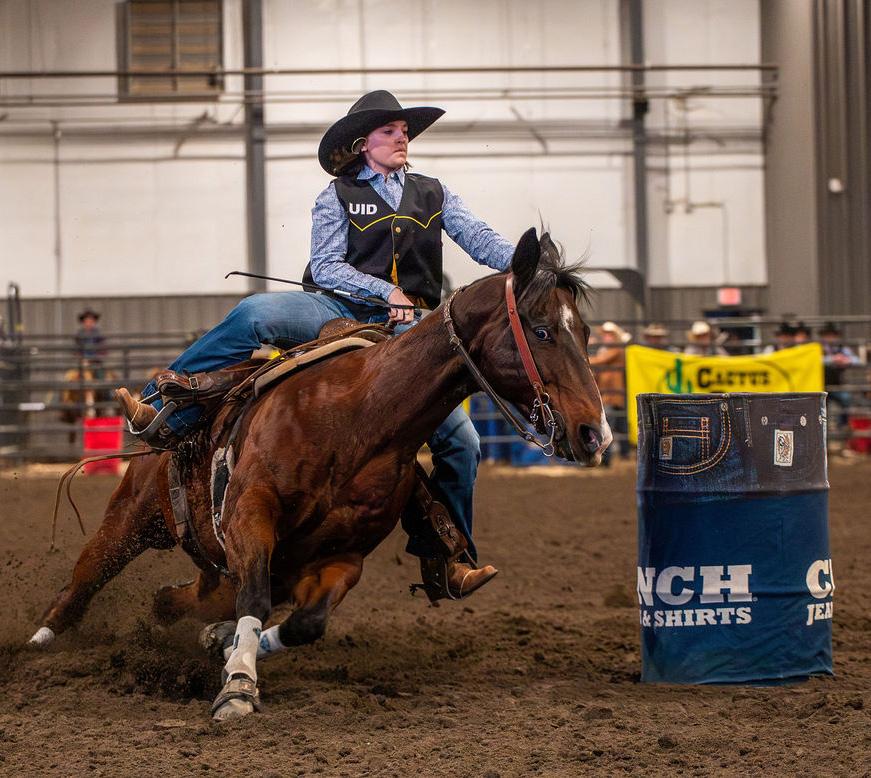
The Vandal REBOUND
Dust, determination
and the regrowth
of the University of Idaho Rodeo Club
STORY BY KAYLEE MOODY
In rodeo, every ride is defined by the ticking of the clock and the inevitability of the comeback. The sport thrives on explosive energy– the raw power of a bucking horse followed by the quiet grit required to dust off worn-out jeans, climb back into the chute and nod for the gate. For the University of Idaho Rodeo Club, the last 75 years have followed a similar rhythm.
Today, the club is in its most significant resurgence in decades, reclaiming a legacy that nearly slipped away. Founded in 1950 as the Vandal Riders Club, the group became a key part of the National Intercollegiate Rodeo Association (NIRA). By the 1980s, Idaho was a powerhouse. In 1983, under President Richard Gibb, the club achieved its Golden Era by hosting a sanctioned collegiate rodeo inside the Kibbie Dome.
A rhythm of silence
That momentum carried into the early 2000s, peaking in 2005 when the women’s team won the College National Finals Rodeo (CNFR). Names like Scotty Fuller and Brittney Highsmith became part of Vandal legacy. But in rodeo, the higher the climb, the harder the fall.
Following that peak, dwindling funding and a lack of institutional continuity caused the club to fade. For nearly 15 years, the roar of a university-hosted rodeo went silent.
“Every four years, the club has tried to be put back together, and it starts at nothing,” says Layla Knight, the current club president.
The burden
Knight has spent her entire col-
legiate career refusing to let the cycle break. When she arrived, the club was a skeleton of its former self, consisting of only four or five members. They were the orphans of the circuit, lacking a practice facility, consistent funding, or a coach who understood the rugged world of collegiate competition.
For the modern Vandal rodeo athlete, the commitment is often invisible. Unlike NCAA sports, these members are almost entirely self-funded. Entry fees, NIRA memberships, fuel and equine athlete maintenance create a massive financial burden.
“We are at a point where we are funded by the university, but we have to match our funding with our own fundraising,” Knight explains.
This required the club to become savvy in the boardroom. For years, the club was overseen by advisors who helped support the club. Then came Jamie Slocum.
A former 2011 team member, Slocum reached out to Knight to offer help. To Knight, who had been searching for a professional coach, Slocum was a saving grace.
Growth in club membership
“She fell from the sky,” Knight says.
Slocum has spent two years volunteering her time rebuilding the team’s competitive edge and navigating university bureaucracy. That advocacy eventually reached U of I President Scott Green. With his support, membership has jumped from five students to over twenty.
However, the fight for survival extends beyond Moscow. In
2022, Knight attended a regional meeting where participation was dwindling. The Pacific Northwest region was at risk of being dissolved.
“College rodeo is that middleman between high school and the professional circuit,” Knight explains. “If the Pacific Northwest region dissolved, the closest rodeos for our students would be 11 hours away. The impact on our local agriculture, cattle industries, and facilities would be devastating.”
By fighting for the Vandal club, Knight and her peers are fightingto keep a specific legacy alive at the University of Idaho. Their presence in the circuit demonstrates that elite competition and advanced academic degrees can coexist, providing a necessary four-year home for athletes who want to excel in the classroom and the arena simultaneously.
Restoration in the dirt
The regrowth is now manifesting in public. In 2024, the club hosted its first sanctioned rodeo in 15 years at the Palouse Empire Fairgrounds. To sustain the effort, the club holds barrel races and silent auctions to fund travel costs. The North Star for the program is set for 2027. A deal has been struck to return the rodeo to the Kibbie Dome.
As Layla Knight prepares to pass the reins, the message is clear –the Vandals are back in the rodeo arena, and this time, they intend to stay.
Layla Knight competes in the barrel race. Photo by Emma Folz Photography.
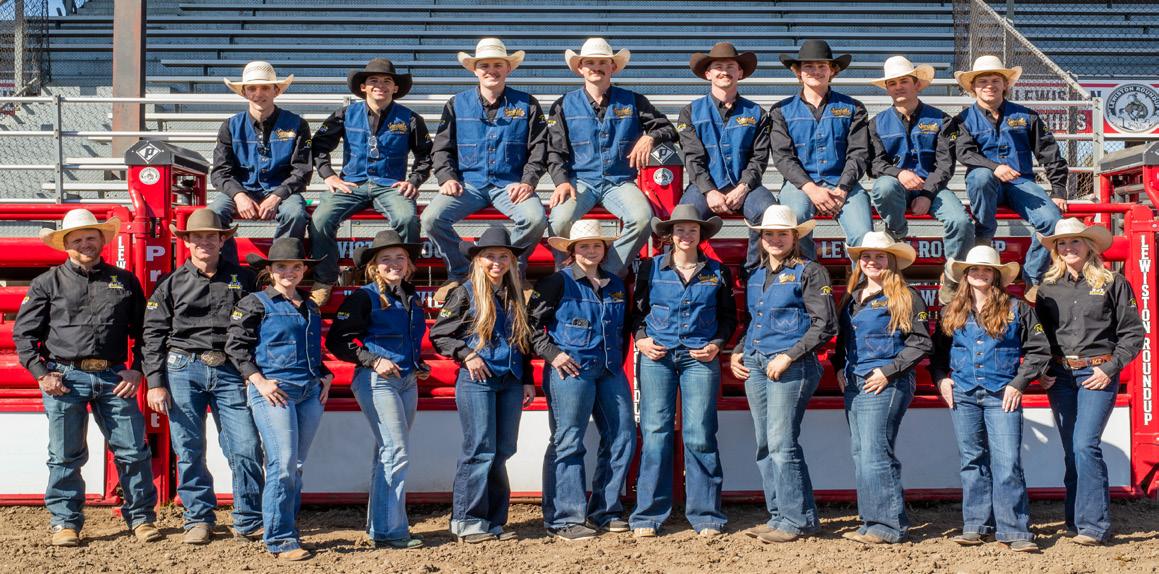
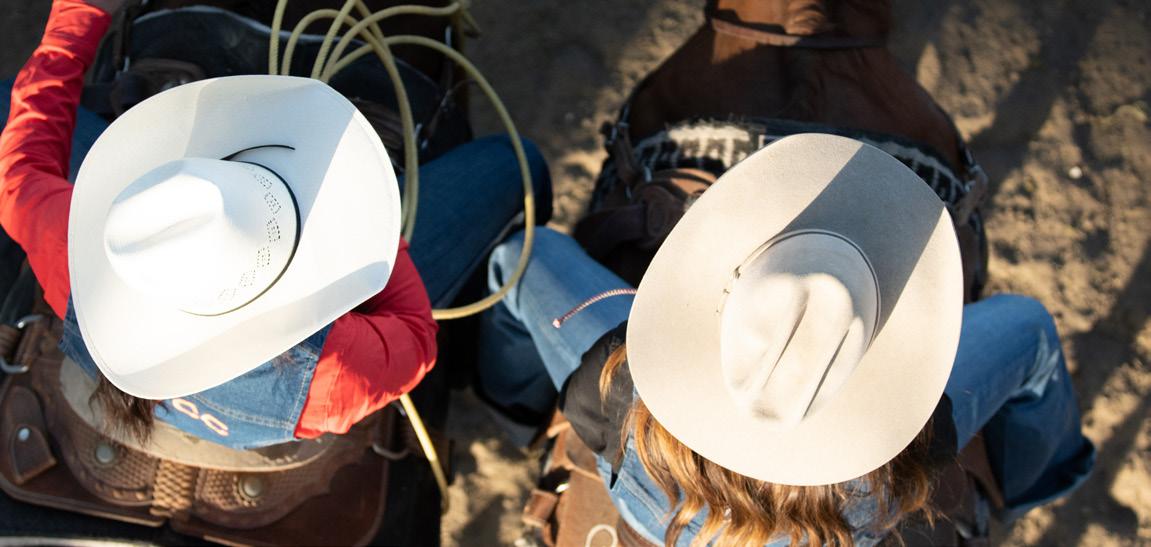
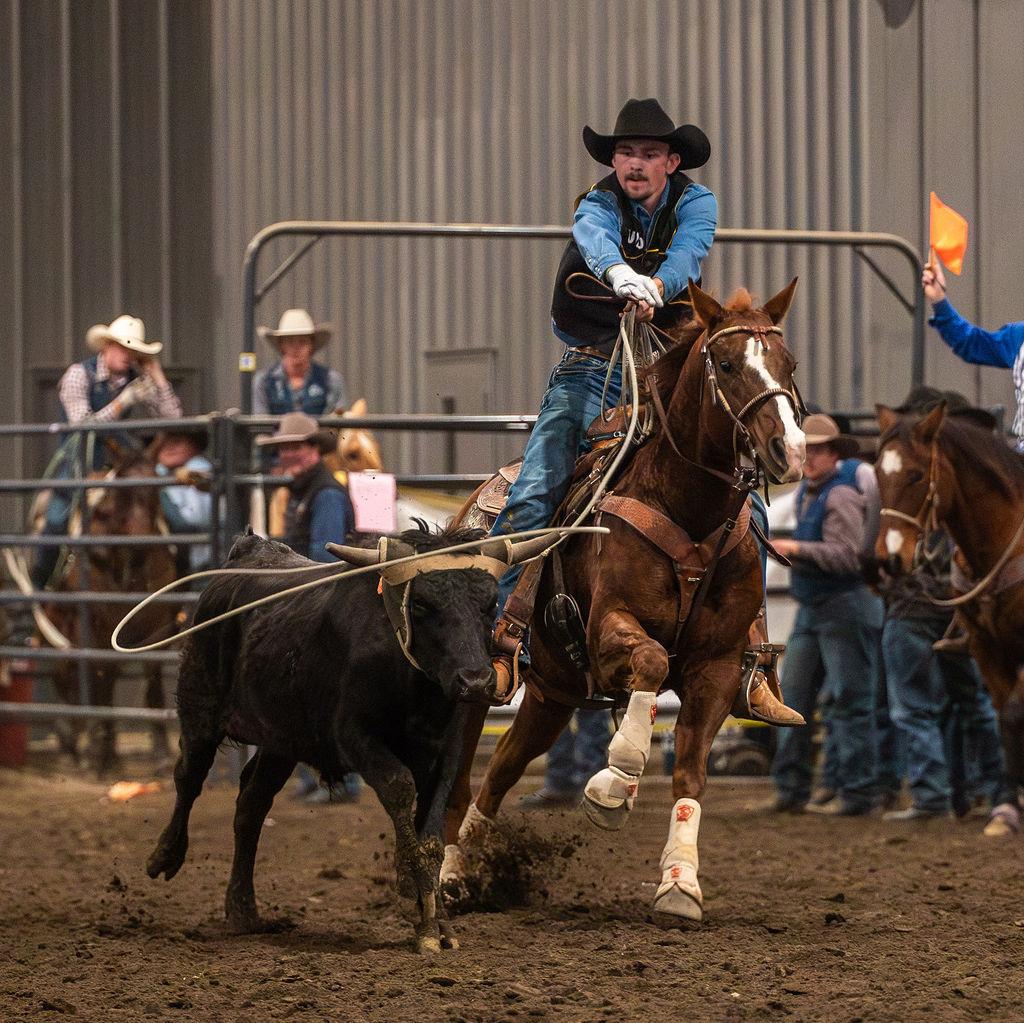
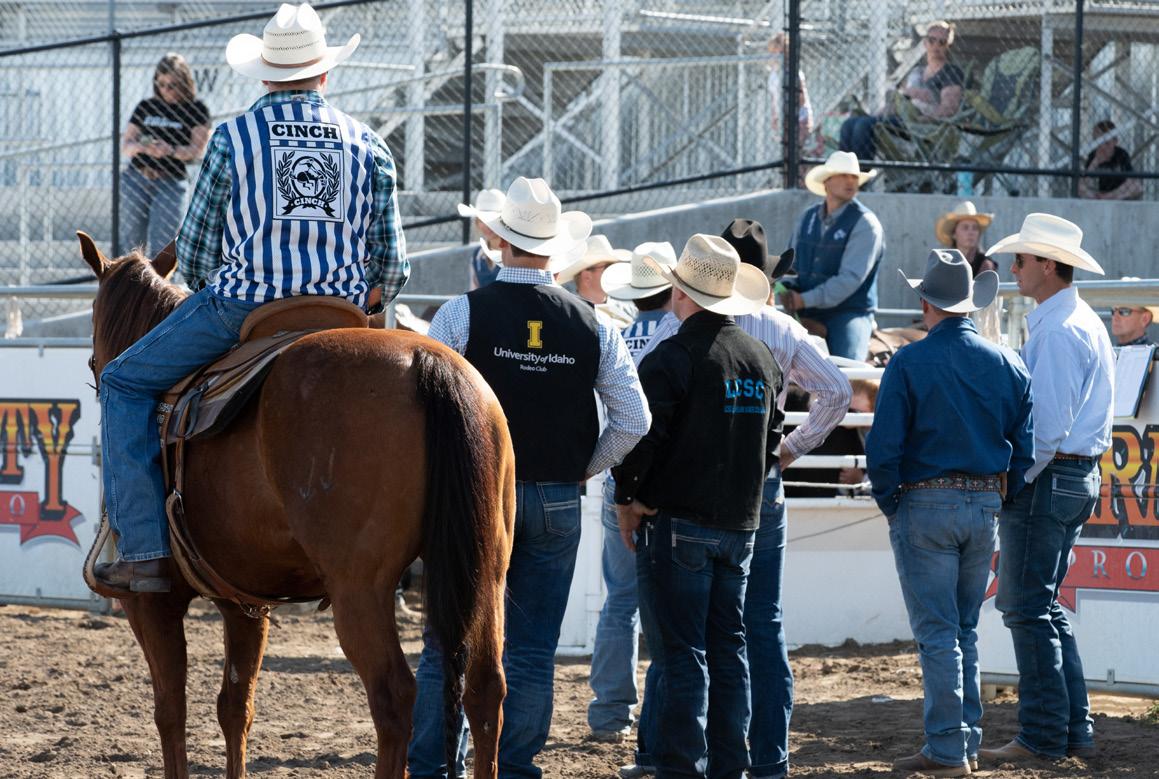
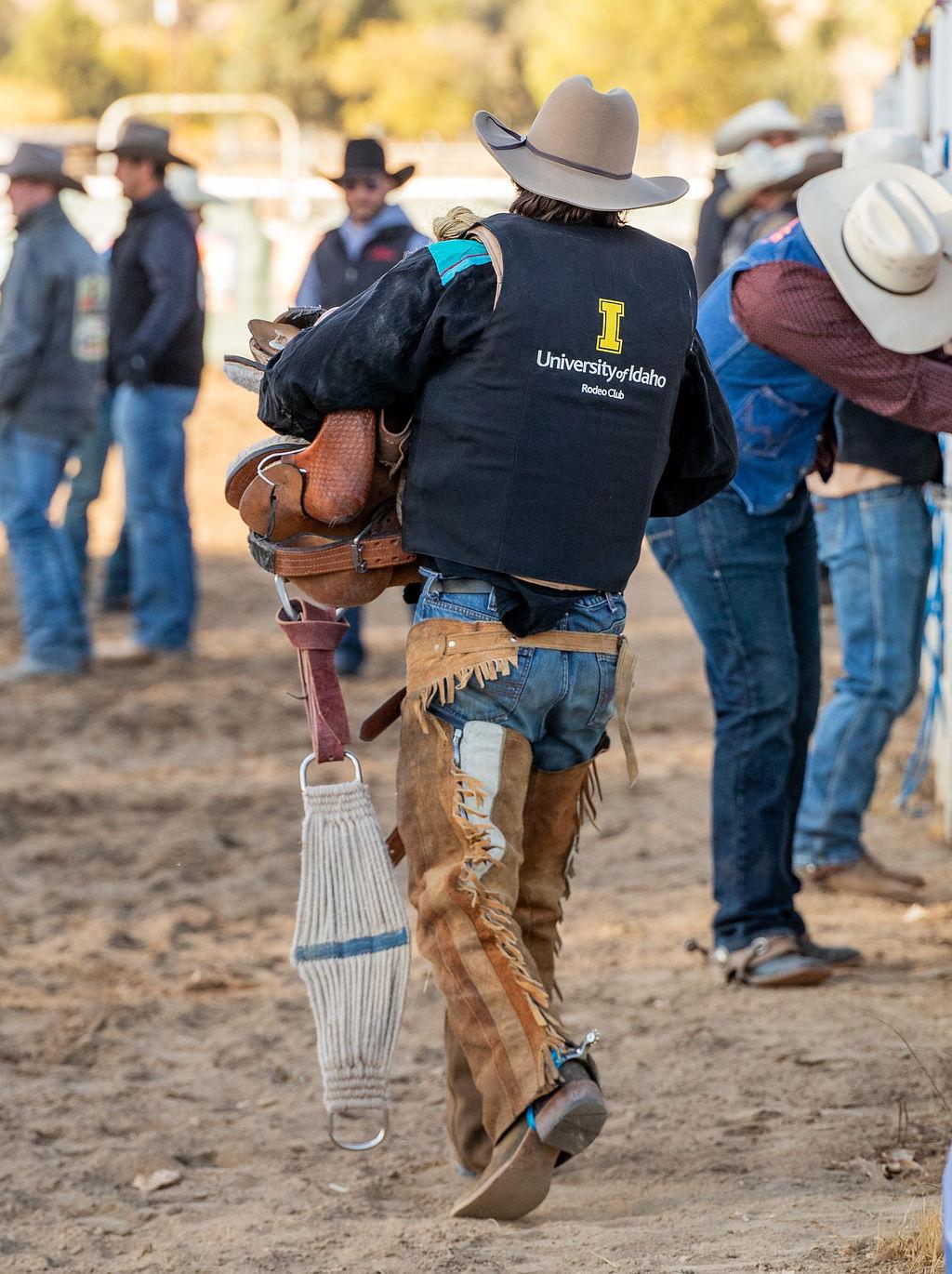
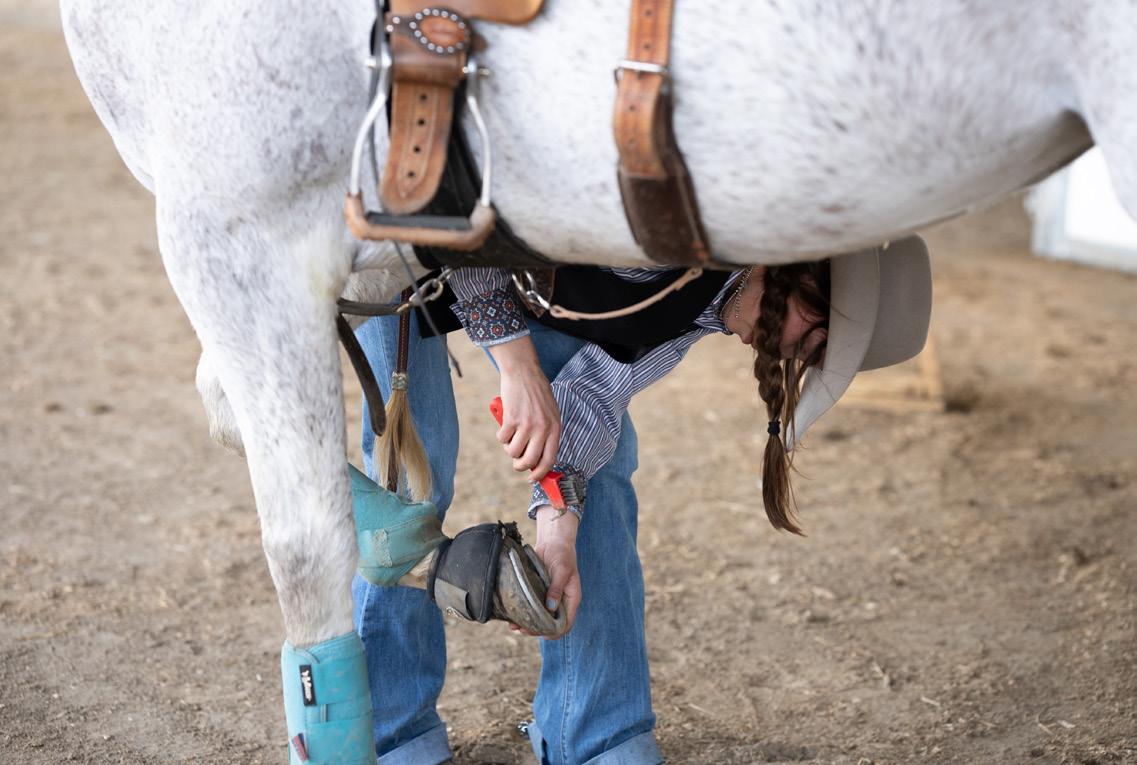
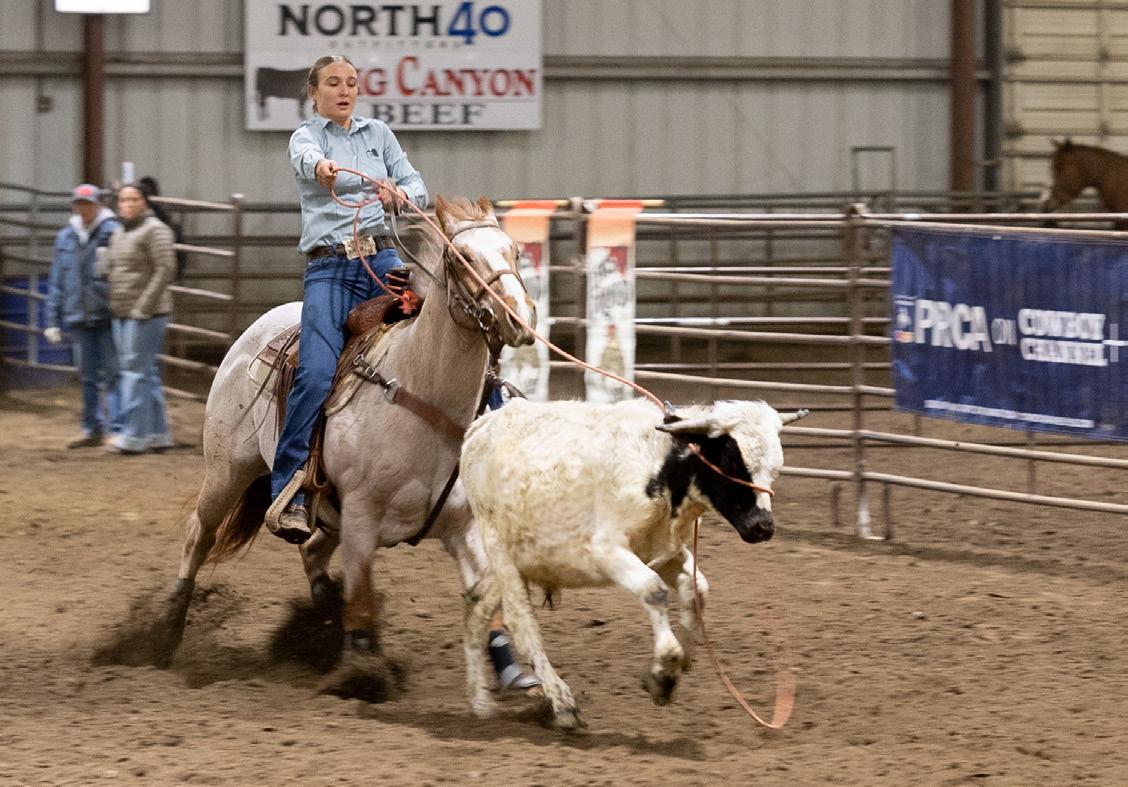
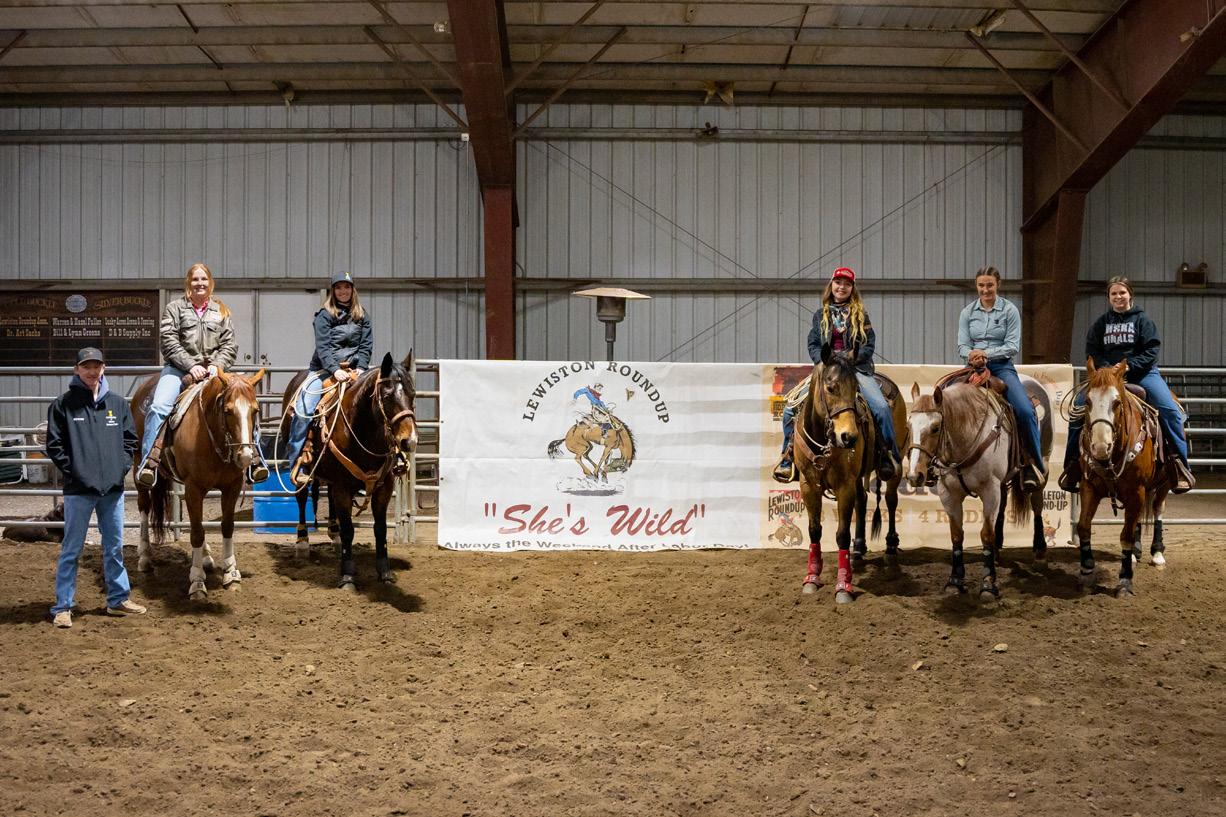
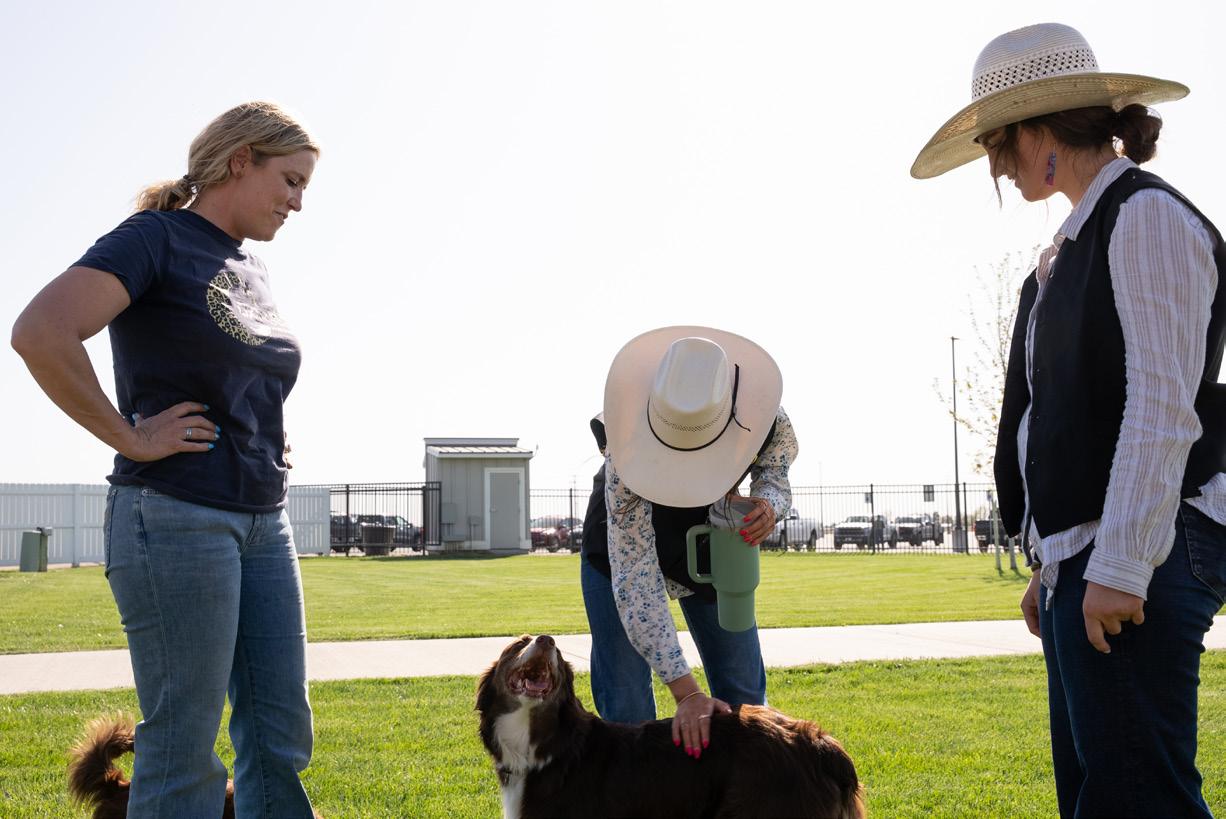
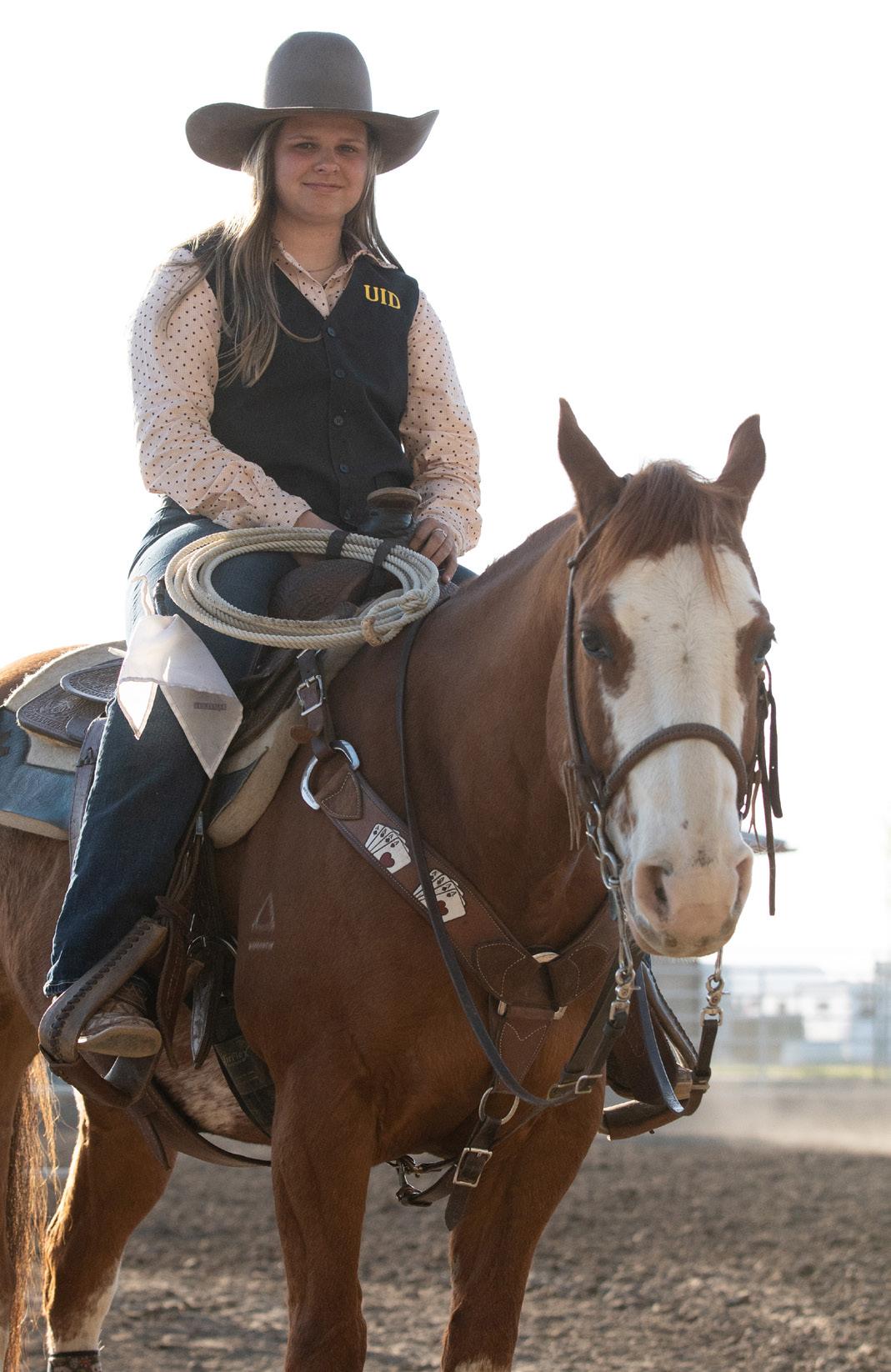
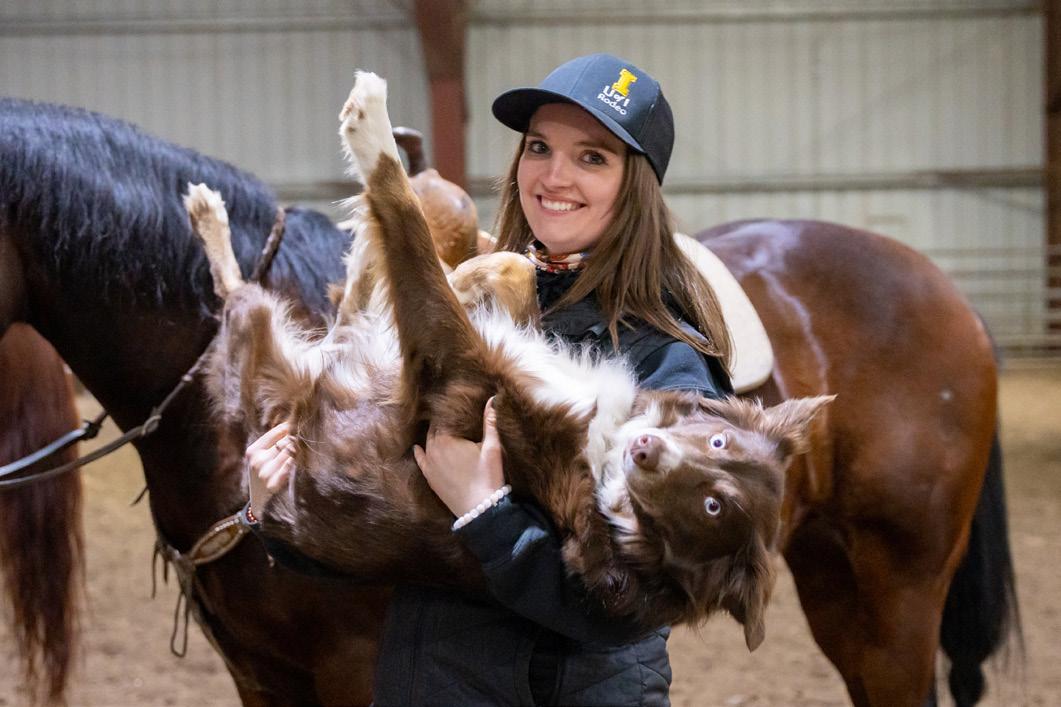
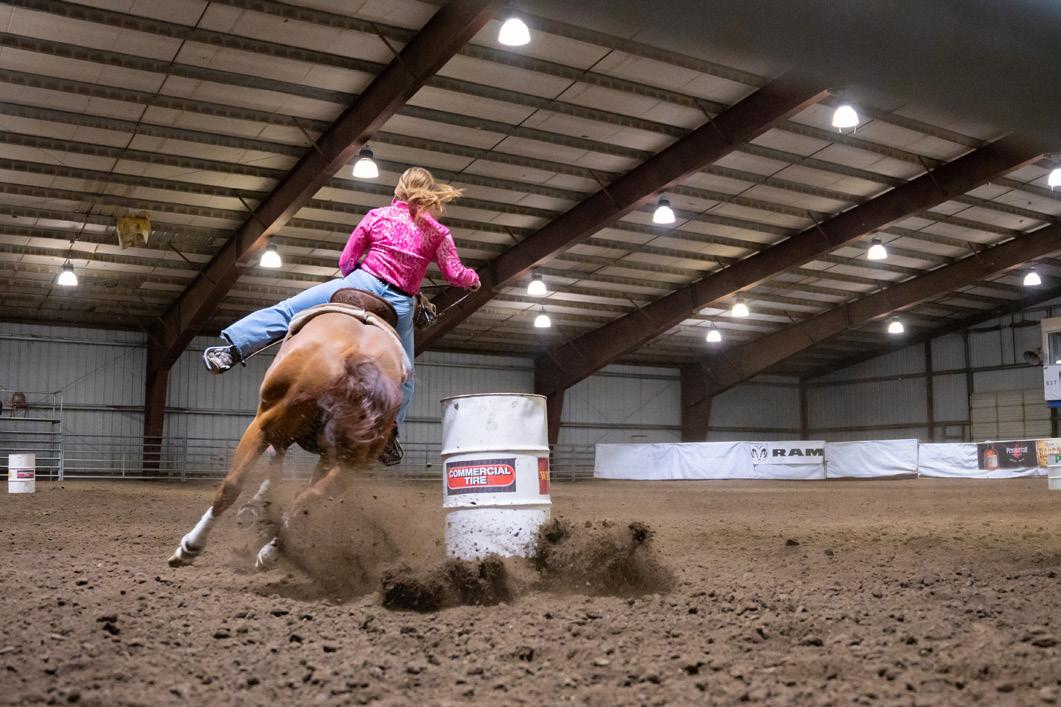
Photo by Emma Folz Photography.
Photo by Emma Folz Photography.
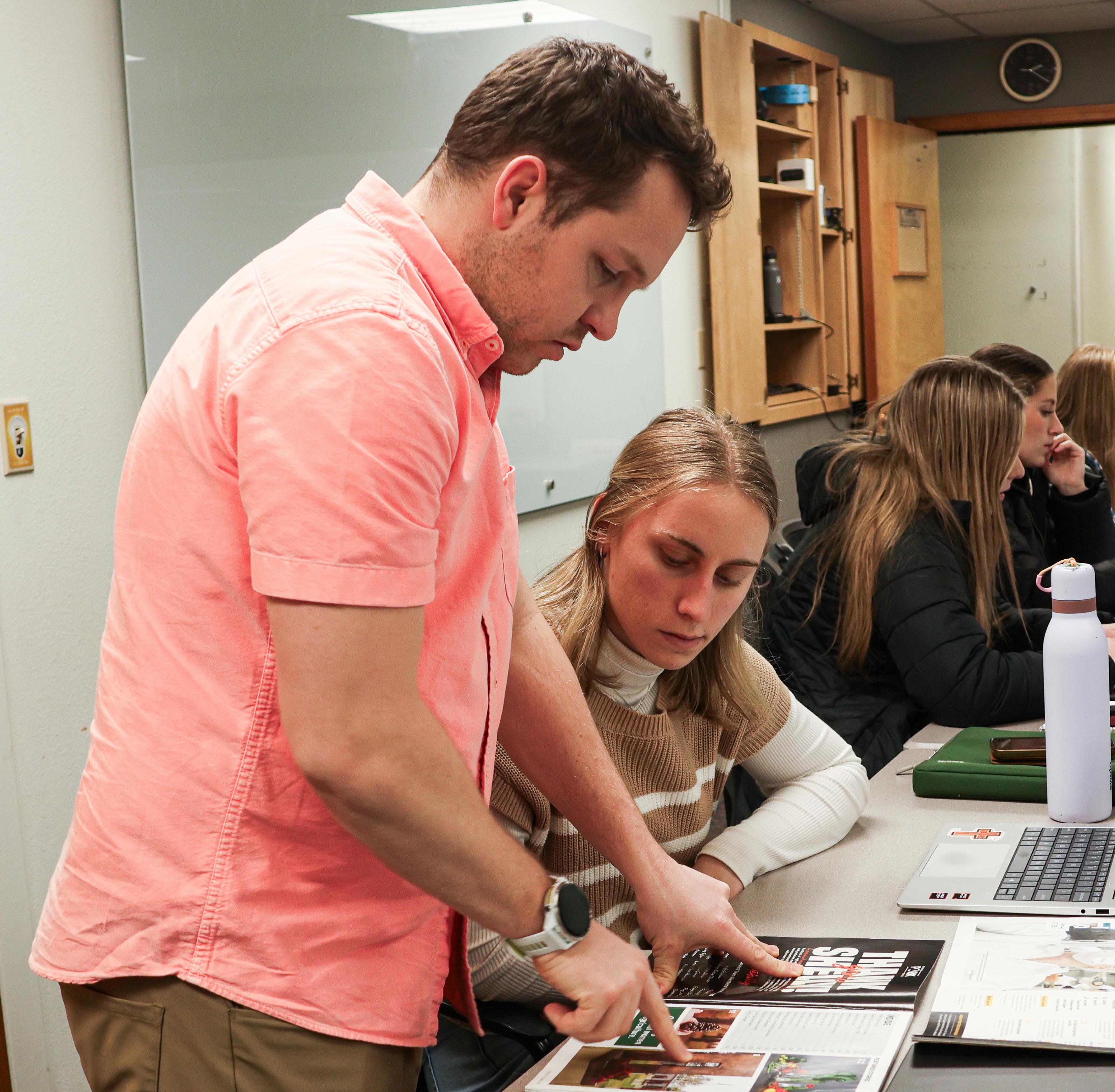
The Evolution
of Comm Squad
How a small student initiative grew into a dynamic communications team shaping stories today
STORY BY HANNAH STOLFUS
What started out as student blog posts is now a student led media team producing social media content and a magazine. The Department of Agricultural Education, Leadership and Communications (AELC) created a course for students to gain hands on experience with industry work in the agricultural communications profession. This group is the AELC Media and Communications team, also known fondly as Comm Squad.
How the Comm Squad took root
The idea for creating the Comm Squad came about in 2012 when students started creating blog posts for the department. In 2016, the idea for the team came into fruition, earning its informal title of Comm Squad, which allowed students to become more involved in creating media content for the department.
The first edition of “The Hoot” was published in 2017 and the first post on Facebook was made that same year. The foundational contributors for this team were Jeremy Falk, Ph.D., and students Maggie Elliot and Liz Wilder. Falk, was an assistant professor in the AELC department for 12 years. He was inspired by the idea of having a hands-on approach to support projects that allow stu-
dents to be creative.
He also recognized that there was a need within the department to create a departmental newsletter and social media page.
“There was a need for me to be able to tell our students or the department something. Or to share with our stakeholders things that we are doing, to not only recruit future students, but to give awareness that we are here and there are cool things we are working on,” said Falk.
Elliot, currently serves as the director of communications for the Washington Hop Commission and the director of science and communications for the Hop Growers of America. She graduated from U of I with her bachelor’s degree in agricultural science, communication and leadership (ASCL) in 2018, then later went on to get her master’s degree in agricultural communications in 2019 at Texas Tech University. Elliot was one of the leading students alongside Wilder who pushed for Comm Squad to become a more interactive and educational program.
“We wanted more. We were looking for ways to expand our knowledge and skills within the department that could benefit us and future generations of students,” said Elliot.
Elliot hoped that the program would grow after her time working in the Comm Squad. She explained how growth is important for programs like this and that she was excited to hear how there is more student involvement, a deeper level of education and skill
building in the team.
Wilder, currently serves as the executive director of the Idaho Wool Growers Association. She graduated from U of I with her bachelor’s degree in ASCL in 2018 with a minor in agribusiness. During her time in the AELC department, Wilder was part of leading the Comm Squad in a new direction by helping create the newsletter “The Hoot” and posting Throwback Thursdays on the blog post the department used to have.
One of the things that Wilder appreciated about her role and experience in the Comm Squad was learning by doing.
“It helped us build portfolios and prepare us for what was next after graduation. At the time, we got to learn how to use software that wasn’t taught in our classes and be able to apply it to content in Comm Squad,” said Wilder.
In her current role, Wilder prepares monthly newsletters, works with sponsors and membership value programs and is a registered lobbyist. She attributes some of her experience in writing, design and public speaking to her time in Comm Squad.
A decade of growth and change
Throughout the 10 years of evolution, the Comm Squad has shifted through different leaders and developments. Hannah Ruth Pettyjohn from Walla Walla, Washington, is one of the leaders who helped develop the team during her time at U of I.
Garrett Brogan, Ph.D., showing student Madi Knapp an example of a magazine article.
The first edition of “The Hoot” newsletter published in the fall of 2017.
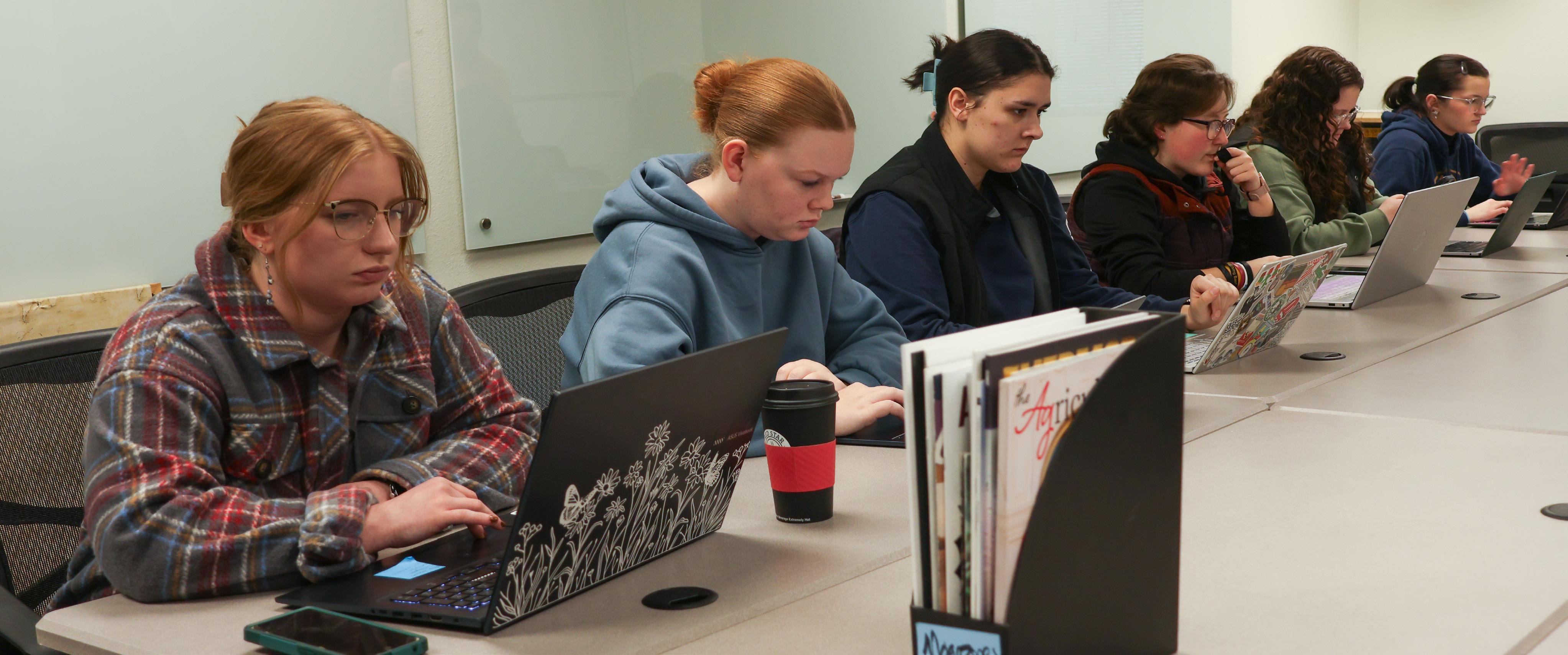
Pettyjohn graduated with a bachelor’s degree in ASCL in 2024. She currently works for the U of I College of Agricultural and Life Sciences (CALS) as the marketing and events coordinator. In this role she manages the CALS social media pages, captures photo and video content for social media and marketing efforts and coordinates college events.
As a student leader for Comm Squad, Pettyjohn decided to push for more opportunities linking student work and industry standards. She was involved with the team from 2022-2024 with Falk and Kasee Smith, Ph.D., as the leading professors. Pettyjohn pulled the skillsets she developed from her internships through the Appaloosa Horse Club and CALS, teaching students how to write and create designs, then implementing those
skills into their work for the AELC department and beyond.
By implementing more industry standards for writing styles, timelines and campaign development, Pettyjohn evolved the Comm Squad from more basic skills to true career readiness and professional development.
“The goal when I was there was to make it less about going over the content calendar every week but making it more into ‘how do we give students industry ready skills so they can go out and be good employers or interns as we prepare them for going beyond the classroom?’,” said Pettyjohn.
Smith is currently an associate professor at U of I and was a faculty leader and co-leader of the Comm Squad for five years.
One of Smith’s favorite moments of Comm Squad was when the team started hitting metrics and insight goals on social media. Smith has enjoyed seeing the progression of students learning to make strategic decisions on different media platforms, identify audiences and sharing with those audiences about who the AELC department is and what it does.
“The dynamic changed when there was intentional thought behind having social media that was carefully crafted, timely and purposeful,” said Smith.
The Comm Squad’s role in 2026
The team currently takes on multiple projects each semester, growing their skills in writing,
editing and design. Now they are in charge of producing this magazine.
Smith described the Comm Squad’s current standing the best.
“Now it’s this multifaceted team that can do a lot of things both within our department and beyond,” said Smith.
While reflecting on what the Comm Squad looks like currently, Smith talked about how this program is open to students as a safe place to gain real industry knowledge and have real experience working with social media and print production. She also hopes that alumni and stakeholders see the hard work these students put in and how students are doing true professional work. The Comm Squad has also grown
est and involvement surrounding the course.
“I am excited to see where this takes us because I think it gives students relevant and professional experience that they can put in their portfolio,” said Brogan.
Looking outside of departmental growth, Brogan hopes to expand the Comm Squad’s reach to other endeavors. With the CALS magazine making headway as the first outer department project, he wants to find other outside projects for the team to work on to provide more professional experience.
One of Brogan’s favorite moments has been seeing social media growth, where students have creative freedom to find, film and adapt trends, write feature stories and work on campaigns.
“I think doing some of our social media trends has been fun both from the faculty standpoint and student standpoint and getting to see fun moments through that,” said Brogan.
in member size over the years. With the team being relatively small with less than five students at a time, it has now grown to a full class size of 12 students.
Looking ahead: the future of Comm Squad
Garrett Brogan, Ph.D., is the current Comm Squad advisor at U of I and plans to continue leading this team and course in the coming years.
The future of the Comm Squad looks bright as Brogan is excited to keep growing the program. He is optimistic about the future of writing for this magazine, as well as keeping up with engagements on social media and expanding the reach that the AELC department has online and in print. He also hopes to have more student inter-
The Comm Squad has gone through many seasons of change, but the future is in good hands with Brogan’s leadership and student involvement. With the gradual pace of growth and opportunity, the upcoming years should be full of steady improvements and new ideas.
Comm Squad students working on planning the articles and layout for the Rooted magazine.

WINERIES
RESIDENTIAL
COMMERCIAL AGRICULTURE

ARCHITECTURE THAT SHAPES COMMUNITIES
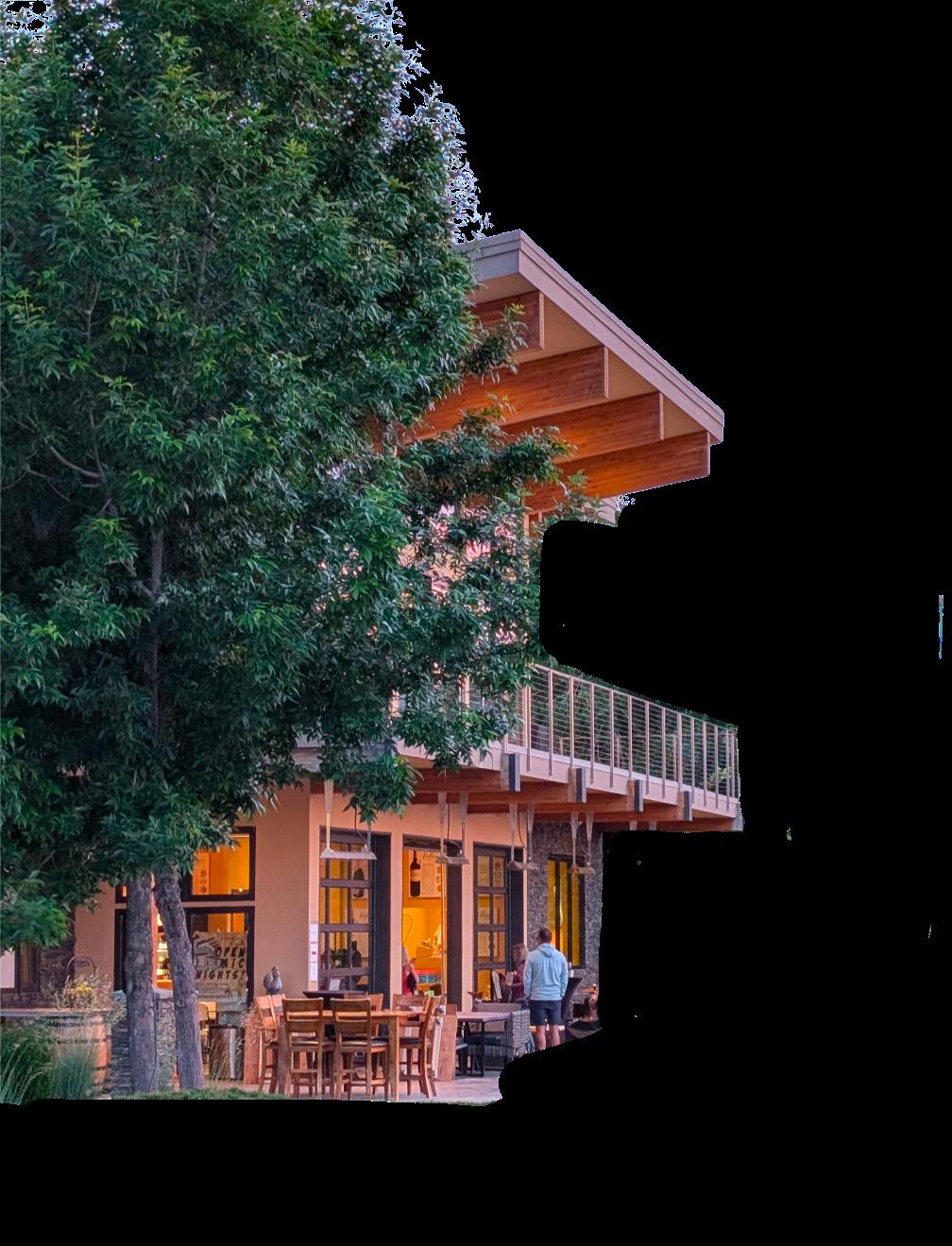


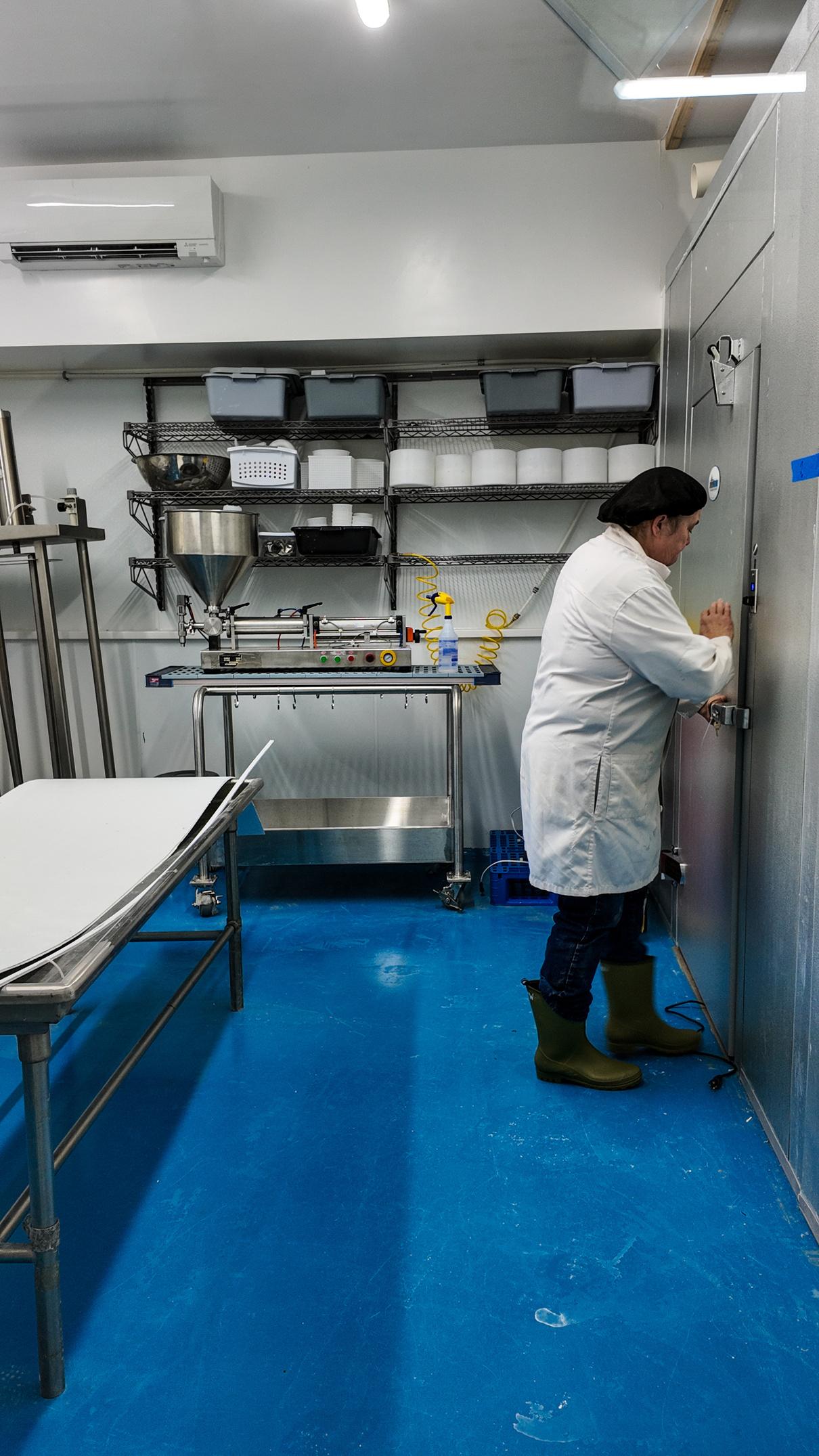




Graduation Photos
Family Pictures
Engagements