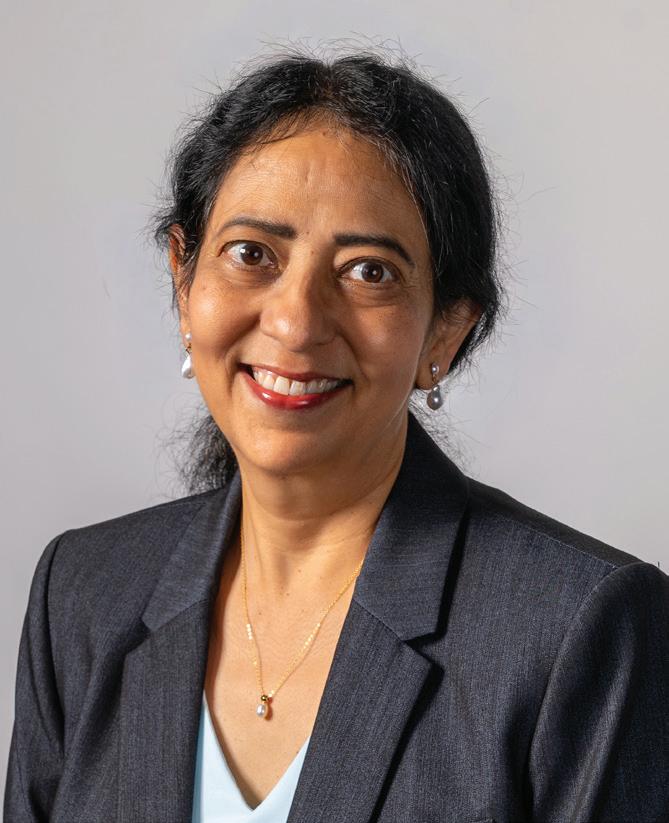
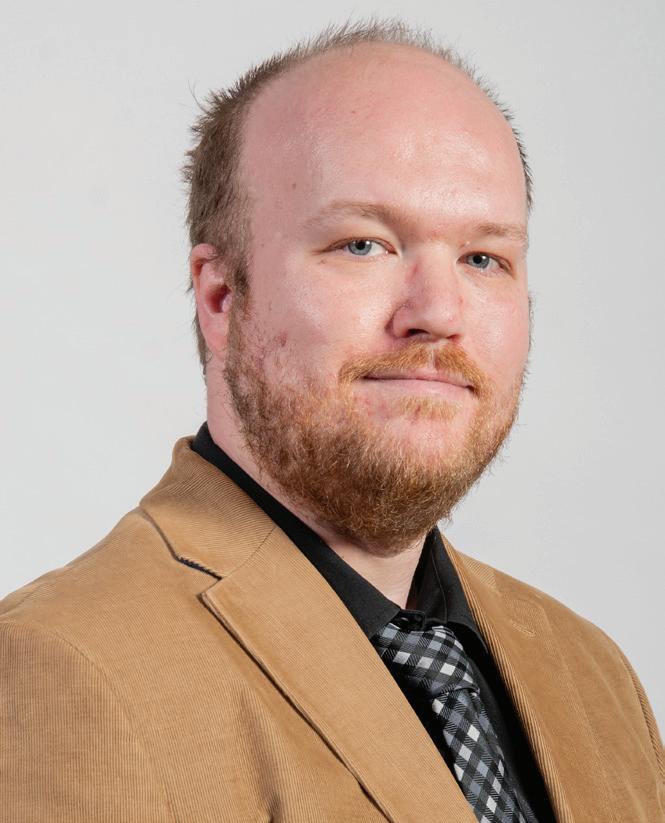
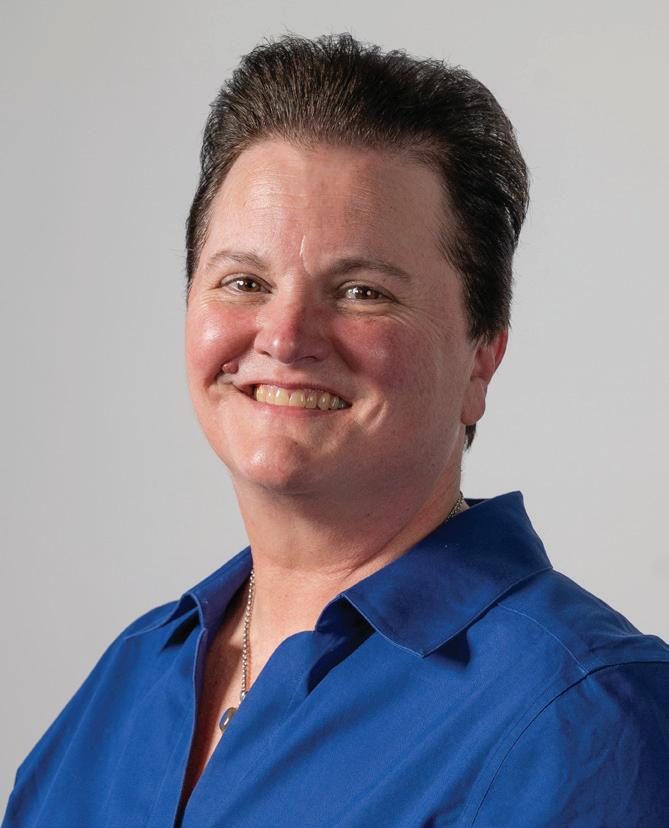
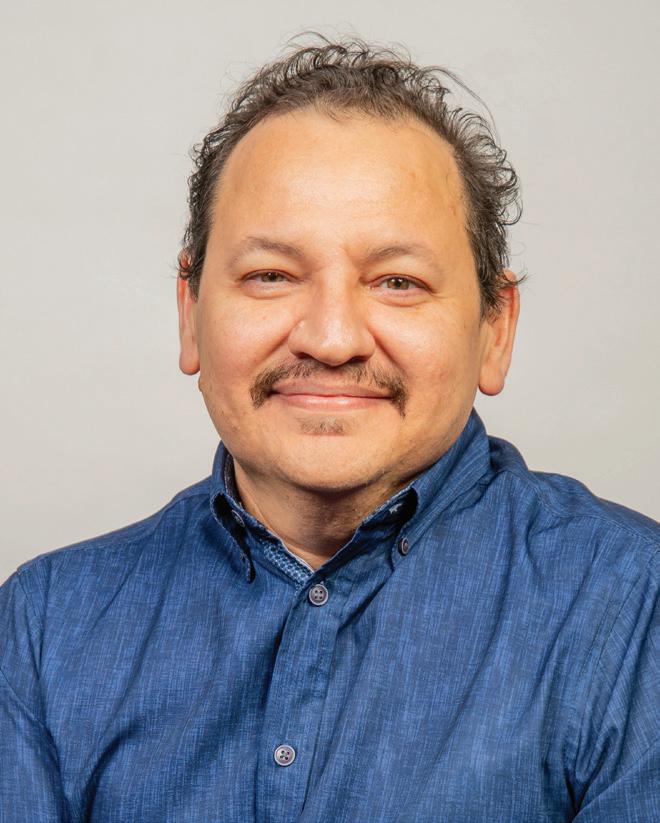
Bayou Scholars is published by the Division of Academic Affairs.
University of Houston-Downtown
One Main Street, Houston, Texas 77002
713.221.8000 Uhd.edu
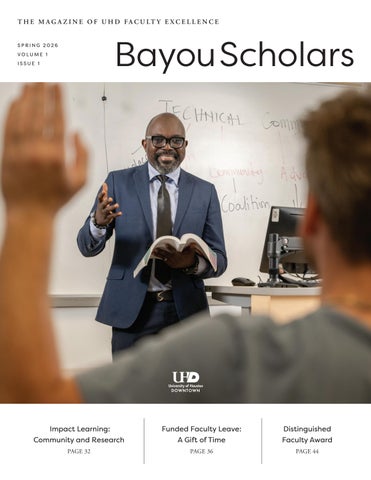
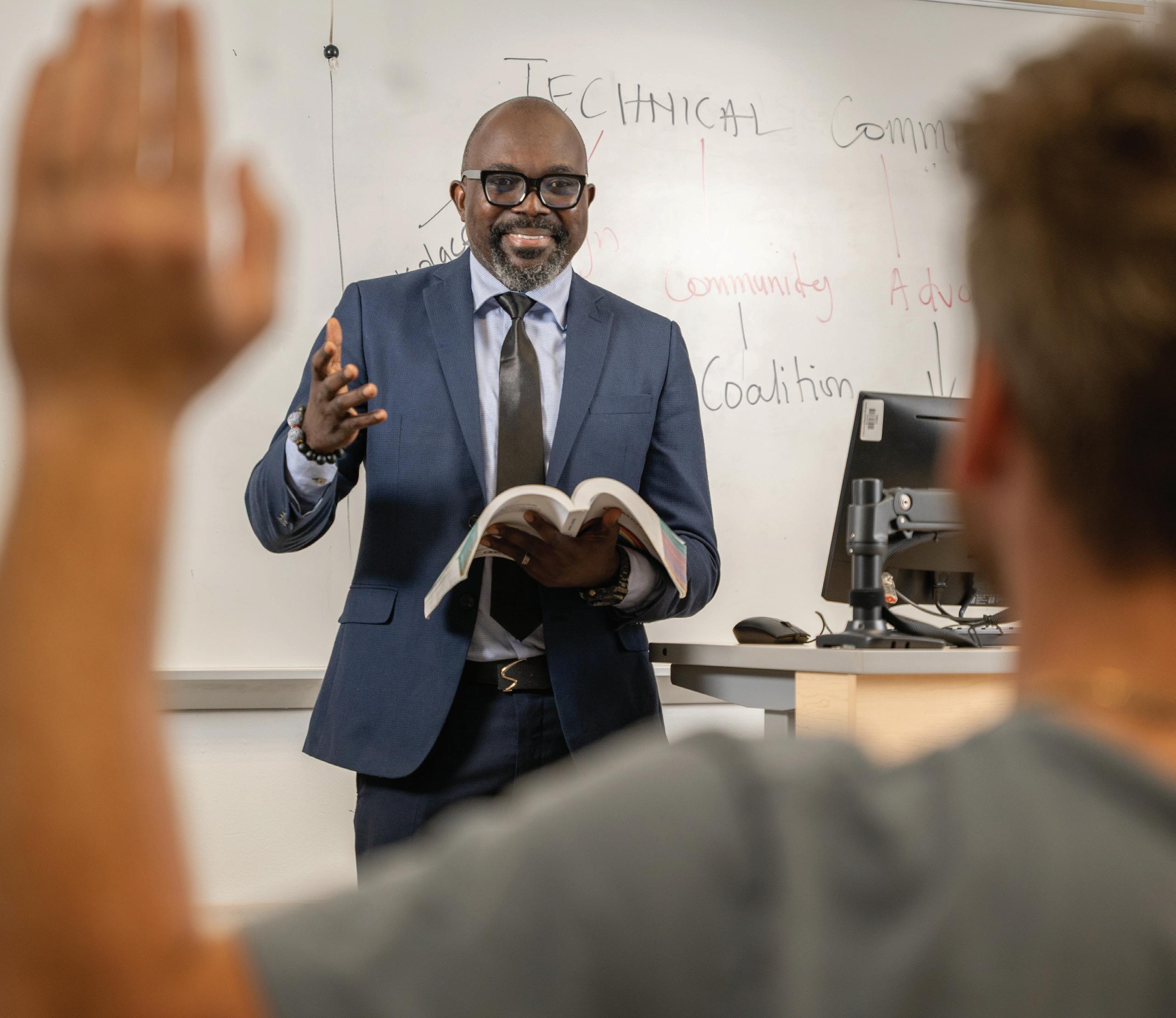
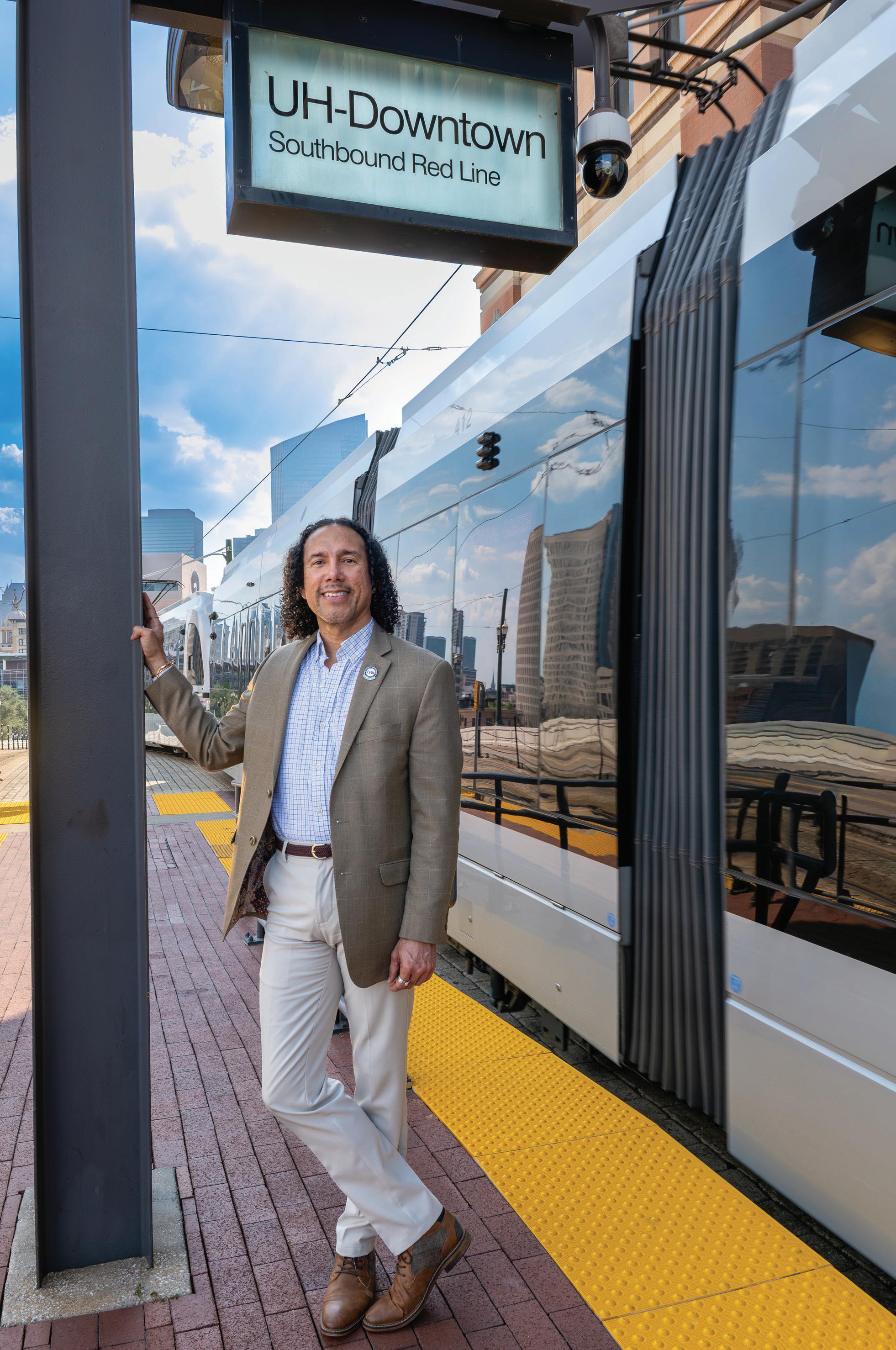
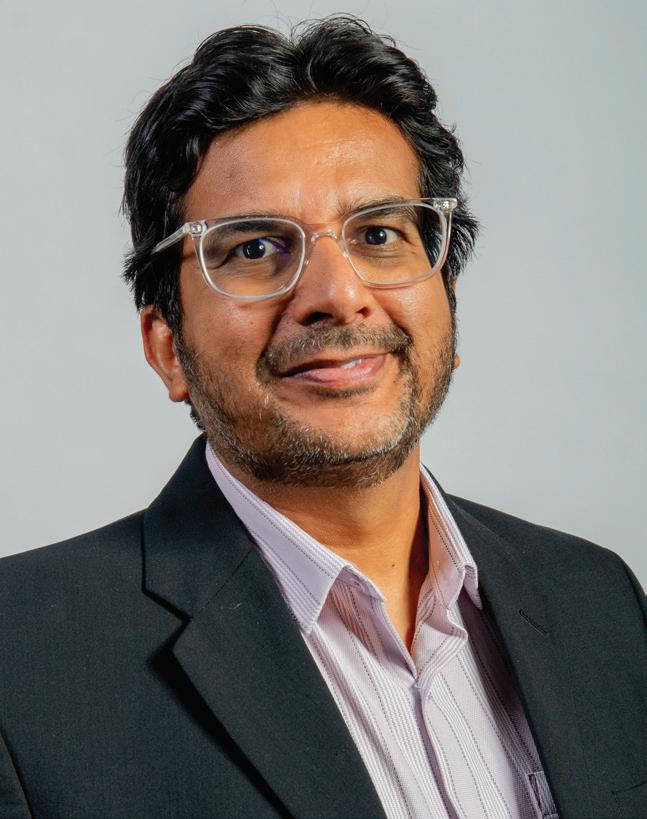
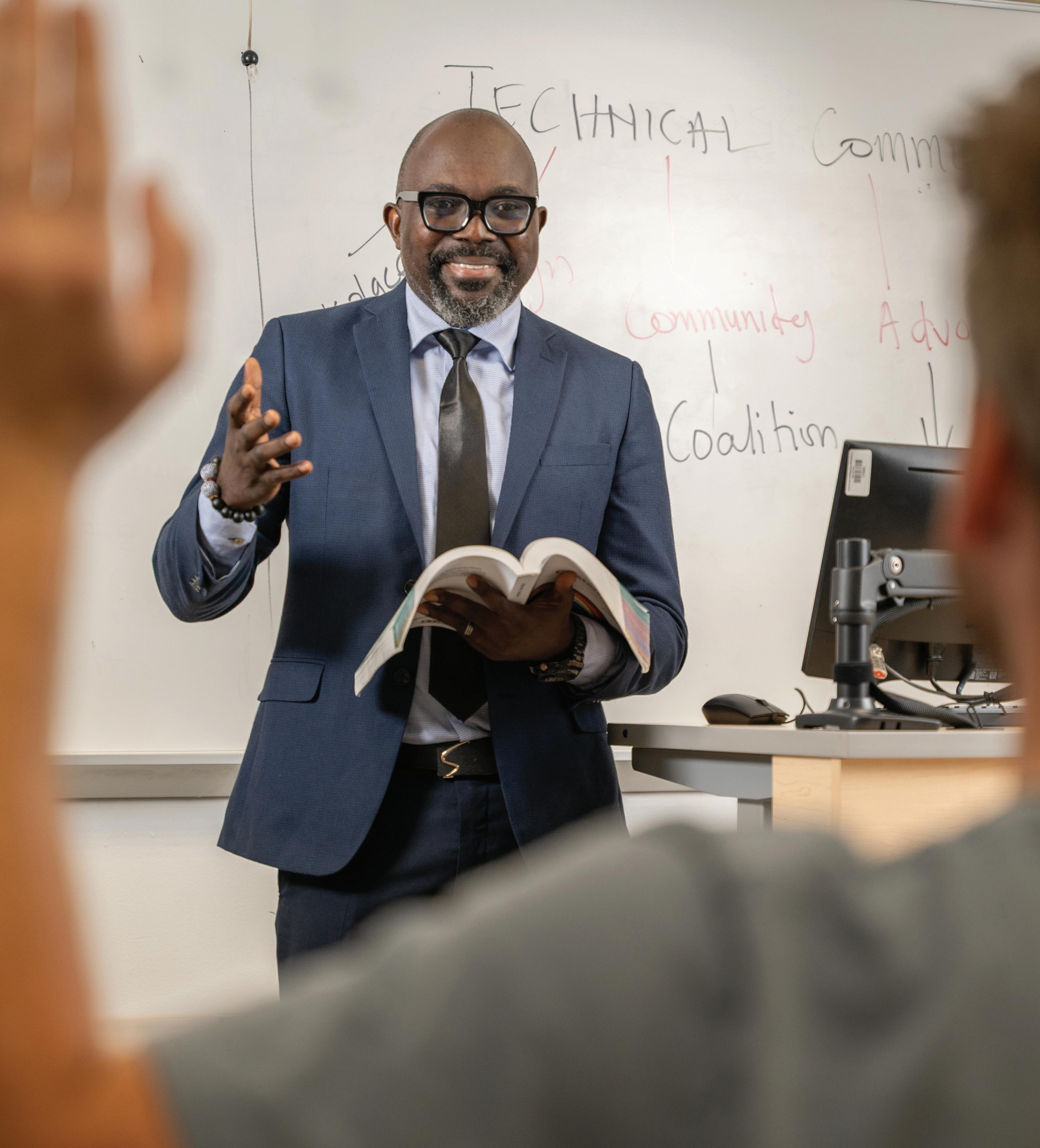
Front cover: Distinguished Faculty Award recipient Godwin Agboka, Ph.D. See page 44. Photo credit: Craig Loper
Auseful question to ask about any print publication is, simply: Why? As in, why should it exist? What about its content, purpose, and relationship with the world calls for material expression? Thankfully, I can answer that question easily: UHD faculty do extraordinary work, and that work merits elevation and acknowledgement by all available means.
Another useful question: Why now? The answer to this is also easy, yet far from simple. First, this magazine is the first of its kind here at UHD, and, as I stated, our faculty’s intellectual output has long been deserving of this kind of recognition. The second reason is that the social, cultural, and political situation of higher education has placed more scrutiny on our faculty than perhaps at any point in this century. It is vital, therefore, that we make visible the impact of research on students and the communities we serve. The third springs from the second, as those external pressures combine to create multifaceted demands that place universities squarely in the forefront of discussions and actions in the arenas of access to higher education, economic mobility, and legislation. This publication highlights for potential students, faculty, and staff the talented people they would work with and learn from, while also showing donors, granting agencies, and the legislature the myriad ways our faculty impact student outcomes and improve communities, all while contributing to the scholarly and creative corpus.
As you read these pages, you will encounter faculty, both seasoned and new to the profession, who embody a tradition of excellence infused with the energy of our students. You will see how mentorship directly impacts our students’ professional and academic ambitions, transforming the classroom into a launchpad for the next generation of leaders. At UHD, the line between the laboratory, the classroom, and the city of Houston is intentionally blurred, creating a dynamic learning environment where scholarship and student success are inextricably linked.
This commitment to the world beyond the bayou is not merely something we claim—our 2026 Quality Enhancement Plan, “Beyond the Bayou: Transferable Skills for the 21st Century,” equips students with essential skills that supplement what they learn in the disciplines. We are also proud to share that UHD has earned the 2026 Carnegie Community Engagement campus classification for the third time, a prestigious validation of our deep engagement with local, regional, national, and global communities. This honor underscores our role as an anchor institution and, through our service-learning partners and community-facing research, our faculty demonstrate that UHD’s true value is measured by the progress it fosters in the community it calls home.
We are honored to share this work with you, and we look forward to building on the successes represented in these pages.
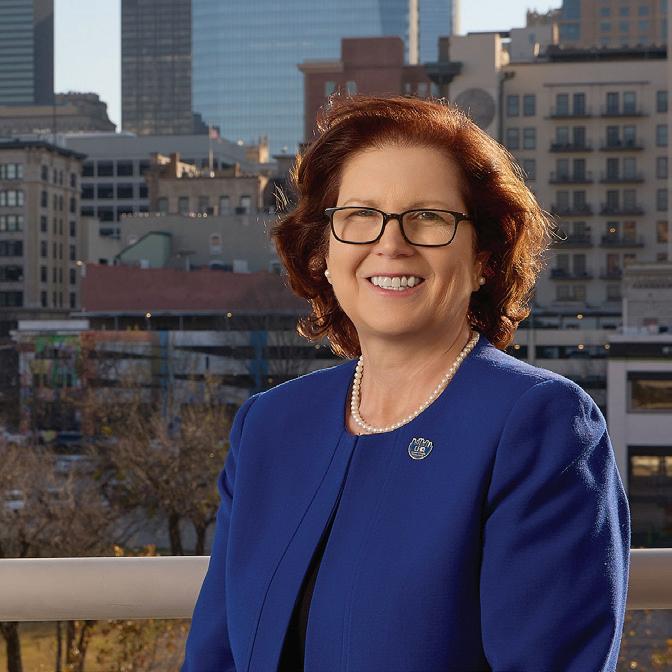
Deborah E. Bordelon, Ph.D.
Provost and Senior Vice President for Academic Affairs
University
of Houston-Downtown
Photo: Nicki Evans
UHD Welcomes New Faculty!
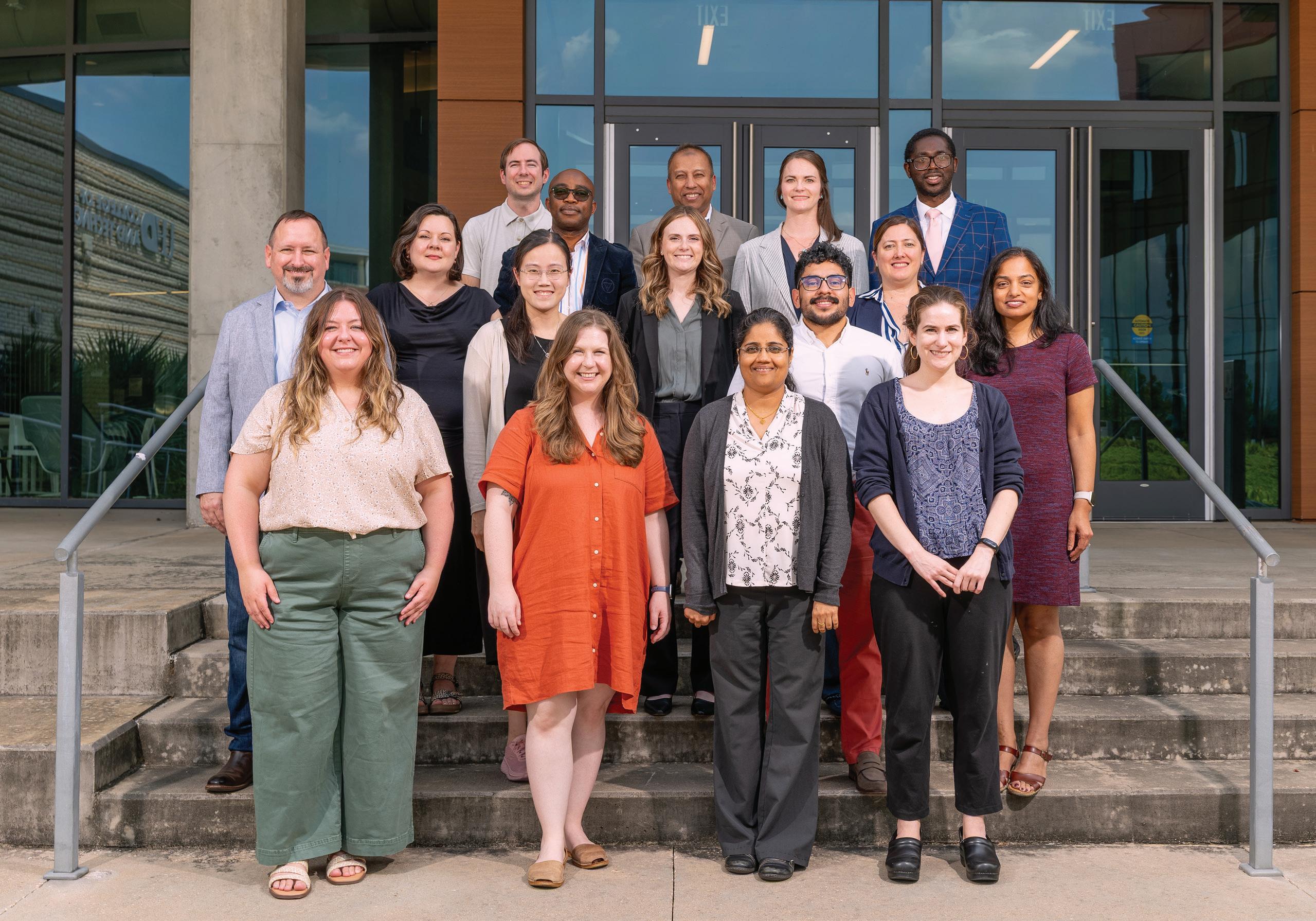
For the 2025-2026 academic year, UHD welcomed 20 new faculty members in disciplines ranging from Psychology to Mathematics to English. Many of them weathered a hot afternoon in August 2025 following the faculty retreat to pose on the steps of the College of Sciences and Technology building for a photo. The temperature was high and so were the spirits of the enthusiastic group.
Front Row (L to R): Anna Crowell, Natural Sciences; Mary Beth Balderas, Urban Education; Rachana Kalelkar, Accounting and International Business; Antonia Barolini-Alvarez, Arts & Communication
Middle Row (L to R): Jared Sorensen, Criminal Justice and Social Work; Jillian O’Connor, Psychology; Dan Zhang, English; Jayci Robison, Management; Ricardo Noe, Social Sciences; Eugenia Artabe, Social Sciences; Sagarika Kosaraju, Urban Education
Top Row (L to R): Matthew Teti, Criminal Justice and Social Work; Christopher Baiyegunhi, Natural Sciences; Irfan Safdar, Accounting and International Business; Michelle Silvers, Urban Education; Tolulope Oke, Mathematics and Statistics
Faculty Research Transforms the Educational Experience
Photo: Craig Loper
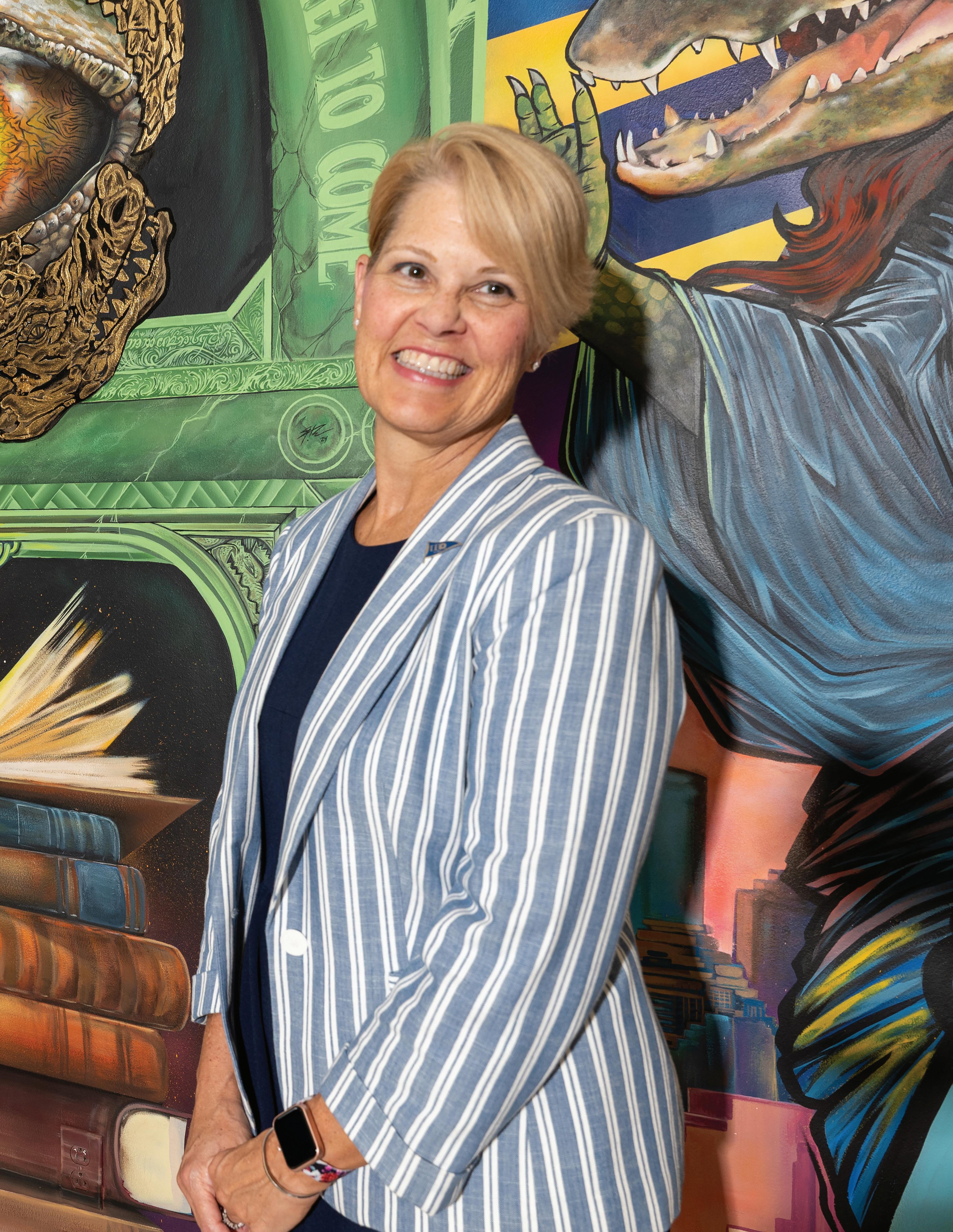
CHSS Dean Wendy A. Burns-Ardolino, Ph.D., in front of the CHSS mural, located on the 10th floor of One Main Building, created by UHD alums Bobby Ramos and Brenda Chapa of Ramos Renditions.
Inthe College of Humanities and Social Sciences (CHSS) at the University of Houston-Downtown, research is not separate from teaching, but rather it is the catalyst for transformation. Our faculty create, collaborate, and innovate in ways that reshape their disciplines while transforming the educational experiences of our students. By positioning students alongside scholars engaged in meaningful discovery across the arts, humanities, and social sciences, we ensure that learning is active, relevant, and deeply connected to the world beyond the classroom. Transformation takes root in collaboration. When historian Dr. Austin Allen joined forces with social work scholar Dr. Liza Barros-Lane from the College of Public Service to study widowhood records in Harris County through the 1880 census, their partnership produced two 2025 publications that do more than analyze data—they restore visibility to lives too often forgotten. In a different but equally urgent arena, political scientist Dr. Peter Li and Dr. Dinha Cohen of the Marilyn Davies College of Business are challenging assumptions about global environmental behavior in their coauthored article, “Re-thinking China’s Wildlife Consumption Drivers.” These collaborations exemplify how ideas gain power when disciplines intersect. They demonstrate to our students that meaningful scholarship is rarely solitary; it is built through shared inquiry, diverse expertise, and a common commitment to addressing complex social and ecological challenges. In witnessing this work, students see research not simply as publication, but as partnership—and as a force for collective transformation.
Faculty achievement also transforms our classrooms into sites of national and international conversation. English professors, Dr. Lisa Jennings and Dr. Katharine Jager, selected for competitive fellowships at the Folger Shakespeare Library and
Dumbarton Oaks respectively, return to UHD with new archival insights and interpretive frameworks that immediately enrich student learning. Their work demonstrates that scholarship is dynamic and evolving—and that our students are participants in that evolution.
In the arts and humanities, research transforms how students see culture. Dr. Ayden Adler’s work on horn trios by Brahms and Ligeti reveals how performance and history intersect, teaching students that music is both artistic expression and cultural commentary. Dr. Ashley Archiopoli and Dr. Beth Hatfield’s edited collection, “Teaching Popular Culture in the Humanities,” equips students with critical tools to analyze how digital spaces build communities and shape identity. These inquiries move beyond theory; they prepare students to navigate and influence a rapidly changing cultural landscape.
Our historians and linguists demonstrate how ideas transform across borders and communities. Dr. Pedro Acuña Rojas’s studies of Chilean responses to Perón’s politics and transnational satire show how humor and narrative reshape political discourse. Dr. Rey Romero’s research on Afro-Hispanic linguistics and Spanish language maintenance within Houston’s Equatorial Guinean community highlights language as a living force that sustains identity. Students encounter scholarship that honors culture, fosters belonging, and bridges university and community.
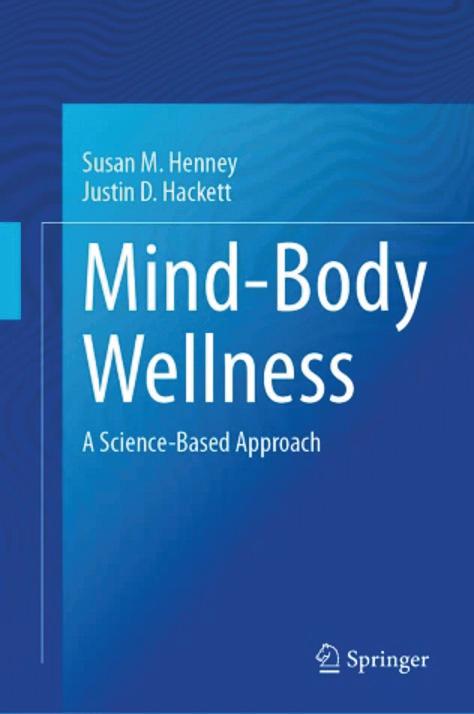
In psychology and public health, research becomes a catalyst for personal and institutional change. Dr. Stephanie Babb’s work on belonging and self-efficacy among nontraditional students directly informs how we support first-generation learners. Dr. Kit Cho’s research on retrieval practice transforms classroom strategies to improve resilience and performance. Dr. Susan Henney’s co-authored book, “Mind-Body Wellness: A
Science-Based Approach,” integrates physical and emotional health, while Dr. Katrina Rufino’s studies on suicide risk and Latinx student resilience illuminate pathways toward advocacy and care. Here, research transforms not only knowledge but lives.
The transformative power of collaborative research is ultimately measured in our students. When they learn from faculty whose scholarship is active and consequential, they gain more than information—they gain the capacity to generate knowledge, confront complexity, and act with purpose. Research transforms curiosity into inquiry, inquiry into insight, and insight into action.
As Dean of the College of Humanities and Social Sciences at the University of Houston-Downtown, I
am proud of our faculty who work hard every day to ensure that teaching and research are inextricably linked, so that students know how to generate new knowledge through intensive research and academic practice. By working alongside faculty whose research transforms society, CHSS students leave UHD prepared to think critically, act compassionately, and lead boldly in Houston, the Gulf Coast, and beyond.
Dr. Wendy A. Burns-Ardolino Dean, College of Humanities & Social Sciences
The High-Impact Advantage
Students who engage in communitybased research outperform their peers by up to 40% on benchmarks for critical thinking and civic engagement.
Source: The American Association of Colleges and Universities High-Impact Practices Report.
reads
Recent Publications by UHD Faculty
Ashley Archiopoli, Katherine Hampstead, and Elizabeth Hatfield, Teaching Popular Culture in the Humanities Classroom (Lexington, 2025)
Adrian Rodriguez-Riccelli and Rey Romero, Spanish in Africa/ Africa in Spanish: Current Challenges and Methodologies in Afro-Hispanic Linguistics (De Gruyter, 2024)
Aaron Gillette, Nazis in the New World: German Exchange Students in the United States, 1933-1941 (Johns Hopkins, 2025)
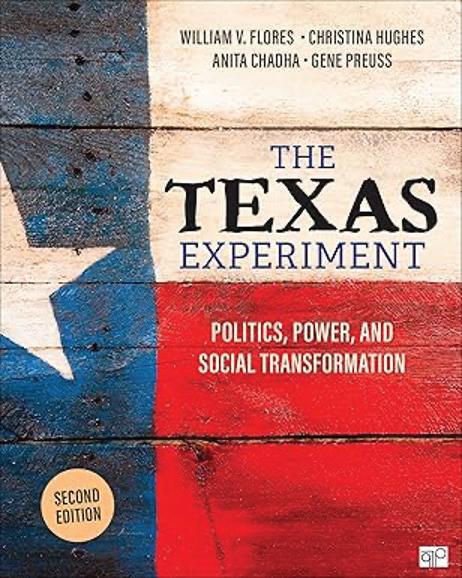
William V. Flores, Christina Hughes, Anita Chadha, and Gene Preuss, The Texas Experiment: Politics, Power, and Social Transformation, 2nd ed. (CQ Press, 2024)
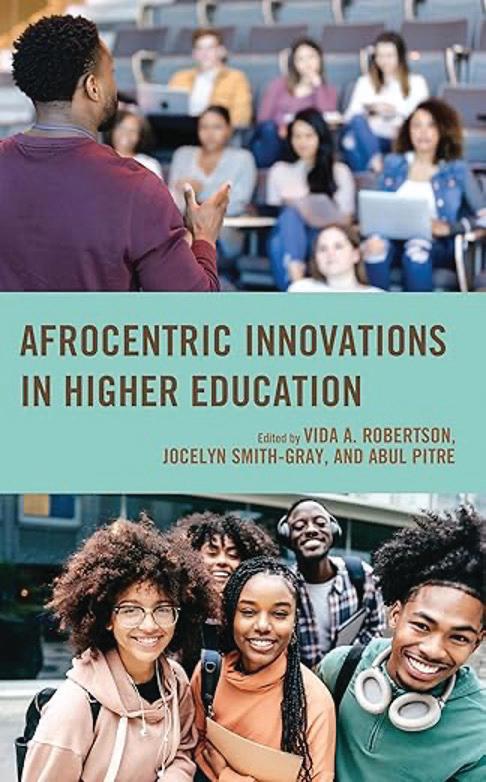
Vida Robertson, Afrocentric Innovations in Higher Education (Hamilton, 2023)
RECENT JOURNAL ARTICLES BY UHD FACULTY
Roseanna M. Crowell, Assistant Professor, Natural Sciences
Lemes Da Silva, N. M., Crowell, R., Vis, M. L., Chiasson, W. B., Paiano, M. O., Silva Lopes, Y. M., Necchi, O. (2025). Investigation of mitochondrial genomes of members of the order Batrachospermales (Rhodophyta). Phycologia.
Travis Crone, Professor, Psychology
Stephanie Babb, Professor, Psychology
Crone, T. S., Babb, S. J. (2025). Social belonging, self-efficacy, and motivation in nontraditional college students. Journal of Continuing Higher Education.
Zafor Ahmed, Associate Professor, Finance, Information Systems, Economics & Risk Management
Ahmed, Z., Eryilmaz, E., Kumar, V., & Kumar, U. (2025). Control Balancing in Offshore Information Systems Development: Extended Process Model. Communications of the Association for Information Systems, 56, 816-850.
Richard Conde, Associate Professor
Lucille Pointer, Professor, General Business, Marketing & Supply Chain
Conde R, Dinulescu C, Pointer L (2025), “Multi-level leadership interactions in sales: exploring gender, performance and tenure effects”. Journal of Business & Industrial Marketing, Vol. 40 No. 4 pp.1008–1026.
Fatemeh Askarzadeh, Assistant Professor, Management
Askarzadeh, F., Lewellyn, K., Fainshmidt, S., & Judge, W. Q. (2025). Entrepreneurial orientation and underconformity to female board representation norms. Journal of Management Studies, 62(2), 539-564.
Henry Foust, Assistant Professor, Computer Science and Engineering Technology
Subash Pakhrin, Assistant Professor, Computer Science and Engineering Technology
Pakhrin, S. C. (2025). Multimodal deep learning for predicting protein ubiquitination sites. Bioinformatics Advances(vbaf200).
Ethan Marshall, Assistant Professor, Criminal Justice and Social Work
Marshall, E. A., Belisle, L., Miller, H. A. (2025). Exploring the Impact of Victimization and Mental Health on Sexual Recidivism Among Women Who Have Sexually Offended. Victims & Offenders.
Dinah Cohen, Associate Professor, General Business, Marketing & Supply Chain
Cohen-Vernik, D. A., Pazgal, A., Liu, X. (2025). Strategic Value of Price Differentiation of Customized Products. Customer Needs and Solutions, 12(4).
Dexter Cahoy, Professor, Mathematic and Statistics
Cahoy, D. and Sedransk, J. (2025). Improved small area inference from data integration using global-local priors. Survey Methodology, 51(2), 449-473.
Franklin Allaire, Associate Professor, Urban Education
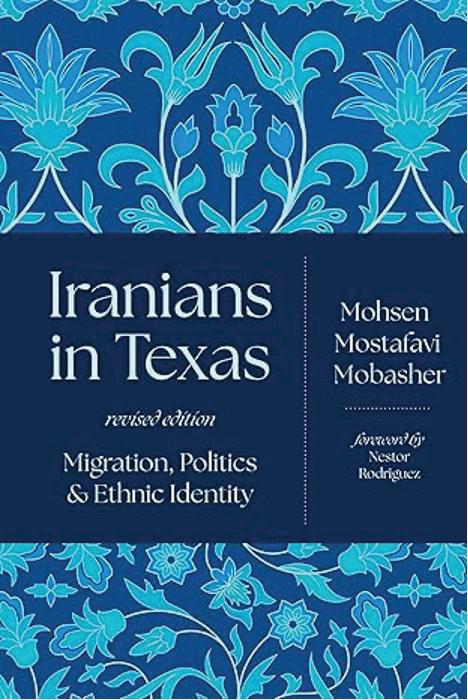
Mohsen Mobasher, Iranians in Texas: Migration, Politics, and Ethnic Identity, revised ed. (U of Texas, 2025)
Foust, H. C. (2024). Speed of Sound and Critical Flow. Shock Wave and High Pressure Phenomena. Springer Nature Singapore.
Allaire, F. S., Kamas, A. (2024). Houston, We’ve Got Problems! Overcoming Challenges in a University-Community Partnership during NASA’s Year of Education on Station. Curriculum and Teaching Dialogue.
Abdelnasser Hussein, Assistant Professor, Urban Education
Hussein, A. H. (2024). Empowering change: A review of educational leadership dynamics in juvenile detention centers. Journal of Management and Engineering Integration, 17(2), 117-125.
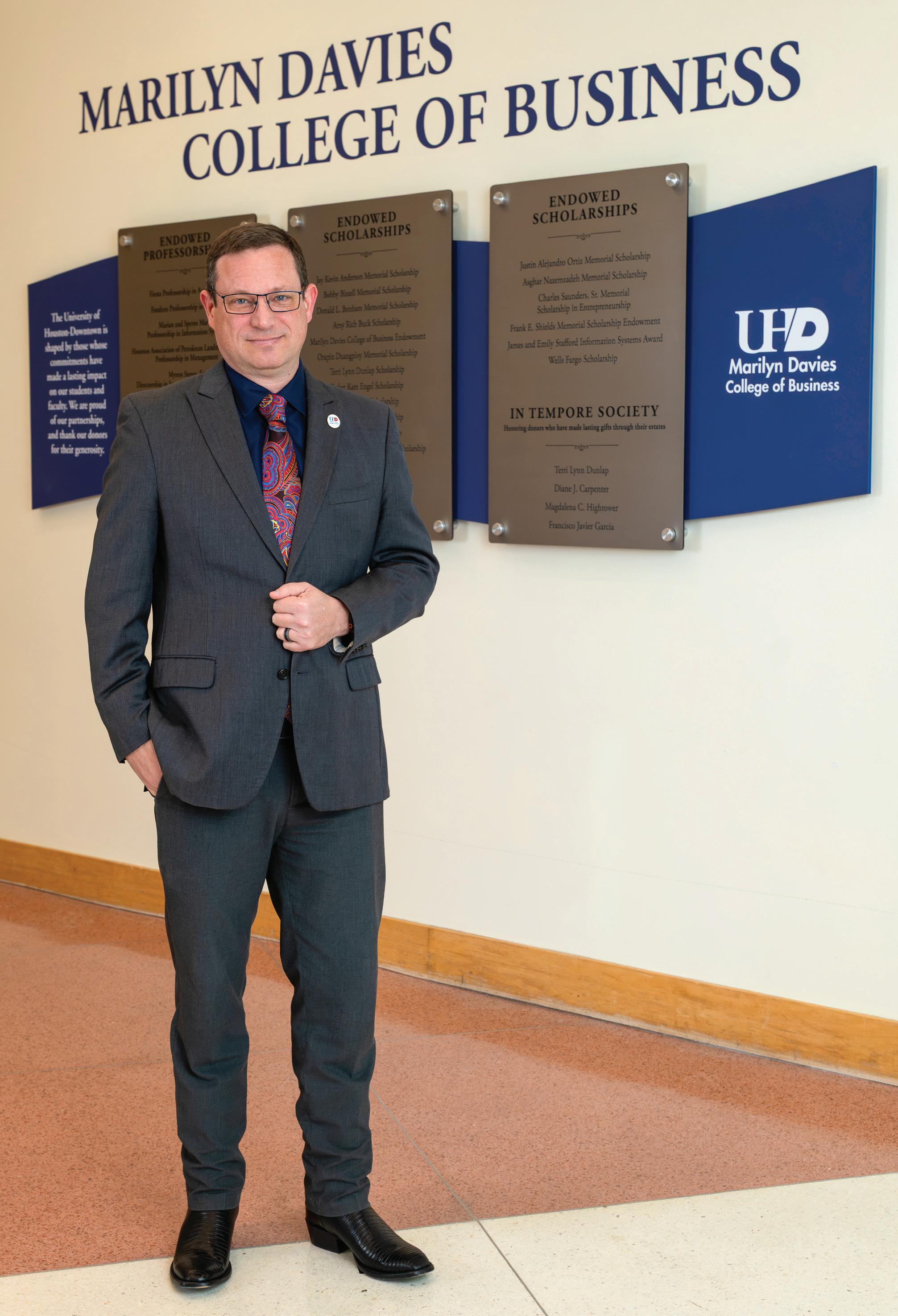
Jonathan Davis, Ph.D., Dean of the Marilyn Davies College of Business
Photo: Craig Loper
FACULTY RESEARCH FUELS
STUDENT FIELD EXPERIENCE AND CAREER SUCCESS
UHD is motivated by a simple and powerful mission: to prepare students to thrive in the workforce and to lead in their communities.
Making good on that commitment involves creating career-ready graduates and ensuring that the skills they leave with match what the community will need, now and in the future. Success means that our graduates are not only competitive, but in demand.
When our graduates sit down for an interview, they are competing head-to-head with other graduates from other schools. To ensure they’re ready for that competition, many of our courses focus on career readiness, as faculty embed real-world practice into the classroom—team projects that mirror professional settings, presentations that develop confidence, and case studies pulled straight from current headlines. Students benefit from workshops
on résumé writing, networking, interviewing, and we host etiquette dinners that demystify social situations that may feel unfamiliar but are necessary to taking leadership roles.
And this work doesn’t just happen in the Marilyn Davies College of Business. Elsewhere on campus, faculty in the College of Sciences and Technology have engaged in scholarship on the teaching of STEM, so much so that more than a dozen professors have published papers on the topic, ensuring our region has the requisite teaching
Percentage of UHD graduates enrolled in graduate courses or employed in Texas within one year of graduation.
...our graduates are landing jobs and, more than that, they are excelling in them. Employers tell us they are impressed by the adaptability, dedication, and problem-solving skills our students bring to their roles.
80.2% $25,580
Value added to graduate salaries. “Value added” represents the difference between actual graduate earnings and their predicted earnings based on demographics.
Source: Wall Street Journal/College Pulse 2025 Best Colleges in the U.S. Ranking.
talent to educate the next generation of engineers, scientists, and mathematicians. And Dr. Ken Johnson, Associate Professor of Natural Sciences, has involved undergraduates in his research for more than 20 years, taking them on research trips to the Pacific Northwest to study metamorphic rocks and ore deposits and gain practical experience as geochemists.
In the College of Humanities and Social Sciences (CHSS), Professor of History, Humanities, and Languages Dr. Carolyn Gascoigne published the article, “Experiential Humanities through Internships” in which she details the ways students are asked to pursue an internship or service-learning project that joins academic experiences with their career goals, ensuring their work is directly relevant to their future professional lives.
As a result of this approach, our graduates are landing jobs and, more than that, they are excelling in them. Employers tell us they are impressed by the adaptability, dedication, and problem-solving skills our students bring to their roles. Just as importantly, those employers return to recruit again, confident that our graduates will deliver. Each success story strengthens UHD’s reputation and creates new opportunities for the next generation of Gators. It is this cycle of impact that truly distinguishes our faculty. Classroom interactions spark new research questions. Research findings, in turn, inform classroom practice. The result is a curriculum
that is alive and that evolves with the professional landscape, and graduates who leave ready to lead in it. A first-generation student secures a Fortune 500 internship because a faculty mentor encouraged them to refine their presentation skills. A graduate takes on a leadership role within a year because coursework prepared them with the tools to solve a complex organizational problem. Employers return for more interns and hires because our students stand out. These outcomes—more than any ranking or statistic—reflect the real power of faculty success.
Higher education faces a dual challenge: closing achievement gaps while anticipating the rapid changes. In doing so, we must not merely teach theory. Faculty must participate in shaping and developing graduates who are prepared, confident, and innovative. The success of our faculty is measured not in publications, but in the lives changed, the careers launched, and the confidence instilled in every student. Their research keeps the curriculum current, their teaching relevant, and their mentorship transformative. But their true research legacy is the students who graduate and create the world anew.
Dr. Jonathan Davis Dean, Marilyn Davies College of Business
Faculty Research Engages, Informs Communities
AsDean, it is a privilege to share a portrait of our college’s interdisciplinary scholarship—work that actively engages and informs the communities we serve. Over the past year, College of Public Service (CPS) faculty have pursued cross-disciplinary inquiry that spans Urban Education, Criminal Justice, and Social Work (the college’s three programs), as well as psychology, mathematics and statistics, arts and communication, and beyond. These collaborations demonstrate how productive partnerships across colleges translate into rigorous scholarship with tangible social impact. Summer 2023 marked the launch of our Faculty Team Research Incubator with the Houston Court Watch Program. The team comprises Dr. Fei Yang (Criminal Justice), Dr. Kristen Anderson (Psychology), Dr. Liza Barros-
Lane (Social Work), and Dr. Clete Snell (Criminal Justice). The Houston Court Watch Program required integrating criminal justice, social work, psychology, and other social science perspectives to illuminate human behavior and judicial decision-making. The incubator fostered cross-disciplinary collaboration to conceptualize and measure court-watch observations in ways that are informative for communities and policymakers. In this cross-departmental coalition, Dr. Kristin Anderson from the Psychology Department brings substantial socialpsychology expertise on prejudice, stereotyping, and discrimination. Her involvement enriched the study’s theoretical framing, measurement development, and interpretation of court-watch indicators, strengthening the program’s relevance to diverse communities and enhancing methodological robustness.
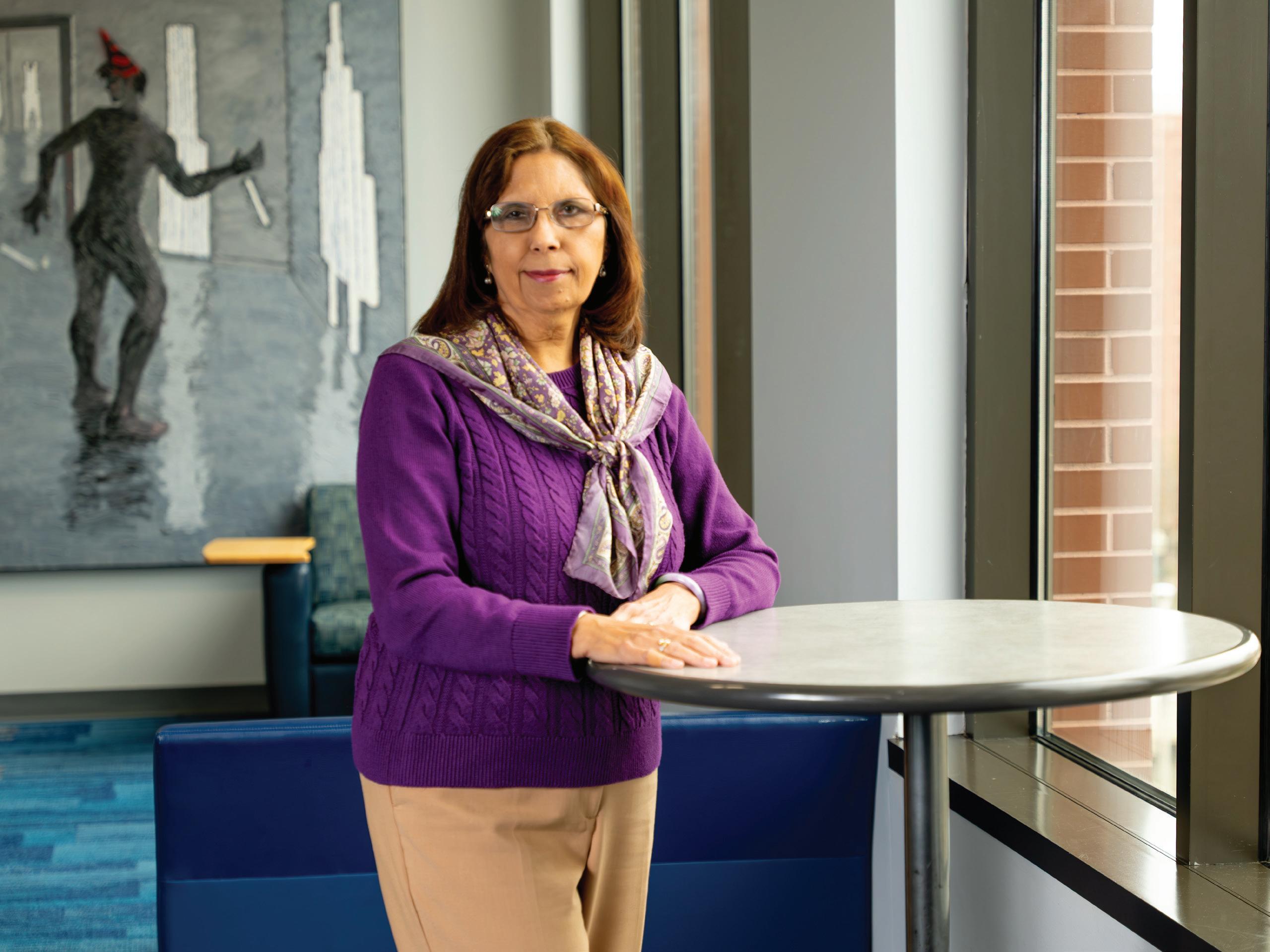
Dr. José Ricardo-Osorio, Dean of the College of Public Service
Photo: Craig Loper
Another example of interdisciplinary work is the mixed-method study team of faculty members from CPS (Yang; Barros-Lane; Dr. Diane Miller, Urban Education; and Prof. Leslie Sirrianni, Social Work), the College of Humanities and Social Sciences (Dr. John Rountree, Arts and Communication), and the College of Sciences and Technology (Dr. Katherine Shoemaker, Mathematics and Statistics).
This cross-cutting study integrates perspectives from criminal justice, education, statistics, social work, and communication studies. This mixed-methods design required methodologists with diverse disciplinary backgrounds to accurately interpret data and communicate results to varied audiences.
This collaboration resulted in the production of the article, “What Motivates Social Work Undergraduate Students to Vote? A MixedMethod Study,” which has been accepted for publication by the “Journal of Social Work Education.”
Productive partnerships continue to yield new work. Dr. Stephen Winton (Urban Education) is collaborating with district partners Betty Zavala (Klein ISD) and Miller to study how quality instruction serves as an authentic pathway to student success on high-stakes assessments, with Shoemaker (Mathematics and Statistics) facilitating quantitative analysis.
Most recently, Dr. Billy Henson (Criminal Justice) and Dr. Susan Henney (Psychology) joined forces to investigate male grief as it is depicted in horror films. Their aim was to examine the gendered ways in which grief is portrayed in popular media. As a psychologist, Dr. Henney is an expert on grief, and her
“ In sum, these few highlighted projects reflect a deliberate, ongoing commitment to interdisciplinary scholarship that informs and strengthens our communities.
involvement in this line of research proved highly valuable. The collaboration resulted in the research paper “Crying Like a Man: Examining the Portrayal of Male Grief in Horror Movies.”
In sum, these few highlighted projects reflect a deliberate, ongoing commitment to interdisciplinary scholarship that informs and strengthens our communities. By weaving together expertise from multiple disciplines and inviting collaboration beyond CPS, we produce research that not only advances knowledge but also translates into practical benefits for students, practitioners, and residents alike. As we look ahead, I am confident that these partnerships will continue to generate transformative work, deepening our impact and expanding opportunities for civic engagement, socioeconomic mobility, and informed decision-making across an array of disciplines.
Dr. José
G. Ricardo-Osorio Dean, College of Public Service
Houston
Transformed, New Research
Questions Asked
Students Carry New Knowledge Into The Community
Faculty Identify City's Challenges
Research Potential Solutions, Identify Best Practices
Incorporate Findings Into Classrooms
Faculty Research Inspires Student Discovery
Photo: Craig Loper
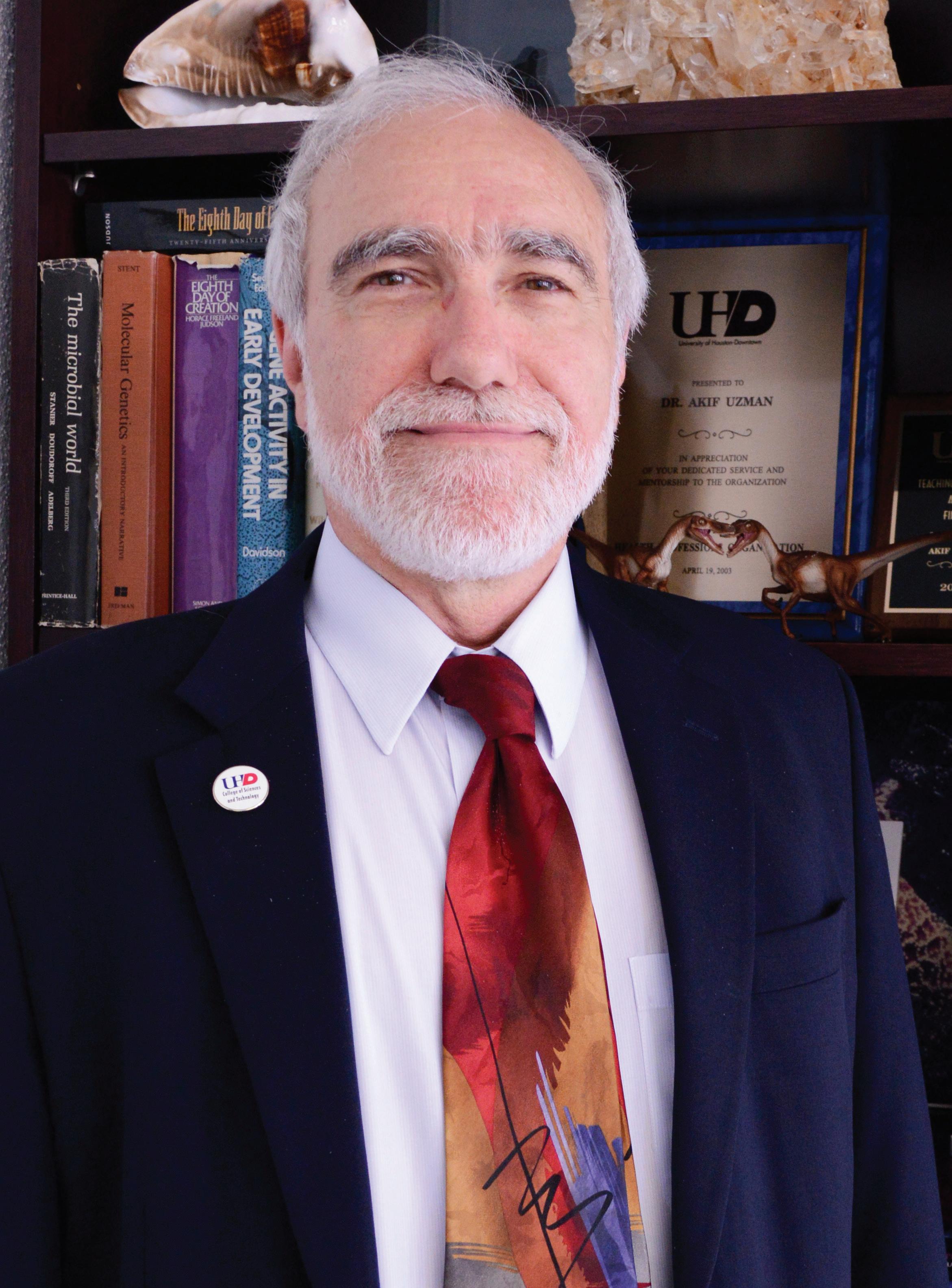
Akif Uzman, Ph.D., Dean of the College of Sciences and Technology
Exceptional university teaching comes from faculty who bring their scholarship to students. Borrowing from Walt Whitman, this student engagement offers students the opportunity to “contribute a verse” to the “powerful play” of discovery and deepens UHD’s connection to the world by bringing forth the next generation of discoverers.
Faculty scholarship in the College of Sciences and Technology (CST) addresses important issues in environmental sciences, biomedical sciences, community health, engineering, cybersecurity, artificial intelligence (AI), robotics, graph theory, statistics, advanced mathematics, and science education. CST faculty also collaborate with colleagues across UHD. Drs. Katherine Shoemaker and Heather Goltz of the College of Public Service are studying the impact of prostate cancer on different aspects of the relationships between the patients and their partners. Drs. Ting Zhang and Wei Wei of the Marilyn Davies College of Business are working to develop apps to help prospective students navigate the complex college admissions process. Collaborations like these make their way into the classroom to enrich student learning. However, at UHD, faculty go even further.
A large host of faculty around the college have engaged students as “co-discoverers.” Over the past five years, 52 CST faculty have published 160 peer-reviewed publications with 38 undergraduates and two graduate students co-authoring publications with the faculty. With a commitment to providing scholarship opportunities to CST students, more than 1,100 students have been engaged in research with faculty.
Taking on the challenges of climate change, Drs. Lisa Morano and Vassilios Tzouanas have worked with teams of students to explore new methods and technologies for sustainable living in urban environments, including the development of solar cell arrays.
For more than a decade, Dr. Rachna Sadana and students have canvassed a variety of chemical compounds for their potential for cancer treatment. In related work, Dr. Benjamin Soibam, collaborating with colleagues and students, has combined molecular genetics and advanced bioinformatics to determine critical genetic factors in cancer biochemistry. Drs. Yuan Yuan Kang and Soibam have brought students into experimental and computational problems in neuroscience. And, on the other side of “STEM,” Dr. Sergiy Koshkin recently publish two papers in advanced mathematics with a student.
Bridging the past to the present, Dr. Jerry Johnson’s work with students on the biochemistry of retinal pathologies inspired one of them to return to UHD: Dr. Elda Rueda now works with a new generation of students to engage in research and discovery at UHD.
At UHD, faculty scholarship is brought into the classroom to expand student learning. We see this in CST through Special Project courses and nationally recognized Course-Based Undergraduate Research (CUREs) courses in the natural sciences, directed by Drs. Tobin and Visbal.
From researching cancer treatments to solar cell engineering, UHD students are not only engaged in the world of discovery but also in the world itself. By participating in the scholarship of the faculty, UHD students become researchers in their own right, making their own marks in the “powerful play” of discovery.
“ A large host of
faculty around the college have engaged students as “co-discoverers.” Over the past five years, 52 CST faculty have published 160 peerreviewed publications with 38 undergraduates and two graduate students co-authoring publications with the faculty.
Dr. Akif Uzman
Dean, College of Sciences and Technology
Federal Grants Support Faculty Research and Student Success
UHD’s Office of Research and Sponsored Programs (ORSP) supports the university’s faculty, staff, and students in applying for research and creative enterprise grants.
The ORSP provides pre-award support, post-award accounting, and compliance oversight for contracts and grants.
The most recent grants totaling $4,978,559 have funded programs with tremendous impact—from the Minority Serving Engineering Improvement Program as a driver for increased STEM majors at UHD to the UHD Bilingual E-Library with worldwide implications on literacy to “Experimentium: Inclusive by Design,” which is changing how science is taught and learned.
$1,348,297
College of Sciences and Technology (CST) Scholars Academy
Dr. Mary Jo Parker
The Scholars Academy received a one-year, no-cost extension to two Department of Education Minority Serving Engineering Improvement Program grants.
These grants support mentored research with UHD faculty in STEM. Notably, the number of STEM-persisting students has increased as well as STEM graduation rates have risen. In addition, there has been an increase in minority undergraduates by almost 50% within the computer science and data science majors.
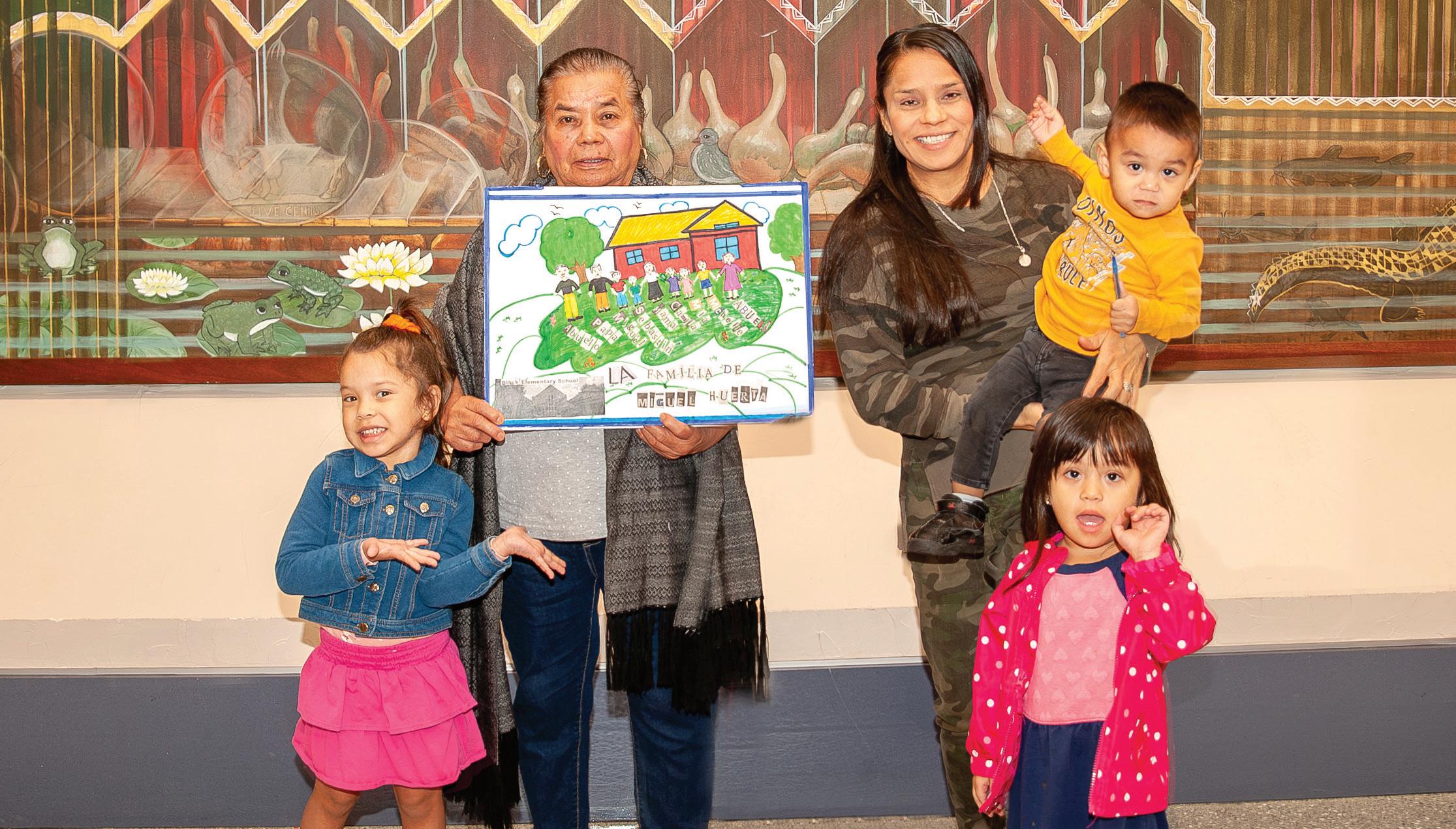
One of the families that participated in UHD’s Bilingual E-Library initiative. See next page for more information on the program.
UHD Grant Monies for Major Projects
Minority Serving Engineering Improvement Program
$1,348,297 (CST)
UHD Bilingual E-Library
$2,470,225 (CPS)
Experimentium: Inclusive by Design
$1,160,037 (CST)
$2,470,225
College of Public Service (CPS)
US Department of Commerce
Dr. Natasha Perez & Dr. Maria Bhattacharjee
The UHD Bilingual Digital Library is a free, community-based initiative designed to improve literacy, digital inclusion, and workforce readiness among Houston families—key drivers of the region’s long-term economic growth.
More than half of U.S. adults read below a sixth-grade level. Research from the Houston Mayor’s Office for Adult Literacy and the Barbara Bush Houston Literacy Foundation demonstrates a direct correlation between literacy rates and economic advancement. By elevating adult literacy skills, Harris County alone could experience a financial gain of up to $13 billion.
The UHD Bilingual Digital Library directly addresses these challenges by providing bilingual literacy instruction, technology training, and family-centered educational support in both English and Spanish. Families participate in virtual and in-person classes focused on reading, writing, and digital literacy. A distinctive element of the program engages families in writing and publishing their own bilingual stories, promoting cultural pride and expanding the library’s multilingual collection.
This e-Library serves as a scalable model for integrating literacy, technology, and workforce preparation. Future expansion will include partnerships with local, state, and national organizations to broaden access and prepare families for success in an increasingly bilingual, technology-driven economy.
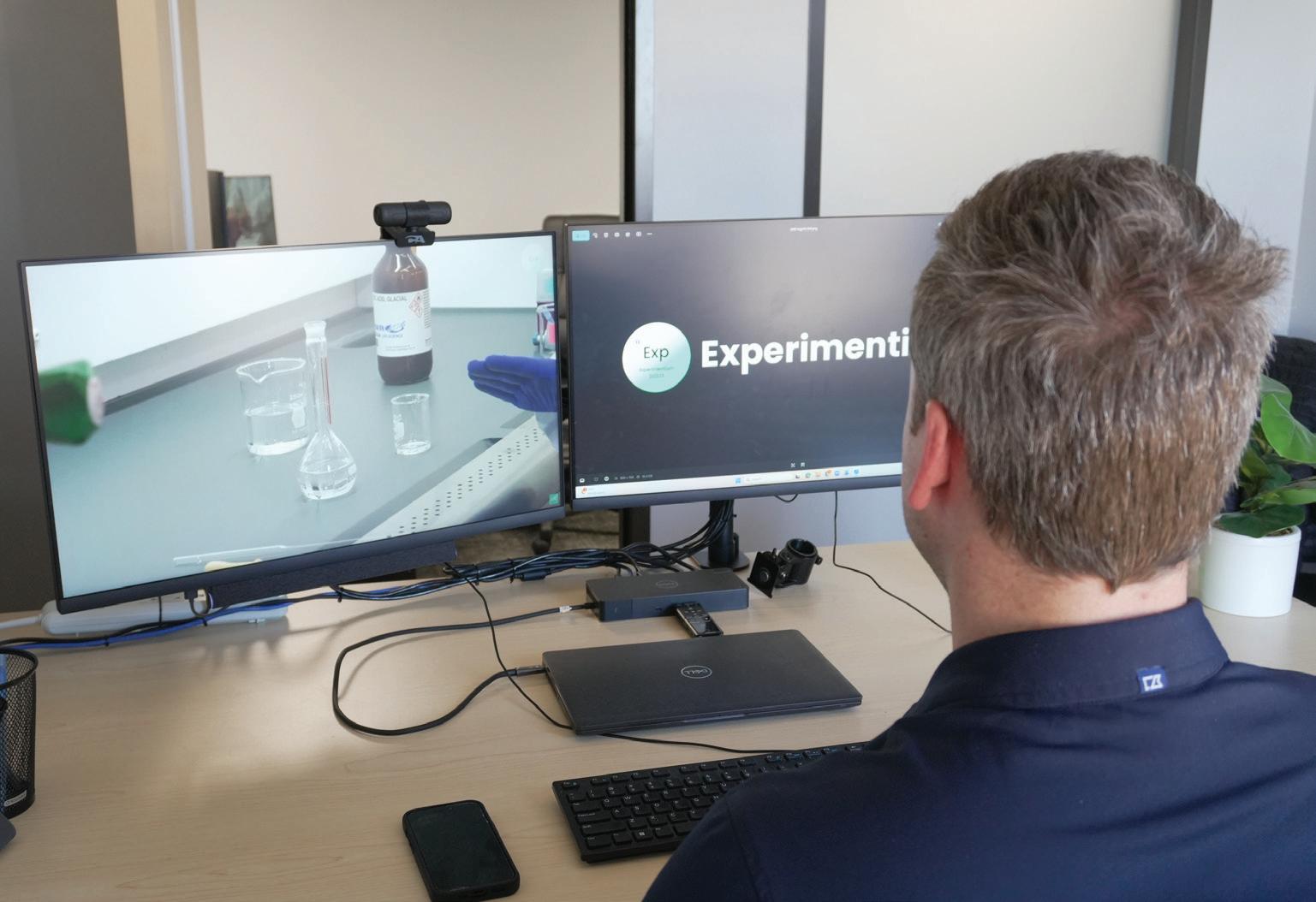
An example of how students access Experimentium content.
Photo: Katherine Medina
$1,160,037
College of Sciences and Technology (CST)
Natural Sciences
Dr. Eszter Trufan and Dr. Elene Bouhoutsos-Brown
Experimentium is a comprehensive collection of free and openly licensed chemistry lab resources that include Introductory, General Chemistry I and II, Organic Chemistry, and Biochemistry lab experiments with:
• Video-based demonstrations.
• Editable experiment prompt templates with integrated assignment details and supporting resources.
• Assessment guides.
• Teamwork resources (team building case studies, team constitution guides).
• Tutorials on chemistry concepts, lab techniques, math, and science writing.
• Grading rubrics and assessments, accessibility resources and activity sheets.
These resources equip chemistry lab instructors of all experiences in providing high-quality, rigorous, and relevant chemistry lab experiences in an organized and supportive context and provide students of all abilities with a wide range of resources, including:
• A front-row seat to all chemistry demonstrations.
• Ability to rewind and rewatch fine details.
• Closed captioning to support acquisition of correct science jargon without getting lost in it.
• Consistent formats for all experiment prompts.
• Relatable materials and real-world applications.
The experiments are designed to be visually impactful, multisensory (when possible), and use non-hazardous materials (when possible), to allow the study of chemistry in and outside of chemistry labs in remote, in-person, and hybrid formats.
All resources can be found at the www.experimentium.org website where individual experiments and even whole courses can be searched, edited, and downloaded with their connected chemical and equipment lists for facile implementation in a variety of settings.
These resources have already benefitted students at UHD and Houston City College, and their use continues to expand. Streaming the 183 videos publicly and ad-free on YouTube (Experimentium_OER) ensures anytime, anywhere access to the Experimentium resources and allows for customization of the viewing experience by adjusting viewing speed, activating closed captioning or auto-translation in 150+ languages.
The collection continues to expand with the addition of new experiments (76 so far), project-based course options (five complete courses so far) and new areas of chemistry, many of which are the result of undergraduate student work on the testing and optimization of relevant protocols.
Organized Research and Creative Activities Program
The Organized Research and Creative Activity (ORCA) program offers competitive internal grants to support research by tenured and tenure-track faculty at the University of Houston–Downtown. Each year, faculty submit proposals outlining projects that can be completed within an 18-month period.
ORCA awards may be used for a wide range of research needs, including equipment purchases, undergraduate research assistants, data analysis software, course buyouts, travel to field sites, and other project expenses. The program is designed to help faculty advance their scholarly agendas while engaging students and strengthening UHD’s academic profile.
Funded projects contribute directly to the university’s mission by generating new knowledge, expanding research opportunities for students, and elevating UHD’s role as a leader in scholarly and creative inquiry.
Speciation Genomics of Hawaiian Bats, Dr. Amy Baird
Examining Relationships between Six Sigma and Corporate Social Responsibility (CSR) on Financial Performance: A Longitudinal Approach, Dr. Ray Cao Social and Economic Factors Influencing Men’s Sense of Belonging, Connections: Potential Social Outcomes, Dr. Yajaira Ceciliano-Navarro
Using Gamification to Improve Student Achievement, Dr. Kit Cho Research Paper on Restocking Fees as Pricing Mechanism, Dr. Dinah Cohen
Undergraduate Perceptions of School Psychology, Dr. Stephanie Coleman
The EPect of Narrative Perspective and Religion on Empathy and Transprejudice, Dr. Travis Crone Functional Neuroimaging in Psychiatric Patients with Suicidal Ideation, Dr. Kellen Gandy Prosecutorial Decision-Making in Intimate Partner Violence Cases: A Systematic Review of the Literature, Dr. Alondra Garza
Trajectories of Adulthood Body Mass Index (BMI) and Cognitive Function in U.S. Older Adults: Secondary Analysis of the National Health and Nutrition Examination Survey 2011- 2014, Dr. Song Ge Mechanisms of Perceived Similarity to Media Characters in Early Childhood: Implications for Learning, Dr. Courtney Hernadez Building and Assessing a Digital, Accessible, and Interactive Showcase of Diverse STEM Professionals to Empower Minoritized Students in UHD Natural Sciences, Dr. Jerry Johnson
Characterizing Legacy Phosphorus Dynamics in Soils with Excessive Nutrient Build-Up via Incubation Experiments, Dr. Qiang Li
Digital Transformation in the Texas Nonprofit Sector, Dr. Hanjin Mao
Expanding Possibilities: Developing Large Format 3D Printing Capability for Academic Excellence, Dr. Kyle Moore
White Women’s Linguistic Terrorism: A Critical Feminist Semiology, Dr. Annalee Ring
The Association of Sleep Across Inpatient Treatment and Suicide Ideation, Attempt, & Death, Dr. Katrina Rufino
Closing the Mental Health Treatment Gap through Field Education, Dr. Shahnaz Savani
Exploring Student Perceptions of the School Climate in a State Takeover District, Dr. Danya Serrano
Surviving Heatwaves and Cold Snaps: Thermal Tolerance in Grasses, Dr. Michael Tobin
Generative AI in the Classroom: An Integrative Literature Review, Dr. Saveena Veeramoothoo
Histological Characterization of an Avian Model of Maternal Phenylketonuria, Dr. Adriana Visbal
Developing and Validating a New Measure for Relational Sexual Health Communication, Dr. Kara Winkler
Motivation, Attribution, and Coping in Academic Boredom: The Comparison between Traditional and Nontraditional Students, Dr. Jianling Xie
Secure Authentication Algorithms for IoT Networks, Dr. Shengli Yuan
Grant Recipients by Department
Psychology
General Business, Marketing, and Supply Chain Management
Social Sciences
Natural Sciences
Arts & Communications
Nursing
Criminal Justice
Social Work
Computer Science & Engineering Technology
History, Humanities , and Languages
“ I am deeply grateful to the University for its strong commitment to supporting faculty research. The ORCA grant provides invaluable time and resources, allowing me to engage meaningfully in research alongside my students. It is humbling to receive this faculty-reviewed grant, because I know many of my colleagues are also pursuing important, impactful work that merits funding and recognition.
– Dr. Kit Cho, Associate Professor in Psychology, ORCA grant winner
Study Abroad Program Expands Students’ Horizons
BY SANDRA BRETTING
Imagine studying Shakespeare at The Globe Theatre in London— home to Shakespeare’s theatre company—as part of a humanities degree at UHD.
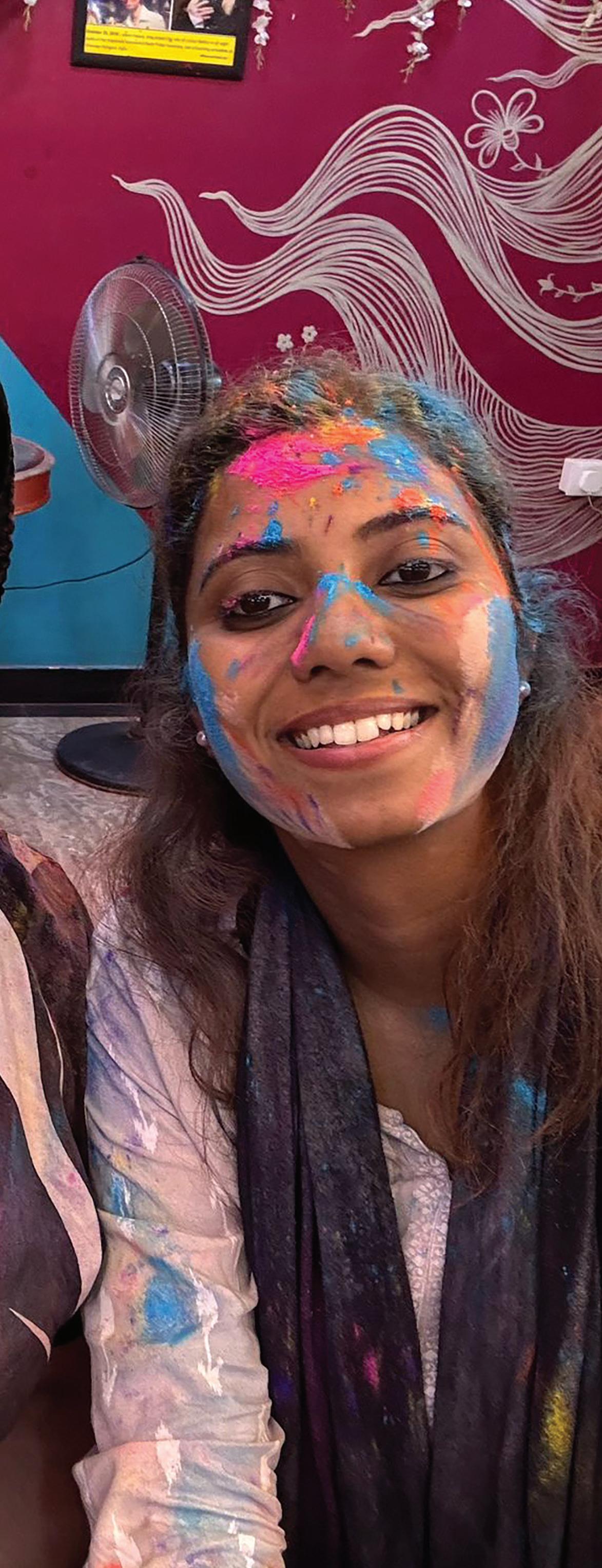
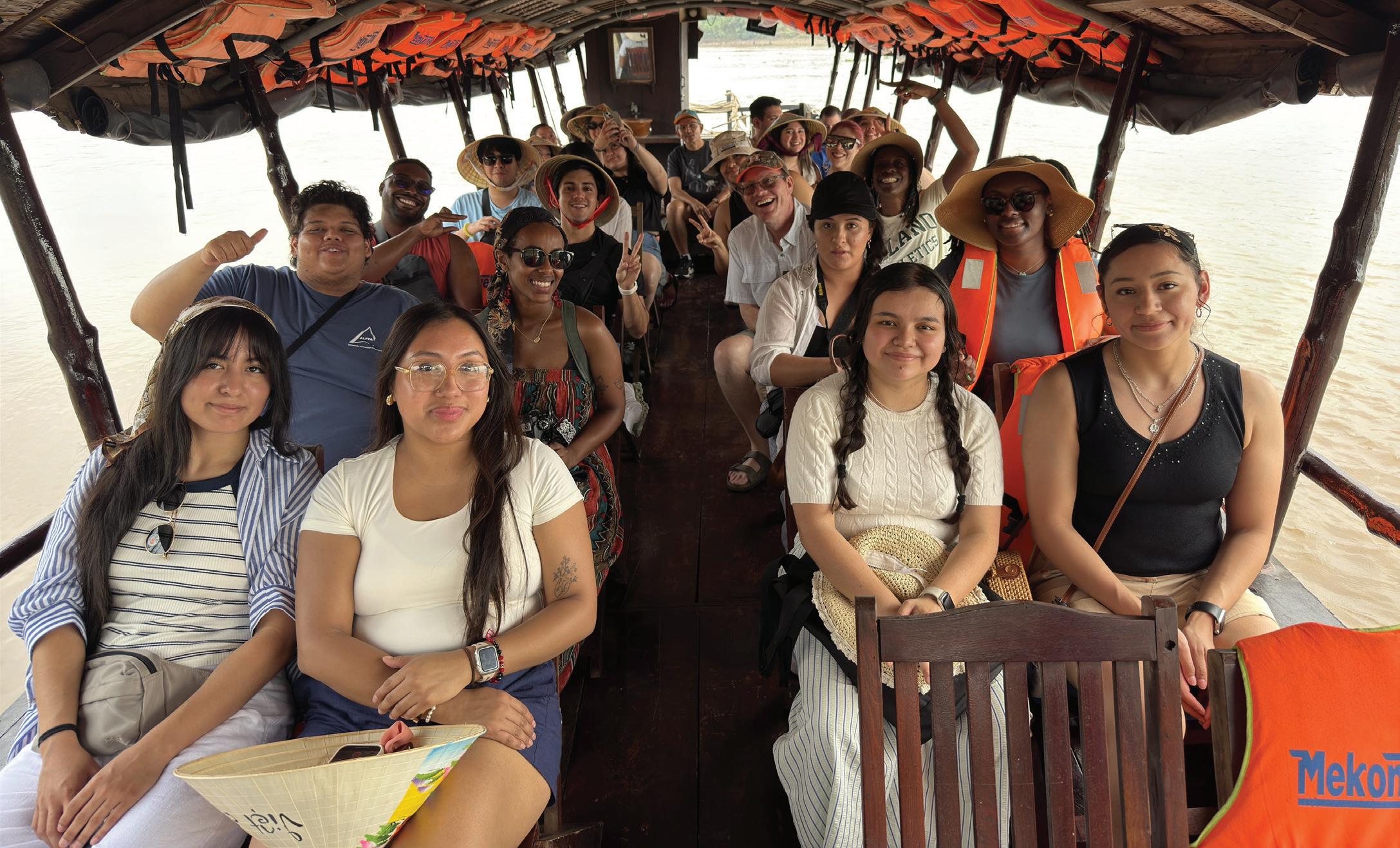
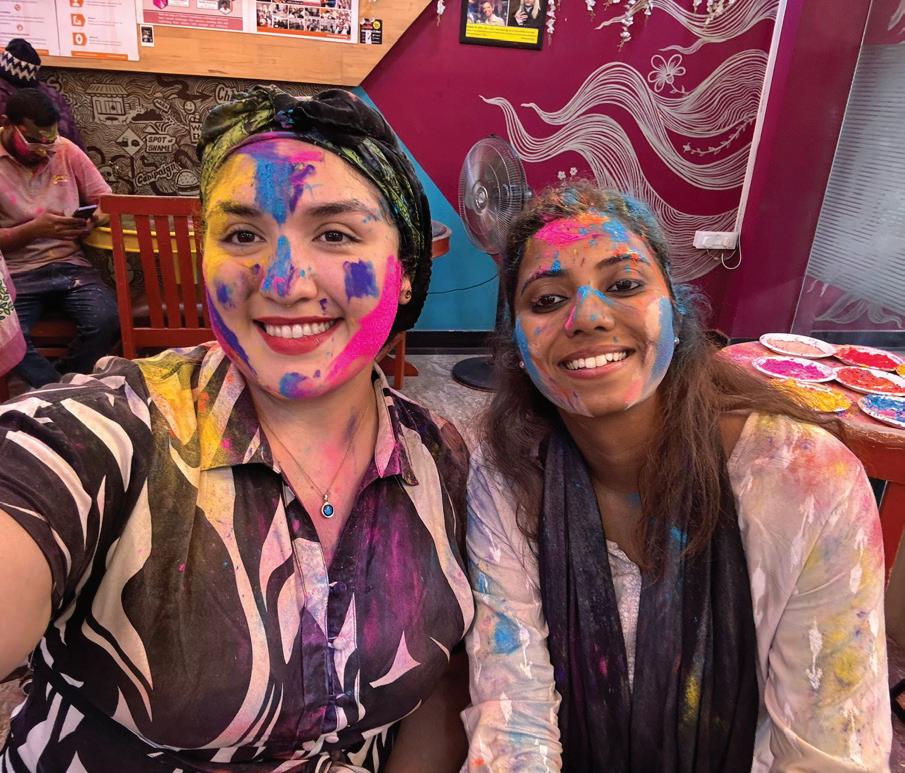
Or, traveling to India to learn about the way that culture treats mental illness. For students who participate in UHD’s study abroad programs, those scenarios are real, not imagined.
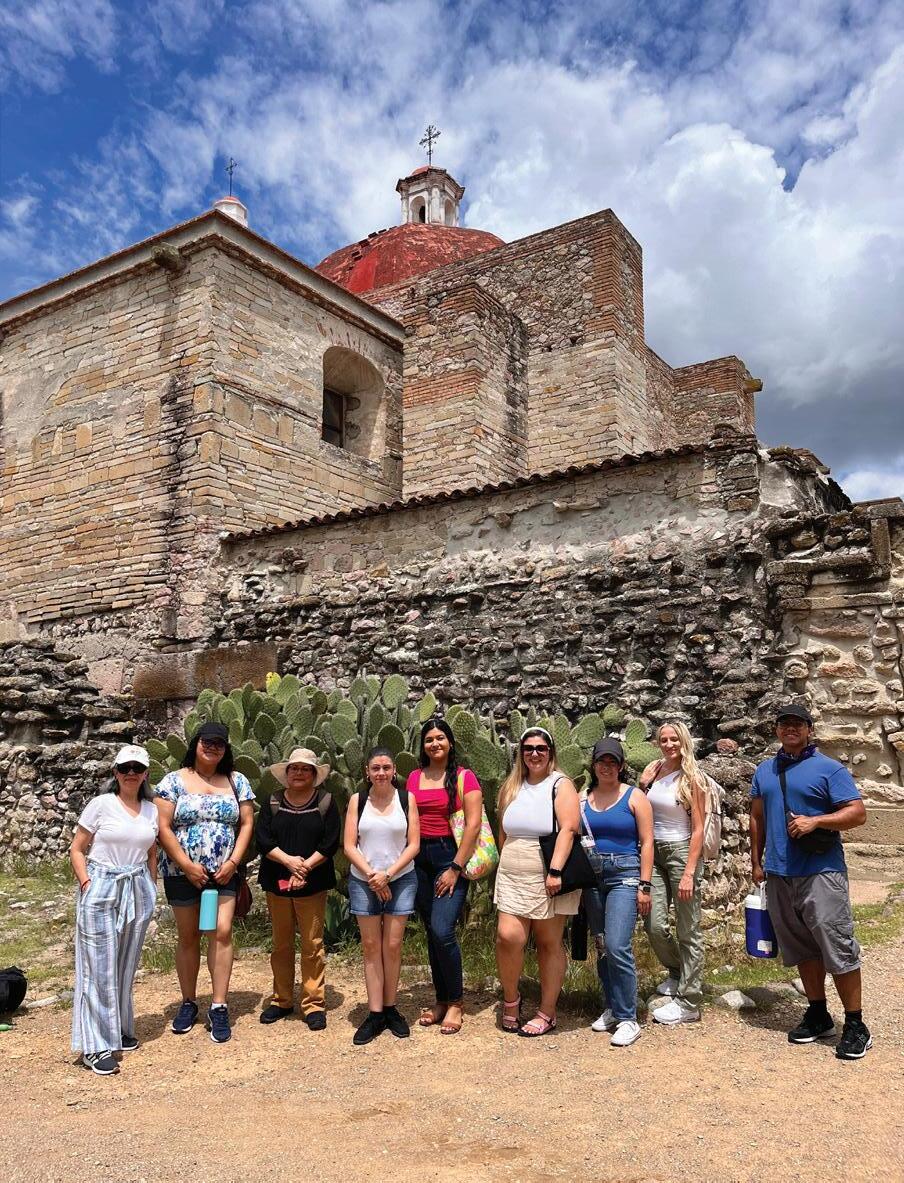
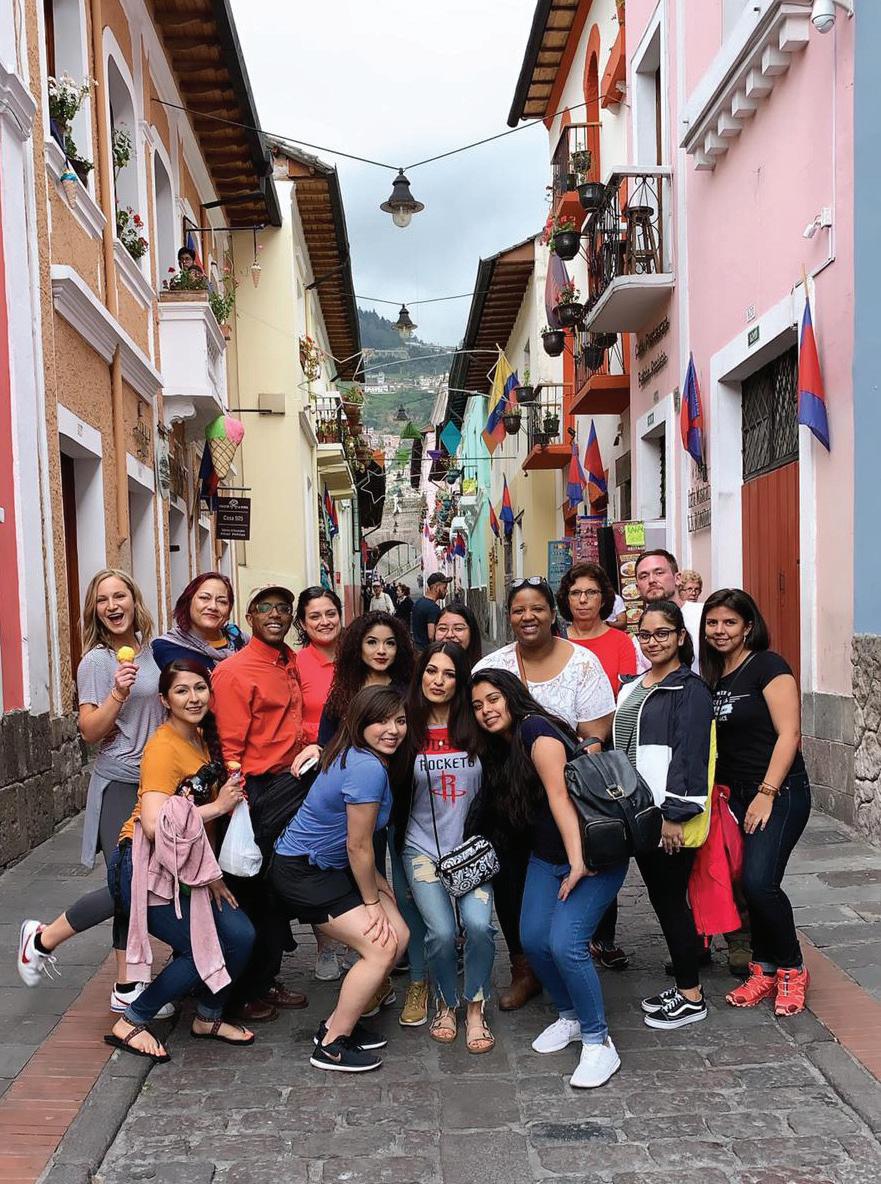
“Since the summer of 2022, when we began keeping detailed records, we’ve had 197 students participate in at least one of the three types of study abroad programs,” said Claudia Baba, Associate Director for the Study Abroad Office. “The growth highlights not just an increase in interest among students, but it reflects the school’s commitment to help students become more engaged globally.”
UHD offers three types of study abroad
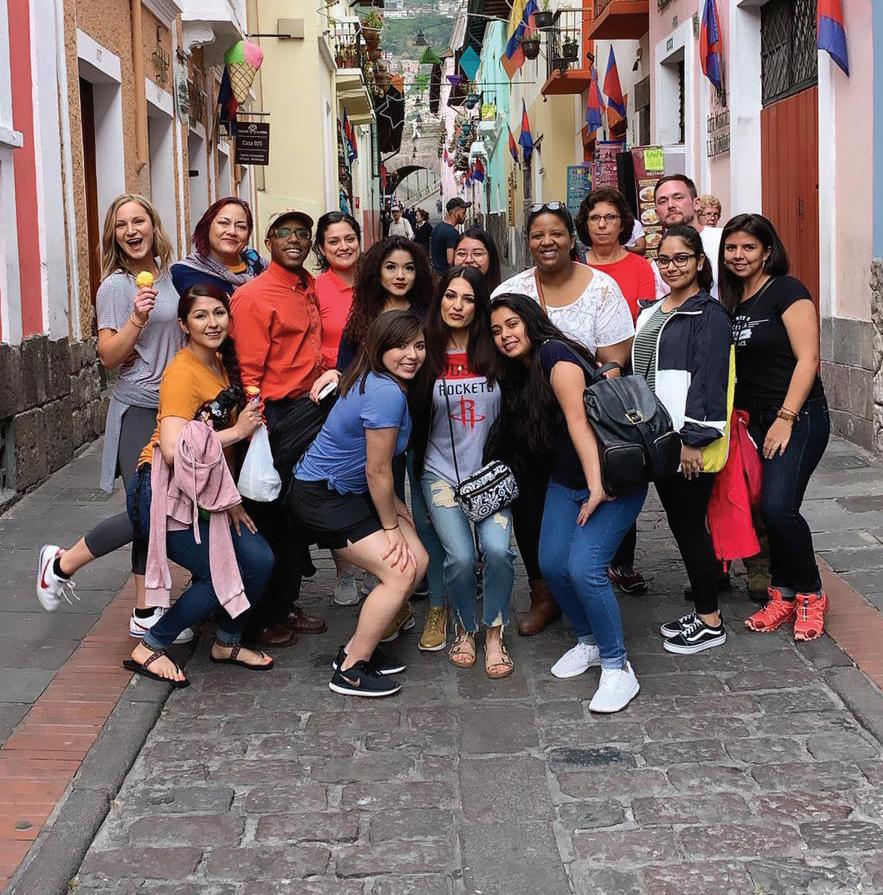
programs: a semester-long stint with an affiliate provider; a more condensed faculty-led program that lasts one to three weeks; or enrollment at one of UHD’s partner schools overseas, such as Universidad de Las Américas in Ecuador.
“The main difference between the faculty-led trips and the others is that professors really tailor the content to match the students’ coursework,” Baba said. “With a semester-long program, the itinerary matches the coursework, too, but there’s leeway to add extra experiences.”
Students receive credits from their study abroad program that meet graduation requirements.
“When I work with students, the number one thing for them to keep in mind is that they need to stay on track for graduation,” Baba said. “Electives are fine—given the approval of a faculty advisor—but the majority of classes taken abroad will come back as transfer credits that apply to a student’s graduation requirements.”
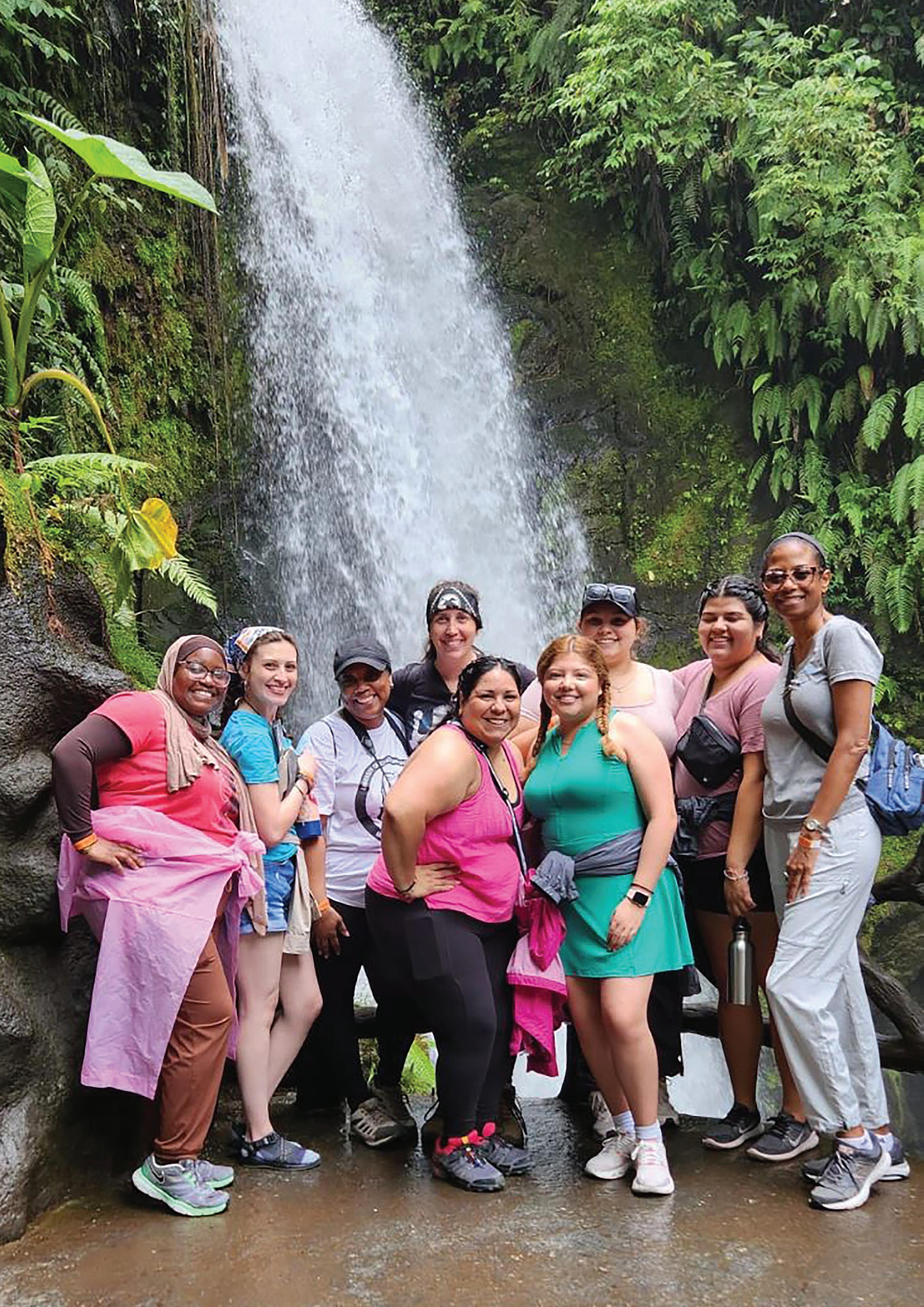
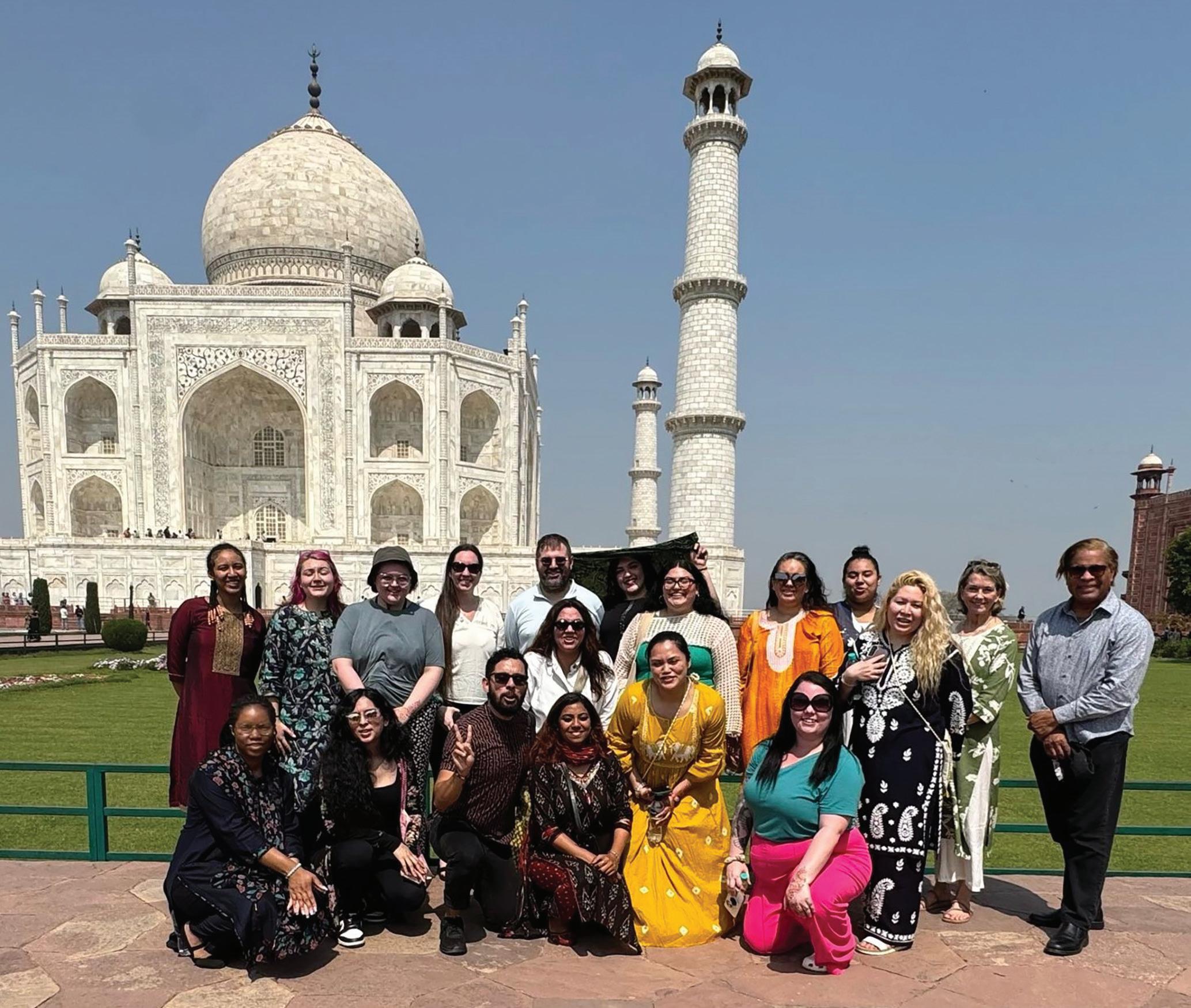
Dr. Shanaz Savani, Assistant Professor in UHD’s Social Work Program, leads a two-week trip to India each year. Her students—normally between 18 and 20 people—learn about mental health and suicide prevention, which is one of Savani’s areas of expertise.
Impact Translates to Outcomes
Skills students develop while studying abroad are mentioned in 30+ million job postings.
Even short-term study abroad experiences have an impact on student employability outcomes.
More than half of respondent students report that their study abroad experience helped them secure a job offer at some point.
“It’s a very busy trip,” Savani said. “We visit suicide prevention centers, psychiatric hospitals, mental health agencies, the Indian version of the National Institutes of Health, and more. There’s a lot of education, but we also visit cultural sites, like the Taj Mahal.”
Every student who participates in a UHD study abroad program receives scholarship funds to help defer the cost of the trip.
The main source of external support is The Gilman International Scholarship Program, which is named for the late U.S. Congressman Benjamin A. Gilman. That program helps students with limited financial means to study or intern abroad.
“We’ve had 23 UHD students receive a Gilman Program scholarship since 2022,” Baba said. “Our students have received more than $72,000 from the program, which is quite impressive.”
One of the students who received a Gilman Program scholarship is Nicholas Gallo.
Gallo, who is entering his senior year at UHD, attended a two-week program in Japan that was tied to his studies in supply-chain management.
“First, we did three months of coursework in supply-chain management during the spring semester,” Gallo said. “Then, we spent two weeks in three different cities in Japan. Tokyo was
Katherine
“ Our students have received more than $72,000 from the program, which is quite impressive.
my favorite, but one of the things that surprised me most was how much I learned from visiting Kyoto, which is more rural, and Osaka.”
According to Gallo, a particularly eye-opening experience involved visiting one of the largest shipping companies in Japan, known as APM Terminals.
“Representatives of the company told us how they run their business,” Gallo said. “They work with ports all over the world, so I got to see a whole different side of supply-chain management.”
Another highlight was visiting the Tokyo Stock Exchange.
“While a lot of things have changed in stock trading, since most of it now is digital, I was still amazed to see the original building where the stock exchange started,” Gallo said.
In Gallo’s case, some of his expenses were covered by UHD’s Travel Reward Program, while other funds came from the Gilman Program.
“It’s a very competitive process, so it felt like a great accomplishment,” Gallo said. “I competed against multiple students from across the nation.”
Although dozens of students, like Gallo, have enjoyed participating in a study abroad program, Baba said some UHD students don’t even know it exists.
“Our goal has been to educate all students about the ways they can become involved,” Baba said. “While the growth in the number of participants is striking, we want to build even more enthusiasm and awareness.”
To that end, Baba’s office hosts two oncampus fairs every year—one in fall and a second in spring—to raise awareness about learning opportunities overseas. Baba also hosts informational meetings that link students with people who’ve already studied abroad.
“We have virtual info sessions so our students learn about things like how to write an effective essay, which is a requirement,” Baba said. “It helps to quell what we call ‘application anxiety.’”
Savani said her students always come back from a study abroad program changed.
“I see a dramatic transformation,”
Savani said. “They grow so much; they learn so much; they experience so much. It’s not possible for professors in a classroom to teach what students can learn by studying abroad.”
Gallo added, “It was something I didn’t know I needed, but it was an eye-opening experience. It also added a lot of fun to learning.”
Looking ahead to the future, Baba said the program will aim to secure even more outside funding from businesses and groups like the Gilman Program. Her office also is exploring something called “stay-away programs.”
“These are programs that offer students the chance to engage in transformative learning without traveling internationally,” Baba said. “Students will travel with faculty and classmates to a city within the United States. The program will be less expensive, and it still prepares students with all kinds of skills.”
In the end, Baba said she wants even more students to avail themselves of studying abroad because she’s seen the benefits firsthand.
“I strongly believe the challenges facing young people today—things like political divisiveness—will be met by leaders who know how to build relationships and work effectively with different cultures,” Baba said. “To develop that kind of leadership, we have to prioritize cultural competence and cultural intelligence. It’s the only way.”
Impact Learning: Community Engagement, Service Learning, and Undergraduate Research
BY MARIE JACINTO
Photo: Craig Loper
Dr. Mesias Pedroza, UHD Natural Sciences Lecturer, moved to Houston from Mexico as a high school student and admits, “My high school education was not the best. I attended an inner-city school. But once I arrived at UHD for my college education, I found great mentors among the faculty, like Dr. Poonam Gulati, my Genetics professor.”
Years later, Pedroza now teaches at UHD (since fall 2015), and Gulati leads the Impact Learning Office (ILO), which connects students with high-impact learning experiences such as internships, service learning, undergraduate research, study abroad, and capstone projects. Not surprisingly, Pedroza has followed in the footsteps of his mentor, instilling impact- learning practices into the classroom.
“He is a champion of service learning. He began incorporating service learning as student projects into every class he teaches almost as soon as he started teaching here,” said Gulati. In fact, he represents the “triple threat” of impact learning, offering his students undergraduate research, community engagement, and service-learning opportunities.
Pedroza and many other members of the UHD faculty and staff are the reason that UHD received the 2026 Carnegie Community Engagement Classification, an elective designation awarded by the American Council on Education and the Carnegie Foundation for the Advancement of Teaching that highlights an institution’s commitment to community engagement. UHD is one of only 189 institutions that have previously held the designation, marking its third time.
Service Learning
“My high school education was not the best. I attended an inner-city school. But once I arrived at UHD for my college education, I found great mentors within the faculty, like Dr. Poonam Gulati, my Genetics professor.”
Pedroza teaches five classes per semester with every student involved in service learning, whether enrolled in Biology or Biochemistry. They’re learning how to explore topics they’re passionate about through literature research, data collection and analysis, and hands-on activities or experiments to reinforce their presentation. In the process, they transform their findings into clear, engaging presentations while strengthening essential teamwork and communication skills—all as they provide meaningful service to others. These service-learning projects must be worth at least 15% of the final grade.
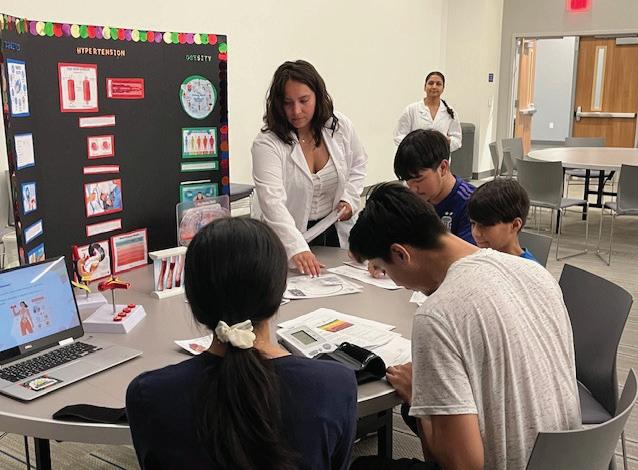
Focusing on high school presentations, Pedroza structures his courses so that students contribute at different levels. Senior-level biology students work directly with high school learners—leading presentations, facilitating discussions, and guiding activities. Meanwhile, students in Biology for NonScience Majors typically conduct surveys that measure public awareness of topics such as health literacy, science advocacy, COVID19, and other common diseases. This work allows them to collect real-world data and gain
Facing page:
Thirty years ago, Dr. Poonam Gulati came to UHD as a professor, teaching a range of Microbiology courses plus General Genetics, Immunology, General Biology Lab, and Undergraduate Research. She also created the Environmental Microbiology course. In 2015, Gulati became the Director of the Center for Community Engagement and Service Learning. In 2021, she became the Executive Director of the Impact Learning Office where she connects students with high-impact learning experiences.
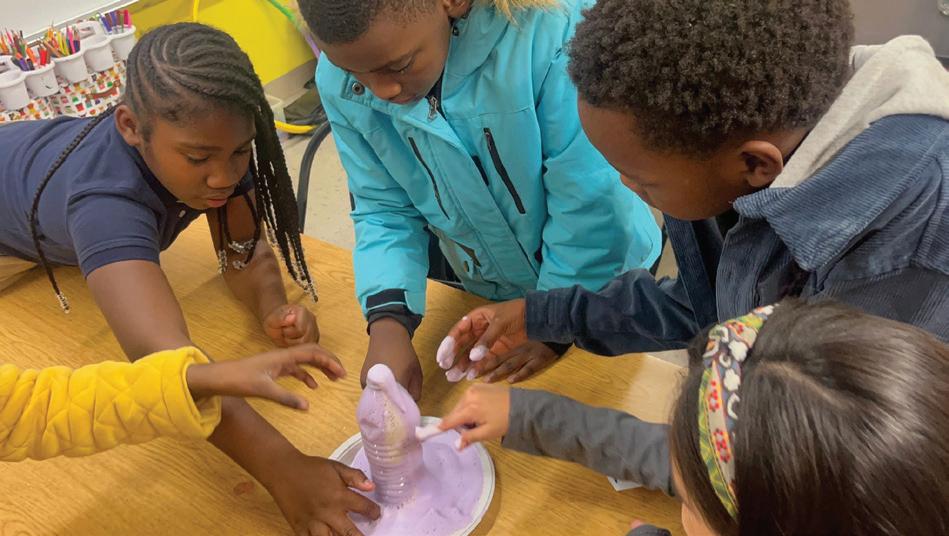
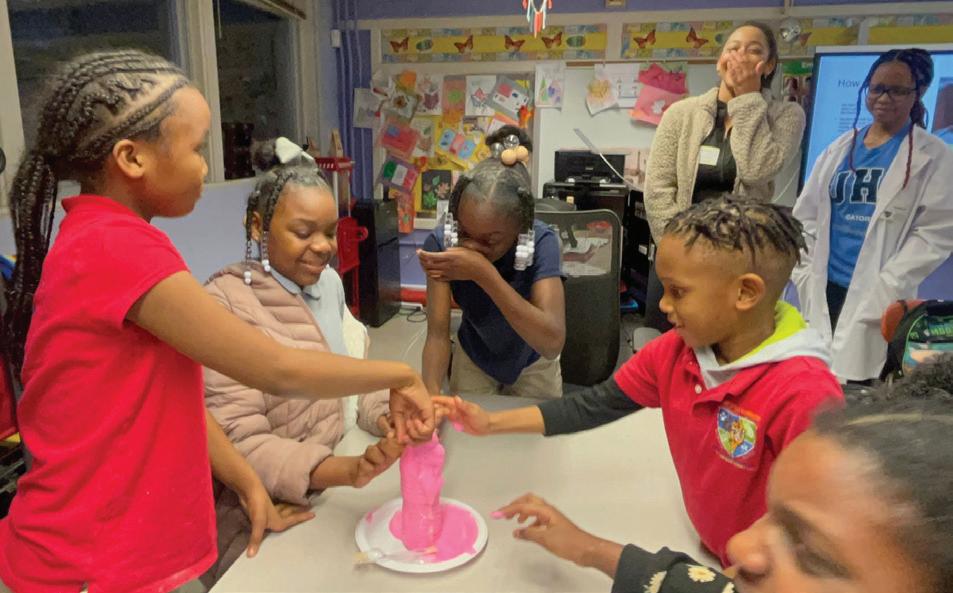
From experiments with elementary school students to presentations to high schoolers, Dr. Pedroza’s students are in schools and community centers, making a difference.
Photos courtesy of Dr. Mesias Pedroza.
“If you wait too long then their interest fades and they never pursue science.”
a deeper understanding of communityhealth needs. Together, this collaboration strengthens essential 21st century transferable skills—communication, teamwork, and critical thinking. “They apply these skills within their own working groups and later use them in the real world once they enter professional school or begin their careers,” said Pedroza.
“In the past, we have also invited students from different high schools to UHD, and our students talk to them about their literature research on substance abuse, sexually transmitted diseases, college preparation, and other topics relevant to high school students,” said Pedroza. The parents were also invited to learn about the process of applying to college. If students serve as service-learning mentors, they receive $500 scholarships from the Impact Learning Office (ILO).
Pedroza also received a $5,000 community-based research grant through ILO. “Our student mentors’ community-based research involved surveying the community to assess their most pressing needs. Beyond food insecurity, they discovered that
the greatest needs included vocational training and workforce development, access to immigration lawyers, and assistance with rent and utilities. Through our community navigator programs, we were able to take those resources directly to the families,” said Pedroza. At the same time, UHD students presented on common diseases that affect specifically low-income, minority families, providing life-saving information.
Pedroza’s students have also provided free tutoring sessions at a Northside church. “I’ve had parents tell me that their children were eager to be on time for these sessions,” said Pedroza. “That’s because our students formed friendships with the children, creating a comfortable, accepting environment for learning.”
“Another extremely important strategy that Dr. Pedroza employs is serving elementary school students who are just starting to discover science,” said Gulati. “If you wait too long, then their interest fades, and they never pursue science. So that’s one of his goals—to excite students interested in STEM early on.” Pedroza typically has his lower-level classes present to elementary school students, followed by a hands-on, science experiment—like isolating DNA from strawberries.
Undergraduate Research
Pedroza earned his Ph.D. in Biochemistry from UTHealth Houston, followed by a postdoctoral fellowship at Baylor College of Medicine. His research expertise centers on fibrotic diseases (lung, liver, and skin), psoriasis, and cancer. His approach focused on genetic studies, novel therapeutics development, and the use of DNA minivector technology. He employed mouse models and cancer cell cultures to investigate the key molecular pathways involved in disease development and to target those pathways with the aim of either halting disease progression or reversing the associated damage. He now mentors UHD students as they
test various biological products—such as plant extracts—on breast cancer cells, using normal breast epithelial cells as controls. Their work examines how these extracts influence cell morphology, cell survival, and the expression or activation of key proteins and pathways. The goal is to identify plant-derived compounds that selectively target cancer cells without harming healthy control cells.
Community Engagement
It only seems natural that Pedroza also offers his students community engagement opportunities, whether at food pantries or providing services for the homeless. “He himself is very engaged in the community with churches and the community center,” said Gulati. Through these activities, students immerse themselves in the realities facing local families—listening to their stories, responding to their specific needs, and helping guide them toward essential resources. This direct involvement not only deepens students’ understanding of community challenges but also strengthens their capacity for empathy, leadership, and service.
“This is not part of the class,” said Pedroza. “This experience is offered to students as an optional extracurricular service opportunity, but it is far more than just volunteer work. It provides a powerful way for students to develop leadership skills that strengthen their resume and support strong letters of recommendation in the future.” Most importantly, it demonstrates that they genuinely care about their community and are taking meaningful action.
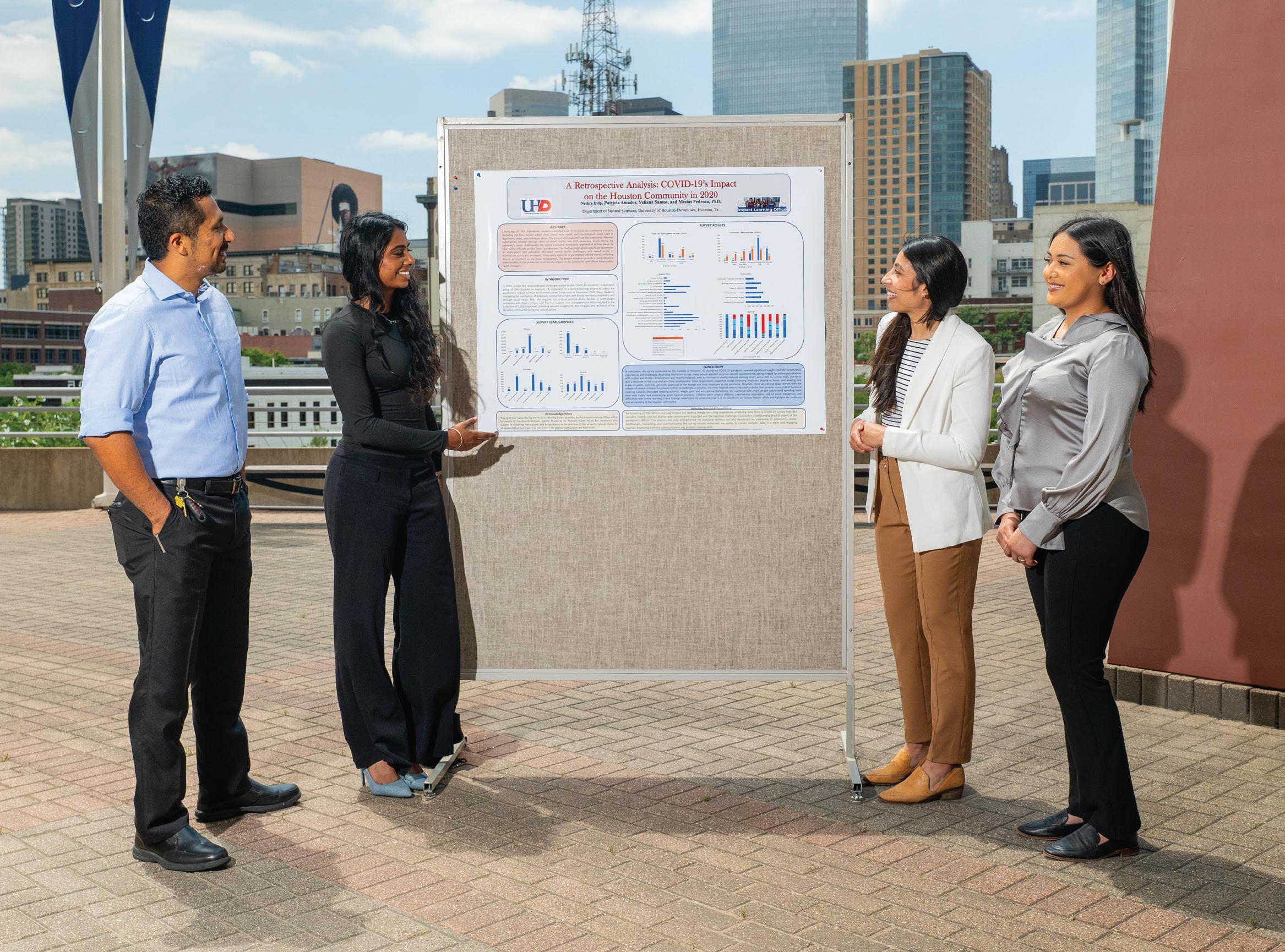
Above: Nethra Kippip, Patricia Amador, and Yuliana Sants presented their “A Retrospective Analysis: COVID-19’s Impact on the Houston Community in 2020” at the spring 2025 Impact Learning and Community Engagement Showcase. In 2020, amid the challenges posed by the COVID-19 pandemic, these students conducted a survey to determine the impact on local communities and collected 1,056 responses. Pictured left to right: Dr. Pedroza; Nethra Kippip, Patricia Amador, and Yuliana Sants.
Right: Dr. Mesias Pedroza as a UHD undergraduate with fellow student Henia Abid at the American Society for Microbiology, Texas Branch conference, where they received awards for their presentation.
Photo: Craig Loper and Luz Castilla Hincapie
Funded Faculty Leave: A Gift
of Time
BY SANDRA BRETTING
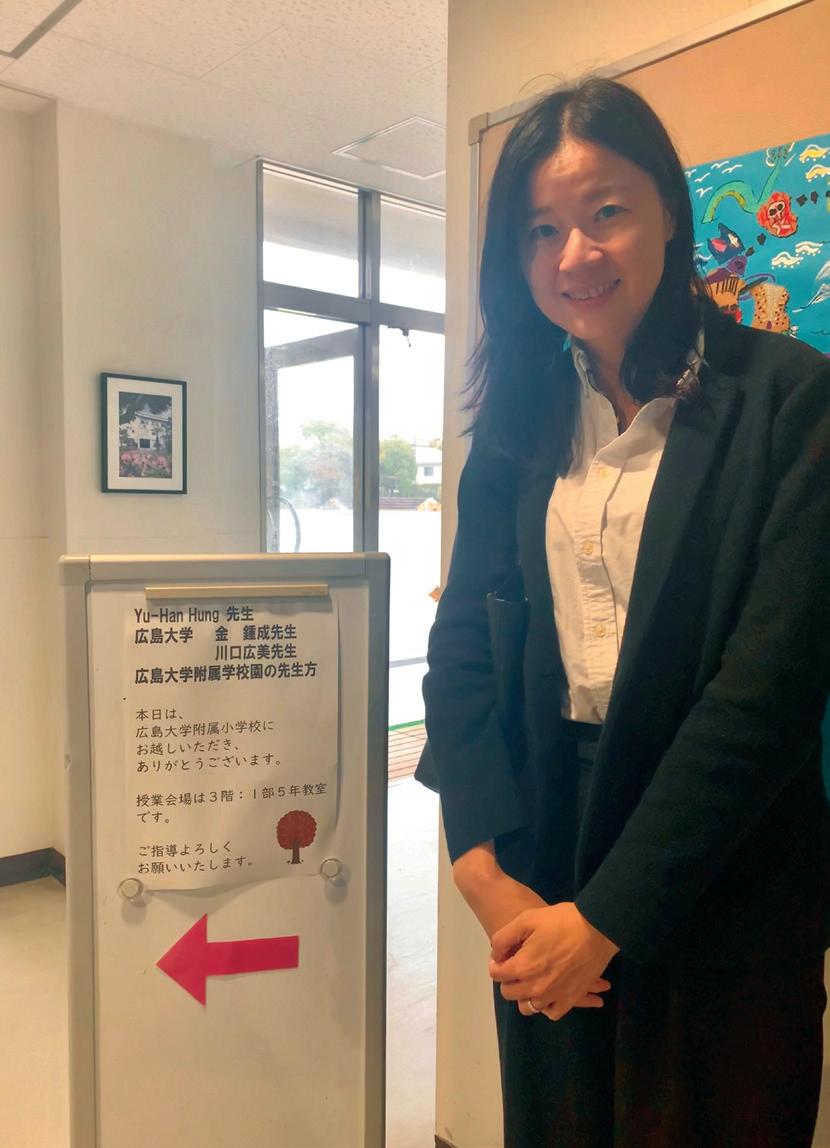
When a foreign research partner asked Yu-Han Hung, Ph.D., to spend an entire semester lecturing at one of Japan’s most prestigious universities, she was intrigued. The Associate Professor of Urban Education had taught workshops there, but she’d never spent an entire semester.
Thanks to UHD’s Funded Faculty Leave (FFL) program, Hung served as a visiting scholar at Hiroshima University for four months in the fall of 2024.
“I taught masters- and Ph.D.-level courses as a guest lecturer,” Hung said. “It was so refreshing to stay in a dormitory, eat with students in the cafeteria, and study in their library. The leave allowed me to focus on my work and the research I was doing.”
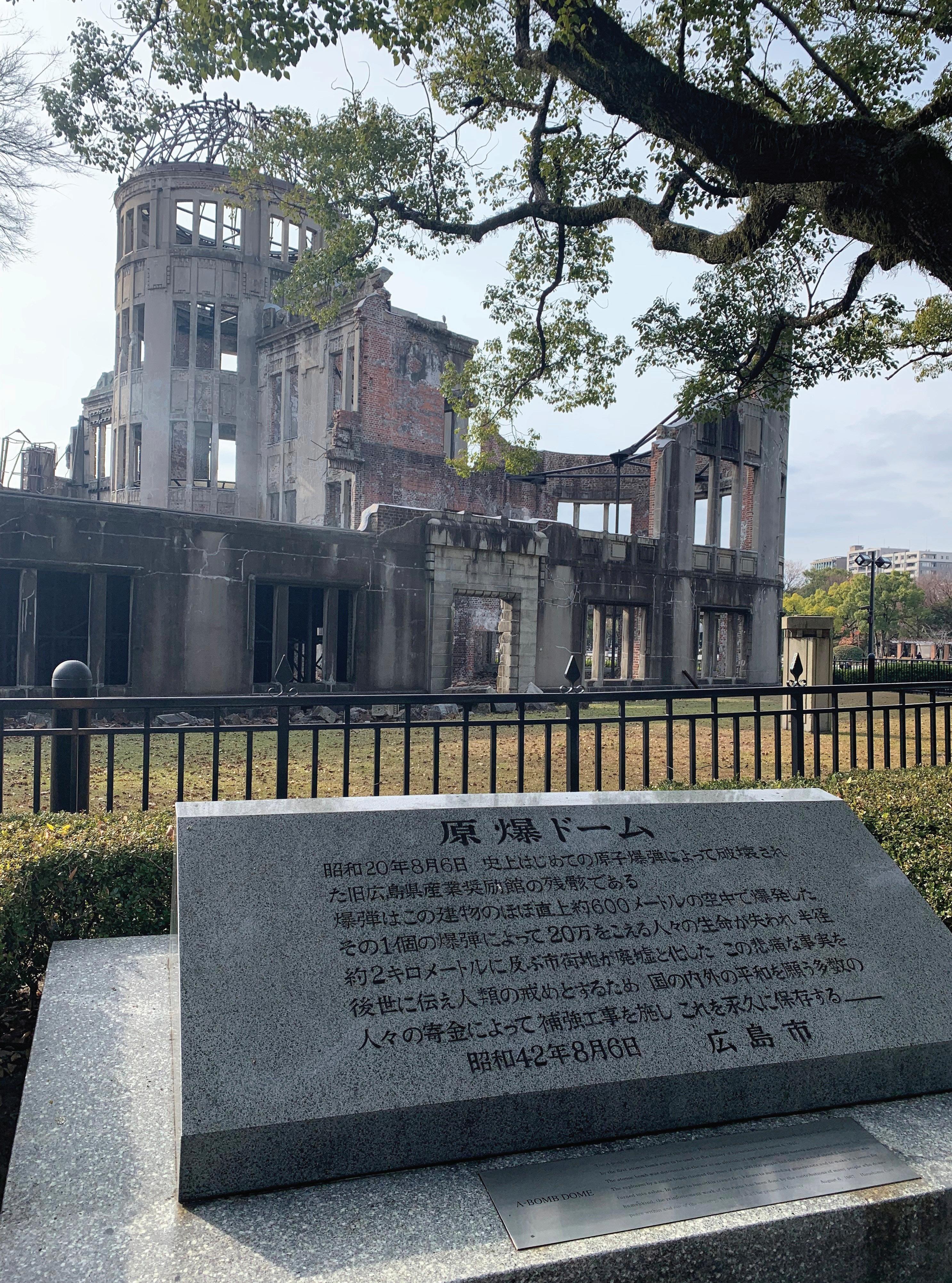
Hung and her cowriters explored how educators from Taiwan, Japan, and Korea are prepared to teach what they call “difficult knowledge.” Comparable to the study of history in the United States, it refers to teaching challenging topics, such as World War II. During her time there, the Asian Pacific Journal of Teacher Education published one of the academics’ manuscripts and another manuscript currently is under review by the Journal of Teacher Education.
The FFL program at UHD gives academics like Dr. Hung time off from their teaching schedules to pursue such research and writing interests.
“We typically fund six leave awards every year,” said Judith Quander, Ph.D., Associate Vice President of Faculty Affairs and Faculty Development. “In some years, we only have six or seven applications, but this year we received 14.”
“It’s a competitive process,” agreed Hsiao-Ming Wang, Ph.D., Professor, Criminal Justice. “Now that I know the benefits, I’d like to apply for it again in the future. I couldn’t have completed my work without taking a leave, so I’m very appreciative of the university’s generosity and support.”
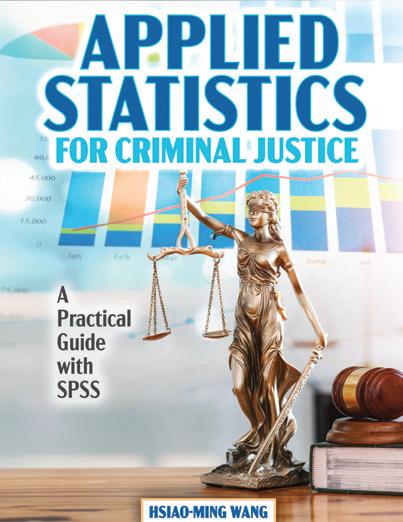
Wang spent last spring writing an eleven-chapter textbook entitled “Applied Statistics for Criminal Justice: A Practical Guide for SPSS.” The book helps criminal justice students navigate a certain statistical software suite produced by IBM.
Wang said he applied for leave once he finished the book’s first chapter, since he wasn’t sure what direction the project would take. He called the first chapter his “water-casting” chapter— that’s a term used by metalworkers when they pour molten metal into water to create interesting shapes without using a mold—because Wang’s first chapter determined how the rest of the manuscript would flow.
Dr. Yu-Han Hung at Hiroshima University
Dr.
Judith Quander,
Associate Vice President of Faculty Affairs and Faculty Development, oversees Funded Faculty Leave.
“ We typically fund six leave awards every year... In some years, we only have six or seven applications, but this year we received 14.
Dr. Susan Henney, Professor of Social Sciences and coordinator of UHD’s Health & Behavioral Science program, completed “Mind-Body Wellness: A Science-Based Approach.”
Susan M. Henney and Justin D. Hackett, Mind-Body Wellness: A Science-Based Approach (Springer, 2025)
The book Henney co-wrote, entitled “Mind-Body Wellness: A Science-Based Approach,” debuted from Springer Nature in July.
“A publisher had approached me about writing a book based on a statistical software system used by the criminal justice system,” Dr. Wang said. “Completing the first chapter and receiving feedback from my publisher gave me the confidence I needed that I could complete the textbook in five months.”
Others, like Susan Henney, Ph.D., Professor of Social Sciences and coordinator of UHD’s Health & Behavioral Science program, take leave to complete a work already in progress.
“My co-author and I had already written our book’s first eight chapters, and it was time to write the remainder,” Henney said. “While it took a year-and-a-half ultimately to write the book, taking leave allowed me uninterrupted time to finish and deliver it to our publisher.”
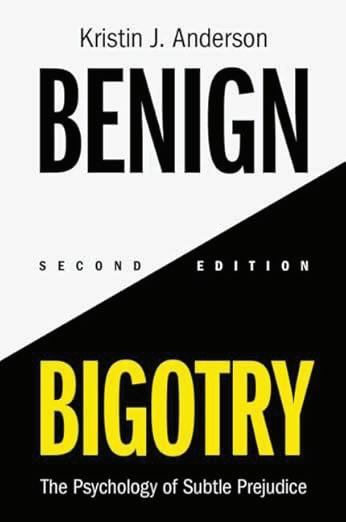
While the aforementioned professors were first-time participants in UHD’s FFL program, Kristin Anderson, Ph.D., already knew its benefits. Anderson, also a professor of Psychology at UHD, first took leave in 2007 to write “Benign Bigotry, the Psychology of Subtle Prejudice.” That book debuted from Cambridge University Press in 2010.
“Since then, research into the psychology of prejudice just exploded,” Anderson said. “Taking leave allowed me to rewrite the book and update it with the latest findings. Leave is especially valuable for people who rely on research that’s timely and reflects on what’s happening now.”
The FFL program is open to any fulltime tenured or tenure-track professor who’s spent at least two years in that capacity at UHD. The program lasts a full semester and covers the participant’s normal salary during that time period.
UHD has offered the FFL program since the 1980s as a unique type of sabbatical.
The first step for those interested is to submit a formal application to their department review committee.
“Each application is reviewed by the department chair, dean, and using peer-reviewers at the university level,” said Quander. “The Provost uses these recommendations to make the final decision.”
According to Anderson, it was refreshing to enjoy great swaths of time free from the distractions of meetings and classwork.
“If you ask me if I still would have written the second edition of my book without leave, I would tell you ‘probably,’” Anderson said. “But it would’ve taken me much longer.”
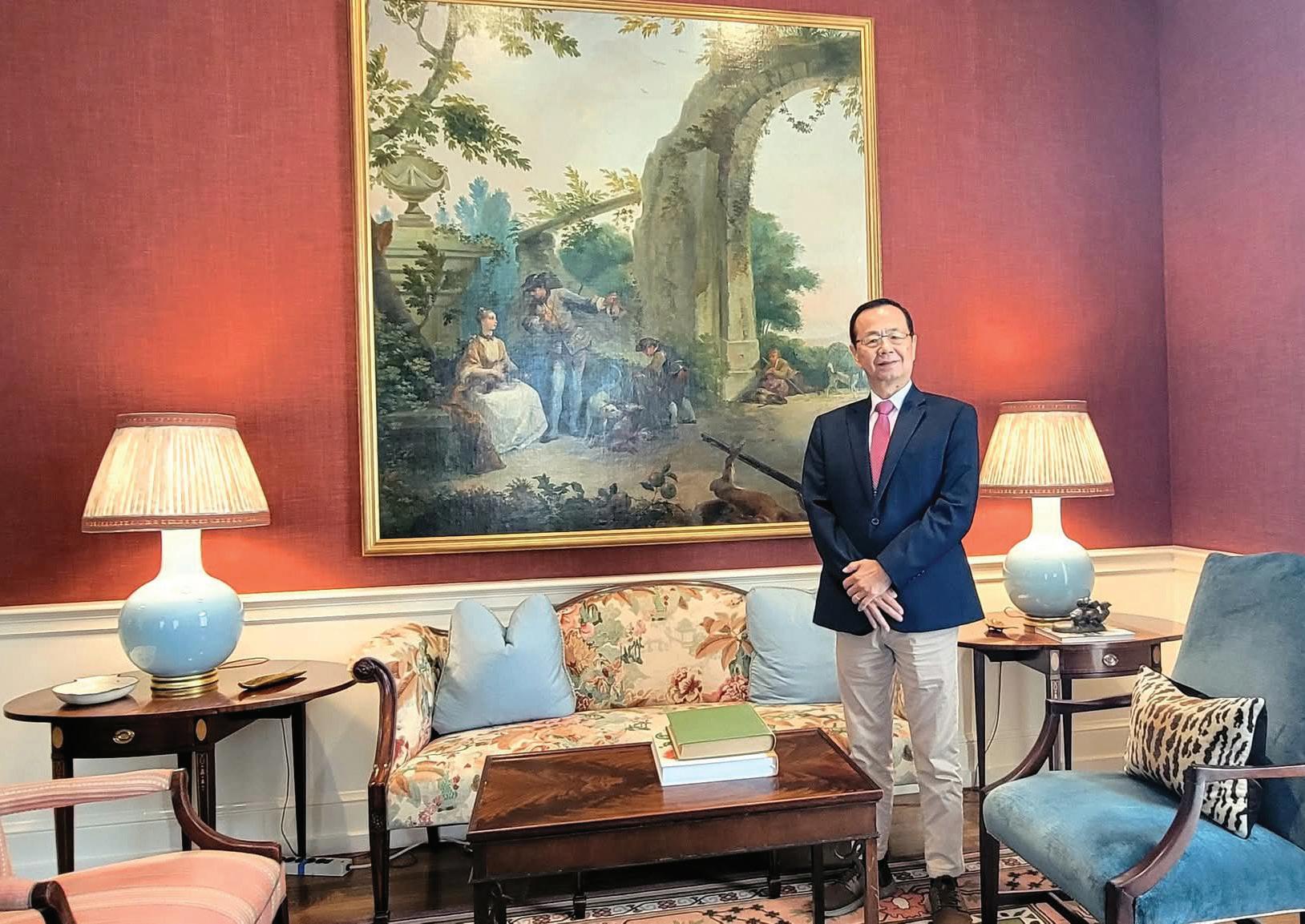
Right: Criminal Justice Professor Hsiao-Ming Wang
Right: The Hiroshima Peace Memorial, or Genbaku Dome, a structure left standing near the center of where an atomic bomb was dropped on August 6, 1945, and a powerful example of the kind of “difficult knowledge” Japanese educators teach.
The 2025 Faculty Awards
Excellence in teaching, research, and service are the hallmarks of UHD faculty. The annual Faculty Awards on April 15, 2025, merely amplified the scholarship, creativity, pedagogy, and community engagement of UHD’s esteemed faculty.
EXCELLENCE IN SCHOLARLY/ CREATIVE ACTIVITY
Ashwini Tiwari, Ph.D. Urban Education
OUTSTANDING LECTURER
Vaishali Chaubal, Ph.D. Natural Sciences
EXCELLENCE IN TEACHING
John Rountree, Ph.D. Arts and Communication
EXCELLENCE IN SERVICE
Krista Gehring, Ph.D. Criminal Justice
OUTSTANDING ADJUNCT
Carlos Cantú, Ph.D. History, Humanities, and Languages
Photos: Gabriela Perez
Distinguished Faculty Award
BY HAYDEN BERGMAN
Photo: Craig Loper
If you want to know who someone is, the saying goes, watch their feet, not their words. Observe their actions over time and their character, their essence, will be revealed. Dr. Godwin Agboka, Professor of Technical Communication in the English Department, exceeds this idiom, as he is a scholar, teacher, father, and public servant who not only cares deeply about language, but also the positive change it can bring about. That is to say, he’s about words and action.
Hailing from Ghana, he was taught by his family that if there is something to be done, well…you do it. “I come from a humble beginning,” he said. “My parents taught me to always do my best and always be helpful, and that informs how I approach my work at UHD.”
After completing his undergraduate degree in Ghana, Agboka continued his educational journey in the United States. He was admitted to Illinois State University, initially pursuing linguistics for his master’s degree program. However, he soon made the choice to shift his focus to technical communication. “I wanted to research something that allowed people to do and accomplish real-world things.”
This focus on the practical, the actionable, is now at the heart of his work across his service, teaching, and research, as technical communication, for Agboka, is about clarity, efficiency, and action.
After completing his Ph.D., Agboka had three job offers, but chose UHD not only for the warmer climate, but also, and more importantly, for the university’s demographics: UHD’s large population of first- and second-generation students, he thought, would be the perfect place to carry out his professional ethos.
Turns out he thought correctly, as his classroom today is more than a space for lectures shared by professor and students. It is instead a laboratory, one in which students can experiment with ways to improve their communities. “It’s about getting people to advocate,” he said, “getting them to see opportunities for taking action on something that is happening in the community.”
In his intercultural communication course, students leave that laboratory and put their lessons into practice. One assignment asks students to generate an ethnographic report, a task that demands action and empathy. They are required to go into a community in Houston, interview individuals about challenges they face, and write a report focused on not just understanding the issue but also proposing an action or solutions as well. The reports, he said, are eye-opening for students, as the process asks them to confront the fact that “the world is more than what they see or know.”
And his scholarship extends beyond UHD’s campus as well. Agboka frequently travels to Ghana to conduct research, where he collects data on practical communication challenges within public institutions and communities. He has published research on medical artifacts, police report writing, technical communication pedagogy, and legal writing. He has also conducted comparative studies, including
contrasting resume writing practices in the United States and Ghana.
Looking ahead, he plans to undertake a new project in Ghana focusing on medical prescriptions, which will study the challenges created by manual, handwritten prescriptions—a common practice in Ghana—that can lead to improper medications being administered. “I want to look at that and conduct interviews to find out if patients actually understand the prescriptions that they’re receiving.”
As for his life outside of work, Agboka describes it as boring, as he follows a predictable routine: soccer on Saturdays, church on Sundays, and work in between. That said, he is happy to disrupt that routine for his daughter and for his yearly trips back to Ghana.
And while the Distinguished Faculty Award is certainly important and a valued achievement for Agboka, its value lies in its validation of a long-held philosophy: that the best scholarship results in action, and that social responsibility, at its best, is carried out with empathy and grace.
of note
Taking the Science of Taxonomy to a New Level
by Dr. Amy Baird
Biologists have long sought to classify living things and understand how they are related. In the 1700s, Swedish naturalist Carl Linnaeus came up with a system of classifying organisms, which is still used today.
Although biologists all concede that species are real, identifiable entities, they have fiercely debated how to define a species. UHD Professor of Biology Amy Baird, Ph.D., and her colleagues recently published a paper in the journal PLoS One that seeks to change the attitude of biologists toward the meaning of taxonomic categories above the species level. In this paper, they proposed a definition for a genus, which they called the “2 Sigma Genus Concept,” defining a genus based on the amount of genetic differences of closely related organisms. They tested their idea using groups of bats.
“We have studied tree bats in my lab at UHD for about 10 years,” says Baird. “Some of our early findings indicated that these bats were more diverse than initially thought, so we split what was one genus of bats into three. Other scientists
debated this conclusion, which led us to think about how we could make a genus something testable and meaningful.”
Their results demonstrated that their proposed classification of these bats into three groups was more in line with their definition of a genus than keeping them grouped into just one genus.
“We have studied tree bats in my lab at UHD for about 10 years... Some of our early findings indicated that these bats were more diverse than initially thought...
“
I’m really interested in the perception of voices, specifically when it comes to pitch... I’m also interested in trust in different contexts.
Studying the Power of Voices in Trust and Attraction
by Natalia Ruiz
Dr. Jillian O’Connor, Assistant Professor of Psychology, joined the UHD faculty in fall 2025, bringing with her a research background rich in exploring how voices shape the way people judge trustworthiness, attraction, and even jealousy.
“I’m really interested in the perception of voices, specifically when it comes to pitch,” she explained. “I’m also interested in trust in different contexts. So I’ve looked at trustworthiness in terms of romantic relationships, infidelity, or trustworthiness in terms of financial exchanges.”
One of O’Connor’s recent studies
revealed that people tend to assume individuals with higher-pitched voices are more financially trustworthy. The result has drawn media attention and raises questions about how cultural ideas of dominance and credibility shape perception. As O’Connor noted, individuals who are perceived as powerful “may be more able, but not more willing to be trustworthy,” while those seen as less dominant “might be the ones who would actually make really good longerterm social partners.” These judgments, she suggests, reflect social values as much as they do biology.
While the psychology behind these associations is complex, the potential for use is wide-reaching. There are clear applications in fields like sales and online dating, but O’Connor is especially intrigued by how charitable organizations could benefit. She sees potential for the findings to improve donation campaigns, adoption drives, and food bank outreach by understanding how vocal cues influence trust.
of note
Understanding Blockchain: Dr. Ray Aria’s AI-Assisted Research
by Adrin Martin
Dr. Ray Aria, Assistant Professor in Finance, Information Systems, Economics, and Risk Management, is making strides in AI-assisted blockchain research. Described by Aria as a paper ledger that is “not only digital but distributed,” blockchain allows a global network of users to maintain the integrity of record-keeping processes. One of the technology’s distinguishing features is its “consensus mechanism” that in one case (Proof of Work for Bitcoin) requires “at least 50% plus one” of users to accept a suggested change. The most wellknown use case for blockchain relates to cryptocurrency transactions, where the technology verifies user transactions without requiring oversight from a central authority.
By using both AI and blockchain in tandem, we can “create human values instead of economic values,” said Aria. With AI “taking over even white-collar jobs,” we need to account for how a lack of work will impact peoples’ abilities to meet their basic needs. “When you work and you’re being productive, you’re creating an atmosphere for yourself to keep yourself balanced,” Aria said. “When those jobs are eliminated, so are feelings of satisfaction. So, what should we do? Human value creation.”
Aria believes society can prioritize human value creation through personal development, creating human connections, and a universal basic income. “You should be paid in—not in the current-day [economic] sense—but in
a sense of value.”
Aria is planning a Continuing Education blockchain course for fall 2026. “Blockchain applies to every single field you can imagine,” said Aria. “This course will equip students with enough knowledge and skills to apply the concepts to their own specific area.”
Serving the Community: UHD’s VITA Program
UHD’s Volunteer Income Tax Assistance (VITA) program showcases the university’s unique blend of volunteerism, professionalism, expertise, and a commitment to caring for others. It has become a notable subject of research in accounting education, community engagement, and service-learning, with work focusing on student outcomes, program design, and community impact.
Led by Dr. Arpita Shroff as the principal investigator and Dr. Hanife Topal as the site coordinator, the VITA program provided in-depth training for more than 120 students for the 2026 tax season. In 2025, the UHD VITA prepared 338 tax returns for foreign
students, trainees, and older adults as well as the UHD community.
The purpose of this program is to empower UHD students to serve the community and get hands-on training in tax preparation. VITA participation increases students’ tax knowledge, retention of course concepts, problem-solving skills, and familiarity with the tax code. Shroff’s course on individual tax is designated as a servicelearning, VITA-integrated course, and it documents measurable gains in tax proficiency and soft skills, including communication, client interaction, and teamwork.
The University of Houston-Downtown faculty and students are supported in part by the generosity of foundations, corporations, and individuals like you. Thank you for your continued support.