Asteroide 2018 CB- Una aproximación cercana reciente y modelación de las amenazas de una posible colisión con la Tierra
a recent close approach and modeling threats from a possible collision
Asteroide 2018 CB- Una aproximación cercana reciente y modelación de las amenazas de una posible colisión con la Tierra
a recent close approach and modeling threats from a possible collision
Por: José Ramón Valdés Parra · José Silviano Guichard Romero · Sergio Camacho Lara · Ana Victoria Ojeda Vera
WE USED A LONG SLIT BOLLER & CHIVENS SPECTROGRAPH, WITH A GRATING OF THAT COVERS THE INTERVAL BETWEEN 50 l/mm
ABSTRACT
The results of low resolution optical spectroscopic observation of Near-Earth Asteroid (nea) 2018 CB during its recent close approach to Earth, conducted with the 2.1m telescope of the Guillermo Haro Astrophysical Observatory (oagh), are presented. We used a long slit Boller & Chivens Spectrograph, with a grating of 50 l/mm that covers the interval between 4000Aº and 9500Aº. The taxonomic classification was done taking into account the values of the espectral distance (dx), calculated with respect to individual asteroid spectra of the Phase II of the Small Main-Belt Asteroid Spectroscopy Survey (SMASSII) database. We determined that 2018 CB is most likely an Xk-class nea. Bearing in mind the two possible mineralogical compositions of 2018 CB, iron meteorite or enstatite chondrite, we analyzed the possible consequences from a hypothetical collision of this asteroid with the Earth´s surface in both cases.
KEYWORDS:
Near-Earth Asteroids · 2018 CB · Asteroid composition · Spectroscopy.

WITH A RELATIVE VELOCITY
Vrel = 7.2710 KM/S
WE CALCULATED THE SPECTRAL DISTANCE (Dx) BETWEEN THE REFLECTANCE SPECTRUM OF 2018 CB AND MORE THAN 1400 SPECTRA OF THE SMASSII DATABASE.
copía óptica de baja resolución del asteroide ) 2018 CB, durante su da con el telescopio de 2.1m del Observatorio ). Utilizamos un espectrógrafo Boller & Chivens, de rendija larga, con una rejilla de difracción de 50 l/ mm que brinda una cobertura espectral entre 4000Aº y 9500Aº. La clasificación taxonómica se realizó teniendo en cuenta los valores de la «distancia espectral» (Dx), calculada con respecto a los espectros individuales de los asteroides contenidos en la Fase II de la base de datos del Small Main-Belt Asteroid Spectroscopy Survey (smassii). Sugerimos que 2018 CB es un nea de clase Xk. Teniendo en cuenta dos posibles composiciones mineralógicas de 2018 CB, un meteorito metálico o una condrita de enstatita, analizamos los peligros de una posible colisión de este asteroide con la superficie de la Tierra en ambos casos.
PALABRAS CLAVES
Asteroides cercanos a la tierra · 2018 CB · Composición de los asteroides · Espectroscopía
Near-Earth Asteroid 2018 CB made a close approach to Earth on February 9, 2018 (22:29 UT), at a distance of 0.000466 AU (69,700 km or 0.18 lunar distances), with a relative velocity Vrel = 7.2710 km/s. It was first observed at Catalina Sky Survey on February 4, 2018 (MPEC 2018-C12), using the 0.68m Schmidt telescope. We were able to observe this nea during the night of February 8, 2018, a day before the closest approach.
Reports on incoming and recently past nea s close approaches can be found in the link of the International Asteroid Warning Network homepage http://iawn.net/ close-approaches.shtml. A more extended Near-Earth Objects (neos) close approaches can be consulted in the Center for neo Studies homepage of the Jet Propulsion Laboratory.
http://https://cneos.jpl.nasa.gov/ca/
The threat that some NEAs, especially the potentially hazardous asteroids ( phas ), represent in case of a collision with our planet is widely recognized (Chapman & Morrison 1994; Morrison et al ., 2002). Those NEAs that show low relative velocities with respect to Earth can become targets of future robotic sample-return and manned space missions (Reddy et al., 2012). In both cases, determining the physical properties of these objects is of crucial importance.
We have begun an extended program of optical spectroscopic observations of NEAs and main-belt asteroids in order to determine the taxonomic class to which observed objects belong. Given the importance of 2018 CB as an asteroid that passed very close to the Earth, we present the result of a taxonomic classification only for this object.
Observations and data reduction
Optical spectra of 2018 CB were obtained with the 2.1m telescope of the Guillermo Haro Astrophysical Observatory ( oagh ) in Cananea,
Sonora, Mexico, using a Boller & Chivens spectrograph. A low-resolution diffraction grating of 50 l/mm, which provides a dispersion of 5.2 Aº/ pix, and a spectral coverage between 4500 and 9500Aº was used. A slit width of 400 microns that corresponds to 3.2 arcsec in the sky was selected. We used a new telescope control system that has the capability to track at non-sidereal rates in both coordinates. Using the orbital parameters of 2018 CB from the Minor Planet Center database, the control system calculates, every hundred milliseconds, the equatorial coordinates of the object, guaranteeing thereby that the object is always in the same position of the slit.
Observational circumstances are presented in Table 1, where (Δ) and (r) are the distances, in astronomical units (U.A.), from the asteroid to the Earth and to the Sun, respectively; (Ph) is the phase angle; and (H) is the absolute magnitude, taken from the jpl horizons on-line solar system data. We used equation (1), from Harris (2014), to calculate the size of the object.
To obtain the reflectance spectrum of 2018 CB, the solar analog HD047309 was observed at an air mass of X=1.072, very similar to the target air mass (X=1.096). The usual iraf (Image Reduction and Analysis Facility) software packages to reduce long-slit spectra were used in the image reduction process. After applying the atmospheric extinction correction, the spectra of 2018 CB and the observed solar an-
OPTICAL SPECTRA OF 2018 CB WERE OBTAINED WITH THE 2.1M TELESCOPE OF THE GUILLERMO HARO ASTROPHYSICAL OBSERVATORY.
alog were normalized at 5500 Aº. The relative reflectance spectrum of 2018 CB was obtained by dividing the object spectrum by the corresponding solar analog spectrum. The normalized high signal-to-noise spectrum of 2018 CB is shown in Figure 1.
To perform the taxonomic classification of this nea, we calculated the spectral distance (Dx), using equation (2), between the reflectance spectrum of 2018 CB (xn) and more than 1400 spectra (yn) of the Second Phase of the Small Main-Belt Asteroid Spectroscopy Survey (smassii ) database (Bus & Binzel 2002), looking for the lowest values of Dx. Table 2 shows the fifteen lowest values of Dx along with the corresponding taxonomic class.
k
2) Dx= { Σ (Xn-Yn )2}1/2 n=1
Among the hundred lowest values of spectral distance, we have 31 objects belonging to the Xk-class, 26 objects to the K-class, 18 objects to the S-class, 12 objects to the Xe-class, 9 objects to the X-class, and 4 objects to the Sk-class, with 21 Xk-class objects among the 50 lowest values of Dx (42%).
As there are no reports on albedo values for 2018 CB, the determination of the taxonomic class to which this asteroid belongs must be based only on its spectral properties, most prominent of which are a featureless spectrum and a red continuum slope (as seen in Figure 1). We discarded the Sk- and S-class as the taxonomic classification of 2018 CB because the S-type asteroids, considered to be the most probable progenitors of the ordinary chondrites, show weak absorption bands in the visible and near-infrared (vnir ) spectra and their reflectance does not increase with wavelength. In our visible spectrum of 2018 CB, the continuum slope, between 0.45 and 0.75 μm, is 0.864. In the classification system proposed by DeMeo et al. (2009), an absorption band feature, shortward of 0.55 μm, characterizes the Xe-class. This band is also absent in our spectrum, eliminating also this taxonomic class from the analysis.
FROM ITS ABSOLUTE MAGNITUDE (H), WE HAVE CALCULATED THAT THE SIZE OF 2018 CB IS ABOUT 23 METERS.
VALUES OF SPECTRAL DISTANCE
31 12 9 4 18 26
21 Xk-class objects among the 50 lowest values of Dx (42%).
IN OUR SIMULATIONS
WE USED A DIAMETER OF 50 METERS, A TYPICAL IMPACT VELOCITY OF 20 KM/S, AN ANGLE OF 45º OF THE ENTRY TRAJECTORY, AND A DENSITY OF 2500 KG/M3, AT THE POINT OF COLLISION ON EARTH´S SURFACE.
(42%) of the Xk-class among the first fifty low est values of spectral distance, and even the 50% among the ten lowest values of Dx, we are proposing that 2018 termediate class between the X- and K-classes.
One of the most important goals of asteroid VNIR spectroscopy is to establish a correspon dence with their parent bodies. As we mentioned previously, the most important visible spectral properties of 2018 CB are a featureless spectrum and a positive red continuum slope. Iron mete orites have featureless spectra, with red spectral slopes (Cloutis et al., 1990). On the other hand, enstatite chondrites also show relatively featureless VNIR spectra (from 0.3 to 2.5 μm), with red spectral slopes; for example, EH4 Abee and EL6 Hvittis (Gaffey 1976).
The mineralogy represented in the X-complex is much more diverse than in the C- and S-complexes. Several types of meteorite analogs have been proposed to match the VNIR spectra of X-complex asteroids: the anhydrous CV/CO carbonaceous chondrites (Barucci et al., 2012; Clark et al., 2009), enstatite chondrites (Vernazza et al., 2011), stony-iron (Ockert-Bell et al., 2010), and iron meteorites (Fornasier, Clark & Dotto 2011).
As 2018 CB is a recently discovered NEA, at this moment we do not have enough information about its physical properties, and we are not in a position to take a justified decision on the mineralogical composition of 2018 CB. We need more optical, NIR, and radar observations during the future oppositions of 2018 CB that provide the physical properties (albedo, density, and degree of micro-porosity) of this nea in order to be
ite impacts with solar system bodies lies in the classical domain because the size scale is so large, and the velocities are well below the speed of light. Classical Newtonian mechanics (hydrodynamic codes) and classical thermodynamics (definition of the equation of state) provide the adequate theoretical framework for modeling impacts. The third point that must be made is dealing with strength models of rocks and other Earth surface materials.
We ran two simulations of the 2018 CB impact on Earth, using the physics processes described in Collins, Melosh & Marcus (2005). With six free parameters: the diameter and the density of the impactor, the impact velocity, the angle of the trajectory of the impactor, the target type (sedimentary rock, crystalline rock, or a marine target), and the distance away from the impact site, the computer code estimates the impact energy, the consequences of atmospheric entry, crater dimensions and ejecta deposit, the thermal radiation damage, seismic effects, and the damage caused by the blast wave.
Joules = 9.38 Megatons of TNT
Joules = 8.26 Megatons of TNT 870 years of fragments at an altitude of 7600 m
Residual velocity of the projectile fragments 6.92 km/s
No crater is formed, although large fragments may strike the surface
Multistory wall-bearing buildings will experience
Up to 90 percent of trees blown down; remainder stripped of branches and leaves Wood frame buildings will almost completely collapse
THE DENSITY OF THE PROJECTILE IS
The broken projectile fragments strike the ground in an ellipse of dimension (fragments are not significantly dispersed)
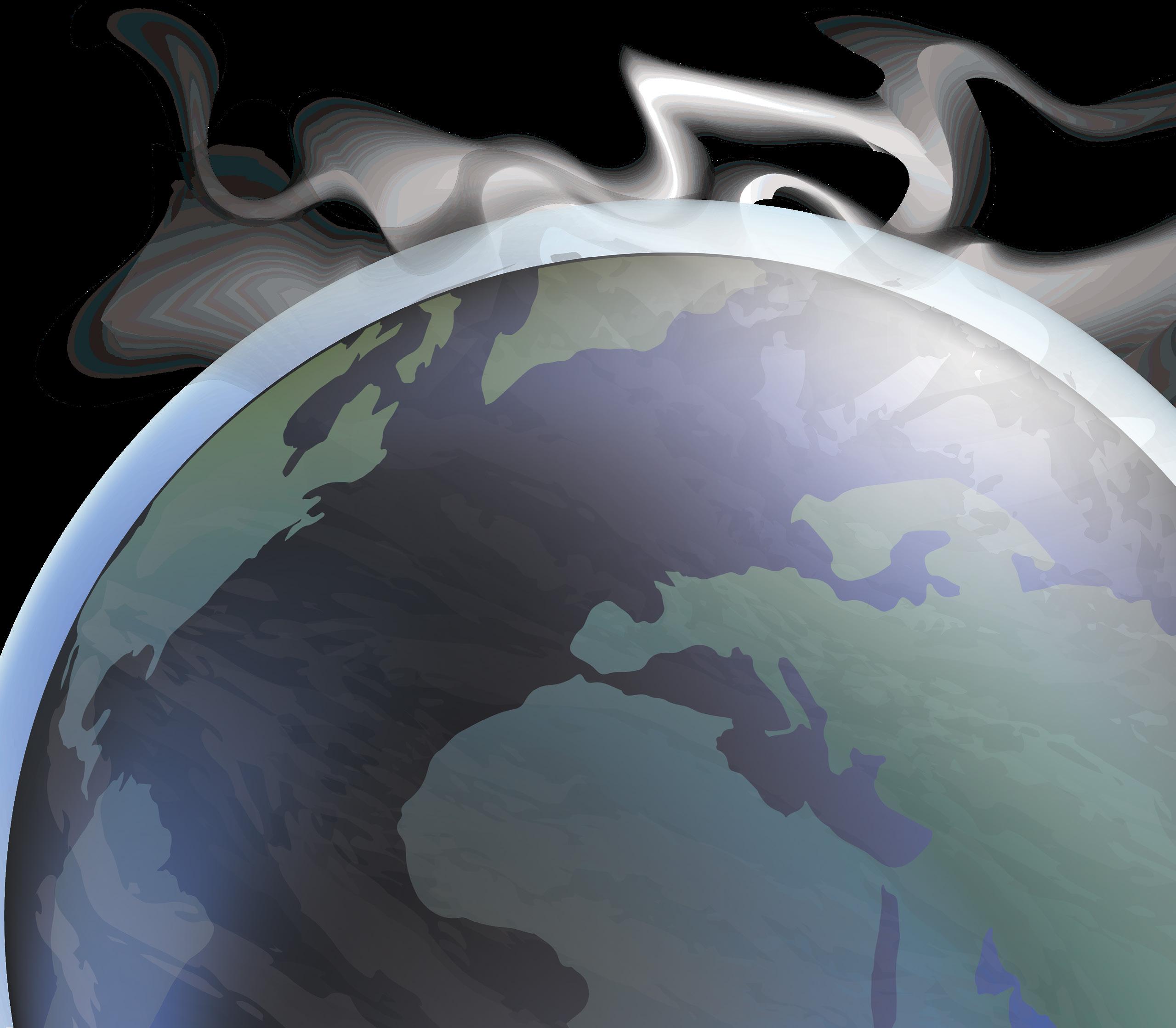
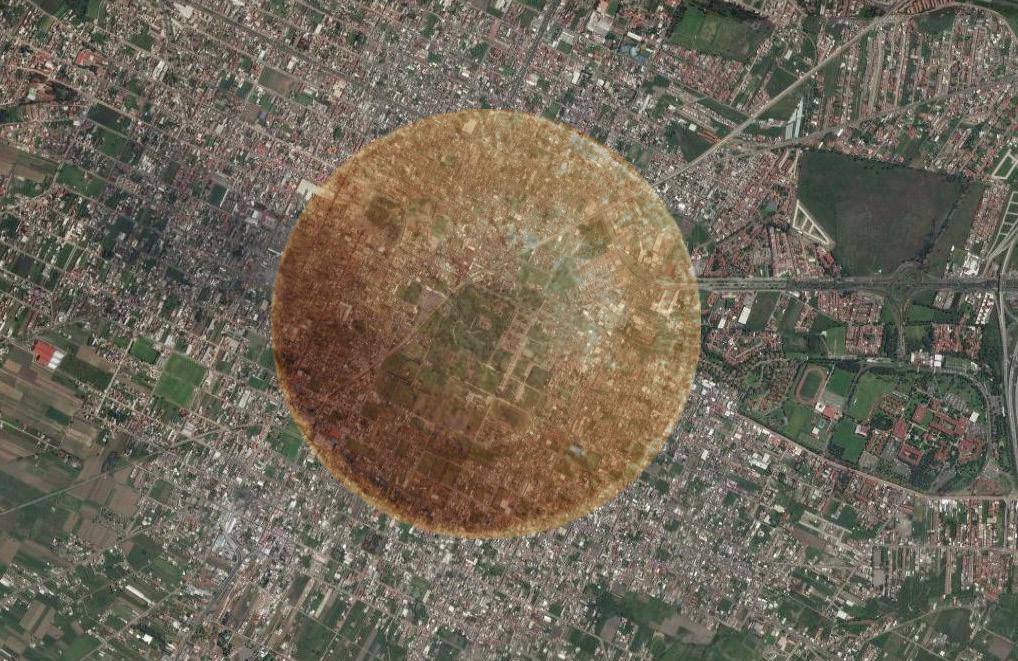
From its absolute magnitude (H), we have calculated that the size of 2018 CB is about 23 meters. Even a metallic asteroid of this size is too small to produce a crater on the Earth surface. This fact was proven in our simulations. With a didactic objective in mind, we used an asteroid twice as big as the real one. In our simulations we used a diameter of 50 meters, a typical impact velocity of 20 km/s for asteroids (Hughes 1998), and an angle of 45º, the most common value of the entry trajectory (Shoemaker 1962). We also selected sedimentary rock, with a density of 2500 kg/m3, at the point of collision on Earth´s surface, and calculated the damages at a distance of 10 km from the crash site. The only parameter that we changed in the simulations is the density of the projectile, 3000 kg/m3 for an enstatite meteorite (Case A), and 8000 kg/m3 for a metallic meteorite (Case B). The results of the simulations are shown in Table 3 (Case A) and Table 4 (Case B). Under the assumed simulation conditions, a 50-meter enstatite meteorite does not produce a crater: it must have at least 90 meters in diameter to produce one. The dimensions of the crater produced in Case B are illustrated in Figure 2, and Figure 3.
In both cases, the Earth is not strongly disturbed by the impact and loses negligible mass. The impacts do not make noticeable changes in the tilt of Earth´s axis - less than 5 hundredths of a degree - and do not shift the Earth´s orbit noticeably. But it is clear, from the simulations presented in Tables 3, and 4, that the damages
produced by the impact of a metallic meteorite with our planet are much more serious than in the case of an enstatite meteorite collision.
In order to illustrate how the crater’s characteristics depend on the size of the impactor, for the Case B, we ran some other simulations, changing only the size of the asteroid. The results are shown in Table 5.
The determination of the physical properties of a possible impactor’s collision with the Earth is important, not only to properly design a deflection mission to the asteroid to change its orbital velocity to avoid a collision with Earth but also to elaborate effective plans of evacuation and damage mitigation in case the deflection is not successful.
The Near-Earth Object 2018 CB was observed at the Guillermo Haro Astrophysical Observatory (oagh) during the night of Feb. 8, 2018, a day before its closest approach to the Earth. Using a Boller & Chivens spectrograph, we obtained the optical spectrum in the interval between 4500 Aº and 9500 Aº. We obtained the most probable taxonomic classification of this object by calculating the spectral distance between our spectrum and more than 1400 spectra from the Phase II of the Small Main-Belt Asteroid Spectroscopy Survey (smassii ) database. We suggest that 2018 CB is a nea of Xk-class.
Trying to determine the mineralogical composition of this asteroid, we find that spectra of both, a metallic meteorite and an enstatite
A 50 METERS ENSTATITE METEORITE DOES NOT PRODUCE A CRATER, IT MUST HAVE AT LEAST 90 METERS IN DIAMETER TO PRODUCE ONE.
meteorite, can explain the spectral properties of 2018 CB in the visible: a featureless spectrum and a red continuum slope. To decide which one is the correct option, we need more vnir and radar observations of this nea in its future oppositions with Earth in order to determine important physical properties, like albedo, density, or degree of micro-porosity.
tory) characteristics, but of different compositions; ρ = 3000 kg/m3 for an enstatite meteorite (Case A), and ρ = 8000 kg/m3 for a metallic meteorite (Case B). The results of the simulations are presented in Tables 3, and 4, and certainly are much more dramatic for Case B.
Let us think about the consequences of having determined erroneously the mineralogical composition of this asteroid, and that it had actually entered an orbit of collision with Earth. The worst of all the possible scenarios is to be prepared for the Case A situation and to meet the Case B reality. THE EARTH IS NOT STRONGLY DISTURBED BY
To illustrate the importance of a correct determination of the physical properties of neas, we simulated the impact of two asteroids of same physical (D = 50m) and orbital (impact velocity of 20 km/s, and 45º for the entry trajec-
José Ramón Valdés Parra
AUTOR DE CORRESPONDENCIA
Investigador titular de la Coordinación de Astrofísica del inaoe y miembro del Sistema Nacional de Investigadores (sni). Autor de más de 40 artículos de investigación publicados en revistas internacionales de arbitraje anónimo. Presidente del Consejo Editorial de la revista Entorno udlap jvaldes@inaoep.mx

José Silviano Guichard Romero
Investigador titular de la Coordinación de Astrofísica del inaoe. Su área de investigación es la astronomía óptica e infrarroja, en particular en los campos de las galaxias activas y el ambiente espacial e interplanetario, especialmente en el tema de los objetos cercanos a la Tierra. Es director del Campus México del Centro Regional de Enseñanza de Ciencia y Tecnología del Espacio para América Latina y el Caribe (crectealc). jguich@inaoep.mx

Sergio Camacho Lara
Doctor en Ciencia Aeroespacial por la Universidad de Michigan, Ann Arbor. Es secretario general del Centro Regional de Enseñanza de Ciencia y Tecnología del Espacio para América Latina y el Caribe. Fue director de la Oficina de Naciones Unidas para Asuntos del Espacio Ultraterrestre. Presidió el grupo de trabajo sobre objetos cercanos a la Tierra (neo) de la Comisión de Naciones Unidas sobre la Utilización del Espacio Ultraterrestre con Fines Pacíficos. Esta labor resultó en el establecimiento de la Red Internacional de Alerta de Asteroides (iawn) y del Grupo Consultivo de Planificación de Misiones Espaciales (smpag), las agencias espaciales que responderían en caso de amenaza de impacto a la Tierra por un asteroide. sergio.camacho@inaoep.mx

Ana Victoria Ojeda Vera
Graduada del programa de Maestría en Ciencia y Tecnología del Espacio del inaoe. Su trabajo de tesis estuvo dedicado a la caracterización taxonómica de asteroides cercanos a la tierra (NEAs). anaojedavera@gmail.com
•Barucci, A., Belskaya, I., Fornasier, S., Fulchignoni, M., Clark, B.E., Coradini, A., et al. (2012). Overview of Lutetias surface composition. Planetary and Space Science 66 (1), 23-30.
• Bus, S.J., & Binzel, R.P. ,(2002). Phase II of the Small Main-Belt Asteroid Spectroscopy: A Feature-Based Taxonomy. Icarus, 158, 146-177.
• Chapman, C.R., Morrison, D., (1994). Impacts on the Earth by Asteroids and Comets: assessing the hazard. Nature 367, 33-40.
• Clark, B.E., Ockert-Bell, M.E., Cloutis, E.A., Nesvorny, D., Moth-Diniz, T., Bus, S.J., (2009). Spectroscopy of K-complex asteroids: Parent bodies of carbonaceous meteorites? Icarus, 202, 119-133.
• Cloutis, E. A., Gaffey M. J., Smith D. G. W., and Lambert R. St. J., (1990). Reflectance spectra of “featureless” materials and the surface mineralogies of M- and E-class asteroids. J. Geophys. Res., 95, 281-293.
• Collins, G.S., Melosh, H.J., & Marcus, R.A., (2005). Earth Impact Effects Program: A Web-based computer program for calculating the regional environmental consequences of a meteoroid impact on Earth. Meteoritics & Planetary Science 40, Nr 6, 817 - 840.
• DeMeo, F. E., Binzel, R. P., Silvan, S. M., & Bus, S. J. (2009), Icarus, 202, 160.
• Fornasier, S., Clark, B.E., Dotto, E., (2011). Spectroscopic survey of X-type asteroids. Icarus 214, 131-146.
• Gaffey M. J., (1976). Spectral reflectance characteristics of the meteorite classes. J. Geophys. Res., 81, 905-920
• Harris, A.W., (2014), Asteroid Grand Challenge. Seminar Series, March 28, 2014.
• Hughes D. W., (1998). The mass distribution of crater-producing bodies. In: Grady M. M. et al. (eds) Meteorites: Flux with Time and Impact Effects. Geological Society, London, pp. 31–42.
• Morrison, D., Harris, A.W., Sommer, G., Chapman, C.R., Carusi, A., (2002). Dealing with the Impact Hazard. Asteroids III, 739-754.
• Ockert-Bell, M.E., Clark, B.E., Shepard, M.K., Isaacs, R.A., Cloutis, E.A., Fornasier, S., Bus, S.J., (2010). The composition of M-type asteroids: synthesis of spectroscopic and radar observations. Icarus 210, 674-692.
• Reddy, V., Corre, L.L., Hicks, M., Lawrence, K., Buratti, B.J., Abell, P.A., Gaffey, M.J., Hardersen, P.S., (2012). Icarus 221, 678-681.
• Shoemaker E. M., (1962). Interpretation of lunar craters. In Physics and astronomy of the Moon, in Kopal Z. (Ed.). New York: Academic Press. pp. 283–359.
• Vernazza, P., Lamy, P., Groussin, O., Hiroi, T., Jorda, L., King, P.L., et at. Brunetto, R., 2011. Asteroid (21) Lutetia as a remnant of Earth´s precursor planetesimals. Icarus 216, 650-659.