KEYSTONE PENNSYLVANIA
EXPLORING ANCIENT CULTURES AND MODERN CONNECTIONS
SPRING 2026
EDITOR-IN-CHIEF
SILVIIA KAUR KANG
MANAGING EDITORS
ANDREW CICALESE
ANRUI XU
AVA MORICONI
EDEN JOSEPF
JOY BECKISH
MAYA GAVRIN
CONTENT DIRECTOR
TRACI DOUGHERTY
ART DIRECTOR
ARLO DALGARNO PLATT
CONTRIBUTING LEADERSHIP
BETH FOOTE
CHRISTOPHER CHANG
SILVIA KAUR KANG
CONTRIBUTING WRITERS
Dear Latin Community,
As another season of PAJCL unfolds, I am excited to share this Spring issue of Keystone. Each edition highlights the creativity, dedication, and passion that define our community, and this issue especially shows how the ancient world continues to inspire us today
What makes this issue truly special is the voice of our students. From original writing to analytical pieces, these works reflect both curiosity and imagination, reminding us that Classics is a living field shaped by today’s scholars
This spring is an exciting time for PAJCL as we look ahead to Convention and continue to grow as a community Alongside academic events and performances, we are thrilled to introduce this year’s PAJCL Scavenger Hunt; an interactive way for students to connect, explore, and celebrate Roman virtues together
The spirit of ROMA continues through every PAJCL chapter I hope you find inspiration and enjoyment as you read.


Gratias SILVIA KANG
PAJCL KEYSTONE EDITOR
PRINCETON CERTAMEN
Follow Harriton students as they compete, reflect, and grow through teamwork at Princeton Certamen.
LO LO SATURNALIA
Harriton and Upper Dublin High Schools host multi-school Saturnalia
emoji
ROMAN SUPERSTITIONS
Discover Roman beliefs about omens, mirrors, salt, birds, and unlucky traditions
Explore Roman education, discipline, and modern learning
CIRCE’S SPA RETREAT
Read a myth-inspired story where Circe turns magic into unexpected relaxation.
on Latin’s history, word roots, grammar challenges, and lasting modern influence
Salvete Omnes,
As we enter the final months before the Convention, I would like to acknowledge the hard work of our board members
Fundraising
The money raised by Saturnalia was put into two convention scholarships This year’s winners are:
Meriah Wilson Upper Dublin HS
Madelyn Zinck Harriton HS
The year’s Christopher Seelig Scholarship winners are:
Anna Hart Seneca Valley MS
Kayleigh Snyder Conrad Weiser HS
Officer Accolades:
Our Keystone Editor, Silvia Kang, recently competed at PMEA (Pennsylvania Music Educators Association)
Elections:
Officer applications have opened, so those who wish to apply should
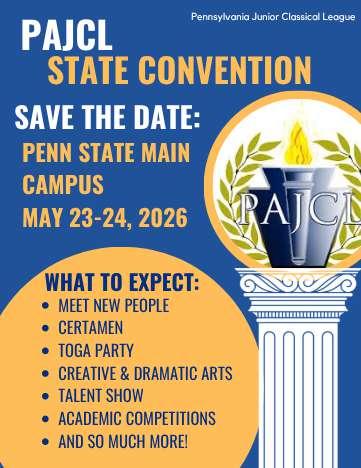
I am so excited for this year’s PAJCL State Latin Convention. More than 250 people have registered to attend the competition, an increase from recent years' attendance
Gratias Vobis et Valete,

CHRISTOPHER CHANG PAJCL PRESIDENT
Follow a summer romance shaped by family expectations, freedom, and a glowing lighthouse
THE ROMAN PANTHEON
Explore the Pantheon’s architecture, oculus, and lasting Roman engineering legacy
Examine Roman women’s fashion and how clothing reflected identity, rules, and resistance
Explore how Latin shaped spells, fantasy worlds, and magical traditions
Explore how Latin shaped scientific naming systems and remains embedded in biology today.
Explore how ancestry, identity, and coinage shaped status in the Roman Republic
Prometheus’s
how Romans predicted nature through winds, skies, animals, and observation.
NATIONWIDE GAME

SCRIBO CONTEST ENTRIES DUE
CONVENTION REGISTRATION AWARDS SPONSOR AWARDS
SOCIAL MEDIA ACTIVITY | YEAR IN REVIEW
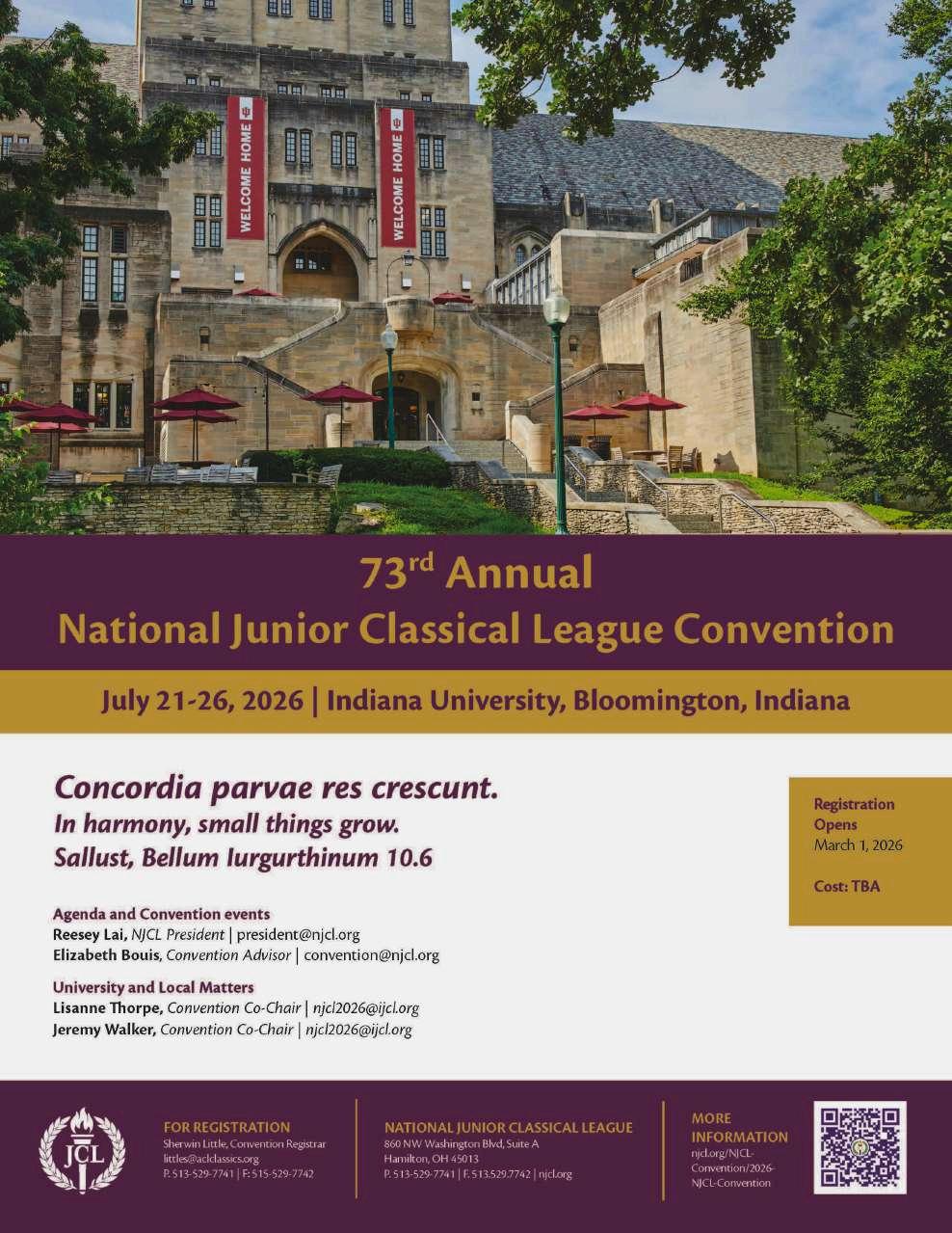
2026 NJCL CONVENTION
SPRING 2026 | ISSUE NO 7
Salvete,
“I am currently working with Cambridge Latin Course to aid in bringing the 6th edition to the United States.”
Salvete,
My name is Connie Ramsey. I have been teaching for 22 years. I teach at North Allegheny Senoir High School, and I am currently teaching Latin I, Academic and Honors Latin IV, Honors Senior Latin V and AP Latin. I am currently the co-chair of the PAJCL graphic arts.
A description of the officer duties:
Along with my colleague, Beth Foote, we are in charge of project guidelines, registration, aiding judges and compiling results for the graphic art categories
A personal touch about hobbies or interests outside of PAJCL work:
I have two children, a 9th grader and a 6th grader, and I have two dogs, Cooper the sheltie and Pip the pomperanian My favorite color is pink!

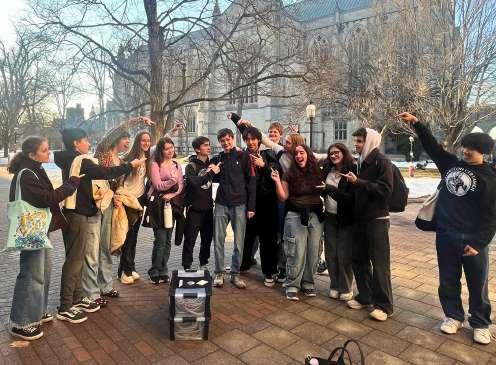
Princeton Certamen was an amazing experience, although it was the night before that really mattered. The night before Princeton, I was motivated to write a speech for my team (it was so peak) “You either win or learn, losing is a mentality.” But I didn’t just present the speech to my team or even just the other underclassmen I actually stood up in front of the whole club and spoke from my heart I talked about why we spend so much time practicing, buzzing in on questions, and waking up way too early for tournaments I talked about how Certamen isn’t just about winning: it’s about trusting your teammates, taking risks, and learning something new every single round We weren’t just there to compete. We were there to challenge ourselves, support each other, and prove that no matter the outcome, we would either win or learn
At first I was really nervous, but once I started talking it felt real It reminded me that even though we all want to win, what really matters is
CHAPTER EVENT
our mindset. When we walked into Princeton, we weren’t just there to compete We were there to challenge ourselves, support each other, and prove that no matter the outcome, we would either win or learn.
We sent five total teams to the tournament, one novice, one intermediate, and three advanced For a few players, it was even their first tournament But Harriton showed out loud and proud to represent Pennsylvania. My novice team racked up 325 points in preliminary rounds, going into semifinals as the 6th seed. Our intermediate team managed an amazing 285 points, going into semis as the 8th seed And, incredibly, two of our three advanced teams earned 370 and 300 points, advancing as 6th and 9th seeds respectively. Unfortunately, nobody moved past the semifinal rounds, but our efforts and skills shone through Everyone had a great time and met some really great competitors. I can’t wait to win or learn more at our next tournament!
Harriton
hosts a multi-school Saturnalia
For the Romans, Saturnalia was the greatest of days, with role reversals, gifts, feasts, and many days of celebration The holiday occurred near the Spring solstice to celebrate the titan Saturn, who ruled over agriculture and time.
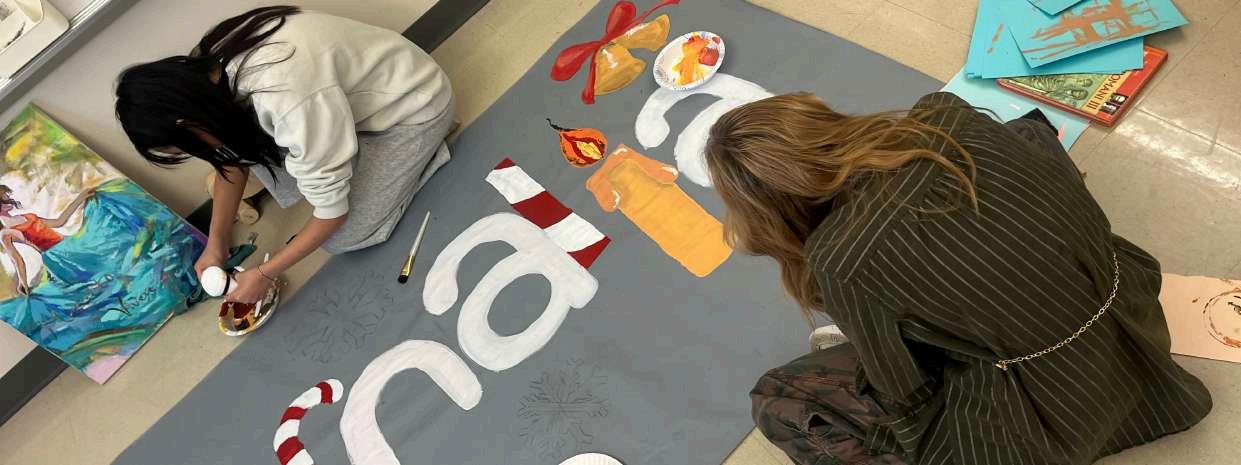
As members of PAJCL, bound by a pledge to uphold the traditions of Classics, we hold celebrations as a club, a school, and a state For the third year in a row, Harriton has hosted a multi-school Saturnalia, with each year increasing in fun, participation and excitement But Saturnalia wasn’t built in a night In fact, the preparations for this event starts many days before the culminating holiday. Many students from Harriton, led by our very own PAJCL VP of Public Relations, Olivia Lee, worked intensely towards creating banners,
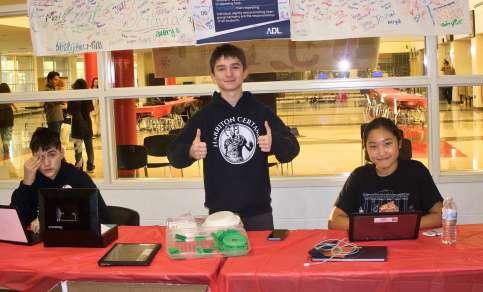
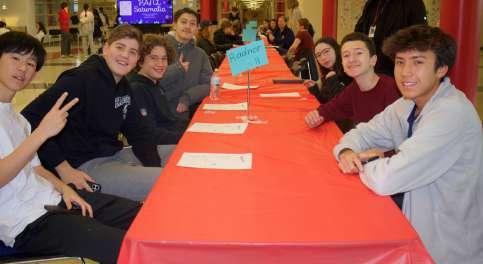
setting up Streetamen rooms, and creating games for the carnival. Many schools attended from all around the area, with each school bringing a different kind of spirit to the event. Conrad Weiser supported our service efforts, writing a multitude of cards for the elderly around Pennsylvania Owen J. Roberts brought their most spirited foot forward, with one of their students being the princeps of Saturnalia Radnor continued their love of Certamen with a stellar performance in our streetamen tournament Haverford returned to once again dominate the court in dodgeball We also had our first attendance of middle schools from our district, which was a great addition that we hope to continue in future years.
“Small gifts, often wax figurines, known as sigillaria, or gag gifts, were exchanged, and a coin was hidden in a cake to choose a temporary “King of Saturnalia.”.”
Harriton Saturnalia also featured an important new addition: fundraising towards two scholarship funds With all of these great schools and years of experience, we were able to once again pull off a great Saturnalia, full of dancing, games, and PAJCL spirit I could not be any happier to be involved in planning and running the event, as both a member of Harriton Latin Club and PAJCL
Through raffles, games, and amazing spirit from all of our participants, we managed to raise $400 to go into these scholarships and help two amazing PAJCLers attend our convention
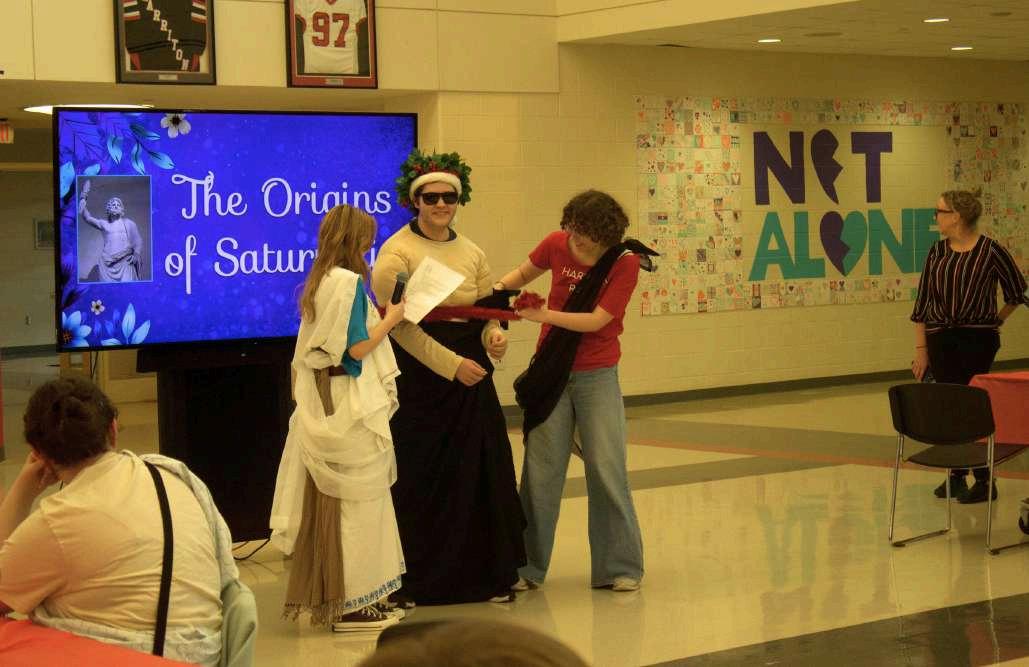
Io Saturnalia! Three Schools Unite for a Joyful Celebration
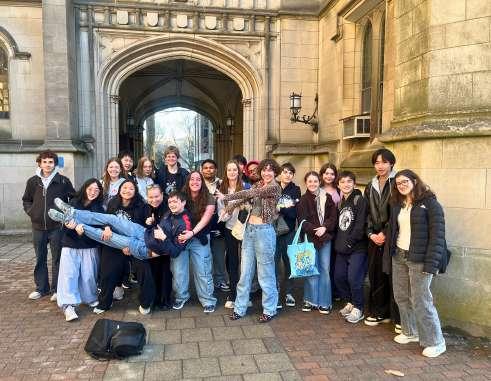
We had a packed house this year with 3 schools joining forces to celebrate Saturnalia! There was lots of joy, enthusiasm, and candy exchanged! We had over 30 people attend, including those from Germantown Academy and Phoenixville High School, who happily joined us in our celebrations this year!
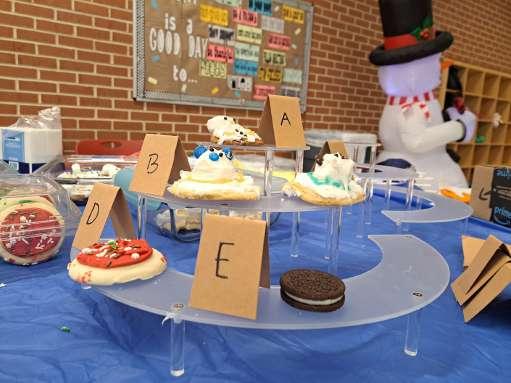
We spent much of our time celebrating the joys of dining together and learning about classical history! Many students brought in their own cupcakes for the cupcakedecorating contest. We had over 10 entries and lots of delicious cupcakes to go around At one station, students had the opportunity to use craft materials such as pipe cleaners to recreate a traditional Roman Saturnalia dining scene
Thanks to the expert cupcake crafting of members from our very own Tori, Upper Dublin took home the People’s Choice and Judge’s Award for best cupcakes!
Highlights:
Chariot racing - Students had the opportunity to compete excitedly for a spot to be the ultimate Roman embodiment of bravery!
VR Experience - A great experience to see what life was like as a Roman competing firsthand!
Frisbee - A nice opportunity to chill and hang out with friends while also staying active!
Leadership Spotlight:
Olivia Moriconi shone brightly through her leadership and determination in creating a successful gathering for our friends! She directed younger officers to carry boxes, distribute tablecloths, set up snowflake decorations, and prepare food. She worked rigorously to ensure that every student had fun As a Vice President within the Latin club, she assisted with judging the pipecleaner contest and sharing announcements with the club We commend her great leadership skills and willingness to cooperate with everyone!
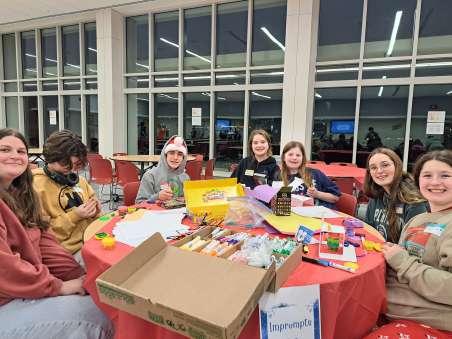
CHAPTER EVENTS
Top Highlights From Attendees:
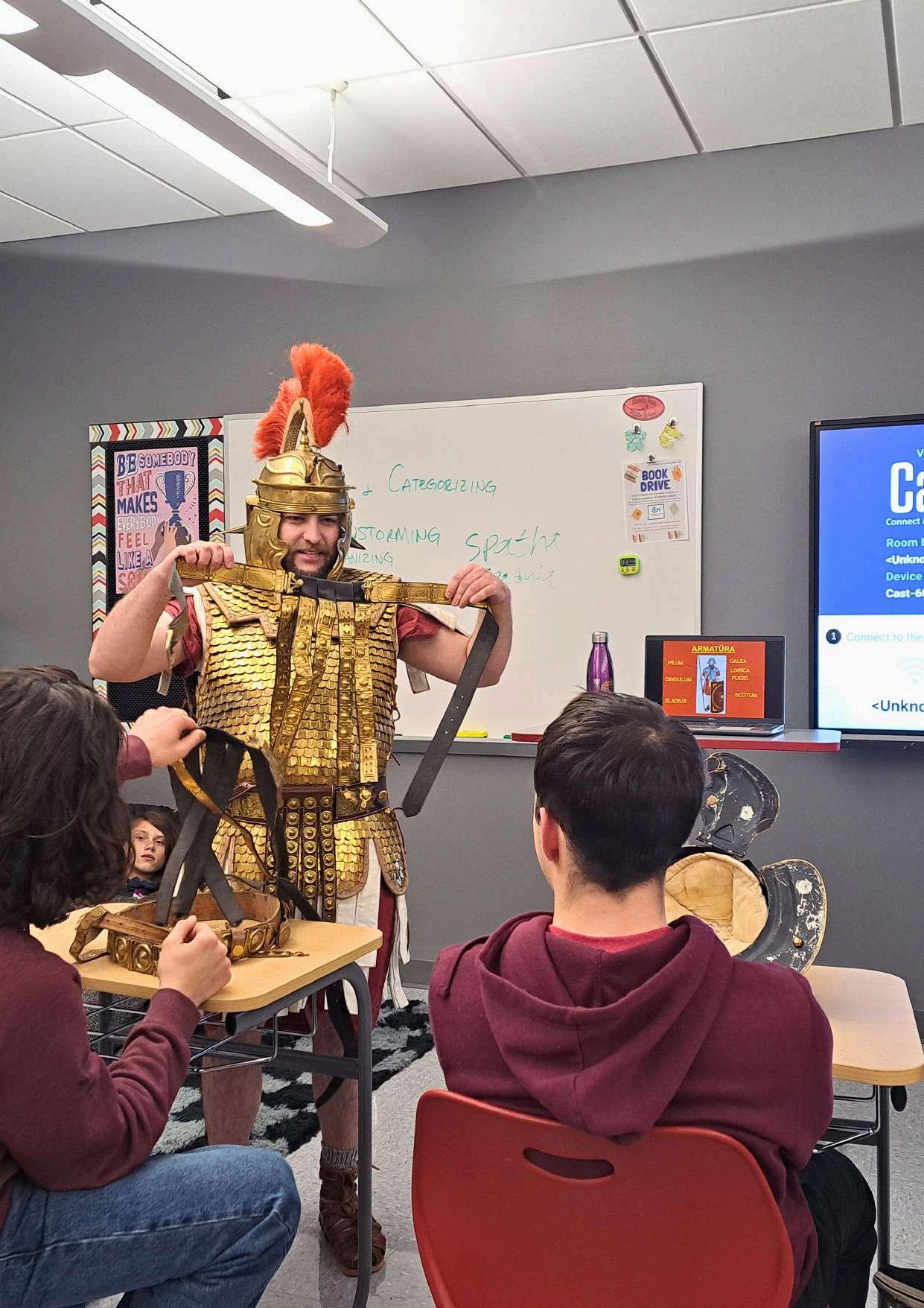
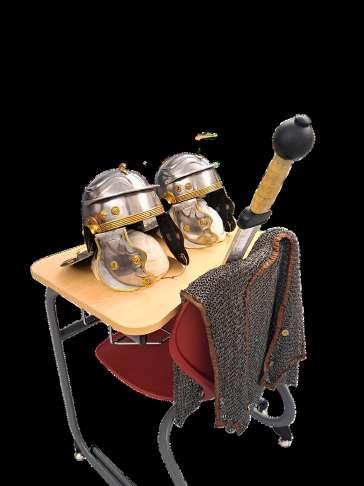
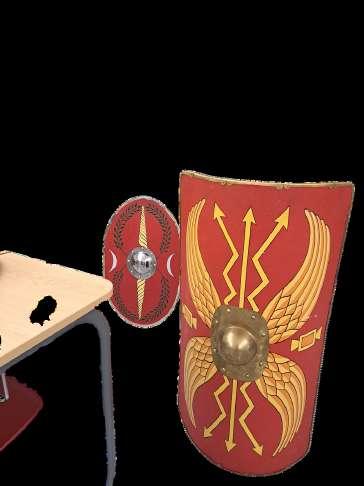
Other notable events included the enthusiasm generated by Mr Castanya’s realistic Roman armor! Students had the opportunity to ask questions and try on pieces of Roman armor that would have been worn in battle back in the BCs. Volunteers happily went up to ask questions and try on the armor, cultivating a fun-filled history activity Students also shared smiles and laughter as they ate together to celebrate the coming of Saturnalia! The food and soda tasted great, and students from all over the Philadelphia area shared joy and laughter.
Looking Ahead:
Everyone had a great time gathering together to celebrate the magic of Saturnalia We had combinations of creative students, fun competitions, and interactive activities to commemorate one of the most joyful and relaxed holidays The winter season is a good time, and we look forward to hosting more events for our enthusiastic students. Io Saturnalia!
By the Numbers
3 Schools convened
30+ attendees
40+ cupcakes
5+ activities
1 guest speaker
Reception
Latin in Fantasy Worlds by Emmauelle Kramer at Upper Dub
Women's Clothing by Madeline Reese at Owen J Robert's JC
Science and
Education:
Roman Weather Watchers by Aiden Bray at Upper Dublin Hi How Science Speaks by Arlo Dalgarno-Platt at Upper Dublin
ACROSS THE STATE
As Spring settles IN, PAJCL chapters across the state are staying busy with creativity, camaraderie, and plenty of seasonal spirit. These Spring activities capture the joy, energy, and strong sense of community that keep classical studies thriving in student life today
The year is fast wrapping up, and looking back, it has been an amazing run for Harriton JCL, largely thanks to our outstanding leadership team
Olivia Lee not only led the Latin Club, but also pulled off what may go down in history as the greatest media stunt. Her humorous Instagram reels on “Latin Teacher Struggles” didn’t just entertain, they went viral and built a following that can rival JCL pages from some of the most prominent states.
Maya Gavrin and Andrew Cicalese led our Keystone submissions, contributed to the editorial team, and was instrumental in the life of our club
Our Certamen Head, Sansan Lu together with her loyal coaches wrapped up the Ivy League Certamen season with incredible results There was not a single tournament where our teams didn’t place in the top 10 Even more impressively, our Novice team took 1st place and our Advanced team earned 3rd at the UPenn finals Harvard proved to be our greatest challenge, but also the moment where our students gained confidence and momentum for next year. While some might see the State Convention as the finish line, for many of Harriton students it’s only the beginning We are already planning to send a team to Nationals… but that’s a story for the fall issue
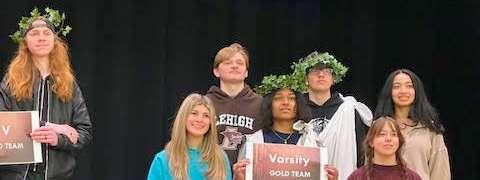
It has been a busy spring for students in the Owen J. Roberts Junior Classical League. In January and February, students prepared projects for the Philadelphia Classical Society “Latin Week” competition, ranging from artwork to models and even Minecraft builds. Many students earned recognition, including two “Best in Category” awards, and several placed in the competition’s academic tests Students also took part in national exams, with 39 students completing 88 tests across events like the National Latin Exam, Roman Civilization Exam, and Mythology Exam, earning numerous medals and certificates. In the nationwide online Latin League, OJR fielded four teams, with the Varsity Gold team advancing to the Super Regional Round.
As spring concludes, students are celebrating achievements and preparing for the PAJCL State Convention. Highlights include the PCS awards ceremony, World Language Honors Society induction, and the upcoming Latin Awards Ceremony. Now, students are focused on the PAJCL State Convention prep; working on projects, practicing performances, and training for Certamen, thereby making it a busy but rewarding time at OJR

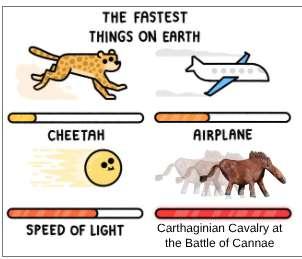
MEME: CARTHAGINIAN CAVALRY AT CANNAE
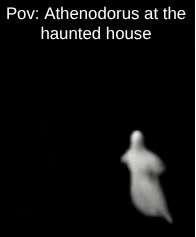
MEME: PLINY BEING DESPERATE FOR MAIL

CONVENTION EVENTS
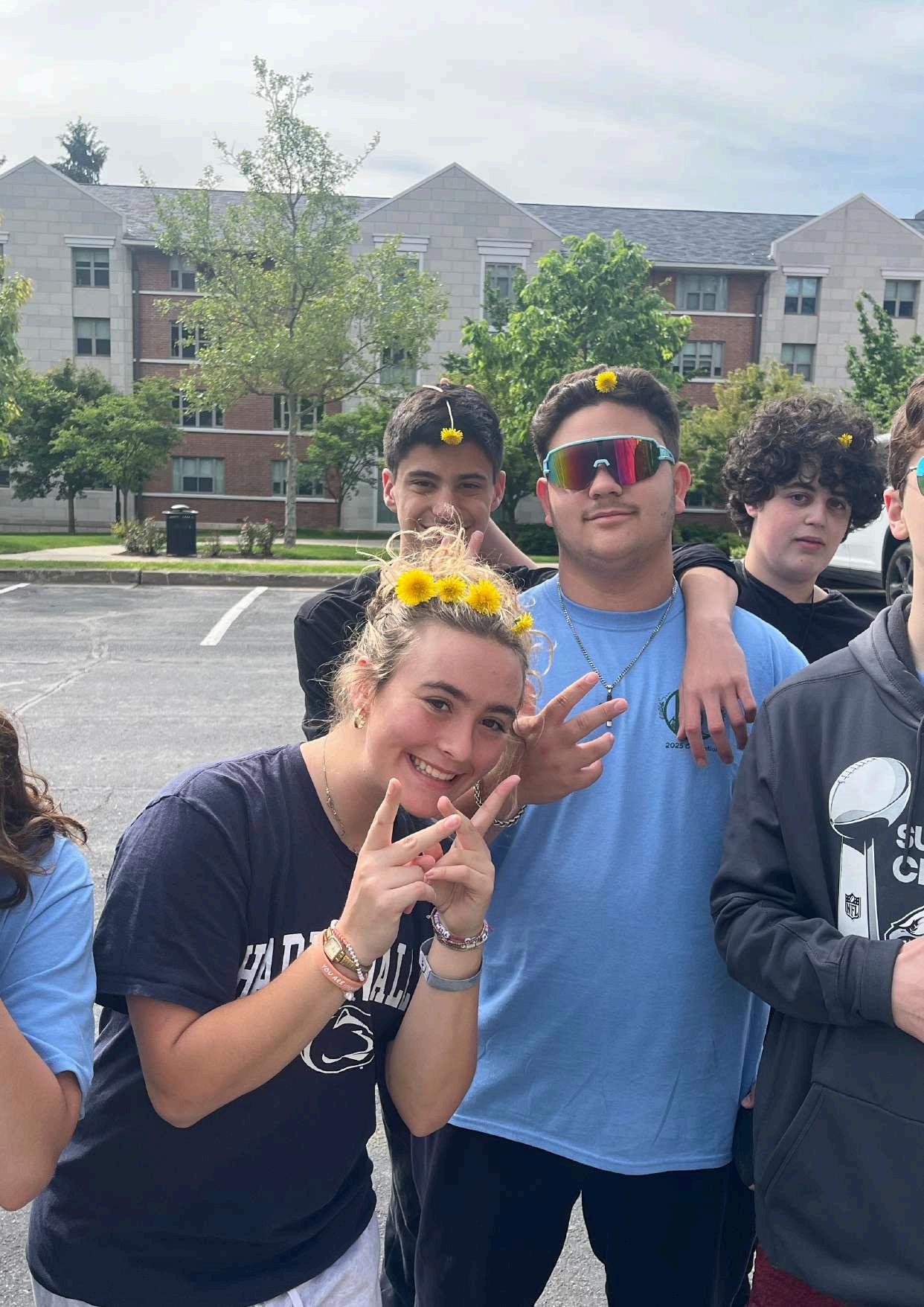
PAJCL SCAVENGER HUNT
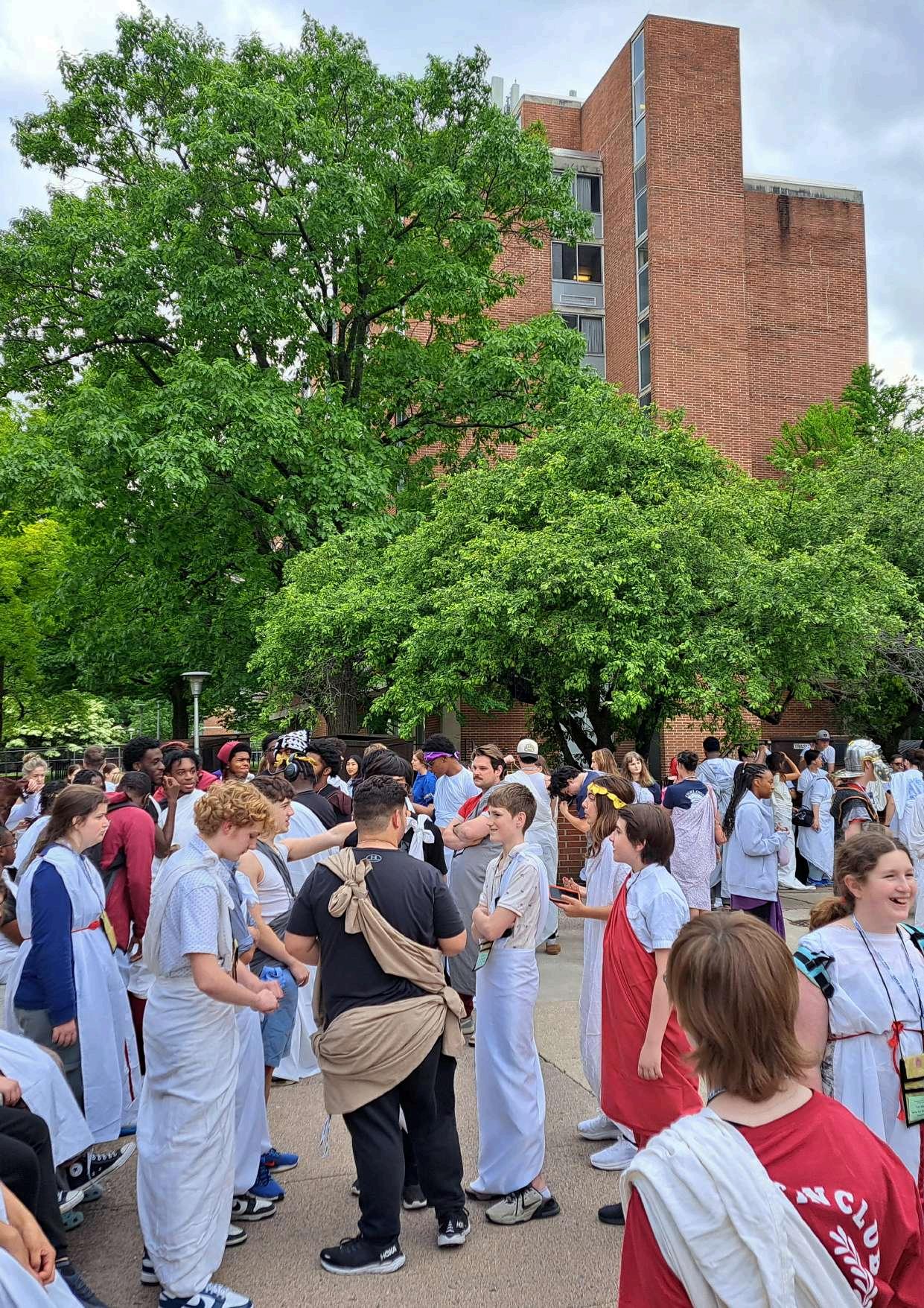
Salvete, JCLers!
Looking for something to do between events?
Gather your team and complete challenges to earn tokens of Roman virtue. Work together, meet new people, and show your PAJCL spirit!
Rules
1.Form a team of at least 4 students (maximum 8 recommended); only one team allowed per school
2.Each team must have a Team Captain responsible for submissions
3 Stay within designated convention areas at all times.
4 Every challenge must be completed with a photo that clearly shows your PAJCL sign
5 Submit photos via - Instagram DM to the official PAJCL account
6.Be respectful - do not disrupt events or enter restricted areas
7 Follow all instructions given by officers
Timing
Begins after the Opening Assembly Paused during the Entertainment Show, Leadership Meeting, Academic Testing. Resumes after those events conclude Ends before the procession to the track begins
Officer Challenges: Earn Roman Virtues
Find each PAJCL officer, complete their challenge, and earn a Roman Virtue Bracelet:
Auctoritas (President) – “Recreate a Greek/Roman statue with Christopher”
Veritas (Editor) – “Find the hidden message in the Keystone and relay it to Silvia”
Fides (Parliamentarian) – “List 5 Latin words that begin with the letter S”
Pietas (Secretary) – “Take a picture of your team making a heart around Olivia M”
Industria (VP of Public Relations) – “Take a photo that resembles a popular Roman/Greek Myth with Olivia L”
Virtus (VP of Membership) –“Make a Roman legion/battle formation with Aleena”
Final Challenge: “Virtutes in Manibus” (Virtues in Our Hands)
Take a photo of your team’s hands around your PAJCL sign, clearly displaying all the Roman virtue bracelets you have earned
CONVENTION EVENTS
General Challenges
Take a photo at the Creamery
Find and photograph a Latin word on campus
Take a photo with JCL members from at least two other schools
“We All in This TOGAther”
→ Create a team photo where everyone is dressed in togas “Bread and Circuses” (Panem et Circenses)
→ Show your support and love for the performers of the Entertainment Show

SILVIA KANG KEYSTONE EDITOR
ANDREW CICALESE HARRITON HIGH SCHOOL
MAYA GAVRIN HARRITON HIGH SCHOOL
AVA MORICONI UPPER DUBLIN HIGH SCHOOL
EDEN JOSEPH UPPER DUBLIN HIGH SCHOOL
ANRUI XU RADNOR HIGH SCHOOL
JOY BECKISH NORTH POCONO HIGH SCHOOL
Why did you study Latin?
I started taking Latin because I was obsessed with Percy Jackson, but I've come to love the language as an interesting area of study and a great way to connect with others.
Favorite part of being in JCL or working on The Keystone?
My favorite part of JCL is getting to compete with and meet people across the state, and I love being able to bring everyone together through the Keystone.
Favorite Latin quote: "Dum spiro, spero" - While I breathe, I hope
Fun fact:
I have a twin sister and I also have twin step-sisters!
One-sentence description of your role/responsibilities: I'm working to organize the author bylines for all of our amazing submissions
Why did you study Latin? I wanted to know more about the culture and ways of life in the Roman society.
Favorite part of being in JCL or working on The Keystone?I love being able to meet so many new kinds of people!
Favorite Latin quote: Carpe Diem
Fun fact: I was born at the first hospital in the US!
One-sentence description of your role/responsibilities: I am one of the editors for our magazine!
MAYA GAVRIN HARRITON HIGH SCHOOL GRADE 11
AVA MORICONI UPPER DUBLIN HIGH SCHOOL GRADE 11
Why did you study Latin?
I find it to be a very interesting language and I want to learn other languages which latin helps with
Favorite part of being in JCL or working on The Keystone?
I like helping fix issues on magazines, I find it quite relaxing and i like working with other people to accomplish a shared goal
Favorite Latin quote: Veni Vidi Vici
Fun fact:
I have a twin sister!
One-sentence description of your role/responsibilities:
I help fix issues and make sure everything looks as it should
Why did you study Latin?
I love how rich the culture is and how tight knit the community is
Favorite part of being in JCL or working on The Keystone? Everyone is so helpful and friendly
Favorite Latin quote: Carpe Diem
Fun fact: I have 7 siblings
One-sentence description of your role/responsibilities: I add headers, footers, and page numbers to the edition
EDEN JOSEPH UPPER DUBLIN HIGH SCHOOL GRADE 9
JOY BECKISH NORTH POCONO HIGH SCHOOL GRADE 11
Why did you study Latin?
To learn a unique language that influences many of our modern languages a lot
Favorite part of being in JCL or working on The Keystone?
Just interacting with so many different people from all over the state. from so many different schools.
Favorite Latin quote: Errare humanum est
Fun fact:
I have two cats!
One-sentence description of your role/responsibilities:
I am a member of the Keystone editorial board My main responsibility is to add photo captions to images on the Keystone.
Why did you study Latin?
I chose Latin because the middle school Latin teacher (Mr Hagan) was cool, I heard that it would help me with my vocab/English skills, I wanted to learn the origins of scientific names, and I've always been interested in Greek/Roman mythology and history.
Favorite part of being in JCL or working on The Keystone?
I love attending all of the local Latin festivals and meeting other JCL people while doing the activities like Certamen, caroling contests, and the fake horse sacrifice rituals.
Favorite Latin quote: Quintus est puer Romanus
Fun fact:
I've played Ultimate Frisbee for three years and I love practicing my throwing (sorry Acrisius).
One-sentence description of your role/responsibilities: My role is organizing and writing descriptions for the table of contents
ANDREW CICALESE HARRITON HIGH SCHOOL GRADE 11
ANRUI XU RADNOR HIGH SCHOOL GRADE 12
Why did you study Latin?
I love languages and learning about the roots of different words and ideas that are still relevant today Latin connects me to history
Favorite part of being in JCL or working on The Keystone?
Being part of a Latin-loving community and getting to meet so many inspiring people through JCL events
Favorite Latin quote: “Per aspera ad astra.” Through hardships to the stars
Fun fact:
I know 5 languages - Spanish, Korean, Latin, English, and Punjabi
One-sentence description of your role/responsibilities:
I help edit articles, and collaborate with my team to create each edition of The Keystone
SILVIA KANG NORTHWEST PENNSYLVANIA COLLEGIATE ACADEMY GRADE 11
ETC Nationwide Game Results: Rome’s Birthday April 16, 2026
Thank you to the following teachers who prepared their students for ETC’s Spring Nationwide Game:
Magister Savage from Flint Hill School in Virginia
Magistrae Weidler and Keshishian from the Baldwin School in Pennsylvania
Magistra Masoni from Harker Middle School in California
Magistra Goldstein from the Bullis School in Maryland
Magistra Mccormick from Whitcomb Middle School in Massachusetts
Magister Posey from Mountain Brook Junior High in Alabama
Magistra Brogden from Walnut Hills High School in Ohio
Magistra Dougherty from Upper Dublin High School in Pennsylvania
Magistra Loscalzo from Daviess County High School in Kentucky
During our live game the top five middle school finishers were:
1st Mackey V from Bullis
2nd Ingrid L from Bullis
3rd Leo C from Bullis
During our live game the top high school finishers were:
1st Bria G from Flint Hill
2nd Amber L from Flint Hill
For the asynchronous assignment, our top scorers were:
Sami R from Walnut Hills High School
Sophia M from Walnut Hills High School
Amadou D from Walnut Hills High School
Isis P from Daviess County High School
Connor R from Upper Dublin High School
Lily M from Upper Dublin High School
Eden J from Upper Dublin High School
EMBODYING ROMAN PIETY
It was the coldest day of the year, which meant Code Blue for the homeless shelter in Reading, Pennsylvania The weather was too dangerous for anyone to survive on the streets, so no one was turned away. That night, the Latin and Certamen Club officers took the trip out and served dinner to over 200 men We brought food donations and home-baked desserts; some of the brownies we made were burnt, but to our surprise, they were the most popular
Volunteering to serve food at this shelter felt like a natural step for our officers who strive to achieve the Roman virtue of piety. For the ancient Romans, this value meant unwavering loyalty to their gods, their state, and their family However, for modern teenagers, this virtue means going out of their way to give back to their community and not take their opportunities for granted.
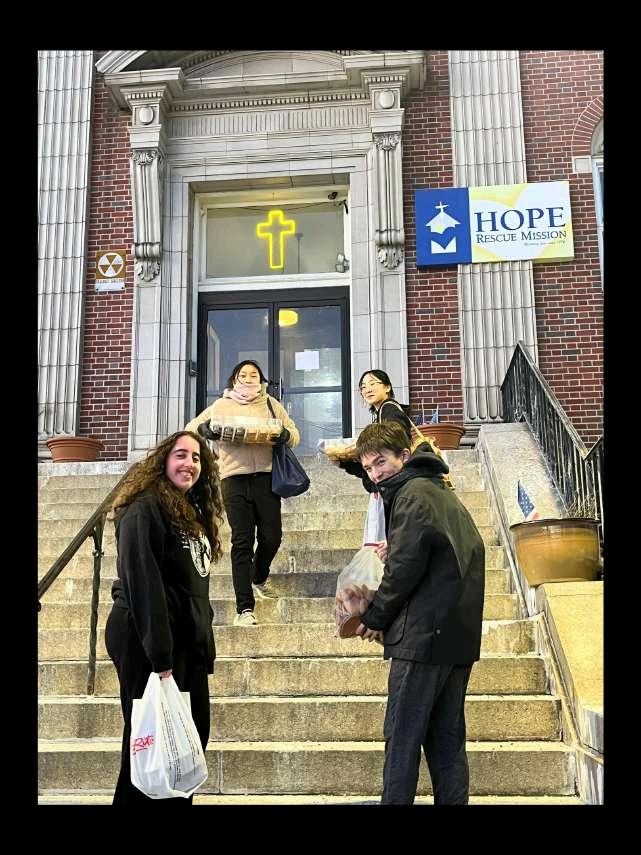
When we arrived at the shelter, we were greeted warmly by men from all backgrounds. Some tattoos hinted at a criminal past, many were war veterans, and others had simply lost their footing. They still clung to small signs of dignity (nice sneakers, a sense of style), but all shared the same trace of gloom and defeat on their faces
Because of their clear pain, smiling and greeting became a rule for our students, each focused on making the men grin A simple, “Hello, sir How are you tonight?” brightened so many faces. In the end, the most important thing we offered wasn’t food, but recognition - being seen, respected, and treated as human
HISTORY & MYTHGOLOGY
ROMAN SUPERSTITIONS
While we often remember ancient Rome for its armies and architectural marvels, the civilization existed in a world filled with omens, curses, and supernatural beliefs For the Romans, the boundary between the material and the spiritual was held in the CORDE of daily life Natural events and divine meaning occupied the same space
Broken Mirrors
Has anybody ever told you that breaking a mirror would bring you seven years of bad luck? Another idea to thank the Romans for The Romans believed that the human soul had a seven year cycle of renewal. They also believed that the mirror was a window to the soul, since a mirror is where a person sees their reflection. Combining these two ideas, breaking a mirror is equivalent to damaging the soul, and cannot be cleansed until the next renewal.
Birds
Romans also placed great importance on augury, or the study of bird’s behavior to predict fortunes Owls were considered especially unlucky, and as bringers of death.
Evil Left Hand
Left handed people were considered ‘sinister’ in Ancient Rome ‘Sinister’ in Latin means having to do with the left side, or left-handed.
Due to superstitions about left handed people, the word sinister came to be associated with evil and maliciousness The Ancient Romans avoided doing things with their left hand to avoid any bad luck.
Salt
Spilling salt was also considered bad luck and still sometimes is This is because salt was used for preservation of food, and hence viewed as a symbol of lasting friendship and trust In fact, when having guests over, it is thought that the Romans would salt their food extra to solidify their friendship with guests. Romans were very superstitious and some of their strong beliefs carried into today’s world
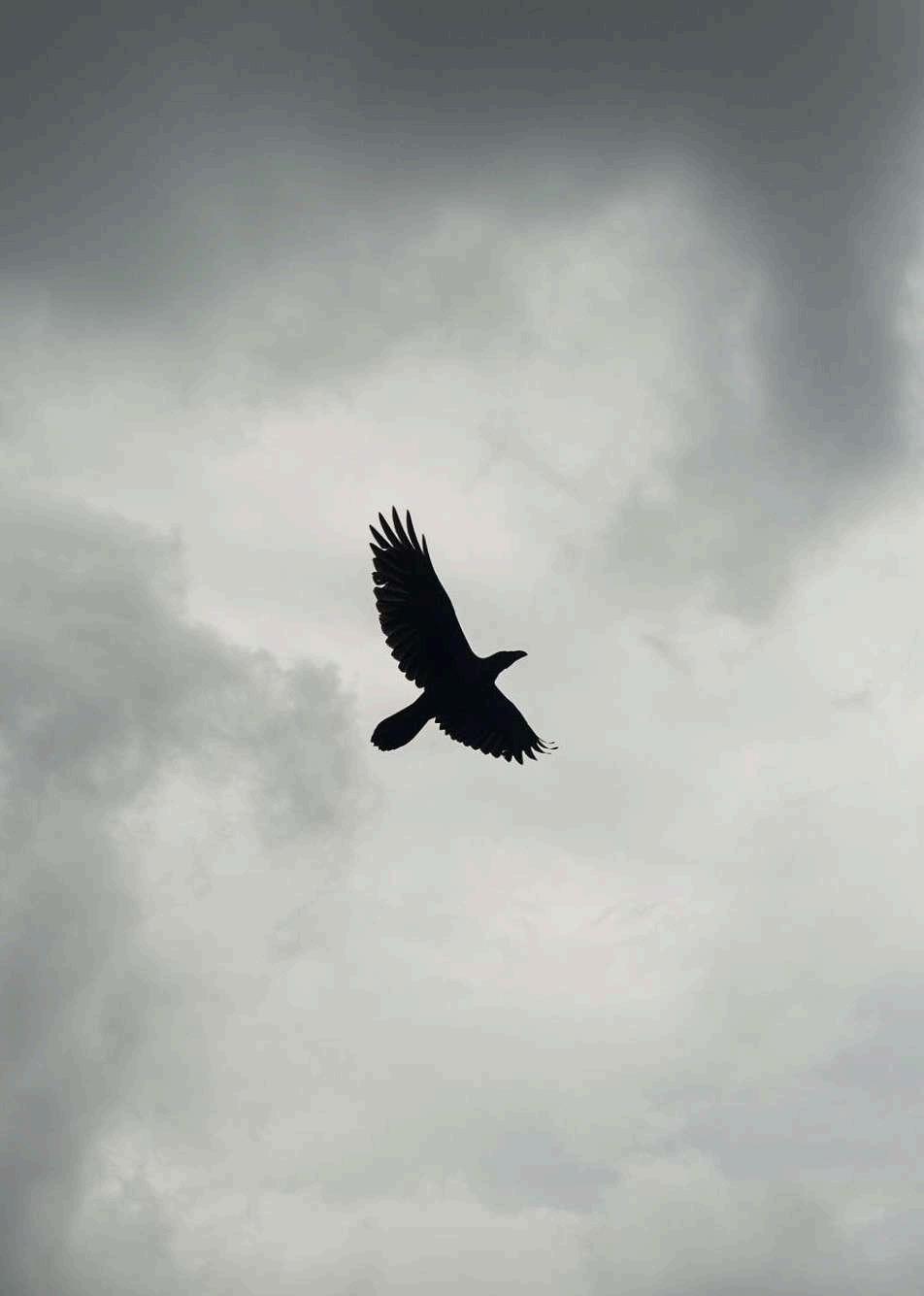
Romans put bullae and lunulae on their sons and daughters respectively? These were necklace charms that acted as wards of evil.
LIFESTYLE & CULTURE
ROMAN VALUES IN MODERN CLASSROOMS
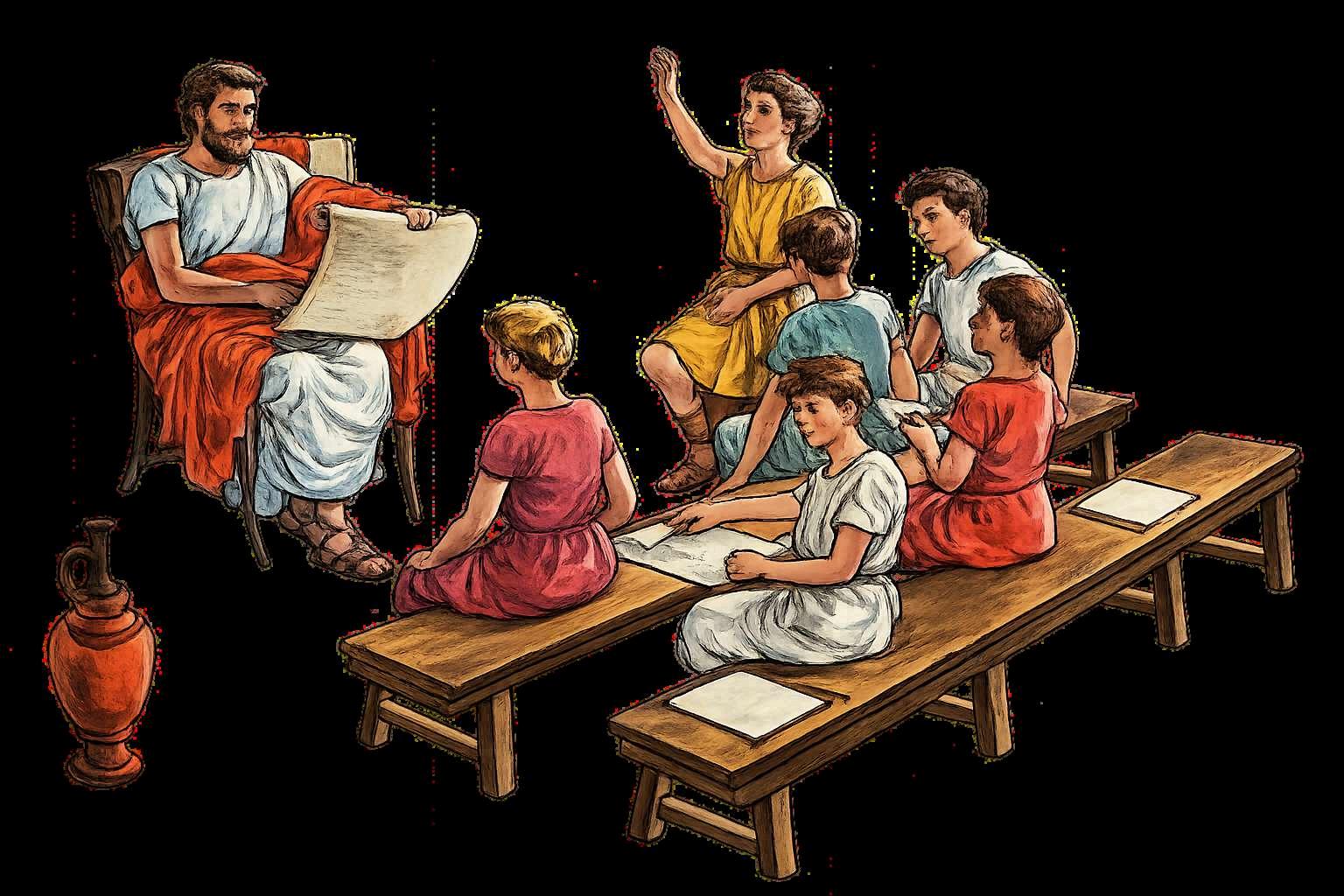
Roman ideas about discipline, respect, and education were very strict and traditional compared to modern schooling Both systems want students to learn and have good behavior, but the way they do it is different. In Ancient Rome, discipline was extremely important Teachers often punished students and had strict rules. If a student did something wrong, they would likely be whipped The Romans thought fear would make students work harder. Today, schools usually do not allow physical punishment. Modern discipline focuses more on understanding Students may be punished with detention or an email home. No physical punishments.
Respect was also a big part of Roman education and discipline. Students were expected to always show respect towards teachers and parents Teachers were the masters and students were to listen quietly and follow orders. Respect was often shown through obedience and silence Today, students are taught to respect both teachers and other classmates while participating in class. Modern students usually receive respect back from their teachers as well Modern students can ask questions, share ideas, and challenge what they are learning. This was much different from the Romans' strict set-up
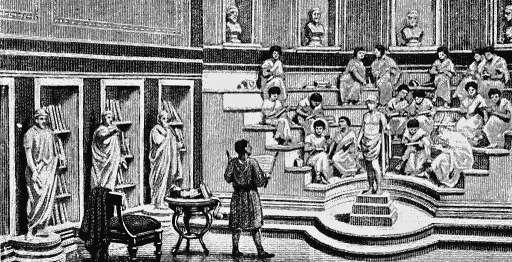
Additionally, Roman education focused on creating strong citizens The education in Ancient Rome was usually a tutoring service. Wealthy families would pay for their child to be educated and taught to read, write, and learn history
“Also, many girls and poor children did not have the opportunity for schooling. This made wealthy families have an advantage in society with the ability to publicly speak and read”
Also, many girls and poor children did not have the opportunity for schooling This made wealthy families have an advantage in society with the ability to publicly speak and read Today, education is open to everyone and in many places is required until a certain age Modern schooling also teaches subjects such as science, technology, art and many other things. Today, schooling helps prepare students for a wide variety of career paths and offers many options
Another difference was how the students learn Roman students memorized lots of information and repeated lessons In modern schools, students often work in groups, do projects, present, and use technology such as computers
LIFESTYLE & CULTURE
Teachers try to make learning fun and interesting. Additionally, students are taught to understand topics and apply them in many ways This is much more complex than simply memorizing something. Even with these differences, there were some similarities The Romans believed education built personalities and character This is the same as today. Both ancient and modern students worked hard, respected others, and wanted to learn key ideas. Both Roman and modern parents wanted their children to thrive, learn, and set themselves up for a better future The influence of Rome EST still visible in modern education today.
In conclusion, Roman ideals of discipline,
Education was private, not state-run. Rich children had tutors. respect, and education were very strict and different from modern schooling, which focuses on understanding and fairness However, both systems share the same basic principles of learning for a purpose and to become members of society Also, today's schooling prepares students for today's world and Ancient Roman schooling prepared students for their society and lifestyle, which makes them different
CREATIVE WRITING
CIRCES SPA RETREAT
Circe’s eyes glazed over the sight of the pearly white walls of her villa. A yawn escaped her lips; her mind folded between the events of the day She spent her afternoon turning wicked men into pigs and goats She quickly whipped up an herbal concoction to cure an ailment in a small Greek village. She sighed, the stress from everything clinging to her forehead.
“I wish I could just rest There is so much work to be done, and I don’t have nearly enough time or energy to work through it all ” She waved her hands back and forth, little wisps of magic threading through her hair strands. Herbs and spice containers floated around her chair, the spin of her hands and flexed fingers maneuvering them
“I wish I could just relax ” Suddenly, Circe caught a glimpse of a woman feeding her farm animals outside of her villa She worked her arms back and forth to tend to the lands. Mud sat scattered and splat across the edge of her tunic, and she wiped the sweat cleanly off her face Circe’s eyes widened.
“She’s working so hard, too. We must have a way to rest together Hm what should I do?” Circe’s eyes wandered around to the view from the other end of her house. She noticed the gentle tread of the ocean waves slinking back and forth up the shore Her eyes widened. “I know what to do.” She smiled, now grabbing her floating spices. Circe left her villa and walked over to the working woman across the way, preparing a thin, sincere smile.
“She
“How are you doing today?” Circe chirped The woman looked up from her tending “Who are you and what do you want?” the woman asked, narrowing an eyebrow. Circe smiled
“Oh, not much I just live across the street I noticed that you were working very hard. I wanted to show you a way to reduce your stress I feel that same frustration from working. It’s quite awful, really. The worst pain is in the joints ” Circe chirped, fiddling with hair strands
“How did you even know that I was-” the woman asked, bewildered.
“Oh, nothing I can just sense it Now, come here, let me show you what I need you to do.” Circe said, motioning for the woman to follow her and set up Circe whisked her hands through the air, separating the spices and herbs into various rows. She pointed the woman to stand in the center of a circle where ivy, hydrangeas, thyme, and other spices surrounded her in thick, bushy rows of neatly threaded plants. Through Circe’s magical direction, each spice knitted itself in several surrounding circles around the woman.
waved her hands back and forth, little wisps of magic threading through her hair strands. Herbs and spice containers floated around her chair, the spin
of her hands and flexed fingers maneuvering them.”
“Wonderful! The spell is turning out nicely. Sooner or later, you’ll be even more relaxed ” Circe smiled Panic settled in on the woman’s porcelain face, like cracks climbing up her cheeks
“What are you doing to me?!” the woman cried. “Am I some sort of witchcraft to you?” she shouted, her voice echoing between thick winds
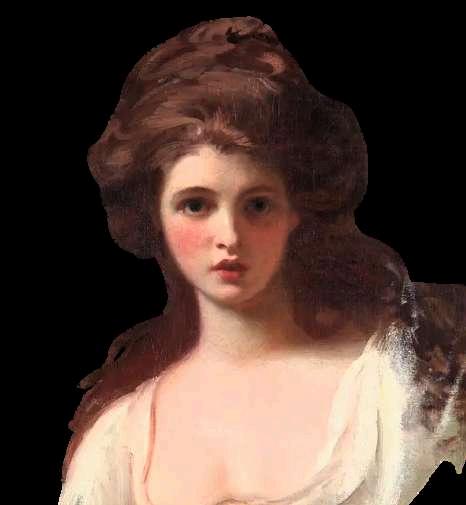
“I’m trying to help you Relax, please ” Circe sighed, tossing her long, golden brown hair over her shoulders Circe raised her hands and guided the stitched spices like a conductor directing an orchestra. The herbs spun around the woman, levitating her pigs and cows The spices climbed and grew all over the animals All of a sudden, a giant white cloud grew out of them. In place was a door It was the same pearly white as Circe’s house The spices continued to spin and circulate in rapid succession, the force of the motion spinning the woman into dizziness After a few minutes of cooling, the spices stopped spinning and landed flat on the ground. The door floated down to earth, and a low sound emanated from it
“What happened to my cattle? What did you do with them? This is my livelihood! I cannot survive without them! Give them back to me!” the woman cried, preparing to lunge at Circe.
Circe was headed for the door. She stopped in her tracks, holding a hand out to stop the woman “Don’t worry, this spell is only temporary. In a few hours everything will go back to normal You see, I’m doing you a favor Come on, let’s head inside ” Circe smiled and offered the woman a hand.
The woman stopped in her tracks. She looked over the hand Her own shook, her fingers gently settling over the palm She nervously took Circe’s hand. The two women steadily headed for the door Circe’s magic opened the broad, pearly white doors
“Why should I trust you? You’re trying to ruin my farm! My livelihood!” the woman shouted, her eyes blazing
Inside was the most beautiful spa that existed
There were baths and pools filled with the finest water in all of the Mediterranean The whitest, purest sand clung to crystal clear beaches Tall, arching columns surrounded the baths. Murals and mosaics patterned the ceilings. The spa chairs had the most comfortable sheets and cushions to host tired people There were long tables containing the most luscious foods, the taste of salt and sweet transcending the eater’s experience
“What is all of this? How were you able to conjure such a gorgeous space?” the woman asked, her eyes wide and her mouth agape Circe smiled back in return.
“Oh, you know, just magic and a desire. Don’t worry, your animals will turn back to normal in a little while For now, how about the two of us enjoy this space until then?” Circe grinned, extending her hand for the woman to take “Absolutely ”

LIFESTYLE & CULTURE
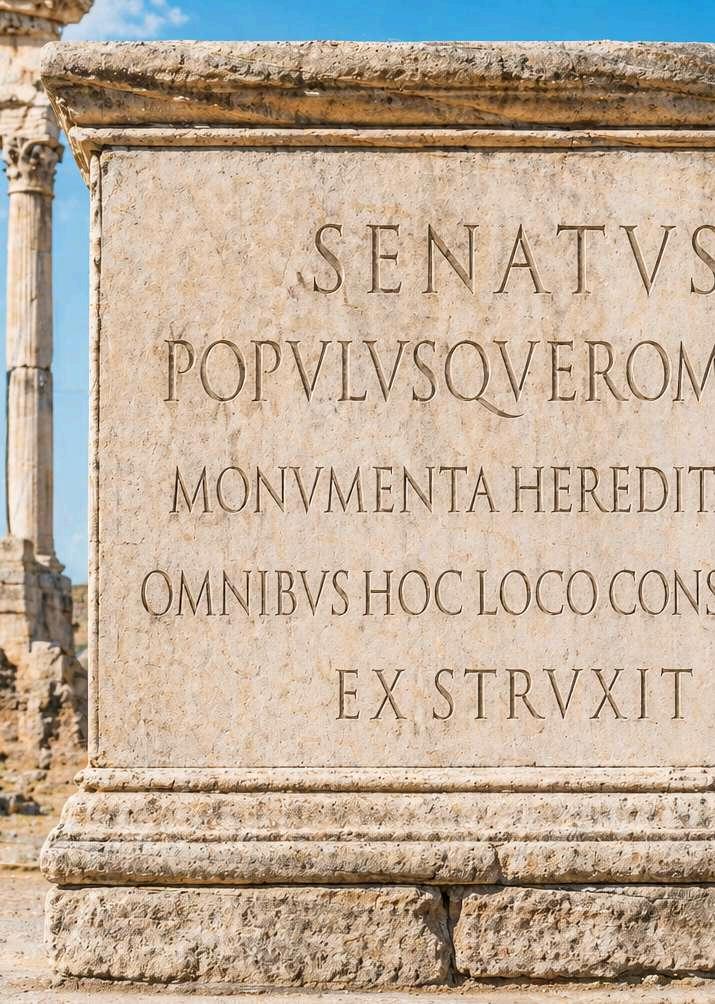
Many of my friends take “important” languages such as Spanish or French I definitely appreciate the value of these languages, but when I argue that Latin is the best language to study, the only response people usually have is that it isn’t spoken anymore. While that is technically true, I don’t think that makes Latin any less useful In fact, I think it adds to its mystery There is something fascinating about learning a language that once shaped so much of the world And besides, without Latin we wouldn’t even have languages like Spanish or French, and even English would look completely different Latin is everywhere, even if most people don’t realize it. Because of that, I wanted to share a few of the many reasons why I love studying Latin
First, Latin is incredibly historical When you study Latin, you aren’t just learning vocabulary and grammar you are connecting with an entire ancient civilization The language links you directly to Roman culture, literature, and daily life It’s amazing to think that people thousands of years ago were speaking and writing in this same language Another reason I love Latin is learning the roots of words. Latin helps explain so much
of the English language. Once you start recognizing Latin roots, you begin to see them everywhere Suddenly long or complicated English words become easier to understand because you know what the parts mean. Sometimes I catch myself stopping mid-conversation just to explain where a word came from I’m sure everyone around me absolutely loves when I start dissecting vocabulary and announcing the Latin root behind it
Of course, Latin also has its challenges. Anyone who studies Latin knows that the grammar can get intense The ablative alone seems to have about twenty different uses, and sometimes it feels like every sentence has some new rule that you have to figure out. Translating can feel like solving a puzzle You have to analyze every ending, every case, and every verb tense to understand what the sentence actually means. And let’s not even talk about the passive future perfect, which somehow manages to make you feel like you have been “verbed” in every possible way. Finally, there are the stories and characters that come with learning Latin Anyone who has read Ecce Romani probably loves the Cornelii family.
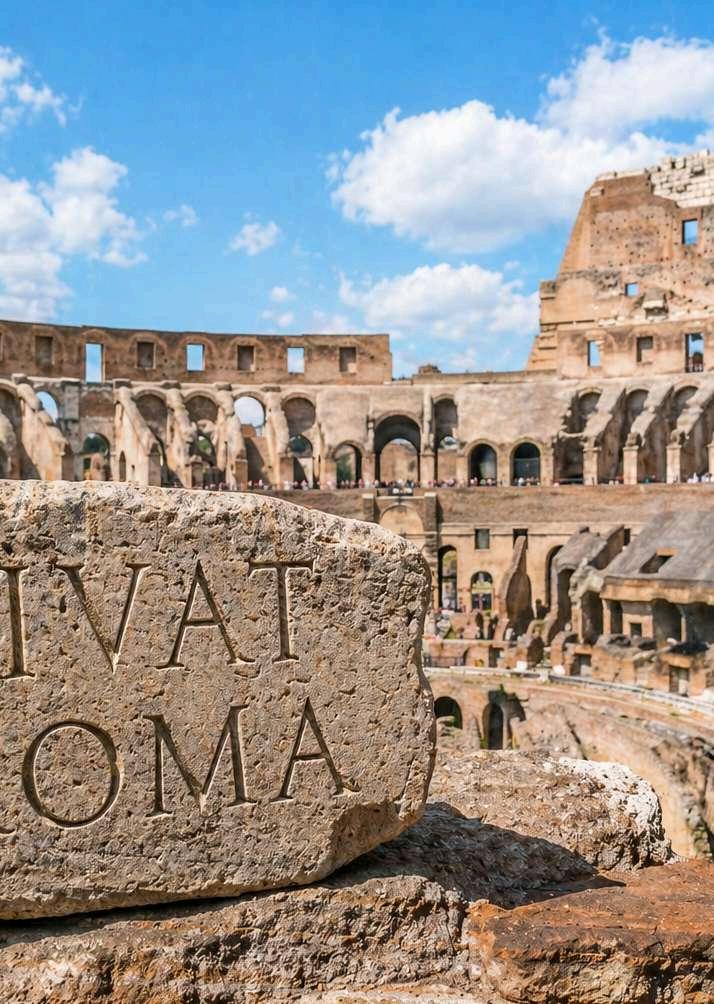
Overall, Latin might not be a spoken language today, but that does not make it unimportant In many ways, its influence is stronger than ever because it lives on through so many modern languages and through the words we use every day Once you start noticing how much of the world connects back to it, it becomes hard not to appreciate it
So while my friends may choose languages that are spoken in many countries today, I’m perfectly happy sticking with one that helped shape them all.
“Studying Latin is like uncovering the foundation of language
itself. “
For centuries, the Ancient Roman Empire stood as a pillar of society for the rest of the world Through conquest, its culture spread across continents. Stretching 3,000 miles across Asia minor, Northern Africa, and Europe, the empire encapsulated many lands, giving them access to a variety of foods and spices. When we picture ancient Roman meals, we see couches instead of seats, roasted boars with apples jammed in their mouths, and exotic birds served to reclining senators But this image represents a small slice of Roman life To understand Roman society, we must understand what they ate each day.
Roman days had three main meals Breakfast, or ientaculum, was small, including bread dipped in wine or water, cheese, olives, and dried fruit The wealthy also ate eggs, honey, and milk for their first meal Late morning was time for a lunch, or prandium At dusk, Romans enjoyed cena Most households enjoyed a bowl of cereal porridge or bean stew, along with vegetables and meat or fish if they could afford it In contrast, the wealthy often enjoyed extravagant banquets, or convivia, which
stretched over hours with multiple courses, entertainment, and gallons of wine
Many urban homes did not have kitchens. Rather, they ate their meals at thermopolia, the equivalent of today’s fast-food restaurants. Pompeii, a city with a population of 15,000, contained 90 of these shops, showing just how popular they were for everyday citizens
The Ancient Roman diet was simple, revolving around cereals, vegetables, legumes, cheese, and panis, or bread. Romans consumed a variety of greens, including lettuce, cabbage, and leek, whereas the rich also enjoyed asparagus, mushrooms, and artichokes. Romans ate both fresh and dried fruits, such as apples, pears, plums, chestnuts, figs, and grapes Legumes, including broad beans, lentils, and chickpeas were cheap sources of protein for those who could not afford expensive meats While bread was a staple of every Roman household, the quality was dictated by wealth The rich consumed fine white loaves, while darker breads made from barley or millet were eaten by the poor.
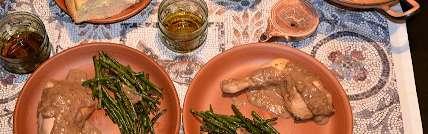
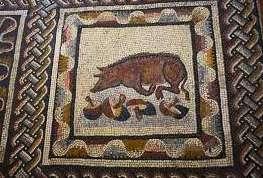
Quality of food often marked the difference between a meal of the wealthy and the poor, and access to different types of meat and fish was another clear indicator of status in Roman society For a majority of Rome’s history, slaughtering cattle was restricted until the 2nd century B.C. because of their importance in farming crops. Therefore, pork was the most common source of red meat and used in many festive dishes for both the rich and the poor. However, lamb, poultry, game, fish, and seafood, like shellfish and moray eels, were also found on the wealthy’s dinner tables.
The Romans employed a range of cooking techniques, with boiling, baking, frying, roasting, and stewing all common, with wealthy households hiring personal chefs skillful in these methods
Wine was drunk like water by everyone from slaves to the rich, as clean water was uncommon. They were commonly diluted and mixed with herbs, spices, and honey. Posca, or cheap, sour, low-quality wine mixed with water was popular with the working class and the military, though was prohibited for women to consume
n Ancient Rome, food meant more than sustenance; rather, it was a reflection of
I socioeconomic status and cultural values
Whether it was a variety of exotic meats served at a Senator’s banquet or cakes eaten in celebration of Saturnalia, Roman food was key to understanding the social hierarchy of the civilization.

THE REDISCOVERY OF PYGMALION’S STATUE
Hailey stared longingly across the glistening bay, reminiscing on all the memories she had made here at her family’s summer home. This was her last summer before college, and she wanted it to be perfect - full of joy, wonder, and the magic that disappeared with age
She wanted to look back on these days in the busy years to come and remember what it felt like to be free.
Hailey wandered into the meadow that glowed with golden sunflowers, feet bare and white skirt billowing in the warm summer breeze. She reached instinctively for her airpods and phone to play her favorite music, but then remembered the promise she made herself: no phones for the summer
This summer, she would live in the moment, not through a screen. So instead, she closed her eyes and listened to the soft buzzing of bees, the chirping of birds in the trees, and the splashing of water against the rocks in the expansive bay in front of her.
“Hailey, Spencer is here to see you!”
It was her mom calling from inside the house, voice filled with glee at the arrival of her favorite project. Spencer. The student council president, football captain and all around golden boy They’d been shoved together since they were in their junior year And, in all fairness, they should have been the perfect couple. But every time she sat across from him, every time he held her hand too tightly or talked about their future together, she felt the emptiness of something missing - the fire, the ache, the spark

So, when Spencer suggested that they go out on her family’s boat together for the afternoon, she hesitated but agreed.
Once they reached the end of the dock, Spencer extended a hand to help Hailey onto the boat, which she took and then went to sit near the bow. As he drove them out onto the water, Spencer talked, but Hailey wasn’t listening She was gazing off into the distance, to the opposite shore of the bay where she used to dream of exploring A worn-down dock and a crumbling lighthouse extended from the rocky beach, a stark contrast to the rich mansions on her side of the bay
As they got closer, Hailey fixated on a silhouette sitting at the edge of the dock. It was a boy, their age, skipping rocks and staring longingly into the distance - a look that Hailey recognized well For just a second, their eyes met and her heart skipped a beat Then he looked away and she was pulled back into her reality. When they got back to land, Spencer promised to text later and Hailey didn’t bother to explain that she wouldn’t see it She was too busy thinking about that boy.

Hailey had met him a few days later when she decided to take a kayak trip across the bay Her mother believed she would be daydreaming about Spencer, but instead she was in search of the mystery boy She found him in the same spot as he was before, this time sketching in a small notebook. Paddling closer, she could hear him humming a familiar tune she couldn’t quite place She got out of her kayak, and as she struggled to pull it onto the shore, she felt a hand brush against hers. The mystery boy extended his help without a word, then extended an introduction as they sat down on the dock
His name was Leo. He was here for the summer to help his uncle fix up the old lighthouse They were staying in the small boat house just out of sight He told her that in the moments he wasn’t working, he would draw. They talked for hours, never bored for a second with what the other had to say.
When the sun was getting close to setting, Leo asked if she wanted to see the view from the top of the lighthouse. The view was like nothing Hailey had ever seen before. The sparkling bay reflected the vibrant yellows and pinks and oranges of the sky, turning the whole world a glowing gold When she turned to look at Leo, his striking blue eyes were already staring intently at her. She realized in that moment that her heart was no longer hers
From that day on, Hailey would secretly take out her kayak just after sunset and rely on the faint, flickering glow of the lighthouse to guide her across the bay. She’d paddle silently through the warm, still water, knowing that he waited for her eagerly on the other side
They talked for hours, about fears and the weight of growing up. Hailey told him how suffocating it felt to have to fit into someone else’s idea of “perfect ” Leo told her about losing his mom, and how the lighthouse reminded him of the adventure games he used to play with her. Hailey and Leo became each other's confidants and weren’t afraid to talk about anything, soon discovering that they knew more about each other than anyone else in their lives

KEYSTONE
Hailey hadn’t kissed Spencer since their second date. But one night, she kissed Leo on the old spiral staircase of the lighthouse, sea air filling her lungs and salt coating her hair
That July, the bay grew stormy. The once glassy water was choppy and rough as she navigated towards the lighthouse in the dark Leo begged her not to come until the weather cleared up, but Hailey couldn’t stand the thought of being without him, even for only a few days.
One night, the waves were higher than usual, causing the kayak to flip in the middle of the bay Hailey lost her paddle and clung, stranded and sobbing, to the overturned kayak. She had almost given up hope when a motorboat cut towards her through the dark water It was Spencer and her parents They had followed her They knew
Spencer blew up, calling her selfish and disloyal, saying that she humiliated him. Her parents banned her from going near the water for the rest of the summer, just as upset about Leo as the danger she was in So, Hailey went back to playing the perfect daughter. She spent the summer packing for college and trying to convince herself that she was excited for it
On the last night of summer, Hailey took one last look out her window and instead of its usual faint glow, she saw the burning brilliance of the lighthouse He had fixed it
Leo was there, waiting for her Barefoot in her flowing white dress, Hailey sprinted out of her house and across the dewey yard, diving into the water. She pushed herself, cutting through the crashing waves, gasping for air, desperate to see her lover again
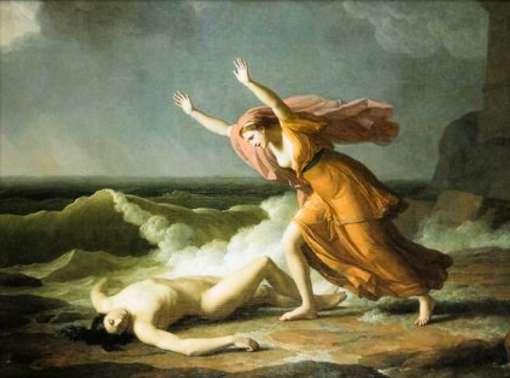
Leo, on the other side of the bay, watched the only person he’d ever truly loved get swallowed by the vicious currents, and dove in after her His heart broke as he sank deeper into the dark sea, his lungs crushed by the pressure. He prayed into the void that someday they would be reunited, and then his world went dark.
This story is a modern retelling og the myth of Hero and Leander. In this myth, Leander swims across the Hellespont in order to be with his love, Hero She lights his way with a lantern that glows for him over the dark waves However, on a cold and stormy night, the wind blows out the lantern and Leander is lost to sea. Upon realizing his death, Hero throws herself into the ocean and they wash ashore in a lover’s embrace
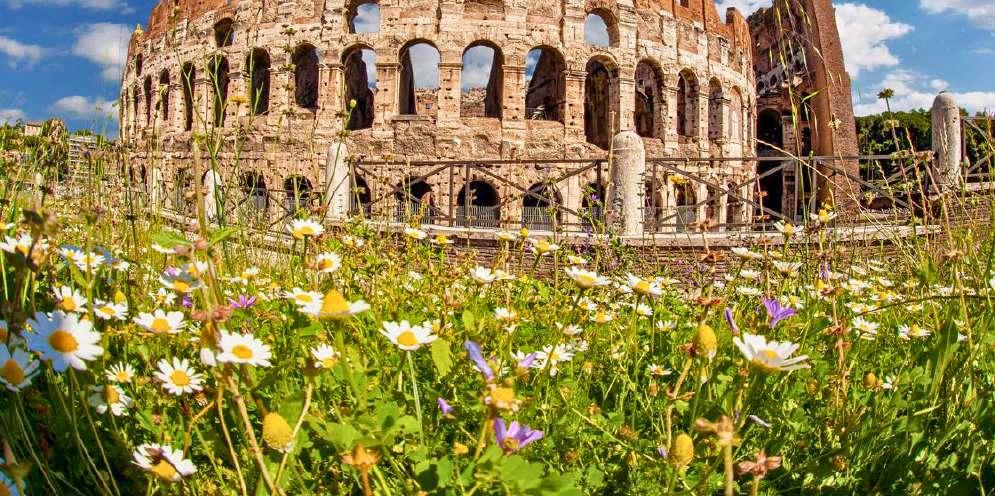
THE ROMAN PANTHEON
The Pantheon is one of the best-preserved, monumental, and most influential buildings of the ancient world Located in Rome, the Pantheon was originally commissioned by the legionary general and statesman Marcus Vipsanius Agrippa during the reign of Emperor Augustus The building was constructed between 27 and 25 B C After a fire in 80 A.D destroyed the first structure, the building was completely rebuilt for the duration of a decade, from 118 to 128 A D under Emperor Hadrian. This is the building that still stands today. Interestingly, Hadrian kept Agrippa’s original facade and inscription on the front of the building, which survived the fire with relatively minimal damage.
The Pantheon was originally constructed as a temple dedicated to all Roman gods; in fact, the name Pantheon comes from Greek words meaning “all gods ” After the Roman conversion from paganism to Christianity in the year 609, the structure was converted into a Catholic church, which significantly helped preserve the building through the centuries, as it was under constant use but also refurbishment. Unlike many ancient Roman buildings that fell into ruin, the Pantheon has remained in continuous use for nearly two thousand years.
Looking at the Pantheon from an architectural standpoint, the building is most famous for its massive concrete dome. The rotunda, at the time, was the largest dome in the world and held that title for over a thousand years The dome today remains the largest unreinforced concrete dome ever built! The dome measures about 142 feet in diameter and is perfectly symmetrical with the height of the building, creating a balanced sphere-like interior space.
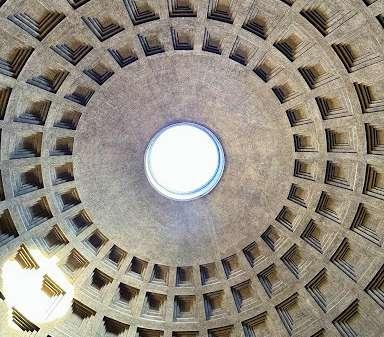
The dome is covered with a layer of bronze metal plates that today are a teal patina color, but were once as bright and reflective as gold, reflecting the sun and adding a touch of opulence and grandeur to an already impressive building The oculus symbolizes a connection between the temple and the heavens, drawing the eyes of those who walk in towards the heavens. In addition, the oculus, from a structural standpoint, takes significant weight and pressure off the dome This was critical at the time as there was no steel reinforcement.
“At the center of the dome is a circular opening called the oculus, which is about 27 feet wide in diameter and serves as the building’s primary source of natural light.”
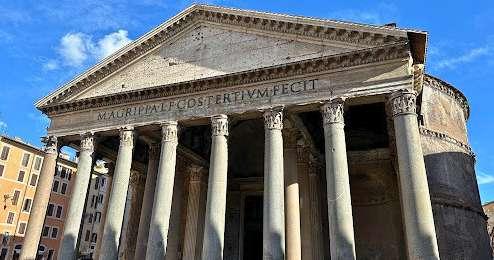
The geometrically patterned marble floor is very slightly slanted, with the highest point at the center, sloping ever so slightly downward towards the drains. This way, any rain that would fall into the building from the oculus would naturally flow into the highly advanced drainage system built into the flooring, a true testament to Roman engineering. The Pantheon’s grand portico and facade, with its 16 monolithic (one stone) 40-foot-tall Corinthian columns, truly reflects traditional Greek architectural influence, while the innovative dome demonstrates the mastery of Roman engineering Today, the Pantheon stands at 143 feet in height and is a powerful symbol of Roman creativity, religious history, and architectural achievement It serves as a testament to the beauty, awe, and precision of the Roman Pantheon.
HOW SCIENCE SPEAKS
Why call them “formicidae,” “ursus,” and “gryllidae,” rather than ants, bears, or crickets? Why use Latin at all? Well, despite Latin being a “dead” language, its death gives it a very useful role, especially in science.
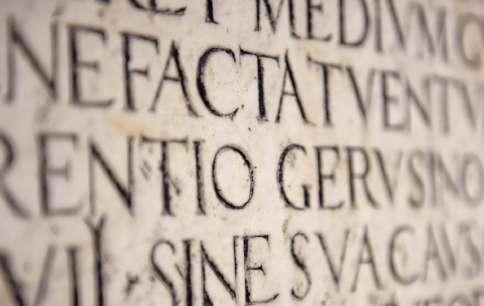
For so many centuries, the Roman Empire reigned supreme with people speaking Latin left, right, and center However, the Roman Empire eventually fell when Constantinople fell in 1453 Even before the fall of the Roman Empire, the Latin language had been evolving into many different languages, all unrecognizable from Latin With the death of this language, it served no purpose to most people, as they mostly lacked the education to learn Latin The only people really using Latin were the highly educated people known as scientists. This was because they could use this dead language as a common language to communicate with scientists around the world and spread scientific progress (Ramdeholl). Despite Latin’s continued use, it was only useful in communication and did not directly contribute to science until the 18th century.
“Despite Latin’s continued use, it was only useful in communication and did not directly contribute to science until the 18th century.”
The geometrically patterned marble floor is very slightly slanted, with the highest point at the center, sloping ever so slightly downward towards the drains This way, any rain that would fall into the building from the oculus would naturally flow into the highly advanced drainage system built into the flooring, a true testament to Roman engineering The Pantheon’s grand portico and facade, with its 16 monolithic (one stone) 40-foot-tall Corinthian columns, truly reflects traditional Greek architectural influence, while the innovative dome demonstrates the mastery of Roman engineering. Today, the Pantheon stands at 143 feet in height and is a powerful symbol of Roman creativity, religious history, and architectural achievement. It serves as a testament to the beauty, awe, and precision of the Roman Pantheon
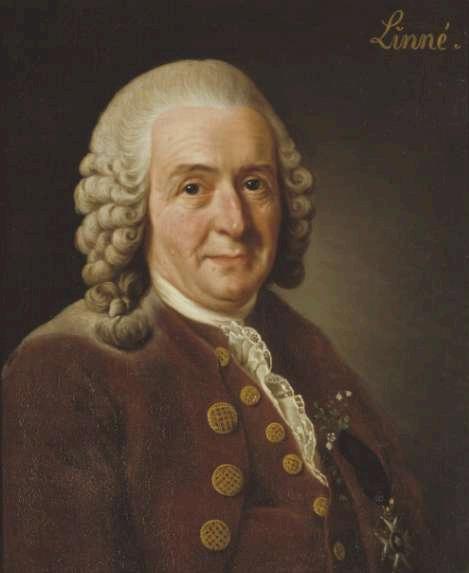
Born in Råshult, Sweden, in 1707, botanist and explorer Carolus Linnaeus brought a scientific application to Latin Early on in his life, Linnaeus impressed everyone with his knowledge in botany and published Systema Naturae in 1735, shortly after gaining his medical degree Putting it in the best words, Britannica explains, “This folio volume of only 11 pages presented a hierarchical classification, or taxonomy, of the three kingdoms of nature: stones, plants, and animals. Each kingdom was subdivided into classes, orders, genera, species, and varieties” (Müller-Wille). With the publication of this book, Linnaeus introduced a new system of biological classification that, unlike previous methods of classification, was based on much more specific ranks and groupings
With only a few minor changes and additions, this system is still used in biology today A while later, in 1753, Carolus Linnaeus published Species Plantarum and formally introduced a new system of naming species known as binomial nomenclature. Previously, organisms like plants would be named based on its quality or value, but binomial nomenclature used Latin to name organisms by their species and genus, creating an easy and universal way of addressing everything Since Latin is a dead language, there were no biases or misunderstandings in the classifications, making it very useful for referring to organisms around the world.
Though Latin is known as a dead language, it continues to thrive in many fields such as science, thanks to people like Carolus Linnaeus. Science has shown that there can be great use found in things that people dismiss as useless Because Latin does not function as a language spoken by a nation anymore, it is easy to assume that it is completely useless, but clearly it was able to find a use in science as a way of universal communication and understanding This begs the question of what other overlooked things may have the potential to be useful in other roles
PROMETHEUS, THE SUNSET AND THE STARS
I may as well be Icarus, as my thirst for freedom has left me in chains At least he had a quick death He fell and fell, but when he hit the water, he could smile knowing he had truly lived. Now I lie in chains and in pain, waiting for an end that will never come. How does one pass the time when one cannot move? I cannot spend more time in my head My regrets do not spiral, but my wishes cry. I would not change what I did Not for the world But, oh, how I miss my clay And, oh, how I miss my creatures Oh, how I miss the world.
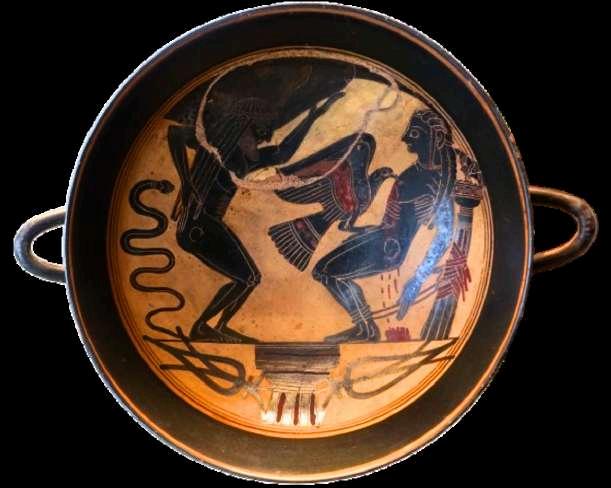
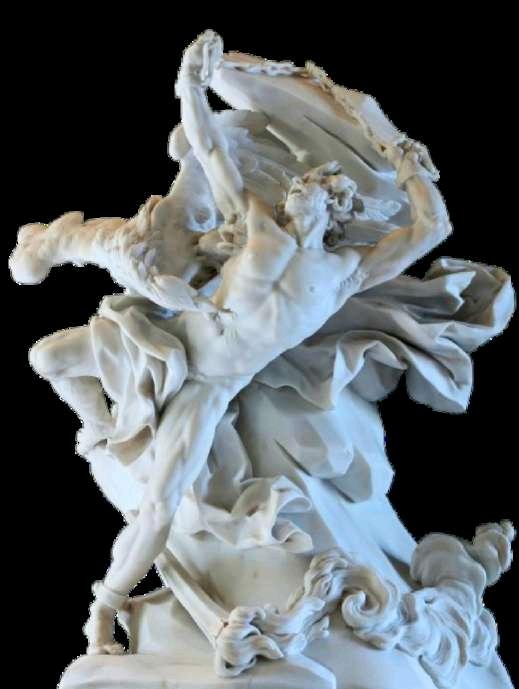
For my crime, I’ve been chained to a cliff and tortured for all eternity What was my crime, you ask? You You are my creation. All mortals are. I sculpted every being on this earth from clay, from the tiniest mouse to the largest whale Every animal was unique Some were fast, some were strong, some had venom I made you mortals last. My final creation. There were no traits left untaken There were no traits that were not taken Nothing left for you I did what I had never done before: I gave you the gift of knowledge. To do this, I stole fire from the King of the Gods himself, as my gift to you It became your tool It opened the door of possibility, an action that could never be undone However, your mortal thoughts became tangled in the fire’s smoke, and as it rose higher and higher, it reached the home of the gods, Mount Olympus When Zeus discovered this smoke, he realised he had been fooled and robbed. He had no mercy and no intentions of it Anyone who steals from Zeus must pay Humiliation is an act far more treacherous than any other wrongdoing. He chained me here, and he sends vultures, my very own creations They peck out my liver every day, just for it to regrow, and repeat tomorrow.
Prometheus is a symbol of freethinkers and rebellion, as well as the punishments for their enlightened ideas.
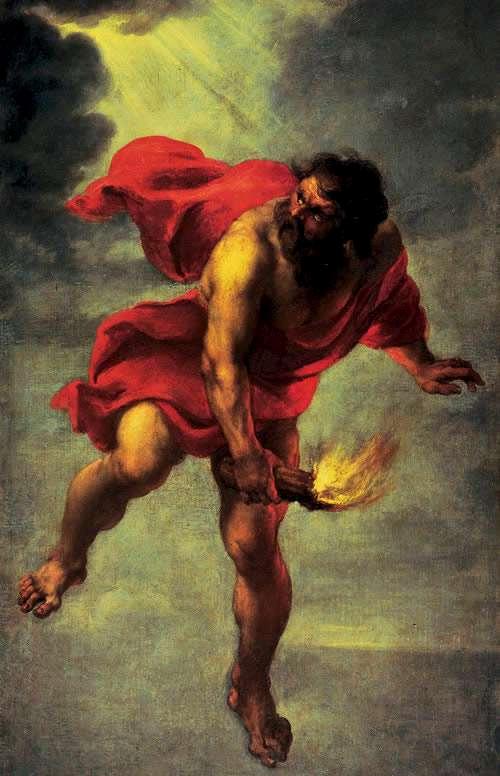
I have no belongings and no way to distract myself from my reality. As the sun rises every morning, I ask how I should pass the time I had never given myself an answer, and as if in response, time decided to slow down. It is truly a terrible fate not to have a way to occupy the time Not to have anything to hope for or look forward to. To be stuck in time. However, that feeling of helplessness did not last forever. As my imprisonment went on, Icarus made himself a home in my mind, his story ingrained in my soul. A young boy, so stupid, so impulsive, yet so full of life His father told him not to fly too close to the sun, but he refused As he got closer, his wax wings melted, and he fell towards the sea Most say he regretted his flight as he fell to the water, but there are a few who say he laughed as he fell. Smiling from his love for the sun. Cheering for his accomplishment of nearly reaching it They agree he was ignorant, and his actions were foolish, but they say those facts do not mean he regretted what he did I realised I felt the same While I had not fallen in love with the sun, I had fallen in love with my creations and my art. One night, inspired by Icarus, I lifted my head to the setting sun and gazed upon it with new eyes
HISTORY & MYTHOLOGY
“Orange and red danced in the sky as the sun fell to the horizon, just as Icarus had. The light turned my brown eyes golden, and it made the blood of my scars shimmer”
HISTORY AND MYTHOLOGY
Orange and red danced in the sky as the sun fell to the horizon, just as Icarus had. The light turned my brown eyes golden, and it made the blood of my scars shimmer Maybe this, I thought, maybe this is how I can spend my time When the sun had finally hid, the stars came out For the first time in centuries, I tilted my head up towards them and gazed at their wonder. Constellations everywhere Orion Aries Leo Scorpius Some were my friends. Companions I had lost long ago Some I didn’t know I began to make my own; I saw shapes and patterns no one else had ever seen before I gave them stories and lives, just as I had with my clay I miss my clay very much, but I have missed creating even more.

Works Cited
Atsma, Aaron J
“PROMETHEUS ” Theoi com, Theoi Project, 2017, www.theoi.com/Titan/TitanPromet heus.html.
Wikipedia Contributors.
“Prometheus ” Wikipedia, Wikimedia Foundation, 24 Feb 2019, en.wikipedia.org/wiki/Prometheus.
My constellations have smiled back at me and have kept me company in the worst of times As the sun rose, they gave me something I could look forward to Something that could never be taken away Although cloudy nights could be heartbreaking and Zeus’s angry storms could be frightening, I found comfort in the fact that the stars always lay just behind the roaring thunder and the blinding lightning This is how I spend my days now, waiting for the sky to bleed red, as if to share in my pain For when the sun sinks into the sea, that is when I know the stars will come out The vultures Zeus. They all haunt me. I want nothing more than to return to my world of art and creation. But the king of the gods and his minions can never break my spirit They can never break my mind or my thirst for creation The stars give me one last medium to work with One last canvas
WOMEN'S CLOTHING: DISSENT IN THE EARLY AGES
Many people disregard fashion in Rome and label everything they see as simple togas, but what if people in Rome were more fashionable than previously imagined? They wore many different garments over different time periods, and there are multiple facts about Roman fashion that people don’t realize For example, while both men and women wore togas in early Rome, they later became a male-only outfit, while women would wear a stola (long dress) over a tunic. The stola was a sleeveless garment typically made out of wool. In public, it was custom for women to wear a cloak called a palla to shield their arms Underneath the stola women wore undergarments not unlike those of today Women wore a bra called a strophium or mamillare, which was a strip of cloth that supported the breasts or was worn around the waist and hips Jewelry and expensive fabrics with bright dyes were used to show wealth without being too showy.
Moving onto their hair, women would sew their hair in place in order to keep their intricate hairstyles in place They famously have hairstyles that are difficult to recreate, and up until around 2001, were thought to just be elaborate wigs
Starting in 2001, a researcher named Janet Stephens conducted her own studies to reveal that it was their real hair sewn into place. She even discovered that the Latin word acus, previously thought to mean “hairpin”, was actually the word for a sewing needle used by hairstylists.
Comparing Roman women to women of today, there are more similarities than one might assume In the late republic, women were banned from wearing ostentatious clothing, which consumed a large amount of material and wealth. These laws were revoked, however, when women protested on streets This pattern continued throughout history. During the 1920s, women called “flappers” rejected traditional Victorian fashion standards by wearing shorter dresses and bold fabrics Women even now face oppression regarding their style and protests remain an important part of civil dissent
THE LANGUAGE OF MAGIC: LATIN IN FANTASY WORLDS
“Latin was considered an intellectual language, and coincided with the ability to access an education and pursue intellectual pursuits of science. Since both were affilitated with intellectualism, there is an overlap. Latin was also spoken in 12 Century Europe. Alchemy even comes from a Latin word!”
Latin is a language with roots in everything Whether it be the melodic tones of French or Spanish, the universal lingua franca of today, English, or the brachium bone in your upper arm, Latin has a connection to very many fields of today. But Latin has also made its way into popular fiction such as Harry Potter How did Latin come to be in popular fantasy literature?
In many fantasy stories, most famously Harry Potter, the use of magical incantations and spells are prevalent throughout the series As

part of the worldbuilding and enchanting nature of a work of fantasy, the magical systems create a sense of wonder and mysticism Throughout Harry Potter, you hear phrases such as “Expelliarmus” and “Lumos”, which both stem from the Latin words “Expellere” and “Arma” which mean “Expell” and “Arm” and “Lumos” meaning “Light”. Why would JK Rowling choose to use Latin?
The stories of witchcraft and magic have long been rooted in mythology and ancient history. Whether it be through fairy tales from the Brothers Grimm or Greek Gods invoking divine punishment, magic has made its own way up until the present But in imagining why Latin has made its way into popular media, we must examine how the history of Latin has influenced people in past years
A famous book of witchcraft, Malleus Maleficium, was written in Latin. This was the OG book that blamed women for witchcraft, and was very influential in starting witch trials.
CREATIVE WRITING
One of the earliest forms of “magic” was the study of alchemy While this was considered a science back in the Middle Ages, various elements of alchemy could be considered forms of magic. Alchemy was the practice of combining chemistry with philosophical ideas of transforming basic metals into silver and gold This was ultimately to seek immortality, but could never quite succeed due to the nature of chemical properties and matter. However, at this time, the only people who had the resources to practice alchemy were intellectuals The average European citizen couldn’t easily get their hands on chemistry equipment, and very few were literate. Access to education was limited. Part of an education was the study of ancient languages, mainly Latin and Ancient Greek Since education was a limited commodity, Latin was considered an intellectual language, and coincided with the ability to access an education and pursue intellectual pursuits of science Since both were affilitated with intellectualism, there is an overlap Latin was also spoken in 12 Century Europe. Alchemy even comes from a Latin word!
The practice of trying to raise people from the dead was called necromancy This evolved in the 14th Century, where texts for instruction were written in Latin. Because Latin was the language of scientific advancement and the educated, there were a limited number of people who were able to read it Latin remained a language of the advanced who could pursue science.
Latin is also an ancient language tied to the Catholic Church In the early centuries, it became the official language of prayer and documentation within the Church. This remains to be the same official language event today While the practice of using Latin for mass has declined, it still remains prominent within the Vatican and other elements of the Catholic Church. Throughout history, many attempts from the Church have been made to combat Satan, the devil, and other demonic magical creatures The prayers meant to dispell these creatures have been passed down for centuries and were in (you guessed it!) Latin! So the mental connection between Latin and a force against evil magic was carried down because of prayer practice
In modern media besides Harry Potter, you can find Latin in the hit Dungeons and Dragons RPG Baldurs’ Gate 3, where players and party members chant Latin to produce spells You can also find Latin featured in Buffy the Vampire Slayer, who trains in spells to combat evil conspiring vampires. Harry Potter isn’t the only piece of media to rely on this popular ancient language!
Latin remains to be one of the most influential languages in modern history. It is the origin of the Romance languages, the origin of anatomy terms, and acts as the roots of law It has been the language of the educated and the language of the church It is universal, in all elements of life. No matter where you go, Latin will be there. Finding it in fantasy stories just adds more fun
BELONGING AND POWER IN THE ROMAN REPUBLIC
Contemporary conversations of race often assume fixed biological categories, yet the Roman Republic reveals a more fluid but still highly stratified system of identity. Rome absorbed peoples across the Mediterranean and granted citizenship to outsiders, but inclusion did not erase ethnic distinction Instead, ancestry, place of origin, and cultural reputation shaped how individuals and communities were ranked and judged. Ethnic identity in the Roman Republic was actively constructed and strategically used by elites, especially through coinage and public self-representation
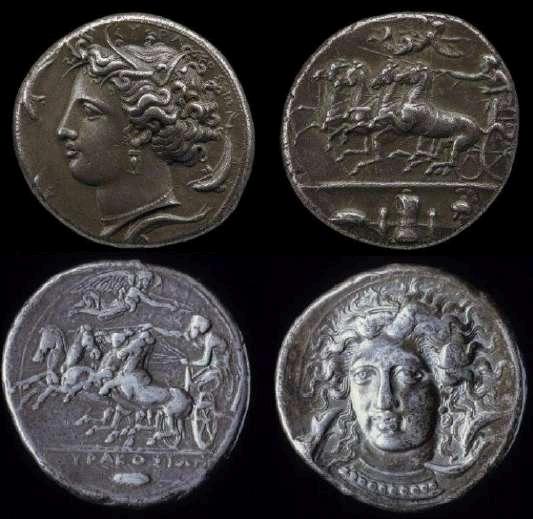
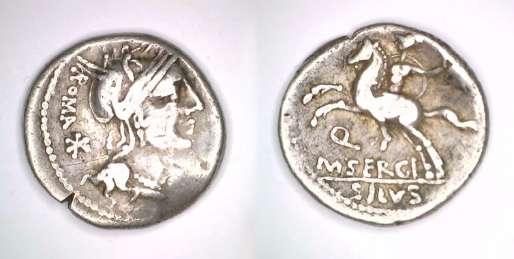
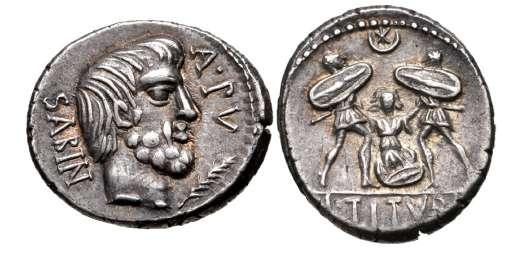
Obverse: Head of Roma. Reverse: Scene from the Second Punic War McClung Museum of Natural History & Culture, University of Tennessee.
Not every ethnic background carried equal prestige. Romans admired aspects of Etruscan culture but also associated Etruscans with luxury and corruption, making Etruscan identity something many elites downplayed rather than celebrated Rome’s relationship with Greece reveals the same hierarchy Conquest did not erase Greek identity; instead, Rome ruled through it, allowing many Greek cities to continue governing themselves through traditional institutions under Roman authority Roman power therefore did not flatten cultural difference; it organized identities into a hierarchy where ancestry and cultural reputation continued to shape power and belonging
Fig. 1. Silver denarius minted by Marcus Sergius Silus (116–115 BCE).
KEYSTONE
Not every ethnic background carried equal prestige Romans admired aspects of Etruscan culture but also associated Etruscans with luxury and corruption, making Etruscan identity something many elites downplayed rather than celebrated Rome’s relationship with Greece reveals the same hierarchy Conquest did not erase Greek identity; instead, Rome ruled through it, allowing many Greek cities to continue governing themselves through traditional institutions under Roman authority. Roman power therefore did not flatten cultural difference; it organized identities into a hierarchy where ancestry and cultural reputation continued to shape power and belonging.
Works Cited
British Museum “Denarius of L Titurius Sabinus, 89 BC (R-8233) ” The British Museum, https://www britishmuseum org/collection/object/C R-8233
Center for Hellenic Studies. “Democracy and Civic Participation in Greek Cities under Roman Imperial Rule.” Harvard University, 1 Nov 2016, https://research-bulletin chs harvard edu/2016/11/01/democracy-civic-participation Cicero Pro Balbo Translated by R Gardner, Harvard University Press, Loeb Classical Library “Ethnicity.” Dictionary.com, https://www dictionary com/browse/ethnicity
Farney, Gary D Ethnic Identity and Aristocratic Competition in Republican Rome Cambridge University Press, 2007 Hallie Ford Museum of Art “Republican and Early Imperial Roman Coinage ” Willamette University, https://library.willamette.edu/hfma/omeka/exhibits/show/coinsofthegreekandromanworld/roman/republicandearlyimperial. Livy Ab Urbe Condita Translated by B O Foster, Harvard University Press, Loeb Classical Library McClung Museum of Natural History & Culture “Roman Coins: Exploring the Empire’s Currency and Modern Parallels ” University of Tennessee, 23 Sept 2023, https://mcclungmuseum.utk.edu/2023/09/23/roman-coins-exploring-the-empires-currency-and-modern-parallels/. “Race vs Ethnicity ” Dictionary com, https://www dictionary com/e/race-vs-ethnicity/
Fig. 3: Denarius of L. Titurius Sabinus, 89 BCE. Obverse: Titus Tatius. Reverse: Rape of the Sabine Women. British Museum.

KEYSTONE
ROMAN WEATHER WATCHERS: PREDICTING NATURE WITHOUT TECHNOLOGY
Long before satellite imagery and digital barometers, the ancient Romans relied on a sophisticated "biological technology" to navigate their world: the power of observation. By decoding the subtle behaviors of animals and the shifting colors of the Mediterranean horizon, they built a civilization that thrived on its ability to anticipate nature’s next move. Understanding how they "read" the atmosphere reveals a deep, lost connection between human intuition and the natural environment
The Farmer’s Almanac: Signs from the Earth For a Roman farmer, a failed crop meant more than just a bad year it meant potential starvation for their family and the community Without the benefit of weather apps, these individuals turned to the behavior of the land and its inhabitants to predict the coming seasons. They observed that ants would frantically move their eggs to higher ground before a heavy rain, and cattle would sniff the air with nostrils flared as they sensed shifts in atmospheric pressure Even the flora provided clues, as the closing of certain flowers or the "sweating" of stone floors in a villa's atrium were noted as reliable indicators of rising humidity and approaching storms
The Sailor’s Horizon: Reading the Sea and Sky For the Roman Navy and merchant vessels, the Mediterranean could be a treacherous mistress that required constant vigilance Sailors developed a keen eye for what they called signa, or sky-signs, to guide their voyages across open water
ROMAN WEATHER WATCHERS: PREDICTING NATURE WITHOUT TECHNOLOGY
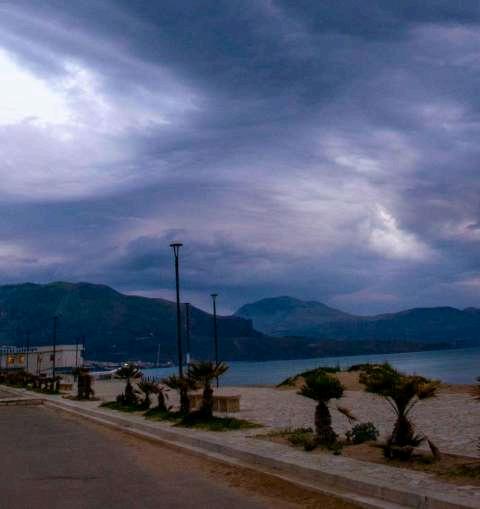
Much like the modern proverb, Romans observed that a deep red sunset often signaled clear weather and dry air, while a red sunrise suggested a gathering storm. They also watched for celestial halos or rings around the moon, which they correctly interpreted as a sign of changing pressure that usually brought wind or rain within twenty-four hours.
Meteorological Philosophy The Romans did not merely guess at the weather; they attempted to systematize their observations into a form of early science. Scholars like Pliny the Elder documented hundreds of these "weather signs" in his expansive work, Natural History He believed that the universe was an interconnected organism where a change in one part, such as the flight pattern of a crane, was an inevitable signal of a change in another, like the arrival of a winter gale This philosophical approach allowed the Romans to turn simple observations into a strategic advantage for both agriculture and warfare.
The Roman approach to weather was a masterclass in mindfulness, proving that survival often depends on how closely we pay attention to the world around us. While we now have supercomputers to do the heavy lifting, there is still a timeless wisdom in looking at the horizon and understanding the language of the wind The next time you see the clouds gather, ask yourself what a Roman observer would have seen in that same sky.
Author’s Reflection
I chose this topic because I have always been fascinated by how ancient civilizations achieved massive feats of engineering and logistics without modern sensors Researching these "weather signs" made me realize that we often ignore the natural warnings right in front of us because we are too focused on our digital devices. It was an eye-opening look at how intuition and observation once served as the primary tools for human survival.
"For the Romans, the sky was not just a view, but a manuscript; to read the clouds was to foresee the survival of the harvest or the safety of the fleet."
STATE OFFICERS
PRESIDENT
CHRISTOPHER CHANG
VICE PRESIDENT PUBLIC RELATIONS
OLIVIA LEE
VICE PRESIDENT MEMBERSHIP
ALEENA MARTINO
SECRETARY
OLIVIA MORICONI
PARLIAMENTARIAN
SOHUM BANDYOPADHYAY
KEYSTONE EDITOR
SILVIA KAUR KANG
CHAIRPERSON
VERONICA VLADIMIROVA-CAMBRIA
CREATIVE ARTS CHAIR
QUINN MCINTIRE
CONSTITUTION CHAIR & TREASURER
KARIN SUZADAIL
PUBLICATIONS CHAIR
TRACI DOUGHERTY
CERTAMEN CHAIR
SARA FLOUNDERS
GRAPHIC ARTS CO-CHAIRS
CONNIE RAMSEY AND BETH BLOCK
KEYSTONE
is the official publication of the Pennsylvania Junior Classical League (PAJCL). It serves as a platform for informing, inspiring, and connecting members through engaging content that celebrates the study of Latin, Greek, and classical civilizations.
Featuring chapter news, event recaps, contest results, and student submissions, including educational articles, artwork, and more The Keystone highlights the achievements and voices of PAJCL members while fostering a shared love for the classics
WHY JOIN?
Joining the Pennsylvania Junior Classical League (PAJCL) offers students a wealth of opportunities to engage with Latin, Greek, and classical civilizations in meaningful and exciting ways.
Through leadership roles, service projects, and participation in events like the annual PAJCL Convention, members develop valuable skills in teamwork, communication, and organization Our vibrant community of like-minded peers allows students to build friendships and connections across the state
For those who seek to deepen their passion for the classics, PAJCL offers a keystone to learning, leadership, and lifelong inspiration