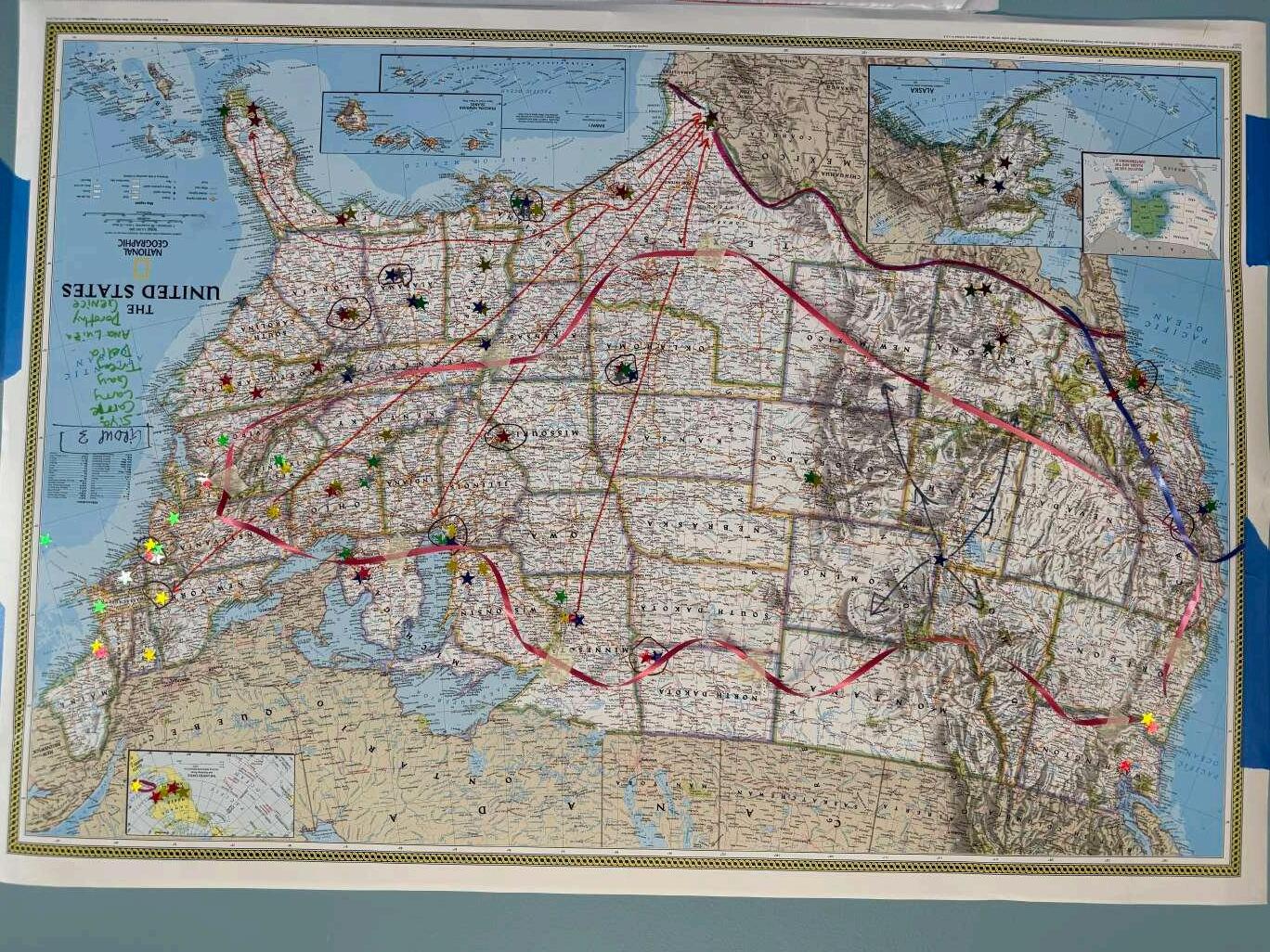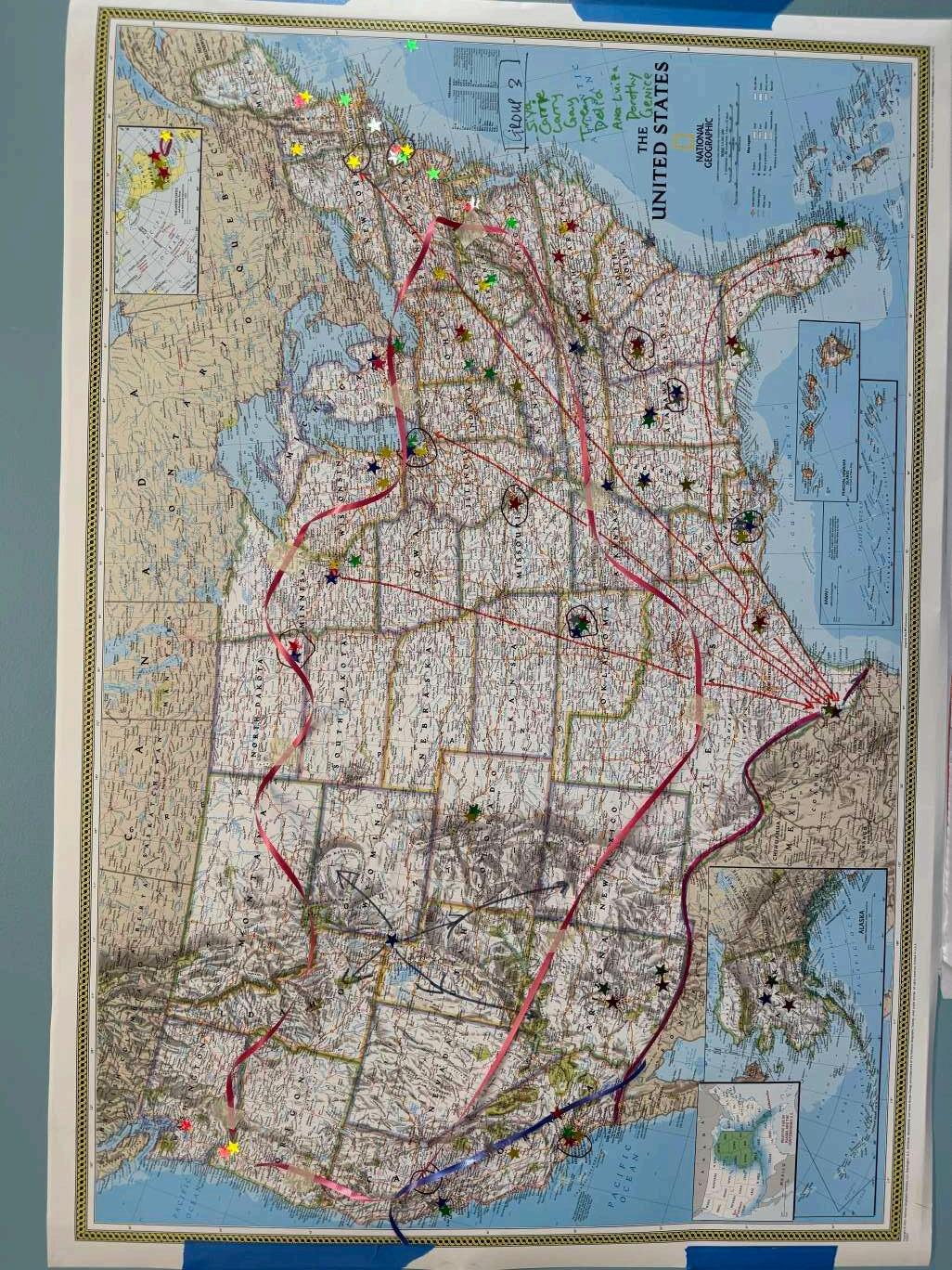

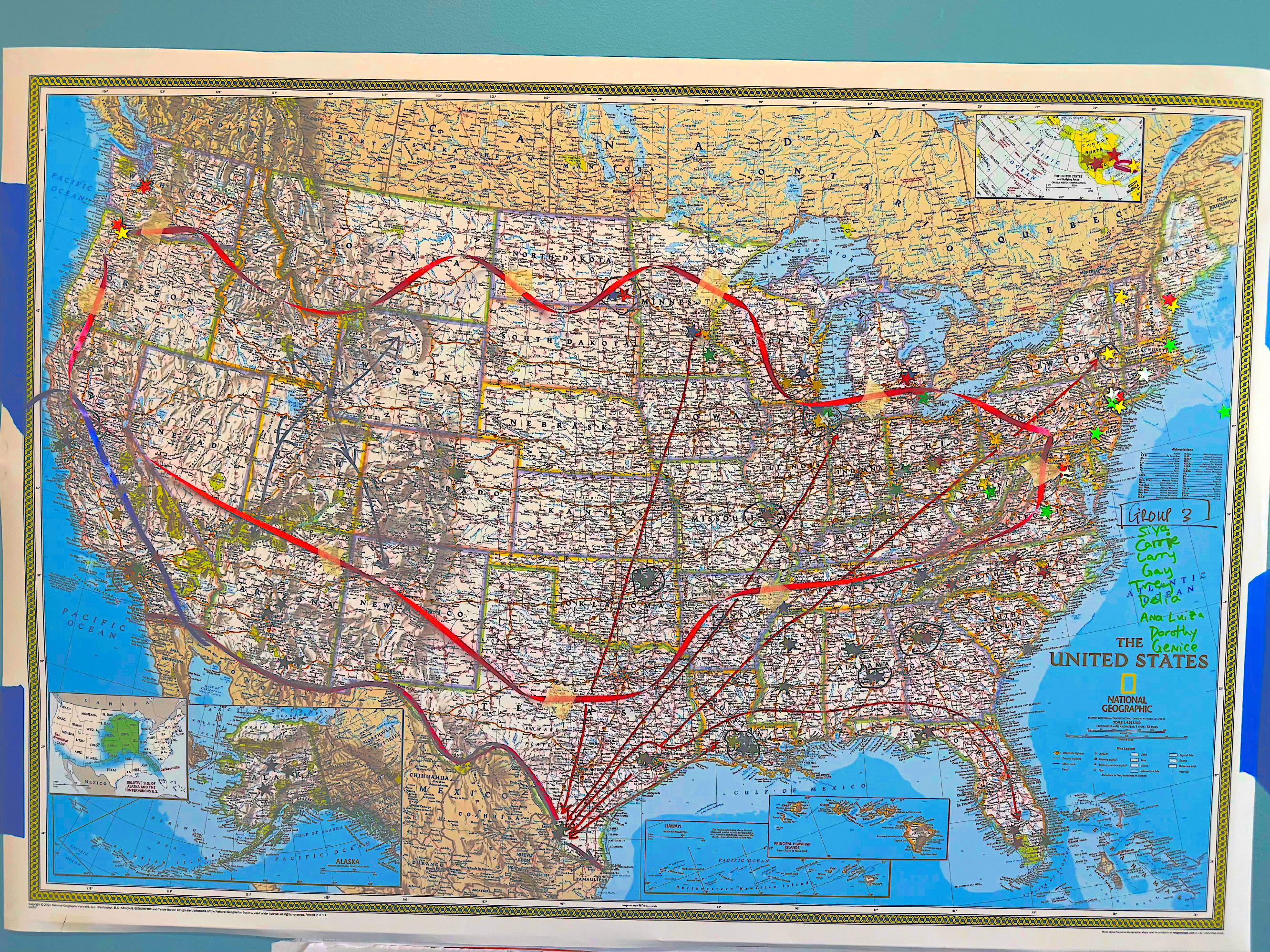

We engaged in critical self-reflection of past approaches to human rights practice in the US by exploring and exploding core tensions and contradictions to reveal new insights: Nongovernmental organizations are not and cannot be the movement, though they have a role to play. Philanthropic support is welcome as alternative economic models take shape. Sharing, coordination, and redistribution among and across formations can reduce competition and improve collaboration. In order to discover the radical, transformative possibility of decolonial and intersectional modes of leadership, it is crucial that we dismantle hierarchies within. Our organizations and movements are too white, too male, too enabled, too rich, and too straight. We are called to upend and recreate our internal structures to mirror the world we want to see: Democratic, courageous, and committed to repairing past harms.
We are the resources. We are determined to keep building a powerful human rights movement composed of people working together in a beautiful, wild, beloved community around basic principles common to all. Human rights struggles happen everywhere ordinary people fight together to protect and promote dignity in their communities, at work, and before their governments. Insisting on the internationalism of human rights can feature heavily as a force for democracy that recasts US national identity beyond exceptionalism and supremacy–as a political society embedded in the global system, subject to laws and norms, and committed to making a meaningful contribution to ourishing and communal solidarity.

promotion, heightening the contradictions that were always apparent to Indigenous Peoples, to people of African descent, to immigrant communities, to the poor and the working class, to women, and to queer people, among other affected and targeted groups.

Thirty years ago, following the Fourth UN World Conference on Women and as the fiftieth anniversary of the Universal Declaration of Human Rights approached, elements of civil society in the United States coalesced around an idea to build a movement for human rights in the United States. Change-agents within philanthropic foundations and donor collaboratives invested heavily in grassroots organizations around the country to educate and organize under the banner of “human rights.” Grasstops organizations were shaped in turn by transformational voices demanding they expand their scope to include new issues and focus more intently on the United States as a site of human rights violations. Urban welfare recipients, borderland immigrant communities, non-unionized workers in the South, and survivors of gender-based violence were among the populations that mobilized behind the idea. In 1999, a cohort of twenty-two movement leaders gathered in Mill Valley, California to dream about a unifying formation to cohere a national agenda.


US civil society geared up for robust participation at the 2001 UN World Conference against Racism and returned to a country transformed by the 9/11 terror attacks. In order to check the abuse of state power with which the “war on terror” became synonymous, advocates sought new legal and political venues to prosecute their cases against the US government. International human rights mechanisms provided a novel space for documentation, litigation, and advocacy. The 2003 invasion of Iraq further exposed the excesses of US exceptionalism inherent in a campaign of violence and occupation justified as democracy
The 2003 launch of the US Human Rights Network represented a culmination and a new beginning: a major initiative to build a peoplecentered movement composed of organizations from across the country and spanning issue areas; a realization of the vision expressed at Mill Valley. The Network would be a vehicle for expanding domestic educational efforts and organizing national delegations to advocate for human rights at the global level. Participation in multilateral human rights forums, like UN treaty body reviews, created opportunities for civil society leaders and mobilizers to educate, organize, and document–later leveraging their participation in the media to raise awareness for their claims and apply pressure to federal as well as state and local decision-makers. Appearances before international bodies served as unique moments to further unsettle and reshape the narrative and raise the political consciousness of the audience. Shadow reporting at the UN took root as a key practice and tool for

Campaigns to “bring human rights home” sought to reframe how the US thought of itself. Messaging grounded criticism of the government as failing to uphold its obligations under international law, reminding leaders at all levels of government that the nationstate was indeed embedded in a world community guided by norms, principles, and shared beliefs.
pretense, cruelty and shamelessness stand as reactionary foils for the values of dignity and respect emblematic of the human rights politic that exists in the US but is now in retreat. Withdrawing from multilateral forums like the UN Human Rights Council and defunding foreign aid and development were urgent matters, while travel bans and mass deportation became signature policies. International standards and exposure to scrutiny were replaced by a revanchist ideology of power and self-interest over everything.
A structural, holistic understanding about the role of US power argues that the state needs to be held to account domestically if we hope to mitigate internal injustices and the most harmful expressions of US foreign policy. We cannot hope to advance a better world if we refuse to model this within our
President Barack Obama’s election provided an opening to advance human rights in the US while a former community organizer and an avowed internationalist occupied the White House. When the killings of Trayvon Martin and then Michael Brown, Jr., sparked civil unrest, radical interventions flowed to the United Nations. Frontline protestors from the movement for Black lives and family members of those killed by racist violence gave testimony in the austere halls of Geneva, Switzerland, activating formal spaces for radical, emancipatory purposes. And this wasn’t the first time. Back in the early UN period, towering figures like WEB DuBois and Paul Robeson advocated at the international level with pathbreaking work, including the 1951 document, “We Charge Genocide.” When young people from Chicago testi fied in Geneva on behalf of their friend, Damo Franklin, who was tased to death by Chicago PD in 2014, they adopted the moniker - We Charge Genocide - conscious of the legacy to which they were heirs.
An authoritarian right-wing party in the US rose to power two years later in large part by arguing for the need to resist globalist overreach and reassert US sovereignty. “America First” is the naked expression of the US exceptionalism that once masked itself in liberal norms. Ditching the
invested, the practice of human rights drove campaigns, informed messaging, altered the non-profit and philanthropy sectors, and motivated global engagement. Human rights can be a useful container for people-power with the muscle to constrain the arbitrary exercise of state-power and the overindulgences of capitalist markets. Human rights may not be a native species; it does not bloom wildly without proper seeding, intentional nourishment, and consistent care.