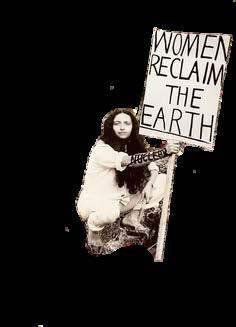
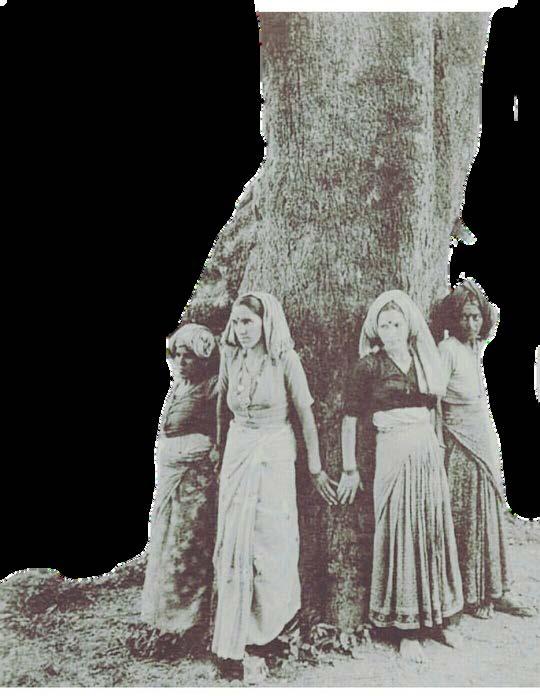
When deciding on our theme, we all came to a collective agreement almost immediately, because we were all inspired by our reading for homework, “Use” by Susan Griffin. The way it creatively introduced us to the topic of ecofeminism made us all want to pursue ecofeminism as our theme for this zine.
During the creation process for this zine, we learned about ecofeminism and what it means to us. We were able to each pull personal connections from this project, whether it was through the research we did or the introspection we had on our own relationship with nature and womanhood.
In this zine, you will find the fruits of our labor in essays, poetry, analyses, and creative stories.
Remember Mother Earth as you read.
-Sofia McClain, Cara Barry, Evan Forjan, Jillian Robinson, Kaitlyn Woodward, Sienna Wong
My Mother, Earth
I have always wanted to be like my mother growing up. I have always looked up to her in every way. She is bright, vibrant, and free. She lets herself run wild. She is sacred. She stands unflinching, unyielding, and unbelievably beautiful. She lives within me, I have her nature. When I stare at myself I see her looking back. When I was young she was everything to me. I spent all my time with her. She taught me how to appreciate all forms of life. Mother is very generous. She is kind. She supplies me the vitamins and nutrients I need. She provides me food, water, shelter, and shade. She works tirelessly to support me and others. She shares her resources with many. She is loved by the animals, plants, people, and life she cares for. She is forever giving. Though there are those who take advantage of her giving nature. I noticed this when I was old enough to differentiate men from mankind. He loved her as I did when he was young, but he changed. We both love her, but for different reasons. I love my mother, he loves her usefulness to him. He realized one day, as he came of age, that there was more than just Mother’s gifts, but how he could profit from them. He no longer worshiped the life she gave him, but the life he could make for himself. He used her. Forced himself on her, plowed her, and planted his seed in her. He killed her spirits and dimmed her light. He gave her supplements, sedatives, and chemicals to keep her fertile, to grow what and when he wanted. He monitored her growth and her decay. He forced her to birth new life that he could benefit from. Every bit of life she created drained more and more from her. Mother has become nearly lifeless. She has been worn down after years of use. Her fertility has lessened. He has become angry with her. She tries her best everyday. She wants to give to me. She wants to give to us. She wants to give to him. Her soil has dried up and hardened. The chemicals no longer work. She wants to bear more fruit, give more life, to please him as she had for so long. She can not anymore. He is tired of her. He is done with her. She is no longer of use to him. I thought he would respect mother, treasure her, let her rest, and let her be. I don’t understand why he doesn't see her as she was meant to be. She was meant to exist. She was meant to thrive. He destroyed her, and now he walks away with no remorse. He has left her, abandoned her. He has moved on to other land, other soil, another plot. He started the cycle all over again. He found younger land and broke virgin soil. He plowed and planted her, forcing her to submit to him as my mother did. He never runs out of seeds to plant, tools to use on her, supplements, sedatives, and chemicals. He loved my mother, or she thought he did. Mother still loves him, as she loves all that lives with her, lives on her. Mother is no longer herself. He permanently changed her. He left her with scars that will never heal. Will she ever recover? I miss the mother I remember from my youth. I miss when she was bright, vibrant, and full of life. Maybe I only noticed it as I grew up, how she had always been used by men. By mankind. I miss my mother. I miss Mother. I miss Mother Earth.
The Divine Feminine - Goddesses Within Spiritual Ecofeminism
Spiritual ecofeminism is a branch of ecofeminism that focuses on how patriarchal societies connect to the exploitation of nature, or how women connect to nature. Spiritual ecofeminists worship deities or Goddesses connected to nature and feminine power. They worship these Goddesses because they symbolize the values of spiritual ecofeminism: feminism, nature, and Earth. This devotion serves against patriarchal religions that often represent God as male, offering a positive image of female power. It empowers nature because it frames Earth as a living entity that deserves respect, protection, and love, just as women do. The most well-known of the Goddesses is Gaia, also known as Mother Earth or Mother Nature, the primordial Greek goddess personifying the Earth, emerging from Chaos as one of the first beings to create life. As the "mother of all," she birthed the sky, sea, and mountains, while nurturing the creatures that populated the earth. However, the variety of Goddesses that spiritual ecofeminists worship is ever-growing and open to any Goddess that may serve the value and respect to Earth and nature that ecofeminists do. This article will explain just a few of the many Goddesses that may be worshipped by spiritual ecofeminists, and fictional modern-day characters that they may be compared to.
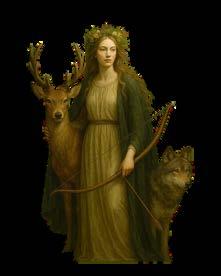
Artemis is the ancient Greek goddess of hunting, wilderness, wild animals, chastity, and childbirth. She is a fierce protector of young women and nature, yet capable of vengeance. I chose to match her with Katniss Everdeen, the protagonist of the movie franchise The Hunger Games. Katniss exemplifies characteristics very similar to Artemis, as they both have to live in a world where they need to hunt and fight to survive, but contain a fierce attitude, and protect those they love.
Athena is the ancient Greek goddess of wisdom, warfare, handicrafts, and reason. She is the daughter of Zeus, who grew from his forehead. She is also a patron of Athens, defender of cities, and a symbol of civilization, wisdom, and the arts. I match her with Hermione Granger, from the movie franchise Harry Potter, because they share traits like wisdom, as Granger was known as the smart one in the Golden Trio, and always having solutions or strategies to get her and her friends out of trouble.
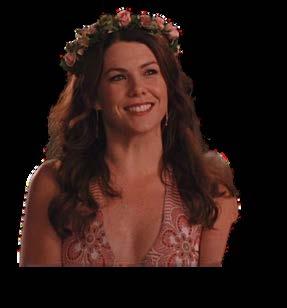
Danu is the Celtic or Irish mother goddess, revered as the matriarch of the Tuatha Dé Danann, or the "tribe of the gods". She is associated with fertility, earth, wisdom, and primordial waters, and is known for her nurturing nature. I paired her with Lorelei Gilmore from the TV Series Gilmore Girls because, from a young age, Lorelei has made a life for herself when she became pregnant at sixteen and moved out on her own. She is known to be a great mother for her daughter, Rory, as they navigate through their small town together, making ends meet and providing a loving and nurturing life for her daughter that she never received from her own family.
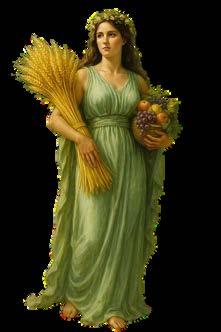
Demeter is the Greek goddess of the harvest, agriculture, fertility, and sacred law, known for nurturing the earth and teaching humanity to cultivate grain. She contains immense power over food production, making her essential to human survival, capable of causing famine in grief. I connect her to Molly Weasley from the movie franchise Harry Potter because she is a strong-headed mother who cares for her seven children and protects them from the dangers of magic that Hogwarts brings throughout the movies. While she cares for her own children, she also becomes a mother figure for Harry Potter after his mother died when he was a baby, and is trying to navigate life through Hogwarts. For years, she has given Potter and others a place to live while protecting and ensuring they are safe and supported.
Ecofeminism: A Tool of Empowerment for Women in the Global South
“[Women] are directly involved in production at the most primary level, as raw material or labor” (Pandey 2012). Ecofeminism maps this relationship, connecting the domination of women to the domination of nature. In the 1980s, as ecofeminism as a main concept began to dwindle, the environmental justice movements that emerged broadened international conversations about the disproportionate environmental harms, such as pollution and poor water quality, that marginalized communities face (Sierra Club 2001). However, its broad scope often overlooks the necessary solutions tailored to the specific needs of women in the Global South (Bove 2021). By centering gendered relationships to the environment, ecofeminism is a crucial tool in third-world countries that addresses gender inequality and identifies harmful social stigmas that need to be eliminated to create a more sustainable world (Bove 2021).
First-world nations have effectively detached themselves from the experiences of third-world countries, categorizing women alongside the natural world as default and endlessly available to meet their demands. Women are indispensable to biodiversity and food security on local and global scales. The United Nations shares that “women are responsible for up to 80% of food production in Africa, Asia, and Latin America”. (UN Women n.d.) In many countries, primarily women are in charge of managing the community’s water, food, and fuel, and for conserving ecosystems such as forests and wetlands to ensure their families' needs are met (Ji 2023). These duties have created a bond between women and indigenous natural resources, which are “used wastefully” by those who consume them (Pandey 2012). For third-world women, these resources are their only source of nourishment, energy, and income, making environmental degradation and climate change immense threats to their survival (Ruether 1997); meanwhile, developed nations enjoy the ease of overconsumption and the global economic systems that exploit their land.
Additionally, ecofeminism is pivotal to understanding how persistent patriarchal expectations of women living in the Global South magnify environmental strain. Not many take the time to analyze third-world patriarchal culture as a main driver of global emissions/climate change because it can’t be simplified by a graph or in a few bullet points. Women gaining autonomy, primarily through access to healthcare and education, has a “direct impact on reducing emissions by reducing a country’s total fertility rate” (Bove 2021). When women lack these critical resources and experience constant pressure to produce children, fertility rates skyrocket, despite the decreased health of their offspring (Bove 2021). There are many factors behind this culture, a major driver being that a higher population increases economic capacity, since the likelihood that people can escape poverty increases (Bove 2021).
For women in the Global South, general environmental justice efforts are not sufficient. Ecofeminism exposes how the global economy exploits indigenous ecosystems and the ecological relationships between women and the world around them. It challenges consumers in wealthier nations to be conscious of the hidden labor behind a price tag and recognize the woman who harvested the crop or sewed that garment for a few cents. Empowering women is inseparable from protecting the planet; any meaningful, sustainable solutions must begin with those who have been sustaining it.
January 20 2025
In Remembrance of Mother Earth
We share with sorrow in our hearts that our beloved Mother, who gave so much to us time and time again, has finally passed on. She was there for us when we used tools of stone, when we first printed words on paper from her trees, when we destroyed her soil, her water, her air, and most importantly her soul. We saturated her atmosphere with tons of heat-trapping gases, filled her oceans with carbonic acid and microplastics, and forced some of her greatest creations into extinction. We have failed her.
I will never forget that tragic, cold, bitter day. Her snow drifted down like floating butterflies, and her breeze blew gently over the bare trees of Washington D.C. There were signs that someday Mother’s health would improve, from increasing research on eco-friendly energy expenditures to building vast solar panels and wind turbines. However, all hopes disintegrated when President Trump sat in the Capital One Arena and signed away the United States’ participation in the Paris Agreement; the very thing holding the world together. Under this agreement, all participating countries promised to lower their greenhouse gas emissions, which is the very thing causing her atmosphere to become dangerously hot. From nitrous oxide to methane to carbon dioxide, the molecular structure of these gases allows heat to be trapped near her planet’s surface, thus melting her icecaps, desalinating her oceans, and killing her creatures. That day, President Trump signed away the very health of our one and true Mother.
She truly had a wonderful life. Her green rolling hills expanded throughout the Emerald Isle, her dense tree canopies blanketed the Amazon rainforest, and her fields of dainty, pure edelweiss dotted the Swiss Alps. She once lived in harmony with us humans, she would give us food, water, and materials for shelter. We gave back to her by controlling her wildlife populations and ] disposing nutrients into her soil post mortem. Once humans left the nomadic way, and turned to mass agriculture for profit, Mother’s health first began to suffer. When we first introduced coal as a means to heat our houses, her condition worsened. Now, with releasing tons and tons of greenhouse gases into the air from burning colossal volumes of gasoline and oil, she physically could not endure this anymore. We have killed her.
Alas, there is no reason to lose faith. We may be able to give her life again. However, assuming action is taken today, this would not bring her back remotely in our lifetime. Even if carbon dioxide emissions completely halted at this moment, it would still take an eon for climate change to reverse- for Mother to become fully recharged. It will be a long and grueling process for humanity, however with patience and dedication, our future generations will uphold our love and yearning for her. Someday, our Mother will return.
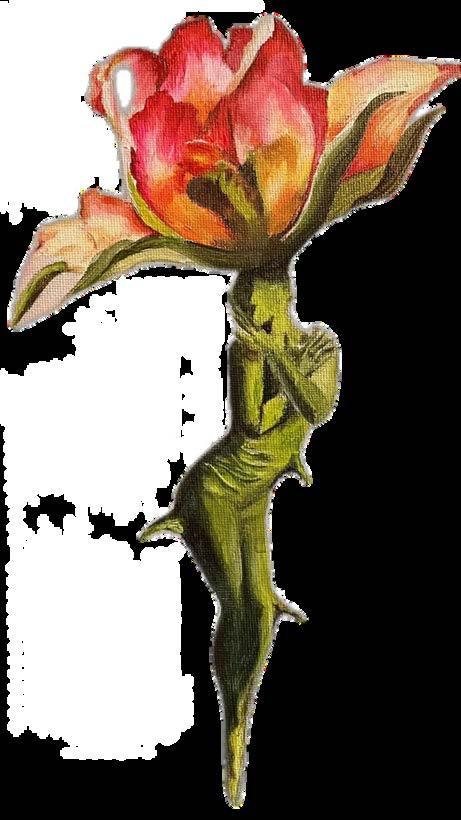
The Rose had always been content in her life at The Village. All of the families lived well together, far away from the dangers of “Mankind.” The Lavenders, The Sages, The Marigolds, and many other Families all lived in harmony. However, one day a new family arrived. The Peonies.
What caught the Rose’s eye when they arrived was the youngest Peony, a Pink Peony. She was young, about the Rose’s age. She had bright, dazzling eyes, and her hair was short, yet it bounced with every step she took, drawing the eyes of every passerby. She was friendly too, reaching out to every new neighbor she had.
The Rose wasn’t the outgoing type. She had never done well around individuals who were bright and bold, and didn’t know how to approach the beautiful being. She preferred to keep to herself and let other things grow around her, rather than taking the time to grow things herself.
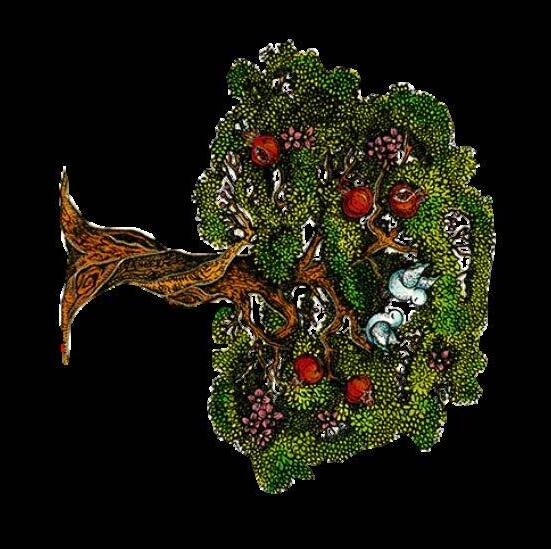
By The Village, there was a cliff, overlooking the sea. Flowers were littered across the top, creating a field with one large tree in the middle, guarding the meadow. The Rose liked to spend her time under the shade of that tree, reading while listening to the sound of the waves. She liked the peace it brought her, away from any of the others. It was–“Whatcha reading?” she heard a sweet voice whisper near her ear. The Rose jumped away in shock, while The Peony laughed. “I didn’t mean to frighten you! Sorry about that,” she said, coming closer again to hold out her hand. “Here, let me introduce myself!”
After they met, The Peony began to seek out The Rose daily, meeting her under the tree. She would come and talk about everything around her, and gradually, The Rose would also begin to speak as well. She felt entranced by The Peony, it was as if her sweet, fruity perfume was drawing her in, making her tell her things she had never told anybody. She would let The Peony hold her hand, lean on her shoulder, and hug her. Out of everybody she had ever met, she had never let her guard down so much with anybody, and one day, she realized why that was.
The Rose was in love with The Peony.
Once she realized, it was hard to stop thinking about the other girl. She had once been so poised and composed, yet around The Peony, her mind turned to mush and she felt as if her heart would beat out of her chest.
One evening, the two were laying in the grass, looking up at the stars. The Rose had decided that tonight was the night she would confess her feelings. As The Peony babbled on about the stars above them, The Rose gathered her courage, and was about to speak up, until…
The two girls heard screams coming from The Village, and as they abruptly shot up, they caught sight of many houses erupting into flames. Before they could react, something approached them.
It was “Mankind.” He approached them, wielding a sickle. As he lunged towards them, The Peony pushed The Rose out of the way. The Rose fell to the ground, and looked up as she watched him sink the sickle into The Peony’s stomach. The Rose screamed as The Peony fell, grasping her hand that was losing strength. As the life force drained from her, The Peony found the strength to smile at her as she shakily said “I love you” to The Rose.
The Rose felt the harsh sickle of “Mankind” strike into her heart at that moment, but her eyes never left The Peony, even after she could no longer see.
Hundreds of years later, the tree still stands, with a rose and peony bush growing under its protection, their love finally blooming.
Woman and Nature: The Roaring Inside Her (1978) by Susan Griffin All We Can Save: Truth, Courage, and Solutions for the Climate Crisis (2020), edited by Ayana Johnson and Katharine K. Wilkinson