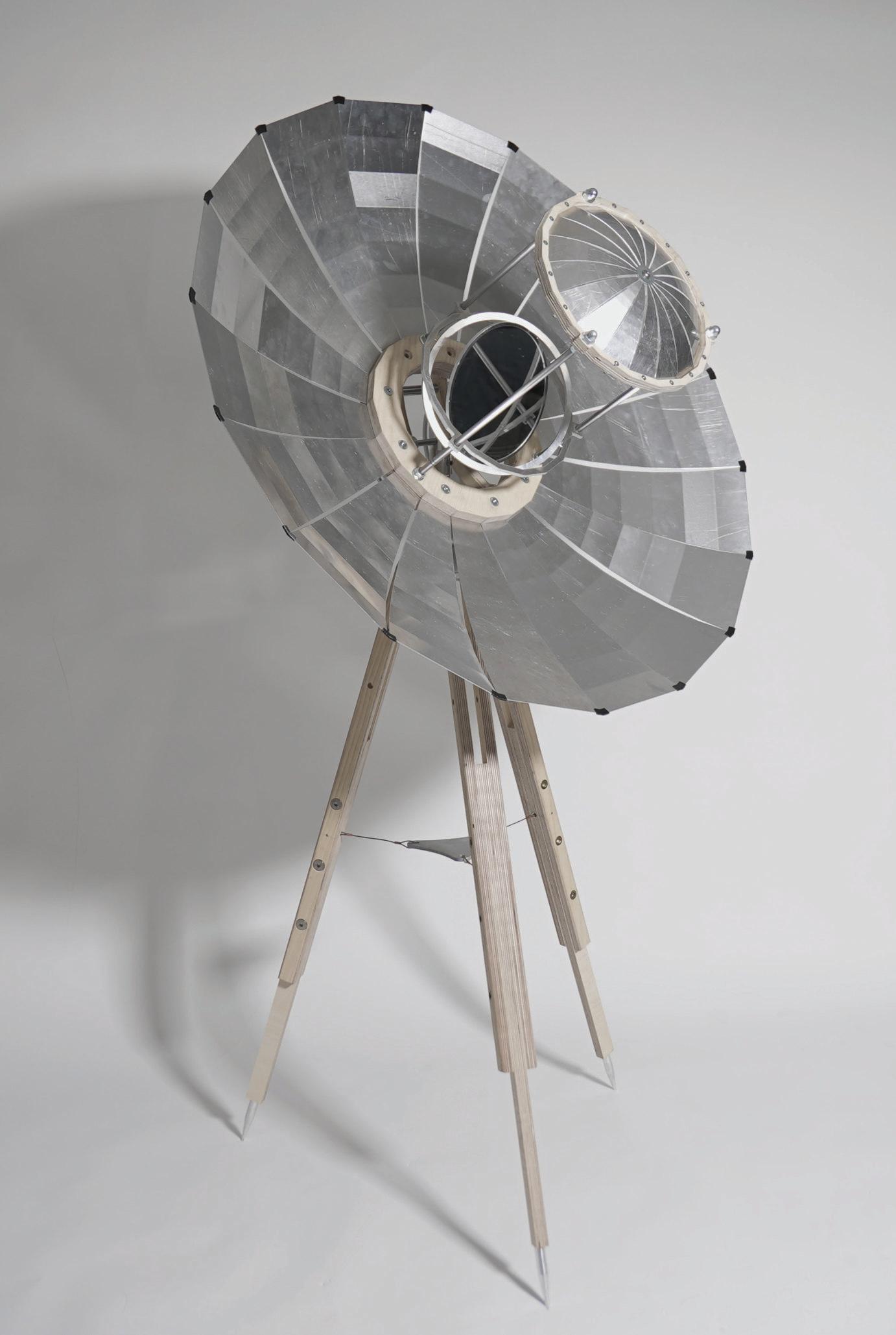
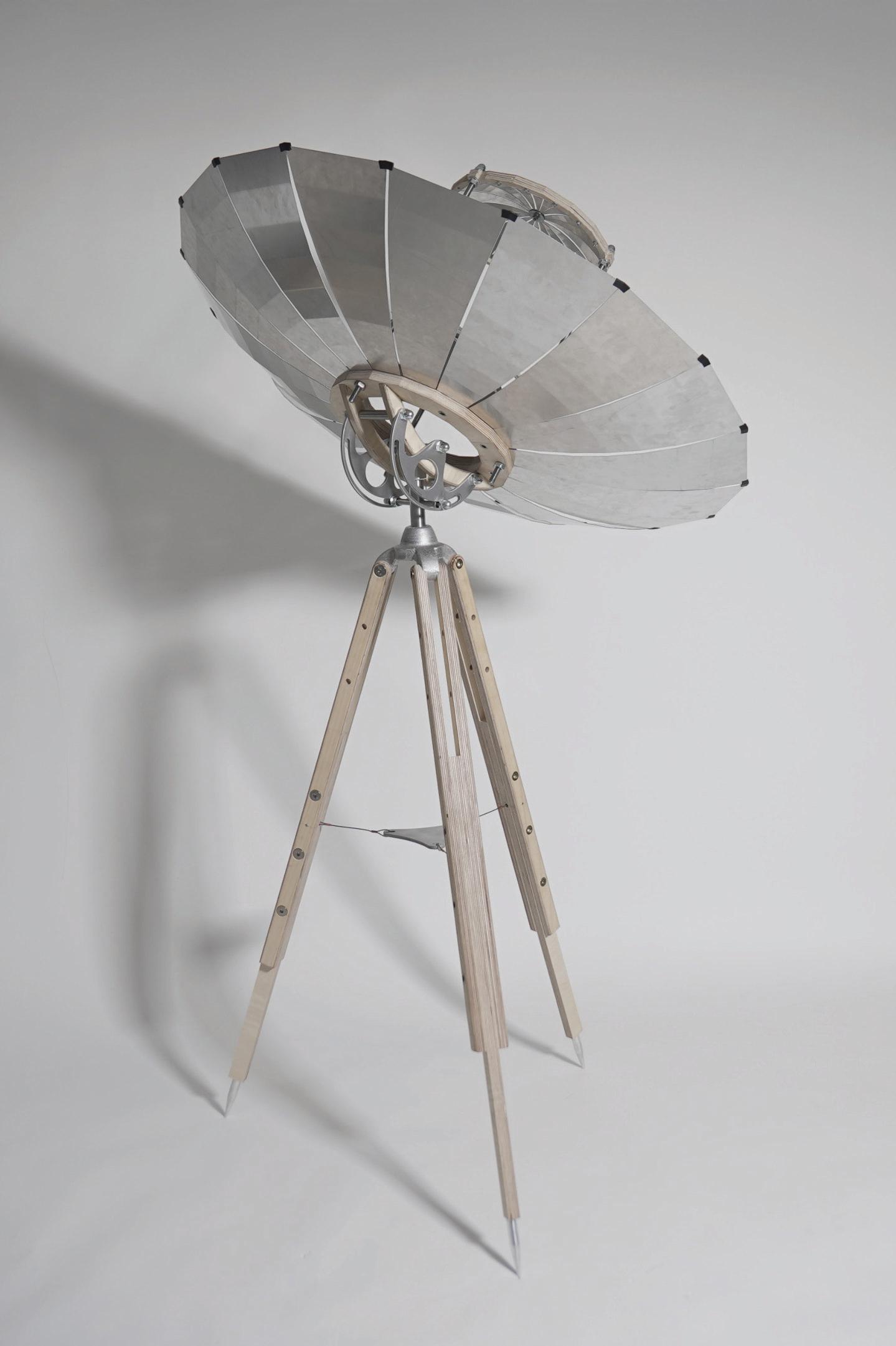
Experimental Design and Prototyping of a Moonlight Reflector for Theatre Lighting
Rei Sekiguchi
Experimental Design
and
Prototyping of a Moonlight
2024/2025
Iwouldliketothankmysupervisor,BedirBekar.Bedirwasextremly throughout this dissertation.
IwouldalsoliketothankmysupervisorandDP3designtutor,Simon fruition without your support.
Experimental Design and Prototyping of a
Dissertation
Supervisor: Bedir Bekar and Simon Beames
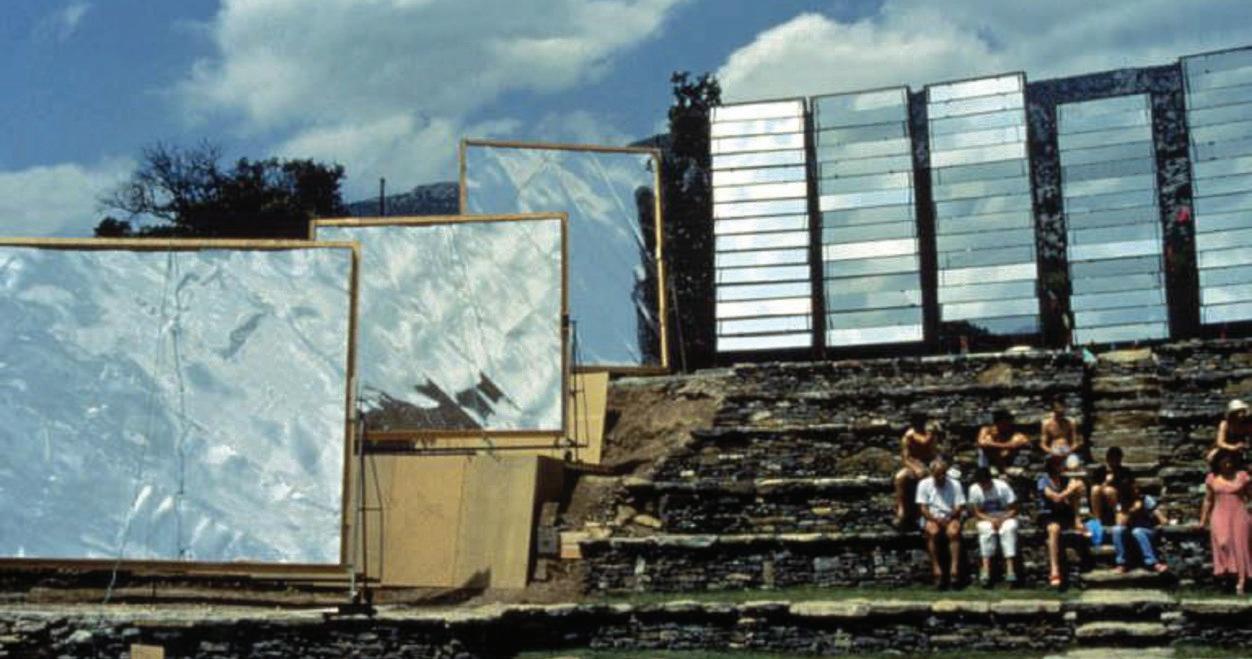
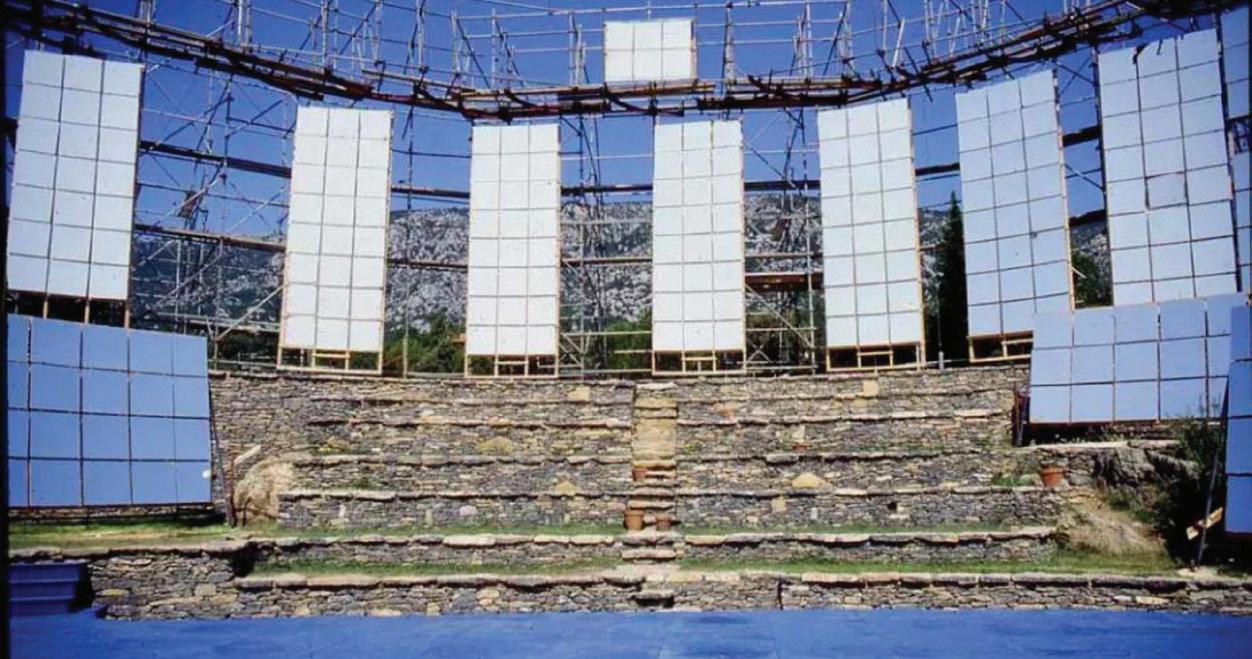
“The Full-Moon Theatre is a project which is just beginning.” - Peter Rice (1996)
Image Caption
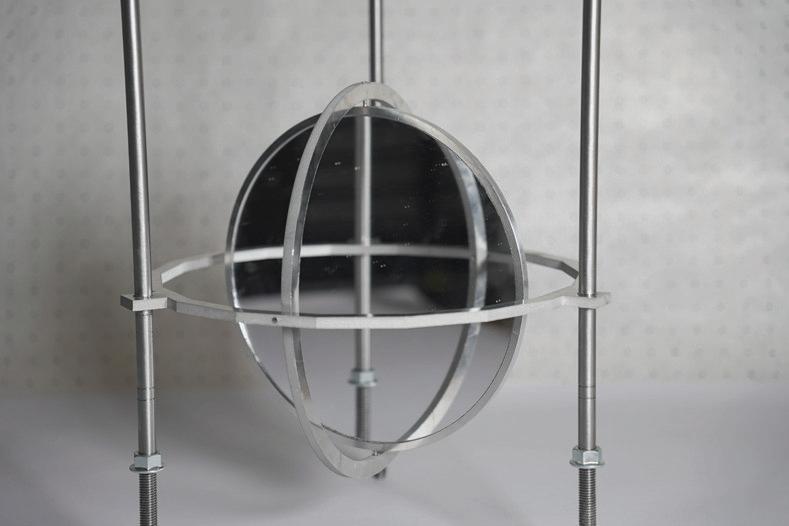
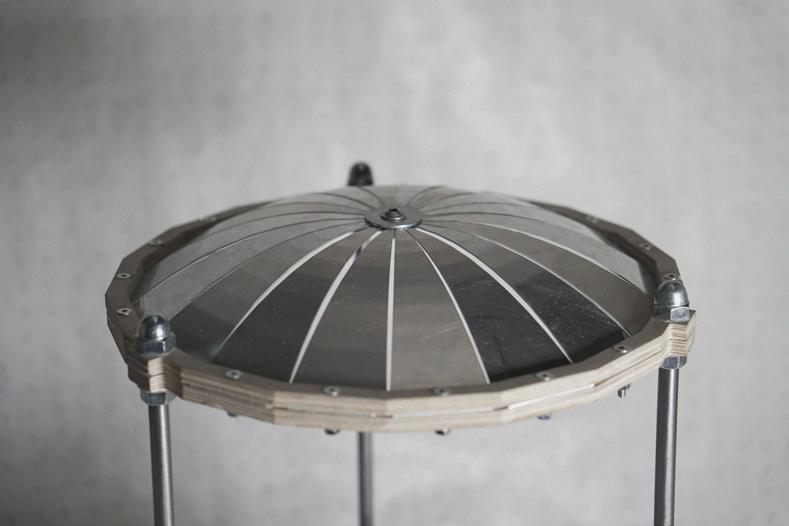
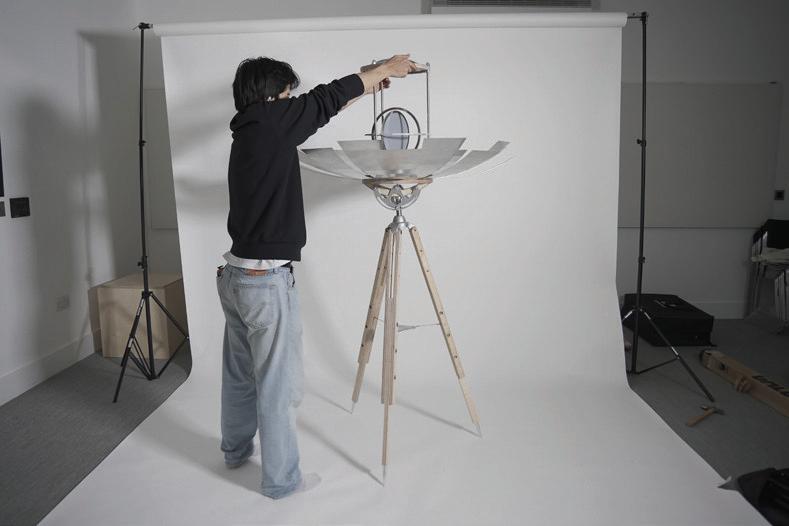
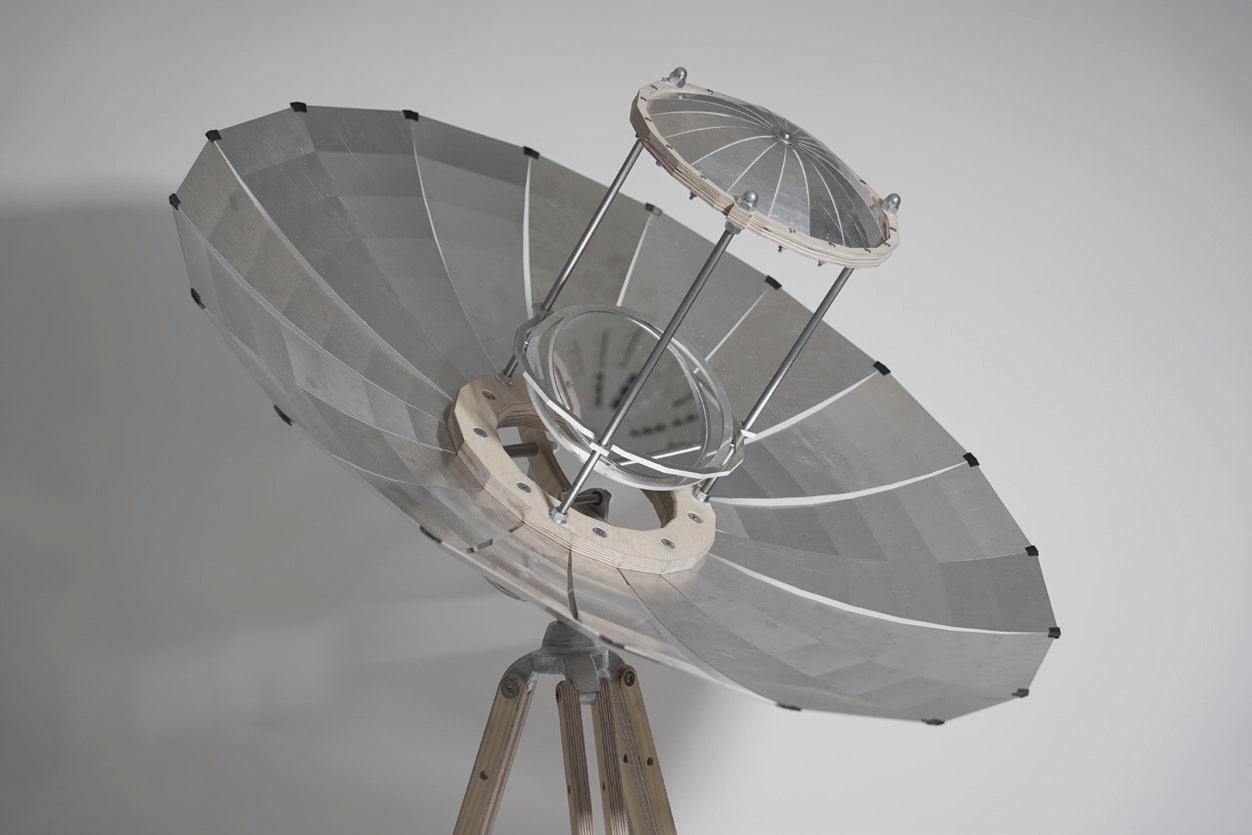
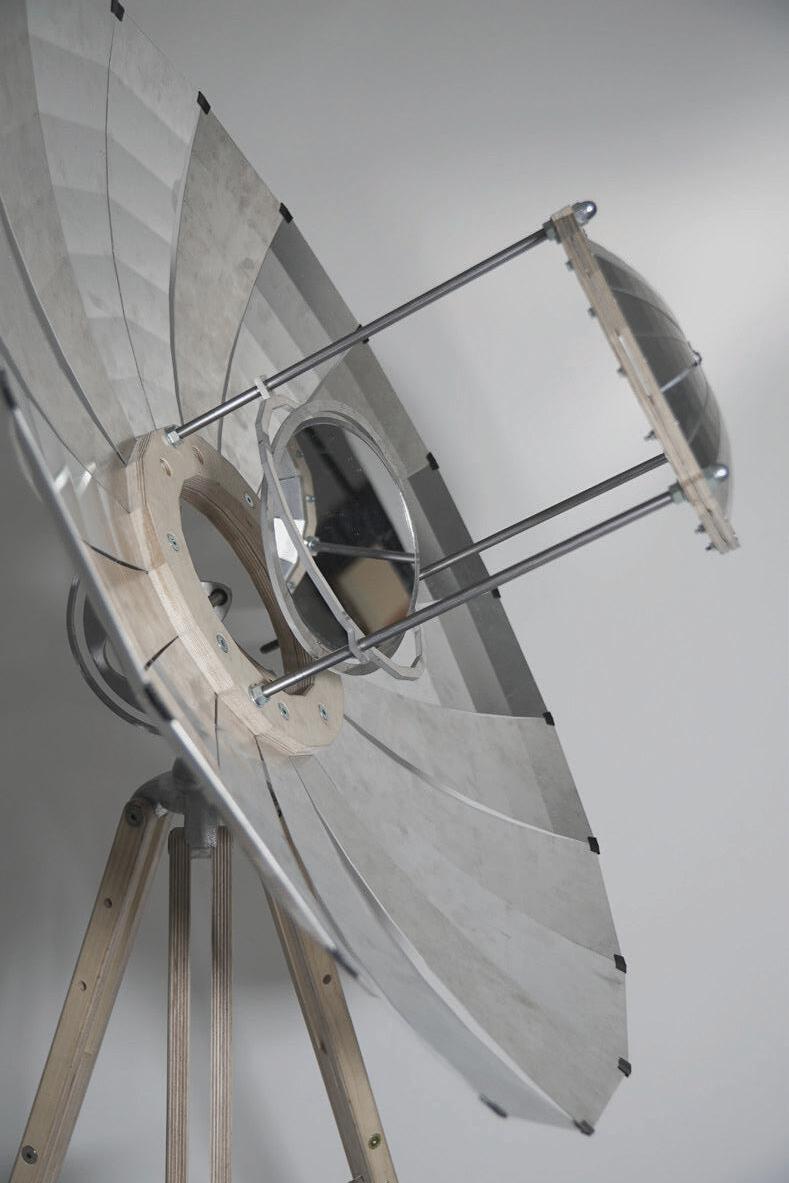
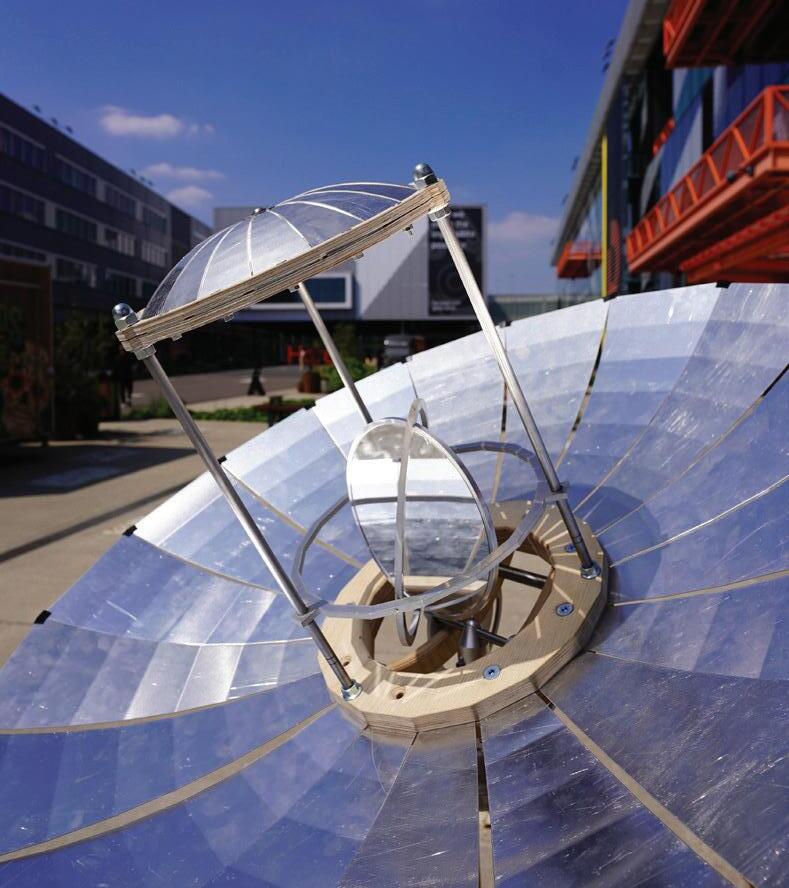
explores the possibility of gathering and shaping moonlight to serve beam. imagination.
Ultimately, this dissertation positions making, in all its experimental, and attentiveness that emerge when design and making are deeply intertwined.
“Since man, fragment of the universe, is governed by the same laws that preside over the heavens, it is by no means absurd to search there above for the themes of our lives, for those frigid sympathies that participate in our achievements as well as our blunderings.”
M. Yourcenar, Memoires d’Hadrien, 1958
this knowledge build an argument as to why moonlight is appropriate varying degrees of lunar illumination and are illustrated in Figure 3
light levels and to shorter wavelengths. Even subtle gradients in
levels to avoid shadowing and maximise
in his bookAn Engineer Imagines.
were developed using various materials and geometries. A notable innovation was a lightweight mirror using 1.5 mm toughened glass,
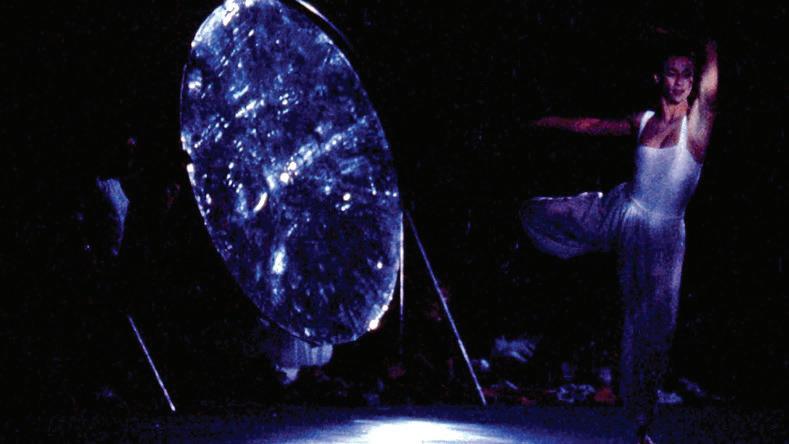
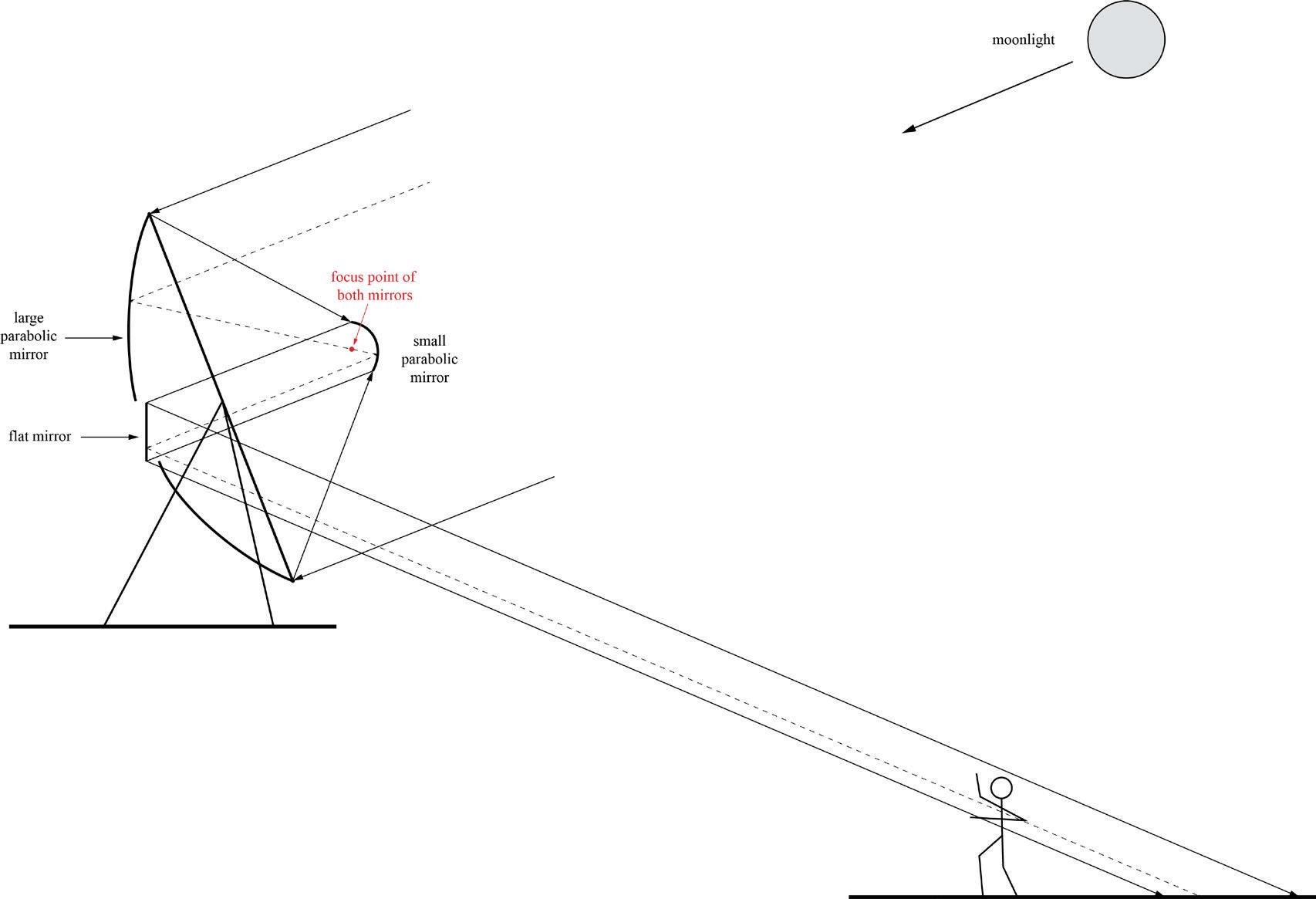
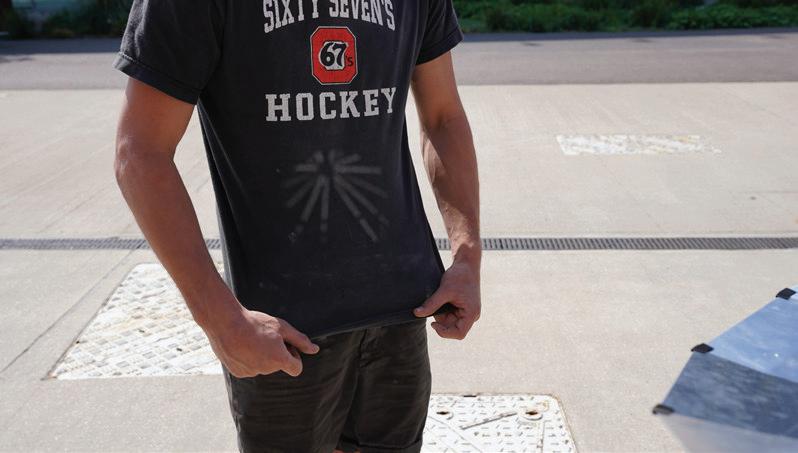
Figure 5. Man illuminated by moonlight
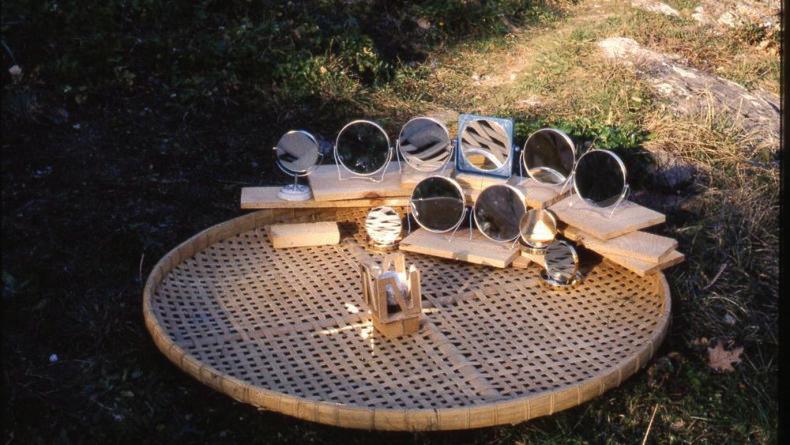
Figure 6. Humbert Camerlo originally tested
8.
drawing of 1992 and possibilities, yet aspiring to the same sensitivity to light, site,
9.
Figure
Elevation drawing of 1991
Figure
Elevation
Focal Point
Focal Point
rays of starlight into a single point, enabling the observation of faint
instruments use metal mesh or perforated aluminum panels to form of the energy it is intended to manipulate.
Steel structure
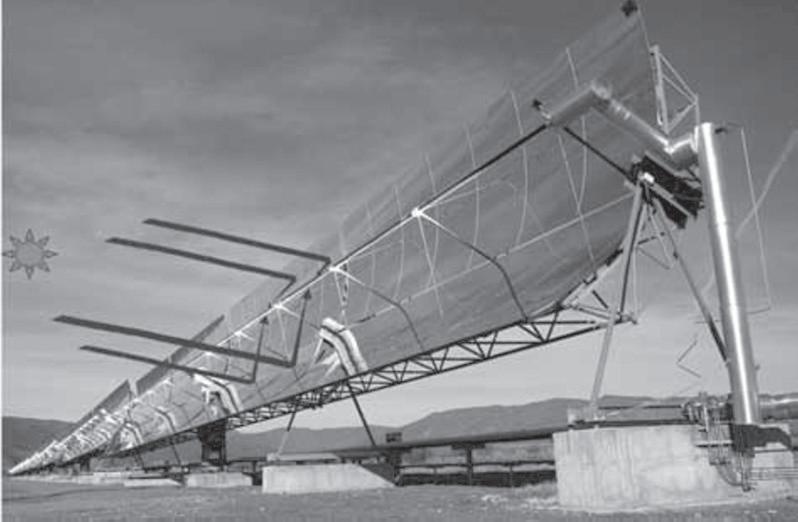
Parabolic trough reflector
Absorber tube
environment, how it is assembled and disassembled, and how it
2.4.2 Components and the Beauty ofAssembly
exploration, and visible assembly.
movements. over multiple lunar phases.
full moon, it provides less than 0.3 lux of illumination, far below depth in Chapter 4.2.
Full moonlight yields approximately 0.25 lux at ground level—far
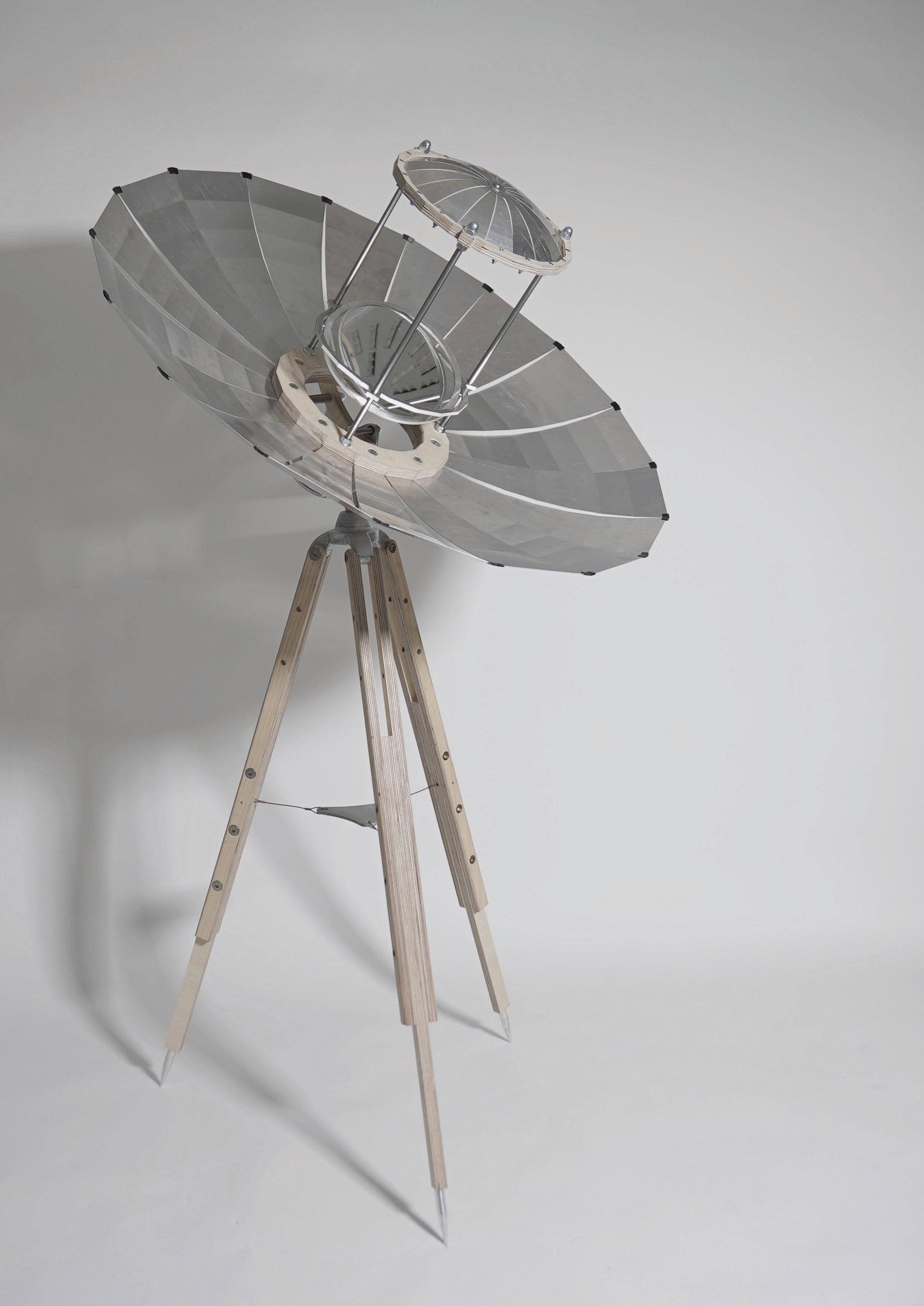
methodology, and manual operation strategy, a fully operational built around repetition, repairability, and lightness—readily supports not ornament.
lightweight, adaptable, and deeply human in its operation. Instead,
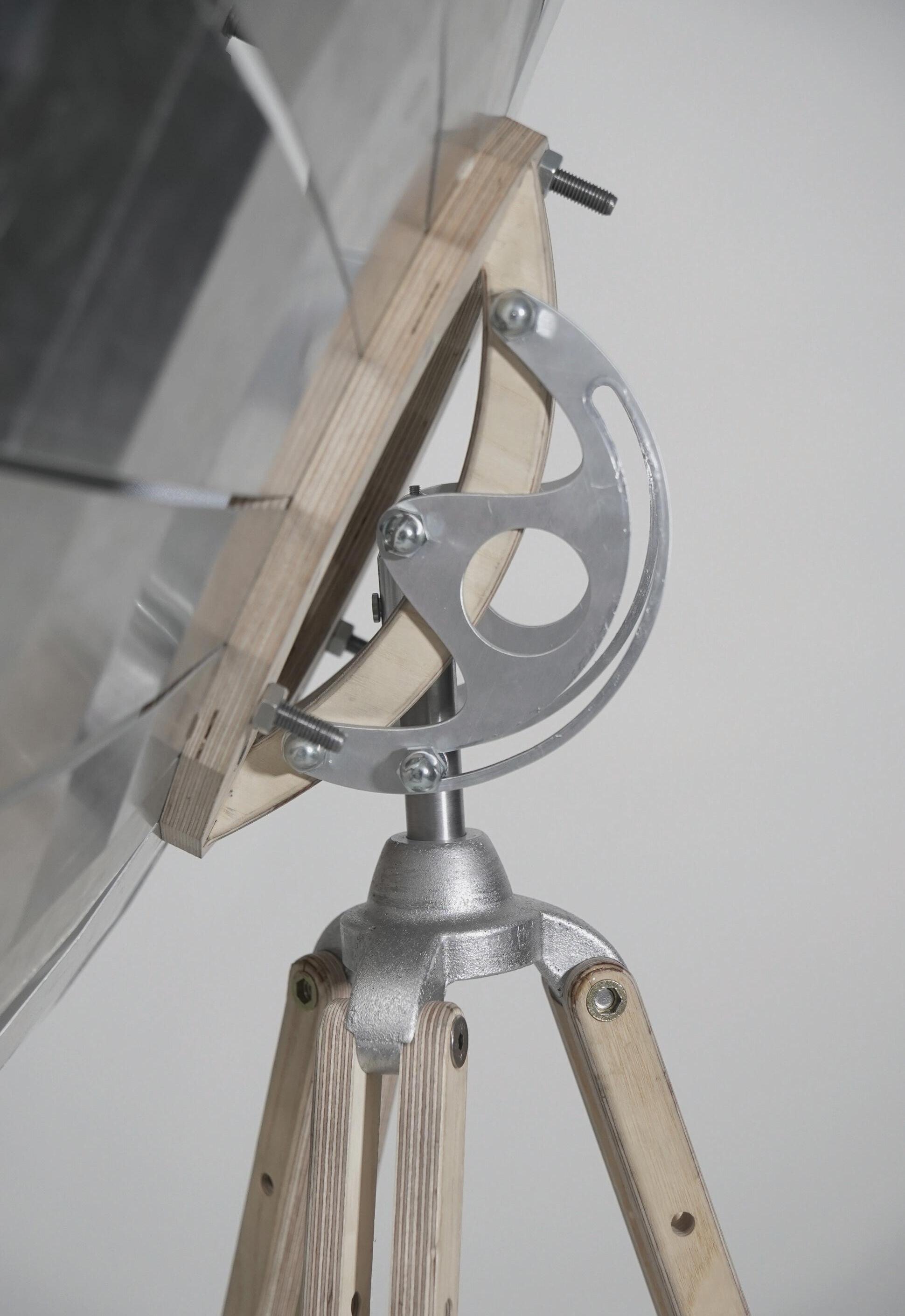
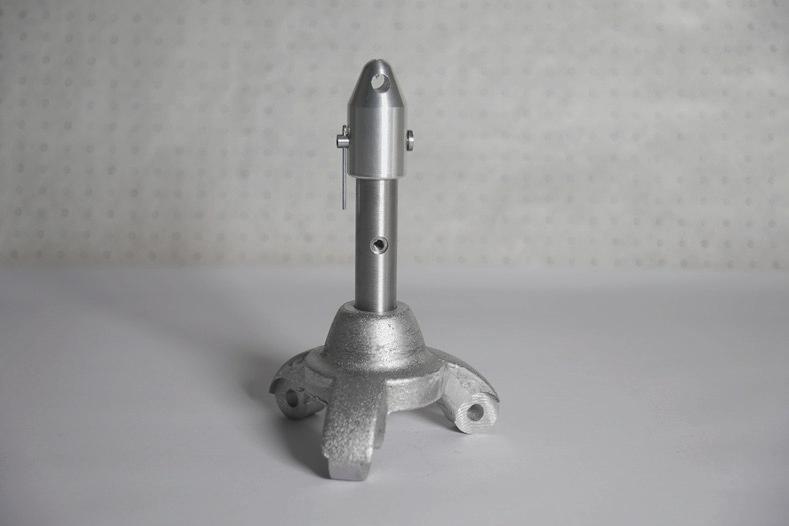
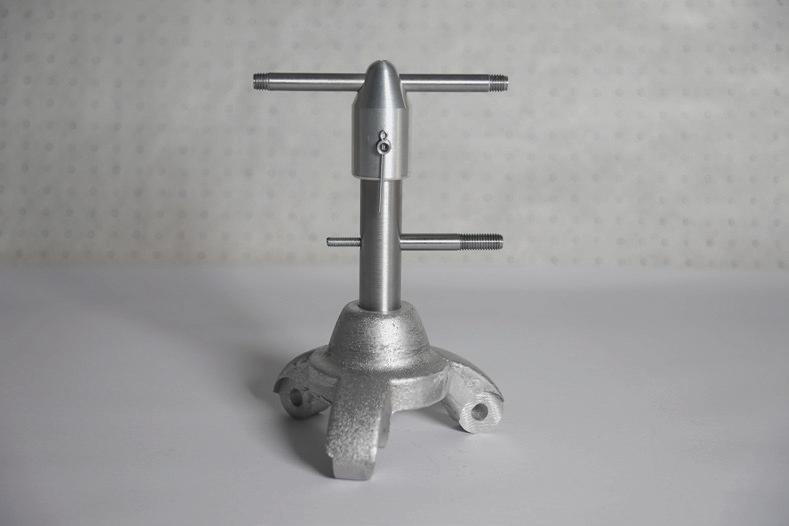
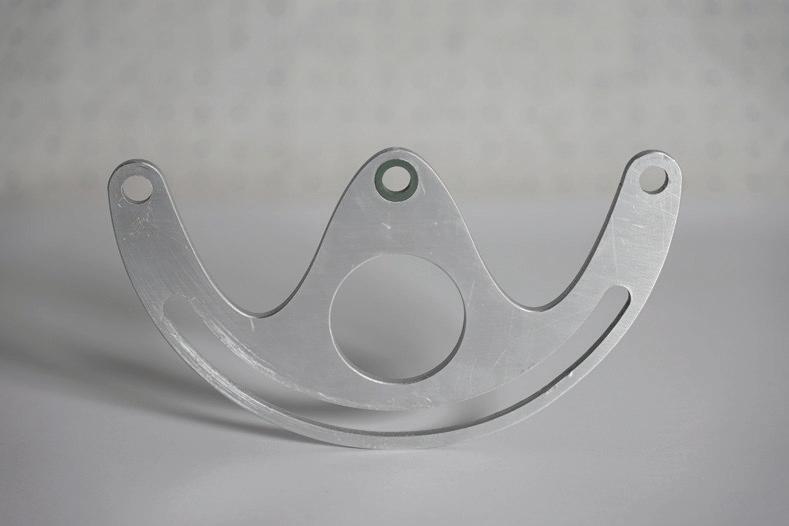
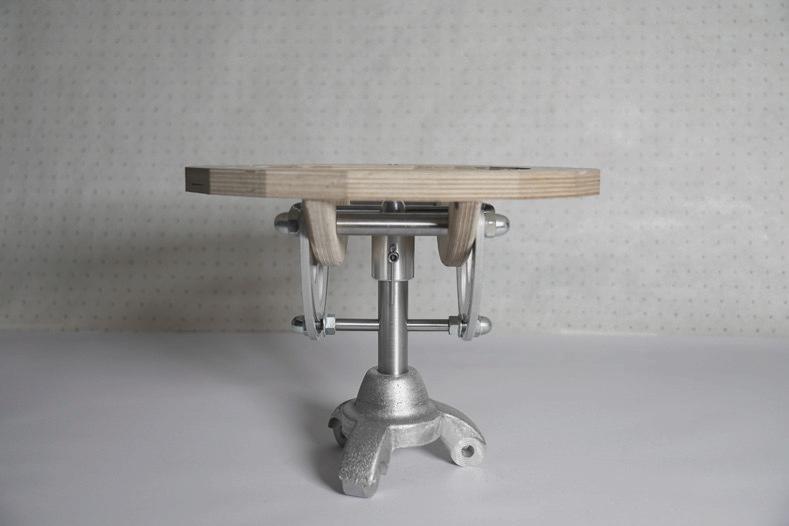
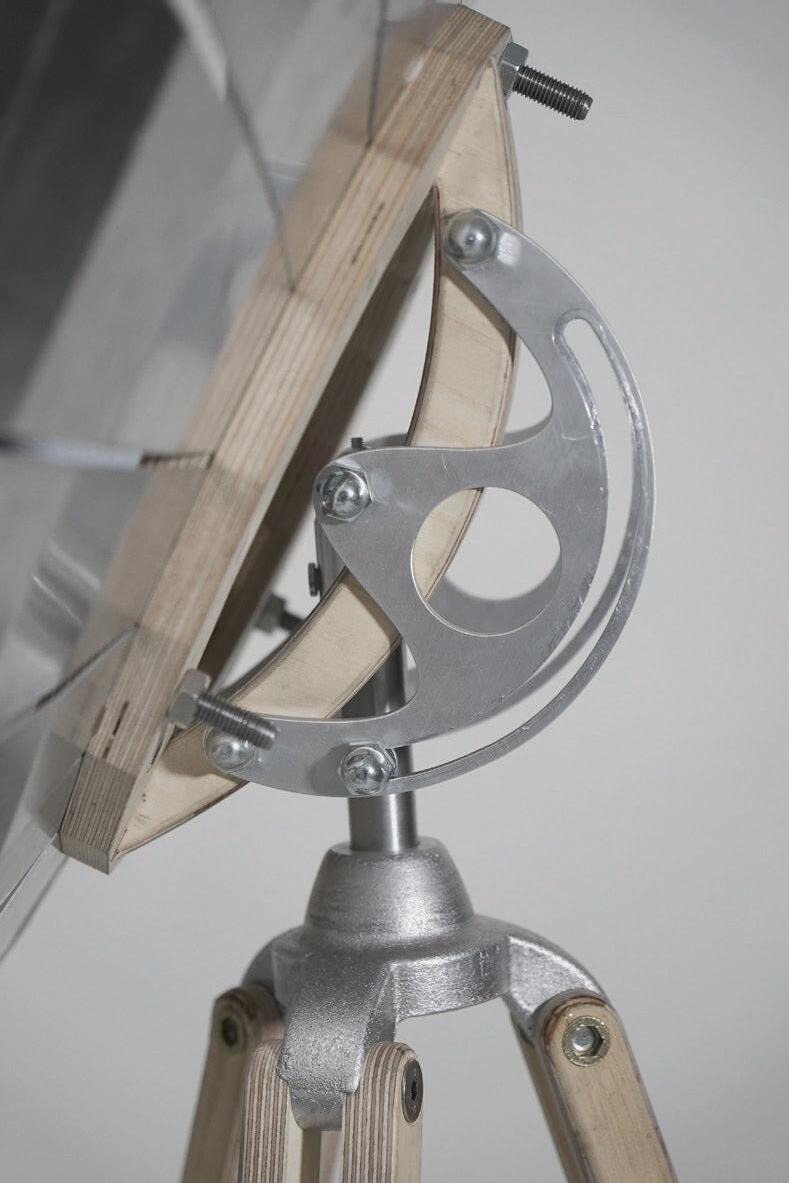
tilt angle plate, pivoted on the shaft and sleeved by a nylon bushing
toward the stage.
while remaining small enough to avoid interrupting the initial path
stage area. moonlight toward human expression.
diameter and depth.
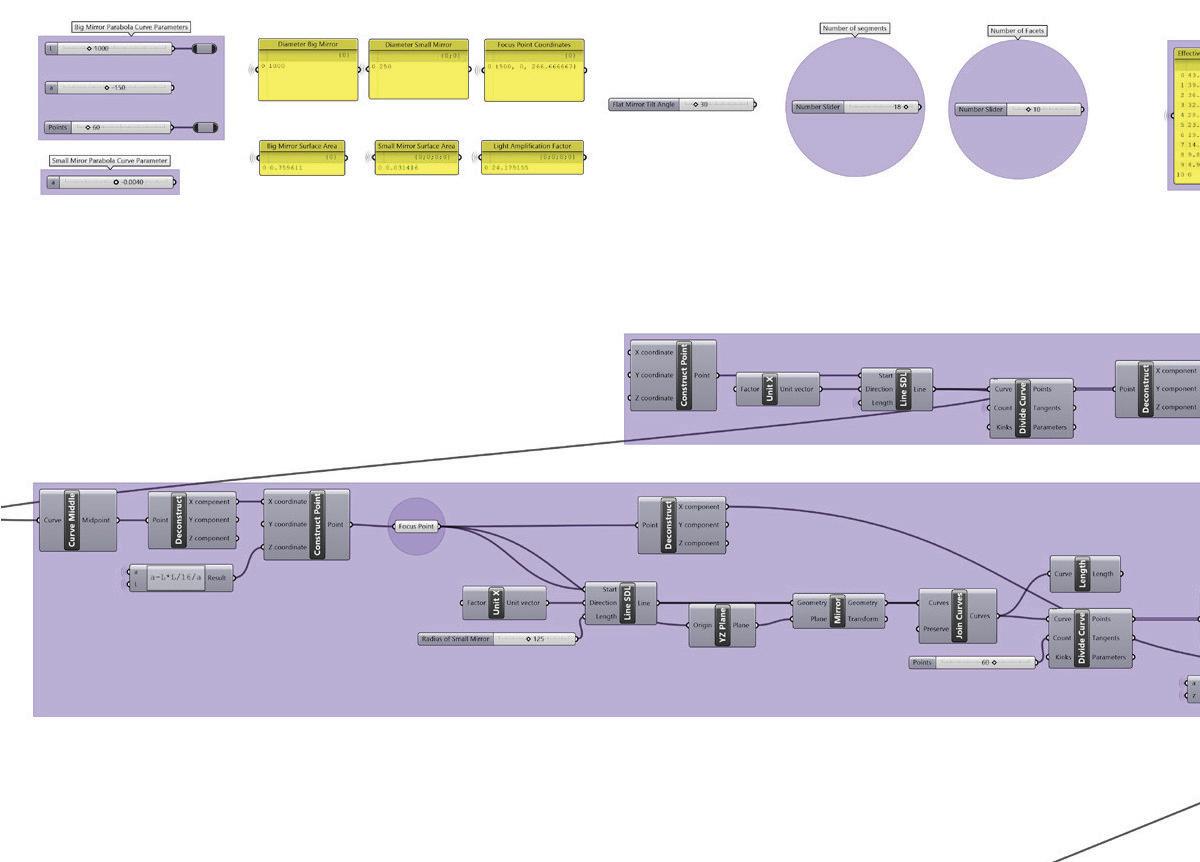
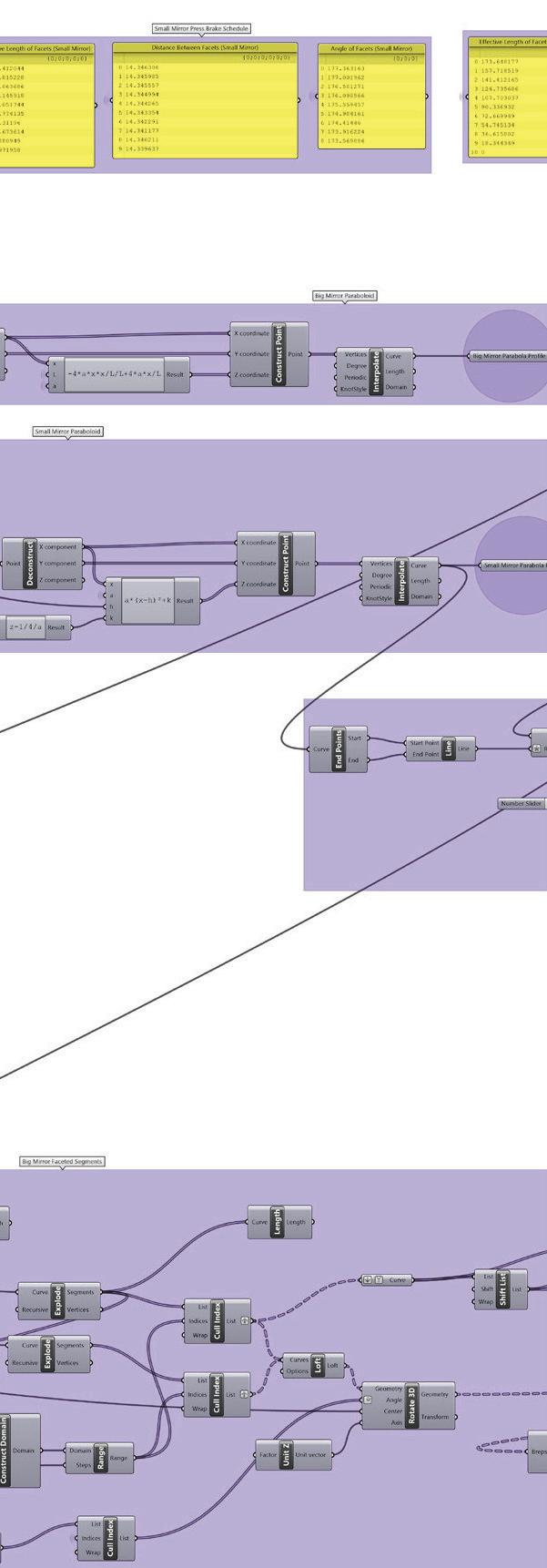
from derived big mirror paraboloid.
from derived small mirror paraboloid.
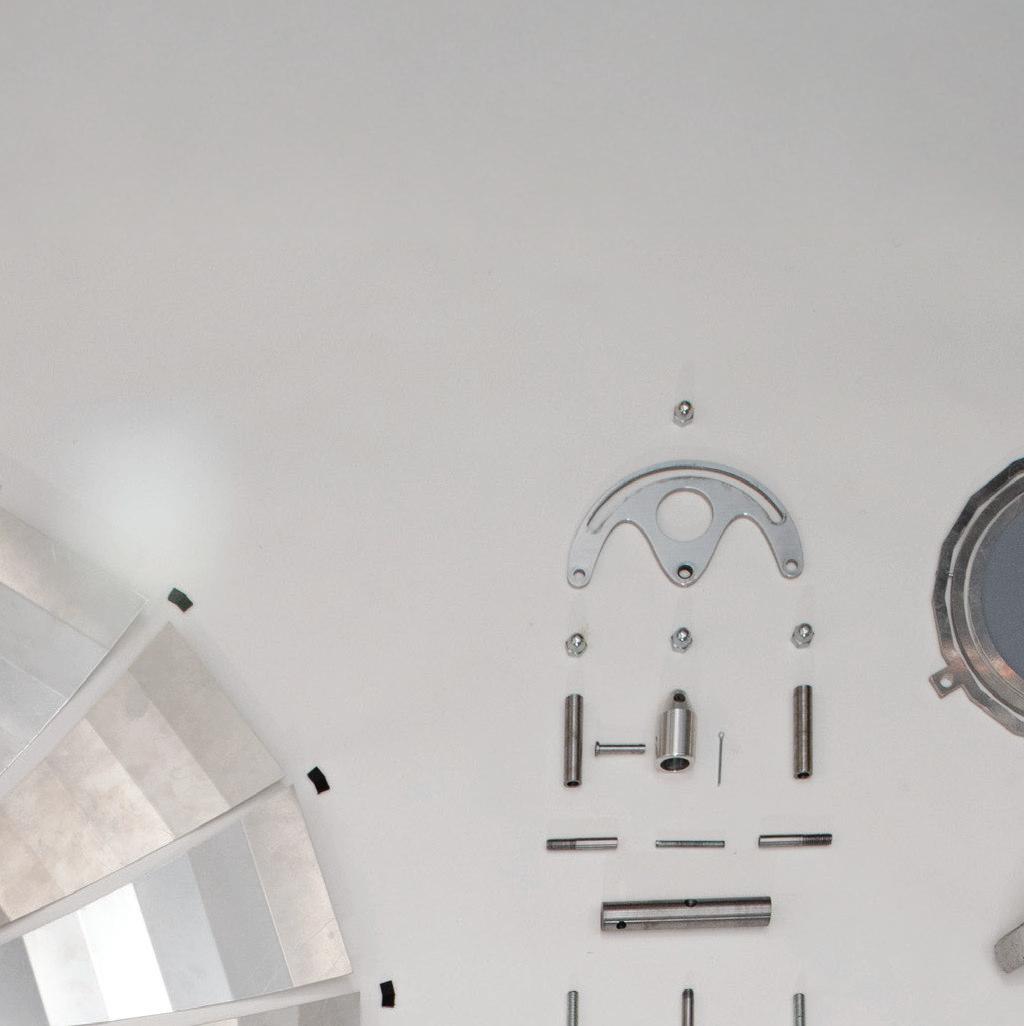
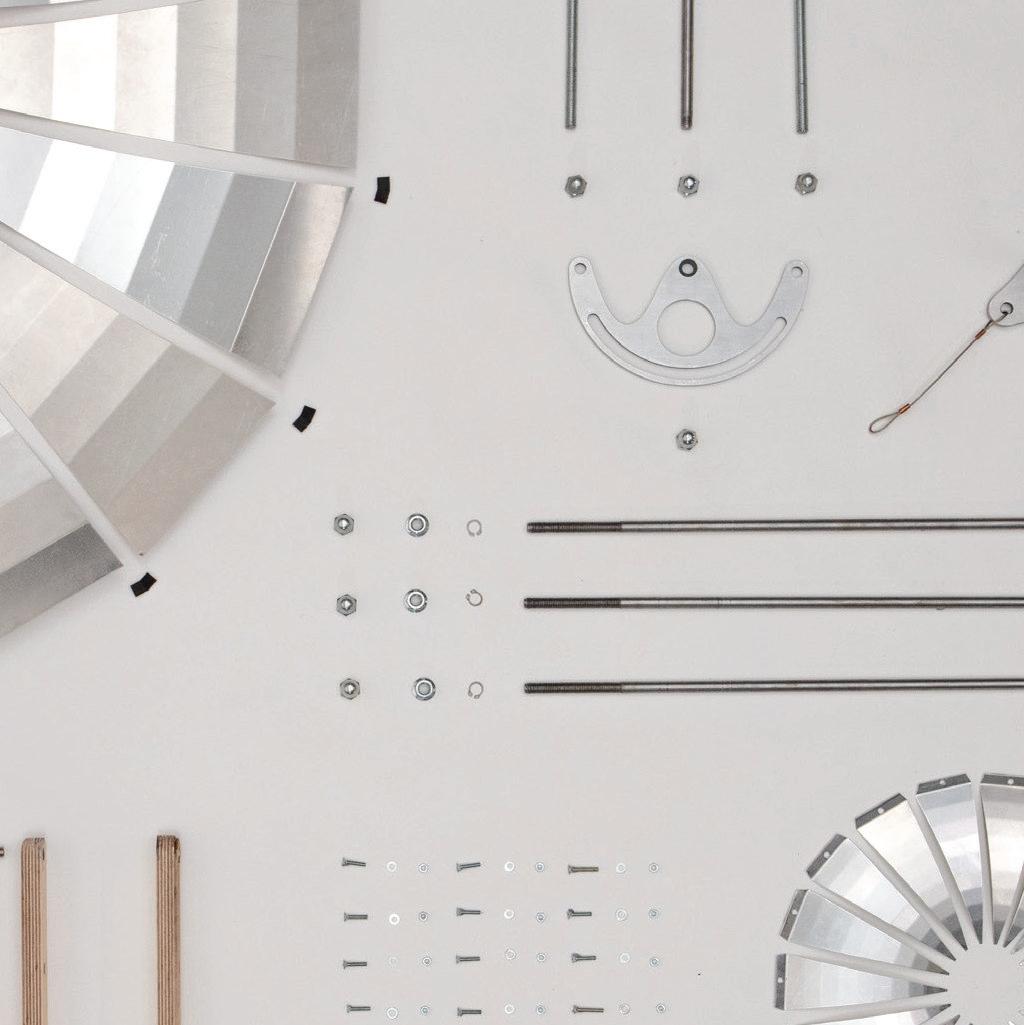
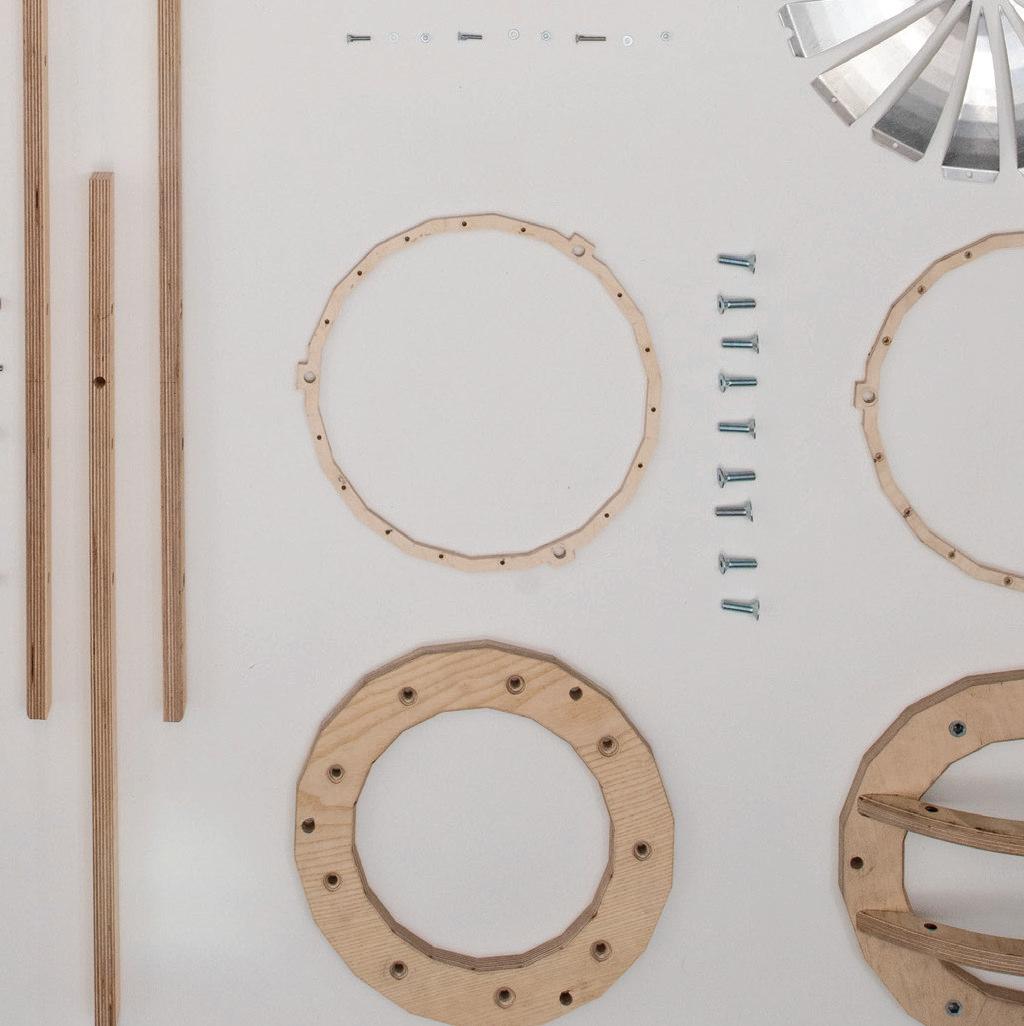
M4X16MM Countersunk Bolt
M10 Dome Nut
M10 Flange Hexagon Nut Serrated
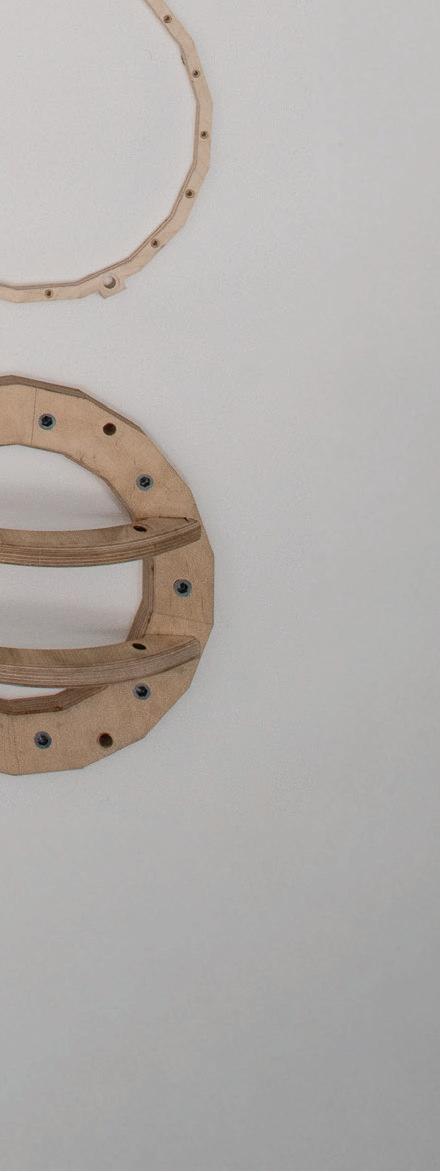
Small Mirror Timber Clamp 6MM Birch Plywood Clamp
Big Mirror Timber Clamp 19MM Ash Veneer Plywood
Aluminium Tripod Feet
Large Parabolic Mirror Segment 1MM Aluminium
Small Parabolic Mirror Segment 1MM Aluminium
Parbolic Mirror Edge Clip PLA
Ø10MM Steel Rod
Gimbal 6MM Aluminium
Ø200MM Acryilic Mirror
M8X18MM Threaded Inserts
M10X13MM Threaded Inserts
M4 Hexagon Nut
M4 Washer
M8 Clevis Pin
M5 Grub Screw
2MM Steel Wire Rope
Copper Wire Crimp
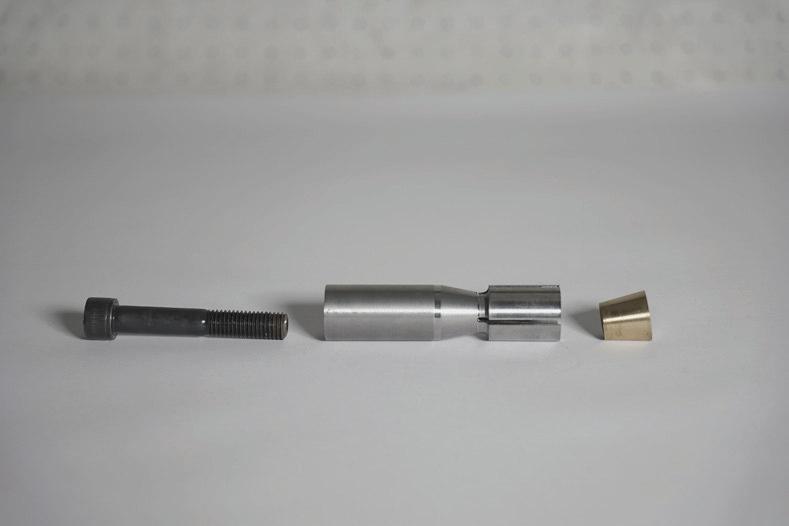
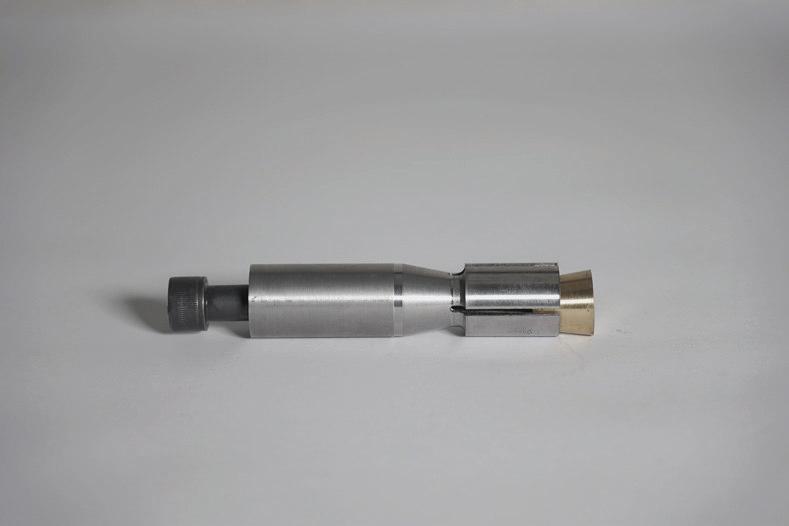
Aluminium Shaft Sleeve
Tripod Leg Brace 6MM Aluminium
Ø10MM Steel Threaded Rod
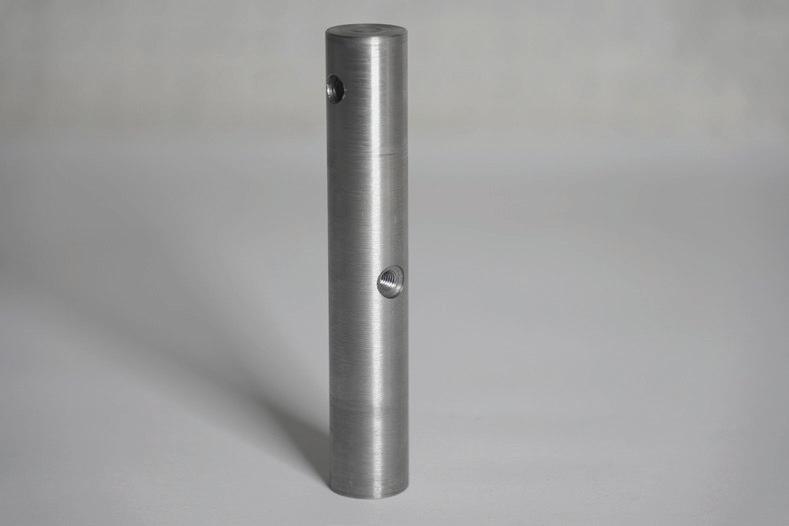
Ø24MM Steel Shaft
M2.5 Cotter Pin
Ø10MM Steel Shaft
Tripod Legs 19MM Ash Veneer Plywood
Ø10MM Nylon Sleeve
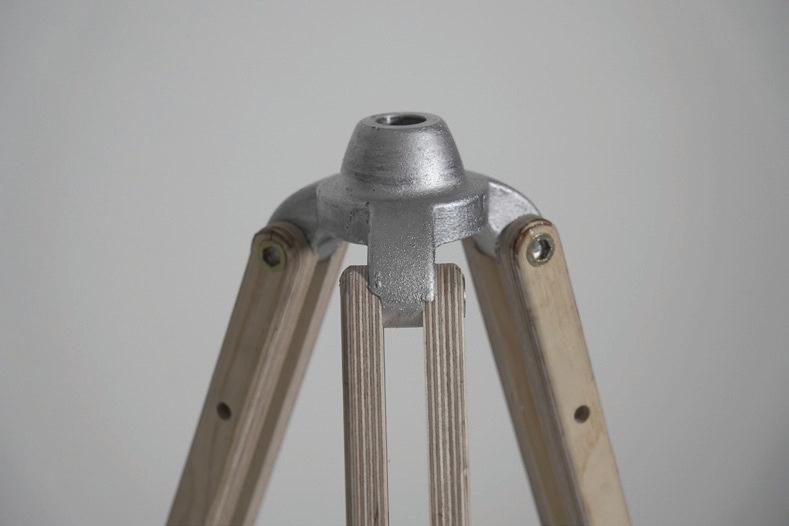
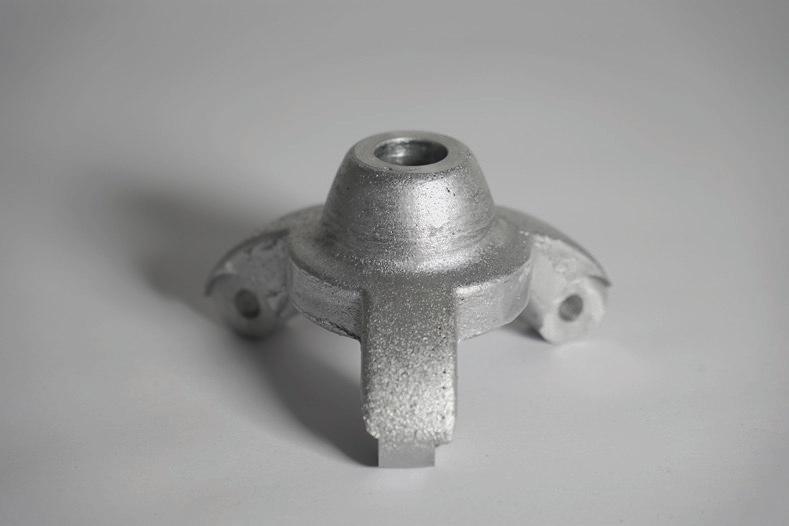
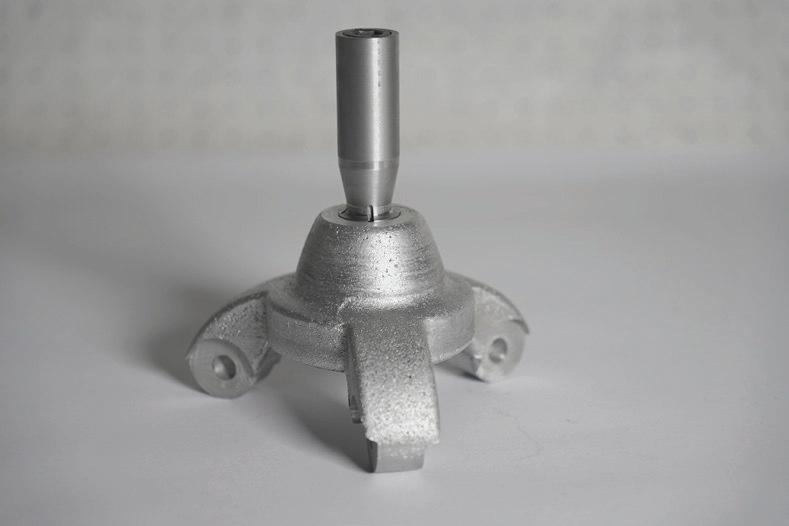
Cast Aluminium Shaft Sleeve
Ø16MM Aluminium Tube Spacer
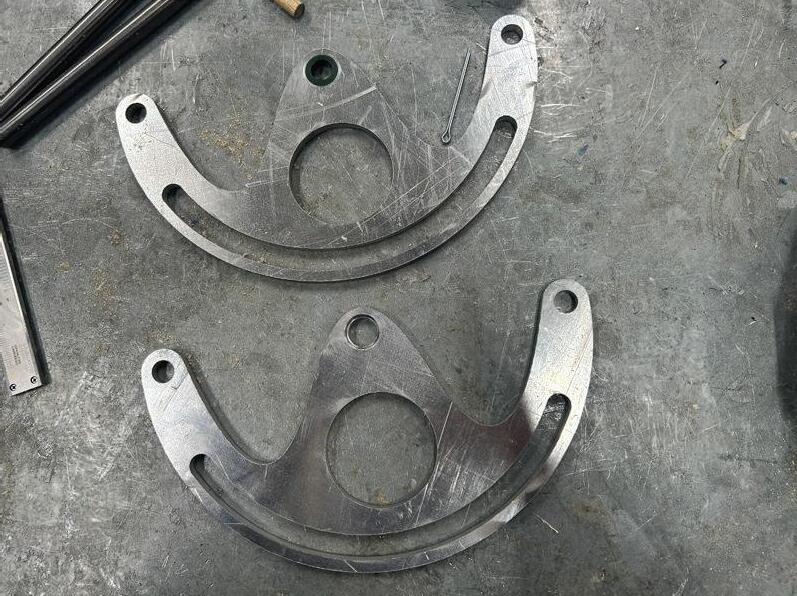
Tilt Angle Plate 6MM Aluminium
M10X50MM Countersunk Bolt
M8X25MM Countersunk Bolt
4.3Assembly as Design:
but as an essential part of design, embodying the ethos that the
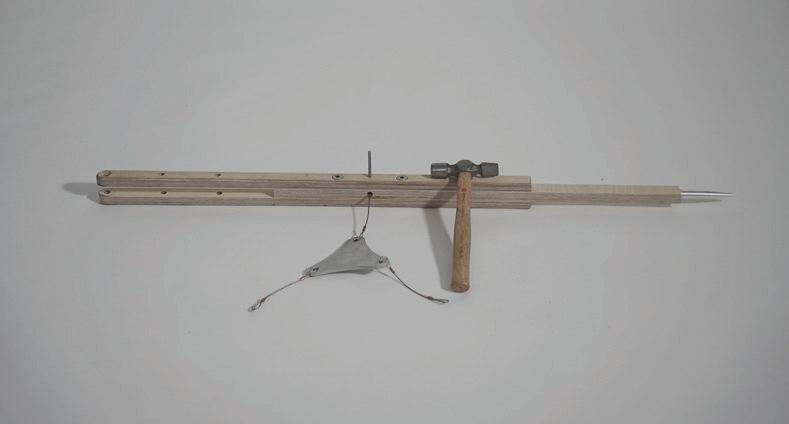
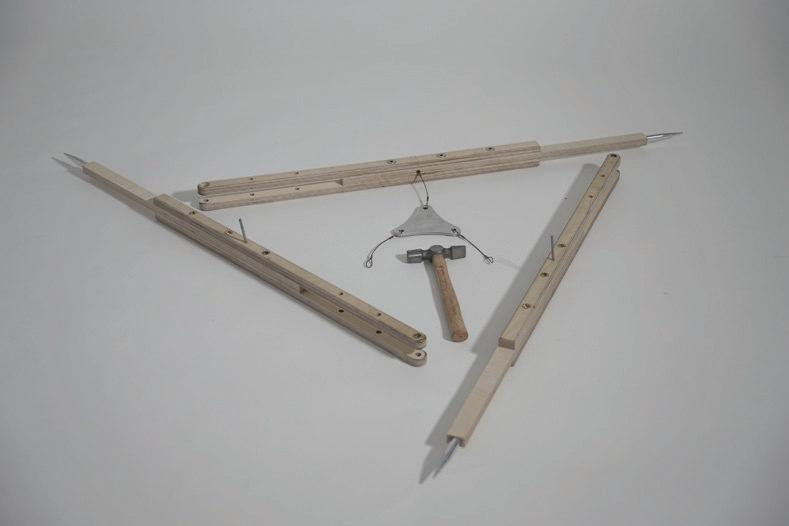
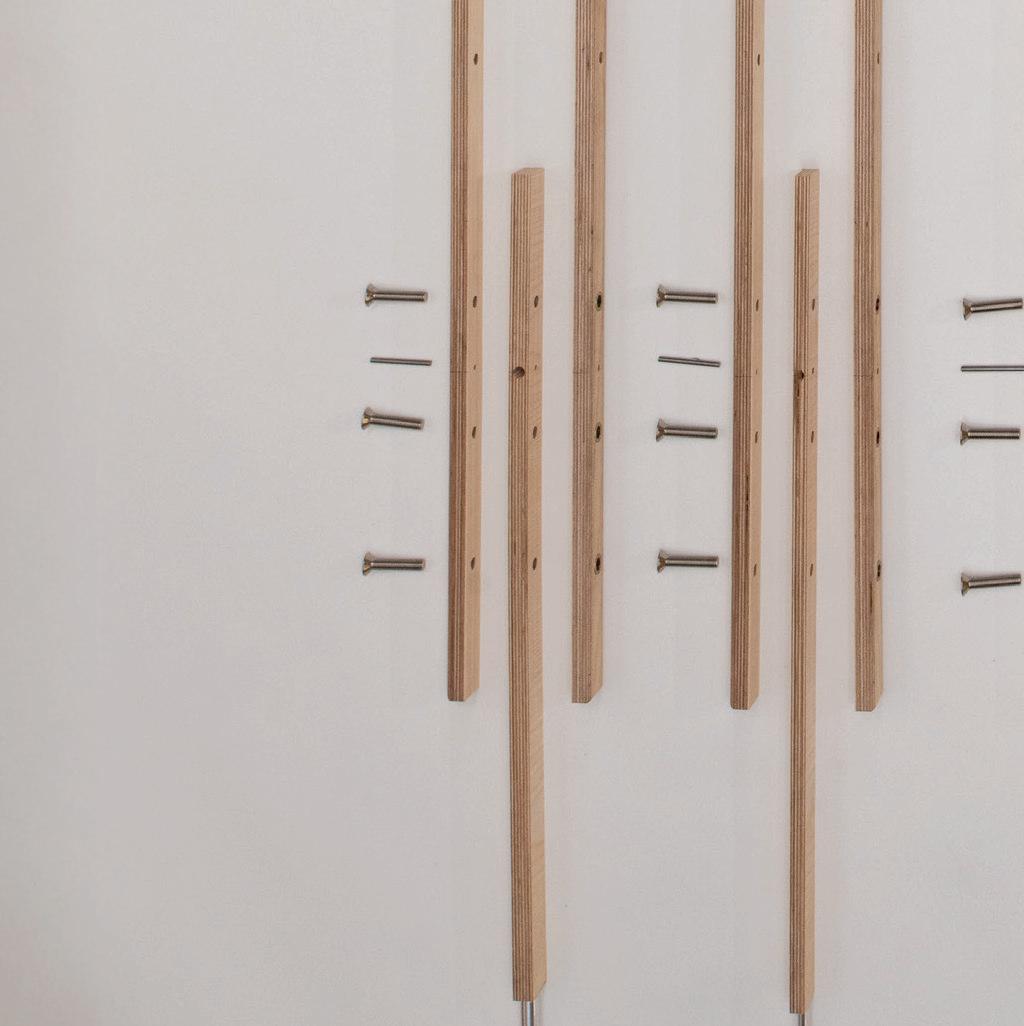
leg is to be inserted using a mallet.
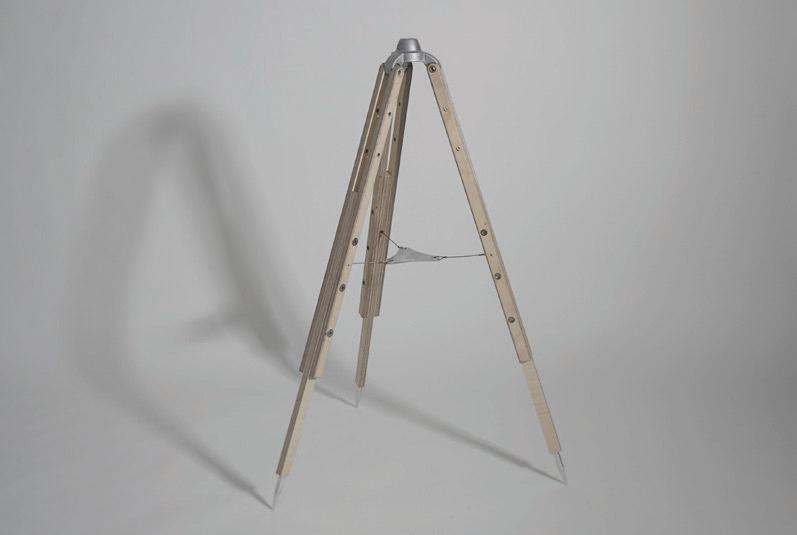
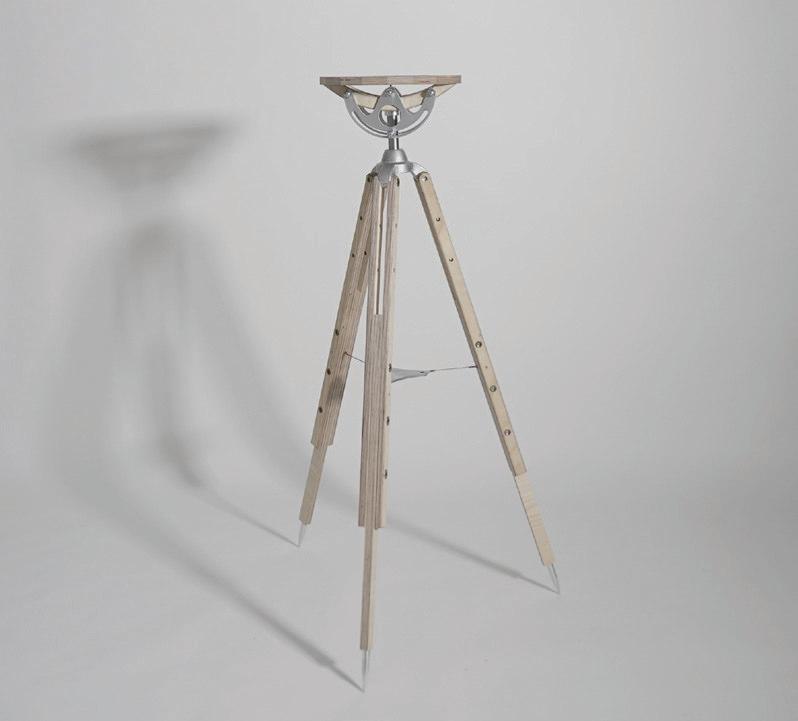
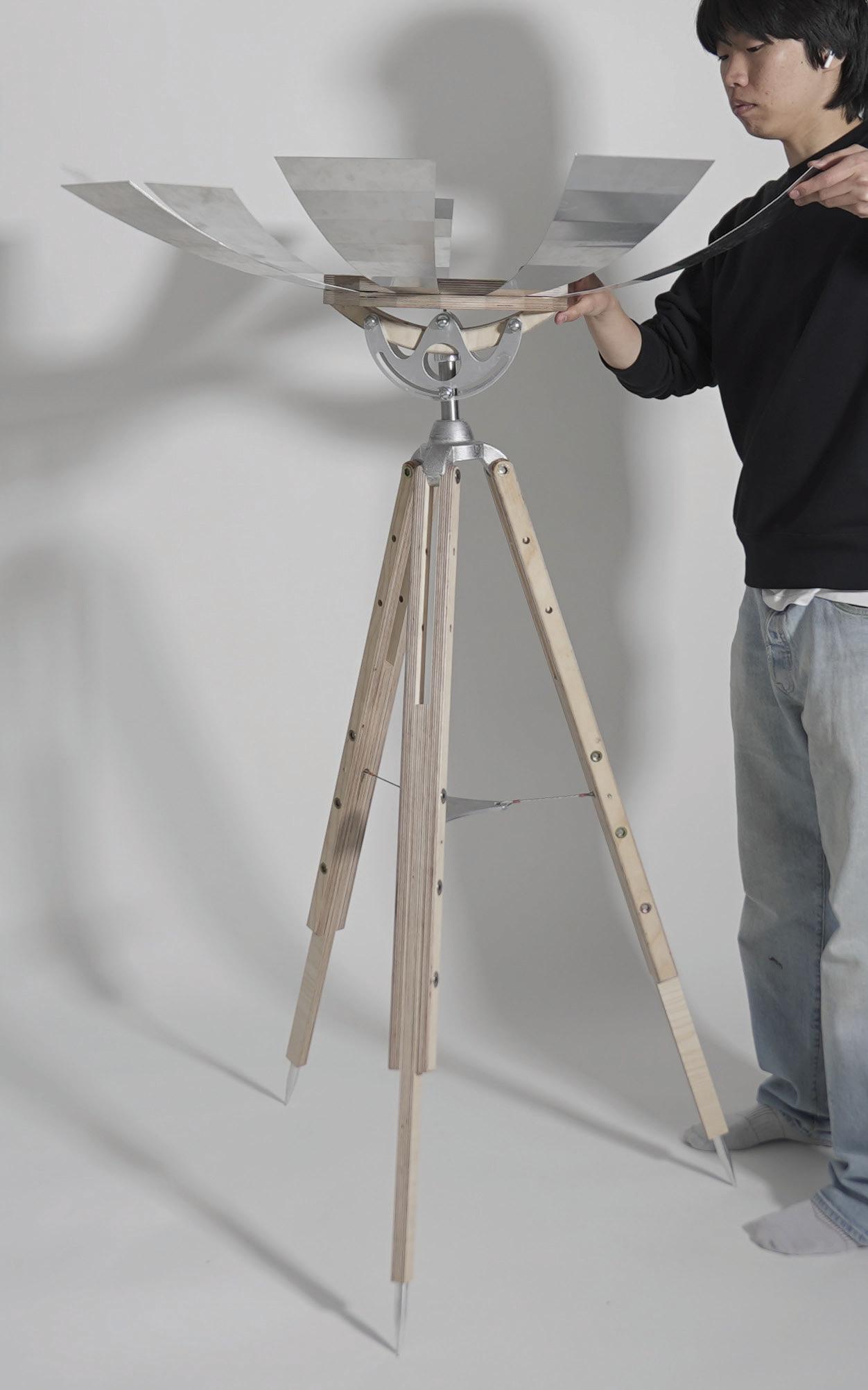
25.Assembly of tripod legs together.
Figure
Building upward from the tripod, the next phase establishes the
bushing is inserted at the ends of the 10mm shaft within the tilt angle
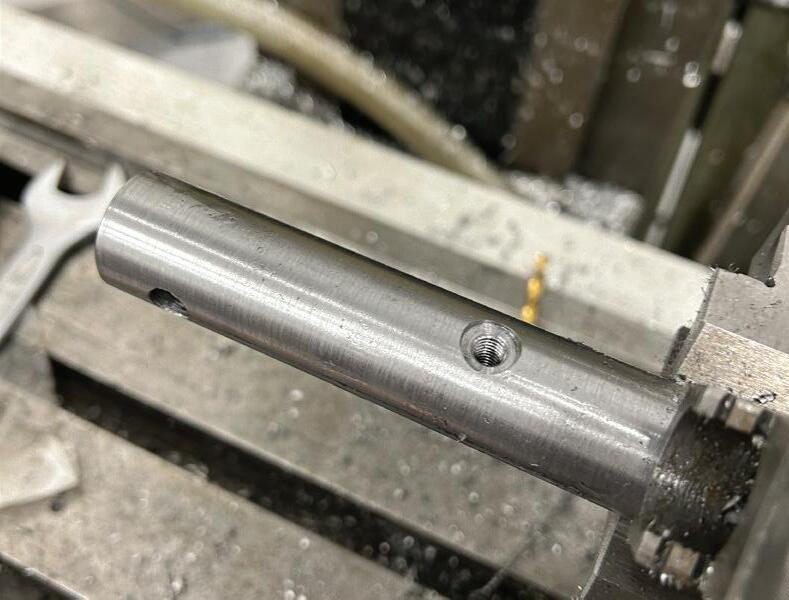
Figure 30. 10mm steel shaft for tilting axis
timber plates.
tube with an outer diameter of 16mm and an internal diameter of
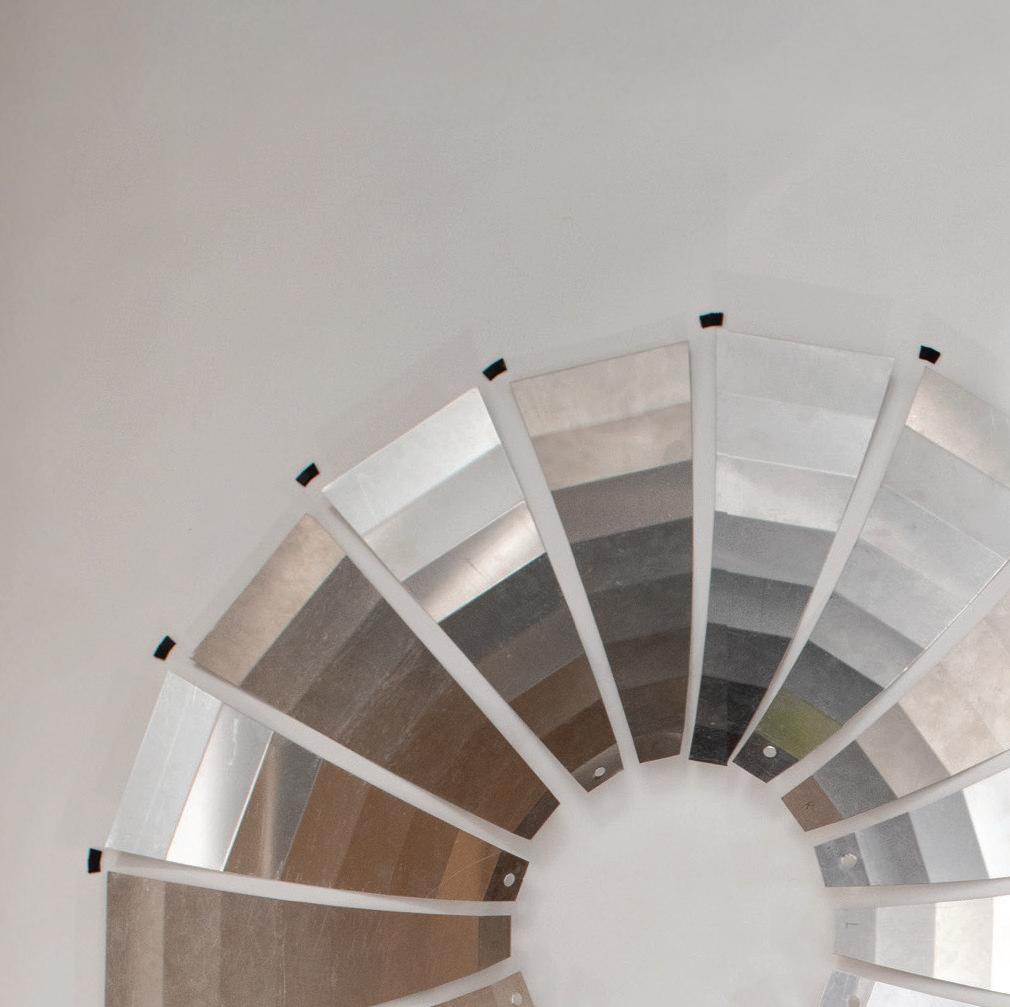
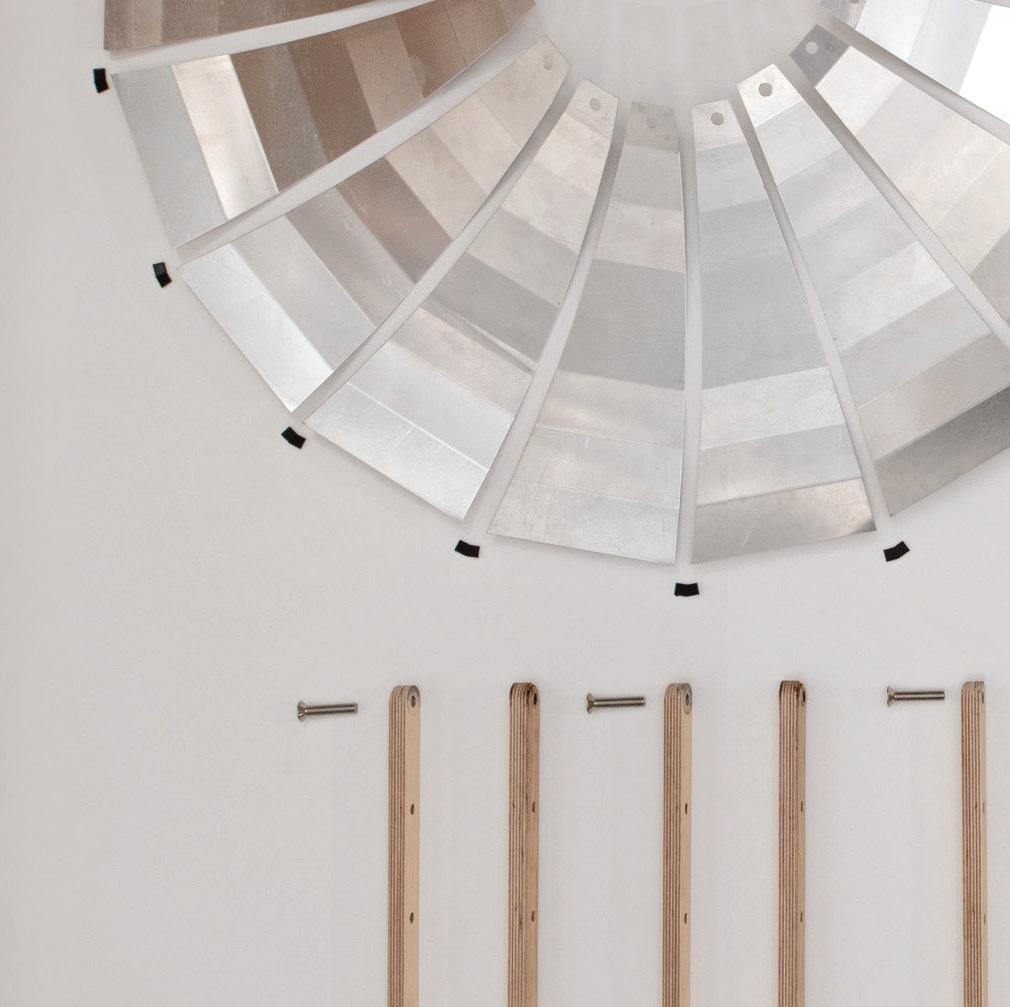
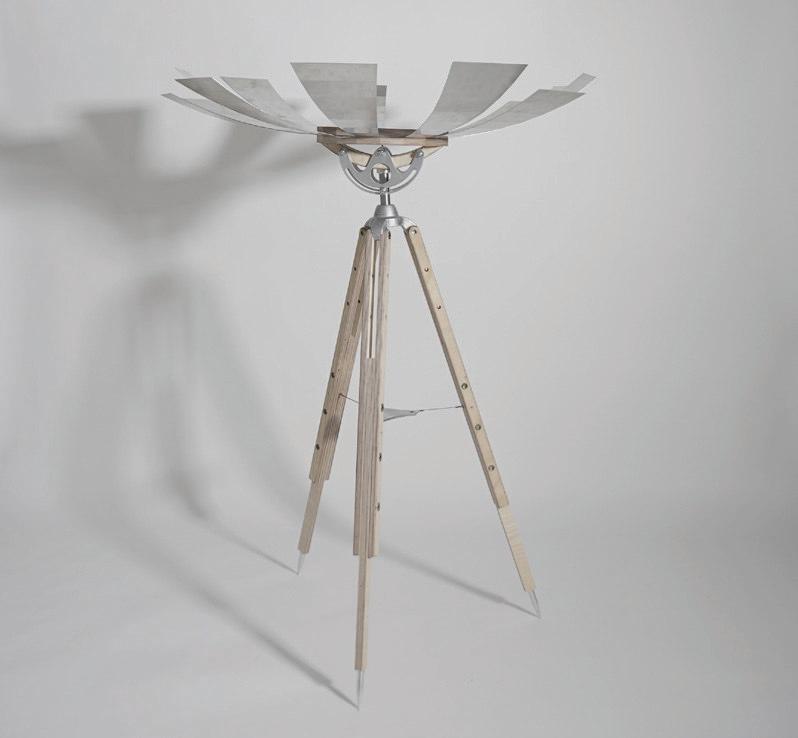
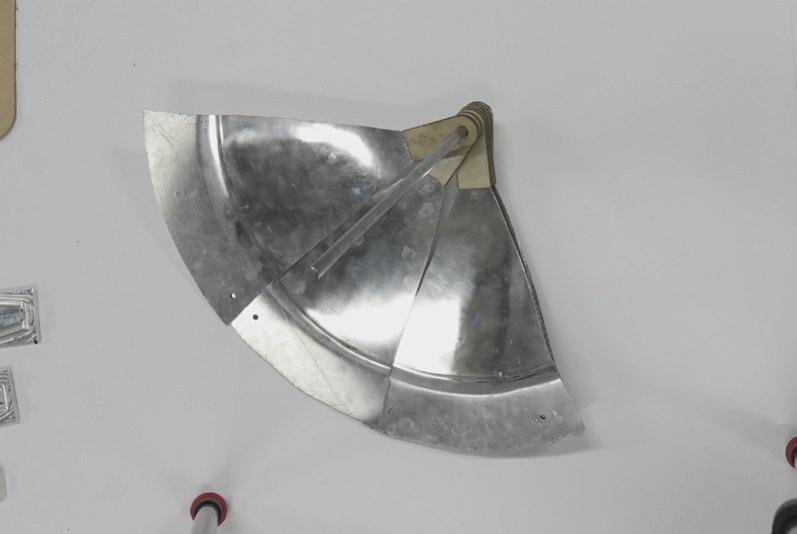
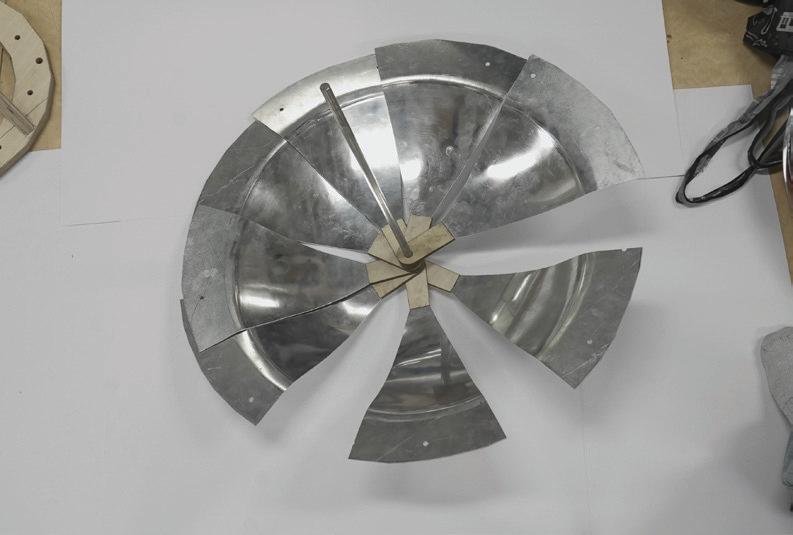
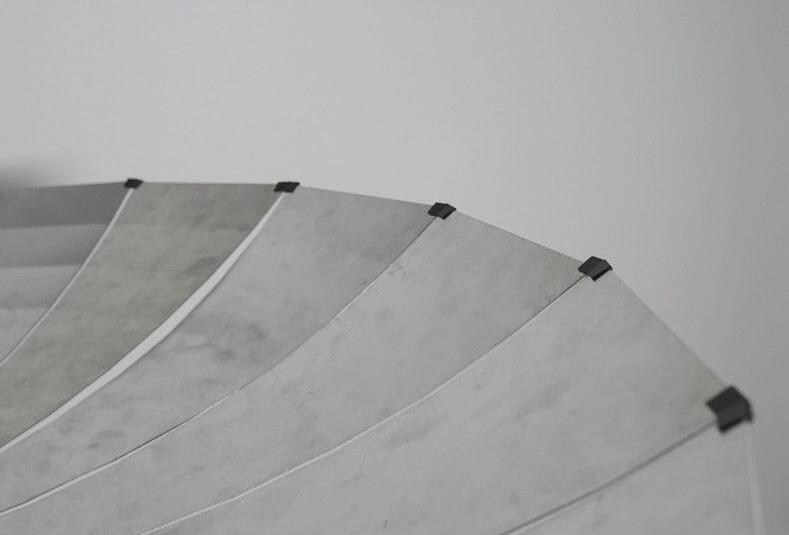
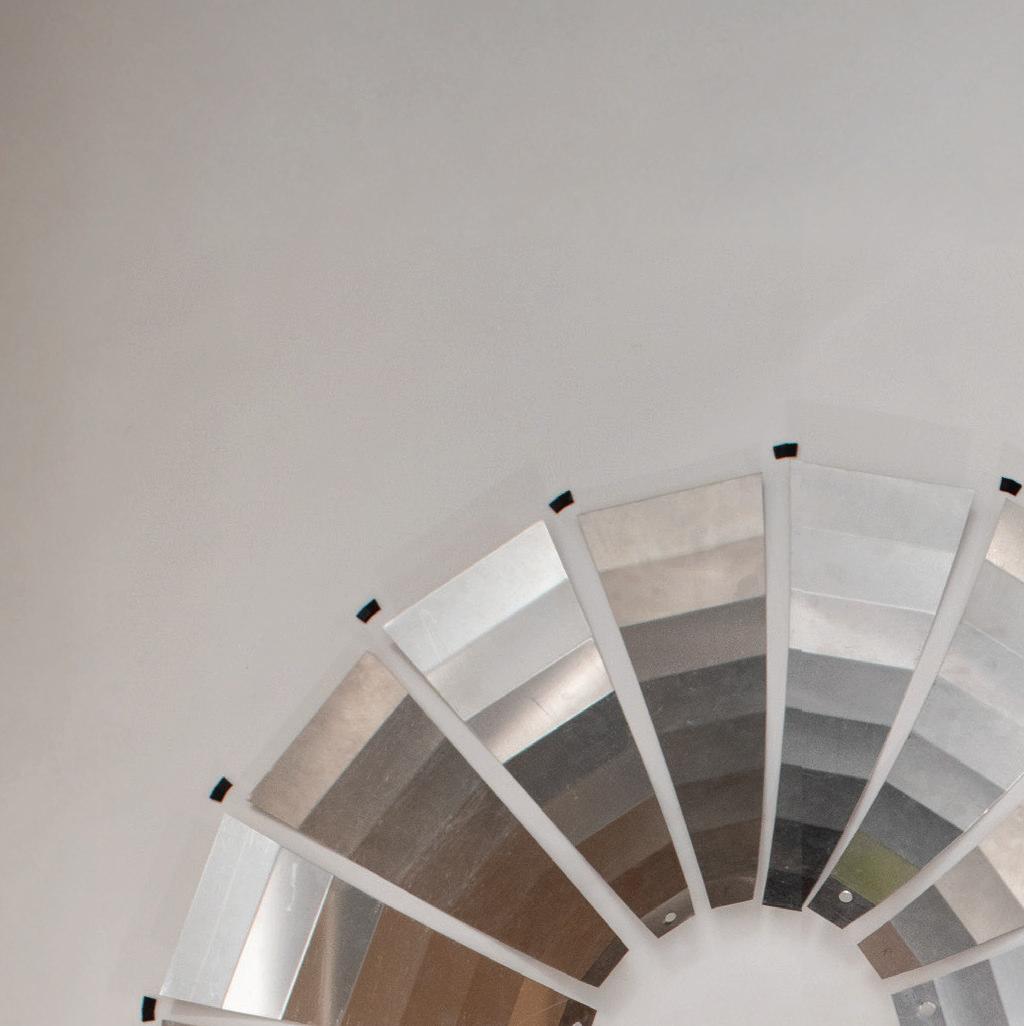
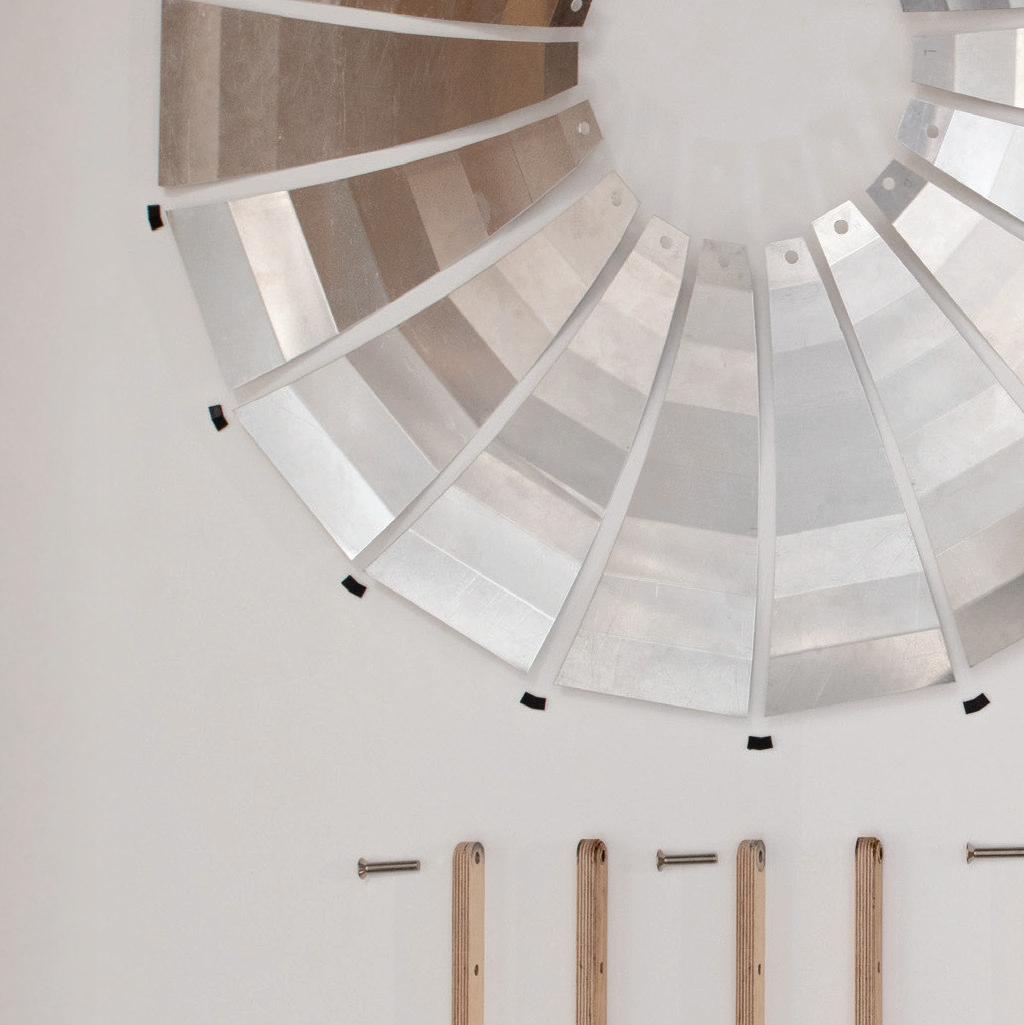
Figure 34.Aluminium mirror segments
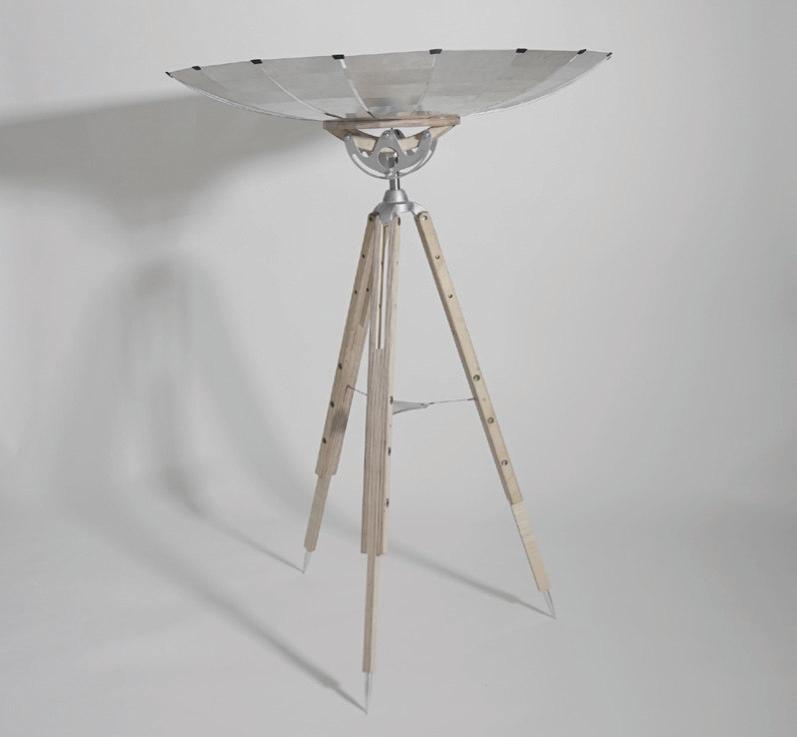
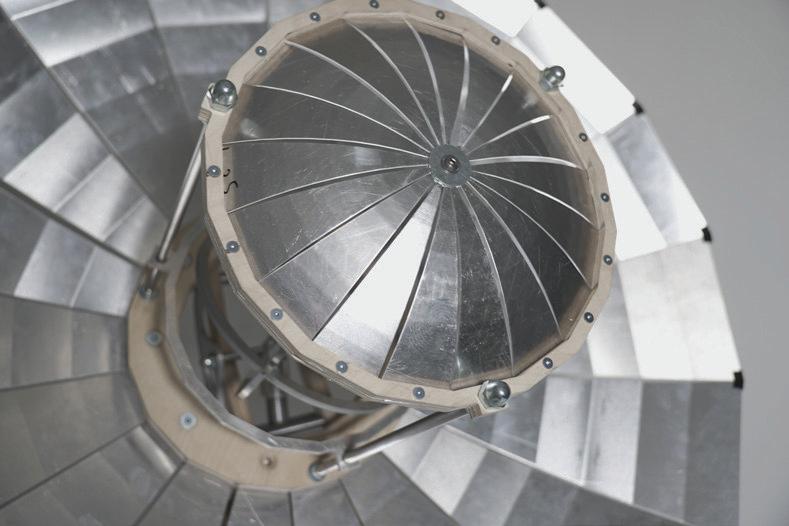
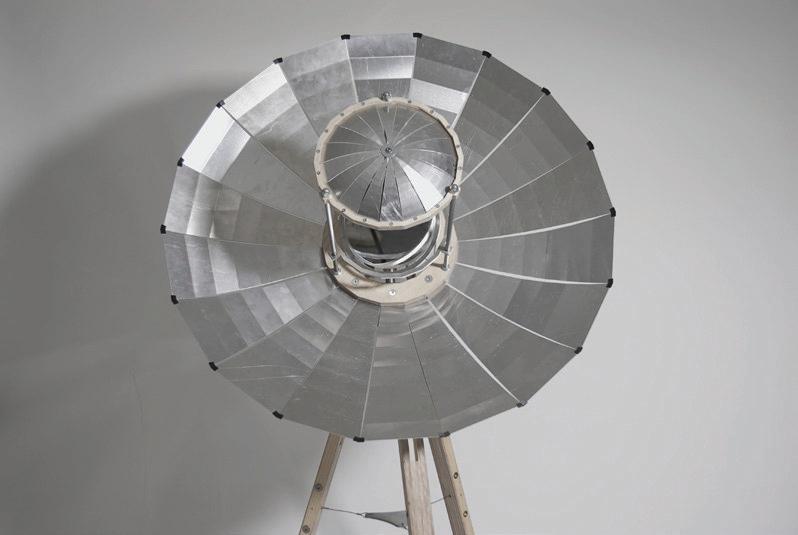
Figure 35. Fully assembled primary mirror on
Experimental Design & Prototyping
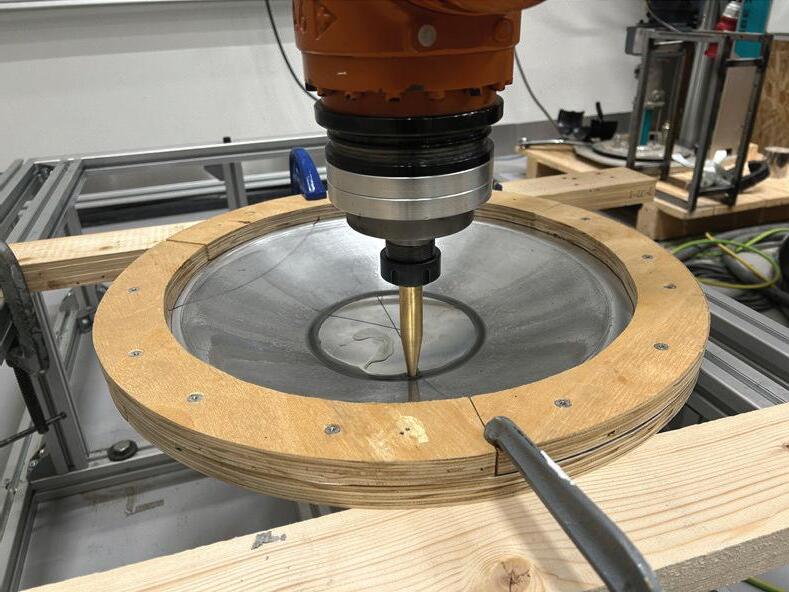
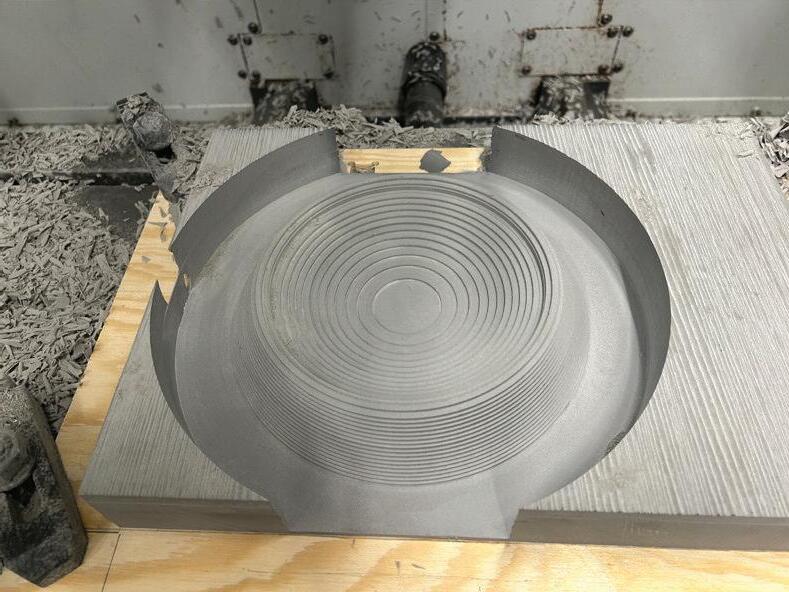
Rhino 3D and translating this geometry into a spiral toolpath within
However, despite initial optimism, the prototype soon revealed the
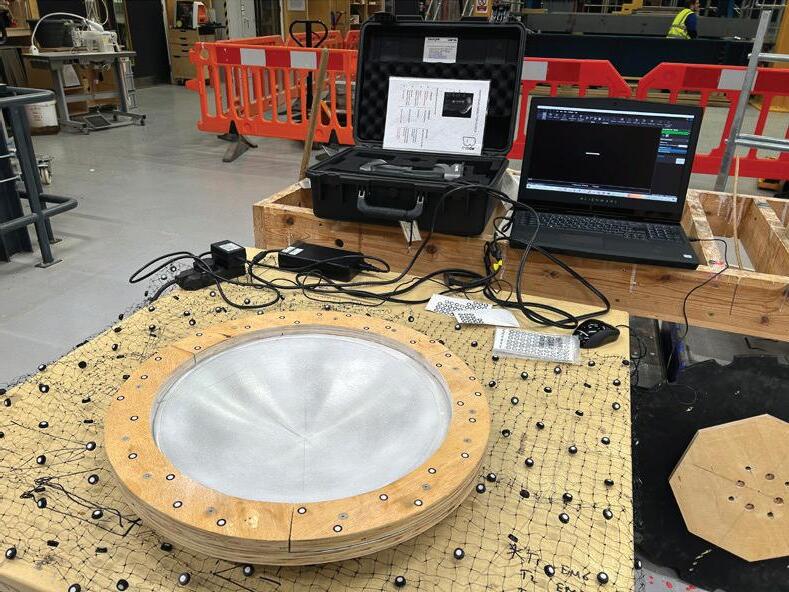
evaluate paraboloid geometry.
material behaviours, exposed the inherent weaknesses of relying on seeded the next design shift toward segmentation and modularity,
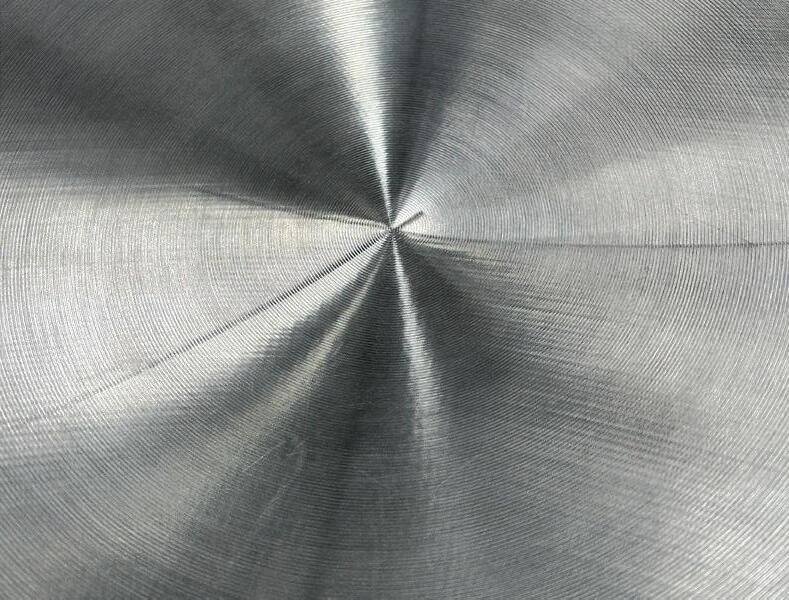
Figure 46. Close up photograph showing tool
5.2 Segmentation and Prototyping instead be reimagined as an assembly of smaller, simpler parts? that underpinned the broader design ethos.
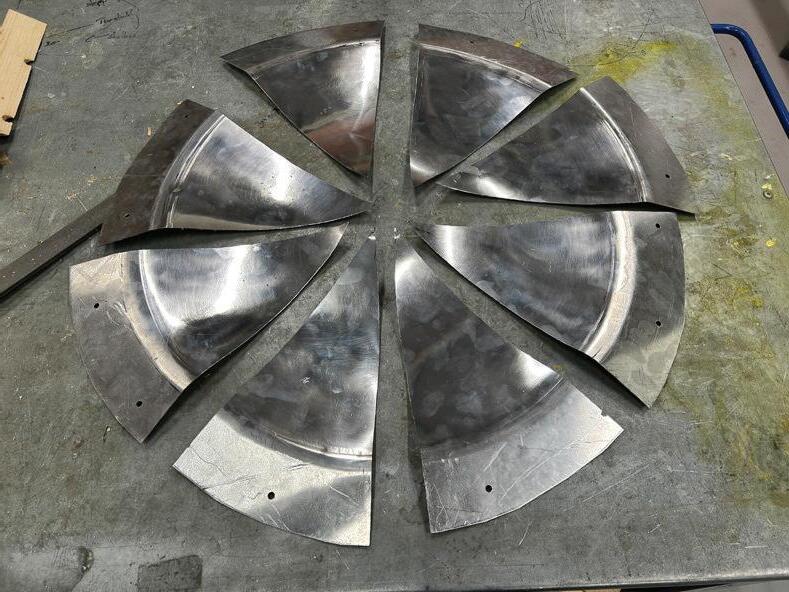
Figure 48. Segmentation of paraboloid using
advantages:
At this stage, parallel avenues of material experimentation were
rays is essential.
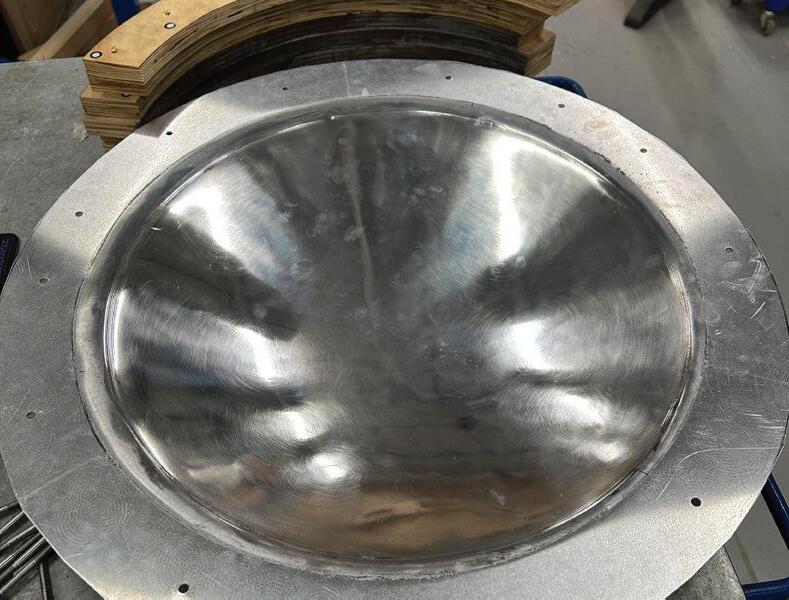
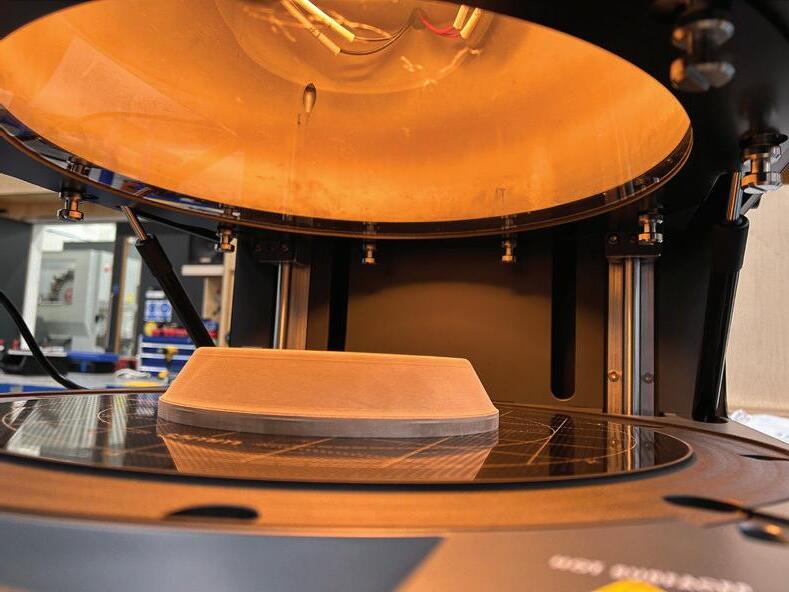
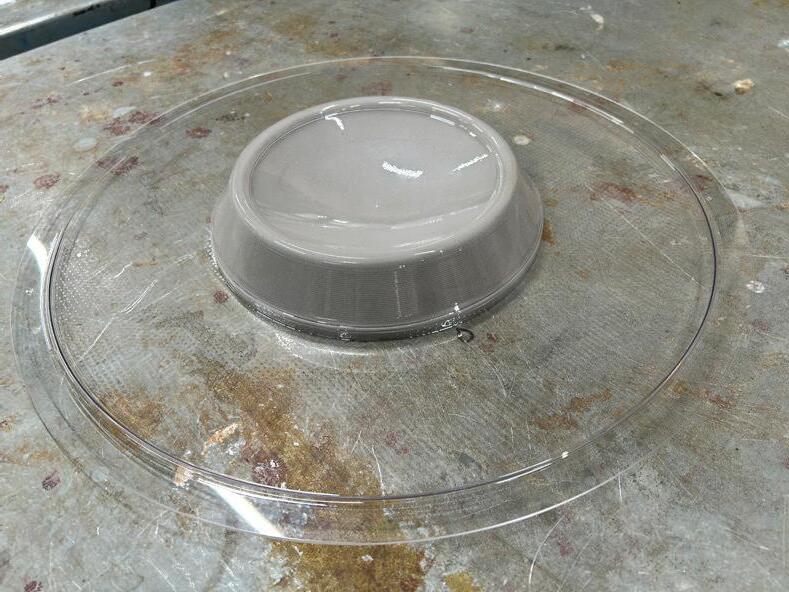
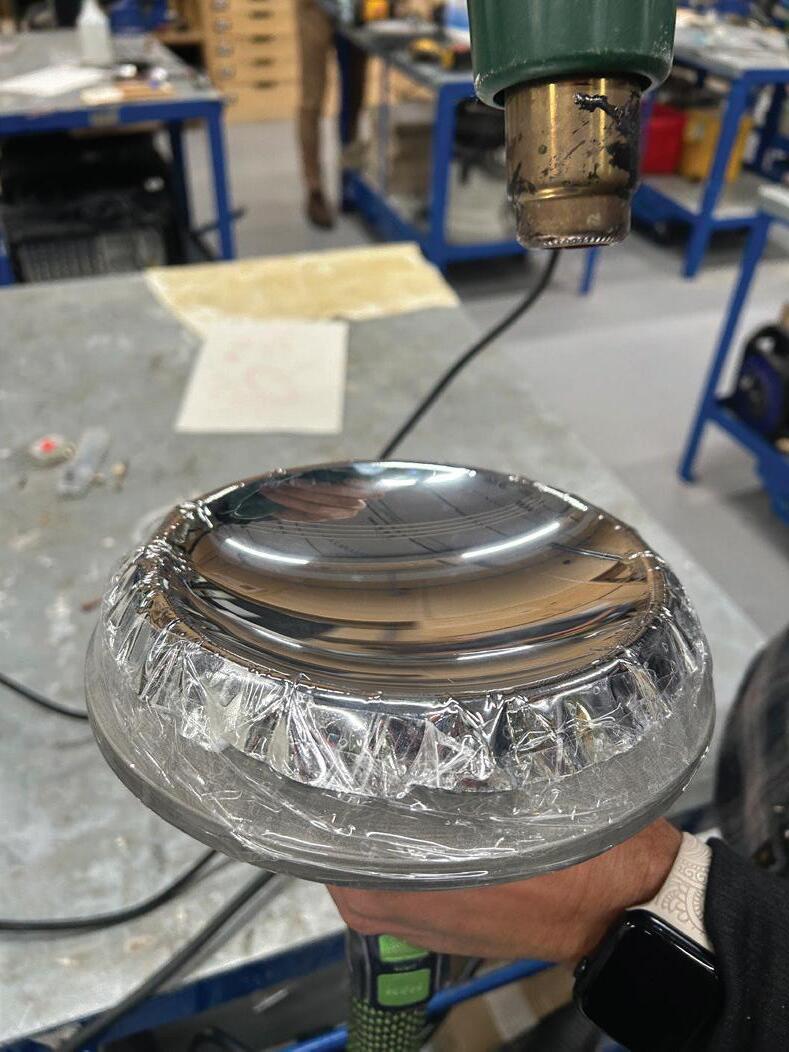
Figure 55. Pressure formed 3mm mirror
• light beams.
• are degraded.
• easily.
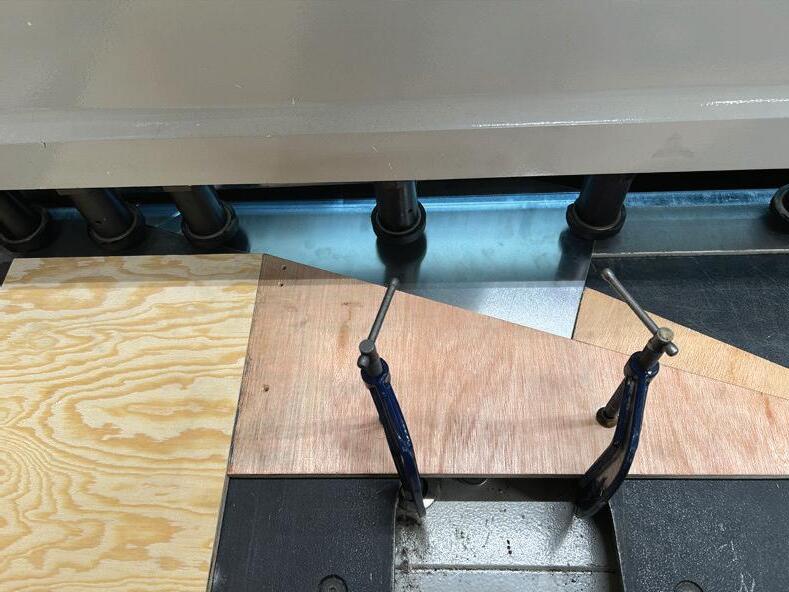
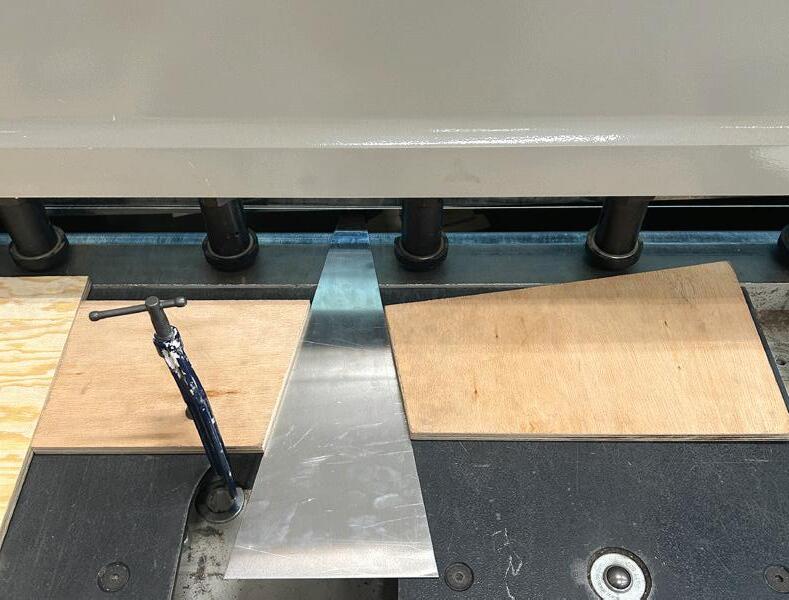
were designed for use with the sheet metal guillotine:
•
5.4 Press Brake Sheet Metal Forming
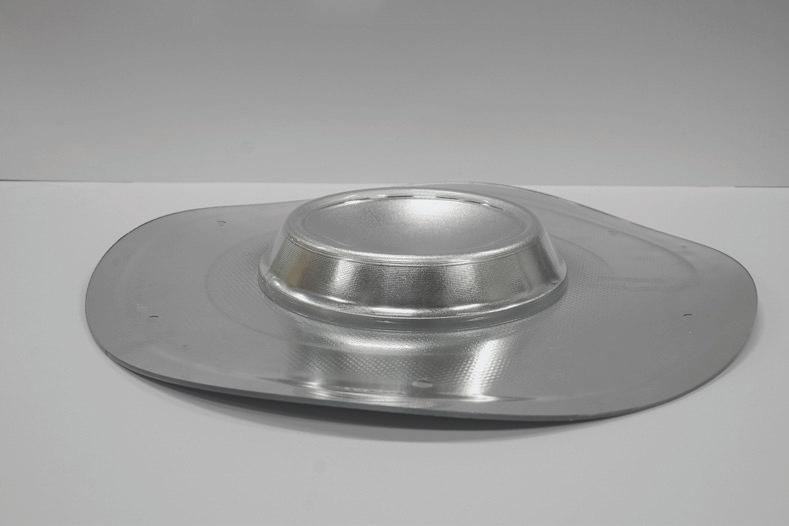
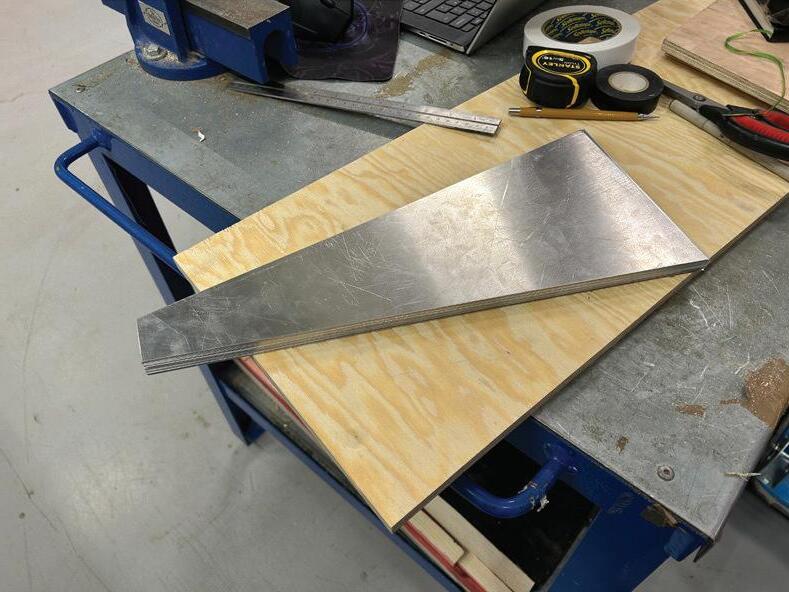
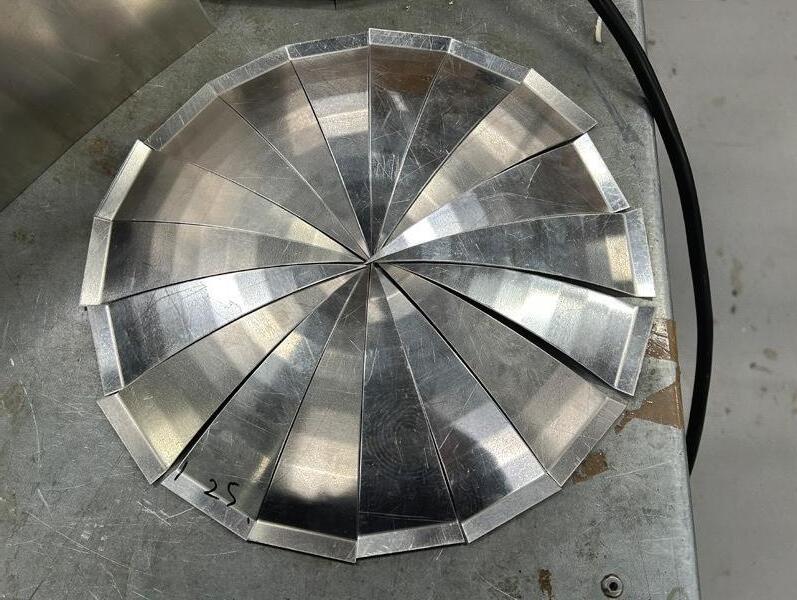
Figure 59. 18 big mirror aluminium segments
•
• sustainable material use.
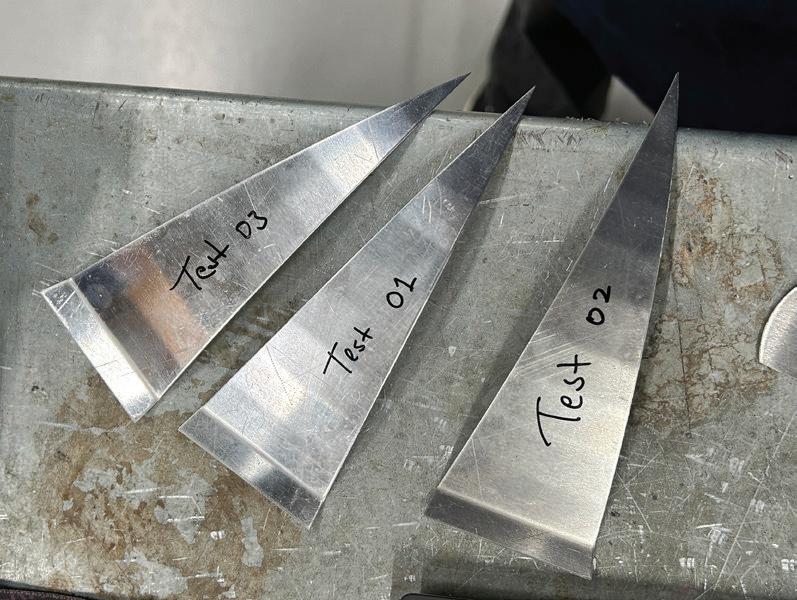
Press Brake Forming and Calibration
was established, where approximately +2.8 degrees of additional
•
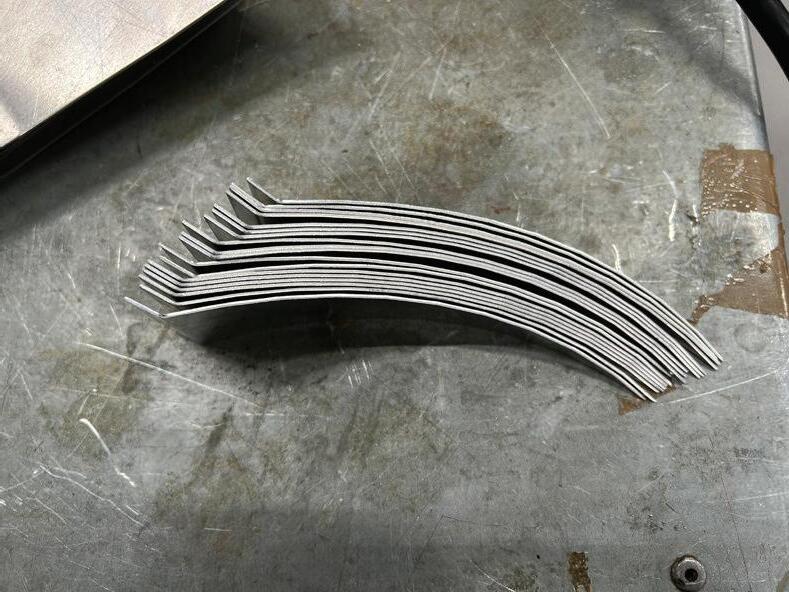
Figure 61. 18 small mirror segments bent
• Interpreting slight material variations and adapting pressure
• human hands.
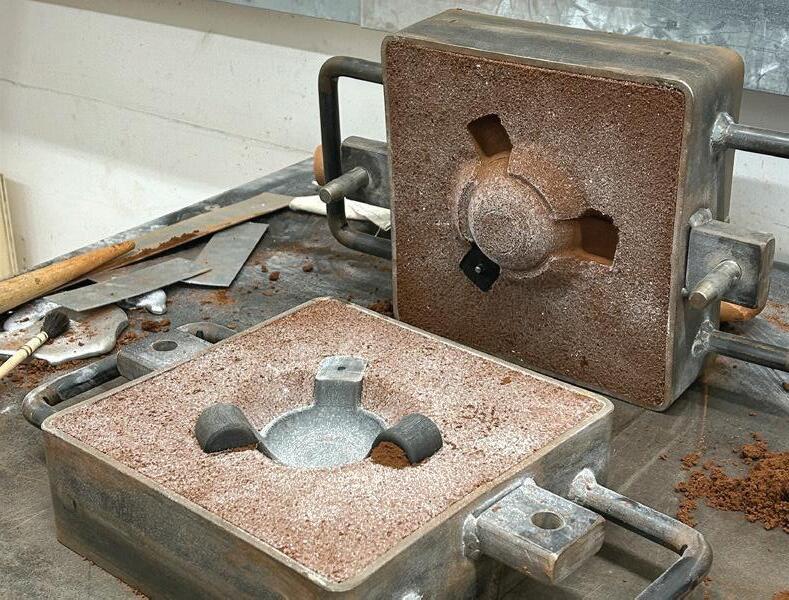
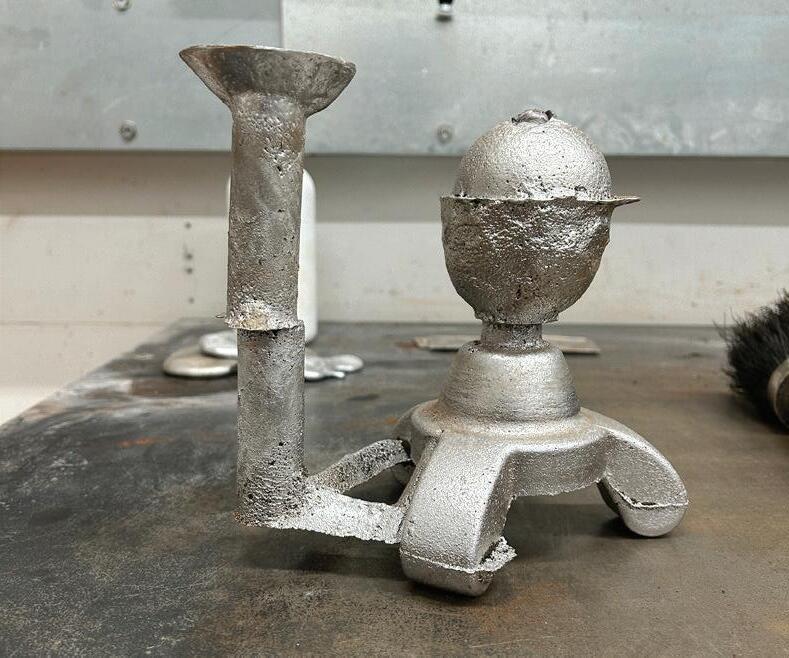
Designing for Casting while housing the 24mm steel shaft used for panning movement. through prototyping stages to:
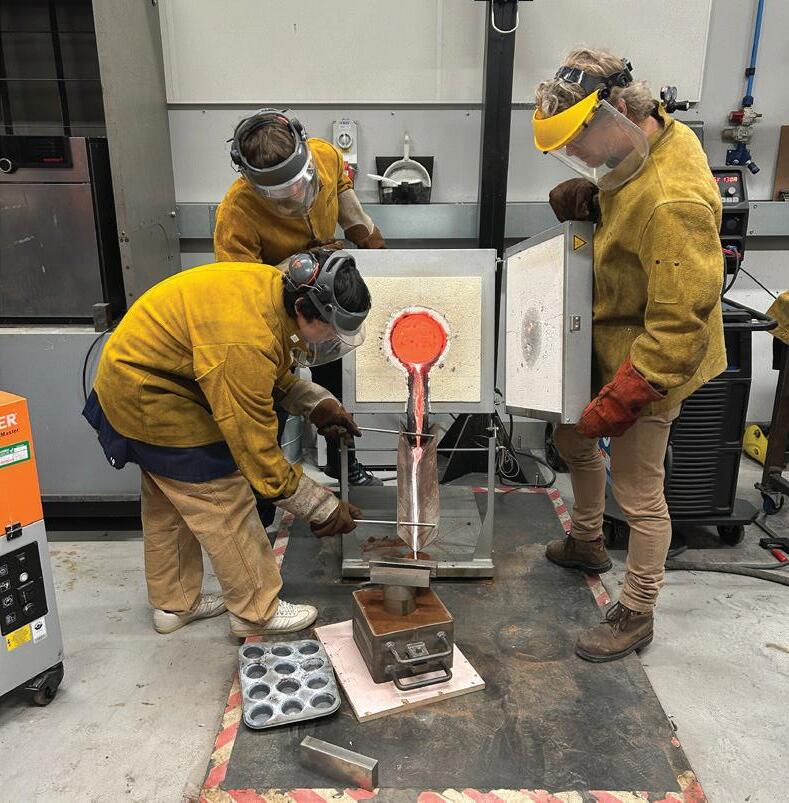
Figure 64. Pouring molten aluminium into
disparate materials — timber and metal — brought together through
5.6
Final Detailing and the Silent Craft ofAssembly
made for human hands. with a shoulder, a detail that prevented them from slipping during and typography.
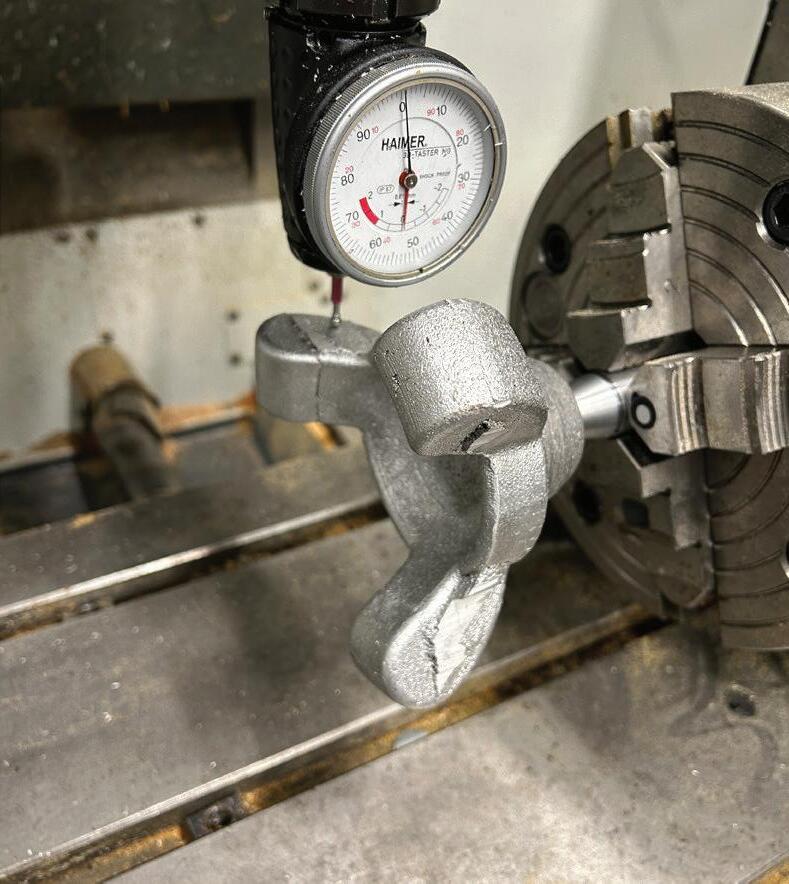
Counterboring 2mm deep into
Figure 71.
Figure 72. Shoulder of nylon bushing to
automation. deliberate entanglement with the rhythms of the natural world.
intent. the modular design.
installation, the aluminium segments sagged slightly under their own after assembly.
6.6 Summary expressive design.
also sharpened an awareness of ‘how’ things are made — a kind of
labour that might otherwise remain invisible. the lessons learned through its making speak more broadly to to studio.
a broader truth: that making is not a supplement to design, but a a negotiation where the limits and possibilities of form emerge not only from intention but from dialogue with the material world.
onmaterialbehaviour,todevisingbespokeworkholdingsolutionsfor tool, and maker.
ephemeral, natural light of the Moon be gathered, shaped, and made
experimentation, and the enduring interplay between imagination, material,
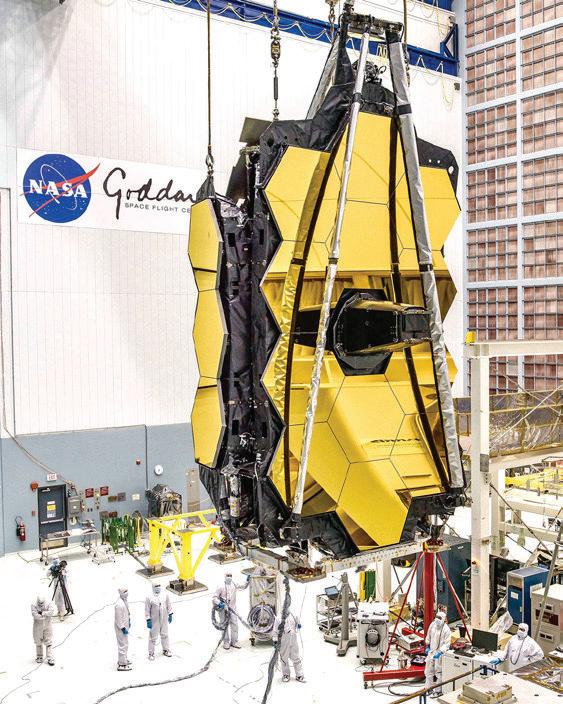
James Webb space telescope relies on beryllium mirrors - Shape Memory and Superelastic Technologies
https://www.asminternational.
. Journal of solar energy engineering
Encyclopedia of Physical Science and Technology Advanced optical technologies geometry for a tubular skylight. Applied optics (2004).
How the famed Arecibo telescope fell—and how it might rise again at:
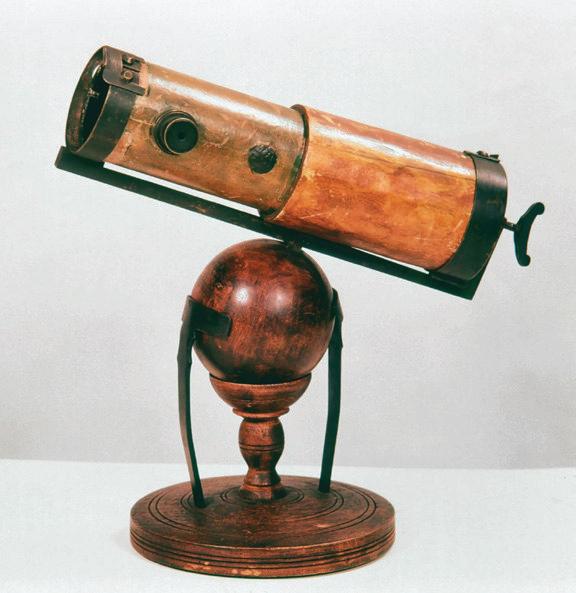
. Isaac Newton’s [Image]Available at: https:// media/1/495172/137718
Spherical Mirrors. [online] University https://farside.ph.utexas. .
Making: Anthropology, archaeology, art and architecture
Webvision: The Organization of the Retina and Visual System [Internet] https://
Adaptation.
Encyclopedia of Geology
Loop of Webb Videos and Imagery 2017 Things Come Apart 2.0 Hudson.
Concentrating solar power technology
The Moon’s Orbit and Rotation. [online] nasa.gov.Available at:
Moon Phases - NASA Science. [online]
1704. Bruxelles: Culture et Civilisation.
Very Large Array - National Radio Astronomy Observatory
vla/
What is a designer? education
Potter. Studia Vista.
The nature and art of workmanship. Cambridge: Cambridge University Press.
Ellipsis.
Concentrating solar power technology
Concentrating solar power technology
Quick Facts .
Supersheds?: the architecture of long-
Moon Fact Sheet
Available at:
Opto-mechanical Fourth Frick in collaboration with the author. Harmondsworth: Penguin Books.
Thin-walled structures
Atmospheres?: architectural Birkhäuser.
1x 1x4x
1x1x3x1x
3x3x1x1x
1x3x1x
2x2x
2x2x
2x 2x8x
3x1x3x
1x 3x
1x1x18x18x18x18x