




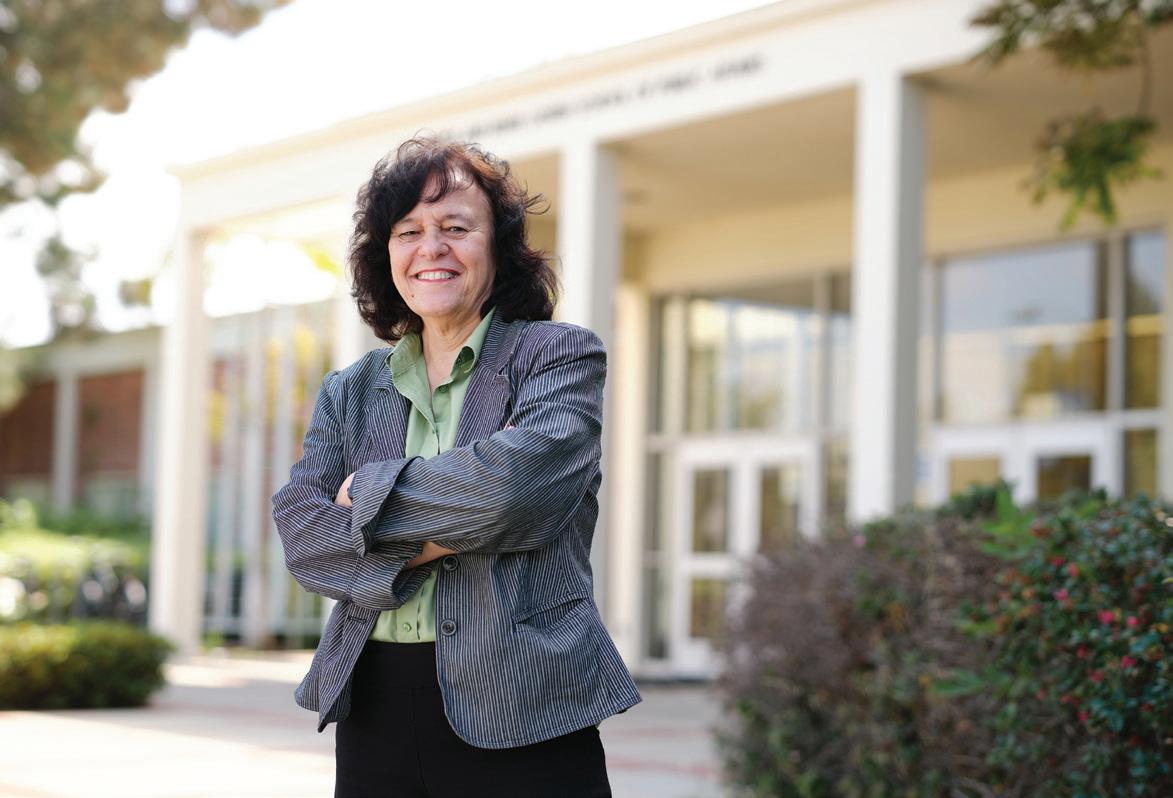
Welcome to UCLA Luskin’s Annual Impact Report! In the past year, we have seen significant change and experienced a great deal of uncertainty across our university and beyond, with many facing difficult, even traumatic, experiences. And yet, as I browse the pages of this report, I am struck by the optimism and promise of the Luskin School as a force for positive change, even in the most challenging times.
From offering policymakers evidence-based guidance on rebuilding after wildfires, to developing responses to health hazards such as extreme heat and microplastics, to exposing injustices such as gerrymandering, unlawful detentions, and school bullying, our faculty, research centers, and students are working to make life better, more just, and more humane. The project summaries in this report represent only a portion of the extensive research taking place at UCLA Luskin each year, and I couldn’t be prouder to share these stories with you.
Ensuring this research is accessible and useful to broader audiences — including policymakers, practitioners, and local communities — is a responsibility our school takes seriously. Through events such as the California Policy Briefing, the Luskin Summit, and the Luskin Lecture Series, along with public gatherings and forums, we bring together researchers, civic leaders, advocates, and practitioners to address pressing public challenges.
Equally important is our educational mission: to prepare a new generation of policymakers, social workers, urban planners, and real estate development professionals for careers in public service and civic leadership. In the past year, we launched a new degree program and a professional certificate, welcoming new students into our community. By creating educational opportunities grounded in real-world challenges, we help students build strong professional networks and practical leadership skills. The many distinctions earned by our alumni remain a source of pride for all of us at UCLA Luskin.
As you read the 2026 UCLA Luskin Impact Report, I hope you will come away energized by the extraordinary work happening across our school and inspired by the possibilities ahead. In a rapidly changing world, UCLA Luskin remains committed to advancing research, educating future leaders, and partnering with communities to drive meaningful, lasting change. We are proud of the impact reflected in these pages — and even more excited for what comes next.
Anastasia Loukaitou-Sideris Dean, UCLA Luskin School of Public Affairs
The UCLA Luskin School of Public Affairs is an interdisciplinary “living laboratory” that tackles society’s most urgent challenges while educating the next generation of civic-minded leaders.
As an innovator in research, teaching, and problem-solving in fields including public policy, social welfare, urban planning, real estate development, and global public affairs, UCLA Luskin has expanded its reach across the city, state, nation, and world.
Established in 1994 and renamed the UCLA Luskin School of Public Affairs in 2011 following a transformative gift by benefactors Meyer and Renee Luskin, the school serves as a bridge between academia, policymakers, and civil society. The scholarship it produces is visible and impactful and remains true to its enduring commitment to social, environmental, and racial justice, inclusivity, and the integration of research with practice.
BY THE NUMBERS
1,228 STUDENTS
650 UNDERGRADUATE 63 DOCTORAL 515 MASTER’S
129
2
4 DEPARTMENTS
12 DEGREES AND CERTIFICATES
PUBLIC POLICY DEPARTMENT
Provides analytical tools and strategic orientation to prepare leaders to identify policy challenges, design solutions, manage implementation, and evaluate impact
• MASTER OF PUBLIC POLICY
REAL ESTATE DEVELOPMENT PROGRAM
NEW THIS YEAR! Equips future real estate leaders with foundational skills, technical knowledge, and critical thinking in fields including development, asset management, finance, and affordable housing
• MASTER OF REAL ESTATE DEVELOPMENT
SOCIAL WELFARE DEPARTMENT
Advances research and teaching to guide policymakers and practitioners in areas including health care, mental health, aging, children and families, and long-term support
• MASTER OF SOCIAL WELFARE
• DOCTORATE IN SOCIAL WELFARE
URBAN PLANNING DEPARTMENT
Addresses the social, economic, and spatial relationships that shape society through the interdisciplinary study of urban issues and their solutions
• MASTER OF URBAN AND REGIONAL PLANNING
• DOCTORATE IN URBAN PLANNING
JOINT AND DUAL DEGREE PROGRAM PARTNERS
• UCLA ANDERSON SCHOOL OF MANAGEMENT
• UCLA ARCHITECTURE AND URBAN DESIGN
• UCLA ASIAN AMERICAN STUDIES DEPARTMENT
• UCLA FIELDING SCHOOL OF PUBLIC HEALTH
UNDERGRADUATE DEPARTMENT
Promotes a clear public service ethos through critical thinking, social science methodology, and experiential learning to connect the dots between theory and action
• BACHELOR OF ARTS IN PUBLIC AFFAIRS
• MINOR IN PUBLIC AFFAIRS
• MINOR IN URBAN AND REGIONAL PLANNING
• MINOR IN GERONTOLOGY
AI AND DATA ANALYTICS IN PUBLIC AFFAIRS CERTIFICATE
NEW THIS YEAR! Hones skills in data, artificial intelligence, and visualization to equip professionals to make smarter, more equitable decisions in government, nonprofits, and civic organizations
• PROFESSIONAL CERTIFICATE FOR NON-UCLA STUDENTS (ONLINE)
COMING SOON: GLOBAL PUBLIC AFFAIRS PROGRAM
Empowers future leaders to navigate rapid change around the world, from shifting climates to evolving migration patterns and new economic and geopolitical realities
• MASTER OF GLOBAL PUBLIC AFFAIRS
• UCLA GEFFEN SCHOOL OF MEDICINE
• UCLA LATIN AMERICAN STUDIES PROGRAM
• UCLA SCHOOL OF LAW
• THE URBAN SCHOOL OF SCIENCES PO (PARIS)

UCLA Luskin Center for Innovation
Designs effective and equitable environmental policy that has tangible impacts on health and daily lives
Informed dozens of policies to ensure access to safe and affordable water, community-driven climate action, cooling solutions, plastic pollution reduction, and clean energy and transportation in California
UCLA Lewis Center for Regional Policy Studies
Addresses pressing policy and planning topics in Greater Los Angeles, particularly around the critical issues of housing affordability and transportation equity
Hosted the “UCLA Housing Voice” podcast to share the center’s research on housing affordability, displacement, and housing policy with a wider audience
UCLA Institute of Transportation Studies
Supports and advances research, education, and civic engagement on the pressing transportation issues facing our cities, state, and world today
Created TRACtion, an ambitious research agenda to identify and respond to mobility challenges in the Los Angeles region
UCLA Luskin Institute on Inequality and Democracy
Advances research and scholarship concerned with displacement and dispossession in Los Angeles and elsewhere in the world
Collaborated with partners to launch the Tenant Power Toolkit, which offers legal assistance to California tenants facing eviction
UCLA Center for Neighborhood Knowledge
Dedicated to translating research findings to inform actionable neighborhood-related policies and programs that contribute to positive social change
Conducted rapid-response research on ICE arrests, detentions, and deportations, documenting disproportionate impacts on Latino and Asian communities
UCLA Latino Policy and Politics Institute
Research and advocacy centered on the needs of Latinos and communities of color
Created the Latino Data Hub, opening up access to downloadable data and visualizations about Latino communities and their top issues

With 12 research centers and affiliated research groups housed within UCLA Luskin, the school serves as a dynamic hub for interdisciplinary scholarship and policy innovation. These centers bring together faculty, students, and external partners to conduct rigorous, actionable research that addresses some of society’s most pressing challenges — from housing and homelessness to environmental sustainability, governance, health, and social equity.
Championing an accessible and equitable system of voting for all Americans through impact litigation, research, and clinical education
Filed a petition with California Superior Court to block the Riverside County sheriff from seizing 650,000 ballots
Partners with Los Angeles educators and decisionmakers on research supporting educational quality and equity at school campuses across the region
Conducted research in partnership with L.A. Unified demonstrating the importance of access to accelerated math courses in middle school
UCLA Luskin Latin American Cities Initiative
Deepening knowledge networks in South, Central, and North America
Built cross-border ties among students, educators, and professionals in the arena of urban planning through teaching, research, travel, and events
Using data to support sound decisions impacting families and communities
Connected people to data in meaningful ways using innovative collection and visualization tools that make vital information easier to understand
Evaluating countries on the basis of the quality of their political governance
Maintained and analyzed a comprehensive database to develop a deeper understanding of how governments can create a more resilient future for their people
Studies the major policy issues affecting our aging society, including Social Security, Medicare, and long-term care
Fostered multidisciplinary collaboration on topics such as the growing ethnic diversity of America’s aging population
“These impacts cross geographic, economic, and racial lines that can only be described as a shared trauma across Los Angeles County.”
—ZEV YAROSLAVSKY

By connecting academic inquiry with real-world decision-making, UCLA Luskin faculty and research centers help translate evidence into practical solutions that inform policies, plans, and public investments across sectors. Through collaborations with government agencies, nonprofit organizations, community groups, and industry leaders, these efforts extend the reach of Luskin scholarship beyond the university, ensuring that research contributes directly to improving communities and advancing the public good.
Launched in 2025, the UCLA Luskin California Poll provides policymakers with a clearer picture of residents’ lived realities amid mounting economic, environmental, and political pressures.
Administered under the direction of Martin Gilens, professor of public policy, social welfare, and political science, the inaugural poll released these findings:
Homeowners insurance — More than one in five California homeowners have dropped their home insurance because their policies were canceled or premiums have become unaffordable — yet more than 90% of these uninsured homeowners say they would rather remain in their communities than relocate.
Financial vulnerability — Twenty-two percent of respondents said they could not raise $2,000 within 30 days in an emergency, with many relying on nontraditional financial services.
Ballot access — Roughly 60% of Californians oppose lowering the voting age to 16 or 17 for national elections, while opinions are more divided for local and school board elections.
Access to A/C — Although nearly 85% of respondents have access to air conditioning at home, almost half reported limiting its use because of cost.
UCLA’s 10th annual Los Angeles County Quality of Life Index (QLI) revealed deep-seated frustration with the high cost of living, worries about the Trump administration’s threats to immigrants, and new challenges presented by the January 2025 wildfires.
The survey found that more than two-fifths of residents said they knew someone personally affected by the devastating fires.
“Although the primary victims are those who lost their lives, homes, and possessions, millions of other Angelenos have been touched by these terrifying events in myriad ways,” said Zev Yaroslavsky, director of UCLA Luskin’s Los Angeles Initiative, which directed the poll.
“These impacts cross geographic, economic, and racial lines that can only be described as a shared trauma across Los Angeles County.”
The QLI polls a cross-section of Los Angeles County residents each year to understand the public’s perception of the quality of their own lives. The 2025 survey was released at the seventh annual UCLA Luskin Summit, which focused on rebuilding and recovery after the fires.
In response to the Trump Administration’s executive order seeking to end birthright citizenship, the UCLA Voting Rights Project (VRP) team submitted a 100page report citing social science research documenting a chilling effect such orders create. The court enjoined the executive order and the case headed to the U.S. Supreme Court.
VRP experts, attorneys, students, and fellows were heavily involved in a trial and Supreme Court appeal challenging Texas’ new congressional gerrymander, and they also continue to press local government cases on behalf of minority voters. In addition to efforts in the courtroom, VRP experts have published several papers that develop new data analysis methods to support successful voter protection cases.
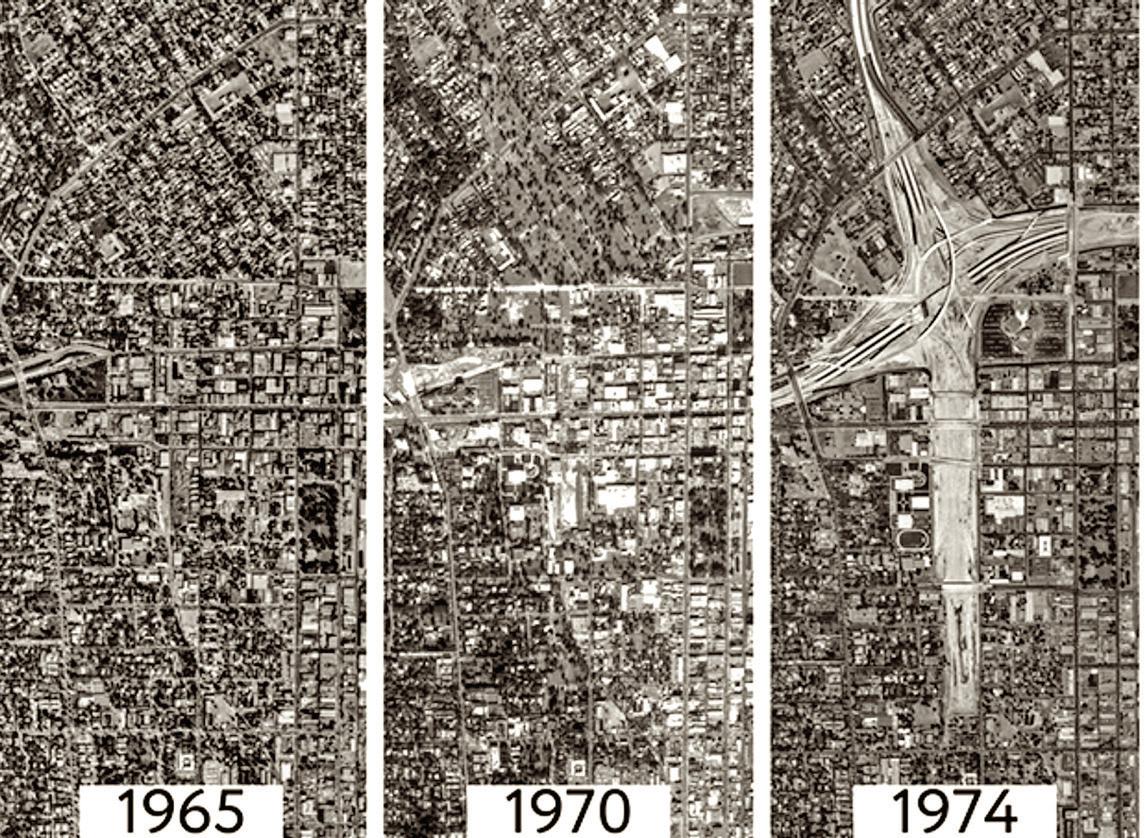
Research led by Paul Ong, research professor of urban planning, is helping to guide a master plan for rebuilding Pasadena neighborhoods razed decades ago to make way for the 710 Freeway extension, a project that has now been abandoned. The UCLA Center for Neighborhood Knowledge partnered with the UCLA Institute of Transportation Studies to produce a report showing that freeway construction and urban restructuring exacerbated racial segregation in the area, leaving a legacy of environmental and social inequities. In advising city leaders, who now will determine the future of the 50-acre plot of land known as the “710 stub,” Ong is urging that priority is given to restorative justice for those disproportionately harmed by past policies.
UCLA Luskin Social Welfare Professor Ron Avi Astor has conducted extensive research into bullying, campus violence, and the role of a school’s climate in the socioemotional health of its students. In 2025, Astor put his scholarship into action through a new partnership with Holocaust Museum LA, which teaches future generations important lessons about kindness, dignity, and humanity.
The museum worked with Astor to develop questionnaires for teachers and students from across the country, providing a snapshot of a school’s potential pockets of bias and the needs of teachers seeking to build an inclusive environment. Astor analyzes the data and provides feedback to the museum so that it can swiftly adapt to the changing needs of the community.
In the months after the Eaton Fire destroyed thousands of homes in Altadena, UCLA Luskin researchers highlighted deep racial and ethnic disparities in how homeowners are recovering.
The analysis from the UCLA Latino Policy and Politics Institute and UCLA Center for Neighborhood Knowledge showed that, after nine months, only a small number of families had sold or listed their homes, yet nearly seven in ten severely fire-damaged homes showed no progress toward rebuilding. In addition, investors had purchased two-thirds of the homes that had changed hands, raising concerns about displacement and affordability.
The factsheet also shows that nearly six in ten Blackowned homes suffered severe damage — the highest rate of any group. At the same time, Latino homeowners have filed rebuilding permits at the highest rate (30%), an early sign that some families were trying to move forward despite widespread underinsurance, soaring construction costs, and complex permitting requirements.
Aerial photographs show the displacement of over 100 Pasadena households to make way for the “710 stub,” part of a freeway extension project that was eventually shelved.
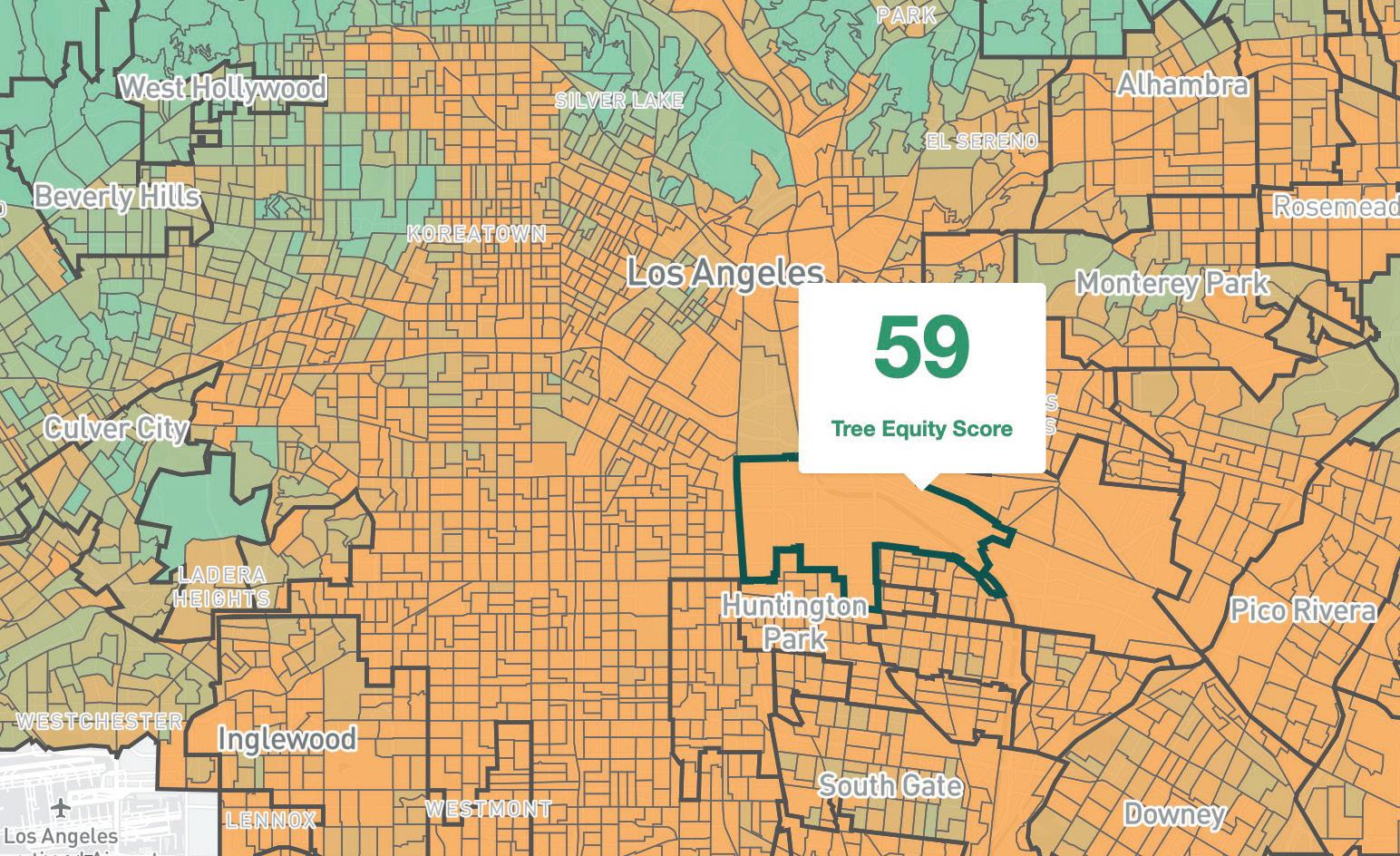
A shade map developed by Associate Professor of Urban Planning V. Kelly Turner and the UCLA Luskin Center for Innovation in partnership with American Forests is giving cities across the U.S. a powerful tool to address extreme heat.
Pictured above, the map shows where shade exists — and where it doesn’t — across 101 of the nation’s largest urbanized areas, encompassing more than 360 cities and towns. The tool visualizes how shade from trees and buildings shifts throughout the day, helping local leaders plan targeted heat resilience strategies.
Many cities lack basic data about whether shade is available where residents need it most. The shade map fills that gap by clearly identifying shade coverage and its source.
The findings reveal widespread “shade deserts” in nearly all major urban regions, highlighting a major public health concern as extreme heat contributes to an estimated 12,000 premature deaths annually.
A global study by researchers from UCLA and Google highlights the enormous climate and health benefits of investing in walking- and cycling-friendly cities. Led by Urban Planning Professor Adam Millard-Ball, director of the UCLA Institute of Transportation Studies, the study analyzed travel patterns in more than 11,500 cities across 121 countries, representing about 41% of the world’s urban population — the most comprehensive study of active transportation to date.
The findings show that increasing urban density and redesigning streets to make walking and biking safer and more comfortable are the strongest drivers of active travel.
If cities worldwide expanded bike lanes and street designs to match Copenhagen’s standards, for example, global walking and cycling could increase by more than 400 billion miles annually. That shift would cut global carbon emissions by an estimated 6% and generate roughly $435 billion in annual health benefits, while also reducing traffic deaths and air pollution.
The UCLA Center for Neighborhood Knowledge led research revealing that the Trump administration has dramatically reshaped immigration enforcement by rapidly expanding the detention of Latino immigrants with no criminal history.
“Immigrants with no criminal history who pose no threat to public safety are now a central target of enforcement, facing longer detention, more transfers, and a far higher likelihood of deportation than in the recent past,” said Paul Ong, the center’s director and research professor of urban planning, who partnered with the research and advocacy initiative Unseen to conduct the report.
The researchers drew on data provided by the Deportation Data Project, based at UCLA and UC Berkeley Law, covering Immigration and Customs Enforcement (ICE) detentions from February 1, 2024, to September 30, 2025.
Comparing the first eight months of the Trump administration with the same period during the final year of the Biden administration, they found that monthly detention of Latinos without criminal convictions increased sixfold; the duration of detention became significantly longer; and the deportation rate increased nearly eightfold.

A UCLA Latino Policy and Politics Institute data brief warned that intensified immigration enforcement could significantly harm state economies across both red and blue states.
Using American Community Survey data, researchers analyzed the 10 states with the largest Latino immigrant populations, which together account for 76% of the nation’s 14.1 million Latino immigrant workers. The study found that Latino immigrants are deeply embedded in key industries such as construction, agriculture, and services. They make up similar shares of the workforce in politically diverse states — 16% in California and Florida, and 14% in Texas — and have higher labor force participation rates than the general population in every state studied.
Most Latino immigrant workers are noncitizens, particularly in Texas, Georgia, and North Carolina, where they represent over two-thirds of the Latino immigrant workforce. Researchers caution that reducing this workforce through enforcement actions could destabilize industries that are difficult to automate and essential to economic growth nationwide.
Water bills in Los Angeles County have surged nearly 60% over the past decade, outpacing inflation and intensifying financial strain for low-income households, according to research from the UCLA Luskin Center for Innovation and the University of California Agriculture and Natural Resources.
Researchers examined 663 water systems across six Southern California counties and found that water affordability and quality remain major issues. Many smaller systems — particularly in Kern County, which logged more than 1,500 water quality violations in the past decade — struggle with contamination from arsenic and bacteria. Several factors have led to higher water costs, including local decisions to upgrade aging water delivery systems and prepare for drought, and compliance with water quality rules.
A study co-authored by UCLA Luskin Social Welfare Professor Emeritus Mark Kaplan finds a sharp and troubling rise in gun-related suicides among women ages 65 and older. Firearms were involved in nearly 40% of suicides among older women between 2014 and 2023, up from about 35% a decade earlier, the study found. This increase reverses a long-term decline that began in the early 1990s and outpaces trends among older men, whose firearm suicide rates remained relatively stable.
Using CDC data, researchers analyzed more than 63,000 firearm suicides among adults 65 and older nationwide. While over 90% of these deaths involved men, the growing share among women is especially concerning given rising gun ownership among women overall. Firearm suicide is now the leading suicide method for older adults, a group facing elevated risks from chronic illness, pain, depression, loneliness, and financial stress.
An analysis of Mexico’s record on effective governance shows that the nation still outpaces many other Latin American countries yet has struggled to catch up with more developed nations such as the United States and Canada.
The report, using insights from the 2024 Berggruen Governance Index (BGI), sets the stage for Mexico’s first female president, Claudia Sheinbaum. Her predecessor, Andrés Manuel López Obrador, embarked on ambitious programs of state building and economic nationalism during his tenure from 2018 to 2024, but these efforts have been criticized for contributing to democratic backsliding, particularly in the conservative U.S. press.
One of Sheinbaum’s key dilemmas will be to balance a more expanded and effective reach of the state without undermining democratic norms. This will be a difficult balance to strike, given resistance to changes like judicial reform as well as the nationalization of resources and use of the military for state-building projects, the report says.
UCLA Luskin School of Public Affairs scholars are recognized thought leaders whose research and expertise help shape public understanding of complex policy issues. Their insights are regularly sought by major national and regional news outlets, where they contribute essays, op-eds, and expert commentary that bring academic rigor and real-world perspective to public debates. Through these contributions, Luskin faculty translate cutting-edge research into accessible analysis, helping journalists, policymakers, and the broader public better understand the challenges and opportunities facing communities in areas such as housing, governance, social welfare, the environment, and urban planning.
Chris
Urban
Gregory Pierce of the Human Right to Water Solutions Lab said increases in water rates are on track to become a bigger problem in the next 20 years.
The Atlantic Evelyn Blumenberg of the Lewis Center for Regional Policy
spoke about car prices hitting record highs, threatening Americans’ access to jobs, mobility, and opportunity.

September
23, 2025
By UCLA Luskin Associate Professor of Public Policy Zachary Steinert-Threlkeld
Mayor Karen Bass watered down her early-term plan to speed up construction of affordable housing, explaining: “As a mayor, you have to listen to your constituents.” The implication was that Angelenos don’t want affordable housing added to their neighborhoods. As a professor of public policy, I have to listen to data, and the data say Angelenos do want these developments.
Since 2016, UCLA has commissioned an annual survey of residents of Los Angeles County. In 2023, the survey asked “where new apartments could be built to make housing more available.” Respondents rated their support for four options: “your neighborhood,” “streets that primarily have single-family houses,” “streets that primarily have retail stores, office buildings and other commercial uses” and “streets that primarily have apartment or condominium buildings.”
I expected to find that people supported housing but just not near them — the classic NIMBY dynamic. However, when it comes to more housing, Angelenos want everything, everywhere, all at once. …
The support is spread across the city. In 14 of 15 City Council districts, majorities support apartments on single-family house streets; in 10 of 15, more than 60% of respondents do. These findings overturn the outdated perception that Los Angeles is a city of entrenched NIMBYism. …
Los Angeles has a rare moment of agreement on its most urgent crisis, the extreme scarcity of housing. The only question is whether leaders will listen to the silent majority and pass and strengthen policies that permit more apartment construction across all of Los Angeles.
CBS Paul Ong of the UCLA Center for Neighborhood Knowledge spoke about the loss of Black community in Altadena and prospects for racial justice following the Los Angeles fires.
Fortune Magazine
Megan Mullin of the UCLA Luskin Center for Innovation weighed in on AI data centers, whose high energy demands have sparked a political flashpoint in nationwide campaign battles.
Los Angeles Times
Urban Planning’s Michael Manville said L.A.’s Vision Zero initiative to end traffic deaths has stumbled amid funding shortfalls, political inertia, fragmented coordination, and a lack of accountability.
CNBC News
Urban Planning’s Minjee Kim weighed in on the growing popularity of gated communities in the U.S. as residents seek safety, stability, and control in uncertain times.
The New Republic
UCLA Luskin’s Martin Gilens weighed in on political leaders’ lopsided focus on disaffected young male voters, even as economic stressors motivate voters across diverse demographics.

December 30, 2025 By UCLA Luskin Professor of Public Policy Wesley Yin
America’s homebuyers are facing mounting challenges. Too few homes are being built, construction costs are rising, and insurance is becoming more unaffordable as climate risks grow. Rather than addressing permitting barriers, inflationary tariffs on building materials, or climate resilience, the Trump Administration has focused its housing agenda on privatizing Fannie Mae and Freddie Mac.
Fannie Mae and Freddie Mac are governmentsponsored enterprises that play a central role in America’s housing market. They buy qualifying mortgages from lenders, bundle them into mortgagebacked securities, and sell them to investors. This frees Main Street lenders to make new loans, keeping credit flowing and rates lower for homebuyers.
But excessive risk-taking by these enterprises helped bring about the 2008 crash and Great Recession, leading them to be placed under federal conservatorship. This arrangement kept the enterprises solvent, transferred governance to the Federal Housing Finance Agency, and set operational guardrails to safeguard the stability of the housing market.
Now, the Trump Administration aims to reprivatize Fannie Mae and Freddie Mac, indicating that an IPO could occur by the second quarter of 2026, yet providing few policy details. This lack of transparency raises concerns that a hasty insider-driven IPO and exit from conservatorship will erode the safeguards that have kept the housing market stable. …
Pressure from shareholders to privatize and jockeying among investment banks to lead the IPO only heighten concerns that privatization will benefit wealthy investors over the public.
MEDIA HIGHLIGHTS
Time Magazine
Kelly Turner of the Luskin Center for Innovation
said U.S. schools, already dealing with aging infrastructure and federal funding cuts, are being further challenged by extreme heat.
Bloomberg
Adam Millard-Ball of the UCLA Institute of Transportation Studies discussed how street-network sprawl exacerbated evacuation difficulties during the Los Angeles wildfires.
Los Angeles Times
Public Policy’s Gary Segura spoke about a nationwide UnidosUS poll he helped conduct that found that cost of living is a top concern among the nation’s Latino electorate.
Wall Street Journal
Robert Fairlie of Public Policy spoke about his research into the biggest reasons small businesses and startups fail, including financing gaps and an underestimation of cash-flow needs.
Fast Company
Social Welfare’s Jorja Leap spoke about the social psychology behind altruism and empathy in response to collective trauma and disaster.

May 12, 2025
By UCLA Luskin Assistant Professor of Social Welfare Cindy Sangalang
In 2024, wars killed hundreds of thousands of people in Ukraine, Gaza, Sudan, and beyond. The United Nations refugee agency, UNHCR, reported that more than 122 million people remained displaced from their homes by violence and conflict in the first six months of last year — 5.3 million more than in the same period in 2023.
These collective traumas can leave emotional scars that shape the health, relationships and life chances of those who experience them, as well as affecting their children and future generations.
For instance, an analysis of pregnant women who were in or near the World Trade Centre in New York City during the 11 September 2001 attacks showed that women who went on to develop post-traumatic stress disorder (PTSD) and their infants had stress-hormone profiles that differed both from those of mothers who
did not have PTSD and from those of their babies. Japanese Americans whose parents and grandparents were held in Second World War incarceration camps in the United States have reported feeling that their elders’ experiences have made them less trustful of the U.S. government, because they worry that such internment could happen again...
As a researcher of social work and ethnic studies, I aim to understand how trauma influences the mental health of migrant and refugee communities.
People are not uniformly affected by past harms. Expanding intergenerational trauma research to include diverse populations, culturally relevant methods and a focus on community outcomes allows for a fuller understanding of trauma’s enduring impacts and potential pathways for resilience.
CBS News
Zev Yaroslavsky of UCLA
Luskin’s Los Angeles Initiative commented on the L.A. County Board of Supervisors’ unanimous vote to create a new homelessness department.
Washington Post
Urban Planning’s Michael Storper said America’s housing crisis is driven by inequality, not underbuilding, and advocated for solutions like vouchers, tenant protections, and community-based housing.
Los Angeles Times
Kristen Schwarz of Urban Planning spoke about her research on the lack of shade on California’s K-12 campuses, leaving children vulnerable to intense heat during outdoor activities.
New York Times
Jasmine D. Hill of Public Policy cited her research in an article on Letitia James’ nowdismissed indictment, which focused on a home purchased for a grandniece.
KCRW
Chris Tilly of Urban Planning said that consumers’ desire for authentic, local shopping experiences is driving demand for anti-Amazon businesses like Giftphoria.

December 17, 2025
By UCLA Luskin Associate Professor of Urban Planning
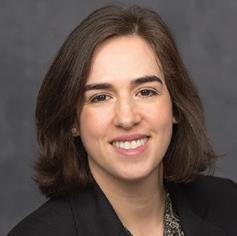
The fossil fuel industry is pivoting. As demand for gasoline declines, oil and gas companies are betting their future on plastic. What once powered our cars is now being refined, cracked and polymerized into bottles, packaging and single-use products that will outlive us all.
This shift isn’t just a climate concern — it’s a public health crisis. Plastics are fossil fuels in another form. And the communities most exposed to their production bear the highest health burdens.
A new report from the UCLA Luskin Center for Innovation on what defines a plastic-burdened community traces how this expanding plastic economy maps directly onto California’s oil and gas footprint. …
The science is unequivocal: living near oil and gas development is linked to a wide array of health harms:
MEDIA HIGHLIGHTS
NBC News
David Cohen of Social Welfare spoke about the need for more research on withdrawal symptoms in the field of psychiatry.
National Public Radio
Edith de Guzman of the UCLA Luskin Center for Innovation spoke about Los Angeles’ preparedness for wildfire and the challenges presented by Santa Ana winds.
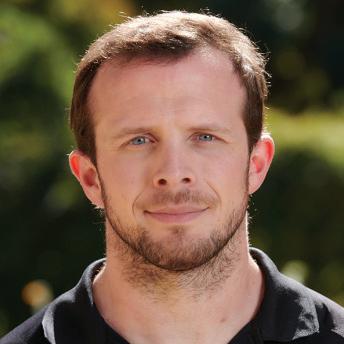
respiratory disease, cardiovascular illness, adverse birth outcomes and elevated cancer risk. The higher odds for these conditions persist even when controlling for socioeconomic and environmental factors. …
The burden of these exposures falls unevenly, our analysis shows.
Neighborhoods closest to wells and refineries have far higher proportions of Latino and Black residents, lower incomes and greater health vulnerabilities. … Plastic pollution is not just about littered beaches or overflowing landfills; it begins long before a product reaches a store shelf. If California truly intends to lead on climate and environmental justice, it must see plastic for what it is — the fossil fuel industry’s new frontier — and it must ensure that communities long treated as sacrifice zones become the first to benefit from solutions.
Sacramento Bee
UCLA Luskin’s Michael Stoll said rising housing costs are driving more California retirees receiving CalPERS benefits to move out of state.
Los Angeles Times
UCLA Luskin’s Michael Lens spoke about Los Angeles and Long Beach ranking among the world’s least affordable cities for homebuyers, surpassing New York, Paris, and Singapore.
LAist
UCLA Luskin’s Brian Taylor spoke about traffic that in some places has surpassed pre-pandemic levels, noting that personal travel has waned, but delivery and commercial transportation has increased.
National Academy of Sciences
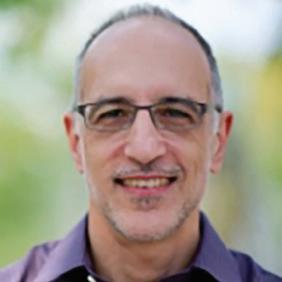
Martin Gilens, professor of public policy and social welfare, was elected to the prestigious academy in recognition of his influential research on inequality and democracy.
Association of Latina/o Social Work Educators
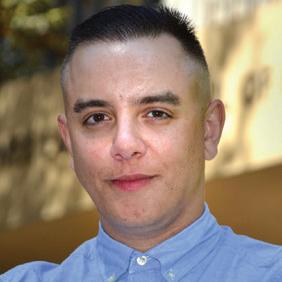
Carlos Santos of Social Welfare was elected president of the national organization, which is dedicated to advancing teaching, scholarship, and leadership in social work and social welfare.
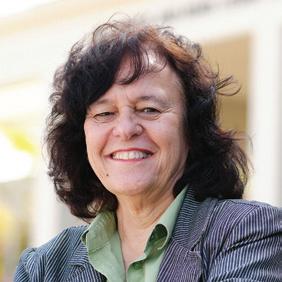
American Planning Association; California Transportation Foundation
“Implications of Freeway Siting in California,” co-authored by UCLA Luskin Dean Anastasia Loukaitou-Sideris, was recognized with multiple academic excellence awards.
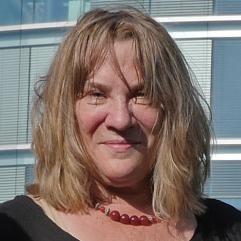
American Association of Geographers
Susanna Hecht of Urban Planning received the 2025 Distinguished Career Award from the association’s Cultural and Political Ecology Specialty Group in honor of her pioneering work in political ecology.
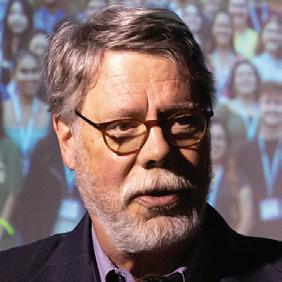
American Political Science Association
The association’s inaugural Career Achievement Award in Health Politics and Policy went to Mark Peterson of Public Policy for his mentorship of younger scholars and enduring impact on both the field and public life.
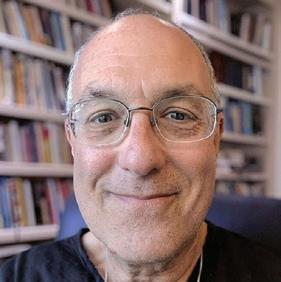
American Educational Research Association
Ron Avi Astor of Social Welfare received the Distinguished Research Award in Human Development for a co-written article on the impact of a positive school climate on students’ mental health, with sometimes counterintuitive findings.
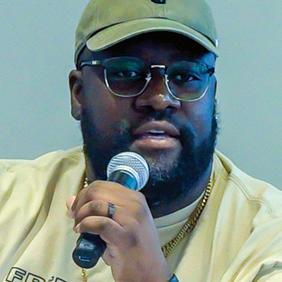
Association of Community Organizations and Social Administration
The association’s 2025 Marie O. Weil Best Article Award went to David C. Turner III of Social Welfare for his article examining how Black boys and young men experience the normalcy of carcerality.
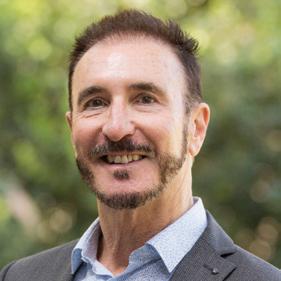
European Regional Science Association
Michael Storper, distinguished professor of urban planning and geography, was awarded the association’s 2025 Prize in Regional Science.
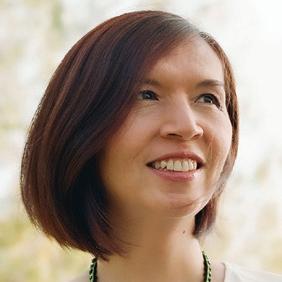
Association of Collegiate Schools of Planning
“Form and Flow: The Spatial Politics of Urban Resilience and Climate Justice” by Kian Goh of Urban Planning won the association’s 2025 Paul Davidoff Book Award.
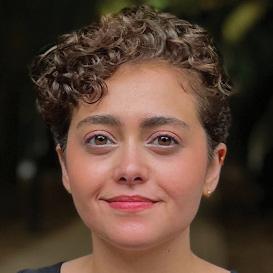
American Planning Association, Los Angeles Section
Alejandra Rios Gutiérrez MURP ’24 received the Academic Award for her capstone project shedding light on the toll of extreme commutes on lowincome communities in the San Fernando Valley.
Council of University Transportation Centers
Nick Giorgio MURP ’25 received the council’s Neville A. Parker Policy and Planning Award for “Intersection Traffic Calming Treatments: A Comparative Analysis.”
University of Minnesota
UCLA Luskin Dean Emerita Barbara Nelson earned the university’s inaugural Torchbearer Award for co-founding the Center on Women, Gender, and Public Policy at the university’s Hubert H. Humphrey School of Public Affairs.
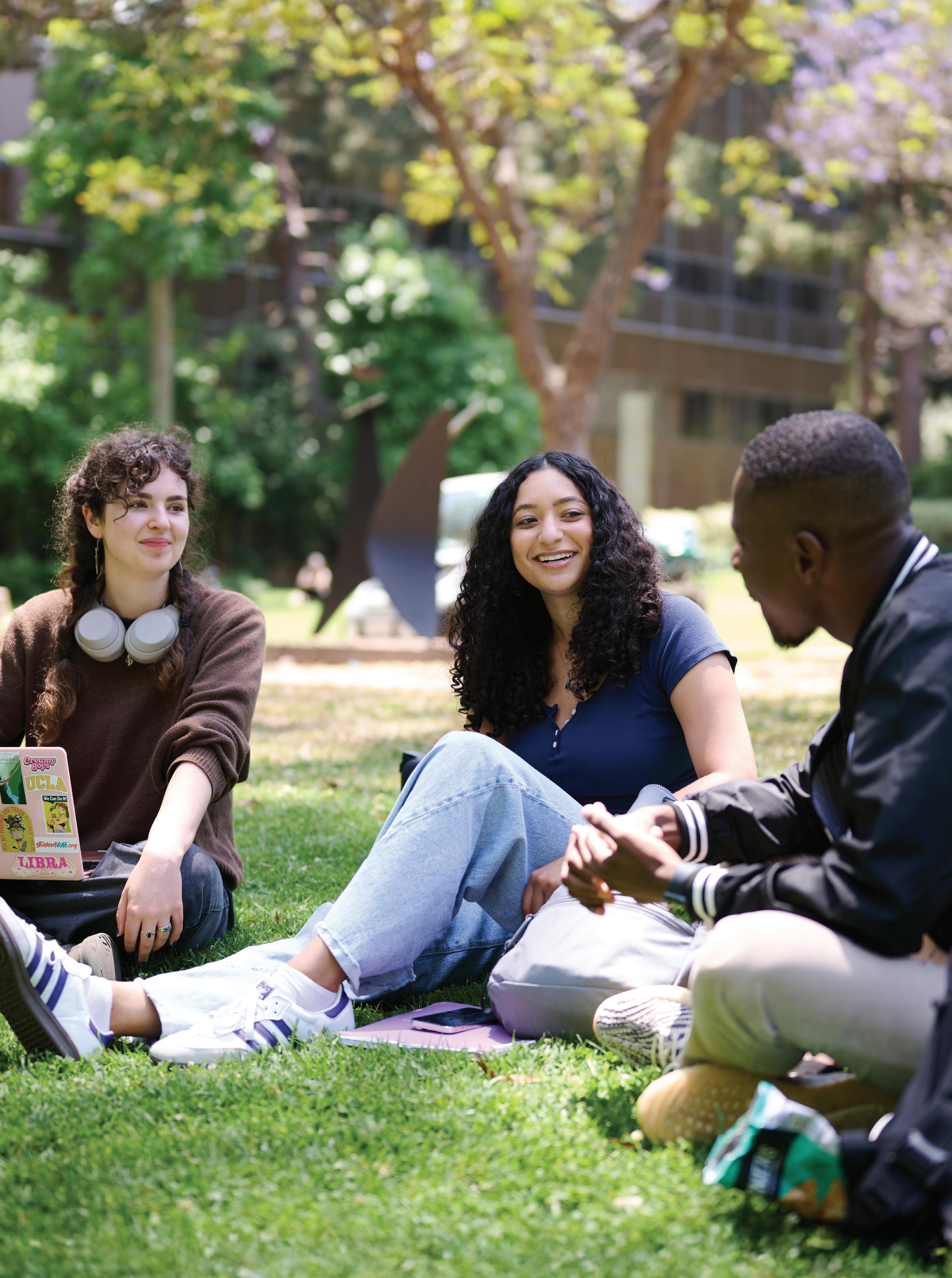
At UCLA Luskin, students are supported holistically as they prepare for careers in public service and policy. Alongside academic training, the school provides resources that foster career development, identity exploration, and overall well-being. Experiential learning is a hallmark of a Luskin education, with students gaining hands-on experience through fellowships, internships, research opportunities, and personalized career guidance. The opportunities below highlight some of the ways Luskin helps students build skills, expand professional networks, and translate their education into meaningful careers.

Senior Fellows Program — UCLA Luskin’s premier mentorship and networking program pairs graduate students with prominent community, government, and business leaders in the public service arena.
“Ken Bernstein from L.A. City Planning has graciously offered many hours of his time to answer my questions, has shown me the daily challenges and rewards of working in city government, and has introduced me to a wide network of colleagues who share his dedication to public service.”
— MBA/MURP STUDENT EVAN SCHWARTZ ON HIS LUSKIN SENIOR FELLOWS PARTNERSHIP
David Bohnett Fellowship — This year-long fellowship in the Los Angeles Mayor’s Office provides our graduate students with high-level opportunities to help shape policy.
“Working inside the Mayor’s Office has shown me that policy-making and policy implementation are a collaborative effort. It has shown me that it’s not just about writing good policy, but also that building relationships and trust is crucial.”
— MPP STUDENT JENNY KIM , 2025-26 BOHNETT FELLOW
UCLA Luskin is home to several influential and prolific research centers that provide fellowships, graduate research grants, and other opportunities for UCLA student scholars.
“LPPI gave me the opportunity to build hands-on skills in policy and research, closing major gaps in my resume. Beyond the financial and tuition support, I’ve gained experience writing briefs, working with data, and understanding what the research process actually looks like and how it can influence policy.”
—
MPP STUDENT MIGUEL A.
HERNANDEZ
, POLICY FELLOW AND GRADUATE STUDENT
RESEARCHER
AT THE UCLA LATINO POLICY AND POLITICS INSTITUTE
City Hall Day —Annual visit to Los Angeles City Hall enables graduate students to explore careers in local government and engage in policy discussions with public, private, and nonprofit leaders.
“Watching students and local leaders question, discuss, and grapple with the issues directly affecting our communities — and explore new ideas alongside lessons from the past —
demonstrates how Luskin fosters dialogue and equips students not only to study theory, but to implement real change.”
— UNDERGRAD STUDENT SHAY RIVERA-BREMNER ON CITY HALL DAY 2026
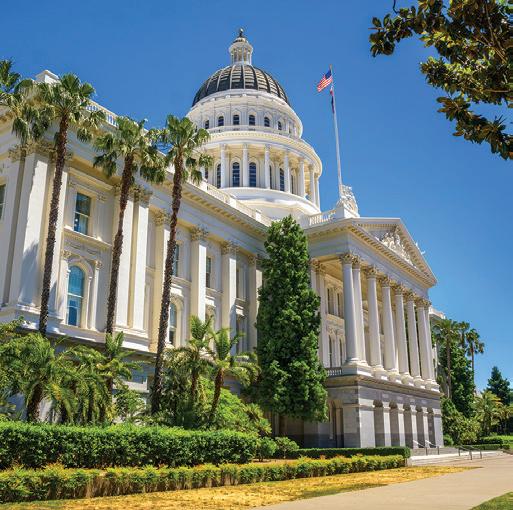
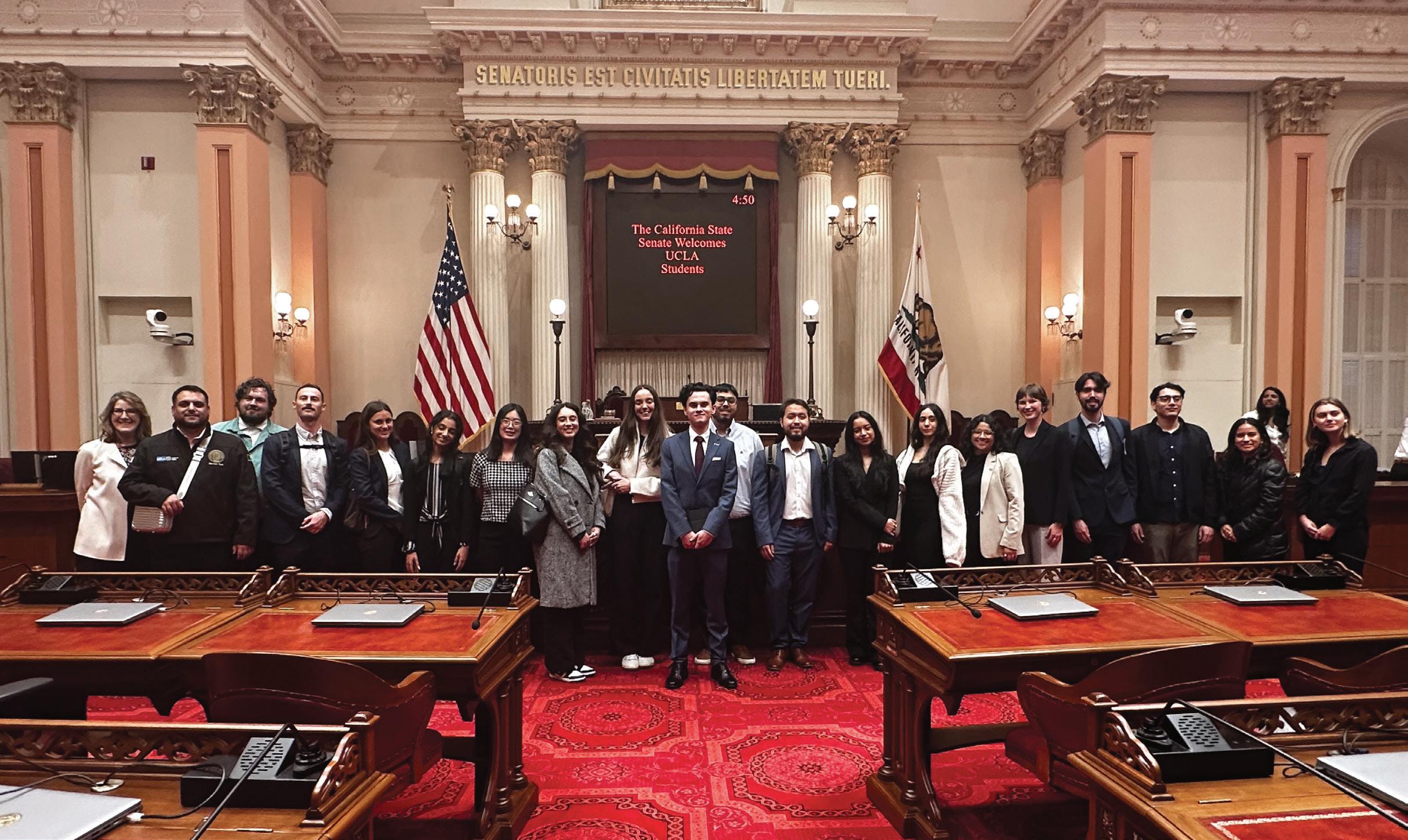
California Policy Briefing — Graduate and undergraduate students join top faculty and state legislators in Sacramento to see up close how UCLA Luskin research informs real-world policymaking. Students receive a personalized tour of the Capitol Building including a visit to the Senate and Assembly chambers, Q&As with legislators, and panel presentations by UCLA Luskin alumni working in government positions.
“Standing on the Senate and Assembly floors brought into focus the weight and significance of this work. It was a powerful reminder that policymaking is not abstract — it directly shapes people’s lives and opportunities. These moments reaffirmed my commitment to pursuing policy work that leaves a lasting, positive impact for future generations.”
Members of UCLA Luskin School of Public Affairs’ Class of 2025 are already making an impact across the public, private, and nonprofit sectors. Here’s a snapshot of where recent graduates from Public Policy, Social Welfare, Urban Planning, and Public Affairs landed six months after earning their degrees
SELECTED EMPLOYERS





SELECTED GRADUATE SCHOOLS







Meet the next generation of UCLA Luskin changemakers. These graduate and undergraduate students come from a wide range of backgrounds and disciplines, united by a shared commitment to public service and social impact.
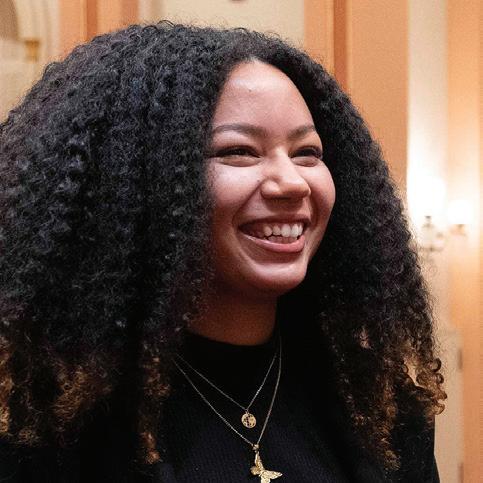
For MPP candidate Samantha “Sam” James, recovery in Altadena after the Eaton Fire has been deeply personal. Her family has lived in Altadena for six generations, and the fire damaged or destroyed homes across her extended family. Rather than succumb to grief,James turned that loss into action, grounding her policy ambitions in lived experience and a fierce love for her community.
A small giveaway on her cousin’s front lawn sparked the creation of the Altadena Recovery Team (ART), co-founded by James and three other Black women raised in the AltadenaPasadena area. As ART’s Co-Executive Director, James blends grassroots organizing with policy advocacy, ensuring recovery efforts are traumainformed, equitable, and led by those most affected. At UCLA Luskin, she’s deepening her policy expertise, researching housing justice, building student leadership, and seeing firsthand how policies she champions can directly improve lives.
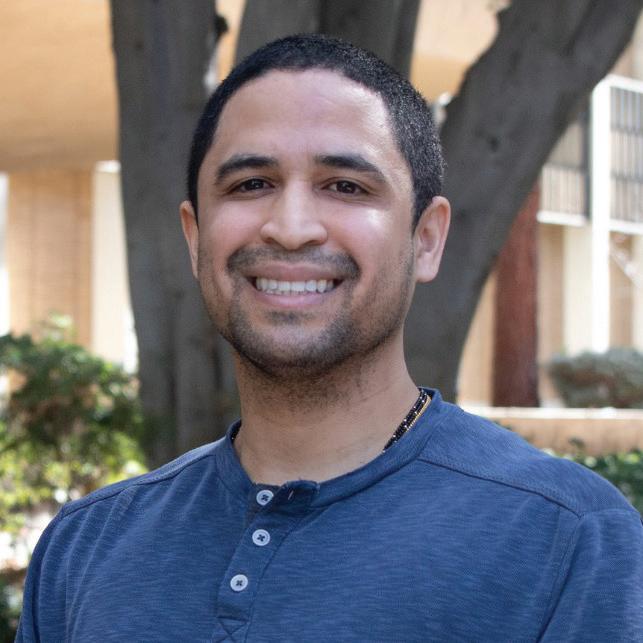
JUAN J. NUNEZ
As a fourth-year Social Welfare doctoral student, Juan Nunez studies how child and adult welfare systems respond under stress, particularly during moments of crisis. In addition to his doctoral research, he plays a key role at the UCLA Pritzker Center for Strengthening Children and Families, where he has assessed educational outcomes following disasters like the Eaton Fire and initiatives such as the ENRICH project — which provides financial assistance to young adults aging out of foster care.
Central to Nunez’s work is a belief that community-level supports are often undervalued in policy discussions. During the COVID-19 pandemic, he observed how grassroots efforts, from pop-up food pantries to mutual aid networks, played a critical role in reducing household stress and protecting families. “We need to stop viewing these efforts as only during emergencies and start seeing them as essential protective factors that require long-term investment.”

Paul Louboutin, a Master of Urban and Regional Planning student focused on transportation equity and design, spent his summer turning classroom ideas into real-world impact at the Los Angeles Department of Transportation (LADOT). As an intern moving between data collection, traffic analysis, and policy research, Louboutin discovered how many moving parts it takes to shape a city’s transportation system.
One standout moment came during his work on a public-facing map highlighting conditions at MacArthur Park, where LADOT is exploring road closures along Wilshire Boulevard to reconnect both sides of the park. Drawing on his research around pedestrian safety, Louboutin helped create a vision that prioritized people over cars. The experience helped him imagine a future as a transportation planner who blends data, design, and policy to create safer streets for all.
Through their coursework, research, and community work, they are applying their public affairs education to tackle urgent challenges and improve the lives of others. Their stories capture the spirit of innovation, compassion, and leadership that drives the UCLA Luskin School of Public Affairs.
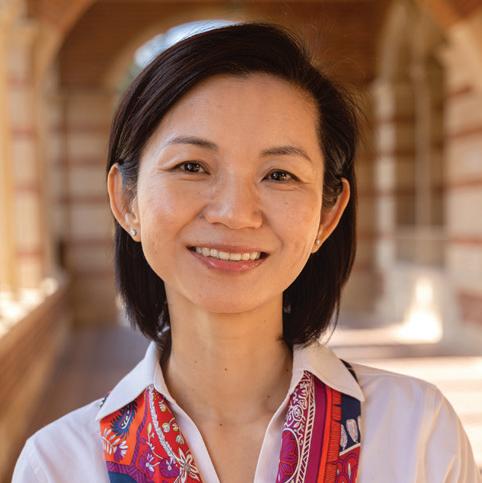
With nearly two decades of experience in corporate real estate and senior leadership roles at companies like Tesla and Walmart, Diana Liu arrived at UCLA Luskin ready to pause, reflect, and reframe how development can shape communities for the long term.
Part of the first cohort to earn the school’s new MRED degree, Liu says she was drawn to the program because of its emphasis on public impact, sustainability, and resilience — values she sees as essential to the future of the industry.
Much of Liu’s career has centered on delivering complex projects, from site selection to asset management, within large-scale organizations. Coming from China’s fasterpaced, centralized development environment, she has gained a deeper appreciation for community engagement and public-private collaboration. Now, she says, the MRED program has given her space to examine the “why” behind development decisions.

For Mehra Marzbani, advocating for California’s creative workforce is both deeply personal and forward-looking. A California native and working actress, she grew up captivated by the screen. Today, she’s channeling that sense of wonder into public policy work aimed at making sure future generations of creatives can dream, create, and thrive in the state.
Her policy focus zeroes in on California’s Film and Television Tax Credit Program. Marzbani has seen first-hand how costly permits and bureaucratic hurdles can push productions out of state. While tax credits help bring projects back, she argues for broader reforms — especially simplifying the permitting process and expanding eligibility to include student and low-budget productions.
California’s entertainment sector fuels tourism and supports thousands of jobs. Marzbani, a Public Affairs undergrad, hopes to use her dual platform as an artist and policymaker to drive meaningful change.
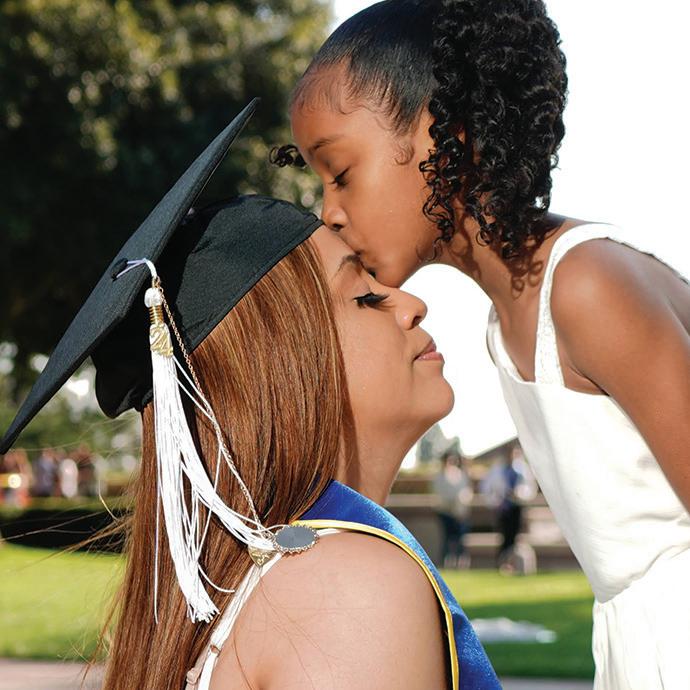
Schinal Harrington is helping to redefine how parenting students are recognized and empowered to succeed across the UC system. “Parenting students have always been here — capable, determined, exhausted, and too often unseen,” says the first-generation Master of Social Welfare student, and the mother of a young daughter.
A double Bruin, she’s also chair of the Bruin Parenting Scholars at UCLA and a leading voice for caregiving scholars across the entire UC system. She has advocated for full-time CalWORKs coordinators, child-friendly study spaces, and reduced course-load options that do not punish parenting students through financial aid removal.
In November 2025, the UC Student Association Board of Directors passed a resolution calling for sweeping structural support for parenting students — affirming, Harrington said, that “what we were carrying was not an individual burden but an institutional one.”
UCLA Luskin graduates are putting their degrees to work in meaningful ways across the public, nonprofit, and private sectors. Guided by a commitment to evidence-based policy and public service, Luskin alumni are tackling complex challenges, strengthening communities, and helping shape a more equitable and sustainable future.
The following profiles offer a glimpse into the many paths Luskin graduates take after leaving campus. From advancing innovative policy solutions through public service to leading organizations and initiatives that improve people’s lives, their stories reflect the lasting impact of a Luskin education and the inspiring accomplishments of a global alumni community dedicated to making a difference.
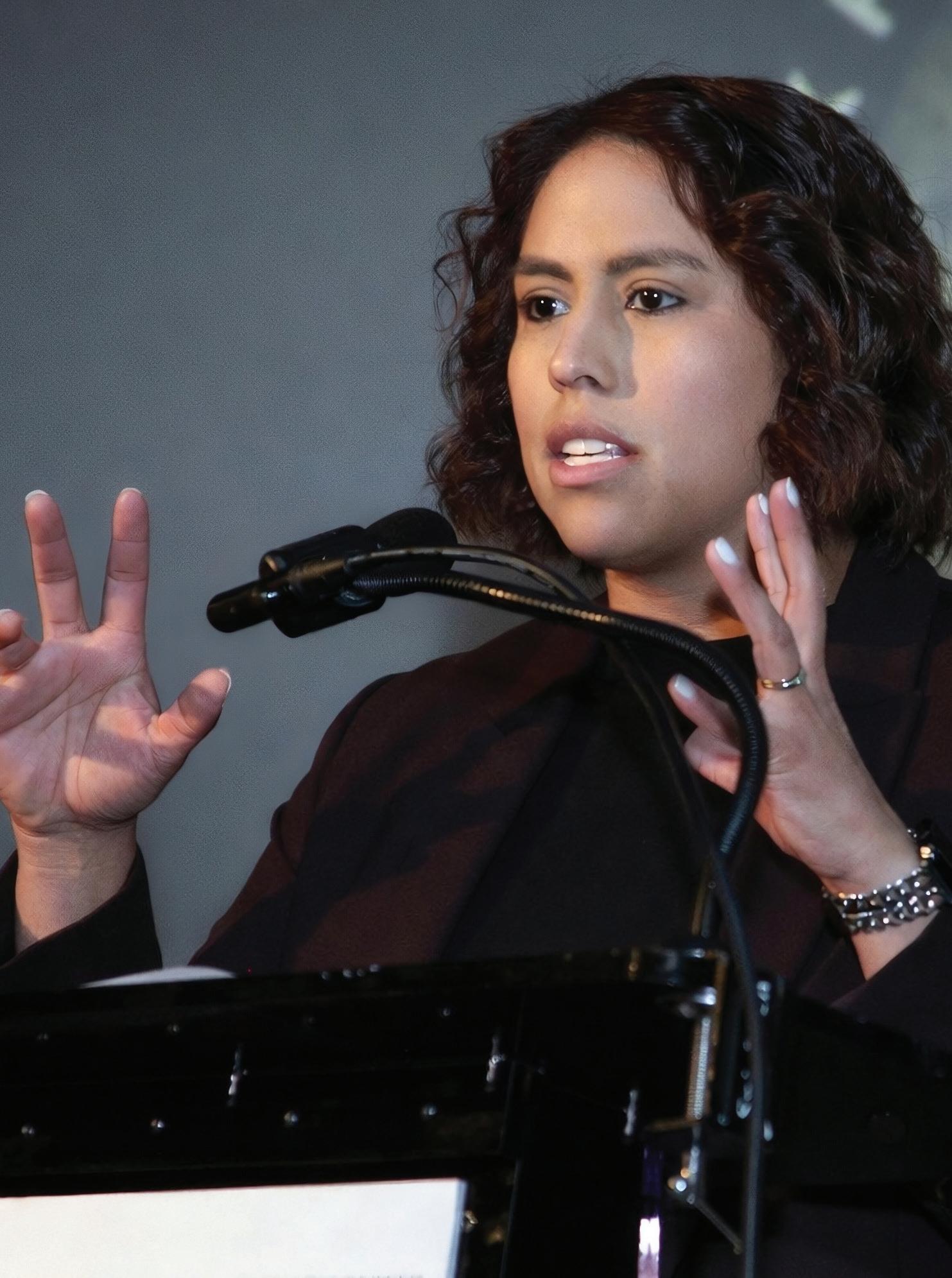
State Sen. Caroline Menjivar MSW ’18, pictured at left, brings a deeply personal understanding of housing insecurity to her work in the California Legislature. Raised in a large Salvadoran immigrant family, Menjivar grew up in low- to middle-income communities across the San Fernando Valley, often sharing apartments with relatives as her family worked to make ends meet.
Today, Menjivar represents nearly 1 million Californians, and she credits her background in social work for grounding her legislative approach in compassion and lived reality.
That extends to residents most vulnerable to extreme heat. In 2025, Menjivar added her voice to those of UCLA Luskin experts who traveled to Sacramento to focus state legislators’ attention on investments and policies that can shield Californians from the worst effects of climate change in schools, homes, and public spaces.
Sarah Jakle MPP ’04 has built a career at the intersection of public policy, trauma-informed practice, and civic leadership — guided by a belief that effective leadership must support the whole human being. As the founder of DemocraShe, a nonpartisan leadership program for serving young women and first-generation students, Jakle prepares future civic leaders not only with knowledge and skills, but with the emotional tools needed to thrive in public life.
At UCLA Luskin, Jakle discovered the power of combining rigorous policy analysis with human-centered understanding. Mentorship from former Massachusetts Gov. Michael Dukakis also left a lasting impression, particularly conversations about the emotional toll of public life — especially for women. Participants finish the DemocraShe program understanding how to engage actively in democracy, and most report doing something they were previously afraid to try.
When UCLA announced alumni honored with the 2025 Bruin Excellence in Civic Engagement distinction, UCLA Luskin was well-represented. Five of the school’s alumni were recognized for their work to improve the quality of life in their communities:
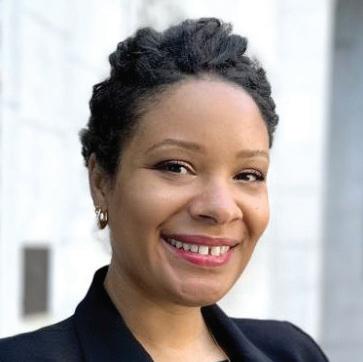
In her position at Los Angeles City Planning, Cameron Carrasquillo MURP ’18 has focused on centering the perspectives of communities who have been harmed and underserved by traditional planning processes.
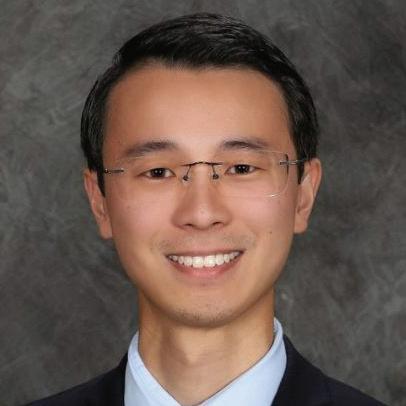
Alex Fung MPP ’18 is part of the City of Eastvale’s Executive Team, where he oversees economic development, workforce development, government relations, and community growth projects, including regional preparations for the 2028 Los Angeles Olympics.
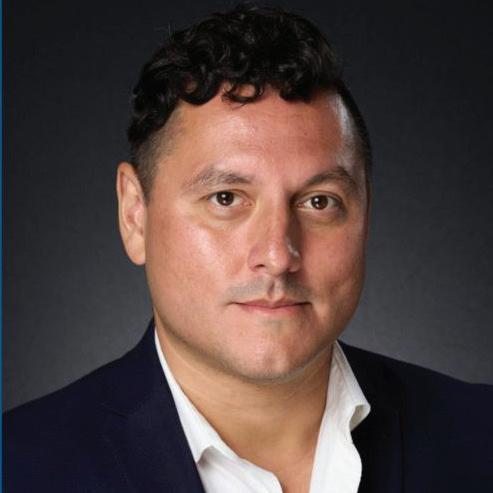
Edgar Garcia MA UP ’06 has over 25 years’ experience in cultural policy, arts administration, historic preservation, and urban planning, including as interim general manager for El Pueblo de Los Ángeles Historical Monument.
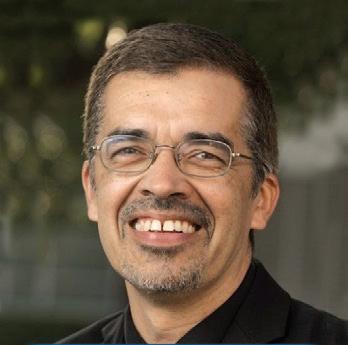
Álvaro M. Huerta MA UP ’03’s time at UCLA compelled him to a life of civic engagement in Los Angeles and beyond, advocating for marginalized Latino communities. After earning bachelor’s and master’s degrees at UCLA, he went on to earn a PhD in city and regional planning from UC Berkeley and is now a professor at Cal Poly Pomona.
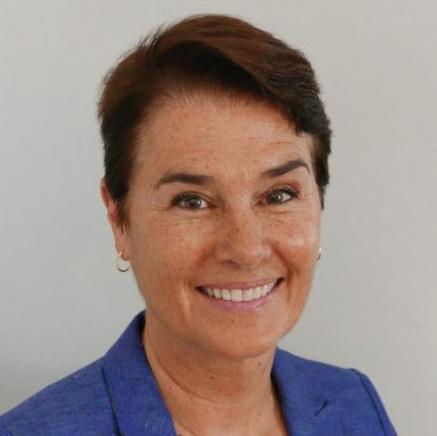
Sarah Letts MA UP ’91 has 35 years of experience in the development and operation of affordable rental housing and the delivery of critically needed services. Since joining Hollywood Community Housing Corporation in 2016, Letts has directed the organization toward significant growth to help address the housing and homelessness crisis throughout Los Angeles County.
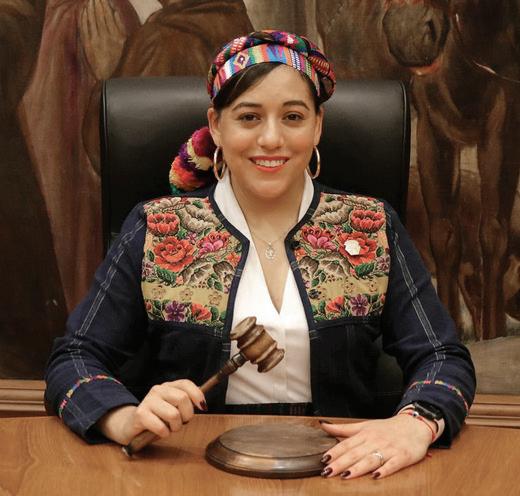
Elected to the Burbank city council in 2022, Nikki Perez MSW ’18 was 30 years old when her peers selected her in December 2024 to serve as mayor. As she was sworn in, she made history many times over, as the youngest mayor ever to serve the Southern California city, the city’s first Indigenous and openly LGBTQ+ leader, as well as the city’s first pregnant mayor.
The daughter of immigrants from El Salvador and Guatemala, Perez attended local public schools in Burbank, developing a deep commitment to the city she calls home. She says her experience as a UCLA Luskin Social Welfare student helped her envision a life in public service.
“Being at Luskin was what really got me into wanting to work in macro social work and the policy or advocacy side of things.”
— NIKKI PEREZ
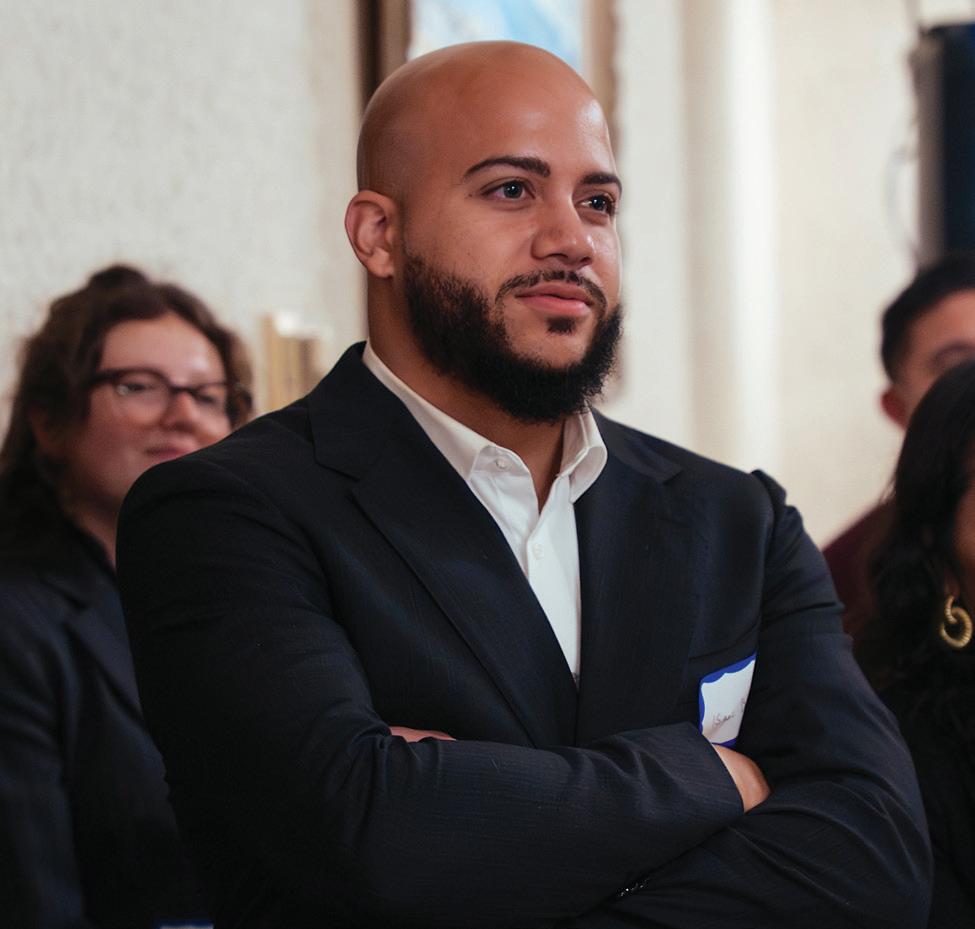
As one of the youngest California legislators and one of 12 Black state lawmakers, Isaac Bryan MPP ’18 is using the knowledge and skills he honed at UCLA to champion policy changes at the intersection of environmental, economic, education, and housing justice.
For his impactful leadership in improving the lives of Californians, Bryan received the prestigious 2025 UCLA Award for Public Service by the UCLA Alumni Association.
Representing the state Assembly’s 55th district, which stretches from some of Los Angeles’ wealthiest neighborhoods to some of its most economically vulnerable, Bryan has scored a number of legislative victories on issues including housing justice, oil drilling, youth in foster care, and prison gerrymandering.
As one of just a handful of tenants serving in the Legislature, Bryan is a founding member of the Renters Caucus formed to improve representation of the Golden State’s tenant population.
“I want to make my community, my city, my state, my country better. And that is an awesome privilege that I try to never take for granted.”
— ISAAC BRYAN
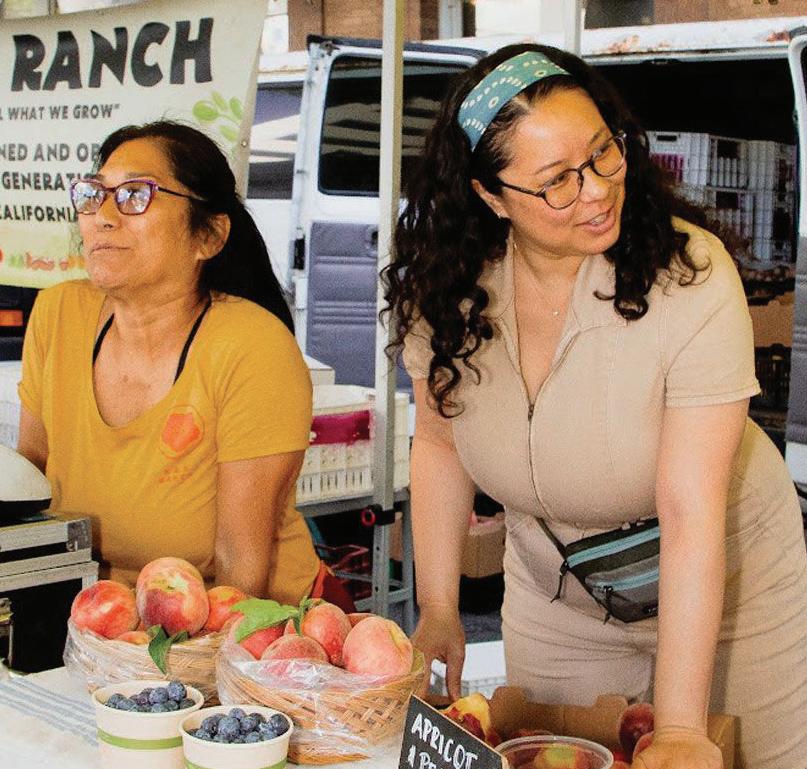
Growing up African American and Korean American in South Los Angeles, Dorothy Faye Pirtle MPP ’25 learned early how culture, identity, and access intersect. When Korean ingredients were hard to find locally, her mother grew produce in their backyard. Witnessing the 1992 Los Angeles civil unrest at age 12 shaped Pirtle’s awareness of racial inequality and cross-racial solidarity. Her path led her to UCLA, where she earned her MPP in 2025, followed by her MURP expected in 2027.
With a lifelong commitment to community food systems, she hopes to create urban gardens and farmers markets that strengthen South L.A. Mentors like Asian American journalist K.W. Lee and community leader Marcia Choo helped deepen her understanding of activism grounded in service, relationships, and coalition-building. When a major supermarket closed, leaving tens of thousands without easy access to food or basic goods, Pirtle was moved to found the California Black Council on Food Policy and later the nonprofit Lily of the Nile 1992, which operates farmers markets, farm stands, and food distributions in South Los Angeles.
“My impetus for attending graduate school … was about deepening my relationship to land, people, and place.”
— DOROTHY FAYE PIRTLE
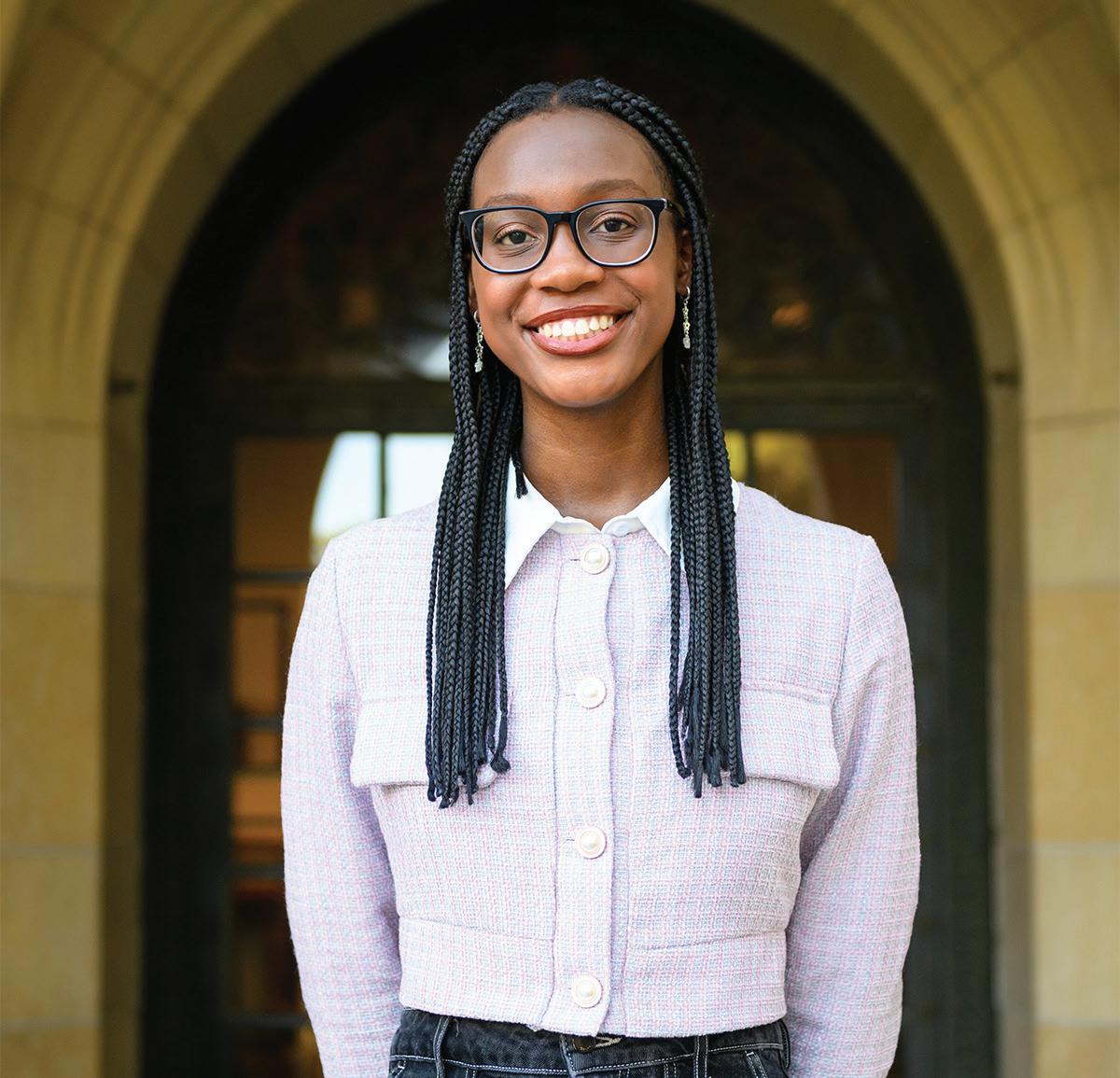
A triple major in Public Affairs, Education, and Sociology, Laila Wheeler BA ’25 worked as an opinion editor for the Daily Bruin, conducted research on racism and maternal health in Black communities, mentored high school students preparing for college, and earned prestigious fellowships and internships to work on human rights and education initiatives in Ghana and South Africa.
Wheeler is currently teaching English in Kenya as the recipient of a prestigious Fulbright U.S. Student award, which supports students in teaching and research projects across the globe. She is also leading a community service learning course to advance civic engagement, while learning Swahili and immersing herself in Kenyan culture, history, language, and nature.
“My interactions with diverse communities at UCLA and beyond shaped my worldview and interest to explore educational spaces globally.”
— LAILA WHEELER
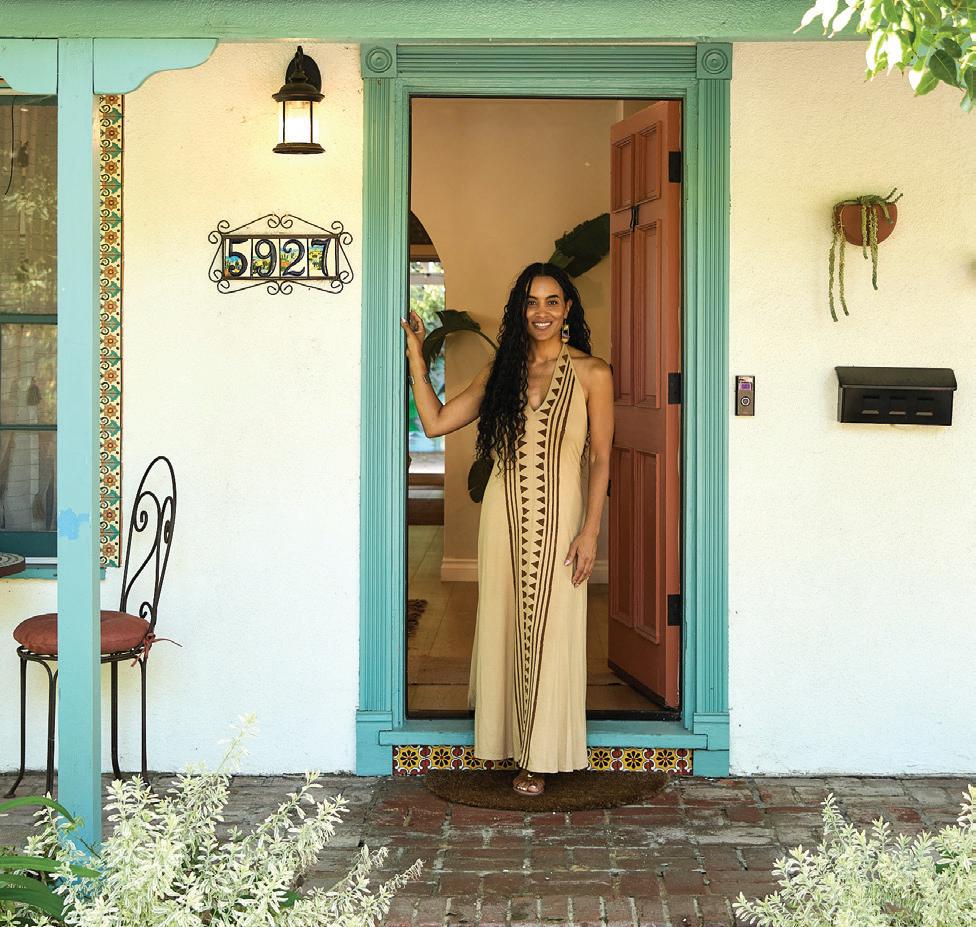
Women of Color Therapy, founded by Tamika Lewis MSW ’05, provides culturally competent mental health services for women and teens of color, creating a space where clients can engage in care that acknowledges the role of culture, identity, and community in healing. Lewis established the wellness center to address gaps in traditional mental health services, where women of color often report feeling misunderstood or underrepresented. The practice’s approach integrates clinical therapy with an environment designed to support emotional safety, authenticity, and holistic well-being.
Lewis launched the organization in the San Fernando Valley while raising a child as a single parent and navigating the uncertainties of entrepreneurship, and credits her time at UCLA Luskin as critical to her current success. “My experience as an MSW student at UCLA shaped so much of who I am today.”
“I felt at home among my peers and professors, who welcomed my ambitious ideas and desire to drive change in my community. It was an empowering experience.”
— TAMIKA LEWIS

Selina Barajas MA UP ’10 has built her career on a simple but powerful belief: Meaningful change starts with community. That philosophy helped carry her to victory in November 2025 as the first woman ever elected to represent Ward 5 on the Tucson City Council — and as part of the first female-majority council in the city’s history. Early exposure to civic engagement through her family sparked her passion for advocacy.
Her path toward equity-centered leadership led her to UCLA Luskin, where Barajas learned to see social equity not as an add-on, but as the foundation of effective planning. Courses in data analysis and GIS strengthened her technical skills, while faculty such as the late Professor Leo Estrada reinforced the idea that planning is ultimately about people.
“I learned to center the voices of those most impacted by policy decisions, and to design solutions that reflect their lived experience.”
— SELINA BARAJAS
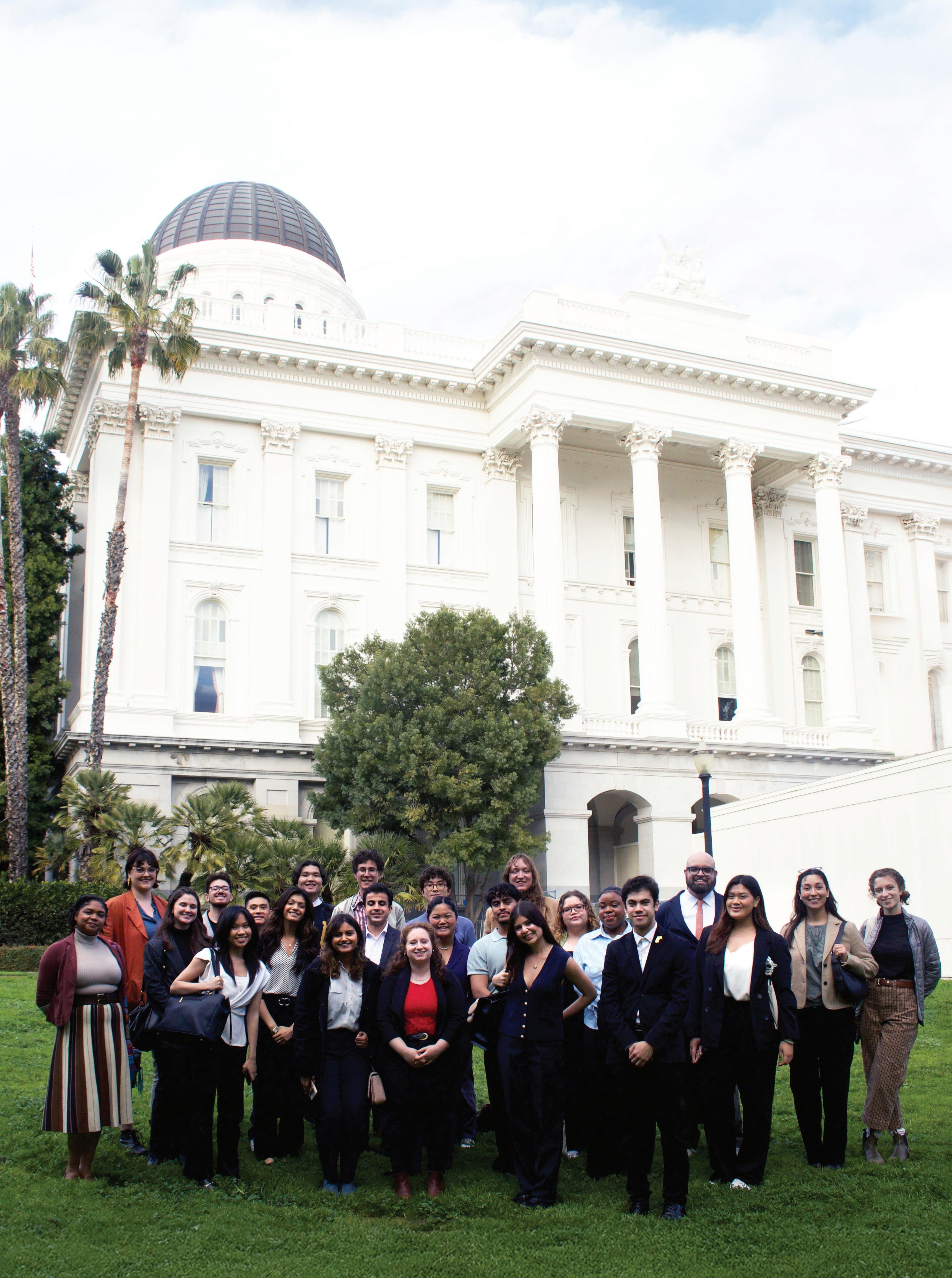
“I was able to connect with UCLA alumni — now staffers, policymakers, and legislative aides at the state Capitol — who could share their experiences and career paths from Westwood to Sacramento in a way that felt especially relatable.”
—MAI VU BA ’25 , ON HER EXPERIENCE AS A STUDENT AT UCLA LUSKIN’S 2025 CALIFORNIA BRIEFING
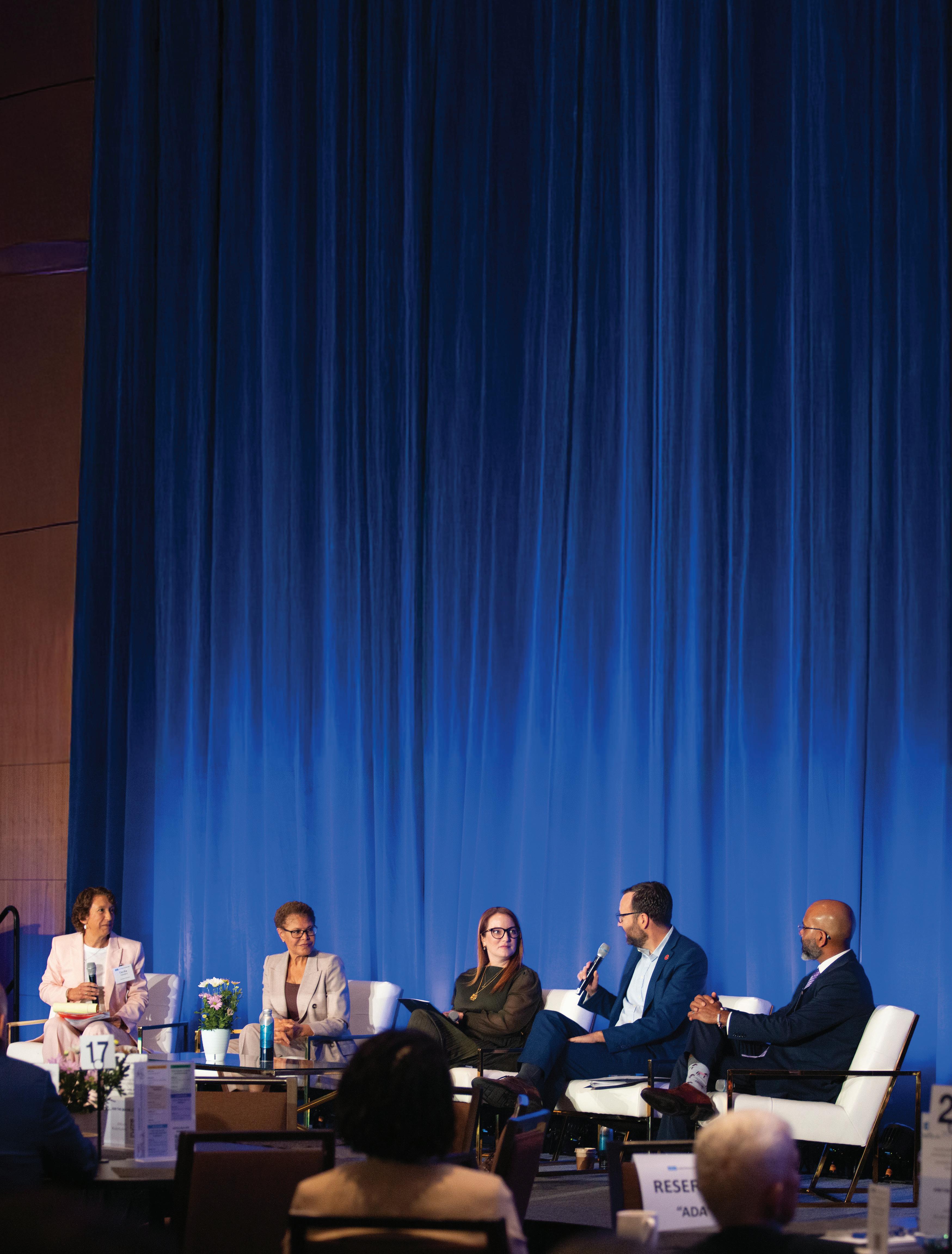
At UCLA Luskin, events and distinguished speakers play an important role in enriching the academic experience and connecting scholarship with real-world policy conversations. Throughout the year, the school convenes leading scholars, policymakers, practitioners, and public thinkers to share their insights and engage with students, faculty, and the broader community. These gatherings provide a forum for thoughtful dialogue on pressing public challenges while showcasing the intellectual rigor that defines Luskin’s research and teaching.
Speaker series, conferences, and public forums complement classroom learning by exposing students to diverse perspectives, emerging ideas, and practical lessons from the field. They also create valuable opportunities for networking, mentorship, and collaboration, strengthening Luskin’s role as a vibrant hub where research, policy, and practice come together to advance solutions to society’s most complex problems.
The Luskin Lecture Series enriches public dialogue on issues that shape the wellbeing of communities and society at large. Featuring renowned public intellectuals, the series brings together scholars alongside national and local leaders to explore some of today’s most pressing challenges.
Each event is designed to spark thoughtful, engaging conversation that bridges the traditional divides between research, policy, and practice. Through these gatherings, UCLA Luskin highlights its commitment to fostering innovative ideas and collaborative solutions to complex public policy challenges.
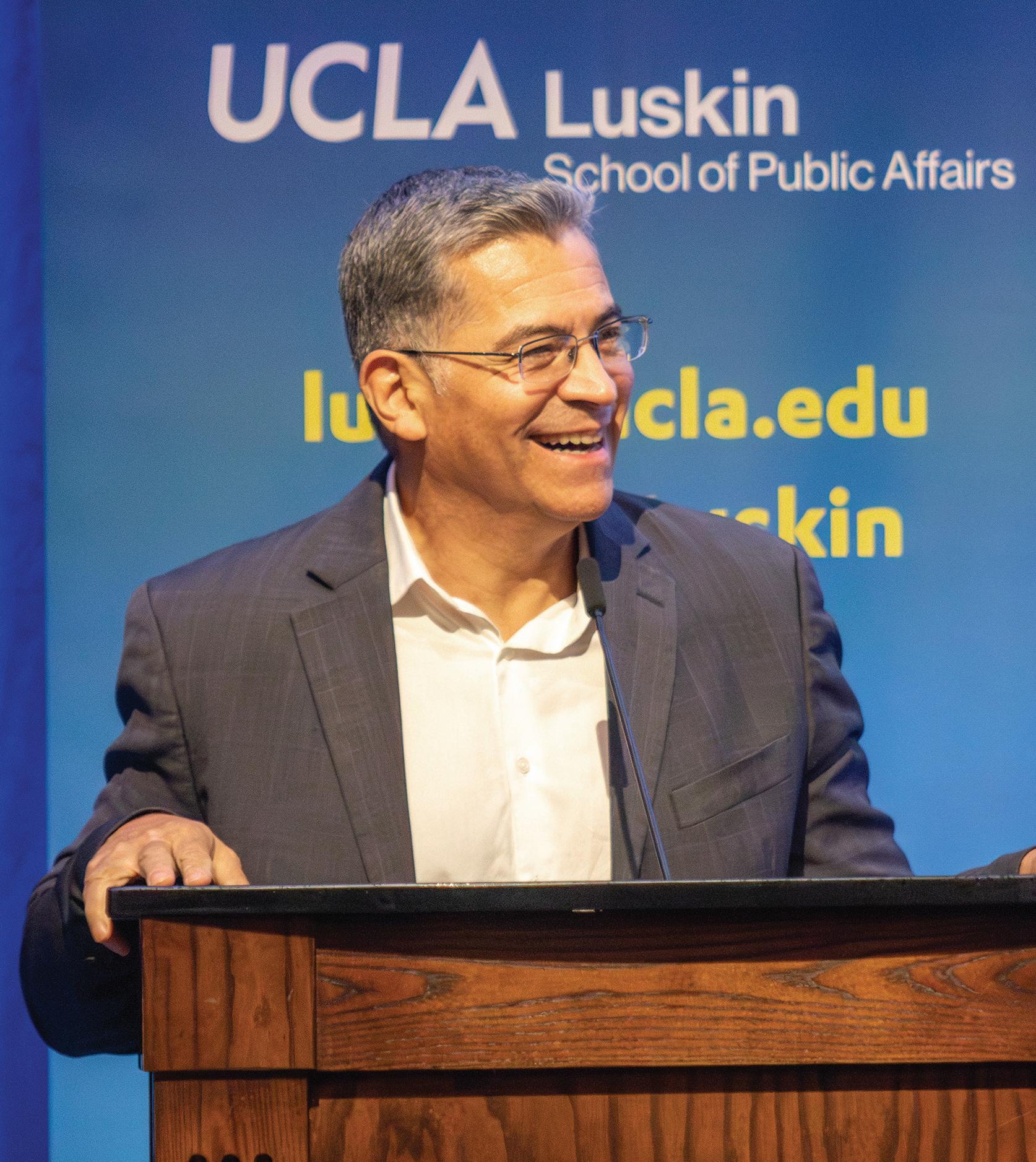
Protecting Democracy and the 2025 Redistricting Battles
Featured Speaker: Xavier Becerra, Former California Attorney General and U.S. Secretary of HHS
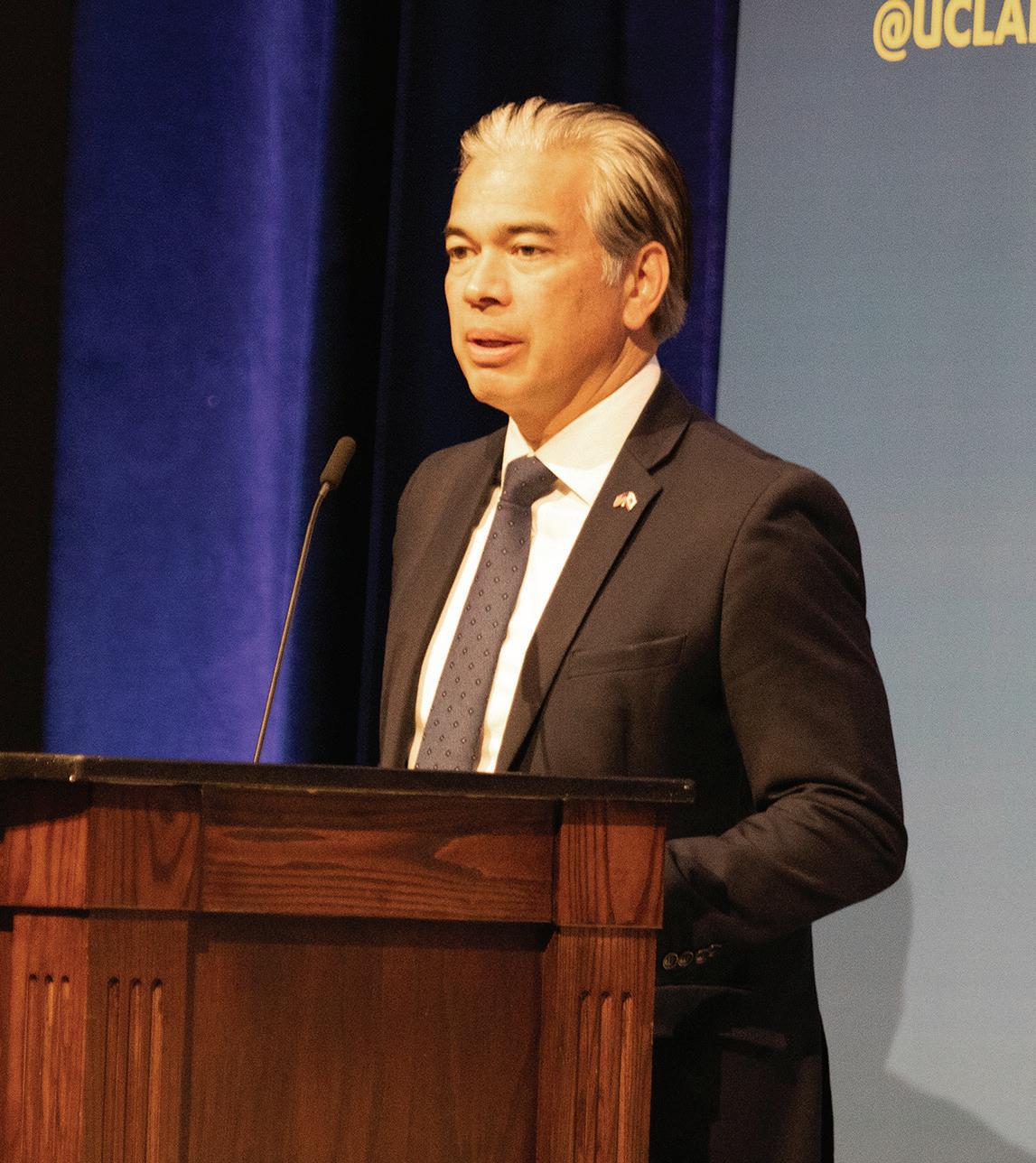
Reexamining the “Nation of Immigrants”: The Politics of ICE Enforcement
Featured Speaker: Rob Bonta, California Attorney General
LGBTQ+ Equality and the 2025 Landscape
Featured Speaker: Tony Hoang, Director of Equality California and Silver State Equality
Lessons in Leading Mission-Based Innovation in Transportation: Zero Fatalities, Zero Pollution, and Zero Disparities
Featured Speaker: Robert Hampshire, Former U.S. Department of Transportation Assistant Secretary for Research and Technology
Black Joy Unfiltered
Featured Speakers: Author Michael Harriot; UCLA Luskin Professor Michael Lens; and UCLA Social Sciences Professor Safiya Noble
Featured Speakers: L.A. Mayor Karen Bass; L.A. County Supervisor Lindsey Horvath; California State Sen. Ben Allen; former L.A. City Councilmember and County Supervisor Zev Yaroslavsky
With a focus on guiding a collective, equitable recovery in the county following the devastating fires in Pacific Palisades and Altadena in January 2025, UCLA Luskin faculty, community groups, nonprofit organizations, and government agencies came together to share their expertise on rebuilding strategies, recovery for vulnerable populations, impacts on health, climate resilience, and more.
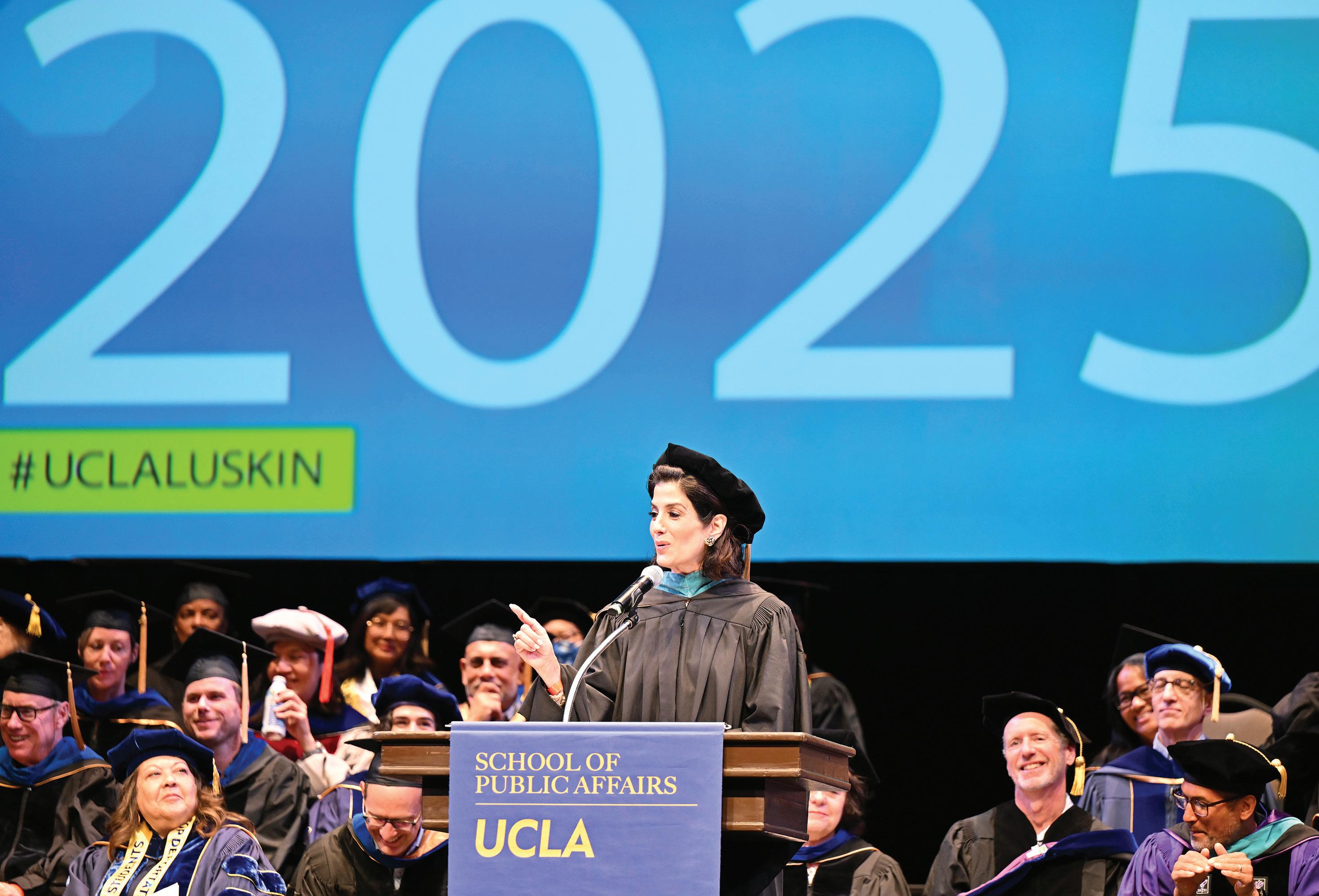
Featured Speaker: Nathalie Rayes MPP ’99, former U.S. ambassador to Croatia
Rayes delivered a stirring commencement address to UCLA Luskin’s Class of 2025. “Success belongs to those that persist,” said Rayes, who immigrated from Venezuela with her family in the 1980s and went on to build a successful career in the private sector and as a public servant.
Rayes, named the UCLA Luskin Public Policy Alumna of the Year in 2014, earlier served in top-level roles with the advocacy group Latino Victory, the Mexican conglomerate Grupo Salinas, and at Los Angeles City Hall.
Special Guest Speaker: Xavier Becerra, Former California Attorney General and U.S. Secretary of HHS
UCLA Luskin’s annual policy briefing in Sacramento gave the school’s top researchers the opportunity to share their research with key stakeholders and offered students a chance to see policymaking up close. In 2026, the dialogue focused on how policymakers can effectively implement California’s new upzoning law and how the state can ensure the right to vote for all its citizens.
Public Lecture: “Is Bipartisanship Dead?”
Featured Speakers: Former Congressmembers Jane Harman and David Dreier
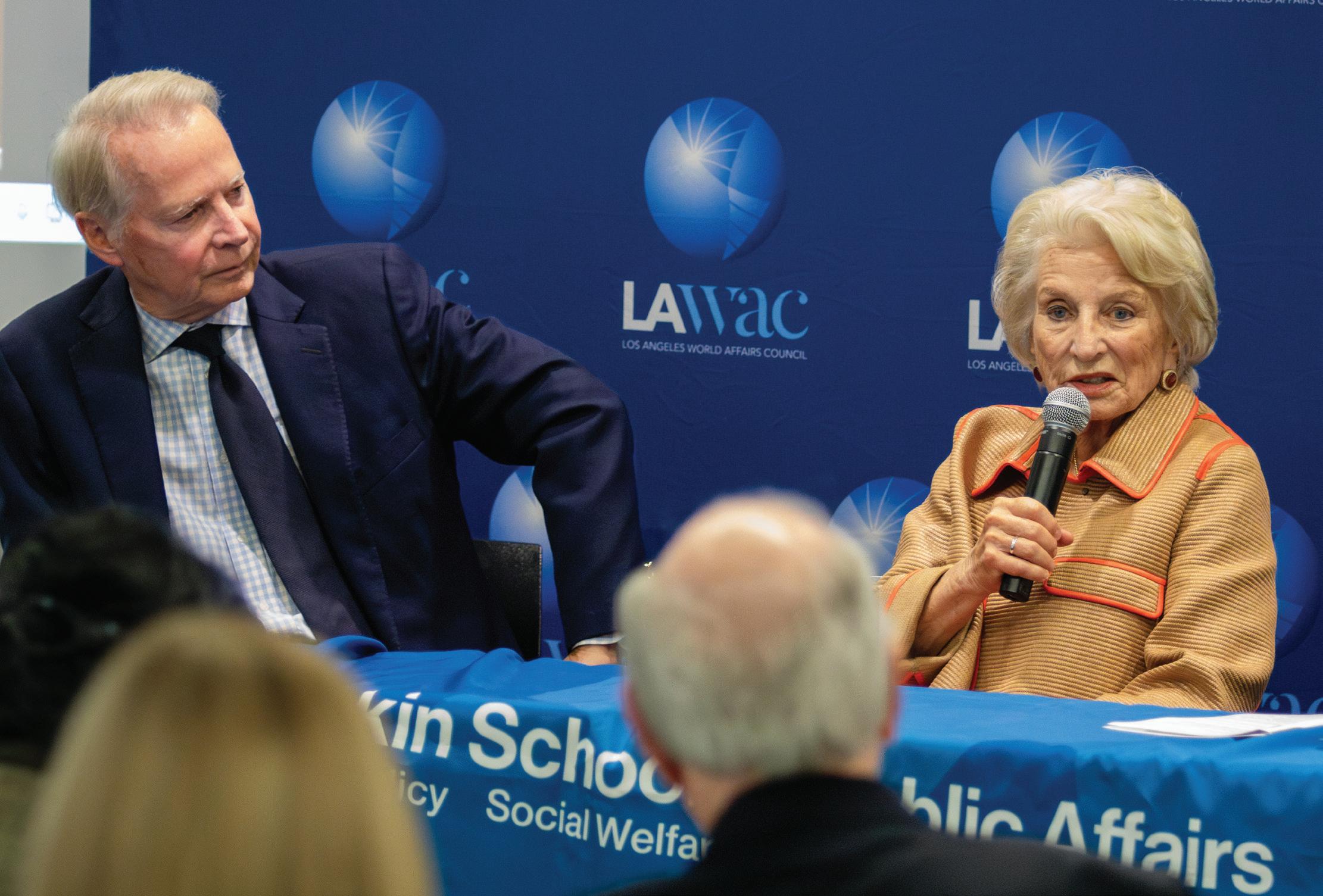
UCLA Luskin partnered with the Los Angeles World Affairs Council to bring two former Congress members to campus to explore the nation’s deep political divides and examine whether bipartisanship is worth the effort. Democrat Jane Harman and Republican David Dreier, both from California, shared reflections from their decades in office and encouraged young people in the audience to enter public service to become problem solvers and bridge builders.
UCLA Luskin hosted the national convening of Vote16USA, an organization working to extend voting rights to 16- and 17-year-olds. The two-day gathering brought together youth organizers, educators, policymakers, researchers, and community leaders from across the nation to strategize and mobilize around the movement. Sessions offered practical tools for grassroots organizing, media engagement, and public policy advocacy.
Organized by the International Organization of Youth (IOY) and hosted by the UCLA Luskin School of Public Affairs, this is a premier global platform that brings together youth from around the world to engage, deliberate, and contribute to multilateral solutions for a better future. Each year, IYC features a distinguished lineup of speakers, including civil society leaders, ambassadors, youth activists, academics, and experts in international peace and security, science and technology, and global governance transformation. The conference fosters meaningful dialogue, networking, and collaboration across borders.
Government agencies, philanthropic groups, nonprofits, and community organizations have stepped up to fund UCLA Luskin research and programming spanning the school’s broad portfolio. And individuals including alumni, parents, board members, and emeriti faculty have faithfully supported the UCLA Luskin vision.
OUR GENEROUS DONORS (JULY 2025 – MAY 2026, CHANGE VERSUS PREVIOUS THREE-YEAR AVERAGE)
$25, 520,615

BRUIN GIVING DAY
Luskin supporters stepped up for this UCLA fundraising drive, held in April 2026, unlocking a grand challenge bonus gift of $25,000.
185
TOTAL NUMBER OF GIFTS
$ 141,000+
TOTAL AMOUNT RAISED
All four matching gift offers for the following UCLA Luskin funds were fulfilled 100%:
• Maciek Kolodziejczak Fellowship Fund
• Luskin Student Emergency Fund
GRANTS AND CONTRACTS
$15 , 311
• Luskin Student Support Fund
• Master of Global Public Affairs Fund
,617 JULY 2025 – MAY 2026
$13.5 MILLION
UCLA Luskin Social Welfare received a transformative $13.5 million award from the Ballmer Group, the largest single donation to the school since the naming gift from Meyer and Renee Luskin. The funding is a cornerstone of a larger $33 million grant to UCLA to expand efforts in improving the mental health and well-being of youth and families across Los Angeles. It will allow UCLA Luskin to directly address the critical shortage of trained professionals equipped to serve youth with poor mental health, particularly in lowincome, underserved “care deserts.”
Jeffrey Jaeger and Scott Alter, co-founders and principals of the L.A.-based real estate company Standard Communities, pledged $2.5 million to support the UCLA Luskin MRED’s affordable housing program. The certificate program, which equips students with the skills, networks, and vision to create lasting social impact, will be known as the UCLA Jaeger Alter Standard Communities (JASC) Affordable Housing Program.
$2.5 MILLION
$1.4 MILLION
A $1.4 million gift from the Berggruen Institute will extend its support for the Berggruen Governance Index, a vast, publicly accessible database measuring the quality of democracy, government, and life across 145 countries. The project is led by Adjunct Professor of Public Policy and Social Welfare Helmut K. Anheier in partnership with the Berggruen Institute and the Hertie School in Berlin.
EDUCATION AWARDS FOR INTERNATIONALIZING CURRICULUM
Two UCLA Luskin faculty members are among 16 recipients of the inaugural Global Education Awards for Internationalizing Curriculum, launched as part of UCLA’s strategic goal to expand its global reach. Kian Goh, associate professor of urban planning, is developing Global Cities and Global Climate Change, an interdisciplinary course. Lené Levy-Storms, associate professor of social welfare, will partner with two Mongolian universities to develop a new elective for the gerontology interdisciplinary minor.
Arnold Ventures, which funds research into policy solutions that address inequity, awarded a two-year, $466,000 grant to UCLA Luskin Public Policy Professor Wesley Yin for a study of the root causes of rising health care costs. Yin will examine how consolidation in the industry has eroded competition and suppressed wages, and whether “public option” health insurance plans can amass enough influence to bring down health care bills.