
UCD Creative Hackathon 2026 Report: How Might We Imagine The University of the Future?
UCD Creative Hackathon 2026
UCD Creative Hackathon 2026 Report: How Might We Imagine The University of the Future?
What happens when you take students from every corner of UCD, put them in teams with people they've never met before, and challenge them to design the university of the future in just 24 hours? That's exactly what the 2026 UCD Creative Hackathon set out to discover. Teams dove into the big questions: how should a university of the future approach wellbeing, sustainability, transport and of course, learning.
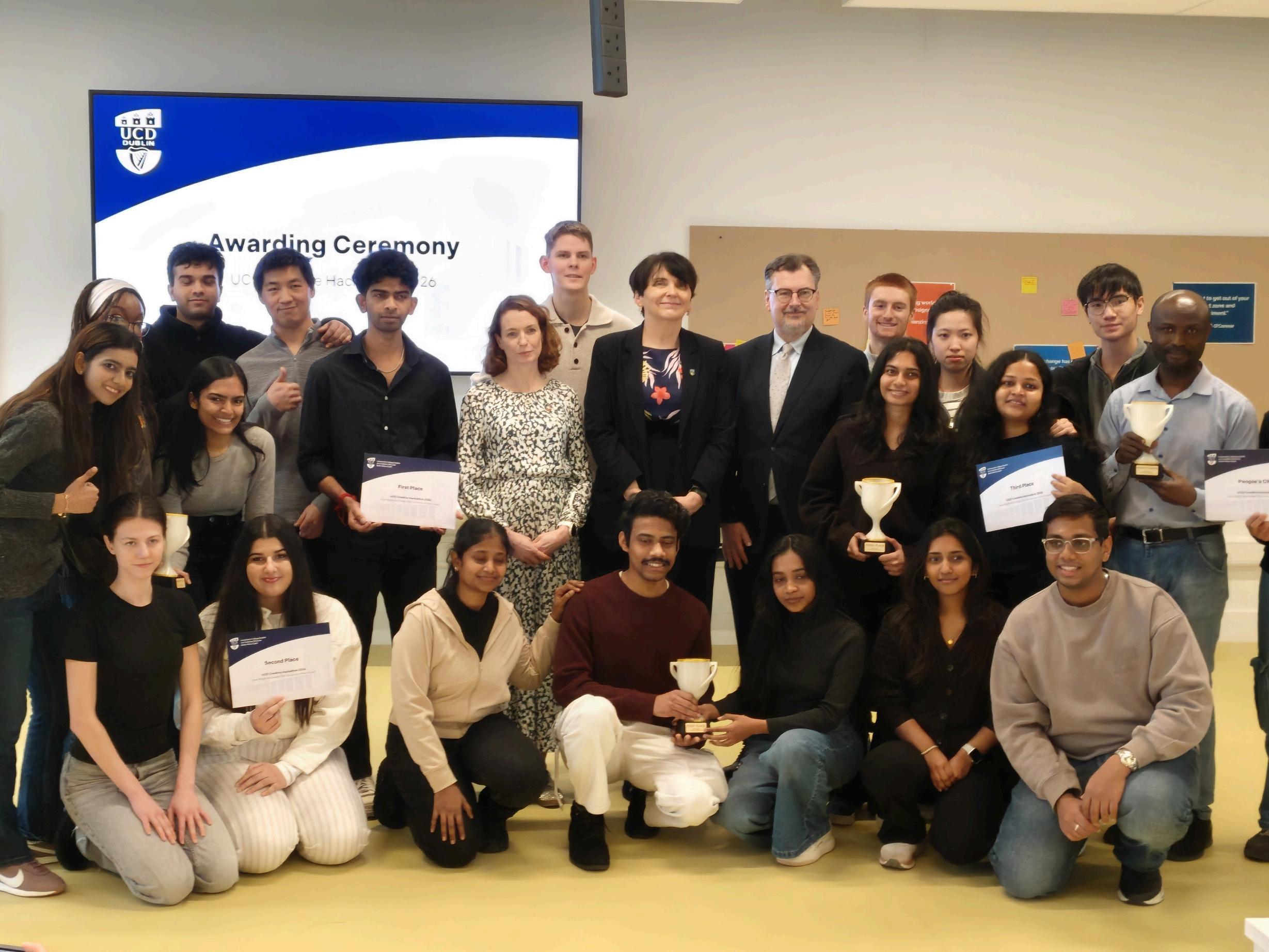
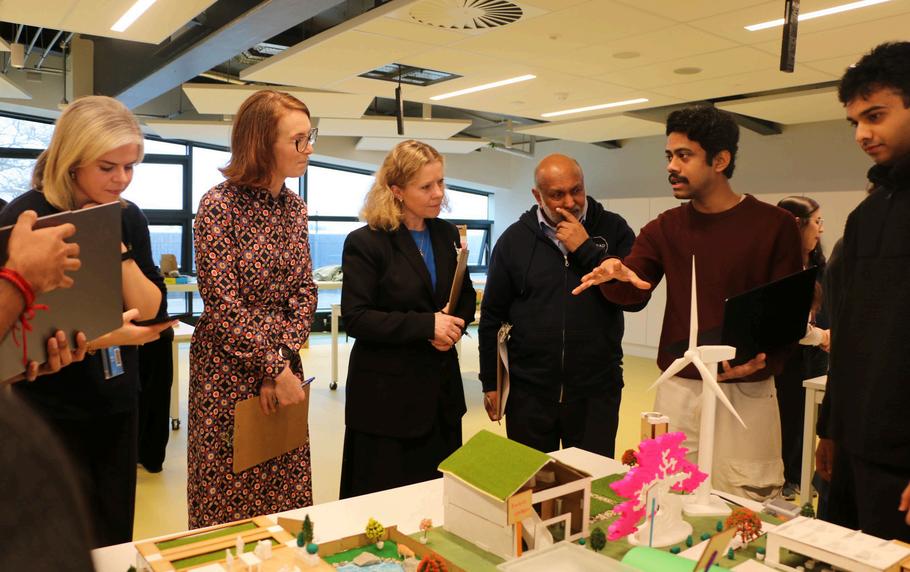
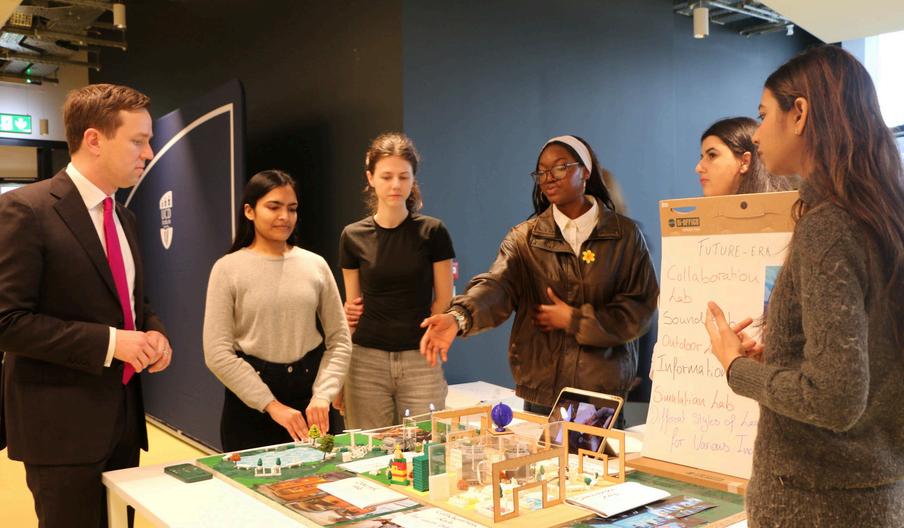
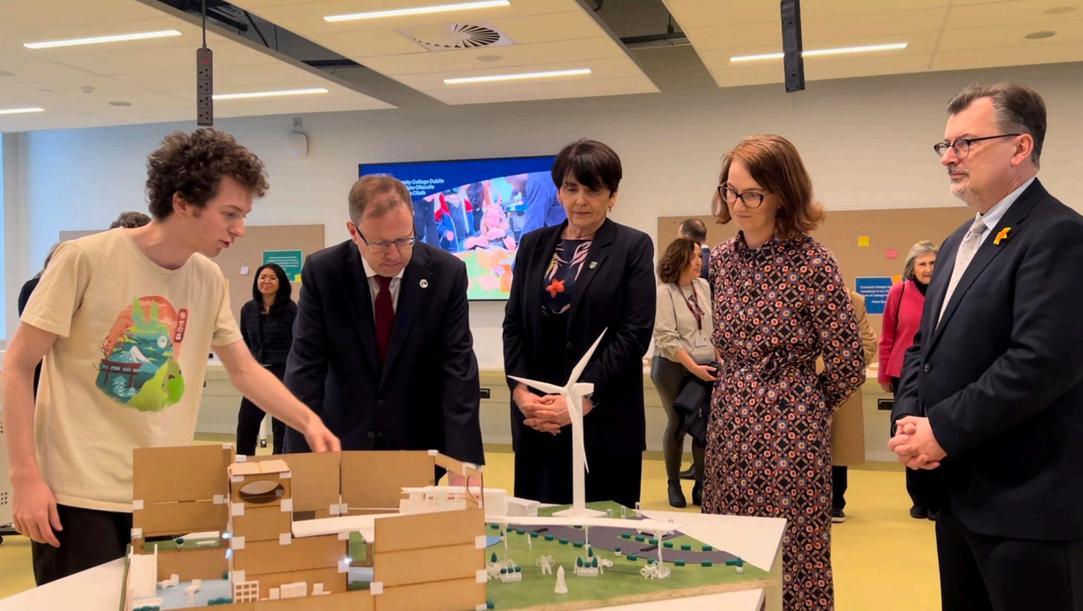
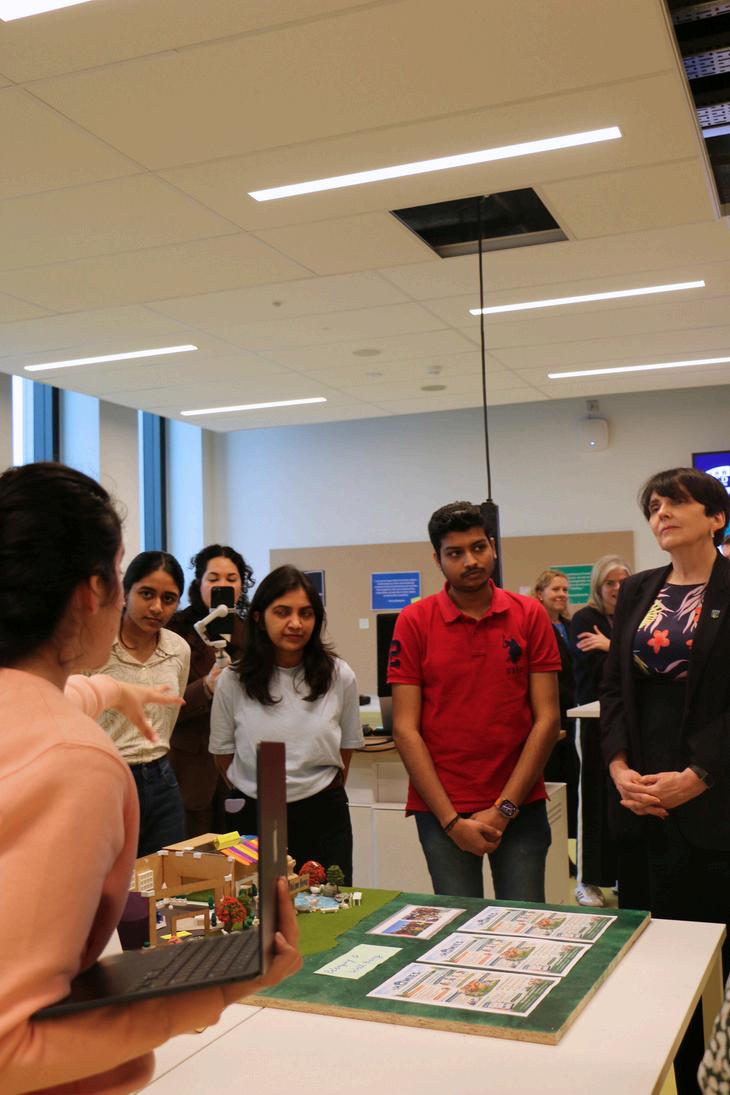
The designs were unveiled at the launch of the UCD O'Connor Centre for Learning, a dedicated building for future learning named after Irish innovator and entrepreneur Eddie O'Connor. Students pitched their ideas to Minister for Further and Higher Education James Lawless, UCD President Orla Feely, Deputy President Colin Scott, the O’Connor family and more. These are the summaries of their pitches and ideas.
Read More: UCD O’Connor Centre for Learning Comes Alive with Inaugural Hackathon
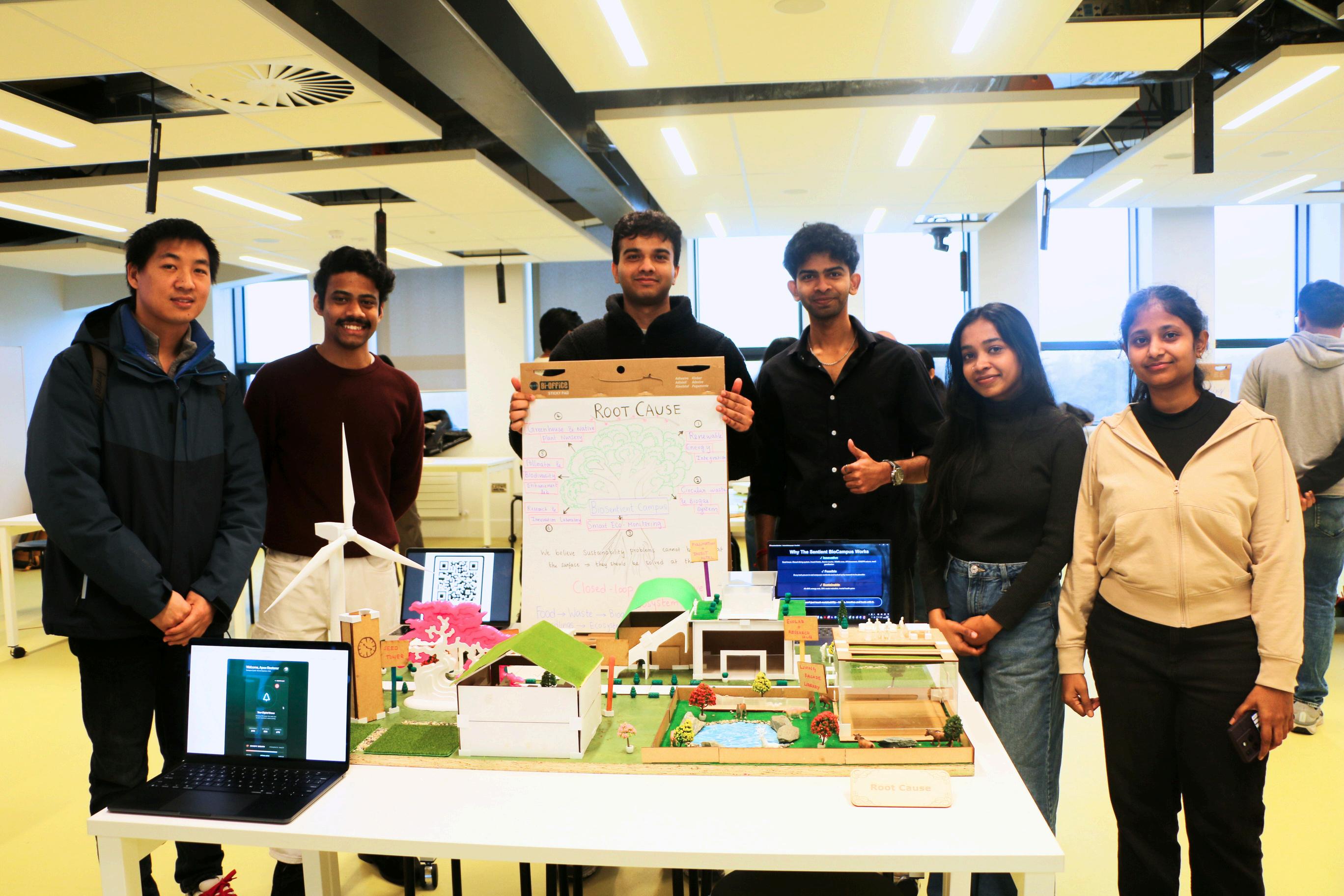
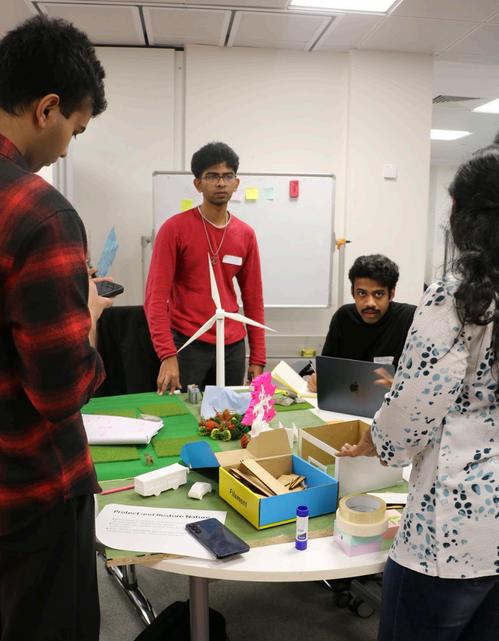
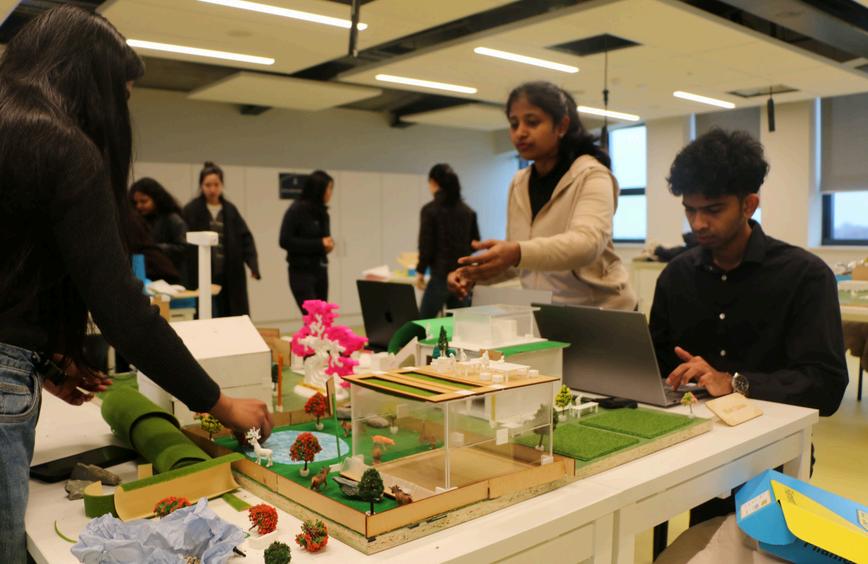
We refer to our solution as the Sentient BioCampus, a regenerative campus ecosystem where a university is turned into a self-sustaining system of the environment where technology and nature collaborate. The idea incorporates renewable energy, circular waste management, biodiversity recovery, and environmental surveillance together as a single linked infrastructure.
We have made a innovative app to check out the wellbeing and health of the trees inside campus monitoring system that relies on biosensors and a mobile scanning application that monitor soil moisture, nutrient content and environmental stress in real-time and transform every tree into a living data point in order to monitor the ecological situation. Other systems in the campus are composting and biogas creation of food waste, pollinator habitats to help sustain biodiversity, a greenhouse of native vegetation growth and a seed dispersal tower with wind power to restore the ecosystem.
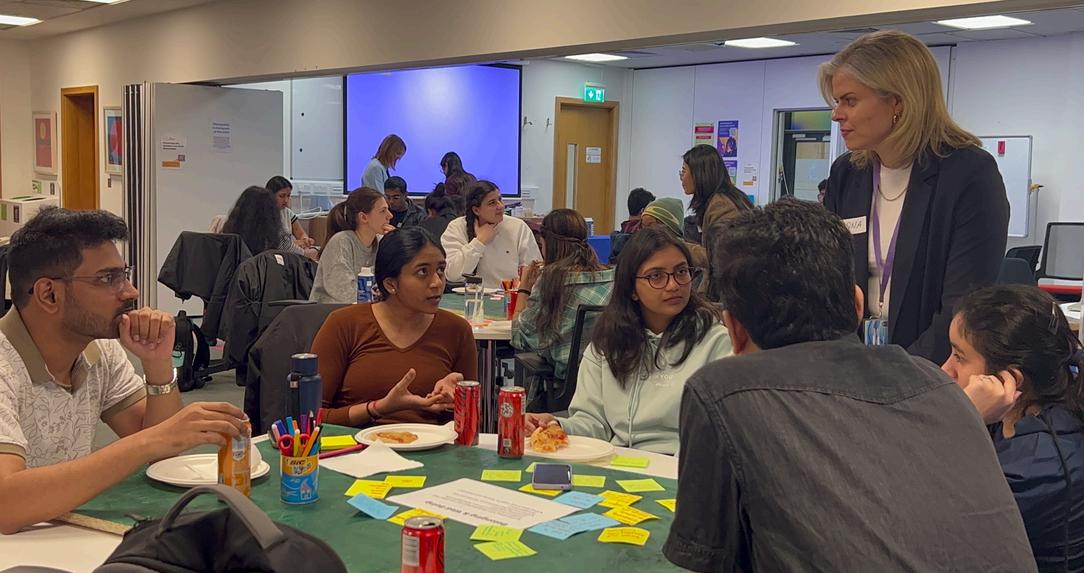
Our team worked collaboratively by combining perspectives from environmental science, technology, and sustainability design. We began by researching environmental challenges affecting urban campuses, particularly issues related to waste, biodiversity, and energy use. After identifying key problems, we brainstormed potential solutions and mapped how different systems could connect to create a regenerative campus model.
Team Members
First Place Winner
Aayush Rokade - MSc in information systems
Dheeraj Dhandapani – MSc in Biotherapeutics
Kai Li – MSc in Computer Science (Negotiated Learning)
Navandikka Ravisankar - MSc in Biotherapeutics
Poornima Dhamodharan - MSc in Biotherapeutics
Tanishq Jaiswal - MSc in Business analytics
Theme: Future of Learning Second Place Winner
Many university lecture halls follow a one-size-fits-all design that fails to accommodate the diverse learning styles, needs, and preferences of today’s student population. Students with different cognitive styles, accessibility needs, or varying focus levels are often underserved in traditional teaching environments. Our solution, Future-Era represents how classrooms would look in 2050 with the moto of “YOU COME ALONE BUT
GO CONNECTED”, is a multi- zone lecture hall concept that empowers students to choose how they learn.
The space is divided into four purposeful zones: an Interactive Learning Zone for collaboration and group discussion; a VR Learning Zone offering immersive, technology-driven educational experiences; an Audio Pod Learning Space designed to support deep focus and auditory learners; and a Traditional Lecture Space for structured, instructor-led teaching. Students can move between zones based on their mood, focus level, or learning preference, creating a truly student-centred environment that complements existing accessibility supports such as sensory rooms.
Interactive Learning Zone - Collaborative tables and open space designed for group work, peer-to-peer discussion, and active problem solving.
VR Learning Zone - Immersive educational experiences using virtual reality headsets and spatial learning tools.
Audio Pod Learning Space - Quiet, soundproofed pods supporting focus, creativity, and auditory learners.
Traditional Lecture Space - Structured, instructor-led teaching in a familiar, distraction-minimised layout.
Team Members
Second Place Winner
Anjali Singh - MSc Advanced Artificial Intelligence
Emma Chisom Ukwuani - MSc Management
Shatha Aljohmani - Postgraduate Higher Diploma in Economics
Muskaan Gupta - BSc Business
Yulianna Hrynyshyn - BBL Business and Law
Theme:
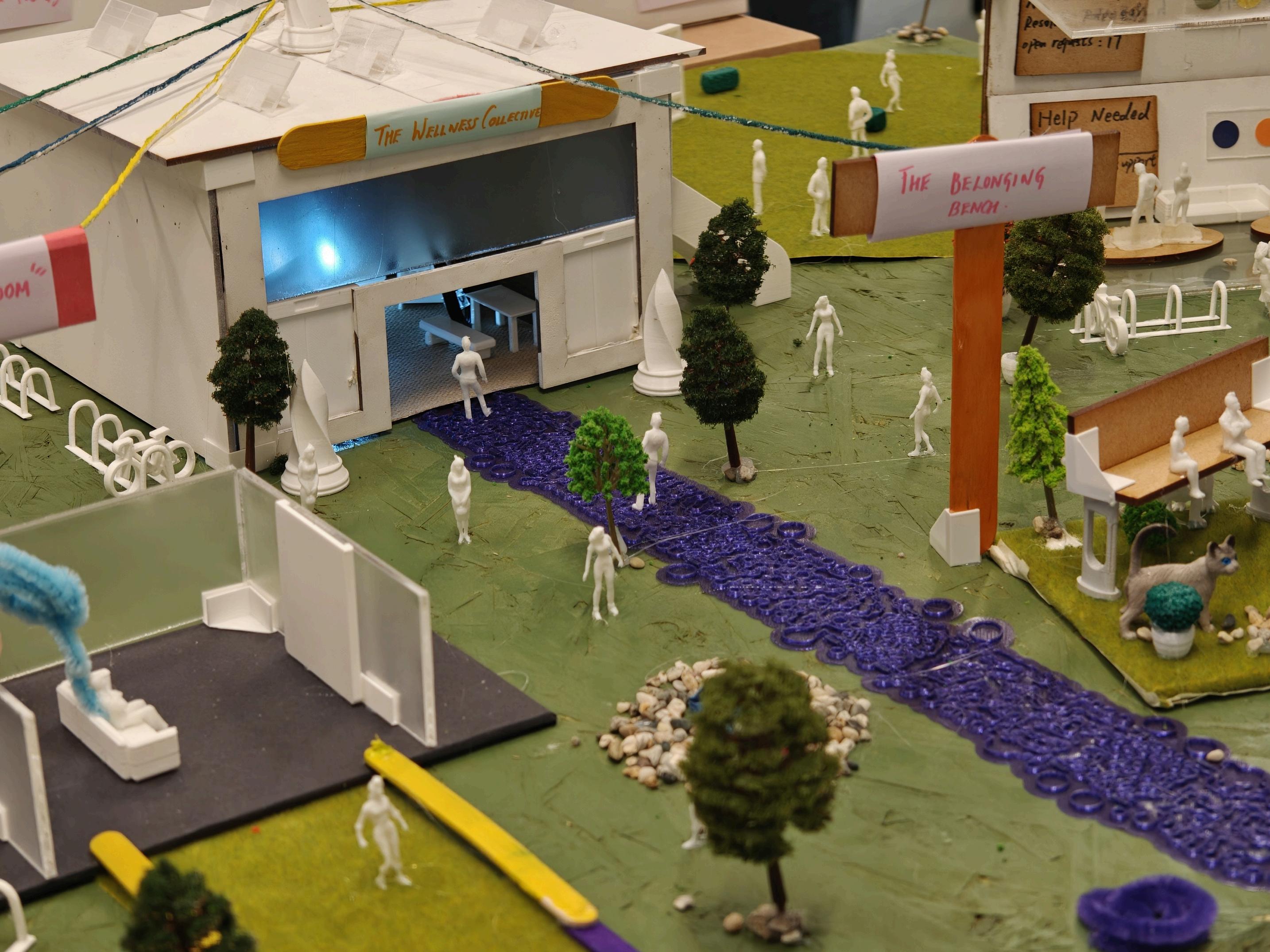
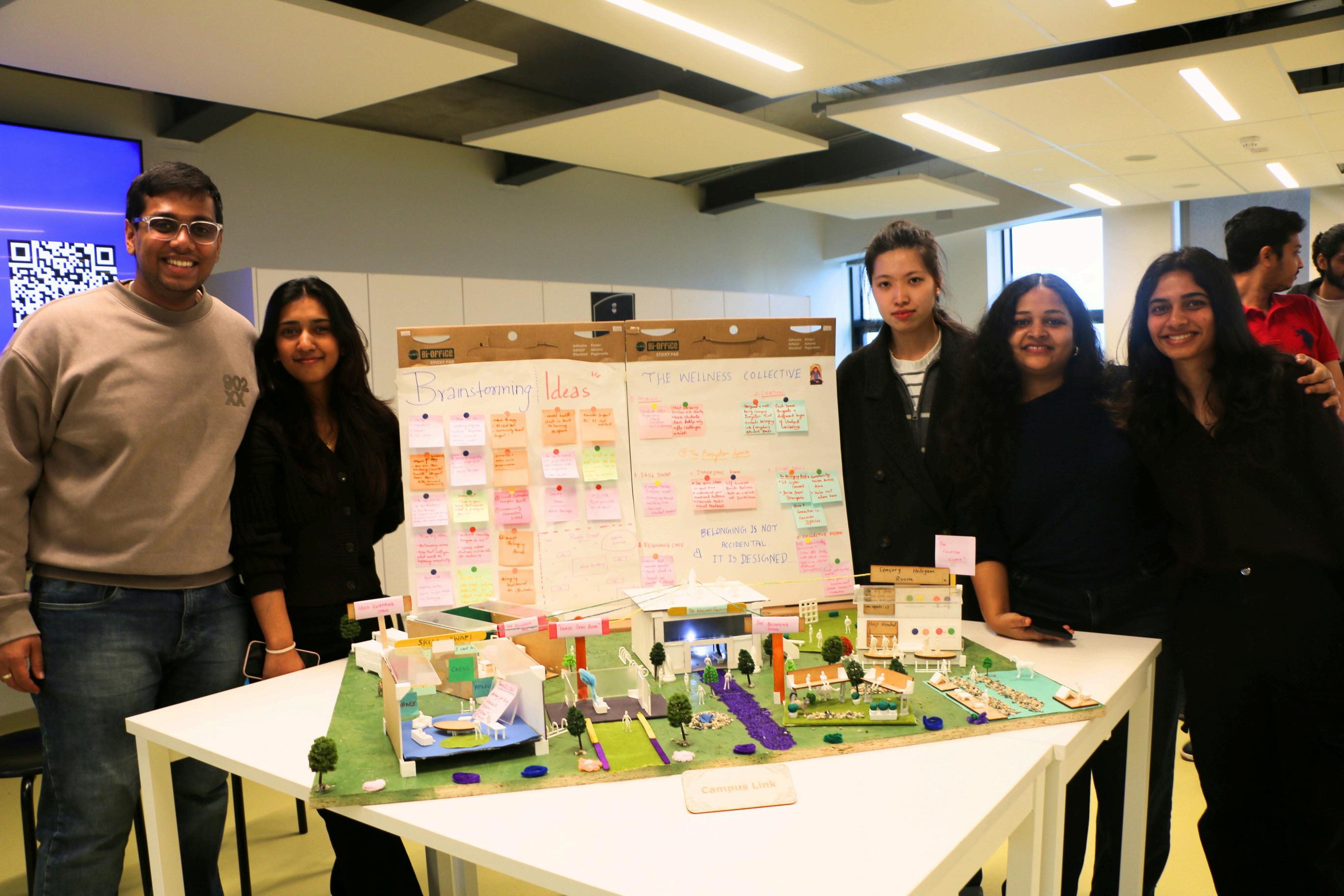
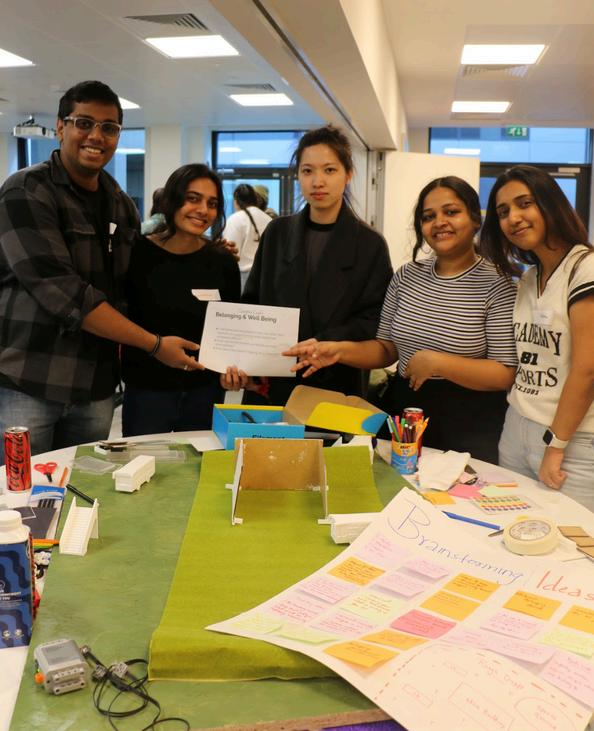
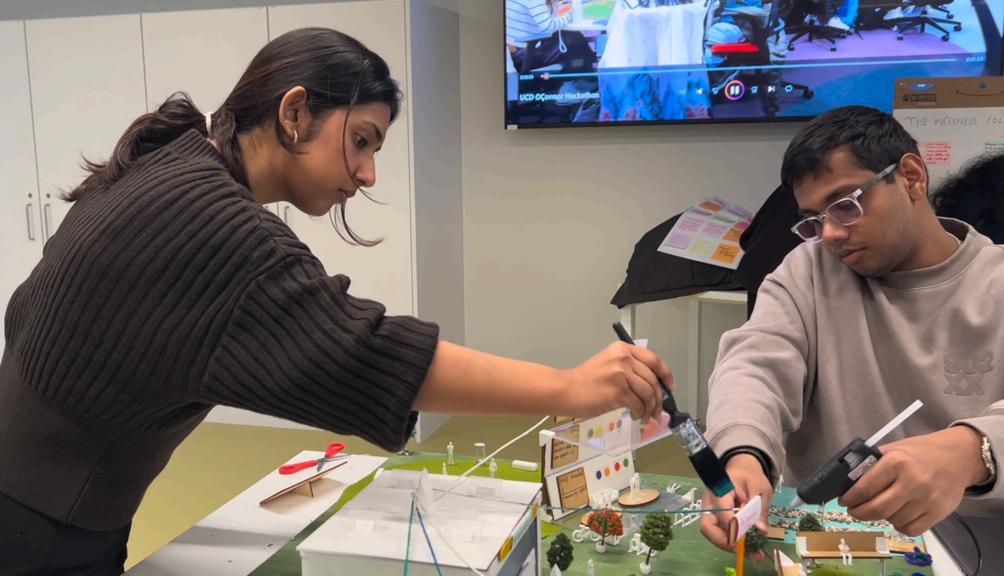
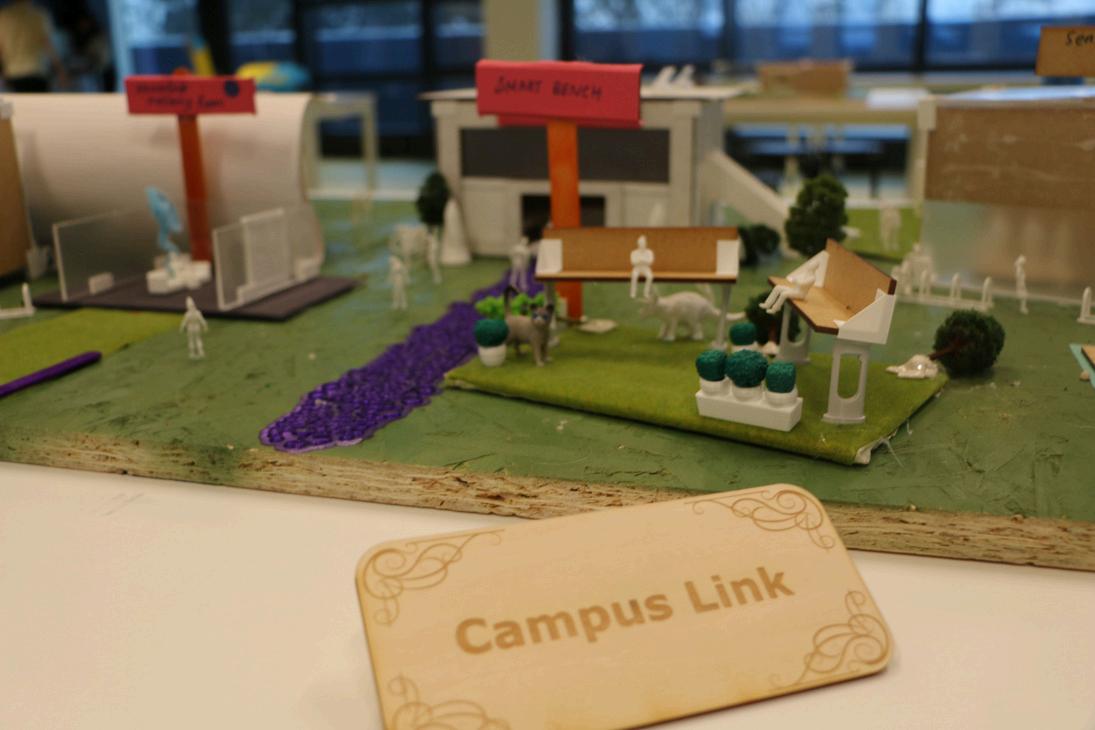
This project focuses on solving the problem of insufficient sense of belonging and well‑being among students on campus, especially the loneliness and pressure faced by international students during their adaptation. Based on our own experience and feedback from classmates, we found that students suffer from various difficulties but lack effective channels to express and solve them.
Therefore, we proposed “The Wellness Collective”, a campus space designed to promote communication, mutual support and mental healing. The space includes The Exchange Room, Sensory Halogen Room, Resonance Café and The Belonging Bench, supporting social interaction, emotional regulation and creative expression respectively.
Our team completed the project through efficient collaboration: from identifying students’ pain points to dividing tasks for prototype design, interface development and framework construction. We integrated diverse skills to innovate and turn campus space into a dynamic hub that enhances students’ sense of belonging and well‑being.
Team Members
Third Place Winner
Ruyi Liu - MSc Marketing
Niketha Kadiri - MSc in Business Analytics
Subhalakshmi Raveendran - MSc in Human Computer Interaction
Zubin Alex Mathew - MSc in Business Analytics
Sri Sampada Veerendra Pachhapur - MSc Business Analytics
Theme: Transport Systems
People’s Choice Winner
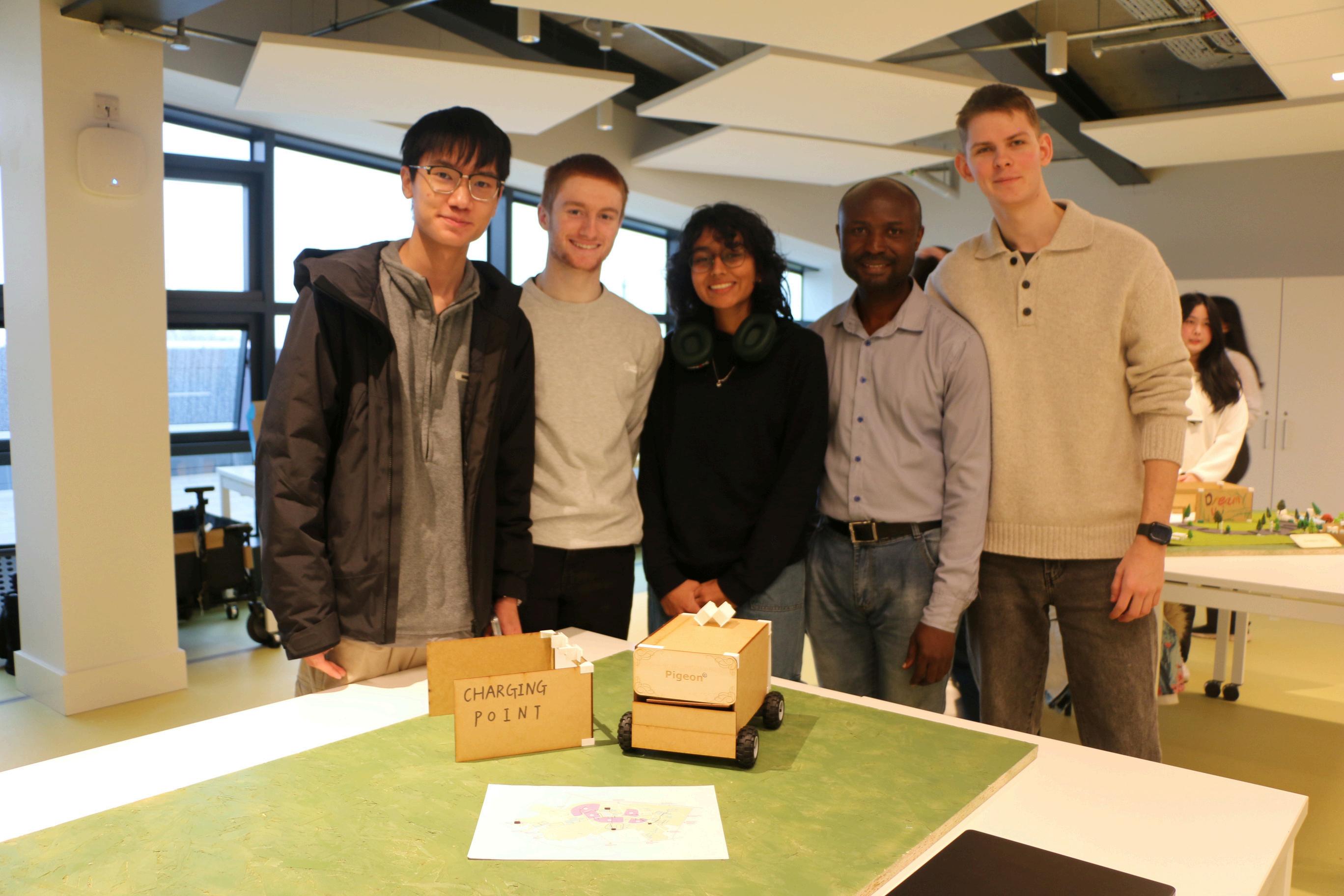
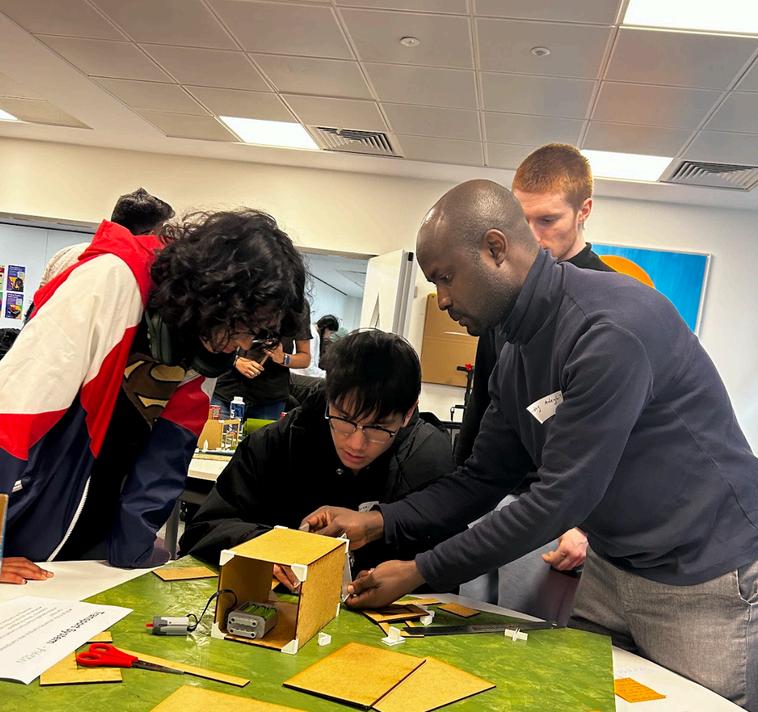
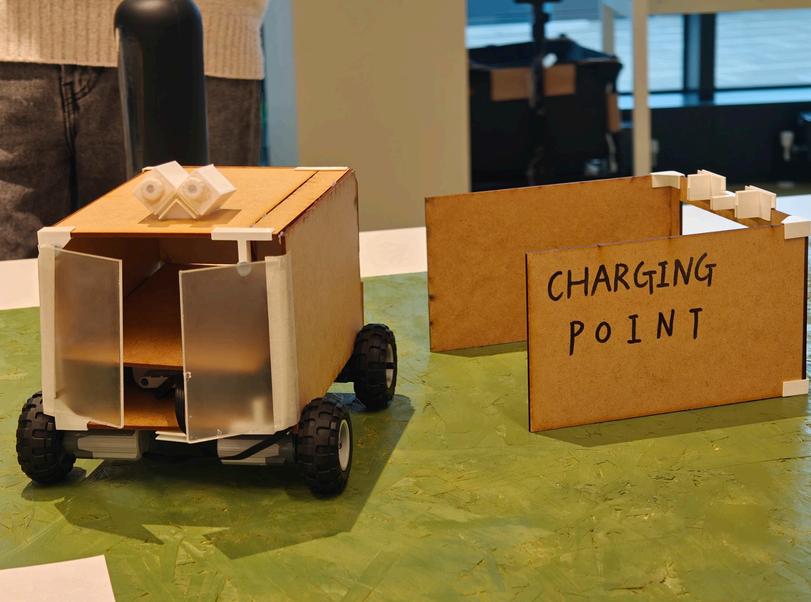
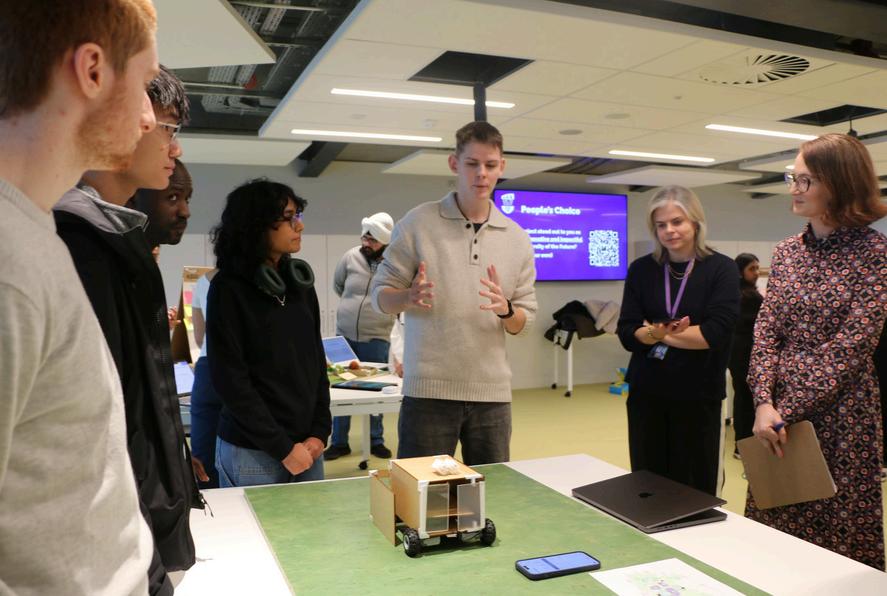
We are an international team with five members from different backgrounds. Our design addresses the challenges faced by students—particularly those with injuries or limited mobility—when transporting heavy loads across campus.
The "Pigeon" is an automated robotic system designed to alleviate this physical burden. Users can summon a Pigeon via a dedicated application to carry items to a specified destination. Upon task completion, the robot autonomously returns to one of four campus charging stations.
We believe the Pigeon system fosters campus equity and inclusivity by providing essential assistance to students of all physical conditions, effectively eliminating the need for heavy labor. Also, since the system is 100% electric, it meets the requirements of sustainability and environmental protection. The whole design is accessible and practical.
Team Members
People’s Choice Winner
Sergei Malyshev, MSc Finance
Yuze Chen - Major in Law with History
Sunday Adegbite - MSc in Public Health
Adam Kearney - BSc Social Sciences
Gauri Bansal - Major In Biological, Biomedical and Biomolecular Sciences
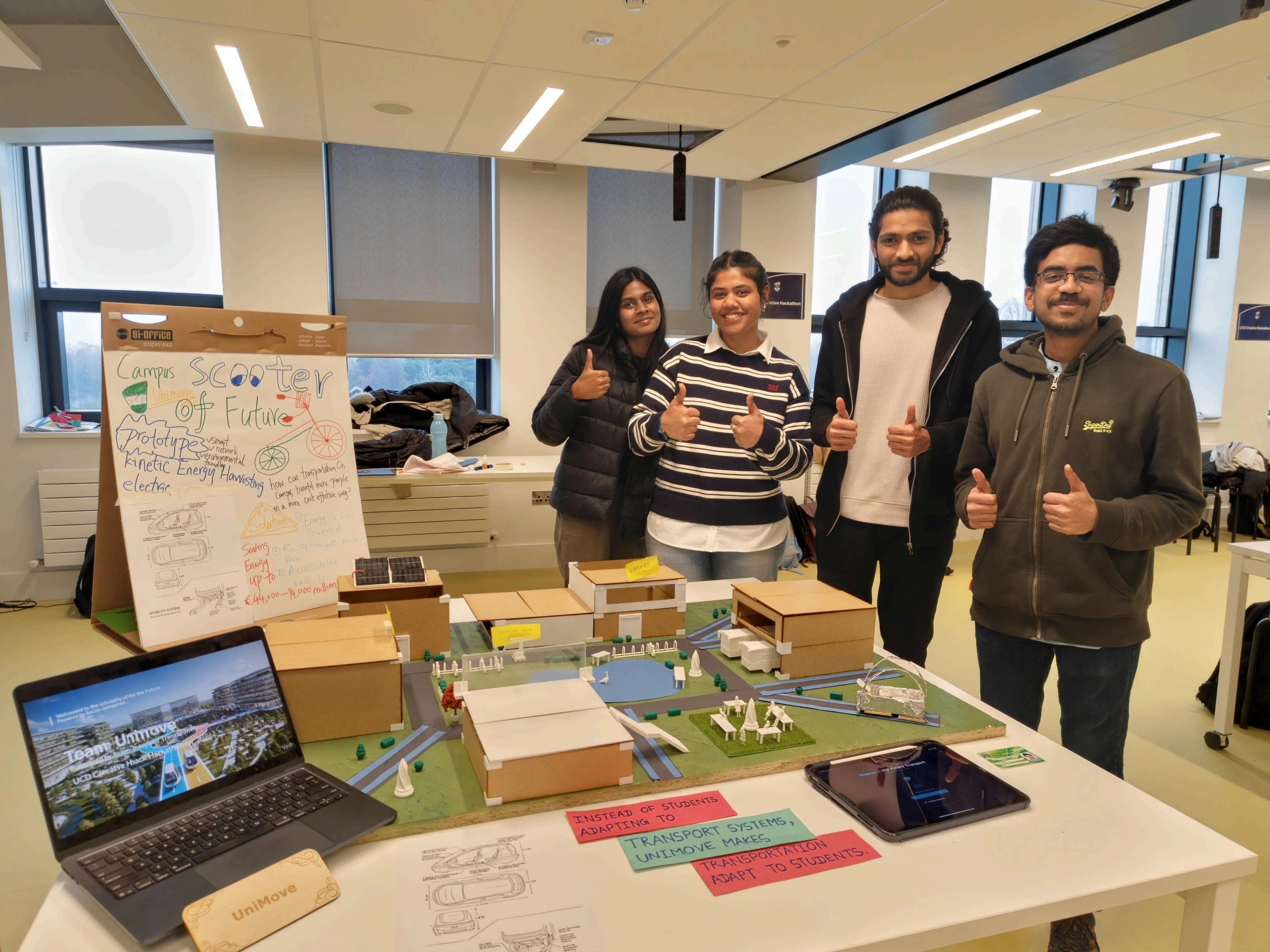
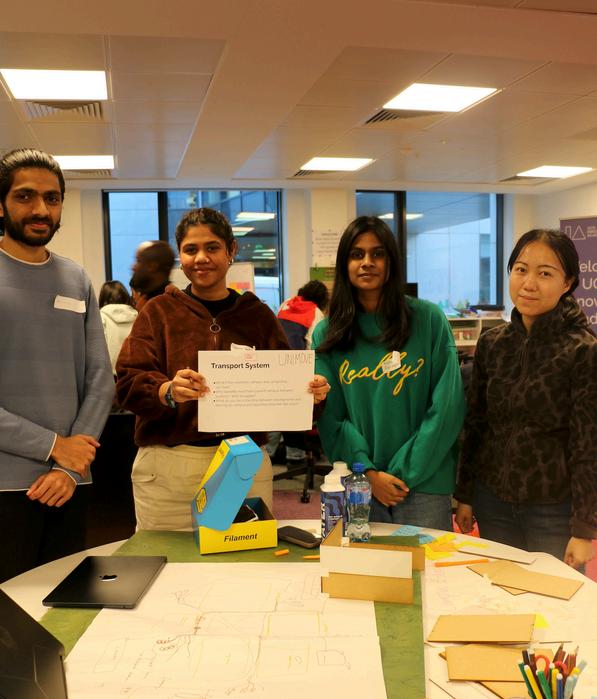
We worked on the challenge of designing the university of the future by focusing on the inefficiencies of campus mobility. We addressed campus mobility at UCD by tackling excessive "dead time", weather-exposed walks, congestion and misaligned travel schedules.
Our solution, Unimove (https://unimove.lovable.app), is an AI-powered SmartPod network and companion dashboard that syncs with a student’s timetable, suggests the next class, and auto-navigates track-guided solar pods on coloured lanes. The web prototype demonstrates ID scan, lecture selection, live ETA, delay handling and accessibility toggles. Students scan their university ID, the system automatically retrieves their timetable, and the pod navigates them to their next class using optimised routes while adjusting to delays or demand in real time.
We aimed to enable a car-free, low-emission campus that aligns with UCD’s sustainability objectives by reducing walking distances, congestion and carbon output.
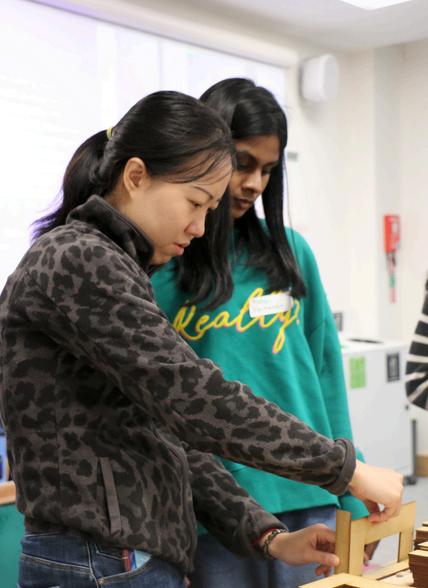
As a team of five, we collaborated through ideation, design sketching, and rapid prototyping to develop both the concept and a working web-app dashboard demonstrating the student journey: from scanning an ID to automated navigation and arrival notifications. This allowed us to test the experience and refine how future campus mobility could be integrated directly with academic schedules.
Irene Andreia Andrew Amal Raj - MSc Digital Innovation
ZiYu Ou - MSc Financial Mathematics
Vijeth Prashanth Hegde - MSc Computer Science (Negotiated Learning)
Akshay Channapla Udaya Kumar - MSc Computer Science (Negotiated Learning)
Tharindi Kishali Fernando - BSc Business
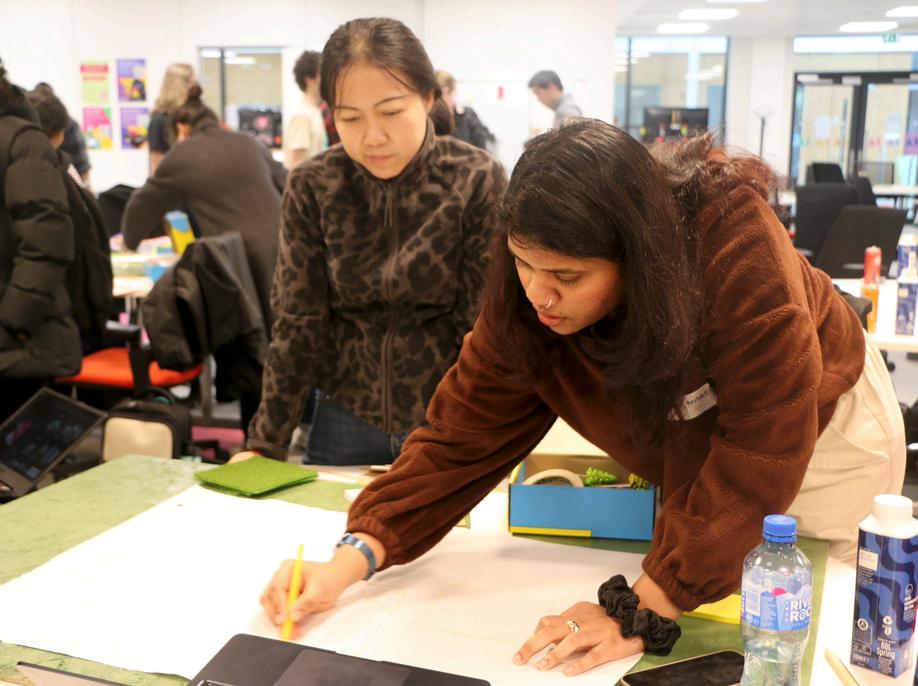
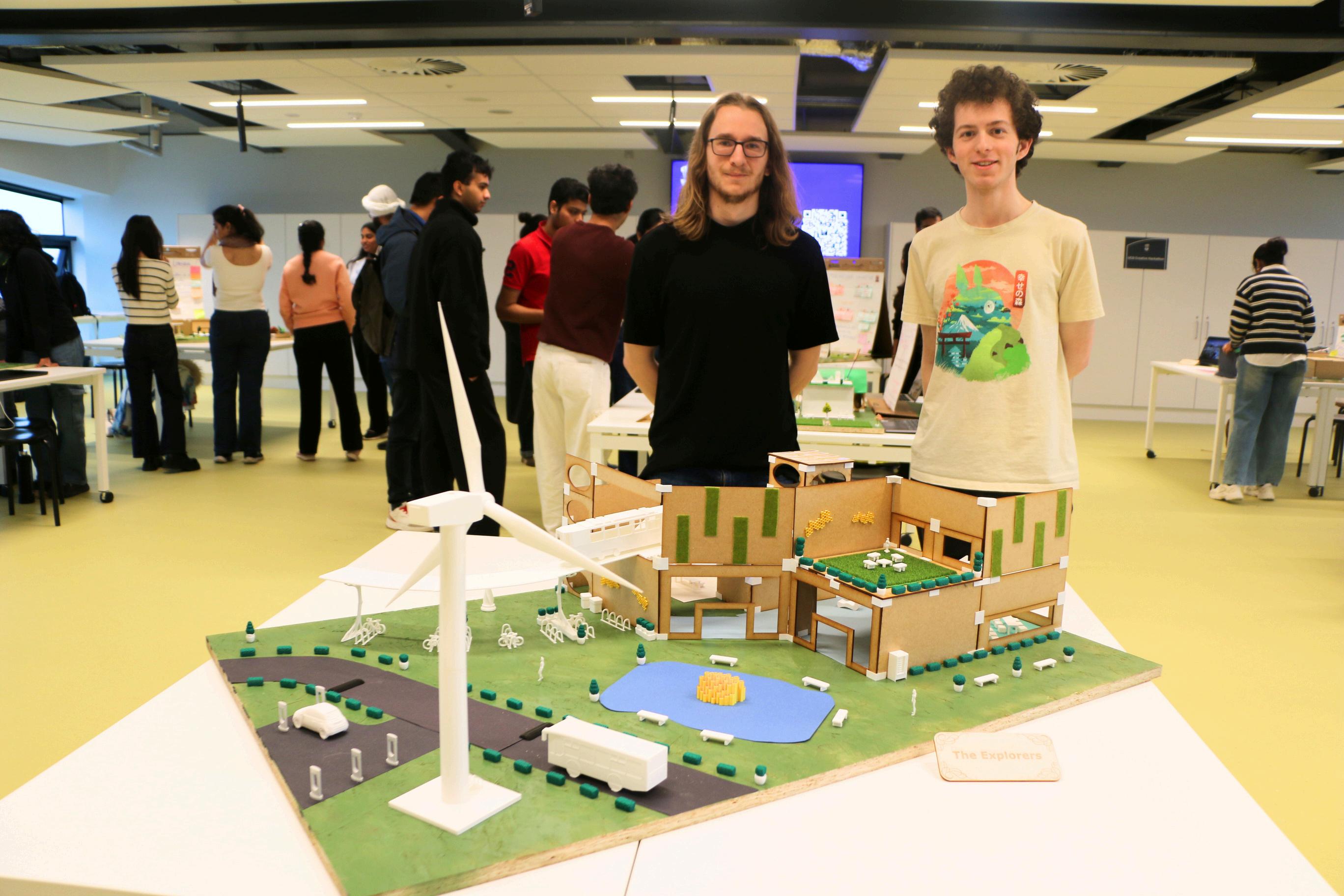
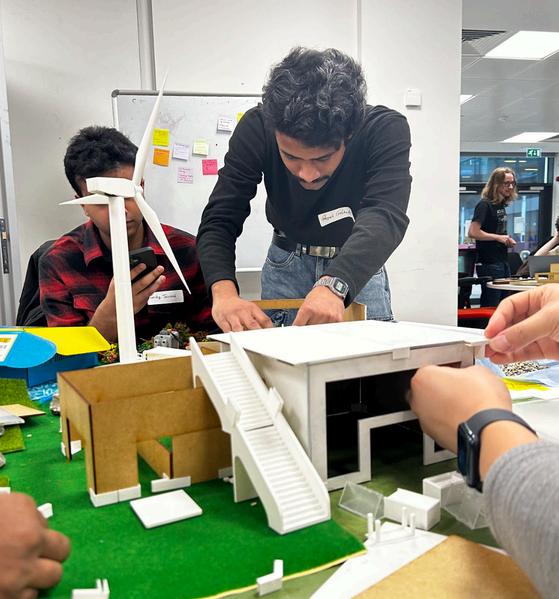
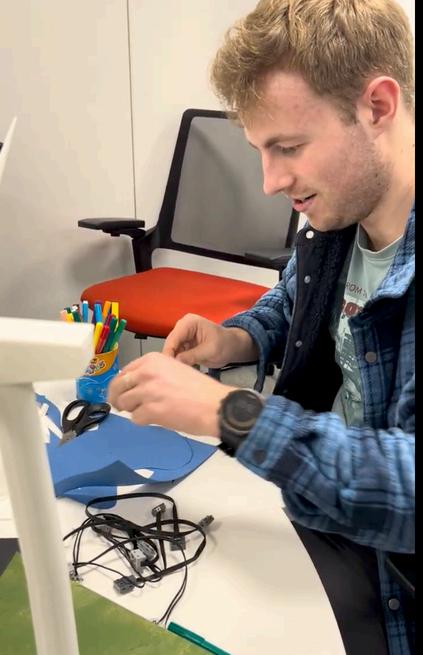
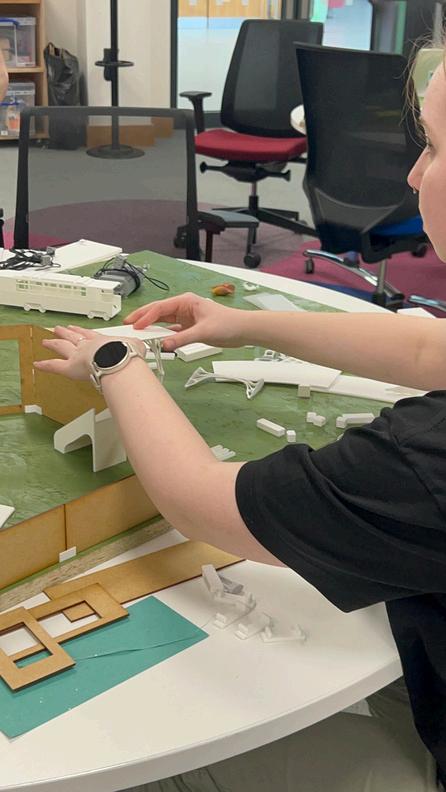
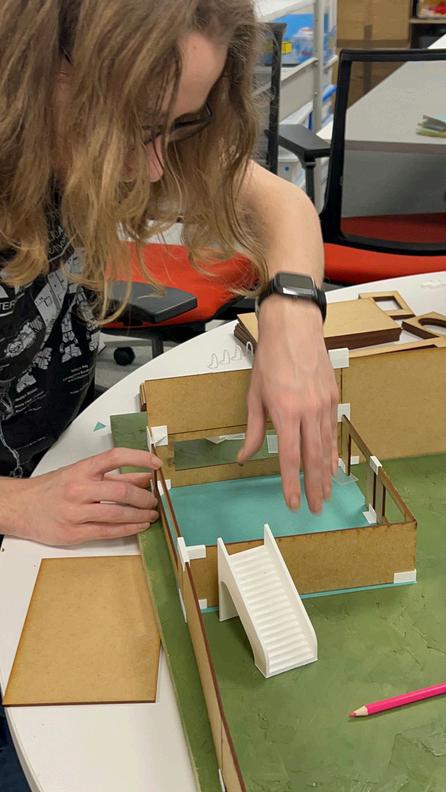
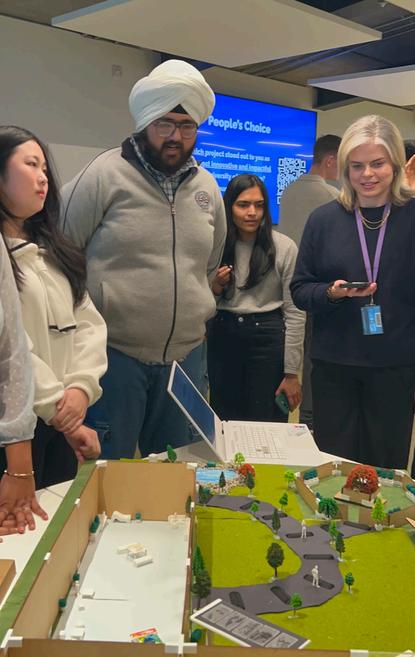
With our model, we explored how transport and light influences a campus. We discussed in depth a few main points:
- Cycling infrastructure is promoted, and yet low quality. Around the campus there are supposedly bike maintenance stations, but these are mostly broken. We propose having an increased amount of bike parking (preferably sheltered) with a focus on high-quality amenities such as tire pumps.
- Weather has a huge influence on transport use. Our model had a tram stop inside a campus building - while maybe not realistic for it to be inside, it highlights our point that people will be less likely to take public transit if it leads to being soaked by Irish rain. There are easy solutions to this, such as covered walkways, which UCD needs a lot more of.
- We also discussed light. Many of the lecture halls around campus have no natural light, making them feel a bit like dungeons - and not very fun during the winter months when you enter when it's dark, and when you leave it's dark again, and you've missed all daylight! Large open atriums and teaching spaces like in O'Connor provide a lot more light all throughout.
Melina Collins - Major in Physics with Astronomy & Space Science
Christopher Haines - Major in Computer Science
Leo Humphreys Newman - Major in Computer Science
Mark Rea - Master of Engineering
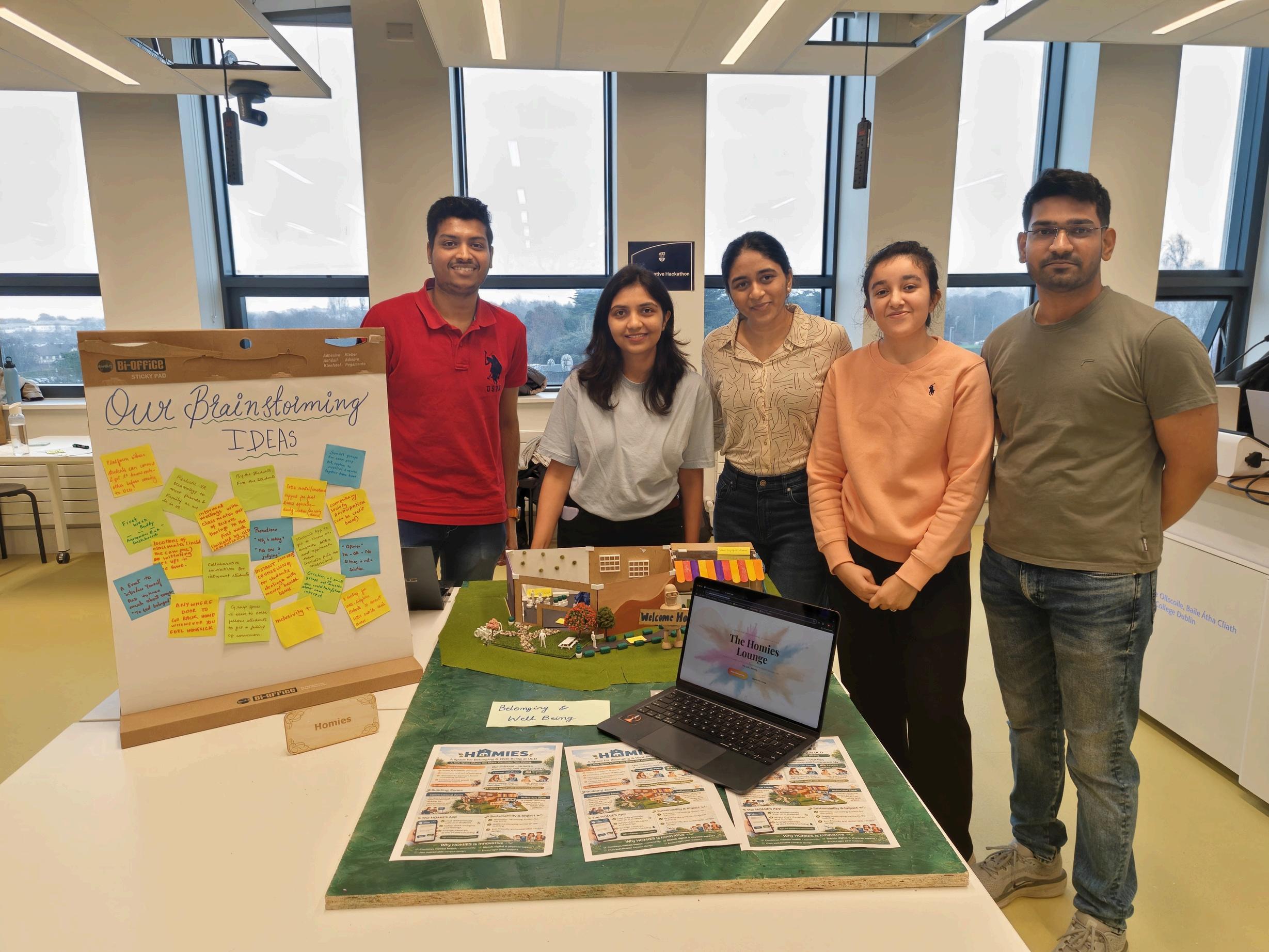
International students at University College Dublin often experience homesickness, cultural displacement and difficulty building meaningful social connections. Many also struggle with Dublin’s grey weather and the emotional adjustment of living far from home. During our group discussion, one experience stood out: a friend who wanted counselling support but could not get an appointment for over a week. She felt overwhelmed and had no one around to talk to who truly understood what she was going through in a new country. As we shared our own experiences, we realised many of us were facing similar feelings of loneliness and uncertainty. Simply being heard and knowing we were not alone made us feel reassured and lighter.
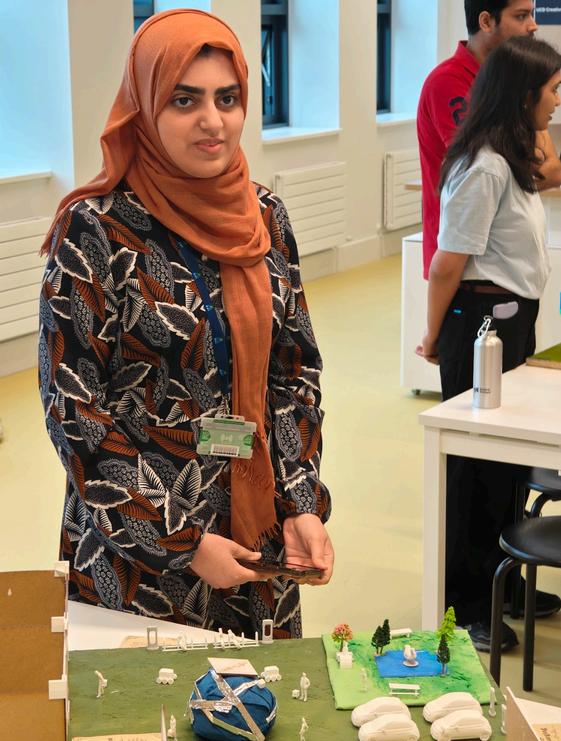
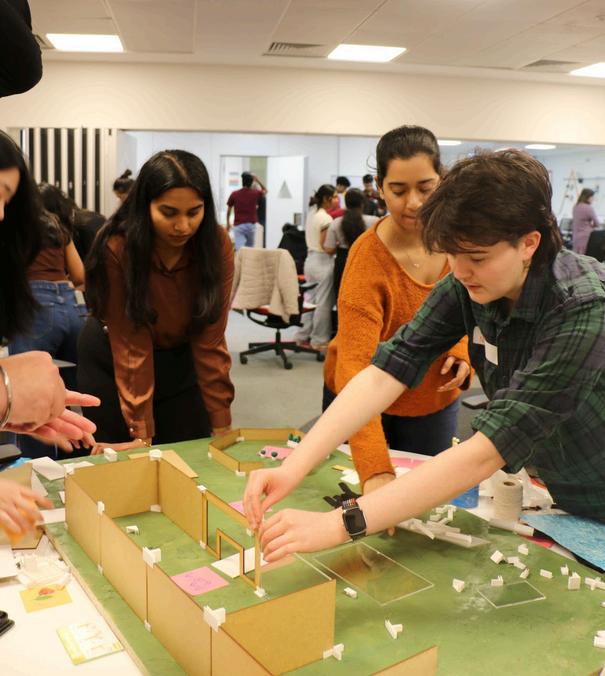
Our solution, The Homies Lounge, is a hybrid wellbeing concept designed to create a sense of belonging. It combines a digital platform with a physical community lounge where students can connect in a comfortable, informal environment. The digital platform allows users to anonymously share struggles, upvote issues they relate to and find others experiencing similar situations. The physical space includes areas for support groups, one-on-one conversations and a walkable path where students can walk and talk. A colourful environment, indoor greenery and a glass roof relaxation room allow students to watch the rain and connect with nature. Rainwater is sustainably collected and directed into a small man-made pond.
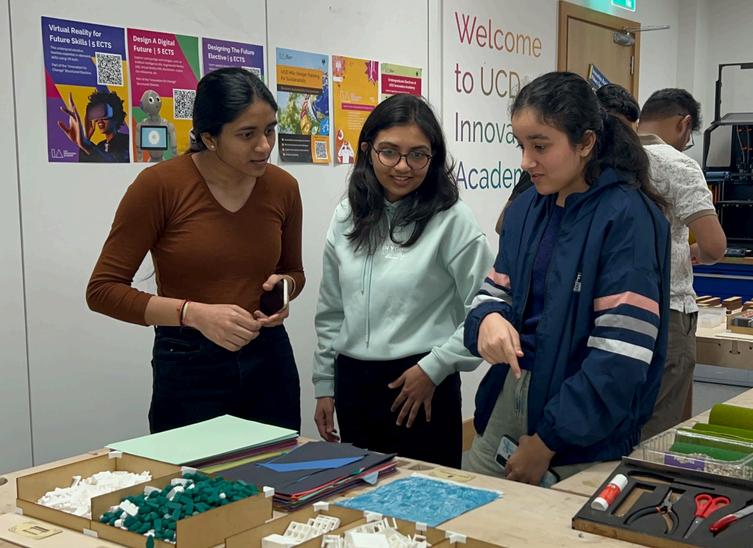
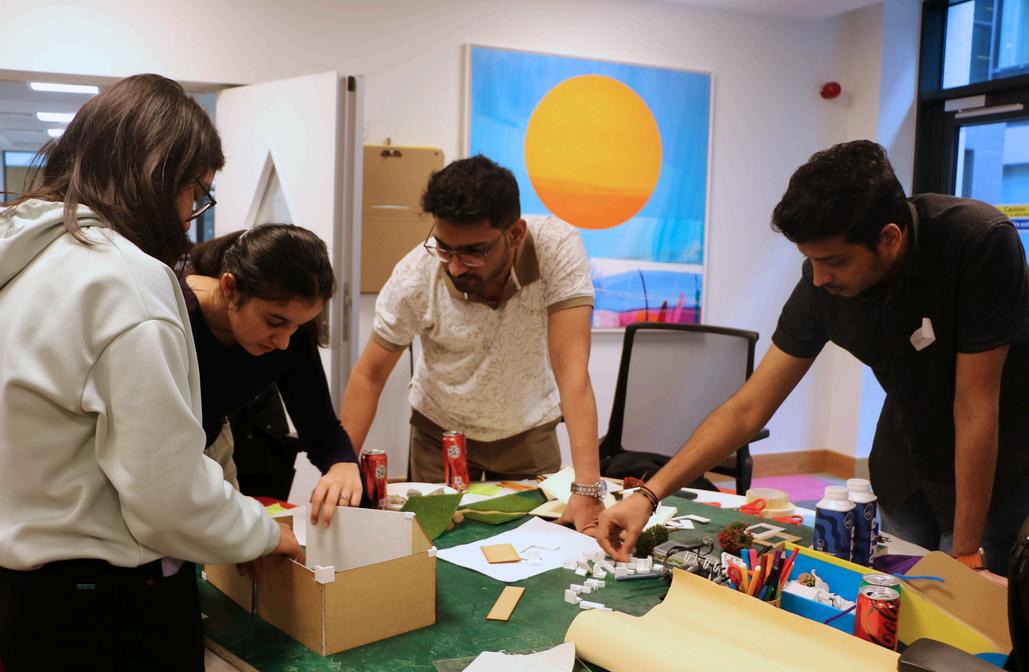
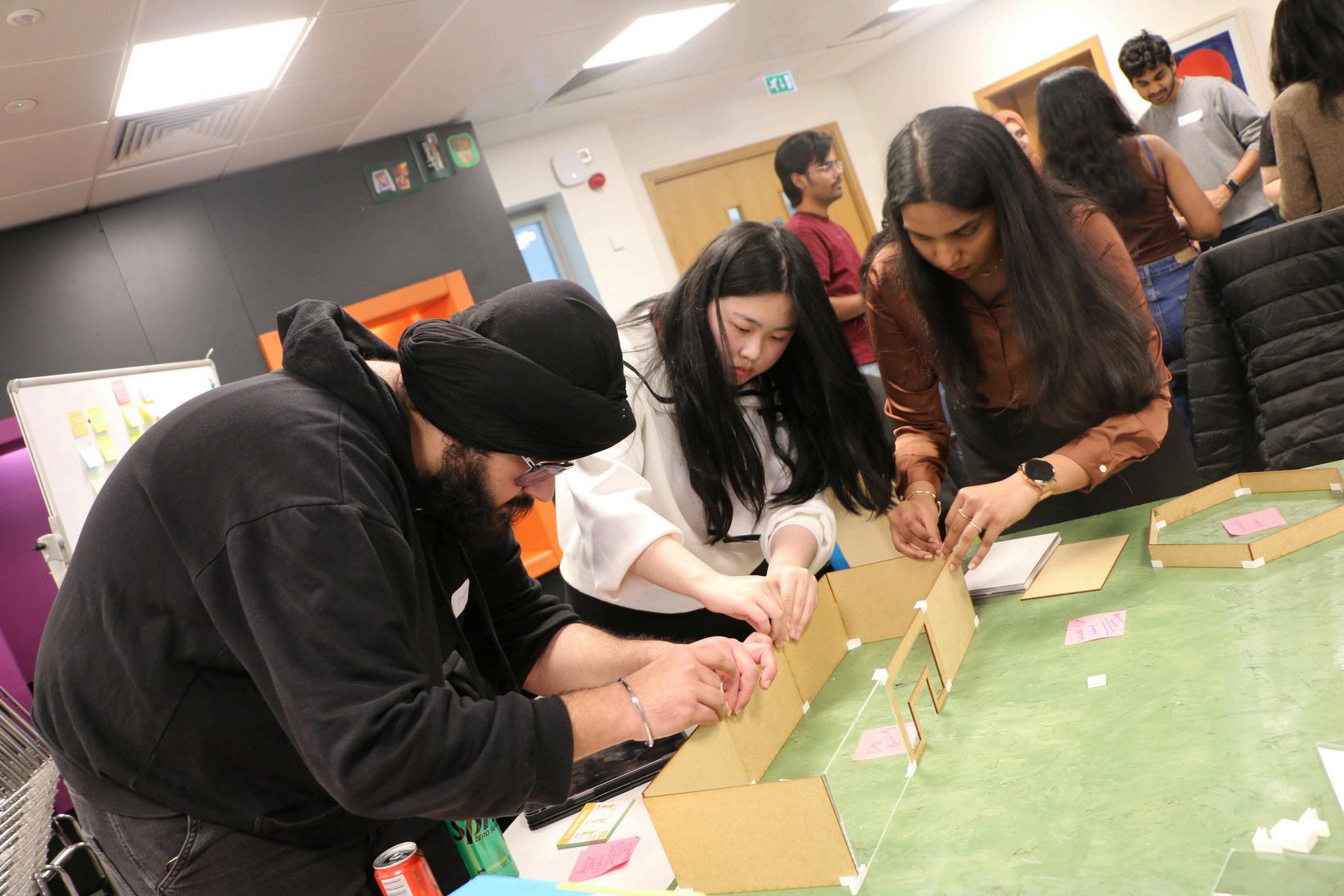
We began by sharing personal experiences, which helped us define the problem and shape the concept. The execution involved building a physical prototype of the space using architectural elements. We divided responsibilities across ideation, design and prototype construction to bring the concept to life.
Aditya Suryawanshi - MSc Computer Science
Gayatri Palde - MSc Human Computer Interaction
Mohini Sharma - MSc Human Computer Interaction
Sara Khanna - BBL Business and Law
Sudarshan Ellore - MSc Business Analytics
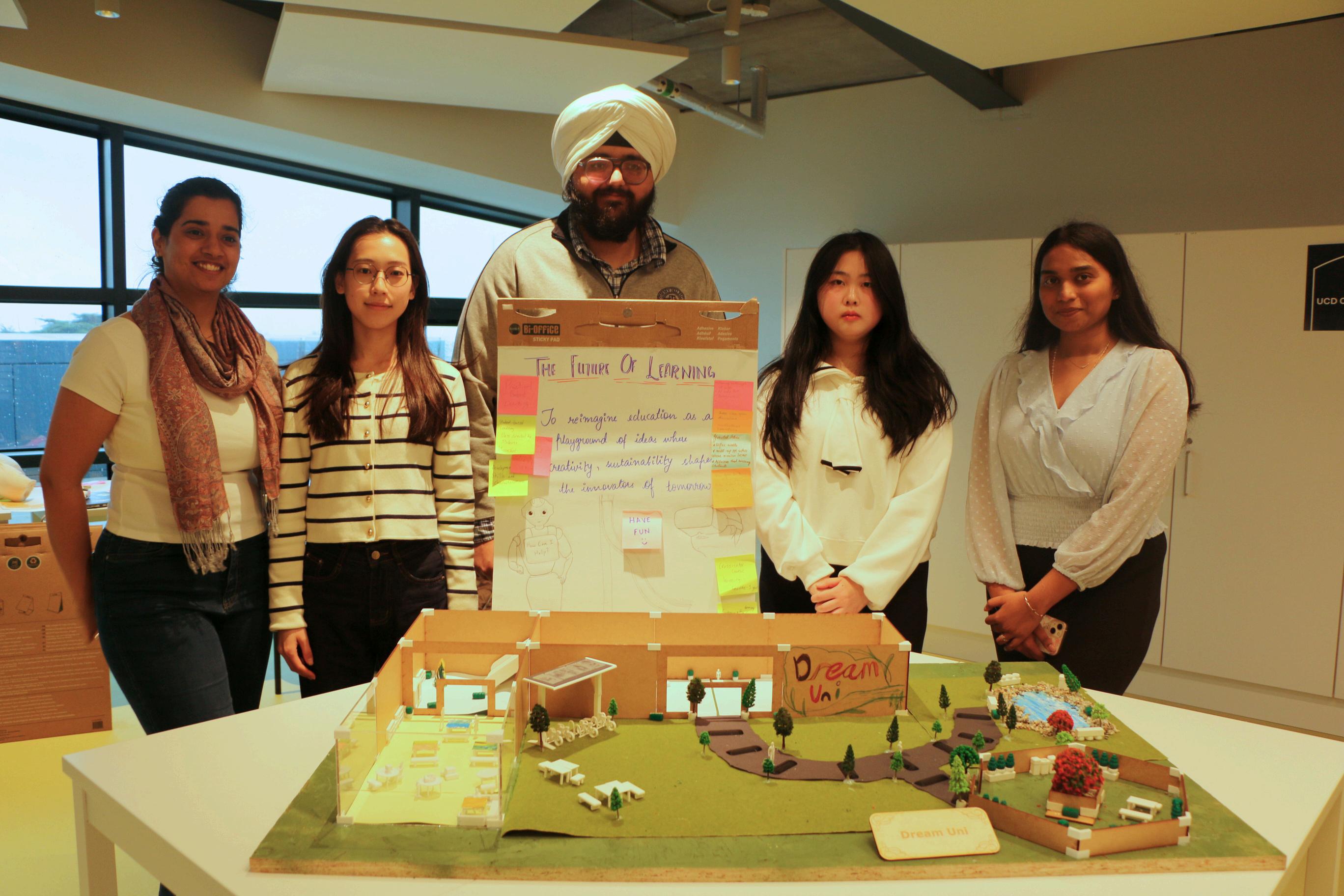
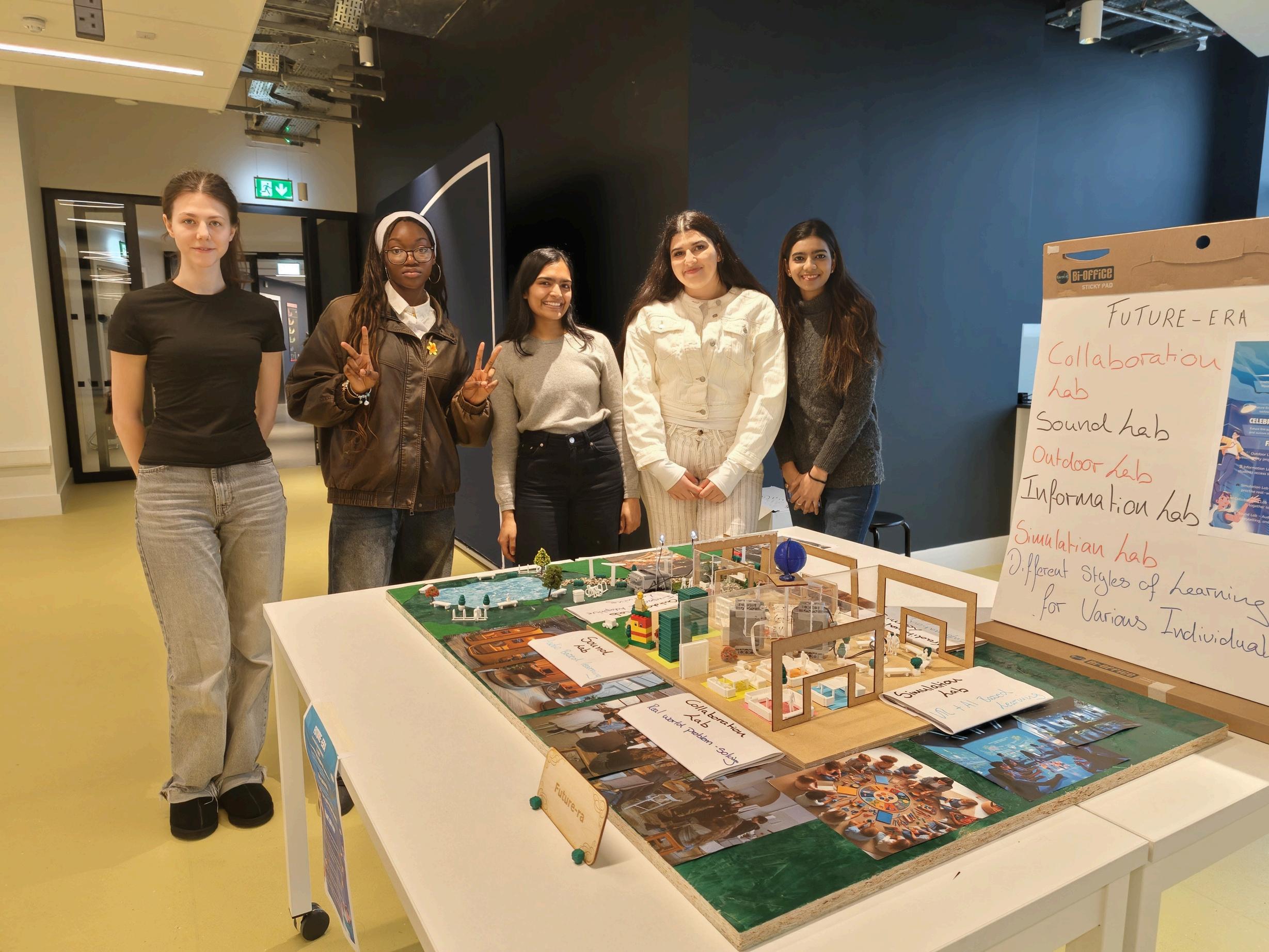
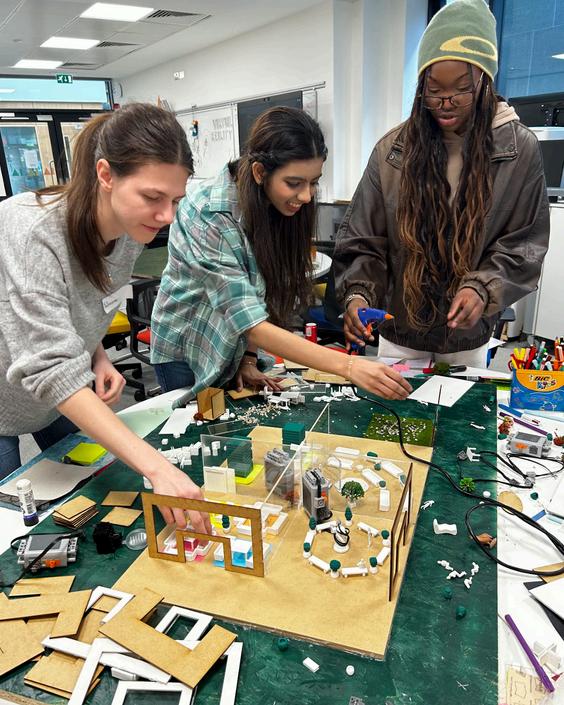
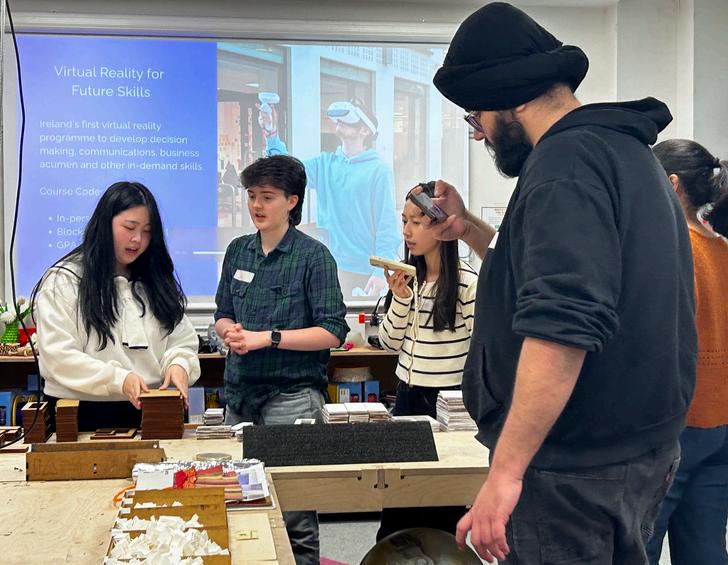
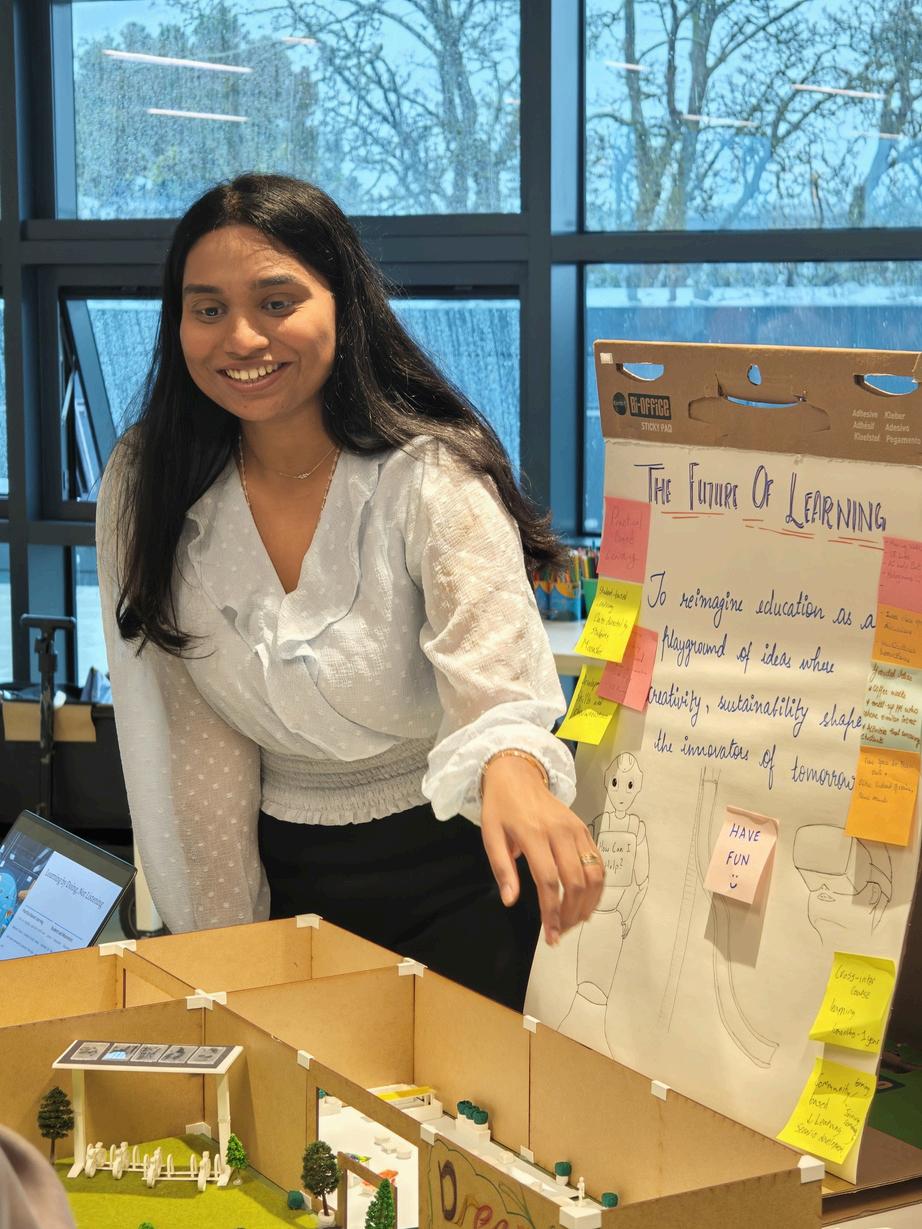
Our project explores a key question: if university education no longer guaranteed jobs, what would motivate people to attend university? We believe the future of learning should focus on curiosity, collaboration, and real-world impact rather than simply obtaining a degree.
Based on this idea, we developed “The Future of Learning,” a concept that reimagines the university around two key principles: peer learning and project-based learning. Instead of traditional lecture-based teaching, students collaborate with peers from different disciplines and cultural backgrounds. Through project-based learning, they work together to address real-world challenges and apply knowledge in practical ways.
To support this approach, we designed a campus environment that encourages interaction, creativity, and well-being. Transparent classrooms promote openness and shared learning, while collaborative and outdoor spaces encourage discussion and experimentation. Sustainability is also integrated into the campus through features such as compost gardens and energy-generating walkways.
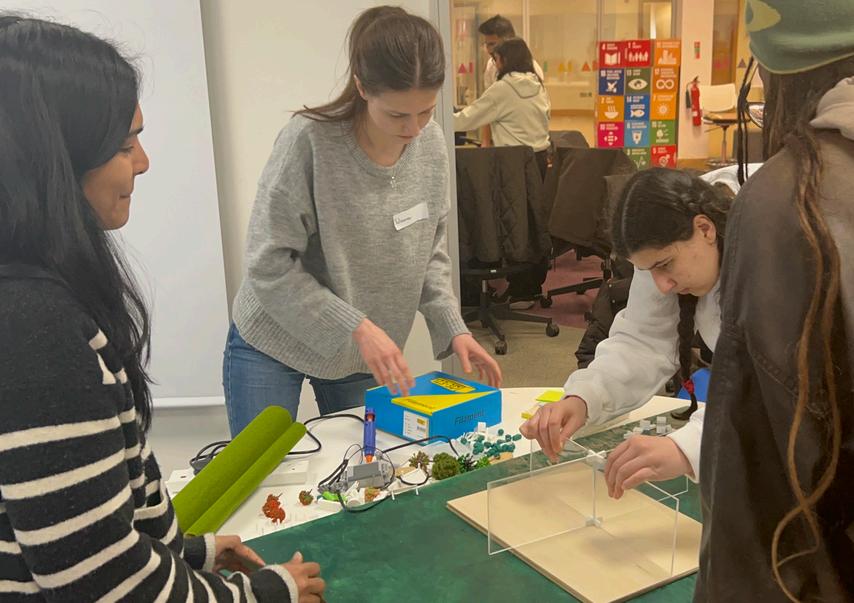
Through this process, our team combined different perspectives and translated these ideas into a physical campus model reflecting collaboration, creativity, and student well-being. Together, we created a vision of a future university where learning is collaborative, meaningful, and driven by curiosity.
Julia Mc Donnell - BSc City Planning and Environmental Policy
Nick Haynes - Major in Computer Science with Data Science
Mario Celestina Nanditha H - MSc in Business Analytics
Shiyu Huang - BComm International
Prabhdeep Singh Keer - MSc Business Analytics
Maitreyee Naik - MSc Human Computer Interaction
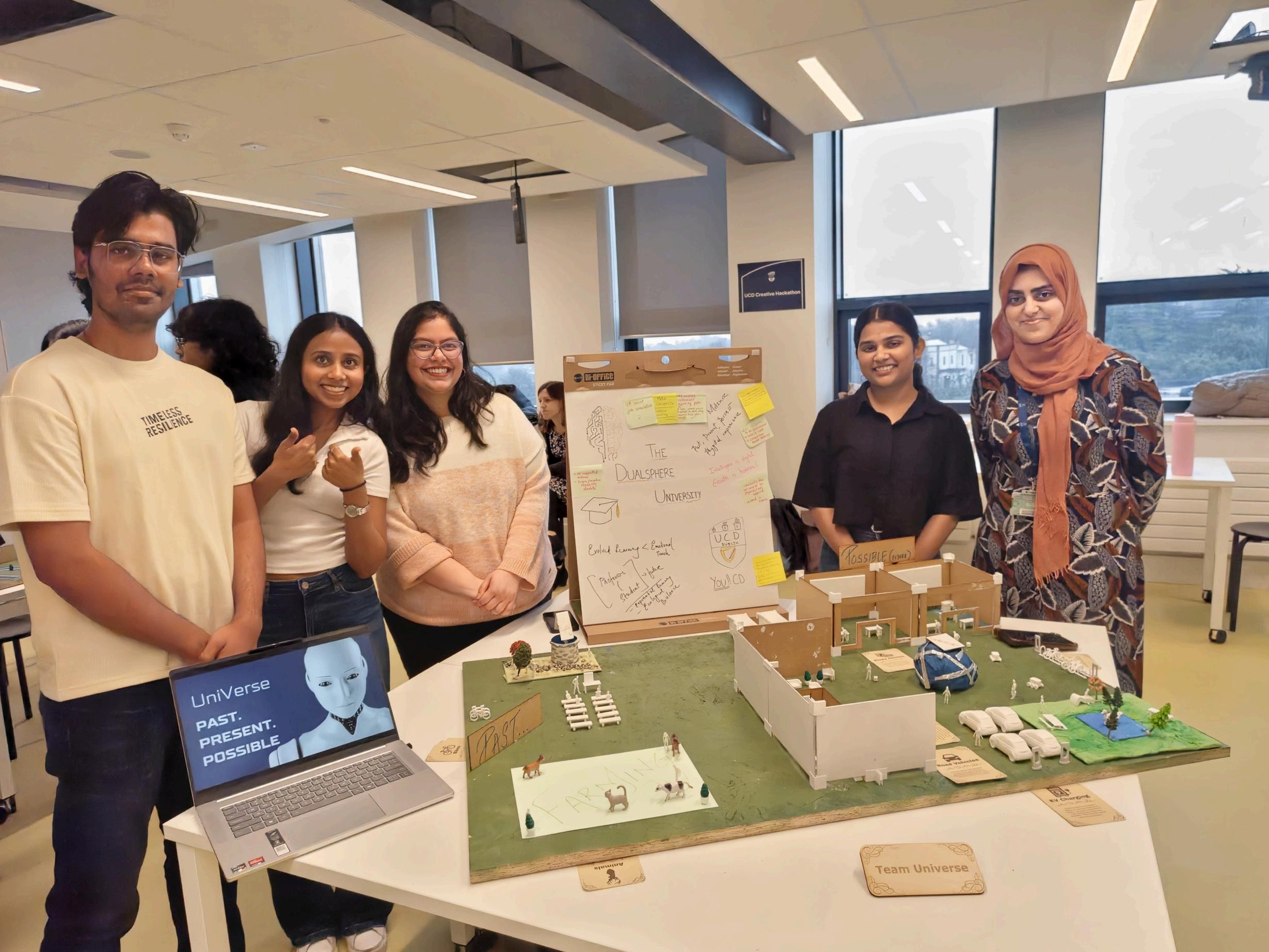
Traditional universities were designed for a time when information was scarce and professors were the main source of knowledge. Today, with AI and digital tools, information is instantly accessible to anyone. This raises an important question: if knowledge can be accessed anytime, what is the real purpose of universities? At the same time, as AI becomes more dominant in learning and work, there is a growing risk that education becomes isolated and overly digital. Humans are social creatures, and meaningful interaction, collaboration, and shared experiences remain essential for personal growth.
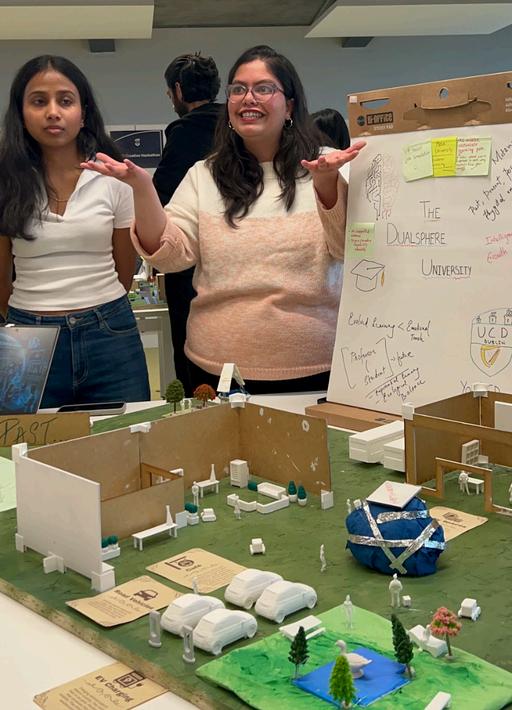
Our solution is DualSphere University, a future-focused education model built around two connected spheres: digital and physical. In the digital sphere, students learn through AI-powered simulations and interactive scenarios rather than traditional lectures. They actively apply knowledge by solving real-world problems, while professors act as mentors and challenge designers. The physical sphere is the campus, where students meet, collaborate, debate ideas, and build social connections. This ensures that while AI expands access to knowledge, human relationships and teamwork remain central to learning.
As Team UniVerse, we developed this idea through collaborative brainstorming, research, and discussion. Each member contributed different perspectives and skills, allowing us to combine creativity and critical thinking to design a model of education that balances technology with human connection.
Himani Satish Pawar - MSc Marketing
Ashna Joshy Jose - MSc Marketing
Falguni Sandip Wani - MSc Computer Science (Negotiated Learning)
Adityanarayanan Buddharajan – MSc Computer Science (Negotiated Learning)
Izzah Malik - Major in Computer Science with Data Science and AI DN201