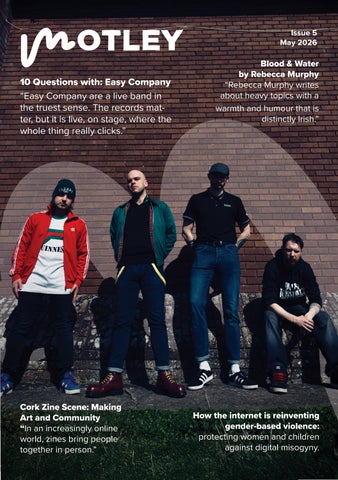
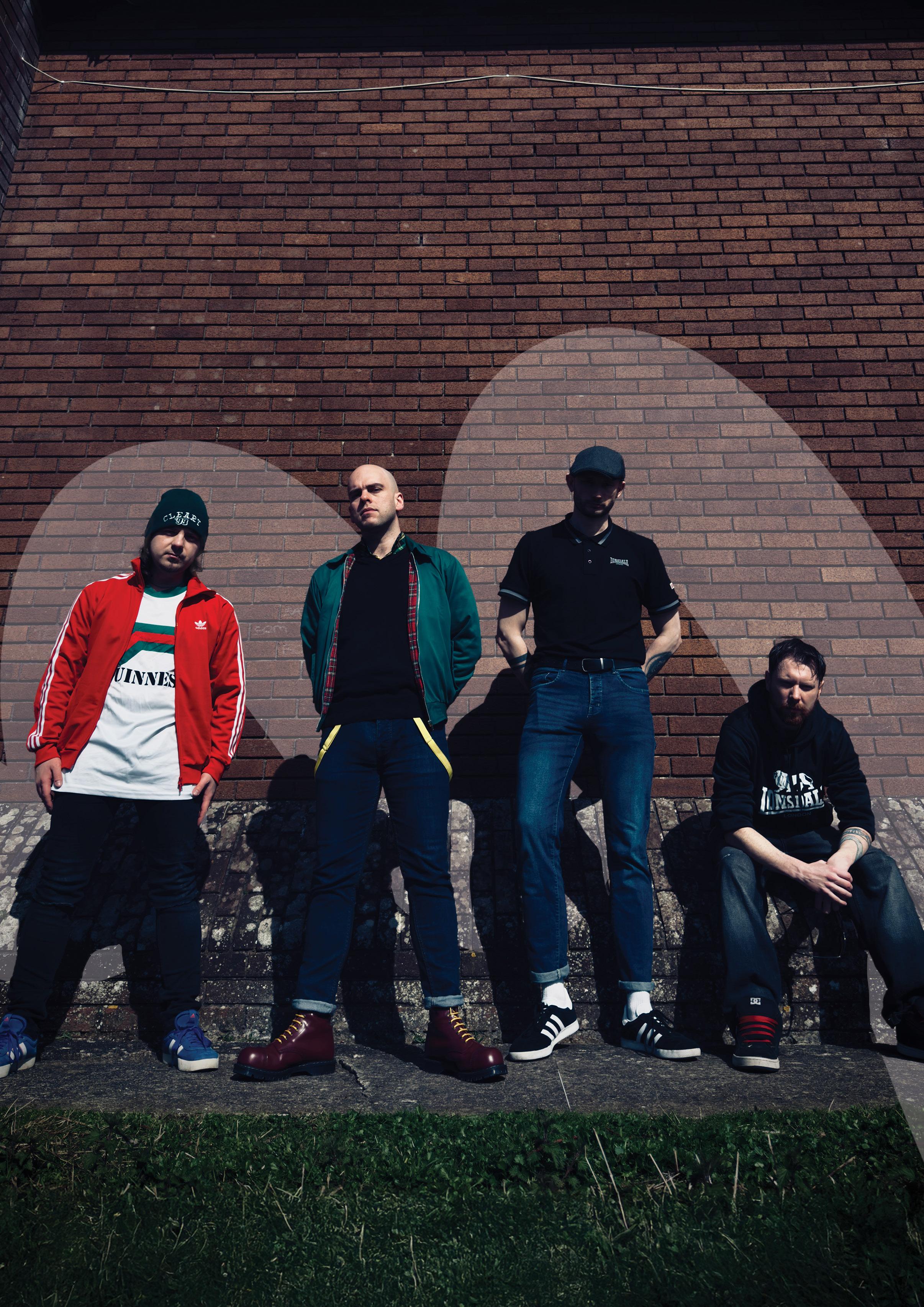
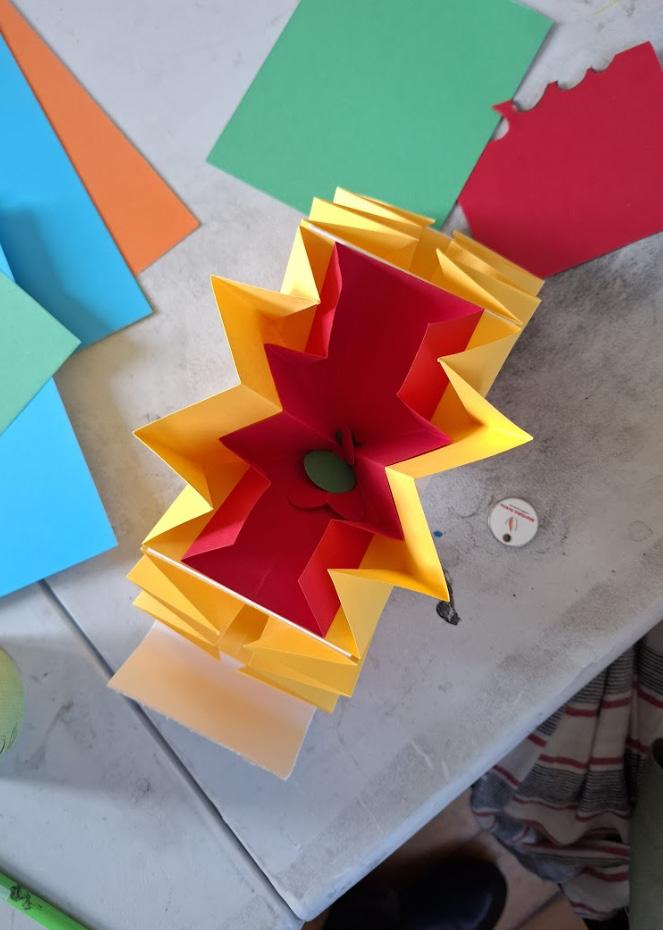
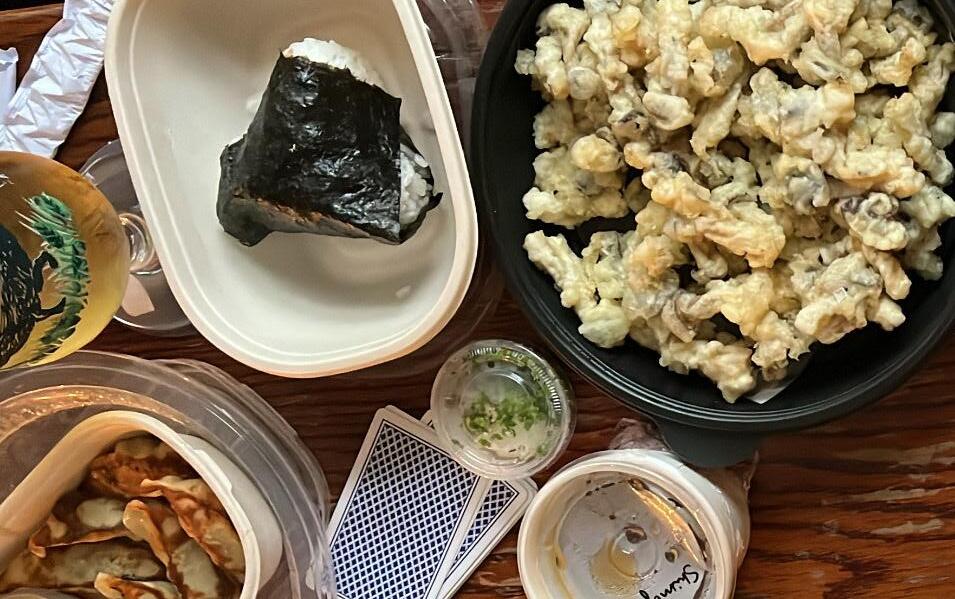
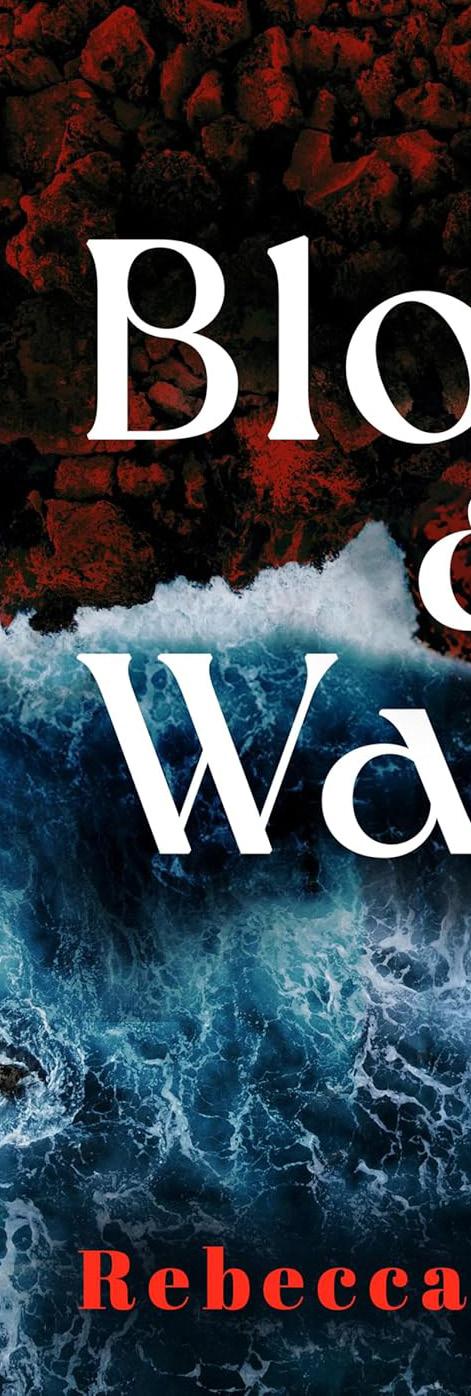
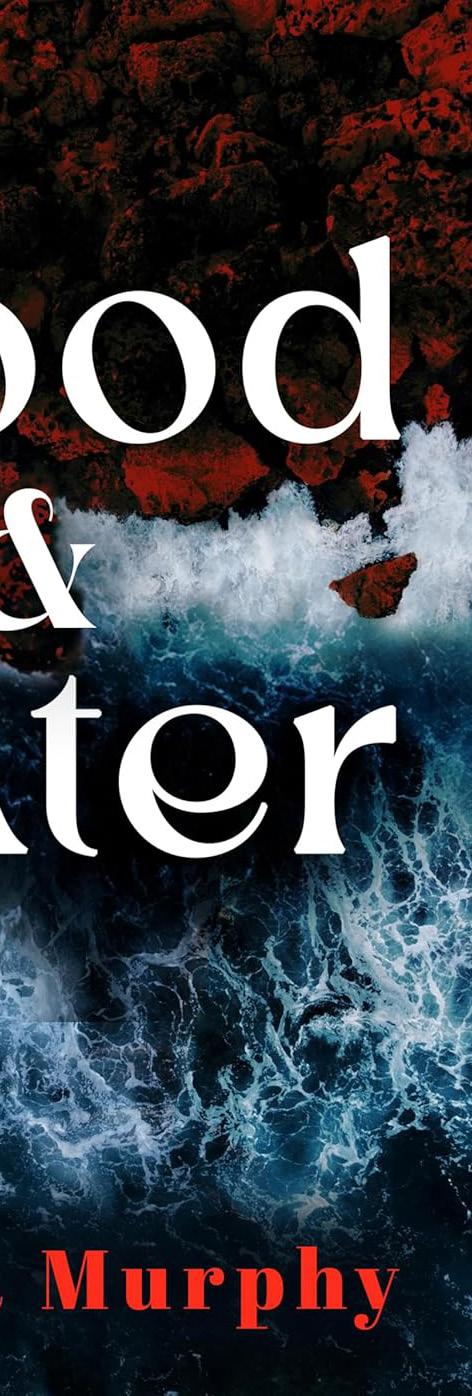
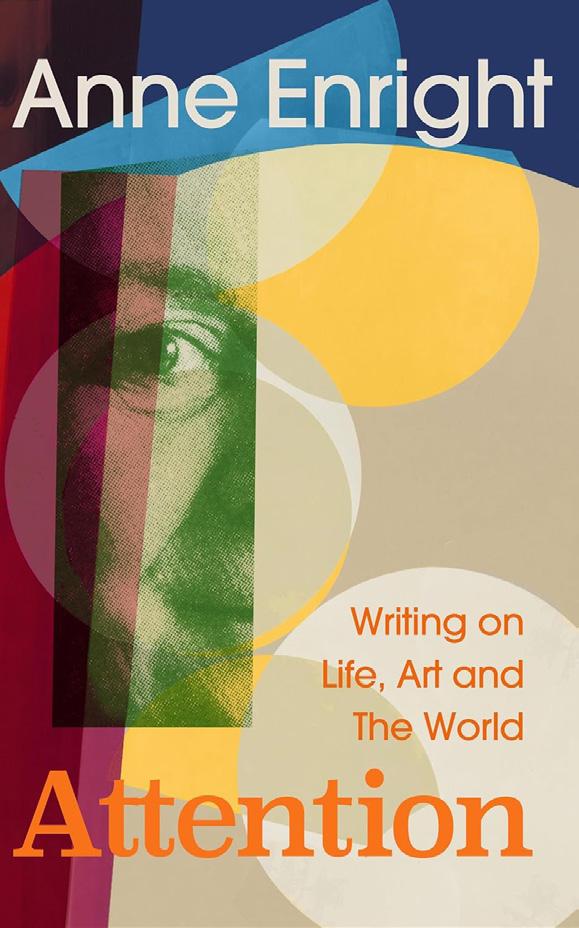
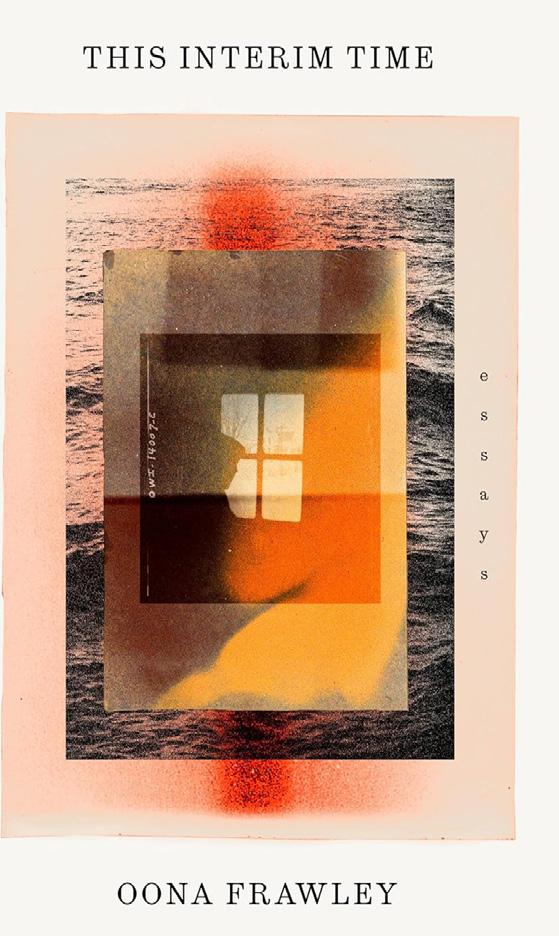
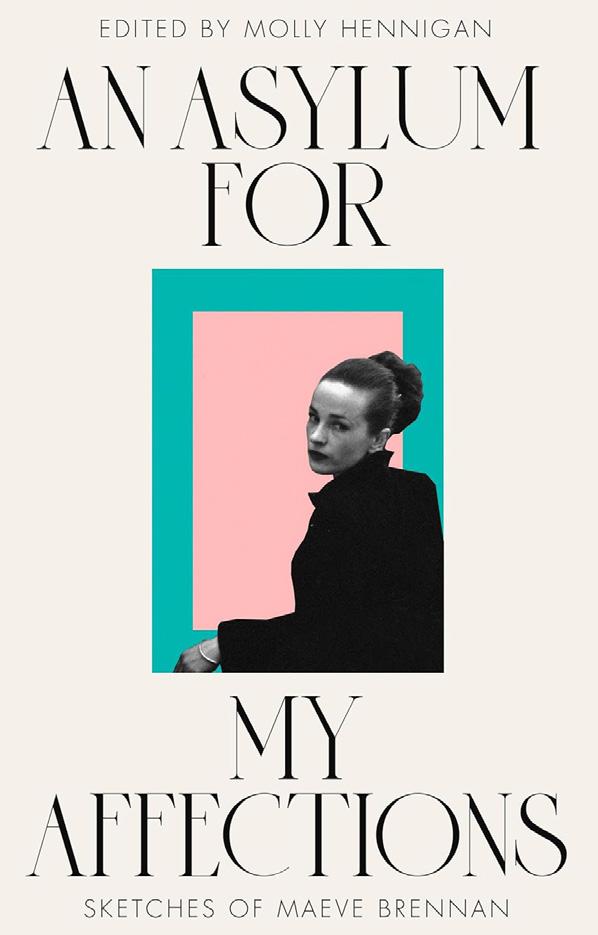
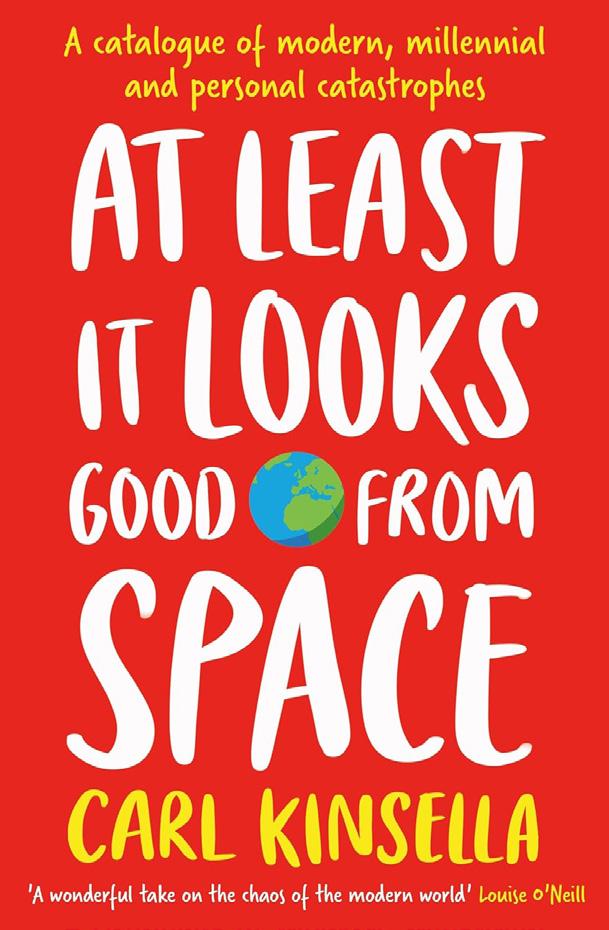
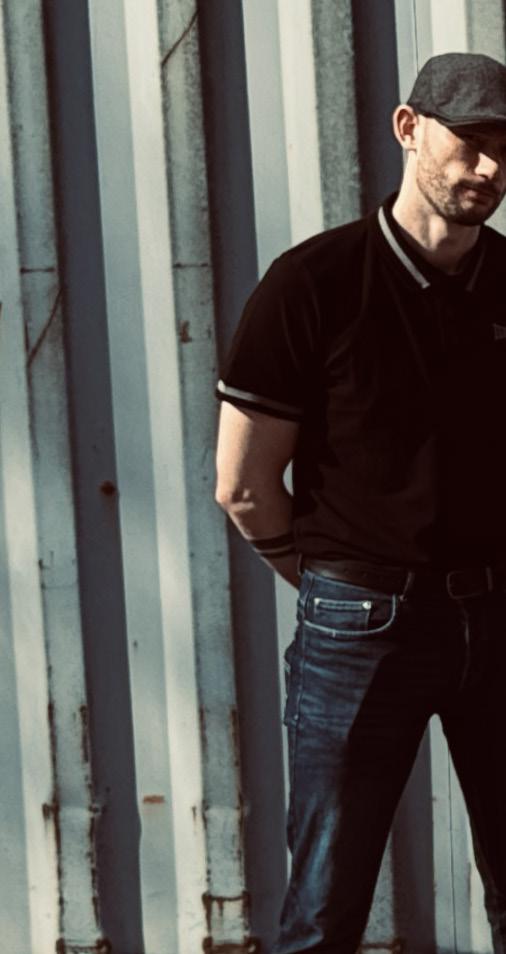
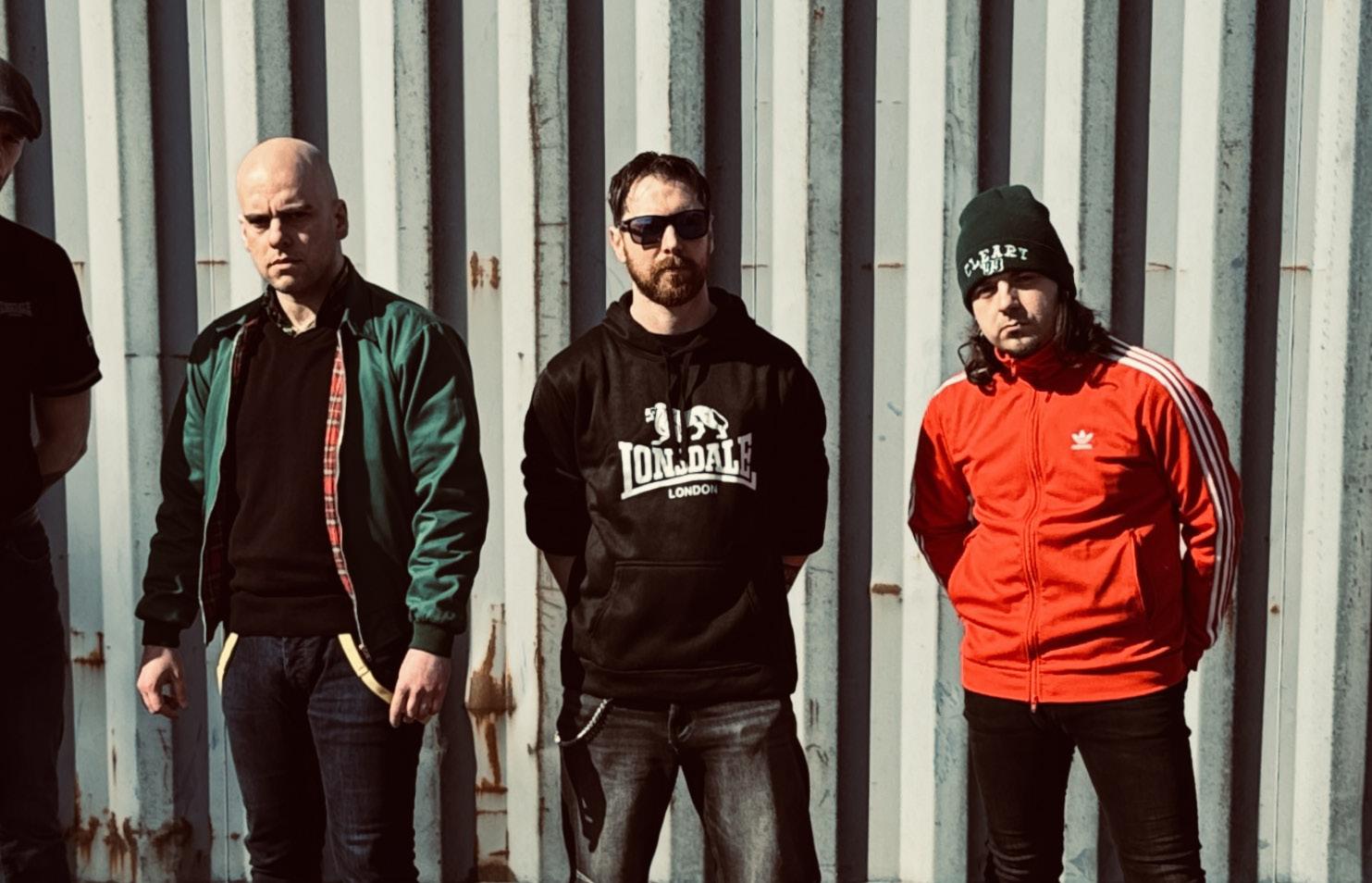
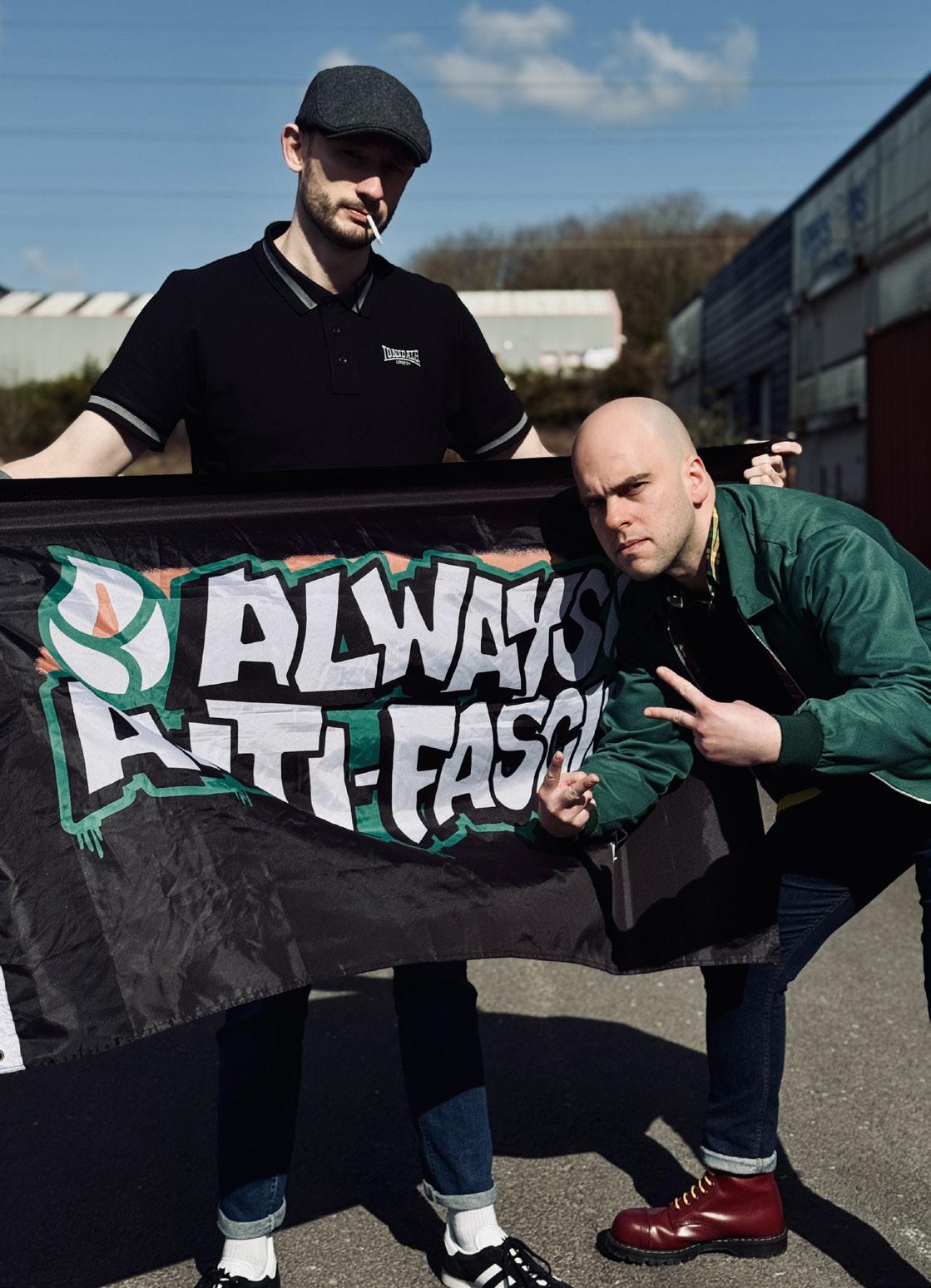
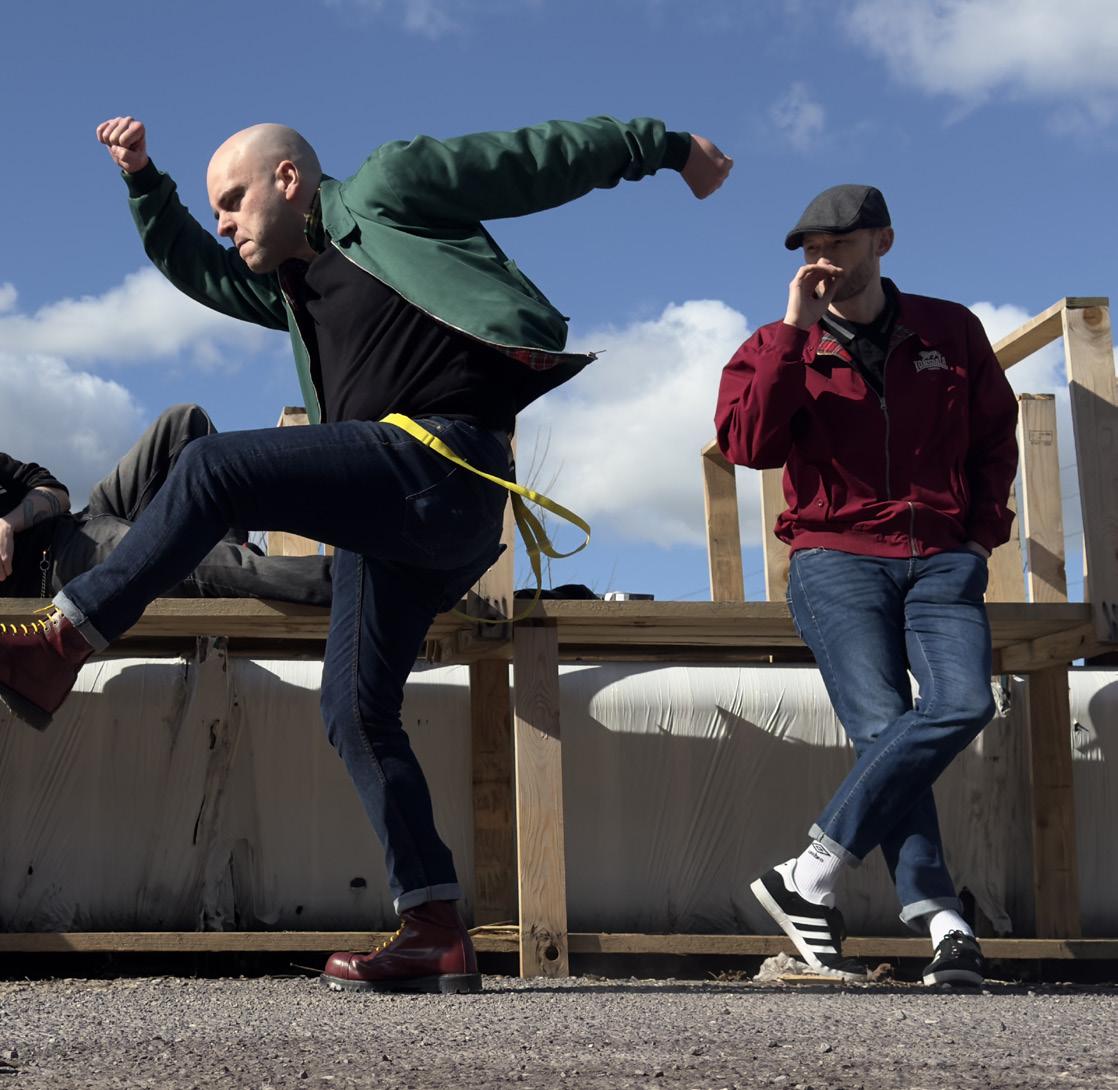
Cover Image by: Easy Company: Cork Oi with its boots on the ground
Puerto Ricans were granted US citizenship in 1917, not 1914 as stated in the article ‘How Does Bad Bunny’s Super Bowl Halftime Show Redefine “American Identity” in the Age of Trump? (How Does Bad Bunny’s Super Bowl Halftime Show Redefine “American Identity” in the Age of Trump?, Issue 4 April 2026, p.37).
The live photos of Stanton’s Grave in last month’s issue were by photographer Lily O Caoimh. Apologies for the typo. (10 Questions With Stanton’s Grave, Issue 4 April 2026, pp.51-54).
The photographer who shot the Revolt cover and the full photo set used in Issue 2, February 2026, was Marc Lanzendorfer. We have printed corrected copies for our pal Marc, and hope he can finally find it in his heart to forgive us.
We promised an interview and profile of John Dwyer of Bunker Vinyl in last month’s issue. Unfortunately, it won’t appear until our Autumn issue. Apologies for the delay.
We regret these errors and omissions.
Letters to our readers
Welcome to Motley’s final issue of the academic year. Where did the time go? Editing Motley and overseeing the magazine’s new look has been an honour and a privilege. Working with our brilliant and dedicated editorial team and contributors has been a joy. None of this would’ve been possible without Cleo, Motley’s Deputy Editor. Thank you for your hard work, support, insightful edits and your kindness. I hope to see your byline in national newspapers and magazines. Wherever post-college life takes your career, they’ll be lucky to have you.
Our Current Affairs and Investigations Editor, Stepan Krykun, and Deputy Current Affairs Editor, Oisín Bailey, ensured that our contributors covered campus, local, national and international news. Everything from UCCSU elections to credential inflation, an interview with President Connolly on the campaign trail and asking Ukrainian President Volodymyr Zelensky a question.
Our Features and Opinions Editor, Nefeli Pyrovolaki, and Deputy Features Editor, Claire Dineen, were responsible for the diverse voices featured in each issue. From contributors writing about how media shapes our culture, juggling work with your studies, to Cork’s third spaces and interviews with UCC alumni Alison Arnopp and Grace Alice Ó Sé.
Our Arts & Culture team, Roisin Connolly, Nermeen Ileiwat, Cleo Morrison O ’Riordan and I developed a section showcasing the best of Cork’s arts scene and Irish literature. From reviews of
books by Irish writers and writers living in Ireland to flash fiction and creative non-fiction written by Lucy Olsman to an exploration of why Cork Fringe is vital to our city’s artists.
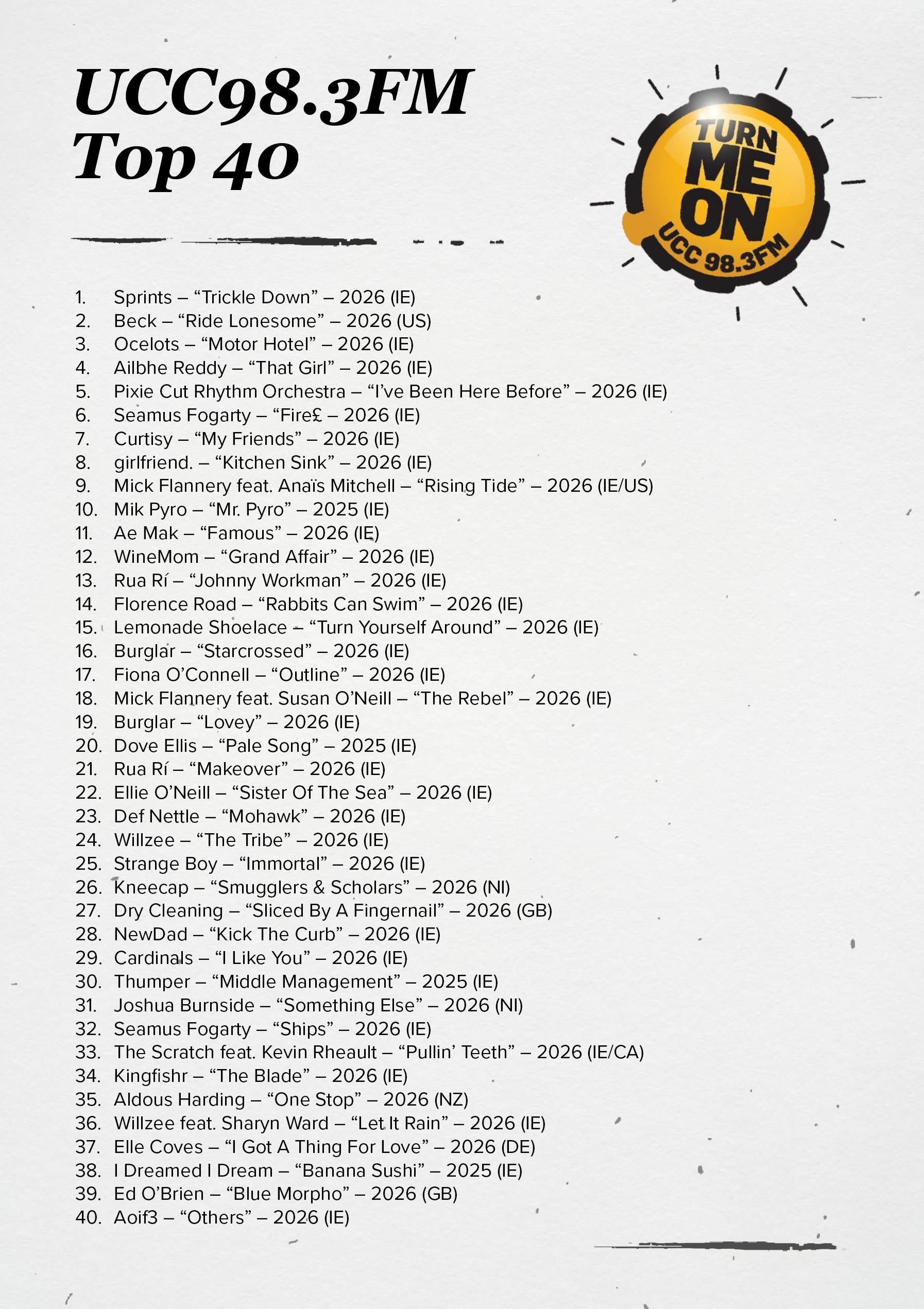
Our Music Editor, Ray Burke, is responsible for our coverage of the many facets of Ireland’s music scene. Whether it’s rap, punk or folk, our music section has it covered.
Motley wouldn’t be the vibrant magazine you grab a copy of on campus without our designer, Sara Troisi. Thanks also to our Copy Editor, Kate Holohan, Website Manager, David Lesiak, and Social Media Manager, Leah Hurley. There would be no Motley without the words of our contributors. Thank you for trusting us with your work. Whether you’ve written for us once or are a regular contributor, we’re delighted to publish your articles.
If you haven’t had the chance yet, I recommend picking up previous editions and sitting down with a coffee or your drink of choice to read them. If you’re looking for somewhere to start, some of my personal highlights from each edition are ‘Connection in the Digital Age’ by Ben O’Sullivan in Issue 1, ‘Cork and the Global Sumud Flotilla: An Interview with Donna Schwarz’ by Cleo Morrison O ‘Riordan in Issue 2, ‘The Making of Retrospect Arts Festival: A Festival that Looks Back’ by Chiara Alessio in Issue 3 and ‘Cork Fringe –Scratching the Itch of Our City’s Artists’ by Elsa Forrest in Issue 4. To our readers, thank you for spending time with us this year.
Words: Paula Dennan
Motley is a student-led publication for readers in college and beyond. That’s a brief we take seriously, so I hope you’ll continue reading because I know that next year’s editorial team and contributors will make Motley even better.
Hi everyone! Cleo here, Motley’s Deputy Editor.
As we close out a busy academic year, and an incredible year of Motley publications, I want to offer a huge thank you to all of our readers, contributors and Motley’s amazing editor Paula who made our five issues possible!
Writing and editing for Motley this year has been such an honour and I feel so privileged to have been able to speak with such inspiring people like Donna Schwarz and Senator Laura Harmon, to bring topics that are close to my heart to the student body.
On reflection of our past five issues, we were so lucky to receive so many illuminating student contributions; some personal highlights for me this year are definitely ‘In Defence of Olivia Dean’ by Stacey Cambridge in Issue 3, ‘How Living With Bipolar Disorder Affects My Experience of University’ by Paula Dennan in Issue 3, ‘How Does Bad Bunny’s Super Bowl Halftime Show Redefine “American identity” in the Age of Trump?’ by Hope Noonan Stoner in Issue 4 and ‘How Female Athletes are Redefining Sports!’ by Ashling Fahy in Issue 4; to me these are just some of the pieces that showcase how special it is to have such a vibrant array of interests across campus, from mental health, to sports, to the arts.
Thank you all for engaging with Motley this year, and I can’t wait to see what’s next for the magazine and the next generation of editors and contributors!
A Few Words from the Student Media Manager, Ray Burke
This year, we changed up Motley as part of a broader rebrand and a move towards becoming a fully culture-focused magazine from next year, with the return of The UCC Express as our purpose-built home for current affairs and news journalism. It was a big undertaking. Any kind of change like that brings a huge amount of work in the background, much of it unseen, and I want to say a massive congratulations to Paula and Cleo for the dedication, patience and sheer hard work they brought to it at a time that was very much in flux.
We knew from the outset that we could not make these changes while also running both publications concurrently, but even making the shift while continuing to publish Motley was no small thing. Paula and the team, including our excellent graphic designer Sara, managed to put out five issues at a time that was completely out of step with our usual schedule. That is worth dwelling on. Normally, we publish three issues per semester, planned as carefully as possible around assignments, deadlines and exams. To produce five strong issues while working out of sync with the college year, and while laying the groundwork for a major editorial shift, is no mean feat at all.
I’m really proud of how the magazine looks now, but more than that, I’m proud of the shape the team has given it. They have left behind a publication with
momentum, clarity and a strong editorial identity, and I think they’ve handed the next team a very well-oiled machine to take on in the new college year.
So, a huge thank you to Paula, Cleo, Sara, the sub-editors and all of our contributors. I also hope that those of you returning next year will continue to help make Motley a vital part of Cork’s publishing landscape.
From next year, Motley will cover culture across Munster and further west too, working in conversation with our friends and colleagues in college radio. We also have a short survey online at the moment to hear from readers, particularly in relation to our planned website. Getting that over the line has not been without its battles, but we are hoping to resolve that during the summer so that we return with dedicated websites for all three of our outlets.
The Editor position for Motley will be advertised over the summer, with interviews due to take place in August. If you already know it is something you would be interested in, it is perfectly fine to email me with an expression of interest and I can make sure you are directed towards the application when it goes live. The same applies to the Editor position for The UCC Express.
We will also be hiring a new graphic designer, with more details to follow soon.
Motley Recommends
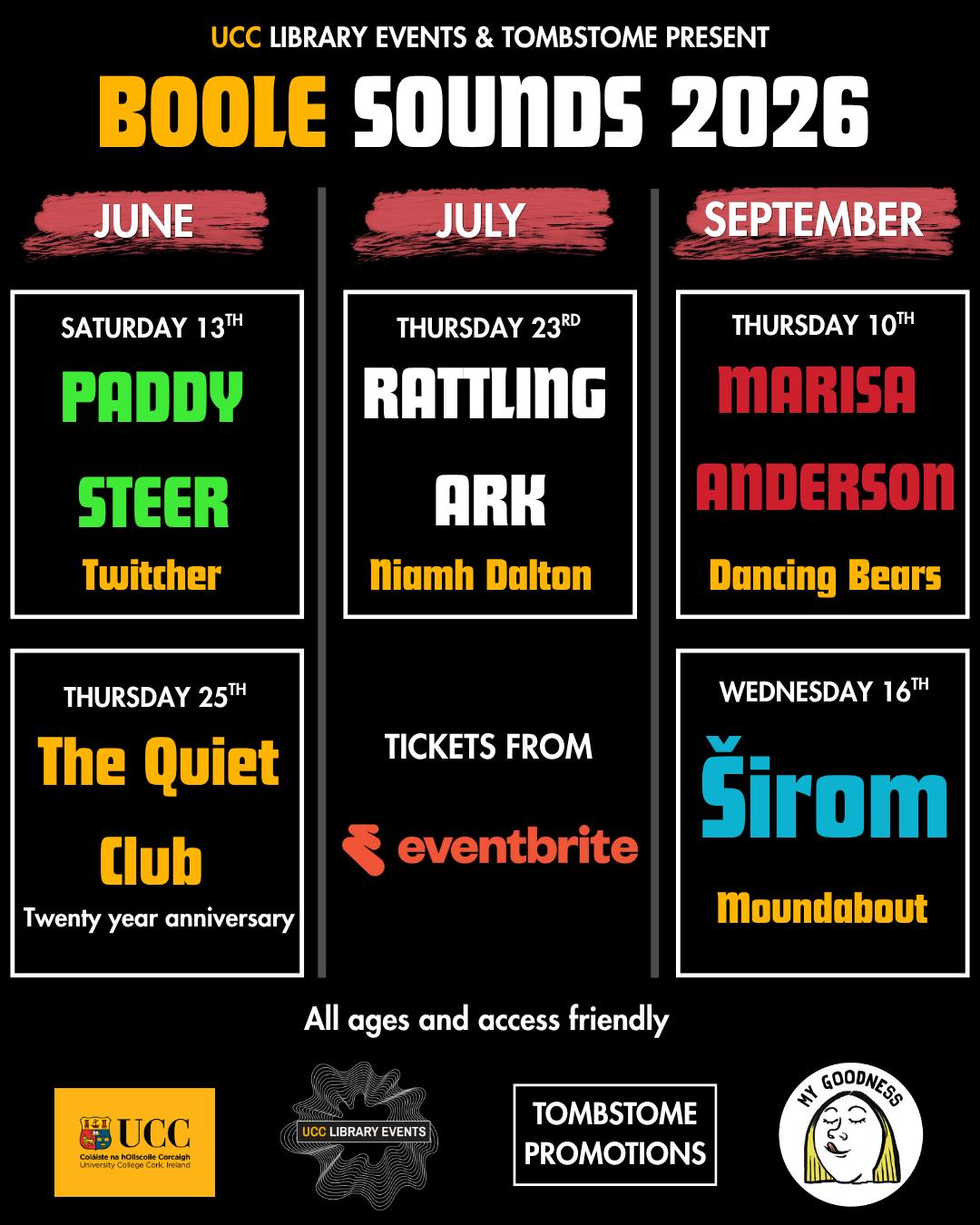
RECOMMENDED GIGS
Rua Rí | Sonflour, Cork
Sunday May 17 2026
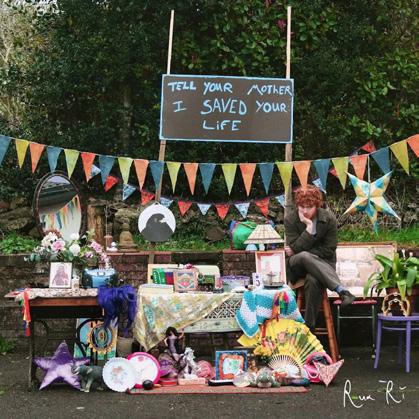
Our last issue carried a full Rua Rí feature, so Rua needs no introduction. Still, with Tell Your Mother I Saved Your Life only just out, this is the first chance to catch those songs after release. The debut was produced by Kean Kavanagh, and that wider frame has not sanded the Cork out of him. The record is still full of Cobh, local detail and the odd sideways turn that makes his writing stick. If you missed Christ Church, correct that here.
Stanley Super 800 | Savoy, Cork
Friday May 22 2026
We are delighted to see last year’s reunion energy carrying on, and there is genuine pleasure in seeing Stanley Super 800 back on a Savoy bill. They did play the Savoy back in the day too. Some of the senior people in the Motley office were there when they played with Sultans of Ping in December 2005, which gives this return a nice feeling of circularity. One of Cork’s best exports is back, a little more seasoned, but aren’t we all. If any-
thing, age probably suits a band whose songs always had a bit of left turn in them.
Niall Connolly | Levis’ Corner House, Ballydehob
Saturday May 23 2026
Glanmire-born, New Yorkbased songwriter Niall Connolly returns to Levis’ to celebrate the release of his 10th studio album, There’s So Much More to See. Connolly has spent years writing sharp, humane songs without any interest in noise for its own sake. We’re not sure how often Niall gets home these days, but we have heard great reports from his Christmas shows in Coughlan’s. Levis’ is another great venue, on a par with our beloved Coughlan’s in the city. Pixies | King John’s Castle, Limerick
Sunday/Monday May 31/June 1 2026
Pixies have been coming back to Ireland with striking regularity since reforming more than 20 years ago, and the crowds still turn up in force. That says enough itself, but what began as strictly reunion shows is now a band very much back
together, recording, and showing no signs of slowing down. They don’t always match the essential material of the early albums, but what could. These are their first Limerick shows, part of the Pixies 40 tour, and King John’s Castle will definitely suit the scale of it. If the weather is good, this is one of the best venues in the country. They do not mess around on stage either. The sets are famously crammed, one song straight into the next, no hanging about, no indulgent waffle. In this setting, with their catalogue, this will be unreal.
David Byrne | St Anne’s Park, Dublin
Sunday June 7 2026
David Byrne in Dublin is worth the trip because very few legacy artists still treat live performance as something to be rethought from the ground up. This run comes with Who Is the Sky?, his first new album since 2018, and Arlo Parks on the bill. Reviews of the recent 3Arena date pointed to a 13-piece band in constant motion, with choreography and movement built into the set rather than pasted on top of it. Byrne
still approaches the stage like an idea to be tested, not a museum piece to be dusted off. Plus, and let’s not beat around the bush, he does a plethora of Talking Heads stuff, and what better way to spend a sunny summer Sunday than listening to some of the greatest pop songs ever written.
Oliver Cole | Sea Church, Ballycotton
Friday June 26 2026
One of our most played acts on UCC98.3FM in 2025, former Turn frontman Oliver Cole hits Ballycotton in June. Wingspan is the latest record, and Cole described it as less direct than his earlier albums, with more of a stream-of-consciousness approach. That tracks with us. The songs feel lived in rather than fussed over, and he has long since stopped chasing a route to the big time, and happily leaned into his talent as a songwriter, the sound of a man who is happy getting to do what he does. There is a lot to be said for artists who stay awkward in the right ways. Cole has earned that kind of faith.
Taupe & Ten Past Seven | Savoy, Cork Friday 26 June 2026
This is a very strong piece of booking. Glasgow trio Taupe arrive behind waxing | waning, a record that The Guardian recently called “sharp, smart and often brutal”, which is about as tidy a summary of their method as you are likely to get. Ten Past Seven, the self-proclaimed “Legends Bog Prog”, bring plenty of humour to their glorious racket. Another act that can almost give the aforementioned Stanley Super 800 a run for their money in the seasoned bracket, but still astounding live.It’s great to see their shows going into the Savoy, where the new 200-capacity space is quickly becoming one of the most important venues in the city. This is not background music. It is a bill for people who like things loud and a bit cracked open.
Post-Punk Podge | Savoy, Cork Friday July 3 2026
And if loud is what you like, and cracked open, or just plain cracked, Post-Punk Podge is
one of those acts whose very existence improves the health of a scene. The brown-envelope-wearing maverick uses “music as a weapon against the bullshit we are fed.” Limerick has produced plenty of artists with bite, but few lean into absurdity and agitation with this much commitment. Several releases in now, longevity may not have looked likely at first, but judging from the trajectory, becoming a staple of festivals in Ireland and moving to bigger stages, there is plenty more coming from Podge and his cohorts. Their live shows are something to behold. Don’t miss it.
Donovan – The Tale of the Gael | Everyman Palace Theatre, Cork
Saturday July 11 2026
Donovan has said this new run reflects the strong Gaelic thread in his work, and The Tale of the Gael folds in material from Gaelia and the older catalogue. There is always a risk with heritage bookings that they get filed away as polite nostalgia. Donovan has never quite fitted that
box, although there have been times when that might have been favoured over the more indulgent later material. His range was too odd for that, and the newer focus on Gaelic roots gives this one something more specific than a greatest-hits lap. He still really delivers live and a little bit of it all will do nicely. Happy Birthday Donovan.
Patti Smith Quartet | Galway International Arts Festival and King John’s Castle, Limerick Tuesday 14 and Wednesday 15 July 2026
Patti Smith does not need much selling, but Galway and Limerick are treated to royalty this summer. Horses is now in the US National Recording Registry, which demonstrates the reach of that amazing record. The current quartet includes Tony Shanahan, who has played with Smith since 1996, plus her son Jackson. More importantly, she is still a formidable live performer. Her SXSW performance in 2011 still lives strong in the memory, and while a Marquee date would have been lovely, we’ll have to
wait for the Cork Event Centre, which we’re sure is just around the corner… It’s brilliant to have her back in Galway and Limerick this summer. She’s an emotional force, still spontaneous, with a refusal to let the songs stiffen into heritage rock. If you can get to Galway or Limerick that week, don’t overthink it.
Mercury Rev | Cyprus Avenue, Cork
Saturday July 18 2026
Mercury Rev are coming through Cork to mark 25 years of All Is Dream. That record still means a lot to people who found it at the time, all bruised grandeur and strange uplift, and this tour gives Cork a chance to hear those songs live. The sometimes more critically lauded Deserter’s Songs got its anniversary tour a few years back, and All Is Dream is one that many fans hold as close. For anyone who missed these tracks live first time round, now’s the chance.
Forest Fest | Emo, Co Laois Friday 24 to Sunday 26 July 2026
Forest Fest keeps getting
more interesting because the undercard is not an afterthought. Yes, you have headliners and big names, but where else are you getting a range of festival favourites and a dollop of contemporary acts on the rise in a nice package? This is the kind of line up that makes families happy. Acts like Madness, Echo & the Bunnymen, Black Grape, HamsandwicH, Sultans of Ping, The Membranes, David Kitt, The Wedding Present, A House Is Dead and Kerbdog, along with some our recent favourites Cork’s own BabyRat and How I Became a Wave, as well as Mik Pyro and Def Nettle! in one weekend. It looks less like a generic field full of algorithmic bookings and more like something curated with love by people who recognise that there’s room for a festival somewhere between Electric Picnic and ATN.
MOTLEY RECOMMENDS
Paula Dennan, Editor
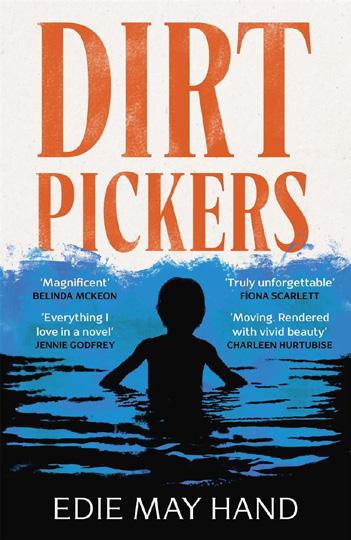
Reading: An advance copy of Edie May Hand’s debut novel, Dirtpickers. Dirtpickers was a winner of the Irish Writers Centre Novel Fair, now the International Debut Novel Competition, in 2024. It’s out May 21 from Manilla Press.
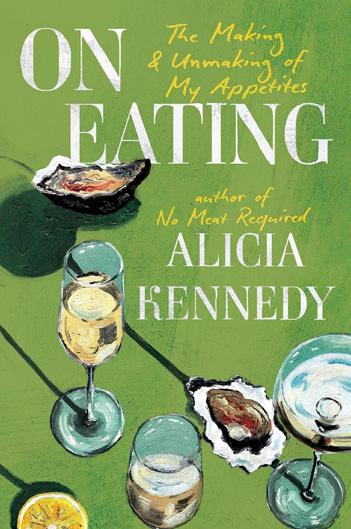
Food and culture writer Alicia Kennedy’s memoir, On Eating: The Making & Unmaking of My Appetites, is one of my most anticipated books of the year. I’m only a few chapters in, but it’s living up to my expectations. Hardly a surprise considering Kennedy’s writing about the personal and the political aspects of food is always evocative and thought-provoking. I also recommend her newsletter, From the Desk of Alicia Kennedy, which you’ll find at aliciakennedy. news.
Watching: The latest season of Taskmaster because watching celebrities do their silly little tasks is never not hilarious.
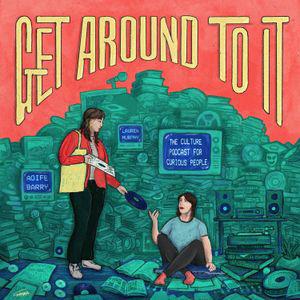
Listening to: Get Around To It –A culture podcast hosted by Irish freelance Arts and Culture journalists, Aoife Barry and Lauren Murphy.
Cleo Morrison O ‘Riordan, Deputy Editor
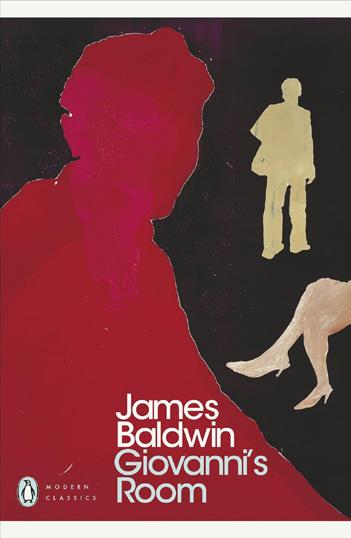
Reading: Giovanni’s Room by James Baldwin. James Baldwin is someone I return to time and time again; some special recommendations and personal favourites from Baldwin’s works are the poignant and personal The Fire Next Time and deeply moving Another Country.
Watching: The Testaments, based on Margaret Atwood’s The Handmaid’s Tale sequel by the same name. Episodes are released on a weekly basis and share insight into the next generation of women in Gilead which The Handmaid’s Tale set the stage for.
Listening to: Michael inspired some throwback listening to Michael Jackson, and The Art of Loving by Olivia Dean has been on repeat for a number of months now.
Ray Burke, Music Editor
Reading:
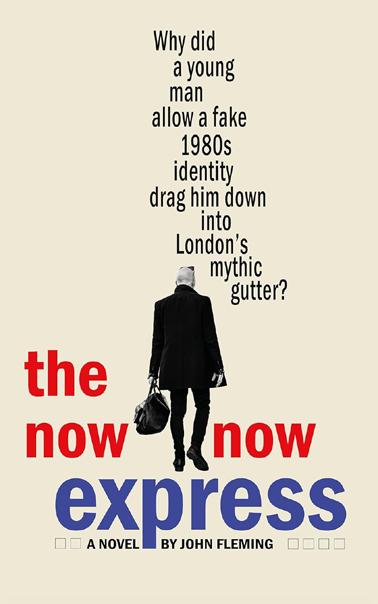
The Now Now Express, a novel by John Fleming. I thoroughly enjoyed this one. It’s about a bunch of young Irish people fucking around in London in the eighties, and while I don’t believe every novel should become a film, I can really see this one working.
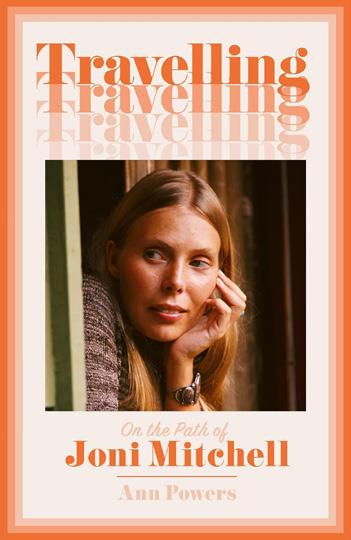
I’m also reading Neneh Cherry’s autobiography, A Thousand Threads, and a biography of Joni Mitchell, Travelling: On the Path of Joni Mitchell by Ann Powers. I’m loving the Neneh Cherry one. Not so sure about the Joni one yet, though it is getting better.
Watching :
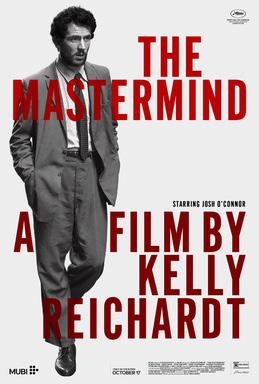
Watched Kelly Reichardt’s Mastermind. I’m a big fan, although nowhere near her best, I thought it was really good. Also, The Secret Agent is great!
Listening to:
I know Paula recommended this, so I want to second it. I love Get Around To It too, great podcast by two wonderfully informed presenters. Beck’s new single “Ride Lonesome” is on steady rotation, Rua Ri’s Tell Your Mother I Saved Your Life, I was really excited about this album. I knew it would be good, but it has exceeded expectations. Also revisiting lots of Big Star demos and B-Sides after seeing the Big Star Quintet in Kilkenny – they were incredible.
HOW THE INTERNET IS REINVENTING GENDERBASED VIOLENCE: PROTECTING WOMEN AND CHILDREN AGAINST DIGITAL MISOGYNY FROM POLITICAL ATTACKS TO AI-ASSISTED DEEPFAKE SEXUAL VIOLENCE.
In 2022, self-proclaimed misogynist Andrew Tate exploded in popularity on platforms like TikTok by targeting predominantly young men with harmful gender ideologies. While casual observers might have dismissed him as a lone extremist or a representative of a relatively small cohort of misogynists using online platforms to spread extreme language and ideologies for clicks and views, Tate’s popularity represented a shift in online misogynistic culture. Although I don’t claim that Tate started misogyny online, his popularity and content gave us a glimpse of a terrifying and rapidly growing section of the internet that promotes, shares and encourages
misogyny, outdated and damaging gender ideologies, and often, gender-based violence. According to the United Nations Development Programme (UNDP), 85% of women have witnessed online misogyny and digital gender-based violence.
“Almost 70% of Irish girls have been affected by online harassment.”
These online attacks against women and children can consist of messages that are threatening or sexual in nature, cyber
stalking, deepfake images or the spread of misogynistic stereotypes, misinformation and disinformation.
The increase in AI applications has no doubt amplified this issue and facilitated an expansion into increasingly severe online abuse of women and children. At present, AI image-based sexual violence is highly unregulated, with a lack of legal protections in place due to the elusive and often anonymous nature of online interactions. AI has facilitated a graduation to image-based violence, such as deepfake abuse. The London Metropolitan Police note that deepfakes are “digitally created” content which “can take on the
“It is no longer enough to recall the advice from our childhoods to block online bullies, as many of us work, communicate, seek recipes, workouts, media and companionship online, making us all constantly accessible and at risk.”
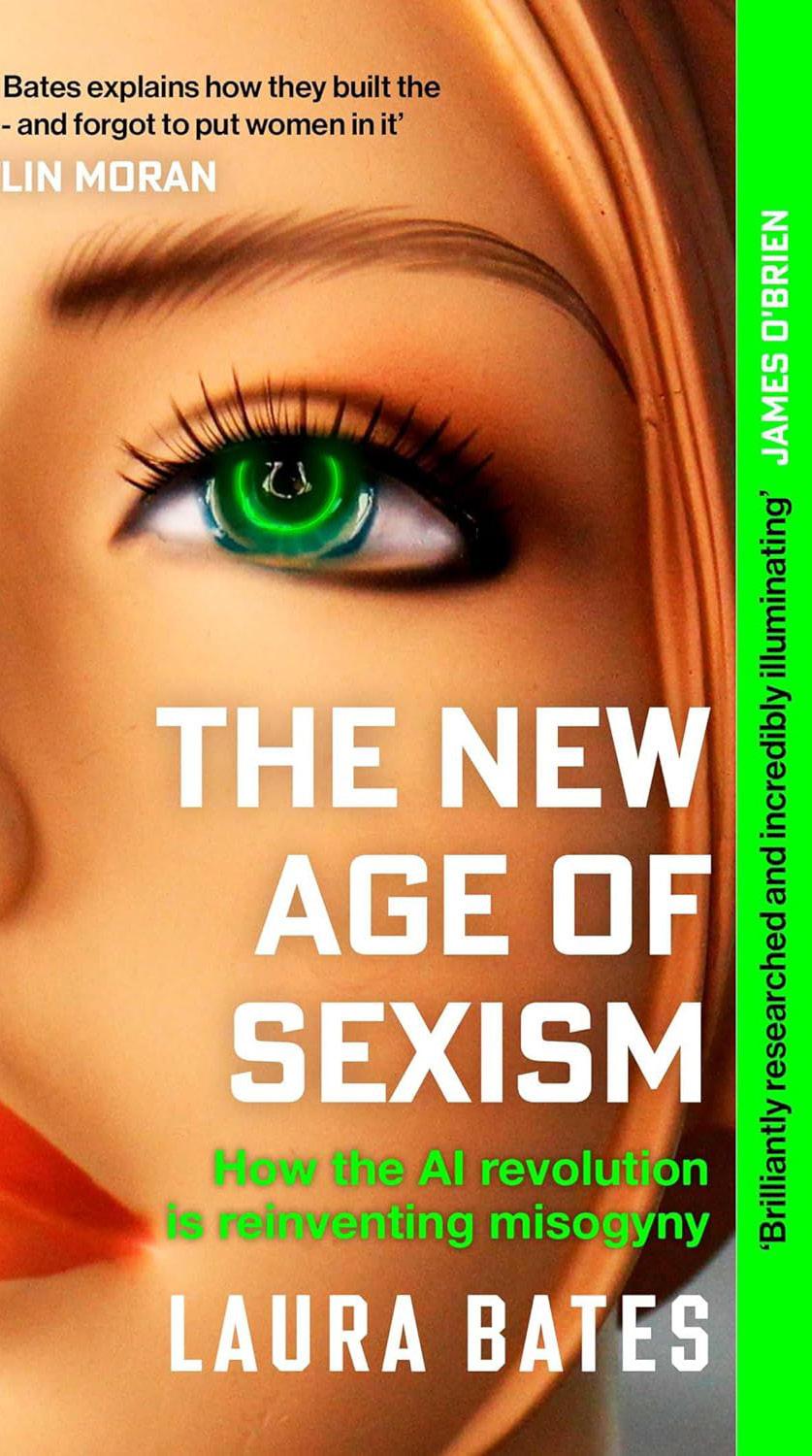
exact likeness of a real person –this could be of you or someone you know”. This was seen in January 2026, when it was exposed that the Grok AI application, affiliated with Elon Musk and X, was using artificial intelligence to generate sexualised images of women and children. The Guardian found that Grok AI was used to generate almost 3 million sexual images of women and children. This revelation sent shock waves of fear around the globe, with many governments scrambling to protect citizens. France, for example, opened an investigation into the use of the application, vowing consequences of up to two years imprisonment for citizens who have been found to misuse AI to carry out online gender-based violence. Closer to home, the application and its effects were discussed in Dáil Éireann in January 2026. Laura Bates’ 2025 non-fiction book The New Age of Sexism: How the AI Revolution is Reinventing Misogyny worked to expose the use of deepfake images in pornography. Bates notes the additional dangers that the rising use of tech and AI poses to women in an increasingly misogynistic online environment, stating that the use of AI and deepfake pornography is “massively” underpoliced. The UNDP notes that 90% of deepfake content is sexual attacks against women. A statistic substantiated by Bates, who states that “99% of [pornographic deepfakes] feature women and girls”, showing that this is predominantly a gender-based issue. Due to the nature of AI-generated content, it can be used against any individual of any age, anywhere in
the world, at any time. UNICEF has recently called for governments to “expand definitions of child sexual abuse material (CSAM) to include AI-generated content, and criminalise its creation, procurement, possession and distribution”, showing that this is a growing, horrifying phenomenon.
The release of Louis Theroux’s 2026 documentary Louis Theroux: Inside the Manosphere further exposed a dangerous and quickly evolving culture online, which actively sexualises, exploits and attacks women, to a new mainstream audience. These public figures, programmes and books have highlighted a once underground epidemic that is seeping into the public eye. There seems to be a growing risk of damaging gendered ideas making their way into mainstream media, politics and even law. So what are the real-world implications of this? According to influencer Nicolas Kenn De Balinthazy who took part in Louis Theroux’s documentary, many individuals involved in the online ‘manosphere’ have “graduated” so that a “lot of people who were in that are in politics now”; this claim creates a concerning paradox when paired with UNDP research which shows that 73% of female journalists and up to 80% of female politicians have experienced digital gender-based violence, as there is real risk that law and policy makers with misogynist views are actively bridging the gap between the internet and politics while female representation is being actively discouraged. This can be seen through the recent victimisation
Current Affairs and Investigations
of Italian Prime Minister Giorgia Meloni using sexualised deepfake images. Meloni noted on the attack that “deepfakes are a dangerous tool” which were used to harm her political credibility. This worrying trend of the abuse of female politicians highlights that the ultimate goal of online violence against women is intimidation and to silence women through fear, yet this remains both difficult to police, and identifying perpetrators is often impossible.
While the use of anonymous accounts to create harmful content online makes the practice extremely difficult to eradicate, there have been some meaningful developments towards protecting women online against the recent wave of online abuse, such Ireland’s Harassment, Harmful Communications and Related Offences Act 2020, or Coco’s Law, named after Nicole Fox who tragically died by suicide following extensive online harassment, which makes it a crime to share, or threaten to circulate intimate images of an individual without consent. In 2025, Fianna Fáil Senator Fiona O’ Loughlin introduced a Non-Fatal Offences Against the Person (Amendment) Bill, which would criminalise the use of an individual’s images online without their consent. The existing legislation and further proposals, while promising, are unfortunately progressing slowly, while more women are victims of online onslaughts with each passing day.
There is no denying that in recent years, the internet has become an increasingly terrifying realm for women and girls to navigate. Almost 70% of Irish
girls have been affected by online harassment, with victims of gender-based digital violence ranging across age groups, career lines and borders. In fact, I’m sure many readers are unfortunately no strangers to instances of aggression online. It is no longer enough to recall the advice from our childhoods to block online bullies, as many of us work, communicate, seek recipes, workouts, media and companionship online, making us all constantly accessible and at risk.
“These public figures, programmes and books have highlighted a once underground epidemic that is seeping into the public eye.”
INSIDE AND OUT: THE CO-EDUCATION MODULE THAT CREATES COMMUNITIES BETWEEN
PEOPLE ON BOTH SIDES OF THE PRISON WALLS FOR SOME WORK
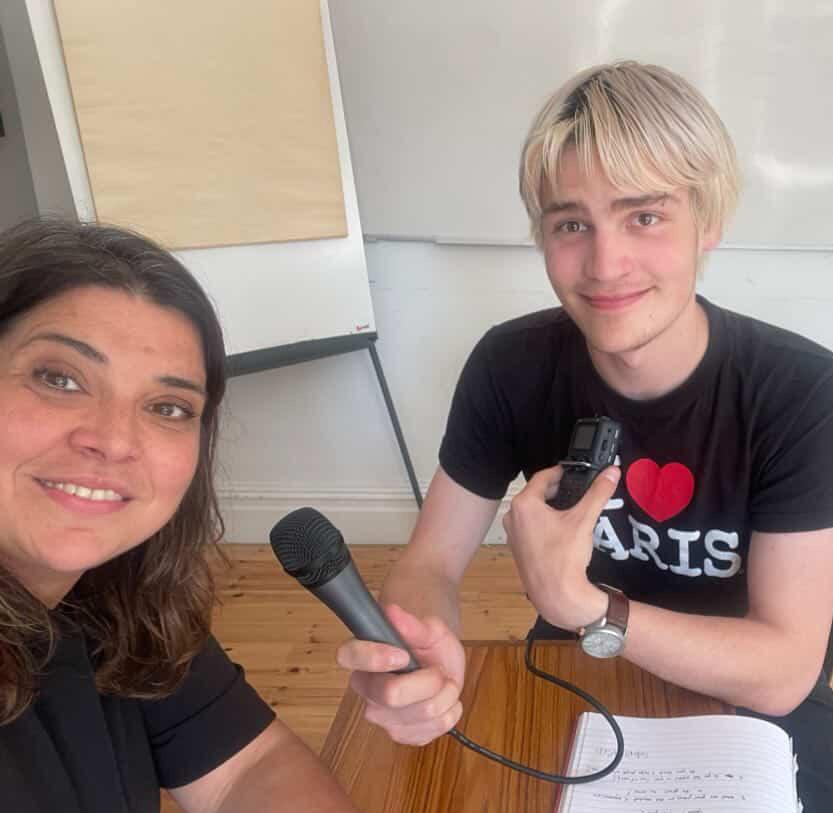
Motley’s Current Affairs Editor and UCC 98.3FM radio producer Stepan Krykun sat down with Dr Katharina Swirak, UCC School of Society, Politics and Ethics and co-facilitator of the UCC and Cork Prison Inside Out programme to discuss the programme’s impact on students and teachers.
As a Criminology student at UCC, I was very lucky to be selected for the Inside Out prison co-education module. The opportunity to be part of something usually reserved for senior students and academics intrigued me at first, but it was the experiences and connections I made inside that held my interest throughout those formative months. At the end of the day, as Katharina Swirak mentions, it’s the community of people that sticks with you most. It’s that community that I know I will carry with me for years to come.
Partaking in the Inside Out
programme has been a defining period for me this semester; seeing people change their minds and hearts inspires you like nothing else, and makes you want to try and provide that opportunity to other people.
I’d like to extend my gratitude to Katharina Swirak and James Windle – the people responsible for this module commencing year after year; to the community of pupils inside and outside – for helping me learn more about myself and the world around us; and to everyone else involved in making this experience possible.
The interview has been edited for clarity and length.
What is Inside Out?
Katharina Swirak: So Inside Out: inside stands for inside students, so these are prison-based students, and outside is outside students, college students. And it’s an educational approach and a university programme that brings college students together
“When you go into the Fota wildlife park or another type of zoo, you go in, you watch animals literally behind cages and this is how it felt to me. It just didn’t feel right.”
with prison-based students. So these are imprisoned persons or prisoners [...] where these two groups of students who usually wouldn’t meet, study side by side for the duration of a semester in a prison setting. These modules or these types of courses are offered all over
the world. In Cork, we are the first one offering such a module in the Republic of Ireland. There is a sister programme in Belfast and now two more at Ulster University. But in the Republic, we are so far the only one.
You said that there are a lot of different Inside Out programmes available worldwide. How did this idea develop? Could you tell me more about the academic point of view on that?
Katharina Swirak: Inside Out programme is a trademarked name from a programme that started in America, in Philadelphia, I think, in the mid-90s by a woman called Lori Pompa. And she was teaching criminal justice courses at Temple University in Philadelphia and would take students on prison visits. This is what criminal justice or criminology lecturers, law lecturers, and others often do. And during those visits, she and her students started to have really meaningful conversations with prisoners about the experience of incarceration, their critiques of the carceral system and so on. And Tyrone, one of the prisoners she met, Tyrone had the suggestion to continue these conversations. And Lori said Oh, why don’t we formalize this and make this into an entire course? So this is the history of the Inside Out programme.
Since I started the programme, I learned that there are similar types of programmes in different parts of the world. So for example, we have colleagues at the University of Milan who never heard about Inside Out from America, but who’ve been doing exactly the same thing.
There are colleagues in Belgium, Germany and the Netherlands who run similar programmes. They just call it different names, but the ethos underlying these programmes is the same [...] the idea is to create community and study side by side. So it very much comes from this idea that people who end up behind prison bars, they’re not there because they’re – I say, quote, unquote many times, but in criminology, we have to use quote, unquote a lot because a lot of the terminology is very problematic – the belief is that people behind bars are not “evil”. You know, they have transgressed certain social norms. Very often, they ended up in prison because of an unfair disadvantage in life. And so it’s our ethical duty as educators and as learners to come together with these people and discuss different areas that affect us all –justice, social inclusion, stigma. And you’ve mentioned about the ethos and the purpose of Inside Out is to build communities. The question would next arise, I suppose, logically, is there any sort of agenda inside of the Inside Out? Pun not intended… Is there some sort of ethical beliefs, about the moral righteousness of people on the inside that needs to be kind of present with the module? Or can anyone have any sort of belief about people on the inside?
Katharina Swirak: Yeah, so that’s a really good question. I mean, we try to, you see, we have to pre-select students, outside students to go in. And so we have to be a little bit careful [about] selecting students simply
because we need some level of empathy and understanding towards people behind bars. Now, having said that, we do sometimes take students in who are much more conventional in their views around prisons than we take [students] in who are much more critical of prisons. So we do not exclude anyone by virtue of their views on punishment and prisons. However, I would say that the students who are interested in the first place to take the module have a better understanding of the social context of imprisonment anyway. And I think that that changes then as well, over the course of the module.
Talking about people and different sorts of selective processes, you’ve mentioned that people change their minds about prison. They come in with one philosophy and then come out with another. What do you think affects that?
Katharina Swirak: Is that difficult for me to say? I mean, I do get feedback from students. We collect feedback from students every semester. The best example is [...] looking at myself. Even before I started to teach Inside Out, I was very critical of prisons, and I believed in the humanity of every person, independent of whether they’re behind bars or outside. But what I experienced for myself, and I see it in a lot of students as well, is just a very simple human process: that if you get to know people, if you start to talk to people, even to people who have harmed others and who’ve done horrible things, even if you maybe still don’t understand or you still don’t find it right, you do develop a certain
Current Affairs and Investigations
level of empathy. Understanding.
It’s just an amazing thing to talk to people. And the moment you actually understand someone’s stories or hear their story, very often of suffering as well, you develop a completely different level of understanding and empathy so far, so that you can even start to think about forgiving the most serious types of crime as well, just in your own sort of mind, you know. Now, again, having said that, I haven’t been a victim myself of a serious type of crime or transgression, so I’m always very careful. I don’t know how I would feel about that if that was the case. But, yeah, it is that interpersonal level of people getting to know each other that makes it more difficult to stigmatise or to vilify, you know.
Would you say that the biggest difference between Inside Out and other prison-related modules is that it kind of equalises people on both sides?
Katharina Swirak: Yeah, it does that. And you know yourself, it can only do that to a certain extent because at the end of every week, you and I would walk out, right? The students, the teachers, we walk out, we go to our jobs or our courses and whatnot, and the students inside stay behind. I can send you stuff on Canvas or an email. I can’t do it with inside students. So it’s important to recognise that equality is never there fully, because we need to acknowledge that; to understand the problem that is prison. But within those constraints – yes, when we are in that classroom together – we were there as equals.
What inspired you in the first place, or the people behind the Inside Out programme?
Katharina Swirak: I was teaching criminal justice policy, a third-year module. And so as part of that, I would try to take students into more real practical settings, you know, so I’d get guest lectures, we’d go visit
NGOs and let’s say reintegration organisations. And we would also go visit Cork Prison. And it just didn’t feel right because [...] it felt like, you know, how when you go into the Fota Wildlife Park or another type of zoo, you go in, you watch animals literally behind cages and this is how it felt to me. It just didn’t feel right…
And again, thinking about my life on this planet is very short. What difference do I want to make? Do I want to repeat the same stuff over and over again or do I want to create opportunities for students to shift their thinking? And that gives meaning to me, you know, that makes me get up in the morning and want to go to work. So it has a benefit to me as well, but it’s really about just providing a really critical education. This is really what motivated me.
But to at least create a platform where I have to hope that students will want to go into the world and change the world as well, rather than just regurgitate
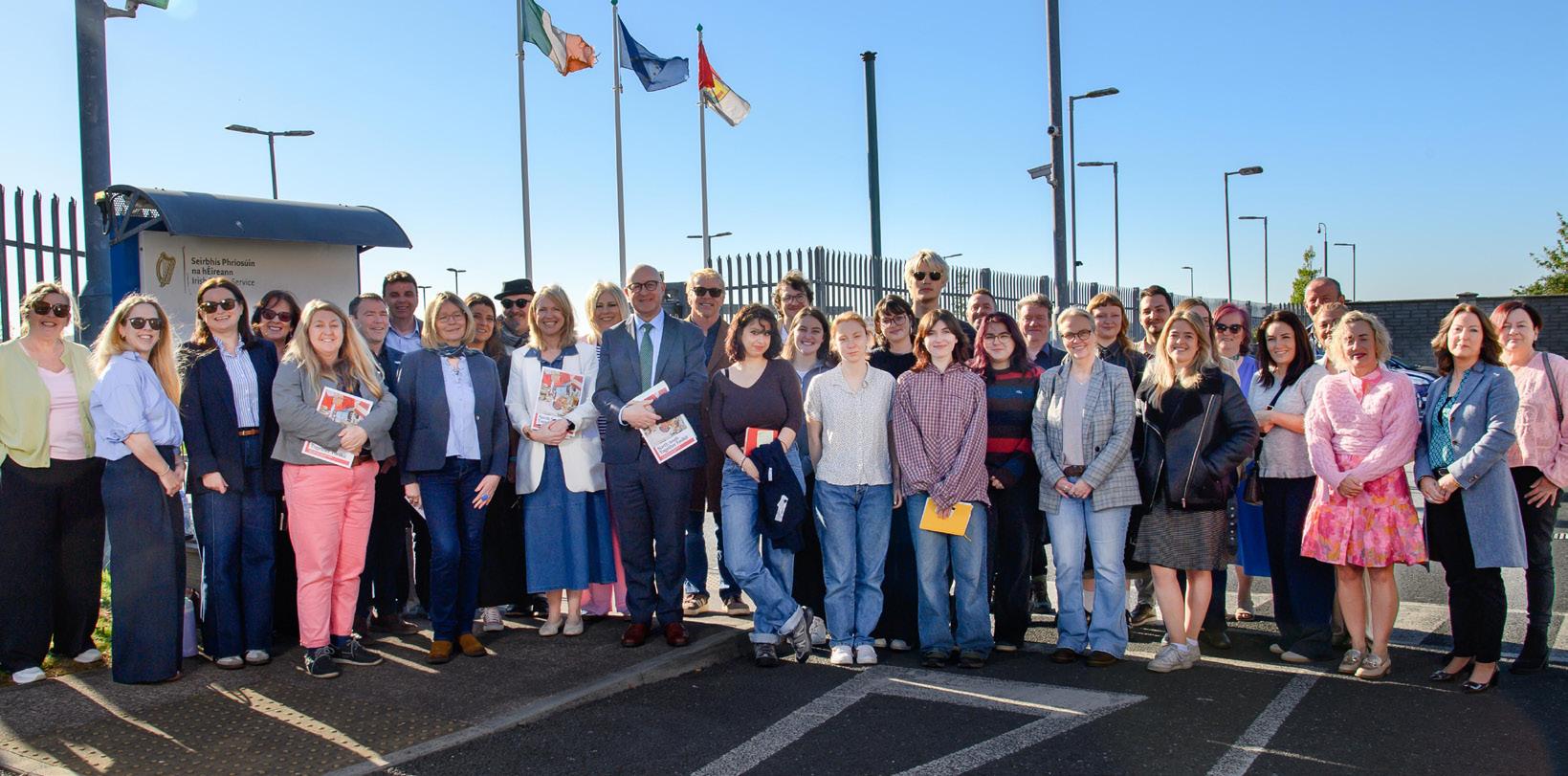
UCC students and facilitators attending the Inside Out graduation ceremony in Cork Prison.
the same stuff over and over again.
What’s the biggest challenge that you’ve encountered with the Inside Out module throughout the years? Was it some sort of bureaucratic establishment-related thing, or was it purely humanistic? Was it about people?
Katharina Swirak: There are lots of challenges when you teach modules like that. And that’s why, I think, to be honest, why we don’t have more of them as well in Ireland, because I’m hoping there’d be more. It’s just very time-intensive, it’s more time-intensive than if you just go teach a normal module at the university. So with that come the challenges, you know, admin work. It takes a lot of time, a lot of relationship management, because suddenly it’s not only you in the university, but you have the prison school, you have the prison itself, you have the university administration.
Our classrooms were often closed, as you could see, because we [students and teachers] are guests, we are always guests of the prison. So a lot of things are out of your control. So you have to go more with the flow. So I think that was the biggest challenge for me.
To finish off on a lighthearted question: Would you say you feel useful to people in your line of work?
Katharina Swirak: Oh, in a very humble way, I hope I do. It changes every day, Stepan. It changes. On some days, you’re thinking like, “Oh, my God, I’m not sure.” You know, we have to do writing and so on. So I’m like publishing and I’m like “God,
who will ever read this? Who will be interested?” And then you have an Inside Out classroom where everyone is buzzing.
So this is what really gives me meaning as well. So I do hope in a little way, you know, again, I believe in big change, big social change, and I hope for big social change down the line for this world to become a better place. But it’s all about making small changes in your daily life. And if we all did that, you know, it’s constant learning, constant struggle and chipping away at systems that are not correct, little by little. While minding yourself also because you can quickly exert yourself too much trying to want to change the world.
It’s about doing these things together. So from that, I get a lot of meaningfulness and hope as well that we are a community of people doing this together and the students, you guys are
Words: Stepan Krykun
part of that. And you will carry that forward into your lives and into your communities, families, friends, and communities, both on the inside and the outside and all together.
Inside Out is a programme that brings together classroom students from all walks of life: from second-year and final-year Criminology students, to lads inside Cork Prison who may be aged 40 years or over. Each cohort is unique, always bringing new experiences and perspectives to the table. The exchange that follows often provides more insight into people and society than any textbook they study inside does, I heard my fellow students say. The final project binds the like-minded together, allowing all involved to learn something from each other and freely express what they think and feel. That is what creates communities between people.
Dr Katharina Swirak and Stepan Krykun.
Words: Paula Dennan
ALMOST ONE IN THREE PEOPLE FACE BARRIERS TO ACCESSING THE HSE’S FREE CONTRACEPTION SCHEME
Almost one in three women face barriers to accessing the HSE’s free contraception scheme, according to research published last month by the National Women’s Council (NWC) and Trinity College Dublin (TCD). The research, commissioned by the
Department of Health, examined the experiences of marginalised women accessing or attempting to access contraception in Ireland. The research focused on “disabled women, those from the Traveller community, migrant women and LGBTIQ+ people
who require contraception.” When asked about barriers to accessing the free contraception scheme, 36% of respondents said that they thought barriers existed. While 31% of respondents stated that they had experienced “challenges
or difficulties” when accessing the scheme. The barriers identified include general ineligibility for the scheme, issues with accessing a GP and information about the scheme not being available in accessible formats.
Marie, who moved to Ireland three years ago, told researchers, “The reason why, [I] didn’t get a chance to use it here, is because I don’t have a GP, eh, it’s been three years [In Ireland], I still don’t have GP and just to have, or use the Scheme for the first time you need to go through the GP.”
Dr Leigh-Ann Sweeney, the report’s Principal Investigator and Assistant Professor at TCD’s School of Social Work and Social Policy, said, “This research found that, despite many women now having access to free contraception, significant gaps remain.
Lack of eligibility is the main barrier. Women over 35 are ineligible for the scheme, as are asylum seekers and undocumented women.
“The scheme covers the cost of contraceptiverelated medical appointments as well as the cost of the contraception.”
In addition, there are many barriers that concern access to the healthcare system in general. This particularly applies to mar-
ginalised women. For example, migrant women are less aware the scheme exists. Disabled women are not all finding the information in accessible formats. LGBTIQ+ people are encountering intrusive questions from medical professionals.”
Another participant, Jo, said: “I couldn’t even say that my partner was trans. I knew not to mention it. I knew just to say ‘right ok let’s just use he - him pronouns, because if I had even brought up the idea of having a girlfriend at the time who was trans, my doctor wouldn’t be able to wrap his head around it... so, I had to say my partner was a cis-man.”
Introduced in 2022, the free contraception scheme is available to women, girls, trans, non-binary and intersex people. When it launched, free contraception was available for people
Current Affairs and Investigations
aged 17-25 who met the eligibility criteria. The age range was expanded in stages between 2022 and 2024, with the scheme now available to 17-35 year olds. The scheme covers multiple forms of short-acting contraceptives and long-acting reversible contraceptives (LARCs). Short-acting contraceptives include the progesterone-only pill, combined pill, contraceptive patch and contraceptive ring. LARCs include the implant, injection and coil – coils are also called intrauterine devices (IUDs) and intrauterine systems (IUSs). The scheme does not cover condoms because they are already freely available through public sexual health services, third-level institutions, community organisations and LGBTIQ+ spaces. The Sexual Health Centre in Cork, GOSHH in Limerick and Sexual Health West in Galway also offer a free condom postal service.
“Access to contraception is recognised internationally as a fundamental human right, essential for gender equality, bodily autonomy, and health.”
The scheme covers the cost of contraceptive-related medical appointments as well as the cost of the contraception. This
includes GP or doctor appointments to discuss contraception options and renew prescriptions, prescription fees from your GP or doctor, your chosen contraception, fitting and removal of long-acting reversible contraception and check-ups or follow-up appointments. The morning-after pill is also available, but you do not need a prescription for this. It is available over the counter from pharmacies that have signed up to the free contraception scheme.
People wishing to avail of the scheme need a PPS Number, which can lead to barriers for migrant women. As one participant, Nessa, explained: “To access it, you need the PPS number, and when you enter the country for the first time, I knew, I was told I needed it to work parttime and so, but they never told me I needed a PPS number to access for health reasons, like health related services like abortion or contraception for free if you have a PPS number.” The report states that being issued a PPS Number can take time for individuals who have recently migrated to Ireland and their eligibility for one depends on the stipulations of their visa.
The National Women’s Council is calling for the free contraception scheme to be made available to everyone who needs contraception. “Access to contraception is recognised internationally as a fundamental human right, essential for gender equality, bodily autonomy, and health. It empowers individuals to decide the number and spacing of their children and prevents unintended pregnancies. The Free Contraception Scheme has
Words: Paula Dennan
been a game-changer for women’s reproductive health in Ireland. But too many women still face barriers in accessing this essential service. NWC is calling for all eligibility requirements to be removed so that everyone who needs contraception can access it,” said Corrinne Hasson, NWC’s Executive Director. However, expanding the scheme isn’t a priority for the current Minister for Health. When asked by The Journal about expanding eligibility criteria, Health Minister Jennifer Carroll MacNeill said, “But as I look at my budget, I have to prioritise frontline nursing staff in hospitals over eligibility expansion.”
CORK ZINE SCENE: MAKING ART AND COMMUNITY
Zine-making has exploded in popularity recently; as living costs rise in Cork, people are turning to cheaper ways to build community. A zine, taken from the word magazine, is a homemade or online publication produced outside of traditional commercial means, often in small batches. Zine-making is enjoyed for its low barriers to entry; one could get started with just printer paper and a pen. Zines are also enjoyed for the freedom in what can be expressed, thanks to the lack of editors or profit goals.
That freedom is by design; the first zines, in the 1930s, were made as a form of fan fiction for copyrighted Sci-Fi series. Not long after, zine makers (or zinesters) recognised the potential to explore topics that would have otherwise been censored, such as queerness and racial inequality. While it is not a necessity for zines to be political, zinesters find power in using zines to address issues affecting their lives.
Zines have seen a recent resurgence in popularity in Cork. In an increasingly online world, zines bring people together in person without the high economic barrier that other hobbies often have. At the heart of this resurgence is the Cork Zine Fest (CZF), founded in 2018 by artist
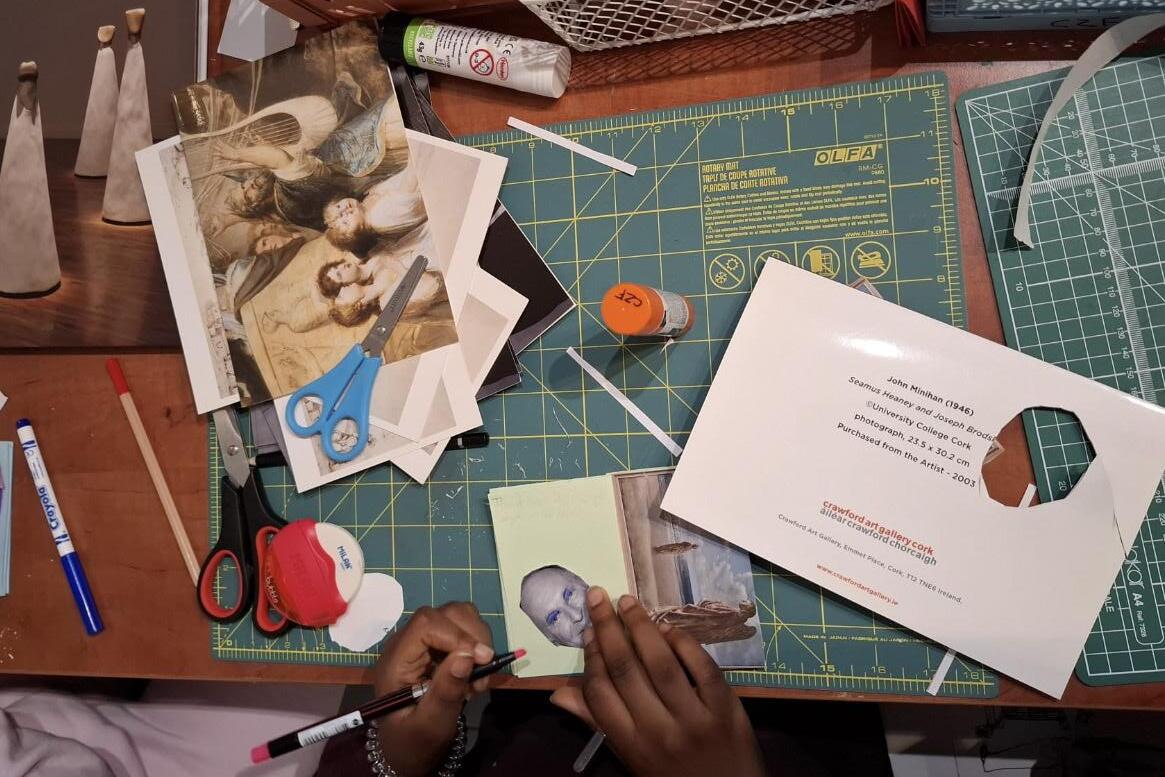
and producer Oriane Duboz. Their monthly zine clubs host 12 to 15 people who create zines inspired by a shared theme, occasionally in direct collaboration, which they then share with their fellow attendees. CZF’s annual festival hosts dozens of artists across various skill levels – from beginner zinesters to robust indie publications – who sell their work in an artist alley, as well as artists’ talks across a single weekend. Last year, leading up to their annual zine fest, Cork Zine Fest partook in a threeweek residency with Sample Studio, dubbed “Maker’s Month”, collaborating with Crawford Art Gallery and several organisations across Cork: Friends of the Crawford, Rainbow Writers and Illustrators, Supported Studios, Follow Your Nose, Cork City Library and CATU. This has deeply embedded them in the arts community in Cork.
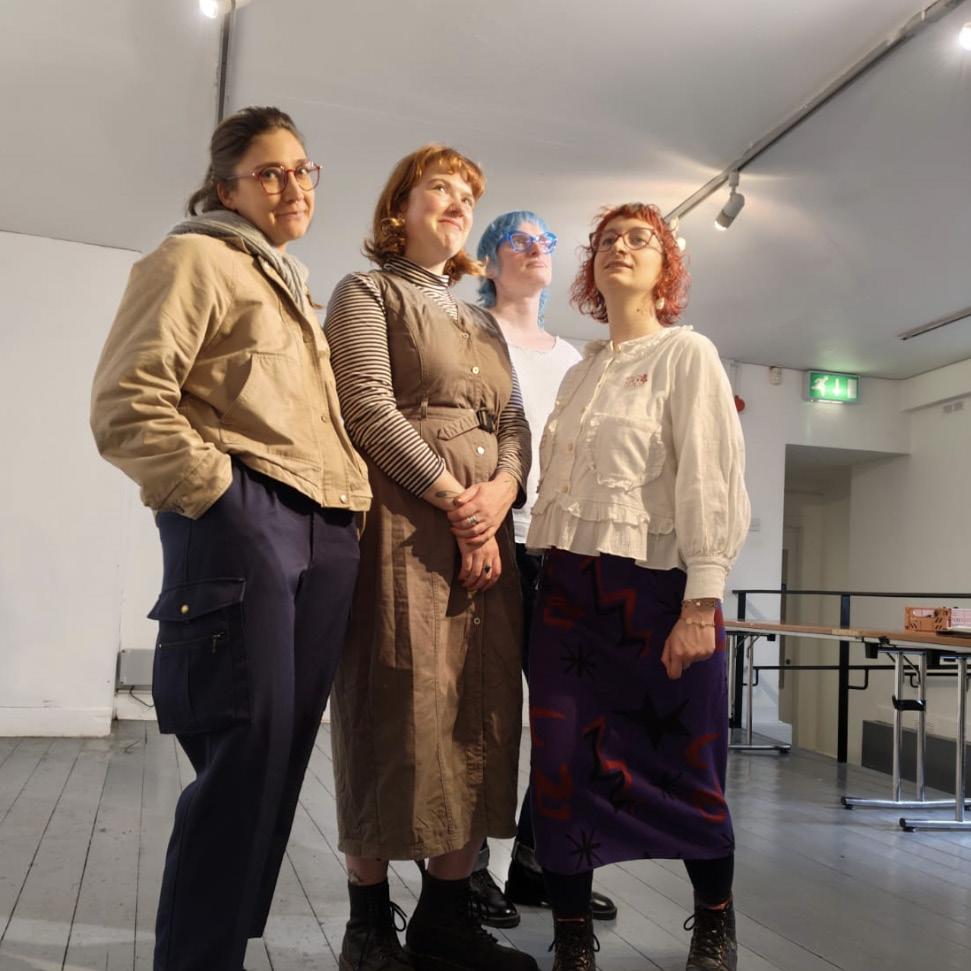
Currently at the helm of the operation are Annie Mar, Cass DuCharme, Elize de Beer and Justine Lepage. Cass DuCharme shares her thoughts on the zine ecosystem in Cork.
What got you interested in zine making?
Cass DuCharme: For myself, it definitely happened almost by accident! When I moved to Cork in 2021, and everyone was
“In an increasingly online world, zines bring people together in person without the high economic barrier that other hobbies often have.”
emerging from lockdown, it just happened that the people I began connecting with were a mix of artists and socially engaged people, and zines were part of my newfound friends’ art practices. It seemed fun, so I gave it a go.
How did you get involved with Cork Zine Fest?
Cass DuCharme: Similar to my previous answer, I had gotten to know the other organisers, including Annie, Elize and Justine, so socialising with my friends included attending this cool thing called Cork Zine Fest that they were involved with in 2022, which grew to adding my own zine to a friend’s table in 2023, to having my own table and joining the organisers in 2024.
For the annual Cork Zine Fest, how did the number of attendees from this year differ from past years?
Cass DuCharme: 2025 was the biggest year so far because of the whole “Maker’s Month”. We were able to engage with so many people throughout the workshops and open residency
Words: Kai Dranchak
space on top of another successful year of the two-day zine market.
How many attendees do you normally see during your monthly zine clubs? Do you notice many returning participants, or are they often firsttime attendees?
Cass DuCharme: We try to account for the size of the venue hosting Zine Club when deciding on the number of tickets we will make available each month, so that it feels like a relaxed event but still gives a good number of people a chance to participate. This tends to be 12-15 people, which usually is a good mix of familiar faces and newcomers. We are also surprised by how fast the tickets go each month, and there’s usually a waiting list for people who can fill in if there are any cancellations.
During Cork Zine Fest 2025: Makers Month with Sample Studios, you worked with several different organisations around Cork. How did you select which organisations to work with?
Cass DuCharme: When planning out our 2025 programme, we really wanted to expand our partnership with other local organisations, since we had success doing so in 2024 with CATU (Community Action Tenants Union) Cork and the Rainbow Writers group. So we reached out to a number of organisations to see what they might be interested in. Unfortunately, due to our funding application not being successful, we had to cut back our plans in this regard until Crawford Art Gallery reached out and proposed a partnership to engage with their network of workshop groups during their
gallery closure.
In what ways do you see Corkonians tackling social issues in zines?
Cass DuCharme: I often see people bringing political viewpoints and social issues into zines locally. The fact that we have partnered with the local chapter of the Community Action Tenants Union for several years is a testament to the significant overlap of social and political advocacy groups and zines as a format for expressing those views.
What strength do zines have over more traditional publishing avenues?
Cass DuCharme: Zines stand out for their low barriers to entry – you literally only need a piece of printer paper and a pen. So it’s approachable in that regard, especially if your goal isn’t to be
Features and Opinions
a published author. Even though the bar is low to get started, it can actually scale quite significantly and intersect with the more traditional publishing world. We’ve had market vendors with handdrawn, photocopied zines all the way up to professionally-bound softcover anthologies of works. The fact that zines allow for both ends of the spectrum is a testa-
“I think that the appeal of zines lies in how approachable they are; whether it’s your first step into a creative art form or you’re an established artist, there’s a way to dive in without a specific skillset or specialised equipment.”
ment to just how accessible they are as a format for sharing your thoughts and ideas.
How do you think the internet has affected zine-making?
Cass DuCharme: The internet has definitely broadened the general zine community. Even if individual events or zine scenes remain distinct and separate, there’s such a collaborative element to zine culture, which I see as being really evident via the internet. Even for ourselves, we’re closely connected to all the other zine events in Ireland both in person and digitally, and we’ve benefitted greatly from Zoom meetings with other established zine organisations, through knowledge sharing and receiving tips for growing sustainably.
What do you think draws people to zines over other art forms?
Cass DuCharme: I think that the appeal of zines lies in how approachable they are; whether it’s your first step into a creative art form or you’re an established artist, there’s a way to dive in without a specific skillset or specialised equipment.
More information about Cork Zine Fest can be found on their website corkzinefest.ie and Instagram @corkzinefest.
“Zines stand out for their low barriers to entry – you literally only need a piece of printer paper and a pen. So it’s approachable in that regard, especially if your goal isn’t to be a published author.”
CORK IS REDEFINING ‘PUB GRUB’
When I say pub grub you’re probably imagining a congealed Irish stew composed of day-old meat off cuts and the bruised vegetables fished from the bottom of cardboard boxes for a few cents. You’re probably imagining something all boiled down by a 17-year-old and left to sit under a heat lamp until an unassuming tourist stumbles in demanding an authentic Irish feed and a pint of Guinness, or at least a packet of over-salted peanuts or faded bacon fries with a best-before date somewhere in 2008. However, Cork city is offering something special and unique in gastronomy. There
has been an undeniable shift in partnerships between some of Cork’s most popular fast bites and beloved bars, offering great drinks, award-winning food and a relaxed atmosphere at a great price point. Here are my top three picks for the new and improved Cork pub grub.
1. The many meals of O’SHO pub
O’SHO’s pub is offering to satisfy every craving you’ll have, hosting Iyers, a South Indian vegetarian pop-up every Monday. If you’re looking for a delicious Masala Dosa or Samosa Chaat to ease you back into the work week, and a pint or two,
then O’SHO’s is the spot for you. If Monday night ran long and left you requiring a hearty Tuesday lunch cure, The Black Market sandwich institution Tongue Tied, has recently joined the lineup from an on-site kitchen, doling out stacked sandwiches Tuesday-Saturday from 12-4 p.m. A sandwich, a pint and a bag of crisps for €15 Wednesday to Friday? It would be rude not to. If your Tuesday lunch happens to run into Tuesday evening due to O’SHO’s €4.90 pints of Beamish, Miyazaki Japanese Takeaway, perched just up the street and recently named one of Ireland’s 100 best restau-
rants by The Sunday Times, offers your much-needed soakage from Tuesday to Sunday. If you’re tempted by a Tantanmen Ramen special paired with a Kirin Ichiban Japanese beer or a Chicken Katsu curry while you cosy up for an evening of Sunday trad, the flavours and festivities that this pairing promises will have you coming back again and again.
2. The Black Dog Cork x the Old Town Taqueria
When you combine some of the best cocktails in the city with some of the best tacos around, you’re in for an absolute treat. The Old Town Taqueria is slinging classic flavours like Birria Beef and crazy specials like Jalapeno Clonakilty pudding tacos, which always hit the mark from Wednesday to Sunday at the North Main Street institution The Black Dog. Whether it’s date
Words:
night, a friendly catch-up, or a solo date, perching up at the Black Dog window with a tray of loaded nachos and a classic margarita or Black Dog classic ‘Smooth Operator’ cocktail guarantees a night of unforgettable Mexican food and colourful cocktails.
3. John Henchy & Sons pub x GoodHood pizzeria
St Luke’s Cross favourite Henchy’s has a symbiotic relationship with new-kid-on-theblock and rising star of the Cork pizza scene GoodHood. Named by the Irish Examiner as one of the 100 best places to eat in Ireland, GoodHood is serving some of the best pizza around in one of Cork’s most beautiful corners. If you fancy a classic ‘Vinny’ pizza, why not grab one for takeaway and enjoy it with an Aperol Spritz in Henchy’s on a sunny day? Better yet, grab a pint and
bring it across the road to enjoy with a delicious beef cheek small plate. Don’t forget a side of smashed spuds!
“When I say pub grub you’re probably imagining a congealed Irish stew composed of day-old meat off cuts and the bruised vegetables [...] However, Cork city is offering something special and unique in gastronomy.”
Words: Isaac
WHAT WE CAN LEARN ABOUT CLIMATE CHANGE FROM THE CRETACEOUS THERMAL MAXIMUM
Worldwide, around 89% of people view climate change as a threat; they aren’t wrong to think so. With news of extreme weather causing destruction, like floodings in Spain since 2024, and damage caused to some of the major wonders of the world, like the bleaching of the Great Barrier Reef, it’s no wonder people fear for the future. While Climate Change and the climate emergency we find ourselves in are frightening, this is not the first time in the Earth’s history that its climate has changed, though it is likely the first time it has done so at such speed.
Did you know that we are technically still in an ice age? Since the polar caps exist all year round, it is still considered an ice age, no matter what the 45°C summers might lead you to believe. This means that there have been times when Earth’s global temperatures have exceeded those we see today.
Introducing the Cretaceous Thermal Maximum (CTM):
The Cretaceous period (14366 MYA) came after the Jurassic period. Global temperatures were about 4°C higher than the current climate, with no polar ice caps, tropical forests in the Arctic, and sea levels around 100200 meters higher than they
are today. However, there was a period during the Cretaceous when global temperatures were at their highest in the last 200 million years#. This time is called the Cretaceous Thermal Maximum, and it happened around 93-85 million years ago. Global temperatures were 5-8°C warmer, sea levels were 250 meters higher, and CO2 levels were over 2 times higher than today’s numbers.
Many people already know that flora and fauna existed during prehistoric times, but I want to emphasise that animals and plants didn’t just exist; life functioned as it does now. Some
organisms found it difficult to survive, and others thrived. In fact, the heat was advantageous to certain animals, allowing them to grow to massive sizes. For example, sharks, whose size and aspect ratio of their pectoral fins grew greatly. This helped them become one of the greatest marine predators, in particular the sharks Selachain, Lamnidiforms and Carcharhiniforms. Seeing as sharks are still one of the most feared predators on Earth, it is safe to say that the warmer CTM temperatures aided sharks rather than hindered them. Another iconic marine animal of this time was the Mosasaurus, a marine
reptile which dominated a lot of waters during the Cretaceous. Interestingly, its first appearance was during the mid-Cretaceous, and it became one of the apex predators of the sea, using the changing environment to its advantage.
The increase in size of these animals was also likely due to other predators, like the Ichthyosaurus, decreasing in numbers. The Ichthyosaurus, an order of marine reptiles, were negatively affected by the change in climate due to their inability to adapt to the new environment. In their absence, sharks and Mosasaurus took their prey, their habitat, and their predatory status.
On land, life continued too. Terrestrial animals grew to immense sizes. The dinosaurs ruled the land, and this time period saw the largest of them: The Sauropods. Sauropods were a clade of dinosaurs that included the titanosaurs, which, as the name implies, were the largest dinosaurs to ever exist;
they thrived during the Cretaceous, reaching up to 37.5 meters long and weighing 57 tons. This is due to the fact that Sauropods used their size to reach plants that were unreachable to other herbivores, decreasing food competition. During the CTM, since CO2 levels were so high, plants had an easier time growing bigger and taller, like the massive conifer trees. While correlation does not equal causation, it is not impossible to think that the growth of these plants forced Sauropods to grow in height.
Plants also gained some evolutionary advantages due to the heat that serves them to this day, including better water retention, more efficient water transport, and deeper roots, to name a few. Extreme climates might be dangerous for animals and plants right now as well, but the past shows us that these hardships help to evolve populations into a better adapted version. While this may not be true all the time, there will always be some spe-
cies that can survive during this hardship and live on.
Furthermore, the Cretaceous Thermal Maximum was certainly not the only period in which Earth’s global temperatures exceeded our own, such as the Paleocene-Eocene Thermal Maximum. Life has lived in all types of conditions on Earth, and I truly believe it will until our sun explodes. And even then, life probably exists somewhere else in the universe. Death and extinction are not the end. Like the Ichthyosaurus, those who cannot adapt die. But their death is not in vain, because in their place something new can grow. If humans were to die out due to climate change, other parts of nature would flourish – especially since humans are the cause of the next mass extinction event, called the Holocene mass extinction.
However, for the moment, humans are still here. I don’t think people should stop fighting for a better future. The suffering people most directly harmed by climate change have to endure is unfair, unjust and cruel, notably since there are actionable steps our governments can take to help. I do, however, also believe we should strive to view the world through a less conscious way, and recognise that humans are simply another species of animal that will one day die out. Death is scary, so is extinction, but life existed before us and will continue after that, and there is a beauty in letting go of our constant want of collective survival. Sometimes we should try to see the forest for its trees.
Photo: Alfred-Wegener-Institut/J. McKay
EXPECTATIONS VS REALITY AS STUDENTS AND GRADUATES: WHAT UNIVERSITY DOESN’T TELL US
The university experience is unique for each individual, but it is often a positive and enjoyable one. Of course, college comes with its challenges. We all face the pressure of exams, projects and most importantly, graduation. However, does university really prepare us fully for what’s to come after? Is it really as simple as getting a degree to get a job you love? What is it that college doesn’t tell us?
I had the most wonderful time at UCC and took every opportunity I could get. However, as time was drawing closer to graduating and applying for career-like jobs, and even after I graduated, I couldn’t help but notice that university didn’t live up to a lot of people’s expectations when it came to finding a career after college – one that related to their degree, their passions or their dream role. There’s a lot that college prepares us for, course-content wise, but what preparation do we receive as students getting ready to find work? What about advice for job research, interview skills, work experience and networking? I believe these are key skills that
should be taught to prepare us for entering the workforce. Even when applying for courses, there is always a section on career paths after the degree and testimonials from past students about their jobs. Lecturers often say as long as you have a degree, you’ll get a job. But I don’t think it is as simple as that.
Why are students left without jobs after graduating? Why do students end up in a different career path from what they have studied? There are various factors and personal circumstances which lead to this. However, some important factors are the pressure to choose a course when you are unsure, the lack of preparation outside of course material, the lack of work experience, low job availability in Ireland and AI.
Firstly, it’s in our final year of secondary school that we choose our pathway. Not only is it a young age to be making a decision which essentially shapes your life, but there is also a lot of pressure to go to university. Some students don’t know what they would like to pursue or don’t want to go down the
“University isn’t just an institution that’s there to teach us course content; it’s there to support students on their journey to finding a career, to create a community, and to enable students to find their passions, to network and to grow.”
academic route. Even though the trade sector is struggling, students will still apply for university due to societal pressure and a lack of career opportunities for those without a degree. In secondary school, we aren’t taught about the other pathways
we can take, and are often made to feel like getting a degree is our only option for success. Not only does this impact students’ futures, it also affects what jobs are in demand. While university doesn’t define or solidify anyone’s future, if students rush into choosing a course and make the wrong decision, this can create a range of difficulties in the future. It can affect students financially, as well as affecting their housing situation and their job opportunities. It’s important to have adequate time to explore as many options as possible.
As stated by Deputy Erin McGreehan, Chair of the Oireachtas Committee on Further and Higher Education, Research, Innovation and Science, “For too long apprenticeships have been overlooked in favour of encouraging students to pursue university degrees after school. We are now seeing the consequences of that approach, with a shortage of essential skills needed to drive Ireland’s future. That must change. We need to think differently about the skills required to build Ireland’s future.”
There are many other routes one can take if university isn’t something they want to pursue. There are Further Education and Training (FET) courses, apprenticeships, internships and a range of online courses and certs. We shouldn’t have to rely solely on degrees to get a job. Pressure from society and family, and most jobs being advertised as requiring a bachelor’s degree can rush students into choosing college courses. If universities had the option of trials for different courses, would this help to address the issue of students
not knowing which course is right for them? Would it prevent students dropping out?
In some countries, for example the United States, Germany, Finland, the UK and Austria, students have the option to apply for multiple universities as their first choice simultaneously, unlike the Irish system, where we choose one college and specific course and list our second favourite, third favourite, etc. Universities in some of these countries let you try out different courses and modules before committing to them, and allow you to apply for multiple courses at once. This allows students to make the right decision for themselves. Sometimes courses aren’t what students expect, so having the option to try out some classes and having a more in-depth orientation might be beneficial.
It’s often thought that a degree in a specific area will get you a job in that sector as soon as you graduate, but that’s not always the outcome. Does simply completing a degree guarantee you a job? Is a bachelor’s only a stepping stone? Oftentimes a bachelor’s is seen as a basic requirement, regardless of subject matter. But why are four years of hard work not enough? Isn’t the point of completing a degree to become knowledgeable in our sector in order to get a job in it? Isn’t the point of our degree to set us up for the future? Should we need to do more courses and have more certifications and experience to get an entry-level job after years of study?
Even a master’s degree doesn’t provide us with work experience. If an attractive aspect
“It’s often thought that a degree in a specific area will get you a job in that sector as soon as you graduate, but that’s not always the outcome.”
of a master’s degree is specialisation, should more undergraduate courses have specialised pathways and chosen modules (electives)? While I do understand that upskilling is beneficial, I think students should do it because they want to, not because they feel pressured, or because they will struggle in the world without it. As mentioned previously, on university websites and on undergraduate pages, there will always be a section on testimonials and a list of career opportunities after graduation. But in reality, an undergraduate degree doesn’t guarantee you a job straight out of college, and now there is a higher demand for postgraduate studies, and more competition, as more students are choosing university over other pathways. As well as that, getting into a postgraduate course is a process in itself, with various requirements and limited spaces. There are also the costs of doing a postgraduate course, and not everyone is in a financial position to afford these.
Certain sectors are favoured and there are limited opportu-
Features and Opinions
nities as a result of that. When speaking about growth in employment and booming industries, the Minister for Enterprise, Tourism and Employment stated that Ireland’s “medical devices industry continues to be one of our strongest performers”. The Enterprise Minister, Peter Burke, announced that “[t]he financial services sector continues to deliver high-value employment and the chemicals sector is delivering exceptional results and remains one of Ireland’s most strategically significant industries.” What room does that leave for other sectors? Design? IT? Languages? These sectors are already struggling with another issue, the rise of AI.
We must acknowledge the fast growth of AI and how that negatively impacts students, graduates and the jobs sector. While we’re aware of the use of AI to complete essays and other academic projects, AI has had a significant impact on the job industry. I have witnessed many students in IT, design and languages who have had a clear career goal, a dream company or ideal position. But by the time they graduated, AI had advanced so much that it affected their job opportunities. Companies are experiencing big layoffs and are replacing roles with AI. AI is replacing the skills of humans as a faster and cheaper alternative.
This isn’t something university has prepared us for. While college lecturers stress that the use of AI for essays is prohibited, they aren’t stressing how it is actively changing the job industry. University should help to prepare students for what reality
might look like in certain sectors after graduating, and what other roles could be explored. University isn’t just an institution that’s there to teach us course content; it’s there to support students on their journey to finding a career, to create a community, and to enable students to find their passions, to network and to grow. Should more courses have specialised pathways and modules? Would undergraduate degrees be more appreciated if this were the case?
As the main focus of a course is learning content, work experience isn’t an opportunity that every course offers. Lack of experience is a major point that hinders graduates from getting a job after college. Should all courses implement work experience to some degree? How can we get experience when no one will give it? While a degree is highly sought after, there is no denying that companies look for candidates with experience, but this is not spoken about enough in college.
That being said, it’s not impossible to get a job straight out of university after completing an undergraduate degree. It’s just more difficult nowadays, and it isn’t the reality for a lot of students. As well as that, sometimes a bit of good timing and luck goes a long way. Despite the issues, there’s a support system in UCC if you need it. Your lecturers are one email away if you need career advice, and from my experience and that of many others, UCC lecturers gladly help students in need. UCC has many courses providing Erasmus programmes, through which you can study
abroad. There’s the PX3001 module, which is an accredited professional work experience module that allows College of Arts, Celtic Studies and Social Sciences (CACSSS) students to explore career interests. It’s also possible to defer a year of college if required, and UCC has a careers team with which you can book meetings to discuss future prospects.
From my experience, I loved university and enjoyed my course, and was lucky to go abroad for a year as part of Erasmus. However, I wish that work experience had been integrated into the course and would have loved to have had a module or some sort of event in my final year on job preparation, interview advice and options after graduation. The final year of university goes by so quickly, and with a heavy workload on top
Words: Béline Chan
of classes, it’s easy not to give yourself enough time to prepare for what’s to come after graduation.
After completing my third year, I deferred my final year for one year. This allowed me to build my portfolio, gain work experience, upskill and network. Ultimately, I got a job as soon as my course finished. My deferred year truly benefitted me, as did my Erasmus, and without them, I don’t think I would have managed to get as many wonderful experiences and opportunities.
Hopefully, more courses can implement work experience and career advice for final-year students in the future. There should be less pressure on students to go to university if it isn’t the route they want to take, and they should be allowed to explore other pathways. I also hope that universities will help students
to navigate AI challenges in the job industry and introduce new ideas and paths.
Useful services and programmes for UCC students to engage with include Career Services, Erasmus Work Placement and UCC Study Abroad.
“But why are four years of hard work not enough? Isn’t the point of completing a degree to become knowledgeable in our sector in order to get a job in it? Isn’t the point of our degree to set us up for the future? Should we need to do more courses and have more certifications and experience to get an entry-level job after years of study?”
BLOOD & WATER BY REBECCA MURPHY
Winner of the RTÉ Today Show Novel Competition, Rebecca Murphy’s debut novel Blood & Water is a quietly haunting story about love, loss and secrets.
Susan arrives on Dune Island, in West Cork, to sort out the inheritance that her uncle Frank left her – a cottage, a small distillery and Walter, the dog. By the time Susan steps off the boat, she seems to be running from her wife. She hasn’t stopped loving Jen. She left because she no longer recognises the people they have become. Being on the island will give her time to think. Jen will understand, won’t she?
Susan quickly discovers that closing out her uncle’s affairs won’t be as easy as expected. For one thing, she is unsure how to approach her new ownership of the distillery with JP, Frank’s friend. Then again, more time on the island means she can avoid dealing with the impending fallout of walking out on her marriage.
Through conversations with Peggy, the landlady of the island’s pub, and her sea-captain husband, Mick, Susan discovers that Frank isn’t the only family member that she doesn’t know much about. The more she learns about her relatives, including her dad, the more connected she feels to the island. But she cannot outrun her life in Dublin and her life with Jen. The life she loved, until the multiple rounds of IVF pushed her
to breaking point and left her feeling adrift in her relationship, even though Jen was by her side through it all.
The majority of the story is told from Susan’s point of view, but we also hear from Frank and Jen. Frank’s sections are the most devastating. I sobbed as we learned more about his life, his hopes, his worries and his reasons for remaining on the island. While Jen’s narrative
“Blood & water is a stunning debut exploring identity, connection, love, grief, and the nature of inheritance. rebecca murphy joins the ranks of irish women writers who deftly write about the complexities of ireland’s past and its impact on our present.”
shows readers how Jen desperately wants her wife back. If that means heading to Dune Island so that Susan cannot continue to hide, then that’s what Jen will do.
As she settles into island life, Susan strikes up a friendship with Amelia. Amelia is also an outsider. Maybe the fact that she visits the island every summer means she isn’t really an outsider, but it’s enough for Susan. Amelia is a lecturer who is there with a group of her students to count puffins and other unusual birds. The unusual birds part is important, as Amelia explains when Susan asks if they count seagulls. What harm is a little flirting, thinks Susan. It’s a fun way to distract herself from the realisations that secrets run deeper in her family than she assumed.
Rebecca Murphy writes about heavy topics with a warmth and humour that is distinctly Irish. I say heavy deliberately because Murphy acknowledges in the author’s note at the beginning of the novel that it “walks through some heavy territory: infertility, loss, grief and mentions of suicide.” I lost a family member to suicide, so there have been occasions when reading about it has been too much for me. While this wasn’t the case here, I appreciate Murphy’s approach to letting readers know about where the story is headed, so we can decide whether to continue reading without being blindsided by a potentially triggering issue.
Blood & Water is a stunning debut exploring identity, connection, love, grief, and the nature of inheritance. Rebecca Murphy joins the ranks of Irish women
Words: Paula Dennan
writers who deftly write about the complexities of Ireland’s past and its impact on our present.
Blood & Water by Rebecca Murphy is published by Mercier Press.
“Rebecca Murphy writes about heavy topics with a warmth and humour that is distinctly Irish.”
FOUR IRISH ESSAY COLLECTIONS TO EASE YOU BACK INTO READING FOR FUN
Has academic reading wiped out your ability to read for fun? These four essay collections by Irish writers and writers living in Ireland are a great way of falling back in love with reading for pleasure during the summer months.
Attention: Writing on Life, Art and the World by Anne Enright (Jonathan Cape, 2025)
Attention is a collection of literary criticism, cultural and political commentary and autobiographical writing spanning Anne Enright’s decades-long career. The essays are grouped by theme rather than being presented in chronological order. The themes are Voices, Bodies and Time, which is a clever way to ensure that essays which were not written to be published side by side are in conversation with each other.
For me, the Bodies section is the strongest. This is where the bulk of Enright’s cultural and political commentary appears, covering issues from the discovery of a mass grave at the site of the former Mother and Baby Home in Tuam to her support for repealing the Eighth Amendment in the months leading up to the 2018 referendum and the #MeToo movement.
The standout essays across the collection are ‘I Stab and Stab: How to End a Story: Collected Diaries by Helen Garner’, ‘Ulysess: An introduction’, ‘Alice Munro’s Retreat’, ‘The Monsters of #MeToo’, ‘On Consent’, and ‘Dublin Made Me’.
This Interim Time by Oona Frawley (The Lilliput Press, 2025)
Oona Frawley was born in New York to Irish parents. She moved to Ireland in 1999 and is an Associate Professor and lecturer at Maynooth University’s Department of English. The essays in This Interim Time explore grief, family, finding a sense of home, and figuring out how to live your life when the people you love are dying.
Frawley takes great care when writing about other people. There is an understanding that while aspects of their stories intersect and are Oona’s to tell, other experiences belong solely to the other person. This is especially evident when Frawley writes about her father’s death when she was in college, her mother’s dementia, and the death of her friend Nancy. The book is dedicated to the three of them. Highlighting the level of care taken may seem unneces-
“These four essay collections by Irish writers and writers living in ireland are a great way of falling back in love with reading for pleasure during the summer months.”
sary, but knowing where those boundaries lie is a skill not every memoirist, essayist, or nonfiction writer has.
The standout essays are ‘Home’, ‘Theatrics’, ‘Birth Stories’, and ‘Moving Towards Death’.
An Asylum for My Affections: Sketches of Maeve Brennan edited by Molly Hennigan (New Island Books, 2026)
An Asylum for My Affections explores the life and work of Irish writer and journalist Maeve Brennan. While living in the US, Brennan wrote a column for The New Yorker under the pen name The Long-Winded Lady. She also published two collections of short stories in her lifetime, In and Out of Never-Never Land and Christmas Eve.
The essays in An Asylum for My Affections each examine a different aspect of Brennan’s life and work. Some of the essays focus solely on Brennan’s
writing, like Belinda McKeon’s ‘You’d think it was a diamond necklace: Style as a weapon in the Herbert’s retreat stories’. Others discuss aspects of the essay writer’s life alongside Brennan, such as ‘(Mis)reading the city: Attempts to emulate The Long-Winded Lady’ by Jessica Traynor.
Whether you are a newcomer or a longtime fan, this anthology provides a fresh perspective on Maeve Brennan’s work. The standout essays are ‘Blessings on your house’ by Mary Cregan, ‘A story of velvet and lace: Maeve Brennan and Alice Monroe’ by Éilís Ní Dhuibhne, ‘The city holds us and we don’t know why: On Maeve Brennan’s non-fiction’ by Sinéad Gleeson, and ‘The power of her nightmare’ by Arnold Thomas Fanning.
At Least It Looks Good From Space: A catalogue of modern, millennial and personal
Words: Paula Dennan
catastrophes by Carl Kinsella (Hachette Books Ireland, 2025)
If you’ve read Carl Kinsella’s ‘Surrealing in the Years’ column at The Journal, you’ll know that Kinsella’s brand of social and political commentary is as humorous as it is astute. Kinsella’s debut essay collection, At Least It Looks Good From Space, is written with the same wit, analytical eye, and razor-sharp observations about modern life.
With essays about male friendship, living with OCD, a trip to Dollywood, internet culture and the detrimental aspects of social media algorithms, At Least It Looks Good From Space expertly balances the personal with the universal. And, yes, the time he started a disinformation campaign about the Luas being free makes an appearance.
The standout essays are ‘A Big Thing Of Water’, ‘You Could Try It Once’, and ‘It Occurs To You’.
Arts and Culture
AN BHFUIL TÚS AG LABHAIRT LEATSA?
Motley’s Arts and Culture writer, Elsa Forrest, spoke with DJ Mannio about founding Tús Collective, island life, the Irish language and their place on the DJ decks.
We all remember that feeling when we would look at our timetable and see a double Irish class waiting for us. Ahead waited the endless repetition of grammar, and all its long, complex rules. Somewhere between our colonisation and the introduction of Irish as a mandatory subject, Irish became less of a language and more of a chore. The school system dug up the roots of our language, throwing away the fun and musicality of it all and replacing it with poetry about divorce and lions in zoos. I spoke to Galway-based DJ Mannio, whose full name is Aran Mannion, about his take on our teanga and how his integration of the language with techno tracks has reignited a fire put out by ordinary level Irish classes watching Netflix on his laptop.
Having spent his childhood playing piano and singing sean nós as per his mother’s request at family gatherings, Aran realised he had a “bit of an ear for music” early on. His love for traditional Irish music was fostered when he began spending his summers on Inis Oírr working in a pub. Now a permanent resident of the island, DJ Mannio’s Irish has come on leaps and bounds, with his total immer-
sion with the locals being the catalyst for this improvement. Aran’s journey into techno began in March 2023 when he and his close friend Dylan Buckley founded Tús Collective.
“I knew that even if it was just one word at a time, i’d gradually be learning one word at a time and teaching someone else a word at a time.”
Having spent two years working on the organisational side of the scene as a manager in the DNA nightclub in Galway, Aran was exposed to local DJs and club promoters, “I just saw everything that they were doing and thought it was pretty sick.” Tús collective was born when co-founder Dylan Buckley lent Aran a controller he had sitting in his house. For Mannion, it was love at first sight, with the 23-year-old DJ spending six hours a day practising for the following months. His first gig took place in Swansea, with him performing his first set just four weeks after he sat down at his decks.
The unconventional mixing of
sean nós and techno came along later after Mannion returned to Inis Oírr, a place he describes affectionately as his “sanctuary.” After releasing his first track, ‘An Fuascailt’ (The Solution) in January 2025, Mannion began to explore ways to make his music stand out. “There’s a lot of copying and pasting going on in the music industry.” While he was conscious of the newfound trend of Gaeilge, one characterised more by Fontaines D.C, pints of Beamish and Eircom jerseys rather than the language itself, Aran told himself that “all publicity is good publicity” and started to mix these two defining elements of his life into one. He began titling his songs as Gaeilge, as a way to promote the language “without it being a facade.” “I knew that even if it was just one word at a time, I’d gradually be learning one word at a time and teaching someone else a word at a time.” Next, he began opening his sets with sean nós songs, pulling inspiration from musicians like Liam Ó Maonlaí. Gradually, Irish went from just being his track’s titles, to opening his sets and then finding its place amongst his techno and house beats.
While Mannion’s style is undeniably niche, his audience is diverse, with him recently playing a set for Berlin’s Slime Collectif. For him, his unconventional style is doing exactly what he wants it to do, “creeping people
out in a good way.” “In a lot of these club environments, a lot of people are just hearing the same thing over and over again.”
Travelling with his music has allowed his audience to grow, with Mannion highlighting the difficulty to “pop off” in a place where the dance culture is not what it used to be. “I think there’s only so far you can go as an artist within Ireland and I think that’s what causes people to move. It’s not that it can’t work here, but it’s just so much more rewarding to come somewhere that already has a techno culture.” Although his international audiences don’t have the same connection to sean nós as his Irish listeners, Mannion believes “that’s what clubbing should be about, you can go out for a dance and experience something you’ve never experienced before.”
At home, Mannion’s music
has been met with huge support. “When I’m playing, not just for Irish people, but for anyone who has a love for traditional Irish music, it taps into something within ourselves. His life on Inis Oírr, surrounded by 343 other residents, allows him to offset the chaos of club life, replacing it with clean water and community. The reason this paradox works is purely because of how polarising it is. “For a lot of DJs [club life] can be kind of draining, whereas I can step into the chaos of the club and festival scene and then come back to the island to decompress.” For Aran, life on the island and behind the decks go hand in hand. His total immersion in the Irish language has allowed him to be “flexible in a way that leaves room to make communication a little bit easier.”
Aran’s journey as a Gaeilgóir and a musician has been by no
Photo: Aleksandr Popov
means conventional, with him advising those who are trying to pick up Irish beyond the confines of a lined copybook to focus on conversation over grammar. “I think anyone who grew up in Ireland has a lot more Irish than they think they do. When we’re children our brains absorb language like a sponge and it’s all in there, it’s just put away.” His passion for Irish, born from a frustration at his prior inability to understand the locals, has driven not only his linguistic skills, but his unique and memorable style as a musician. Aran is one of many artists pushing Irish into the modern world, placing a language we rarely associate with flashing lights onstage across the world.
LIVE AT THE MARQUEE 2026: BELL X1, IMELDA MAY, AND THE CORK SUM-
MER ARGUMENT THAT IS NOT GOING ANYWHERE
Ray Burke with Alma Fiona Cline and Jessica O’ Sullivan
“You have to let the child be who the child wants to be,” David Geraghty says at one point, trying to explain why Bell X1 still refuse to stay in one lane for very long. A few days earlier, Imelda May put the same instinct another way. Record company people once told her to ditch the rockabilly if she wanted to be signed. “That’s a red rag to a bull,” she says, laughing at the memory. So she does the opposite. Only rockabilly. For a while. Two different interviews, two different careers, the same basic refusal. That feels like the right place to start thinking about Live at the Marquee this summer. Not with ticket counts or promoter lore, and not with the annual moan about whether the listings are too safe, but with two returning acts who still sound like they are steering by instinct rather than market research.
Bell X1, naturally enough, do not answer the question in a straight line. Radiohead comes up. Springsteen too. Then The Sundays. Then the conversa-
tion wanders somewhere better. Geraghty starts talking about the Wrecking Crew and that whole world of players who come in, serve the song, leave their ego outside and go home. Dominic Phillips says it is like watching a plasterer. Skilled trade. Look at that. Holy moly. Then it is five o’clock and the job is done. It is one of those lines that sounds tossed off until you realise it says more about Bell X1 than most formal appraisals ever do. They last because they never quite stiffen into self-importance. Brains, melody, side roads, yes. Pomp, thankfully, no.
“But the marquee is not going anywhere, and neither is the debate around it.”
May comes at things from another angle, but the same contrariness runs through every answer. She talks about singing
blues, jazz and roots long before the rockabilly years, then finding her way to rockabilly through punk and The Cramps, through rawness and rebellion rather than any heritage fetish. She does not want Cadillacs, borrowed Americana or costume drama. She wants songs that belong to her own life and her own time. That thread still runs through what she is doing now. Raised on Songs & Stories, which could sound terribly tasteful if written badly, is not being pitched by May as a fixed show at all. She wants the audience to shape the night with her. Songs, requests, stories, poems, whatever energy comes through the room. “I wanted this to be a shared energy,” she says. “A circular energy.” It sounds as if she means it.
That is one way into the Marquee this year. Not the only one, because Cork has the same row about the place every summer. Some of the listings are obvious. Some of them lean hard towards names that will shift tickets rather than really wrong-foot anybody. If your eye drifts towards
Galway, where Patti Smith lands at the Arts Festival, or to Limerick for Pixies, or east again to David Byrne returning to Dublin for the second time this year, it is hard not to think Cork could stretch a bit further now and then. That is a fair point. There is room for more experimentation in the bill, and there always will be. But that argument only goes so far. The Marquee has now been running for 21 years. Peter Aiken says that by the end of this summer it will have welcomed around 1.75 million people and hosted more than 350 artists if support acts are counted. At a certain point, that stops being promoter spin and becomes part of the city’s own memory.
That memory is not abstract. People in Cork have their own Marquee ledger. For me, it is Brian Wilson opening the first
season in 2005, when the whole thing still feels improbable and exciting. Bob Dylan in 2006. The Flaming Lips in 2007, Wayne Coyne out over the crowd in the giant plastic ball and half the room wondering if they have imagined it. Tom Petty turning up in weather so bad, as Aiken tells it, that the backstage tent has all but blown down, before someone mentions Dylan has played the site twice and suddenly everything is grand. Christy Moore comes back, almost every year, to the point where his return feels less like a booking than a ritual. Aiken says Christy has played 20 times and still refuses to be talked into doing two nights. In promoter terms, that frustration is understandable, but it’s also just Christy being Christy.
The Marquee begins as part
Words: Ray Burke
of Cork’s 2005 year as European Capital of Culture and outlasts the usual temporary-event fate. It settles into the city’s summer rhythm in a way that now feels oddly permanent for something made of canvas. Summers get measured through it. Who comes through the tent. Who you see there. Who you meet on the way in. Who you run into afterwards. What support act surprises you. Which gig you still bring up years later. It is commerce, obviously. It is also civic memory.
This year’s bill is broad in the usual Marquee way. Imelda May returns on June 12. David Gray follows on June 13 and 14, with The Divine Comedy opening one of those nights, which is special by any measure. Bell X1 return on June 19, with BabyRat in support. Two Door Cine-
ma Club have sold out June 23. Christy returns, sold out again. There is K-pop, comedy, Belters Only, the annual spread of old reliables and newer names. Some of the most interesting details are in smaller print. A support slot for BabyRat feels significant, a nod to an act on the rise that will hopefully open them up to a new audience.. A David Gray bill with The Divine Comedy attached comes close to a double bill.
Bell X1, for their part, still sound like a band being fed by whatever they happen to stumble into. They have just come back from recording in New York and the conversation keeps drifting into the things they go to hear while they are there. Downtown jazz clubs. Players taking solos in a way that feels almost processional. Then, later, an improvised recital in a church in Kingston, organ and clarinet, nothing fixed, everyone half inside the sound. Paul Noonan describes the pleasure of sitting there with Dave, eyes closed, already deep inside their own work, drifting with it. Phillips says the new record is “a little bit more cohesive” simply because it is made in a finite amount of time. Noonan jokes they are now “both country and western”. Geraghty gives the best answer again: let the child be who the child wants to be. That is Bell X1 all over. They set guardrails and then regularly walk straight past them.
May’s current run has its own version of that freedom. She talks about hitting a glass ceiling with one phase of her music, stepping away, and then making records where she does
not know what they are going to be. No box. No expectation. The phrase comes quickly, almost with relief. That refusal to be tidied up keeps her interesting long after the first headlines and the first easy image work
“Lazy people reduce her to the look. The better story is always the refusal underneath it, the sense that she pushes against any frame put around her, even one that appears to be working.”
have come and gone. Lazy people reduce her to the look. The better story is always the refusal underneath it, the sense that she pushes against any frame put around her, even one that appears to be working. She is returning to the Marquee, yes, but not as a heritage act replaying an old version of herself. The whole point seems to be that the version is still changing.
This is where the annual Marquee argument sits now. The bill can be cautious. It can leave you wishing for one left-field booking that makes the whole thing feel less predictable. But the Marquee is not going anywhere,
and neither is the debate around it. Cork complains about it, then folds it back into the season anyway. Bell X1 returning still feels like an event because they remain one of the few Irish bands of their size who sound like three people following instinct rather than instruction. Imelda May returning feels worth the attention because she still sounds like somebody willing to argue with the tidy version of her own story in public. A David Gray bill with The Divine Comedy attached is not exactly phoned in either. There is life in these bookings, even when the wider shape of the programme leaves you wondering what else might have been possible.
The Marquee is probably best understood for what it is. Big, familiar, occasionally too safe, but firmly built into Cork’s summer. The tent goes up, the rows start, the gigs happen, and by the time it comes down there are usually a few more nights added to people’s own running version of the city.
Win Bell X1 tickets
We have a pair of tickets to give away for Bell X1, with support from BabyRat, at Live at the Marquee on Friday 19 June. To be in with a chance, simply email motleymusic@ucc.ie and tell us why you want to go. The winner will be contacted at least a fortnight before the gig.
10 QUESTIONS WITH: EASY COMPANY
Easy Company are one of those bands that seem to turn up in conversation before you even realise you’re talking about them. I’ve had a few impromptu chats around Cork on the strength of an Easy Company T-shirt, most recently with an animated shop assistant in my local Centra in Blackpool. It’s always the same kind of exchange: immediate recognition, a happy grin, and talk of gigs, songs, and how good they are live. Easy Company are a live band in the truest sense. The records matter, but it is live, on stage, where the whole thing really clicks: the craic, the charge, the sense that anything could tip over gloriously at any minute. With half the band coming out of Audible Joes, there was plenty of disappointment when that band called it a day, but Easy Company quickly ploughed their own new course to prove that they were not about to live in the older band’s shadow. Their Alternative Munster nights at The Poor Relation on the second Saturday of every month, co-curated with former Motley cover stars The Revolt, have become proper community nights, packed with younger punks, older heads, and plenty in between. They are the sort of gigs people talk about for days afterwards. There are strong plans for the summer editions too, so keep an eye on social media.
Since emerging with “DrugSick Reference” in 2022, followed by the Punk & Football EP and the 2025 debut album If There’s Something - We’re Against It!, Easy Company have carved out a lane of anti-fascism, class anger, DIY ethics and that good aul’ Cork sense of humour that is so prominent in the best of our bands. The songs are funny until they are not, direct without being dull, and rooted in the kind of friendships and shared politics that give a band our favourite kind of shape. They have built their name the old-fashioned way: records, word of mouth, and gigs that send people back out onto the street buzzing. We asked them ten questions and got answers that were funny, politically sharp, and grounded in the friendships that make a band like this possible in the first place.
1. Easy Company came out of Audible Joe’s orbit, but they never really felt like a spin-off so much as a different shape entirely. Did it feel like a clean break into something new, or more like a sound gradually forming out of the direction some of ye were already going in?
I think people naturally compare the two bands, given the overlap in members. But Easy Company really came from long-standing friendships, not a deliberate attempt to create
something “new”. We often joke that we’d be making music together even if no one was listening and there’s a lot of truth in that. Figuring out the sound took time and our last record was a bit of an experiment. The next one will build on that process in a really collaborative way.
2. DIY can mean a lot of things, but with Easy Company, what does it mean in practice for ye, beyond taking on the sort of jobs, like organising gigs, that other bands might happily farm out?
Growing up as teenagers in Cork in the 2000s/2010s, there wasn’t much of a punk scene
Cline and Jessica O’ Sullivan
around us. We learned pretty quickly that if we wanted it to exist, we had to build it ourselves.
Over the years, organising shows with other bands across Ireland and Europe showed us how powerful local communities can be. As we’ve gotten older, that idea has carried into other parts of our lives too, whether that’s going to local football matches, farmers’ markets, grassroots wrestling events or getting involved in political events and movements.
For us, DIY is about creating that same sense of belonging. It’s something that’s given us a lot of joy and purpose. It’s bigger than just the band and we’re just glad to be part of it.
3. As well as playing around the country, ye have managed to play in other countries. How do you actually make that work as a band, what’s the key to
making the DIY ethos work beyond county lines?
The reality is, it wouldn’t work without the DIY ethos. In punk, that goes far beyond just putting on shows. It’s about building real relationships. It means giving people a place to stay, making sure bands are fed and looking after each other properly.
That’s what allows it to exist beyond your local scene. We’ve been lucky to experience that firsthand when we travel. It’s a network of people who genuinely care. It’s self-sustaining and it only works because of the people at its centre.
4. From “Drug-Sick Reference” to Punk & Football to If There’s Something - We’re Against It!, things moved pretty quickly from a single to an EP to a full-length. The album title is obviously a bit tonguein-cheek; it might read as anger
Photo: Szabina Balogh
“Easy company are a live band in the truest sense. The records matter, but it is live, on stage, where the whole thing really clicks: the craic, the charge, the sense that anything could tip over gloriously at any minute.”
fatigue, or maybe a comment on just how much there is to be angry about. Was that title getting at that, or even getting ahead of the kind of person who says, “those lads are always giving out about something”?
We really try not to take ourselves too seriously, as the album title and artwork would suggest. At the end of the day, we’re a group of friends that want to play punk music together and conveniently, we’ve got a lot to say.
The album title was born during an onstage rant in a back-alley dive bar, somewhere up the country. We don’t expect anybody to listen or to care, but we’re going to tell you anyway. For that reason, humour plays an important role in differentiating between stereotypical rage and actually being ourselves.
5. Songs like “Culture Vulture”, “1312” and “The Patron Saint of Sketchy Cunts” are not exactly subtle about their targets. Do ye trust bluntness more than metaphor when it
comes to lyrics, or does that depend on the song?
We each have different styles and approaches to writing lyrics, so I think it’s fair to say that it differs between songs. Metaphors have their place, but we believe that if someone is a bit of a cunt then it’s best to tell them.
6. The politics were baked in from the start, but the attack surface gets wider as the releases go on: addiction, anti-fascism, housing, anti-authoritarianism, class anger. Did the songs broaden the band’s focus over time, or were those always the things ye wanted to hit?
I’d love to say there was some careful, long-term plan behind it, but the reality is it just comes from our lived experiences. The subject matter was always there, but I guess that the older we get, the more reasons we have to write about it.
Anyone who connects with our lyrics knows what it feels like to be socially disenfranchised and the songs are just a way of channelling that frustration. It’s a lot cheaper than therapy.
7. If There’s SomethingWe’re Against It! has a real sense of solidarity running through it, but the songs never feel like lectures. How do ye keep music with that much intent alive?
Intent matters and people can smell bullshit a mile off. There’s no point writing songs about things you think people care about if you don’t actually give a damn yourself. For us, it’s about being honest rather than getting it perfect. We’re not trying to preach, we’re just saying what we believe and letting it out. Because we’re actually friends, we’re the first ones to hold each other accountable and that helps keep it grounded.
8. We ask this one a bit, but what, if anything, feels specifically Cork about Easy Company, both musically and in terms of the crowd around it?
A- When we were younger, all we wanted was to play outside Cork and reach new audiences. But the older we get, the more we appreciate playing in our home town.
A lot of our songs reference specific places and people in the city, because it’s such a big part of who we are. Cork probably means more to us than anything else we write about. We even reworked our logo to pay homage to it. Easy Company would be nothing without it.
9. If someone has never heard Easy Company before and ye’ve one song to make them get it straight away, what are ye playing and why?
“Shed End Boys” is probably the one. It’s got the sound, the
subject matter and that sense of unity we’re always chasing. It also marked a bit of a shift for us and set the tone for everything that came after.
10. Quick fire round: favourite venue, past or present? One record ye return to all the time? One Irish act more people should be paying attention to right now? If ye were starting out again, would ye do anything differently? What are ye looking forward to for the band in 2026?
Favourite Venue: Black Dog (BDSM) - Small, cramped, perfect!
One Record: Boots & Ballads by Runnin’ Riot Irish Act: Scundered (seriously underrated Belfast band) Change?: Not a thing. We’re happy with the decisions and we’ve learned a lot along the way.
2026: We will be releasing a new album before the end of the year with our dear friend Mick Stone of Audible Joes. Stay tuned!
Easy Company comes across much the same way they sound: politically sharp, self-aware, funny when it suits them, and completely uninterested in smoothing the edges. If you’re coming to them cold, their own recommendation is “Shed End Boys”, and we’d agree, though “Buckfast & Benylin” has also done a fair bit of conversion work in our office and beyond. With the band set to spearhead more Alternative Munster shows and bring over acts from the UK and Europe from July, keep an eye on Easy Company’s Instagram and Alternative Munster for what comes next.