How Fashion Can Become a Conversation Starter for Extinction
WILDLIFE TRUST OF INDIA
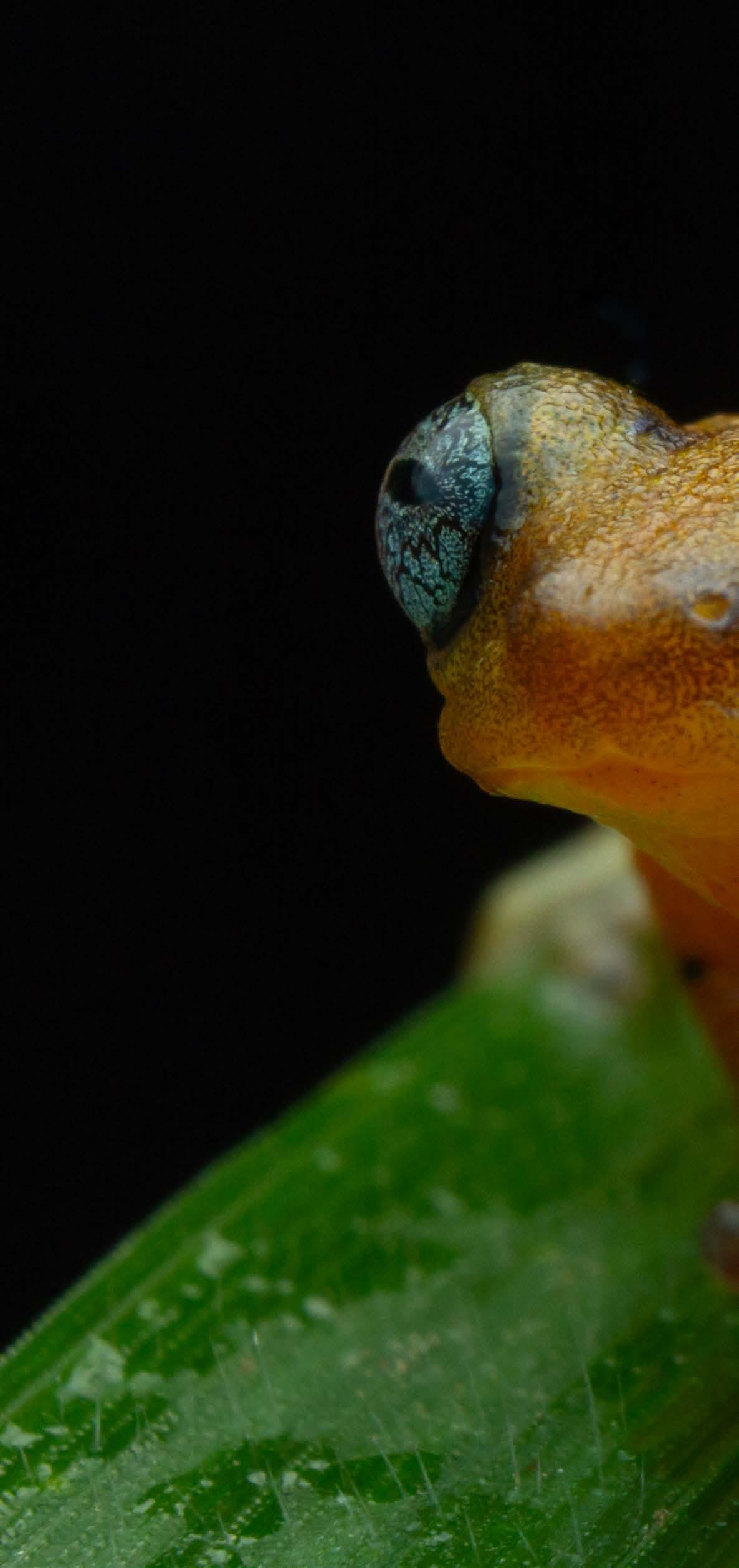
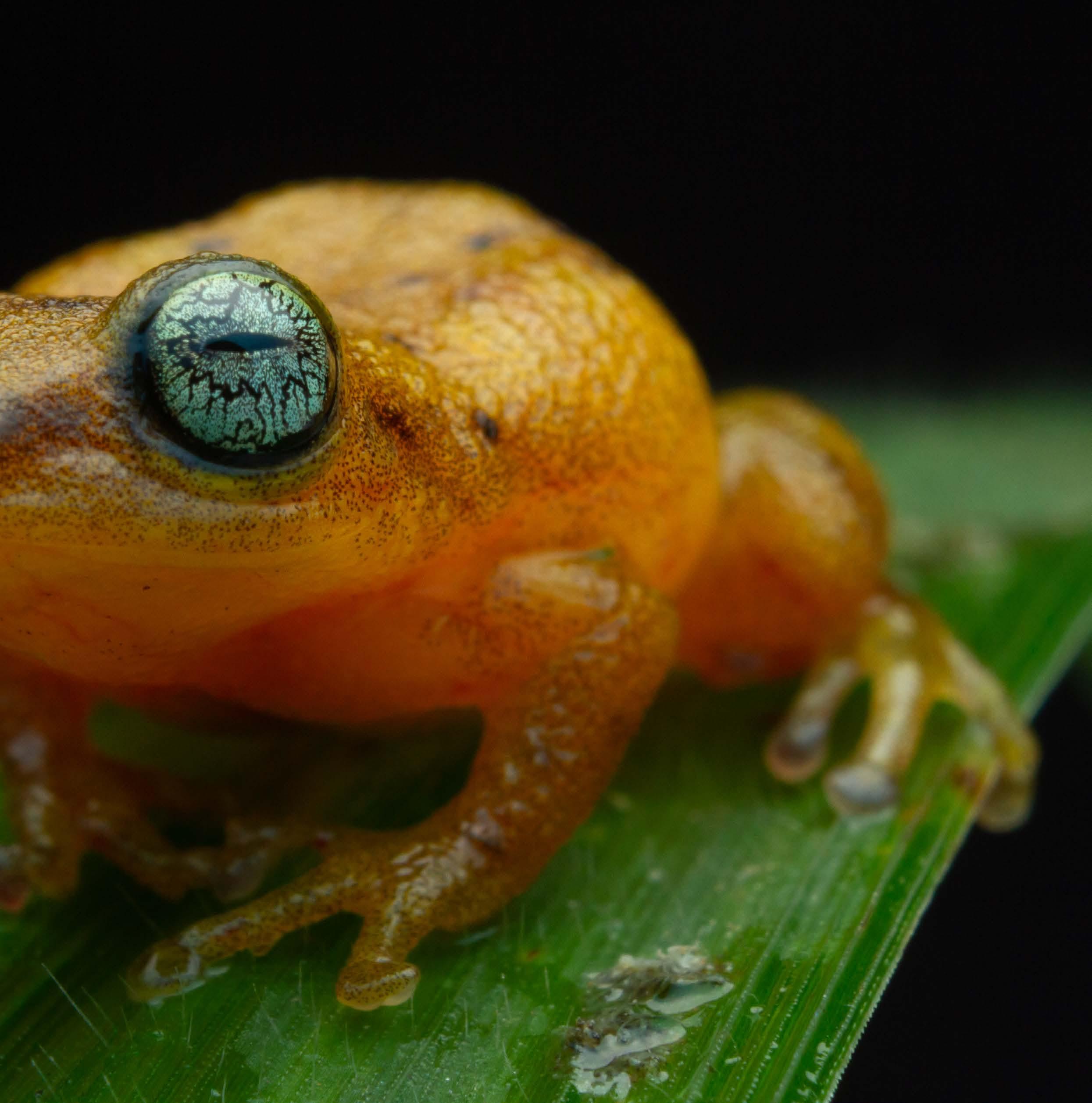
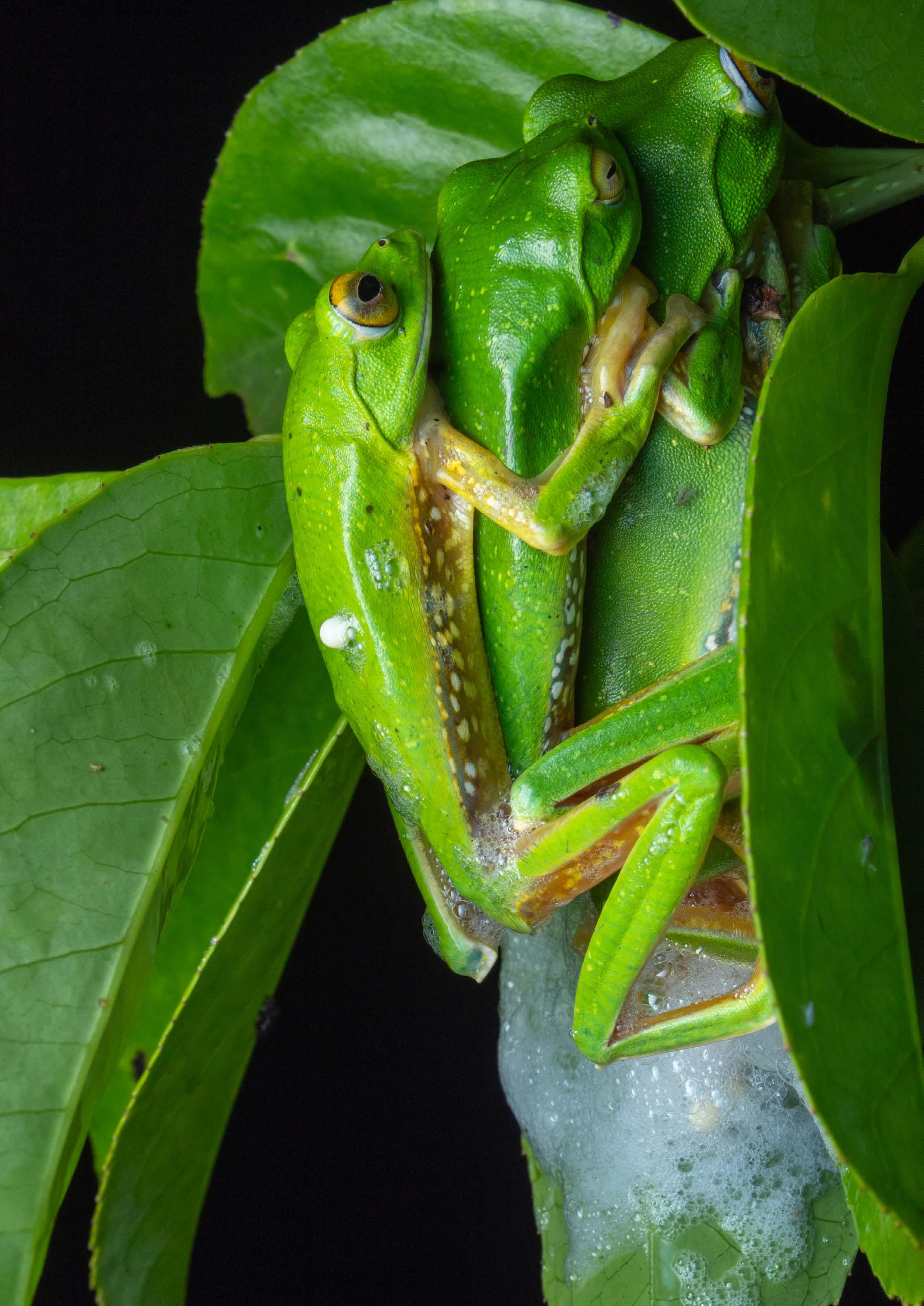
The Unseen Beauty of FrogsWhy the Quietest Creatures May Be the Most Important
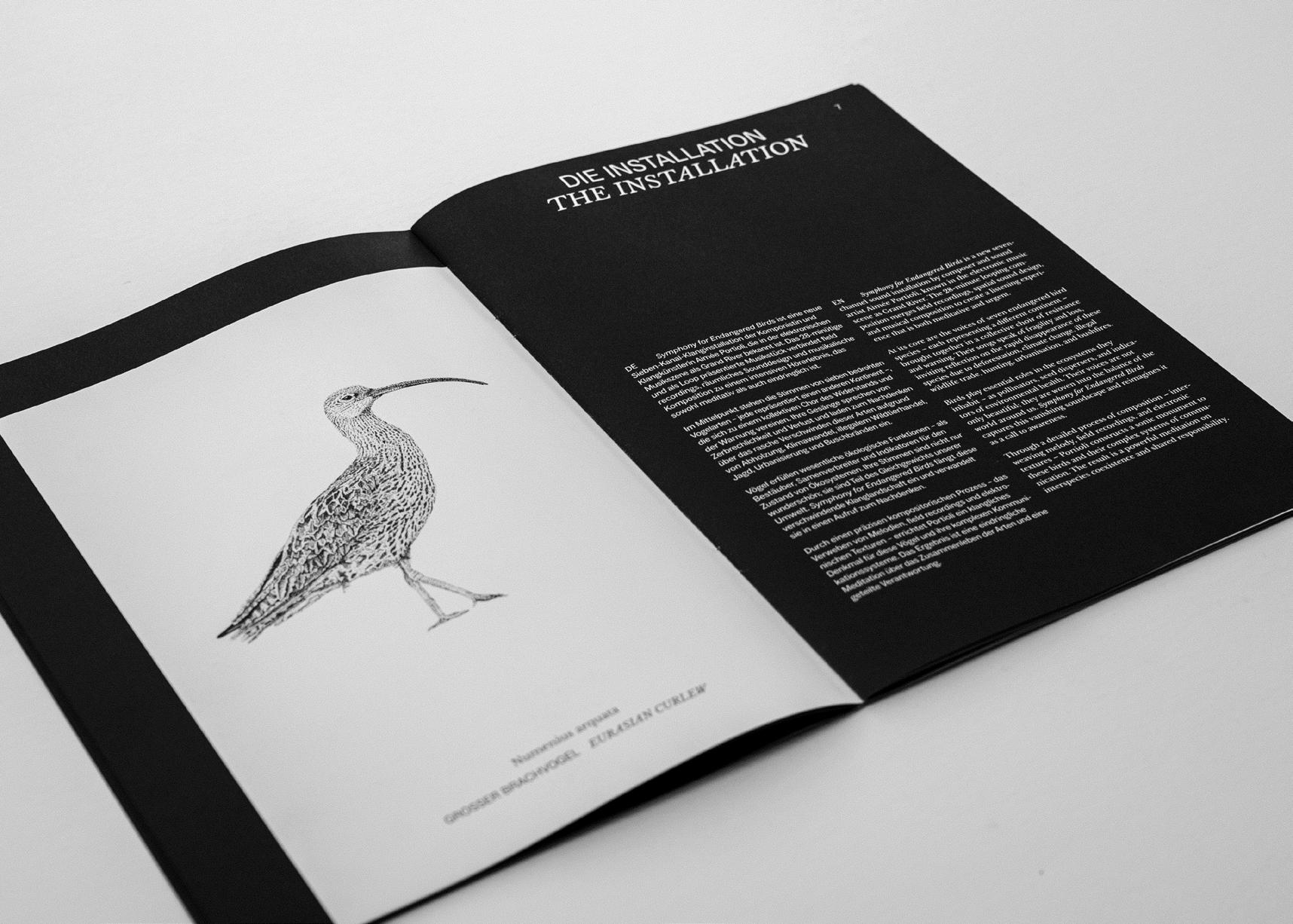
SYMPHONY FOR ENDANGERED
BIRDS
When Forests Fall Silent: Listening to What Remains
HORSTMANN TRUST
The Vulture Backup Plan
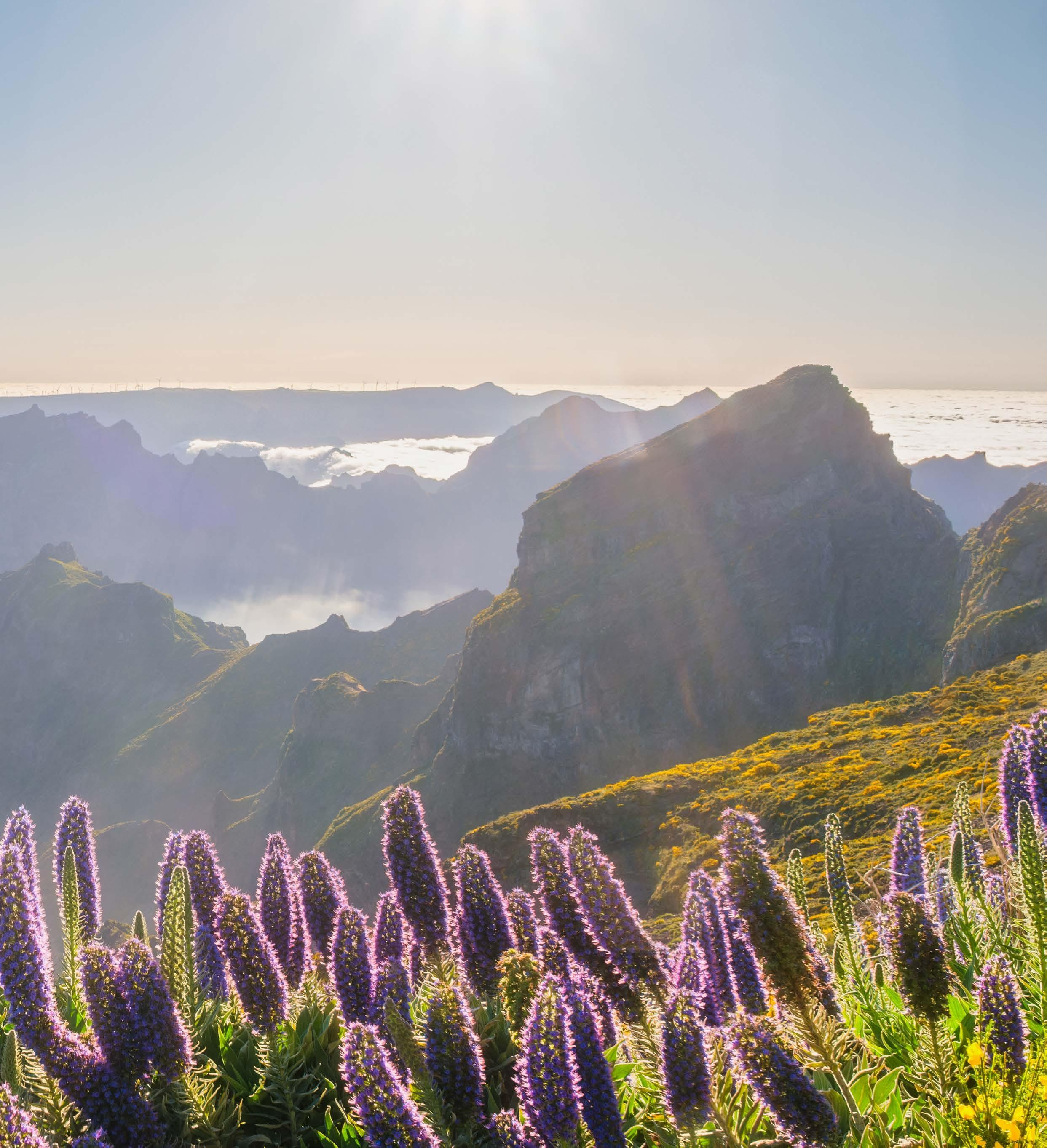
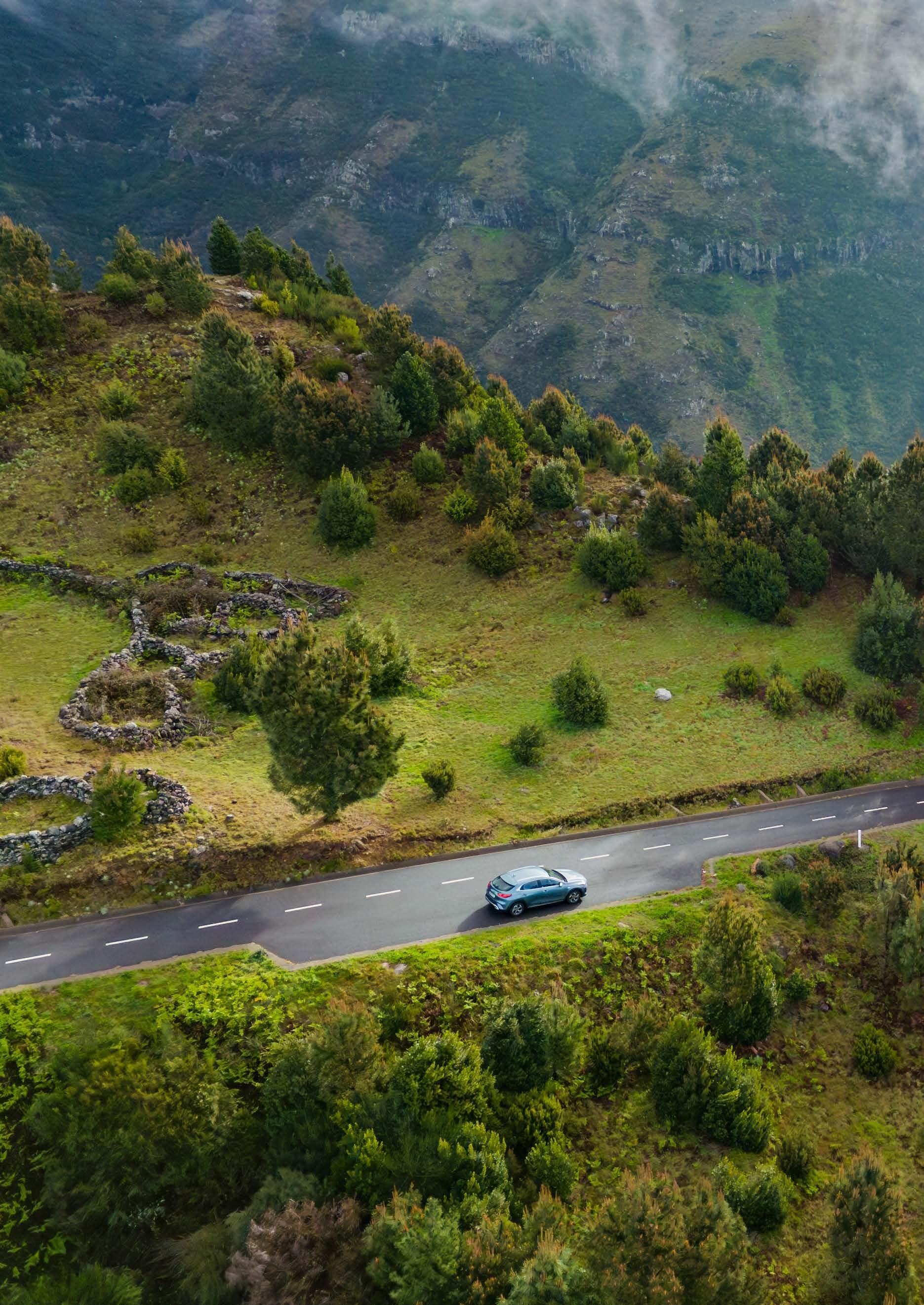
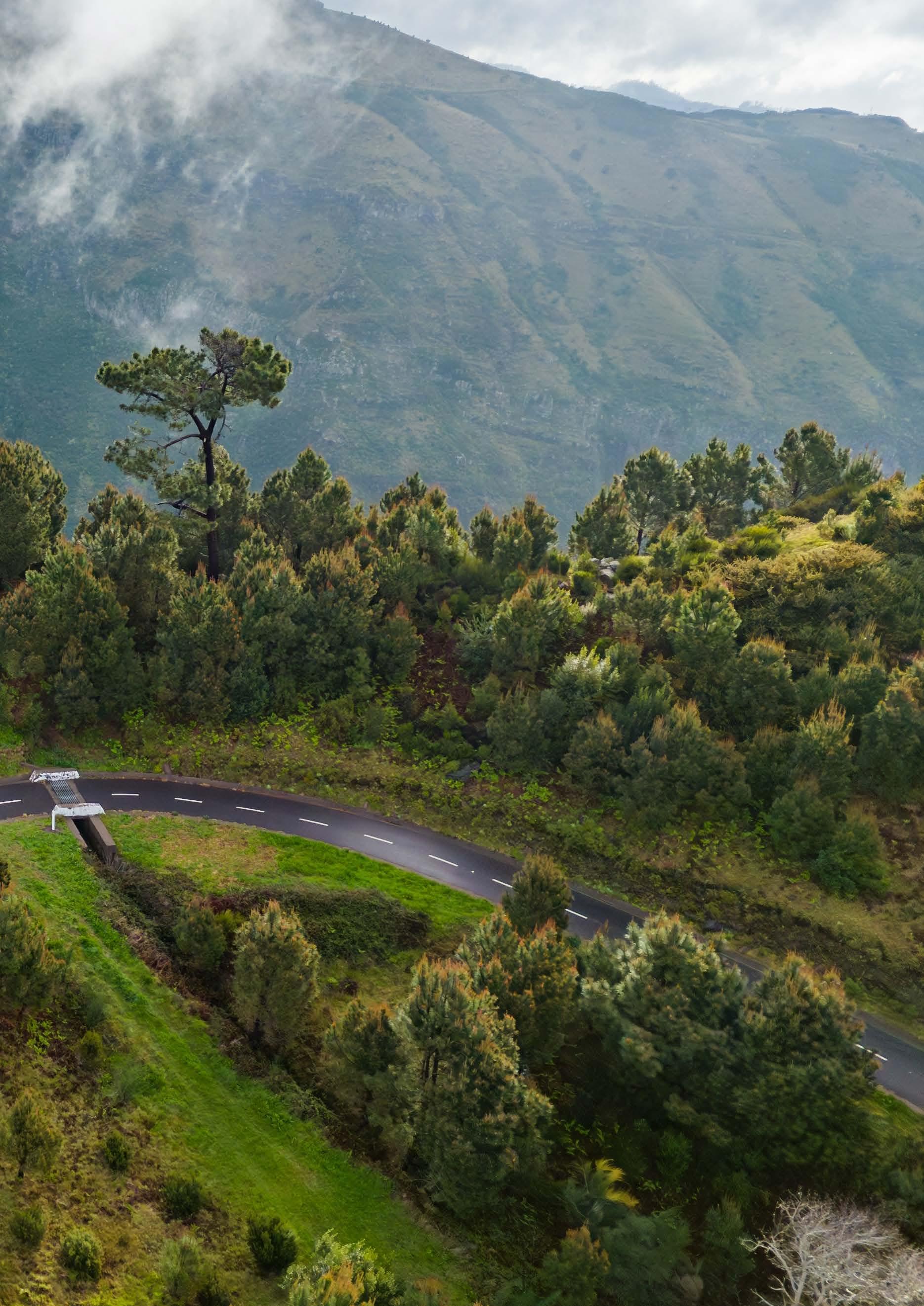
Madeira, Portugal
Photo credit: Dmitry Rukhlenko / Shutterstock.com
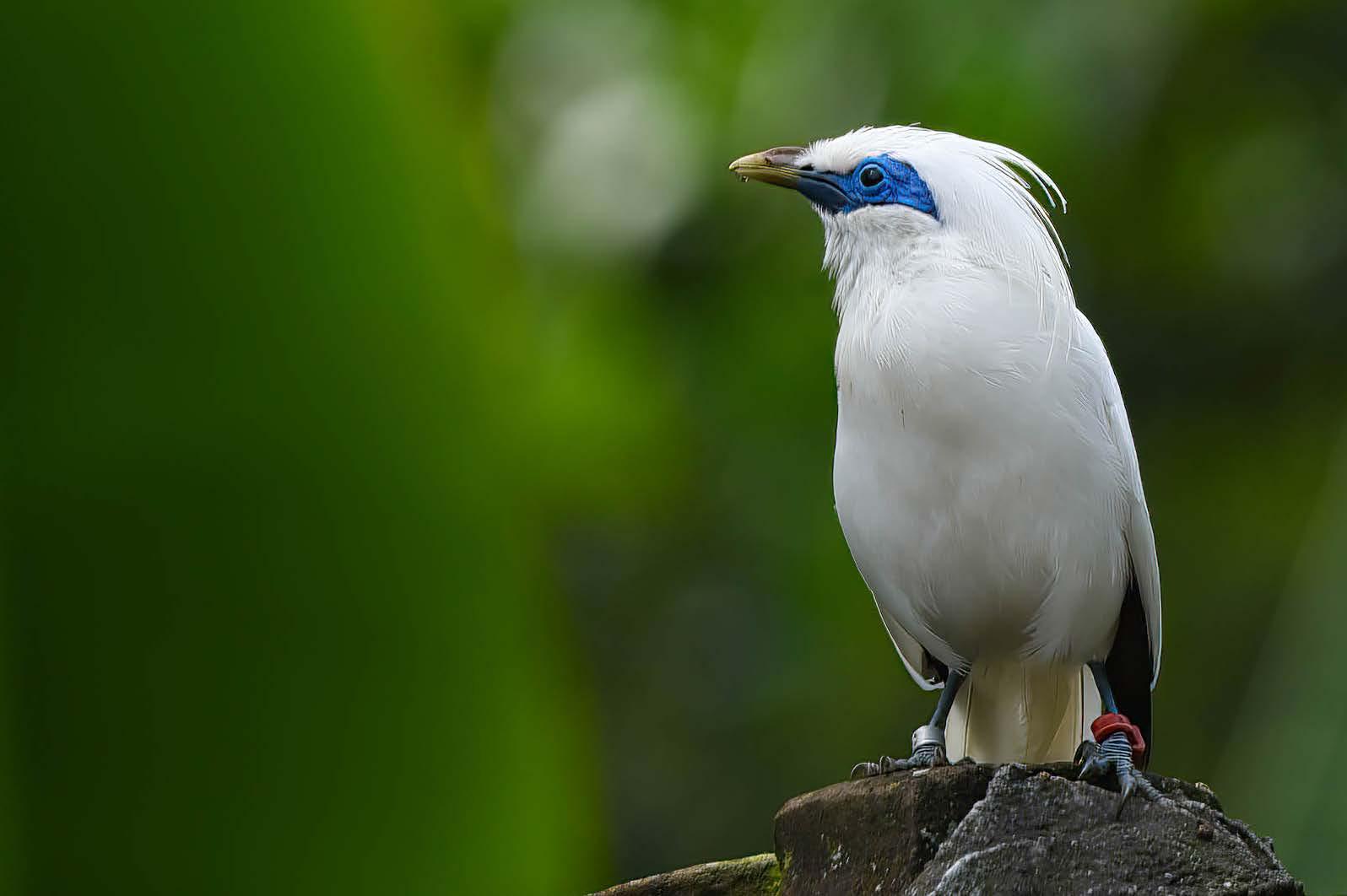
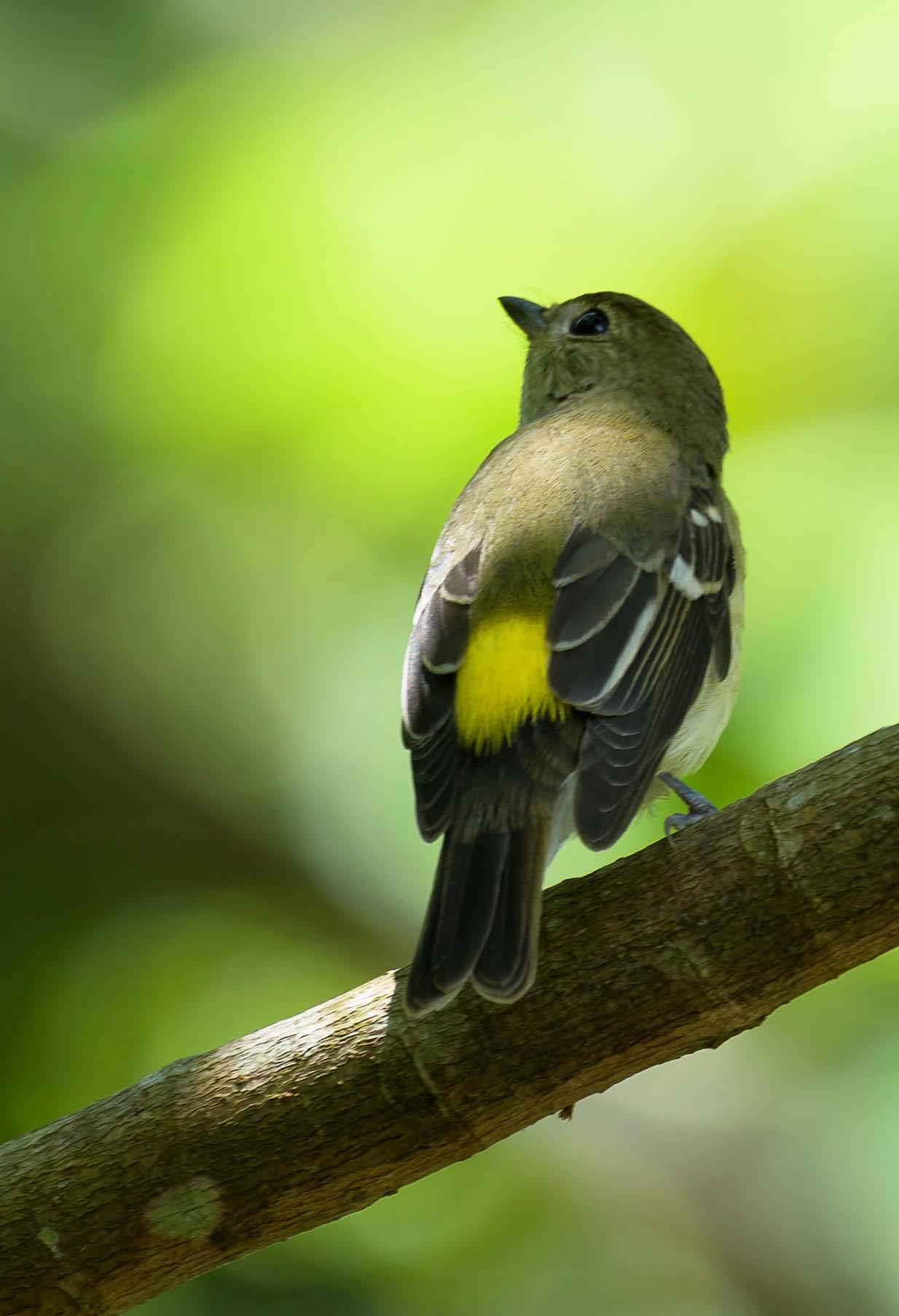
Cover photo credit: Kelik Suparno
LinkedIn
Website
HORSTMANN TRUST
The Vulture Backup Plan 20
BISA
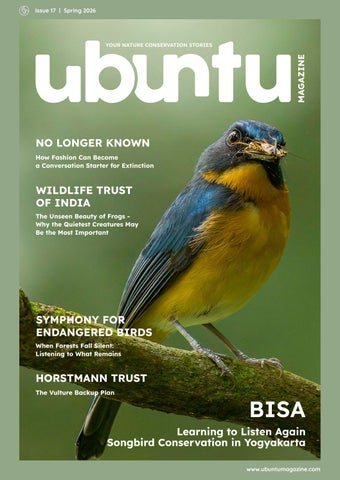
Learning to Listen Again - Songbird Conservation in Yogyakarta 32
INFOGRAPHIC
Nature’s Evolutionary Explosion: Sea Slugs 36
ANGAZA VIJIJI
From Omen to Opportunity: Josephine Linet on Bridging Conservation and Community
PEMBERTON
When Forests Fall Silent: Listening to What Remains 46
From Saving Bees to Building Biodiversity’s Missing Infrastructure
Endangered Species
SYMPHONY FOR ENDANGERED BIRDS
80 STARGAZER
Artem Siniyatulin
90
SURVIVING IN NATURE
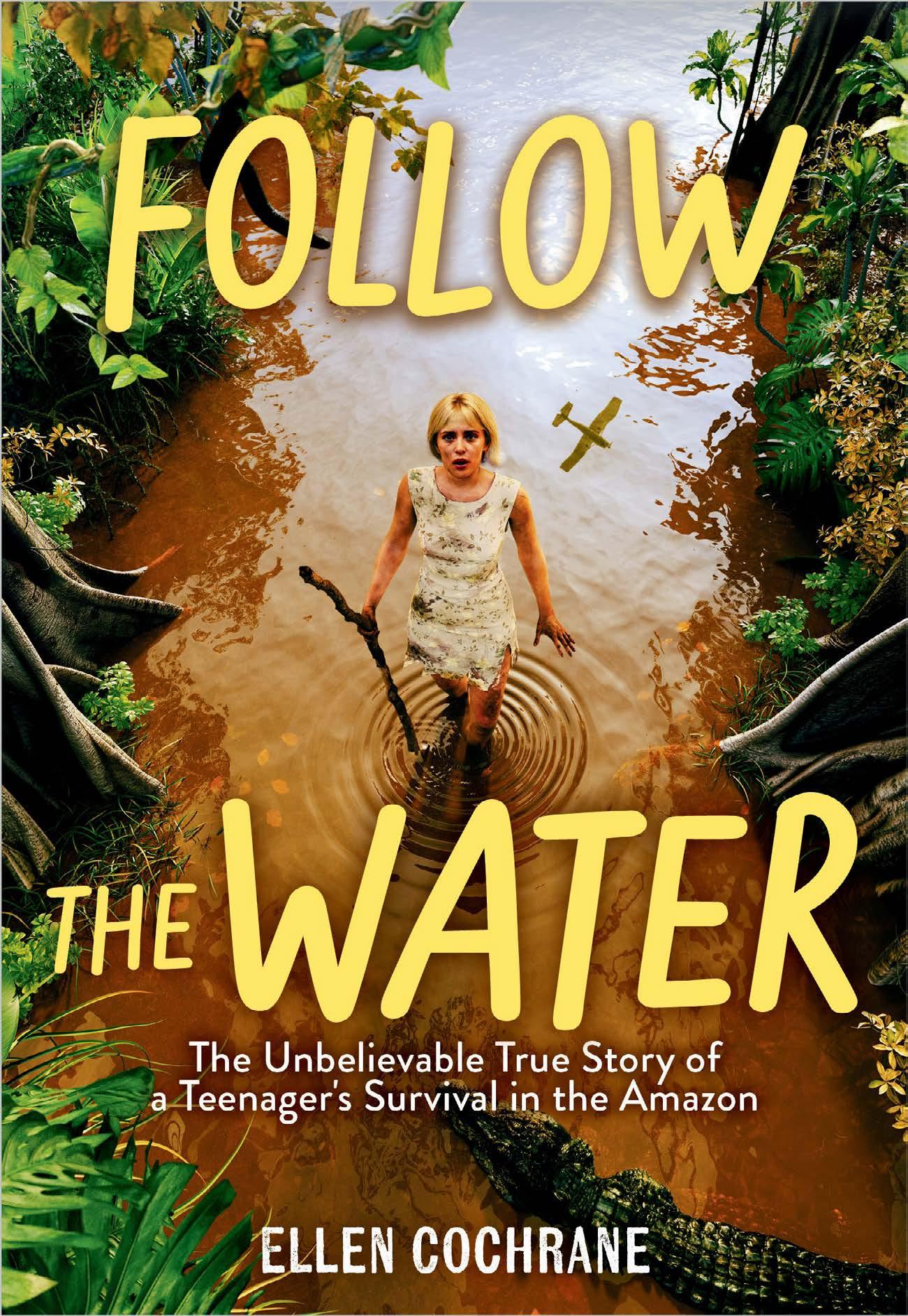
Follow the Water: Survival in Nature
100 BOOK REVIEW
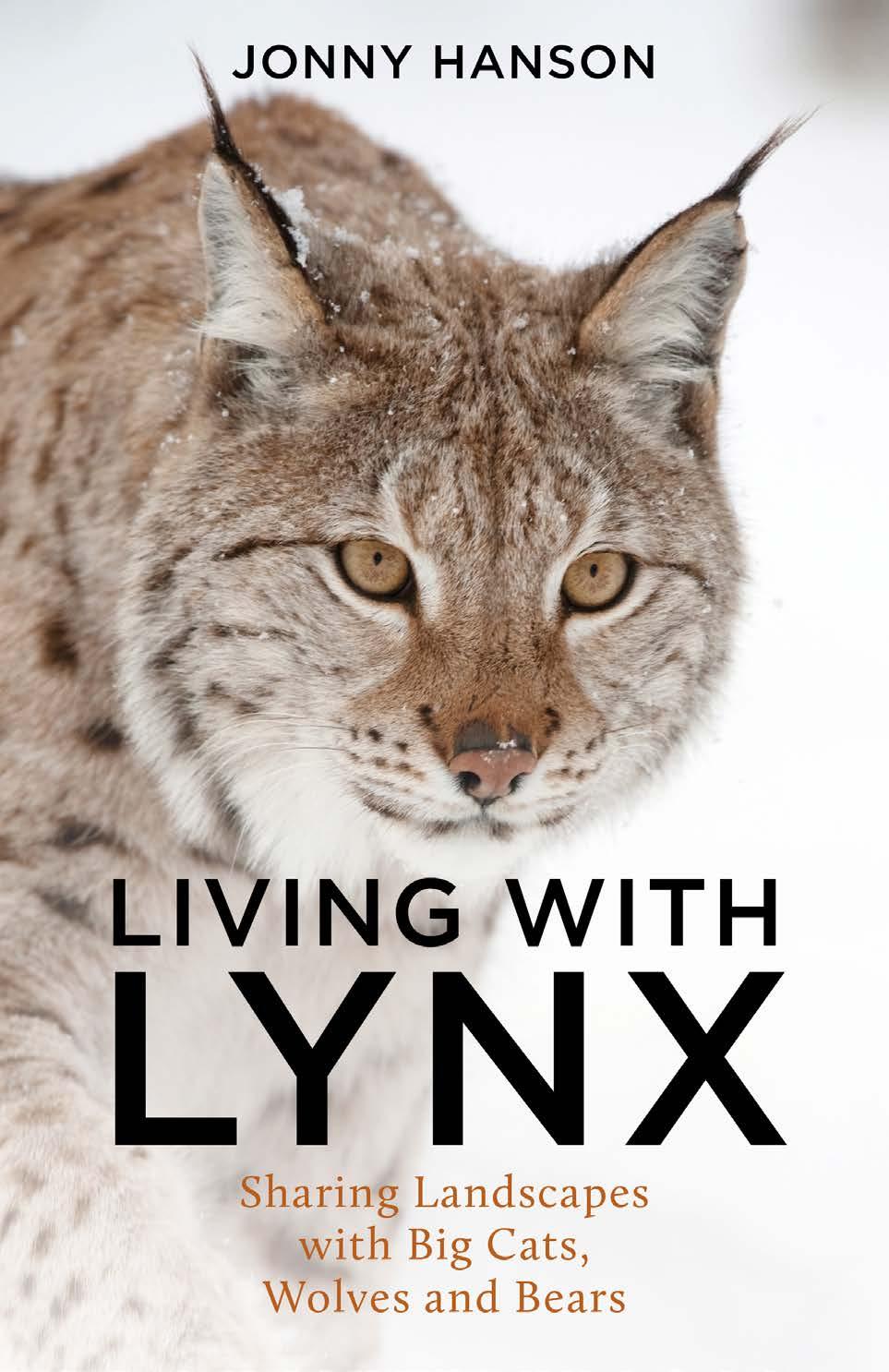
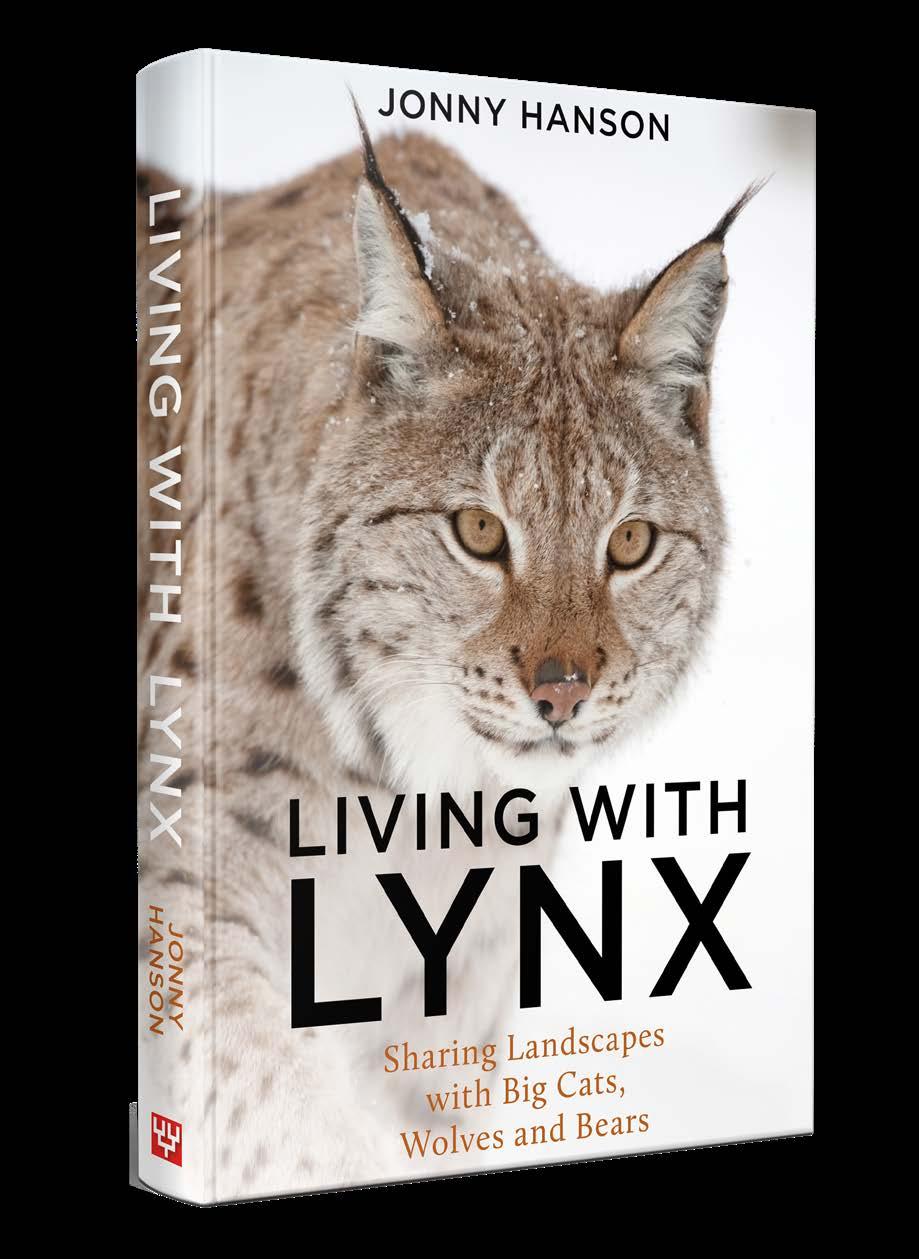
Living with Lynx
106 NO LONGER KNOWN
116
128
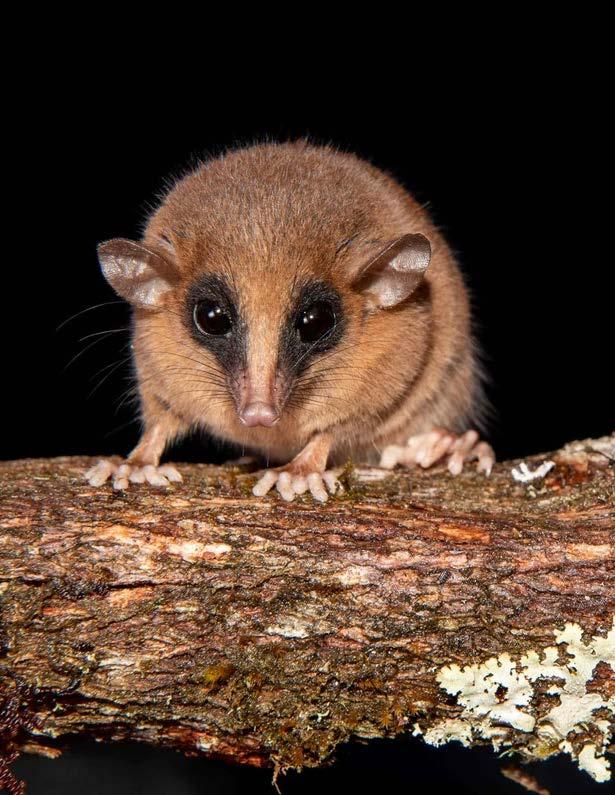
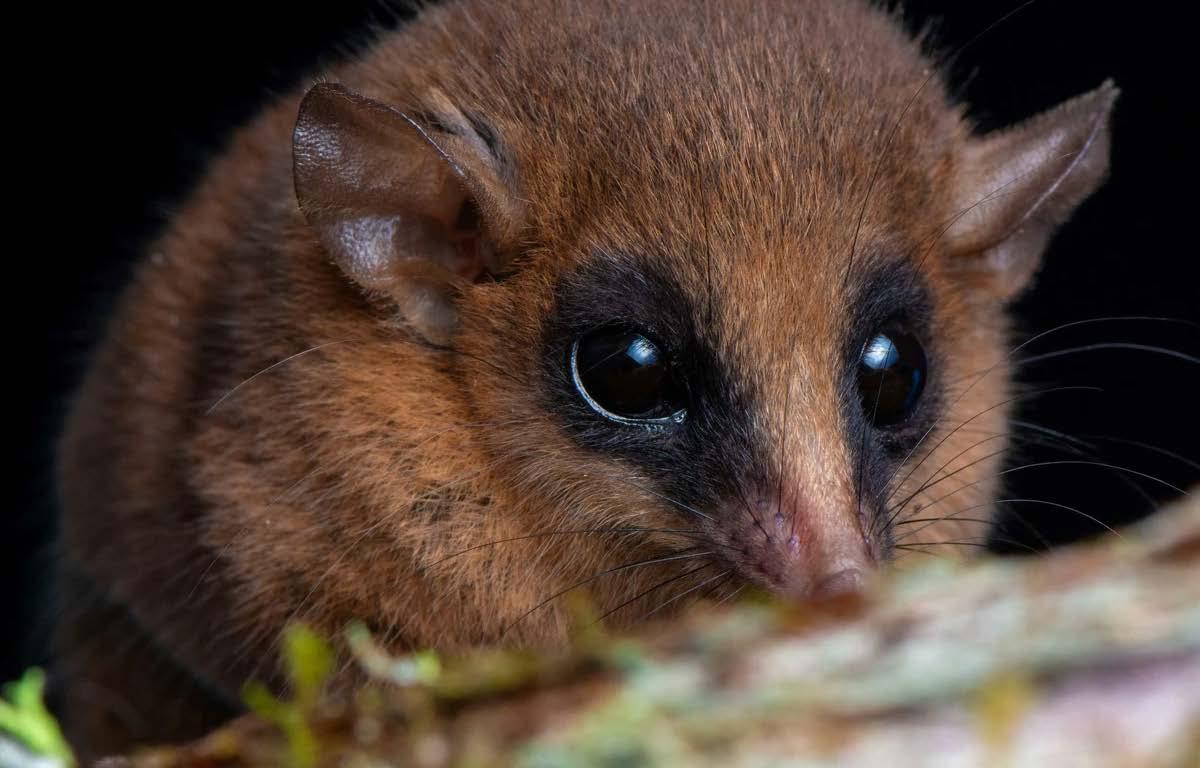
The Accidental Discovery of an Opossum in the Peruvian Andes Cloud Forest INTERACTIVE
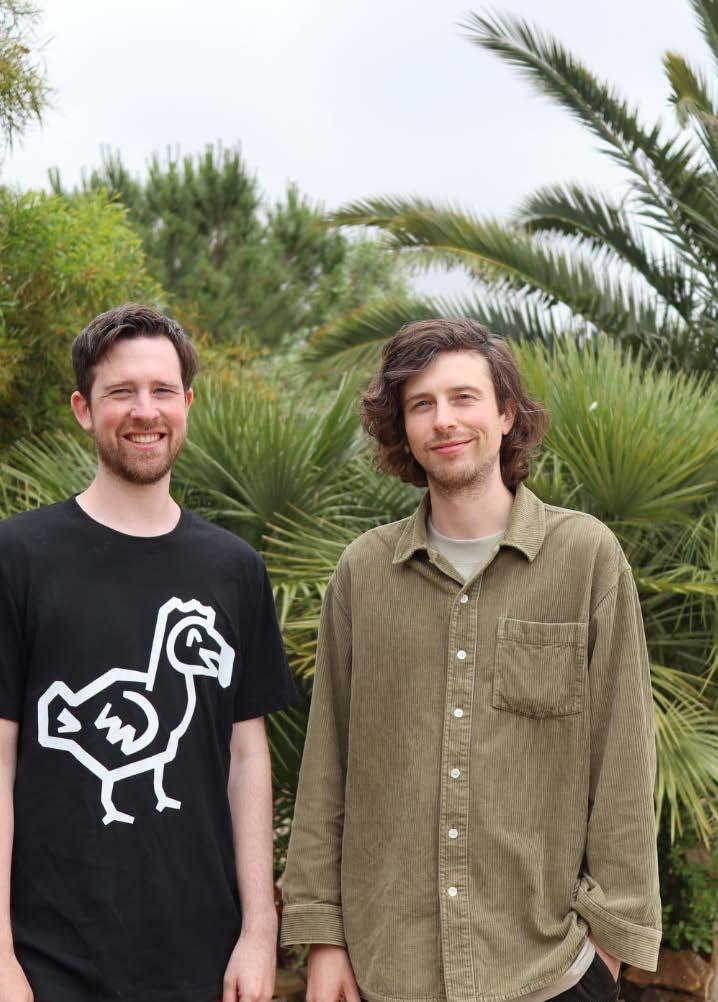
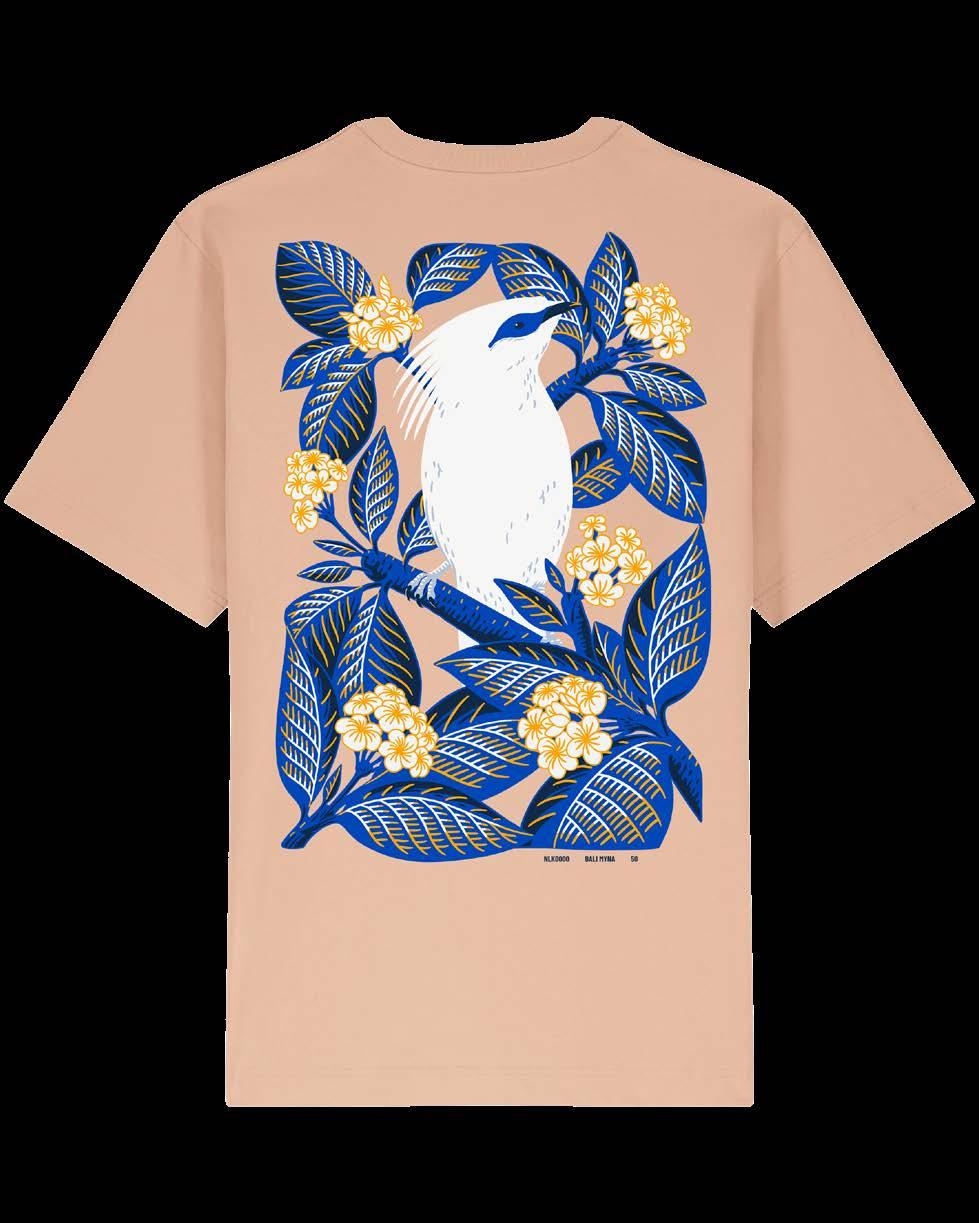
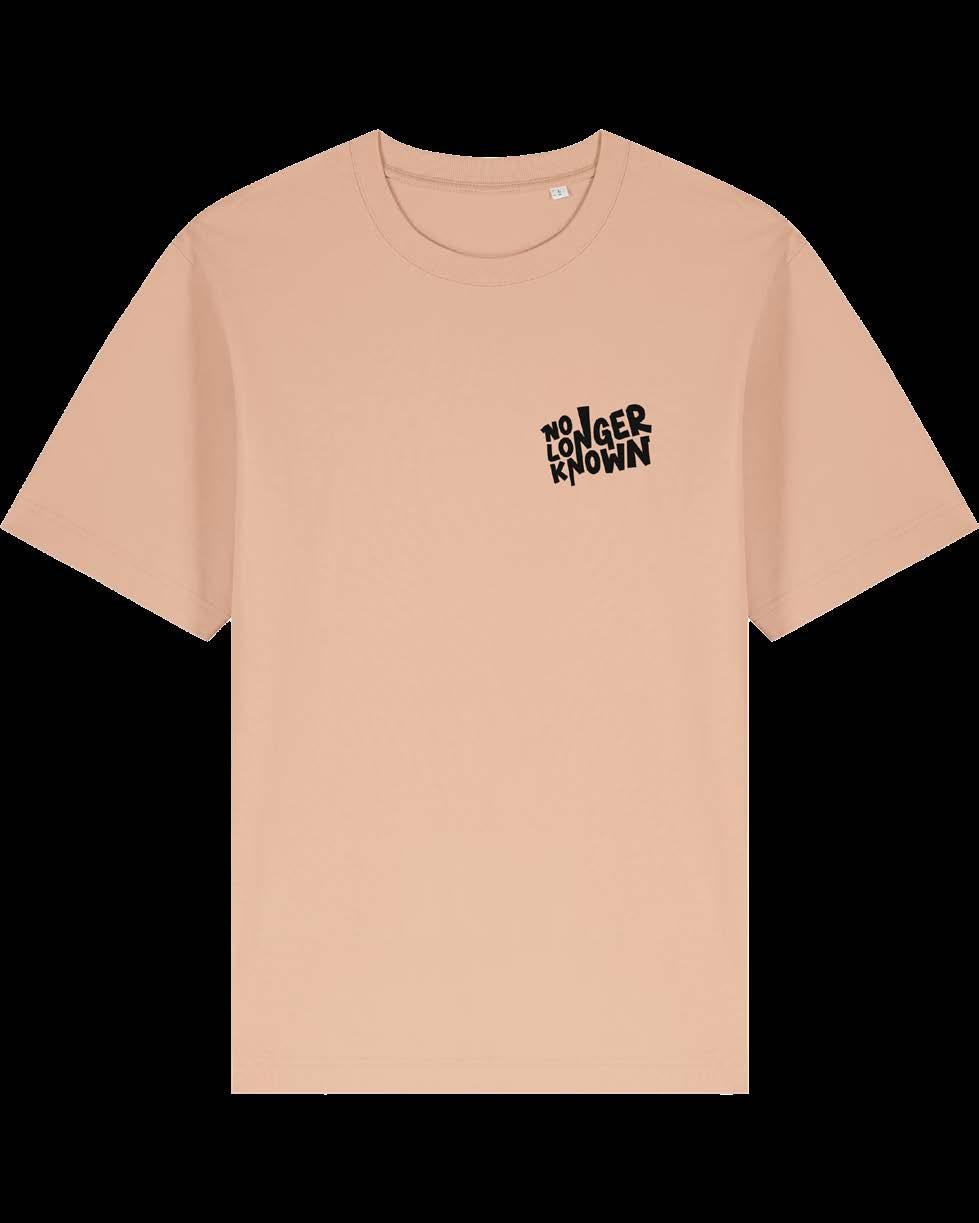
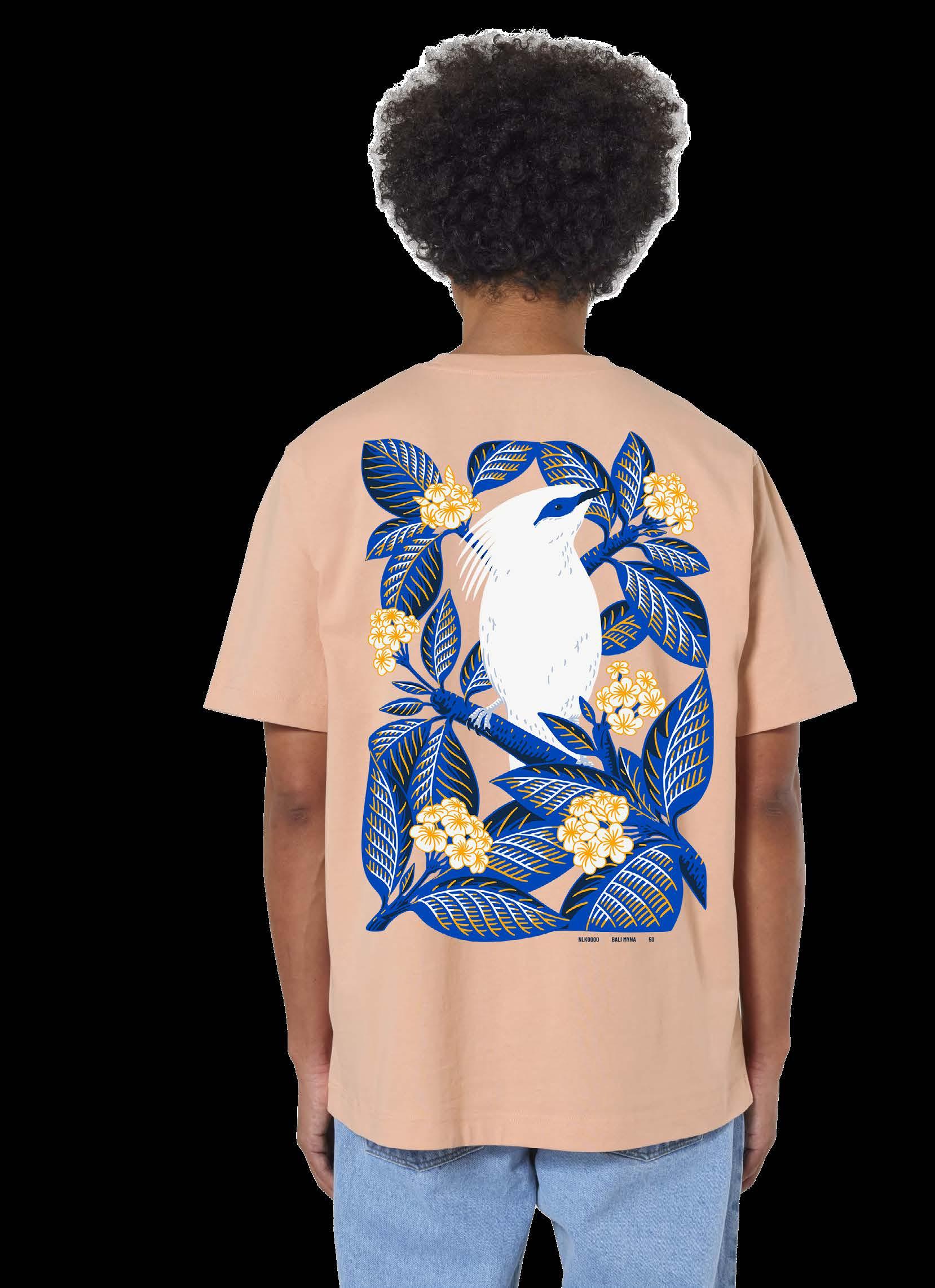
How Fashion Can Become a Conversation Starter for Extinction
WILDLIFE TRUST OF INDIA
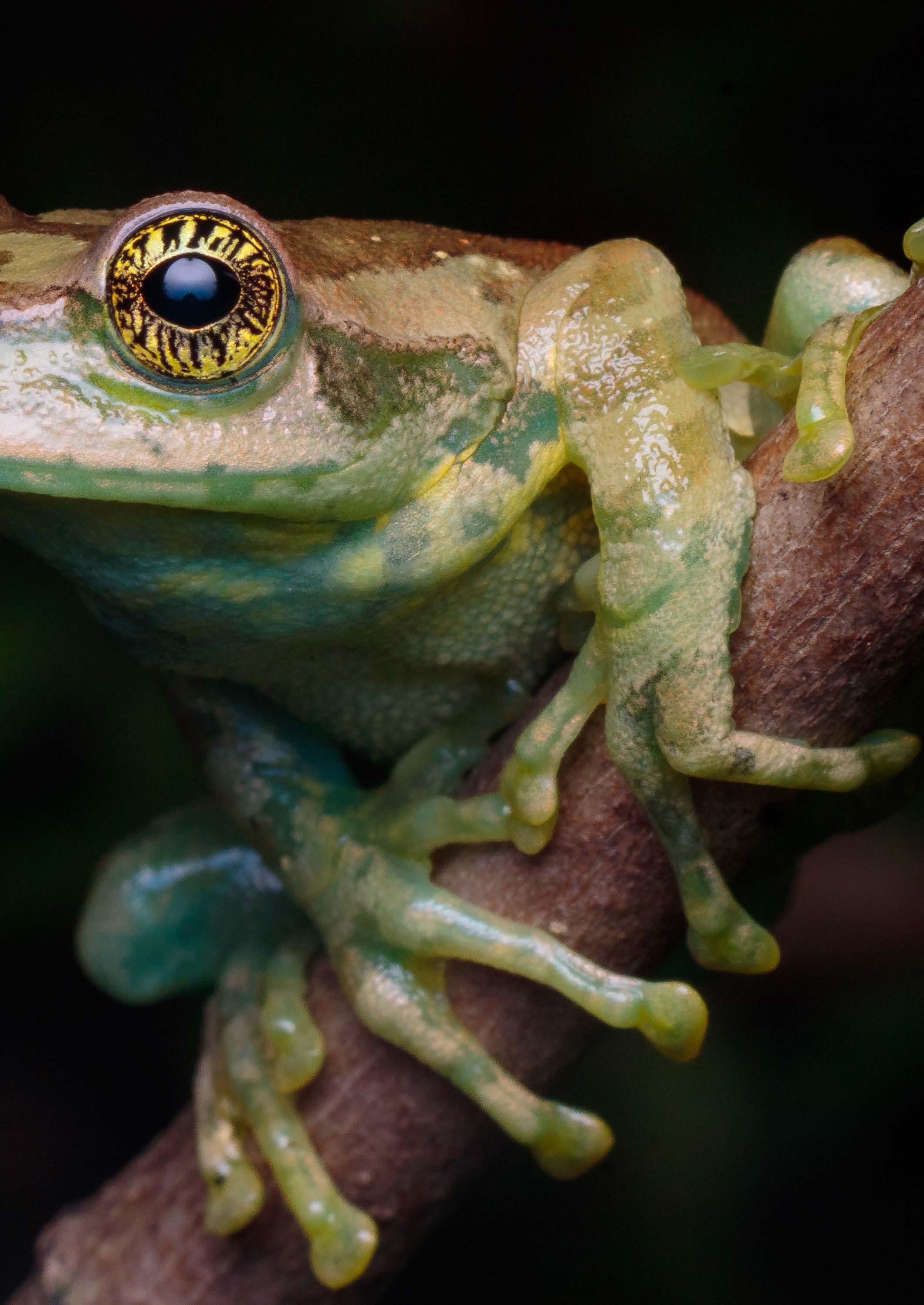
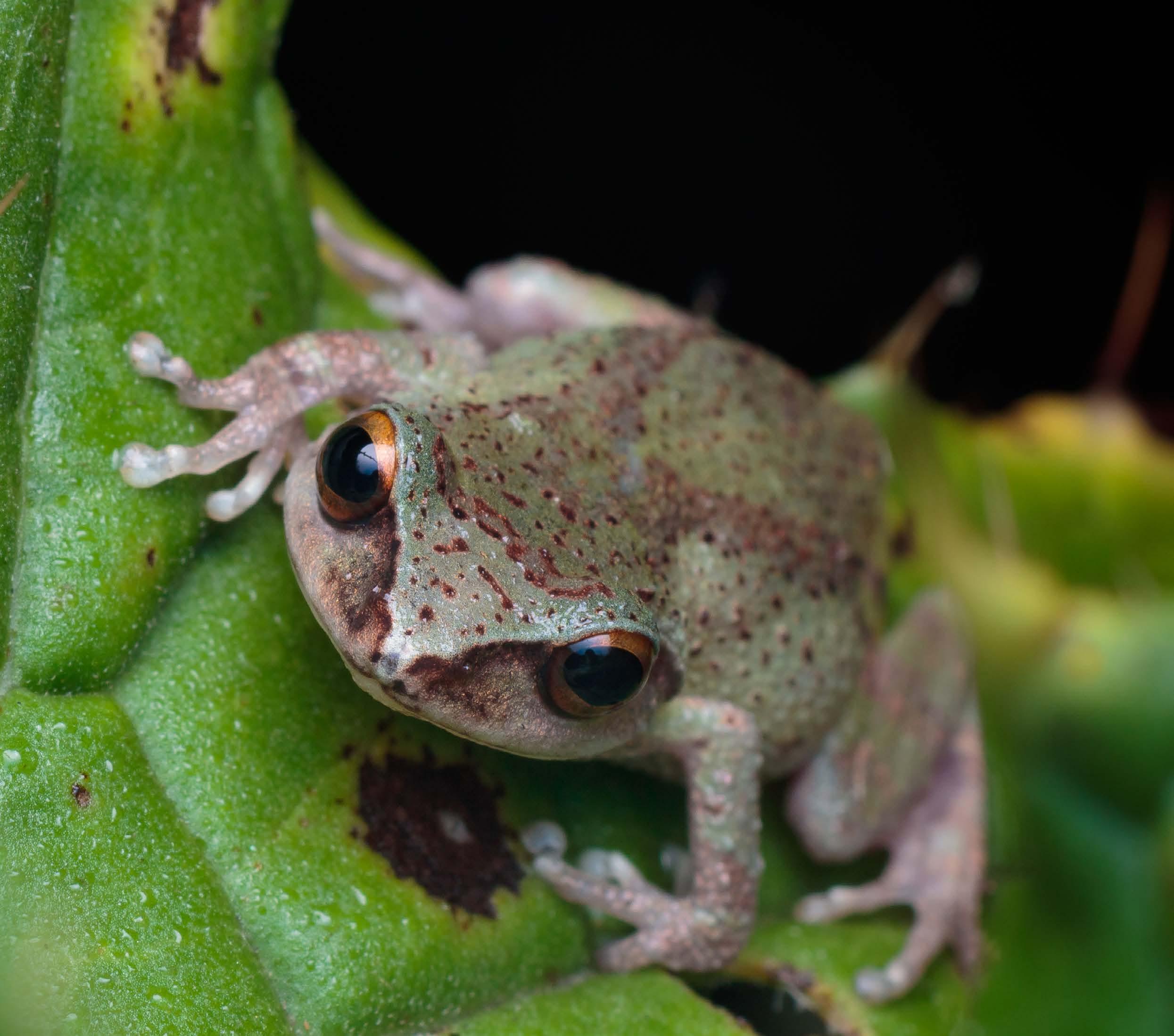
The Unseen Beauty of Frogs - Why the Quietest Creatures May Be the Most Important
NEW TO NATURE
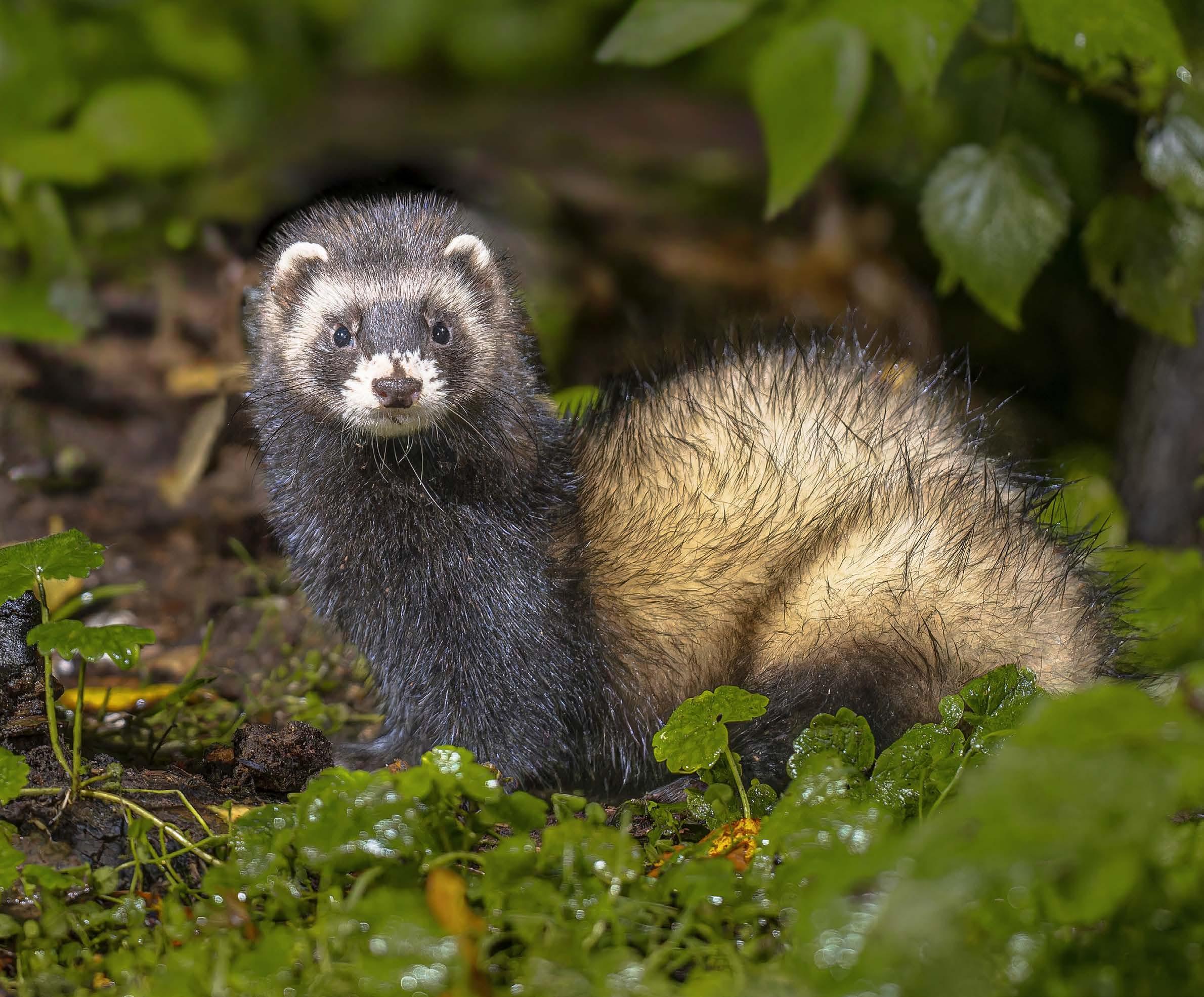
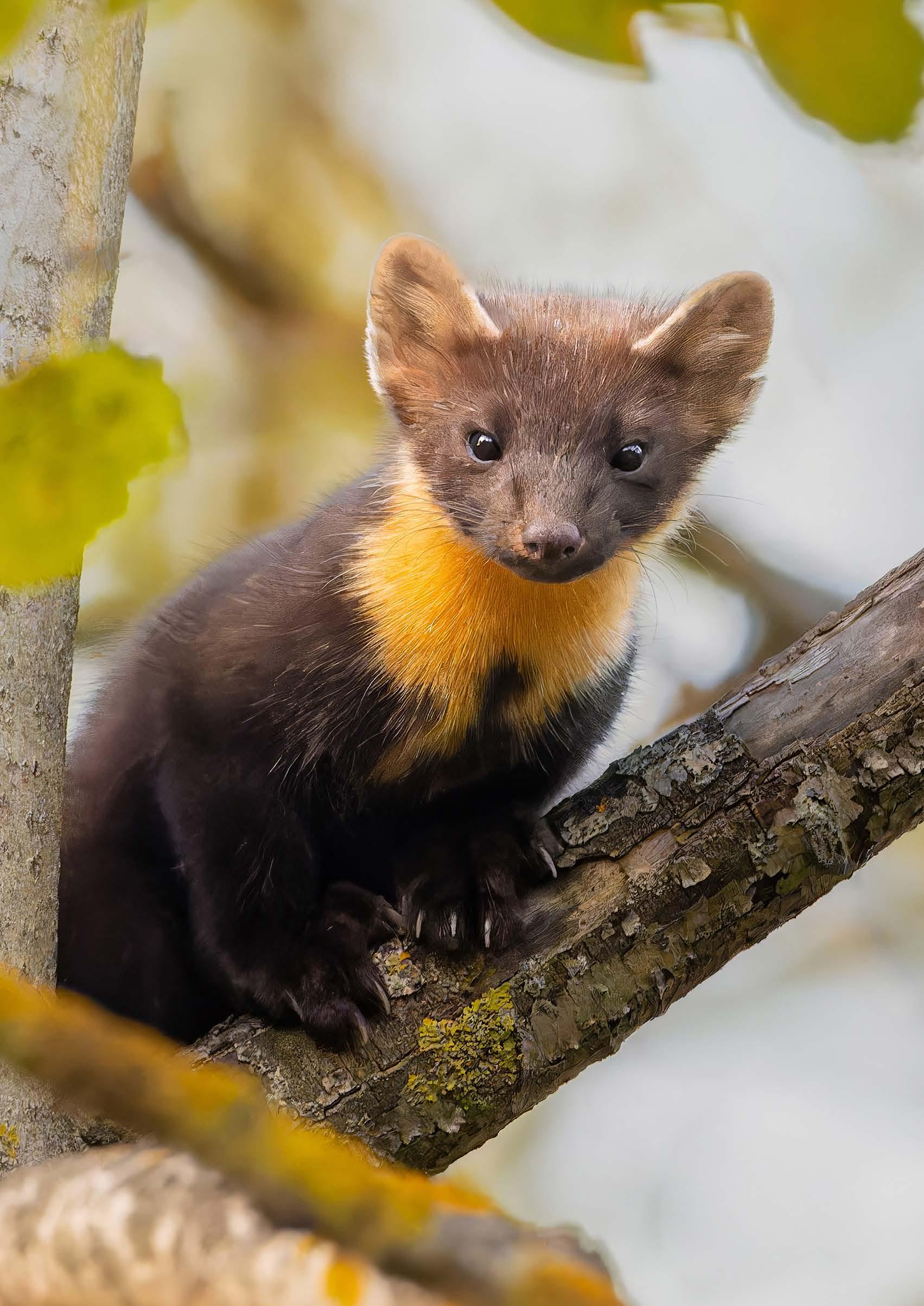
European Polecat
Photo
INTRODUCTION
In the past months, I’ve been blessed with spending time in one place. Now, for someone who loves to travel and chase adventure, that is quite a remarkable thing to say. But, the beautiful side of it, is that I’ve gotten to know the area around our current house a lot better. I have found the spots where deer exit the forest to forage at dusk and dawn, so every so often, I find myself going for a walk at the perfect time to indulge in some wildlife observation. I’ve been able to spot two relatively special species in this area: the polecat and the beaver. Extraordinary sightings that I couldn’t have dreamed of.
I’ve also been obsessed with the changes in the landscape around me. From the frosty grasses around sunrise only three months ago, to the dandelions now opening their flowers at roughly the same time every morning. I am tuned into the presence of bees, butterflies, and birds, and in some cases, sadly, the lack thereof. And even the creek next to my house is a place of constant wonder, as the water level fluctuates over time, as it makes me think about the weather conditions far away from home, as well as about the species that call this creek their home.
Beyond the natural aspect of things, I’ve also come to know more about various local and national initiatives, such as bee counts and river clean-ups. Seeing these gives me hope. Also, I have even been able to participate in symposia about nature-based data collection and citizen science-based research, and just seeing the other participants was a morale booster.
For those of you who’ve been here since the start of Ubuntu Magazine, you might recall that my partner and I traveled through Africa for 3 years straight, creating this magazine while on the road. And although that was great — seeing the landscape change daily and forever chasing the dry season — I’ve missed the seasonal changes that can be observed when you spend your time in one place for longer than a week. It’s almost like being part of something, like the area, which makes you care even more deeply.
As the summer months approach, holidays are on the horizon. And while I am no stranger to venturing out, seeking adventure and enjoying foreign landscapes, I hope that you, just like I did the past months, will take some time to see the beauty in your own backyard. It might let you appreciate the smaller things more and get a better understanding of the area around you.
- Manon Verijdt Ubuntu Magazine
THE VULTURE BACKUP PLAN HORSTMANN TRUST
Nested in the middle of a remote corner of West Wales, a unique conservation project works quietly every day to keep endangered vultures from slipping into extinction.
Set among 110 acres of pasture and native woodland, the Horstmann Trust is the UK’s only conservation breeding charity dedicated solely to vultures. Its team works to protect these species through innovation and research, building an “ark” population that will keep the species alive in captivity until reintroduction is possible.
Written by Giulia Frezzato
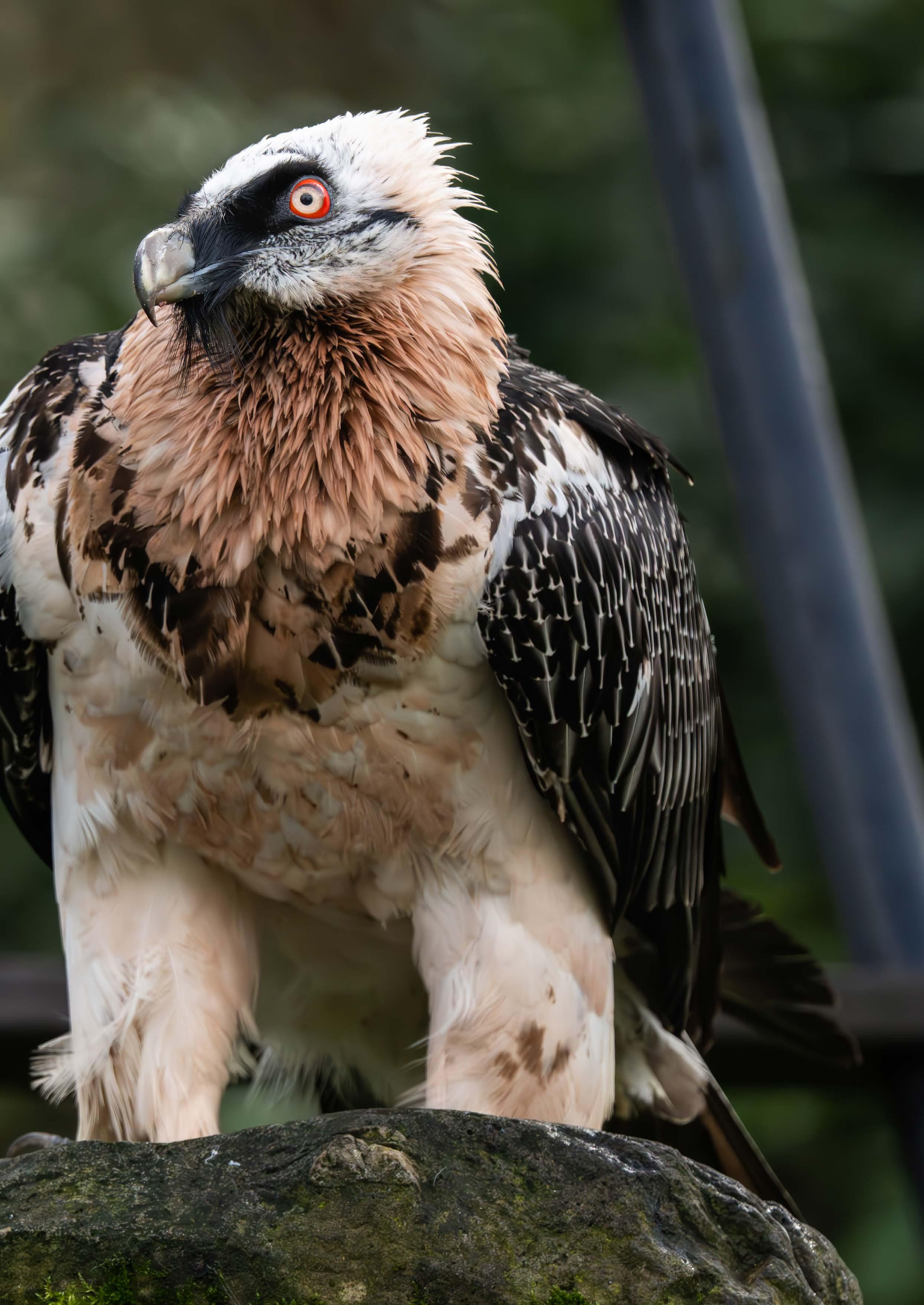
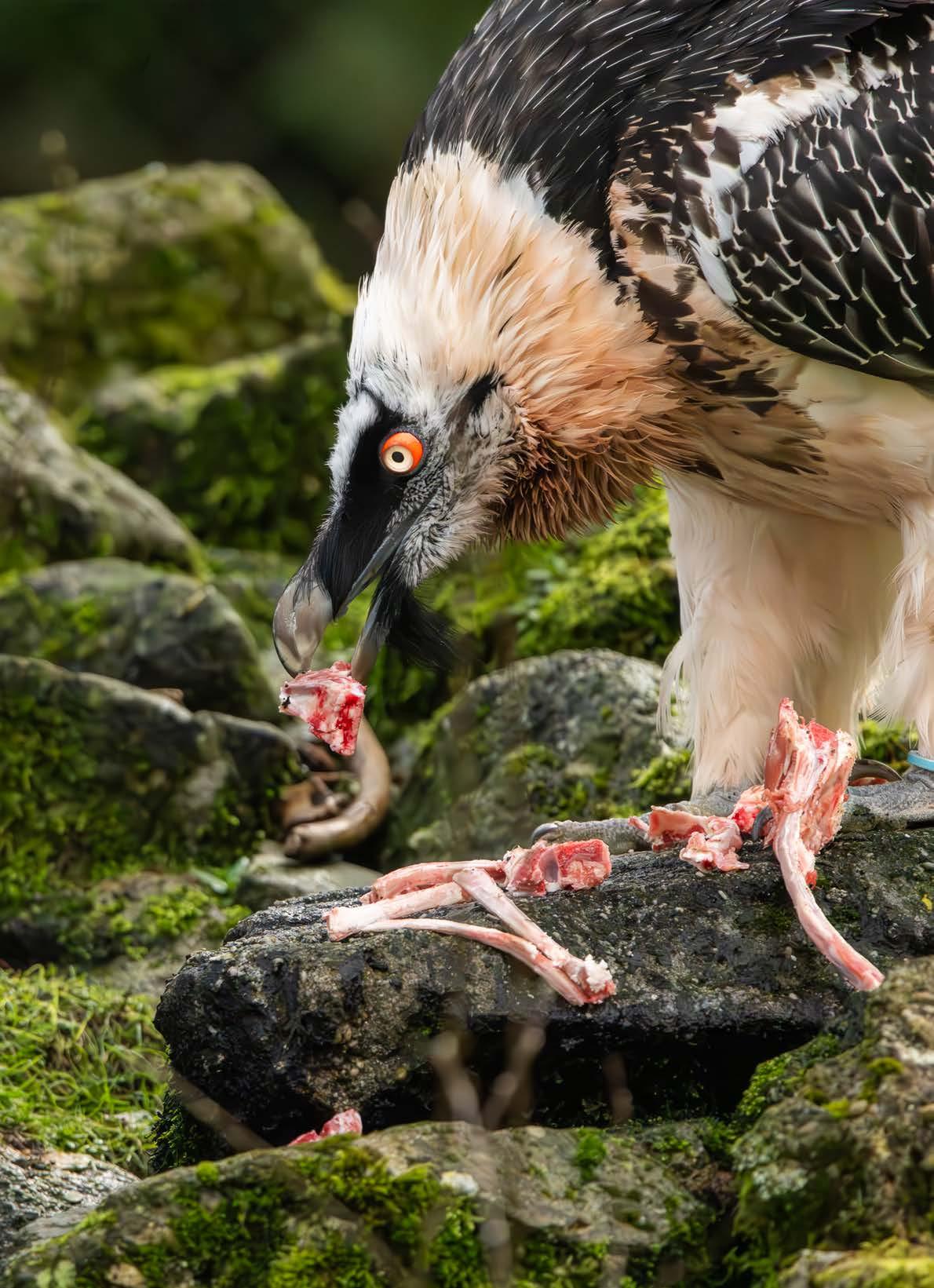
Bearded vulture
Photo credit: Chris Eley
WELSH VULTURES
It’s a gloomy, drizzly spring morning when I venture onto the winding country lanes of West Wales to find the Horstmann Trust. Heading there, I’m impatient to see some majestic birds and to meet three of the six trustees: Adam Bolch, chief executive; Holly Cale, curator, head of research and aviculture, and, later in the day, Neil Forbes, wildlife and avian specialist veterinarian.
After following a long but spectacular track through beech woodland, I arrive at a large farmhouse perched in a clearing on the top of a hill, and park in the yard. When I meet Holly, Adam, and their two dogs, I have no idea I’m about to step into what feels like an alternate reality. Here, work is built on consistent observation, blending nature with technology, and sharing knowledge in pursuit of a single goal: breeding endangered vultures to save them from extinction.
Adam and Holly welcome me into the main building. From the outside, it could pass for a modernized farmhouse, but inside unfolds into a maze of functional workspaces: a modern laboratory, a nursery, an egg incubation room. Intertwined with these is a comfortable home, filled with tasteful country furniture and colorful bird prints lining the walls. Across the yard stands a smaller building housing a veterinary area and a feed preparation room.
Overlooking the wide lawn is a large conservatory, which also serves as Adam’s office. Aside from an impressive life-size vulture puppet hanging from the ceiling, the atmosphere is that of a cozy, ordinary Welsh country house, with dogs snoring on the sofas and a lovely garden view. Yet, beyond the ponds and shrub borders, lies something far from ordinary: aviaries housing Andean condors and rare Old World vulture species.
THE HEART OF THE TRUST
While the Horstmann Trust is only three years old, rare raptors have lived on these grounds for several decades, ever since Manfred Horstmann moved his private collection of birds here. After his death, his partner Brett continued the work until his retirement, when he entrusted both the property and the collection to a new generation of experienced conservationists: Adam Bloch and Holly Cale, with the support of specialist veterinarian Neil Forbes.
The Horstmann Trust is now the result of a unique blend of passion, generosity, and a diverse combination of skill sets that fit together almost seamlessly.
Dressed in colorful dungarees and followed by a Labrador and a Belgian Malinois (both keen, if given the chance, to snatch the vultures’ meaty meals), Holly is busy organizing the morning feed. A dog lover and a cheerful zoologist, she also happens to be an international expert on vulture egg incubation. Whenever you hear of a successful vulture or condor breeding program in a European zoo, there is specialist knowledge needed. Holly willingly makes herself available to help and offer support to anyone who needs it. Behind the scenes, she helps monitor egg incubation remotely and offers guidance through hatching and rearing.
With a very different background, Adam approaches the Trust’s mission with a distinctly inventive mindset. While birds are his passion (condors in particular), he brings his expertise in electronics to the work, treating technology less as a fixed system and more as raw material.
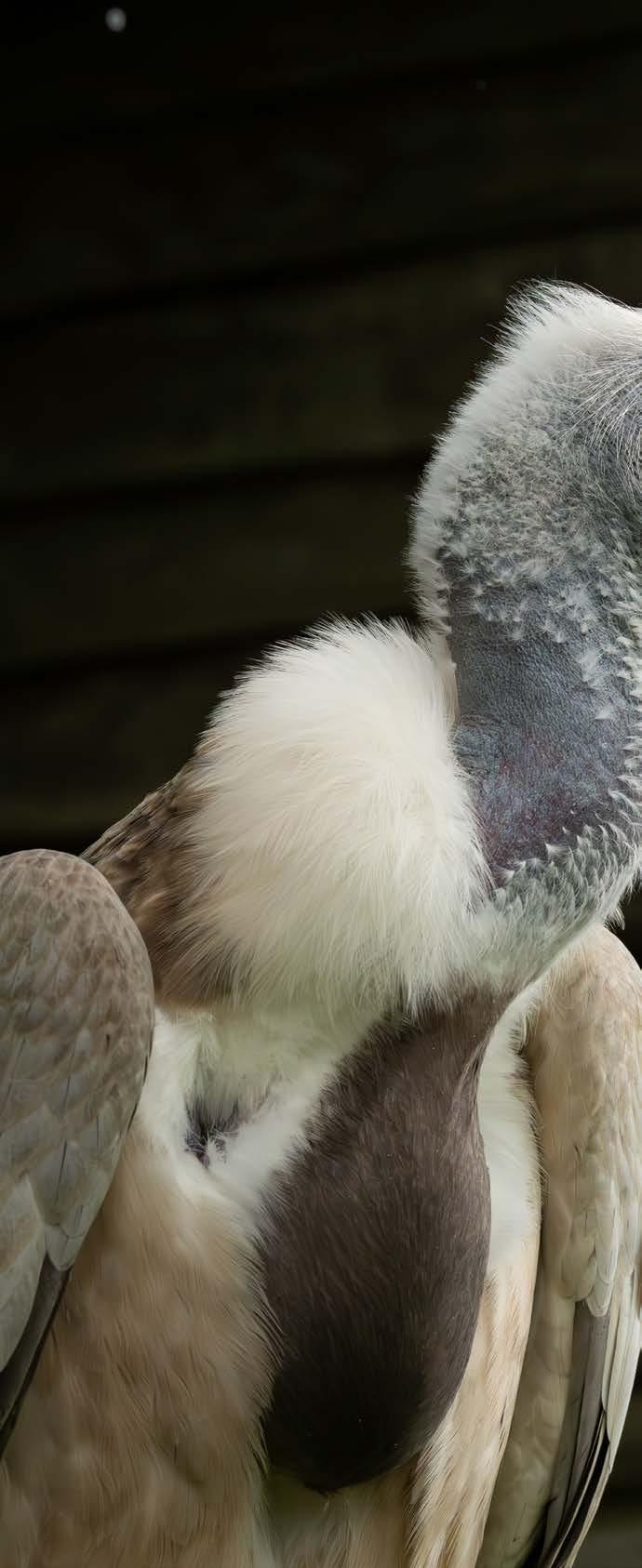
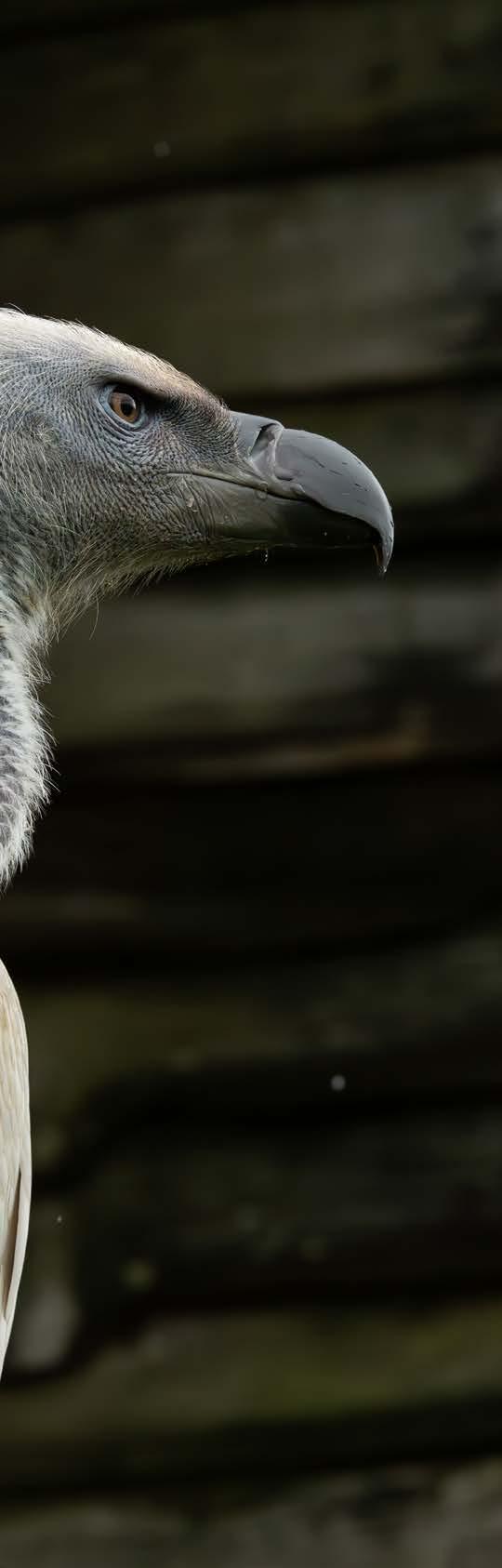
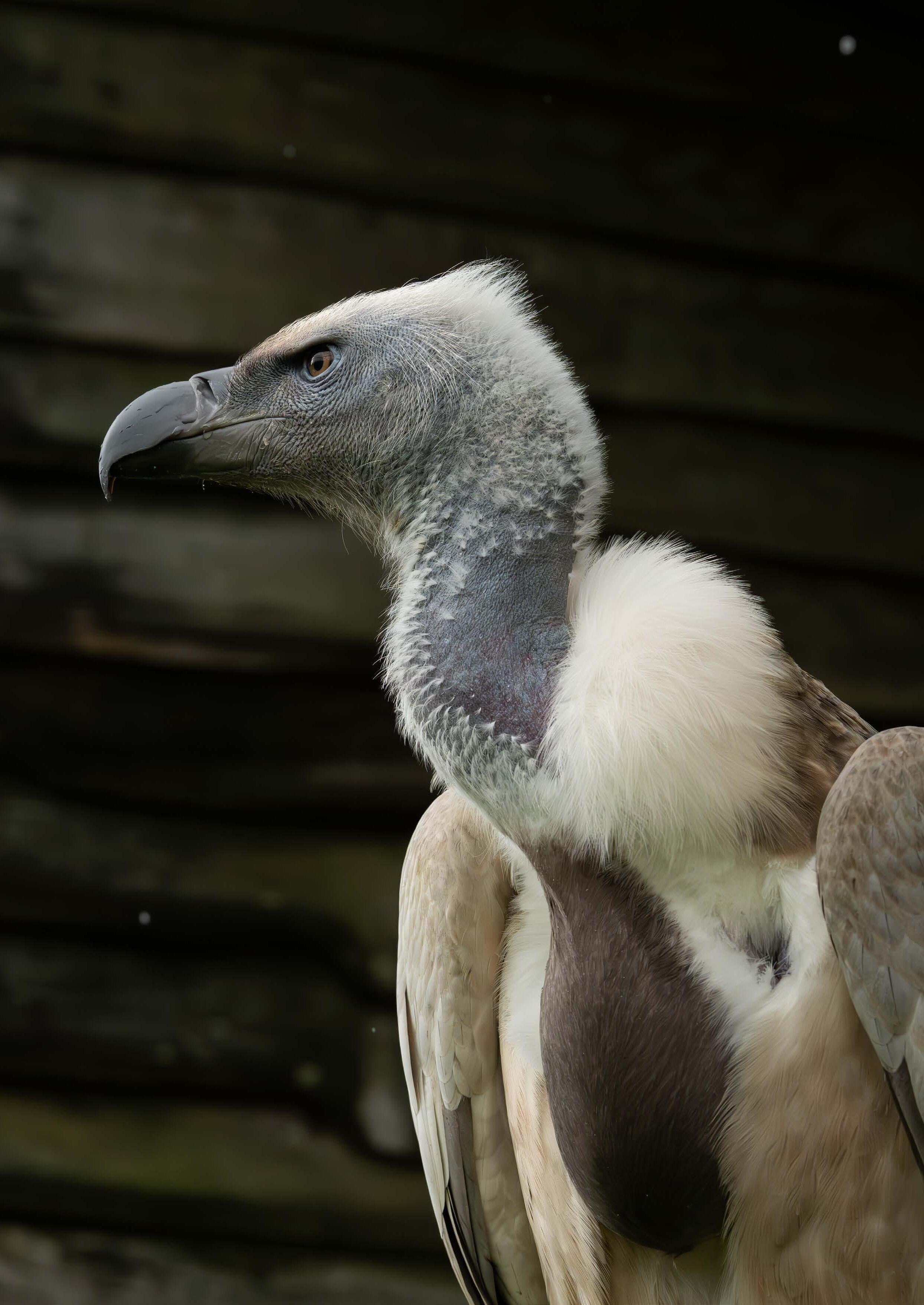
Cape vulture
Photo credit: Chris Eley
WALES
By sourcing equipment from online auctions, repairing expensive components, and combining parts, he has assembled an advanced laboratory at a fraction of the usual cost, and is constantly developing new ideas to refine the space.
While Adam and Holly’s day-to-day dedication and expertise form the backbone of the Horstmann Trust, the support of Neil Forbes, an international veterinary specialist in avian and zoological medicine, is vital to many aspects of their work. Introduced to birds of prey as a child by his falconer grandfather, Neil is also a trustee. His distinguished veterinary career has spanned clinical and academic work, alongside significant contributions to conservation, particularly in the field of vulture protection.
THE BIRDS
While we walk around the aviaries, Adam explains that early March is peak breeding season for most captive vultures in the Northern hemisphere, with the earliest eggs in January and the last ones in April/May.
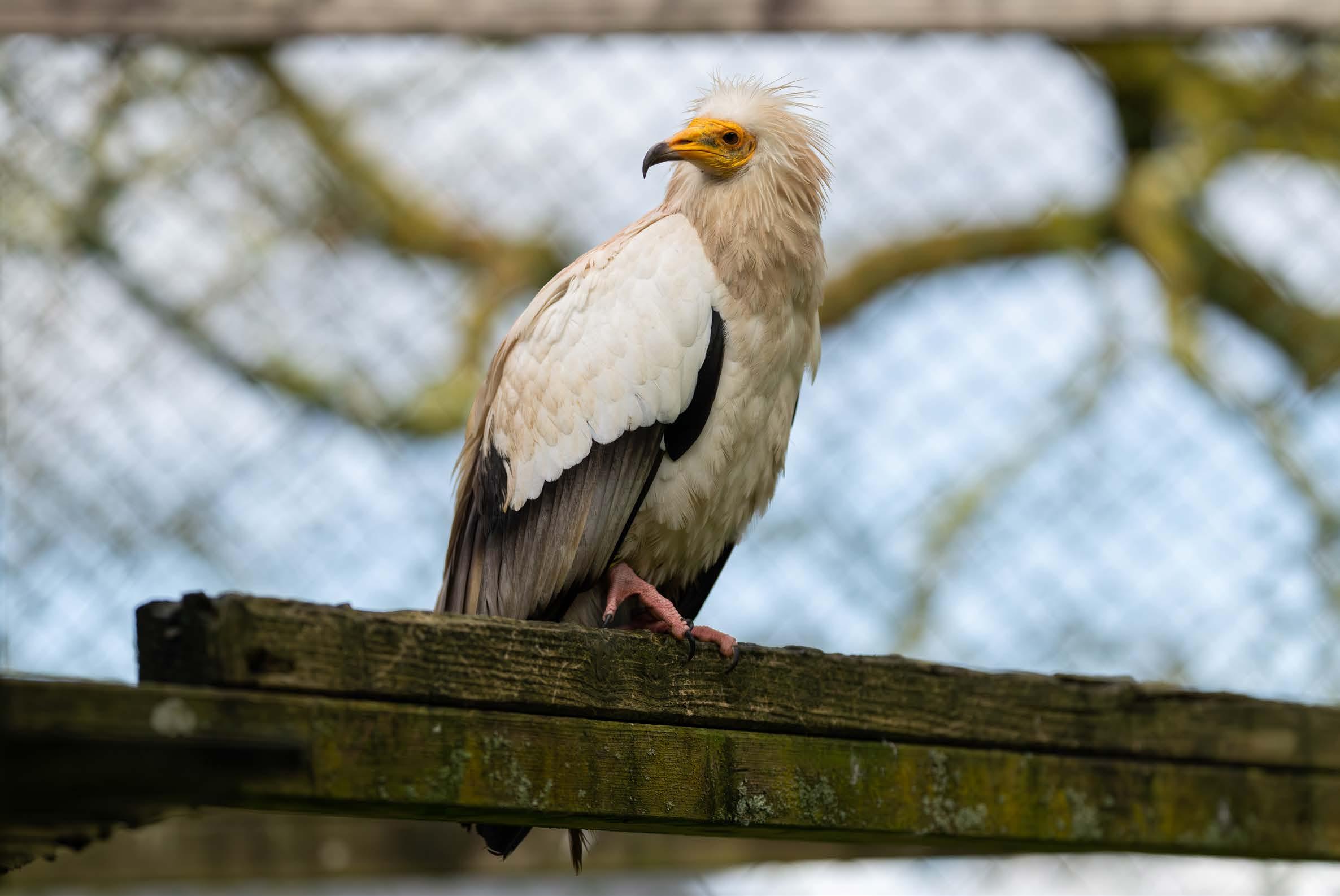
From the garden borders, Adam and Holly harvest armfuls of willow and other branches to provide nesting material for the birds in their care: one species of New World vulture — the Andean condor (Vultur gryphus) — and several Old World vultures. The Trust currently cares for nearly 70 birds, including some bearded (Gypaetus barbatus) and Eurasian black vultures (Aegypius monachus), as well as 9% of the world’s captive population of Egyptian (Neophron percnopterus)
Egyptian vulture
Photo credit: Chris Eley
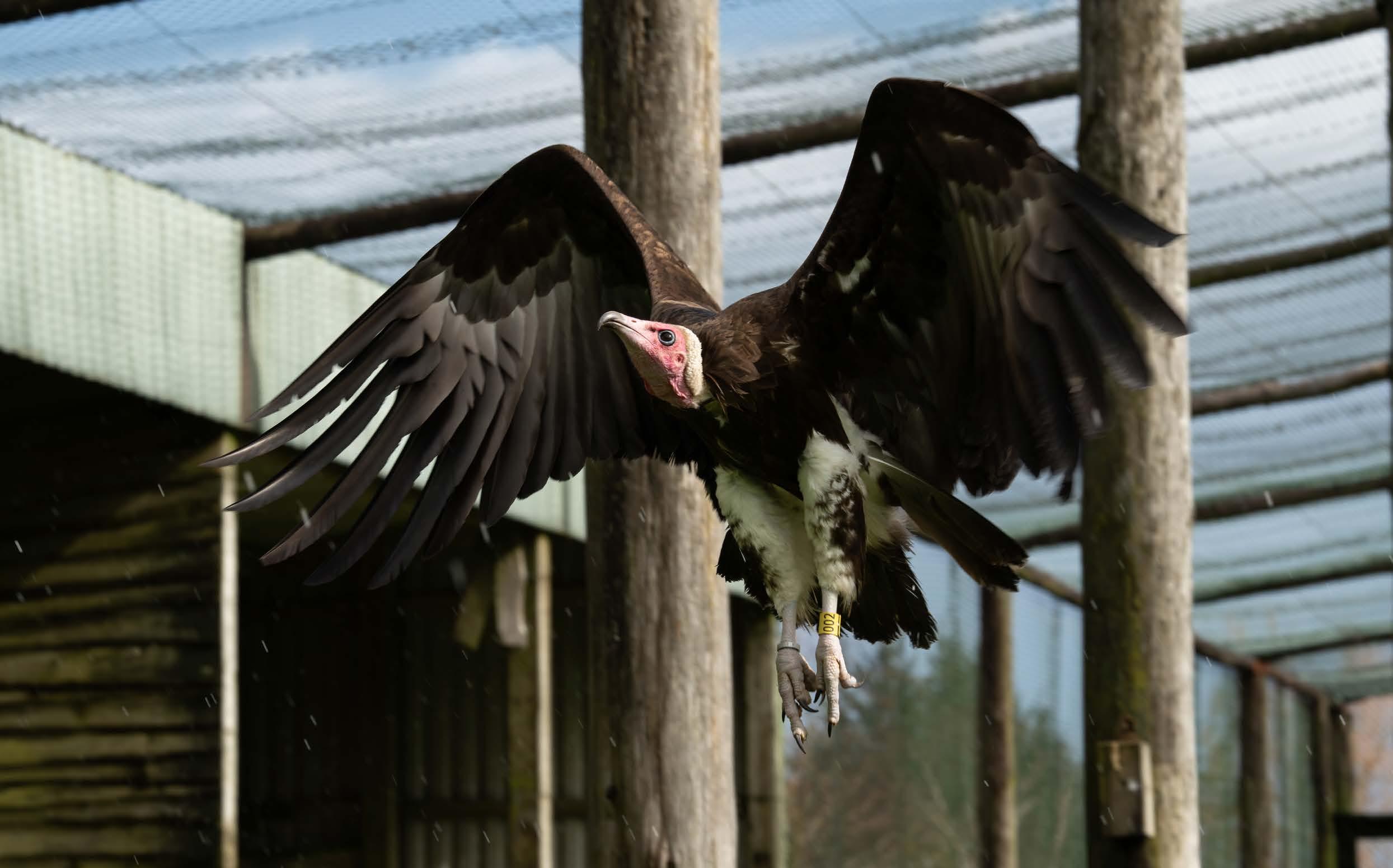
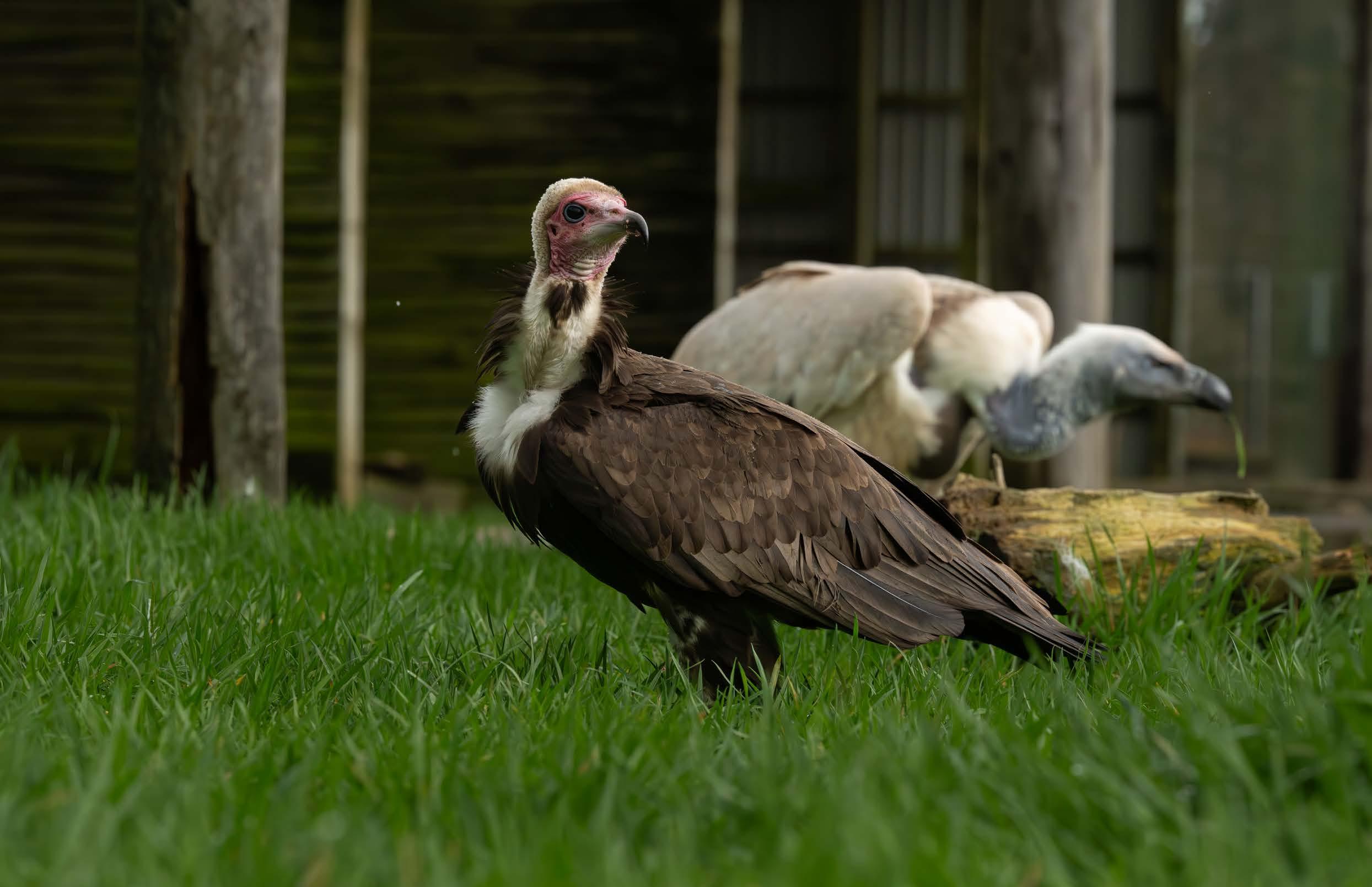
Hooded vulture flying in the aviary
Photo credit: Chris Eley
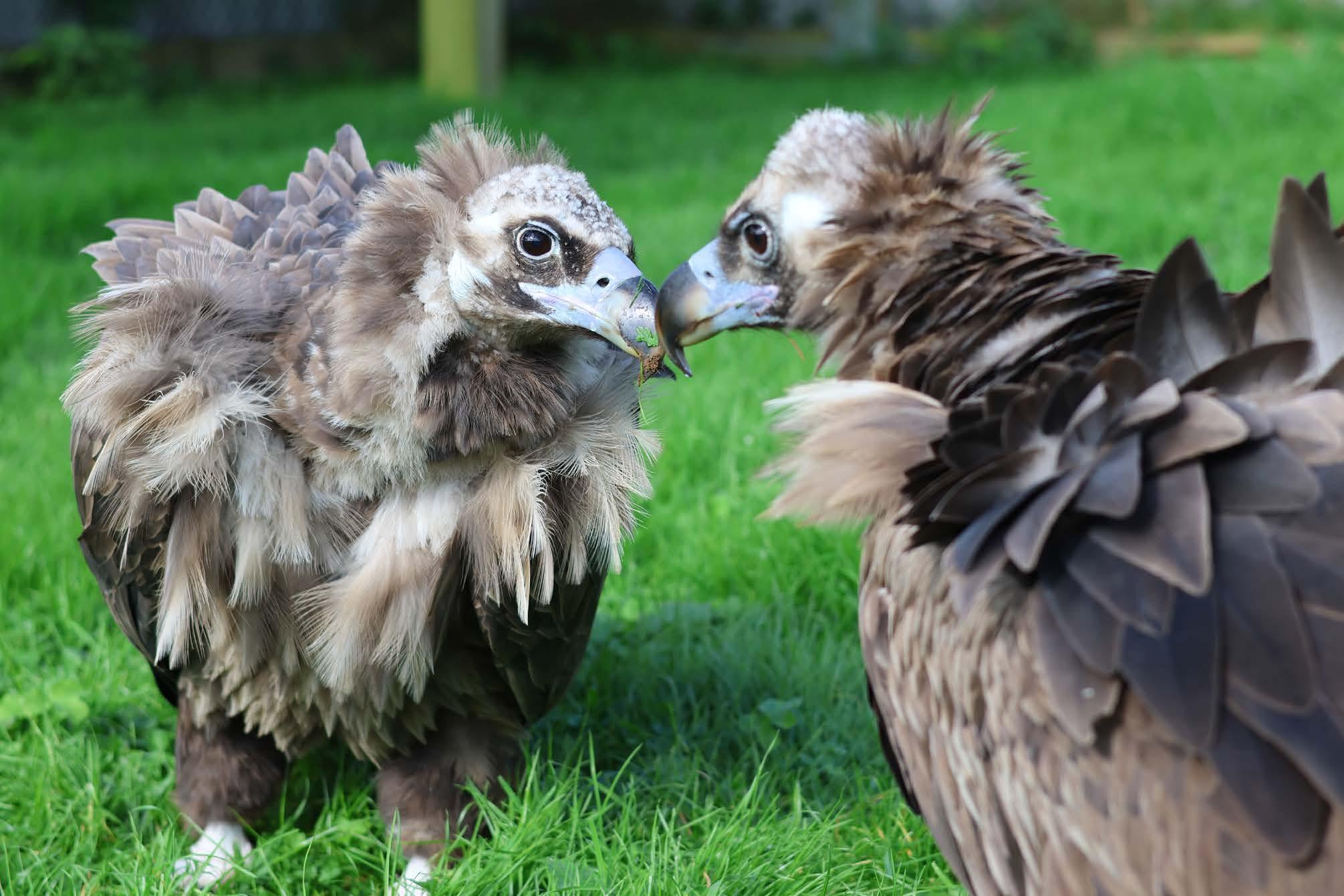
Eurasian black vultures
Photo credit: Holly Cale
WALES
and 11% of the captive population of hooded vultures (Necrosyrtes monachus).
Condors and Old World vultures belong to two different families (Cathartidae and Accipitridae, respectively). Although they have evolved from different ancestors, they share the same ecological niche. These birds are, in essence, waste-disposal experts. They remove animal carcasses from the environment and act as a disease “dead end”: their highly acidic stomachs and unique gut microbiome allow them to digest pathogens such as Salmonella, Clostridium botulinum, and the rabies virus, which would be lethal to other animals.
Their role can go unnoticed until it disappears. In India in the 1990s, vultures declined by around 99% in just a few decades, poisoned unintentionally by
diclofenac, a veterinary pain reliever used in cattle. Without them, feral dog populations surged — to an estimated five million individuals — as they filled the vacant ecological niche. With them came a rise in rabies, transmitted primarily through dog bites, and tens of thousands of human deaths. What had seemed like a quiet absence revealed itself as a public health crisis.
Years following the diclofenac ban, the Indian vulture population is yet to recover, and sadly, many other species, both New and Old World, are facing an uncertain future.
The IUCN classifies Andean condors as Vulnerable, with a decreasing adult population due to poisoning and persecution by humans. Bearded vultures are listed as Near Threatened and are also declining.
Hooded vulture and Cape vulture
Photo credit: Chris Eley
WALES
Neil points out that “in Africa, of the eleven vulture species on the continent, seven are endangered or critically endangered, and two of them — hooded and white-headed — may be extinct in the wild within the next five years.” He adds: “African vulture populations have been declining for over 65 years and have now been reduced by around 95%. Unlike the situation in India, there isn’t a single cause, but many.”
Most of these threats are linked to human activity: electrocution, deliberate and accidental poisoning, trade for belief-based use, poaching of eggs and chicks, habitat loss, and declining food availability. Some are deeply rooted in local cultural practices, while others are tied to wider illegal activities — for example, the poisoning of large carnivores or elephants, whose carcasses are then consumed by vultures.
Addressing even a single major cause of decline can take decades to show results. Tackling multiple, complex threats across different regions is an even longer process — one that risks outpacing the survival of vultures in the wild. In parts of Africa, where disease outbreaks are not uncommon, vulture extinction could have serious consequences not only for wildlife but for human health as well.
THE WORK AT THE TRUST
Walking around the aviaries, Adam checks over the birds as we go. Most of them have names, particularly the human-imprinted ones, with whom he seems to share a special bond. But each bird also has a role in the work of the Trust. Real, for example, is a female condor who cannot be bred from, due to her tendency to retain eggs, but she plays a crucial role in introducing hand-reared condor chicks to adult birds of their species.
Whenever possible, birds are bred for release, like in the case of two young Egyptian vultures recently taken to Bulgaria and about to be set free.
However, in many cases, releasing birds back into the wild before the threats they face have been addressed would be almost a death sentence. This is particularly true for African species such as
Chris Eley
hooded vultures: until these threats are resolved or significantly reduced in their native range, captive breeding remains the only viable option. As Neil explains, “we are delaying when these species go extinct, and we’re hoping that, in the meantime, others can educate local communities and prevent the ongoing deaths of vultures in the wild.”
This is why much of the Trust’s work is aimed at forming breeding pairs to be kept in captivity at several zoos and charities around the world. This way, if something went wrong at one location (such as a disease), there would be a “backup” population of breeding pairs elsewhere. “To preserve the species, we should be moving breeding colonies of vultures to Europe, America, Australia, wherever else, to avoid that old cliché of having all your eggs in one basket. And people throughout conservation know that this is the case now.”
Bearded vulture
Photo credit:
BERNARD
Manfred Horstmann was the first person in the UK to successfully breed several species of vultures in captivity.
In the wild, most vultures pair for life and lay only one egg per year — or, in the case of condors, once every two to three years. But breeding isn’t “just” a matter of finding a partner, building a nest, and laying an egg. Especially for young, inexperienced pairs, it can take several attempts — sometimes years — for a fertilized egg to produce a chick that survives to maturity. For endangered species, where populations are shrinking or, at best, slowly recovering, each successful chick represents a
vital step away from extinction. This is why the dedication and monitoring of experienced avian specialists is so important.
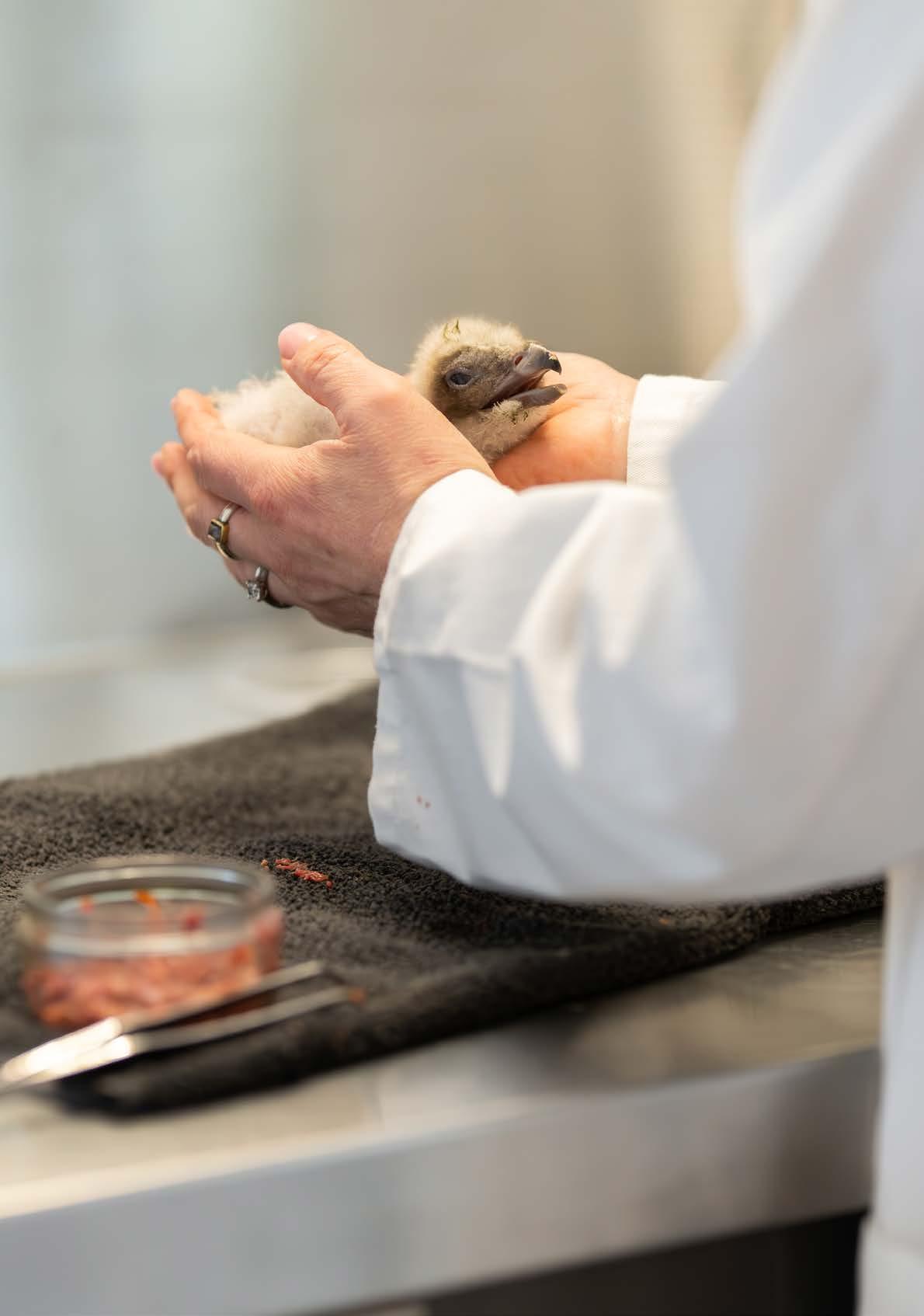
At the Trust, that expertise takes many forms. When the chances of failure are high, Holly steps in to care for eggs in incubators, taking the place of the parent birds, and later rears the chicks until they are ready to be safely introduced into the aviary.
The impressive (and undeniably endearing) puppet in Adam and Holly’s conservatory is a replica of Bernard, an Eurasian black vulture, which represents just how precious each bird is
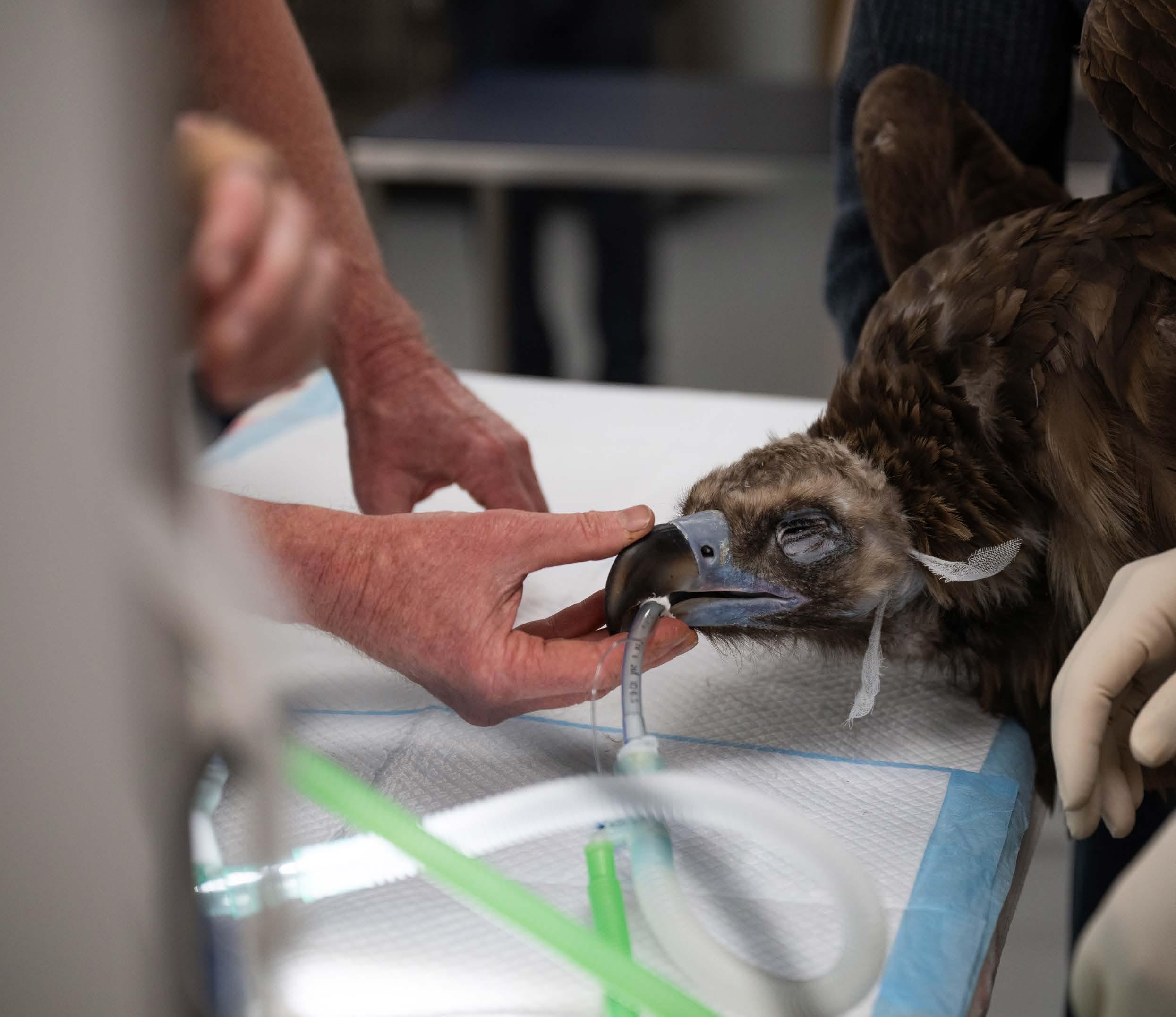
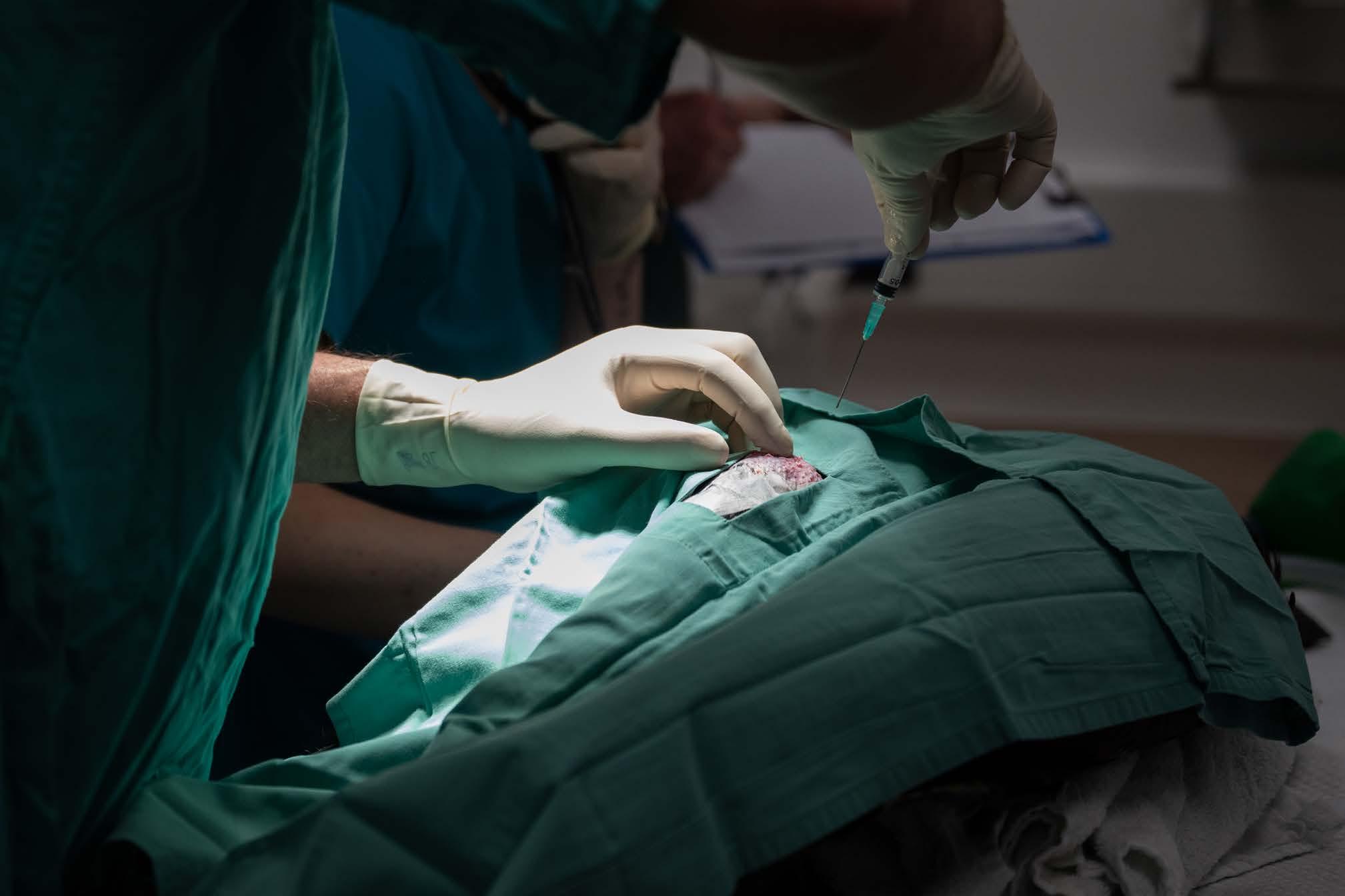
Bernard being anaesthetised for treatment
cell injection complete
in the conservation of a species. Two years ago, Bernard developed severe arthritis that affected his stifle joint, limiting both his mobility and his ability to mate with his partner, Twinkle. Eurasian black vultures can live up to 50 years in captivity, and keeping Bernard healthy is not only a matter of welfare: it’s a mission. In 2024, he was the first vulture in the world to receive stem cell treatment. More recently, he had corrective orthopedic surgery, from which he is still recovering. Beyond the remarkable expertise required to carry out these procedures, the point is that each additional year in which Bernard is able to breed offers another opportunity to contribute to the future of his species.
“KEEPING BERNARD HEALTHY IS NOT ONLY A MATTER OF WELFARE: IT’S A MISSION. IN 2024, HE WAS THE FIRST VULTURE IN THE WORLD TO RECEIVE STEM CELL TREATMENT.”
Left:
Right: Stem
Photo credit: Chris Eley
THE LABORATORY: A POTENTIAL TIME MACHINE
When Adam shows me the laboratory, it’s clear that it’s a space he takes pride in. Tidy and filled with a variety of machines sourced from across the globe, it has been carefully tailored to support a developing element of the Horstmann Trust’s work: vulture DNA sequencing.
When only a few individuals of a species are left to breed, inbreeding (when closely related animals mate) is more likely than in larger populations. This needs to be avoided, as it increases the chances of genetic problems showing up, making birds more susceptible to disease.
As Neil and Adam explain: “Before we took the collection over, we took blood samples from all the hooded vultures and the Egyptian vultures, and we had DNA testing done on them to determine who should be breeding with whom.
Then we found out that there were three individual birds that came from three different European countries, and the DNA showed that all three birds were full siblings; they came from the same nest/ mating pair!”
“THEN WE FOUND OUT THAT THERE WERE THREE INDIVIDUAL BIRDS THAT CAME FROM THREE DIFFERENT EUROPEAN COUNTRIES, AND THE DNA SHOWED THAT ALL THREE BIRDS WERE FULL SIBLINGS; THEY CAME FROM THE SAME NEST/ MATING PAIR!”
Most vultures only lay one egg per year. As these birds were not captively bred, the fact that they were full siblings means that these eggs or chicks must have been taken from the wild nest each year for at least three different years, and then been trafficked into Europe.
Neil has recently proposed that DNA testing should be made compulsory as part of CITES legislation (Convention on International Trade in Endangered Species): “For anyone to take ownership, to import, or to export any CITESlisted species, you have to apply for a license. My suggestion is that rather than just applying and paying a fee, if a sample was taken and submitted to an international database to check that it was not an illegally taken individual, that would stop the international trafficking of wildcaught species almost overnight. The strength of DNA testing is that you can detect a crime that happened 40 years ago.”
With this in mind, the lab is not only a research and decision-making tool, but also something of a time machine — a place where the past and present of these birds can be mapped, and their future, hopefully, preserved.
TURNING THE TIDE
When working with such small populations, every individual bird carries enormous weight — not only genetically, but also in terms of time, resources, and hope. Progress is rarely linear: a single failed breeding season, an injury, or the loss of one bird can set efforts back by years.
Taken together, the work at the Horstmann Trust demonstrates both the fragility and the resilience of conservation breeding programs, and how many factors play a crucial role in preventing an endangered species from slipping into extinction. Yet, the ultimate determinant is the people involved: their passion, proactivity, and willingness to go a step further.
Work here has nothing in common with a typical 9-to-5 job. In addition to remotely helping less specialized conservationists around the world, Neil’s always on duty for technical support, and
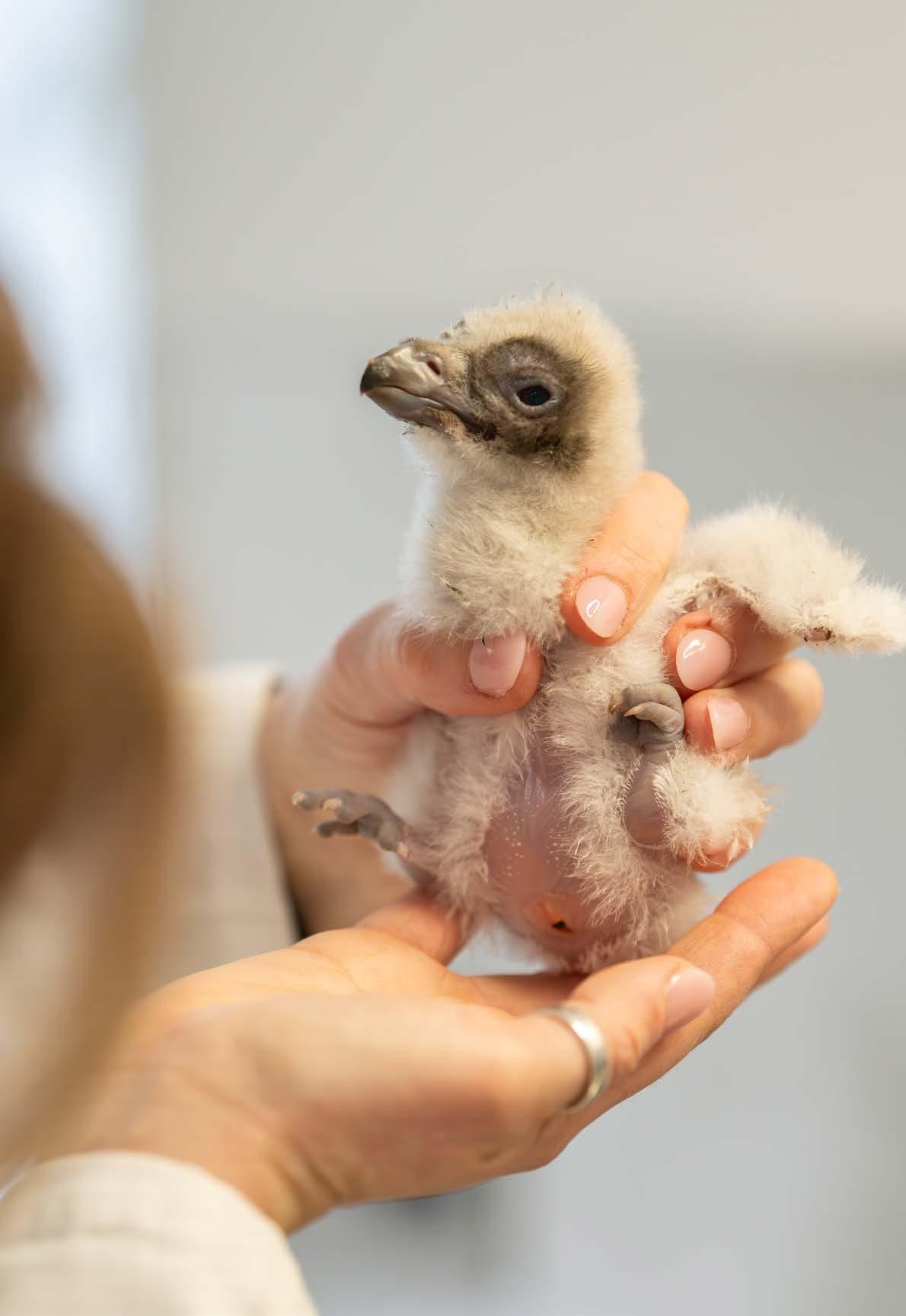
Adam and Holly rarely leave the site. Their daily lives are closely intertwined with the birds they care for. Currently, they are carrying out the daily care of around 70 captive birds, checking whether Egyptian vultures have selected their partners, monitoring several eggs in incubators, and feeding a fluffy, inquisitive newborn hooded vulture chick in the nursery. As if these tasks were not enough, they are also refurbishing the veterinary clinic and working to build a new aviary from netting donated by a closed zoo being disassembled in Cornwall — raising the question of how to disinfect 4,000 square meters of upcycled netting…
At dusk, as Holly and the dogs head out for an evening walk into the woods, I step back into my car. On the drive home, slightly overwhelmed, it strikes me that a whole book could be written about the complexity and meaning of what these people do each day. And yet, there is a clarity to it. Not everyone is fortunate enough to find their mission in life. At the Horstmann Trust, that mission is to leave a lasting legacy. Legacy pursued each day through steady, thoughtful, and proactive work by people with different skill sets, united by a shared vision and love for what they do.
Website
www.vultures.ngo
Instagram
@horstmanntrust
Facebook
@Horstmann-Trust
LinkedIn
@horstmann-trust
Bearded vulture chicks
Photo credit: Chris Eley
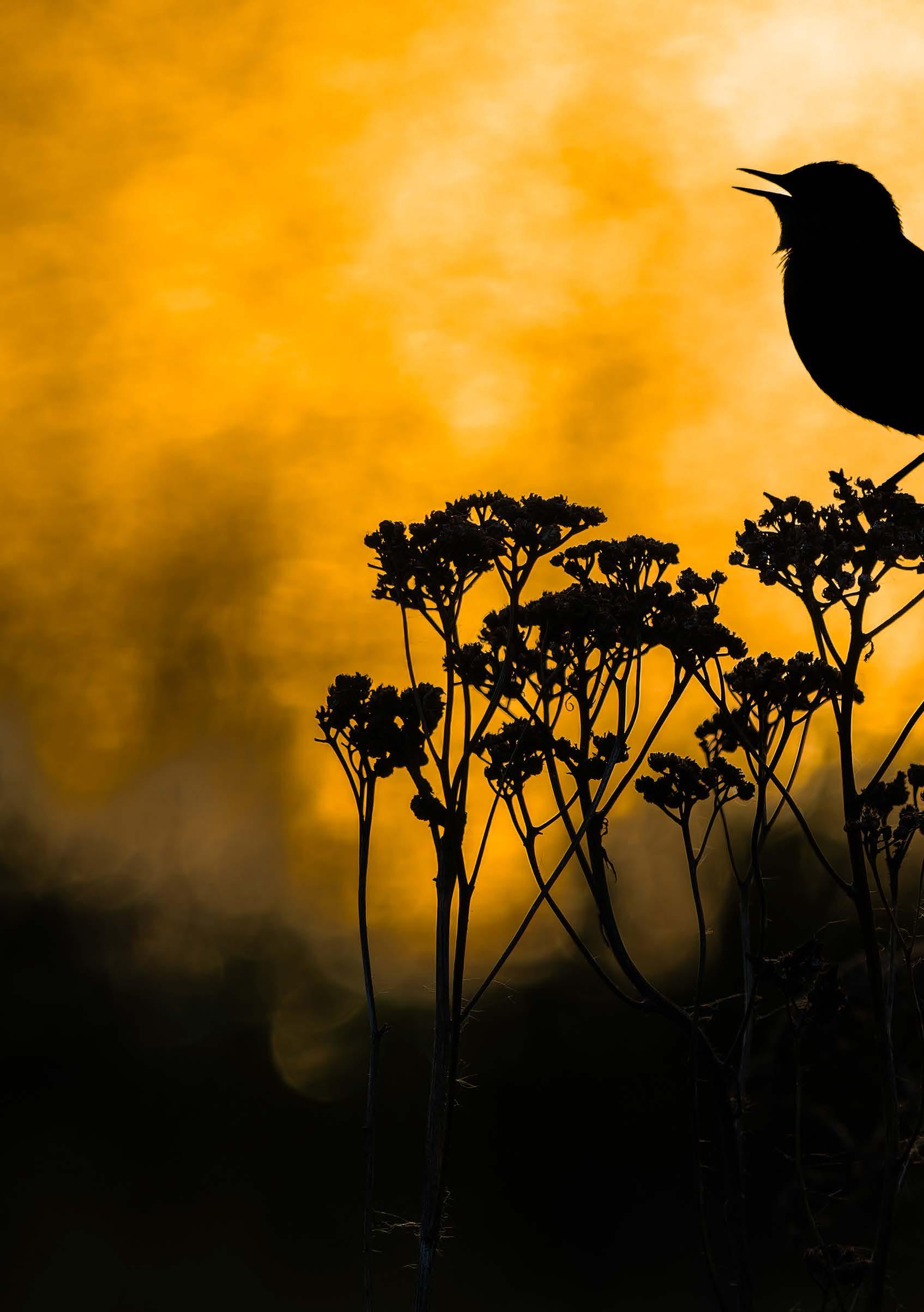
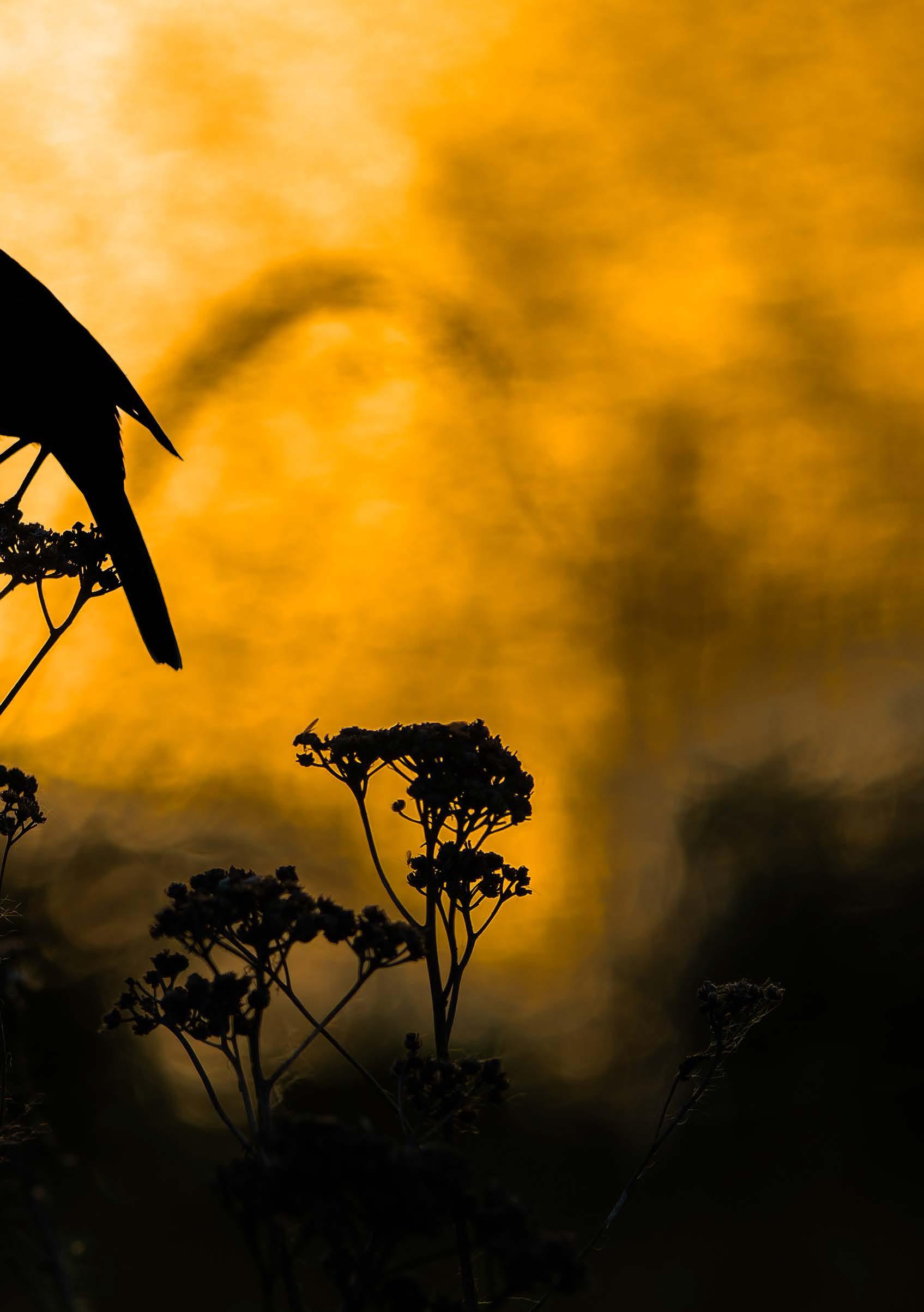
In the forests and villages of Yogyakarta, a fairytale is coming to life as poachers are turning towards conservation to protect the birds that have become a foundational part of their culture.
Just like the emperor in Hans Christian Anderson’s The Nightingale, the people who once sought to contain the birdsong of Indonesia’s avian diversity found that the only way to truly ensure its continued presence is to set it free and give it a safe environment to be heard in.
For centuries, Indonesia has been home to one of the richest soundscapes on earth, its forests alive with the calls of songbirds. But over time, the songs have turned into silence in many regions.
At the heart of this quieting is a tradition both deeply cherished and deeply complicated. Across Java and beyond, keeping songbirds is woven into daily life, a symbol of status, serenity, and even identity. From small homes to bustling urban centers, cages line verandas and courtyards, each holding a fragment of the wild brought closer to home.
But as demand grows, the cost becomes impossible to ignore. Forests that appear lush and untouched now echo with absence. The song remains, but increasingly, it is no longer sung where it belongs.
And yet, as in Andersen’s tale, there are those beginning to listen again.
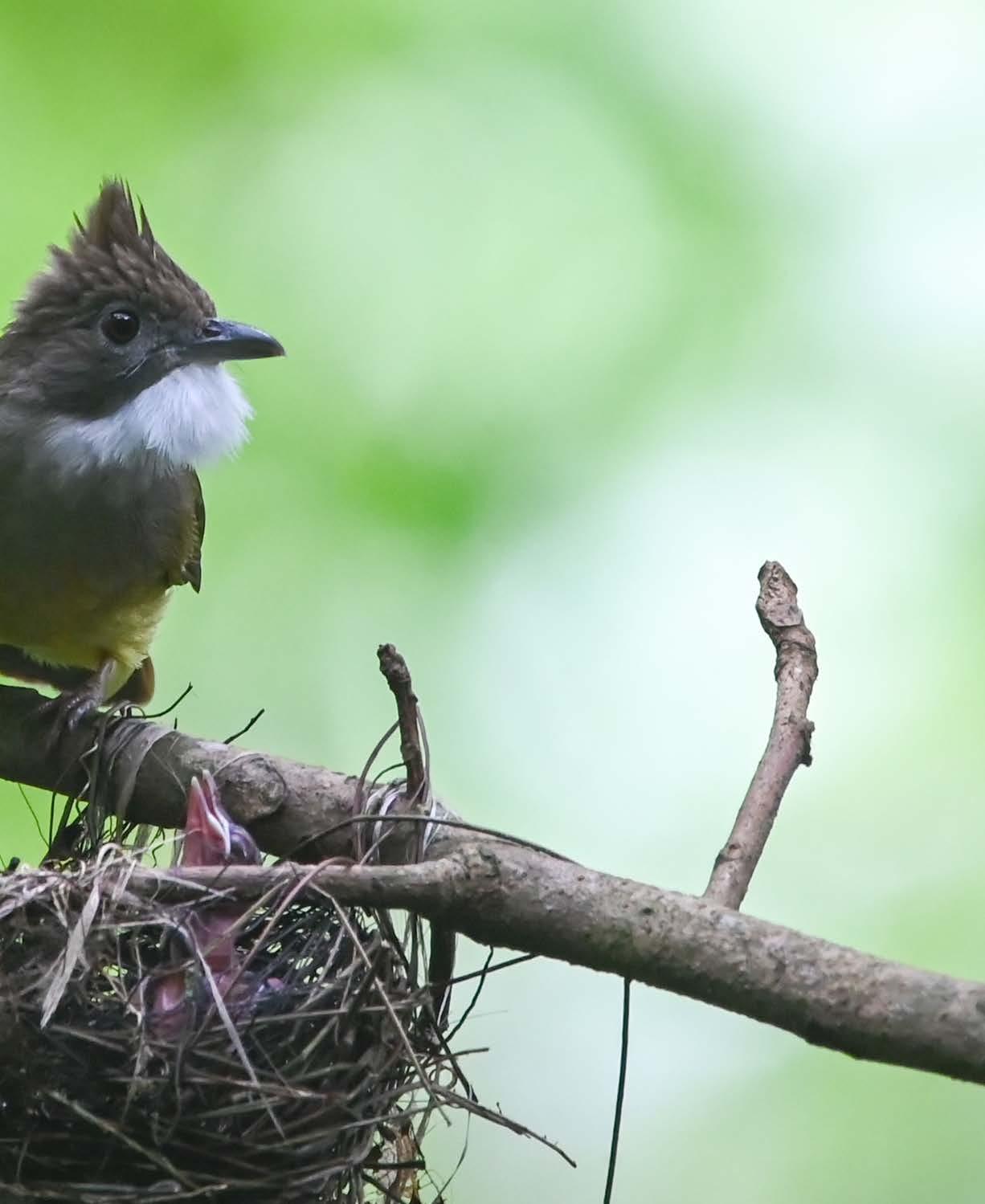
A Cucak Jenggot - Grey-cheecked bulbul (Alophoixus bres) on a tree branch.
Photo credit: Kelik Suparno
LEARNING TO LISTEN AGAIN
SONGBIRD CONSERVATION IN YOGYAKARTA
Written by Reinhard Venzke
THE VILLAGE THAT LISTENED AGAIN
In the forested hills of Jatimulyo, a small village on the outskirts of Yogyakarta, the silence settled gradually with a thinning of something that had been so constant it had almost gone unnoticed.
The diverse agricultural crops of Jatimulyo, including durian, mangosteen, coffee, and bamboo, offer birds ideal habitats, with nesting sites and food sources contained in close proximity to each other, along with dense foliage that offers safety against natural predators such as raptors.
Sadly, the density of birdlife populations didn’t protect the birds against their biggest threat: poachers.
For years, the people of Jatimulyo had lived alongside the birds in a different way. Like many communities across Java, bird trapping was a necessary part of many lives. A single bird could bring in enough money to support a household for weeks, sometimes months. The forest was not just a place of beauty; it was a source of income and survival.
And so the songs were taken from the trees and placed into cages.
“PATHS THAT ONCE LED TO HIDDEN TRAPS BEGAN TO LEAD TO VIEWING POINTS.”
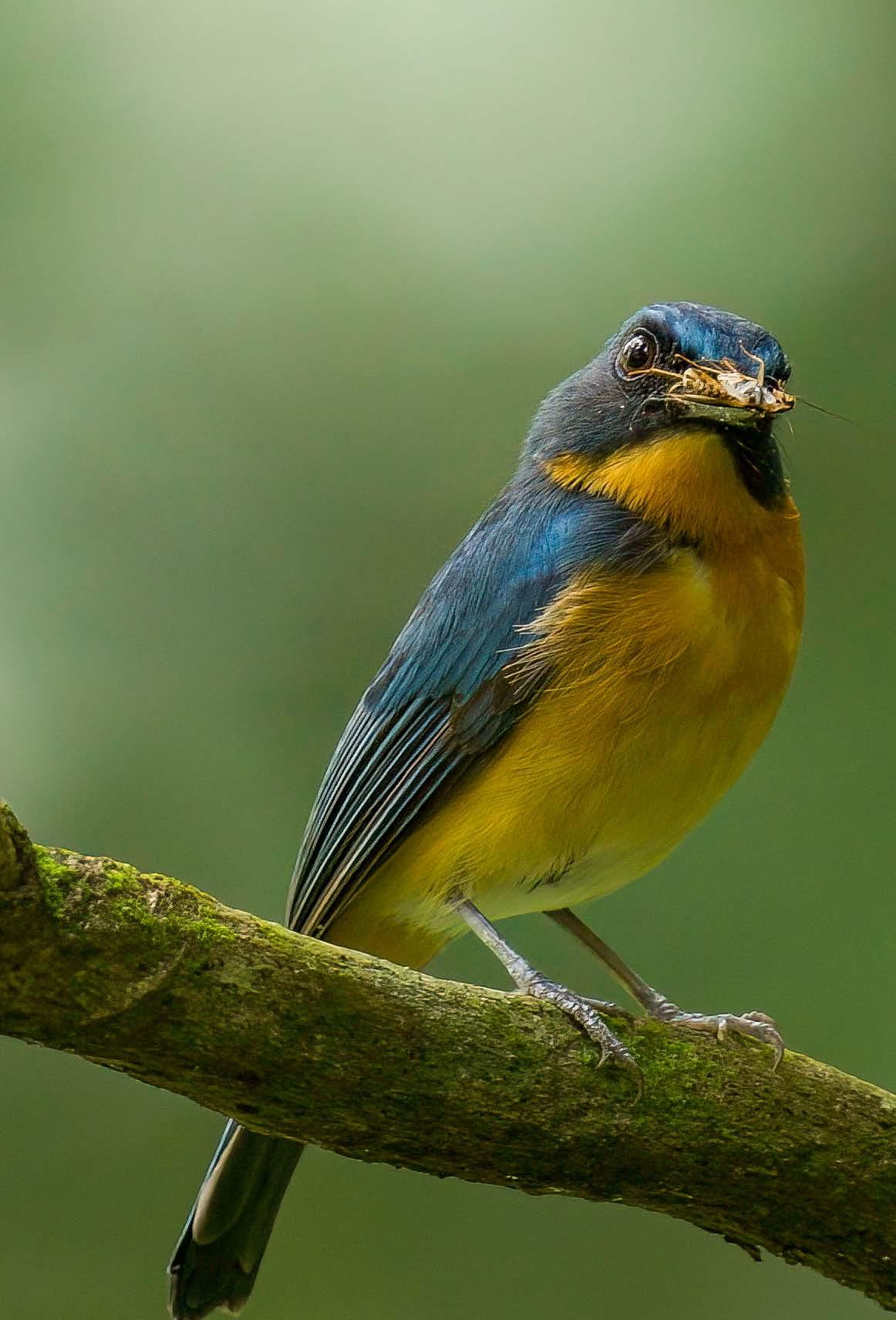
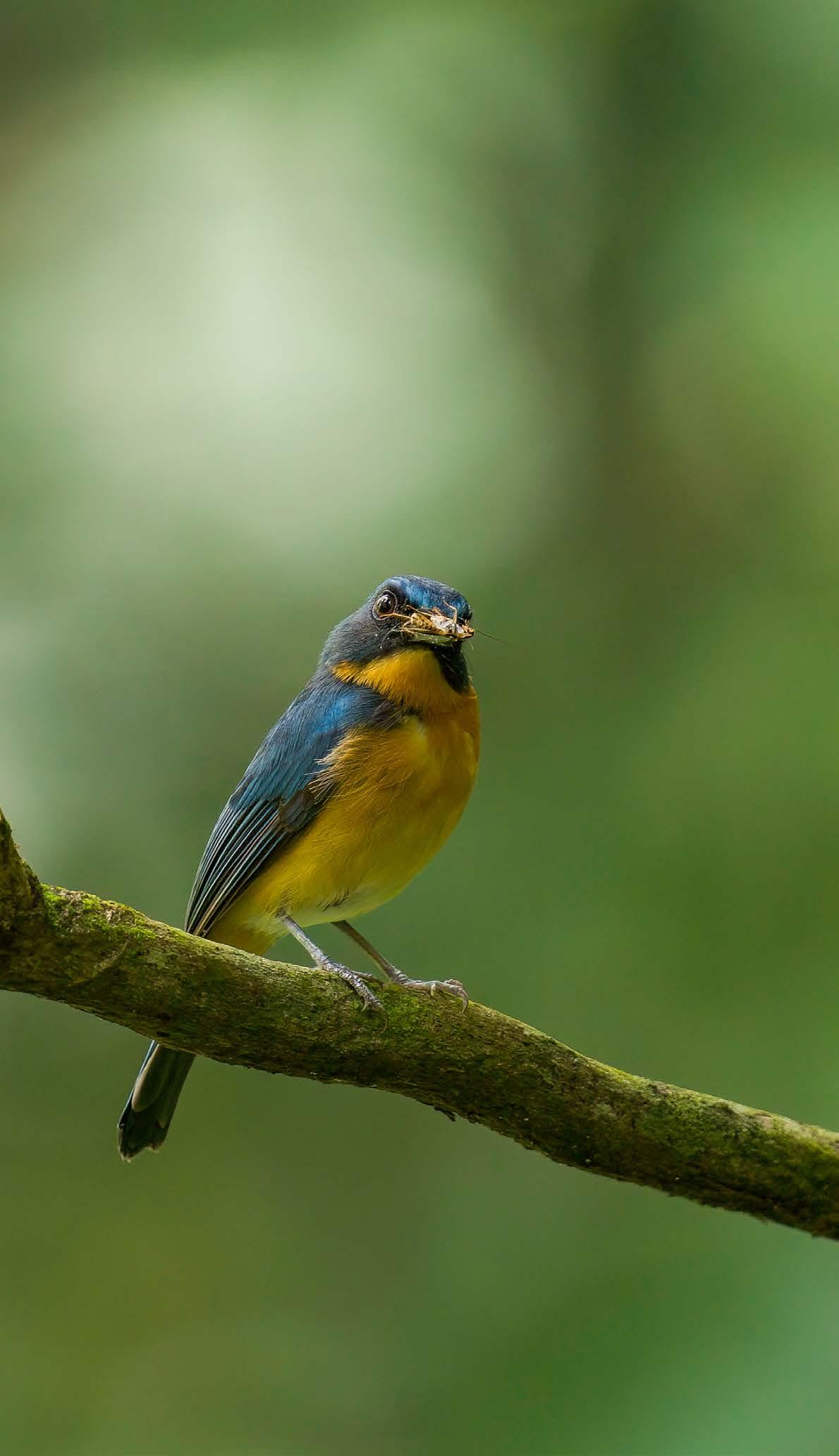
Top: A Javan blue flycatcher eating insects
Photo credit: Kelik Suparno
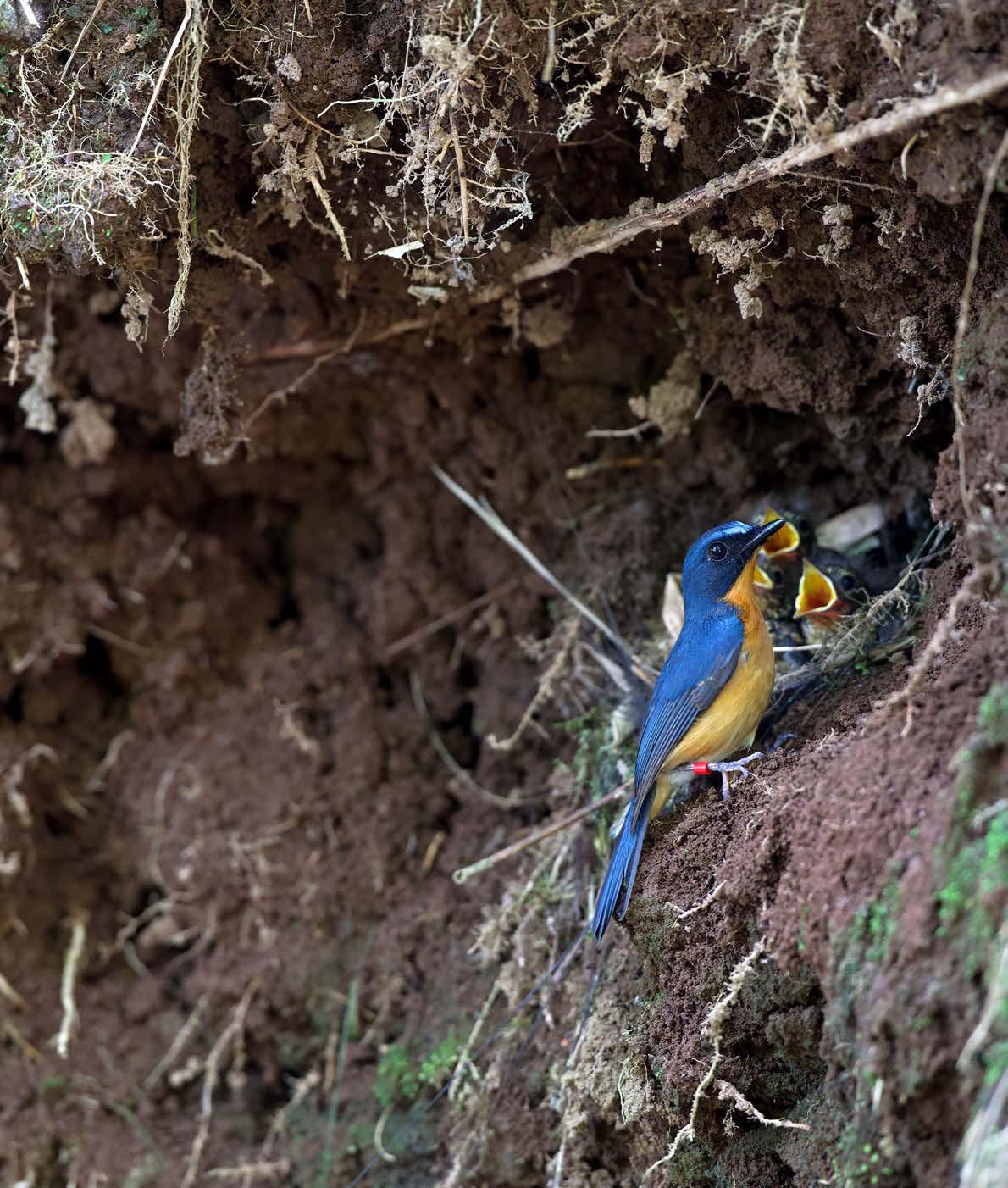
Bottom: A Javan blue flycatcher is seen nesting with several of its chicks. And look at its feet, there is a bird banding from the conservation results of BISA Indonesia.
Photo credit: Agung Cahyadi
Area patrols are conducted by BISA Indonesia and representatives from the WANAPAKSI Forest Farmers Group and Kanopi Indonesia. Patrols are conducted at least once a month.
What makes Jatimulyo remarkable, though, is not that this happened, but that it stopped.
The shift did not begin with policy or enforcement, but with a shared realization that while the forests were still green, they were no longer alive with birdsong. So in 2014, the village made a decision that would ripple far beyond its borders: songbird hunting was banned by the same people who had caught them before.
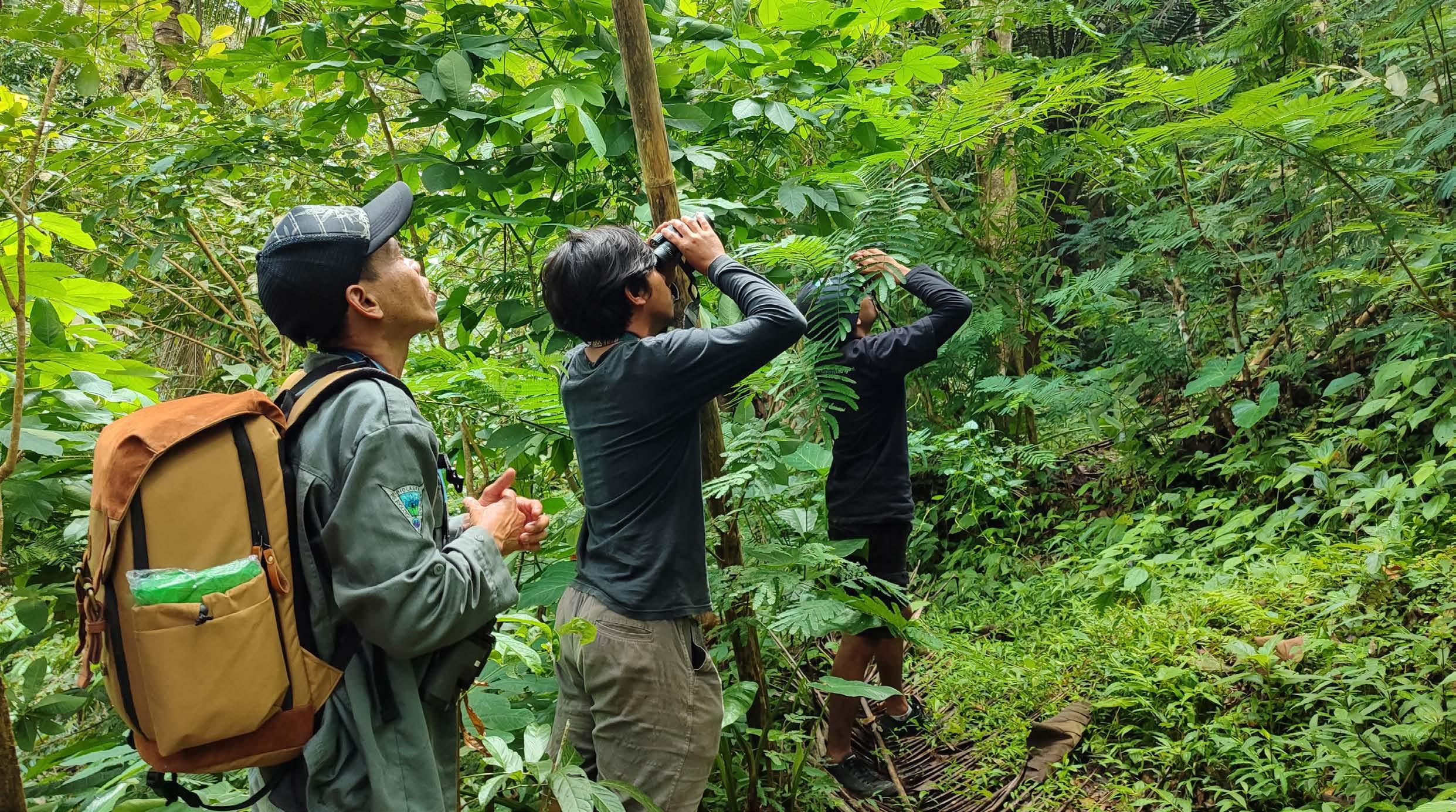
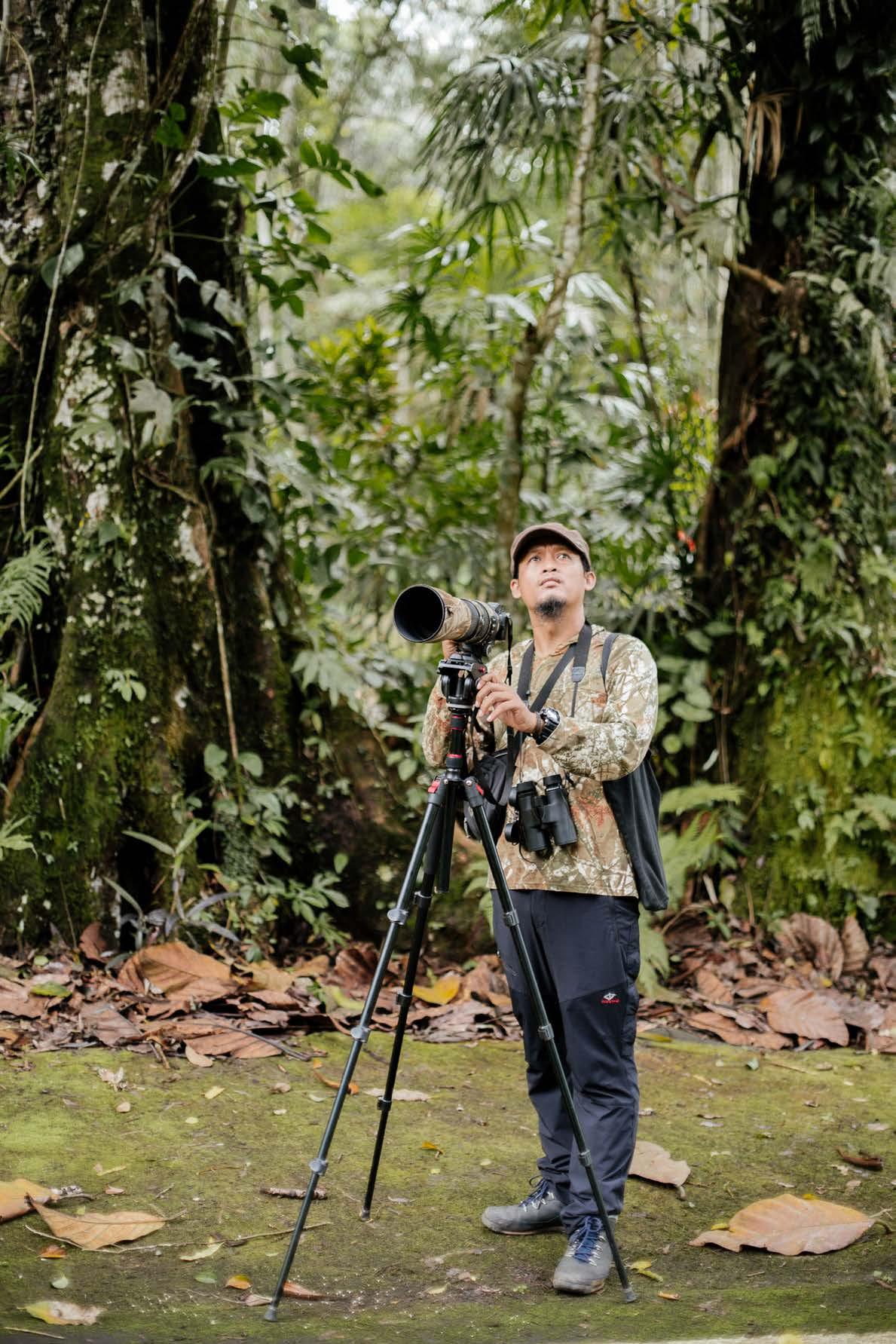
Former poachers became guides, leading visitors through the same forests they had once worked in, now listening instead of hunting. Paths that once led to hidden traps began to lead to viewing points. Where glue sticks and nets had once been tools of the trade, binoculars and cameras took their place.
Today, Jatimulyo is known as a “bird-friendly village,” a place where conservation is not imposed from the outside but lived from within.
Its transformation has become a quiet example of what is possible when a community chooses not just to protect nature, but to redefine its relationship with it.
And like the nightingale in Andersen’s tale, the song has begun to find its way back.
THE WEIGHT OF SILENCE
What happened in Jatimulyo is remarkable precisely because it is rare. And across Indonesia, the silence continues to spread.
The country sits at the epicenter of what conservationists now call the Asian songbird crisis — a complex, deeply rooted issue where culture, economy, and ecology intersect.
Today, millions of birds are kept in captivity across Indonesia, many of them taken directly from the wild. Markets in cities and towns trade in both common and critically endangered species. The
Photo credit: BISA Indonesia
INDONESIA
result is a landscape that can appear deceptively whole. But while forests remain standing and trees continue to grow, they grow in silence.
Yet the story is not one of simple blame.
For many, bird keeping is an inheritance passed down through generations, a practice embedded in identity and memory. Even today, some believe that keeping birds is a way of preserving them, an attempt, however flawed, to hold onto something they fear might otherwise disappear.
It is within this tension that the work of conservation must take place, and that organizations such as BISA Indonesia have to help reshape the identity of a culture.
RESHAPING COMMUNITIES THROUGH CONSERVATION
BISA Indonesia is a conservation support organization that understands that protecting nature means protecting human life, which is why it has a dual mission: to preserve biodiversity and improve community welfare.
Founded in 2016, the organization was born out of the concerns and hopes of ten individuals. Although the founders all come from diverse academic backgrounds, their passions were
driven by a single goal: to care for the earth while strengthening communities to be stewards of that earth.
What lies at the heart of the organization is its prioritization of harmony between communities and nature. To accomplish that, they invest heavily in information dissemination and education programs that empower people to become a central part in the preservation of the environment.
BISA also maintains relationships with nongovernmental organizations, government agencies, private agencies, and legal organizations from inside Indonesia and beyond in an effort to cultivate the most exhaustive conservation impact possible.
The focus of BISA Indonesia has always been on collaborative initiatives driven by community involvement that bridge scientific research and local wisdom. It’s a philosophy that is being mirrored in Jatimulyo.
When members of the community, including former poachers at the forefront, began to seek new ways forward, BISA stepped in as a partner, offering technical guidance, helping to document and monitor bird populations, and to strengthen the frameworks that would allow conservation efforts to grow sustainably.
Through research-based conservation, BISA is currently helping to map the presence and movement of endangered species, ensuring that protection efforts are informed and effective. But it’s through education that ecological awareness is nurtured across generations, creating space for new ways of seeing and valuing the natural world. The final leg of the organization’s efforts lies in the development of sustainable livelihoods, from ecotourism to agriculture, where it helps ensure that conservation is not a sacrifice, but an opportunity.
INDONESIA
WALKING WITH THE COMMUNITY
In Yogyakarta, the transformation taking place in villages like Jatimulyo has been shaped not only by local resolve but by relationships, by those willing to walk alongside communities as they reimagine what conservation can look like.
One of those people is Asman Adi Purwanto.
Asman Adi Purwanto is the executive director of BISA Indonesia and has a lot of experience in the world of conservation.
Photo credit: BISA Indonesia
Asman did not grow up with a formal understanding of conservation. Like many, his early life was not shaped by environmental education or access to wildlife knowledge. It was only later, through his work at a wildlife rescue center, that something shifted. There, surrounded by people from across Indonesia and around the world, he began to see the natural world differently — not as something distant or abstract, but as something fragile and deeply interconnected with human life.
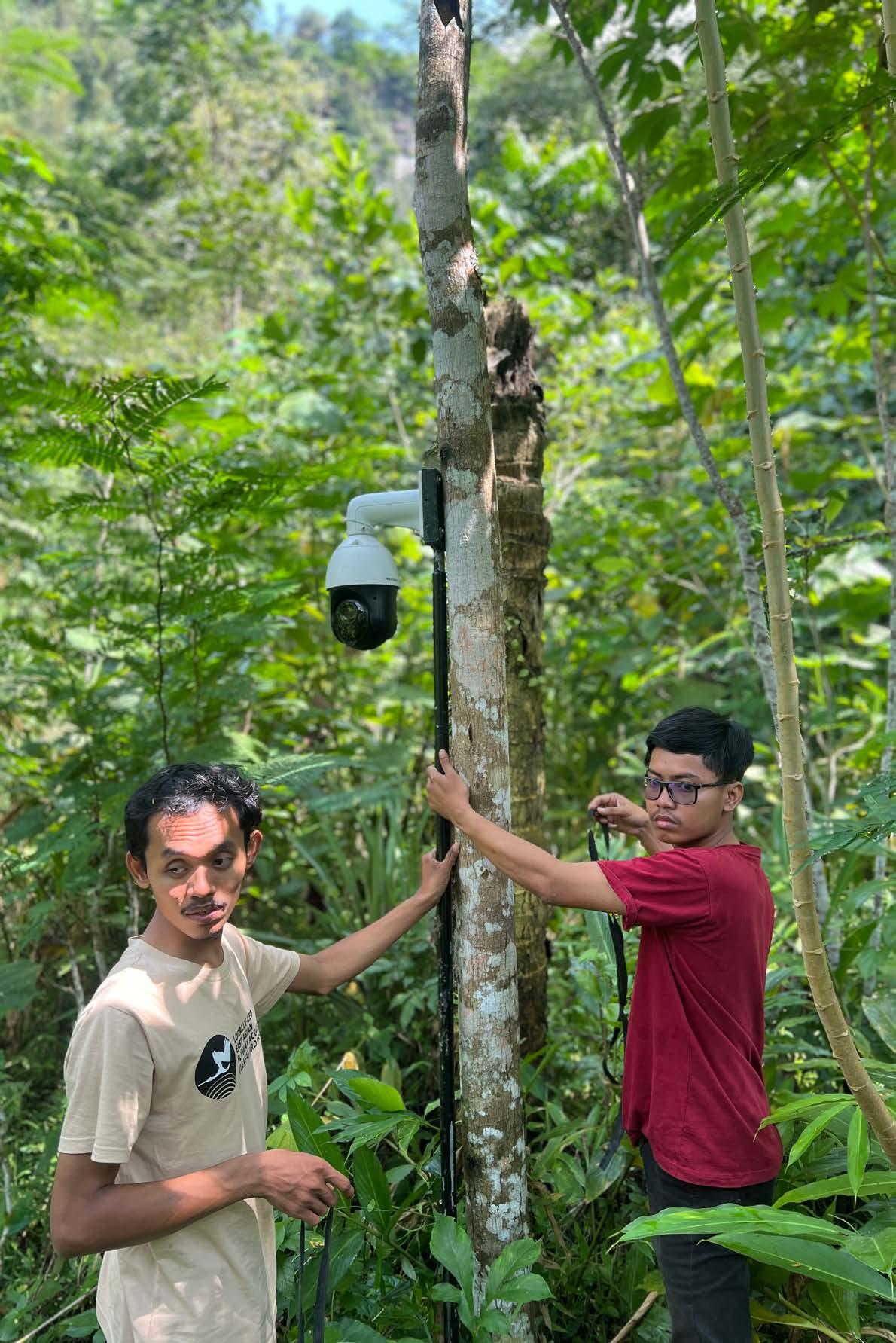
The CCTV installation was carried out by Dede Chandra and Ali Wafa as representatives of BISA Indonesia. This was done to monitor the bird species that live in the area.
Photo credit: BISA Indonesia
INDONESIA
That shift would eventually lead him to become one of the founding members of BISA Indonesia.
From the outset, BISA’s approach has been rooted in a simple but powerful idea: protecting nature also means protecting people.
Rather than imposing solutions, the organization works collaboratively, supporting communities, building partnerships, and grounding its efforts in both scientific research and local knowledge. It’s an approach that recognizes that conservation cannot succeed if it exists apart from the realities of the people who live closest to the land. That’s what allows Asman to be such an impactful presence as a conservationist, because he’s a villager himself who knows the cultural beliefs and the challenges of daily life in the region. It’s a human connection that matters more than a history in conservation.
THE RETURN OF THE SONG
One remarkable bird, the Javan blue flycatcher
(Cyornis banyumas), is at the heart of BISA Indonesia. Once a familiar presence in the local forests, it has become one of the most critically endangered species in the region, with its population declining by almost 80% over the past ten years.
But the work does not begin with the bird alone. It begins with the people who now protect it.
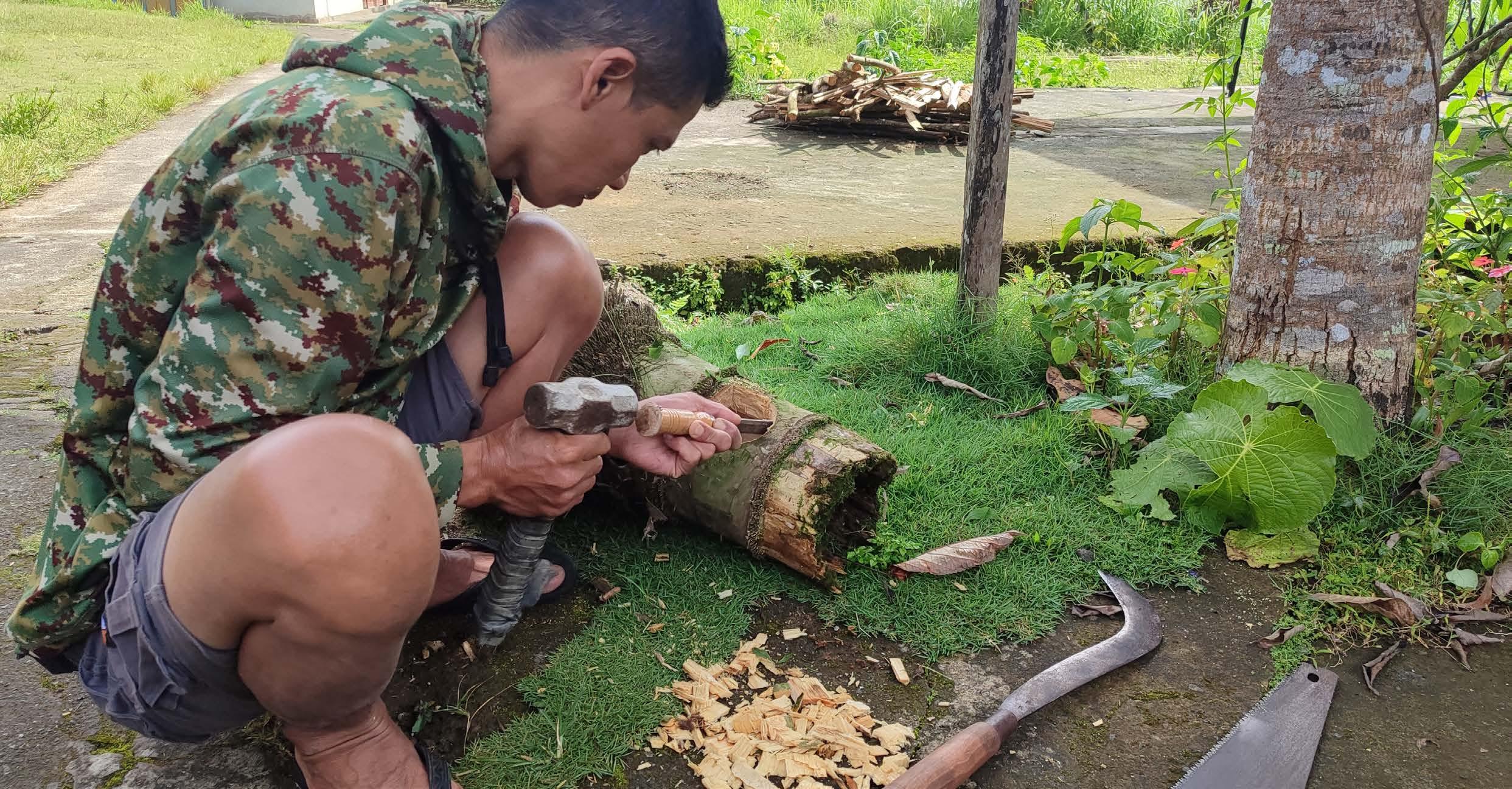
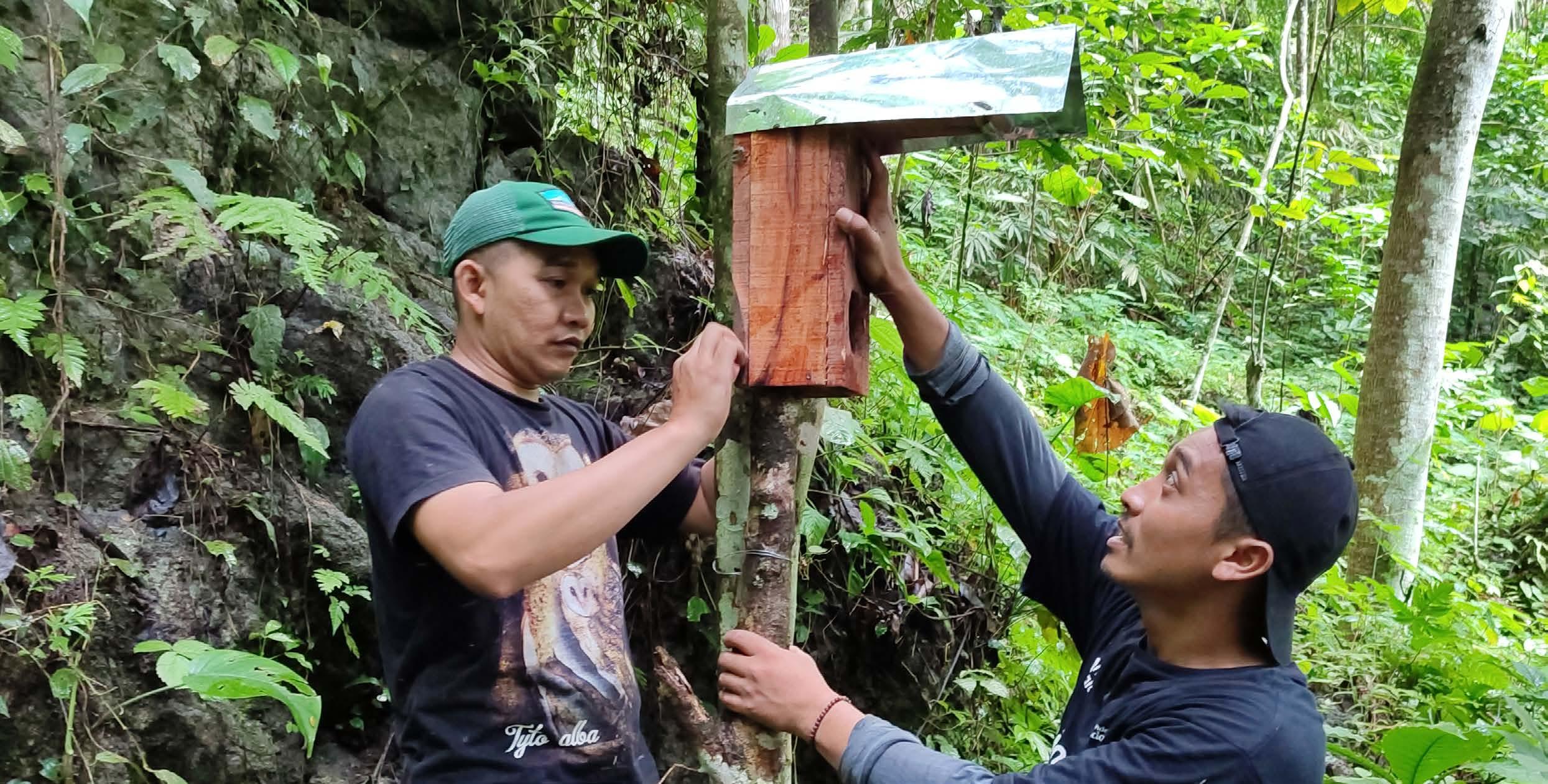
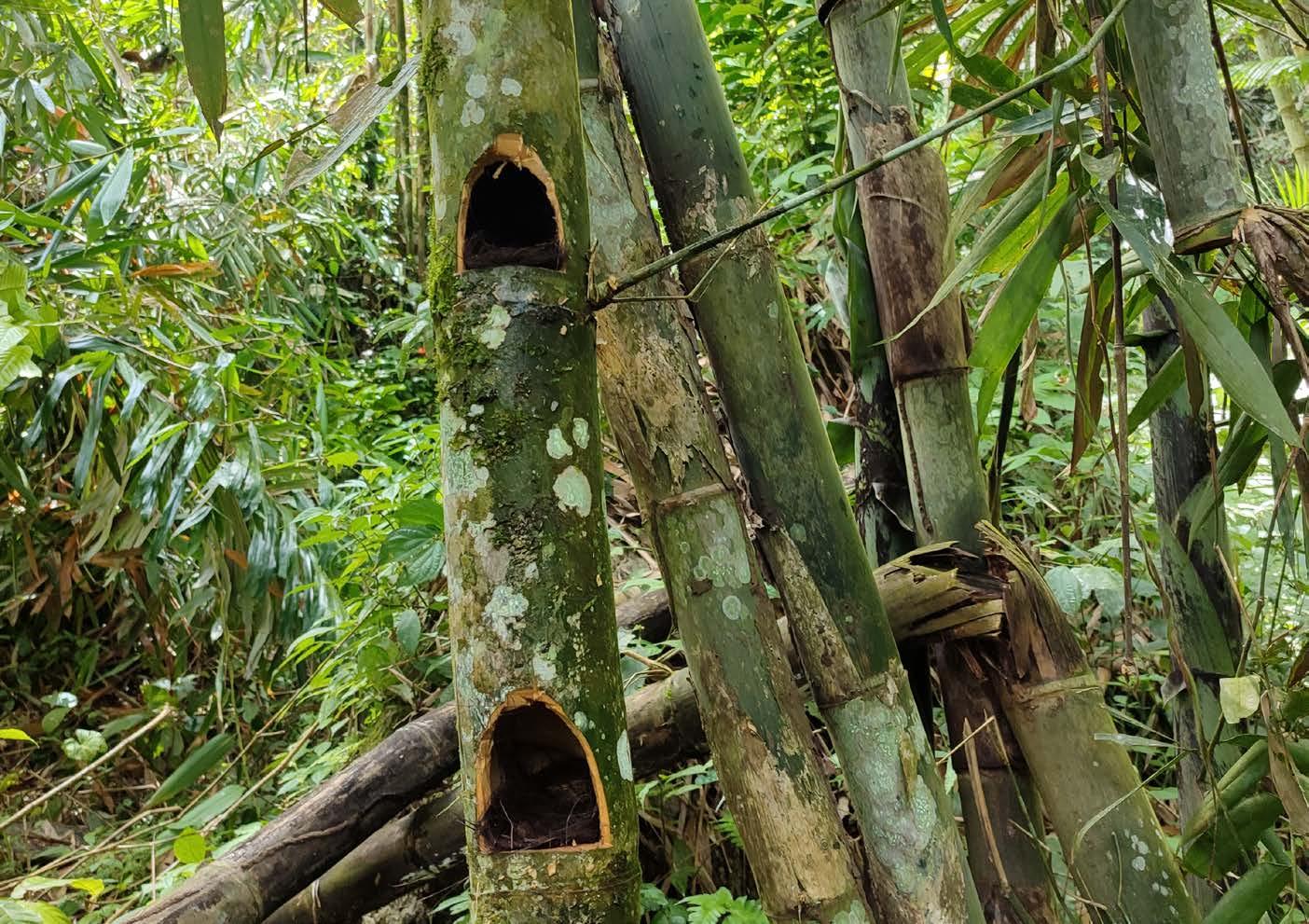
Across six hamlets in Jatimulyo, more than a hundred community members are involved in monitoring and safeguarding the flycatcher’s fragile return. Bamboo groves, once part of everyday agricultural life, have become safe nesting habitats. To further support nesting and breeding, artificial nests are carefully placed, while protective guards help shield eggs and hatchlings from predators.
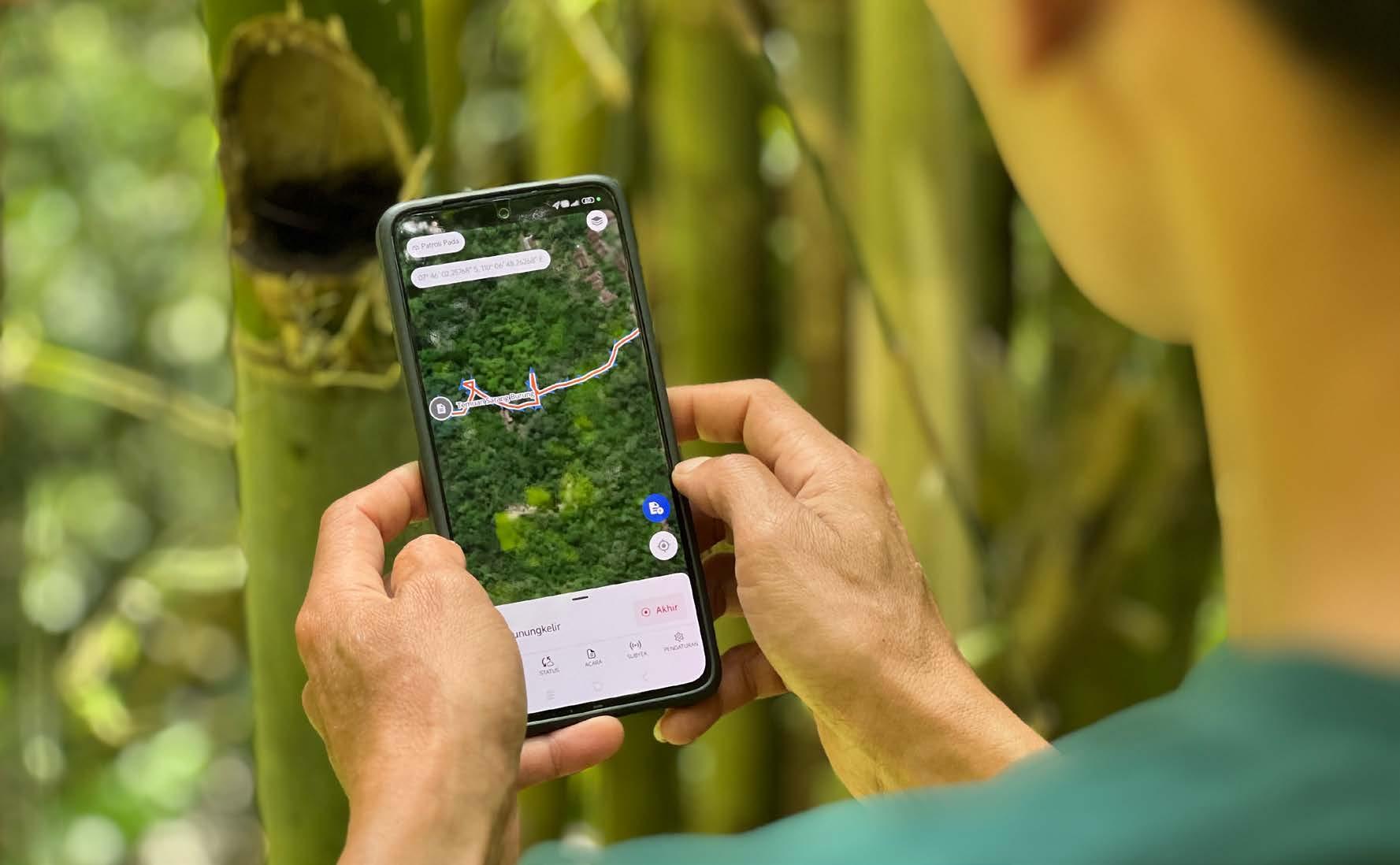
Technology, too, has found its place among the trees, with BISA relying on the SMART Patrol system and the installation of small cameras near active nests to ensure a continuous, watchful presence.
Nest-making is one of the conservation programs used to protect bird species. In this photo, Kasidi (WANAPAKSI) is seen making a nest from used bamboo.
Photo credit: BISA Indonesia
Once the artificial nest is ready, the nest is installed, of course, in accordance with research into environmental conditions and the bird’s tendencies to live there. The installation was carried out by Jarwo and Andri (WANAPAKSI).
Photo credit: BISA Indonesia
“THAT’S WHAT ALLOWS ASMAN TO BE SUCH AN IMPACTFUL PRESENCE AS A CONSERVATIONIST, BECAUSE HE’S A VILLAGER HIMSELF WHO KNOWS THE CULTURAL BELIEFS AND THE CHALLENGES OF DAILY LIFE IN THE REGION.”
Not only do these tools help conservationists track the behavior and success of the birds, but they also open a window to the wider world. Through Jatimulyo’s nest adoption program, individuals from across the globe can follow the life of a single nest, from the laying of eggs to the first uncertain movements of hatchlings.
And yet, even here, the focus is not solely on protection, but on coexistence.
Efforts to support the flycatcher and other songbirds are woven into broader changes across the landscape. Villagers have focused their efforts on the cultivation of long-term crops like coconut, sugar palm, and silk trees that offer shelter to one of the area’s primary exports: coffee beans. With coffee, cocoa and vanilla plants growing freely along with various spice trees, coffee
cultivation has taken flight, offering ex-poachers an alternative source of income, reducing reliance on bird trapping.
But not everyone chose to turn to farming when poaching was banned. With their extensive knowledge of the forests, the ecosystem, and the wildlife contained therein, many of these new conservationists have turned their knowledge to ecotourism, inviting visitors to experience the forest not as a resource to be extracted, but as a living system to be understood. Former hunters now guide photographers and researchers, translating their intimate knowledge of the land into a new kind of stewardship.
Major cultural shifts such as these are never easy, but what has taken root in Jatimulyo shows how much is possible when conservation is approached
Some examples of ready-made artificial nests
Photo credit: BISA Indonesia
The Earthranger app is designed to make it easier for patrollers to record and document their activities in digital reports, including complete data on animal species, sighting locations, and live locations. BISA Indonesia is the first in Indonesia to use this app.
Photo credit: BISA Indonesia
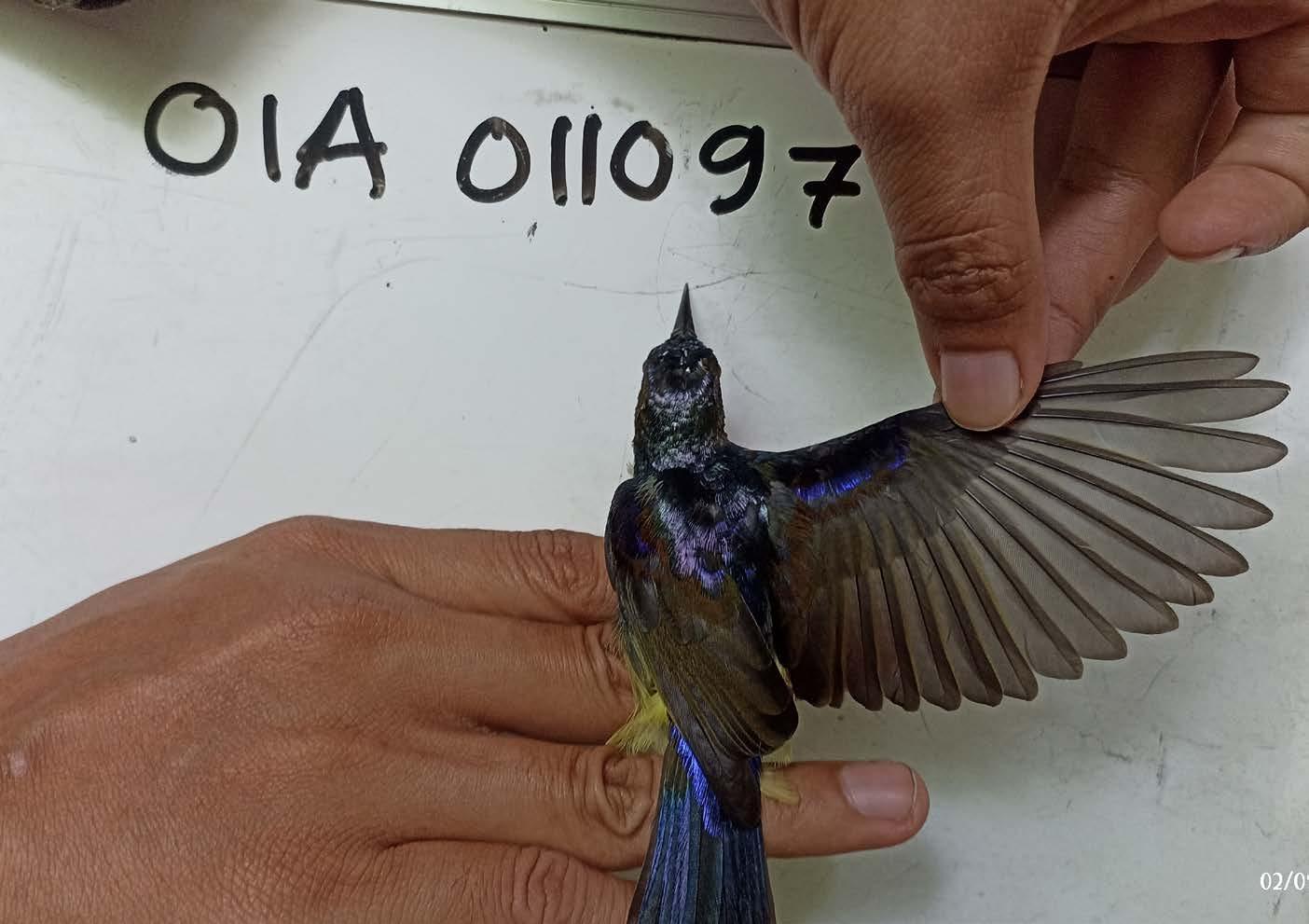
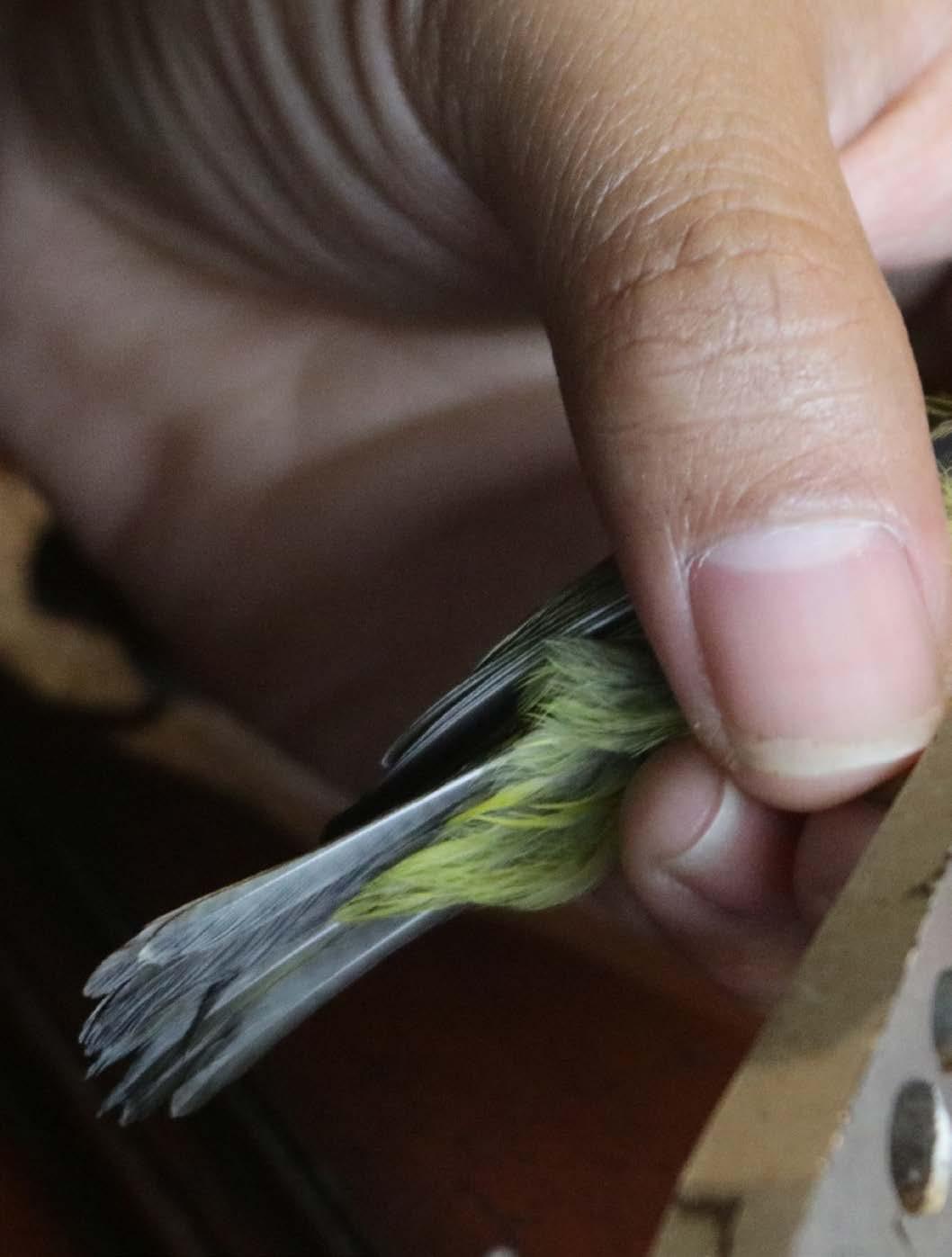
This bird banding session involves checking the birds’ wings. This is done to check whether the wing size matches established theory and whether the bird is suffering from any defects or illnesses.
Photo credit: BISA Indonesia
INDONESIA
as a collective commitment. LEARNING TO LISTEN AGAIN
In The Nightingale, the emperor only understands the value of the real bird once it is gone. It is only in silence that he remembers what the song meant to him.
In the forests of Yogyakarta, that silence is no longer taken for granted. It is recognized for what it is: a warning, a memory, and, perhaps, an opportunity.
What makes places like Jatimulyo remarkable is not just that the birds are returning, but that the people have chosen to change alongside them. Former hunters now protect what they once captured. Communities that once relied on extraction now build livelihoods rooted in care. And organizations like BISA Indonesia continue to walk alongside them — not to lead, but to support, to listen, and to learn.
It is a reminder that conservation does not belong only to scientists or specialists, nor does it require a lifetime of preparation to begin. As the journey of Asman Adi Purwanto shows, it can begin with a shift in perspective — with the simple, profound realization that the natural world is not separate from us but bound to us in ways we are only beginning to understand.
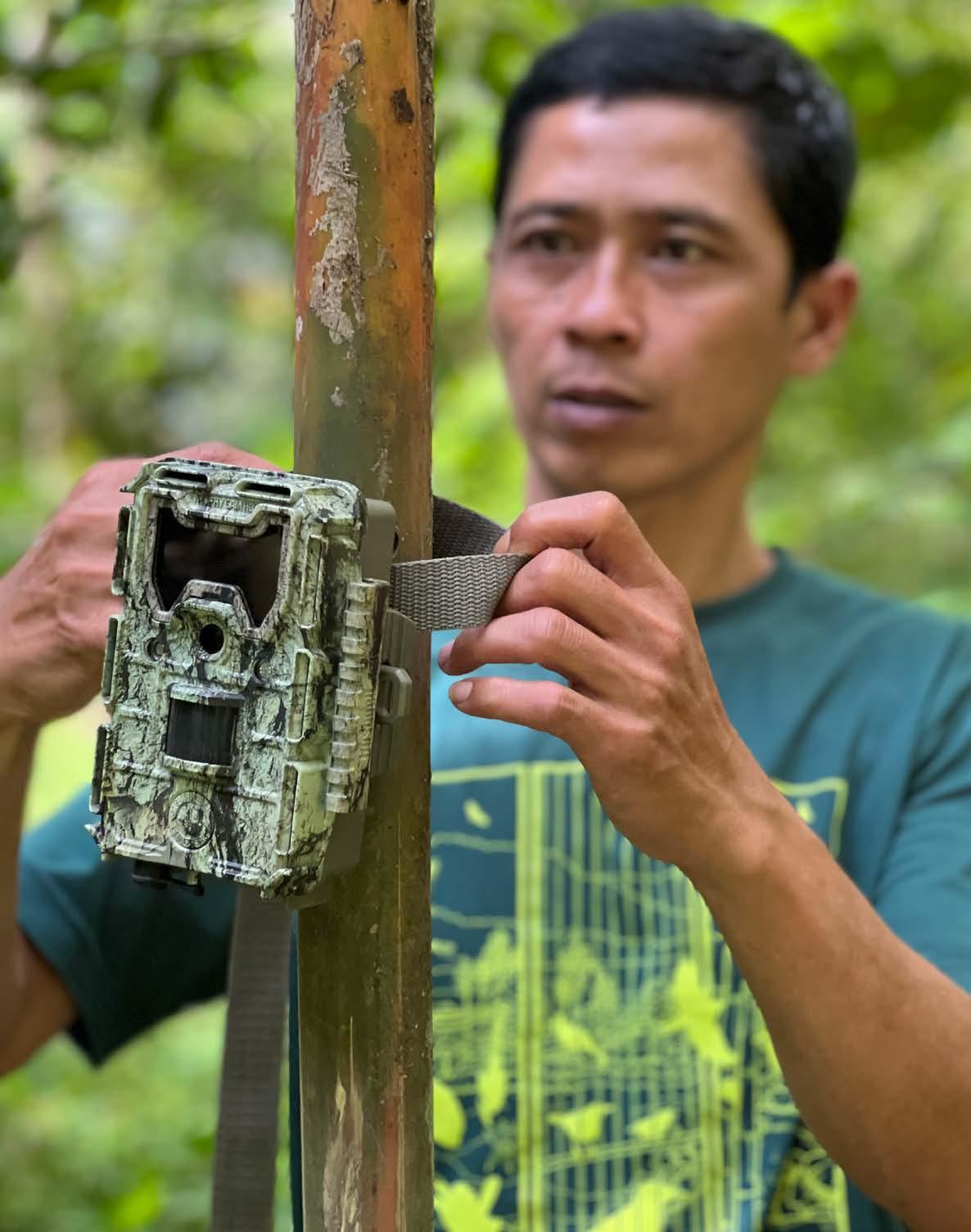
Camera traps are installed to monitor the animals’ behavior. This photo shows a camera trap installed in front of a bird’s nest. The installation was carried out by Dede Candra (BISA Indonesia) and Kasidi (WANAPAKSI).
Photo credit: BISA Indonesia
There is no single solution to the songbird crisis. No perfect system waiting to be implemented. What exists instead are moments like these — small, deliberate acts of change that ripple outward, carried by communities willing to imagine something different.
To hear a bird sing in the wild is, in many ways, to accept a kind of uncertainty. The song is not yours to keep and cannot be controlled or repeated on command. It exists only in that moment, shaped by place, by time, by the fragile balance of a living world.
And perhaps that is where its true value lies, in teaching us that we need to preserve beauty in the natural world, instead of trying to contain it.
Website www.bisaindonesia.or.id
Instagram @bisa_ina
Facebook @bisaindonesia1
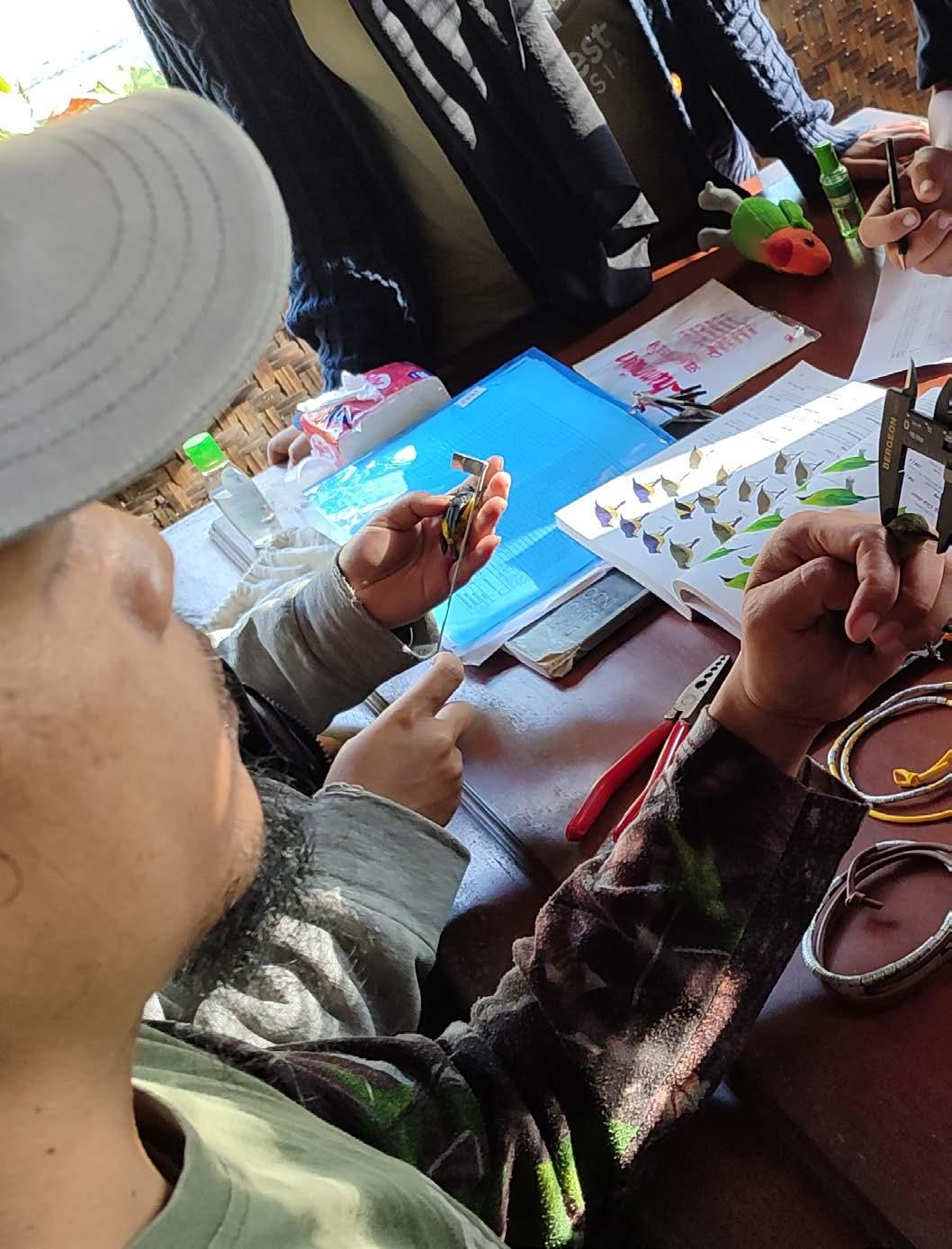
Bird banding, which involves the use of bracelets, is conducted to determine which species are still living in a given location, their estimated ages, and the approximate number of birds living in the area. Bird banding is also conducted to monitor bird movements, to determine whether they have nests in previously untouched areas by patrol teams, or whether they have young that may require assistance with evacuation or care.
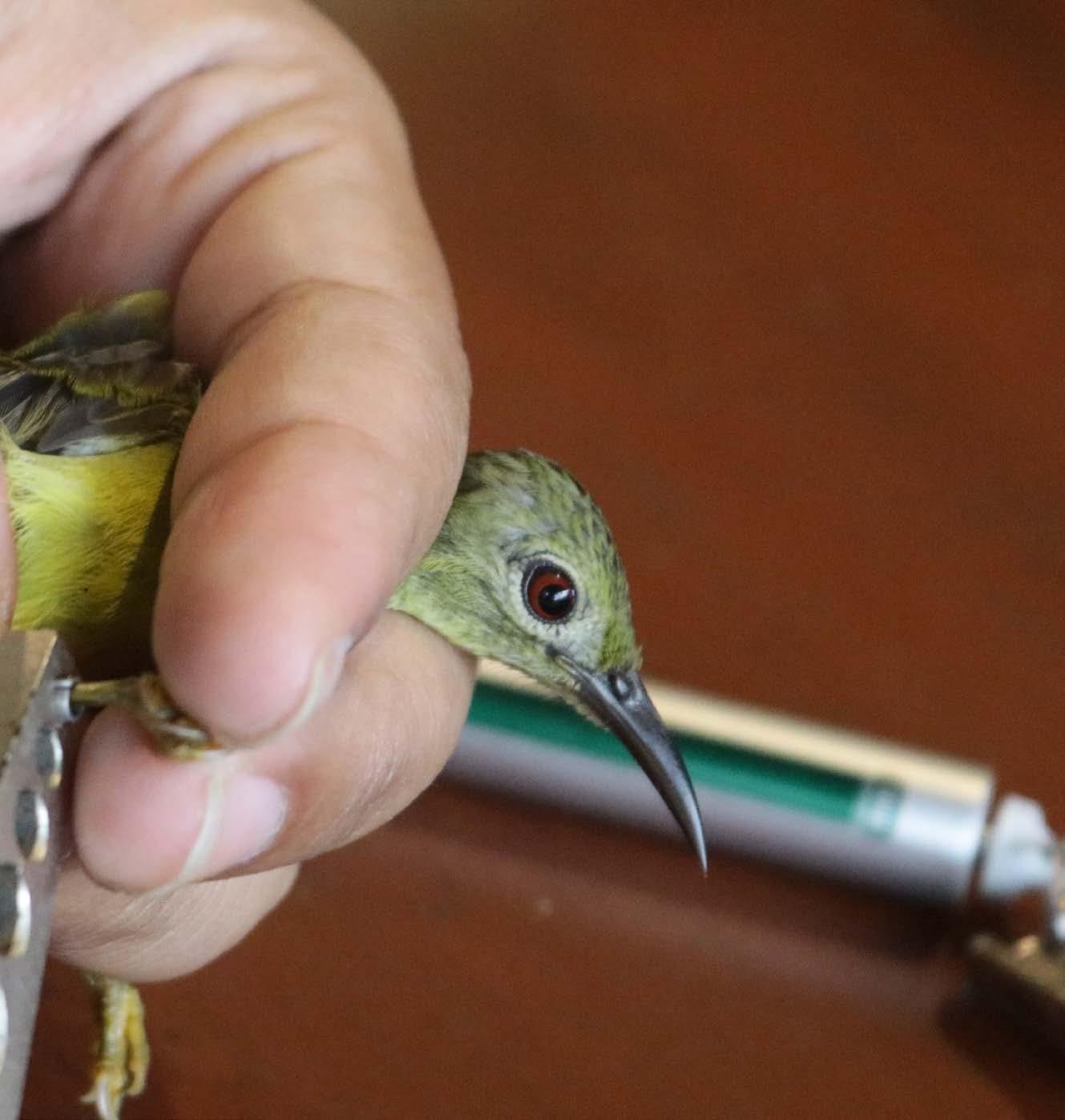
This bird banding comparison shows the measurement of a bird’s beak. This is done to check for any beak problems that could affect the bird’s growth and development, and to ensure the bird’s beak is safe from disease. In this photo, Asman Adi Purwanto (BISA Indonesia) is seen measuring the length of a bird’s beak.
Photo credit: BISA Indonesia
Photo credit: BISA Indonesia
SEA SLUGS
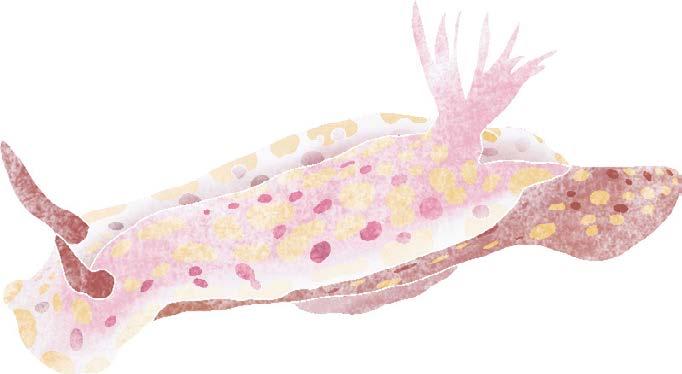
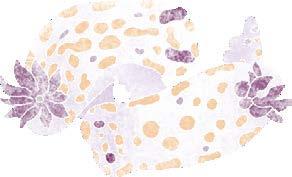
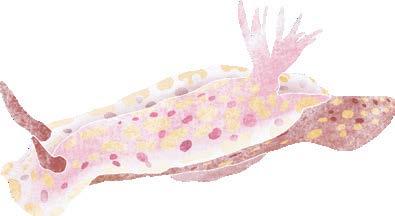
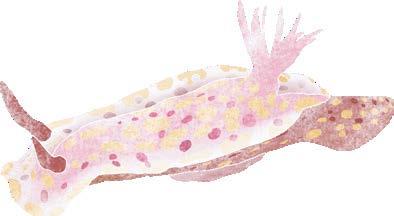
Some 100 million years ago, a sea snail, crawling along the sea floor, had the profound idea that it no longer wanted a shell, and so it got rid of it. This ‘decision’ came with a new name and identity: the sea slug, a marine gastropod mollusk. After being anointed with a new title, an endless portfolio of looks followed, which are so striking it’s hard to believe they don’t come straight from the pages of a science fiction novel. But they are real, and can be found in the pages of many non-science-fiction books.
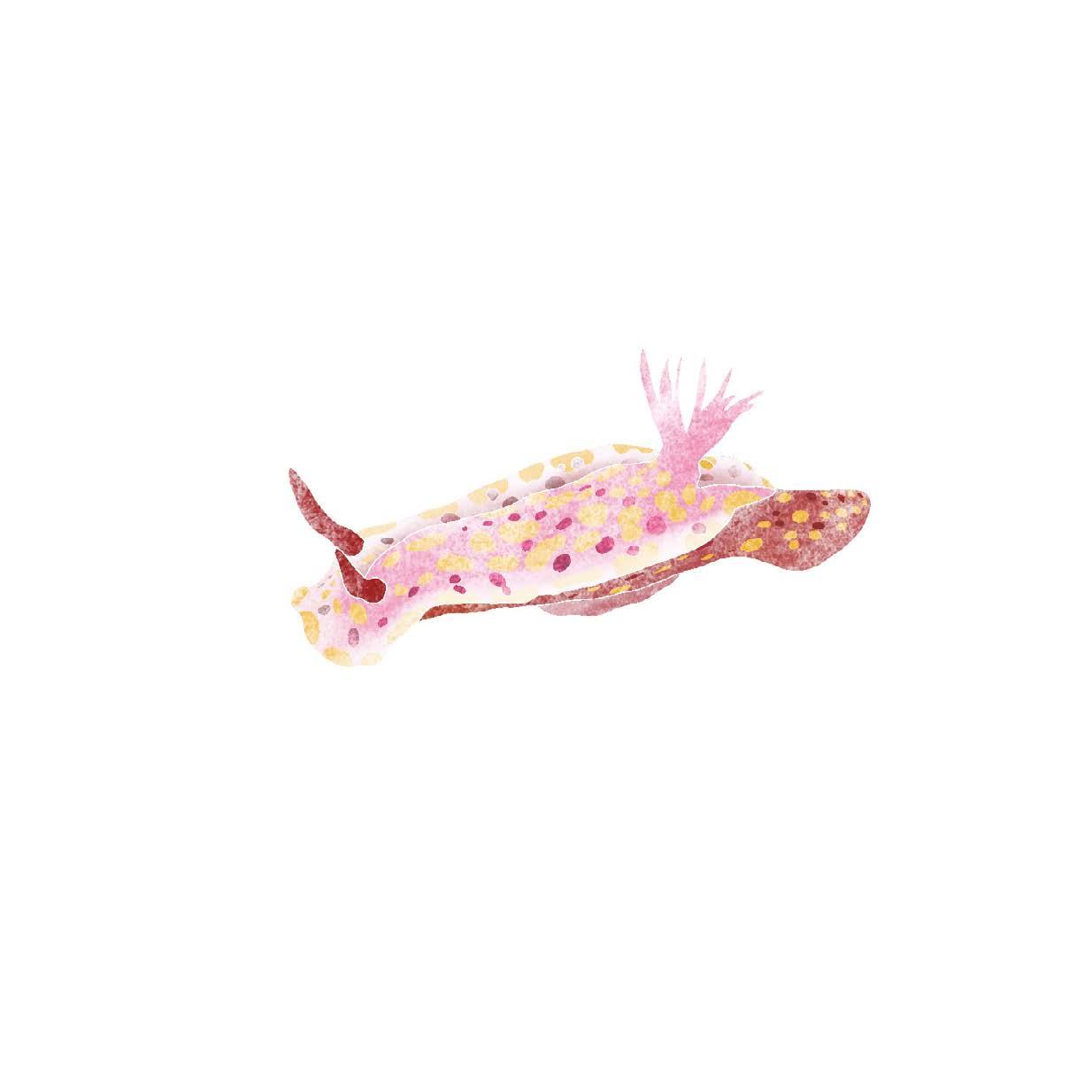
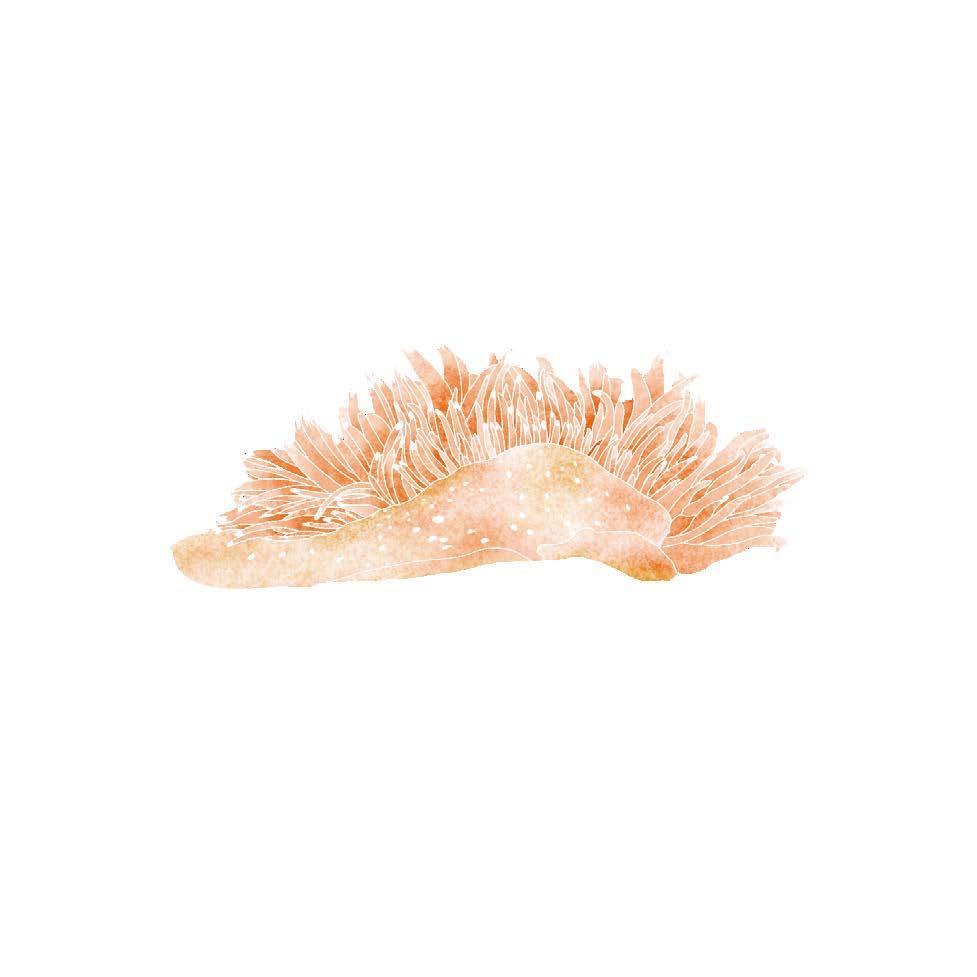
While this is not an entirely accurate account of how the sea slug came to be, there is one truth to it: losing the shell was a pivotal moment in greater mollusk history, and led to a unique evolutionary explosion that made sea slugs one of the most distinctive species on Earth. There are approximately 3,000 different types of sea slugs we know of, and they live just about everywhere — from the tropics to the icy poles, and in the deep corners of the ocean to the shallow coasts of the seas. No matter the environment, the sea slug has found a way to survive and thrive. Ironically, there is more to a sea slug than meets the eye.
LIFE CYCLE
Sea slugs tend to reach full maturity in two months, and their average lifespan is one year. It’s a vibrant but short life. Two main factors influencing this are water temperature and food.
With warmer waters, their growth is accelerated, allowing them to breed faster, but also shortening their lifespan.
Due to their selective eating habits, food availability is vital to their growth and lifespan. Since they sometimes only eat one specific thing, if that source were to die out, they would too.
FOOD CHAIN
Sponges
WHERE DO THEY LIVE
Variable neon slug
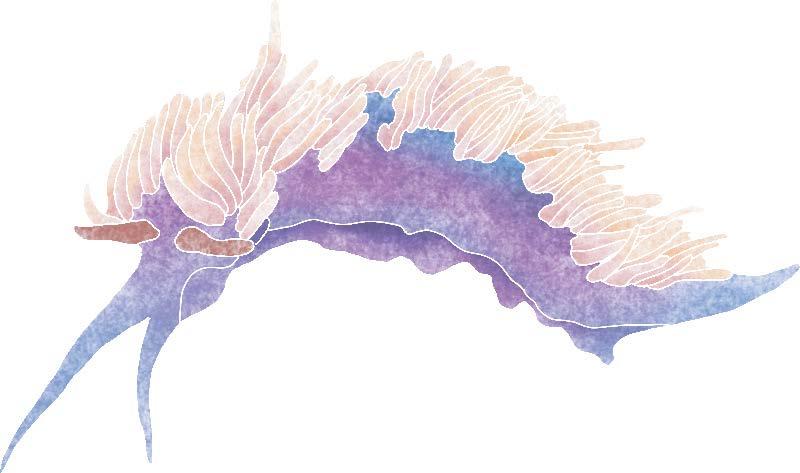
Spanish shawl
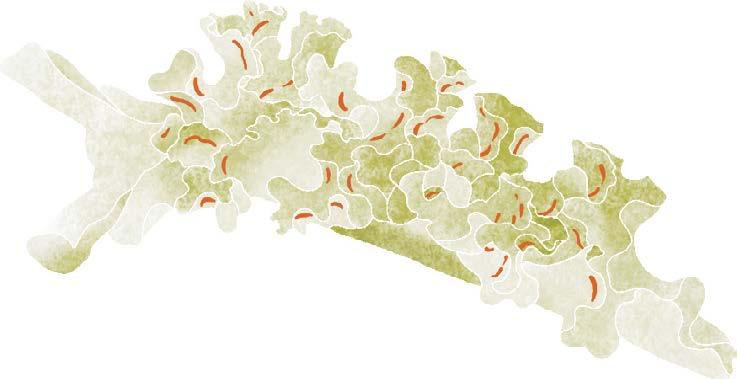
Lettuce sea slug
Blue sea dragon
Hydroids
Algae
Jelly sh
Corals
Crabs
Sea Anemone
Toad sh
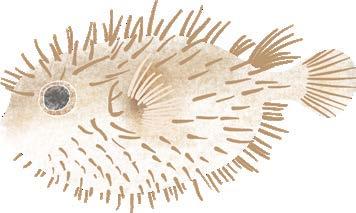
Pu er sh
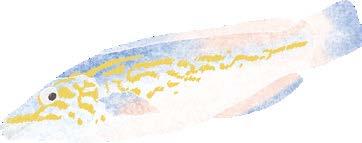
Wrass
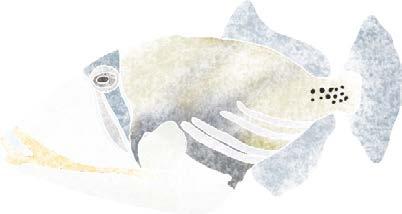
Trigger sh
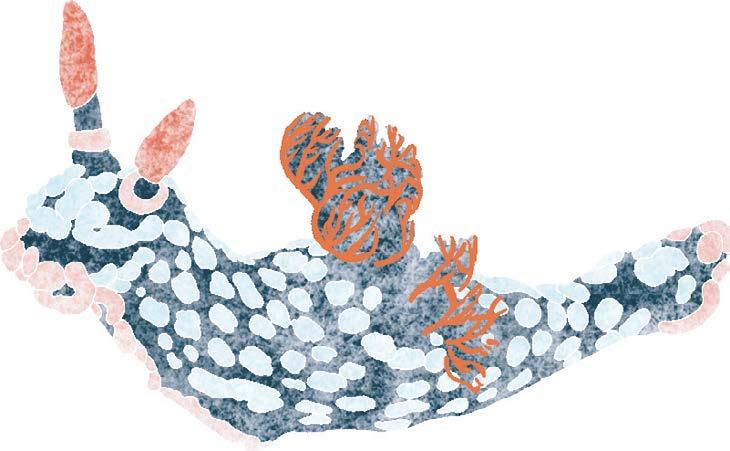
Sea Slugs
VARIABLE NEON SLUG
Nembrotha kubaryana
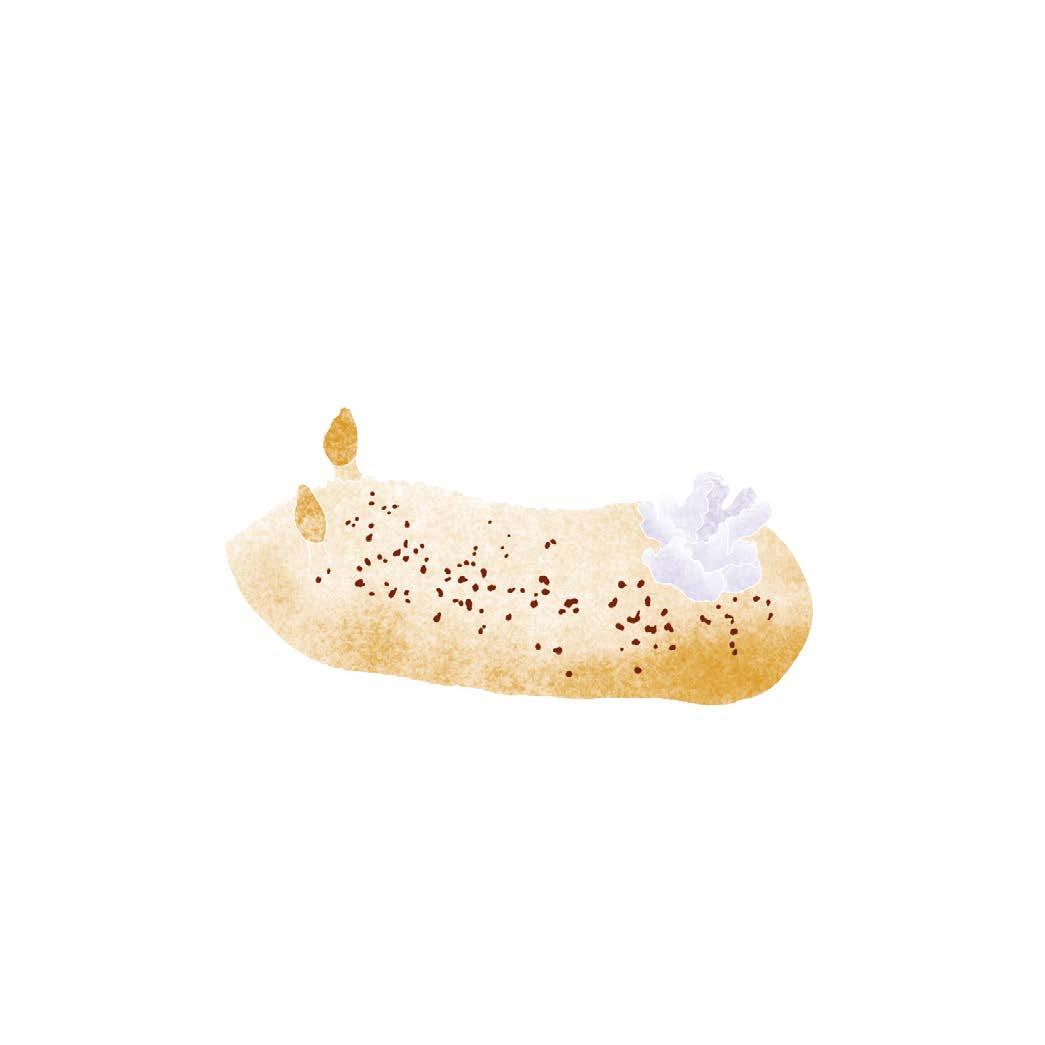
The Variable Neon Slug got its name for the neon green accents along its body, paired with vivid orange on the of its foot and head. While it may look like a moving neon billboard sliming across the seafloor of the Western Indo-Pacific, the variable neon slug is not to be trifled with. That is because its diet provides it with a secret, defensive weapon. Variable neon slugs feed on a certain species of ascidian known as Atapozoa, a sea squirt that carries toxins. Other marine creatures know that the Atapozoa is not only terrible in taste but also toxic to eat. For the variable neon slug, however, this sea squirt is simply seen as ‘lunch’, and this sea slug likes its lunch spicy. The variable veon slug does not care; it has found a way to devour Atapozoa and store its toxins in the tissues of its own body. In turn, this allows the variable neon slug to release the toxins as a slimy defensive mucus around itself when threatened by other predators. Simply put, it swapped the shell for a potent surprise.
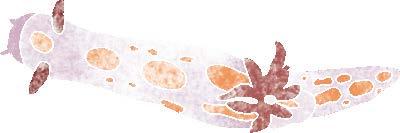
SPANISH SHAWL
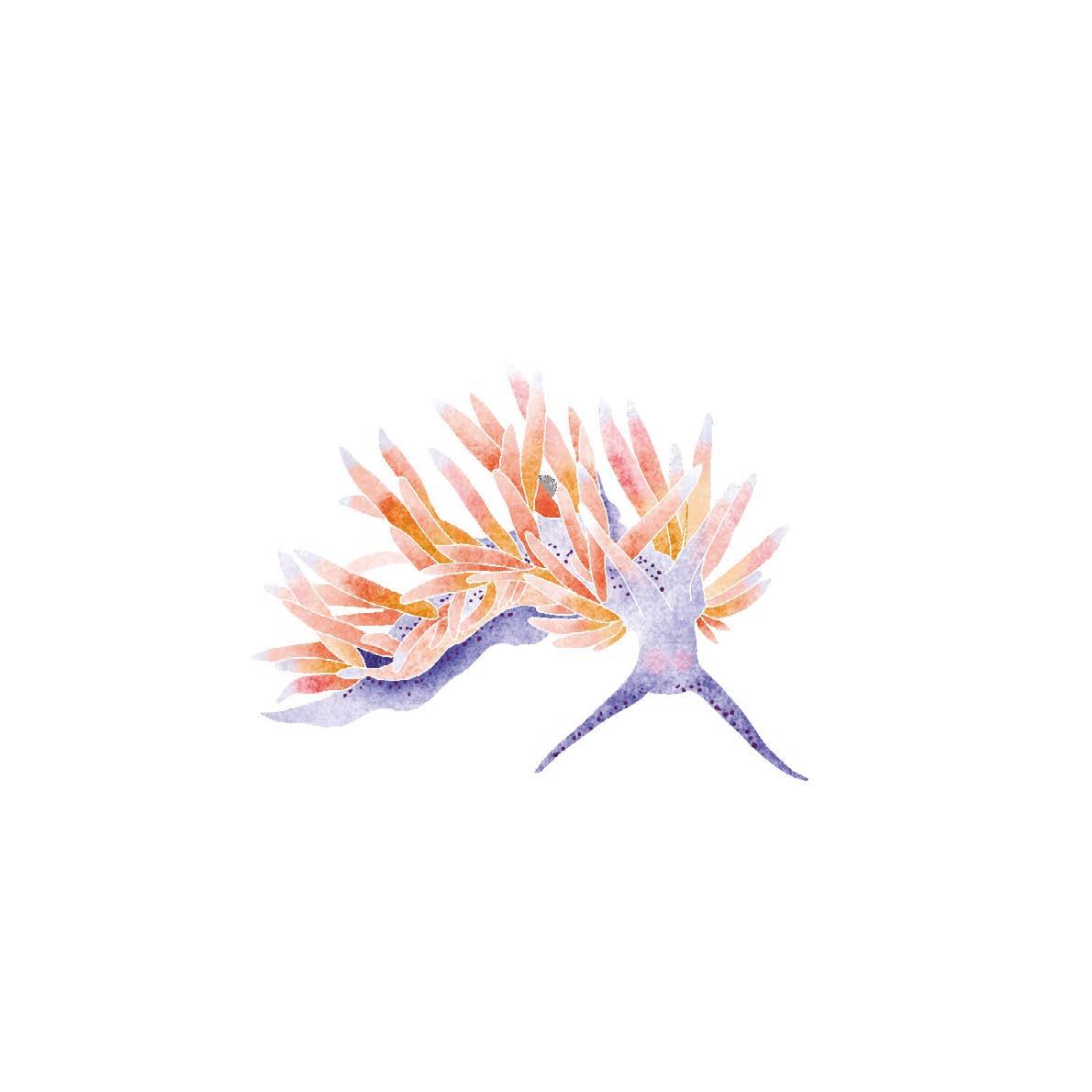
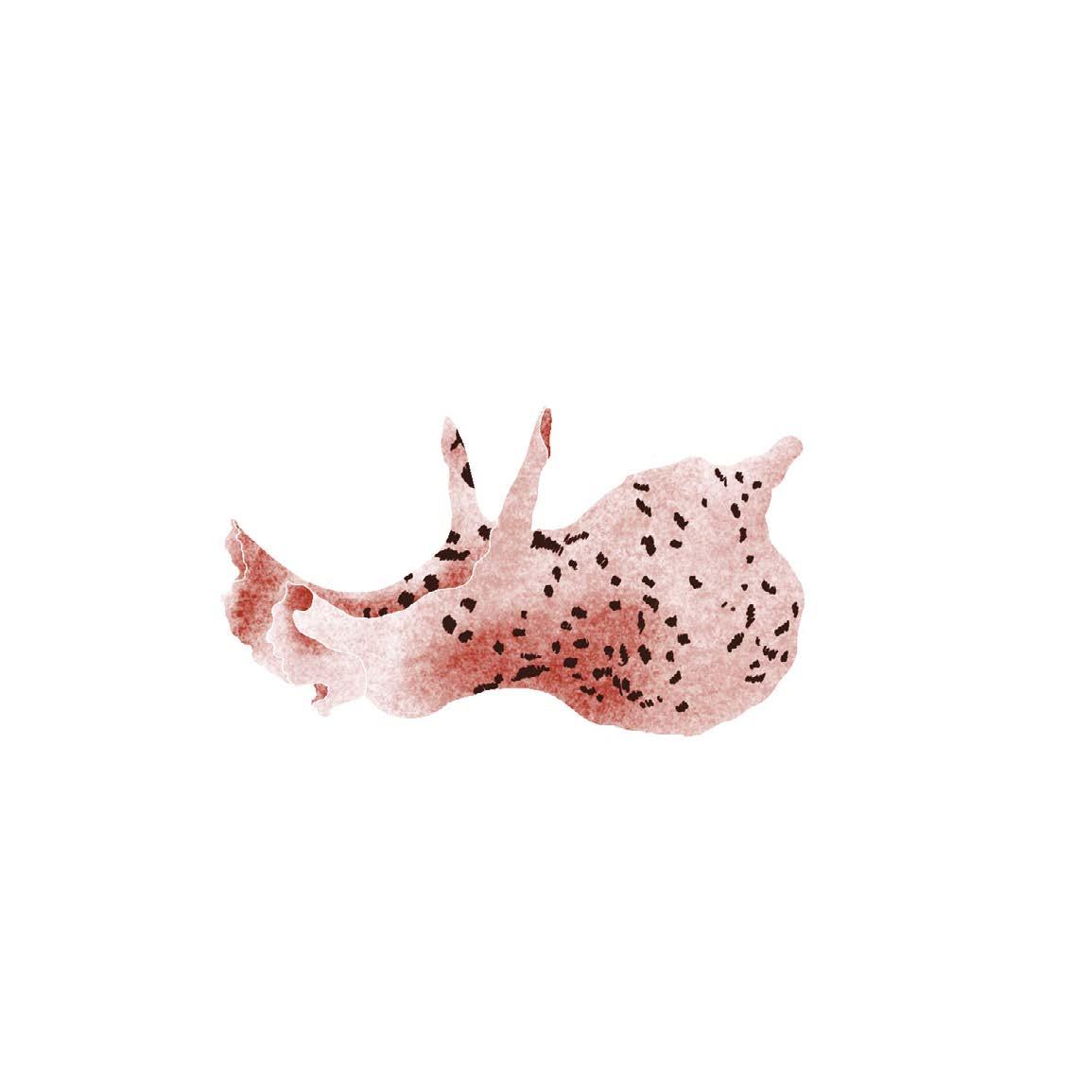
The Spanish shawl is a stunning sea slug that displays a bold set of colors: a purple body, orange flares on its cerata, and scarlet red for its rhinophores. Even among its peers, this species would turn heads. It is believed that the orange flares on its cerata are used to camouflage with its prey while it eats them — their prey being species like anemones. The orange flares also serve as a warning to potential predators that the Spanish shawl is either a poisonous or distasteful meal that they'll regret having. Should a predator not be deterred by its colorful threat, the Spanish shawl can swim away by flexing its body strongly, pushing off from whatever surface it is trudging about on, and into the midwater.
LETTUCE SEA SLUG
This isn’t a moving piece of lettuce. This is, in fact, a lettuce sea slug. The lettuce sea slug got its name partially because it resembled a lettuce plant due to its distinctly ruffled appearance on the its body. Typically, lettuce sea slugs are green with white spots, and you might think that’s a perfect way to camouflage oneself from other marine predators. However, there is no available literature about any predators for the lettuce sea slug, which means, so far as we know, the lettuce-like appearance isn’t for blending in at all.
The real reason for the lettuce-like appearance has everything to do with diet. The lettuce sea slug eats like a thieving, solar-powered vegetarian. It steals energy from its food source: algae. Instead of munching on its meal, it uses its needle-like tongue to poke holes in algae and suck the liquid out. Most of that liquid will be digested for immediate nutrients, but the algae’s chloroplasts are funneled into special pockets in its ruffled frills. These chloroplasts act like solar panels, kept alive and functional for up to four months, allowing the sea slug to soak up the sunlight and turn it into extra energy. Effectively, the lettuce sea slug lives like a plant. Therefore, you really are looking at a moving piece of lettuce.
While not the only sea slug to carry this characteristic, Spanish shawls are also hermaphrodites, meaning they have both male and female reproductive systems, which allows them to self-fertilize, should the occasion arise — though this seldom happens.
BLUE SEA DRAGON
Glaucus
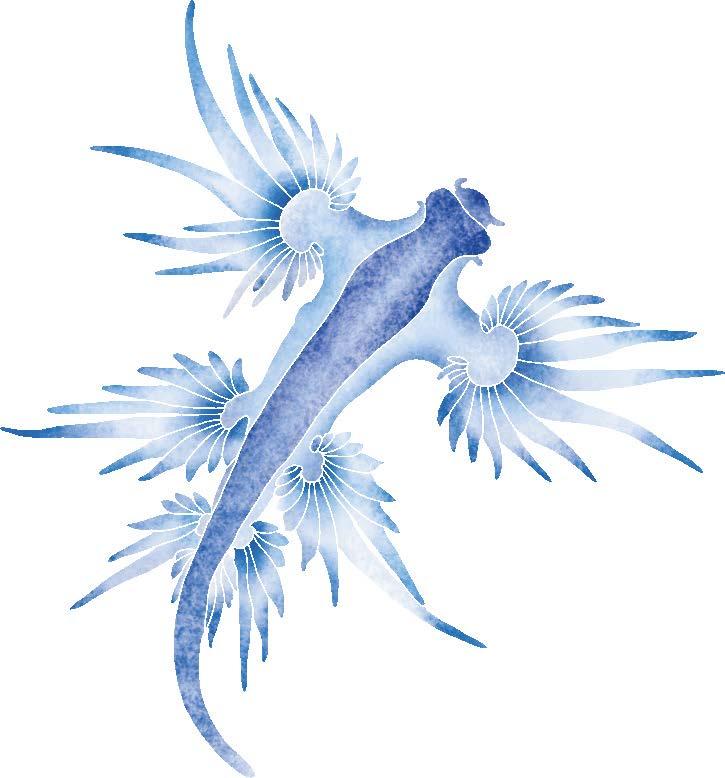
The sea dragon uses countershading to hide itself; the blue side of its body faces the surface to blend with the blue of the water. The silver dorsal side of it faces downwards, blending in with the sunlight shining through the ocean's surface when viewed from below the surface of the water.
The blue sea dragon lives up to its name perhaps more than any other sea slug mentioned so far. Like a mythical dragon flying through the air, this dragon patrols the underwater limits of its own sky: the surface of vast open oceans. Also known as the pelagic zone, the open ocean is the sea dragon's home, and most notably, its hunting grounds. Swimming along the surface, its targets are larger pelagic zone occupants, like the infamous Portuguese Man o' War jellyfish. Despite its inferior size to the jellyfish, the sea dragon has developed quite the appetite for Man o’ Wars, and an immunity to their paralyzing venom. While that venom would kill and paralyze smaller fish, the sea dragon swallows the stinging cells of the Man o’ War and stores them in its finger-like tips. This lets the sea dragon use its prey’s own weapons as a defense, giving a painful sting of its own. It’s a dragon with one powerful bite.
atlanticus
Flabellinopsis iodinea
Elysia crispata
CLOWN NUDIBRANCH
Triopha catalinae
Possesses orange tentacles around its body, which help in sensory perception.
Dirona pellucida
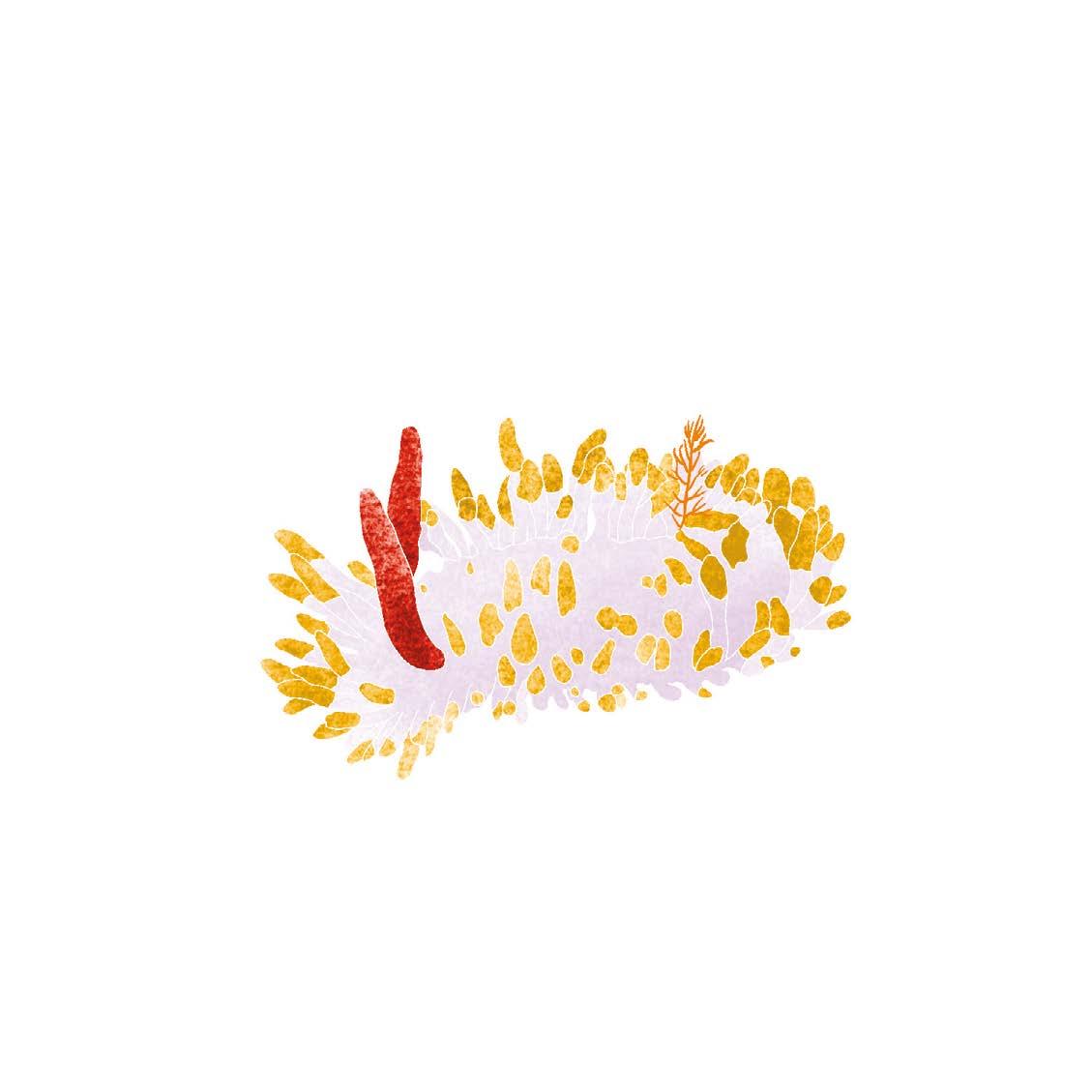
It has a golden orange mohawk structure along its back.
COCKERELL’S DORID
RED FLABELLINA
Coryphellina rubrolineata
It stores the stinging cells from the Cnidarians and uses them for defense.
CONCLUSION
FALSE SEA LEMON
It has two dark eyes and performs photosynthesis via the kleptoplasty it eats.
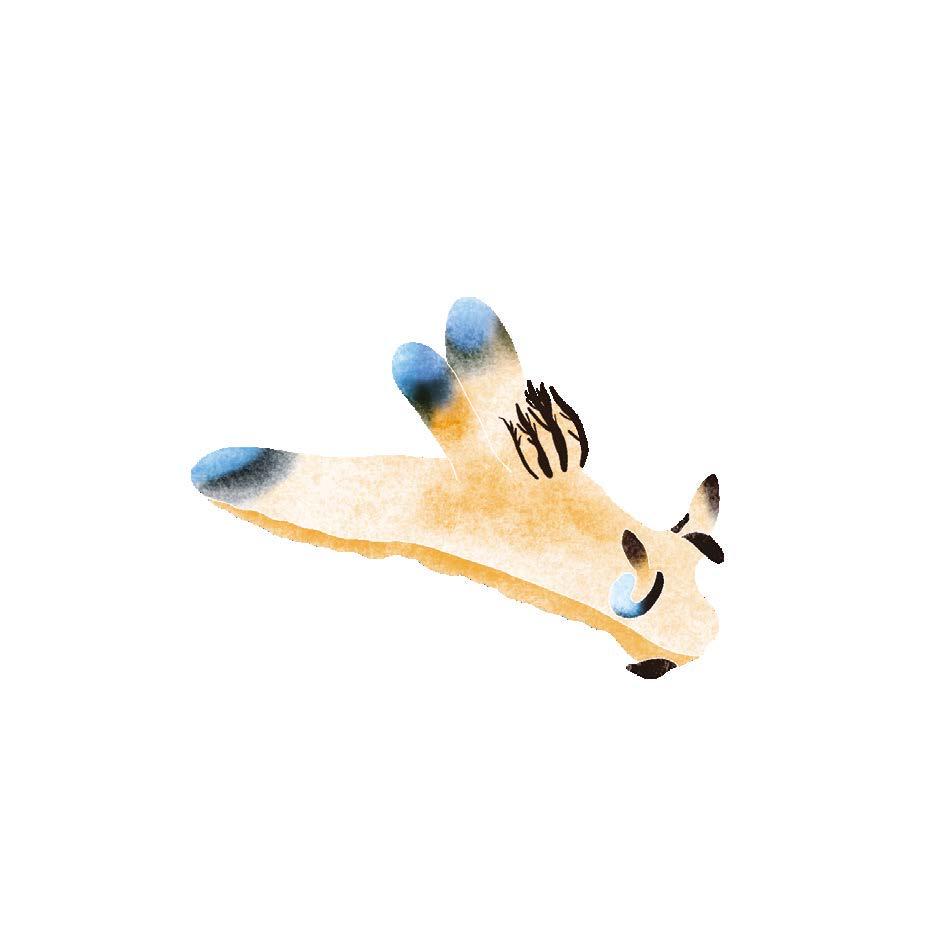
Its name comes from the Pokémon character Pikachu because of the resemblance in color.
CALIFORNIA SEA HARE SHAGGY MOUSE NUDIBRANCH
Aplysia californica
It releases a purple ink when threatened and is a large species of sea slug. Some subspecies can grow up to 99 cm and weigh nearly 14 kg!
Can prevent anemones from discharging their stinging cells while feeding, adapting its mucus composition based on the anemone it consumes.
The sea slug is an icon for marine biodiversity with its endlessly variable shapes and colors. It’s no wonder why they’ve been given the nickname “butterflies of the sea”. But apart from this, they are also an evolutionary phenomenon, important to science. Their chemical ecology of diet-linked toxins and deterrents has been a major research point for marine natural products, predator-prey coevolution, and sensory biology. While approximately 3,000 of them are known to science, there are certainly more out there, which remain in unexplored deep-sea habitats, waiting to show off their look and broaden our understanding of the species.
Written by Marc Kranendonk
GOLDEN DIRONA
LEAF SHEEP
PIKACHU SEA SLUG
Limacia cockerelli
Peltodoris nobilis
Costasiella kuroshimae
Thecacera pacifica
Aeolidia loui
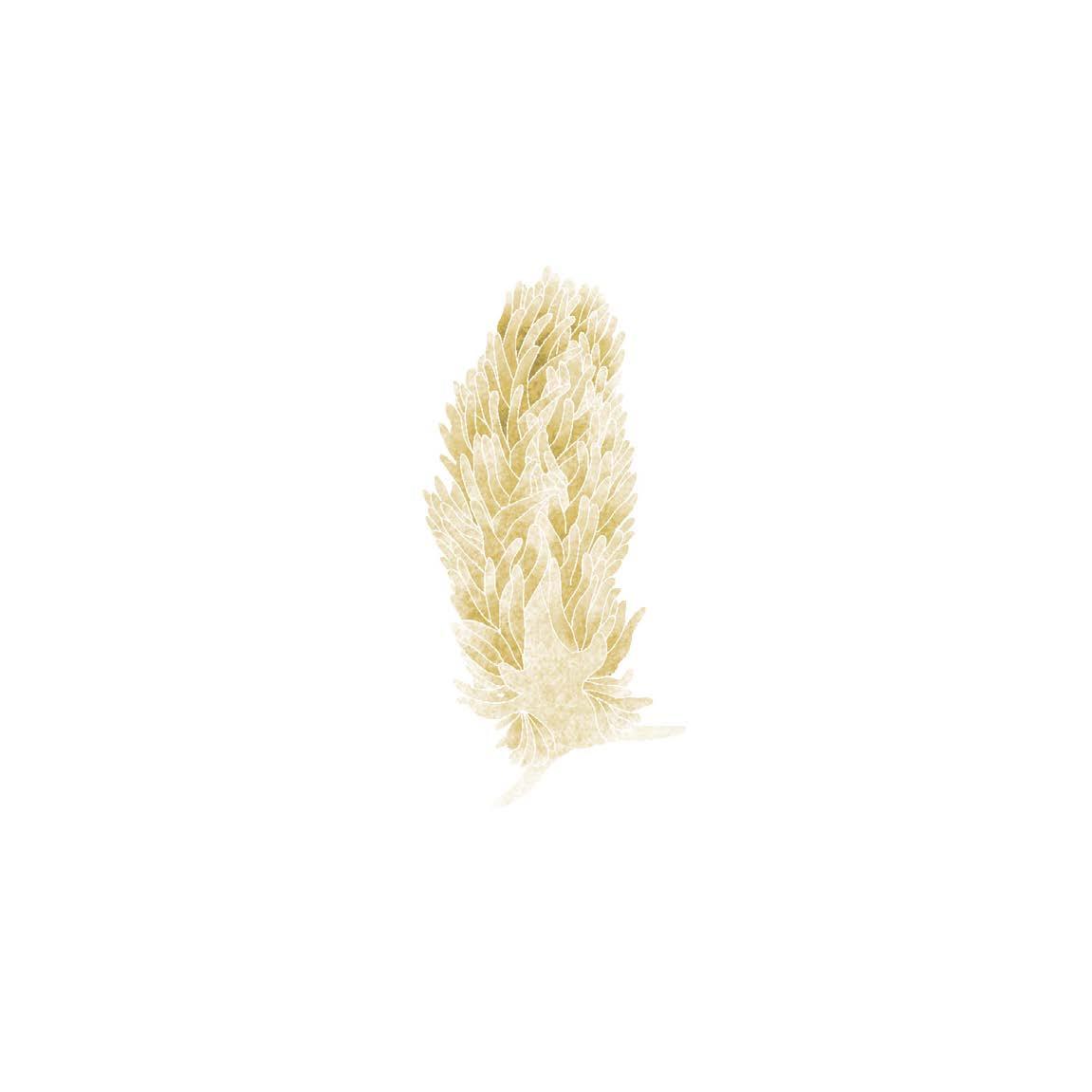
Numerous small white tubercles It gives off a pleasant citrus smell when handled.
Photo credit: Ondrej Prosicky / Shutterstock.com
FROM OMEN TO OPPORTUNITY:
JOSEPHINE LINET ON BRIDGING CONSERVATION, COMMUNITY AND TECHNOLOGICAL INNOVATIONS
Written by Will Westwood
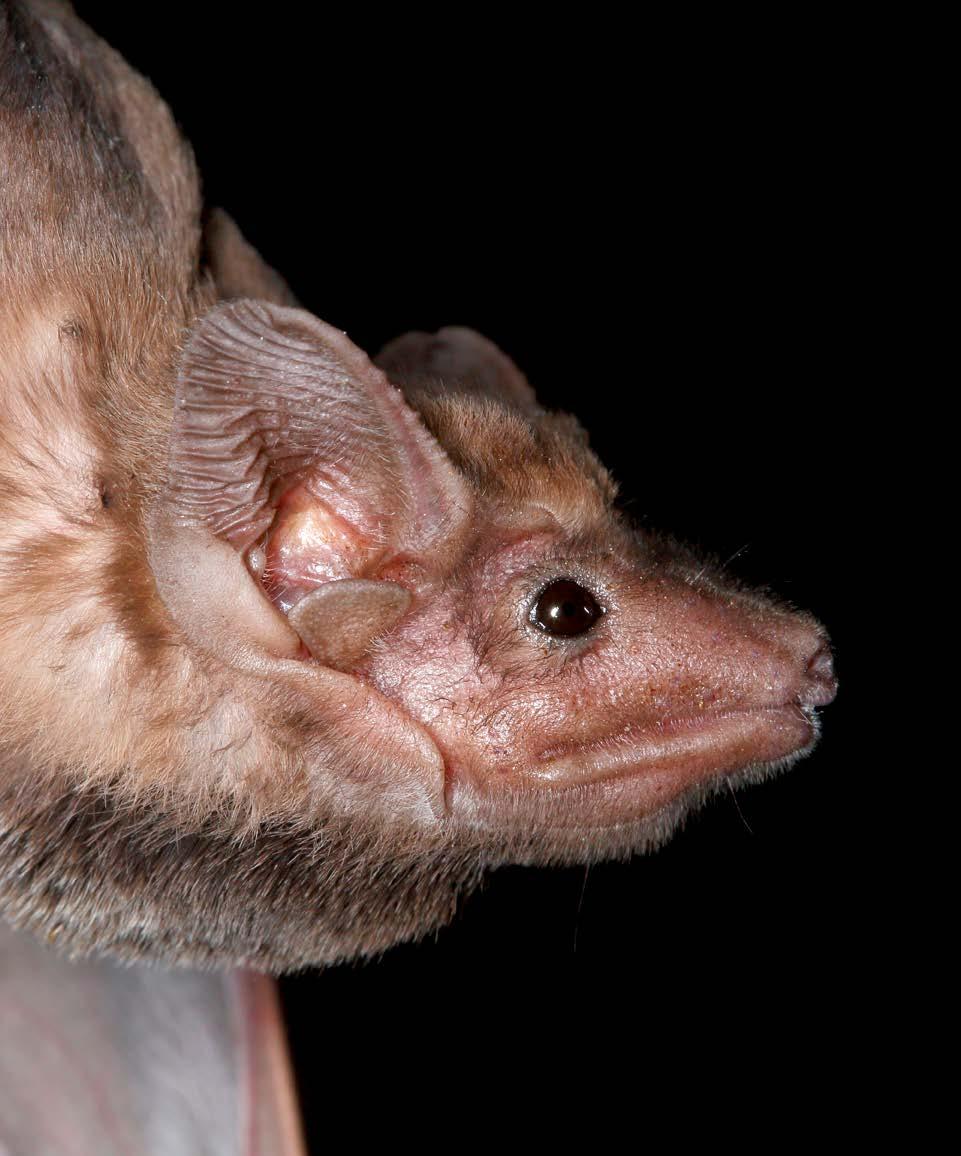
Hildegarde’s Tomb Bat
Photo credit: Professor Paul Webala
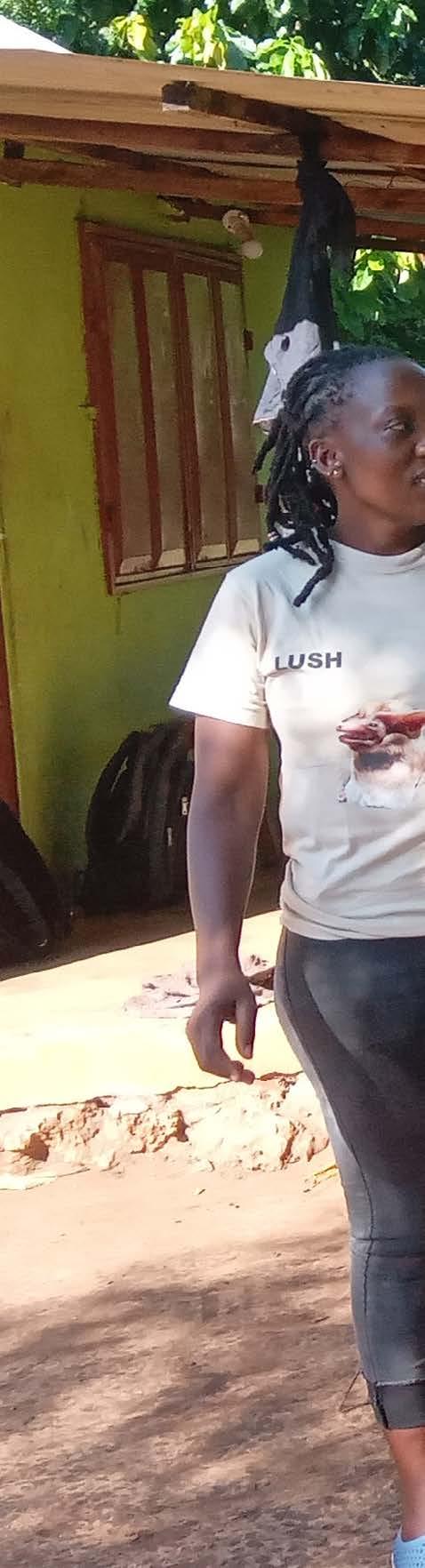
In the conservation world, we often talk about “charismatic megafauna”. We celebrate the lion, the elephant, and the rhino, animals that command our imagination and the tourism economy. But these animals are not all that Kenya’s landscapes have to offer. Josephine Linet is championing a different kind of hero, the nocturnal masters of the sky, bats. She does so in her role as Project Coordinator and Gender Liaison Officer at Angaza Vijiji, a social enterprise in Kenya with the goal of furthering sustainability through eco-tourism. Her mission is to shed light on the truth about these nocturnal characters.
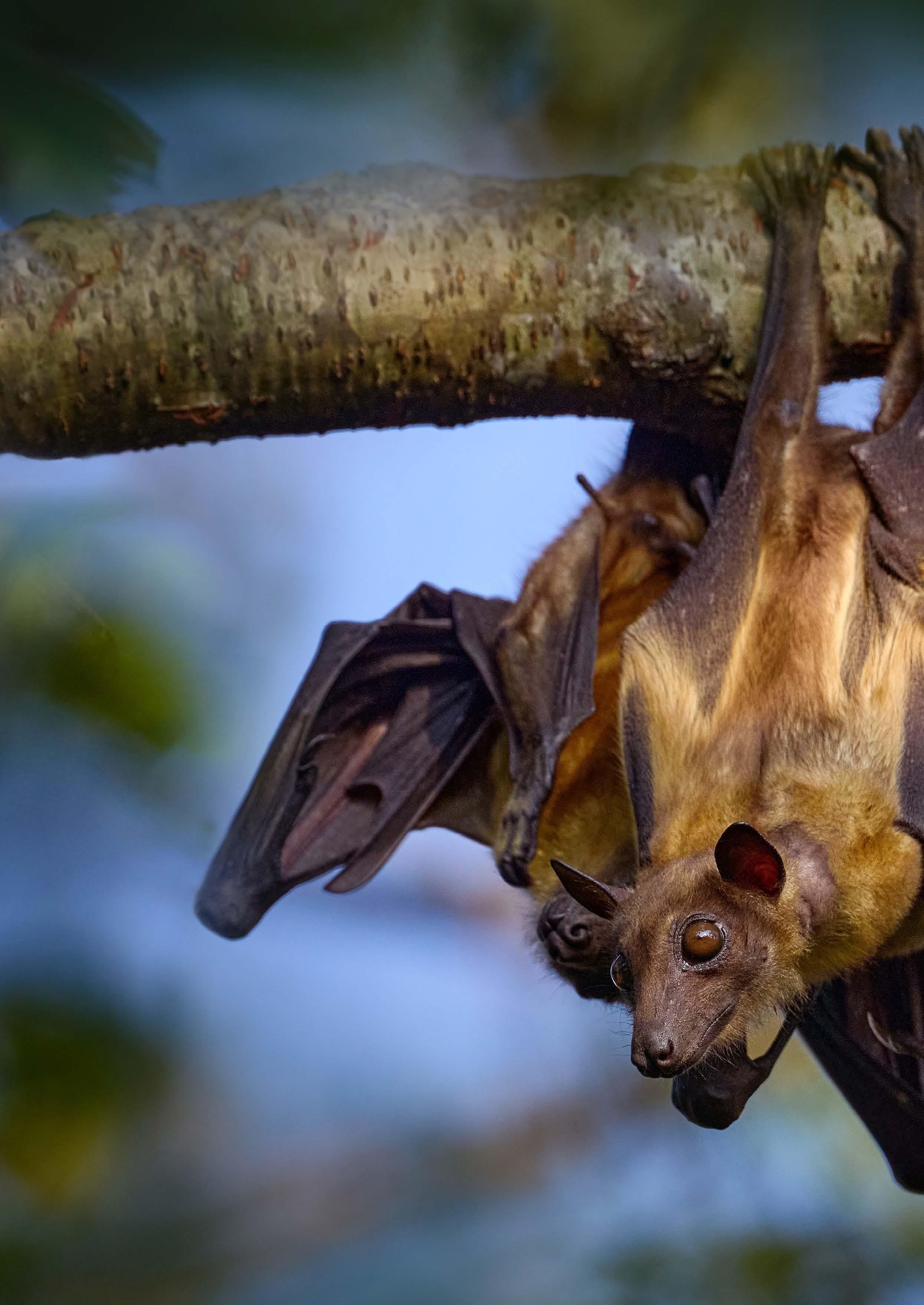
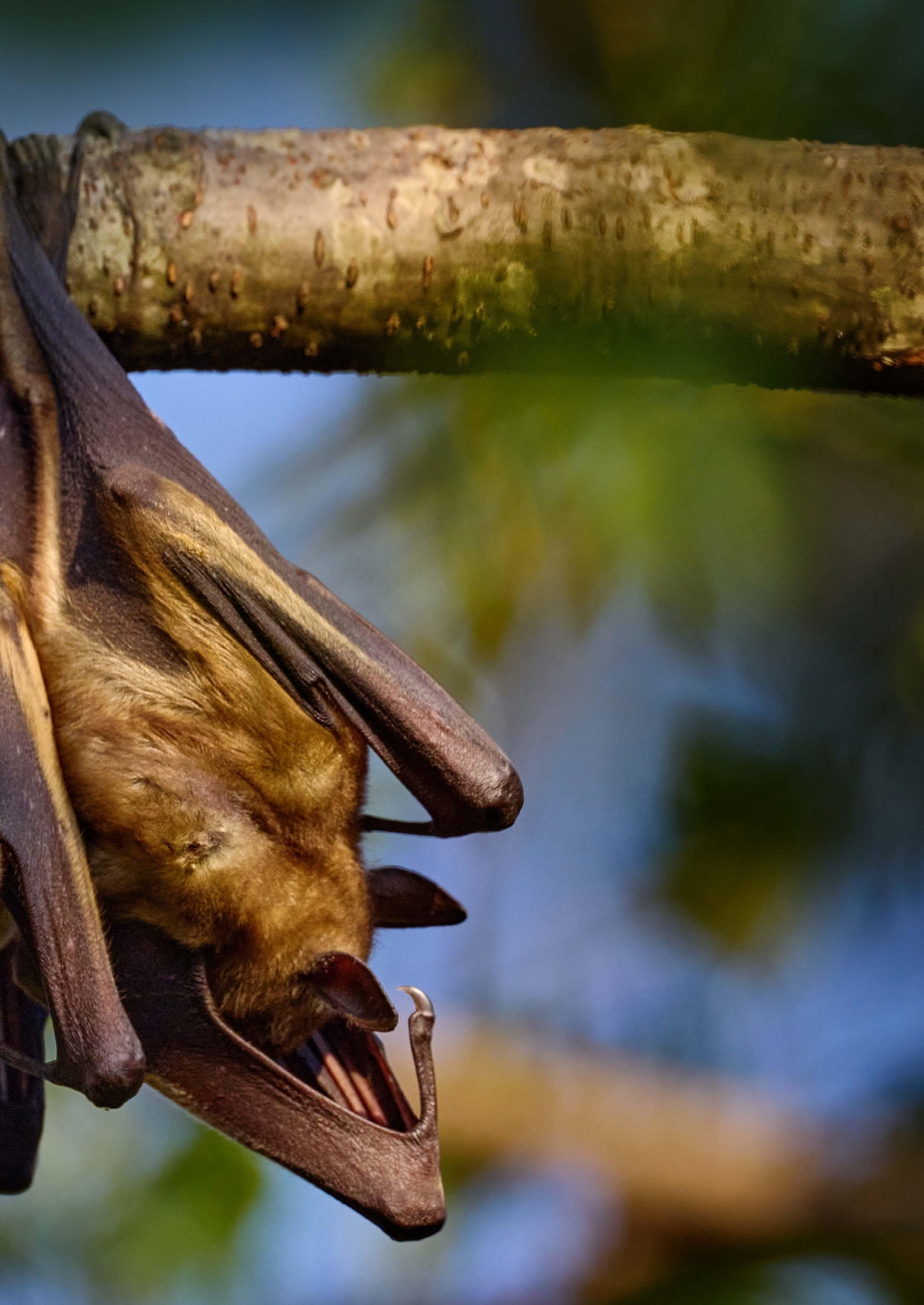
From the straw-colored fruit bats that hang like heavy fruit in the trees around the villages to the hildegarde’s tomb bats clinging to coastal caves, Josephine explains the direct line between these small mammals and the health of the human community. She saw how humanity is caught up, part of, and forever tied to the natural world around us, and dedicated herself to fixing nature and our relationship with it.
Josephine shares her transition from mentee to leader, the high-tech future of tracking, and how a change in perspective can be the difference between a pest and the community’s best economic partner.
THANK YOU FOR SITTING DOWN WITH ME. IT SOUNDS LIKE YOU HAVE HAD A REALLY INTERESTING JOURNEY INTO CONSERVATION. SO, WHAT STARTED IT ALL? WHERE DID YOU BEGIN?
I am Jo from Kenya, and I work as Angaza Vijiji’s Project Coordinator — a social enterprise that promotes sustainable development in Kenya’s rural regions.
I was born in a community that prioritizes disciplines like engineering, medicine, and teaching as the “best” professions. These are communities that don’t perceive conservation as a tangible means of making an income. I became more of a conservationist when I realized what
was really happening to the environment. We were losing much of our biodiversity, and little was being done to show that we are conquering these threats to biodiversity.
JOSEPHINE’S JOURNEY WAS DRIVEN BY A DIFFERENT SET OF PRIORITIES, INCLUDING ADDRESSING HUMAN-WILDLIFE CONFLICT, A PERSONAL PASSION FOR WILDLIFE RESEARCH AND CONSERVATION, EMPOWERING UNDERSERVED COMMUNITIES, A FOCUS ON COMMUNITYDRIVEN CONSERVATION, AND A DIFFERENT PERSPECTIVE ON SUCCESS.
That is what is key and what keeps me moving.
At Angaza Vijiji, we empower communities to establish wildlife-friendly environments to make sure their livelihoods are safe and productive, which in turn impacts our conservation initiatives.
SO WHAT WORK DOES ANGAZA VIJIJI ENGAGE IN IN KENYA’S RURAL REGION, AND WHAT AREA DO YOU CONTRIBUTE TO?
Our focus is on ethical green tourism, where local communities participate and benefit from eco-tourism activities. We also have the aspect of sustainable enterprises, where we help communities create new enterprises like “kitchen gardening” for subsistence and commercial purposes, sustainable energy enterprises where we advocate for the utilization of clean cooking solutions, including energy-saving cookstoves and fireless cookers, and an inclusive education and outreach program. Then we have the aspect of bat conservation initiatives, where I actively participate, specializing in bridging that community connection with wildlife conservation.
WORKING IN THE COMMUNITY CONNECTION PROJECTS THAT YOU YOURSELF STARTED AS A MENTEE. HOW DOES IT FEEL SHIFTING FROM BEING A MENTEE TO NOW LEADING PROJECTS? ARE YOU ALSO SEEING CURRENT STUDENTS WHO ARE IN THE SAME POSITION THAT YOU WERE?
This transition demonstrates a successful, full-circle professional development path within the organization. I became a mentee in 2018 and stayed in that role until early 2022. I believe that is when the community work really stuck due to the Covid-19 pandemic. So much was happening in the country in 2022.
Under Angaza Vijiji’s mentorship program, I was awarded the Rufford Small Grant in 2018 and the prestigious Conservation Leadership Programme grant in 2022, projects which I successfully implemented. It feels great to see others in a mentee position now, knowing the path they are on.
WHEN YOU ARE WORKING WITH COMMUNITIES, WHAT DO YOU SAY TO THE LOCAL COMMUNITIES AND PEOPLE TO GET THEM INTERESTED IN CONSERVATION? WHY SHOULD THEY INVEST IN BAT CONSERVATION?
To get local communities interested, our conservation efforts focus on tangible benefits connecting conservation to livelihoods, shared ownership, and respect for Indigenous knowledge, acknowledging that local communities possess valuable knowledge about the species, sympatric species, and their habitats.
Globally, bats are a species that have not been given much consideration when it comes to conservation, but they are a key species for keeping habitats alive and well. Because they are small mammals, unlike lions or elephants, and because of the nature of how they are portrayed in modern media, such as horror movies, people perceive them negatively. They are nocturnal, they crash on trees, breaking tree branches, they make noise, and they are seen as “destructive”. They are associated with things like death or bad omens.
Bottom: Josephine sharing opening remarks during handicrafts training.
KENYA
Top: Group photo with the catering enterprise team Photo credit: Newton Onyosi
Rehema
It becomes difficult at the outset to convince people that bats are beneficial. What we do is ensure communities are involved in the decisionmaking before we embark on a project. We conduct baseline surveys to understand their attitudes and perceptions, and that informs our approach. We show them the benefits, that they are not pests but actually pest controllers by eating the nuisance insect species including mosquitoes which are known for causing malaria, moths and beetles saving people and farmers billions of money in treatment and pesticide costs respectively, crucial pollinators pollinating gardens and farms contributing to food security, seed dispersers playing a critical role in forest regeneration, indicators of ecosystem health, economic value through tourism and providing high-quality fertilizer (guano) which is rich in nuitrients serving as an excellent natural and affordable fertilizer for local communities.
We also educate them about Hildegarde’s tomb bat colonies in caves and the straw-colored fruit bats that roost in trees near homes. Many livelihoods depend on the forest for firewood or mining guano (nutrient-rich excrement) from caves. If we don’t take measures, the forest will be destroyed. So we set up alternative livelihoods — like those kitchen gardens — so they don’t have to strain the forest.
ARE THERE ANY STRONG BELIEFS OR MYTHS THAT STILL EXIST ABOUT BATS WITHIN COMMUNITIES?
Yes, people believe that because of their [bats’] physical appearance, nocturnal mysterious nature, portrayals in media and passive literature, that they carry rabies and how they behave, they are “bad omen” (omens). In Kenya, people believe that once a bat enters your house, you should expect death to occur. You will experience misfortune after misfortune. Such misconceptions catalyse fear and local persecution, despite the ecological and economic benefits bats provide; people kill them. They set off fires to send them away or kill them. When they are feared like this, people don’t want to understand the ecological and economic importance.
Photo credit: Issa
DURING THE COVID-19 PANDEMIC, BATS GOT QUITE A BAD REPUTATION GLOBALLY. WHAT HAPPENED IN THE COMMUNITIES WHERE YOU WERE WORKING? HOW DID YOU NAVIGATE THAT CHANGE IN OPINION?
It was a sad situation. During the Covid-19 period, we were working with schools and the immediate community on the straw-colored fruit bat conservation. To an extent, it was a bit difficult to implement our strategies since misinformation linking bats to the spread of the virus led to hostility toward them, which manifested as an increase in the killing of bats, in local persecution, and many schools wouldn’t allow us to work with the students due to both the health and safety restrictions.
Our work in bat conservation also made them fear they transmitted the virus. Only two schools allowed us in, provided we followed the Ministry of Health’s regulations. The pandemic reinforced people’s belief in the myths surrounding bats. It was a little difficult, but with our adaptive
strategies, including a multi-prolonged community-driven approach — establishing and engaging bat scouts/guardians, education and awareness campaigns, among other sustainable bat conservation initiatives — we managed to keep the mission going in the two schools, including Mbale High and Maseno Schools.
I UNDERSTAND YOU INTEGRATE A LOT OF TECHNOLOGY INTO YOUR CONSERVATION WORK. COULD YOU WALK ME THROUGH WHAT A TYPICAL NIGHT IN THE FIELD LOOKS LIKE AND WHAT TOOLS YOU USE?
With our IT team, we’ve developed two digital platforms for monitoring bats. Instead of using paperwork, we use a mobile application for data entry while in the field. This gives us real-time data we can use to understand a high level of detail. The second platform is a back-end platform where we can see that data as soon as it’s entered.
A typical night is a blend of minimal light observation and utilization of tech for automated
KENYA
data collection, such as drones for an aerial view of the roosting sites and the surrounding environment. This is important because roosts can be affected by human activities, like hotels or restaurants. We also use cameras and bat detectors, though we don’t use the detectors as much yet. Additionally, we utilize mist nets to capture bats.
Technology like this allows us to access far more information about their behavior and how they interact with human settlements.
AND WHAT’S IT LIKE GOING OUT, TRYING TO FOLLOW THESE ANIMALS IN THE NIGHT?
It is fascinating! Provided that you don’t fear the dark! It is a very special, unique experience, and even more so because we have eco-tourism packages where we take visitors to join us and to watch “bat-emergence”. This is when the bats leave the caves to go out and feed. We have many visitors who come just to watch that from a safe distance. As usual, there are some challenges, including difficulty in spotting them when it is very dark; they move extremely fast making visual tracking impossible with naked eyes, and they don’t fly in straight lines making flight patterns unpredictable.
BEYOND THE NEGATIVE OMENS PEOPLE BELIEVE BATS BRING, IS THERE ANY PRACTICAL CONFLICT THAT PEOPLE HAVE WITH BATS?
We do have “bat-human conflict”. People perceive them as destructive because their feces are corrosive, so when they defecate on iron sheets, the sheets corrode. Also, they are heavy mammals when in groups; when thousands roost on trees, the branches can break from the weight, causing agricultural damage, damage to people’s property, or personal injuries. And then there is the noise they make, which can be a nuisance to people living nearby.
IN CONTRAST, HOW DO BATS BENEFIT COMMUNITIES?
They are important ecologically and economically. For example, Hildegarde’s tomb bat feeds on insects, including mosquitoes. With fewer mosquitoes, malaria cases decrease — this not only directly benefits the community health, but the local economy too, as more people are fit to work and less money is spent on doctors, medicines, etc.
Then the straw-colored fruit bat feeds on guavas, avocados, and pollen. They are powerful pollinators and seed dispersers. Their guano is rich in nutrients like potassium and magnesium, which are good for agriculture. As I’ve mentioned, eco-tourism also employs people as guides to talk to visitors about the importance of bats. At the end of the day, the community benefits from the exchange of money and services provided by the bats.
HOW DO YOU ENSURE THAT BOTH THE COMMUNITY AND THE WILDLIFE ARE BENEFITING FROM ECO-TOURISM?
We ensure that there’s mutual benefit where the local communities are directly involved in managing the resources and directly benefit from the income generated. We employ local guides and promote sustainable, education-focused tourism practices. This includes empowering communities to participate in decision-making and management, while also supporting them in establishing and enforcing clear guidelines for visitors to maintain long-term sustainability.
YOU’VE ALREADY MADE WAVES IN THE CONSERVATION WORLD IN KENYA. BUT WHERE DO YOU WANT TO GO NEXT?
I envision myself advocating for a world where everyone understands the benefit of bats. I
want to bring in more sustainable practices that support conservation because all ecosystems are interconnected. I envision myself doing something unique to leave a legacy behind. I want the young people, the school communities, to look at me and see how we can scale bat conservation even better. I want to build networks with like-minded organizations to enhance this work.
Josephine Linet’s work at Angaza Vijiji is a testament to the power of changing perspective. She is successfully turning the bat, a once frightening omen or destructive pest, into an economic partner. Through ethical eco-tourism and alternative livelihoods, Josephine is empowering local communities to protect their environment and demonstrates the intrinsic value
of species like the Hildegarde’s tomb bat and the straw-colored fruit bat. Her mission is to scale this model globally, ensuring that future generations understand that the health of humanity is tied to the natural world.
Website www.angazavijiji.co.ke
Facebook
@angazavijiji
LinkedIn
@angaza-vijiji-ecoventures
LinkedIn
@josephine-ambaisi
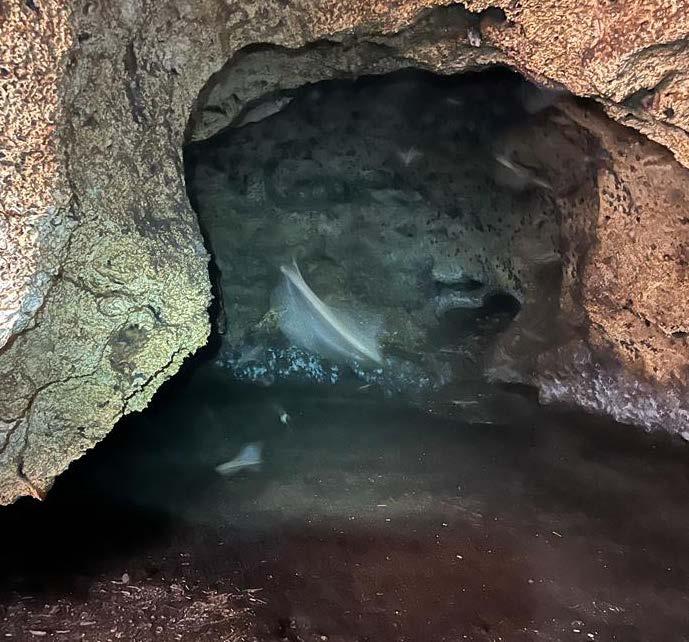
Mdenyenye cave
Photo credit: Josephine Ambaisi
Madeira, Portugal
credit: Lexi Smith, Pemberton
FROM SAVING BEES TO BUILDING BIODIVERSITY’S MISSING INFRASTRUCTURE
Not every biodiversity story begins out in the field, rainforest, or at a research station. Some begin quietly and locally with one person offering to help.
For Lexi Smith, founder and CEO of Pemberton, the journey began not with a grand plan to transform biodiversity markets, but with a small charity in Berkshire, England. Around five years ago whilst doing consultancy work, she was introduced to a local charity trying to understand how biodiversity in the region could be improved. They needed help making sense of ecological opportunity through data, mapping and technology. This is where Lexi stepped in as a volunteer.
Photo
GLOBAL
That early experience would eventually lead to Pemberton, a company that now sits at the intersection of biodiversity, technology and environmental risk. Put simply, it is building tools and systems to help biodiversity be measured, verified and understood in ways that can be used not only by ecologists, but also by planners, policymakers, insurers and investors.
What makes Lexi’s story so compelling is the scale of that journey: from helping a local charity think through a biodiversity challenge to building a company focused on the systems that shape how nature is valued, protected and accounted for. Before the global language of green finance, before patents and infrastructure and insurance products, there was a much simpler question: How do we help nature recover? And how do we know whether it actually is?
Written by Kamile Trakimaite
GLOBAL
HIDDEN CHALLENGES IN CONSERVATION
The deeper that Lexi dug into biodiversity, the more she realized that the real issue was not simply ecological decline. It was also structural. People were talking about restoration, conservation, biodiversity net gain and landscape recovery, but underneath all of it sat a less visible challenge: how to measure habitat condition consistently, credibly and at scale.
“The thing that really struck me was there’ll be one tiny little widget that will be really important,” she says. “And that tiny little widget was: how do you measure habitat condition, not just habitat, at scale, cost-effectively?”
It is not the kind of sentence that usually makes headlines. Yet in many ways, it is the sentence at the center of her work.
Because without consistent, scalable ways of measuring habitat condition, so much of the wider biodiversity system begins to wobble. Plans may be drawn. Credits may be discussed. Nature
markets may expand. But if no one can reliably measure ecological condition, trust dissolves quickly, investment slows, and accountability weakens. This is something that Lexi was able to see early.
What began as a volunteer project with a Berkshire biodiversity charity soon evolved into a more serious attempt to test what was possible. They secured a modest amount of EU funding — enough, Lexi says, to spend six months trying out “quick and dirty” ideas. The experiments were broad and inventive, from measuring grassland root systems using radar to testing AI models and other methods that could help determine what was feasible.
Out of that early phase came a patent-pending technology known as ‘fractal arrays’, designed to help measure biodiversity in habitats at scale. The feasibility study won an award, and Lexi then found herself pitching at the Royal Geographical Society — a moment she still recalls vividly.
GLOBAL
“We went to the Royal Geographic Society, and we pitched,” she says. “And we won this prize. And I was like, ‘Oh, there might be something actually in this.’”
That was the moment the question changed. It was no longer simply: Could this help? It became: Could this become a company?
OVERCOMING OBSTACLES
Lexi was not naïve about what that would mean. Unlike many first-time founders in startup culture, she came into this chapter with hard-earned experience. She had already spent around two decades building businesses, from radio syndication and events in her early twenties to a chain of food shops later on. She understood the risk involved, the exhaustion and the cost of trying to build something from nothing.
And yet she chose to do it anyway.
“It’s exciting. It’s very cool tech. It’s really lovely because it could help a lot of people,” she says. “And it’s worth trying.”
It is also important to note that Lexi was not building a company in a sector that moves quickly or easily. Ecology, conservation and biodiversity are often shaped by NGOs, public bodies, scientific communities and overstretched specialists. In the UK, there is also a significant shortfall of trained ecologists, placing even more pressure on a system already struggling to meet growing demand. In that context, Pemberton was not conceived as a replacement for ecological expertise, but as part of a wider effort to support it with better tools, clearer data and more consistent systems. That was the friction that Lexi understood she would have to maneuver, but also the friction that shaped Pemberton from the very start.
BUILDING A BUSINESS IN AN NGO-SHAPED WORLD
Conservation is always powered by care, but it is not always powered by systems. Lexi understood
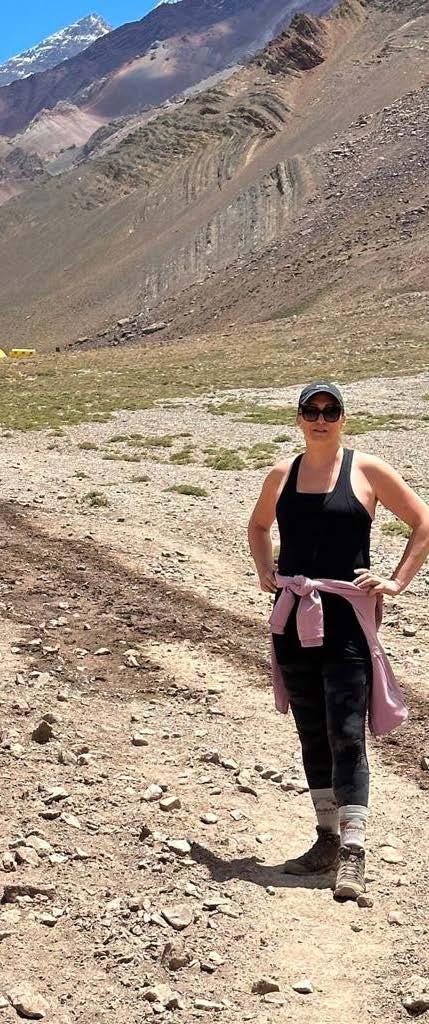
Lexi at Andes base camp
Photo credit: Lexi Smith, Pemberton
GLOBAL
this tension well. She describes ecology as a field rich with expertise but also subjectivity, and she says one of the hardest things has been translating something as dynamic and complex as biodiversity into “a measurable, factual output”. “It is very interesting,” she says. “You put two ecologists in the same field. They don’t always come up with the same answer.” That, she suggests, is a reflection of how complex ecological interpretation can be — and of the
But this did not stop her from asking difficult questions. If biodiversity is now entering legislation, balance sheets and long-term contractual systems, how can it continue to rely so heavily on fragmented manual processes? Why are skilled ecologists spending so much time writing reports instead of doing the field observation and strategic work only they can do? And how can the sector scale fast enough to meet the urgency of the crisis without better tools?
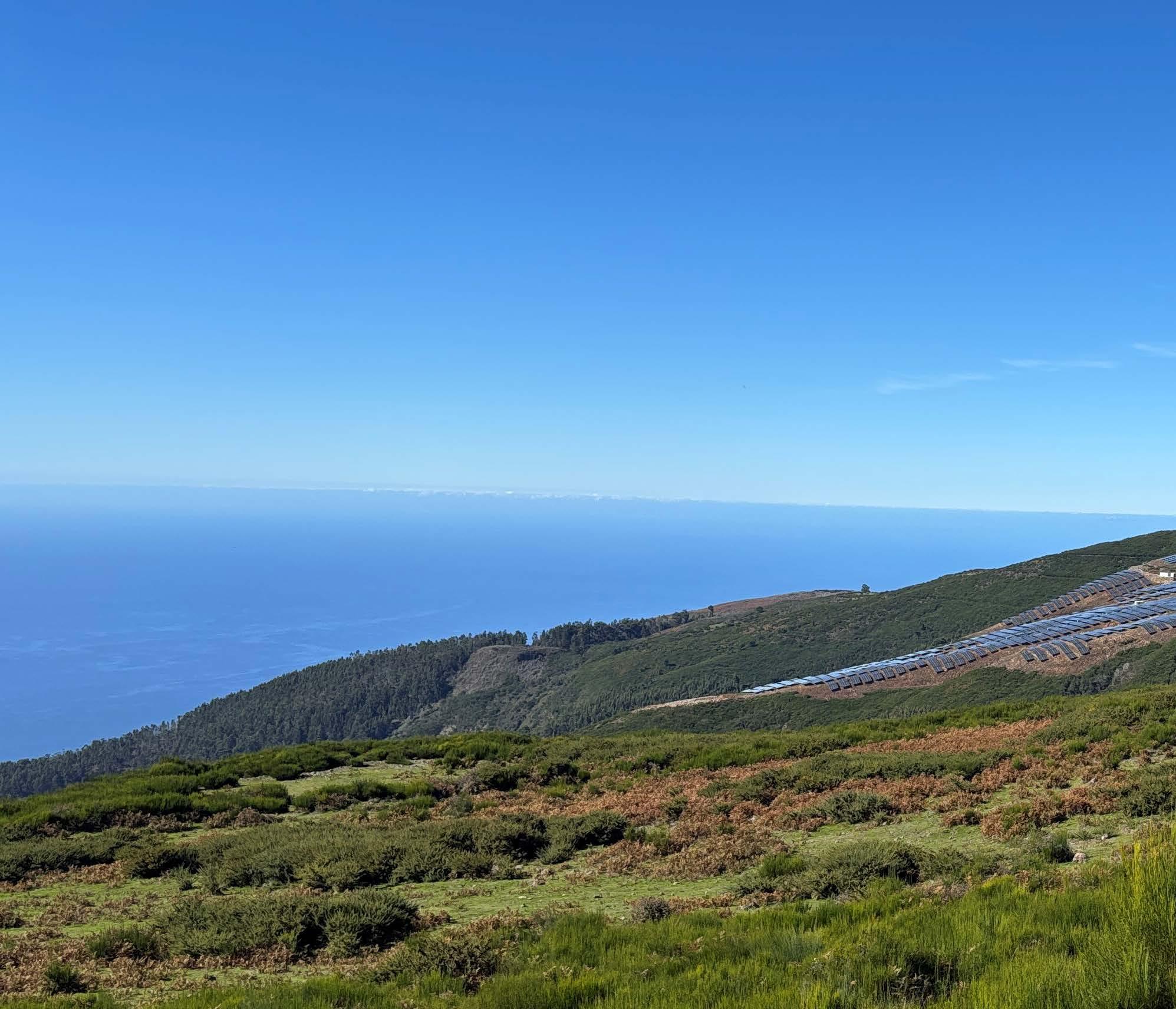
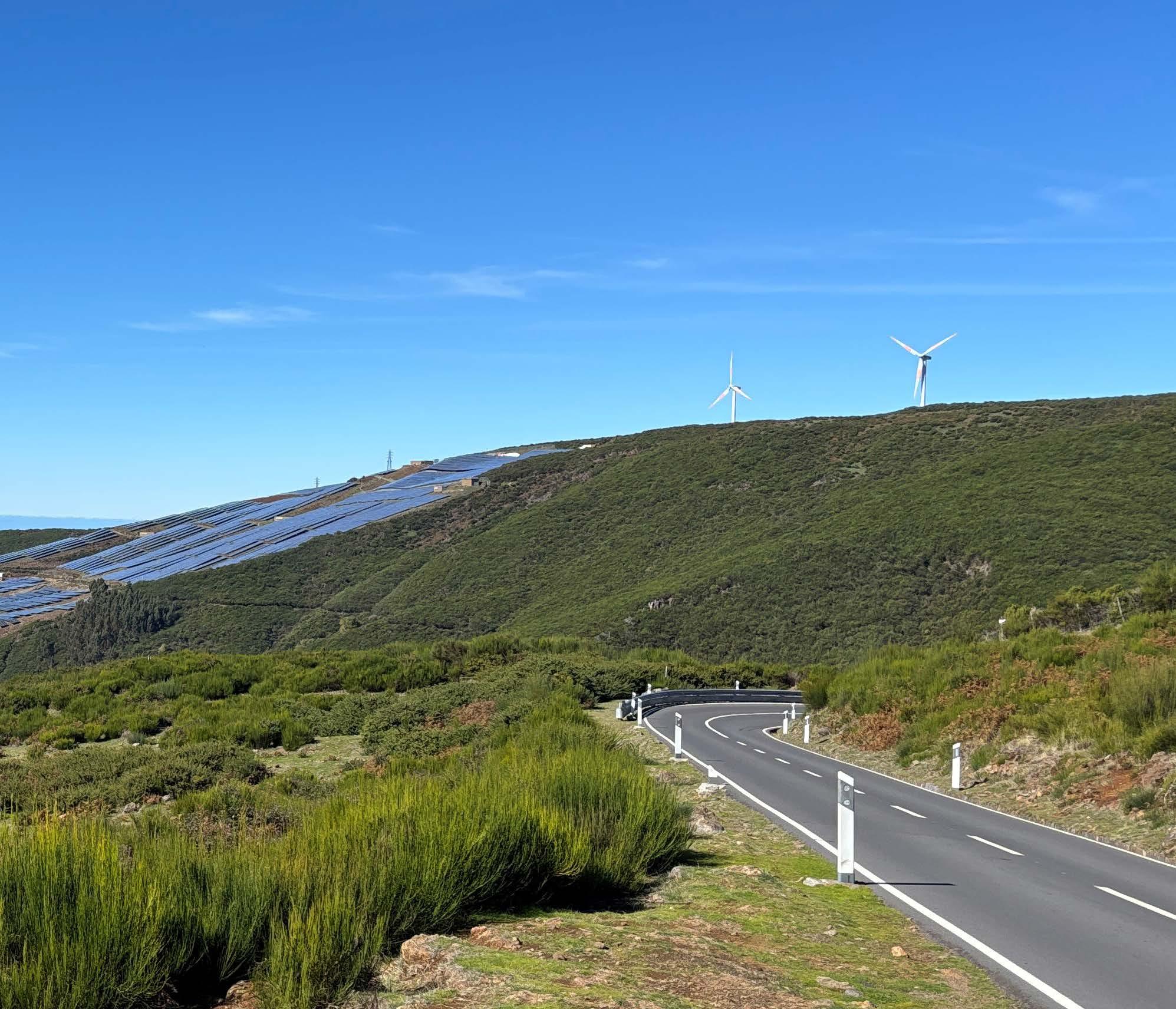
This image shows the solar farm selected for an insurance peril assessment focused on the containerised battery units on site. The project explored how to quantify biodiversity in the surrounding area, how a potential fire could affect it, and how that impact might be valued in monetary terms.
Photo credit: Lexi Smith, Pemberton
fact that technology still cannot fully account for everything an experienced ecologist sees.
That observation is not a dismissal of ecologists. In fact, throughout the conversation, Lexi returns again and again to how much she values their knowledge. She speaks with admiration about being in a field with an ecologist who can identify species by smell or by a glance at a leaf. “It’s nuts,” she says. “It’s amazing. I love watching that.”
Lexi explained how technology in nature spaces can provoke defensiveness, and not without reason. Many ecologists fear automation will devalue their work or threaten their role. She does not dismiss that fear. She calls it “fully understandable from a psychological point of view”.
But she believes the future should not be framed as a people-versus-tools dichotomy.
GLOBAL
“The clever and the more forward-thinking ecologists are working alongside those automated tools,” she says, “and realizing that their skills are still needed — they’re just needed slightly differently.”
That may be one of the most important ideas in her story. Pemberton, as Lexi tells it, is not about replacing ecologists. It is about supporting them with infrastructure that supports and amplifies their work.
“Pemberton’s here to support ecologists, not remove them at all,” she says. “There’s no way that could happen.”
In her vision, better systems would not erase ecological knowledge. They would free it.
“Why are they writing reports?” she asks. “Why are they not sitting in a field noticing stuff — which only they would get to notice?”
A FEMALE FOUNDER BUILDING COMPLEX TECHNOLOGY
If building biodiversity infrastructure in an NGOshaped sector sounds hard, Lexi touches on another layer that has made it even harder: doing it as a bootstrapped female founder and female CTO in deep tech.
“It’s incredibly hard being a bootstrapped femalefounded business,” she says.
Pemberton is not simply a mission-led environmental company. It is a highly technical startup built around science, ecology, data systems and insurability. It exists in a space where credibility is everything, and where that credibility is not always granted when needed equally.
“I’ve had some really interesting conversations with people,” she says. “Somebody’s even turned around and said, ‘Who did you get to develop this for you?’”
When she replied that she had built it herself, she was met with “Well, no, but who did you actually get to write it?”
It is the kind of exchange many women in technical and entrepreneurial spaces will recognize immediately. For Lexi, the challenge has not only been inventing and building Pemberton. It has also been enduring the constant pressure, as a female, to prove herself and her credibility.
“There are definitely different ways of looking at things from a business point of view and also a technical point of view,” she says.
She describes another tension, too: to survive as a founder, she must build enough visibility to be taken seriously while also staying guarded enough to protect what she has created. “You have to build credibility,” she says, “but you also have to not tell everybody exactly what you’re doing. Otherwise, they’ll steal it.” In practice, that means every conversation becomes strategic and every reveal calibrated. People, she suggests, do try to take outputs, ideas and value — and some assume that because she is a female founder, they can.
KEEPING EMPATHY AT THE FOREFRONT OF LEADERSHIP
What separates Lexi’s story from just another feature about startup grit is her refusal to strip care out of ambition.
When asked what advice she would give to other women in climate, biodiversity or tech, she broadens the point. Women in any sector, she argues, are often conditioned to wait — to wait until they know enough, until they feel confident enough, until permission or confirmation arrives. Society has hardwired this into our psychology for generations.
“If someone has an idea, they truly believe in it and they’re willing to put everything into it, then they should do it,” she says. “They shouldn’t wait.”
Lexi expresses the importance of keeping emotion at the forefront, arguing that one of the hardest things in leadership is learning not to lose “your emotive and the ability to care” while building something in a ruthless environment.
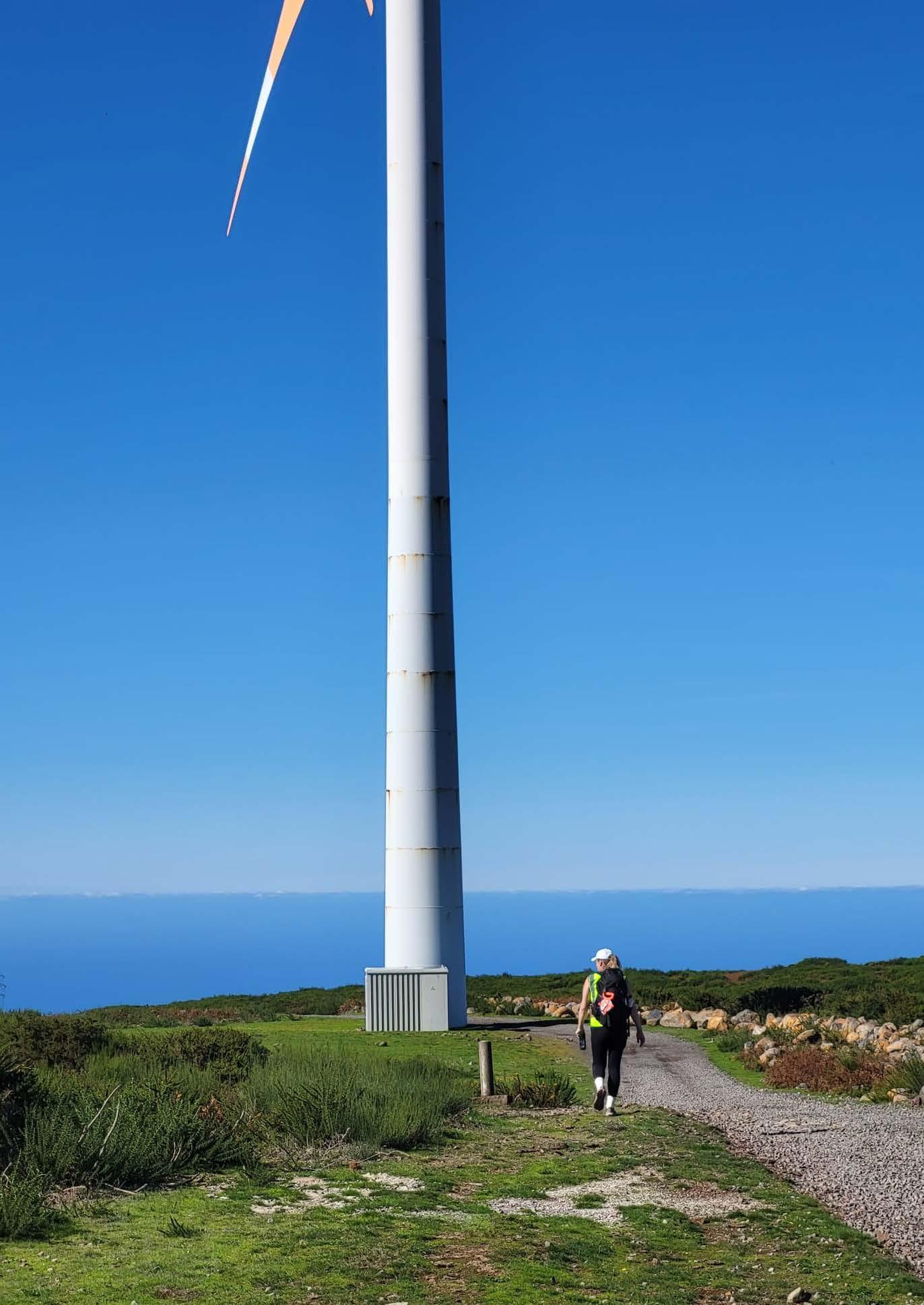
The solar farm selected for an insurance peril assessment also contains a windfarm at the top of the site
Photo credit: Lexi Smith, Pemberton
GLOBAL
This is something that really resonates in a biodiversity context. Here is a founder building systems, patents and products — but still talking openly about care, about ethics, about the temptation to mirror ruthless behavior and the importance of resisting it.
When asked whether being a woman has shaped how she has built her company, Lexi gently sidesteps the neat formulation. “I’m not sure if it’s just being a woman or just being a decent human,” she says. She speaks instead about trying to do things in the right way, even when that is not always easy — and even when not everyone will necessarily feel she has got it right. Building a bootstrapped company, she suggests, often means not being able to do things when you want to, and having to work through problems over time rather than fix everything at once. She returns to a piece of advice from her mother: “Don’t judge everybody by your own expectations.” It is a line, she says, she tries to live by.
In a world increasingly obsessed with scale, speed and dominance, this kind of leadership can seem almost radical; it’s inspiring to look up to.
A RELATIONSHIP WITH NATURE THAT LONG PREDATES PEMBERTON
Long before biodiversity became her business, nature was already part of Lexi’s life in quieter ways.
She describes herself as “a data geek” and speaks openly about being dyslexic, saying that visual thinking, images and patterns have always made sense to her in ways other forms of information often did not. She loves physics. She loves systems. But she also loves the more visceral experience of being outdoors.
She is a sailor with a Yachtmaster qualification and has spent decades on the ocean. She loves the mountains. She loves trail running. And she remembers the subtle markers of environmental decline not as abstract reports, but as sensory absences.
“When we were kids,” she says, “you’d drive down a road, and you’d get all the splatters on the screen.” Then, for years, that disappeared. “It’s come back recently, which is lovely,” she adds, which speaks to the way ecological loss enters everyday life not only through catastrophe, but through subtraction: fewer insects, quieter air, less evidence of abundance.
Even in earlier chapters of her career, environmental concern was already there. Speaking about a previous business (a chain of salad shops), she recalls that while the branding may have been lighthearted, the values were present. The business was already talking about recycling, packaging, and responsibility in the early 00s. They talked, she says, about “saving the polar bears.”
Now, that instinct has become more focused. “Saving polar bears has now turned into saving bees and saving pollinators,” she says.
GLOBAL
FROM BERKSHIRE TO ARGENTINA
As Pemberton grew, so did the scale of her work. Lexi went on to secure further funding, including support linked to a European Space Agency project aimed at taking the technology from an early stage towards much broader readiness and application. It is one of many reminders in this story that biodiversity, however rooted in fields and plants, is now increasingly intertwined with data infrastructure, satellite technology and global systems.
The path was far from smooth. She speaks candidly about delays, contractual frustrations and the kinds of financial hold-ups that can be acutely destabilizing for a bootstrapped startup.
“With us, a week or a day is important, not months,” she says. “Months are what big business can deal with.”
Those delays eventually pushed the team into unexpected fieldwork further afield. To complete
the project and gather the necessary data, they ended up working in both Argentina and Madeira. Lexi describes driving for 18 hours across Argentina, flying drones, and gathering information in landscapes far removed from that original Berkshire starting point.
This is the kind of chapter that reminds you that behind every polished pitch about climate infrastructure is usually a messier reality of travel, improvisation, fatigue and persistence. But it also highlights that Pemberton is no longer simply a local or theoretical experiment. It is being tested in multiple environments, across different terrains, with the aim of proving that what it builds can work across the world. It is turning into a global movement.
CONVERSATIONS WITH GLOBAL LEADERS
Today, Lexi’s work is taking her into boardrooms and conferences such as Lloyd’s of London, Nature Tech Week and the World Bank — places where biodiversity is no longer discussed only
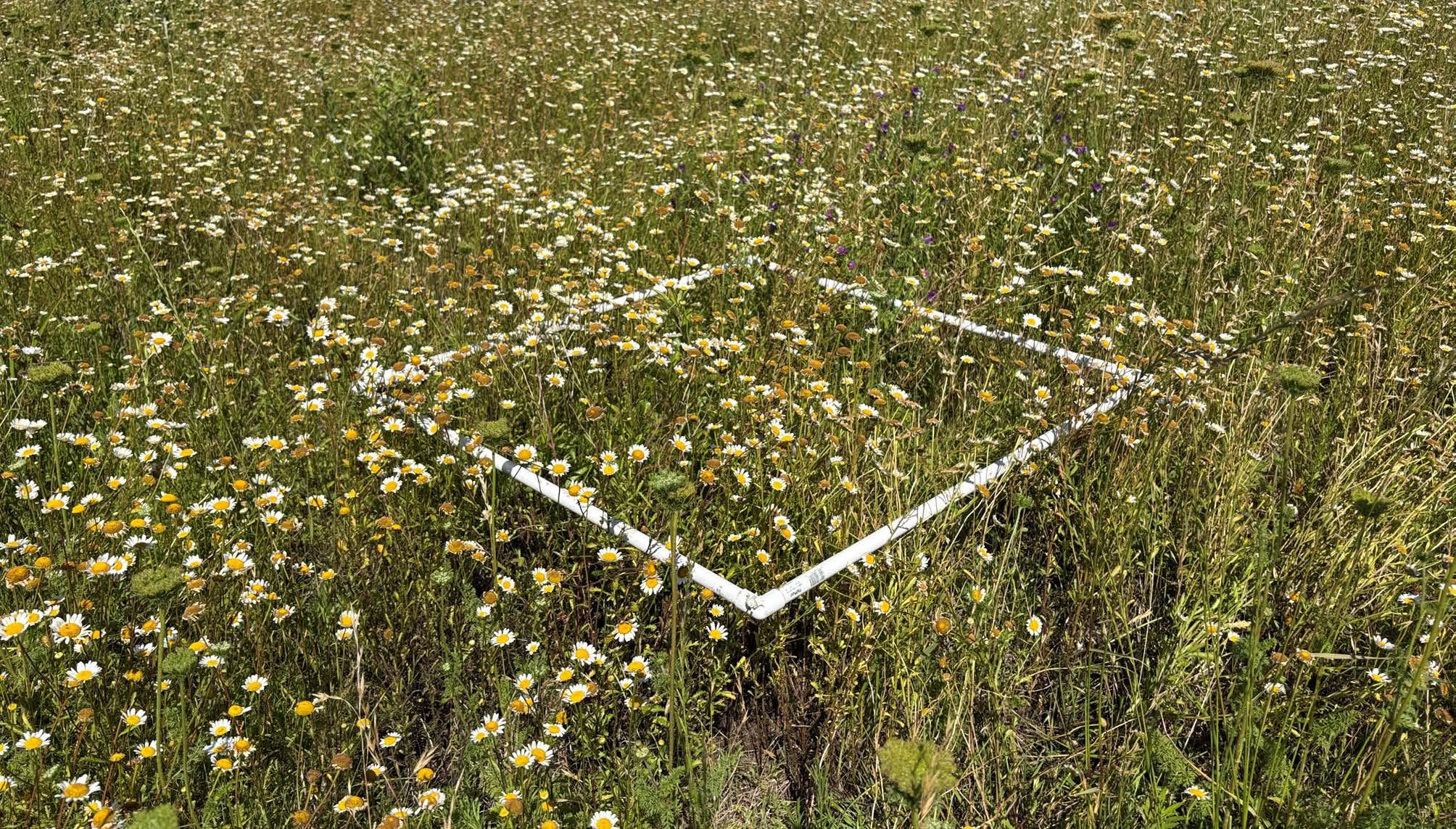
Argentina, on the border between Uruguay and Argentina, in a town called Victoria. This image shows Lexi’s team carrying out homogeneous compartment sampling using quadrats to collect ground-truth biodiversity data
Photos credit: Lexi Smith, Pemberton
as a moral issue, but one of finance, politics and even security.
Lexi points to a recent UK governmental report treating biodiversity as a security issue and says the logic is clear. If pollinators collapse, food systems come under pressure. If food systems fail, socio-political instability follows. Nature loss is completely inherently linked with society.
Within that landscape, Lexi suggests that insurance could play a crucial role. Speaking about Pemberton’s work in this area, she describes insurance as the “little widget” that could help global green finance function more effectively — the missing piece that helps the wider system work. If biodiversity transactions, credits and restoration commitments can be better insured, then the risks attached to them become easier to manage. Trust becomes easier to build, and investors may feel more confident putting money into biodiversity-related projects.
It is ambitious work, but it grows logically out of the original problem she identified years ago: if you cannot measure and verify something properly, the wider system cannot function or grow.
When asked whether she ever imagined she would one day be speaking at the World Bank, Lexi answers simply: “No.”
Then Lexi adds the phrase that perhaps best captures her entire approach to building Pemberton: “Unless you ask, you don’t get.”
It is an important lesson to take away. Ask the bigger question. Ask for the room. Ask for the opportunity. Ask what is missing. Ask what would happen if biodiversity were taken seriously enough to build politics, economy and society around.
MEASURABLE HOPE
For all the technical language surrounding her work — AI, monitoring, verification, insurance, infrastructure — Lexi returns often to a simpler truth: biodiversity matters because human society as we know it can’t function without it.
The story of Lexi Smith is not just about one founder building one company. It is about a woman who recognized that nature does not need human systems, metrics or markets in order to exist, but that modern societies often do need ways to measure and articulate its value if they are to make room for it. If biodiversity is to be protected within policy, planning and development, it must often be translated into terms that those systems are willing to recognize.
What Lexi is building through Pemberton is not a replacement for conservation, nor a shortcut around ecological expertise. It is an attempt to create the missing infrastructure that allows that expertise to operate at the scale the crisis now demands.
She began with a local biodiversity challenge in one corner of England. Now she is contributing to a much bigger effort: making biodiversity something the world can no longer afford to overlook.
And that is where the hope in this story lies. Not in easy optimism, but in the possibility that if we can finally learn to measure what matters, we may yet learn how to protect it.
Website www.pemberton.ai
Orcas in Kvænangen fjord in Norway hunting for herrings
Photo credit: Subphoto / stock.adobe.com
ENDANGERED SPECIES: ORCAS
When humans made their first voyages across the coastlines and beyond the seas, they must have been struck by the eerie beauty and power of the world’s orcas. This species is one of Earth’s most recognizable creatures, with its distinct black-and-white coloration inspiring both fear and awe across many cultures. With inspirational strength and undeniable cunning, these apex predators are among the world’s most successful hunters and are able to prey on many species, including herring, stingrays, salmon, seals and sea lions, great white sharks, and juvenile whale species.
Written by Thijs Montalvo
ENDANGERED SPECIES
When the word orca is evoked, different memories are recalled. Many people remember their childhood worry and joy when watching the capture and rescue of Willy, the orca from the movie Free Willy. Some of us recall sitting in wonder as David Attenborough’s powerful narration described an orca pod’s hunting strategy in the Antarctic, where members strategically line up and create powerful waves to push unsuspecting seals into icy waters. Others will remember feeling the shock and outrage at witnessing the famous exposé on the marine mammal entertainment industry in Blackfish, where real-life orcas were shown to be taken from their families and forced to entertain the masses. Most recently, the world’s media was gripped by tales of orcas ramming ships around the Mediterranean, a behavior still not entirely understood. Their behavior and presence continue to channel humanity’s most powerful emotions, despite the many years since we first learned of their presence in the world’s seas.
Thankfully, most of the world has decided that these creatures should be saved from eradication and should remain free, in the wild. International cooperation through world treaties such as the Convention on International Trade in Endangered Species (CITES) and the Convention on the Conservation of Migratory Species has allowed cross-boundary efforts to limit wild orca trade and trade of orca parts, and national species protection plans provide more specific protections
against regional threats. Additionally, orcas are the subjects of one of the most successful consumer protests in the anti-captivity movement. This put significant financial pressure on marine parks like SeaWorld to end orca shows and wild captures.
However, while there have been some conservation successes, pressures on the species still exist and continue to evolve. Orcas live throughout the world’s oceans and with this diversity of environments, different subpopulations feed on different prey, have different movement behaviors, and suffer from different threats. While certain subpopulations are stable and even increasing, other subpopulations are perilously close to extinction. Some subpopulations, unfortunately, are already doomed.
As our understanding of orca ecology increases, more knowledge on the state of different subpopulations has resulted in several subpopulations being listed on national-level endangered lists and the IUCN Red List. Some (but not all) of these subpopulations include the southern resident orcas off the coast of the U.S. state of Washington, the resident orcas off the Strait of Gibraltar off of Spain, the Alaska transient 1’s off of southcentral Alaska, and the entire New Zealand population (which is likely comprised of different subpopulations and ecotypes). More work is needed to determine the status of other subpopulations around the world.
Orcas are categorized into different subpopulations depending on their behaviors. Each subpopulation has its own unique culture, with some subpopulations expressing nomadic tendencies and acting as more generalist predators, and others having an expressed seasonal home range and being specialized at hunting a few specific prey species. Others are still shrouded in mystery and are thought to be open ocean-faring subpopulations believed to be specialized in hunting sharks. Orca subpopulations can be generally defined as either being part of resident, transient (Bigg’s killer whales), or offshore groups.
RESIDENTS
As the name suggests, resident subpopulations have a core resident range (near coastal areas), visiting different areas of this range depending on the season. They are typically specialized fish-hunting subpopulations and make use of available prey within their local environments.
The endangered southern resident subpopulation largely preys on salmon, and the critically endangered Strait of Gibraltar subpopulation specializes in hunting bluefin tuna. Resident groups typically are made up of close-knit matriarchal-led family pods that stay together for their entire lives and share a unique dialectic vocalization. They are considered louder than their transient cousins, using echolocation to find pockets of fish. Different resident pods form clans, which mix during the breeding season when males visit different pods and choose mates with different dialects to prevent inbreeding. Pods can range from 10-50+ individuals in size.
TRANSIENTS
Transient or Bigg’s killer whale subpopulations are more nomadic in their movement, following marine mammal prey species across long stretches of coastlines. They are known for being silent hunters, as they target their prey through ambush techniques; their silence is perfect for hunting sound-sensitive prey like whales or
ENDANGERED SPECIES
MORE FACTS
• Southern Resident subpopulation: Endangered under national lists of Canada and the United States (74 individuals)
• Strait of Gibraltar subpopulation: Critically Endangered under the IUCN Red List (39-49 individuals)
• Alaska Transient 1 subpopulation: Depleted under the Marine Mammal Protection Act (7 individuals)
• New Zealand total population: Nationally critical under the New Zealand threat classification system (150-200 individuals)
sea lions. Transients are typically considered generalist hunters, making use of a wide range of marine mammal prey species that are available within their environments. The Alaska Transient 1 subpopulation typically targets harbor seals and Dall’s porpoises. Transients move in fluid pods of three to seven individuals.
OFFSHORES
Offshore groups surf the world’s oceans in large pods of 50+ individuals and are known to be shark hunters. While much is still unknown about their movements, they likely travel larger distances. Groups are large enough to allow them to cover a larger area to locate prey. As prey density in the open ocean is lower than in coastal regions, these populations use echolocation to find prey. Prey includes different shark species, with shark livers in particular being a good source of calories and nutrients. Offshore orcas are generally smaller in size than the transient and resident populations.
ENDANGERED SPECIES
THREATS
While some orca subpopulations suffer from unique threats, generally, threats to orca populations transcend different marine areas. Direct mortalities from ship strikes were found to be a cause of several orca deaths in the Northeast Pacific and New Zealand populations. Environmental pollution events such as oil spills have also contributed to orca deaths. The Alaska Transient 1 subpopulation, which is now too small to recover and predicted to be lost in the coming decades, lost many members as a result of the Exxon Valdez oil spill in the late 1980s and the resulting fallout. Live captures, which were more common in the past, removed members of Norwegian subpopulations.
In addition to direct mortalities as a result of human activities, human activities also add stressors to orca subpopulations, which can cumulatively cause additional deaths. Noise pollution in our oceans continues to become a bigger problem. Noise pollution can cause disorientation and stress to individuals, which in turn can limit hunting success and reproduction. Chemical bioaccumulation from toxic industrial chemicals known as polychlorinated biphenyls or PCBs is also a serious threat to orcas in the coming decades. These chemicals have been shown to cause impaired reproduction, repressed immune systems, and high infant mortality. Unfortunately, chemicals can be passed down from breeding females to young and continue to
ENDANGERED SPECIES
accumulate throughout their lifetimes. A report published in 2018 showed that more than 50% of orca populations have their long-term viability under threat as a result of PCBs and their effects.
Lastly, a more subpopulation-specific threat is the loss of important prey species through human overfishing or human-driven environmental change. For some subpopulations, this can lead to nutrient deficiencies and starvation events. The southern resident subpopulation, for example, has suffered greatly as a result of decreased salmon runs in their territory. Salmon in the northwest of North America have decreased as a result of overfishing, climate change, and the damming of rivers. With the loss of salmon, southern resident
orcas are continuously under threat. The Strait of Gibraltar subpopulation suffers from a similar predicament. Here, the steady decline of bluefin tuna, a major prey species, has resulted in a population collapse.
REASONS FOR HOPE
As with many oceanic species, human pressures on orca populations over the last few centuries have led to great changes. Gone are the days when ample food supplies provided sustenance for stable populations and clean waters allowed immune systems to function properly against parasitic and infectious agents. Indeed, entire soundscapes have changed dramatically in the last few decades, from once quiet spaces to wide stretches of noise-polluted coastlines.
While these threats are vast, tackling them one at a time can ease pressures and reduce stressors. Already, different national and subnational governments are reducing the odds of ship strikes by setting speed limits around known orca ranges and requiring on-board sensors to alert ship captains when orcas are nearby. As previously mentioned, wild removals/captures have also been successfully mediated around much of the world through consumer boycotts and activism. Other threats, such as PCBs, have now been outlawed throughout most of the world. While no new sources are being introduced to environments, the lifespans of these chemicals can be long and take time to break down. Limiting new chemical agents that cause similar effects will be important to reduce additional stressors while giving time for some PCB agents to break down within the environment.
Lastly, conserving and caring for prey species can lead to increases in orca populations. The world’s oceans are set for major ecological shifts as the Earth’s climate changes. Resilient populations require sustainably managed fisheries, large marine protected areas, and species-specific targeting of threats. For the southern resident subpopulation, a recent trend of dam removals in the northwest of the United States will likely aid in the recovery of salmon
ENDANGERED SPECIES
runs and, in turn, boost population numbers. The Strait of Gibraltar subpopulation will hopefully also see a recovery as bluefin tuna stocks (after many years of careful management) are slowly recovering in the Mediterranean. Ensuring sustainable fishing to allow stocks to return to their full potential will be necessary to aid the Strait of Gibraltar resident population.
Orcas are unique in how they transmit information. Much like humans, adults and elders teach the young how to hunt and survive within their ranges. These learned behaviors mean that different pods hunt in distinct ways, use different
parts of the ocean, and even communicate through unique vocal dialects. Almost akin to culture, the loss of individual pods results in the disappearance of generational knowledge tied to specific environments. At a larger scale, the loss of entire subpopulations can also trigger trophic cascades across vast areas of the ocean.
Orcas must be factored into future discussions that affect them and monitored to ensure populations can recover. It is not too late to act for many subpopulations and ensure unique cultures will continue to be passed down. Future generations will thank us.
Photo credit: Alejandro Sandoval Berlin
WHEN FORESTS FALL SILENT: LISTENING TO WHAT REMAINS
In a darkened room at Germany’s prestigious Museum Folkwang, in Essen, visitors step into an unfamiliar kind of forest. There are no projected landscapes, no taxidermy specimens in glass vitrines, no immersive video screens looping images of vanishing wilderness. Instead, seven speakers are arranged in a circle, two long benches at the center, the room held in dim light and sound.
At first, it is tentative: a single call, clean and bright, suspended in the air. Then another call answers. A third voice waves into the chorus. Gradually, almost imperceptibly, the room becomes an acoustic ecosystem. Species overlap, converse, interrupt, retreat. For fourteen minutes, a chorus of endangered birds fills the space with fragile threads of sound: the tremble of a distant call, the staccato rhythm of an unfamiliar song, a melodic phrase that feels at once intimate and impossibly remote.
Then, abruptly, chainsaws cut through the chorus, and the birdsong fades into the background, giving way to composed music.
For composer and sound artist Aimée Portioli, known professionally as Grand River, Symphony for Endangered Birds is both composition and confrontation: an immersive installation that asks what it means to listen to species on the brink, and whether art can make us hear what science has long been telling us.
Written by Flavia Manieri
GERMANY
Photo credit: Alejandro Sandoval Berlin
A LIFE TUNED TO SOUND
Portioli’s path to this project began decades before conservation entered her vocabulary as an artistic interest.
“I started playing instruments and singing when I was about five,” she says. Music had been a constant presence in her life, from singing in choirs and playing piano to gradually finding her voice through guitar and cello. As a teenager, she wrote songs and performed in bands, moving fluidly across genres. In her early twenties, she worked in sound design for radio, later composing for documentaries and advertising. Only in her late twenties did she begin gravitating more deliberately toward experimental and ambient composition.
That shift, she explains, was not a rejection of her earlier work but an expansion of it. Sound itself
became the subject. Texture, spatialization, and the emotional power of sustained tones became central threads. Over the past decade, her output has increasingly moved between albums, live performances, and research-driven installations.
The difference between those modes matters to her. When she makes a record, the conceptual frame allows room for exploration and experimentation. In an installation, by contrast, the concept narrows the field. “It becomes more specific,” she says. “The composition and the treatment of sound are guided by the story I want to tell.”
Her own story is a tapestry of lands and languages. Born in the Netherlands to a Dutch mother and an Italian father, she moved to Italy at age eleven and spent her formative years there. Today, she moves between cultures with ease. She resists
attributing her artistic voice to any single heritage. “We are influenced by everything,” she reflects. “The weather. A tree. Relationships. The colors in our homes.” This curiosity extends beyond melody and harmony to the very texture and space of sound, and to listening as a physical experience.
Yet that sense of porous influence — of environment shaping perception — would later prove central to her environmental work.
NATURE AS REFUGE, AND AS TEACHER
Nature did not appear in Portioli’s compositions as an explicit theme during her teenage songwriting years. It entered more quietly, offering solace. For more than two decades, she has lived in large cities. Urban life, she says, moves quickly — concrete, crowded, relentless. Over time, she began seeking spaces that offered perspective and mental clarity: rivers, coastlines,
Aimée Portioli working on the sound installation for Symphony for Endangered Birds
Photo credit: Alejandro Sandoval Berlin
The booklet
Photo credit: Alejandro Sandoval Berlin
GERMANY
open landscapes. Places where horizons stretch uninterrupted. She describes reading research on the psychological benefits of open landscapes, how looking toward a distant horizon can calm the nervous system in ways urban spaces rarely do. “When you are in nature, your perspective changes,” she says. “Nature is therapy, it’s a space where I can slow down and reflect.”
Initially, she absorbed these spaces without consciously translating them into sound. But about fifteen years ago, something shifted. While traveling, she began carrying recording equipment, capturing wind, water, and ambient atmospheres. Listening became more deliberate. Then, one May in Berlin, she began recording a nightingale that sang near her home at night. The bird was neither endangered nor rare. But its song, unpredictable and intricate, fascinated her. Birdsong, she realized, contains rhythmic logic and emotional complexity that resist easy categorization. “That’s when I became very interested in birdsong,” she says. “Its unpredictability to the human ear was very intriguing to me.”
From that point forward, nature was not just a refuge or inspiration. It was a collaborator, teacher, and source material all at once. “The recordings guide me,” she explains. “They tell me how to compose around them.” This philosophy shaped, and ultimately became central to, Symphony for Endangered Birds
SEVEN VOICES FROM SEVEN CONTINENTS
Before Symphony for Endangered Birds, Portioli created another installation titled TuningtheWind, built around wind recordings she made herself. In that project, she modified the recordings, shaping gusts into tonal swells and resonant textures. But birds, she felt, required a different ethical and aesthetic approach. “Birds have personality,” she says. “Wind does too, but in another way.”
When she began drafting the concept for Symphony for Endangered Birds, it existed only on paper. She imagined a work centered entirely
on birdsong. Yet the theme felt too broad. There are thousands of bird species; their songs fill forests and cities across the planet. To narrow the focus and sharpen the message, she chose to work exclusively with endangered birds. “I wanted to give them space,” she says. “To bring them outside their natural habitats and into a museum space felt like an opportunity to create awareness.”
She set herself a formal constraint: one endangered species from each of the seven continents. Seven voices. Seven channels.
THE ARCHIVE AS FIELD
Recording these species herself would have required global travel and, in some cases, locating extremely rare individuals in fragile habitats — a logistical and ethical impossibility. Instead, she turned to archives to gather field recordings. At one point, she had approximately 200 species under consideration.
The selection process was thorough. First came technical criteria. Some recordings were distorted by wind or background noise. Others were too short to allow compositional development. She filtered for clarity and length. Then came musical intuition. She listened repeatedly, asking which voices “spoke” to her, which could sustain attention, interact dynamically, coexist in contrast to one another. She sought diversity in timbre and pitch, ensuring the final ensemble would not blur into homogeneity.
Gradually, seven species emerged as ambassadors of each continent: the Macaroni Penguin from Antarctica, the Niceforo’s Wren from South America, and one representative each from Africa, Asia, North America, Oceania, and Europe — each chosen for both ecological vulnerability and the unique character of its song.
Unlike in her wind project, she resisted altering the birds’ calls. She cleaned minor disturbances but did not shift pitch or heavily process the material.
GERMANY
credit: Alejandro Sandoval Berlin
“I wanted to stay as faithful as possible,” she says. The birds would sing in their own voices.
THE STRUCTURE OF LOSS
The installation unfolds in two main movements. In the first fourteen minutes, birds dominate. Their calls move across seven speakers surrounding visitors at the center, transforming the space into an immersive soundscape rather than a mere backdrop. Two species begin in conversation. Others enter. The Mao, a honeyeater endemic to the Samoan Islands, — whose song grows increasingly dramatic — becomes central, its vocalizations opening and intensifying in what Portioli describes as a “cry.” The atmosphere grows more anxious. Tension accumulates.
Then rupture. From different points in the circle, chainsaws begin cutting. One tree falls. Then another. The sounds are loud but brief, twenty to thirty seconds in total. A final crash lands in the
center of the room. Silence follows. This sonic event is not metaphorical; it is literal. Habitat destruction is among the leading drivers of bird decline worldwide. By inserting the sound of deforestation into the heart of the piece, Portioli collapses aesthetic distance.
After the rupture, the composition rebuilds over a further fourteen minutes. Music — composed elements beyond the birds’ own calls — becomes more prominent. The birds recede into the background. The symbolism is clear: human presence grows louder as birds’ voices are pushed aside. Yet Portioli chooses not to end with total annihilation. “I could have put the destruction at the end,” she says. “That would have been pure tragedy.” Instead, she opens space for reflection. The ending is unresolved. The question — where do we go from here? — is handed back to the listener.
Aimée Portioli
Photo
An invitation to listen, outside the museum installation
DESIGNING IMMERSION
The installation at Museum Folkwang ran for two months, marking the project’s first full exhibition. Portioli did not stop at composing the soundscape, she designed the spatial experience as well. Seven-channel audio required extensive technical preparation. She set up a system in a small room long before the museum installation, allowing her to experiment without time pressure. Spatialization, she explains, cannot be rushed. Sound must be felt in three dimensions, tested from different listening positions, and adjusted with patience.
The room itself was kept almost entirely dark. At its center stood a sculpture by Federico Gargaglione bearing a single white feather, suspended in isolation — a quiet symbol of death and fragility. Visitors received a booklet featuring illustrations by artist Brandon Locher, alongside scientific information about habitat, physiology, and conservation status. In this way, the work
bridged art and data: the emotional experience unfolded in sound and shadow, while the factual context lived on the page.
The museum also hosted a public talk in collaboration with NABU (Germany’s Nature and Biodiversity Conservation Union). Ornithologists and conservation specialists discussed birdsong, species decline, and ecological pressures. The installation thus became a platform for dialogue, not just contemplation. For Portioli, this intersection was deeply meaningful. “It was beautiful to see people interested in birds, in sound design, and hifi, all in the same room,” she says.
BEYOND DATA
Conservation science is rich in data: population trajectories, IUCN Red List categories, habitat maps, predictive climate models. Yet data alone often fails to generate sustained public engagement.
Photo credit: Alejandro Sandoval Berlin
GERMANY
Portioli does not position art as superior to science. Rather, she sees it as complementary. “If you read about these birds in the booklet, that’s information,” she says. “When art is added, there is emotion. It communicates on another level.” Emotion is not trivial in conservation. It shapes values, motivates behavior, and sustains longterm commitment. A statistic may inform, but a sound may linger.
By placing endangered birds in an acoustically isolated room, Portioli heightens their vulnerability. Their songs, once embedded in complex ecosystems, become exposed, singular, almost fragile. Listeners cannot multitask. They cannot scroll or skim. They must sit. In that enforced stillness, listening becomes ethical practice.
HOPE, DESPAIR, AND THE SPACE BETWEEN
Artists working with environmental themes often wrestle with tone. Should the message galvanize hope or confront despair? Too much optimism risks complacency; too much tragedy can induce paralysis.
Portioli acknowledges the tension. She is not naïve about global ecological trends. Yet she resisted ending the piece in darkness. “I didn’t want to give the conclusion,” she says. “I wanted people to reach it themselves.” The rupture in the middle
“WHEN ART IS ADDED, THERE IS EMOTION. IT COMMUNICATES ON ANOTHER LEVEL.”
allows for both recognition and possibility. The birds do not vanish entirely; they persist, though diminished.
The listener leaves carrying both beauty and unease. This ambiguity mirrors reality. Many bird populations are declining; some species have already disappeared. Others are recovering thanks to conservation efforts. By refusing to dictate an emotional endpoint, the installation respects the audience’s capacity for reflection.
EVOLVING EARS
Portioli believes her work with wind and birds has changed her most fundamentally as a listener. “I have become more attentive,” she says. She recalls traveling to an island in Japan’s Okinawa Prefecture, rising at dawn to a chorus of subtropical birds. In earlier years, she might have noticed them passively. Now she records, studies, and listens closely to timbre and rhythm. The project has altered her perception.
This heightened listening extends beyond rare species. It applies to the everyday: the wind rustling through urban trees, the echo of footsteps across a tiled floor, the low hum of city life. Awareness, once cultivated, does not easily recede. She anticipates continuing to work with nature as collaborator and subject. Not as an aesthetic backdrop, but as an active presence.
LEGACY AND RESPONSIBILITY
When asked about legacy, Portioli hesitates. She does not claim her installation will change policy or reverse extinction trends. Her hope is more modest, and perhaps more realistic.
Photo credit: Alejandro Sandoval Berlin
Top: Antarctica - Macaroni Pinguin
Bottom: Asia - Red-breasted Goose
Illustrations: Brandon Locher
GERMANY
Awareness. Curiosity. Space to listen.
She imagines someone encountering the piece and later recognizing birdsong in their own neighborhood with new attention, or researching a species they had never heard of before, or feeling, briefly, the weight of loss in a darkened room.
Art rarely produces immediate conservation outcomes. But it can cultivate sensibility — the internal shift that precedes action. Sometimes, simply listening is enough to plant a seed of change.
For artists seeking to work at the intersection of music and ecology, Portioli offers simple advice: listen. Not casually, but attentively. Ask why a sound is being recorded. Consider what it means to relocate it. Treat nature not as raw material for personal expression, but as its own entity deserving respect. “If there is a message,” she says, “if you give extra value and significance to the sound, then it makes sense.”
BEFORE THE SILENCE
Some bird species are already gone. Their songs survive only in archives, brittle recordings captured by those who ventured into forests with microphones, unaware they were documenting the last known songs. Symphony for Endangered Birds exists in the tension before that silence.
In the room at Museum Folkwang, visitors sit encircled by sound. The birds sing, vivid and immediate. Chainsaws interrupt. Music swells. The ending remains open.
Outside the museum, forests are still being cut down. Conservationists are still counting, monitoring, and advocating. Birds are still singing — for now.
This installation does not claim to save them. It does something subtler, perhaps more difficult: it insists that we hear them. And once we have heard, the responsibility shifts. The question is no longer whether the birds are calling. It is whether we are listening, and what we will do before the room falls silent.
Website www.grandriver.eu
Instagram
@grandriver.aimee
Facebook @grandriver.aimee
ARTEM SINIYATULIN STARGAZER
A dramatic silhouette of a wagtail perched atop wildflowers, its beak open in a melodic tribute to the burning golden hues of the setting sun.
A young fox kit lost in a moment of wonder, looking up from the tall grass as if watching the clouds drift by.
A black woodpecker with a defiant red crest, anchored firmly to the rugged bark of an ancient tree.
My journey into the world of wildlife photography began unexpectedly in 2020. During the global lockdown, when the world seemed to shrink to the size of four walls, I happened upon a video of an owl — not in some distant, ancient forest, but in a familiar Moscow park close to my home. That moment sparked a revelation: nature was much closer than I had ever imagined. From foxes near schools to weasels in local parks, I realized that owls, hawks, and partridges had been our neighbors all along.
As soon as the restrictions were lifted, I ventured out to explore these green pockets of the city. Feeling the sheer abundance of life surrounding us was a transformative experience. I immersed myself in ornithological literature, joined nature-focused communities, and embarked on my first field trips. What began as curiosity quickly evolved into a profound passion. After acquiring my first professional camera and telephoto lens, there was no turning back.
In my work, I strive to capture the raw emotions of these encounters. My goal is to inspire others with a simple yet powerful realization: observing animals can be more than a hobby; it can be a deeply captivating experience. Looking ahead, my ambition reaches far beyond the city limits; I dream of traveling across the globe, capturing the breathtaking diversity of our planet’s ecosystems, and documenting the unique moments of wildlife from every corner of the world.
Being featured as a “Stargazer” for Ubuntu Magazine is a significant milestone for me. Much like a stargazer looks for light in the darkness, I seek out the hidden wonders of the natural world, whether within the urban landscape or in the furthest reaches of the wild. I am still learning, still making mistakes, and constantly moving forward. I hope that over time, this passion will grow into something even greater, revealing to everyone just how vibrant, diverse, and fascinating the world around us truly is.
- Artem Siniyatulin
A portrait of a weasel in its pristine winter coat, its dark, inquisitive eyes peeking out from the brilliant white snow. Instagram @forestrixx
Instagram @forestrixx
A tiny pygmy owl surveying its kingdom from the top of a weathered stump, silhouetted against a soft, ethereal blue light.
A pine marten perched gracefully on a mossy branch, its golden throat patch glowing against the soft, dappled light of the woodland.
Instagram @forestrixx
A hedgehog navigating through a crisp carpet of autumn leaves, its sharp quills contrasting with the soft, earthy tones of the forest floor.
Amazon floor
Photo credit: Irin Somsuppamongkol
SURVIVAL IN NATURE FOLLOW THE WATER
The Amazon rainforest covers 5.9 million square kilometers of South America’s land. It is the largest rainforest in the entire world, and the most biodiverse place on Earth. In 1971, German-Peruvian student Juliane Koepcke was the sole survivor of a tragic crash that left her stranded in the Amazon, having fallen 3,000 meters from the sky.
After 11 days of surviving alone, she stumbled upon a camp staffed by lumberjacks who were able to return her to safety. This miraculous story has since been the subject of much discussion, and now, American author Ellen Cochrane is telling the story in her new book, ‘Follow the Water’, which chronicles Juliane’s story.
Written by Nathan Turnbull
Ellen Cochrane is a California-based Young Adult & Children’s author who has an extremely important link to Juliane and her story: When she was an exchange student at 17 in Peru, she flew the exact same route as Juliane had, just eight years later. Being the same age as Juliane and having been familiar with her story, Ellen was deeply moved by the experience and, at the time, wrote down all of her thoughts in a journal — a habit she had started when she was 14. At the time, she was already enthusiastic about conservation and environmentalism, and this window into the harsh reality of surviving in nature left a lasting impression.
Winding Amazon River
Photo credit: William
Ellen Cochrane Photo credit: Jammin’ Jo
PERU
Since then, Ellen has lived a storied life with a wide variety of experiences that have strengthened her skills and expanded her horizons: she switched her major from Biology to Russian at University, and started her post-academic professional life as a Cultural Department Attache at the American Embassy in Moscow. She has also worked in politics when she returned to America, and later as a public school teacher specializing in teaching students who did not have English as their first language. Now retired, she has pivoted her career by correcting some long-lasting regrets from her youth — most majorly, she has recently acquired a Master’s Degree in Science Writing
from Johns Hopkins University, Maryland. During COVID, when she was working on this degree, she discovered her old journals from her youth. One that immediately stood out to her was the journal she kept during her time in Peru, and upon reading her account of the impact Juliane’s story had on her, she immediately realized that this would be something she would like to look into more.
From there, she wrote ‘Follow the Water’, a story that “immerses readers in the wonders of the Amazon itself —the fierce beauty of the rainforest, the interconnectedness of its plants and animals, and the science that reveals its secrets”. The book
was accepted as her Master’s thesis, was recently published and is now available for all to read.
Being a long-time educator, Ellen’s goal with this book is to teach children and young adults about the power of the human spirit: Survival in spite of impossible odds, the ability to adapt to inhospitable conditions, and the skills of observation, learning and adaptation required to survive such a situation that, she believes, are qualities that reside within us all. She is certain that a story as compelling as this one acts as a perfect study of human perseverance that children and young teenagers will take a keen interest in — a skill she has picked up from her experience of working with this age group for such a long time, and one that benefits her greatly now that she aims to educate through the medium of writing rather than teaching itself. In that regard, Ellen believes that a book like this is indeed the perfect vehicle for an alternative and enjoyable educational style. She looks back to her own childhood, remembering “those books as a kid that you just couldn’t put down” that tend to leave a lasting impression.
away from the public eye. However, there have been a few exceptions to this rule — Juliane wrote an autobiography in 2011 detailing the experience, and a documentary film (“Wings of Hope”) was made in 1998 by renowned filmmaker Werner Herzog that revisited the events. Herzog campaigned to get Juliane involved in the film and was eventually able to contact her directly, successfully convincing her to accompany him back to the Amazon to recount the experience.
Other than on these occasions, Juliane has barely engaged with any attempts to contact her. Even Ellen herself has had no direct contact with her, liaising instead with staff at the Panguana Foundation, which was started in 2014 by Juliane and her husband, Erich Diller as a way to continue her parents’ research and presence within the Peruvian conservation field. Both of her parents, Maria and Hans-Wilhelm, were German zoologists who had a huge presence in Peru’s academic world. In their work, they discovered and documented species native to the country and contributed a huge amount of scientific
ELLEN’S GOAL WITH THIS BOOK IS TO TEACH CHILDREN AND YOUNG ADULTS ABOUT THE POWER OF THE HUMAN SPIRIT: SURVIVAL IN SPITE OF IMPOSSIBLE ODDS, THE ABILITY TO ADAPT TO INHOSPITABLE CONDITIONS, AND THE SKILLS OF OBSERVATION, LEARNING AND ADAPTATION REQUIRED TO SURVIVE SUCH A SITUATION THAT, SHE BELIEVES, ARE QUALITIES THAT RESIDE WITHIN US ALL.
Her belief in the story itself is well-founded: its unbelievable nature has captured the hearts and minds of many, and has left Juliane within the continued interests of the press ever since she was 17 years old. Since then, she has rarely spoken about her ordeal in public, choosing instead to avoid constant scrutiny by remaining
knowledge to the academic world. Sadly, Maria was on board LANSA Flight 508 when it crashed and left Juliane stranded. Following the tragedy, both Juliane and Hans-Wilhelm returned to what was then West Germany. Hans-Wilhelm taught Zoology at the University of Hamburg until his death in 2000.
Panguana’s original research station 1969/1970
Photo credit: Hans-Wilhelm Koepcke
Panguana Research station today at Río Yuyapichis
Photo credit: Armin Niessner
Now, Panguana Foundation is a thriving conservation organization that focuses on “the biological, ecological and geoscientific exploration of [Peru’s] biodiversity”. It consists of a biological research station coupled with a private nature reserve that now covers around 2,400 hectares of well-kept primary rainforest, deep in a remote area of the Amazon. It has the capacity for 30 staff, and researchers based there have produced over 300 papers about the area. The original research station from which the foundation was built around was founded in 1968 by Maria and Hans-Wilhelm. It is now the oldest research station in Peru, and was taken over by Juliane in 2000. The site has expanded massively since the original research station was built, now even boasting an ‘eddy-covariance flux tower’ that is used to determine key climate data by detecting fluctuations in atmospheric measurements (one of just four in Peru). The official recognition as a private nature reserve that the site received in 2011 has made this easier — the legal degree protects the site from logging and gold mining, among other things.
However, recent changes in activity have caused major issues for the station. A sudden uptick in illegal gold mining operations has encroached on Panguana’s reserve. In just a short time, this mining presence worked its way right onto Panguana’s
Juliane and her mother Maria short after their arrival at Panguana, 1968
Photo credit: Hans-Wilhelm Koepcke
PERU
doorstep. Researchers out in the field had heard gunshots and have since received death threats from miners who want to get onto the land. With very little police and military presence around the area, illegal activities often face very few repercussions.
With this increase in danger, the staff and researchers at Panguana have been told to stop all activities immediately. The automated systems are still collecting data, but all personnel-led tasks have ground to a halt. As of now, there are no long-term solutions for this issue. As a result, the future of Panguana may be in jeopardy.
Juliane herself remains an inspiring character. She assisted the search parties for the plane following her rescue in 1971, despite being far from fully healed. When she returned home to West Germany after these events, she studied biology at the University of Kiel (as her parents had done) and went on to get a doctorate, culminating in her return to Peru to study bats. This remarkable body of work, coupled with her efforts to keep Panguana going, have made her one of the most inspiring conservationists in recent memory.
It is this very inspiration that convinced Ellen to tell Juliane’s story in her book. In addition to wanting to introduce Juliane to a new, younger generation, Ellen has also been moved by the trouble that Panguana is currently experiencing, and has promised to donate 10% of the proceeds of “Follow the Water” to the foundation. She has
made it clear that the story is Juliane’s, not hers, and wrote the book with the intention of being respectful to the story.
The theme of the book, survival within nature, is one that interests Ellen deeply. “The idea of someone having to rely on their skills, and their skills alone, to survive can be both exciting and informative. The environment around them often dictates their survival, and in this story, that environment is the Amazon. The rainforest itself is as much a character as Juliane is. We often look at nature, especially a place as overwhelmingly massive as the Amazon, as just a mass of green. We don’t see the individual trees and the battles occurring within that ecosystem on an hourly, daily, weekly basis.”
Panguana’s rainforest
Photo credit: Hatzel Ortiz Bonett
“WE OFTEN LOOK AT NATURE, ESPECIALLY A PLACE AS OVERWHELMINGLY MASSIVE AS THE AMAZON, AS JUST A MASS OF GREEN. WE DON’T SEE THE INDIVIDUAL TREES AND THE BATTLES OCCURRING WITHIN THAT ECOSYSTEM ON AN HOURLY, DAILY, WEEKLY BASIS.”
“The struggle of the survivor,” she says, “can act as a perfect reflection of broader, more general human struggles, and the environment they are in acts as a microcosm for broader societal pressures and stressors.” With this, the story acts as a device that can be universally relatable, where the reader can take any number of points from the narrative that could parallel their own lives.
Moving on from ‘Follow the Water’, Ellen isn’t done telling nature-oriented stories. Her next book is a venture into fiction. Titled “The Siberian”, the story follows two siblings trying to survive in a remote area of Siberia that is home to Amur Tigers. It is also inspired by recent conservation efforts to preserve this species, which is now critically endangered.
Ellen’s message, at its core, is one of encouraging learning and observation above all else to satisfy natural human curiosity, an instinct that often leads to incredible things. Her time spent teaching showed her how precious learning is to discovery, and now her goal is to encourage today’s youth to use their critical thinking and observational skills to find their passions — whatever they may be. Her enthusiasm towards modern conservation shines through, and she encourages people to try to be an active participant in science and to encourage their children, should they have any, to do the same. It is a message that reminds us all to never stop learning, to fight for our passions, and to aim to be part of something bigger than ourselves.
“ELLEN’S MESSAGE, AT ITS CORE, IS ONE OF ENCOURAGING LEARNING AND OBSERVATION ABOVE ALL ELSE TO SATISFY NATURAL HUMAN CURIOSITY, AN INSTINCT THAT OFTEN LEADS TO INCREDIBLE THINGS.”
You have a wild idea to help the planet, yet struggle to see how to get the first paying supporters. In just 6 weeks, the bootcamp helps you gain the clarity, confidence, and support you need to build your nature business, step by step. With handson feedback and weekly group calls, you’ll test your ideas, build a business model, create your offer, and find your audience, alongside other ecopreneurs.
Scan the QR code now and receive an additional 60-minute one-on-one coaching session for free (worth 200€) with Oliver Dauert, founder of Wildya, or Michelle Egly, co-founder. Simply write to us UBUNTU after the payment.
Photo credit: Cynthia A Jackson / Shutterstock.com
CARNIVORES OR THE ART OF COEXISTENCE
“Living with Lynx” combines rich conversations with nuggets of wisdom, and invites readers to reconsider their assumptions and engage openly with the idea of reintroducing large carnivores. Jonny Hanson writes with insight and compassion, all while maintaining a refreshingly light tone that never takes itself too seriously:
Written by Patrizia Baldi
BOOK REVIEW
“THE DUTCH BISON TOWERED OVER ME. IT DWARFED EVEN MY TALL FRAME, AND I KNEW THAT ONE COULD EASILY OUTRUN ME. MY HIGH SCHOOL 400-METER RECORD? IT COULD EAT IT FOR BREAKFAST. AND THEN, BEING A RUMINANT, EAT IT ALL OVER AGAIN.”
With a plethora of experience between years of practical husbandry from reptiles to rhinos, postgraduate studies in sustainable food supply chain management, a PhD in snow leopard conservation in Nepal, and setting up the first community-supported agriculture scheme in Northern Ireland, Jonny Hanson set out on a journey across multiple countries in the western world to understand the complexities of a possible large carnivore reintroduction to Britain and Ireland. 56 interviews with philosophers, farmers, conservationists, and everyone in between inform the research that substantiates this book. Hanson tells us: “Researching and writing this book has broadened my own mind regarding this fascinating but contentious topic.”
Bears, lynx and wolves are just few among countless large predators that used to roam our planet. After they had been extirpated in many places in Europe, the question was often asked whether we can — or in fact should — be open to the reintroduction of such predators. The debates in the UK and the Republic of Ireland are ongoing. The last wolf in Ireland was shot in the late 18th century; the last one from England and Wales vanished in the 14th century, while the last Scottish specimen was seen in 1684. Other predators, such as the lynx and bear, disappeared even earlier.
Recently, there has been a lot more talk about the possibility of “rewilding” the British Isles, often meaning the return of species to reverse nature
loss. Red kites, white-tailed sea eagles, as well as golden eagles, showed a glorious return starting in the 1980s, beavers returned to Scotland in the early 2000s, and bison were also reintroduced in recent years. Predators like wolves are not just ordinary wildlife, though. Living alongside these animals may bring remarkable ecological benefits, but it will likely also involve significant challenges.
Possibilities would include generating income through tourism or predator-friendly certification schemes, where consumers pay an increased sum for livestock products such as meat and wool, which are produced in a way that facilitates the coexistence of carnivores with farmers. Reintroductions could be a means of keeping the population of deer and thereby ecological damage in check by changing their browsing patterns, without there needing to be additional human intervention in the form of hunting. With the return of large carnivores, smaller species such as foxes and badgers would likely be reduced in number, which could in turn boost the survival of ground-nesting birds and other animals. Wolves, for example, would greatly contribute to a healthy equilibrium of the ecosystem by controlling food web dynamics as apex predators. Furthermore, landscapes are often seen as more alive and exciting when large carnivores are part of them.
Great, so ‘what’s the issue?’ one might think. Let’s bring these amazing animals back already!
BOOK REVIEW
While reading this book, I quickly realized it was not that easy. Throughout each interview, the author makes us walk a mile in someone else’s shoes. For every great point made, there is a valid counterargument. Hanson’s varied interests and skillset allow him to gain and share a balanced and fair outlook on the complex issue of reintroduction. At times, I found myself reconsidering whether I had been looking objectively at this particular issue — or any other issues for that matter — and whether I had always tried to take all different opinions into account, no matter how foreign they may seem compared to my already preconceived notions.
Hanson also ponders whether the British Isles would be wild enough (knowing full well that “wild” has a different meaning to each and every person) to support the return of large predators. ‘Pristine’ wild places with no people — is this an outdated romanticized view? Should wildlife solely exist in National Parks? Far away from civilization? Is the coexistence of large predators alongside people and livestock even possible still? And if so, to what extent?
“For every perspective that thought parts of Wales, Scotland, England and Ireland were wild enough for lynx, and maybe even wolves, there was a perspective that thought they were not. For every opinion that felt our ecosystems would be more complete and more dynamic with the return of these animals, there was an alternative opinion that felt they had been extirpated for a reason and should remain so.”
“EVERYBODY LOVES A COMEBACK KID, THOUGH NOT EVERYBODY LOVES A COMEBACK CARNIVORE.”
As much as we’d like to think so, reintroducing large carnivores is not going to return our ecosystems to their original natural state, as replicating the past is simply impossible. Since their disappearance, non-native species such as Chinese water deer and muntjac deer have been introduced to the British Isles, while human activities have also greatly impacted our landscapes over time. Additionally, the Theory of Island Biogeography states that the reintroduction of predators to an island will come with its very own challenges. Due to its isolated location, there would be no possibility of natural recolonization, which would put the genetic diversity of populations at risk. This could mean that repeated reintroductions would be required over long periods of time.
Jonny with piglets
Photo credit: Jubilee Farm
The biggest anticipated issue, however, is having to deal with predators moving on from preying on deer to readily available livestock, and thereby threatening the livelihood of farmers. There are deterrence methods, such as electric fencing, that could aid with livestock protection. But it all comes at a cost. Even if the government might pay for the material needed, such as the case in Switzerland, a lot of time and effort still need to be put in for installing the fences or dealing with any other deterrence methods. If large predators were returning, farmers would face major systemic changes in their way of life. If an animal attacks a flock of sheep, the worry is also that unnecessary bureaucracy could lead to complications regarding livestock compensation schemes. In the Netherlands, for example, DNA testing is routinely carried out prior to the authorization of monetary compensation to be able to rule out livestock killings by domestic dogs. This can take a long time and further exacerbate the conflict.
Finally, those most affected often feel overlooked because they are rarely consulted when it comes to wildlife introductions. Hanson explains that as a society, we need to do better. In 2018, Natural England declined the Lynx UK Trust’s attempt for a lynx reintroduction license on the grounds that there was a complete lack of consultation with local communities, landowners and farmers. This was widely seen as condescending and unsustainable. Their top-down approach is thought to have set back lynx reintroduction efforts in Britain by at least a decade.
Hanson covers many more aspects of large predator reintroduction and coexistence, such as psychological reflections on our fear of predators, anchored in thousands of years of human history, as well as the role of economics (“money talks”) and politics during ecological changes.
Photo credit: Jaden Bale
There seems to be growing public support for reintroductions. A 2020 YouGov poll in Britain found that 36% of respondents would welcome a return of wolves and lynx. A recent 2025 survey using data from northern England and southern Scotland suggests that support may have grown considerably since then, with 72 per cent of those surveyed in a proposed reintroduction area favouring the return of lynx (see paper). The urban population, who are much less likely to have to deal with the changes, usually advocates for the return of the carnivores, while the rural and agricultural communities are unsurprisingly a lot less enthusiastic about the prospect of reintroductions. Part of this is that costs and benefits would be unevenly spread. Specifically, livestock farmers, who are mainly going to be targeted by the drawbacks of the carnivore reintroduction, are unlikely to reap the benefits from possible tourism profits.
FUTURE THOUGHTS
Ultimately, reintroducing large predators to the British Isles would be a huge ecological experiment. The full ecological and economic benefits and costs are unlikely to be fully understood for years or even decades after the fact, as they may greatly vary from reintroductions in other countries. How much could be earned from new tourism opportunities? How high would the rates of livestock loss be? How could the costs of coexistence be financed in the long-term? Should it be funded solely by the groups who’d like to see lynx, wolf and bear back in their old stomping grounds? Where would lynx, wolf or bear find enough suitable habitat and wild prey? Should lethal control be allowed?
“DESPITE THE MANY DISAGREEMENTS, I CONTINUE TO BELIEVE IN THE IMPORTANCE OF COLLABORATION, COOPERATION AND CONSENSUS, PROVIDED WE ARE ALL WILLING TO COMPROMISE.”
Livestock guardian donkey Photo credit: J Hanson
A lot of questions for an incredibly multi-layered and emotionally charged issue, with social hurdles being the hardest to overcome. Hanson remarks: “Very often in conservation, we prioritize knowledge above all else. Knowledge is critical for effectively conserving nature, but so too is emotion. Carnivore coexistence is no different: it is something that is felt as well as known.” As it stands, Jonny believes that the political case for the return of native large predators to Great Britain and Ireland is fairly weak, as the outcome of a reintroduction would be accompanied by a lot of uncertainty. On the other hand, he doesn’t rule out an eventual change towards a multipurpose countryside with space for wildlife alongside human activities. As environmental consciousness increases over time, the level of support is likely to grow in the future. The reafforestation of upland areas, for example, could clear the way for reintroductions of large carnivores. And who knows what else the future could hold for wolves and other predators.
Hanson explains that what is often missing is a common ground. A place where we can come to and coexist in a respectful way. If we are open to each other’s points of view, appreciate and try to understand each other’s experiences and narratives, including why people believe what they believe, then this is something valuable we can build upon as a society. Ultimately, it is not about discounting each other’s opinions and feelings, but rather about finding solutions. Or as Jonny Hanson says: “Wisdom is required above all else: not only the broadest of minds but the largest of hearts; not only knowledge but compassion”.
The deeper I got into the book, the more I realized there is much more to the issue of rewilding and reintroduction than I had previously thought. Jonny Hanson considers many possibilities of coexisting with large predators (and amongst ourselves as people) in this thought-provoking book, while also leaving room for your own reflection. No matter what side you were originally leaning towards, this book will inspire you to challenge your own preconceptions in the best ways possible.
CONVERSATION STARTER
NO LONGER KNOWN HOW FASHION CAN BECOME A
FOR EXTINCTION
About 150 species go extinct each day, some of them we have never even heard about. Brothers Matt and Rob believe we should talk way more about this, to spread awareness and eventually turn the tide. They shared their skills and knowledge from their positions in conservation finance and creativity, respectively, to create a conversation starter around the topic of extinction. But there is much more to the brand they built than just t-shirts.
Written by Maike Zelck
HI ROB, THANK YOU SO MUCH FOR TAKING THE TIME TODAY TO TALK WITH US. TO KICK THIS CONVERSATION OFF, DO YOU WANT TO TELL US ABOUT YOURSELF?
My name is Rob, and I am the co-founder of the brand No Longer Known. I grew up in a town, but was lucky enough that my family was big into going outdoors and spending time in nature. So, I just grew this kind of appreciation for nature. When it came to going to university, I knew I would love to do something with nature. But I did not think that was a path; the only jobs or roles that are nature-related were volunteering positions in my mind. I ended up hearing about Environmental Sciences, studied that and took a job as an environmental consultant in the development sector. They started having issues with ecology and protected species, and at that point, I realized that people are working in ecology and getting paid to do it. This was what I wanted to do, so I retrained in Botany and Ecology, which was really fun.
It was through upskilling and learning about nature that I really started to see how serious biodiversity loss was. I was getting more engaged in local conservation and took a job at a startup working on creating a metric that would at least compensate for those habitats that were lost through developing projects. But it felt like all the good work that was being done by the charities was reaching the people who were already converted. Also, I was struggling to get the point across to the general public, family, and friends who are not from this world. I tried to talk to them about biodiversity or nature finance. It was hard. It is not a very exciting dinner party conversation. It does not seem to get people interested. At this point, I was starting to have these thoughts about how we get the topic of the extinction crisis that we’re living through out to more people. That seed was already planted then, but I hadn’t had a business idea or a way to do anything with it at this stage.
WHAT DID HAPPEN TO MAKE THIS SEED GROW INTO WHAT BECAME NO LONGER KNOWN?
A few years back, I was on vacation in Andalusia, Spain, with my brother Matt. I wanted to take a guided tour to see the Iberian Lynx, and had to persuade my brother to get up at four in the morning to join me. He asked me why I wanted to see this animal so badly, and I told him that the Iberian Lynx was on the brink of extinction. It might be one of the last chances we get to see it if it keeps getting hunted and its habitat keeps getting destroyed. This is happening not far from the UK, so right on our doorstep. Also, it is not unique; species are going extinct all the time. My brother was blown away, and he could not believe that he didn’t know about this. That started the conversation, and over a beer that evening, we asked ourselves, what can we do? How can we make people more aware of these really cool species we are in danger of losing?
“COULD FASHION BE A WAY TO INSTILL A SENSE OF PRIDE IN PEOPLE AND GIVE THEM A VOICE TO SHARE STORIES OF THESE SPECIES?”
We started bouncing ideas around, and my brother brought up this rising trend of limited drop T-shirt companies gaining ridiculous traction. There was one company in California, and people were queuing up for almost a week for the release of a T-shirt. I looked at the T-shirt, and it was just a logo; there was nothing to it. If that company can create that much excitement and media noise from something that does not really have a story, could we create something similar but with real impact? Could we leverage such attention to raise awareness for species like the lynx that are going extinct and no one has heard of? Could fashion be a way to instill a sense of pride in people and give them a voice to share stories of these species? It was one of those things that we just kept talking about every time we met. Finally, last year, we decided to just start, and now we have just launched the first drop, which is exciting.
WE WILL TALK ABOUT THE FIRST DROP SOON, BUT COULD YOU FIRST INTRODUCE US TO YOUR BRAND NO LONGER KNOWN, THAT EMERGED FROM THESE CONVERSATIONS WITH YOUR BROTHER?
The idea is that we pick a species that is endangered or at risk of extinction, that we feel like nobody or not many people will have heard of. We go out and find an artist who ideally lives as close to the species as possible and commission a piece of art to go on the shirt. We then make the number of T-shirts to match the estimated number left in the wild. Some species are very hard to get exact numbers on, but we get the most accurate numbers that we can.
The other key part of the business model is to find a local charity or organization working ideally on saving that specific species. We are keen to show that you can build impact into a business model from the start. So, we commit to giving 10% of the revenue to the chosen charity.
BUILDING IMPACT INTO THE BUSINESS MODEL PROBABLY ALSO INCLUDES BEING SUSTAINABLE IN THE PRODUCTION OF THE T-SHIRTS, RIGHT?
Yes, definitely, we aim to do this as sustainably as possible. Fashion is an industry that has a lot of problems and we’ve gotten to a point where clothes often do not really mean anything anymore. They have gone from being something you would cherish and repair to being something easily thrown away. So, we are really keen to make something that lasts, is high quality and has more meaning behind it than just something that you wear. Specifically, that means we source our T-shirts from the most sustainable supplier we could find, we deliberately choose high-quality shirts, and use screen printing to ensure the print lasts long. We use organic cotton and plastic-free, recycled packaging.
Also, our t-shirts are made to order, so we produce only the specific amount in the needed sizes
The Bali Myna, a bird endemic to Bali and featured on the first No Longer Known limited drop
Photo credit: Friends of the National Parks Foundation (FNPF)
after our customers order them. Of course, this is based on the whole idea of limited drops. But it also means that we are not making spares, which means we minimize waste. It also naturally slows production and delivery times down, the opposite of fast fashion. Even though being a slow fashion company is not the primary reason for the brand, it’s baked into how we think. We do not want to create more problems by solving one.
LET’S TALK ABOUT THE FIRST DROP THAT YOU RECENTLY LAUNCHED. WHAT CAN YOU TELL US ABOUT IT?
For the first one, we chose a bird called the Bali myna, which is endemic to Bali. Having been hunted to near extinction for the pet trade, the wild population now consists of (roughly) 50 individuals. We found a local Balinese artist, Hari, who makes linocut prints. It took a few iterations to get to what we were looking for, but working with him was amazing and he produced this beautiful artwork for us.
“IT IS ALL ABOUT THE COMMUNITY’S OWNERSHIP OF THE BIRD AND FEELING PROUD AGAIN. THINGS ARE STARTING TO TURN AROUND.”
Also, we found this charity called Friends of the National Parks Foundation (FNPF). For ages, the government could not get on top of the problem of the Bali mynas getting sold on the black market. The FNPF was aware that they needed to try something different. They brought in an old kind of Balinese law, which is changing it from a top-down government law to a bottom-up indigenous-led law, which is called ‘awig awig’. Effectively, it is enforced from the village level and if someone is caught trapping or killing a Bali myna, they have to pay a fine equivalent to feeding the entire village for a year.
Stanley Stella
The Bali Myna, a bird endemic to Bali and featured on the first No Longer Known limited drop
Photo credit: Friends of the National Parks Foundation (FNPF)
Staff of the Friends of the National Parks Foundation building tree boxes for the Bali Myna Photo credit: Friends of the National Parks Foundation (FNpF)
The Bali Myna, a bird endemic to Bali and featured on the first No Longer Known limited drop
Photo credit: Friends of the National Parks Foundation (FNPF)
UNITED KINGDOM
Remarkably, 40 different villages in that area bought into this, and it worked. The number of Bali mynas being caught and sold went down pretty much overnight. The FNPF charity helped to set that up, and they are also retraining former poachers to work as tour guides and in conservation. It is all about the community’s ownership of the bird and feeling proud again. Things are starting to turn around.
When we found that charity, we knew this would be a perfect fit. I actually just heard back from them after we made the donation and they said it was a meaningful amount. Bali mynas live in hollowed-out trees, but there has been a lot of deforestation of those trees, so FNPF works with the community to build tree boxes for the birds. The money we donated is going to contribute towards the labor and construction of at least three of these boxes, which is really cool.
WE ALREADY TOUCHED UPON THAT, BUT COULD YOU SPECIFY WHAT KIND OF IMPACT YOU AIM TO ACHIEVE WITH NO LONGER KNOWN?
The main aim of the brand is to raise awareness of extinction. It is much more accessible and easier to start a conversation with your family around the dinner table about biodiversity loss when you wear an interesting T-shirt and someone goes, ‘What are you wearing? What animal is that?’ You can then have that conversation in a way that’s not awkward. We want it to be fun and enjoyable, and that is part of it, because you can wear a nice shirt with a cool design. But the topic is also quite bleak in a way. This is reflected in the name No Longer Known, which some people say is a bit depressing. The name and the scarcity idea are meant to make people stop and think.
Besides raising awareness, we want to get money to the charities on the ground and start having an impact there. This is often an issue that even when charities get the awareness they deserve, finances stay behind. There is an awareness gap, as well as a finance gap. We need to close both and we can do so at the same time. We can show
“IT IS MUCH MORE ACCESSIBLE AND EASIER TO START A CONVERSATION WITH YOUR FAMILY AROUND THE DINNER TABLE ABOUT BIODIVERSITY LOSS WHEN YOU WEAR AN INTERESTING T-SHIRT.”
that it is possible to build a business with a positive impact and start pushing that conversation forward. The more we can push that forward, the better.
The art perspective came in later, actually. My brother, who works in the creative industry, has seen these huge job cuts from companies that are outsourcing their work by using AI instead of artists. As much as AI can be, the fact that it is being used almost as a first port of call to replace creative jobs is just crazy to us. That is why we deliberately commission the art pieces from local artists to support them, but also put a little pushback on AI-generated art.
IT IS CLEAR THAT YOU ARE QUITE PASSIONATE ABOUT WHAT YOU ARE DOING AND THINK ABOUT THE EXTINCTION ISSUE FROM VARIOUS ANGLES. YOU ALSO SEEM TO BE VERY POSITIVE, EVEN THOUGH YOU ARE DEALING WITH TOPICS THAT CAN BE QUITE BLEAK, LIKE BIODIVERSITY LOSS AND THE HARMFULNESS OF THE FAST FASHION INDUSTRY. HOW DO YOU STAY POSITIVE?
Yes, it is bleak. But that was part of why we wanted to start No Longer Known. If things are depressing, such as some global challenges that people feel they cannot relate to, they can just
“THE MORE THAT WE CAN MAKE THESE SPECIES FEEL REAL AND CLOSE TO HOME, THE BIGGER CHANCE THEY HAVE OF BECOMING A SOURCE OF INSPIRATION INSTEAD OF A REASON FOR DEPRESSION.”
SPEAKING OF YOUR BROTHER, HOW HAS IT BEEN TO WORK WITH HIM?
Great question. We have always got on well, so that helps. I have worked in businesses that fell apart because the co-founders ended up falling out in a big way, so I understand the importance of getting it right from the start.
We have complementary skill sets and interests, which helps a lot, too, because the workload is now divided quite nicely. I am working on the business needs and I enjoy doing more of the outwardfacing tasks, whereas Matt likes finding the artists and building the connections with them. He is also busy with manufacturing, packaging, etc.
We live about two hours apart, and No Longer Known is a great excuse to meet up more. Before we were working together, we could find ourselves not seeing each other for months without even really thinking about it!
switch off; that is what we see happening. The advantage that nature has over climate, for example, is that people can see it and relate to it. So, the more that we can make these species feel real and close to home, the bigger chance they have of becoming a source of inspiration instead of a reason for depression.
What gives me energy and optimism is meeting the people working in these charities or who have dedicated their lives to protecting nature. As long as we have people like that in the world, there is a reason for hope. And we do have the ability to spread the word about these people and organizations quicker, to get it out to more people. Although there are many negative things about the globalized world we live in, the flip side is that we can build connections and reach people anywhere more quickly than before.
UNITED KINGDOM
WHAT ARE YOUR FURTHER PLANS FOR NO LONGER KNOWN?
The plan is to drop two or three shirts over the summer. We are trying to find the species and artists at the moment, as well as accompanying charities that are both interesting and impactful. It involves a lot of reaching out to people, which is really fun.
The thing that is actually a bigger challenge than I had anticipated is trying to remain focused and not getting carried away. We had a lot of people messaging us asking if we would do prints of the Bali myna art piece because they do not want to pay for a T-shirt. Matt and I had the conversation, but we think it would take away the focus of our brand. Then you go from being a T-shirt company to doing all sorts of things, which requires more explanation.
People were also asking if we were going to do just generic No Longer Known T-shirts in the meantime, when we do not have a limited drop. And again, it might happen one day if we have cracked the sustainable thing and we are really trying to push NLK to more people. But for now, we’re trying to remain really focused, keeping it simple.
WHERE CAN PEOPLE FIND YOU TO LEARN MORE ABOUT NO LONGER KNOWN, STAY UPDATED ABOUT THE UPCOMING DROPS AND FUTURE OF THE BRAND?
They can visit our website and sign up on the homepage to stay informed. We are always going to give our subscribers and Discord members early access to the drop, so those will be the best places to go. Besides that, we are most active on Instagram, so that is also worth checking out.
No Longer Known co-founders Rob and Matt
Photo credit: Rebecca Lewis
THE UNSEEN BEAUTY OF FROGS
In the mist-laden forests of the Western Ghats, where monsoon clouds drift across ancient hills and the scent of wet earth lingers in the air, life reveals itself in quiet, often overlooked ways. Beneath damp leaves, along moss-covered branches, and within montane grasslands, frogs emerge tiny, vibrant, and astonishingly diverse.
Yet for most people, frogs remain little more than background noise: a distant croak during the rains or a fleeting movement in the undergrowth.
For Dr. Harikrishnan S., however, frogs represent an entire world, one defined by complexity, beauty, and ecological importance. “Many people don’t think about frogs at all,” he says. “And when they do, they often see them as slimy creatures or pests.”
This disconnect between perception and reality lies at the heart of one of the greatest challenges in amphibian conservation.
Written by Farhan Nazir
Star-eyed tree frog (Ghatixalus asterops), a species endemic to the montane streams of southern Western Ghats
Photo credit: Dr. Harikrishnan S.
INDIA
JOURNEY INTO FROG CONSERVATION
Dr. Harikrishnan’s journey into amphibian research began with a simple curiosity. “It started as an interest when I was young,” he explains. “Over time, that curiosity developed into a career.”
He went on to complete his PhD in Wildlife Science from the Wildlife Institute of India, where he focused on reptile & amphibian ecology. His academic work has taken him across biodiversityrich landscapes such as the Andaman & Nicobar Islands and the Western Ghats, where he studies species diversity, evolutionary patterns, and ecological relationships.
Dr. Harikrishnan S.
However, his role extends beyond academia. Alongside research, he is actively engaged in conservation, conducting fieldwork, monitoring species, and contributing to initiatives that translate scientific knowledge into on-ground action.
During his academic journey, he began to recognize a critical disconnect. “I was always involved in academics,” he says, “but I felt the need to do more for conservation.” For him, this gap was clear: knowledge alone was not enough. Understanding frogs had to be paired with efforts to protect them.
DIVERSITY AND EVOLUTION IN THE WESTERN GHATS
The Western Ghats, one of the world’s most significant biodiversity hotspots, hosts an extraordinary diversity of amphibian life.
“The Western Ghats is an ancient mountain range,” Dr. Harikrishnan explains. “Its age, varied topography, and climatic stability have allowed many species to evolve and persist.”
Over millions of years, the region’s complex landscapes, from dense forests to high-altitude grasslands, have created isolated ecological
INDIA
niches. These conditions have driven speciation, resulting in a remarkable number of endemic frog species found nowhere else on Earth.
Even small barriers such as valleys or ridges can separate populations long enough for entirely new species to emerge. In this way, the Western Ghats is not just rich in biodiversity, it is a living laboratory of evolution.
ECOLOGICAL IMPORTANCE OF FROGS
Despite their small size, frogs play a vital role in maintaining ecological balance. “They are both predators and prey,” Dr. Harikrishnan explains.
The plantation landscape of Munnar in Kerala, in the Western Ghats.
Photo credit: Dr. Harikrishnan S.
“They are an essential part of the food chain.” They help regulate insect populations, including agricultural pests and disease vectors, while also serving as food for birds, reptiles, and mammals. More importantly, frogs act as ecological indicators. Their permeable skin and dual dependence on land and water make them highly sensitive to environmental change. As a result, declines in frog populations often signal deeper ecological problems, serving as early warnings for ecosystem health.
INDIA
BEAUTY, ADAPTATION, AND DISCOVERY
To those who take the time to look closely, frogs reveal a world of extraordinary beauty and adaptation. “Their diversity, their colors, and the fact that even though they are so sensitive, so many species continue to survive.” says Dr. Harikrishnan. Some frogs display bright colors to warn predators of toxicity, while others rely on camouflage to remain hidden. Their calls, breeding strategies, and habitat preferences are equally diverse.
Kodaikkanal bush frog (Raorchestes dubois), a colorful and highly variable species from the mountains of southern Western Ghats
Photo credit: Dr. Harikrishnan S.
INDIA
The highly endangered resplendent grass frog (Raorchestes resplendens), a species endemic to the montane grasslands of Munnar
credit: Dr. Harikrishnan S.
One species that stands out for him is the resplendent grass frog (Raorchestes resplendens), found in the montane grasslands of Munnar. “Finding my first resplendent grass frog after hours of searching in the cold rain was unforgettable,” he recalls. Such moments reflect not only scientific discovery but also a deep emotional connection to the natural world.
THREATS AND CONSERVATION CHALLENGES
Frogs today face a combination of threats that are both complex and rapidly intensifying. Habitat loss due to deforestation and landuse change continue to shrink and fragment their environments. In the Western Ghats, the conversion of forests into plantations, infrastructure development, and the degradation of montane grasslands have had particularly severe impacts on endemic species.
Invasive species add further pressure by competing with or preying on native frogs, while emerging infectious diseases threaten already vulnerable populations. Climate change is compounding these challenges by altering temperature and rainfall patterns, disrupting breeding cycles, and affecting habitat suitability. “These changes are especially critical in the Western Ghats,” Dr. Harikrishnan notes, “where many species are highly localized and adapted to very specific environmental conditions.”
Photo
“THEIR DIVERSITY, THEIR COLORS, AND THE FACT THAT EVEN THOUGH THEY ARE SO SENSITIVE, SO MANY SPECIES CONTINUE TO SURVIVE.”
A calling male Jayaram bush frog (Raorchestes jayarami), an endangered species from the plantation landscape of Munnar
Photo credit: Dr. Harikrishnan S.
INDIA
At the same time, conservation efforts face a less visible but equally significant challenge: public perception. “Frogs are not part of people’s everyday lives,” he explains. “Most people simply ignore them.” Because they lack the appeal of large, charismatic animals, frogs struggle to attract attention and funding. This lack of visibility limits research, reduces conservation investment, and makes it difficult to build broader support.
ROLE OF COMMUNITIES AND AWARENESS
For Dr. Harikrishnan, conservation is as much about people as it is about science. “Community awareness is extremely important,” he emphasizes. “Many of our everyday habits are threatening amphibian habitats.” In parts of the Western Ghats, local communities have begun participating in conservation efforts, reporting frog sightings, protecting breeding habitats, and adopting more sustainable land-use practices.
These small but meaningful actions demonstrate how conservation can succeed when local people are actively involved. “Build stakeholder support first,” he says. Engaging communities, policymakers, and the public not only strengthens conservation outcomes but also ensures that efforts are sustainable in the long term.
LESSONS FOR GLOBAL CONSERVATION
The lessons from frog conservation in India extend far beyond the Western Ghats. Dr. Harikrishnan emphasizes that meaningful conservation begins with changing how people perceive lesserknown species. When public awareness grows, it creates space for community involvement and long-term commitment, two elements essential for lasting impact. Rather than relying solely on scientific interventions, successful conservation emerges from a combination of knowledge, public engagement, and sustained effort. These principles, he suggests, are universally applicable, regardless of geography or species.
Uthaman bush frog (Raorchestes uthamani), a blue eyed endangered frog from Munnar
Photo credit: Dr. Harikrishnan S.
“DO CONSERVATION NOT JUST BECAUSE IT IS AN ECOLOGICAL NEED, BUT BECAUSE IT IS A MORAL NEED.”
A MORAL PERSPECTIVE ON CONSERVATION
At its core, conservation is not only an ecological necessity but also an ethical responsibility. “Do conservation not just because it is an ecological need,” Dr. Harikrishnan says, “but because it is a moral need.”
This perspective shifts conservation from a scientific obligation to a question of values — how humans choose to relate to and protect the natural world.
HEARING THE QUIET VOICES
Frogs may not command attention like larger animals. They do not dominate landscapes or capture headlines. They exist quietly, often unnoticed, in the background of ecosystems that humans depend on. Yet their importance is profound. Frogs reflect the health of ecosystems, reveal the consequences of environmental change, and connect different layers of the natural world in ways that are easy to overlook but impossible to replace.
Through the work of scientists like Dr. Harikrishnan, these quiet voices are beginning to be heard. His journey from curiosity to research, and from research to conservation, highlights an important truth: understanding nature is only the first step; protecting it is what truly matters.
Perhaps the beauty of frogs was never hidden. It was simply overlooked, and now, it is time to see it clearly.
Anamalai gliding frogs (Rhacophorus pseudomalabaricus) laying eggs and constructing the leaf covered foam nest
Photo credit: Dr. Harikrishnan S.
Marmosa chachapoya
Photo credit: Pedro Peloso
THE ACCIDENTAL DISCOVERY OF AN OPOSSUM IN THE PERUVIAN ANDES CLOUD FOREST
South America is an incredibly biodiverse continent, home to a wide range of wildlife and ecosystems teeming with flora and fauna. The high altitude of the cloud forest in the northern Peruvian Andes is home to a high level of endemism, species found nowhere else on earth, resulting from the isolation and unique environmental conditions. Amidst the diverse mountains, the newly discovered Chachapoya mouse opossum dwells, navigating the high cloud forest where the earth meets the sky.
Written by Chelsea Whittingham
DISCOVERY
During a 2018 expedition to the Río Abiseo National Park, a UNESCO World Heritage site renowned for its high levels of endemism, a team of skilled researchers led by Silvia Pavan set out to find a rare squirrel. Instead, they discovered a new species: the Chachapoyan mouse opossum (Marmosa chachapoya).
After the unexpected discovery, the official classification of the Chachapoya mouse opossum as a separate species took years of international collaboration and scientific research, with a formal description in 2025. Only after careful study, including DNA sampling and examination of its physical characteristics, did scientists realize they were looking at a completely new species. Genetic analysis revealed an 8% genetic sequence divergence from its closest known relatives. The discovery of the Chachapoyan mouse opossum was among more than 70 new species officially described by the American Museum of Natural History in 2025 and shows how much we still have to learn about South America’s biodiversity.
CHARACTERISTICS OF THE CHACHAPOYA MOUSE OPOSSUM
With around 126 different species across multiple genera, opossums are the largest marsupial order in the western hemisphere. They are a very diverse, heavily adaptable group that ranges in size, coloring, and habitat type. The opossum belongs to a family called Didelphidae, with the largest known species being the Virginia opossum (Didelphis virginiana) and the smallest being the Chacoan pygmy opossum (Chacodelphys formosa). Opossums are endemic to the Americas, with a widespread range across Central and South America, and only the Virginia Opossum is found in the USA.
Regarding the newly discovered Chachapoya mouse opossum, this fascinating species belongs to the genus Marmos and is a member of the subgenus Stegomarmosa. While closely related to other species within the subgenus, primarily Marmosa lepida and Marmosa andersoni, it is generically distinct enough to be classified as its own species. It is perfectly adapted to life in the
The Chachapoya mouse opossum is notable for its striking dark facial patches that outline its big eyes
Photo credit: Pedro Peloso
Common name: Chachapoya mouse opossum
Latin name: Marmosa chachapoya
Habitat: High-altitude, misty cloud forests within the Peruvian Andes Mountains
Size: 10 centimeters
IUCN Red List Status: Not Evaluated (NE)
Population: Unknown
misty canopy of the cloud forest, darting through the branches. Measuring roughly 10 centimeters in length with a prehensile tail longer than its head and body, the species is roughly the size of a small mouse, hence its namesake. This tiny marsupial is notable for its striking dark facial patches that outline its big eyes. Its thick, reddish-brown fur is a vital adaptation for life in the mountainous cloud forest, an altitude much higher than that of its lowland opossum counterparts.
Furthermore, the species is identifiable by its long, narrow rostrum. Like its other opossum cousins across the Americas, it is an arboreal specialist, perfectly evolved for navigating the complex vertical world of the cloud forest canopy. Even though little is known about the species, it plays an important role in its cloud forest ecosystem by merely being a consumer and a small marsupial. Eating insects helps keep insect populations under control. When it feeds on fruit and nectar, it can also help spread seeds and possibly pollinate plants, supporting forest growth and protecting the entire habitat.
A TRIBUTE TO AN ANCIENT CIVILIZATION
The species’ name ties closely to Peru’s local history, honoring the Chachapoya people. This pre-Inca civilization lived in northern Peru and was known as “cloud warriors” and “the people of the cloud forest.” The Chachapoya civilization lived in the region for over six centuries before the Inca, with its culture dating back to around 800 BCE. They are known for their intricate funeral sites and burial methods, such as stone tombs called chullpas, situated on the edges of cliffs. Just as the Chachapoya people built their lives in the cloud forest, the mouse opossum survives there, agile and unassuming
“ITS NAME IS MORE THAN A SCIENTIFIC LABEL; IT IS A TRIBUTE, A REMINDER THAT EVEN THE SMALLEST CREATURES CAN CONNECT HUMANS TO NATURE.”
yet remarkably enduring. Its name is more than a scientific label; it is a tribute, a reminder that even the smallest creatures can connect humans to nature. In honoring the civilization that once flourished in the Peruvian Andes, the naming of the Chachapoya mouse opossum has become a living thread that connects nature with history.
HISTORY, MYTHOLOGY, AND FOLKLORE
The opossum is an ancient species group, with its lineage and evolution believed to date back to the Late Cretaceous Period, with fossil records of opossum-like ancestors dating back around 70 million years. They are considered one of the oldest families of mammals. Records show that the species group originated in South America, with some species later migrating further north. The singular species native to the US, the Virginia opossum, is believed to have arrived 3 million years ago during the Pleistocene epoch.
In the Nàhuatl culture and broader mythology within Mexico and Central America, the opossum, known as the tlacuatzin (meaning
“little fire-eater”), is highly revered. The Nahua historically believed that the opossum is an endearing, clever trickster who stole fire from the gods to share it with humanity, using its tail to carry the flame, which eventually became hairless. The opossum is also a symbol of fertility for many tribes across Mexico, showing that humans have long had a positive view of opossums.
Unfortunately, across the Americas today, the opossum is generally considered a pest by farmers — something that can negatively impact their conservation efforts, leading to further negative public perception and reduced conservation funding. Also, a negative cultural perception towards certain species can cause an increase in harm to individuals, showing that cultural perception is important to future conservation efforts regarding opossums.
THREATS TO THEIR CONSERVATION
The life and behavior of the Chachapoya mouse opossum, as well as its role in its ecosystem, remain a mystery, as only a single individual has been observed. The species was discovered at 2,664 meters altitude, making it the highestdwelling marsupial currently known to science and an outlier amongst opossum species. It is believed the species is nocturnal, foraging in the tall treetops of the cloud forest at night.
“THE SPECIES WAS DISCOVERED AT 2,664 METERS ALTITUDE, MAKING IT THE HIGHEST-DWELLING MARSUPIAL CURRENTLY KNOWN TO SCIENCE AND AN OUTLIER AMONGST OPOSSUM SPECIES.”
Future conservation efforts for the species have yet to be determined due to the unknown population size. Therefore, conserving their surrounding habitat and environment is important for a better understanding of the species and for discovering more individuals in the future to understand the current population size. Ensuring the survival of the species based on a small or unknown population is difficult, showing the importance of future research.
THE IMPORTANCE OF THE DISCOVERY
At first glance, this small, wide-eyed opossum might not seem like headline material, especially compared to other iconic wildlife within South America. It’s about the size of a small mouse, and spends much of its time moving quietly through dense vegetation in a remote environment. But in the world of conservation, discoveries like this are incredibly exciting and important. Furthering our understanding of this little creature underscores the importance of funding conservation efforts, environmental research, and habitat protection.
Also, the discovery of new species is important in combating global biodiversity loss and understanding habitats to prevent ecosystem collapse. To protect and conserve wildlife, we
must first discover new species and understand their behavior and their interactions with their environments.
The Río Abiseo National Park, where the species was discovered, was created in 1983 and covers approximately 3,000 square kilometers, ranging from lowland grassland to high-altitude cloud forest. It is rich in flora and fauna and is home to over 30 archaeological sites. Its rich history, remoteness, and UNESCO World Heritage status safeguard its wildlife, protecting the rare opossum that calls the place home. So to visit and explore the national park, you must have a permit.
The unexpected discovery of the Chachapoya mouse opossum in the remote Andean cloud forest shows that you can find new, wonderful things in nature when you least expect them. With every species that we discover and research, we gain a better understanding of the relationship between ecosystems and wildlife. Being out in nature is important for furthering our understanding of biodiversity, learning about local cultures, and bridging the gap between humans and the wildlife that shares our planet.
“THE UNEXPECTED DISCOVERY OF THE CHACHAPOYA MOUSE OPOSSUM IN THE REMOTE ANDEAN CLOUD FOREST SHOWS THAT YOU CAN FIND NEW, WONDERFUL THINGS IN NATURE WHEN YOU LEAST EXPECT THEM.”
Madeira, Portugal
Photo credit: Leonid Sorokin / Shutterstock.com
COLOFON
ART DIRECTOR
Arina van Londen
GRAPHIC DESIGN
Arina van Londen
Jacinta Breijer
EDITORS
Katy Ellis
Manon Verijdt
Tobias van Krieken
SOCIAL MEDIA
Kamile Trakimaite
Megan Abigail White
Reinhard Venzke
CEO
Manon Verijdt
CHIEF DIGITAL OFFICER
Tobias van Krieken
ILLUSTRATOR
Stacy Hsu
EDITORIAL DEPARTMENT
Patrizia Baldi
Giulia Frezzato
Marc Kranendonk
Flavia Manieri
Thijs Montalvo
Farhan Nazir
Kamile Trakimaite
Nathan Turnbull
Reinhard Venzke
Will Westwood
Chelsea Whittingham
Maike Zelck
Megan Abigail White
CONTRIBUTED TO THIS EDITION
Artem Siniyatulin, Jonny Hanson
Josephine Linet, Asman Adi Purwanto
Neil Forbes, Adam Block, Holly Cale Lexi Smith, Dr. Harikrishnan S.