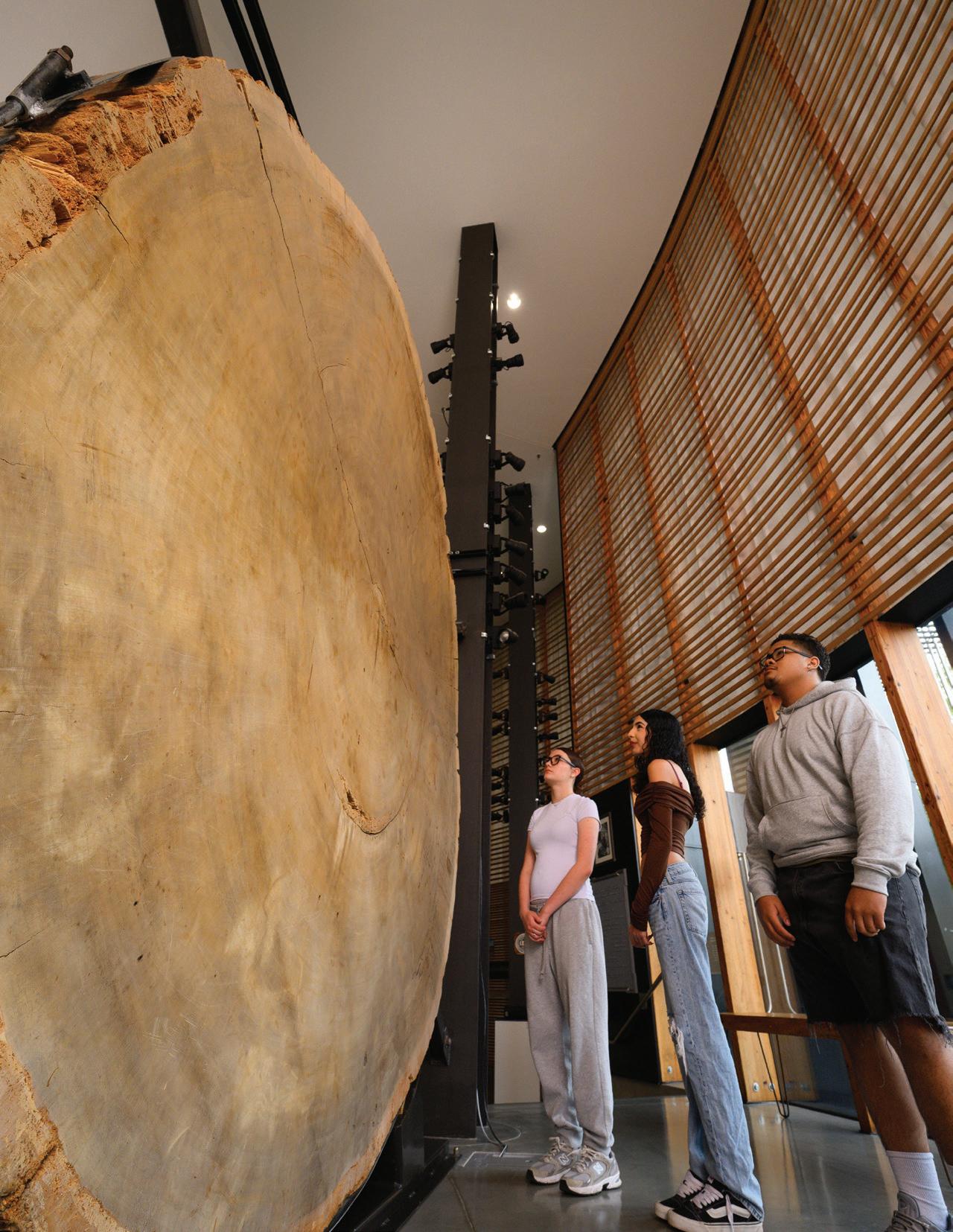
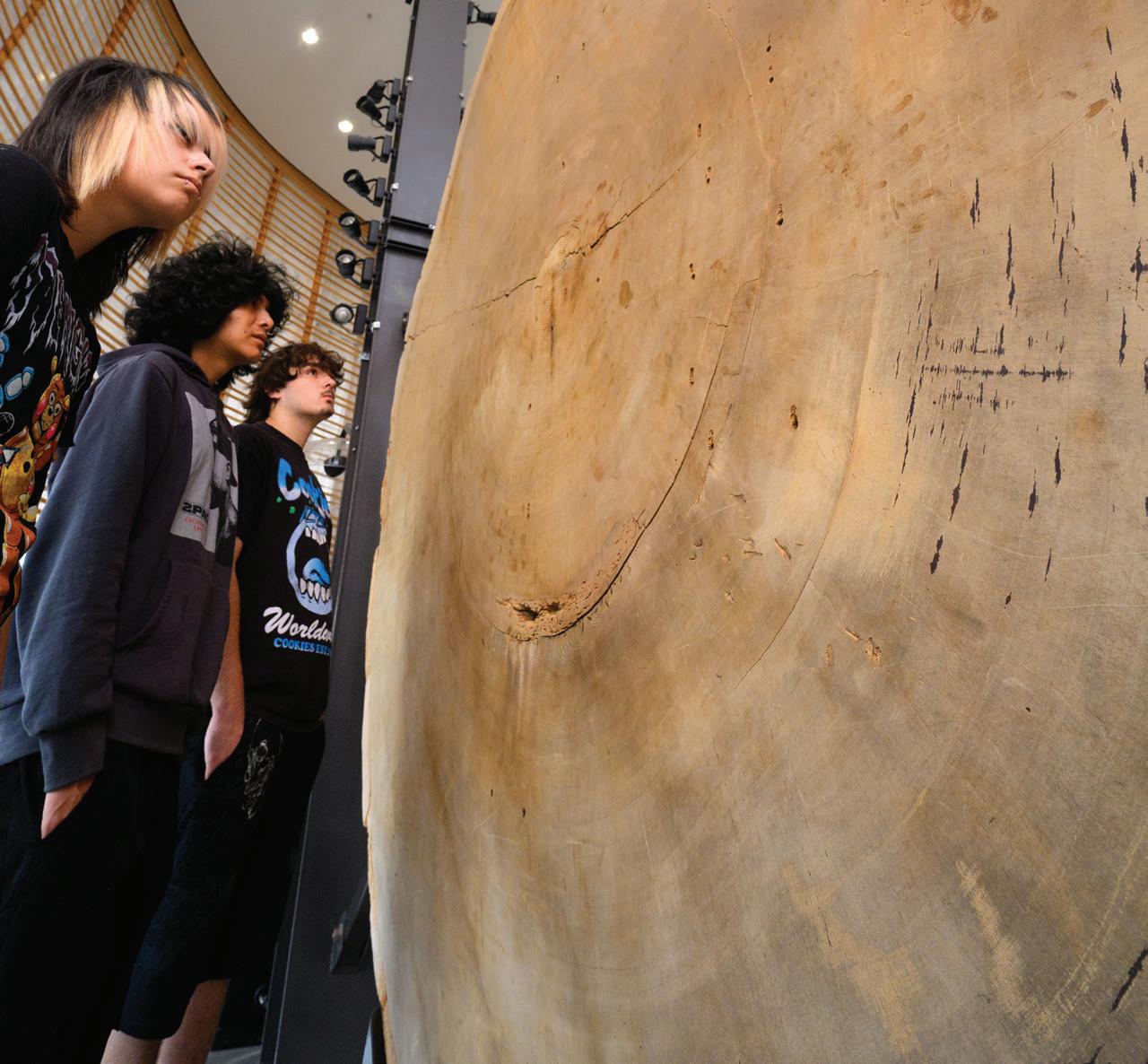

The College of Science is deeply committed to engaging with the public and inspiring the next generation through meaningful science education. At the Laboratory of Tree-Ring Research— the birthplace of dendrochronology, founded at the University of Arizona—students from Edge High School had a unique opportunity to experience science in a tangible, memorable way as they stood before a massive sequoia cross-section in the lab’s exhibit hall. Featured on the cover of this magazine, the aweinspiring specimen weighs nearly 4,000 pounds, spans 10 feet in diameter, and comes from a tree that lived from A.D. 212 to 1915 in California.
As students trace the tree’s intricate rings, they begin to see how trees act as natural timelines, with each ring representing a year of growth and holding clues about past climate and environmental conditions. Through experiences like this, students not only learn the fundamentals of tree-ring science, but also gain a deeper appreciation for how researchers interpret these living archives to uncover stories of droughts, fires, migrations, and the rise and fall of societies, connecting history, environment, and discovery in ways that resonate far beyond the classroom.
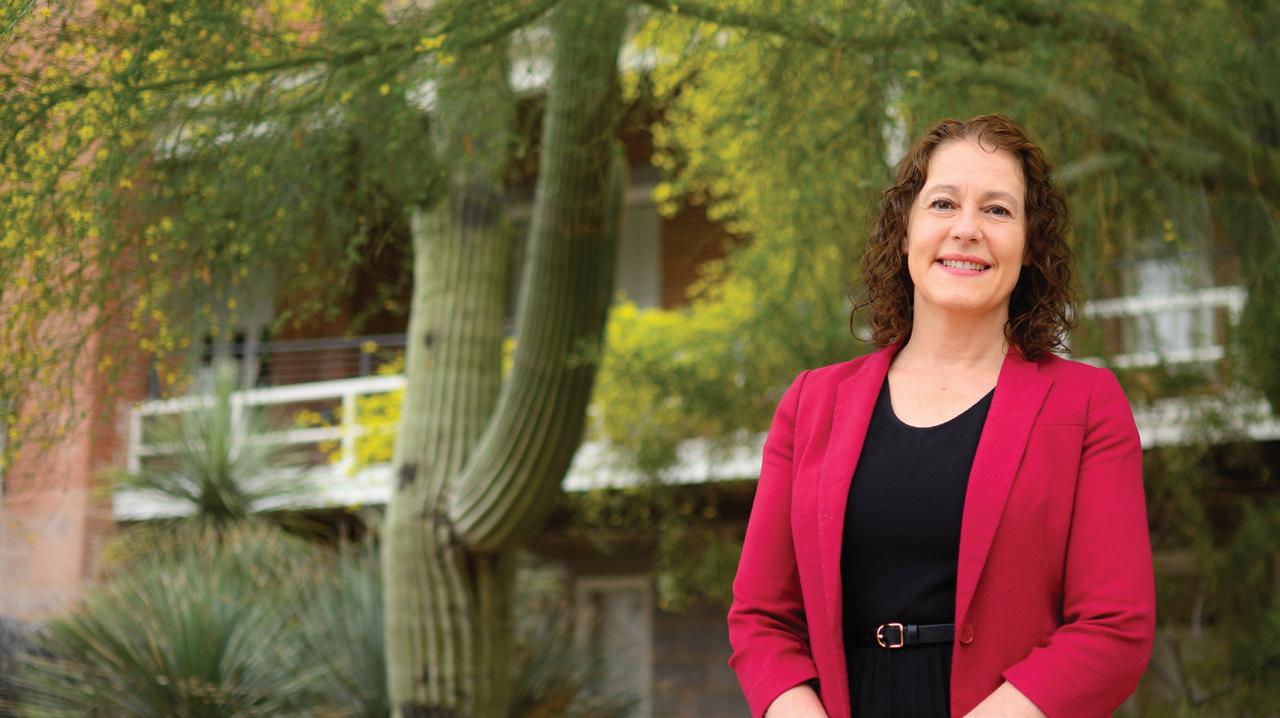
In this second annual College of Science Impact Report, we are pleased to share and celebrate the collective achievements of our college while strengthening our connection with you—our valued community of supporters and partners. The stories in these pages highlight the extraordinary work of faculty, students, staff and alumni, whose curiosity and dedication continue to advance discovery and improve lives.
This past year has been marked by exciting milestones for the College of Science and the University of Arizona. The college rose in national and global rankings in the physical sciences, placing eighth nationally among public U.S. universities and 45th globally. Numerous other degree programs, offered both on campus and online, earned top marks as well, establishing themselves among the nation’s best. These recognitions reflect the strength of our research enterprise and our growing impact across key measures of excellence, including research quality, global influence and meaningful engagement with industry partners.
Our commitment to sharing science with the public also continues to thrive. This year, the college celebrated 20 years of our public science lecture series, which annually welcomes thousands of attendees to campus and continues to serve as a powerful way to engage with the southern Arizona community and highlight the transformative research taking place at the U of A. We also marked the 50th anniversary of Flandrau Science Center & Planetarium,
one of the nation’s premier science centers. For half a century, Flandrau has inspired curiosity by bringing the sciences to tens of thousands of K–12 students and the public every year.
Across the college, renowned faculty and researchers are helping to shape the future of exploration beyond our planet. The U of A recently assumed a leading operations role in NASA’s Pandora mission, with the newly launched Pandora satellite becoming the first on-orbit NASA mission to be managed on campus from the university’s MultiMission Operations Center. This milestone represents the latest chapter in the university’s decades-long legacy of leadership in the space sciences.
You will read more about these exciting achievements— and many others—throughout this Impact Report. Together, they reflect the passion and ingenuity of the College of Science and the powerful impact of scientific discovery. Thank you for your continued partnership and support as we educate the next generation of scientists, expand the boundaries of knowledge and share the wonder of science with the world.
Sincerely,
Carmala Garzione
Sarah Brown Smallhouse Dean | College of Science Professor of Geosciences
DEPARTMENTS
Astronomy & Steward Observatory
Chemistry & Biochemistry
Computer Science
Ecology & Evolutionary Biology
Geosciences
Hydrology & Atmospheric Sciences
Laboratory of Tree-Ring Research
Lunar & Planetary Laboratory
Mathematics
Molecular & Cellular Biology
Neuroscience
Physics
Psychology
Speech, Language & Hearing Sciences
14 14
DEPARTMENTS 34 34
GRADUATE DEGREE PROGRAMS 22 22
8,573
Students
7,720 UNDERGRADS 7,720 UNDERGRADS 164 Masters | 689 PhD
853 GRADS
The University of Arizona is the first fouryear public university in the state of Arizona to be federally recognized as a Hispanic Serving Institution (HSI). As a research intensive land-grant HSI, the University of Arizona is committed to responsively meeting the educational needs of our vibrant and increasingly diverse communities of Arizona.
The College of Science has alumni around the globe spanning 6 continents and 93 countries.
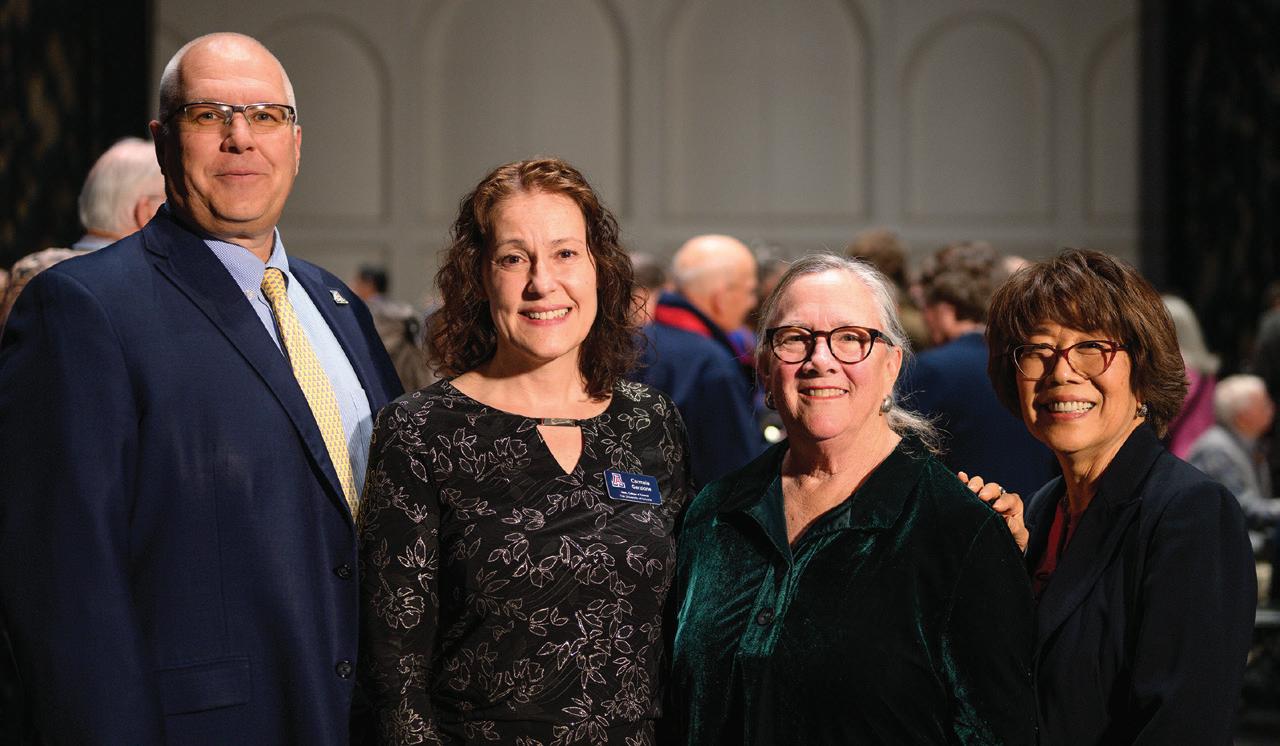
A transformational gift will create an endowed deanship in the College of Science, strengthening the college's leadership and advancing its mission for generations to come through research, education and outreach.
Created through a $5 million gift from the U of A alumna and longtime supporter, the Sarah Brown Smallhouse Endowed Deanship will provide funding in perpetuity for College of Science strategic initiatives that advance research, promote student success and increase the college's engagement with the community to create opportunities throughout the state, nation and world. The endowed deanship will help retain and attract competitive leaders for the college, elevating the role of science at the University of Arizona.
“Endowed leadership positions sustain excellence, enabling the long-term success of a preeminent public research university like the U of A,” said University of Arizona President Suresh Garimella. "Sarah Smallhouse's generosity strengthens the College of Science at a pivotal moment, providing resources for students, faculty, and staff while also enabling visionary leadership to drive progress. The College of Science is distinguished by multiple top-ranked programs with world-leading research, education and engagement, and we are grateful for Sarah's continued efforts to champion its impact.”
“It's impossible to overstate the incredible impact Sarah and her family have had on the University of Arizona,” said John-Paul Roczniak, president and CEO of the University of Arizona Foundation. “Through the Thomas R. Brown Foundations, they have championed student scholars and critical research advancements over decades. It is a true honor that the College of Science deanship, a critical leadership role on campus, is now named for a visionary thinker and tireless advocate for research and education. Thank you, Sarah.”
Smallhouse, who earned her Master of Business Administration at the University of Arizona in 1988, has long been committed to supporting education and scientific advancement, especially in Southern Arizona. Her philanthropy reflects a belief in the power of science to improve lives and inform decision-making across society, values instilled by her father, Thomas R. Brown. A foundation established in his name in 1998 has supported priorities across the state, as well as numerous areas in the University of Arizona – the foundation’s largest grant recipient – which includes funding endowed professorships and scholarships; programs to support K-12 learning in science, engineering, math and economics; and many more.
“If ever there was a time to get behind scientists and the work they do, it is now. Science is the process of discovery that makes mankind's expanding knowledge of the natural world possible,” Smallhouse said.
“Scientific curiosity and discovery are what engineering builds on, and what gives us a chance to successfully face the technical challenges of our time. It is a great privilege to support excellence in the U of A College of Science.”
U of A College of Science Dean Carmala Garzione is the inaugural holder of the endowed deanship. Garzione, who has served as dean since 2021 – and earned her master's and doctoral degrees from the College of Science in 1996 and 2000 – said the gift represents a foundational investment in the future of the college.
“I am deeply grateful to Sarah for this transformative gift," Garzione said. "Sarah is an ardent supporter of the sciences who understands the critical importance of expanding educational access and tackling society's most complex challenges. This endowed deanship provides enduring support that will allow us to invest boldly in people, ideas and interdisciplinary collaborations, ensuring the College of Science remains at the forefront of innovation and public impact.”
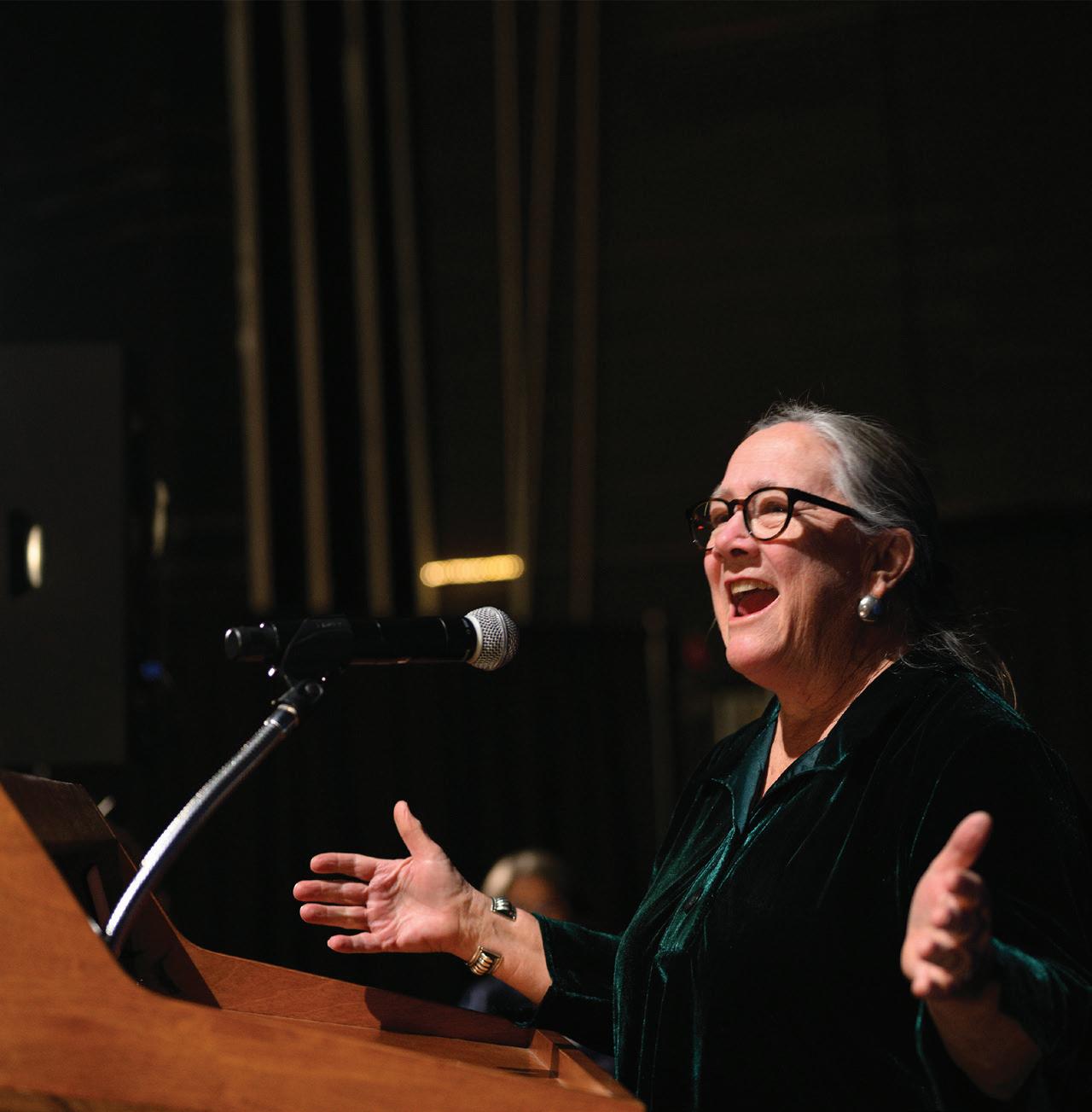
Under Garzione's leadership, the College of Science established a career center to support student connections with research, internships and job opportunities; developed and updated new and existing undergraduate and professional Masters programs that are in high demand by students and employers; and has increased sponsored research income and expenditures.
The gift is part of the university's Fuel Wonder campaign, a $3 billion effort that supports success for every student, research that shapes the future and engagement with communities to create opportunity.
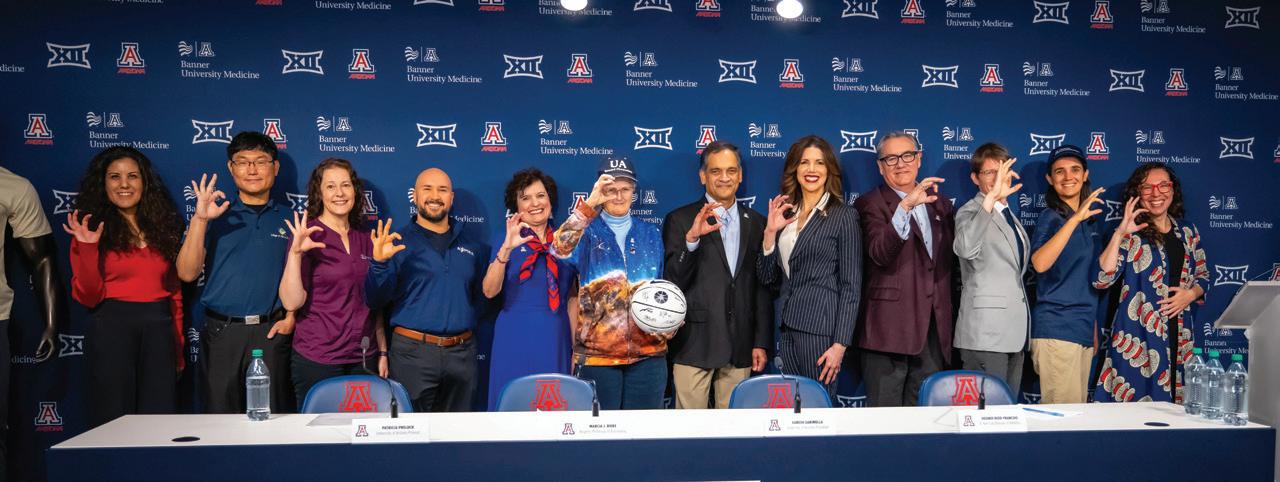
The University of Arizona has a well-earned reputation for its ability to defy gravity.
Long before the hit musical “Wicked” entered the public consciousness, U of A research paved the way for several of the most impactful NASA space missions – mapping the moon, photographing Mars, collecting the potential building blocks of life from the dust from an asteroid – while the university's men's basketball team rode the high-flying dunks that became commonplace during the Lute Olson era to the 1997 National Championship, along with several deep NCAA Tournament runs and multiple future NBA draft picks. Those two worlds collided during a weeklong celebration in February of the U of A's legacy of space and hoops in the first Arizona Galaxy Slam, highlighted by a nationally televised men’s basketball game between Arizona and BYU.
“This is an exciting moment for the University of Arizona because it reflects a fundamental truth. We are a university where excellence is not confined to one arena. Whether in a laboratory, a classroom, a studio or on a court, we pursue the same ideals: discipline, teamwork, perseverance and discovery,” said University of Arizona President Suresh Garimella.
“We are so excited to have this opportunity to celebrate the University of Arizona's excellence in athletics and astronomy,” said Provost and Chief Academic Officer
Patricia Prelock. “We believe it is important to showcase our university's biggest stars in creative and innovative ways to help advance our student success mission. Galaxy Slam is a wonderful example of the unique ways a Wildcat can pursue greatness.”
The U of A continues to lead the way in both realms, with the recent launch of Pandora, which will help scientists untangle the signals from the atmospheres of exoplanets, and the men's basketball team's hot start to the 2025-26 season.
“Galaxy Slam reflects our belief that athletics and academics are strongest when they reinforce one another,” said R. Ken Coit Director of Athletics Desireé Reed-Francois. “When we elevate scholars alongside our teams, we show what it truly means to be a Wildcat: competitive, curious and committed to excellence in every arena.”
The shared excellence in each of these areas showcases the university's legacy of determination and the definition of what it means to be a Wildcat.
“The inaugural Galaxy Slam is about more than a basketball game; it is about building a culture where our athletic pride and our research excellence are celebrated with equal fervor,” said Tomás Díaz de la Rubia, senior vice president for research and partnerships. “Galaxy Slam leverages the massive platform of Arizona Athletics to create a gateway for people to learn about our groundbreaking work in
space sciences, from mapping the moon and Mars to sampling distant asteroids and leading deep-space explorations to search for life on other planets. This is an opportunity to showcase the exceptional work our faculty and staff are doing – in labs, classrooms and museums like the Flandrau Science Center and Planetarium – to an audience that may not realize they are part of a world-class research hub.”
To celebrate Galaxy Slam week in February, the university hosted several space-themed events on campus, including the Astronomy Lecture Series, Galaxy Slam Trivia Night, a special Galaxy Slam-themed display at Worlds of Words, and the men’s basketball game where members of the Arizona space sciences community were honored on court during halftime.
As part of Galaxy Slam week, the Arizona men’s basketball team debuted special uniforms with components of the James Webb Space Telescope (JWST) interwoven into the jerseys and shorts. The waistband included the iconic University of Arizona ‘block A’ logo with replica mirrors from the JWST surrounding it. The players wore the uniforms in a nationally televised game against the BYU Cougars in which the Wildcats won, 75-68.

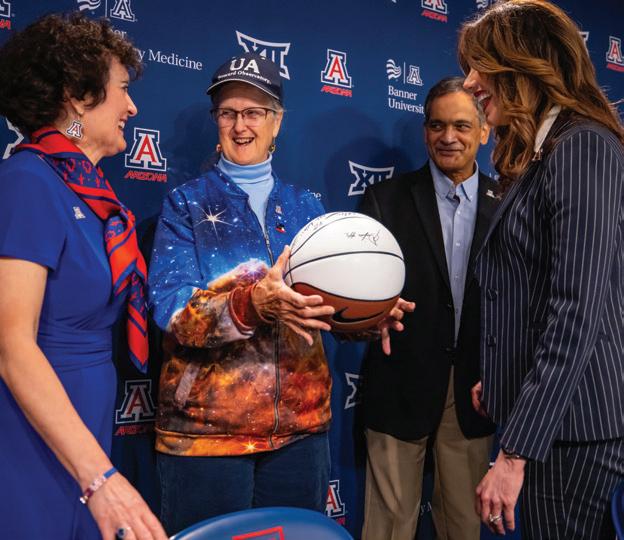
Before helping launch the field of infrared astronomy, Marcia Rieke spent her college years on the basketball court — an experience she said shaped her approach to science.
A Regents Professor in the University of Arizona’s Steward Observatory, Rieke was named the Big 12 Conference Faculty of the Year on Feb. 9, recognized for both her scientific achievements and her background as a collegiate athlete. She served as principal investigator of NIRCam, a key instrument aboard the James Webb Space Telescope, which delivered groundbreaking images and data about the early universe.
Since joining the university in 1976, Rieke made transformative contributions to infrared astronomy, leading major research efforts and mentoring generations of students. She likened her role as principal investigator to that of a coach — building teams, matching strengths to tasks and fostering collaboration over long periods to achieve ambitious goals.
Rieke was honored at the Galaxy Slam Basketball Game on Feb. 18, part of a weeklong initiative celebrating the university’s leadership in space science. Now in its second year, the Big 12 Faculty of the Year Award recognized exceptional faculty across all 16 conference institutions for excellence in innovation and research.
For Rieke, Galaxy Slam represented a fitting intersection of her passions: exploring the farthest galaxies in the universe and cheering on the game she had loved since college.
The University of Arizona is a place of learning, invention and discovery. Tech Launch Arizona’s mission is to collaborate with creators and the local community to help bring those discoveries to the world through commercial pathways.
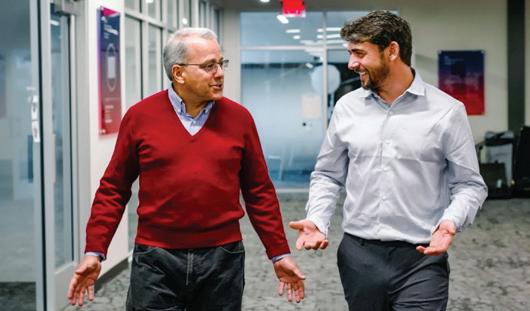
In 2023, Tech Launch Arizona (TLA) launched a campaign to create a seed fund dedicated to helping startups commercializing University of Arizona innovations span the “valley of death,” the period soon after a venture launches and faces its highest risk of failure.
As of today, the Wildcat Philanthropic Seed Fund (WPSF) has raised nearly 60% of its initial goal and has now begun making its first investments, including one involving the College of Science.
“We are deeply grateful to the donors who have made the contributions that have allowed us to launch and grow the fund,” said TLA Associate Vice President Doug Hockstad. “Their passion for UA innovation and entrepreneurship, paired with their generosity, are truly transforming our ecosystem.”
Following a rigorous application and vetting process, the WPSF has made its first investments in three startups commercializing inventions developed at the U of A, including CarbeniumTec, led by College of Science associate professor Dr. Thomas Gianetti.
Launched in 2022, CarbeniumTec was founded to commercialize a new type of organic-based reductionoxidation battery, known as a “redox flow battery,” that reimagines how electricity is stored. Based on the research of Thomas Gianetti, associate professor in the Department of Chemistry and Biochemistry, and assistant
COLLEGE OF SCIENCE TOTALS:
professor at the French National Centre for Scientific Research and postdoctoral research associate at the time in Gianetti’s lab, Joules Moutet, the company is developing a sustainable, metal-free and environmentally friendly solution that addresses the need for large-scale, longerterm energy storage.
The current lithium-ion-based batteries that dominate the stationary storage sector are best suited for four to six hours of storage. To effectively implement renewables like solar and wind energy on large scales, the market needs solutions that can store larger amounts of electricity for periods of eight to twelve hours.
“While these (investment) funds are essential for us to develop our product, it’s not just about success on the technology level,” said Gianetti. “It will set us up for success on the business level, being able to go out there with this credibility from the institution and talk to venture capitalists.”
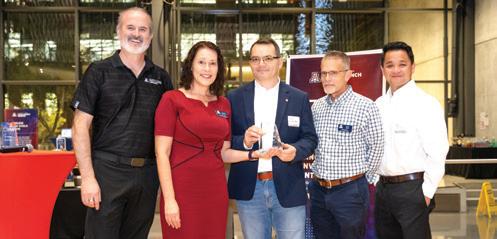
The College of Science received the 2025 I-Squared Award for Campus Collaboration from Tech Launch Arizona in recognition of its sustained and recent impact on commercialization through cross-campus partnerships and innovation leadership.
Research in the College of Science is on the cutting edge of transformative discovery and provides millions of dollars of economic impact to the southern Arizona community and beyond. Our faculty and researchers are dedicated to advancing knowledge and addressing complex challenges through innovative studies and collaborations while teaching and helping develop the next generation of scientists.
TOTAL RESEARCH FUNDING:
$147,986,347
NASA
National Science Foundation
National Institutes of Health
U.S. Department of Energy
U.S. Army Contracting Command
The University of Arizona is No. 2 in astronomy and astrophysics research expenditures and ranks in the top 4% of all U.S. Universities in research and development expenditures.
In the College of Science, we see discovery and problem-solving as part of a continuum. Our researchers are driven by curiosity—asking fundamental questions about how nature, the world, and the universe work—but also by the need to use that knowledge to rise to real challenges, in energy, environment, health, and technology, in ways that align with the university’s strategic research priorities. We involve students directly in this work, not just as learners but as contributors. And we do it in partnership with industry, communities, and national labs because the problems we’re tackling are bigger than any one group.
By Scott Coleman, College of Science Communications
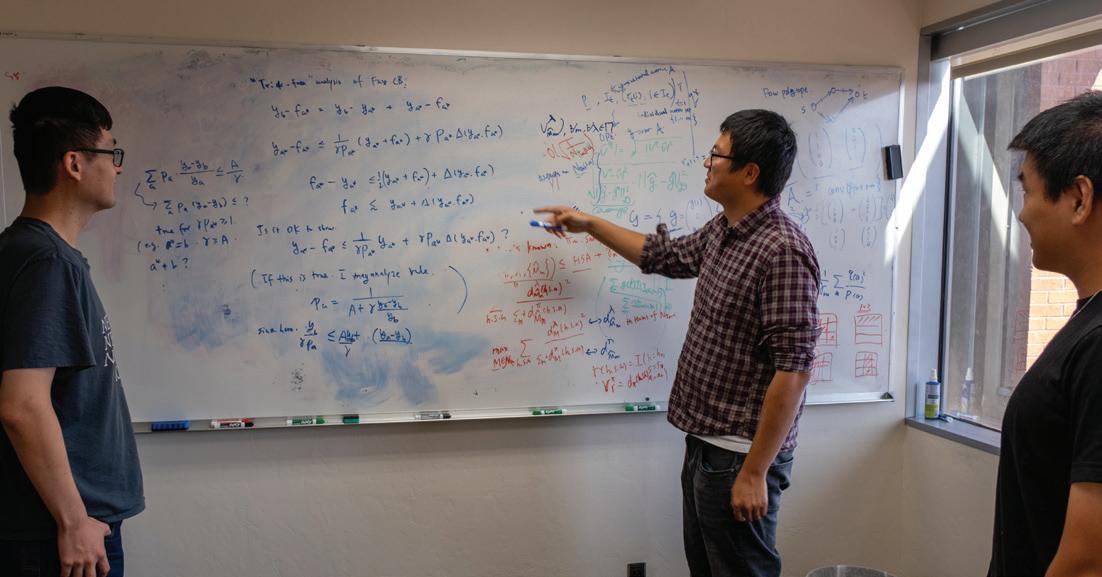
A University of Arizona computer scientist is pushing the boundaries of how artificial intelligence systems learn, developing new approaches that allow machines to adapt through interaction rather than rely solely on preexisting data.
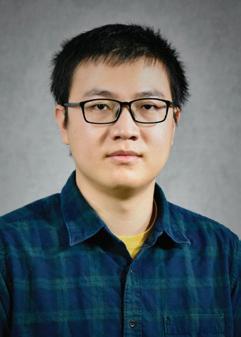
Dr. Chicheng Zhang, an assistant professor in the Department of Computer Science, is advancing the theoretical and practical foundations of interactive machine learning — a rapidly evolving area of AI with implications for everything from autonomous systems to human-centered technologies.
Zhang’s research efforts have recently been recognized with support from the National Science Foundation through a prestigious CAREER Award, which will help accelerate his work on building more efficient, reliable and adaptable machine learning systems. The award provides sustained funding to pursue foundational questions in interactive learning while expanding the impact of his research program, including new opportunities for collaboration and student training.
Unlike traditional machine learning approaches that rely on static datasets, interactive learning agents adaptively
collect data through experimentation, often in real time. This paradigm is especially important in settings where data is expensive, limited or safetycritical, such as autonomous driving, robotics and humanfacing AI systems. Zhang’s research seeks to better understand how these systems can learn efficiently, safely and continuously in complex, real-world environments where uncertainty and changing conditions are the norm.
His project, “Foundations of Interactive Machine Learning with Rich Feedback,” addresses several core challenges in the field, including improving data efficiency, ensuring reliability during learning, and enabling the effective reuse of previously collected data. By developing algorithms grounded in rigorous theoretical analysis, Zhang aims to produce methods
that not only offer formal performance guarantees but also translate effectively to practical applications. A key goal is to bridge the gap between elegant theoretical models and the messy realities of realworld deployment.
“I am grateful to the NSF for supporting my research group’s efforts to understand and harness the power of interaction in machine learning,” said Zhang. “I’m also excited about the possibility to translate the theoretical insights we develop into practical algorithms for real-world applications, including those in robotics and wireless communications where I have active collaborations.”
The research is organized around three key thrusts. The first examines interactive learning in singlestep decision-making, particularly active learning strategies that enable models — including complex neural networks — to selectively acquire the most informative data. This approach can dramatically reduce the amount of labeled data required, making machine learning more practical in domains where data collection is costly or time-intensive.
The second thrust focuses on sequential decisionmaking, developing approaches that allow AI systems to safely learn from human demonstrations and interventions. By incorporating feedback from human users in a structured way, these systems can improve performance while minimizing the risks often associated with trial-and-error learning in real-world settings.
The third explores how interactive and offline learning can be unified, with an emphasis on enabling systems to reuse past data and improve over time without starting from scratch. This line of work is critical for building AI systems that can learn continuously, adapting to new environments and tasks while retaining knowledge gained from previous experience.
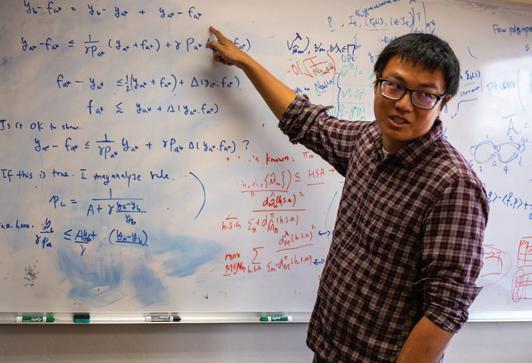
Dr. Zhang received a CAREER Award from the National Science Foundation (NSF) for his research efforts in building more efficient, reliable and adaptable machine learning systems.
“NSF CAREER Awards are extremely competitive and very prestigious, so Dr. Zhang's CAREER Award reflects the high regard that he has achieved as a wellrespected and impactful researcher in the machine learning community,” said Dr. Ellen Riloff, professor and head of Computer Science at U of A. “Dr. Zhang's new research project will develop novel methods in interactive machine learning that will produce principled and practical state-of-the-art techniques for training AI systems efficiently.”
In addition to his research contributions, Zhang is leading efforts to expand engagement in AI through education and mentorship.
His plans include an intramural lecture series in partnership with the University of Arizona DataLab, outreach activities for middle school students through the Department of Computer Science Ambassadors Program and expanded opportunities for undergraduate research and curriculum development. These efforts are designed to broaden participation in AI and help prepare the next generation of scientists and engineers in an evolving world becoming increasingly interwoven with artificial intelligence platforms.
By Kylianne Chadwick, University Communications
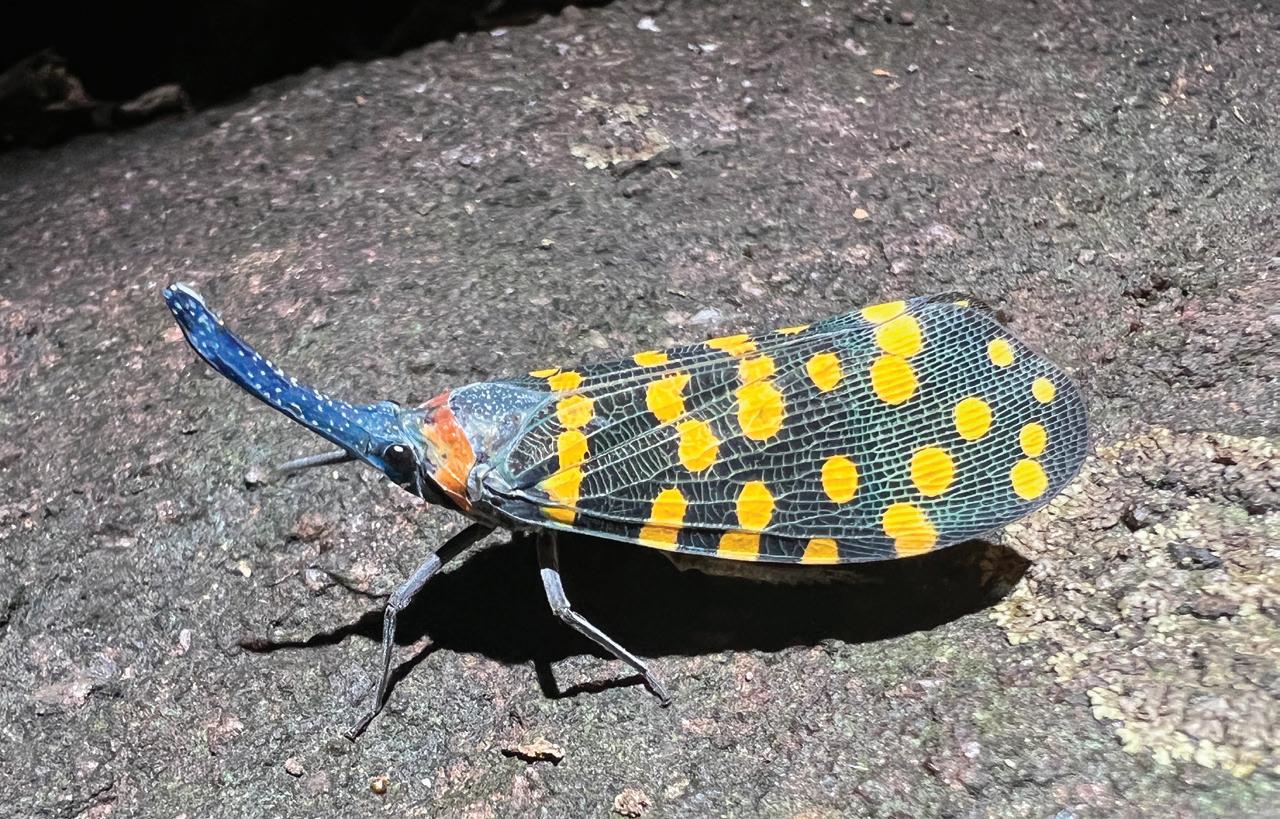
About 300 years ago, Swedish naturalist Carl Linnaeus set out on a bold quest: to identify and name every living organism on Earth. Now celebrated as the father of modern taxonomy, he developed the binomial naming system and described more than 10,000 species of plants and animals. Since his time, scientists have continued to describe new species in the quest to uncover Earth's biodiversity.
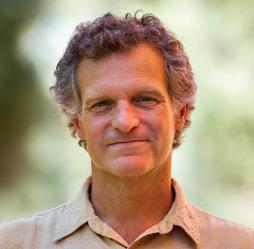
According to a new University of Arizona-led study published in Science Advances, scientists are discovering species quicker than ever before, with more than 16,000 new species discovered each year. The trend shows no sign of slowing, and the team behind the new paper predicts that the biodiversity among certain groups, such as plants, fungi, arachnids, fishes and amphibians is richer than scientists originally thought.
“Some scientists have suggested that the pace of new species descriptions has slowed down and that this indicates that we are running out of new species to discover, but our results show the opposite,” said
John Wiens, a professor in the University of Arizona Department of Ecology and Evolutionary Biology, in the College of Science, and senior author of the paper. “In fact, we're finding new species at a faster rate than ever before.”
The team analyzed the taxonomic histories of roughly 2 million species, spanning all groups of living organisms. Between 2015 and 2020 – the most recent period with comprehensive data – researchers documented an average of more than 16,000 new species each year, including more than 10,000 animals (dominated by arthropods and insects), 2,500 plants and 2,000 fungi.
“Our good news is that this rate of new species discovery far outpaces the rate of species extinctions, which we calculated to about 10 per year,” said Wiens, pointing to another study he led that published in October. “These thousands of newly found species each year are not just microscopic organisms, but include insects, plants, fungi and even hundreds of new vertebrates.”
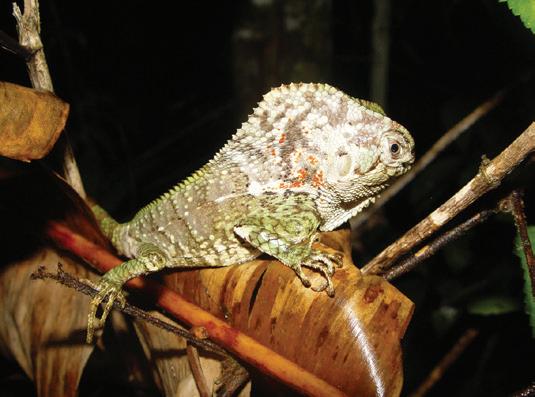
On average, more than 100 new reptile species are described each year. John Wiens photographed this helmeted lizard in Costa Rica.
Scientists are describing more species per year than at any point in history, Wiens and his co-authors found. The team also analyzed the rates of new species appearing over time to project how many species will be discovered and described in the future.
For example, they projected that there might be as many 115,000 fish species and 41,000 amphibian species, even though there are only about 42,000 fish and 9,000 amphibian species described now. They also projected that the final number of plant species might be over a half million.
“As the famous ecologist Robert May said, if visiting aliens asked us how many species live on our planet, we would have no definitive answer,” said Wiens. “Right now, we know of about 2.5 million species, but the true number may be in the tens or hundreds of millions or even the low billions.”
For now, the scientists predict that the discovery rate of new living things will continue to increase. For example, scientists have currently identified around 1.1 million insect species, yet many scientists believe that the true number is somewhere around 6 million. In a previous paper, Wiens suggested it could even be in the ballpark of 20 million.
“Right now, most new species are identified by visible traits,” said Wiens. “But as molecular tools improve, we will uncover even more cryptic species – organisms distinguishable only on a genetic level. This is especially promising for revealing more unique bacteria and fungi.”
“Discovering new species is important because these species can't be protected until they're scientifically described,” Wiens added. “Documentation is the first step in conservation – we can't safeguard a species from extinction if we don't know it exists.”
Additionally, the discovery of new species contributes to finding new natural products for human benefit. Some examples of natural products include GLP-1 receptor agonists, increasingly popular weight-loss drugs inspired by a hormone found in Gila monsters.
Spider and snake venoms and many plants and fungi also contain natural products with potential medicinal applications, including treatments for pain and cancer.
Beyond medicine, many species have adaptations that can inspire human inventions, such as materials mimicking the "super-clinging" feet that allow geckos to climb up vertical surfaces.
“We're still just scratching the surface of what these species can do for humanity,” Wiens said.
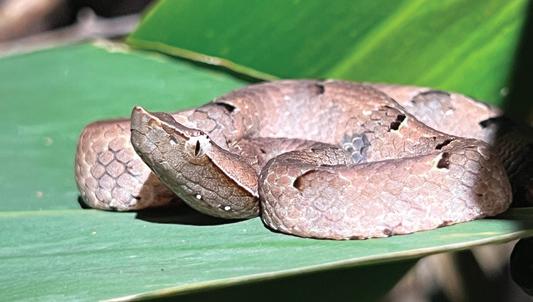
The study shows that there may be more than 16,000 reptile species on Earth, of which only about 12,000 have been formally described, including this hump-nosed viper from India.
Going forward, the researchers plan to map where most new species are commonly found to identify geographic hotspots for undiscovered biodiversity. They are also interested in who is making the discoveries and are testing whether it has changed from predominantly European scientists to researchers documenting new species from their own countries.
“Even though Linnaeus' quest to identify species began 300 years ago, 15% of all known species have been discovered in just the past 20 years,” Wiens said. “So much remains unknown, and each new discovery brings us closer to understanding and protecting the incredible biodiversity of life on our planet.”
By Katy Smith, University of Arizona Office of Research and Partnerships
A study led by University of Arizona researchers shows that decades of groundwater pumping by humans has depleted Tucson-area aquifers far more than natural climate variation.
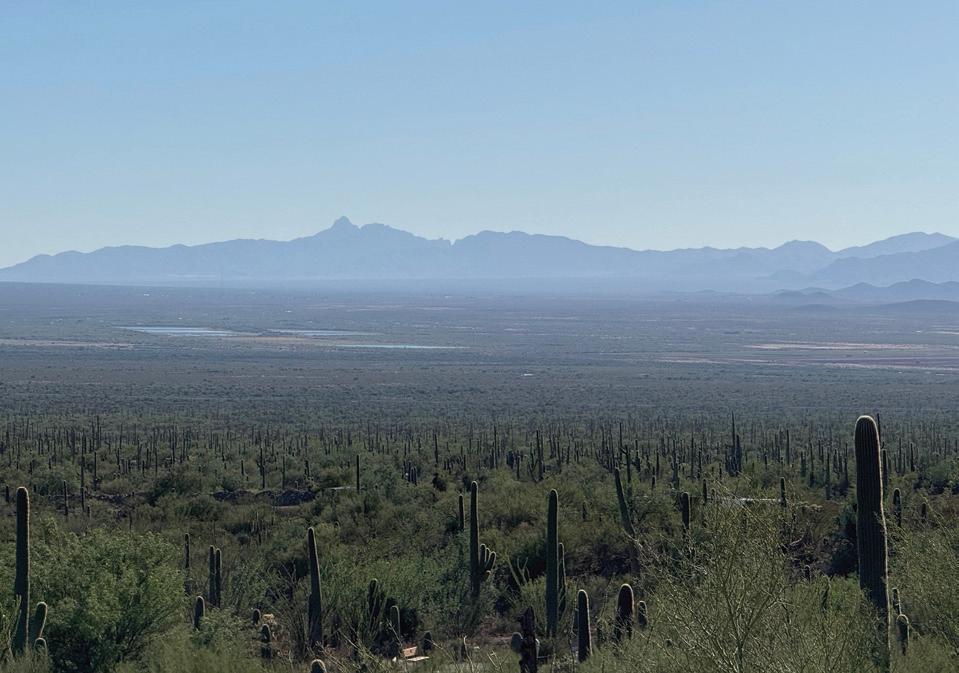
Published in the journal Water Resources Research, the study provides the first multi-millennial reconstruction for the region that places human impacts on groundwater into long-term context.
“This is the first time we've been able to get a record of the water table through time,” said Jennifer McIntosh, senior author and the Thomas Meixner Endowed Chair of Hydrology and Atmospheric Sciences in the College of Science.
Since the climactic period known as the Last Glacial Maximum – about 20,000 years ago – precipitation has continuously recharged the aquifer under Tucson, the study concluded. During dry climate periods, less precipitation seeped back into the aquifer, and the
water table dropped by as much as 105 feet (32 meters), compared with the levels in wetter periods. However, modern pumping from the mid-20th century to present day caused twice the drawdown of the water table compared with natural climate fluctuations.
“It really underscores the impact that humans can have on the environment in a short time,” said first author and recent U of A doctoral graduate Chandler Noyes.
Prior to this study, information on recharge rates between the Last Glacial Maximum and the midHolocene – about 6,000 years ago – was limited, McIntosh said. The researchers filled knowledge gaps by analyzing the blend of water under the Tucson Basin, the desert valley surrounding the city. Fossil water –precipitation that entered an aquifer over 12,000 years ago – is naturally mixed with water that recharged the groundwater hundreds to thousands of years ago and some that dates to recent years.
In order to reconstruct the age and recharge history of water in the Tucson Basin, the research team identified chemical and isotopic markers that entered the water either through the atmosphere or via aquifer sediments. While these naturally occurring substances provide clues to a water sample's source and age, the water is from a mix of different times, and mathematical models are needed to untangle the overlapping markers.
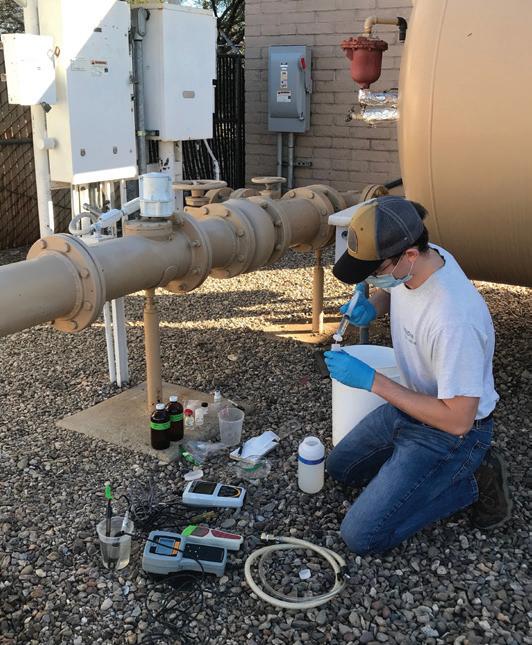
The team used mathematical models integrating multiple markers to reconstruct groundwater ages, recharge rates and water table depths over thousands of years. Combining these markers also provided data to infer past climate conditions, including air temperatures and precipitation patterns.
“The water we drink carries this record of what happened with climate in the Tucson Basin,” McIntosh said, adding that these new techniques for linking climate and hydrology could be applied to aquifers around the world.
Noyes said the study's results can help water resource managers anticipate how aquifers might react to future changes, whether natural or driven by humans.
“These methods provide more complete groundwater ages and an understanding of how groundwater levels respond to climate change,” he said.
Tucson residents began pumping groundwater heavily around the 1940s to support irrigated farming and a rapidly growing population, according to a 2021 U of A report. For decades, signs of overdraft and well failures increased in an environment offering little restriction.
The 1980 Groundwater Management Act established formal controls and introduced sustainability measures. In 1992, the Central Arizona Project began delivering Colorado River water to Tucson.
“Today, about half of the water from our taps comes from local groundwater, and the other half from the Colorado River,” McIntosh said.
Local conservation efforts, in combination with the statewide measures, have helped many of Tucson's wells partially rebound from heavy usage during the 20th century. However, McIntosh added, the study's results indicate that while the aquifer is somewhat renewable, recharge is slow and limited, and climate continues to play a key role in the region's long-term water availability.
“Even if we were to go back to the end of the last ice age, when it was much colder and wetter in the Tucson Basin, we could not recover the amount of groundwater that we've removed,” McIntosh said. “Even a really wet climate wouldn't save us,” indicating that no natural return to wetter conditions could restore the volume of water that has been lost to pumping.
One promising trend is the city of Tucson's recent adoption of the One Water 2100 plan, McIntosh said. Among other initiatives, the plan calls for continuing and expanding use of treated effluent, including releasing the recycled wastewater into the Santa Cruz River, where it seeps into the ground and helps recharge the aquifer.
“We can enhance recharge by adding more water,” she said. “One way of doing that is releasing our treated effluent in those locations where we know there is modern recharge, providing the highest potential of that water making it to the water table.”
By McKenna Manzo, College of Science Communications
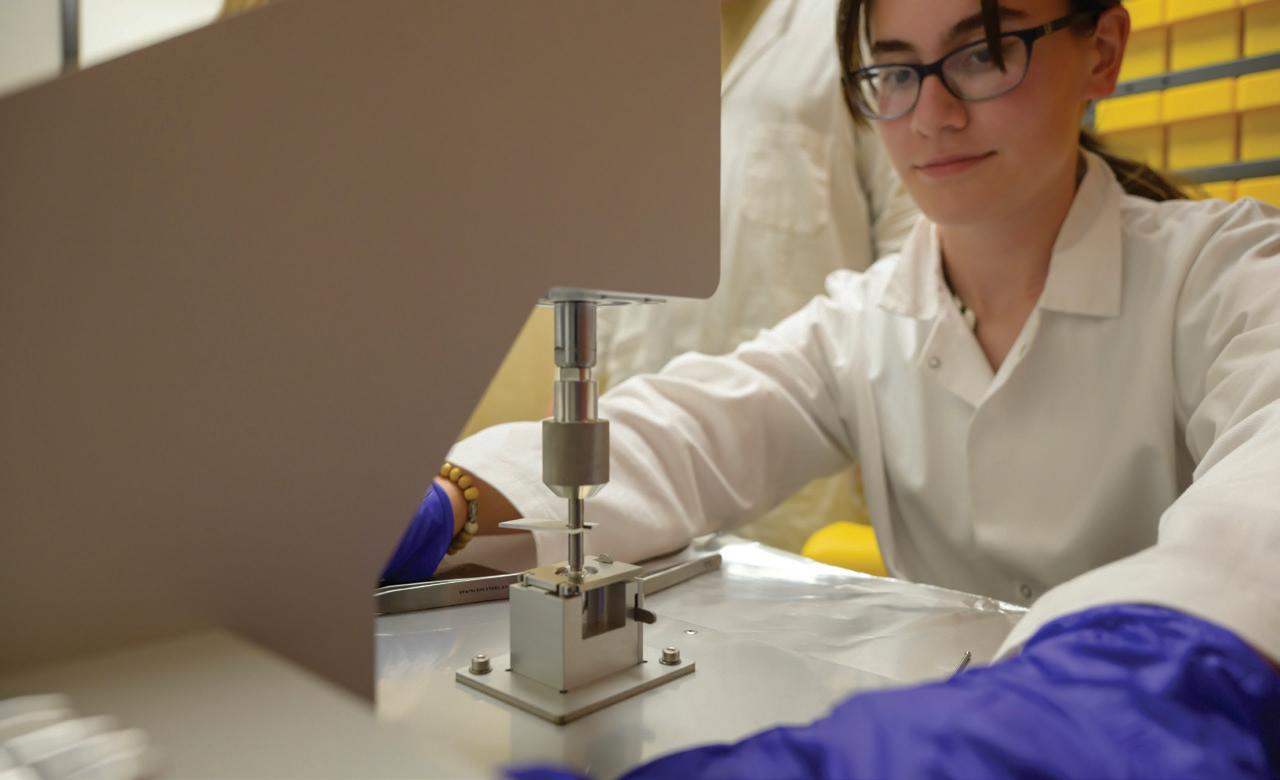
History can be confined in textbooks or materialized in artifacts behind glass.
At the University of Arizona, researchers see it written in the lines of wood, in the rings of trees. Their work is anchored in the new Laboratory for Tree-Ring Innovations in Mass Spectrometry of Earth Systems ( TIME Lab), an innovative facility that combines high resolution radiocarbon and stable isotope analysis. It is a space that combines U of A’s world-renowned tree-ring archive with brand-new technology designed to push science into places it hasn’t gone before.
“We aim to date the previously undatable, by matching single year radiocarbon patterns that are present in trees anywhere on Earth,” said Dr. Charlotte Pearson, associate professor and director of the TIME Lab. LOOKING DEEPER INTO THE PAST
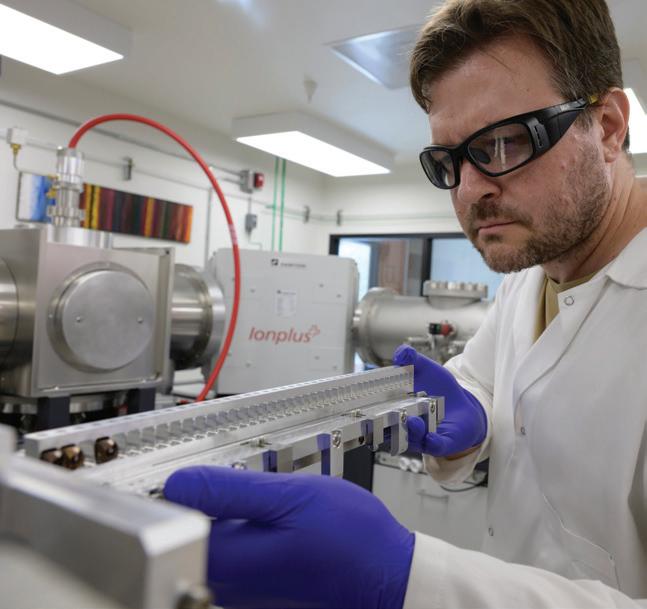
The TIME Lab houses an instrument known as a MICADAS, which stands for Mini Radiocarbon Dating
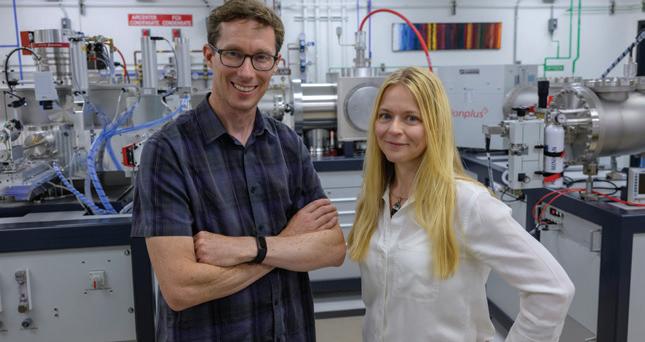
System. The machine can detect rare isotopes of carbon, including carbon 14, in samples as small as a splinter of wood. That data, paired with tree rings that already tell scientists exactly what year a sample grew, makes it possible to trace environmental changes with year-by-year accuracy.
For Pearson and her team, that means connecting natural events, like volcanic eruptions or solar storms, to the histories that unfolded around them.
“For example, we might suspect a major drought ended a period of occupation at a site,” she said. “If all the evidence dates to the same moment in time, that would support the idea of a catastrophic drought. But if the dating shows a series of events spread over 50 or 60 years, the story changes. Maybe it’s about the resilience of a society that endured a severe drought and carried on, even in a new location.”
That is one reason why understanding the timing of past events is so important.
“But it can also provide data to help predict when other types of hazards may happen again, and similar instances have happened before,” Pearson said.
“To learn from them, we need accurate chronology— precise dates down to the year—and that is our goal.”
The TIME Lab is also home to associate professor Soumaya Belmecheri’s isotope mass spectrometers, which measure stable isotopes of oxygen and carbon to reconstruct complex climate signals. Other instrumentation in the TIME Lab includes a stable isotope mass spectrometer with a laser system that can delve further into the details of past climate, as well as providing other patterns for dating.
Arizona has a long history in dendrochronology. The university holds one of the largest archives in the world, including bristlecone pine samples that stretch back over 5,000 years.
Pearson calls these tree time capsules that store evidence of climate shifts and natural events. With new methods, scientists can revisit wood samples collected decades ago and find new answers hidden inside.
“The time capsules that they hold have this knowledge that we haven't fully been able to extract yet,” Pearson said. “With the new TIME Lab, we will hopefully be able to learn a lot more from them, and we can do so with tiny amounts of samples so we're not destroying these precious resources. It will allow us to explore them in new ways and gain new knowledge and information.”
The TIME Lab isn’t just about research and measurements—it’s about the scientists who keep the work running and the students who will carry it forward.
The team includes associate professor Soumaya Belmecheri and her undergraduate students, who use cutting-edge stable isotope instrumentation for dating and complex climate research; radiocarbon scientist Chris Wood; professor David Frank; curator Peter Brewer; assistant curator Shannon Harrel; research technician Gabriella Vanover; research associate Li Cheng; and Dr. Bryan Black, professor and associate director of the University of Arizona’s Laboratory of Tree-Ring Research.
Pearson said outreach is built into the lab’s mission. Along with training students, she hopes to connect the public through creative approaches like art and illustration.
“We are also partnering with artists and illustrators to tell the story in different ways, acknowledging that everybody is different, and their ways of understanding are different,” she said. “We want to bring that to the general public so that they can understand this science and they can make judgments on it for themselves. We want to communicate science to the broader public, and we want to inspire the next generation. We're trying to make it more engaging with that purpose.”
By Phil Villarreal and Laine Kowalski, Office of Research and Partnerships
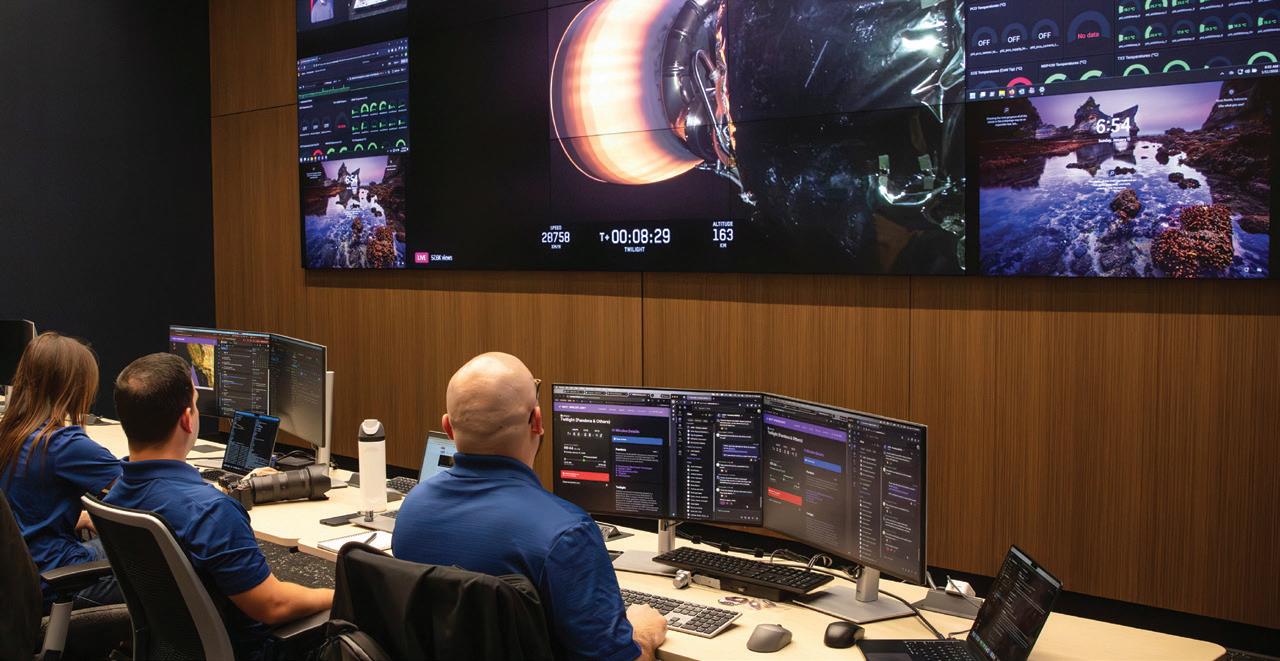
The newly launched Pandora satellite became the first on-orbit NASA mission to be managed from the University of Arizona's Multi-Mission Operation Center, or MMOC, on Jan. 16, marking a milestone in the U of A's decades-long history in space research and exploration.
Five days after Pandora launched into space via a SpaceX Falcon 9 on Jan. 11, the MMOC team assumed its mission control role from the Colorado-based aerospace company Blue Canyon Technologies.
“Pandora is the first NASA mission for which the University of Arizona is responsible for complete, end-to-end mission operations, including spacecraft commanding, telemetry monitoring, anomaly response and day-to-day flight operations, so this is breaking ground in that new territory for the university,” said Nic Altamirano, the acting MMOC manager and mission operations project manager for Pandora. “This mission allows us to be able to command and control the spacecraft, generate command sequences and work in a cross-disciplinary environment to showcase that the U of A has these capabilities, and that we cannot only do it for Pandora, but also other NASA missions.”
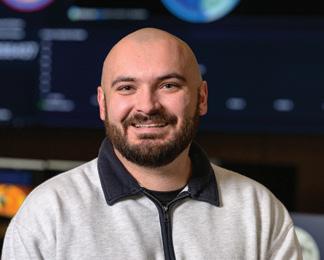
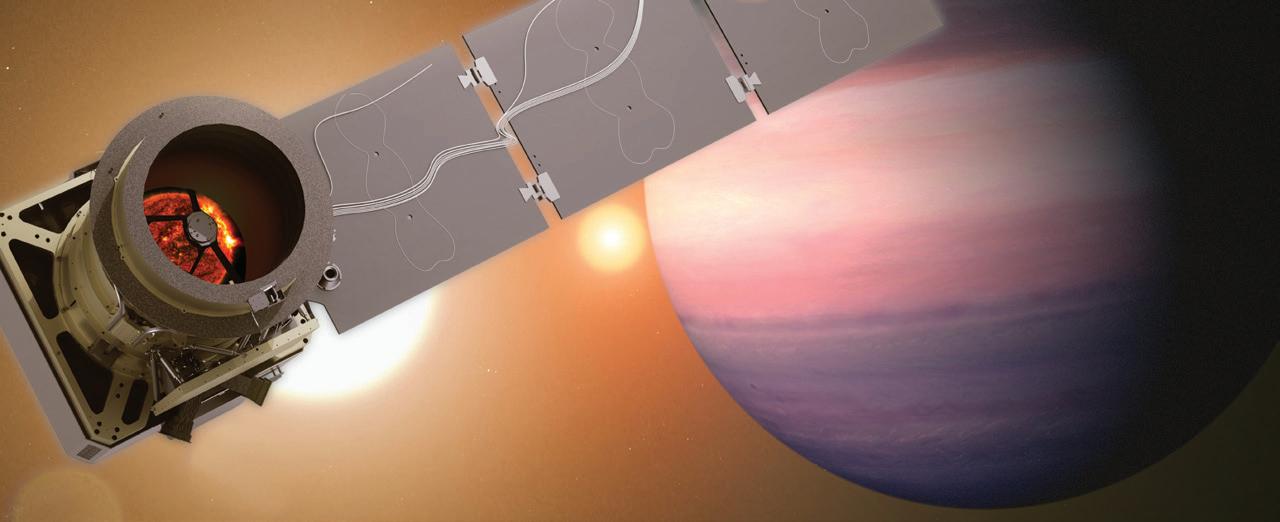
Altamirano and the rest of the team have been working with Daniel Apai, the U of A science lead of the mission and its exoplanet science team, and a professor for astronomy and planetary sciences at the U of A Steward Observatory and Lunar and Planetary Laboratory. The Pandora satellite will provide indepth study of at least 20 known planets orbiting distant stars to determine the composition of their atmospheres – especially the presence of hazes, clouds and water.
Tomás Díaz de la Rubia, senior vice president for research and partnerships, watched the Pandora launch in person from Vandenberg Space Force Base in California, and said he is thrilled to see the U of A take this central mission control role.
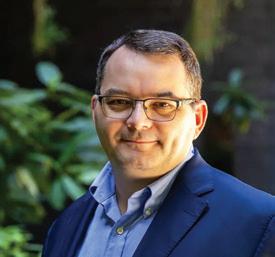
“The Pandora mission exemplifies the University of Arizona's ability to integrate complex mission operations with world-class space science,” Díaz de la Rubia said. “By operating this mission from Tucson, we are directly executing our strategic vision to shape the future of space sciences while expanding our understanding of the universe's potential for life.”
Through a contract with NASA, the MMOC, housed at the Applied Research Building on the U of A's main campus, will manage and track the spacecraft's operations in real time, monitor telemetry – data sent down from the satellite – and overall spacecraft health throughout its primary, 13-month quest.
Pandora is the first space telescope designed specifically to conduct detailed, multi-wavelength observations of exoplanets as they pass in front of their host stars. Equipped with an 18-inch mirror and advanced spectroscopic instruments, the satellite measures the tiny dip in the host star's brightness during a transit and analyzes the starlight that filters through a planet's atmosphere. This approach will allow scientists to identify chemical elements and molecules within exoplanet atmospheres—such as water vapor, oxygen and other volatile gases—that are essential building blocks of life to infer planetary climate and potential habitability.
To ensure these atmospheric signals are accurately interpreted, Pandora will also closely observe the host stars themselves, collecting data on stellar variability and activity that could otherwise obscure planetary
atmospheric signatures. In other words, a planet's atmosphere needs to be backlit by a uniform section of their star's surface.
“Our Pandora team will observe tiny changes in stellar surfaces and catch shadows of other planets. For these challenging measurements, we need precise control over the telescope's systems while it is speeding around the Earth seven times faster than a bullet. We need the perfect mix of science planning and mission operations,” Apai said.
The 10-person mission operations center team includes a mission operations manager, software engineers and developers, systems and operations engineers and a documentarian from the Arizona Space Institute and the Lunar and Planetary Laboratory at the U of A College of Science
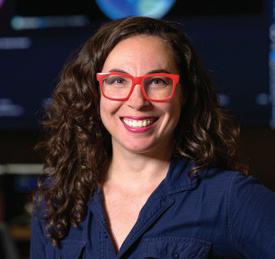
About every 45 minutes, Pandora has the potential to establish contact with a ground station on Earth. These ground contacts are short communication windows during which the spacecraft can send data to the ground and receive commands from the operations team. When these opportunities occur, the MMOC team manages the scheduling, coordination and use of the communications link to support spacecraft operations.
“We are super excited about taking over mission control for Pandora. It is something that has been many years in the making,” said Erika Hamden, director of the Arizona Space Institute. “It's so cool to see it finally happening, and it's exciting because Pandora is expected to help astronomers increase our understanding of exoplanets. It's such an honor to be a part of that.”
By Logan Burtch-Buus, University Communications
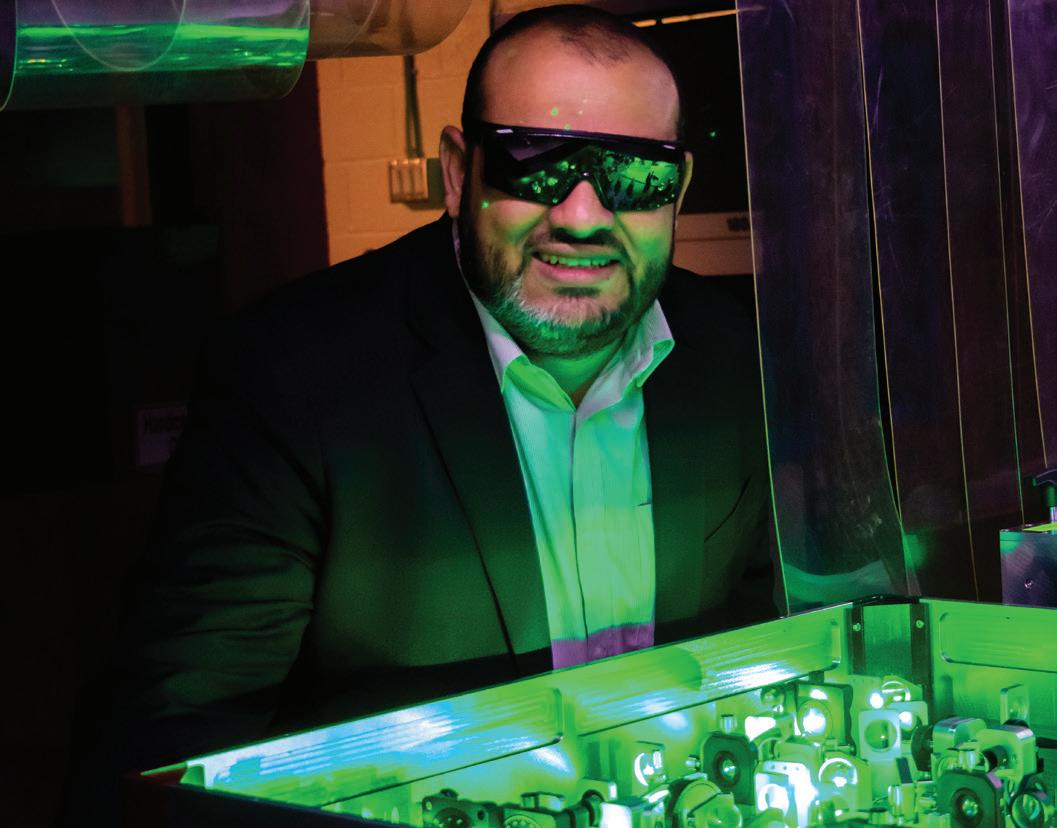
Researchers from the University of Arizona, working with an international team, have captured and controlled quantum uncertainty in real time using ultrafast pulses of light.
Their discovery, published in the journal Light: Science & Applications, could lead to more secure communication and the development of ultrafast quantum optics.
At the heart of the breakthrough is “squeezed light,” said Mohammed Hassan, the paper's corresponding author and associate professor of physics and optical sciences
In quantum physics, light is identified by two linked properties that roughly correspond to a particle's position and intensity – but can never be known with perfect precision, a concept known as uncertainty.
The product of these two measurements cannot fall below a certain threshold, much like the fixed amount of air in a balloon, with each measurement representing one side of the balloon.
“Ordinary light is like a round balloon, with uncertainty spread evenly between its measurements,” Hassan said.
“Squeezed light – also known as quantum light –is stretched into an oval, where one property becomes quieter and more precise, while the other grows noisier.”
This squeeze has real-world applications: gravitationalwave detectors already use squeezed light to cut through background noise and detect faint ripples in spacetime caused by distant celestial bodies.
Previous applications of squeezed light relied on laser pulses lasting milliseconds. Hassan wanted to explore whether it was possible to generate squeezed light with ultrafast pulses measured in femtoseconds, or one quadrillionth of a second.
“Creating quantum light with ultrafast laser pulses would be a revolutionary step, and the first real implementation
combining quantum optics and ultrafast science,” he said. “The main technical challenge was phasematching between lasers of different colors, which usually requires complex setups. I realized our technology could overcome this problem.”
Hassan and his colleagues developed a new method for producing extremely short bursts of light using an existing process called four-wave mixing, in which different light sources interact and combine with one another. Building on Hassan's previous work with ultrafast pulses, the team split a laser into three identical beams and focused them into fused silica, producing ultrafast squeezed light.
Earlier approaches to ultrafast squeezed light reduce uncertainty in a photon's phase, or its position within a waveform relative to its wavelength. Hassan's team instead squeezed a photon's intensity and demonstrated the ability to fluctuate between intensity and phase-squeezing by adjusting the position of the silica relative to the split beam.
If the silica is perpendicular, the photons all arrive together. Adjust the incident angle slightly, and one photon arrives later than the other. That small change is what controls the squeeze.
“This is the first-ever demonstration of ultrafast squeezed light, and the first real-time measurement and control of quantum uncertainty,” Hassan said.
“By combining ultrafast lasers with quantum optics, we are opening the door to a new field: ultrafast quantum optics.”
The team has already applied their technique to the field of secure communications. While ultrafast and squeezed light pulses have previously been separately used to transmit binary data, combining them enhances both speed and security.
“If someone intercepts data sent with quantum light, the network will immediately detect the intrusion – but the intruder could still acquire some information with a decoding key,” Hassan said. “Using our method, an eavesdropper not only disturbs the quantum state but also must know both the key and the exact pulse amplitude. Their interference affects the amplitude squeezing, meaning they cannot determine the correct uncertainty, and any decoded data is inaccurate.”
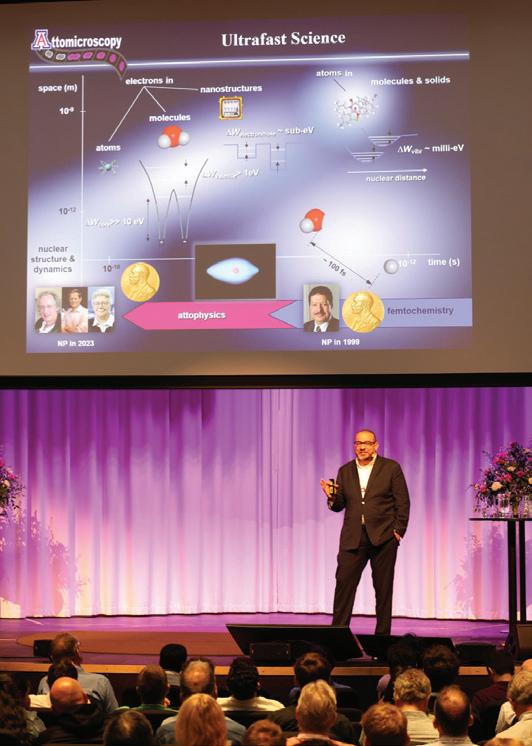
During a presentation, Dr. Hassan explains how ultrafast laser pulses can generate “squeezed light,” allowing researchers to control quantum uncertainty with unprecedented precision.
Beyond secure communications, Hassan hopes ultrafast quantum light will advance quantum sensing, chemistry and biology, leading to more precise diagnostics, new drug discovery methods and ultrasensitive detectors for environmental monitoring.
Hassan worked alongside Mohamed Sennary, a graduate student studying optics and physics and the paper's first author; Mohammed ElKabbash, assistant professor of optical science; and collaborators from the Barcelona Institute of Science and Technology, Ludwig Maximilian University of Munich and the Catalan Institution for Research and Advanced Studies.
By McKenna Manzo, College of Science Communications
When you walk across campus, drive a familiar route, or remember where you left your keys, your brain is quietly solving complex problems of space and memory.
At the University of Arizona, researchers are working to understand how these abilities change the brain and how that knowledge could someday help people facing memory loss or dementia.
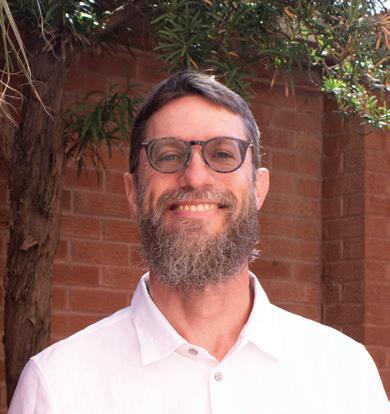
The study explored how training in memory and navigation impacts brain structure and connectivity. The study was led by Dr. Arne Ekstrom, professor of psychology and director of the Human Spatial Cognition Laboratory, and Dr. Li Zheng, a research scientist, in collaboration with Dr. Steven Weisberg, professor of psychology at the University of Florida and co-senior author, as part of a partnership between the University of Arizona and the University of Texas, Arlington.
“We expected to see growth in the hippocampus because past studies showed that intensive navigation training, like what London taxi drivers experience,
increases its volume,” Ekstrom said. “But what we found was that the structure itself didn’t change. Instead, the connections between brain regions did.”
The hippocampus, a small structure deep in the brain, is critical for forming memories and navigating environments. While the volume of the hippocampus remained stable, the “highways” that link it to other regions became stronger.
“You can think of it like cities and roads,” Ekstrom explained. “We didn’t see the cities getting bigger, but the highways between them became more active. The communication between brain regions improved.”
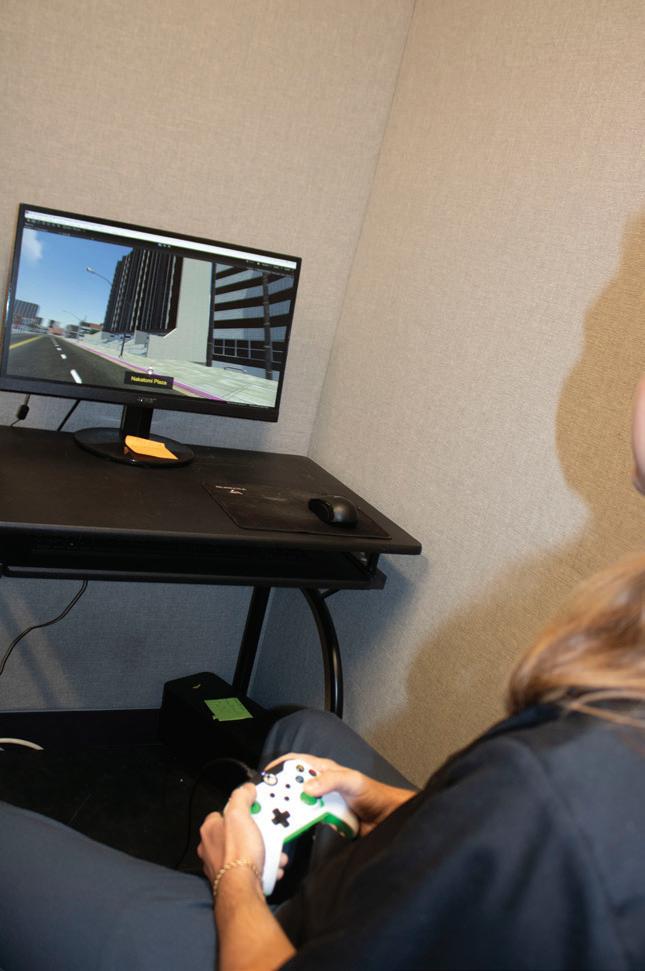
For the study, young adults underwent 10 days of training designed to strengthen memory and navigation skills.
The results showed that people with larger hippocampi learned more quickly. This finding could help tailor cognitive training to individuals.
While the current research focused on younger adults, Ekstrom and his team are expanding the study to include older adults to explore how aging affects these same connections.
“Older adults tend to learn a little slower, so our next step is a longer training program,” Ekstrom said. “We want to know if strengthening these connections could help preserve navigation and memory skills that often decline with age.”
Zheng said this research also offers an opportunity to compare two key areas of her work — memory and navigation — and how they interact in the brain.
“To me, it’s a good opportunity to compare two related but different topics,” she said. “I’ve been working in the episodic memory area for many years, and now that I’ve joined Dr. Ekstrom’s lab, I’ve started doing research on navigation. This study helps me understand how these two important functions in our daily lives connect and how they differ from each other.”
She added that while this study focuses on younger participants, it can still inform her long-term goal of studying aging and memory loss.
“This gives me new insight into how to understand older adults and how their spatial memory might differ,” Zheng said.
The findings open new questions about how shortterm training might influence the brain’s memory and navigation systems over time. Ekstrom says the study reinforces a hopeful message that the brain remains capable of change even in adulthood.
“Our long-term goal is to apply this knowledge to rehabilitation,” he said. “If we can understand how to keep the brain’s navigation system active, maybe we can slow or even prevent cognitive decline.”
For Zheng, the project is also deeply personal and scientific.
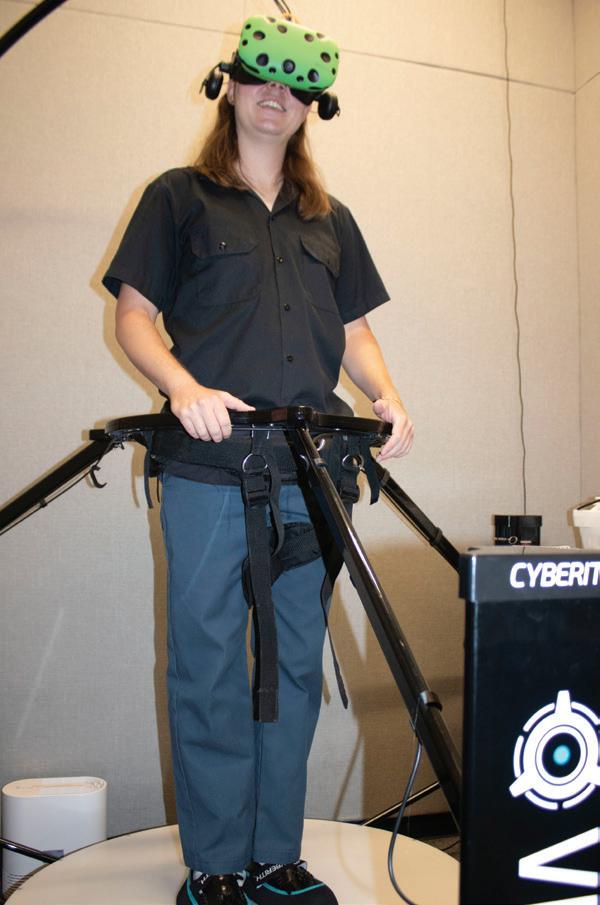
“I’ve always been fascinated by how memory works,” she said. “By comparing how memory and navigation connect in the brain, we can better understand not just how we think, but how we can help people maintain those abilities as they age.”
Future studies will test whether memory and navigation training can translate to real-world improvements, such as finding new routes or remembering daily tasks.
“It’s one thing to see changes in the lab,” Ekstrom said. “But the big question is: can this training help people in everyday life — or even protect them from dementia? That’s what we’re working toward.”
For both researchers, the motivation is clear.
“About 15 to 20 percent of older adults will develop some form of dementia,” Ekstrom said. “If our work can make even a small difference in that, it’s worth it.”
By Logan Burtch-Buus, University Communications
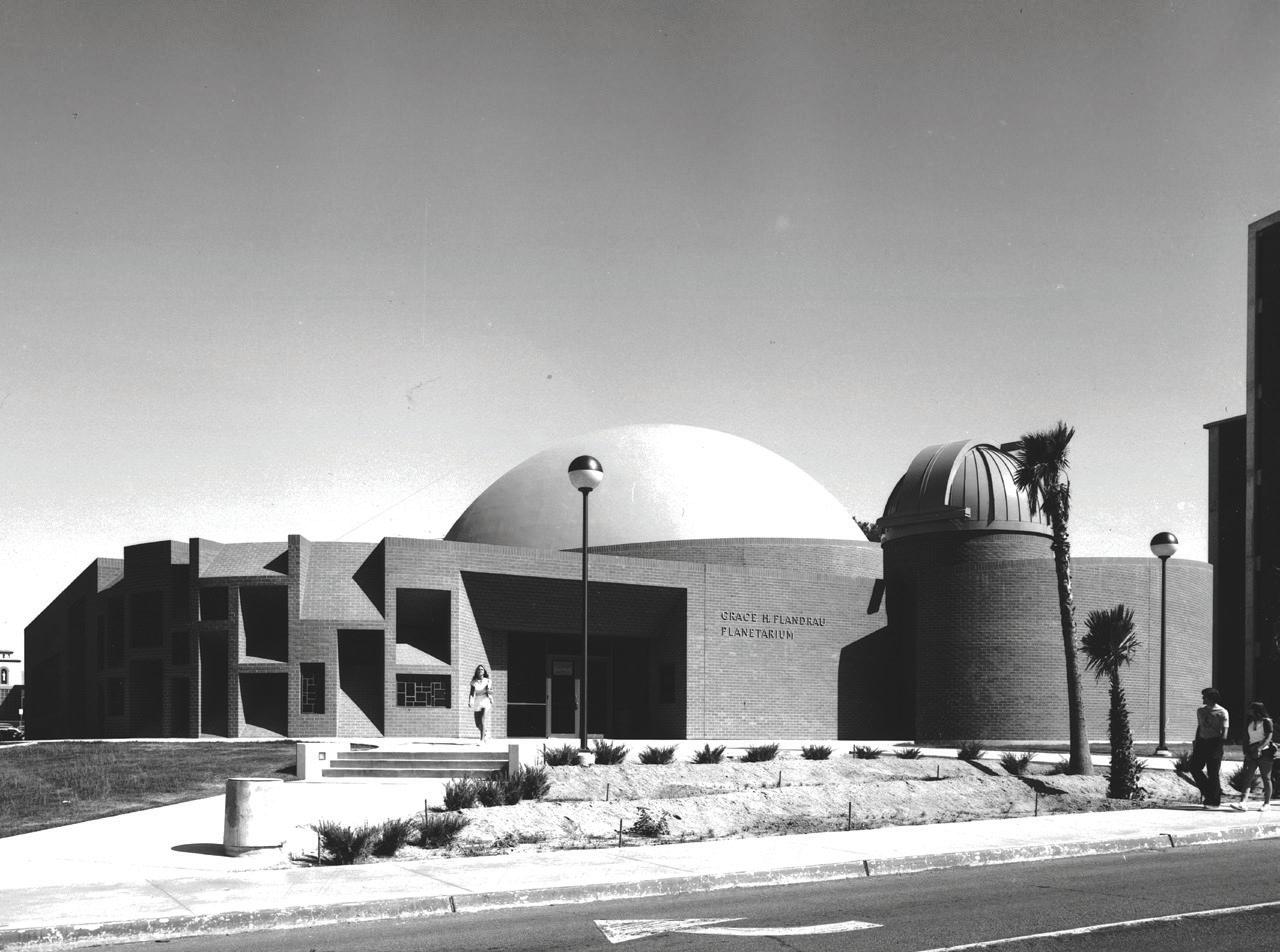
When the estate of Grace H. Flandrau bequeathed more than $800,000 to the University of Arizona in 1972, the goal was clear: build the future crown jewel of the university's astronomical mission. That dream became reality three years later, when the Grace H. Flandrau Planetarium opened its doors on Dec. 13, 1975. Now known as the Flandrau Science Center & Planetarium, the institution celebrates its 50th birthday this year, and its scientific mission remains alive and well.
“Flandrau is a gateway to the University of Arizona, and we excel at helping people have fun while exploring science,” said Kellee Campbell, Flandrau's executive director. “Universities are places of learning, discovery and opportunity, and I think it's incredible that a place like Flandrau can share that work with the community.”
Located on the University of Arizona Mall, Flandrau is home to a nationally recognized planetarium, two floors of science exhibits, community programs and resources for teachers and students of all ages – and welcomes more than 69,000 guests every year.
“Flandrau Science Center & Planetarium shares worldclass research at the University of Arizona with the southern Arizona community and beyond, sparking curiosity and making science accessible for learners of all ages and backgrounds,” said Carmala Garzione, the Sarah Brown Smallhouse Dean of the College of Science.
In the decades before Flandrau was built, the U of A had already positioned itself as a leader in space sciences. The Steward Observatory was founded in 1916 and became a vital resource for astronomy, leading to innovations in planetary and optical sciences. As lunar missions took shape in the 1960s, the university became a hub for spacecraft research.
It soon became clear that the university would benefit from a planetarium, and Flandrau's donation helped bring that vision to life.
Born in St. Paul, Minnesota, around 1890, Flandrau studied in Paris and later moved to Mexico with her husband, where she began her writing career. After his death, she spent time in Tucson and purchased a home there. When she passed away in 1971, her estate made the planetarium possible.
The Arizona Board of Regents established the Grace H. Flandrau Planetarium in 1972 to support research, provide K-12 science instruction and promote public understanding of science. Groundbreaking followed in 1974.
One of Flandrau's signature experiences takes place within its planetarium, a space where audiences can journey from black holes to coral reefs without ever leaving their seats. What began with shows produced in-house has evolved into a dome filled with cuttingedge productions that weave U of A research into captivating stories.
Behind the scenes, a team works to make those journeys engaging and educational. Among them is Shiloe Fontes, planetarium, technology and design manager, who oversees theater operations and helps operate the “Undersea Discovery” exhibit.
“There are so many interesting things happening at the University of Arizona that we can incorporate,” Fontes said. “Our black holes show talks about the Event Horizon Telescope images, and the U of A was a part of that team. We've also highlighted OSIRIS-REx, OSIRIS-APEX, the James Webb Space Telescope, extreme weather conditions and climate research, marine biology and more – all under our dome in the middle of the desert.”
Though the planetarium schedule is filled with scientific exploration, Fontes said the theater has always hosted a variety of laser light music shows, “for pure entertainment.”
Working alongside Fontes is Bill Plant, director of exhibits. Whether investigating micro- or macroscopic concepts, his goal is to make science accessible to as many people as possible. While Flandrau's primary audience is school-aged children and their teachers, visitors of all ages will find something to satisfy their curiosity.
“An ‘accessible’ exhibit not only ensures access to someone in a wheelchair, hearing or visually impaired,” he said. “We also want to ensure that someone who enjoys lighthearted humor has just as much to enjoy as someone who likes a more serious exhibit. No matter the case, a successful exhibit is one where people leave inspired to think differently or more deeply about the exhibit and the world around them.”
Plant and his colleagues are currently developing “Mysteries of the Cosmos,” a new exhibit set to open in 2026 that will explore recent space discoveries and questions surrounding extraterrestrial life.
Once a shared dream between university administrators, the Flandrau Science Center & Planetarium has become a hallmark of the U of A's dedication to exploring the universe.
Despite decades of changes within its walls, executive director Campbell said Flandrau's goal has remained largely the same.
“Universities are places of learning, discovery and opportunity, and we want people to understand all of the amazing things happening in their backyard,” she said. “Only 9% of universities in the United States have a planetarium, but not all have public programming. That means the University of Arizona has dedicated the time and effort to providing the public with a place to explore the wonders of science.”
The ongoing 50th anniversary celebrations at Flandrau not only honor a milestone but reflect the enduring impact of Grace Flandrau's generosity. While she never saw the planetarium that bears her name, her gift inspired generations of visitors and future scientists.
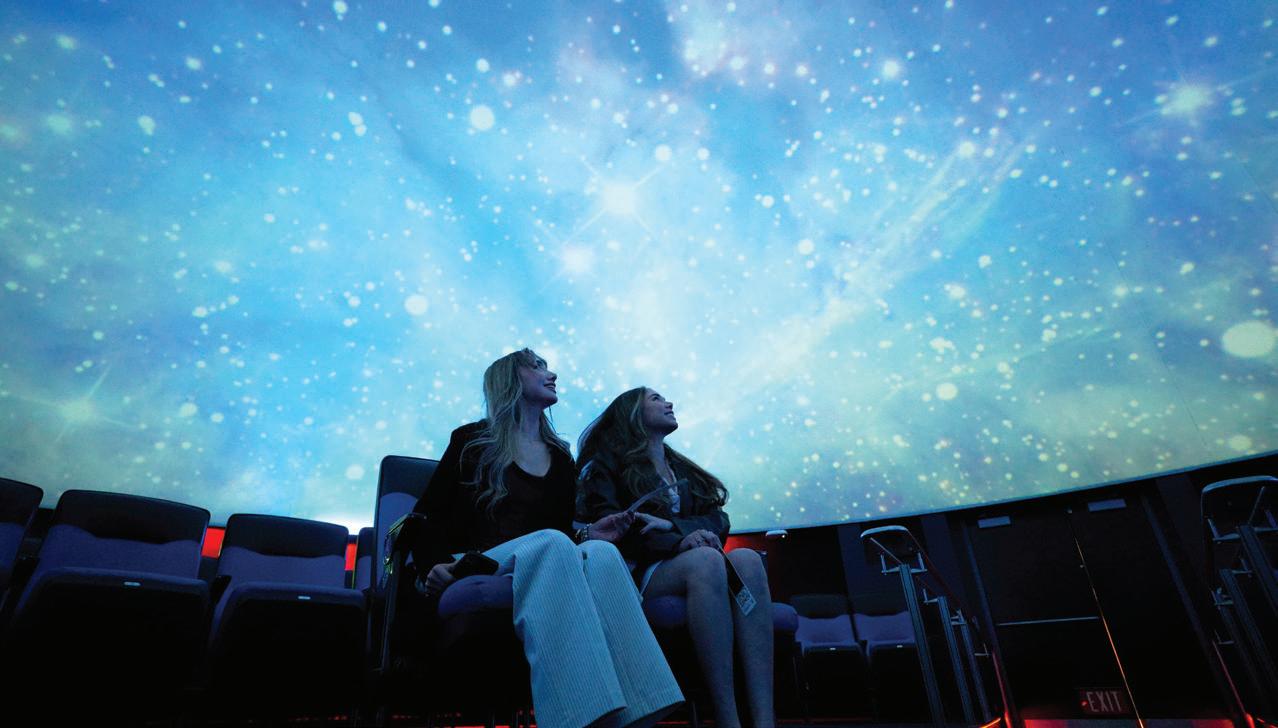
“If Grace Flandrau could see this place, I hope that ‘Wow’ would be the first words out of her mouth,” Plant said. “I would love for her to see groups of students exploring the exhibits while other visitors sit in the planetarium with their mouths agape as we approach the surface of Jupiter. I think she would be proud of what her gift afforded this community.”
From pioneering efforts to slow the biological roots of aging, to the surprising ways tiny insects reveal big insights into brain health, to the quest for clean and limitless fusion energy, and the essential role of human understanding in an age of artificial intelligence — each lecture explores how today’s scientific discoveries are laying the foundation for a healthier, smarter, and more sustainable future.
Watch the 2026 Lecture Series and past series on YouTube.
George Sutphin
Aging Science: Preventing Disease at Its Source
Martha Bhattacharya
From Fruit Flies to Future Cures: How Tiny Insects are Driving Big Discoveries in Brain Science
Lise-Marie Imbert-Gérard
Harnessing the Power of Stars: Shaping the Future of Energy with Fusion Science
Laura Condon
Earth’s Story: The Importance of Human Understanding in the Age of AI science.arizona.edu/lecture-series
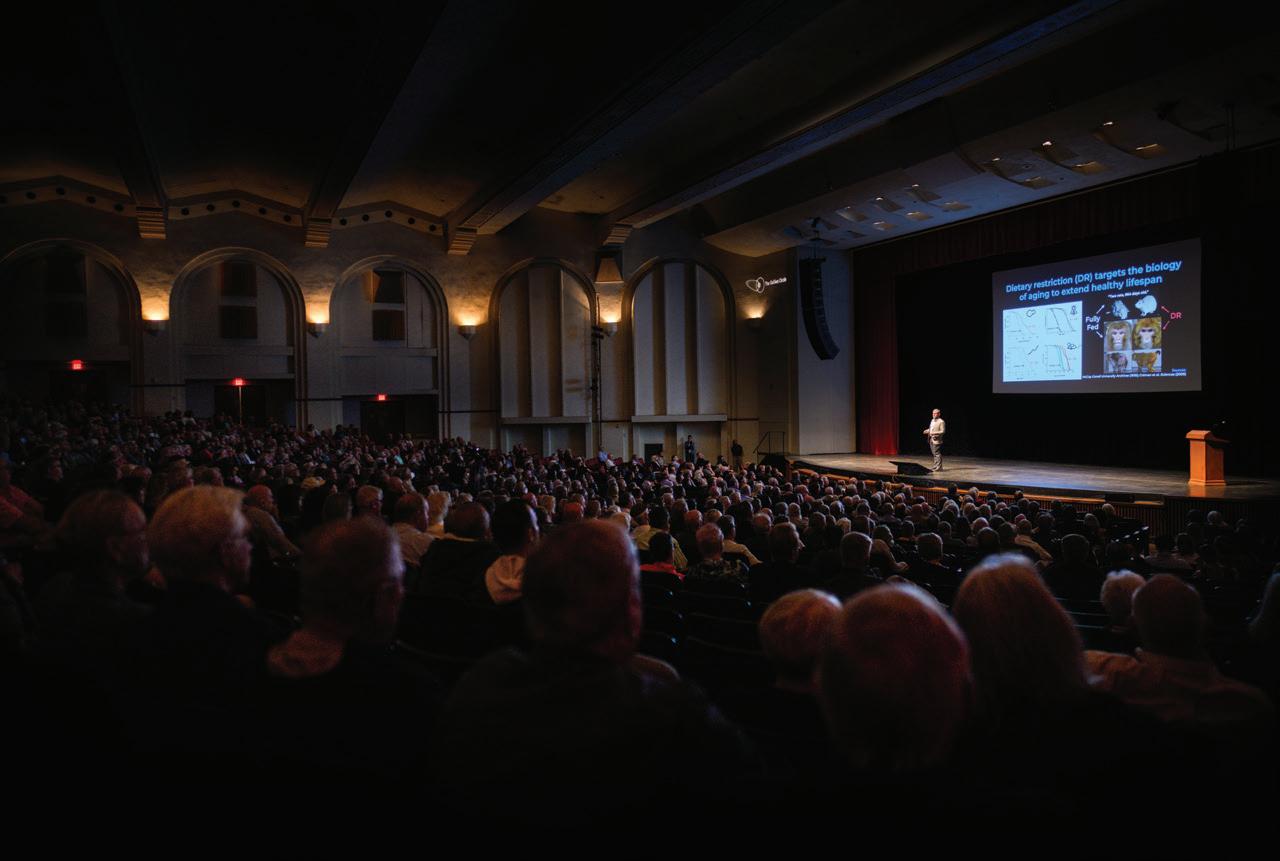
“
The lecture series is one of the ways that the University of Arizona engages the community to share how our work on campus impacts people's lives here in Tucson and around the world,” said Carmala Garzione, the Sarah Brown Smallhouse Dean of the College of Science. “The University of Arizona is an incredible asset to the city of Tucson, the state of Arizona, the nation and the world – and we think it's important to provide fun and curiosity-quenching stories about how university research and education support our communities.
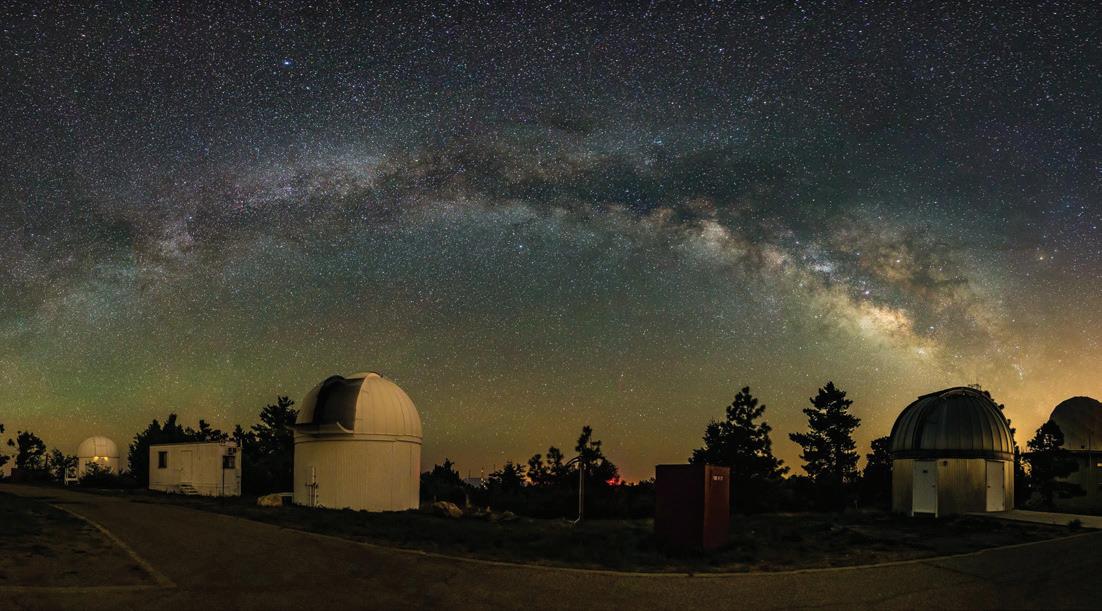
See the stars like never before! View the wonders of the cosmos from the top of Mt. Lemmon in Tucson using the largest public viewing telescopes in Arizona and explore the universe. This is a rare opportunity to explore the planets and stars in a way that many will never get to experience.
Guests are treated as professional astronomers overnight, choosing their own observing or imaging targets in this customized astronomical experience. Depending on the season, you may witness planets, star clusters, distant galaxies, nebulae, and other celestial phenomena such as comets or a supernova.
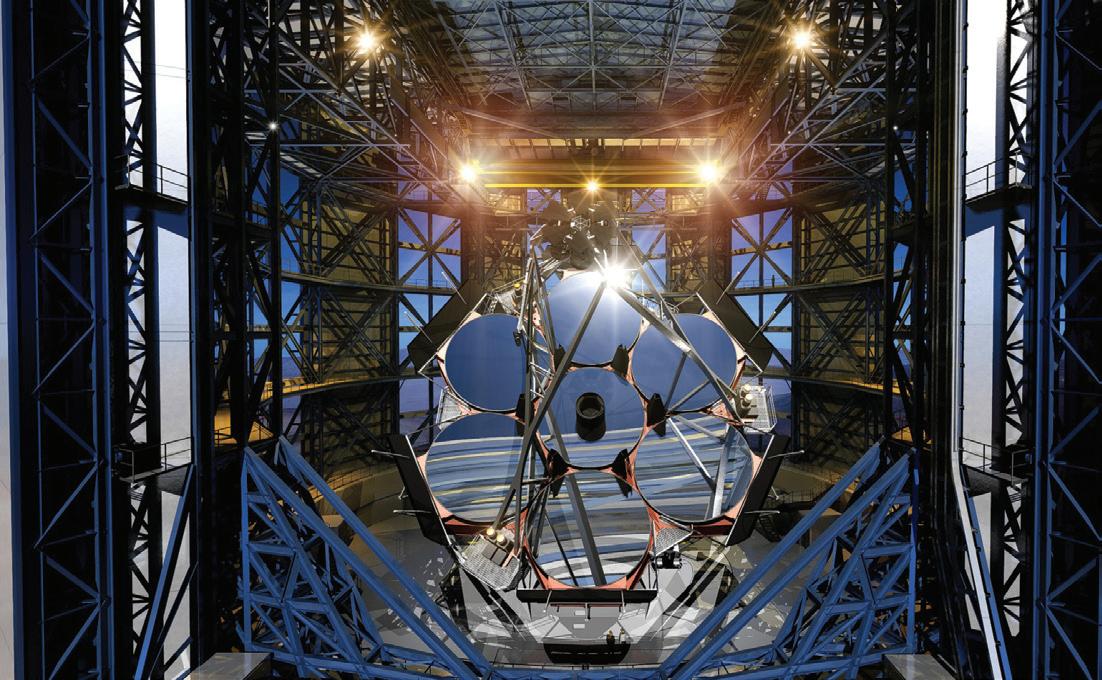
At the University of Arizona, we build the world’s largest telescope mirrors. Explore the lab where it happens, learn how we invented the process, and discover how Steward Observatory pushes the boundaries of our search for knowledge. These mirrors represent a radical departure from the conventional solid-glass mirrors used in the past, producing a new generation of telescopes now exploring the universe in optical and infrared light.
Experience an up-close look at the massive telescope mirrors on a guided tour at this one-of-akind facility. Rated by Trip Advisor as one of the top 10% places to see in the world, take a tour and marvel at the ingenious engineering and optical innovations that enable us to build the world’s largest, most advanced telescope mirrors.
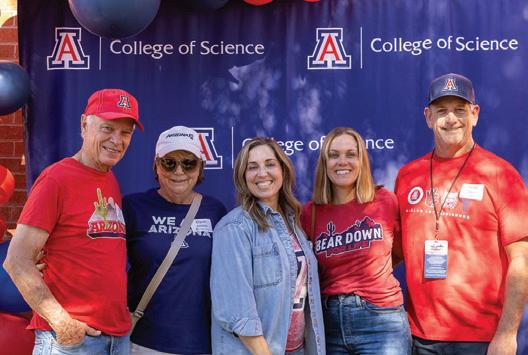
Every fall, the College of Science welcomes home hundreds of alumni at Homecoming. Science alumni and their family and friends enjoy a special tailgate outside of Flandrau Science Center & Planetarium socializing and reminiscing with former classmates about their days at the University of Arizona. With thousands of College of Science alumni around the globe, Homecoming weekend represents an opportunity to come together and share the brilliant work and impact our alumni are making everywhere.
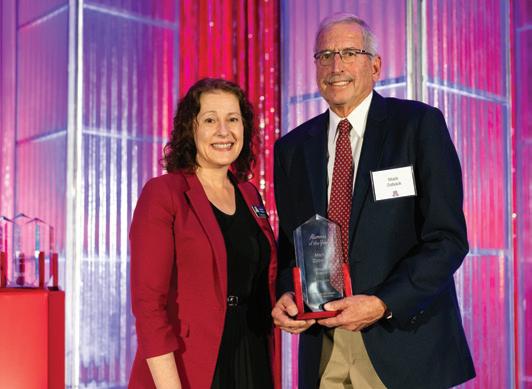
The 2026 College of Science Alumni of the Year awardee is Dr. Mark D. Zoback , class of 1969. Dr. Zoback, the Benjamin M. Page Professor of Earth Sciences and Professor of Geophysics Emeritus at Stanford University, is a world leader in understanding the state of stress in the Earth’s crust and fault mechanics, research areas that form the scientific foundation for virtually every major energy and environmental challenge facing society today.
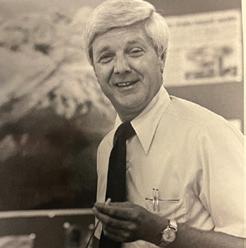
The College of Science mourns the passing of Dr. Edgar J. McCullough Jr., a distinguished scholar, educator and humanitarian who served as the college’s first dean and helped shape its foundation during a pivotal period of growth. Dr. McCullough passed away on January 29, 2026.
Dr. McCullough earned his doctorate in geology from the University of Arizona in 1963 and went on to build a remarkable career in service to the institution as a professor, department head and, from 1982 to 1992, the inaugural dean of the then newly established Faculty of Science, now the College of Science. He was an early innovator in science education and a champion
of approaches that made science more accessible and engaging. As head of Geology, later Geosciences, he guided the department’s rise to national prominence and helped lay the groundwork for the excellence that continues to define the college today.
After retiring in 1997, Dr. McCullough began a new chapter of service inspired by the humanitarian crisis along the U.S.–Mexico border. Drawing on his skills as a field geologist, he spent years mapping migrant trail networks across remote areas of southern Arizona, work that enabled humanitarian organizations to more effectively place lifesaving water stations. In recognition of his extraordinary efforts, Humane Borders dedicated a water station in his honor in 2020, and the College of Science named him its Alumnus of the Year in 2022. Dr. McCullough’s legacy is one of vision, compassion and an unwavering belief in the power of education and service to improve lives.
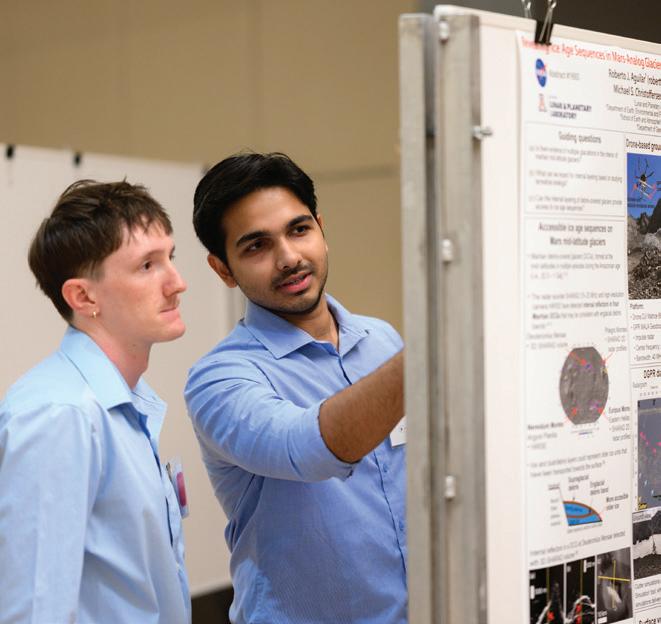
Over the past 24 years, the Galileo Circle program has awarded more than $2.3 million to 2,524 undergraduate and graduate students who show exceptional potential in the physical, mathematical, environmental, cognitive, and life sciences. Over $200,000 has been donated to provide 150 students with scholarships for the 2026-2027 academic year.
Each year, Galileo Circle scholarship donors are matched with their scholarship recipients and invited to connect personally during the annual Galileo Circle Scholars Celebration.
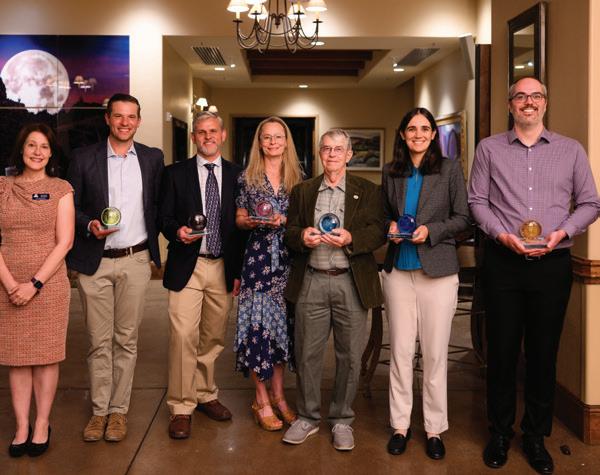
Every year, the Galileo Circle honors five to seven extraordinary faculty and staff who go above and beyond in teaching, research, mentoring, outreach, and overall excellence.
These awards represent one of the highest distinctions the College of Science can bestow.
Galileo Circle members make this happen. Since 2004, the Galileo Circle program has recognized more than 100 faculty and staff with over $512,000 in funds, with honorees celebrated annually at the Galileo Circle Awards Dinner each spring.
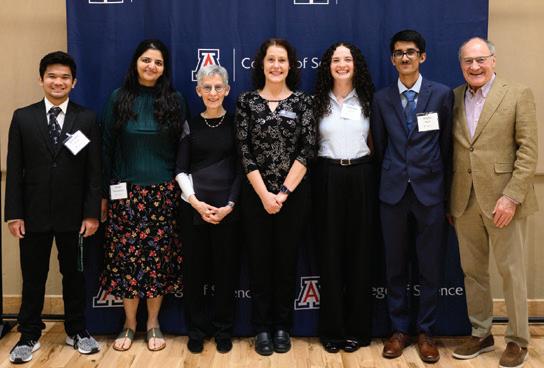
“My husband, Ken, and I have been proud members of the Galileo Circle for 17 years. Each year, we look forward to the Galileo Circle Scholars Celebration, where we have the privilege of meeting scholarship recipients and are continually inspired by their passion and research. The Galileo Circle Awards Dinner further enriches our experience by introducing us to the faculty and staff who are advancing numerous scientific fields. Being part of this community - one that celebrates and supports the College of Science’s students, faculty, and staff - brings us great joy and fulfillment.”
—Linda Robin, Galileo Circle Chair
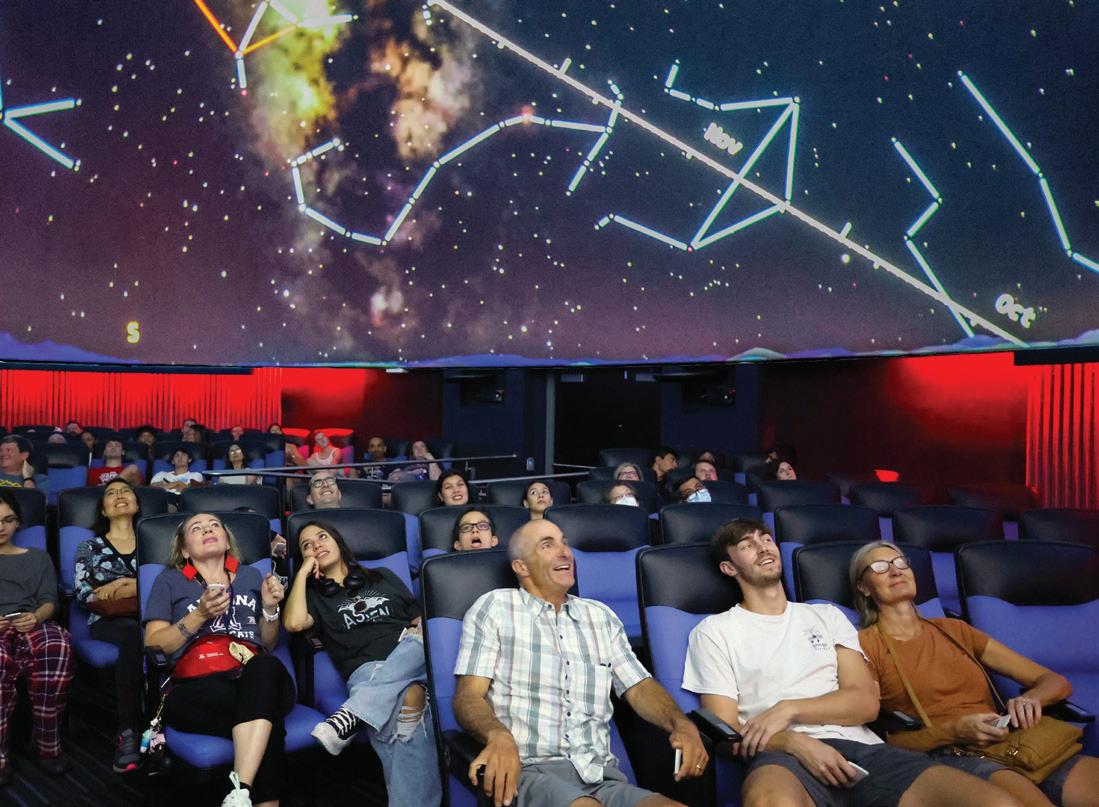
Flandrau Science Center & Planetarium is your destination for adventures in science! From the depths of the oceans in the Undersea Discovery exhibit to the farthest reaches of space in the magnificent new Mysteries of the Cosmos exhibit, Flandrau’s educational experiences and immersive planetarium shows reveal the marvels of Earth and the wonders of the universe for visitors of all ages.
Explore the science center’s interactive, hands-on exhibits exploring marine science, insects, astronomy and more. Learn about the University of Arizona’s role in important scientific discoveries of the past and the future and hear directly from the researchers at the forefront of these efforts. Broaden your horizons in the Eos Planetarium Theater and blast off to explore planets, stars, galaxies and beyond with a guided tour of the nighttime sky. Visit: flandrau.org
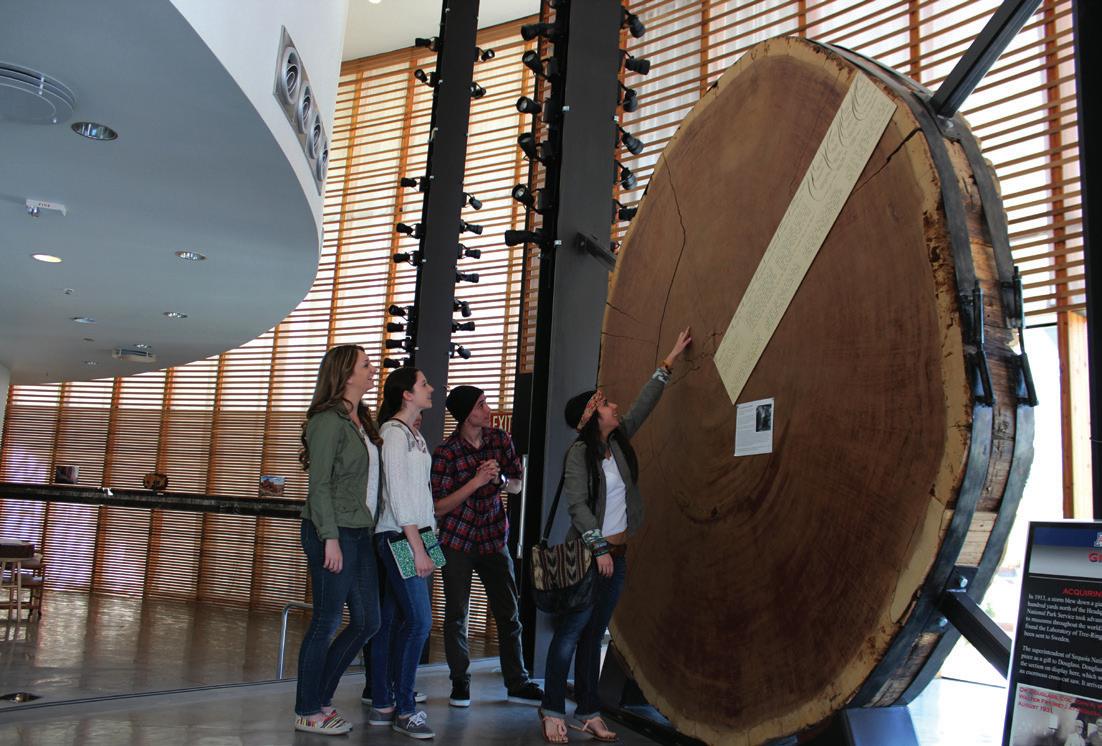
Step into the captivating world of dendrochronology at the Laboratory of Tree-Ring Research—an experience that will ignite curiosity in visitors of all ages! Discover the secrets hidden in tree rings, which not only reveal the stories of ancient cultures but also provide vital clues to tackle modern challenges like climate change. Marvel at the oldest trees on Earth in the Exhibit Hall and witness firsthand how their growth patterns tell tales spanning thousands of years.
Take your exploration further with self-guided or behind-the-scenes tours led by passionate docents. Dive deep into the science and artistry behind tree-ring studies and uncover how this interdisciplinary field shapes our understanding of history, ecology, and the future. Whether you're a nature enthusiast, a history buff, or a science lover, this unique experience promises to leave you inspired. Tours are open now—don’t miss your chance to connect with the fascinating legacy etched into Earth's oldest living witnesses!