The Healing in a Time of Sickness Issue, Hill Magazine Fall 2021
University of Arkansasʼ Student-Run Magazine
Healing in a Time of Sickness
Out of Hiding, into the Bible Belt
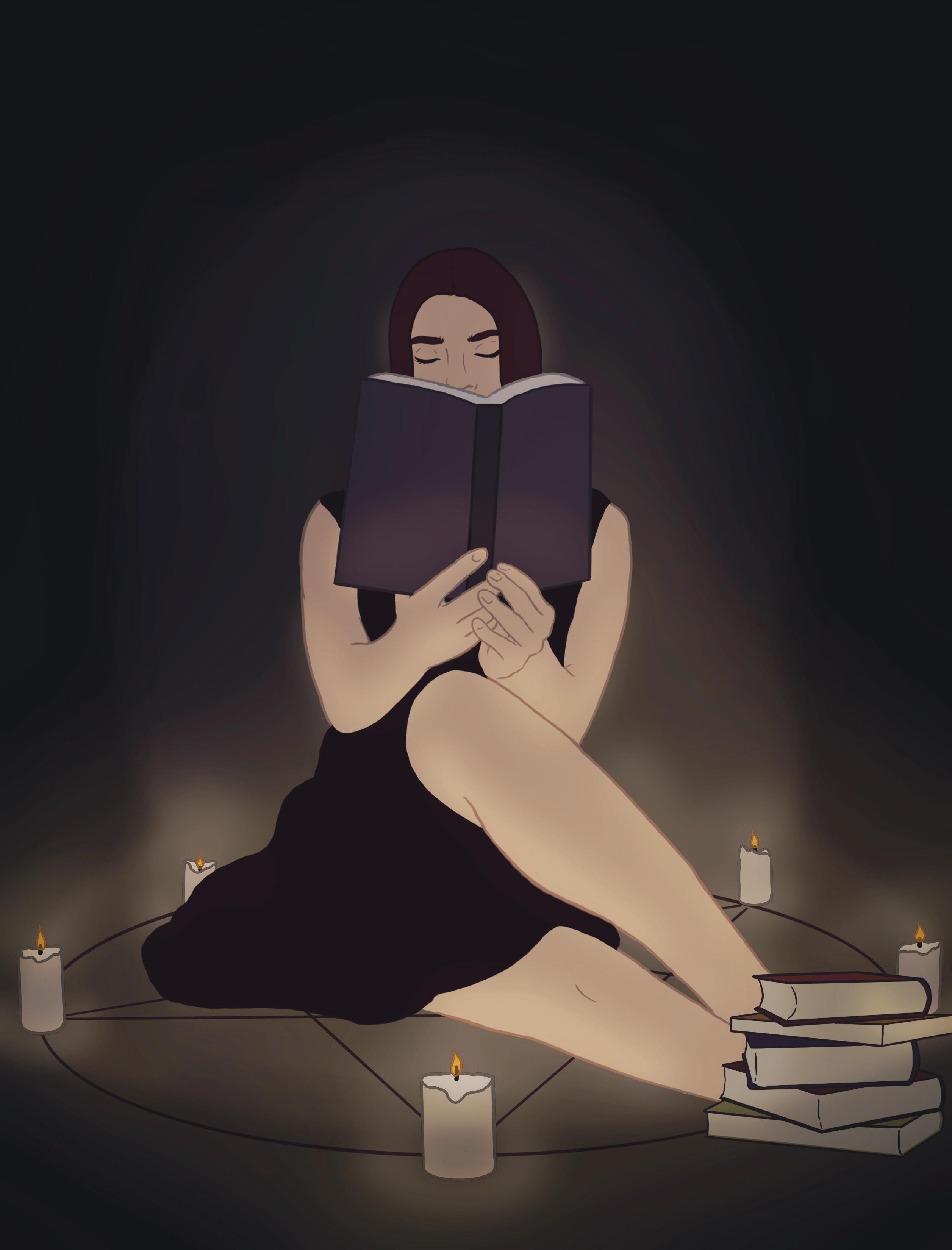
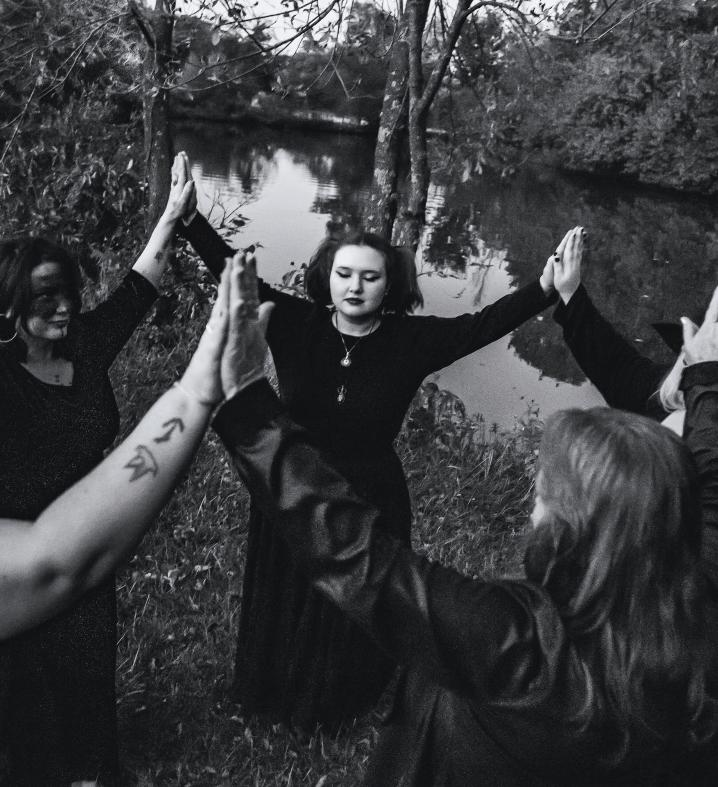
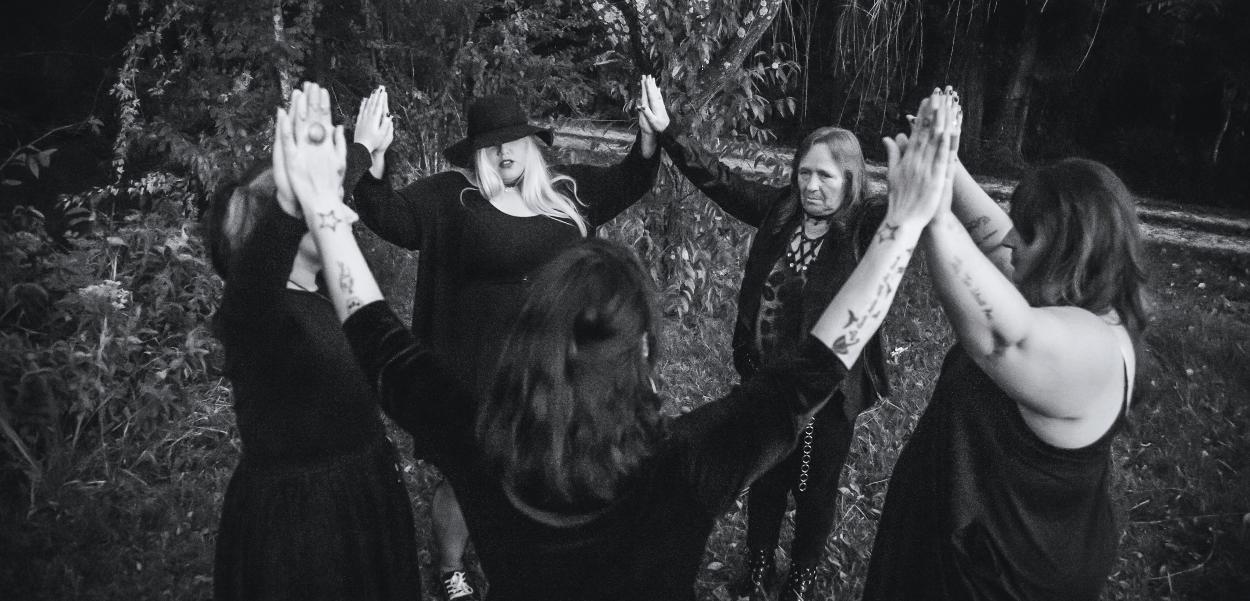
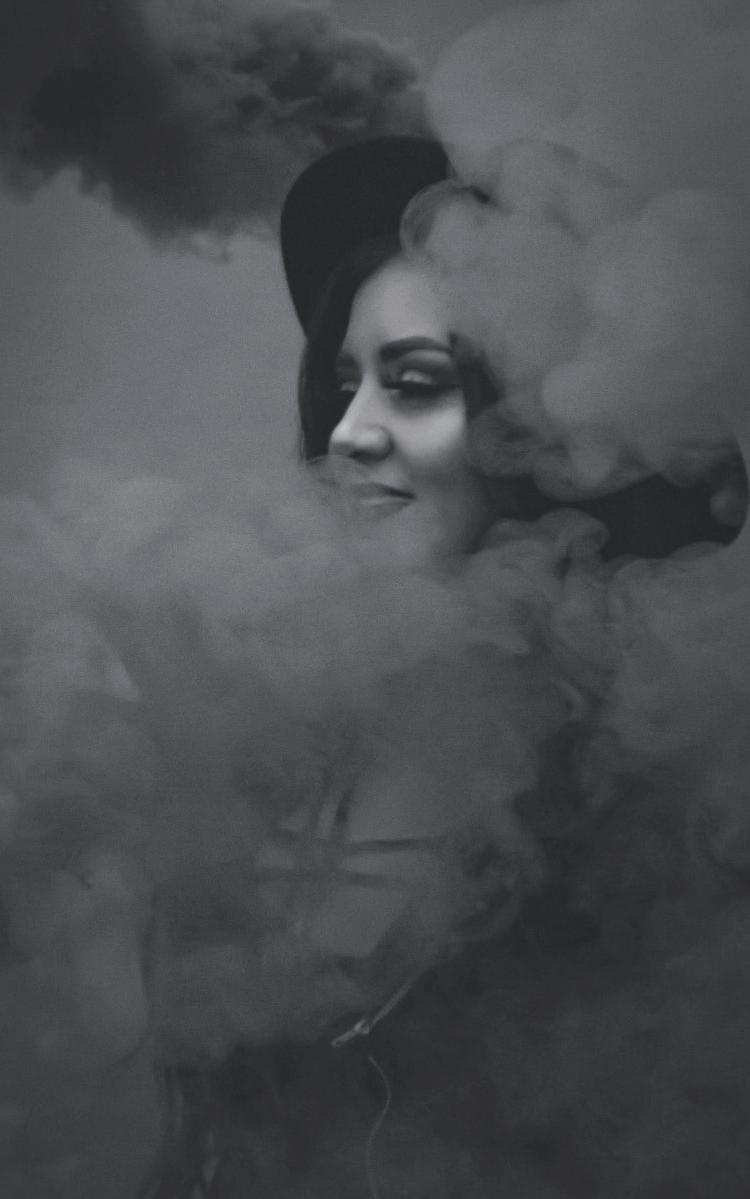
Pagans in Arkansas endure fear and harassment in the most socially conservative region of the United States — the Bible Belt. page 34
Slaughter in the Delta
Confronting the legacy of race violence in Arkansas. page 20
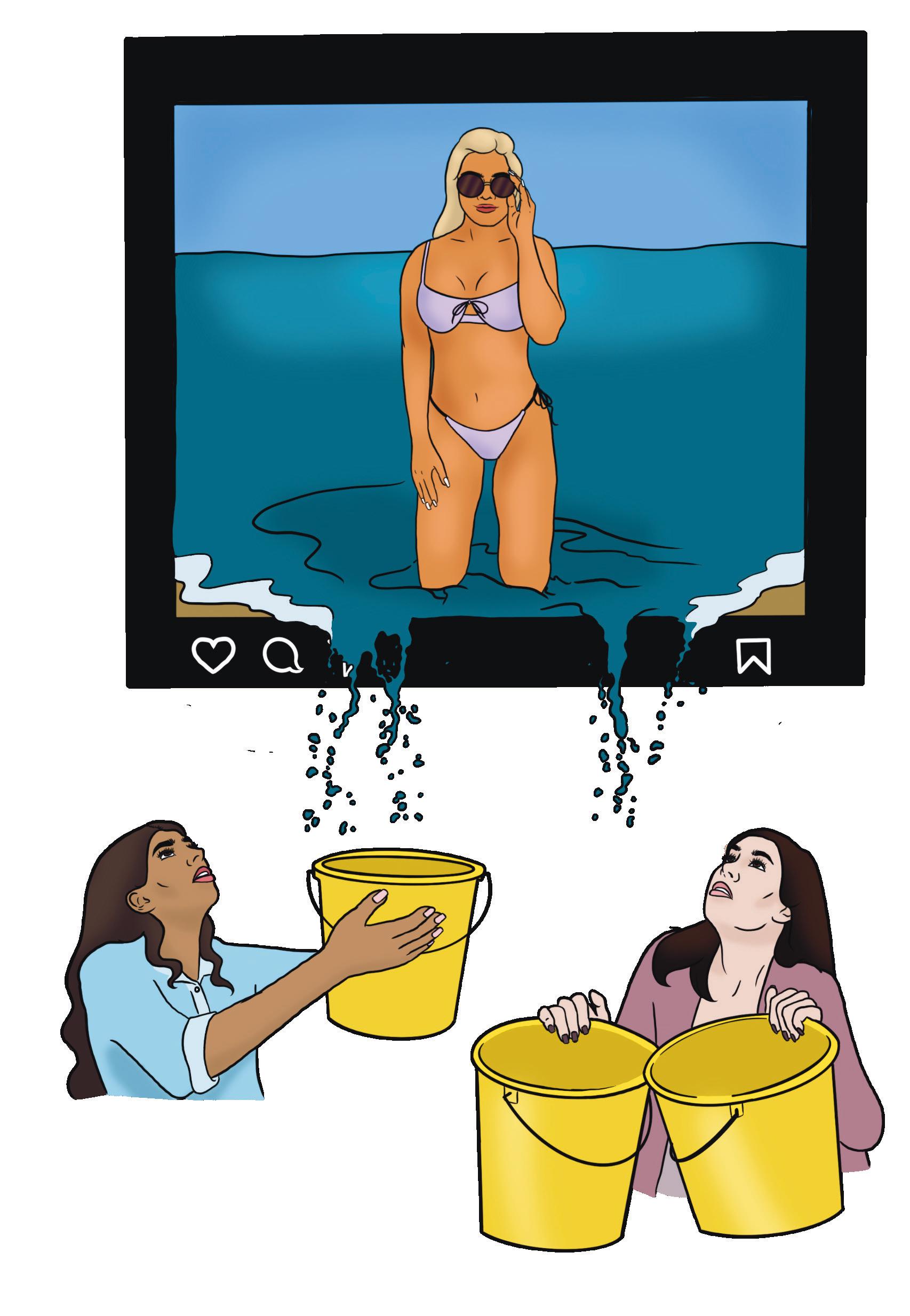
Fooling Them All
How I started the journey to no longer feeling like a fraud. page 28
Celebrating 10 Years of Hill Magazine
Editor’s Note
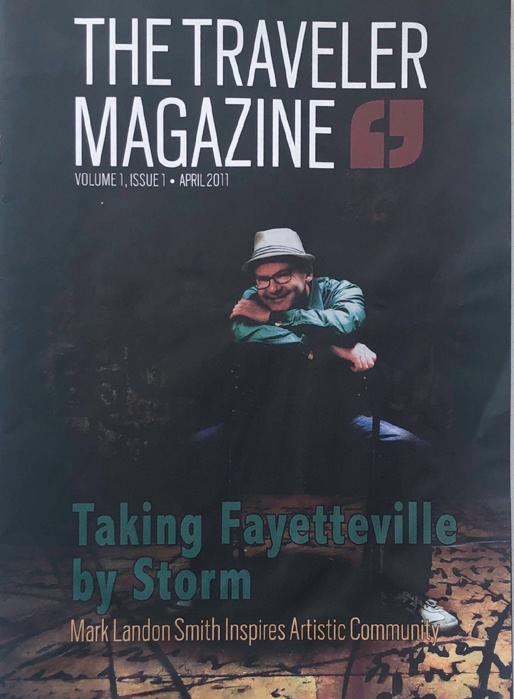
Welcome to Hill – It’s been ten years since the creation of this magazine. Ten years of storytelling and the encapsulation of human nature. What once started as the Traveler magazine has grown into its own identity that is now Hill. Every issue of the magazine represents a moment captured in time. In the aftermath of COVID-19, we now find ourselves more so than ever needing healing.
Healing in a time of sickness is not an easy thing to do. It takes perseverance, admitting vulnerability, and time to grow and heal from wounds that have scarred us. It’s even more difficult to do in a time when society is surrounded by sickness that comes psychically, spiritually, and physically. My hope is that through these featured stories, readers see that it is possible to heal during such adversities and come out the other side.
If not for my incredible staff, this magazine wouldn’t have happened. Thank you to the writers who poured their hearts into their stories, and my assistant editor Kari Adams who has helped me with every step in this process. A special thank you to Blaise Keasler for making mine and my staff’s ideas into a reality. Most of all, I would like to thank Professor Bret Schulte –for if he hadn’t created Hill ten years ago none of these stories would have ever been shared. Thank you to everyone who reads and supports this magazine and I hope you enjoy Hill.
Thank you,
Sophie Brock Editor in Chief
Sophie Brock Editor
Kari Adams Assistant Editor
Blaise Keasler Senior Designer
Sophia Milligan Assistant Designer
Writers:
Kari Adams
Gillian Tobian
Abbi Ross
Abby Zimmardi
Jasmine Sylvia
James Reeya Gandhi
Bret Schulte Faculty Advisor
Robyn Starling Ledbetter Director of Student Media
Hill magazine is published by Student Media, Division of Student Affairs at the University of Arkansas, 203 Kimpel Hall, Fayetteville, AR 72701. P: 479-575-3408
Sophie Brock is a junior journalism and PR student from Overland Park, Kansas. She loves rewatching New Girl, getting coffee, and going on long drives.
Kari Adams is a dog-loving, senior journalism major from Clinton, Oklahoma. She is also associate editor at CitiScapes Magazine, a Northwest Arkansas publication.
Blaise Keasler is a junior graphic design major from Olathe, Kansas. In their free time, they enjoy writing, crocheting, and watching Seinfeld with their cat, Mordecai.
Sophia Milligan is from Keller, Texas and is a graphic design major with a minor in art history. She is also a coffee fanatic.
Abbi Ross is a spring 2021 U of A journalism graduate and is currently a reporter for the Southwest Times Record in Fort Smith. In her free time, she’s most likely rewatching Gilmore Girls or trying to find the perfect chocolate chip cookie recipe.
Abby Zimmardi is a 2021 U of A journalism graduate from Plano, Texas. Zimmardi is now pursuing a Master’s in Journalism from the University of Maryland, where she is focusing on data and investigative journalism. When she is not reporting, she is exploring Washington D.C., listening to ‘70s music or searching for the best crab cakes in Maryland. Writers:
Jasmine Sylvia James is a junior majoring in Finance, Marketing and Psychology. She’s often seen in the company of her spoiled dog, Milo and loves writing and dancing in her free time.
Reeya Gandhi is a junior majoring in social work and creative writing. She is enthusiastic about coffee, mental health, and anything that has to do with her dog, Mika.
Locked in a Dark Room with No Key to Escape: College Students Navigate Burnout
One UA Student’s stress had been building up until she physically could not handle the pressure anymore.
by Abby Zimmardi
Over the span of six days in March 2021, Caitlin Lane, 23, felt a dull ache in her right side grow into a sharp sensation soon followed by nausea and nights spent in agonizing pain. On the sixth day, Lane spent her day juggling teaching eighth-grade English and trying to cope with the intense pain that was culminating. Once school ended at 4:00 p.m., she drove from Woodland Junior High where she is a student teacher, to MedExpress and began to panic as the doctor said she almost certainly had appendicitis and referred her to the ER.
While at the ER, the doctors realized the pain was a stressinduced ovarian cyst and surgery wouldn’t be necessary. She was discharged at midnight, given no medication and was told that her pain would subside in a few days- and it did. After having a traumatic night, Lane woke up at 8 a.m. and taught her students as if nothing had happened.
“I beat myself up over it now because I’m like, ‘That was so stupid of me,’” Lane said. “I went to school the next day after getting blood drawn and a CT scan and all that stuff – I went to school the next day to teach.”
Lane, who is getting her Master’s of Education at the University of Arkansas, had been putting everything but herself first since she started graduate school in June 2020. This led to her being overworked and feeling burned out, thus causing her to have a physical ailment.
“I was realizing that I just had been putting myself as the least priority on a list that felt like it was so long that I was drowning in it and all of these responsibilities,” Lane said.
What Lane experienced through her school and work-related stress, is exactly how Peggy Kelly, the chief clinical officer of Youth Home, a non-profit organization that provides mental health treatment, defined burnout: “Burnout occurs when a person experiences an abundance of stress and they are not attending to their self care,” Kelly said.
The term “burnout” was first used in the 1970s to only describe the stress people faced in “helping professions” such as doctors and nurses. Now the term, coined by an American psychologist Herbert Freudenberger, is used to describe the stress that any individual faces, according to the National Center for Biotechnology Information.
Because research in burnout is fairly new, the malady has been difficult to study and has left a potentially significant number of people untreated. Generally, burnout and the research behind it can be enigmatic, but the signs of burnout are what all researchers agree upon. The signs of burnout are as follows: exhaustion, alienation from activities and reduced performance, according to the NCBI.
The pandemic has eliminated many ways to gain relief from burnout such as hanging out with friends, going to concerts or even going to church.
“This has been such a difficult year because [you have] all the stress we’ve experienced at work, then you go home, and you can’t do anything,” Kelly said. “So it [the pandemic] really is making it worse.”
A March 2021 survey of 1,500 U.S. workers through Indeed, a website to help people search for jobs, found that the number of people who reported experiencing work-related burnout increased 9% between 2020 to 2021. Before the pandemic, 43% of workers felt burnout and during the pandemic, 52% of the respondents reported experiencing burnout.
From January 2020 to February 2021, an increased number of people experienced feeling burnout across four different age groups, according to an Indeed survey of 1,500 U.S. workers during March 2021. Gen X showed the largest increase of burnout with 14%.
Gen Z includes people born between 1997-2012, according to the Pew Research Center. This group includes myself as I was born in 1999, and sure enough, I have felt more burnout than ever before.
The pandemic has exacerbated stress due to the general atmosphere of the year, causing anxiety, fear, turmoil, heartbreak and exhaustion for all people, as well as not being able to escape work due to working remotely.
Not being able to escape your work is something that I have always struggled with, but have felt it tenfold for the past year because as a journalism student who wants to progress and do my duty as a journalist and share stories, I have had not a single break to take care of myself – and it’s my own fault.
“Most people are not going to be able to sustain burnout for six months, a year, and if they are, they’re probably going to really suffer from long-term health effects,” Kelly said.
Working two jobs on top of being a full-time student was demanding in-person, but manageable. Working three jobs (yes, I added another position after the pandemic began) on top of being a full-time student online is demanding and not at
accomplish unrealistic goals, or too many unrealistic goals, you’re going to not pay attention to the self care as much as you need to, and you’re not probably going to have good boundaries,” Kelly said. “If you figured that out in adolescence,
effects,” Kelly said. These long-term effects are the reason it is so important to prioritize your own mental health over pushing yourself until you literally have a physical medical condition like Lane did. The pandemic has exacerbated burnout especially in students, and Kelly has advised people to set strict boundaries with themselves.
I, unfortunately, struggle with having unrealistically high expectations for myself and thinking that I let everyone down
hurt and missed my family, but I couldn’t do anything about it due to distance and the pandemic, so I put my emotions aside and threw myself into my work.
For two weeks, I was doing well with all of it, feeling committed but fearing the inevitable period when my emotions would catch up to me. I was in the “honeymoon phase” of burnout, which is the first of five phases as reported by two Winona State University education professors.
I, along with Lane, felt this elated sense of passion when I first started my new job and when Lane began student teaching.
I had never been balancing so many jobs and tasks in my life. I began feeling more exhausted, which led me to suffer from insomnia and for the first time, I was slacking on my school work and I was feeling extremely unmotivated. I was so exhausted trying to keep up with everything, that I couldn’t even hold a proper conversation. I felt like a foreigner in my own body.
“There was a time where I just, one, I didn’t have time to do homework and two when I could, I just felt so mentally just not myself, and just foggy,” Lane said. “I couldn’t think straight, because I just had been going, going, going for so long, that when the burnout happened, it was like I just crashed into a brick wall and there was like nothing left. And so I would sit there and try for hours to work on my homework, and I just couldn’t. So I didn’t turn in
The additional ways of managing stress such as seeing friends in person is now not an option due to the pandemic, so now we have had to learn how to cope with our stress and burnout differently.
“As a professional, I would say, you have to learn new ways, or, you know, you try to learn new ways to deal with [burnout],” Kelly said. “Maybe you’ve never done mindfulness or meditation before, but instead of going to church you can visit with friends through zoom or by phone. So it’s hard if you’ve [become used to coping] a certain way, and learning new ways to do that has made it much more challenging.”
At this point, Kelly would advise her patients on ways that may help them to cope with their burnout. One example she gave me was to set strict boundaries and only allow yourself to work overtime for two nights a week and only for two extra hours.
It took Lane months to find ways to cope with her burnout, and she didn’t succeed until she went through all five stages of burnout and received a wakeup call to take better care of herself. The last three stages of burnout she went through were: “chronic symptoms” which includes depression, exhaustion or physical illness. “Crisis” which includes more intense physical symptoms, such as her ovarian cyst, obsessing about work frustrations, pessimism and developing an escapist mentality, and lastly “enmeshment” which is when the symptoms of burnout are meshed into your daily life.
I was so exhausted trying to keep up with everything, that I couldn’t even hold a proper conversation with my roommates. I felt like
a
foreigner in my own body.
Because it is difficult to diagnose burnout, I don’t know if either Lane or I was experiencing burnout, depression, anxiety or a mix of everything. We both had symptoms of all of these and went through the five stages. Eventually, we learned how to cope with it after months of feeling as if being locked in too small of a room with the lights off and every line of help was on the other side of the door, which is how Lane explains it.
Lane’s burnout served as a wakeup call to really prioritize herself first. Now, she has been able to cope with her stress in more healthy ways, and it was because after she went to the ER, she took up running and reached out to her loved ones for help – and ultimately checked in with her own mental health more often.
“Once I figured out how to make that all stop and put myself first, I was able to finally open that door and be with the people that really wanted to help me,” Lane said.
For me, my burnout resolved when I was finally able to go back home to Texas for the holidays in December, which was the respite that I needed so desperately. Along with that, I sought help from a therapist and found running to be an additional outlet to temporarily relieve my stress.
I am still not feeling completely like myself, but I am much closer and I’ve learned how to cope with my burnout better. Now I have senioritis. The cure for that comes in May.
Photo illustration by Sophia Milligan.
Caitlin Lane, 23, works on paperwork at Woodland Junior High School, April 14, 2021. Photo courtesy of Caitlin Lane.
A Home for a Minute
The rescue of nine puppies abandoned in the backroads of western Oklahoma spirals into a month of turmoil and grief.
by Kari Adams
I watched her die in a dusty, beat-up dog crate. She was a mongrel puppy, who was no more than 10 weeks old. I had been sitting with her all morning on the carpeted floor of my living room after I noticed she was acting strange — a kind of strange that had become all too familiar to me. She was too weak to move, so I laid her on a towel inside the cherry-colored crate, gently petting her paw, dragging my finger across her forehead and down the bridge of her nose. Maybe I thought she would feel better if she knew she wasn’t alone. Maybe it was for my own comfort.
She had lost control of her body at that point. The crate was covered in her feces, as was her little 3-pound body. Her breaths came out in ragged gasps. I wasn’t looking when it happened, but I turned back, and she was limp, unmoving. She looked tiny, her black nose smaller than a dime, sandy brown fur caked against her thin frame.
She’s dead, I said.
I was saying it to my dad, but I also needed to say it aloud, like a doctor calling the time of death for a patient lying on the operating table. To my left, three more puppies sat outside, peering at me through the sliding door, whining and pawing at the glass. Their sister was dead. Five more puppies died before her. Did they know? Were they going to die next? I was tired of asking myself these questions.
Her name was Scout, and it was Saturday, October 2015 — just three weeks after we found her. The vet was closed, so we methodically placed her body in a trash bag, then another, before tying it up with a double knot and leaving it to sit in our garage between shelves of rusted tools and paint buckets. We would take her to be incinerated on Monday. You have to burn the bodies to kill parvo — the disease that took her.
Finn (left), Teddy (middle), and Bingo (right) laying in the grass with my dad, Paul Adams, on the day of their rescue. They were three of nine puppies found abandoned in the backroads of Clinton, Oklahoma.
Photo courtesy of Paul Adams.
She and her siblings had been abandoned in the country. We didn’t know the puppies were going to get sick, but we knew it was a possibility that comes with picking up dogs off the street. Canine Parvovirus is a deadly gastrointestinal illness and highly infectious. With proper treatment and a lot of money, dogs have a 70%-90% survival rate. Without treatment, a dog can die 48 hours after showing symptoms. A puppy needs at least three rounds of the parvo vaccination to be protected, and the treatment after showing symptoms could be anywhere between $500 to $2000 per puppy. An expense that many can’t afford which often results in people getting rid of their dogs instead, at a shelter or otherwise.
According to the ASPCA, in the United States, around 3.3 million dogs end up in an animal shelter every year. More than 20% of them are euthanized. A majority of shelter intake consists of stray dogs, either born that way or abandoned.
Heather Estrada, animal control officer and founder of Haven Animal Rescue and Transport of Oklahoma, said that lax spay and neuter laws are the main contributor to overpopulation. States like Washington and Oregon have nearly zero stray animals because of their strict laws. Estrada spends her free time bussing rescued dogs to the pacific coast so that they have a better chance of adoption.
In 2020, Estrada impounded 347 stray dogs in Oklahoma. With owner surrenders included, the total number of dogs transported would be between 1,000 to 1,800, with nearly three-fourths of that coming from western Oklahoma.
The sight of a skin-andbones, too-close-to-death dog was almost exceedingly ordinary where I grew up.
In Oklahoma, abandoning animals is a misdemeanor, punishable by a hefty fine or up to one year in prison. Dropping dogs outside of city limits is an easy way to avoid getting caught. Some of them get picked up by animal control officers or average citizens, like my family. But what happens to the dogs that don’t make it to the shelter at all? They don’t even get to be a statistic.
The reality is that animal shelters just don’t have enough room. There are about 13,500 shelters and rescue groups in North America. A large portion are no-kill shelters or nonprofit organizations that are funded by donations, unlike municipal shelters which get their money from the government. They simply do not have the resources to take in every stray, especially in rural western Oklahoma, where I come from.
The rescue we worked with, Friends for Life, is a small nonprofit in my hometown of Clinton, Oklahoma. They are funded by the generous people of Custer County, about 95% coming straight from people’s paychecks in the form of private donations. Some people donate money monthly or yearly, and other people choose to donate with towels or food or even their free time. This is how they keep the rescue going. “We don’t have unlimited money,” Dana Matlock, a volunteer and former board member at Friends for Life, said. “That is why it’s hard. We are obliged to the people who donate money to make the best decisions that we can.” They don’t even get paid — not in money at least. Matlock said the payment comes from doing something good.
But sometimes it doesn’t turn out well. For Heather Estrada, loss and grief are just part of the job. “If I am doing everything I can to fight for them, and I still lose them, at least I invested my heart into those animals,” Estrada said.
It takes a certain kind of person to rescue dogs, something I hadn’t yet realized when we picked up Scout. You have to have love and compassion for animals. Time and money. But perhaps the most important characteristic is knowing your limitations. Matlock told me, “If it’s easy the first time, that’s bad. It promotes you to think that you can do more.” Today, I look back and know she was right.
It was early October in 2015 when my dad saw something moving in the ditch alongside some barely paved road on the outskirts of Clinton. A little puppy. Then, much to his surprise, eight more scurried out from behind a tree, leaving him with a total of nine, flea-riddled, scraggly, black and tan puppies.
The day my father happened upon the nine puppies, Clinton High School was playing at Elgin, and I was a 16-year-old sophomore who wouldn’t miss a football game for the end of the world. I didn’t hear the news of his findings until I was on my way home, but it was the only thing that I thought about for the rest of the drive. We had fostered a few strays in my short lifetime — something that I was always proud of. But this would be my greatest success story yet. I was sure of it.
The first few days of fostering the puppies were a blur. I could see the future. I saw the faces of a newlywed couple picking out their first dog together, sore cheeks from smiling too hard. I could see a little kid giggling until they were red in the face
as a puppy gnaws on their shoestrings, overjoyed to finally have a pet after begging for months. I could see the long nights, the potty-training mishaps, and the chewed-up sneakers. I wanted nothing more than to get them there.
For Dana Matlock, that sounds like just another Friday. She spends her retired days at Friends for Life, the rescue that we worked with while fostering the puppies. She has been there since it was founded in 2004 by an amalgamation of people from Custer County. Matlock was a board member up until 2018 when she decided to step down to a volunteer position to focus on being a grandmother, her dream job.
She is 67 years old now and has lived in Clinton since 1975, but animals have been a large part of her life since she was a kid. “It was because of my mom,” Matlock told me. “My mom was a rescuer of sorts, and the animals that we had growing up were rescues. They were people’s throwaways.”
Like many, the addiction of placing a dog into a loving
home had consumed them, the way that it had consumed me. Matlock said the problem was that if rescuing a dog was too easy, you start to forget about the things that could go wrong. But they had felt the success of what it was to save an animal, and like me, they wanted to feel it again.
I sat outside with them every evening on the steps of my back porch. The puppies were in a cuddle pile on a large, brown dog bed beside me, each one curled into a little C. It was always peaceful on the back porch, not even the light pollution could drown out the stars. The soundscape consisting only of the wind through the trees and the muffled noise of the TV inside. It soon became my favorite part of the day.
I found myself thinking about the puppies a lot. They were always in the back of my mind, crowding my thoughts with ideas of how I could convince my parents to keep one and name suggestions to discuss with my sister after I got home from the monotony of day-to-day school life. My sister and I spent hours on the swing set in our backyard debating what to call them, feet dragging a rough patch in the dying grass. Winston was the biggest of the bunch, nearly seven pounds heavier than the smallest. Then, we had Baxter, Ruth, Boston, Finn, Bingo (christened by my four-yearold cousin), Teddy, Sage, and finally, Scout, the runt of the litter. Five boys and four girls. People always say that naming a stray makes it harder to say goodbye, but I thought that was
Photo illustration by Blaise Keasler.
stupid. They were talking about adoption. Maybe I would have listened if I knew that wasn’t the only reason that we would be saying goodbye.
Soon, one of the puppies got sick. That day, Baxter was lethargic. He moved slowly across the backyard, as if his body couldn’t handle its own weight. He was a shell of the puppy that sat on the tile steps the night before. That first trip to the Highland Vet Clinic was the opening of Pandora’s Box.
They took him into the back of the vet’s office to do the testing. It wasn’t long until Dr. Alvin Baumwart came back with what could only be described as a look of defeat. It was Canine Parvovirus. You will be lucky if any survive, he said. With one sentence, the perfect future that I had envisioned started cracking at the seams, and I was left scrambling to tape it back together. After the goodbyes, he took Baxter into the back room again to euthanize him.
I didn’t know what parvo was before that, and to be honest, I didn’t really know what it was afterward either. That night, I combed through research articles until my eyes were dry from the blue light of my phone.
I found out that Canine Parvovirus is a gastrointestinal illness that is most common in unvaccinated puppies. Dogs could experience loss of appetite, lethargy, bloating, fever, and severe vomiting and diarrhea that eventually rips through the intestines and the immune system causing septic shock. That is what kills them, or the eventual heart failure. Contrary to that description, it has a pretty good survival rate, but it is extremely deadly if left untreated.
In our case, that was the problem. We had a lot of puppies, and that would mean a lot of money. Friends for Life offered to pay for the vaccines. The puppies got their first round, then they were supposed to
come back in three weeks for their next. However, they gave us the ultimatum that if a puppy showed any symptoms, they had to be put down immediately. No test. No treatment. It was too expensive.
I told my mom that we couldn’t put down a dog without being sure. So, when a puppy got sick, my mom took them to the vet and paid for their test out of her own pocket. It was the same every time. The vet technician would take the puppy into the back office for the test. A few minutes later, the tech would peek into the waiting room. “Positive.” Always in the same tone of sympathy mixed with that feeling of ‘well, what did you think was gonna happen?’ Then, my mom would say a quick goodbye, and they would take it back to put it down. “It made you feel as good about it as you could,” she said, recalling her decision to pay for the tests.
I didn’t realize what I was doing to her at the time. With
Ruby (left) is a feral dog rescued from the countryside in Custer County.
She was the puppy of a stray, and she was picked up by Friends for Life south of Weatherford, Oklahoma.
Now, she is learning how to trust people.
Photo by Kari Adams.
my insistence, I was drawing out the process, forcing her to sit and play pretend. There wasn’t a question that it was parvo. Yet, I was in full blown denial.
As I told myself that everything was normal, I got attached to one puppy in particular. Finn had taken my heart. In my hours sitting cross-legged in the grass as the puppies played, he opted to sit beside me instead. His ears were a little oversized for his body, but I figured he would grow into them one day, and his eyes were nearly perfect circles, with the color and warmth of rich, sun-touched soil. He looked me straight in the eyes, a look of kindness and trust, as if he was saying thank you. I told my mom with all the confidence of a sky diver who hadn’t yet realized they had forgotten their parachute that, when all this was over, he was the one we were going to keep.
We didn’t know how the puppies contracted parvo. There is a chance that the previous owners realized that they had it and decided to dump them. This is a common reaction and a prominent factor in the number of abandoned dogs, both Matlock and Estrada told me. It’s also a reason why dog rescue is not for everyone. “Someone probably knew that they had been exposed and threw them away,” Matlock said. She had seen it before, “but you didn’t know. All you saw were poor little babies that had been tossed out.”
Parvo is extremely contagious. So much so that Hank, my dog, had to get an emergency booster shot in the parking lot of the vet clinic immediately after the first puppy came back positive. “A dog can walk where a parvo infected dog had contaminated the area, and they can get it,” Dr. Baumwart said. “It can be passed from a person to an animal by just carrying the virus on their hand.”
Watching the puppies play together felt like staring at a pot that was about to boil over. One sick puppy had the power to kill them all, and with no way to separate them, it seemed like it would happen any second. We did our best to watch for symptoms and isolate a puppy if it started behaving differently, and my mom worked hard to keep everything sanitized, even the grass.
It had become some kind of morbid routine after a while. Watching the puppies, noticing a change in behavior, isolating it, taking it to the vet, getting a test, then putting it down. Usually, it happened while I was away at school. My mom would let me know over text. After I got home, I’d sit with the puppies on the peach-colored tile steps, one less than there had been earlier that morning. I’d massage Finn’s ears as he sat in my lap, his tail wagging hard enough to fly away as he watched me with that look of kindness and trust. In two weeks, four puppies had died. Baxter, Ruth, Bingo, and Sage.
A few days later, my phone buzzed in my pocket as my school day was coming to an end. Finn was sick. I told my mom that she needed to bring him to school. So, she met me in the parking lot in the small window between class and basketball practice.
Baxter (above) was the first puppy to get sick with canine parvovirus. The virus infected six of the nine puppies. Photo by Kari Adams.
I had to say goodbye to him because it felt different that time. I knew that sending him to the vet was sending him to his death. No denial. The car ride was his walk down death row, and his prison sentence was this stupid disease. I didn’t cry in front of my family. To be honest, I couldn’t remember the last time I had cried in front of anyone, so I held it in until I made it to the locker room and my resolve splintered into pieces.
I felt myself change that day. All I could think about was the dumb quote that insanity is doing the same thing over and over again but expecting a different result. Maybe I would rather be insane than hopeless. I thought that was the lowest that it would get, but the following week was when Scout got sick. She had always been feeble, borderline skeletal, but she tried hard, and I tended to root for the underdogs no pun intended
We kept her separate from the others most of the time. She had trouble eating from the beginning, battling to get food from the other puppies twice her size. We were surprised that she had lasted this long, but when she got worse, it was still a shot to the heart. I thought she would get lucky. Maybe, because she had made it this far, she would be okay.
Instead, she died in my home, sprawled out on her side in that cherry-colored dog crate. Before her, I hadn’t seen what the symptoms did to the puppies. We always caught it early, and the puppy was put down before it got worse. But she had been sick the whole time, so by the time we realized what was happening, it was too late to take her to the vet. My biggest regret is letting her die slowly.
Dr. Baumwart told my mom that she needed to bring Scout’s body to the vet so they could burn it. Parvo can live in dumpsters or in the ground for up to 10 years in certain circumstances. It wasn’t worth the risk.
Then, that was it. We waited another week after her death. There were three more puppies left, and none of them were showing symptoms. A few more days went by and everything was suffocatingly quiet. Suddenly, they were in the clear just as quickly as they had gotten sick. Dr. Baumwart said that the cooling-off period was over, and they were
safe to give to the rescue to be adopted out, but why didn’t I feel like I had won?
I had started with nine puppies and ended with three.I couldn’t find it in myself to be proud of what we had done. Swirling in my head were images of Finn and his gentle eyes, Scout and her boney ribs. I had failed them.
We didn’t even end up keeping one of the survivors. Friends for Life was in a contract with a shelter from Oklahoma City, and keeping a puppy wasn’t even an option. We had to give them away to be adopted out. I was angry for a while after that.
As the years went by and I grew up, their pictures remained in my phone, a documentation of their short existence in my life. It wasn’t until more recently that I realized what it was all for. “You took those puppies out of a situation where they were all guaranteed dead, and you saved three,” Matlock said, “and you gave love to the ones that didn’t make it so that they knew what it was to be cared for.”
Could that be enough? Now, as I think back to all those nights on the porch, I think about how I wanted to give them a family and safety and happiness. Maybe I did that. Maybe I gave them a home, even just for a minute.
In my time plucking stray dogs off the streets, I had never lost one. I was naïve to the realities of rescuing dogs. For people like Heather Estrada, Dana Matlock, and Dr. Alvin Baumwart, saving dogs is in the job description — just as much as losing them might be. At least those dogs have someone fighting for them, and I’m going to fight for them too.
I made a promise to myself that, despite the hard times and shaky outcomes, I would do it all again.
And I did. I even saved some cats too.
Heat
The girl ends her day
Scorching shower in her dirty tub
She dries herself as The stars flicker
Upon a black night sky
She asks the clouds
Why didn’t you let the sun shine today
Can’t you see I need her light
The clouds reply
Perhaps if we block her
You will learn to give yourself warmth
So the girl ends her day
Under warm blankets and satin sheets
For even the sun might one day vanquish
And she will have noone
But herself
Jasmine Sylvia James @jasminesylviajames
Photo illustration by Blaise Keasler.
Slaughter in the Delta: Confronting Racism, Need for Change on the UA Campus
Photo of Old Main, courtesy of greatdegree, licensed under
Confronting the legacy of race violence in Arkansas.
by Abbi Ross
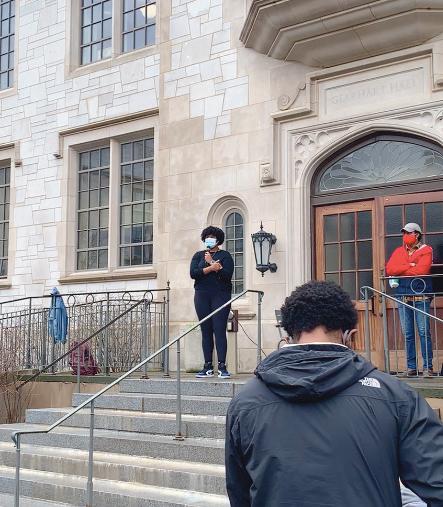
Tyrah Jackson stands on the steps of Gearhart Hall, wearing a microphone like a Britney Spears-era pop star while she calls out instructions to over 100 people, almost all of which are dressed in black and hanging on to her every word.
Jackson and the crowd have just made their way across a rainy soaked University of Arkansas campus, from the Fulbright Dining Hall past the now infamous J. William Fulbright statue and finally to Gearhart. The early morning rally on March 13 is a call to action on the removal of racist figures like Fulbright and Gov. Charles Brough from campus. And for Jackson, it hits a little closer to home than others.
While much of the discussion on campus about these figures centers on the legacy of Fulbright, it is the repercussions of Brough’s actions that have recently become a driving force in Jackson’s life.
Over a hundred years before in Elaine, Arkansas, the deadliest racial confrontation in the state took place. Member’s of Jackson’s family lived in the city at the time and survived the confrontation.
It was a result of growing tension and fear over labor unions, according to the Encyclopedia of Arkansas. Jackson’s family members were a part of over 100 Black Arkansans, mostly sharecroppers, who met at a local church for a Progressive Farmers and Household Union meeting to talk about securing better payments for their cotton crops from white plantation owners on Sept. 30, 1919. It is unclear who fired first, but gunfire between the Black guards outside the church and three people in a vehicle parked in front of it resulted in the death of a white security officer and the wounding of the Phillips County deputy sheriff, Charles Pratt.
It marked the start of one of the bloodiest racial confrontations in United States history.
The sheriff sent out a posse to find those involved, and although they were met with little resistance, the group of 500-1,000 white people were determined to put down the “insurrection” going down in Elaine. On Oct. 1, 1919 a telegram was sent to Gov. Charles Brough requesting the presence of U.S. troops in the city. Brough responded with 500 “battle-tested” troops from Camp Pike, according to the Encyclopedia of Arkansas.
The troops were “under order to shoot to kill any negro who refused to surrender immediately,” the Arkansas Democrat reported on Oct. 2. Exact numbers are not known, but hundreds of Black men, women and children were killed.
After visiting Elaine to get “correct information” concerning the “insurrection”, he returned to Little Rock and said in a press
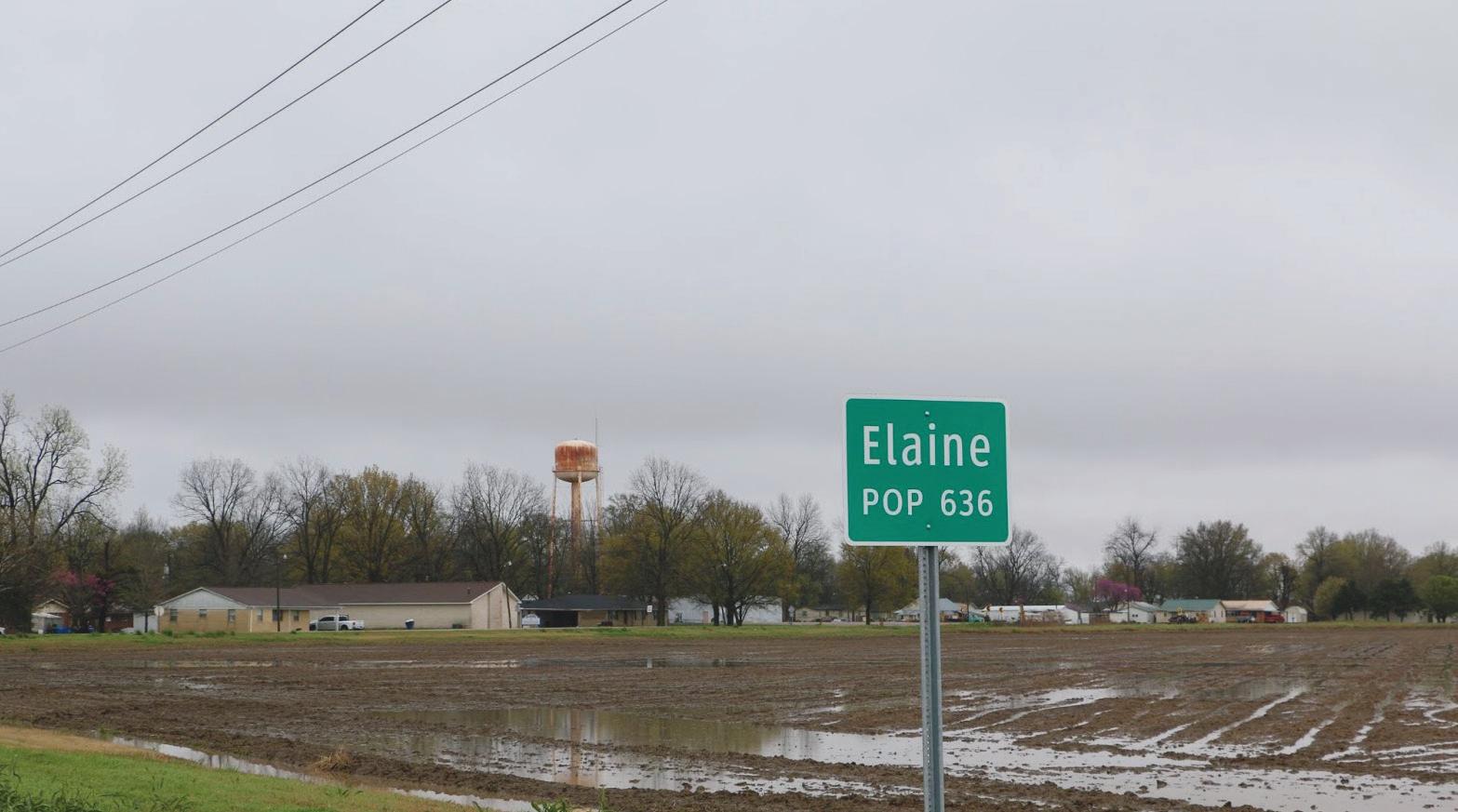
A rainy Elaine, Arkansas, on March 24. Those entering Elaine are greeted with fields on either side of the faded highway heading into the town of just over 600. Photo courtesy of Abbi Ross.
conference, “The situation at Elaine has been well handled and is absolutely under control. There is no danger of any lynching…. The white citizens of the county deserve unstinting praise for their actions in preventing mob violence,” according to the Encyclopedia of Arkansas.
In a matter of days, Gov. Brough had secured his legacy as a man with the death of hundreds of innocent Black Arkansans on his hands. And it is one that Arkansans are still feeling the ramifications of today. It was in front of Gearhart Hall that Jackson revealed her grandfather and great aunt survived the Elaine Massacre. Jackson, alongside other campus leaders, shared their experiences and thoughts about racism on campus.
Just over 100 years ago, members of Jackson’s family survived a heinous hate crime. Now Jackson stands in front of hundreds while she and so many others fight for their rights and the removal of presences on campus that never should have been in the first place.
“I believe the way to [be antiracist] is to rid the university of its racist effigies, but also of its structural discrepancies that continuously promote institutional racism,” Jackson said. Jackson is now a spokesperson for the UARK Black Student Caucus, a group that came together over the summer in response to racism on campus and organized the march. The Caucus is a response to the trauma that was brought forth over the summer when Black
“It hurts telling my mom that I’m okay at a school that I honestly don’t even feel safe at anymore”
students and community members shared their experiences on campus with #BlackatUARK.
The #BlackatUARK tag exploded on Twitter in June as people shared their experiences being Black on campus and in the community.
“Being #BlackatUark is having PIKE throw a fried chicken, watermelon, and 40 oz themed party to celebrate Martin Luther King Jr. day.”
“Being #BlackatUark is having my mom scared for my safety because my name is on a letter addressing the racist actions of UARK students and demanding change on my campus. It hurts
telling my mom that I’m okay at a school that I honestly don’t even feel safe at anymore”
“#BlackatUark is creating a hashtag because the administration refuses to listen to the demands of black students”
The posts shed a bright light on a side of the University of Arkansas that many did not want to see. The awakening of Black voices on campus converged as the UARK Black Student Caucus, a nascent student group that issued 15 demands for creating a more
inclusive and respectful campus, including the removal of the Fulbright statue and renaming the Brough dining hall — the statue of a staunch segregationist and a cafeteria named for a man who aided the bloodiest race massacre in Arkansas.
Months after the group’s creation, the Black Student Caucus announced the protest on March 13, the one that Jackson is helping lead like a conductor.
“For too long we’ve been given half hearted affirmations, Performative initiatives, and mission statements…On Saturday March 13 at 9:30 am we use our voices for those that have been silenced. We need solidarity in this time and we hope you can join us. Where there are people,
Tyrah Jackson, a UA junior (left), shares her family’s story at the Anti Racism Protest on March 13 on the UA Campus. Jackson is a member of the Committee to Evaluate J. William Fulbright and Charles Brough’s U of A Presence (right). Photos courtesy of Abbi Ross.
there is power #blackatuark” ...
Jackson doesn’t fancy herself a leader. Nevertheless at six feet tall, with piercing dark eyes and a presence that can fill a room, she is the type of woman whom people listen to.
That force is an amalgamation of growing up Black in the Arkansas Delta and then moving to Little Rock as a child, where she attended predominantly white schools.
Jackson spent her early childhood in what the people who lived there called the projects, and what the government called “section-8 apartments.” It was there that Jackson found her own little piece of heaven.
“When I was a child everyone knew each other and everyone looked out for each other,” Jackson said. “I never experienced danger and I never felt like I was in a dangerous situation. I always tell folks — I used to write poems back in the day — that I felt like I was in heaven, I was in paradise.”
It was a chance for Jackson and her family, blood and not, to be “carefree Black kids in every sense of the word,” she said.
There was no trauma looming over them. No need to be more than simply who they were. Jackson and her brother got to be kids. They got the chance to play outside, see friends and help around the house with nothing else hanging over their heads. If someone needed something, they knew they were going to get it one way or another.
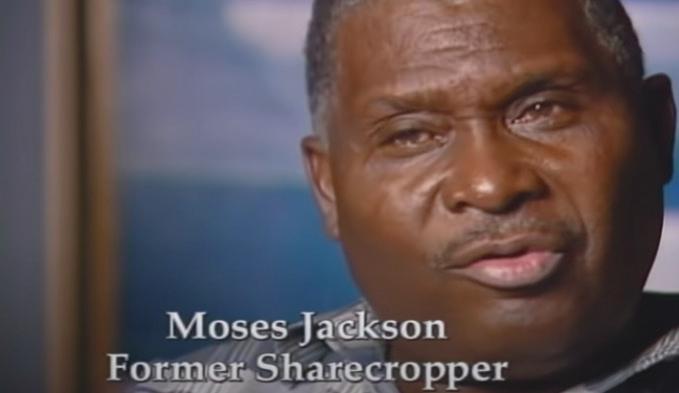
Moses Jackson, the grandfather of Tyrah Jackson, talks about his experiences as a sharecropper in a 2002 documentary. Jackson’s family were sharecroppers at the time of the Elaine Massacre in 1919. // Photo taken from the documentary.
That paradise came from a community that helped shape Jackson into who she is. Her grandmother used to say, “I choose to live here, I don’t have to live here.” That mentality came from a place where people came first.
Jackson’s family moved from Pine Bluff to Little Rock when she was five years old. The move was the start of an internal and external battle with the complexities of racism that Jackson didn’t fully realize until she was older.
She attended a variety of schools growing up, some in the wealthiest parts of Little Rock where she flourished, others where the discrimination against her was enough to make her move schools. She attended schools like Mount St. Mary’s Academy, where she was one of three Black students in her year and stood out because she was from public school and a tall, Black woman with a knack for basketball. She also attended the famous Little Rock Central High School, the school she originally avoided because she did not think she would survive it.
“I [went] through so many epiphanies during those years of kind of having this internal hate for my race, trying to be white…trying to move my race away,” Jackson said.
When Jackson made her way to the UofA in 2018 she had gotten over it — people staring, asking questions. She knew what she was walking into when she made it to campus, which is made up of only 5.3% of Black students.
“Through all that, I kind of learned how to survive and thrive in those predominantly white situations,” Jackson said. “ [I learned] how to be true to myself and my race.”
By the time Jackson found out about her family’s surviving the Elaine Massacre, she was already well aware of the realities Black people still face in Arkansas and across the U.S. Those realities are something that many on the UA campus are still realizing and confronting. While Jackson had accepted them and learned to fight back, many still haven’t, which is what pushed her to get involved.
While Jackson has not faced some of those issues on campus, she understands the emotional toll of it all. Many of those students at the UofA were also from the Delta region of Arkansas Jackson grew up.
“The underlying segregation that happens in the Delta, even today, no one talks about it because it’s not a statesanctioned segregation, but it is segregation,” Jackson said. “They got on to this campus and felt like fishes out of water and I felt like I needed to do something about that.”
Jackson’s fire to help Black students was only fueled farther when she learned about her family’s connection to Brough. Jackson learned her family survived the Elaine Massacre in February after seeing a snippet of a documentary about the event that her uncle shared on Facebook.
the grandfather of Tyrah in a 2002 documentary. “You work a whole year and handpick 40 bales of cotton and you come out with nothing.”
In the 20 minute documentary narrated by esteemed Black actor, Ossie Davis, Moses, alongside his sister Ruth Jackson, are among the first to speak. The documentary narrates the events of the Elaine Massacre and gives a voice to the people who experienced living in Elaine at the time.
“Colored people had more fear than they got now,” Ruth said in the film. “A lot of things they were scared of, they were afraid to talk about.”
“The underlying segregation that happens in the Delta, even today, no one talks about it because it’s not a state-sanctioned segregation, but it is segregation,” Jackson said. “They got on to this campus and felt like fishes out of water and I felt like I needed to do something about that.”
Moses Jackson, the grandfather of Tyrah, and a direct descendant of survivors of the massacre, was a part of a documentary shedding light on the Elaine Massacre.
“The man would take your cotton and then the man at the store [where] you had credit would run your books up on ya so you didn’t have nothing,” said Moses Jackson, a former sharecropper and
Many of the challenges that those Black Arkansans faced in 1919 are still there. While fighting for better pay as sharecroppers is not something Black Arkansans have to worry about in the 2020’s, there are still a number of aggressions, large and small, that they face on a daily basis. Black people are still being attacked for gathering to fight for basic human rights, as seen in the hundreds of protests across the U.S. last summer after the murder of George Floyd in Minneapolis. They are still being murdered by the people who are paid to serve and protect. They are still fighting microaggressions implemented in workplaces and universities, like the ones brought up during the #BlackatUARK movement last summer as well. The list could go on.
While some things have improved since 1919, but there is still exploitation and an underlying belief in white supremacy, said Brian Mitchell, a history professor at the University of Arkansas-Little Rock.
“Although we thought it was dead, it has very much been resurrected the last four or five years,”
Mitchell said.
The “history” surrounding monuments like Fulbright statue is often lumped in with the idea of “heritage.”
“The word heritage is loaded with emotion and nostalgia that go back and not necessarily history,” Mitchell said. “These monuments are counterfactual, they’re not telling a whole story.”
Jackson is a member of the committee that worked on decisions regarding the Fulbright statue and renaming the dining hall, among other issues. University officials formed The Committee to Evaluate J. William Fulbright and Charles Brough’s U of A Presence in the summer of 2020 as a part of the demands issued by the Black Student Caucus.
The committee is made up of 19 members that were chosen to help represent campus in the most diverse and broadest way possible, said Stephen Caldwell, an associate professor and chair of the Faculty Senate.
The committee was tasked with providing a recommendation on Fulbright’s name being removed from the college of arts and sciences, the relocation of his statue and Brough’s name being removed from the dining hall, Caldwell said. The committee met every Friday of the 2020-21 school year, spending time listening to a number of people and groups including campus members, alumni, historians and a committee
from Elaine.
The second part of the year was spent getting into the “nitty-gritty” of the possible changes, Caldwell said.
Discussions surrounding the issue have included “what if” situations surrounding the governor’s intentions, Jackson said.
“But it’s like what does he matter what he was doing when the intent —when the results —had the ramifications that they did?” Jackson said. “It’s not about intent. It’s about results.”
False narratives have been taught to people in the United States that reinforces the narrative that people want to believe, Mitchell said.
People have grown so attached to a patriotic narrative, that when they are confronted with facts, dates, documents that counter that patriotic narrative they reject it because it doesn’t glorify them, Mitchell said.
“It pissed me off to see people debating it,” Jackson said. “I have the first-hand account right here.”
Jackson’s family were sharecroppers. She grew up listening to stories from people like her great aunt Ruthie about how racist people were or from her father on how hard the work was. Jackson has five uncles and one aunt who all grew up working the land they lived on in Hughes. They all went to college and her family now owns one of the biggest construction companies in the state, she said.
“I was astounded and I was dumbfounded and I was proud,” Jackson said about learning that her family survived the Elaine Massacre. “I think I shed a couple of tears just because of the things my family had to survive and people are still debating it and talking about it.”
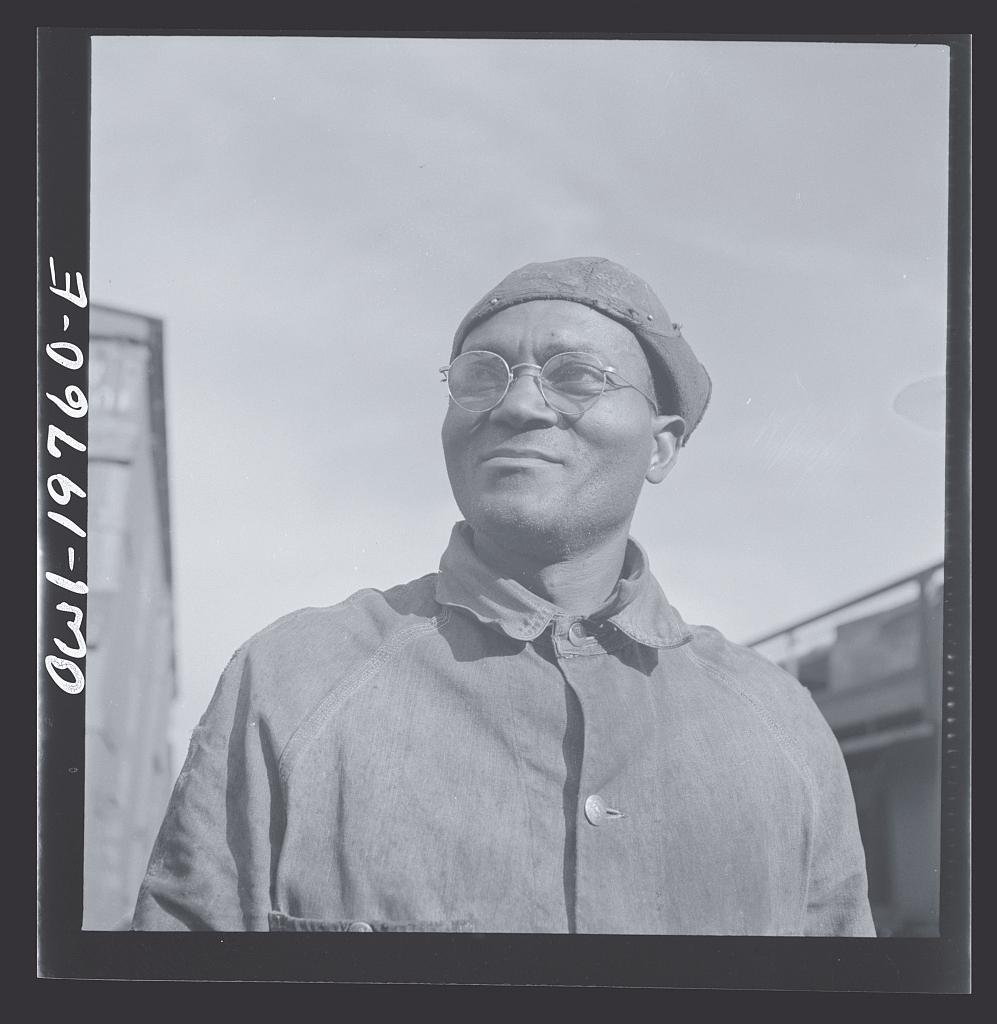
Robert Lee Hill (1892?-1963), an African American tenant farmer and union organizer from Arkansas who founded the Progressive Farmers and Household Union of America. After the 1919 Elaine Massacre, he fled to Kansas where he later worked on the Atchison, Topeka and Santa Fe Railroad. Photo and caption courtesy of the Library of Congress.
While the narrative surrounding figures like Fulbright, Brough and so many more across the country are changing and people are confronting their pasts, there is still a lot of work to do.
Jackson has realized through all of this that she doesn’t need higher ups to get things done. There are people and groups on campus that are willing to take the time and the money to make the changes that Black students want to see happen, she said.
“But it’s like what does he matter what he was doing when the intent —when the results —had the ramifications that they did?” Jackson said. “It’s not about intent. It’s about results.”
because of, “his association with promoting international understanding and world peace through education.”
Jackson thinks it is politics and oftentimes snobbery that bogs down within university systems, and academia itself, in their efforts to change.
“It’s debilitating,”Jackson said. “I think this obnoxiousness and this clubby type mindset that comes with academia, and really all systems, is the reason we haven’t gotten anywhere. You’ve got to work from the inside out.”
The University of Arkansas Board of Trustee’s voted on System President Donald Bobbitt’s recommendation’s July 28, exactly three months after the Committee to Evaluate J. William Fulbright and Charles Brough’s U of A Presence released their recommendation to then Chancellor Joe Steinmetz on Wednesday, April 28.
The committee recommended renaming the College of Arts and Sciences, relocating Fulbright’s statue and renaming Brough Commons.
One of those recommendations was met — the renaming of Brough Commons. It was voted on that Fulbright’s name would remain on the College of Arts and Sciences and that the statue will remain behind Old Main.
In an email to students following the meeting, then acting Chancellor Bill Kincaid reasoned leaving Fulbright’s name
The email also discusses the decision to leave the statue where it is, instead of relocating it as recommended by the committee and Steinmetz.
“However, since Act 1003 of 2021 prevents removing or relocating monuments on public property absent receipt of a waiver from the Arkansas History Commission, I believe the statue should be contextualized in its current location,” Bobbitt wrote in a letter to the board. “If a path presents itself at a later time to consider the relocation of the statue that is consistent with state law, the Board can revisit this issue.”
Kincaid’s email goes on to talk about efforts to diversify campus and university plans.
Jackson’s focus remains on Black students who are ready to make these changes. Before the final votes were made this summer, she said she no longer cares about the decisions administration makes because of the backlash or dichotomy that would eventually follow.
“It’s in the roots of the university that you’ll make the most change, not necessarily in high administration,” Jackson said.
Jackson knows that there are students on campus waiting to share their voices and their ideas.
“There are Black students out there who have some type of confidence in me to do something, and so my big thing now is going to each individual Black student that I can find and asking them what changes, they want to see at the university,” she said. “‘What is it in your heart of hearts, in your complete soul, in your soul – not in regards to anybody else – what are the changes you want to see in the university?’”
Fooling Them All
How I started the journey to no longer feeling like a fraud.
by Abbi Ross
I didn’t sneak my first cigarette until the Thanksgiving break of my freshman year of college.
I was driving out of Fayetteville on a gray, fall afternoon making my way to the split that would lead me toward my small hometown in central Arkansas. I had a light blue lighter with lemons on it and a pack of Marlboro 72 Lights — my mother’s cigarette of choice. I picked them up on my way out of town at a dingy Shell station that always made me feel a little uncomfortable. I got them because they were the only ones I actually knew the name of.
I could look the clerk in the eye and say “one pack of Marlboro 72 Lights” with confidence. I could tell them “the short gold ones” without a second thought. I didn’t want to be like the kids stacked in a trench coat trying to buy a ticket to an R-rated film in some movie. So, I chose the only cigarettes that name I knew and hoped the clerk wouldn’t think I was some silly sorority girl defying her mom. Even though I was. I just wanted to feel like less of an impostor in my own life. I wanted to have a reason to feel like not so much like a child.
It made me feel like an adult, not some 18-year-old kid trying cigarettes for the first time and hoping her mom wouldn’t be able to smell them on her when she got home. But like with most things in my life, I didn’t want her to think I wasn’t the “good kid” she had raised. I wanted something she didn’t know about. I wanted to do one thing that was bad for me and that she had no say over.
So I lit my first cigarette somewhere between the beloved Bobby Hopper Tunnel and Rudy, Arkansas. The driver’s side window in my white, 2003 Chevy Cavalier didn’t roll down, so smoke filled my car and for a moment I felt in control of my own life, as silly as it was. But I smoked the cigarette too quickly and I ended up nauseous and wondering if somehow my mom would be able to tell I was not as great as she thought I was. At that moment I felt like I was fooling her and all the expectations that everyone had been built around me over the years.
My smoking habit never picked up, but that feeling of being an impostor never left.
There’s no room to mess up in
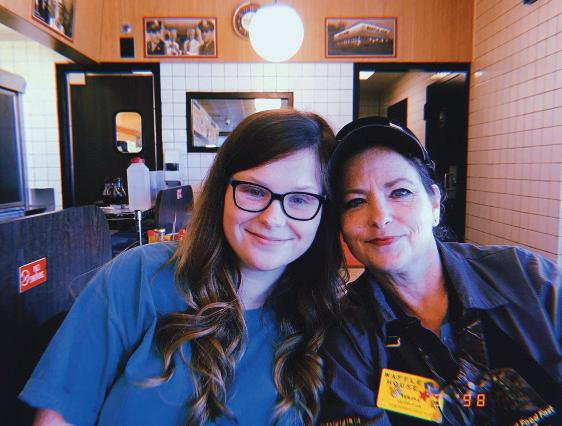
Me and mom, Teresa Converse, on the day I left for my sophomore year of college at the Waffle House where she works in Brinkley, Arkansas. My mom has always been my biggest supporters, but she’s also the person I fear disappointing the most.
my world. I don’t have a safety net waiting to catch me when I fall from grace or when I mess up beyond repair. I’m a firstgeneration college student and I’m on my own in a lot of ways. And for 21 years, I’ve done a good job of not messing up.
I have good grades, a long-term job, a full ride to college and I’m the editor in chief of my college newspaper. Go back a little farther and I looked this good in high school, too. I graduated third in my class, I was student council president and yearbook editor — I was even prom queen. I never dated and I never stayed out too late. I got grounded once in high school.
My entire life has been built on a system of trying to be the best or at least damn close to it. But I’ve not always felt that way. It always seemed to be good to be true. I did good on AP Lit tests because I just happened to read the right chapter in a last-minute study session before class. I got student council president because I had gone to the school longer than the other candidate. Most of my accomplishments have always accompanied with that voice in the back of my head saying, ‘you’re not that great.’ It was not until the summer before my senior year of college that I realized the toll this mentality had taken on me. The semester before it was what some would consider the best of my life, or at least my college career. I was named editor-in-chief of my university’s
school newspaper. I got a great internship at a regional paper. I earned my first 4.0 GPA in college. I even had a great new hair color courtesy of some woman with a shop down some dirt road in DeWitt.
But I was not happy. I didn’t feel like I deserved any of it.
I felt like I had somehow tricked all of these people into thinking that I was good enough to do these things. I was not really that smart or that talented or whatever they thought I was. I was lucky. I was in the right place at the right time. I was the
feel crazy. For the first time in months, I didn’t feel like some self-sabotaging girl who was just good at finding reasons to be unhappy. So, I started doing some research on the words that had given me so much relief and I started realizing this wasn’t a new feeling. It was something I had carried with me for a long time, it just wasn’t until recent months that I realized how heavily it was sitting on my chest.
I felt like I had somehow tricked all of these people into thinking that I was good enough to do these things.
safer option.
Along with these accomplishments came genuine compliments and words of encouragement from people that I think the world of. I didn’t feel like I deserved them though and it haunted me to think of the day that all of these people who were so proud would see through the facade I had created and would realize that I was faking it.
That was in the spring. It was not until the end of August that I heard a phrase that changed me: impostor syndrome. A quick Google search and for the first time in months I didn’t
A phenomenon first addressed in the 1970s by psychologists Suzanne Imes and Pauline Rose Clance, it is described as “an internal experience of intellectual phoniness which appears to be particularly prevalent and intense among a select sample of high achieving women.” Those women were detailed as believing that they were not actually as smart or accomplished as they appeared and that they had fooled anyone who thought they were.
Research since then has shown that impostor syndrome, or impostor phenomenon, can affect anyone, no matter age, gender or occupation. It was estimated in 2007 that around 70% of people will feel some type of impostor syndrome in their life. As the phenomenon has become more widely recognized it has come that people from minority backgrounds experience higher rates of of it as well.
In their original research, Clance and Imes interviewed 150 highly accomplished women. These women had Ph.D.’s, were ranked
professionals in their field or were considered excellent by peers. On paper, they looked great. That greatness did not translate for them and many felt like frauds.
One woman, the chairperson of her department at Georgia State University was quoted as saying, “Obviously I’m in this position because my abilities have been overestimated.” The feelings she had in the 1970s could not have better fit the way I felt when a professor complimented my skills as a student and journalist if I had written them myself in 2020.
Clance and Imes categorized the women who checked these boxes into two categories: those with older, brighter siblings whose parents deemed them the “less smart, more sensitive one” and those who are “the bright, nothing is out of their reach” child.
I am the second option.
...
I am the third child of four — for my mom at least. I was an accident that came 18 years after her first child and 15 years after her second. I’m the third kid in a broken family that features three different fathers, some generational trauma and is located in a place where the only thing that matters is
Abbi in November 2021 working at her job at the Fort Smith newspaper. Photo courtesy of Abbi Ross.
appearances.
I’ve always had something to prove.
Or at least, I’ve always felt like I had something to prove. I grew up in the type of town where your last name decided how others treated you and what they thought of you. My last name, “Ross,” didn’t have a lot going for it. I’m not from a long line of hometown darlings that ruled the school or from a family that had any sort of impact in the city. In a lot of ways, the odds were stacked against me, and I knew it. So I did everything in my power to beat those odds.
I’m the daughter of a single mother who had her first child six days after her 16th birthday. I grew up in an old trailer on family land on the skirts of the Delta region in Arkansas.
My mom is a waitress at Waffle House, my father is a farmer on someone else’s farm, and there is absolutely nothing wrong with that. They are two of the hardest working, most dedicated people I have ever met. They made me who I am. But I’ve always known that I didn’t have a safety net. My parents were not going to be able to pay for my college or make my car payments.
So I pushed myself. I was in almost every club that Hazen High School offered. Yearbook, quiz bowl, student council, FCCLA, FBLA — you name it and I was in it. I pushed and pushed and pushed. And it paid off. I will graduate in the spring with no debt and a degree in a field I love.
I always tell my mom it’s her fault that I think I can do anything, and according to Clance and Imes’ research, it is. The study talks about the families instilling in their daughter the belief that “there is nothing that she cannot do if she wants to, and she
can do it with ease.” That encouragement is great until the person at hand starts to fail or attempts something they never have before and they do not immediately succeed. It’s supposed to come easy to them and it’s a feeling I know well. Failure has never been an option for me, it couldn’t be. So when I fail or don’t live up to an expectation I have set in my head, all of the good things I have done come crumbling down and I can only focus on how I’m not as good as people think I am.
I am the product of a society that equates worth with work.
In her years as a life coach, Dr. Eve Agee has seen impostor syndrome in people who are not a part of the typical, dominant culture that surrounds them, like a being straight white male, she said. Many of these people are in a position where they
something, they feel like an impostor,” Agee said. Meaning, that these people don’t fit the stereotypical mold of those working around them. They may not look the same, be the same or have the same background and these differences make them feel like an outlier and oftentimes a fraud. People of color and other minority groups are especially vulnerable to this sensation. Journalist and editor Jolie A. Doggett wrote for the Huffington Post in Oct. 2019 about her experiences as a successful Black woman and how impostor syndrome affects her.
“For us, impostor syndrome isn’t just an imaginary voice in our heads,” Jolie wrote. “We can hear it loud and clear when we receive almost daily messages from society that we truly don’t belong. This feeling of otherness is a common occurrence in the workplace where, too often, we may be the only person of color present.”
In a lot of ways, the odds were stacked against me, and I knew it. So I did everything in my power to beat those odds.
doubt their accomplishments and feel like a fraud because of the culture we live in, although it can affect anyone, including that dominant culture.
“It’s tied to self-worth and the way society makes people’s worth conditional on all these different aspects,” Agee said.
Agee, who also has a background in anthropology, commented on how the U.S. has a culture that ties self-worth to productivity that could stem from being part of a capitalistic society, where there are other cultures that don’t have this tie. They are focused on being productive instead of things they actually value, Agee said. People are forced to feel productive.
“What I’ve seen with impostor syndrome is (that it is) a lot of people who are extremely well qualified and they’re doing a really good job at what they’re doing, but because they don’t necessarily fit the model of who society has said that is doing
Although research is lacking in exactly how impostor syndrome affects people of color, most likely because research still does not represent them accurately — Black and LatinX people account for just 6% of all participants in federally funded clinical trials — there is a clear correlation in how they are related.
For most people, impostor syndrome is because of an inner critic, but there are also external factors, said Dr. Emee Vida Estacio, a psychologist located in Greece and the author of a book on addressing impostor syndrome. Those pressures can from peers, parents and society in general and only fuel feelings of incompetence or inadequacy.
Like Doggett wrote about, for people of all color, all of those feelings are intensified. Not only are they trying to prove themselves to voice in their heads, but the world around them.
...
Estacio started studying the phenomenon after realizing that it was something she struggled with as well. Before giving birth to her son, she would spend hours working, trying to perfect what she did. She coped with her feelings of fraud by overcompensating. She was afraid that if she was
not giving it her all, that results would be awful and people would see her truly. Having her son and no longer having the time to bend over backward to prove herself made Estacio realize that something had to change.
“I wrote the book because I survived it,” Estacio said over a Zoom call. It was after 10 p.m. in Greece and she was thousands of miles away from my fourth-floor apartment in Fayetteville, but her words had a similar effect to finding out what impostor syndrome was for the first time — I felt less alone.
“For [people of color], impostor syndrome isn’t just an imaginary voice in our heads,” Jolie wrote. “...This feeling of otherness is a common occurrence in the workplace where, too often, we may be the only person of color present.”
It took Estacio professional help and over a year and her life to deal with the aftermath of becoming burnout out and the subsequent identity crisis she dealt with.
“I’m a psychologist, it’s fascinating, as (one) I should have spotted this,” Estacio said. “But, you know, doctors get sick too. Psychologists get mentally unwell too. We’re not immune to that.” Hearing that this smart, well received doctor who was countries away from me understood the thoughts that I thought made me crazy was eye opening.
I don’t feel alone nearly as much as I did last spring these days.
For months I questioned whether or not I was worthy of all the good things happening to me. I felt like I was always moments away from something sweeping the rug away from my feet. That feeling is still there and I still question if I am good enough to be doing what I do. It’s a feeling that I don’t think will ever go away, but it’s one I’m learning to talk back to.
The decision to write this story was one of the hardest I have ever made. I am the type of person to keep most arm’s length and then some. One of my most stubborn traits is my pride, and this story goes against everything that stands for. The idea of bearing the inner working of my brain to my classmates and potential readers was vomit-inducing. I did not want them to think less of me than they did before I started talking.
But I stood in front of my peers and my professor in early January and I laid out the pitch for this story, and in turn a lot of the blueprint for who I am as a person, in a recently renovated classroom in Kimpel Hall. It was rainy that day and the early grey morning felt a lot like the battle going on in my head on if this pitch was the one I wanted to read to the entire class.
Reading that pitch was one of the scariest things I have done in a long time. I told a room of mostly strangers the secrets that for months — years really — I was not able to admit to myself.
When I finished my breathy ramble about feeling like I did not deserve the last six months of my life, I was shocked to hear the voices of my classmates telling me they feel the same way. They weren’t eerily silent the way my brain told me they would be. They were not laughing or shaking their heads at the girl who just couldn’t be grateful. They saw me and I got to see them in a new light.
A lot has changed since I bought that pack of cigarettes.
Devotion
by Reeya Gandhi
I was nine years old when they told me to put my hands in the fire. It won’t burn. This fire won’t burn you.
I’d seen my devoted grandmother recite her morning prayers, like the memory was a shy lotus that only opened when the light shone directly on the petals. The golden lamp, that held a small flame, grasped between her shaking fingers. She spoke in native tongue and kept her eyes loosely shut.
The smoking incense twirled with her words and trickled into her nostrils every time she took a second to breathe in.
Praying was like eating to her. She would starve before ever leaning to take a sip of water with unnourished lips that hadn’t first tasted the holy words.
In the morning, she would pray, and I would watch.
But once she picked up the lamp and brought it close to me;
I could smell the mixture of burning cotton and ghee.
The small flame flicked as if it was calling me to touch it— and I was hesitant.
Don’t worry, You won’t get burned
My grandmother said, with scars of singed skin lining her palms.
Once she was told the same thing.
Once she was told the fire wouldn’t burn, and she believed them.
I’d looked into her eyes.
The fire lived in the irises.
She’d devoted herself to this fire. The lotus was burning.
I looked back at the flame.
I’d never learned to pray like that.
Out of Hiding, into the Bible Belt
Pagans in Arkansas endure fear and harassment in the most socially conservative region of the United States — the Bible Belt.
by Kari Adams
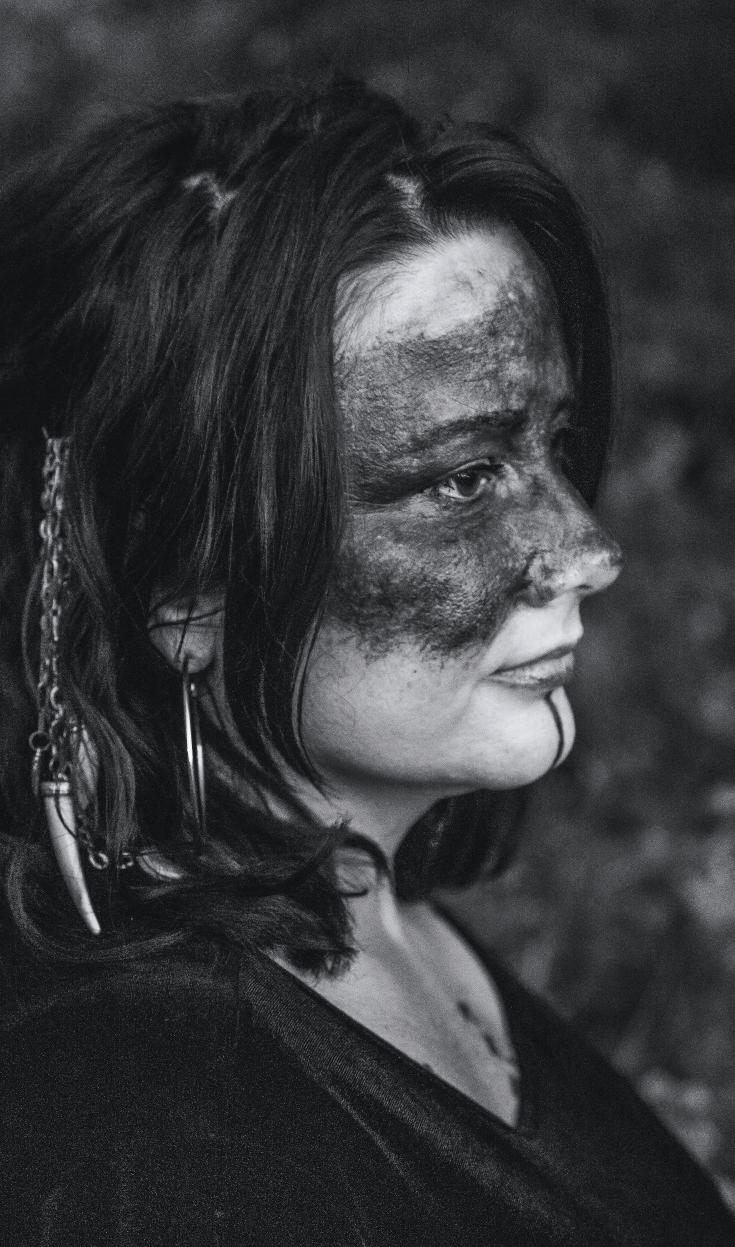
Marie didn’t think she deserved to die. The two boys yelling out the bus window thought otherwise.
“F—king witch!”
“Cut yourself and die, you emo whore!”
The boys’ voices carried down the empty street on the quiet October morning in 2009. It had been rather serene before they got there; everything was cast a cool blue as the sun peaked above the horizon line, only 6:30 a.m. Marie’s house was one of the first on the bus route. She was sitting in the driveway of her family home, waiting to wave at her friends as they drove by. Marie was 12 years old at the time and had started seventh grade in Quitman, Arkansas. A day ago, her parents pulled her from school.
Since school started in August, she went to class every day as an outcast. Students told her she was an abomination. They told her she was going to Hell if God didn’t save her soul. They told her to kill herself — all because Marie practices Wicca, a modern form of Pagan witchcraft, and has been since the fifth grade. When the taunts took a toll on her mental health, her parents pulled her from school.
She was sitting on the couch in her living room when she received a call earlier that morning. It was her best friend’s name that popped up on the screen, but her friend’s brother was on the other end. He told Marie to wait outside for the bus; he and his friend wanted to wave as they passed her house. She didn’t think much of it.
Marie waited outside for 10 minutes on the chilly fall morning, rubbing her bare arms for warmth, wearing a short sleeve t-shirt and pants that she had worn the day before. When the bus finally turned down her street, the boys slid down the windows and screamed obscenities, flipping her off and laughing like ravenous hyenas as the bus rolled past her. She just watched, paralyzed. When she went back inside, she felt nothing.
After her mother convinced Marie to tell her what was wrong, they walked into the Quitman High front office demanding accountability, but the school officials told them that nothing could be done. The exchange wasn’t on camera, the bus driver said he didn’t hear anything, and Marie was no longer a member of the school system.
“I went numb to the world,” Marie recalled.
Marie, now 24, lives with religious trauma and prefers to keep her identity hidden. Today, she is afraid of even placing an altar in her backyard. “Others can display crosses in their front yard with no fear,” Marie said. “But if I put anything near my house on the outside, I put myself in real danger.”
...
What Marie experienced was something many Pagans face over and over again throughout their life, stories of hatred and disgust — especially in Arkansas, a Bible Belt state. Arra Graskewicz, 24, a central Arkansas resident, told her mother she was Pagan when she was a teenager. Her mother told their pastor, and Graskewicz sat through a sermon bashing Paganism. Afterward, he came
to their home and cleansed her bedroom because she had been “communing with demons.” Tesha Baker, 44, of central Arkansas, was the subject of a nasty Facebook post, instigated by her ex-husband’s fiancée after he told her about Baker’s witchcraft. People commented that Baker would go to hell if
“I went numb to the world,” Marie recalled.
she didn’t find Jesus. Baker is a Christian witch who prays to God.
Paige Hines, 21, of southeast Arkansas, only celebrates Pagan holidays like Easter and the autumn equinox — or Mabon — shielded by the trees and free from drawing too much attention. She is afraid of being accused of Satan worship.
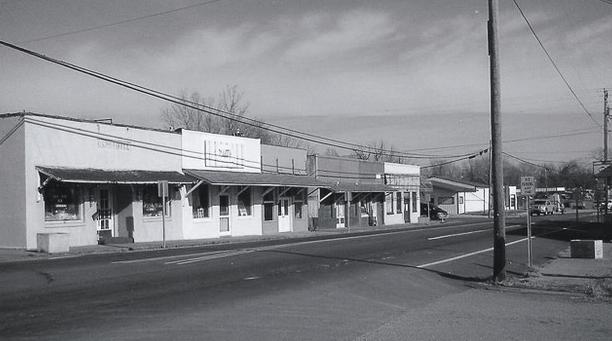
Quitman, Arkansas, located in central Arkansas, is home to 762 people. Marie grew up in Quitman before moving away when she was 16 years old.
Photo by Mike Polston from the Quitman, Arkansas website.
from the Facebook group “Witches of NWA.”
Photos
Photos courtesy of Savannah Sprute and Jesse Hefley.
In Little Rock, the urban center of the state, Elizabeth Scott, 29, heard whispers at her waitressing job after she revealed she was Pagan. Her co-worker was talking behind her back, telling people she was in a sex cult and sacrificed animals for fun.
Modern Paganism — also known as contemporary Paganism or Neo-Paganism — is a movement more than it is an organized religion, and it encompasses a variety of nature-oriented paths, including Wicca, eclectic Paganism, herbalism, Druidism, and many others. It is a polytheistic or pantheistic worship, meaning there are multiple gods, surrounding a central theme of celebrating the earth. Some Pagans identify as witches while others only use the word for convenience or disregard the word entirely. Some say they practice witchcraft while others don’t use the term at all. The overwhelming consensus is that people are free to manifest their beliefs in whatever way they want. It is not a religion in a traditional sense, but if it must be then it is a religion that preaches the gospel of self-expression and empowerment.
Elizabeth Scott chose her path as an eclectic Pagan at 17 years old. She had been raised Catholic since birth and grew up in Catholic school going to church almost four times a week. Her grandfather baptized her at six months old. First Communion was in second grade. Confirmation was in eighth. But Scott described Christianity as patriarchal, a religion that supported a family structure placing the man as the head of house or the “breadwinner.” Women were the afterthought. As a self-described feminist, Scott struggled to feel free, a commonality amongst many NeoPagans.
No two Pagans practice the same, but a yearning for autonomy and a connection to nature is a unifying feature amongst all Pagan paths. Some people place altars in their room or in their backyard where they leave offerings to deities or speak to lost loved ones. Many meditate to ground themselves to the earth. Some Pagans read Tarot cards to learn about the past, present, or future, and some use runes for
guidance in uncertain situations, placing them in bags and pulling out a rune one by one or rolling them onto a table after asking a question.
Witchcraft is the use of spells, like a protection spell, or rituals to materialize intentions by focusing energy onto herbs, crystals, or candles through chanting or dancing or singing. There are no rules. People do what they feel drawn to.
However, many Pagans fear practicing out in the open. Stories like Marie’s are cautionary tales. With so many hidden, a definitive count is impossible. Dr. Helen Berger, resident scholar at the Women Studies Research Center at Brandeis University, has studied and collected survey data on the Pagan community for 30 years, but the number of Pagans in the U.S. still remains a “guesstimate,” she said. The total is expected to be nearing two million, less than 1% of the U.S. population. However, this is most likely an undercount due to the amount of book sales, website traffic, social media involvement, and participation is Pagan festivals, Berger said.
The year 2019 was deemed the “Season of the Witch” by Publishers Weekly as books on witchcraft were released by author after author. Wicca, one of the most prominent expressions of modern Paganism witchcraft, has exploded in popularity, especially among the younger generations. In 1990, only 8,000 people identified as Wiccan, then in 2008, it grew to 340,000, according to World Religion News. Today, social media apps like TikTok are home to Pagan and witch influencers sharing educational videos, Tarot card readings, or horoscopes. The hashtag #witchtok has 20.4 billion views, #pagantok has 198.2 million.
The birth of modern Paganism is often traced to 1950 with the release of Witchcraft Today, a book by English writer and self-described witch Gerald Gardener, detailing Gardener’s experience meeting witches in the 1930s and his experience starting his own coven. His influence from overseas
trickled into the States around the 60s with New Age philosophies that took root in activism as the country was undergoing drastic social change. Witches became a prominent figure for women seeking power in a male-dominated society.
Since its rebirth, the rise of neo-Paganism has been slow but steady as young people sought freedom from authority, misogyny, racism, and homophobia by delving into the realm of magic. A large contributor has been the emergence of the internet. “There’s been an enormous increase in solitary practitioners,” Dr. Berger said. “Since between 1980 to 2021, it just keeps increasing. And part of the reason it can increase is that people learn about the religion, learn more about its practice, learn more about magic, and connect with others in the religion online.”
Though there is irony in a religion so grounded in nature thriving off technology, social media plays a large role in connecting Pagans across the United States as a way to avoid the backlash of public exposure, especially in Arkansas and the Bible Belt as a whole. It has created a digital safe haven. A Facebook group called “Arkansas Pagans and Witches” is an online getaway for more than 1,400 Pagans in the Natural State, including Marie. The group is teeming with posts every day.
“What did y’all do for the full moon?”
“I was wondering if anyone had any cutting ties spells… I have three people who I had a falling out with and wish for them to be out of my life for good…”
“Today is the day that I come out of the broom closet and tell my Christian husband that I am converting to Paganism.”
Other groups include “Witches of Arkansas” with 1,500 members, “Arkansas witches crew” with 753, “Arkansas Witches, Wiccans, Pagans” with 432, and a few others. Many Pagans practice alone but frequent the Facebook groups for advice, using others to learn about their own craft, and in the middle of the Bible Belt, find a sense of community in an otherwise unforgiving landscape.
Marie was raised in nature. She lived 10 minutes outside of Quitman, Arkansas, in a little house enveloped by a thick line of trees, only one other house and a trailer home nearby. She spent most of her free time trudging through the woods with her dogs looking for mud holes or good climbing trees.
As she got older, she started hearing small town gossip about evil witches that lurched in the wood around Quitman, stories about women sacrificing
“Others can display their crosses in their front yard with no fear,” Marie said.
“But if I put anything near my house on the outside, I put myself in real danger.”
animals to Satan, but it was confusing. Kids at school rambled on about movies like The Craft from 1996, a movie about teenage witches in a Los Angeles Catholic school struggling with their newfound power of witchcraft. Students coated their hair with shampoos and conditioners, mimicking an iconic scene from the movie where one of the teen witches rubbed her hand over her head, changing her hair color instantly. “A few kids, despite being terrified of witches, still had this pull to do something crazy like that,” Marie said. “They wanted to stand out and scare people like, ‘I did a spell.’ Then, it would just be dropped at that, but I never dropped it.”
Marie started sneaking out at night to practice spells on her plants. She read books and watched more movies like Practical Magic, a 1998 movie about two sisters born into a family of witches. Then, when she was 11 years old, it was like the movie came to life before her eyes. Her father sat
her down on the rust-colored couch in the living room and told her he came from a line of practicing witches. Everything started making sense.
Marie didn’t grow up religious, but she was always looking for answers. Quitman was a predominantly Baptist area, most of the churches were Baptist and subsequently, most of Marie’s friends were Baptist as well. Her parents both actively avoided church, avoided talking about it all together, so when Marie started hearing kids at Pre-K talking about someone named God, she got curious. At four years old, for the first time, someone told her that she would go to hell if God didn’t save her. She was five years old when she decided she needed to go to church. Her mother dropped her off in the parking lot and waited in the car while Marie went in alone. It was the biggest church in town, white and pristine with a large, white steeple directly in the middle of the roof, a bit intimidating for little Marie, and it smelled stale, like a closet that hadn’t been opened in a while. It was very lively otherwise, people milled about hugging like they didn’t see each other just last Sunday.
The day started off at Bible study where kids memorized Bible verses that they pulled from a hat. John 3:16 was the first verse Marie ever learned. After she memorized it, she got a piece of candy, a treat like she was a dog. After that, the rest of the experience was a blur of buzzing voices and big smiles and sermons. Her first time listening to a sermon was strange. The pastor’s voice was loud, sickly sweet yet intimidating at the same time. It filled the room and rammed against her eardrums like he was trying to drill into her skull. She didn’t like what she was hearing either. Marie thought God sounded scary. She didn’t want to worship Him. She didn’t want to sing alongside these people or pray to Him. She wanted to go home.
After that, she lost her sense of wonder surrounding God and church, but it was all people talked about in her little town. A few years later, her friend begged her to start going to church again. This time it was a smaller Baptist church on the outskirts of town, barely inside city limits. She started going on Sunday and Wednesday every week, but eventually stopped going to Sunday service because they didn’t serve
Marie thought God sounded scary. She didn’t want to worship Him. She didn’t want to sing alongside these people or pray to Him. She wanted to go home.
food. Marie’s family was poor, and Wednesdays became an opportunity for an easy meal. But people in the church noticed that her heart wasn’t in it. They started picking on her, singling her out to answer questions during Bible study. Eventually, she got yelled at when she tried to get seconds during dinner. She stopped going after that.
So, she kept playing outside, making forts out of sticks and rocks and mixing potions out of wild berries. Nature wasn’t mean to her. When her father sat her down to tell her about his family of Pagan witches, she almost wasn’t surprised.
Her father didn’t know his family, only his mother, so when an ancestry test resulted in a call from a woman asking for her brother, nobody knew what to think. These people were Marie’s long-lost aunts and great aunts and uncles and cousins. They were strangers but also familiar.
When she was 10 years old, everyone met in Alabama for a family reunion. People were drunk and talkative, conversation flowed more freely with every drink. Marie’s father was heavily tattooed, full sleeves with skulls and pentagrams, and his great aunts finally pulled him aside when they decided he would be understanding after seeing his appearance and told him that they were a family of generational witches. Then, he explained that he grew up Wiccan as well. “There was always a pull,” he said. Marie was watching from the corner of the room, putting all the pieces together.
A year later, her father finally sat Marie down in the living room after her mother went to bed. He talked about how his family members were witches. He talked about how he practiced in the past but doesn’t anymore. He talked about how he got into some really bad stuff, did things he shouldn’t have, and wanted Marie to be better than he was. Marie started calling herself Wiccan the very next day.
Marie started fifth grade soon and couldn’t wait to tell her classmates about her new selfdiscovery. Harry Potter was one of the most popular movie franchises at school. Magic was on everyone’s minds, and Marie was dreaming about being the most popular kid in school. A real witch. Instead, she was called a devil worshipper. She walked down the hallways and heard whispers that someone should “burn the witch”. One teacher pulled her aside at recess to ask her to come to church. God needed to save her soul. It felt more selfish than anything, like she didn’t actually care about Marie and instead just wanted to be in God’s good graces. It was the same questions over and over again, asking if Marie believed in God or if she knew Jesus died for her sins.
Eventually, she started lying, agreeing with people and hoping they would leave her alone, but she couldn’t help the fear bubbling up inside her, little seeds of hesitancy and anxiety in the back of her mind growing with every sentence people said.
“That’s the devil getting into your heart.”
“You don’t want to go to hell, do you? All your family is going to heaven, and you don’t want to end up in hell and burn for eternity.”
“I can save your soul if you just come to church with me.”
It kept happening in sixth grade, and seventh grade was shaping up to be the same. Soon, Marie stopped sleeping. That’s when she was pulled from the school at 12 years old, moving out of Quitman a few years later. There was no place for her in Quitman, but there was a place for her in Wicca and Paganism. Many women were finding the same.
...
It started in the 1960s. The Women’s International Terrorist Conspiracy from Hell, or
W.I.T.C.H, was founded as a feminist organization fighting alongside other causes like the Civil Rights movement, the antiwar movement, and the gay rights movement. All protests not typically aligned with traditional southern history. The group also went by other versions of the acronym, like Women Inspired to Commit Herstory. Even today, the members show up to protests covered head to toe in black attire, faces concealed by black cloth, but the most notable feature is a tall, wide-brim hat with a distinct conical point — a witch’s hat.
Many members were or are not real witches, but they saw the reaction that their imagery had. It was eye-catching, and it made people afraid. With the power women found in paganism, some forged ahead, despite negative
Photo illustration by Blaise Keasler.
public opinion, with a hunger for change. In 2018, a group of New York witches gathered for a group hex on Supreme Court Justice Brett Kavanaugh before the midterm election. Kavanaugh has been accused of sexual assault by three women. Witches across the state gathered at Catland Books, a metaphysical shop and bookstore in Brooklyn, with the intention to incite change by using “the only means of exacting justice available to those of us who have been wronged by men just like him,” according to the bookstore’s Facebook event. More than 18,000 people responded to the post.
Their mission to hex Kavanaugh resulted in outrage among the Catholic community — Kavanaugh being Catholic himself. California priest and exorcist Father Gary Thomas told the National Catholic Register, “This is conjuring evil — not about free speech.” He described the witches as “real evil people” who “should not be underestimated or dismissed.”
This was not the only instance of public hexing. The year before, the same bookstore called witches to cast a spell on Donald Trump, accused of sexual assault by 26 women. The Christian
Nationalist Alliance called it “a declaration of spiritual war.” Women were weaponizing the fear that Christianity manufactured. But with bad blood brewing between Paganism and Christianity, it also made practicing freely in the Bible Belt that much more difficult.
For Paige Hines, the two religions coexist every day. Hines is a Christian witch, meaning that the Christian God has power over all, but she has power over herself as well as what happens around her. It almost seems like an oxymoron, but when Hines was reading the Ten Commandments, she said that “Thou shalt have no other gods before me” led her to believe there were gods below Him rather than no other gods at all. Though she believes in those gods, she does not pray to them.
Hines is from southeast Arkansas where she, her family, and a few friends are the only people nearby that practice witchcraft. She chose her path at 10 years old after finding her mother’s spell books, planting a seed of curiosity that compelled her to learn more.
Members of the Women’s International Terrorist Conspiracy from Hell, or W.I.T.C.H., at the Chicago Federal Building in 1969. Photo by Beth Scupham.
She grew up going to a Southern Baptist church, then a Pentecostal church, a Free Will Baptist church, and a Catholic church before choosing Christian witchcraft. Traditional Christianity had “become so muddled,” she said. Like many others, she was seeking empowerment and could not find it in the rigid and patronizing environment of traditional Christianity, but she said what she had learned as a kid in church still made sense to her. Hines said God is the Creator, but she controls her own being. Christian witchcraft plugged up the holes that Christianity alone couldn’t fill.
However, she still retains a small fear of Christianity that she hopes will fizzle out as modern Paganism grows. In Hines’ small town, everyone knows everybody, and backlash or judgment is always lurking.
Judgment can come from anyone — even family. After formally choosing her path at 16, Elizabeth Scott still couldn’t escape Catholicism. An explosive argument with her mother after her decision resulted in Scott being grounded. “If you live under my roof,” her mother said, “you’re going to go to church.”
So, for two years, Scott went to church with her family. She would walk in and grab the weekly bulletin, carefully avoiding the eyes of the other church goers around her. Sometimes, she would take the bulletin and walk out, and other times she would hide in the quiet room where mothers took their crying infants during sermon.
Her mother thought making her go to church would change her mind but really it made Scott more determined, more defiant. The week she moved out at 18, she told her mother that she wouldn’t go to church again. “I did what you said,” Scott told her. Her mother does not support her decision to this day, 12 years later.
Today, Marie lives in central Arkansas, and she can’t escape feelings of isolation. She fears dying,
afraid that people were right, and she will rot in hell because she cannot connect with Christianity. She stopped telling people she is Wiccan. She stopped practicing out in the open. Instead, she meditates in a small room in the back of her house. She stopped collecting spell books, candles, crystals, and herb boxes because she is afraid people will find them. Marie has one set of Tarot cards, and she sits hidden away in the back room on a small, rectangular rug to read them. She also stopped wearing Pagan jewelry, no symbols or hints of her beliefs.
This time, she thinks about the fact she might not find someone that can marry her every day. Regardless, Marie doesn’t regret the path she chose.
“The most amazing thing about Wiccanism, Paganism…is it’s all free,” Marie said. “If dancing naked under a full moon isn’t for you, then don’t do it. If doing spells isn’t your thing, then you don’t have to do them. If you want to just sit outside and make the wind blow, you’re free to do so.”
As a child, she felt trapped, cornered like a wounded animal, but she never questioned who she was.
“I have always been told to trust my gut,” Marie said, “and this is something deep in my gut — in my bones — that feels so right that I could never doubt or deny it.”
Photo illustration by Blaise Keasler.
the birds, i.
it is once again just this side of the witching hour and i am thoughtless, supine considering.
the birds have been acting strange lately. i wonder if they know. i sweep up everything: their feathers, cherry stems tied in knots while thinking of you, snow sent express-mail to me.
the night makes everything softer a blanket pulled close, fluttering against my cheek like your lips do in my dreams, still warm from the pillow.
the birds, ii.
i sit still as a seen rabbit, heart jumping in my chest and listen to your breathing slow. this is how i know you are asleep, when i can time my breaths to yours and imagine it is your back against my chest and not the empty air of my room. it never seemed so cavernous before you claimed your space in it, never so dark until my eyes adjusted to your light.
the i love yous come quietly and without warning in the still summer nights, the heat oppressive and damp, the moon burning through the clouds. they tiptoe across my ribs and climb up into my throat but i do not notice until they make their home in my mouth. just this side of my crooked teeth. i am scared you will watch me laugh and see them. i am hopeful.
Blaise Keasler
R A Z O R B A C K R E C O V E R Y
Razorback Recovery aims to provide a supportive environment for students in (or seeking) recovery, lessen the stigma associated with addiction and recovery, and assist students in achieving academic, personal, and professional success through:
Weekly support meetings
Peer support
Woo Pig Sober tailgates
Social events & activities
Scholarship opportunities
Advocacy, resources, & referral
The ‘Boss Babe’ Conundrum: A Look at ‘Commercial Cults’
Multi-level marketing companies show a culture of sisterhood, flexibility and independence. How much of this is legitimate?
by Gillian Tobin
“Hey babe! You probably get messages like this all the time but I came across your profile on the explore page and I just had to reach out! You are so gorg with an amazing bod!! And you just seem so positive and fun! And I love your vibe! I think this side business opportunity would be perf for you and your lifestyle! And I think we’d have so much fun.”
Heather*, a “business owner” with the vegan health and wellness multilevel marketing (MLM) company Arbonne sent me this Instagram direct message in 2019. Because of the amount of messages I get like this, I’ve learned to ignore a DM when the first words are “Hey babe!” or “Hey girl! You probably get messages like this all the time…”
Though the language seems innocent, former LulaRoe clothing seller Roberta Blevins, 40, San Diego, has seen a much darker side of MLMs. It took watching a documentary about the Church of Scientology for her to realize she was a member of a “commercial cult.” She first joined LulaRoe as a means of giving her life a meaning beyond the titles of “wife” and “mother.”
“[LulaRoe] answered every concern I had about not being enough,” Blevins said.
Much like Heather’s DM claimed, Blevins was promised a “fun and flexible” business that could be done from her own home. For a while, she happily sold LulaRoe clothing and made more money than most in doing so. She later discovered the company was not what it claimed to be.
The senders of these DMs often promise time flexibility, financial freedom, discounts on “amazing products” and even free trips to Vegas with a new “girl boss” squad. At first glance, it sounds like a good deal for a college student or stay-at-home mom, and I can see how it would be appealing. But how much of the MLM experience is legitimate?
Despite my lengthy experience with ignoring DMs from these women, I didn’t know much about what the pitched “side-business opportunity” entailed. I messaged Heather back almost two years later, hoping to understand what goes on in the MLM world. She responded in two minutes.
According to the Federal Trade Commission, an MLM is characterized by direct sales from members, often called consultants or distributors, to customers not involved in the business, and by recruiting new consultants to your “team.” The team underneath you, composed of people you’ve recruited, becomes your “downline,” and anyone above you, including the member who recruited you, is referred to as your “upline.” The distributors under you then recruit more members, and a structure that looks kind of like a pyramid emerges.
The difference between an MLM and a pyramid scheme is that the latter is illegal.
According to Robert L. Fitzpatrick, author of Ponzinomics and founder of Pyramid Scheme Alert, they share the same four defining characteristics. The first being that there is no end to an MLM or pyramid scheme. Once people in your downline sign on more people under them, those distributors do the same and the cycle operates on an endless chain. Two, it costs money to join. Oftentimes, new recruits are required to pay a membership fee or purchase products before they can launch their “business.” Arbonne, for example, requires new members to purchase a $49 starter pack composed of various products. The third being that substantial money isn’t made until the distributor recruits others and they, in turn, start signing more people on. That’s not to say these consultants don’t make a profit off sales, they do, but it’s hardly anything until a team is built. The final characteristic is that there is an extreme transfer of profits from member to member. The person who recruited you will take a portion of your sales, and the person above them gets both a portion of their sales as well as yours. This causes the people at the very top to make a portion of everyone’s commission as the structure continues to grow.
“The average person would have no way to know whether [an MLM] is legal or illegal,” Fitzpatrick said. “So, ‘What’s the difference between MLM and a pyramid scheme?’ is kind of like saying, ‘What’s the difference between an automobile and a car?’”
Photo illustration by Blaise Keasler.
The people, primarily women, involved in these companies are constantly looking to sign on more members. Their organizations can sell anything from weight loss supplements to yoga pants, and the business structure stays the same. They seek out other women on social media platforms, sending cold direct messages asking them to join them in this “side business opportunity.”
In our first couple messages, Heather sent me an “Opportunity Video” which in the fine print underneath the title reads, “There are no guarantees. For more information go to earnings. arbonne.com.” The blonde girl in the video, Kate*, explained how the business works and how income can be earned. Sales was the first income component, with recruiting coming after, and awards for reaching different levels of success coming third. Instead of referring to recruiting as simply recruiting, the site referred to it as “overrides” which translates to a transfer of commission from a downline to upline.
One of the first things I noticed about Heather, who sells Arbonne products alongside her nannying position, was her sense of urgency about my joining Arbonne. When I asked questions, her default response was almost always, “We can just sign you up and get you going! I am so excited to work with you.” When she spoke about her personal experience, she made it seem like such an easy way of generating personal income.
“The business is super simple,” Heather told me over the phone. “It’s just about using the products, sharing them either on social media, or with your friends and family, or people you know or people you don’t know. And then sharing the business, like, how I reached out to you because I thought you were super cool.”
Heather said she didn’t think much about joining Arbonne, and jumped right in while she was in college. It became clear she was impatient that I hadn’t joined after three weeks of talking to her, and she encouraged me to do the same as she did.
“It’s easier to just jump in and not think about it,” Heather said over Zoom. “If I thought about it too much before joining, I may not have and I would have missed out.”
Her immediate upline, Rebecca*, joined us over Zoom from the UK. Rebecca is in the $24,000 average income per month bracket of Arbonne and is a National Vice President in the company, the highest level a consultant can reach. Originally from Australia, she’s been doing this for six years and travels the world with her rugby player husband. She seemed passionate about the company, and even more passionate about my pending membership. It did strike me as unusual that a consultant was willing to find time to help Heather convince me to join. For example, a CEO making the amount Rebecca claims probably wouldn’t be present at the interview of an entrylevel administrative assistant candidate. It made me think that the business isn’t “super simple,” and even those who claim success have a hard time
A screenshot of Heather’s Instagram story encouraging people to join Arbonne and “change your life.”
Screenshot taken April 14, 2021.
“They’re very good at telling you what you want to hear, and they’re very good at getting you to join,” said Blevins. getting
members to sign on under them.
“I absolutely freaking love everything about this business,” she said in her thick Australian accent.
Blevins also loved her MLM in the beginning. She purchased more than $5,000, the minimum amount required to join, worth of the company’s clothing to sell. The MLM required members choose what specific items to carry, allowing her to run a self-curated “boutique” from her home. This was especially appealing to Blevins because she had been interested in fashion merchandising when she was younger. She saw LulaRoe as a way to live out that dream.
Though Blevins continuously invested thousands of dollars in selling LulaRoe, she made the majority of her money from recruiting other sellers, with 75 women in her downline at her peak. Like most MLMs, the majority of income comes from monthly “bonuses” obtained by building a downline. Even though they’re called “bonuses,” this is the income full-time MLM consultants rely on. The highest check she received was $6,500 in June 2017, right before everything changed.
The next check Blevins received was only $500. She was used to her checks growing every month, so she was confused by this sudden drop in income. Her business was going as usual, but LulaRoe had drastically changed their compensation policy. Previously, Blevins would collect commissions from what her downline both sold to customers and also what they bought for their inventories. The company had stopped including what consultants bought as part of the monthly checks, and was only basing commission off of what a team sold. Because she was paying for shipping, packaging and taxes, Blevins lost more than $6,000.
“So I think it kind of proves it’s a freaking pyramid scheme, but whatever,” Blevins said.
LulaRoe was also sending sellers inventory that was moldy, wet and full of holes. Old pieces from discontinued collections were being sent out in new packaging, and when Blevins tried to speak with her upline about these issues, they denied any of these actions.
“I mean, it was reiterated so many times, ‘Don’t be crazy, guys, we would never do that to you. We want you to be successful,’” Blevins said, “And then I opened a box, and there’s something in it from the year before that I had already gotten earlier.”
LulaRoe differs from other MLMs because of the large investment required to join. However, Blevins has learned through hosting her anti-MLM podcast LifeAfterMLM that the narrative stays consistent from company to company. She compares the businesses to cults in that they entice people to join by offering friendship and female empowerment, and then gaslight and exploit members.
“They’re very good at telling you what you want to hear, and they’re very good at getting you to join,” said Blevins.
To get a deeper look at MLMs as a whole, I Instagram messaged Tia*, a 25-year-old in Dallas who sells Monat skin and hair-care products as her full-time job. I wrote her a simple, “Hey! I’m super interested in your business, can you tell me more?”
She responded four hours later with two voice recordings.
Tia told me she recently graduated with a master’s degree, which she doesn’t use because she works from her phone full-time selling the products. She said she has met a friend group and travels all the time because of the flexibility of the Monat lifestyle, which, very quickly, I learned is what she is selling. She didn’t say much about the merchandise except that they are “vegan skincare, haircare and wellness products.” She also added that a part of her job is to build a “team” of other Monat sellers, AKA, the friend group she mentioned.
“I creeped your Instagram and you seem so fun,” Tia said.
About the same time it took her to message me back the first time, she sent me another DM:
“Did you get my voice memo??”
In turn, I asked for more information about the “vegan products” her Instagram boasts photo after photo of. She described the products as her “freakin favvvv” and recommended I check out her profile to watch short videos and clips that detail and show off the cosmetics.
On Tia’s Instagram page, titles such as “v i p,” “APRIL,” “B O $ $,” “c o l l a b s,” and “hair loss?” sit below colorful circles which, upon clicking, blast electronic music and show clips of women washing their hair, before-andafter photos, and even a whole Highlight dedicated to the brandnew white Cadillac she received for reaching the highest level in the company.
symptoms listed above, also including bald spots and lesions, which Tia failed to mention in her video. The Food and Drug Administration has investigated more than 300 complaints and claims regarding the products, and the Better Business Bureau has also received hundreds of complaints about the organization’s products and business practices. Monat is not a BBB accredited company. Another video she sent featured
already feeling smothered by the amount of attention she was giving me. She was constantly complimenting me and acting like we were already close friends.
“It’s a cult tactic,” Blevins said about the MLM recruiting process. “’Let’s love bomb them, tell them how amazing they are and get them to join.’”
“It’s a cult tactic,” Blevins said about the MLM recruiting process. “‘Let’s love bomb them, tell them how amazing they are and get them to join.’”
The “hair loss?” one piqued my interest. Within the Highlight, Tia talks about the “break-in period” hair goes through while it “gets accustomed” to Monat products. Women had reported losing more hair than normal in the shower, fraying, stickiness and frizziness after using the cosmetics.
Upon doing some more research, I discovered that there have been several class-action lawsuits against Monat for the
a slideshow of several other hair care companies that have also been sued, including Pantene, L’Oreal, Suave and Garnier. The big names in hair care. To be fair to Monat, it is clear that many haircare companies face lawsuits, so I can’t judge them on that alone. The video stated that people complaining about Monat products are “haters” that don’t want to see the company succeed.
Nonetheless, I continued to talk to Tia. She sent several videos and links to pages citing how this company has “changed lives.” I was sitting in class one day when my phone lit up with another link from her titled “BO$$ BABE OPPORTUNITY.” The title alone made me cringe, and I was
On our first phone call, Tia addressed my concern for Monat being called a “pyramid scheme.” She explained that there is money to be made selling the products, and not just recruiting. However, when a consultant does both, that’s where the substantial income is made and where incentives like free cars and vacations start rolling in. She emphasized that the amount of work put into it is what you’ll get out. But, you won’t get there solely based on sales.
“I’m not telling you you’re gonna be a millionaire doing this business, but I mean, you absolutely, totally can,” Tia said on our phone call as she steered her official Monat Cadillac through Dallas. “But I think it has absolutely everything to do with the person, you know, you can’t blame it on the company.”
Kayla Murphy, 23, quit selling Monat after 15 months and can attest to the lifestyle the distributors sell. She got in touch with me through Instagram after I had posted a story asking former MLM members to share
their stories with me. Murphy was making only $500 per month through her membership. She made the majority of her income through selling the product and had few people in her downline. To make even this amount through sales, it took countless hours of work.
“You are absolutely sweating bullets from the moment you wake up to the moment you go to sleep.” Murphy said. “It’s not time freedom at all.”
Murphy said while her upline did not force her to post certain
things, they did guilt-trip her into posting consistently. She felt like she wasn’t allowed to take days off and anytime she failed by not making a good amount of sales, her upline blamed her. However, when she made a sale or recruited a new member, she was expected to praise Monat. I was immediately reminded of Tia telling me not to blame lack of success on the company.
“What people don’t talk about is that at [a lower earning level] you have to completely overwork yourself,” Murphy said.
required. She offered a “HUGE discount.” But, if I’m just a product tester, shouldn’t what I’m testing be free? Right away, I saw this was just a fancy way of getting me to buy her health and wellness products. I pushed it further and told her I wanted to look into joining her team.
I’ve never had someone text me back faster than Lauren did. The literal second I would respond to her, I saw the three little dots that signified her typing pop up. And, if I didnt respond within a few hours she would send several messages inquiring about my absence:
To get another angle of MLMs, I responded to Lauren*, 21, a Double Diamond member from It Works!, and expressed interest in her business. It Works! is, like Arbonne, a health and wellness company. They specialize in “body wraps” and “skinny coffee,” claiming the products aid in quick and natural weight loss. She messaged me asking me to be a “product reviewer” for her, but said no posting or promotion was
???
Did I say something to piss you off?
Is now a bad time?
Text me as soon as you get the chance!
It was exhausting. The more Lauren texted me, the less I wanted to feign interest in her business.
Her Instagram feed is a collection of over 500 pastel-colored photos, each with a long caption of inspirational intent. In many posts, she requests people to review her products.
Lauren seemed elusive about It Works!’s policies. I didn’t understand how much I would receive for sales versus recruiting, as she glazed over the recruiting part. I asked her to call
A screenshot of Tia*’s Instagram story depicting her showing off her favorite Monat products. Screenshot taken April 14, 2021.
me so I could have a chance to grasp the concept, and she asked why I hadn’t joined yet and what was holding me back.
“I was like, ‘This isn’t what people said it was,’” Dean said. “Especially considering that I had gone two whole months just working, working working and I haven’t made a single cent.”
When I looked at Monat, It Works! and Arbonne’s business structures, they all had minor differences but essentially worked in the same way. They all cite that it is possible to make money off of sales alone, but it is nearly impossible to make substantial income without recruiting a downline.
Former It Works! distributor Cat Dean, 28, said the highest commission check she got in three years of working for the company was $18.
I found Dean through Blevins as the two had previously done a podcast episode about Dean’s MLM experience. Dean joined It Works! in 2015 when she saw a member’s Instagram post about how successful she was selling the products. It took a matter of hours for Dean to sign up as a consultant, and within two months she realized the business was not at all what she was pitched.
“I was like, ‘This isn’t what people said it was,’” Dean said. “Especially considering that I had gone two whole months just working, working, working and I haven’t made a single cent.”
In her senior year of college and living off her student loan refund, Dean had $800 to her name when she joined It Works!. By the time she graduated, she was down to around $150 because of the constant re-investing her MLM required.
“All those stupid products that you had to buy, I blew through that refund,” Dean said. “And I walked across the stage broke.”
Despite her lack of “boss babe income,” Dean sold It Works! for three years. She was continuously told by her upline that if she kept working, she would eventually be able to make a generous income.
“I’m such a perfectionist and a people pleaser that I felt paralyzed whenever I thought about quitting because they drill that message into you, ‘Don’t give up, don’t give up,’” Dean said.
Dean said when MLMs post average income statistics, very few members are actually making that amount. She said even top Double Diamond members, who are reported to make an average of $6,000 monthly, often do not come close to that amount. Their income is closer to $1,000-$2,000 per month from what she has seen from those on her previous upline. “It’s all a bunch of smoke and mirrors, there’s very little reality,” Dean said. “There’s a lot of doublespeak, and bait-andswitch. You very rarely get the full picture.”
The primary reason Dean left It Works! was because of the deception she felt she had to do to be successful.
Photo illustration by Blaise Keasler.
“Whoever you were speaking with sent you the paragraph about the products because that is how they get around telling you that you’re going to have to recruit people onto your team in order to make the big bucks,” Dean said about Lauren’s call for “product testers.”
When I told Heather, Tia and Lauren that I was no longer interested in joining their respective businesses, none of them took no for an answer right away.
Dean’s upline expected her to reach out to 100-200 people per day, sending cold messages like the ones I got from Heather and Lauren. Sending these messages, Dean felt ridiculous and silly for reaching out to people she doesn’t even know.
“I’m basically saying, ‘Hey, I don’t know you, but you’re fat. You want these weight loss products?’” Dean said. “Like, ‘Hey, I don’t know you, but you look poor. Do you want to make some money?’”
The illusion of the glamorous MLM lifestyle is the number one product I was being pitched. One look at Tia’s Instagram page and it looks like she lives a glitzy life of rooftop pools, happy hours and vacations. At a Monat “business meeting” she attended she wore a snakeskin print blouse and
drank green beer in honor of St. Patrick’s day. She documented the event so well, I almost felt like I was there. Anytime I opened the app, she’s posted something new, be it a picture of her and her friends proudly holding Louis Vuitton shopping bags, a photo of a neon-pink drink garnished with edible flowers, or a video tutorial on how to use a Monat skin serum. But, after what Dean said about the companies using “smoke and mirrors,” it was hard for me to trust any of Tia’s claims.
“[Monat] really [harps] on selling the lifestyle,” Murphy said. “So, what’s conflicting about this is that they tell you to sell the lifestyle but you don’t have the lifestyle.”
Murphy quit selling Monat because of problems with her upline and constantly being told to play up her membership experience. She was aggressively pushed to over-work herself no matter the circumstances, when she thought she was signing up for a flexible, easy position she could do in her free time.
“I would wake up to text yelling at me for waking up late,” Murphy said. “The girl that I was under was like, the worst of the worst. I wouldn’t say everybody is like that.”
Tia, Heather and Lauren constantly assured me that if I signed onto their teams, they would always be by my side training me and answering any questions I may have. Because I had no intention of joining them in reality, I can’t be sure if this was true in their cases. However, both Murphy and Dean said they felt completely lost once they joined these MLMs. They were also told they would have formal training.
“When you reach out to [your upline], they’re going to make it seem like, ‘What? You have all the information you need, just
Tia’s final message to me after I firmly told her I was not longer going to join her Monat team. Screenshot taken April 7, 2021.
watch the videos. I don’t have time to train. I don’t have time to hold your hand,’” Dean said. When I told Heather, Tia and Lauren that I was no longer interested in joining their respective businesses, none of them took no for an answer right away.
Heather, at first, asked me what my hesitations surrounding Arbonne were.
“I’m just not sure it’s for me,” I texted her. I was surprised when Heather actually respected my decision. Now, the only time I hear from her is when she comments heart emojis on my Instagram posts.
I cited the numerous claims of user’s hair falling out as my reason for dismissing Monat. Tia first sent a passive-aggressive DM in response that read “Making money from your phone and traveling full-time isn’t for everyone. I totally understand!”
Blevins said this was a common type of response to someone who rejects an offer to join an MLM.
I finally texted Tia and expressed my discomfort for her allowing the other women to gang up on me and not respecting my decision. She responded with another passive-aggressive message, but said she would leave me alone.
“You reached out to me and scheduled four calls with me last month about wanting to join my team and then became skeptical after hearing a bad review,” Tia wrote in a text message. It wasn’t just “a bad review,” it was several class action lawsuits, but I left it there.
Lauren seemed to be okay with my disinterest at first, but immediately jumped into selling me “slimming gummies.” When I didn’t respond, she Instagram messaged me:
“It’s like a dude that’s being rejected on like, Match.com,” Blevins said. “They take it personally.”
“It’s like a dude that’s being rejected on like, Match.com,” Blevins said. “They take it personally.”
That wasn’t the last I heard from Tia. A few days later, she put me in a group message with other Monat sellers, all sending voice messages expressing why I should ignore the bad product reviews and join the company. She also sent me long messages about the “hair transformation” Monat products cause, claiming any breakage or fallout is normal.
Blevins, who has also been a hairdresser for more than 20 years, said this is not normal for any product.
“You can’t base your decision off someone else’s experience,” said Hailey*, another Monat consultant. “They’re just haters.”
“Are you not getting my texts?”
It took Blevins and Dean months to officially leave their respective MLMs.
“It’s kind of like how you’re over a relationship before you actually break up with them,” Dean said about leaving It Works!.
I didn’t hear from any of the three women until nearly a full month later when Lauren texted me, almost like she had forgotten I told her I wasn’t interested:
“Have you ever considered doing what I do and making some extra money?! I came across your page again today and was like OMGGGGGGG she needs to do what I do!!!”
I didn’t respond. Lauren still texts me.
*Note: all names in this story have been changed due to the marketers not knowing that they were communicating with a reporter.
We’ve had a CALLING for 150 Years…
to build a better world.
Our unique traditions and welcoming community make the University of Arkansas the destination for those who are determined to make a di erence. Join the dedicated, creative students that come here for innovative learning opportunities that make anything possible.
As Razorbacks, we’re building a better world… It’s our calling.