


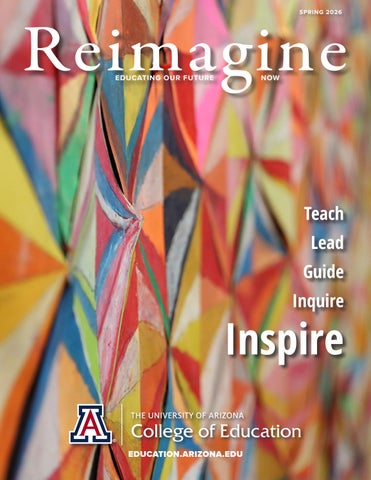
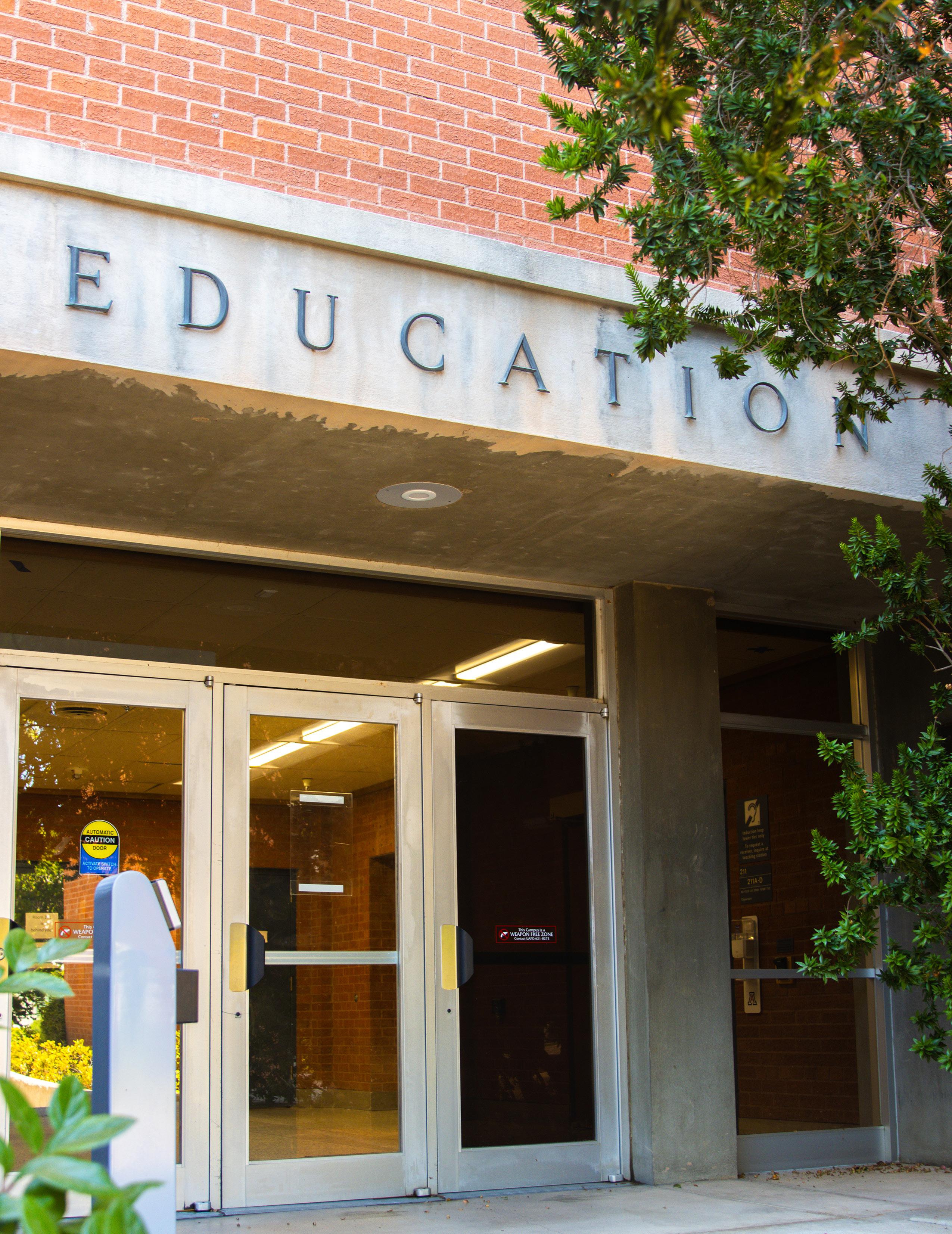
In April 2023, a conference room in the Education Building became a mini gallery featuring dozens of student paintings focused on illustrating emotion. One of the works, donated through local school partners, was kept on display to brighten the space. It’s a fitting image for Reimagine’s return: vibrant, welcoming, and a reminder that learning is as much about heart as it is about ideas.
The Spring 2026 Reimagine Magazine is published by the University of Arizona College of Education. The issue was written and designed by Romi Carrell Wittman, rwittman@arizona.edu . Diamond
contributed to the
feature.
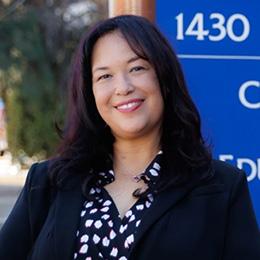
In Southern Arizona, education is never abstract. It has a zip code. It has a bus route. It has a first-generation student deciding whether college is even an option for them. And it has a teacher, counselor, psychologist, or school leader who can change the trajectory of a child’s life with one well-timed “I believe you can.”
That is the heart of the University of Arizona College of Education.
We are a college built on a student-centered culture of caring and a social justice mission: expanding access, strengthening educational quality, and turning evidence into action. We’re not a highly resourced college, but we treat time like a renewable resource, investing it generously in our students, our partners, and our communities. Now, more than ever, is a time to reimagine the value of education and its impact on society’s future. This makes 2026 a perfect year to relaunch our college’s Imagine magazine, appropriately retitled, Reimagine. Let’s reimagine together.
Historically, our impact has always been practical and immediate. Today, our undergraduates participate in hands-on internships, field experiences, and student teaching, and many of our programs reach 100%
participation, including Early Childhood Education, Elementary Education, Deaf Studies, and Special Education. Nearly all of our future teachers are employed before they even graduate. In graduate programs that fill critical workforce needs, career placement and advancement are consistently outstanding.
This is what a university land-grant mission looks like in motion.
We prepare professionals to address Arizona’s teacher shortage and strengthen the public workforce across the lifespan: K–12 teachers and principals, special educators, school counselors, school psychologists, ASL interpreters, sports and community leaders, early childhood educators, and higher education personnel and administrators who support student success across the university and beyond. Our alumni serve in roles that shape systems and widen opportunity, from

Now in its third season with host Dean Regina Deil-Amen! New episodes the first and third Wednesdays of each month September – November and January – April of each university school year.
You can access the Inquiry Oasis on any podcast platform.
transfer support to financial aid, from advising to community outreach.
Our faculty advance research that meets communities where they are, from culturally sustaining pedagogy and Indigenous education to behavioral and mental health, disability support, and college access. The work is rigorous, evidence-based, innovative, and deeply human.
Looking ahead, we are focused on a “wraparound” approach to recruitment, retention, and workforce impact: expanding pipelines from community colleges, supporting students from local schools and districts stretched across Arizona, revitalizing pedagogical approaches for language learners, co-constructing partnerships with Native nations, strengthening access to environmental education, and scaling strategies
like peer mentoring, culturally responsive advising, and cohort-based learning communities.
If you have ever wondered what you can do, here’s a clear answer: by supporting the College of Education, we can multiply the number of prepared educators in Arizona, enhance student success, and build a more equitable future.
Educating our future starts with you, and it starts now.
We’re energized to carry on a legacy that began over one hundred years ago. At the UA College of Education, we teach, lead, guide, inquire…and together, we inspire! •
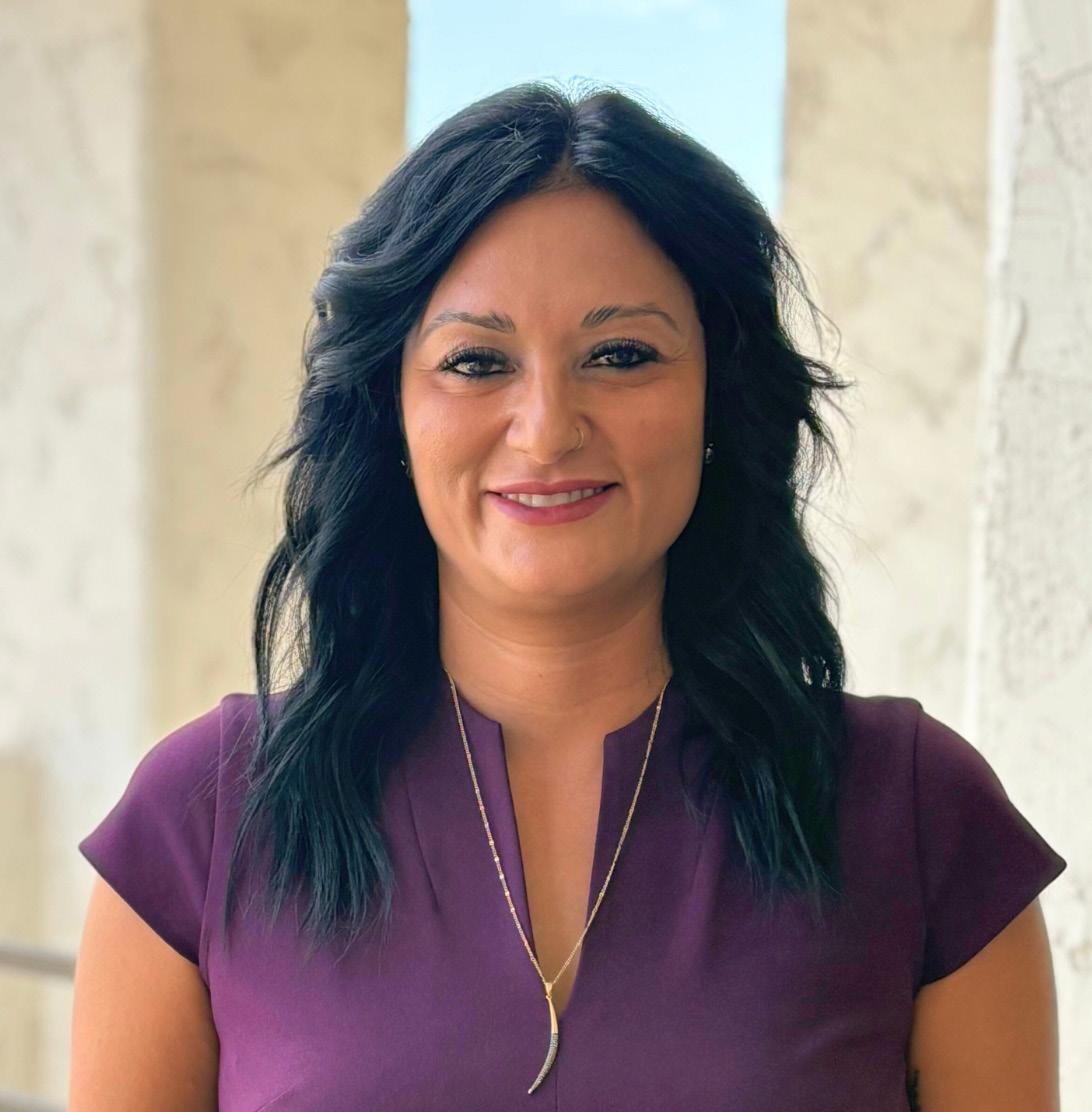
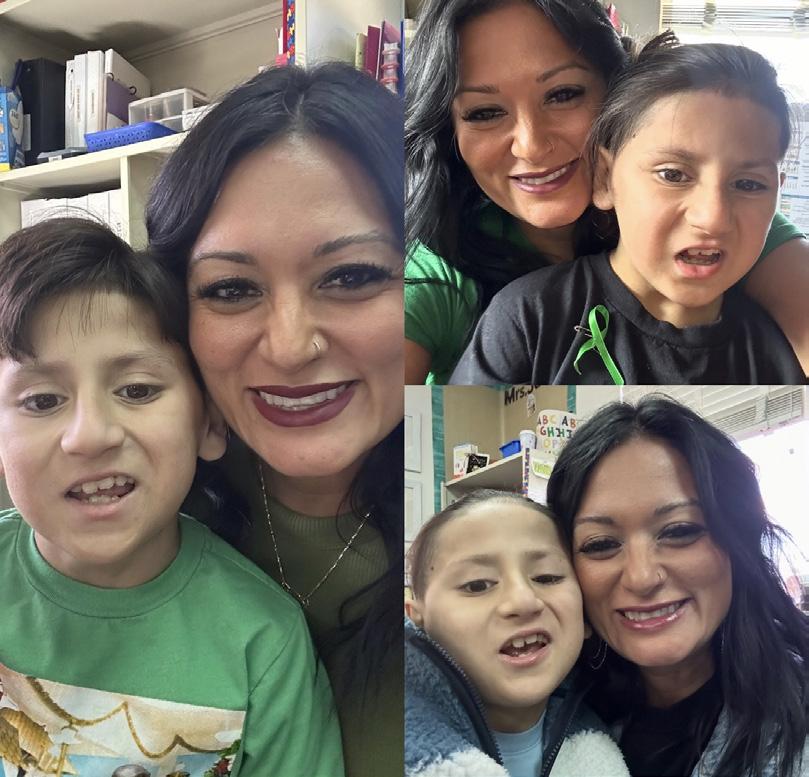
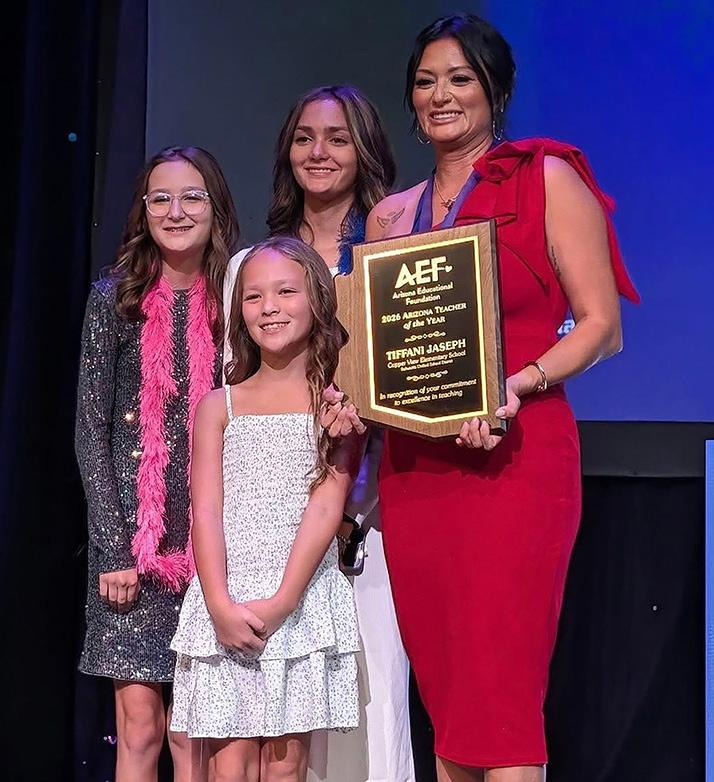
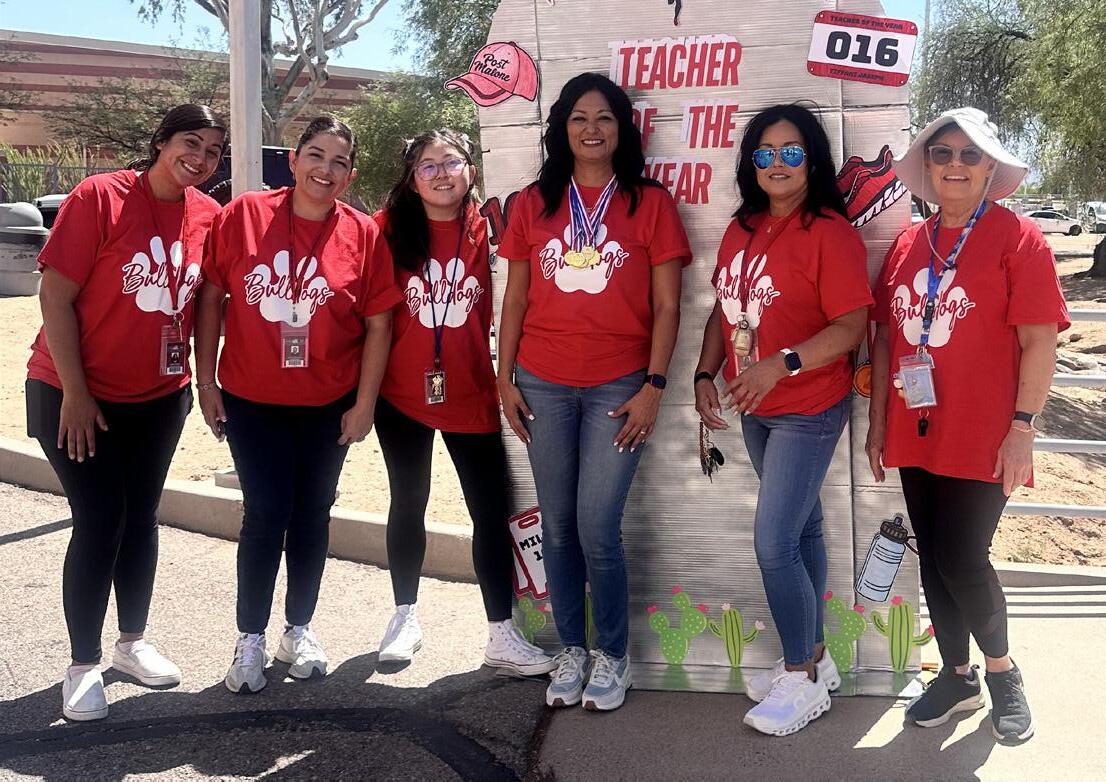
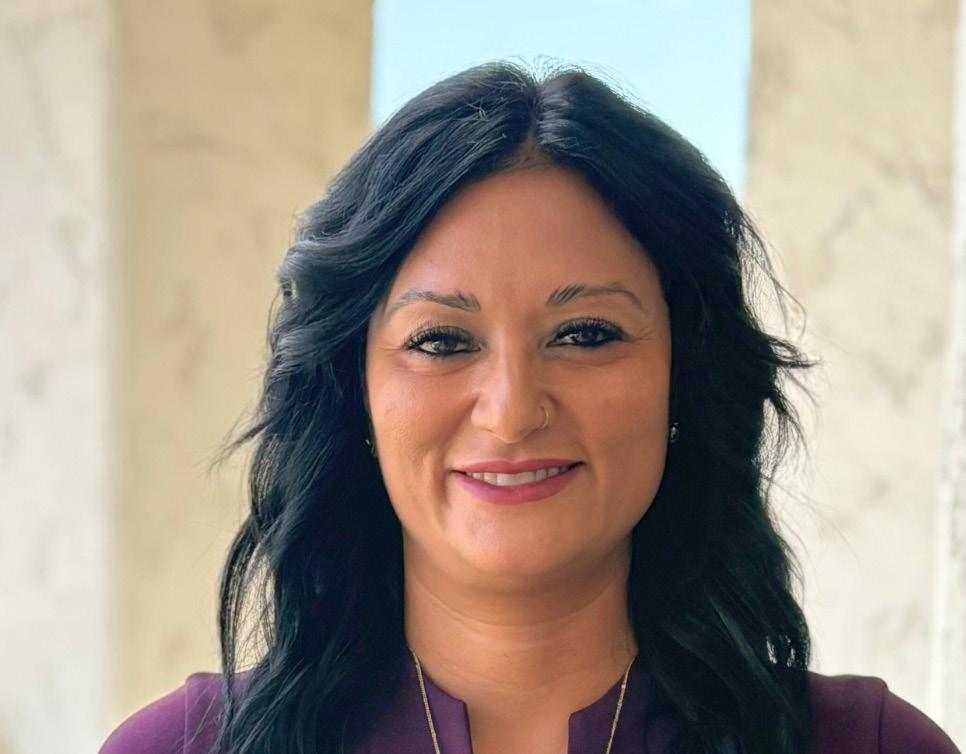
Tiffani Jaseph, a University of Arizona College of Education alum, was recently named Arizona Teacher of the Year by the Arizona Education Foundation. A K-5 special education teacher in the Sahuarita Unified School District, Jaseph has been teaching for 15 years, creating classrooms where, as Jaseph puts it, students feel “safe, included, and seen.”
Jaseph knew she wanted to be a teacher while still in high school. “It just kind of dawned on me,” she said. “Once I got into the College of Education, I remember being so excited.”
Asked what most helped prepare her for the profession, Jaseph pointed to the College of Education’s rigorous student teaching program.
“To me, that’s invaluable,” she said. “It was a whole semester of being able to be in a classroom every day, all day, and then practice teaching on my own.”
She completed her placement in the Sunnyside area and was hired after graduation, a path she said was common among her peers.
Jaseph began her career in the Sunnyside district and later moved to Yuma before returning to the Sahuarita area. Those transitions shaped Jaseph’s approach to teaching: try new roles, give yourself time to learn them, and don’t assume early difficulty means something isn’t a fit.
“All the mistakes I’ve made have… brought me
here,” she said. “And the one thing I’m very proud of myself for is that I wasn’t afraid to try.”
She admits that when she started teaching, she wasn’t sold. “But I gave it time, and then before I knew it, I got into my groove,” she said.
Jaseph described teaching as rewarding but demanding, particularly in the first year. Her advice to students considering the field was to keep their purpose in view and ask for help.
“Remember why you’re getting into it to begin with,” she said. “Because it’s a lot of work, and at times it feels kind of overwhelming.”
She also urged new teachers not to let the first year determine whether they stay in the profession.
“Slowly but surely, you’re going to figure it out,” she said. “Lean on people, ask questions… Don’t let the first year kind of make or break it for you.”
“I truly am thankful for my experience at the U of A,” she said. “I was provided with a lot of opportunities, and I’m very thankful for that.” •
Are you an alum of the College of Education? We want to hear from you! Scan the QR code to the right to stay up-to-date on all things COE!

It started, as the best ideas often do, in a living room. Kathy Short, Regents Professor in the University of Arizona College of Education, had books everywhere — in her office, storage rooms, at home, and in her garage. Short invited Rebecca Ballenger, now the associate director of Worlds of Words (WOW), over to discuss what to do with the growing collection.
“I knew how to build nonprofits and how to build websites. Together we came up with a plan to create a library,” Ballenger said. That conversation in 2006 became WOW.
Short had spent years working with international schools and kept noticing a troubling gap: children abroad had broad global awareness, while American students often did not. Even international school libraries were dominated by books from the U.S. and the UK. Teachers wanted to do better but faced three obstacles: they couldn’t find internationally diverse books; couldn’t evaluate their cultural authenticity, and weren’t sure how to use them responsibly.
“You can read a book from a global setting to a group of kids, and instead of opening their minds, you can actually establish stereotypes,” Short said. “Because that one book comes to reflect the entire culture.”
Those three needs — discovery, authenticity, and pedagogy — became the foundation of Worlds of Words. Short and Ballenger launched the WOW website together in January 2007. Today the center holds roughly 40,000 children’s and young adult titles, including about 4,000 in original world languages, making it the second-
largest collection of its kind globally. Earlier this year, it received the American Association of Colleges for Teacher Education (AACTE) Best Practice Award in Support of Global and International Perspectives.
From the start, Worlds of Words was as much a digital enterprise as a physical one — and that was Ballenger’s domain. A self-described tech nerd who attended computer camp in 1984 and built websites for nonprofits through the 1990s, she pushed early for an online catalog and WOW’s first journal, WOW Stories: blind peerreviewed, free, open-access, and, unusual in 2007, author-copyright-retained.
Ballenger said the goal was to reach teachers in both innovative and traditional ways. “Our online publications are free and allow the writers to retain their intellectual property through an open source model, which was not all that common in 2006 and 2007 for academic publications.”
Ballenger secured ISSN numbers from the Library of Congress for all three WOW journals: WOW Stories, WOW Review, and WOW Libros. They earned listings in the Directory of Open Access Journals and were placed in the UA Library campus repository.
WOW recently completed a full migration to a professional academic publishing platform, giving WOW’s journals infrastructure to match their rigor. Today WOW’s Executive Board, composed of scholars from around the world, creates the bulk of content for the journals.
—continued on page 10
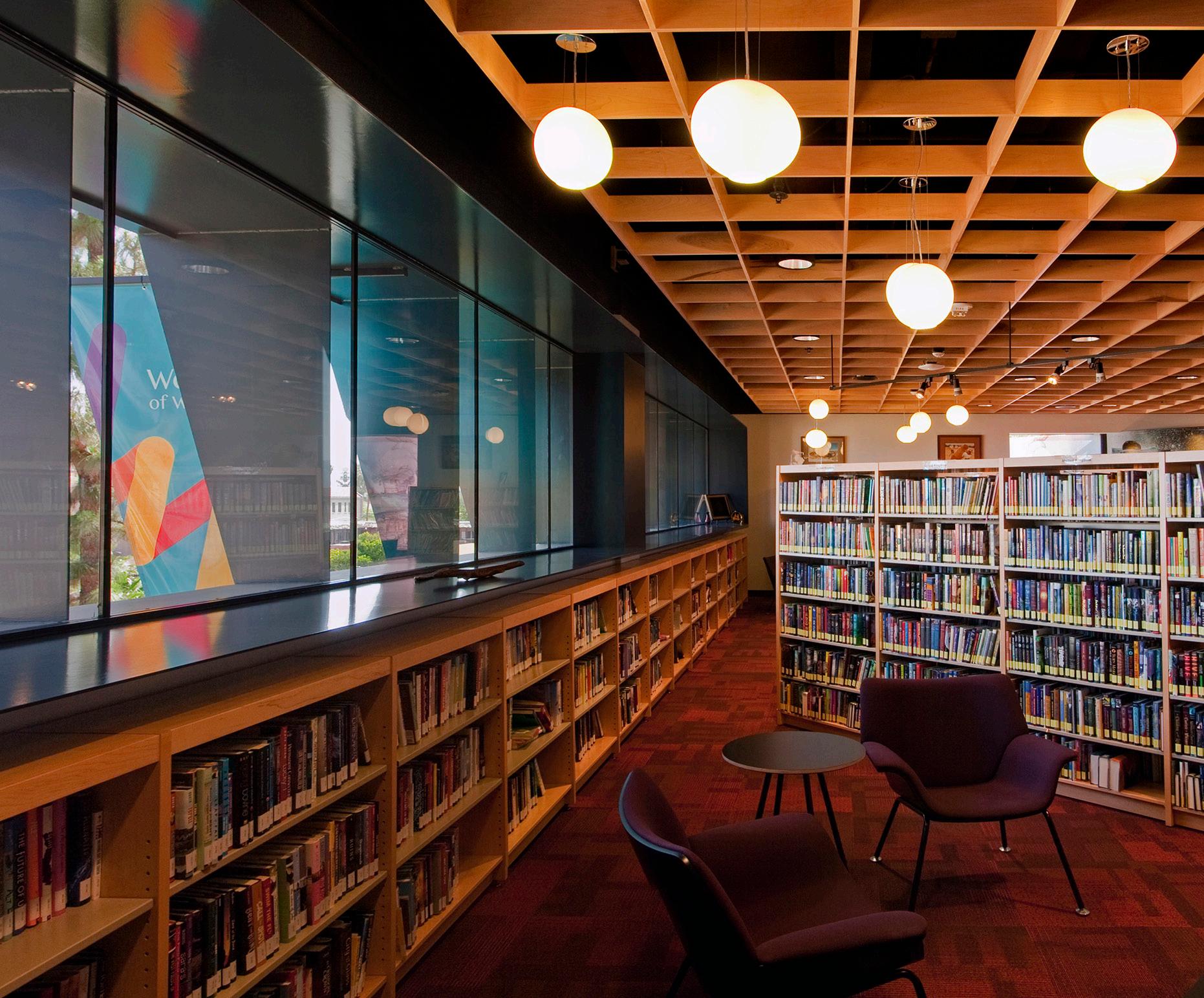

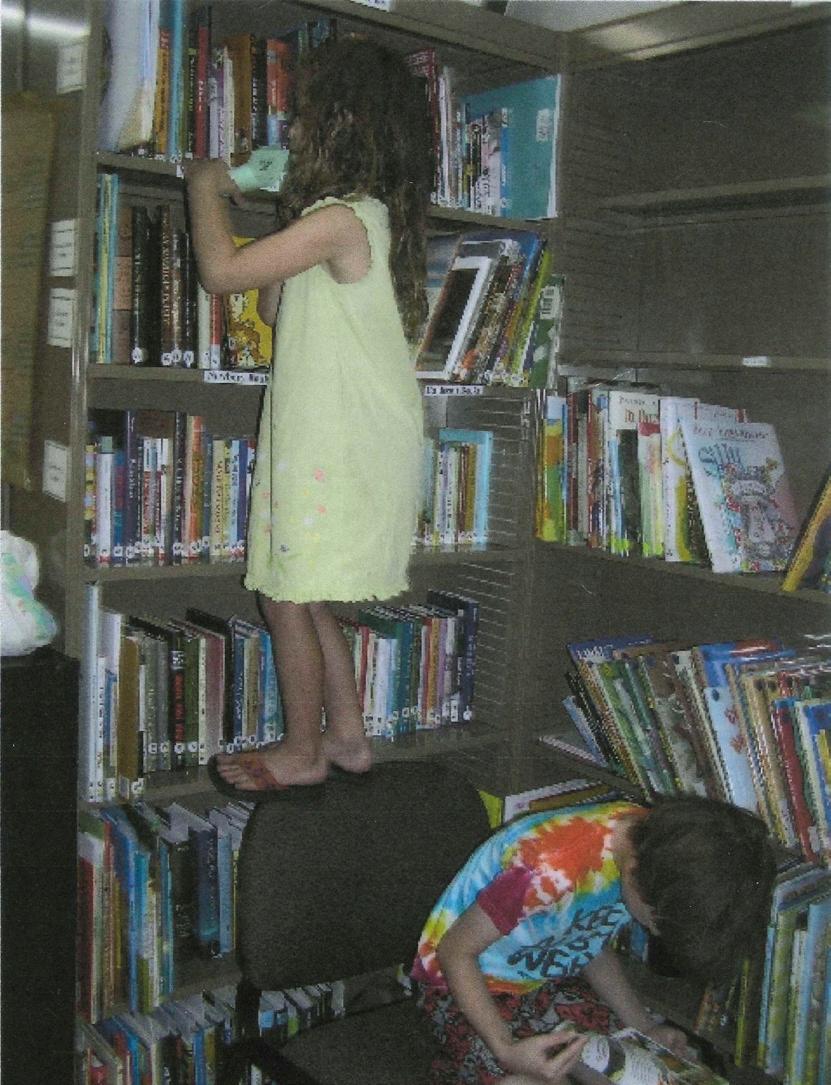
The physical center, built with raised funds and dedicated in 2014, draws roughly 40,000 inperson visitors a year. It houses a non-circulating book collection organized by geographic region along with classroom sets, special collections and original picturebook artwork. This serves to invite visitors to travel the world by turning a corner. Field trips now bring approximately 950 K–12 students each semester, and the survey data behind those visits is striking.
“95% of respondents said their students had never stepped foot on campus,” Ballenger said, “until they came here to the College of Education, to Worlds of Words — to see that possibility of this institution being a place for them.”
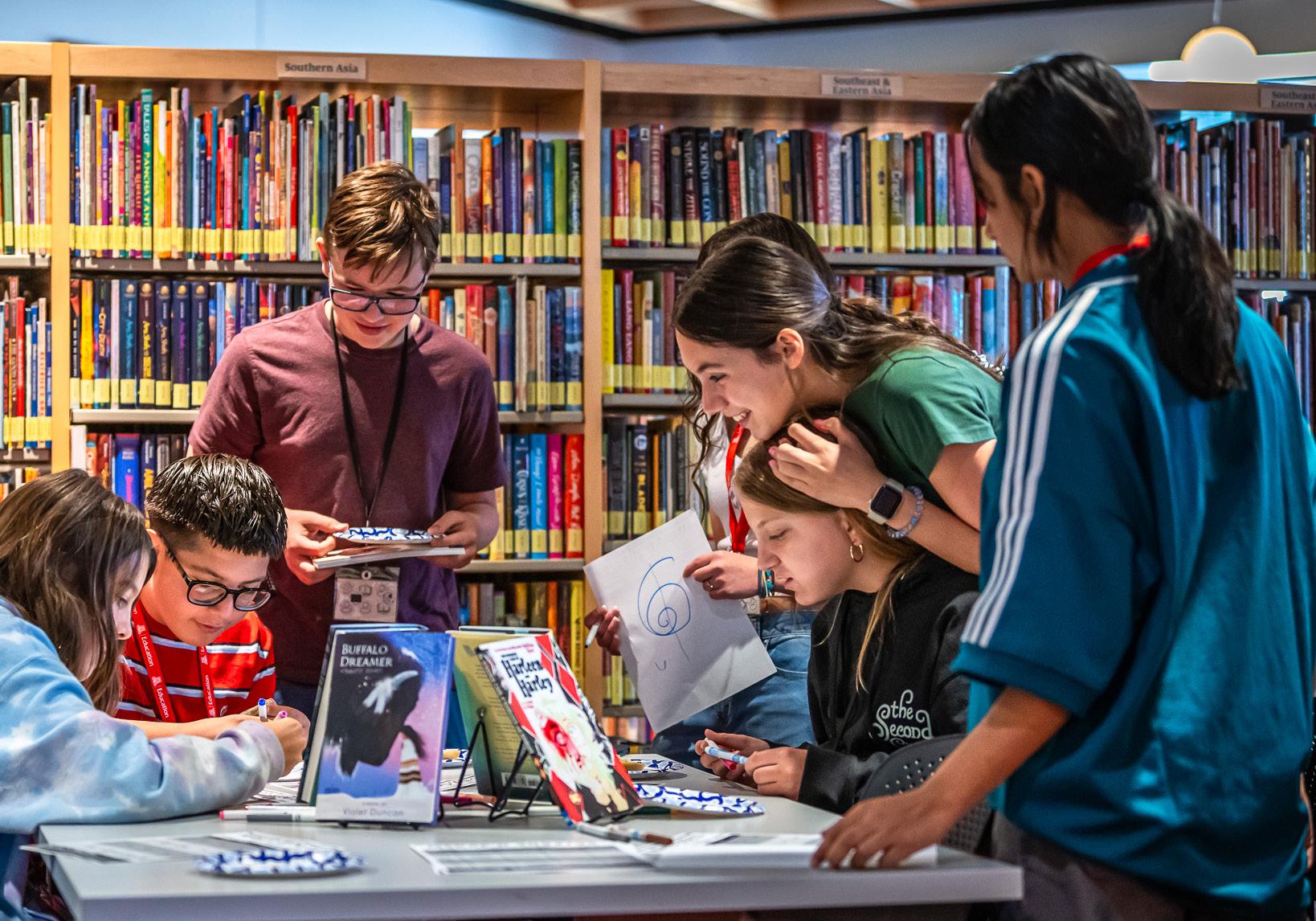
In 2018 on a drive to Phoenix, Ballenger pitched an idea to Short: the Reading Ambassador Program. Short helped shape the concept and, within two weeks, Ballenger had it fully enrolled. Now in its ninth year, the program brings middle schoolers and teens to WOW to read, discuss books, interview authors, and produce the “WOW Reads” podcast.
“I don’t care if they identify as a reader. By the end of the program, they will definitely be part of the reading community,” Ballenger said.
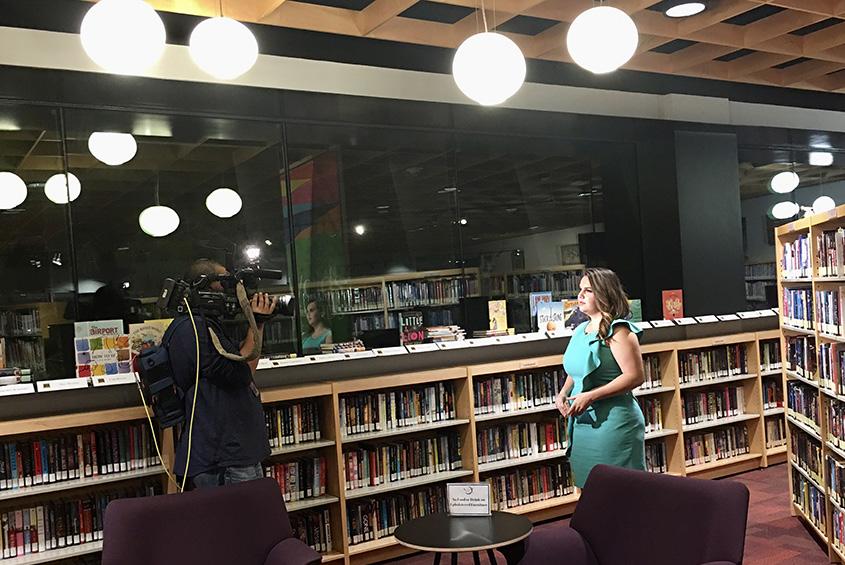
Alumni have gone on to Stanford, Harvard, and Columbia. One McKinney-Vento student without permanent housing earned admission to Stanford and was featured in a morning news segment filmed inside WOW.
40,000 global children’s & young adult books
650+ original illustrations
50,000 annual in-person visitors; nearly 400,000 visits to the web site.

illustrations
4,800 individual books used in course activities
950+ K-12 classroom visits annually

4,000 books in original world languages
Largest youth literature library in the U.S. Second largest in the world.
800+ titles used in courses

Three exhibitions mounted annualy

190 countries reached and all 50 states
The WOW website drew nearly 400,000 unique visitors in 2024, reaching all 50 states and more than 190 countries, with new content added weekly. The WOW Executive Board edits journals, curates reading lists, and returns to Tucson each year for the Tucson Festival of Books. They’ve co-authored three books and are at work on a fourth.
A new initiative may be the center’s most ambitious yet: a comprehensive annual dataset cataloging every international children’s book
published in the U.S., tracking geographic origins, settings, genres, and character identities. The aim is to influence what publishers bring to market.
“That’s a chance to call attention,” Short says.
“Publishers, why aren’t you looking at other kinds of books that might make a difference?” The full database will be publicly available worldwide.
The AACTE award puts a national name to decades of work and to a partnership that began with a pile of books and a belief that every child deserves to see themselves reflected on the page. •
If Arizona wants stronger schools, it needs more than new teachers. It needs systems that help future educators get to college, stay there, and graduate ready to lead classrooms of their own.
That need is especially urgent in a state where low pay and high turnover continue to strain schools. At the UA College of Education’s recent TRIO Workforce Conference for graduating seniors, panelists spoke candidly about the realities of the profession. Tiffany BucciarelliFay, director of early childhood programs for Amphitheater School District, told students she is still “looking” for the dollars after more than two decades in the field, urging them to anchor their decision to teach in purpose, not paycheck.
National trends show fewer young people pursuing teaching. But enrollment is only part of the story. The bigger question is what happens after students arrive and whether they have the support to persist through college and into the profession. Dean Regina DeilAmen emphasized that retention depends on community, preparation, and access to networks that help students stay the course.
Established in 1965, TRIO is a set of federally funded programs that provide advising, mentoring, tutoring, financial
literacy education, and career guidance to students who are first-generation, from limited income backgrounds, or have disabilities. Since its founding, TRIO has helped more than 6 million people earn college degrees.
Today, Arizona is home to 44 TRIO programs serving about 11,000 students statewide. At the University of Arizona, four TRIO programs currently serve 351 students. Together they create a network of support that helps students move from access to persistence to completion.
Dr. Fatemma Soto-Herrera, TRIO project director, commented that the work is about much more than numbers. “Getting an education is definitely a family endeavor,” she said.
That broader understanding of support is
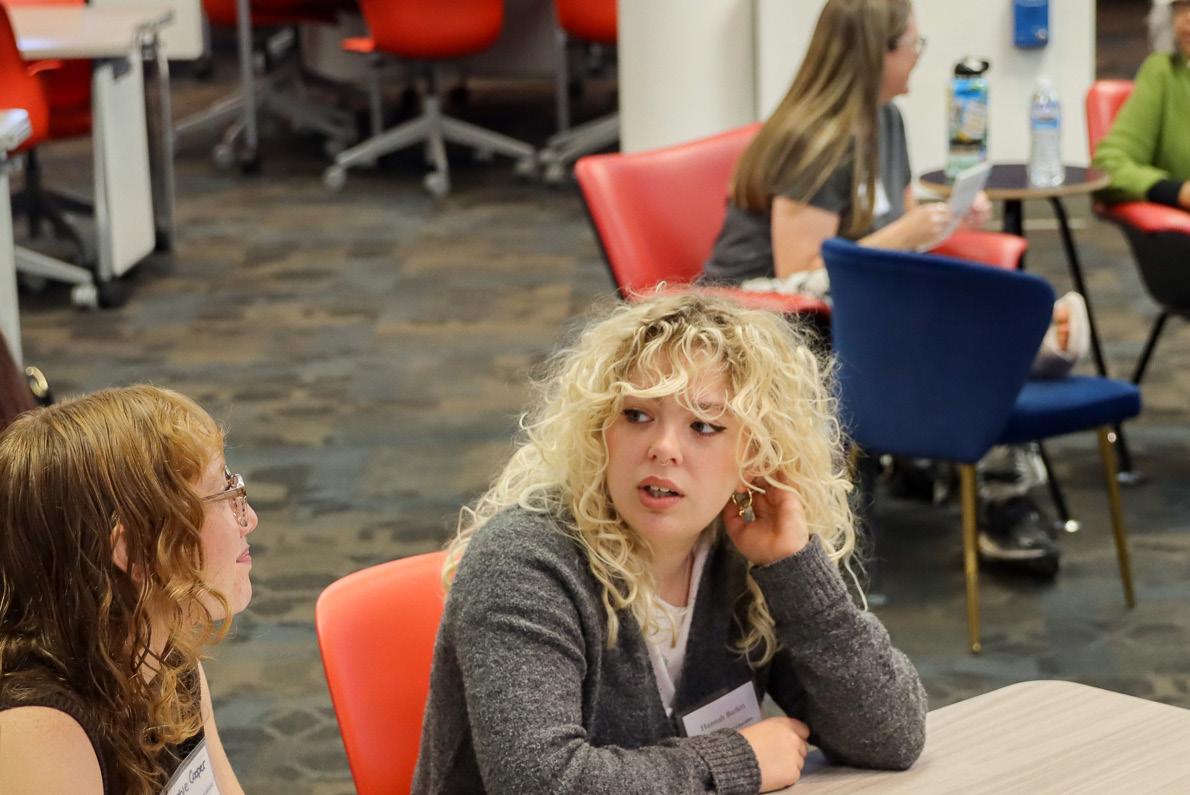
Two soon-to-be teachers discuss what it means to be a teacher in today’s current climate.
embedded in the work of the Department of Educational Policy Studies & Practice (ESPS), led by Dr. Leslie Gonzales. The department is home to TRIO and its programs, which include Native SOAR, Project Outreach FAMILIA, and Upward Bound.
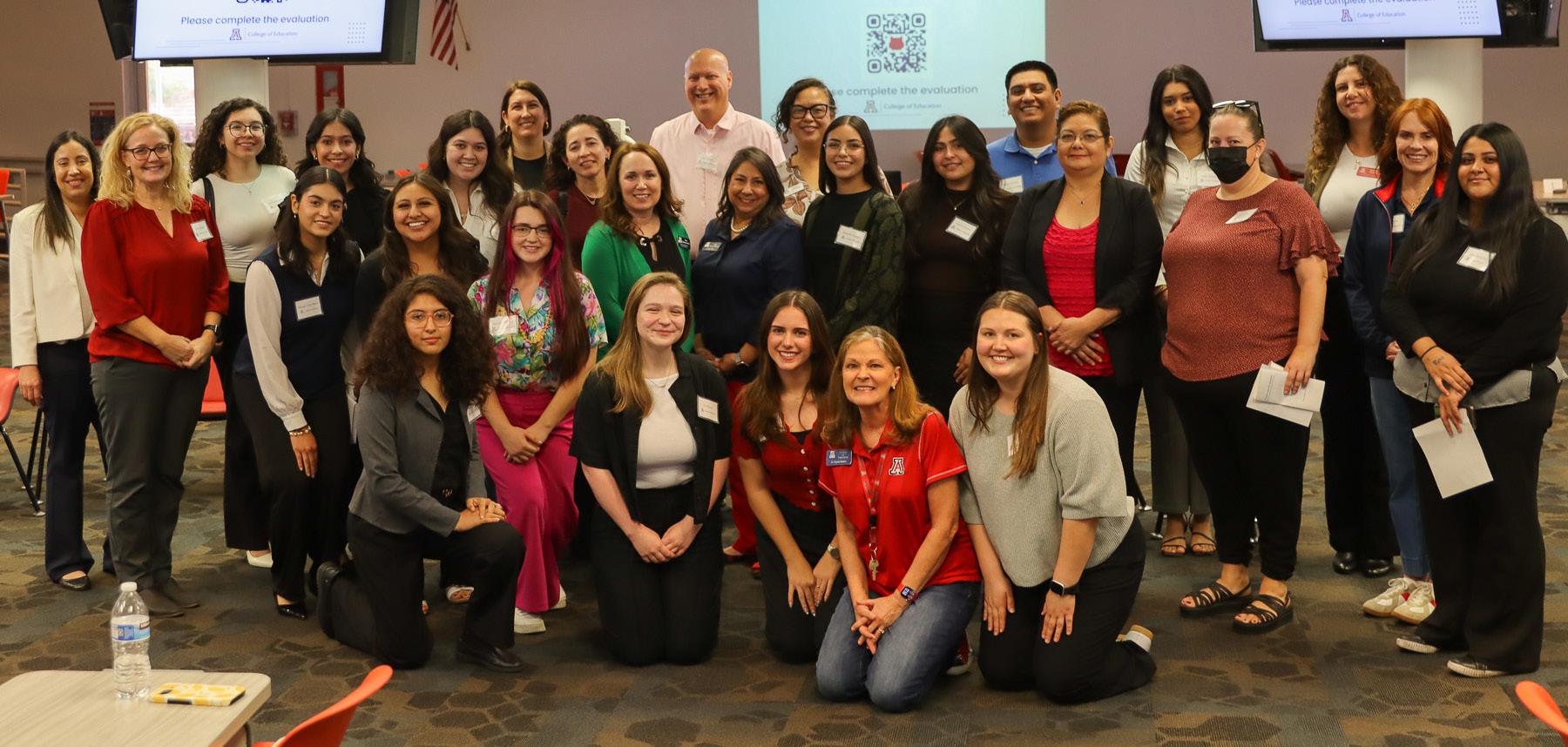
Students, faculty and education leaders from the community at the Spring 2026 Workforce Conference.
The Native Student Outreach Access, and Resiliency (SOAR) is a high-impact, service-learning course and multigenerational mentoring program that centers the needs of Native students and provides engaging, effective programming for students, families, and educators at no cost.
Project Outreach FAMILIA, or Forwarding Academic Mechanisms Integral to Learning In the Academy, expands and enhances institutional capacity to increase the number of firstgeneration and low-income students earning postsecondary degrees.
Upward Bound TRIO (UB) helps students build college-going confidence and habits while they are still in high school. Its impact is visible both in the numbers and in the long arc of students’ lives. In 2023-2024, 100% of Upward Bound participants graduated from high school and enrolled in college, 95% continued enrollment year to year, and 81% completed their degree. Dr. Arlett Perez, UB program director, pointed to the human side of those outcomes: “We just finished our eighth year, this is currently our ninth year,” she said. “Now we’re seeing those students graduate.”
Programs like TRIO are integral to the College’s
commitment to removing barriers. Work like this matters deeply. For faculty and staff, that means helping students stay the course and, in time, open doors for others. •
students served over time across both programs
• 100% postsecondary enrollment for participating seniors College of Education | Upward Bound + SSS Teacher Prep
enrollment for Upward Bound alumni
student staff employed through both programs
80
avg. persistence & good academic standing for Teacher prep 20202025
Upward Bound
• 186 students served since 2017
• 98% GPA achievement
• 98% retention & graduation
• 100% rigorous coursework
SSS Teacher Prep
• 292 students served 2020-2025
• 96% persistence
• 96% good academic standing

Elyse Wexler was working in a lab and not enjoying it very much. She had earned her chemistry degree and was working in her field, but she wasn’t happy.
“It was a really lonely job,” she said. She craved work that let her connect with people so, when her mother saw an ad for what was then called Teach for Tucson, the program’s accelerated structure stood out.
Wexler graduated from the very first Teach Arizona cohort and has taught science in Tucson ever since. She now serves as a mentor for students preparing to be teachers. “I’ve had six student teachers,” she said. “I continue to support the effort.”
When Teach Arizona graduated its 25th cohort last May, it wasn’t just a milestone. It was the fulfillment of a promise kept: to prepare talented, committed people to step into Arizona classrooms quickly and confidently.
Teach Arizona exists to address the severe teacher shortage. The Arizona Department of Education reports that more than 8,000 teachers left their positions last year, creating even more vacancies in the classroom.
Dr. Patty Stowers leads the Teach Arizona program at the College of Education. “The key to addressing the teacher shortage isn’t simply to recruit teachers, it’s to retain them,” she said. “Teachers who have a mentored student teaching experience are more confident and successful as novice teachers, and they are more likely to stay in the profession.”
Built as a fast-track, one-year Master of Education plus certification pathway, Teach Arizona is designed for career-ready adults who already hold a bachelor’s degree and want to teach middle or high school science, math, English, social studies, or world languages.
For some students, tuition may be covered by the state-funded Arizona Teacher’s Academy. What makes the model especially powerful is its emphasis on classroom immersion: candidates serve in a year-
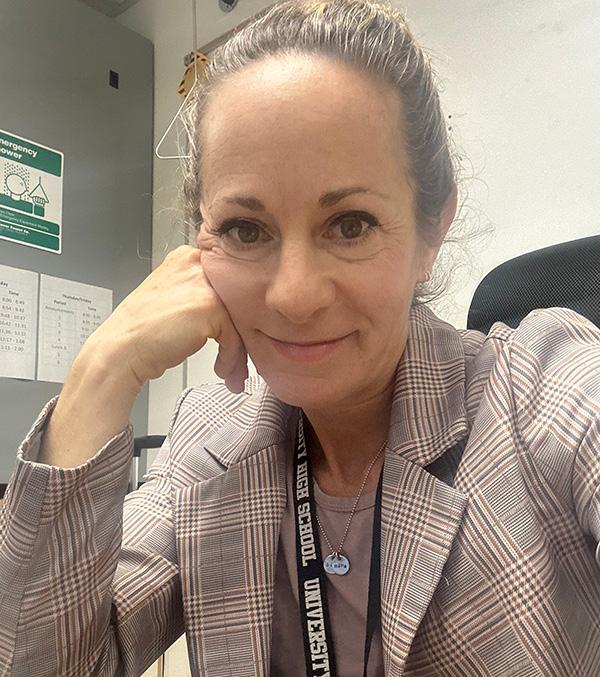
long student teaching internship while completing their coursework.
Candidates choose between two formats that meet Arizona’s geographic reality. The Tucson program is taught in person, with courses held at Flowing Wells High School and half-day internships in school districts across the greater Tucson area. The statewide program is delivered live online via Zoom, pairing candidates with a cohort while they complete half-day internships in districts near their homes, including rural communities outside Pima, Maricopa, and Pinal counties.
Jaren Price is a career changer who retired from the Army last July after 30 years of service. Rather than retiring fully, he’s transitioning to teaching after leaving active duty.
Price said Teach Arizona rose to the top because it is “a one-year… condensed program” that leads to certification and “actually awards a master’s degree.” He credits the cohort model for creating a steady support system. “We’ve built a really positive bond,” he said.
To date, the program has prepared nearly 1,000 high school and middle school teachers. As Teach Arizona looks toward its next cohort, director Patty Stowers says she is impressed by the candidates. “We’re currently interviewing for our new cohort, and I continue to be inspired by the quality of our applicants,” she said. “They’re talented and caring people seeking a career with purpose. Our job in Teach Arizona is to help them develop the knowledge and skills to educate the future.” •

Get your bachelor’s degree

Receive 1-year mentored student teaching through Teach Arizona

Earn a master’s degree and certification to teach grades 6-12
https://go.arizona.edu/teach-arizona/
Tyler Cashman was a clever kid.
When it was time for eye checks at school, he listened carefully as the student in front of him read the letters off a chart. When Tyler’s turn came, he simply repeated the same string of letters. It was a great plan until one year the nurse swapped out the cards. She asked Tyler to read the card again. When he couldn’t, she called Tyler’s mom.
That was when Tyler knew something was wrong with his eyesight. Over the years, it grew worse.
By the time he finished eighth grade, his vision had declined to the point that baseball, the sport he loved, was no longer safe. “It took away competition, teammates, sports, all these things,” he said. “It kind of sucked.”
What came next could have been a retreat. Instead, it became a pivot.
That summer, Tyler and his grandfather, George Cashman, realized golf might offer a way forward. There was no contact. The ball stayed still. “The doctors couldn’t stop me from playing,” Tyler said. He joined his high school golf team as a freshman and became team captain by his senior year.
Now, Tyler is a graduate student in the University of Arizona’s Sports and Recreation Leadership program and a member of the adaptive golf team. Last summer, he won the World Championship of Visually Impaired Golf, making him number one in the world.
Golf, he said, brought him back to sports, but it also gave him a future.
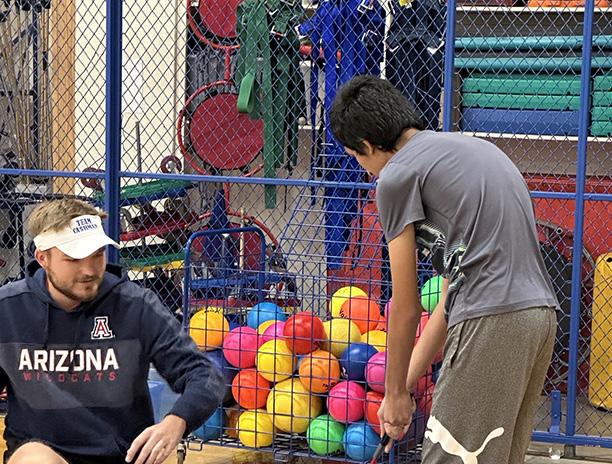
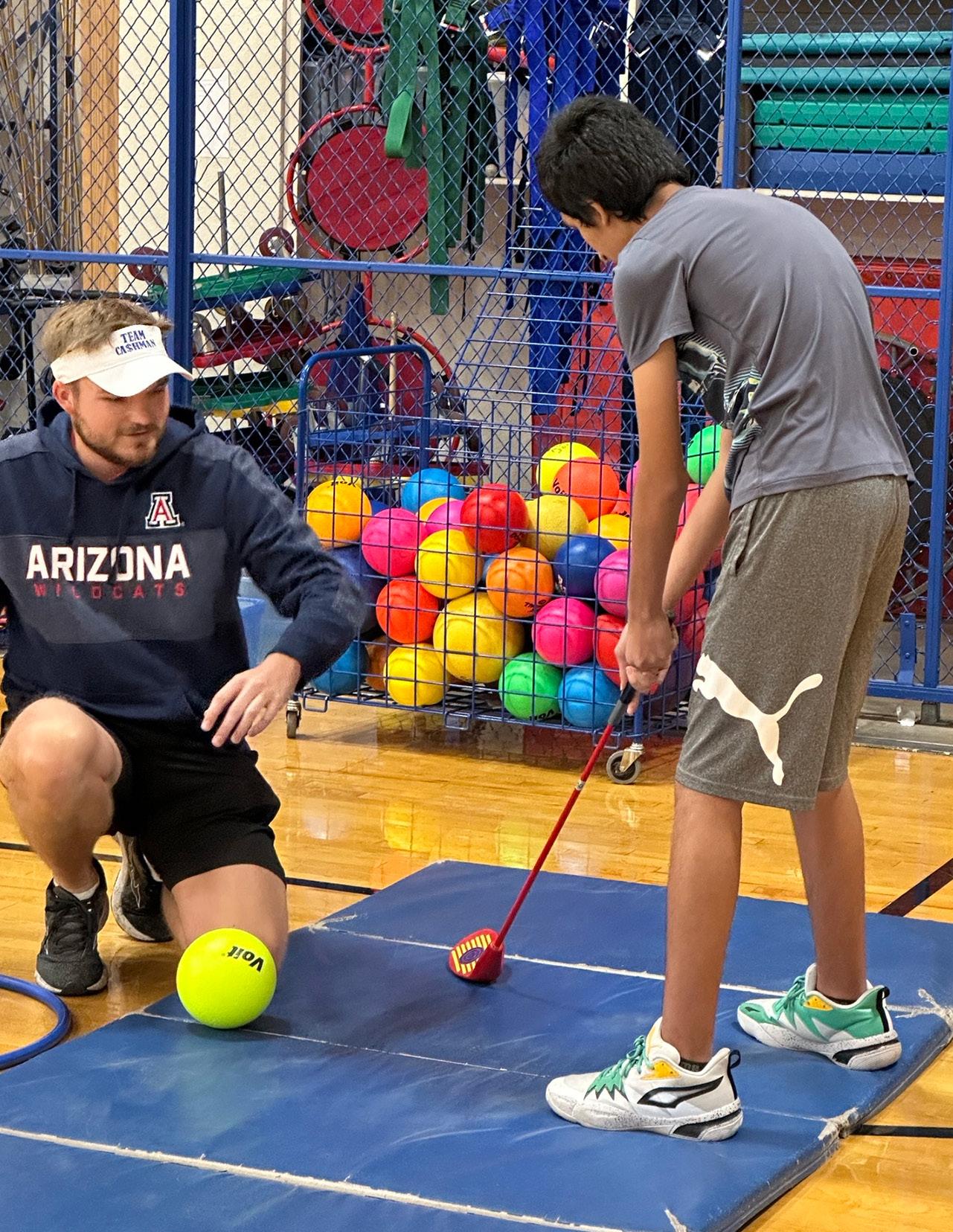
Tyler chose the program after earning his undergrad degree in business admin and marketing from the University of Richmond. He was drawn to U of A by the chance to compete in adaptive golf, but he stayed for coursework that connected directly to his life and ambitions. A class on inclusive coaching introduced him to adaptive sports from a new angle and led him to volunteer at the Arizona State Schools for the Deaf and the Blind, where he worked with visually impaired students during PE classes.
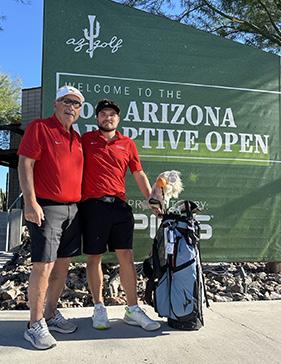
One student especially stuck with him. After several visits using plastic clubs and indoor mats, the child asked to try a real golf club. “He was really enjoying it,” Tyler said. “That was just really cool to see.”
For Tyler, that moment captured what adaptive sports can do. “One of the biggest problems in adaptive sports right now is just that people with disabilities don’t know about them,” he said.
Tyler does. And now, through golf, graduate school, and mentoring younger students, he is making sure others do, too. •
The journey through graduate school is often a balancing act. For many, juggling a career and family alongside a rigorous degree leaves little room for the very thing that keeps us grounded: a sense of community. Grad CAFE–Center for Academic Fellowship & Efficacy –aims to change that.
Started in 2023 by Drs. Celeste Atkins and Nicole Marrone, Grad CAFE is a unique, transformational mentoring program funded with a $1 million 5-year NSF Innovations in Graduate Education grant. Grad CAFE’s programming, which is deliberately centered around food, provides a holistic, strengths-based, community-building approach to mentoring graduate students.
Grad CAFE grew out of Dr. Atkins’ experience as a non-traditional doctoral student. She often felt isolated and found it hard to make connections with her peers. In 2022, Atkins teamed up with Dr. Marrone, who also had a passion for working with grad students, and Grad CAFE was born.
Students participate in seminars with nutritious lunches and whole-cohort Cafecitos, which are the heart of the program, allowing participants from all sections to bond over dinner. The name is a deliberate nod to the borderlands culture of Southern Arizona.
In 2025, Grad CAFE transitioned out of the Graduate College and is now collaboratively managed by the College of Education and the College of Science in the Education North building. Since the move, Grad CAFE has doubled the number of peer mentors to 50.
The mission’s impact is best seen through the
students themselves. Christina Guerrero, who joined Grad CAFE at its start, said the program shifted her entire perspective. “The support I received taught me how to effectively selfadvocate,” said Guerrero. “It was deeply reassuring to realize I wasn’t alone.” Guerrero’s journey has come full circle; she now serves as a Community Leader, which involves facilitated peer mentoring.
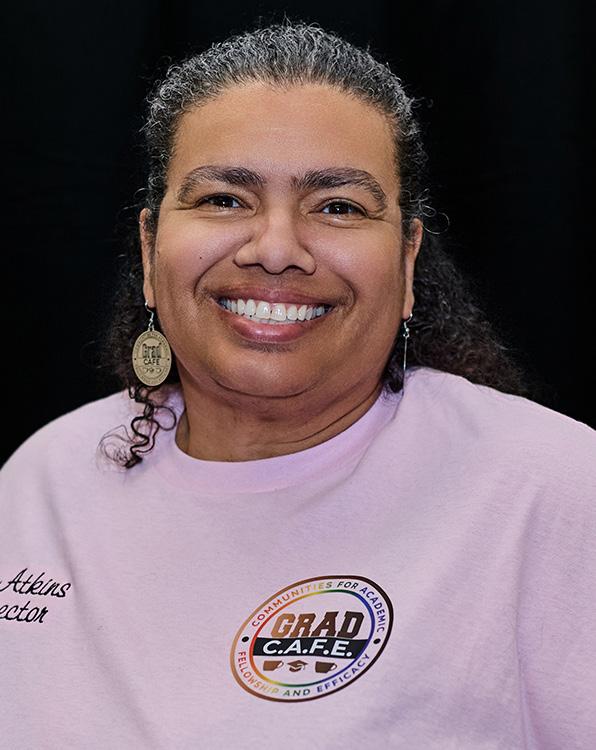
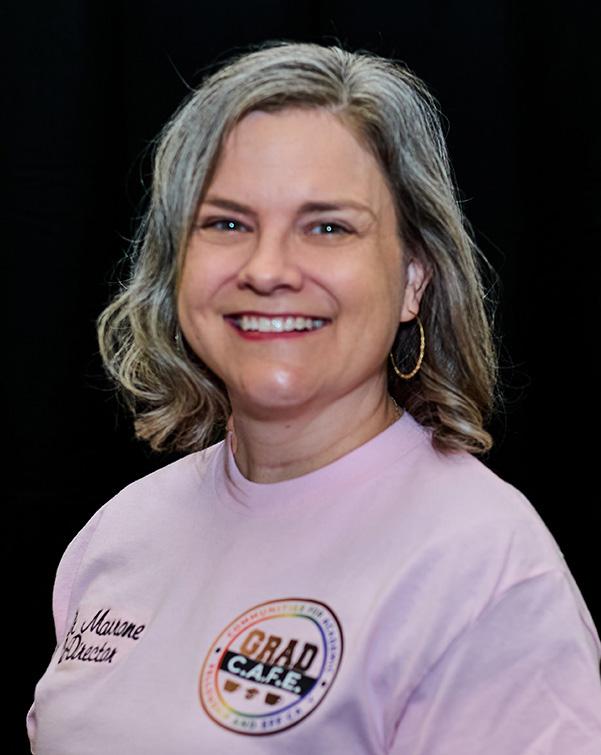
As Drs. Atkins and Maronne look to the future, their goal is to create a blueprint for other universities to better support graduate students across the country. They want to find funding to place Grad CAFE into a permanent center on campus where every student can cultivate their own culture and community.
“The ultimate goal is to secure funding to build a UA Center for Academic Fellowship & Efficacy (UA CAFE) a place for graduate students to cowork, network, and access resources similar to the undergrad Student Success District,” Atkins said. “A place where graduate students can find community.” •
Kris Bosworth didn’t come to the University of Arizona College of Education simply to take on a new role. She came as a teacher, a scholar, and someone whose own educational path had been made possible by the generosity of others.
“My undergraduate education was made possible by donors,” she said. “Loans and [institutional] scholarships didn’t cover everything. Without that support, I wouldn’t have become a teacher.” That experience stayed with her.
Bosworth grew up in Ohio and went on to build a career shaped by a deep commitment to education and student well-being. She eventually earned a Ph.D. in education at the University of Wisconsin-Madison. Along the way, she taught grades 6 through 10, directed Indiana University’s Center for Adolescent Studies, and spent time at the Centers for Disease Control and Prevention’s Division of Violence Prevention. When she arrived at UA in 1998 as the Lester and Roberta Smith Endowed Chair in Prevention and Education, she’d already built a career around one central question: how do we help young people thrive?
At UA, Bosworth found the opportunity to turn that question into lasting impact. Over 25 years, her work helped schools think differently about prevention, safety, and student belonging. She encouraged schools to look at climate, culture, and connection. The result was the Protective Schools Model, an approach that helped educators build safer, more supportive environments for children.
Bosworth’s commitment to giving is rooted in
something more
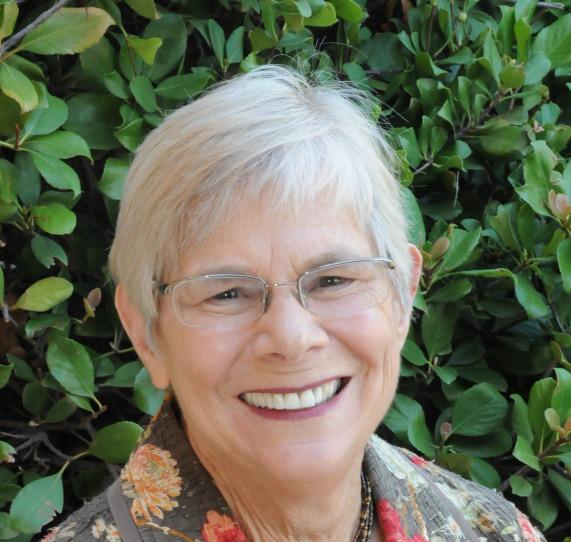
personal than professional success. In her own students, many of them future principals and educational leaders, she saw the same promise and financial barriers she had once faced. Supporting the college and its students is, for her, a way to help talented students move forward just as others once helped her.
“If I had had to pay for my high-quality education, I would not have gotten an advanced degree,” she said. “Many students are in the same position.” This is why Bosworth specifies that her donations go to scholarships for future educators and educational leaders.
As a philanthropic leader for the College, Kris Bosworth is a reminder that generosity can do more than express gratitude. A gift to the College becomes a scholarship, a research breakthrough, a prepared school leader, and a stronger school community. In time, that impact reaches children, families, and teachers for years to come. •

Your contributions help support the College, its students and its research.
Scan the QR code to the left to make a secure online gift via the UA Foundation.
Ron Marx didn’t campaign for another line on his CV. In fact, he told a colleague not to bother with a nomination. But earlier this year, the former Dean of the University of Arizona College of Education and Interim Provost at the University of Arizona was elected to the National Academy of Education, one of the field’s top professional honors.
Marx, a Professor of Educational Psychology Emeritus and Dean of Education Emeritus, most recently served as the university’s Interim Senior Vice President for Academic Affairs and Provost, appointed July 1, 2023, and serving through May 2025. In that role, he oversaw academic programs, faculty affairs, student affairs, the libraries, Arizona International, Arizona Online, UA Global Campus, and student support services.
His career spanned multiple areas in the field of higher education, including research, policy, and institutional leadership. Marx raised nearly $40 million for research and development projects and authored more than 300 scientific papers and articles. His work has focused on project-based science curriculum and instruction for middle school, creating teacher professional development models and more recently examined early childhood education and measurement issues tied to school readiness.
Asked what he considers his most significant scholarly contributions, Marx pointed to his years at the University of Michigan, where he
co-directed the Center for Highly Interactive Computing in Education and the Center for Learning Technologies in Urban Schools. He credits project-based learning as his “major scientific contributions to education, research, and practice.”
Marx played a key role in state education policy when he served as dean, participating on many state-level committees and working to ensure that teacher evaluation regulations supported the professional autonomy of teachers. At the federal level, he was a member of the Negotiated Rule Making Committee for Title 4 of the Higher Education Act during the Obama presidency.
When Marx arrived in Tucson to lead the College of Education in 2003. He was laser focused on rebuilding capacity and culture, including hiring tenure-stream faculty. He also had a role in creating the Professor of Practice model, which was later adopted across the University.
During his year as provost, he said University of Arizona President Suresh Garimella told him, “for an avuncular guy, you’re pretty tough.” This was a reference to the financial troubles the University faced in recent years and the role Marx played in addressing the challenges. Many programs across the University were shut down and four colleges were merged into two.
In Tucson, Marx served as a founding board member of Tucson Values Teachers and was
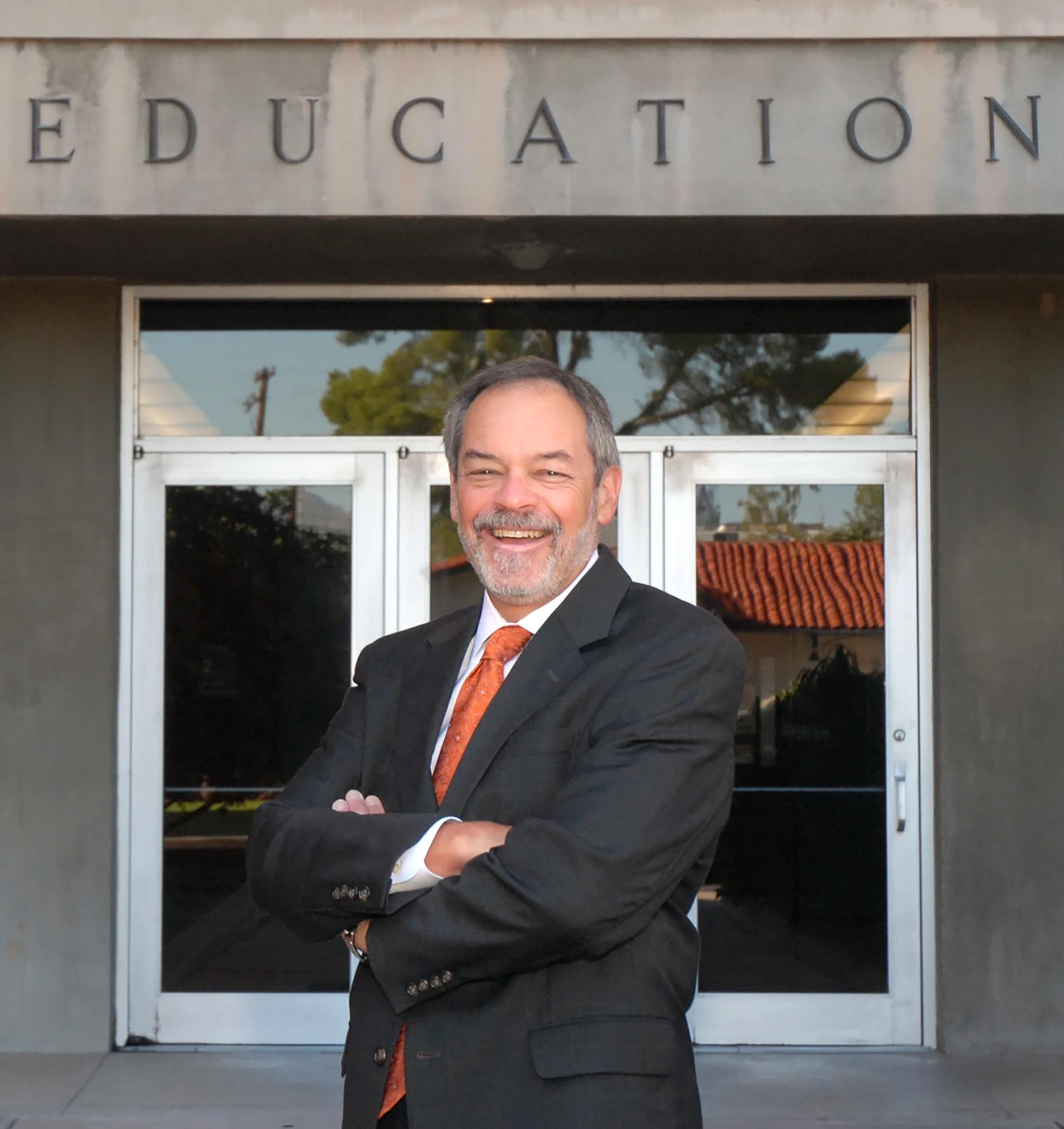
a founding leadership council member for the Tucson Cradle to Career Initiative. He also held leadership roles at the Community Foundation for Southern Arizona, a local non-profit supporting a variety of community needs.
In announcing the academy’s newest cohort, National Academy of Education President Alfredo
J. Artiles emphasized the moment’s urgency and the need for “a renewed commitment to the generation and use of scientific evidence” in education policy and practice. Marx’s career, by his own telling, has lived at that intersection: building the evidence, shaping the systems, and doing the unglamorous work of keeping institutions moving. •
coe-arizona@arizona.edu