what’s inside

FEATURES NEWS
Dean’s Message
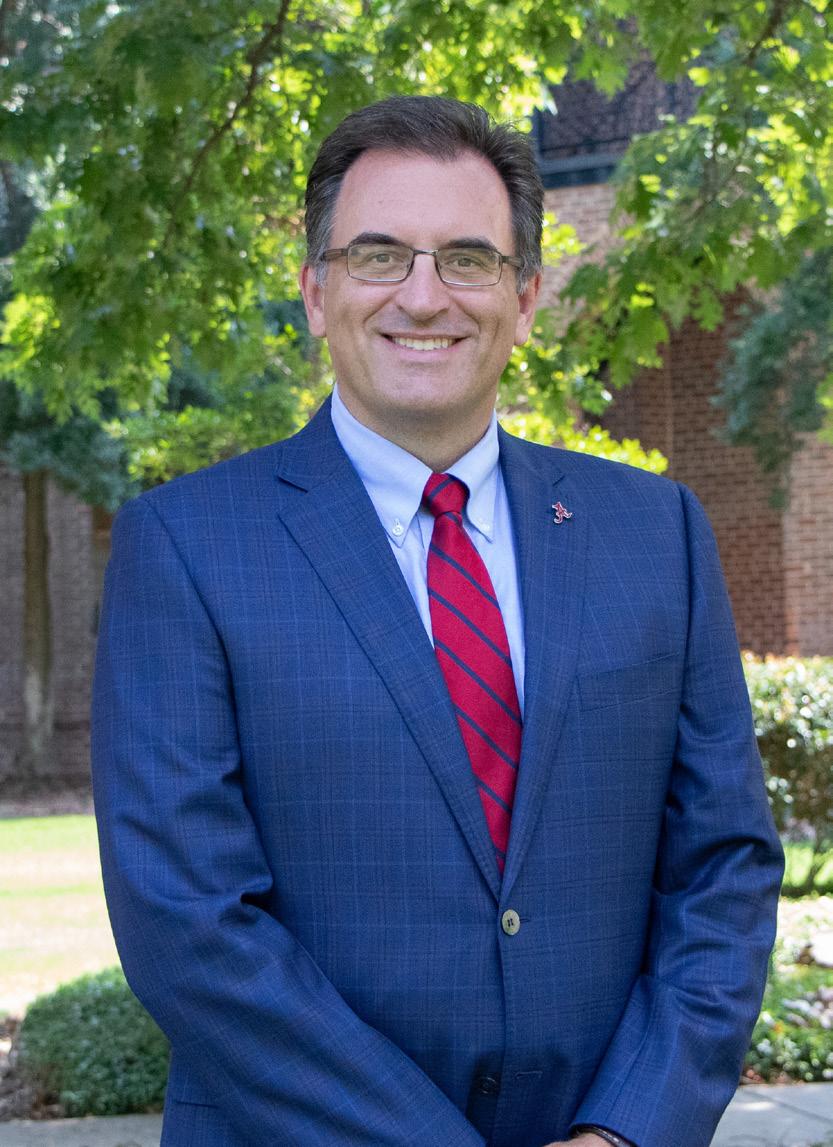
Dean and Professor Joseph Messina.
Campus
Student, faculty and staff news.
A
and
Discover
Blount’s 25-Year Journey
Celebrating a quarter century of education, the Blount Scholars Program continues to inspire students toward intellectual and personal transformation
The Ramsey Award
Honoring juniors who embody scholarship, leadership and humanistic spirit in the legacy of Dr. Ramsey, and a tradition nearly 50 years strong, the award celebrates deep campus impact.
Hoppy Endings
Two UA students turn frog research into a bilingual children’s book, blending science, art and hope
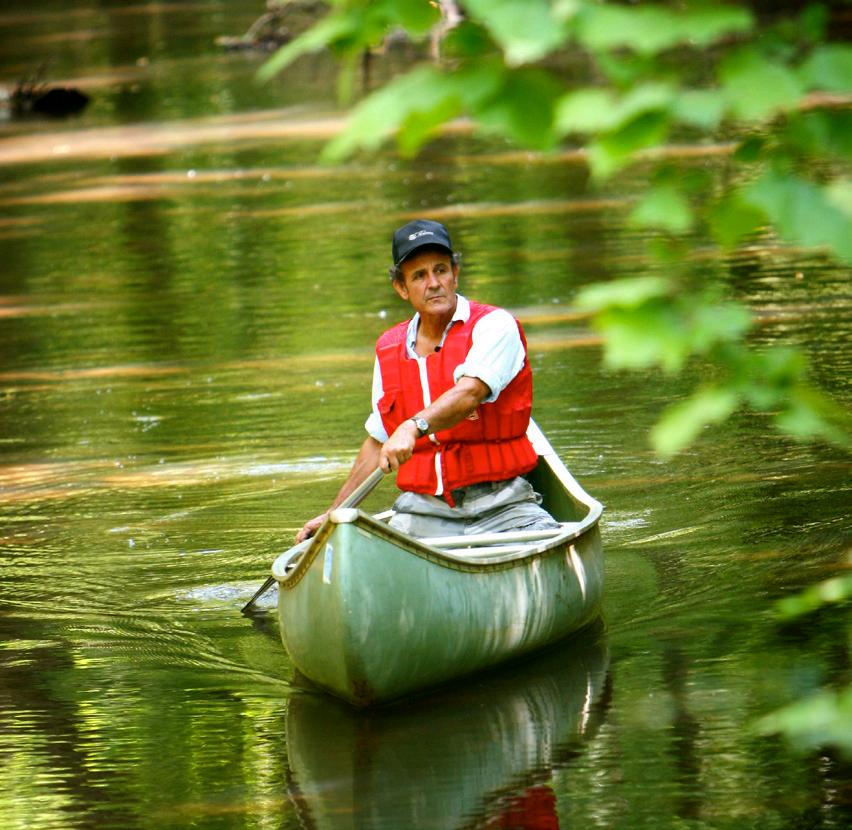
40 Years of “Discovering Alabama”
The Emmy-winning series continues to educate and inspire, celebrating Alabama’s natural beauty and environmental legacy.
Shelby Professors
STEM faculty supported by the Shelby endowment are driving innovation and impact across BCAS disciplines.
Woodpecker Research
UA students are luring woodpeckers with decoys and sound traps to uncover secrets of head-banging birds and what they might teach us about brain trauma.
Cameo for a Cause
Camille Mendle won a live auction spot in UA’s “Cabaret,” trading her usual backstage role for eight nights in the spotlight.
Anthropology Film Project
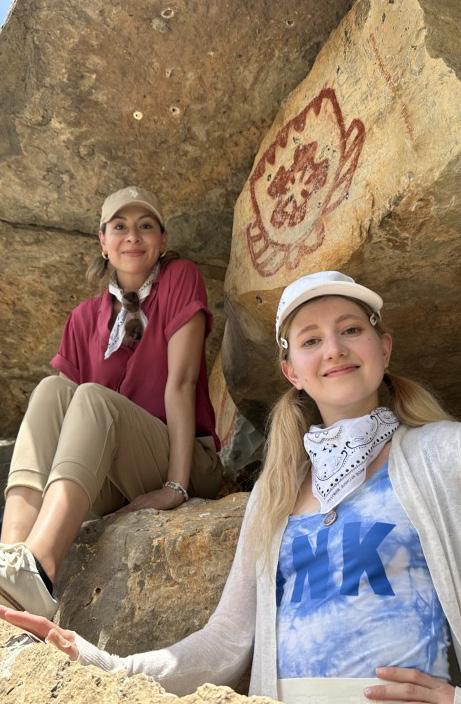
Two grad students turned a cliff of ancient pictographs into a documentary, thanks to a Levitetz Innovation Seed Grant.
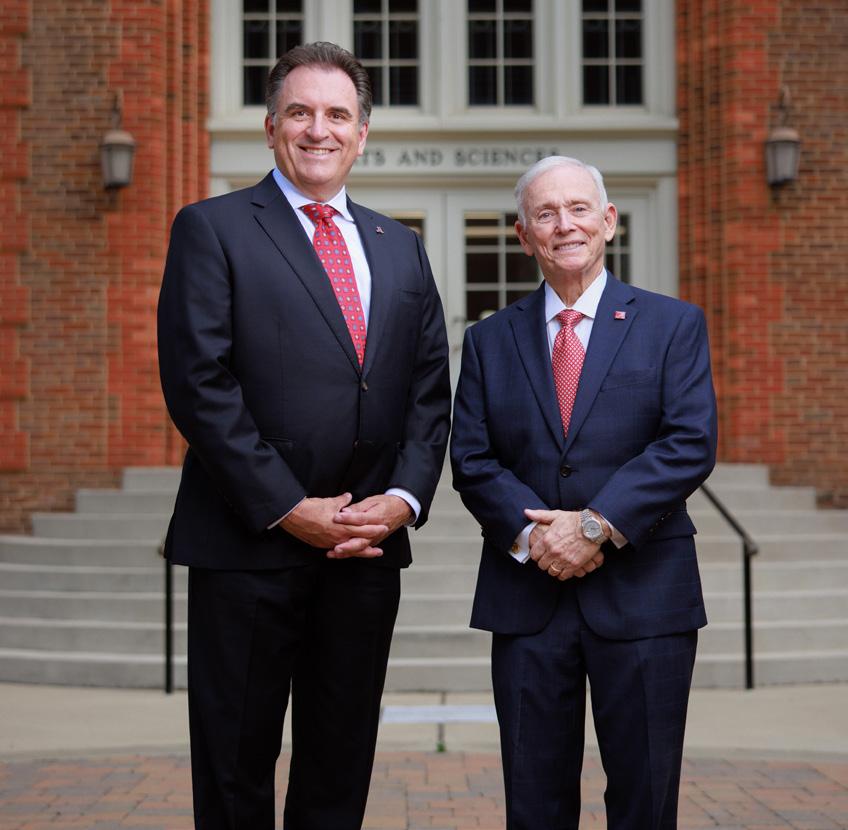
Joseph Messina, PhD Dean, Barefield College of Arts & Sciences
Victoria Collins Communications Program Manager
Abby McCreary Editor/Writer
Ben Reynolds Contributing Writer
Bryan Hester, Zachary Riggins, Matthew Wood, Jonathan Norris, Franklin Kennamer, Michael Davis, Million Dollar Band Photography Team Photographers FALL 2025
The 2025 Fall Collegian was designed by Andrea Maria Garay Aparicio, a BCAS student majoring in graphic design and minoring in general business. Her creative vision and design work shaped the visual identity of this issue.
The Collegian is published each year by the J. Frank Barefield Jr. College of Arts & Sciences at The University of Alabama.
BAREFIELD COLLEGE OF ARTS & SCIENCES MAGAZINE
A New Chapter Begins
As we continue to celebrate the accomplishments of the past academic year, we find ourselves at a defining moment in our College’s history, one shaped by creativity, achievement and transformation.
This year, we proudly embraced a new identity as the J. Frank Barefield Jr. College of Arts & Sciences, a change made possible by a transformational gift that will shape our future for generations to come. More than a new name, it is a powerful affirmation of our legacy and a bold commitment to what lies ahead. This extraordinary act of generosity honors the path we have traveled, celebrates the excellence we have cultivated, and propels us toward new frontiers of impact, innovation and discovery.
Throughout this remarkable year, our faculty, students and staff have demonstrated the very best of what the arts and sciences can offer. From groundbreaking research and interdisciplinary collaborations to inspiring performances, exhibitions and community initiatives, creativity has flourished in every corner of the College. It has been a year defined by bold ideas and meaningful contributions, proof that our mission is not
only alive, but thriving.
We are investing in our students, supporting our faculty and expanding opportunities that elevate the College’s reach across Alabama and beyond.
To our alumni, supporters and friends: thank you for walking this journey with us. Your belief in our mission fuels everything we do. Together, we will honor our past, embrace the present and shape a future defined by excellence and purpose.
Roll Tide!

Joseph Messina Dean & Professor
campus news
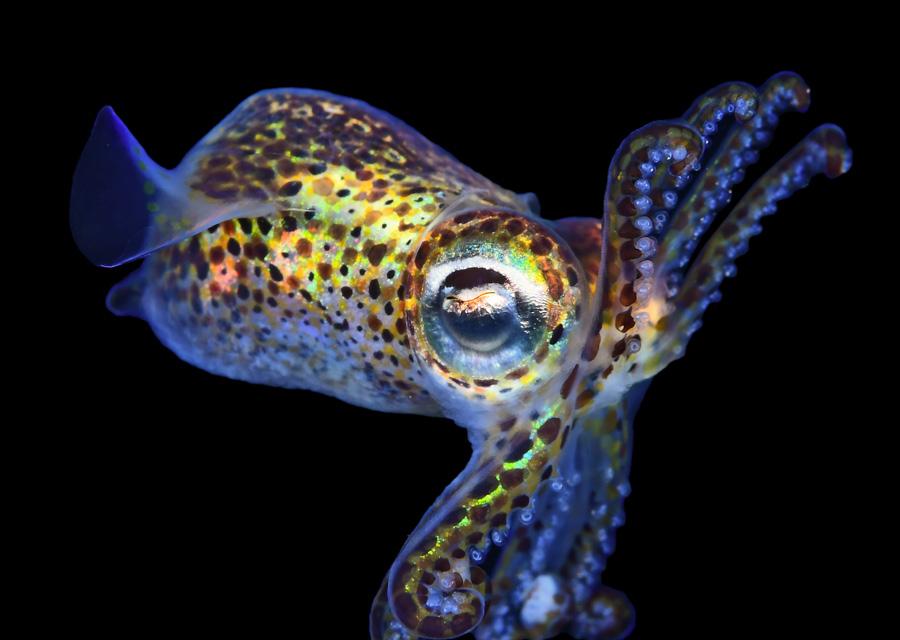
Biological Sciences Professor Helps Unmask Mollusk Mystery
Biological Sciences professor Kevin Kocot contributed to an international research team that reconstructed the mollusk family tree, an evolutionary mystery which has plagued scientists for decades, and that made the cover story for the Feb. 28 edition of Science Magazine.
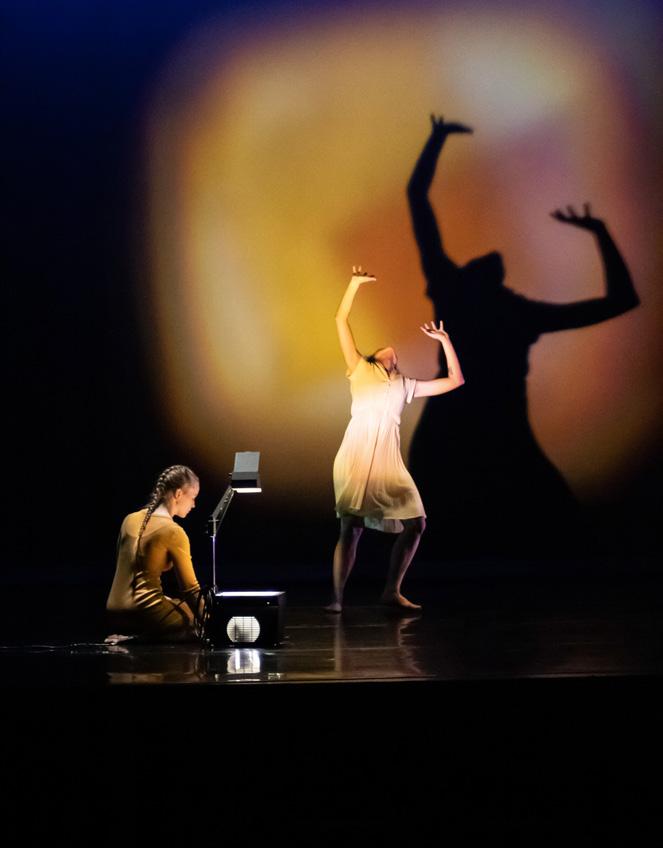
Dance Graduate Student Selected for National Festival
MFA dance candidate Jordan Prough’s dance “Unexpectedly Expecting the Expectations of the Unexpected” was one of three dances selected for the College Dance Association’s national festival in Washington, D.C.
Shelby Professor Contributes to Periodic Table Research
Endowed Shelby Distinguished Professor and Chemistry & Biochemistry Robert Ramsay Chair David Dixon worked with Department of Energy researchers to directly measure an element with more than 99 protons for the first time.
ISSR Director Named Top Woman in Tech
Despina Stavrinos, the director of the Institute for Social Science Research, the chief human factors research and development officer for the Alabama Transportation Institute, and a professor in Psychology, was named one of Business Alabama’s Women in Tech 2025.
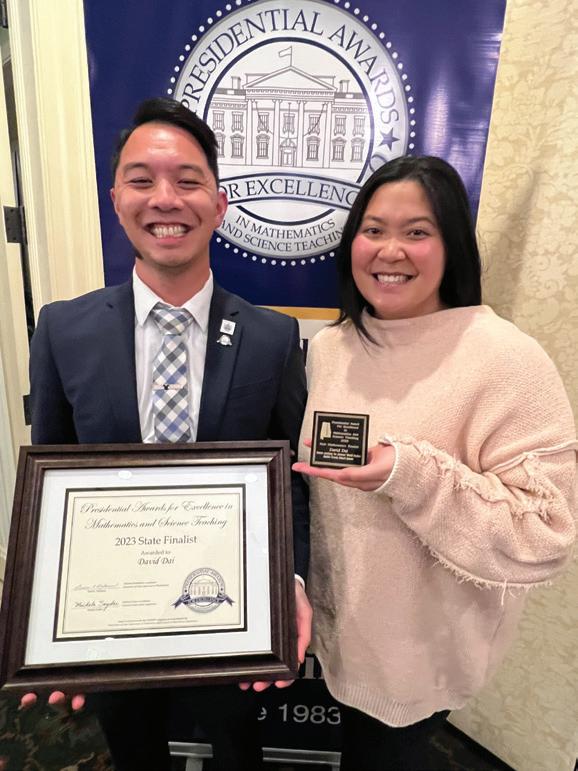
Math and Anthropology Alum Wins Presidential Teaching Award

David Dai, who graduated from the Barefield College of Arts & Sciences in 2016 with a bachelor’s in mathematics with a statistics concentration and anthropology minor, won the White House’s Presidential Award for Excellence in Mathematics and Science Teaching.

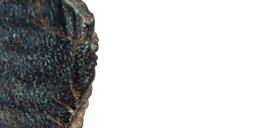
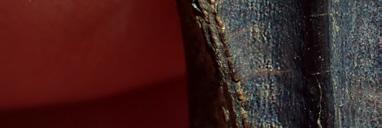
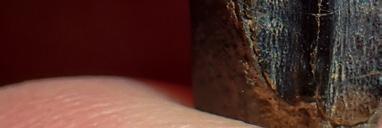
Rare Hadrosaur Dinosaur Tooth Discovered on Alabama Museum of Natural History Fossil Excursion
Alabama Museum of Natural History
Director John Friel found a tooth of a hadrosaur, more commonly known as a duck-billed dinosaur, on a gravel bar in a creek in Greene County, Alabama.
Ringo Lisko, “Flourish.”
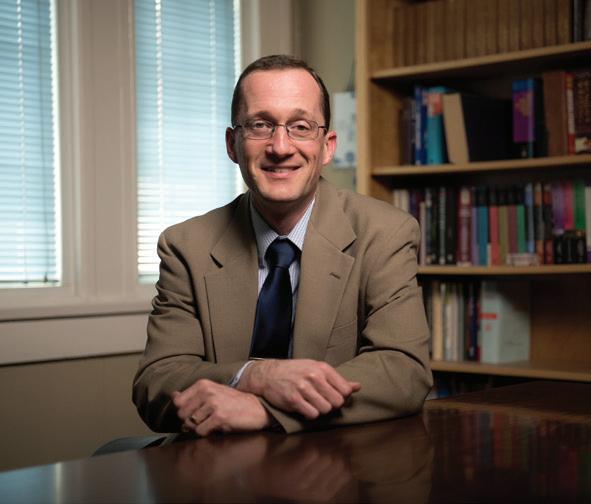
Albert Pionke
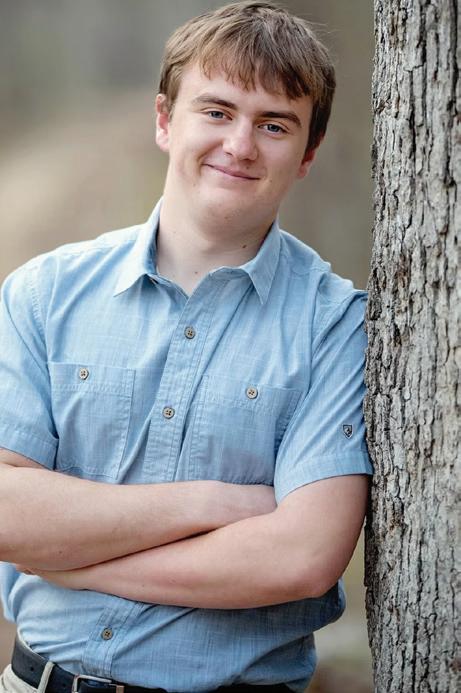
Ian Brunetz is a double major in biology and English with a minor in history.
Albert Pionke won the 2024 BlackmonMoody Outstanding Professor Award for his work on the Mill Marginalia Online, a project in the John Stuart Mill Library. Pionke is the William and Margaret Going Endowed Professor of English as well as Associate Dean of General Education and Academic Affairs within the Barefield College of Arts & Sciences.
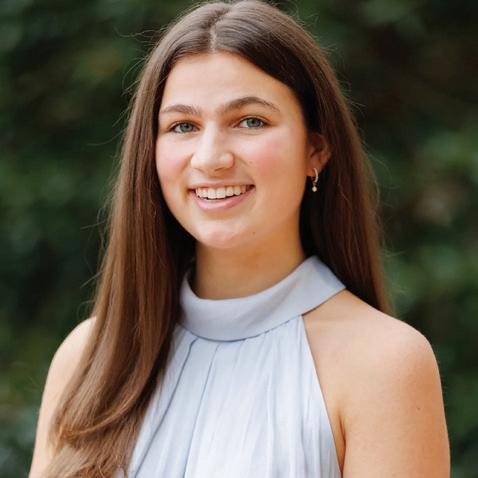
Kate Herndon
Kate Herndon, a May 2025 graduate with a bachelor’s in criminal justice and history with a concentration in legal history, became the 17th UA student to be named a Rhodes Scholar.
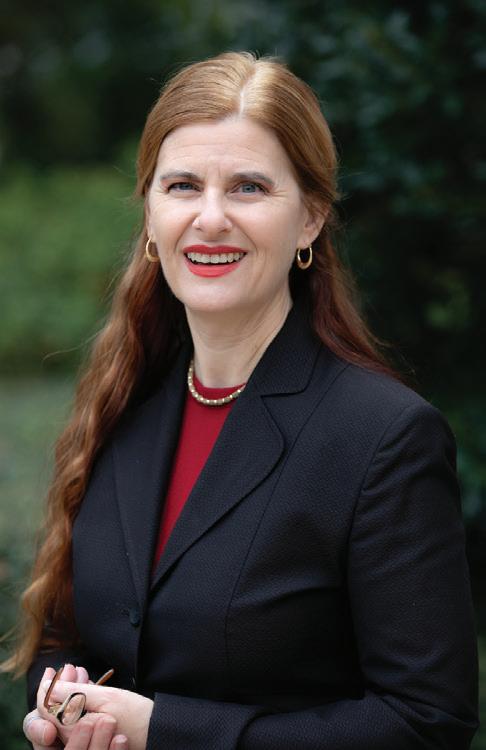
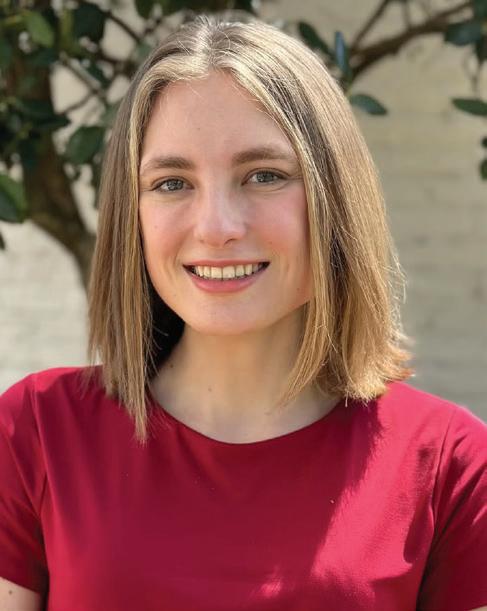
Emily Gokie is a dual major in physics and mechanical engineering.
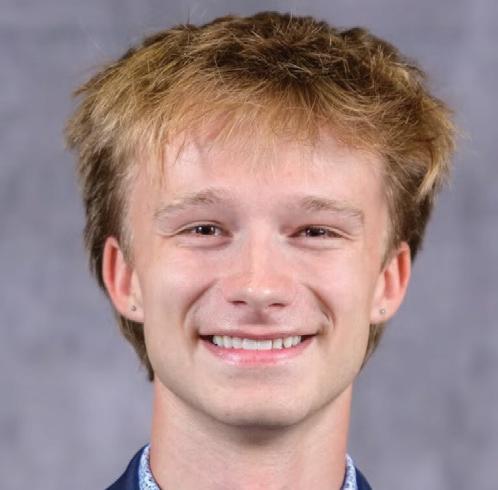
Blake Yuenger
Blake Yuenger is majoring in chemistry and is enrolled in the Accelerated Master’s Program for chemistry as well.
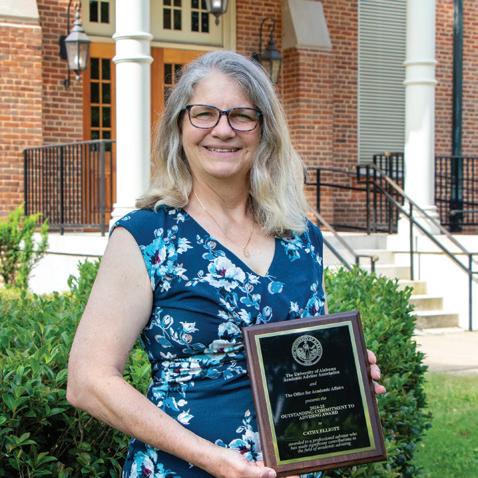
Catherine M. Roach
In 2024, Catherine M. Roach was named a Distinguished Research Professor by The University of Alabama System Board of Trustees. Roach is an expert in gender, sexuality and popular culture studies in New College.
Cathy Elliott
Cathy Elliott, the academic advising manager in BCAS Student Services, won the 2024-25 Outstanding Professional Advisor Award. This is the second year in a row that a BCAS Student Services advisor won the professional advisor award.
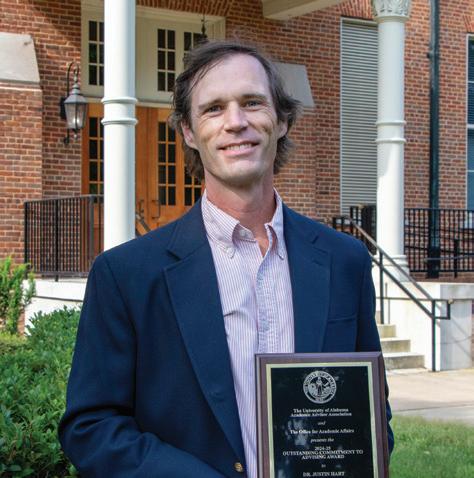
Justin Hart
Justin Hart, the environmental science director in Geography & the Environment, won the 202425 Outstanding Faculty Advisor Award. This is the fourth year in a row that a BCAS faculty member won this award.
2025-2026 Fulbright Student Research Award recipients
Miriam Anderson, “The Rhythm of Healing: Understanding the Body through Dance” at Ganesa Natyalaya in New Delhi, India. May 2025 graduate: bachelor’s in creative media with a minor in the Blount Scholars Program.
Bianca McCarty, “The Role of a Plant-based Diet in Combating Neurodegenerative Disease” at the University of Vienna in Vienna, Austria. May 2025 graduate: bachelor’s in biology and a minor in the Blount Scholars Program.
Michael Zengel, “Ultrafast Probing of Spintronic Capabilities of Heusler Alloys” at Justus Liebig University in Giessen, Germany. May 2025 graduate: bachelor’s in physics and mathematics and minors in French and the Randall Research Scholars Program.
2025-2026 Fulbright english teaching assistantship Award recipients
Sophia Akhtar, teaching English in Germany. May 2025 graduate: bachelor’s in international studies with a German minor and master’s in public administration.
Morgan Byerley, teaching English in South Korea. May 2025 graduate: bachelor’s in international studies with minors in German and English.
Alicia Pearson, teaching English in Taiwan. May 2024 graduate: bachelor’s degrees in civil engineering and Spanish, minor in architectural engineering.
Bennett Ogle, teaching English in Latvia. August 2025 graduate: bachelor’s in economics and mathematics, master’s in quantitative economics, graduate certificate in museum studies.
Logann Shorter, teaching English in South Korea. May 2025 graduate: master’s in teaching English to speakers of other languages.
2025 President's faculty research award recipients
Jessica Goethals, Mid-Career Scholar in Arts and Humanities.
Sergei Gleyzer, Mid-Career Scholar in Physical and Biological Sciences, Mathematics, and Engineering.
Despina Stavrinos, Mid-Career Scholar in Social and Behavioral Sciences.
Cheryl Toman, Senior Scholar in Arts and Humanities.
Randy Salekin, Senior Scholar in Social and Behavioral Sciences.
Kyla Collins, teaching English in Thailand. May 2025 graduate: bachelor’s degrees in mathematics and public health with minor in the Blount Scholars Program.
Lyn Coupland-Lowery, teaching English in Germany. December 2024 graduate: bachelor’s in German and educational methods. Part of the Accelerated Master’s Program in German.
Katie Jewell, teaching English in Moldova. May 2024 graduate: bachelor’s in international studies and economics with a minor in Russian.
Emma Mural, teaching English in Germany. May 2025 graduate: bachelor’s in English and German with a minor in Blount Scholars Program.
Bree Patzke, teaching English in Czech Republic. May 2025 graduate: master’s in public administration through the Accelerated Master’s Program and bachelor’s in political science, with minors in public policy and Spanish.
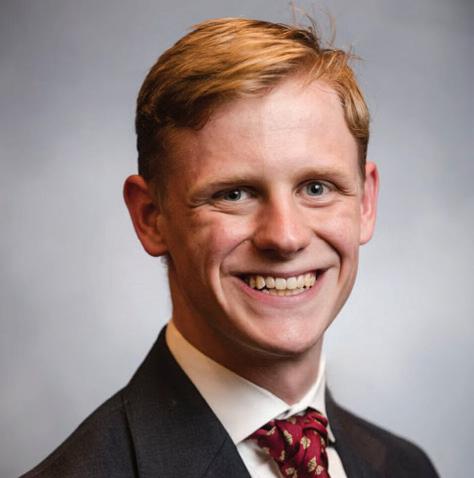
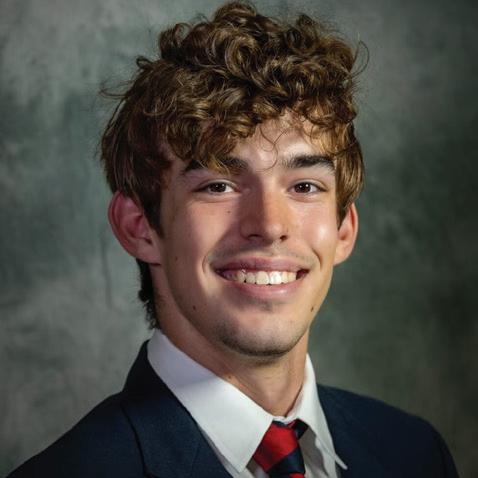
Bennett Ogle
Bennett Ogle, an August 2025 graduate with a bachelor’s in economics and mathematics, master’s in quantitative economics, and graduate certificate in museum studies, was selected for a Boren Scholarship. Ogle will study Azerbaijani in Baku, Azerbaijan, with the scholarship.
Zachary Griffith
Zachary Griffith is a dual major in chemistry and chemical engineering with a physics minor in the Randall Research Scholars Program. He won a Hollings Scholarship which will include a 10-week full-time paid summer internship at a National Oceanic and Atmospheric Administration facility.
Criminal Justice PhD in Criminology & Criminal Justice
Expanding upon the bachelor’s and master’s degree programs, Criminology & Criminal Justice’s PhD program will train students in qualitative and quantitative methodologies and theoretical perspectives on crime, crime control and everything in between.
Religious Studies AMP Program in religious studies
Through this program, undergraduate students earning their bachelor’s degree in religious studies can also earn credit towards a master’s degree in religion in culture. Like the University’s other Accelerated Master’s Programs, juniors with 90 credit hours can apply and earn 12 credits in the master’s program that will count toward both degrees.
Barefield Launches New Degree Programs
The J. Frank Barefield Jr. College of Arts & Sciences is always expanding, adding new programs and degrees for students to engineer their unique paths forward. From doctorates to minors, the College has added several programs across many disciplines. This fall, students can begin pursuing these eight programs.
Philosophy MA in philosophy
A philosophy minor or even a couple of undergraduate classes can be enough for admission into this master’s program. Once admitted, students can concentrate in one of three areas: law, ethics and society; philosophy, medicine and ethics; or mind and brain.
musical audio technology bs in school of music
Formerly known as the Bachelor of Science in musical audio engineering in the College of Engineering, the musical audio technology program will now be housed in the Barefield College of Arts & Sciences. Students will be able to operate audio equipment as well as design it.
African studies minor in anthropology
This interdisciplinary minor examines the African continent by its history, cultures, ecologies, economies and more. The African studies minor centers African experiences to provide greater depth of knowledge about Africa.
Shakespeare studies minor in english
Students studying Shakespeare studies will read the plays and poems of William Shakespeare through a range of perspectives, developing critical thinking skills as well as an understanding of the broader literary culture in which Shakespeare wrote.
Jazz studies minor in school of music
The jazz studies minor offers non-music major students a way to participate in the School of Music’s jazz studies program. Students must audition for the program, which is dedicated to the study of jazz performance and arranging/composition.
Southern studies minor in american studies
Although the Southern studies minor is housed in American Studies, the interdisciplinary program will be taught by instructors from several departments. Students will explore the South through history, literature, art, politics, religion and other topics.
The School of Music Program That Changes Lives
From the neonatal intensive care unit to CrossingPoints, Caring Days to the Tuscaloosa County School System, Paige Beville has had the opportunity to impact many lives in Tuscaloosa. As a May 2025 music therapy graduate in the School of Music, her four years at UA consisted of clinical experiences where she used music to help people in all walks of life. However, her work with her one-on-one client Vickie Dockery has been the most impactful — for both women.
“It has completely transformed everything I know about music therapy,” Beville said. “Part of my job is getting to know my client well so I can assess and treat her appropriately, so being able to do that over two years, I was able to address a wide variety of goals. I watched her go from barely knowing the words to a hymn to, two years later, being able to completely sing it by herself.”
After experiencing a medical event 10 years ago, Dockery has memory loss, vertigo, blindness and global aphasia, leaving her feeling isolated from the world. Two years ago, her husband, Rusty Dockery, reached out to a friend at The University of Alabama, Ninette Cannon, about the possibility of music therapy.
“We had the idea two years before but didn’t know how to put the pieces together,” said Rusty Dockery, who sits in on every session. “Within 48 hours of
talking to Ninette, we were putting the pieces in place and getting a schedule.”
With Vickie Dockery, Beville uses music to work on social, emotional and spiritual goals. Although music therapy is a research-based and evidence-based practice, it is also patient-centered and involves patient-preferred music, so Beville and Vickie Dockery sing a lot of Elvis Presley, hymns and even “Yea Alabama” — along with shaking the classic red-and-white shakers — to reach goals, reminisce, build confidence and recall memories.
“It was obvious to me that Paige had reached a place of communication with Vickie that was important,” Rusty Dockery said. “Paige’s super strong point besides her obvious talent and skills is a big ol’ heart for people. Vickie could feel it and it was obvious.”
Andrea Cevasco-Trotter, the music therapy program director and a School of Music professor, said Beville’s kindness and musical talents have been able to impact many people in the Tuscaloosa area.
“What truly makes her unique is her ability to develop rapport quickly with people, creating a sense of trust,” Cevasco-Trotter said. “Her ability to walk into a room and have people respond to her music therapy treatment and the resulting conversation that she facilitates allows her to help a variety of individuals during critical life moments.”
During one session, which was the day after the Dockerys’ anniversary, Beville played “Look at Us” by Vince Gill, a song important to the couple.
“
“The chorus goes ‘If you want to see how true love can be, then just look at us,’” Beville said. “I had her husband sit across from her
and they did a social movement intervention, so they held hands and just swayed back and forth. Every session of hers except for this one she’s remained seated, but for this one, she stood up independently and she wanted to dance with her husband.”
When Rusty Dockery reached out for advice on how to show the couple’s appreciation for receiving music therapy services from students, it was suggested he make a small donation to the department, so Rusty Dockery has contributed to the program every semester since.
Although Beville graduated this May, Vickie Dockery’s sessions will continue with other students in the music therapy program. While Beville is moving on in her music therapy career — a clinical internship in Huntsville, a mandatory step towards becoming a board-certified music therapist — a new UA student will begin working with the Dockerys.
“It’s been important to us,” Rusty Dockery said. “I miss it during the summer, so we look forward to fall. There are some talented students there and we know Dawn [Sandel, the director of clinical experiences] will get Vickie connected with the right person.”
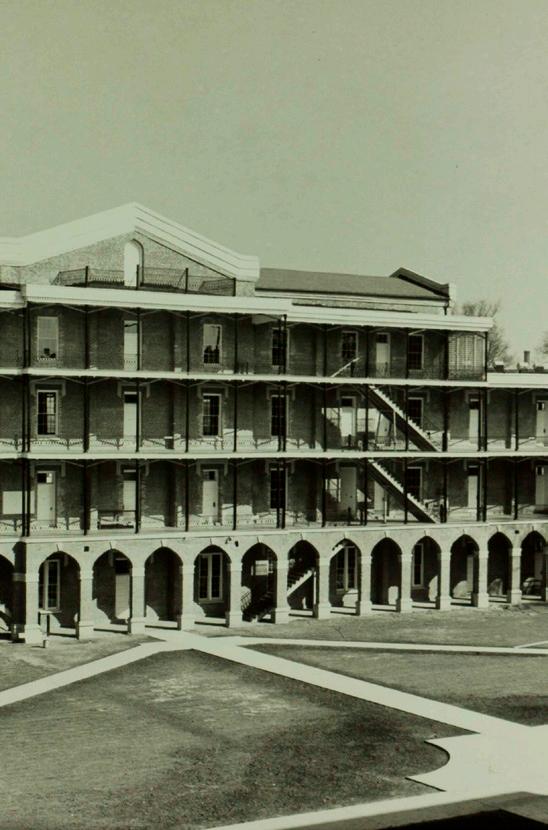
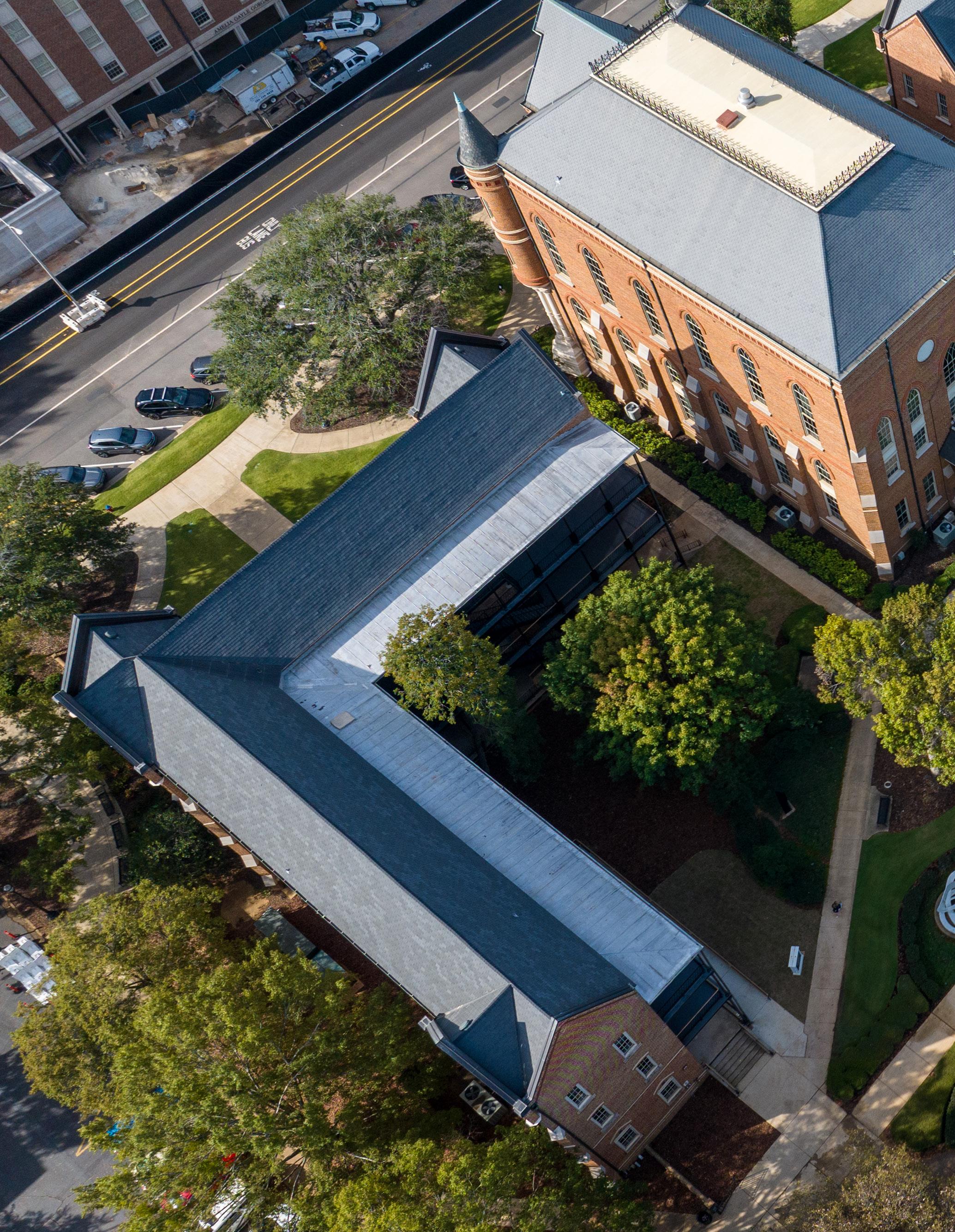
Clark Hall. 1884 to 2025
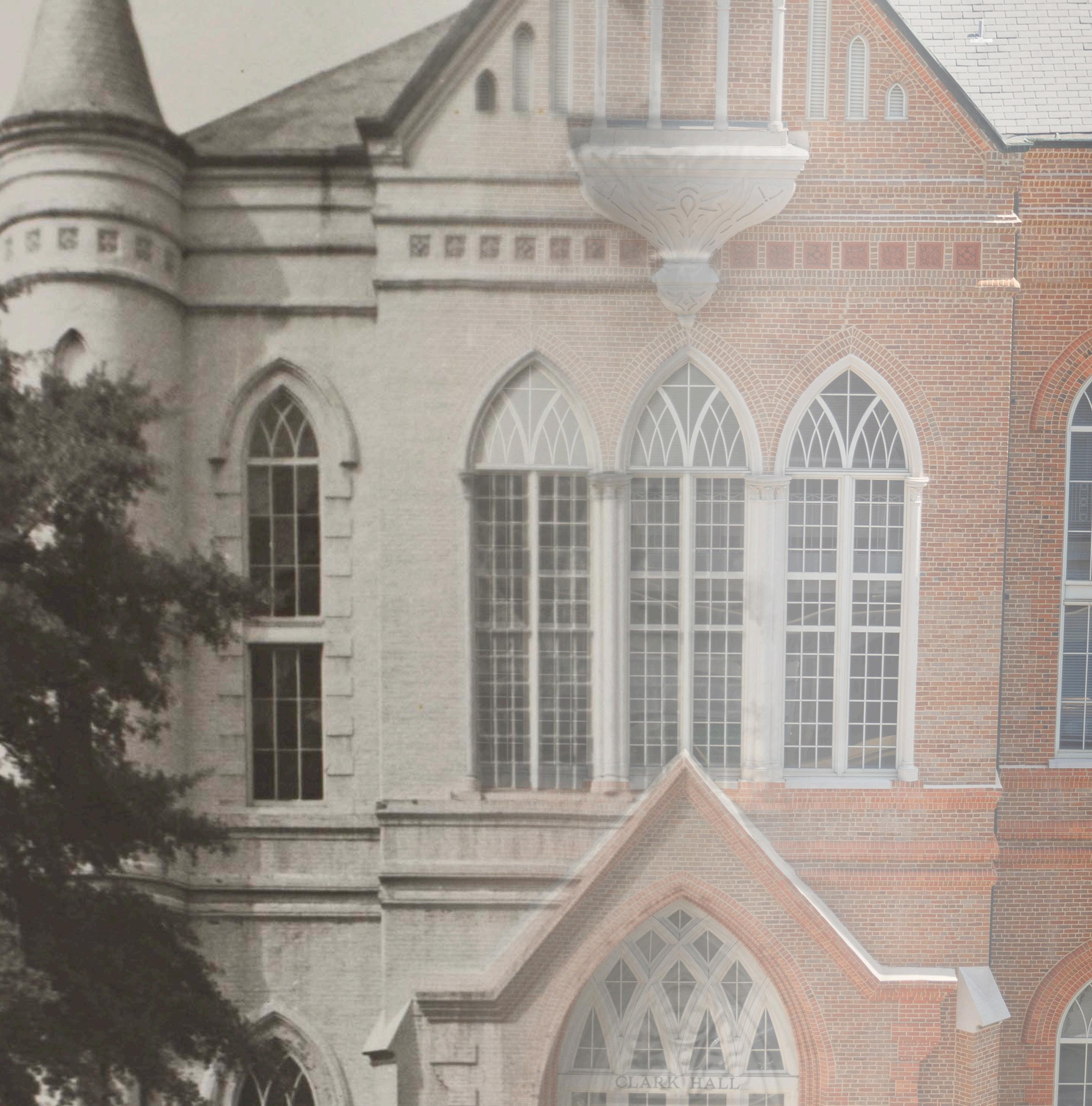
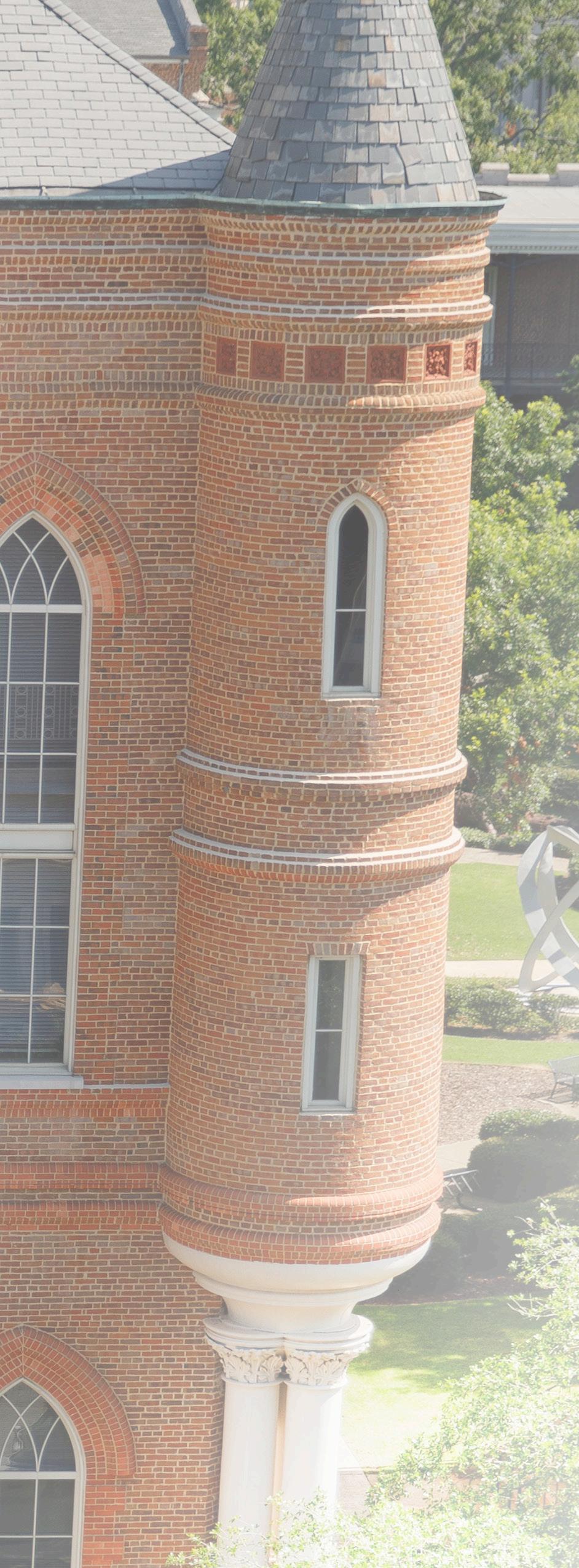
Legacy of Learning. Future of Impact. Honoring the Past, Embracing What’s Next
As the J. Frank Barefield Jr. College of Arts & Sciences embarks on a bold new chapter, we celebrate a legacy of learning that has shaped generations of scholars, leaders and changemakers. This moment is not just about honoring the past; it is about embracing the future. With groundbreaking research initiatives, expanded academic programs and new opportunities for collaboration and community engagement, the College is evolving to meet the challenges of tomorrow. We stand at a powerful intersection of tradition and transformation, where enduring values fuel fresh ideas and where the pursuit of knowledge continues to inspire impact across disciplines and communities.
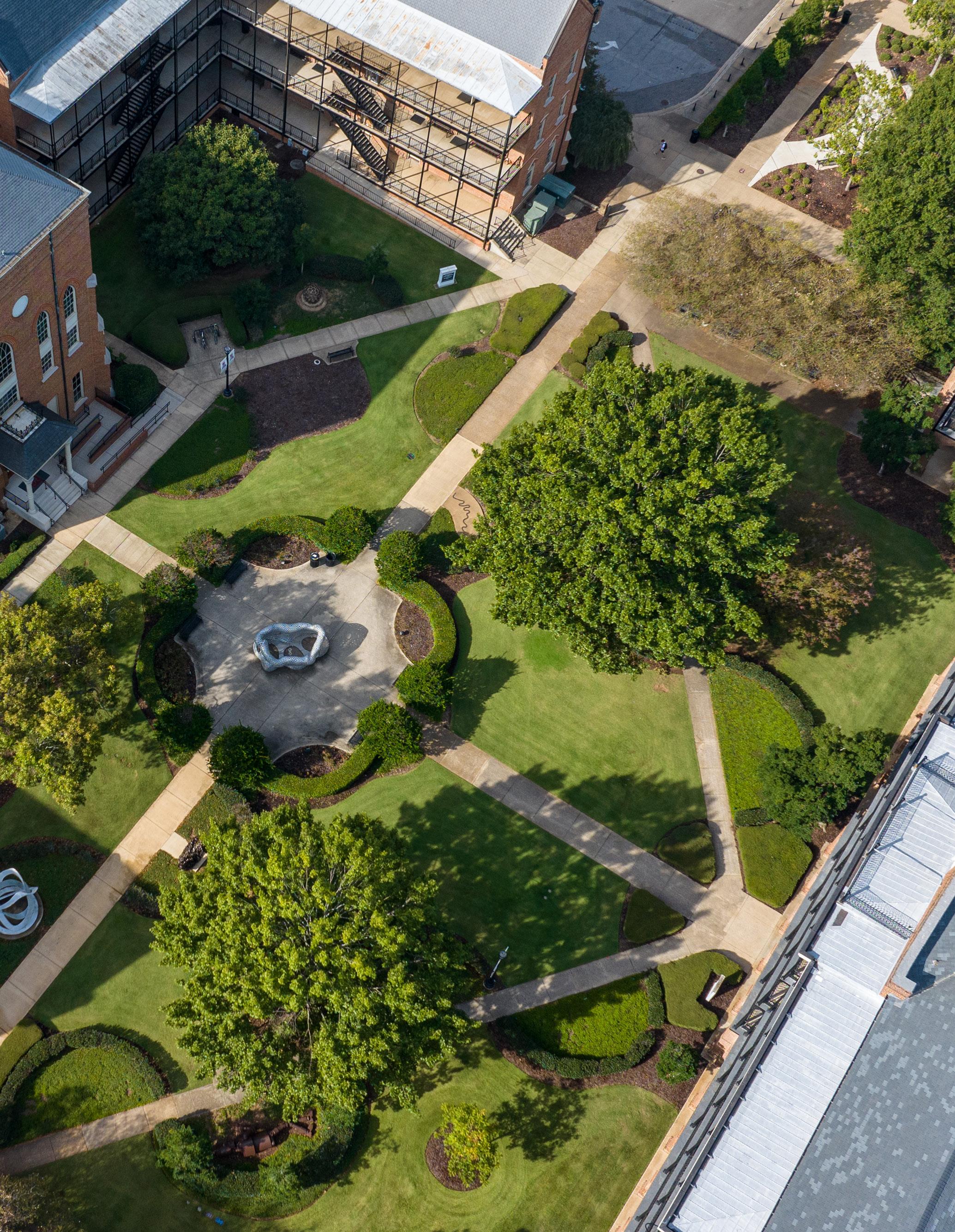
Woods Quad was originally built to make The University of Alabama, a military university, more disciplined. With rooms facing the quad and outdoor hallways, students and their activities were always under supervision. The open ground did not have the trees, landscaping, sculptures, benches and other features that make Woods Quad a popular student hangout today. Instead, it was a drill field
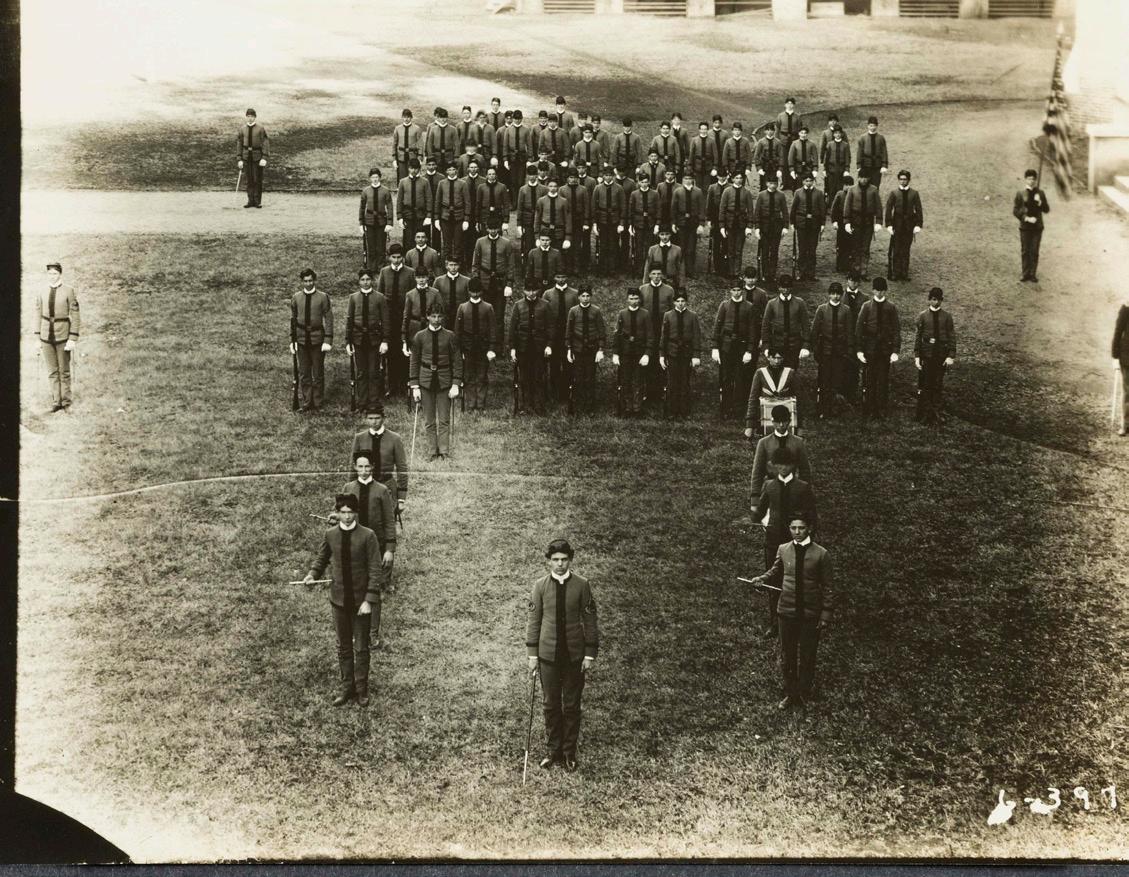
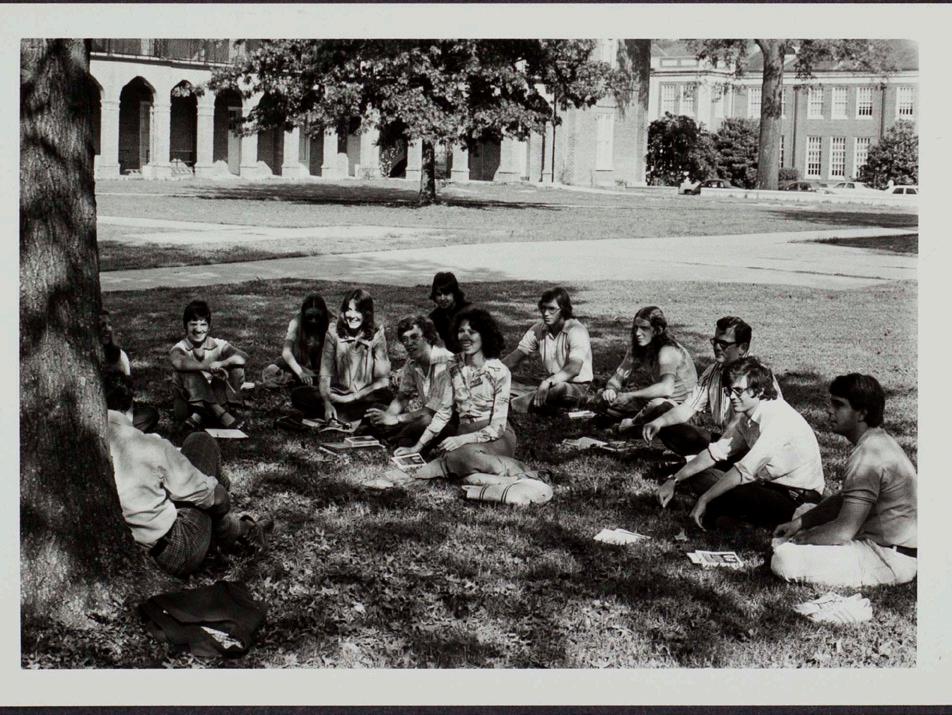
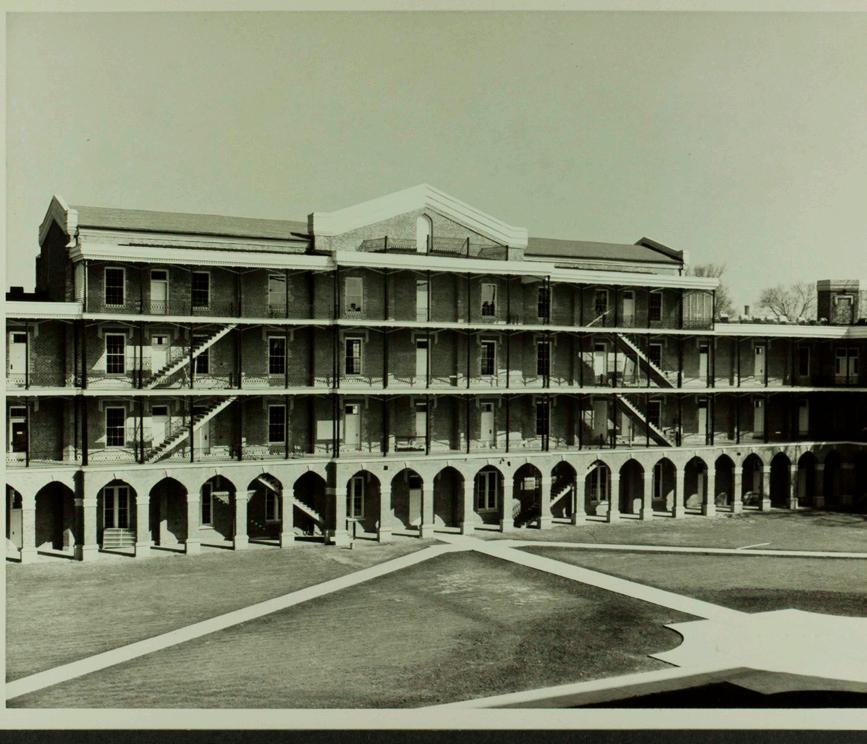
Photosof WoodsQuadfrom TheUniversityof AlabamaLibraries SpecialCollections
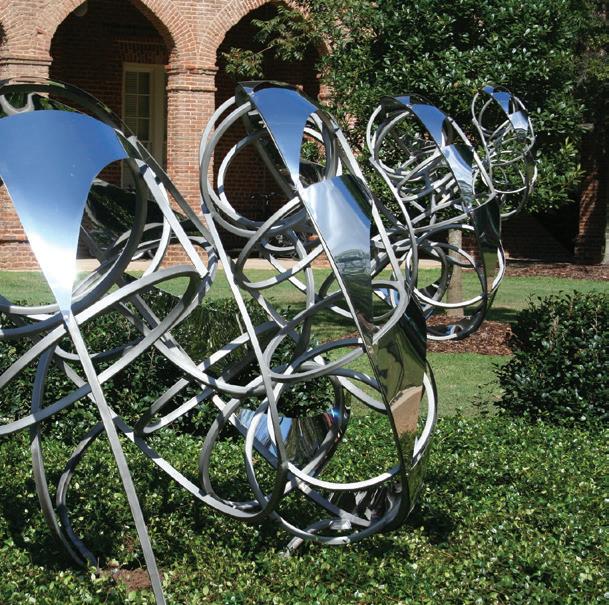
Mobius and Borromean Rings
“Mobius and Borromean Rings” is an example of two complex mathematical ideas: “a triple Möbius strip tied together in a Borromean knot.” Paget Kern, a 2018 graduate, designed the piece with collaboration from Mathematics and Art & Art History students.
Goldie 1971
Fibonacci Spiral
“Fibonacci Spiral” began as a collaborative lighting initiative that brought together students in art, engineering and interior design classes to develop solutions for campus spaces needing lighting design. Based off the Fibonacci sequence, 2012 graduate Lindsay Jones Lindsey’s design is a beautiful blend of art, science and math.
Quilted Vessel
“Quilted Vessel” is one of three sculptures in a group exhibited in the Birmingham Museum of Art between 2013-2015. The artist, Art & Art History professor Craig Wedderspoon, also has “Riverstone” in Woods Quad.
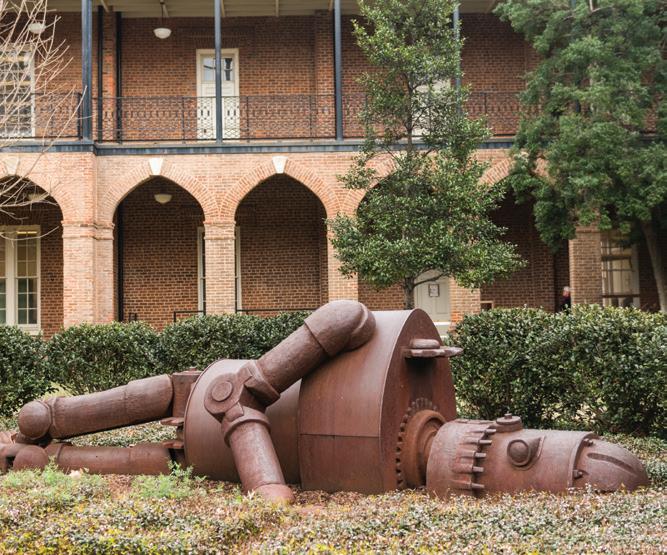
“Goldie 1971” was designed to honor the history of Birmingham’s Sloss Furnaces. The Barefield College of Arts & Sciences purchased artist Joe McCreary’s work in 2009.





Director of Blount Scholars Program Fred Whiting wants “world conquest” from his students, and he tells every new Blount student that at convocation every fall.
Blount, a liberal arts minor program in the Barefield College of Arts & Sciences, celebrates its 25-year anniversary this year. The program emphasizes an interdisciplinary approach to every major, career and life, and Whiting hopes his students will use these ideals — what he calls “soul work” — to change the world.
“Principally, Blount tends to its students’ intellectual, personal and spiritual growth,” Whiting said. “They’re [students are] looking around at their world, seeing what’s good and worthwhile and figuring out how to preserve it. And then figuring out what’s not good and not so worthwhile and figuring out how to change it.”

Blount’s 25-Year Journey
Although Blount is a Barefield program, it houses students from all over campus, giving a liberal arts education to students of all disciplines. By engaging in interdisciplinary studies, students can approach their own areas of expertise with different perspectives, new skills and fresh ideas that set them apart from other students.



“Liberal arts is a habit of mind, a set of attitudes and beliefs about education, about what it’s for and how to do it,” Whiting said.
How It Came To Be
In 1992, James D. Yarbrough, then dean of the Barefield College of Arts & Sciences, formed a committee tasked with rethinking the undergraduate experience. Yarbrough wanted to emphasize the value of a quality education and encourage the best students in the state to stay in Alabama. Many of the committee members came from small liberal arts colleges and sought to bring their experiences to the Capstone’s large campus environment. They tested different scenarios, gathered input from current students and gradually formed a curriculum.
In 1999, businessman and philanthropist Winton Blount donated several million dollars to establish the Blount Undergraduate Initiative. Blount believed education is preparation for personal and civic life, not just a vocation.
Salli Davis, a committee member, said the program was a unique part of campus by the time students enrolled in 1999.
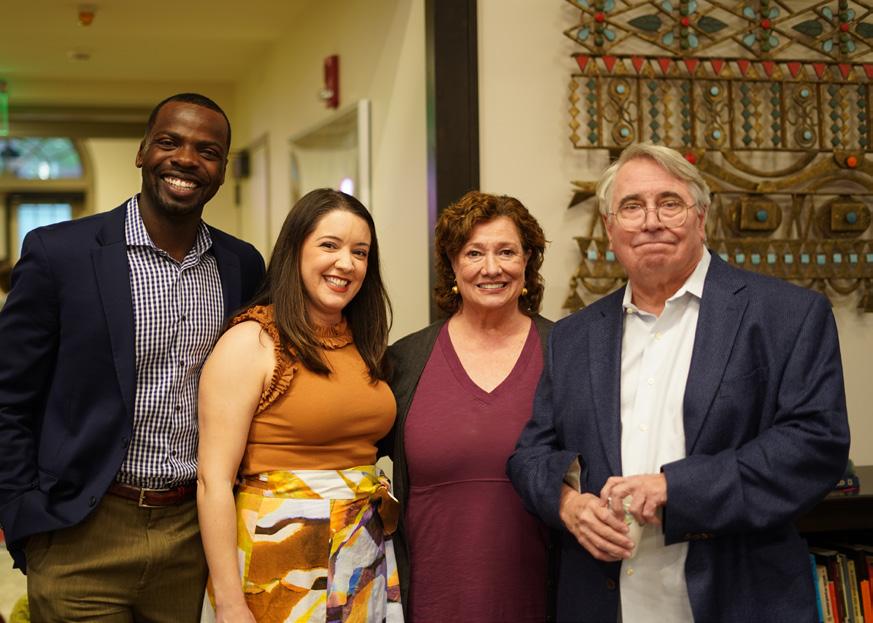
JosephHornsby(farright),thefirstdirectorof theBlountScholarsProgram,withhiswifeAnne andBlountalumClaireBoykinsandherhusband AbeBoykins.
“Blount offered a special home on campus that was like a small liberal arts school and yet had the access to all the advantages of a big research university,” Davis said.
Davis said the classes’ seminar style was intentional — the committee wanted a very “intellectual experience but also a social one,” as opposed to the University’s increasing tendency towards large lectures. Along with that, Davis and the committee pushed the idea of a livinglearning community (LLC) where freshmen would have shared experiences. At the time, pushing for an LLC was “going against the grain,” but other programs have tried to replicate it since.
“The building, as we tried to make happen and I think we did, emphasizes those small seminar rooms and the small seminar experience by having them physically in the dorm,” Davis said. “There were lots of small gathering spaces in the dorm. Kids could get together and talk about what they were reading.”
The Program
Since Blount and Yarbrough’s efforts, the progam has evolved but stayed true to its founding principles. The program still puts the individual first, produces standout students and has an LLC dedicated to promoting its community of scholars.
Elena Kuehner, a senior majoring in chemistry and biology, said Blount was the deciding factor to enroll at Alabama and pursue a career as a physician scientist.
“The living-learning center fosters such a tight-knit cohort of Blount scholars,” Kuehner said. “That’s really where the foundation of our academic and collaborative community is built. Even though students only live in the LLC for the first year, the community just continues growing closer over time.”
Kuehner said the community and the interdisciplinary curriculum stood out from other schools she was considering.
“Blount has been a critical component of my education. It’s where I’ve met my closest friends, and it’s been profoundly impactful in broadening my worldview,” Kuehner said. “I feel Blount has really helped shape my professional goals in that way because it helped me realize how I could best use my interdisciplinary interests to contribute to society.”
Although Blount is a fouryear program, heavy emphasis is placed on the first and last years. In the first year, seminars, lectures and cohort-building surrounding “Foundations” (BUI 101 and 102) lead to a “shared sense of intellectual experience that will help them think about the world,” according to Whiting. From the very beginning, Blount students form a community, engage with each other and learn how they can best contribute to the group. Despite sophomore and junior years being spent outside the LLC and in a range of different Blount classes (BUI 301 electives), the community still continues to be fostered through Blount-specific events and activities.
The program ends senior year
with “Worldviews” (BUI 401), when students revisit the concepts and ideas from their freshman year, this time in seminars capped at 10 students. The course culminates in each student completing a capstone project.
No matter what stage the Blount students are in, assistant director Deborah Keene said professors can tell when Blount students walk into their classrooms.
“They’re [Blount students are]
“‘Do you have more?’” Keene said they asked after the first year of offering internships.
Alabama to University Museums. Keene said the program has been great for both students and internship directors, who, like professors, say Blount students stand out.
Life After Blount
Martha Griffith, who graduated from the Blount Scholars Program in 2009, said she was initially drawn to the program because she loved the idea of
UA Alumna wins fourth EMMY
“They [Blount] do such a good job of allowing us, as alumni, to come back and see what the current students are doing too,” Griffith said. “It gives us an opportunity to act like Blount students again.”
Many alumni also become involved with the support board, the Blount Alumni Fellows group. All dues have a direct impact on the Blount program.
“We decided that the quickest, easiest and most impactful way
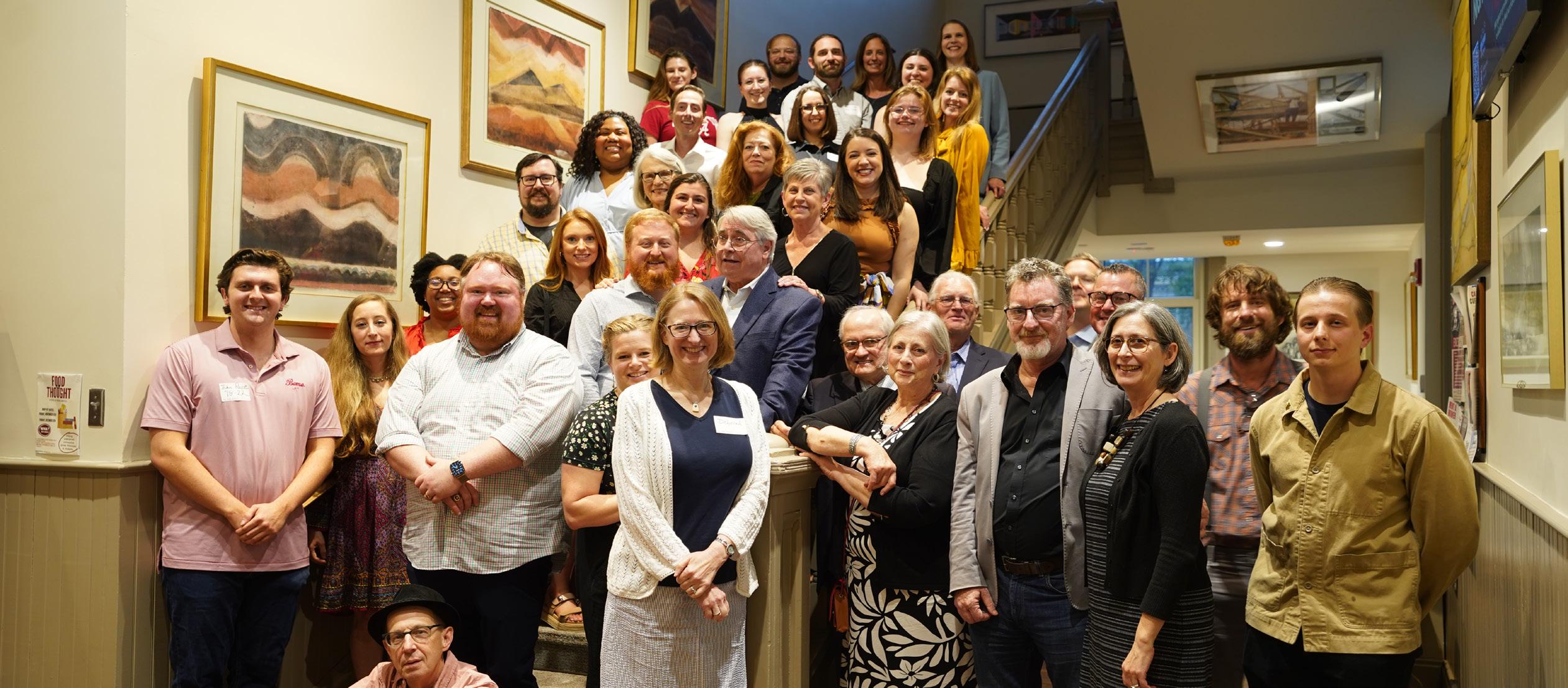
curious, and they want to learn, and they want to learn everything all the time,” Keene said. “I love these students. They come to class, they talk. They come to me and they ask, ‘How can I make this better?’”
In conjunction with the curriculum, the Blount program also introduced Blount-only internships two years ago, offering opportunities with everything from the Humane Society of West
getting together with people and discussing their readings, their coursework and their big ideas. As an alumna, she loves that she still has access to that community. Blount alumni often stay engaged and active with the program long after they graduate. Through homecoming tailgates, anniversary marker events and even a book club, the program continues to take care of its students.
that we could have a hand in the life of a Blount student every year is by giving them some of the books they’re required to purchase each year,” Griffith said. “This currently is something we do for our first-year students, but ultimately our goal would be for the first-year Foundations classes and for the final year Worldviews class.”
The Ramsey Award
How a Former History Professor Continues to Impact Students
From former athletes to University administrators, seasoned faculty to student government representatives, nearly every aspect of The University of Alabama campus life was represented at the first John Fraser Ramsey Award celebration dinner nearly 50 years ago.
They gathered to honor John Fraser Ramsey, to show support for the endowed award they fought so hard to establish, and to recall the tremendous influence Ramsey had on everyone he met. As the former chair of the History department, Ramsey was known for his boundless support for his students and his impact on the campus community, and to this day, the “Ramsey family” gathers at an award celebration dinner every year to remember him.
This year, the Ramsey family gathered to honor Ramsey and 2025 Ramsey Award recipient Emily Adcock, a Barefield College of Arts & Sciences student, who will carry on his legacy.
John Bolus, the current chairman of the John Ramsey Award Board of Trustees and the sixth recipient of the award, said the groundswell of support around the award was unique and special.
“There was this great cross section of people who really valued Dr. Ramsey and not only his advice throughout the years, but the way he gave himself to other people,” Bolus said. “He literally did that, he gave everything that he had to the University and to students over the years.”
As a UA Premier Award, the Ramsey Award continues to be an award that honors the University’s most accomplished students, specifically juniors who reflect Ramsey’s legacy.
“We’re looking for people who have reached out into areas of the University, similar to what I’ve said about Dr. Ramsey reaching out into different cross sections of University life,” Bolus said. “One of the statements in the award is ‘scholarship, leadership and broad humanistic interests.’ We’re looking for those broad humanistic interests in the sense of helping others.”

2025RamseyAwardrecipient
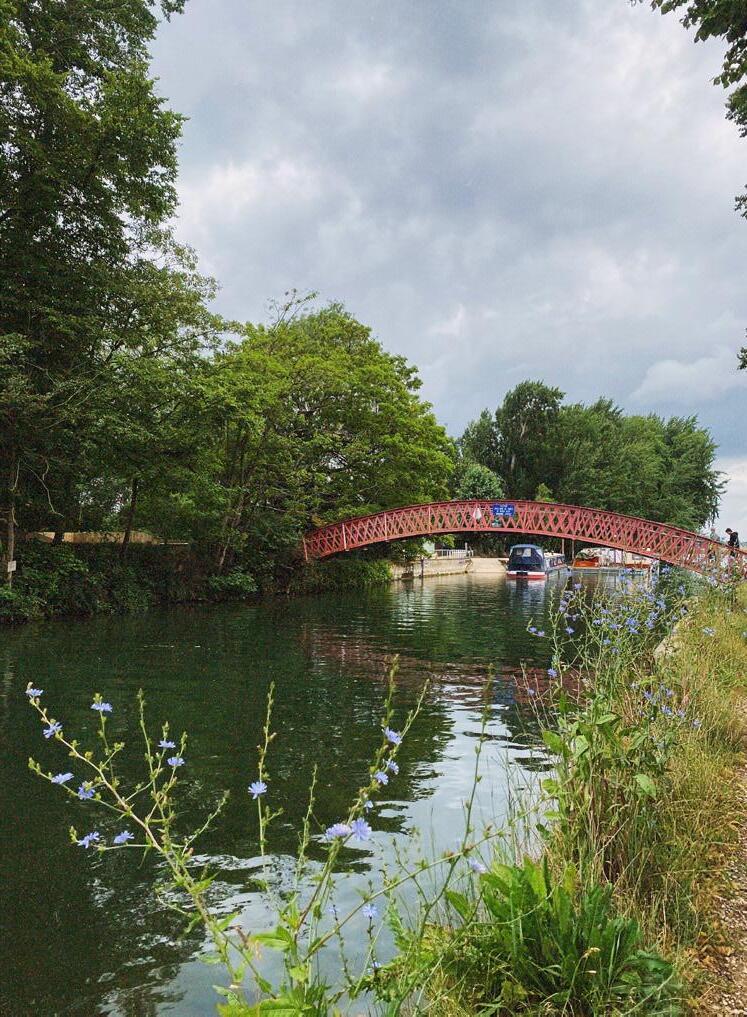
EmilyAdcockduringherJuly2023 studyabroadprogram,UAinOxford.
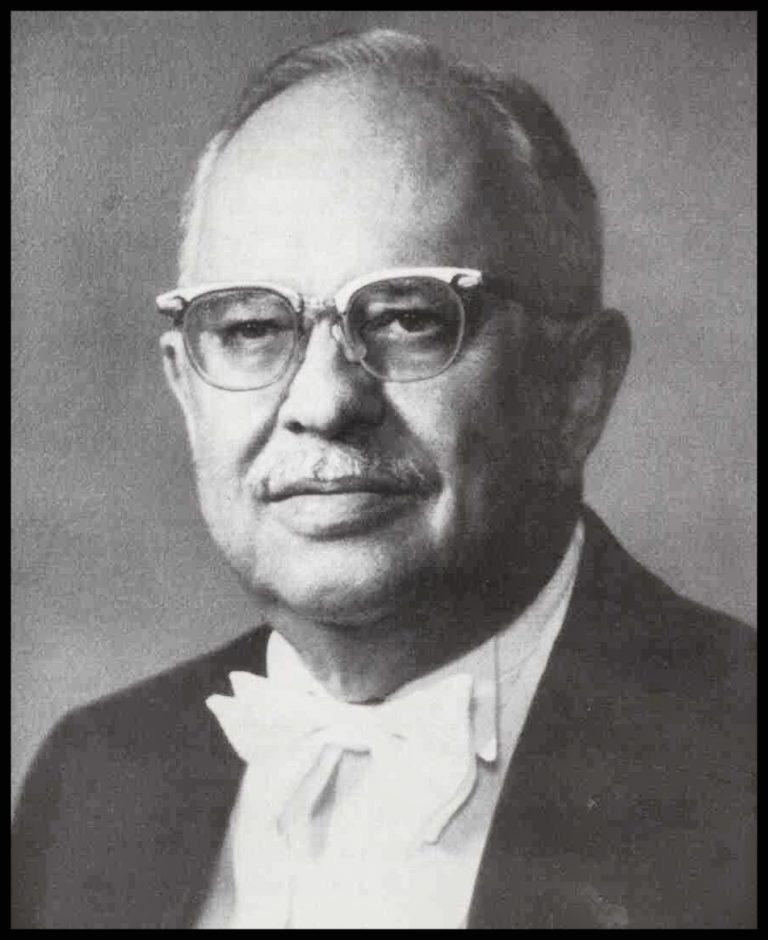
John Fraser Ramsey
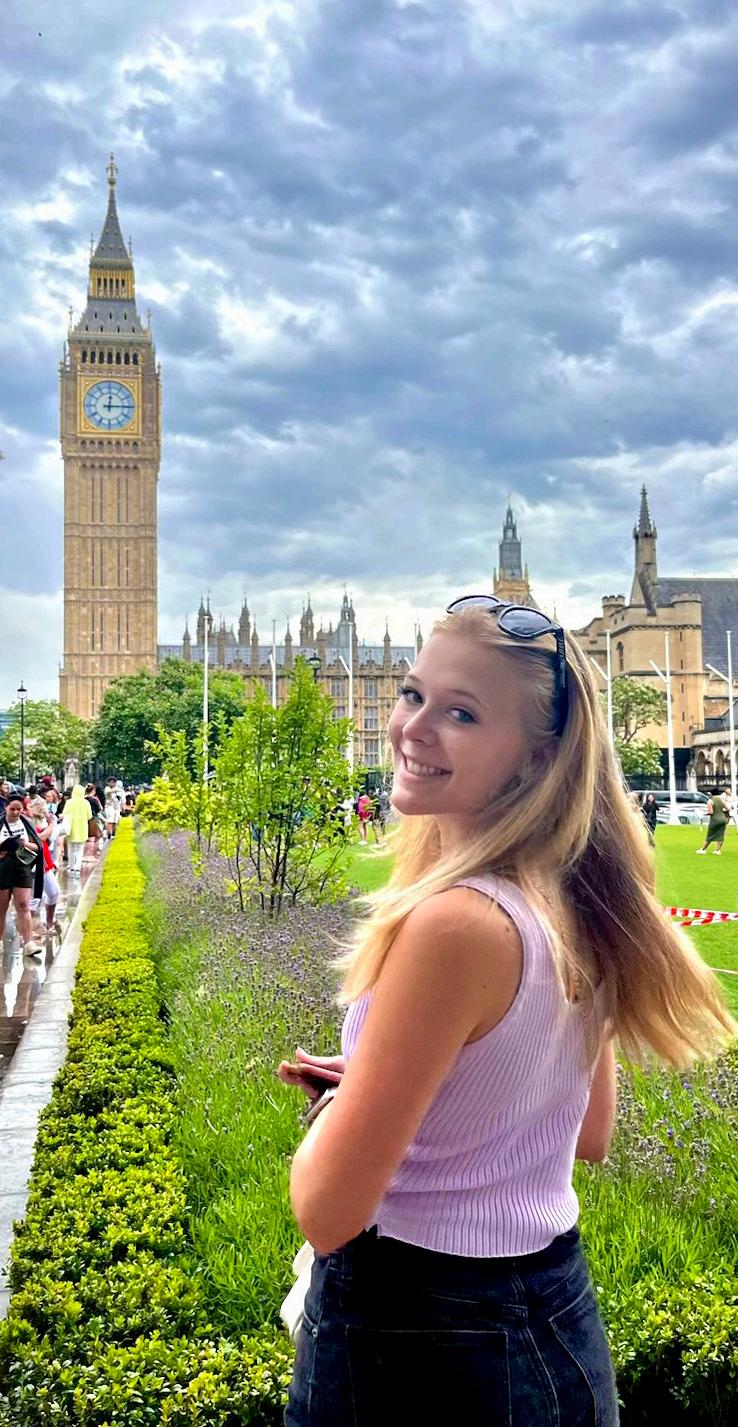
John Fraser Ramsey became a history instructor at The University of Alabama in 1935 and left as a full professor in 1977. His 42-year career (aside from three years of service during World War II) was marked by his dedication to the advancement of education and his concern for the financial and emotional well-being of students. Ramsey participated in several committees and organizations while at Alabama, and he earned several service awards for his commitment to impacting the lives of students. His influence was felt across the University, from athletics to academics to fraternity life. At his retirement, several hundred friends, associates and University members gathered in Tuscaloosa to honor his life and career. Following his retirement, Ramsey stayed active in University life and activities until he passed away in 1983.
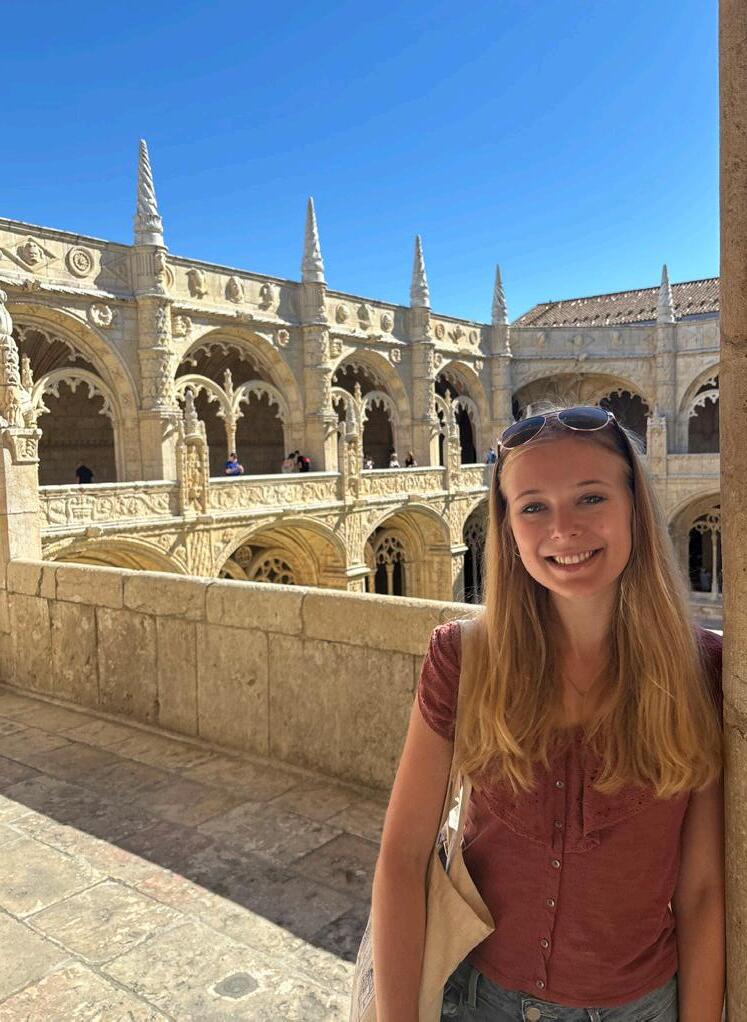
EmilyAdcockduringherJuly2024study abroadprogram,UAinPortugal.
About twenty years ago, the award evolved to include the Great Ideas Tour, in honor of Ramsey’s most popular course, called The Great Ideas of Western Civilization. Like the course, the structured trip allows students to investigate “great ideas” in Europe, and Ramsey, if only in name, supports yet another student as they trace a topic through historical sites, cities and values.
From libraries to water, from art to food, students have planned their trips around intriguing topics, exploring notable libraries, historic fountains, timeless art and, of course, classic cultural foods. While planning their trips, the Ramsey Award recipients consult the Ramsey family for advice and lodging, read about the topic they will be following, and prepare to reflect throughout the trip, often with a blog and/or journal.
This May, Adcock received the Ramsey Award and began preparing for her 2026 trip: “Grounds for Change,” a trip through European coffeehouses.
“The coffeehouse idea began in my fellows [Dr. Robert E. Witt University Fellows Program] class where I explored how coffee can be connected to citizenship,” Adcock said. “The more I researched coffee culture, the more I realized it would be a perfect lens to approach a Great Ideas Tour.”
Adcock, a double major in English and history with a legal concentration, who is also on the CREATE Path to the MBA and pre-law track, knew she wanted her Great Ideas Tour proposal to include all her campus interests: civic engagement, art, writing, community development, history and business.
“All across Europe are these famous coffeehouses where great thinkers, art movements and businesses emerged,” Adcock said. “Especially in a post-pandemic world, I am really curious about learning more about these places of connection and intentionally engaging with the past. I think exploring how these European coffeehouses have evolved over time, how they encourage cross-cultural exchange, how they contribute to ideas about third places, and how I can curate such third places throughout my life will be transformational.”
However, Adcock had more in mind than just the Great Ideas Tour. If she was going to be competitive for the Ramsey Award, she knew she would have to learn more about its namesake.
“When I started thinking about applying for the award, I really wanted to make sure I understood Dr. Ramsey’s legacy because obviously a huge part of it is how he supported students,” Adcock said. “They call it the Ramsey family for a reason, and I wanted to understand the person behind everything.”
Scholarship coordinator and History faculty member Lucy Kaufman, who works frequently with both Ramsey Award recipients and History students, said Adcock
stands out among her peers.
“Emily is this rare combination: she’s intellectually sharp, she has this boundless curiosity about the world, but she also is somebody who gets things done,” Kaufman said. “She’s a thinker and a dreamer and a doer, and it’s pretty rare to have all three in one person.”
Kaufman said the Ramsey Award and the Great Ideas Tour are great stepping stones for exceptional students. After experiencing Europe in such a unique way, students have gone on to become Rhodes Scholars, win Marshall Scholarships, be awarded Fulbright awards, and attend law and medical schools such as University of Chicago and Stanford University.
goal of supporting students as they learn more about the world.
“You get a sense they’re [Ramsey Award recipients are] finding connections, they’re discovering for themselves but also for us, and bringing it back to Tuscaloosa and then going off into the world with what they had learned through The University of Alabama, through this program, and bringing it on to shape their career,” Kaufman said.
“I think that is an unusual thing in an award. Usually you get the recognition and go away, but this is much more communal and it’s really about building ‘being abroad’ ideas. And in that sense, I think it’s an extraordinary thing.”
More importantly, students become members of the Ramsey family, a welcoming and engaging community to be a part of. Adcock said when she won the award, former recipients and others in the Ramsey family reached out with congratulations, support and their contact information. They stay involved with new recipients and ensure Ramsey’s legacy carries on year to year.
Bolus, who has been on the board since a few years after he graduated, said it has been an incredibly tightknit group.
“It’s amazing that at those dinners you feel like you come to know Dr. Ramsey because of what he did for people, from providing money for people to continue their education, for people to travel,” Bolus said. “He really did a lot for people over the years and people want to share their stories of Dr. Ramsey whenever we get together each year.”
In 2027, the award will mark 50 years, but despite its age, the spirit of the award stays true to Ramsey’s
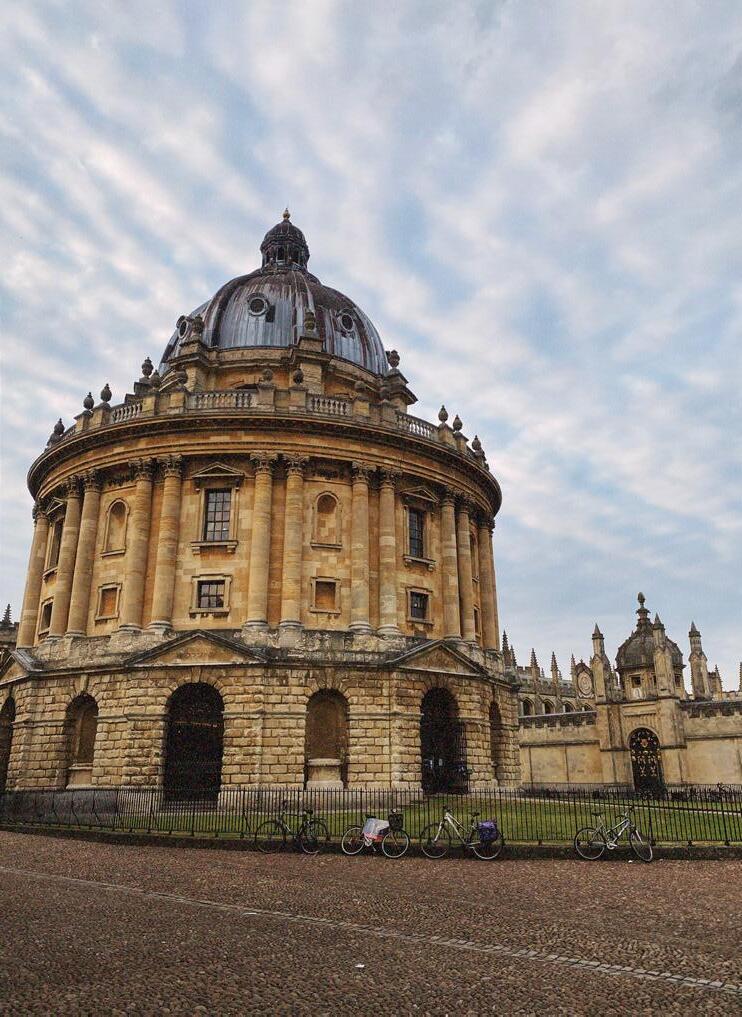
TheRadcliffeCamerainOxford,England.
Students Adapt Amphibian Research into Children’s Book
In Spring 2022, an unusual advertisement appeared on lobby signs and job boards across The University of Alabama. The call, sent out by the Alabama Museum of Natural History, invited undergraduate writers and illustrators to help create a thirdgrade children’s book about frogs. The project aimed to fictionalize years of amphibian research conducted by UA biologists.
Lauren Agnello and Sarah Scarcliff, the students selected for the project, seemed unlikely contributors at first. Scarcliff, an English major whose frogcentered short story landed her the writing gig, was only a freshman when she learned about the opportunity. Agnello, a then sophomore who had long held dreams of illustrating graphic novels, was still a novice digital artist when her “freaky” illustrations won over project organizers. The pair, who had never met, knew little about children’s literature and even less about frogs.
“I had never been to the rainforest,” Agnello said. “I was definitely in a bit of a crisis.”
Scarcliff, a May 2025 English and Blount graduate, and Agnello, a May 2024 studio art and Italian graduate, published
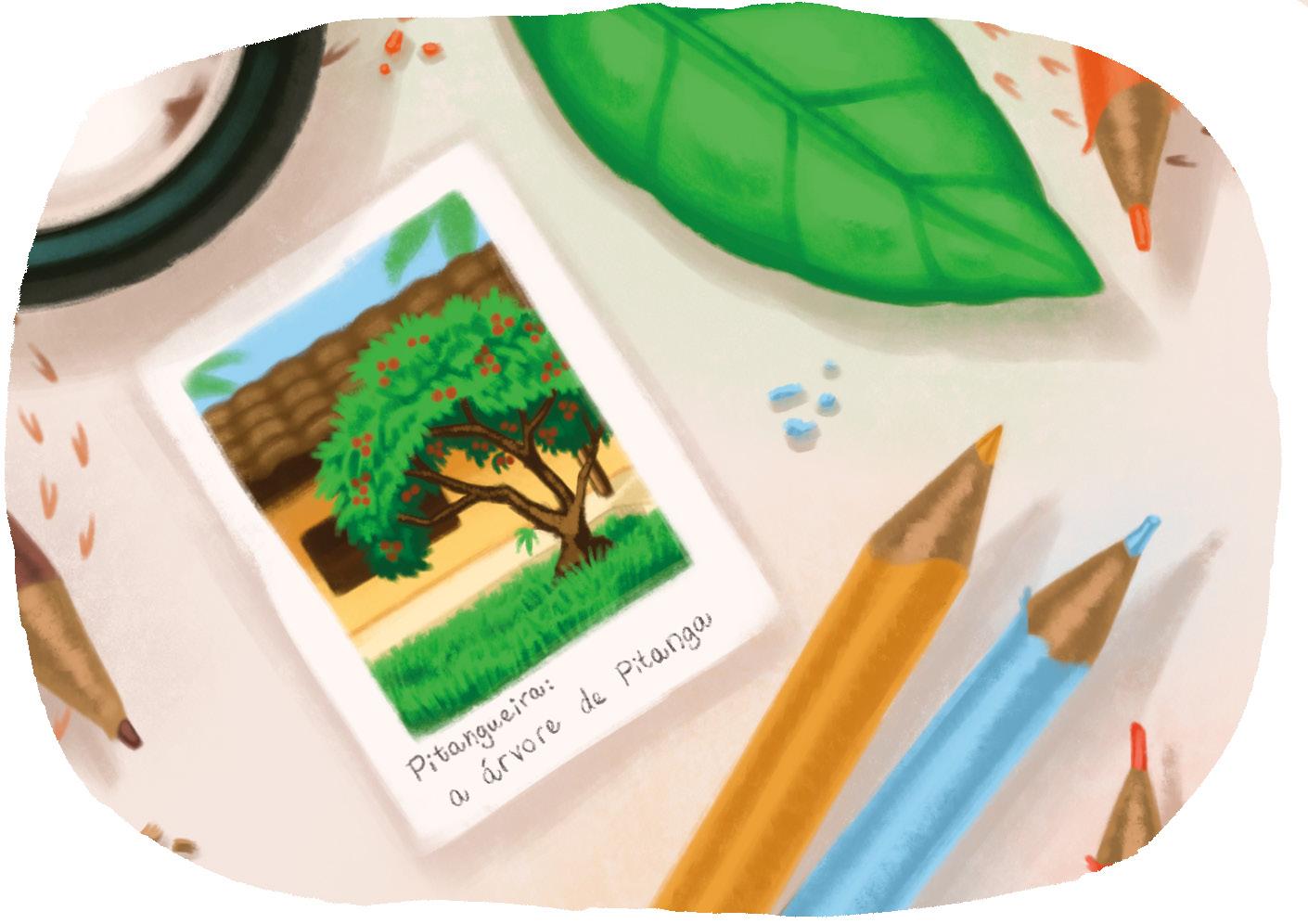
“Pitanga: Trouble for a Tiny Frog / Um Sapinho em Apuros” in May 2024. The children’s book, written in both English and Portuguese, involved successful collaboration between writers, artists and scientists across The University of Alabama and beyond. With their book now on elementary school bookshelves nationwide, these two UA alumnae are helping raise the next generation of wildlife ecologists.
Nearly 5,000 miles from Tuscaloosa, a species of brightorange frog lives uneasily in the Atlantic rainforests of southern Brazil. These pennysized amphibians, called pumpkin toadlets, are memorable creatures. Their skin glows under ultraviolet light. They struggle to hear their own mating calls. Their miniscule inner ears often throw off their sense of balance, leading to hilarious (and harmless) crash landings. Unfortunately, the frogs are as vulnerable as they are adorable. Research suggests that both infectious diseases and rampant deforestation pose significant threats to pumpkin toadlet populations.
In 2021, UA received a large grant from the Resilience Institute Bridging Biological Training and Research (RIBBiTR) to study and
Apagefrom“Pitanga:TroubleforaTiny Frog/UmSapinhoemApuros.”
protect species like the pumpkin toadlet. Funded by the National Science Foundation, the institute unites researchers investigating frogs’ resilience against disease and other environmental stressors. Gui Becker, then an assistant biology professor at UA who had long studied frog populations in Brazil, secured the funding.
Though much of the grant supported the Becker lab’s field research, Becker and UA ecologist Kendra Abbott, a senior fellow in the Blount Scholars Program, directed some of the funding towards a creative project. The pair envisioned a student-created children’s book — a climate narrative starring the endearing, eye-catching pumpkin toadlets. Agnello and Scarcliff’s job was to simplify and communicate the importance of RIBBiTR research for children in Brazil and the United States.
Scarcliff, who maintained neartotal creative control of the story’s structure and characters, said her creative writing skills allowed her to “complement the knowledge base” of the scientists.
“I could choose really any kind of plot that I wanted,” Scarcliff said.
Armed with a “stack of children’s books,” Scarcliff crafted

a friendship between Anahí, a young girl, and Pitanga, a talking pumpkin toadlet. Along with meetings with Becker and Abbott about the story’s pacing and scientific accuracy, Scarcliff drew on a broad range of project partners for help. Sandy Thomas, a former schoolteacher, served as a consultant for the project. A friend taking a children’s literature course helped her address sentence-level concerns. Even Scarcliff’s family helped out: a fourth grade cousin, Scarcliff recounts, proved vital to Pitanga’s character development.
“She specifically said, ‘We like it when animals do karate,’” Scarcliff said. “He became a bit more feisty after that.”
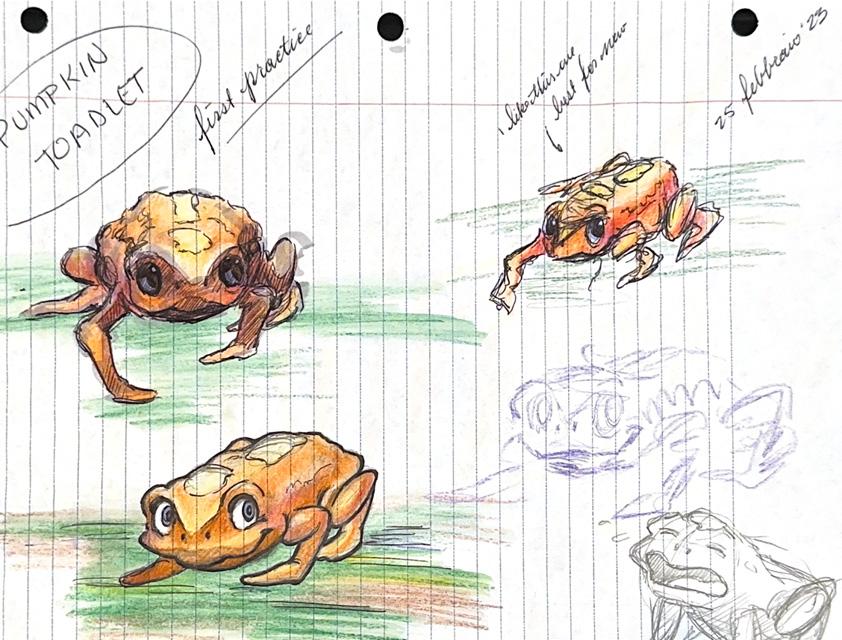
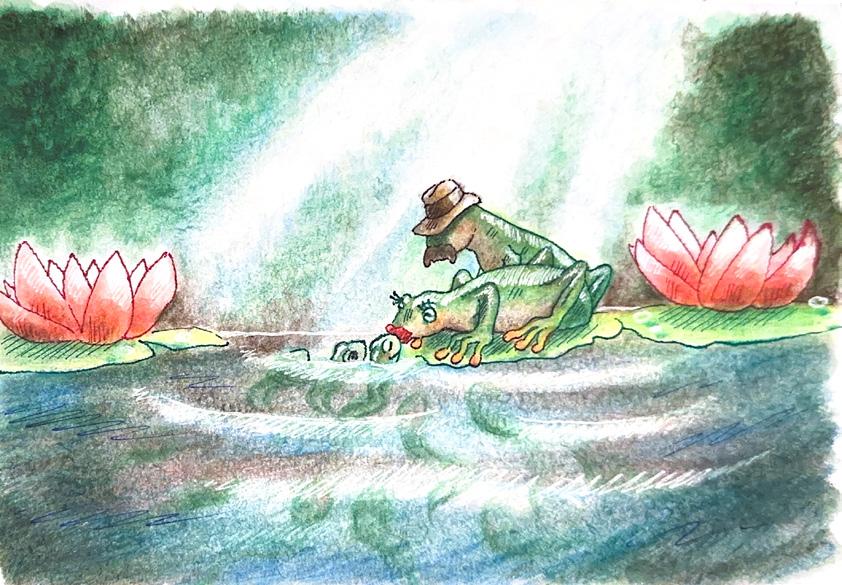
After Scarcliff finalized the book’s text in 2023, Agnello began work on the 40+ fullcolor illustrations in Pitanga. Like her partner, Agnello sought inspiration from unexpected sources. A trip to an Italian bookstore while studying abroad, for example, helped her improve the book’s look.
“I had to get back into my mind as an 8-year-old,” Agnello said, recalling the time she spent sifting through books on the shop’s floor. She found herself drawn to titles that were whimsical and
“bright.” Early drafts of the book’s illustrations, on the other hand, felt stiff and “desaturated.”
Agnello says faculty in Art & Art History — Joel Fuller, Charlotte Wegrzynowski, Daisie Hoitsma-Young and Tanja Jones, among others — helped her improve the book and rekindle her childhood passion for illustration. With help from her mentors, Agnello created a dynamic, detailed “visual translation” with occasional changes in style. She employed, for example, a “more cartoony” style for Pitanga’s thought bubbles, in which the tiny protagonist dreams of karatekicking loggers.
The book’s vibrancy and playfulness, however, doesn’t detract from its scientific authenticity. Vocabulary words like “habitat” and “ecosystem,” highlighted throughout the text, are defined in both Portuguese and English in the book’s glossary. Agnello worked with a geography professor to ensure the book’s plant life was botanically accurate. The 28 animals hidden throughout the book are all native to the pumpkin toadlets’ environment.
Nearly three years after the project’s inception, the pair finally saw their work published in December 2024. Agnello, now a freelance illustrator, promoted the initial run of 300 copies through presentations and workshops in elementary classes across Alabama. Though all physical copies of the book have been distributed, a free online version is available for download.
Scarcliff, now pursuing an MFA in creative writing at Arizona State University, said it was often “tricky” to strike the right tone. Though Pitanga doesn’t shy away from the dangers of deforestation
— a logging crew arrives midway through the book, clearing Pitanga’s home forest — Scarcliff “wanted it to end on a place of hope.” Pitanga and his compatriots ultimately flee to a nearby state park, framing environmental protection as a possible solution to human encroachment. Readers, she hopes, come away feeling that climate issues “can be stopped or helped.”
Pitanga offers more than a hopeful lesson in wildlife conservation. Its creation is a testament to collaboration across continents and disciplines — like the research efforts that inspired it, the story aims to generate cooperation and optimism.
“To every child who dreams of reading about our world,” the book’s dedication reads, “May this story inspire hope and action, reminding us that together, we can protect the magic of our planet’s precious natural places.”
Uncovering the Secrets of UA’s Beloved Bell Tower
Besides being a classic fixture of the Capstone, Denny Chimes is also one of relatively few university towers in the United States that houses a real, playable carillon (KAREuh-lon). Unlike typical chime towers — which may have a small number of bells or rely on electronic systems to simulate sound — a carillon is a true musical instrument consisting of at least 23 cast bronze bells, tuned and arranged for performance. With its 25 bells, Denny Chimes is not merely a tower that marks the hour, but a fully realized carillon capable of playing melodies, harmonies and full musical works.
“There’s this gigantic obelisk
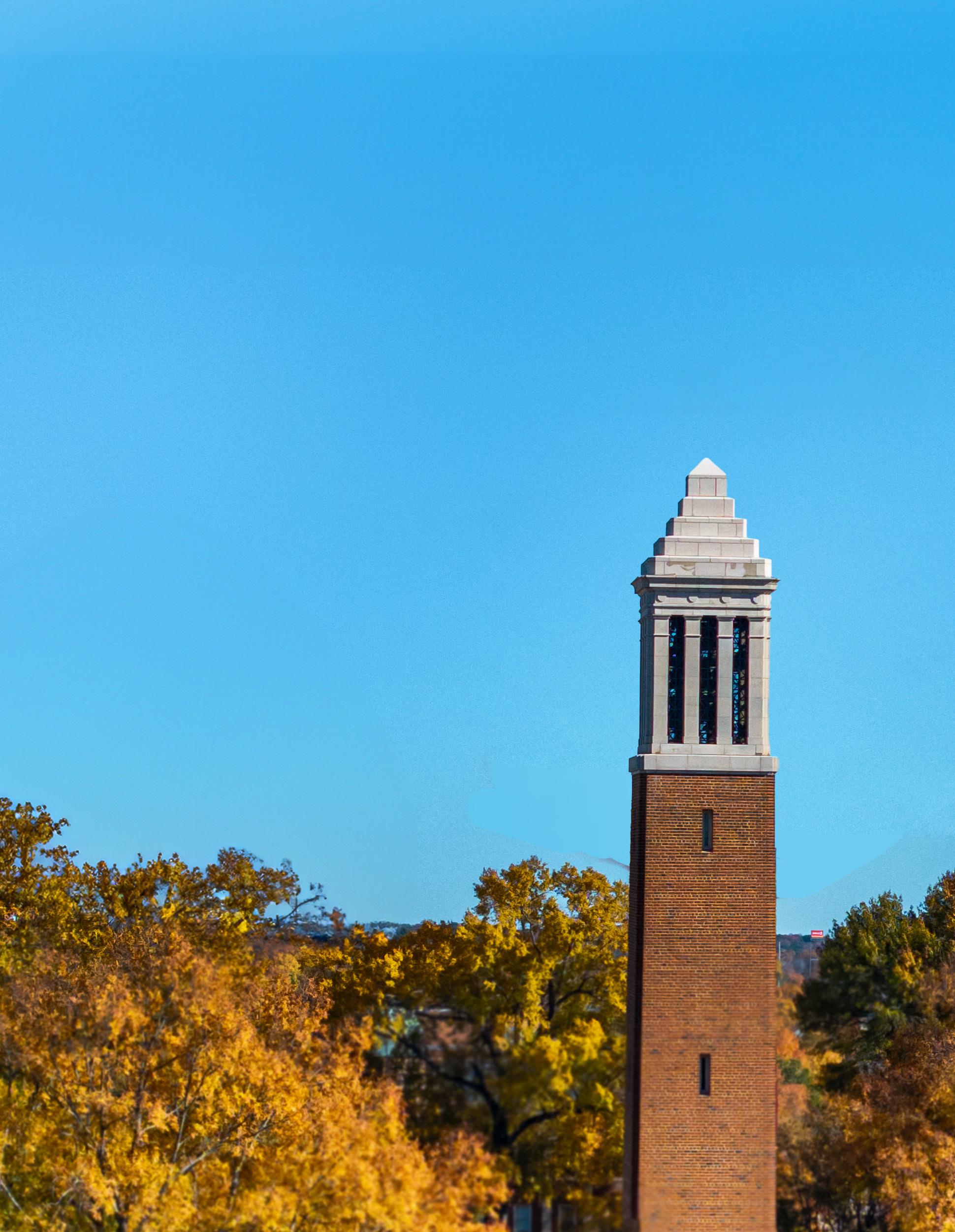
right in the middle of campus, the bells are ringing, thousands of people walk by every day, and I don’t know if they realize that it’s not just a thing. It is a musical instrument and so now when I perform, I keep the door open,” said School of Music associate professor Amir Zaheri, the Denny Chimes carillonneur.
The Buzz about Denny
When a company services the bells a couple times a year, the workers have to dodge Denny Chimes’ natives — “many, many thousands of bees and wasps and hornets.”
Zaheri said the workers have to don full beekeeper protection suits as they climb up the tower. Whether it is the isolation dozens of feet above the rest of campus or the heat from the sun hitting the tower all day, the insects love to crowd the top of Denny Chimes.
Is Denny Chimes Haunted?
Zaheri said the tower is full of bees, but he also says Denny Chimes has a “sense of humor” and likes to tease him.
“We have a really funny relationship because some days when I go to play, I press a key for a bell to sound and a bell will sound, but it’s not the one connected to the key that I played,” Zaheri said. “So if I’m playing a piece that begins on D and I press D and what I hear is an A, that means that it [Denny Chimes] likes to pick on me. They [the technicians] cannot figure
out why it does that. They have replaced components, they have updated, it just is what it is.”
Throughout the year, Zaheri will open up the base of Denny Chimes and play concerts, but when one bell does not sound the way it should, he has to transpose the entire piece in the middle of the song. Oddly enough, though, for the next song, the bells are back to normal.
“I’ve shared this with the technicians and they just laugh and they tell me it must be something that’s between the two of us, the carillon and me,” Zaheri said.
Listening to Chimes
Denny Chimes and Zaheri most often play concerts in the summer, playing everything from Broadway hits to movie favorites. While the concerts are well attended, Zaheri says he notices the absence of students.

Therefore, Zaheri wants to start introducing more fall and spring concerts so students can enjoy the music with the rest of Tuscaloosa.
The carillonneur also said he wants people to know Denny Chimes better, whether it is through taking a carillon class or walking up to him during a concert.
“I wanted people to not only hear Denny Chimes, I wanted the campus and the community to learn more about it because it is pretty special,” Zaheri said. “It’s not my carillon. I play the thing but it’s not mine. It [Denny Chimes] happened because of students, and it was a gift because of students and so my belief is that the students and the community, equally, should know about it and have some ownership and be proud of it.”
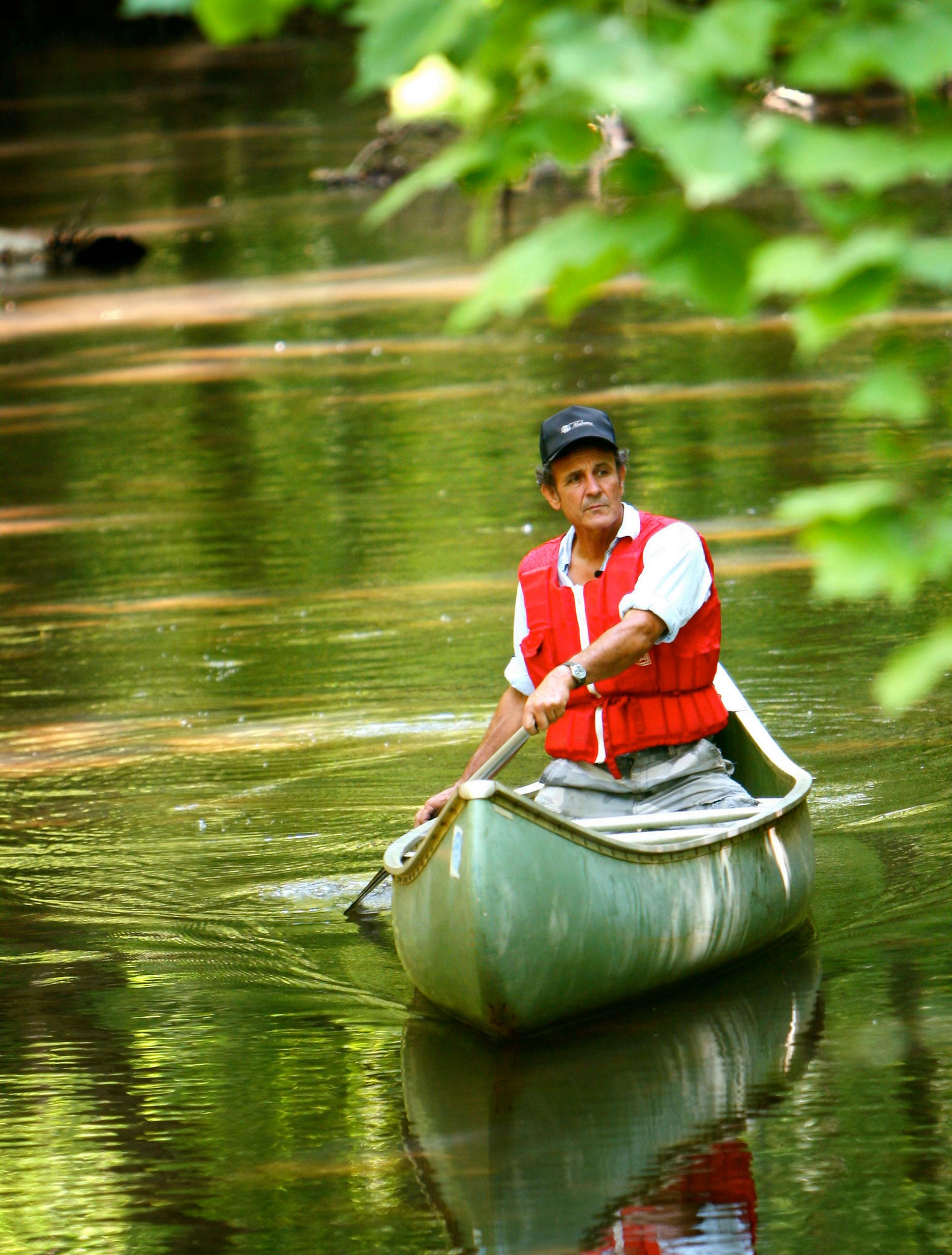

40 YEARS of ‘Discovering Alabama’ Dr.
“Come along with me,” beckons the exhibit in the hallway of Smith Hall, where scenes of endless forests entice, misty rivers beguile and images of Dr. Doug guide you through the wild wonders of Alabama
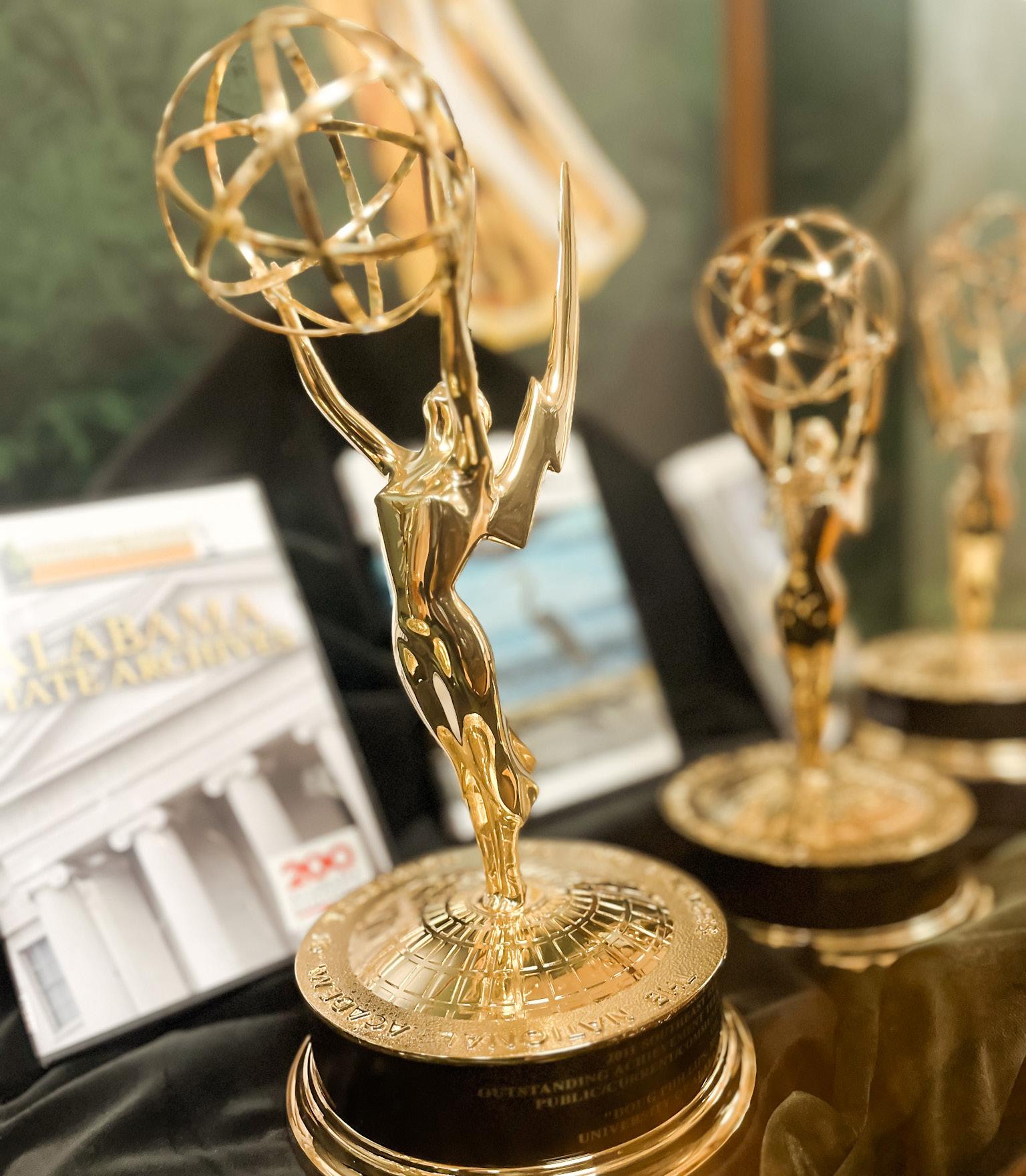
Here, in the Barefield College of Arts & Sciences’ Alabama Museum of Natural History, “Discovering Alabama” movie posters and Emmy awards line the walls while the legacy of this program continues to shine.
It has been 40 years since “Discovering Alabama” first aired on television, educating countless Alabamians about the natural wonders of Alabama. Since then, it has become the longest-running program on Alabama Public Television.
“Dr. Doug” Phillips, the founder and producer of the program and the host of every episode, said he started “Discovering Alabama” so Alabamians could become more aware of the unique natural values and environmental significance of the beautiful state they live in.
“I deliberately started ‘Discovering Alabama’ with topics that were especially impressive, intriguing outdoor features,” Phillips said. “It’s been a team effort, and I greatly credit the camera crew, editors and others for their superb work. Special credit goes to my office manager,
Heather Hamilton, who does an exceptional job keeping the whole operation going well.
“As the show got more popular, we’ve gotten more into a whole host of topics. By now we’ve covered just about every aspect of Alabama’s natural diversity.”
Doug
After growing up in rural Alabama, Phillips attended the United States Military Academy at West Point, New York, and later returned to his home state and pursued his PhD in educational research at The University of Alabama. He said he chose an education field so he could provide educational programs to help protect the state that he loves so much.
“I spent my earlier life roaming the Alabama wilds, enjoying the woods, the waters and the wildlife and, well, this just gave me a firsthand realization that, in many ways, our state was being environmentally harmed,” Phillips said. “And there was very little public awareness of the serious extent of the damage.”
Phillips was leading a group of teachers on an educational outdoor outing when a few suggested he start a television show. They appreciated how he drew meaningful connections between the world of nature and many of the subjects the teachers were required to teach.
Phillips started floating the TV idea around campus in 1980, hoping the University could find a “talent” to host a show and he could simply consult. However, the idea did not gain any steam until four years later when a University television crew wanted to trail Phillips on one of his teaching expeditions, and he suggested turning the footage into a whole episode.
“We put it together as a 30-minute program and APT was gracious enough to air it,” Phillips
said. “It [was] met with wide praise so we got the green light to continue and here we are 40 years later.”
An Essential Classroom Resource
Initially inspired by teachers, “Discovering Alabama” still serves as an important resource to educators and schools 40 years later. Each episode has corresponding teacher guides for elementary levels through 12th grade that align with Alabama teaching requirements, all while being a show kids and adults genuinely enjoy watching.
‘“Discovering Alabama’ makes learning locally relevant and involves active discovery. The teacher guides with the
shows are hands-on, real-world based,” Phillips said. “It’s projectlearning based, to get kids in the community and the outdoors, seeing, doing and learning. ... The show is packaged in such a way to inspire people of all ages to do that.”
Even notable scientist E.O. Wilson, a University of Alabama graduate and Harvard professor, and historian Wayne Flynt, the first editor-in-chief of the Encyclopedia of Alabama and a professor at Auburn University, have used “Discovering Alabama” in their university classes.
Phillips said aside from the content itself, the show also introduces students to aspects of the arts, including classical music. Unlike so many “quick view” screen offerings today, “Discovering Alabama” programs are structured with a “beginning, middle and
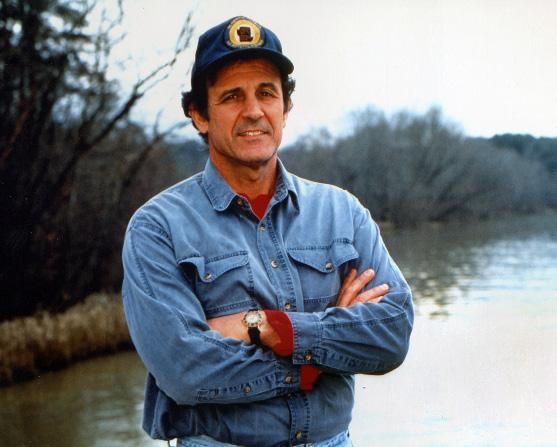
Since1985,DougPhillipshasledviewersthroughAlabamain “DiscoveringAlabama,”blendingeducation,conservationand wonderineveryepisode.
“DiscoveringAlabama”hasproudlyearned fourSoutheastEmmyAwards.Youcan viewtheseprestigioushonorsondisplay inthehallwaysoftheAlabamaMuseumof NaturalHistory,locatedinSmithHallatThe UniversityofAlabama.
end” that are essential in helping students develop skills in writing and comprehension. Also, at its core, the show is simply enjoyable to watch.
“I have heard from teachers, in particular elementary school teachers, who face students’ hyper short attention spans,” Phillips said. “[They say it’s] the only show their students will sit and pay attention to. Only calming thing in their lives.”
Schools can also become “Discovering Alabama” “model schools,” like Tuscaloosa’s Woodland Forrest Elementary School, which was featured in the 2011 “Discovering Alabama” episode “Alabama Model School.” As the pilot school for this initiative, Woodland Forrest focuses on “the study of local natural diversity and environmental topics to integrate content from science, social studies, reading, math, the arts and other areas,” according to the school’s website. An outdoor classroom, nature trails, gardens and even a “Discovering Alabama” media room were added to round out the students’ education.
Forrest Elementary School science teacher featured in the 2011 episode, said the outdoor facilities are used for a range of subjects: science, art, social
studies, history and even math.
“The ‘Discovering Alabama’ model school has really helped to integrate the whole curriculum,” Marchant said in the episode. “With this curriculum that we have now, the kids are able to read about things that they’re finding out here. Or if they find it out here, they go back and they check it out in the library because they want to learn about that.”
Impact on Alabama
Outside of the classroom, “Discovering Alabama” has quite a notable record effecting real change throughout the state. The Alabama Forever Wild Land Trust, Discovering Our Heritage school initiative, Friends of Little River support group and the Alabama Natural Heritage Program are just a few of the organizations that benefit the state today as a direct result of the leadership and involvement of “Discovering Alabama.”
“‘Discovering Alabama’ has pioneered and led the way in creating a number of environmental protection programs in the state, protecting lands and waters,” Phillips said. “There’s quite
move to Alabama. Phillips said the program even impressed an advance team from MercedesBenz scouting the Southeast.
“Soon after they [MercedesBenz] landed here, one of their top people wanted me to know that somebody sent them a box of ‘Discovering Alabama’ programs when they were trying to decide where to settle,” Phillips said. “It was a factor in deciding to come down to Alabama because their employees wanted a decent, naturally appealing state.”
Since that first episode aired in 1985, “Discovering Alabama” has created over 100 episodes, been recognized with honors and awards from organizations such as the Alabama Wildlife Federation, the U.S. Forest Service, and the U.S. Natural Resources Conservation Service, and even won four Emmys.
“Discovering Alabama” benefits The University of Alabama as well. Phillips said he talks with UA students who are drawn to the Capstone because they remember the videos they watched as young students.
“I think the show is important
Shelby Professors Transform Research and Education in Barefield
STEM Professors Make a Quick Impact in Barefield
In February 2023, the Shelby Endowment for Distinguished Faculty was established in recognition of Senator Richard Shelby and the late Annette Shelby. The Shelbys envisioned the endowment helping The University of Alabama recruit and retain extraordinary faculty in STEM fields and support those professors as they teach, research and serve at the University. Through the Shelby professors’ endeavors, the Shelbys hope the Tuscaloosa community, the state of Alabama and the United States as a whole will benefit from the professors’ impact on their fields, their students and general knowledge.
The Barefield College of Arts & Sciences currently houses four Endowed Shelby Distinguished Professors, including the inaugural professor who was announced in January. As the home of several disciplines of science, Barefield looks forward to encouraging its current and future Shelby professors as they transform their fields, impact their communities and educate the next generation of researchers, scientists and world changers.
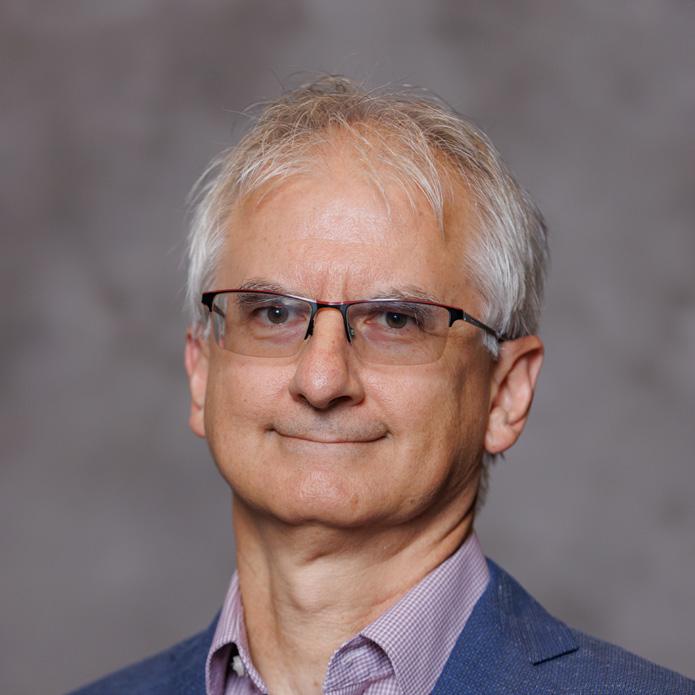
Konstantin Matchev
Professor and American Physical Society Fellow
Konstantin Matchev arrived in Physics & Astronomy as the inaugural Endowed Shelby Distinguished Professor in January. As an expert in particle physics, quantum computing, artificial intelligence and exoplanets, Matchev brings experience from Fermilab in Chicago and CERN in Geneva, Switzerland.
Despite having over 160 theoretical publications and 1,300 Compact Muon Solenoid Collaboration publications, Matchev says he is the proudest of his mentorship and teaching. He has supervised the research of 11 postdoctoral fellows and nine PhD students.
“The Shelby endowment has already allowed us to recruit top-notch graduate students and postdoctoral researchers, and to raise the profile and visibility of UA through various initiatives — participating in and planning to organize international conferences and workshops, bringing prominent scientists to campus, etc.,” Matchev said. “In terms of research, we are pursuing challenging problems on the cutting edge of science, AI and quantum computing, which require multi-year commitments and additional resources.”
David Dixon
Chemistry & Biochemistry
Robert Ramsay Chair David Dixon already called the Barefield College of Arts & Sciences home before accepting his position as the College’s second Shelby professor. As a world leader in computational aspects of fluorine chemistry and a national expert on organic, inorganic and polymer systems, Dixon uses his knowledge to research environmental issues.
With over $7 million in funding from the Department of Energy and the National Science Foundation and almost $9 million from the Department of Defense, his work has powerful impact including addressing ozone depletion in the stratosphere.
“The new Shelby Professorship will help me to attract and enable more graduate and undergraduate students to do research in advancing the basic science that will enable us to address important issues in the use of energy, the impact of energy use on the environment and aspects of national security that affect the nation,” Dixon said. “The University of Alabama is entering an exciting period in becoming the leader in the STEM enterprise in the state and for the nation and I am excited to be part of it.”
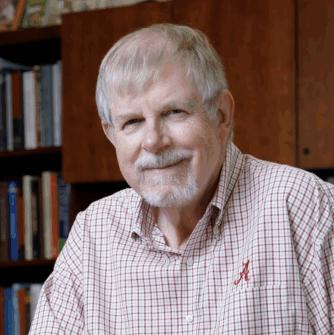
Vakhtang Putkaradze
Mathematics professor Vakhtang Putkaradze brings accomplishments in science, academia and industry to the Barefield College of Arts & Sciences. With a PhD in physics, a master’s in applied mathematics and a former vice president role at ATCO, a multinational corporation, Pukaradze has a wide breadth of knowledge and experience that he will share with the College.
His interdisciplinary work combines machine learning, geometric mechanics and societal modeling, with a core focus on nonlinear methods applied to physical systems such as Hamiltonian and continuum mechanics, space dynamics and renewable energy.
“The Shelby endowment will enable me to showcase The University of Alabama’s contributions to some of the most significant advances in modern science, not just in my own research, but also the University’s strengths in AI and adjacent fields,” Putkaradze said. “I look forward to engaging with the very active faculty at The University of Alabama, especially in the fields of AI, energy, computing, modeling and many other areas. I also hope that the Shelby distinction will allow fruitful connections with the thriving industry in Alabama and outside the state.”
Xinyue Ye
Xinyue Ye is a globally recognized scholar whose work spans geography, urban planning, computer science and data science. Since 2020, he has been ranked among the world’s top 2% of scientists according to Stanford University and holds top global rankings in urban analytics, geospatial artificial intelligence and spatial data science.
This year, 15 years after earning his PhD, Ye was awarded the American Association of Geographers’ Distinguished Scholar Award, making him the fastest recipient in the award’s history. He has earned more than $30 million in external funding for his research and has guided over 30 doctoral students and postdocs across seven disciplines.
“The Shelby endowment provides stable resources that allow me to launch high-risk, high-reward research. It gives me the flexibility to develop new algorithms and platforms that require long-term vision and sustained investment,” Ye said. “For students, the endowment means access to cutting-edge computing, unique datasets and opportunities to contribute to research at the national and international level. It also strengthens my ability to assemble large, multi-institutional teams and position Alabama at the center of emerging scientific collaborations.”
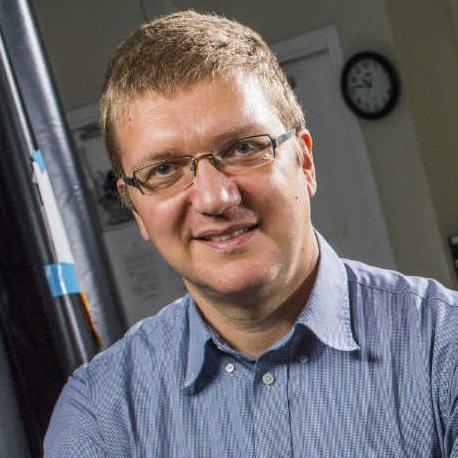
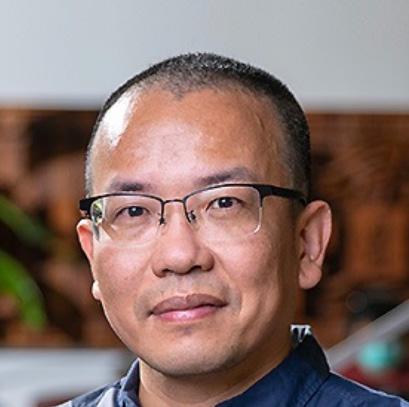
Konstantin Matchev
David Dixon
Vakhtang Putkaradze
Thirty miles south of The University of Alabama, the Biological Sciences department trains the next generation of scientists. At the Tanglewood Biological Station, a plant and wildlife sanctuary promoting natural resource education, there is a field house with a kitchen, a classroom with Wi-Fi and nearly 600 acres of woods with trails, all for the benefit of UA students.
Woodpecker Research May offer Answers for Head Trauma
Despite its potential, the station is not home to as many projects as it could be, and Nicole Ackermans wanted to change that.
Ackermans, the Biological Sciences assistant professor who leads the Comparative Vertebrate Neurodegeneration (CVN) lab, knew she wanted to take advantage of the underutilized facilities. Encouraged by the department’s Tanglewood Award, she started a new study on woodpeckers.
Before woodpeckers, the Ackermans lab focused mostly on goats as it studied comparative anatomical structures of animals to learn more about human brains. Through a collaboration with the University of Alabama at Birmingham and Mississippi State University, Ackermans and her students studied headbutting domestic goats as a model for Alzheimer’s disease and related dementias. By introducing woodpecker studies to the lab, Ackermans hopes to learn even more about head trauma from wild animals.
“It all comes back to us looking at animals who do sort of strange-to-us behaviors where they’re hitting their heads all the time and seeing if that gives them brain damage or not,” Ackermans said. “If it does, how can we learn more about brain damage from these animals?”
Ackermans is not positive woodpeckers even receive brain damage. However, because they are consistently hitting their heads against trees, she has always been steered toward the study.
“Our goal is to be the lab to find out whether they get [brain damage] or if they don’t,” Ackermans said. “If they don’t, how are they protecting themselves so well?”
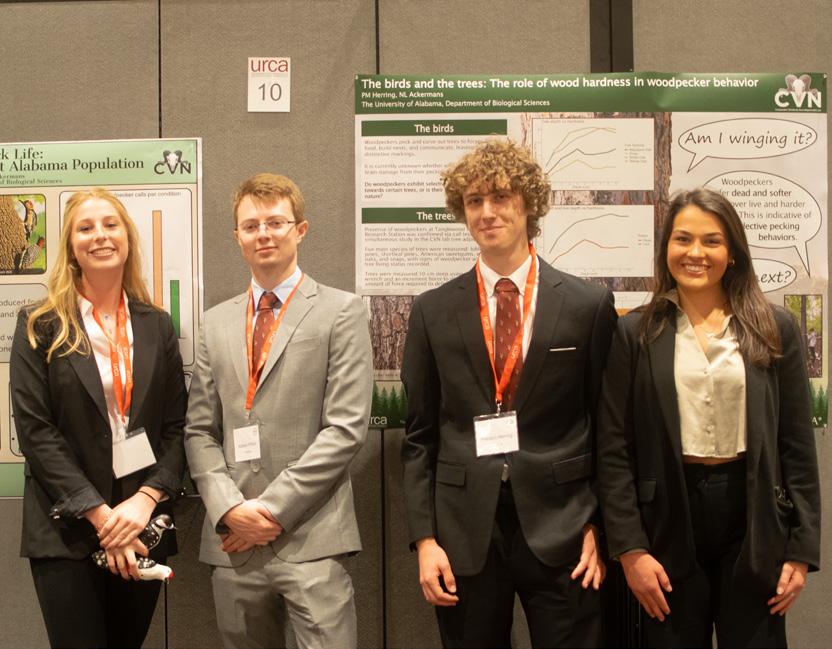
PrestonHerring,EmmaBowieandother studentsintheAckermanslabpresentingtheir research.
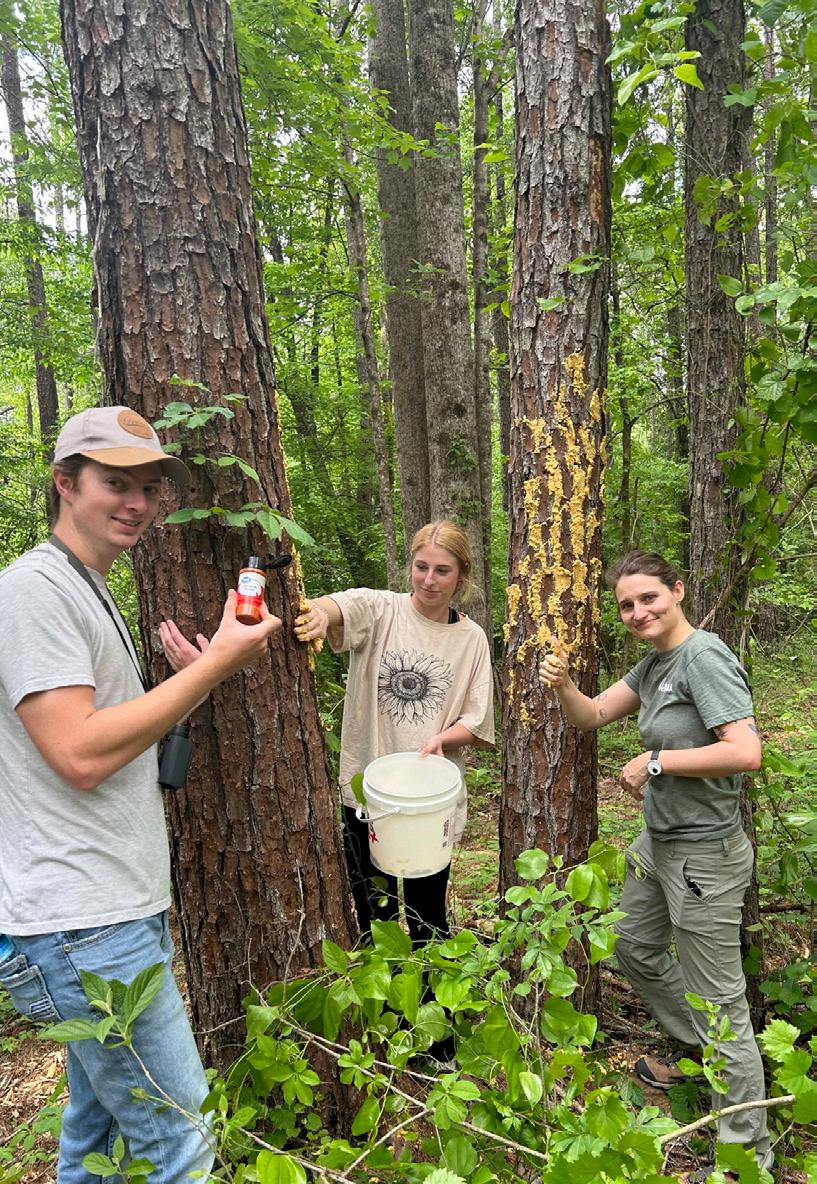
NicoleAckermansandherresearchstudents workingatTanglewoodBiologicalStation.
As Ackermans introduced the new study to her CVN lab, Emma Bowie, a senior majoring in biology on the pre-med track, immediately took initiative. Bowie had never done anything like this before, but she knew investigating the woodpecker scene at Tanglewood was a good place to start.
“We don’t know how many [woodpeckers], we don’t know what kinds, but let’s just start from an ecological standpoint before we ever get to the brains,” Bowie said. “From there, I wrote up a project proposal, secured funding and it just went from there.”
After Bowie received the Tanglewood Award, the biological station has become a hub to influence woodpecker activity. Hand-painted and 3D-printed woodpecker decoys of all species dot the trees and woodpecker sounds from speakers echo through the woods. Although the CVN lab focuses on brains, the woodpecker project has started by tackling an entirely different aspect of biology through field research.
“We have a haikubox out there, which is basically just a bird call detection microphone. This is how we measure and track changes in woodpecker activity, through their calls,” Bowie said. “It has a database. It brings in all the bird calls, tells you what species, how confident it is in that and at what frequency.”
Preston Herring, a junior majoring in biology and minoring in history on the pre-med track, approaches a different aspect of the project through his Arts & Sciences Support for Undergraduate Research (ASSURE) grant, “Woodpecker-Tree Dynamics: The Role of Wood Hardness in Woodpecker Behavior.” After conducting a pilot study with borrowed equipment from the College of Engineering, Herring wrote an ASSURE proposal so he could purchase equipment to continue researching. All summer, he tested trees: hard trees, soft trees, dead trees, living trees.
“Based on the pilot study, we saw woodpeckers prefer softer, dead trees, but with only 50 trees, it was hard to say that definitively,” Herring said. “Once we get this data, we can definitively say what woodpeckers like. After that, we’ll do a live study on live woodpeckers in captivity and study the actual mechanics of their pecking behavior in the harder and softer woods.”
Currently the woodpecker project is entirely run by undergraduate students, but as the project, and her lab, expands, Ackermans would like more graduate students to become a part of the CVN lab. She also envisions students, possibly in the arts, becoming involved in medical illustrations for the lab.
“We’re just continuously growing this project more and more and bringing in collaborators to answer this question scientifically because, for now, it’s mostly been people guessing at whether or not they [woodpeckers] get brain damage,” Ackermans said. “Doing the actual brain pathology is what we specialize in — the slices of the brain and looking for damage that hasn’t really been researched in woodpeckers. So that’s our final goal, but there’s a lot of steps before we get there.”
The “Oscar” of Science: The UA CMS Group’s Winning Contributions to Physics
Within the Barefield College of Arts & Sciences’ Physics & Astronomy department, the UA Compact Muon Solenoid (CMS) research team challenges the limits of the physical world. The UA CMS group, composed of faculty, researchers and students, contributes to research at the European Organization for Nuclear Research (CERN) in Switzerland and collaborates internationally to advance understanding of the universe. Because of their work as vital contributors to the international CMS Collaboration, the UA CMS group now shares the 2025 Breakthrough Prize in Fundamental Physics, the “Oscar” of Science, along with other contributors to the CMS Collaboration and other Large Hadron Collider (LHC) experiment groups.
The UA CMS groups combined efforts with thousands of scientists from across the globe to win this “Oscar,” which is one of the most prestigious honors in science, highlighting the UA CMS group’s impact on global scientific discovery and affirming UA’s place in this historic achievement.
The UA CMS team has played a central role in one of the world’s most ambitious scientific collaborations: the CMS experiment at CERN’s LHC, the world’s largest and most powerful particle accelerator. As part of the CMS Collaboration, the UA CMS group
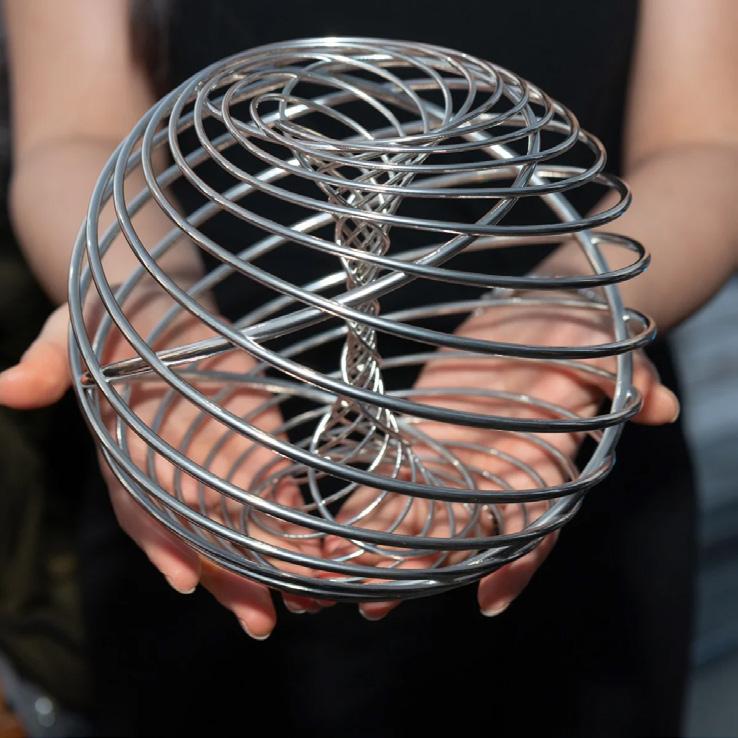
contributed to the discovery of the Higgs boson and probes the Standard Model of particle physics by analyzing the CMS data and supporting datataking operations, detector component upgrades and machine learning technique developments.
Physics & Astronomy faculty members
Emanuele Usai, Sergei Gleyzer, Konstantin Matchev and Paolo Rumerio lead the UA CMS group as it conducts groundbreaking research in the field of fundamental physics,
even as they balance leadership roles in the CMS Collaboration as well. Rumerio served as Deputy and Project Manager of the CMS Hadron Calorimeter (HCAL) from 20142018 and currently serves as the CMS Deputy Upgrade Coordinator, Gleyzer co-founded the CMS Machine Learning Forum, and Matchev distinguishes himself as one of the few theorists in the international collaboration. At The University of Alabama, Gleyzer and Usai lead the High Granularity Calorimeter (HGCAL) laboratory which includes commissioning efforts in CERN.
The faculty members also guide graduate and undergraduate students through one-of-akind opportunities. Students spend summers, semesters and sometimes years at CERN, accessing state-of-the-art facilities and engaging with leading global scientists. Three graduate students have obtained their doctorates on CMS research, and all UA CMS graduate students (of which there are currently eight) contribute to journal publications and earn co-authorship. Dozens of undergraduate students also benefit from CMS research at UA, including a team of students currently working in the newly established CMS electronics lab in Gallalee Hall.
UA CMS exemplifies the highest ideals of academic distinction, international collaboration and student mentorship. Its work has elevated the reputation of The University of Alabama on a global stage and continues to inspire the next generation of scientists.
The current UA CMS Research Group consists of faculty members Paolo Rumerio, Sergei Gleyzer, Emanuele Usai and Konstantin Matchev; scientists and postdocs Seth Cooper, Pavel Bunin, Ruchi Chudasama, Axel Perraguin and Aleko Khukhunaishvili; and graduate students Bhim Bam, Emma Pearson, Colin Crovella, Samuel (Alex) Campbell, Ramneet Kaur, Guillermo Fidalgo, Eric Reinhardt and Resham Sohal.
One Student’s Study Abroad Experience
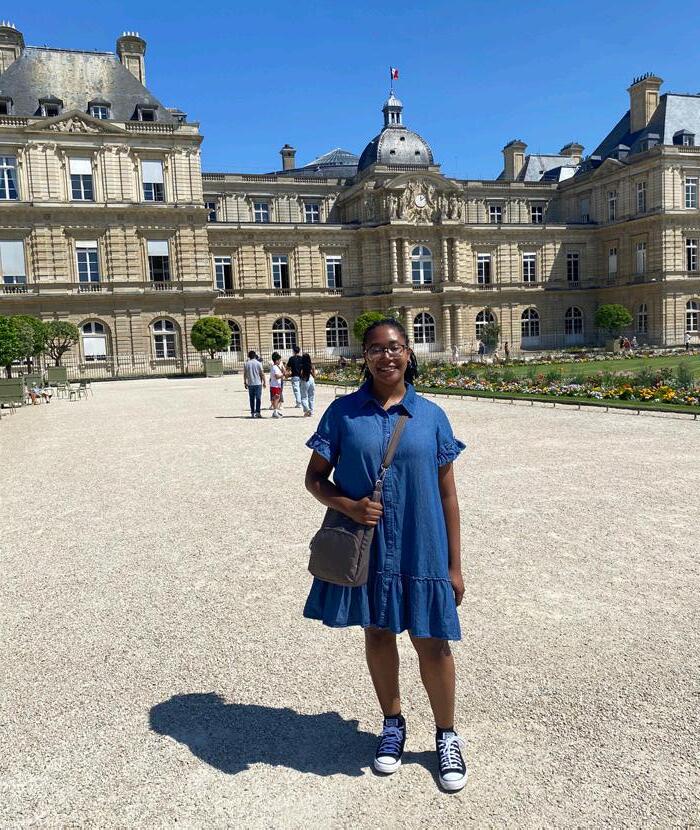
This summer, Barefield senior Faith Griffin flew on a plane for the first time — an international flight across the ocean to France.
Griffin, who is majoring in African American studies with a minor in women’s studies, decided to study abroad through the English department’s “UA in France: American Writers” program. Although she has been thinking about studying abroad since last year, she was able to register for the program after winning a Gilman Scholarship, an award designed to encourage Pell Grant students with limited financial means to study and intern abroad.
“I wanted to do it last year, but I couldn’t due to funding,” Griffin said. “Going in on the scholarships and getting funding is what allowed me to be able to really take it seriously and decide that I was going to go.”
For nearly three weeks, Griffin visited famous cities such as Paris, Bourdeaux and Rouen; saw historical landmarks such as the Eiffel Tower, Notre Dame and the Louvre; and explored several museums, all while engaging with the works of American writers who wrote in France.
Although Griffin chose a program outside her major, she still easily drew connections between the program and African American studies, especially through the works of James Baldwin and Richard Wright.
“It was cool to connect with those Black writers in that way,” Griffin said. “Knowing that both came from a rough time in the American 1940s and trying to find solace in France.”
Although Griffin worried about not knowing anyone before departing for the trip, she quickly made friends in the program and encourages anyone thinking about studying abroad to not let that worry be a deciding factor.
“I really found my group of people in the first few days,” Griffin said. “It made it better for me not knowing people and being able to just have the time to get to know people.”
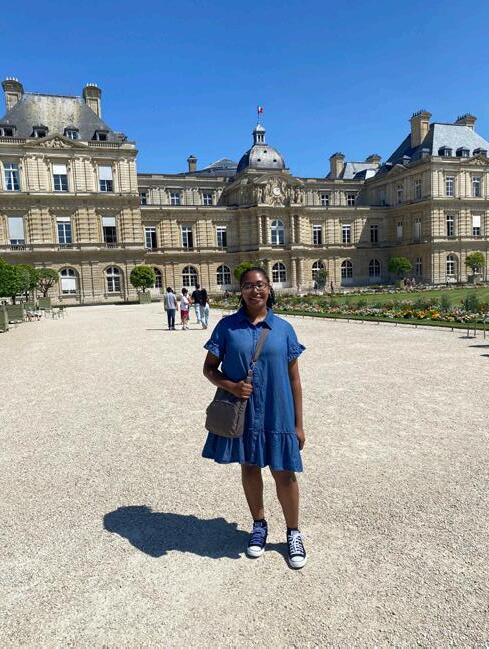
FaithGriffin duringthe “UAin France: American Writers” program.
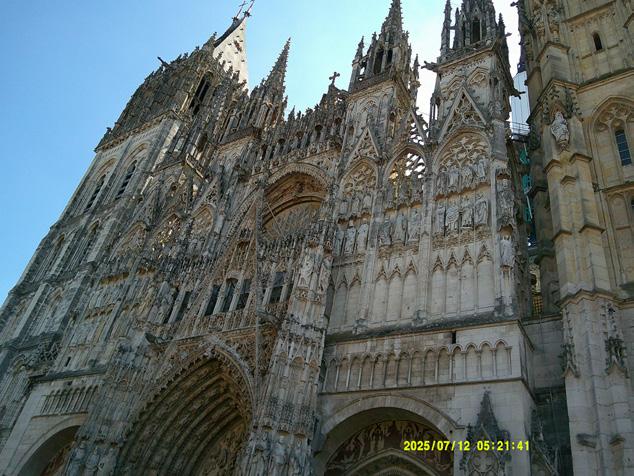
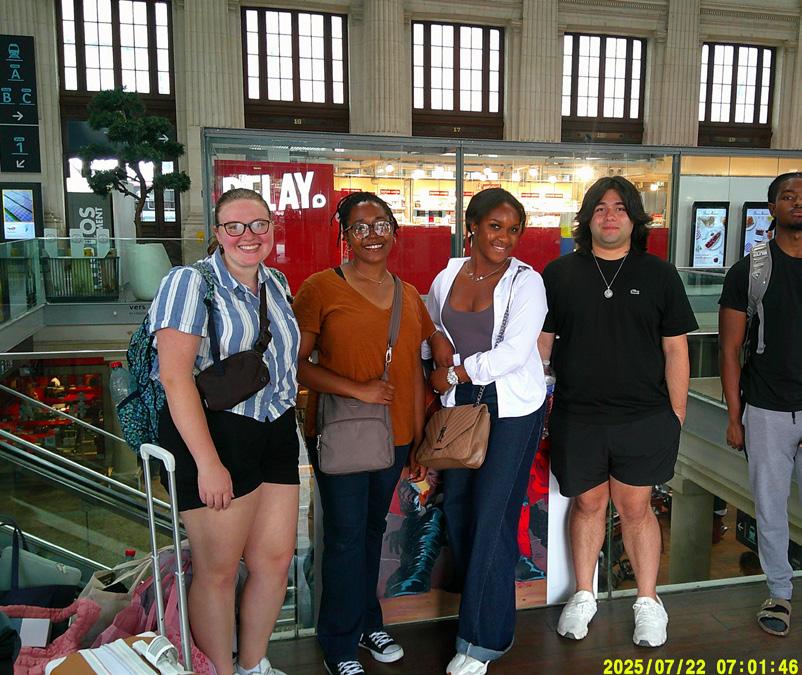
Faith Griffin and other students duringthe“UAinFrance:American Writers”program.
The Rouen Cathedral.
UA Geography Class Turns Cultural Memories Into Recipes
Norwegian Lefse. Canadian McGriddles. Barbara’s Sweet Potato Pie. Bare eld course GEO 377 Cultural Geography features all of these recipes in its cookbook, a collection of recipes culturally signi cant to Geography & the Environment associate professor Jared Margulies’ students.
“At the time, it was just a thought I had in the middle of a class,” Margulies said. “It ended up being a lot more work than expected but I’m really happy with it, and I plan on doing it every semester now.”
Margulies asks each of his students for a recipe, who they got it from and why it is culturally signi cant to them. He then combines their responses into a cookbook, assembles a copy for each student and hands them out on the last day of class.
In the past two semesters of the project, Margulies has seen multiple recipes for craw sh boils, two vastly di erent versions of goulash and an argument for “sauce” on a West Virginia style hot dog.
Mariah Muhammad, a senior majoring in international studies, said she loves reading
the signi cance of each recipe. She submitted kimchi fried rice, a recipe that reminds her of the year she spent in South Korea.
“When I lived in Korea, there was this restaurant nearby that was owned by an elderly woman, so I would always go into her restaurant and order the same dish, over and over again,” Muhammad said. “One day I didn’t have enough money for this dish in particular so I ordered something di erent, and the owner ended up bringing me that dish because she saw I didn’t have enough money for it, so I thought it was really sweet of her to do that for me.”
From fond memories to family traditions, the cookbook helps answer the class’s driving questions: how do spaces become places? How do seemingly meaningless geographical areas become signi cant scenes to people? Food, and thus the cookbook, is a vital aspect, but the class also uses the University campus and the city of Tuscaloosa as a “lab” to explore the answer.
Sophia Metzdor , a junior majoring in international studies and Spanish on the
pre-law track, said she has always loved geography, so she took GEO 377 to see the discipline through a di erent lens. She said it helped her view the world in a di erent way. Although e University of Alabama may seem homogeneous and like any other university campus in the South, the cookbook revealed a di erent narrative. ere were recipes for banana pudding and collard greens, but students also contributed Jamaican curry chicken, French crepes, German pretzels and mole poblano.
“I think it showcased everyone’s di erent cultural backgrounds even though we all ended up at e University of Alabama,” Metzdor said. “It’s really interesting to see food and the world from other people’s lenses and their perspectives on it.”

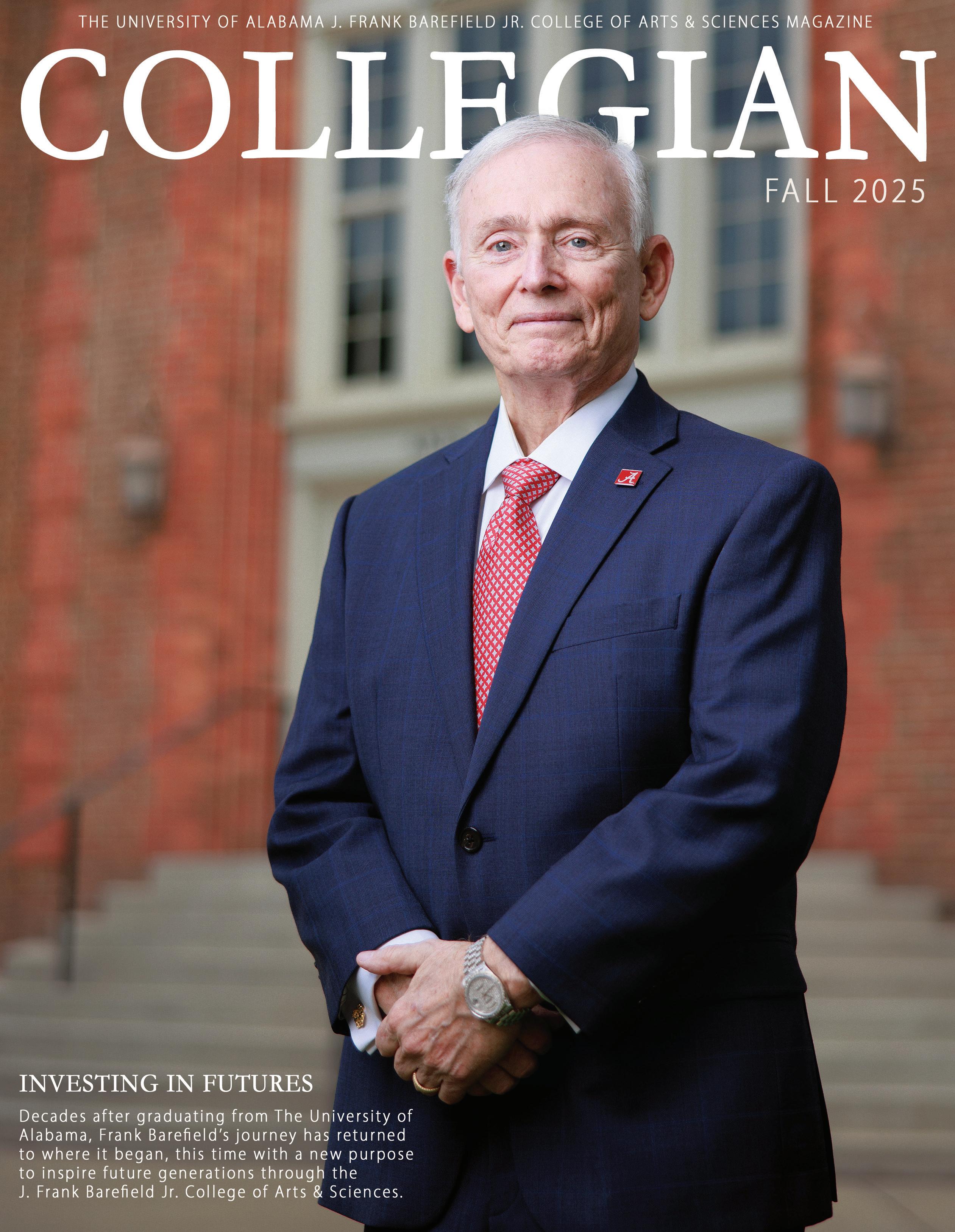
INVESTING IN FUTURES
J. Frank Barefield Jr.’s legacy is forever etched in the history of The University of Alabama.
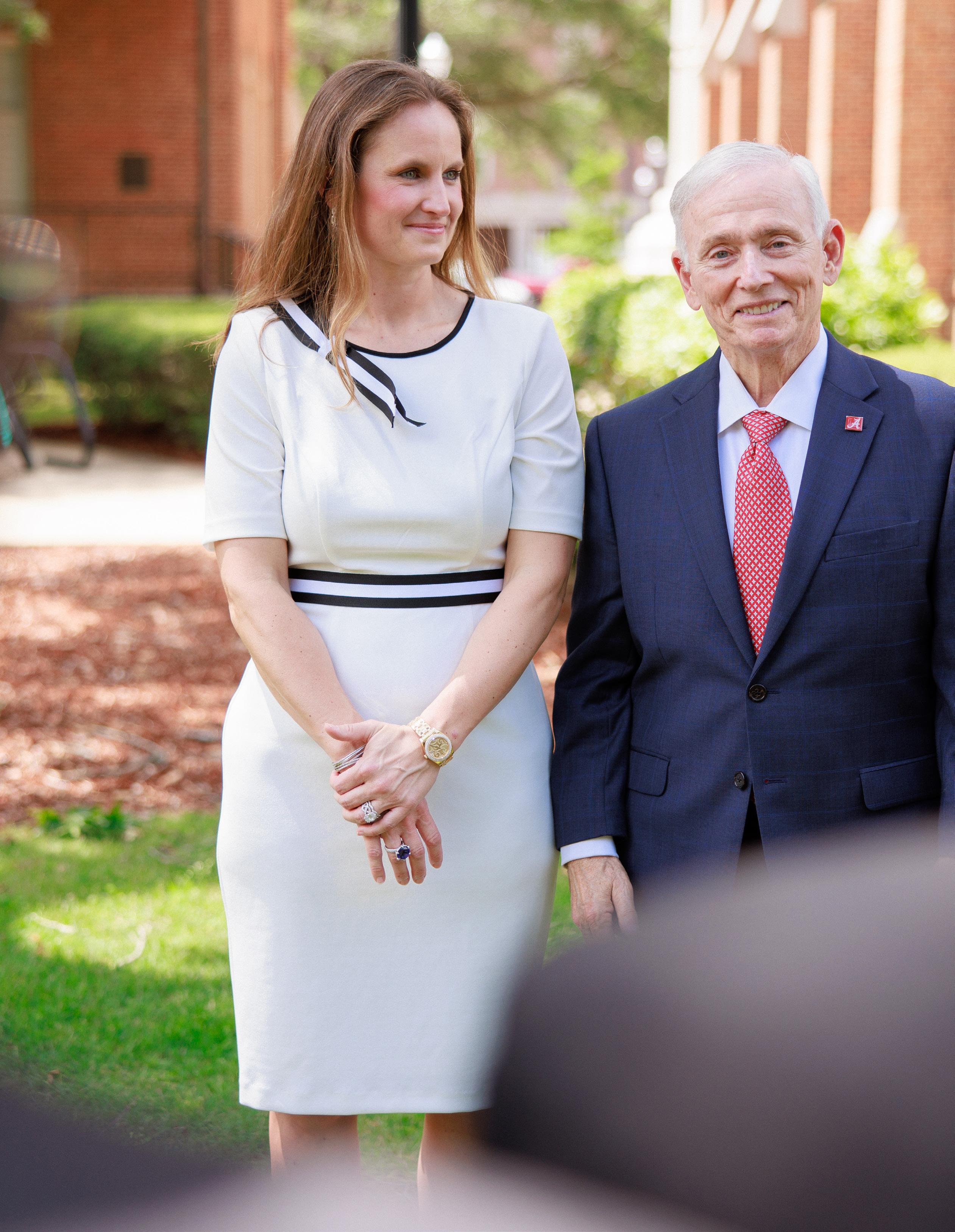
On June 6, alumnus J. Frank Barefield Jr. made a commitment that altered the course of The University of Alabama’s largest college.
Decades after leaving the Capstone with a bachelor’s degree and a foundation for a successful career, Barefield returned with a $35 million gift and a desire to transform the College, its faculty and staff who lead within it, and its students who aspire for successful careers and lives. With this transformative gift, the College was named the J. Frank Barefield Jr. College of Arts & Sciences.
“When you see what the College can do for people and do for their careers, it made me want to invest in the University,” Barefield said. “My goal with this gift is to assist the University in its ability to attract and retain the top educators and students from around the world. I am humbled and honored that the College of Arts & Sciences will forever bear my name.”
THE GIFT THE HISTORY
Originally, Barefield met with Dean Joseph Messina and Criminology & Criminal Justice department chair Adam Lankford to see how he could make an impact in the department. Barefield, who serves as the board chair of Crime Stoppers of Metro Alabama, has a passion for preventing and eliminating crime, leading him to make similar gifts to the Hoover Police Department’s training facility and the University of Alabama at Birmingham’s criminal justice and entrepreneurship programs.
After his meeting with Messina and Lankford, Barefield’s vision took on new dimensions. Their conversation sparked a deeper ambition to ensure that every student in the College could experience the same impactful journey Barefield had as a UA student.
Barefield realized his Alabama education opened doors to accomplish his goals and establish his legacy, leading him to gift the College a fully discretionary fund. Home to 22 departments, the College provides nearly half of all credit hours for UA students, meaning Barefield will help future artists, scientists, political leader, scholars and performers achieve their dreams.
“I am very appreciative of the education I received from The University of Alabama, as it has been the foundation of whatever success I have achieved,” Barefield said.
Barefield graduated from The University of Alabama in 1968 with a bachelor’s degree in finance. After serving four years in the United States Air Force and being honorably discharged at the rank of captain, Barefield continued his education at the University of Alabama at Birmingham where he earned his MBA. He is also a Certified Public Accountant and Chartered Financial Analyst. He began working in banking and finance in the Birmingham area, serving as vice president and senior investment officer at Southern National Bank and manager at Arthur Young & Company, an international public accounting firm.
In 1984, he and his business partner Marnix Heersink founded the predecessor to Abbey Residential, LLC, a multifamily real estate firm headquartered in Birmingham. Currently, Barefield co-owns and manages a property portfolio through Abbey Residential, LLC in excess of $2.5 billion in assets.
Barefield now looks back admiringly at his time at the Capstone and the value his education still holds. He said he is honored to contribute to students’ futures.
“It’s a difficult thing to wrap your head around, a school the size of The University of Alabama, and my name would somehow be associated with it,” Barefield said.
THE CELEBRATION
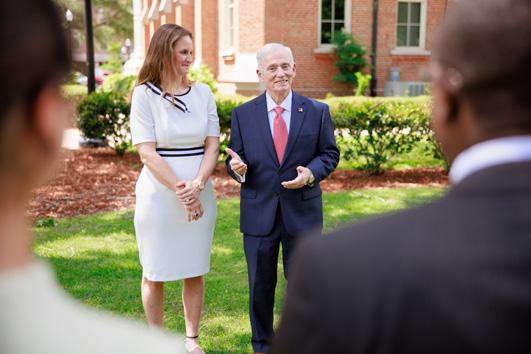
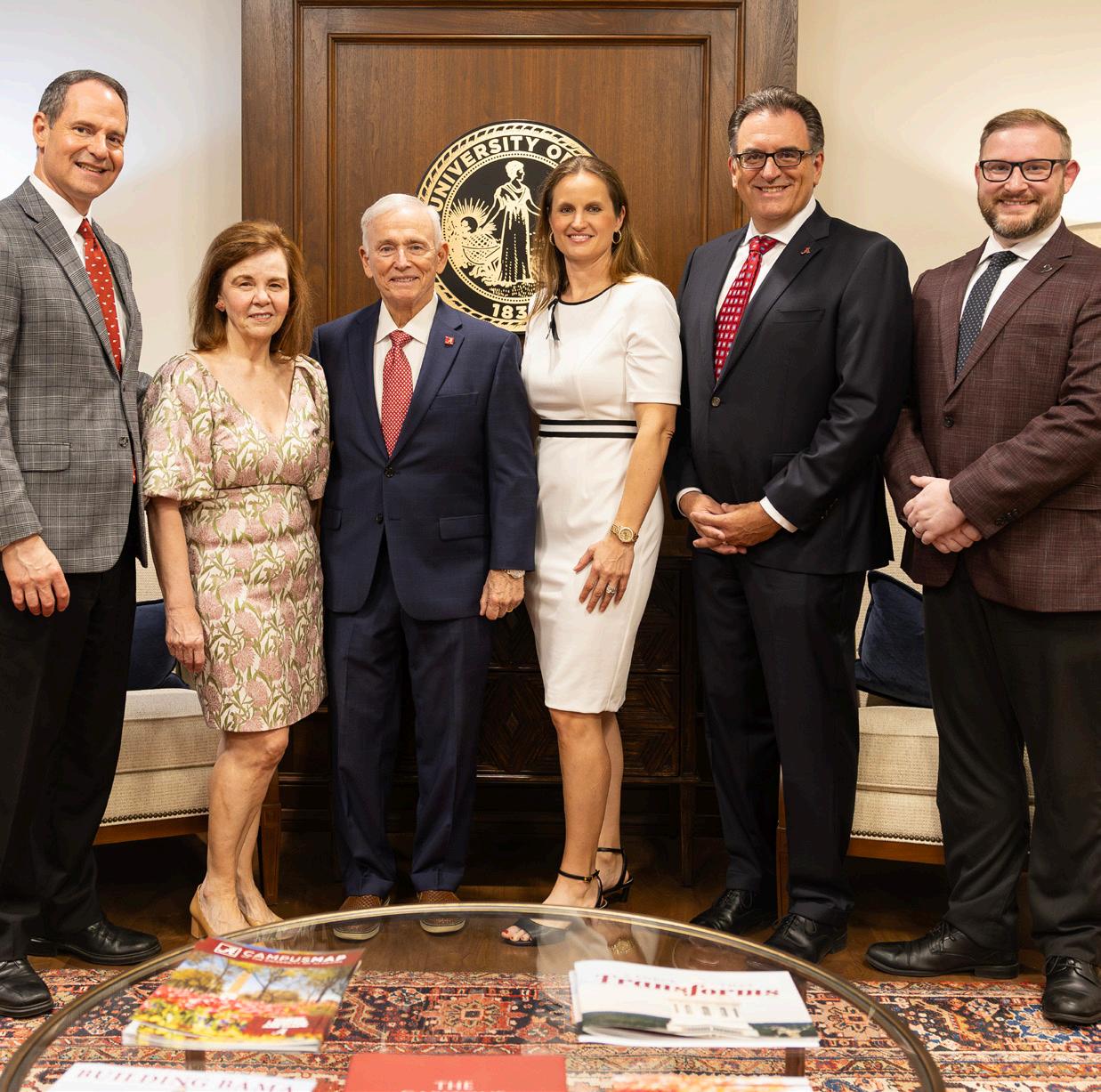
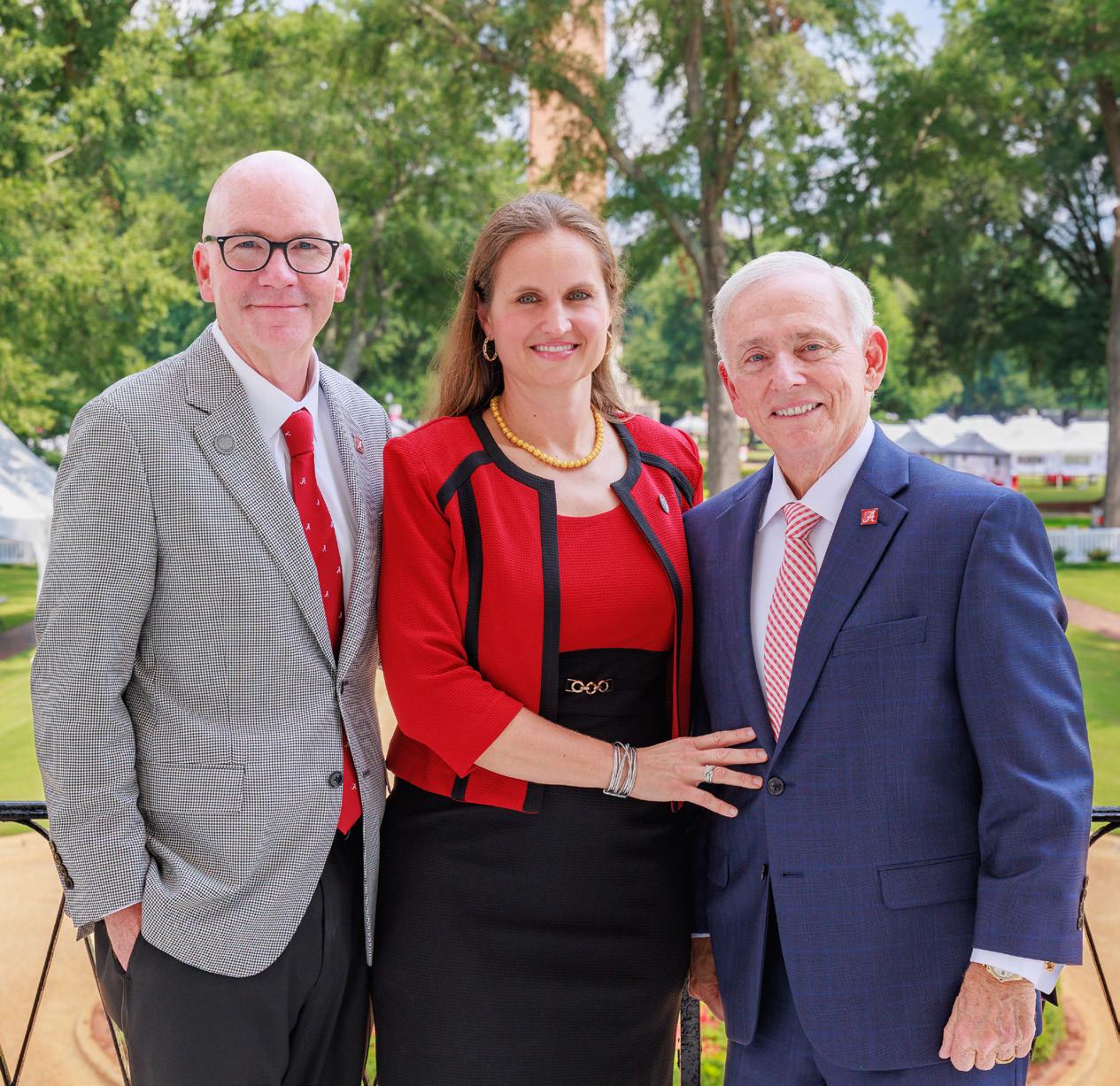
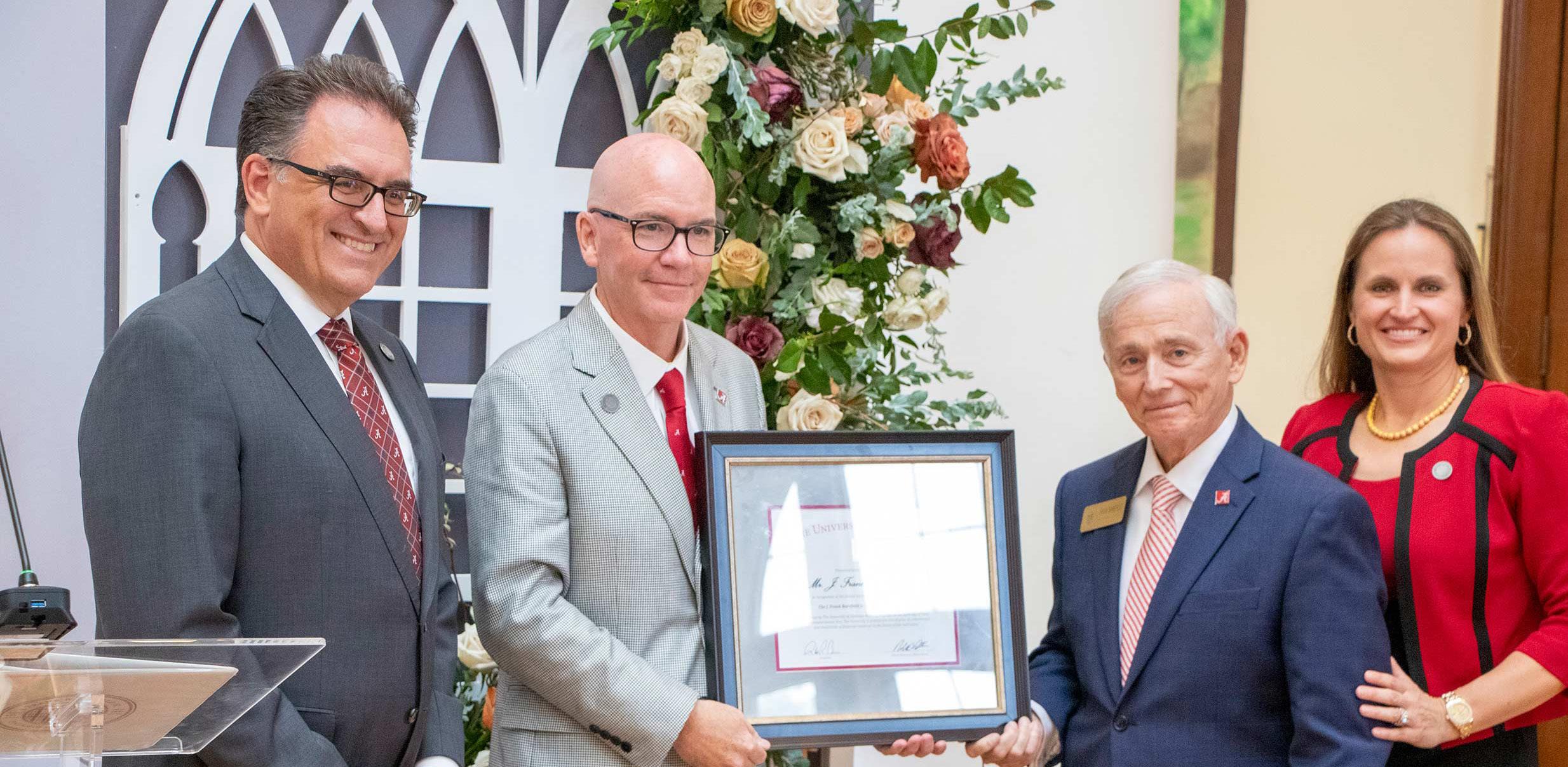
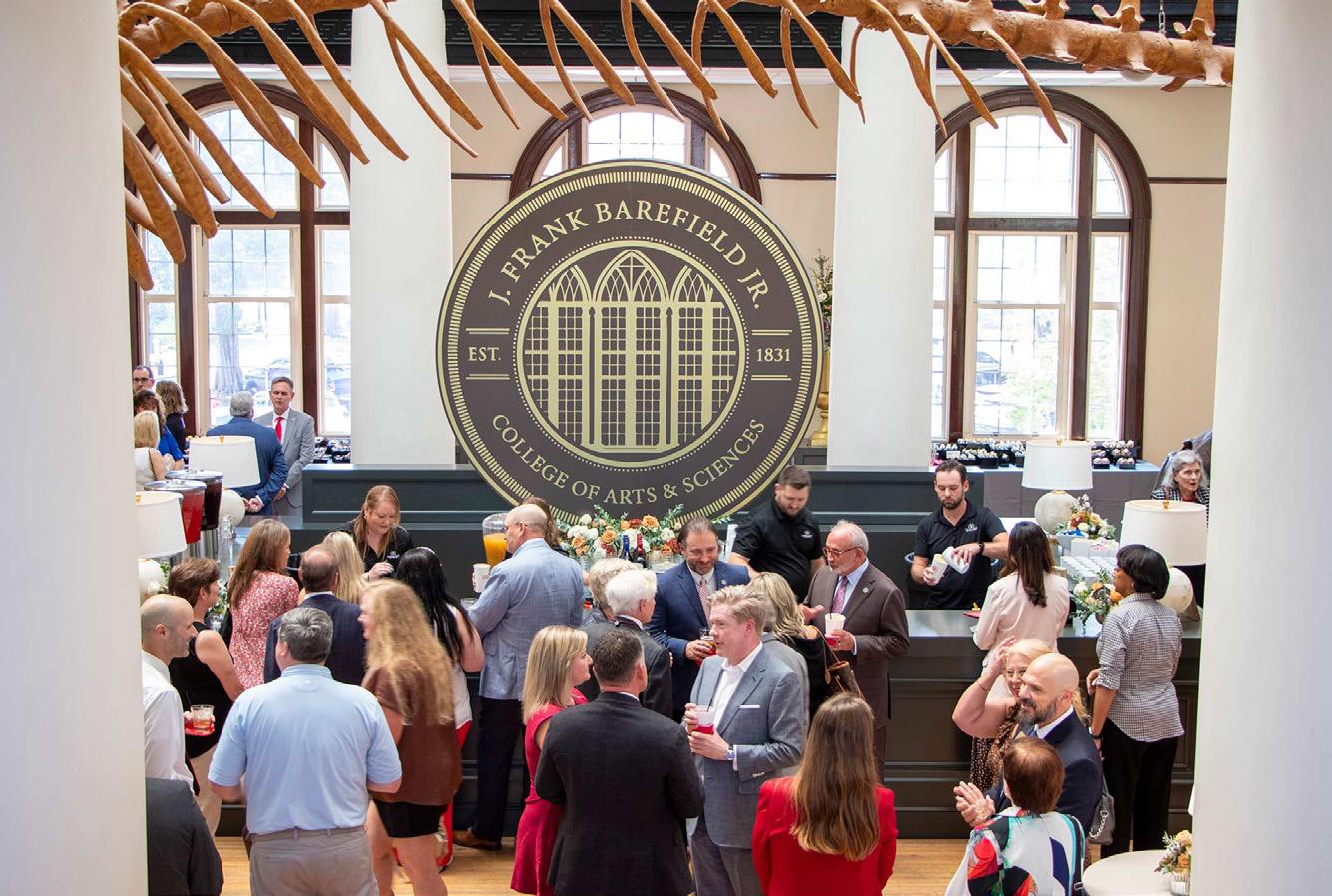
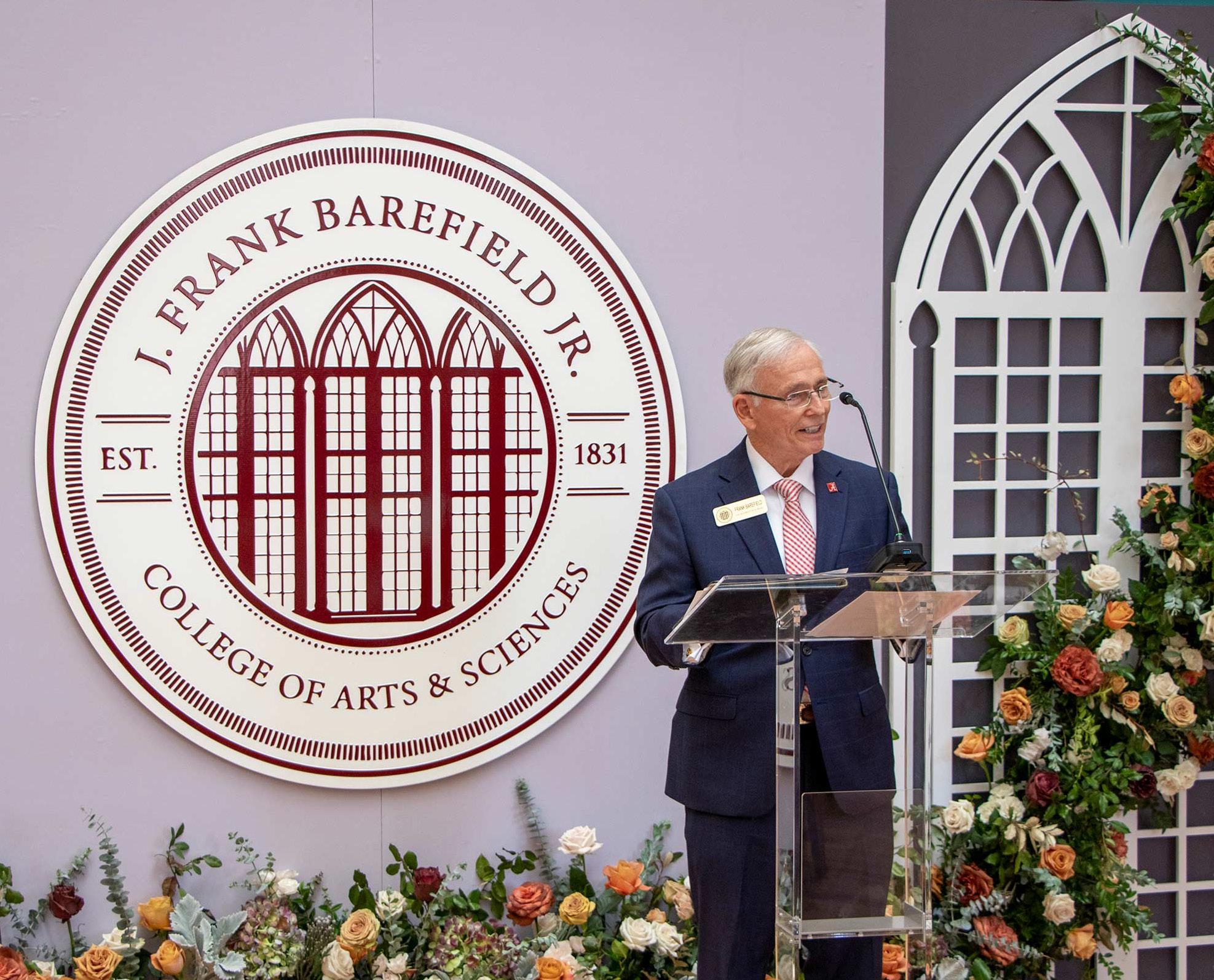
On Sept. 5, faculty, staff and friends of the J. Frank Barefield Jr. College of Arts & Sciences gathered to commemorate Barefield’s historic gift. President Peter Mohler and Dean Joseph Messina addressed the College and presented Barefield and his wife Barbi Breimann with a certificate celebrating the commitment.
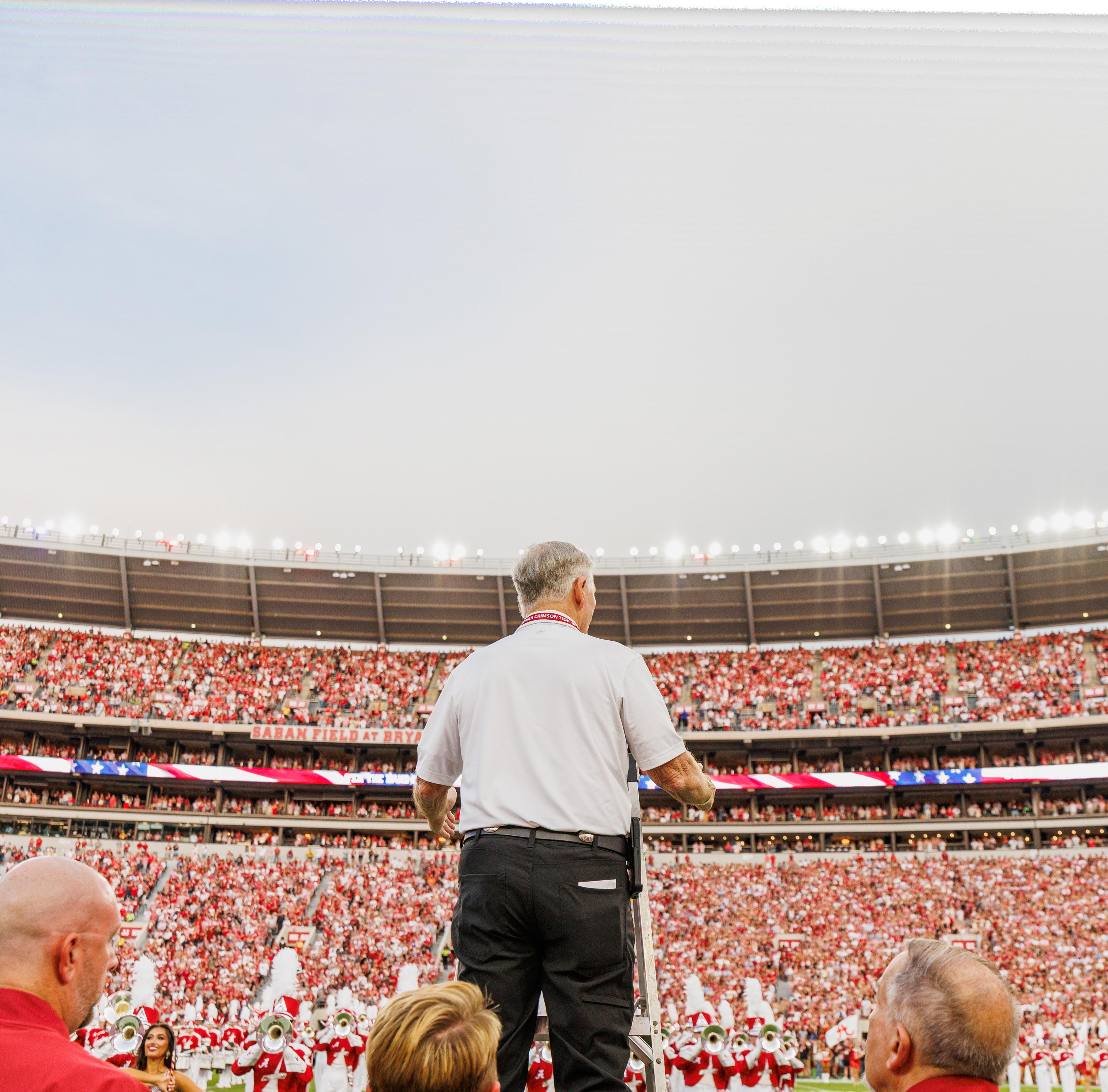
At Alabama football’s home opener the next day, Barefield directed the Million Dollar Band during the national anthem before the game on Saban Field at Bryant-Denny Stadium.
The J. Frank Barefield Jr. College of Arts & Sciences embraces a legacy of learning and anticipates a future of impact, and in recognition of the College’s mission, Barefield has strengthened its powerful purpose.
“With this support, the College is poised to elevate its excellence in teaching, innovation, research and creative endeavors, reinforcing its commitment to meaningful impact and academic distinction,” Messina said. “Mr. Barefield’s belief in our work affirms our mission. We are profoundly grateful for this support and look forward to the remarkable progress it will inspire in the years to come.”
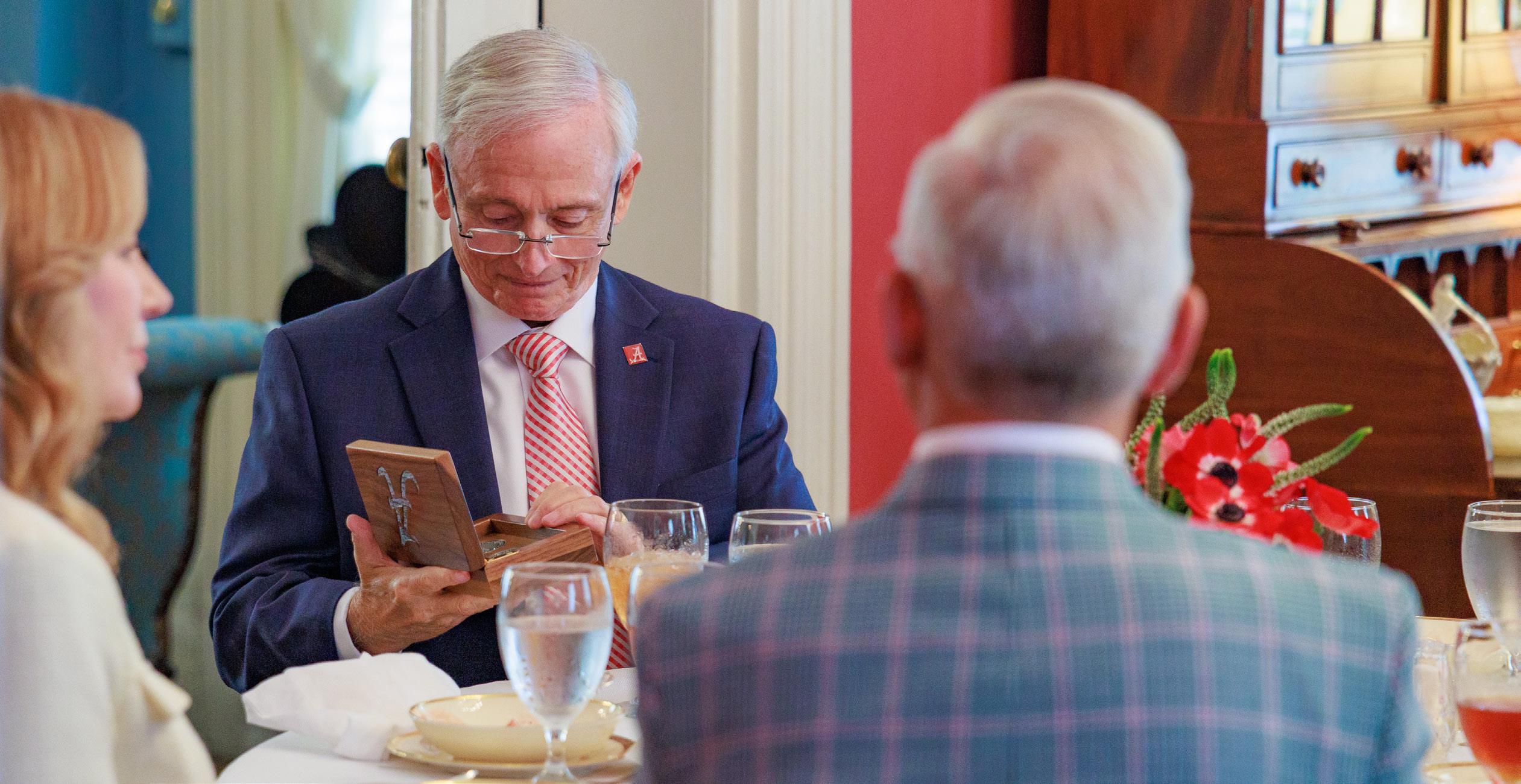
J.FrankBarefieldJr.andhisguestsreceiveda customchallengecointocommemoratehis commitmenttotheCollege.
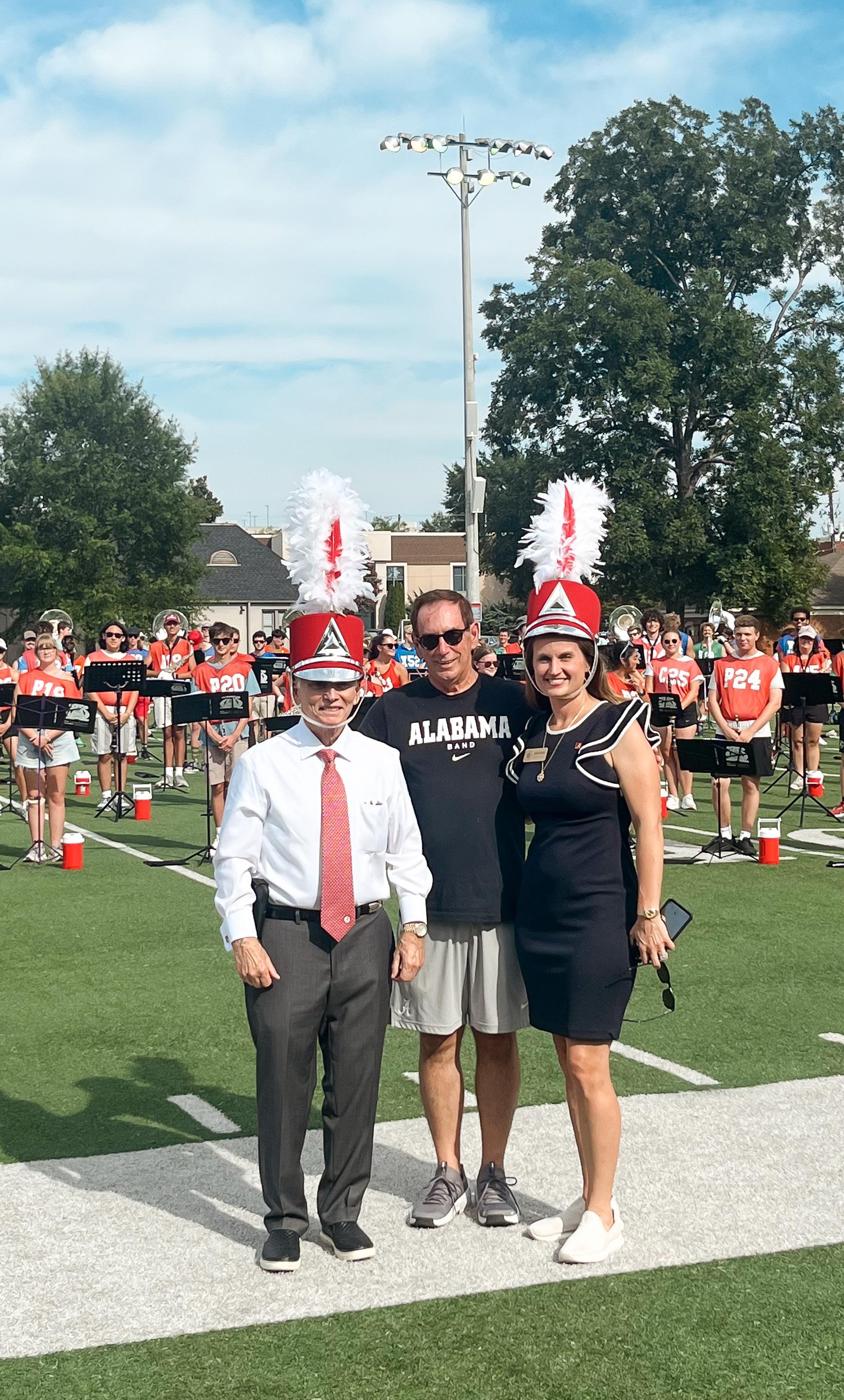
J.FrankBarefieldJr.andhiswifeBarbi BreimannreceiveMillionDollarBand shakosatapractice.
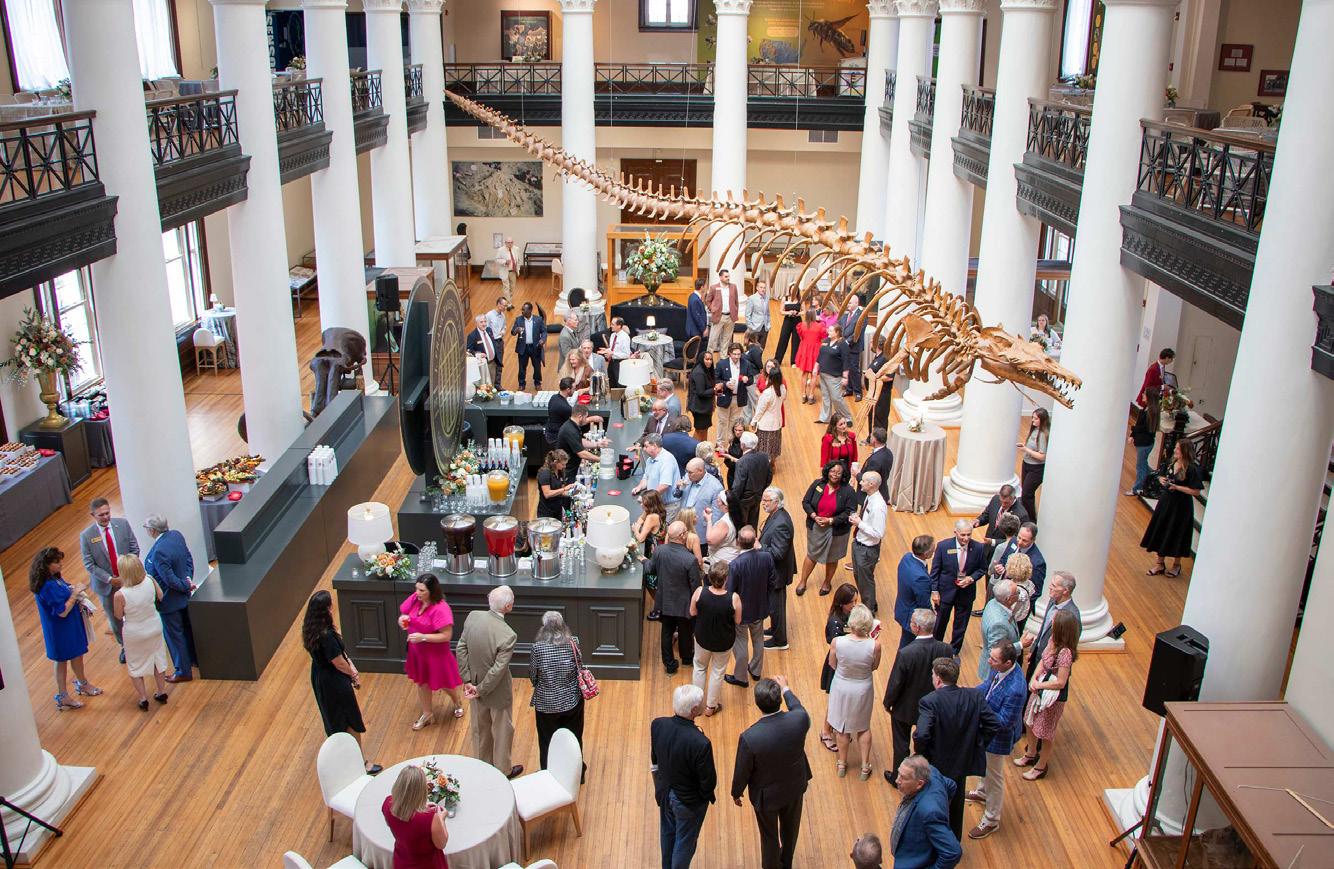
Faculty,staffandfriendsgatheredinSmith HalltocelebratethenamingoftheCollege.
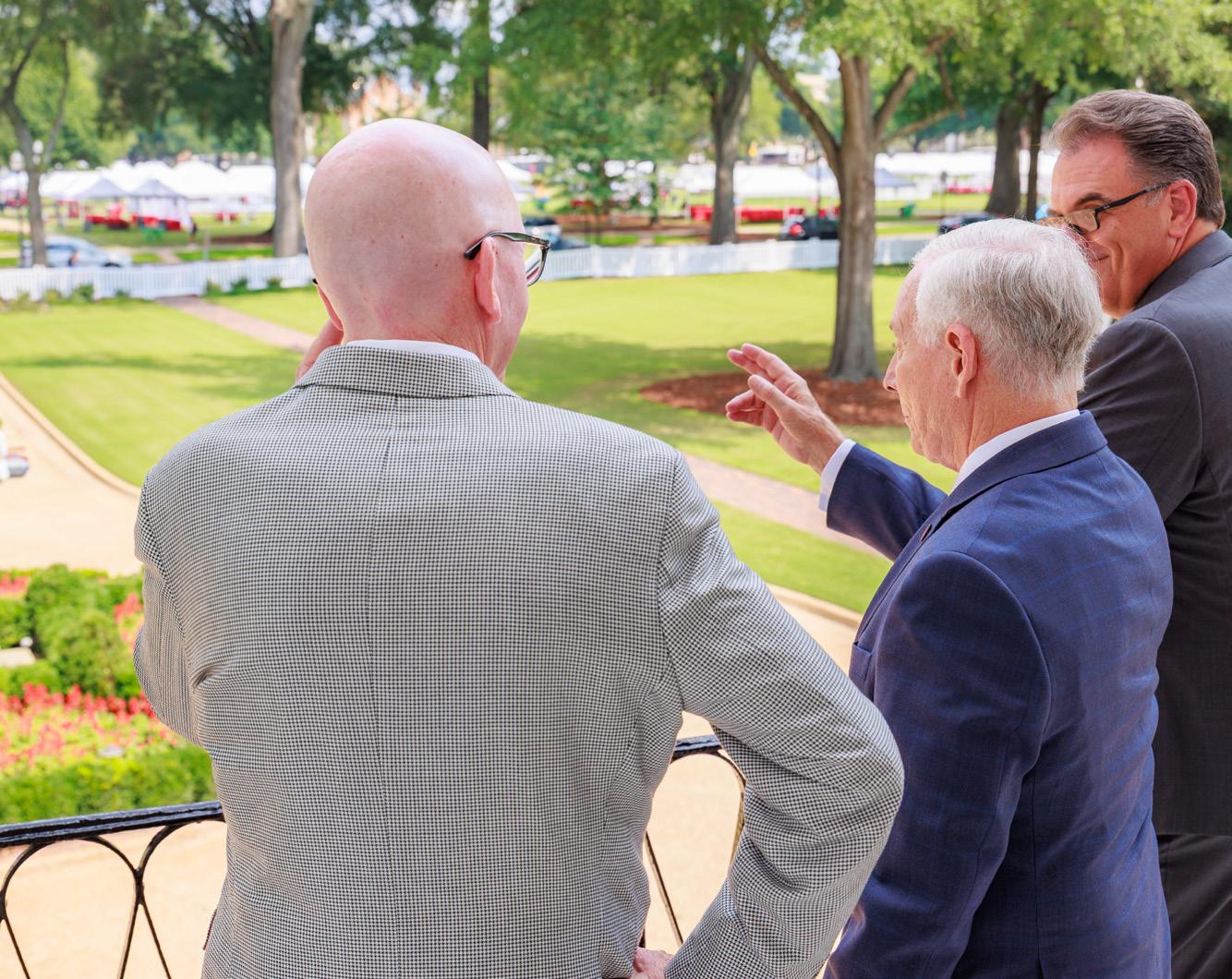
J.FrankBarefieldJr.metwithPresident PeterMohlerandDeanJosephMessinaat thePresident’sMansiontocelebratehisgift totheCollege.
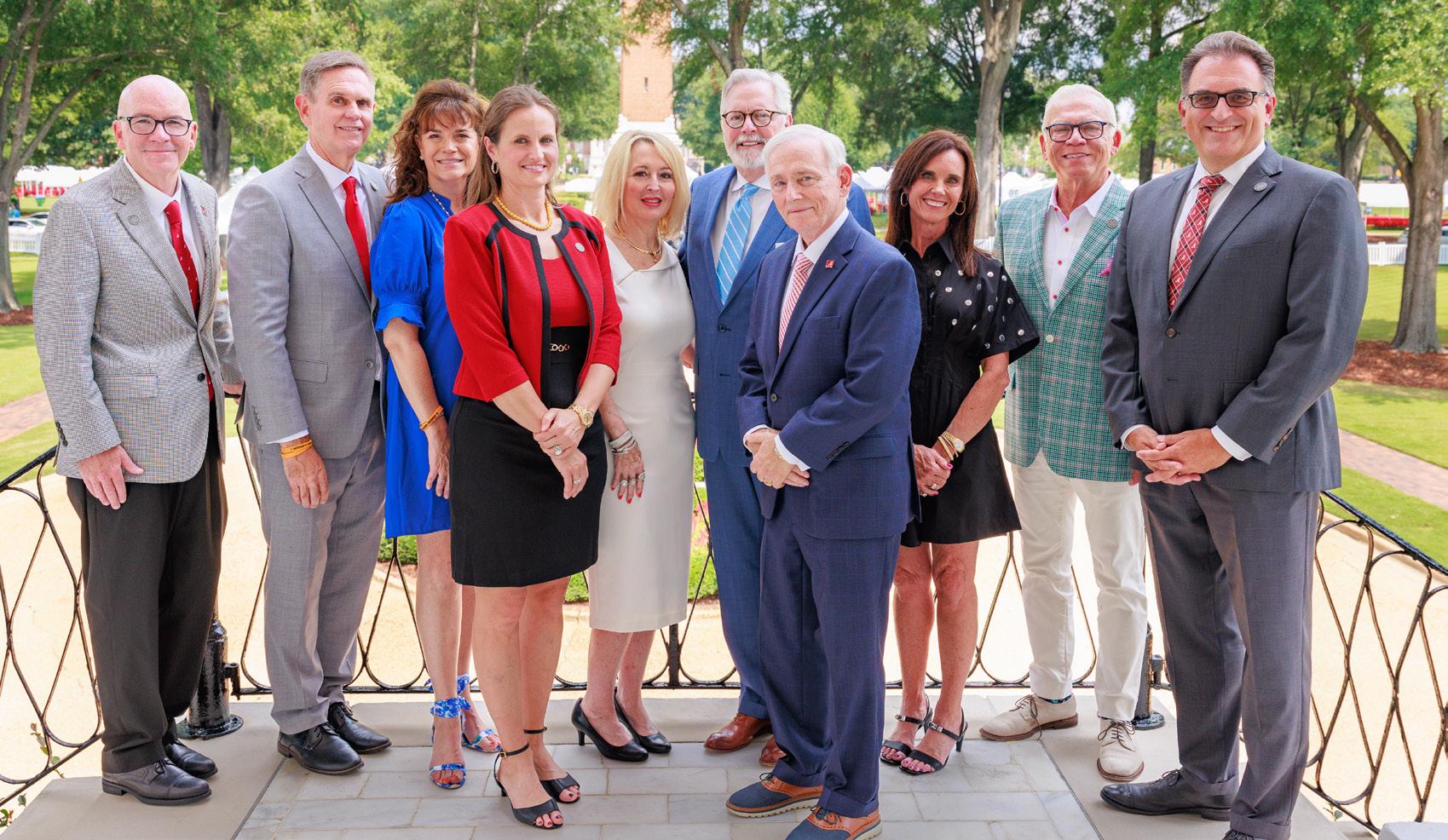
J.FrankBarefieldJr.andhiswifeBarbi Breimanngatheredwithfriends,familyand membersoftheUniversityforlunchwith PresidentPeterMohlertohonorthenaming.
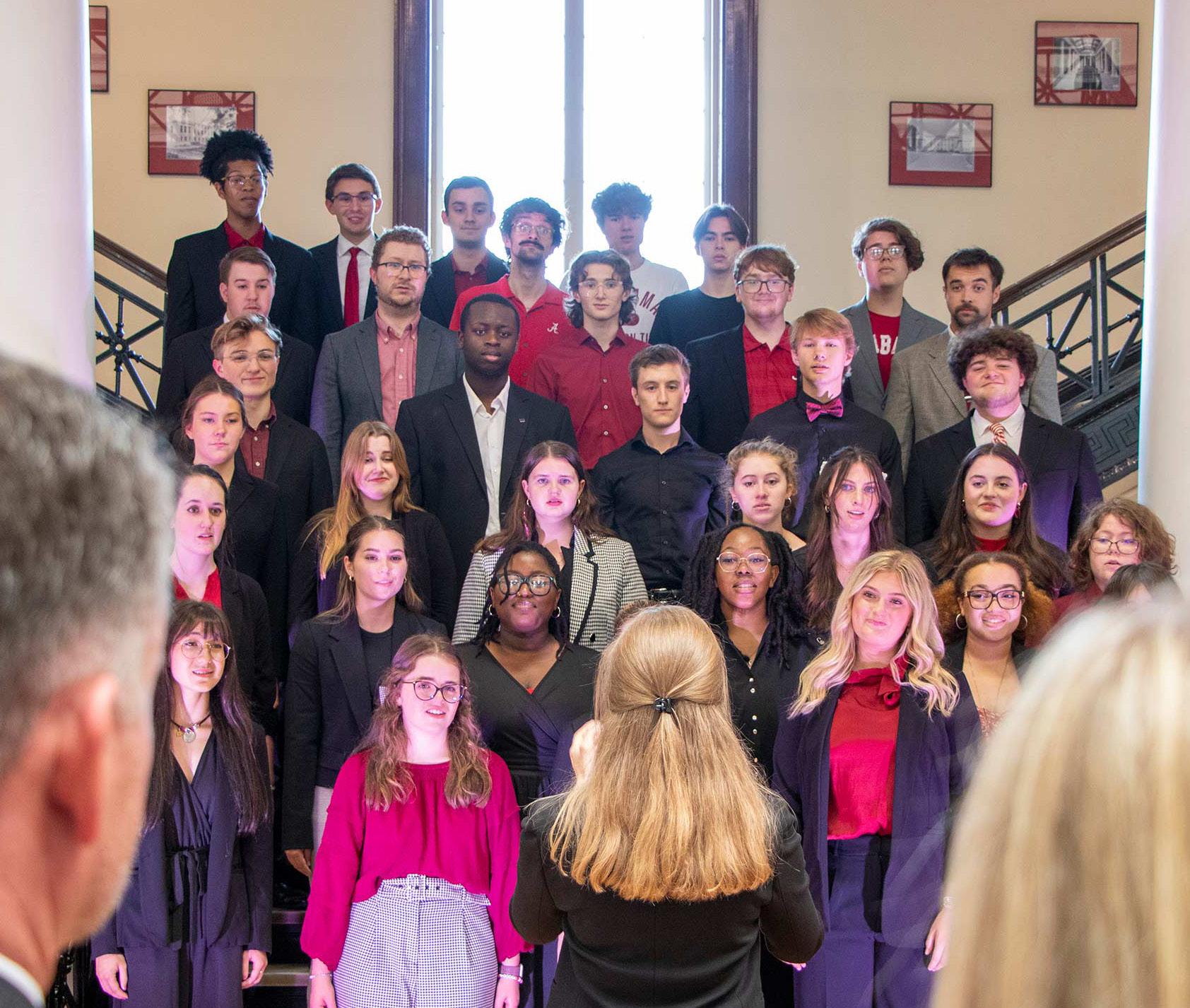
TheUniversitySingerssangtheAlmaMater atthenamingcelebrationinSmithHall.
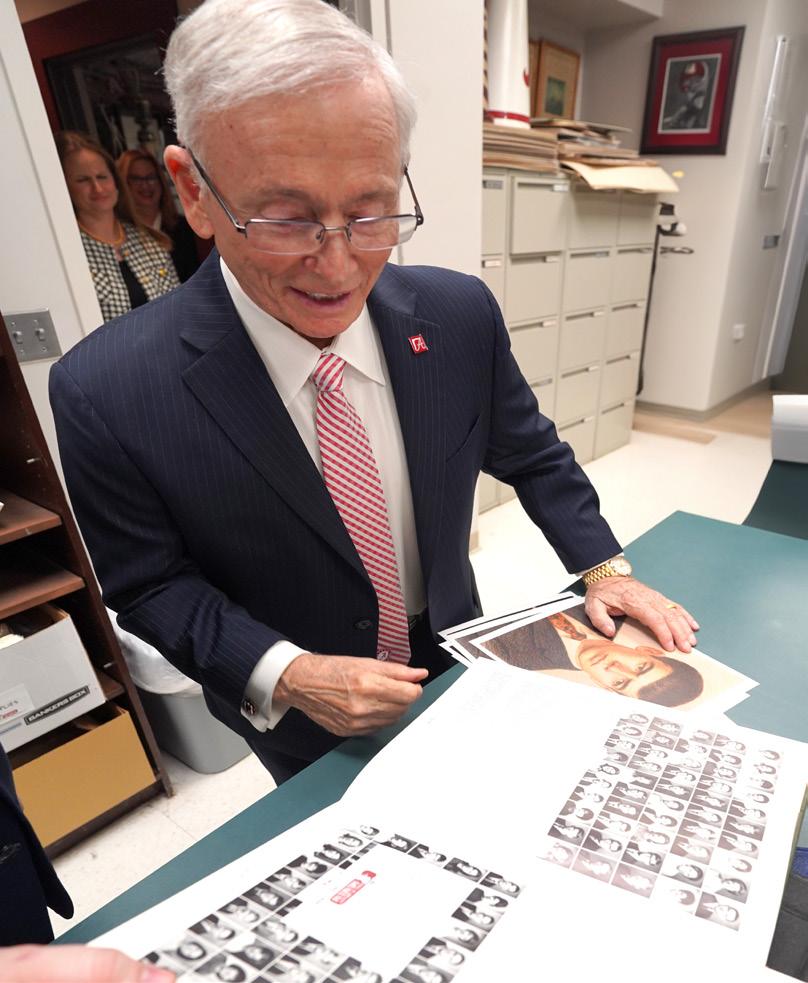
J.FrankBarefieldJr.visitedUA Museums’Collectionsandfoundhis UAclasspictureinthe“Corolla.”
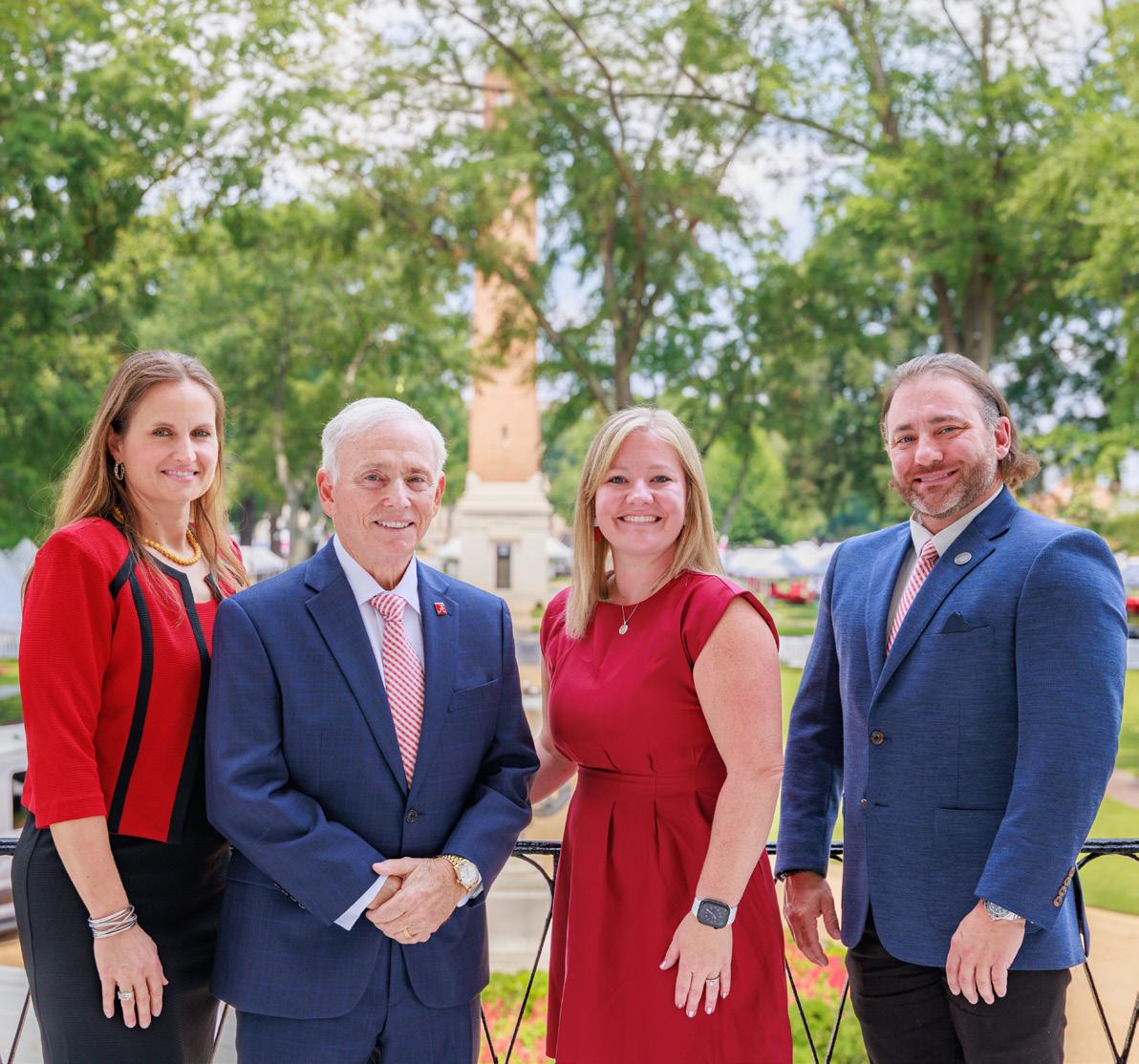
J.FrankBarefieldJr.andhiswifeBarbiBreimann, alongwithFrank’schildrenLaurenCrooksand JohnBarefield,joinedincelebrationforlunchwith PresidentPeterMohlertohonorthenaming.
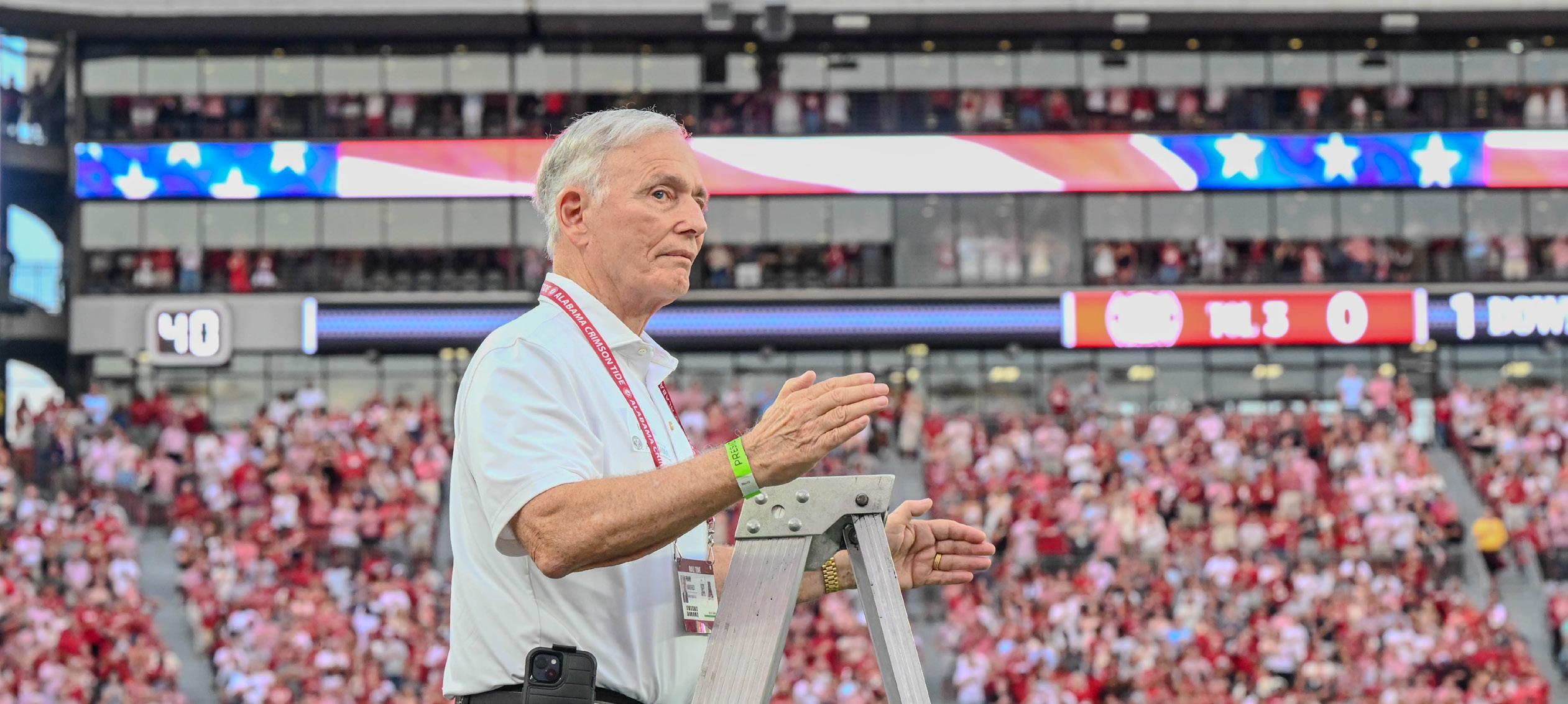
J.FrankBarefieldJr.conductedtheMillion DollarBandinthenationalanthem beforeAlabamafootball’shomeopeneron September6.
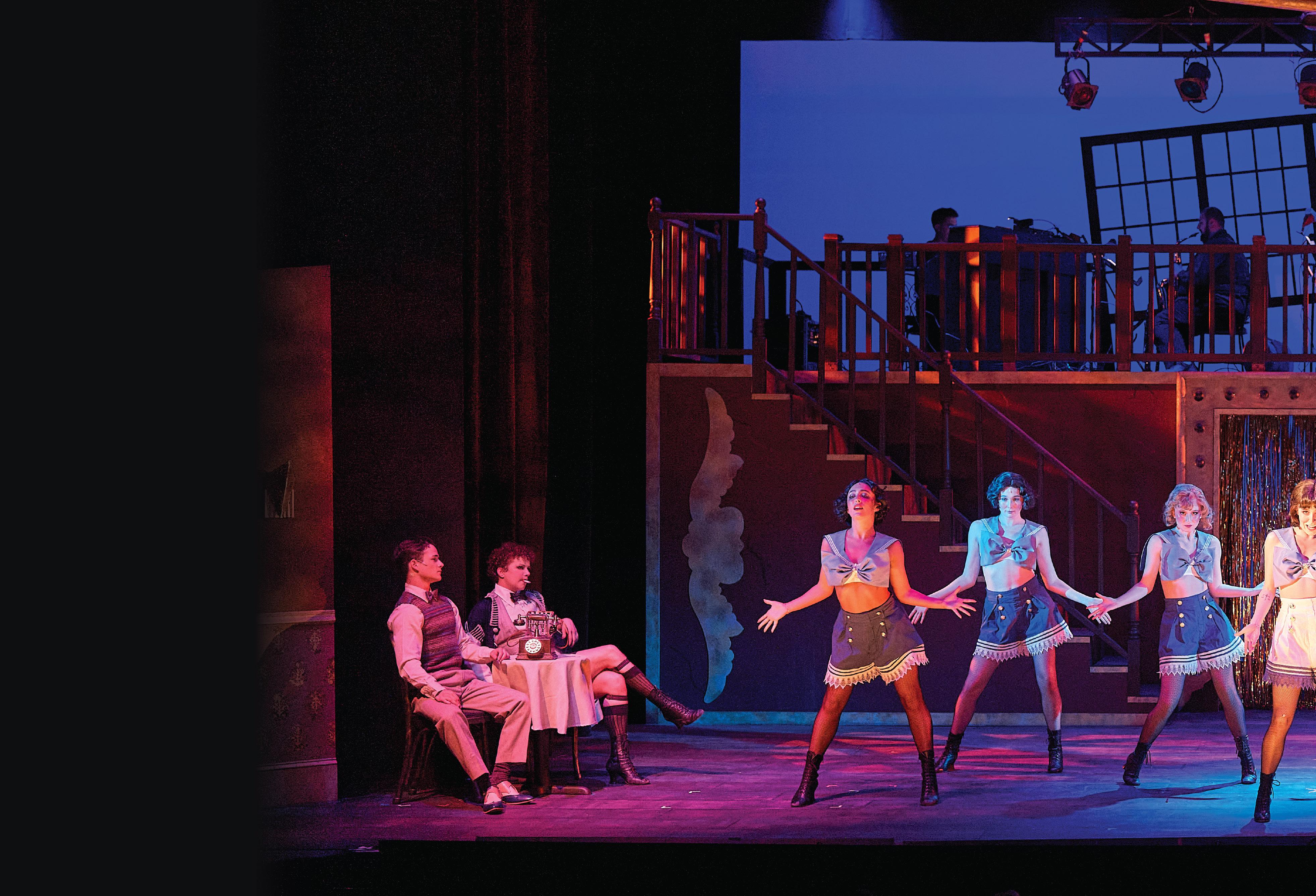
How a Bidding War Turned Into a Cabaret Performance
In April’s production of “Cabaret,” one theatre lover had the opportunity to take the stage. However, Camille Mendle, a co-founder of the Theatre Alliance, didn’t have to audition; instead, she just had to win a bidding war.
During last year’s Arts Gala, a fundraising event to support the Barefield College of Arts & Sciences’ fine and performing arts, a cameo in “Cabaret” was on the line during the live auction, and Mendle knew she wanted it to be hers.
“‘Cabaret’ has always been one of my favorite shows,” Mendle said. “I’ve loved it since it was first produced. I’ve been involved with so much in theatre that it just felt like a natural to me.”
Before founding the Theatre Alliance along with Dianne Teague, Mendle was heavily involved with Tuscaloosa Children’s Theatre and Theatre Tuscaloosa. She is also no stranger to UA Theatre & Dance as her son graduated from the technical theatre program in 2007 and now works on Broadway.
“I’ve always been a behindthe-scenes person, so this was my first time on stage,” Mendle said. “They [the cast members] were all wonderful. They made me feel like I was truly part of the cast.
Seeing all the energy and talent and how nice they all were just warmed my heart. I thought it was wonderful.”
Mendle said she loves watching hard work and talent pay off, but usually from her seat in the audience. She especially loves the valuable lessons theatre teaches, such as showing up on time, working on a team for a common goal and memorizing all the lines.
Although she prefers to stay seated in the audience, Mendle said her time on stage with the cast of “Cabaret” — for all eight shows — was an incredible experience. She especially appreciated receiving a red satin robe with “Kit Kat Club” inscribed on the back, which the production’s costume designer made for the Kit Kat ensemble and a few others. It made her feel truly part of the production.
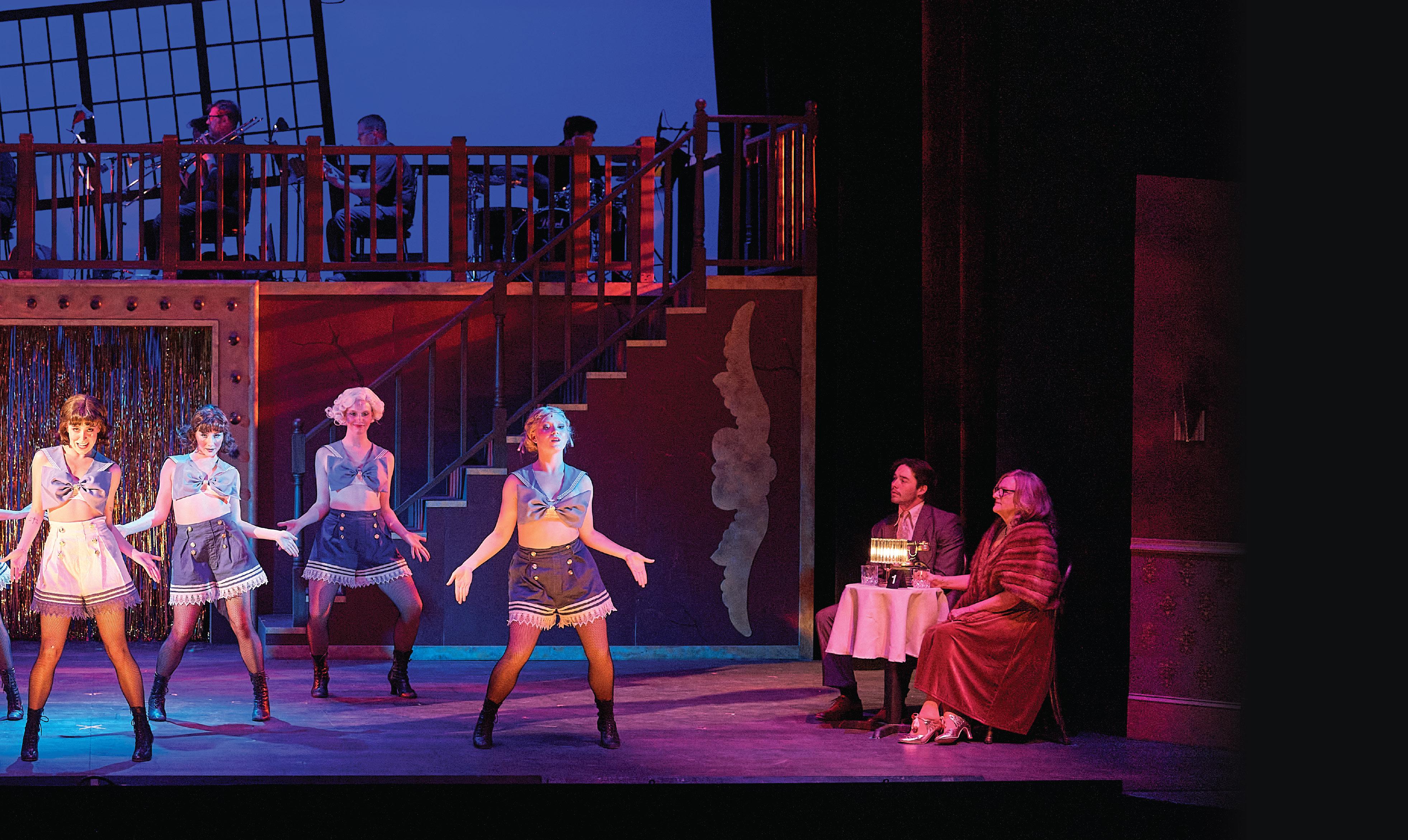
“I was just so touched,” Mendle said. “It’s a prized possession of mine now.”
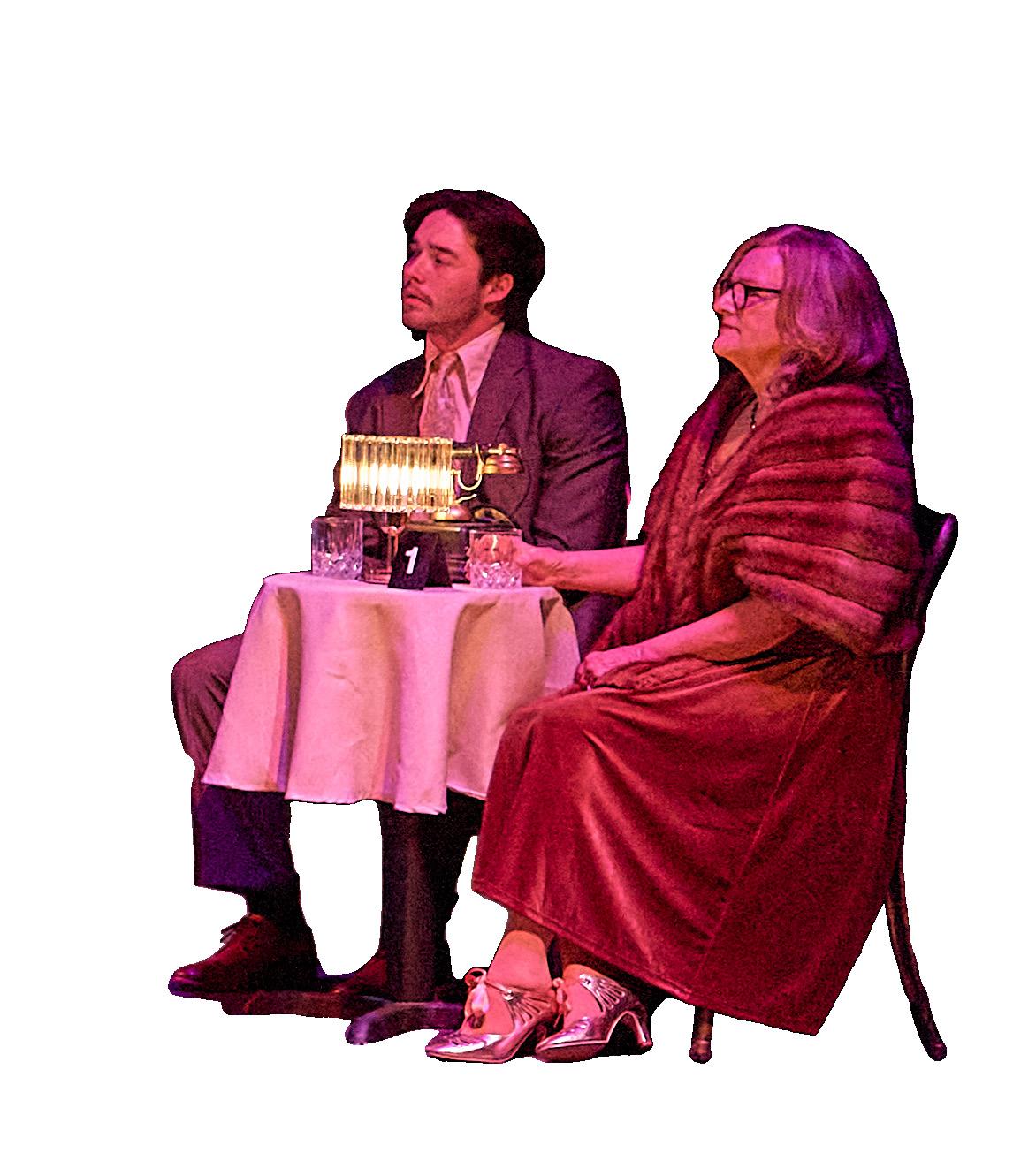
“This auction item gives them an opportunity to engage with our students a little more and have a unique experience.”
Former Theatre & Dance chair Dominic Yeager said he has people often ask to be on stage for a production, so the auction item was a good way to make it a competitive experience and raise money for the department’s programs.
“Often times there are individuals who want to be a little more involved and have a little time on the stage,” Yeager said.
Being part of a university production is a unique experience, but Mendle said there’s plenty of other ways to become involved with UA Theatre. Theatre Alliance, the support board that Mendle helped found, organizes events and activities to help promote UA Theatre and support students as they pursue professional opportunities.
Mendle said her experience with Theatre Alliance has been very impactful, and she was grateful to have it underlined with the “Cabaret” cameo experience.
“I thought it was great,” Mendle said. “I didn’t feel intimidated. I wasn’t really nervous. I was more nervous about if the young people would look at me as an intrusion in their world, but they were all wonderful.”
CamilleMendlein“Cabaret.”
New College Program Supports “A Story Written in Stone”
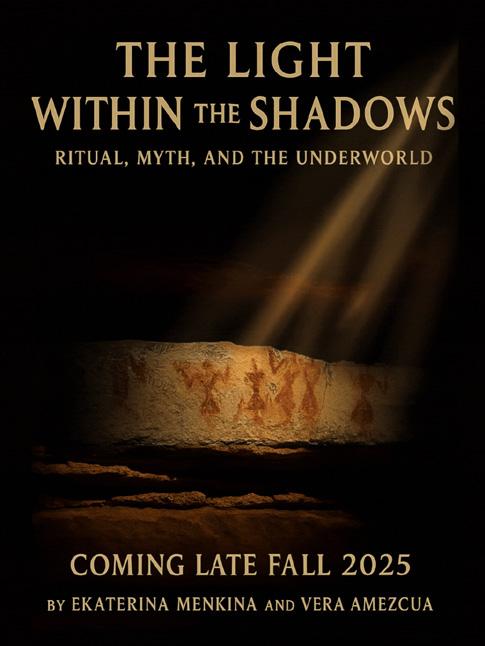
Within New College, the Levitetz Leadership Program (LLP) helps students pursue their passions. Through the LLP’s Innovation Seed Grant program, students can apply for grants to support a new business, an after-school program, an art installation or any project they can dream up.
Natalie Adams, the LLP director, said the program is for students who exhibit “extraordinary creativity, leadership and innovation” and want a college experience outside of just the classroom.
“The Innovation Seed Grant program gives students the opportunity to be entrepreneurial,” Adams said. “Our donor, Jeff Levitetz, is very committed to students having practical real-world experience.”
In 2016, when Adams was the director of New College, entrepreneur and New College alum Jeff Levitetz donated $1 million to start the LLP. Although he had previously supported New College students through scholarships, Levitetz wanted to expand his support to students pursuing outside-the-box ideas like him when he started his own business as a student at the Capstone.
The LLP offers funding to projects in three categories: forprofit, social entrepreneurship and creative activities. Students receive either Small Grants, which are up to $1,000 and are used to develop new ideas, or Large Grants, which are up to $3,000 and support existing projects that have received previous funding. Adams says the goal behind all grants is to provide confidence and resources while developing


soft skills like presenting and networking. “Our job is to provide students the resources they need to develop an idea in any of these three divisions and then provide very positive affirmation,” Adams said.
“We are not a Shark Tank. We are a teaching lab,” Adams said.
One such project is “A Story Written in Stone: Expanding the Film on Paint Rock.” The Texasbased project began with the help of a Small Grant and then grew into what it is today with a Large Grant.
Ekaterina Menkina, a graduate student studying digital archaeology in Anthropology and a graduate research assistant at the Alabama Water Institute’s CONSERVE Storytelling Media Studio, said she and her partner Verenis Amezcua, a graduate student in Harvard University’s


archaeology program, applied for the grant on a whim.
“I had no experience in documentary making before,” Menkina said. “This is all completely new to me. I feel like we threw ourselves into a completely new field of creation, hoping to rely on each other’s creative talents and expertise to make our vision happen.”
After meeting each other and learning about Paint Rock while they were at archaeological field school in Belize, the two joined forces to explore the storytelling side of Paint Rock, a Texas cliff with over 1,500 pictographs. When Menkina received an email from an archaeology professor about applying for a Levitetz grant, she recognized the opportunity immediately. Despite having no videomaking experience, Menkina asked Amezcua if she wanted
into the project immediately. Both students drew from prior experiences using drones and 3D modeling and 3D reconstruction software to explore ancient sites and artifacts as they explored Paint Rock and documentary making. They discovered that drones not only were a great resource for viewing the site from different angles but also creating appealing cinematography. As the project went on, Amezcua realized more and more that visual ethnography was the best way to understand the site and communicate its value in the modern age.
“We wanted to instill curiosity to have people buy into our project,” Amezcua said. “What better way of us showcasing ancestral storytelling and indigenous creativity than by showing the public what it’s actually like to visit Paint Rock? When people think of ancestral communities, they think of native tribes that have long passed away, but they are very much alive and, this day, they visit sacred landscapes that their ancestors venerated.”
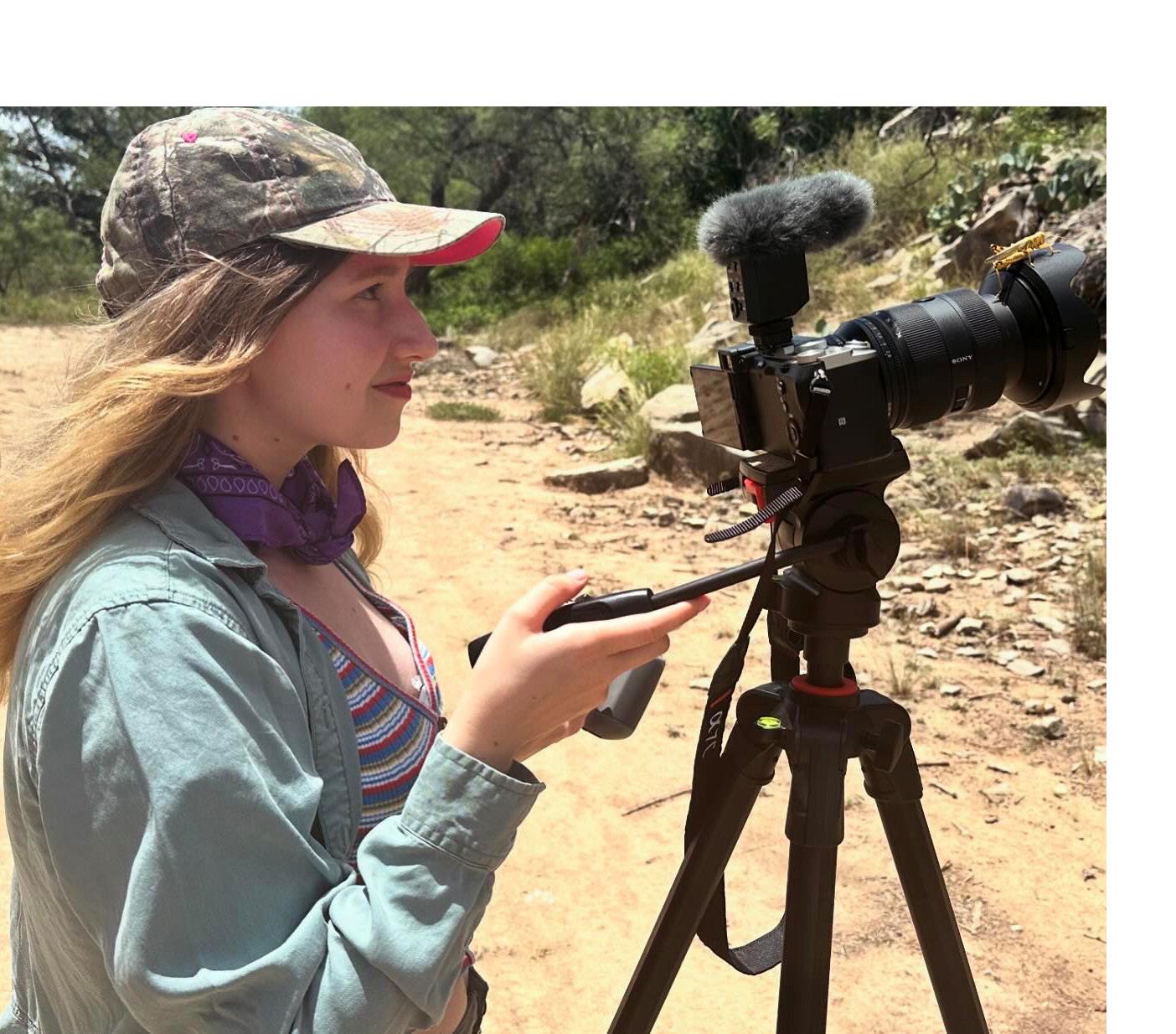
Since their first spontaneous Innovation Seed Grant application, Menkina and Amezcua have found community, funding and support from the LLP, the CONSERVE Research Group and the Paint Rock Project. They presented their
documentary at the Society of American Archaeology (SAA) last April and will be presenting again at the 2026 SAA conference held in San Francisco. Amezcua is also working with leading scholars at Harvard’s Peabody Museum of Ethnology and Archaeology to present the film this fall.
Menkina said she and Amezcua were extremely grateful for the grants — both the spontaneous Small Grant and later the Large Grant.
“It meant that Levitetz [the LLP] believed in our project and that we can do this,” Menkina said. “Levitetz has been such a great community for me and they’re super supportive. Even just outside of the project itself, they’ve always been like ‘reach out.’ They always give you so many cool opportunities to join other projects, other competitions, they really put you out there.”
Adams said “A Story Written in Stone: Expanding the Film on Paint Rock” is the type of project the Levitetz Leadership Program was made for.
“We consider it [the program] kind of an extension of the classroom, a New College classroom,” Adams said. “It’s a teaching lab that’s very studentcentered and very focused on developing the individual interests and needs and skills of the students who receive the money.”

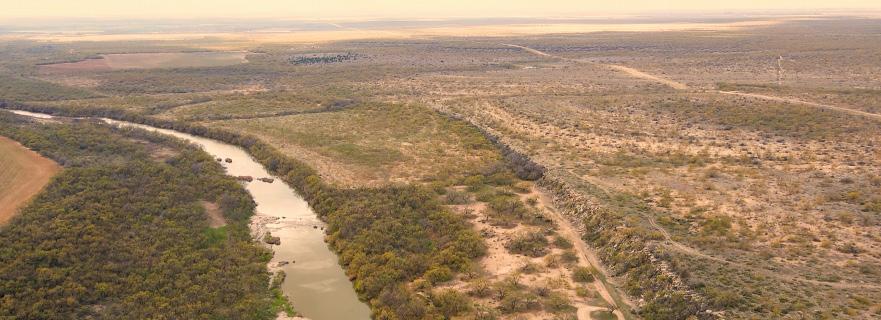



VerenisAmezcua studyingapictographat PaintRock.
The Mills Endowed Lecture:
Eighteen Years of Alumni Inspiring Students
From U.S. Ambassadors to CEOs, television journalists to chief scientists, the Helen Crow Mills and John Carroll Mills Endowed Lecture Series has brought accomplished speakers to the J. Frank Barefield Jr. College of Arts & Sciences for nearly twenty years.
Established in 2007, the lecture invites alumni who are standout contributors in a variety of fields to encourage current students to pursue whatever possibilities The University of Alabama presents.
“I want students to benefit from these people we’re bringing in that are significant names in their business and profession and so forth,” Helen Mills Pittman said. “They’re positive and they’re happy and they’re glad to help the students.”
Pittman and her late husband John Mills both graduated from UA, with Pittman earning her bachelor’s degree from the College of Human and Environmental Sciences in 1959 and Mills earning his bachelor’s in predental studies from the Barefield College of Arts & Sciences in 1955. After a couple of years spent out west in the Navy, the couple came back to Alabama where Pittman became the president of her father’s company, Crow Real Estate and Insurance Co., and Mills became a
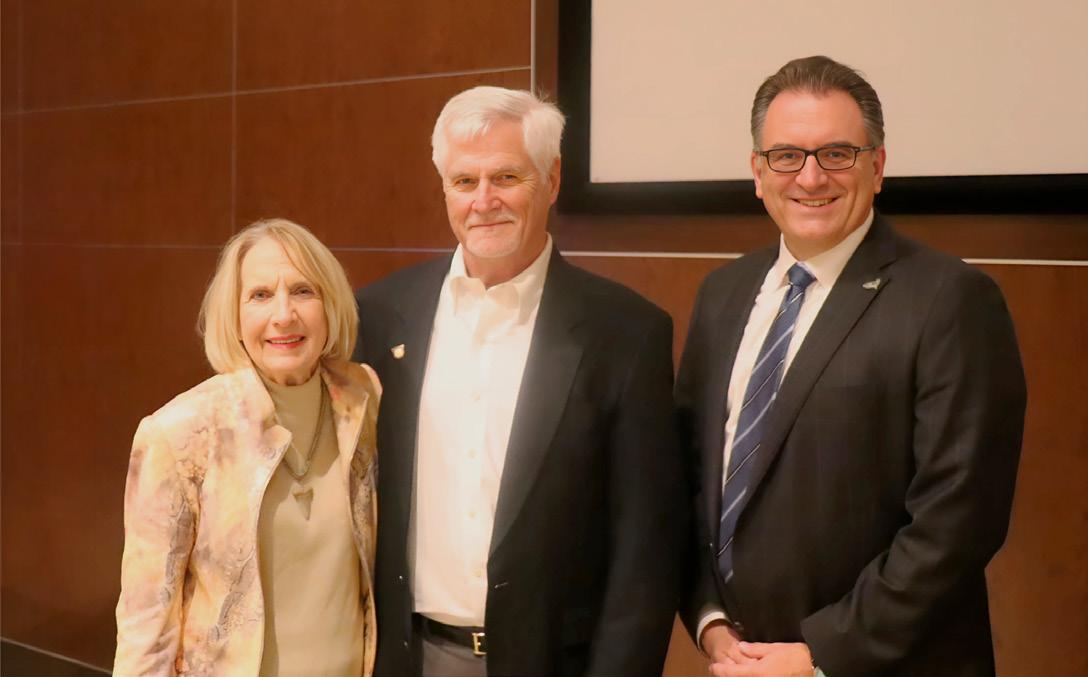
pioneer endodontist in Alabama.
The University of Alabama held a special place in their hearts, so Pittman and Mills agreed to fund a lecture series, and since 2007, the endowed lecture series has brought more than a dozen accomplished alumni back to the Capstone for the benefit of its current students.
Although Mills passed away before he could see the lecture series officially enacted, Pittman has attended every lecture and personally met with every speaker.
“We invite them [the speakers] because they are so accomplished in their fields,” Pittman said. “We want it to be an inspiration for all the students.”
Over the course of the lecture series, students have learned about NASA missions to Jupiter, safe sanitation in India, economic growth in an increasingly virtual world and more. Most recently, author and American Studies alumnus Philip Shirley spoke about “The Art & Science of Living a
Arts & Sciences is a universe of many things,” Shirley said in his lecture. “Life-altering information. Techniques for learning and gathering information and knowledge that become a skillset. Pathways to fascinating new worlds. ... Lifetime relationships and examples of human achievement that motivate us to be difference makers in the world.”
Like Pittman and Mills intended with the establishment of the endowed lecture series, Shirley also encouraged students to continue pursuing world-changing possibilities.
“I am very excited by this generation and the impact you’re going to have on the world,” Shirley said in the lecture. “Your generation will help usher in a new era of advancement in reducing human suffering. It will lift people out of poverty, where they can become self-sufficient contributors to their communities. You will create more widespread involvement so they can enjoy the fruits of their labor, and you will continue the innovations that will bring humankind closer to their full potential.”

The next speaker for the Helen Crow Mills and John Carroll Mills Endowed Lecture Series will be Angie Settle, a 2014 graduate and CEO of WV Health Right. Her talk will be Feb. 4, 2026, at 4 p.m. in ten Hoor Hall room 125.
HelenPittman,picturedwithPhilipShirley&DeanJosephMessina.
Over 2,000 miles away from Tuscaloosa, two California residents have still found a way to impact the students of the Barefield College of Arts & Sciences. With a $6 million commitment, Michael and Rebecca Shanahan established the Michael and Rebecca Shanahan Endowed Arts & Sciences Scholarship.
“Through the scholarship, I’m really wanting to help individuals who would not have the opportunity, from a financial standpoint, to be able to get an education,” Michael Shanahan said. “So we want to help those folks that are in need, but that are also very deserving from an academic point of view.”
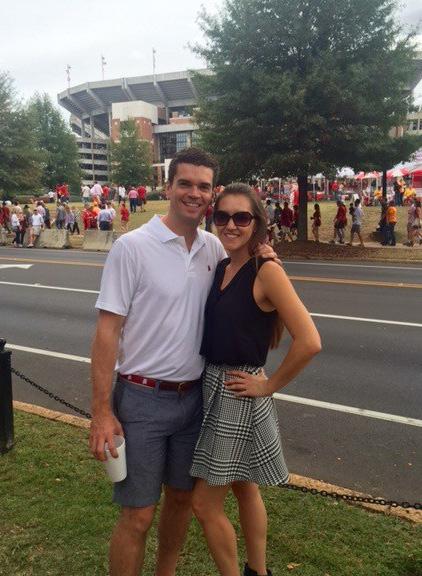
MichaelandRebeccaShanahanin frontofSabanFieldatBryant-Denny StadiumforRebeccaShanahan’sfirst Alabamafootballgamein2015.
Bama From Beyond: Impacting
UA From 2,000 Miles Away
Michael Shanahan grew up in Dothan, Alabama, and graduated from The University of Alabama in 1999 with a bachelor’s degree in biology and a minor in general business. After moving to California and meeting Rebecca Shanahan, he encouraged her to come back to Alabama and experience the SEC atmosphere he grew up in. Rebecca Shanahan, who attended California State University Long Beach and thought the biggest football experience was a USC or UCLA game, agreed to attend the Alabama vs. Tennessee football game in 2015.
“Everything was mind-blowing to me, just seeing that it was so different than a West Coast experience. It was cool for me to see what he went through in college and it finally made sense, all the stuff that he would talk about,” Rebecca Shanahan said. “That’s my first big memory of Alabama and then I was like, wow, OK, I’m into this, this is great.”
Now, Michael and Rebecca Shanahan are the managing partner and director of client experience, respectively, of High Bluff Private Wealth, a financial planning and wealth management firm in San Diego. Although he is over 25 years and 2,000 miles removed from the Barefield College of Arts & Sciences, Michael Shanahan still remembers and honors the experiences he had, the lifelong friendships he made and the education he received.
“It was just a really great experience for me,” Michael Shanahan said. “The whole college life experience that Alabama brought with sports and tradition and then education obviously too, it’s just the whole package.”
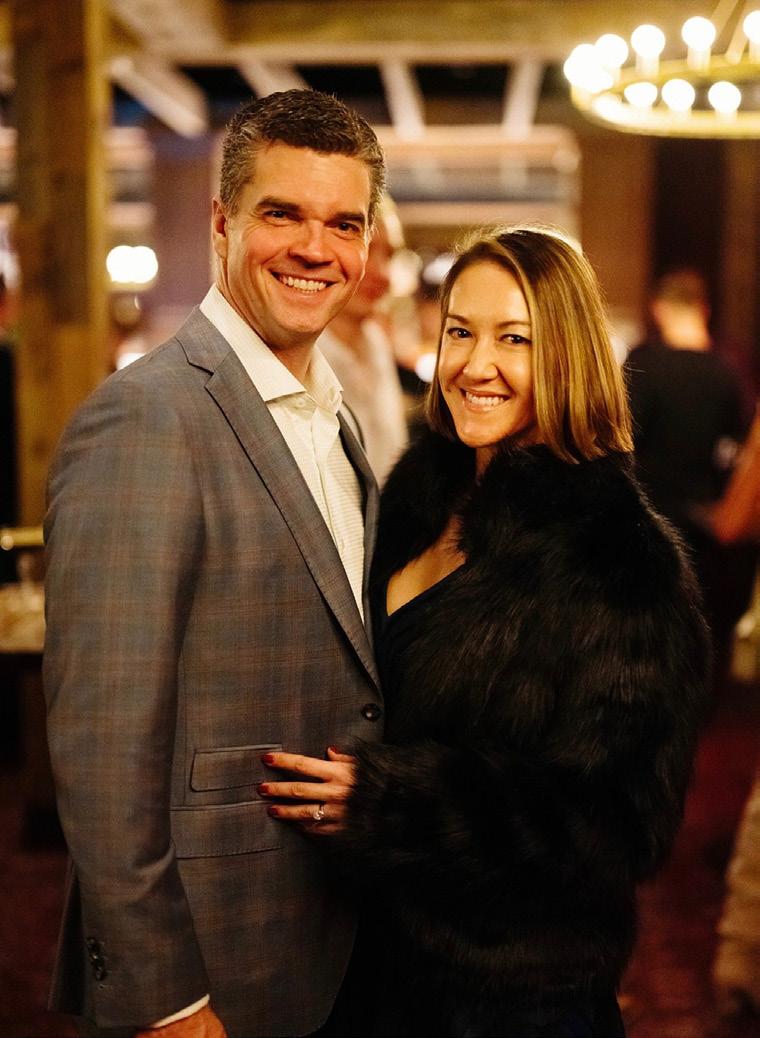
MichaelandRebeccaShanahan
In the 2024-2025 academic year, the Barefield College of Arts & Sciences awarded 1,209 individual scholarships totaling $2,139,550. Impactful commitments like the Shanahans’ enable this level of student support that changes lives and futures.
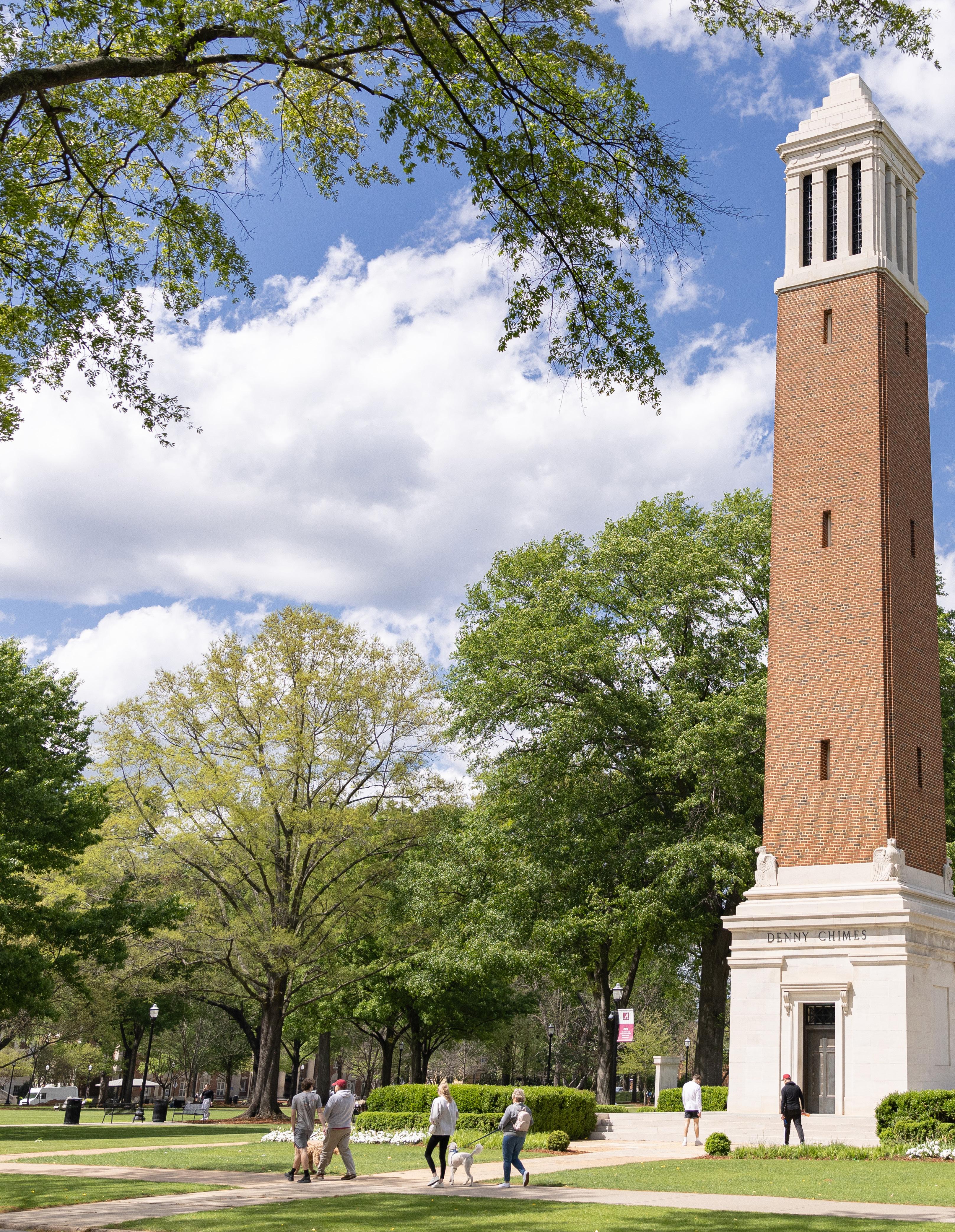
Please send information about new jobs, promotions, retirements, honors and achievements for BCAS Desktop News. Mail entries to The University of Alabama, College Relations, Box 870268, Tuscaloosa, AL 35487 or email entries to bcasmedia@ua.edu.
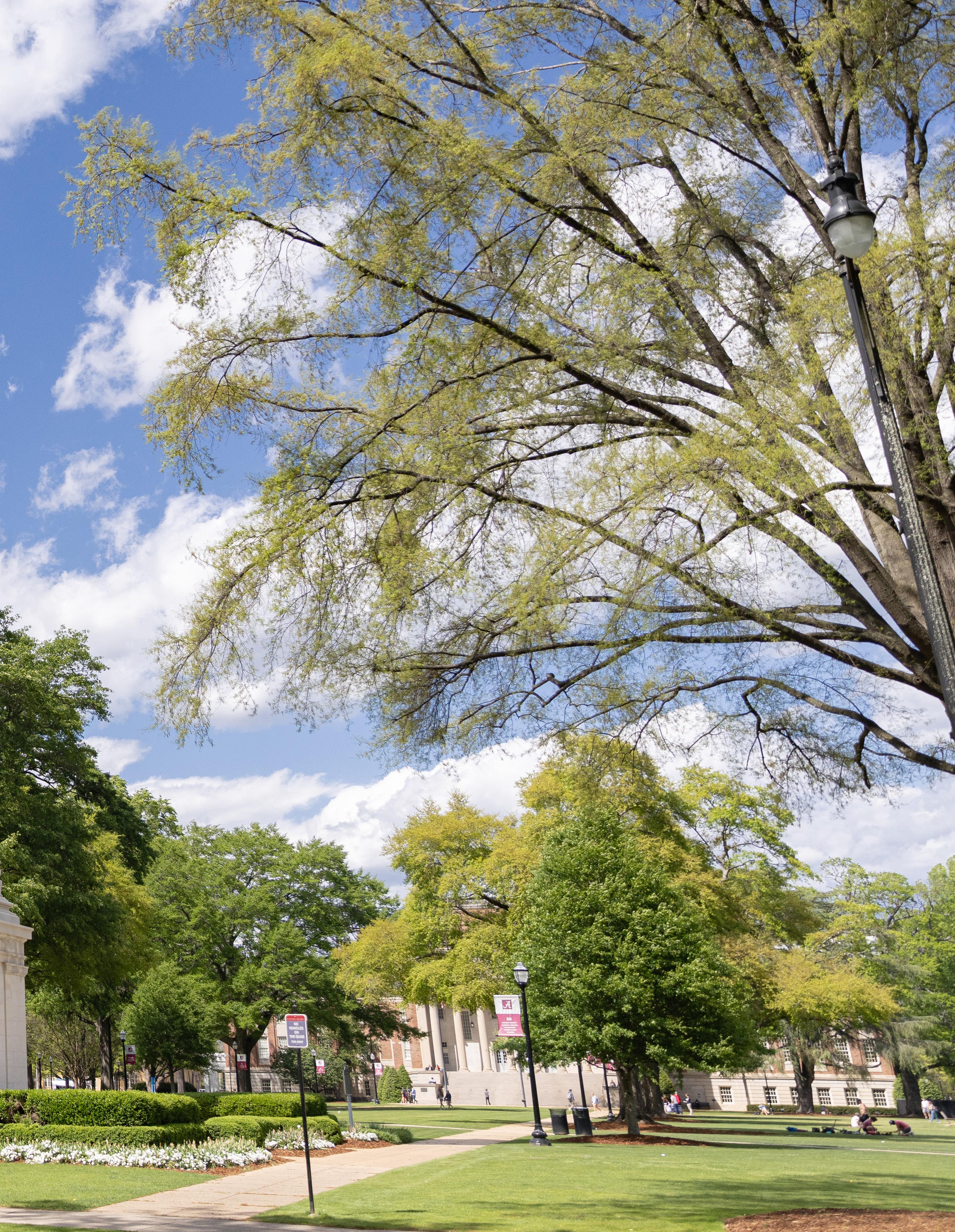


Tuscaloosa, AL 35487-0268