


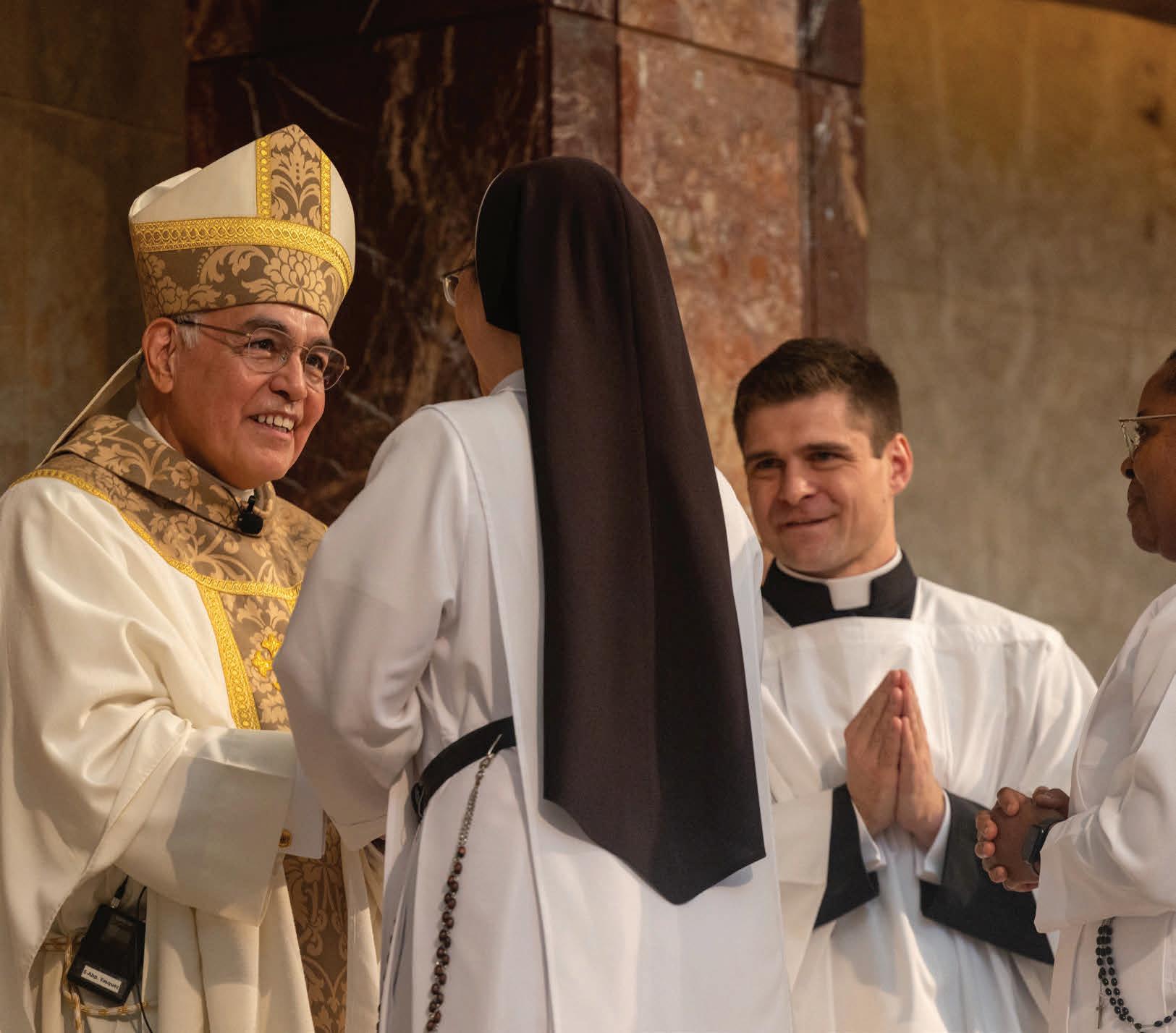
HOUSTON — On June 11, Archbishop Joe S. Vásquez and Auxiliary Bishop Italo Dell’Oro, CRS, will join other U.S. bishops in consecrating the U.S. to the Sacred Heart of Jesus as part of a national celebration marking the 250th anniversary of the Declaration of Independence during a gathering in Orlando, Florida.
Parishes in the Archdiocese and around the country are encouraged to join the bishops in celebrating the consecration of the nation to the Sacred Heart.The decision to mark the anniversary with the special consecration was voted on during the USCCB’s fall assembly Nov. 11 to 13, 2025, in Baltimore.
“Devotion to the Sacred Heart has developed over the centuries following the experiences of St. Margaret Mary Alacoque and the apparitions she witnessed in the 17th century. Popes have lauded the practice of consecration of the self, home and even whole nations to the Sacred Heart,” said Archbishop Alexander K. Sample, chair of the committee for religious liberty, in a reflection on the upcoming consecration.
Noting several encyclicals that emphasize a devotion to the Sacred Heart, including Haurietis Aquas by Pope Pius XII and Dilexit Nos by Pope Francis as well as the apostolic exhortation Dilexi Te by Pope Leo XIV, he continued: “As we reflect with gratitude on the blessings God has bestowed on our country, our devotion to the Sacred Heart demands that we consider how we might foster truth, justice and charity in American life.”
“We are called to bring our faith into the actions we take and the lives we lead in our communities,” Archbishop Sample said. “We celebrate the ways the Church has contributed to a more just world, and we invite all in our society to see the face of Christ reflected in each sister and brother,” the archbishop concluded. “We welcome God’s ‘kingdom of justice, fraternity and solidarity,’ remembering that ‘God has a special place in His heart for those who are discriminated against and oppressed, and He asks us, His Church, to make a decisive and radical choice in favor of the weakest.’”
“This anniversary and consecration will be a great opportunity to promote the beautiful devotion to the Sacred Heart and to encourage the laity to offer their lives in service to God and their country.”
For more information about the upcoming consecration to the Sacred Heart and resources for prayer and how to get involved, visit www. archgh.org/sacredheart. †
By Archbishop Joe S. Vásquez
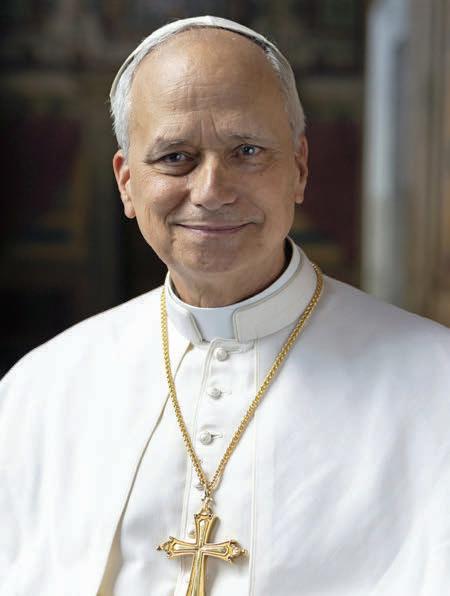
In this message, Archbishop Joe S. Vásquez shares the homily given by Pope Leo XIV at an April 26 Mass when he ordained 10 new priests at St. Peter’s Basilica. Archbishop Vásquez is set to ordain four men to the priesthood for the Archdiocese of Galveston-Houston on June 6 at the Co-Cathedral of the Sacred Heart.
Dear brothers and sisters,
This Sunday is full of life! Although death surrounds us, Jesus’ promise is already coming true: “I came that they may have life, and have it abundantly” (Jn 10:10). We see great generosity and enthusiasm in the willingness of these young men, whom the Church calls today to be ordained as priests. It is the Holy Spirit who unites people and vocations in freedom, so that no one lives for themselves any longer.
The vocation of these our brothers invites us to reflect upon the priest’s service, which is a ministry of communion. “Life in abundance,” in fact, comes to us in a deeply personal encounter with the person of the Son, but it immediately opens our eyes to our brothers and sisters who are already experiencing, or who are still seeking, the “power to become children of God” (Jn 1:12). Dear ordinands, the deeper your bond with Christ, the more radical your belonging to all of humanity. There is no opposition, nor competition, between heaven and earth; in Jesus, they are united forever. Certainly, like the love of spouses, the love that inspires celibacy for the Kingdom of God must also be guarded and constantly renewed. You are called to a specific, delicate and difficult way of loving and, even more so, of allowing yourselves to be loved in freedom. This will make you not only good priests but also honest, helpful citizens, builders of peace and social friendship.
In this regard, in the Gospel that was proclaimed (Jn 10:1–10), Jesus refers to aggressive figures and actions: strangers, thieves and robbers who disregard boundaries and intrude between Him and those He loves. They come, Jesus says, “only to steal and kill and destroy.” Their voices are different from His own and are unrecognizable. With His words, He evokes not only forms of physical aggression, but above all of spiritual aggression. This does not, however, deter Him from giving up His life. We must not be frightened by reality. It is the Lord of life who calls us. May the ministry entrusted to you, dear brothers, convey the peace of those who know that they are safe, even amid dangers.
“May
”
At one point in today’s Gospel, Jesus begins to speak about Himself using an important image. “Very truly, I tell you, I am the gate for the sheep” (Jn 10:7). This image reminds us of Baptism.
“I am the gate,” Jesus said. Dear ordinands, consider yourselves to be part of this suffering humanity, which awaits abundant life. By introducing others to the faith, you will rekindle your own. Together with the baptized faithful, you will cross the threshold of the mystery every day — the threshold bearing the face and name of Jesus. Never hide this holy door. Do not block it; do not be an obstacle to those who wish to enter. “You did not enter yourselves, and you hindered those who were entering” (Lk 11:52).
Today more than ever, especially when statistics seem to indicate a divide between people and the Church, keep the door open! Let people in, and be prepared to go out. You are a channel, not a filter. Many believe they already know what lies beyond the threshold. Often, there is something within them that is alive and has not died out; this draws them in. The Lord knows, and He waits. Be a reflection of His patience and tenderness. You belong to everyone and are for everyone! Let this be the fundamental purpose of your mission: to keep the threshold open and direct others to it, without using too many words.
Today, the need for security makes people aggressive, causes communities to close in on themselves and leads people to seek out enemies and scapegoats. Fear is often present around us and perhaps within us. May your security not lie in the role you hold, but in the life, death and resurrection of Jesus, as well as in your participation, along with your people, in the story of salvation. This salvation is already at work in the many good deeds that are quietly carried out by people of goodwill in the parishes and settings where you will join them as fellow travelers. What you proclaim and celebrate will protect you, even in difficult times.
In the communities where you will be sent, the risen One is already present, and many have already followed Him commendably. You will encounter people who will direct you towards Him. These communities will also help you to become saints! For your part, help them to walk together, following Jesus, the Good Shepherd, so that they may become places of life that rise anew and share themselves with others. Facilitating encounters, helping to bring together those who would otherwise never meet, and conciliating division is one and the same as celebrating the Eucharist and Reconciliation. Coming together always means planting the Church anew.
On the other hand, Jesus insists and clarifies: “I am the gate. Whoever enters by me will be saved, and will come in and go out and find pasture” (Jn 10:9). He does not stifle our freedom. The Church’s doors are open, but not to cut us off from life. Whoever is saved can “go out and find pasture.”
Dear brothers, go out and discover culture, people and life! The people you will serve as priests inhabit pastures that you must come to know. At times, it will seem to you that you lack the necessary maps. But the Good Shepherd has them; listen to His very familiar voice. So many people today feel lost! In this regard, there is no more precious testimony than this: “He makes me lie down in green pastures; He leads me beside still waters; He restores my soul. He leads me in right paths for His name’s sake” (Ps 23:2–3). His name is Jesus: “God saves”! You are witnesses to this. Dear brothers, sisters and young people: may it be so!
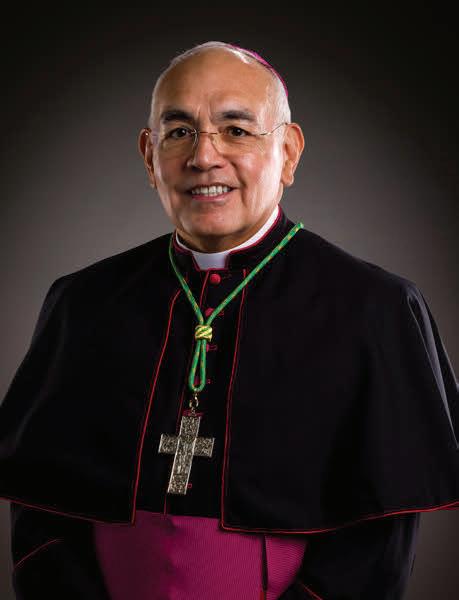
Archbishop Vásquez: The Holy Father reminds us that the priest is called to serve as Christ serves, offering his life freely for the good of God’s people. It is a great joy for me to gather with the priests of the Archdiocese for the biannual convocation. I am grateful to these men for dedicating themselves to ministering to this local Church. This time gives us the opportunity for rest, renewal and priestly fraternity. Please pray for us and especially for the four men who will be ordained to the priesthood on June 6. †
PUBLISHING SINCE 1964 (USPS 936-480)
EDITORIAL
tch@archgh.org • archgh.org/tch 713-652-8215 • Fax: 713-659-3444
CIRCULATION
tdieli@archgh.org • 713-652-4444
ADVERTISING ads@archgh.org • 713-652-4407
Archbishop Joe S. Vásquez President & Publisher
Jonah Dycus Communications Director & Executive Editor
Rebecca Torrellas, James Ramos
Editorial
Catherine Viola Advertising Manager
Leonard J. DeLorenzo, Bronwen McShea, Kerry McGuire, Elizabeth Morales and Jo Ann Zuñiga Contributors
The Texas Catholic Herald is published semi-monthly on Tuesdays, with one issue in June, July and August, by The Texas Catholic Herald Publishing Co., Inc., 1700 San Jacinto St., Houston, TX 77002. Periodical postage paid at Houston, TX and other distribution points.
Postmaster: Send address changes to P.O. Box 907, Houston, TX 77001
Subscription rate: $15 per year; $20 outside of Texas; $35 out of U.S.
TCH PUBLISHING SCHEDULE
Issue date: June 9
Deadline: Noon on May 19
Issue date: July 14 Deadline: Noon on June 16
Editorial deadlines are no later than Tuesday at noon, 21 days prior to the
PHOTOS BY JAMES RAMOS/HERALD
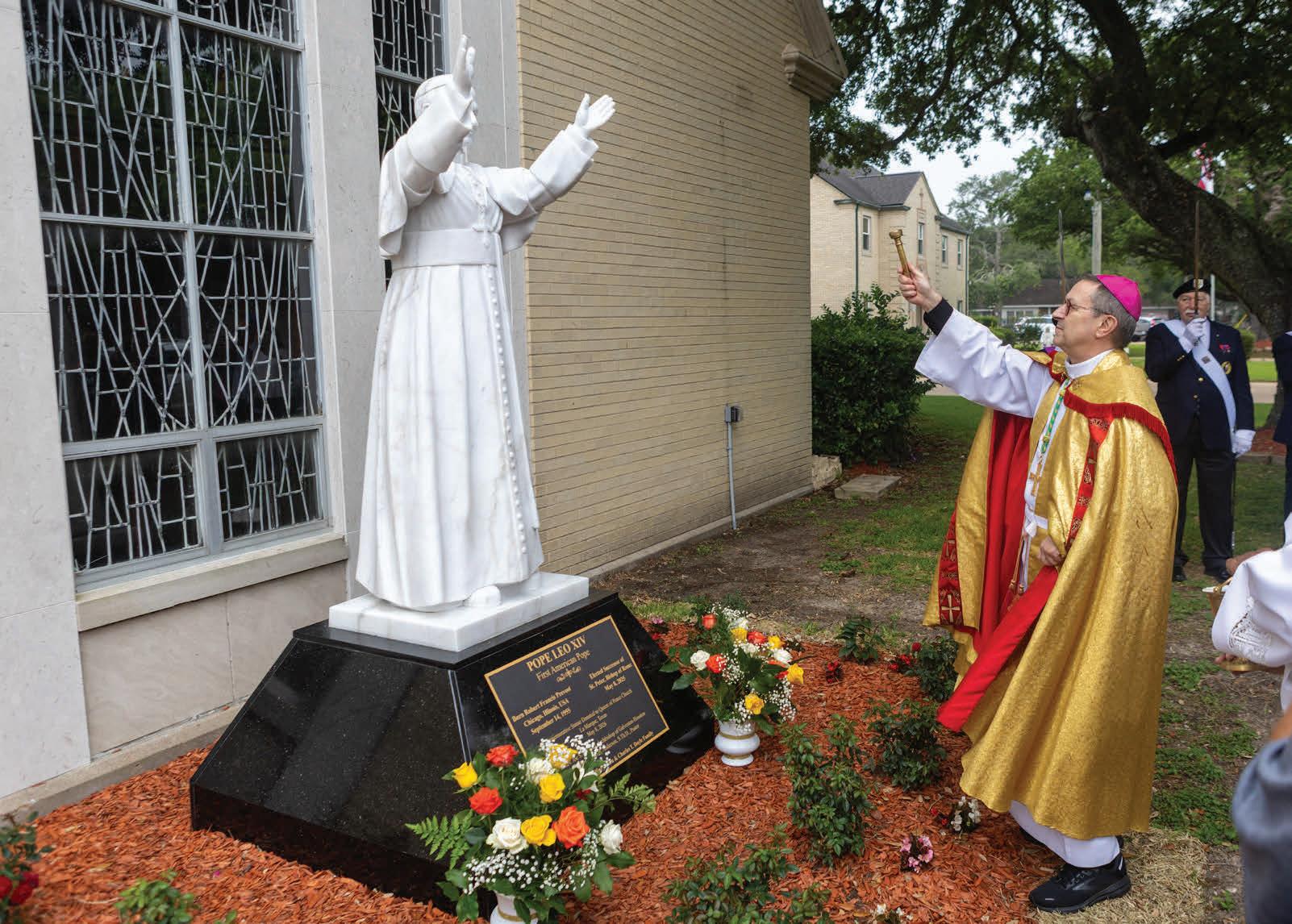
At left, Auxiliary Bishop Italo Dell’Oro, CRS, sprinkles holy water onto a statue of Pope Leo XIV at Queen of Peace Parish in La Marque on May 8 during a dedication Liturgy. The blessing also marked the first anniversary of the America-born pope’s election. Seen below, the statue is visible next to the church on Laurel Street in La
BY JAMES RAMOS
Texas Catholic Herald
LA MARQUE — Queen of Peace Parish marked the first anniversary of Pope Leo XIV’s election on May 8 with the dedication and blessing of a new statue installed on the church lawn along Laurel Street.
Auxiliary Bishop Italo Dell’Oro, CRS, joined parishioners and clergy for the ceremony, which included prayer, singing and a formal blessing. A reception followed in the parish life center.
Monsignor James Anderson, pastor of Queen of Peace, said the installation reflects the parish’s identity and mission as part of the universal Church.
“We are the last parish before Galveston Island, and I have been privileged to be here as pastor for five years,” Monsignor Anderson said. “Part of my work has been to establish that we are the Catholic Church, which means universal throughout the whole world.”
The statue, which depicts Pope Leo XIV greeting the world with arms raised, was unveiled on the anniversary of the pontiff’s election, a date Monsignor Anderson called significant for both the global Church and the local parish, which is celebrating its 75th anniversary in 2026.
Pope Leo XIV, a Chicago-born member of the Augustinian order, previously served in ministry and leadership roles in the U.S. and Latin America, including Peru. Before his election to the papacy, Pope Leo XIV also held international leadership as prior general of the Augustinian order.
“The pope is the authentic witness to the Church’s faith, as well as the visible sign of its unity,” Monsignor Anderson said. “It is a great blessing to have this statue, and I hope people will come and see it.”
Monsignor Anderson also thanked donors Chuck and Mary Ellen Doyle for making the installation possible and emphasized the parish’s diversity.
“Our greatness is in our diversity, the unity we share in the diversity of our people here,” Monsignor Anderson said.
During the blessing, Monsignor Anderson told attendees that the statue would serve as a lasting reminder of the pontiff’s leadership and call to holiness.
“When we look upon this representation, we can think of

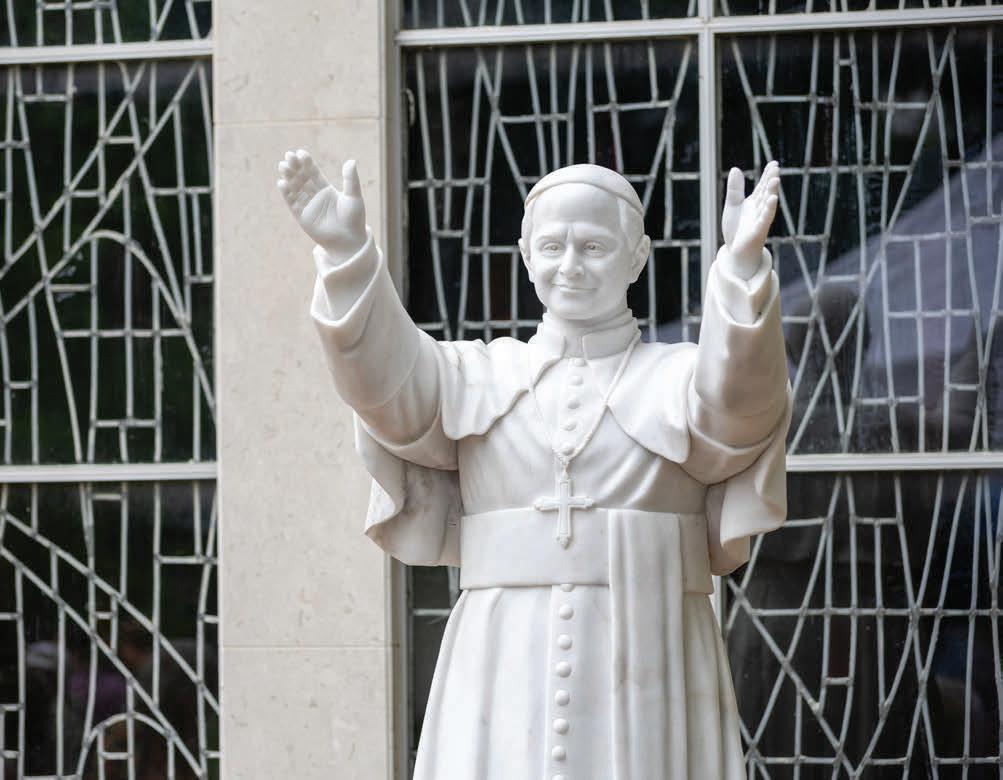
the one whom the Lord has chosen, who has faithfully followed Him,” Monsignor Anderson said. “May we be motivated to seek God’s will in our own lives.”
Bishop Dell’Oro, who met Pope Leo XIV in August 2025, reflected on the significance of the pope’s election, describing it as a work of the Holy Spirit.
“The election of the pope is truly a decision of the Holy Spirit,” Bishop Dell’Oro said. “No one would have predicted an American pope. That in itself is a sign of the Spirit at work.”
The bishop said Pope Leo XIV brings a distinctly American experience to the global Church.
“He brings with him his whole experience, his understanding of what America is, and offers it in service to the entire world,” Bishop Dell’Oro said.
Bishop Dell’Oro also highlighted the speed and clarity of the conclave that elected the pope.
“In just a few ballots, he received the votes needed, a clear sign of God’s hand in his election,” Bishop Dell’Oro said.
Organizers said the event was intended to bring the community together in celebration and thanksgiving. Parish leaders extended an open invitation for visitors to view the statue and take part in parish life. †
Save some trees and get the Texas Catholic Herald sent straight to your inbox with The Digest, our free email newsletter. For free features, exclusive content and more, sign up at WWW.ARCHGH.ORG/TCHDIGEST.
Co-Cathedral to host Portuguese Mass on June 21 during World Cup
HOUSTON — As Houston prepares to welcome fans for the 2026 FIFA World Cup, the Co-Cathedral of the Sacred Heart announced it will celebrate a Mass in Portuguese on June 21 at its downtown location, 1111 St. Joseph Pkwy.
Houston is scheduled to host seven World Cup matches at NRG Stadium from June 14 to July 4, including five group-stage games and two knockout matches. City officials expect more than 500,000 visitors as teams from Cabo Verde, Congo DR, Curaçao, Germany, Netherlands, Portugal, Saudi Arabia, Sweden and Uzbekistan compete.
Organizers said the Mass is part of broader efforts to welcome international visitors during the tournament. More information is available at archgh.org/worldcup. †
Registration opens for gold, silver anniversary Masses
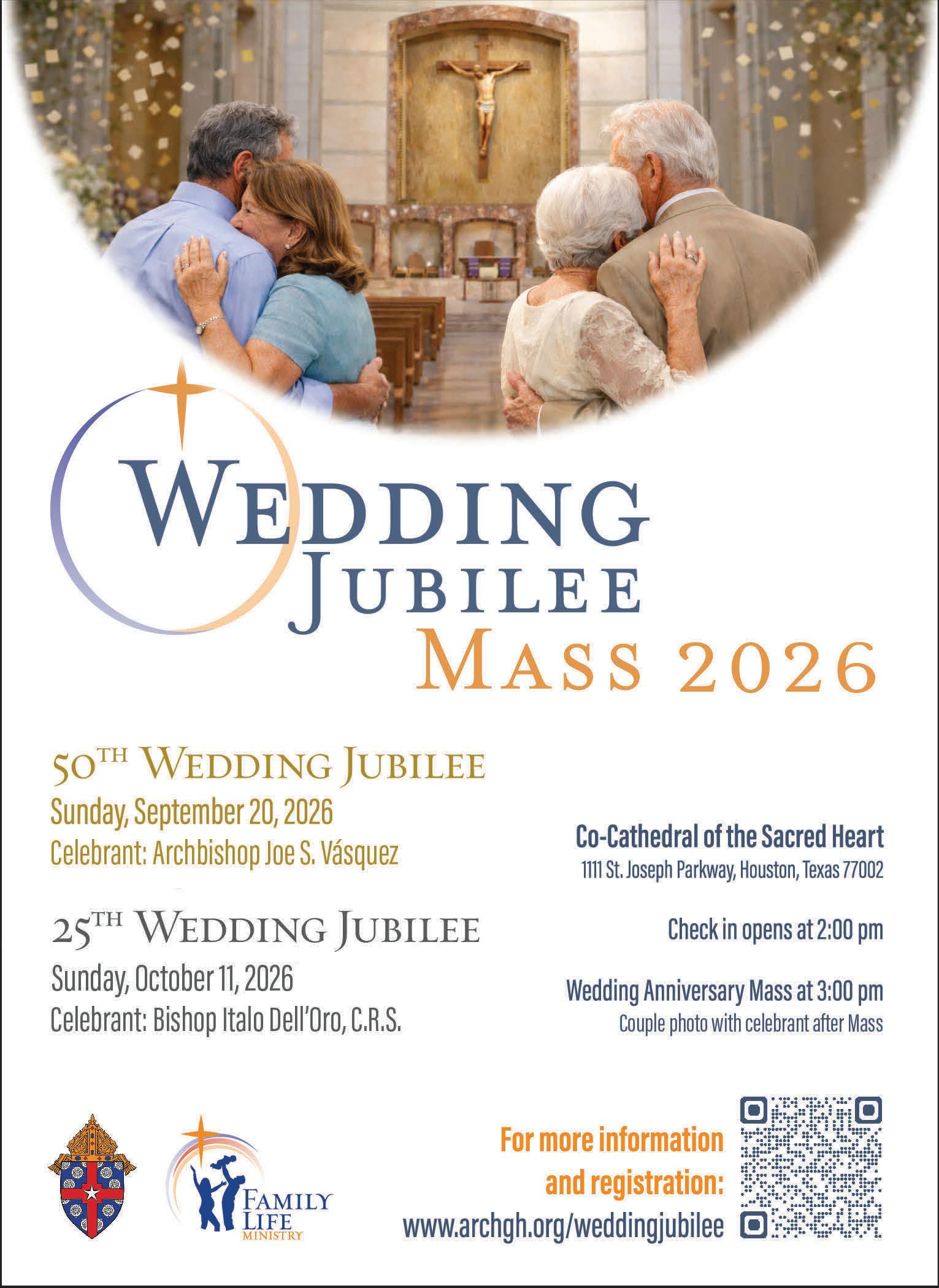
HOUSTON — The 2026 Wedding Anniversary Jubilee Masses honoring couples celebrating their Silver (25th) and Gold (50th) anniversaries of marriage in the Catholic Church are open for registration.
The Gold Anniversary Mass is set for Sunday, Sept. 20, at the Co-Cathedral of the Sacred Heart, located at 1111 St. Joseph Pkwy. in downtown Houston at 3 p.m. Couples are eligible to receive a special recognition whether they attend the ceremony or not. The Silver Anniversary Mass is set for Sunday, Oct. 11, also at the Co-Cathedral of the Sacred Heart at 3 p.m.
Early registration, which ends July 31 for the 50th and Aug. 31 for the 25th, is $25 per couple and includes an Archdiocesan certificate of each anniversary, a special issue worship aid and a commemorative pin. Registration increases to $40 per couple after those dates.
For more information and to register, visit www.archgh. org/weddingjubilee. †
Popular summer young adult speaker series returns on Thursdays in July
HOUSTON — Café Catholica, the annual young adult summer gathering presented by the Archdiocesan Office of Young Adult and Campus Ministry, is set for four Thursdays in July at St. Vincent de Paul Catholic Church, located at 6800 Buffalo Speedway in Houston. The theme for the summer series is “Rest in Him.”
Open to young adults aged 18 to 39, Café Catholica offers opportunities to gather with nearly a thousand fellow young Catholics for Mass, dinner and talks. The event will be held July 9, 16, 23 and 30. It begins at 5:15 p.m. with Confession, followed by Mass at 6:15 p.m., dinner at 7:15 p.m. and the keynote speaker at 8:15 p.m.
Keynote speakers include Archbishop Joe Vásquez; Author Katie Hartfiel; Father Patrick Gonyeau, formator for Encounter School of Healing; and Cecilia Flores, director of Catholic Volunteer Network.
No registration is needed to attend. Donations are accepted. For more information, visit www.archgh.org/ cafecatholica or call 713-741-8778. †
POPE’S PRAYER INTENTIONS FOR MAY THAT EVERYONE MIGHT HAVE FOOD

Let us pray that everyone, from large producers to small consumers, be committed to avoiding wasting food, and to ensuring that everyone has access to quality food. – Pope Leo XIV –

Texas reaches ‘dark’
of Edward Busby’s death. ▪ SEE PAGE 18
BY BRONWEN MCSHEA Special to the Herald
When it comes to the Catholic Church’s history, we Catholics tend to zero in quickly on canonized saints and those we hope will be canonized. This is understandable, given the importance our faith places on exemplary holiness and the supernatural virtues.
Often, though, we highlight wellknown saints to the exclusion of the much larger tapestry of Catholic experiences and achievements in which our most celebrated canonized figures’ lives are interwoven.
This is true, for example, where the Church in the U.S. is concerned. We American Catholics tend to lack even basic familiarity with the range of men and women among us who, while not in most cases deserving the honors of the altar, helped to make the U.S. both a powerful nation and one ever striving to improve itself morally and socially.
In this year of the nation’s 250th birthday, let us get to know more of these Catholic patriots active in every era since the founding.
CATHOLIC ROOTS IN THE AMERICAN REVOLUTION
For instance, two notable individuals who fought in the American Revolution were Commodore John Barry and Col. John Fitzgerald. Both were born in Ireland and were devout in the faith. Barry, alongside John Paul Jones, was one of the fathers of the American Navy. After fighting bravely in multiple sea and land engagements in the Revolution, President George Washington put him in charge of the reestablished U.S. Navy, giving him the branch’s first commission.
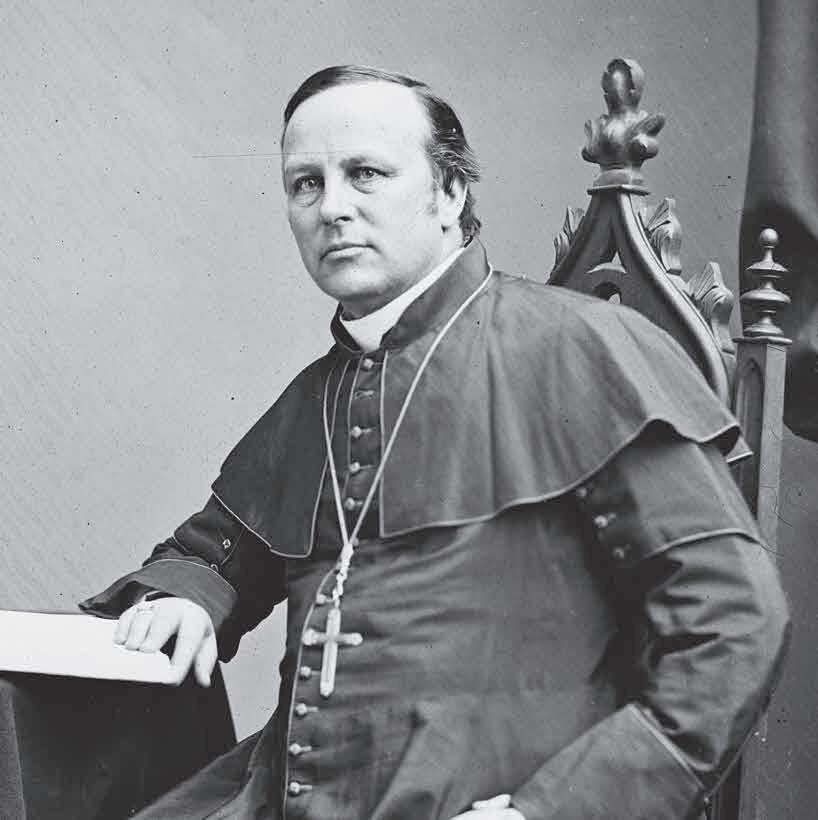
of patriotism and religious devotion among American Catholics. In his homeland, Catholics often distrusted democratic principles in the wake of the French Revolution. In “Democracy in America,” he also expressed surprise that Catholicism in the U.S. was attracting Protestant converts.
Among those converts were Andrew Monroe, a relative of President James Monroe who became a Jesuit after participating in Commodore Matthew Perry’s expedition to Japan, and James Roosevelt Bayley, a nephew of St. Elizabeth Ann Seton and cousin of future President Theodore Roosevelt. Bayley later became bishop of Newark and archbishop of Baltimore and helped promote Catholic education and social welfare efforts, including the founding of Seton Hall University.

Fitzgerald, for his part, joined a patriot militia in Virginia in 1774 and was a loyal aide-de-camp to Gen. Washington during the war, including the winter at Valley Forge. Wounded at the Battle of Monmouth, he later served as mayor of Alexandria and helped found the city’s first Catholic church, the Basilica of St. Mary.
GROWTH AND INFLUENCE IN THE 19TH CENTURY
in 1831, French observer Alexis de Tocqueville noted the strong combination
Another prominent convert was Orestes Brownson, a former Unitarian thinker who became a leading Catholic intellectual. Through writings such as The American Republic (1865), Brownson advocated for labor rights, supported trade unions, opposed slavery and defended both the Catholic faith and the American political system.
that “a people could not long survive the fatal contrast between the Declaration of Independence and the Constitution of the United States.”
Catholics died in great numbers for both the Union and the Confederacy, and devout Catholics were among the officers leading on both sides.
Among Union generals was William Rosecrans. After converting to Catholicism following his graduation from West Point and convincing his brother Sylvester — a future bishop — to do the same, he trained cadets and later helped secure early Union victories, bringing a crucifix and rosary into battle. Although sidelined in 1863 after defeat at Chickamauga, Georgia, he later served as ambassador to Mexico and as a congressman from California’s 1st District.
RELIGIOUS SISTERS TRANSFORM WARTIME CARE
Catholic contributions to wartime care represent one of the most significant yet often overlooked chapters of American history. At the outset of the Civil War, medical care relied heavily on untrained volunteers. As casualties mounted, religious sisters stepped in to provide skilled nursing and hospital management.

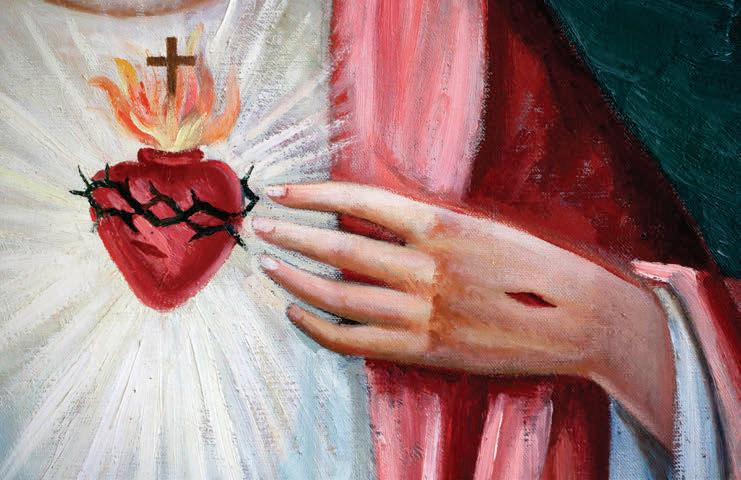
National Consecration Prayer to the Sacred Heart of Jesus
O Most Sacred Heart of Jesus: You know the longings of our hearts, and You desire that we enjoy friendship with You. From Your pierced side, You have poured out the wellspring of life, for which we thirst. Your Heart burns with a love for all people to return to a right relationship with You.
We celebrate the abundant gifts You have given this nation, founded on the self-evident truths that our Creator has endowed all people with the right to life, liberty and the pursuit of happiness. We make reparation for the offenses against You and against human dignity that have taken place in this nation. May our hearts be united to Yours, so that our families and communities enjoy peace and happiness; may broken relationships be reconciled, injustices repaired and the wounds of our land be healed. May Your holy Catholic Church serve as a sign, pointing all people to Your infinite love.
O Desire of Nations and Center of History, we ask You to bless these United States of America. Who live and reign with God the Father in the unity of the Holy Spirit, God, forever and ever. Amen. †
supported the war effort alongside the Knights of Columbus.
Groups such as the Daughters of Charity and the Sisters of Mercy staffed and expanded care systems across the country. Mother Angela Gillespie of the Sisters of the Holy Cross transformed a warehouse in Mound City, Illinois, into one of the nation’s largest hospitals.
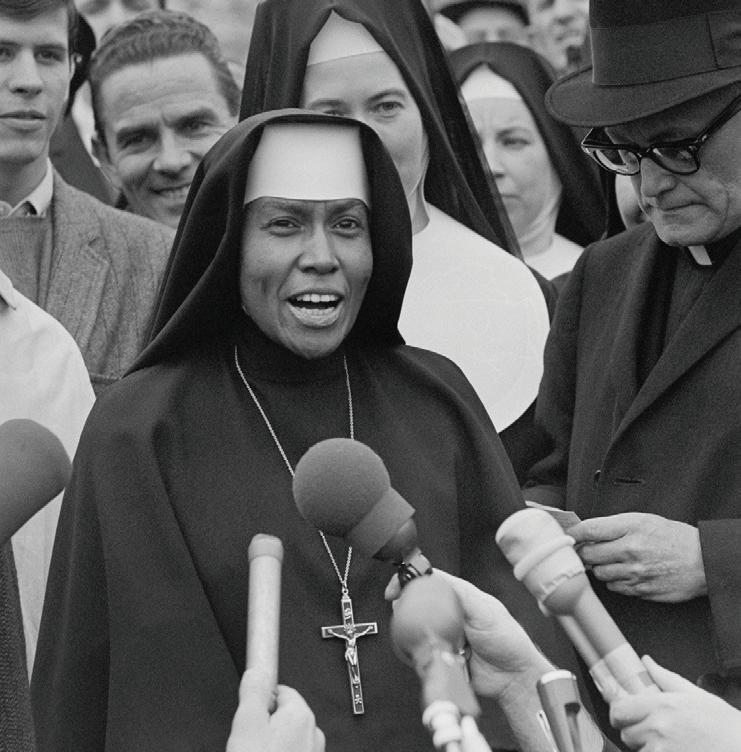
Catholic sisters continued this work in later conflicts. During the SpanishAmerican War, figures such as Mother Mariana Flynn and Mother Mary Anthony Bordeaux served in military nursing roles. Bordeaux, a member of the Lakota people, was among the first Native American women recognized by the Army for such service. Religious communities also played key roles during World War I, including caring for thousands of soldiers during the 1918 influenza pandemic.
In World War II, Catholic laywomen and religious sisters again served as nurses in Europe and the Pacific. Catholic organizations, including the National Council of Catholic Women and the Catholic Daughters of America,
Beyond wartime, Catholics have contributed to American society in many other ways. Eugenia Washington helped found lineage organizations such as the Daughters of the American Revolution. Philanthropists such as Sarah Peter and J.J. Haverty helped develop major art collections. Figures like Matthew Ahmann and Franciscan Sister Mary Antona Ebo, FSM, played important roles in the Civil Rights Movement.
Countless other Catholics have served in government, advocated for just wages and safe working conditions, defended vulnerable populations and built networks of schools, hospitals and charitable institutions.
American Catholics, like all people, have much to repent of and improve upon. But we also have a long record of noble contributions. As we celebrate and critique the U.S. in this anniversary year, let us learn and honor more of that history to better understand who we are and to inspire future contributions. †
Bronwen McShea, Ph.D. (Yale), MTS (Harvard), is an historian, writer, speaker, and artist based in New York City.
BY LEONARD J. DELORENZO Special to the Herald
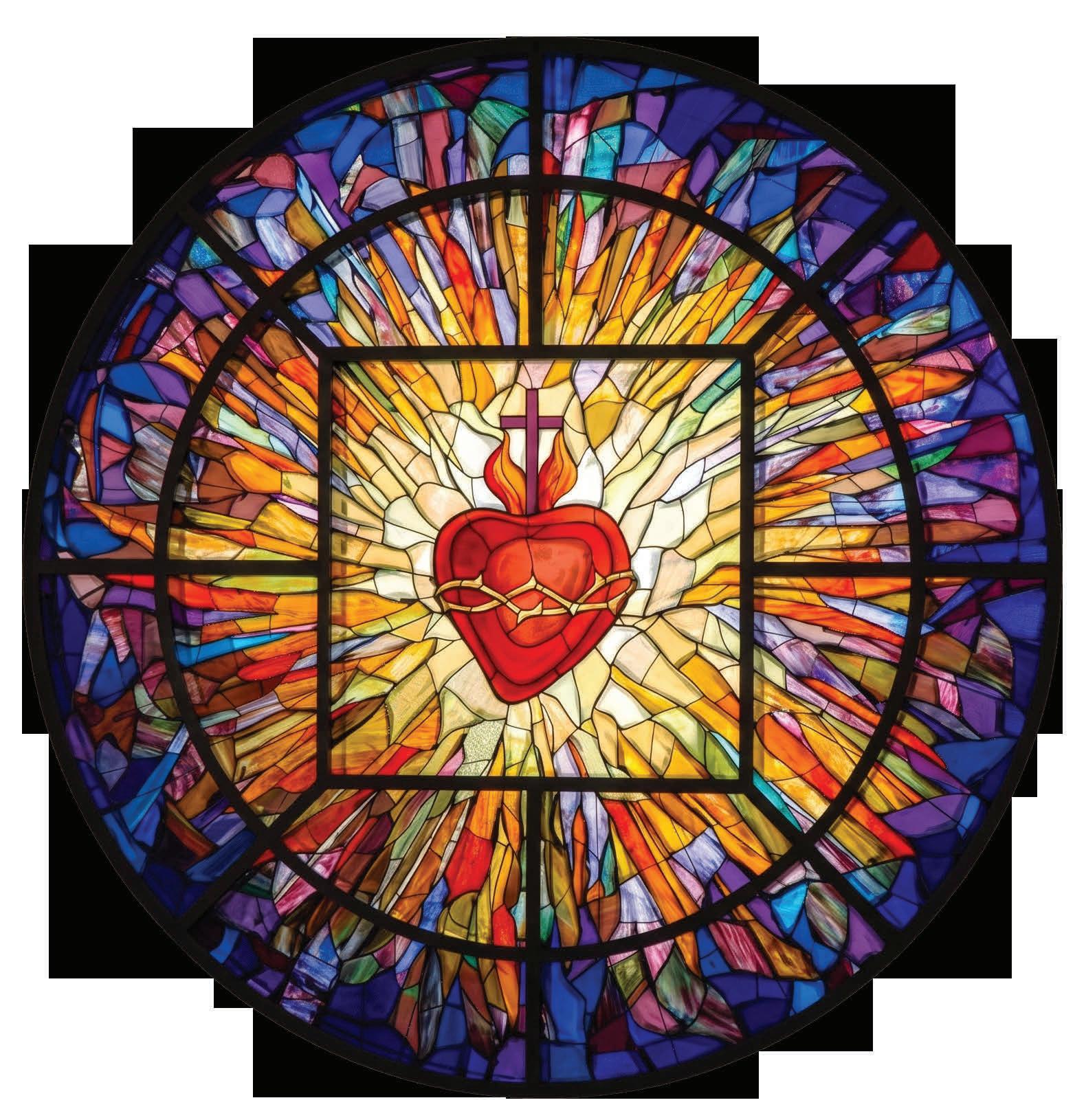
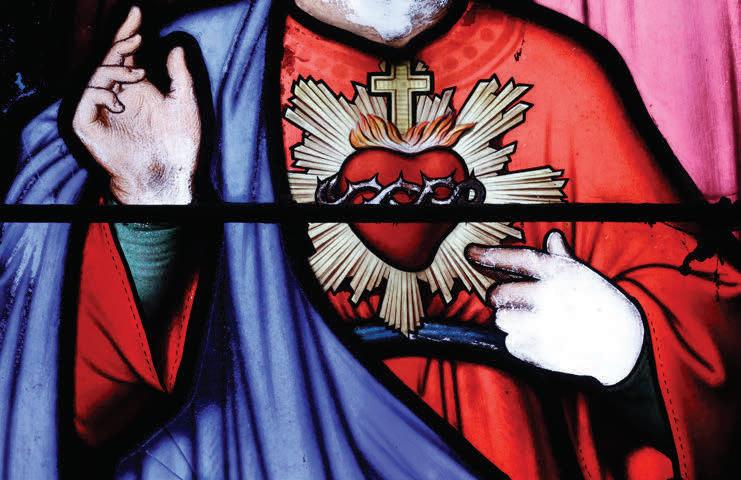
HOUSTON (OSV News) — Above the eastern transept of the Co-Cathedral of the Sacred Heart in downtown Houston, visitors can look up and see a massive stained glass window of the Sacred Heart of Jesus that glows in the summer sunlight, an inspiring depiction of one of the most famous devotions of the Church.
In fact, seven Catholic communities in the Archdiocese, from Pattison to Galveston, carry the name of the Sacred Heart, including the co-cathedral. The image of the Sacred Heart is also found in many Catholic households’ shrines, seen on car visors and in the traditional Mexican milagros religious art icons.
Devotion to the Sacred Heart of Jesus ultimately bears one marvelous fruit: a heart like His own. Near the end of the Litany of the Sacred Heart, we pray, “Jesus, gentle and humble of heart, touch our hearts and make them like your own.”
Gentleness and humility form the heart of the disciple. This devotion is not merely about receiving something, but becoming like the one we love.
The Sacred Heart is charity incarnate — divine charity made flesh. To draw near to it is to enter into that love, to be moved by it and made alive in it. As St. John Eudes writes, this devotion must produce virtues in action, not only in feeling or words, but in conformity to Christ’s heart.
St. Margaret Mary Alacoque likewise taught that to belong to the Sacred Heart is to become meek and humble, enduring trials patiently and serving others generously. In this way, devotion shapes us into the love we adore, fulfilling Christ’s promises to those devoted to his heart.
PROMISES OF THE SACRED HEART
The 12 promises of the Sacred Heart are Jesus’ pledge to make the devotion and charity of those who adore His heart truly fruitful. To adore His heart is an act of faith, trusting, in part, that His promises are true. Those of us who begin to devote ourselves to his heart cannot taste this fruit beforehand; rather, it is only through the devotion itself that these fruits become available. Jesus asks for trust and dedication, and he rewards those who trust in Him with a steady share in His own charity.
The 12 promises are laid out below in four sets of three to highlight this progression:
THE GIFT OF HEALING
Jesus first meets us in our weakness and need:
• I will comfort them in all their afflictions.
• Sinners shall find in My Heart the source and infinite ocean of mercy.
• Those who receive Communion on nine consecutive First Fridays will receive the grace of final perseverance. These promises speak directly to the realities of suffering, sin and death. The Sacred Heart offers real consolation in trials, not by removing difficulty but by sustaining us within it. As St. Paul teaches, strength is often revealed in weakness.
For those burdened by sin, Christ’s mercy flows abundantly from His Heart. And for those who remain faithful in trust, He promises not to abandon them at life’s end, but to be their refuge in their
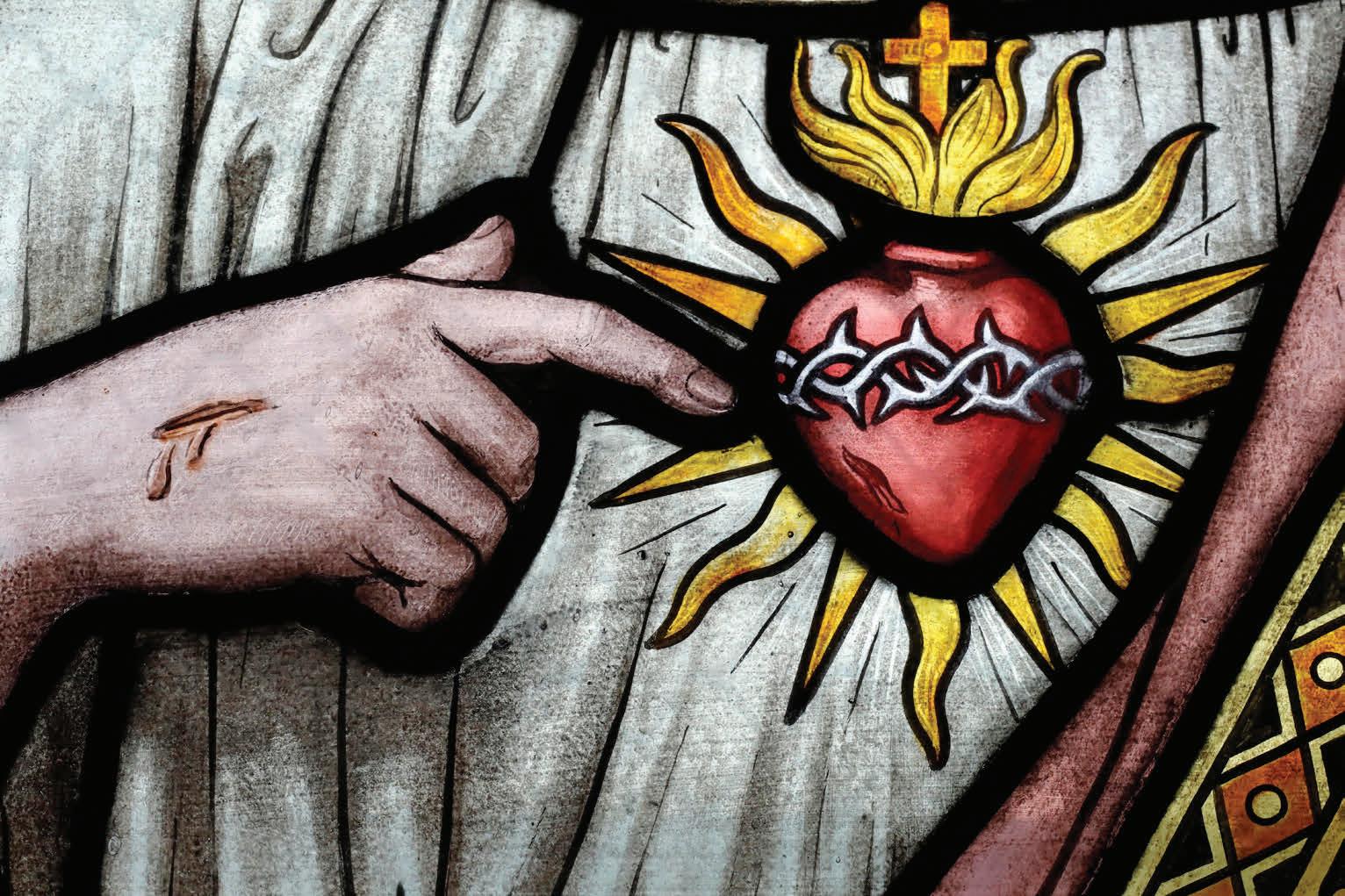
PHOTO BY PASCAL DELOCHE/GODONG
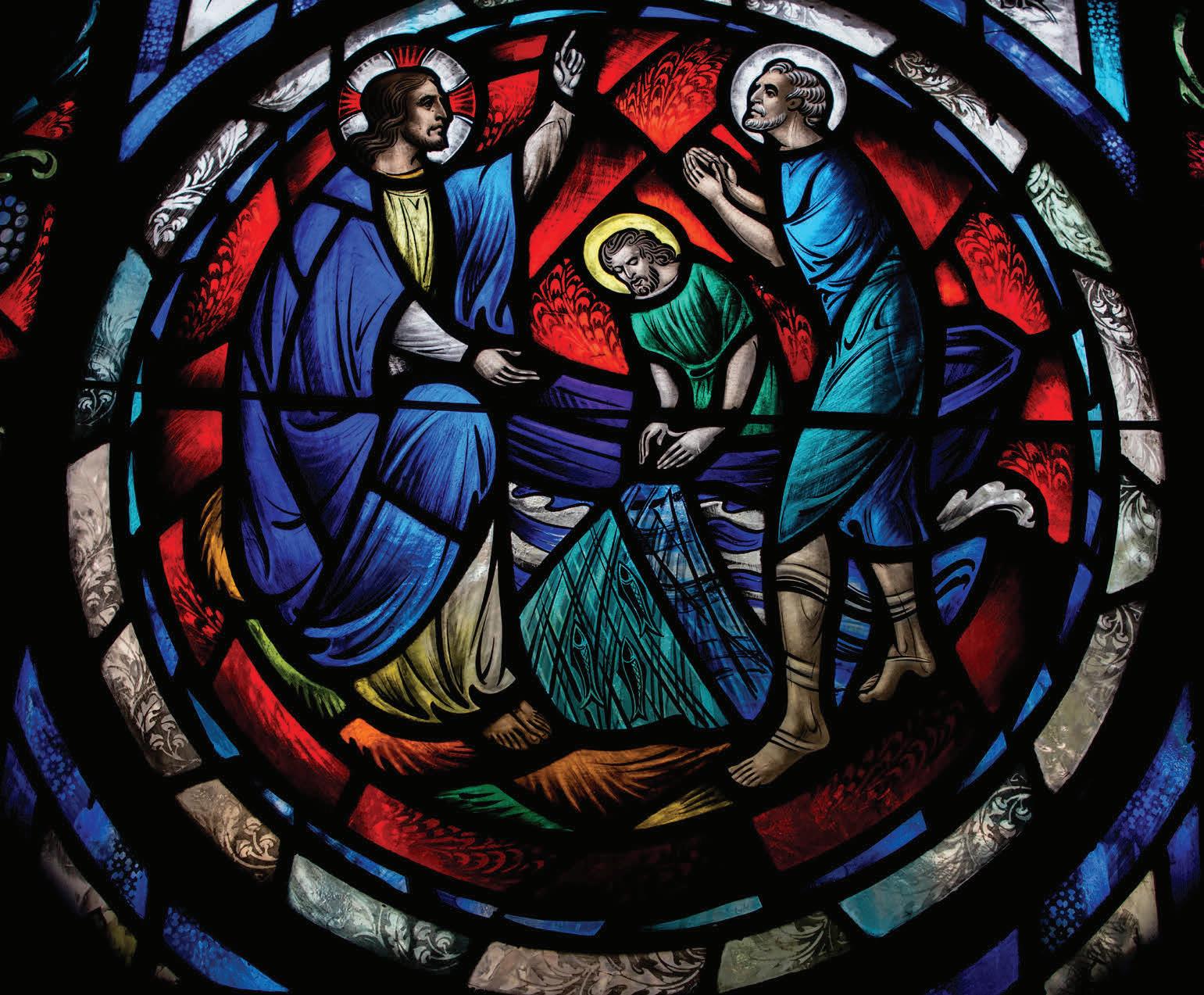
A stained glass window at the Church of St. Pothin in Lyon, France, depicts the Sacred Heart of Jesus.
final hour. In this way, the Sacred Heart heals affliction, restores the sinner and brings hope even in the face of death.
The Lord not only heals, but builds up those who follow Him:
• I will give them the graces necessary for their state of life.
• I will bless their undertakings.
• I will give priests the gift of reaching even the most hardened hearts.
God does not call without equipping. According to each person’s vocation, He provides the grace needed to live faithfully and to serve others well. His blessings are not minimal, but abundant — sufficient for the work He entrusts to us.
In a particular way, priests devoted to the Sacred Heart are strengthened in their ministry, becoming instruments through which even resistant hearts may be moved. The Heart of Christ not only restores but empowers His people for mission.
THE GIFT OF SANCTIFYING
The devotion does more than shape what we do; it transforms who we are:
• I will be their strength in life and especially in death.
• Tepid souls shall grow fervent.
• Fervent souls shall quickly advance toward perfection.
Those devoted to the Sacred Heart grow steadily in holiness. Strength becomes an interior reality, not only an external aid. Charity deepens, and the believer increasingly shares in the life of Christ.
This growth is dynamic. Lukewarm hearts are renewed, while those already fervent are drawn further toward conformity with Christ. The Sacred Heart becomes both the source and the pattern of a life ordered in love.
THE GIFT OF ABIDING
Ultimately, the Sacred Heart leads the faithful into lasting communion with God:
• I will establish peace in their homes.
• I will bless every place where an image of My Heart is honored.
• Those who promote this devotion will have their names written in My Heart.
Novena to the Sacred Heart of Jesus begins June 3
The Novena to the Sacred Heart of Jesus draws its daily devotions from the Litany of the Sacred Heart. Each day reflects on the wisdom of saints and pontiffs on the Sacred Heart and offers opportunities for prayer and action, framed by Pope Francis’ encyclical Dilexit Nos (He Loved Us) and Pope Leo XIV’s apostolic exhortation Dilexi Te (I Have Loved You).
Join the U.S. Church from June 3 to 11 in praying this Novena to the Sacred Heart, which will conclude with the consecration of the United States to the Sacred Heart of Jesus.
Find prayer guides and other information and resources online at www. archgh.org/sacred-heart-consecration. †
These promises begin in ordinary life.
Homes marked by devotion to the Sacred Heart become places of Christ’s peace — not a passing calm, but the enduring peace He gives His disciples. Over time, this peace extends outward, shaping communities and relationships. What may seem simple or domestic becomes a sign of something greater: the presence of God dwelling among His people.
For those who remain faithful, the promise reaches its fulfillment in abiding with Christ forever. The one who makes room for His Heart becomes, in turn, a dwelling place for divine love. †
– Leonard J. DeLorenzo, who is a professor at the McGrath Institute for Church Life and a theology professor at the University of Notre Dame, contributes to OSV News from Indiana.
BY LEONARD J. DELORENZO Special to the Herald
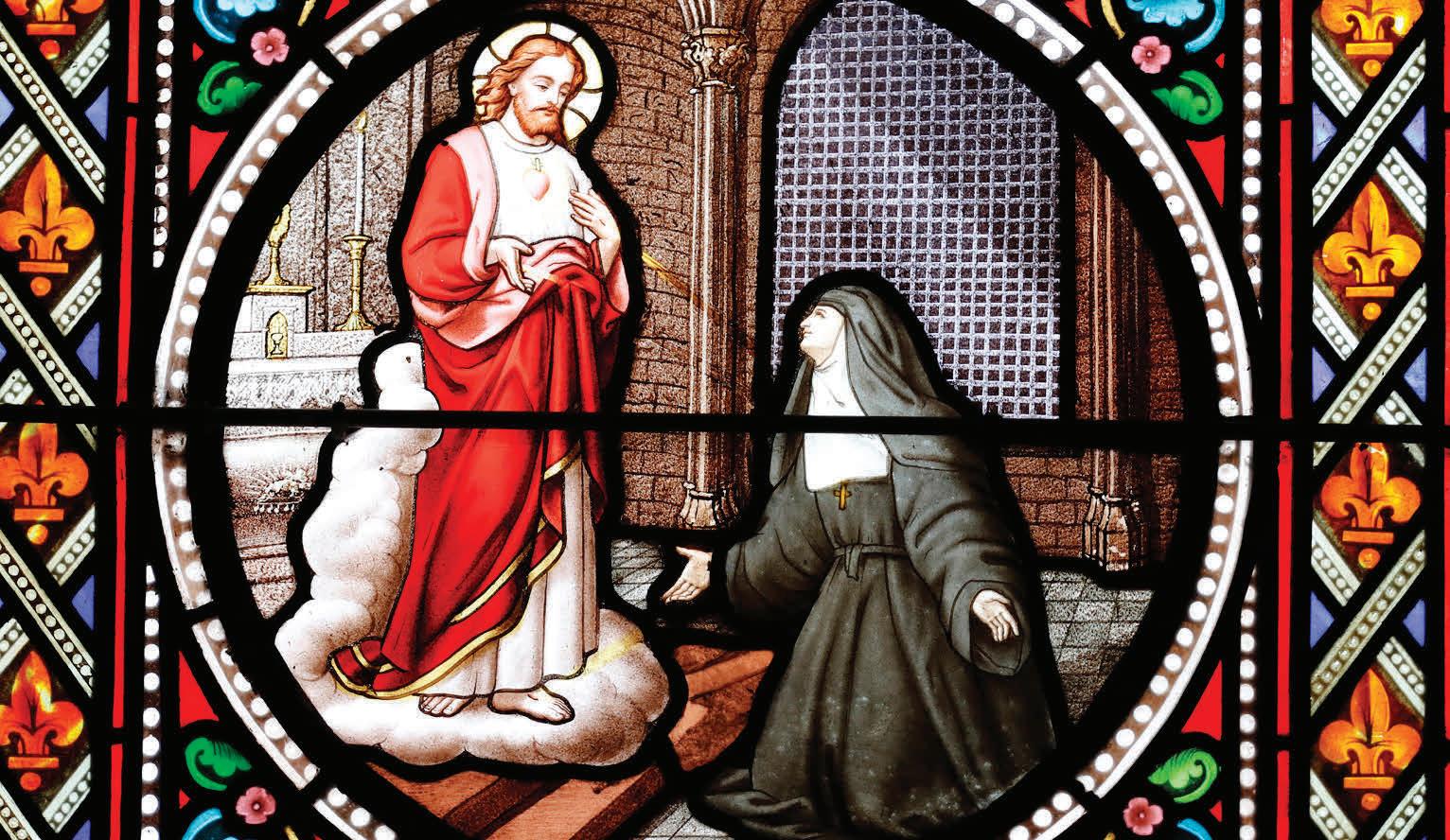
HOUSTON (OSV News) — Devotion to the Sacred Heart of Jesus grew from the Lord’s revelations to St. Margaret Mary Alacoque in the 17th century. In one revelation, He asked her to receive holy Communion on nine consecutive First Fridays and to spend an hour in prayer before the Blessed Sacrament on Thursday nights.
In a later revelation, He expressed His desire for a feast dedicated to His Sacred Heart, bringing the devotion into the Church’s universal life. Nearly two centuries later, Pope Pius IX established the solemnity for the universal Church in 1865, observed on the second Friday after Trinity Sunday.
In 1995, St. John Paul II added the World Day of Prayer for the Sanctification of Priests to that same day, entrusting the priesthood to the Heart of Jesus.
The object of this devotion is the immense love of the Son of God — the love by which the Father gave His Son for us, the Son gave Himself in sacrifice, and continues to give Himself in the Blessed Sacrament. Devotion to the Sacred Heart is devotion to this love poured out for humanity.
The Lord calls His disciples to adore His Sacred Heart, as He did St. Margaret Mary. Its purpose is twofold: to deepen gratitude for Christ’s love, especially in the Eucharist, and to make reparation for the indifference and ingratitude shown toward that love.
The following five practices are among the most common ways of fostering devotion to the Sacred Heart.
1. Make a Morning Offering
The first to devote herself to the love of God in Christ was the Blessed Mother. Her heart is always fixed on and nourished by His. Her heart leads to His, and His heart is offered to us through hers. A morning offering like the following one moves us toward Christ’s love through Mary, by
little and by little, day by day:
“O Jesus, through the Immaculate Heart of Mary, I offer you my prayers, works, joys and sufferings of this day in union with the Holy Sacrifice of the Mass throughout the world. I offer them for all the intentions of your Sacred Heart: for the salvation of souls, the reparation of sins, the reunion of all Christians. I offer them for the intentions of our bishops and all apostles of prayer, and in particular for those recommended by our Holy Father this month. Amen.”
2. Make frequent visits to Jesus in the Blessed Sacrament
The devotion to the Blessed Eucharist and the devotion to the Sacred Heart of Jesus are, in the end, one and the same devotion in two moments. The love contained in Christ’s heart is offered to us in the Blessed Sacrament, and the Blessed Sacrament always points to the love of God poured out for the world.
The Lord instructed St. Margaret Mary to devote herself to His Sacred Heart in part by keeping a Holy Hour
each week, lying prostrate before the Blessed Sacrament. Keeping this Holy Hour in the night between Thursday and Friday places the devotee even more intentionally into the Garden of Christ’s agony when Christ’s Passion began, but His disciples abandoned Him.
3. Make a First Friday devotion
Jesus revealed to St. Margaret Mary both the warmth of His human heart and the coldness of ingratitude He suffered from many. The regular reception of the Eucharist both grants us the warmth of Christ’s love and, at the same time, allows us to express gratitude for the Lord’s gift. The First Friday Devotion is a way for this exchange of love to become habitual and ever more intentional.
Attending Mass and receiving Communion on the First Friday of each month (or at least for nine consecutive months) is offered for the reparation of sins committed against Jesus’ Sacred Heart and the holy Eucharist.
4. Make an act of consecration to the Sacred Heart
Acts of consecration to the Sacred Heart take various forms. The consecration should be renewed at least once each year on the feast of the Sacred Heart, though it may also be renewed on each First Friday.
A simple consecration is like this: “Lord Jesus Christ, today I offer/renew my dedication to your Sacred Heart. I remember Your love for me. I pledge my love in return, placing You in the center of my heart and my family. I wish to live my life in union with You and to share in Your mission of love to all. Lord, accept this dedication and keep me always in Your Sacred Heart. Amen.”
5. Observe the feast of the Sacred Heart with great preparation and reverence
The feast of the Sacred Heart occurs annually on the second Friday after Trinity Sunday, this year June 12. As a solemn occasion for the universal Church, observing this feast with both preparation and reverence allows each member of Christ’s body to participate in the warming of the Church by the love of Christ and make reparations for the ingratitude of disciples and others for Christ’s great love.
By St. Margaret Mary Alacoque
I consecrate and surrender to the Sacred Heart of our Lord Jesus Christ, my person, my life, my difficulties and my sufferings, that I may henceforth live only for His love and glory. It is my firm and unwavering purpose to be His entirely, to do everything for His love and renounce wholeheartedly everything that could displease His divine heart.
O Sacred Heart, I choose you as the sole object of my love, the protector of my life, the pledge of my salvation, the support of my weakness and the atoner for all the sins of my whole life. O mild and bountiful Heart, be likewise my refuge at the hour of death, my justification before God, and ward off from me the penalty of His just wrath. O loving Heart, I place my trust entirely in you. While I fear everything from my own malice, I hope everything from your goodness. Destroy in me whatever may displease you or be opposed to you, and let your pure love imprint you so deeply upon my heart that it will be impossible for me ever to forget you or be separated from you.
O Sacred Heart, by your goodness, I implore you, let my name be deeply engraved in you for in your service and in your love I will live and die. Amen. †
In his late-17th-century book The Devotion to the Sacred Heart, Jesuit Father John Croiset offers practical guidance for observing the feast with proper reverence.
He urges the faithful, if possible, to dedicate the entire day to honoring the Sacred Heart in the Blessed Sacrament, setting aside unnecessary work and distractions since every moment is precious.
The day should begin with Adoration of Jesus Christ in the Blessed Sacrament, followed by preparation for a fervent Communion offered in reparation for both personal sins and those of others. After Communion, one should reflect on Christ’s immense love in contrast to one’s own ingratitude, responding with humility and sorrow.
He recommends making an act of consecration to the Sacred Heart, offering oneself fully to Him, and spending the remainder of the day in good works and frequent acts of love for Christ, according to one’s devotion.
By these five ways, and others besides, the devotion to the Sacred Heart directs our hearts to the love of Jesus’ own heart. We slowly become emissaries of His love and sharers in the work of reconciliation for the Body of Christ.
In return, Christ offers 12 promises to those who devote themselves to His heart. †
BY ELIZABETH MORALES Texas Catholic Herald
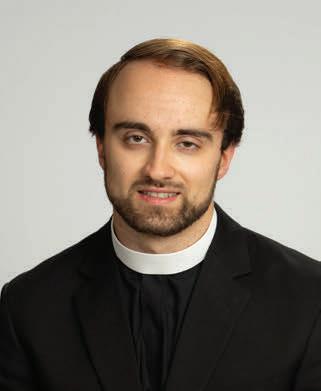
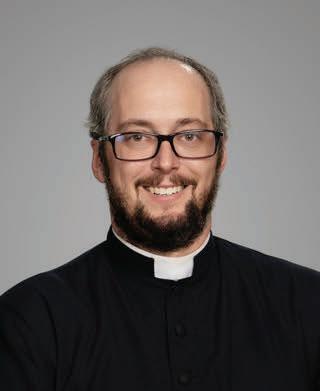
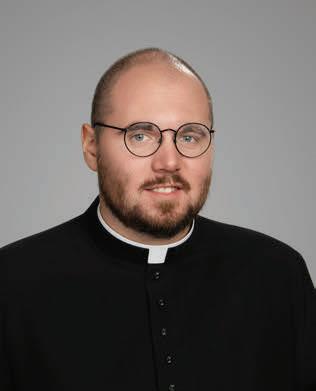
HOUSTON — That moment of knowing the priesthood was their life’s calling looked different for Deacons James Schnitzler, Eric Mitchell Schumann, Joshua Svajda and Thomas Vu.
Deacon Schnitzler, 27, entered the seminary after high school, thanks to the example of Polish missionary priests at his home parish.
Deacon Schumann, 37, was practicing law at his own firm, and one Lent, he focused on his prayer life, asking God what He wanted for his life.
Deacon Svajda, 28, graduated with his associate’s degree from Lone Star College and began to discern the contemplative life as a Benedictine monk, feeling an urge to pull away from the rush of the fast-paced city, but one night in prayer, he heard God say to be with His people.
Deacon Vu, 33, earned his bachelor’s degree from the University of Texas, but after college, his goals for dental school were not panning out the way he intended, so he decided to place his plans into God’s hands.
For each deacon, the journey towards the priesthood required not only trust in God but also learning how to balance their studies, prayer and personal lives.
“It’s not easy to balance all of them, but you learn to get into the rhythm of life in the seminary,” said Deacon Schumann, who is studying for the priesthood at the Pontifical North American College in Rome. Deacons Schnitzler, Svajda and Vu are in formation at St. Mary’s Seminary in Houston.
All four deacons agreed it helps that the seminary has built-in time for prayer with the Liturgy of the Hours in the morning and the evening, creating a common structure for each day.
“Focus first off on prayer because without prayer nothing else matters,” Deacon Svajda said. “It’s all about prioritizing things based on prayer.”
Deacon Svajda said prayer helps him to balance his life one week at a time and to accomplish what is most important.
“We learned to be intentional with our time, which includes fraternity,” said Deacon Vu, who said he is grateful for the formation and brotherhood of priests who were ordained in the classes ahead of him at St. Mary’s Seminary, gaining insight from their example.
“The seminary has taught us quite well how to adapt and be flexible with the many demands and responsibilities that we have so that we are balanced and not spread out too thin,” Deacon Vu said. Their families and parish communities have also supported them along the way.
After his grandmother passed away, Deacon Schumann learned that his grandparents had insisted he be baptized in the hospital when the doctors weren’t sure he would survive his premature birth.
“She thought God had saved me because He wanted me to be a priest,” said Deacon Schumann. He said his grandmother and the priest who baptized him on the day of his birth had a significant impact on his life.
Deacon Schnitzler, whose older brother Matthew is also in the seminary and was recently ordained a transitional
PRIESTLY ORDINATION
10 A.M. ON JUNE 6
Co-Cathedral of the Sacred Heart 1111 St. Joseph Pkwy., Houston
Celebrant: Archbishop Joe S. Vásquez Stream: www.archgh.org/live
“I have had many Masses prayed for her, but it will be special to pray for her personally.”
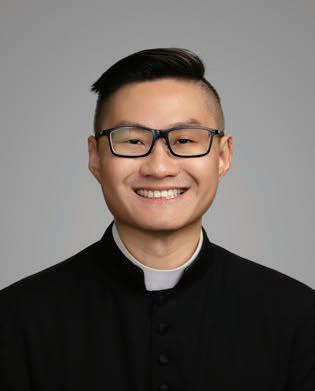
deacon, recalled being an altar server when he witnessed the joy of the Gospel in the lives of Polish missionary priests who served at his home parish, St. Joseph Catholic Church in Calgary, Canada.
“It allowed me to be myself and see how rich, broad and all-encompassing the priesthood really is,” said Deacon Schnitzler.
Growing up on the west side of Houston at St. John Vianney Catholic Church, Deacon Svajda’s family spent several days a week at the church, involved in different ministries, which helped him become familiar with parish life.
“My pastor, Father Troy Gately, has been a very influential part of my story. Seeing him each week and being able to talk with him has really helped me,” Deacon Svajda said, calling Father Gately a “family priest” and role model for his vocation.
Deacon Vu credited the vocations directors at the Diocese of Beaumont, where he is originally from, and at the Archdiocese of Galveston-Houston, as individuals who ministered to him and provided guidance along his path of discernment.
The deacons at St. Mary’s Seminary also appreciate the fatherly example of Archbishop Joe S. Vásquez, who eats breakfast with the seminarians almost every morning at the seminary.
“He has such a pastoral heart,” said Deacon Schnitzler. “It’s been a privilege to get to know him and call him my spiritual father.”
As they near their priestly ordination on June 6, the deacons look forward to fully celebrating the Sacraments and serving the people of God.
One special moment during the Ordination Mass for Deacon Svajda will be when he lies prostrate on the altar.
“There’s a reason why you prostrate, and it’s because you’re literally offering yourself fully, entirely: body, mind and soul. You offer it entirely to God for His Church.”
He fondly remembered that moment during his diaconate ordination last year, hearing the people of God invoke
the saints’ intercession and praying for God to be with him, and he anticipates it again this year.
“On a more personal level, nothing will be more meaningful to me than to be able to offer a Mass for the repose of my mother’s soul,” said Deacon Schumann.
They expressed gratitude for the faithful of the Archdiocese who have prayed for them and asked for continued prayers in their ministry.
For those who feel called to discern the priesthood, the deacons said to be not afraid because God, who loves us, cannot be outdone in generosity.
“There has not been one day when I regretted all I left behind to serve the Lord,” Deacon Schumann said. “There truly is nothing more rewarding than serving the Lord and His Church.”
Archbishop Joe S. Vásquez will preside over the 10 a.m. Mass of Ordinations to the Priesthood, ordaining Deacons Schnitzler, Svajda, Schumann, and Vu to the priesthood at 10 a.m. on June 6 at the Co-Cathedral of the Sacred Heart, located at 1111 St. Joseph Pkwy. in downtown Houston.
The Mass will be livestreamed online at www.archgh.org/live. †

BY KERRY MCGUIRE Herald Correspondent
HOUSTON — On the grounds of Club de Paz in Costa Rica, a statue of Jesus stands without hands. At its base, a message invites others to become his hands in serving those in need. For the Medical Missionaries of Divine Mercy (MMDM) of the Archdiocese of Galveston-Houston, that message is not symbolic. This is lived out through merciful, loving service to those in need around the world.
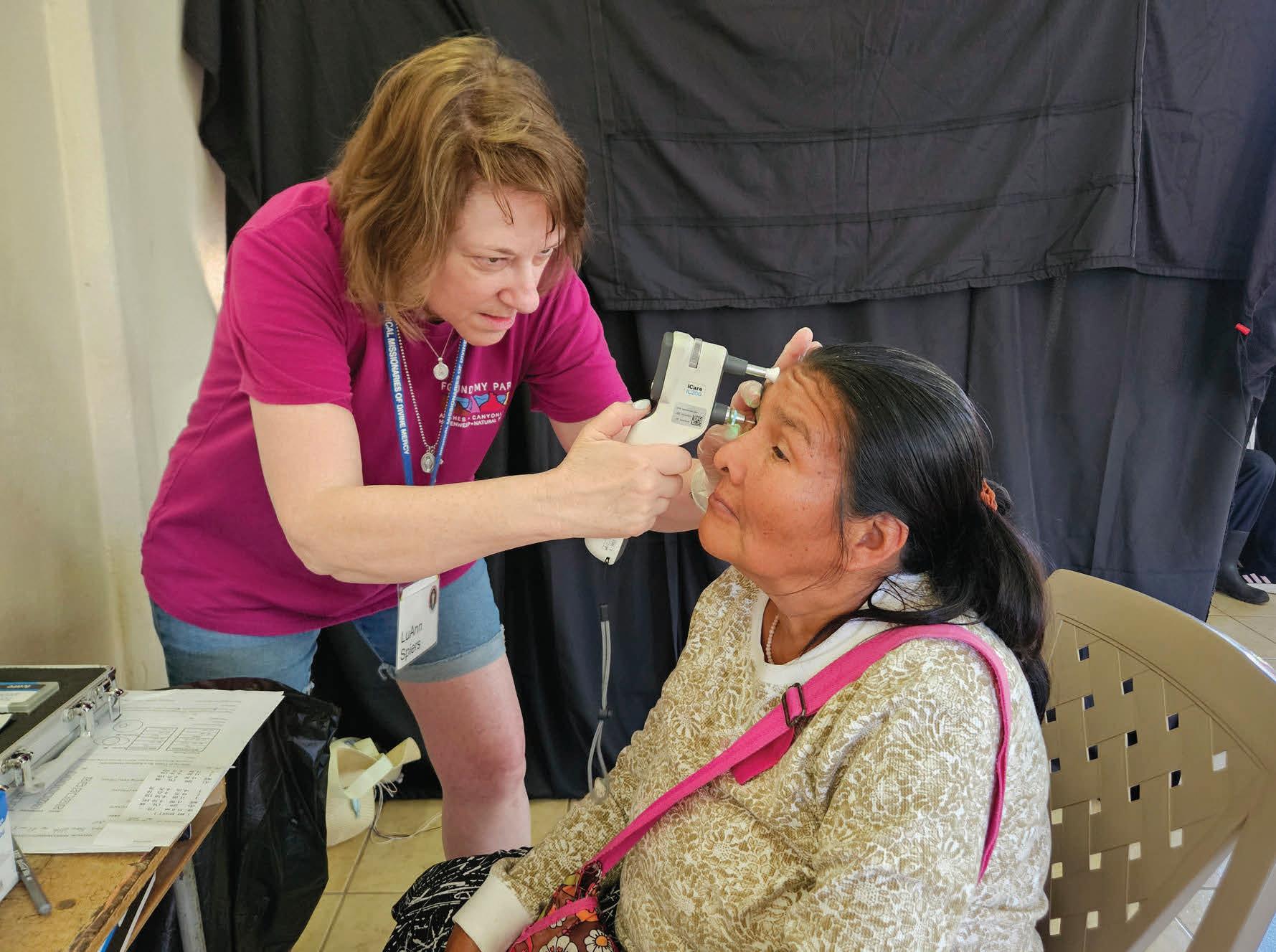
EJ Molina, who joined MMDM as mission director this year, previously served on the Costa Rica mission as a Spanish-to-English translator. During the April mission trip, marking the 10th anniversary of serving the Cabećar people, she joined 39 volunteers serving a record 1,120 patients, including 150 during a one-day outreach to Blorińak.
The team followed the theme “One in Christ, United in Mission” in response to the call of Pope Leo XIV for World Mission Sunday in October, serving with unity, humility and a shared commitment to care for those in need.
Molina said the statue of Jesus without hands became a powerful reminder of their call to serve those in need and live out their faith. The image captured the heart of the mission and the responsibility to act on one’s faith.
“I firmly believe in the power of prayer, but prayer alone is not enough,” Molina said. “We need to get up and do God’s work; we need to help each other. In sharing the following story, you’ll understand exactly what I mean.”
Molina said many of the indigenous patients traveled long distances, often walking up to 12 hours to receive care. While the mission’s resources are primarily dedicated to equipment and materials needed to support the clinics, there is also growing

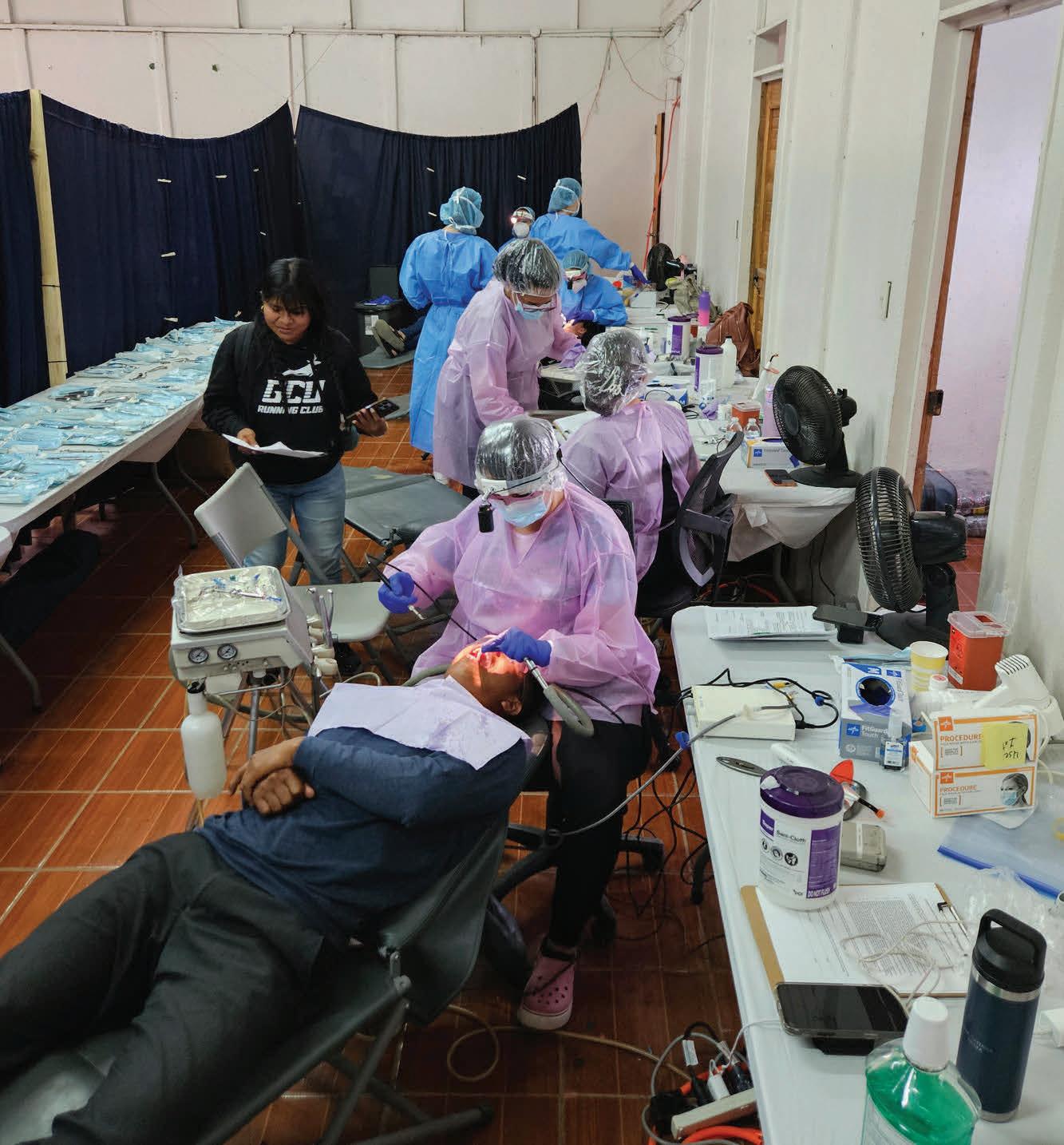
collaboration with the local community, including the distribution of clothing, shoes, and food and water from local groups.
Spiritual care remained central to the mission. Sister Edna Carina Vargas Vázquez, a member of the Missionary Sisters of the Most Holy Sacrament and Mary Immaculate, served in spiritual direction. For the first time in the mission’s history, a religious sister was invited to provide this role, accompanying patients facing illness, grief and personal struggles.
“Times like these are where we have raised our voice to the Lord, asking for the light of the Holy Spirit,” Sister Vázquez said. “We know their medical, bodily and spiritual needs, and delve into
their culture and their way of thinking. We make known to them the merciful love of Jesus, so that they put aside their beliefs in other gods, convert to our faith and receive the Sacraments.”
Kim Denson, a registered nurse, served as a triage nurse during the mission after responding to a bulletin invitation at her parish. She said the experience was both demanding and meaningful, strengthening her sense of purpose and gratitude while deepening her call to serve others.
“The people I encountered, both the local community and the fellow missionaries I served alongside, were incredible,” Denson said. “Their kindness, resilience and faith left a lasting impression on me. This experience was deeply humbling and reaffirmed my desire to serve others in a meaningful way.”
LuAnn Spiers joined the Costa Rica mission as a first-time participant after her husband encouraged her, and she learned that non-medical volunteers were needed. Spiers said she encountered Christ most clearly through the shared purpose and compassion of those serving alongside her.

“Knowing that the Cabećar people do not always receive the respect and dignity that we all deserve as human beings was heart-wrenching to me,” Spiers said. “We are all children of God and should be treated as such, regardless of the beliefs of the society we were born into. I knew that every person on that mission trip was there to treat those we encountered with love and respect, because God had given us the loving hearts these people needed.”
As a first-time missionary, Terry McMillin joined the team after encouragement from his wife and friends. Initially unsure how he could
contribute without medical experience, he recognized that God calls each person to serve according to their gifts and now encourages others to volunteer.
“Don’t put it off,” McMillin said. “There is a great need for all those willing to serve. All it really takes is a heart to serve.”
Andrew Castor, a missionary who supported the technology operations, worked behind the scenes to support the clinics, helping ensure patients would be remembered and cared for beyond a single visit.
“I think I found Him in the infrastructure itself: in the idea that a patient seen this year could be known next year, that their history wouldn’t disappear into a cardboard box,” Castor said. “There’s a quiet dignity in being remembered, and if our technology can give that to even a fraction of the people we serve, that feels like a form of presence worth building.”
Roberto Orlandi, president of MMDM, said the organization continues to welcome support through participation, donations and prayer, with a growing need for medical professionals and volunteers for upcoming missions.
“MMDM is in an interesting phase of growth, with consolidated destinations and new missions on the horizon, both domestically and internationally,”Orlandi said. “We are exploring destinations in South America, Asia and Africa so we can serve more than the 4,000 people we currently visit each year free of charge.”
Upcoming missions include: Laredo, Texas, Nov. 4 to 10; the Philippines in February 2027; Costa Rica, April 17 to 24, 2027; and Laredo, Nov. 3 to 9, 2027. The organization is also hosting a gala on Sept. 12.
For more information, visit mmdm. org. †
BY ELIZABETH MORALES Texas Catholic Herald
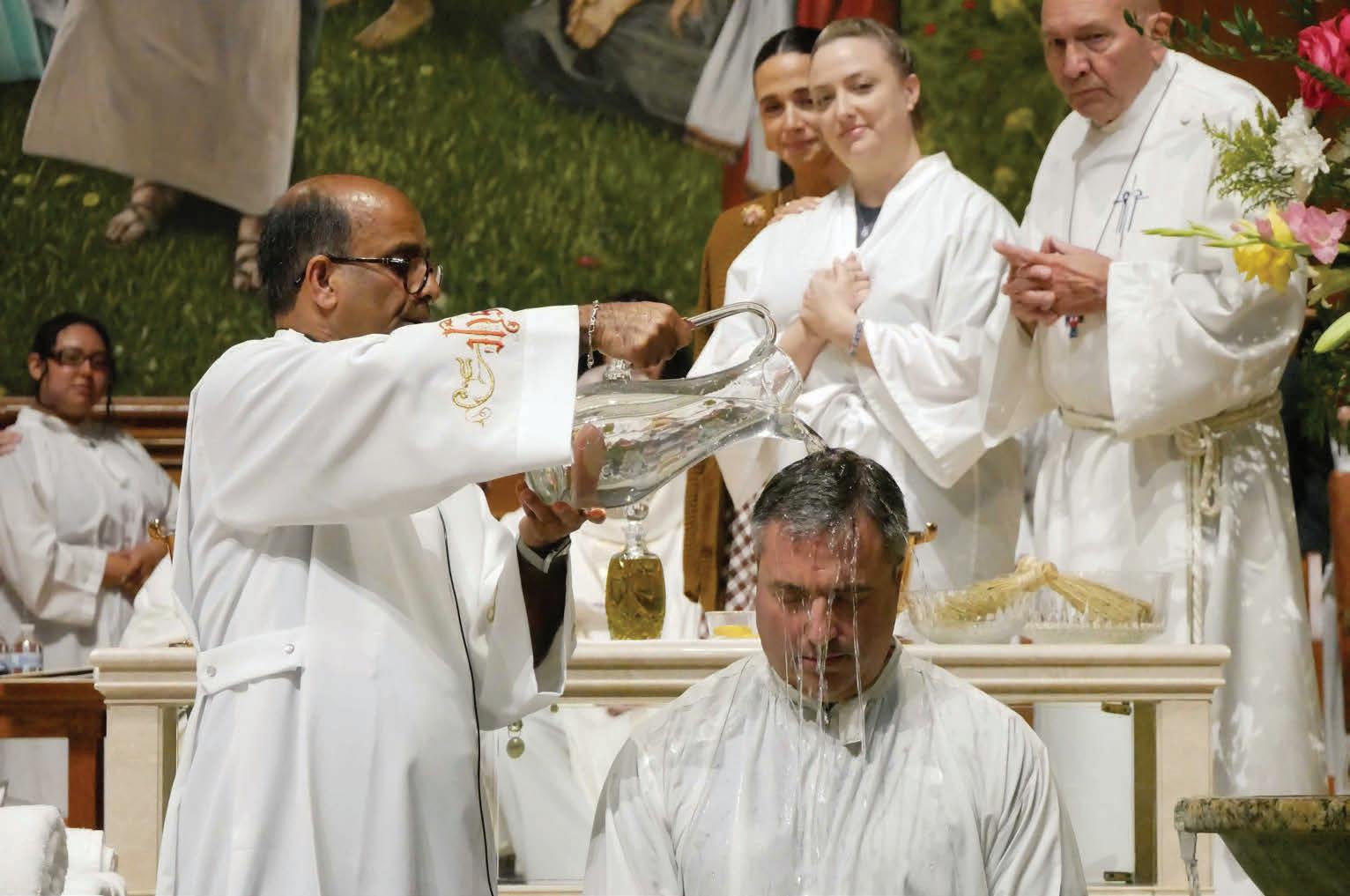
FRIENDSWOOD — Mary Queen Catholic Church in Friendswood, on the southeast side of the Archdiocese, welcomed 56 members into the Catholic Church this Easter season.
John Stanfield was raised in the Quaker church and remained an active member into his adulthood, yet, a year and a half ago, during a podcast he listened to, the phrase, “early Church Fathers,” stood out to him.
“After I had heard it several times, I started researching it,” said Stanfield. “It basically went from there. I came to the realization there was a lot of stuff I was unaware of. It eventually led me to contact Mary Queen, and that’s when I met and sat down with Eby.”
Eby Kurian, who has served as the director of Adult Faith Formation and OCIA at Mary Queen Catholic Church for five years, accompanies OCIA members each year from the beginning inquiry stage until they fully enter the Catholic Church.
“For the past four or five years, there’s been an amazing growth in hunger for receiving the Sacraments.They are hungry for God,” Kurian said. “They’re done with the inspirational speeches in the churches. They’re done with the lukewarm faith. They want something more.”
Kurian said candidates and catechumens in this year’s program

are already praying the Rosary and the Chaplet of Divine Mercy, and they know the difference between the Catholic Bible and a non-Catholic Bible before they enter the program.
He credited the new evangelization and other popular digital ministry efforts online as helping individuals learn about the Catholic faith before he meets them.
“This is the highest number we’ve had,” Kurian said. “This is just the adults, not taking into consideration the children and the youth.”
Ryan Collins, a candidate in the program and college student, was a former Baptist who wasn’t practicing religion, but learned more about the Catholic Church after he decided to join
social media.
“It crossed my mind, I didn’t know what the Catholic Church was, so I started researching it outside of social media,” Collins said.
Like Stanfield, learning about the early Church Fathers impacted Collins.
“It all went back to Jesus around 33 A.D. and towards the apostles. I fell more and more in love with it,” Collins said.
Collins visited other Christian churches in order to decide what he believed, but after attending Mass for the first time, he felt God’s presence and decided to continue learning more.
“I came to my first Mass back in November 2024, and I just couldn’t stop coming here. It was the most beautiful church service I’ve ever seen,” said Collins, who shared that his parents have noticed his transformation. “This church has changed my life so much. I can’t even put it properly into words.”
Collins said he taught himself the Rosary through a Catholic priest on YouTube and has fallen in love with prayer.
“I’m still learning about the prayers. It’s such a grace that the Lord has shown me,” Collins said.
Lynnze Willis, along with her husband and sister-in-law, also joined the OCIA program at Mary Queen Catholic Church this year. Willis expressed appreciation for developing a relationship with Mary,
See CATHOLIC, next page




invite you to celebrate and honor Mary, Mother of God and all mothers, including your own, by making a special gift to the Month of Mary campaign.
gift of $25 will provide a week of food, diapers, formula or baby food to a struggling mom.





BY ELIZABETH MORALES Texas Catholic Herald
HOUSTON — On May 8 to 9, the Office of Hispanic Ministry hosted a formation on Building Intercultural Competence for Ministers (BICM), an initiative developed by the United States Conference of Catholic Bishops (USCCB) at St. Dominic Center in Houston.
In collaboration with the Office for Clergy Formation, Office of Permanent Diaconate and the Secretariat for Pastoral and Education Ministries, the program was offered to nearly 130 parish clergy, Archdiocesan staff and ministry leaders.
María del Mar Muñoz-Visoso, executive director of the USCCB’s Secretariat for Cultural Diversity in the Church, presented on the topic for both dates.
“We’re not looking at diversity and intercultural relationships from a sociological or ideological perspective. We’re looking at it from the perspective of the Gospel,” Muñoz-Visoso said. “We need to understand culture, the parameters of culture and how it works because culture makes us who we are and how we process the world. Culture forms us and reflects how we interact with others.”
Muñoz-Visoso addressed an audience that was culturally diverse and reflected the rich intercultural reality of the Archdiocese of Galveston-Houston, the largest diocese in Texas, with 1.8 million members praying in over 14 languages.
“This practical tool helps identify pastoral responses that promote ecclesial integration and inclusion, intercultural sensitivity, and fosters a stronger
sense of belonging, stewardship and missionary discipleship within our parish communities,” said Bishop Italo Dell’Oro, CRS, who led the opening prayer and gave the welcoming remarks on Friday. Formation was recommended for the Archdiocese after the USCCB’s BICM in 2012. It launched in early May to serve parishes with at least two cultural or ethnic groups.
“In a metropolitan city like ours, every day we encounter and interact with other people with a different culture or ethnicity,” said Lázaro Contreras, director of the Office of Hispanic Ministry. “BICM is such a relevant topic and formation that every pastoral leader or minister in
Chancery
• Donor Relationship and Development and Stewardship Events Officer
• Executive Director, Camp Kappe - School of Environmental Education
• Facilities Manager, Groundskeeper
- Catholic Cemeteries, Mt. Olivet
• Administrative Assistant, Development and Stewardship Office
• Faith Formation • Liturgy
• Music Director • Secretary
• Accounting • Business Manager
• Youth Ministry • Childcare
• Communications
• Facilities and Maintenance
• Administrative Assistant
• Part-Time Positions

CNS PHOTO BY VATICAN MEDIA
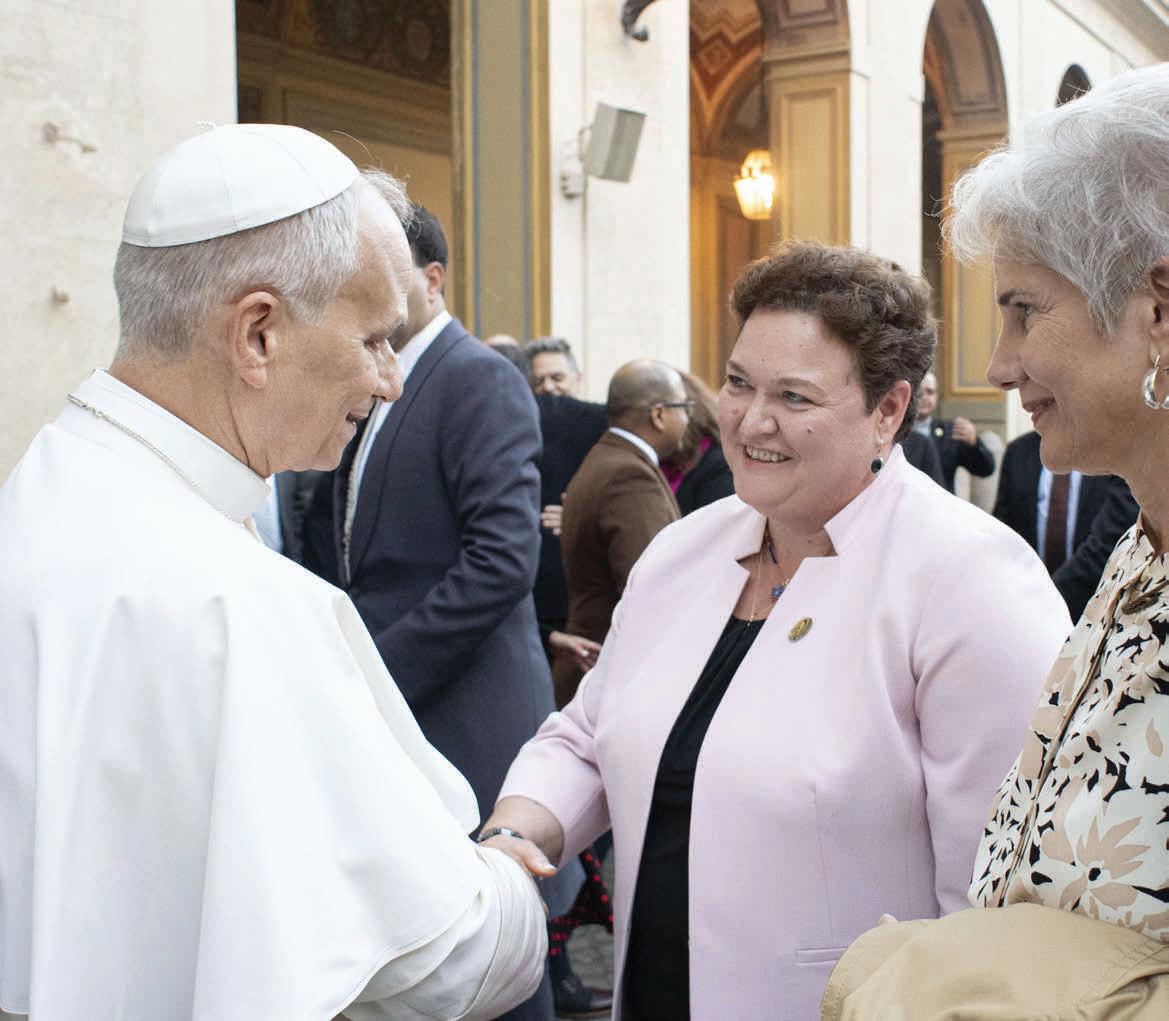
Pope Leo XIV greets Maria del Mar MuñozVisoso, executive director of the U.S. bishops’ secretariat of Cultural Diversity in the Church, during an Oct. 7, 2025, meeting at the Vatican. MuñozVisoso recently hosted a set of workshops in collaboration with the Office of Hispanic Ministry for the Archdiocese.
Shepherd Catholic Church, having served in ministry within the Archdiocese for approximately 23 years. Working across different cultures has its challenges, and the workshop reaffirmed his calling to continue serving God’s people in the vibrant faith community at his parish, said Valdez.
Amy Auzenne, director of the Office of Evangelization and Catechesis, said she appreciated that the conversation was rooted in the dignity of the human person rather than secular power dynamics.
“By focusing on Catholic Social Teaching and the Imago Dei, the training showed how diversity and inclusion actually build up the Body of Christ. It’s not just about representation; it’s about honoring the sacred genius of every culture,” Auzenne said.
the Church should be able to experience or learn from. This formation motivates us to truly live and represent the Mystical Body of Christ, one that is diverse in its members but that is one in Christ, who is the head.”
Father James Burkart, pastor at Christ the Good Shepherd Catholic Church in Spring, attended the overview with his entire parish staff.
“I thought it would be a good opportunity for everyone to hear directly from the USCCB, their stance on the importance of recognizing and celebrating the diversity that exists within our parishes,” said Father Burkart, who plans to continue studying the document with his staff and introduce it to his pastoral and finance councils.
The presentation set guidelines for building intercultural competence in church settings. It emphasized foundational components such as framing issues of diversity theologically in terms of the Church’s mission to evangelize and creating ecclesial integration and inclusion through a spirituality of reconciliation, communion and mission.
“Increasingly more people from different places and different backgrounds are moving near our parish and coming for worship, Sacraments, social services and many other needs,” said Ivana Meshell, director of discipleship at Christ the Good Shepherd, one of the parish staff members who attended the course with Father Burkart. “It is important for parishes to be prepared to receive them kindly and minister to their needs.”
Another member of the parish cohort was José Juan Valdez, director of evangelization at Christ the Good
CATHOLIC, from page 9
the mother of Jesus, throughout the process.
“I’ve been trying to grow closer to Mary and use her as a way to help with motherhood,” said Willis, who is the mother of three young children. “I feel like praying the Rosary has helped calm my mind when there’s a lot going on, and I’m feeling overwhelmed as a mom.” Particularly, the sorrowful mysteries remind Willis of Jesus’ love for her.
Willis felt called to strengthen her relationship with God and sought a church with depth, after following
Providing an opportunity for individuals who currently serve in ministry to develop an awareness of the issue was of value to Jim Barrette, secretariat director for Pastoral and Educational Ministries.
“Anyone involved in pastoral ministry in our parishes will encounter cultural differences in their parish, and it is critical that they have some ways to address the variety of cultures,” said Barrette, who oversees eight Archdiocesan offices and ministries and whose office collaborated to bring the training to the Archdiocese.
Nancy Bassett, who works in human resources at the Society of St. Vincent de Paul, said the connection between the Word of God and the call to grow in intercultural competence stood out to her during the overview, as Biblical foundations of the topic were highlighted during the session.
“Throughout Scripture, we see Jesus consistently moving among all types of people, cultures and backgrounds. He met people where they were, spoke into both their cultural context and their personal need, and ultimately drew them closer to God,” Bassett said. “That pattern is still our model today.”
Deacon Phillip Jackson, director of the Office of the Permanent Diaconate, closed the morning overview in prayer and shared his own experience of being welcomed in various situations at church as well as in the community.
“It is in the encounter with the ‘other,’ those perhaps who don’t look like me, or speak the same language, that I have been enriched and have been called to move beyond my limitations of language. We are more alike than we may feel that we don’t have in common,” said Deacon Jackson. “In building intercultural competencies, we can acknowledge that we are created in the image and likeness of God to love.” †
multiple religions and spiritual practices, including new age beliefs.
She attended Mass with her husband for the first time in February 2025, and they have been attending ever since, eventually making the decision to join the OCIA program.
“I wanted something super serious that also felt real and very loving and forgiving,” said Willis, who feels humbled about becoming Catholic. “I feel a part of something very big in a small way. It’s humbling for me because of what God did for us. Now I get to be a part of that. It also feels very peaceful and exhilarating to partake in the Eucharist every Sunday or every day if I want to. I love it so much.” †
Pray for the following priests whose anniversaries of death are during the month of June.
June 1911 Rev. Anthony Maury
June 1, 1949 Rev. James McCarthy
June 1, 1974 Rev. Wm. Celestine Creamer, O.Carm
June 1, 1981 Rev. Francis Dynan, SSJ
June 2, 1999 Rev. Norbert Reuss, CSB
June 2, 2005 Rev. Kevin Thissen, OP
June 2, 2014 Rev. Rivers Patout
June 4, 1920 Rev. Joseph Klein
June 4, 1950 Rev. Lawrence Kramer
June 6, 1957 Rev. Hugh Kearns
June 7, 1947 Rev. James Moriarty
June 7, 1982 Rev. James L. Moore
June 8, 1972 Msgr. Thomas Prendergast
June 9, 1952 Rev. Francis Walsh, CSB
June 9, 1988 Rev. James White, CSSp
June 9, 2020 Rev. John Zabelskas
June 10, 1959 Rev. Ralph Diefenbach
June 10, 2021 Rev. Peter Ferguson
June 11, 1964 Rev. Dunstan McGuigan, O.Carm.
June 11, 1979 Msgr. Bernard O’Neill
June 12, 1985 Rev. Richard Gieselman, CM
June 12, 2011 Rev Gabriel Camilo Morales, mj
June 13, 1938 Rev. John Lyons, SSJ
June 14, 1964 Rev. Francis Plavcan, MS
June 14, 1982 Rev. Mark Barron, OP
June 14, 1993 Rev. James Daley, CSB
June 15, 1938 Rev. David Ortiz
June 16, 1989 Rev. Robert Hall, CSB
June 16, 2009 Rev. Victor Brezik, CSB
June 19, 2016 Rev. Patrick Braden, CSB
June 17, 1881 Rev. Joseph Anstaett
June 17, 1936 Rev. Martin Collins
June 18, 1999 Rev. Lawrence Leonard, CM
June 18, 2023 Rev. Louis Zee
June 20, 1977 Rev. Louis Hahn, SJ
June 20, 1991 Rev. Paul Kent, OCSO
June 21, 1892 Rev. Claude Jacquet
June 21, 2021 Rev. Ryan Stawaisz
June 22, 2003 Rev. Charles Banet, CPPS
June 23, 1939 Rev. George Apel
June 23, 1990 Rev. Joseph Kennelly, OMI
June 24, 1986 Rev. Joseph Schneider
June 24, 2008 Rev. Alfred Greenwald
June 24, 2012 Rev. John (Jack) Whitley, CSB
June 25, 1873 Rev. Jean Baptiste Bellaclas
June 26, 1961 Rev. Frank Dobias
June 26, 1965 Rev. Joseph Schmutz, SSJ
June 27, 1999 Rev. Michael Fritzen, SVD
June 27, 2008 Rev. John Walsh, CSSp
June 27, 2016 Rev. Kenneth Mikulik
June 29, 2004 Rev. Ladislav Danek
June 30, 1952 Rev. Manuel Munive, OMI
UST gala raises nearly $1.25 million IN BRIEF
HOUSTON — The University of St. Thomas (UST) raised nearly $1.25 million at its annual scholarship gala on May 2 at the Hilton Americas-Houston ballroom.
Nearly 600 guests attended the gala themed “Tradition Meets Tomorrow.” Past and present leaders came together in support of student scholarships and to celebrate UST President Sinda Vanderpool, Ph.D., and First Gentleman Terry Vanderpool as she completed her inaugural academic year.
The evening began with Mass, celebrated in the Hilton-Americas by campus chaplain and UST alum Father Eduardo Rivera, CSB. Archbishop Joe S. Vásquez, alumnus of the University of St. Thomas, opened the dinner with the invocation.
The Vanderpools reflected on their first year at UST and their deep connection to the Houston community.
“Every day, we see the university’s vision lived out in our students. Students who are the first in their families to attend college. Students balancing work and study. Students discovering their gifts and their callings,” she said. “Their success depends not only on their own determination, but on the generosity of those who invest in them.”
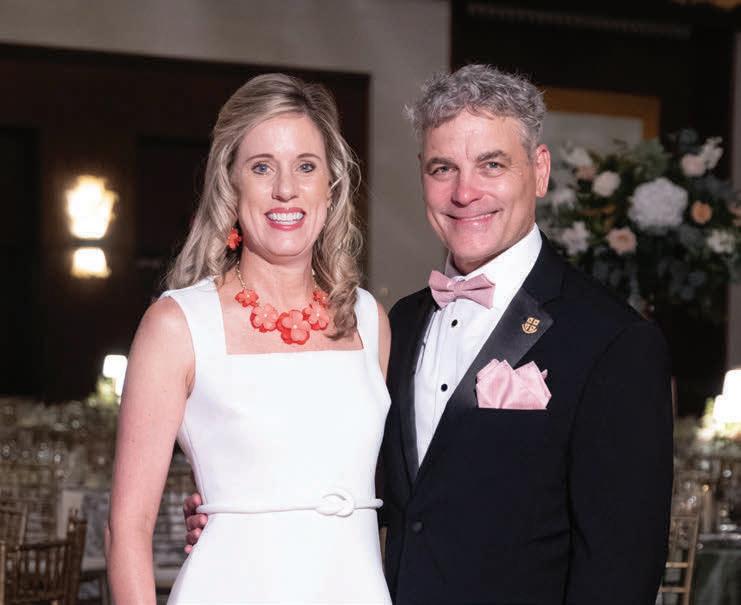
Event Chairs Robert Ivany, Ph.D., and Marianne Ivany previously served as president and first lady of UST. Their presence reflected the enduring tradition of the university.
“We are delighted to reconnect with the Basilian fathers and with so many friends,” said Robert Ivany. “It is exciting to see new faces, and as always, to talk with our students.” Marianne Ivany added, “Dr. Vanderpool brings an impressive combination of experience, dedication and faith to her new position.” †
Sister Barbara Ann Collins, O.P.
HOUSTON — Sister Barbara Ann Collins, O.P., died April 23. She was 88 years old. Sister Collins served in education ministry at Christ the King School in Houston; Sacred Heart School in Galveston; St. Jerome School, St. Francis De Sales School and St. Augustine School, all in Houston. She was the secondary coordinator of Odyssey Academy, Galveston, and she served the immigrant poor as co-director of Christus Literacy Center in Galveston.
A funeral Mass was held Tuesday, April 28, at St. Dominic Villa Chapel. Interment is in Forest Park, Lawndale. †
Sister Carita Ulm, O.P.
HOUSTON — Sister Carita Ulm, O.P., who served as an elementary school teacher and principal for several schools in the Archdiocese, died May 8. She was 91 years old.
She served as an elementary school teacher at Holy Rosary School, St. Jerome School and Corpus Christi School in Houston; Sacred Heart School, St. Mary Cathedral School and Dominican Elementary School in Galveston; and Holy Rosary School in Rosenberg. She also ministered as principal at Queen of Peace School in Houston, then continued her teaching ministry at St. Charles Borromeo School in Houston.
A funeral Mass was held Monday, May 18, at St. Dominic Villa Chapel. Interment is in Forest Park, Lawndale. †
Monsignor Leo Wleczyk
LAKE JACKSON — Monsignor Leo Wleczyk, who served St. Michael Catholic Church in Lake Jackson for 35 years, died April 29 after a lengthy illness. He was 86 years old.
After his priestly ordination on May 27, 1965, Monsignor Wleczyk served six parishes, was named dean of the Southwest Deanery and episcopal vicar of the Southern Vicariate, where he served as Daniel Cardinal DiNardo’s representative for approximately 30 Catholic parishes in the Southern Vicariate. He retired as pastor of St. Michael Catholic Church on June 30, 2019.
A funeral Mass was held Tuesday, May 5, at St. Michael Catholic Church in Lake Jackson. †
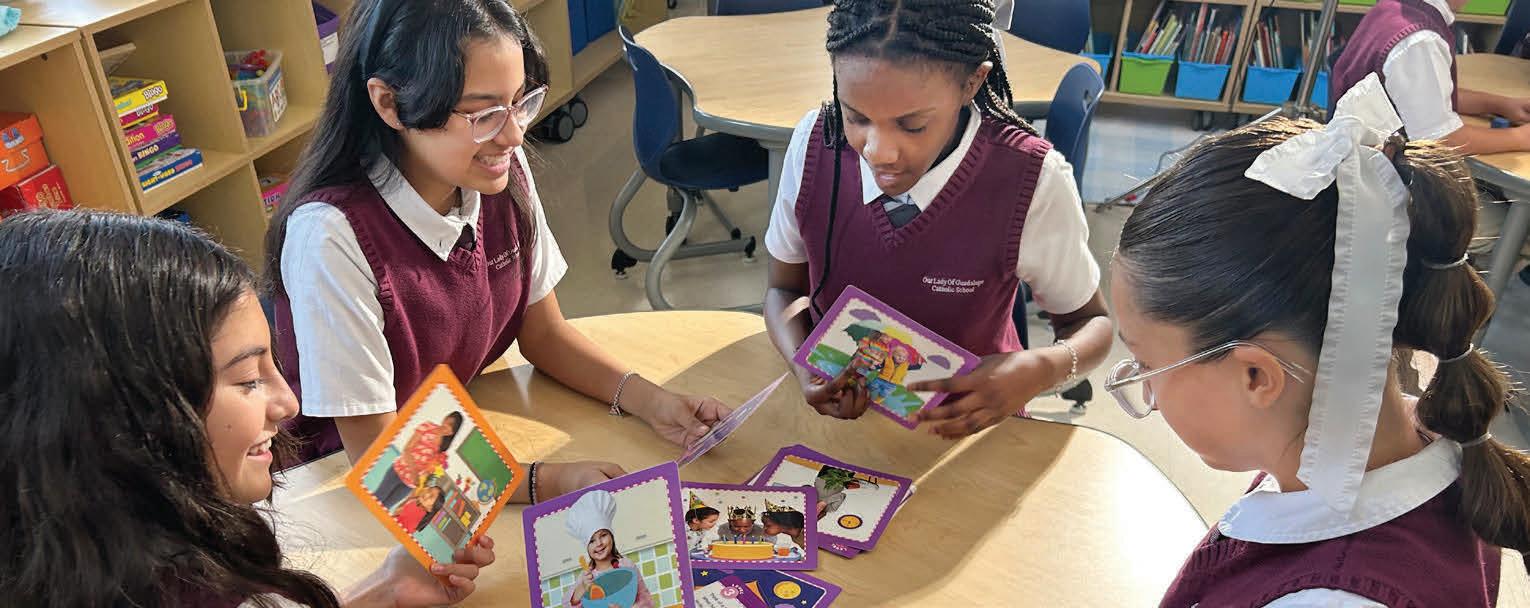
“We live on the same planet, and must care for it together.”
Since 2010, The Cardinal’s Circle has rallied compassionate individuals who pledge $5,000 or more annually, to sustain our most economically challenged Catholic schools. Your generosity doesn’t just fund classrooms; it opens the doors of opportunity, allowing young hearts to flourish in environments where faith and learning intertwine as one.
BY JO ANN ZUÑIGA Herald Correspondent
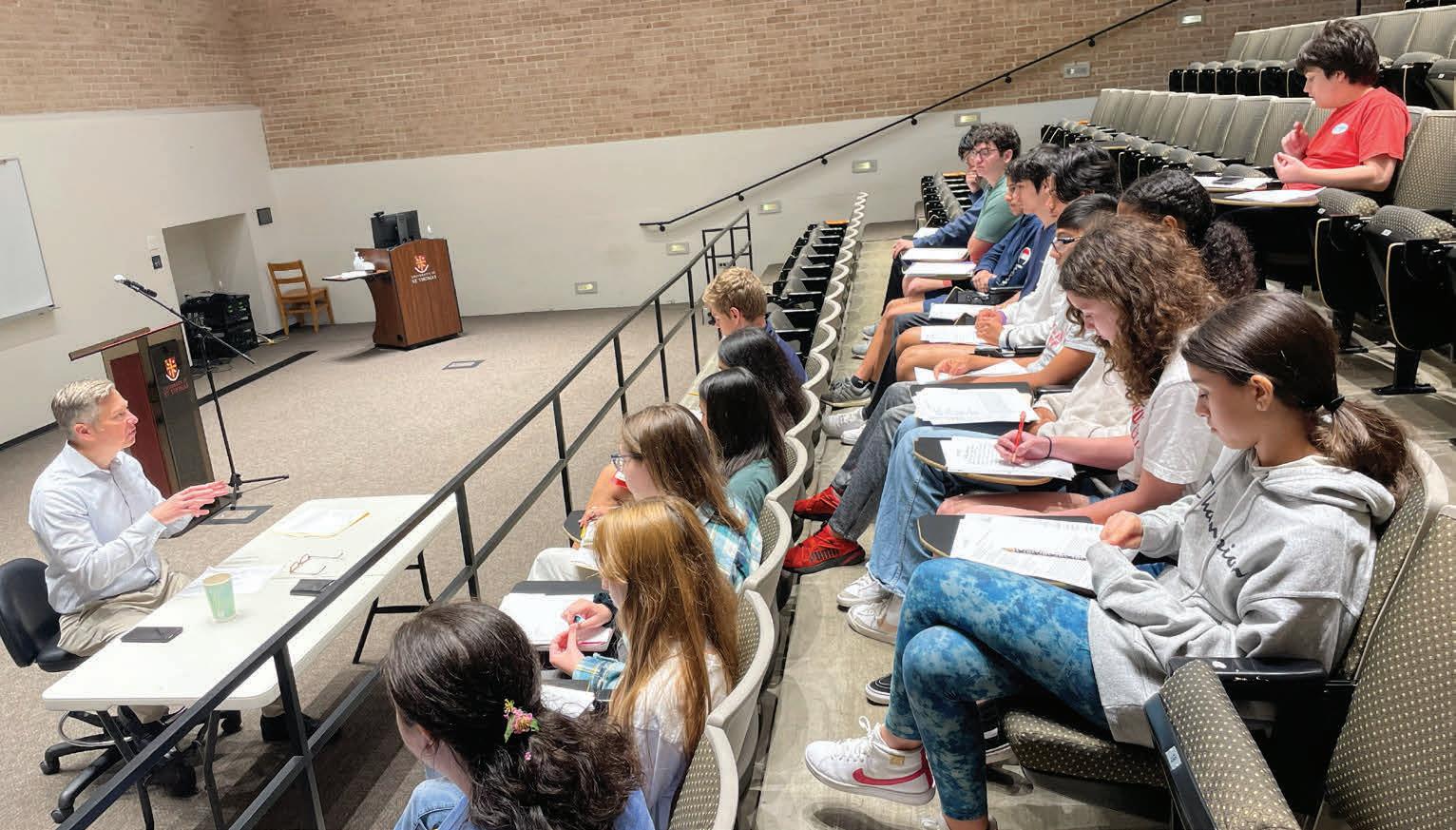
HOUSTON — A five-day summer writing workshop for high school students and a separate program for fourth through eighth graders focus on helping them find their creative voice while intertwining their faith.
The High School Writers Institute (HSWI) for rising ninth graders through graduating seniors will learn from classroom teachers and two published Catholic writers, while also writing their own works for constructive feedback, said HSWI Director Lesley Clinton.
The program, from June 8 to 12, 9 a.m. to 2 p.m. daily, will be held in classrooms at the University of St. Thomas campus, said Clinton, who also teaches English at Strake Jesuit College Preparatory and is a published poet and book reviewer.
The two guest authors this summer are James Matthew Wilson, Ph.D., a published Catholic philosopher, and Brigid Pasulka, a published Catholic novelist. In addition
to workshopping student work, they will speak on the “writer’s calling.” Sponsored by Catholic Literary Arts
(CLA), the institute allows the students access to the guest authors in several ways, said CLA president Sarah Cortez.
“There is always a little bit of a shyness in the beginning, but the students will have question and answer sessions with the authors. They will have brown bag lunches together and will be receiving positive feedback on their writing,” Cortez said.
She added, “Students will experience

writers who love being Catholic, who are writing about their faith and are making a living at it.”
The program also provides a daily Mass for the students to attend, Cortez said.
The mother of a returning student wrote to praise the program. Kristene Vilela said,“My son attended last summer, and I loved that he gained confidence in his creative writing skills by the end of the program.”
She added, “I was afraid that he might tire of the school setting during his summer break, but by the end of the week, he was eagerly anticipating the presentation of his writings that he proudly composed!”
The student, her son Alex, said, “I enjoyed learning about creating poems, especially meter and verse. I also enjoyed speaking with authors and using my creative writing skills. I hope to come back this year to learn how to improve my writing.”
Clinton described how proud the parents are at the end of the week when the program has a reading of each student’s top works.
“Students create their own portfolio, and we put together a digital anthology for each of them to keep. There are no grades to worry about, but they can use this experience to prepare for their college essays in the future,” Clinton said.
In addition to poetry, the students also learn to write non-fiction essays, memoirs and witness/testimony, she said.
Clinton knows of which she speaks, with her latest published book, “Calling the Garden from the Grave.” Parts almost seem to describe the students,“Lie in wait for the spark to land/and tense for the bright reply.” Those may also come from Clinton’s own three children, a college freshman, as well as middle and high school.
“This writing program helps professionally, but it also grows community and is spiritually uplifting,” Clinton said. “We want to help them find their divine inheritance.”
For information on registering, costs and other questions, visit catholicliteraryarts.org. †

KNOW
COMMUNITY
Find multilingual immigration guides, resources and referral information for local communities online at

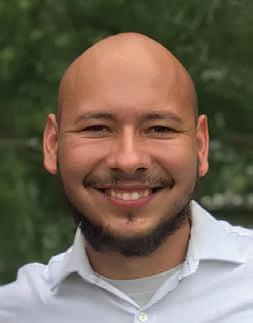
As a former youth minister and current music director, I spend a lot of time thinking about how we hand down the songs of faith to the next generation. But as a husband and a dad of three, I know the reality is often less of a polished hymn and more of a chaotic rehearsal.
My father led the youth choir, which meant I was “voluntold” to be there. I didn’t want to go. I resisted the afterschool rehearsals and the early morning Masses. Yet, my mother remained my biggest push. She planted a seed that one day I would bear so much fruit in my life. If she hadn’t stayed firm, encouraging me to show up even when I complained, I wouldn’t be where I am today. I didn’t truly take music seriously until my sophomore year of college, but the seeds were planted in that reluctant soil of my teen years.
As parents and grandparents of middle and high schoolers, we often fall into the common trap that we want our children to be “mini-mes.” We sometimes assume that because we find God in the Rosary, the traditional choir, or specific ministries or ways to serve, they must as well.
In 1 Corinthians 12, we are reminded that we are all members of one body, but we are different parts. We are all instruments in God’s choir, but we don’t all play or sing the same note. One of the greatest gifts we can give our teens is the realization that our talents are not our children’s talents. Your teen may not find their voice in the choir loft, but they are called to be an instrument for the Lord. They might be the quiet focus of the arts: a behind-the-scenes person, someone who prefers studies, or maybe they’re called into the art of accompaniment (being the friend who listens rather than the one who speaks).
To help our children find their unique sound, we have to allow them the space to hit a few sour notes. We have to allow them to fail. In our Catholic tradition, we know that growth often comes through the Paschal Mystery in which we die to our old selves to rise into something new. If we hover too closely or shield them from every disappointment, they may never learn how to rely on God’s grace to pick them back up. Our job isn’t to compose their entire life’s score; it’s to provide the steady rhythm of support and the foundational melody of the
by JOSE ARREDONDO
Gospel so they have a home key to return to.
I challenge you to step out of your comfort zone and into theirs. Our faith is incarnational. God became man to meet us where we are, and we must do the same for our teens. Take some time to dive deep into your teen’s interests and don’t just watch from the sidelines. What can you do? Make that silly social media post they’ve been talking about, learn the trending dance,
no matter how uncoordinated you feel or are. Or use the evolving Gen Alpha vocabulary even if you use it wrong, and they roll their eyes (you’re their parent, not their opp). You never know if you may go viral, but most importantly, you are making memories. When we meet them in the “silly” things, we build the bridge of trust necessary to talk about the sacred and holy things. Let them see that your love, and God’s love, is present in every rhythm of their lives. †
Jose Arredondo is the director of Liturgy and Music at Mary Queen Catholic Church.
The bishops of the U.S. have voted to consecrate our nation to the Most Sacred Heart of Jesus on Thursday, June 11. This solemn act, set for the eve of the Solemnity of the Most Sacred Heart of Jesus, is timed to connect with the 250th anniversary of the signing of the Declaration of Independence. It is a special moment of prayer for our country as we commend the U.S. to the merciful and loving Heart of Christ.
Devotion to the Sacred Heart is itself a practice at the heart of Catholic spirituality. Scripture reveals God’s tender love for His people, and the pierced heart of Jesus on the cross shows us the depth of that love poured out for our salvation. Popes across the centuries have encouraged this devotion, with Pope Pius XII’s Haurietis Aquas unfolding its rich biblical and theological foundations, and more recently Pope Francis in Dilexit Nos, inviting us to rediscover the Heart of
Jesus as the source of personal and communal renewal. This consecration invites us to place our nation, with all its blessings, struggles and hopes, into that same heart.

Founded on the self-evident truth that all people are equal and endowed by their Creator with inalienable rights to life, liberty and the pursuit of happiness, our country has been richly blessed. Yet we also acknowledge sins and divisions in our history. The mission of justice and charity finds its true strength in the incarnate Heart of Christ, the true bleeding heart. For in giving us His own Sacred Heart, the Word made flesh invites us to bring His redeeming love into the world. Through this act of consecration, we seek healing, reconciliation, unity and a deeper fidelity to the Gospel in our public life.
The faithful throughout the Archdiocese are invited to join in this national consecration. There are many
by ADAM BRILL
meaningful ways to participate:
- Join a celebration of the consecration during Mass or a Liturgy of the Word, however your parish may schedule to join in the act.
- Pray a Novena to the Sacred Heart in the days leading up to June 11.
- Recite the Litany of the Most Sacred Heart of Jesus individually, with family or in parish groups.
- Participate in Eucharistic Adoration with hymns and prayers honoring the Sacred Heart.
- Enthrone the image of the Sacred Heart in your home and make a personal act of consecration.
- Perform acts of charity and mercy as living expressions of Christ’s love for others.
Resources to help you prepare are available on the Archdiocese website. In the days ahead, let us open our own
“Let us entrust the United States of America to His infinite mercy and love, confident that He who first loved us can renew and bless our land in ways beyond what we can imagine.”
hearts more fully to the Lord so that our nation may better reflect His love and truth. Let us entrust the United States of America to His infinite mercy and love, confident that He who first loved us can renew and bless our land in ways beyond what we can imagine. †
Adam Brill is the director of the Office of Worship.
In Acts chapter 2, we read the story of Pentecost — the descent of the Holy Spirit upon the apostles and the miraculously transformative actions that followed, including preaching that was understood in many languages. In verse 41, we read that those who accepted the message were baptized, and about 3,000 were added to their number that day.
This year, the same Holy Spirit that was given to the apostles at Pentecost sealed the 3,061 that were added to the number of fully initiated Catholics in Galveston-Houston through the Adult Confirmation process. The Holy Spirit was present through a combination of celebrations in January and May.
The Adult Confirmation process is a blessing to participants, coordinators and the local Church. We see this in stories like Sharon Skeans, the coordinator for St. Mary’s in Plantersville, who shared that, “a candidate fell away from the Church, started attending an evangelical church, felt something was missing, and this was her reconnection back to the Catholic faith.” Justin Frato from St. Laurence in Sugar Land exclaimed, “Two young
MAY 31
First Reading: Ex 34:4-6, 8-9
Responsorial Psalm: Dan 3:52-55
Second Reading: 2 Cor 13:11-13 Gospel: Jn 3:16-18
by MATT KIERNAN
women were so convicted from the process that they joined religious life.”
What makes this ministry effective? The process of accompaniment. When someone inquires about the Sacrament, the parish coordinator takes the time to listen to their story, hear about their relationship with God, then develops a plan that will assist the seeker in preparing according to their unique needs. This involves focusing on a life of prayer, learning who Jesus is, and building relationships within the community before diving into the specifics of Confirmation. It could also involve taking the time to bring a marriage into the sacramental life of the Church. Everything happens according to God’s timing, but whatever the path, the Holy Spirit is at work. This is no small task, but a beautiful opportunity.
This approach provides an encounter rather than a checklist of requirements,
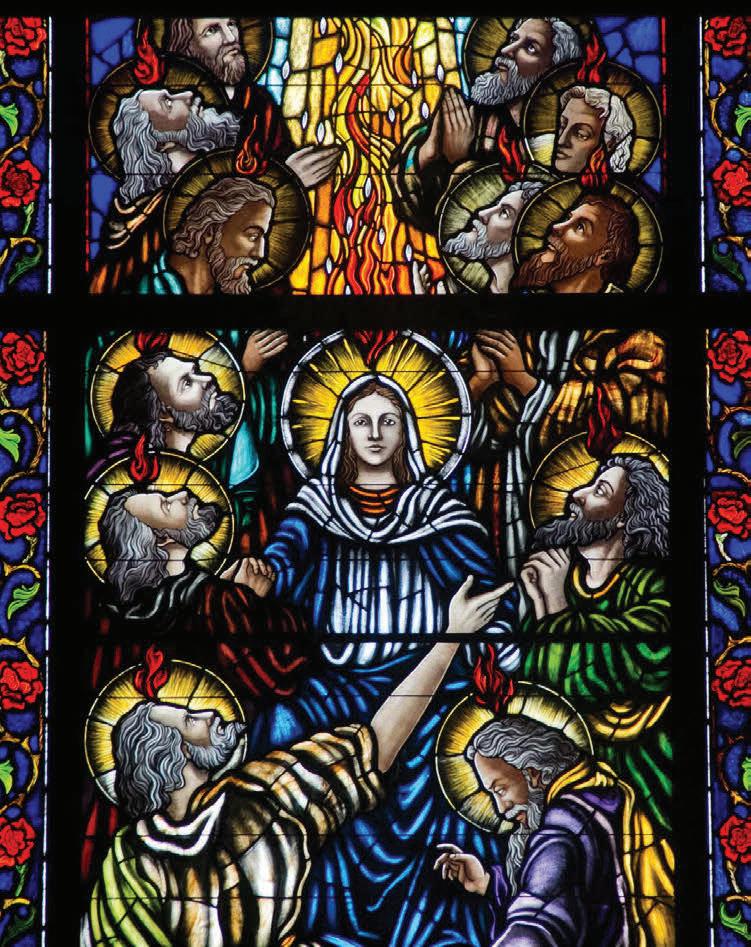
and the result is grace. God is never outdone with His grace, as Matthew Crews from St. Edward in Spring shares, “Leading this process has been a joyful opportunity for me to journey with adults, tell them welcome home, and watch them grow as they are
transformed more than they could ever expect.”
This grace establishes a life of discipleship as Ryan Murphy from Prince of Peace describes, “The candidates become active participants in the life of the Church: attending Mass, continuing their faith development and serving those in need.” Eby Kurian from Mary Queen had a similar experience, saying, “A candidate named Rafael was so inspired by the process and his connection to the team that he became an usher, a catechist for children’s formation and shares the faith he learned.”
Let us continue to pray for the newly confirmed, thanking God for the blessing they are to our Church and that their witness of faith may inspire us to live our own call to discipleship. If you are an adult seeking to complete your sacramental journey, reach out to your parish coordinator today. †
Matt Kiernan is the associate director for Sacrament Preparation of the Office of Evangelization and Catechesis.
JUNE 7
First Reading: Deut 8:2-3, 14-16
Responsorial Psalm: Ps 147:12-15, 19-20
Second Reading: 1 Cor 10:16-17 Gospel: Jn 6:51-58
May is quickly drawing to a close; a month in the life of the Church dedicated to the Virgin Mary. This month has brought back memories of an opportunity I had last summer when I made a pilgrimage to Lourdes, France. In 1858, Mary appeared there to St. Bernadette over a period of six months. Lourdes is now one of the most popular Marian pilgrimage sites and is visited by over 3 million people annually.
Why are so many people drawn to Lourdes every year?
During her ninth vision, St. Bernadette was instructed to “go and drink at the spring and wash yourself there…” She was confused as there was no flow of water where Mary indicated, but miraculously, within days, a trickle of water appeared at the site and turned into a flowing spring. Since that day, Lourdes has become known for the number of physical and spiritual healings that take place there, mostly related to this water.
MARY IMPELMAN
brought by volunteers from an Italian pilgrimage organization to Lourdes. At that time, she was no longer able to walk and was confined to a wheelchair. After bathing in the spring waters at Lourdes, she experienced incredible pain in her legs, even though previously she no longer had any feeling left in them. Antonia heard a voice telling her, “Do not be afraid!” Accompanied by volunteers from the pilgrimage organization, she made the train ride back to her home in Italy. When she returned to her apartment to be reunited with her husband, she got out of the wheelchair and walked! In surprise and shock, her husband actually fainted at the sight.
We are all growing older, and it is a blessing to be aging. Many of us, as we grow older, will remain in our homes or the homes of our family members. Some of us will join the two to five million older adults in the U.S. who are “homebound,” a term used to describe people who are unable to leave their home, usually due to illness or old age.
While at Lourdes, I had the opportunity to personally meet Antonia Raco. A working-class Italian woman now in her 60s, 20 years earlier, she began to experience symptoms that were eventually diagnosed as Primary Lateral Sclerosis, a disease like Lou Gehrig’s (ALS). In 2009, she was
I will never forget hearing Antonia by
The same week I happened to be in Lourdes, the medical doctor who heads the Office of Medical Observations of the Sanctuary of Lourdes was holding a press conference about Antonia Raco. Her healing was being declared the 72nd official miracle of Lourdes; it had been determined that her cure was unexpected, complete, lasting and medically unexplained according to current medical knowledge.
Many older adults who are homebound are at risk of becoming isolated from their faith community and the very practices that help them feel and experience the presence of God, such as the Sacraments, the Eucharist particularly, Scripture and fellowship.
As followers of Christ, we are invited to “Share with the Lord’s people who are in need. Practice hospitality” (Rom 12:13). Let us extend our hospitality beyond the walls of our churches into our communities and the homes where older adults seek to connect to their faith and their Catholic family.
We are blessed to have a very rich faith. There are many Catholic organizations that support older adults — the Catholic Grandparents Association, the Catholic Mental Health Ministers Association, Friends of St. John Catholic Caregivers, the Catholic Chaplain Corps, Catholic Charities and
St. Vincent de Paul Society, to name a few. Most parishes have a homebound ministry and Eucharistic ministers who visit people who are homebound. If you are at home, we want you to know that you are not forgotten and you are not alone. We see you and hear you. We love you, and we value you. At the Office of Aging Ministry, we have launched SAINTS University online to bring the educational events that we do in person to you in your home. Visit us at www.archgh.org/aging to begin your first class. Check back regularly because we will be adding classes.
Here are some ways that we can provide spiritual care to our brothers and sisters who are homebound:
• Remember that all people have strengths and gifts to share. Be curious and open to people who are homebound and the gifts they have to share. Listen and love.
• If you have an older adult you are caring for at home, consider contacting your church to see if there is an Eucharistic minister who can bring Communion to your loved one.
• Arrange for your loved one to have
Recently, a friend recounted an experience from her marriage preparation class: “My husband and I were asked”, she noted, “how many children each of us wanted. We both readily responded, ‘However many God wants to give us.’ It didn’t occur to us then that the number God had in mind might be zero.’”
My friend’s experience isn’t rare. As humans, we are formed to participate in God’s creation through fruitfulness and expect this participation to happen without question. When that participation, due to infertility or pregnancy loss, does not occur, the grief can be overwhelming and may, in turn, cause couples to question their place in God’s plan or even His love for them.
Feelings of isolation are also common. Couples experiencing infertility and loss may avoid friends and family during another’s pregnancy or distance themselves from a peer group where most other couples have young children. At other times, friends and family themselves withdraw, not knowing how best to support the couple, or are uncomfortable with their grief.
Even the parish community, with its frequent emphasis on activities for families with children, can feel alienating for some. “Marriage is supposed to be fruitful”, a couple may think. “If God isn’t calling us to be parents, maybe we’re less of a family.” Such couples may feel relegated to the margins at their parish, unable to find a place to fit in. My friend, for example, attends her parish’s 7 a.m. Mass on Mother’s Day, to avoid the celebrations and recognition that she deeply values but in which she can’t share.
An appropriate pastoral response to
by JULIE FRITSCH DUMALET
these couples is crucial, yet conversations surrounding pregnancy loss and infertility are still infrequent. With few models of how best to respond and deeply concerned about saying the wrong thing, many of us default to saying nothing, avoiding the topic altogether or waiting for the grieving person to bring it up. In other cases, we may err on the side of attempting to fix the problem. This may take the (well-intended, but hurtful) form of giving unsolicited medical advice or offering platitudes like “you can always try again” or “God doesn’t give you things you can’t handle.”
Of course, there is no quick fix to grief. There is only proper accompaniment and a Church community willing to ensure that everyone has a place. In Fratelli Tutti, Pope Francis reminds us, “No one can face life in isolation. We need a community that supports and helps us, in which we can help one another to keep looking ahead.”
As the community to those who are grieving, friends and family shouldn’t be afraid to bring up the topic of grief or loss. Many worry that mentioning grief will be hurtful to parents and so avoid discussing it. Yet many parents report wanting to talk about their lost children and being pleased when others remember them.
Allow couples space to talk and offer to listen. Don’t worry that you don’t have something perfect to say. There isn’t anything perfect. “I’m so sorry,”“I’m here
to listen” or “I’m praying for you” are all wonderful. Your willingness to sit with someone in silence is in itself meaningful.
For parents and couples in a season of loss or infertility, be assured that you are called in a special way to fruitfulness and participation here and now. In this season of waiting, God has a special mission for you. Certainly, it may not be the mission you felt called to, and there is grief in that. Discerning that mission

may be difficult. But that good and fruitful mission is waiting for you, and God has called you by name.
If you or someone you know is struggling with infertility or pregnancy loss, contact the Office of Pro-Life Activities at 713-440-3443 to learn more about how we can support you. †
Julie Fritsch Dumalet is the director of the Office of Pro-Life Activities.
VATICAN CITY (OSV News) — Pope Leo XIV’s first encyclical, “Magnifica Humanitas,” was published May 25, addressing artificial intelligence and the protection of human dignity, the Vatican has announced.
The encyclical, the title of which is Latin for “Magnificent Humanity,” was signed by the pope on May 15, the 135th anniversary of “Rerum Novarum,” Pope Leo XIII’s foundational 1891 social encyclical on labor and capital written during the first Industrial Revolution.
In an unprecedented first, Pope Leo XIV attended a Vatican press conference marking the publication of the social encyclical alongside a tech founder from one of the world’s fastest-growing AI companies. Christopher Olah, co-founder of the artificial intelligence company Anthropic, which developed the AI language model Claude, spoke on a panel presenting the document at the Vatican’s Synod Hall on May 25.
The panel included Anna Rowlands, a British theologian specializing in Catholic social teaching, and Léocadie Lushombo, a professor of theological ethics at Santa Clara University. Cardinal Víctor Fernández and Cardinal Michael Czerny joined the press conference, while Pope Leo XIV and Cardinal Pietro Parolin gave closing remarks.
Pope Leo XIV has highlighted artificial intelligence and the dignity of work since the first week of his pontificate, telling the College of Cardinals days after his May 2025 election that he chose his name partly to honor Pope Leo XIII and his landmark encyclical “Rerum Novarum,” which has shaped the Church’s social teaching for more than a century.
“In our own day, the Church offers to everyone the treasury of her social
teaching in response to another industrial revolution and to developments in artificial intelligence that pose new challenges for human dignity, justice and labor,” he said two days after his election.
The first American pope and a former mathematics major, Leo has repeatedly returned to AI in speeches and interviews in his first year.
Time magazine named him to its 2025 list of the world’s most influential people in artificial intelligence, calling him a spiritual counterweight to Silicon Valley.
Pope Leo has addressed the issue of AI in venues ranging from a sports stadium packed with teenagers, whom he told to use AI “in such a way that if it disappeared tomorrow, you would still know how to think,” to a gathering of legislators from 68 countries, where he insisted that artificial intelligence is a tool meant to serve human beings, not replace them. The pope has also warned priests not to use chatbots to write their homilies and expressed concern for AI’s potential effect on children’s “intellectual and neurological development.”
The pope’s 2026 message for the 60th World Day of Social Communications, published in January, has been his most robust document on AI and protecting human dignity to date.
In the papal message, he underlined that “our faces and voices are unique, distinctive features of every person” that reveal “a person’s own unrepeatable identity” and that by “simulating human voices and faces, wisdom and knowledge, consciousness and responsibility, empathy and friendship,” AI systems “encroach upon the deepest level of communication, that of human relationships.” †
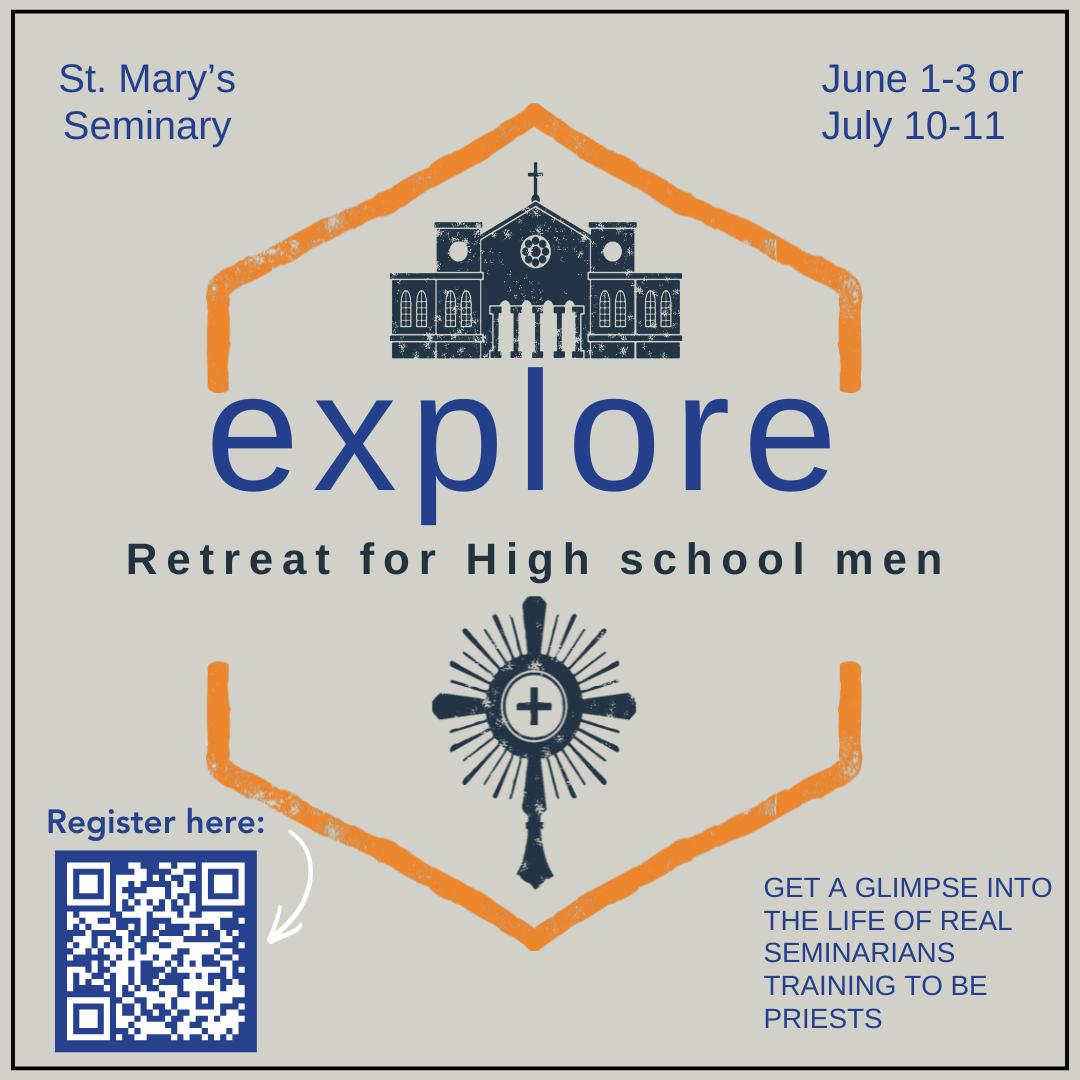
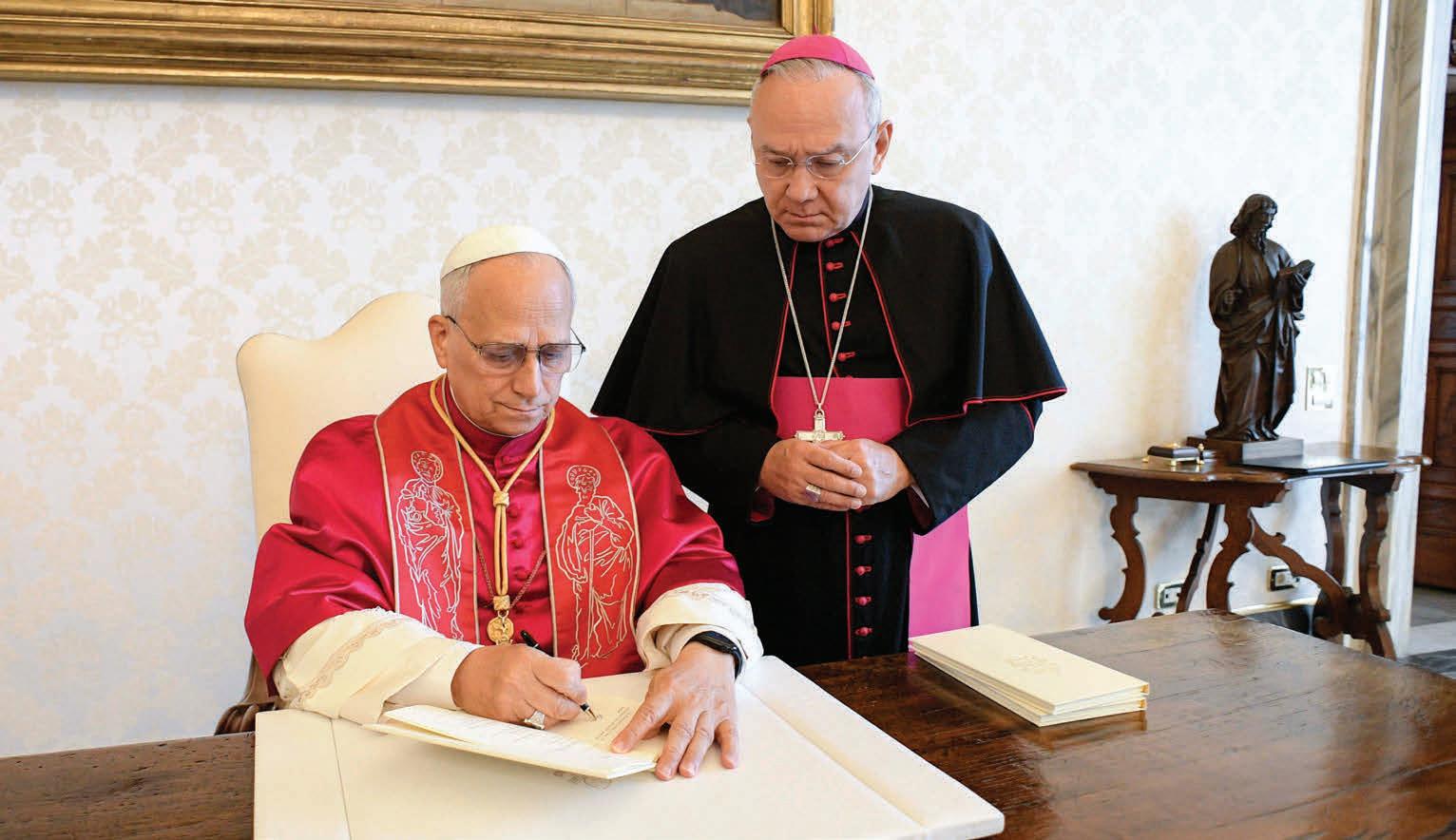
AI cannot replace humanity, conscience, truth, Irish archbishop says ARMAGH, Ireland (OSV News) — Irish Archbishop Eamon Martin of Armagh said artificial intelligence may offer quick answers, but it can never replace the human person, made in the image and likeness of God.
In a May 15 pastoral reflection, Archbishop Martin responded to Pope Leo’s World Communications Day message, “Preserving Human Voices and Faces.”
The pope urged communicators to ensure technology serves the truth and dignity of the human person. Speaking during his May 17 Regina Caeli address, Pope Leo encouraged forms of communication that respect the person at the center of every technological advance.
Archbishop Martin said AI can imitate human traits, but Christians must ask deeper questions: Are we listening to real voices, protecting real faces and speaking truthfully? He said Christian communication must be personal, merciful and courageous, never cold or manipulative. Technology, he added, is best used when it helps people see Christ more clearly and love one another more deeply. †
Pope approves creation of interdicasterial commission on AI
VATICAN (Vatican News) — Pope Leo XIV has approved the creation of an Interdicasterial Commission on Artificial Intelligence, according to a rescript dated May 12 and released by the Vatican on May 16.
The document was signed by Michael Cardinal Czerny, prefect of the Dicastery for Promoting Integral Human Development. The pope approved the new body in response to the rapid growth of artificial intelligence and concerns about its impact on humanity.
The rescript said he considered “the development in recent decades of the phenomenon of Artificial Intelligence and the most recent accelerations in its widespread use” along with “the Church’s concern for the dignity of every human person.”
The commission will include representatives from seven Vatican institutions. Artificial intelligence has remained a recurring theme in Pope Leo XIV’s pontificate. Days after his election, he said the Church seeks to respond “to another industrial revolution and to developments in the field of artificial intelligence that pose new challenges for the defense of human dignity, justice and labor.” †
from page 15
testify about her experience! When asked why she thought God had specifically chosen to cure her among the thousands who come to Lourdes seeking physical healing, she said she had no idea, but with great humility, she witnessed to the power of God’s love. She described how she seeks out every opportunity to share her story to bring others closer to God. She now journeys annually to Lourdes as a volunteer to serve others with joy and deep gratitude. Since returning from Lourdes, I have told many people about Antonia and have shared how touched I was by her miracle. She has inspired me to share more openly about my own miracles in
my life following Christ. Although I have not experienced a physical healing in the same way that Antonia did, I can recall many moments in my life where I had a profound sense of God’s love and felt reassured to “not be afraid.”These experiences were not as dramatic as Antonia’s experience, but they were still moments of true grace. Antonia has inspired me to share about the power of God’s healing in my own life. By openly testifying about our experiences, we can encourage others to see how God is also working in their lives. †
Mary Impelman serves as a campus minister at the Rice Catholic Student Center.
WASHINGTON (OSV News) — Retired Army Lt. Gen. John Dubia tries never to miss the annual Memorial Mass for the U.S. Archdiocese for the Military Services.
At 82, the Leesburg, Virginia, resident and lifelong Catholic attends to remember his friends from the 1966 graduating class of the U.S. Military Academy at West Point. That group of 579 holds the grim distinction of losing the highest number of graduates — 30 — of any West Point class during the Vietnam War. Some 100 more were wounded.
An Ohio native, Dubia was deployed to Vietnam from 1968 to 1969 as a second lieutenant in the 1st Battalion of the 7th Field Artillery Regiment. From 1990 to 1992, as a brigadier general, he was the executive secretary to then-Defense Secretary Dick Cheney. Promoted to lieutenant general in 1995, Dubia was director of the Army staff before his retirement in 1999.
The memorial Mass at the Basilica of the National Shrine of the Immaculate Conception, held May 17 to remember Catholic war dead, is distinctly nonpartisan and generally unchanging. This year’s celebration included no mention of the semiquincentennial of the U.S. Rather, it echoed the quiet dignity of smaller Memorial Day services held nationwide, including the singing of the national anthem and the playing of taps.
There was a color guard from the U.S. Army Military District of Washington, and the congregation was dotted with uniformed men and women of all service branches. Knights of Columbus and some Knights of Malta attended in full regalia.
Archbishop Timothy P. Broglio, archbishop of the U.S. Archdiocese for
from page 15
a visit from a priest for the Sacrament of Reconciliation and Anointing of the Sick when appropriate.
• Share your missal or read Scripture to someone who is homebound to help them connect to the daily readings and Sunday readings.
• Make up special care packages for special occasions and especially religious holidays and observances.
the Military Services, was the principal celebrant and homilist, assisted by military chaplains and priests.
Dubia, who attended Georgetown University in Washington before enrolling at West Point, told OSV News that he has always enjoyed the pomp and “having the joint color guard there.” He thinks Archbishop Broglio “is absolutely phenomenal.” He said he has been a supporter of the military archdiocese “for decades now.”
This was the first year that he attended Mass by himself. His wife of 59 years, Maureen, was unable to accompany him.
The Mass was celebrated on Ascension Sunday, and the Gospel reading was Mt 28:16-20, which includes the Great Commission of Jesus to the Apostles: “Go, therefore, and make disciples of all nations, baptizing them in the name of the Father, and of the Son, and of the Holy Spirit, teaching them to observe all that I have commanded you.” In his homily, Archbishop Broglio compared the Great Commission to military orders, since “most people end up with unexpected tasks.”
He called Jesus’ instructions “a clear message to the apostles.”
Although in many parts of the world, evangelistic activities and religious faith are officially ridiculed by governments, “there are many signs that the mission continues,” he said, pointing to a recent surge in conversions in the U.S., Great Britain and France.
“We strive to the fullness of life,” Archbishop Broglio said. “There is no more reason to fear.” The duty of the Church, he added, is “to be the visible means by which Christ acts in the world.” †
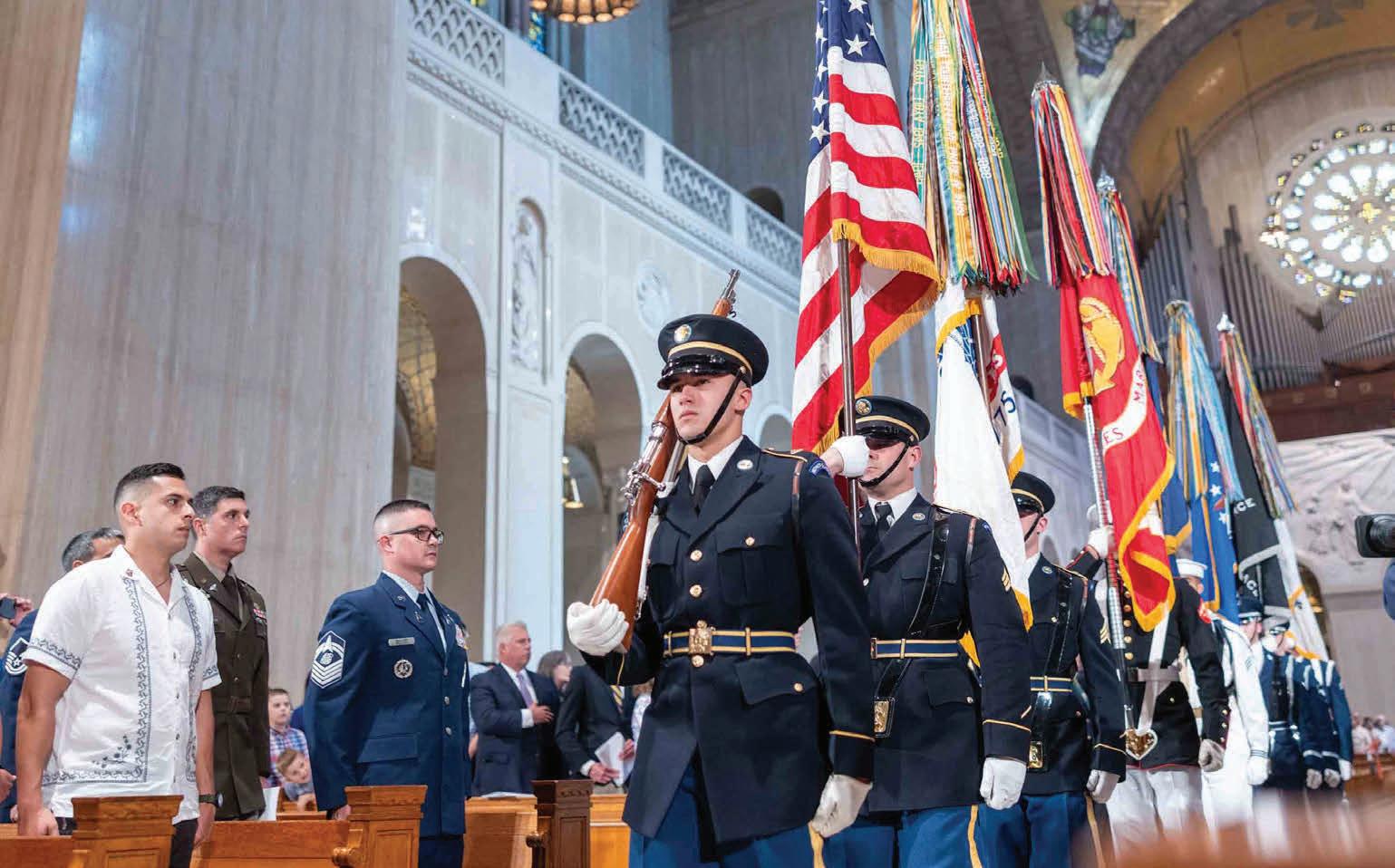
Pray with an older adult by visiting in person, over the phone or including all homebound older adults in your intercessions.
Contact the Office of Aging Ministry if you need additional information or resources. †
Kristine Kerlin is the director of the Office of Aging.
• Give a rosary to someone who is homebound and pray it with them and for them.
In a continuing effort to provide pastoral care to victims of sexual abuse by clergy or Church personnel, Archbishop Joe Vásquez would like to remind the faithful of the Archdiocese of the availability of the Victims Assistance Coordinator. Anyone who has been the victim of sexual abuse by clergy or Church personnel is encouraged to call Diane Vines at 713-654-5799. Please keep in daily prayers the healing of victims of abuse and all who suffer in any way.
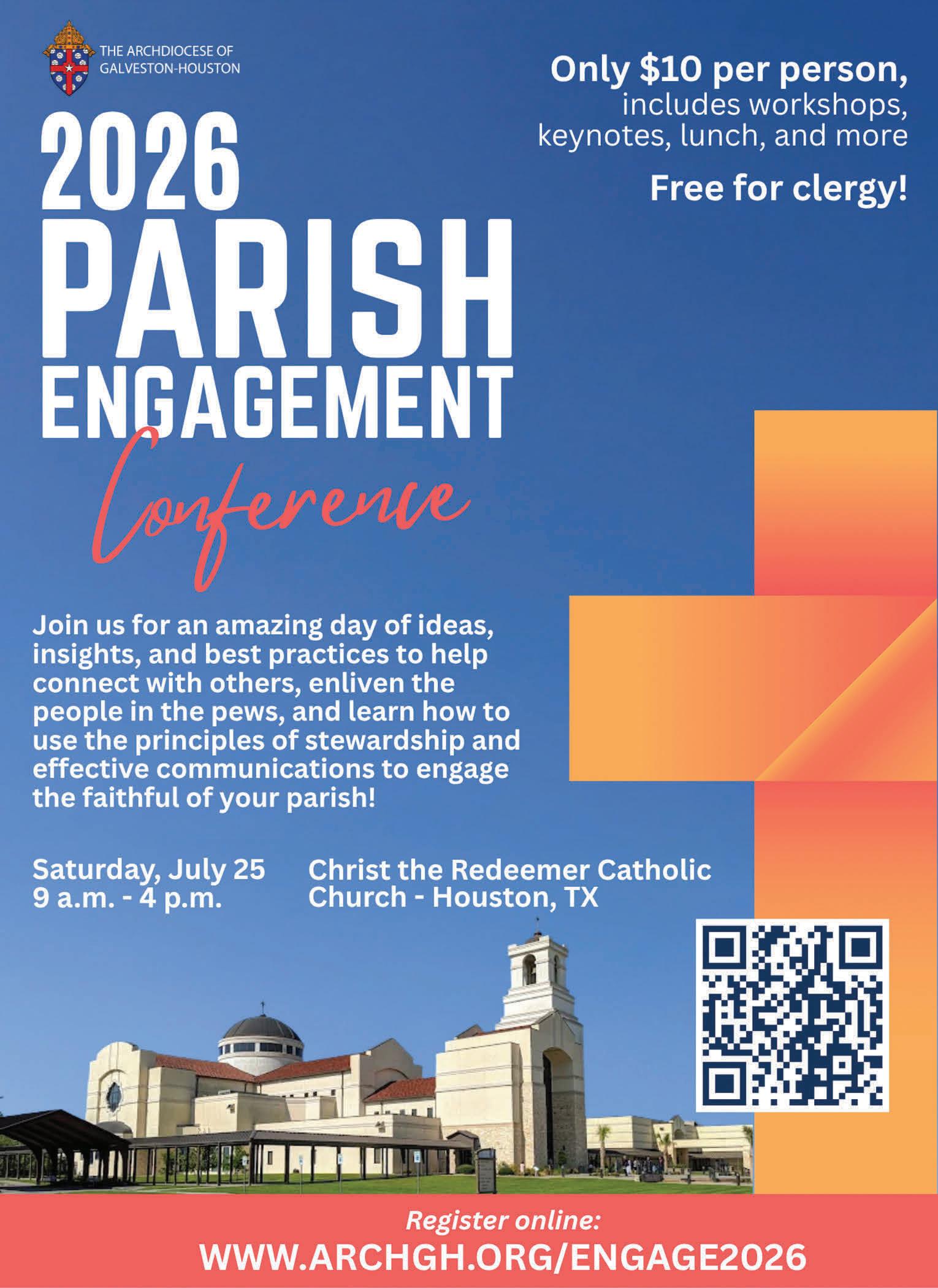
BY JAMES RAMOS Texas Catholic Herald
HUNTSVILLE — Texas carried out its 600th execution of the modern era on May 14, putting Edward Busby to death despite disputes over whether he was intellectually disabled and therefore ineligible for capital punishment.
Catholic leaders in Texas renewed their opposition to executions in the wake of Busby’s death.
“In 2016, we wrote that ‘capital punishment vitiates our hearts’ capacity for mercy and love,’” the Texas Catholic Conference of Bishops said in a May 14 statement. “Instead of decreasing violence, capital punishment perpetuates the notion that some lives are disposable and not capable of redemption. Its use can harden our hearts.”
The bishops cited recent remarks from Pope Leo XIV, saying the Church affirms “that the dignity of the person is not lost even after very serious crimes are committed.”
“We know that justice can be met without capital punishment, and often capital punishment stands in the way of merciful justice,” the bishops said. Quoting the pope, they added: “Effective systems of detention can be and have been developed that protect citizens while at the same
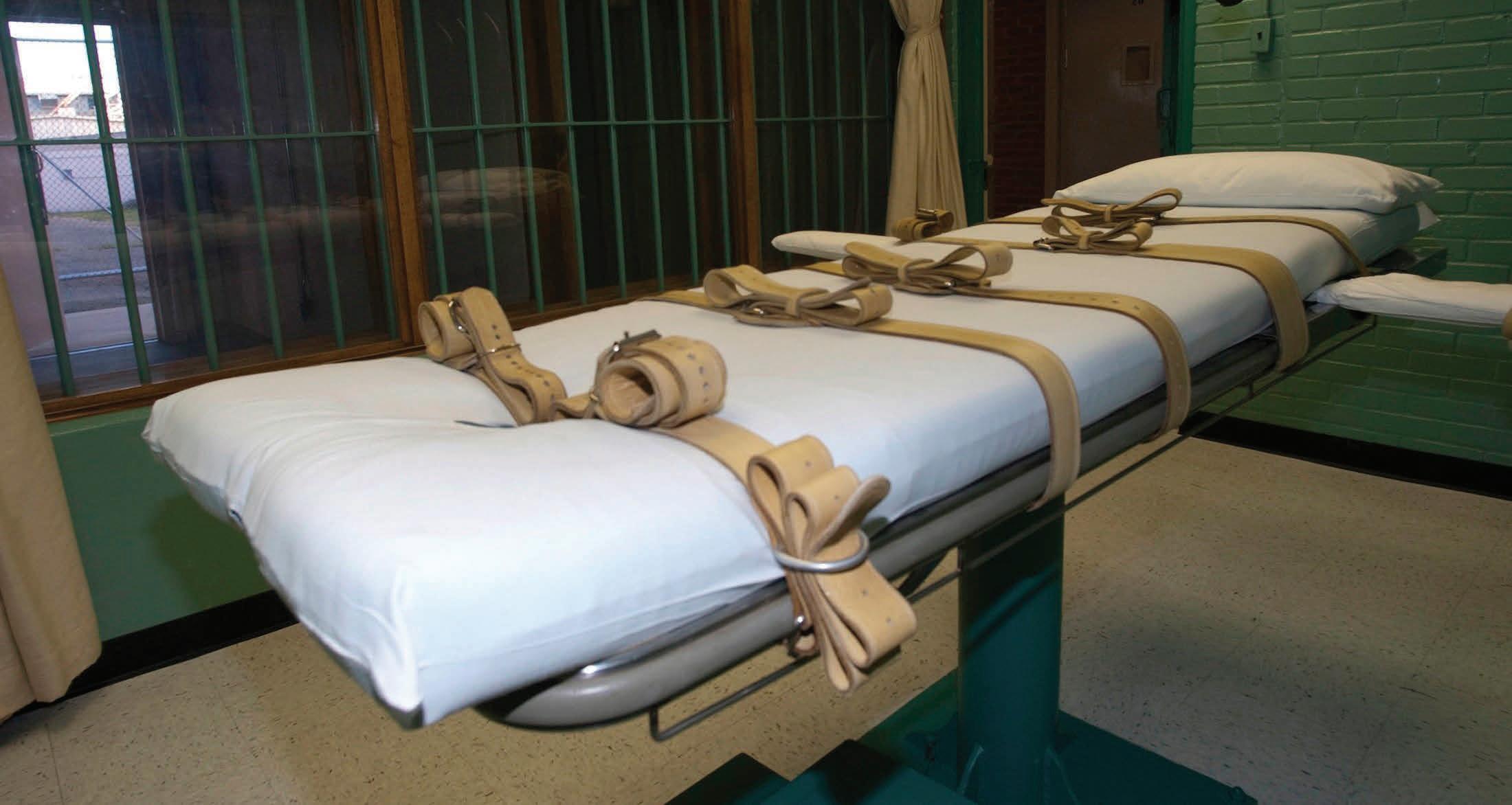
time do not completely deprive those who are guilty of the possibility of redemption.”
The bishops also emphasized ministry to victims and offenders.
“As a Church, we accompany our brothers and sisters, children, parents and loved ones as we see them suffer from the heinous and violent actions of others,” they said. “Only God can console them, yet we offer what comfort we can with our



presence and prayer.”
They pointed to forgiveness as a path toward healing: “The healing that comes from forgiveness has been a powerful force in the lives of many families who have experienced violence.”


Renewing their call to end executions, they said: “We continue to call for a cessation of the use of capital punishment and renewed efforts for restorative justice in our communities.”
Busby, 53, was pronounced dead after a lethal injection at the state penitentiary in Huntsville, hours after the U.S. Supreme Court lifted a stay that had temporarily halted the execution. He was convicted in the 2004 abduction and killing of Laura Lee Crane.
The case drew national attention because expert testimony indicated Busby had intellectual disabilities, which the Supreme Court has ruled bars executions under the Constitution’s prohibition on cruel and unusual punishment.
In a dissent joined by Justice Sonia Sotomayor, Justice Ketanji Brown Jackson criticized the court’s decision, writing: “In capital cases, we rarely intervene to preserve life. I cannot understand the court’s rush to extinguish it, much less in the circumstances of this case.”
Opponents of the death penalty sharply

criticized the execution and the milestone it represents.
Krisanne Vaillancourt Murphy, executive director of the Catholic Mobilizing Network, said Busby’s execution marked a “dark milestone” for Texas.
“What we saw ... when the Supreme Court lifted the stay of execution that was placed by the Fifth Circuit Court, was a clear demonstration of our justice system’s insistence on death,” she said. Murphy said constitutional protections should have prevented the execution. “
The Constitution’s prohibition of cruel and unusual punishment should have protected Mr. Busby. With Atkins v. Virginia, the Supreme Court precludes executing individuals with intellectual disabilities. Sadly, this was not upheld.”
She added that Busby’s death does not bring healing.
“We mourn for this loss of life, which does nothing to repair the harm Mr. Busby caused and for the family of Laura Lee Crane, whose life was violently taken.”She also pointed to Busby’s final statement of remorse, in which he told the victim’s family: “I am so sorry … I’ve hurt your family, I’ve hurt my family, and I wish I could take it all back.”
The Texas Coalition to Abolish the Death Penalty also criticized the execution, calling it a “grim milestone” and citing ongoing concerns about fairness, arbitrariness and barriers to relief in capital cases.
Texas remains the nation’s leading death penalty state, accounting for a significant share of executions in the United States since the death penalty was reinstated in the 1970s. †




Ordinariate bishop for North America sees his pastoral care expanded to
HOUSTON — A Texas-based bishop, who leads one of the Catholic Church’s three “Anglican ordinariates,” has seen his pastoral care expanded to Australia, as a fellow prelate has been tapped to lead a Vatican dicastery.






On May 11, Pope Leo XIV named Bishop Steven J. Lopes of the Houston-based Ordinariate of the Chair of St. Peter the apostolic administrator of the Ordinariate of Our Lady of the Southern Cross, headquartered near Sydney. Bishop Lopes takes over the responsibility from Archbishop Anthony Randazzo, its previous administrator, whom Pope Leo appointed prefect of the Vatican Dicastery for Legislative Texts.
The Catholic Church has three personal ordinariates with Anglican patrimony worldwide — informally called “the Anglican Ordinariate” — which function as dioceses led by their respective bishops and were established under Pope Benedict XVI.
Bishop Lopes, whose ordinariate covers the U.S. and Canada, and had worked closely under Pope Benedict in the establishment of the ordinariates, said that his task with his new territory “is to be its custodian for a while, encouraging its people to grow in the beauty of holiness as the surest means of growth and fruitfulness.” †
CIUDAD DEL VATICANO (OSV News) — La primera encíclica del Papa León XIV, “Magnifica Humanitas”, se publicará el 25 de mayo y abordará la inteligencia artificial (IA) y la protección de la dignidad humana, según ha anunciado el Vaticano.
La encíclica, cuyo título en latín significa “Magnífica Humanidad”, fue firmada por el Papa el 15 de mayo, en el 135.º aniversario de “Rerum Novarum”, la encíclica social fundacional del Papa León XIII de 1891 sobre el trabajo y el capital, escrita durante la primera Revolución Industrial.
En un hecho sin precedentes, el Papa León XIV asistió a una rueda de prensa en el Vaticano con motivo de la publicación de la encíclica social junto al fundador de una de las empresas de inteligencia artificial de mayor crecimiento del mundo. Christopher Olah, cofundador de Anthropic, la empresa de inteligencia artificial que desarrolló el modelo de lenguaje Claude, participó en un panel que presentó el documento en el Aula Sínodo del Vaticano el 25 de mayo. El panel también contó con la presencia de Anna Rowlands, teóloga británica especializada en la doctrina social católica, y Léocadie Lushombo, profesora de ética teológica en la Universidad de Santa Clara. El cardenal Víctor Fernández y el cardenal Michael Czerny participaron en la rueda de prensa, mientras que el Papa León y el cardenal Pietro Parolin pronunciaron los discursos al término de la conferencia de prensa.
El Papa León XIV ha manifestado interés en el tema de la inteligencia artificial y la dignidad del trabajo desde la primera semana de su pontificado, y dijo al Colegio Cardenalicio días después de su elección en mayo de 2025 que tomó su nombre papal en parte en honor al Papa León XIII, cuya histórica encíclica “Rerum Novarum” ha sido parte de la doctrina social de la Iglesia durante más de un siglo.
“Hoy la Iglesia ofrece a todos su patrimonio de doctrina social para responder a otra revolución industrial
MOVIE RATINGS By OSV News
A-I – SUITABLE FOR ALL
• David (PG)
A-II – SUITABLE FOR OLDER CHILDREN
• Project Hail Mary (PG-13)
• The Super Mario Galaxy Movie (PG)
A-III – ADULTS AND ADOLESCENTS
• Michael (PG-13)
• Reminders of Him (PG-13)
• The Devil Wears Prada 2 (PG-13)
• You, Me & Tuscany (PG-13)
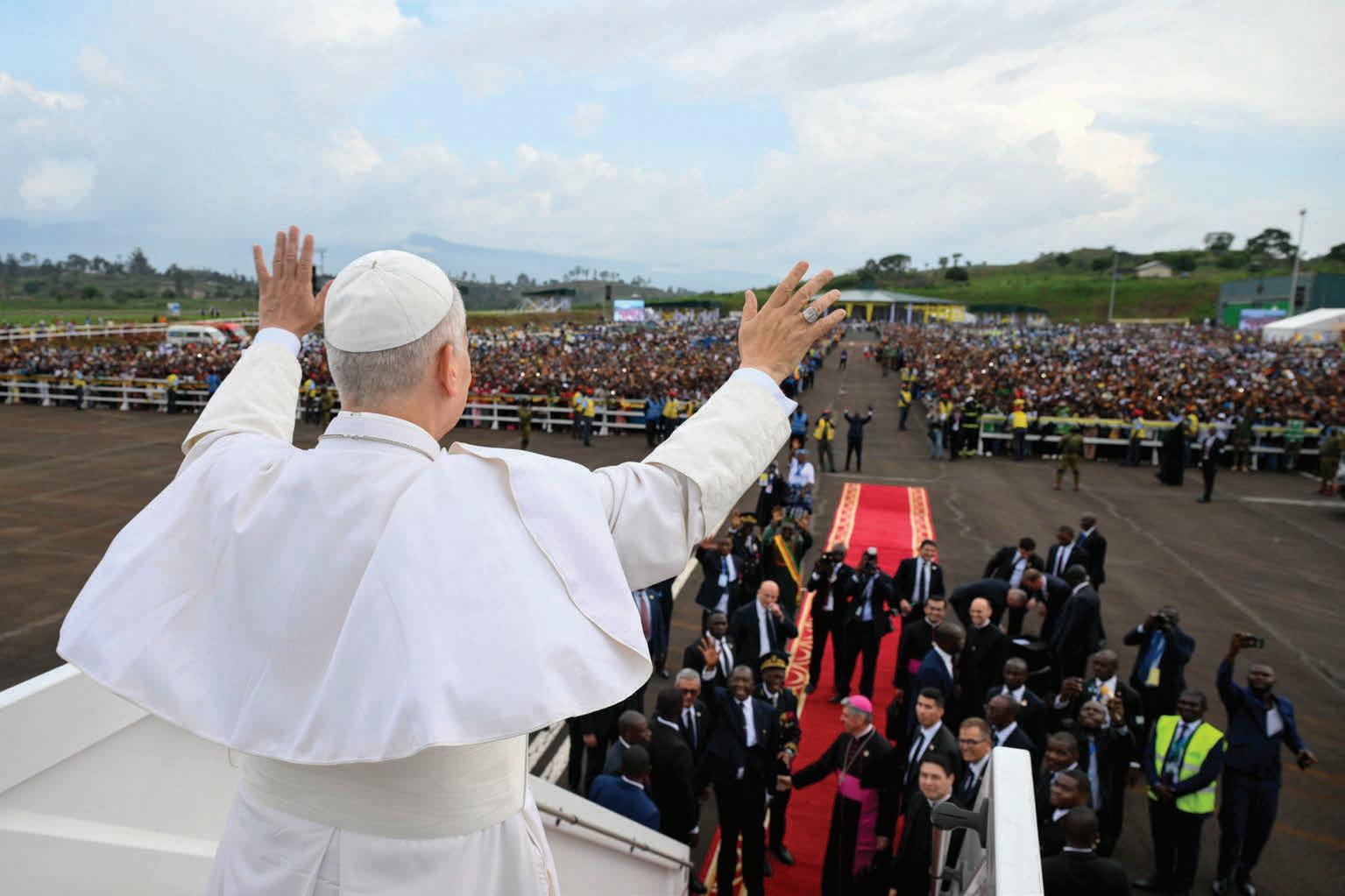
El papa León XIV saluda a la multitud mientras sube al avión papal en el Aeropuerto Internacional de Bamenda, Camerún, el 16 de abril con destino a Yaundé, Camerún. La primera encíclica del papa León XIV, “Magnifica Humanitas”, que aborda la inteligencia artificial y la protección de la dignidad humana, se publicó el 25 de mayo, según anunció el Vaticano el 18 de mayo.
y a los desarrollos de la inteligencia artificial, que comportan nuevos desafíos en la defensa de la dignidad humana, de la justicia y el trabajo”, dijo el Papa León XIV dos días después de su elección.
El Papa León --el primer pontífice estadounidense, quien tiene una licenciatura en matemáticas-- se ha referido una y otra vez al tema de la IA en discursos, mensajes y entrevistas durante su primer año, lo que llevó a la revista Time a incluirlo en su lista de 2025 de las personas más influyentes del mundo en inteligencia artificial, y la revista lo describió como un contrapeso espiritual a Silicon Valley.
El Papa León ha abordado el tema de la IA en escenarios que van desde un estadio deportivo repleto de adolescentes, a quienes les dijo que usaran la IA “de tal manera que, si desapareciera mañana, seguirían sabiendo cómo pensar”,
▶ For full movie reviews, visit www.osvnews.com/category/reviews
L
– LIMITED MATURE AUDIENCE
• Peaky Blinders: The Immortal Man (R)
• The Drama (R)
• Lee Cronin’s The Mummy (R)
O – MORALLY OFFENSIVE
• Mortal Kombat II
• Obsession (R)
• Ready or Not 2: Here I Come (R)
• The Bride! (R)
• The Sheep Detectives (PG)
hasta una reunión de legisladores de 68 países, donde insistió en que la inteligencia artificial es una herramienta destinada a servir a los seres humanos, no a reemplazarlos. El Papa también ha advertido a los sacerdotes que no utilicen chatbots para escribir sus homilías y ha expresado su preocupación por el efecto potencial de la IA en el “desarrollo intelectual y neurológico” de los niños.
El mensaje del Papa para la 60.ª Jornada
Mundial de las Comunicaciones Sociales de 2026, publicado en enero, ha sido su documento más contundente sobre la IA y la protección de la dignidad humana hasta la fecha. En el mensaje papal, subrayó que “custodiar rostros y voces humanas significa conservar este sello, este reflejo indeleble del amor de Dios” ya que revelan la “identidad irrepetible” de cada uno y que, al simular “voces y rostros humanos, sabiduría y conocimiento, conciencia y responsabilidad, empatía y amistad”, los sistemas de IA “invaden el nivel más profundo de la comunicación, el de la relación entre las personas”. El Papa León también advirtió que los sistemas de IA “están asumiendo cada vez más el control de la producción de textos, música y vídeo”, resultando en que “gran parte de la industria creativa humana corre así el riesgo de ser desmantelada y sustituida por la etiqueta ‘Powered by AI’, convirtiendo a las personas en meros consumidores pasivos de pensamientos no pensados, de productos anónimos, sin autoría, sin amor”.
“La capacidad de acceder a grandes cantidades de datos e información no debe confundirse con la capacidad de extraer significado y valor de ellos. Esto último requiere la voluntad de enfrentarse al misterio y a las preguntas fundamentales de nuestra existencia”, dijo el Papa León en un discurso de diciembre dirigido a los participantes en una conferencia sobre IA.
“Por lo tanto, será esencial enseñar a los jóvenes a utilizar estas herramientas con su propia inteligencia, asegurándonos de que se abran a la búsqueda de la verdad”. †
La Concatedral celebrará una misa en portugués el 21 de junio durante la Copa Mundial
HOUSTON — Mientras Houston se prepara para recibir a los aficionados de la Copa Mundial de la FIFA 2026, la Concatedral del Sagrado Corazón anunció que celebrará una misa en portugués el 21 de junio en su sede del centro de la ciudad, ubicada en 1111 St. Joseph Pkwy. Houston albergará siete partidos de la Copa Mundial en el NRG Stadium del 14 de junio al 4 de julio, incluyendo cinco partidos de la fase de grupos y dos de la fase eliminatoria. Las autoridades municipales esperan más de 500,000 visitantes, ya que competirán equipos de Cabo Verde, Congo RD, Curazao, Alemania, Países Bajos, Portugal, Arabia Saudita, Suecia y Uzbekistán.
Los organizadores indicaron que la misa forma parte de una iniciativa más amplia para dar la bienvenida a los visitantes internacionales durante el torneo. Para más información, visite archgh.org/worldcup. †
En un continuo esfuerzo por facilitar atención pastoral a las victimas de abuso sexual del clero o del personal de la Iglesia, el Arzobispo Joe Vásquez gustaría recordar a los fieles de la Arquidiócesis la disponibilidad del Coordinador de Ayuda a Víctimas. Si alguien ha sido victim de abuso sexual del clero o del personal de la Iglesia, se les anima llamar a la Diane Vines al 713-654-5799. Por favor rece por la sanación de las víctimas del abuso y por todos los que sufren de alguna manera.
To see more listings in the Around the Archdiocese or to find the latest updates, visit www.archgh.org/ata.
MAY 29-31
YOUNG ADULT RETREAT, 4 to 6 p.m. Friday to 3:30 p.m. Sunday, Holy Name Passionist Retreat Center (430 Bunker Rd., Houston). This threeday retreat includes Mass, confession, praise and worship, and guest speakers. Individuals ages 18 to 29 and parish groups are welcomed. Cost: $265/includes a private room, bath and meals. Financial aid available. 713-464-0211 x 10; holynameretreatcenter.com/young-adults.
MAY 30
LADIES LUNCHEON, 11 a.m. to 2 p.m., Houston Saengerhalle (1703 Heights Blvd., Houston). Marian Daughters of Annunciation Catholic Church, Hail Holy Queen sponsors luncheon event with speakers, including Princess Maria-Anna Galitzine, granddaughter of Blessed Karl of Austria. Cost: $40/adults; $20/youth 12 and up. mariandaughters@ acchtx.org; annunciationcc.org/apostolate/ mariandaughters.
JUNE 3
ADORATION HOUR, 7 to 8 p.m., Sacred Heart (507 S Fourth St., Richmond). Adoration Hour on the first Wednesday of the month to pray for vocations, with confession and Anointing of the Sick available. sacredhrt.com/adoration.
JUNE 5-6
REMARRIAGE RETREAT, 6 to 9 p.m. Friday, and 8 a.m. to 6 p.m. Saturday, St. Dominic Chancery
(2405 Holcombe St., Houston). Archdiocesan sponsored remarriage retreat for couples getting remarried in the Catholic Church and blending families. Cost: $250/includes meals and materials. Register: archgh.org/new-life. remarriagehouston@gmail.com; jcalmiller@ gmail.com.
JUNE 5-7
FESTIVAL, 11 a.m. Friday, 9 a.m. Saturday and 11 a.m. Sunday, Our Lady Star of the Sea (1401 Fidelity St., Houston). Knights of Peter Claver #139 host three-day festival. Friday Fish Fry all day with Bingo at 6 p.m. Pre-order by email. Saturday includes raffle, a Zydeco breakfast dance with Curtis Poullard and the Creole Zydeco Band. Breakfast is free. Food will also be sold at 11 a.m. Sunday includes music with Step Rideau and the Zydeco Outlaws. Cost: $25/weekend pass or $15 donation at the door, both Saturday and Sunday. 832-925-8111; olsoshoustontx@gmail.com.
JUNE 12-14
GAMBLERS ANONYMOUS, 6 p.m. Friday to 12:30 p.m. Sunday, Holy Name Passionist Retreat Center (430 Bunker Hill Rd., Houston). Three-day 12step study weekend for those working 12-step programs, providing an opportunity to grow spiritually and participate with others. Cost: $265/$250 for 65 and older. registrar.holyname@ passionist.org; holynameretreatcenter.com/12step-retreats.
JUNE 13
EUCHARISTIC PROCESSION, 8 a.m., Sacred Heart (109 N Frazier St., Conroe). Eucharistic Procession
through downtown Conroe as part of the Feast of the Sacred Heart of Jesus. Procession will start outside of the church at approximately 9:15 a.m. after an 8 a.m. bilingual Mass. Benediction of the Most Blessed Sacrament follow the procession inside the church. the99SH@gmail.com.
AWARDS LUNCHEON & FASHION SHOW, 1:30 p.m., Union Station at Daikin Park (501 Crawford St., Houston). Sponsored by the Astros Foundation to benefit St. Mary of the Purification Catholic School, the event includes live music, food, silent auction, wine pull and more than 40 models on a runway.
JUNE 25-27
SUMMER CHANT WORKSHOP, Thursday at 7 p.m., St. Mary’s Seminary (9845 Memorial Dr., Houston). Workshop includes lecture, sacred music social and sung compline on Thursday evening. On Friday and Saturday, participants will sing the Divine Office, and participate in workshops and conferences. Cost: $235. Register: chantschool.org.
JUNE 26-28
CATHOLIC WOMEN’S RETREAT, Friday at 6 p.m. to Sunday at 12:30 p.m., Holy Name Passionist Retreat Center (430 Bunker Hill Rd., Houston). This three-day retreat includes the celebration of the Eucharist, confession, conferences and time for private prayer. Parish groups, Mothers/ Daughters (16+), and individuals are welcomed. Cost: $265. Register: holynameretreatcenter. com/catholic-retreats.
JUNE 30
VACATION BIBLE SCHOOL, 7 to 9 p.m., Jerome Parish
Share it with thousands of print and digital readers. Scan the QR code to fill out the form and send your event to Around the Archdiocese. Learn more at ARCHGH.ORG/ATA .

Activity Center Room D (2749 Hollister Rd., Houston). Event is designed to revisit familiar Scripture with new depth, insight and meaning for today. Father Jonathan Moré, pastor of St. Jerome, will present “Noah and the Ark.” Cost: $20. info@emmausspiritualitycenter.com; 281241-9678; emmausspiritualitycenter.com.
For additional listings, visit WWW.ARCHGH.ORG/ATA