










By Donna Duric
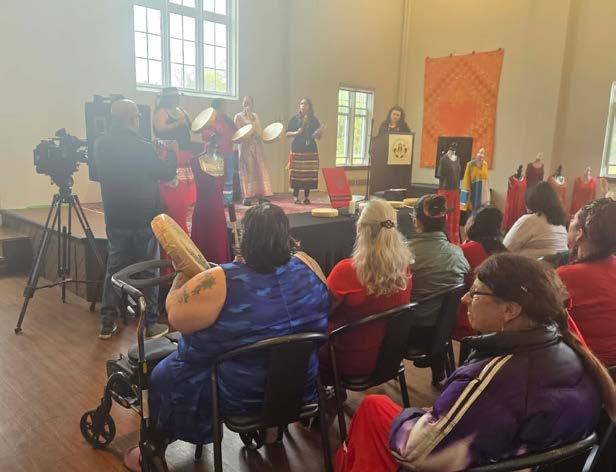
Red Dress Day 2026 was marked by honouring the memories of Indigenous women, girls, men and two-spirit people of all ages at the Native Women’s Centre in Hamilton’s event on Tuesday.
Their names were read out loud and candles were lit in their honour so people never forget.
Awareness of MMIWG2S people has grown over the past two decades, with more police resources now going toward investigating missing persons cases and re-opening cold cases.
Starting in 2011, the OPP Criminal Investigation Branch (CIB) began proactively reviewing all unsolved homicide and missing persons investigations in OPP jurisdiction where the victim was identified as Indigenous.
The first edition of the Missing and Unsolved Murdered Indigenous People: The Ontario Provincial Police Perspective (MUMIP Report) was released in 2015.
The second edition of the report offers insight into 65 investigations that took place between Jan. 1, 1956 to Dec. 31, 2024.
Of these, 59 met all necessary criteria for inclusion, including investigations in OPP jurisdiction or where OPP assistance was requested, where the victim was identified as Indigenous, and where the next of kin consented to inclusion within the report.
Of the 59 investigations that met the criteria for inclusion, 14 investigations involved Indigenous women and girls.
This includes:
-Five missing Indigenous women and girls.
-Nine unsolved death investigations involving Indigenous women and girls.
-Eight are homicide investigations.
-There is one suspicious death investigation. There are 45 investigations involving Indigenous men and boys in Ontario. This includes:
-Thirty-nine missing Indigenous men and boys.
-Six unsolved death investigations involving Indigenous men and boys.
-Five are homicide investigations.
-There is one suspicious death investigation.
The MUMIP Report was prepared by the CIB and the Indigenous Policing
Bureau's Missing and Murdered Indigenous Women and Girls (MMIWG) Team.
"Since the release of the National Inquiry into MMIWG Final Report, the OPP has taken significant steps to address the root causes of violence that impact Indigenous women and girls and all Indigenous Peoples,” said OPP
Commissioner Thomas Carrique. “This report reflects our commitment to the Calls for Justice, as well as recommendations made in various inquests and inquiries. We remain hopeful that someone holds the missing piece of the puzzle that could help solve these investigations and urge anyone with information to come forward.”
Ontario Regional Chief Abram Benedict said, "The first MUMIP report, released just before the National Inquiry into MMIWG, marked a critical starting point for the OPP in addressing systemic racism and the disproportionate violence affecting Indigenous Peoples. The Chiefs of Ontario acknowledge the progress made over the past decade, including the creation of a dedicated MMIWG Team. However, much
work remains to advance investigations and to support families of those who have gone missing or been murdered."
The Native Women’s Centre of Hamilton said red dress day is not only a symbol, it’s a call; a call to remember and to speak the names of the victims.
Each empty dress represents a life taken too soon.
May 5 is recognized annually as the National Day of Awareness for Missing and Murdered Indigenous Women, Girls, and Two-Spirit People (MMIWG2S+), often known as Red Dress Day. It is a day of remembrance, activism, and mourning, dedicated to honouring the lives of Indigenous women, girls, and 2SLGBTQQIA+ individuals who have been victims of disproportionate violence, as well as those who have gone missing.
Anyone with information about these investigations is urged to call the Ontario Centre for Missing Persons and Unidentified Remains toll-free tip line at 1-877-9-FINDME (346363). To remain anonymous, call Crime Stoppers at 1-800-222-TIPS (8477) or visit ontariocrimestoppers.ca.



By Jace Koblun
Indspire has announced two new corporate partnerships that will deliver $1.2 million in total funding to support First Nations, Inuit and Métis students in post-secondary education.
On April 30, Indspire and the TELUS Friendly Future Foundation renewed their partnership. The TELUS Friendly Future Foundation is committing $500,000 over four years. The Government of Canada will match the contribution, creating $1 million in total funding for the TELUS Student Bursary program.
The bursaries are available through Indspire’s Building Brighter Futures: Bursaries and Scholarships initiative. Up to 320 TELUS Student Bursaries will be awarded to students in their first year of an undergraduate diploma or degree program. In addition to the financial award, recipients will receive access to internet and mobility
services, 24/7 mental health support, mentoring and career development resources.
Indspire President and CEO Jocelyn W. Formsma said the partnership reflects a shared commitment to reconciliation and equity.
“The TELUS Student Bursary is more than financial support; it’s an investment in the next generation of Indigenous leaders, changemakers and professionals,” Formsma stated.
On May 1, Indspire and Trans Mountain Corporation launched the new Trans Mountain Excellence Scholarship for Indigenous Students. Trans Mountain is contributing $100,000, which the Government of Canada will match to create $200,000 in total scholarship funding.
Eight First Nations, Inuit and Métis students pursuing studies in high-demand fields will each receive $25,000 for the 2026 to 2027 academic year. Applications
opened immediately and will remain open until August 1.
Trans Mountain Chief Administrative Officer
Jennifer Pierce said the scholarship forms part of the company’s Reconciliation Action Plan.
“By partnering with Indspire, we’re putting support directly in the hands of students so they can pursue education and career paths that matter to them,” Pierce said.
Formsma added that such partnerships help ensure Indigenous students have the resources they need to succeed in their chosen fields.
Indspire is a national Indigenous registered charity that invests in the education of First Nations, Inuit and Métis people across Canada. The two announcements this week add to the organization’s existing scholarship and bursary programs, which provide direct financial assistance and wraparound supports to reduce barriers for Indigenous learners.

By Donna Duric
Six Nations of the Grand River needs to hear from the community how drinking water quality has affected them as it continues in its litigation against the federal government, claiming the government has failed to provide safe drinking water to the reserve.
Molly Churchill, an associate from JFK Law, which is representing Six Nations against Canada, says, “If I were to sum it up in one sentence, it would be about water security on your reserve. This claim is about Canada’s failure to provide adequate and reliable supply of safe drinking water, Canada’s failure to provide adequate wastewater treatment on the reserve, and Canada’s colonial control of Six Nations, rendering Six Nations reliable on Canada for basic needs like drinking water.”
The claim has to do with both the centralized water treatment system in addition to wells and cisterns.
Churchill said the legal claim itself is based on:
-negligence
-the honour of the Crown
-the Canadian Charter of Rights and Freedoms (section 15 specifically, which deals with equality, that Six Nations says was breached, as well as being denied life, liberty and security), -and section 36 of the Constitution Act, which speaks to the commitment to provide essential public services like clean drinking water to all Canadians.
In Canada’s statement of defense, it says the responsibility to provide safe drinking water lies with Six Nations of the Grand River, not the federal government.
“It’s a position I personally find a little bit gross,”

said Churchill.
Six Nations issued the claim in early December 2024.
Canada’s served its statement of defense in September 2025.
Six Nations replied a month later on Oct. 20, 2025, which closed the pleadings stage of litigation.
The claim is currently in the discovery stage of litigation.
“In this stage, both parties have an obligation

to share information with one another,” said Churchill.
She said the discovery stage requires significant effort in collecting, reviewing and submitting documents to Canada and Canada in turn has to provide its relevant documents to Six Nations.
“We are still negotiating a timeline for the exchange of documents,” she said.
After discovery comes the pre-trial phase and
then the trial.
In the pre-trial phase, there is a chance of settling the claim without going to trial.
If it goes to trial, both parties present their evidence and submissions before a judge.
The projected timeframe to get to trial is 2029, said Churchill.
Six Nations brought the litigation forward after it was denied inclusion in the federal government’s national Indigenous drinking water settlement.
Six Nations has evidence of being under numerous boil water advisories over the decades.
The claim seeks a court order that would require Canada to immediately take steps to ensure that all members who live on reserve will have access to safe drinking water directly from taps in their homes.


It will also require Canada to provide financial compensation for the harm to the community from their past failures. This harm includes harm to health, increased fear and anxiety over inability to access safe drinking water, and loss of connection to culture, particularly as a result of those members who have had to move away from the community because of this issue.
In the meantime, Six Nations of the Grand River is asking all Six Nations community members to consider what stories you may have to share about how the lack of a reliable supply of safe drinking water has impacted you and your families. SNGR will share those stories with the court.
If successful, the claim will require Canada to work together with Six Nations to fix the problem now, not at some indefinite time in the future.
By Jace Koblun
On Red Dress Day, May 5, families across Turtle Island gathered once more on Parliament Hill, in ceremonies from coast to coast, and in quiet vigils in our own territories, to remember the stolen sisters, daughters, mothers and Two-Spirit relatives whose names are still carried.
This year the message was sharper than ever.
More than 400 family members of missing and murdered Indigenous women, girls and Two-Spirit Plus people have signed an open letter telling the federal government that the national organizations long presented as their voice “do not speak for us.” They are demanding that future funding be directed straight to families and survivors, not funnelled through layers of bureaucracy that have left too many still waiting for real help.
The letter, released in the days leading up to Red Dress Day, is the result of online meetings held by families from every region. It pulls no punches.
“We understand that Canada takes these organizations at face value as representing the families; however, we are writing to say they do not speak for us,” the letter states. “High salaries and administration processes do not alleviate the crisis; they prolong it.”
Families point to years of substantial federal investments that have flowed into organizational structures while many of the people most directly impacted continue to receive little or no direct support. They describe trust as “deeply eroded” by limited transparency and decision-making that happens behind closed doors without family participation.
They are calling for a forensic audit of the funding already provided and insist
that any new resources must support family-led action, family-led oversight and family-led prevention measures. Nothing about their loved ones should move forward without families at the table — leading the work.
Bridget Tolley and other grassroots voices have organized the annual Parliament Hill vigil for years. Their message this Red Dress Day was unmistakable: ten years after the National Inquiry, the same patterns of re-traumatization continue. Families are no longer willing to be consulted as an afterthought. The families are not asking for sympathy. They are demanding accountability — from Ottawa and from any organization that claims to speak in their name. They have given the ministers until May 18 to respond and outline how they will listen directly to families across the country.



Trumpty Dumpty built half a wall...
In the spring of 2026, a peculiar spectacle unfolded in Washington. King Charles III, ceremonial figurehead of a fading empire, stood before the American elite at a White House state dinner. With practiced politeness, he delivered a historical jab: “Dare I say that, if it wasn’t for us, you’d be speaking French.” It was more than a clever barb aimed at President Trump. It was a history bomb detonated with royal precision. The Seven Years’ War—called the French and Indian War on this side of the ocean—raged across continents and decided the fate of vast North American territories. Britain’s decisive victory, sealed at places like the Plains of Abraham in 1759, ensured that English, not French, would shape the cultural and legal bedrock of the Thirteen Colonies. Without that outcome, the rebellion of 1776, the very identity of the United States, and its self-congratulatory narrative as history’s indispensable nation would have taken a radically different path. Trump’s forced grin revealed the discomfort: America’s story of manifest destiny and exceptionalism rests not on pure providence but on bloody contingencies of European imperial rivalry. History cannot be rebranded like a real estate deal. It is a blood-soaked tapestry of inconvenient truths. But the state dinner quip was mere prologue.
The deeper sermon arrived when Charles addressed a joint session of the U.S. Congress—a rare honor for a reigning British monarch. His chosen text?
The Magna Carta of 1215, that foundational charter wrenched from tyrannical King John by rebellious barons at Runnymede. It asserted that even kings are bound by law, that arbitrary rule has limits. Charles meticulously traced its lineage through centuries of Anglo-American jurisprudence, noting its invocation in more than 160 Supreme Court cases since 1789. Delivered in measured, almost humble tones by a man whose own authority is now largely symbolic—constrained by parliament and centuries of evolving constitutional struggle—the message carried quiet, devastating force: unchecked power inevitably corrupts from within. It served as a pointed reminder against the transactional style of recent American politics: swift executive orders, unilateral tariffs, tests of democratic guardrails, and the elevation of personal will over established norms. A descendant of those who once claimed divine right now embodied restrained power, lecturing a populist on the fragility of liberty. From the Mohawk worldview, the ironies cut like a belt knife through fresh deer hide. It is two broken eggs advising each other how to crack properly, all while squatting on a nest they never built and never truly owned. Both the King and the President stood on territory our ancestors never surrendered through legitimate means. King George III, Charles’s ancestor, issued the Royal
Proclamation of 1763 after Pontiac’s Rebellion, ostensibly promising to respect Indigenous title and draw a boundary against settler encroachment. In practice, it was a paper promise swiftly ignored by the Crown and later trampled by the American republic. The United States perfected the art of selective memory: between 1778 and 1871, roughly 370 treaties were ratified with Indigenous nations. Nearly all were broken, ignored, unilaterally altered, or nullified when they became inconvenient. Reservations carved out of homelands, residential schools designed to “kill the Indian in the child,” forced assimilation policies, and modern pipelines driven through unceded territory—these are not dusty footnotes but living wounds justified by the very “rule of law” Magna Carta supposedly inspired. Fine parchment. Rotten spirit. Hollow promises with devastating human and ecological cost. Yet the profoundest irony, the one neither man dared acknowledge, rests in the very soil beneath their feet. Long before Magna Carta was sealed in blood and ink, before any European sail scarred these horizons, the Haudenosaunee Confederacy forged the Kaianere’kó:wa—the Great Law of Peace. This was no mere charter of limits; it was a complete, living constitution designed for harmony, balance, and endurance.
The Grand Council operated by consensus, requiring unanimity among the nations rather than simple majority rule that could tyrannize minorities.
Clan Mothers held sacred authority: they nominated
chiefs, monitored their conduct, and possessed the power to “dehorn” or remove any leader who abused power, neglected the people, or strayed from the path of peace. Every major decision was weighed against its effects on the seventh generation yet unborn. The natural world was treated as relatives—trees, rivers, animals—not resources to be commodified and exhausted. This system produced genuine stewardship, accountability beyond election cycles, and a profound understanding that humanity is part of the land’s intricate web, not its master.
Benjamin Franklin observed this with admiration during the colonial era. He noted how the Haudenosaunee maintained unity and peace across wide territories while European colonies descended into petty squabbles. The 1754 Albany Plan of Union, an early blueprint for colonial cooperation, drew explicit inspiration from the Iroquois model of confederation. In 1988, the U.S. Congress passed a resolution formally acknowledging the influence of the Iroquois Confederacy on the structure of the American Constitution— its federal balance, division of powers, and spirit of liberty. The Founders wove in Greek, Roman, and Enlightenment threads, but the Great Law offered something deeper: real political authority for women, environmental ethics encoded in governance, and mechanisms to prevent the rise of tyrants rather than merely restraining them after the fact.
Magna Carta protected
barons from a bad king within an existing hierarchy. The Great Law built an entire society engineered to minimize bad leadership from emerging. America’s Constitution represented a brilliant compromise but failed tragically in practice for enslaved people, women, and Indigenous nations whose sovereignty it often ignored or extinguished. Today, one man’s raw, impatient, personalist approach to power stands as antithesis to both traditions. The other embodies limited monarchy precisely because real executive authority has been stripped from him. The irony burns hot: a blood heir of divine-right claimants quietly rebukes a populist deal-maker, while both edifices rest on foundations of dispossession. Here in Kanien’kehá:ka territory, we feel every unresolved layer. Toronto thrives on Mississauga and Haudenosaunee-related lands. The border dividing our communities is an artificial colonial scar from the very wars Charles referenced. Many of us hold passports from both Canada and the United States, yet our true citizenship and identity belong to the Mohawk Nation, which predates both by centuries. Charles speaks eloquently of environmentalism and sustainability, ideas that echo our seventh-generation teaching. But words ring hollow when treaties remain unfulfilled and corporate extraction scars the earth for shortterm profit. Trump treats borders as personal brand and symbols of control, even as original caretakers of this once-borderless land watch their wisdom sidelined.
This spectacle exposes empire’s perennial disease: power seduces, leaders forget mortality, and systems lacking deep cultural accountability drift toward tyranny— whether crowned, red-hatted, or cloaked in corporate suits. Our oldest treaty with Europeans, the Two Row Wampum, offered a better vision: two canoes or vessels traveling parallel down the same river, each respecting the other’s path without interference or domination. Too often, one side tried to ram, sink, or steer the other by force and deceit. The consequences fill museums with broken wampum belts and histories of stolen land. The earth itself now rebels through climate shifts and ecological collapse—symptoms of ignored long-term laws.
Little Trumpty Dumpty perched high on his wall of bluster, tariffs, threats, and “America First” slogans. Charles offered a polished constitutional history lesson. The Mohawk truth cuts sharper: both crown and republic constructed grand legal systems on land taken without true consent, then drafted rules to sanctify the taking. The longhouse has outlasted empires and republics alike because it was designed in alignment with fundamental realities— human frailty, the living land, and responsibilities to those yet unborn. No romantic illusions. Only unvarnished truth.
The way forward is not false binaries between king and populist. It demands synthesis and rectification. Embrace Magna Carta’s iron prinCONTINUED ON PAGE 12



By Jace Koblun
The federal government has been caught treating First Nations funding like a public-relations exercise instead of a nation-to-nation responsibility.
On May 4, Auditor General Karen Hogan tabled a report that lays bare what First Nations leaders have
said for years: Ottawa invested more than $6.5 billion in 10-year grants to 191 First Nations, Tribal Councils and authorities, but never bothered to track whether that money actually improved housing, health, education or governance in our communities. The so-called “New Fiscal Relationship” launched
in 2016 was supposed to break the old cycle of short-term, earmarked handouts that kept chiefs answering to Ottawa instead of their own citizens. It promised longer-term, flexible funding, real capacity-building and mutual accountability — the kind of respect the Two Row Wampum has always de-
manded: two vessels travelling side by side, neither steering the other. What First Nations got instead was old money simply repackaged into longer grants with almost none of the transformative work completed. No consistent monitoring of eligibility. No serious help building the financial and
governance systems communities need to manage their own affairs. And crucially, no system whatsoever to measure whether people’s lives actually got better.
Hogan was blunt: “It took existing funding, repackaged it into a longterm, predictable and stable set of funding, but
Highway 6 and Greens Road Intersection Improvements, Caledonia, Haldimand County Preliminary Design, Detail Design and Class Environmental Assessment Study (GWP 3029-20-00)
THE STUDY
The Ontario Ministry of Transportation (MTO) has retained GHD to undertake a Preliminary Design, Detail Design, and Class Environmental Assessment (Class EA) Study (Study) for the proposed improvements at the Highway 6 and Greens Road intersection, located in the community of Caledonia, Haldimand County, for managing future traffic volumes while minimizing potential adverse environmental effects.
THE PROCESS
This Study is a Group ‘B’ project under the Class Environmental Assessment for Provincial Transportation Facilities and Municipal Expressways, 2024 (Class EA). The Study Team, which includes representatives from GHD and MTO, will complete environmental and engineering field investigations and seek input from individuals, organizations, and Indigenous communities. Upon completion of the Preliminary Design, the Study Team will prepare a Transportation Environmental Study Report (TESR) and issue a Notice of Completion. The project team will include comments received, responses to the comments and any supporting materials in a record of consultation.
PUBLIC INFORMATION CENTRE
Public Information Centres (PICs) provide individuals, organizations, and Indigenous communities an opportunity to share information and seek input regarding the project and the alternatives being considered. The PIC has been arranged to present existing conditions, needs and justification, the alternatives being considered and their evaluation, associated potential impacts, preliminary proposed mitigation measures, and next steps.
The PIC will be held as a drop-in style, open house format. Representatives of the Study Team will be in attendance to answer questions and receive comments. We encourage interested persons to attend to obtain more information and provide comments, so your concerns can be addressed as the Study progresses. The information presented at the PIC will also be available on the project website following the PIC. The PIC will be held as follows:
Date: Wednesday, May 20, 2026
Time: 6:30pm – 8:30pm
Location: Haldimand County Caledonia Centre (Remax Room)


the really transformative things that should have happened just are underdeveloped right now.”
This is not new. First Nations have watched successive governments promise “nation-to-nation” relationships while keeping the same colonial strings attached. The 2016 memorandum with the Assembly of First Nations was meant to end the Default Prevention and Management Policy — the punitive third-party management system that treated overspending as a crime instead of the predictable result of chronic underfunding.
Instead, the Auditor General found that work was never finished. The new prevention-focused policy was drafted but never funded or implemented. Communities remain trapped in the same cycle.


Additional details are/will be available on the project website, www.highway6greensroad.com. We encourage you to participate in the Study and provide comments through the website or by contacting the Study Team members listed below. If you have questions about the Study or would like to be added to the mailing list, please contact:
Andrea Clegg, P.Eng.
Project Manager
GHD Limited 455 Phillip Street Waterloo, ON N2L 3X2
tel: 519-340-3748
e-mail: highway6greensroad@ghd.com
Roaa Safar, P.Eng.
Senior Project Engineer
Ministry of Transportation 659 Exeter Rd London, ON N6E 1L3
tel: 226-980-8251
e-mail: highway6greensroad@ghd.com
If you have any accessibility requirements in order to participate in this Study, please contact one of the Study Team members listed above. Comments and information are being collected to assist the MTO in meeting the requirements of the Ontario Environmental Assessment Act Information will be collected in accordance with the Freedom of Information and Protection of Privacy Act. All comments will be maintained on file for use during the Study and, with the exception of personal information, may be included in Study documentation and become part of the public record.
For Haudenosaunee readers in Six Nations and across the Confederacy, the implications are clear. When federal money comes without real control, it undermines the very sovereignty we have defended for generations. True fiscal self-determination means our elected leaders answer first to our citizens, not to bureaucrats in Ottawa.
The report lands at a time when many First Nations are still waiting for the distinctions-based funding they were promised. Spring economic updates offered new dollars, but leaders have already called them out for ignoring unique needs.
This is not about more studies. It is about honouring the commitments made under the Two Row. First Nations are not asking for permission to govern ourselves. We are demanding that Canada stop pretending it is helping while refusing to let go of the steering paddle.
The Auditor General has done her job. Now it is time for our leadership and our communities to hold Ottawa to account — not with more meetings, but with real change that puts decision-making power back where it belongs: in the hands of the people who live with the consequences every single day.
By 2RT Staff
HAMILTON, ON – April 30, 2026 – Hamilton Public Library (HPL), in partnership with the City of Hamilton, will open a small, temporary West Harbour Branch, activating the waterfront site with services and programs while longterm plans continue.
The interim space, located at the former Canadian Marine Discovery Centre (77 Harbourside Way) is expected to open in summer 2026.
The temporary branch will offer library services, programs and an Indigenous-focused collection of books and resources. The space is being refreshed with minimal, targeted renovations led by architecture and mechanical engineering firm mcCallumSather to support a functional pop-up library. This work focuses on updates to layout, shelving and program areas, while largely reusing existing finishes and furnishings through a lean, cost-effective approach that prior-
itizes only the essential improvements needed to support library operations and cultural programming.
“We are excited to launch the new, temporary West Harbour Branch this July. Community feedback supported the temporary use of this site as we plan for the long term,” says Paul Takala, Chief Librarian, Hamilton Public Library. “The space will provide residents and Indigenous community members with opportunities to connect, learn and gather while long-term plans continue to take shape.”
From a city-building perspective, this initiative reflects a broader vision for Hamilton’s waterfront as a place for connection, learning and cultural exchange.
“Our waterfront is one of Hamilton’s great gathering places, and this temporary library branch will create new opportunities for residents to connect, learn and spend time together by the water,” says
Mayor Andrea Horwath. “It expands access to library services, celebrates storytelling and cultural exchange, and supports a welcoming public space for Hamiltonians while we continue working with Indigenous partners and the community on a long-term vision for this important site.”
Advancing this vision, the City is focused on ensuring the space is activated in a way that meets community needs both now and in the future.
“This is a practical way to bring an important public space into use now, while longer-term planning continues with Indigenous partners and the community,” says City Manager Marnie Cluckie. “The temporary branch expands access to library services on the waterfront and keeps this site active and useful for the community.”
Central to this work is ensuring the space reflects and supports Indigenous communities and perspectives.












Sunday May 10th


By Jim Windle
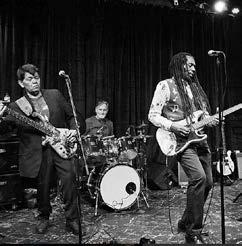
We are all TRIBZ and should respect each other as one world family. That is the message being brought forth by a band called TRIBZ.
TRIBZ consists of four members, two carry Six Nations blood, bassist Don Hill and guitarist Earl Johnson. Drummer Dave Davidson can trace his roots to the tribal history of Scotland while frontman, lead vocalist, guitarist and primary song writer Arrol Starr Francis,


was born in Jamaica, but is well travelled around the world.
TRIBZ brings together these veteran musicians who have each contributed decades to perfecting their individual skills on the road and on the concert stage appearing with several recognized names of rock and roll history. Not just another band, TRIBZ dedicates its musical efforts these days towards projecting peace and understanding between all people and tribes, packaged in a well



selected song repertoire and which includes several songs written by lead vocalist and guitarist Arrol Starr Francis. He released the singles "Holding Out for You", "The Key" and "For the Love of Money" in 1986 and 1987, before releasing his debut album Temple of Love on A&M Records in 1987.[6] In 1987, he also participated in the recording of a Christmas charity single, "A Christmas Wish", with a lineup of Toronto-area performers that also included Billy Newton-Davis, Kim Richardson, Frozen Ghost, Prairie Oyster, Messenjah, The Pursuit of Happiness, Salome Bey, Zappacosta,
Arlene Duncan and Lorraine Scott.[
He received his first Juno Award nomination in 1986 for "The Key",[8] which was his highest charting single peaking at #57 in RPM Weekly,[9] and his second in 1987 for "For the Love of Money".[10] He also won the award for Best Male Artist at the Black Music Association of Canada awards in 1987. [11] However, he was one of a number of Black Canadian musicians who faced heavy resistance from Canadian radio programmers in this era,[5] and A&M did not renew his contract for another album.
In the early 1990s Starr
Sunday May 10th

moved to Hamilton, working as a record producer and recording music for film, television and commercials. During this era he formed a country music duo, North Starr, with colleague Mike Northcott, and released his second album, From the Inside Out, on the independent label Asoma Records in 1994.
“Derek Miller was probably 15,” Hill recalls, “Yeah. And he got up and sang with us. I remember thinking, look at this, he sure got the hair and he's got the voice and, you know, he had the drive and look at him now, you know, he's done so well.
now, basically with this band, we're all very diverse and we sat down, we got together during COVID,” says Hill.
COVID was the ingredient that allowed these talented musician to mix and marinate, and the sound they were looking for began to emerge.


“And you know, all the younger fellows, like Josh Miller, he was a younger fellow, got up with us, and just different people, you know, so music's been a good journey that way. So
CONTINUED FROM PAGE 6
ciple that no one stands above the law. Integrate the Great Law’s consensus governance, women’s central authority, and seventh-generation foresight for genuine sustainability. Preserve America’s dynamism, innovation, and individual freedoms, but ground them in collective responsibility and reciprocity. Honor treaties as living covenants, not relics. Govern for the land and the original peoples, not merely donors or the loudest crowds. True power resides not in domination but in balance.
Washington and Ot-
In 2024, Starr told his story in the Digital Sabbath Film Company short film, Temple of Love: The Errol Starr Story Starr had joined the Canadian rock group TRIBZ in 2021, which released its self-titled independently released album in 2024 followed by two singles, "Long Black Cadillac" and "Save The World" in 2025.
Watch for any of the recorded songs from TRIBZ on Youtube or on the Facebook site.
tawa—and the broader world—would govern more wisely if they read the full Magna Carta, studied the wampum belts, and truly listened to the longhouse. Empires rise, fracture, and crumble into dust beneath their own contradictions. The Mohawk Nation endures because we never forgot the ultimate law, etched not in fragile parchment but in the fabric of creation itself:
You do not own the land. The land dictates the rules. And those rules apply equally to kings and presidents alike.
If you’re 16 or older, please take this short survey from GREAT. It asks about your work, education, and future job or training interests so we can better support our community Takes 30 mins to complete in person ONLY
Must be Six Nations Band Members

know the score.

By Jazz Fuller
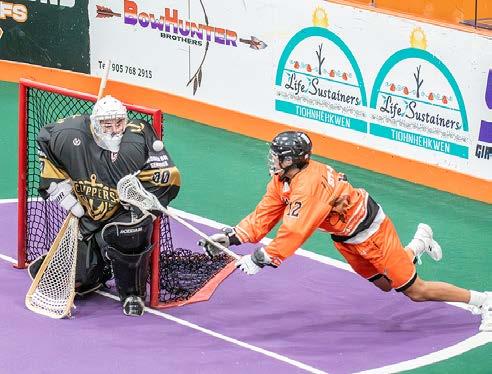
Welcome back to another week of sports talk! We MAY be getting closer to consistent warmer weather, but we have playoff action across three major sports in NHL hockey, NBA basketball and NLL lacrosse definitely heating up! Let’s recap this past weekend in NLL lacrosse news first. In the San Diego Seals/Toronto Rock series, the Rock took down game #1 of their best of 3 series with a final score of 14-12. San Diego edged a win back to even the series at 1-1 after Sunday’s 11-6 win. The final series in the Seals/ Rock series is this Saturday May 9th at 7pm in Hamilton as the winner of
the games advances to the NLL championship series!
In game #1 of the Halifax Thunderbirds/Georgia Swarm series, the Thunderbirds layeth the smackdown on Georgia with a final score of 12-7. At one point in the game Georgia Swarm led 4-1 but the energized Thunderbirds fired off 5 goals in a row to take a 6-4 lead and never looked back. Halifax was led by Jason Knox with 4 goals & 2 assists as well as Clarke Petterson with a game high 9 points, 2 goals and 7 assists. Game #2 is set for this upcoming Saturday May 9th at 6pm local time in Halifax. Game 3 if necessary will be played the following night Sunday May 10th at 6pm. Good luck to our local boys in NLL playoff action this weekend!
In NHL hockey news, the second round of NHL Stanley Cup Action has begun! The 8 teams that have advanced to the second round our the local Buffalo Sabres who take on the Montreal Canadiens. The Philadel-
phia Flyers taking on the Carolina Hurricanes. The Colorado Avalanche taking on the Minnesota Wild, and finally the Anaheim Mighty Ducks taking on the Las Vegas Golden Knights. So far through the second round, Carolina has taken an early 2-0 series lead on the Flyers. Colorado took game 1 of their series against the Minnesota Wild in a crazy high-scoring affair with a 9-6 home ice win. Las Vegas took down game #1 of their series with Anaheim 3-1. The highly exciting series between the Canadiens vs Sabres kicks off tonight at 7pm in Buffalo. Montreal and Buffalo are two of the leagues youngest teams and will square off in a battle testing 7 game series. Through the regular season, these two teams have met 4 times this season, with each team winning twice and each team scoring 13 goals a piece. Round two of the playoffs should be full of action, good luck to all teams that remain on their quest for a Stanley
Cup Championship!
In NBA basketball news, The Toronto Raptors were able to force a game 7 this past sunday but eventually ended up falling short to the Cleveland Cavaliers with a final score of 114-102. The Raptors held an early lead after the first quarter, and were tied with the Cavs 49-49 at halftime, but were overmatched in the second half of the game where the Cavs out scored them 65-53. Moving on to the second round of the NBA playoffs, we have the Cleveland Cavaliers taking on the Detroit Pistons, we have the Philadelphia 76ers taking on the New York Knickerbockers. In the West we have the Minnesota Timberwolves taking on the San Antonio Spurs, and a fascinating matchup between Lebron’s Los Angeles Lakers taking on the reigning league MVP Shai Gilgeous Alexander & the Defending Champion Oklahoma City Thunder. Lebron is now 41 years old and still remains the biggest scor-
ing threat for the Lakers in a series against OKC with Lakers superstar Luka Doncic still sidelined with a left hamstring injury. The Lakers are currently a +15.5 point underdog on game #1 of their series which kicks off Tuesday night. Currently the Cavs/ Piston series is 0-0 starting Tuesday night. The Knicks have a 1-0 series lead over the 76ers, and the Timberwolves hold onto a 1-0 series lead over the San Antonio Spurs.
In MLB baseball news, our Toronto Bluejays remain in the middle of the pack in the AL East standings with 16 wins and 19 losses. Recently, DH George Springer has returned to the lineup after being sidelined with a foot injury as well as rookie pitcher Trey YeSavage returning from injury as well. Over the weekend, the Bluejays battled the Minnesota Twins and split the series with 2 wins a piece. Bluejays 3rd baseman Kazuma Okamoto’s bat has been heating up lately, as he hit his first
career multi-HR game against the Twins this past Friday night. Okamoto has at least one hit in 4 straight games and has hit a HR in 3 of his past 4 games. The Bluejays are currently in the middle of a rivalry series against the Tampa Bay Rays who are currently 22-12. The Rays took down game 1 of the series Monday night 5-1. The Rays are currently one of the MLB’s hottest teams with 4 straight wins and 9 wins in their past 10 games. The Bluejays finish up their series with the Rays later today then have a weekend matchup back home in Toronto vs Mike Trout and the visiting Los Angeles Angels.
That is it for this week’s edition of Six Nations Sports News. Good luck to all of our kids in lacrosse and baseball leagues starting back up. Stay motivated. Stay Positive! As always, thank-you for tuning in to read, we’ll see ya back next week!



SEPTEMBER 2026
SEPTEMBER 2026

This 16-week certificate program, in partnership with Fanshawe College, introduces students to the employment and career services sector while building foundational skills to support job seekers and connect with employers.
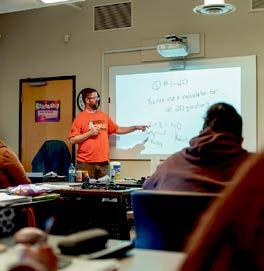
This 16-week program focuses on employment and career planning, including 12 weeks of in-class training to build workplace skills and work ethics, followed by a potential 4-week placement.
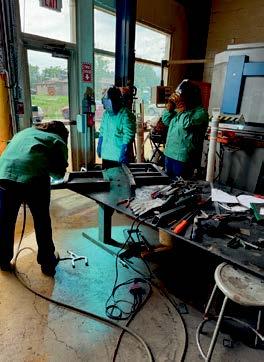
This program teaches welding techniques aligned with CSA W47.1 standards, including SMAW, FCAW, and GMAW processes, along with the theory required for Apprenticeship In-Class Training and certification testing.
Phyllis Marlene Hess June 22, 1935 - May 3, 2026

In her 91st year. It is with deep love and heavy hearts that we announce the passing of the most special lady in our lives. A woman whose warmth, strength, and kindness touched everyone who had the privilege of knowing her. She was more than a mother, grandmother and friend. She was the heart of our family, the one who held us together through every season of life.
Our mother is reunited with her husband Stewart Hess, children, Allan, Marvin, Glen, Terrance (Bird), and Junie Bug.
Phyllis will be lovingly remembered by her best friends, her daughters Linda (Howard), Shelly (Darren), sons Lucky (Tracey), Doot (Courtney), Betty (Russ, Bernie). She will be missed terribly by her grand girls, Ash, Holly (Bun), and Chantel. She was a grandmother to 34 grandkids, 98 great grand kids, 46 great great grand kids, and 2 great great great grand kids. Special Aunt to Mark (Jennifer), Caroll, and Karlee Dockstator. Special friend to Lisa Hill, and Sandee Martin.
Predeceased by her parents Charles VanEvery & Rachel Lewis; brothers & sisters Busty,
Wendell “Win” Lee Henry January 18, 1961 - May 2, 2026
It is with great sadness to announce the passing of Wendell on May 2, 2026, at the age of 65. He is survived by his loving wife Rhonda. He will be deeply missed by his children, Shalane, Tyler and Maegan (Sonny). Forever cherished and remembered by his five grandchildren, Kaiden, Briella, Bryson, Tyson and Mason. Parents Geronimo and the late Mary Leata Henry. He will be sadly missed by his siblings, Lyle, Corinne, Sheryl, Randall and the late Darrel. Son in law to Lucille and the late Winfred “Putsy” Jamieson. Brother-in-law to the late Errol and Shannon Jamieson. He will also be sadly missed by his special niece Taymer, and many other nieces, nephews, extended family and friends.
Wendell was a devoted family man, he always put a little extra into being a good dad and an even better grandfather. He always looked forward to visits from his grandkids and gave all his love and support with every adventure they encountered. He had incredible patience and always made time to help others. He enjoyed watching a good game no matter what sport it was but he was a diehard Toronto Maple Leafs fan. He was a welder at Braun Nursery in Mount Hope for 43 years. Wendell found his greatest joy behind the wheel, listening to music, viewing every road as an adventure and every car as a masterpiece.
Resting at 2277 Tuscarora Rd., Ohsweken after 5pm Monday where Funeral Service and Burial will be held on Wednesday May 6, 2026 at 11 am. Arrangements by Styres Funeral Home, Ohsweken. www.rhbanderson.com
Resting at her home 531 Seneca Road after 2pm. Tuesday until Thursday morning, then to Styres Funeral Home, 1798 4th Line, Ohsweken for Funeral Service on Thursday,
BBQ and Bake Sale
May 18,2026 9am - 1 pm
Ohsweken Baptist Church
SATURDAY, MAY 16, 2026
31 MOCCASIN TRAIL, OHSWEKEN, ON RAIN OR SHINE!! 8:00 AM TO 2:00 PM
MANY HOUSEHOLD ITEMS PLUS CLOTHES, JEWELRY, SHOES ETC.
(WE ARE CLEANING OUT OUR BASEMENT AND BEDROOMS)





16, 2026
1. Large dung beetle
7. Gambling game __-lo
10. Further along
12. Type of tobacco
13. Looked for 14. Silk fabric
15. Computer method to solve equations
16. As fast as can be done (abbr.)
17. Tear
18. Brews
19. “Famous” cookie baker
21. Women’s Army Corps
22. Front parts of an animal
27. It’s causing quite a stir
28. Beloved March holiday
33. 12th letter of the Greek alphabet
34. More impudent
36. Indicates center
37. Young woman (French)
38. A cause of distress
39. Santa’s helper
40. Hillside
41. Many wombs
44. Is afraid of
45. Popular baked goods ingredient
48. Popular computers
49. Conceiving of
50. Google certification (abbr.)
51. Sturdy
4. Bravo! Bravo! Bravo!
5. Consumed
6. A place to sleep
7. Small seeds
8. Legendary law man Wyatt
9. Female sheep
10. Indigenous peoples of eastern Siberia
11. A place ships dock
12. Reciprocal of sine
14. Discomfort
17. British Air Aces
18. Exit sleep
20. Solar energetic particle
23. Plagues characterized by starvation
24. Short musical composition
25. Trauma center
26. Habitual twitching
29. A place where checks are exchanged (abbr.)
30. Decameter
31. Hinged surface in a wing
32. Shouting
35. Sports official
36. Volcanic craters
38. Supportive device
40. It’s part of a rosary
41. Two-toed sloth
42. Body art
43. Let out
44. Foreign medical graduate
45. Nonprofit journalism organization (abbr.)
46. Couples say it
47. Bird’s beak

ARIES – Mar 21/Apr 20
Aries, this week you may feel a desire to take charge of your professional life. Trust your instincts, but remember that you may have to go out of your comfort zone at some point.

TAURUS – Apr 21/May 21
Taurus, expect a week of self-reflection. Old emotions might resurface and offer you a chance to grow and heal. If you’re feeling out of sorts, make a plan to hang out with close friends.

GEMINI – May 22/Jun 21
Make sure you are not spreading yourself too thin this week, Gemini. Even though you are eager to connect and socialize, you might want to limit the number of events you attend.

CANCER – Jun 22/Jul 22
Home and family matters may occupy most of your time this week, Cancer. It’s good to reconnect with loved ones and spend time with your immediate family.

LEO – Jul 23/Aug 23
Leo, now could be an excellent opportunity to express your ideas and opinions to some of the higher-ups at your place of employment.
VIRGO – Aug 24/Sept 22

Exercise caution with your spending and investments right now, Virgo. Although you have some financial opportunities on the horizon, it’s best to be careful going forward.
LIBRA – Sept 23/Oct 23

A fresh burst of energy could be coming your way, Libra. This may provide the boost you need for self-improvement. You may be inspired to make many changes in your life right now.
SCORPIO – Oct 24/Nov 22

Scorpio, you may find yourself reflecting on your mental and emotional well-being this week. Some introspection could lead to a breakthrough that helps you understand the past.
SAGITTARIUS – Nov 23/Dec 21

Expect your social life to pick up speed this week, Sagittarius. Invitations and opportunities to connect abound. Pay attention to your network as it may lead to connections.
CAPRICORN – Dec 22/Jan 20

Your hard work is paying off, Capricorn, but you also need to tend to your personal needs right now. This is the week to find better balance and take care of your health.
AQUARIUS – Jan 21/Feb 18

Aquarius, you may be feeling more curious about the world around you and could find this is the week for some unexpected travel. It’s a great time to embrace new ideas..
PISCES – Feb 19/Mar 20

Your intuition will guide you this week, especially when it comes to romance and other matters of the heart, Pisces. Expect relationships to grow for the better.