Join the Norfolk General Hospital Board of Directors
Norfolk General Hospital is seeking community members to serve on its Board of Directors
Board members help guide the hospital’s strategic direction and support strong health care for our community.
Board members attend approximately nine meetings each year.
We encourage applications from people of all backgrounds. Experience in finance, clinical or legal fields is helpful but not required.
Our Board values diverse perspectives and skills to guide healthcare decisions effectively. We also encourage applications from Indigenous community members and newcomers to Norfolk.
Apply by April 15, 2026
For more information, contact Charlene Charles Coordinator of Board Affairs Norfolk General Hospital ccharles@ngh.on.ca
Scan the QR code to learn more and apply, or visit our website: www.ngh.on.ca
Renowned Mohawk filmmaker featured at Woodland Cultural Centre movie screening
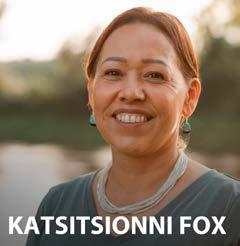
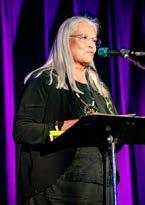
Audiences were treated to a night of culture and entertainment at the Woodland Cultural Centre Monday night with feature films by award-winning filmmaker Katsitsionni Fox.
The event - called Teio’ia’ks iakwatero’:rake – “We Watch Movies” featured Fox’s work on two films - Kanenon:we – Original Seeds and Tentsitewahkwe.
“Kanenon:we – Original Seeds” follows three Haudenosaunee women — Angela Ferguson, Rebecca Webster, and Rowen White — as they step into their sacred responsibility as seed keepers. At a time when agro-chemical corporations control more than sixty percent of the world’s seed supply, Indigenous seed keepers are protecting biodiversity by regenerating, rematriating, and safeguarding sacred seeds.
The movie offers a vision of Indigenous communities working toward food sovereignty and honouring the work of their ancestors.
Tentsitewahkwe, another film by Fox, was released in 2024.
Rooted in the Mohawk value of tentsitewahkwe (“we pick it up again”), the film follows Jessica Shenandoah on a journey across the four seasons to revitalize the healing, land-based practices of her foremothers.
As Jessica reclaims cultural knowledge disrupted by residential schools, forced religion, and land dispossession, the movie speaks to the strength of cultural continuance and
the restoration of ancestral teachings.
Jessica, Wolf Clan from the Akwesasne Mohawk Nation, learned about harvesting medicine and edible plants alongside her mother and grandmother.
The movie showcases cultural displacement among Indigenous people and reconnection with land and culture.
In the film, Jessica returns to time-honored practices of pottery making, mat weaving, hide tanning, medicine making,
food gathering, and more.
Jessica picks up knowledge of the old ways and reconnects with the earth.
“Tentsítewahkwe is at once a thank you to the Native women who imbued their descendants with blood memory of these practices and a promise to future generations of Native Peoples that these practices will stay alive for generations to come,” according to a film description on the IMDB.
Fox is a practicing artist, educator, and filmmaker whose work draws inspiration from Haudenosaunee culture as it relates to present-day realities. A multi-media artist, her practice includes painting, printmaking, video installation, and pottery.
She received an Associate in Fine Arts from the Institute of American Indian Arts in Santa Fe, New Mexico, a BA in Studio Arts from SUNY Potsdam, and an MFA in Visual Art from Vermont College at Norwich University. Katsitsionni Fox’s work has been exhibited across Turtle Island for more than 20 years.
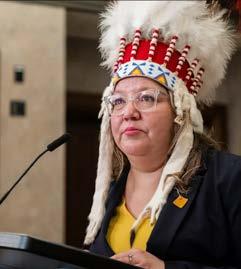
Fox is a practicing artist, educator, and filmmaker whose work draws inspiration from Haudenosaunee culture as it relates to present-day realities. FILE
Farmers seek funding for corn
family.
The Six Nations Farmers Association is seeking $75,000 to help them plant white corn again this year as the project nears around 70 years of operation.
White corn, used in everything from corn soup to traditional arts and cultural events, is still highly needed, said SNFA President Frank Montour.
“Last year and the year before has been quite a success,” he said. “Everything got planted. Everything got used up by the end of the season.”
Unfortunately, the SNFA doesn’t have any official funding so it operates on grants and fund-raising.
Montour said Six Nations of the Grand River Elected Council’s contributions have been appreciated.
Ruby Montour, SNFA secretary, said the white corn project began in the 1950s through the Porter
The SNFA’s CAO, Art Porter, whose family started the white corn project, is still at it at 87 years old, she said.
“It’s been a family tradition even before council started helping.”
It provides white corn to the longhouses, schools, community programs, as well as friendship centres and other reserves.
The 35-acre project plants both white and flint corn annually.
Costs include fuel, harvest, storage, fertilizer, and administrative costs, among others.
Farmers are also cognizant of treating the land well by using best farming practices, said Montour, and said the SNFA still has a vision of food sustainability for the community.
“You can see what’s going on around the world, she said, regarding the cost of groceries. “It’s getting worse and worse daily. Food’s going way up.”
They want to find a way to provide food that will
serve the entire community, she said.
A Bloomberg news article recently warned that the war in Iran will increase fertilizer costs for farmers, at a rate of $40 to $60 per acre, which, in turn, will affect food price costs.
Forbes and CBC also echoed those sentiments, saying the war will have an effect on food inflation, not just increased costs at the pump.
The big vision of the SNFA is to have our own source of food that will serve the entire community.
Montour said there are only nine or so people still farming in the sense they’re growing food in the community, “which is really sad and those guys that are doing that are getting on in years. The succession plans is dismal.”
The price of fuel is also concerning the SNFA.
If you don’t have the fuel, you’re not going to turn a wheel on any machine,” said Montour.
Settlement compensation: your money, your plan
Your compensation is yours. Planning ahead can help you use it in ways that honour your goals, values, family and community.
Receiving compensation can bring many emotions. You may have ideas about how you want to use this money, and you may also feel unsure. Your compensation belongs to you, and you have the choice to decide what feels right for your life, your family and your future.
Be aware of people or organizations offering advice that does not respect your wishes or boundaries.
Some people find it helpful to take time before making big financial decisions.
It is okay to pause, ask questions and seek guidance from a trusted financial professional, community organization or person in your circle.
Understanding your short-, mediumand long-term goals may help you plan. Consider if arranging to receive your compensation through monthly payments may help you meet those goals.
Planning with care can help your compensation continue to support your wellbeing over time.
Seeing Red and Woodland Cultural host music appreciation
As part of the First Nations Child and Family Services and Jordan’s Principle Settlement, Caregiving Parents and Caregiving Grandparents of Removed Children are now able to submit a Claim for compensation. This includes the biological and adoptive parents, biological and adoptive grandparents and First Nations Stepparents of a First Nations Child who was removed from their home between April 1, 1991, and March 31, 2022, by Child Welfare Authorities.
You do not need to provide child welfare records or share your story to submit a Claim. And you do not have to work through the Claim Process alone. Free support is available.
Across the country, Claims Helpers are available to help at no cost. They are ready to support you in person, by phone or video call – in both English and French, and also in some Indigenous languages.
Most Claims Helpers are Indigenous and are connected to their communities. They are trained in cultural safety and can help you through your Claim at a pace that works for you.
Ava Hill. LAFORCE Bryan Porter. LAFORCE James Wilson. LAFORCE
DJ Shub. LAFORCE
The event was also livestreamed and many positive reviews were posted from community members. From left to right: Jace Martin, Josh Miller and the Pappy Johns Blues Band, Keris Hope Hill and Jim Jacobs, The Healers, Semiah Smith, Derek Miller and Lacey Hill, Logan Staats, 2nd Line Bluegrass. LAFORCE
Pipeline leak near Sarnia
DONNA DURIC donna@tworowtimes.com
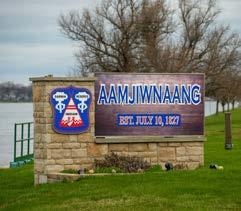
A First Nation in southwestern Ontario is demanding answers after a pipeline leak near Sarnia left key questions unresolved days after the incident was first reported.
Aamjiwnaang First Nation says it still does not know the size or cause of a spill that occurred March 11 near a refinery adjacent to its territory, raising concerns about environmental risks and communication failures.
In a statement, the First Nation said fuel product was reported to have leaked into the ground and the nearby St. Clair River, prompting calls for greater transparency from the companies involved and government regulators.
Officials say the lack of clear information has made it difficult for the community to assess the potential impact on land
and water. Leadership is calling for full disclosure on what occurred, how much material was released and what steps are being taken to prevent further harm.
The companies involved have said containment and recovery measures are underway, while Ontario’s regulator has confirmed an investigation into the spill.
Local officials have
also raised concerns about communication, noting that key details about responsibility and response efforts have not been clearly shared with the public.
Community leaders say the situation highlights ongoing concerns about industrial activity near First Nations territories and the need for stronger accountability when incidents occur.
Industrial facilities line the waterfront in Sarnia, Ontario, where a recent pipeline leak has raised concerns. FILE
OPINION
THE TITLE WAS NEVER CLEAN: Why jurisdiction was assumed, not established—and the restoration of Mohawk Territory
What would it mean if Mohawk jurisdiction were treated as real?
Not a slogan. Not a symbolic aspiration. Not something to be deferred behind consultation tables, municipal process, or provincial convenience. What would it mean if the underlying rights of the Mohawk Nation of Grand River and its Loyalist posterity were actually observed according to their original constitutional character?
The answer begins with a point most governments, lenders, developers, and local authorities have avoided for generations. The Haldimand Proclamation is not a historic gift, not a revocable Crown favour, and not a reserve arrangement dressed in older language. A constitutional confirmation of an acquired territorial settlement, set apart for the exclusive use and enjoyment of a defined people and their posterity forever. That interest was never lawfully surrendered, never extinguished, and never denounced—only obscured by later provincial routines that assumed authority without resolving it.
That means the issue is not whether Mohawk jurisdiction is being invented. It already exists. The issue is whether a pre-existing jurisdiction and territorial interest—will finally be acknowledged and allowed to operate as law.
Once that is understood, everything else begins to change.
Land is no longer treated as a commodity circulating through Ontario’s title system. It is first understood
as territory burdened by a prior and senior underlying interest. Occupation may continue. Commerce may continue. Homes may stand. Businesses may operate. But all of it exists subject to a constitutional condition that never disappeared— only wilfully ignored.
For years, the system has managed Mohawk interests as a background inconvenience: disclosed, litigated, or politically delayed. But a latent defect remains a defect. A burden does not vanish because it is concealed behind paperwork and confidence.
This is already becoming visible elsewhere. In British Columbia, unresolved Indigenous title and underlying interests have begun producing direct consequences in the mortgage market. Lenders have shown hesitation. Renewals have become uncertain in some situations. The lesson is obvious. Where the legal foundation beneath land use is unstable or unresolved, markets eventually react. They simply postpone the reckoning until risk becomes impossible to face.
The same problem exists along the Grand River. The difference is only that Ontario has been more comfortable normalizing the contradiction.
A real Mohawk jurisdictional framework would end that evasion. It would place the underlying interest in its proper position at the front of the analysis rather than buried in the fine print. That would not create uncertainty. It would expose the uncertainty that already exists and replace it with a system of order grounded in the actual condition of the land.
That has immediate implications for develop-
ment. It means projects can no longer proceed on the assumption that municipal approval and provincial paperwork are sufficient. They are not, where they rest on defective jurisdictional foundations. Consent is no longer a procedural afterthought once decisions are made. It becomes a condition precedent.
Projects inconsistent with the exclusive use and enjoyment of the territory are subject to refusal, correction, suspension, removal, or legal challenge. Projects aligned with Mohawk priorities and territorial obligations proceed with clarity, because the underlying burden is addressed at the outset—not deferred. Housing would change just as dramatically.
Under the current Ontario model, housing is treated largely as a market instrument. That model produces predictable results: speculation, rising costs, unstable tenure for the vulnerable, and ultimately dispossession dressed up as neutral administration.
A Mohawk system begins there.
If the land is set apart for the exclusive use and enjoyment of the Mohawk Nation of Grand River and its posterity, then housing is not merely a private transaction. It is part of the territorial purpose itself.
Conditions that permit abrupt displacement, speculative clearing, or restructuring for outside gain are no longer treated as normal. The governing principle becomes the right to remain, to grow, to house posterity, to adopt, and to sustain intergenerational continuity. Housing policy is ordered toward permanence, stewardship, and growth without surrender.
That growth matters. Mohawks are not static. They assert the space to expand, to build, to house families, and to establish institutions that convert territorial rights into lived stability. The false divide between development and jurisdiction collapses. Growth continues—but under the authority of those whose underlying interest gives the territory its lawful character.
Transportation makes the same point in motion.
The Mohawk National Vehicle Registry matters because it is not theoretical. It is a practical expression of regulatory authority tied to territory. Movement on Mohawk land is not simply a provincial privilege assumed by Ontario as if no other authority exists. Vehicles, drivers, insurance, and regulatory standards can be organized within a jurisdiction and governance that arises from the land itself.
The same applies to insurance. Entry into a territory carries conditions. One does not assume a right to use corridors, conduct commerce, move goods, and generate profit through a burdened territory while ignoring the authority that holds the underlying interest. A Mohawk system can require recognized insurance, levies, tolling, registration, and compliance as conditions of lawful participation.
This is not novel. It is how functioning jurisdictions operate. The difference here is that the authority does not originate from a late provincial statute, but from a prior territorial right those statutes were always obliged to respect.
Once that is accepted, the broader regulatory picture
becomes unavoidable.
Exclusive use carries with it the right of regulation. An underlying interest carries with it the authority to control what enters, what burdens, what operates, and what has legal effect within the territory. That includes goods, services, infrastructure, commercial operations, logistics, and financial arrangements. It also includes intangible forms of entry that colonial systems often treat as beyond territorial control.
Trademarks, patents, intellectual property, commercial identity, and cultural use do not exist in the abstract. They derive force from the jurisdiction that recognizes and enforces them. They are not rights floating above the land. They are applied through authority.
A real Mohawk jurisdiction therefore includes the power to regulate commercial branding and protected use within the territory, to challenge infringement, to protect Mohawk names, symbols, language, institutions, and commercial identities from misuse, and to determine which legal and economic instruments will be recognized as valid within Mohawk land. If external systems enforce these rights for their own benefit, there is no principled basis to deny Mohawk jurisdiction the same authority— especially where it rests on a prior and unsurrendered territorial right.
This is where the argument becomes uncomfortable for those who have grown used to ignoring Mohawk interests. Because once exclusive use is taken seriously, the corollary powers follow.
There is a right to regulate the flow; to inspect,
screen, condition, and monitor entry; to require permits, authorizations, and compliance for commercial operation; to withhold recognition from instruments or actors that purport to exercise authority without lawful basis; to remove unauthorized presences and suspend non-compliant operations; to seize, where seizure is the lawful consequence of unauthorized entry, unlawful commercial activity, or non-compliant use within the territory; to police the flow of goods, infrastructure, and high-volume corridor use where those things depend on the land and burden the land. None of this is extraordinary in legal structure. Customs authorities seize. Regulators suspend. Police remove. Courts invalidate. Licensing bodies revoke. The real issue is not whether such powers exist in principle. The issue is whether Mohawk territorial rights are finally going to be treated as capable of sustaining the same kinds of real regulatory consequences that every other jurisdiction assumes for itself.
The answer, if the underlying interest is taken seriously, must be yes. That is why accountability is so important. A real jurisdiction is not merely a body of aspirations. It is a structure capable of correction.
Officials occupying, administering, licensing, taxing, policing, or otherwise acting within the territory would have to answer a basic question: “by what lawful authority are you doing so in a tract burdened by an unsurrendered Mohawk interest of exclusive use and enjoyment?” If they cannot answer that ques-
CONTINUED ON PAGE 12
Jace Koblun
Donna Duric
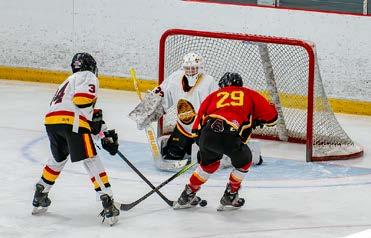
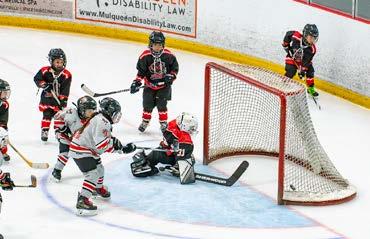
Polly Doxtador’s Lil NHL wish came true thanks to Six Nations Community Paramedics
Six Nations Paramedic Services
Yesterday, our Community Paramedics reminded us what this profession is truly about.
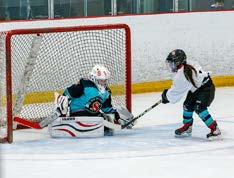
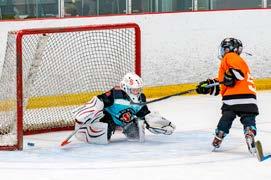
Going far beyond the call of duty, they helped fulfill a very special last wish for a palliative community member. Escorting her by ambulance to the Lil NHL so she could watch her Great-Grandnephew play goalie for the first time. A moment that may seem simple to some, but meant absolutely everything to her that she was able to be there.
This is compassion in action. This is dignity. This is care that reaches beyond medicine and touches the heart. ♥
We are incredibly proud of our team for making moments like this possible, because sometimes the most important care we can give is helping someone live fully, right to the very end.
Thank you for showing what it truly means to serve our community.
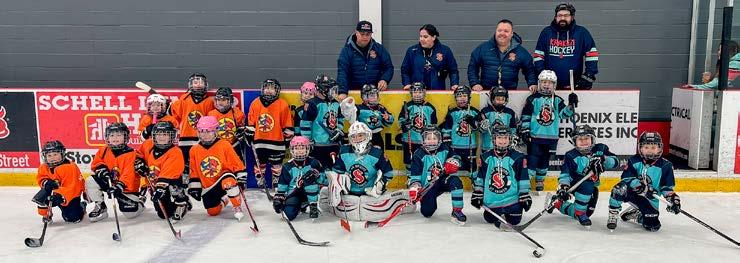
Cancer patient Polly Doxtador attended the Lil NHL hockey tournament in Markham to watch her GreatGrandnephew play for the Six Nations U7 Kraken. Community Paramedics Tara Dawdy and Jarrett Belanger were responsible for getting Polly there and back safely.
Transfer Station Summer Hours
The Six Nations Transfer Station will be transitioning to summer hours on Tuesday, April 7, 2026.
During summer hours, the transfer station will be open from 8am-5:30pm, with the last load-in happening at 5:15pm.
The Transfer Station is open Tuesday-Saturday, and is closed Sunday and Monday.
For more info, call the Transfer Station: (519) 445-1212
Transfer Station Closure
Good Friday - April 3, 2026
The Six Nations Transfer Station will be closed on April 3, 2026 for Good Friday. The Transfer Station will return to it’s regular schedule on April 4, 2026. Transfer Station winter hours are 8am-4:30pm with the last load in happening at 4:15pm.
For more info, call the Transfer Station: (519) 445-1212
Wednesday, March 25, 2026 5-7pm
Iroquois Plaza Office Suites 1721 Chiefswood Road Ohsweken, ON
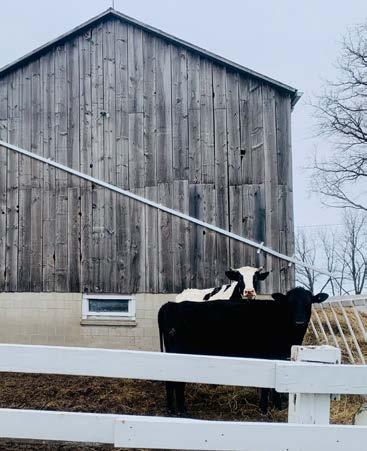
Cattle stand beside a weathered barn at Salt Springs Church Road farm near Ohsweken on the Grand River territory. The farm lies along the Grand River in a rural area known for its agricultural heritage and proximity to the historic Salt Springs Church. DOOLITTLE
AFN wrap-up: AFN reports $654M in compensation as leaders renew cross-border alliance
Child welfare settlement payments continue as thousands of claims move forward
JACE KOBLUN
More than $654 million has now been paid to First Nations children and families through a landmark child welfare settlement, as national leadership also moves to strengthen cross-border alliances with Indigenous nations in the United States.
The update comes as the Assembly of First Nations confirmed continued rollout of compensation tied to the First Nations Child and Family Services and Jordan’s Principle class action settlement, one of the largest in Canadian history. Tens of thousands of claims have been submitted, with payments ongoing as the process expands.
The settlement ad-
dresses decades of discriminatory underfunding of child welfare services and delays in accessing care, with the total compensation package exceeding $23 billion.
Additional claims periods are expected as approvals move through the courts.
At the same time, AFN leadership renewed a Declaration of Kinship and Cooperation with the National Congress of American Indians during the Reservation Economic Summit, reaffirming long-standing relationships between Indigenous nations across the Canada–U.S. border.
The agreement commits both organizations to advancing shared priorities including sovereignty, economic development and political advocacy.
Leaders emphasized
that these relationships predate imposed borders and remain central to Indigenous governance and collaboration.
National Chief Cindy Woodhouse Nepinak said the dual developments reflect a broader focus on both accountability and
unity, ensuring families receive compensation while strengthening nation-to-nation relationships across North America.
The renewed declaration comes amid growing emphasis on Indigenous-led economic development and international cooperation, particularly as First Nations seek greater control over trade, resources and policy decisions that affect their communities.
With compensation continuing to flow and new claims expected, AFN says its work remains focused on ensuring eligible families receive support while building stronger partnerships beyond Canada’s borders.
Racist remarks in Sarnia
By 2RT Staff
ANISHINABEK – Anishinabek Nation Grand Council Chief Linda Debassige expresses concern regarding the recent comments made by the City of Sarnia Councillor Bill Dennis via social media regarding a new Indigenous-themed art mural installed at Sarnia’s City Hall, and later directed comments at Aamjiwnaang First Nation Chief Janelle Nahmabin: On behalf of the Anishinabek Nation, we express our unequivocal disappointment and concern regarding Councillor Dennis’ recent statements, which reflect a troubling misrepresentation, lack of education, and disrespect toward the Original Peoples. His comments, calling First Nations ‘pampered’ and dismissing themural as ‘divisive’ and ‘pandering,’ perpetuate harmful stereotypes.
On March 31st
National Chief Cindy Woodhouse Nepinak from The Assembly of First Nations, which is advancing national advocacy and cross-border partnerships while overseeing progress on a major child welfare settlement affecting First Nations families. FILE
know the score.
Greetings from the sports side of things! We are three quarters of the way through one of the most exciting sports months of the calendar year! What a start to March Madness! In only the 4th game of the tournament #12 High Point took down one of the hottest teams coming into the tournament in #5 ranked Wisconsin with an 83-82 upset win! #16 ranked Sienna was up at halftime 43-32 on Duke which is the #1 nationally ranked team in the country before eventually falling to duke in a close 71-65 win where duke was a massive 29 point pre-game favourite. #11 ranked VCU took down North Carolina 82-78 in overtime, #11 Texas took down BYU 79-71, #13 Cal Baptist almost upset #4 Kansas in a close 68-60 Jayhawks win. Thus far, the biggest upset of the tournament belongs to #9 Iowa taking down the defending national championship #1 ranked Florida Gators in a thrilling 73-72 game on sunday that sent the Gators home packing. We even got to
Scoreboard Watchin' with Jazz Week 11
see a buzzer beater win in this tournament on the first weekend of tournament play with #6 ranked St.John’s hitting a 2 point bucket at the buzzer that sent home the #4 ranked Kansas Jayhawks. The greatest tournament on earth moves on to its second upcoming week of action this upcoming Thursday March 26th, which scheduled action of the Sweet Sixteen matchups looking like this: SWEET SIXTEEN MARCH MADNESS SCHEDULE
Thursday March 26th, 2026
7:10pm #11Texas Longhorns vs #2 Purdue Boilermakers (-7.5 pt favourites)
9:45pm #3 Michigan State Spartans vs #2 Uconn Huskies (-1.5 pt favourites)
10:10pm #6 Tennessee
Volunteers vs #2 Iowa State Cyclones (-4.5 pt favourites)
MY PREDICTIONS ( The Jazzy March Madness 8 game parlay banger )
Texas covers 7.5 pts
Nebraska wins
Arkansas covers 8.5 pts
Houston wins
St John’s covers 6.5 points
Alabama covers 9.5 pts
Michigan State wins
Iowa State wins - A $10 parlay bet on these plays would pay out $1125.41 currently.
In NBA basketball news, The Toronto Raptors went 2-2 last week with losses to the Denver Nuggets & Phoenix Suns and wins over the Chicago Bulls & Utah Jazz. They currently sit with a record of 40 wins and 31 losses which is good for 5th place in the eastern conference standings. They get their shot to push further up the standings with 4 more big games this week against the LA Clippers tonight, New Orleans Pelicans Friday night, Orlando Magic on sunday and against the conference leading Detroit Pistons next Tuesday night.
In NHL hockey news, there are about 12-13 games for each team left in regular season play. After 69 of 82 regular season games played the Buffalo Sabres sit with a record of 44 wins, 20 losses and 7 overtime/shootout losses for 95 total points which is good for second place
overall in the eastern conference. The Sabres are currently 8-1-1 in their past 10 games played. They went 3-1 on their western road trip with two shutout wins over the Las Vegas Golden Knights (2-0) San Jose Sharks (5-0). A 4-1 win over the Los Angeles Kings, and a tough 6-5 overtime loss to the high scoring young Anaheim Mighty Ducks. This upcoming week the Sabres have 4 home games. Tonight they play the Boston Bruins at 7:30pm, Friday night at 7:30pm vs the Detroit Red Wings, the following night vs local Stanley Cup winning hockey hero Brandon Montour’s Seattle Kraken at 5:30pm, finally a 7pm matchup next Tuesday night against the visiting New York Islanders. The Sabres currently sit one point behind the Carolina Hurricanes for the top spot in the eastern conference. In Toronto Maple Leafs news, their golf season starts on Thursday April 16th a day after the regular season ends, current tee times for the team remain unknown, but they should come down to Monthill or Greens of Renton as both local golf courses should be in tip top shape by then.
A big congratulations goes out to all Six Nations minor hockey teams that played in the LNHL hockey tournament last week! Almost every team from Six Nations made a cham-
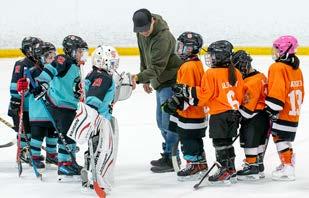
pionship title game. Many memories were made. I got to watch the U-7 Six Nations Kraken team go 6-0 and win the championship for their age group.
I know a lot of these teams have their rosters put together last minute, playing against teams that have played their entire seasons together. Great job to the coaches, players, parents & fans that made it out to watch the games, we have a tremendous amount of talented young hockey players in Six Nations, the future for them is looking fantastic!
In NLL lacrosse news, we are through 17 weeks of regular season play!
Week 17 recap:
Toronto Rock 13 Saskatchewan 9
Georgia 17 Halifax 6
Vancouver 10 Ottawa 8 Las Vegas 17 Rochester 13
Colorado 14 Calgary 12
Buffalo 9 San Diego 8
Four weeks of regular season play remain!
In MLB baseball news, baseball is back! Opening day is tonight! The big bad New York Yankees visit San Fransisco to take on the SF Giants. Max Fried is the opening day starter for the yankees, Logan Webb is starting for the giants. The Toronto Blue Jays are back in action this Friday night as they open their season at home against the visiting Athletics. The starting pitchers for this Friday night’s game are Athletics: Luis Severino
- Bluejays: Kevin Gausman. Game is set for a 7:07pm start. The sky is the limit for the Bluejays this season as they kick off the 2026 season as a current 16-1 odds favourite to take down the world series championship. Current world series odds to win the championship before the MLB regular season starts are as follows:
LA Dodgers 3.3-1 odds
NY Yankees 11-1 odds
Seattle Mariners 13-1 odds
NY Mets 14-1 odds
Toronto Bluejays 16-1 odds
Boston Red Sox 17-1 odds
Philadelphia Phillies 17-1 odds
Chicago Cubs 19-1 odds
Atlanta Braves 19-1 odds
Detroit Tigers 21-1 odds
That is it for week 11 of sports news, thank-you so much for tuning in to read. Every week I try and keep up with all major sports leagues news, scores, highlights, upcoming big games and tournaments of all sports leagues coming up. The FIFA World Cup of soccer is just 3 months away as well which kicks off June 11th - July 19th with a month long tournament that will crown the world’s greatest soccer team. We will see you next week where we hope for more normal spring weather to arrive! For now, socks and sandals season remains!
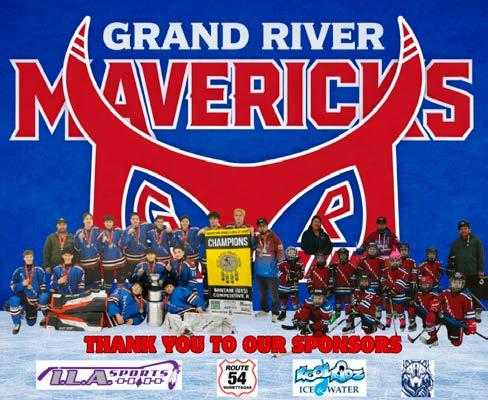
Congratulations to the teams competing at the Little NHL
Congrats to the U7 Six Nations Krakens who
tion coherently, then their authority is defective. And if their authority is defective, then Mohawk jurisdiction includes the right to challenge it, correct it, refuse recognition to it, and where necessary seek the proper removal of its operative effect within the territory. That does not mean disorder. It means law applied honestly.
Removal here must be understood properly. It is first a removal of recognized authority, not a theatrical gesture. A permit issued without lawful jurisdiction may be treated as void or inoperative. An office-holder acting outside lawful scope may be treated as lacking recognized authority within the territory.
A levy, tax, order, or enforcement act incompatible with the underlying territorial interest may be challenged, rejected, suspended, or displaced by superior right. If the conflict persists, legal remedies become available to test the office, the act, and the claimed jurisdiction itself. This is exactly where earlier common law tools become relevant. Mandamus. Quo warranto. Review of jurisdictional competence. Testing whether the actor is lawfully in office for the act they claim to exercise. These are not fringe devices. They are part of the machinery by which systems correct usurpation, excess, and unlawful assumption of power.
A complete Mohawk jurisdiction is necessary to build Mohawk institutions. Mohawk police would be central. Not as an auxiliary or decorative force, but as a primary peace and regulatory authority within the territory, charged with maintaining order according to Mohawk law, Mohawk priorities, and the territorial framework grounded in exclusive use and enjoyment. Their role would include public safety, regulatory enforcement, corridor oversight, protection of persons and property, enforcement of lawful seizures and removals, and cooperation with other services only within terms consistent with Mohawk authority. That is what
SIX NATIONS POLICE Clerk/Receptionist Contract Position
–The Six Nations Police is calling for applications for a Clerk/Receptionist on a short term contract position.
Minimum Requirements to be considered for this position are as follows:
Skills and Knowledge Required
• Grade 12 diploma.
• Knowledge of police service structure, functions, and activities.
• Knowledge and experience in the use and operation of personal computers, general office software, and database programs.
• Knowledge of office systems, filing practices, and clerical procedures.
• Strong oral and written communication skills.
• Ability to maintain confidentiality and exercise sound judgment.
• Good organizational and time-management skills.
• Basic arithmetic skills.
• Typing speed of 40 wpm.
• Three (3) years of experience in a related field.
• Valid driver’s license.
• Must be bondable
• Be able to pass a security clearance as well as background investigation, credit card and reference checks
The Receptionist/Clerk undertakes general administrative and clerical duties to support the day to day operations of the Six Nations Police Service by:
• Handle general incoming calls by obtaining essential information
• Respond to administrative or general inquiries
• Greet visitors to the Six Nations Police Administration Office
• Perform word processing, typing, and document preparation duties including standard lawenforcement forms, memorandums, correspondence, and reports using a personal computer and standard office software.
• Compose and prepare routine correspondence as required.
• Pick up and distribute incoming mail, and prepare outgoing mail as required.
• Maintain filing systems including
• Minimum of 5 years in the office setting
• Knowledge of police service structure, function and activities
• Knowledge of and experience in the use of personal computers and office software programs
• Ability to devise and maintain an effective filing system
• Excellent oral and written communications skills
• Excellent organizational skills
• Ability to work independently and exhibit a high degree of initiative and self-direction
• Ability to deal with confidential matters
• Willing to attend training and travel as necessary
Assets
• Six Nations of the Grand River Band Membership/citizenship is considered a preferred asset
Closing Date: Applications must be received by April 2, 2026 at 3:00 p.m.
A complete job description is available at the front desk of the Six Nations Police Station.
Please submit a covering letter and resume inclusive of 3 references and completed Police Information
Police Vulnerable Sector Check Form to: Six Nations Police P.O. Box 758 2112 4th Line Road Ohsweken, Ontario N0A 1M0
Attention: Policing Administrator
For further information, please contact the Policing Administrator at 519-445-4191
real policing means: not borrowed symbolism, but operative jurisdiction.
Mohawk radio and communications systems would be just as essential. A nationalized radio network would not merely be media. It would be public infrastructure. It would carry emergency notices, regulatory directives, territorial announcements, cultural content, language revitalization, and direct communication from governing institutions to the people. Removing dependence on outside filters for the basic circulation of public authority.
Mohawk banking and trust structures would anchor the economic side of jurisdiction. Wealth generated from the land should not continue to drain automatically outward into systems that neither recognize nor serve the territorial right that makes the land valuable in the first place. A Mohawk banking structure, whether trust-based or institutionally expanded, would allow capital, levies, tolls, licensing revenue, and commercial contributions to be retained, managed, and reinvested within the territory. That means housing finance aligned to community need. Infrastructure lending aligned to territorial planning. Community investment aligned to posterity rather than extraction.
This is how wealth generation becomes real for Mohawk families.
Under the current model, many families live inside a contradiction. Their territory produces immense value, yet they often experience the territory as insecurity: rising prices, uncertain access, administrative hostility, external licensing, external banking, external policing, external titles, external courts, external definitions of who matters. Their presence is treated as historic while the wealth of the land is treated as contemporary and available.
A real Mohawk jurisdiction reverses that pattern.
For Mohawk families, daily life becomes stability grounded in belonging. Housing is built around continuity. Growth is structured around posterity. Vehicles, insurance, permits, and business activity are governed through Mohawk institutions, not tolerated at the margins of Ontario systems. Education and em-
ployment expand because functioning institutions require administrators, police, planners, lenders, coders, communicators, builders, regulators, and legal thinkers. Children grow up within a system that assumes their future on the land—rather than forcing them to negotiate for it.
And technology would make that system usable.
That point matters. Without technology, opponents will pretend that Mohawk governance is cumbersome, impractical, or nostalgic. With technology, the opposite becomes obvious.
Apps for public administration could handle permits, registrations, levy payments, insurance validation, business licensing, and territorial notices. Security systems could verify identity, entry conditions, and compliance in real time. Mapping tools could show the corridor, the applicable boundaries, the riparian implications, and the jurisdictional status of locations instantly. Government services could be delivered through platforms designed for transparency and public access. Businesses could interact with regulators quickly. Police could verify authorizations immediately. Residents could know their rights and obligations without guesswork.
Technology will not replace law. It will make law visible.
It would also make the system harder to ignore.
Once the jurisdiction is mapped, digitized, communicated, regulated, and institutionally administered, outsiders can no longer pretend the issue is vague. The framework would be functioning in front of them.
For non-Mohawk residents, investors, and businesses, the consequences may be serious but not inherently hostile. The present system already contains risk. It simply hides it. There are already underlying interests. There are already title concerns. There are already unanswered questions about jurisdiction, disclosure, consent, and legal exposure. The market is not protected by denial. It is anesthetized by it.
A real Mohawk framework would force honesty at the front end. Those investing, building, lending, transporting, marketing, or operating within the territory would have to recognize
the jurisdiction they are entering. They would need valid authorizations. They would need recognized insurance. They would need compliance with Mohawk regulation. They would need to respect intellectual property, names, symbols, and protected territorial conditions. If they did so, they would gain something rare in the current system: clarity. If they refused, then they would do so knowingly, in the face of a functioning jurisdictional record, and they would face the corresponding legal and regulatory consequences. Not instability. Order with standards.
The real instability is the one Ontario and Canada have normalized: a territory with a prior unsurrendered interest being managed as though the burden were merely political noise; a people with exclusive rights being treated as stakeholders among others; a legal contradiction allowed to deepen until lenders hesitate, evictions occur, infrastructure advances, and institutions act beyond competence because no one stopped them early enough. The more Mohawk rights are operationalized, the more obvious it becomes that the old model depends on ongoing disregard. It depends on everyone acting as though silence can extinguish, administration can replace dedication, and convenience can outrank constitutional honour. It cannot.
If the territory was acquired, confirmed, and set apart for the exclusive use and enjoyment of the Mohawk Nation of Grand River and its posterity, then the rights flowing from that condition are not minor. They are structural. They include the right to regulate, the right to condition entry, the right to govern commerce, the right to protect intellectual property and identity, the right to levy and toll, the right to police the flow, the right to seize where lawful, the right to remove where unauthorized, the right to build institutions, the right to grow, and the right to convert underlying territorial interest into lived, enforceable reality but most importantly the right to exist.
SIX NATIONS COUNCIL
SIX NATIONS AND NEW CREDIT
SIX NATIONS SKATING CLUB
rch 28, 2026
Saturday | March 28, 2026
Sa day | March 28, 202
Skating t ough the Decades
Skating $5 through the Decades
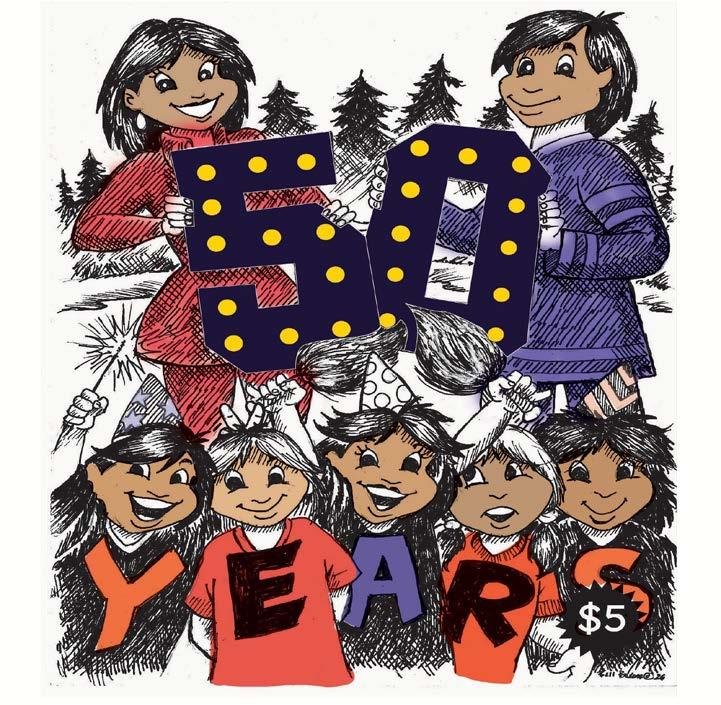
50 YEARS ON ICE! LET’S PACK THE ARENA! The moment we’ve all been waiting for is HERE and it’s going to be nothing short of spectacular. Our skaters have poured their hearts into this season and now it’s their time to shine. This year is extra special as we celebrate our 50th Anniversary with an unforgettable show, featuring alumni skaters returning to the ice for an incredible performance Let’s come together as a community and fill the arena to show our skaters the love and support they deserve Saturday, March 28, 2026 3:00 to 5:00 pm. Doors open at 2:30 pm. ENTRY IS BY DONATION! This is going to be a high energy, emotional, can’t miss event, the kind of show people will be talking about long after the final skate. A huge thank you to our amazing sponsors for helping bring this event to life, and to our incredible skating family whose fundraising and dedication made it all possible! Also a very special thank you to Bill Powless for designing our cover!! Tag a Six Nations Skating Club alumni below, we want to see you back in the building. Are you coming? Let us know. Trust us, you do NOT want to miss this!!