



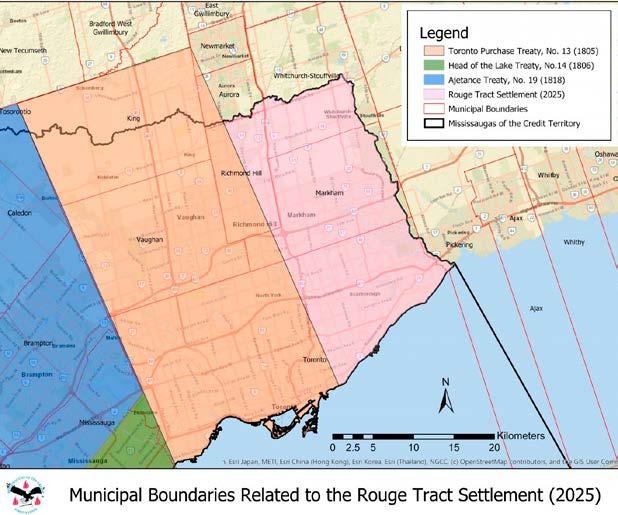





















The Government of Canada and the Province of Ontario have reached a settlement worth $183.4 million with the Mississaugas of the Credit First Nation on the 230-yearold Rouge River Valley Tract claim.
The Rouge River Valley Tract Claim involves lands in the Rouge River Valley in southern Ontario near Toronto.
MCFN, which announced the successful settlement on Mar. 7, said it will use the interest earned off the settlement funds to benefit the community.
The total compensation amounts to $183.4 million, funded by both levels of government, with $108.4 million from the federal government and $75 million from the government of Ontario.
The claim covers about 128,697 acres of land in the southern portion of the Rouge River Valley area within the Greater Toronto region.
The land claim was officially filed in 2015 by the Mississaugas of the Credit First Nation.
Negotiations with the federal government began in 2022, while the Ontario government joined the talks in 2024.
The MCFN community agreed to the settlement through a community vote after several years of negotiations.
“An important step in ensuring our Treaty relationship with the Crown is recognized and respected,” said MCFN Ogimaa Kwe Margaret Sault. “I want to acknowledge the work of our past leaders on the RRVT, and look forward to the positive impact this act of reconciliation will have for our membership.”
Canada’s Minister of Crown-Indigenous Relations, Rebecca Alty, said the agreement will help the community invest in its priorities and “strengthen its future.”
Ontario’s Minister of Indigenous Affairs Greg Rickford said, “This landmark agreement with the Mississaugas of the Credit and the federal government is an important step in advancing reconciliation and future prosperity. In partnership, we commend the community leadership on this accomplishment and look forward to this agreement’s
generational impacts.”
The Mississaugas of the Credit community, which has about 2,700 members, will use the funds to support:
-Community development
-Education and healthcare
-Infrastructure projects
-Economic growth and cultural initiatives
Government officials said that the settlement will not affect private property ownership and does not involve transferring land, but rather financial compensation for historic treaty issues.
Through the negotiations, the Mississaugas of the Credit sought to address past wrongs outside of the courts and receive fair financial compensation from the Crown.
The negotiated settlement was approved by Mississaugas of the Credit members in a community vote. It was then signed by the Mississaugas of the Credit, Ontario and Canada.
The settlement is a “key step toward a renewed Treaty relationship that is rooted in mutual respect, shared prosperity and partnership,” the federal government said.
Ceremony in Ottawa marks return of cultural belongings taken from communities decades ago
First Nations leaders gathered in Ottawa this week for the ceremonial unveiling of cultural items recently returned to Canada from the Vatican Museums archives, marking what leaders described as an important step toward cultural restoration and reconciliation. The items were un-
veiled during a ceremony led by Assembly of First Nations National Chief Cindy Woodhouse Nepinak, who said the moment represents the return of sacred belongings that hold deep cultural meaning for First Nations communities.
“Our relatives are home,” Woodhouse Nepinak said during the event. She described the return as the result of decades of advocacy by First Nations leaders, Elders,
and Knowledge Keepers who have long called for sacred items taken from their communities to be repatriated.
The artifacts were part of a group of 62 Indigenous cultural items that had been held in the Vatican Museums’ ethnographic collection for nearly a century. Many of the items were originally sent to Rome for a major Catholic missionary exhibition in 1925 before
JACE
jace@tworowtimes.com
The Assembly of First Nations (AFN) has strongly condemned a recent update to the federal government’s travel advisory that urges First Nations people to carry a Canadian passport when crossing the Canada–United States border, saying it conflicts with Indigenous rights and treaty commitments.
In a statement released on Feb. 26, National Chief Cindy Woodhouse Nepinak said the government’s advisory “is directly counter to the inherent right of First Nations to cross the border as affirmed in Article III of the 1794 Jay Treaty.” She stressed that Indigenous people historically moved freely across these territories for ceremony, trade, harvesting and family, and that such rights must be upheld by governments on both sides of the border.
The travel advisory change came after the Government of Canada updated guidance to say First Nations people “may be able to cross the Canada–U.S. border by land or water with a Se-

cure Certificate of Indian Status (SCIS),” but that acceptance of such status cards is at the discretion of U.S. officials. The advisory then “strongly recommended” carrying a passport alongside the SCIS to reduce the risk of being denied entry.
AFN’s statement aligns with broader Indigenous concerns expressed by groups such as the Jay Treaty Border Alliance, which has criticized the advisory as undermining inherent mobility rights and the principle of self-determination.
Woodhouse Nepinak and AFN leadership are calling on the federal government to work directly with First Nations and the alliance to address border crossing issues in a way that respects nation-to-nation
relationships and Indigenous rights.
Indigenous travel rights under the historic Jay Treaty are complex in Canadian law. While the United States recognizes certain rights under Article III of the treaty, Canada has not formally incorporated those treaty rights into its own legislation, meaning legal mechanisms for free movement across the border remain disputed. Despite this, communities on both sides emphasize the historical and ongoing significance of mobility across traditional territories that pre-date the international boundary.
The AFN’s critique comes amid reports of First Nations members facing increased questioning or detention by U.S. immigration officials during border crossings, fuelling broader concerns about safety and legal recognition of Indigenous rights to mobility under treaty and customary law.

The Assembly of First Nations represents status First Nations across Canada and advocates on issues ranging from treaty rights and jurisdiction to social and economic wellbeing.
becoming part of the Vatican’s permanent archives. Their return follows years of negotiations between Indigenous leadership, the Catholic Church, and Canadian institutions. The process gained momentum after Indigenous delegations travelled to the Vatican in 2022 to meet with Pope Francis, who later expressed support for the repatriation of sacred objects.
According to the Assembly of First Nations, proper cultural protocols were observed throughout the process of bringing the items back to Canada.
(March 16-20, 12-1pm)
Woodhouse Nepinak travelled to Vatican City with a delegation of First Nations leaders, Elders, and residential school survivors to oversee the departure of the items and ensure they were returned with ceremony and respect.
While the items have now returned to Canada, the repatriation process is still underway. Experts, Elders, and Knowledge Keepers will work with researchers and museum specialists to determine where each item originated and which communities they belong to.
Once the provenance of
each object is confirmed, the items will ultimately be returned to the First Nations communities where they were created.
Leaders say those communities will decide how the items are cared for and whether they are used in ceremony or cultural revitalization efforts.
For Woodhouse Nepinak, the moment represents both progress and a reminder that the broader work of reconciliation continues.
“The journey home for these items has been a long one,” she said, “but it is not over.”


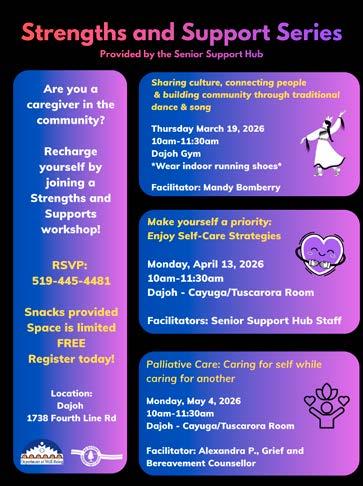
-ADHD Tools For Adults

Monday March 23, 2026 5:30pm -7:00 p.m.
Register now with Chantal: cblackshaw@sixnations.ca (519) 751-6778
Please register by Mar 20, 2026
Presented by Six Nations Social Services, Child & Family Services, Clinical Services Unit
Connect & Follow: #SixNationsMatters


be eligible for compensation.
As part of the First Nations Child and Family Services and Jordan’s Principle Settlement, Caregiving Parents and Caregiving Grandparents of Removed Children are now able to submit a Claim for compensation. This includes the biological and adoptive parents, biological and adoptive grandparents and First Nations Stepparents of a First Nations Child who was removed from their home between April 1, 1991, and March 31, 2022, by Child Welfare Authorities.
You do not need to provide child welfare records or share your story to submit a Claim. And you do not have to work through the Claim Process alone. Free support is available.
Across the country, Claims Helpers are available to help at no cost. They are ready to support you in person, by phone or video call – in both English and French, and also in some Indigenous languages.
Most Claims Helpers are Indigenous and are connected to their communities. They are trained in cultural safety and can help you through your Claim at a pace that works for you.

Grand Erie Public Health is sounding the alarm over an increase in suspected opioid overdoses for the second half of February.
An elevated number of opioid related drug overdoses was observed for a second consecutive week, the Grand Erie Public Health unit said in a news alert.
In addition to the seven non-fatal overdoses reported in the period Feb. 16 to Feb. 22, another 10 non-fatal overdoses occurred from Feb. 23 to Mar. 1 in the Brantford area, based on data reported by the Brantford Police.
Of the ten overdoses, five occurred on Feb. 27, 2026.
“This exceeds the number of drug-related incidents that are typical for such a short timeframe,” the health unit noted.
“Please use caution when using any drug that is not prescribed to you. If you are new to drug use, you are particularly at risk. Unregulated drugs may have unpredictable potency or contain unexpected and dangerous contaminants."
If you think someone is suffering from a drug overdose, Grand Erie Public Health says to call 911 immediately.
If available, give the person naloxone, even if they weren’t intending to use
opioids, they advise.
“If a person was not using opioids, naloxone will have no effect, so there is no risk of harm."
Naloxone is an emergency medication that temporarily reverses the effects of an overdose from opioids such as fentanyl, heroin, methadone, and morphine, as well as those caused by non-opioid drugs contaminated with opioids.
An opioid is a type of drug that inhibit pain signals in the nervous system. They create feelings of euphoria, stop pain, and also depress the respiratory system, which is the primary cause of fatal overdoses.
Opioid drugs include heroin, morphine, codeine, and Fentanyl, among others.
A newer street drug contaminant identified by officials in drug overdoses is Xylazine, a non-opioid sedative used in veterinary medicine.
The health alert notes that naloxone can temporarily reverse an overdose, but it can wear off before the person has completely recovered which is why people should still call 911 after administering Naloxone.
Naloxone cannot reverse a Xylazine overdose.
For people worried about criminal charges in a possible overdose situation, the Good Samaritan Drug Overdose Act can protect people and provides immu-
nity from simple possession charges for those who call 911 in the case of an overdose.
The act is in place to encourage and protect people who are witnessing or experiencing an overdose so they can seek help and save lives, the alert states.
Some tips from professionals to avoid an overdose include:
-Try not to use alone. If you must use alone, get someone to check on you either by phone or in person, or call the National Overdose Response Service (NORS) at 1-888-688-NORS
(6677). NORS will stay on the phone with you while you use drugs and call for help if needed
-Go slow if you are using a new substance or have purchased your usual substances from a new supplier. Take a small test dose first to see how it is going to affect you
-Purchase from a trusted supplier if possible. Be especially careful if you have recently switched suppliers
-Carry Naloxone, even if you do not expect to be using opioids. Remember that your drug may be contaminated with fentanyl or



other high-potency opioids even if you are not expecting an opioid.
-Test drugs intended for use.
Test strips that can detect fentanyl or xylazine are available through SOAR Community Services at the following locations:
-133 Elgin St. And 1-225 Fairview Dr. in Brantford
-The Drop at 185 Robinson St. in Simcoe
-The Positive Health Network Van. To access the van, call or text (289) 4404912 for Brantford-Brant, or (289) 440-4903 for Haldimand, Norfolk, and
Six Nations. Using test strips can help to reduce the risk of overdose, the BCHU says. For more information about opioids, including what to do if someone has an overdose and where to access harm reduction services, please visit the Legacy Brant County Health Unit Website and the Legacy Haldimand Norfolk Health Unit Website. To see the latest opioid-related statistics, please visit the Brant/Brantford Opioid Information System webpage.

Part Time Golf Depot Representative Seasonal March-September 2026. Potential for staying on in a limited part time role.
Rate of Pay : TBA WHAT WE ARE LOOKING FOR IN YOU
• Passion and knowledge for the game of golf is preferred. Please include your golf experience in your cover letter.
• Retail experience is an asset. Knowledge of current golf hard goods is an asset. I.e., Latest Drivers/Woods/Hybrids and Irons.
• Guiding patrons to making the best possible decision for their game.
• Willingness to expand knowledge into all sectors of golf retail (Apparel, Shoes, Bags, Balls, Gloves and More).
• Basic Computer Knowledge is Essential.
• Willingness to work a wide arrange of shifts (Mornings, Afternoons, Evenings, Weekdays, Weekends & Holidays).
• Must be professional, courteous and good teammate.
• Looking to fill at least 3 shifts per week.
Forward your resume via Email to: info@thegolfdepot.ca or feel free to drop it off in person and ask for Brent.
Thank you for your interest, only candidates selected for an interview will be contacted.
man could simply choose the clean path and remain clean.
That was not my world.
“Do not ask me to speak to you as a saint.”
Editor’s Note
Mohawk history is often told through the names of great figures, yet within Haudenosaunee culture the idea of a hero has always been complicated. Elders have long reminded their people that leadership in the Longhouse was never meant to elevate one individual above the community. Responsibility was shared.
Few figures embody that tension more clearly than Joseph Brant. To some he was a brilliant diplomat who navigated the collapse of the old world during the American Revolution. To others he remains a controversial figure whose alliances shaped the difficult political realities that followed.
This essay approaches that complexity in a different way. Rather than judging Brant from the distance of two centuries, it imagines the inner reflections of a man who lived in the middle of that storm.
Do not ask me to speak to you as a saint.
Do not ask me to speak as a villain either.
I was born into a world already breaking.
You who inherit the roads, the churches, the fences, the papers, the courts, the names placed on rivers and counties— you imagine history as though there were solid ground beneath our feet. You imagine choices made from safety. You imagine a
My world was smoke, oath, blood, hunger, diplomacy, debt, kinship, duty, pressure, and the sound of whole nations being forced to decide which arm of the storm would strike them first.
I was Kanien’kehá:ka.
I was of the flint.
To be of the flint is not only to be hard. It is to belong to a place where survival was never theoretical. Flint cuts. Flint sparks. Flint remembers pressure. Our people were shaped the same way—by contact, by force, by the strike of history against our bodies and laws. Even now, along the Grand River, descendants walk ground bought at terrible cost, argued for in council, defended in memory, and carried forward in family lines that still refuse disappearance. That is why the land matters when you speak my name. I was not struggling for an abstract principle. I was struggling so that somewhere, generations later, Mohawk children would still stand on Mohawk ground and ask what their responsibilities are.
To those who live now along the Grand River, do not imagine that river as scenery only. It is not backdrop. It is memory in motion. It carries the weight of promises, removals, alliances, hunger, and return. Its bends have watched families gather again after exile, watched councils form, watched children inherit names older than the fences around them. If you stand there now—in Brantford, at Six Nations, along the
banks where the mist lifts in the morning—you stand in a place purchased by endurance. Not purchased with coin, but with loyalty, grief, negotiation, and the refusal of a people to disappear. Grand River is not merely where my people settled. It is where survival took shape again.
You say “People of the Flint” as though it were merely a translation. But flint is not passive. Flint waits with fire hidden inside it. Strike it, and it answers. Strike it hard enough, and light appears. Not warmth yet. Not safety yet. Only the first truth of survival: spark.
People speak of the Kanien’kehá:ka as the People of the Flint, and some have described them more poetically as the people of the shards of light. That image may sound ancient, but it is not remote. Even now, almost every lighter still carries a small piece of flint inside it. The modern world may wrap it in plastic and metal, may make it seem ordinary—even disposable—but the principle remains the same: pressure, strike, spark, fire. The old image never vanished. It survived into the present, hidden in plain sight. The spark is still there. The question has always been what it will ignite.
That is what our people have always been to me. Not soft earth to be walked over. Not drifting leaves. Flint. Pressure. Flash. Persistence. The hard answer of a people who endure being struck.
And yet even flint breaks.
That is what I want you to understand.
A nation may be strong and still fracture. A con-
federacy may be wise and still be divided. A man may be necessary and still be wounded by what necessity demands.
I was taught order. I was taught relation. I was taught that no person stands above the people. Among us, power is not supposed to gather in one set of hands and harden there. Clan mothers hold memory and accountability. Chiefs sit beneath law, not above it. Faithkeepers tend what cannot be governed by force. Warriors act when the shield must rise.
That is our design. That is our brilliance. But there come times when design itself is tested by catastrophe. There come times when the old balance trembles because the entire world pressing against it has become unbalanced.
That was my time.
I have heard the way some of you speak of me now. Some with reverence. Some with bitterness. Some with suspicion. Some with the weariness of descendants who have inherited consequences but not conditions. I do not resent that. The dead should expect judgment. But I ask only this: judge me with the weather still on my skin.
Do not clean the century before you weigh the man.
I came of age when empire did not arrive as theory. It arrived armed. It arrived bargaining. It arrived praying. It arrived measuring. It arrived promising friendship in one hand and carrying appetite in the other. The French. The British. The colonists becoming Americans. Every one of them
spoke of order. Every one of them sought advantage. And our Confederacy, ancient and disciplined though it was, stood amid that pressure as a living power forced to negotiate among predators.
You ask whether I was a hero because I took life young.
What strange language survival becomes in later mouths.
I did not enter battle to become a story. I entered battle because battle had entered my world. I was still young when I understood that youth does not protect a person from history. A boy may still be made to answer a century’s demand. A teenager may already be standing where older men hesitate. And once blood is on the field, no one remains the child they were in the morning.
Do you understand what it means to discover your usefulness before you discover your peace?
A people under pressure quickly learns who can carry messages, who can carry fear, who can carry steel, who can carry negotiations without trembling, who can walk into foreign rooms and return with something more than humiliation.
That was one of my burdens: I could move between worlds.
Some think that is a gift. It is, until it is not.
To speak multiple languages is not merely to know words. It is to feel how each world arranges reality. I could hear the British in one register and my own people in another. I could hear law used as promise and law used as disguise. I could hear when Christian speech
was sincere and when it was merely imperial softness laid over appetite. I could hear when alliance meant mutual need and when it meant eventual absorption.
And because I could hear those things, I became useful.
Useful men are rarely left in peace.
You may think diplomacy is the opposite of war. It is not. Diplomacy in those days was war by endurance, war by memory, war by phrase, war by timing, war by how much of your people you could carry through the room without leaving them behind in exchange for a signature. When the American rebellion unfolded, neutrality itself became a wound. Every choice split something. Every alliance cost kinship somewhere else. The Confederacy strained under pressures not of our making, and still we were expected to emerge without fracture, as though wisdom alone could halt artillery, ambition, settlement, or the hunger of a new republic expanding over our dead. I sided where I believed survival remained possible.
Not purity.
Survival.
There are descendants now who speak as though all paths were equally open, as though every future lay before us untouched. That is the luxury of retrospect. In the moment, one does not choose among ideals. One chooses among narrowing exits.
I chose the path that I believed could preserve land, continuity, a place for our people to remain a people.

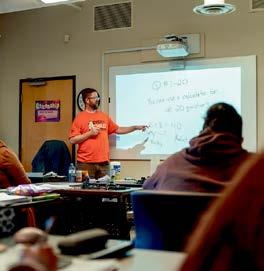

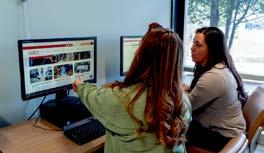

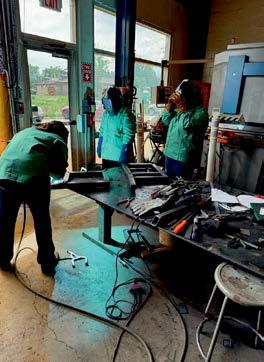
This 16-week program provides a comprehensive understanding of the fundamental business concepts. Participants will gain the foundational knowledge and skills to thrive in a variety of professional settings. This 13-week multi-disciplinary trades experience provides participants with a blended learning environment of theory, safety certifications and hands-on training. This 16-week certificate program partnered with Fanshawe College focuses on customer service, office procedures, and navigating computer applications such as Outlook, Word, Excel, and PowerPoint.



Your compensation is yours. Planning ahead can help you use it in ways that honour your goals, values, family and community.
Receiving compensation can bring many emotions. You may have ideas about how you want to use this money, and you may also feel unsure. Your compensation belongs to you, and you have the choice to decide what feels right for your life, your family and your future.
Be aware of people or organizations offering advice that does not respect your wishes or boundaries.
Some people find it helpful to take time before making big financial decisions.
It is okay to pause, ask questions and seek guidance from a trusted financial professional, community organization or person in your circle.
Understanding your short-, mediumand long-term goals may help you plan. Consider if arranging to receive your compensation through monthly payments may help you meet those goals.
Planning with care can help your compensation continue to support your wellbeing over time.
JACE KOBLUN jace@tworowtimes.com
Leadership in Kashechewan First Nation is calling for the resignation of Mandy Gull-Masty, Canada’s Minister of Indigenous Services Canada, citing frustration over the federal response to a months-long emergency that has forced hundreds of residents from their homes.
Chief Hosea Wesley said the minister has not visited the northern Ontario community or evacuation sites despite repeated requests from leadership during the crisis. The Cree community, located along the Albany River near James Bay, has been dealing with serious water and infrastructure problems that prompted a state of emergency earlier this year.
“Leadership in a crisis means showing up,” Wesley said in a statement, noting that many residents remain displaced while families and Elders cope with the disruption caused by the evacuation.
The emergency began in early January after major infrastructure failures led to sewage backing into homes and contaminating the community’s water system. Health concerns escalated as some residents became ill with cryptosporidiosis, an infection caused by a microscopic parasite that can spread through contaminated water.
More than two months later, many community members are still staying in temporary accommodations in cities such as Thunder Bay, Kingston, and St. Catharines, while leaders work with government agencies to address the underlying infrastructure problems.
Community officials say they had asked the minister to visit the First Nation or meet evacuees at host locations to see conditions firsthand. A planned trip by Gull-Masty to Kashechewan on Feb. 27 was later cancelled due to parliamentary obligations in Ottawa.
In a statement released

by her office, the minister said the federal government has been working closely with local leadership and other levels of government to coordinate emergency services and ensure the safety of residents during the evacuation.
“I want to acknowledge the tragic loss of life in the community during this emergency,” Gull-Masty said, adding that officials are focused on mobilizing support and providing services while longer-term solutions are developed.
The federal government says it is working with the community to address water contamination and infrastructure repairs. However, no timeline has been announced for when displaced residents will be able to return home.
Kashechewan has faced repeated evacuations and infrastructure crises over the past two decades, highlighting longstanding concerns over housing, water systems and emergency preparedness in remote northern First Nations.
At this time, Six Nations Natural Gas would like to inform the community that we are upgrading our Geographic Information System and partnering with G-Tel to assist with the GPS mapping of our underground infrastructure. G-Tel will be walking along the roadsides as well as locating service lines up to each meter.
G-Tel employees will be driving clearly marked vehicles, wearing high visibility orange and carrying proper identification, which will be available on request. This is an exterior process only. Customers should not expect any knocks on their doors.
The project is expected to commence on Monday March 9 th and run for up to 6 weeks. There will be no interruption to natural gas service because of this work.
We appreciate the community’s cooperation and understanding as we complete this important infrastructure project.
questions or concerns,


Wednesdays: 5pm-7pm
March 4, 2026
March 11, 2026
March 18, 2026
March 25, 2026
Learn more about and/or complete the



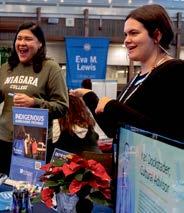
If you’re struggling to decide what to study and where to go to college, many students find an Open House experience has been their deciding factor. Attending Open House has been the make or break experience for many that ultimately leads them to their decision.
This spring, Fanshawe will host an Open House on Saturday, March 28 from 10 a.m. to 2 p.m. We hope you’ll visit us to explore our campuses, meet faculty and current students and ask your questions about starting college.
To learn more and pre-register, please visit: openhouse.fanshawec.ca
There will be a lot to see and do during Open House; here are five tips to making the most of your Open House experience at Fanshawe.
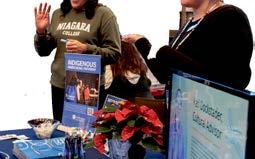
1. Come meet our staff in the Institute of Indigenous Learning!
Whether you’re Status or Non-Status First Nations, Métis or Inuit, the Institute of Indigenous Learning is waiting to welcome you.
Our friendly and knowledgeable staff can help support you in exploring program options and offer career guidance.
2. Get questions answered about funding your education
Whether you’re receiving sponsorship from your community or paying for college through bursaries, scholarships or the Ontario Student Assistance Program (OSAP), we can help you find the best way to finance your education.
The Financial Aid and Student Awards office provides financial support and advice to help students fund their college education. We are here to assist with OSAP, scholarships, grants, and bursaries as well as the Work Study program. Financial planning, including budget advising, is also available.
Learn more about paying for college: fanshawec.ca/fnmi-applicants
3. Explore the campus
This is your chance to see your campus! Explore state-of-the art labs and learning spaces, modern wellness facilities and
on-campus residences. It’s time to find out how large and varied the campus is and see the different spaces you’ll have available to you to study, relax or hang out with friends. Take this opportunity to envision yourself in the gardens in spring between classes or grabbing a bite to eat at the Out Back Shack, Fanshawe’s on-campus restaurant.
4. Visit our Indigenous student spaces
Visit the Institute of Indigenous Learning (IIL)! Here you will find culturally supportive services and programs. In addition to providing academic support, referrals and student activities, the IIL is also a meeting place for FNMI students.
The IIL includes a computer lab and laptop area, places to study, a student lounge, meeting rooms and kitchen facilities.
Be sure to check out the Kalihwíyo Circle, a gathering place nestled inside Innovation Village. The circle is a tribute to Indigenous stories, ways of being and beliefs. As a result, much thought was given to the architectural integration of these Indigenous beliefs.
The circle provides a welcoming place for workshops, summer camps, exhibitions, gatherings, smudging, pipe ceremonies, land-based learning and other events.
5. It comes down to a feeling
For a lot of students, it comes down to the feeling. Does the campus have the right energy for you? Are people happy and excited to be here? Does being here feel right to you, or could it?
Choosing which college to attend and which program to take can be a hard decision, but attending Open House events for the schools you are considering can make it a lot easier. Fanshawe’s Open House is Saturday, March 28 from 10 a.m. to 2 p.m. and not to brag, but we’re known to offer one of the best Open House experiences around!
For more information and to register, please visit openhouse.fanshawec.ca
WATERLOO – March 10, 2026 – Strong Start Charitable Organization is celebrating 25 years of helping children learn to read, marking a milestone that reflects the power of community partnerships, research-based programming, and long-term commitment to early literacy.
Since 2001, Strong Start has helped more than 65,000 children build foundational reading skills and confidence through its evidence-based programs delivered in schools and community settings. Grounded in the Science of Reading and aligned with curriculum and policy, Strong Start’s unique models bring together trained volunteers, educators, families, and community partners. Over the past 25 years, 42,000 volunteers have contributed over 711,000 volunteer hours, helping to provide carefully designed literacy support to young children during their most critical years of development and learning.
“This milestone belongs to our community,” said Machelle Denison, Chief Executive
Officer of Strong Start, who joined the organization in 2010. “For 25 years, volunteers, educators, donors, and partners have come together around a shared belief: that learning to read has the power to change a child’s life. When a child gains confidence in reading, it changes how they experience school, and that impact extends far beyond the classroom.”
Strong Start’s founding program, Letters, Sounds and Words™, pairs children in Senior Kindergarten through Grade 2 with trained Volunteer Coaches who work one-on-one with them using carefully designed, fun games and activities that strengthen foundational literacy skills. The organization also delivers Get Ready for School™ for preschool-aged children and Baby Connections® for families with infants, helping build early language and literacy from the very beginning.
Over the past quarter century, Strong Start has grown thoughtfully while staying grounded in its mission: to help children learn to read by providing unique programs and services through community-wide partnerships.
Sharing 25 Stories of
To commemorate its 25th anniversary, Strong Start is launching 25 Impact Stories, a year-long campaign highlighting the children, families, volunteers, educators, and partners who have shaped the organization’s journey. The campaign will share stories of transformation and the ripple effect of early literacy support across communities.
“These stories honour the people behind the impact,” Denison added. “They remind us that literacy is not just an academic skill—it’s a foundation for confidence, opportunity, and lifelong learning.”
Community Celebrations Throughout the Year
As part of the anniversary celebrations, Strong Start will host a Children’s Event at Strong Start on May 9, followed by a Celebration Event on May 21 at its National Program Deployment Centre in Waterloo. Strong Start will also host the season kick off for The Greater KW Chamber of Commerce Business After 5 event series in September.
These events will celebrate the organization’s history and the community that continues to power its work.


And so I pushed. I negotiated. I crossed waters. I argued with the British not as a beggar but as an ally who knew what had been paid already in war and loyalty. I sought not charity but secured ground, somewhere our families could stand beyond the reach of the American appetite swallowing the south.
Grand River was not an abstraction to me.
It was breath made geographic.
It was the possibility that our people would not simply dissolve into mourning and migration, but gather again somewhere with enough space for memory to become future. You see maps. I saw an answer wrestled from the aftermath.
But survival did not end the struggle.
It only changed its shape.
The wars of my time were fought with muskets and alliances. The wars that followed would be fought with paper, promises, and memory.
And those battles would belong to the generations who came after me.
And yet I know what some say: that in preserving one thing, I made room for later trouble. That by working through the British, I brought the British deeper into our affairs. That by securing land through imperial channels, I also bound our future to imperial duplicity.
Do you think I did not know the British were not pure?
I knew.
I also knew they were not the only danger.
This is the torment descendants often miss. In catastrophic times, one is seldom choosing between good and evil. One is choosing which danger can be negotiated with longer, which power can be leveraged, which betrayal may be delayed, which promise may be hardened into something survivable before it is broken.
History later calls this compromise.
Living through it, it feels like trying to hold a door against floodwater with your bare shoulders. There were wounds within the people too.
This must be said plainly. We were not undone only from outside. Pressure reveals every old crack. Suspicion grows. Faction forms. Vision divides. Men who claim to defend the nation may come to believe the nation can survive only if another Mohawk falls silent.
The stories you carry about my son Isaac are painful because they are true in the only sense that matters: they belong to a world where internal conflict had become deadly. Whether every later telling preserves every detail is less important than the meaning. A father and son standing on opposite edges of political fracture is not merely family tragedy. It is national agony made intimate.
Do you think I was untouched by that?
Do you think a man can survive conflict with his own blood and remain clean inside?
No.
There are things a leader carries that never leave him. Not victory. Not pride. Weight. Weight that hardens in the chest and learns to speak only through action because language is too small for grief that must continue functioning.
That is another truth
I want you to know: survival sometimes demands that one keep moving before one has fully mourned.
You have asked about heroes, but what if the deeper condition of leadership is loneliness?
Not the loneliness of vanity. The loneliness of standing where every available path damages something you love.
I knew I was being watched by my people. I knew I was being used by empires. I knew I was being judged by allies, enemies, clergy, settlers, officers, kin, and descendants not yet born. I knew that if I failed, many would suffer quickly. I knew that if I succeeded, many might still suffer later in ways no man could completely foresee.
How then does one proceed?
One proceeds because paralysis is also a decision, and often the most fatal one.
That is why I have little patience for the later habit
of purity. Purity is often the mask worn by those who were never forced to choose under collapsing conditions. Our people did not survive because every decision was clean. We survived because enough people carried enough burden long enough to keep a line unbroken.
Not one hero. Many carriers.
That part, at least, your elders understood.
When Jake Thomas said there are no heroes in the Longhouse, he was speaking something ancient. The Longhouse has no need for idols. It needs duties performed. It needs memory tended. It needs chiefs who remember they are removable, clan mothers who remember they are guardians, faithkeepers who remember law lives in ceremony as much as in speech, and people who remember that fame is not the same as service. If some have spoken my name too loudly, others have been told not to speak certain names at all. This too interests me from where I now stand beyond the noise of your day. You say that as children some of you were told not to casually utter the names of the Peacemaker, or Hiawatha, or even Tsungweadiso, the Creator, because names carry force and presence. I understand that caution. Sacred things should not be handled like common tools. Reverence is not forgetting.
But I also hear the ache in what you say: that a people may become so careful with its greatest names that younger ones begin to inherit silence where they needed relation.
That is a dangerous threshold.
A nation does not survive by profaning its sacred memory. But neither does it survive by allowing sacred memory to become inaccessible. If the young are told they carry a tremendous responsibility—that other Indigenous nations wait for the Mohawk to rise— then they must also be given a living path into the names, laws, and stories that make such a burden intelligible.
Otherwise weight becomes confusion.
And confusion, over
generations, becomes amnesia.
I do not want amnesia for my people.
Not for me. I am only one man. My name can survive criticism. It can survive praise. It can survive distortion. But the structure beneath the name—the discipline, the diplomacy, the obligations, the relation between land and law, the role of women, the role of ceremony, the endurance of language—that must not be lost.
Language. There is another battlefield many do not see clearly enough.
Kanien’kéha is not just speech. It is arrangement. Reality enters differently through it. Law sounds different there. Kinship breathes differently there. Humility, direction, place, relation, all are held inside it in ways no foreign language can fully carry.
A people may keep land and lose language and discover too late that they have retained the body while surrendering part of the mind.
So when you honor those who keep the language alive, do not treat them as secondary to warriors. They are warriors. Their battlefield is breath and memory.
The same is true of artists.
Do not underestimate symbol. Empires understand symbol better than most nations because empire always decorates itself while it expands. Why should Indigenous nations not answer with their own visual law, their own colors, their own songs, their own forms of remembrance? Louis Hall understood this. So did Pauline Johnson in another register. So do your filmmakers, your singers, your storytellers. They keep the people from being narrated only by outsiders.
And workers—yes, workers. The ironworkers high above the cities, the organizers at home, the Mohawk Workers who helped support Deskaheh’s appeal, those who raised funds so the Confederacy’s voice could cross the ocean, those who never became famous but made fame possible in others—these too are necessary sparks.
A nation is not pre-
served only in councils and confrontations. It is preserved in hauling, building, carrying, feeding, teaching, returning, repairing, organizing, and repeating.
You speak also of Alcatraz, of Richard Oakes, of Kanehsatà:ke, of Lasagna, of the people who stood behind barricades when the world again needed reminding that Indigenous land is not public emptiness waiting for development. These later struggles do not surprise me. They are the old struggle in a new uniform. The names of governments change. The appetite remains. The legal language grows more elaborate. The pressure on Indigenous continuity remains recognizable.
And still, the people answer.
That is what fills me, if the dead can still feel such things, not with pride exactly, but with confirmation.
The fire did not go out.
I have heard too of Makayla Sault, and of the questions her life raised about medicine, family, tradition, authority, and the right of Indigenous people to choose according to their own knowledge systems. Some will argue over the particulars. They always do. But what remains constant is this: the colonial world continually believes it may decide the boundaries of Indigenous reason, Indigenous care, Indigenous legitimacy. And again and again our people are forced to answer that presumption not only in law or protest, but in the intimate spaces of the body, the home, the child, the prayer, the grief.
Do you see now why I resist the word hero?
Hero is too simple for a people made to survive in every register at once.
Still, I understand the longing beneath the question.
A child wants someone to look toward.
A young Mohawk, told that the nation bears some special obligation in the world, naturally asks: who carried that weight before me? Who did not run? Who endured the burden of being useful when usefulness hurt? Who kept the line from snapping?
That is a fair question.
If you must call someone a hero, then call them that carefully. Call them that with weather still on them. Call them that with contradiction intact. Call them that without polishing away blood, doubt, compromise, regret, or sorrow. Call them that only if you are willing to admit that the same person may be a shield in one generation and a problem in the next.
That is not hypocrisy.
That is history.
And perhaps your elders were right in another sense: perhaps we should be wary of naming heroes too quickly because once a people begins to worship persons more than responsibilities, decline is already near.
Remember instead the deeper truth.
The earth has carried you. The rivers have remembered paths older than your roads. The forests stood through wars they did not choose. The women held lines of accountability while empires wrote proclamations. The faithkeepers preserved forms of continuity that conquest could not fully read. The workers built futures in steel and sweat. The artists defended memory against erasure. The language keepers guarded a worldview inside sound itself. The children inherited weight. The elders handed off sparks before they went dim. This is the real heroism, if you insist on the word. Not elevation.
Continuation.
I was Thayendanegea. I could move between worlds
I was necessary to my time, and costly to it too.
If you judge me, judge me among the sparks, not above them.
If you remember me, remember that I was only one piece of flint struck in an age of great force.
The miracle is not that one man burned brightly for a moment.
The miracle is that the fire still lives.
The Kanien’kehá:ka are still here.
know the score.

By Jazz Fuller
Welcome back to another week of sports talk! The WBC world baseball classic has officially kicked off last week! Powerhouses USA Japan and Dominican Republic all remain unbeaten. USA is currently 3-0 with wins over Brazil 15-5, Great Britain 9-1 and Mexico 5-3. Japan is currently 4-0 with wins over Chinese Taipei 13-0, Korea 8-6, Australia 4-3 and Czechia 9-0. Dominican Republic is 3-0 with wins over Nicaragua 12-3, Netherlands 12-1 and Israel 10-1. They play later tonight against Venezuela. Canada is currently 1-1 with a win over Columbia 8-2 and a 4-3 loss to Panama. They play Puerto Rico Tuesday night and Cuba today at 3pm. They
will need to win both games to advance to the quarterfinals. The tourney runs for another 2 weeks and is a great way to kick off baseball season with MLB opening day right around the corner. The Toronto Bluejays kick their 2026 season off on Friday March 27th for a home opener series in Toronto against the Athletics. The Athletics are still homeless with their stadium in Las Vegas still being built, they continue to play out of West Sacramento California where they have more snakes in the stands then people. The Athletics 2 billion dollar domed, climate-controlled stadium that is situated on the south end of the Las Vegas strip isn’t set to open until the beginning of the 2028 season.
In NHL hockey news, the Buffalo Sabres continue to shine. They are currently on a 7 game winning streak, coming off of an amazing 8-7 thrilling home win over the Tampa Bay Lightning in a crazy game full of action, fights and 15 total goals being scored. The Sabres now
hold a record of 39-196 and have moved into second place overall in the eastern conference playoff standings, just two points behind conference leading Carolina Hurricanes (4017-6 record). The Buffalo Sabres are currently a 20-1 underdog to hoist the Stanley Cup this year, which seems like a great shot! Currently, odds to win the Stanley Cup through 75% of the regular season are as follows
NHL STANLEY CUP FAVOURITES
Colorado Avalanche 3.9-1 odds
Tampa Bay Lightning 5-1 odds
Carolina Hurricanes 6-1
odds
Vegas Golden Knights
10.5-1 odds
Edmonton Oilers 14-1
odds
Dallas Stars 16-1 odds
Minnesota Wild 18-1 odds
Buffalo Sabres 20-1 odds
Utah Mammoth 26-1 odds
Montreal Canadiens 31-1
odds
In basketball news, we are just about two

weeks away from the start of March Madness. The tournament of all tournaments. Currently, conference matchups are being played to determine seeding and brackets for March Madness. As of today, the top 10 teams favoured to win it all are as follows.
MARCH MADNESS CHAMPION FAVOURITES
Duke 4.3-1 odds
Michigan 4.4-1 odds
Arizona 5.5-1 odds
Florida 8-1 odds
Houston 13-1 odds
Illinois 18-1 odds
UCONN 19-1 odds
Iowa State 23-1 odds
Kansas 36-1 odds
Michigan State 41-1 odds
March Madness games kick off officially on Tuesday March 17th, 2026. In Nba news, the
Toronto Raptors have played 63 regular season games, with 19 games remaining. They are 5-5 in their last 10 games coming off of a convincing 122-92 win over the Dallas Mavericks this past sunday. They currently still sit 5th place in the eastern conference with four big games this week. They play on the road vs Houston Rockets Tuesday night, on the road vs New Orleans Pelicans tonight at 8pm, Friday night back at home vs Phoenix Suns and have a date with conference leading Detroit Pistons sunday afternoon at 3:30pm in Toronto. Raptors forward Brandon Ingram continues to lead the Raptors with a scoring average of 21.7 ppg.
Scottie Barnes is a close second with 18.9 ppg, and in third on the team in scoring is RJ Barrett with

18.6 ppg. We are in the middle of March with all sports coming to fruition. We have baseball starting back up, while hockey and basketball seasons are in full playoff seeding mode. We will follow the March Madness tournament very closely here on the Two Row Times scoreboard watchin’ page. Currently I like the Duke Blue Devils to take down the March Madness tournament, with the Florida Gators as my underdog pick. As always thanks for tuning in to read each and every week. Enjoy this nice weather that we’ve gotten the past few days. It’s time to clean off those barbecues and hit the patios soon! Have a great week of sports!

• Arrive safely. Driving through the night to make it down to Florida or other sunny destinations is common for spring breakers. If you can’t avoid night driving, have at least one person stay awake to talk to driver.
• Make sure you know the name and address of your hotel or take a hotel business card out with you so you can give to a cab driver.
• Protect your location. Sharing too much information on your location on social media may endanger your safety
• Carry cash and phone numbers. And take a copy of your credit cards in case they are stolen.
• Use the buddy system. Never leave a party with a stranger and establish a place to meet in advance if you get separated.
• Practice safe drinking. Take turns so that one friend in the group per night will plan on minimal drinking to look out for everyone.
• If you need help, ask for it. If there’s an emergency, don’t rely on a bystander to call for help.
• Hydrate and wear sunscreen. Heat stroke and melanoma aren’t happy spring break thoughts, Take your SPF and a bottle of water to the beach.
• Take a copy of your passport. There is no worse way to end a vacation than to discover that your passport has been stolen or lost.

or





Applications for a contract position for Constable with the Six Nations Police are now being called for.
All applicants must fill out a standard application form available at the Six Nations Police Station.
CRITERIA for applicants are as follows:
Minimum Requirements to be considered for a career in First Nations Policing with the Six Nations Police Service, you must:
- Be 19 years of age or over and able to provide an official birth certificate or proof of age;
- Be physically and mentally able to perform the duties of the position having regard to your own safety and the safety of members of the public
- Have successfully completed at least 4 years of Secondary School education or its equivalent (official transcripts and diplomas will be required)
- Be of good moral character and habits, meaning that you are an individual other people would consider being trustworthy and having integrity, with no criminal record;
- certified by a physician to be fit for duty as a front line Six Nations Police Constable and able to pass physical tests which are required in the recruiting process
- Possess a valid driver’s license with no more than 6 accumulated demerit points, permitting you to drive an automobile in Ontario with full driving privileges
- Be able to pass a security clearance as well as background investigation, credit card and reference checks
If you have any criminal convictions under a Federal Statute you must obtain a pardon.
Special Requirements – for the Six Nations Police Service, in order to address the unique and at times urgent needs of the Six Nations of the Grand River Community and Haudenosaunee culture, additional requirements include:
- Extensive knowledge of the unique social dynamics of the Six Nations of the Grand River Territory
- A sound understanding of Haudenosaunee culture, customs, traditions and social political issues of the Six Nations of the Grand River
- Six Nations of the Grand River Band Membership/ Citizenship and residency is considered a preferred asset and
- Membership or extensive working experience with any Indigenous Nation will also be considered an asset
Desirable Qualifications:
· Six Nations Band member preferred
Assets:
· Previous policing related experience
· Law and security courses, etc.
Closing Date: Applications must be received by 3:00 p.m. March 12, 2026
Applications in complete form are to be mailed or hand delivered to:
Six Nations Police P.O. Box 758
2112 4th Line Road
Ohsweken, Ontario
N0A 1M0
Attention: Policing Administrator
For further information, please contact the Policing Administrator at 519-445-4191.
COVID-19 Restrictions will be exercised.








of our mother, grandmother, great-grandmother and great-great grandmother, Eleanor Porter, who left us March 17th, 2020.
So many beautiful memories
Always on our minds
Forever in our hearts
A mother’s love never ends. It lives on through those left behind.
Forever remembered by Kathy and Rod; Wally and Mel; Beck and Mike; Katie; Kayla and PStone; Pierce, Paxton, River, Finley, Milo, Poppy, Leanna, Dawson and Drew.

Lots of variety new & used
Corn soup, other foods as well Tables still available $30/table
Contact Raven @ 226-583-4375



CLUES ACROSS
1. Blockchain-based entity
4. A woolen cap of Scottish origin
7. Painted with glue
12. Legendary crooner
15. Structure made with strips of wood
16. Tropical fruits
18. Commercial
19. Comedienne Gasteyer
20. The Ocean State
21. Ancient Scot
24. Basics
27. Stated propositions
30. Scottish island group
31. Expression of annoyance
33. Large tree
34. Engine additive
35. Conspiracy
37. Drunkard
39. Someone who is morally reprehensible
41. Ancient Syrian city
42. Mild yellow Dutch cheese made in balls
44. Carry (slang)
47. Sweet potato
48. European river
49. The Golden State
50. Windy City ballplayer
52. New Testament
53. Possess spiritually
56. A treeless grassy plain
61. Popular historical novel
63. In a law-abiding way
64. A place to sleep
65. Criticize
CLUES DOWN
1. Impression in a surface
2. Computer language
3. Relating to the ear
4. Occupant
5. Member of Great Plains people
6. Social media firm
7. Digital audiotape
8. Midway between east and southeast
9. Chronic, progressive disea-
se
10. Chinese lute
11. Not wet
12. Moves wings up and down
13. Communication devices
14. Swiss river
17. Female sibling
22. Receive
23. Relating to a type
24. General’s assistant (abbr.)
25. Steep bank
26. Taxi driver
28. Moves into without dif-
ficulty
29. Bicycle manufacturer
32. Traditional rhythmic pattern
36. Fugitives are on it
38. Bitter-tasting organic substance
40. Die
43. Matched
44. Literary genre __-fi
45. Cannot
46. Pounded
51. British rock group
54. Debt relief order
55. 2006 NL Cy Young winner
56. Green vegetable
57. Tough outer skin of fruit
58. __ Spumante (Italian wine)
59. Ailments
60. Famed singer Charles
62. Camper


ARIES – Mar 21/Apr 20
A collaboration brings out your best side, Aries. Someone else’s strengths may complement your drive right now. You’ll get a lot of things done this week.
TAURUS – Apr 21/May 21
Your patience pays off in a relationship, Taurus. A long-term goal you share with a partner starts to move into the planning stages this week. Enjoy the excitement ahead.
GEMINI – May 22/Jun 21
Gemini, joyful news arrives via a friend in the next few days. Celebrate the successes of others, as your own turn for good news is right around the corner.
CANCER – Jun 22/Jul 22
This week you may have the opportunity to find beauty in small things, Cancer. A simple walk or a quiet meal with a loved one can bring about peace and insight.
LEO – Jul 23/Aug 23
You are the life of the party right now, Leo. Your warmth draws people to you, making this a great time for networking. A job offer may come from your efforts.
VIRGO – Aug 24/Sept 22
An act of kindness you performed recently may come back to you in surprising ways, Virgo. The universe will reward your generous spirit. You may continue to pay it forward.
LIBRA – Sept 23/Oct 23
Figure out the perfect middle ground between work responsibilities and fun this week, Libra. If you delegate some of your tasks, you may free up time for personal enjoyment.
SCORPIO – Oct 24/Nov 22
Scorpio, optimism is your guiding light this week. Your “can-do” attitude may inspire others who cross your path in the days to come. Lots will get done in little time.
SAGITTARIUS – Nov 23/Dec 21
Deep conversations may lead to a breakthrough, Sagittarius. You might start to understand someone else or a situation on a whole new level.
CAPRICORN – Dec 22/Jan 20
Capricorn, financial stability is something you should carefully consider this week. A smart decision you made in the past may not be the best way to continue forward.
AQUARIUS – Jan 21/Feb 18
Aquarius, you may feel a strong draw toward community or giving back this week. Helping out a neighbor will bring you satisfaction, or you can volunteer.
PISCES – Feb 19/Mar 20
It’s important to trust your intuition, Pisces. This is leading you toward a very happy coincidence by the end of the week. Someone special becomes involved.