





the dispute through legal measures, in favour of the housing developers, Henco Homes.
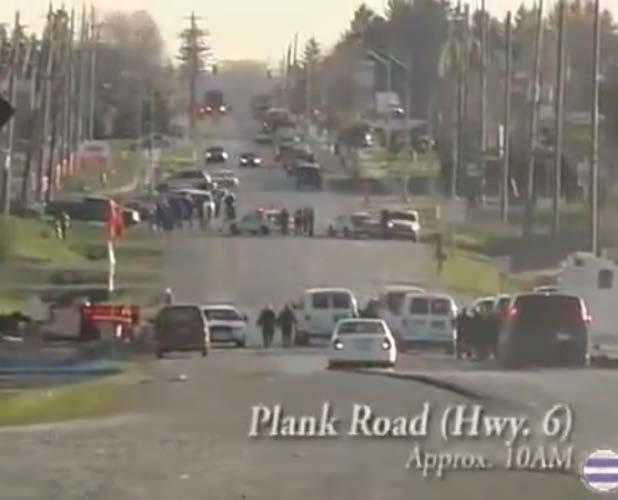
Twenty years ago, on a freezing February in 2006, a small group of Six Nations people, led by women, stopped construction workers on a housing development project just outside the borders of the Six Nations reserve, in the small town of Caledonia, Ontario.
What ensued would become the longest-running Indigenous land reclamation in Canadian history that still remains unresolved to this day.
That day, and that action, rewrote Six Nations’ history.
At first, things were quiet. A small group of about a dozen people slept at the site of the former housing subdivision for roughly two months while a small local court tried to solve
In the following weeks, court hearings were held and injunctions were granted, but nobody budged from the site, which later became known as Kanonhstaton - The Protected Place, in Mohawk.
Then, on April. 20, 2006, a day that now lives in infamy in the collective history of Six Nations and Caledonia, hundreds of tactical OPP officers snuck onto the site at 4 a.m., arresting about a dozen Six Nations people who had camped out there
The raid sent shockwaves across the reserve, the town, and the country.
Within minutes, cellphone networks across the Rez were abuzz with texts and urgent pleas to get down to the site asap as the OPP had removed

most of the land defenders there save for a few who escaped before heavily armed officers and even snipers could get to them. Before the sun had even broke on the horizon, hundreds of Six Nations

people descended onto the southern corner of the site, parked along Sixth Line Road, just off Highway Six, to square off with OPP officers, who had mistakenly believed they had reclaimed the land from
Six Nations people.
Soon, the number of Six Nations people who had raced to the site from the nearby Rez swelled into the thousands, outnumbering the OPP.
A few hours after sunrise, a gigantic wall of Six Nations people walked the OPP off the small plot of land.
Videos and photos show dozens of OPP officers retreating backwards from the resolute crowd of Six Nations people, an image that would be aired later that night on the evening news in living rooms across the country.
The reaction from everyday Canadians - settlers - in both Caledonia and across Canada, was swift and angry.
For the remainder of the year, angry non-Indigenous townsfolk from Caledonia and even agitators from near and far squared off with Six Nations people
at the site, full of rage because local roads and highways had been closed down in response to the raid.
In the ensuing months and years, most of the media painted a horrifying picture of Six Nations people - who were later joined by Indigenous supporters from other nations and non-native allies from across the continent - as violent savages with no real legitimate claim or rights to the land they had taken back.
The Ontario government eventually bought out the developers for millions of dollars and serious land claim negotiations with various levels of government began.
The Haudenosaunee Confederacy Chiefs Council - HCCC - took the lead in the negotiations, supported by a number of Six Nations elected councillors.
But those talks broke






down two years later and the land in question remains part of a larger unresolved claim to this day - the Plank Road claim.
That parcel of land is actually addressed in a mammoth land claim case Six Nations filed against the Crown with a trial finally expected to get underway in October of this year.
The Plank Road claim states that a road, formerly called Plank Road, now known as Highway Six, stretching from Hamilton to Port Dover, was unlawfully built on Six Nations unceded territory.
Land researchers and legal experts say that Six Nations’ land grievances, if properly accounted for, would cost Canada trillions of dollars in reparations if accounting for inflation.
And although a resolution to that particular land parcel at Kanonhstaton remains unresolved, the actions of that small group of Six Nations people - led by two formidable young women, Janie Jamieson and Dawn Smith - sparked
shockwaves of awareness to the injustices faced by Six Nations that still resonate to this day.
Although far from where Six Nations needs to be, millions of dollars in land development deals on unceded Six Nations territory throughout Ontario have been negotiated.
Hundreds of developers and provincial officials started to seriously engage in pre-development consultations with Six Nations people during many projects across the province, with millions of dollars in benefits and non-monetary compensation gleaned over the past two decades in an effort to reconcile the past, and present, colonial bulldozing of Six Nations’ rights. Environmental and archaeological assessments are now taken extremely seriously with Six Nations people mandated to be onsite to oversee the assessments before developments begin.
And it was all sparked by the bravery of Six Nations women.
Dozens and dozens of faces became synonymous with Kanonhstaton, either as land defenders or legal eagles or both.
Twenty years of loss and change have gone by. Many of those faces are no longer on this earth but they are not forgotten.
They are the faces of people who fought for Six Nations’ rights so fervently in 2006 and they should be honoured and remain fresh in everyone’s minds.
Today’s generation should be taught about these people and what their roles were in Kanonhstaton and the ongoing battle for Six Nations rights and happiness.
This Saturday, from 9 a.m. to 4 p.m., there will be a commemoration highlighting the 20th anniversary of Kanonhstaton with a potluck and presentation of The Great Law as well as an update from Mohawk Chief Allan MacNaughton, who was a key figure in the negotiations that followed the reclamation.

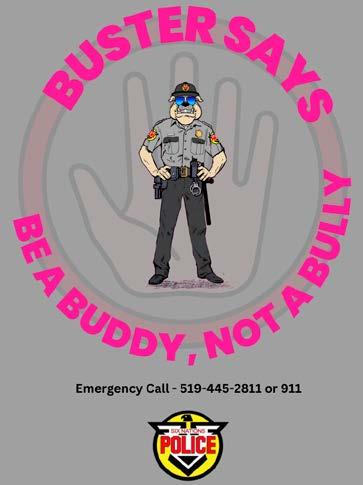
On Pink Shirt Day, wear pink to stand up against bullying.
Together, we will build a community rooted in kindness, inclusion, and respect.






After the federal government signals budget changes that risk reducing funding for First Nations priorities, the Assembly of First Nations National Chief calls for urgent action
jace@tworowtimes.com
The Assembly of First Nations (AFN) National Chief has responded strongly to impending federal budget measures that could reduce funding for programs affecting First Nations communities across Canada.
National Chief Cindy Woodhouse Nepinak warns that proposed fiscal adjustments — particularly in areas that support essential services — risk deepening long-standing social and economic disparities.
The AFN, a national advocacy organization that represents the collective direction of First Nations
through resolutions and leadership mandates, says its priorities extend beyond short-term spending to long-term investments in infrastructure, housing, education and health services that have been decades in the making.
A report commissioned by AFN and Indigenous Services Canada estimates a significant infrastructure gap — roughly $349 billion — that affects everything from roads and water treatment facilities to internet connectivity and schools. Closing that gap, the report suggests, could generate as much as $635 billion in economic output over the next seven years, offering transformative benefits for both First Nations and the broader Canadian econ-
omy.
In outlining concerns about impending budget changes, AFN leaders stress that cuts or pauses in funding commitments could stall progress toward closing these gaps. They emphasize that First Nations should be partners in designing fiscal policies that align with community needs and treaty obligations.
The National Chief’s statement comes as discussions continue between First Nations leadership and federal officials about how best to address the deep inequities rooted in historical underfunding and to ensure future budgets reflect long-term commitments rather than short-term accounting shifts.

Ontario has officially begun construction on the Berens River Bridge, a permanent structure that will provide year-round road access to northern communities previously dependent on seasonal winter routes.
The project is being delivered in partnership with the Pikangikum First Nation, the Whitefeather Forest Community Resource Management Authority and the federal government, marking a milestone for infrastructure and connectivity in the province’s northwest.
The bridge will span
By 2RT Staff
As we observe Black History Month, it's crucial to broaden our understanding of the Black experience, especially here in Canada. Indigenous Black Canadians carry the dual heritage of African and Indigenous ancestry, often facing compounded discrimination and marginalization
The history of Black people in Canada is deeply intertwined with that of Indigenous peoples. From the Underground Railroad, where Indigenous communities provided refuge to escaping enslaved people, to present-day struggles for land rights and cultural preservation, the stories are interconnected. Recognizing this shared history allows us to build stronger alliances and work together towards a more just and equitable future for all. By acknowledging the intersections of race and Indigeneity, we can foster a more inclusive and comprehensive understanding of Black history in Canada, paving the way for a future where all are truly seen and valued.
the Berens River, forming a key link in an all-season road network that improves safety and mobility for residents of Pikangikum and six additional Treaty #5 First Nations, including Deer Lake, Keewaywin and North Spirit Lake. Once completed, the structure will remove the need for ice crossings that have traditionally connected these communities during winter months, enhancing access to essential services and lowering the cost of goods and travel.
This project will be the first in Canada to incorporate mass-timber structural components into major transportation infrastructure, reflecting innovative
engineering and local resource use. Preliminary work such as site preparation, aggregate blasting and the construction of a temporary bridge is already underway, with full bridge completion expected by 2028.
Officials say the bridge will not only improve safety and connectivity but also create employment opportunities during construction and lay the groundwork for future economic development in the region. The initiative builds on longstanding collaboration between Indigenous leadership, provincial authorities and federal partners to close infrastructure gaps in remote areas.




Brantford calls it the West Brant Access Route. In municipal terms, it is a Schedule C Environmental Assessment studying a new north–south arterial corridor and a new crossing of the Grand River. The project is framed as congestion relief for a growing west end, redundancy for emergency services, and infrastructure necessary to support continued expansion.
But beneath the traffic counts and conceptual renderings lies a question that has followed every proposed crossing along this stretch of river for decades: by what authority does the Crown — municipal or provincial — construct permanent infrastructure across land whose underlying constitutional exclusivity has never been publicly extinguished?
This is not a new dispute.
In 1991, Riverfest opened with a reenactment of Joseph Brant’s historic ford across the Grand River. The headline read, “Brant’s ford ceremony opens Riverfest weekend.” The ceremony was not merely heritage theatre. It was a reminder that the Grand River is the spine of the 1784 Haldimand Proclamation, which confirmed lands along its banks for the “exclusive use and enjoyment” of the Mohawks and their posterity.
That phrase matters. The beneficiary class described in the Proclamation is not a modern municipal corporation, nor solely an administrative entity created by statute. It is Mohawk Loyalist posterity — the continuing descendants of
those to whom the Crown made its confirmation. If that confirmation remains operative in law, it burdens underlying Crown title unless lawfully extinguished.
Around that same period, another headline captured the recurring tension more bluntly: “Name the bridge ‘Wakonrori,’ I told you so!” When Councillor John Peters publicly remarked, “Why don’t you find out how to say ‘I told you so’ in Mohawk,” Turtle Island News contacted Six Nations Cayuga Royanni Jake Thomas. The translation came back plainly: “It’s Wakonrori.”
The article described a substantial steel truss bridge proposal crossing approximately 60 metres of river. The bridge would touch on an island within the Grand River territory. The City had considered placing the bridge away from the island but rejected that option due to cost. The upper deck would serve pedestrians, cyclists, and skiers. Beneath it would run a watermain and sewer pipelines contained within a system designed to prevent leakage into the river. The response was not simply a disagreement over engineering details. The Mohawk Nation of Grand River intervened in discussions to assert that underlying beneficial interest. Their position was not framed as a policy objection or a request for mitigation. It was a title assertion.
Meetings were disrupted and frequently halted not because of span heights, but because the discussion shifted to extinguishment evidence.
Institutional awareness of the legal tension predates that article. A
January 22, 1981 internal Brantford city memorandum acknowledged that Indian lands could not be expropriated and discussed exploring “a devious way” to circumvent the need for consent to build a highway over subject lands. The memo noted that permission was unlikely due to federal interest in Indian band rights.
Records preserved and left in trust by former councillor Margaret CheshiSmith further illuminate how that awareness operated. An internal notation regarding the Brantford Southern Access Road (BSAR) and Glenwood Drive stated that reference to the road extending beyond Brett Street was incorrect. It described the extension as “an encroachment onto Indian Lands” and noted that the road “does not have to be closed because technically, it does not exist.”
That language is administrative, not rhetorical. It reflects an understanding that physical extension does not equate to lawful existence. A roadway may appear on the ground, but if it crosses into territory beyond recognized authority, it is not acknowledged in law.
The logic is revealing. What is not recognized within the governing framework is treated as though it does not exist for legal purposes, even if it exists physically. That same administrative lens has often been applied to the Mohawk Nation of Grand River. Because it is not constituted as an Indian Act band, it is frequently treated as lacking formal standing within statutory consultation processes. In bureaucratic terms, it
is regarded as outside the recognized framework.
Yet the Haldimand Proclamation did not confirm lands to an Indian Act entity. It confirmed them to the “Mohawks and their posterity.” That confirmation predates the Indian Act by nearly a century.
Administrative recognition under a later statute cannot retroactively define or extinguish a prior constitutional confirmation.
The (BSAR) later demonstrated how such tensions can culminate. Dr. Michael Doxtater has stated that Consecration legislation was invoked by Canadian lawyers to support opposition to BSAR through the Glebe lands and that the road was ultimately declared dead. There is no single court judgment declaring that consecration law alone defeated the project. The City halted it. Records indicate that the Province would have owned a percentage of the roadway.
That episode was not merely a legal confrontation. It was a community mobilization. Residents of the surrounding neighbourhood and Mohawk citizens banded together to protect both the community and the lands from the proposed Oak Park expansion. Public meetings were heated. Positions hardened. Ultimately, council voted to halt the project, with several members reversing earlier support.
That detail matters. Provincial ownership of infrastructure across potentially burdened land engages Section 109 of the Constitution Act, 1867, which vests provincial lands “subject to” existing interests, and Section 35 of the Constitution Act, 1982, which recognizes
and affirms existing Aboriginal and treaty rights. The collapse of BSAR may have reflected recognition that the constitutional risk profile was too high.
The pattern extends beyond Brantford. In Caledonia, an aging bridge along the same Grand River corridor has raised infrastructure concerns. Consent for certain works has reportedly been withheld not only at the administrative level but by Mohawk authorities asserting exclusive use and enjoyment interests. When multiple crossings along the same river face consent disputes, the issue becomes corridor-wide.
An aging infrastructure creates a dilemma. The Province must balance public safety obligations against unresolved jurisdiction. Proceeding without consent risks constitutional breach. Delaying intervention risks safety exposure. Negotiation implicitly acknowledges unresolved title. The dilemma itself signals that the legal status of the corridor is not conclusively settled.
The riverbed question remains central. Sacred-site debates can be factually complex. The riverbed issue turns on documentary evidence. Was the bed of the Grand River within the Haldimand tract ever lawfully surrendered by the beneficiary class described in 1784? Was it alienated free and clear of Mohawk Loyalist posterity’s confirmed interest? Is there extinguishment evidence?
Bridges require piers anchored in that bed. Environmental Assessment approval mitigates environmental impact; it does not cure defective title. Canadian law often presumes that the bed of a navigable river
is vested in the Crown, but that presumption operates subject to prior interests. If the Haldimand Proclamation confirmed exclusive use and enjoyment along the river corridor, that burden persists unless lawfully extinguished.
When the Mohawk Nation of Grand River asserts exclusive use and enjoyment rights grounded in the Haldimand Proclamation, governments may respond that it is not recognized under the Indian Act. Yet the 1784 confirmation predates the statute by nearly a century. Administrative non-recognition does not resolve constitutional burden.
Municipal authority is delegated authority. The City of Brantford exercises powers granted by the Province. It cannot exercise greater rights than the Province possesses. If provincial title remains burdened by an unextinguished beneficial interest confirmed in 1784, municipal infrastructure planning rests on assumption rather than settled title.
There is also a political arc. Under previous mayoral administrations — from Bob Taylor to Chris Friel — development in contested areas appeared effectively halted pending due process. That posture did not resolve title but functioned as a brake. Before Kevin Davis became mayor, a private meeting took place in which the issue of exclusive use and enjoyment under the Haldimand Proclamation was discussed directly. Entering that meeting with a three-decade legal veteran, the author recalls Davis extending his hand and stating, “I hope you know I’m a lawyer.” The
CONTINUED ON PAGE 13
Find all of SNGR’s latest Community Events, Programs, & Workshops in the Spring 2026 Leisure Guide (March 1-May 31)!
Available now online at sixnations.ca or for pick up at Central Administration (1695 Chiefswood Road)


JACE KOBLUN jace@tworowtimes.com TWO ROW TIMES
The Chiefs of Ontario is calling on federal and provincial governments to take immediate action to improve highway safety after a series of fatal collisions on key northern Ontario routes.
The leadership group says recent tragedies reveal persistent dangers that disproportionately affect First Nations communities that rely on these highways as essential lifelines for health care, education, work and supplies.
On January 31, a collision on Highway 11 west of Hearst claimed the lives of Darrel “Jackboy” Taylor, his sister Reanne Wesley and Wesley’s partner Aaron Paypompee. Taylor and Wesley
were from Constance Lake First Nation, and Paypompee was a member of Naotkamegwanning First Nation.
That crash was one of at least five serious transport-related incidents within a five-day period, raising alarm among First Nations leaders who argue that northern highways are often under-maintained and poorly equipped for harsh winter conditions.
“These tragedies are devastating for our families and our Nations,” said Ontario Regional Chief Abram Benedict, emphasizing that northern routes are more than roads — they are essential connections to services.
Road safety advocates and policing bodies have highlighted similar concerns in other parts of Ontario, where collisions — including multi-vehicle crashes and weather-related incidents on major corridors — underline that poor visibility, winter conditions and vehicle behaviour remain ongoing risks.
As conversations about road safety continue, northern leaders say meaningful action must go beyond statements and include measurable improvements to protect travellers on routes that are vital to community life but all too often exposed to danger.
The Chiefs of Ontario and Nishnawbe Aski Nation Grand Chief Alvin Fiddler have urged governments to strengthen oversight and enforcement of commercial transport vehicles, improve highway infrastructure and winter maintenance, and collaborate directly with First Nations leadership to craft solutions that match the realities of northern travel.



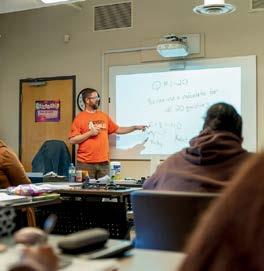
This 16-week program provides a comprehensive understanding of the fundamental business concepts. Participants will gain the foundational knowledge and skills to thrive in a variety of professional settings.


This 16-week certificate program partnered with Fanshawe College focuses on customer service, office procedures, and navigating computer applications such as Outlook, Word, Excel, and PowerPoint.
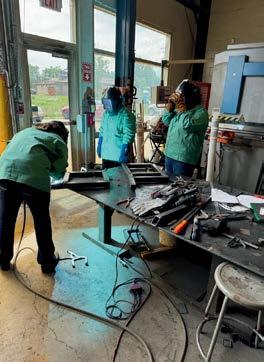

This 13-week multi-disciplinary trades experience provides participants with a blended learning environment of theory, safety certifications and hands-on training.







Parents







LUCAS SMITH OWNER/CEO
289-776-9658
LUCAS@LUMBERJACKLUKE.COM
SIX

Applications for a contract position for Constable with the Six Nations Police are now being called for.
All applicants must fill out a standard application form available at the Six Nations Police Station.
CRITERIA for applicants are as follows:
Minimum Requirements to be considered for a career in First Nations Policing with the Six Nations Police Service, you must:
- Be 19 years of age or over and able to provide an official birth certificate or proof of age;
- Be physically and mentally able to perform the duties of the position having regard to your own safety and the safety of members of the public
- Have successfully completed at least 4 years of Secondary School education or its equivalent (official transcripts and diplomas will be required)
- Be of good moral character and habits, meaning that you are an individual other people would consider being trustworthy and having integrity, with no criminal record;
- certified by a physician to be fit for duty as a front line Six Nations Police Constable and able to pass physical tests which are required in the recruiting process
- Possess a valid driver’s license with no more than 6 accumulated demerit points, permitting you to drive an automobile in Ontario with full driving privileges
- Be able to pass a security clearance as well as background investigation, credit card and reference checks
If you have any criminal convictions under a Federal Statute you must obtain a pardon.
Special Requirements – for the Six Nations Police Service, in order to address the unique and at times urgent needs of the Six Nations of the Grand River Community and Haudenosaunee culture, additional requirements include:
DONNA DURIC
SNGR says it’s working to find another
After news that the Six Nations Public Library was suddenly closing for a structural review caused community concern last week, Six Nations of the Grand River (SNGR) the elected council said it was going to try and find an interim space for the beloved community space.
“We understand the concern and uncertainty that the interim closure of the Six Nations Public Library (SNPL) has caused,” elected council said in a press release. “(The) SNPL has been a trusted community space for generations, and any interruption to its services affects families, knowledge-seekers, students, and community members of all ages.”
Six Nations of the Grand River (SNGR) staff and SNPL leadership have been in ongoing discus-
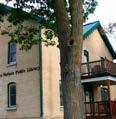
sions for more than a year regarding concerns about the structural condition of the library building, the press release noted.
Following the June 2025 flood emergency, continued assessments prompted the Emergency Control Group (ECG) to recommend that the building be vacated as an immediate precaution until a formal structural assessment was completed.
“This occurred in an in-camera meeting in accordance with SNGR emergency management protocol,” SNGR said.
The decision was made on Sept. 8, 2025.
The motion “authorized the immediate vacating of the library building to permit a comprehensive structural assessment of the facility,” council said.
The purpose of the assessment is to:
-Confirm existing and further structural hazards
-Determine immediate mitigation measures required
-Outline long-term measures necessary to ensure the safety and integrity of the building.
“SNGREC made this decision to ensure the safety of SNPL staff and community members, reflecting concerns that SNPL leadership had raised over several years.”
Council said the CEO told SNPL leadership in November 2025 that the building had to be vacated and again by the Chief Operating Officer in February 2026.
“At this time, the facility has been closed to allow
qualified professionals to complete the required assessments. SNGREC is actively working to find another space within the community to relocate SNPL while the structural assessment is completed.”
Further information will be shared with the community once the assessment results and related reports are available, council said.
“The safety of community members, staff, and visitors remains a priority. The Six Nations Public Library is also recognized as a priority for the community. SNGREC offers its sincere apologies to the community for the disruption to library services and acknowledges the challenges this temporary closure may create for families, learners, and community members who rely on this valued space. SNGREC will continue to communicate updates as the process moves forward, and new information becomes available.”
discussion centered on whether the Crown’s oath of allegiance and oath of office requires officeholders to observe the exclusive rights confirmed in 1784. The underlying interests were not abstract.
Chief Richard Maracle had informed the City of Brantford of the existence of those interests in relation to lands slated for development. Prior to construction on the former Canadian Tire property, the CEO of Cachet was formally notified of the asserted underlying interests connected to the Haldimand confirmation and the exclusive use and enjoyment rights of Mohawk Loyalist posterity. Despite that notice, the former Canadian Tire site was developed. The Havendale project by Cachet — promoted as “A Bold New Haven in Brantford” — is now in its early phases. The constitutional question raised before development remains unanswered after it.
Under Mayor Davis, the tone shifted. The phrase “fortune favours the bold” came to light through a Freedom of Information request related to the sale of Arrowdale Golf Course lands — lands that had been dedicated to the City
and customarily used as golf course property. The disclosure revealed the language within correspondence surrounding the disposition of those lands.
The same Freedom of Information release included reference to the Athenian Oath, a civic principle historically associated with doing no harm and leaving the city better than one found it.
That contrast is difficult to ignore. Boldness in governance can signal confidence and decisiveness. But where foundational constitutional questions remain unresolved, boldness can also resemble a rush to judgment. In circumstances involving disputed underlying interests, acting without resolving title risks more than controversy — it risks structural error. When development proceeds across lands subject to unresolved beneficial interests, the consequences are not merely political. They can place communities in prolonged conflict, expose residents to legal uncertainty, and intensify jurisdictional tension. The question becomes whether boldness, in such circumstances, aligns with the obligation to do no harm.
Boldness may accelerate
growth. It does not produce a surrender instrument. It does not extinguish exclusive use and enjoyment confirmation. It does not dissolve a corridor-wide pattern in which crossings are repeatedly contested.
The West Brant Access Route is presented as a transportation solution. Growth pressures are real. Infrastructure is necessary. But planning benefits do not override constitutional burden. Efficiency does not extinguish confirmed beneficial interest.
The old headline now reads less like wit and more like warning. “Wakonrori — I told you so.” The City hoped to move ahead. Mohawk representatives insisted on examining the foundation first. Meetings stalled not over engineering details but over unresolved title.
If the Province believes the riverbed within the Haldimand tract was lawfully surrendered, it should be able to produce the instrument. If it cannot, the burden question remains live.
Bridges can span water. They cannot erase constitutional confirmation. They cannot extinguish unceded beneficial interest.
The river has memory.











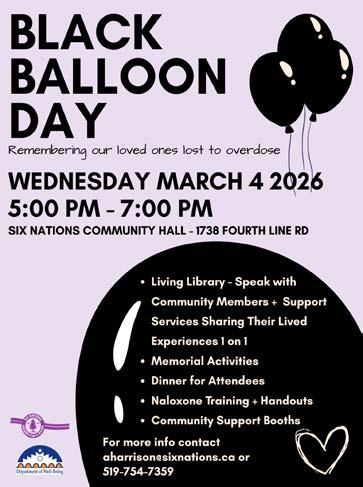
know the score.

By Jazz Fuller
Greetings! It was a rough weekend to be a Canadian hockey sports fans as Team Canada went 0/2 in gold medal games with two L’s and a ton of what if’s! The women held onto a 1-0 lead and lost in overtime. The men tied the game in the second period 1-1 and lost in overtime 2-1. Both mens and women’s games were lost in three-on-three heartbreaking fashion in an overtime rule format which is very frowned upon. Many people suggested a natural five-onfive natural 20 minute period followed by a shootout if still needed. It would have kept the games more competitive until the final goal was scored. Nevertheless, Team America took down both gold medals in hockey and Canada will have to wait another 4 years until the next Winter Olympics
take place to get their revenge. Team Canada finished the Winter Olympics with 5 gold medals, 7 silver medals, 9 bronze medals for a total count of 21 medals. In overall Country medal standings that was enough medals to hold down 11th place. The 2030 Winter Olympics will be held in the French Alps in the beautiful country of France.
In Hockey news, after a two week olympic break, NHL games start back up tonight! Both our hometown teams will be in action as the 32-19-6 Buffalo sabres take on the 28-27-2 New Jersey Devils in NJ and the 27-21-9 Toronto Maple Leafs take on the 37-14-4 Tampa Bay Lightning in Florida. Buffalo plays at 7pm, Toronto plays at 7:30pm. Both Tage Thompson of the Buffalo Sabres and Austin Matthews of the Maple Leafs bring home gold medals from the winter olympics to hang in their lockers! Both teams will have busy weeks, as the Sabres take on the NJ Devils, Florida Panthers, Tampa Bay Lightning and Las Vegas Golden Knights. The Leafs have 4 games this week as well as they take on the Lightning, Florida Panthers, Ottawa Senators
and Philadelphia Flyers. Both teams remain in playoff contention as Buffalo currently holds down the 6th spot in the eastern conference with 70 points and the Leafs are on the outside looking in with 63 total points, currently holding down the 12th spot in the conference standings. We wish good luck to both teams the rest of the season!
In Basketball news, March Madness is just around the corner! There will be a total of 68 teams in college basketball’s annual action-packed yearly tournament. NCAA Division 1 Men’s basketball tournament, commonly known as “March Madness” takes place in Mid-March. The field includes 31 automatic bids for conference champion winners and 37 at-large bids for teams selected by the basketball committee. The format features the “First Four” play-in games, followed by the traditional 64 team bracket. Currently the top 10 teams in the country are as follows:
#1 Duke Blue Devils, 25-2 record
#2 Arizona Wildcats, 25-2 record
#3 Michigan Wolverines, 25-2 record
#4 Iowa State Cyclones, 23-4 record
#5 Houston Cougars,
23-4 record
#6 UCONN Huskies, 25-3 record
#7 Florida Gators, 21-6 record
#8 Purdue Boilermarkers, 22-5 record
#9 Gonzaga Bulldogs, 27-2 record
#10 Illinois Fighting Illini, 22-6 record
You have a few more weeks to watch the teams battle it out in their respected conferences. Who do you like to take down the 2026 College Basketball National Championship?!?
In NBA basketball news, our local Toronto Raptors have won 4 of their past 5 games and are on a little jelly roll! Last week, the Raptors got their bwooters rolled by the Detroit Pistons 113-95, but came back strong with a 110-101 win over the terrible Chicago Bulls and a convincing 122-94 win over the Giannis Antetokounmpo-less Milwaukee Bucks. The Raptors have 4 games upcoming this week against the OKC Thunder, San Antonio Spurs, Washington Wizards and New York Knicks. Currently the raptors are maintaining a playoff spot with a 34-23 record, holding down the 5th spot in the Eastern Conference standings.
In NLL lacrosse news, we are currently into
week 14 of the 21 week regular season. We have a bunch of players playing in the NLL from Six Nations across the league’s 14 teams. After 13 weeks of battles, the current standings in the league look like this:
#1 Saskatchewan Rush 10 wins 1 loss
#2 Colorado Mammoth
8 wins 3 losses
#3 Vancouver Warriors 7 wins, 3 losses
#4 Georgia Swarm 7 wins, 3 losses
#5 Toronto (Hamilton) Rock 6 wins, 4 losses
#6 San Diego Seals 6 wins, 4 losses
#7 Ottawa Black Bears 6 wins, 5 losses
#8 Las Vegas Desert Dogs 4 wins, 5 losses
#9 Rochester Knighthawks 4 wins, 5 losses
#10 Buffalo Bandits 4 wins, 6 losses
#11 Halifax Thunderbirds 3 wins, 7 losses
#12 Calgary Roughnecks 2 wins, 8 losses
#13 Philadelphia Wings 2 wins, 8 losses
#`14 Oshawa FireWolves 2 wins, 9 losses
The Buffalo Bandits are the current back-to-backto-back NLL Champs but have a tough hill to climb to gain back a respectable record. Here are this weekend’s lacrosse matchups:
Friday February 27th 2026
Georgia Swarm vs Philadelphia Wings 7pm tilt
Saskatchewan Rush vs Buffalo Bandits 7:30pm tilt
San Diego Seals vs Colorado Mammoth 9pm tilt
Vancouver Warriors vs Las Vegas Desert Dogs 10:30pm tilt
Saturday February 28th 2026
Oshawa Firewolves vs Ottawa Black Bears 7pm tilt
Saskatchewan Rush vs Rochester Knighthawks 7pm tilt
Buffalo Bandits vs Toronto Rock 7pm tilt
Philadelphia Wings vs Georgia Swarm 7:30pm tilt
Halifax Thunderbirds vs Calgary Roughnecks 9pm tilt
Sunday March 1st 2026
Vancouver Warriors vs San Diego Seals 6pm tilt
We will dive into player stats next week. Let’s have great weekend of games. The Bandits play in Hamilton this Saturday night vs the Rock. Tickets are cheap, let’s pack that stadium with some greasy Rez bums and cheer on the Bandits to victory! We’ll cya next week everyone, as always thanks for tuning in to read the sports article! March is right around the corner, we are almost out of this crazy winter weather, so stay cozy!

In Memoriam

December 6, 2002 - February 6, 2026
We would like to take this time to thank all those who came and supported our family during this heartbreaking time. Your support, hugs and words of sympathy mean more than we know how to say.
Thank you to Sick Kids And Toronto General Hospital Doctors and staff, who helped prolong Jadyn’s life for 23 years. She lived a long life considering everything that she was faced with.
Thank you to all the first responders who responded promptly and displayed extreme professionalism through our trauma.
Thanks to RHB Anderson for comforting support and guidance with the arrangements.
Thanks to Barry Martin and family for making her casket. Tanya, Kerri, Angela and Val for dressing Jadyn with me. Her pallbearers, Justice, Isaiah, Josh, Ethan, Zachary and Bentley. Aunty Lana for catering and all those who dropped food off, sent flowers, monetary gifts (we plan to do her a memorial garden with those funds), Dan and Blaine for ensuring those who wanted to come see our Jadyn, could make it up our driveway safely. Special thanks to Eddie for speaking at her funeral and feast, and Dallas for singing songs at Jadyn’s service, and Uncle Tim for leading the most talked about memorial service.
From the bottom of our hearts, we thank you all.
Niá:wen, Audrey Player


Grand River Mavericks Hockey is seeking community sponsors to help our U7, U13 & U15 teams attend the 2026 Little Native Hockey League Tournament.
Funds raised will support the purchase of team uniforms, tournament registration, practice ice time, and travel accommodations.
Any contribution helps our Six Nations youth athletes proudly represent our community.
To donate or learn more, please contact: �������� t-bomberry@hotmail.com ��������519-732-3509 Property For Sale - Secluded 90 Acres 45 acres planted and 45 acres bush on Harrison Rd, Caledonia, north of
FROMAN: Geneva Pearl November 13, 1946 - February 19, 2026
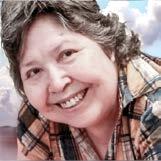
In her 79th year, our beloved mother, Geneva Pearl Froman (“Ginny”), began her sunset journey on February 19, 2026. She passed peacefully at Kensington Hospice in Toronto and received last rites and a cedar bath, returning home to Six Nations of the Grand River to get ready for her speech ad dress on February 21st & 22nd.
Ginny was a Residential School Survivor of the Mohawk Institute (“the Mush Hole”) and a graduate of the University of Toron to. After working in banking and hospitali ty, she became a public servant and retired from the Correctional Service of Canada after almost 30 years of dedicated service. Our family matriarch was soft-spoken, stylish, and joyful, leaving a legacy of re silience, kindness, and laughter. She was the strongest woman we knew—loving, thoughtful, and sweet. Her warmth and friendliness left lasting impressions on friends, coworkers, healthcare providers, and all who met her. She enjoyed read ing, shopping, music, concerts, and watching the Blue Jays.
Ginny was blessed with two Onkwehon:we (Indigenous) names: to Be Picked (Six Nations) and Talking White Wolf (Toronto). Her grandchildren lovingly called her “Tota,” “Grams,” and “Gramma Six.”
She was predeceased by her parents, Frank and Lucinda Froman (née Isaac); her siblings Mable (“Debbie”), Delbert (“Del”), and Grant; her children Dean (“Dean ie”) and Hailey; and a son lost to the Sixties Scoop. She is survived by her daughters Michelle (“Elle”), Lisa, and Patricia; her grandchildren Anthony, Matthew, Adam (“Neeganii”), Sierra, Daniel, and Bryden; her sisters Violet and Hannora (“Norrie”); and many beloved nieces and nephews across Canada.
Ginny was cremated on February 22 in Paris, Ontario. A 10-Day Feast and Cele bration of Life will be held in Toronto on Sunday, March 1, 2026, from 2–6 p.m. at 14 Spadina Road (Upper Rec Room). Family, friends, and all who wish to pay their respects are welcome. Please feel free to bring a dish, drink or dessert you think Ginny would love, pictures you may have & memories or stories to share.
On behalf of Ginny’s daughters, we thank everyone who offered prayers, support, and kindness during this difficult time. Special thank you to palliative care & heal ing teams at Kensington Hospice, Anishnawbe Health, Neil for last rites, & Doro thy Peters for cedar bath; Native Canadian Centre of Toronto; RHB Anderson Fu neral Homes, Eddie Thomas “Honohsase” for Ginny’s and family’s mind relieving & strengthening speech address + 10-day feast at her Celebration of Life, and all those who travelled to say goodbye to our beloved Mother.
In lieu of flowers, we are accepting monetary donations for ceremony related costs. Please send an e-transfer to patricia.mccartney80@gmail.com
Nya:wen kowa / thank you very much.
Arrangements by Styres Funeral Home, Ohsweken. www.rhbanderson.com
Russell Lloyd Bomberry
January 7, 1939 - February 17, 2026
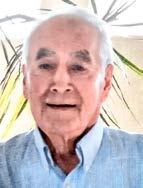
It is with great sadness we announce the passing of Russell Lloyd Bomberry of Ohsweken, Ontario on February 17, 2026. He leaves behind his wife Yvonne (Ripley) of 64 years to mourn, and also special nieces Sharon Skye and Donna Powless. Russ was the son of Rose & Walter Bomberry. He was predeceased as well by his sisters Marjorie Longboat, Ann General, Shirley Carpenter, and Sandra Powless. He will also be remembered by his many nieces and nephews, and their extended families.
Russ joined the Armed Forces and served for 5 years. He then went on to become a pilot. He worked many years flying in Northern Canada, and the high Arctic. He also had memorable trips flying expeditions to the North Pole and Antarctica.
Cremation has taken place, and according to his wishes no service will be held. Interment will be held at Christ Anglican Church Cemetery at a later date. Arrangements by Styres Funeral Home, Ohsweken. www.rhbanderson.com
The family of the late Richard Brian Johnson say a “Big Thank you” to the many family and friends who came out in support of our family at this sad time. A special thank you for the delicious food that was provided and also the cards we really appreciate it. Thank you, The Johnson Family

CLUES ACROSS
1. What travelers must do
5. Calendar month
8. Hopefully quickly
12. Once more
14. Bravo! Bravo! Bravo!
15. “Cheers” actress Perlman
16. Astronomy unit
18. Savings vehicle
19. Get your ducks in this 20. Right away
21. Popular sports league
22. Containers
23. Entireties
26. One who wassails
30. Turned-up position
31. Extreme modesty
32. Writing utensil
33. Rewards (archaic)
34. Ancient capital
39. S. American wood sorrel
42. General discomfort
44. Philippine island
46. A witty saying
47. One who summarizes
49. Covered in
50. Mimic
51. Henry was a notable one
56. Daughter of Hera and Zeus
57. Retired NFLer Newton
58. Playground equipment
59. Concept
60. Satisfaction
61. Fishing net
62. Hammer end
63. A father’s male child
64. Japanese drink
CLUES DOWN
1. Off-Broadway figure
2. Gelatinous substance
3. Concern
4. “Lick It Up” rockers
5. Serbian river
6. Part of a hat
7. Bowl-shaped drinking vessel
8. Semitic language
9. Utter a shrill cry
10. Long times 11. Animal parts
13. Causing annoyance
17. Amorous talker
24. Attempt 25. Harmonic effects
26. Cost per mile
27. They __
28. Bitterly regret
29. Not even
35. A way to drop
36. Title of respect
37. World leader
38. Georgia rockers
40. National capital
41. Great Plains people
42. Duck-sized dinosaur genus
43. Architectural recesses
44. Member of U.S. Navy
45. Mountainous
47. Kite bird
48. Sweetheart (archaic)
49. Popular snack made of potato
52. 70s songsters The Bee __
53. SE China port __-men
54. Something to fill up
55. League of Legends character


ARIES – Mar 21/Apr 20
Unleash your inner architect, Aries. Your focus is laser sharp this week. Use this incredible mental clarity to map out a long-term goal that can lead to professional success.
TAURUS – Apr 21/May 21
Taurus, you might uncover a previously unnoticed talent or find a fantastic, easy way to increase your income stream. Your instincts about finances are particularly sharp.
GEMINI – May 22/Jun 21
You are stepping into a week of elevated confidence and personal magnetism, Gemini. It’s the perfect time to make a splash, meet new people or launch a personal project.
CANCER – Jun 22/Jul 22
This week brings soothing energy, allowing you to find deep comfort and resolution with any lingering personal matters. A moment of quiet reflection will bring a profound realization about your path forward.
LEO – Jul 23/Aug 23
Your social connections are bringing incredible joy and opportunity, Leo. A friend or colleague has valuable information that can directly benefit your goals.
VIRGO – Aug 24/Sept 22
All eyes are on your professional achievements, and recognition is due, Virgo. Expect positive feedback, a nod from an important figure or a chance to take on more responsibility.
LIBRA – Sept 23/Oct 23
This week ignites your desire for learning and adventure, Libra. If you’ve been putting off a trip or a new course of study, the time to commit is now.
SCORPIO – Oct 24/Nov 22
Complex issues feel manageable this week, Scorpio. You have the emotional intelligence to navigate and resolve long-standing challenges in shared resources or relationships.
SAGITTARIUS – Nov 23/Dec 21
Sagittarius, your one-on-one relationships, both personal and professional, are reaching a new peak of understanding and support. A shared goal with a key person becomes much clearer.
CAPRICORN – Dec 22/Jan 20
You feel a vibrant surge of energy and vitality this week, Capricorn. It’s an ideal time to commit to a new health routine or simply enjoy the ease and flow of your daily tasks.
AQUARIUS – Jan 21/Feb 18
Dive into what sets your soul on fire, Aquarius. Your creative imagination is running wild, delivering innovative solutions and exciting ideas for self-expression.
PISCES – Feb 19/Mar 20
The cosmos is supporting your home and emotional life, Pisces. You feel a wonderful sense of security and belonging. It’s a great time for connecting with your roots.