










DONNA DURIC donna@tworowtimes.com TWO ROW TIMES
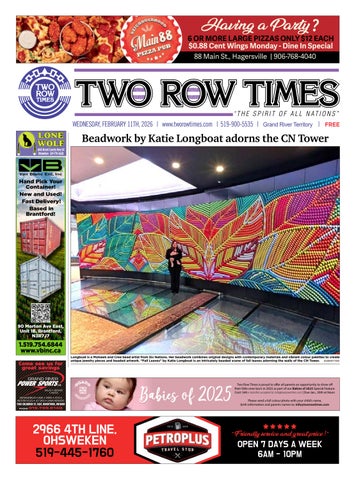
A renowned Six Nations beadwork artist has a gigantic art installation of her work featured at the CN Tower as part of the tourist attraction’s “Artmosphere” art exhibit currently on display.
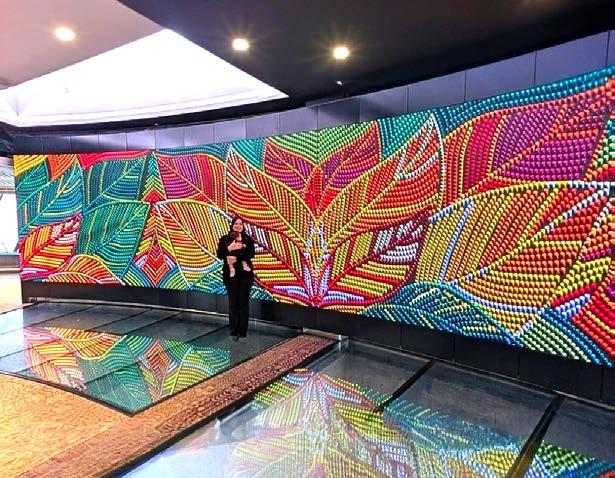
“Fall Leaves” by Katie Longboat is an intricately beaded scene of fall leaves adorning the walls of the CN Tower.
Perched 113 storeys above Toronto, Artmosphere is an immersive, interactive art showcase, and is the centerpiece of the CN Tower’s Lower Observation Level.
Longboat said fall and the beautiful fall colours are the inspiration for her work.
Longboat’s design imitates the movement of

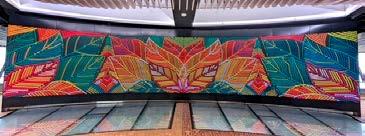
leaves and the changing of the colours from green to bright yellows, oranges, and reds.
Longboat’s hope is to capture the feelings of fall time through her beadwork and inspire gratitude for the beauty of the fall season.
Artmosphere’s expansive, state-of-the-art video walls feature animated visual representations of original works by a collective of Canadian artists, including Indigenous artists
from across the country.
Longboat is a Mohawk and Cree bead artist from Six Nations.
Her beadwork combines original designs with contemporary materials and vibrant colour palettes to create unique jewelry pieces and beaded artwork.
Longboat is inspired to create work that is reflective of her identity, family, travels and nature. She currently lives in Toronto.
Longboat is sought after for custom pieces and has
had her work featured in numerous other shows and exhibits.
She has been beading for 20 years, since she was 14.
Longboat was a powwow dancer who wanted to learn how to bead in order to have her own unique beadwork on her regalia and her talent took off from there.
She also teaches beadwork classes.
The Atrmosphere experience is free for CN Tower ticket holders.






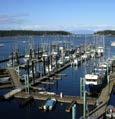
A community march to honour Missing and Murdered Indigenous Women, Girls and 2SLGBTQQIA+ (MMIWG2S+) people will take place in downtown Nanaimo on Friday, Feb. 13.
Organizers say the No More Stolen Sisters Memorial March will begin at 3:30 p.m. at Diana Krall Plaza on Snuneymuxw territory and proceed through the downtown core to Maffeo Sutton Park. The event is being led by Lugil Wilaaysm Hanaa (Hyla McQuaid), Indigenous student representative for the Vancouver Island University Students’ Union, with support from the university’s Indigenous Studies Club and families of local missing and murdered Indigenous people.
The march aligns with the national Sisters in
a case that remains unresolved and emblematic of the broader MMIWG2S+ crisis in Canada.
Growing up along the Highway of Tears in Prince Rupert, McQuaid said she has witnessed the impacts of violence and disappearance on family and friends, and that community support and visibility are vital.
Spirit movement and is meant to bring together Indigenous leaders, community members and allies to remember loved ones lost to violence and disappearance and to call for justice and safety for Indigenous women, Two-Spirit and gender-diverse people.
Organizers say the walk will include a moment of silence outside Evolve Nightclub, where Nanaimo resident Lisa Marie Young was last seen before her disappearance in 2002 —
This march is one of many held across the country to mark Missing and Murdered Indigenous Women, Girls and 2SLGBTQQIA+ Awareness Day and to sustain public attention on the ongoing crisis. According to national inquiries and advocacy groups, Indigenous women, girls and 2SLGBTQQIA+ people continue to face disproportionate rates of violence compared with non-Indigenous populations, even as calls for justice and systemic change grow.





provides artists with the opportunity to connect directly with the public in a vibrant, welcoming setting.
BRANTFORD - The Grand River Arts Festival (GRAF) is now accepting artist applications for its fourth annual festival, taking place September 18–19, 2026, on the historic grounds of Glenhyrst Art Gallery of Brant.
The Grand River Arts Festival is a two-day outdoor celebration of creativity, showcasing visual art, craft, live music, theatre, performance art, and interactive cultural experiences. Since its launch, GRAF has become a highly anticipated event in Brantford’s cultural calendar, drawing artists and audiences from across the region.
Artists working in a wide range of disciplines are invited to apply, including but not limited to ceramics, textiles, jewellery, wood, painting, illustration, sculpture, mixed media, and fine craft. The festival emphasizes original, high-quality work and
New for 2026, the festival will feature a juried Young Artists’ Market, highlighting emerging makers aged 12–18 and offering a dedicated platform for youth creativity alongside established artists.
“GRAF is about celebrating artistic excellence while making the arts accessible and engaging for the whole community,” says Aliki Mikulich, the Artist lead on the festival organizing team. A selection committee will review all submissions and choose artists based on variety and quality of work. There are limited spots available. The visual and applied component of the GRAF is selected by Committee. It will be based on originality, workmanship and professional presentation.
Selected artists will benefit from:
•A curated outdoor marketplace at an estab-
lished festival
•Strong regional promotion and marketing
•Opportunities to engage with new audiences and fellow creatives
•A professionally organized, artist-focused festival experience
The Grand River Arts Festival welcomes applications from artists across Ontario and beyond.
Full application details, eligibility criteria, and submission guidelines are available online.
Artist applications are now open. For more information or to apply, visit: www.grandriverartsfestival.ca
About the Grand River Arts Festival The Grand River Arts Festival is Brantford, Ontario’s annual outdoor arts festival, presented at Glenhyrst Art Gallery of Brant. Now in its fourth year, the festival celebrates visual arts, music, theatre, and performance through exhibitions, markets, and live programming that connect artists and community in a dynamic cultural setting.








Sandra Muse-Isaacs, who once wrote for the Six Nations newspaper Tekawenake, and went on to become an acclaimed academic through her apparent Cherokee identity, has been accused of being a “Pretendian” by a group called the Tribal Alliance Against Frauds.
The allegations surfaced last week after a TAAF investigation, which was then shared by wellknown anti-Pretendian activists Crystal Mariah Semaganis and Jeremy Bomberry on social media.
According to a press release from TAAF, Muse-Isaacs has no Indigenous ancestry.
TAAF titled the press release, “Pretendian Found to be Occupying Canadian Professorship Designated for Indigenous Scholars Only” referring to Dr. Sandra Muse-Isaacs,
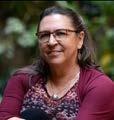
who works as an associate professor in the department of English and Creative Writing at the University of Windsor.
She married Six Nations man, Kevin Isaacs, and was a familiar face at the 2006 land reclamation in Caledonia known as Kanonhstaton.
TAAF says she falsely claimed ancestry with the Eastern Band of Cherokee Indians and a TAAF investigation claims she has zero American Indian ancestry.
“Responding to complaints from Native people, the Tribal Alliance Against Frauds (TAAF) conducted an extensive investigation into the

genealogy of Dr. Sandra Muse Isaacs, a U.S.-born white woman who claims to be a descendant of the Eastern Band of Cherokee Indians,” the press release said. “TAAF's investigation revealed that (Muse) Isaacs has zero Indigenous ancestry.”
Yet in 2018, TAAF said, the University of Windsor hired Muse-Isaacs into a professorship that is part of the President's Indigenous Peoples Scholar Program.
“By filling this position, (Muse) Isaacs appropriated from actual Native scholars a tenure-track faculty position that the university had created exclusively for Indigenous scholars. These positions are in part a response to the educational priorities of the Truth and Reconciliation Commission's 94 Calls to Action. Unfortunately, the University of Windsor appears to have failed to follow the lead of other universities in Canada. There is no evidence that it has developed or is
in the process of developing an Indigenous verification policy of any kind.”
At the University of Windsor, Muse-Isaacs teaches Indigenous literature to Native and non-Native students alike.
“She purports to do so from a Cherokee perspective, which she has never had and never will have,” said TAAF. “In 2010, McMaster University, which at that time had no process for vetting claims to being Native, passed over actual Native students to four times award (her) the Harvey Longboat Graduate Scholarship for First Nations, Inuit, and Metis Students. Additionally, (her) book, Eastern Cherokee Stories, is full of falsehoods about her family, yet it won the Thomas Wolfe Memorial Literary Award.”
TAAF is demanding that Muse-Isaacs publicly renounce her claims to being Cherokee, and “to proclaim that she is in fact a white woman, apologize to American Indians and
non-Indians at length, explain her past actions in full, and acknowledge the harm she has done.”
TAAF is also demanding that Muse-Isaacs resign from her faculty position at the University of Windsor and return to McMaster the funding from the four scholarships she received that were “designated exclusively for First Nations, Inuit, and Metis students.”
Finally, TAAF said, it demands that Muse-Isaacs find ways to take additional actions to “redress the harm she has done by falsely claiming to be Indigenous.”
Crystal Mariah Semaganis, an outspoken activist against the Pretendian phenomenon and member of the Ghost Warrior Society, which investigates Indigenous identity fraud, said she believes Muse-Isaacs does not have Cherokee ancestry.
“It is all too common for Canadian ‘Academics’ to state that they're Cherokee (or an Ameri-
can-based Tribe) and then grift on that for career advancement. They also solidly place their careers in Indigenous pathways.”
Semaganis said Pretendians often claim to be gatekeepers of Indigenous identity themselves, which she said is “ironic” and “laughable.”
Semaganis is also concerned that Muse-Isaacs was the recipient of the Harvey Longboat scholarship, one of four scholarships she “stole” from First Nations, Indigenous and Metis people, and “placing herself as the Canadian Academic voice on ‘Eastern Cherokee Oral Tradition.’”
Semaganis said, “This is gross, it's gaslighty, it's typical ‘I am cherokee’ grift for a hefty paycheque. Sandra Muse-Isaacs is not Cherokee, nor does she have any FNIM bloodline at all.”
The Two Row Times contacted Muse for comments on the claims but did not hear back by press time.


ICE SAFETY: Even if the ice appears thick from the bank, it becomes thinner very quickly and can crack. Adults should set a good example by staying off the ice.
The Mohawks did not receive the Grand River lands as a charitable grant, an internal allocation of Crown property, or a revocable favour. They acquired territory through alliance, military service, and political continuity during and after the American Revolution. The Crown’s role was that of a guarantor: formalizing, protecting, and constitutionally confirming Mohawk possession in a transformed geopolitical reality.
The Haldimand Proclamation of 25 October 1784 is recognition and solemn affirmation of territory already acquired—not a conveyance of Crown-owned land from first to second owner. Where an Indigenous nation acquires territory through its own actions and that acquisition is acknowledged by the Crown in clear, perpetual terms, the Crown holds burdened sovereignty: authority permanently constrained by prior Indigenous acquisition, explicit promises, and defined use. Indigenous interest comes first; Crown recognition second.
Sir Frederick Haldimand’s Proclamation states it plainly:
“…allotting to them for that purpose six miles deep from each side of the river beginning at Lake Erie and extending in that proportion to the head of the said river, which them and their posterity are to enjoy for ever.”
This is dedication language under British com-
mon law: a sovereign offer with precise boundaries (approximately 950,000 acres along the Grand River), named beneficiaries (the Mohawk Nation and allied Six Nations), an explicit purpose (a safe retreat in consideration of loyalty), perpetual duration (“for ever”), and no revocation clause.
Acceptance was unequivocal. The Mohawks relocated, settled, governed, defended, and relied upon the Tract as their own. Under common law, that reliance perfects the dedication.
Poole v. Huskinson set the foundation: dedication perfected by intention and acceptance is irrevocable at the dedicator’s whim. Canadian courts have applied this rule rigorously, even when they do not name it explicitly. Reed v. Lincoln (Town) insists on evidentiary permanence once dedication is proven. Kosicki v. Toronto (City) confirms that dedicated status does not erode by implication, administrative drift, or long misuse. Guerin v. The Queen confirms the substance: where Indigenous land interests are concerned, the Crown acts as guarantor, bound by honour and fiduciary duty.
No mechanism allows partial surrenders, non-core actions, or splinter groups to diminish the whole. The disputed instruments of the 1790s–1840s lack unanimous, informed, and uncoerced consent. No instrument of equal dignity exists.
That absence is not speculative. It was exposed directly on the floor of the British House of
Commons.
On 6 March 1922, Lord Henry Cavendish-Bentinck asked the Under-Secretary of State for Foreign Affairs when, and by whom, the 1784 Haldimand instrument had been denounced—explicitly noting that its validity had been repeatedly recognised and that the Canadian government still regarded it as operative as late as 1909. Winston Churchill, replying for the government, named no act of denunciation, no statute, no treaty, and no authority terminating it. He deflected instead to the practical question of whether Six Nations people were amenable to Canadian legislation, stating that this was a matter for the Government and Parliament of Canada.
The significance of that silence cannot be overstated. In 1922—138 years after the Proclamation—no imperial authority could identify a moment of revocation. The British Parliament did not repudiate it. Canada could point to no statute expressly extinguishing it. The absence of an answer is itself proof: no denunciation occurred. Under dedication doctrine, silence in the face of a perpetual grant confirms endurance, not erosion.
This places the Grand River situation squarely within a familiar constitutional pattern: long-standing breach without lawful extinguishment.
The most powerful Canadian parallel is the Reference re Manitoba Language Rights. For ninety-five years Manitoba had systematically ignored section 23 of the Manitoba
Act, 1870—a constitutional provision embedded in the bargain that brought Manitoba into Confederation—requiring all Acts of the Legislature to be enacted, printed, and published in both English and French.
Three principles from the Manitoba Language Reference apply directly to the Haldimand Proclamation:
1: Constitutional provisions using perpetual or mandatory language cannot be overridden by long-standing administrative practice or legislative silence. Manitoba ignored its bilingual duty for 95 years; the Court refused to treat that neglect as having quietly repealed the constitution.
2: A clear breach does not extinguish the underlying right or obligation. The statutes were invalid, but the constitutional duty remained intact and had to be fulfilled.
3: Remedies must respect both the rule of law and the original constitutional promise. Temporary validation was a pragmatic bridge, not a licence to continue the breach indefinitely.
The Supreme Court did not hesitate. It held unanimously that the bilingual requirement was mandatory, not directory. Every statute passed in English only since 1890 was therefore of no force or effect. The Court faced the prospect of invalidating an entire provincial statute book spanning nearly a century—an outcome that would have produced immediate legal chaos: contracts unenforceable, criminal convictions unsafe, government op-
erations paralysed, taxes uncollectible, and the rule of law itself placed in grave jeopardy.
Yet the Court refused to allow constitutional enforcement to destroy governance. Invoking the doctrine of necessity and the foundational principle of the rule of law, it declared the invalid laws temporarily valid and effective until the province could re-enact them bilingually within a reasonable time. The constitutional obligation was not extinguished by decades of breach; it was enforced, with a pragmatic transitional remedy designed to preserve continuity while compelling compliance.
Apply that exact framework to the Haldimand Proclamation. A constitutional dedication using perpetual language (“for ever”) was ignored for 240 years through disputed surrenders, taxation, regulation, and sales. The breach is larger in scale and duration than Manitoba’s. If enforced as exclusive use and enjoyment rights and recognition of acquired territory—where provincial and Canadian legislation is constitutionally prohibited from overriding the dedication, and Mohawk sovereignty and territorial autonomy are treated as binding constitutional duties—the implications would be profound but structured.
Much of the current administration of the Tract—municipal taxation premised on fee simple, provincial statutes applied without consent, and third-party titles granted without extinguishment— could be declared unauthorized or of no force or
effect, just as Manitoba’s unilingual laws were. A court would likely invoke necessity and rule-oflaw principles to declare existing arrangements temporarily valid during a transitional period—perhaps years or decades—to allow orderly re-enactment of jurisdiction, negotiation of restitution, accounting for lost use, and phased implementation of exclusive Mohawk governance and autonomy. Remedies would not mean sudden eviction or chaos; they would compel compliance with the original perpetual promise: Mohawk posterity’s exclusive use and enjoyment, with Crown successors constrained to honour rather than override it. Modern law converges here. UNDRIP restates the common-law principle: lands acquired and held by Indigenous peoples cannot be unilaterally reclassified without free, prior, and informed consent. The 2025 Cowichan decision illustrates it: Cowichan Aboriginal title recognized as “senior and prior” over fee simple lands in Richmond; many Crown grants defective; infringement unjustified. That abstract principle has already surfaced locally. In Kingspan v. City of Brantford, the court identified a latent defect in title affecting lands within the Haldimand Tract. While the decision did not resolve Mohawk jurisdiction, it confirmed that marketable title could not be assumed as unimpeachable. In response, the City of Brantford amended its planning framework to include a
First Nations clause, acknowledging unresolved Indigenous interests underlying certain parcels. The clause is limited and administrative—but it is legally significant. It constitutes municipal recognition of an unresolved foundational defect, not mere political courtesy. Knowledge is established. Constructive notice is admitted.
Less than five percent of the Haldimand Tract remains under Six Nations control. Taxation and regulation proceed as if repetition could legitimize breach. It cannot.
The Six Nations of the Grand River v. Canada and Ontario litigation, with Phase 1 liability trial set for 5 October 2026, tests the core question directly: territory acquired by alliance, constitutionally recognized and set apart “for ever” in 1784, never
denounced or extinguished—does it bind successors?
The law answers yes. That conclusion is reinforced by McAteer v. Canada (Attorney General). In McAteer, the Ontario Court of Appeal held that the citizenship oath to the Queen is not personal fealty to a monarch, but allegiance to Canada’s constitutional order itself—its rule of law, democratic structure, and the Crown as the legal embodiment of that order. The oath binds those who swear it to uphold the entire constitutional framework, including the honour of the Crown and binding constitutional commitments. By the same logic, successors to the Crown inherit not only authority but constraint. Administrative drift, partial instruments, or long misuse cannot override
what the constitutional order preserves.
Full enforcement would therefore demand compliance with the perpetual dedication, using Manitoba-style transitional remedies to preserve order while restoring what was promised.
The Grand River Territory is no anomaly. It is an early example of a rule Canadian law is re-acknowledging: land acquired by an Indigenous nation, confirmed by solemn Crown instrument for perpetual use, remains so until extinguished by equal authority. Habit cannot substitute.
Dedicated means dedicated. Territory acquired through alliance, confirmed by the Crown, and set apart “for ever” does not quietly revert. Once recognized and perfected, the burden of sovereignty passes to every successor.



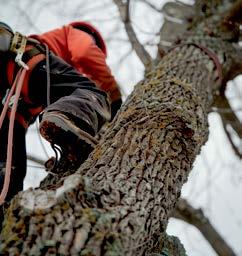
Lumberjack Luke Tree Services Blends Expertise with Indigenous Stewardship
By Jace Koblun
Lumberjack Luke Tree Services may have been founded in 2019, but its roots stretch deep into Six Nations of the Grand River.
The Indigenous-owned business grew from a simple recognition: tree work on the territory had lost touch with community, affordability, and respect for the land.
“For years, outside companies charged prices our people couldn’t afford,” owner Lucas Smith said. And often, the work didn’t reflect how we’re taught to care for the land.”
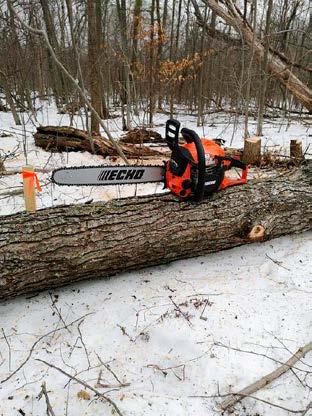
The company launched just before the pandemic and now runs three- to five-person crews serving Six Nations and nearby off-reserve areas. They handle tree removal, pruning, planting, land clearing, and complex hazard removals near power lines or structures. They also offer 24/7 emergency response during ice storms, high winds, and other severe weather.
Word of mouth has driven steady growth, as more community members seek tree care grounded in trust. Winter storms test that philosophy in real time. Ice-laden branches and gusting winds can turn healthy trees into hazards.
“Those calls demand fast action and clear thinking,” Smith said. “You’re protecting homes and people, but also deciding what can be saved.”
Materials are reused whenever possible. Firewood is donated to longhouses, elders, and neighbours. Hardwood like hickory is preserved for cultural purposes, including lacrosse sticks. Waste is minimized, and sites are left safe.
Lumberjack Luke Tree Services operates less like a removal company and more like a caretaker—combining skill, restraint, and a deep understanding that tending the land is ongoing work.
takings from lakes, rivers, and groundwater sources used for industrial, commercial, and extractive activities.
— Anishinabek Nation
Grand Council Chief Linda Debassige is raising serious concerns about recent changes to Ontario’s Permits to Take Water Program procedures and process, warning that the province is moving in a direction that undermines First Nation rights, environmental protection, and public accountability.
“These unilateral decisions directly affect our lands, waters, and future generations,” states Grand Council Chief Debassige. “Water is sacred. It is not a commodity to be transferred between corporations without scrutiny, consent, or accountability.”
Recent media reports have confirmed that the Government of Ontario is allowing companies to assume or renew water-taking permits without new applications, environmental review, or meaningful consultation with First Nations. These changes apply to large-scale water
On July 10, 2025, the Ontario Minister of the Environment, Conservation and Parks Todd McCarthy committed in writing to First Nation leadership that access to safe drinking water is a fundamental human right and that Ontario would continue working with First Nations toward long-term, sustainable water solutions.
“While that commitment was welcomed, recent regulatory actions contradict those assurances. Claiming that ‘safe drinking water is a fundamental human right for all’ and that Ontario ‘will continue to work with First Nations and the federal government on longterm, sustainable solutions to achieve this important goal’, while simultaneously unilaterally weakening the very rules that protect water at its source, does not help achieve this goal,” states Grand Council Chief Debassige. “Economic advancement must never compromise
or override First Nation inherent rights, environmental stewardship, or the Crown’s duty to consult.”
First Nation leadership is particularly concerned that removing requirements for new permit applications will prevent proper assessment of cumulative impacts, especially as climate change, population growth, and industrial pressures place increasing stress on Ontario’s water systems.
“These changes strip away transparency and undermine the commitment made by Ontario Premier Doug Ford to ensure a collaborative and respectful relationship with First Nations in Ontario,” adds Grand Council Chief Debassige. “They limit our ability to raise concerns, share First Nation knowledge, and protect waters that sustain our communities. That is not partnership, and it is not reconciliation; in fact, it is the opposite.”
The Anishinabek Nation Grand Council is calling on the Government of Ontario to:
1. Immediately pause implementation of the new Permit to Take Water
Program procedures and process;
2. Restore mandatory consultation and public review for all permit transfers, renewals, or reactivations;
3. Ensure First Nations are engaged early and meaningfully in all water-related decision-making; and
4. Work collaboratively with the respective local First Nations to strengthen source-water protection and address cumulative impacts.
“Protecting water is about responsibility to the land, each other, and generations yet to come,” states Grand Council Chief Debassige. “The Government of Ontario must align its actions with its words.”
The Anishinabek Nation is a political advocate for 39 member First Nations across Ontario, representing approximately 70,000 citizens. The Anishinabek Nation is the oldest political organization in Ontario and can trace its roots back to the Confederacy of Three Fires, which existed long before European contact.




This 16-week program provides a comprehensive understanding of the fundamental business concepts. Participants will gain the foundational knowledge and skills to thrive in a variety of professional settings.


This 16-week certificate program partnered with Fanshawe College focuses on customer service, office procedures, and navigating computer applications such as Outlook, Word, Excel, and PowerPoint.


This 13-week multi-disciplinary trades experience provides participants with a blended learning environment of theory, safety certifications and hands-on training.
Federal government seeks new leadership for Office of the Commissioner of Indigenous Languages as applications close March 3
The federal government is inviting applications for the next Commissioner and three Directors at the Office of the Commissioner of Indigenous Languages, a body created to support Indigenous-led language revitalization efforts across the country.
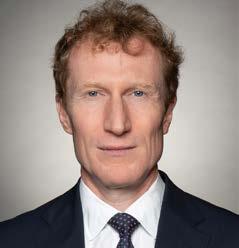
The announcement was made Feb. 4 by Marc Miller, Minister of Canadian Identity and Culture and Minister responsible for Official Languages, through a Governor in Council appointment process. The positions will guide the work of the Office, which was established in 2021 under the Indigenous Languages Act.
Indigenous languages are central to culture, identity, spirituality, and
self-determination. In Ontario alone, Nations speak and revitalize languages
including Anishinaabemowin, Kanien’kéha, Cree, Oji-Cree, and others, many of which continue to face the impacts of colonial policies, residential schools, and intergenerational language loss.
Since its creation, the Office of the Commissioner of Indigenous Languages has worked with Indigenous communities and organizations to support language reclamation and revitalization. While the Office does not control funding, it plays a national role in advocacy, oversight, research, and public reporting on the state of Indigenous languages in Canada.
“Since the historic adoption of the Indigenous Languages Act
six years ago, we have achieved important progress in supporting communities to reclaim, revitalize and strengthen their languages,” Miller said in a statement. “The Office of the Commissioner of Indigenous Languages’ role is essential in ensuring that Indigenous languages… are preserved and passed along to future generations.”
The successful candidates are expected to have a strong understanding of Indigenous cultures, communities, and governance, as well as knowledge of the current vitality of Indigenous languages and the challenges they face.
The federal government states that the roles are intended to support First
Nations, Inuit, and Métis language efforts nationwide.
The Office operates as an independent government body and works with Indigenous governments and organizations, as well as federal, provincial, and territorial governments. It also reports publicly on progress and challenges related to Indigenous language rights and revitalization.
Applications for the Commissioner and Director positions are open until March 3. Further details about the appointment process and qualifications are available through the federal government’s Governor in Council appointments portal.
tance to Brantford’s future, describing it as a “defining moment” and a “spark” for the lower downtown area.
The City of Brantford’s ambitious push for a new Sports and Entertainment Centre (SEC), a $152-million multi-use arena set to replace and expand upon the aging TD Civic Centre, has been framed by Mayor Kevin Davis as a catalyst for downtown revitalization and community growth. Approved unanimously by city council in December 2025, the project will deliver a 5,200+ seat venue on Market Street, anchored by a long-term lease with the Brantford Bulldogs of the Ontario Hockey League (OHL). The facility promises to host hockey games, concerts, trade shows, and cultural events, generating millions in annual economic activity, creating jobs, and drawing visitors to boost local businesses.
The Bulldogs’ commitment—secured through a 15-year agreement with options up to 40 years— ensures stability for the team, which has thrived in the city and views Brantford as its permanent home. Construction is slated to begin soon, with the arena potentially ready for the 2028-29 OHL season. City officials highlight how the current facility falls short in accessibility, capacity, and modern standards, justifying the investment as essential for meeting league requirements, revenue goals, and long-term tenancy.

among its signatories but notably omits the Mohawk Nation of Grand River. The agreement engages the Band Council under the Indian Act framework but does not encompass hereditary Mohawk governance structures. Mohawk representatives have long challenged this arrangement, arguing it conflates distinct Indigenous entities, erases Mohawk political identity, and creates shortcuts for approvals by treating the Band Council as a proxy for all interests in the territory.
Mayor Davis has emphasized the project’s impor-
Yet this progress occurs on lands within the Grand River Territory, rooted in the 1784 Haldimand Proclamation, which granted the tract to the Mohawk Nation for their loyalty to the British Crown during the American Revolutionary War. The
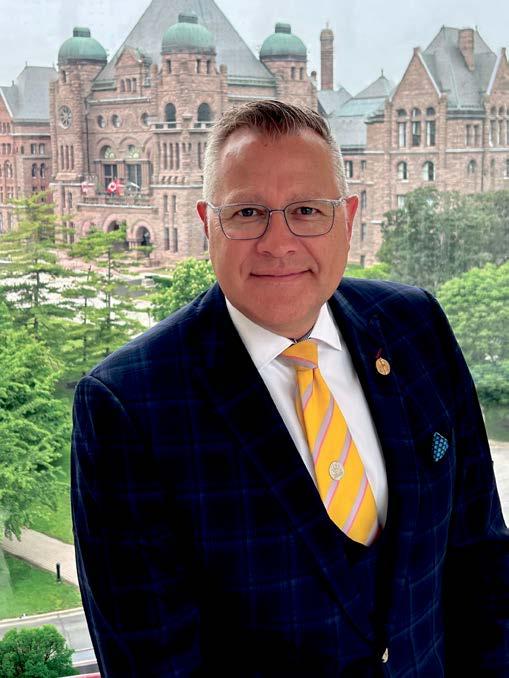
Will Bouma, MPP Brantford-Brant
territory spans six miles on each side of the Grand River, from its mouth to its source, and remains subject to ongoing disputes over title, surrender, and governance. Mohawk hereditary leadership, including representatives of the Mohawk Nation of Grand River, asserts that these lands were never lawfully ceded or alienated, maintaining inherent jurisdiction and title.
Public statements from
Constituency Office: 96 Nelson Street, Unit 101 Brantford, Ontario N3T 2X1
Telephone: 519-759-0361 | Fax: 519-759-6439

Mayor Davis reference collaboration, reconciliation, and partnership, particularly with the Six Nations of the Grand River Band Council. The city has engaged in consultations with Six Nations on the project, aligning with broader reconciliation efforts, including joint initiatives elsewhere. However, the Mohawk Nation of Grand River reports no involvement—no consultations, notifications,
briefings, or invitations to participate in planning or discussions. This exclusion stands out given the lands’ direct association with Mohawk historical and legal claims.
The Grand River Notification Agreement (GRNA), established in 1996 to facilitate information-sharing and coordination on developments affecting shared interests in the watershed, includes the Six Nations Band Council
By proceeding without Mohawk inclusion, the city’s approach risks being seen as selective rather than inclusive. True reconciliation, critics contend, requires engaging all implicated parties, especially where title remains contested. Bypassing Mohawk consent could invite future legal challenges, undermine project legitimacy, and expose the city to

liability, echoing patterns where municipal actors prioritize one administrative body over hereditary governance.
The project’s urgency stems largely from the Bulldogs’ needs—upgrading to meet OHL standards, ensuring revenue, and securing tenancy—rather than a broader, community- or Indigenous-led vision. City officials have noted delays tied to provincial and federal processes, yet advancing on contested lands without resolving jurisdictional
questions may perpetuate uncertainty. Anchoring major infrastructure to a private sports franchise amid unsettled title and governance issues raises prudent concerns about risk, costs, and timelines.
As Brantford invests heavily in this transformative development, the omission of the Mohawk Nation of Grand River highlights a disconnect between public rhetoric of partnership and on-theground reality. Whether the city adjusts its course to include Mohawk voic-
es—potentially through direct engagement or addressing the GRNA’s limitations—remains critical. Failure to do so could deepen divisions, complicate approvals, and hinder the very certainty and reconciliation the project seeks to embody. In a region shaped by historic Crown promises and ongoing Indigenous rights assertions, genuine progress demands broader, more equitable consultation to avoid repeating past oversights.
By Jace Koblun
Nova Scotia Mounties conducting a Jan. 30 police action at an Indigenous-run cannabis store in Welton Landing reported that officers were met with swearing and racist comments, including being called “white supremacists” and “Nazis,” a senior RCMP officer said this week.
Superintendent Jason Popik of the Southwest Nova District RCMP described the language used during the raid as “racist commentary” and “verbal assault,” saying officers were enforcing provincial cannabis laws and that such behaviour toward police was unacceptable.
The shop is operated by members of the Mi’kmaq community, who say they
are asserting treaty rights and have disputed the legality of the enforcement action. Video footage from the scene shows a man identified as Cody Ward calling the officers “Nazis” and openly criticizing their actions.
Ward, a Mi’kmaq man from Sipekne’katik First Nation, said police were acting under direction from the provincial government’s crackdown on unlicensed cannabis stores, which he and other community members view as discriminatory and harmful to Indigenous economic activity.
A Mi’kmaq lawyer interviewed Thursday accused the RCMP of portraying officers as victims and inflaming tensions in communities already wary of police actions. She said
the focus on derogatory language distracts from deeper issues of Indigenous sovereignty and economic rights.
The Nova Scotia government issued a directive late last year directing police to prioritize enforcement against illegal cannabis outlets and asked 13 Mi’kmaq chiefs for co-operation, a move that has drawn criticism from Indigenous advocates who say it could target First Nations businesses disproportionately.
Provincial authorities say enforcement is not aimed specifically at Indigenous stores and applies to illegal dispensaries across the province, but local critics note that recent seizures under the directive have all involved Indigenous-run shops.

Interested
Automatically


1000 sur veys completed)


By Jazz Fuller
Welcome back! We have a very eventful weekend of sports to recap: Superbowl 60 weekend along with the start of the Winter Olympics in Italy, let’s get started! Opening ceremonies for the 2026 Milan-Cortina olympics got kicked off last Friday at 2pm with approximately 3500 athletes from 93 different countries taking part in the games. There are 195 total medal events in these Olympic winter games. As of right now, 4 days into the olympics (Currently Tuesday, February 10th) Team Canada has taken down 1 silver medal and 2 bronze medals for a total of 3 medals. Team Canada currently has a silver medal in mixed team short track speed skating, a bronze medal in long track speed skating, along with a bronze medal in freestyle women’s slop style skiing won by Megan Oldham. Canada is eyeing down gold medals in both woman’s and mens ice hockey. In woman’s olympic ice hockey, Team Canada is currently 2-0 in round play beating Switzerland 4-0 in the first tilt, but was dealt
a huge blow as woman’s team captain Marie-Philip Poulin was injured after a hit In Monday’s 5-1 win over Czechia. The 34 year old superstar left the game in the first period after a collision with Czechia’s Kristyna Kaltounkova, and is considered day to day with the injury, which is a huge blow to the women’s team as they are currently playing Team USA and down 5-0 in the third period as I type this article. Team USA is currently a heavy favourite to win the woman’s gold medal in ice hockey, as Team Canada hopes to stay vigilant and win their remaining games. Current standings in Group A of the women’s side:
GROUP A
Team USA 3 wins, 0 losses
Team Canada 2 wins, 0 losses (currently down 3-0 in the second period to Team USA)
Team Czechia 1 win, 2 losses
Team Switzerland 1 win, 2 losses
Team Finland 0 wins, 2 losses
GROUP B
Team Sweden 4 wins, 0 losses
Team Germany 3 wins, 1 loss
Team Italy 2 wins, 2 losses
Team Japan 1 win, 3 losses
Team France 0 wins, 4 losses
Group play for Men’s Olympic Hockey kicks off Wednesday February 11th. Team Canada’s first game will be Thursday February 12th at 10:40am vs Team Czechia. Team USA’s first game is also on Thursday February 12th with a 3:10pm start time vs Team Latvia. There are 3 groups in men’s hockey with a total of 12 teams fighting for their shot at glory. Team Canada is the favourite in group A which consists of Team France, Switzerland and Czechia. Sweden is the current favourite to win group B which consists of Italy, Slovakia and Finland. Team USA is the current favourite to win group C which consists of Team Germany, Latvia and Denmark. We have many great games and olympic sports to look forward to the next two weeks. Here is a current look at the top 5 countries in Olympic Medal standings as of 4pm Tuesday February 10th, 2026: MEDAL COUNT (TOP 5 COUNTRIES)
#1 Team Norway 6 golds, 2 silvers, 4 bronze, total of 12
medals
#2 Team Germany 3 golds, 2 silvers, 1 bronze, total of 6 medals
#3 Team Sweden, 3 golds, 2 silvers, 1 bronze, total of 6 medals
#4 Team Switzerland 3 golds, 1 silver, 1 bronze, total of 5 medals
#5 Team USA 2 golds, 3 silvers, 2 bronze, total of 7 medals
#13 Team Canada 1 silver, 2 bronze, total of 3 medals
NFL SUPERBOWL RECAP
Seahawks win Super Bowl
Sixty with a final score of 29-13 in a glorified defensive battle. Three quarters into the game Super Bowl viewers wondered if there would even be a touchdown scored in the game as the Seahawks led 12-0 with 4 fg’s scored heading into the final 4Q. Finally, Seahawks QB Sam Darnold fired a pass to Seahawks TE AJ Barner for a 16 yard touchdown 2 mins into the 4th quarter. Through out the entire game Patriots QB Drake Maye looked flustered and confused as the Seahawks defence repeatedly pressured him through out the duration of the game, sacking him a total of 6 times in the

game. Drake Maye fumbled the ball once, and threw 2 big interceptions in a game that wasn’t really close at all. The Patriots did end up scoring 13 4Q points, which were the only points they scored through out the game, but were one upped by the Seahawks 17 4Q points in a game where Seahawks RB Kenneth Walker couldn’t be stopped. RB Walker finished the game with a total of 161 all purpose yards and was named Super Bowl Sixty MVP of the game. This is the second Super Bowl Title for the Seattle Seahawks, and a weekend where Buffalo Bills fans can breathe a fresh breath of air knowing that 2nd year QB Drake Maye and the New England Patriots didn’t win a Super Bowl before the Buffalo Bills did in their Josh Allen Era. There were many mixed reactions during the halftime show led by superstar Bad Bunny. It was very entertaining to say the least, as it was the most watched Super Bowl halftime show ever, with more then 135 million viewers tuned in to watch.
Next year’s Super Bowl is scheduled to be played at
SoFi Stadium in Inglewood, California, home of the Los Angeles Rams. This will mark the second time the venue will be used to host the Super Bowl. Who do you think will be playing next year’s halftime show? Drake in Kendrick’s backyard? Morgan Wallen? Jayz? Pharrel and friends? Although our hometown Buffalo Bills didn’t make the Super Bowl, it was a great NFL season full of action and excitement, making football predictions through out the back end of the season was very fulfilling, as I hope you may have profited if you tuned in to read them. In other sports news, we are only 43 days away from MLB Baseball opening day! Get your Bluejays gear ready to rock, it’s going to be a helluva season! We only get to watch the olympics once every 2 years, and once every 4 years for Winter sports, so enjoy it while it lasts! Good luck to Men’s Team Canada as their quest of bringing home the gold medal in hockey begins this Thursday! Thanks for tuning in to read and we will see you next week! Stay Warm, Stay Cozy!






SATURDAY BUFFET
4:00PM - 8:00PM
Adults $ 29.95
Seniors $ 26.95
Kids 4-12 $ 1.40 per year
3 and Under FREE
Salad Bar
Help yourself to your choice of Different Salads and Crudites, with Fresh Baked Breads and Butter or Celery Bread
Hot Buffet
Roast Beef Carvery
Lake Erie Yellow Perch
Battered Pollock
Breaded Chicken Breast
Herb Chicken Breast
Bbq Ribs
Cabbage Rolls
Meat Loaf
Penne Pasta
Mashed Potatoes
Vegetable of the day
Au Jus Gravy
Soup of the Day
Fresh Fruit and Dessert Table
Coffee, Tea or Fountain Drink
February 14, 2026
ALL INCLUSIVE DINNERS
4:00PM - 8:00PM
French Onion Soup or Caesar Salad Fresh Baked Bread and Butter
8 oz New York Steak or Baked Breaded Chicken
Supreme with Mushroom Sauce
Choice of Potato, Roasted Carrots, Peppers and Zucchini
Dessert
Ice Cream Crepes with Strawberries
Coffee, Decaf, Tea or Soft Drink
Price $ 26.95
Senior Price $ 24.95
Whitlow: Mary “Pudge” September 29 1963 - January 29, 2026
At her home, peacefully and surrounded by her loving family on Thursday January 29th, 2026, in her 63rd year. Comforted by the presence of her loving husband Mark. Beloved mother to Joe (Ashley), Aaron (Tif), Jesse, Erica, Owen (Alicia), Izaiah (Kenz) and Billy. Proud Grandma to Mitchell, Kaiah, Kleoh, Elena, CC and Violet.
Sister to Darryl (Linda), Cheryl (Deceased), Robert and shared a special bond with Lisa (Steve). Sister-in-law to Gail, Allen, Dan (Sug), Darryl (Deceased), Dave (Kory) and Bonnie.
Special Auntie to Kateri, Chick, Kyla, Tanner, Kyle, Bro, Bunz, Payz, Aubz, Zy, Eddie and Everley. Lifetime Friend to Lisa Peters. Predeceased by her mother Reva (Laforme) Wilson and her in-laws Bruce and Jiggy (Arlene) Whitlow. Many thanks to Dr. Montour, Jeanette, Caroline and the hard-working Care Partners team. Friends may pay their respects on Tuesday February 3, 2026 from 10 to 12 noon at Styres Funeral Home, 1798 Fourth Line Road, Ohsweken. Cremation to follow. www.rhbanderson.com
February 7, 2025
Timothy James Walters-Davis
1 year has passed
A light that shines forever My Son was the light of my life. His smile could brighten the darkest days and his laughter was the best music to my ears.
He had a heart full of kindness and an adventurous spirit that inspired everyone around him. Though his time with us was far too short, he left a legacy of love and joy that will live forever. I will cherish every moment we shared together and carry him in my heart always!
Loved and Sadly missed - DAD


Chapel of the Delaware Church 3103 Third Line




CLUES ACROSS
1. Breezed through
5. Consumer protection agency
8. Criminal syndicate
11. Moves back from
13. Satisfaction
14. Feel concern or interest
15. Monetary units
16. Congressman (abbr.)
17. Israeli city
18. Restaurants
20. 2,000 lbs.
21. Grandmother
22. North, South and Central
25. In an early way
30. Foes
31. Social networking platform
32. Early term for basketball player
33. Another name for sesame plant
38. Disallow
41. Provide greater detail
43. Inaccessible
45. Evoke emotions
47. Ancient kingdom near Dead Sea
49. Celtic punk rockers
50. A fencing sword
55. Actor Idris
56. Affirmative (slang)
57. Afflicted in mind or body
59. One point north of northeast
60. Born of
61. Social media hand gesture
62. Hong Kong food stall __ pai dong
63. Opposite of beginning
64. Email function CLUES DOWN
1. Sign language
2. Fashionable
3. Borough in Helsinki
4. Inability to hear
5. More quickly
6. An idea accepted as a demonstrable truth
7. Shrewdly
8. Rooney and Kate are two
9. Mediterranean port
10. Benedictine monk
12. Midway between south and southeast
14. Town in Galilee
19. Satisfy
23. Mice genus
24. Brass instrument
25. Chest muscle (slang)
26. Transmits genetic information from DNA
27. Records electric currents
generated by the brain
28. Woman (French)
29. Short route aircraft
34. Pitching statistic
35. Pointed end of a pen
36. Popular sports league
37. Body part
39. Inoffensive
40. Yellowish cotton cloth
41. Feline
42. Does not tell the truth
44. Seduced
45. Spiritual leader
46. Abba __, Israeli politician
47. Repair
48. Olive genus
51. Swiss river
52. Prejudice
53. C. European river
54. Keep under control
58. Father

ARIES – Mar 21/Apr 20
A spark of excitement brightens your week, Aries. You may rediscover enthusiasm for a goal you set aside. Take one confident step and watch momentum gather.
TAURUS – Apr 21/May 21

This week brings steady comfort and satisfying progress, Taurus. Something you’ve been nurturing starts to show real signs of growth. You’re building something meaningful.

GEMINI – May 22/Jun 21
Your mind is in full brilliance mode, Gemini. New insights, clever connections and energizing conversations fill your days. A fun invitation or unexpected message may lift your spirits.
CANCER – Jun 22/Jul 22

Your emotional intuition is your superpower this week, Cancer. You may find a simple solution to a situation that once felt complex. Supportive people drift into your orbit.
LEO – Jul 23/Aug 23

Leo, your confidence is glowing, and others notice. This week favors bold creativity and joyful self-expression. A moment of recognition or praise may remind you of your natural leadership.

VIRGO – Aug 24/Sept 22
Organization comes naturally, and your clarity is on point, Virgo. You’ll wrap up tasks with surprising ease. A shift in priorities may free up space for something you genuinely enjoy.

LIBRA – Sept 23/Oct 23
Balance returns in a way that feels refreshing, Libra. Your relationships flow smoothly, and you’ll find harmony even in busy moments. An inspiring experience may uplift you.

SCORPIO – Oct 24/Nov 22
Determination meets opportunity this week, Scorpio. You’re sharper, more focused and ready to move forward with confidence.
SAGITTARIUS – Nov 23/Dec 21

Optimism fuels everything you touch, Sagittarius. You may stumble upon a new interest, adventure or opportunity that fills you with excitement.
CAPRICORN – Dec 22/Jan 20

Your efforts align perfectly with your goals, Capricorn This week rewards patience and consistency. You may receive encouragement from someone who truly understands you.
AQUARIUS – Jan 21/Feb 18

Innovation thrives in your world right now, Aquarius. You’ll devise unique solutions, unexpected shortcuts or refreshing ideas with ease. Stay open to teamwork.
PISCES – Feb 19/Mar 20

A creative wave washes over you, Pisces. Inspiration feels effortless, and small moments carry extra meaning. A heartwarming interaction or sweet surprise brightens your week.