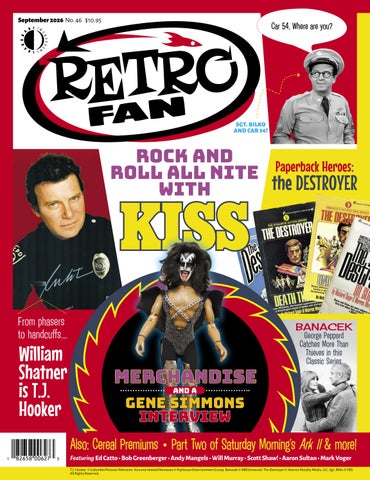
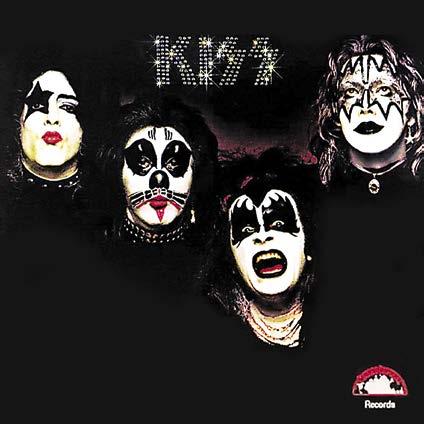
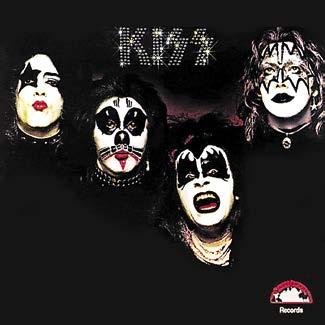
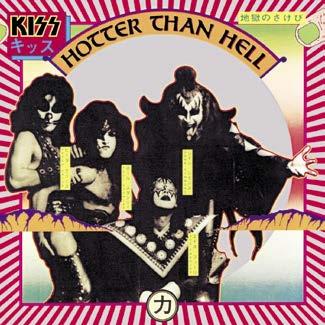
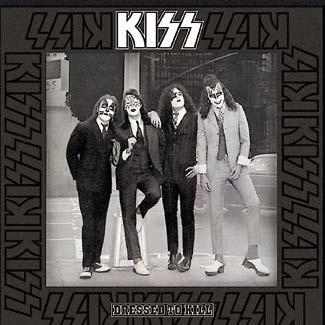
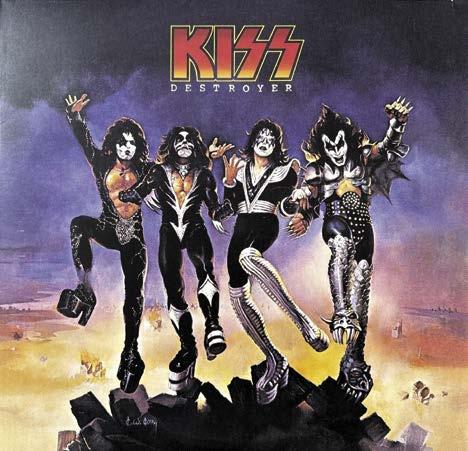
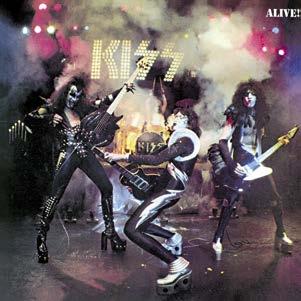
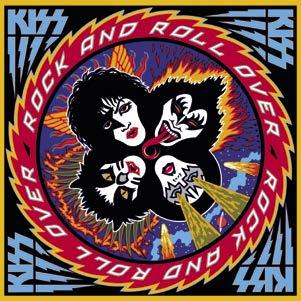
One day in 1974, there it was on the record store rack: Kiss, a new album by a new band, also called Kiss. The cover photo commanded attention before the needle even met the vinyl.
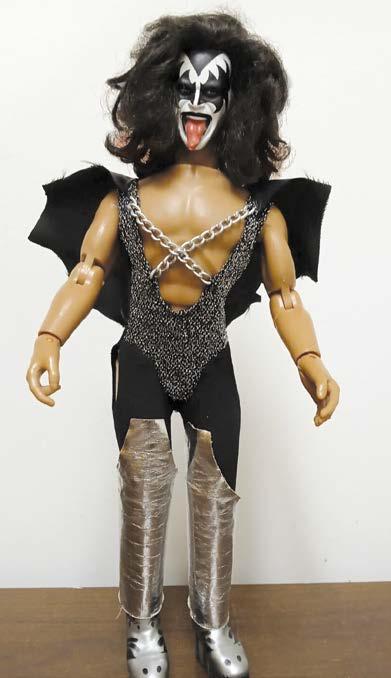
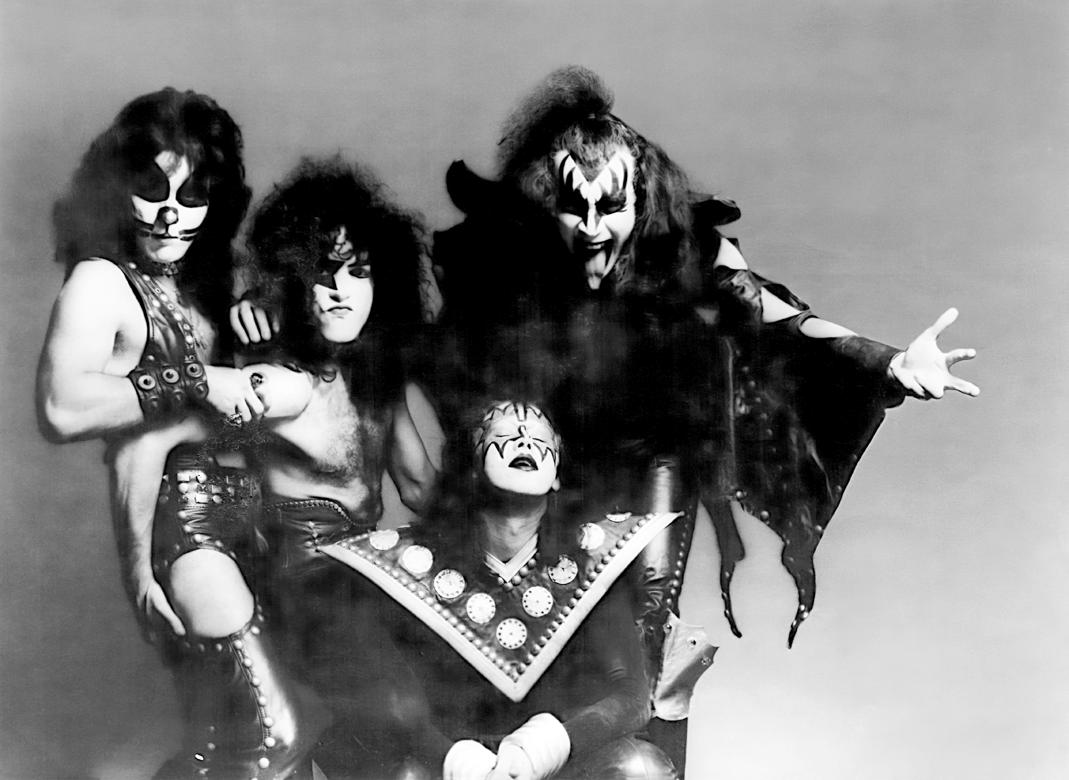
In their pancake, studs, and jet-black garb, the four musicians on the cover seemed like comic book characters. Soon the world would know their names and stage personas: Paul Stanley (rhythm guitar) was the strutting, hairy-chested “starchild”; Gene Simmons (bass) was the fire-breathing, blood-spitting, long-tongued “demon”; Ace Frehley (lead guitar) was the silver-tressed “spaceman” with the smoking guitar; Peter Criss (drums) was the arm-flailing “catman” with the levitating drum kit.
At their height later in the Seventies, Kiss’ painted faces would grace magazine covers, posters, toys, and a Marvel comic book. Kiss concerts—with their explosions, fog, and stagecraft—were spectacles without equal.
But it wasn’t all rock ’n’ rolling all night, nor partying ev-er-y day.
There was infighting and resentment, turnover and shaky reconciliations. But despite personnel shifts through the decades—Stanley and Simmons were the only constants—many fans think of the band as those four guys.
To these fans, the phrase “Paul, Gene, Ace, and Peter” is as ingrained as “John, Paul, George, and Ringo.”
Painted Rockers Were Both Spectacle and Soap Opera
A program note before we fire up the confetti cannon: The quotes which follow are from my interviews with Stanley in 2004; Simmons in 2002; Frehley in 1995 and 2008; and Criss on six occasions between 1995 and 2012. Cue the pyrotechnics!
WE WERE UNDERDOGS
The story of Kiss began in 1973, when Stanley and Simmons met and formed a band called Wicked Lester which, they soon concluded, wasn’t going anywhere. Around the same time, Criss had been floundering in a band called Chelsea.
“It was very heavy,” Criss (born 1945 in Brooklyn) recalled. “It didn’t fly. I was looking for something. I’m like, ‘Oh, my career is over when I’m 25. I’m going to die. I’ve gotta get something going.’ I put this ad in Rolling Stone: ‘Drummer willing to do anything to make it.’
“Gene called me, and next thing I knew, I met him and Paul in front of Electric Ladyland (recording studio). They had some cool sounds going. Their band had fallen apart. So
the three of us got to be a trio for quite a while. And then Ace, thank God, jumped in.”
Frehley auditioned wearing one red sneaker and one orange sneaker, and got the gig.
At a time when makeup and costumes were permeating the rock world—think David Bowie, Alice Cooper, Roxy Music—Kiss made the bold decision to paint their faces, dye their hair, and wear gravity-defying boots.
Said Criss on developing the look: “I was going to the Fillmore East (concert venue) a lot, and seeing all these great guys from England. I was like, ‘Man, something’s missing. It needs more.’
“And then we saw Alice Cooper and we went, ‘Wow! Now that’s something cool.’ Why can’t there be four Alice Coopers, like the four Beatles, each one their own star, with their own persona?”
It took a while for audiences to “get” it.
“People would just look at us like we were lunatics, because we all blue-blacked our hair, we all dyed our hair the same color,” Criss continued. “We were really the underdogs. But we had this dream of being these guys that we wanted to see onstage.”
Did the makeup become an albatross?
“You know, the makeup has always
been such an important part of our success,” said Stanley (born 1952 in Manhattan).
“To find any downside is just showing disrespect or lack of gratitude for the success we’ve been given. I always say: If you win the lottery, don’t complain about taxes.
“The makeup is really a badge of honor. It always has been. It’s a way of really magnifying, not necessarily only our personalities, but the personalities of our fans. People can identify with different makeup, different icons, different characters. Because you can feel very much like one of the members, and identify with the personality.”
Back in the day before the band “unmasked,” Stanley would still get recognized in public.
“All the time,” he said with a laugh.
“People wanted to believe this was a Clark Kent/Superman situation. But the truth was, if you saw me walking down the street without makeup, I was still in 8-inch heels; I still had black, curly hair way past my shoulders; I was still over 6-feettall. Either the circus
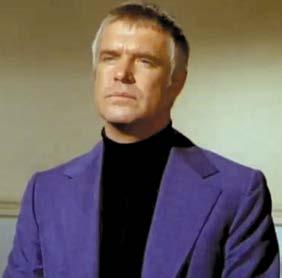
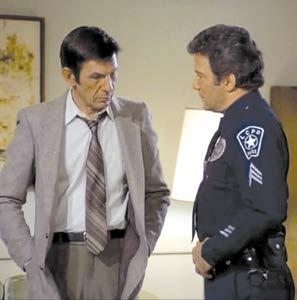
Chop Hill. While most of them are forgotten, he is today best known as Audrey Hepburn’s romantic interest in Breakfast at Tiffany’s. After the so-so performance and reviews of his Blue Max and Tobruk, Peppard turned to television. He made one telefilm, the potential pilot The Bravos, before being hired by creator/producer Anthony Wilson.
He hadn’t entirely abandoned film as he also shot The Executioner (1970) and The Groundstar Conspiracy (1972), the latter featuring Banacek costar Christine Belford.
Peppard accepted the “demotion” to television, as it was viewed in Hollywood from the 1950s through the 1990s, partly because it would keep him in California, closer to the child he shared with Ashley. He also liked the notion that the series would rehabilitate the Polish reputation as he succeeded, whereas people of other ethnicities failed.
Thomas Banacek was suave, athletic, and incredibly smart. He ran his own operation, “restoring” missing items to insurance companies for a percentage of the insured value. Living in tony Beacon Hill, Banacek and his home were definitely callbacks to a similarly clever and sophisticated figure: 1967’s Thomas Crowne (Steve McQueen). The same Boston home, 85 Mt. Vernon Street, was used as the exteriors for both men. They, of course, differed after that, with Crowne being a thief and Banacek spoiling thefts.
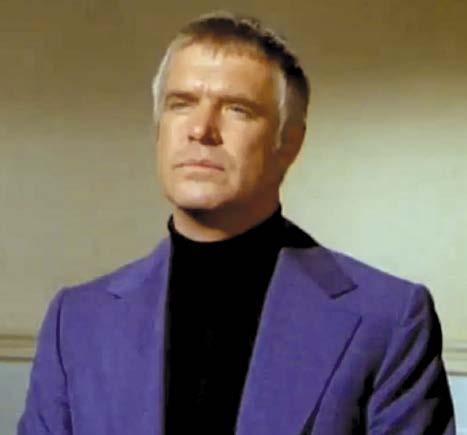
As we learn in the pilot telefilm, Banacek has a 66% success rate, infuriating employees in the insurance recovery divisions around Boston. There is less-thanfriendly competition between the freelance recovery specialist and the staffers, who are used as foils in most episodes. Banacek comes across as smug and superior but earns it through his successful career. Peppard ensured that Banacek was a variation on his true self, from the fine lifestyle to the same wines and thin cigars. However, Universal Studios’ filmed smoke of choice was custom-made Puncheon Selection Slendores, crafted by 21 Club Selected Items, Ltd. It was Peppard who suggested his short haircut be retained, and his preferred dress was a turtleneck and jacket. Peppard and his alter ego both played squash, and the title credits saw him
sculling on the Charles River (fun fact: it was 10 degrees when he filmed that sequence for the pilot). His independent streak, smart mouth, and rebellion against authority are also reminiscent of another Boston investigator, Robert B. Parker’s Spenser, who arrived at much the same time with 1973’s The Godwulf Manuscript.
His Polish heritage takes some knocks, with most episodes featuring people who cannot properly pronounce his name. In the pilot and a subsequent episode, he is asked if he has ever considered changing his name, and the answer is no, both times.
All the elements of the series could be found in the pilot, from Banacek’s preference for expensive antiques to his reliance on Felix Mulholland (Murray Matheson), owner of Mulholland’s Rare Books & Prints, for research and banter to his reliance on Jay Drury (Ralph Manza) to be his chauffeur in the long Cadillac. Also found in the pilot is rival investigator Caroline “Carlie” Kirkland (Christine Belford), who was brought back as a regular in season two. Once the series began, Felix was often seen playing chess with attractive and much younger women, suggesting that, in his prime, he might have been like Banacek. He’s certainly a father figure here, dispensing wisdom, knowledge, and snark.
Anthony Wilson conceived of the series as a modern-day take on the locked room mystery subgenre of detective fiction. A writer and/or producer for prime-time television, Wilson’s credits through the 1950s and Have Gun Will Travel, The Naked , Gene Roddenberry’s The Lieutenant, The Twilight Zone, Land of the Giants, and others. He was coming off ABC’s The Immortal when Universal bought his Banacek pitch. NBC liked the pitch and bought the pilot to be tested as a movie of the week, a common practice in the 1970s.
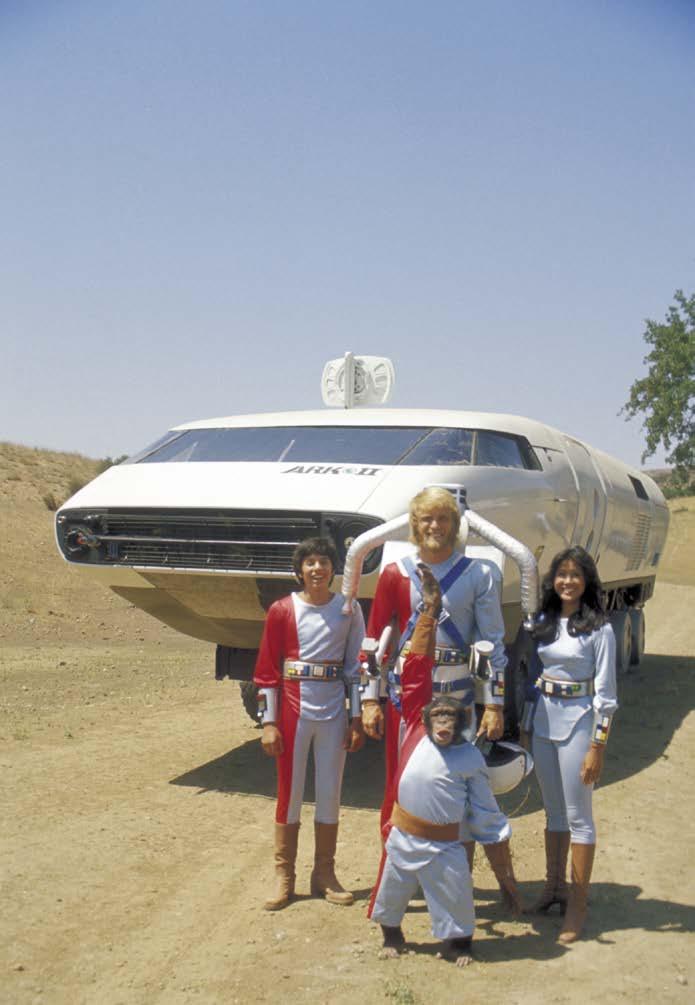
Welcome back to “Andy Mangels’ Retro Saturday Morning,” your constant guide to the shows that thrilled us from yesteryear, exciting our imaginations and capturing our memories. Grab some milk and cereal, sit cross-legged leaning against the couch, and dig in to “Retro Saturday Morning”! This issue, we’re finding out that the future would reveal weird adventures even on Saturday mornings, as we take a ride on Saturday morning’s coolest vehicle ever!
Live-action shows on Saturday morning had a resurgence in the mid-1970s, with the weird and wondrous worlds of Sid & Marty Krofft on ABC and NBC, and the more human adventures of Filmation’s Ghost Busters, Shazam!, and Isis on CBS. But even as America was celebrating its Bicentennial, Filmation was readying the darkest plot ever conceived of for a children’s show… set on the desolate and ruined post-apocalyptic Earth of the 25th century! [Last issue, RetroFan #45, featured part one of the Ark II story and now onto part two! –RetroEd.]
YOU’LL BELIEVE A MAN CAN FLY
Quite a while before Superman: The Movie made audiences believe a man could fly, the series Ark II actually showed it happening for real! Although jetpacks had been a staple in pulps, Buck Rogers comic strips, and comic books, Ark II made them a reality.
“Probably the thing people remember most about the show is
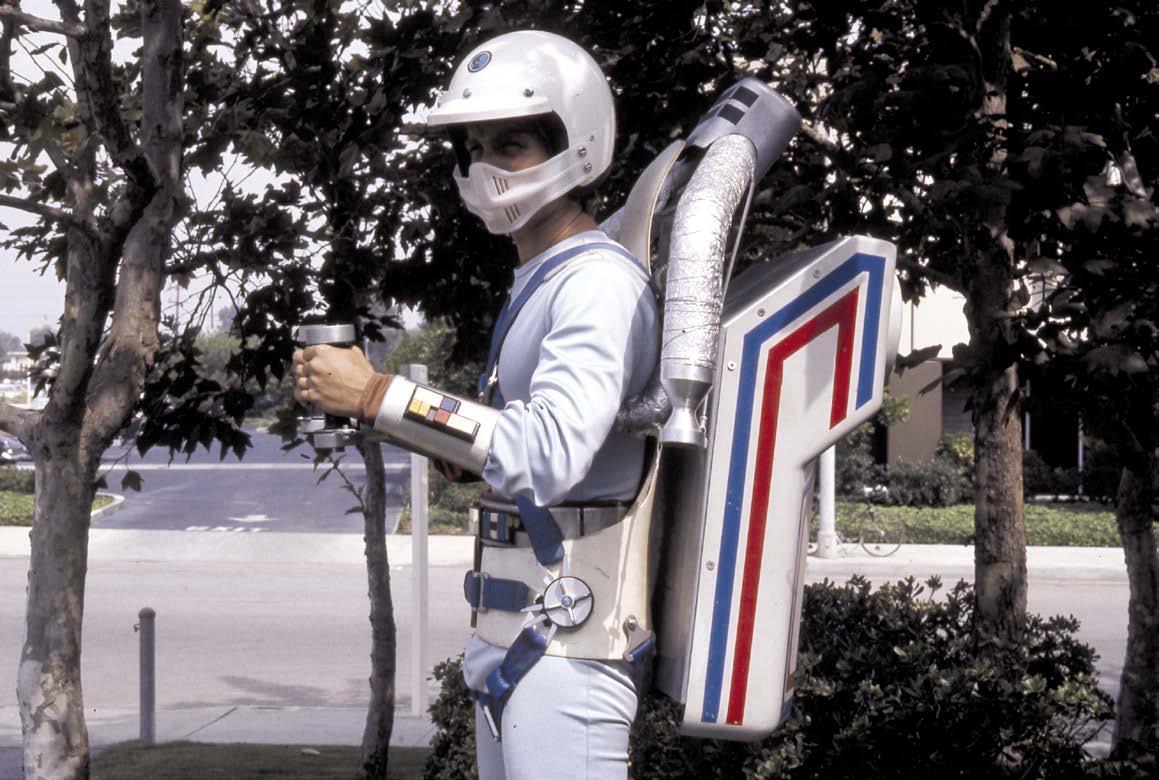
Jonah using his flying backpack,” Scheimer said. The backpack was known as the “Jet Jumper,” and it was a modified Bell Rocket Belt, like the one seen in the 1965 James Bond film Thunderball. It would later be used in the Olympics opening ceremonies of 1984. The pack did not use flammable fuel, but was instead propelled by five gallons of 90% pure hydrogen peroxide!
The Jet Jumper was not actually flown by Terry Lester as Jonah, but by Nelson Tyler, his face hidden by a helmet. Today, Nelson has his own company, Tyler Camera Systems, which
specializes in stable camera mounts for helicopters. “We were the first TV show to use the backpack though,” said Scheimer. “Nelson had to put on one of
Terry’s suits, and the thing was so baggy all over him we had to sort of tape it down so it fit him because Terry was a big guy.”
“That thing was wild to watch,” Scheimer continued. “We shot a lot of footage of it. We had it for a couple of days, and we shot hundreds of feet of footage of it, so that we had a lot of different stock scenes: different views, different scenery, going down through a hill and over a mountain. Everybody wanted to be on set those days when he was flying around.”
The pack allowed Tyler to fly for about 40 seconds total. The backpack had a small hammer in the helmet that would tap him on the head when he was about to run out of hydrogen peroxide. Tyler then knew that he had about 15 seconds of flight left in which he would have to land. “There was once that he forgot, or it didn’t tap him hard enough, and he didn’t have enough fuel to get all the way down,” remembered Scheimer. “He fell about 20 feet, and almost got killed. I asked him if he ever got headaches from the thing bopping him on the head.”
But what about all the scenes of Terry Lester in the Jet Jumper and close-ups of him flying? Pure practical Hollywood magic. “We had another fake backpack, which Terry wore for his scenes,” said Scheimer. “I don’t think he ever flew at all though. I don’t think they would let him do it. The shots in the show where it’s a close-up and it looks like him flying around were just camera tricks, or him standing on a platform
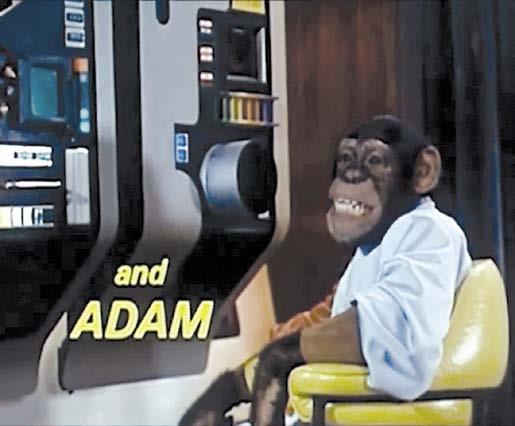
Moochie as Adam inside the Ark II as they wander a desolated Earth.
with wind blowing at him. And then we’d cut to a shot of the other guy.”
MONKEYING AROUND
The role of Adam was played by a juvenile chimpanzee named Moochie, trained by Darrell Keener and supervised by Ralph Helfer with Gentle Jungle. Director Henry Lange said, “It was the first time I’d ever worked with a chimpanzee on the show, and… the trainers could pretty much get Moochie to do what we needed to do. We had one guy grip on the show, Big John, and for whatever reason, Big
Terry Lester [or Nelson Tyler?] in the Jet Jumper—good for about 40 seconds of flight time.
On occasion, I do presentations at grade schools to talk about my career as an animator and comic book artist/ writer. Often, to break the ice, I ask kids if they recognize any of the characters I have worked on. It’s a fun and revealing icebreaker that always gives me a gentle chuckle. On this day, I was presenting to about 200 first-, second-, and third-grade students.
“I drew comics of Underdog. Have any of you heard of Underdog?”
One hand raises.
“I saw the movie with the real dogs.” I winced.
“I was the story director on the video game Hogwarts Legacy. Have any of you played that game?” I always expect a big response for this, as the game’s made over $3 billion. However, I might have been asking this of a younger crowd than the game is geared toward. A few hands went up, and one kid mentioned that his brother played it while he watched. Fine—my feelings weren’t hurt. But I was worried my heavy-hitter credits weren’t landing.
I mentioned I was an animation artist at Disney, that I directed the Netflix film The Velveteen Rabbit and the voice sessions for the cast of the latest Star Wars trilogy. There was interest, for sure. But I didn’t get the “wow” factor I usually get at conventions.
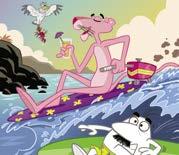
MY LIFE AS A PINK PANTHER ARTIST
I knew I wasn’t going to land these kids with Rocky and Bullwinkle… but then I stated, “I was an artist for this comic book as well.” I put a PowerPoint slide of the Pink Panther on the screen, and the amazement and excitement of the crowd was palpable. I was so tickled that they loved the character. But, as many times as this happens, I wondered why.
I used to think it was because people were misunderstanding that I created the character. I wasn’t even born yet—that would have really been something. I have Pink Panther on my convention banner, and I’ve had many parents walk by my table with their kids and whisper, “That man invented the Pink Panther.” Cue my existential crisis and a quick call to a plastic surgeon. Honestly, that didn’t explain the hold the pink one had on kids.
This made me think about my own love for the character. I love nostalgic cartoons—I always have. I remember being enchanted by Pink Panther, the Ant and the Aardvark, Misterjaw, and the rest of the ensemble when I was a kid. But I had to pause and realize I still love the gang. Pondering became a reflection on my own fandom, and I started to understand the answer.
Where Underdog and Rocky and Bullwinkle require some cleverly—dare I say mature—writing, Pink Panther speaks directly to the human condition without the need for voice work. It’s inherent to his charm and likely the reason kids responded to him so well. It took me far too long to understand what had come so easily to Charlie Chaplin. We, as a collective, have a primitive and silent yearning to face the human condition with humor.
BY ADRIAN ROPP
1970s Men’s Adventure Series
BY WILL MURRAY
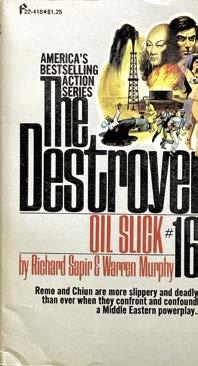
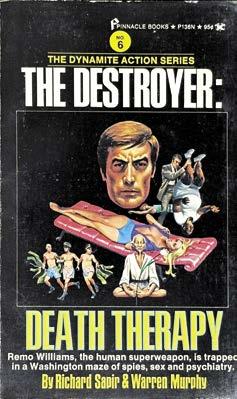
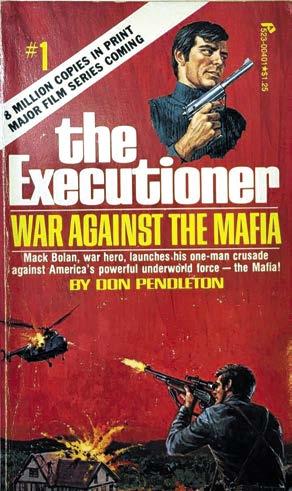
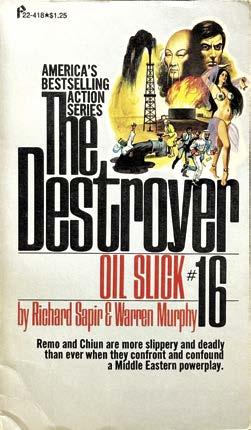
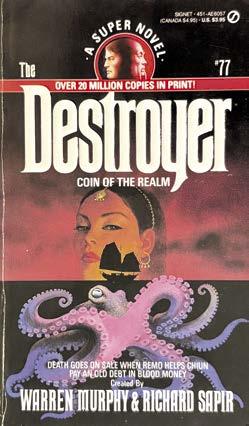
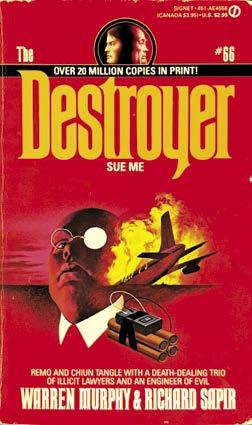
The men’s adventure paperback explosion of the 1970s detonated with Don Pendleton’s the Executioner, released by Pinnacle Books in 1969. Pendleton and his publisher are always given credit for inaugurating one of the most significant category evolutions of the paperback revolution. Nothing can be taken away from them. But the truth is more complicated.
By 1971, Executioner sales were steady, but not yet phenomenal [Will covered it all back in RetroFan #42 –RetroEd ]. Nonetheless, Pinnacle had carved out a growing niche in the paperback industry. They wanted to expand their line.
Thanks to a synchronistic stroke of luck involving a much-rejected manuscript, they managed to catch lightning in a bottle for the second time. Although marketed as a new entry in the vein of the Executioner, Richard Sapir and Warren Murphy’s satirical Destroyer concept technically predated Don Pendleton’s Mack Bolan by seven years.
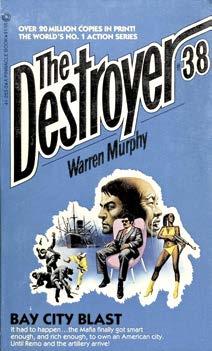
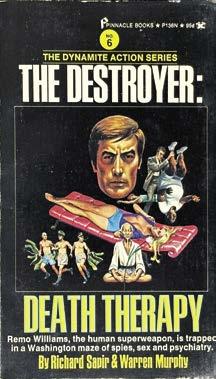
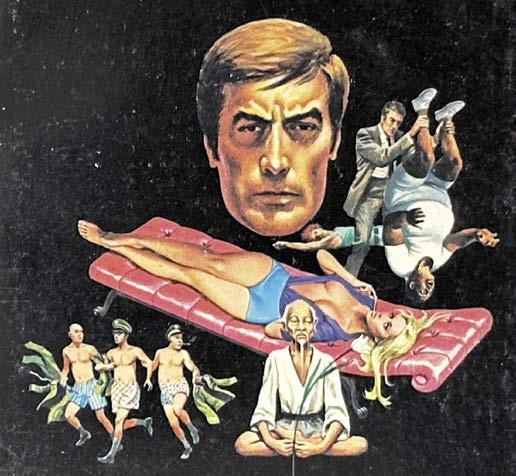
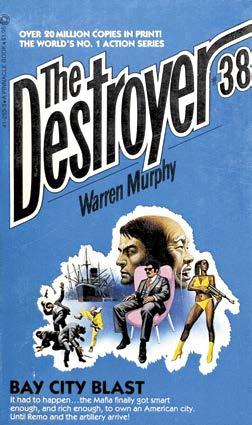
( TOP) Sue Me #66 (Penguin Publishing Group, 1986). (ABOVE ) Bay City Blast #38 (Pinnacle Books, 1979). (CENTER TOP) Death Therapy #6 (Pinnacle Books, 1972).
50 YEARS OF HILARIOUS HOCKEY HIJINKS WITH SLAP SHOT
BY ROBERT JESCHONEK
The genre of hockey movies and TV series is a rich one, from the slapstick humor of The Mighty Ducks to the feelgood patriotism of Miracle (about the U.S. Olympic hockey team’s 1980 “Miracle on Ice”) to the gay romance of Heated Rivalry.
Then there is what many consider the greatest hockey film of all time.
Insert soundtrack here… “Thus Spake Zarathustra,” composed by Richard Strauss, as featured in the film 2001: A Space Odyssey
The year: 1977.
Dah…
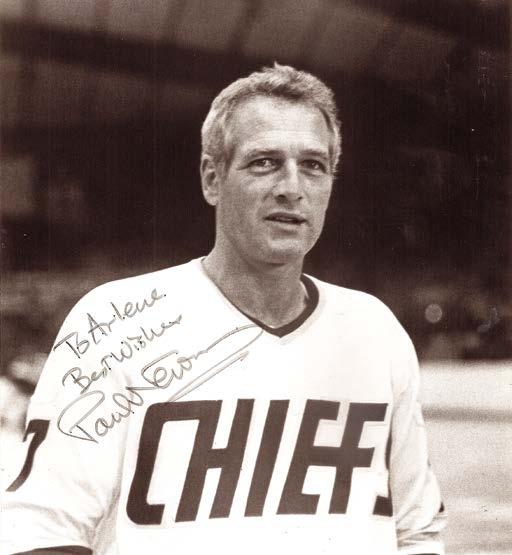
The star: Paul Newman.
Dah…
The film: a sports comedy about minor league hockey.
Dah…
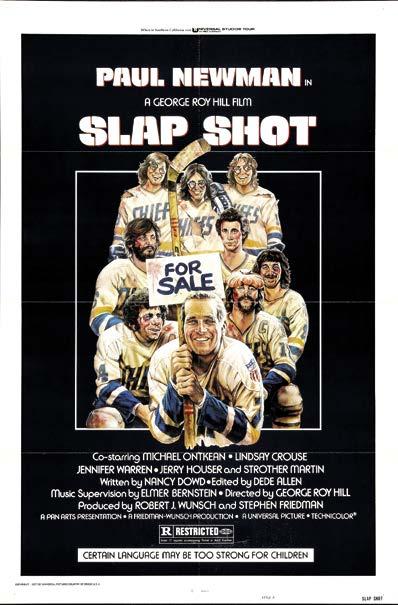
The title: Slap Shot.
Dah Dah!
Insert thundering kettle drums of “Zarathustra” here, dialed up to “11.”
Today, fans of sports movies—or just plain riotous comedies—know the movie well. Hockey fans and players the world over know it even better, as a kind of sacred text. Hockey teams have been known to watch it on the bus or in locker rooms before home games or when they go on the road.
And its reputation seems to grow with each passing year. Calling it a “classic” never goes out of style. Those who’ve never seen it before often fall in love with it at first sight.
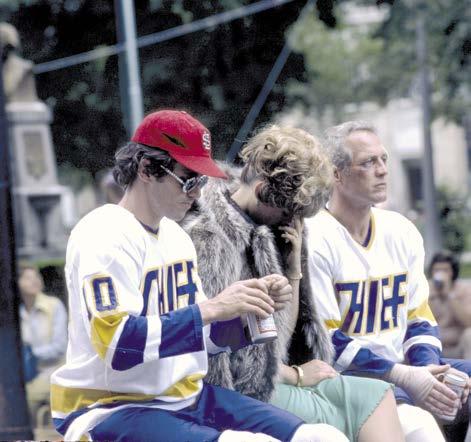
But it wasn’t always like this, not at all. Like the Charlestown Chiefs
featured in the movie, Slap Shot started with little respect… only to win in the end through sheer grit and determination.
Plus profuse violence, profanity, and overall lowbrow humor, of course.
On the 49th anniversary of the film’s production in 1976, on the verge of the 50th anniversary of its release in ’77, it’s only right that we look back at how Slap Shot came to be, what makes it such a great film, and how it found acceptance in spite of early rejection.
Just be careful, as we look to the past, for the kind of hooking, high-sticking, and slashing that the Chiefs and their opponents are so famous for.
Watch your step. There will be blood on the ice.
THE NAMES WERE CHANGED TO PROTECT THE INDECENT
Slap Shot got its start with the adventures of a real-life minor league hockey team based in the West-Central Pennsylvania industrial community of Johnstown. For the Johnstown Jets, and their opponents in the North American Hockey League, hockey was very much a rough-and-tumble sport, often characterized by unsportsmanlike conduct and brawls on the ice.
Under coach Dick Roberge, the Jets won the league’s Lockhart Cup in the 1974–75 season. The championship team included three rowdy brothers—Jeff, Jack, and Steve Carlson—and Ned Dowd, who happened to have a sister who was a screenwriter. Listening to
Ned’s wild tales of the team’s off-color antics, sister Nancy knew she’d struck gold and took copious notes. The source material was so rich, Nancy spent a month with the Jets to research her new project—a screenplay about minor league hockey.
By the time Slap Shot started filming in March 1976, a true dream team was driving the bus. Director George Roy Hill and star Paul Newman were fresh off two smash hits—Butch Cassidy and the Sundance Kid and The Sting. Their involvement brought instant prestige and anticipation to the project, feeding a can’t-miss sense of motion picture manifest destiny.
Could there be any doubt that this movie would kick as much ass as the fictional hockey brawlers it featured?
HOME ICE ADVANTAGE
One thing was certain when the cameras started rolling: the main filming location would be utterly authentic. Where better to shoot a story inspired by the Johnstown Jets than the venue where they played their home games?
The Cambria County War Memorial Arena in downtown Johnstown proved to be the ideal backdrop for the film, giving every scene shot there a convincingly rough and weathered look. With such a great location, it wouldn’t take much to convince filmgoers that the place they were seeing—like the hockey team that played there—had seen better days.
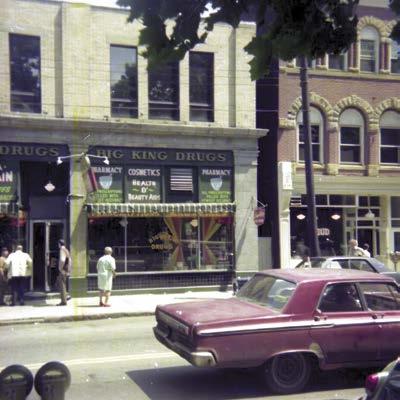
For scenes taking place outside the walls of the arena, the city of Johnstown itself provided the perfect setting. Once a booming mill town, Johnstown was on the leading edge of the collapse of the American steel industry. The dying mills and somber downtown streets had a faded glory and spirit of desperation that reflected the hockey team struggling for survival at the heart of the film.
The other towns and arenas in New York state where scenes were shot had a similar Rust Belt dinginess. Even as the Charlestown Chiefs’ dreams of success take a header, the towns where they and their opponents play hockey seem to be on a similar downward trajectory.
The Chiefs have it so bad, in fact, that their owner wants to shut down the team. This threat drives the action throughout the film, as player-coach Reggie Dunlop, played by Newman, dreams up a plan to boost attendance at Chiefs games and convince the owner to keep the team alive.
Spoiler alert: The plan does not involve bobbleheads… unless you count the heads of rival teams knocked for a loop by the rampaging Charlestown players.
HIT ’EM WITH YOUR BEST SHOT
Spurred on by Dunlop, the Chiefs become a truly savage squad, determined to give the fans exactly what they want the most: good old-fashioned violence. Fights on the ice,
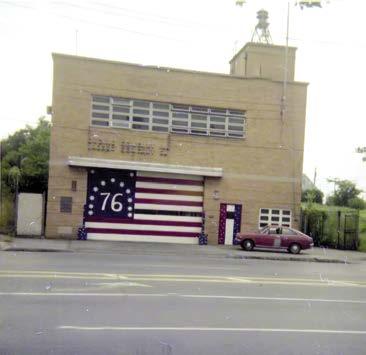
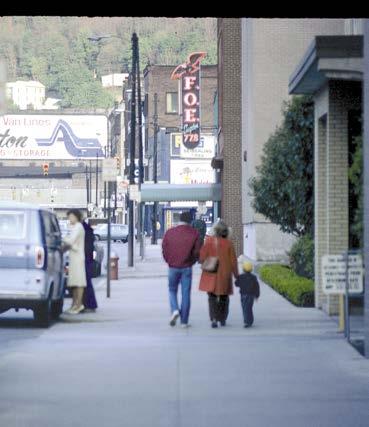
Scenes from Johnstown, Pennsylvania. Photos courtesy of Robert Jeschonek.
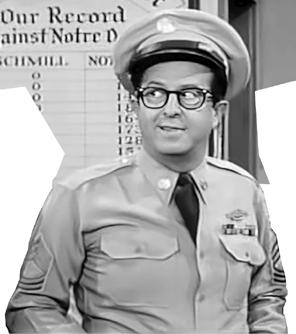
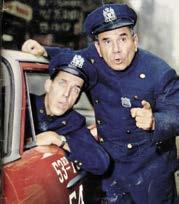
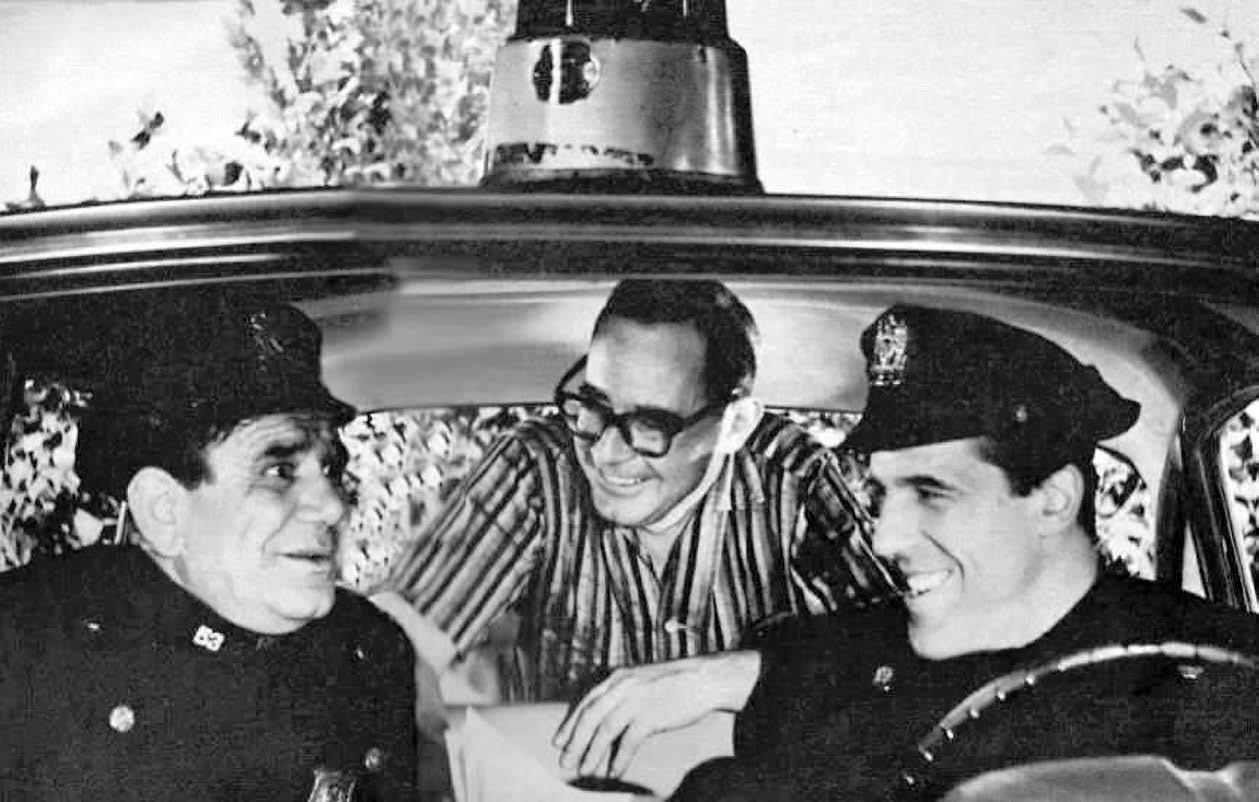
The New Yorker Behind Sgt. Bilko and Car 54, Where Are You?
Nat Hiken
BY SCOTT SHAW!
When I was very young and mainly watching cartoons and Captain Kangaroo on my parents’ black-and-white television, I had three favorite live action TV shows for adults: The Honeymooners, Amos ’n’ Andy, and best of all, the series which was known at the time as The Phil Silvers Show. I thought they were funny because the stars of all three shows were always looking for a way to make some quick cash. They all had a scheme that usually didn’t work, but it didn’t stop them from coming up with a new scheme the following week. Since then, I’ve memorized every original episode of The Honeymooners, and watched many of the Amos ’n’ Andy ’s on YouTube (taking notice that the show wasn’t racist, even if their original radio show certainly was). But my favorite of the three series, The Phil Silvers Show —which still runs on Neal Sabin’s “Catchy Comedy” channel—continues to make me laugh out loud. But when I grew older, I was interested about the man behind the show, Nat Hiken, who also created the outlandish Car 54, Where Are You? Nat was truly one of TV’s funniest writer/director/producers, but is rarely mentioned anymore, although his work made a huge impression on comedy, television, and even animation.
According to David Everitt, the author of King of the Half Hour, “Milton Berle would describe Hiken as ‘a genius.’ Phil Silvers would characterize him as ‘the most fertile TV comedy mind of the 1950s.’ From 1955 to 1962, Hiken won eight Emmy Awards, and in a 1956 poll of TV comedy writers conducted by Time magazine, he was selected as ‘the finest writer in TV today’—and this at a time when Hiken’s contemporaries included such future luminaries as Mel Brooks, Larry Gelbert, Neil Simon, and Woody Allen.’”
Nathan Hiken was born into a family of storytellers from White Russia. His father Max and his uncle Louis left to avoid being drafted into Russia’s tsar’s army—a death sentence for young Jewish men at the time—and arrived in America sometime between 1905 and 1910. Max was the funny one of his many brothers, but that didn’t bring in money. They arrived in NYC, but soon moved to Chicago, where Max established a small business making and selling wooden wagon tongues. Once he had a steady income, Max married his boyhood’s friend’s sister, Minnie Levin. And on June 23, 1914, their only child was born, named after Max’s old pal, Nathan Levin.
When Nat was little, he could speak only Yiddish, but after Nat Levin and his new bride, Rose, moved in with them, she taught little Nat to speak English by the time he was four. By this time, more of Max’s brothers had settled down in Milwaukee, so the Hikens family moved there, to a less-than-prosperous Jewish neighborhood. Nat’s father opened a new business, the South Side Leather Company, supplying material to shoe repair shops. Nat’s mother was very political and interested in communism, as well as assuming that anyone she met that was Jewish was somehow a relative of hers. Young Nat loved to make fun of her obsessions, but she soured any interest in him for politics. However, his father’s—as well as his friends’—senses of humor were naturally mirrored in Nat.
He liked to travel, sometimes solo, and Nat’s favorite escape for entire summers away from Milwaukee was his Uncle Jake’s farm in Bangor, Michigan. There, he was surrounded with friends and family, especially Sandy Rothblatt, an expert on practical jokes. Nat’s hobbies were reading, basketball, baseball, ice skating, swimming, and particularly “stoopball”, a game that is played by throwing a ball against a stoop on the pavement in front of a building.
“We Gripers are misunderstood,” wrote Nat. “This club is our gesture of friendship to the student body. We no longer will buttonhole you and pour out our woes. No longer will you have to tolerate our downcast features because from now on, our features are going to be definitely brighter.” Although the gripes were all supposedly from the college’s students, Nat actually wrote most of them. They were fairly juvenile, but definitely in the right direction, humor-wise, and its readers enjoyed the column. But the “well-known Milwaukee boy” had no conception of just how much the Gripers’ Club would affect his life.
After Nat graduated from the University of Wisconsin, he created a freelance news-feature service, writing marketing articles about Hollywood and the people working in entertainment at all levels. His gimmick was to sell them to newspapers where the objects of his material were born.
Nat Hiken goes over a script with an unnamed associate.
Young Nat’s sense of humor began to evolve, from his folks’ Jewish tales to the works of Gilbert and Sullivan. Since his home was adjacent to neighborhoods composed of Germans, Poles, Swedes, and Italians, his humor was widened by their influence on Nat. Many of those neighbors’ names eventually popped up on his The Phil Silvers Show/ Sgt. Bilko show. By the time Nat entered high school, his classmates considered him to be a pleasant wise guy. For example, while facing a girl whose debate-topic was anti-smoking, Nat responded by praising smoked fish. Fortunately, the otherwise soft-spoken, self-effacing kid got the laughs he’d hoped for.
After Nat graduated from high school in 1932, he enrolled at the University of Wisconsin to study journalism, a somewhat solid career during the Great Depression. He was taking college seriously. But for his senior year, Nat wrote a humor column for the school’s paper, the Daily Cardinal, intentionally complaining about the rather pleasant environment around him. It was called “The Gripers’ Club.”
Meanwhile, his friends Nat and Sandy Rothblatt—and many of their relatives and friends—had moved to Los Angeles in the same Jewish neighborhood. Sandy had already worked for Republic Pictures, been in a touring dance troupe, was a singer, and was writing for The Jewish Daily newspaper, so she was somewhat familiar with how to promote Nat’s articles to Hollywood’s studios. When young Mr. Hiken took a trip to L.A. for faceto-face interviews with the people he’d already been writing about, things were looking promising, although his articles brought in a mere five dollars or less. Nat remained in Los Angeles.
After Sandy met Roland Kibbee, the manager of a local radio station, and his pal, Jack Lescoulie, a local deejay, the three of them realized that they all shared the same sort of humor. They felt that Nat would fit right in. After Nat mentioned his “Gripers’ Club” column, Lescoulie told him that he’d get it on his radio station, KFWB, if the Milwaukeean would write the scripts.
Now called The Grouch Club, the show aired six mornings a week from 6:00 to 8:00 and soon became a big hit with Angelenos. According to Sandy, “You could be driving on your way to work in the morning and, if you stopped at a street light, almost everyone driving within hearing distance would be listening to The Grouch Club and laughing.” With such popularity, Nat added a comedy sketch called “Grouch of the Week” with a cast who played charac-
BY JIM BEARD
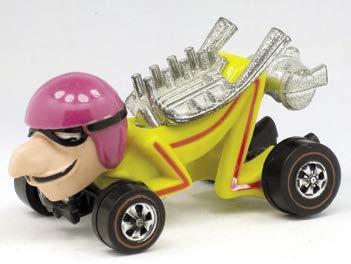
Popular wisdom tells us that “imitation is the sincerest form of flattery,” but the famous quote goes on to add “that mediocrity can pay to greatness.” That sentiment can be applied to many things in life, but perhaps especially so to the toy industry. To be very specific, it can be applicable to one of the grandmasters, a classic plaything that spawned imitators from the get-go: Hot Wheels.
And the funny thing about it is that a large fleet of the wannabes that lined up to try to match and even outrun Hot Wheels’ speed were launched from its very own creator, Mattel Inc.
There are many, many examples, but here’s a rundown of some of the coolest cats of the wheels and wings categories that had eyes on the prize throughout the Seventies, but fell short of the prize, the finish line flag. [You remember our Hot Wheels article in RetroFan #33, right? –RetroEd.]
PLANES…
If Mattel figured kids were diggin’ the unique models, names, and even personalities of Hot Wheels, it must have believed the same concept could be transferred to just about any theme. In 1971, three years after Hot Wheels’ debut, the company set out to prove just that, but not on the ground again—it set out to conquer the skies.
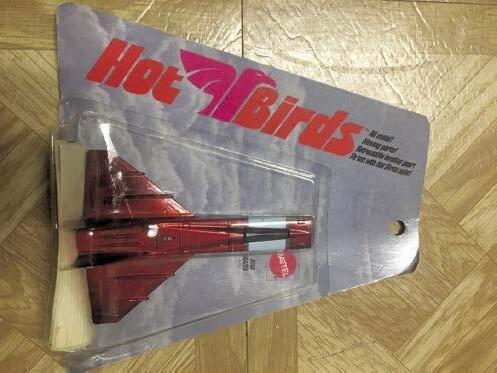
Sporting the same special “Spectraflame” colors as their wheeled cousins, the Hot Birds line took to the air in ’71 with imaginative names like Sky Scraper, Cloud Hopper, and Regal Eagle. Slightly futuristic in their sleek lines and aerodynamic sass, the new Hot Wheels wannabes hit the scene in distinctive packaging, several playsets, and a colorful carrying case, but despite good intentions and the Mattel wind machine at their backs, the six Hot Birds aircraft hit the dirt not long after takeoff, perhaps proving to the company that what flew well on the drawing board wasn’t necessarily what kids wanted flying over their heads in the backyard testing grounds.
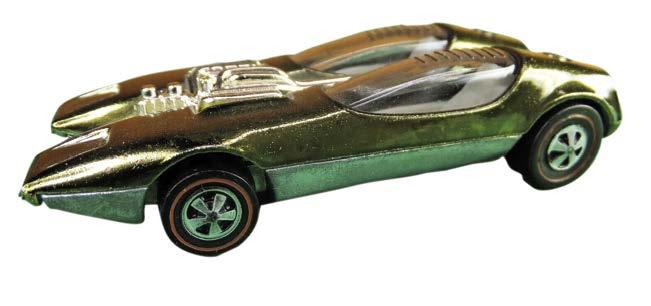
The Gold Standard of tiny metal cars was Mattel’s Hot Wheels. Seen here is the Splittin’ Image. Hot Wheels® is a registered trademark of Mattel, Inc.
After just one year, the Hot Birds cooled off and fell back to earth. Mattel would later incorporate airplanes into their Hot Wheels offerings, but a separate line all its own would remain on Cloud Nine. It did release Flying Aces, though, in 1975, but the World War II vibe of the airplanes in the series never really did catch on.
Rival toymakers tried to fly the concept, too. Lesney launched Skybusters in 1973 as a Matchbox jam, with die-cast flyers emulating military and commercial craft, unlike Mattel’s more way-out wonders. On the other side of the pond, Zee Toys released Dyna-Flytes in the ’70s as part of their Dyna series of vehicles, and found a bit more success than their competitors in controlling the skies, but still never truly won them.
…TRAINS…
Railroads might not seem like a go-to proposition for a follow-up to Hot Wheels, the longtime fascination with model trains throughout previous decades notwithstanding, but Mattel thought it had a conjunction junction of win-plus-success on its hand when it uncoupled the Hot Line series from the R&D department and sent it out on a rail in 1970.
Utilizing battery powered get-up-and-go motors finessed for the company’s successful Sizzlers line of toy track cars, the Hot Line trains were as sleek and futuristic-looking as their Hot Birds airborne relatives, and sported individual monikers like Freight Crate and Rockin’ Roller. Some saw them as an actual extension of Hot Wheels and even their packaging reflected the Hot Wheels look, though there was never any official connection. The trains ran in vain, despite eager marketing, suggesting that as cool as they looked, kids were never going to accept that a souped-up model
The Hot Birds Star Grazer in packaging.
Cereal Premiums of the 1960s and 1970s
SPOON SITTERS AND BOWL HANGERS NABISCO’S TINY TREASURES
BY AARON SULTAN
Welcome back to our ongoing exploration of the “Golden Age” of cereal premiums! After our deep dive into the high-seas adventures of Quaker’s Cap’n Crunch a few issues ago, it became clear that the sheer volume of ’60s and ’70s breakfast nostalgia was too big for just one bowl. After a strategy session with Retro Fan editor Ed Catto, we’ve decided to expand this journey. While we have the giants like Kellogg’s and Post on the horizon, this installment focuses on a company that truly mastered the art of the “free inside” incentive: Nabisco.
PART TWO
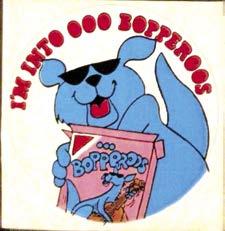
Our journey through the Nabisco archives actually begins on the cusp of a new era—1959. As the sun set on the Western-dominated ’50s, Nabisco’s Shredded Wheat Juniors looked toward the stars, introducing the iconic “Spoonmen” just as the Space Race was capturing the global imagination. From the “spoonsitter” innovation to rare test-market gems like the elusive Bopperoos, Nabisco proved that you didn’t need the biggest box to have the biggest impact on a kid’s morning. Grab your milk and a spoon; it’s time to rediscover the plastic monsters, Disney pals, and prospectors that turned the breakfast table into a playground.
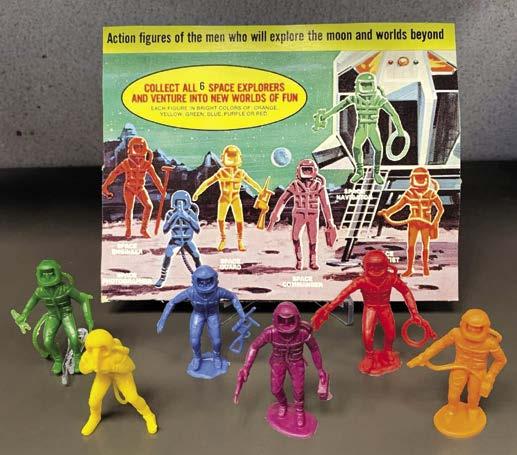
(ABOVE ) One small step for plastic cereal premiums: space explorers.
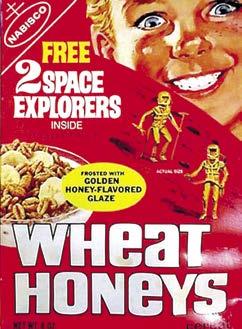
(LEFT ) Yes, two miniature spacemen were trapped in every box of Wheat Honeys. All cereals, premiums, packages, and images were produced by the Nabisco Biscuit Company (Nabisco®) now a trademarked brand of Mondelez International.
SHREDDED WHEAT JUNIORS —WHERE IT ALL STARTED
Although the focus of this article is on cereal premiums of the ’60s and ’70s, I would be remiss if I didn’t really start a year earlier, in 1959. The last year of the 1950s was really where the golden age started, due to one company issuing one particular premium. Nabisco, maker of Shredded Wheat Juniors, introduced the Spoonmen. This innovation broke all the molds when they created an in-box premium that is still highly desirable today. Making their introduction during the dawn of the space age, the Nabisco Spoonmen captured the imagination of children bracing themselves for the decade called the 1960s.
With the space race quickly ramping up, 1959 saw a bunch of firsts, namely by the Russians—the first spacecraft to leave the earth’s gravitational pull and the first spacecraft to touch a celestial body (the moon). In the USA, we were still two years out from Alan Shepherd making his historic trip as the first man in space, and three years out from John Glenn being the first astronaut to orbit the earth. On our television sets, black and white Westerns continued to dominate the ratings, but not for long. As depicted in the now-classic
Disney Pixar movie Toy Story, Westerns were on the way out, and the space age was roaring in. The Nabisco Spoonmen were in the right place at the right time. Not only were they cute little plastic space-age men in their space suits, but they served a purpose: to sit on your spoon while eating Shredded Wheat Juniors! The invention of the spoon-sitter would be replicated years later with other characters and other brands. There were three different Spoonmen with different names (Munchy, Crunchy, and Spoon-Size) and in a variety of colors (green, yellow, blue, brown, light pink, and red). Their height ranged from 1.6"–2″.
WHEAT HONEYS AND RICE HONEYS
I’ve never met anyone who remembered they liked the taste of Rice or Wheat Honeys. That said, the cereal somehow managed to last about 35 years. The coolest thing about Rice Honeys and Wheat Honeys were their premiums from the 1960s. Although there were many more, I’ve selected five premiums in particular that were winners from the boxes, starting with Rice Honeys:
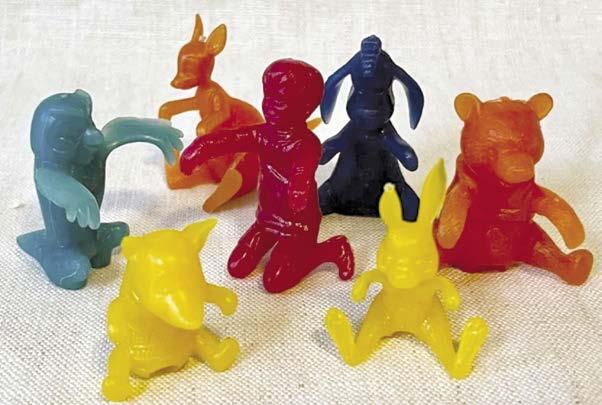
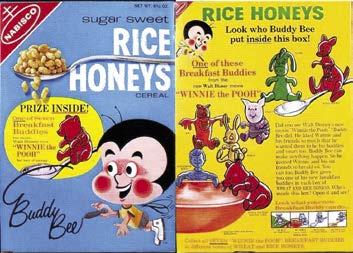
characters were possible inside a box of Rice Honeys: Winnie, Christopher Robin, Eeyore, Owl, Rabbit, Piglet, and Kanga with Roo. Tigger was available only in Canada and is quite desirable among collectors. These spoon sitters also appeared in Wheat Honeys.
✽ Sea Monsters: The back of the cereal box advertised “the wildest dwellers of the deep you’ve ever seen!” Twelve different sea monsters were brought to life on the breakfast table in the 1960s. Manufactured by MPC, you could get everything from a sperm whale to a giant squid!
✽ Beatles Yellow Submarine Run-Ons: Arguably the greatest of all Wheat and Rice Honey premiums ever offered, these Beatles Yellow Submarine characters came in eight different sheets, featuring John, Paul, George, and Ringo, plus various Yellow Submarine characters such as the Blue Meanie.
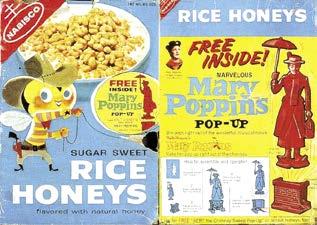
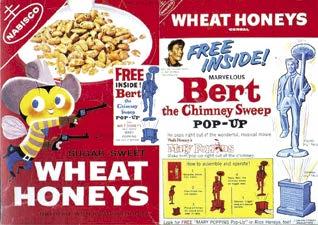
✽ Walt Disney’s Mary Poppins
Back to our Hollywood premise, Nabisco seized the opportunity to market Mary Poppins (as portrayed by Julie Andrews) on the coattails of the 1964 Disney hit movie. This “free inside” premium featured a figural Mary Poppins and Bert the Chimney Sweep. He would pop right out of a chimney!
Wheat Honeys would overlap or complement certain of the Rice Honeys premiums, such as the Beatles, Winnie the Pooh spoon sitters, and Prehistoric Monster offerings. For Mary Poppins, one of the Wheat Honeys boxes featured Bert (as portrayed by Dick Van Dyke), the Chimney Sweep Pop-Up. Here are some of the super cool Wheat Honeys cereal premiums:
✽ Winnie the Pooh Breakfast Buddies: Keeping with the Spoon Sitter theme from the Spoonmen, Nabisco created seven different breakfast friends to ride on your spoon based on the Disney Winnie the Pooh movie from 1966. Seven
✽ Space Explorers: Free inside a box of Wheat Honeys (also shared with Rice Honeys) were two Space Ex-