Reshaping CPD Culture: Transforming Professional Learning at a Leading International School in China
Reshaping CPD Culture: Transforming Professional Learning at a Leading International School in China
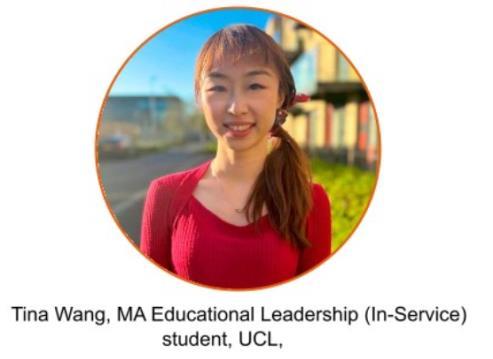
By Tina Wang | UCL MA Educational Leadership (in-service) student
[Source:
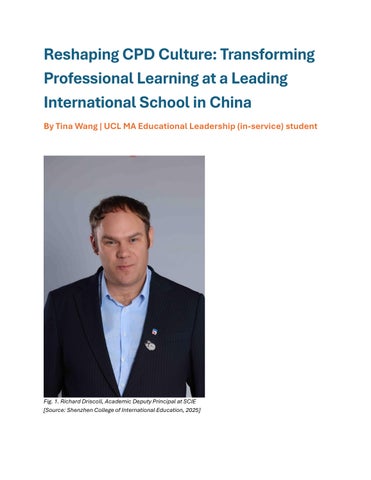
Fig. 1. Richard Driscoll, Academic Deputy Principal at SCIE
Shenzhen College of International Education, 2025]
Introduction
In the fast-evolving competitive landscape of international education, continuous professional development (CPD) is foundational to maintaining high-quality teaching and learning. Shenzhen College of International Education (SCIE) is a leading international school in Shenzhen, the tech hub of China. SCIE is a highly selective school that consistently ranked top 5 in the country with the highest number of Oxbridge offers for 19 consecutive years [1]. However it is surprising that its CPD model was once fragmented, focusing on quantifying hours of PD undertaken as opposed to measuring impact on students’ learning. Recognizing the need for change, Richard Driscoll when he became Academic Deputy Principal in 2022–set out to transform CPD into an embedded, evidencebased, and collaborative learning experience.
Reflecting on his motivation for change, Richard explains:
“For me, CPD needs to be very well-structured and planned, with a clear focus on improving classroom practice. When I joined SCIE [in 2014], CPD was largely about [logging] hours rather than actual impact in what was going on in the classroom, and that was something I knew needed to change.”
To create a meaningful shift in teachers’ thinking, Richard aimed to implement a model where professional learning was collaborative, research-informed, and sustainable. This approach aligns with the integrated model of a school as learning organisation (SLO), which emphasize collaborative learning among colleagues to enhance educational outcomes, establishing a culture of inquiry, innovation and exploration, and embedding systems for collecting and exchanging knowledge and learning [2].
Under his leadership, SCIE has moved away from one-off ad-hoc training days and embraced a culture of ongoing professional learning, incorporating peer observations, structured evaluation framework, and even bespoke online modules. This article explores the transformation of CPD at SCIE and how it has reshaped staff’s notion of professional development into a rich culture of collaboration, high expectations, and continuous reflection.
Establishing a Collaborative Learning Culture
1. Peer Observations and Feedback Culture
A key part of SCIE’s CPD transformation was the introduction of structured peer observations. Initially, staff were hesitant about being observed, but as Richard notes:
“Early on, there wasn’t a culture of peer observation at SCIE. People saw it as evaluative rather than developmental. We had to change that perception and show that observation was about learning, not judgment.”
To encourage participation, SCIE implemented an open-door drop-in policy, where teachers could observe colleagues informally, share feedback, and reflect on best practices together. This normalized feedback culture and fostered professional growth.
2. The “Postcard System” for Teacher Recognition
To reinforce a culture of positive feedback, SCIE introduced a postcard system for peer recognition. Teachers were encouraged to write postcards highlighting excellent teaching moments they observed and leave them at the back of the classroom.
“It’s a simple thing, but it makes a difference. When a colleague recognizes your hard work, it boosts morale and reminds us why we do this job.”
3. Department-Led CPD and Impact-Driven Evaluative Framework
Rather than top-down training, SCIE shifted towards faculty-led CPD. Heads of faculty now identify key areas for improvement based on student outcomes, and share their views on designing CPD sessions that are directly relevant to their departments. Each faculty collects teacher feedback and student surveys to refine professional development.
“I’ve used the Guskey Model suggested by other PD leaders that I was involved with years ago. It [uses] a backwards planning approach, you work your way backwards, i.e. you want to have high quality learning in the classroom and then you [look at] how you should get there. It’s a framework that is carried out based on evidence of impact on student outcomes. I shared that model with Heads of Subjects and to staff in the CPD newsletters. When I collect evidence about impact on high quality learning, I wanted to get students’ perspective as well.”
The Guskey Model is a widely used framework for evaluating CPD, focusing on five levels: participant reactions, learning, organizational support, teacher application, and student outcomes [3]. By adopting a backwards design approach, SCIE ensured that CPD was not just about compliance but also driving measurable student improvement.
Richard would also regularly encourage various teachers to “step up” as leaders of professional learning, inviting them to attend international conferences and sharing their findings with their peers. He recognized the value in their work when many did not realize it themselves, increasing their self-efficacy as they take ownership of their own professional growth.
“[Teacher A from Modern Language Department] really appreciated it. She was excited to talk to me about her opportunity and all the things that she experienced this weekend. I have also encouraged other people like [Teacher B from Maths Department] to present at the Cambridge Conference for East Asia. She [initially] wanted to go for a middle leaders training and I said to her well, to be honest, you’re more advanced than that. Why don’t you go for this and try something different? She thought about it and applied. She was quite excited.”
This bottom-up approach empowered teachers to take ownership of their professional growth while ensuring that CPD remained relevant and impactful. Numerous studies have
shown a strong correlation between teacher self-efficacy and job satisfaction, which leads to higher student achievement. [4]-[5]
The Bespoke Online Learning Model
A turning point in SCIE’s CPD transformation was the development of a bespoke online module in collaboration with Karen Ardley Associates (KAA). KAA is a UK-based professional development platform specializing in training for educators and school leaders worldwide. KAA provides bespoke programs that focus on leadership, pedagogy, and school improvement, supporting schools in promoting a culture of continuous professional development. [6]
Richard was first introduced to Karen Ardley through a FOBISIA Conference he attended in Shanghai many years ago. Together, they discussed ideas of creating their own modules that is tailored to SCIE specifically, initially as a pilot program to test out during the COVID19 pandemic in 2020.
1. Why Online CPD?
The pandemic highlighted the need for flexible, accessible CPD. Traditional face-to-face training was no longer feasible as cities in China were under strict quarantine, so SCIE leveraged online learning to provide consistent professional development for all staff, regardless of location. Modules were asynchronous so teachers could engage with each other and learn at their own pace. This also served as an effective strategy in new staff induction when introducing them to SCIE’s teaching philosophy, as new teachers were asked to speak about their favourite teachers and an example of great teaching which were then shared with the whole school.
“COVID was a nightmare, but it forced us to innovate. We needed a way to ensure that CPD didn’t stop, even when teachers couldn’t attend in person. That’s when we developed the online module.”
2. Overcoming
Resistance to Change
Not all staff immediately embraced the new CPD approach. A key area of resistance was the shift towards formative assessment, which moved away from traditional summative testing.
A major challenge stemmed from the longstanding belief of many teachers that frequent feedback-based assessment are less rigorous than exams, and reluctance to changing practices in an “already successful” school made it difficult to introduce change smoothly.
Nevertheless, this did not stop Richard who stood firm in his vision. His leadership emphasized clear communication articulating the vision for change and linking it to improved student learning outcomes; faculty involvement – encouraging staff to codevelop CPD, increasing their sense of ownership; and evidence-based approach – the impact of formative assessment was tracked through student engagement and achievement data, demonstrating its effectiveness. [7]
“Some staff were skeptical at first, but once they saw the [positive] impact on student learning, they started to buy in. Change takes time, but the key is persistence and evidence.”
Impact and Challenges
The online module captured SCIE’s core values on great teaching, incorporating student perspectives on what they value in great teachers, and included reflective exercises and discussion forums to encourage staff collaboration.
Initially, engagement was high, but Richard recognized a challenge with maintaining interest:
“The first module was great people were engaged and discussing ideas. But the second one didn’t land as well. We realized that just having an online module wasn’t enough we needed faculty leaders driving discussions.”
As a result, SCIE adapted its approach, continuing to integrate more interactive elements and faculty involvement into future modules.
“The module is kind of evolving and it’s unique. There’s very few schools that have their own bespoke online training modules. [This] led us to be nominated for the second year running for the Professional Development and Wellbeing Award for China School Awards. I also wrote an article for Cambridge [International Education] because they were interested [in our innovative work].”
“Being a finalist at the China school awards for the second-year running was a proud achievement for SCIE. It is a recognition for the journey the school has taken in providing first class CPD which is inclusive, and all staff have been able to achieve professional growth whatever their role. The process of applying for the award is one of reflection and sharpening focus for how we can be even better for the future.”
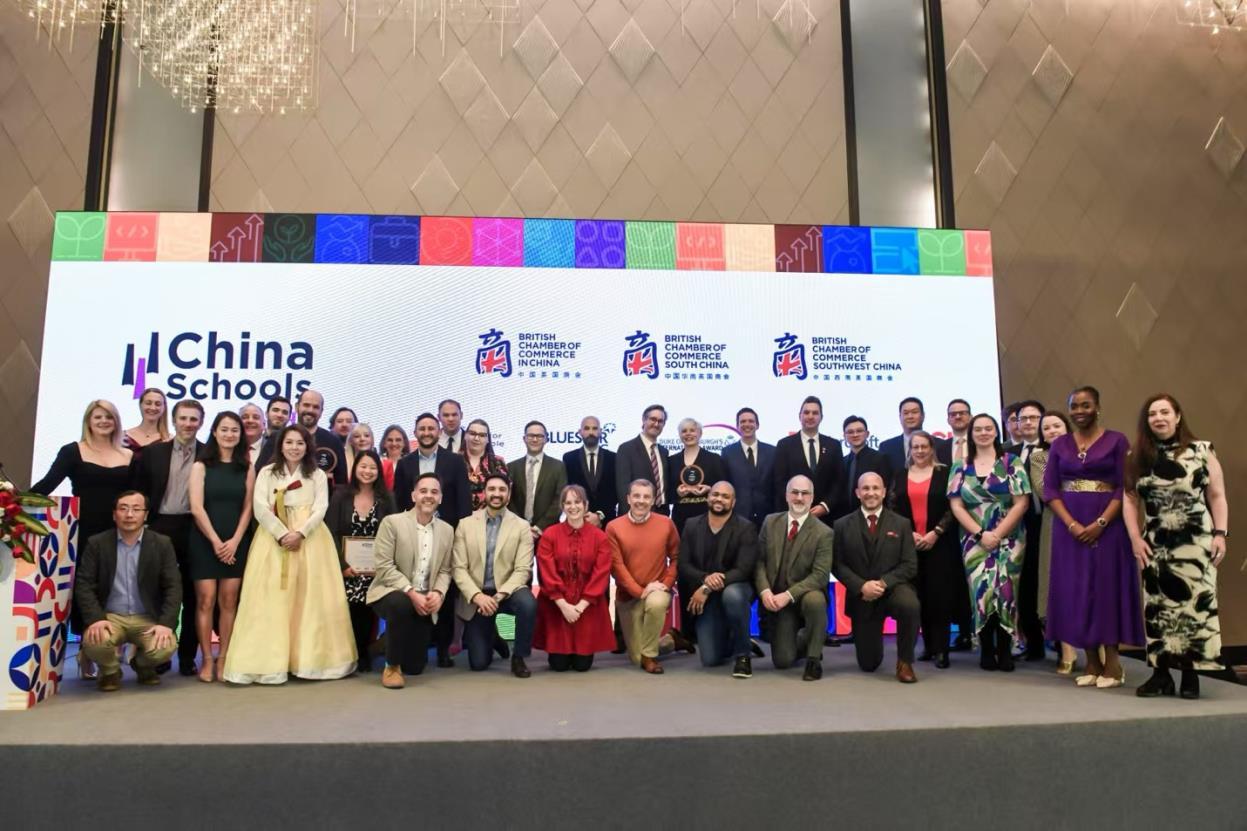
Fig. 2 Professional Development and Wellbeing Award Finalists at the 2025 China Schools Awards [Source: British Chamber of Commerce in China, 2025]
Future Developments
Looking ahead, SCIE aims to:
1. Embed a more formative approach to the whole school assessment structure
2. Expand instructional coaching, inviting lead practitioners and experienced teachers to mentor colleagues
3. Prepare staff for new curriculum developments, such as the integration of Advanced Placement (AP) courses
4. Strengthen SCIE’s global CPD network, sharing expertise with other international schools
SCIE’s transformation of CPD demonstrates how a clear vision, collaborative leadership, and evidence-based strategies can reshape professional learning culture in an international school setting.
“The key to impactful CPD is fostering a culture where teachers feel valued, supported, and inspired to continuously grow.”
SCIE’s journey serves as an inspiring blueprint for international schools seeking to revolutionize their own professional learning culture.
About the Author:
Tina Wang – International educator, middle leader, and MA Educational Leadership (In-Service) student at UCL. Passionate about effective leadership, school culture transformation, and research-informed practice to drive sustainable school improvement.
LinkedIn: https://www.linkedin.com/in/twang2
References
[1] Shenzhen College of International Education, “Shenzhen College of International Education.” [Online]. Available: https://www.internationalschoolsearch.com/listing/shenzhen-college-of-internationaleducation-china.
[2] M. Kools and L. Stoll, “What Makes a School a Learning Organisation?,” OECD Education Working Papers, no. 137, OECD Publishing, Paris, 2016. [Online]. Available: http://dx.doi.org/10.1787/5jlwm62b3bvh-en.
[3] T. R. Guskey, “Gauge impact with five levels of data,” Professional Learning, 2016. [Online]. Available: https://tguskey.com/wp-content/uploads/Professional-Learning-1Gauge-Impact-with-Five-Levels-of-Data.pdf.
[4] OECD, Teachers Matter: Attracting, Developing and Retaining Effective Teachers, Education and Training Policy, OECD Publishing, Paris, 2005. [Online]. Available: https://doi.org/10.1787/9789264018044-en.
[5] Q. Gu, “The role of relational resilience in teachers’ career-long commitment and effectiveness,” Teachers and Teaching: Theory and Practice, vol. 20, no. 5, pp. 502–529, 2014.
[7] D. Wiliam, Embedded Formative Assessment: Strategies for Classroom Assessment That Drives Student Engagement and Learning, 2nd ed. Bloomington, IN, USA: Solution Tree Press, 2017.
[8] British Chamber of Commerce in China, “Congratulations to our China Schools Awards winners, Two Sessions wrap-up next Tuesday, and more,” British Chamber of Commerce in China Newsletter, Mar. 10, 2025. [Online]. Available: https://britcham.glueup.cn/en/organization/2246/campaign/80600.