From Student Notes to Global Movement
Fig. 2: Zubair Junjunia leading a group of student ambassadors in a session on leadership [Source: Courtesy of Zubair Junjunia].
ZNotes come from humble origins it all started as a personal project. At 16, Zubair was preparing for his IGCSE exams at a British international school in Saudi Arabia when he started writing condensed revision notes to help him study more efficiently. His friends found them useful, so he began sharing them online.
“It started off as a project at school because of a reality that I witnessed first hand,” he recalled. “I could go to great schools and have access to good teaching and support, but not everyone had [that]. That was not a level playing field, so that was the spark in realisation that we need to do something to make that experience more equitable.”
What started as solo effort evolved into a global peer learning community. Over time, people from around the world began downloading the notes. Without funding or institutional backing, ZNotes grew organically through word of mouth. During his time at UCL, Zubair began to see the platform’s deeper potential: not just as a collection of notes, but as a community-driven solution to global education inequality.
“It went from a solo project, to a small group effort and today, a global student movement driven to support each other through content creation and peer learning for a more equitable educational system.”
A driving force behind this peer-led ecosystem is the ZNotes Fellowships Programme, which offers young people the chance to contribute meaningfully as content creators, ambassadors,
moderators, and peer mentors. Open to students worldwide, the programme is designed to develop leadership, communication, and digital skills while also giving the youth a sense of ownership in the global mission.
“We have over 100 young people who are part of the program at any given time as interns, as ambassadors, as contributors, as expert reviewers supporting ZNotes from all over the world,” said Zubair. “They’re volunteering their time, they’re spreading the word, they’re shaping the future of education.”
Today, ZNotes serves over six million learners and educators in more than 190 countries, offering resources aligned to major international curricula including CAIE, Edexcel, AQA, and the IB [1]. But for Zubair, it’s not about numbers. “The mission has always been about democratising education,” he emphasised. “At the heart of it, we never lose the spirit of students. They're part of the contributions, they part of the community and they make a big impact on how we develop and scale our work. That keeps us relatable, and that keeps us still at the heart of the learner’s journey.”
Peer-Led, Globally-Rooted
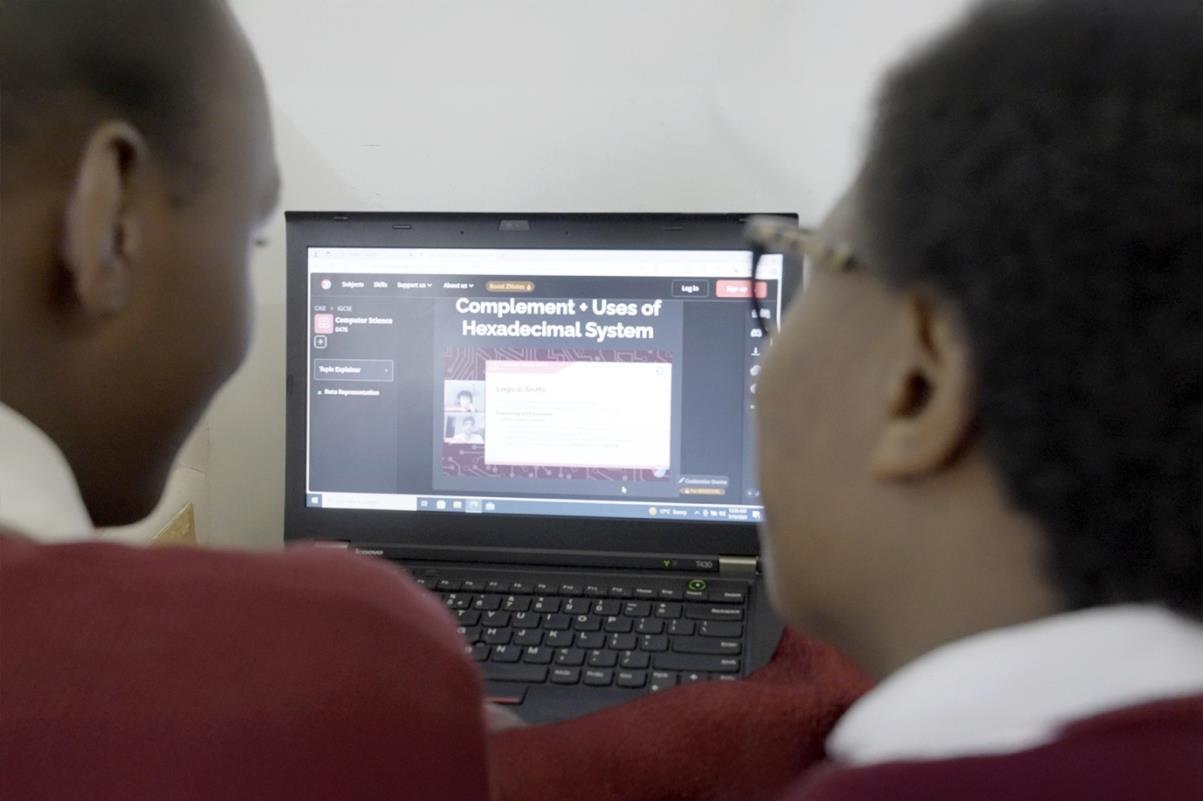
Fig 3: Students using ZNotes to revise Computer Science content on data representation and the hexadecimal system [Source: Courtesy of Andrea Zanetti, Empowering Young Women (EYW), www.eywafrica.org].
One of the core innovations behind ZNotes is its student-driven ecosystem. Unlike traditional top-down publishing models, ZNotes is built and sustained by students young people supporting other young people.
This peer-driven structure enables ZNotes to remain dynamic, relevant, and inclusive. Contributors often current or recent students themselves keep the resources aligned with changing syllabi and real exam needs. More importantly, this model empowers learners to become active creators of knowledge and agents of change, not just passive recipients.
“I want to make sure that a 17-year-old student who is contributing notes to ZNotes should be as easily able to share feedback with me as an EdTech expert who has been in the industry for two decades,” Zubair explained. “That relationship, that openness to criticism, feedback, ideation is a big part of our culture.”
Research supports this ethos. A 2020 study by Tullis and Goldstone demonstrated that peer instruction where students explain concepts to one another not only helps clarify challenging concepts but also fosters a collaborative classroom culture, leading to greater engagement and long-term retention [4]. Similarly, Mama, Owusu, and Wiysonge (2024) found that structured peer tutoring programmes in STEM significantly improved students’ academic outcomes, participation, and confidence [5].
“At the end of the day, a student who has done well in their examinations is taking their experiences and synthesising it in a way for [other] students to take away and learn. At the same time, they are improving their own understanding and likely to achieve better results in future exams.”
These findings also align with long-established educational theory. Topping (2005) defines peer learning as “the acquisition of knowledge and skill through active helping and supporting among status equals,” noting its role in deepening understanding and building learner confidence. [6]. Vygotsky’s theory of the “zone of proximal development” further highlights how students learn best just beyond their current capabilities, particularly with guidance from more knowledgeable peers [7].
“Self-motivation is key driver for students when it comes to the platform. They are proactively discovering and engaging on the platform for their own revision and upskilling,” he added. “That dynamic has been a big part of how we’ve continued to evolve even as the organisation has grown, the sense of community and belonging is key to our ethos. Even today, our global reach of millions has been purely through word of mouth.”
By giving learners the opportunity to create, review, and lead, ZNotes transforms students from recipients of knowledge into educational changemakers. This grassroots, collaborative movement flips the traditional paradigm — dismantling hierarchies and empowering young people to shape their own learning ecosystems.
Bridging the Digital Divide
Beyond pedagogy, ZNotes is grounded in its mission of fighting inequality ensuring that every learner, regardless of geography or background, has access to quality education. Yet, as he acknowledged, the global digital divide remains a pressing barrier. “Not every young person has a laptop to continuously learn. But through partnerships, we can do more.”
To tackle this, ZNotes is developing partnerships with organisations like LiteHaus International, which refurbishes donated laptops for students in underserved regions such as Papua New Guinea [8]. “They’re setting up labs where students have never seen a computer before,” he noted. While ZNotes focuses on delivering high-quality open content, these partnerships help bridge the infrastructure gap by improving access to hardware and connectivity.
Crucially, Zubair is also turning his attention to language and curriculum localisation. “As we move forward, we see big opportunities to expand our content into new curricula and new languages,” he explained. “For example, transitioning from the British curriculum to the Pakistani curriculum there will be certain overlaps and certain differences. The challenge is how can you bridge those gaps as quickly as possible and accelerate the configuration process?”
To do so, Zubair is exploring how AI can accelerate content adaptation identifying shared concepts and repurposing existing material while maintaining local relevance. This localisation effort is key to ZNotes’ long-term vision: a truly global learning platform that not only crosses borders but also speaks directly to the needs and contexts of learners worldwide.
AI for Inclusion, Not Just Efficiency
For Zubair, AI is not just a tool it’s a means of ensuring no learner is left behind. “Inclusivity has many dimensions. There are neurodivergent learners, bilingual learners, students carrying caregiving responsibilities or facing financial burdens each group needs support in different ways.” The promise of AI lies in its ability to meet diverse learners where they are.
In partnership with Amazon’s Equity in Education initiative, ZNotes has already introduced an AI-powered chatbot embedded in each resource, enabling students to ask questions and receive tailored support. “It makes a big difference for students who may not be able to read the whole thing but still want to get quick answers and keep learning.”
He also sees potential in using AI to support peer learning dynamics. “There’s amazing activity happening on our Discord server,” he noted. “But how do we make sure more students
benefit from the value of peer to peer engagement? How can those who might be a little bit introverted also feel included in the conversation?”
Global research aligns. UNESCO (2021) highlights how AI can support equitable education by facilitating personalised learning pathways and overcoming barriers related to language, disability, and geographic remoteness [9]. The OECD (2023) similarly notes that AI systems, when used ethically, can enhance learner engagement and help identify and address gaps early on [10]. Holmes et al. (2019) add that AI tools have the potential to support diverse learning needs through adaptive feedback, collaborative environments, and improve learning design and intervention systems [11].
“AI isn’t accessible to all yet,” Zubair admits, “but if it is used in the right way, AI can lead to inclusivity of learners, of backgrounds, of different experiences as well.”
Reimagining Leadership in Education
Zubair sees leadership as enabling others to lead. He shared the story of a former intern from India who, through ZNotes, gained the confidence to apply to and be accepted at Cambridge.
“She didn’t just contribute content she became a leader.”
Reflecting on his own journey, Zubair said: “I’ve made a lot of mistakes crashing a website, scaling too fast. but those mistakes are part of the opportunities and successes as well.”
His advice to aspiring changemakers? “Start before you’re ready. It’s really easy to get trapped in this mindset: ‘I need the perfect time, resources or team’. Being able to realise that it’s not the solution but rather the mission that you are driven by is key!”
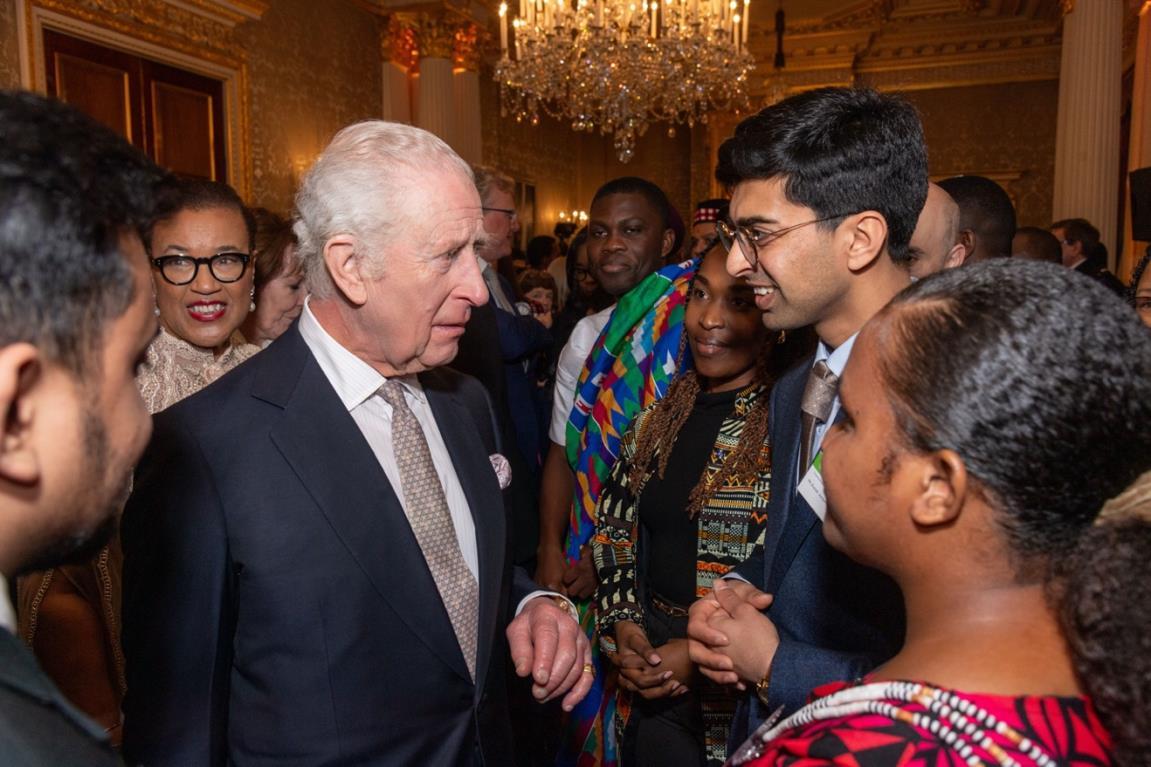
It was that mindset that sparked ZNotes and propelled Zubair onto global stages. He has received the Commonwealth Youth Award for Europe, been appointed as a Generation17 Young Leader by the UNDP and Samsung, and was recently named to Forbes 30 Under 30 Europe for Social Impact [2], [3]. As the youngest-ever commencement speaker in UCL’s history, and one of the youngest recipients of the Freedom of the City of London, he has shared his insights at forums including the 79th UN General Assembly, COP28, and the QS Reimagine Education conference [1].
Courtesy of Zubair Junjunia].
Yet despite these accolades, Zubair’s focus remains clear: to serve. His leadership style is deeply collaborative and values-driven shaped by his experiences growing up as a third culture child in Saudi Arabia, studying mathematics at UCL, and learning from a diverse, global community of students and mentors.
“Be married to your problem, not your solution,” he reflected. The tools may evolve. The strategies may shift, but ZNotes’ mission to make education equitable and accessible remains constant. For Zubair, leadership means continuously asking:
How can we solve this problem better — and who else can we empower to help solve it with us?
The Future is Student-Led
Zubair’s vision for the future of education is bold: systems that are decentralised, inclusive, and co-created with students.
Fig 4: Zubair Junjunia (right), recipient of the Commonwealth Youth Award for Europe, in conversation with His Majesty King Charles III at a Commonwealth reception at Buckingham Palace [Source:
“We gave ZNotes to students, and organically, teachers began using it too. Now 10% of our users are actually teachers who use student-built content to teach lessons and prepare.”
This shift highlights the evolving roles of educators and learners and the powerful potential of peer learning. “That just shows how much the dynamic can change,” he added, “where a teacher and a learner are actually sometimes evolving and swapping roles.”
ZNotes is now piloting a school-focused model, providing analytics and usage data to support targeted interventions. “If 20% of students are struggling with GCSE Biology, the school doesn’t have to guess. They’ll have that data. It’s about targeted interventions powered by real usage.”
As the platform continues to grow, this triangulated approach empowering students, supporting teachers, and informing schools is the next chapter in Zubair’s vision.
Conclusion: Leading with Purpose
Zubair Junjunia’s story is a testament to what’s possible when young people are trusted to lead. From handwritten notes in a bedroom to a globally used AI-powered platform, his journey continues to challenge traditional notions of education and leadership.
As educational equity, digital transformation, and student agency move to the forefront of global education conversations, Zubair offers a powerful reminder: that meaningful change doesn’t come from systems alone it comes from those bold enough to reimagine them.
About
the Author:
Tina Wang – International educator, middle leader, and MA Educational Leadership (InService) student at UCL. Passionate about effective leadership, school culture transformation, and research-informed practice to drive sustainable school improvement.
LinkedIn: https://www.linkedin.com/in/twang2
References:
[1] Z. Junjunia, Zubair Junjunia – Official Website. [Online]. Available: https://zubairjunjunia.com
[2] Forbes, “Zubair Junjunia,” [Online]. Available: https://www.forbes.com/profile/zubairjunjunia/.
[3] UCL News, “UCL-supported entrepreneur wins prestigious Commonwealth award,” University College London, Mar. 2025. [Online]. Available: https://www.ucl.ac.uk/news/2025/mar/ucl-supported-entrepreneur-wins-prestigiouscommonwealth-award.
[4] J. G. Tullis and R. L. Goldstone, “Why does peer instruction benefit student learning?”, Cognitive Research: Principles and Implications, vol. 5, no. 15, pp. 1–12, 2020. [Online]. Available: https://doi.org/10.1186/s41235-020-00218-5
[5] A. Mama, G. Owusu, and C. Wiysonge, “Assessing the Effectiveness of Peer Tutoring in Improving STEM Education Outcomes,” International Journal of Educational Research, vol. 1, pp. 1–7, 2024. [Online]. Available: https://doi.org/10.62951/ijer.v1i1.11
[6] K. J. Topping, “Trends in Peer Learning,” Educational Psychology, vol. 25, no. 6, pp. 631–645, 2005. [Online]. Available: https://doi.org/10.1080/01443410500345172
[7] L. S. Vygotsky, Mind in society: The development of higher psychological processes. Cambridge, MA: Harvard University Press, 1978.
[8] LiteHaus International, “Our Story.” [Online]. Available: https://litehausinternational.org/our-story
[9] UNESCO, AI and Education: Guidance for Policy-makers, United Nations Educational, Scientific and Cultural Organization, 2021. [Online]. Available: https://unesdoc.unesco.org/ark:/48223/pf0000376709
[10] OECD, OECD Digital Education Outlook 2023: Towards an Effective Digital Education Ecosystem, OECD Publishing, Paris, 2023. [Online]. Available: https://doi.org/10.1787/c74f03de-en
[11] W. Holmes, M. Bialik, and C. Fadel, Artificial Intelligence in Education: Promises and Implications for Teaching and Learning, Boston: Center for Curriculum Redesign, 2019.