p. 4 Robert Fliri e Five Fingers – Robert Fliri and his Five Fingers
A monde a sé stante
A little World of its own
p. 12 Il Parco Naturale Gruppo di Tessa – Texelgruppe Nature Park
Cime scure
Goodbye Glaciers
p. 18 Addio ghiacciaio – Farewell to the Alpine Glaciers
Il Guardiano
The Guardian
p. 20 All’interno di Castel Hochnaturns – Inside Hochnaturns Castle
La vita é bella
Life is good
p. 28 La Danza macabra di Plaus – Danse Macabre in Plaus
Il cuore ardente
Heart on fire
p. 32 La Festa del Gesú Cuore – The Sacred Heart of Jesus fires
La mela
The Apple
p. 34 Tutto sulla mela – All about Apples
Il sapore dell’Autunno
The Taste of Autumn
p. 40 La tradizione del Törggelen – A century-old costum
Miss Riesling
Ms. Riesling
p. 42 Intervista con – Interview with Magdalena Pratzner
In discesa Downhill
p. 50 Con Insider – With Insider Klaus Nischler, MTB Guide
Questione di cifre
Numbers, please!
p. 56 Intervista con – Interview with Dani Jung, Trailrunner-Pro
Tempo di avventura
Adventure Time
p. 58 Bambini, pronto a divertirvi? – What’s there to do, Kids?
Imperiale!
An Imperial Past p. 62 Castel Trauttmansdorff
Specchio di ricordi
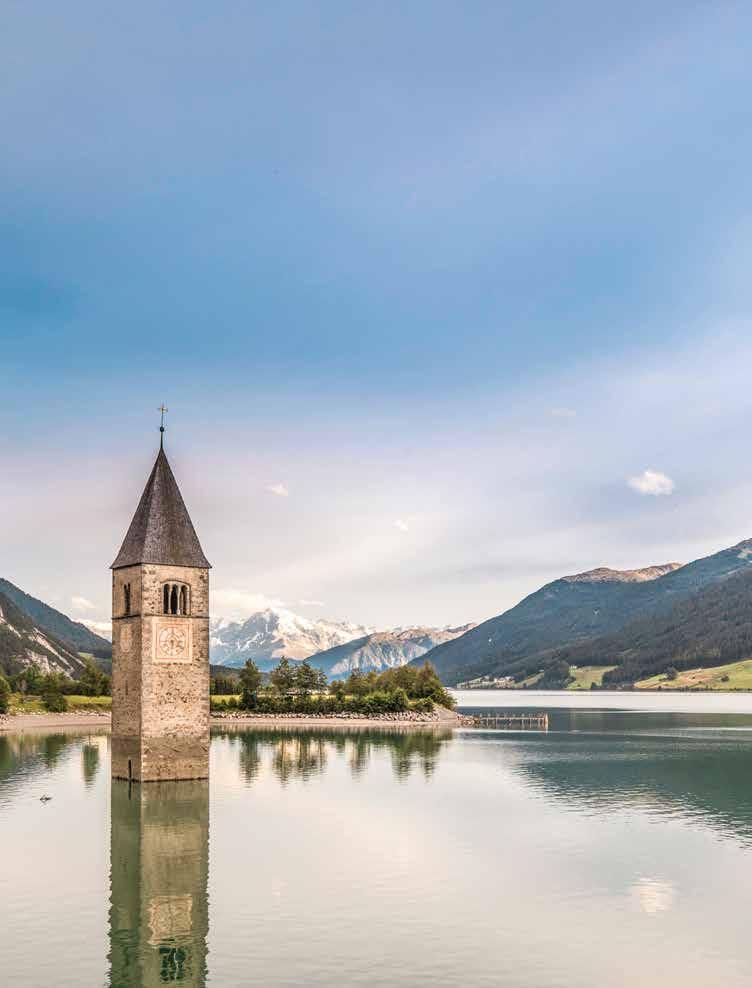
Lake Resia and the sunken Town
p. 64 La storia del Lago di Resia – The history of Lake Resia
ADESSO, SOSTITUIRE LE MONTAGNE SULLA SCRIVANIA CON LE VERE MONTAGNE.
Benvenuti a Naturno.
TIME TO SWAP THE PAPER MOUNTAINS ON YOUR DESK FOR THE REAL MOUNTAINS.
Welcome to Naturno.
Unʼode ai piedi
An Ode to the Feet
CON LA SUA INVENZIONE “FIVE FINGERS”, ROBERT FLIRI DI NATURNO DÀ A TUTTI NOI UNA SENSAZIONE CHE LA MAGGIOR PARTE DELLE PERSONE HA DIMENTICATO E CHE RISALE ALL’INFANZIA: QUELLA DI CAMMINARE A PIEDI NUDI. UN’ESCURSIONE ASSIEME A FLIRI È L’OCCASIONE PER RISCOPRIRE I PIEDI COME ORGANI DI SENSO.
Camminiamo attraverso le montagne, corriamo fino al treno, passeggiamo per le città e, se abbiamo fretta, facciamo due passi alla volta. Avete mai pensato a quanto sia complesso il movimento della camminata? Una volta messe in moto, le nostre gambe si muovono in modo regolare come un orologio. Essendo l’unica specie del pianeta a camminare in posizione eretta, gli esseri umani sono riusciti a popolare anche le aree più remote del mondo. Per imparare a camminare, da piccoli, impieghiamo circa un anno e, quasi come avviene per l’andare in bicicletta, non lo dimentichiamo mai più.
Robert, stiamo sottovalutando i nostri piedi? Il piede umano è un capolavoro, un “oggetto” unico nella natura. Si tratta di un complicato sistema di ossa, muscoli, tendini, tessuti, molle e leve che permettono una grande varietà di movimenti. Ad esempio, se si cammina a piedi nudi, non ci si può storcere una caviglia. Ma ancora più affascinante – e pochi lo sanno – è il gran numero di recettori presenti sulle piante dei nostri piedi. Essi comunicano continuamente con il cervello attraverso il sistema nervoso. Ciò fornisce importanti informazioni sull’ambiente e sulla natura del sottosuolo, informazioni essenziali affinché le persone possano muoversi rapidamente e in modo sicuro, soprattutto su terreni irregolari.
WITH HIS INVENTION “FIVE FINGERS”, ROBERT FLIRI FROM NATURNO/NATURNS GIVES US A FEELING THAT MOST HAVE FORGOTTEN SINCE CHILDHOOD –THAT OF BAREFOOT WALKING. ON A JOINT TOUR, WE REDISCOVER OUR FEET
AS SENSORY ORGANS.
We walk through the mountains, run to the train station, stroll through cities, and if we are in a hurry, take two steps at a time. Have you ever thought about what a complex process walking is? Once set in motion, our legs tick evenly like clockwork. The only species on the planet to do so, humans move upright on two feet and have been able to populate even the most remote areas of the world. For about a year, we learn to walk as small children and – almost like riding a bicycle – never forget it again.
Robert, are we underestimating our feet?
“The human foot is a masterpiece, unique in nature. It consists of a complicated system of bones, muscles, tendons, tissues, joints and layers that allow a wide variety of movements. For example, if you walk barefoot, you can’t roll your ankle. But even more fascinating – and few know this – is the large number of receptors in the soles of our feet. They communicate continuously with the human brain via nerve cords. This provides the brain with important information about the environment and the nature of the subsoil, which is essential for people to be able to move quickly and safely, especially on uneven ground.”
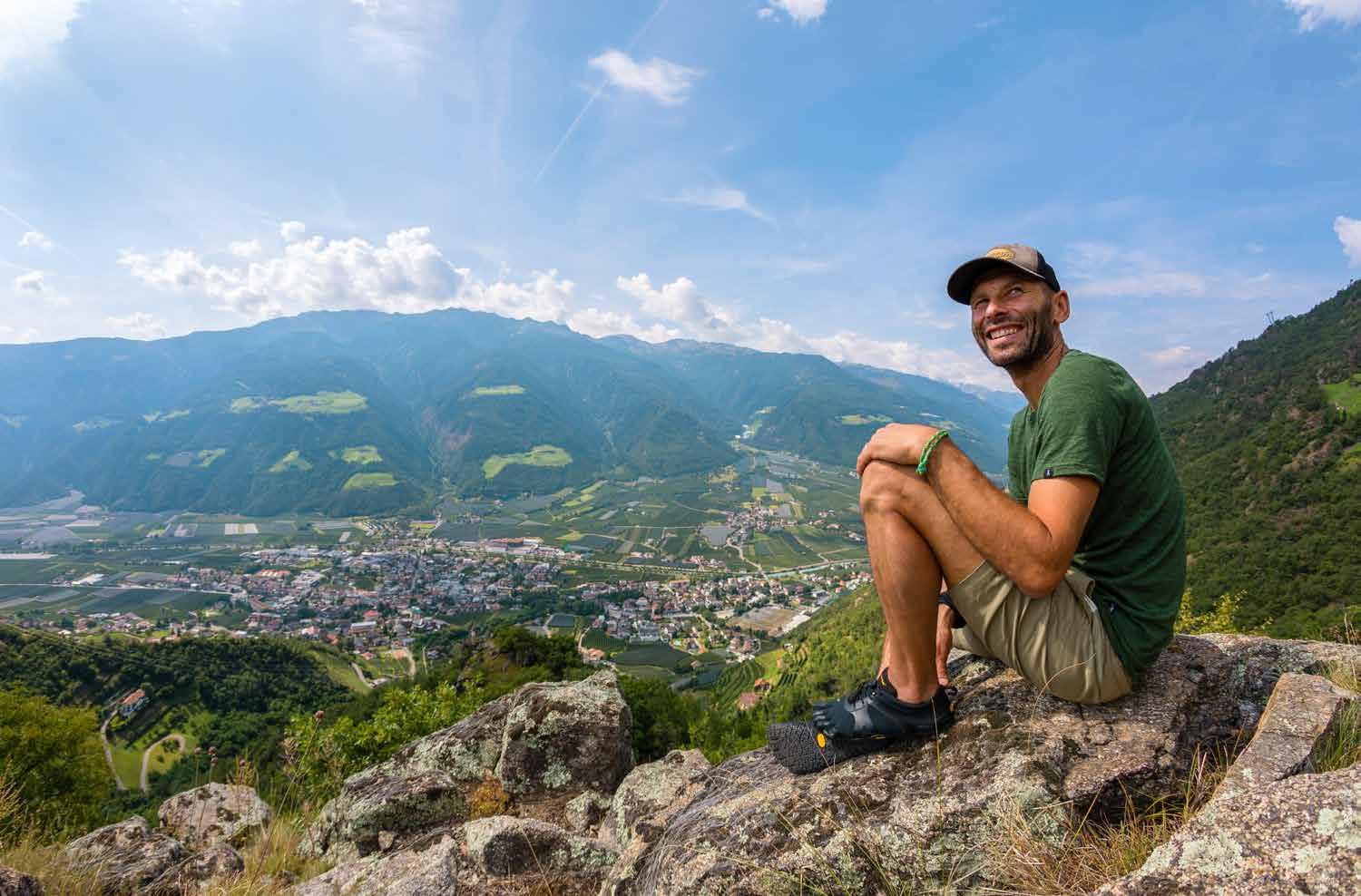
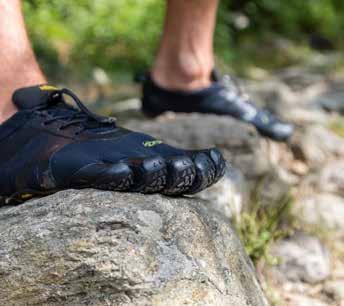
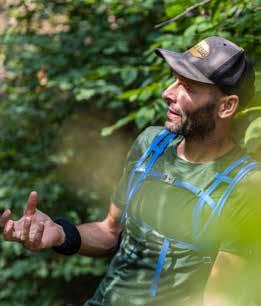
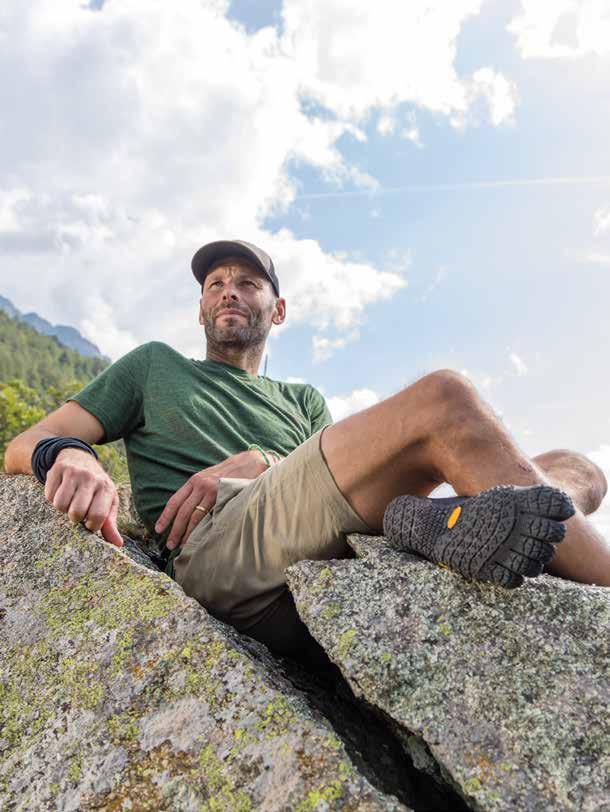
“I piedi come occhi”, per così dire? Robert Fliri ride e, sebbene sia nato nel 1976, il suo sorriso lo fa sembrare molto più giovane. Ci sediamo sulla piazza del villaggio di Plaus e parliamo di quella che, nel 2007, il New York Times ha definito la “migliore invenzione dell’anno”: le Five Fingers, un progetto nato sul soleggiato versante del monte Sole di Naturno. Per non limitarmi a parlarne, durante la conversazione mi infilo questi “guanti per i piedi”. Contemporaneamente mi accorgo come, a chiunque voglia essere al centro dell’attenzione, basti entrare in un caffè con le Five Fingers ai piedi: tutti guarderanno i suoi piedi.
Certo, si può discutere sul loro valore estetico, ma il principio di questa “callosità artificiale” è sicuramente fondato, e Robert contraddice il mio assunto che non si può disimparare a camminare: «Quando camminiamo con le scarpe, il movimento dei nostri piedi è completamente diverso rispetto a quando lo facciamo a piedi nudi. Le scarpe imbottite, la vita sedentarie e i pavimenti lisci ci impediscono di stimolare i piedi. Le conseguenze di ciò sono muscoli e legamenti deboli e un modo di camminare inibito, quasi inquieto. Soprattutto quando il solito ambiente urbano, con suoi passi sempre uguali, lascia il posto ad un ambiente naturale. L’imbottitura e le calzature sono una bella idea, ma non mettono alla prova il nostro sistema muscolo-scheletrico. Camminare a piedi nudi, soprattutto su terreni naturali irregolari, è un buon sistema per rimettere le cose a posto». E, sorridendo, aggiunge: «E per di più, è bello sentire di nuovo la terra sotto i piedi».
The feet serve as eyes, so to speak? Robert Fliri laughs, and although born in 1976, he looks much younger at those moments. We sit on the village square in Plaus and talk about what the renowned New York Times called the “best invention of the year” in 2007: the Five Fingers, whose idea was born on the sunny Naturno Sonnenberg Mountain. In order not to just talk about it, I slip myself into the “glove for feet” during the conversation and recommend that anyone who would like to be the center of attention should go to a café in Five Fingers: curious looks are guaranteed.
Admittedly, it is possible to argue about its aesthetic merits, but the principle of this artificial horned skin makes sense, and Robert contradicts my assumption that walking cannot be unlearned: “When we walk in shoes, we have a completely different pattern of movement than when walking barefoot. We no longer stimulate our feet with padded shoes, sedentary activities and smooth floors. The consequences are weaker muscles and ligaments as well as an inhibited, almost anxious way of walking – especially when walking in a typical urban environment where it is always the same gives way to a natural environment.” Robert repeatedly gets up to support his explanations with practical examples, speaking of the forefoot, heel impact and knee pain. I nod thoughtfully. “Weak feet are widespread in the First World. The cushioning and supporting footwear is well-intentioned, but does not challenge our musculoskeletal system. Barefoot walking, especially on uneven natural ground, is a good compensation.” Smiling, he adds: “And on top of that, it just feels good to feel the ground under your feet again.”
“It just feels good to feel the ground under your feet again” “È bello sentire di nuovo la terra sotto i piedi”
Il concetto delle Five Fingers è stato così rivoluzionario anche perché, all’improvviso, ha rinunciato a tutti quei principi che fino ad allora ispiravano ogni scarpa: proteggere, molleggiare, sostenere. Dopo che diverse aziende avevano rifiutato il design, il produttore italiano di suole Vibram accettò di avventurarsi in progetto così rischioso, lanciando sul mercato nel 2005 il primo modello. Negli Stati Uniti la domanda è cresciuta rapidamente: «Gli americani sono generalmente più aperti alle novità, ma non appena l’interesse sembra solido, si perde di nuovo. Il mercato europeo è più conservatore, cresce più lentamente ma è più stabile». Non c’è da stupirsi che l’inaspettato successo abbia causato un mormorio nell’industria calzaturiera convenzionale. La natura, probabilmente, sa meglio dei produttori di calzature sportive cosa è giusto e cosa lo è meno.
Finiamo il caffè e prendiamo i nostri zaini, quando Robert dice: “Conosco un posto sul Monte Sole...”.
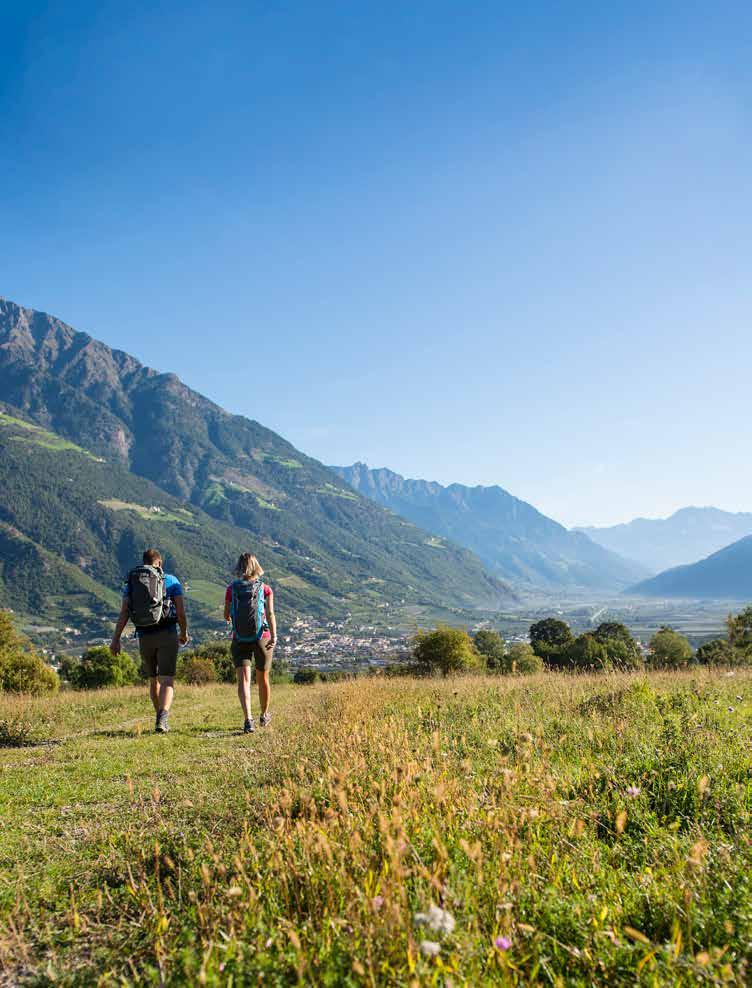
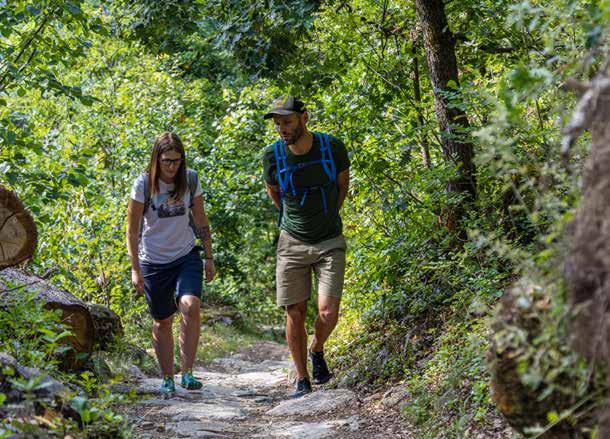
Saliamo sul Monte Sole percorrendo il sentiero n. 10, ma presto Robert lo lascia portandosi su un sentiero non segnato. Fluido e veloce come una freccia si muove attraverso il terreno e ho difficoltà a tenere il suo passo. Ora ci troviamo su uno di quei vecchi sentieri che per secoli hanno collegato i masi del Monte Sole con il fondovalle. Mentre alcuni di essi sono stati trasformati in sentieri escursionistici, altri sono quasi caduti nel dimenticatoio. I piedi si adattano al terreno, poggiano perfettamente sopra le pietre e le dita dei piedi cercano sostegno nella sabbia. Una sensazione emozionante.
A volte mi ritrovo consapevolmente in equilibrio sulle radici e mi arrampico sulle pietre per pura curiosità. Davanti a noi si erge un’impressionante cima di una collina nella foresta, ci sediamo e sento una leggera tensione nel mio polpaccio. Robert sorride contento.
The concept of the Five Fingers was also so revolutionary because it suddenly simply omitted everything that had been previously part of shoes to date – protection, spring suspension, and support. After several companies rejected the design, the Italian sole manufacturer Vibram ventured into the risky project and launched the first model on the market in 2005. In the USA, demand rose rapidly. “Americans are generally more open to new things, but as soon as the interest is there, they lose it again. The European market is more conservative, and grows more slowly but sustainably.” No wonder that the unexpected success caused a murmur in the conventional shoe industry. Nature probably knows what it does better than the usual sports shoe manufacturers.
We empty our coffee cups, grab our sports backpacks, and Robert says: “I know a place on the Sonnenberg Mountain.”
We climb up the Sonnenberg on path no. 10 and soon Robert branches off from the path to another, unmarked path. As smooth and fast as an arrow he moves through the terrain and I have trouble keeping up. We are now on one of those old paths that has connected the Sonnenberg farmsteads with the valley floor for centuries. While some of them have now been developed into hiking trails, others have almost fallen into oblivion. The feet adapt to the ground, falling perfectly over stones, while the toes seek support in the sand. It is an exciting feeling.
I sometimes catch myself consciously balancing over roots and climbing over stones out of pure curiosity for the feeling. In front of us a striking hilltop rises in the forest, so we sit down and I feel a slight pull in my calf. Robert smiles contentedly.
“Il mercato europeo è più conservatore, cresce più lentamente ma è più stabile”
“The European market is more conservative, and grows more slowly but sustainably.”
Anche oggi, dopo l’incontro con Robert, come ogni sera mi metto le scarpe da corsa. Oggi, però, faccio caso all’intersuola elastica, all’ammortizzazione e all’inserto per il tallone e al materiale siliconico per l’assorbimento degli urti. Sono al terzo chilometro, quando – come ho fatto al mattino – voglio superare con passo leggero una radice. Ma inciampo.
Attenzione: Rimanete sempre sui sentieri segnalati durante le vostre escursioni!
Like every evening I still put on my running shoes after the meeting with Robert. Today, however, I notice the description, reading from springy midsole and energetic cushioning, from the heel plug and silicone material for shock absorption. I am at kilometer 3, when I want to push myself - as in the morning – lightfooted from a root. I stumble.
Caution! Always stay on the marked hiking paths!
26 ossa, circa 30 articolazioni, 60 muscoli, piú di 100 legamenti e 200 tendini - il piede umano é un capolavoro, unico nella natura.
26 bones, around 30 joints, 60 muscles, more than 100 ligaments and 200 tendons - the human foot is a masterpiece, unique in nature.
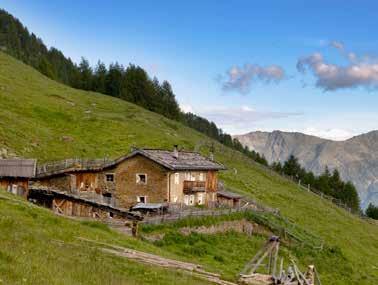
Un mondo a sé stante A little World of its own
Factsheet Parco Naturale Gruppo di Tessa Factsheet Texelgruppe Nature Park
1976
l’anno di fondazione del Parco Naturale Gruppo di Tessa Foundation of the Texelgruppe Nature Park
i Comuni compresi nel Parco municipalities included 8
92 km
31.391 ha
gli ettari di superficie, che lo rendono il più grande parco naturale dell‘Alto Adige the largest nature park in South Tyrol
97 m
3.300
di lunghezza dell‘Alta Via di Merano, che attraversa il Parco long is the Merano High Mountain Trail, which meanders around the nature park
i metri d‘altitudine della Cima Nera, la vetta più alta del Parco Hintere Schwärze Mountain, the highest peak in the nature park 3.624 m
il salto della cascata di Parcines The Parcines waterfall falls 97 m deep
Già nel 3.300 a.C. Ötzi si aggirava per il gruppo del Tessa, dimostrando così la precoce presenza dell’uomo in questa zona Ötzi already roamed through the Texelgruppe, thus proving the early presence of man in this area.
1897
Fino al 1897, il maso Eishof, a 2.070 m di altitudine, è stato l‘insediamento a più alta quota gestito tutto l‘anno. Until 1897, the Eishof farm, situated at an altitude of 2,070 m, was the highest settlement managed all year round.
sopra il livello del mare trovate la Chiesa
Monte San
1.245 m
above sealevel you find the Parish Church of Katharinaberg/ Monte San Caterina
Alla fine del XVII secolo lo stambecco fu sterminato, ma poté essere reintrodotto con successo.
At the end of the 17th century, the ibex was exterminated, but could be successfully reintroduced.
Parrocchiale
Caterina
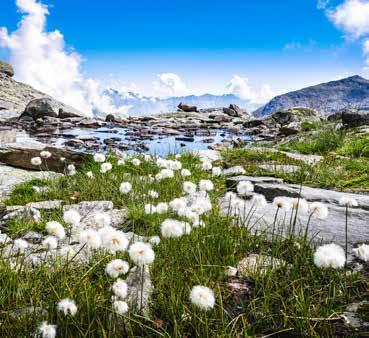
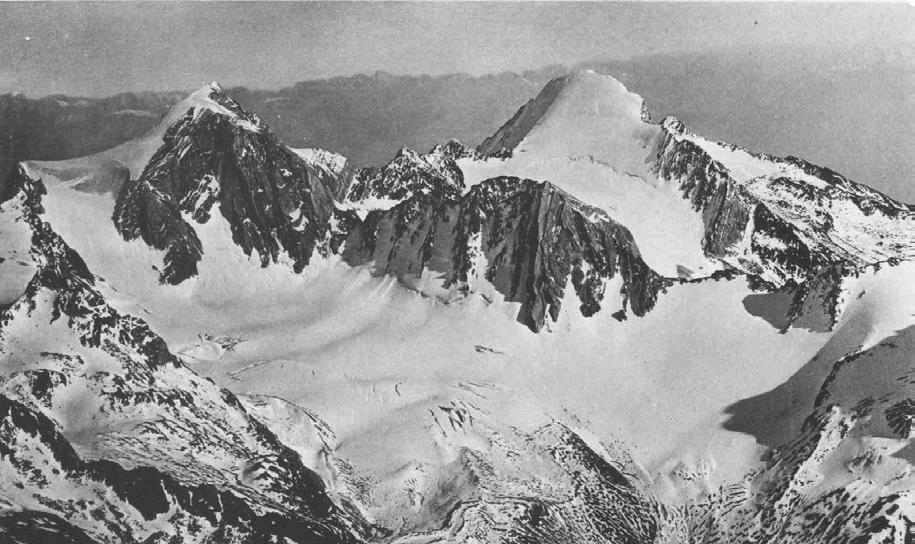
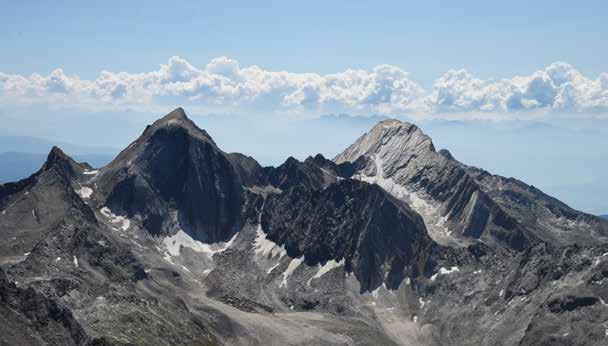
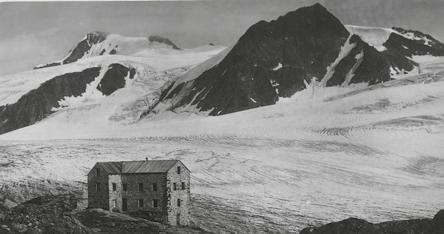
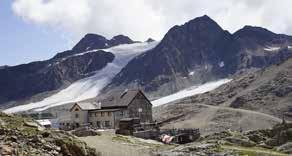
Lodner (Cima Fiammante) e Hohe Weiße (Cima Bianca Grande) nel Parco Naturale Gruppo di Tessa. Il ghiacciaio si è quasi completamente ritirato. The mountains around Lodner and Hohe Weiße. The former glacier has almost completely retreat.
Cime scure
Goodbye Glaciers
I GHIACCIAI SONO VIVI. SI MUOVONO, SI ROMPONO, SCORRONO, TRAVOLGONO E SI SCHIANTANO, SCOPPIANO E SI LAMENTANO. SONO SEMPRE STATI UN MONDO TUTTO PARTICOLARE: RUDE, PERICOLOSO E OSTILE ALLA VITA. ORA, PERÒ, SONO I GHIACCIAI STESSI CHE STANNO MORENDO.
Indipendentemente dal comportamento dell’uomo, metà della massa glaciale delle Alpi scomparirà entro il 2050. I ghiacciai non sono mai stati delle entità immobili e immutabili: sono cambiati in ogni epoca, sono cresciuti, si sono ridotti, si sono ripresi. Ma da qualche decennio, ormai, questo ciclo è stato interrotto: nessun ghiacciaio cresce più, perdono anzi la loro massa ad un ritmo allarmante.
Le estati calde e gli inverni spesso senza neve colpiscono anche i ghiacciai altoatesini, particolarmente sensibili a causa della loro posizione isolata e delle loro piccole dimensioni (a volte meno di 1 km²). Secondo gli attuali calcoli del Centro Ricerche Eurac di Bolzano, nel giro di pochi decenni i ghiacciai altoatesini si ritireranno ad un’altitudine di oltre 3.000 m e molti scompariranno completamente.
L’ampia Valle dell’Adige e le valli laterali ricordano come le massicce masse di ghiaccio dell’era glaciale abbiano lasciato sull’Alto Adige le loro tracce. Che strano che qualcosa di così potente si dimostri oggi così fragile.
GLACIERS ARE ALIVE. THEY MOVE, THEY BREAK, THEY FLOW, THEY GRIND AND CRASH, THEY BURST AND MOAN. THEY HAVE ALWAYS BEEN A WORLD BEYOND: ROUGH, DANGEROUS AND HOSTILE TO LIFE. BUT NOW THE GLACIERS THEMSELVES ARE DYING.
Irrespective of how mankind behaves from now on, half of the glacier mass of the Alps will have disappeared by 2050. The glaciers have never been static, and have changed throughout time. They grew, they shrank, they recovered again. But for some decades now this cycle has been disrupted: no glacier is growing any longer, and instead they are losing mass at an alarming rate.
The hot summers and now often snowless winters also affect the South Tyrolean glaciers, which are particularly susceptible to ice shrinkage due to their isolated position and small size (sometimes less than a square km). According to current calculations of the Eurac Research Centre in Bolzano/Bozen, South Tyrol’s glaciers will retreat to an altitude of over 3,000 m within a few decades, and many will disappear completely.
The wide Etschtal Valley, the wedge-shaped side valleys – they remind us of how large the effects of the glacier currents of the Ice Age were on South Tyrol. How strange that something so powerful is also so fragile in the end.
Il Guardiano The Guardian
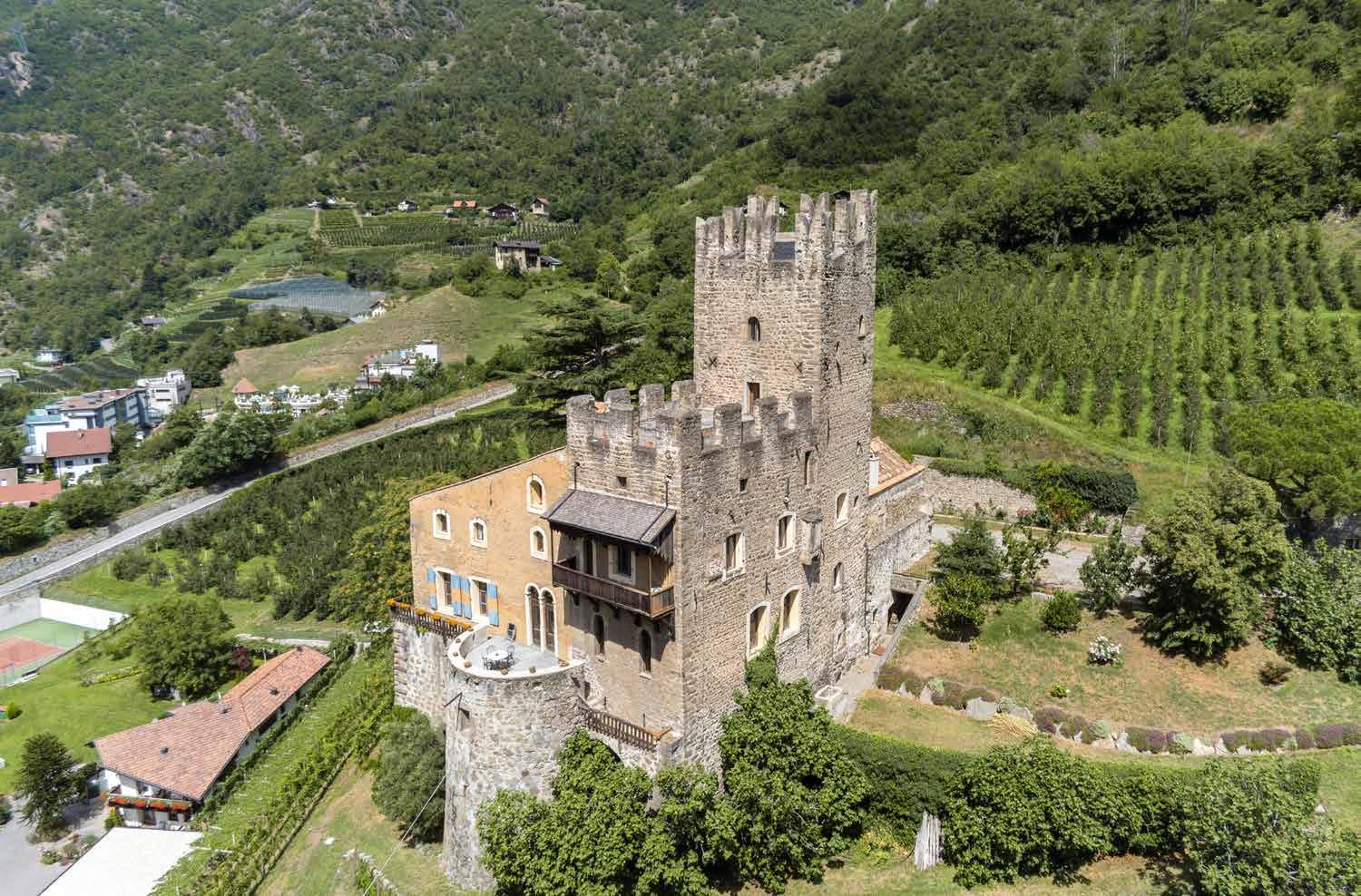
DA OLTRE 800 ANNI CASTEL NATURNO VEGLIA SUL
PAESE DI NATURNO. ECCEZIONALMENTE, PER IL
NATURNO MAGAZINE, ABBIAMO AVUTO IL
PERMESSO DI VISITARE QUESTO CASTELLO ANCORA OGGI ABITATO.
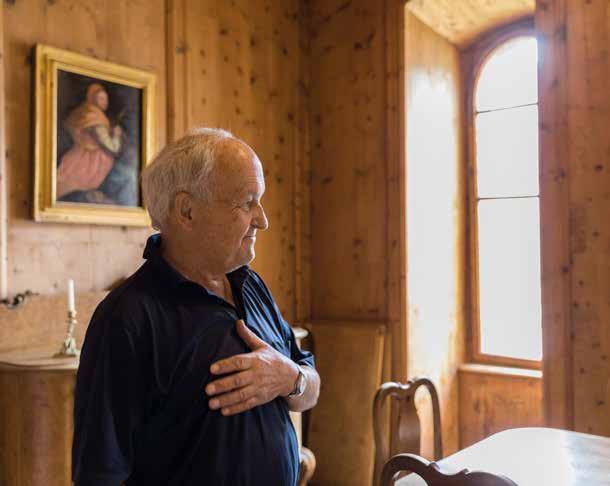
“I restauratori di vecchi castelli sono evidentemente folli”, scrisse il filosofo Karl Julius Weber. Quando arriviamo, Franz Gurschler è già di fronte all’ingresso del castello ad attenderci: ha un bel sorriso sulle labbra e sembra decisamente raffinato e colto, per niente folle. Gli rivolgo quindi la prima domanda: bisogna essere pazzi per vivere in un castello nel 2019? “Un po’ forse”, dice ridendo, mentre i suoi occhi si illuminano. “Le vie del castello sono lunghe, gli inverni freddi, l’umidità penetra e anche il più piccolo intervento edilizio deve essere approvato e la manutenzione è costosa. Un castello è una missione che dura una vita. Ma è una missione eccezionale”.
Quindi, attraverso una porta poco appariscente, entriamo in un altro mondo.
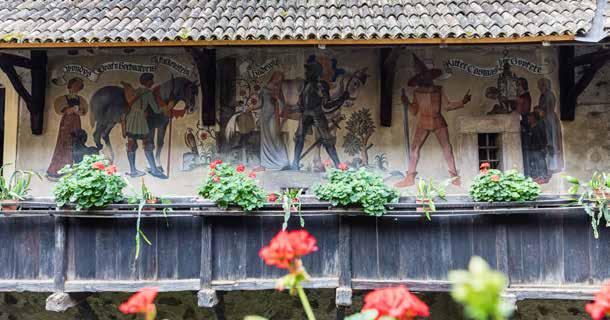
La nostra guida ci conduce oltre il ciclo di affreschi, una metà dell’affresco raffigura eventi storici come la Guerra Contadina Tirolese, l’altra metà è un estratto dalle saghe di Naturno, nelle sale e nelle stanze all’interno del castello. Attraversiamo le diverse stanze, il soggiorno, la stanza della Riforma, lo scrittoio e la camera del giudice, in cui venne convocato Michael Gaismair, il leggendario capo della rivolta contadina tirolese.
FOR OVER 800 YEARS, HOCHNATURNS CASTLE HAS SERVED AS THE GUARDIAN OF THE VILLAGE OF NATURNO/NATURNS. FOR THE NATURNO MAGAZINE, WE WERE ALLOWED TO TAKE A RARE LOOK INSIDE THE STILL-INHABITED CASTLE.
“All renovators of old castles are crazy,” wrote the philosopher Karl Julius Weber. On our arrival Franz Gurschler is already smilingly expecting us in front of the entrance of the castle and seems rather cultivated and actually not at all crazy. To be on the safe side, I ask again – do you have to be crazy to live in such a castle in 2019? “A little, maybe,” he laughs. “The hallways in the castle are long, the winters are cold, moisture seeps in, even the smallest intervention in the building’s fabric must be approved, and maintenance is costly. A castle is a life’s work. But a beautiful one.” And then we enter another world through an inconspicuous door.
He leads us past the fresco cycle, one half of the fresco depicts historical events such as the Peasants’ War, and the other excerpts from the mythology of Naturns, into the halls and rooms inside the castle. We walk through various rooms: the living room, the Reformation room, the writing room and the judge’s chamber, in which the trial of Michael Gaismair, the legendary leader of the Tyrolean Peasant War, was heard.
“Un castello è una missione che dura una vita.”
“A castle is a life’s work. But a beautiful one.”
“Una cosa del genere non sarebbe più concepibile oggi, la Soprintendenza non lo permetterebbe”
“Such a thing would no longer be conceivable today, the protection of historical monuments would not allow it”
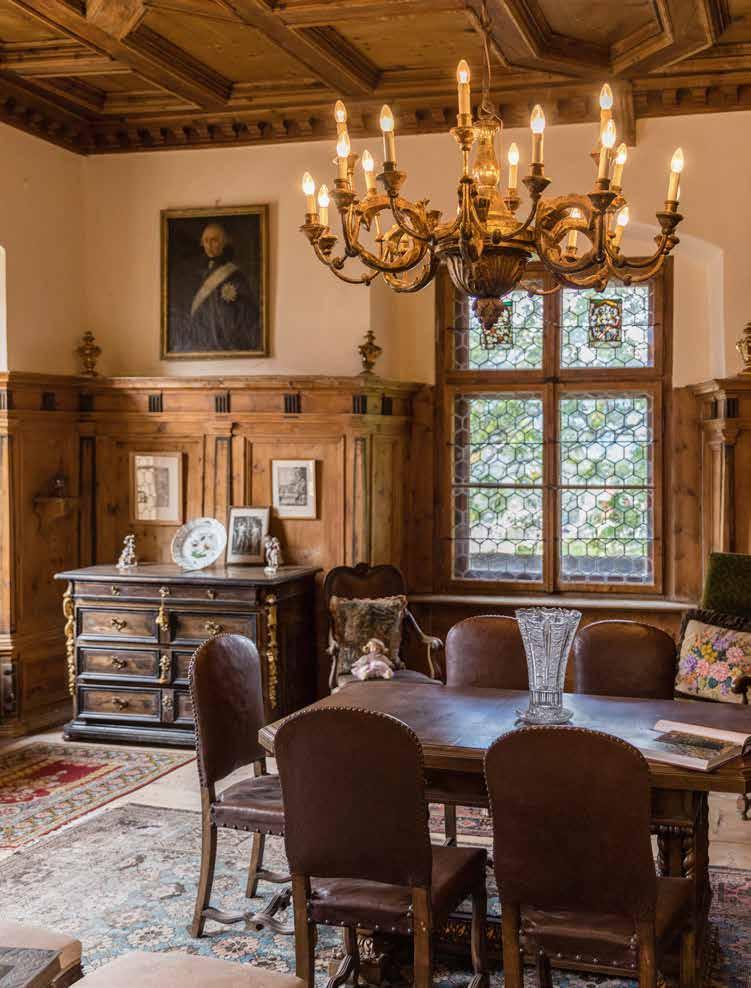
Le pareti rivestite di pannelli, i soffitti a cassettoni, le pesanti cassapanche, i dipinti che ritraggono i vescovi di Coira, che sembrano seguire con lo sguardo: si ha l’impressione di essere in un’altra dimensione temporale e ovunque si posino gli occhi il bello trionfa. Straordinario sono le finestre, ingrandite da Gottfried Georg Haas nel 19° secolo.
“Una cosa del genere non sarebbe più concepibile oggi, la Soprintendenza non lo permetterebbe”, spiega Franz Gurschler e aggiunge con un sorriso: “Certo, oggi siamo contenti delle grandi finestre. Nessun castello è forse così luminoso e inondato di luce come Castel Naturno.”
The rooms display panelled walls, coffered ceilings and heavy chests, while portraits of the bishops of Chur look down mildly upon visitors. It is as if you have fallen out of time, and no matter where you look, the view is beautiful. Above all the big windows are outstanding, enlarged decades ago by former owner Gottfried Georg Haas. “Such a thing would no longer be conceivable today, the protection of historical monuments would not allow it,” explains Franz Gurschler, adding with a smile: “Of course, we are happy about the large windows today. There is hardly a castle that is as bright and flooded with light inside as Hochnaturns.”
La famiglia Mastropaolo-Gurschler gestí il castello dal 1952 al 1992 come pensione.
The Mastropaolo-Gurschler family managed the castle from 1952 to 1992 as guesthouse.
XVI secolo century
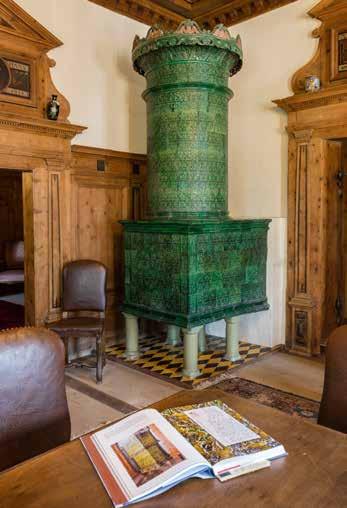
La stufa risale al XVI secolo ed é ancora funzionante, che la rende unica in tutta Europa centrale. The green tiled stove dates from the 16th century and is still fully functional, making it unique in Central Europe.
“Epoche e stili architettonici diversi si mescolano nell’architettura, e anche all’interno lo stile non è uniforme, ma espressione genuina del gusto dei proprietari passati.”
“Different epochs and styles are mixed together in the architecture, and even inside the castle’s appearance is not uniform, but rather an expression of past owners”
La combinazione di antiche tradizioni e vita quotidiana è notevole e conferisce al castello un’atmosfera speciale. Epoche e stili architettonici diversi si mescolano nell’architettura, e anche all’interno lo stile non è uniforme, ma espressione genuina del gusto dei proprietari passati. «Come se ogni generazione si incarnasse in qualcosa», sorride Franz Gurschler. La cifra della famiglia Mastropaolo-Gurschler, che gestì il castello dal 1952 al 1992 come pensione, si trova principalmente nella conservazione del complesso. In accordo con la Soprintendenza lavori di restauro sono progrediti nel tempo, fino a interessare il tetto in tegole.
Alla fine Franz Gurschler ci mostra il cuore del castello – una stufa di maiolica verde, «non ce ne sono altre di simili nell’Europa centrale». Cosa rende così speciale questo manufatto ce lo spiega il padrone di casa: «Questa stufa in maiolica risale al XVI secolo ed è ancora oggi perfettamente funzionante. È unica nel suo genere. Gli esperti sono venuti da ogni parte del mondo per ammirarla ed esaminarla”. Visto che è così speciale, la stufa non viene più accesa, con una sola eccezione: ogni 23 dicembre, il giorno del compleanno della signora del castello, anche nel XXI secolo, la stufa offre ancora un piacevole calore.
The mixture of ancient tradition and everyday life is noticeable and lends the castle a special atmosphere. Different epochs and styles are mixed together in the architecture, and even inside the castle’s appearance is not uniform, but rather an expression of past owners, “as if every generation would immortalize itself with something,” smiles Franz Gurschler. The Mastropaolo-Gurschler family’s handwriting, after managing the castle from 1952 to 1992 as a guesthouse, is to be found mainly in the preservation of the complex. Again and again parts were elaborately prepared and restored in consultation with the monument office, concluding with the tiled roof.
At the end Franz Gurschler shows us the heart of the castle – a green tiled stove, “unique in Central Europe.” But what makes it so special? The host explains: “This tiled stove dates from the 16th century and is still fully functional today. That is unique. Experts have come from all over to look at the stove and examine it.” And because it is so special, the oven is spared. With one exception: on 23 December, the birthday of the lady of the castle, the stove still creates a pleasant warmth.
La vita é bella
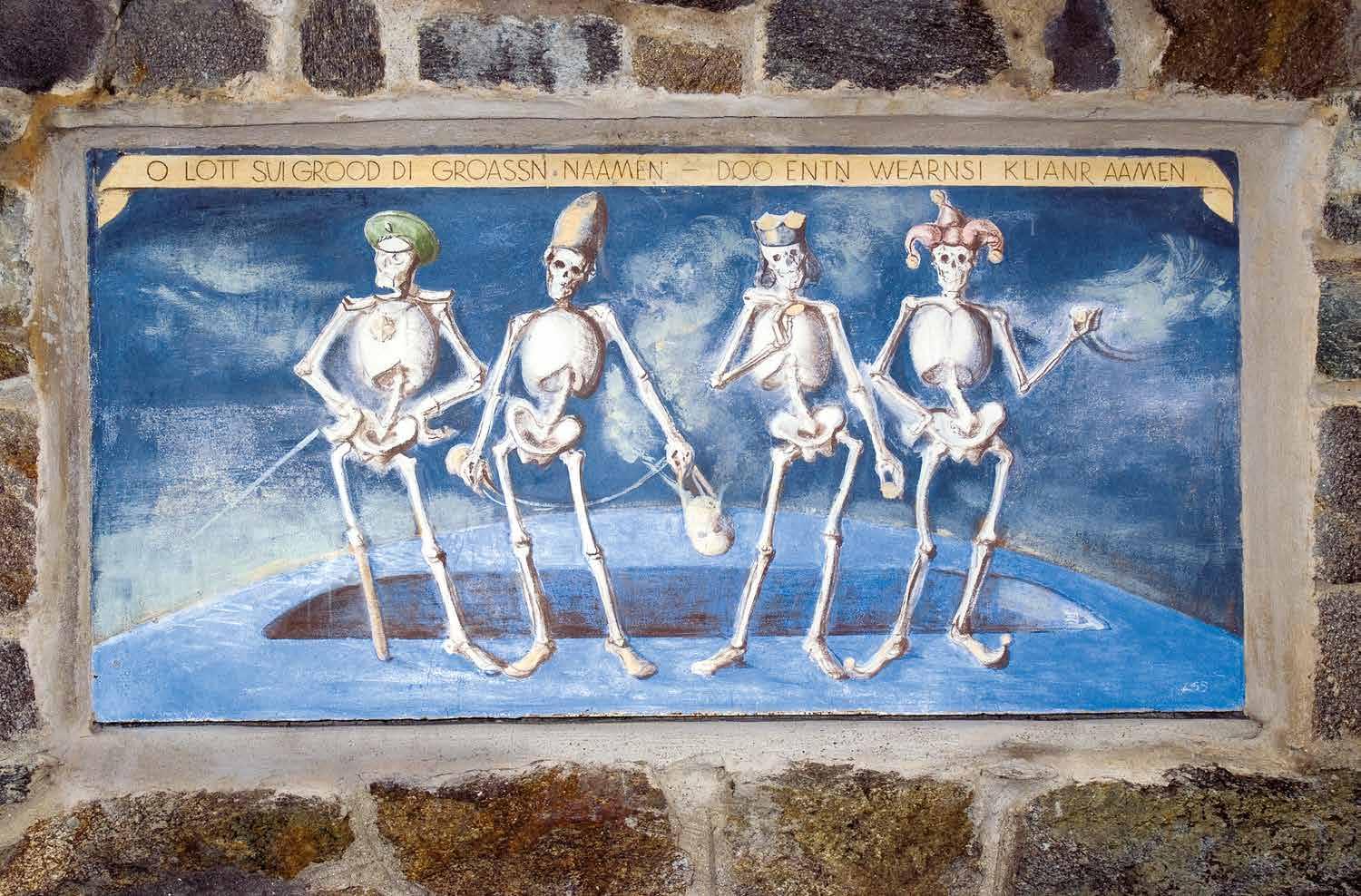
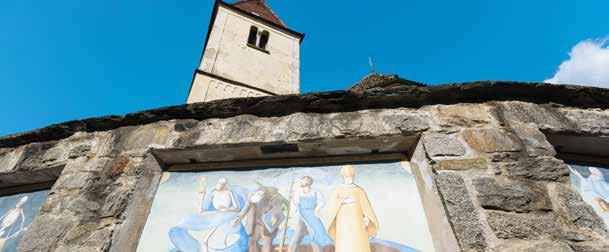
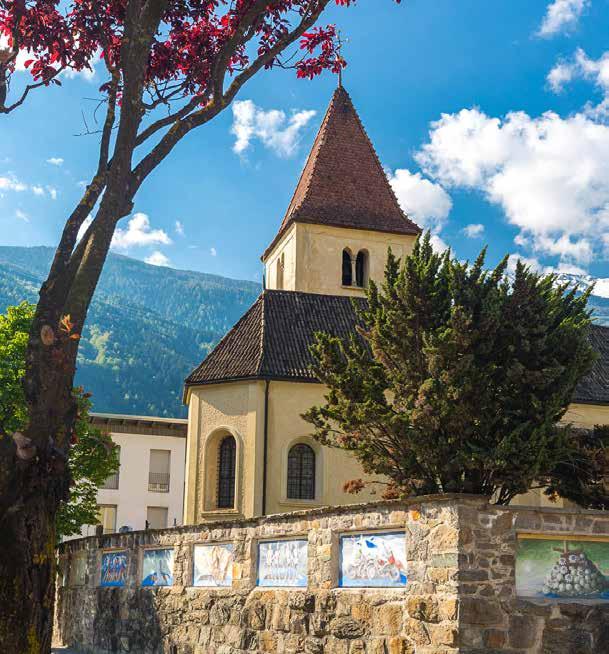
IL PENSIERO DI VISITARE LA DANZA MACABRA PUÒ
SEMBRARE DI PRIMO ACCHITO DEPRIMENTE. NEL 2001 L’ARTISTA VENOSTANO LUIS STEFAN STECHER HA
TERMINATO IL SUO LAVORO SUL MURO DI CINTA DEL CIMITERO PRESSO LA CHIESA DI SAN NICOLA, A PLAUS, DOVE UN TEMPO SI TROVAVA UNA ANTICA DANZA MACABRA.
In 18 pannelli colorati, per una lunghezza complessiva di 36 metri, Stecher mostra che la morte è la grande livellatrice: indipendentemente dall’età, dalla classe sociale o dallo status, ella invita tutti ad un ultimo ballo. Stecher usa spesso caratteri e personaggi tipici della Val Venosta: i famosi Kårrner, nomadi “autoctoni” che attraversano la valle con i loro carri, i contadini coi loro grembiuli blu o il motociclista in sella alla sua Harley-Davidson sul famigerato rettilineo di Plaus. Le impressionanti immagini sono completate da cartigli in dialetto venostano, che rimandano senza sosta e con ironia alla finitezza della vita. Cammino lungo il muro del cimitero, dietro di me un gruppo di bambini in bicicletta sfrecciano oltre, si sente il rumore delle tazze e il chiacchiericcio delle voci degli ospiti del bar. Poi succede qualcosa di strano: alla fine del tour la sensazione non è più deprimente, ma allegra. La vita è bella, godiamocela.
THE THOUGHT OF VISITING THE DANCE MACABRE IN PLAUS MAY AT FIRST SEEM GLOOMY. IN 2001 LOCAL ARTIST LUIS STEFAN STECHER FINISHED HIS DANCE MACABRE FRESCO ON THE OUTER CEMETERY WALL OF THE CHURCH OF ST. NICHOLAS IN PLAUS – IN PLACE OF THE ORIGINAL AND NO LONGER PRESERVED ONE.
Over 18 colorful panels, a total of 36 meters long, Stecher shows that death is the great equaliser: regardless of age, guild or status, it invites everyone to a final dance. Stecher often uses local traditional motifs: for example the famous “Kårrner”, regional nomads who travelled through the valley with their carts, or farmers in traditional blue aprons, or even motorcyclists on the infamous “Straight Road of Plaus”. The impressive pictures are complemented by banners written in local dialect, which relentlessly and ironically refer to the finiteness of life. I walk along the cemetery wall, while behind me a group of children whiz past on their bicycles. You can hear cups clattering and the babble of voices of the guests in the café. Then something strange happens: at the end of the tour the feeling is no longer depressing, but cheerful. Life is good, so let’s enjoy it to the full.
pannelli colorati, per una lunghezza complessiva di 36 metri, Stecher mostra che la morte é la grande livellatrice. colorful panels, a total of 36 meters long, Stecher shows that death is the great equaliser.
Il cuore ardente Heart on fire
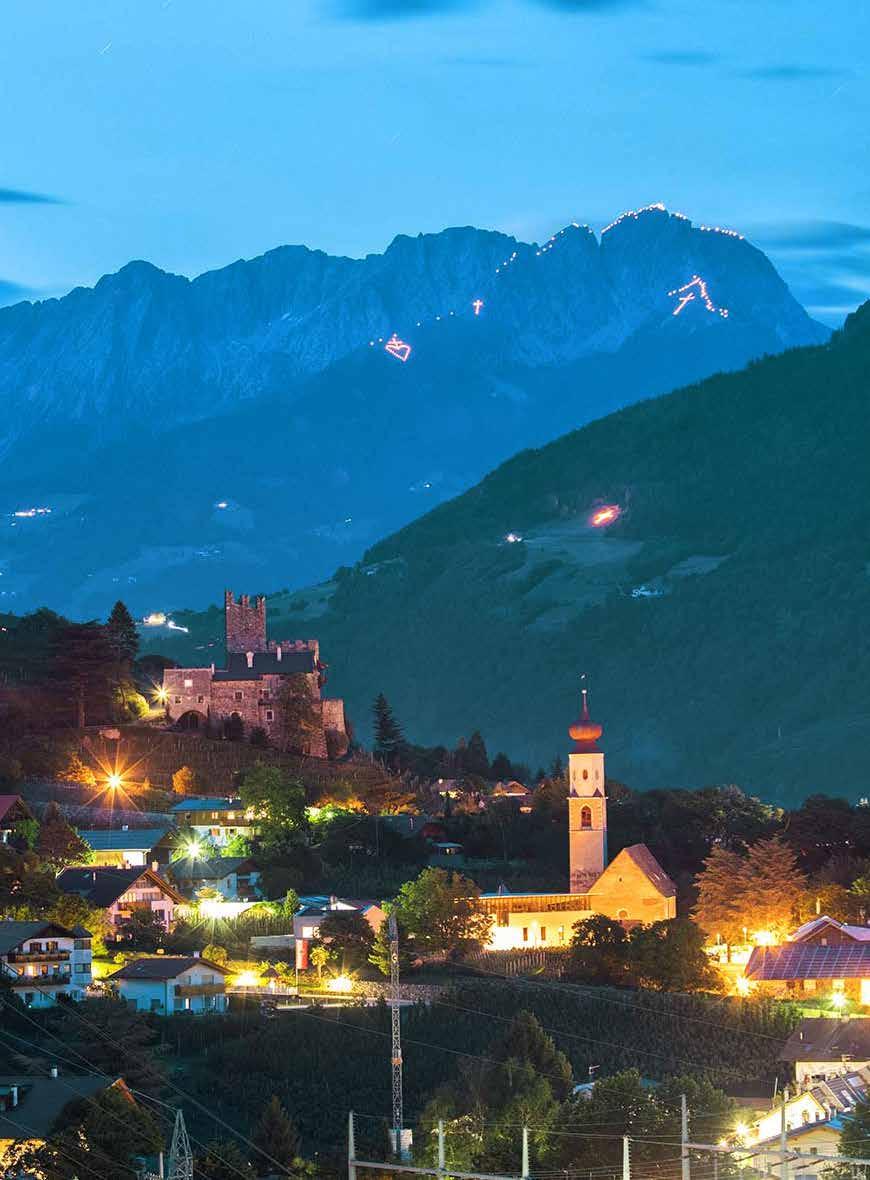
PIÙ DI 200 ANNI FA, NEL MEZZO DEL TUMULTO DELLE
GUERRE NAPOLEONICHE, IL POPOLO TIROLESE FECE
VOTO DI CELEBRARE L’ANNUALE FESTA DEL SACRO
CUORE SE IL TIROLO FOSSE USCITO INDENNE DALLA MINACCIA DELLA GRANDE ARMÉE.
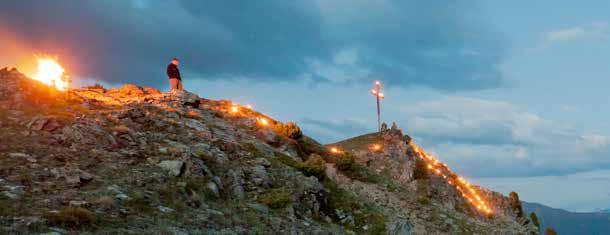
Contrariamente alle aspettative, i tirolesi riuscirono ad affermarsi contro le potenti forze francesi, tanto che ancora oggi mantengono il loro giuramento: ogni anno, la terza domenica dopo la Pentecoste, grandi processioni attraversano i paesi dell’Alto Adige, sulle case sventolano le bandiere rosso-bianche e la sera, sulle cime e sui pendii, vengono accesi i tradizionali fuochi dell’Herz Jesu, che in origine venivano accesi al solstizio e successivamente fuorono impiegati come segnali d’attacco. Una nota storica: i primi fuochi del Sacro Cuore accesi dopo la prima guerra mondiale e l’annessione dell’Alto Adige all’Italia crearono grande scalpore. I funzionari italiani, infatti, non conoscevano questa antica usanza tirolese e credettero all’inizio di una rivolta popolare. Tutti i militari e i poliziotti di stanza a Bolzano furono allertati, fino a a quando il mistero fu svelato.
MORE THAN 200 YEARS AGO, IN THE MIDST OF THE TURMOIL OF THE NAPOLEONIC WARS, THE TYROLEAN PEOPLE VOWED TO CELEBRATE THE ANNUAL SACRED HEART OF JESUS FESTIVAL IF TYROL CAME OUT OF THE THREAT UNSCATHED.
Contrary to expectations, the Tyroleans were able to assert themselves against the overpowering French forces, thus they still keep their oath today: Every year on the third Sunday after Whitsun large processions pass through the South Tyrolean villages, houses are flagged red-white and in the evening the traditional fires are lit on mountain peaks and slopes, which were originally lit at the solstice and later as an attack signal. By the way: The first Sacred Heart of Jesus fires after the First World War and South Tyrol’s annexation to Italy almost caused a scandal. The Italian officials were not familiar with this old Tyrolean custom and believed in the beginning of a popular uprising when the fires were lit. All soldiers and policemen stationed in Bolzano/Bozen were put on alert until the error was cleared up.
La mela
The Apple
Mitologia
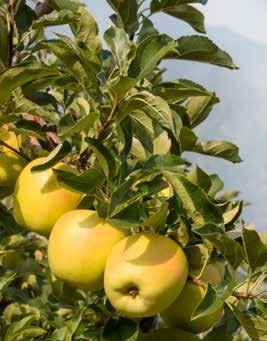
Nessun c‘è frutto più leggendario della mela: gli uomini hanno perso il paradiso biblico per una mela; gli dei nordici hanno mangiato mele d‘oro per ringiovanire; l‘aldilà dei Celti si chiamava Avalon, ovvero „paese delle mele“; il vincitore dei primi Giochi Olimpici ricevette in premio una mela e la mela imperiale è diventata il simbolo del potere assoluto.
Mythology
1
No fruit is as legendary as the apple: mankind lost the biblical paradise by an apple, the Nordic gods ate golden apples to rejuvenate themselves, the Celtic beyond, „Avalon“ means „apple country“, the winner of the first Olympic Games received an apple as prize and the imperial apple became the symbol of absolute power.
Clima
Il particolare microclima rende l‘Alto Adige naturalmente adatto alla coltivazione della mela: l‘altitudine ottimale, il clima asciutto e non troppo caldo e, soprattutto dalla fine dell‘estate, le forti escursioni termiche tra il giorno e la notte garantiscono una polpa croccante e un bel colore rosso. In Alto Adige, le mele vengono raccolte solo quando sono completamente mature.
Climate
2
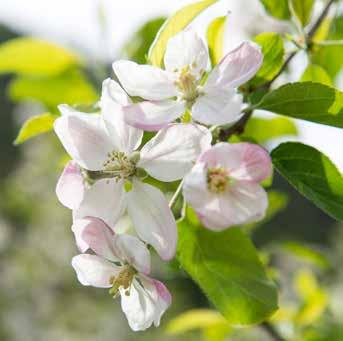
The special microclimate predestines South Tyrol for apple cultivation: optimal altitude, dry, warm, but not too hot, and especially from late summer high temperature fluctuations between day and night, which ensure a crisp fruit flesh and beautiful red color. In South Tyrol, apples are only harvested when they are fully ripe.
Fiori di ghiaccio e reti antigrandine
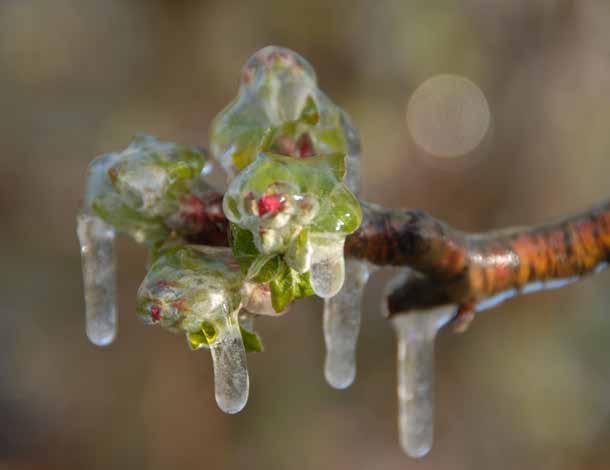
Non c‘è professione che come quella dell‘agricoltore dipenda dal volere della natura. Particolarmente temute sono le gelate in primavera e la grandine in estate. Gli agricoltori cercano quindi di proteggere le loro colture irrigando in occasione delle gelate primaverili, in modo da avvolge i delicati fiori del melo con un sottile strato di ghiaccio e quindi, paradossalmente, proteggendoli dal freddo. Laddove possibile, si installano temporanee reti antigrandine.
Ice Blossoms and Anti Hail Nets
3
Like no other, the farmer is dependent on nature in his profession. Frost in spring and hail in summer are particularly feared. These weather events can have a fatal and lasting effect on the crop yield for the year. Farmers therefore try to protect their crops: Frost irrigation in spring wraps the sensitive flowers in a thin layer of ice and thus – paradoxically – protects them from the cold. Where possible, hail nets are temporarily set up against hail.
Varietà
La prima menzione della coltivazione della mela in Alto Adige risale al 1507.
500 anni dopo, il 3% della superficie totale dell‘Alto Adige è utilizzato per la coltivazione della mela. In Val Venosta se ne coltivano 20 varietà diverse. Per mantenere la sua posizione di leader nel settore delle mele, l‘Alto Adige sta conducendo un‘intensa attività di ricerca sulle varietà del futuro.
Varieties
In 1507 apple growing was first mentioned in South Tyrol. 500 years later, 3 % of the total area of South Tyrol is used for apple growing, which has developed into one of the pillars of the South Tyrolean economy. 20 different varieties are cultivated in the Vinschgau Valley. In order to maintain its leading position in the apple industry, South Tyrol is intensively researching the varieties of the future. 4
Coltivazione
Nella coltivazione della mela dell‘Alto Adige, la maggior parte del lavoro è ancora fatto a mano, sia nella coltivazione integrata che in quella biologica. Entrambi si concentrano principalmente sulla forza della natura e sull‘equilibrio naturale tra organismo benefico e parassiti. Dove il parassita diventa dilagante o si diffondono malattie fungine, vengono utilizzati pesticidi selezionati e rigorosamente controllati. La differenza principale è che l‘agricoltore biologico non utilizza pesticidi chimici di sintesi e utilizza invece principi attivi naturali.
Cultivation
5
In South Tyrolean apple cultivation, most of the work is still done by hand –whether in integrated or organic cultivation. Both focus primarily on the power of nature and the natural balance between beneficial organism and pest. Where the pest becomes rampant or fungal diseases spread, strictly controlled, selected pesticides are used. The main difference is that the organic farmer does not use synthetic chemical pesticides and instead uses natural active ingredients.
La cooperativa frutticola Texel
340 soci a Naturno e dintorni consegnano il loro raccolto annuale alla cooperativa frutticola Texel, che, con i suoi 145 dipendenti, si occupa dello stoccaggio, del confezionamento e della commercializzazione dei raccolti annuali in più di 50 paesi.
6
The Texel Fruit Cooperative
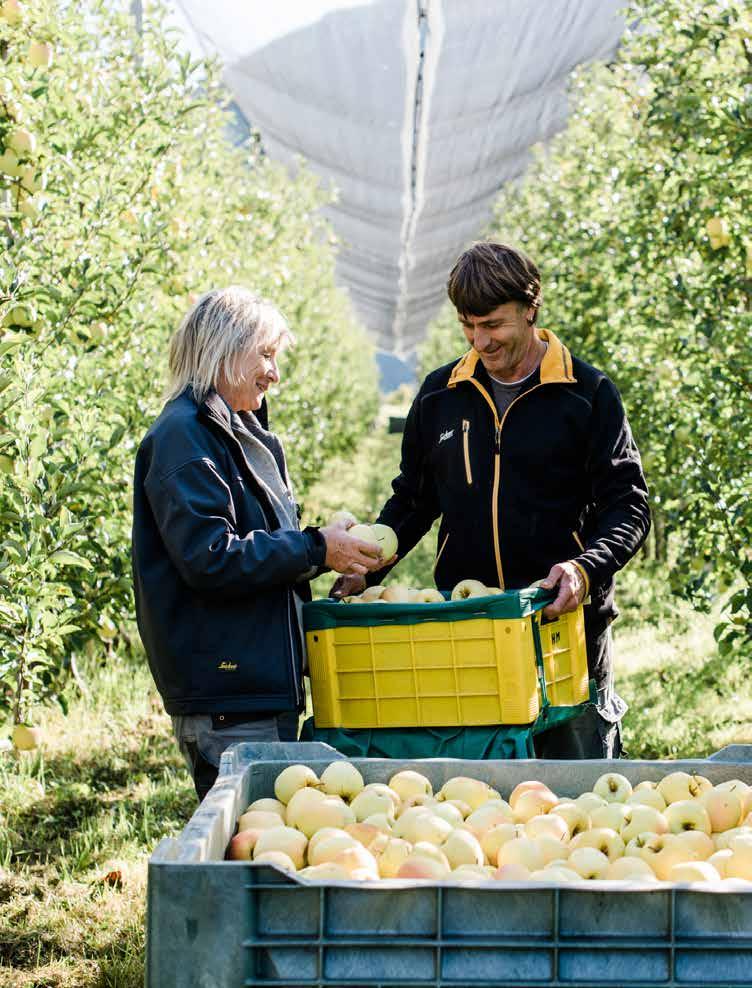
340 members in and around Naturno/Naturns deliver their annual harvest to the Texel Fruit Cooperative, which with 145 employees takes over storage, packaging and marketing of the annual yields. The apples are marketed in more than 50 countries.
Assolutamente da provare!
Try it!
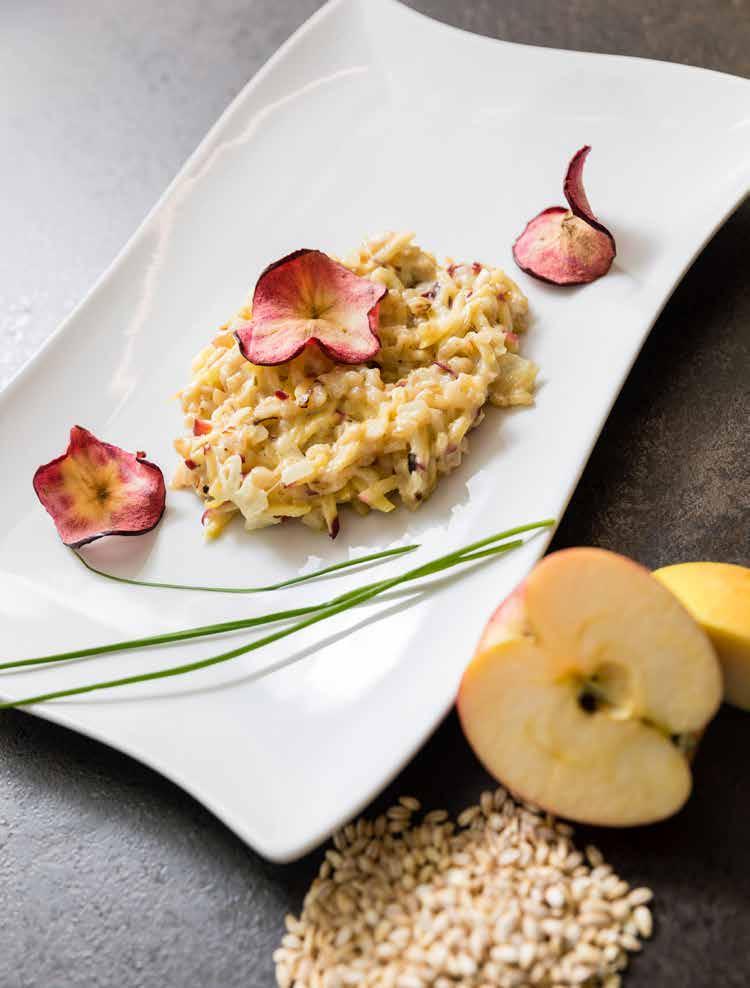
Orzotto alla mela
Ingredienti (per 4 persone):
½ cipolla bianca
2 spicchi d‘aglio
50 ml di olio d‘oliva
300 g di orzo
50 ml di vino bianco
1 l di brodo vegetale
1 mela rossa e 1 mela gialla
20 g di burro qualche fiore
un po‘ di panna
Parmigiano Reggiano anelli di mela essiccati per guarnire
Tritate finemente la cipolla e l’aglio e soffriggeteli in olio d’oliva. Unite l’orzo, tostatelo per qualche secondo e sfumatelo col vino bianco. Aggiungete il brodo vegetale a poco a poco e fate sobbollire per 40 minuti, mescolando di tanto in tanto. Nel frattempo, tritate finemente le mele e sofriggetele brevemente nel burro, spolveratele con un po’ di farina e glassatele con un po’ di panna. Aggiungete il composto di mela e panna all’orzo bollito e mantecate con il Parmigiano grattugiato. Impiattate e guarnite l’orzotto alla mela con pezzi di mela secca.
Apple Barley Risotto
Ingredients (for up to 4 people):
½ white onion
2 cloves of garlic
50 ml olive oil
300 g barley
50 ml white wine
1 l vegetable broth
1 red and 1 yellow apple
20 g butter some flower some cream Parmesan cheese dried apple rings for garnishing
Finely chop the onion and garlic and sauté in some olive oil, briefly roast the barley and deglaze with white wine. Add the vegetable stock gradually and simmer slowly for 40 minutes, stirring again and again. In the meantime, finely chop the apples and fry briefly in the butter, dust with a little flour and deglaze with a little cream. Mix the boiled barley and the apple-cream mixture and fold in the grated Parmesan cheese. Garnish the apple barley risotto on the plate with dried apple pieces.
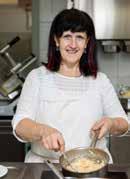
Lydia Fliri, nata nel 1963, gestisce la cucina della locanda Lint, sul Monte Sole di Naturno. Nei piatti che propone nella locanda di montagna dei suoi genitori cerca di reinterpretare gli ingredienti locali.
Lydia Fliri, born in 1963, runs the kitchen in her parents‘ mountain inn Lint on the Naturno Sonnenberg Mountain. As a cook, she tries to reinterpret local and traditional ingredients in her dishes.
Il sapore dellʼautunno The Taste of Autumn
QUANDO LE FOGLIE INGIALLISCONO E LE GIORNATE
SI ACCORCIANO, INIZIA IL PERIODO PREFERITO DAGLI ALTOATESINI: LA STAGIONE DEL TÖRGGELEN. QUESTA
USANZA SECOLARE VIENE ANCORA OGGI CELEBRATA ED È CONSIDERATA DALLA POPOLAZIONE LOCALE COME UNO SPECIALE MOMENTO DI CONVIVIALITÀ E
DIVERTIMENTO.
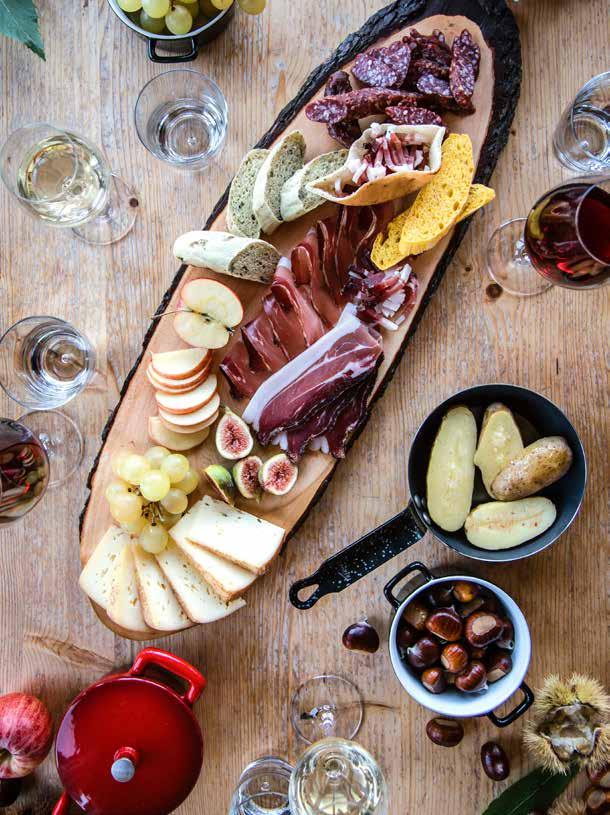
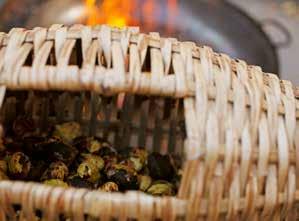
Il Törggelen nasce come appuntamento autunnale durante il quale i contadini, dopo la vendemmia, si ritrovavano per assaggiare il vino nuovo. Con il tempo, questa abitudine è diventata una vera e propria festa! Oggi come un tempo, durante il Törggelen si gustano vari sostanziosi piatti tipici accompagnati dal vino nuovo, come: zuppa d’orzo, Kaminwurz e formaggio di malga, crauti e canederli, würstel, carne affumicata, krapfen e caldarroste. Poiché il vino e le castagne sono considerati elementi principali del Törggelen, questa usanza si celebra soprattutto nelle zone dell’Alto Adige dove crescono castagni e viti.
WHEN THE LEAVES TURN YELLOW AND THE DAYS BECOME SHORTER, THE FAVORITE TIME OF THE SOUTH TYROLEANS BEGINS – THE TÖRGGELE SEASON. THE CENTURIES-OLD CUSTOM IS STILL CELEBRATED TODAY AND IS REGARDED BY THE SOUTH TYROLEANS AS A SPECIAL EXPRESSION OF CONVIVIALITY AND HAVING A GOOD TIME TOGETHER.
In its origins, the farmers visited each other after the harvest in autumn to taste the new wine – most of the time it became a party! Törggelen still serves all kinds of hearty food with the new wine today as it did then: Barley soup, Kaminwurze sausages and mountain cheese, dumplings with cabbage, sausages, smoked meat, doughnuts and roasted chestnuts. Since wine and chestnuts are considered the main components of Törggelen, this custom is found in South Tyrol mainly in the areas, where chestnut trees and vines grow.
Castagne e vino sono gli elementi principali del Törggelen.
Roasted chestnuts and wine are the main components of Törggelen.
Miss Riesling
Ms. Riesling
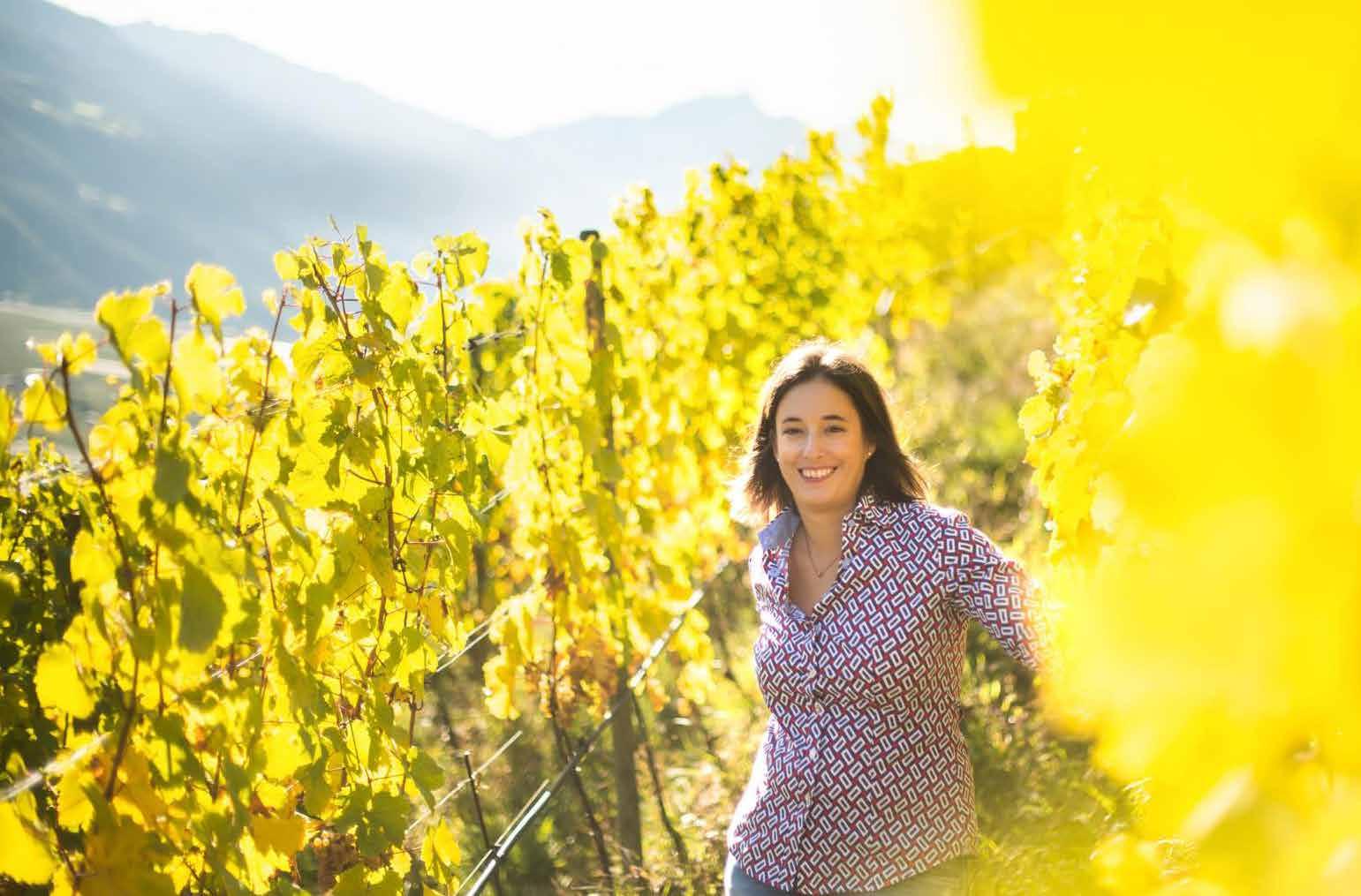
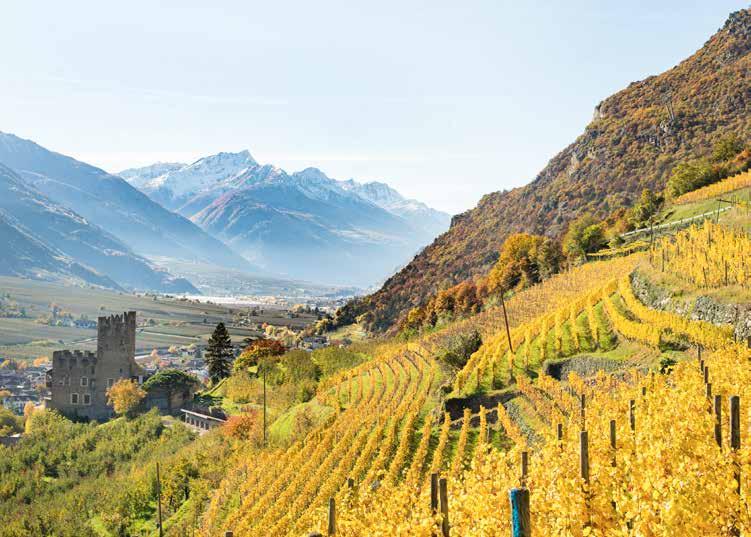
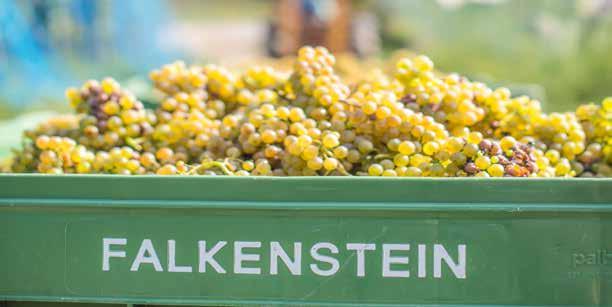
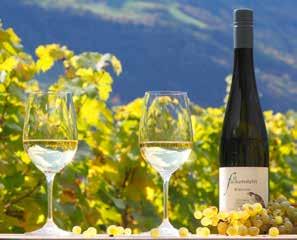
LA VISTA DAL VIGNETO FALKENSTEIN È MAGNIFICA, LE NUVOLE SI MUOVONO VELOCEMENTE SOPRA DI NOI, MENTRE DIETRO DI NOI I RIPIDI PENDII SVETTANO: FORSE CHE UN AMBIENTE COSÌ BELLO RENDA PIÙ
FACILE FARE UN VINO DAVVERO BUONO?
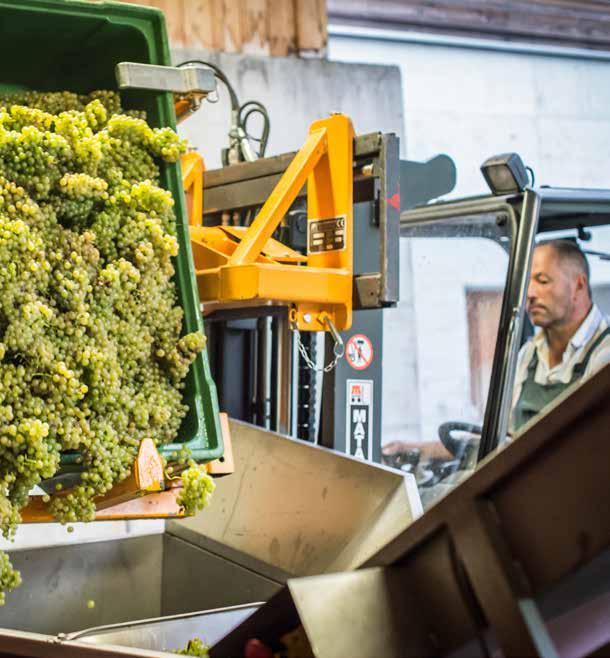
Nel vigneto c’è grande attività, la vendemmia è nel suo pieno. Tuttavia, la giovane vignaiola Magdalena Pratzner si prende del tempo per noi e ci racconta com’è essere una delle poche donne in un settore prevalentemente maschile, delle grandi sfide del futuro e del perché il tappo a vite sia così ingiustamente poco apprezzato.
Magdalena, cosa ti piacerebbe che i vostri clienti associassero al nome “Azienda Agricola Falkenstein”?
Magdalena: Qualità e un rapporto stretto con la natura. I nostri vini sono prodotti principalmente in vigna e devono riflettere le caratteristiche del terreno. In cantina interveniamo solo quando è veramente necessario. Per noi il vino è un prodotto naturale e nella natura dovrebbe essere creato. Alla base di tutto, ovviamente, c’è la passione: senza questa non si può arrivare da nessuna parte.
Tuo padre Franz Pratzner è considerato un pioniere del Riesling ed è stato addirittura insignito del famoso premio vinicolo Angelo Betti. Questo patrimonio ti mette sotto pressione o ti motiva? No, non sento pressione. Piuttosto, sono orgogliosa di ciò che i miei genitori hanno costruito e realizzato, e del fatto che si fidino di me per continuare questa attività. Per quanto riguarda il Riesling, mio padre ha quasi perfezionato il processo di vinificazione, tanto che posso imparare molto senza particolari incertezze. Per il resto discutiamo molto, ci parliamo e consigliamo. Questa è per me una fase di apprendimento e sono felice di poter contare sulle sue enormi conoscenze ed esperienze. Allo stesso tempo, egli rispetta le mie scelte.
WITH FAST-MOVING CLOUDS AGAINST A CRISP, BLUE SKY AND THE MOUNTAIN SLOPES RISING STEEPLY BEHIND US, THE VIEW FROM THE FALKENSTEIN VINEYARD IS SIMPLY BREATH-TAKING. IN SUCH A BEAUTIFUL SETTING, SHOULDN’T WINEMAKING BE THRIVING AROUND HERE?
Indeed, with the grape harvest in full swing the vineyards are bustling. Despite her heavy workload, winemaker Magdalena Pratzner, takes time off to tell us how she, as a female vintner, manages to operate in what is traditionally a male environment. She discusses the most important challenges of the future as she sees them, and why the screw cap is still frowned upon in some quarters.
Magdalena, how does the “Falkenstein Winery and Vineyard” resonate with wine aficionados?
Magdalena: Synonymous with high quality wines, the “Falkenstein” brand has a strong connection with Nature. Our wines are mostly produced in the vineyards, absorbing the nutrients of the soil in which the vine grows. We only intervene in the cellar when absolutely necessary. To us, wine is a natural product and should be largely created in its natural state. But the key to winemaking is: Passion. Without it, you won’t get anywhere.
Your father, Franz Pratzner, is considered a pioneer of Riesling wines and received the coveted “Angelo Betti” Italian award for viticulture. Do you feel that he’s set the bar too high or does his success inspire you?
No, I don’t feel any pressure due to his success. I’m proud of what my parents have achieved, and that they have entrusted me with their legacy. When it comes to Riesling, it’s true that my father almost perfected the process. This has taught me a lot and I don’t see a much room for much experimentation in the future. Everything is discussed among us and I receive plenty of advice. For me, it’s a continual learning process and I consider myself fortunate that I can fall back on my father’s extensive knowledge and experience. At the same time, he respects my decisions.
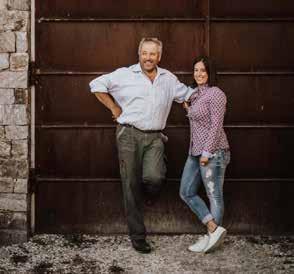
Magdalena e Franz Pratzner
Magdalena and Franz Pratzner
L’agricoltura e la viticoltura sono ancora mondi a prevalenza maschili e tradizionali. Da giovane donna, come percepisci questo?
Fortunatamente sono sempre stata trattato molto francamente e con rispetto. Ci sono sempre più tenute che vengono rilevate da figlie femmine, anche se è ancora una piccola percentuale. Siamo certamente ancora molto influenzati dalle tradizioni alpine in questa zona e una donna a capo di un’azienda agricola è ancora considerata un’eccezione. Nel resto d’Italia, invece, soprattutto in Piemonte o in Toscana, le donne agricoltrici sono diventate una cosa assolutamente normale. In Alto Adige c’è ancora un po’ di strada da fare. Quello che a molti non piace sentire è che le donne sono ora considerate delle degustatrici migliori (ride). Il cervello femminile sembra essere più sensibile agli aromi, ai sapori e soprattutto alle loro diverse sfumature. Questo naturalmente entra in gioco durante le degustazione, perché le donne hanno un gusto più sviluppato.
Cosa rende la viticoltura altoatesina speciale?
Ciò che rende unico l’Alto Adige sono i diversi microclimi e i diversi terreni che si trovano in uno spazio così piccolo. Questo rende possibile un’immensa diversità varietale, che non ho mai sperimentato in nessun’altra regione vitivinicola europea.
The world of agriculture and specifically viticulture, is still very traditional and male-dominated. As a young woman, how do you feel about it?
I’m actually treated with a lot of openness and respect. These days, more and more farms are taken over by women and daughters, though admittedly it’s still a small percentage of the total. In this part of the world, we’re still very influenced by Alpine traditions and an heiress is still regarded as something of an oddity. But in other parts of Italy, especially in Piemont and Tuscany, female farm managers are quite common and it’s nothing unusual. I’m sure there’s still scope for progress here in South Tyrol, though I can tell you that women are now considered better tasters and that seems to annoy some people (she laughs). The female brain seems to be more attuned to the different nuances of fragrances and aromas. This affects how one tastes, and women seem to be able to distinguish between a wider range than men.
What’s so special about South Tyrolean viticulture?
Throughout its small land mass, South Tyrol has a number of unique microclimates and different soil types. This creates a wide variety of conditions that I haven’t seen in any other European wine-growing region.
AZ. AGR. FALKENSTEIN
La viticoltura ha una lunga tradizione a Naturno, ma è stata la ricerca della qualità condotta da Franz Pratzner a collocare la città nelle carte internazionali dei vini. Nel 1989 Franz e sua moglie Bernadette si lanciarono nella rischiosa avventura di trasformare il loro frutteto in un vigneto. Il coraggio ha dato i suoi frutti: la famiglia Pratzner riempie ogni anno oltre 90.000 bottiglie di vino bianco e Pinot Nero, esportandolo in Europa, Asia e oltreoceano. Nel 2019 Franz Pratzner è stato insignito del più importante premio vinicolo italiano: il Premio Angelo Betti, che premia tutti quei viticoltori che hanno reso un servizio eccezionale alla viticoltura italiana e alla sua reputazione. Ha ricevuto il premio per il suo ruolo di pioniere del Riesling, che ha saputo far apprezzare questo tipico vino bianco tedesco in tutta Italia.
FALKENSTEIN WINERY
Though wine-making has a long tradition in Naturno/Naturns, it was Franz Pratzner’s drive to produce high-quality wines that placed it on the international winemaking map. In 1989, Franz and his wife, Bernadette, took the first step in that direction, converting what used to be an apple orchard into a vineyard. Today, with an annual production of over 90,000 bottles of whites and Pinot Noirs exported to Europe, Asia and elsewhere, their gamble has paid off handsomely. In 2019, Franz Pratzner received the “Premio Angelo Betti” premier Italian wine award, honouring winemakers who have made an outstanding contribution to viticulture in Italy. Franz Pratzner is recognised for his role as a pioneer of Riesling in Italy, bringing this typical German white varietal to wide social acceptance in the peninsula.
Oltre ai tuoi studi in Austria hai lavorato in cantine negli Stati Uniti, Australia, Francia e Italia. Cosa possono imparare i viticoltori altoatesini dai loro colleghi internazionali?
Potremmo imparare, soprattutto, a rilassarci un po’ (ride). A volte ci lamentiamo di cose per le quali i viticoltori italiani o americani, per esempio, alzano semplicemente le spalle. Dovremmo prendere un po’ esempio da loro. Spero che in Alto Adige si possa costruire una tradizione vitivinicola solida come altre in altre parti d’Europa. Sarà importante per noi riuscire a coniugare bene tradizione e innovazione. Molti giovani viticoltori raccolgono esperienze all’estero: questo andrà sicuramente a beneficio dell’Alto Adige.
Quali sono le sfide del futuro per la vostra generazione di viticoltori?
Personalmente credo che siano due le grandi sfide che occuperanno la viticoltura altoatesina. Per prima cosa, mantenere costante anche in futuro l’elevata qualità dei nostri vini. L’Alto Adige si è ritrovato catapultato quasi dal nulla sul mercato internazionale in brevissimo tempo. Mantenere questo livello sarà relativamente più difficile che costruirlo. La seconda sfida è rappresentata dal cambiamento climatico.
Following your studies in Austria you’ve worked in wineries in the USA, Australia, France and Italy. What can winemakers from South Tyrol learn from their international counterparts?
Most of all, I think we could learn to calm down a little (laughs). We sometimes complain about things that make Italian or American winemakers just shrug their shoulders. We should take things a bit more in our stride. Other than that, I believe we can build a winemaking tradition in South Tyrol as good as any other in Europe, combining tradition with innovation. Many young winemakers gain experience by working abroad, and this can only benefit winemaking in South Tyrol.
What are the main future challenges for your generation of winemakers?
I see two major challenges for South Tyrolean viticulture. First of all, I think that producing consistently high-quality wines will be difficult to sustain into the future. South Tyrol has come up from practically nowhere, bursting onto the winemaking scene in a very short space of time. Maintaining this high standard will be a lot more difficult than having gotten there in the first place. Climate change is sure to be another major challenge.
Falkenstein-Riesling è considerato uno dei migliori Riesling a sud delle Alpi..
Falkenstein-Riesling is considered one of the best Rieslings south of the Alps
I vigneti cambieranno?
Sì, tra le altre cose. Se le previsioni climatiche si avvereranno, non saprei dire, per esempio, se tra 30 anni ci saranno ancora viti Riesling alla tenuta Falkenstein. I vitigni si sposteranno sicuramente, salendo di quota, forse fino a 1.000 metri di altitudine. A causa degli inverni miti, gli insetti si diffonderanno molto di più e, oltre agli attuali parassiti, arriveranno anche nuovi parassiti, che spesso non hanno un antagonista naturale nel nostro paese.
Concludiamo con un dilemma da risolvere: tappo di sughero o tappo a vite?
I tappi a vite sono un must per il vino bianco. I vini bianchi invecchiano bene anche con i tappi a vite, ottenendo comunque una grande freschezza, che li rende davvero interessanti. Con vini rossi è più complicato. Se si vuole usare il tappo a vite è necessario prevedere in anticipo la maturazione, in modo che i tannini non rimangano troppo amari. Con il sughero, questi si degradano lentamente grazie allo scambio d’aria, con il tappo a vite ciò non avviene o avviene molto più lentamente. Ma il sughero è anche difficile da gestire: in certe circostanze, può privare il vino del suo aroma, ma il sapore sovratannico non è sempre chiaramente attribuibile al sughero. Questo è un problema per la gastronomia, per il sommelier e infine anche per noi viticoltori. Oggi, in tutto il mondo, manca anche del sughero veramente buono e questo probabilmente porterà ad un numero sempre maggiore di tappi a vite.
Do you think that grape varietals might change?
Possibly. If the climate forecasts are even mildly accurate, I couldn’t be sure if Falkenstein will still have Riesling vineyards in 30 years’ time. As grape varietals change, it will affect viticulture as it moves to higher altitudes, even up to 1,000 m. Insects and other pests will migrate alongside and propagate at higher altitudes during the mild winters. There’ll also be new kinds of invasive species around, without natural enemies to control them.
At the end of the day – will wine lovers stick to cork or will they have to accept screw tops?
For white wines, screw tops are now a must. Whites with screw tops age well, retaining freshness and that makes them really interesting. With red wines, it’s more complicated. If you wish to opt for screw tops, you need to be careful when removing air when corking so that the tannins aren’t too bitter. The bitterness slowly subsides through the exchange of air, but with the screw top that doesn’t happen or it happens much more slowly. But cork is also complicated: under certain circumstances, it can deprive the wine of its aroma, though the taste of the skin isn’t always evident due to the cork. This is problematic for those working in gastronomy such as sommeliers, as well as for us winemakers. Really good quality cork is in short supply worldwide and this alone will probably lead to the proliferation of screw tops.
Dai 12 ettari di superficie vitata annualmente si ricavano circa 90.000 bottiglie di vino.
90.000
The grape vines extend over an area of twelve hectares, producing around 90,000 bottles per year.
In discesa Downhill
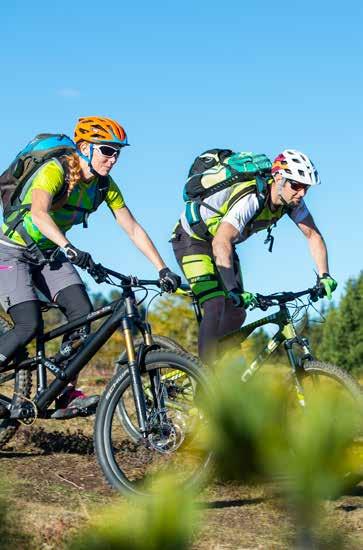
Raccontaci -Having a word with... Klaus Nischler, MTB Guide
IL FATTO CHE NATURNO SIA OGGI UNA DELLE MIGLIORI
DESTINAZIONI ALTOATESINE PER GLI AMANTI DELLA MTB È IN GRAN PARTE DOVUTO A KLAUS NISCHLER, NATO NEL 1980.
Di formazione falegname, Klaus gestiva la pista da bowling di Naturno insieme a suo padre, fino a quando, dieci anni fa, cercò di professionalizzare la sua grande passione per il ciclismo. Formatosi come guida MTB a Bolzano, ha cominciato a pubblicizzare i suoi primi tour – in principio due, poi tre volte alla settimana –con dei semplici volantini. Oggi è il boss della Ötzi Bike Academy, un‘impresa che comprende: un negozio di biciclette, un noleggio, 16 guide, 25 hotel partner e oltre 20 tour guidati alla settimana per tutte le esigenze.
Forza muscolare o trazione elettrica?
A me piace ancora scalare la montagna con le mie forze, ma il pubblico va decisamente in direzione delle e-bike. Questo ci dà l’opportunità di permettere ad un pubblico più ampio di partecipare ai nostri tour, compresi quelli in montagna. Il piacere è assolutamente in primo piano!
La tua sosta preferita per ricaricare le batterie per la prossima salita?
Al maso Bandhof, gustando i loro prodotti! Qui troverete solo succhi di frutta naturali, formaggi e insalata dell’orto di questo maso.
Qual è il tuo modo preferito di rilassarti dopo un tour in bicicletta?
Standomene a gambe all’aria su una bella terrazza soleggiata, gustando un buon gelato.
Quale sentiero di Naturno credi sia imperdibile?
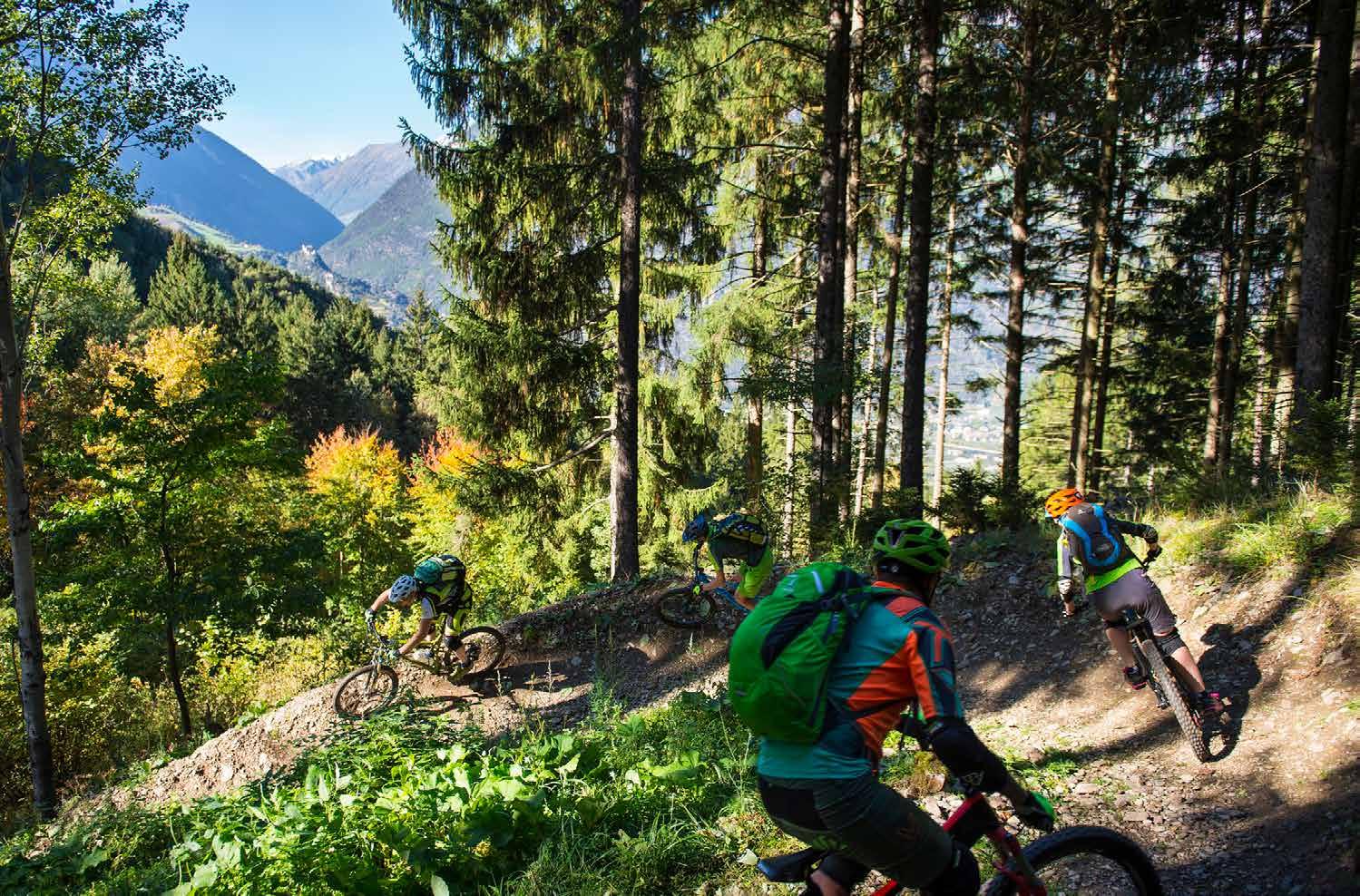
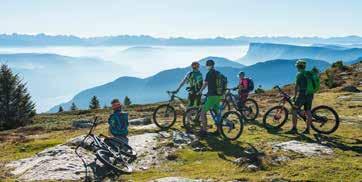
L’Ötzi Trail dalla malga Mauslochalm ha tutto ciò che il cuore di un ciclista può desiderare! Prima si presenta con un bel terreno forestale, poi diventa più tecnico e infine offre un bel “dessert”: l’Ötzi Flow Trail.
NATURNO’S RISE TO ONE OF SOUTH TYROL’S TOP MTB DESTINATIONS IS LARGELY THANKS TO KLAUS NISCHLER, WHO WAS BORN IN 1980.
A qualified carpenter, Klaus ran the Naturno/Naturns bowling alley together with his father until ten years ago. He then stuck his neck out and tried to start making a living from his main love: mountain biking. After training in Bolzano/Bozen as an MTB tour guide, he distributed flyers advertising his first tours, which were initially two and later three times a week. Today he heads the Ötzi Bike Academy, which includes a bike shop and rental outlet, a team of 16 MTB guides with a busy schedule of 20 guided tours per week at various proficiency levels and with 25 partner hotels.
Do you prefer leg power or electric drive bikes?
I still like to climb the mountain powered by my own muscles, but the trend out there is definitely towards e-bikes. We can cater to a much wider customer base, taking all kinds of people into the mountains. In the end what matters most is to enjoy it!
What’s your favourite rest stop before attempting the next climb?
I like the Bandhof Inn with its in-house produce! They serve natural juices, cheese from their own dairy and salads grown on their farm.
After a ride, what’s your favourite way of relaxing?
I like to put my feet up on a sunny terrace, with a good ice cream!
Which do you think is the best trail in Naturno?
The Ötzi Trail that leads from the Mauslochalm mountain pasture has everything a MTB biker could wish for! It runs through a forest and then becomes more technical before hitting the Ötzi Flow Trail, which is the main attraction.
Ötzi Bike Academy
La Ötzi Bike Academy è il posto giusto per chi vuole concentrarsi completamente sulla bicicletta. Fondata nel 2006 da Klaus Nischler, è diventata in breve tempo il centro di riferimento assoluto per tutti gli amanti della bicicletta ed è oggi anche la più grande scuola di ciclismo dell’Alto Adige. Grazie a tour guidati quotidiane, corsi tecnici, negozi, noleggio e officine, ÖBA è il primo punto di contatto per tutti biker e i ciclisti da strada. Il cuore dell’accademia è la Technique Training Area, immersa nel bosco di conifere ai piedi del Monte Tramontana: qui è possibile migliorare le competenze tecniche e raggiungere una maggiore sicurezza sulla bicicletta.
If your interest is cycling/biking, you need look no further than the Ötzi Bike Academy (ÖBA). Founded by Klaus Nischler in 2006, it rapidly grew into the ultimate one-stop biking centre and is now the leading cycling/biking school in South Tyrol. Its daily professionally-supervised guided tours, technical courses, sales & rental outlet and maintenance workshop makes the ÖBA a key reference point for all bikers and racing cyclists in South Tyrol. At the heart of the ÖBA is the Technical Training Area located in a pine forest on the Nörderberg Mountain, whose main purpose is honing down the technical and safety skills of bikers/cyclists.
Con la MTB sulla Monte Tramontana
Biking on Monte Tramontana
Seespitz
Naturnser Hochwart
Naturno, ormai, puó vantare la sua fama in Alto Adige anche come meta ideale per la mountainbike
Naturno is one of South Tyrol’s newest MTB destinations, but has so much variety to offer that it has caught up with the front-runners.
Hoher Dieb Rauher Bühel
Naturnser Alm
Jocher
Aschbacher Hof
Family-Tour
Unterobereben
Mausloch Alm Tablander Alm
Zetn Alm
Stuanbruch Trail Ötzi-Trail
Uphill Vigiljoch
RABL À BIRCHBERG
Bike Highline Merano
MONTE TR AMONTANA
PARTSCHEILBERG
Uphill Naturnser Alm
Waldschenke
Lupo-Trail
Tombergeralm
Tarscher Joch
Tarscher Alm
Latscher Alm
Tarscher-Almtrail
Freiberger Alm
Marzoner Alm
Alm
Niedermairhof
Uphill Tablander Alm Uphill Marzoner Alm
LACINIGO
CASTELBELLO
Castel
Castelbello
Uphill Marzoner
Seggiovia
RoatbrunnTrail
Questione
di cifre Numbers, please!
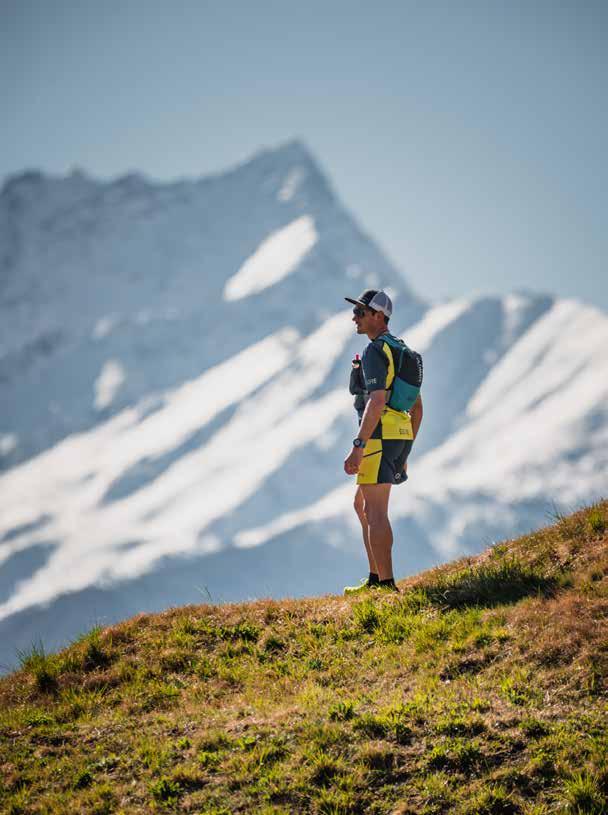
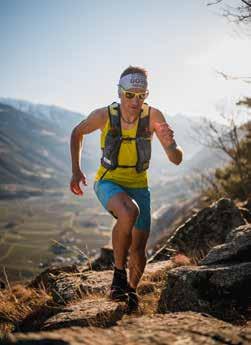
DA RAGAZZINO DANI JUNG INSEGUIVA LE MUCCHE SULL‘ALPEGGIO DEL NONNO, OGGI È LUI AD ESSERE INSEGUITO DAI MIGLIORI TRAIL RUNNER DEL MONDO.
Essendo uno degli ultra trail runner di maggior successo, Dani percorre distanze di oltre 100 chilometri, superando spesso migliaia di metri di dislivello. Dani Jung, classe 1983, vive e si allena a Naturno.
AS A LITTLE BOY DANI JUNG CHASED AFTER THE COWS ON HIS GRANDFATHER‘S MOUNTAIN PASTURE – TODAY HE IS FOLLOWED BY THE WORLD‘S BEST TRAIL RUNNERS.
As one of the most successful ultra trail runners, he runs distances of over 100 kilometers, often overcoming thousands of meters in altitude. The boy from Naturno/Naturns only came to this sport by chance, but from the beginning he was able to hold his own against experienced professionals and even set course records.
Metri di dislivello per stagione?
Peso: Your weight: 69 kg
Altezza: Your height:
1,74 m
How many vertical meters do you do in one season?
150.000
6 - 10 11
3.500 Quanti chilometri?
How many chilometers?
Quante scarpe da corsa consumi in una stagione? How many running shoes do you wear out in a season?
Tempo di avventura Adventure Time
ESCURSIONI
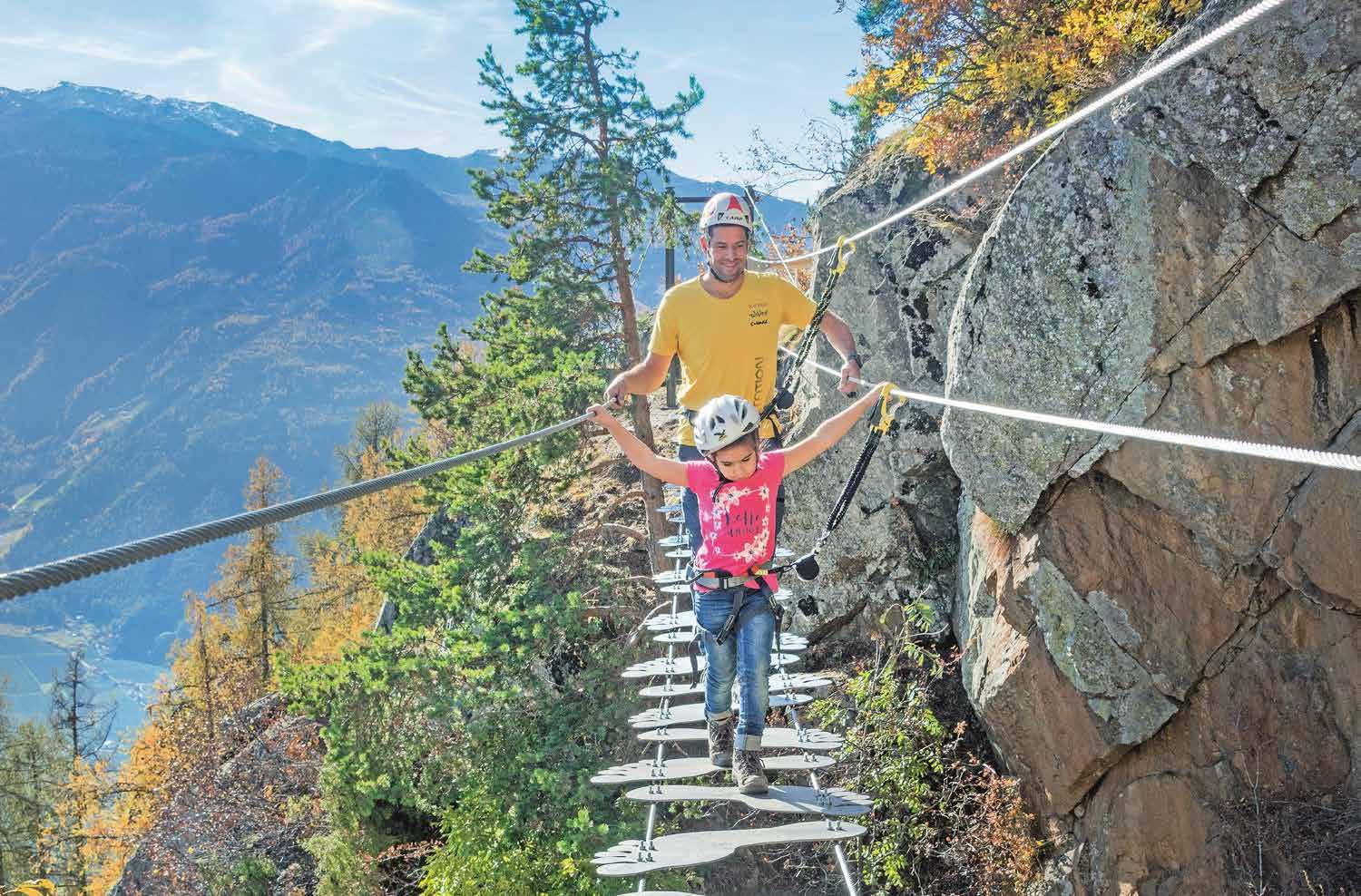
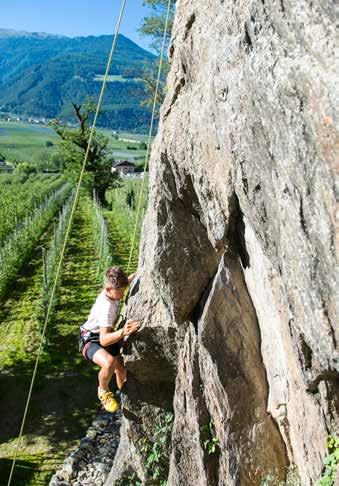
Le numerose possibilità di escursioni offerte da Naturno, stuzzicano il desiderio di stare all’aria aperta: la funivia Unterstell, il Parco Naturale Gruppo di Tessa o le escursioni con soffici lama. Se volete fare i veri alpinisti, potrete mettere alla prova il vostro coraggio sulla via ferrata Knott o nella palestra di roccia Juval
CICLISMO
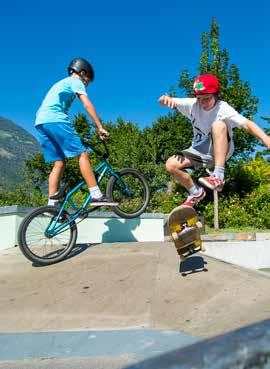
Volete provare qualcosa di diverso dalle solite escursioni lungo i sentieri nei boschi? Provate con la mountain bike! Prima di avventurarvi sui sentieri, potrete migliorare la vostra abilità sulla mountain bike con le guide della Ötzi Bike Academy presso l’MTB Technology Park.
RAFTING
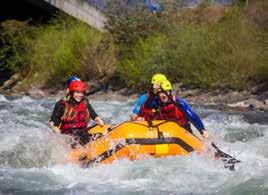
Le estati a Naturno sono calde e il modo migliore per rinfrescarsi è cimentarsi con il rafting sull’Adige o sul Passirio. Chi ha provato a sedere assieme ad altri in un gommone e ha combattuto contro la forza primordiale dell’acqua, non potrà dimenticare questa emozionante esperienza.
PERCORSO PER TIRO CON L’ARCO 3D
Quale miglior esercizio di consapevolezza del tenere un arco in mano, incoccare una freccia e rivolgere i propri pensieri al bersaglio? A Monte S. Catarina e Maso Corto si tengono corsi di tiro con l’arco in 3D, perfetti per testare il vostro talento di arceri.
FLYING FOX
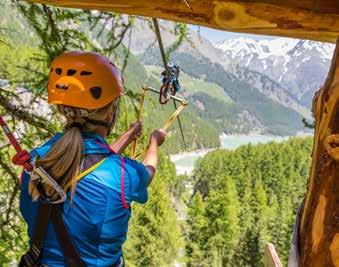
Il parco avventura Ötzi Rope Park di Vernago vi attende con una nuova attrazione: il Flying Fox! Con questi scivoli a corda - il più lungo è lungo 700 metri – potrete volare come uccelli, attraversando il bosco e sorvolando l’acqua.
HIKING
Taking to the outdoors comes spontaneously in Naturno/Naturns. You can rely on the efficient Unterstell cable car to take you up into the heights of the Texelgruppe Nature Park, with its numerous hiking trails. Or maybe you’d rather fancy an excursion on a fluffy llama?
BIKING
I f the idea of hiking along the forest trails seems too boring, then why not head out on a mountain bike? Before the trip, you can hone down your skills at the Ötzi Bike Academy supervised by professionals at the MTB Technology Park.
RAFTING
Summers in Naturno can reach surprisingly high temperatures and rafting on the waters of the Etsch and Passer rivers is probably the best way to cool down. Squeezing into a rubber dinghy in a group and fighting the elemental force of the river current is a memorable experience!
3D ARCHERY RANGE
With a bow in one hand and an arrow in the other, there’s nowhere better to do this than at the 3D Archery Range where your concentration is entirely focussed on the target. Test your hunting skills on the 3D archery ranges in Monte San Caterina/Katharinaberg and Maso Corto/Kurzras!
FLYING FOX
With its a 700 m long rope slide, the highlight of the new high-rope course at the Ötzi Rope Park in Vernago/Vernagt is the “Flying Fox”. You can sail above the ground, over the forest and across the water like a bird (or a flying fox).
Imperiale! An Imperial Past
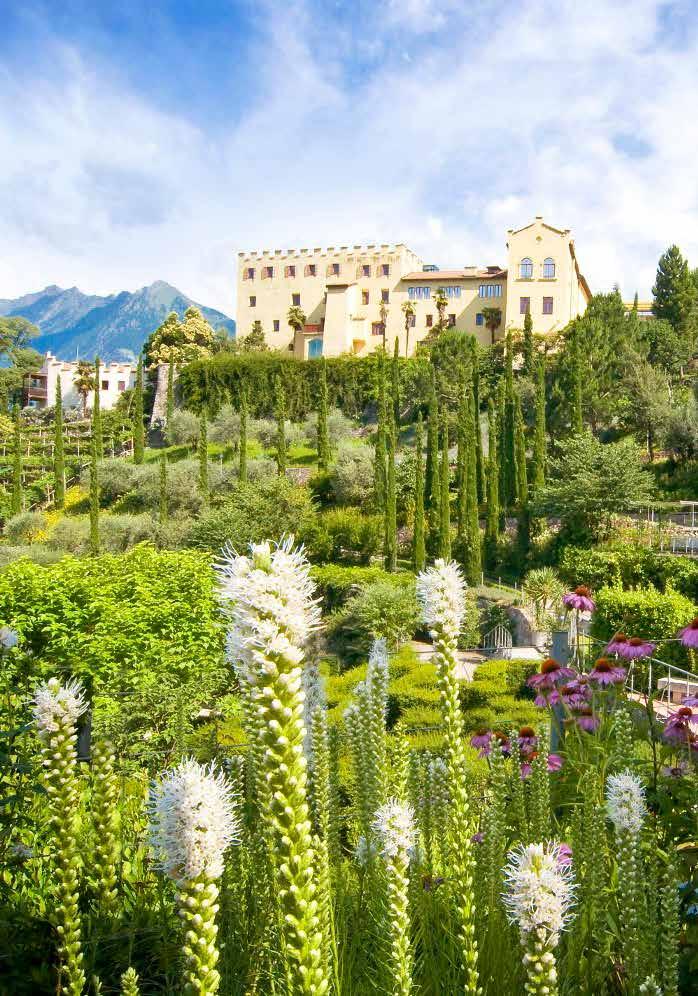
I GIARDINI DI CASTEL TRAUTTMANSDORFF SONO IL
FIORE ALL’OCCHIELLO DI OGNI VACANZA IN ALTO ADIGE. IN UN ANFITEATRO NATURALE SONO RACCOLTI
OLTRE 80 DIVERSI PAESAGGI NATURALI E CULTURALI,
DIVERSI GIARDINI TEMATICI E NUMEROSE STAZIONI
ARTISTICHE E D’AVVENTURA.
E, come se non bastasse quanto è ospitato in questo complesso di 12 ettari, Trauttmansdorff ha anche una magnifica vista su Merano.
A proposito: Sissi, l’imperatrice Elisabetta d’Austria-Ungheria, amava Merano e soprattutto Trauttmansdorff. Nel 1870 si recò per la prima volta nella città del Passirio viaggiando sulla nuova ferrovia del Brennero in incognito, se così si può dire, visto che l’accompagnava una corte di 102 persone. Trascorse otto mesi a Castel Trauttmansdorff, che fu arredato così splendidamente soprattutto per il suo arrivo. La presenza di Elisabetta e, soprattutto, il rapido recupero della figlia malata Marie Valerie, furono i motivi per cui Merano divenne la città termale più popolare tra i nobili e i ricchi d’Europa.
WITH MORE THAN 80 NATURAL AND CULTURAL LANDSCAPES, INCLUDING THEMED GARDENS AS WELL AS ART AND ADVENTURE INSTALLATIONS, A VISIT TO THE TRAUTTMANSDORFF CASTLE GARDENS IS DEFINITELY ONE OF THE HIGH POINTS ON A HOLIDAY IN SOUTH TYROL.
Besides the spell-binding tour of the 12-hectare castle complex, there’s also a magnificent view over the spa town of Merano/Meran.
Oh, by the way: The former Austro-Hungarian Empress (Elisabeth, nicknamed “Sisi”), loved going to Merano, especially to Trautmannsdorff Castle. On her inaugural trip in 1870, she travelled “incognito” (if that was at all possible with an entourage of 102!) on the newly commissioned Brennero/Brenner Train to spend eight months at Trauttmansdorff Castle. Elisabeth’s frequent stays in Merano and, above all, the rapid recovery of her ailing daughter, Marie Valerie, contributed significantly to Merano’s rise to prominence as the preferred spa town of the European nobility and moneyed elites.
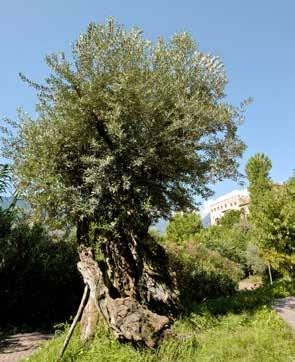
I Giardini di Castel Trauttmansdorff ospitano un olivo di 700 anni proveniente dalla Sardegna. La circonferenza del tronco dell’albero coltivato è di 3 m, il suo diametro all’altezza del petto di 93 cm.
The Gardens of Trauttmansdorff Castle is home to a 700-year-old olive tree from Sardinia. The circumference of the ancient tree is 3 meters; its diameter at breast height is 93 cm.
Specchio di ricordi Lake Resia and the sunken Town
IL CAMPANILE DEL LAGO DI RESIA È UNA DELLE IMMAGINI PIÙ SUGGESTIVE DELL’ALTO ADIGE, INSIEME A QUELLA DELLE ASPRE CIME DELLE DOLOMITI. QUESTA TORRE È SIA ATTRAZIONE SIA MONUMENTO COMMEMORATIVO, MENTRE SOTTO LE ACQUE BLU DEL LAGO SI NASCONDE LA STORIA DEL VILLAGGIO SOMMERSO DI CURON VECCHIA.
Nel 1939, un semplice manifesto in lingua italiana annunciò il progetto di fusione dei laghi di Resia, Curon e S. Valentino in un unico grande serbatoio di 22 metri di profondità. I disordini della seconda guerra mondiale ne ritardano l’attuazione, ma già dal 1947 più di 7000 persone lavorarono al serbatoio senza sosta. Nell’estate del 1950 le chiuse furono ultimate. Più di 100 famiglie, per lo più contadini e artigiani, dovettero assistere allo sgombero e all’esplosione dei loro masi. Solo il campanile, classificato monumento storico, viene risparmiato.
Metro dopo metro l’acqua sommerse prati e campi. In quell’occasione alcune famiglie si allontanano per sempre dalla Val Venosta. Decenni dopo, le generazioni successive ha fatto i conti con il lago e la sua storia. E se il lago ormai è là, tanto vale sfruttarlo: per gli sport acquatici e il kitesurf, le escursioni a piedi e in bicicletta e come set fotografico tra i più popolari lungo la strada verso nord. In nessun altro luogo dell’Alto Adige la sofferenza e il piacere sono così strettamente collegati come a Curon sul lago di Resia.
TOGETHER WITH THE TOWERING PEAKS OF THE DOLOMITES, THE SOLITARY CHURCH STEEPLE EMERGING OUT OF THE RESCHENSEE LAKE IS AMONG THE MOST EMBLEMATIC IMAGES OF SOUTH TYROL. YET THAT SAME STEEPLE ALSO SERVES AS A REMINDER OF A LESS EDIFYING PAST; BENEATH ITS LIMPID WATERS, THIS SCENIC MANMADE LAKE CONCEALS THE STORY OF THE FLOODED SETTLEMENT OF OLD CURON/GRAUN, WHICH LEFT A BITTER AFTERTASTE IN ITS WAKE.
In 1939, a short announcement in Italian prefaced the start of a massive hydro-electric project which involved merging the Reschensee, Mittersee and Haidersee lakes into a single reservoir, with a depth of 22 m. Although the turbulent events of WWII delayed its start, construction of the reservoir began in 1947 employing over 7,000 workers from all over Italy. The locks of the dam were finally closed in the summer of 1950 and over 100 families, mainly local farmers and artisans, were displaced when their houses and farms were cleared and destroyed to make way for the reservoir. The only remaining sign of Old Curon was the church steeple, subsequently designated as a historical monument. As the rising waters of the dam encroached on the Alpine fields and meadows, many families were forced to leave the Vinschgau Valley for good. Subsequent generations of South Tyroleans have slowly come to terms with the bitter-sweet legacy of this lake. Since it was already there, it become a mecca for water sports such as kitesurfing. With its hiking and biking trails, the lake area has developed into a popular beauty spot for tourists and holidaymakers on the south-bound route. Nowhere else in South Tyrol has its bitter-sweet legacy been so emblemised as at Curon on Reschensee Lake.
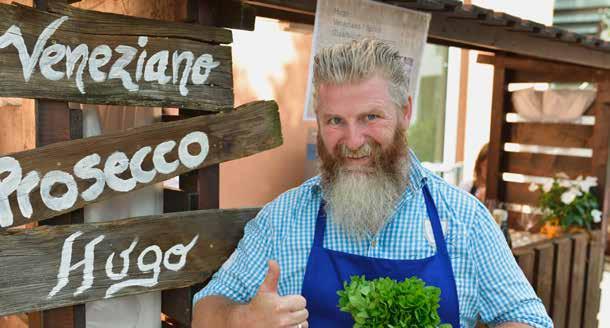
Hugo: Il fresco drink nato a Naturno Naturno and the Hugo
CHIUDERE LA GIORNATA TRA AMICI, CON UN RINFRESCANTE DRINK E QUALCHE STUZZICHINO: L’APERITIVO È UN FENOMENTO CULTURALE A SÉ. UNO DEI DRINK PIÙ FAMOSI È L’HUGO, CHE È STATO INVENTATO DA UN CREATIVO BARISTA DI NATURNO!
L’infaticabile gastronomo e spirito libero A. K. Gruber creò questo drink nel 2005, nel suo Bar San Zeno: volendo proporre un’alternativa all’Aperol Spritz diede vita a quello che, negli anni, è diventato un aperitivo di culto.
Ecco a voi la ricetta originale dell’Hugo di A. K. Gruber: 15 cl di Prosecco freddo, 2 cl di sciroppo di melissa, qualche foglia di menta e una spruzzatina di soda. Mescolare in un bicchiere da vino con cubetti di ghiaccio e guarnire con una fettina di limone.
ENJOY A CONVIVIAL GET-TOGETHER WITH FRESH DRINKS AND SNACKS TO ROUND OFF THE DAY. AN APERITIVO IS NOT JUST A DRINK, BUT A CULTURE IN ITSELF. ONE OF THE MOST FAMOUS APERITIFS IS THE HUGO – INVENTED BY A CREATIVE BARKEEPER IN NATURNO/NATURNS!
The bustling gastronome and free spirit A. K. Gruber created this summer drink in 2005 at his Bar San Zeno, and what was intended as an alternative to the classic Aperol Spritz developed into a refreshing cult drink over the years.
The recipe of the original Hugo after A. K. Gruber: 15 cl cooled Prosecco, 2 cl lemon balm syrup, some mint and a drop of sparkling water.
Articoli & interviste / Writing & interviews: Petra Götsch
Traduzione / Translation: context
Grafica / Design: id-creativstudio
Stampa / Print: Lanarepro
Cover: PhotoGrünerThomas
Foto / Images: Peter Santer, RoterRucksack.com, IDM Südtirol/Benjamin Pfitscher, Archiv Agentur für Bevölkerungsschutz/Stefano Benetton, Archiv Paul Grüner, VI.P Gen. landw. Gesellschaft, IDM Südtirol/trickytine, Maria Gapp, PhotoGrünerThomas, Patrick Schwienbacher, Seilbahn Unterstell, Hochseilgarten Ötzi Rope Park, Rafting Adventure Südtirol, Die Gärten von Schloss Trauttmansdorff, IDM Südtirol/Marion Lafogler, Emi Massmer Emotions