“To support and promote the development, welfare, education, and protection of children and young people, the effective functioning of families and the continued care for adults who use our services”.
Our Vision
“That children, young people, families and adult service users have timely and equitable access to integrated services, that enable positive outcomes, that the public trust and that staff feel supported by and have trust in”.
Our 3 Key Pillars
People
To attract, retain and grow a diverse and capable workforce and promote a positive culture so that our people can effectively respond to service users, feel supported and have pride in our services and the Agency.
Practice
To design, deliver and govern services to ensure they are timely, equitable, integrated and consistent, and meet the needs of those that use them.
Public Confidence
To ensure the services we deliver meet the standards our service users are entitled to, and are compliant, high-quality, transparent and visible across communities, in order to promote public trust and confidence in Tusla.
Our Values
Our values of Trust, Respect, Kindness and Empowerment define how we, as an Agency, expect staff to behave. It is through our values that we put those who use our services at the heart of everything we do, create a more positive and supportive working environment, and build trust and confidence in our services. We define these values as follows:
Trust
We will be honest, truthful and responsible when providing our services
We will respect privacy
We will seek and welcome feedback and use it to inform how we improve
We will follow through on our commitments
Respect
We will treat people with dignity and fairness
We will collaborate and work in partnership
We will be informed and influence by opinions and experiences
We will listen to ensure we understand
We will communicate in a way that helps everyone to understand
Kindness
We will show care and compassion
We will help where we see the need
We will be sensitive when explaining decisions, particularly when the decision is difficult
Empowerment
We will have a supportive workplace where people can achieve their best
We will continuously learn and develop our knowledge and skills
We will collaborate so that we can work together effectively
We will recognise hard work and dedication
106,444
child protection and welfare referrals in 2025; a 10% (9,778) increase from 2024 (96,666)
Child Protection and Welfare
1,173 98%
children ‘active’ on the Child Protection Notification System (CPNS) at year end
of children ‘active’ on the CPNS allocated to a social worker
23,612
cases open to social work at year end1
5,879
children in care at year end (5,729 across the 17 areas and 150 separated children seeking international protection (SCSIP))
844
discharges from care in 20254
Alternative Care
of children in care are in full-time education3 86% 94%
of children in care are in foster care (17 areas and SCSIP; 88% (17 areas)2
577
children admitted to care for the first time in 2025 (new admissions to care)5
901
admissions to care in 20256
2,985
young people in receipt of aftercare services at year end
3,782
foster carers on the panel of approved foster carers at year end
223
foster carers approved in 2025
50,571
children referred to family support services in 20257
Family Support/Meitheal
2,667
Meitheal processes requested in 2025
114
Child and Family Support Networks (CFSNs) operating at year end
Children’s Services Regulation (CSR)
inspections of early years services (pre-schools) in 2025
63
2,5142,592 non-recognised schools on the register at year end
children on the register for home education at year end
7,119
early years services (pre-school, school-age and childminders) registered with the Early Years Inspectorate at the end of 2025
243
private and voluntary residential care centres at year end
264
inspections of private and voluntary residential care centres in 2025
Tusla Education Support Services (TESS)
9,293
referrals screened by senior educational welfare o cers during the school year 2024/2025. This represents a 16% increase on the 2023/2024 school year
1,335
8,259
individual children TESS worked with in 2024/2025 school year
Foster Care Recruitment
223
Tusla foster carers approved in 2025; an increase of 12 on 2024 (211) and the highest number since 2020 (226)
General fostering enquiries increased by approximately 26% between 2024 and 2025
◉ 78% increase in number of events
◉ 92% increase in direct engagements
◉ 148% increase in partnerships with statutory, voluntary and community organisations, as well as private companies
Adoption and Birth Information and Tracing (BIT) Service
enquiries for an assessment of eligibility and suitability to adopt 1,032
313291
formal applications to adopt new children referred or subject to an adoption application
tracing requests under BIT Act from 3 October 2022 up to and including 2025; 674 remain waiting on a service 9,034
10,777
information requests under BIT Act from 3 October 2022 up to and including 2025. Service remains fully compliant with statutory timelines for all applications received from September 2023 to date
young people (18–22 years) in receipt of aftercare services in education/training 81%
43% referrals in 2025
remained with carers; 23% were in independent living arrangements, 8% returned home, 8% residential care placement, 2% supported lodgings, 2% designated care leavers’ accommodation and 14% other
Commissioned Services
473
organisations funded in 2025 (Section 56 Arrangementsfunding of €193m provided)
124
School Completion Programme (SCP) organisations funded (funding of €38m for the SCP)
National Out of Hours Service
1,795 902
referrals in 2025 children placed in emergency placements
References:
1 Open cases include cases held on duty, allocated and unallocated child protection and welfare cases and children in care.
2 The SCSIP data brings the percentage down as the majority of these children are in residential care.
3 Full-time education is the care plan specification for the child’s educational requirements. Figure does not include SCSIP.
4 The count is a count of discharges and not individual children; a child can be discharged more than once in a reporting period. Figure does not include SCSIP.
5 Figure does not include SCSIP.
6 Figure does not include SCSIP.
7 Based on an average response rate of 88%.
Message from the Chairperson
Behind these numbers are individual lives and experiences, and the Board remains deeply conscious of the importance of ensuring services are responsive, safe, compassionate and effective for all those who rely on them.
It is a privilege to write this foreword as Chair of the Board of Tusla following my appointment in February 2026.
ensuring Tusla can respond in a timely, appropriate and consistent manner to all children and families who require support and services.
At the outset, I would like to acknowledge the significant contribution of my predecessor, Pat Rabbitte, whose leadership and commitment guided the Board through an important period for the organisation. His stewardship helped strengthen Tusla’s governance and strategic direction during a time of continued growth, complexity and reform across child and family services.
Throughout 2025, demand for Tusla’s services remained high across all areas of delivery. Thousands of children, young people and families engaged with and received support from Tusla services nationwide.
This year also marked a significant milestone in the organisation’s ongoing transformation journey, with final preparations underway for the Tusla Reform Programme to go live in January 2026. The Board has maintained a strong focus on overseeing this programme of change, recognising its importance in strengthening service integration, accountability, operational effectiveness and outcomes for children and families. This reform agenda represents a major opportunity to position Tusla to meet current and future needs in a more sustainable and responsive way.
The Board welcomed the continued progress made during 2025 in strengthening and supporting Tusla’s workforce. Across the organisation, important initiatives were advanced to enhance recruitment, retention, workforce planning, learning and development, and staff wellbeing. Building and sustaining a skilled and supported workforce is essential to
I would like to acknowledge the ongoing support of the Department of Children, Disability and Equality and the Minister throughout the year. Their engagement and commitment to improving outcomes for children, young people and families continue to be of great importance to the work of Tusla.
I also wish to recognise the strong cooperation that exists between Tusla and other Government departments, State agencies, community and voluntary organisations, and nongovernmental bodies. Supporting children and families requires collective effort, partnership and shared responsibility, and these collaborative relationships remain central to delivering effective services and achieving positive outcomes.
On behalf of the Board, I want to express sincere appreciation to the CEO, leadership team, staff, foster carers and all those who contribute to Tusla’s work every day. Their professionalism, dedication and compassion continue to make a meaningful difference in communities across the country.
As Chair, I look forward to continuing to work with the Board and the organisation as Tusla enters the next phase of its development and reform, with a continued focus on accountability, quality, innovation and the best interests of children and families.
Madeleine Clarke Chair of the Board
Message from the CEO
In 2025, we experienced the largest ever demand for our services, receiving over 106,000 referrals to our child safety service, up 10% compared to 2024 (96,666).
As CEO, when I reflect on 2025, I am proud of the continued commitment, professionalism and resilience demonstrated by colleagues across the Agency in delivering community and residential services to children, young people, families and adults that engage with our services, and those colleagues that provide essential supports to those services.
In 2025, we experienced the largest ever demand for our services, receiving over 106,000 referrals to our child safety service, up 10% compared to 2024 (96,666). Of these, 50,571 children were referred to our Family Support Services, with almost 800 referrals to our Separated Children Seeking International Protection (SCSIP) Service, and 9,293 to our Educational Support Services. At the end of the year, 5,879 young people were in our care, the majority of whom were living with foster carers. We also supported the highest number of young people in our Aftercare services since the Agency’s establishment. It was a year when we continued to develop new services and expand existing ones in response to emerging needs, as well as policy and legislative changes.
We are committed to further strengthening our services, promoting innovation and working in partnership to achieve better outcomes and brighter futures for children, young people and families.
At the same time, we made significant progress in implementing our transformational change programme. This included improvements in service integration, digital transformation, governance, placement capacity and workforce planning, strengthening our services and enabling more responsive and effective delivery.
It was also a year of significant challenge, marked by tragic events, capacity pressures in our special care services and growing difficulty in meeting the needs of an increasing number of children, young people and families that require a whole-ofstate response.
These challenges, together with our commitment to listening to the voices of all those who engage with our services, ensured that we remained steadfast in our focus to provide timely access to high-quality services, to learn, to improve, and to further advocate on behalf of children, young people and families.
I would like to acknowledge the extraordinary dedication of Tusla colleagues, our foster carers, community and voluntary partners, statutory partners, Board Members, Department colleagues, Regulatory Bodies and Trade Unions, all of whom continued to support our collective efforts in 2025, to progress our shared vision of improving outcomes for children and young people.
While challenges remain, progress is evident. As the state agency responsible for child safety and welfare, we are committed to further strengthening our services, promoting innovation and working in partnership to achieve better outcomes and brighter futures for children, young people and families across Ireland, while also strengthening trust and public confidence in our services.
Kate Duggan Chief Executive Officer
Our Year in Review
In 2025, we achieved 83% of Business Plan actions.
The 17% of unachieved actions were predominantly due to situations outside of our control or were brought forward into the 2026 Business Plan. Some key achievements are as follows.
Quarter 1
◉ Tusla digitised the fostering assessment process, meaning faster, more efficient enquiry and application procedure for prospective foster parents.
◉ Tusla expanded its TESS ‘Anseo’ programme across 61 schools to improve student attendance.
◉ Tusla’s new Garda Vetting Portal enhanced the safety of children in Early Years services and streamlined the registration of service providers.
◉ Tusla’s Reform programme engaged and consulted with stakeholders to improve local frontline responses, further supporting the needs of children and families.
Quarter 2
◉ Tusla has increased the number of posts in Social Work and Social Care by 3%.
◉ The Agency developed the Outcomes Framework, a process that measures how well our services have improved outcomes for children and families.
◉ Tusla worked on improving the experience of young people in Special Care through the commissioning of an independent review of services.
◉ Tusla’s Area Based Childhood support programme marked 10 years of partnering with families, practitioners and stakeholders to develop talents and capabilities of the family and the community.
◉ The Agency is now providing an Initial Placement Allowance to new foster carers.
◉ Tusla recruits new workers to the role of Special Care Worker, with a more attractive salary scale to reflect the unique skills required of staff working in Special Care.
◉ Digitisation of Residential Services with the implementation of electronic social care files for the children and young people in care at each of our centres nationwide, to improve our custodianship of these records and associated stories for care-experienced persons who may wish to access their files later in life.
Quarter 3
◉ Tusla established a specialist team to investigate reports of children missing from school, who are relocated or whose whereabouts are unknown. The team ensure that this information is shared with relevant social workers.
◉ The Agency launched a new on-the-job learning programme called ‘Work-based Learning Programme leading to a BA in Social Care’ to support staff who wish to move into Social Care Work roles within Residential Services.
◉ More children who may have suffered sexual abuse are now being supported with the expansion of Barnahus South into Waterford and South Tipperary.
◉ Children and families are now receiving further support in the household with the expansion of Tusla’s Home Visiting programme into six new areas.
◉ More than 40 extra residential places have been made available for Unaccompanied Minors and SCSIP.
◉ Ireland’s most vulnerable and disadvantaged communities have benefited from the addition of five extra Family Resource Centres, bringing the total to 126.
◉ To improve our support of young people and young adults availing of our aftercare services, aftercare data has been digitised to enhance quality and efficiency for staff.
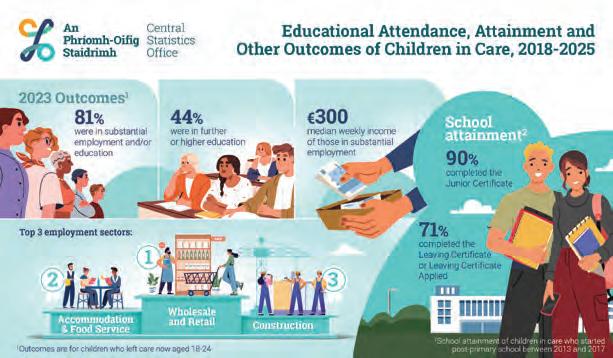
◉ More than 80% of children who left care aged 18–24 years in January 2025 were in substantial employment and/or enrolled in education for each of the years 2019–2023, according to findings from a report developed collaboratively by Tusla ICT, the Department of Children, Disability and Equality (DCDE) and the Central Statistics Office.
◉ The Agency expanded its ‘Earn While You Learn’ Social Work Apprenticeship programme, in response to global social worker shortages, filling 70 places in 2025 - double the number from the previous year.
Quarter 4
◉ Tusla–Traveller connections were strengthened with the launch of a co-developed strategic plan to promote Traveller cultural awareness among staff and encourage Traveller engagement with Tusla services.
◉ Public confidence in the role of Social Care staff was enhanced with the title of Social Care Worker becoming legally protected.
◉ Tusla has signed a formal agreement of cooperation with Cuan (domestic, sexual and gender-based violence (DSGBV) agency), reinforcing Tusla’s commitment to supporting families who experience domestic violence.
◉ Tusla introduced a fuel incentive scheme to support new and existing foster carers.
◉ Thirty-eight additional beds have been created in nine new residential centres to meet the increased demand to help vulnerable children.
◉ Tusla demonstrated its commitment to diversity through an innovative campaign to recruit social workers from abroad, resulting in the appointment of 54 new members of staff across Ireland by year end.
◉ Tusla’s Children and Young People’s Services Committee (CYPSC) implemented four innovative local area pilot programmes to tackle child poverty.
◉ A total of 223 new foster carers were approved in 2025, the highest number since 2020.
◉ Tusla improved the management of directions issued by the courts for children and young people in care with the automation of record keeping and digitisation of the court orders process.
◉ Engagement between DCDE and Tusla contributing to the publication of the Child Care (Amendment) Bill 2025.
◉ A new role of Family Support Team Lead was developed and advertised.
◉ Digitisation of historical adoption records passed a significant milestone with over 3 million pages digitised to archival preservation standards and over 200,000 persons indexed and linked to these records. The project is a significant enabler to the Birth Information and Tracing service that provides birth, care and early life information to people who were adopted, were boarded out, were subject to an illegal birth registration or spent time in a Mother and Baby or County Home Institution as a child. See www.birthinfo.ie.
◉ Progress in Tusla’s digital transformation and the delivery of a single view for each child across all services is reflected in the end of year figures, with over 140,000 cases and almost 3 million case records created in Tusla’s digital case management system during the year.
Delivering and Building Capacity for Supporting Children and Families in Line with Our Corporate Plan
Within an environment of everincreasing need, we continue to deliver our frontline services to vulnerable children and families living in Ireland. As the demand for our services increases, we are building enhanced capacity within the Agency through strategic initiatives to enable and support the delivery of predicted future service needs.
Every three years, Tusla develops a new triennial strategy, identifying and detailing its strategic direction over the forthcoming years.
This Annual Report 2025 reflects Tusla’s success in implementing the second year of strategic plans outlined in our Corporate Plan ranging from 2024 to 2026. Within the six objectives of the Corporate Plan there are a number of key actions, which, for clarity, have been split into the two key themes of:
◉ Service Delivery to Meet Current Demands
◉ Building Capacity for Our Future
These themes, along with their related sub-themes, are shown in Figure 1.
The six key objectives of our Corporate Plan 2024–2026 guide everything we do to continuously improve our services to children and families in Ireland, which are aligned to our key pillars of People, Practice and Public Confidence. These objectives are mapped to each of our themes throughout this section.
Objective 6
Continue to have effective people, processes and systems in place to meet our statutory and regulatory requirements and embed a culture of continuous service improvement.
Objective 5
Strengthen visibility of Tusla services in communities across Ireland and build trust and confidence in our services.
Objective 1
Strengthen recruitment and retention of a multidisciplinary workforce to better meet the needs of service users and provide a more supportive environment for staff.
Public Confidence People
Objective 2
Ensure staff are supported, engaged, and capable to undertake their roles, implement the Reform Programme and better respond to service user needs.
Practice
Objective 4
Strengthen service integration both internally and externally to better meet the needs of service users.
Objective 3
Ensure our services are structured and delivered to provide consistent, quality and integrated responses to those who use them.
Theme
1
2 34 5 6 Peopl e Prac tice Pbu l ic Confidence
Growing Demand
Demand for our core services continued to increase in 2025. This section outlines the breakdown of our services across different functions and how we have continued to deliver our services while implementing plans for future capacity building, aligned with legislation and government priorities.
Confidence
34 5 6 Peopl e Practice
1 2
Increased Referrals Across All Services
Child Protection and Welfare Services
The year-on-year increases in referrals to child protection and welfare services continued across 2025 with a total of 106,444 referrals, up 9,778 on 2024 (96,666).
106,444 referrals in 2025
96,666 referrals in 2024 referrals up by 9,778
Once the information in the referral has been reviewed, the referral may be directed to a number of different Tusla services. In many cases, referrals relate to child safety and welfare concerns and will progress to social work teams for further screening, and potential social work intervention.
Tusla’s National Out of Hours Service provides emergency child safety and welfare responses outside of regular office hours. The service received 1,795 referrals in 2025 and supported 902 children and young people in emergency placements.
In other cases, children and families may benefit more from early support services, rather than a child safety response. These referrals will be directed to the appropriate family support services and interventions covered in the following sections.
Based on information provided by the referrer, referrals are categorised as either child welfare or child protection concerns (i.e. where there were grounds to believe that there was a risk of physical, sexual or emotional abuse, or neglect). Similar to previous years, the percentage breakdown of referrals remains around 44% child protection and 56% welfare concerns.
The most common type of child protection concern reported in 2025 was emotional abuse at 45%, followed by physical abuse at 26%, neglect at 16% and sexual abuse at 14%. Again, this is similar to recent years. The most common source of referrals in 2025 was An Garda Síochána (AGS), accounting for one-third (34%) of all referrals received, far exceeding any other source, followed by teachers (12%), safeguarding officers (11%) and social workers (10%).
These significant increases have challenged frontline services, causing us to respond to maintain our support of Ireland’s most vulnerable children and families. Despite an increase in funding levels, we remained significantly challenged in recruiting key skillsets of Social Work and Social Care staff.
Children in Care
Tusla recognises the importance of children living with their families wherever possible. Keeping children safely at home is always the preferred outcome when it is in their best interests. For that reason, Tusla works with families to strengthen their capacity to care, often through supports, practical interventions and safety planning. However, there are circumstances where a child cannot remain safely at home. In those cases, children may come into the care of Tusla for a period of time.
When a child enters care, ensuring they are placed in the most appropriate setting with the right supports becomes a central priority. In total, there were 901 admissions and 844 discharges from care in 2025, and at year end, 5,879 children were in care.
5,879 children were in care
5,058 children were in foster care
5,058 (86%) of children in care at the end of 2025 were in foster care placements. Foster care is the backbone of Ireland’s alternative care system, offering children a safe and stable family environment when they cannot live at home. In 2025, 223 new foster carers were approved, bringing the total number of approved foster carers to 3,782
Children’s residential centres were home to 609 (10.4%) children and young people at the end of 2025, providing a safe, caring and homely living environment, supported by social care staff in their day-to-day lives. Where a children’s residential service is operated by a community and voluntary, or private provider, it will be registered, inspected and monitored by Tusla’s Alternative Care Inspection & Monitoring Service (ACIMS). At the end of 2025, there were 243 community and voluntary, or private children’s residential centres registered with ACIMS, and throughout the year, ACIMS undertook 264 inspections of these centres.
The remaining 212 (3.6%) of children were in other care placements, with the objective of providing a safe and protected environment, supported by Tusla staff or its partner organisations.
Notably, 98% (5,777) of children in care had an allocated case worker at the end of 2025.
Every child in care has an individual care plan, developed collaboratively with children and young people, and reviewed regularly so that the child’s best interests remain central throughout their time in care.
Barnahus
Barnahus represents a major development in responding to child sexual abuse, with centres in the South and West receiving 462 referrals in 2025. 2025 saw the expansion of the South service to Waterford and South Tipperary. Barnahus brings together Tusla, the HSE, AGS and Children’s Health Ireland (CHI) in a child-friendly setting, reducing trauma and ensuring a coordinated response to disclosures. This model reflects the strengthening of interagency collaboration and services working together around the child, rather than requiring children to move through multiple systems alone.
3 4 5 6 Peopl e Practice Pbu ic Confidence
1 2
Supporting and Protecting Separated Children Seeking International Protection (SCSIP)
Ongoing conflict around the world has continued to force population movement and with this the arrival to Ireland of unaccompanied children seeking international protection. The Tusla SCSIP team is tasked with providing a model of care that involves intake and assessment of these children as well as providing care plans, accommodation, aftercare and personal supports necessary for successful integration and engagement in Irish society.
The average age of young people referred to SCSIP is 16–17, with the majority of these individuals having been in transit for extended periods: most exceeding one year, and in some cases up to four years before their arrival to Ireland. There has been an increase in referrals and corresponding demand for services over the last three years.
In 2025, there were 782 new referrals to the SCSIP team, up from 619 in 2024. From these new referrals, 742 children were taken into care or accommodated by Tusla during 2025, the remainder being either an inappropriate referral, ineligible for services or reunited with their family. During 2025, Tusla also provided 247 unaccompanied young people with aftercare services. Additionally, 138 out of 392 children already in care in January remained in the care of Tusla at the end of 2025.
782 new referrals in 2025 referrals up from 619 in 2024
206 new registered residential beds were opened in 2025, for a total capacity of 504 across 72 units of accommodation. 11 Special Emergency Arrangement (SEA) beds and eight Emergency Intake Units remained open at the end of 2025. A total of 25 minors were also accommodated in fostering and supported lodgings during 2025.
In 2025, unaccompanied minors arriving to Ireland seeking international protection came largely from Somalia, Ukraine and Afghanistan.
Tusla provides accommodation to SCSIP using several accommodation models depending on the needs and age of the unaccompanied minor. A snapshot of accommodation in October 2025 shows 644 NonUkraine separated children seeking international protection in the care of Tusla, as follows.
Figure 2 – Total SCSIP Accommodated Per Month 2023-2025
◉ Commissioning the Irish Refugee Council to provide support to unaccompanied minors with and through their applications for their International Protection Order.
◉ Developing a partnership with Sonas DSGBV Services for the provision of accommodation and support to young women leaving the care of Tusla who have traumatic life histories, having experienced genderbased or honour-based violence.
◉ Expanding the staff cohort by 118 in SCSIP to provide for the great demand and higher levels of support and accommodation required.
general medical exam, blood tests for blood-borne diseases and chest X-rays for TB; medical screening for under 16s in Lyn Clinic, CHI, with onward referral and liaison for more complex cases; support from National Paediatricians CHI as required.
With this growth, Tusla SCSIP Programme has formalised its model of care, and is working on an implementation plan to reflect the level of restructuring undertaken to appropriately manage the growth in service provision.
During 2025, Tusla SCSIP also focused on preparing for the implementation of the PACT (EU Pact on Migration and Asylum), and the new International Protection Bill set for implementation in June 2026. It has continued its interagency stakeholder forum with Non-Governmental Organisations (NGOs), other state agencies and Departments with which it continues to work to achieve the best outcomes for unaccompanied minors.
Focus on unaccompanied minors
Case 1:
A young woman who arrived here as a child seeking international protection in 2018 has, with the support of the Aftercare service, secured private rented accommodation, completed a Quality and Qualifications Ireland (QQI) Level 6 course, and is now studying at Trinity College Dublin.
After fleeing a forced marriage in Somalia, she was referred to the SCSIP Aftercare Team in 2019. Having been granted refugee status, she navigated the complex family reunification system, resulting in her family’s relocation to Ireland. She now acts as a mentor to the Somali community here, offering guidance to care leavers who face the same challenges that she overcame.
Case 2:
A young person who arrived here in 2015, traumatised, as a separated child seeking international protection received crucial aftercare support which has resulted in him taking up an apprenticeship as an electrician, and is now in the final phase of that programme.
He now lives independently, mentors young care leavers, and shares his story of resilience with education leaders, becoming an inspiration to many young people who have experienced similar challenges to his.
Case 3:
The Tusla SCSIP-funded Youth Advocate Programme supported a 15-year-old Congolese boy, who had recently suffered a bereavement and was lacking in both confidence and emotional resilience.
With ongoing support from his advocate, to whom he could talk about his family and process his grief, the teenager grew in confidence and self-esteem. The advocate also worked with the young person to purchase a laptop through YAP Ireland Technology Assistance, allowing him to complete his school course work and assessments.
Early Intervention and Support Services
Tusla services, along with partner agencies in the community and voluntary sector, across the country continued to develop and deliver a comprehensive suite of early intervention and preventative services, to support families and provide early intervention.
In 2025, 50,571 children were referred to Tusla family support or Tusla-funded family support services, which represents over 4% of all children in Ireland.
Recognising that an effective way to improve outcomes for children is to intervene at an early stage to try to resolve problems and prevent harm, key initiatives and programmes in 2025 are included in the following sections.
Meitheal
Meitheal is a Tusla-led Early Intervention National Practice Model that brings services together around the needs of a child and their family.
Meitheal works to ensure that needs and strengths of children and their families are effectively identified, understood and responded to in a timely way so that children and families get the help and support needed to improve children’s outcomes. Across 2025 there were 2,667 Meitheal processes initiated across the country.
An independent external review framework for the implementation and impact of Meitheal (funded through What Works Dormant Accounts Fund (DAF) funding) was completed by the UNESCO Child and Family Research Centre in 2025. The findings outlined that Meitheal exemplifies the importance of interagency collaboration and provides a valuable, effective framework for this collaboration. Meitheal emphasises the value of creating a community of practice to respond collectively to the increasing complexity and demand in supportive services required for families, acting as a bridge between Tusla and its community and voluntary partner agencies.
Infant and Early Childhood Support –Togetherness (Solihull) Approach
Led by Tusla, an interagency working group focused on embedding the centrality of secure parent–child attachment across services. Throughout 2025, Tusla collaborated with partners including Tusla Workforce Learning and Development (WLD), the HSE, the Irish Association for Infant Mental Health (IAIMH), Psychological Society of Ireland (PSI) and childcare committees to develop and implement a ‘cascade model’ of training for the Togetherness (Solihull) Approach.
The Togetherness Foundation Training provides a trusted, evidence-based framework for emotional health. It informs interactions with families and colleagues across Tusla and its partner agencies. The 2025 priority was the national delivery of the twoday Foundation course, which equips the early childhood workforce with the skills to improve emotional wellbeing for infants and their caregivers.
The training covers early brain development through four specialised streams: Generic; Journey to Parenthood; Fostering, Adoption and Social Work; and Early Childhood Education and Care (ECEC). To date, 74 practitioners have qualified as trainers and are currently delivering these workshops nationwide.
320 staff across Tusla, the HSE and the community/voluntary sector completed the Foundation training. This has fostered a common language around attachment across disciplines, ensuring that infant mental health theory is translated into everyday practice.
Through the Togetherness multi-user licence, parents and foster carers were granted 24/7 access to selfpaced online resources. This allows practitioners to support families both in one-to-one sessions and through remote learning. The working group is currently prioritising ‘Antenatal’ and ‘Birth to Five’ pathways, recognising the critical importance of a child’s first 1,000 days.
National Home Visiting Programme
The Tusla National Home Visiting Programme is funded through the Children’s Fund, which was established through the Action Plan for Survivors and Former Residents of Mother and Baby Home Institutions. It is anticipated that €10 million funding will be provided through DCDE for the programme from 2024 to 2028.
Home visiting is a prevention and early intervention approach used to support parents to promote infant and child health, support parents with their young child’s educational development and school readiness and promote and protect the welfare of children.
The National Home Visiting Programme is focused on the development of a consistent approach to the delivery of early childhood home visiting services in Ireland, with the aim of coordinating, providing direction and collecting data and evidence to inform the future development of a sustainable national home visiting service.
In 2025, 15 of the 16 Home Visiting Programmes funded through the Children’s Fund were fully operational, with the final site in pre-development. The programmes are implementing an early childhood evidence-based programme, such as Community Families, Infant Mental Health Home Visiting, Life Start, Preparing for Life and Parent Child Plus.
The National Home Visiting Programme also led developments in data framework and consistent data collection through its Data Working Group. Collection of data will commence with a testing phase in early 2026, with an implementation plan for full roll-out of consistent data collection in 2026.
The National Home Visiting Programme celebrated its first anniversary as part of the National Home Visiting Day in
October 2025, and a National Learning Day for newly developed or expanded Home Visiting Programmes was held in November 2025.
In 2025, funding was secured for sustainability of the Community Families Programme for 2026, and for expansion of home visiting provision in 2026 through European Social Fund Plus (ESF+) and DAF provided by the Department of Education and Youth (DEY).
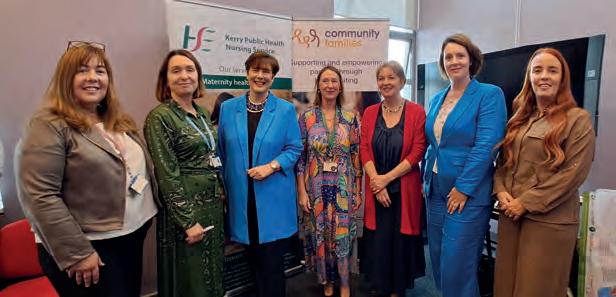
Collins, Assistant Director Public Health Nursing; Alice Moore, Assistant Director Public Health Nursing & Co-ordinator Community Families Kerry; Minister for Children, Disability and Equality, Norma Foley; Helen Sweeney, Director Public Health Nursing; Ann Moynihan, Senior Manager Prevention, Partnership and Family Support (PPFS) Kerry, Tusla; Caroline Sheehan, National Home Visiting Programme Manager, Tusla; Marie Boyne, Senior National Co-ordinator Community Families, Early Learning Initiative, pictured at the National Home Visiting Day Celebration in Tralee, Co. Kerry, to mark the programme’s first anniversary.
Pauline
Parenting Support
Tusla continued to implement the 2025 actions of the Tusla Parenting Support Strategy 2022–2027.
A key action was the establishment of a community-based Parenting Hub in each of the six Tusla regions. To progress this action in 2025, Nexus Research Co-operative produced a comprehensive suite of documents to support the implementation of a consistent approach to developing the Hubs across the country.
In 2025, ESF+ funding was secured and implementation planning commenced for the appointment of a Parenting Support Advisor post to be positioned in the Hubs in each of the 30 networks. These roles will be a key resource within each community, serving as a central point of information and support on all aspects of parenting. Working collaboratively with local partners, they will ensure that both parents and practitioners are aware of, and know how to access, the full range of parenting support services available in their area.
The establishment of the Hubs and recruitment of the Parenting Support Advisors is expected to significantly enhance engagement and participation with parenting support services. Once fully implemented, it is envisaged that the combined impact of the Hubs and Advisor roles will:
◉ Increase participation in parenting support services by improving visibility, accessibility and coordination.
◉ Support both parents and Tusla staff by acting as a point of contact for enquiries from both practitioners and parents, providing clear and timely information on local parenting supports across all levels of need.
◉ Increase parental knowledge, skills and confidence, improve outcomes for children and young people, and enhance collaboration across local services.
Child, Youth and Parental Participation in Decision Making
Following the conclusion of Tusla’s Child and Youth Participation Strategy, an independent, external review and evaluation was completed during 2025. The review was funded by DCDE’s Child Rights Policy Unit and cosponsored by the Directors of Services and Integration and Quality and Regulation. The review engaged with 120 key stakeholders across 16 focus groups, including children and young people, to consider the current status of participatory practice within the agency and its commissioned services.
During 2025, Tusla PPFS funded and supported 76 Child and Youth Participation projects and 47 Parental Participation projects across the country through seed-funding benefiting thousands of children, young people and parents. Forums for parents, children in care and children in aftercare were supported and funded by Tusla PPFS during the year, ensuring the voices of services users were heard in relation to matters that affect them.
Special project funding and support was also provided by Tusla PPFS for birth and adopted children of families who foster to develop resources for this cohort of children under the Fostering Strategy.
Children and young people from families who foster were involved in the development of a suite of resources including information, training and peer group meetings. These resources will continue to grow and be used for future children of families who foster.
Working in partnership with DCDE, Gaisce, the Children’s Rights Alliance, the Office of the Children’s Ombudsman and Hub na nÓg, eight services achieved the Child and Youth Participation Award in 2025 for demonstrating good practice in child and youth participation. The award process supports practitioners to develop their participatory practice and ensures that children and young people have a voice in evaluating how well their service listens to children and young people.
Tusla PPFS worked closely with the Children First Information & Advice Office for the DCDE Pilot of Children’s Right and Youth Impact Assessments. This work to develop these assessments will ensure that future policies, frameworks, strategies and service developments will have minimal impact on children’s rights and that children and young people have influenced the decisions being made.
Children First Awareness Week
The third National Children First Awareness Week ran from 15-21 September 2025. The aim of the campaign was to raise awareness of Children First and remind wider society, including organisations working with children and young people, of our collective responsibility to keep them safe in our communities.
Led by DCDE, in partnership with Tusla and the Children First InterDepartmental Implementation Group, the week-long campaign brought together all relevant departments and agencies, including the HSE, the Department of Education and Youth, the Department of Justice, An Garda Síochána, Sport Ireland, and the Arts Council.
Through a mix of multi-channel advertising, promotional materials and informational content, and supported by a wide range of Government Departments, agencies and organisations, the campaign focused on empowering parents and guardians to feel confident asking organisations the right questions – do you have an up-to-date safeguarding statement? Are your staff vetted and trained? Is there a clear way to report concerns? It aimed to give adults the knowledge and confidence to raise issues in schools, clubs and organisations where children spend their time.
Campaign messaging and materials were developed to help parents and guardians to understand what they should expect from organisations working with children, including clear safeguarding policies, safe reporting channels, and respectful engagement.
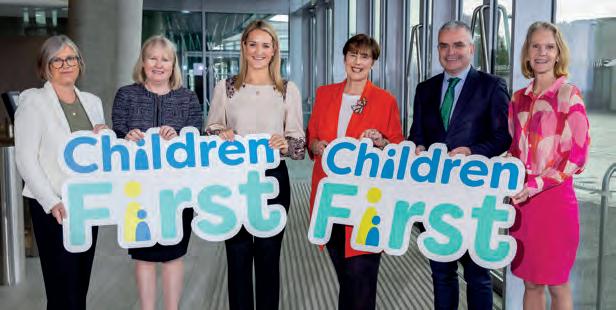
Amanda Casey, Chief Social Worker, HSE; Caroline Jordan, Interim Area Manager National Garda Liaison and Children First, Tusla; Helen McEntee, Minister for Education and Youth; Norma Foley, Minister for Children, Disability and Equality; Dara Calleary, Minister for Social Protection and Minister for Rural and Community Development and the Gaeltacht; Mary Van Lieshout, Director of Participation Ethics Integrity and Research, Sport Ireland, launch Children First Awareness Week 2025.
European Social Fund Plus (ESF+) Programmes
Funding has been provided for two Tusla Family Support projects, co-funded by the Government of Ireland and the European Union, under the ESF+. The projects have been established to expand the Young Parents Support Programme (YPSP) and support families living in International Protection Accommodation Services (IPAS) through the appointment of 20 Family Support Practitioners (FSPs). The projects are estimated to cost €11.346m in total between 2023 and 2027.
Expansion of Young Parents Support Programme (YPSP)
The YPSP promotes and enhances the wellbeing of young parents and their babies during this crucial stage of their parenting journey. Support is offered in all areas of the young parent’s life: parenting, health, relationships, education, training, childcare, housing, social welfare support and anything else concerning the young parent and their child.
Through a phased process, the national expansion of the YPSP is adding capacity to 11 existing sites and establishing six new sites, increasing the total number of YPSP sites from 11 to 17. To reflect demographic changes, it also increased the service for parents up to 24 years. In the first six months of 2025, 433 referrals were received by YPSP sites.
IPAS Family Support Practitioners (FSPs)
In 2025, an additional three ESF+ funded FSP posts were allocated, bringing to 20 the number of posts that have been established to support the pathway for integrated child and family support to cover the IPAS locations across the country.
The FSP staff work with families in state accommodation experiencing complex trauma, frequently in inadequate accommodation, with limited access to GPs and other services. The FSP creates a single point of contact for families, frequently using the Meitheal approach of supporting and integrating services.
Tusla Education Support Services (TESS)
1 2 3 4 5 6 Peopl e Practice
Confidence
TESS consists of three strands:
◉ the Educational Welfare Service (EWS),
◉ the School Completion Programme (SCP), and
◉ the Home School Community Liaison (HSCL) Scheme.
TESS also has operational responsibility for the City Connects Programme and the Traveller and Roma Education Strategy (TRES).
Educational Welfare Service (EWS)
The EWS provides a range of services and supports that promote and support school attendance, ensuring all children and young people are enabled to access their right to an education. In the school year 2024/2025 TESS senior educational welfare officers (EWOs) screened 9,293 referrals, some 1,251 (16%) more than the same period in the previous school year (8,042). Tusla worked with 8,259 individual children during the school year, 9% more than the previous school year.
The TESS attendance campaigns provided clarity for parents regarding the importance of regular school attendance. These campaigns included a national multimedia campaign, launched in September 2025,
to promote the importance of regular school attendance to students, parents and guardians.
9,293 referrals
1,251 (16%) more than the same period in the previous school year (8,042).
A dedicated landing page on Gov. ie was also launched in conjunction with DEY, Department of Health, Health Service Executive (HSE) and the education partners where parents, schools and others can find support and guidance around school attendance. https://www.gov.ie/en/ department-of-education/campaigns/ school-attendance/
Áine O’Keeffe, Director of TESS speaks with the student council at Gardiner Street Primary School in Dublin at the launch of the TESS attendance campaign.
Anseo, a new evidenced-based framework to help schools analyse and respond to attendance data, was piloted in four schools in the school year 2024/2025. This framework was expanded to an additional 60 schools in September 2025, and further expansion is planned for an additional 150 schools from January 2026 and 500 schools in September 2026.
50 new posts funded by DEY were recruited and onboarded during the school year 2024/2025. These included an additional 34 EWOs and five Senior EWOs.
A new TESS Children Missing in Education (CME) team was established in July 2025 in response to learnings from the National Review Panel (NRP) ‘Ruadhri’ case. The CME team has established links with a number of agencies including An Garda Síochána (AGS), Tusla Social Work, Border Control and Northern Ireland Education Welfare Service. The team also has ongoing collaboration with IPAS and local authorities in relation to housing and homeless services.
The TESS Children in Care and Education team support children and young people in residential care who do not have a school place. This work involves collaboration with children and young people, Social Workers, residential services, Guardians ad Litem, National Council for Special Education (NCSE) and others.
The EWOs will also liaise with parents/ guardians where they continue to be legal guardians. In 2025, TESS in partnership with EPIC piloted the Take Care toolkit in 10 schools to help them to better understand and support children and young people in care. This pilot will be evaluated in 2026.
In 2025, 33 young people who were out of school accessed TESS funded home-based iScoil8, with an additional 20 young people in residential care settings accessing iScoil to ensure continuity of education provision.
The recruitment of the new team within TESS in 2024 to deliver the Traveller and Roma Education Strategy (TRES) was completed early in 2025. This team is leading on the delivery of the TESS Action Plan 2024–2026 to achieve equal outcomes for Traveller and Roma children and young people in education.
Recruitment of 12 TRES-funded Community Link Workers was also completed, and these posts are hosted nationwide under the School Completion Programme (SCP). Tusla, in conjunction with the DCDE and Dormant Accounts, made €300,000 in funding available for the academic year 2025/2026 to support young people with care experience to assist with the payment of third-level course fees, to a maximum of €5,000 per applicant. 74 care-experienced young people received financial support to access further education for the 2025/2026 academic year.
8 iScoil is an accredited education intervention for young people, aged 13–16, who have disengaged from mainstream school. It is a referral-based service that only accepts referrals from Tusla EWOs.
TESS School Completion Programme
There are 121 SCP projects in Ireland, supporting almost 800 primary and post-primary schools under the DEY’s DEIS programme (Delivering Equality of Opportunity in Schools). Scoping for the SCP reform project was commenced and SCP projects continued to work with children and young people (aged 5–18 years) to improve school attendance, participation and retention in education. on 2023/2024 (53,357)
In the school year 2024/2025, SCP projects worked with 63,527 children and young people through universal programmes and supports a 19% increase 7% increase 11% increase
Primary school level SCP universal supports include whole-class evidencebased programmes to support children to develop social skills, communication and decision-making skills, transition programmes, etc. In addition, SCP projects provided after-school programmes, including homework clubs, interest-based activity groups (sports, art, etc.) and holiday programmes.
Post-primary SCP projects focused on the provision of targeted supports with early intervention and prevention supports provided through brief small groups or one-to-one supports, based on individual young persons’ identified education welfare needs. These supports aim to enable young people to identify their education and personal goals, develop their organisational skills and build on their communication and social skills to enable them to remain in education to Leaving Certificate.
17,795 children and young people received targeted ongoing support and interventions, representing a
Brief short-term targeted interventions were provided to 9,490 children and young people (8,525) (16,616)
Children and young people who required targeted ongoing support were identified through the SCP referral process. They received a range of evidence-based programmes and interventions as well as locally developed responses to their individual education welfare needs. These supports were provided before, during and after school as well as during school holidays.
In the 2024/2025 school year, 46 SCP projects supported 117 young people who were out of school to attend a SCP iScoil Blended Learning Centre, hosted by the local SCP project.
TESS Home School Community Liaison (HSCL) Scheme
128,020 home visits
In the school year 2024/2025, 128,020 home visits were completed by HSCL coordinators, an 8% increase on the previous school year.
In addition, 54,944 parents/families were offered one-to-one support by HSCL coordinators and 64,735 parents attended HSCL classes and events. These figures apply to schools in the DEIS programme and 14 post primary schools not in the DEIS programme with high cohorts of Traveller and Roma students.
TESS supported the implementation and continuation of the HSCL Scheme in these 14 post-primary schools not in the DEIS programme in order to improve attendance, retention and progression of Traveller and Roma students.
The HSCL schemes supported Traveller and Roma students and families through targeted supports and delivery of tailored programmes. HSCL coordinators completed 2,954 home visits to 794 parents of pupils attending schools not in the DEIS programme.
The TESS City Connects programme offers a systematic way for schools to connect every pupil to the right supports at the right time by knitting together community-based and inschool resources to improve students’ academic and social–emotional outcomes. In the 2024/2025 school year 14,514 services were delivered to 1,626 pupils in the 10 Primary schools in the Dublin’s north east inner city, with 99% of students receiving 3+ supports. In September 2025 the programme was introduced to six mainstream postprimary schools and two high-support community schools. This means that approximately 1,000 additional students up to Junior Cert are continuing to receive a sustained level of support at a key transition point in their educational lives. Approximately 1,000 additional students up to Junior Cert are continuing to receive a sustained level of support
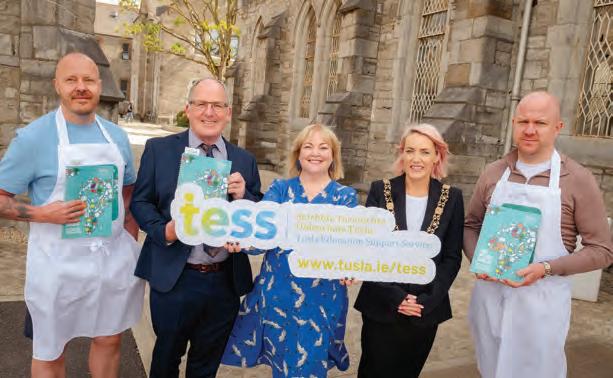
Chef Patron of Chapter One Restaurant Mickael Viljanen; Tusla National Director of Services and Integration Gerry Hone; TESS National Manager Maria Tobin; Lord Mayor of Dublin Emma Blain; and Chef John Kelly of Lady Helen Restaurant celebrate the launch of Food Without Borders at TU Dublin’s Grangegorman campus. Food Without Borders is a wonderful example of intercultural collaboration. It was produced by TESS and Tusla Communications colleagues, in partnership with parents who have engaged with HSCL coordinators, schools in the DEIS programme and the Department of Education and Youth.
Tusla Commissioned Services
Across the country, Tusla is involved with partner agencies.
In 2025, Tusla invested over €232 million in our partner organisations and School Completion Programmes, focusing on child welfare, family support and counselling.
Key achievements included launching four pilot child poverty plans, strengthening CYPSC governance, establishing five new Family Resource Centres and securing €1.5 million in additional funding for therapeutic services.
New Service Level Agreement (SLA)
Tusla’s new SLAs for Section 56 organisations were launched in early 2025 to address critical gaps in the previous SLA regarding current legislative and policy requirements for Section 56 organisations. This revision was essential to maintaining high standards of service delivery, safety and financial accountability across all Section 56 organisations.
It creates a safer, more transparent service environment through strengthened oversight and risk management, ensuring accountable delivery for families. As a result, there is now a modernised governance framework clarifying roles, responsibilities and statutory compliance expectations. There is strengthened oversight, transparency and risk management within funded organisations, ensuring safe, consistent and accountable service delivery. It has also resulted in improved alignment between funding, performance and outcomes for children and families.
Family Resource Centre (FRC) Expansion
FRCs are community-based organisations funded by Tusla that provide practical, accessible support to children, young people and families in their local areas. They are a key part of Tusla’s Family Support approach, focusing on early intervention and prevention to ensure families receive help before difficulties escalate. FRCs act as trusted, non-stigmatising community hubs and play a central role in strengthening families and building resilient communities.
As part of the ongoing national expansion of the programme, Tusla established five new FRCs in Dublin, Monaghan, Louth, Kildare and Galway, increasing the network at that stage to 126 centres nationally in 2025. A further 10 centres have since been approved to be established in 2026, which will then bring the new total to 136 centres. This expansion reflects the Minister’s clear focus on strengthening prevention and community-based supports.
In 2025, Tusla provided €20 million in funding to support the national FRC network, with additional investment allocated to the newly established centres.
The geographical spread of the network ensures that communities across the country have access to locally tailored supports that respond to identified need.
FRCs provide a wide range of universal and targeted services and development opportunities that address community need, including:
◉ Information and advice – guidance on local services, rights and entitlements, often acting as a focal point for onward referrals.
◉ Counselling services – therapeutic supports for adults, children and families.
◉ Parenting programmes – evidencebased courses, workshops and home-visiting initiatives to strengthen parent–child relationships.
◉ Childcare and youth services – early learning and care provision, preschool and after-school supports, and youth resilience programmes.
Through this work, FRCs strengthen community resilience, reduce isolation and provide vital, easily accessed services to children and families. The continued expansion of the programme will increase capacity in areas experiencing disadvantage, population growth and emerging pressures, support earlier intervention, reduce waiting times and improve long-term outcomes for children and families.
Tusla provided high-level oversight for the WRC agreement, ensuring Tusla’s full compliance with the agreed pay awards for Section 56 organisations providing services to or receiving funding from Tusla. There were many positive impacts for staff, children and families including:
◉ Stabilising and sustaining the sector for children and families
◉ Increasing pay for Section 56 organisations employees
◉ Providing governance oversight and financial assurance in implementing WRC agreements, contributing to workforce stability across Section 56 agencies
◉ Improved pay parity supports recruitment and retention of skilled staff in community and voluntary services, ensuring continuity, quality and sustainability of frontline support for children and families
◉ Reduced organisational risk and strengthened sector confidence in Tusla-funded services.
Child Poverty Local Area Plans
Four Local Area Child Poverty Action Plan (LACPAP) pilots were successfully developed and implemented in CYPSC areas under Ireland’s EU Child Guarantee Action Plan. 2025 was Year 1 of the two-year pilot phase. This has improved responses to neurodivergent children and families and will provide analysis and identification of the drivers of child poverty, supporting disadvantaged families to access appropriate local services, and supporting families to make small, meaningful energy efficiency changes to improve their quality of life. This initiative has strengthened interagency coordination and integrated local planning to address child poverty through targeted, evidence-informed actions.
Recruitment and Appointment of Whole-Tine Equivalent (WTE) Grade V CYPSC Project Support Workers
In Quarter 4 2025, Tusla held a further round of recruitment for the Grade V CYPSC support staff. By year end, 26 of the 27 CYPSCs had their support staff in place or onboarding. This will significantly bolster the governance and operational capacity of local structures; it will enhance coordination, data management, and financial oversight. For children and families, this translates into more effective interagency collaboration, clearer accountability for delivery of agreed actions, improved monitoring of outcomes, and strengthened early intervention responses at local level. For staff and partner agencies, it reduces administrative burden, improves governance compliance and enables a greater focus on strategic planning and direct service
with funded services
Additional funding of €1.5m was secured for counselling, psychotherapy and therapeutic services for children and young people to address waiting lists, and provision was made for unmet needs for community-based counselling services. This has increased access to timely, community-based therapeutic supports for children and young people. This initiative focuses on reducing waiting times and improved early intervention responses, supporting emotional wellbeing and mitigating escalation to higherintensity statutory interventions. This has strengthened regional therapeutic capacity in line with reform priorities.
All of these achievements reflect our ongoing commitment to supporting children, families and communities through thoughtful, responsive commissioning. We’re proud of the journey so far with our voluntary partners, with much more planned for 2026.
All Section 56-funded services were formally notified by Tusla Commissioning of the requirement to confirm their compliance, or otherwise, with the Tusla Toolkit and Guidelines for Funded, Contracted, and Collaborating Organisations. Funded services are obliged to confirm that they acknowledge Tusla funding and ensure commensurate share of voice in all communications and across all channels, including prominent placement of the Tusla logo on all physical and online campaign assets. To date, Tusla Commissioning has not escalated any instances of noncompliance to Tusla Communications. This position is based on declarations of compliance submitted by each funded organisation. Ongoing engagement with Tusla Commissioning has been undertaken to ensure that all funded services comply with Tusla branding requirements.
A critical component of delivering safe, effective services is a strong corporate services spine within the Agency.
Service
1 2 34 5 6
A critical component of delivering safe, effective services is a strong corporate services spine within the Agency. These Corporate Services include human resource, development and programmatic support within the People & Change directorate; financial, legal and estates management along with data protection and strategy and planning in the Finance & Corporate Services directorate; quality improvement, regulation, practice assurance and risk management in the Quality & Regulation directorate; and application, infrastructure, data and security services within the ICT directorate.
People & Change Directorate 1 2
3 4 5 6
Programme Management Office
The Programme Management Office (PMO) is a business support function within the People & Change Directorate, which supports delivery of Tusla’s priority business change projects. Through applying a programmatic approach, the PMO scopes, plans, implements, monitors and closes priority business change projects. In 2025, PMO supported many projects across Tusla, but the focus was mainly on the Tusla Integrated Reform Programme, and specifically the LISD and Alternative Care Reform Programmes. This involved supporting the design and implementation of new organisational structures, new social work practice models, digitisation of client records on the Tusla Case Management (TCM) system and the creation of foster care and residential placements. A significant development this year saw the introduction of six Regional Programme Manager roles in addition to our small national Programme Manager team. This has greatly strengthened integrated planning in Tusla, whereby the PMO can now support national service design and consistent implementation across six regions, which aims to ensure that children and families receive the same level of service regardless of where they live.
Human Resource Services
The Human Resources department in Tusla is made up of the following teams – Recruitment, HR Business Support, National Employment Relations, Health, Wellbeing and Employee Assistance Programme (HWEAP), Central Garda Vetting Unit, Workforce Planning, Regional HR Teams and Delegations.
On a day-to-day basis across 2025, Tusla Recruit advertised 436 recruitment campaigns and subsequently 1,249 appointments were completed, as follows:
740 new hires and 509 promotions
Tusla Recruit held and attended 36 recruitment events to promote Tusla as Employer of Choice and also progressed our Graduate Recruitment Programmes. We supported the implementation of education and training initiatives such as Social Work Apprenticeship, Social Work Sponsorship Programmes, National Traveller and Roma Inclusion Strategy (NTRIS), Internal Bursaries (Robert Gordan University), and Social Care Work Based Learning.
In 2025, HWBEAP finalised The Disability Reasonable Accommodation Request Procedure in collaboration with Health & Safety, Tusla Estates, and Tusla ICT. Tusla’s Equality, Diversity, and Inclusion Programme (TEDI) was also progressed by the HWEAP. In 2025 an additional 37 Wellbeing Ambassadors were identified, bringing the current number to 117.
The HR Business Support team supported the Reform programme and the transitioning from 17 Areas to 30 Networks across Tusla. Additionally, the HR Business Support team continued the development of the Tusla Pensions Hub, with a series of information videos launched in June 2025.
Our Central Garda Vetting unit processed
14,242 Garda Vetting applications in 2025.
In addition, the Employee Relations team progressed the expansion of the House of Mediation Excellence (HOME) programme, with the continued rollout of training for front-line managers increasing the network of mediators trained to offer mediation skills across the agency.
Learning and Development Services
The Workforce Learning and Development (WLD) is a national service and team that leads the Learning and Development function of Tusla. WLD day-to-day activities include delivering training from a catalogue of over 20 standardised inhouse courses, as well as conducting the annual Training Needs Analysis and developing, planning and procuring appropriate learning solutions. The team supports Tusla’s engagement with its Learning Management System (iLearn/HSELand), which is used to deliver mandatory eLearning and additional modules, and manage all classroom-based training.
A dedicated Digital Learning and Development team designs and produces in-house eLearning modules, videos, podcasts and other digital learning content, while also providing production support for large-scale internal and public-facing webinars. The team offers learning and development support at the Area Network level and assists managers in embedding Supporting Performance and Development Planning (SPDP) within their teams. It collaborates with service leads to provide learning supports that enable organisational change. Additionally, many WLD staff are members of the Tusla Coaching Network, providing both individual and team coaching.
Improving Service Quality
Within Tusla, there is a Directorate called Quality & Regulation, who are responsible for internal monitoring and strengthening of the quality of our services, working alongside the frontline staff to ensure the best possible end result for children and families requiring our services.
Tusla Develops First Ever Outcomes Framework for Children, Young People and Families
Tusla achieved a substantial milestone in 2025 with the adoption and launch of its first ever Outcomes Framework for the children, families and young people who attend our services.
The Outcomes Framework sets out a set of desired outcomes for children, young people and families, in line with the Five National Outcomes outlined in the National Policy Framework for Children and Young People.
Outcomes are real-world impacts created by a series of activities and actions undertaken by a practitioner. An outcomes-focused approach to providing support to the children, young people, parents and families who use Tusla services means thinking about the difference our interventions make in their lives.
A Shared Outcomes Measurement
Framework Group has been set up to progress the design of an accompanying measures framework.
The next phase of implementation will see the roll-out of a child and young person’s version of the outcomes. This version, using a series of ‘I’ statements, has been developed in close collaboration with the Agency’s participation officers, who have conducted focus groups with children and young people in care and those who attend Tusla services.
• Children and young people are safe and protected in their parent/carer’s care
• Improved emotional wellbeing and behaviour
• Improved resiliency and coping skills
• Increased parenting competence and confidence (self-efficacy)
• Reduced inter family conflict
• Children and young people have stability in placement
• Children and young people are better able to cope with trauma
• Positive parent / carer-child relationship
• Children, young people and parents are positively connected to and supported by family
• Children and young people are attending school
• Active parental engagement in children and young people’s learning and development
• Children and young people are achieving in education, training and employment
• Children and young people have positive peer relationships
• Reduced social isolation in the community
• Children, young people and parents feel listened to and valued
• Improved outcomes for children and young people through positive experience of and participation in services
• Increased public awareness and understanding of Tusla’s Services
• Improved Interagency collaboration in the provision of services to families
• Quality parent and child well-being supports and interventions are being implemented
• Participatory culture and practice are embedded
Practice Assurance
The Health Information and Quality Authority (HIQA), as the external regulator, inspects Child Protection and Welfare and Children in Care services against national standards, and regulations in Special Care Units. HIQA completed 40 inspections in 2025. The Agency achieved an overall rate of 62% compliant/substantially compliant across 45 standards inspected in 2025, and an overall rate of 86% compliant/ substantially compliant across 15 regulations inspected in Special Care Units in 2025.
The Practice Assurance and Service Monitoring (PASM) team is responsible for conducting internal quality reviews of Tusla services, independent of operational line management. Reviews are focused on service improvement actions and any additional governance oversight required. In 2025, 154 practice assurance reviews were completed as part of its annual review plan. The findings and recommendations from these reviews were used by operational managers to improve practice, risk management and governance to ensure that services meet their statutory obligations and are delivered in accordance with bestpractice standards.
Supporting Service Quality by Managing Risk
Tusla’s Risk and Incident Management framework ensures that Tusla’s Board is apprised on a quarterly basis of any risks and incidents that could impact on the delivery of Tusla’s strategic objectives.
Following reviews, six risks on the National Corporate Risk Register (NCRR) were closed during 2025. Appendix 2 provides a summary of the NCRR. Risk leads across the organisation ensured adherence to risk management processes and ensured key risks were reflected on risk registers with relevant controls, actions and mitigations.
It is Agency policy that all incidents are identified, reported and reviewed. Tusla reports incidents onto the National Incident Management System (NIMS) hosted by the State Claims Agency (SCA), fulfilling reporting requirements under the National Treasury Management (NTMA) 2000 Act. The Agency achieved the maximum SCA ‘delta Claims Previously Reported as Incidents’ (ACPRI) target of Level A in 2025.
In 2025 most incidents reported on NIMS had a very low severity rating of ‘negligible’. Serious incidents (referred to as ‘extreme’ on NIMS) accounted for <0.6% of all incidents. When appropriate, these extreme incidents were referred to the NRP and other relevant agencies such as HIQA and AGS as per the Incident Management Policy.
Supporting Health and Safety (H&S) of All Employees
Our commitment to safeguarding frontline staff resulted in a measurable improvement in workplace safety and support. A 50% increase in violence, harassment and aggression (VHA) classroom training delivery equipped our teams with enhanced preventative skills and the confidence to manage complex situations. This focus on staffcentric innovation earned international recognition through the shortlisting of our National VHA Programme for a European Social Services Award 2025.
In Special Care we adopt a traumainformed, holistic approach for children with complex needs while aligning the service with international best practices from the Restraint Reduction Network and National Institute for Health and Care Excellence (NICE) Guidelines. This commitment to safety reduces risks for both young people and staff, leading to fewer injuries and less sick leave.
Since the introduction of Safety Pods at Crannog Nua Special Care Centre, floor restraints decreased by 72%
Total H&S incident reporting on the NIMS increased, indicating a maturing reporting culture and heightened awareness of H&S, while the severity of incidents followed a downward trend. Notably, Health and Safety Authority (HSA) reportable incidents have decreased annually since 2023.
Almost 200 locations demonstrated having H&S operational compliance with site-specific Safety Statements. Furthermore, the activation of Regional H&S Committees across all six regions and in Children’s Residential Services has embedded robust engagement and assurance mechanisms throughout the Agency, ensuring that frontline experience remains at the centre of our health and safety management progress.
Tusla Library Service supporting staff and influencing practice
The Tusla Library & Information Service was established in January 2025, creating a curated electronic library resource to support Tusla’s commitment to evidence-informed practice.
Located within the National Research Office, the library is available to all Tusla and provides access to highquality electronic resources, including e-journals, e-books and databases which are relevant to Tusla services. A range of library support services have also been established for staff, including literature searching, inter-library loans and information skills sessions. over 18 months.
Service Users Listening and Responding
1 2 3 4 5 6
In Tusla, we work hard to ensure that our services meet the needs of our users. In line with our statutory obligations under Part 9 of the Child and Family Agency Act 2013, Tusla operates a complaints and feedback process called Tell Us, which provides a way for children, young people, families and other service users to provide feedback or raise concerns about Tusla services.
Service User Positivity
In 2025, Tusla received 693 instances of positive feedback through the Tell Us policy, which is indicative of the impactful work being done. Here are some examples of what service users told us:
A foster carer expressing their gratitude to the social work team said ‘there has been great support from the Social Work Team over the past while particularly during placement breakdown and the fallout of same. Thank you for all the support.’
A father of a child in care expressed his thanks to the duty team for their support: ‘Thank you very much for the support, help, understanding the hard time we’re facing right now, thanks for all the support you gave to us, especially to the kids.’
A parent expressing gratitude to staff in TESS said, ‘I would like to seize this opportunity to sincerely appreciate the staff for their exceptional service in helping my son secure admission to a school, we are more than grateful to the team for their support.’
expressed gratitude to an inspector following a recent inspection of their facility, saying ‘On behalf of my staff and myself, I would like to thank your inspector for her positivity and professionalism during her recent inspection visit to our playschool. After the inspection, both my staff and I felt encouraged, positive, and confident, especially following the constructive feedback and recognition of the warm, supportive environment we strive to create for the children.’
by an Educational Welfare Officer (EWO) expressed their gratitude: ‘Finding a school for our special needs son was very challenging, without the dedicated work of the EWO we wouldn’t have been able to succeed.’
A foster carer complimented the social workers on their support and patience: ‘I would just like to acknowledge how great it has been working with you. Thanks for making the ‘journey’ that little bit easier.’
A service user who was supported by a Tusla Birth Information and Tracing social worker provided this positive feedback: ‘I felt so supported, knowing she had the skillset to navigate this experience with me. Her communication skills are excellent, and she has a way of gently guiding the way through difficult conversations. Her empathy and care for both of us through the process were outstanding. She exemplifies excellence, going above and beyond to ensure the best outcomes. We are forever grateful.’
Service User Complaints
In 2025, Tusla received 870 complaints. The aim is to resolve all complaints at a local level (stage one) but, if required, they can be escalated for investigation (stage two). 74% of complaints were successfully resolved at local level, with the remaining 26% progressed to investigation within six categories of concern (displayed in Figure 3) accounting for two thirds of complaints which progressed to this stage. The remaining third fell into a variety of other categories. Learning from complaints is implemented by the local management staff involved and reinforced by publication of a complaint’s casebook.
The complaints under commissioned services received in 2025 covered a range of issues. There were a total of 69 complaints, categorised under various types, the most prevalent being ‘insufficient service’ (14), ‘breach of procedure’ (7), ‘delivery of information’ (7), poor communication (7), ‘unfair treatment’ (6), ‘behaviour/attitude’ (5), ‘catering/food’ (4) and ‘lack of response/action’ (4). These covered 78% of the complaints, with the remainder falling into a variety of other categories.
Insufficient service
Unfair treatment
Behaviour or attitude
Poor communication
Lack of consultation
Lack of response/action
Figure 3 – Six Most Common Complaint Categories at Stage Two
74% of complaints were successfully resolved at local level
Children’s Services Regulation (CSR)
Governance Framework and Quality Management System
CSR has responsibility for the effective operation and performance management of the agency’s functions as a regulator. CSR aims to provide public assurance and confidence that our regulatory activity is undertaken to the highest standards in accordance with legislation and thereby that the children who use the services we regulate are well cared for, safe and supported.
CSR strengthened how it governs and improves its regulatory functions through two linked quality initiatives: a new Governance Framework and an embedded Quality Management System (QMS) certified by the National Standards Authority of Ireland (NSAI) to ISO 9001 standards. These developments gave CSR a clearer line of sight from strategy to day-to-day regulatory practice, ensuring that inspections, regulatory decisions and enforcement activity were grounded in consistent, child-centred standards. This work supported Tusla’s commitment to accountable, transparent regulation that promoted confidence among families, providers and the wider public. It also demonstrated the maturing of CSR’s regulatory role within the wider agency context, building on years of progress in a demanding operational environment.
Tusla Early Years Inspectorate marked achieving ISO 9001 Certification for its Quality Management System at an event at Irish Museum of Modern Art (IMMA), Royal Hospital Kilmainham, Dublin.
Grant Landon, Head of Regulatory and Practice and Development; Helen Rouine, Quality Management and Process Lead; Fiona McDonnell, National Service Director; Kate Duggan, CEO, Tusla; Anne-Marie Brooks, Assistant Secretary, Early Learning and Care and School Age Childcare Division, DCDE; Stewart Hickey, Head of Business Excellence Certification, NSAI; Dr Anthony O’Leary, Executive Director, Quality and Regulation, Tusla.
The Governance Framework sets out clearly how decisions are made, risks managed and assurance provided across all of CSR, aligning structures and reporting lines with Tusla’s core pillars of people, practice and public confidence. It clarifies roles, escalation routes and oversight mechanisms across key functions including Inspection, Registration, Alternative Care, and Alternative Education.
The Quality Management System helps to translate this governance ambition into everyday operational discipline. CSR expanded the QMS to standardise how processes are designed, documented and continuously improved.
Child Safeguarding Statement Compliance Unit (CSSCU):
Strategy 2025–2027
The CSSCU supports and enforces sections 10–13 of the Children First Act 2015, which set out the requirements for Relevant Services to have a Child Safeguarding Statement (CSS). The purpose of the CSS is to enable organisations to demonstrate a proactive commitment to keeping children safe from harm. The CSSCU takes the position that the intention of the Act is to set out a preventative approach to safeguarding children. By supporting organisations to create environments and contexts where there is a culture that openly identifies and manages risk, services are better equipped to act responsibly and effectively to protect children. In 2025, 448 CSSs of relevant services were reviewed.
The CSSCU strategy for 2025–2027 sets a focus around four overlapping strands that emphasise governance, risk, services of concern and enforcement. The following three cross-cutting themes inform the priority areas of work: Child and Youth Mental Health, Children and Youth in Migration, and Children and Youth in Online Spaces. The team supports services to over one million children using relevant services in Ireland.
Alternative Education Assessment and Registration Service (AEARS) Waiting Lists and Service Developments
The AEARS marked a transformative year in 2025 for children who are educated at home, who received a timely assessment of their education provision while relationships with parents and partners were strengthened.
Waiting lists dropped from 1,922 in 2021 during the COVID peak to
316 children in 2025. Key drivers for these improvements included increased assessment activity, with
1,492 assessments
completed in 2025 compared to 567 completed in 2022 following the appointment of additional assessors.
Figure 4 – AEARS Home Education Assessment Waiting Lists 2021-2025
Public Sector Human Rights and Equality Duty
3 4 5 6
Tusla Child and Family Agency has a responsibility to promote equality, prevent discrimination and protect the human rights of its employees, customers, service users and everyone affected by their policies and plans. This is a legal obligation, called the Public Sector Equality and Human Rights Duty, and it originated in Section 42 of the Irish Human Rights and Equality Act 2014
Tusla wants to ensure that our staff and leaders are supported and empowered to continuously learn and improve so that children, families and communities benefit from our service. In relation to Public Sector Duty (PSD) on Equality and Human Rights, the Agency will embed the appropriate values and behaviours in our service and continually check our performance relating to these values and behaviours.
Our 2024 assessment highlighted that while greater than 90% of staff were aware of upholding human rights and the importance of avoiding discriminatory behaviours, this was understood to mean PSD in less than 50% of cases. To address this, mandatory training for PSD to raise staff awareness of individual staff responsibility was launched in May 2025. At the end of 2025, 75% (4,156) Tusla staff have completed the training.
The Agency is on track to achieve 90% target completion by end of 2026. The 2024 assessment highlighted three areas for additional focus in 2025. Staff requested greater awareness and activity on disability, Traveller and Roma and racism. These areas are discussed below.
Additional assessment in 2026 will see a survey issuing to young people receiving a Tusla service to seek their feedback on their awareness of equality legislation, whether young people know how to report any concerns they may have, and to seek young people’s ideas and feedback to inform what additional action may be needed to promote their equality and rights.
Disability under Tusla’s Equality, Diversity, and Inclusion (TEDI) Programme
The HWEAP promotes Diversity, Inclusion and Equality across the Agency, valuing different perspectives, depth of experience and the strengths and potential of individuals and teams.
The TEDI Programme ensures Tusla’s commitment to creating an inclusive, equitable and diverse workplace. The programme supports statutory obligations, promotes inclusive practice and strengthens organisational culture by embedding equality and diversity principles across all levels of the Agency.
The 2025 Disability Census return rate reached 5.6%. The reasonable accommodation activities to support staff with disabilities was strengthened through a collaborative process that helped employees in accessing reasonable accommodations, ensuring a consistent and responsive approach across the Agency.
National Traveller and Roma Inclusion Strategy (NTRIS)
As part of the NTRIS II initiative, Tusla has a national programme of work to promote awareness, access and participation in Tusla and Tusla-funded services for the Traveller and Roma communities.
The National Working Group for Traveller Children and Families developed a national programme called On the One Road – our journey towards strengthening Tusla–Traveller connections. This national programme of work was launched in November 2025. Representatives from Tusla services, regions and the Irish Traveller Movement, Pavee Point Traveller and Roma Centre, National Traveller Women’s Forum and Exchange House National Travellers Service attended the launch. It was an important milestone and a statement of Tusla and the national Traveller organisations’ joint commitment to this work.
On the One Road is available for download here
The National Action Plan Against Racism (NAPAR)
NAPAR is Ireland’s whole-ofgovernment strategy for addressing racism in all its forms. Eleven government departments and 11 state agencies (including Tusla) have specific actions in the plan. Tusla is committed to the objectives of the plan. It aligns well with other Tusla initiatives such as TEDI and NTRIS.
As part of our NAPAR objectives, Tusla implemented a number of initiatives in 2025:
◉ Established an ethnically diverse National Action Plan Oversight Group.
◉ Modified the Standard Operating Procedure for all new policies to consider the need for Equality and Human Rights Impact Assessments.
◉ Conducted a national staff survey to solicit views on meeting NAPAR goals and to increase awareness of NAPAR.
◉ Conducted training in Unconscious Bias and Cultural Awareness via the Tusla training platform for staff. This assists staff to be aware and respectful of ethnic, cultural and religious diversity.
Finance and Corporate Services Directorate
Strengthening Financial Governance to Safeguard Services for Children and Families
In 2025, Tusla took important steps to strengthen its financial governance through the implementation of new and/or updated Financial Regulations along with a number of targeted training sessions for staff. While these changes may appear administrative in nature, they play a crucial role in improving the quality, reliability and sustainability of services delivered to children, families and communities.
The new and/or updated financial regulations ensure that public funds are managed with greater consistency and transparency across the Agency. This reduces the risk of errors, delays or inefficiencies that could indirectly affect frontline services.
For service users, the impact is both practical and long term. Stronger financial controls mean resources can be allocated more effectively, enabling Tusla to prioritise essential supports and respond more quickly to emerging needs. By reinforcing accountability and ensuring value for money, these changes help safeguard the stability of services that vulnerable children and families rely on.
ICT Directorate 1 2 3 4 5 6
Delivering Innovation and Service
ICT Infrastructure, Information Security and Related Services
Tusla ICT delivered a range of initiatives during the year focused on enhancing the capability, performance and security of our ICT and Cloud infrastructure to provide better supports for staff, and Tusla offices nationwide. Some of the significant achievements were as follows.
◉ A major technology refresh programme was completed to upgrade over 6,000 laptops to ensure all staff have modern devices to support them in their work.
◉ A project to enhance the connectivity, performance and security of the infrastructure supporting Tusla offices nationwide passed a significant milestone with the 200th office completed by the end of the year. The improved infrastructure incorporates the provision of Wi-Fi in selected offices; this includes pilot initiatives to provide public Wi-Fi access for Tusla’s family access centres. The overall project to complete all offices is on track to be delivered by the end of 2026.
◉ Tulsa’s Information Security programme was advanced with the delivery of seven (7) further projects in 2025. In total, 50 projects are now delivered since commencement of the programme in 2022. The work delivered in 2025 included readiness initiatives required to prepare for Tusla’s planned ISO/IEC 27001 Information Security accreditation submission in 2026.
ICT Services
Tusla ICT launched a new service desk to further enhance the management of requests for help/service from users. In total, almost 10,000 users accessed our support service in 2025, with over 70,000 support requests successfully resolved. Our service teams provide support to both internal staff and external partners such as the referral community, who now engage digitally with many Tusla services over the Portal system. Tusla ICT also launched a popular feedback option for users to comment on the quality of support service received. The feedback is then used to inform learnings for improvement. Over 94% of users who provided feedback consistently scored the ICT services they received at the highest score of ‘excellent’.
Data Management and Digital Transformation
Details of the key initiatives achieved under the Tusla Data Management and Digital Transformation Strategy during 2024 are presented later in the report.
ICT, Digital and Data Management –A Year in Numbers
The infographic on the next page summarises the ICT services and projects delivered over the year in numbers.
Services 31, 997
User Support Requests Resolved
28,209 ?
Apps (TCM & Portal) Support Requests
849+214
New Joiner Set Up Requests (laptop & phone/account only)
912
Equipment Returns and Recycle
14 HIQA Inspections Supported
174 Servers Maintained
3,570
Accessory Requests (headset, monitor, KB etc)
815
Mobile Phone Related Requests
1.6m
Secure File Destruction (paper/digital)
1,830
Secure Device Destruction
452/2,800
Laptop Repairs/Replacement
61
Databases Maintained
7,312
Cyber Alerts Managed
5,115
Cyber Support Requests
235
28 Major Changes Managed
Major Incidents Managed
4 Data Infrastructure Solutions
274
Student Set Up Requests
287 Cloud Resources Maintained
250
Offices Connectivity Maintained
Projects
2,05 million Documents scanned and digitised
15 Data Migrations
9 Office Audio/visual Improvement
47 Office Connectivity Improvements
12 Cloud Services Projects
Records Entered (Forms/Notes/Attachments)
140,240 Cases/Referrals Managed
5,228
Staff Using TCM This Year 2.86 million
8 Enhancement Releases
6 New Forms Added
3 New Services on TCM This Year
28 Tusla Services in Total on TCM
2 Infrastructure Projects
10 Office Phone System Improvements
6 Data Integration Solutions
7 Cyber Security Projects 4
42 Reports & Business Intelligence
6 Data Management Projects
7 New Offices Connected
7 Records Management Plans/Schedules
15 Corporate Digital Forms & Systems
30,893
Online Garda Submissions
40,850
Total Users of Portal
131,015
Online Other Submissions to Tusla
Spotlight Story
A Single Digital Record for each Child
Better integration of Tusla’s services and can provide the practitioners supporting the child
In recent years, Ireland has established a unique position in having a national system, the TCM, that provides a single view of the child across child protection and welfare, educational support, therapeutic, fostering and residential care services. This success was further built on during 2025 with the implementation of TCM for social care case files across all Tusla residential care centres as well as for Aftercare services for young persons from 18 to 23 years of age. The system was also extended to be ready for the launch of the implementation for Family Support services at the start of 2026.
The implementation of TCM benefits the delivery of Tusla services, such as better integration, improved access to information, reduced administration and improved reporting capabilities. However, it is the benefits for the child being supported by one or more Tusla services that is the centre of the vision for TCM, as demonstrated by the representation below: in particular, the ‘single view’ and the ‘improved custodianship of records’ related to the child.
Single view of the child:
TCM enables all teams who are supporting a child to record their case files and collaborate under a single view of the child and his/her family.
This assists better integration of Tusla’s services and can provide the practitioners supporting the child with a view of relevant previous or ongoing engagements that may help to better inform the care planning or other supports being provided to the child.
TCM supports staff to better inform their care planning through a single view of every child.
Improved custodianship of records pertaining to the child’s story:
Tusla is always mindful that the records we hold are part of the child’s story. Custodianship of these records and holding them safe for the child or young person should they wish to access them in later life is an important responsibility that is now better enabled through the digitisation of our services around the single view of the child’s record. TCM enables the secure preservation and the appropriate retention of these records and enables appropriate retrieval should the child wish to access them at some point in the future.
TCM
Alternative Care
Child Protection and Welfare
Other Services
New Service Delivery Model
1 2 34 5 6 Peopl e Prac tice
Organisational Reform:
Delivering a Child and FamilyCentred Service in Every Community in Ireland.
In 2025, Tusla made significant strides in delivering on its ambitious Integrated Reform Programme, a system-wide transformation designed to improve how we support children, young people, families and our workforce. At the heart of this change is the Local Integrated Service Delivery (LISD) model, which aims to ensure that children and families receive the right service, from the right professional, at the right time. This will enable Tusla to continue to meet the growing demands of children and families in Ireland. This programme of work is the largest programme in the history of the Agency, aligned with Objectives 3 and 4 of Tusla’s Corporate Plan 2024–2026, and has impacted on the work of all staff to some extent.
LISD consists of three main pillars, as follows.
Reorganising from Areas to Networks
Transitioning from 17 areas to 30 networks enables us to deliver more accessible and effective support. By reducing spans of control, we can better align with community needs, making the support structures more accessible to children and families.
Every region will have five networks and a regional office, ensuring more consistent and integrated service delivery across all regions.
Introducing Streamlined Access via Integrated Front Door (IFD) Team
Creating a single point of entry for all referrals related to Child Protection, Family Support and Meitheal to enhance accessibility by ensuring families connect with the right service quickly.
Every network will be managed by one Area Manager and will include an IFD Team, which will be led by a Principal Social Worker to deliver cross-team collaboration and integrated service delivery.
Implementing Local Integrated Teams (LITs)
Establishing two LITs in each network aligned with a Child and Family Support Network (CFSN) to provide timely support, care and protection for children and families.
Transition from 17 areas to 30 networks 1 2 3
Single point of entry for all referrals
Local dedicated teams providing timely support, care and protection.
Story
Local Integrated Service Delivery (LISD) model
Tusla’s Reform of the Service Delivery Model
2025 saw significant progress with regard to preparation for the implementation of the Local Integrated Service Delivery (LISD) model. Using a programmatic approach, governed by the LISD Steering Group, the Executive Management Team and the Tusla Board, detailed implementation plans were developed for all directorates and all six regions. Regional Implementation Leads were appointed to support Regional Chief Officers (RCOs), with considerable support from the Programme Management Office and the LISD Delivery Team.
Tusla CEO, Kate Duggan, speaking to staff at a LISD engagement session in Limerick, April 2025
Significant changes were required across all Tusla Directorates to support this change.
Major milestones included:
1. The internal case management system , TCM, was reconfigured to support the new organisation structure – six new regional boundaries, 30 networks, 30 Integrated Front Door (IFD) Teams and 60 Local Integrated Teams (LITs), ensuring a consistent structure across all of Tusla’s community services.
2. Reconfiguration of TCM to facilitate a single digital record for children with whom we are working, including Family Support, Safety and Welfare, and Children in Care.
3. SAP HR system was reconfigured to accommodate the new organisation structure – 30 networks, new IFD Teams, LITs, etc., ensuring a consistent organisation structure in all networks.
4. Finance enterprise structures were reconfigured to support the new organisation structure.
5. Development of new Standard Business Processes and Standard Operating Procedures to support the new Family Support Portal and Family Support structure.
6. A Resource Allocation Model was developed, setting out critical minimum staffing requirements for networks to safely operate in the new structure.
7. Staff transition process –supported by the Resource Allocation Model and the LISD Project Team. An initial desktop staffing allocation exercise was conducted, followed by a final staff allocation process in October. Over 3,600 staff members were notified of their new assignment, including their region/network, team and sub-team ahead of go-live in January 2026.
8. Case allocation process –supported by a bespoke application developed by ICT, Tusla Frontline teams engaged in a three-phase data acceptance testing (DAT) process wherein all open Child Protection/Alternative Care cases were assigned to the new networks and teams using a set of assignment rules agreed by the LISD Steering Group. A case assignment standard operating procedure was also developed to support this process.
9. Stakeholder engagement –significant internal and external stakeholder engagement took place over the course of 2025; weekly engagement sessions took place with FORSA to ensure all structure changes were agreed in a timely manner. Various other stakeholder groups were also engaged with, including HSE, AGS, Community and Voluntary Sector, Foster Carers and the Courts Service. Regular staff newscasts were issued over the course of the year, informing staff of the upcoming changes and timelines. In addition, the CEO held several live webinars with
staff, as well as a series of inperson engagement sessions for line managers. Numerous local engagement sessions also took place, facilitated by RCOs and Area Managers, and supported by local communications officers and regional implementation leads.
10. Staff Supports – various learning programmes were developed to support staff in the case assignment process, supported by ICT and WLD. In addition, engagement sessions and webinars were held for staff, in particular line managers and Principal Social Workers, to assist staff with the transition to a more integrated way of working. Various explainer videos were also developed for staff to assist with using new forms on TCM when the new operating model went live.
11. Recruitment – with agreement from our parent Department and FORSA, Tusla recruited new Area Managers to support the move to our new 30 networks. In addition, a new role of Family Support Team Lead was developed and is being recruited for. This will support the integration of family support services and gives a clear career path for Family Support staff in the Agency.
On 1 January 2026, Tusla’s new operating model, including the new regional boundaries, network boundaries and local integrated team boundaries along with the new IFD and LIT structure, will be going live. The number of open cases, referrals and children in care cases for the new networks will be significantly lower than the current figures for the 17 Tusla Areas prior to go-live. Tusla’s new operating model will mean that all our community services are operating in a consistent manner, ensuring a more consistent level of services for children and families. We will be operating in a less siloed, more integrated operational structure, which will mean a more efficient and holistic approach for working with children and families.
Looking Ahead
The primary aims of LISD for 2026 will be to ensure that staff working in the new operating model are supported, new structures and ways of working are embedded and consistency is achieved. Furthermore, the programme is committed to reviewing and revising Tusla’s standard business process, where relevant, to ensure it is consistent with our new operating model.
1 2 3 4 5 6 Peopl e Practice
Alternative Care Strategy
The Alternative Care Strategy is focused on building sustainable capacity, strengthening quality and safety, and ensuring that children and young people who require alternative care receive timely and appropriate therapeutic supports that improve long-term outcomes. During 2025, Tusla continued to progress the commitments of the strategy as set out in its Corporate Plan through the delivery of its strategic plans for Foster Care, Residential Care and Aftercare services.
The profile and complexity of need among children entering care continues to evolve. Increasingly, children present with multiple and interrelated vulnerabilities requiring enhanced therapeutic, behavioural and clinical responses across foster and residential settings. Contributing factors include the longer-term impacts of COVID-19 service disruption, increased exposure to domestic, sexual and gender-based violence (DSGBV), rising poverty and homelessness, and the impact of global displacement and conflict.
In line with Corporate Plan priorities to strengthen service resilience and responsiveness, Tusla has continued to adapt and enhance its service model. Agreed changes in the staffing qualifications in the private and voluntary residential care services are now increasing the potential pool of staff available to our services, with this due to expand into statutory services in 2026. The successful launch of our new tender for residential care in 2025 has also increased service type and is now more targeted at the needs of young people requiring residential care provision.
The implementation of a single national referral pathway for residential placements has continued to improve transparency, equity and governance in bed allocation. Within foster care, targeted initiatives have supported both recruitment and retention, including peer mentoring, the further development of a digital fostering support hub, and structured engagement with community and corporate partners. These initiatives are aligned with the Corporate Plan objective of expanding placement options while improving stability and experience for children in care.
Recognising that improved outcomes for children in alternative care require coordinated system responses, Tusla has continued to strengthen interagency collaboration with Government Departments and statutory partners. This integrated approach supports improved access to mental health, disability, education and housing services, consistent with the Corporate Plan commitment to whole-of-government solutions for vulnerable children and families.
To mark 16 Days of Activism Against Gender-Based Violence, Tusla launched the Recognise, Respond, Refer Resource Guide in St Joseph’s Hospital, Mulgrave Street, Limerick. This resource is for professionals across Limerick City and County to assist them in recognising and responding to children and young people who may be experiencing domestic violence.
Strengthening Residential Care Capacity
6
4 5
1 2
3
In this final year of the Strategic Plan for Residential Care Services for Children and Young People 2022–2025, Tusla’s Children’s Residential Service (CRS) made substantial progress in terms of increasing overall residential bed capacity. In 2025:
◉ 38 additional beds were delivered through newly opened Tuslaowned residential centres.
A living room in a Tusla children’s residential centre.
◉ 1 additional bed was commissioned within an existing Tusla centre.
◉ A net gain of 17 residential beds was achieved across private residential providers contracted by CRS.
◉ A net reduction of 2 beds occurred within the Voluntary sector.
This represents a net increase of
54 residential
care
beds in 2025 across statutory, voluntary and contracted private services.
This expansion materially strengthens Tusla’s capacity to meet assessed needs within regulated and qualityassured settings. It supports improved placement planning, reduces delays in accessing appropriate care environments, and enhances regional responsiveness.
While progress has been made in scaling residential capacity, the Agency continued to be challenged in 2025, in the context of unprecedented demand for placements, to provide a registered emergency placement for all young people when they require an immediate place of safety. This has resulted in an ongoing requirement for the use of Special Emergency Arrangements. Throughout 2025, significant efforts were made to further strengthen the oversight of these arrangements, and to implement programmes of continuous service improvement with providers.
The priority remained on transitioning young people into registered placement as soon as possible, but this was more challenging, particularly for young people who had experienced placement breakdowns in both foster care and residential care previously. The Agency continued to work with other state agencies in seeking to strengthen interagency working for those young people with more complex needs. The ambition is to further reduce our reliance on these arrangements in 2026.
Continued investment in staff support, therapeutic input and safety initiatives during 2025, such as psychological group support, health screening, and Wellbeing Ambassadors, contributed to a further reduction in VHA incidents and associated absence rates. These improvements support safer care environments, enhance staff resilience and contribute to greater placement stability for some of the most vulnerable children in Tusla’s care.
Tusla also continued with the development and implementation of TCM, an ICT Centre Management and Case Management system, across CRS and Special Care. The TCM Occupancy Form was finalised to go live at the end of January 2025, which allows for TCM Occupancy Reports to be produced. At the end of 2025, all CRS centres had access to maintain and update the Centre Occupancy form as required.
The TCM implemented the Daily Journal form in 2025 with all CRS staff trained and the form went live in October 2025. ICT has trained several TCM Superusers across CRS services to support the implementation of TCM.
Summary of young person’s views to HIQA inspectors
There was one child living in the centre at the time of the inspection. They kindly offered to show an inspector around the house and speak with the inspector about their time living there. They were very positive about their time living in the centre, telling the inspector that “it’s a home” and they felt safe. They described the centre as being the first place they have lived that felt like a home since coming into care.
A kitchen in a Tusla children’s residential centre.
The child also spoke very positively about staff, telling the inspector that “they care for ya.” When asked about any changes they would make, they spoke about their past, saying “I’d go back to when I came into care first and I’d come to [centre].”
A bedroom in a Tusla children’s residential centre.
Recently, it was decided that the centre would continue to provide residential care to one resident until the end of 2026. When speaking about this, the young person described being happy and feeling listened to, as “I wanted to stay here.” In addition to the centre feeling like home, one of the reasons they gave was that the location meant they saw their family every week. They appeared really anxious when talking about their aftercare plan, hugged themselves and said “I don’t even want to think about it” as an aftercare placement had not yet been identified for them.
The child told inspectors about how staff have supported them to attend their educational placement.
They spoke about wanting to get an education even though they found the day long and “boring”. They also spoke about choices they made day to day, such as choosing what to have for dinner and what activities to do. When asked, they told inspectors they knew how to make a complaint and identified their Guardian ad litem (GAL) as a person they would talk to if unhappy about something. They also noted that the service was “great” and they had no need to complain.
SCSIP Residential Services
206 new registered residential beds were opened in 2025 for unaccompanied children seeking international protection, bringing the total capacity to 1 2 3 4 5
504 beds
across 72 units of accommodation. 11 Special Emergency Arrangement (SEA) beds and eight Emergency Intake Units remained open at the end of 2025. A total of 25 minors were also accommodated in fostering and supported lodgings during 2025.
Increased Demand for Alternative Care
3 4 5 6 Peopl e Practice
Confidence
1 2
Despite progress in expanding residential capacity, demand for alternative care placements remains high across both domestic referrals and unaccompanied children arriving into the State. Providers across the statutory, voluntary and private sectors continue to experience structural challenges in expanding provision at the pace required.
Workforce recruitment and retention, regulatory and planning processes, and property acquisition timelines remain key system constraints. This is particularly so in relation to identifying appropriate properties in the context of the ongoing housing crisis and in terms of attracting appropriately qualified staff given the nationwide shortage of social care qualified staff. Tusla continues to address these constraints through strengthened workforce planning, proactive commissioning, enhanced governance and oversight, and engagement with national stakeholders to improve service sustainability.
Under Tusla’s Alternative Care Strategies in 2025, we allocated capital funding to open 11 new residential centres, which resulted in an additional 38 beds in statutory centres, and put in place a series of measures to strengthen our ability to recruit and retain suitably qualified staff for these centres once operational.
Special Care for the Most Vulnerable Children
3 4 5 6
Confidence
Peopl e Practice
1 2
Special Care services remain a critical component of Tusla’s continuum of care for children presenting with the highest levels of risk and vulnerability. For some of the most vulnerable children, often with very challenging and complex psychological needs, Special Care is a critical and specific intervention aiming to provide stabilising and safe care in a secure therapeutic environment.
With ongoing difficulties in building and maintaining capacity in Special Care provision, the Agency continued to focus on addressing the complex issues impacting capacity challenges, and a number of actions were taken that will help lay the foundations for increased capacity in 2026 and beyond.
Tusla has continued to work on the expansion of placement capacity across the continuum of care, resulting in 54 additional residential beds available in mainstream provision. An additional 11 houses were opened in 2025 and a further five are in progress to open in 2026. Two sites have been identified for the development of new Special Care step-down centres and planning is underway to progress these centres in 2026. In addition to this, Tusla CRS continues to provide step-down placements where possible within its existing services. More mainstream beds mean greater opportunities to support Special Care step-down and transition initiatives.
Houses and beds are one part of the challenge, the other being availability of staff to support the children requiring these services.
77 staff
Tusla’s priority is always to fill vacancies through direct recruitment and permanent hires, and we have implemented a number of initiatives to work towards reducing the level of vacancies across Special Care and Children’s Residential Services, including open days in universities, overseas recruitment and transition year and graduate recruitment. In addition, a new Special Care Worker grade, with enhanced salary, was advertised in February 2025 and resulted in the recruitment of 7 Special Care Workers in 2025.
In recognition of the value of Special Care schools, they were awarded €2,000 to establish a community of practice for an anti-bullying policy review in line with the Bí Cineálta procedures. This project aims to foster shared learning, promote consistency and enhance the implementation of effective anti-bullying strategies in the respective schools. are required to open
11 beds
to children requiring Special Care.
From Care to Creativity – 13-YearOld Artist Releases Their First Comic
‘Mick’s Story’ is a comic book developed by a young person in Special Care, based on their own experiences.
A talented 13-year-old in special care is proving that imagination can be a true superpower, with the launch of their very own comic book. Inspired by their own experience, the artist spent a few weeks during autumn 2025, in conjunction with EPIC, designing characters, sketching panels and bringing a world of heroes and hope to life.
The comic is more than just creativity as it’s a message about resilience and belief in yourself. The artist highlighted how creating the comic book helped them express their ideas and emotions that are sometimes difficult to put into words.
The launch of the comic book took place in Crannóg Nua on 9 October 2025, and the artist was excellent in presenting their works to a wide audience for what was an inspiring achievement. A spokesperson from EPIC highlighted how art is a means of showing young people that their voice matters and that art can be a powerful way of sharing a story, and this comic was a perfect way of sharing a story.
Tusla–Child and Family Agency launched its sponsored garden at Bord Bia Bloom 2025. Pictured at the launch: Fergus O’Cuanacháin, Chief Information Officer, Tusla; Rosarii Mannion, National Director of People and Change, Tusla; Corinne Hasson, former CEO of the Irish Foster Care Association; Kate Duggan, CEO, Tusla; Patricia Doherty, Board Member, Tusla; Maria MacInnes, Service Improvement Manager, Tusla; Dr. Anthony O’Leary, National Director of Quality and Regulation, Tusla
1 2 3 4 5 6
Foster Care aims to provide a safe, secure and stable home environment for children/young people who are not able to live with their parents. Tusla values and respects foster carers and the role they provide in welcoming children into their home and caring for them. To this end, foster care was a top priority for both Tusla and the DCDE during 2025. Building on progress from 2024, we continued to embed new innovations and review existing practices to strengthen recruitment and retention of Tusla foster carers so that more children in need of care can be placed in a family setting.
The National Fostering Recruitment and Enquiry team initiated a new strategic approach to recruitment focused on increasing the number of in-person engagements across the country.
The team participated in
231 events
children engaging over 5,000 individuals in person, a 92% increase on 2024.
Bloom launched Fostering Awareness Month in May 2025, where Tusla won the public choice award for its garden co-designed by foster carers and the children in their homes with staff. The team also launched the Fostering Friendly Workplace initiative in December 2025, presenting the first award to UCC for its fostering-friendly workplace policy. At the end of the year there was a 26% increase in fostering enquiries between 2024 and 2025. There has also been an increase in foster care approvals for the second consecutive year, with 223 approved in 2025. This is the highest number of foster care approvals since 2020.
223 foster care approvals
Tusla completed a collaborative engagement with children of families who foster, bringing together fostering services and the child participation lead to co-create resources and acknowledge the vital role played by children in fostering families. This culminated in a special celebration of these children in Croke Park in November 2025. Children created resources for sharing on the Tusla Information HUB along with booklets by children authored in Tusla areas.
The pilot peer support model continued to grow in 2025, with agreement to recruit a further 14 workers. These new peer supports will commence work in early 2026. A review of the Assessment Framework for Foster Carers and an updated preapproval training for foster carers were undertaken and both projects were at final stage of consultation in December 2025.
As the Strategic Plan for Foster Care Services 2022–2025 came to an end in 2025, an indepth learning exercise was conducted to inform the future direction of foster care services. Of the 29 strategic actions, 20 were delivered, three partially achieved, five transferred and one not progressed. Work continues to build on the innovations and progress achieved under the strategy and integrate that into business-asusual to ensure better outcomes for children coming into care.
The theme of Tusla’s Bloom garden, ‘Fostering Is For You’, designed by Pip Probert, represented the fostering journey. Pictured in the garden are Designer Pip Probert, Danny Ricketts, Ellie Greenan and Tusla CEO Kate Duggan.
Spotlight Story
How Tusla foster families created the largest-ever sand message to promote fostering in Ireland
Promoting Fostering in Ireland
Tusla Fostering staged a series of innovative and collaborative recruitment activities during Fostering Awareness Month. The Fostering team invited foster families from Wexford and Waterford to gather to create a colossal piece of sand art. The foster families who gathered used the medium of sand to depict what fostering, community and neighborhood mean to them.
Tusla foster families from across the southeast came together in June to create two colossal pieces of sand art at Duncannon and Tramore beaches depicting what community and neighbourhood mean to them.
Working alongside visual artist Sean Corcoran, the families created two 400-ft wide pieces of sand art: one at Duncannon Beach, Wexford on 14 June and another at Tramore Beach in Waterford on 15 June. Their details reflected the families’ responses from a Tusla-organised workshop earlier that week in which they were asked “What does community mean to me?” and “What does my dream neighbourhood look like?”
Sunshine, dogs, a street feast, a gingerbread man, families and people linking hands were among the images etched with rakes in the sand over three hours. The finished pieces were each the size of four football pitches and a sight to behold for visitors to the area, who applauded the artists for their creations.
Organisers of the Fostering artwork had to secure permission from the Irish Coast Guard and Waterford Airport two weeks prior to the event, and had to operate within a strict timeframe before planes could return to the skies overhead.
Waterford-based Social Work Team Leader Pat Murphy and Tusla Senior Communications Officer Alma Feeley were the duo behind the sand art idea, and worked closely together to make it a reality.
The sand art event garnered a lot of attention in local and national media: so much so that the Fostering team decided to go even bigger on a second trip to Duncannon Beach for what is believed to be the largestever sand message:
You CAN foster
Participants were aged from two years old up to 65 years and worked for several hours to rake out the message across an area of 1.52 acres. The message reminded local communities of the ongoing need for foster carers in Waterford and Wexford, and how rewarding it is to foster a child.
The foster families chose the message “You CAN foster” on the back of the Agency’s own research, which shows that people often rule themselves out of fostering because they think they are not eligible when, in fact, they could foster.
Such was the scale of the accomplishment that it gained national media attention, supporting Tusla’s overall aim of increasing our foster care community and our business plan goals of ensuring consistent, quality and integrated services for those who need them.
Aftercare Supports for when a Child in our Service Becomes a Young Adult
3 4 5 6 Peopl
1 2
Over the 12-month period, eligible young people and young adults aged 16–22 years inclusive in receipt of an Aftercare Service increased by 50 (2%) to 2,985. 81% (1,787) of young people 18–22 years (2,214) were in education/accredited training. There were 680 referrals in the first nine months of 2025, showing an annual increase of 78 (18%).
The Tusla Sligo/Leitrim/West Cavan Aftercare team mark 20 years of Aftercare services in Sligo, Leitrim and West Cavan at a celebration event with young people, foster carers, Tusla colleagues, community and voluntary service providers and community members.
Aftercare support continued to focus on enhancement and widening of service supports to meet evidencedbased identified need over 2025, with deliverables in the context of the Strategic Plan for Aftercare for young people and young adults 2023–2026 taking a holistic and coordinated multi-organisational approach across government and
service sectors. 15 of 17 high-level strategy recommendations were completed, with the remaining two recommendations on track. Aftercare Strategic Plan deliverables achieved to date have been Tusla cost-neutral.
An Aftercare awareness campaign was launched in 2025 that includes planning for the inaugural Aftercare conference, which was supported by Dormant Account Funding (DAF). This ensures that all stakeholders are fully informed of supports available.
DAF for Aftercare of €617,280 was secured, which supported 19 Aftercare projects over 2025.
€2.4m was secured for Aftercare in total in recent years, supporting 83 Aftercare projects.
Following a 15-month joint Tusla/ Department of Housing, Local Government and Heritage (DHLGH)/ DCDE review, which included key stakeholder consultation, the ‘Revised Joint Protocol for Young People Leaving State Care’ Housing Circular 20/2025 was published in June 2025. Tusla and DHLGH are jointly engaged in implementation into practice. Protocol identifies accommodation pathways with clear roles and responsibilities.
Tusla engagement with Department of Further and Higher Education, Research, Innovation and Science (DFHERIS) on care-experienced student need and input into the ‘National Student Accommodation strategy 2025–2035’ was completed
in 2025 to reduce barriers to education, and this is due for publication in 2026.
In the context of the DCDE ‘Care Experiences Programme’, funding was secured with commencement in 2025 for bespoke research of a ‘Study on the Career and Educational Journeys of Care Experienced Young Adults’ (working title). A draft was completed with publication planned for Q1 2026. The study focuses on the major factors influencing access and success in education, employment and training, and will provide timely knowledge on care-experienced young people and young adults in this context.
A bespoke National Training Needs Analysis with action plan was completed for Tusla Aftercare Services and NGO Aftercare providers and implemented into practice to support frontline aftercare teams.
A Tusla ‘Aftercare Career Guidance Pilot Programme’ stakeholder summary report funded by DAF, supported by DCDE, was launched. The findings of this report will inform potential scalingup within the Agency.
Building further in the context of the National Care Aware network ‘Personal Support Person’ programme for the academic years 2024/2025 and 2025/2026, the programme in addition to Technological Universities now includes the University sector nationally, which is supported by a Tusla National Student database updated annually.
The programme ensures that there is a named contact person with the appropriate and sensitive interpersonal skillset within the college as the ‘go-to’ person for care-experienced students before and during their educational journey. Building on the established networks already in place in the context of the Care Aware programme, in 2025, a Southwest pilot, ‘Towards a Model of Best Practice in support of careexperienced students’, has enhanced support in that a dedicated career guidance counsellor is available. This pilot has received dual ministerial endorsement. Additionally, a Tusla Aftercare/Education and Training Boards Ireland (ETBI) ‘Future Focused’ pilot has been completed and reviewed for possible scaleup nationally within the ‘Personal Support Person’ programme.
Following an initial DAF-funded pilot in Mayo, Therapeutic Counselling support for Aftercare adult service users, ‘Care to Connect’, commenced roll-out nationally on a phased basis, with Cork Aftercare completed in 2025 and a minimum of three further support services planned for 2026.
A DAF-funded Aftercare Service pilot programme
Aftercare Pilot to Support Employability
A DAF-funded Aftercare Service pilot programme, ‘Include Youth Give & Take’, was independently evaluated in year two for potential scaling up, and is now in its third year. This programme aims to improve the long-term employability and confidence of care-experienced young people and young adults with multiple complex needs to achieve successful outcomes. Referrals to the programme have included neurodivergent individuals with a diagnosis of autism, ADHD, dyslexia, dyspraxia and dyscalculia disabilities.
Joanne McCarthy, Aftercare Manager, Tusla; James Morrissey, Manager, St Mark’s Youth Club; Diane Hill, CEO, Include Youth Ireland; and Mags Keane, Commissioning Manager, Tusla celebrate one year of the Give and Take Programme in Dublin Mid-Leinster.
Give & Take develops an Individual Action Plan tailored to each individual young person’s needs with a focus on strengths, skill development and wraparound supports to achieve identified goals over a 12–24-month period. The core themes of the programme include training and qualifications, personal and social development (life skills), employability skills training, 1:1 mentoring and transition support to sustain employment, training or education.
These have been consistently raised in local and national feedback from care leavers as areas in which they would like additional support. Partnerships with a range of services in local areas including St Mark’s, South Dublin County Partnership, Foróige, gyms, sports clubs, Jigsaw counselling and other addiction services have provided valuable networking opportunities, facilitated training and optimised resource sharing to better support the young people. Ongoing collaboration with the ETB is instrumental in addressing educational gaps of these care-experienced young people and young adults.
The Include youth work practitioners running the programme are professionally trained and their practice is firmly underpinned by trauma-informed approaches, ensuring that young people with complex histories are met with consistency, sensitivity and a deep understanding of their lived experiences.
During 2025, 38 care-experienced young people and young adults engaged in the programme, supported through Individual Action Planning, one - to - one mentoring, group work and community- based learning experiences. Participants demonstrated clear growth in confidence, independence and readiness for employment or education, with strong outcomes including 100% induction completion, 80% accreditation among leavers and sustained engagement in life - skills and employability activities.
Young people progressed into part - time employment, QQI Level 5 courses, volunteering roles and structured training pathways, supported by hands - on work experience, practical skills sessions and targeted wellbeing activities such as gym sessions, creative workshops and outdoor recreation. The programme’s wraparound approach – integrating crisis support, mental health and addiction referrals, employer engagement and essential practical assistance – ensured that young people with often multiple complex needs received consistent, responsive care. Collaboration with local employers, community organisations and specialist services strengthened progression routes, while youth voice remained central through active participation in planning and feedback processes.
Looking ahead, the programme is set to expand its accredited learning offer, with youth workers preparing to deliver a suite of vocational units and qualifications on-site, strengthening employability and personal/social development pathways.
Combined with newly secured QQI provision through a local Adult Education Centre, Give & Take is positioned to significantly enhance progression routes in 2026, further supporting young people toward independence, stability and long - term positive outcomes.
The young people took part in wellbeing and development activities including a residential in Belfast, mountain walks and an addiction awareness workshop. Notable personal progress included one young person moving from homelessness into secure housing while starting college and part-time work, one engaging with rehabilitation services, and one re-engaging positively with supports. Additional highlights included community volunteering, and funding secured for enhanced activities and resources, including podcast equipment supported by Cavan County Council and an activity programme funded through Cavan Sports Partnership.
“More than eight in ten children who left care aged 18–24 years in January 2025 were in substantial employment and/or enrolled in education for each of the years 2019–2023” as reported by the Central Statistics Office.
1 2 3 4 5 6
People Strategy
‘People are our strategy’
We believe that ‘People are our strategy’. As such, we have embarked on a range of initiatives designed to improve Tusla as a place for talented professionals to work.
Our People Strategy 2025 to 2027 was developed following two years of consultation and listening to our people. It is based on eight equal and linked themes that relate to Tusla as a high-performance workplace and to the lived experience of all our employees.
Tusla is committed to building a culture of health within the agency at the same time as we embark on our ambitious reform programme to ensure colleagues want to stay and build a successful career and ensure no one in our teams is left behind. The People Strategy will improve our ability to strategically attract, develop and retain the best staff, and create an environment in which they flourish and succeed through the delivery of integrated, impactful services for children, young adults and their families.
1 2 3 4 5 6
Recruitment and Retention
As the single agency in Ireland with statutory responsibility for the welfare and protection of children and young people, the recruitment and retention of Social Workers and Social Care staff is critical to achieving Tusla’s objectives: to respond to the needs of children, young people and families, to promote better outcomes, and to comply with our statutory, legal and regulatory requirements.
Ireland has not been producing an adequate supply of professionally qualified Social Workers through our third-level institutions to meet the existing and future requirements for the profession across all relevant public, private and community and voluntary sectors. This is a challenge that is experienced in Northern Ireland, the rest of the UK and across Europe.
In 2025, the People and Change Recruitment team completed 1,249 appointments including new starters and promotions to support the development of a multidisciplinary workforce. 73% of appointments were onboarded within the ‘8 weeks or under’ timeframe, with another 17% of appointments onboarded within a 9–12 weeks timeframe.
In 2025, Tusla’s Social Work graduate campaign resulted in
108
Social Work
graduates being onboarded.
Following the launch of the Social Work Apprenticeship programme in 2024, a second intake successfully commenced in September 2025 with significant investment and sponsorship; this resulted in 70 apprentices, double the intake of Social Work apprentices in 2024. In addition, Tusla commenced a Work Based Learning Programme in 2025 for Social Care workers to work in Residential services, with a total of 17 candidates commenced.
To facilitate greater retention of key Social Work and Social Care staff, the roll-out of Career Pathways for Health and Social Care Professionals continued to have a positive impact. HR data shows an increase of 1.24 percentage points in Social Care workers’ retention – 93.25% in December 2024 to 94.49% in December 2025, and the significant Social Work increase of 2024 was maintained, with retention of 91.5% in December 2024.
1
2 3 4 5 6 Peopl e Practice
Three Years of Coaching: Growing a Culture of Support and Success
Our Coaching Journey So Far
One-to-One Coaching
Coaching Skills for Staff
Team Coaching
Professional Standards
We proudly celebrate the third anniversary of our Tusla Coaching Network – three years of helping colleagues unlock potential, build confidence and navigate change through the power of coaching.
Our network has grown into a thriving community of professional coaches, all dedicated to supporting personal growth, wellbeing and performance across the Agency.
Hundreds of staff have benefited from individual coaching, reporting greater clarity, confidence and motivation.
The Workforce Learning & Development Tusla Coaching Skills and new Enhanced Coaching Skills programmes help colleagues have more effective, solution-focused, supportive conversations every day. Check HSELanD for the next available programme, as they book up quickly.
Introduced in May 2025 and supported by the Organisational Development Partnership Team, our Team Coaching offer is helping teams strengthen collaboration and shared purpose. Requests are made through the Team Coaching tile on the Tusla Coaching Network.
Our internal coaches work to International Coaching Federation (ICF) and European Mentoring and Coaching Council (EMCC) ethical frameworks, supported through supervision and ongoing CPD.
What People Are Saying
These are findings from our recent survey of staff who have accessed the Tusla Coaching Network:
Positive Impacts
Clarified approach to challenges 83.9%
Clarified thinking 87.9%
Increased confidence in using strengths at work 80.8% Supported Tusla values (Trust, Respect, Kindness, Empowerment) 56.1%
Contributed to personal development 83.7%
Contributed to professional development 84.9%
Sessions were safe, respectful, professional 90.9%
Would recommend coaching to a colleague 88%
Changes in communication/leadership/work:
of staff reported positive changes in how they communicate, lead and work 71%
Examples of Reported Changes
◉ Increased self-awareness and clarity of thought
◉ Improved empathy, communication and listening skills
◉ Greater confidence and focus in professional settings
◉ Better time management and ownership of responsibilities
◉ More positive and reflective mindset
◉ S tronger application of trauma-informed and strength-based approaches
Why Coaching Matters
For Individuals:
Builds confidence, self-awareness and resilience
For Teams:
Enhances communication, trust and collaboration
For the Organisation:
Supports engagement, inclusion and cultural transformation.
Coaching helps our people and teams thrive – and that strengthens our whole organisation.
Our Success Factors
◉ Visible leadership support
◉ Clear governance and ethics
◉ Skilled, committed internal accredited coaches
◉ Partnership with the Organisational Development Team
◉ Inclusive access for all staff
◉ Ongoing evaluation and feedback
Looking Ahead
As we move into our fourth year, we will focus on:
◉ Increasing the number of coaches on our coaching panel
◉ Expanding team coaching across more business areas
◉ Further embedding coaching skills in leadership and management
◉ S trengthening impact evaluation
◉ Growing our community of practice and continuing professional development for our coaches
Tusla Leadership Academy/Framework
Tusla Leadership Academy/ Framework embodies the strategic vision for how Tusla will build leadership capability at all levels of the organisation. It has been developed to outline how we will support and enable the culture, practice and structure Reform programme within Tusla.
Framework Overview
AARs
Our People Enabling our colleagues to perform to their potential and pursue a rewarding career Our People Leaders Enabling our leaders to effectively develop and deliver the services of the agencies through supporting the ongoing performance & development of our colleagues Our Agency Developing and delivering the services of the agency through developing the enduring capability of the agency
Tusla Leadership Capabilities Framework
A set of core leadership competencies has been developed and agreed to underpin the leadership academy framework. These competencies provide colleagues with the “how” they can perform and develop to their full potential. They are drawn from existing frameworks that the agency uses in talent acquisition activities, as well as from consultation with management. They inform the content of the development programmes within the Leadership Academy.
The competencies are grouped into three thematic areas
◉ Personal impact
◉ Impacting others
◉ Service impact
Within each competency there are three levels of proficiency, demonstrating the development and the focus of the competency as colleagues move into people leadership, and functional/service leadership roles
◉ Leading Self
◉ Leading Others
◉ Leading the Service
The first cohort of Tusla leaders through the Leadership Academy.
1 2 3 4 5 6 Peopl e Practice
Transforming Vetting – How Digital Innovation Is Powering a Safer, Faster Future
Tusla’s Garda Vetting digitisation project marks a major milestone in modernising a critical safeguarding process, delivering a faster, more secure and highly efficient system that is already transforming how applications are managed nationwide.
Traditionally paper-based, the vetting process was reliable but resourceintensive, with opportunities to improve speed, accuracy and security. Through close collaboration with key stakeholders, we identified a clear path forward: an integrated digital vetting process designed to meet legislative requirements while significantly enhancing operational efficiency.
At the heart of this transformation is the launch of Tusla Portal 3.0 – Vetting, enabling applicants to securely submit forms and identification documents online. Supporting innovations such as the Certifier’s App and Authorised Signatory App have streamlined identity validation and disclosure handling, eliminating bottlenecks and reducing reliance on manual processes.
Meanwhile, the introduction of (JSON) bulk upload functionality has revolutionised internal workflows, allowing up to three hundred Garda Vetting applications to be processed simultaneously.
The impact has been substantial. Manual processing steps have been reduced by 65%, touchpoints halved and overall processing time cut by 57%.
These efficiencies not only increase capacity but also enhance data security, minimise errors through builtin validation and reduce environmental impact by significantly lowering paper usage and storage needs.
A phased roll-out approach has ensured steady progress, with key milestones already achieved and further expansion underway across all relevant Tusla services continuing into 2026. Since its launch in 2025, the system has successfully received over 5,000 applications, demonstrating both scalability and reliability.
While ongoing refinements and training continue, the project has already laid a strong foundation for future innovation. By embracing digital transformation, Tusla is not only improving internal processes but strengthening its ability to safeguard children and vulnerable persons, now and into the future.
.
The Digital Portal Vetting Process
Our Impact
Spotlight Story
Work-Based Learning Programme in Social Care
Innovative pilot programme paves the way for fulfilling career in Social Care
In 2025, Tusla had the highest number of Social Care Workers to date at almost 390 WTE, but as a result of increasing demand for residential support we launched an innovative programme to support existing staff to train while on the job. The WorkBased Learning Programme in Social Care is an apprenticeship-based model designed to address shortages in the supply of Social Care staff in Residential and Special Care services.
A residential service in Tusla’s Dublin North East (DNE) Region is one of 17 sites around the country being used for the work-integrated part of the pilot programme. It was chosen as a location to minimise the travel involved for the employee/student.
University College Cork (UCC) and Munster Technological University (MTU) facilitate the pilot programme, which enables all students to spend several months per year in college before undertaking work-integrated learning (WIL), during which they are supported by trained mentors and university staff.
Louise Keane, based in DNE, was part of the first cohort of students in the Work-Based Learning Programme in Social Care.
The first cohort of students began the course in September 2025, with two months of blended learning lectures in in UCC or MTU before entering the work environment for seven weeks and then returning to college. The second phase of their WIL runs from May to September 2026. It takes place at 17 locations around the country (eight in the South, five in Dublin Mid-Leinster, three in DNE and one in the West).
The outcomes so far have been positive. Feedback from the management at the residential service in DNE states that their student “gets involved in every aspect of the day and has been a great support to her colleagues”. She has also taken an active role in planning themed nights and has shown strong skills in administrative work.
The student herself speaks very positively about the programme, reporting that the team there have made her feel very welcome and praising the support she has received.
She states: “My Mentor is brilliant; I have learned loads from her. I really enjoyed my work placement … I was so impressed with the care, patience, empathy and kindness shown by staff for the children in their care. The management are passionate about trauma-informed care and child-centred care. I will apply this in my own practice. I have learnt so much and look forward to placement in the summer.”
Should the pilot programme be approved by the regulator, the aim is to recruit between 50 and 100 participants annually, who will qualify with Social Care degrees and commence work in Children’s Residential Services.
Digital Strategy
Data Management and Digital Transformation Strategy (DMDTS) 2024–2026
Vision
Tusla’s Digital Transformation and Data Management Strategy 2024–2026 is delivering a joined-up digital and data environment that provides modern, secure, integrated systems to support the delivery of all Tusla services.
Digital Transformation
The ‘digital transformation’ pillars of the strategy are primarily focused on digitising all children and family services across the Agency under our two main systems (TCM and Portal) that are developed and managed by Tusla’s internal ICT team. 1 2 3 4 5 6
TCM enables all teams who are supporting a child to record their case files and collaborate under a single view of the child and their family. During the year, five new services onboarded to TCM. This included major implementations for Residential, Aftercare and Family Support services. For the first time, these services are now using digital case files. 30 services across Tusla now use TCM as their master system of record for case files.
TCM in numbers for the Year 2025
◉ 30 Services now on TCM
◉ 140,240 new cases managed
◉ 2.86 million case records entered
◉ Over 4,000 staff use TCM for their case work
Some of the Aftercare and Residential Services teams completing their training on TCM.
The Tusla Portal operates as the Agency’s digital front door that enables external professionals, partners and members of the public to submit referrals and exchange information with Tusla. The Portal was extended to three new services in 2025:
◉ Vetting initiation: digitising the process for staff, carers and other professionals who are working with children.
◉ Court orders: enhancing our engagement with the courts by digitising the process to receive orders and directions.
◉ S trategic Action Plans: further enhancing the digitisation with An Garda Síochána to enable the sharing of action plans when jointly working with a child. In total, 31 services are now available on the system.
During the year, over 162,015 referrals and other submissions to Tusla’s services were made online using the Portal.
Portal in numbers for the year 2025
◉ 31 Services/Forms are now available on Portal, Tusla’s Digital Front Door
◉ 25,000+ schools, partners, professionals and others used Portal in 2025
◉ 162,015 referrals and other submission types were made via the Portal in 2025
Data Management
The strategy also made significant progress during 2025 under the ‘Data Management’ actions. Some of the key areas of progress were as follows.
“To enhance the management and benefits of data across Tusla in a secure, holistic and consistent manner.”
Records Management: Digitisation of historical adoption paper records passed a milestone by the end of 2025 with over 3 million pages digitised to archival preservation standards and over 200,000 persons indexed and linked to these records. The project is a significant enabler to the Birth Information and Tracing service that provides birth, care and early life information to people who were adopted, were boarded out, were subject to an illegal birth registration or spent time in a Mother and Baby or County Home Institution as a child. See www.birthinfo.ie.
Records Management: A new service was established to enable all historical paper files to move to a single ‘off-site’ storage service. The migration of all boxes will take several years to deliver and will include the establishment of a single national index that will help to enhance the management and custodianship of these records.
Analytics: Tusla ICT continued to extend the integrated analytics infrastructure delivered under the strategy. In total, 36 new reports and dashboards were delivered during the year to provide business intelligence visualisation of performance metrics and operational reports for services across the Agency.
Other areas of progress under the strategy in 2025 included the delivery of a range of data migration and data integration initiatives as well as advancing additional records management improvements with the development of retention schedules and record plans to support the improvement of management of records in several services.
Case study example of the benefits deriving from improved data systems in Tusla
Tusla’s single national case system (TCM) is used to derive the data required for the Central Statistics Office (CSO) Frontier Series Output: Educational Attendance, Attainment and Other Outcomes of Children in Care, 2018–2025. The analysis is based on information from TCM joined with other data sets held by the CSO; this includes data provided by the Department of Education and Youth, the Department of Social Protection, SOLAS, Quality and Qualifications Ireland, the Higher Education Authority, POBAL, State Examinations Commission, Student Universal Support Ireland and the Revenue Commissioners. In this year’s report the CSO incorporated several additional indicators
requested by Tusla for the first time. The report provides key findings summarised in the infographic below; this includes the finding that
more than eight in ten children who left care aged 18–24 years in January 2025 were in substantial employment and/or enrolled in education for each of the years 2019–2023.
Tusla Board, Executive and Corporate Governance
‘The Board is committed to operating to the highest standards of governance in carrying out its mandate and aiming to achieve its mission.’
Corporate governance comprises the systems and procedures by which organisations are directed, controlled and managed. Tusla is committed to achieving the highest possible standards of corporate governance. The Agency, in pursuit of its governance objectives, has adopted the Code of Practice for the Governance of State Bodies (2016) and put procedures in place to seek to ensure compliance with the Code.
The Code of Practice for the Governance of State Bodies sets out the standards of good practice in relation to Board leadership, effectiveness and accountability, and takes account of governance developments, public sector reform and stakeholder consultations.
The Board is accountable for the management of the Agency and is strongly guided by the principles set out in the Code in meeting its responsibility to ensure that all activities meet the highest standard of corporate governance. The structure of this section broadly follows the key principles identified in the Code of Practice for the Governance of State Bodies 2016.
Leadership and Effectiveness
The Role of the Board
The Board provides leadership and direction through its governance framework. The key relationships supporting the governance framework include the Board Committee structure, CEO, Executive Management Team, and the Minister and Department of Children, Disability and Equality. The functions of the Board are set out in Section 8 of the Agency’s governing legislation, the Child and Family Agency Act 2013.
The Board is collectively responsible for establishing the Agency’s overall strategic direction within the limits of its statutory authority. The Board agrees the Agency’s strategic aims with the Minister and ensures optimal use of resources to meet its objectives.
This is the second year of the Agency’s Corporate Plan 2024–2026.
The Plan identifies three high-level strategic areas – Practice, Culture and Structure – under which the Agency’s goals and objectives have been established. These strategic areas are interconnected and the Agency continues to be focused on addressing our challenges and ensuring a process of continuous improvement.
The Board is responsible for ensuring the integrity of the Agency’s accounting and financial reporting system and for ensuring that effective systems of internal control are instituted and implemented.
The Board reviews the Agency’s controls and procedures to provide itself with reasonable assurance that such controls and procedures are adequate to secure compliance with its statutory obligations.
Board Composition and Structure
The Child and Family Agency Act 2013 as amended by the Family Leave and Miscellaneous Provisions Act 2021 makes provision for the appointment of a Chairperson, Deputy Chairperson and nine Ordinary Board Members.
The following changes are noted:
• Anne O’G ara completed her final term of office as a Board/ Committee Member on 31 March 2025.
• Avril McDermott completed her final term of office as a Board/ Committee Member on 11 June 2025.
• John Redmond was appointed as an Ordinary Board Member on 21 May 2025.
• Liam Irwin completed his final term of office as a Board Member on 14 April 2025.
• Pat Rabbitte completed his final term of office as the Board Chairperson on 30 December 2025.
• Madeleine Clarke was appointed Chairperson on 4 February 2026 for a three-year term.
Board Members are appointed by the Minister for CDE with the consent of the Minister for Public Expenditure, NDP Delivery and Reform. The term of office for Board Members ranges from three to five years.
Board Members have the appropriate range of skills that allows them to discharge the functions required of them. In the furtherance of their duties, Board Members may take independent professional advice, where they judge it necessary to discharge their responsibilities as Board Members.
Gender Balance in the Board Membership
As of 31 December 2025, the Board had three (37.5%) female and five (62.5%) male members. The government target is to have a minimum of 40% representation of each gender in the membership of State Boards. The gender balance of the Board is taken into consideration when appointing new Board Members.
Board Meetings
In 2025, the Board held 10 meetings (in accordance with Section 22 (2) of the Child and Family Agency Act 2013). A detailed report on the composition of the Board, its membership, Board Committees, schedule and attendance at Board and Committee meetings in 2025 is contained in the Governance Statement and Board Members’ Report within the Annual Financial Statements (Part II) of this report. Board meetings were in-person meetings, with Board Committees opting for a combination of virtual and face-to-face meetings.
CEO and Executive Management Team
The Board delegates the day-to-day management, control and direction of the Agency to the CEO except for the specific functions it reserves to itself. Oversight of decisions that are delegated by the Board is retained through a robust reporting framework involving the Board Committee structure, CEO and Executive Management.
Executive Management Team in 2025
Ms Kate Duggan, CEO
Ms Clare Murphy, Interim National Director, Services and Integration up to 7 September 2025
Dr Anthony O’Leary, National Director, Quality and Regulation
Ms Rosarii Mannion, National Director, People and Change
Mr Fergus O’Cuanachain, Chief Information Officer
Mr Pat Smyth, National Director, Finance and Corporate Services
Gerry Hone, National Director, Services and Integration. Mr Hone was permanently appointed into the role on 3 November 2025 having held it on an interim basis for eight months since 3 March 2025.
Board Effectiveness
The Board conducts an annual evaluation of its own performance in compliance with the Code of Practice for the Governance of State Bodies 2016. The purpose of the evaluation is to review the Board’s own operation and identify ways to improve effectiveness.
In accordance with the Code of Practice for the Governance of State Bodies 2016, the Board conducted a self-evaluation of its own effectiveness in 2025.
To develop and maintain the Board’s effectiveness, its members are provided with opportunities to enhance their understanding of the work of the Agency through meeting with Tusla staff and commissioned service providers, site visits, presentations from external stakeholders and invitations to Tusla conferences and events.
An induction programme is in place to familiarise new Board Members with the work of the Agency.
Key elements of the induction programme include meetings with the Chair, briefing by the Board Secretary, and meetings with the CEO, Executive Management Team and managers on specific topics as required. The Board continues to work on improving the induction programme. New Board Members are also invited to observe the meetings of each of the Committees to support their understanding of the governance and scope of the Board’s Committee structure. Board Members, as part of a continuing development programme, are encouraged to attend relevant courses and Tusla events.
The Chairperson of the Board engages with the Minister and the DCDE on Board succession, to ensure an appropriate mix of skills, diversity and experience on the Board.
Codes of Conduct, Ethics in Public Office and Additional Disclosure of
Interests by Board Members and Protected Disclosures
The Ethics in Public Office Acts 1995 to 2001 set out statutory obligations that apply to Board Members and employees. The Board complies with the Ethics in Public Office Acts 1995 to 2001 and has adopted, in accordance with the Child and Family Agency Act 2013, its own Code of Conduct, which is available on the Tusla website.
In addition to the Ethics in Public Office Acts 1995 to 2001, Board Members make an annual disclosure of any potential or actual conflict of interests.
Board Members are responsible for notifying the Board Secretary on an ongoing basis should they become aware of any change in their circumstances regarding conflicts of interest.
Tusla has established and maintains procedures for the making of protected disclosures and procedures for dealing with such disclosures.
In accordance with Section 22 of the Protected Disclosures Act 2014, Tusla will publish an annual report on the number of protected disclosures received in the previous year and resulting actions.
Accountability
Compliance with the Child and Family Agency Act 2013 and Corporate Governance Codes
The Agency has adopted the Code of Practice for the Governance of State Bodies (2016) and has put procedures in place to seek to ensure compliance with the Code. The Code of Practice for the Governance of State Bodies 2016 sets out the principles of corporate governance that State Boards are required to observe.
The Agency monitors its compliance with its legal and governance obligations as set out in the Child and Family Agency Act 2013 and the Code of Practice for the Governance of State Bodies 2016 with the assistance of compliance checklists and biannual meetings with the DCDE Governance Unit.
The Agency is compliant with all aspects of the Child and Family Agency Act 2013 and complies with the principles of corporate governance that the Board is required to observe under the Code.
Tusla’s Code of Governance
The Agency is required under Section 50 of the Child and Family Agency Act 2013 to prepare and submit a Code of Governance to the Minister for Children, Disability, and Equality (CDE) for approval. The Child and Family Agency Act 2013 and the Code of Practice for the Governance of State Bodies 2016 form the basis of Tusla’s Code of Governance. The work and responsibilities of the Board, Chairperson and CEO are set out in Tusla’s Code of Governance, which also contains matters specifically reserved by the Board for decision.
The Board reviews the terms of reference of each of the Board subcommittees on an annual basis, approves the Agency’s Standards of Integrity and Code of Conduct and reviews its vision, mission and guiding principles having regard to its statutory functions when developing the Agency’s Corporate Plan.
The Board reviewed its key governance documents in 2023 and is continuing to work on the development of a digital version of its Code of Governance. The digital Code will be based on the Code of Practice for the Governance of State Bodies 2016 principles and provisions and the Agency’s legislative requirements.
The Board reviews adherence to its Code of Governance through ensuring clear lines of responsibility and compliance with the Board’s terms of reference, standing orders and reporting requirements.
Oversight Agreement
Under Section 8.4 of the Code of Practice for the Governance of State Bodies 2016, the DCDE is required to ensure that it has a written Oversight Agreement in place with Tusla. The Oversight Agreement is required to reflect:
• the legal framework of Tusla
• the environment in which it operates
• the purpose and responsibilities of Tusla
• Tusla’s level of compliance with the Code
• details of the performance delivery
• agreement and arrangements for oversight, monitoring and reporting on conformity with the Oversight Agreement.
The arrangements set out in the current Oversight Agreement apply with effect from April 2022 until the date the next Oversight Agreement is signed, subject to any other agreed arrangements in the interim.
Financial and Business Reporting
In accordance with the Child and Family Agency Act 2013, the Board is required each year to prepare and adopt an Annual Report in relation to the performance of the Agency’s functions and approve the Annual Financial Statements (AFS). The Board considers the AFS to be a true and fair view of the Agency’s financial performance and its financial position at the end of 2025. The Board Members’ responsibilities regarding the financial statements are set out in the AFS 2025.
The AFS and Annual Report for 2025 have been drafted in compliance with the Code of Practice for the Governance of State Bodies 2016.
The 2025 Annual Report is the 11th Annual Report published by the Agency and the second report published under the Corporate Plan 2024–2026.
Board Evaluation of Performance against 2025 Business Plan
The 2025 Business Plan was prepared in accordance with the requirements of Section 46 of the Child and Family Agency Act 2013, and in response to the Performance Statement 2025, issued by the Minister for CDE to the Chair of the Board. Figure 4 provides a summary overview of the end-ofyear status of the 2025 Business Plan Actions.
The majority of actions that were not achieved in 2025 have been included within the actions of the 2026 Business Plan.
Figure 4 – Status of Business Plan Actions 2025
Corporate Plan
2024–2026
Tusla embarked on the development of its Corporate Plan 2024–2026 during 2023. Through a process of stakeholder engagement, internal analysis and guidance provided through Performance Framework 2024–2026 provided to the Agency by the Minister for CDE and the Minister for Education and Youth, Corporate Plan 2024–2026 was delivered to the Minister for CDE at the end of 2023. The plan outlines the key actions that Tusla will take throughout the period 2024–2026, in partnership with government departments, other state agencies and funded services, to help to ensure that children and young people are safe and protected, and that individuals and their families have timely access to consistent and integrated services.
The plan also sets out the Agency’s revised Purpose and Mission, and Vision, and its core values of Trust, Respect, Kindness and Empowerment, which together form the foundation upon which the Agency provides its services. Central to the Corporate Plan 2024–2026 is the Agency’s ambitious and ongoing reform of its Practice, Structure and Culture through the Tusla Integrated Reform Programme.
Strategic objectives in the plan are underpinned and influenced by three pillars:
• People: To attract, retain and grow a diverse and capable workforce and promote a positive culture so that our people can effectively respond to service users, feel supported and have pride in our services and the Agency.
• Practice: To design, deliver and govern services to ensure they are timely, equitable, integrated and consistent, and meet the needs of those that use them.
• Public Confidence : To ensure the services we deliver meet the standards our service users are entitled to, and are compliant, high-quality, transparent and visible across communities, in order to promote public trust and confidence in Tusla.
The Corporate Plan launched in Quarter 1 2024 and two business plans have been completed thus far, with work associated with Business Plan 2026 underway.
Statement on Internal Controls
In 2025, the Board continued and improved on the work commenced in 2021 in relation to the reviewing of the internal controls and risk management processes in place throughout the Agency. The Board’s assessment of the system of internal controls formed the basis of the Statement on Internal Controls (SIC) for 2025. The Board acknowledges its responsibility for ensuring that an effective system of internal control is maintained and operated.
As required by the Code of Practice for the Governance of State Bodies 2016, the Chair of the Board makes a statement on behalf of the Board to demonstrate the arrangements for implementing a system of governance and financial controls.
Risk management continues to be a key area of focus for the Board and Board Committees and is a standing item on Board and Committee agendas. The Board undertook its annual review of its Enterprise Risk Appetite Statement in 2025. Tusla is committed to:
• adopting a proactive approach to the management of risk to support both the achievement of objectives and compliance with governance requirements.
• ensuring tha t risk management is seen as the concern and responsibility of everyone and embedded as part of normal day-to-day business.
• ensuring tha t risk management principles and practices form an integral part of its culture, governance and accountability arrangements, decisionmaking processes, strategic and operational planning and reporting, and review, evaluation and improvement processes.
• establishing and providing the necessary structures, processes, training and other supports required to implement this policy.
• a high standard of governance and compliance through ensuring risk is managed in line with the Code of Practice for the Governance of State Bodies.
Tusla’s Audit and Risk Committee met regularly across 2025 and reviewed the National Corporate Risk Register (NCRR) on a quarterly basis on behalf of the Board, followed by a quarterly review of the NCRR by the full Tusla Board.
Organisational Risk and Incident Management
The Agency’s organisational risk management system is an enterprise-level activity structured across the Risk Framework (policy, procedures, links, training), Risk Methodology (top-level commitment, risk management process, risk management recording) and Risk Deliverables (risk appetite, risk registers), assisted by an underlying ICT system.
The Chief Risk Officer (CRO) supports the Board to undertake a yearly review of the Tusla Risk Appetite Statement (RAS) in accordance with the Code of Governance. Following the 2025 review, the updated RAS comes into effect in 2026. The Board also undertook its high-level annual assessment of the 2024/2025 risk appetite thresholds set within the Tusla RAS based on a review of Board decisions, in tandem with NCRR entries and recorded controls. This afforded an overview of the relationship that can be demonstrated between the Board decisions and the Agency’s RAS.
To ensure that risk management is continuously embedded across all levels of Tusla, specific engagement workshops ranging from full-day workshops to bespoke sessions were held with the Executive Management Team, Regional Chief Officers and Quality Risk Service Improvements leads throughout 2025. The purpose of the workshops was to ensure adherence to the risk management processes, to ensure that key/ priority risks were reflected on risk registers and that controls, actions and mitigations were relevant. Areas that continue to be emphasised are ensuring that risk event descriptions are clearly documented and ensuring that the controls, actions and mitigations address the described risk.
To support and enable the Tusla structural reform programme, the national risk and incident team engaged with network management to map, restructure and prepare the digital risk register to the new structures, which expanded from
17 areas to 30 networks. All network managers were provided with access to the online Digital Risk Register, and training on its functionality was provided as a resource for all staff. The Agency undertook a significant body of work to update all NIMS locations in conjunction with the SCA. This involved providing additional access and training to staff to support reporting of incidents within the networks.
Organisational Risk Management
Training was completed by 232 staff on the HSELand training platform in 2025 and Incident management training was completed by 2,260 staff in 2025.
Key assurances that the risk management system is maturing continue to be drawn from the Agency’s evolving use of organisational risk management with a focus on eight strategic risks at the end of 2025. Following reviews, reporting on the NCRR to the Board had identified that six risks on the NCRR were closed during 2025: three related to the reform programme and the other three were in relation to a financial governance and oversight risk; a corporate and business plan risk; and a General Data Protection Regulation (GDPR) and Freedom of Information (FOI) compliance risk.
Six risks were escalated to the NCRR during 2025. These related to: risk that the implementation of the Tusla Integrated Reform programme would not occur; risks to the realisation of the expected benefit of the Tusla Integrated Reform programme; a revised risk to the realisation of the expected benefit of the Tusla Integrated Reform programme; risk
of breaches of GDPR principles; risk to the potential for future financial non-compliance; and potential risk to the business plan. A summary of the National Corporate risks can be found in Appendix 2.
The Agency continued to support compliance with our Incident Management Policy, which states that all incidents within the Agency are identified, reported and reviewed on the NIMS, which is part of the SCA.
To support services in complying with the Incident Management Policy, and to promote a consistent approach to the management of all incidents, the Agency continued to provide guidance and training. In 2025, the majority of incidents reported on NIMS had a very low severity rating (classified in NIMS as negligible). Serious incidents (classified in NIMS as extreme) accounted for less than 0.6% of all incidents, maintaining the positive reduction from 2% in 2023 and indicating a positive incident reporting culture. A key target for Tusla is to ensure that all incidents rated as extreme are reviewed as soon as possible, with 81% of those reviews occurring within target timeframes in 2025. These extreme incidents were also referred to the NRP as per the 2021 DCDE Interim Guidance, and to other relevant agencies such as HIQA and An Garda Síochána as per the Incident Management Policy. The Agency engaged with the DCDE in its planning for the proposal to put the NRP on a statutory footing, which Tusla welcomes.
The Agency achieved the SCA “delta Claims Previously Reported as Incidents” (CPRII) target of level A in 2025. This was increased from the B rating received in 2023. The CPRI grading scale is a three-year rolling target divided into six levels – Level ‘A’ being the optimum level. The SCA measures incident reporting performance by reviewing claims and determining those that should have been previously reported as an incident.
2025 has seen continued delivery across Environmental, Social and Governance areas. The governance and social areas are strongly represented in other parts of this annual report. In relation to the environmental area, work continued during 2025 to ensure compliance with environmental building regulations and there was also continued investment in electric vehicles for our car fleet. The process of ensuring delivery on the statutory requirements of the Climate Action roadmap accelerated in 2025.
Tusla Estates completed the deep retrofitting of seven new house purchases in 2025, with a further eight in construction. A register of Energy Saving projects is being finalised, in partnership with SEAI, which will establish the roadmap to achieve our 2030 and 2050 targets. A pilot Green team programme was established in 2025, with an expansion of the programme planned for 2026.
Focus for 2026
The key matters the Board will focus on in 2026 will be:
• The continued support and implementation of the goals and objectives as set out in the 2024–2026 Corporate Plan;
• The continued implementation of Tusla’s Integrated Reform Programme;
• Overseeing improvements to the continuum of Alternative Care.
Appendix 1: Glossary of Terms
ABC Area Based Childhood
ABTT Area Based Therapy Team
ACTS Assessment, Consultation and Therapy Service
AEARS Alternative Education Assessment and Registration Service
AGS An Garda Síochána
BIT Birth Information and Tracing
CASP Child Abuse Substantiation Procedure
CFSN Child and Family Support Network
CHI Children’s Health Ireland
CME Children Missing in Education
CPNS Child Protection Notification System
CPWS Child Protection and Welfare Services
CRS Children’s Residential Service
CSO Central Statistics Office
CSR Children’s Services Regulation
CSS Child Safeguarding Statement
CSSCU Child Safeguarding Statement Compliance Unit
CYPSC Children and Young People’s Services Committee
DAF Dormant Accounts Fund
DCDE Department of Children, Disability and Equality
DEIS Delivering Equality of Opportunity in Schools
DEY Department of Education and Youth
DNE Dublin North East
DSGBV Domestic, Sexual and Gender-Based Violence
EMT Executive Management Team
ESF+ European Social Fund Plus
EWO Educational Welfare Officer
EWS Educational and Welfare Service
FOI Freedom of Information
FRC Family Resource Centre
FSP Family Support Practitioner
GDPR General Data Protection Regulation
H&S Health and Safety
HIQA Health Information and Quality Authority
HSCL Home School Community Liaison
HSE Health Service Executive
HWEAP Health, Wellbeing and Employee Assistance Programme
IFD Integrated Front Door
IPAS International Protection Accommodation Services
LISD Local Integrated Service Delivery
LIT Local Integrated Team
MOU Memorandum of Understanding
NAPAR National Action Plan Against Racism
NCRR National Corporate Risk Register
NIAPP National Interagency Prevention Programme
NIMS National Incident Management System
NRO National Research Office
NRP National Review Panel
NTRIS National Traveller and Roma Inclusion Strategy
PASM Practice Assurance and Service Monitoring
PMO Programme Management Office
PPFS Prevention, Partnership and Family Support
PSD Public Sector Duty
QMS Quality Management System
RAS Risk Appetite Statement
RCO Regional Chief Officer
SCA State Claims Agency
SCP School Completion Programme
SCSIP Separated Children Seeking International Protection
SEA Special Emergency Arrangement
SLA Service Level Agreement
TCM Tusla Case Management
TEDI Tusla’s Equality, Diversity and Inclusion
TESS Tusla Education Support Services
TRES Traveller and Roma Education Strategy
VHA Violence, Harassment and Aggression
WIL work-integrated learning
WLD Workforce Learning and Development
WRC Workplace Relations Commission
WTE Whole-Time Equivalent
YPSP Young Parents Support Programme
Appendix 2: Overview of National Corporate Risks
National Corporate Risks Open at the close of 2025
Information Governance
Risk description
GDPR and FOI Compliance (R1525)
There is a risk of a significant failure to protect Service Users’ and Data Subjects’ personal information and privacy rights due to a failure of a control or the lack of robust technical and organisational measures when collecting, processing, storing, or sharing personal data resulting in non-compliance with GDPR legislation.
Status: There are 16 controls, four planned actions and four mitigations in place to reduce the likelihood of the risk occurring or reduce the potential impact of the risk should it occur.
ICT services cyber security or other critical incident (R116)
That a breach of policy, a failure of a control, the absence of a control, a technical error, a force majeure, or other type of event may cause a threat to exploit a vulnerability or trigger a failure impacting an ICT asset(s) causing an adverse impact on the confidentiality, integrity, or availability of information, which may in turn adversely impact the delivery of a Tusla service or corporate function.
Status: There are 11 controls, two planned actions and four mitigations in place to reduce the likelihood of the risk occurring or reduce the potential impact of the risk should it occur.
How the risk is being managed
A National FOI and Privacy Network is in place. Tusla has a multi-year, Agency-wide Privacy Programme in place to manage the devolved implementation of compliance with GDPR, Data Protection and FOI legislative obligations.
ICT has established an information security programme of work aligned with the ISO 27001 Information Security Standard.
ICT has technical and organisational risk controls in place to mitigate risks to confidentiality, integrity and availability. ICT conducts vulnerability scanning, penetration testing and information security audits on ICT assets and data environments. All systems are developed to an Open Web Application Security Project (OWASP) security standard.
Finance
Risk description How the risk is being managed
Financial Governance and Oversight (R1587)
There is a risk of non-compliance with financial governance and compliance arrangements, resulting in a potential loss of public funds and ineffective use of Tusla funding.
Status: There are 11 controls, three planned actions and one mitigation in place to reduce the likelihood of the risk occurring or reduce the potential impact of the risk should it occur.
Finance – Business Plan (R1588)
Risk that the Agency will be unable to deliver the Business Plan actions within the funding allocated due to the impact of demand-led pressures on services (including but not limited to: placement of children in special care and residential, separated children seeking international protection, financial supports for alternative care and Guardian ad litem), resulting in a potential reduction in planned services.
Status: There are seven controls, three planned actions and one mitigation in place to reduce the likelihood of the risk occurring or reduce the potential impact of the risk should it occur.
Governance systems developed and established for section 56 and 59 funded agencies.
Implementation of IFMS.
The continued development of a fit-for-purpose ICT system to support governance and control of financial activity.
Cost control action plan in place for allocation of services within funded limits.
Service Delivery
Risk description How the risk is being managed
Special Care Service (R47)
There is a risk to the continuity of service delivery for the cohort of young people who require Special Care Services due to the lack of staff/resource and placement availability for the service.
Status: There are 12 controls, seven planned actions and three mitigations in place to reduce the likelihood of the risk occurring or reduce the potential impact of the risk should it occur.
Safety
Risk description
Demand on Services (R50)
There is a risk to the safety, wellbeing and welfare of children due to the insufficient capacity/resources to meet existing levels of service demand for Children in Care and Child Protection and Welfare.
Status: There are 13 controls, eight planned actions and eight mitigations in place to reduce the likelihood of the risk occurring or reduce the potential impact of the risk should it occur.
Establishment of a task force to review referrals and transfer to Special Care.
Integrated Governance Model to ensure timely transition from Special Care.
Recruitment/Retention measures in place.
Strategic Plan for Residential Care Services for Children and Young People 2022–2025 in place.
How the risk is being managed
The Child Abuse Substantiation Policy and Procedure 2022 has been implemented.
Recruitment and Retention project ongoing.
Tusla Master’s in Social Work Apprenticeship programme in place.
Organisational Strategy and Projects
Risk description
Integrated Reform Programme (R1537)
There is a risk that the Integrated Reform Programme fails to realise its key objectives, including the successful implementation of the local integrated service delivery model (networks, front door and local integrated team), and an increase in quality alternative care placements, due to workforce supply and retention challenges, demand on services, resources available, level of DCDE/Department of Public Expenditure, Infrastructure, Public Service Reform and Digitalisation (DPENDR) support, financial constraints and stakeholder resistance.
Status: Five controls, two planned actions and one mitigation are in place to reduce the likelihood of the risk occurring or reduce the potential impact of the risk should it occur.
CRR: Social Work and Social Care Work resources (R51)
There is a risk to Tusla’s ability to successfully recruit and retain Social Workers and Social Care Workers to meet existing demands across Child Protection & Welfare and Children’s Residential services, due to limited numbers of Social Workers and Social Care Workers workforce supply in the Republic of Ireland.
Status: There are two controls in place to reduce the likelihood of the risk occurring or reduce the potential impact of the risk should it occur.
How the risk is being managed
Digital transformation initiatives being delivered to provide efficiency and time savings for practitioners and admin staff.
A dedicated Capacity, Retention and Workforce Workstream has been established by the National Director of People and Change. Reform programme implemented on time in 2026.
Provide new options that connect process, people and technology which are supported by policies that enable staff to work in flexible and agile ways.
National Corporate Risks Closed During 2025
Closed risks
Integrated Reform Programme – Fails to Deliver
CRR_CEO_R1486
There is a risk that the Tusla Integrated Reform Programme fails to be implemented on time due to a failure to ensure an equal focus on operational demand and strategic reform resulting in the inability to meet strategic objectives.
Financial Governance and Oversight
CRR_FINCS_R119
There is a risk of loss of public funds and ineffective use of Tusla funding due to insufficient financial governance or oversight arrangements and systems for all services including funded services.
Corporate and Business Plan
CRR_FINCS_R53
Risk that level of funding for the Agency may impact on the effective delivery of proposed services, which will result in deliverables outlined in the Corporate and Business Plans not being met.
This risk was closed to the National Corporate Risk Register at the end of Q4 2025 as the Reform Programme was implemented.
This risk was closed to the National Corporate Risk Register following an updated risk assessment.
This risk was closed to the National Corporate Risk Register following an updated risk assessment.
GDPR and FOI Compliance
CRR_FINCS_R101
Due to inadequate technical and organisational measures and the low level of GDPR maturity (1.5), any or all of the eight principles of GDPR and other legislation may be breached, resulting in an impact on service users’ privacy rights. Due to current resources, organisational practice and procedures adopted across the FOI function, a lack of compliance with the provisions of the FOI Act will result in failure of statutory obligations and impact on service users and the public to access agency records.
Integrated Reform Programme
CRR_CEO_R1487
There is a risk that the Tusla Integrated Reform Programme, when implemented, fails to meet its key objectives due to internal capacity and capability and demand-led pressure on services resulting in the inability to meet strategic objectives.
Integrated Reform Programme
CRR_CEO_R1283
There is a risk that the Integrated Reform Programme fails to realise its key objectives, including the successful implementation of the local integrated service delivery model (networks front door and local integrated team), and an increase in quality alternative care placements, due to workforce supply and retention challenges, demand on services, resources available, level of DCDE/DPENDR support, financial constraints, and stakeholder resistance.
This risk was closed to the National Corporate Risk Register following an updated risk assessment.
This risk was closed to the National Corporate Risk Register following an updated risk assessment.
This risk was closed to the National Corporate Risk Register following an updated risk assessment.
Appendix 3: Map of Strategic Themes to Corporate Plan and Ministerial Priorities
New Service Delivery Model
Organisational Reform: Delivering a child and family centred service
Spotlight: Tusla’s Reform of the Service Delivery Model 1, 2, 3, 4, 5, 6 1, 2, 3, 4, 5, 6
Alternative Care Strategy
The Alternative Care Strategy
Strengthening Residential Care Capacity
SCSIP Residential Services
Increased Demand for Alternative Care
Special Care for the most vulnerable children
Foster Care Support
Spotlight: Promoting Fostering in Ireland
Aftercare supports Spotlight: Aftercare
Building capacity for our Future Service (continued)
People Strategy
Recruitment and Retention
Three years of coaching: growing a culture of support and success
Tusla Leadership Academy
Transforming vetting: how digital innovation is powering a safer, faster future
Spotlight: Work Based Learning Programme in Social Care
Annual Financial Statements
For the year ending 31 December 2025
Information
Board Address
Child and Family Agency
Floor 5 Brunel Building
Heuston South Quarter
Dublin 8
Members of the BoardChairperson
Madeleine Clarke
(Appointed on 4 February 2026)
Pat Rabbitte
(Completed term in office on 30 December 2025)
Deputy Chairperson
Seán Holland
(Serving Board member appointed to Deputy Chairperson on 12 November 2025)
Avril McDermott
(Completed term in office on 11 June 2025)
Other Board Members
Anne O’Gara (Completed term in office on 31 March 2025)
Liam Irwin (Completed term in office on 14 April 2025)
Patricia Doherty
Charles Watchorn
Seán Quigley
Susan Bowman
Teresa McDonnell
John McDaid
John Redmond (Appointed on 21 May 2025)
Chief Executive Officer
Bank
Solicitors
Auditors
Kate Duggan
Danske Bank
The Shipping Office
20–26 Sir John Rogerson’s Quay
Dublin 2
Beauchamps
Riverside Two
Sir John Rogerson’s Quay
Dublin 2
The Comptroller and Auditor General
3A Mayor Street Upper
Dublin 1
Website www.tusla.ie
Governance Statement and Board Members’ Report
The Child and Family Agency (also referred to as the Agency) Board was established on 1 January 2014 with the formation of the Agency under the Child and Family Agency Act 2013. The functions of the Agency are outlined in Section 8 of the Child and Family Agency Act 2013. The Board is accountable to the Minister for Children, Disability and Equality for the performance of the Agency’s functions and its own functions as the governing authority of the Agency. Responsibility for functions under the Education (Welfare) Act 2000, including associated policy development, was transferred from Tusla to the Department of Education and Youth with effect from 1 January 2021 in line with Transfer of Functions Order SI 588 of 2020.
The Chairperson accounts on behalf of the Board to the Minister for Children, Disability and Equality and the Minister for Education and Youth. The Chief Executive Officer (CEO) is responsible for leading the Agency in all its dayto-day management decisions and for implementing the Agency’s longand short-term plans. The CEO acts as a direct liaison between the Board and management of the Agency and communicates to the Board on behalf of management.
Board Responsibilities
The Board of the Child and Family Agency is responsible for ensuring the Annual Financial Statements are in accordance with applicable law.
Section 51 of the Child and Family Agency Act 2013 requires the Child and Family Agency to prepare the accounts of the Agency in such form as the Minister for Children, Disability and Equality may direct and in accordance with accounting standards specified by the Minister.
In preparing the Annual Financial Statements, the Board is required to:
◉ Select suitable accounting policies and apply them consistently;
◉ Make judgements and estimates that are reasonable and prudent;
◉ Disclose and explain any material departures from applicable accounting standards; and
◉ Prepare the Annual Financial Statements on a going concern basis unless it is inappropriate to presume that the Child and Family Agency will continue in service.
The Board is responsible for ensuring that adequate accounting records are maintained which disclose, with reasonable accuracy at any time, the financial position of the Child and Family Agency and that the financial statements of the Agency properly reflect the Agency’s state of affairs.
The Board is responsible safeguarding the assets of the Child and Family Agency and hence for taking reasonable steps for the prevention and detection of fraud and other irregularities. The Board approves the Annual Plan and Budget and monitors performance against it.
The Board considers that the financial statements of the Child and Family Agency properly present the state of the Agency’s affairs at 31 December 2025 and its financial position for the year. The Board is responsible for ensuring that effective systems of internal control are instituted and implemented including financial, risk management, operational and compliance controls and these systems of internal control are reviewed annually by the Board. The Board is also responsible for establishing the Agency’s overall strategic direction, ensuring that it operates within the limits of its statutory authority and sets corporate targets recommended by the CEO.
The work and responsibilities of the Board are set out in the Board’s Terms of Reference and Standing Orders, Delegations of Authority and matters specifically reserved for Board decision.
Board Composition and Structure
The Agency’s Board consists of a Chairperson, a Deputy Chairperson and nine ordinary members appointed by the Minister for Children, Disability and Equality. As at 31 December 2025, there were two vacant Board memberships. The Chairperson and Deputy Chairperson were appointed initially for a period of five years.
Members who were appointed by the Minister to be ordinary members of the Board hold office for three, four or five years. The Board sought to procure an external evaluation provider in Qtr. 4 2025; however, the tender process was unsuccessful. The Board is seeking to re-tender for an external evaluation provider in 2026.
The table below details the appointment period for current members and members who served in 2025.
Member
Pat Rabbitte Chairperson
Seán Holland Deputy Chairperson (Chairperson of the Service and Quality Committee)
Ordinary Member (Chairperson of the Service and Quality Committee)
Avril McDermott Deputy Chairperson (Chairperson of the Organisational Development Committee)
Ordinary Member
Anne O’Gara Ordinary Member
1 January 2019 to 30 December 2025
11 November 2025 to 4 April 2028
15 April 2023 to 10 November 2025
16 April 2018 to 15 April 2023
1 February 2024 to 11 June 2025
13 June 2023 to 31 January 2024
13 June 2018 to 12 June 2023
1 February 2024 to 31 March 2025
Deputy Chairperson 25 September 2018 to 31 January 2024
Liam Irwin Ordinary Member 15 April 2023 to 14 April 2025
16 April 2018 to 15 April 2023
Patricia Doherty Ordinary Member 20 December 2024 to 6 November 2029
7 November 2019 to 6 November 2024
Charles Watchorn Ordinary Member (Chairperson of the Audit and Risk Committee)
Seán Quigley Ordinary Member
1 January 2025 to 31 December 2028
1 January 2020 to 31 December 2024
10 January 2022 to 9 January 2027
Susan Bowman Ordinary Member 10 January 2022 to 9 January 2027
Teresa McDonnell Ordinary Member 10 January 2022 to 9 January 2027
John McDaid Ordinary Member
30 August 2024 to 29 August 2029
John Redmond Ordinary Member 21 May 2025 to 14 April 2030
The Board is required to hold a minimum of 10 Board meetings per year in accordance with the Child and Family Agency Act 2013. In 2025, the Board met on 10 occasions. Minutes of all Board and committee meetings are recorded. Copies of the Board minutes are available on the Agency’s website.
Standing items considered by the Board include:
◉ Declaration of interests;
◉ Reports from Board committees;
◉ CEO’s report on operational and risk matters;
◉ Reviews of the risk management framework;
◉ Corporate Risk Register;
◉ Management accounts and Annual Financial Statements;
◉ Corporate performance reports;
◉ New and revised policies;
◉ Reserved matters; and
◉ Project updates.
There is ongoing financial and operational reporting to the Board throughout the year. Board papers are sent electronically to each Board member in advance of meetings to allow time to review and consider matters for discussion and decision.
Decisions are made after all appropriate information has been made available to Board members and following due consideration of risks identified through the risk management process.
The Board has a formal schedule of matters reserved for its decision, including:
◉ Annual Budgets and Corporate Plan;
◉ Annual Reports and Financial Statements;
◉ Contracts and capital projects of a specific value; and
◉ All acquisitions and disposal of assets.
The Board delegates the day-to-day management, control, and direction of the Agency to the CEO except for the specific functions it reserves to itself. Oversight of decisions that are delegated by the Board is retained through a robust reporting framework involving the Board committee structure, CEO and Executive Management Team.
Board Committees
The Board is supported in its assurance and oversight of the organisation by its committee structure. The committees assist in the discharge of the Board’s responsibilities by giving more detailed consideration to operational, financial and governance issues and reporting to the Board on any decisions or recommendations.
The committees comprise an Audit and Risk Committee, a Service and Quality Committee and an Organisational Development Committee.
Chairpersons of the committees meet annually to ensure coordination and efficiency of each committee’s workload and the Risk Register of each committee is reviewed.
Audit and Risk Committee
The composition of the Audit and Risk Committee (ARC) for the year ended 31 December 2025 included three Board members and two external Committee members. Board Member and ARC member Liam Irwin completed his term of office on 14 April 2025. The resulting vacancy on this committee was not filled in 2025. The CEO and other members of the Executive attended when necessary.
Representatives of the Comptroller and Auditor General, the Agency’s external auditor, attended meetings as required, and had direct access to the ARC Chairperson at all times. In accordance with best practice, the committee met with the Head of Internal Audit and the Comptroller and Auditor General in the absence of management.
The role of the ARC is to assist the Board in fulfilling its responsibilities in relation to the Annual Financial Statements and the system of internal control, to consider and make recommendations to the Board in relation to risk appetite, risk strategy and risk management policies and procedures, and to advise the Board on the effectiveness of internal controls, governance and risk management.
The Audit and Risk Committee focused on the following matters in 2025:
◉ Internal control – assisted the Board in fulfilling its responsibilities in ensuring the appropriateness and completeness of the system of internal control, reviewing the manner and framework in which management ensures and monitors the adequacy of the nature, extent and effectiveness of internal control systems, including accounting control systems, thereby maintaining an effective system to review the Agency’s Statement on Internal Control systems prior to endorsement by the Board;
◉ External audit and financial reporting;
◉ Internal audit – reviewed and approved the annual Internal Audit Plan and received and considered reports from the Internal Auditor and management’s responses; reviewed analysis of the Practice Assurance and Service Monitoring (PASM) Team’s programme of Audit and Service Review activity, and the key findings from the most recent Health Information and Quality Authority (HIQA) inspections;
◉ Compliance, protected disclosures, and fraud – received reports on suspected irregularities and protected disclosures; and updated and reviewed compliance of the Community and Voluntary sector in receipt of over €1m funding regarding compliance with the applicable Service Agreement;
◉ Risk management – reviewed the Risk Appetite Statement and Risk Framework Maturity Pathway; reviewed the Agency’s Corporate Risk Register and monitored new and emerging risks; and received and considered reports from the Chief Risk Officer;
◉ Received progress reports on the development and delivery of a health and safety management system;
◉ Monitoring and Oversight of General Data Protection Regulation (GDPR) Programme;
◉ Procurement Plan and Procurement of Legal Services; and
◉ Acquisition and disposal of property; review of the Estates Strategy.
Service and Quality Committee
The composition of the Service and Quality Committee for the year ended 31 December 2025 included four Board members and one external member.
The purpose of the Service and Quality Committee is to assist the Board in fulfilling its responsibilities in relation to formulating a strategy for Child Protection and Welfare, and for quality assurance and service delivery risk matters (including the outcome of investigations into the services of Tusla and bodies totally or partially funded by Tusla) and to advise the Board on the effectiveness of the Quality and Regulation Directorate.
The Service and Quality Committee focused on the following matters in 2025:
◉ Joint reports from the National Director of Quality and Regulation and the National Director of Services and Integration on the findings of reviews performed by the Practice Assurance and Service Monitoring Team and recent HIQA inspections, operational responses to the findings and any themes emerging and the implications for the overall risk profile of Tusla;
◉ Updates on Agency-wide reform and approaches to practice;
◉ Monitoring the completion by management of actions arising from recommendations made on foot of investigations and/or inspections, either internal or external, into service delivery and standards within Tusla or any Body fully or partially funded by Tusla;
◉ Reports from the Chairperson of the National Review Panel and the Agency’s Registered Social Care Provider;
◉ Reviewing Residential Care, Foster Care and Aftercare strategic plans;
◉ Reviewing the Annual Report on Special Care;
◉ Reviewing the Annual Report into Tusla Education Support Services;
◉ Reviewing a report on the Alternative Education Assessment and Registration Service;
◉ Reviewing the report into Care Pathways Model for Separated Children Seeking International Protection;
◉ Reports on actions arising from the Independent Expert’s Review into Special Care;
◉ Special reports on Emergency Accommodation Placements and National Operations Risk Management and Service Improvement Committee (NORMSIC) learning from HIQA Reports;
◉ Monitoring the effectiveness of the Quality Assurance Division;
◉ Reviewing commissioned arrangements and performance against agreed service level agreements and/or service standards required;
◉ Service user engagement;
◉ Presentation by the Chairperson of the Research and Ethics Committee;
◉ Presentation from the National Research Office;
◉ Reporting any significant findings or risk issues identified to the Board; and
◉ Reviewing and considering practice risks and how these are being identified, monitored, managed, mitigated and reported by management.
Organisational Development Committee
The composition of the Organisational Development Committee for the year ended 31 December 2025 included three Board members. Avril McDermott, Chairperson of the committee completed her term of office on 11 June 2025. Patricia Doherty assumed the Chair of the committee on 12 June 2025. Liam Irwin, was appointed to the committee as an External Committee Member on 25 July 2025. John Redmond, Board Member was also appointed to the committee on 25 July 2025.
The Board of Tusla established an Organisational Development Committee to consider and make recommendations to the Board in relation to strategic organisational issues, and in a number of specific areas, to approve arrangements where the Board has delegated these functions to the committee.
The Organisational Development Committee focused on the following matters in 2025:
◉ Significant guidance on the continued development and embedding of Tusla’s Structure, Practice and Culture Reform Programme, with a particular focus on the extensive preparations for the implementation of the final Phase 3 of the Reform Programme enabling the new structure to ‘go live’ in January 2026;
◉ The development of the Tusla Communications Strategy;
◉ The continued progress on the Tusla data management and digital transformation strategy 2024–2026, in particular, the preparation for the cybersecurity ISO planned accreditation;
◉ Approval of Tusla People Strategy 2022-2024 and the development of the Tusla People Strategy 2025–2027;
◉ Implementation of the second agency-wide Staff Survey;
◉ All risks relating to Integrated Reform Programme, ICT and HR.
Attendance at Board/Committee Meetings
A schedule of membership and attendance at the Agency’s Board and committees in 2025 is shown below:
*Independent Member of Organisation and Development Committee **Independent Member of Audit and Risk Committee ***Independent Member of Service and Quality Committee
The disclosures required for Board members’ fees and expenses are contained in NOTE 2 of the Financial Statements.
Code of Practice for the Governance of State Bodies (Revised 2016)
The Code of Practice for the Governance of State Bodies (Revised 2016) sets out additional reporting requirements for State Bodies in areas such as Travel and Subsistence, Consultancy, Severance/Termination Payments, Hospitality and Legal expenditure. The disclosures required by the Code are set out below or included as part of the Financial Statements. The Agency has adopted the Code of Practice for the Governance of State Bodies (Revised 2016) and has put procedures in place to seek to ensure compliance with the Code.
(a) Travel and Subsistence
(b) Professional Services Expenditure (by key area)
Professional Services include the cost of external advice to management and exclude outsourced ‘business- as-usual’ functions:
(c) Hospitality Expenditure
The Agency incurred €1.4k hospitality expenditure in 2025 (2024 €3.8k).
(d) Legal Costs and Compensation
The table below provides a breakdown of amounts recognised as expenditure in the reporting period in relation to legal costs and settlements relating to contracts with third parties. This does not include expenditure incurred in relation to general legal advice received by the Agency:
The total number of legal compensation (settlements) for the Agency during 2025 was nine (2024: four). The total legal cost and settlement is included in Other Legal Costs ( Note 6 ).
In addition to the costs recognised in the financial statements, HSE incurred costs of €8.8m (2024: €5.2m) in respect of legal cases being managed by the State Claims Agency on behalf of the Agency ( Note 21 ).
(e) Severance/Termination Payments and Added Years for Pension Purposes
The total severance/termination payments expenditure for the Agency during 2025 was Nil (2024: €10k). The Agency granted no added years for pension purposes to staff members.
(f) Key Personnel Changes
Anne O’Gara stepped down as Deputy Chairperson of the Board as of 31 January 2024 but remained as the Department of Education and Youth nominee on the Board until she completed her second term of office as a member of the Board on 31 March 2025. Avril McDermott was appointed Deputy Chairperson with effect from 1 February 2024 and completed her second term of office as member of the Board on 11 June 2025. Liam Irwin completed his second term of office on 14 April 2025.
Pat Rabbitte completed his term of office as Chairperson of the Board on 30 December 2025. He served as the Chairperson of the Board for an initial term of five years from 1 January 2019 to 31 December 2023 and served for a second term for two years from 31 December 2023 to 30 December 2025. The Board would like to express its appreciation and thanks to the outgoing Chairperson and all of the Board members for their valued support, dedication and contributions to the Agency during their respective terms of office.
The Board welcomed the reappointment by the Minister of Charles Watchorn and Patricia Doherty for a second term of office as ordinary Board members.
The Minister appointed John McDaid as an ordinary member of the Board of Tusla with effect from 30 August 2024 for a period of five years.
Mr McDaid was appointed by the Board to the Service and Quality Committee on 14 February 2025.
On 25 July 2025 Liam Irwin was appointed by the Board as an external member of the Organisational Development Committee for a period of 12 months.
The Minister also appointed John Redmond as an ordinary member of the Board of Tusla with effect from 21 May 2025 for a period of five years. Mr Redmond was appointed by the Board to the Organisational Development Committee on 25 July 2025 and to the Audit and Risk Committee on 13 February 2026.
The Minister appointed Madeleine Clarke as Chairperson of the Board on 4 February 2026.
Madeleine Clarke Chairperson
15 June 2026
Statement on Internal Control
This Statement on Internal Control for 2025 which was approved by the Board of Tusla at its meeting on 27 March 2026, covers the following areas:
◉ Scope of Responsibility;
◉ Purpose of the System of Internal Control;
◉ Capacity to Manage Risk;
◉ Risk and Control Framework;
◉ Ongoing Monitoring and Review;
◉ Internal Control Issues; and
◉ Review of Effectiveness.
Scope of Responsibility
On behalf of the Child and Family Agency, Tusla, I acknowledge the Board’s responsibility for ensuring that an effective system of internal control is maintained and operates effectively. Internal control helps us achieve our key priorities and service objectives and encompasses our structure, our roles and responsibilities, our systems, our processes, our tasks, our culture and our use of resources.
The system of internal control also includes financial, operational and compliance controls and risk management systems that support the achievement of strategic priorities while safeguarding the use and deployment of public funds
and oversight and control of assets for which Tusla is responsible. This responsibility takes account of the requirements of the Code of Practice for the Governance of State Bodies (Revised 2016 and subsequent updates) and our legal, regulatory and governance obligations.
This Statement on Internal Control sets out how these duties and obligations have been carried out in 2025 and includes an assessment of the internal control and risk management systems in place within the Child and Family Agency that have ensured these responsibilities have been met.
Purpose of the System of Internal Control
The system of internal control is designed to manage risk to acceptable risk appetite tolerance levels rather than to eliminate it. Therefore, the system can provide only reasonable and not absolute assurance that services are provided to the appropriate standards, that our values and behaviours align with our mission and mandate, that assets are safeguarded, that transactions are appropriately authorised and properly recorded, and that material errors, mistakes or irregularities are either prevented or detected in a timely way and rectified where necessary and lessons learnt are reflected upon and implemented, as appropriate.
The Reform Programme commenced in 2022, with a new organisational structure including a five-person Executive Management Team (EMT) reporting to the CEO, supported by six Regional Chief Officers (RCOs) appointed to integrate national services into the revised regional governance structures and oversee service delivery in the regions. On 1 January 2026 a new organisation delivery structure was implemented with 90 Local Integrated Service Delivery teams reporting to 30 Area Managers.
Work continued to be undertaken in 2025 across the organisation in prioritising the risk and control effectiveness arrangements, which includes improvement of both control structures and arrangements so that the system of internal control, which accords with guidance issued by the Department of Public Expenditure, Infrastructure, Public Service Reform and Digitalisation (DPER), is continually enhanced and improved. To achieve these benefits, the Reform Programme was approved in 2024. This programme has restructured the Agency’s existing 17 Areas into 30 ‘Networks’. The programme features a new operating model that supports children and families receiving the right service at the right time. The reform programme will continue to be progressed in 2026 with the aim of implementing a more equitable allocation of resources and local accountability for service delivery.
Capacity to Manage Risk
Tusla has three Board Committees: a Service and Quality Committee (SQC), an Organisational Development Committee (ODC) and an Audit and Risk Committee (ARC) comprising Board members and external independent members. Each committee has detailed terms of reference and work programmes, and each committee supports the Board in delivering on its governance role. The ARC has a specific brief in relation to risk management and controls. However, each committee is actively engaged in considering uncertainties and challenges and how the organisation is mitigating threats and exposures as well as exploiting opportunities that may exist.
The purpose of risk management is the creation and protection of value. It improves performance, encourages innovation, and supports the achievement of objectives (ISO 31000, 2018). The Agency’s Organisational Risk Management Policy and associated risk framework assist the organisation in integrating risk management into all its activities and functions (strategic, operational, programme, project and at individual delegated role level).
The Executive Management Team (EMT), including the Regional Chief Officers (RCOs), supported by the Chief Risk Officer, ensures that the organisational risk management framework is aligned with the Agency’s objectives, strategy and culture and promotes the systematic monitoring of risks.
The EMT, individually and collectively, plays a key role in the identification and assessment of emergent risks to the Agency objectives for inclusion on the National Corporate Risk Register. The National Operations Risk Management and Service Improvement Committee and the Regional Quality Risk and Service Improvement Forum work to ensure that integrated risk management processes and arrangements are dynamically applied through all functions.
The Agency’s organisational risk management system is structured across the Risk Management Framework (policy, procedures, guidelines, support links and training), Risk Methodology (toplevel commitment, risk management process, risk management recording) and Risk Deliverables (risk appetite; risk registers), supported by an underlying ICT system. Tusla’s Board, as outlined in the Code of Practice for the Governance of State Bodies (Revised 2016), is responsible for the oversight of organisational risk management within the Agency.
The Director of Quality and Regulation (Q&R) undertakes the role of Tusla’s Chief Risk Officer (CRO), proactively assisting the Board, committees and Executive Management team to fulfil their respective risk oversight responsibilities. The CRO also supports the Board to undertake a yearly review of the Tusla Risk Appetite Statement (RAS) in accordance with the Code of Practice for the Governance of State Bodies (Revised 2016) and the risk management policy. Following the 2025 review the updated Risk Appetite Statement comes into effect in 2026.
The Board also undertook its high-level annual assessment of the 2024/2025 risk appetite thresholds set within the Tusla Risk Appetite Statement based on a review of Board decisions, in tandem with the National Corporate Risk Register (NCRR) entries and recorded controls. This afforded an overview of the relationship that can be demonstrated between the Board decisions and the Agency’s Risk Appetite Statement.
The NCRR provides information on the national organisational risks that impact on the strategic objectives of the organisation, and provides detail of the documented controls, actions, and mitigations in place to address those risks. The NCRR is tabled by the CRO at EMT, ARC and the Board on a quarterly basis for review and approval.
Risk and Control Framework
The Agency spends public funds on the provision of child and family services. The duties relating to the Agency’s expenditure are stringent in terms of governance, accountability, and transparency to fulfil our responsibility for funding received from the Department of Children, Disability and Equality (DCDE) and the Department of Education and Youth (DEY).
The management and staff of the Agency provide services directly and by means of a separate Service Agreement process. The Agency also funds a number of arms-length entities in multiple programme areas, including child welfare and protection, School Completion Programme, and family support and counselling services.
Overseen by the Agency’s Commissioning Unit, these entities must adhere to high standards in terms of compliance, governance, and service quality.
The Agency continues to acquire services from HSE in the areas of payroll, human resources, pensions, estate management, and payment services on behalf of the Agency, governed through a Memorandum of Understanding and relevant Service Level Agreements between the organisations.
As part of the control and risk assurance reporting for 2025, the Board, supported by the EMT, has complementary and separate processes to support the Board Review of the Effectiveness of the System of Internal Control. The organisation-wide survey to support the 2025 control assurance statements assertions, led from the Office of the Chief Executive, focuses on the control environment and control processes and procedures, and accountability and responsibility obligations of managers and staff across all Areas and Regions. In addition to this survey, individual members of the EMT, RCOs and a number of Service Directors provided individual assurance assessments and control attestations for their areas of responsibility. A further initiative is the provision, by a number of internal committees and working groups, of reports on a diverse range of areas, from procurement to external commissioning to service quality, residential care and ICT. In the context of internal controls and ensuring the efficient and effective implementation of good governance across Tusla, these internal executive committees and
working groups have a key role and their work is reflected as part of the assurance assertions provided to the ARC and Board.
A further key source of assurance within Tusla is the governance, oversight and control role exercised by the DCDE, the DEY and the DPER. The key elements of governance and control are incorporated into the Oversight Agreement with the DCDE, which incorporates regular governance meetings and an annual State Body compliance checklist review and scrutiny. In addition, with wider governmental stakeholder groups, there is participation in crossgovernment expert committees and working groups, bilateral engagements on policies and consultation regarding regulations and proposed statutory provisions with department officials. The Agency also responds to invitations to attend Dáil Committees as and when appropriate and these fora also provide a sharp scrutiny focus and oversight on the work of the Agency.
In addition to the above, the Board, its committees, the Chief Executive and the EMT have implemented and adopted the following measures, initiatives and arrangements to ensure that an appropriate control environment remains in place across the organisation:
◉ Establishing and resourcing the Service and Quality Committee (SQC), an Organisational Development Committee (ODC) and an Audit and Risk Committee (ARC) as committees of the Board which, through their work programmes, provide insights and perspective on the areas within their remit;
◉ Board and committees effectiveness reviews undertaken to consider and maximise individual and collective performance;
◉ A detailed Delegations Framework which links to the Reserved Functions of the Board, to policies and procedures as well as to specific duties delegated to the CEO and other designated roles within the Agency;
◉ A dedicated directorate structure, initially commenced in 2022 with six Corporate Directors and six Regional Chief Officers, and the structure continues to evolve in response to the changing operating environment and lessons learnt;
◉ Clarity of roles and responsibilities leading to the effective carrying out of duties, roles, and responsibilities by those tasked with leadership and governance including the Board, committees, CEO, management, and staff;
◉ An acknowledgement by all those in governance and leadership roles, Board members, CEO, Directors and managers of the importance of setting the right tone and culture which is so critical to upholding the Agency’s ethos and values, and to sustaining good corporate governance and controls with the ultimate objective of ensuring the Agency is successful in achieving its overall purpose and service mandate;
◉ A comprehensive reform programme promoting integrated working that supports children and families receiving the right service at the right time along with the development of lean and integrated business process to support integrated practice;
◉ Strategic planning and performance reporting process for the 2024 –2026 Corporate Plan;
◉ Issues of corporate governance and compliance, including risk and internal control, particularly the comprehensiveness of assurances in meeting the requirements of the Code of Practice for the Governance of State Bodies (Revised 2016), are led by the Board with a dedicated EMT lead;
◉ Establishing and agreeing terms of reference and reporting obligations for internal executive committees, project teams and working groups with oversight by the EMT;
◉ Regular reporting and follow-up management actions from the work of the Practice Assurance and Performance Systems (PAPS) and Service Experience, Governance and Risk Systems (SEGRS) functions and from the National Incident Management System (NIMS);
◉ A dedicated procurement function within Tusla which promotes compliance with best-practice corporate procurement guidelines including provision of expert advice where necessary;
◉ Continued implementation of a dedicated practice assurance and service monitoring system, highlighting both achievements and areas requiring remediation;
◉ A Code of Business Conduct requiring Board members, management and staff to maintain the highest ethical standards and ensuring compliance with the requirements relating to Declaration of Interests as specified in the Ethics in Public Office Act 1995 and Standards in Public Office Act 2001;
◉ An annual internal control assurance return completed by staff of Grade VIII equivalent and above relating to the control environment and control procedures within their remit;
◉ Policies and procedures in place that support staff performance and ensure that specialist, professional and technical training and continuing professional development are available to meet the needs of the Agency;
◉ Systematic reviews by HIQA and Internal Audit and other third parties and follow-up reviews of recommendations trackers and progress made against the recommendations of these reviews;
◉ Expenditure reviews under the remit of the DPER;
◉ Specific training and awareness programmes on a range of topics, including risk management, internal control, governance and financial management;
◉ A range of governance policies, procedures and protocols regularly reviewed and updated;
◉ The assignment of financial responsibilities and accountability at management level;
◉ A comprehensive budgeting and financial management system with an annual plan and budget which is subject to Board approval;
◉ Systems and procedures in place aimed at ensuring the security of the ICT and data governance systems;
◉ Financial control systems in place to ensure stewardship and safeguarding of resources and assets;
◉ Procedures for determining and reporting significant control failures and ensuring that appropriate corrective actions are tracked and implemented;
◉ Establishment of a dedicated Internal Audit function to deliver the internal audit service for the Agency and whose work is supported by external assurance service providers with key expertise and experience;
◉ The Agency has a suite of Financial Regulations that ensures strong internal controls and supports blended working practices; and
◉ Commencement of a third-party provider management programme to put in place enhanced controls in relation to compliance of providers across a number of domains including service delivery and safety, information governance and financial compliance.
Ongoing Monitoring and Review
Formal procedures have been established for monitoring and improving internal control processes. Internal Audit, through its programme of audits approved by the ARC, independently assesses and monitors the effectiveness of key internal controls within the Agency. Where control deficiencies are identified, recommendations for improvements and timelines for implementation are agreed with responsible and accountable owners. Internal Audit provides reports regularly to the ARC on the findings from audits and the status of the implementation recommendations.
The Board and Board committees review their effectiveness on an annual basis in line with guidance set out in the Code of Practice for the Governance of State Bodies (Revised 2016). In addition, the code requires an external evaluation of Board effectiveness every three years: the Agency completed this in 2022. The Board is seeking to re-tender for an external evaluation provider, with the evaluation planned to be carried out in 2026.
The system of internal control and the provision of assurances are based on a framework of regular management reporting, clarity of management accountability and responsibility, administrative processes and procedures and a system of delegation and accountability.
In particular, the system links key risks and related controls. These controls have been identified and documented and processes have been put in place to monitor their
operation and report any weaknesses including: the establishment of various committees and working groups throughout the Agency, operating subject to CEOapproved terms of reference and providing an annual report on activities; regular reporting to Government Departments as part of governance reporting requirements; and regular reviews by senior management of periodic and annual service performance reports.
Procurement
As part of the measures designed to ensure that an appropriate control environment remains in place across the organisation as outlined above, Tusla has procedures in place to ensure reasonable compliance with current procurement rules and guidelines. As required, matters arising regarding controls over procurement and related areas are highlighted under internal control issues below.
Internal Control Issues
The purpose of this section is to outline any internal control weaknesses and challenges identified in 2025 and the progress being made with addressing control weaknesses identified in previous years. Tusla management continue to actively prioritise these issues and has implemented remediation programmes including the strengthening of controls, monitoring and oversight. The Agency has placed significant emphasis on improvements to internal controls since 2014 and will continue on this trajectory of continuous improvement.
Based on its work programme, the Internal Audit assessment for 2025 was positive and consistent with prior years. The Internal Audit overall assurance opinion on the control environment for 2025 was Moderate.
Payroll Overpayments
The Agency continues to focus on improved controls over payroll. In 2025 the value of overpayments identified was €279k (0.08% of total pay expenditure (2024: 0.15%)). This was a reduction from €527k in 2024. The total amount outstanding at the end of 2025 (cumulative from previous years) was €1.095m (€1.058m in 2024). A total of €247k was recouped by the Agency in 2025 and the number of overpayment instances fell to 158 (2024: 442). The Agency continues to actively pursue and institute repayment plans.
The Agency has improved the control environment by actively focusing on recoupment, including revising the Tusla Financial Regulation TFR-05: Pay and Pay Related Overpayments, direct training to line managers and time entry officers emphasising the requirements and the application of accurate absence recording, and the importance of accurate validated time returns and the management of leave.
Governance and Oversight on Funding to Community, Voluntary and
Charitable Organisations
The Agency remains committed to strengthening governance and oversight of funding provided to
Community, Voluntary and Charitable organisations under Section 56 (S.56) of the Child and Family Agency Act 2013.
The Agency has made significant progress in addressing weaknesses relating to the monitoring and oversight of organisations in receipt of exchequer funding from Tusla.
To enhance transparency and accountability, Tusla Commissioning has implemented enhanced controls through a revised Service Level Agreement (SLA) contract for S.56 organisations which was fully embedded across the Agency in 2025 following a comprehensive review agreed in 2024. Further enhancements included issuing of Data Processing Agreements to S.56 organisations and a dedicated conference, and collaboration with the Children First Information and Advice Service (CFIAS). Tusla hosted the “Children First – Spotlight on Implementation” that focused on Children First and statutory regulatory requirements.
Tusla Financial Compliance Unit (FCU) forms an integral part of Tusla’s governance and assurance process and all funded S.56 organisations must return an annual Financial Compliance Statement (FCS). The FCS provides assurances that appropriate governance structures are in place directing and controlling the use of Tusla funds across S.56 organisations. The FCU, on a risk basis approach, conducts desktops reviews and other governance assurance checks of S.56 organisations to support the work of the Commissioning Unit.
During 2025, the Agency commissioned 473 organisations operating through Section 56 funding, with 100% of these contracts being signed via the Commissioning Portal. The Agency also provided funding to 124 School Completion Programmes.
Tusla Internal Audit continued its programme of audits across the funded agencies throughout 2025, with 242 audit recommendations made relating to funded agencies. The progress on these recommendations and areas for improvement is closely monitored and followed up, as necessary.
Procurement
The Agency continued to strengthen its internal control processes to support procurement that is efficient, transparent, compliant and strategically aligned with the Agency’s objectives. Through well-defined procedures, active risk management and ongoing performance monitoring, good procurement decisions can be made. The Agency’s commitment to continuous improvement enables it to respond effectively to emerging challenges while maintaining strong governance and accountability.
In 2025, through the approval and implementation of its Corporate Procurement Plan 2025 to 2027, the Agency continued to improve its procurement systems and processes. The Agency remained committed to adhering both to the Code of Practice for the Governance of State Bodies (Revised 2016) and to applicable legislation and public procurement requirements. In instances where competitive processes could not be undertaken or where purchases fall outside the scope of procurement
legislation, the Agency continues to make every effort to achieve value for money. In 2025, the Agency completed 17 key tender competitions with a whole-life value of €764m (excl. VAT). In addition, the Agency re-negotiated the Private Foster Care Services contracts and also utilised 175 compliant contracts with a combined value of €309.3m (excl. VAT).
In accordance with Department of Finance Circular 40/2002, the Agency is reporting an amount of €3.8m (excl. VAT) of non-compliant contracts that were entered into without a competition in 2025, which represents 0.8% of the overall non-pay procurable spend of €480.3m (excl. VAT) for the period (€5.4m of €412m/1.3% in 2024). The Agency prioritised a number of these non-compliant contracts in its Multi-Annual Procurement Plan for completion over the life of the Corporate Procurement Plan.
The services provided by the Agency are to meet increasingly urgent and complex demands relating to at-risk children and families and this impacts on the prioritisation of procurement activity as procurement and contracting for these services is highly complex and problematic, and not as straight forward as it might be for less complex service areas.
Senior management will continue to strengthen procurement systems and controls in relation to complex services and ensure that there is appropriate awareness and capability in managing high-risk, often unique and highly specialised procurement. These measures will continue to support the overall governance and compliance of expenditure and children’s wellbeing.
Information and Communication Technology (ICT)
The Agency aims to continually improve controls in relation to ICT as approved within the Tusla Corporate Plan 2024–2026. A three-year Data Management and Digital Transformation Strategy was established in 2024 with the aim of building on the progress over previous years in enhancing the management (including controls) of data and information security.
Tusla Case Management (TCM) delivers a joined-up digital and data environment that provides a modern, secure, integrated system to support the delivery of all Tusla services. In 2025, the system was extended to three further services to give a total of 28 services now using TCM by the end of 2025 as the single integrated view of all engagements with children and families across these services.
Tusla completed its migration from the HSE ICT infrastructure in 2023 to its own infrastructure known as TuslaIRL. There are a number of exceptions to the completed migration, including the planned continued use of shared services for Finance and HR (SAP system) as provided by the HSE and also some legacy systems that it was planned to phase out in subsequent years. In 2025, one of these remaining legacy systems (the CPNS system) was successfully migrated. It is expected that the migration from the small number of remaining legacy systems will be completed in 2026. HSE has provided Tusla with a letter of control assurance regarding the internal controls that are in place for these services.
Cybersecurity
In 2022, Tusla commenced a €13.3m investment across five years to enhance information security controls at all levels. The programme is aligned to related Government policy and guidelines as well as relevant international standards. The programme is also supporting Tusla’s readiness for the upcoming implementation of the Network and Information Security (NIS) 2 Directive, the EU’s baseline framework for cybersecurity, risk management and incident reporting for essential and important entities. In total, 50 security related projects were delivered to date.
A significant project delivered in 2025 under the ‘Policy and Governance’ pillar included the establishment of a monthly schedule of incident simulations to test various failovers and recovery operations. This includes scheduling an annual major incident simulation event involving all senior management and all staff of the Agency. The first of these was held in October to coincide with Data Protection Awareness week and will now be a standing annual event. These simulations help the ICT team prepare for managing a ‘real’ event and also help enhance staff awareness across the Agency of the steps they should take if/when such an event occurs.
The Agency continues to enhance its overall information security framework through progression towards ISO/ IEC 27001: 2022 Information Security Management certification.
An accredited certification body is scheduled to commence stage 1 of the certification process (the readiness assessment) in June 2026 followed by stage 2 (the certification audit) later in the year. This framework will also serve as the foundation in meeting the Agency’s requirements when the NIS2 Directive is passed into law in Ireland.
Artificial Intelligence
Position papers on the use of Artificial Intelligence (AI) were presented to EMT and Organisational Development Committee in January and July 2025, from which a range of projects were initiated to develop the appropriate governance arrangements including policies, structures, and responsible use frameworks before consideration is given to further progressing potential AI opportunities.
The Agency has put in place an AI policy that establishes controls to protect the interests of Tusla from the risks associated with this technology as well as the structures and oversight to safely and appropriately avail of the opportunities presented. Tusla has aligned to the standards established in the Irish Government’s ‘Guidelines for the Responsible Use of AI in the Public Service’.
Special Emergency Arrangements
Special Emergency Arrangements (SEAs) are emergency measures for young people who need immediate safety when no registered placement is available. For some of these young people, their needs can be the most challenging end of the spectrum of
support that the Tusla team manage, and an SEA is only used when every other option has been exhausted, and often after breakdown(s) of their placement in foster care or residential.
In some cases, where a shortfall in capacity means a regulated emergency placement or a placement in statutory, community and voluntary, or private care services (foster care/residential care) is not available, an SEA is required to ensure an immediate place of safety for a young person.
The Agency continued in 2025 to utilise SEAs due to a shortfall in existing alternative care capacity. An SEA is required to ensure an immediate place of safety for a young person.
Over the last four years, the rise in demand in both our mainstream and Separated Children Seeking International Protection (SCSIP) services, combined with an increase in case complexity, was reflected in the increased need for SEAs. International war and conflict have increased global migration; geopolitical uncertainties and climate change have continued. These factors combined with existing shortages in suitable property and workforce shortfalls have seriously exacerbated the problems the Agency faces.
The Agency continues to identify increasing number of children and young people who demonstrate evidence of greater complexity of need including exposure to domestic violence, challenging behaviour, complex profiles, early life trauma, alcohol/drug misuse, physical, emotional and sexual abuse, engagement in violence/aggression,
mental health issues, high levels of selfharm and suicidal ideation and antisocial behaviour.
The Agency currently faces significant placement capacity challenges due to an unprecedented demand for complex alternative care. This is compounded by a broader, system-wide scarcity of specialised residential models and in-patient mental health provisions tailored for young people requiring intensive health and social care support.
The Agency has put in place measures to mitigate risk and promote the safety and well-being of the individual young people and this is managed in line with Tusla’s National Standard Operating Procedure for SEAs. This includes the establishment of a Central Compliance Unit (CCU) and centralised national database of staff screening information (relating to each provider) to provide assurances on the vetting, qualifications, and experience of staff employed by external agencies/ organisations providing care in SEAs. Tusla’s Practice Assurance and Monitoring Team also undertakes reviews of placements. The Agency also introduced a consistent cost management structure for all new and existing SEA providers, which commenced implementation in 2023 and continued in 2025.
While SEAs were previously managed as a homogenous set of services under an internal assurance framework, the Agency has made significant progress in strengthening these services to align with the Registration Process for Children’s Residential Services and HIQA Inspection and Monitoring standards.
As part of these improvements some SEAs have obtained registration through the Alternative Care Inspections and Monitoring Service. A number of others under the Child Care Act, 1991, Section 36(d) are working towards full registration.
Furthermore, the Agency has established Tusla Emergency Residential Centres under the Child Care Act, 1991, Section 59(a) for facilities that have not yet achieved full registration and now operate under Tusla’s direct governance and HIQA inspection.
The Agency has significantly reduced its reliance on SEAs for unaccompanied minors with the opening of Registered Emergency Intake Units to respond to the number of arrivals through our Separated Children Seeking International Protection Service.
For all children in SEAs, the Agency’s priority is always to transition each young person to appropriate foster care or mainstream residential care placements as soon as possible. In a small number of cases, where a young person’s needs are more complex and a suitable placement cannot be sourced or, in some cases, where it is deemed in the best interest of the young person, they may remain in a SEA for a longer period.
Special Care
Under the Child Care Act (1991), Special Care is short-term, secure therapeutic care provided to children aged 11–17 whose behaviour poses a real, substantial risk to their health, safety or welfare.
The Agency’s Special Care services have a maximum capacity of 26 beds and currently have restricted operational availability of between 15 and 16 beds due to staff shortages.
The staffing shortages are primarily driven by ongoing challenges in the recruitment and retention of suitably qualified residential care staff, a systemic issue that also necessitated the temporary closure or partial operation of several mainstream residential units.
These capacity constraints have directly impacted the Agency’s ability to provide timely placements to Special Care, resulting in a series of legal proceedings. A number of young people on the ‘no beds’ list issued claims for damages and brought contempt proceedings to the High Court against the Agency.
To mitigate these risks and address the underlying weaknesses in service provision, the Agency has progressed a series of targeted remedial initiatives. A new grade of Special Care Worker has been introduced alongside a sustainable staffing model and a dedicated training school, established in early 2026, to enhance workforce competency and retention.
Strategic oversight has been formalised through the appointment of a National Lead for Special Care and the establishment of two dedicated working groups in collaboration with the DCDE. These groups are specifically tasked with monitoring progress on placement shortages and shaping the long-term delivery of the service.
Furthermore, the Agency continues to adhere to Supreme Court guidance by maintaining applications for special care orders before the High Court, ensuring that legal compliance is upheld while operational capacity is incrementally restored.
OTHER PRIOR YEAR INTERNAL CONTROL WEAKNESSES
Data Protection
Progress continued throughout 2025 in addressing risks associated with the management and protection of personal data. A new staff training module, ‘ Sharing Personal Data Safely: Making good decisions about sharing personal data and embedding data protection in Tusla practice’, was launched during the year. This training supports staff in making informed decisions regarding data sharing and reinforces the Agency’s commitment to embedding data protection principles into everyday practice.
The Agency further strengthened its compliance with data protection obligations by deepening the integration of data protection into operational processes, devolving responsibility to appropriate levels of the organisation, and maintaining ongoing monitoring and oversight. These measures contribute to a more mature and resilient data protection culture across the Agency.
A structured programme of work to assess and enhance third party data privacy compliance also advanced during 2025 and will continue into 2026.
This includes providing support to Tusla local Commissioners in identifying and implementing appropriate data sharing agreements, ensuring that external partnerships meet required standards and that risks associated with third party processing are effectively managed.
The Agency met with the Data Protection Commission on a number of occasions throughout 2025 to provide updates on the progress of the third party compliance programme and the overall General Data Protection Regulation (GDPR) programme in Tusla.
Review of Effectiveness
For 2025, Tusla’s monitoring and review of the effectiveness of the system of internal control was informed by the review and consideration of a range of assurance reports and assertions, which have been consolidated and presented to the Board following substantive work completed by EMT and the ARC.
The internal controls Assertions Report highlights relevant governance, risk and control achievements and identifies areas for improvement that are being implemented and overseen by the directors and CEO. The Board notes the CEO assurance statement and the CEO’s priority is to continue to work towards higher levels of assurance following planned improvements in services and data management.
The Board review of the system of internal control is also informed by its own work programme by reporting from and constructive engagement with senior management, by the work of the three Board committees, and by its understanding and appreciation of the operating environment within which the Agency operates, as well as communications from the Office of the Comptroller and Auditor General and other key stakeholders and regulators.
I confirm that the Board conducted its annual review of the effectiveness of the internal control system for 2025. Based on the comprehensive information and assurances presented at our meeting on 27 March 2026, the Board successfully certified the adequacy of this review process and formed its own independent, positive view that the internal control system is operating effectively. Following this evaluation, I formally affirm on behalf of the Board my full satisfaction with the adequacy and effectiveness of the internal controls in operation.
Madeleine Clarke Chairperson
15 June 2026
Report of the Comptroller and Auditor General
Statement of Revenue Income and Expenditure for the Year Ended 31 December 2025
of Children,
Department of Children,
Department of
and Equality (Vote 40, Subhead A3)
and Equality (Vote 40, Subhead A6)
and Equality (Vote 40, Other Subheads)
(Vote 26, Subhead A11.9)
All gains and losses with the exception of depreciation and amortisation have been dealt with through the Statement of Revenue Income and Expenditure and Statement of Capital Income and Expenditure. The primary financial statements of the Child and Family Agency comprise the Statement of Revenue Income and Expenditure, Statement of Capital Income and Expenditure, Statement of Financial Position, Statement of Changes in Reserves and Statement of Cash Flows. NOTES 1-25 form part of the financial statements.
Madeleine Clarke Chairperson
15 June 2026
Kate Duggan Chief Executive Officer
15 June 2026
Statement of Capital Income and Expenditure for the Year Ended 31 December 2025
Capital Revenue Department of Children, Disability and Equality (Vote 40, Subhead A3) 28,75017,500 28,75017,500
Capital Expenditure
28,51516,824 Net Capital Surplus for the Year
All gains and losses with the exception of depreciation and amortisation have been dealt with through the Statement of Revenue Income and Expenditure and Statement of Capital Income and Expenditure.
The primary financial statements of the Child and Family Agency comprise the Statement of Revenue Income and Expenditure, Statement of Capital Income and Expenditure, Statement of Financial Position, Statement of Changes in Reserves and Statement of Cash Flows. NOTES 1-25 form part of the financial statements.
Madeleine Clarke Chairperson 15 June 2026
Kate Duggan Chief Executive Officer 15 June 2026
Statement of Financial Position as at 31 December 2025
(amounts falling due after more than one year)
*On establishment of the Agency on 1 January 2014, the Agency acquired a deficit of €32.953m. The primary financial statements of the Child and Family Agency comprise the Statement of Revenue Income and Expenditure, Statement of Capital Income and Expenditure, Statement of Financial Position, Statement of Changes in Reserves and Statement of Cash Flows. NOTES 1-25 form part of the financial statements.
Madeleine Clarke Chairperson
15 June 2026
Kate Duggan Chief Executive Officer
15 June 2026
Statement of Changes in Reserves for
the Year Ended 31 December 2025
The primary financial statements of the Child and Family Agency comprise the Statement of Revenue Income and Expenditure, Statement of Capital Income and Expenditure, Statement of Financial Position, Statement of Changes in Reserves and Statement of Cash Flows. NOTES 1-25 form part of the financial statements.
Madeleine Clarke Chairperson 15 June 2026
Kate Duggan Chief Executive Officer
15 June 2026
Statement of Cash Flows for the Year Ended 31 December 2025
Cash Flows from Operating Activities
(38)
Cash Flow from Investing Activities (13,448)(1,419) Net Cash Flow from Financing Activities – –
Net increase/(decrease) in Cash and Cash Equivalents in
The primary financial statements of the Child and Family Agency comprise the Statement of Revenue Income and Expenditure, Statement of Capital Income and Expenditure, Statement of Financial Position, Statement of Changes in Reserves and Statement of Cash Flows. NOTES 1-25 form part of the financial statements.
Madeleine Clarke
Chairperson
15 June 2026
Kate Duggan Chief Executive Officer
15 June 2026
Notes to the Financial Statements
NOTE 1 Accounting Policies
The basis of accounting and significant accounting policies adopted by the Child and Family Agency are set out below. They have all been applied consistently throughout the year and for the preceding year.
(a) Statement of Compliance
The financial statements have been prepared in accordance with Financial Reporting Standard (FRS) 102, subject to exceptions specified by the Minister, which are outlined below. The financial statements have also been prepared in accordance with the Code of Practice for the Governance of State Bodies (Revised 2016).
(b) Basis of Preparation
These financial statements have been prepared under the historical cost convention. The financial statements are in the form approved by the Minister for Children, Disability and Equality.
Under the Child and Family Agency Act 2013, the Minister for Children, Disability and Equality specifies the accounting standards to be followed by the Child and Family Agency. The Financial Statements have been prepared in compliance with the applicable legislation, and with FRS 102, the Financial Reporting Standard
applicable in the UK and Ireland issued by the Financial Reporting Council in the UK, subject to the following exceptions specified by the Minister.
Efforts have been made to date and are ongoing to reduce the requirement for derogations by Tusla. Following the annual review in 2025 a derogation regarding these treatments under FRS 102 has been received from the DCDE for financial year 2025:
1. Depreciation is not charged to the Statement of Revenue Income and Expenditure; rather it is charged to a reserve account: the Capitalisation Account. Reserve accounting is not permitted under FRS 102. Under these standards, depreciation must be charged in the revenue income and expenditure account;
2. Grants received from the State to fund the purchase of non-current assets are recorded in a Statement of Capital Income and Expenditure. Under FRS 102, capital grants are recorded as deferred income and amortised over the useful life of the related non-current asset, in order to match the accounting treatment of the grant against the related depreciation charge on the noncurrent asset;
3. P ensions are accounted for on a pay-as-you-go basis. The provisions of FRS 102 (Section 28, Employee Benefits) are not applied and the liability for future pension benefits accrued in the year has not been recognised in the financial statements;
4. The State Claims Agency has identified claims that relate to the Child and Family Agency from the overall liability held by the State Claims Agency relating to the Health Service Executive (HSE). As the budget for these claims remains with the HSE and the Child and Family Agency is not funded for these claims, the associated liability has not been recognised in the financial statements. Details regarding the future liabilities of this scheme as at 31 December 2025 are set out in NOTE 21 ; and
5. To depart from the application of the revaluation model as required under FRS 102 Section 17.15B.
(c) Going Concern
The Child and Family Agency continues to provide services in line with the requirements of the Child and Family Agency Act 2013. The accounts have been prepared on a going-concern basis.
(d) Community, Voluntary and Charitable Organisations
The Child and Family Agency funds a number of service providers and bodies for the provision of health and personal social services on its behalf, in accordance with the provisions of Section 56 of the Child and Family Agency Act 2013.
Before entering into such an arrangement, the Agency determines the amount of funding that it proposes to make available in the financial year. This is dependent upon the Agency’s budget and the quantum of service it expects to be provided for that funding from each individual entity. This information is set out in nationally standardised documentation which is required to be signed by both parties to the arrangement. This funding is charged in the year of account to the Statement of Revenue Income and Expenditure.
(e) Fostering Payments
Statutory payments are made to foster parents for children in their care up to the age of 18 years. Aftercare payments are also made for young people post 18 years of age who remain in full-time education or training or in other cases where support is required after reaching 18 years. Fostering payments are recognised in the financial statements on an accrual basis.
(f) Independent Placement Provision
Payments are made to private organisations contracted for the provision of foster care and residential services under Section 58 of the Child and Family Agency Act for children up to the age of 18 years requiring a foster care or residential placement and for aftercare placements post 18. Placement payments are recognised in the financial statements on an accrual basis.
(g) Income Recognition
The Child and Family Agency is funded mainly by monies voted to the DCDE (Vote 40, Subhead A3). From 2021, funding for Education Support Services, Schools Completion Programme and Alternative Education Assessment and Registration Service was provided by the Department of Education and Youth (Vote 26, Subhead A11.9). The DCDE and the DEY advance funds to the Agency up to the approved level of expenditure or actual expenditure, whichever is the lesser. Where funding has been advanced at year end to fund payables in week one of the following year, this income is recorded as deferred income at year end and taken into account as income in the following year. Income in respect of administration and noncapital services is accounted for in the Statement of Revenue Income and Expenditure. Income in respect of capital services is accounted for in the Statement of Capital Income and Expenditure.
Income from all other sources is recognised on an accrual basis.
(h) Statement of Capital Income and Expenditure
A Statement of Capital Income and Expenditure is maintained in accordance with the accounting standards laid down by the Minister for Children, Disability and Equality. Capital funding is provided to the Child and Family Agency for construction/purchase of major assets, capital maintenance and miscellaneous capital expenditure not capitalised on the Statement of Financial Position.
No capital funding was received from the DEY in 2025 and 2024.
(i) Foreign Currencies
Transactions denominated in foreign currencies are translated into euro at the rates of exchange prevailing at the accounting date and are included in the income and expenditure account for the year. Any difference arising on translation between transaction dates and payment dates is charged to the Statement of Revenue Income and Expenditure.
(j) Leases
Rentals payable under operating leases are dealt with in the financial statements as they fall due. The Child and Family Agency is not permitted to enter into finance lease obligations under the DPER Public Financial Procedures without Board approval and prior sanction.
(k) Capital Grants
Capital grant funding is recorded in the Statement of Capital Income and Expenditure. In addition to capital grant funding, some minor capital expenditure is funded from revenue. The amount of this revenue funding expended in the year in respect of minor capital is charged in full in the Statement of Revenue Income and Expenditure in the year. This accounting treatment, which does not comply with FRS 102, is a consequence of the exceptions to FRS 102 specified by the Minister.
(l) Tangible Non-Current Assets and Capitalisation Account
Tangible non-current assets comprise Land, Buildings, Equipment and Motor Vehicles. Land and Buildings transferred from the HSE were valued by the Valuation Office and are recorded at their deemed cost less accumulated depreciation. Other assets transferred from the HSE and assets acquired since the establishment of the Agency are stated at cost less accumulated depreciation.
In accordance with the accounting standards prescribed by the Minister for Children, Disability and Equality, expenditure on non-current asset additions is charged to the Statement of Revenue Income and Expenditure or the Statement of Capital Income and Expenditure, depending on whether the asset is funded by capital or revenue.
Capitalisation Policy
Capital funded assets and revenue funded assets are capitalised if the cost exceeds €10,000 and the capitalisation criteria of tangible noncurrent assets are met.
Asset additions below these thresholds which are funded from revenue are accounted for in the Statement of Revenue Income and Expenditure in the year of purchase. Asset additions below this threshold funded from Capital are included in NOTE 13(b) under ‘Analysis of expenditure charged to Capital Income and Expenditure Account’. A breakdown of asset additions by funding source is provided in NOTE 13(a) to the accounts. Depreciation is not charged to the Statement of Revenue Income and Expenditure over the useful life of the asset. Instead, a reserve account, the Capitalisation Account, is the reciprocal entry to the Non-Current Asset Account. Depreciation is charged to the Non-Current Assets and Capitalisation Accounts over the useful economic life of the asset.
Depreciation is calculated to write off the original/cost valuation of each tangible non-current asset in line with its useful remaining life at the following rates:
Land Not depreciated
Building Depreciated based on remaining useful life
Art Installations Not depreciated
Modular Structure 10% per annum
Work in Progress Not depreciated
Equipment - computers, printers, software, and ICT systems 33% per annum
Equipment - other 10% per annum
Motor Vehicles 20% per annum
On disposal of a non-current asset, both the non-current assets and Capitalisation accounts are reduced by the net book value of the asset disposal. An analysis of the movement on the Capitalisation Account is provided in the Statement of Changes in Reserves.
(m) Inventories
The Child and Family Agency stock is valued at the lower of cost or net realisable value. Cost is the purchase cost on a first-in, first-out basis.
(n) Accounting for Bad and Doubtful Debts
Known bad debts are written off in the period in which they are identified. Specific provision is made for any amount which is considered doubtful, and the Agency has provided for debts which are greater than two years old.
(o) Pensions
Eligible Child and Family Agency employees and eligible employees of Children Residential Centre providers are members of various
defined benefit superannuation schemes. Pensions are paid to former employees of the Child and Family Agency who retired after 1 January 2014. The Child and Family Agency scheme is funded by the State as part of the annual revenue grant for this purpose. Pension payments under the schemes are charged to the Income and Expenditure Account when paid (see NOTE 5 ).
Contributions from the Child and Family Agency employees who are members of the schemes are payable to the DCDE.
Under the Public Services Pensions (Single Scheme and Other Provisions) Act 2012, all new entrants to pensionable public service employment on or after 1 January 2013 are members of the Single Scheme.
For the current financial year, the Child and Family Agency has 4,200 (2024: 3,717) staff in the Single Scheme. Single Scheme member contributions are paid over to DPER.
No provision is made in respect of pension benefits earned by employees and payable in future years under the pension scheme. This continues to be the treatment adopted by the Child and Family Agency following the accounting specifications of the Minister.
(p) Additional Superannuation Contribution
From 1 January 2019 onwards, members of public services defined benefit pension schemes pay an Additional Superannuation Contribution (ASC) arising from the Public Stability Agreement (2018–2020) and the Public Pay and Pensions Act 2017. ASC has replaced the pension-related deduction (PRD), which ceased at the end of 2018. While PRD was a temporary emergency measure, ASC is a permanent contribution. ASC applies only to staff who are members of a public service pension scheme, or who are in receipt of an allowance in lieu of membership of a public service scheme, including staff of the Child and Family Agency funded service providers if applicable. ASC collected by service providers as well as ASC deducted from the Child and Family Agency staff is payable to the DCDE (see NOTE 5 ).
(q) Employee Short-Term Benefits
Short-term benefits such as holiday pay are recognised as an expense during the year, and benefits that are accrued at year-end are included in the payables figure as set out in the Statement of Financial Position and NOTE 11 .
(r) Critical Accounting Estimates and Key Judgements
The preparation of the financial statements requires management to make judgements, estimates and assumptions that affect the amounts reported for assets and liabilities as at the statement of financial position date and the amounts reported for revenues and expenses during the year. However, the nature of estimation means that actual outcomes could differ from those estimates. No judgements were required that had a significant effect on the amounts recognised in the financial statements for 2025.
NOTE 2 Board Members’ Fees and Expenses
*Fees waived
**Fees relate to paid Board membership, no fee paid for independent membership of Board sub-committee
***Independent Member of Board sub-committee
The Child and Family Agency’s Board members are paid in accordance with the Code of Practice for the Governance of State Bodies (Revised 2016).
Expenses payable in respect of Board members are those costs incurred by Board members that are attributable to the Agency.
NOTE 3 Other Revenue Sources
(a) Department of Children, Disability and Equality (Vote 40)
1. A6 - Child and Family Agency Contingency Related Supports*
2. E4 - Separated Children
3. E5 - Ukraine
*On 1 May 2025 certain functions related to International Protection and Ukraine services transferred from DCDE to the Department of Justice, Home Affairs and Migration (DOJHAM). Functions relating to Separated Children Seeking International Protection (SCSIP) and Ukrainian unaccompanied minors remained with DCDE and funding was allocated via the A6 subhead line in 2025.
(b) Department Of Children, Disability And Equality (Vote 40, Other Subheads)
1. B5 -
2.
3. C9,
4. C5 - Young Parents Support and Family Support Practitioner Programmes, co-funded by European Social Fund (ESF)
5.
13. B8* -
14. C5 -
15. B8* -
16. C5 -
17. B8*, C5 -
19. B8* -
C8 -
C5/C4
*All funding listed under the above Subhead B8 relates to funding provided from the
Funding descriptions for Vote 40, Other Subhead Income:
1. Funding of Early Years Pre-School Inspectorate – Early Years is an overarching term that includes Pre-School Services. The Child and Family Agency is responsible for inspecting pre-schools, playgroups, day nurseries, crèches, day-care, and similar services which cater for children aged 0–6 years.
2. Funding of CYPSCs – CYPSCs are a key structure identified by the government to plan and coordinate services for children and young people in every county in Ireland.
3. Funding for the expansion of home visiting across Ireland through the establishment of Home Visiting Programme for a period of five years from 2024.
4. Funding for the expansion of Young Parent Support Programme (YPSP) and the development of Family Support Practitioner (FSP) posts for families living in IPAS. This funding is co-financed by ESF.
5. Funding for FRCs – Additional funding to support and develop existing FRCs and ensure the services provided are aligned with the strategic objective of the Agency.
6.
Funding to enhance support for Tusla’s Family Support Services Counselling.
7. Funding for Healthy Ireland, a government led initiative aimed at improving health and wellbeing is provided to the CYPSCs.
8. Funding for aftercare, therapeutic and health advocate support for disadvantaged care leavers. In 2025, funding includes counselling support for fostered children and refurbishment of a classroom to ensure that the setting is more inclusive for all the age groups of children.
9. Funding for the Digitisation and Cataloguing Project for adoption, birth information and associated care records.
10. Funding for LACPAP to improve outcomes for disadvantaged children, young people and families.
11. Funding for What Works to support a number of projects that sought to maximise the impact of prevention and early intervention measures across multiple projects.
12. Funding for Participation Project for children and youth. The participation of children and young people is fundamental to a child-centered, rightsbased approach to working with children and young people.
13. Funding for Equal Start Initiative including six family link workers to support the rollout of the Traveller Parent Support Programme.
14. Funding for childcare support services in St Ultan’s School.
15. Funding for Championing Education Programme including funding for Tusla Education Bursary for Care Experienced Young People.
16. Funding to strengthen child protection measures.
17. Funding for NTRIS to enhance employment scheme participation support.
18. Funding for Adoption Services of Tusla. Additional funding for Adoption Services was provided to support additional staffing and payment schemes for Illegal Birth Registration (IBR).
19. Funding for the purposes of delivering a project aimed at increasing the number of Traveller and Roma foster carers available to provide a culturally appropriate foster care placement for children in these communities.
20. Funding for JAI Programme, an initiative for interaction with young people in transition year to promote Tusla as an employer. Funding includes social work sponsorship places at Gordon University.
21. Funding for Joint Research Project, a shared initiative between Tusla and the DCDE for research and policy to put in place a framework agreement for electronic databases and journals.
(c) Department of Education and Youth (DEY) Funding (Vote 26 Subhead A11.9) Income and Expenditure
Completion Programme Grants (SCP) (38,094)(36,336) School Completion Programme (SCP) Counselling Grants (192)(211) Total Expenditure (58,749)(53,415)
Surplus 2,2413,651
Accumulated Surplus at 31 December 8,6776,436
(d) Other Revenue
(e) SCSIP and Ukraine
4,762 5,178
6,1685,297 Non-Pay 38,59626,709
123,43787,485
NOTE 4 Pay and Pensions (a) CEO Remuneration
The CEO received a total remuneration of €223,071 only. The CEO is not in receipt of any allowance or benefit in kind. The CEO is a member of the Agency’s pension scheme, and the pension entitlements do not extend beyond the standard entitlements of the public sector model scheme. The CEO’s total expenses for 2025 amounted to €5,352.
(b) Executive Management Team (EMT) Personnel
Including the remuneration of the Chief Executive Officer detailed in NOTE 4 (a) , the total remuneration for the EMT is €1.053m for the financial year (2024: €0.976m).
Executive key management personnel in the Agency consist of the CEO and members of the EMT reporting to the CEO.
(c) Termination Benefits
449,005416,967
During 2025, €10.6m (2024: €9.9m) was deducted for Additional Superannuation Contribution (ASC) from the Child and Family Agency’s staff.
During 2025, €0.160m (2024: €0.153m) was deducted for ASC from service providers and payable to DCDE and DPER.
During 2025, €9.2m (2024: €7.7m) was deducted for Single Public Service Pension Scheme from the Child and Family Agency’s staff.
Number of employees by Area of Operation was as follows in whole-time equivalents (WTEs) at 31 December 2025:
The headcount of staff at 31 December 2025 was 6,124 (2024 - 5,795). These numbers do not include agency staff. Includes the DEY funded posts for Tusla Education Support Service (TESS) and Alternative Education Assessment and Registration Service (AEARS) headcount of 260 (2024: 202), WTE of 252 (2024: 194).
Total number of Child and Family Agency staff with remuneration in excess of €60k:
A breakdown of total employee remuneration (including salaries and other benefits) over €60,000, in increments of €10,000, is required under the DPER circular 13/2014.
NOTE 6 Non-Pay Expenditure
The total number of individual entities funded in 2025 was 597 (2024: 601).
*Guardians Ad Litem and their legal representatives are appointed by the court service. Although the Guardian Ad Litem is independent of the parties to the court proceedings, their fees are discharged by the Child and Family Agency in accordance with the Child Care Act 1991.
**Includes legal compensation (settlements) costs of €123k (2024: €296k).
***The closing accrual for third party legal costs in 2024 was reduced by €2.6m and reclassified as accrual under Child and Family Legal Services.
*Includes payment to HSE of €3.5m previously accounted for under pay costs categories.
NOTE 7 Non-Current Assets – Property, Plant and Equipment
*Opening balances have been adjusted to correct €3.8m and €0.660m omitted in prior years, inclusive of a retrospective charge for depreciation.
The Land and Buildings balance includes two properties which are used for Domestic, Sexual and Gender-Based Violence (DSGBV) and Homelessness services with a net book value at 31 December 2025 of €4.06m.
NOTE 8 Inventories
NOTE 9 Trade and Other Receivables
NOTE 10 Cash and Cash Equivalents
NOTE 11 Trade and Other Payables
NOTE 12 Restricted Contributions (Donations and Bequests)Income and Expenditure
NOTE 13 Capital Expenditure
(a) Additions to Non-Current Assets in the Year
(b) Analysis of Expenditure Charged to Capital Income and Expenditure Account
*Comparative 2024 figures for additions and capitalisation have been restated to incorporate assets in Work in Progress that were brought into operational use in 2024.
NOTE 14 Pensions
Eligible staff employed in the Child and Family Agency are members of defined benefit superannuation schemes. The pensions paid to staff who retired since the establishment of the Agency are recognised in the Statement of Revenue Income and Expenditure in the year in which they become payable. In accordance with the derogation regarding Section 28 of FRS 102, no provision is made in the financial statements in respect of future pension benefit liabilities. No formal actuarial valuations on the Agency’s pension liabilities are carried out.
The pension charged to the Statement of Revenue Income and Expenditure for 2025 was €24.9m (2024: €22.8m) which included payments in respect of one-off lump sums and gratuity payments on retirement of €7.9m (2024: €8.2m).
NOTE 15 Capital Commitments
NOTE 16 Properties
Properties were transferred to the Child and Family Agency on establishment at 1 January 2014 by a Deed of Agreement which was signed by the Ministers for Health and for Children, Disability and Equality. The Child and Family Agency continues to work with the HSE to agree any further transfers.
In addition to the above properties there are properties owned by the HSE which are currently being utilised by the Agency for service provision. There are also a number of properties that are currently under review by the HSE and the Agency to determine those which should be transferred to the Child and Family Agency.
NOTE 17 Operating Leases
NOTE 18 Taxation
The Child and Family Agency (CHY21524) is exempt from the following taxes:
These exemptions extend to the income and property of the Child and Family Agency.
NOTE 19 Insurance
The Child and Family Agency has insurance cover with a third-party provider for professional indemnity, property and other specific servicerelated policies. As a delegated State Authority, the Agency’s risks are delegated to the State Claims Agency. This covers employer’s liability, public liability and motor cover. The State Claims Agency indemnifies a third party in respect of personal injury and third-party property damage claims that are the result of the delegated State Authority’s negligence.
NOTE 20 Compliance with Prompt Payment Legislation
Revised regulations in relation to prompt payment, European Communities (Late Payment in Commercial Transactions) Regulations 2012 (S.I. No. 580/2012), came into effect in March 2013. This legislation provides for the payment of interest and compensation to suppliers in respect of late payment of invoices. The Agency does not automatically pay suppliers prompt payment compensation in relation to late payment of invoices; however, suppliers may claim this compensation.
During 2025, the Agency accrued/ paid €35k (2024 - accrued/paid €122k) to suppliers in relation to prompt payment interest. Interest was paid only in cases where payment was made 30 days after the invoice date as this was in accordance with the terms and conditions as specified on the Agency’s Purchase Order document. The prompt payment legislation stipulates that interest must be paid to suppliers where payment is more than 30 days after the invoice date unless supplier contracts have specified longer credit terms. In addition, associated compensation was not paid but has been provided for by the Agency.
NOTE 21 State Claims Agency
The State Claims Agency identified the claims that relate to the Agency from the overall liability managed by the State Claims Agency relating to the Agency and the HSE. The outstanding liability relating to the Agency, estimated by the State Claims Agency as at 31 December 2025 was €68m (2024: €71m,).
The budget for these claims has remained with the HSE and the 2025 finalised claims of €8.8m (2024 €5.2m) were settled by the HSE. The Agency is not yet funded for claims processed by the State Claims Agency.
NOTE 22 Contingent Liabilities
The Child and Family Agency is currently dealing with litigation matters which may generate liabilities depending on the outcome of the legal proceedings. With regard to standard legal cases, the Agency’s insurance, which covers professional indemnity, property, and other specific servicerelated policies, would be sufficient to cover the majority of costs. There is, however, an element of uncertainty due to indemnity limits and certain policy conditions. The Agency is not in a position to estimate any potential liabilities arising from these proceedings. The financial effects of any uninsured contingencies have not been provided for in the financial statements.
NOTE 23 Events after the Reporting Period
No circumstances have arisen, or events occurred between the reporting period and the date of approval of the financial statements by the Board, that would require adjustment or disclosure in the financial statements.
NOTE 24 Related Party Transactions
Services Provided by the HSE
Since the creation of the Child and Family Agency, the HSE has provided some administrative services for the Agency in the areas of Finance, HR, Payroll, Procurement, and Estates. These services are governed through a Memorandum of Understanding and subsidiary Service Level Agreements. The Agency paid an amount of €318k for payroll services in 2025 (2024: €318k), with no charge for the other administrative services.
Psychology
On establishment of the Agency, it was agreed that an annual contribution would be made to the HSE for the provision of psychology services. In prior years, this funding was provided by the DCDE under the pay allocation. In 2025, the allocation was issued under non-pay allocation, and a payment of €3.5m was made to the HSE during the year (see NOTE 6).
Other
In accordance with the Ethics in Public Office Acts 1995 and 2001, the Agency requires all staff Grade VIII and above (or equivalent) to complete an annual Ethics Return declaring any interests as specified which could materially influence them in the performance of the function of their position.
NOTE 25 Approval of Financial Statements
The financial statements were approved by the Board on 15 June 2026.
Appendices to the Financial Statements
Appendix 1
Placement Provision Summary by Region
Appendix 2
of Independent Placement Provision by Providers
(1,779)(2,364) Total 359,320298,942
*2024 figures in these categories have been adjusted to reclassify €9.1k of grant into the correct category.
4
Community, Voluntary and Charitable Organisations Summary by Grant Type, Service and Region
5 Community, Voluntary and Charitable Organisations by Providers
Appendix 5
Community, Voluntary and Charitable Organisations by Providers
Appendix 5
Community, Voluntary and Charitable Organisations
Appendix 5
Community, Voluntary and Charitable Organisations by Providers
5 Community, Voluntary and Charitable Organisations by Providers
Appendix 5
Community, Voluntary and Charitable Organisations by Providers
Community, Voluntary and Charitable Organisations by Providers
Appendix 5
Community, Voluntary and Charitable Organisations by Providers
Appendix 5
Community, Voluntary and Charitable Organisations by Providers
Appendix 5
Community, Voluntary and Charitable Organisations by Providers
Appendix 5 Community, Voluntary and Charitable Organisations by Providers
Appendix 5 Community, Voluntary and Charitable Organisations
Appendix 5 Community, Voluntary and Charitable Organisations
Community, Voluntary and Charitable Organisations by Providers
5 Community, Voluntary and Charitable Organisations by Providers
Appendix 5
Community, Voluntary and Charitable Organisations by Providers
Community, Voluntary and Charitable Organisations by Providers
Appendix 5
Community, Voluntary and Charitable Organisations by Providers