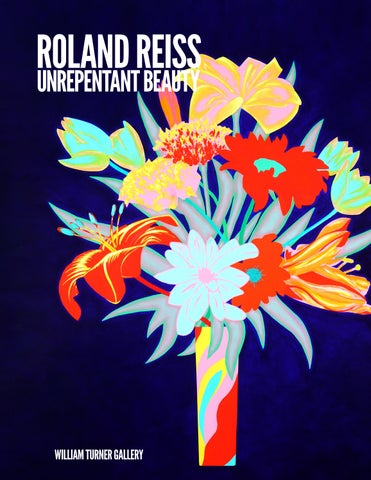
ROLAND REISS UNREPENTANT BEAUTY
WILLIAM TURNER GALLERY
WILLIAM TURNER GALLERY
TURNER GALLERY
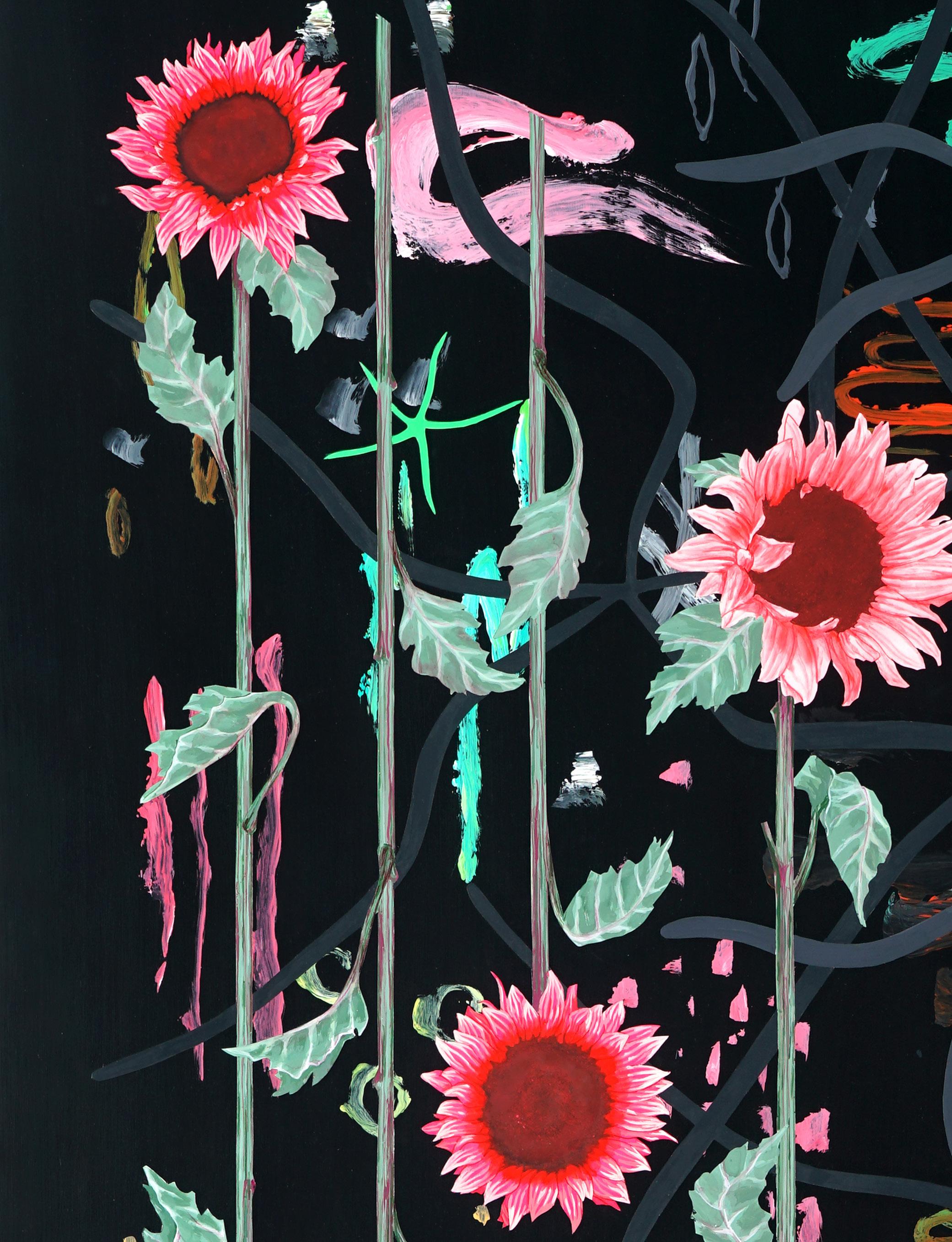
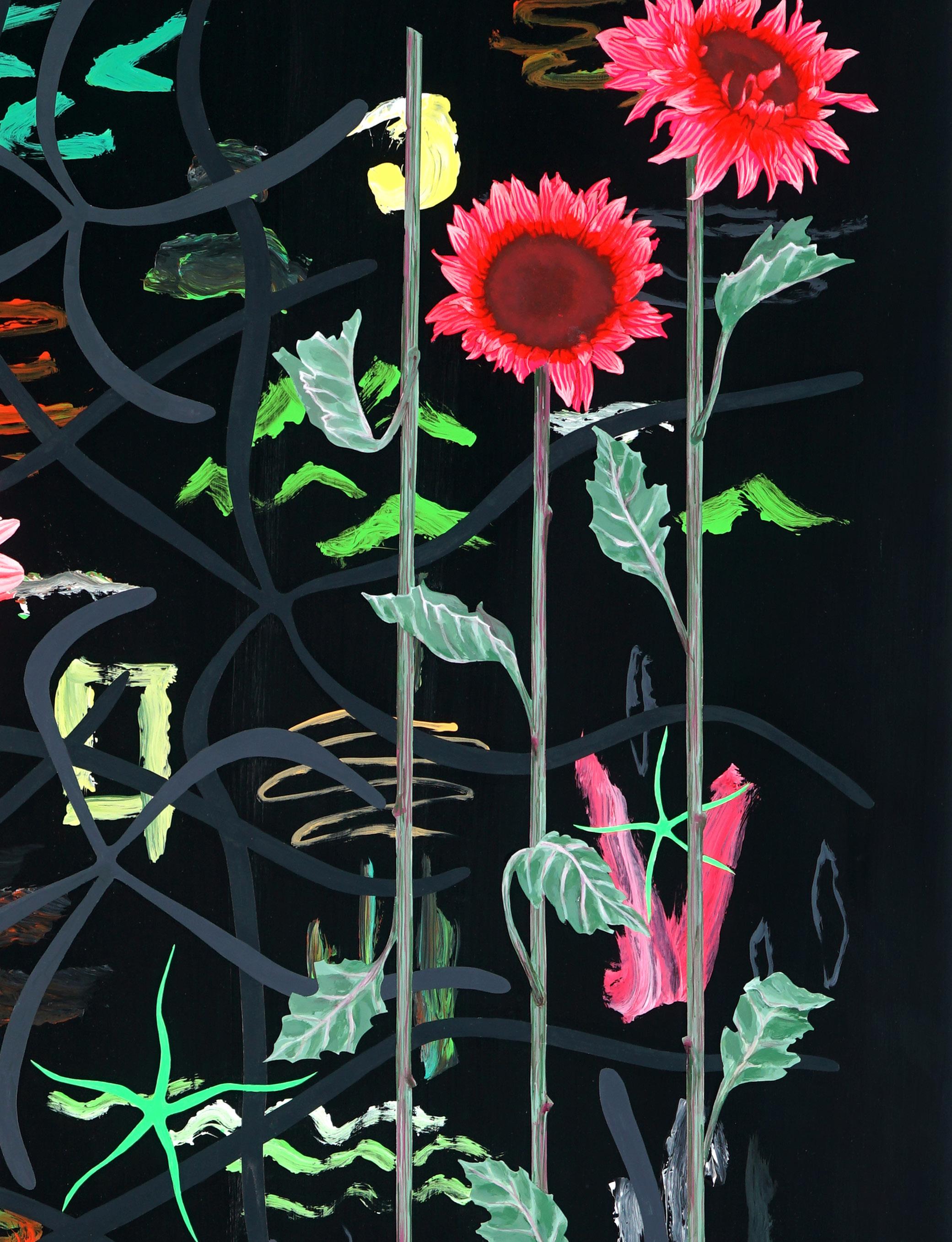
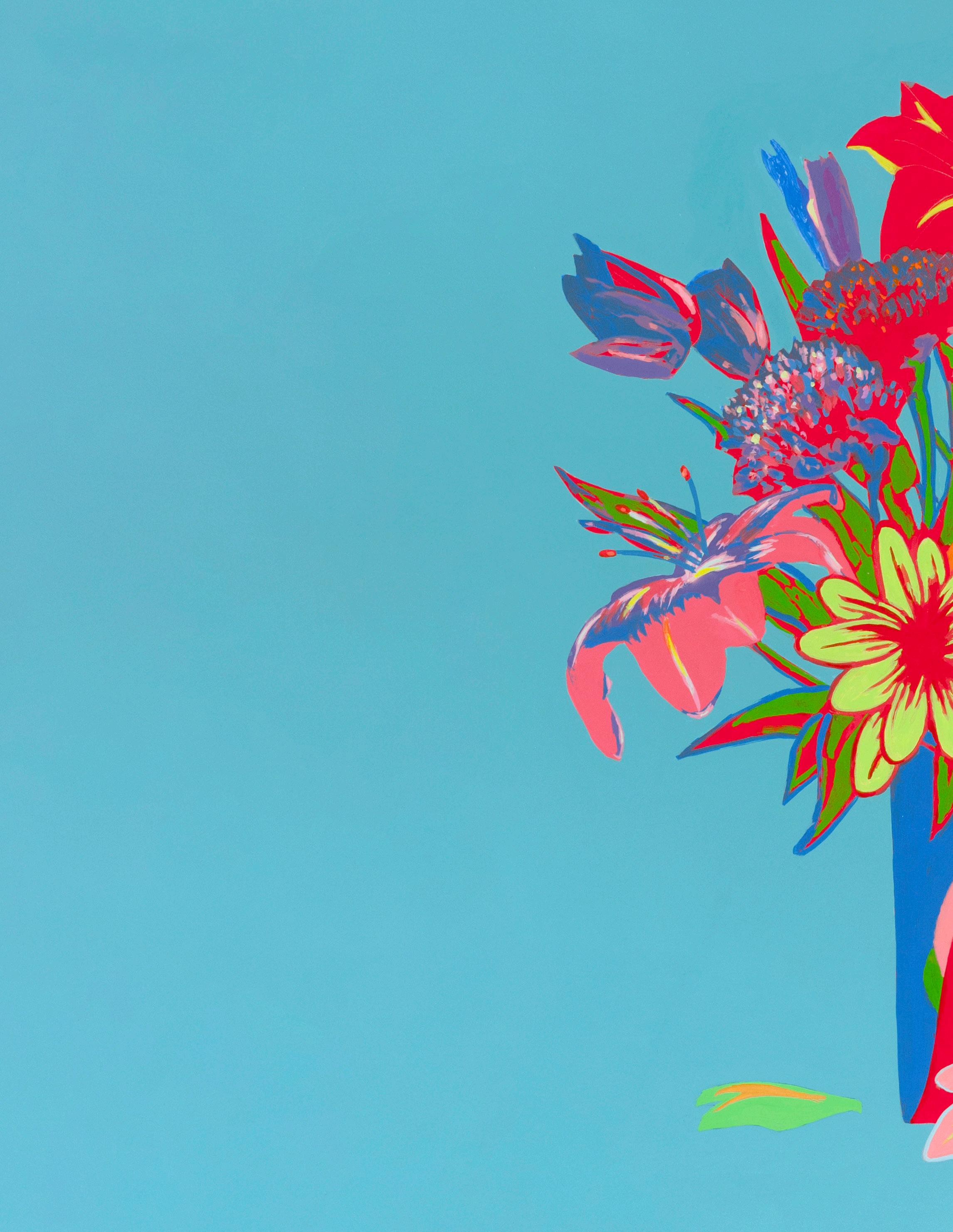
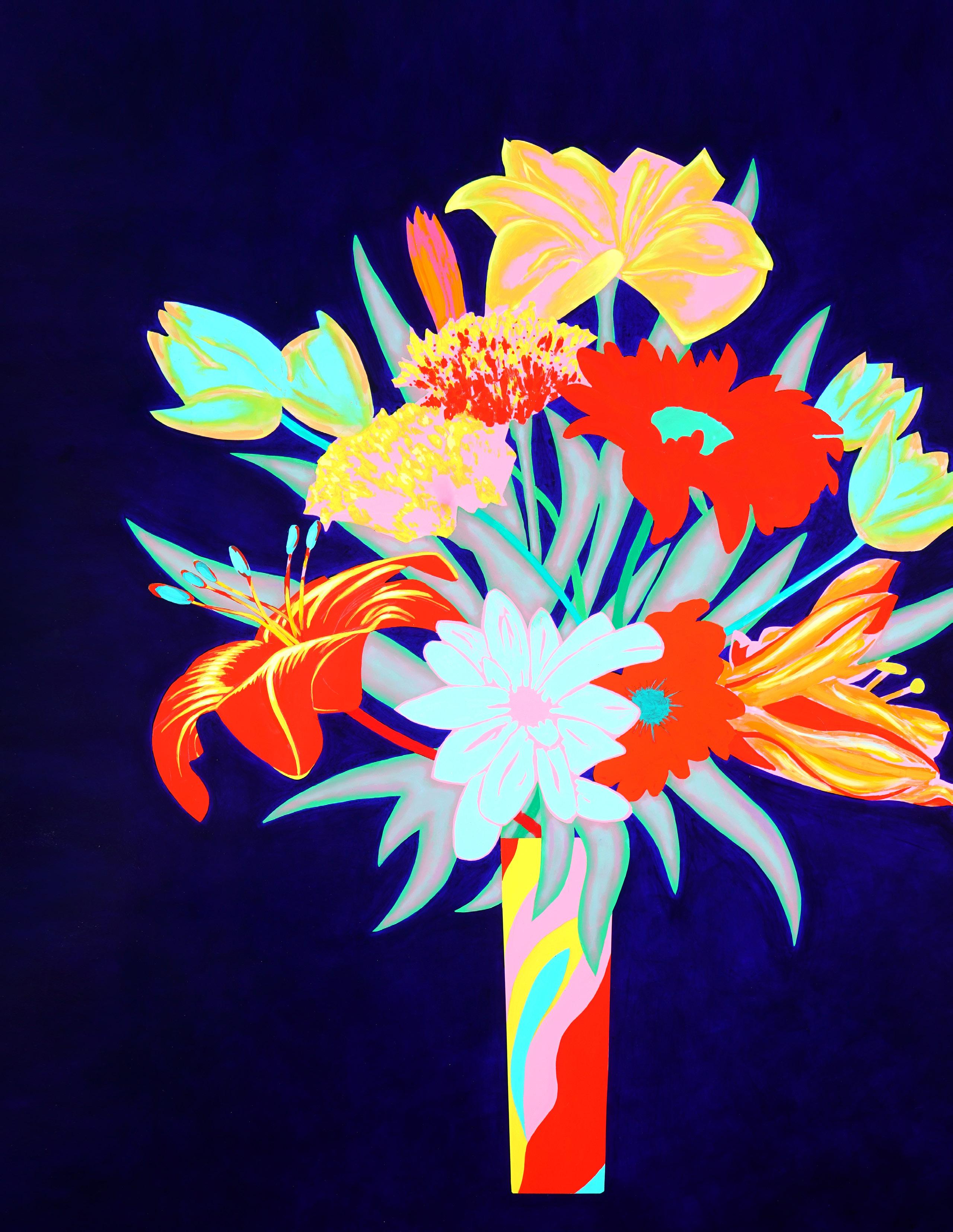
Santa Monica, CA - William Turner Gallery is pleased to present Roland Reiss: Unrepentant Beauty, an exhibition of late paintings by Roland Reiss (1929–2020), opening April 25, 5-8PM and on view through June 20, 2026.
A pioneering figure in postwar American art, Reiss spent more than six decades redefining the possibilities of painting. From his early explorations of abstraction and representation to his groundbreaking sculptural works and miniature environments, his practice consistently expanded the boundaries of the medium.
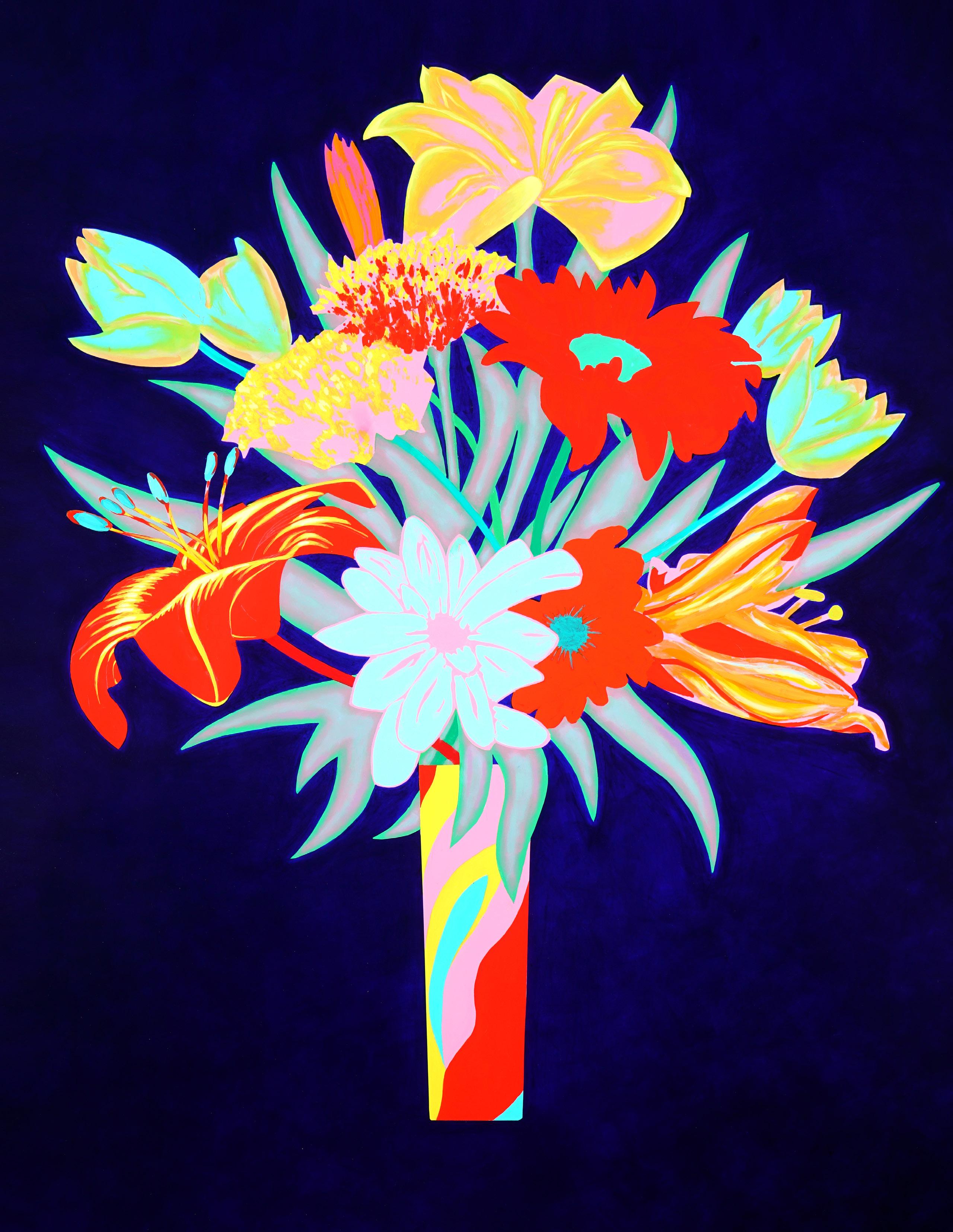
This exhibition focuses on a remarkable development in his final decades: a series of vibrant, dynamic flower paintings that challenge long-standing assumptions about beauty and subject matter in contemporary art. Historically regarded as decorative or peripheral, the motif of the flower becomes, in Reiss’ hands, a site of formal and conceptual innovation. The artist approached these works with full awareness of their cultural baggage, describing the act of painting flowers as requiring “a leap of faith.”
About these paintings Reiss stated, “Flowers are the vehicle for putting everything I have learned about painting into my work.” The resulting paintings move fluidly between abstraction and figuration, combining bold color, gestural energy, and spatial complexity. Rather than depicting flowers, Reiss uses them as a framework for exploring perception, materiality, and the enduring power of visual experience.
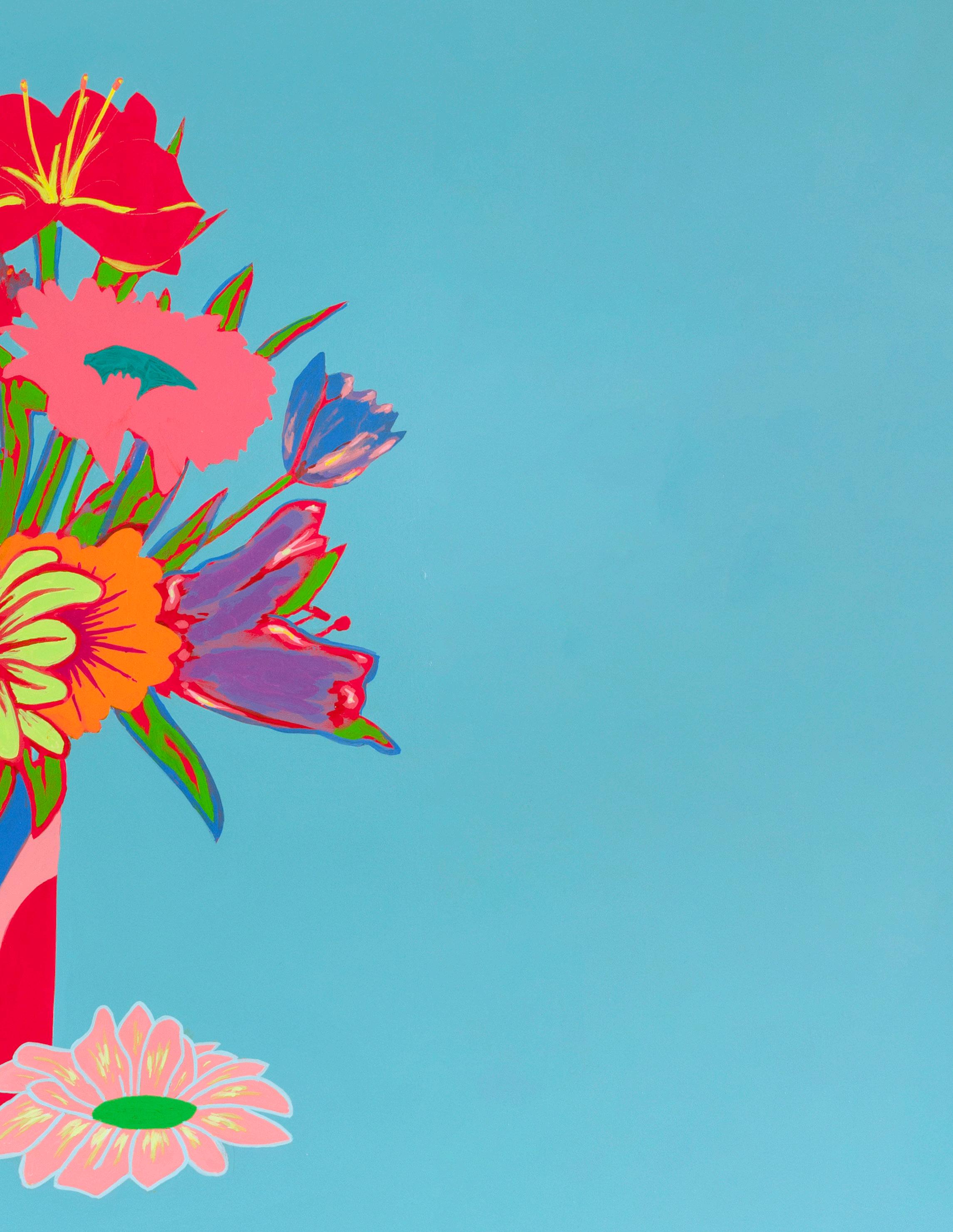
The title Unrepentant Beauty reflects the artist’s unapologetic embrace of beauty as both subject and strategy. In contrast to earlier generations for whom beauty was often viewed with suspicion, Reiss’ late work asserts its relevance with clarity and conviction.
At the end of a long and influential career, Reiss produced a body of work that is at once playful, rigorous, and deeply resonant— offering a powerful reconsideration of what painting can be.
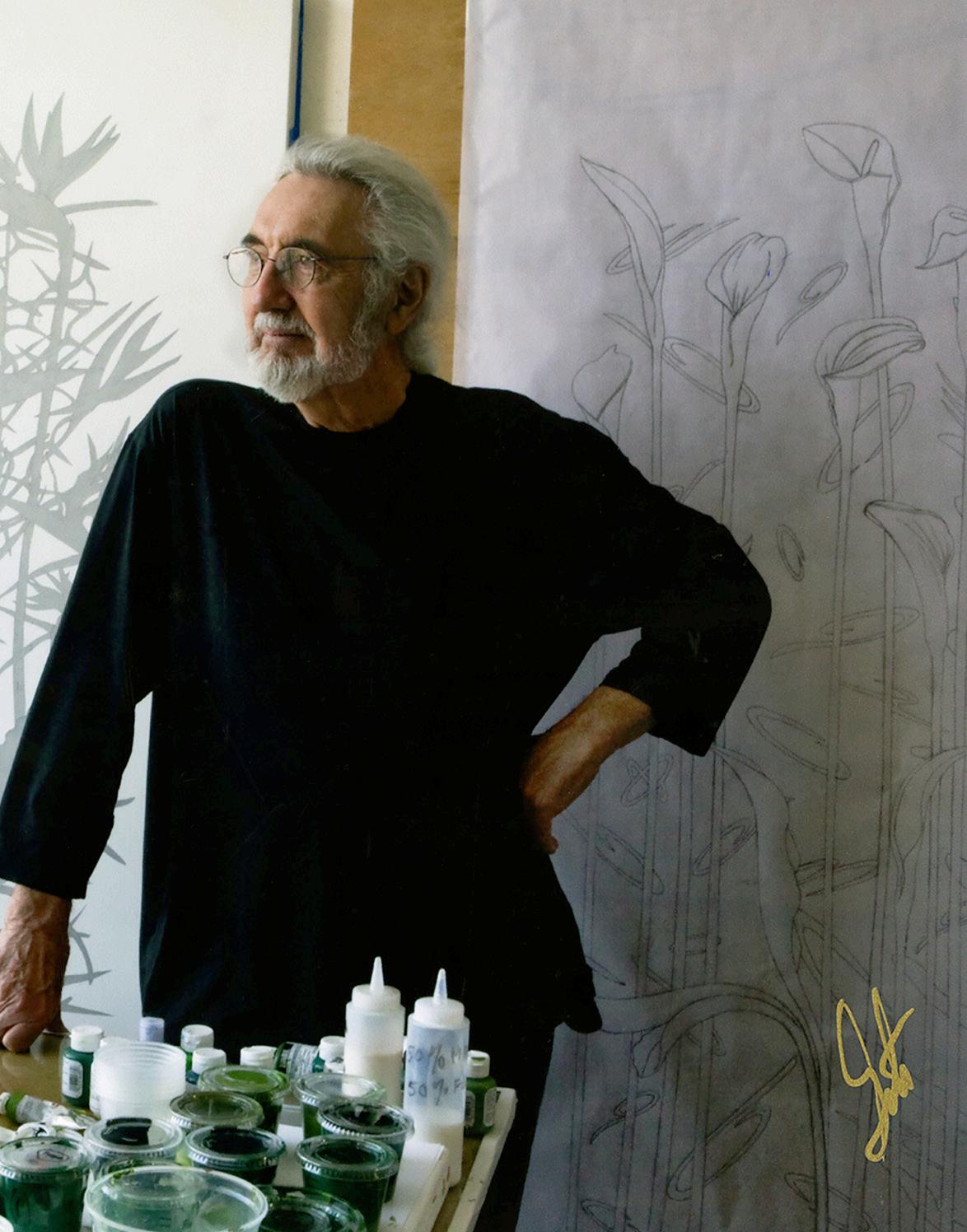
Roland Reiss studied at the American Academy of Art, Mount San Antonio College and at UCLA. He taught at UCLA, the University of Colorado, and Claremont Graduate University, where he served as Chair for 30 years, from 1971 to 2001. In 2009 he received the College Art Association Award for the Distinguished Teaching of Art. At CGU he held the Benezet Chair in the Humanities and in 2010 an endowed chair in art was established in his name. He was also the director of The Painting’s Edge residency at Idyllwild Arts.
Reiss was the recipient of four N.E.A. grants and of numerous prizes and awards. His work is included in many important public and private collections, such as the Whitney Museum of American Art, Museum of Contemporary Art, Los Angeles, the Los Angeles County Museum of Art, and the Hammer Museum, among others.
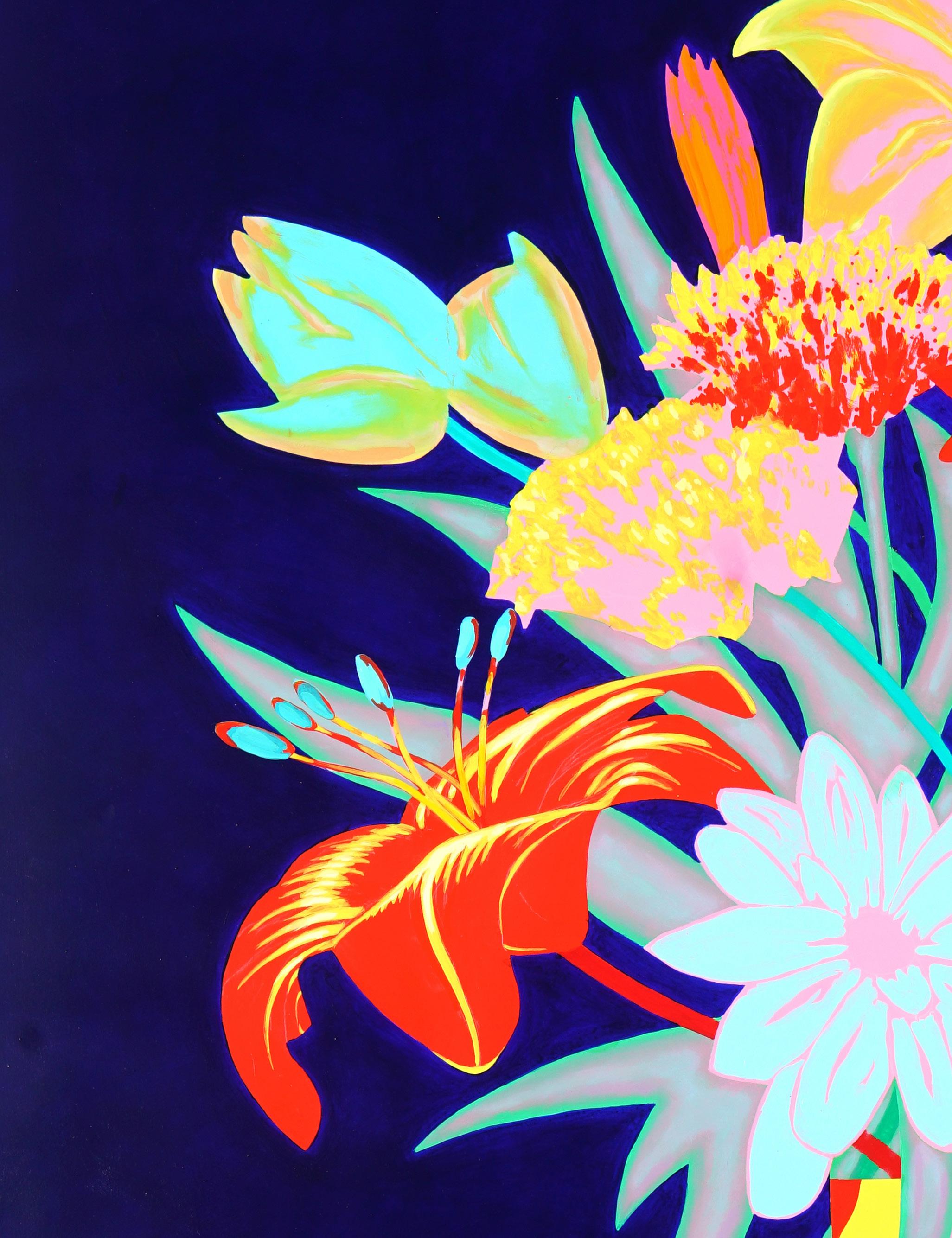
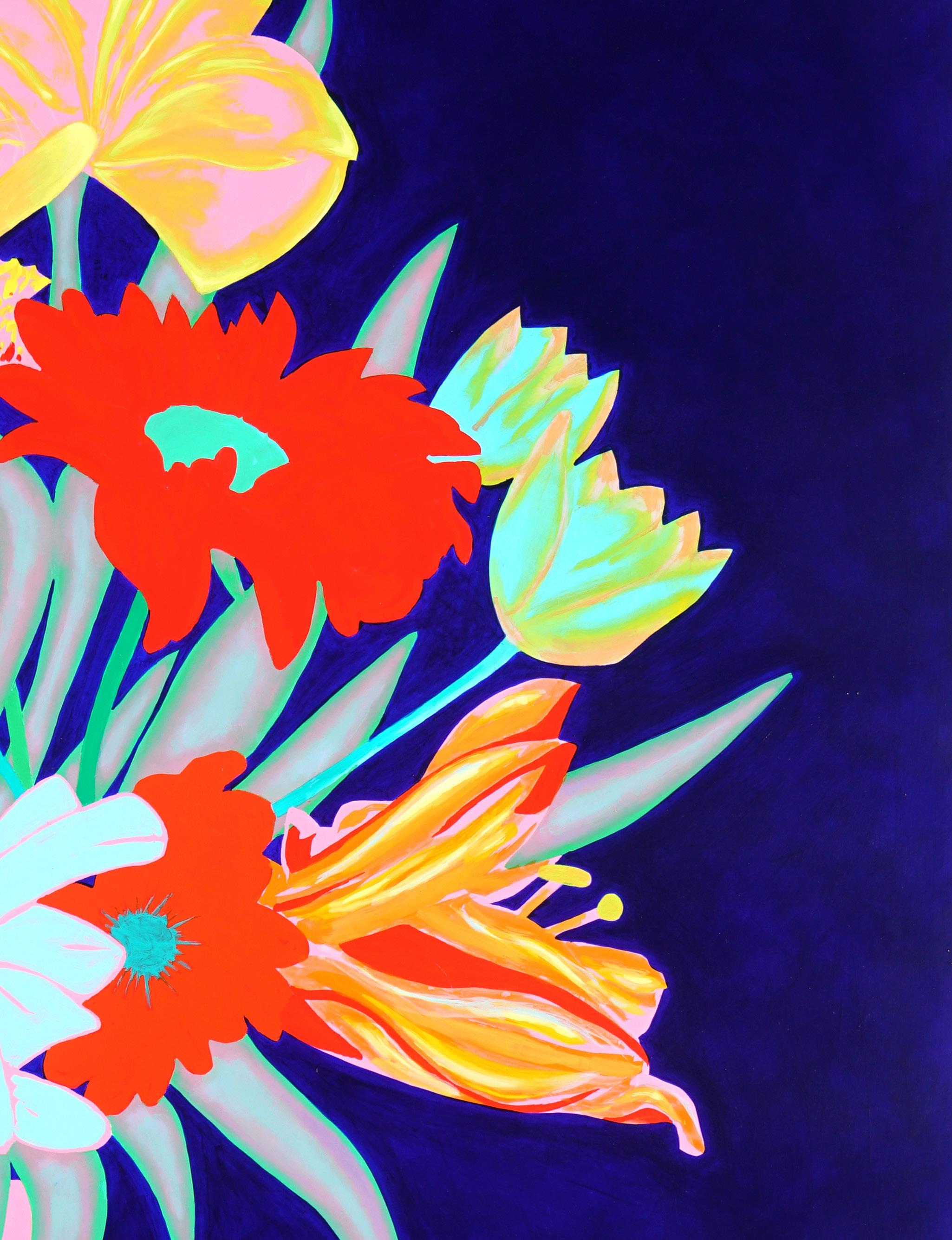
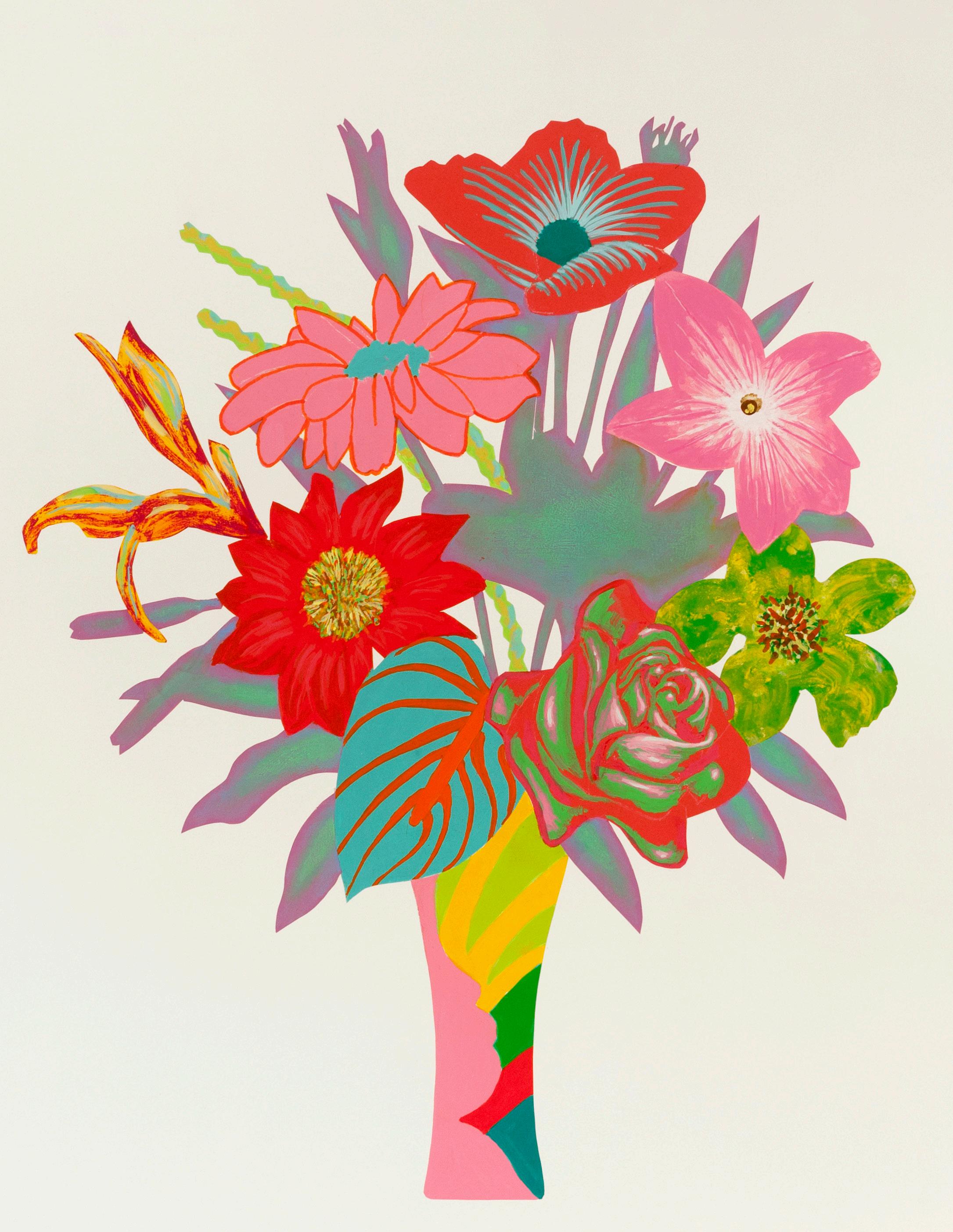
My painting has always embraced color as the primary source of its energy. I’m sure it is no surprise that my favorite historical artist is Matisse, whose work often involved flowers. In general, the canon of art subject matter attributes little importance to floral painting, thus the title of the exhibition. When I began painting flowers in 2008, I thought of them mainly as a foil for exploring issues from my lifetime of work.
This experience with flowers led me to a new understanding of colors as light frequencies, which can provide access to deeper levels of consciousness. In the process, I have realized that flowers themselves represent an ineffable visual language without words, they speak for us in times of grief, love, and joy. And they are beautiful.
My paintings are to be looked at much as you look at flowers. The meaning is in the color and the forms. Ultimately however, they are the colors of painting, not flowers, expressive and
In his own words...
unique in their own way. Seeing is the primary way of knowing in my work.
A number of miniature tableaux from different series are included in the exhibition. I think of them as three-dimensional paintings owing something to the idea of holograms. It may help to imagine yourself in the space.
All of the tableaux are cinematic in character, setting out nonnarrative multiple scenarios to be explored by the spectator. Each viewer can reach a variety of understandings and conclusions.
All of this work deals with psychosocial themes from everyday experience. Objects in them are signifiers for different aspects of contemporary life. Represented in this exhibition are selections from a variety of series: F/X, Dancing Lessons, Adult Fairy Tales II, and Morality Plays. Each series essays a different subject area, much like different films, and presents its own thematic territory.
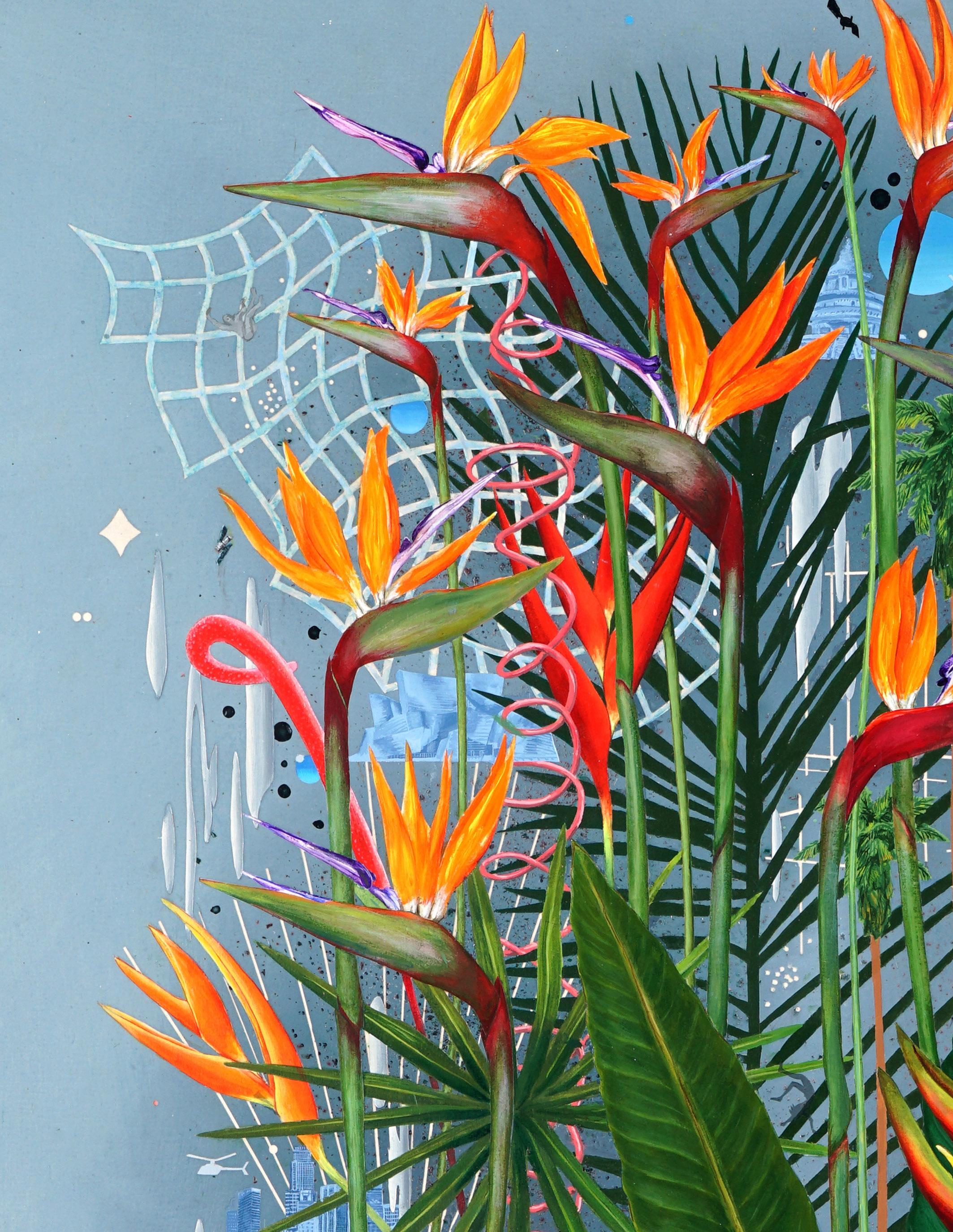
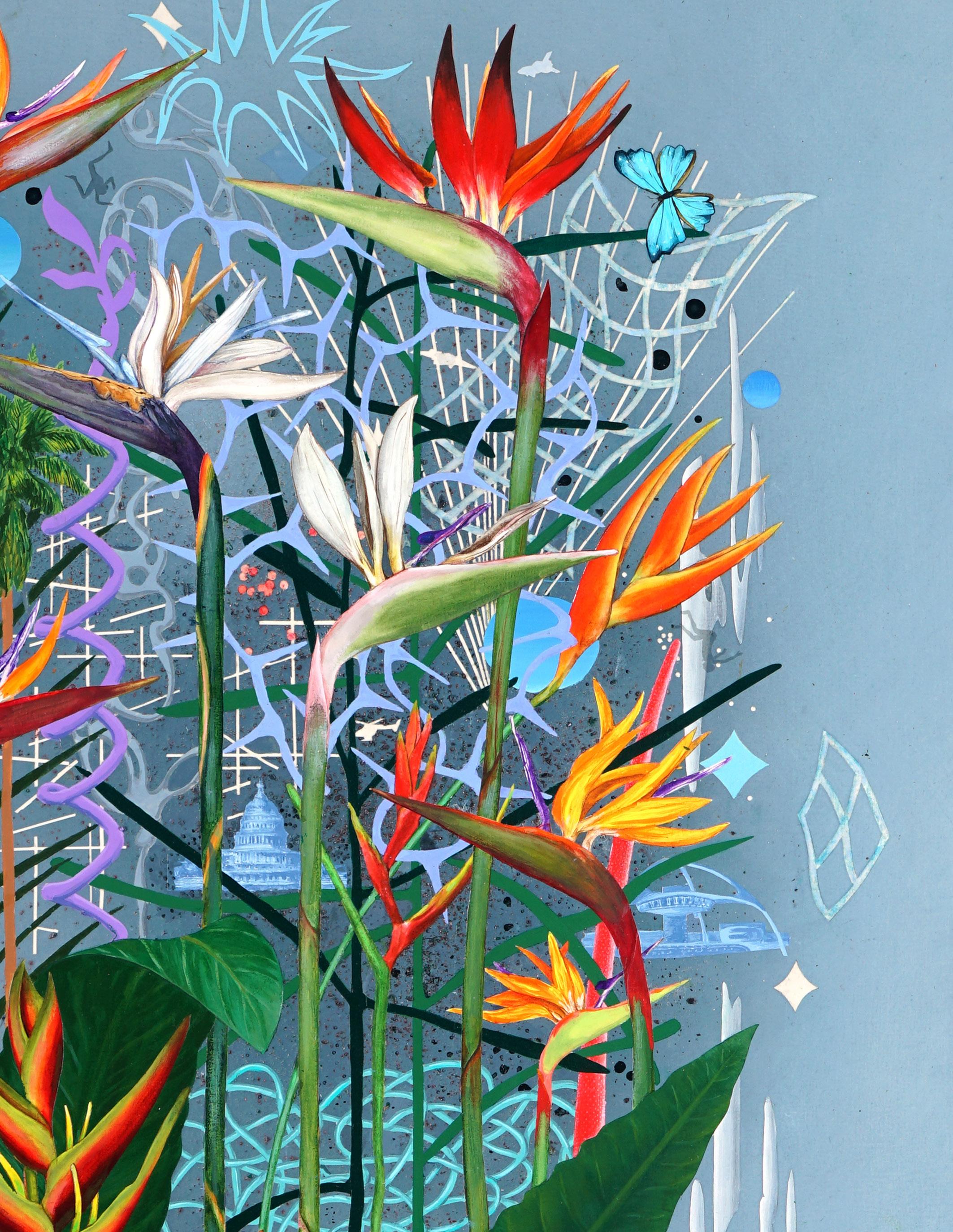
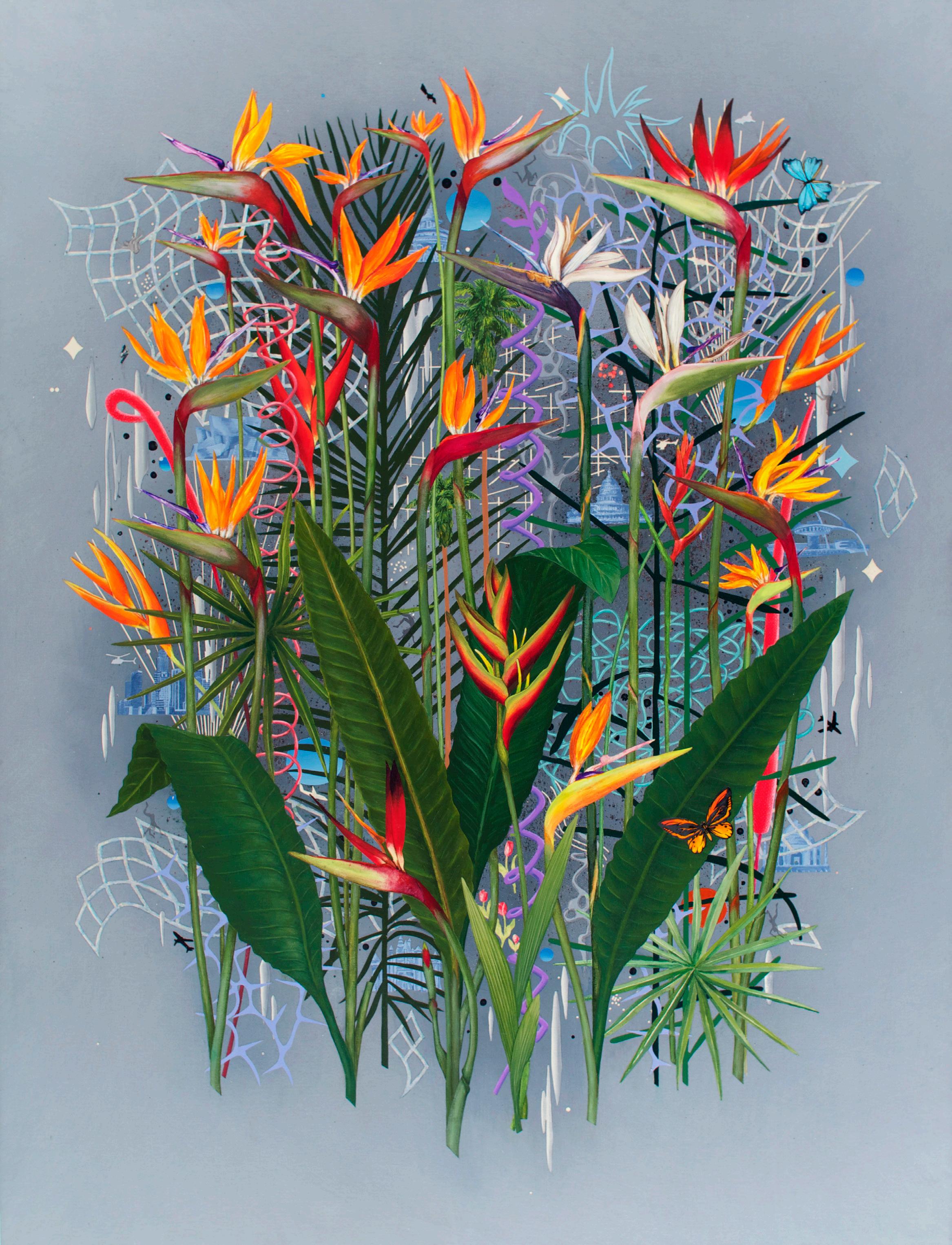
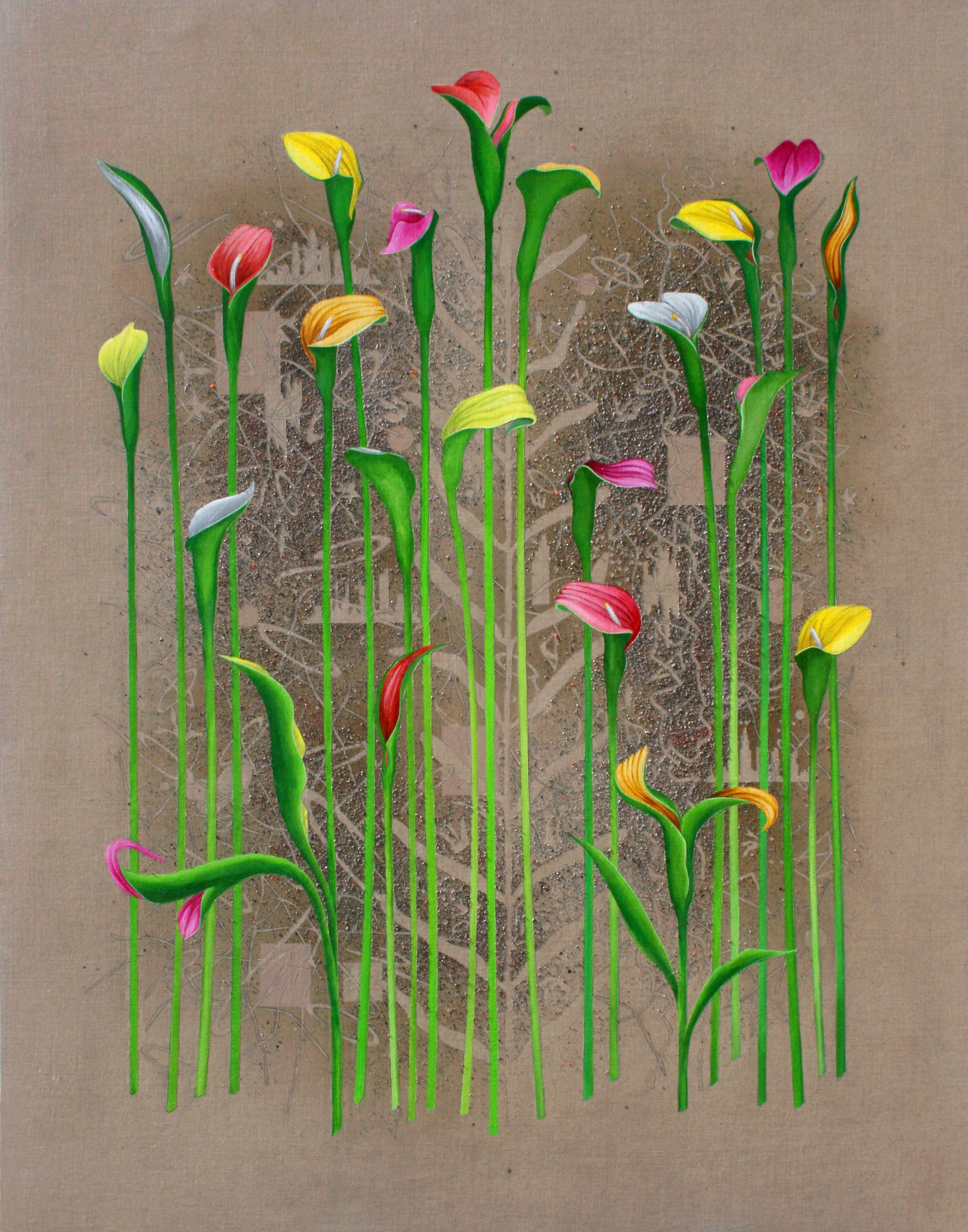
at Night, 2013, Oil and acrylic on canvas, 68” x 52”
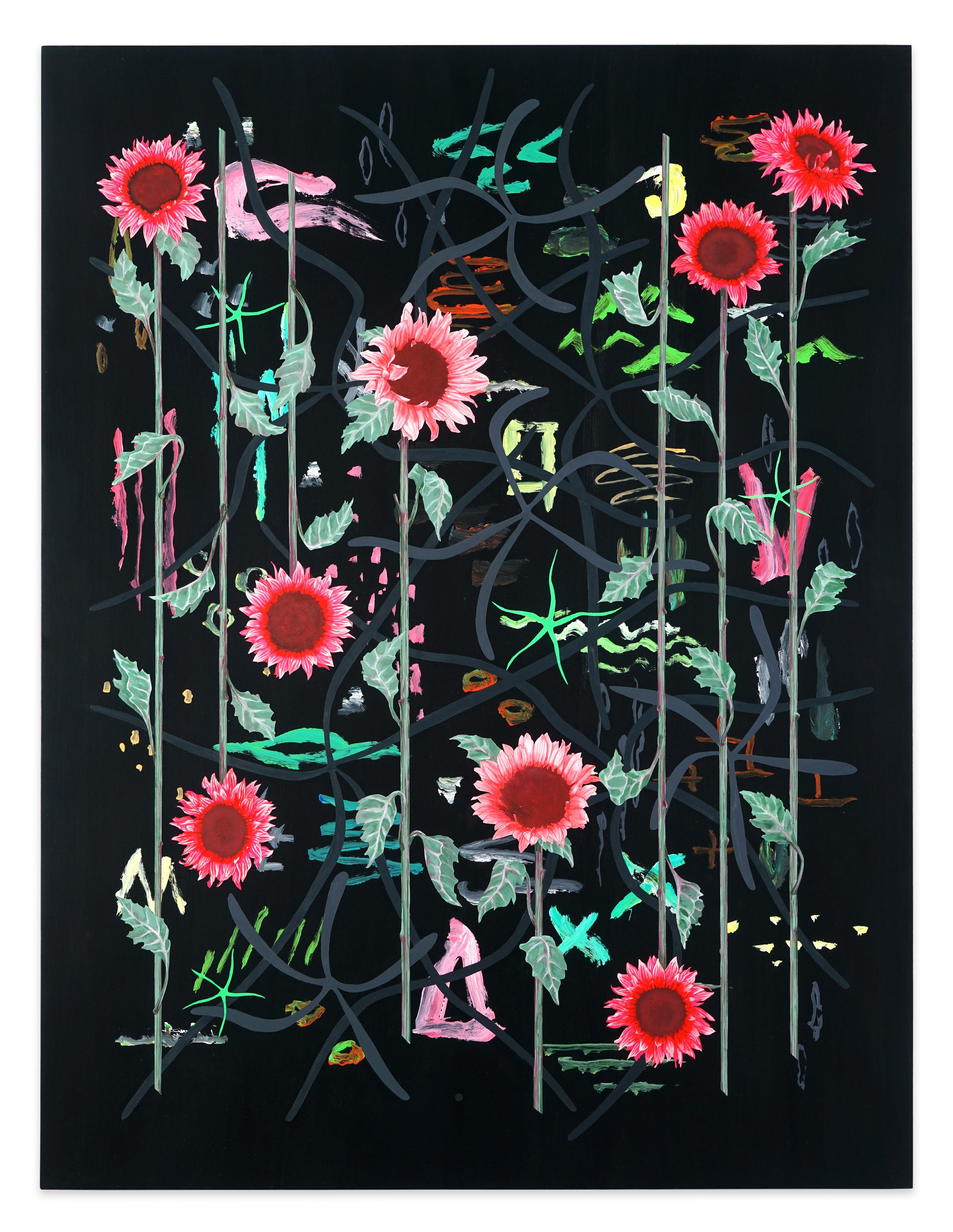
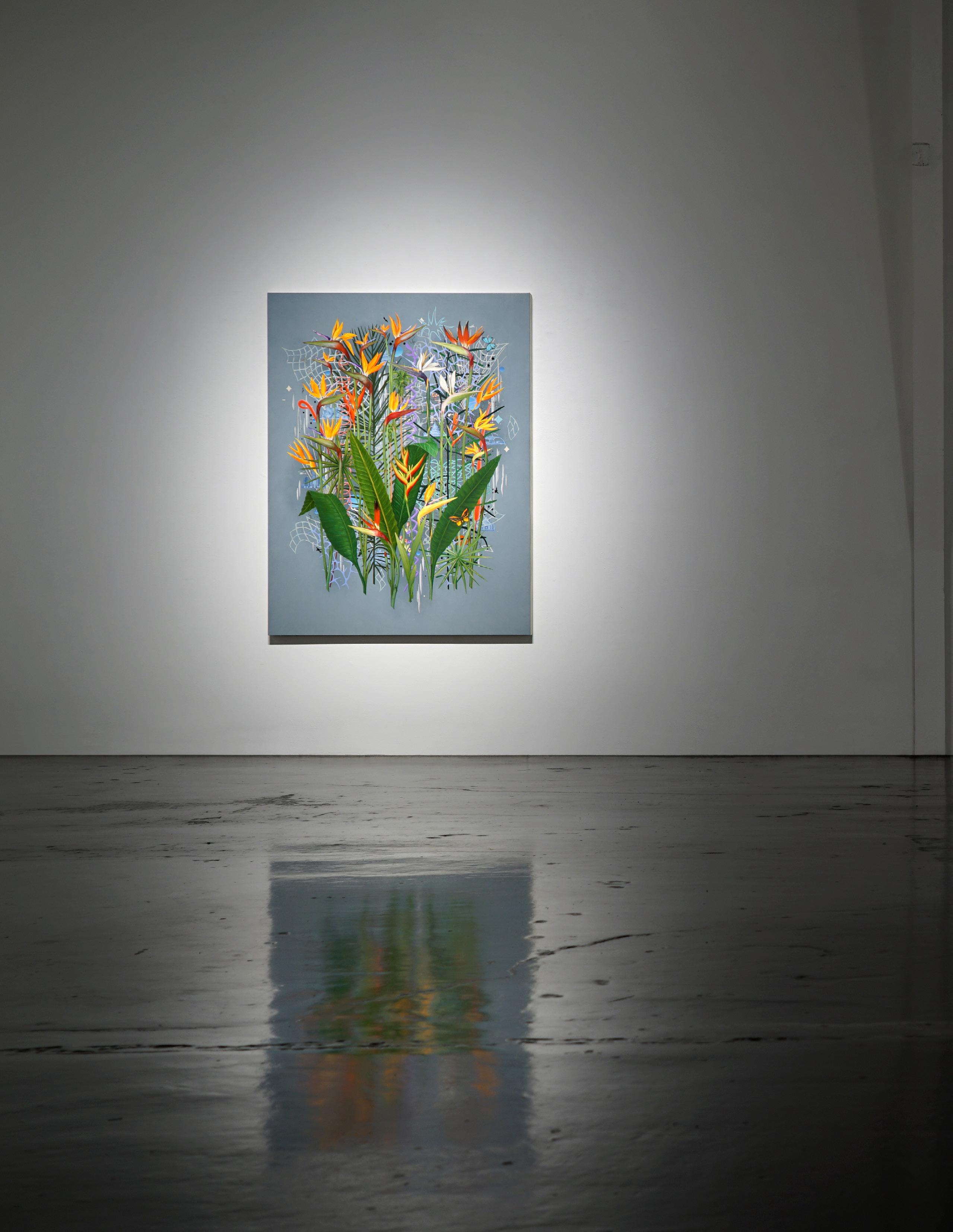
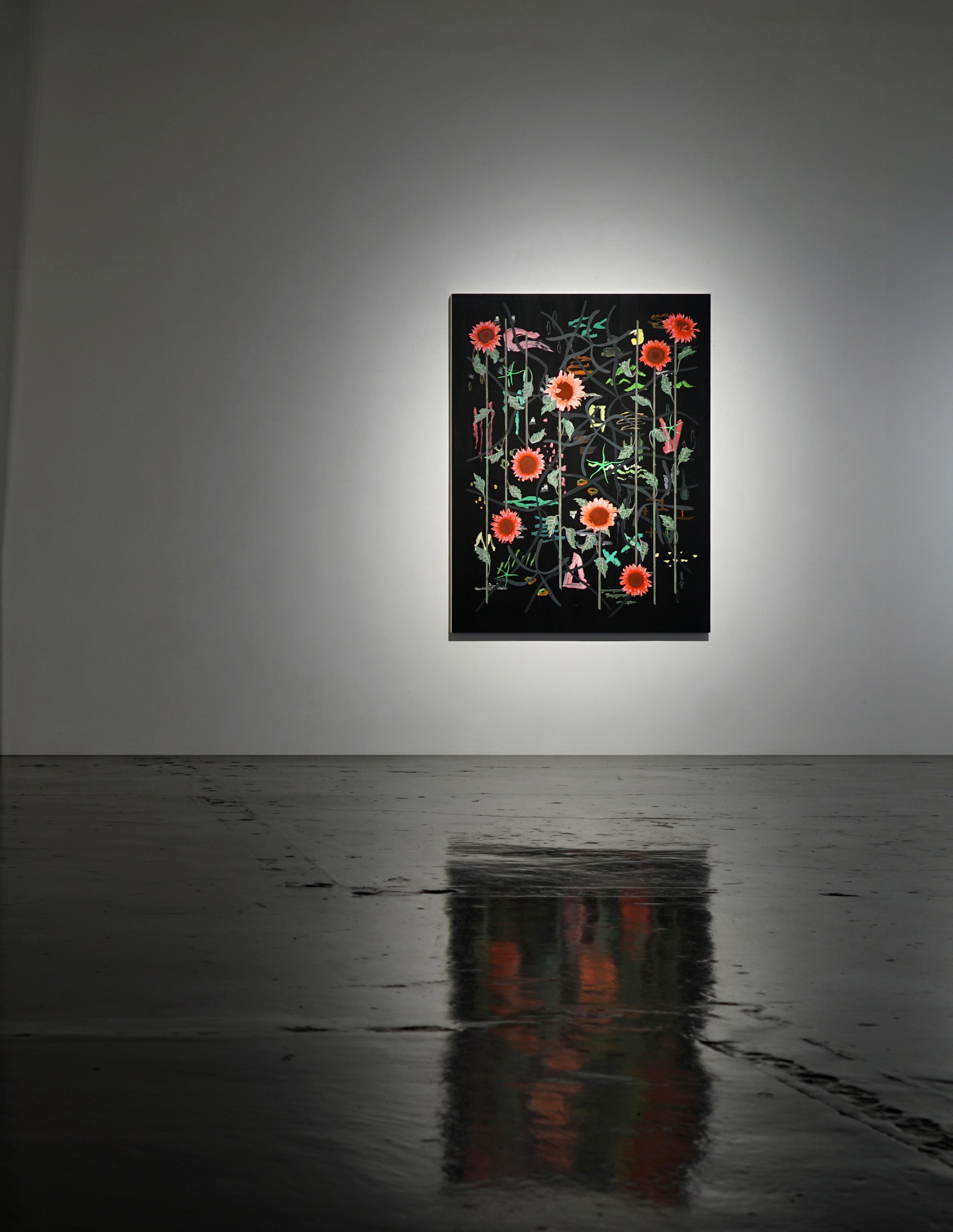
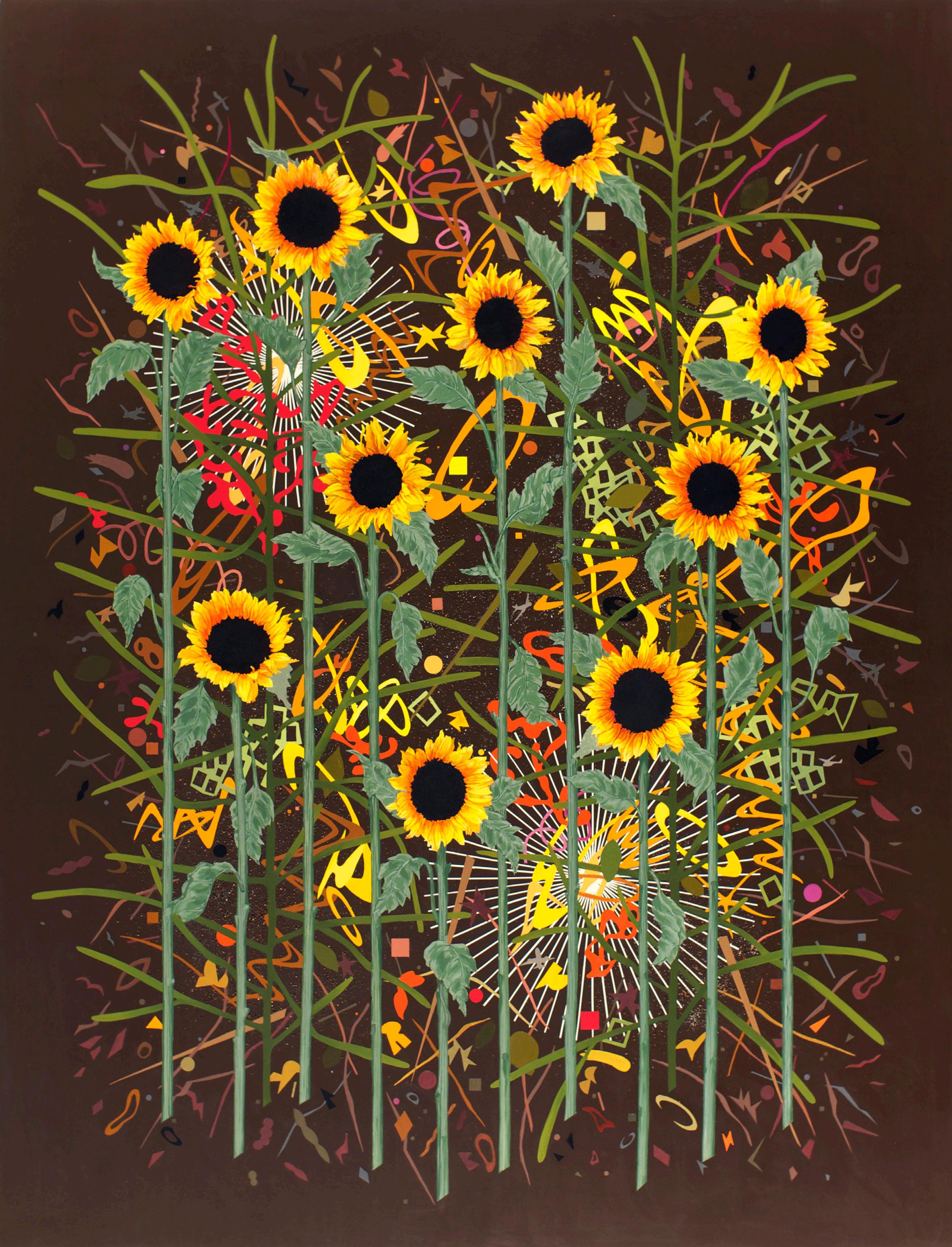
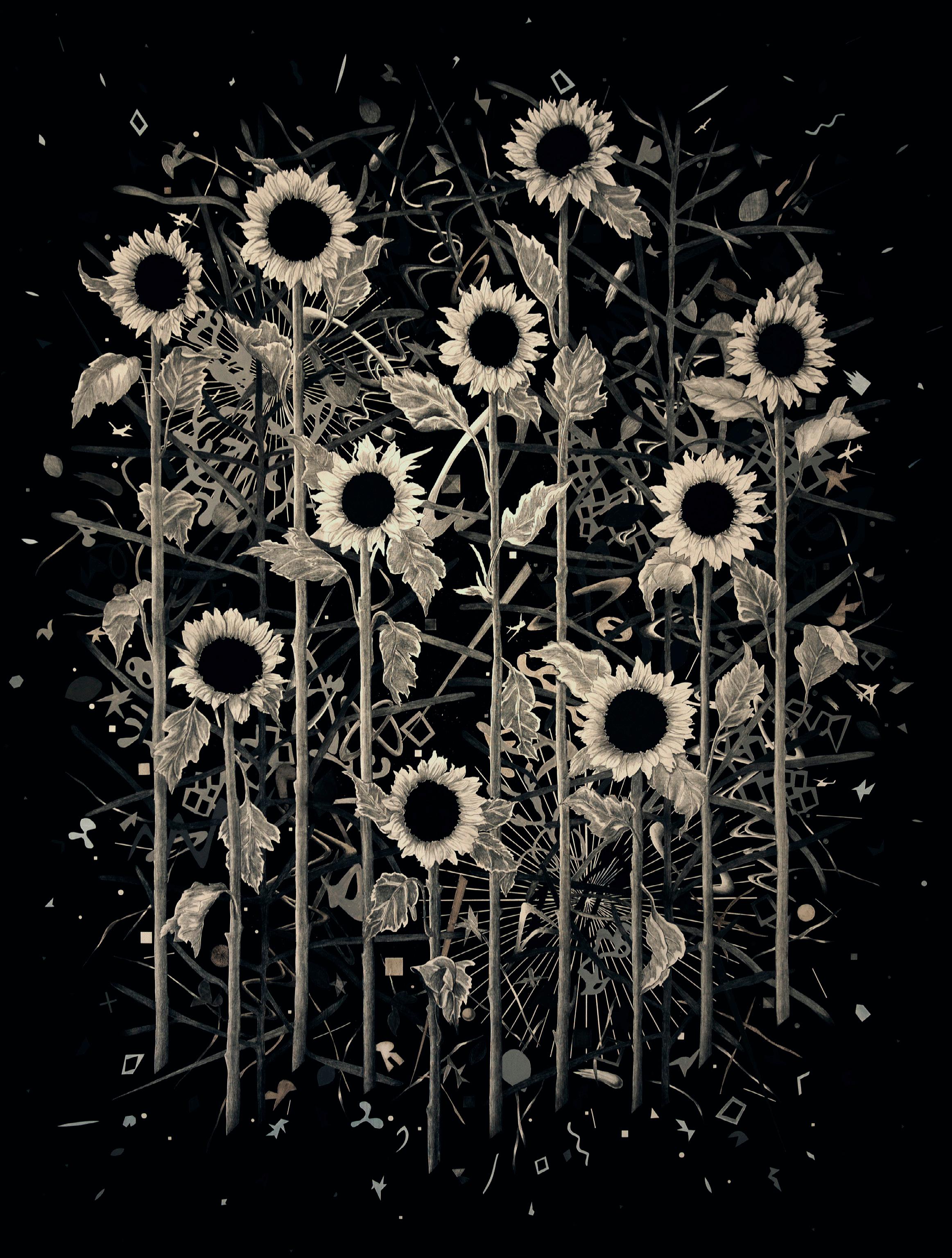
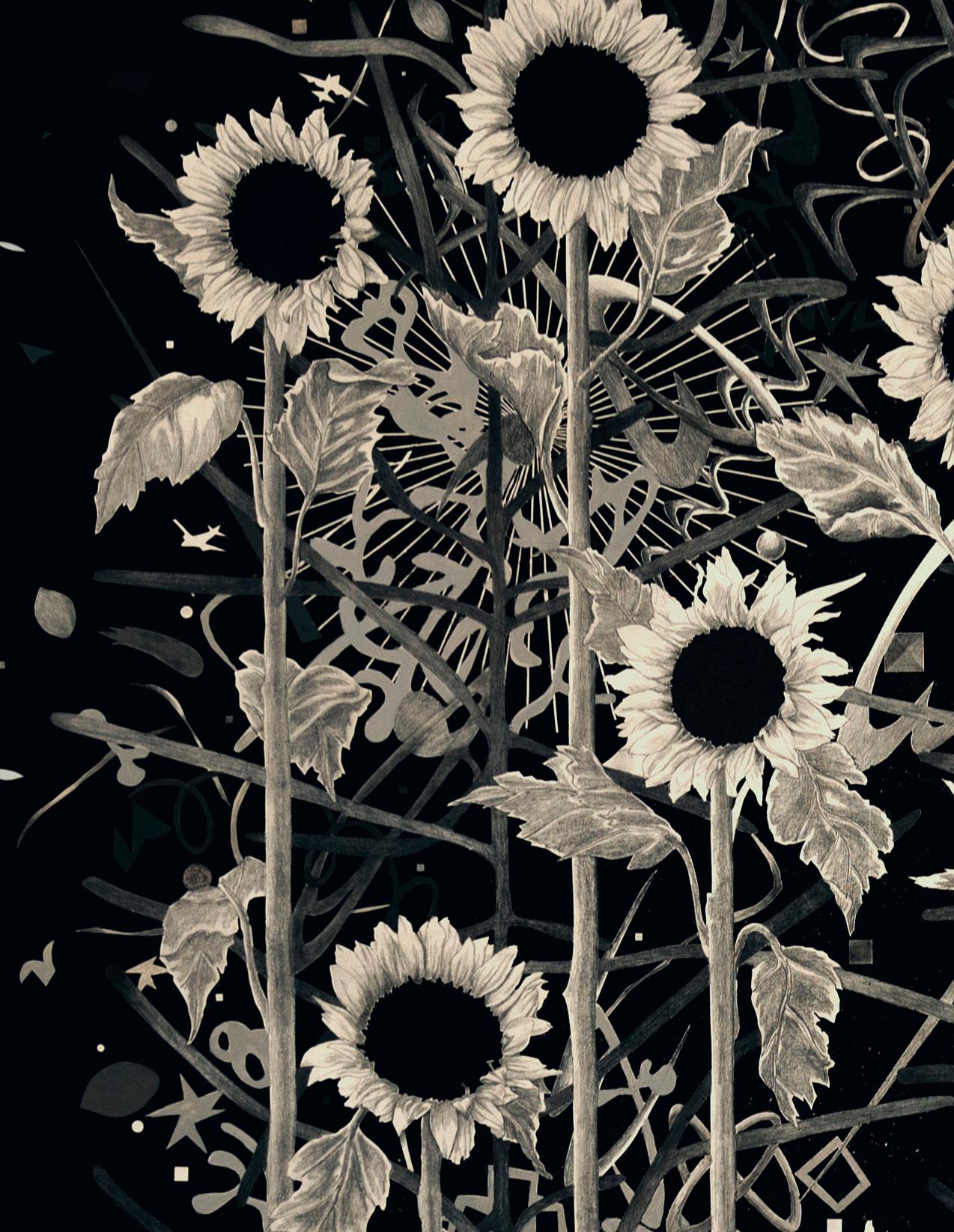
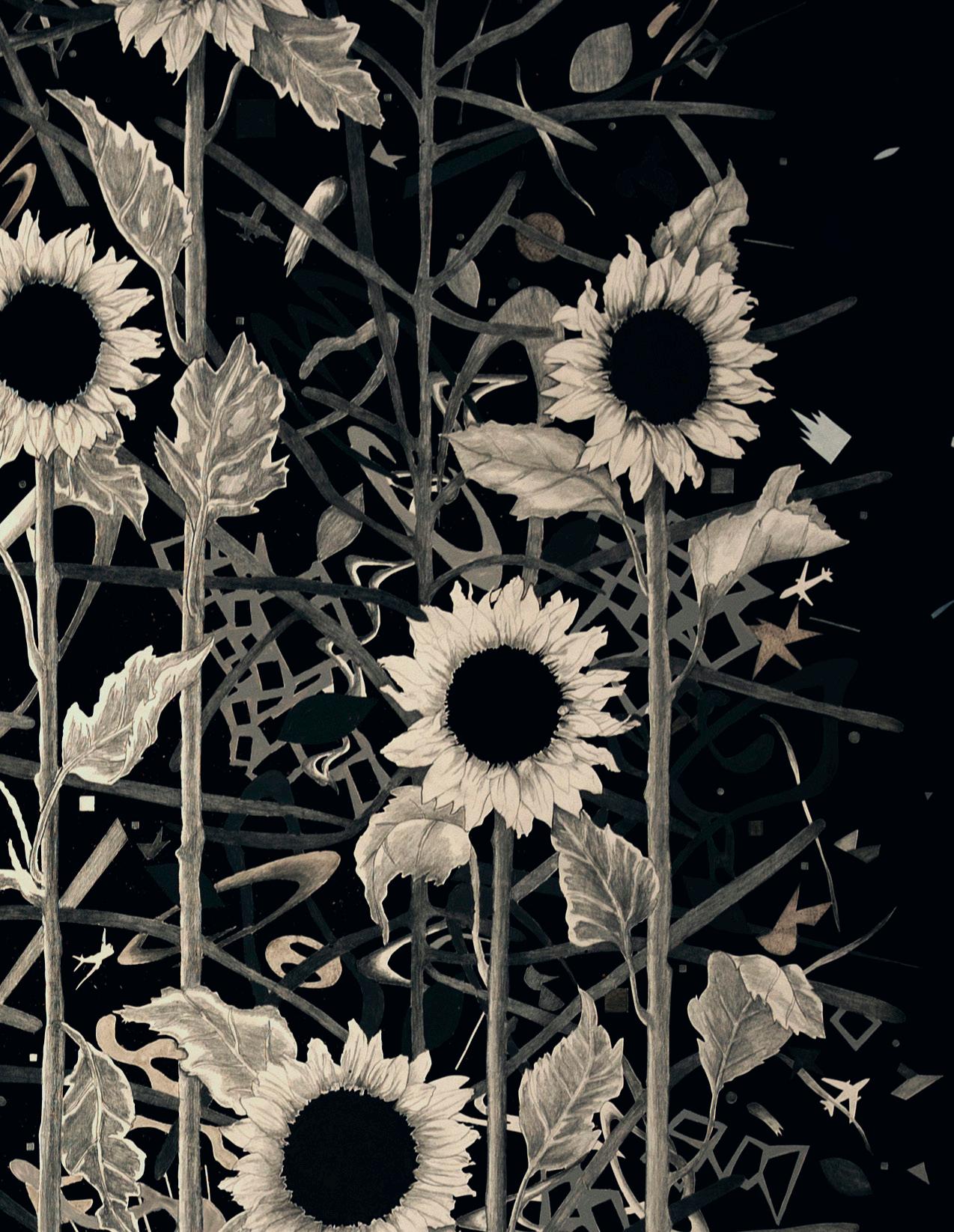
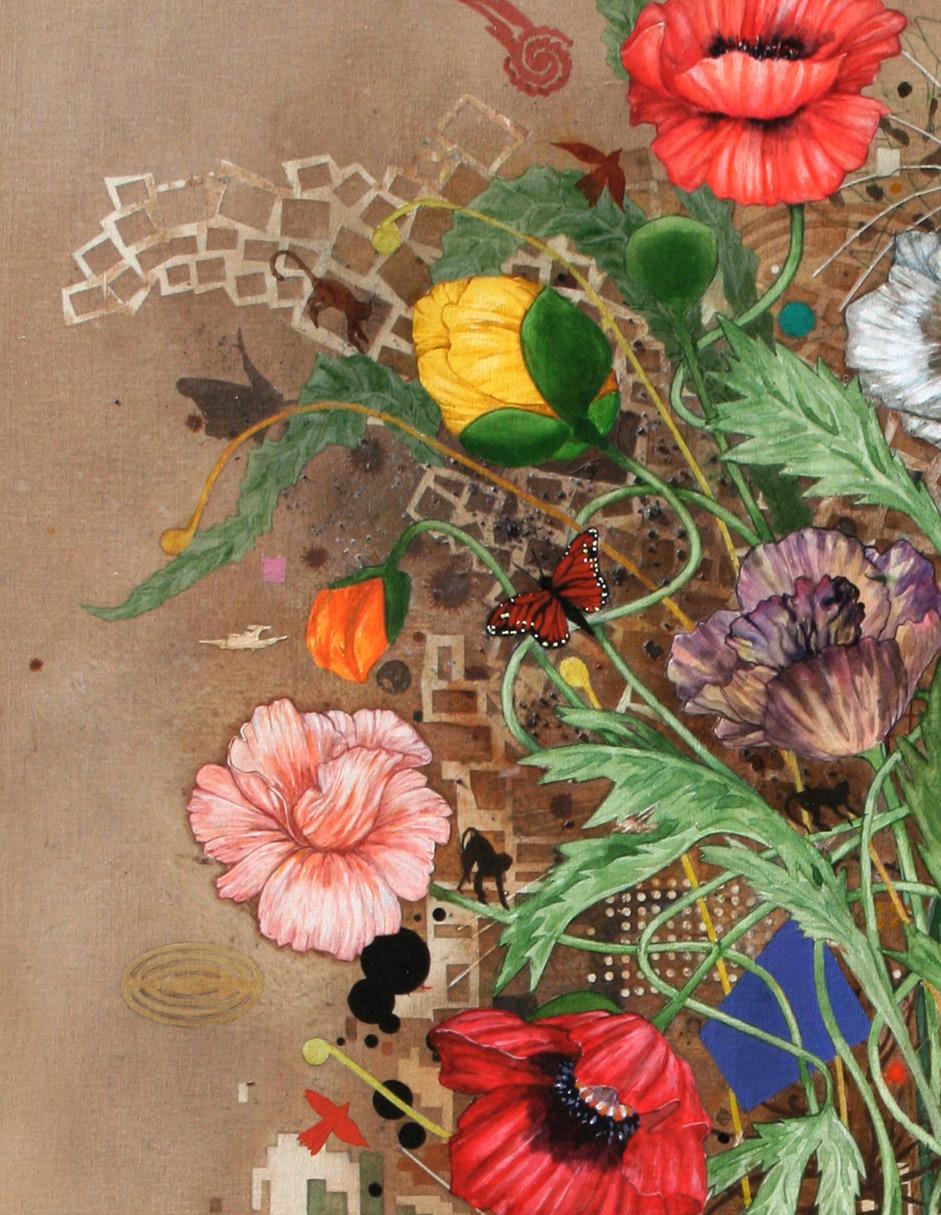
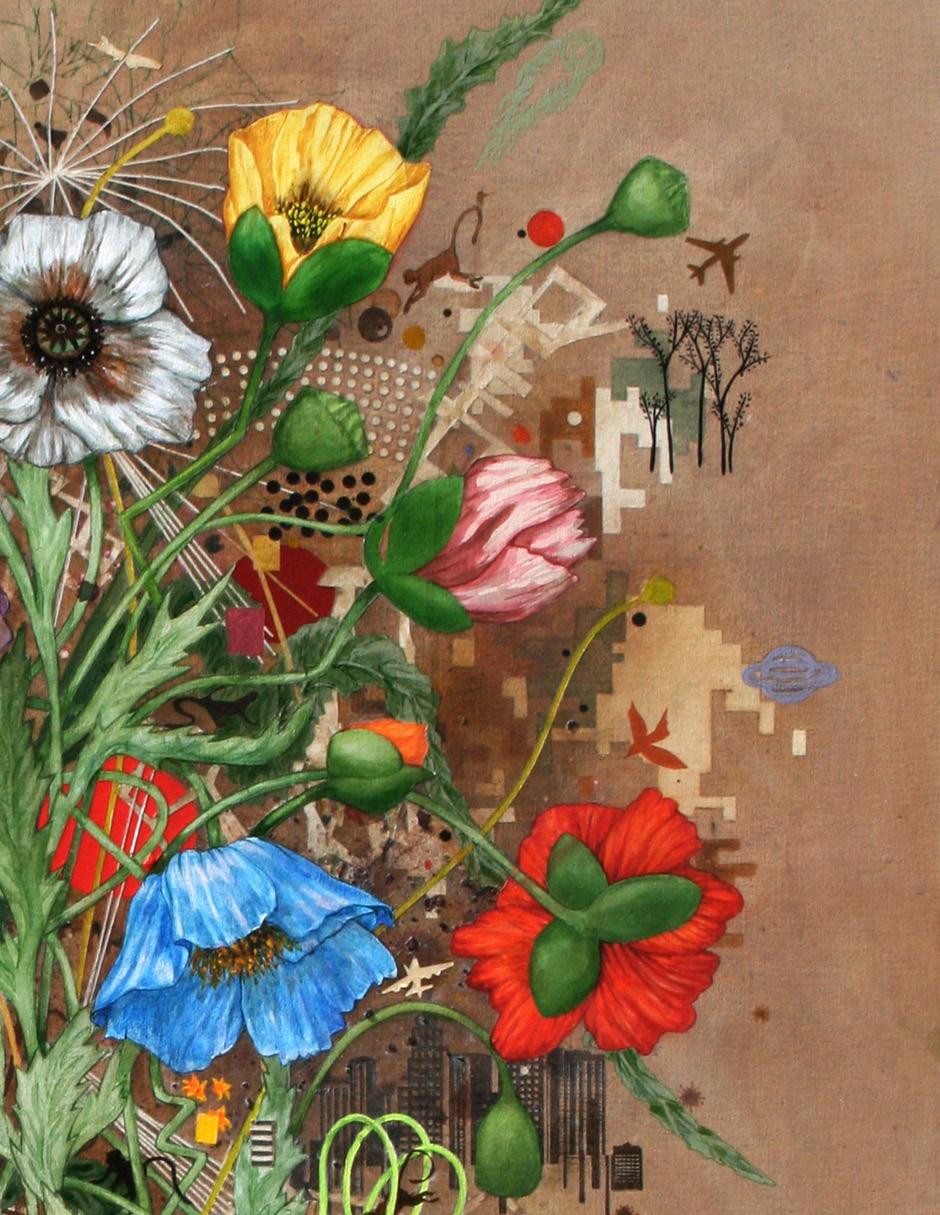
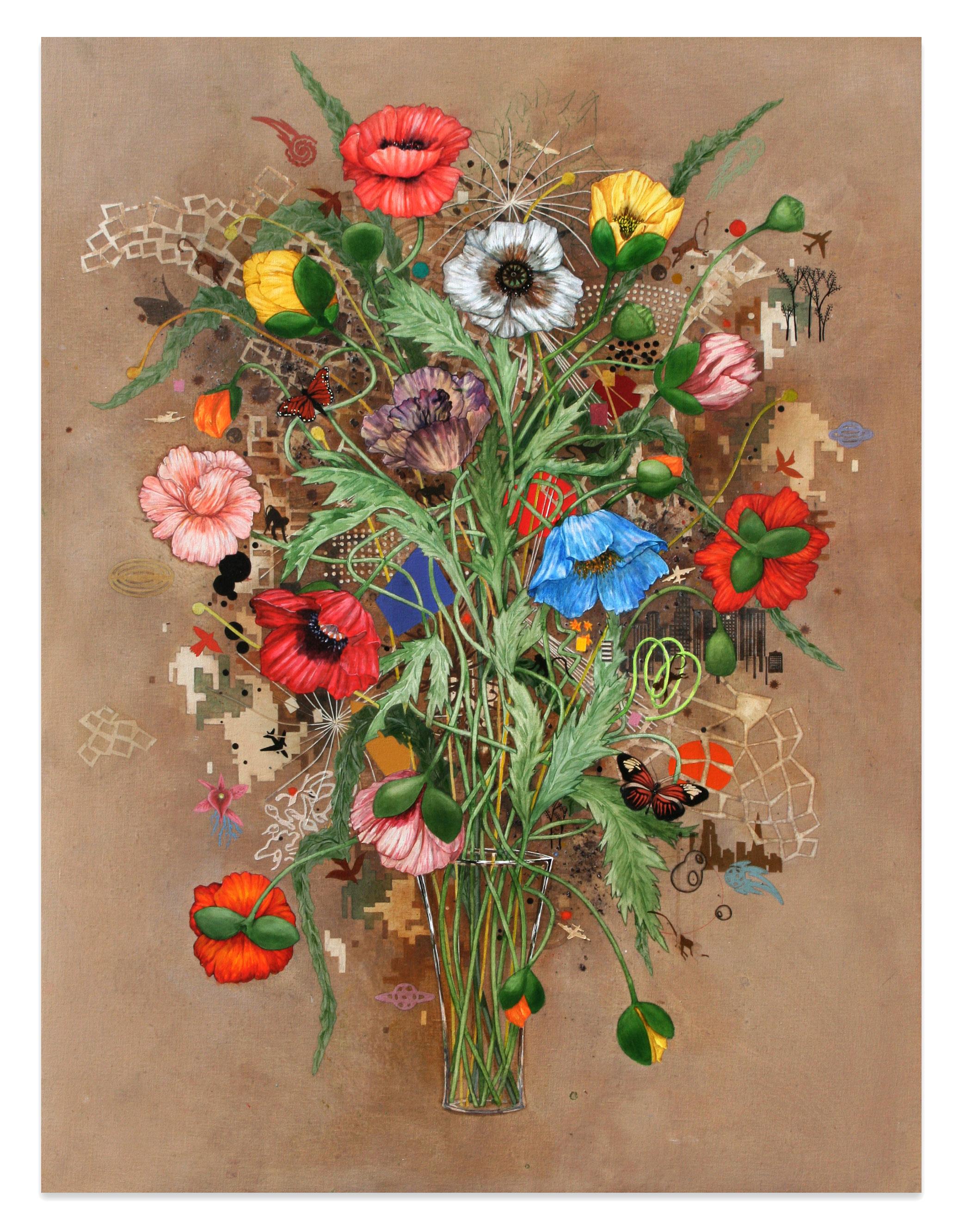
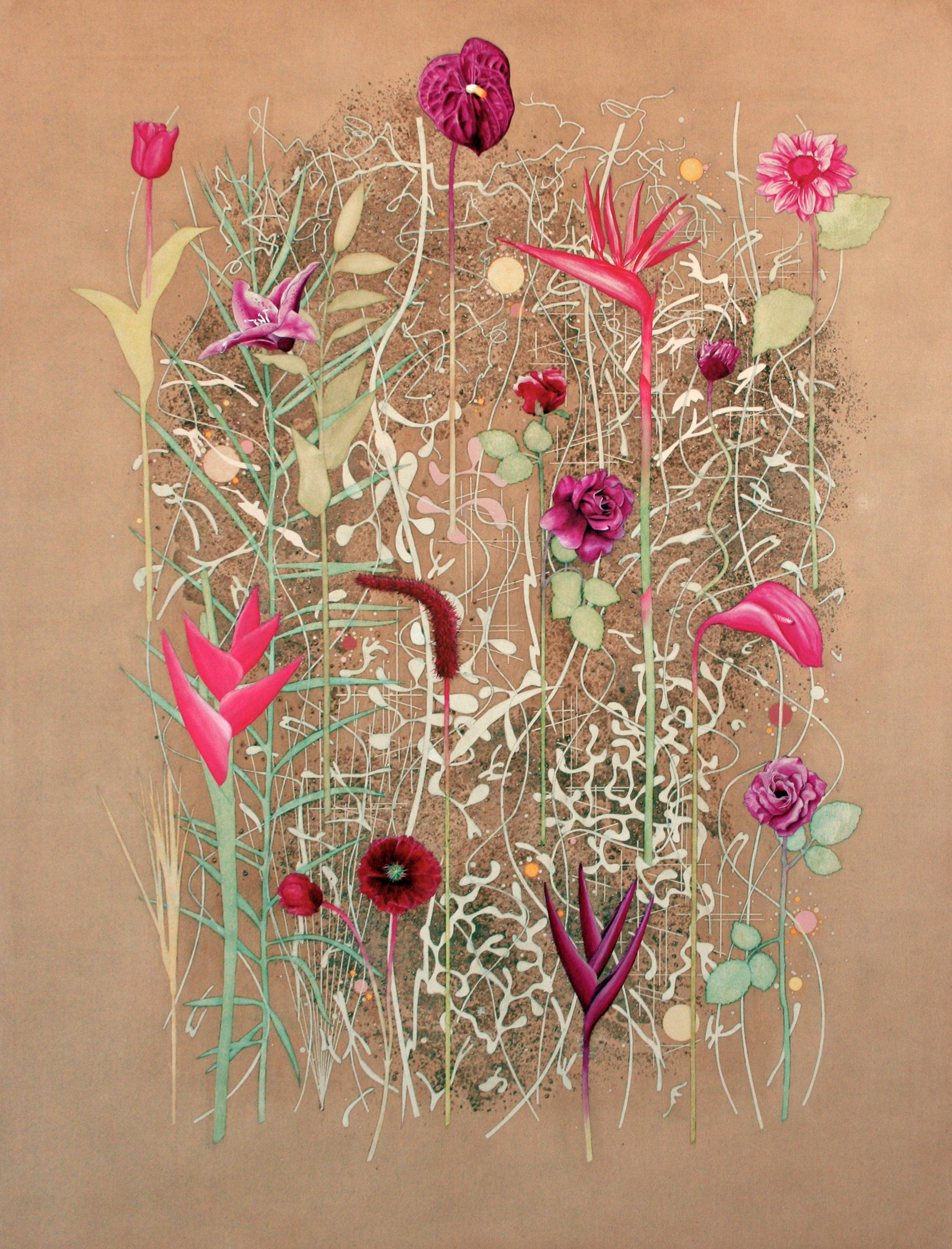
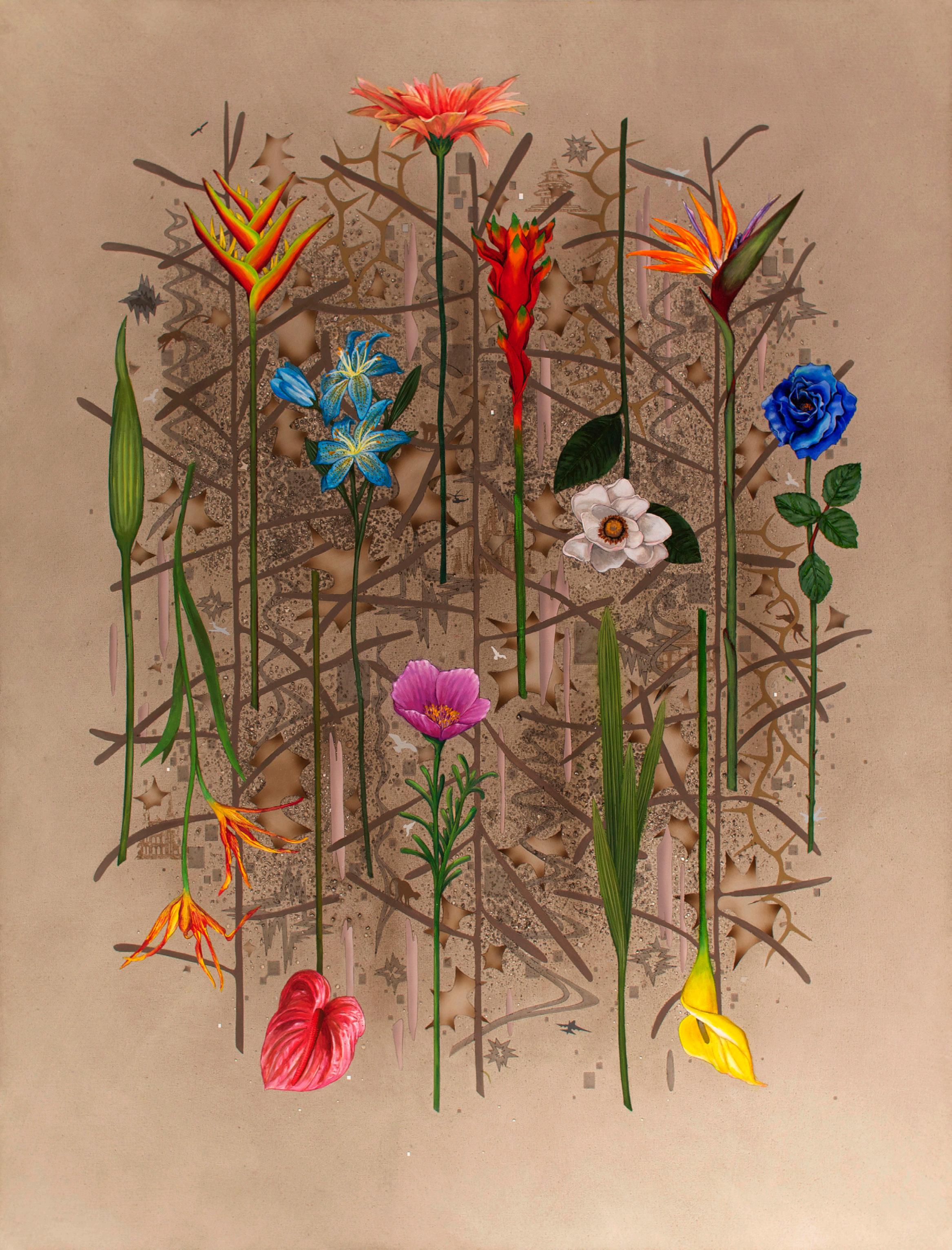
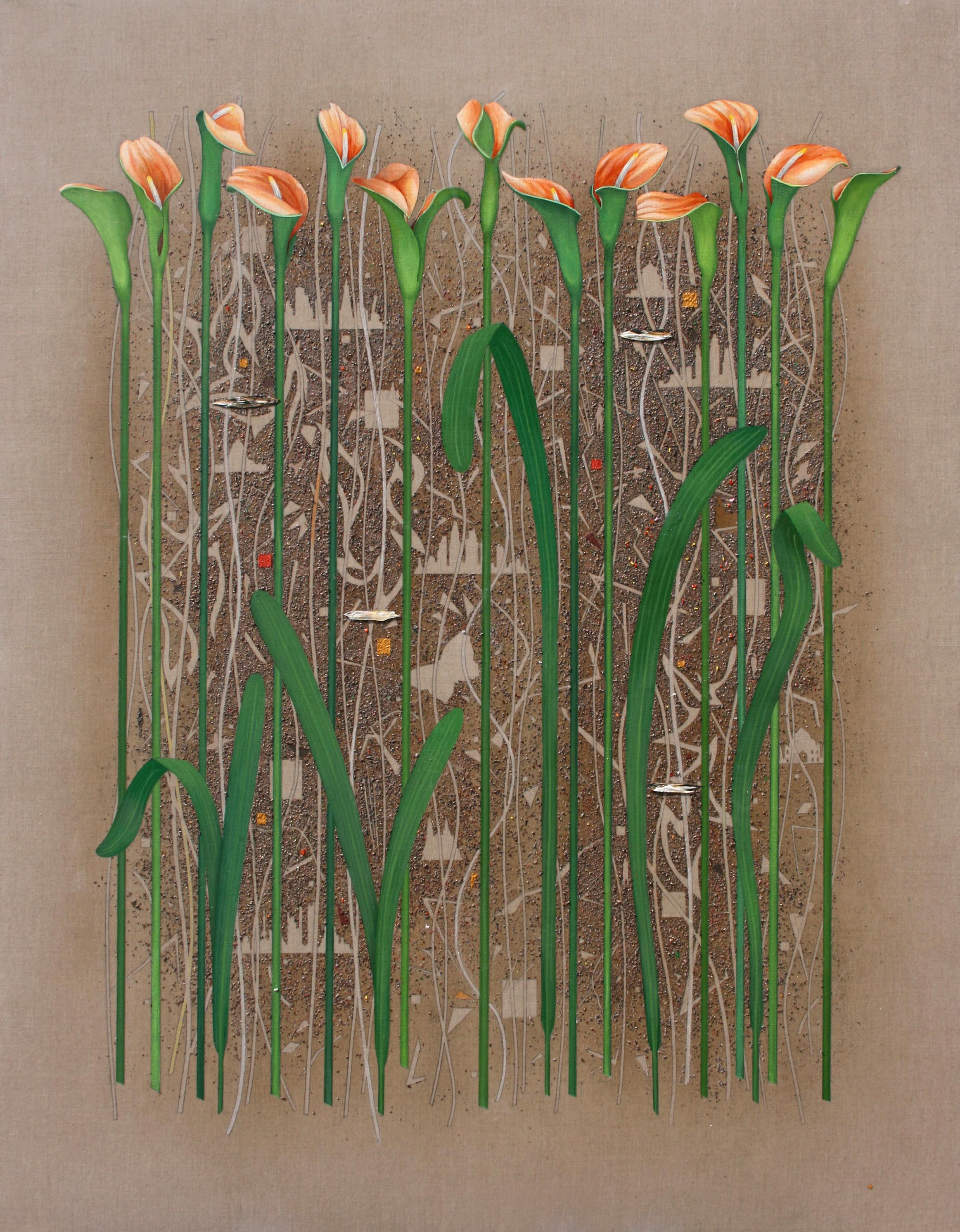
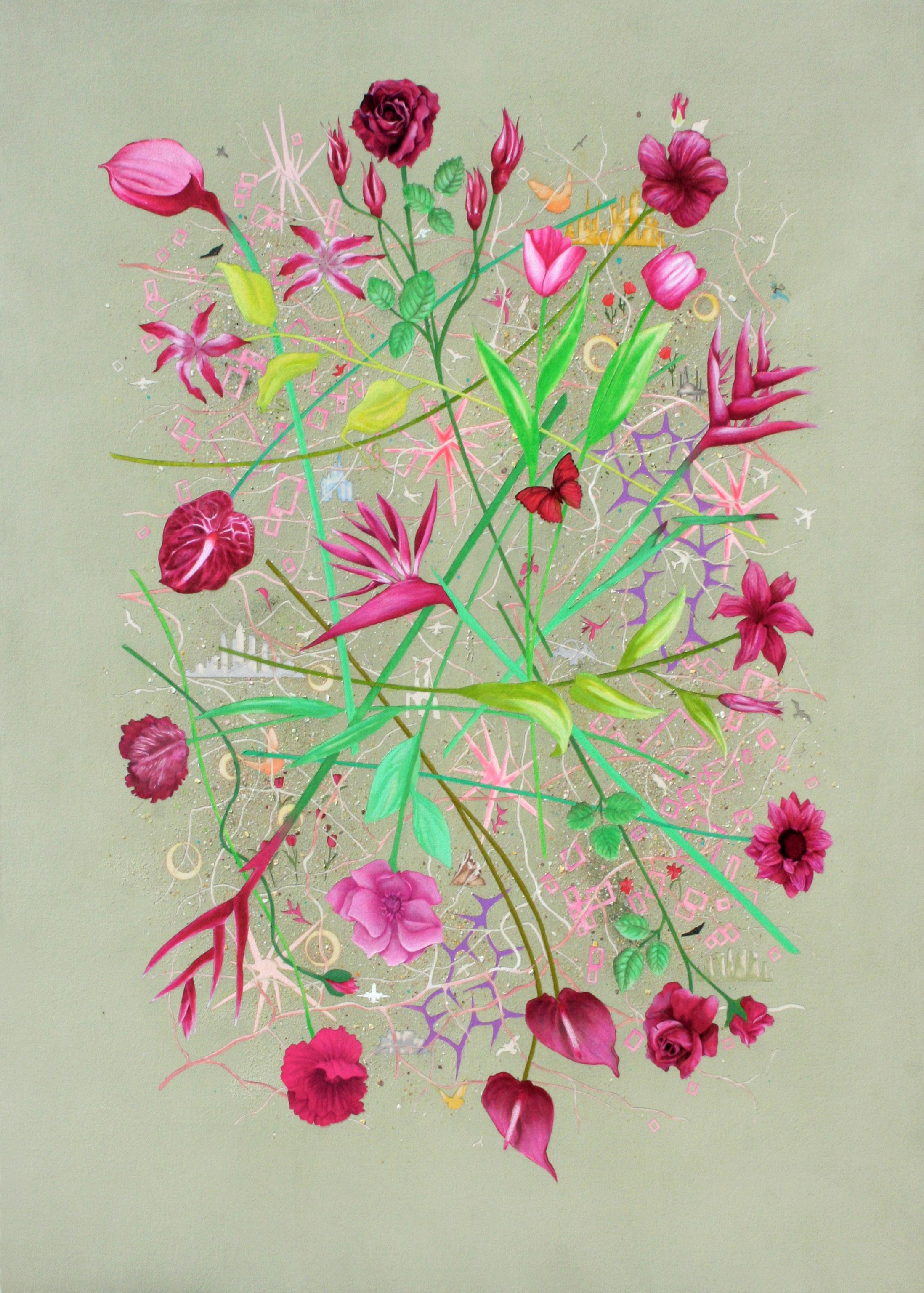
After All, 2012, Acrylic on canvas, 64” x 48”
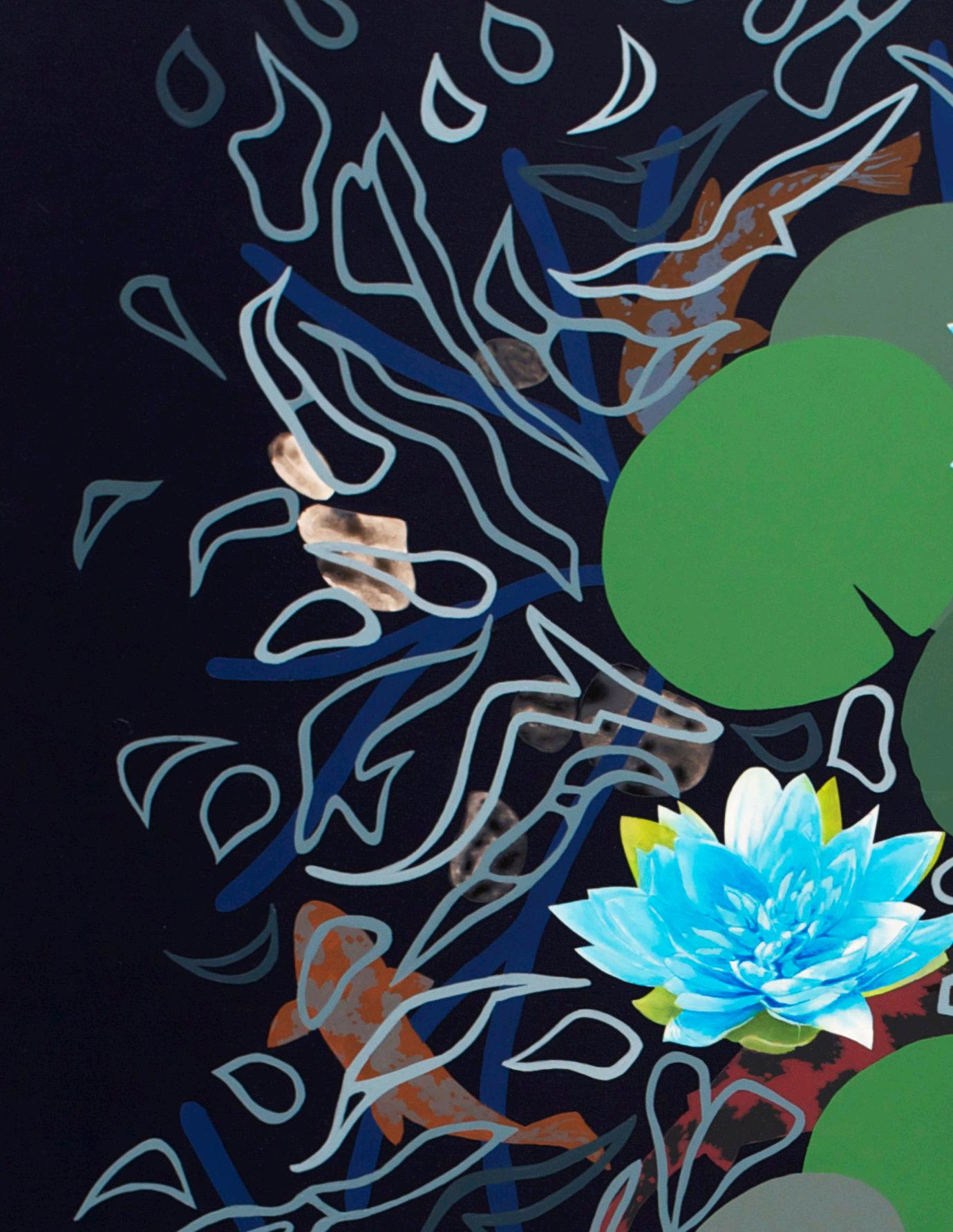
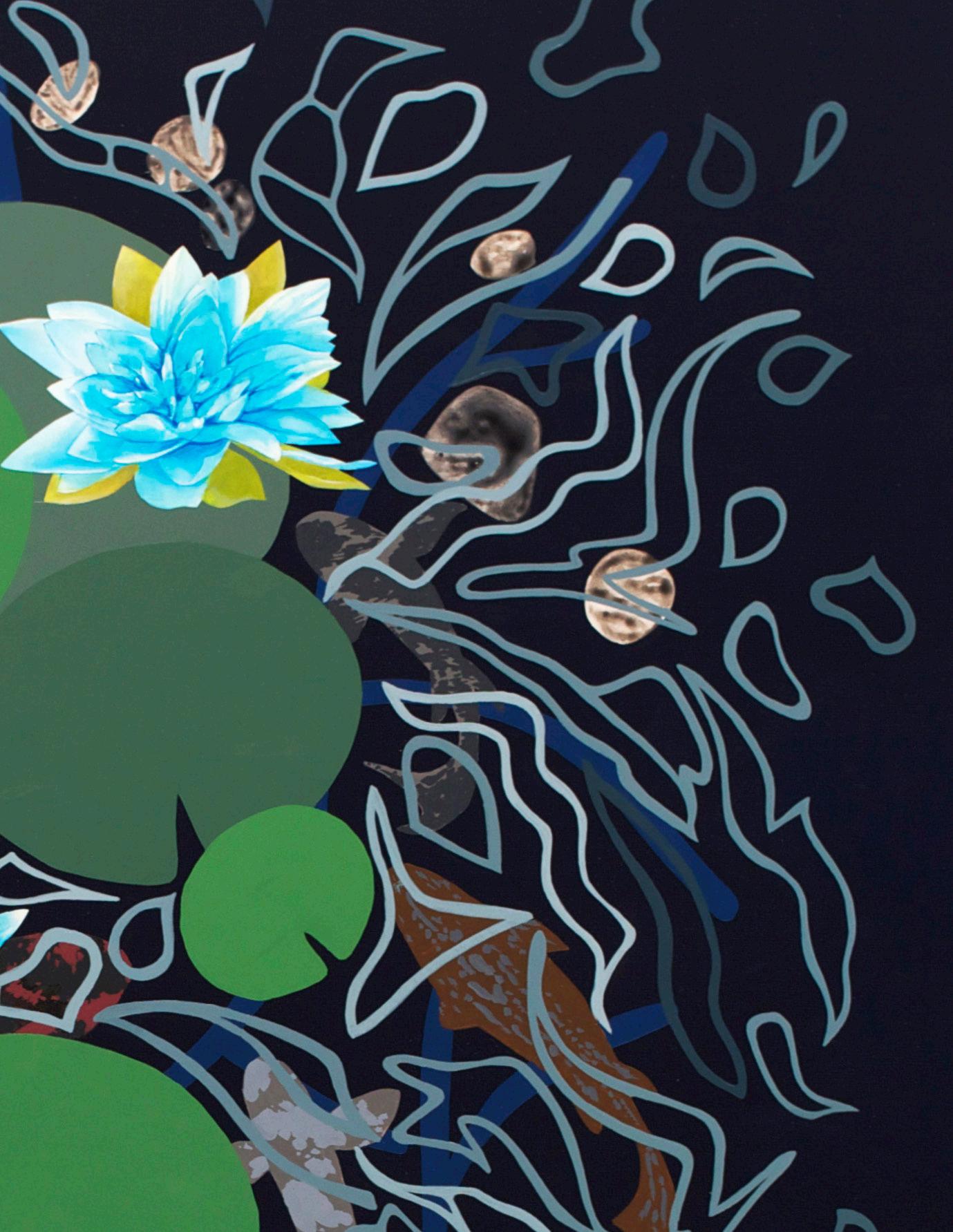
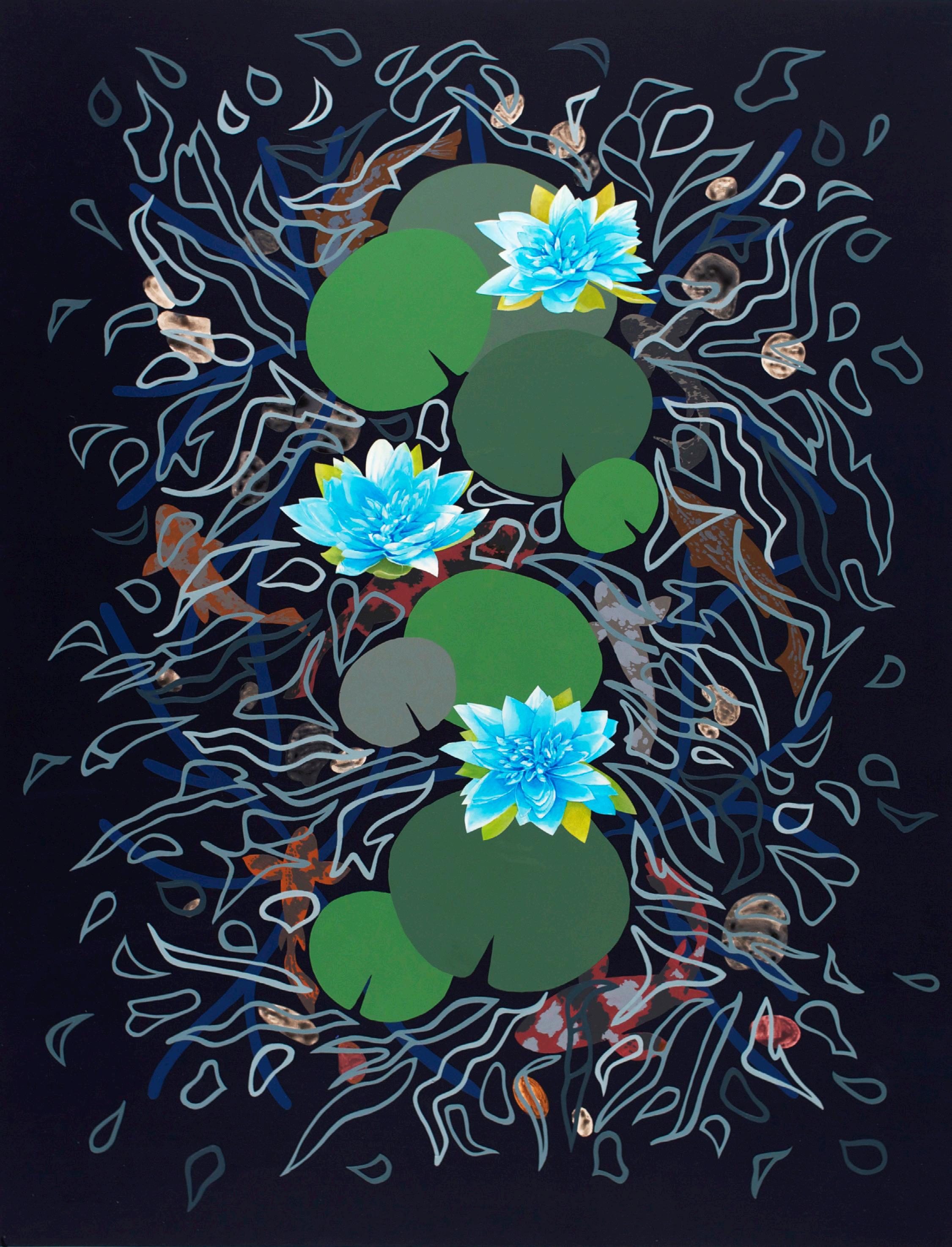
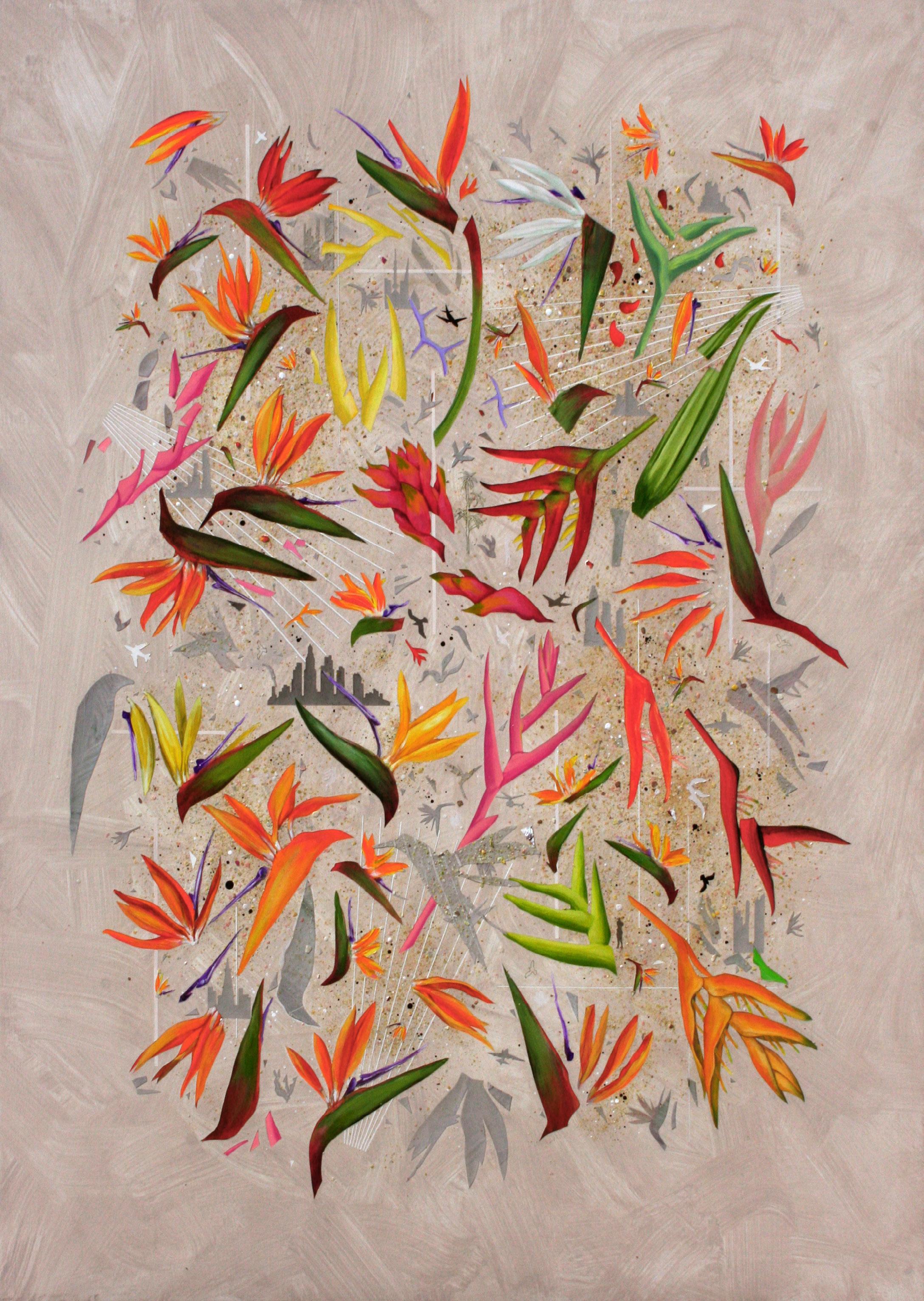
All At Once, 2014, Oil and acrylic on panel, 52” x 40”
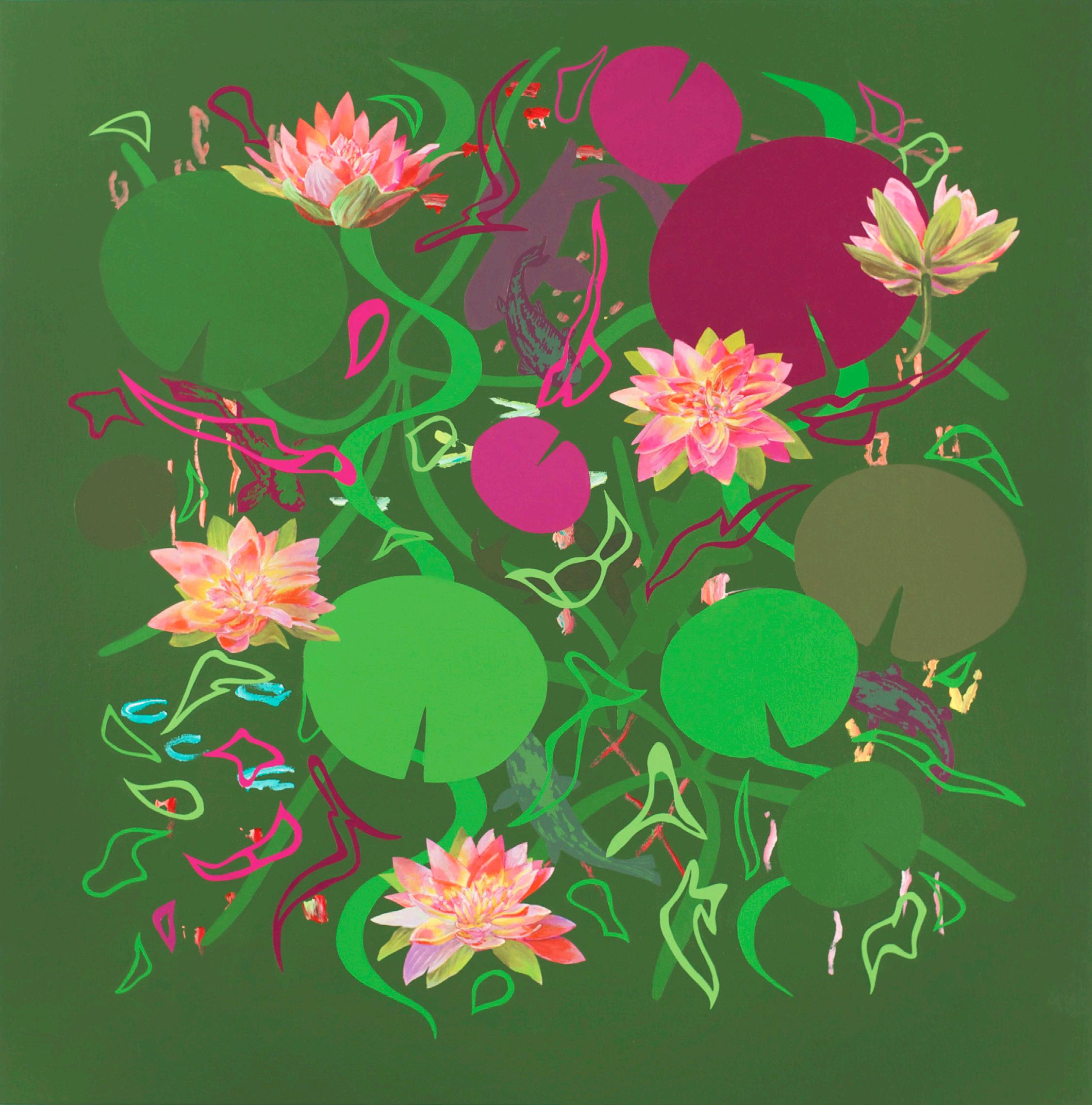
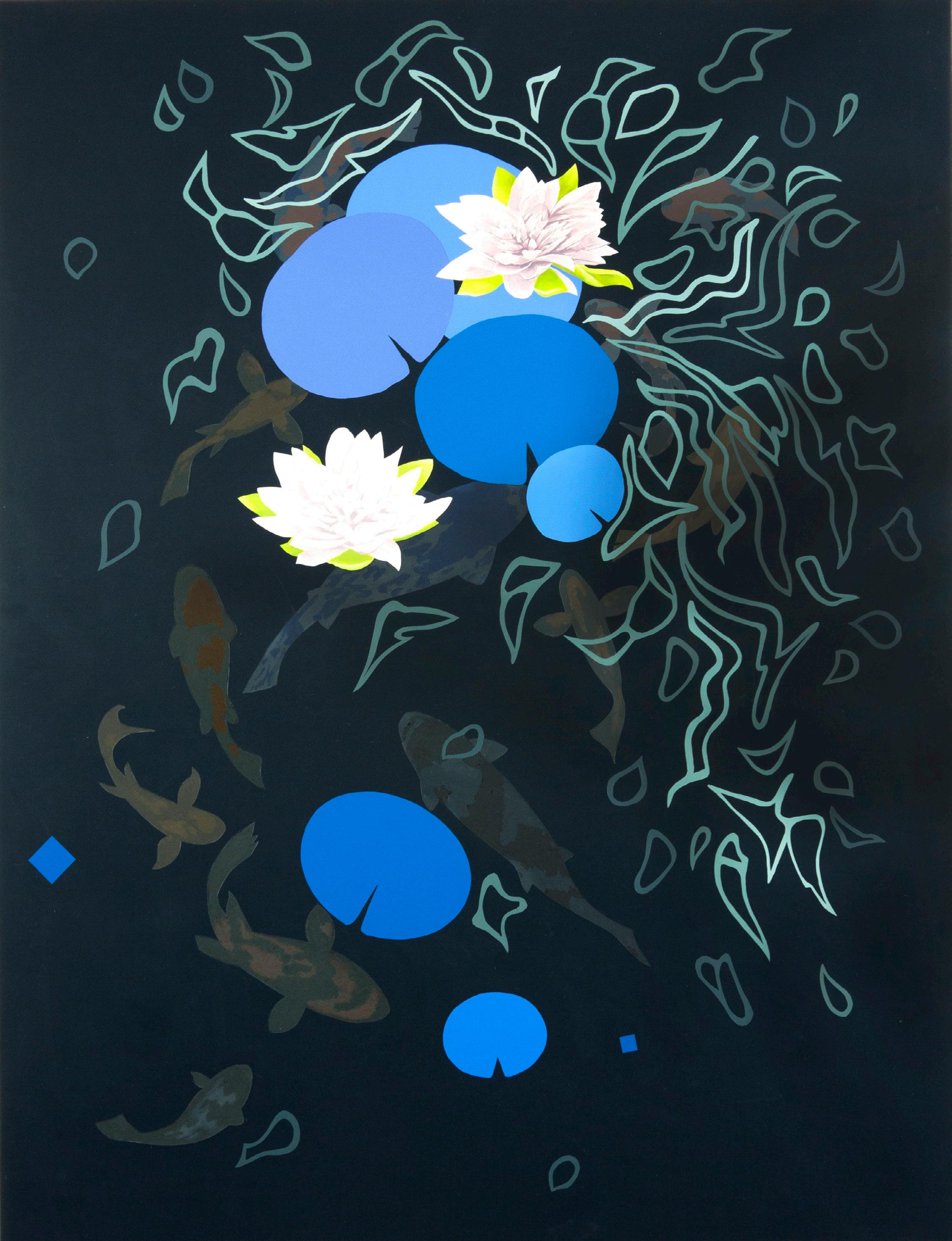
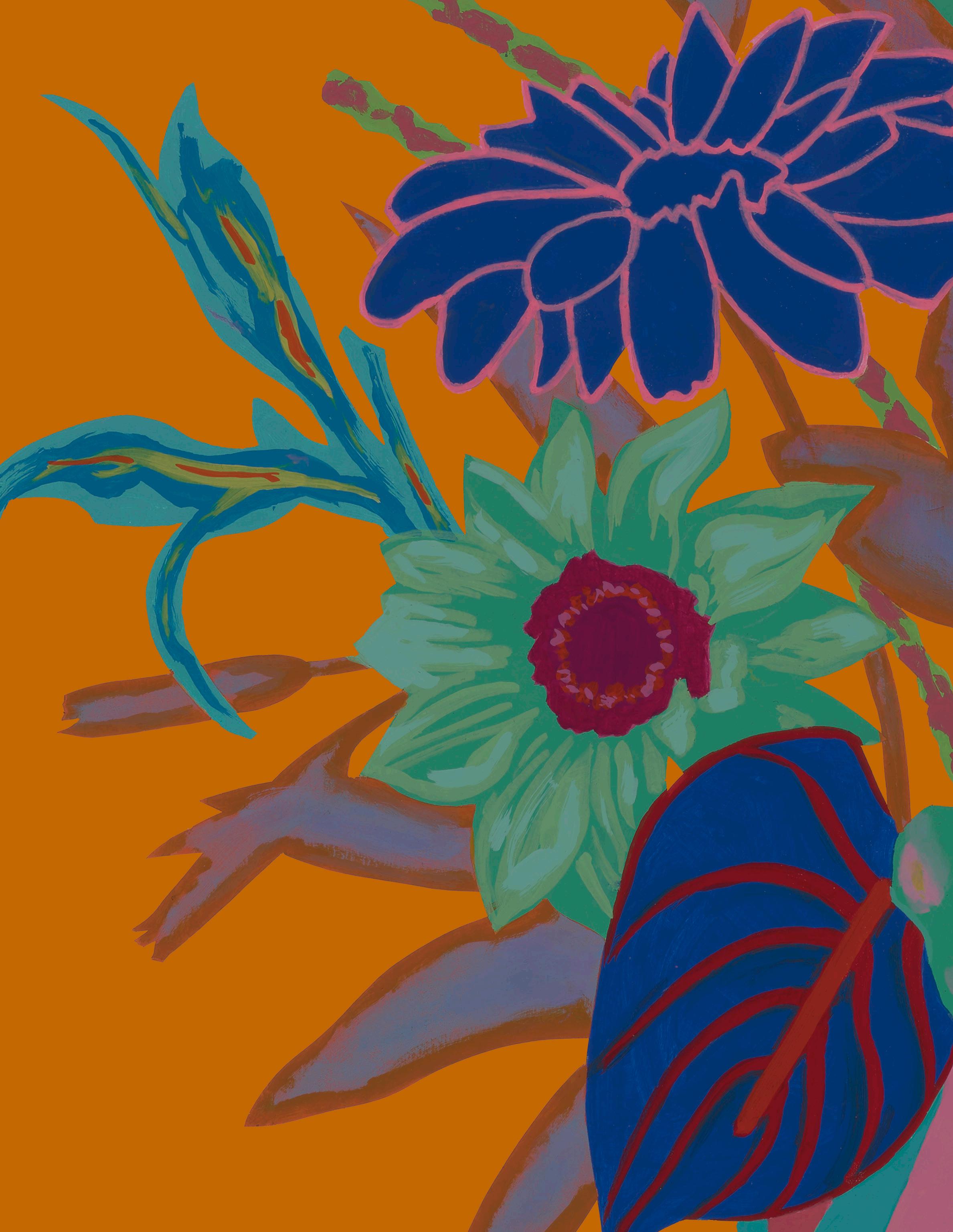
“All great art contains at its center contemplation, a dynamic contemplation”
- Susan Sontag
It is radical for an artist who was at the forefront of the plastic movement in the 1960s, ahead of the semiotic curve in dioramas in the 1970s, and breaking ground in abstract painting in the 1990s, to make a 180-degree return to representational painting after 2000 - with the most beautiful imagery of his career. In the Floral Paintings, Reiss aims “to put everything I have learned about painting into a painting.”
The Floral Paintings live up to his aim. Reiss prizes the “mental and psychic scale of space,” insisting that, “the deepest part of painting is entering the consciousness of the painter.” As he says, “we can choose to live in a large space or a small space. It is a powerful metaphor for how we see the world.” Reiss’ Floral Paintings show how spatial fecundity brings painting to life. It is the experience of space that gives painting its vitality, making it appear alive in the moment.
Bernard Berenson began the critical dialogue on the positive effects of “space composition” in the experience of art, arguing that “Art comes into existence only when we get a sense of space not as a void, as something negative, such as we customarily have, but on the contrary, as something very positive and definite, able to confirm our consciousness of being, to heighten our sense of vitality.”
Susan Sontag also insists, “Art is a form of consciousness.” For Berenson this “consciousness” in painting is based on what he calls “space composition,” which “woos us away from our tight, painfully limited selves, dissolves us into the space presented.” Berenson even calls this experience a “religious emotion,” a space where “our higher selves at last find an abode.”
Berenson and Sontag are idealistic in their views of the purpose of art, unlike the cynicism of dominant tenets of deconstructive postmodernism over the past few decades. Paradoxically, their idealism is more relevant to the élan of our times, because an increasing number of people are
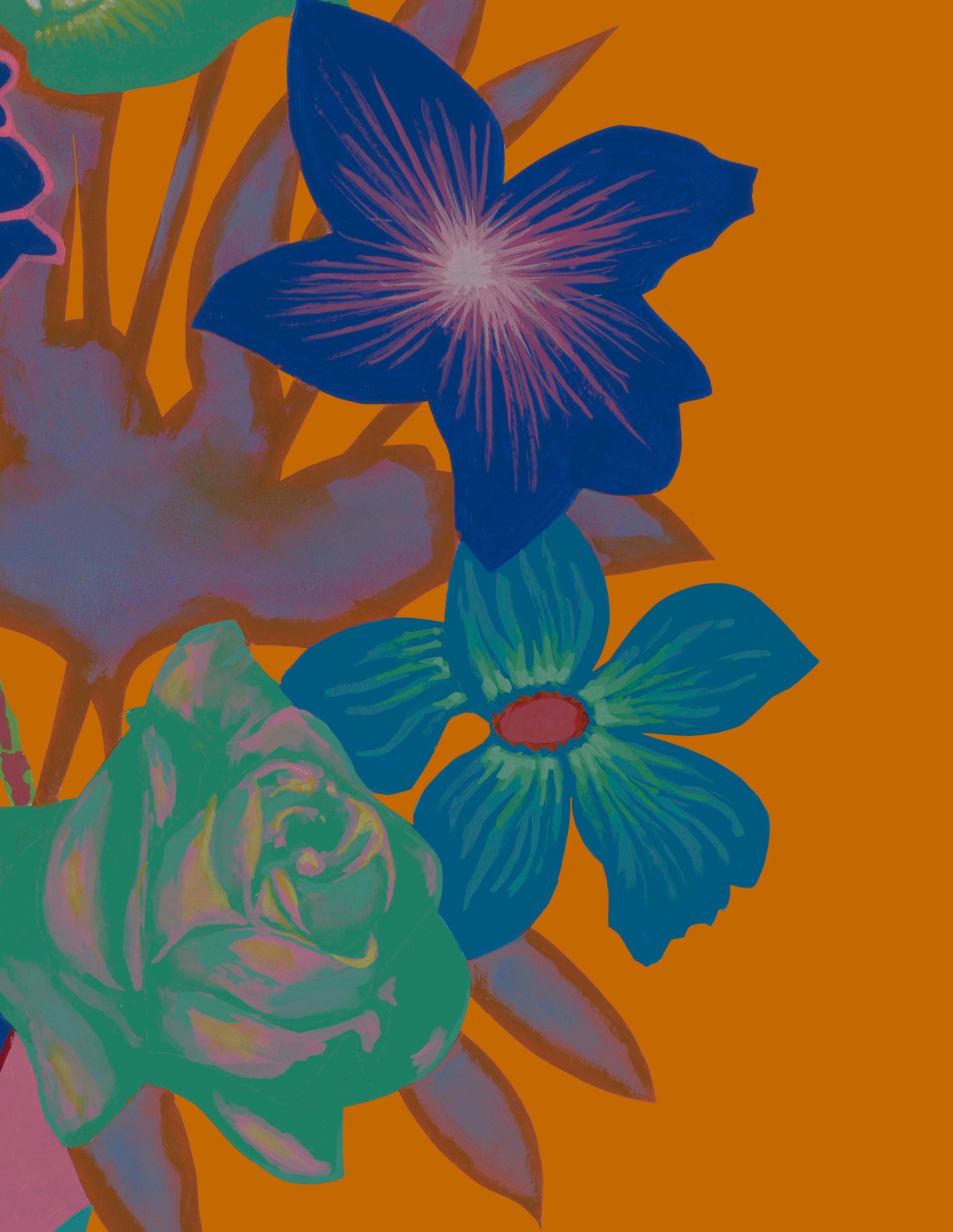
tired of superficial media images and long for deeper experience. Reiss’ Floral Paintings are in sync with the times because they have a spatial depth that creates emotional depth.
Frank Stella applies Berenson’s thesis to the conundrum of abstract painting in his book Working Space, arguing for a shift to sculpture that David Hockney challenges. For Stella “...the aim of art is to create space, space that is not compromised by decoration or illustration, space in which the subject of painting can live. This is what painting has always been about.” Even eighteen years ago, Stella was saddened by the “close-valued, shallow-surfaced paintings of the past 15 years so excruciatingly dull and unpromising.”
Hockney argues in contrast, that Stella’s view is fascinating, but flawed, because it does not deal with the way a flat surface can appear three dimensional to a viewer. He insists that Stella leaves out the crucial spatial tension between illusions of depth and relativistic spatial possibilities, which the viewer activates. Hockney’s insightful argument in That’s the Way I See It creates a direct link back to da Vinci, who first defined “natural” and “artificial” perspectives.
The historic trajectory of spatial conceptualization by artists through the centuries is inextricably connected to cultural, philosophical, scientific, and technological advancements. The scientific discovery of the quantum mechanics of space, the invention of photography, the chemical invention of fluorescent colors, and the invention of new optical devices all strongly influence the progression of art, opening new areas for artistic investigation.
Reiss’ lifelong exploration of deep space that evokes deep emotion makes his work both historically grounded and contemporary. Artists who are concerned with thoughtful questions about the purpose of art always work in this vein by raising perceptual, conceptual, optical, and philosophical questions about physical space as defined by the science of their time. The vast array of different approaches to space in twentyfirst-century art has brought it back into a full circle that begins with Cubism at the beginning of the last century. As Christopher Tyler and
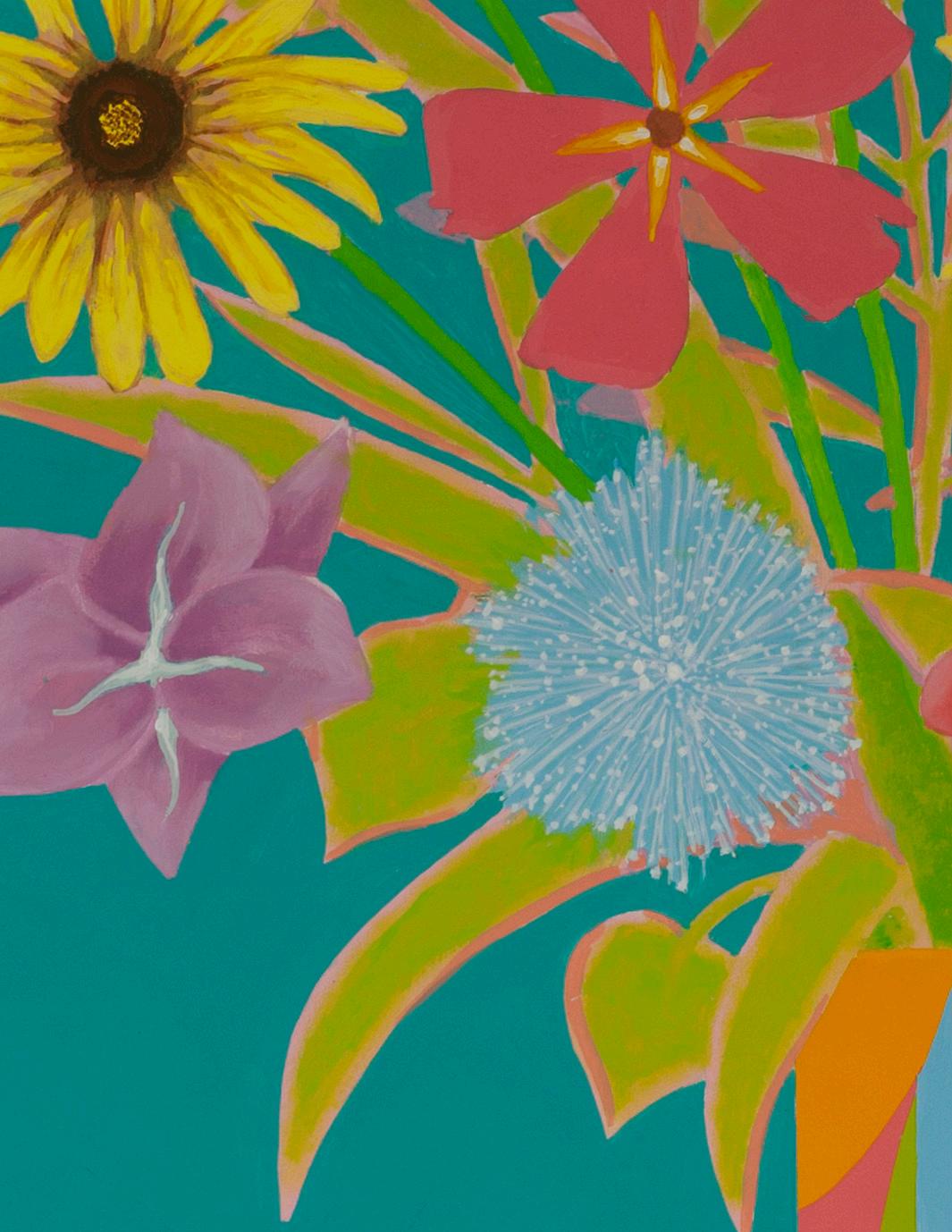
Amy Ione argue in their discussion of space in art history, “Cyberspace and digital works raise questions far beyond those visualized by abstract painting.”
However, the disappointing current shift in painting made for commercial distribution through online and social media leads to a worse disregard for spatial depth than Stella criticized in the mid 1980s. Contemporary artists who ignore the sensate experience of art, with their shallowsurfaced paintings designed for online reproduction, disregard the true test for painting, which can only happen in the privacy of the physical space between the viewer and the painting viewed. These artists cheat the viewer of the emotional experience of spatial depth that Berenson and the artists he calls “space composers” most prize. The main concern of all great art - from Da Vinci’s Mona Lisa, to Carravagio’s Calling of Saint Matthew, to Kandinsky’s free-floating numinous forms, to Pollock’s free-floating energy, to Hockney’s photo-collages - always centers on creating an internal space with a dynamic depth the viewer can actually feel.
Reiss aims to make his contribution to art history by pushing the edges of his genre in a way that simultaneously teaches future artists while paying homage to the teachers who inspire him. Reiss always manages to walk this edge - as a young artist exploring the iridescent color dynamics of plastics, as a midcareer artist exploring the use of signifiers in three-dimensional sculptures, and as a mature artist exploring the two-dimensional surface on the wall.
Reiss is influenced by the German philosopher Conrad Fiedler, who drew on Immanuel Kant’s groundbreaking metaphysics of space and time - the “Copernican Revolution” - which opened the way for Einstein’s theory of relativity. But Fiedler, unlike Kant, was close friends with visual artists and most interested in defining artistic talent. Fiedler argues, “It is a chief requirement of artistic talent that it shall possess an especially refined and sensitive susceptibility to certain qualities of things.” According to Fiedler, this “visual conception” is transformed into “free Gestalt-formations.” Reiss’ interest in Fiedler’s philosophy in the 1960s led him to a more conceptual approach to the exploration of different perceptions of space and to an understanding of the way meaning is achieved visually as “perceptual cognition.”
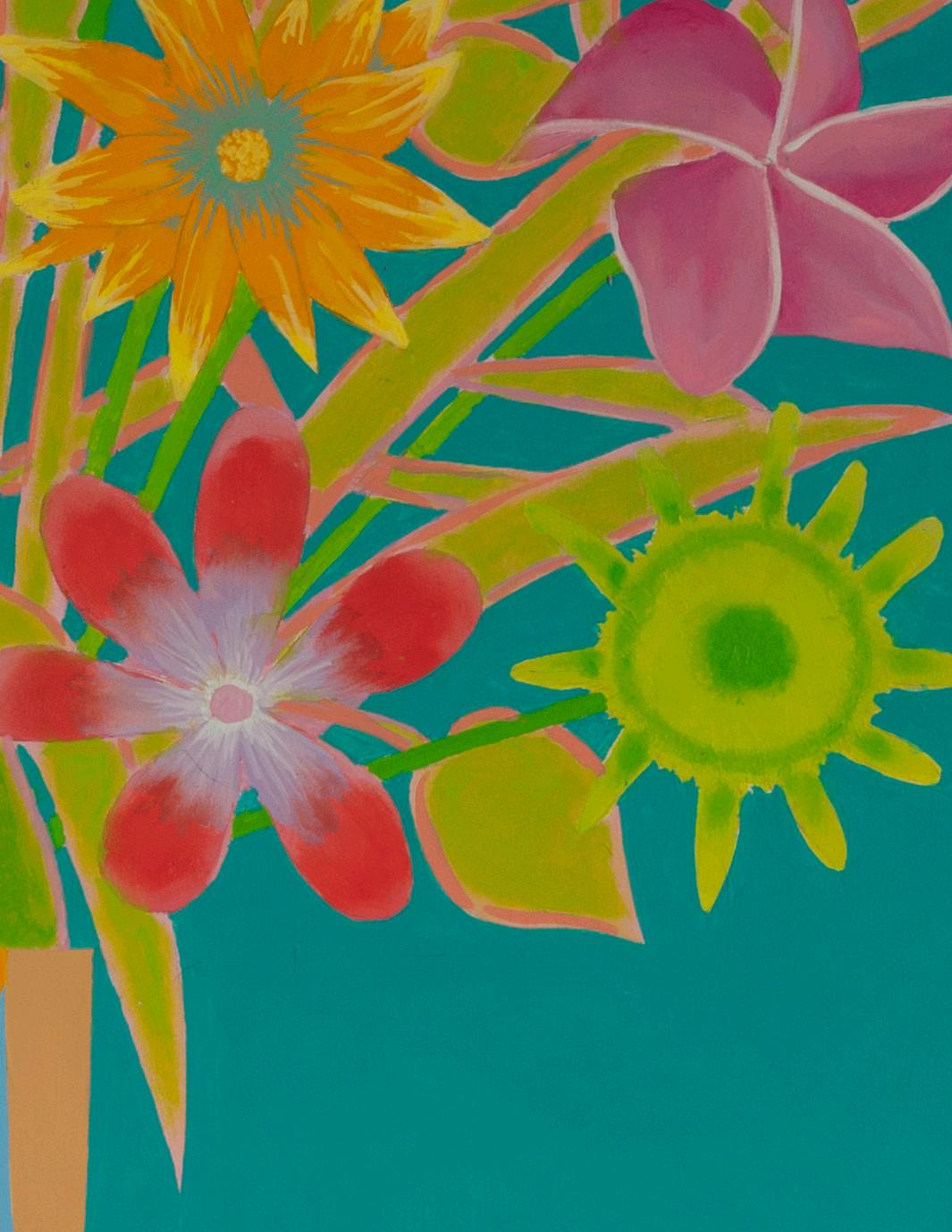
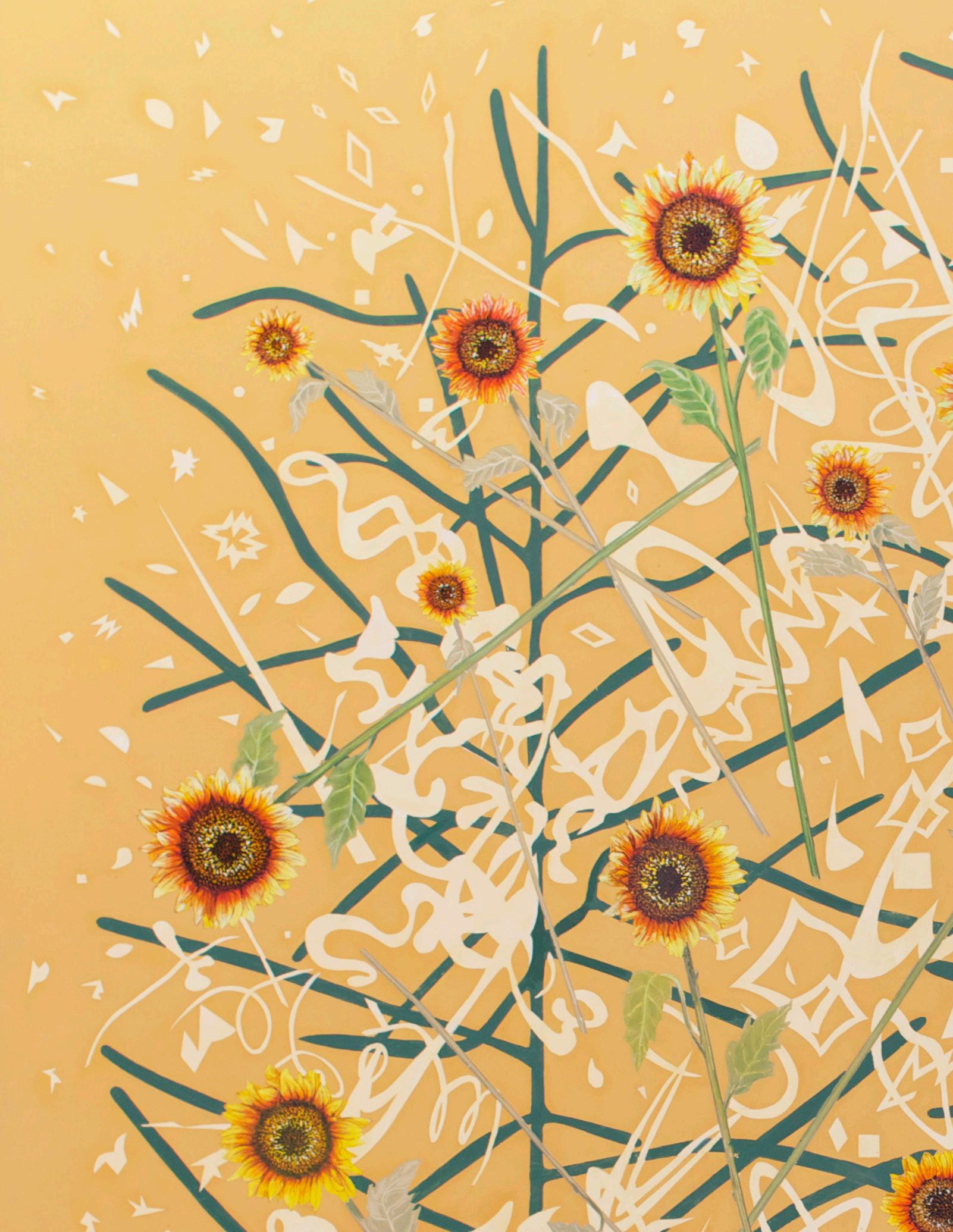
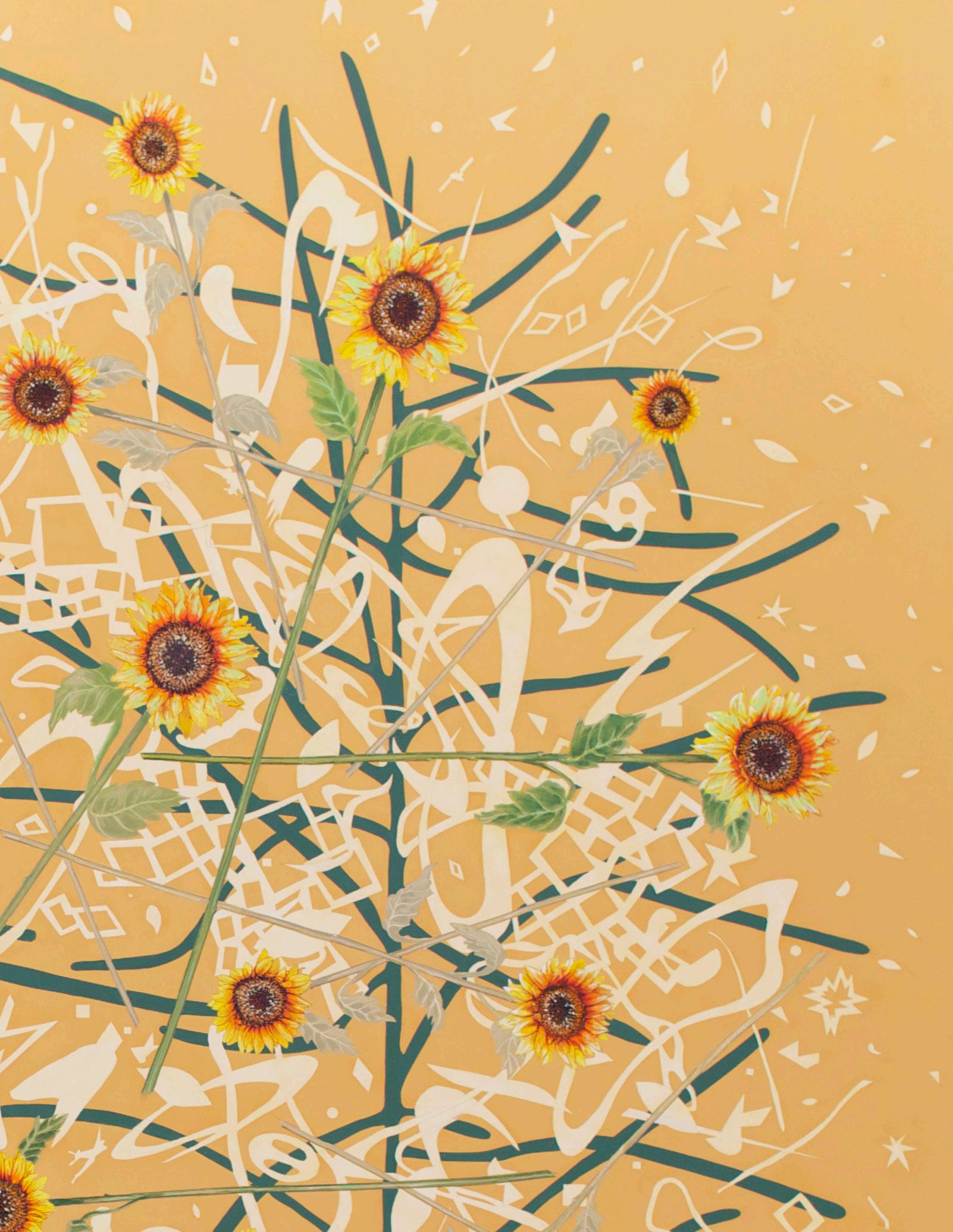
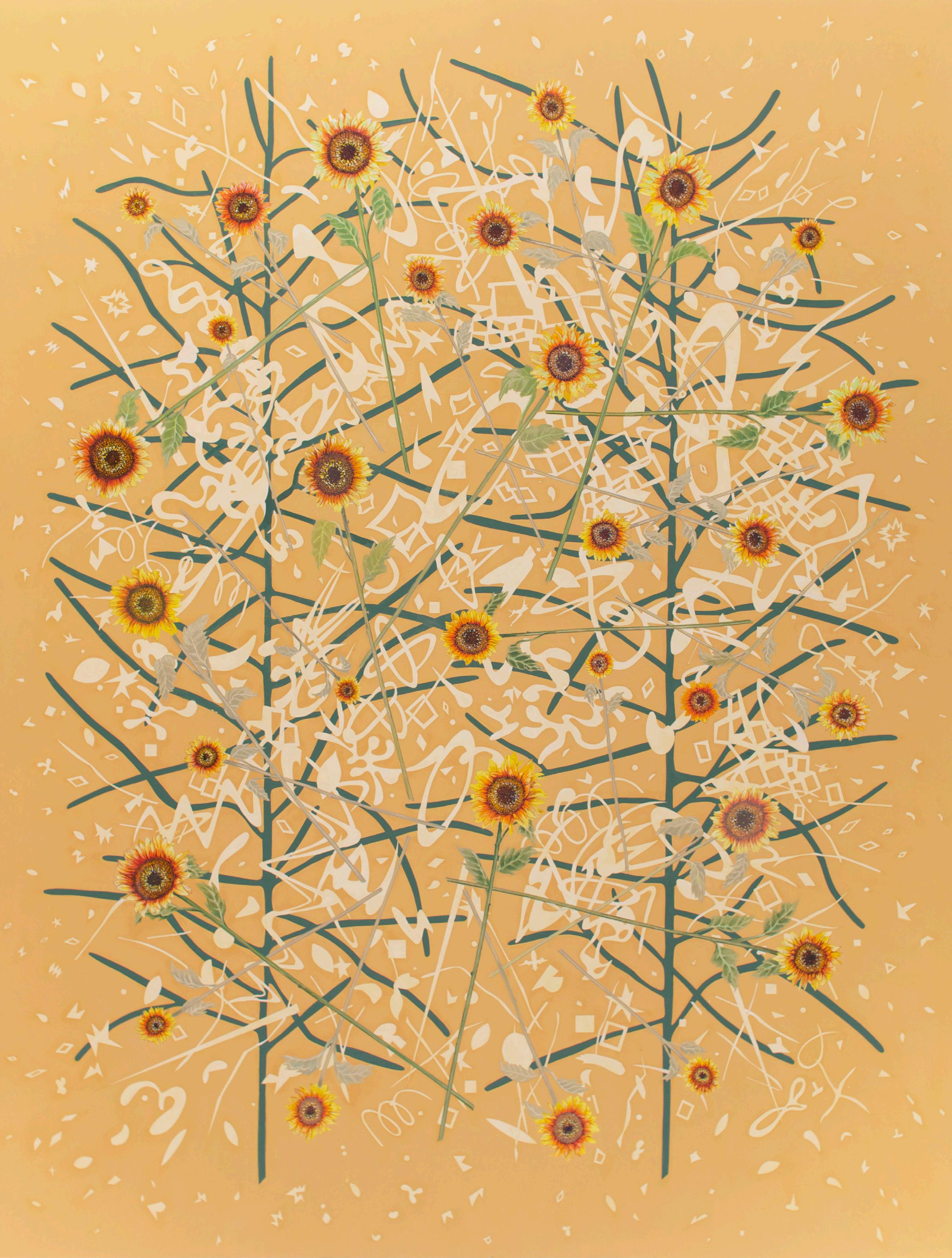
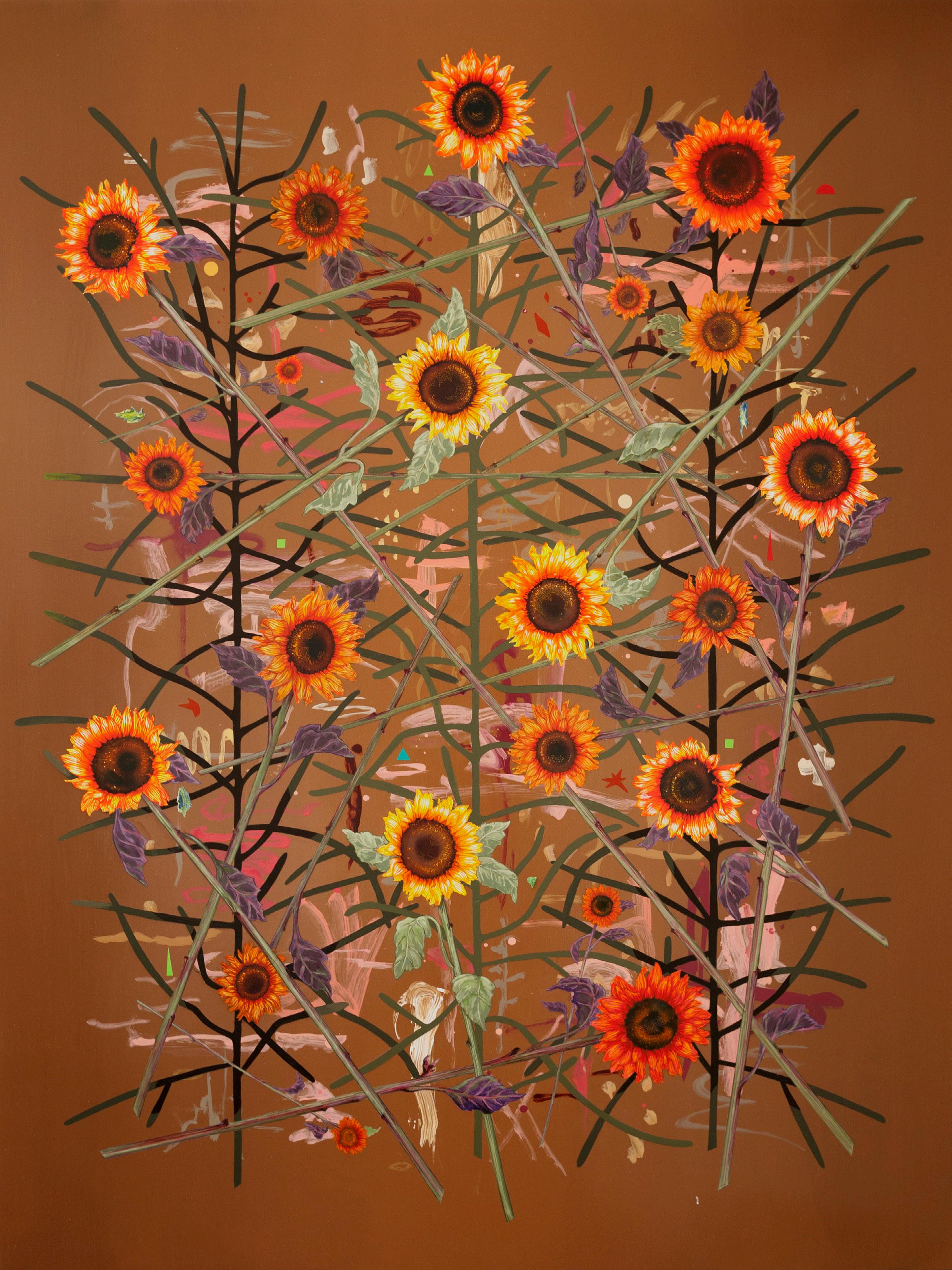
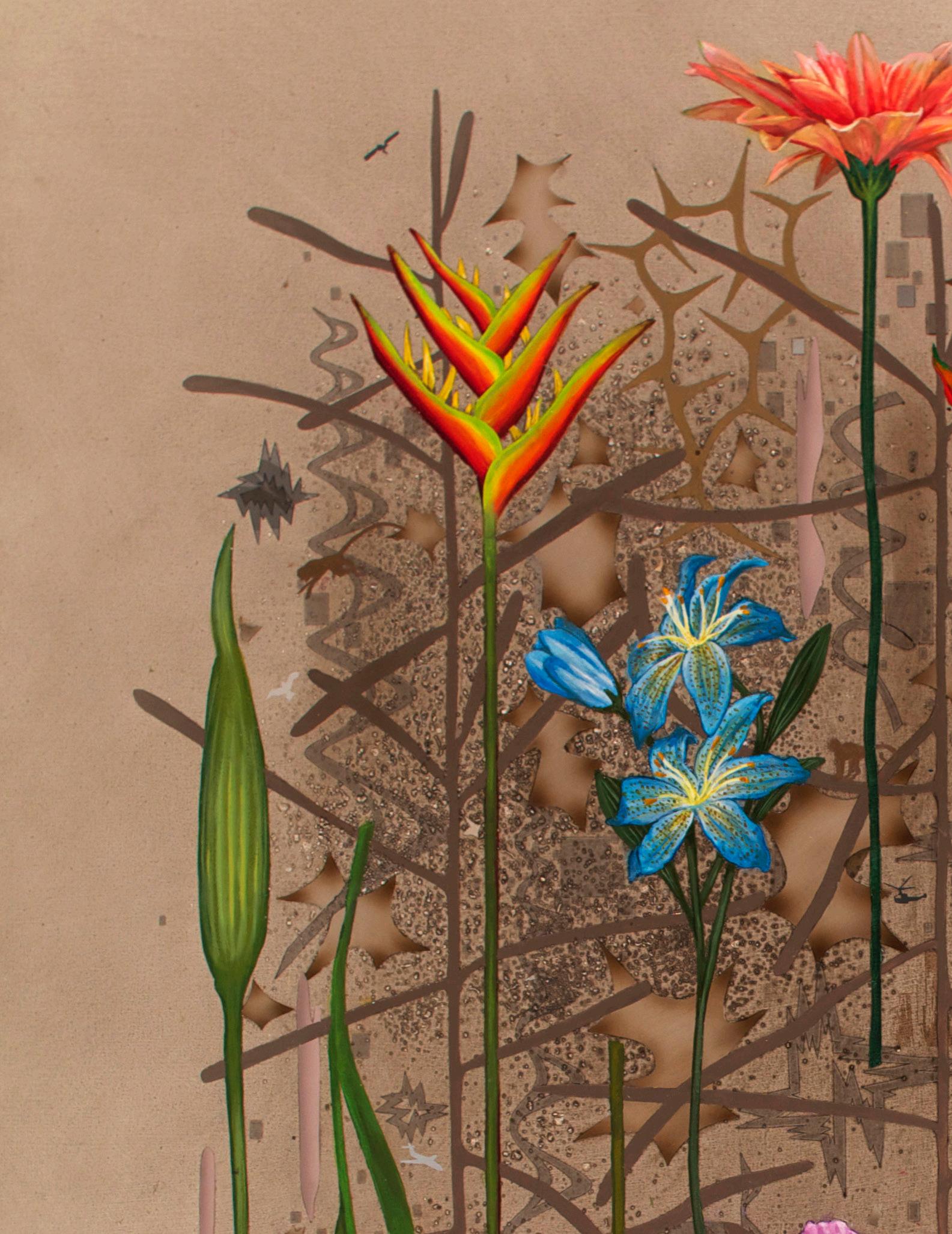
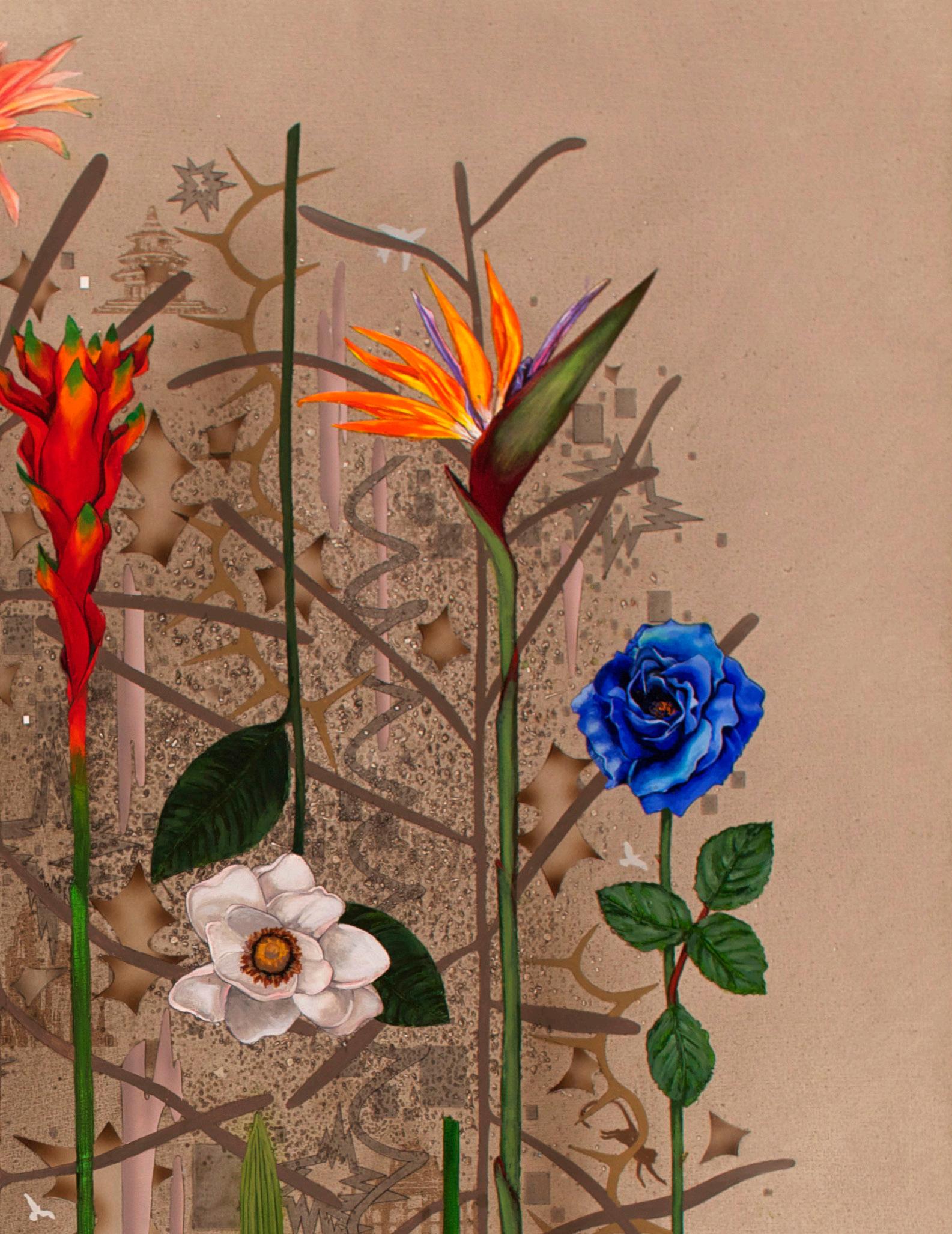
In the Floral Paintings, Reiss uses the flowers as a scaffold to create in-between spaces where surprising things can happen. The flowers float in the center of these paintings like a galaxy. Reiss juxtaposes multiple perspectives of space, as both flat and infinitely deep. Viewed from afar, the human-scale flowers, bursting with vibrant translucent color, are experienced in a body- scale relationship. Viewed from a close focus, tiny surprising details are discovered in the gaps between the flowers. The play on large and small scale, telescopic and microcosmic perspectives, resembles a zoom camera lens that keeps the viewer’s attention moving up, down, around, and across the painting, making perceptual connections between the “clues” in the background details and the beauty of the dramatic flowers in the foreground.
Reiss keeps the “static” of different textures in the background to create spatial tension - unlike painting that relies heavily on computer technology and loses the tension needed to create depth. He holds the viewer in suspense, discovering surprising details that vibrate in the gaps between the galaxies of floating flowers. Reiss’ deep space is filled with lively vibrations that parallel the quantum mechanics theory that there is no void in space. Today, quantum physicists refer to this concept as “zero vibrations of vacuum,” meaning there is no such thing as absolute vacuum or void because space is filled with vibrations of energy.
Reiss insists that a visual artist must find his/her authentic self, “otherwise they are merely copying other people’s music.” According to Walter Pater, the artistic capability for experiencing the truth of beauty is a matter of “temperament.” Pater pairs works of art with temperament, insisting that “Theory, hypothesis, beliefs depend a great deal on temperament; they are, so to speak, mere equivalents of temperament.”
Matisse is Reiss’ most loved hero, for his temperament. Reiss turns his back on the cynicism that currently dominates the art world and pursues his cherishment of the translucence of floral color. Of course, flowers are signifiers of emotion and the most widespread way people communicate feelings of love, admiration, sympathy, compassion, and regret for one another when words are inadequate. Flowers have a significant role in art history, and specialized flower painters were even employed to paint the background flowers in Renaissance paintings. There is also an interesting history of botanical paintings, which were used for visual information about different species of flowers in hybridizing flowers.
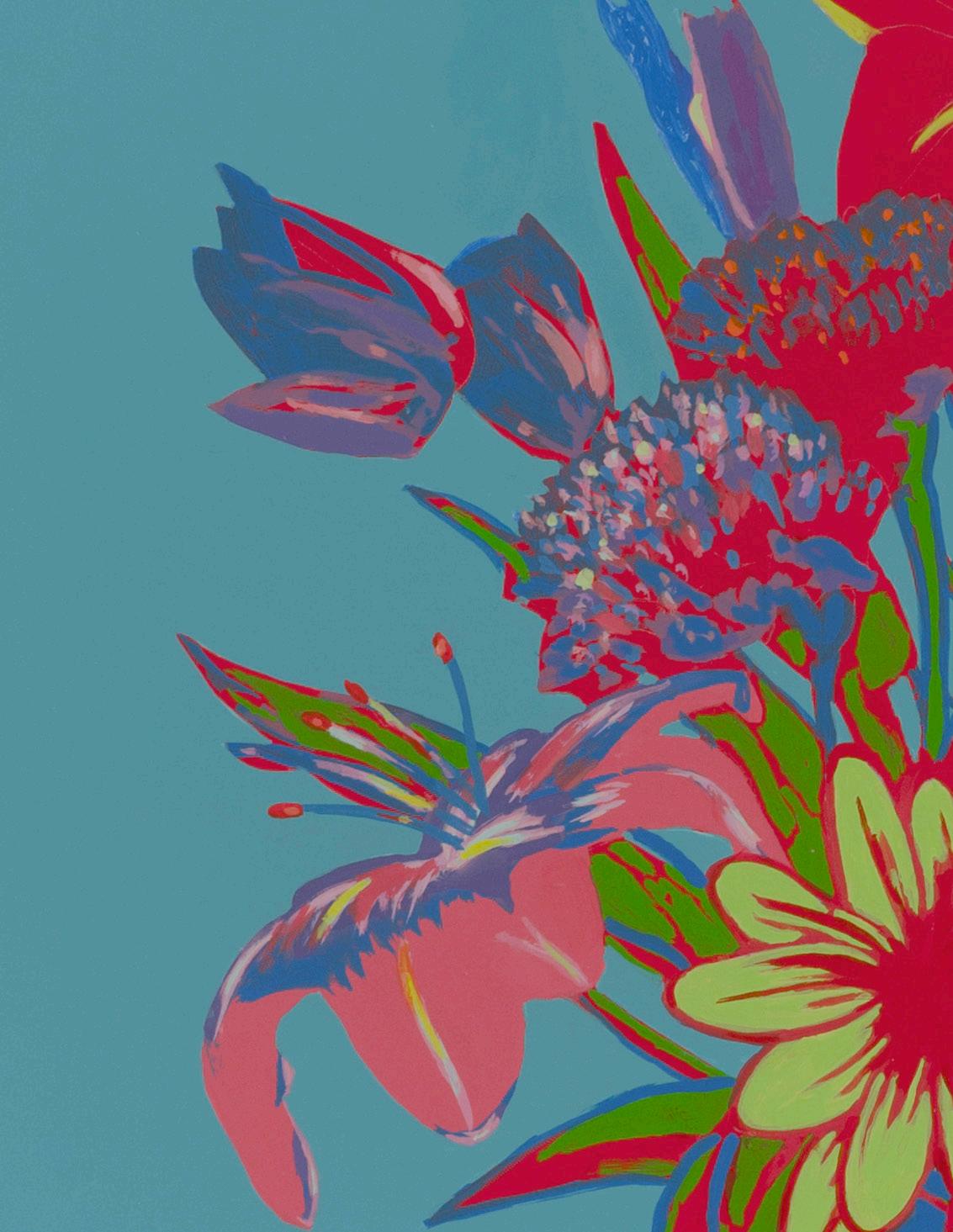
Reiss is not primarily concerned with the symbolic meaning of flowers; he is most concerned with the spatial possibilities created by their depth of color.
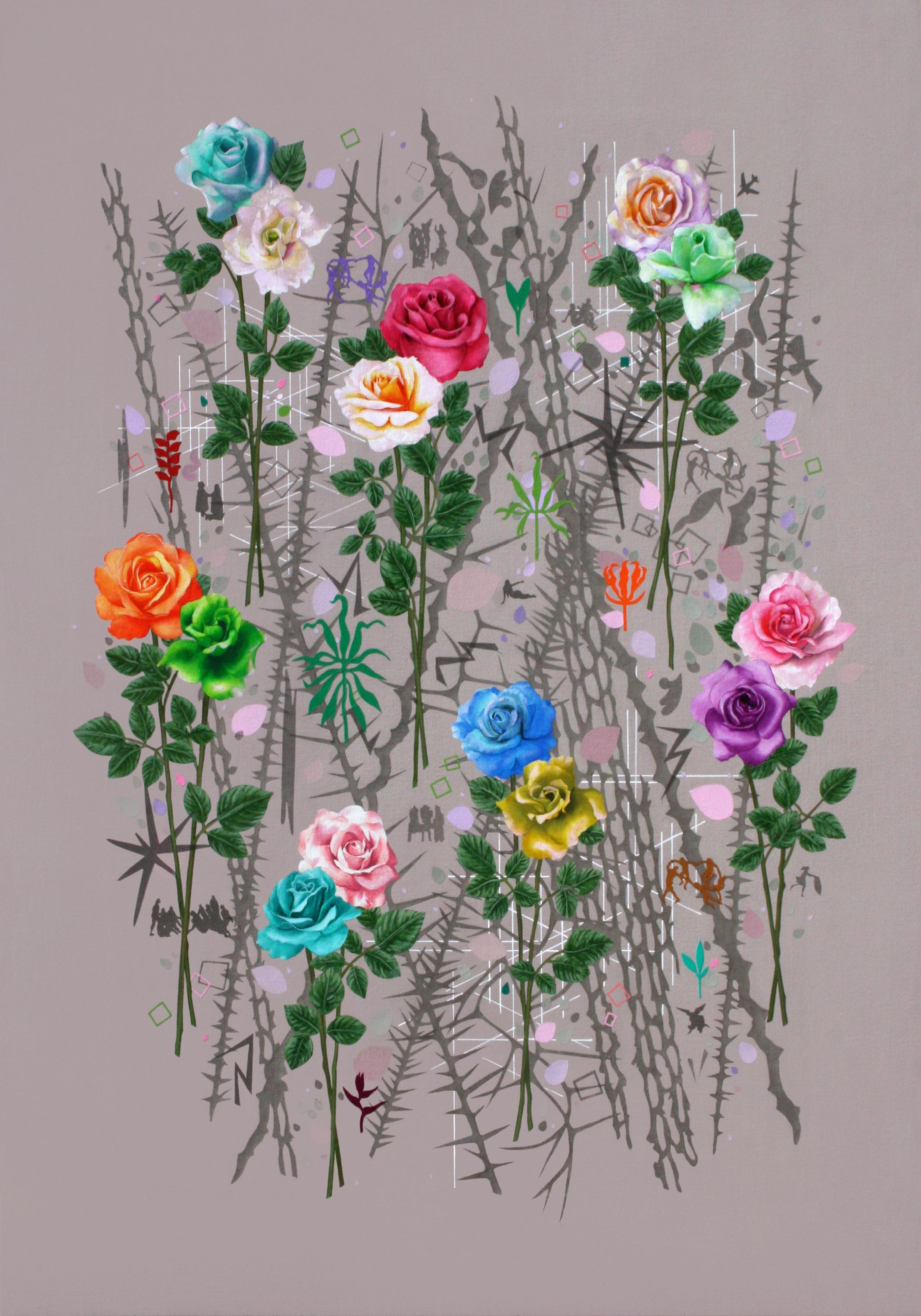
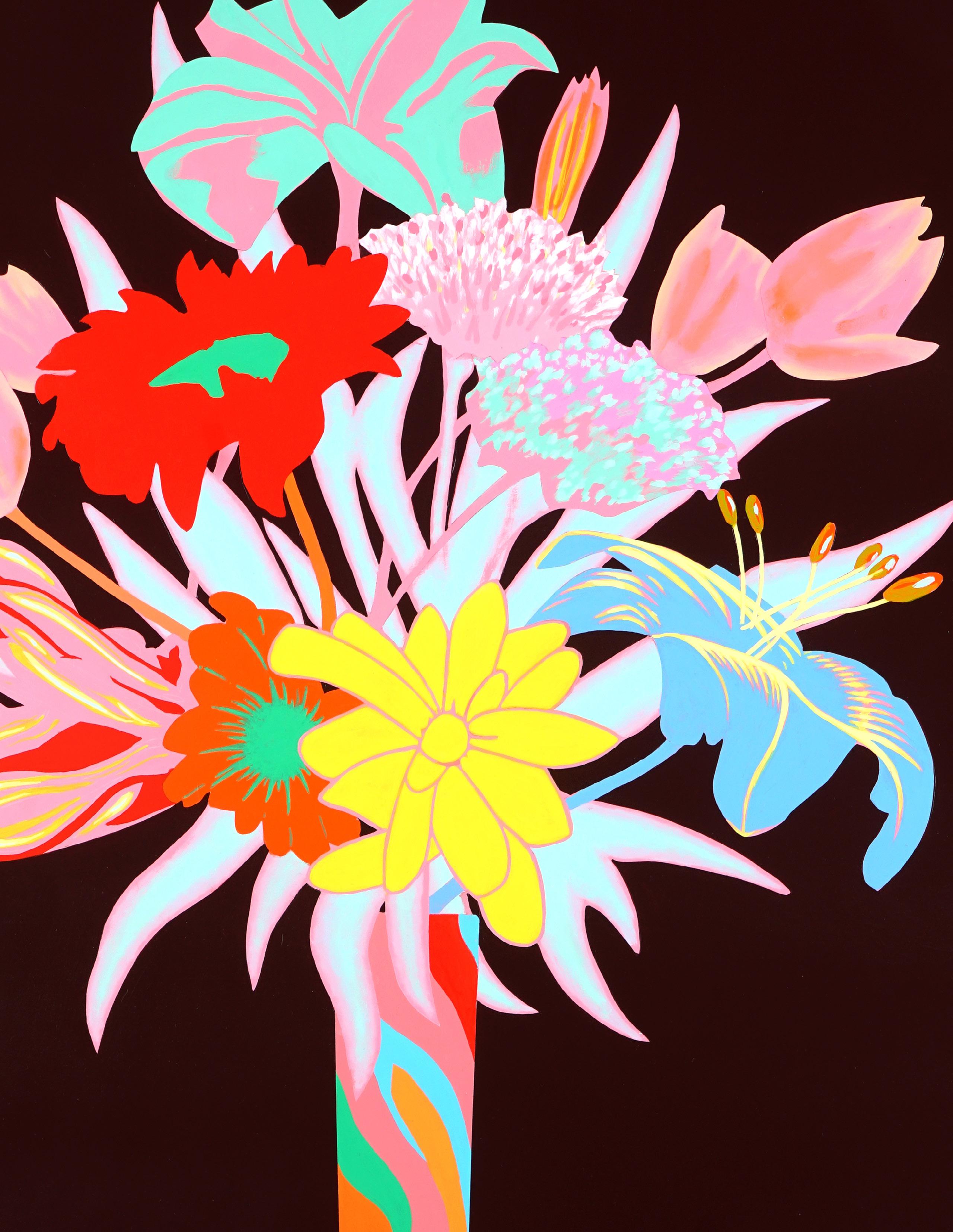
For Reiss, color is the most important and ephemeral aspect of painting and the major concern he shares with Matisse, who did not work with a set palette (like Cezanne) but sought more exotic colors sometimes produced from dyes. In painters’ parlance this is called “chasing the peacock’s tail.” Reiss insists “color takes us to deeper consciousness.” Flowers have a translucent color with more dimension because we look INTO their color, beneath their surface. But Reiss also invents surprising colors for familiar flowers: his poppies can be blue, his sunflowers can be pink, and his birds of paradise can be crimson.
Reiss goes beyond the symbolic and cultural meanings assigned to color, using dense expanses of translucent color for spatial composition. His anthropomorphic flowers are usually frontal, with a human scale that gives them personality and presence, so that the viewer has a one-toone body relationship with them. Reiss’ first floral painting has a vase, the next painting has a bouquet, until he gives up traditional flower arrangement altogether and begins exploring compositions with flowers standing upside down and scattered diagonally - not behaving in space as flowers normally would but like thoroughfares in a map taking us on a visual journey. His pink sunflowers reach for the light and his water lilies are seen vertically rather than from an aerial perspective. Reiss’ luminous flowers are contemporary, in-your-face flowers; he uses them poetically as abstract shapes and expanses of dramatic color to create depth and subvert scale. He often uses transparent glazes painted on a neutral linen-colored background to create illusory space.
Reiss draws on the contemporary art notion that “what you see is what you get.” He encourages viewers to enter the center of a painting, then work their way out, to discover surprising signifiers in the background which set up simultaneous associations - sharing his love of art, things he enjoys seeing, and connections between the past, present and future.
Reiss believes that contemporaneity is vital and that “artists also need to feel a connection to the history of art.” Behind the contemporary flowers are references to earlier forms of painting: figures stenciled and stripped from Matisse, Picasso, Cezanne, Delacroix, and Kahlo. Reiss uses excerpts from his experience of disparate things he loves: cartoonesque water shapes, skylines, satellites, military camouflage,
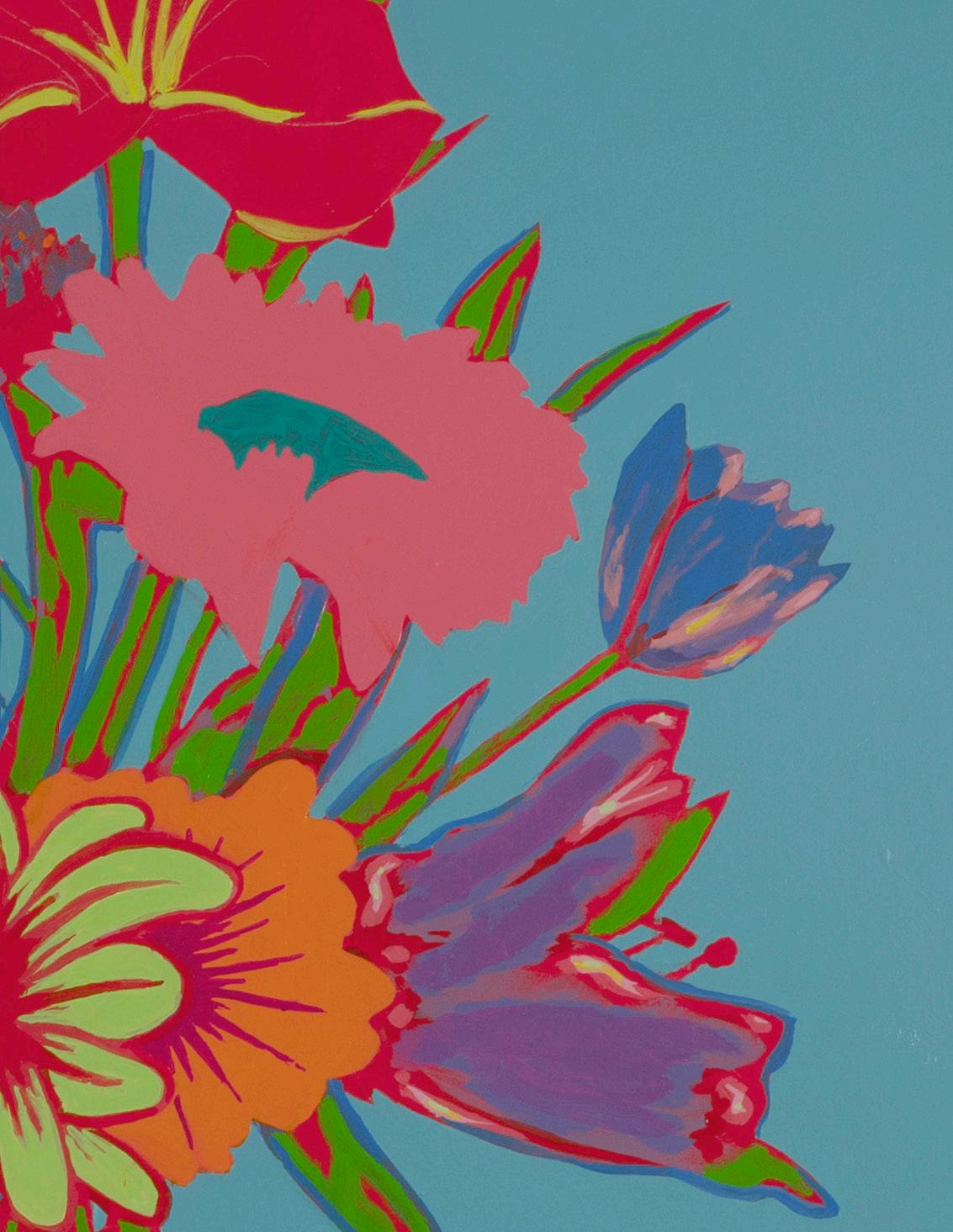
spaceships, waterfalls, butterflies, and astrological symbols. Monkeys replace humans, birds of paradise morph into background silhouettes of birds, human figures fall from space, and airplanes replace insects (recalling Dutch Still Lifes) to shift the scale and suggest that space is bigger than we think.
In the most recent Floral Paintings, poetic mark-making replaces the imagery found in the deep space of his earlier paintings in this series, linking abstraction to the earlier history of painting. Reiss’ background signifiers are “clues” about different readings of space that are never condescending to the viewer but filled with historical knowledge, wit, and generosity.
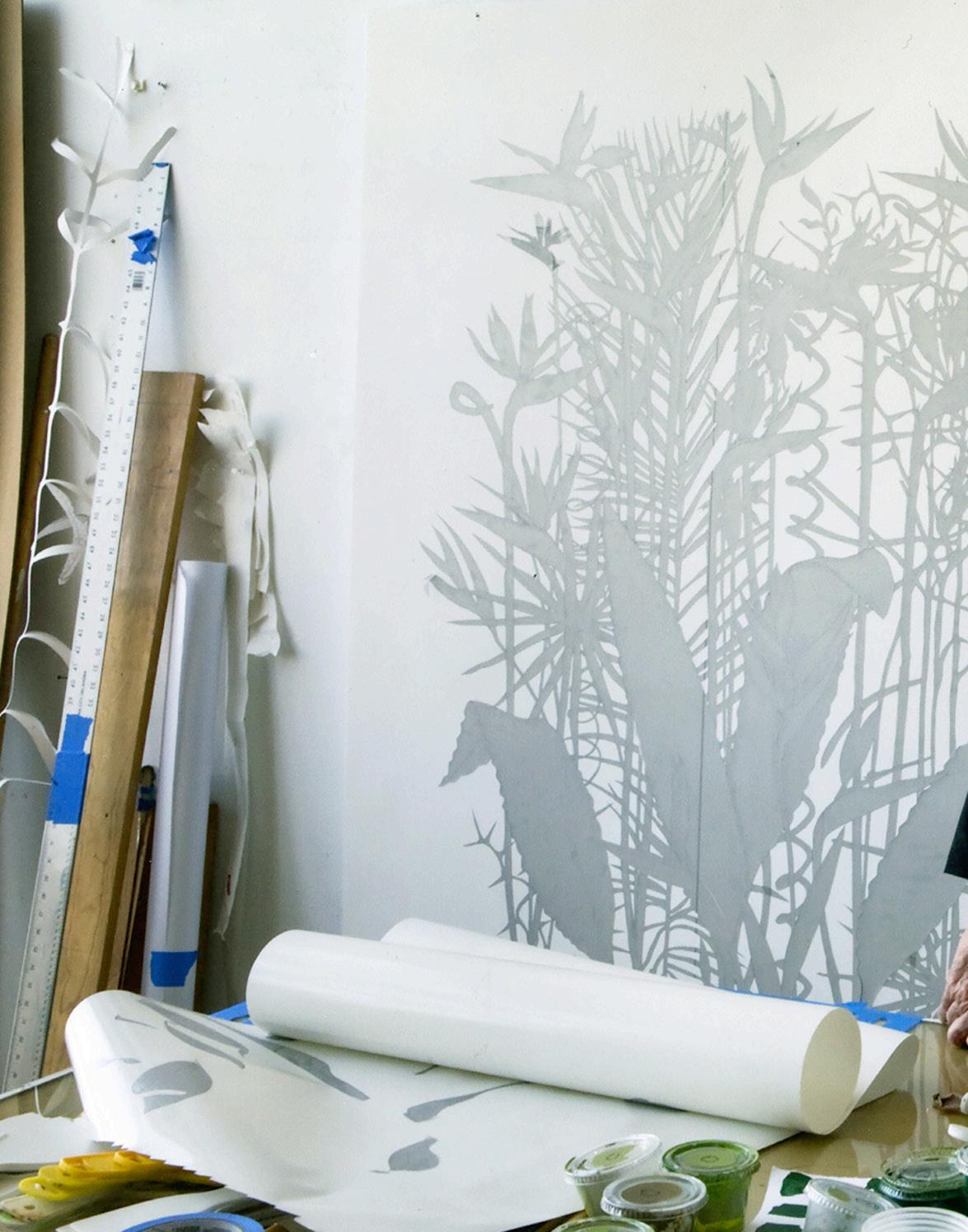
Reiss belongs to a group of artists who search beyond Abstract Expressionism by eliminating the traditional brushstroke. He looks at a painting as an object - from a sculptural impulse; similarly, he looks at sculptural materials as color - from a painterly impulse. Reiss often uses a collage approach, as he stencils and cuts out objects. His paintings are never derived from a scene - or from a photograph. They are all “composed realities” Reiss invents by assembling heterogeneous details that are always accessible and clearly readable.
Reiss uses masking to produce static along the sharp edges of images and drops what he calls “urban grit” in the background for texture. Unlike painting with a continuously flat surface, Reiss uses color, scale, static, and texture to keep the rhythm alive - recalling Pater’s famous dictum “All art constantly aspires towards the condition of music.” - by using the medium to create emotion.
After many years, still lit up with curiosity, Reiss - a painter’s painter who is the inspiration for two generations of Southern Californian artists who draw from his innovations in making and teaching art - continues to inspire us. Flowers, of course, signify a gift. Reiss’ Floral Paintings are the gift of a master of spatial depth who has a place in the history of spatial vocabulary - which, Berenson argues, is the measurement for judging gifted painters. It is Reiss’ visual exploration of the philosophy, physics, and psychology of spatial depth that links his Floral Paintings to the past, makes them relevant to the present, and ensures their continued influence on future contemporary painting.
-Lita Barrie
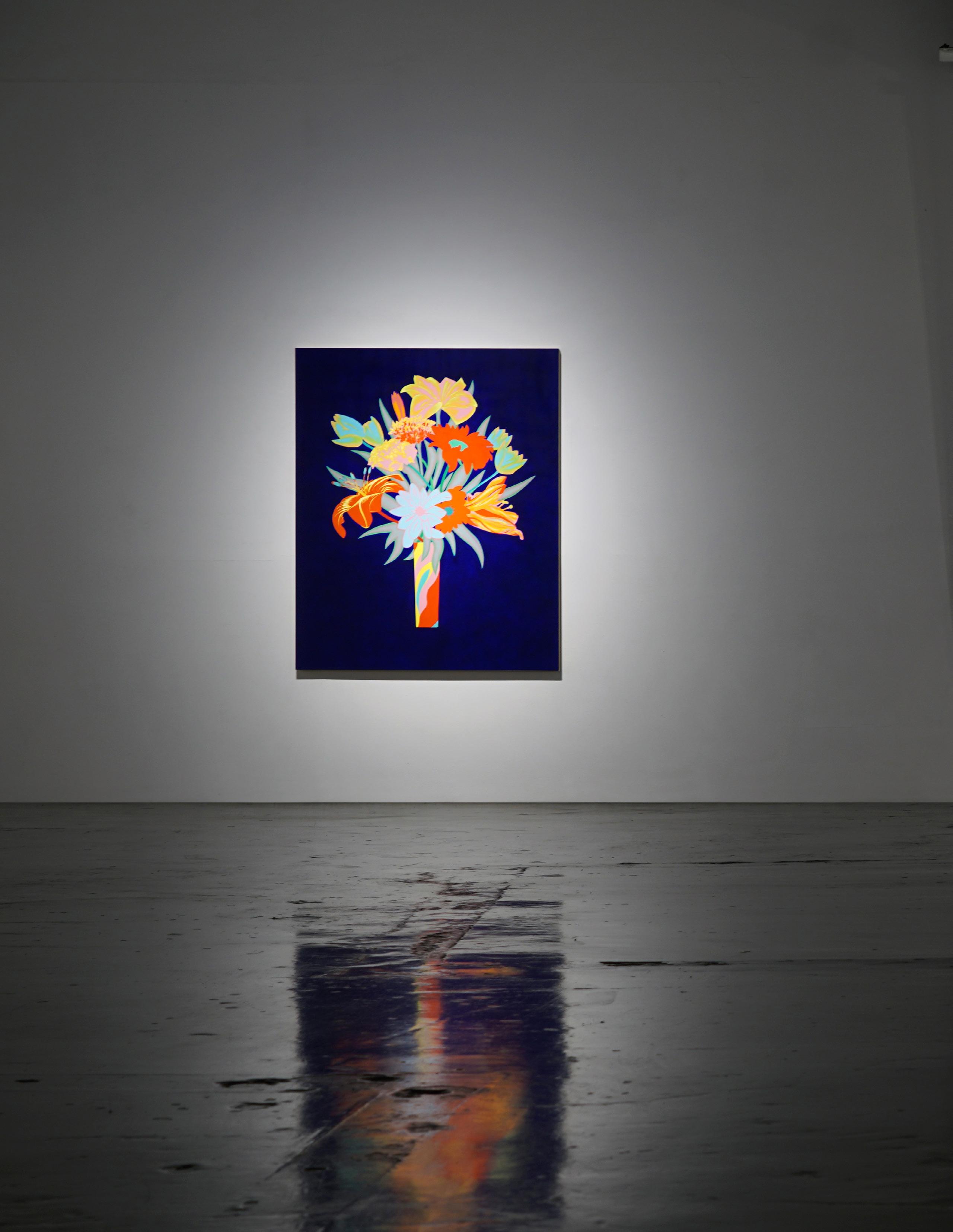
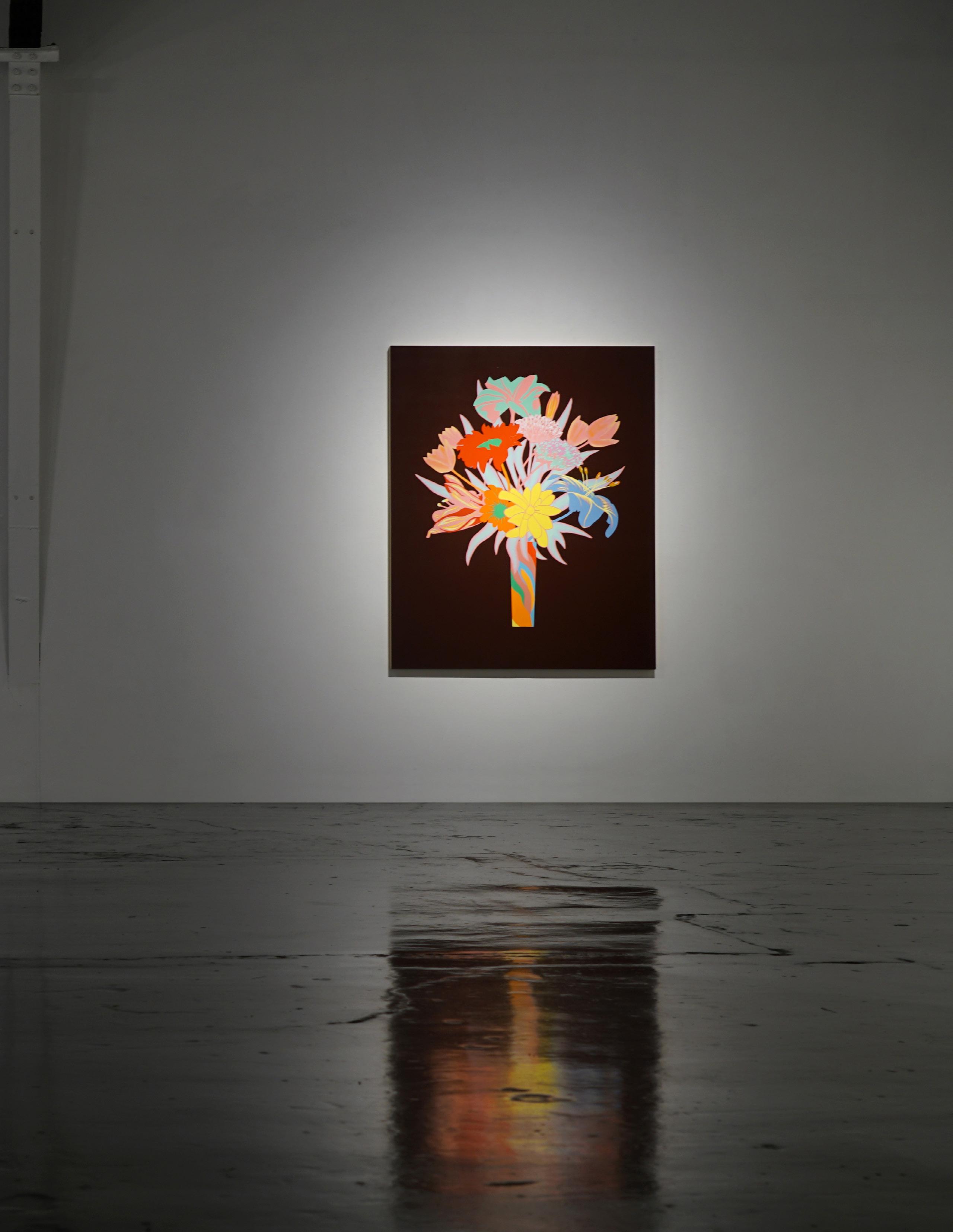
Unrepentant Flowers Brown, 2018, Oil and acrylic on panel, 64” x 52”
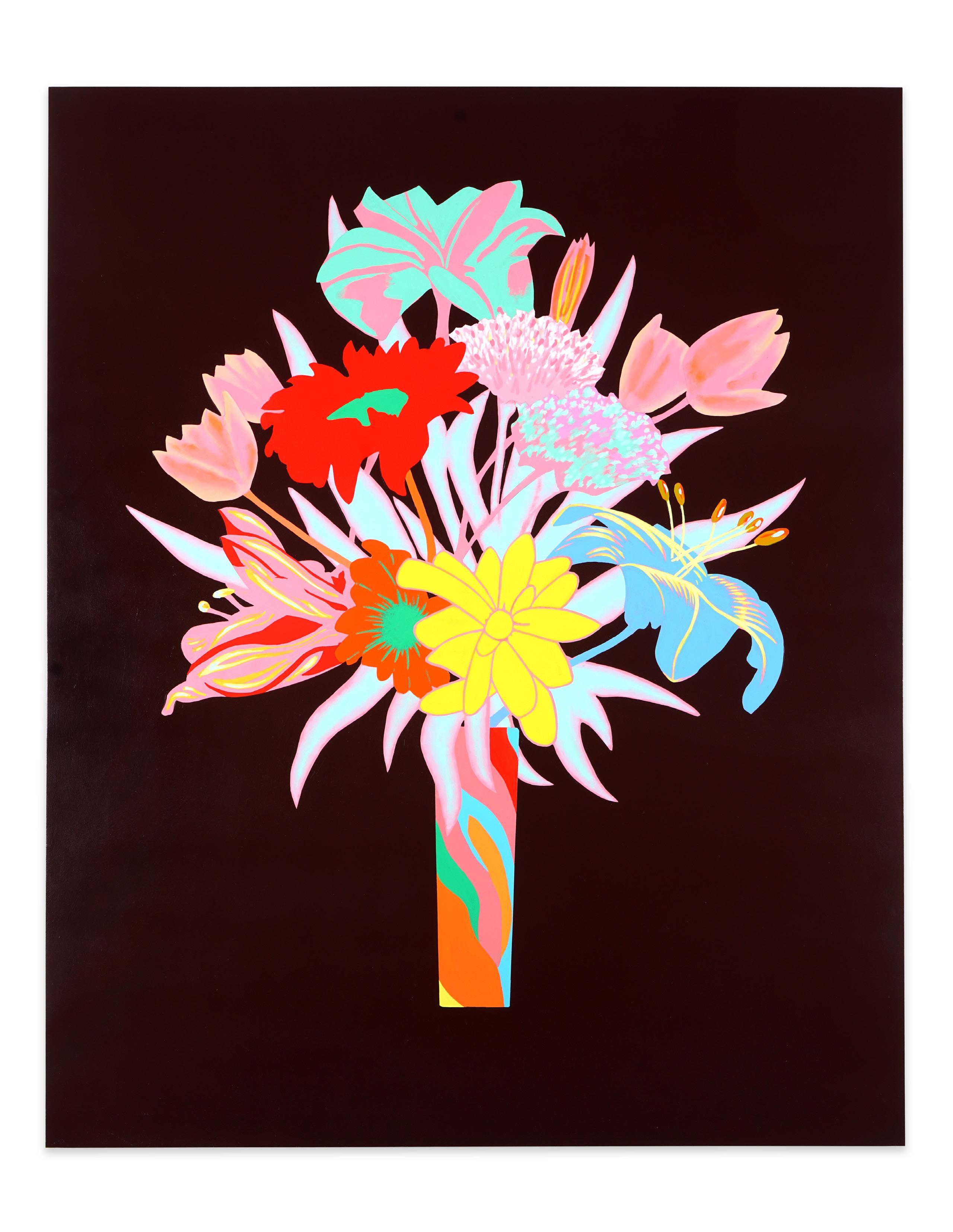
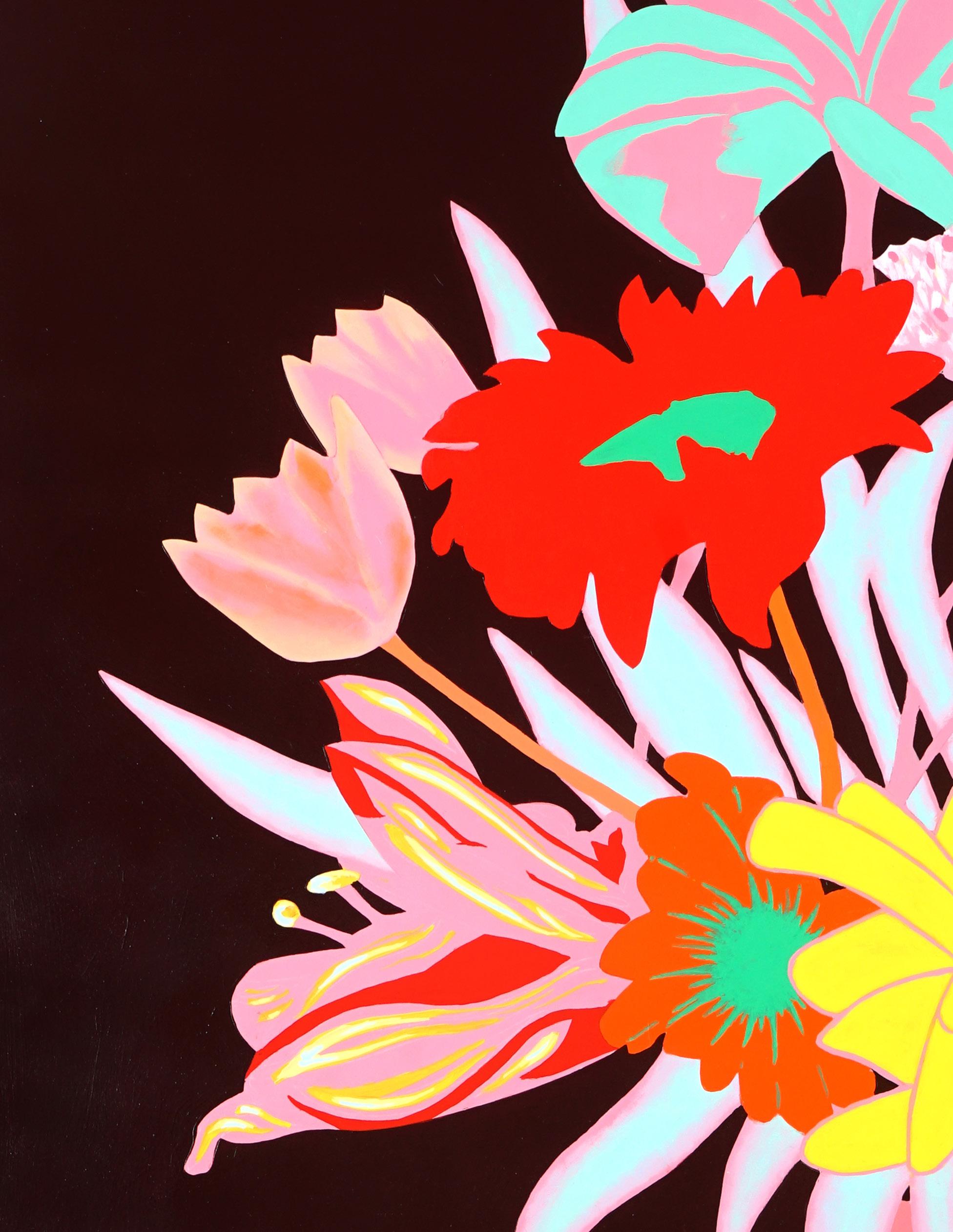
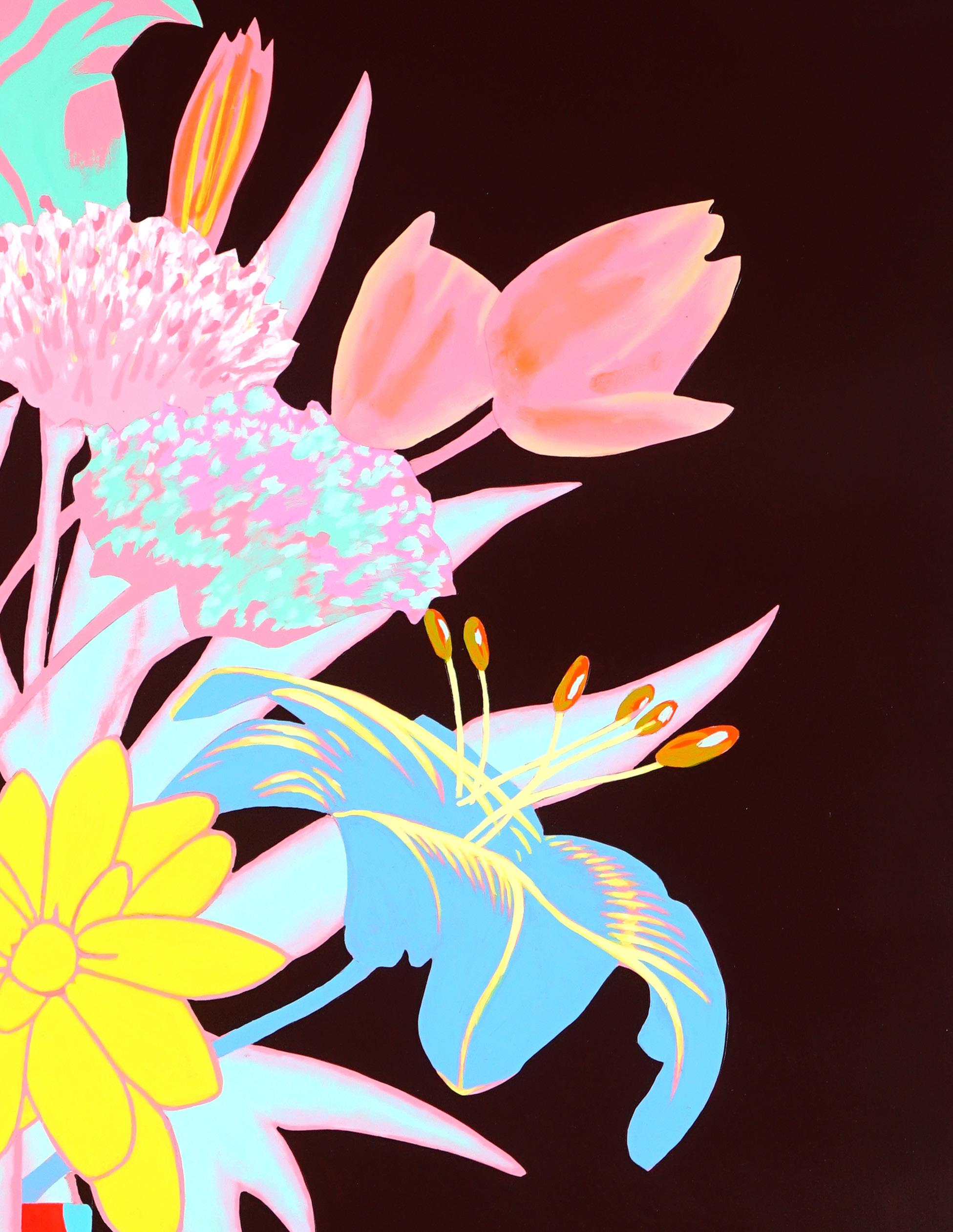
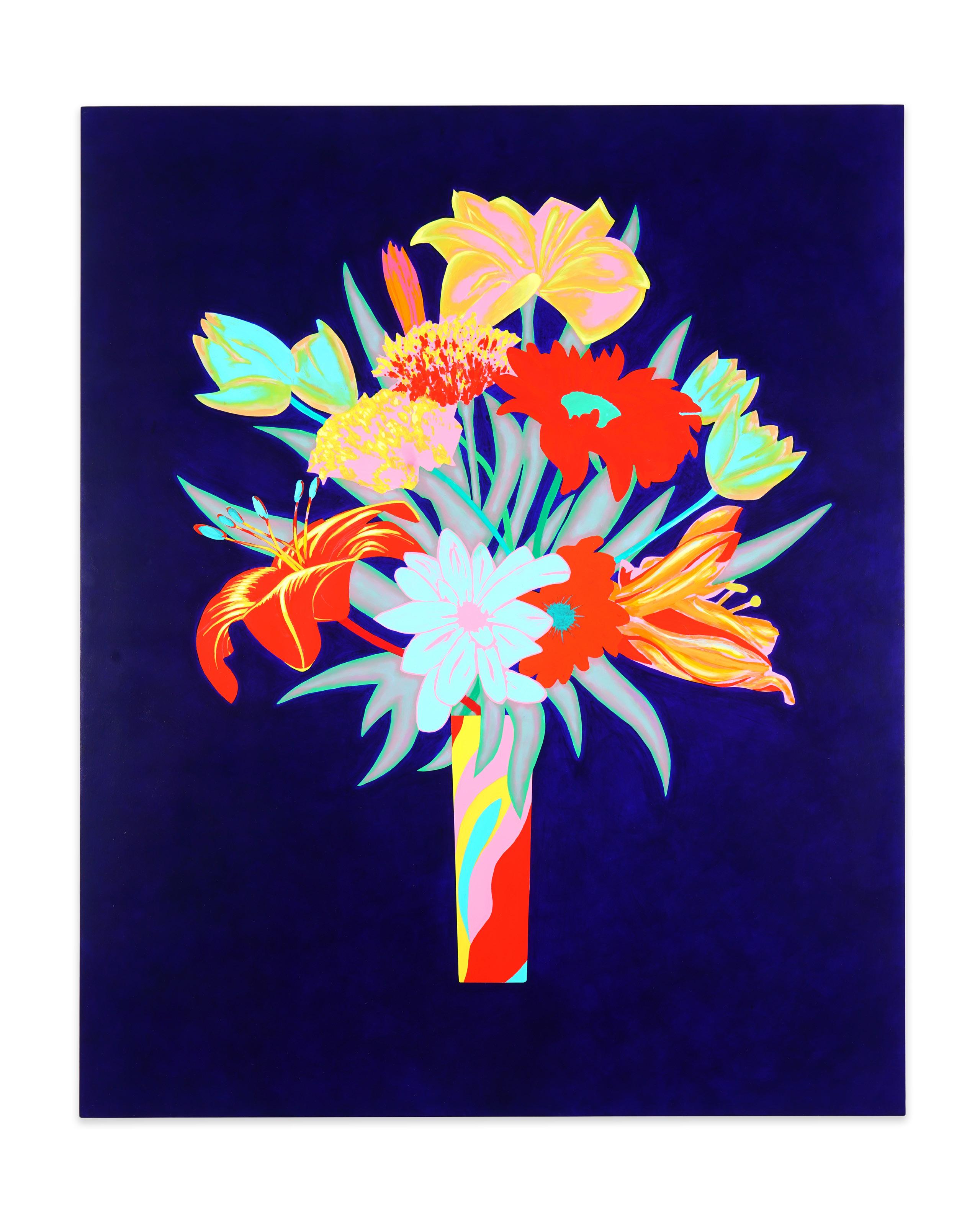
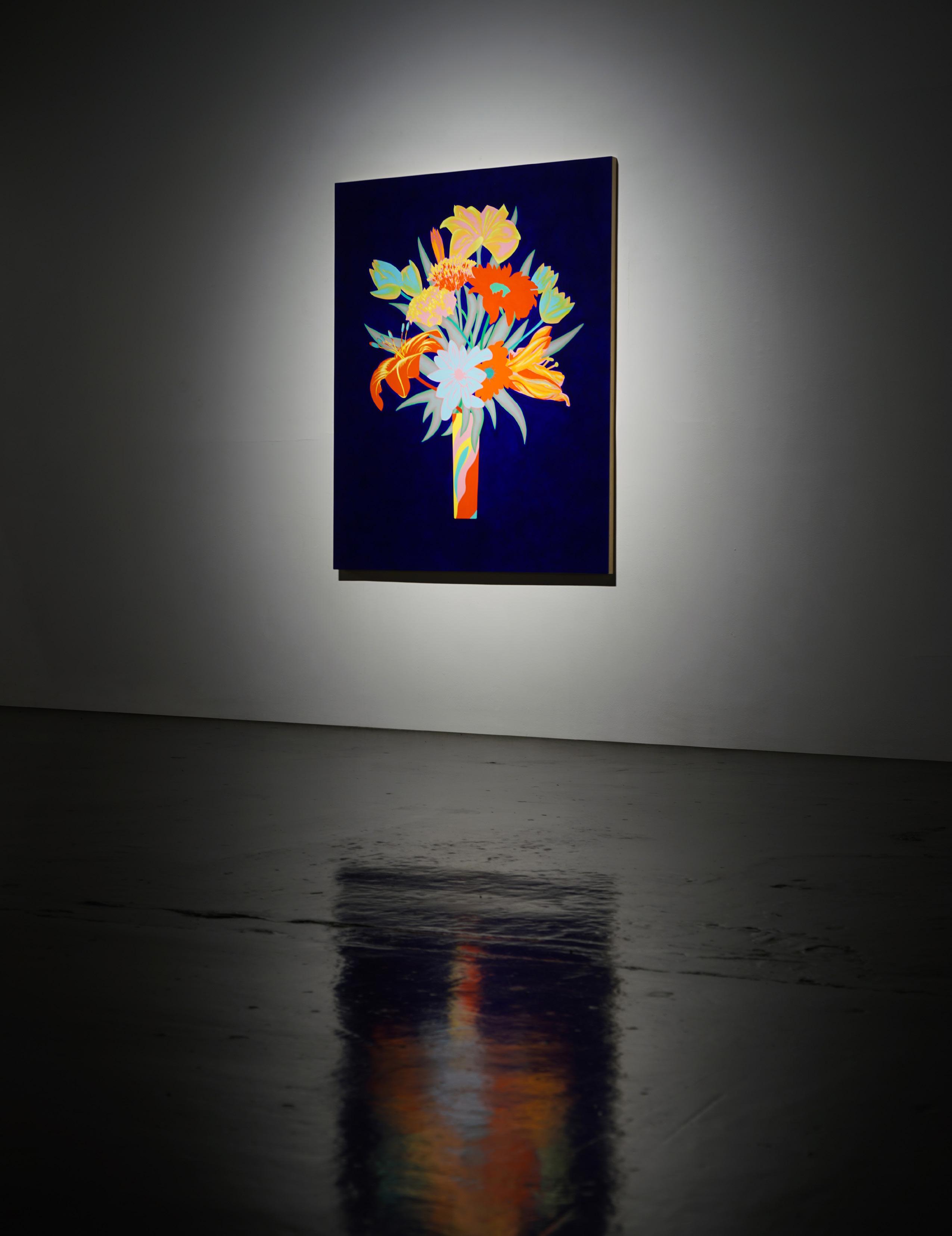
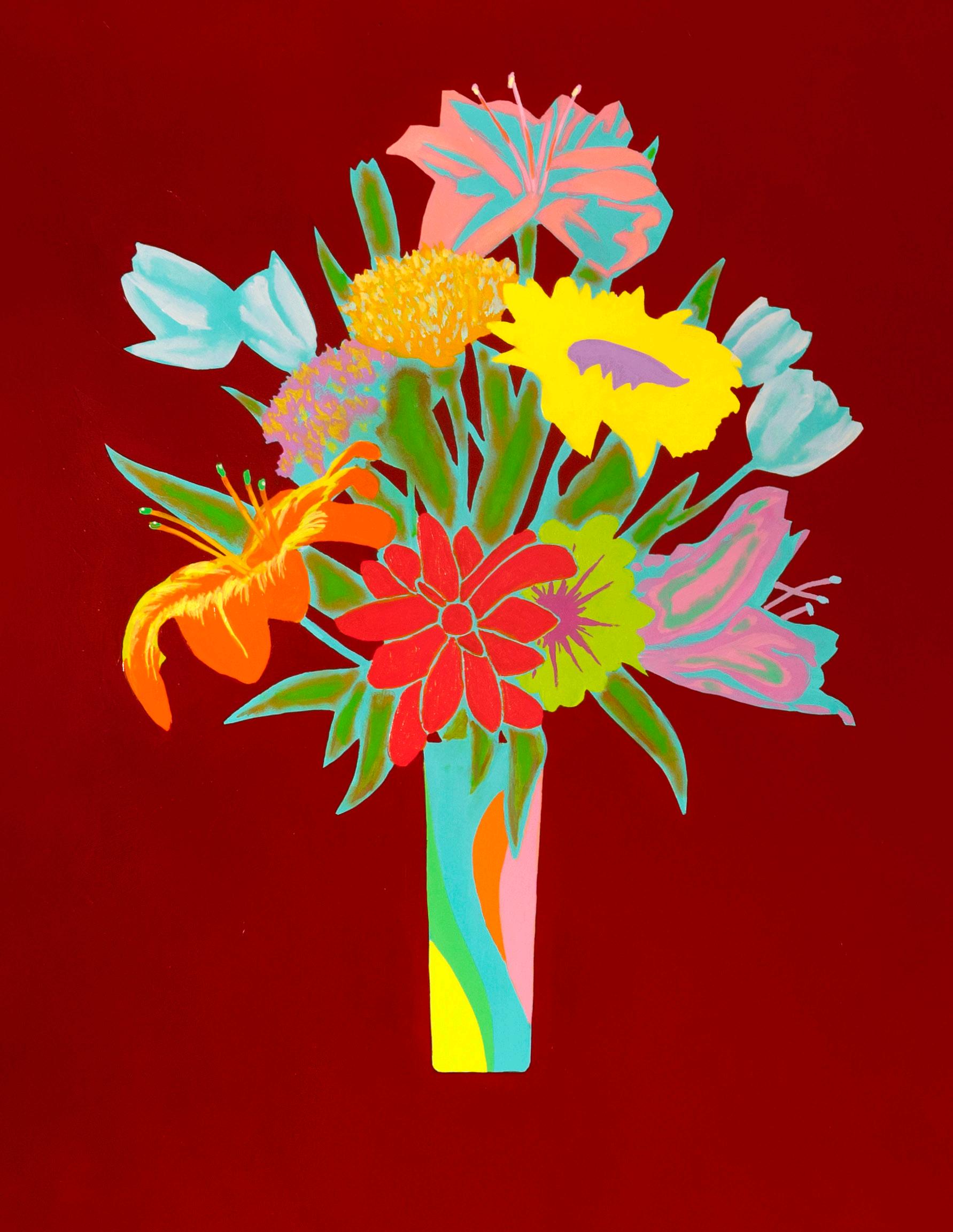
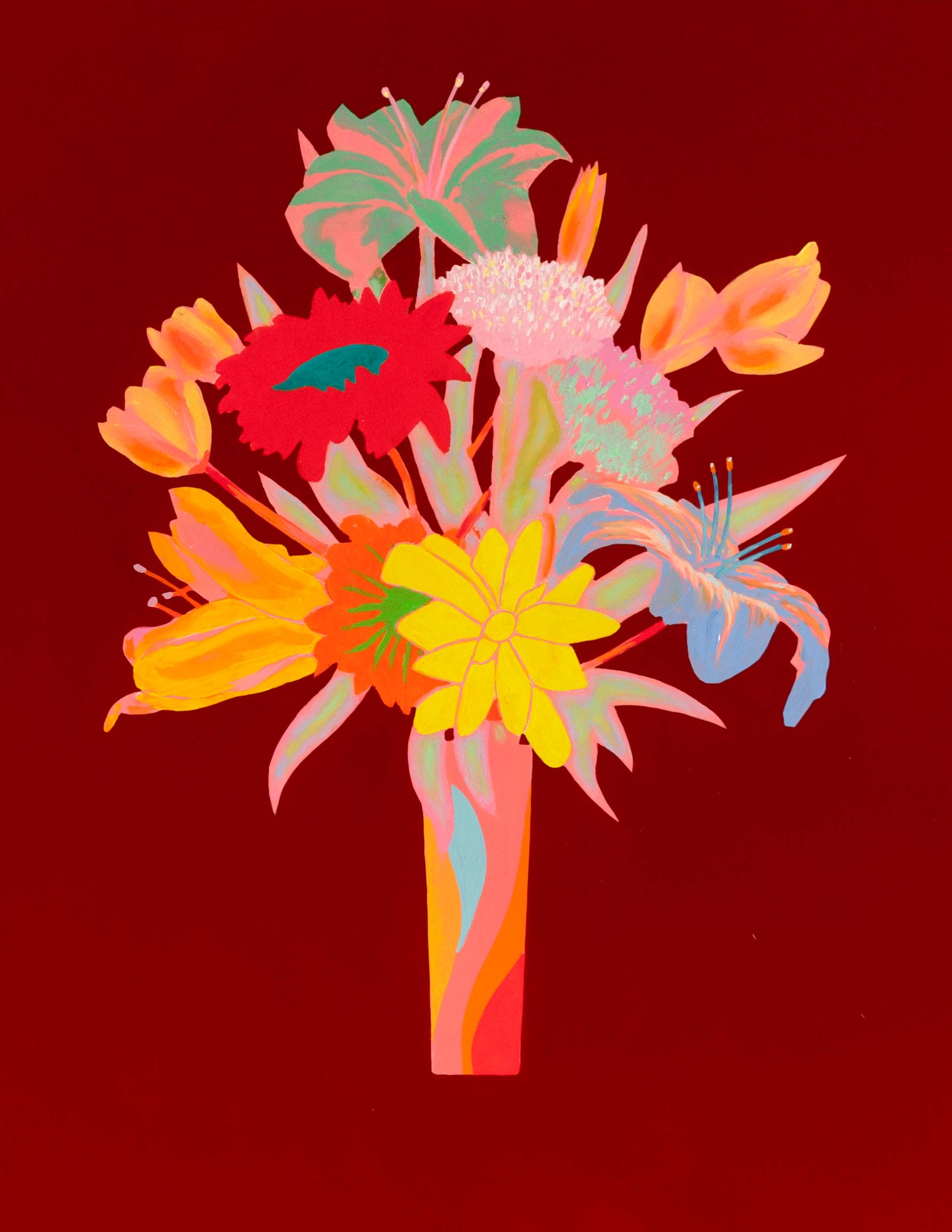
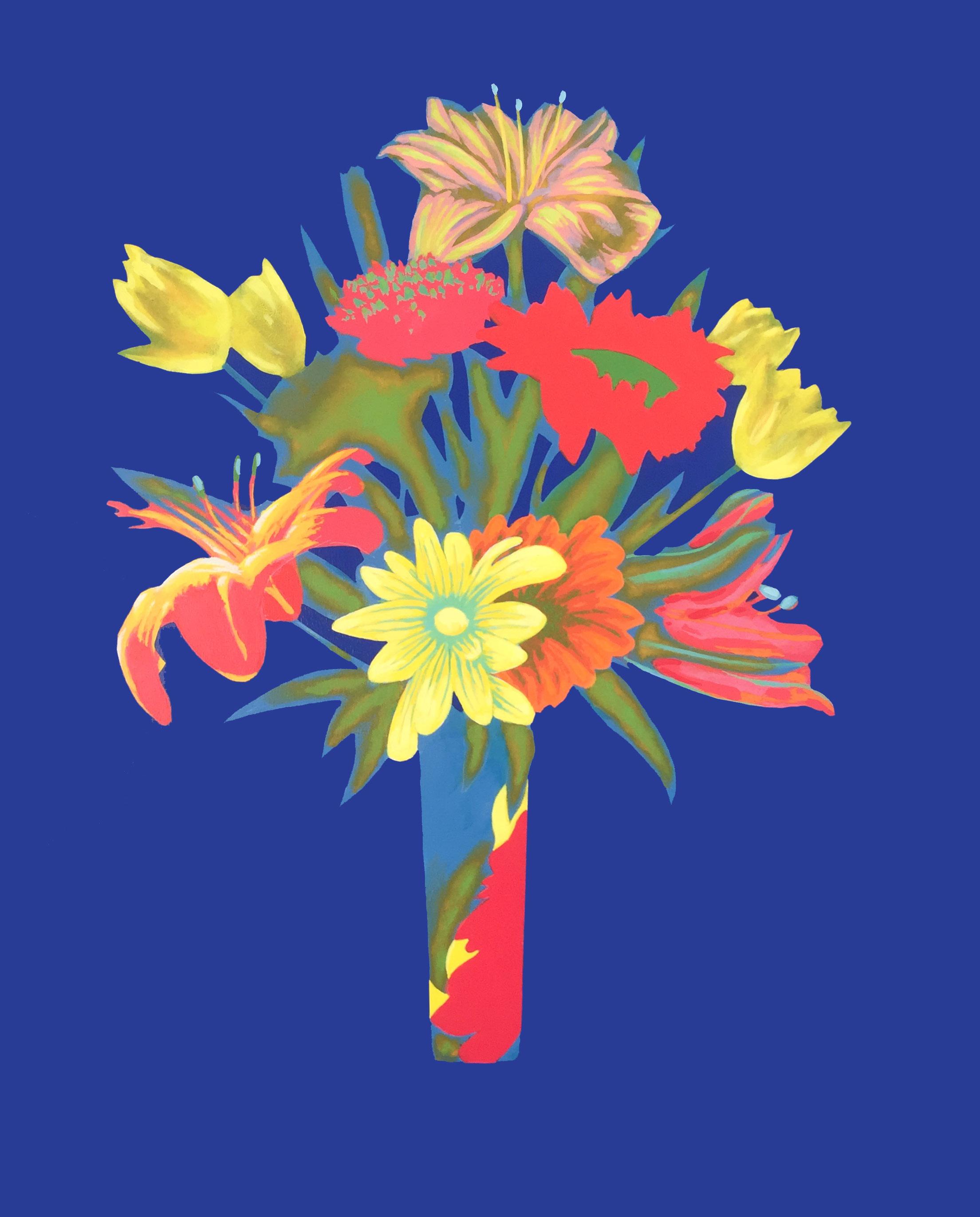
Unrepentant Flowers: Starry Blue, 2017, Oil, acrylic, and ink on panel, 30” x 24”
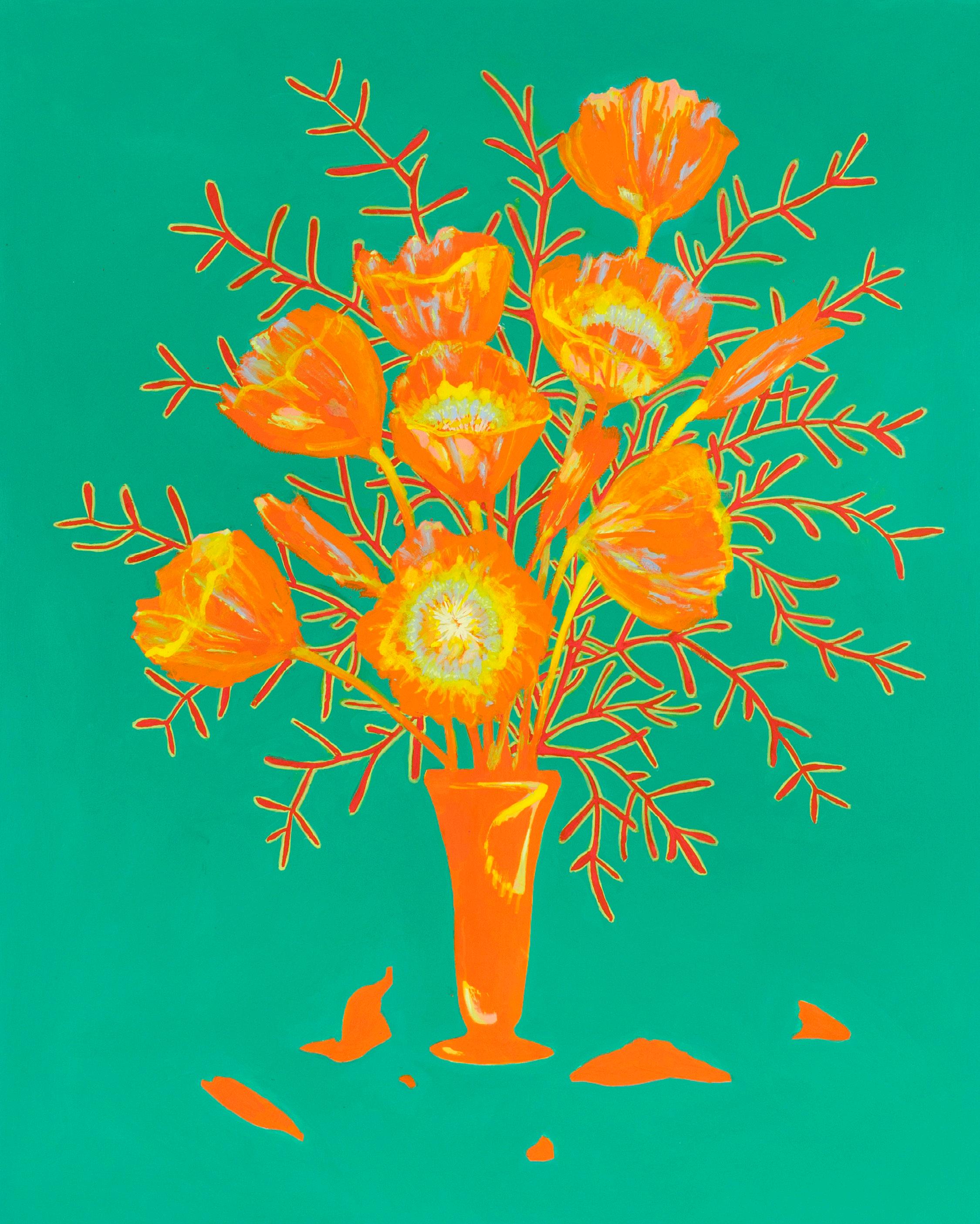
Unrepentant Flowers: Blue Green, 2016, Oil and acrylic on panel, 30 x 24”
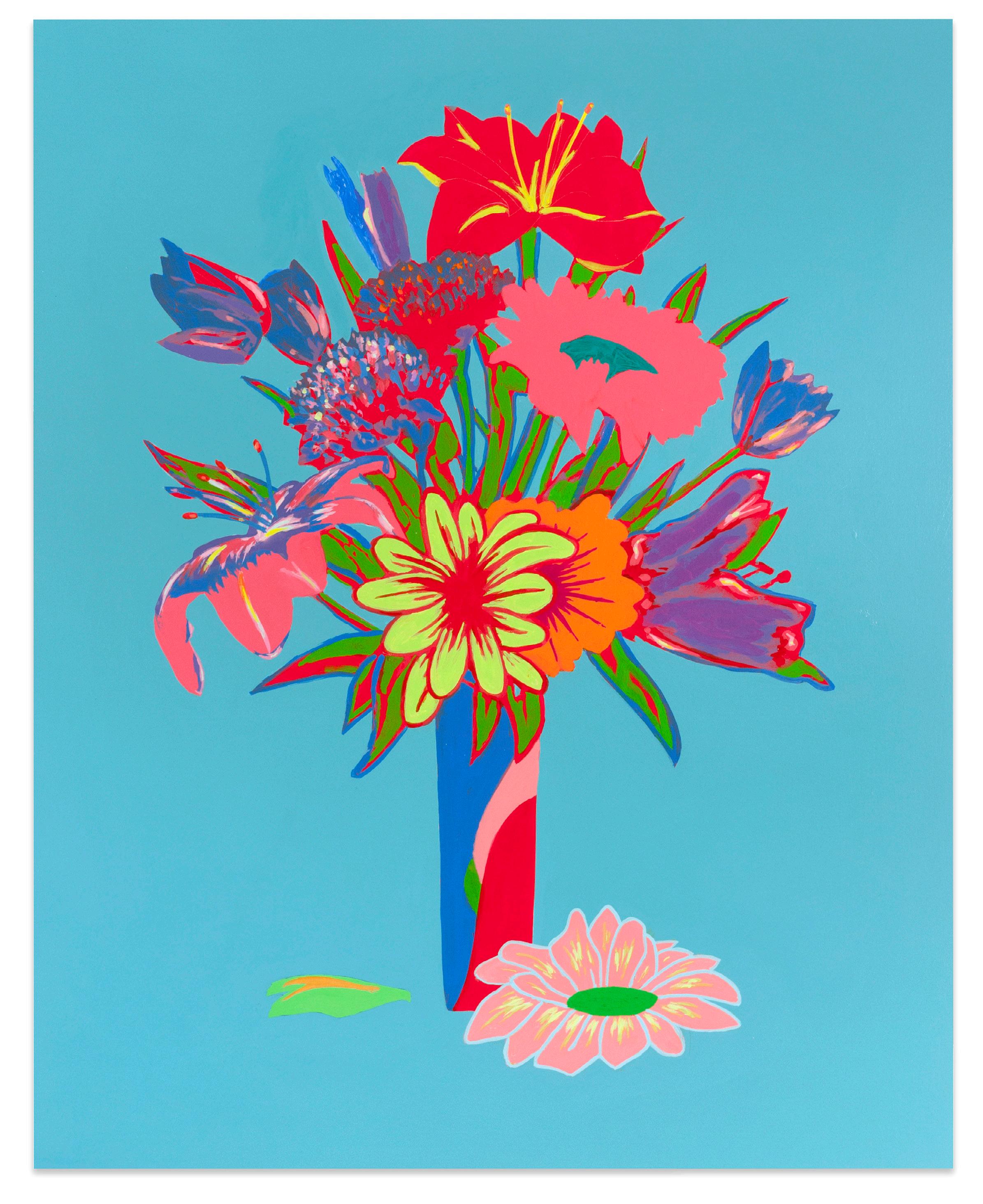
Unrepentant Flowers: Sea Blue, 2017, Oil and acrylic on panel, 30” x 24”
Unrepentant Flowers: Solar Orange, 2018, Oil, acrylic, and ink on panel, 30” x 24”
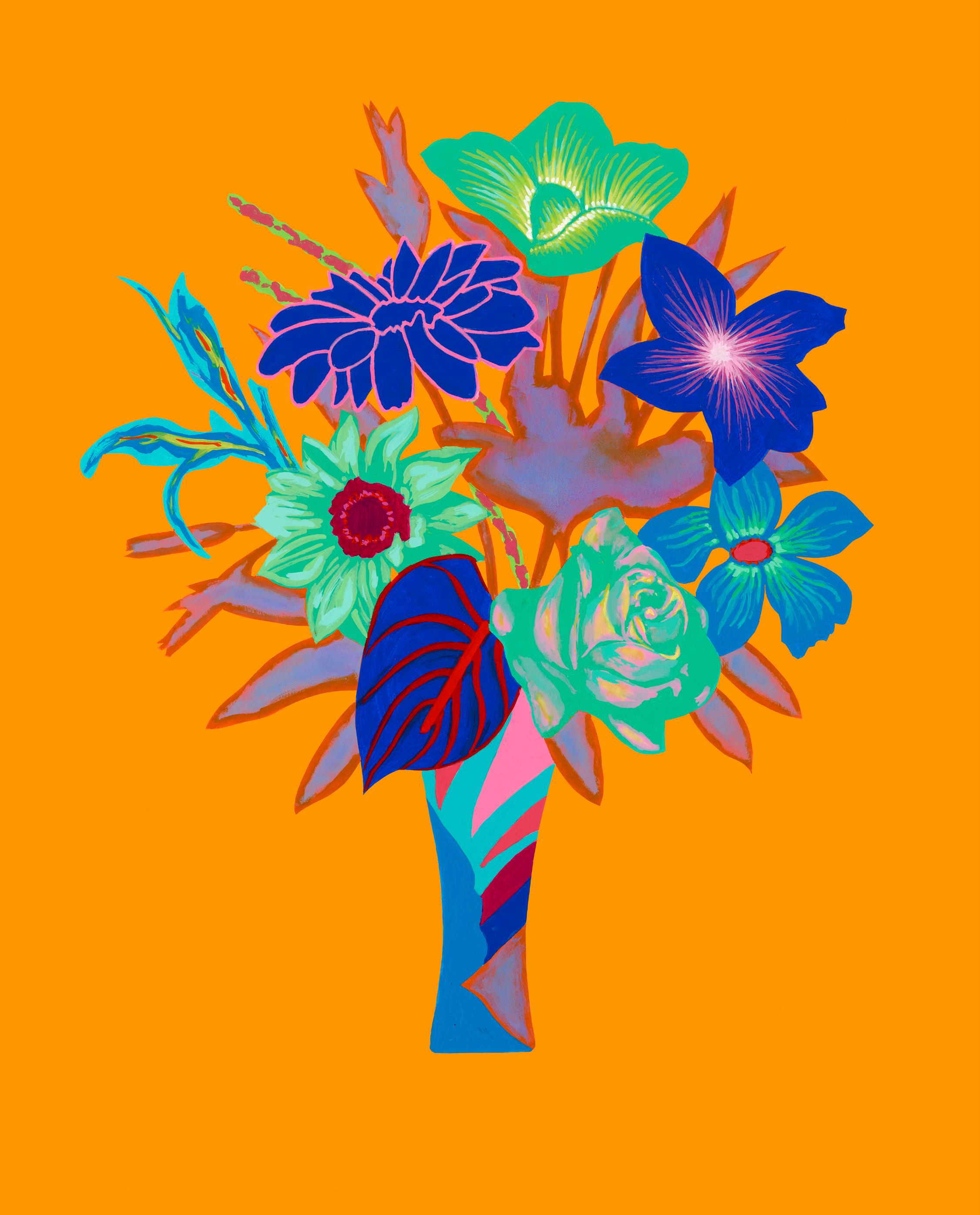
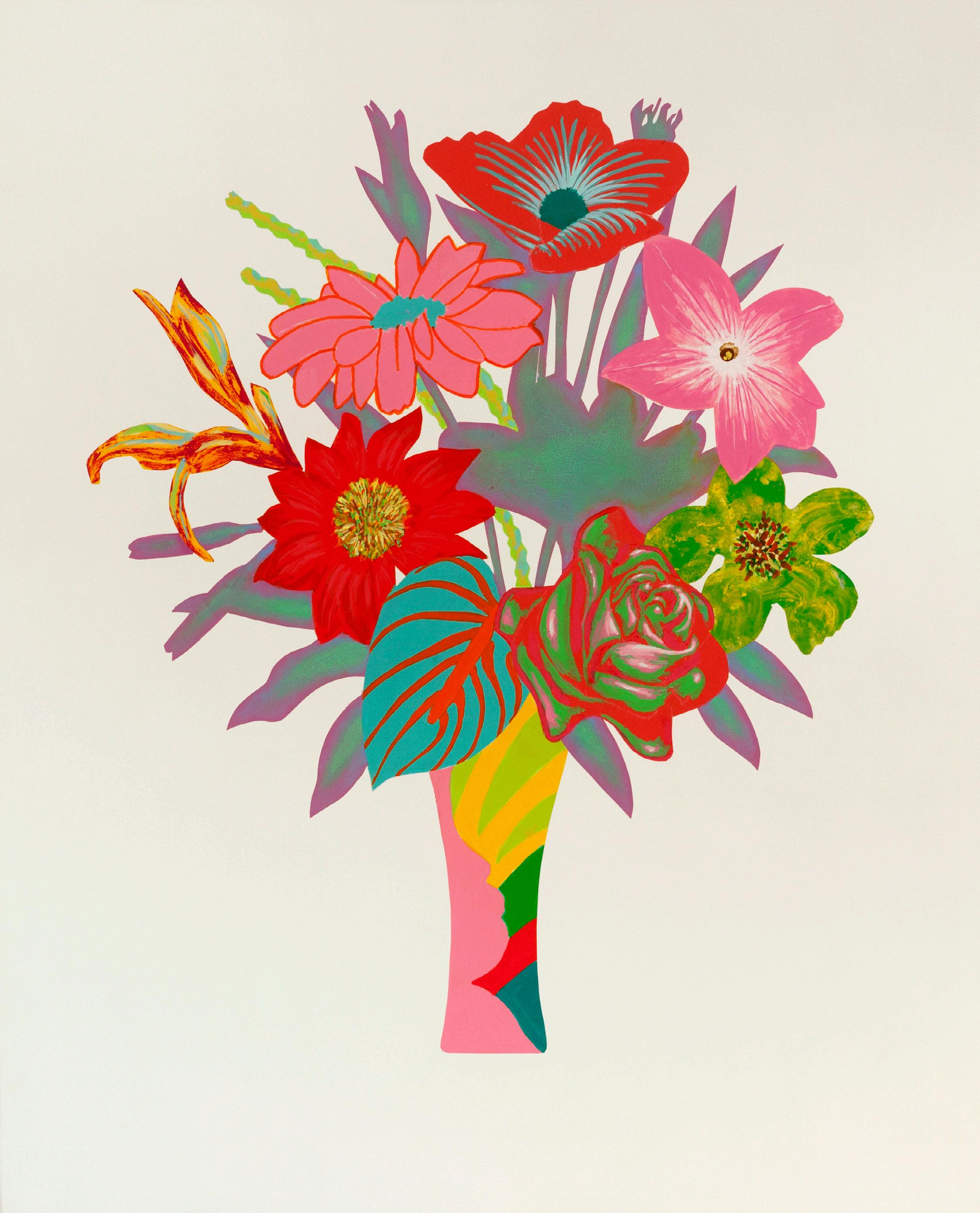
Unrepentant Flowers: Warm White, 2017, Oil and acrylic on panel, 30” x 24”
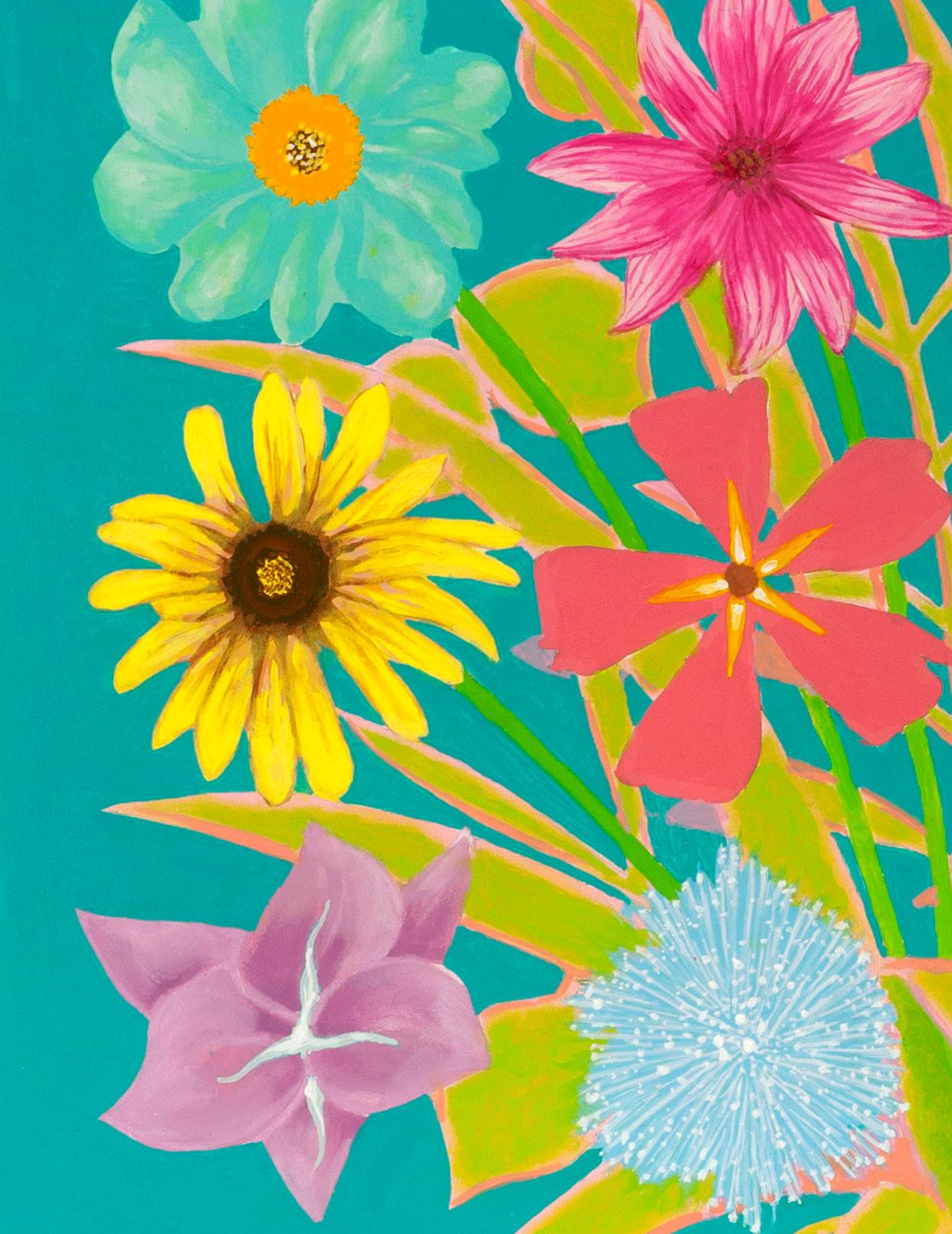
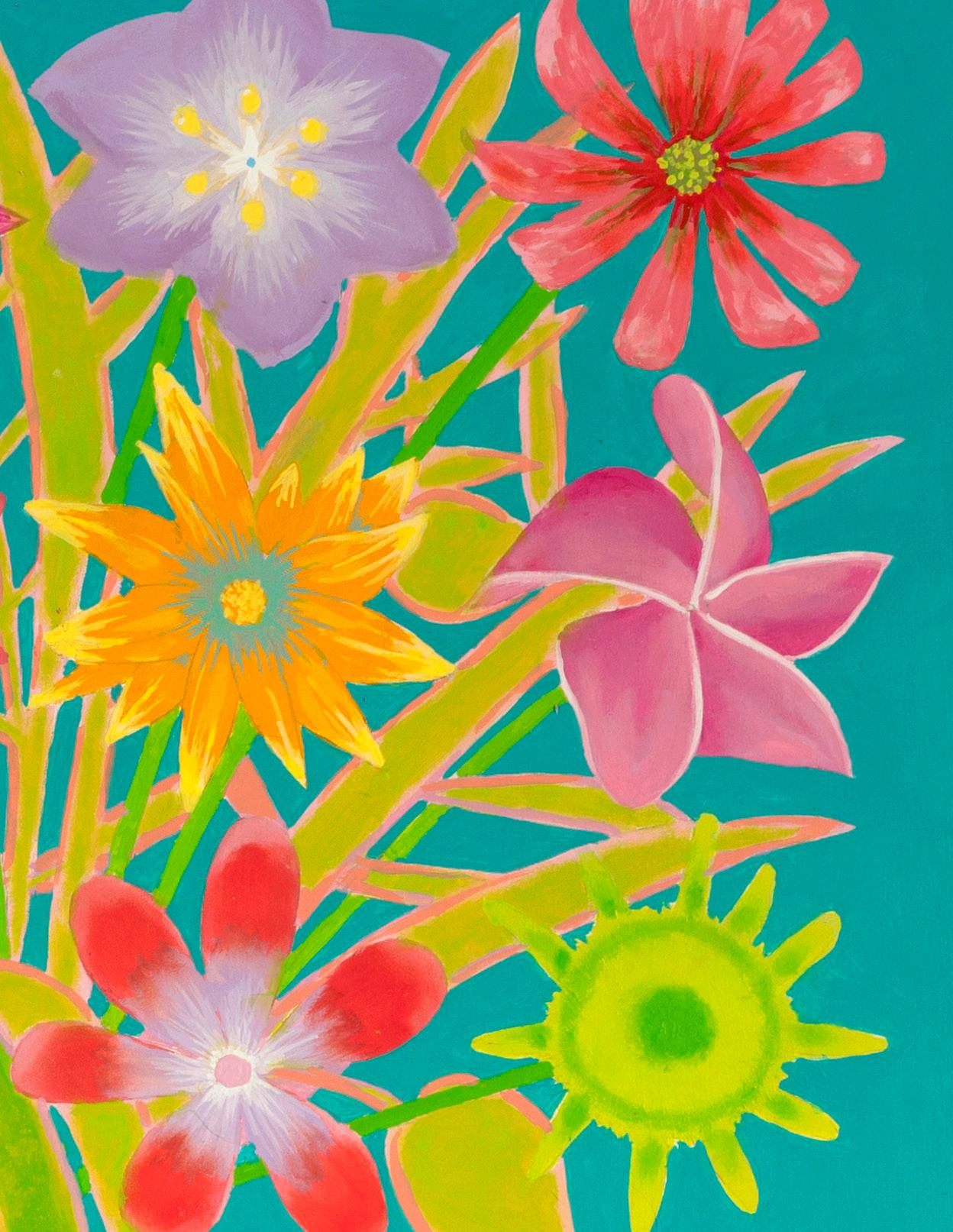
Unrepentant Flowers: Aqua, 2017, Oil and acrylic on panel, 30” x 24”
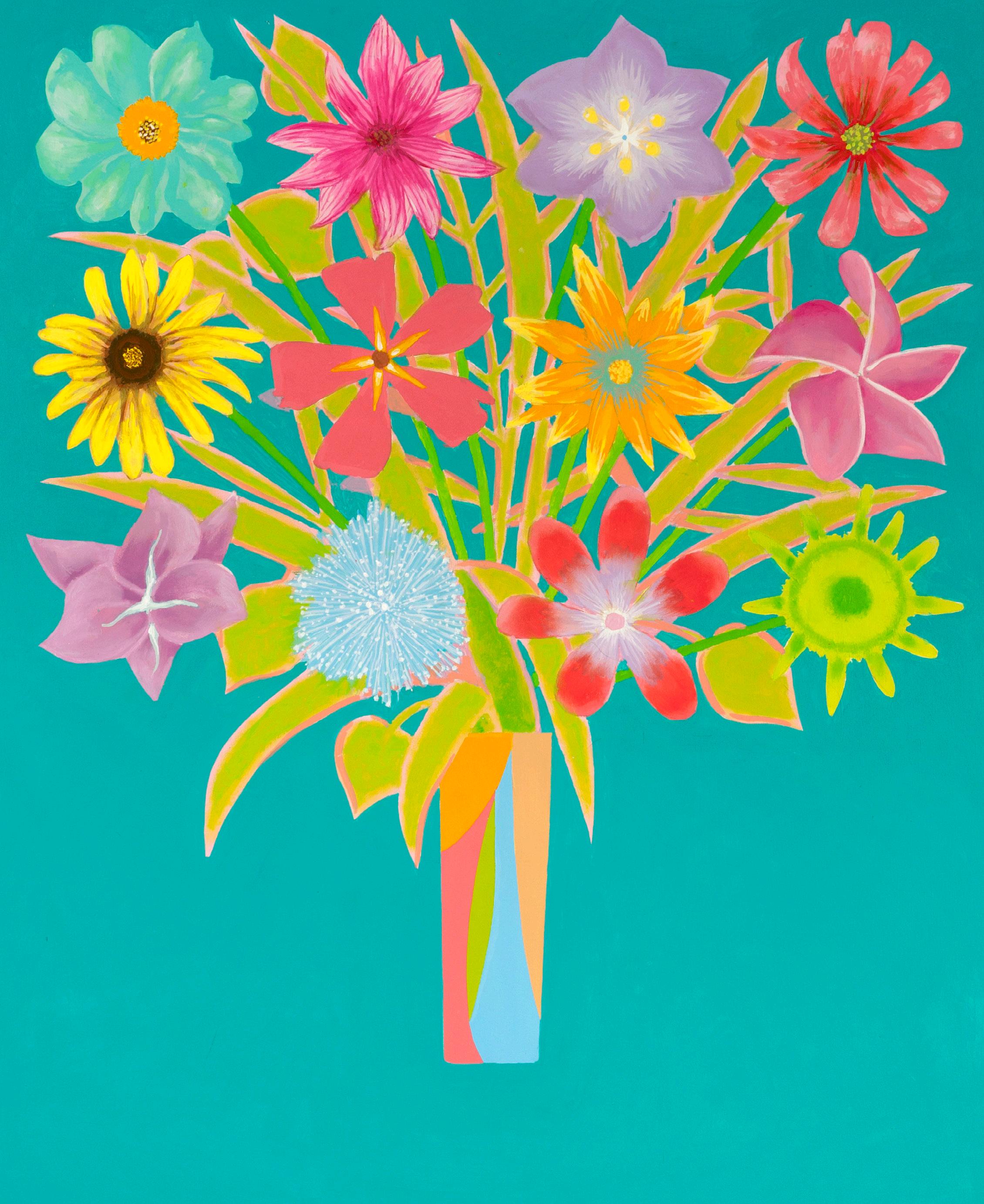
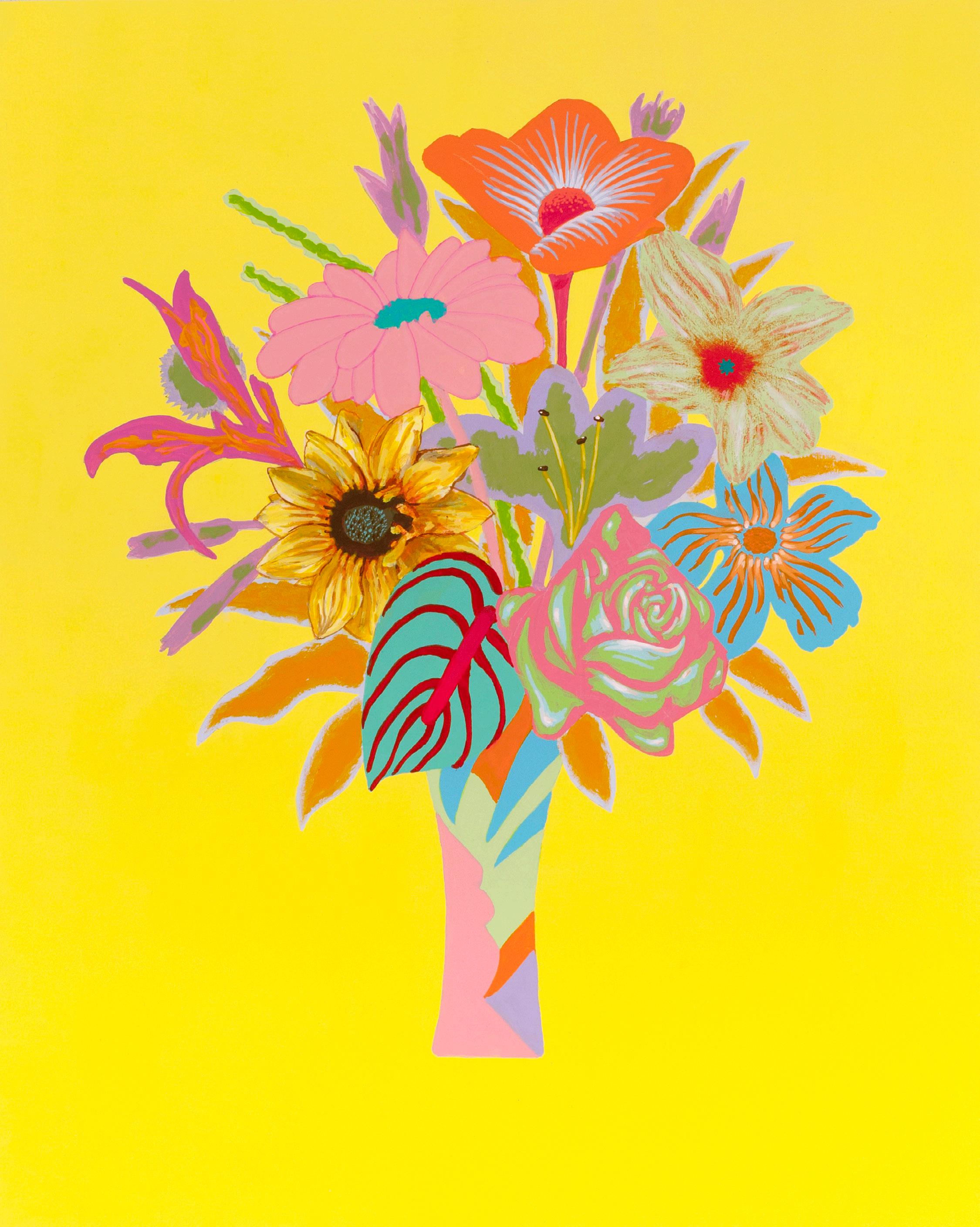
Unrepentant Flowers: Lemon, 2017, Oil and acrylic on panel, 30” x 24”
Unrepentant Flowers: Magenta, 2017, Oil and acrylic on panel, 30” x 24”
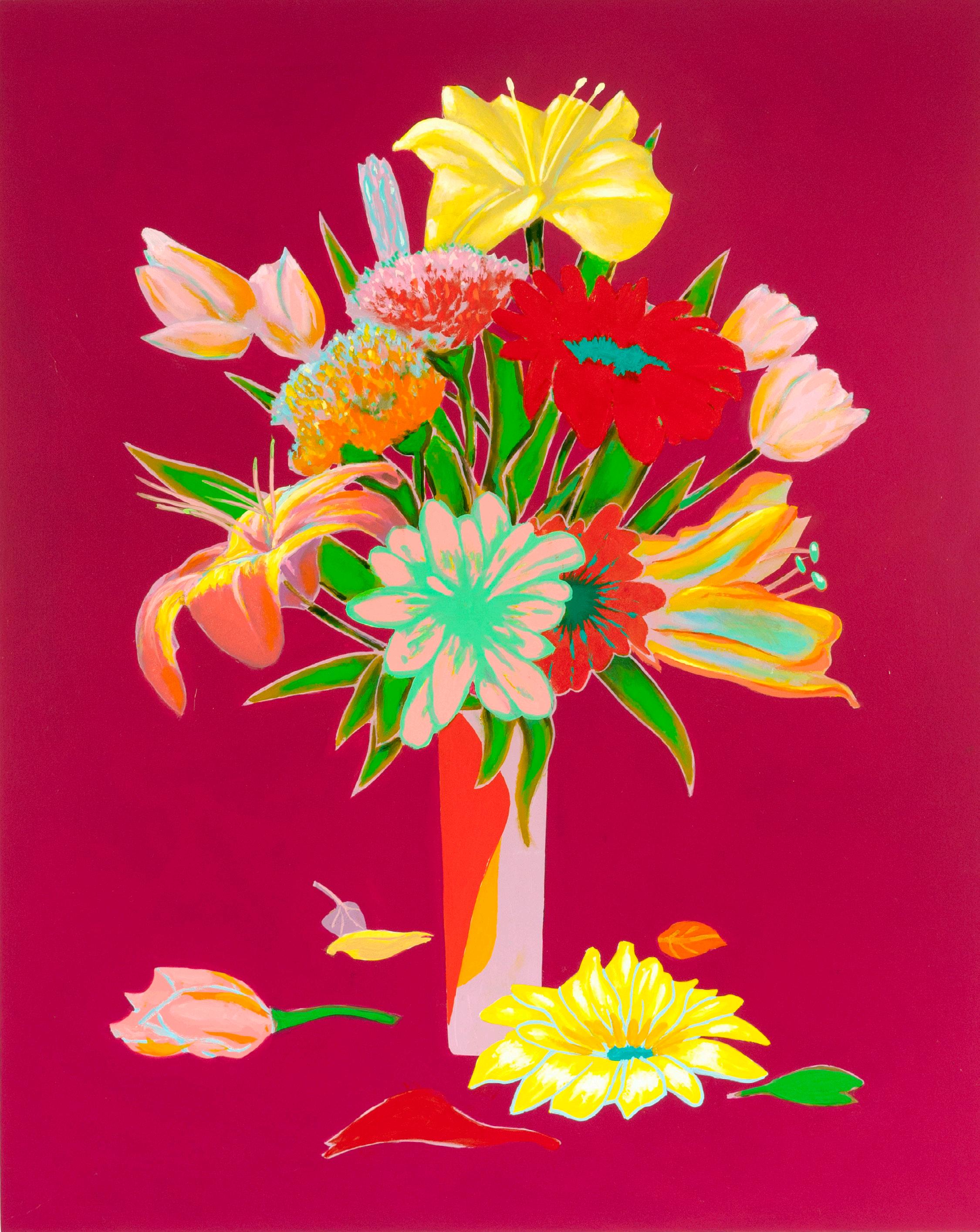
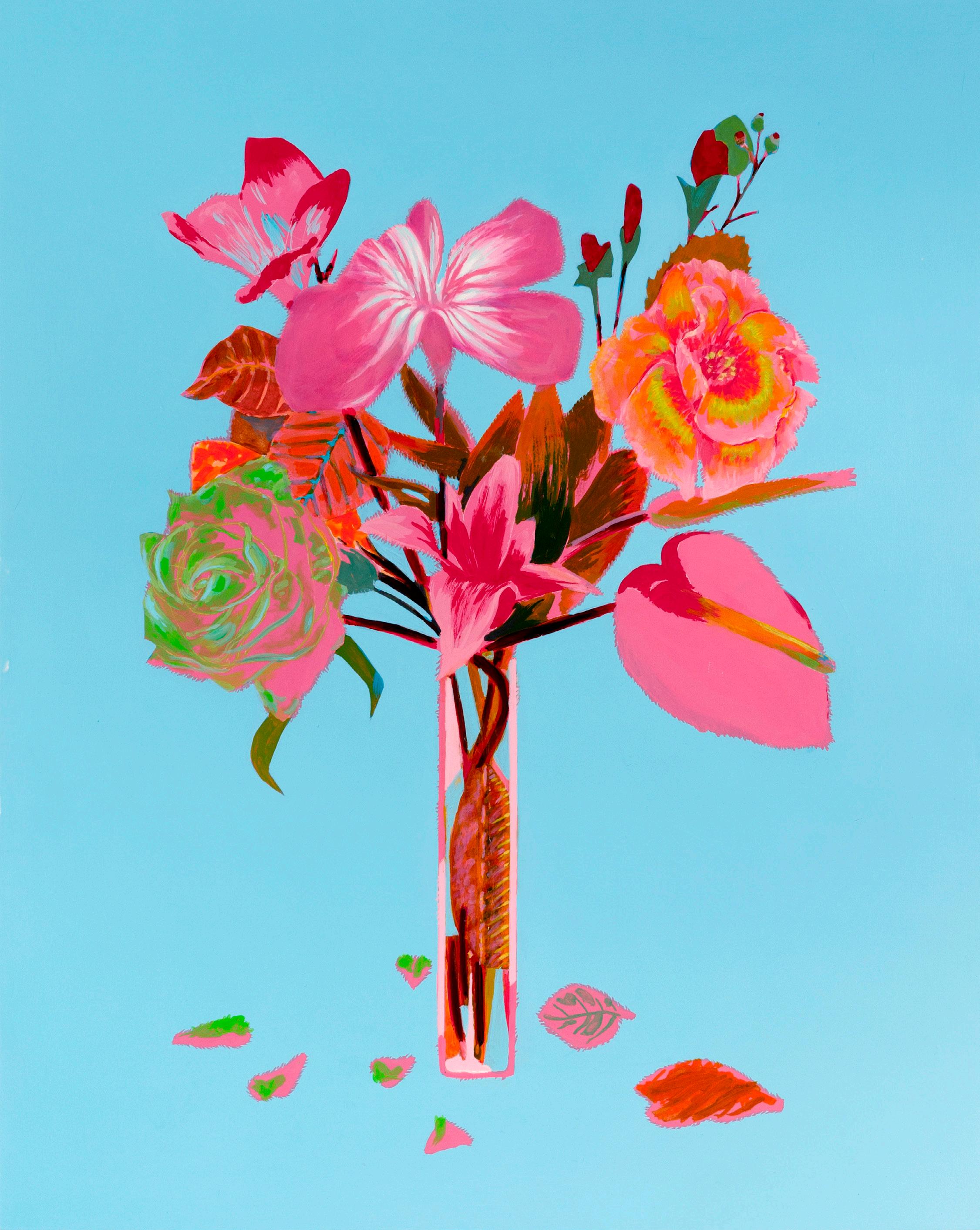
Unrepentant Flowers: Sky Blue, 2016, Oil and acrylic on panel, 30” x 24”
Unrepentant Flowers: Lean Green, 2016, Oil and acrylic on panel, 30” x 24”
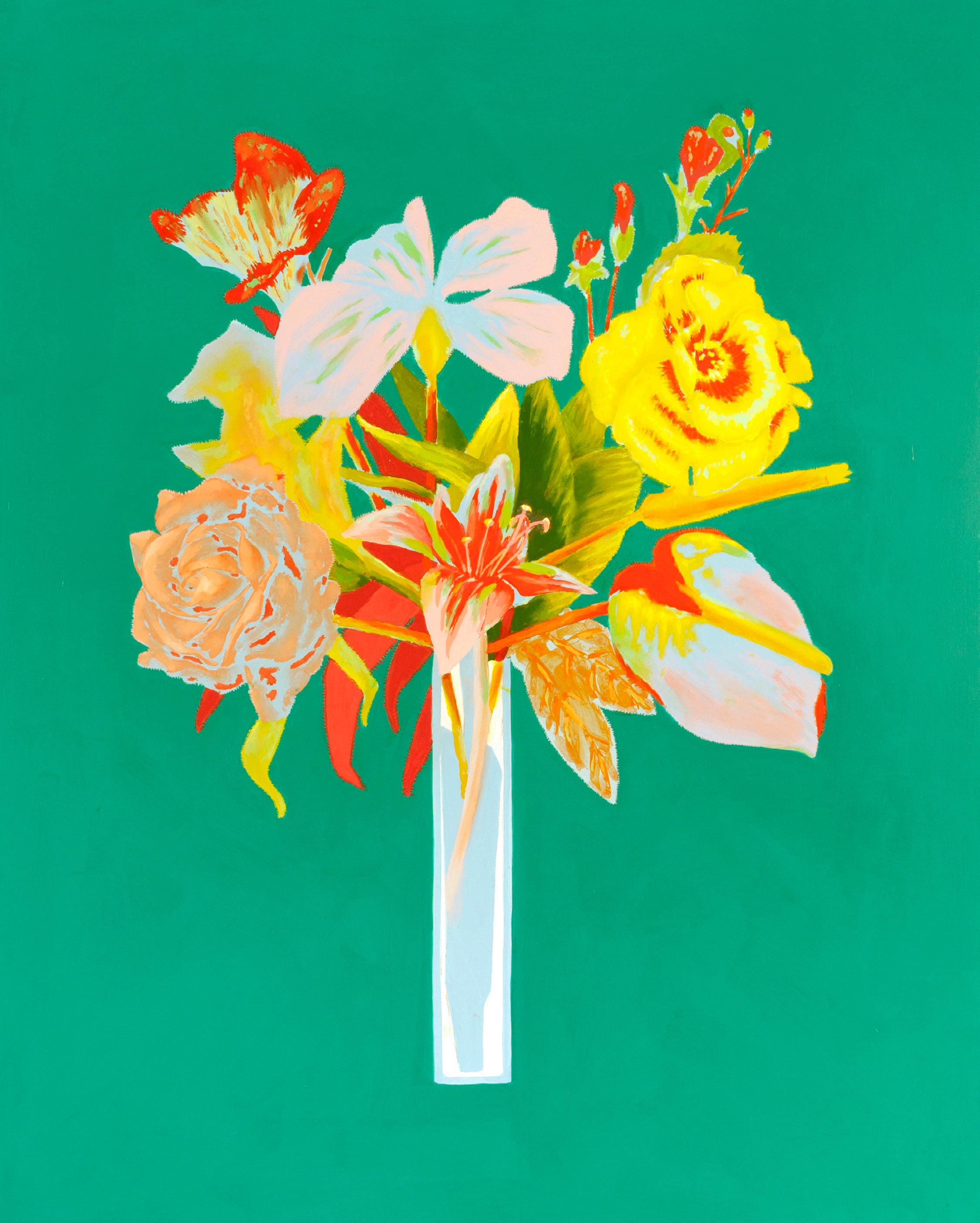
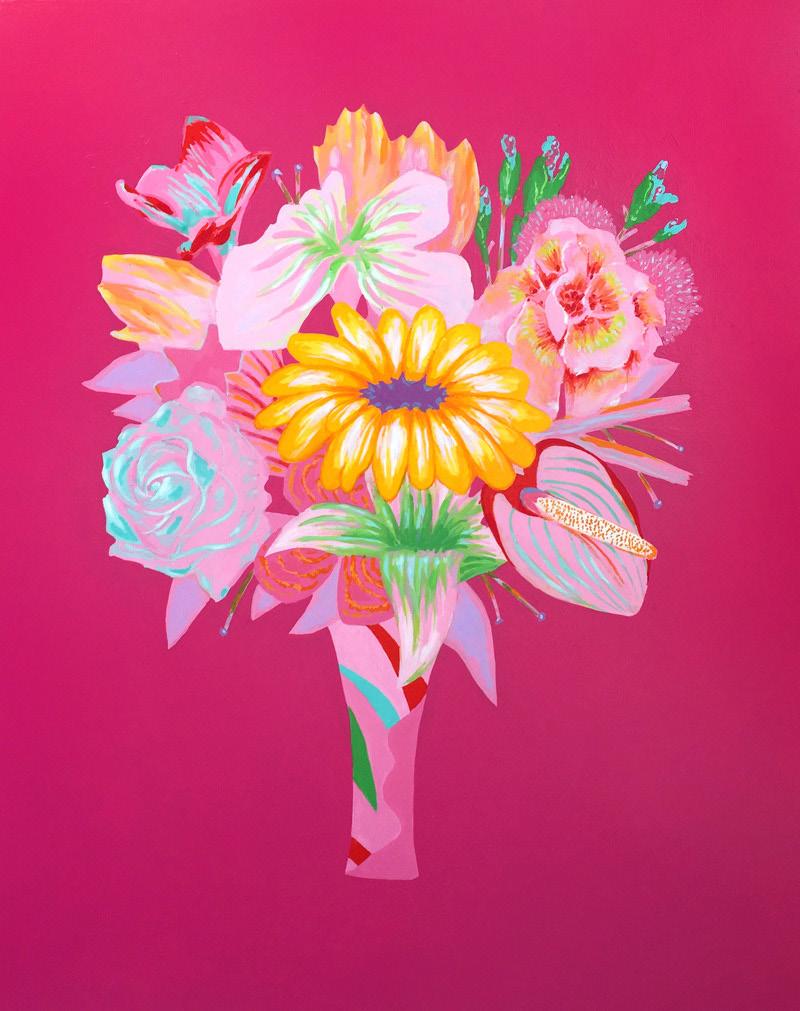
Unrepentant Flowers: Pink, 2017, Oil and acrylic on panel, 30” x 24”
Roland Reiss (1929–2020) was one of the most distinctive and intellectually rigorous voices in postwar American art. Though widely celebrated for his miniature tableaux, Reiss was first and foremost a painter whose more than sixty-year career left an indelible mark on the Los Angeles and Southern California art scenes. He was included in the 1975 Whitney Biennial and Documenta 7 in 1982, and received fourteen solo museum exhibitions over the course of his career, including The Dancing Lessons: 12 Sculptures (1977) at LACMA. He also received survey exhibitions at the Pasadena Museum of Contemporary Art (2011–2012) and exhibited at the Hirshhorn Museum and Sculpture Garden in Washington, D.C., and the NelsonAtkins Museum of Art in Kansas City. A retrospective of his work was mounted at the Los Angeles Municipal Art Gallery in 1991.
Reiss studied at the American Academy of Art, Mount San Antonio College, and UCLA, graduating with an MA in 1957. He taught at the University of Colorado, UCLA, and Claremont Graduate University, where he chaired the art department for thirty years. In 2009, he received the College Art Association Award for Distinguished Teaching of Art. At CGU he held the Benezet Chair in the Humanities, and in 2010 an endowed chair in art was established in his name. He was also director of The Painting’s Edge residency at Idyllwild Arts.
Reiss received four NEA grants and numerous prizes and awards. His work is held in many significant public and private collections, including the Museum of Contemporary Art, Los Angeles, the Los Angeles County Museum of Art, the Whitney Museum of American Art, the Hammer Museum, Santa Barbara Museum of Art, Palm Springs Art Museum, UC Irvine Langson Orange County Museum of Art, Laguna Art Museum, Benton Museum of Art, Claremont Lewis Museum of Art, and Oakland Museum of California.
WILLIAM TURNER GALLERY