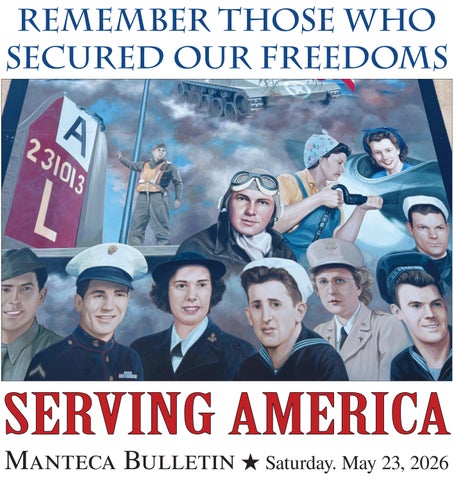
SERVING AMERICA REMEMBER THOSE WHO SECURED OUR FREEDOMS
DENNIS WYATT
The Bulletin
It was, for all practical purposes, the highest profile “billboard” in Manteca during the early 1940s.
And it wasn’t just because of its location on the eastern facing wall of downtown’s oldest building, the 2-story IOOF Hall built in 1911 by Joshua Cowell who rented out offices on the first floor.
The building still stands today on the northwest corner of Yosemite Avenue and Main Street and houses Manteca Bedquarters.
The “billboard” was on the side of what was the Turner Hardware Store in the 1940s.
It listed the name of every man and woman in the Manteca area that joined the military during World War II.
Dubbed the “Honor Roll Wall,” the massive sign overlooked a Chevron gas station that was once located on the corner.
The Manteca American Legion Post and the Manteca Lions Club members constructed a large board on the east side of the hardware store.
The space was donated by the International Order of Odd Fellows, No. 425.
Names of those serving were turned in to the Manteca Bulletin. A painter was paid $1 for each name he added to the Honor Roll. Ultimately, it displayed 957 names including 36 who didn’t come home.
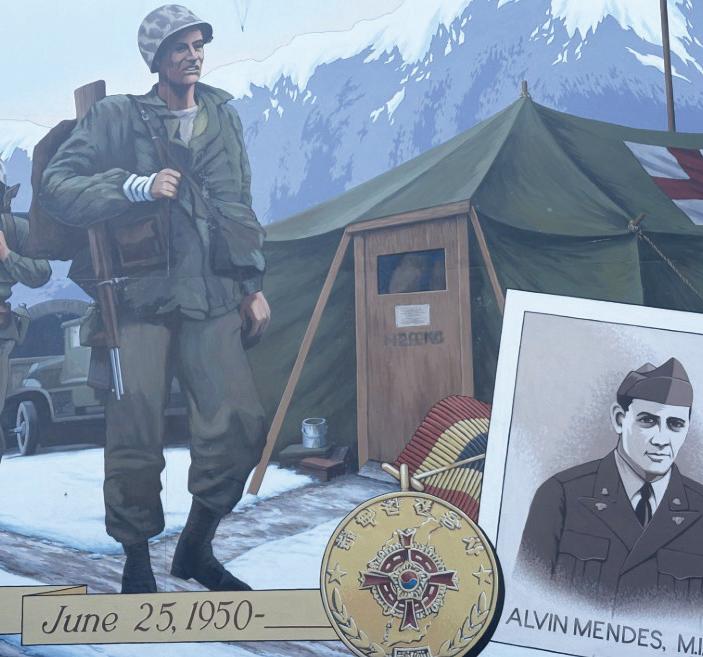
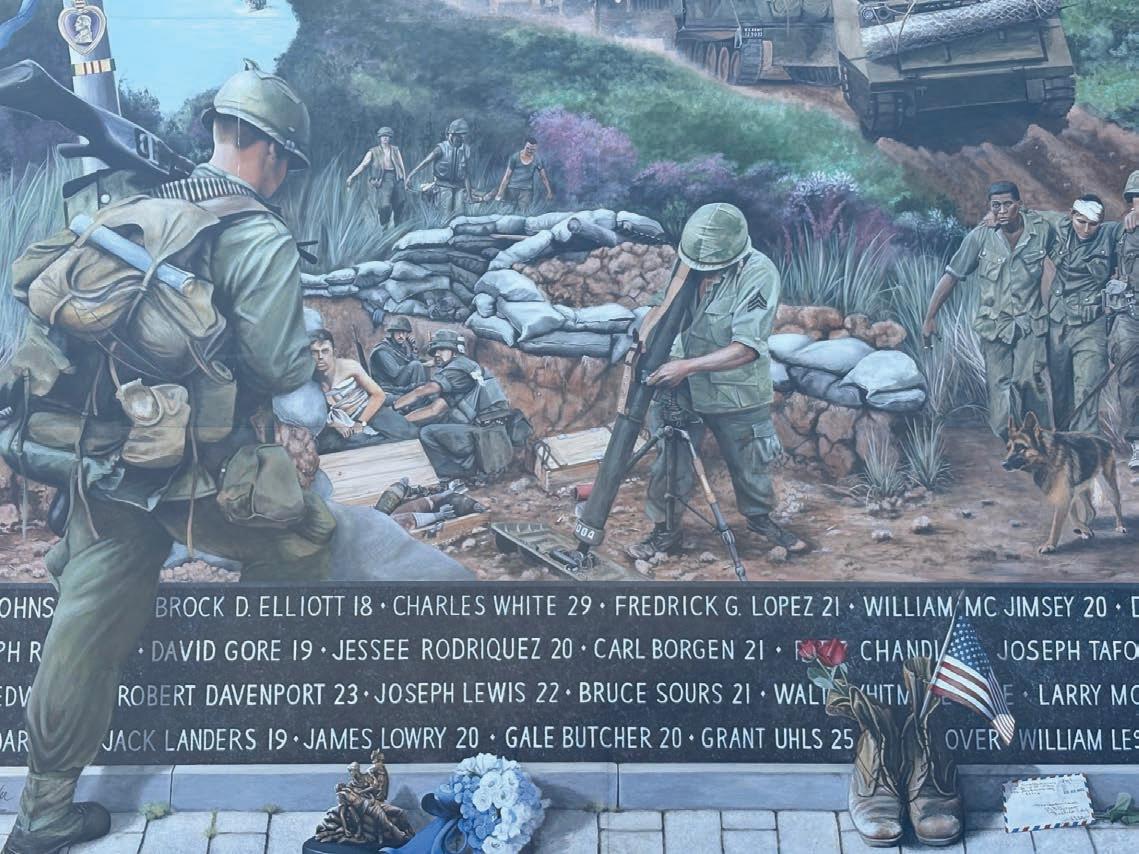
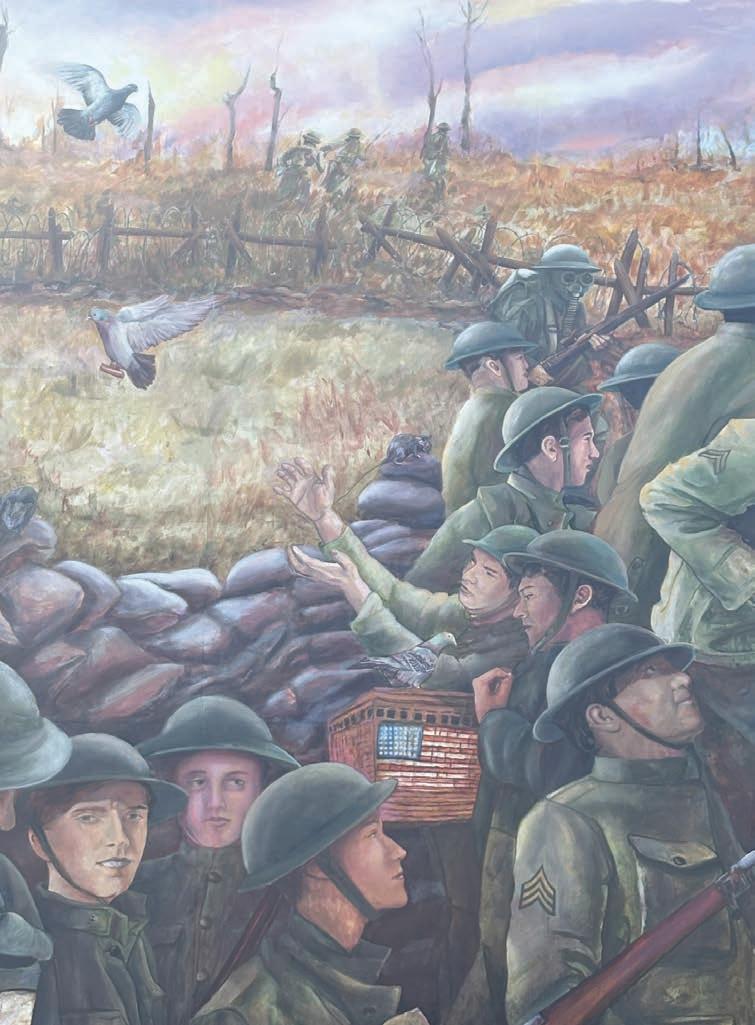
Today, the same wall displays five massive murals commissioned by the Manteca Mural Society to honor Manteca area men and women who served in time of war.
The murals depict the Global War on Terror, the Vietnam War, the Korean War, World War II, and World War I.
Mural experts have indicated it is the largest veterans mural collection of its kind west of the Mississippi River.
It was made possible by more than $125,000 in community donations.
Work on the murals took place between 2013 and 2018. For more information on the murals, go to mantecamurals.org.
To contact Dennis Wyatt, email dwyatt@mantecabulletin.com


The Army band will perform twice during the three-day Memorial Weekend Commemoration starting Saturday at Woodward Park, May 23-25.
The military band will stage a sunset concert Saturday at 8:20 p.m. It will proceed a 15-minute open sky drone show.
The band performs again on Monday, Memorial Day, at 10:05 a.m. as part of remembrance ceremonies and speeches.
The City of Manteca has joined forces with American Legion Post 249 to bring back the event led for more than a dozen years by Pastor Mike Dillman before he retired from overseeing the task. The event, in the past, drew as many as 30,000 people over the three days.
The goal of the city partnering with local groups is to help assure the event continues in the future.
The event will also include a large car show, helicopter landings, vendors, a kids’ zone, and more.
There will also be a beer garden with the goal of featuring local concerns such as Loma Brewery and Brethren Brewery among others.
For more details go to the website, thememorialweekend.org.
Saturday
▶6 a.m. Sunrise prayer
▶7 a.m. 5K registration opens
▶8:30 a.m. 5k walk/run starts
▶10 a.m. Patriots Pavilion opens
▶11 a.m. Helicopters fly-in, beer garden opens (until 10 p.m.) and
other events such as static displays, vendors, etc. open
▶All day. Local bands performing all day on the Main Stage
▶2:30 p.m. Vintage plane flyover
▶6 to 10 p.m. Professional bands perform, evening concert
Sunday
▶6 a.m. Sunrise prayer
▶7 a.m. Car show vehicles enter the park
▶9 a.m. Car show opens
▶10 a.m. Patriots Pavilion opens
▶1 p.m. Car show awards
▶2 p.m. Sierra High JROTC demonstration
▶3 p.m. Band on Main Stage
▶4 p.m. Vintage plane flyover
▶5 p.m. Local bands
▶8:20 p.m. Army Band performance at sunset
▶8:30 p.m. Open sky drone show lasts for about 15 minutes
Monday
▶6 a.m. Sunrise prayer
▶ 8:30 a.m. Gold Star family breakfast
▶9 a.m. VIP meet and greet event
▶10 a.m. East Union JROTC posts colors
▶10:05 a.m. Army Band performs
▶10:15 a.m. Introduction of Gold Star families
▶10:30 a.m. Speeches begin
▶1 p.m. End of event
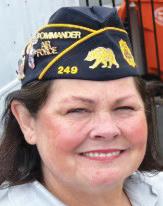
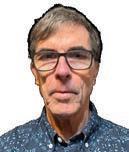
AKARLEEN KURYS
Commander, American Legion Post 249
s Memorial Day approaches, our Manteca community will gather — as we always do — to honor those who paid the ultimate price in service to our nation. We attend ceremonies, place flags, and take time to reflect. But there is another, quieter tradition happening every day—one that many may not see yet carries deep meaning: the final honors given to our veterans.
From the moment a family is notified of the loss of their loved one, a series of solemn steps begins. Among the most meaningful is the funeral with military honors. Many have witnessed it: the crisp uniforms, the rifle volley, the careful folding of the American flag, its presentation to the next of kin, and the haunting notes of Taps. It is a simple ceremony, yet it represents our nation’s final thank you.
This tradition dates back to the Civil War and was formalized over time. In 2000, federal law ensured that every eligible veteran is entitled to military funeral honors. However, fulfilling that promise has become increasingly difficult.
With fewer active-duty honor guard units available, the responsibility has largely shifted to veteran service organizations such as the American Legion, the Veterans of Foreign Wars, and the Disabled American Veterans. Here in our region, that responsibility often falls on dedicated local volunteers, many of whom are aging.
Each year, more than 500,000 vet -
erans pass away in the United States, and every one of them is entitled to at least a two-person honor guard. Yet the average age of those providing these honors is now around 70. Membership in veteran organizations continues to age, while younger veterans — busy with careers and family life — are less likely to join.
This creates a growing concern for communities like ours: who will be there to provide these final honors in the years ahead?
If we do not bring in a new generation of veterans, this sacred tradition could fade. That is something we simply cannot allow to happen.
At the local level, we are working to adapt — creating more welcoming spaces, identifying the needs of today’s veterans, and building stronger connections. While the nature of military service has evolved, one truth remains unchanged: we are all veterans, and we have a responsibility to support one another.
By becoming involved in organizations like the American Legion or the Veterans of Foreign Wars, veterans not only gain access to resources and camaraderie — they also help ensure that every veteran, past and future, receives the honor they have earned.
This Memorial Day, I encourage veterans in our community to take that next step. Join your local post. Volunteer for an honor guard. And if your area does not have one, consider helping to start it.
Because every veteran deserves a final salute — and it is up to all of us to ensure that promise is kept.

The truth — and what makes a man — is often found in the most horrific situations.
Sammy Davis — a former Manteca High student and Congressional Medal of Honor recipient — understands that.
And so do countless other men and women who have served under this country’s flag defending the fragile concepts encompassed in two words that most Americans take for granted – “liberty” and “freedom”.
True honor is born in acts of courage. Davis made that clear on March 19, 1993 during Moving Wall ceremonies at Manteca High.
As 5,000 teary-eyed people watched, Davis dressed in his Army best embraced Gwyndell Holloway who was wearing his old Army fatigues. Applause drowned out what words the two were exchanging. The two hadn’t seen each other for 26 years.
Then — regaining his composure — Davis turned toward the bleachers where Manteca High students sat.
“What you have to understand,” Davis started in a clear even voice, “Is all this bull---- about prejudice and racism is just what I said — bull----.”
As tears of joy streamed down the two men’s faces, the applause took on a thunderous surge. Teens were wiping tears from their eyes.
Marines in their best dress blues were
blinking uncontrollably.
A World War II veteran who had seen the worst that Hitler’s armies had to offer was smiling broadly with a tear streaming
down his left cheek.
Adults and children alike were unashamedly teary-eyed as the two men embraced.
“We became brothers in Vietnam,” Davis added, as strong applause continued to provide the music for the emotionchoked moment.
It didn’t matter that one was white and the other black. All that mattered was the fact they were both human beings caught in the most trying of circumstances.
Twenty-six years earlier when the severely wounded Holloway hollered out for help from across a deep Vietnam river as 1,500 enemy troops were advancing on 90 Americans; Davis didn’t worry about the color of Holloway’s skin.
Nor did he worry about the fact he couldn’t swim or that heavy incoming fire threatened to end his life at any second.
David helped fire rounds back at the enemy located some 25 meters away when mortars hit American artillery positions
and gravely injured his comrades. Between valiant efforts to keep the enemy from advancing, Davis grabbed an air mattress and struck out across the river to rescue his wounded comrades one by one.
Each time he reached the far shore; Davis stood up and opened fire on the enemy to prevent them from advancing and finishing off the three soldiers. His heroics continued after he pulled the last man back across the river. Davis and Holloway learned a basic lesson that day that we all tend to forget — our differences aren’t what count. What matters are the things that unite us. They both probably knew that deep down before being sent to Vietnam as 19 year-olds. But it took the horror of war to drive the point home.
Days later in a military hospital, Holloway had the chance to return the favor. Davis’ body temperature was at 106
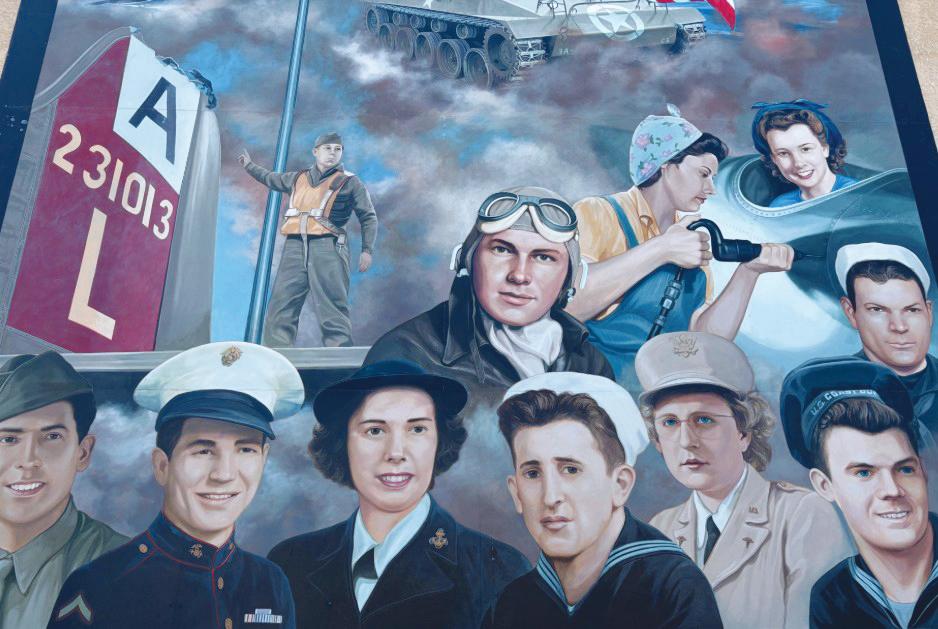
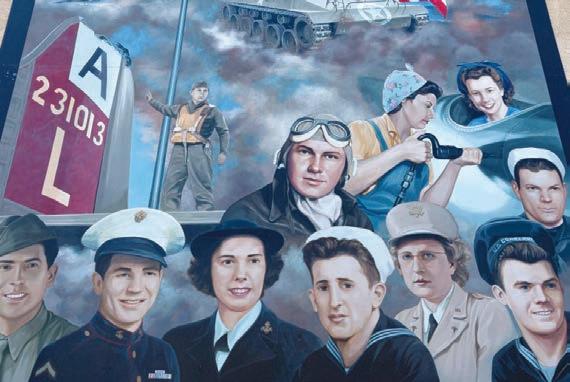
▶The cover photo is a detail of the World War II mural with the faces of some of the 975 Manteca men and women who served in World War II.
FROM PAGE 4
degrees.
His blood was curdling.
The Army hospital was low on blood. The doctors were about to give up on Davis and were going to wheel him into a corridor for what they thought was an inevitable fate.
But Holloway would hear nothing of it. He demanded that the doctors give Davis a direct transfusion from his veins. As the fever threatened to tighten its grip on Davis, the precious gift of life flowed from Holloway to the former Manteca resident.
They never saw each other again until 26 years later when another incredible man — retired Manteca High teacher and fellow veteran Harry Nagy who was a tail gunner in Vietnam — brought them together for that inspiring spring afternoon on the same field where Davis once played football for the Buffaloes.
Davis has dedicated his life to one clear and poignant message — the freedoms we cherish, yet take for granted, in this
land exist only because of the men and women who have been willing to spill their blood for them over the past 250 years.
Freedom isn’t something you get for free, nor is it automatic, and it certainly isn’t a forever thing unless someone is willing to stand up against the forces that threatened to take it away from not just us but all of America’s brothers and sisters around the globe.
The forces of evil may ebb but they never vanish.
All it takes is for good men to stand idly by for evil to extinguish the flickering flames of liberty and freedom.
Those two concepts are an aberration in the history of civilization.
Evil, left unchecked, will snuff out those flames.
When the final tally is taken, all that really matters is that we’re in this together.
And that’s the truth — in black and white.
To contact Dennis Wyatt, e-mail dwyatt@mamntecabulletin.com






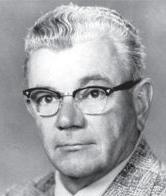
EDITOR’S NOTE: The following editorial by George Murphy Jr. first appeared in his column, “Batting the Breeze,” in the Dec. 28, 1950 issue of the Manteca Bulletin. Murphy, who has since passed away, was publisher of the Bulletin at the time. He also was a serving on board a ship when Pearl Harbor was attacked 83 years ago on Dec. 7, 1941.
We would like to apologize to all servicemen — it seems we have been developing a case of civilianitis. And that means a lot of crying about life on the home front, in case you didn’t know what civilianitis means.
We were lying in bed the other night worrying about this and that then we heard our conscience open fire. Our conscience made a little speech like this:
You’re worried, aren’t you, Murph? You’ve got big problems. Things look tough next year. No new cars, maybe; so perhaps there’s no automobile advertising. And that’s a good chunk of your revenue, isn’t it. And you’ve got big payments at the bank to meet, and maybe you can’t get enough newsprint to put out enough pages to make the payments. Things are sure rough.
But how about the boys in Korea, Murph? What have they got to lose? Not much. They don’t own anything. No, they haven’t much to lose — just their lives.
Yeah, you sure got it rough. Worried
about the Rose Bowl and whether Cal can win one for a change? That’s a big problem, Murph. How many people in the Rose Bowl? About a hundred thousand, maybe? That’s about one person in each 1,500 in this great nation. Pretty small percentage, isn’t it?
Ever stop to think that about one in each 1,500 is saving your comfortable neck? That’s right. There are only about 100,000 of our men in Korea. And how many men are 42,000? Why, that’s no crowd at all. But that’s a lot of men to stop bullets in a little place like Korea. And that’s how many casualties we’ve had over there so far.
It might be a tough year all right. Just as you’re thinking — no gasoline, shoe shortage, high prices for eggs, coffee and so on. You don’t think there’s much to look forward to, do you, Murph?
The trouble with you is, you forget too easily. You forget that this war is just as tough as the last one — or maybe tougher. But you don’t think it’s so bad because you’re not in it. What does a casualty list mean to you? Nothing but a bunch of figures. Just a bunch of guys you don’t know and never heard of before.
Well just remember one thing. Those guys are just about the same as they were the last time. And they’re having the same horrible things happen to them, and you don’t give a hoot because you’re busy worrying about life on the home front.
Think back a few years, Murph. Yeah, those guys are just the same. Remember Sam Neville? He was the first man you saw die at Pearl Harbor. You remember
Sam, he was that guy in C Division you always thought looked awfully old to be only a third class radioman. Remember how you were standing on the second deck and watched Sam run down that ladder? He slipped, didn’t he, and was wedged between the ladder steps flat on his back. And the guys at Pearl Harbor were panicky, weren’t they? And they came down that ladder behind Sam, and one by one they stepped in his face. And you watched them crushed by his own shipmates.
That was panic, Murph, and don’t you think for a minute that there wasn’t plenty of panic when the Chinese broke through in Korea. And there was some nice old guy like Sam Neville there, too, and don’t forget it.
Remember Terlizzi? Always good for a laugh — the ship’s comedian. But he wasn’t laughing the last time you saw him, was he? Remember when that torpedo plane hit and its gas tank blew up? You looked up quick to secondary aft when you felt the heat. He was swaying back and forth on the gun platform, his mouth working like he was trying to talk. He still had his phones on, didn’t he? But no clothes. They were burned off and his flesh hung from his body in strips. He was dead when you got up there, wasn’t he?
Somewhere in Korea is a guy just like Terlizzi. Maybe he burned up in tank, a jeep, or an airplane. It doesn’t matter where or how — but he got burned up. Maybe he was just number 31,467 on some casualty list but to some people he was a nice guy with a sense of humor and had a name like Terlizzi.
And Boats Powell. You remember him. A quiet guy with a crooked smile, but one of the best little gunners in the business. That torpedo plane got him, too, didn’t it Murph? And you took a chipping iron and scraped him away from his 20-millimeter gun where his flesh had fused with the metal. A lot of guys in Korea have been scraped up by their buddies, and you might remember that once in awhile.
And what about Smooge Scroeder? Used to be a wrestler in a carnival and just as tough as they come. But he was always good for a laugh when the going got rough, wasn’t he? Take that night when you guys on the fantail heard your first big shell scream over your heads. Smooge shouted: “I’m a lover, not a fighter”, and your nerves felt better after
a good laugh at his joke. And when that shell hit, Murph, you both went down together. Remember? Only Schroeder didn’t get up. He was cut in two by a big chunk of hot metal. And you thought you were a dead pigeon because you didn’t know that most of the blood and bits of flesh on you were Schroeder’s and not yours.
That’s the night it first dawned on you that war is a bloody mess. You used to think people got killed with neat little bullet holes. They don’t, though, do they? They usually get smashed up and there have been over 45,000 smashed up already in Korea. And they claim this is just the start of the war.
And there are probably a few guys in Korea like Jack McBride. You remember Jack, don’t you Murph? You never liked him too well — a kind of a wise guy. But when the chips were down he always came through, didn’t he? You’ve always wondered what made Jack do what he did the night the shell hit your gun. He was up in the director tub and lost both legs at the knees. But somehow he crawled out of the tub, dragged himself across the deck in front of you, crawled down the ladder into chief’s quarters, and backed into a corner where he died.
And when they carried you down to the chief’s quarters, the first thing you saw in the dim light was Jack. And you felt a little sick to your stomach, didn’t you?
Wonder how many guys in Korea are going to feel the same way — if they haven’t already.
And when they set your stretcher down on the table you didn’t feel very funny, did you? the doc cut your pants away and you could see the bones sticking through the flesh. You turned away and saw Sig Hanna on the table next to you. Yeah, Murph, it was Hanna, that little redheaded coxswain. He was half propped up against a stanchion and you could see his guts oozing through holes in his shirt. Remember how he leaned over a little an said to you: How ya doing, Gunner, isn’t this a helluva a way to make a living?” And in 20 minutes, he was dead.
And Korea is full off guys — just good old American guys that can still crack a smile 20 minutes before they die.
And you’re worried about the price of eggs. Quit worrying. Forget it. You never had it so good.
Most Americans profess to truly love our veterans, especially at gatherings on Veterans Day and Memorial Day.
And while their feelings are usually sincere, it is important to remember that future “veterans” are now soldiers defending us 365 days a year. The heroism that has been demonstrated time and again by veterans from the American Revolution to the Global War on Terrorism is sometimes unnoticed by those of us who enjoy the security that their sacrifice has provided.
Army Staff Sergeant Clinton Romesha has seen war at its very worst. While serving at Combat Outpost Keating in Afghanistan, he and his comrades awakened to an attack by an estimated 300 enemy fighters on October 3, 2009.
According to his Medal of Honor citation, Staff Sergeant Romesha took out an enemy machine gun team, and engaged in taking out a second, when he received shrapnel wounds from a rocket propelled grenade. He continued to fight on.
He killed at least three other Taliban fighters and directed air support to destroy 30 other enemy fighters. After receiving the nation’s highest military medal, Staff Sergeant Romesha said he felt conflicted.
“The joy,” he said, “comes from recognition of us doing our jobs as soldiers on distant battlefields but is countered by the constant reminder of the loss of our battle buddies. My bat -
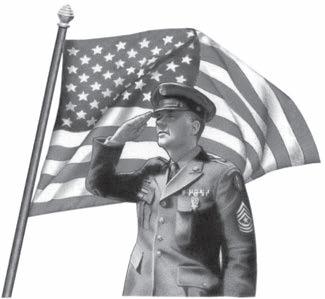
It is the veteran, not the preacher who has given us freedom of religion.
It is the veteran, not the reporter who has given us freedom of the press.
It is the veteran, not the poet who has given us freedom of speech.
It is the veteran, not the campus organizer who has given us freedom to assemble.
It is the veteran, not the lawyer who has given us the right to a fair trial.
It is the veteran, not the politician who has given us the right to vote.
It is the veteran, who serves under the flag and whose coffin will be draped by the flag.
tle buddies. My soldiers. My friends.”
Staff Sergeant Romesha’s attitude is not hard to find among the living Medal of Honor recipients. They will never forget the sacrifice of their friends and neither will the Gold Star families, who will have to cope without the embrace of their loved ones.
Our debt to these heroes can never be re-paid but our gratitude and respect must last forever.
For many veterans, our nation was important enough to endure long separations from their families, miss the births of their children, freeze in subzero temperatures, bake in wild jungles, lose limbs, and, far too often, lose their lives.
You cannot fight a war without soldiers and while the utopian idea of a
society without war is appealing, let us not forget that wars have liberated slaves, stopped genocide and toppled terrorists.
Stephen Ambrose once wrote, “America’s wars have been like rungs on a ladder by which it rose to greatness. No other country has triumphed so long, so consistently or on such a vast scale through force of arms.”
It has been often said that without our soldiers, Americans would be speaking Russian, German or, perhaps, Japanese. Regardless of which view of alternative history you take, we do know that without our veterans America would not be America.
And as we look at the Middle East today, we know that there is a large, dangerous and committed group of





fanatics that wants us dead. And while ISIS, al Qaeda and other terrorists may lack the conventional weapons of Nazi Germany or Imperial Japan, they are every bit as evil in their intentions.
Those who defend us from our enemies must be supported. Whether their service was in Baghdad or Beirut, we need to serve veterans as well as they serve us – even when the guns have temporarily stopped firing.
Fewer than 10 percent of Americans can claim the title “veteran.” Far less than 1 percent of our population is currently serving ready to defend our freedoms.
Soldiers — and the veterans who served — have given us freedom, security and the greatest nation on earth. It is impossible to put a price on that.