HELLO.
Welcome to the second edition of Chef’s Table your passport to the exciting cuisine trends of 2026. In this issue, we have focussed in on some of the key cuisines from our Trend Framework that are set to shape our categories both in 2026 and beyond. Join us on a flavour-packed global journey that sees inventive twists on beloved classics to creative fusion hacks and indulgent sharing plates that demand attention. Our culinary team have been cooking up a creative storm with 18 signature recipes that blend recognisable favourites into delicious dishes of inspiration. Get ready to discover the cuisines, ingredients, and insights that are designed to fuel our product development and fire up our creativity as we navigate our way through another year of exciting culinary discovery that will shape the food landscape of 2026.
AARON DIXON, Head of Culinary & Product Direction
CONTRIBUTORS
FOOD, RECIPES & CONTENT
CONTENT - Aaron Dixon, Dean Skinner, Steve Dallas & Lucy Dean
RECIPE CONTRIBUTORS – Aaron Dixon, Dean Skinner, Steve Dallas, Jack Cooper, Dan McEvoy, Gareth Phillips, Jonathan Murray, Ashish Bhatia & Rowan Baker
EDITOR
Aaron Dixon
PHOTOGRAPHY
Sharon Cosgrove
FOOD STYLIST
Karyn Booth
CREATIVE DIRECTION, PUBLISHING & PRINT
Whitenoise Studios
Modern Mexican Cuisine
A Fusion of Tradition and Innovation
Modern Mexican food represents a dynamic evolution of one of the world’s most celebrated culinary traditions. Rooted in indigenous ingredients like corn, beans and chillies, and enriched by Spanish influences, contemporary Mexican cuisine blends heritage with global techniques and flavours. Today, chefs reinterpret classic dishes with creativity while preserving their cultural essence.
At its core, modern Mexican cooking emphasises freshness, seasonality and bold flavours. Staples such as masa, mole and salsas remain central, but they are often elevated through refined presentations and novel pairings. For example, tacos might feature slow-braised short rib with pickled vegetables and microgreens, while ceviche incorporates exotic fruits or smoky infusions. Traditional street food inspires fine dining menus, bringing casual authenticity into the realm of an upscale experience.
Globalisation has introduced new ingredients and techniques, leading to exciting fusions – think miso-marinated pork in a taco or avocado espuma on tostadas. Sustainability and farm-to-table practices are increasingly prioritised, highlighting local produce and artisanal products. Modern Mexican chefs also embrace plant-forward dishes, showcasing native vegetables like huitlacoche and nopales in creative ways.
Presentation plays a key role in this evolution. Vibrant colours, artistic plating and textural contrasts transform familiar flavours into visually stunning dishes. Craft cocktails featuring tequila, mezcal and fresh botanicals complement the cuisine, reinforcing Mexico’s rich beverage heritage.
Ultimately, modern Mexican food celebrates diversity and innovation without losing its soul. It honours centuries-old traditions while embracing contemporary trends, making it a global culinary powerhouse that continues to inspire chefs and delight diners worldwide.
BOOKS
TO CHECK OUT
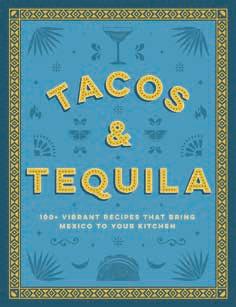
1. TACOS & TEQUILA
Tacos aren’t just for Tuesday. Now every night is Taco Night! Bring the vibrant flavours of Mexico to your kitchen with Tacos & Tequila.
This cookbook is packed with delicious recipes that capture the spirit of Mexican cuisine. Add some flare to your next meal with soft taquitos, crisp tacos al pastor, classic carne asada or fish tacos. Explore beloved classics and new twists as you take a journey through Mexico’s colourful culinary heritage and regional specialties.
Inside, you’ll find 60 recipes for flavourful entrees, appetisers and sides along with 40 delicious cocktails to complement your meal and get the party started, plus helpful tips on the best fillings and toppings.
Grab the guacamole and mix your favourite margaritas – Tacos & Tequila is guaranteed to fill any gathering with fun, laughter and great eats!
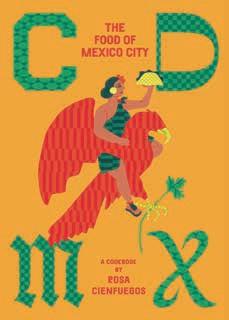
2. CDMX: THE FOOD OF MEXICO CITY
This is the cookbook sequel to Comida Mexicana by Rosa Cienfuegos. This is a celebration of the food of Mexico City, the dishes that Rosa grew up eating. It is the food that ‘Chilangos’ (residents of Mexico City) enjoy at home and on the streets, in markets, cafés and bars.
Authentic and often unique to Ciudad de México, as the locals call it, CDMX’s colourful recipes reflect the vibrancy, history and modern urban life of Mexico’s liveliest city. Filled with stunning food photography and on-the-scene images of Mexico City, this is a cookbook for those who crave authenticity and strive to accurately recreate their favourite food memories.
For anyone planning a trip to Mexico City, CDMX also features a brief travel guide recommending the best bars, restaurants, street food and markets to be found in this sprawling metropolis.


3 . MEZCLA
Everyday eating with a built-in wow factor – from the Ottolenghi protégé shaking up the food world.
‘Mezcla’ means mix, blend or fusion in Spanish and in her first solo cookbook, Ixta Belfrage – celebrated for her inventive ingredient combinations – shares her favourite mezcla of flavours. The book is helpfully divided into quick recipes (for when you need something great on the table, fast) and longer recipes (for when you have time to slow down and savour the process). Here are 100 bold, impactful recipes inspired by Italy, Brazil, Mexico and beyond. Creative, colourful and always delicious, this is food for every day and every occasion.
4. NORTENA: AUTHENTIC FAMILY RECIPES FROM THE NORTH OF MEXICO
This is a true taste of north Mexico using fresh produce, bursting with flavour, colour and history.
Recipes include world-famous Baja fish tacos, ‘piggy’ pinto beans, vegan chorizo, crab tostadas and sopes (corn patties) served in a tomato broth, all accompanied by mouth-watering spicy salsas, fresh queso and zingy salads. There are recipes para la sed (for the thirst), which include the best margaritas. We end on something sweet, with Mexican flan and camotes (sweet potato poached until tender in a sweet, spiced syrup). Longer narrative passages describe the different cultural events that play such a huge part in the cuisine, such as tamales estilo Sinaloa, wrapped with special care at Christmas time.
By sharing her family recipes, Karla Zazueta makes sure that each dish is packed with flavour but also cooked with love. Let yourself be transported to the Baja peninsula, rolling corn tortillas in the sun, sipping a refreshing michelada and cooled by the breeze coming in from the ocean.
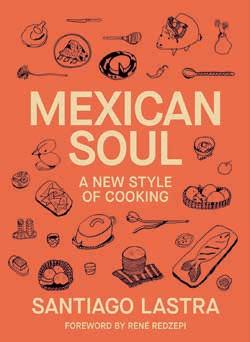
5 . MEXICAN SOUL: A NEW STYLE OF COOKING
You don’t need Mexican ingredients to cook great Mexican food – just an open mind, a few simple tools and a little soul.
In Mexican Soul, chef Santiago Lastra reimagines Mexican cooking using what’s local, seasonal and already in your cupboard. From pistachio guacamole to tortillas made with mashed potatoes, this book shows how Mexican flavour can be unlocked anywhere in the world.
The opening pages reveal the foundations of Mexican cuisine using traditional ingredients, organised by the flavours that define it – sour, sweet, spicy, fat, smoky and masa together with traditional Mexican recipes. You can then learn how to apply those principles creatively with the ingredients you probably already have at home in the second section, cooking Mexican food with freedom and confidence.
With more than 80 vibrant recipes and a philosophy rooted in creativity, Mexican Soul is more than a cookbook –it’s a new way to think about what Mexican food really is.
Cook from it. Spill on it. Make it yours.
1. MESTIZO RESTAURANT & TEQUILA BAR
London
Highly regarded for its authentic, upscale Mexican cuisine and extensive tequila menu, featuring a popular Sunday Mexican buffet.
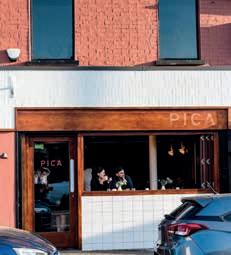
2. PICA Belfast
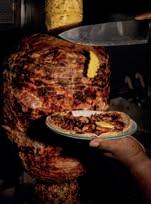
A highly-rated, intimate Mexican restaurant specialising in high-quality, authentic tacos and small plates, with an extensive, innovative margarita menu. Rather than traditional burritos, Pica focuses on elevated, ingredient-focused dishes made with locally sourced ingredients such as beef birria, fish tacos and pork skewers al pastor.
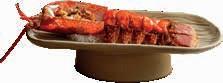
3. KOL
London
A Michelin-starred restaurant in Marylebone serving high-end, contemporary Mexican food with British ingredients.
4. EL PASTOR
London
Famous for authentic, handmade corn tortillas and al pastor tacos, often ranked among the best in the city.
5. LUPE’S CANTINA
Leeds
An authentic, highly recommended spot outside London, known for its traditional Mexican dishes.



DANIEL VIDAL
Baldío, Mexico
With a sustainabilityled approach, Vidal focuses on zero waste, ancestral knowledge and using exclusively local products to build a resilient, eco-conscious culinary future.
KARIME LÓPEZ
Gucci Osteria, Florence
The first Mexican woman to receive a Michelin star, recognised for her innovative work.
ENRIQUE OLVERA Pujol, Mexico
Enrique Olvera is the renowned Mexican chef and founder of Pujol in Mexico City, established in 2000. He is acclaimed for elevating traditional Mexican cuisine to a finedining, contemporary level. His globally recognised signature dishes often focus on local ingredients, mole and corn, with Pujol regularly ranked among the world’s best restaurants.
The Mexican Pantry
All about the Chillies
Chillies play a fundamental role in Mexican cuisine, and their use goes far beyond just adding heat. Here’s a list of the most popular varieties used in Mexican cookery:

ADRIANA CAVITA Cavita, London
Known for her impressive pedigree (El Bulli, Pujol), Chef Cavita continues to anchor the fine-dining scene in Marylebone, focusing on traditional, high-precision Mexican cuisine.

SANTIAGO LASTRA
KOL & Fonda, London
As the chef behind the UK’s only Michelinstarred Mexican restaurant, Lastra continues to dominate the scene in 2026 by blending Mexican tradition with British ingredients. His newer, more casual venture, Fonda, is a characterised by authentic, home-style cooking.
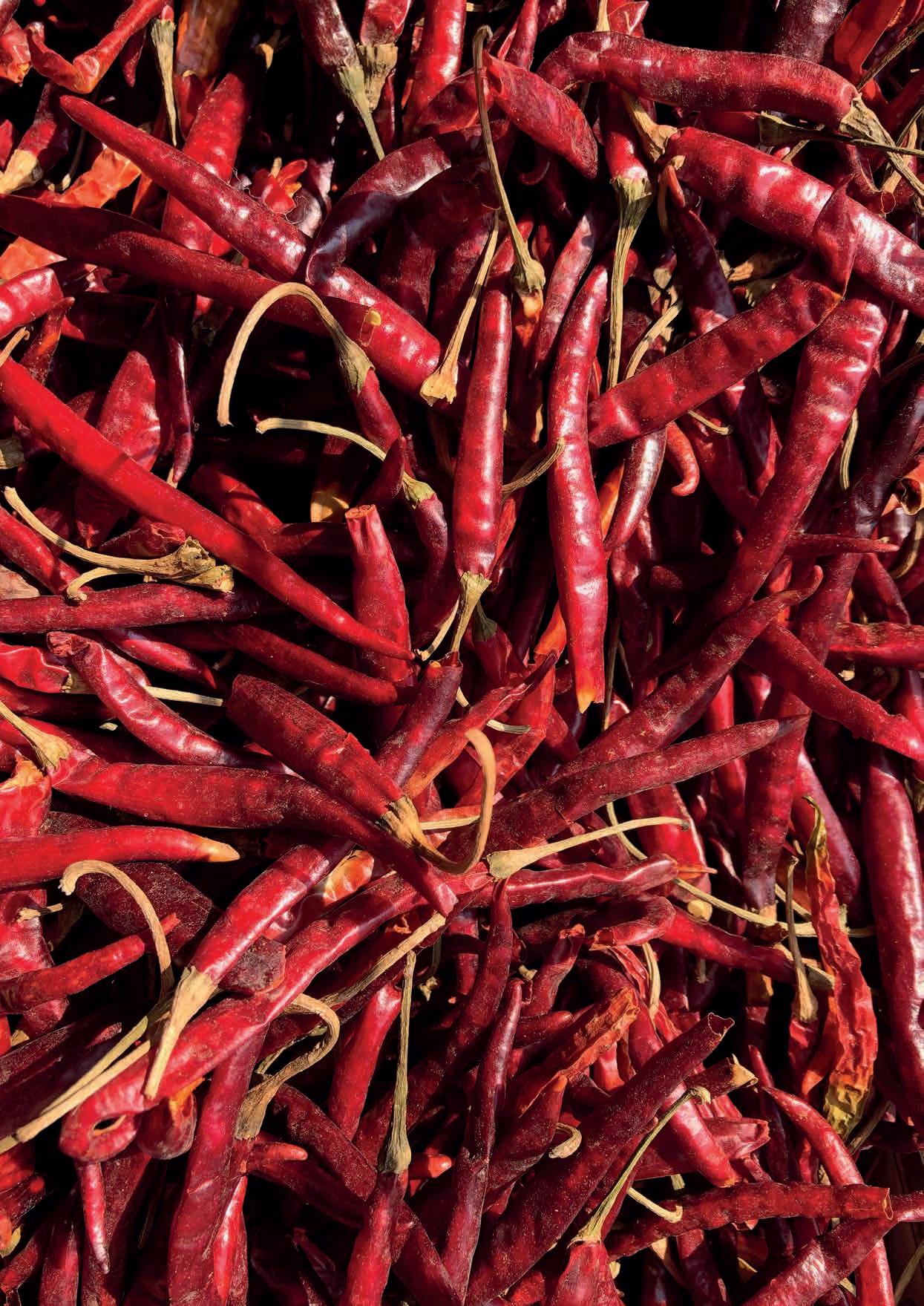
1. Ancho chilli
A dried, ripened poblano pepper that is sweet and mild with smoky, fruity and chocolate-like notes, it’s used to add depth to sauces, soups, marinades and rubs.
2. Guajillo
A mild to medium chilli that is used for its complex, tangy and fruity flavour.
3. Chilli de Arbol
A small and potent Mexican chilli pepper – also known as bird’s beak chilli or rat’s tail chilli – with a searing but clean heat, ideal for making piquant broths or fiery hot sauces.
4. Pasilla (dried chilaca)
A chilli with dark, raisin-like flavour used typically used in moles.
5. Cascabel
A plump, round chilli that resembles a cherry, this one has a mild heat that’s acidic, slightly smoky and woody, with tobacco and nut undertones.
PREP TIME:
30
CONSOMMÉ
90g dried ancho chilli, de-seeded/de-stemmed
120g dried guajillo chilli, de-seeded/de-stemmed
20g dried chile de arbol, de-seeded/de-stemmed
8 garlic cloves, finely chopped
1 large onion, cut into 8 pieces
8g ground coriander
1 cinnamon stick
METHOD
5g thyme
17g whole clove
20g sugar
15g cumin
21g oregano
400g tomatoes (fresh)
2 bay leaves
Salt (to taste)
1.5 litres water
Cider vinegar
1 lime
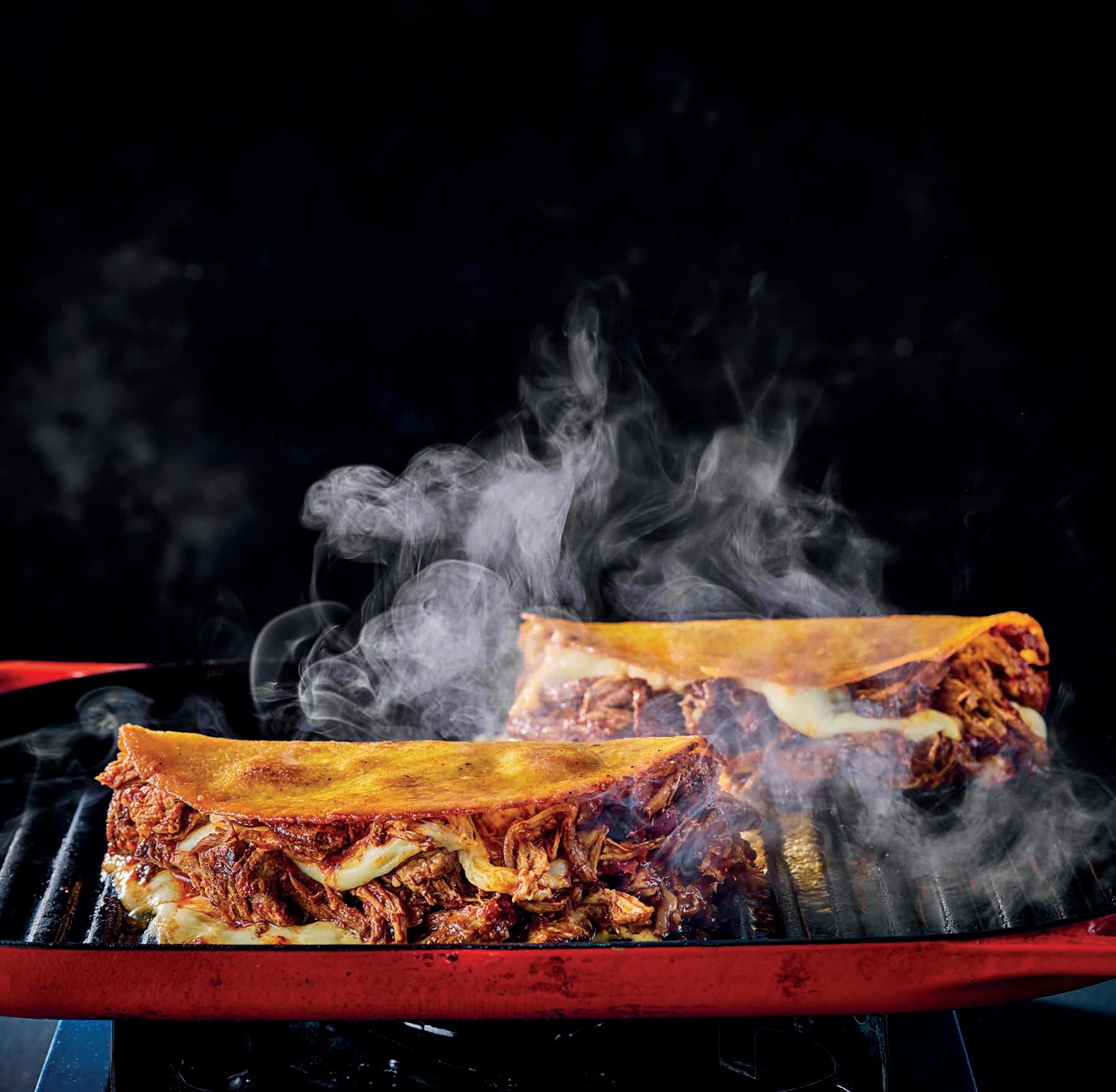
Prepare the lamb consommé by heating the frying pan on a high heat until hot. Turn heat down and toast dried chillis until aromatic and slightly darkened. You may have to work in batches to allow for an even toasting. Be careful to not burn as they will turn the consommé bitter. Remove chillies from the pan and add to a bowl of hot (boiled water) and leave to soak until soft.
Add the clove and cinnamon to a hot dry pan on medium heat till aromatic, then set aside. Add onions to the same hot dry pan and dry fry until onions start to char, then remove. Repeat this process with the tomatoes until skins char evenly. This will add a depth of flavour to the consommé.
Once the chillies have soaked and veg is charred, add to a jug blender with half the water, vinegar, garlic and all the spices.
To prepare the lamb, heat a large frying pan, add the oil and once hot, brown the lamb evenly on all sides.
Line a large/deep tray with the banana leaf. Add the lamb shoulder and pour over the broth and the remaining water (be careful to not over fill).
LAMB
2.5kg (approx.) whole bone in shoulder lamb
25g oil
8g salt
TO SERVE
240g grated mozzarella
200g diced red onion
200g fresh coriander, chopped
2 limes, cut into quarters
12 corn tortillas
SERVES:
Carefully fold over the banana leaf to create a parcel. This will help the lamb to steam as well as adding an earthy flavour to the birria. Cover with parchment paper (if not using banana leaf), foil and cook in the oven.
Allow to cook for 5 hours until lamb is tender and falling off the bone. Leave to rest in the liquor for 30 minutes.
Remove the lamb, shred and cover with foil and set aside.
With the remaining liquor add a squeeze of lime, season to taste and reduce if needed. Don’t be tempted to skim or remove the fat. This is vital to make queso tacos.
To assemble queso tacos, simply dip your corn tortillas in the lamb broth, specifically the fat. Put into your preheated dry frying pan, add 20g of cheese per taco, shredded lamb, fresh onion and coriander and carefully fold over. Toast each side until the cheese is melted, charred and slightly crispy on each side.
Serve with a pot of consommé, coriander and extra lime and dip away.
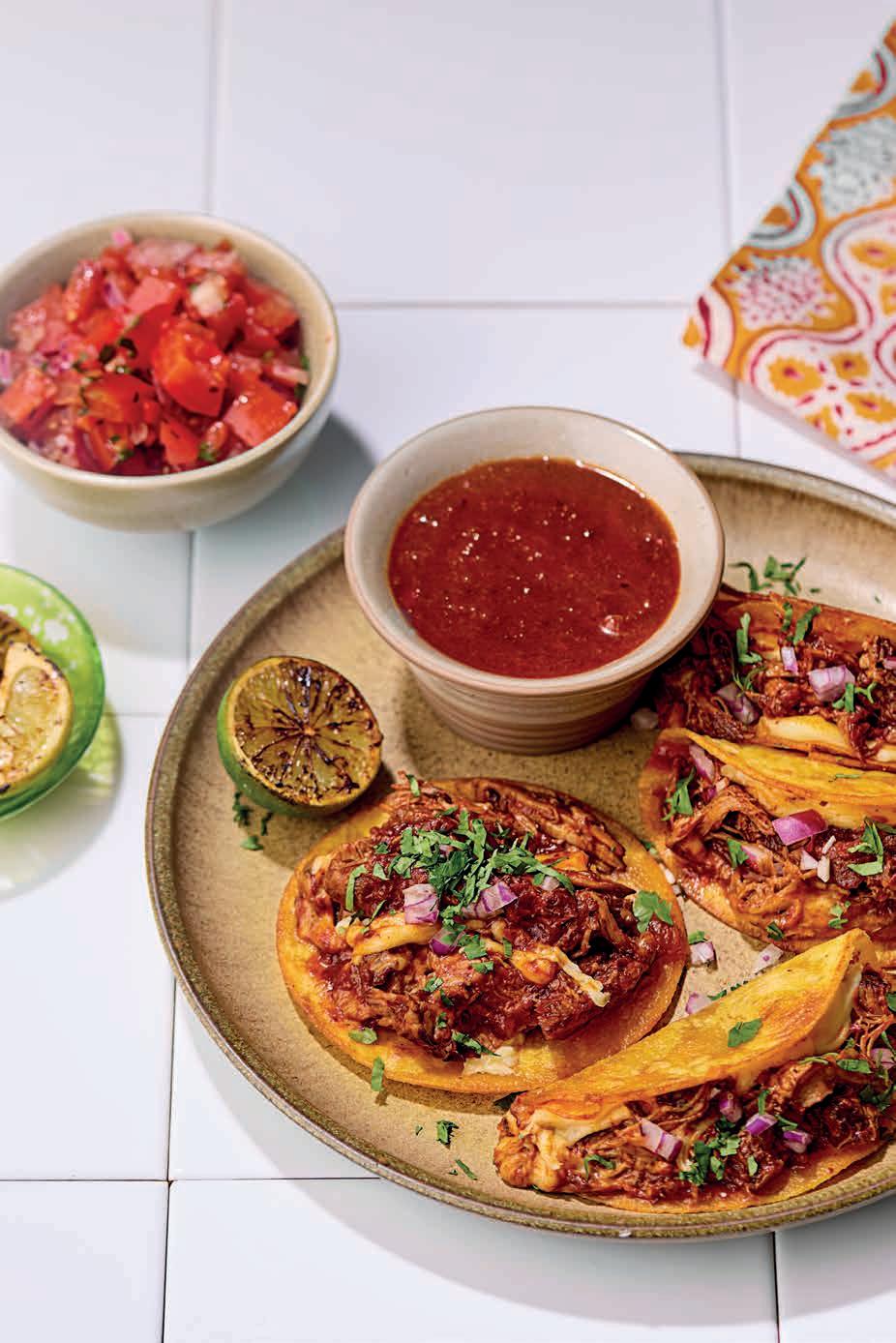
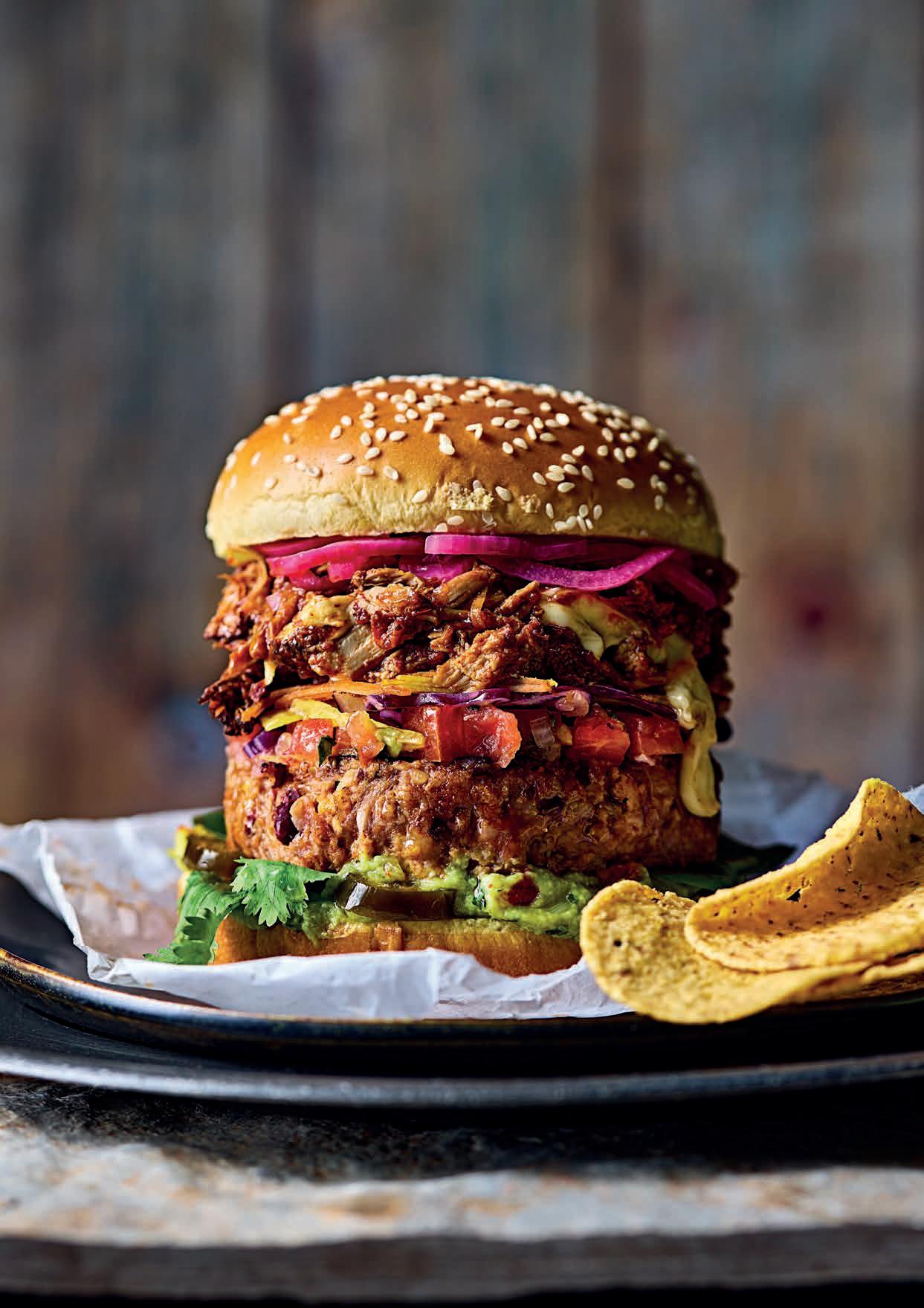
Ancho chilli con carne pork burger, guacamole & tomato salsa served in a brioche bun alongside tortilla chips.
PREP TIME: 45 minutes COOK TIME: 14–16 minutes TEMPERATURE
Medium heat on stove/ induction hob and an oven at 180°C if you like to make life easier!
BURGER
650g pork mince 120ml water
100g breadcrumbs
50g red kidney beans
1 red pepper, diced & fried
1 handful chopped parsley
1 tbsp ancho chilli paste (depending on your heat tolerance, add more if you wish)
2 tbsp cumin powder
2½ tbsp smoked paprika
METHOD
1 tsp garlic powder
1 tsp chilli powder (omit if using ancho chilli paste and you don’t like spicy)
Salt & pepper (to taste)
Chedder cheese (optional)
SERVES:
6 large burgers
Go through the ingredient list and weigh it all out and dice/cut and fry your peppers and do all the odd bits first to set yourself up for the tasks below.
For the burger, place the mince, kidney beans, red pepper, parsley, chilli paste, cumin, smoked paprika, garlic powder, chilli powder (if using), salt & pepper into a big bowl and give it a good mix to incorporate everything well.
Then add the water and mix again for about 30 seconds and lastly add breadcrumbs and mix again. Fry a little bit to test whether you are happy with the taste; if not, then adjust it to your liking by, for example, increasing salt & pepper or adding more spices. Once happy with the taste, mould the burgers. find that around 125g–130g burger patties work best.
For the guacamole, take your avocado out of the skin and smash it up or use a potato masher in a decently sized bowl. Add your diced onion, chopped coriander, garlic, lime juice and salt & pepper. Mix well and taste to confirm that you’re happy with it. Place to one side for later.
GUACAMOLE
2 avocado, smashed (can use a masher)
1 red onion, diced
1 handful of coriander, chopped
½ lime (juice only)
1 clove garlic, pureed
Salt & pepper to taste
SALSA
3 fresh medium sized tomatoes, small dice
1 red onion, finely diced
1 small handful of coriander, chopped
½ lime (juice only)
Salt to taste
TORTILLA CHIPS
1 big bag of tortilla chips
BURGER BUNS
6 of your choice – a toasted brioche bun adds nice sweetness
For the salsa, select another bowl, add your chopped tomatoes, diced onion, coriander, lime juice and salt & pepper. Mix well then place to one side for later.
Now it’s time to cook your burgers. There are two ways you could do this: you could pan fry them on medium heat for about 7–8 minutes on each side, turning throughout cooking to make sure they don’t burn. Or what I like to do is pan fry them for 2 minutes on each side to get a nice colour then pop them in the oven at 180°C for 10 minutes while you build your burger.
Now it’s time to build. Toast your burger then spread a nice layer of guacamole on the bottom, then sprinkle a layer of salsa so it sticks to the guacamole.
If you like cheese, 1 minute before the end of cooking, sprinkle some cheese on the burger and leave in the oven for the last minute. Take out when cooked and place in the burger and put the top on. If you have a nice skewer, put one in the middle to hold the burger upright and serve alongside your tortilla chips. The chips can be baked for a couple of minutes just to warm them up, if you like.
PREP TIME:
20 minutes
MOLE SAUCE
4 dried guajillo chillies
4 dried pasilla chillies
4 dried ancho chillies
¼ onion
1 tomato
1 tomatillo
¼ cup raisins
2 tbsp sesame seeds
2 tbsp slivered almonds
METHOD
COOK TIME: 30 minutes (approx.)
1 tbsp pumpkin seeds
1 clove of sliced garlic
¼ tsp peppercorns
1 clove
½ small bolillo or baguette
4 Ritz crackers
1 tbsp oil
45g dark chocolate
1 tsp sugar
1 tsp salt
2 cups of chicken stock
TEMPERATURE:
EMPANADAS
1 sheet shortcrust pastry
4 cups leftover pulled chicken
150g of mole sauce
CHICKEN CRACKLING
4 chicken skins, scraped to remove excess fat
Pinch of salt
Preheat the oven to 200°C/180°C fan/Gas 6. Flatten chicken skin on the bottom of a tray. Sprinkle with salt and add a sheet of baking paper on top followed by another tray to weigh the skin down. Place in the oven for 20 minutes or until crispy. Remove and allow to cool before lightly crushing into flakes with your hands or a rolling pin.
For the Mole, start by dry roasting or grilling vegetables in a skillet or pan. Add to pot with stock.
Dry roast all the spices and seeds and grind down in a grinder or mortar & pestle.
Add this to stock pot with rest of ingredients and simmer on low for 15–20 minutes.
Blend the sauce and set aside. Return to heat and cook until it thickens. Keep 150g sauce for the chicken mix and the rest for dipping.
Mix chicken with 150g of mole sauce and set aside to cool.
Cut rings out of the pastry sheet using a round pastry cutter and fill with the chicken mix. Fold over creating a moon shape and pinch sides so that it’s well secure and looks like an empanada.
Deep fry for 1 minute and place in preheated oven at 190°C/170°C fan/Gas 5 and cook for 20 minutes or until piping hot inside.
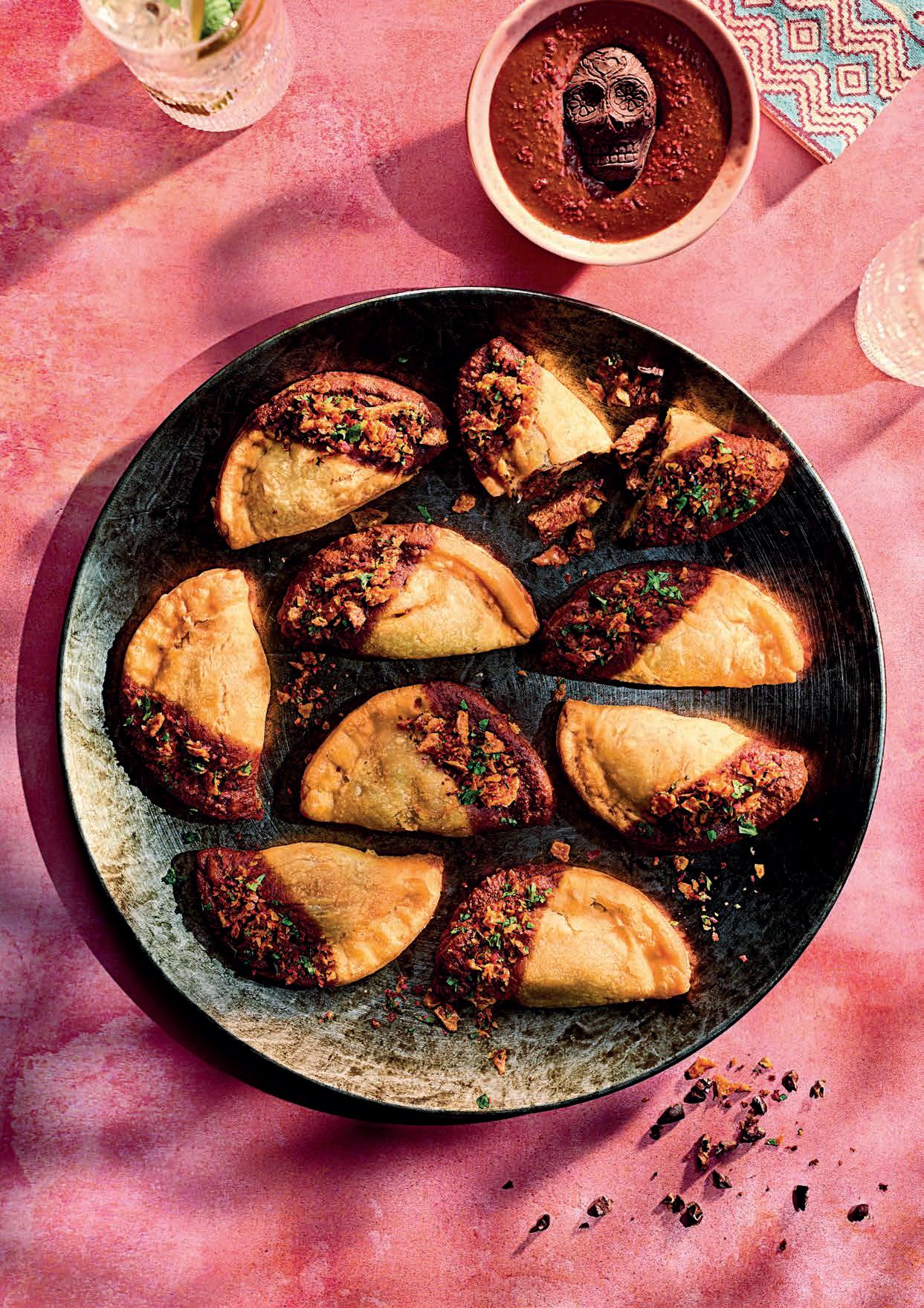
When ready, dip the empanadas in the mole sauce and then the chicken skin crackle before eating immediately.
ANCIENT FLAVOURS CONTEMPORARY FORM MO D ERNINDIAN
Modern Indian cuisine has evolved into a vibrant, globally influential movement that blends deeprooted tradition with contemporary technique, presentation and ingredient innovation. At its core, it respects the vast regional diversity of India – spanning robust Punjabi flavours, coastal Konkan freshness, Awadhi richness and the delicate, spice layered cooking of the South –while reinterpreting these forms through a modern culinary lens.




A hallmark of modern Indian food is elevation without dilution. Chefs retain the soul of classic dishes – slow cooked curries, tandoori techniques, chaat elements, fermented batters – yet refine textures, reduce heaviness and heighten aromatics. Traditional bases like ghee, spice blends and regional pickles are used more intentionally, often in smaller, high impact doses. Ingredients like millets, heritage rice, seasonal greens and indigenous fruits are increasingly highlighted to celebrate provenance.
Technique is another area where modernity thrives. Sous vide tandoori proteins, charcoalkissed but delicately plated kebabs,
fermented dosa batters enhanced for depth, and deconstructed chaat that preserve crunch and tang while introducing new forms are now common in progressive Indian restaurants. Smoke, char, fermentation and fat management are used more precisely to create balanced plates.
Presentation has shifted dramatically: rustic thalis exist alongside minimalist, fine-dining interpretations where each element is plated with intention. Flavour remains bold, but structure is controlled.
Finally, modern Indian cuisine embraces global influences – borrowing from Japanese umami principles, French butter techniques, Korean fermentation and Latin American acidity –blending them seamlessly with Indian spice logic. This fusion doesn’t overwrite heritage; rather, it expands the language of Indian flavour.
The result is a cuisine that’s confident, expressive and future looking – rooted in centuries of tradition, yet adaptive enough to thrive on the world stage.
INDIAN MODERN
BOOKS TO CHECK OUT
1. MODERN INDIAN
Cyrus Todiwala OBE is a maestro of Indian cuisine. A culinary genius whose name is synonymous with innovative dishes and mouth-watering flavours, Cyrus has transformed the landscape of Indian cooking in the UK and beyond. His latest culinary venture, Modern Indian, showcases inventive and delicious dishes for every occasion. Whether hosting an intimate gathering or an elaborate celebration, Cyrus’s delicious recipes can be effortlessly scaled to suit your needs.
2. CURRY
Curry takes you on a culinary journey through the diverse and delicious world of regional Indian curries. Full of insights into the origins and the variety that make these curries truly special, Curry is a definitive guide to eating your way across India’s incredible flavours. Thanks to their own crops, cultures and traditions, each Indian state has distinct differences in the curries they create. From the aromas of the Himalayan region in the North to the fiery tastes of the South, the recipes in Curry bring the essence of each region into your kitchen.
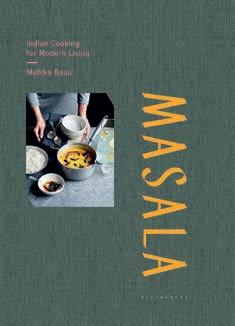
3. MASALA
Food writer Mallika Basu grew up enjoying exotic flavours from across India in an unconventional, bustling home in Kolkata, and then spent years recreating them in a London kitchen. Now she shares those recipes, techniques and shortcuts so you too can cook wholesome, real Indian food simply.
Embrace weekday dinners with lightly spiced fish curry, wokfriendly Goan chilli beef fry or silken kofta curry made with packs of ready-rolled meatballs. For leisurely weekends, tuck into a feast of Vindaloo pulled pork; give your Sunday roast a sumptuous twist with spicy marinades, or enjoy a whole roasted cauliflower encrusted with nut butter. And that’s before you even think about swirling dosa and more for a full-on Indian brunch...
Mallika’s recipes respect the past and celebrate the present in an easy and informal way that will broaden your understanding of Indian cooking, and inspire you to return to these simple recipes time and time again.
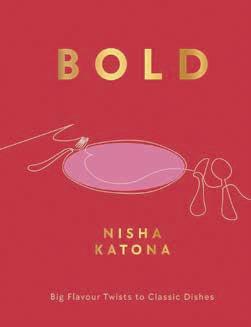
4. BOLD
This stunning new cookbook from TV chef and bestselling cookery author Nisha Katona is her best yet. Taking her signature style of big flavours and applying them to classic dishes, this beautiful book is BOLD inside and out.
Bold is all about big flavours, surprising ingredient combinations and incredible flavour twists to a collection of international classics, from family favourites to exciting and exotic dishes that you may never have tried before, encouraging you to step out of your comfort zone and try something new. It’s all part of Nisha’s philosophy of ‘Trust me, this works’ – and you’ll never cook the same way again.
Bold is named after Nisha Katona’s signature punchy cooking style, brave use of spicing and ingredient combinations, and in honour of the first of her hugely popular Mowgli Street Food restaurants, established in 2014 on Bold Street, Liverpool.
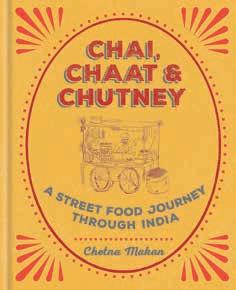
5. CHAI, CHAAT & CHUTNEY
Chetna Makan has travelled to the four corners of India – Mumbai, Kolkata, Delhi and Chennai – sampling the extreme varieties of street food on offer. Each area has subtle differences in ingredients and techniques, making the cuisines unique and full of character.
In Chai, Chaat & Chutney, Chetna has taken inspiration from the street and created delicious recipes that are simple to cook at home. The result is a completely fresh take on Indian cuisine. Try Tamarind Stuffed Chillis, Chana Dal Vada with Coconut Chutney and Sticky Bombay Chicken from the South or let your senses venture to the North for Chole, one of the ultimate curries, sweet Carrot Halwa, Pani Puri and Cardamom & Pistachio Kulfi.
OUR TOP
INDIAN EAT LIST
1.
CINNAMON CLUB
London
Set in the grandeur of a former Westminster library, the Cinnamon Club is where contemporary Indian cuisine meets literary elegance. Diners can expect inventive tasting menus featuring seasonal British produce transformed with spice, technique and creativity. It remains one of London’s most iconic destinations for elevated Indian dining.
2. KANISHKA
London
Helmed by Michelin-starred chef Atul Kochhar, Kanishka celebrates the lesser-known regions of India with creativity and flair. The tasting menus highlight bold spices, intricate plating and inventive pairings. The Mayfair dining room offers a sleek and contemporary setting, reinforcing its reputation as one of London’s most forward-thinking Indian restaurants.
CHEFS TO WATCH
Top modern Indian chefs driving global culinary innovation include Manish Mehrotra, Gaggan Anand, Garima Arora, Himanshu Saini and Prateek Sadhu. These chefs are recognised for redefining traditional Indian cuisine through modern techniques, for sustainability, and for creative, progressive dining experiences that have garnered international accolades and Michelin stars.
1. MANISH MEHROTRA
Indian Accent, Delhi Renowned for his pioneering work at Indian Accent, he is often considered a leader in modern Indian cuisine, redefining traditional flavours with global techniques.
2. GAGGAN ANAND Gaggan, Bangkok
Famous for his progressive, molecular approach to Indian food at his self-named restaurant, Gaggan has consistently ranked among the world’s best chefs.
3. THE TAMAL PRINCE London
The Tamil Prince in Islington is a critically acclaimed ‘Desi pub’ located on Hemingford Road, offering high-end South Indian cuisine in a former pub setting. Led by Chef Prince Durairaj (ex-Roti King) and GM Glen Leeson, it specialises in small plates, such as pulled beef masala uttapam and chicken lollipops, alongside a selection of complementary craft beers.
4.SWADISH
Glasgow
Indian fine dining in the heart of Scotland. Swadish by Ajay Kumar is a national award-winning, two AA Rosette–holding restaurant redefining the Indian dining experience, bringing together the richness of authentic Indian flavours with the finest seasonal Scottish ingredients, using both traditional methods and modern culinary techniques.
5. TRISHNA
London
Located in the heart of Marylebone Village, Trishna delivers a contemporary taste of Indian coastal cuisine, and an extensive wine list that focuses on emerging regions and fine wines from niche producers and boutique wineries from all over the world. It was awarded a Michelin Star in 2012.
MODERN INDIAN PANTRY

Indian spices form the backbone of one of the world’s most diverse and aromatic culinary traditions. With a history rooted in ancient trade routes and Ayurvedic healing practices, spices in India serve both gastronomic and medicinal purposes. Each region has its own signature combinations, yet all rely on a core group of aromatics such as cumin, coriander, turmeric, black mustard seeds, cardamom, cloves, cinnamon, fenugreek and various chilies. These spices are used whole, ground, roasted or tempered in hot oil to unlock distinct layers of flavour.
3. GARIMA ARORA Gaa, Bangkok
The first Indian woman to earn a Michelin star, for her restaurant Gaa, Garima focuses on indigenous Indian ingredients and traditional techniques with a contemporary, artistic and often fermented twist.
4. HIMANSHU SAINI
Trèsind, Dubai
Executive Chef of Trèsind, Himanshu is celebrated for pushing the boundaries of modern Indian cuisine, with a focus on immersive, tasting-menu experiences.
5. PRATEEK SADHU
Naar, near Kasauli Formerly of the acclaimed Masque, now at Naar in the hills of Himachal Pradesh, Prateek is recognised for his commitment to locally sourced, seasonal ingredients, reinterpreting regional Indian flavours through a modern lens.
A defining feature of Indian spice usage is the creation of blends –masalas – which vary widely across households and communities. Garam masala brings warmth and depth, sambar and rasam powders add tang and heat in South India, while panch phoron brings a unique five seed balance to Bengali cooking. Spices also play a role in colour and texture – turmeric lends golden vibrancy, paprika provides rich red hues and fennel seeds add sweetness and crunch.
Beyond flavour, Indian spices are valued for their digestive, anti inflammatory and aromatic qualities, forming a holistic approach to cooking. Together, they create dishes that are layered, complex and deeply tied to India’s cultural identity.
Indian cuisine draws on an impressive spectrum of spices, each contributing a distinct sensory note. Cumin adds earthy warmth, while coriander seed brings citrusy brightness. Turmeric provides its iconic golden colour and subtle bitterness, and black mustard seeds offer sharp nuttiness when popped in hot oil. Cloves and green cardamom lend sweet, aromatic depth, balanced by the woody spice of cinnamon and bay leaves. Fenugreek seeds add a gentle bitterness essential to curries, while asafoetida delivers savoury complexity in vegetarian dishes. A variety of red chillies, from Kashmiri to Guntur, create layers of heat and colour unique to each region.




PREP TIME: 20 minutes
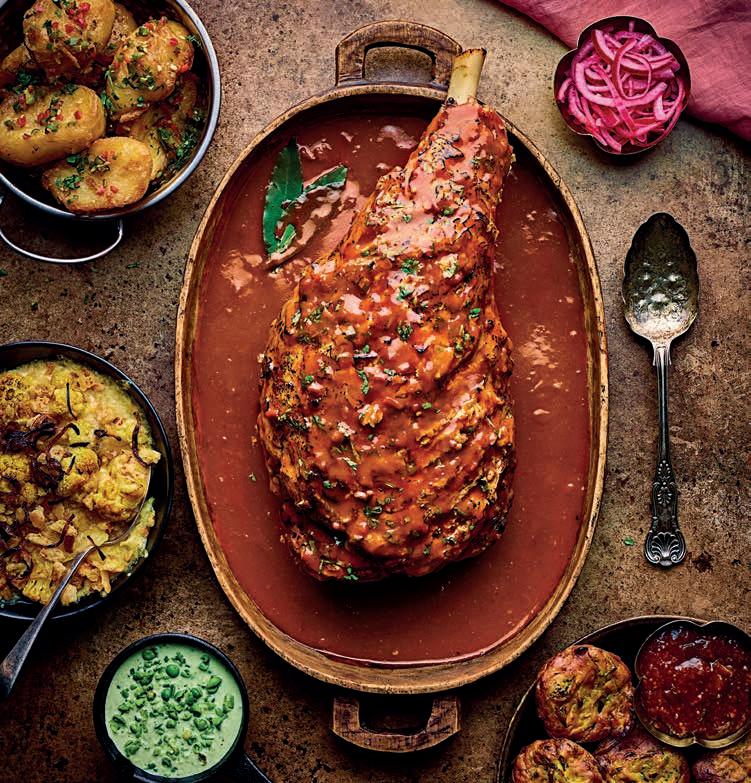
LAMB RAAN
1 leg of lamb (surface fat removed)
2 tbsp ghee
Oil for shallow frying
2 brown onions, thinly sliced
500ml plain Greek yoghurt
4 cloves garlic, smashed
1 x 5cm ginger knob, finely chopped
1 tsp chilli powder
1 tsp chaat masala
1 tbsp tandoori masala
1 tbsp salt
1tsp ground black pepper
1 lemon (juice only)
ONION BHAJI
YORKSHIRE PUDDINGS
2 small onions, finely sliced
1 tsp turmeric
½ tsp cumin seeds
¼ tsp chilli powder
1 green chilli, chopped
1 small handful of chopped coriander leaves
2 eggs
100g plain flour
100ml milk
3 tbsp sunflower oil
LAMB RAAN ROAST
COOK TIME: 30 minutes (approx.)
TEMPERATURE: 200°C/180°C fan/Gas 6 SERVES: 4
CUMIN ROASTED CAULIFLOWER CHEESE
1 large head cauliflower, cut into florets
1 tbsp cumin
1 tsp turmeric
1 tsp salt
20g unsalted butter
20g plain flour
Pinch of grated nutmeg
250ml skimmed milk
40g grated mature cheddar
2 tsp Dijon mustard
15g grated parmesan
1 naan bread
GUNPOWDER ROAST POTATOES
500g new potatoes
½ tsp ground cumin
½ tsp ground coriander seed
½ tsp ground fennel seeds
1 tbsp vegetable oil
6 spring onions
Handful of fresh coriander
1–2 tsp gunpowder seasoning
2–3 green chillis
½ tsp sea salt
1 tbsp melted butter
GREEN PEA RAITA
2 cups frozen green peas
1 cup grated coconut
5 green chillis
1 tsp cumin seeds
2 tbsp yoghurt
1 cup fresh coriander, finely chopped
¼ cup fresh mint, finely chopped
Salt (to taste)



METHOD
LAMB RAAN ROAST
For the marinade, start by heating sufficient oil in a pan and fry the sliced brown onions until golden brown. This will take between 10–15 minutes. Transfer the fried onions with a slotted spoon to a food processor and add the garlic and ginger. Blend to a thick paste, using a drop of water if needed.
Mix this onion paste with the yogurt, the ground spices and lemon juice. Rub this marinade all over the surface of the lamb. Allow to marinate for a few hours or up to 12 hours (the longer the better).
Place the lamb with the marinade in a baking dish, cover loosely with foil and cook in oven at 180oC/160°C fan/Gas 5 for 2½–3 hours or until the lamb is falling apart and tender.
Remove the foil and turn oven heat up to 220°C/200°C fan/ Gas 7. Add heated ghee over the top and roast for 10 minutes approximately or until the lamb gets a bit of colour. Let rest for approximately 20 minutes before serving.
BHAJI YORKSHIRE PUDDINGS
For the Yorkshire puddings, start by mixing the onions and spices into a bowl with a generous pinch of salt. Mix well and leave for an hour until the onions have softened.
Add the chilli and coriander to the onions then crack in the eggs. Add in the flour and mix. Gradually add the milk and beat until the batter is smooth. Leave to rest for a few minutes.
Heat the oven to 240°C/220°C fan/Gas 9 with an oiled 12-hole muffin tray inside. Spoon the batter into the holes and cook for 15–20 minutes until puffed up and golden.
CUMIN ROASTED CAULIFLOWER WITH NAAN CRUMB
Preheat an oven to 200°C /180°C fan/Gas 6. Put the cauliflower in an oven proof dish and season with salt, cumin & turmeric. Roast for 20 minutes, or until tender and starting to brown.
Meanwhile, make the sauce by melting the butter in a saucepan, add the flour and cook for 1–2 minutes, or until a light golden colour. Gradually add the milk, stirring all the time until smooth, then cook over a gentle heat for 3–4 minutes, mixing as you heat until thickened. Add the nutmeg. Turn down the heat, add the mustard and cheddar cheese. Put the roasted cauliflower into the sauce and mix to coat. Put back into the roasting dish. Take the naan and turn it into a crumb by blitzing in a food processor for 30 seconds. Mix with parmesan and sprinkle over the cauliflower and sauce and return to the over for 10-15 minutes, or until the cheese is golden-brown and the sauce is bubbling.
GUNPOWDER ROAST POTATOES
Preheat oven to 200°C /180°C Fan/Gas 6.
In a pan of salted boiling water, cook the potatoes for 12–15 minutes until just tender. Once cooked, drain the potatoes. Slightly crush them, toss them with oil and ground spices and then place in oven and cook for 30 minutes or until golden and crispy.
Finely chop the spring onions, chillis and coriander and mix with melted butter. Add the potatoes and give it all a good mix to coat them. Sprinkle on sea salt and gunpowder seasoning before serving.
GREEN PEA RAITA
Add frozen green peas to boiling water and cook for about 5 minutes. Plunge in ice water to cool down and retain the green colour. Drain the green peas and add to a blender with grated coconut, coriander, cumin and green chillies. Grind to make a fine paste. Transfer this mixture to a bowl. Add salt, chopped mint and yogurt and mix well.
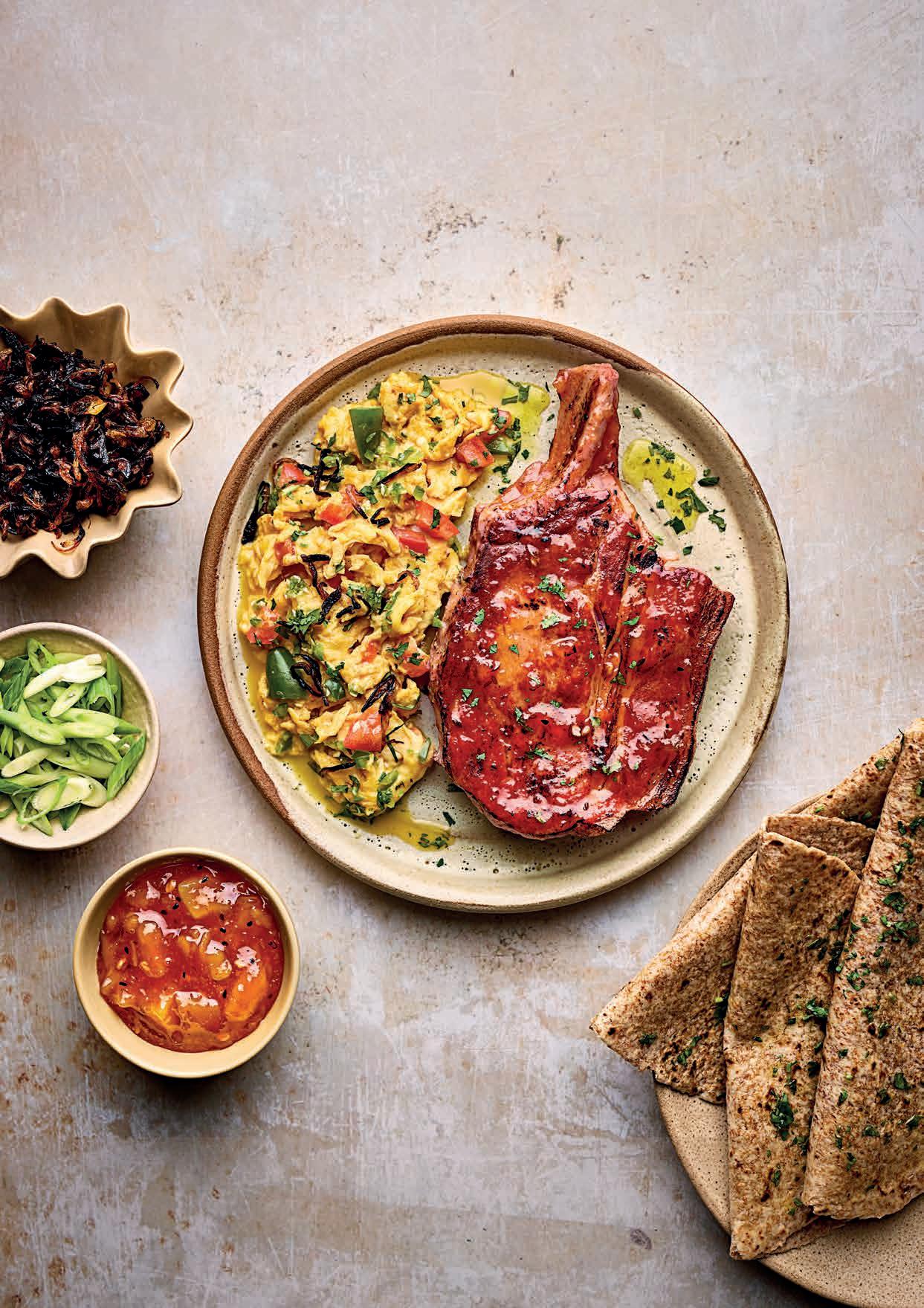
GUNPOWDER SPICED BACON CHOP WITH
EGGS BHURJI
PREP TIME: 20 minutes plus 2–24 hours marination COOK TIME: 12 –15 minutes
GUNPOWDER
MASALA RUB
1 tbsp gunpowder masala
½ tsp Kashmiri chilli powder
½ tsp smoked paprika
¼ tsp ground coriander
¼ tsp cumin powder
1 garlic clove, grated
½ tsp ginger, grated
1 tbsp lime juice
Salt & pepper (to taste)
TEMPERATURE: 200°C/180°C fan/Gas 6 SERVES: 4
MANGO SPICED
BACON CHOP
2 thick- cut bacon chops (or 4 thin - cut)
1 tbsp oil (neutral)
60g mango chutney
EGGS BHURJI
8 eggs
2 medium onion, finely chopped
2 medium tomatoes, finely chopped
2 green chillies, finely chopped
1 tbsp ginger-garlic paste
½ tsp turmeric powder
1 tsp Kashmiri chilli powder
½ tsp garam masala
2 tbsp fresh coriander, chopped
Salt (to taste)
2 tbsp ghee
METHOD
Mix the gunpowder masala, Kashmiri chilli powder, smoked paprika, ground coriander, cumin, grated garlic, grated ginger, lime juice and salt & pepper to create a thick, aromatic paste.
Coat the bacon chops generously and allow to marinate for 2 hours, or overnight for deeper spice flavour.
When ready to cook, heat a pan with a little oil and sear the bacon chops for 2–3 minutes on each side until beginning to caramelise. Brush with some of the mango chutney, then transfer to an oven preheated to 180°C and cook for 12–14 minutes, or until the internal temperature reaches 70–72°C.
Remove the chops from the oven, brush with the remaining mango chutney to create a glossy lacquer, and rest before serving.
To cook the eggs bhurji, heat ghee and sauté the onion until golden. Add ginger-garlic paste, chillies and tomatoes; cook until soft. Add turmeric, chilli powder, garam masala. Crack eggs in, scramble gently until just set. Finish with fresh coriander.
Serve the bhurji piled high, topped with bacon chop. Pair with hot buttered parathas.
PREP
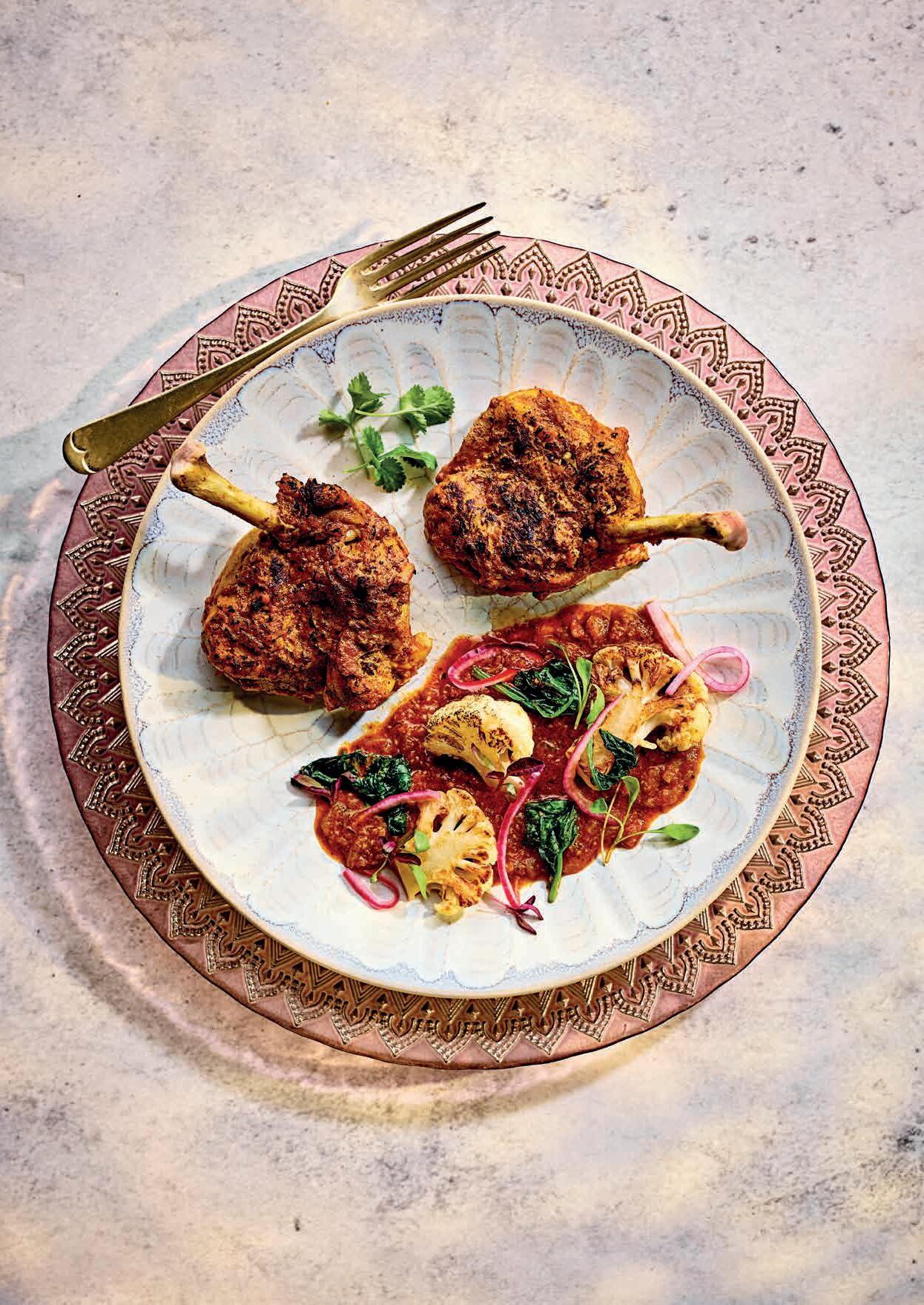
KOLHAPURI
CHICKEN CHOP
CHICKEN CHOPS
8 large chicken thighs
2 tbsp ginger-garlic paste
1 tbsp lemon juice
Salt (to taste)
KOLHAPURI MASALA
(DRY ROAST & GRIND)
6–8 dry red chillies (byadgi or Kashmiri)
2 tbsp coriander seeds
1 tsp cumin seeds
½ tsp black peppercorns
4 cloves
2 green cardamom
1-inch piece of cinnamon stick
1 tsp fennel seeds
2 tbsp dry coconut (desiccated)
1 tsp sesame seeds
METHOD
Place the chicken skin side down on a chopping board. Using the tip of your knife, carefully cut along the bone and scrape the meat off, cutting through at one end allowing the bone to still be attached to the thigh.
Mix chicken with ginger-garlic paste, lemon juice and salt. Set aside for 30 minutes.
Dry roast chillies, coriander, cumin, pepper, cloves, cardamom, cinnamon, fennel, coconut and sesame seeds until aromatic. Cool and grind to a fine powder.
CURRY BASE
2 medium onions, finely chopped
2 medium tomatoes, pureed
3 tbsp oil
½ tsp turmeric powder
Salt (to taste)
Fresh coriander (for garnish)
Heat oil in a heavy pan. Sauté onions until golden brown. Add tomato puree and cook until oil separates. Stir in turmeric and 3–4 tbsp of kolhapuri masala.
Add marinated chicken to the masala base. Cook on medium heat until chicken is sealed. Add 200ml water, cover and simmer for 20–25 minutes until chicken is cooked and tender and sauce thickens.
Serve with cardamom spiced pilau rice and fresh coriander leaves.
BOLD BALANCE KOREAN FOOD CULTURE
Korean cuisine, known as Hansik, is a vibrant, richly layered culinary tradition shaped by centuries of agricultural heritage, seasonal rhythms and fermentation techniques. At its core, Korean food balances bold flavours with nourishing simplicity, creating dishes that are simultaneously comforting and deeply expressive. Meals are built around the philosophy of harmony –between spicy, salty, sweet, sour and umami – and the belief that food plays an essential role in well-being. This holistic approach is evident in the diversity of shared side dishes (banchan) that accompany even the humblest meal, offering colour, texture and nutrition in every bite.
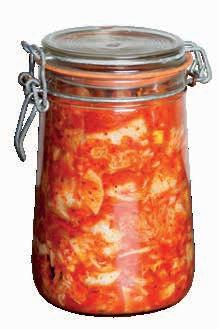
Fermentation is one of the pillars of Korean cooking, a practice developed both for preservation and for flavour development. Staples such as kimchi, doenjang (fermented soybean paste) and gochujang (fermented chili paste) form the backbone of countless dishes, infusing them with depth and complexity. These ingredients bring signature traits – heat, tang, richness and profound umami – that distinguish Korean flavours from other East Asian cuisines.
Key ingredients further shape the culinary landscape. Rice remains the central carbohydrate, often paired with soups, stews or grilled meats. Sesame oil and toasted sesame seeds add aroma and nuttiness, while soy sauce provides salinity and body. Garlic and ginger are omnipresent aromatics, building the base of marinades, stir-fries and broths. Korean chilli flakes (gochugaru) deliver distinctive warmth and colour without overwhelming heat, contributing to both traditional and contemporary dishes.
Seafood, both fresh and dried, plays a significant role due to the peninsula’s geography, while vegetables – especially napa cabbage, radish, beansprouts and perilla leaves – appear in nearly every meal. Together, these ingredients reflect Korea’s landscape, history and cultural values, resulting in a cuisine that is bold yet balanced, rustic yet refined, and endlessly inviting.
KOREAN HOTLIST
BOOKS
TO CHECK OUT
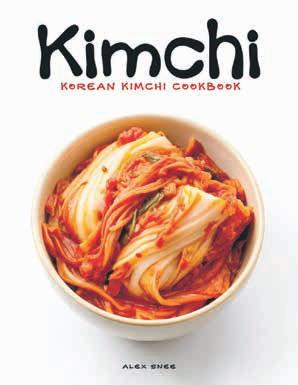
1. THE ESSENTIAL GUIDE TO MAKING AND COOKING WITH KIMCHI
The Essential Guide to Making and Cooking with Kimchi brings the heart of Korean cuisine into your hands, guiding you through the ancient art of fermentation with simple, step-by-step recipes that anyone can follow. Whether you’re a home cook exploring new flavours or a food lover craving tradition, this book helps you achieve authentic results without complicated equipment or hard-to-find ingredients.
Do you love the rich, tangy flavours of kimchi but don’t know where to start? Do you wish you could recreate your favourite Korean side dishes at home – fresh, crunchy and full of probiotics?
If you’ve ever dreamed of creating real Korean kimchi in your own kitchen – that perfectly balanced blend of spice, crunch and tang – then this book is your gateway to success.
Inside, you’ll find more than 70 traditional and modern kimchi recipes, from everyday favourites to regional specialties. Each recipe highlights unique ingredients – from Cabbage Kimchi and Radish Kimchi to Squid Kimchi, Pear Kimchi and even Abalone Kimchi –offering a complete journey through the bold flavours of Korea.
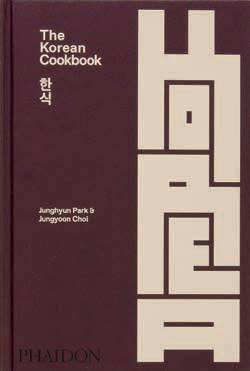
2. THE KOREAN COOKBOOK
350 authentic and delicious Korean recipes for the home cook, written by the perfect guides to this extraordinary cuisine –an acclaimed Korean chef and a Korean culinary expert.
The Korean Cookbook celebrates traditional regional dishes and everyday food found in home kitchens from Seoul to Jeju Island. This stunning collection features more than 350 recipes organised into traditional Korean meals, including pantry staples, fermented foods, rice, vegetable dishes, raw food, noodles, stir-fries, grilled meats, soups, stews, hotpots, noodles, dumplings, porridges, rice cakes and desserts.
Acclaimed Atomix chef Junghyun ‘JP’ Park and culinary researcher, chef and writer Jungyoon Choi share their years of research and expertise, together with their knowledge of the ingredients, culture and traditions of Korean food in this, the first comprehensive book on Korean home cooking, expansive in breadth and approach and filled with tasty and achievable recipes.
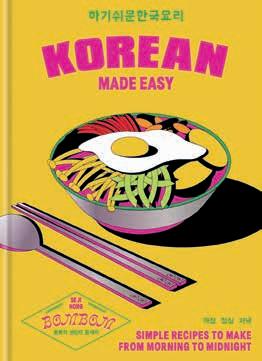
3. KOREAN MADE EASY
There’s no doubt that the bold flavours and comforting dishes of Korean food are delicious – and now they’re easy to cook at home!
In Korean Made Easy, Seji Hong demonstrates the simplicity of the country’s cuisine and reveals how to create some of its best-loved dishes. All the recipes in this book are simple enough for kitchen novices but are also sure to excite more seasoned cooks, with classics including Beef Bulgogi and Cold Spicy Noodles, as well as street-food favourites such as Gochujang Chicken Skewers and Korean Corn Dogs.
Peppered with fascinating insights into Korean cuisine, culture and history as well as the flavour-packed recipes, Korean Made Easy has everything that fans of Korean culture are looking for. It couldn’t be easier to embrace the K-food wave.
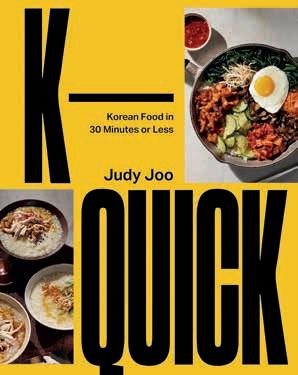
4. K-QUICK
Judy Joo, a chef, restaurateur, writer and connoisseur of Korean fried chicken, has gained widespread acclaim for her vibrant approach to Korean cuisine. Now, she presents her latest collection of fresh, exciting recipes in K-Quick.
Korean culture is everywhere, and luckily for us, so is its cuisine. With interest in K-food at an all-time high, there’s never been a better time to explore the incredible, diverse flavours of East Asia. K-Quick focuses on recipes that blend creative flair with accessibility, ensuring every mealtime is a success.
Showcasing a variety of quick-to-prepare dishes alongside a selection of traditional recipes, K-Quick offers a solution for the adventurous foodie who’s strapped for time, ensuring that there’s truly a dish for every mood. Each recipe features clear, timespecific instructions, and Judy will guide you through the process as you create delicious Korean treats in under 30 minutes.
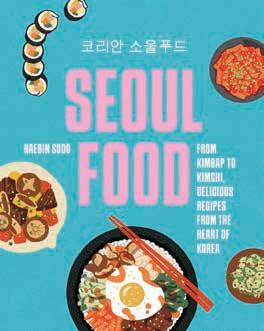
5. SEOUL FOOD
Embark on a culinary adventure through the rich and flavoursome world of Korean cuisine as author Haebin Sudo recreates 60 carefully selected dishes for her first cookery book. Seoul Food is full of delicious dishes that showcase authentic Korean meals.
From traditional family feasts and special occasion banquets to street food, fusion blends and simple sides, experience an explosion of flavours and ingredients with Seoul Food, 60 authentic recipes that take you to the very heart of Korean cuisine. Featuring iconic dishes such as kimchi jjigae, bibim guksu, bulgogi bibimbap, tteokbokki, kimbap and more, let Haebin Sudo bring the magic of K-food straight to your kitchen.
These restaurants represent the pinnacle of Korean culinary art globally, ranging from fine dining to elevated, traditional and modern experiences.
1. MINGLES
Seoul
A three-Michelin-starred restaurant led by Chef Mingoo Kang, known for harmonising traditional Korean flavours with contemporary techniques.
2. JUNGSIK
Seoul/New York
A pioneer of modern ‘New Korean’ cuisine, offering refined dishes in both Seoul and NYC locations.
CHEFS TO WATCH OUR TOP 5 KOREAN EAT LIST
1. SON JONG-WON
Eatanic Garden/L’Amant Secret, Seoul
Chef Son is recognised for his refined, botanical-inspired and emotionally evocative Korean fine dining. He is known for blending Korean aesthetics with sophisticated techniques, making his restaurants in Seoul’s Gangnam/Myeongdong areas top destinations.
2. JO YEONGDONG
Y’EAST, Seoul
3. NAE:UM
Singapore
A one-Michelin-starred restaurant serving contemporary Korean cuisine inspired by traditional cooking, recognised as one of the best in Asia.
4. MOSU
Seoul
A renowned three-Michelin-starred restaurant in Seoul, known for innovative and sophisticated, ingredient-focused cuisine.
5. MOON PARK
Sydney
Celebrated for blending modern Korean food, such as smoked eel seam, with a great wine list.








HERE IS OUR GUIDE TO THE TOP 10 INGREDIENTS TO LEVEL UP YOUR KOREAN COOKING SKILLS:
1. GOCHUJANG
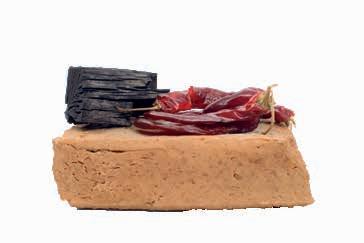
Korean fermented red chilli paste. Sweet, spicy, savoury and foundational for sauces, marinades, and stews.
6. RICE VINEGAR
Clean, mild acidity. Balances dressings, salads, banchan and noodle dishes.
3. KANG MIN-CHUL Giwakang/Kang Min-chul Restaurant, Seoul
Recognised by LaListe 2026 as a top-tier chef, Kang is known for his dedication to innovation and excellence in haute cuisine. He is considered a rising star, shaping the future of Korea’s gastronomic landscape.
4. LOUIS HAN NAE:UM, Singapore
A former Michelin Young Chef of the Year, Chef Han is acclaimed for his progressive take on Korean cuisine and his ability to fuse Western techniques with Korean flavours.
Presented with the ‘Talent of the Year Award Korea’ by LaListe 2026, Chef Jo is pioneering a modern, creative reinterpretation of Korean cuisine. His approach at Y’EAST combines deep curiosity with traditional ingredients, marking him as a leader among the new generation of chefs.
He continues to make significant impacts on the international scene, particularly in Southeast Asia.
5. HASUNG LEE Oyatte, New York City
Coming off the success of the Netflix series Culinary Class Wars, Chef Hasung Lee is expanding his footprint to New York City with the 2026 opening of Oyatte in Murray Hill. With a pedigree that includes The French Laundry and Copenhagen’s Geranium, he is set to bring a unique global perspective to Korean cuisine in the US.
2. GOCHUGARU
Korean red pepper flakes/powder. Vibrant colour, smoky heat, essential for kimchi and spicy broths.
3. SOY SAUCE
The base seasoning in many dishes. Used in marinades, stir-fries, broths and dipping sauces.
4. SESAME OIL
Nutty and aromatic finishing oil. Adds ‘Korean flavour’ instantly when drizzled over rice, noodles or banchan.
5. DOENJANG
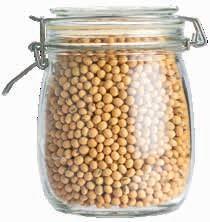
Fermented soybean paste. Deep umami – crucial for soups, stews and marinades.
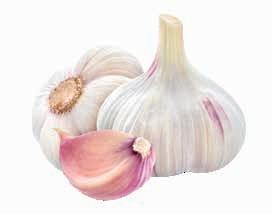
7. GARLIC
Used fresh, minced or smashed. Korean cuisine uses lots of garlic –almost every savoury dish includes it.
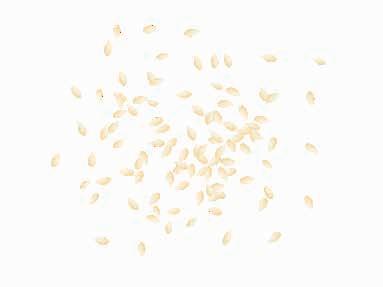
8. SESAME SEEDS
Toasted finishing ingredient. Adds nutty crunch to rice bowls, veggies and meats.
9. ANCHOVY STOCK POWDER / DRIED ANCHOVIES
The backbone of Korean soups and stews. Provides clean ocean umami to almost all broths.
10. KOREAN PEAR OR KOREAN PEAR JUICE
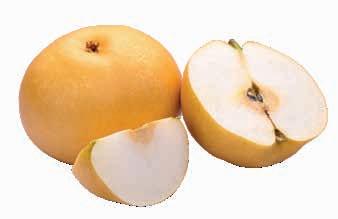
Natural tenderiser plus sweetness. Key in bulgogi, galbi and barbecue-style marinades.
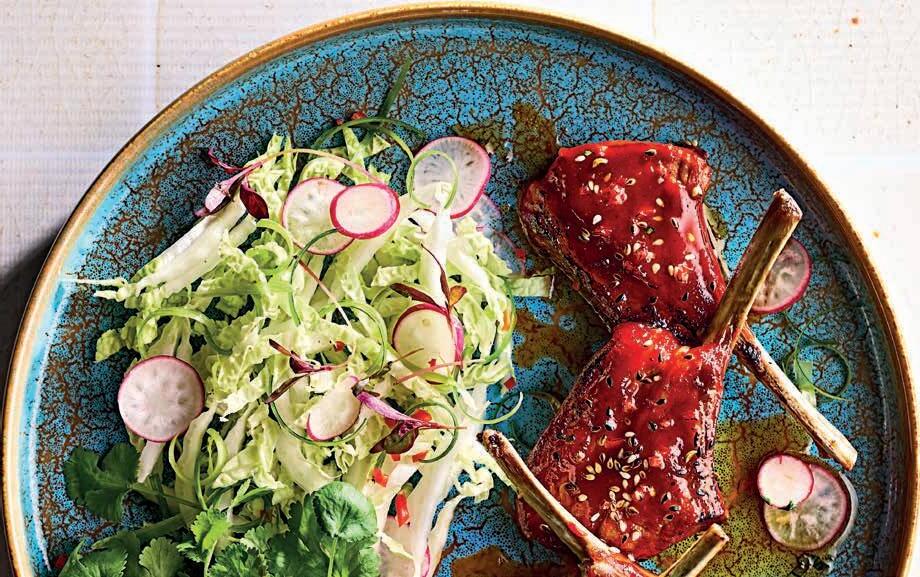
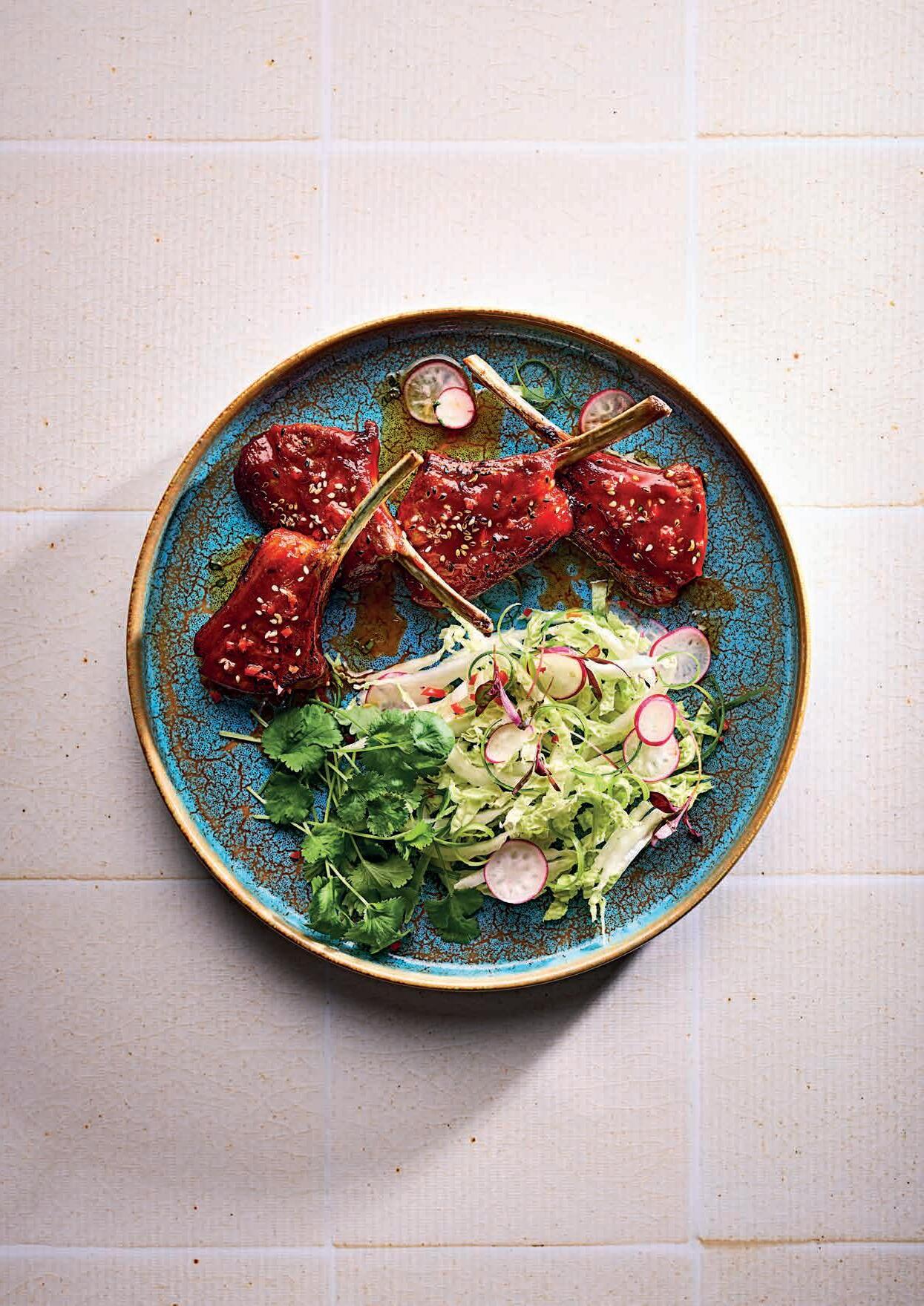
GOCHUJANG HOT HONEY LAMB LOLLIPOPS WITH PICKLED RADISHES
PREP TIME: 30 minutes
LAMB LOLLIPOPS
8 lamb cutlets
8 tbsp gochujang paste
1-inch piece of ginger, peeled and finely grated
3 cloves of garlic, peeled and finely grated
2 tbsp blossom honey
2 tbsp kecap manis
2 tbsp mirin
Furikake (to sprinkle)
COOK TIME: 5-8 minutes
TEMPERATURE: High Grill SERVES: 4
PICKLED RADISH
Half a peeled mouli or turnip
12 small radishes
1 large red onion
1 tbsp golden caster sugar
1 tbsp salt
100ml cider vinegar
50ml water
METHOD
LAMB LOLLIPOPS
Heat a small saucepan over a medium heat with a drizzle of vegetable oil and once hot add the chopped ginger and garlic. Cook for 2–3 minutes or until fragrant, then stir in the gochujang paste, blossom honey, mirin and kecap manis. Add in 2 tbsp of water then stir to combine and remove from the heat.
Heat your grill to high and line a baking tray with foil, drizzling over a little oil. Add your lamb cutlets and brush the tops with marinade, then put under the grill for 4 minutes. Remove, flip and brush again. Put back into the grill for 4 minutes or until cooked to your liking.
Serve the gochujang lamb cutlets garnished with a sprinkling furikaka seasoning and the pickled radishes.
PICKLED RADISH
Slice 1 large red onion into thin rings and 12 small radishes into thin slices. Stir in 1 tbsp salt and 1 tbsp golden caster sugar and leave for 20 minutes. Warm 100ml cider vinegar and 50ml water in a small saucepan, then pour over the vegetables. Stir to dissolve the sugar and salt, then leave to cool (make these the day before to marinate and infuse).
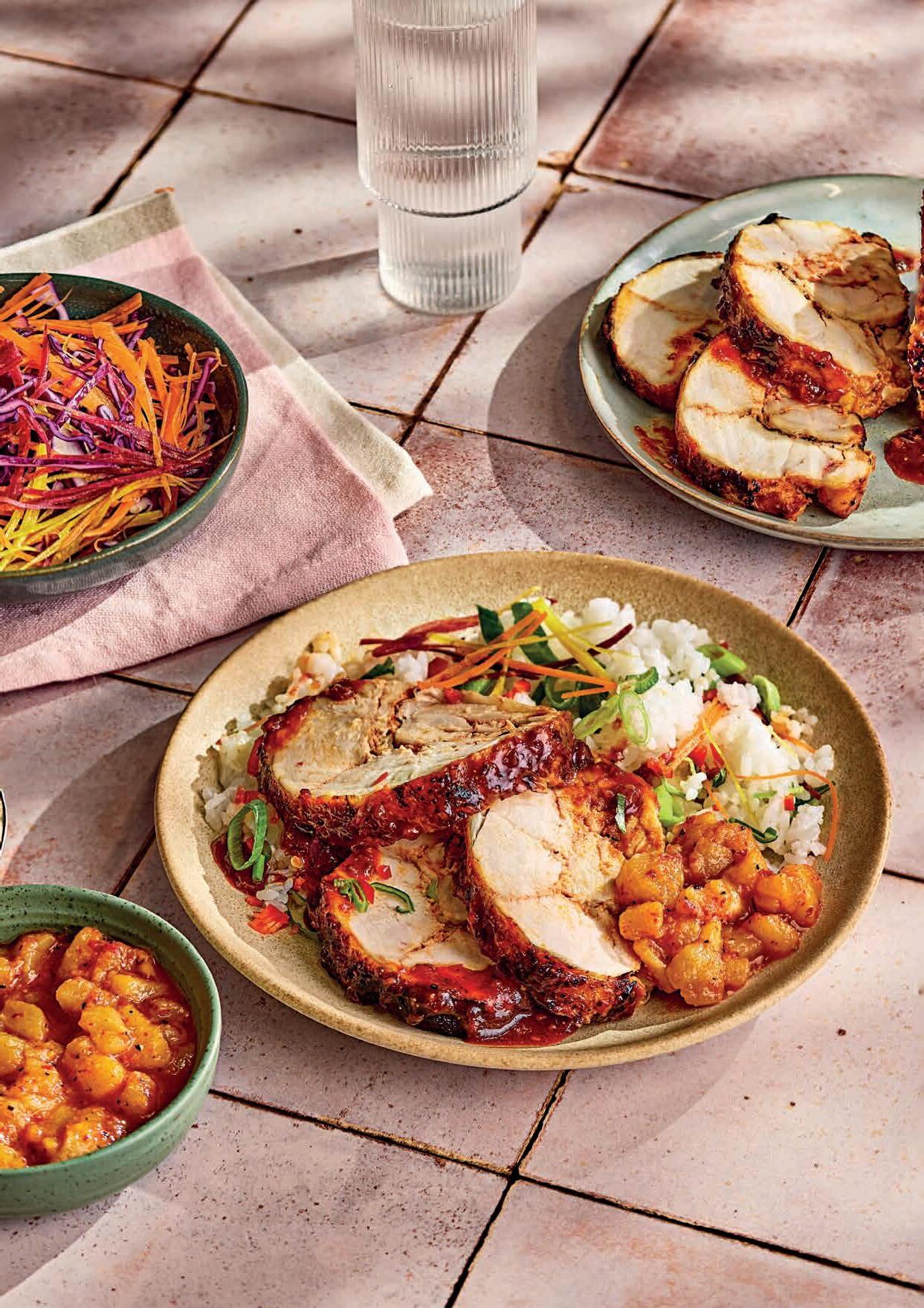
BULGOGI-SPICED DEBONED WHOLE CHICKEN WITH SSAMJANG & PEAR RELISH
PREP TIME: 45 minutes (plus marination time) COOK TIME:
CHICKEN
1.2–1.5kg whole chicken (deboned, skin on)
100ml soy sauce
1 tbsp gochugaru (Korean chilli flakes)
2 tbsp brown sugar
2 tbsp sesame oil
4 cloves garlic, minced
1 tbsp ginger, grated
½ Asian pear, grated (for tenderising and sweetness)
2 tbsp mirin
½ tsp black pepper
METHOD
Remove bones carefully from the chicken, keeping skin intact for presentation.
SSAMJANG GLAZE
1 tbsp ssamjang
1 tbsp gochujang
2 tbsp held marinade
1 tbsp sesame oil
1 tsp honey
1 tsp rice vinegar
PEAR RELISH
2 ½ Asian pear, finely diced
1 garlic clove, minced
1 tsp grated ginger
2 tbsp rice vinegar
2 tbsp brown sugar
1 tsp gochutgaru flakes
Pinch of salt
Combine soy sauce, gochugaru, sugar, sesame oil, garlic, ginger, grated pear, mirin and pepper. Reserve 2 tbsp for the glaze. Use the rest of the marinade and rub thoroughly over the chicken. Cover and refrigerate for at least 4 hours (overnight for best flavour).
For the glaze, mix all the ingredients, including the reserved marinade, and set to one side.
To roll the chicken, place on a tray or board and roll from the deboned leg to the other deboned leg. Using some string, tie the rolled chicken up and place in a roasting tray.
Place in the centre of a preheated oven at 210°C/190°C fan. Cook for 45–50 minutes (or until juices run clear) ensuring that you baste the product with the glaze every 15 minutes. Once cooked, remove from oven and rest for 10 minutes.
For the relish, put the garlic and ginger into a pot and sweat for 2 minutes, add pear and place on medium heat for 3 minutes. Add the vinegar, brown sugar, gochugaru flakes and pinch of salt. Cook for 8–10 minutes, remove from heat and allow to cool.
Slice the chicken and lay on a large plate, spoon over juices and top with the pear relish.
PREP TIME:
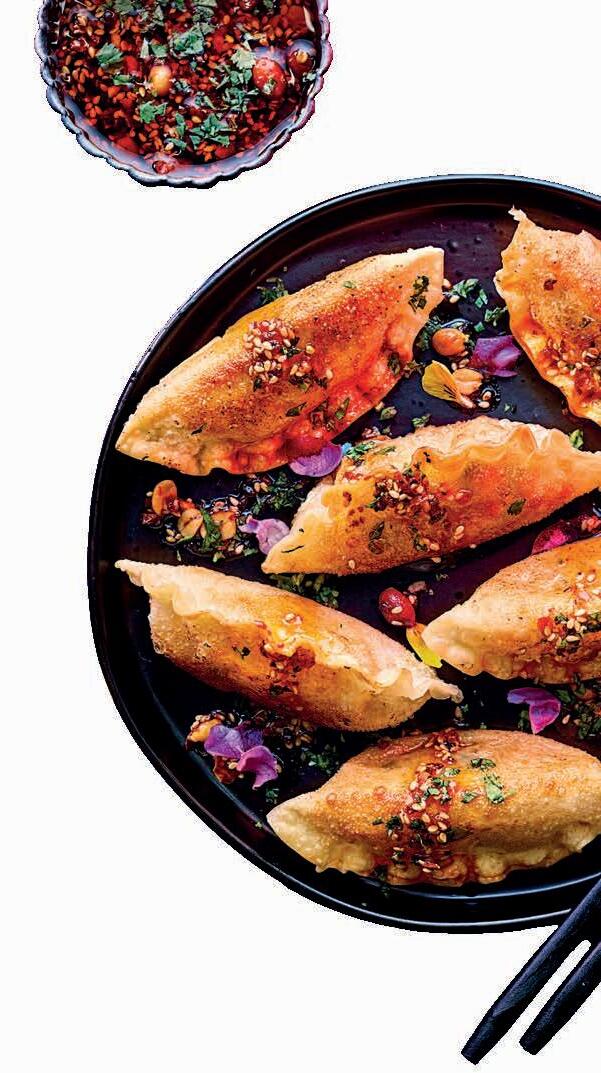
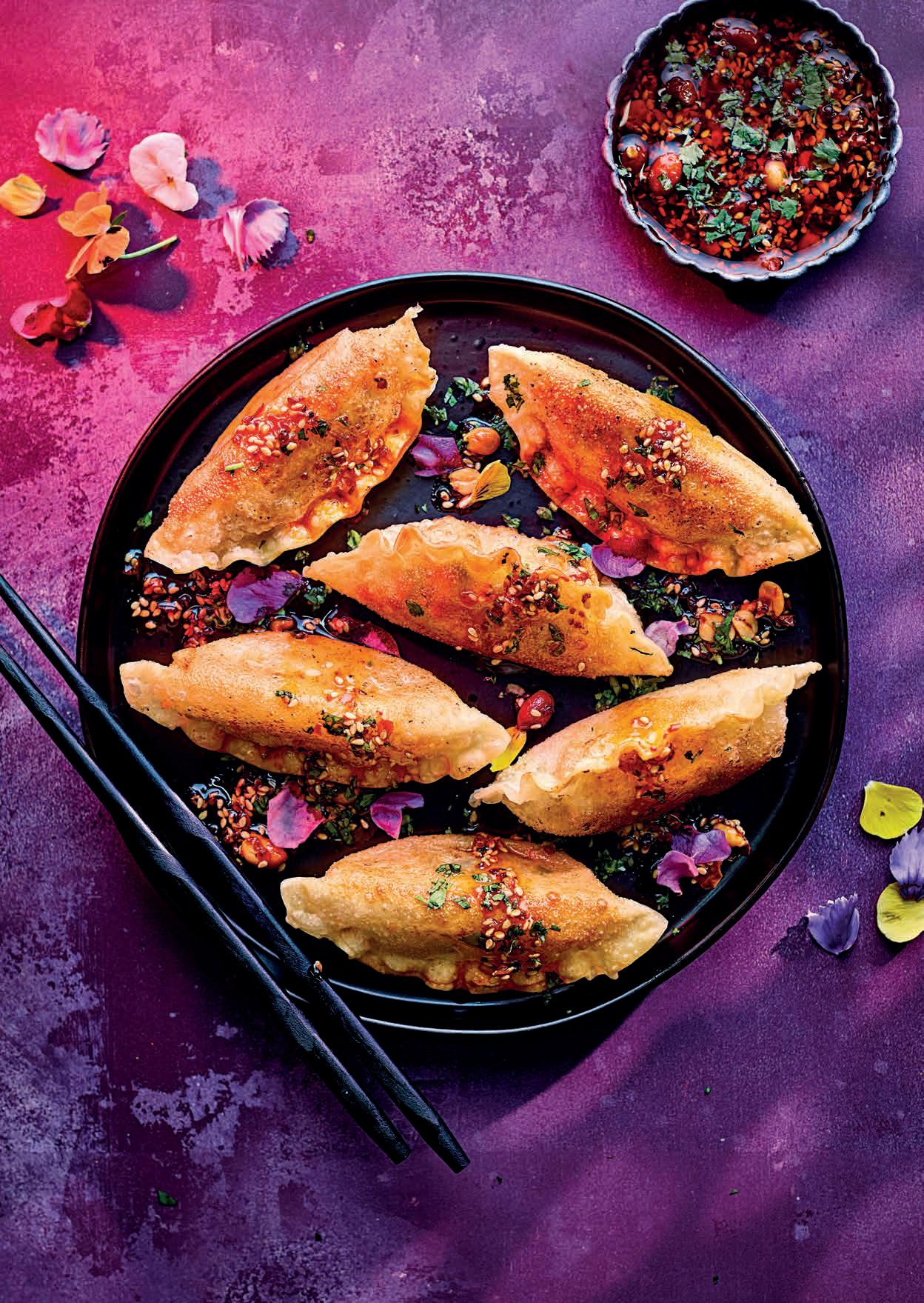
KOREAN GUN MANDU DUMPLINGS
30 minutes approximately
COOK TIME: 10 minutes approximately
DUMPLING FILLING
450g pork mince
1 onion, finely chopped
1 cup cabbage, finely chopped
½ cup tofu, chopped
100g mung bean/vermicelli noodles (soaked in hot water for 15 mins), chopped
3 cloves of garlic, finely chopped
2 tbsp soy sauce
1 tbsp sesame oil
1 tsp salt
1x tsp black pepper
TEMPERATURE: Hob on low to medium heat SERVES: 6
KOREAN CHILLI CRISP
¾ cup of oil
½ onion
3 spring onions
3 tbsp fresh ginger
¼ cup sesame oil
15 cloves of garlic
4 tbsp red chilli flakes
3 tbsp gochugaru
2 tbsp sesame seeds
1 tbsp sugar
1 tsp salt
1 tbsp soy sauce
4 tbsp peanuts, chopped
METHOD
For the dumpling mix, combine all ingredients in a bowl and mix well through. Place 1 tablespoon of filling in the centre of the dumpling wrapper. Dip your finger in water and wet the perimeter of half the wrapper. Fold wrapper in half, pressing to seal and crimping the edges. Repeat until filling is gone. Place 2 tablespoons of oil in pan over a medium to high heat. Cook for 2–3 minutes per side or until golden brown. Add a few tablespoons of water and cover to steam for 4–5 minutes.
To make the Korean chilli crisp, put garlic, onion, spring onions and ginger in a food processor and chop. This can also be done by hand.
PASTRY
1 pack of 40 Mandu or Japanese gyoza wrappers
Take a saucepan and add the oil and chopped ingredients. Heat on low for 10–15 minutes stirring constantly. Firstly, the mixture will froth due to moisture and then it will start to crisp after about 10 minutes. Next, add the sesame oil to cool it down slightly. Add sesame seeds, peanuts, chilli flakes and gochugaru. Stir in and then add sugar, salt, soy and give another generous mix. Cook on low heat for a further 2 minutes before setting aside to cool. Keep in a sterilised jar.
Serve the dumplings with a drizzle of the Korean chilli crisp.
Southeast Asian Cuisine SOUTHEAST ASIAN
Southeast Asian cuisine is a vibrant tapestry of flavours shaped by tropical climates, ancient trade routes and rich cultural exchanges across the region. Encompassing countries such as Thailand, Vietnam, Malaysia, Indonesia, Singapore, the Philippines, Cambodia, Laos, Myanmar and Brunei, the cuisine is celebrated for its balance of sweet, salty, sour, spicy and aromatic elements. Despite regional diversity, these nations share a culinary philosophy rooted in fresh herbs, bold spices and harmony on the palate.
Thailand is renowned for its striking contrasts – fragrant coconut-based curries, zesty salads and dishes layered with lime, fish sauce, palm sugar and chilli. Staples include lemongrass, galangal, kaffir lime and Thai basil.
Vietnamese cuisine emphasises lightness and freshness, featuring rice noodles, fresh herbs, fish sauce and aromatic broths, all designed to balance texture and temperature.

Malaysia and Singapore, shaped by Malay, Chinese and Indian influences, showcase complex spice blends, sambals, coconut milk, noodles and curries with deep multicultural roots.
Indonesia offers robust flavours built on spices like turmeric, coriander, nutmeg and cloves, along with soybased ingredients such as sweet soy sauce (kecap manis) and tempeh.
The Philippines blends indigenous traditions with Spanish and Chinese influences, resulting in dishes featuring vinegar, soy sauce, garlic and tropical fruits.
Cambodia, Laos and Myanmar favour earthy, herbal flavours, often using fermented pastes such as prahok or padaek, alongside sticky rice, fresh greens and river fish.
While Brunei draws from Malay and Bornean traditions, highlighting rice, coconut and richly spiced stews.
Across the region, common staples include rice, noodles, coconut milk, fresh chillies, limes, lemongrass, ginger, garlic, shallots, fish sauce, shrimp paste, tofu and an abundance of herbs such as mint, cilantro and basil. Together, these ingredients shape a cuisine that is fragrant, diverse and deeply rooted in cultural identity – one that continues to captivate cooks and diners worldwide.
HOT LIST
BOOKS TO CHECK OUT
1. THE NEW FILIPINO KITCHEN
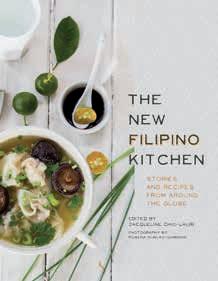
The New Filipino Kitchen collects 30 recipes and stories from expat Filipinos, all of whom have taken their favourite dishes with them, preserving their food memories and, if necessary, tweaking their recipes to work in a new environment or, in the case of some chefs, a more modern context. With contributions from the White House executive chef Cristeta Comerford, Bocuse d’Or Europe winner Christian André Pettersen, 2015 MasterChef New Zealand runner-up Leo Fernandez, five-time Palanca Award winner and poet Francis Macansantos, and the ‘Food Buddha’ Rodelio Aglibot, this is a multifaceted, nuanced introduction to the world of Filipino food and food culture.
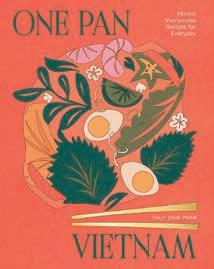
2. ONE PAN VIETNAM
One Pan Vietnam shows you just how easy it is to create Vietnamese flavours without any fuss. Vietnamese dishes are often thought of as time-consuming and intricate, likely due to the popularity of Pho, the country’s famously delicious but complex dish, but there are many dishes that, with the right ingredients and a little know-how, come together in no time and, even better, in just one pan!
Thuy Diem Pham’s latest book is packed with simple and mouth-watering Vietnamese-style recipes for everything from stir-fries and salads to broths and bún bowls. You’ll find aromatic noodle soups, delicious salads bursting with fresh, zesty flavours, heart-warming soups and stews, and much more.
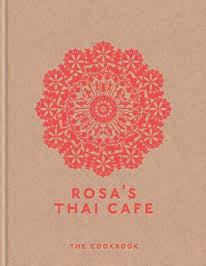
Rosa’s Thai Cafe celebrates traditional Thai cooking techniques in keeping with the celebrated chain’s contemporary twist on authentic Thai cuisine (sometimes based on Western ingredients). It features over 100 recipes, including dishes from the menu at Rosa’s as well as family favourites and regional dishes from founder Saiphin Moore’s regular trips back home. Recipes range from the aromatic beef massaman curry to soft shell crab salad, larb spring rolls, homemade sriracha sauce and mangoes with sticky rice.
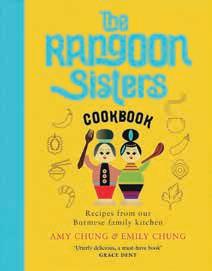
4. THE RANGOON SISTERS
The Rangoon Sisters is a celebration of the incredible food and flavours that are found throughout Myanmar, including over 80 evocative recipes that have been made easy and accessible for the modern home cook by supper club pioneers Emily and Amy Chung.
Including chapters titled Snacks, Salads, Curries, Rice, Noodles and Sweets, the simple recipes are perfect for a quick weekday family meal or a comforting slow cook on a weekend. And the food is ideal for sharing and pairing: rich bowls of curry are contrasted with vibrant salads and heaps of steaming rice.
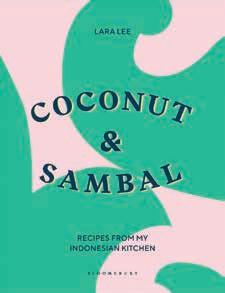
5. COCONUT & SAMBAL
Coconut & Sambal reveals the secrets behind authentic Indonesian cookery. With more than 80 traditional and vibrant recipes that have been passed down through the generations, you will discover dishes such as nasi goreng, beef rendang, chilli prawn satay and pandan cake, alongside a variety of recipes for sambals: fragrant, spicy relishes that are undoubtedly the heart and soul of every meal.
Chef and author Lara Lee uses simple techniques and easily accessible ingredients throughout Coconut and Sambal, interweaving the recipes with beguiling tales of island life and gorgeous travel photography that shines a light on the magnificent, little-known cuisine of Indonesia.
3. ROSA’S THAI CAFE



OUR TOP 5 SOUTHEAST ASIAN EAT LIST
1. NUSARA
Bangkok
One of Bangkok’s most acclaimed Thai restaurants, Nusara reinterprets classic Thai dishes through a modern, refined lens while drawing deeply from family and royal Thai culinary traditions.
2. SORN
Bangkok
Thailand’s first three Michelin star Thai restaurant, Sorn, focuses exclusively on the flavours of Southern Thailand using almost entirely Southern Thai ingredients. Highly technical yet deeply traditional.
CHEFS TO WATCH
1. CHUDAREE ‘TAM’ DEBHAKAM
Baan Tepa, Bangkok, Thailand
Chudaree was Asia’s Best Female Chef 2025 for her sustainability driven, biodiversity-focused Thai cuisine. She is the first Thai woman with two Michelin stars, transforming her family home into an immersive Thai culinary institution.
She is known for farm-to-table innovation, zero-waste systems and modern Thai storytelling. Chef Tam is redefining what a modern Thai fine-dining restaurant can be and is poised to shape the region’s culinary identity in 2026.
2. PICHAYA ‘PAM’ SOONTORNYANAKIJ
Potong, Bangkok, Thailand
Recipient of the World’s Best Female Chef 2025 title, Pam is the first Thai and Asian chef to achieve this. Potong debuted at #13 on Asia’s 50 Best Restaurants 2025, earning the Highest New Entry Award. Her progressive
3. TOYO EATERY
Manila
Toyo Eatery showcases Filipino culinary identity through creative use of local Philippine ingredients, representing the Philippines on Asia’s 50 Best list.
4. AUGUST
Jakarta
August, ranked in Asia’s 50 Best, is recognised for its creative use of local Indonesian ingredients in globally aware dishes – firmly grounding it in Indonesian culinary identity.
5. LOCAVORE NXT
Bali
A plant based Indonesian restaurant and winner of the sustainable restaurant award, Locavore NXT builds its menu entirely around local Indonesian produce, permaculture methods and Indonesian flavour traditions
Thai-Chinese cuisine blends deep heritage with cutting-edge technique. Chef Pam’s rapid ascent signals that she’ll be a major global culinary force in 2026 and beyond.
3. JORDY NAVARRA
Toyo Eatery, Manila, Philippines
Toyo Eatery won the Gin Mare Art of Hospitality Award 2025, cementing its role as a Filipino cultural ambassador. Toyo has won numerous awards and garnered global recognition for its sustainability. The food elevates Filipino cuisine through ingredientdriven creativity, indigenous produce and heritage revival with Navarra continually pushing Filipino cuisine into global fine dining conversations. Expect an even greater impact in 2026.
4. PRIN POLSUK
Samrub Samrub Thai, Bangkok, Thailand
Prin Polsuk is recognised as an unofficial ambassador of Thai cuisine, reviving ancient Thai
recipes and nearly forgotten ingredients. His restaurant’s move to Silom and continued acclaim position him as one of Thailand’s most influential traditionaliststurned-innovators. Chef Prin is safeguarding Thailand’s culinary past while modernising its future – a key figure to watch as heritage cuisine gains global traction.
5. HANS CHRISTIAN
August, Jakarta, Indonesia
August was named Best Restaurant in Indonesia in 2025, recognised for its refined reinterpretations of Indonesian flavours. Co-founder and chef Hans Christian brings childhood memories and regional identity into modern Indonesian fine dining. As Indonesian gastronomy rises internationally, Hans Christian’s voice is becoming central to defining its next wave.
Our top 10 Asian ingredients to add that sweet, sour, salty and spicy element to your cooking
1. FISH SAUCE (NAM PLA)
The ultimate source of salt and umami. Made from fermented anchovies, it is used in almost every dish, from Thai curries to Vietnamese dipping sauces.
2. COCONUT MILK
Provides a creamy, rich base for many Southeast Asian curries and desserts, particularly in Thailand, Malaysia and Indonesia.
3. LEMONGRASS
A woody, aromatic stalk that adds a bright, citrusy and floral note to soups like Tom Yum and marinades for grilled meats.
4. GALANGAL
A relative of ginger but with a sharper, more peppery and citrus-pine flavour. It is an essential component of many authentic curry pastes.
5. BIRD’S EYE CHILLIES
These small, potent chillies provide the ‘fiery’ heat characteristic of the region. They are used fresh, dried or pounded into pastes.
6. SHRIMP PASTE
A pungent, fermented block that adds deep, savoury complexity. It is often toasted before use to release its full aroma in sambals and stir-fries.
7. TAMARIND
The primary souring agent. Usually sold as a pulp or concentrate, it provides a fruity, mellow tang to dishes like Pad Thai or Indonesian Sayur Asem.
8. MAKRUT LIME LEAVES
Used for their intense, double-lobed leaves that impart a unique, high-pitched citrus fragrance to curries and soups.
9. PALM SUGAR
An unrefined sugar with a deep, caramel-like flavour used to balance out salt and heat in sauces and dressings.
10. SHALLOTS AND GARLIC
The aromatic foundation of almost every Southeast Asian dish. They are often pounded together into a paste to start a stir-fry or fried into crispy garnishes.
PREP TIME: 90 minutes
MARINADE
150ml light soy sauce
75ml calamansi juice
(or lemon juice)
4 garlic cloves, finely chopped
1 thumb-sized piece of ginger, finely chopped
Salt & pepper to season
CHICKEN
4 large skinless chicken thigh fillets
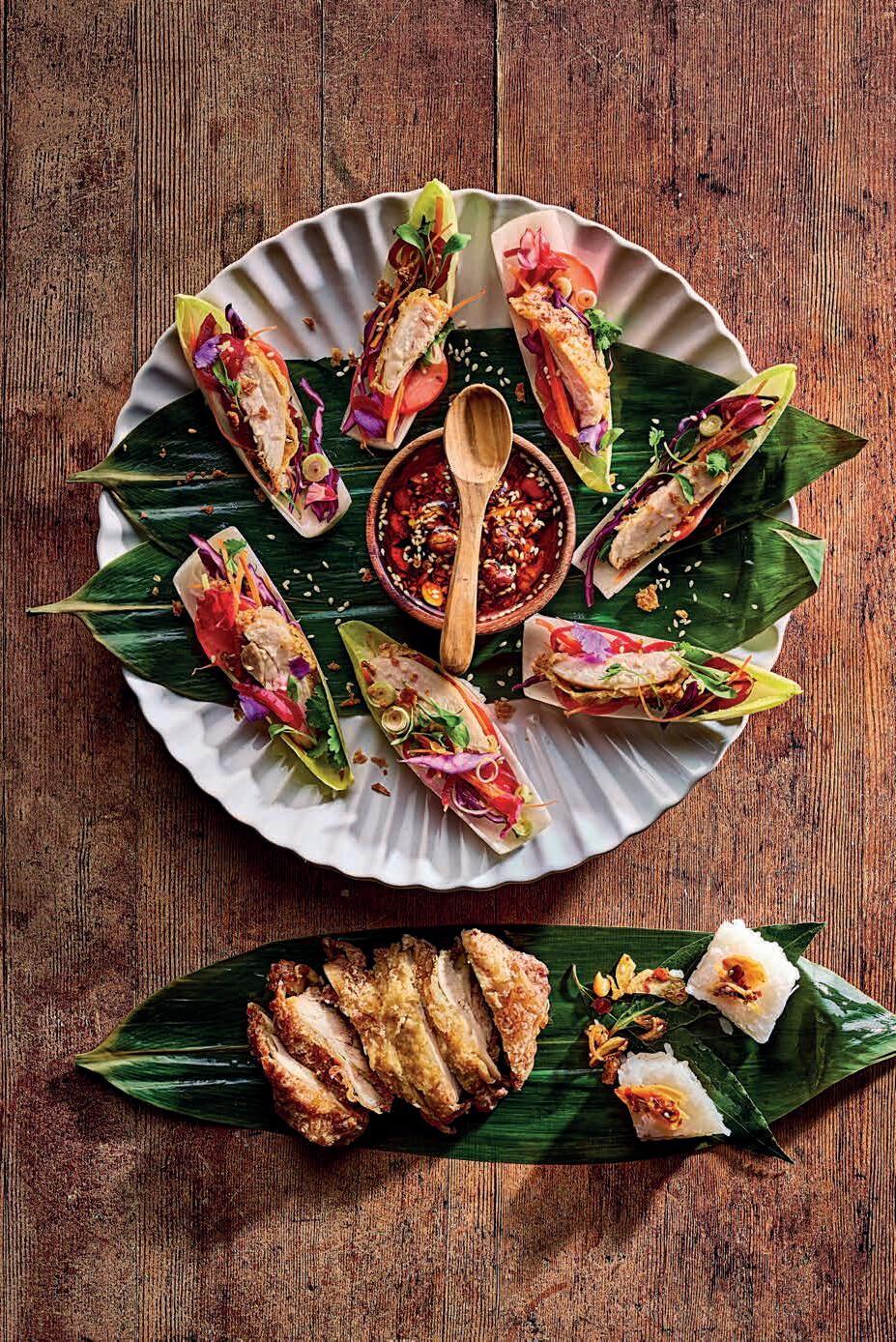
FILIPINO FRIED CHICKEN
LEMONGRASS & SOY WITH CALAMANSI AND BURNT SPRING ONION AIOLI
COOK TIME: 30 minutes
COATING
250g all-purpose flour
250g potato starch
2 tsp baking powder
1 tsp garlic powder
1 tsp onion powder
1 tsp salt
1 tsp black pepper
TEMPERATURE: Deep fat fryer at 160°C, plus frying pan on hob at medium heat
LEMON GRASS AND GINGER SAUCE
150ml soy sauce
50ml calamansi juice
30g palm sugar
30g honey
1 lemongrass stalk finely chopped (remove tough outer layer)
1 thumb sized piece ginger, finely chopped
1 garlic clove, finely chopped
SERVES: 4
BURNT SCALLION AND CALAMANSI AIOLI
2 spring onions (cooked and charred on BBQ or under grill)
50ml calamansi juice
200g Leon garlic aioli
GARLIC AND BAY RICE (SINANGAG)
300g long grain rice (cooked)
2 tbsp olive oil
3 large garlic cloves, minced ½ tsp ground bay leaves
METHOD
For the Sauce, place the soy sauce, calamansi juice, palm sugar and honey in a saucepan, bring to the boil then reduce to a low simmer. Add in the lemongrass, ginger and garlic and allow to cook on a low simmer for around 15 minutes until the sauce has reduced by half.
Mix the ingredients for the marinade and coat the chicken thighs and leave to marinade for at least 1 hour (overnight is best).
Mix all the coating ingredients into a bowl. Next, lift the chicken directly from the marinade one piece at a time and place in the coating mixture, ensuring that all the chicken is evenly covered. When all 4 pieces are done repeat the step by dipping the coated chicken in the marinade again, then into the remaining flour coating.
To cook the chicken, fry in a deep fat fryer at 160°C for 4–5 minutes until coating is crisp and golden in colour. To ensure chicken is fully cooked probe and ensure its at least 75°C.
For the aioli, chop the charred and softened spring onion finely and add to the aioli along with the calamansi juice. Season with salt & pepper to taste.
For the rice, use your hands to break up any clumps in it. In a large frying pan, add the olive oil and garlic and heat over medium to high heat, stirring regularly to ensure even browning. Fry the garlic until the garlic is a golden-brown colour.
Remove half of the garlic from the pan, leaving the oil behind. Add the rice and ground bay and toss to coat evenly with the oil and garlic. Stir-fry the rice until it’s heated through. Season with salt & pepper to taste. Add the rest of the garlic to garnish.
To serve, place the cooked chicken on a bed of the garlic and bay rice with the lemongrass and ginger sauce spooned over and the burnt scallion and calamansi aioli on the side.
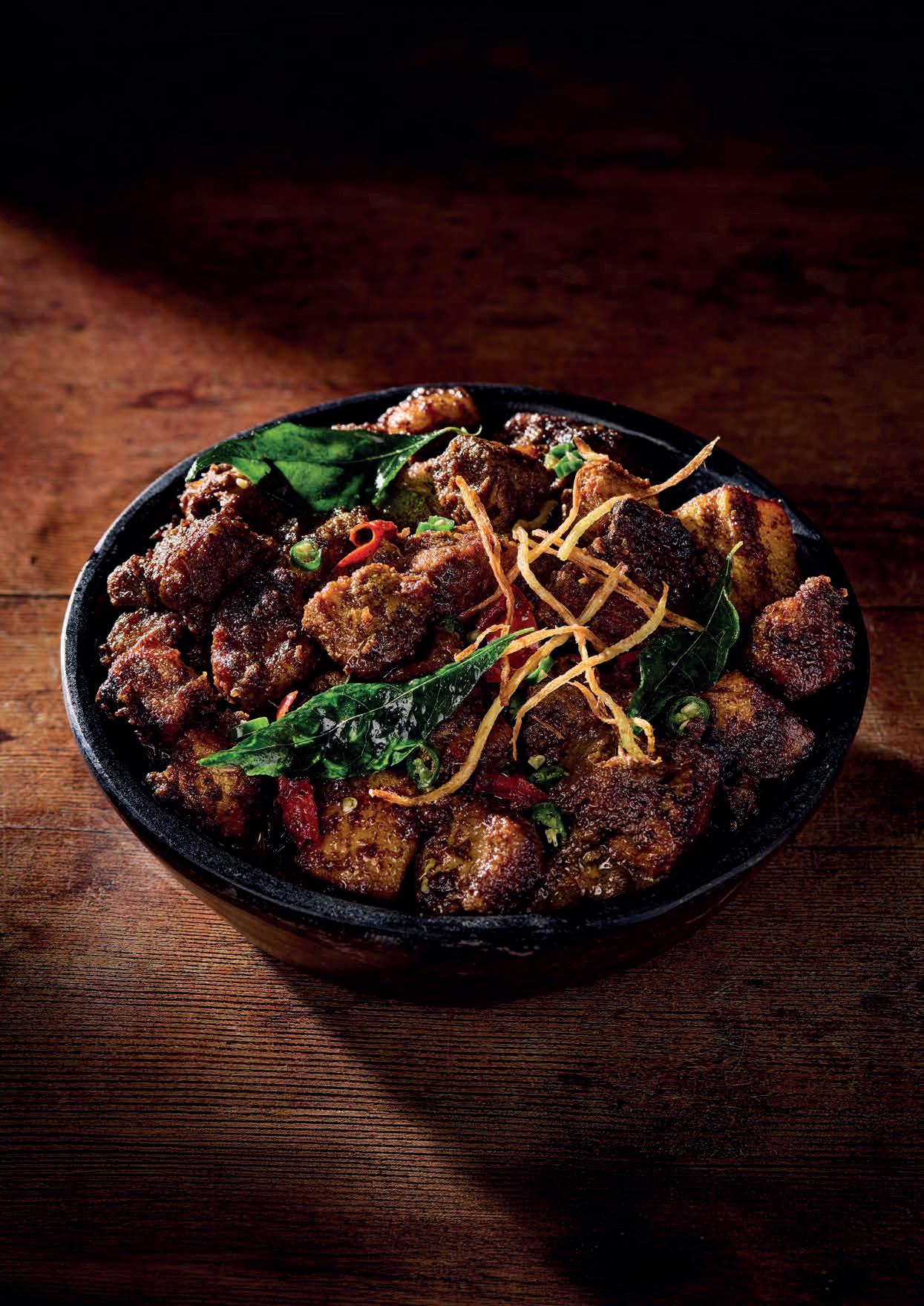
SRI LANKAN BLACK PORK CURRY
Discover the bold flavours of Sri Lanka with this traditional curry. Slow-cooked pork meets a smoky, roasted spice blend, tamarind and vinegar to create a dish that’s rich, aromatic and unforgettable.
PREP TIME: 20 minutes COOK TIME: 60 minutes TEMPERATURE: Medium SERVES: 4
ROASTED SPICE MIX
2 tbsp coriander seeds
1 tbsp cumin seeds
1 tsp fennel seeds
1 tsp mustard seeds
1 tsp black peppercorns
4–5 cloves
1 small stick Ceylon cinnamon
2–3 curry leaves
METHOD
CURRY
500g pork shoulder or belly, cut into chunks
2 tbsp vegetable oil
1 large onion, finely sliced
1 lemongrass stick, slightly bruised
3–4 garlic cloves, crushed 1-inch ginger, grated
10–12 fresh curry leaves
Dry roast all the spice mix ingredients until dark and aromatic. Cool and grind into a fine powder.
Heat oil in a pot, sauté onion until golden. Add garlic, ginger, lemongrass, curry leaves and green chillies.
Then add the pork and salt. Sear until browned.
Add turmeric and 2–3 tbsp of roasted spice mix.
1 tsp turmeric powder
1–2 green chillies, slit
2 tbsp tamarind paste
2 tbsp vinegar (white or coconut)
250 ml water
Salt (to taste)
Stir in the tamarind paste, vinegar and water. Cover and simmer for 45–60 minutes until pork is tender.
Adjust the seasoning and serve hot. Serve with steamed rice, string hoppers or coconut flatbread (pol roti).
COCONUT & MINT
SAMBOL VERDE
½ cup grated coconut
2 chopped shallots
2 chopped green chillies
½ tsp salt
3 tbsp lime juice
25ml oil
¼ cup mint
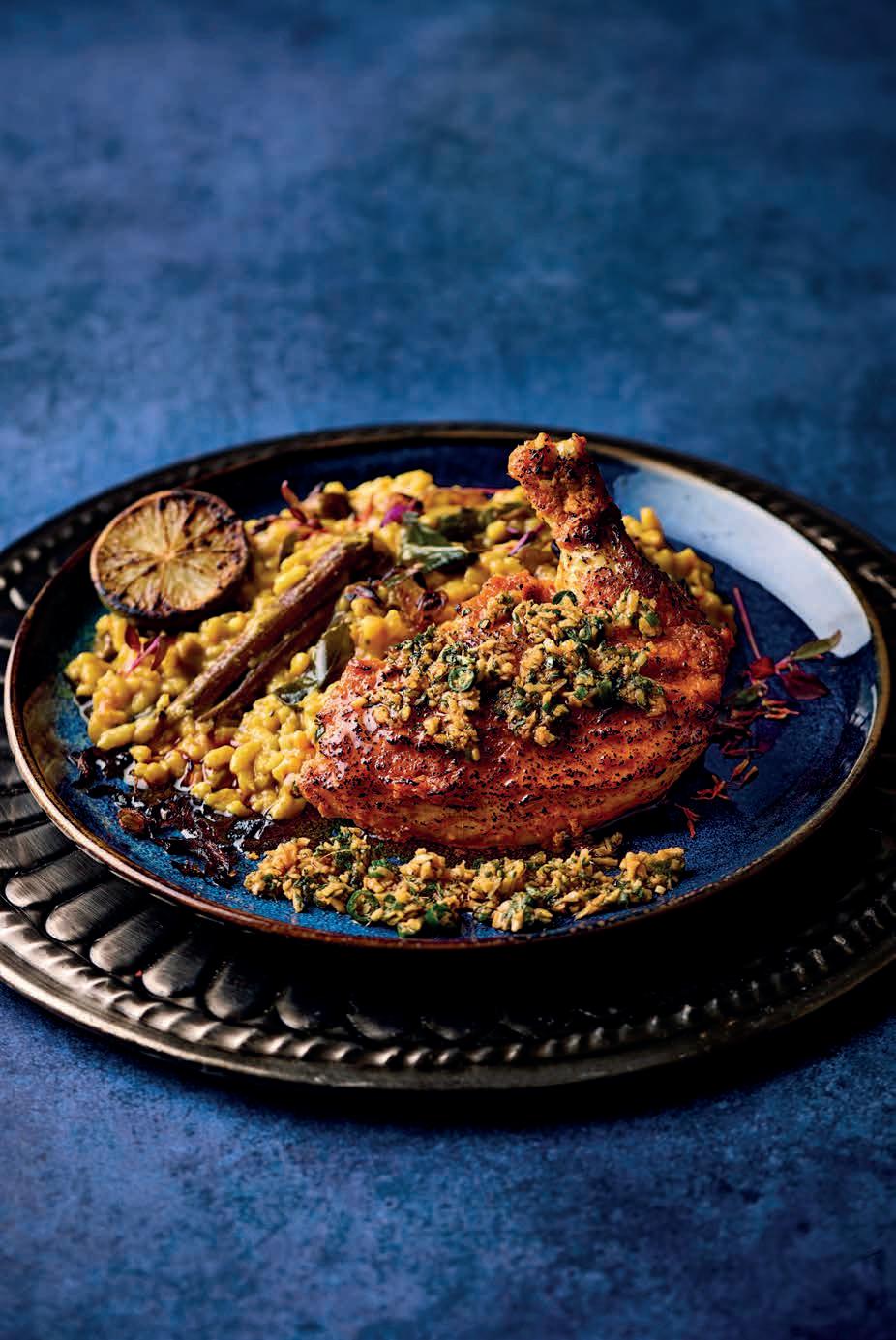
CHICKEN & SAFFRON PONGAL RISOTTO WITH MINT COCONUT SAMBOL VERDE
PONGAL RISOTTO
1 tsp oil
Pinch salt/pepper
150g arborio rice
½ cup white wine
600ml chicken stock
1 onion diced
2 cloves of chopped garlic
1 thumb of chopped ginger
1 tbsp cumin
2 tsp saffron threads (soaked in 2 tbsp warm milk)
10 curry leaves
¼ cup raisins
1 cinnamon stick
1tsp poppy seeds
1 pack or 270g tarka dhal (we used Patak’s)
15g butter
15g parmesan
CHICKEN
4 skin-on chicken supremes (wing bone in)
100g yoghurt
1 tbsp ginger paste
1 tbsp garlic paste
½ tsp saffron threads (soaked in 2 tbsp warm milk)
½ tsp turmeric powder
1 tsp Kashmiri chilli powder
½ tsp garam masala
1 tbsp lemon juice
1 tsp salt
3 tbsp ghee or butter
METHOD
Preheat oven 200°C/180°C fan/Gas 6.
For the sambal verde, blend all ingredients except coconut to coarse texture. Add coconut and set aside.
For the pongal risotto, heat oil in a pan on moderate heat. Fry onions, garlic and ginger for 3–4 minutes. Add arborio rice and fry for further 2–3 minutes. Add cumin, salt, curry leaves, cinnamon and fry for further minute. Add white wine and cook until it has evaporated. Add stock and slowly cook until it has evaporated, and the rice has cooked through. Add the rest of the ingredients and leave to rest for a couple of minutes before serving.
For the chicken, mix with all the marinade ingredients and leave for 2–3 hours or preferably overnight. Take chicken out of excess marinade and fry in a mediumhot pan skin down for 2–3 minutes. Flip and continue to cook for a further 2–3 minutes. Place in baking dish and cook in oven at 200°C/180°C fan/Gas 6 for 25 minutes or until fully cooked through.
Serve each dish with pongal risotto on the bottom, followed by chicken and a drizzle of sambol over the top.
GREEK TRADITION AT THE TABLE
Greek cuisine is one of the world’s oldest and most enduring culinary traditions, shaped by thousands of years of history, trade and Mediterranean agriculture. Rooted in simplicity, freshness and balance, Greek food celebrates the natural flavours of the land and sea. From mountainous villages to sun-drenched islands, the cuisine reflects regional diversity while remaining unified by a shared emphasis on wholesome ingredients and convivial dining. Meals are typically enjoyed family-style, reinforcing the Greek philosophy that food is not just nourishment but a way of bringing people together.
At the heart of Greek cooking is the Mediterranean trinity: olive oil, grains and wine. Olive oil, often produced locally and used in generous quantities, forms the foundation of dressings, marinades and slow-cooked dishes known as ladera. Grains such as wheat, barley and orzo appear in breads, salads and comforting casseroles, while wine lends depth to sauces and stews – including the rich and aromatic stifado.
Herbs and aromatics give Greek cuisine its signature fragrance. Oregano, thyme, dill, bay leaves, parsley, garlic and onions are used abundantly, adding layers of flavour without overpowering the dish. Tomatoes, both fresh and preserved, play a central role in sauces and baked dishes. Spices like cinnamon, allspice and cloves, introduced through historic trade routes, bring warmth and subtle sweetness to savoury preparations – particularly in iconic dishes such as moussaka, pastitsada and stifado.
Protein staples include lamb, pork, seafood and legumes, often paired with feta cheese, yoghurt and seasonal vegetables like aubergine, courgettes, peppers and leafy greens. Citrus, especially lemon, brightens countless dishes and exemplifies the Greek instinct for balance.
Together, these ingredients create a cuisine that is rustic yet refined, comforting yet layered, honouring tradition while continuing to inspire modern cooking across the world.
GREEK HOTLIST
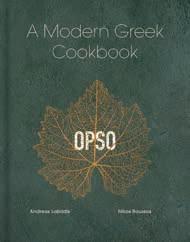
1. OPSO: A MODERN GREEK COOKBOOK
Inspired by Nikos and Andreas’ Greek culinary heritage and their love of fresh ingredients, OPSO restaurant opened in the heart of Marylebone in 2014 with a mission to elevate modern Greek food and introduce Londoners to fine Greek dining.
With over 80 recipes, including all of OPSO’s signature Greek dishes, seasonal specials and Greek kitchen favourites from their OPSO at Home menu, there are delicious modern Greek recipes for every meal and occasion.
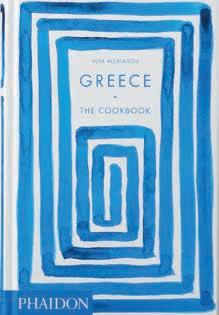
2. GREECE: THE COOKBOOK
This is the first truly comprehensive bible of Greek food in English. Rapidly increasing in popularity, Greek food is simple to prepare, healthy and delicious, and, more than most other cuisines, bears all the hallmarks of the rich cultural history of the land and sea from which it’s drawn.
It’s the original Mediterranean cuisine, where olive oil, bread, wine, figs, grapes and cheese have been staples since the beginnings of Western civilisation. With hundreds of simple recipes by Vefa Alexiadou, the authoritative grand dame of Greek cookery, the book also includes information on regional specialities, local ingredients and the religious and historical significance of the dishes, and is illustrated with 230 colour photographs.
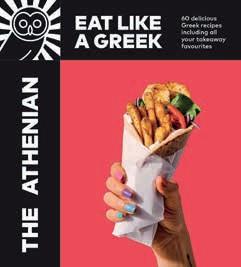
3. THE ATHENIAN: EAT LIKE A GREEK
Since its humble market stall beginnings in 2014, The Athenian has established itself as the best place for Gyros this side of the Mediterranean. Now, the beloved restaurant chain is sharing the secrets of some of its most popular Greek recipes.
Travel from Athens to the beautiful Greek islands from the comfort of your kitchen with The Athenian Cookbook. Packed with 62 recipes, these simple yet bold dishes are perfect for all the family.
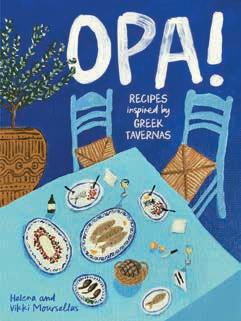
4. OPA! RECIPES INSPIRED BY GREEK TAVERNAS
‘OPA!’ is a phrase that captures the warmth of Greek culture, an expression that can carry many meanings based on the context in which it’s used – from joy to excitement, celebration to surprise. Authors Helena and Vikki Moursellas, it’s a phrase that best captures what sits at the heart of Greece’s rich food culture, making it the natural namesake for their latest book.
Along with recipes for all the classic taverna dishes like lamb kleftiko (slow roasted lamb), Horiatiki salata (Greek salad) and patates tigantes (potatoes with goat’s feta and oregano), there are others that are sure to become new favourites such as king prawns with fennel and caper butter or peppers stuffed with Greek cheeses.
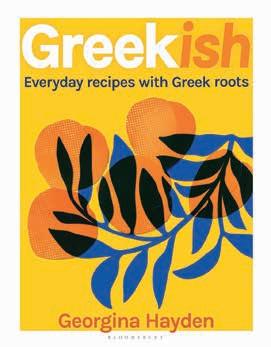
5. GREEKISH: EVERYDAY RECIPES WITH GREEK ROOTS
‘This book? It’s Greek… ish. And if you are saying ‘ish’ with a scrunched-up nose, a squinted eye and a slight wobble of the head or tilt of the hand, then you are on the right track. Truth be told, when it comes to writing recipes, sometimes hiding behind tradition actually makes life easier. You don’t like something? Take it up with my ancestors. But these Greekish dishes are all me and I think they’re some of the best have written. I hope that you love them, that they become part of your repertoire and that over time you make them your own.’
Inspired by her Greek-Cypriot roots and Greek travels, Georgina Hayden has collected recipes that are easy, bursting with flavour and sure to be cooked on repeat. With fewer ingredients and less stress, the recipes include familiar Mediterranean classics, as well as plenty of Greek-influenced dishes with Georgina’s twists.
1. BACCHANALIA
London
One of the most theatrical Greek restaurants in the UK. A Greco-Roman fantasy in Mayfair with sculptures, murals, caviar, seafood and luxury table-side service. Frequently cited as one of London’s best Greek dining experiences in 2025.
2. MYRTŌS BY ASIMAKIS
London
Run by Asimakis Chaniotis, the youngest Greek chef with a Michelin star, this South Kensington gem serves refined island-inspired cuisine (Kefalonia) with elegant interiors and deeply creative Aegean dishes.
3. OPSO
London
A modern Greek restaurant in Marylebone focusing on elevated meze and contemporary Greek dining culture. Frequently ranked among the best Greek restaurants in the capital for 2025.
4. OMA
London
A modern Greek-inspired restaurant in Borough Market blending Greek island flavours with Levantine influences and an exceptional crudo counter. Praised by Time Out as one of London’s stand-out Greek restaurants.
5. TSIAKKOS & CHARCOAL
London
A legendary neighbourhood taverna in Maida Vale beloved for charcoal-grilled classics, hearty meze, home-style moussaka and a welcoming, family-run atmosphere.
CHEFS TO WATCH
1. ETTORE BOTRINI
Etrusco & Botrini’s, Corfu
Ettore is one of Greece’s most celebrated chefs, known for shaping modern Greek haute cuisine. His flagship restaurant Etrusco in Corfu consistently ranks among the world’s best and has earned top distinctions in Greek awards.
2. LEFTERIS LAZAROU
Varoulko Seaside, Pireas
The first Greek chef ever to win a Michelin star. He continues to dominate Greek gastronomy with Varoulko Seaside once again named Best Greek Cuisine Restaurant in Greece.

3. GIKAS XENAKIS Aleria, Athens
Known for elegant, modern Greek cuisine that merges technical mastery with emotional storytelling. Celebrated in 2025 as one of the country’s leading creative culinary voices.
4. ARIS TSANAKLIDIS Kuzina, Athens
A cosmopolitan chef blending Greek tradition with global influences after years cooking abroad. His creative, Mediterranean-forward cuisine at Kuzina keeps him a major figure in 2025 Greek dining.
5. FILIPPOS CHRONOPOULOS Palais Royal, Paris
The only Greek chef abroad with two Michelin stars. Awarded the Greek Culinary Ambassador Award in 2025, highlighting his global influence on Greek gastronomy.


THE GREEK PANTRY
Our Top 10 Greek Pantry Ingredients list to stock if you want to cook authentic Greek food at home.
1. EXTRA VIRGIN OLIVE OIL
The cornerstone of Greek cooking. Used for cooking, dressing salads, finishing dishes and even baking. Look for cold-pressed, peppery oils from Crete or Kalamata.
2. OLIVES (KALAMATA & GREEN HALKIDIKI)
Kalamata olives bring rich, fruity depth; Halkidiki olives offer crisp saltiness. Essential for salads, meze and braises.
3. GREEK HONEY
Thyme honey from Crete or pine honey from Evia is prized. Used in marinades, desserts (like baklava), yogurt toppings and glazes.
4. FETA CHEESE (PDO)
Sheep’s milk feta (or sheep/goat blend) stored in brine. Crumbly, tangy and essential for horiatiki (Greek salad), pies and baked dishes.
5. GREEK YOGURT
Thick, strained yogurt — the base of tzatziki, sauces, marinades and desserts. Adds creaminess and acidity.
6. OREGANO (RIGANI)
Greek wild oregano is more aromatic than standard supermarket oregano. Used generously on grilled meats, salads and vegetables.
7. LEMON (JUICE & ZEST)
Greek cuisine leans heavily on citrus for brightness: marinades, soups, sauces and meze all rely on lemon.
8. GARLIC
Used across soups, dips, roasts and stews. Essential for tzatziki, skordalia and many classic Greek dishes.
9. FILO PASTRY
The foundation for Greek pies –savoury (spanakopita, tiropita) and sweet (baklava, galaktoboureko).
10. DRIED PULSES (LENTILS, GIGANTES BEANS, CHICKPEAS)
Greek cuisine is rich in legumes, with Fakes (lentil soup), Revithia (chickpea stew) and Gigantes plaki (baked giant beans) being some of the most popular.
PORK SOUVLAKI
WITH AJVAR SAUCE & WHIPPED BARREL FETA
PREP TIME: 60 minutes
PORK
2 thick cut bone in pork loins
2 tbsp extra virgin olive oil
1 lemon, juiced & zested
1 tbsp chopped fresh oregano
1 tbsp chopped fresh dill
1 tsp oak smoked sea salt
3 garlic cloves, crushed
3 tbsp date molasses
METHOD
COOK TIME: 15-18 minutes
SOUVLAKI SPICE MIX
1 tsp caraway seeds, toasted
1 tsp fennel seeds, toasted
1 tbsp ground paprika, toasted
5 black peppercorns, toasted
For the spice mix, toast the spices in a pan and smash in a mortar and pestle. In a bowl, mix together the pork, oil, lemon zest and juice, oregano, dill, toasted spices, salt and garlic. Refrigerate and leave to marinade for at least an hour (overnight if possible).
Heat the grill to high. Place the pork loins onto a wire rack and grill for 15-18 mins, Whilst cooking brush with the date molasses and turn frequently until the pork is cooked through and charred in places.
For the sauce, char the peppers and aubergines by carefully holding them over the flames of a gas hob or under a grill set to high, turning often, until almost entirely blackened. Both should be softened but the peppers should still have a little bite. Immediately
TEMPERATURE: Medium Grill SERVES: 4
AJVAR SAUCE
4 sweet red pointed peppers
1 aubergine
50ml extra virgin olive oil
2 garlic cloves, finely chopped
1 tbsp white wine vinegar
transfer to a large container with a lid, sealing after each addition –this will make the peeling process easier. Leave for about an hour or overnight.
Half-fill a large bowl with water. Carefully peel off the charred skins, discarding them and dipping your hands in the water as you go to clean them. De-seed the peppers and roughly chop both the peppers and aubergines.
Transfer to a blender or food processor and briefly blitz, or very finely chop by hand. Put a splash of the oil in a large non-stick pan over a low heat and gently fry the garlic until softened. Add the vegetables and bring to a gentle boil over a medium heat, then reduce the heat to low. Cook for 15 minutes, stirring continuously to prevent the mixture from
WHIPPED FETA
200g barrel-aged feta
200g 10% Greek yogurt
50ml extra virgin olive oil
Sprinkle of sumac
1 tsp fine sea salt
1 cucumber – peeled, deseeded, diced & salted for 1 hour
catching and using a spatula to scrape down the sides of the pan.
Add half the remaining oil and cook for 15 minutes, then add the remaining oil, vinegar and a pinch of salt, and cook for 15 minutes more until reduced and a thin layer of oil has formed on top. Store in a sealed container in the fridge for up to 14 days (you can make this in advance).
For the whipped feta, combine the feta and Greek yogurt and blend. While the processor is running, drizzle the olive oil through the top opening, until the feta is whipped to a smooth texture.
Transfer the feta dip to a serving plate and smooth the top of the feta, making a well in the middle. Drizzle more olive oil all over and sprinkle over the cucumber and sumac.
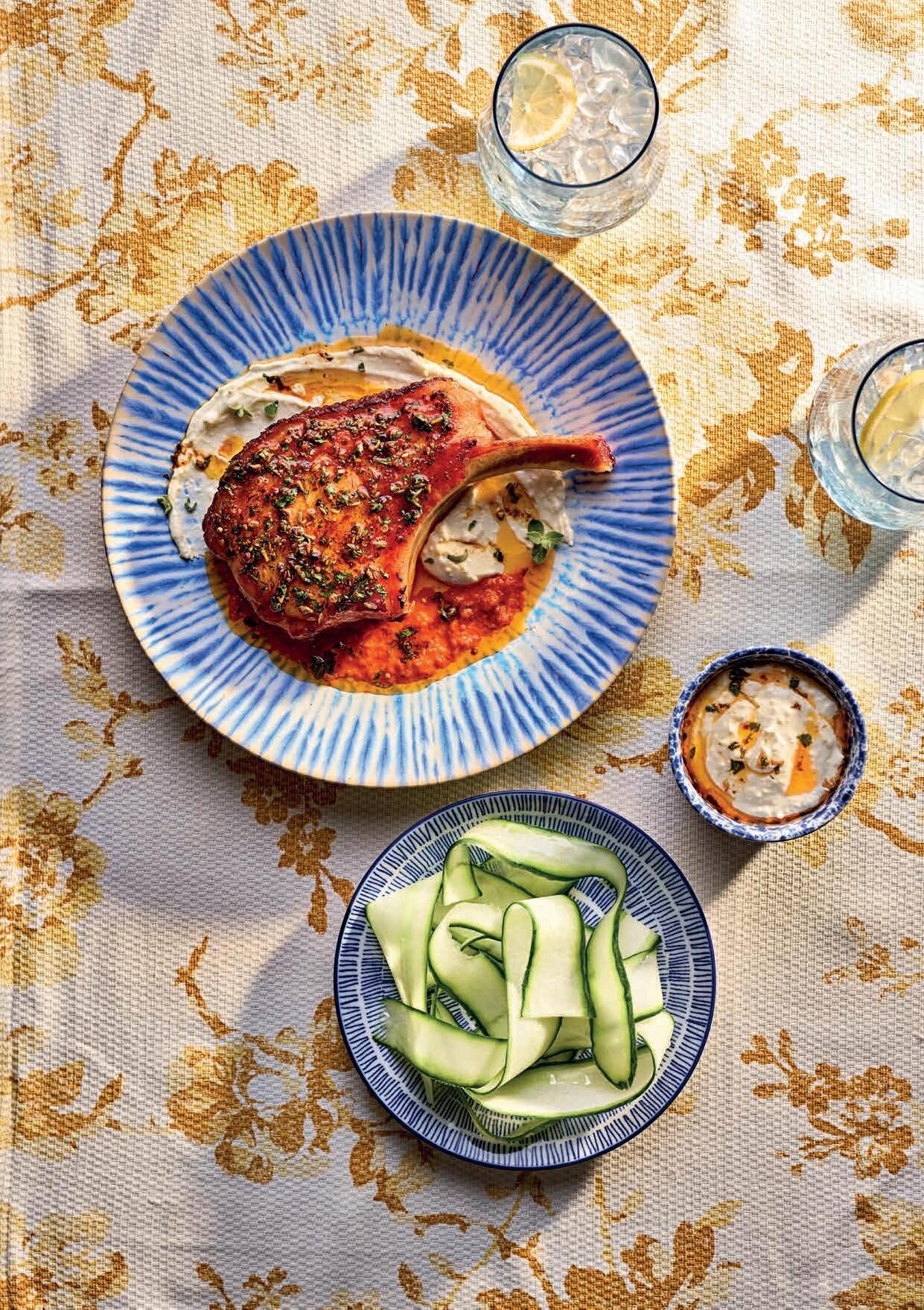
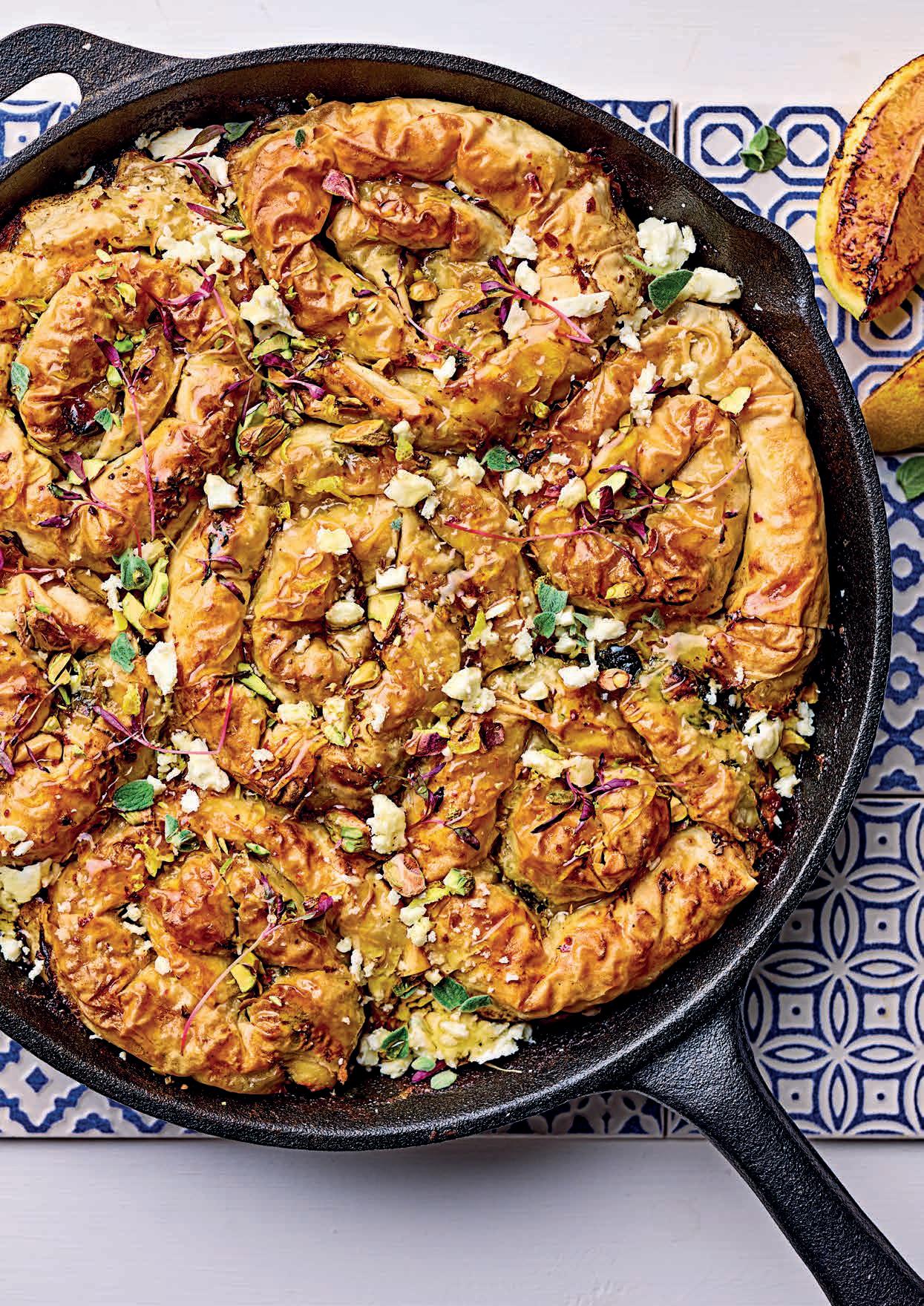
CHICKEN SPANAKOPITA
PREP
SPANAKOPITA FILLING
2 tbsp olive oil
1 onion, thinly sliced
1 garlic clove, finely chopped
500g baby English spinach leaves, washed
350g ricotta
250g feta, coarsely crumbled
1 precooked whole chicken, shredded off the bone
PASTRY
13 sheets filo pastry
150g butter, melted, for brushing
GARNISH
Honey
Finely c hopped pistachio nuts
Crumbled feta cheese
METHOD
For the spinach, ricotta and feta filling, heat oil in a frying pan, add onion and garlic and stir occasionally over medium heat until soft and translucent (5-7 minutes). Add spinach and stir until it wilts (1-2 minutes). Transfer spinach mixture to a colander and strain off excess liquid. Transfer to a bowl, cover and refrigerate until cold. When cold add all the ricotta and 200g of the feta and season to taste, stir to combine well, then add the precooked chicken. Mix well and season with salt and pepper to taste.
Preheat oven to 170c. Place a sheet of filo on a cold work flat work surface, brush with melted butter, top with another sheet and repeat method with another 4 layers of pastry.
Repeat this step so you have two 5 layered sheets of pastry. Spread half the spinach and chicken mixture over each piece of pastry thinly ensuring its spread evenly. Next take the end of the pastry sheets and roll each one “Swiss roll” style. When rolled take a sharp knife and slice the pastry into 2 inch thick roulades and place flat into the bottom of a buttered heavy metal pan and brush the top with a generous slathering of melted butter and bake in the oven until golden and crisp (25-30 minutes)
To garnish serve with a generous drizzle of honey, remaining crumbled feta cheese and finely chopped pistachio nuts.
LAMB STIFADO MEATBALLS
PREP TIME: 30 minutes COOK TIME: 1 hour
MEATBALLS
500g ground lamb
50g breadcrumbs
1 egg
2 garlic cloves, minced
2 tbsp fresh parsley, chopped
½ tsp ground cinnamon
½ tsp ground allspice
Salt & pepper (to taste)
STIFADO SAUCE
3 tbsp olive oil
300g shallots whole, peeled
3 garlic cloves, minced
2 tbsp tomato paste
200ml red wine
400g crushed tomatoes
250ml beef or lamb stock
2 tbsp red wine vinegar
2 bay leaves fresh or 4 dried
1 cinnamon stick
3 whole cloves
1 tsp sugar
Salt & pepper (to taste)
METHOD
Mix the lamb, breadcrumbs, egg, garlic, parsley, cinnamon, allspice, salt & pepper. Form into 16–18 small meatballs. Chill for 15 minutes.
Heat the olive oil in a large pan. Brown the meatballs on all sides. Remove and set aside.
In the same pan, add shallots and sauté until golden. Add garlic, cook for 1 minute. Stir in tomato paste and cook for 2 minutes.
GARNISH Fresh oregano Crumbled feta
Pour in red wine, reduce by half, Add crushed tomatoes, stock, vinegar, bay leaves, cinnamon stick, cloves and sugar. Season with salt & pepper.
Return meatballs to sauce. Cover and simmer gently for 30–40 minutes until the meatballs are tender and the sauce thickens.
Finish with the dish fresh oregano and crumbled feta and pair with crusty bread, orzo or creamy mashed potato.
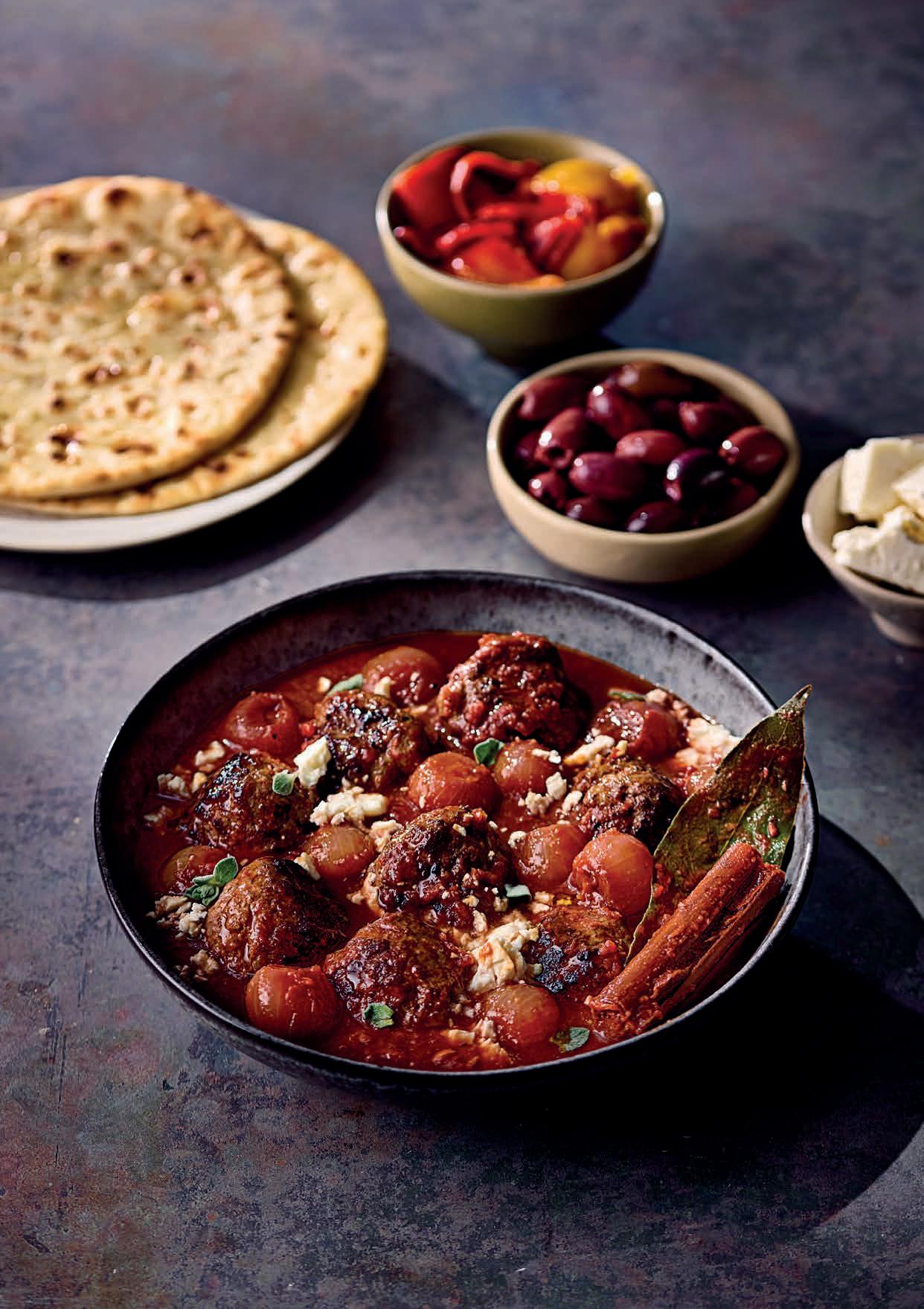
Fusion is very much on our trend framework and offers a playful and fun factor to food that give greater scope to dishes. Pairing familiar formats with unusual or unexpected flavours provides an opportunity for curious consumers to try something new and exciting with a relatively low risk. A great opportunity to lean into emerging cuisines by applying their pantries to 'everyday' dishes.
COOKING BEYOND TRADITION
Global food fusion is a dynamic and evolving culinary movement that blends flavours, techniques and ingredients from different cultures to create something new, exciting and reflective of an increasingly connected world. Rather than following rigid traditions, fusion cuisine celebrates creativity – drawing inspiration from diverse culinary heritages to highlight how cultures can harmonise on the plate. As global travel, migration and digital connectivity increase, so too does the exchange of food ideas, leading to boundary pushing dishes that honour tradition while reinventing it.
Modern fusion cooking often merges cuisines that share complementary flavour profiles or cooking methods. For example, Asian–Latin fusion combines the bold heat and citrus of countries like Peru, Mexico and Brazil with the umami-rich ingredients of Japan, Korea and Thailand Dishes such as sushi tacos, kimchi quesadillas and miso-marinated meats are now staples of contemporary dining scenes around the world.
PanAsian fusion blends elements from Southeast Asia, East Asia and South Asia – bringing together Thai herbs, Japanese precision, Indian spices and Chinese wokcooking techniques. Meanwhile, Mediterranean–Middle Eastern fusion bridges Greece, Turkey, Lebanon and North Africa, where olive oil, pulses, spices and slowcooked meats create a shared culinary language ripe for reinterpretation.
In the West, chefs continue to explore combinations such as American–Japanese resulting in dishes like ramen burgers or teriyaki-glazed barbecue. Nordic–Asian fusion has also gained momentum, pairing Scandinavian preservation methods with bold Asian aromatics. Even comfort food evolves through fusion – think Korean fried chicken in brioche buns, Greek-inspired lamb tacos or Southeast Asian spices applied to classic European braises.
Ultimately, global fusion cuisine reflects a modern mindset: respect for tradition, curiosity for the unfamiliar and a desire to craft flavours that transcend borders. It represents the world’s culinary cultures meeting in the middle – on a plate filled with originality, diversity and delicious innovation.
BOOKS TO CHECK OUT
1. THIRD CULTURE: CLASSIC RECIPES FOR A NEW GENERATION
Third culture cooking is American cooking: delicious everyday multicultural recipes, borrowing from our parents and their parents’ homes, melding the old with the new and the familiar with the unfamiliar to create bold flavours and new classics for the next generation of cooks. The food that author Zaynab Issa cooks –inspired by her East African and South Asian roots, the American suburban delights she grew up eating, and her international travels – is packed with unique and flavourful riff.
2. MY CAMBODIA: A KHMER COOKBOOK
Celebrate Khmer and Cambodian American cuisine with award-winning chef and restaurateur Nite Yun, featuring over 100 recipes for her favourite dishes.
A deeply personal blend of Cambodian, Khmer American and Californian influences. Recipes connect Cambodian traditions with diaspora fusion cooking, offering bright, bold hybrid flavours.
Filled with the historical context of Cambodia’s Golden Era, cultural fun facts like the rules of rice and introspective anecdotes on using food as a tool to connect with community, My Cambodia aims to make Khmer American cuisine accessible to all.
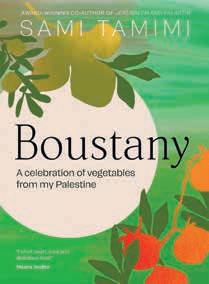
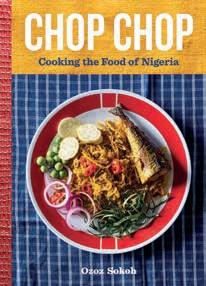
3. BOUSTANY: A CELEBRATION OF VEGETABLES FROM MY PALESTINE
While rooted in Palestinian cuisine, this cookbook leans into global influences through Sami Tamimi’s London experience and Ottolenghistyle fusion. Vibrant vegetarian dishes reinterpret classics with contemporary twists.
A homage to Palestinian food and culture, Boustany is the first solo cookbook from the Ottolenghi co-founder and champion of Palestinian food and culture.
4. CHOP CHOP: COOKING THE FOOD OF NIGERIA
Ozoz Sokoh presents a celebration of Nigerian cuisine through a modern, diasporic lens – blending regional African traditions with globally influenced food culture.
Perfect for cooks exploring Afro-fusion.
5. WORLD ON A PLATE: FUSION RECIPES FOR THE BOLD CHEF
Craving Korean BBQ tacos, tikka masala mac & cheese or matcha churros with chocolate sauce?
This globally inspired cookbook brings together the best of world cuisines with 50 flavourpacked fusion recipes that mash up the familiar and the exotic. From street food reimagined to bold mains, creative bowls and globally spiced sides, you’ll learn to combine ingredients and techniques from across continents into stunning, satisfying dishes.
OUR TOP 5 GLOBAL FUSION EAT LIST
1. KOAN
Korean × Nordic Copenhagen, Denmark
A two Michelin star ‘neo-fusion’ restaurant blending Korean heritage with Danish ingredients. Its 17-course tasting menu blends Nordic ingredients with South Korean culinary traditions. Led by chef-owner Kristian Baumann, Koan focuses on refined, technical cooking inspired by Korean street food and royal cuisine.
2. HAV & MAR
Ethiopian × Swedish × American New York, USA
Marcus Samuelsson’s seafood driven Ethiopian–Swedish fusion restaurant in NYC’s Chelsea arts district. Chef Samuelsson and Executive Chef Fariyal Abdullahi’s energetic and globally inspired menu focuses on thoughtfully sourced seafood and seasonal greenmarket produce.
3. NOUR
Japanese × Modern Nordic Stockholm, Sweden
This is a long-awaited project from Sayan Isaksson, the well-respected chef who was part of the iconic and trendsetting Esperanto a few years back. The multi-course menu interweaves seasonal Nordic produce with Japanese techniques and flavours. Almost every dish introduces some kind of fermentation created in the kitchen, whether it’s the deeply complex miso, tanginess from the vinegar or the sweet and subtle touch of koji.
4. DIVERXO
Asian × Spanish × Global Madrid, Spain
Chef Dabiz Muñoz, a three-time ‘World’s Best Chef’ winner, is the creative force behind DiverXO.
CHEFS TO WATCH
1. SANTIAGO LASTRA KOL, London
Lastra has pioneered a unique ‘British–Mexican’ fusion that replaces traditional Mexican staples with UK-sourced equivalents. In 2026, his approach at KOL is reaching new heights by using sea buckthorn instead of lime and arrowgrass to mimic coriander, proving that fusion can be driven by local sustainability rather than imported goods.
2. SANTIAGO TORRIJOS L’Atelier de Santiago, Paris
While established in the Paris scene, Torrijos is increasingly influential for his seamless blending of classic French technique with his Colombian roots. His 2026 work is noted for
bringing intense, ‘third-culture’ Latin American flavours – like lulo and aji peppers – into the rigid structure of Parisian fine dining.
3. CARLO SCOTTO BEAR, London
Scotto is gaining significant momentum in 2026 for his Italian–Nordic–Japanese fusion. At BEAR by Carlo Scotto, he uses Japanese ingredients like koji and miso to add depth to traditional Italian structures, often finishing dishes over open fire – a key global trend for 2026.
4. VICKY CHENG K, Bangkok/Hong Kong
Originally famous for his ‘French–Chinese’ fusion at VEA, Cheng’s new 2026 project, K, in Bangkok
His philosophy, captured by the motto ‘Avant-garde or die’, is about constant innovation and breaking culinary boundaries. He blends Spanish ingredients with global, particularly Asian, influences to create unexpected and intense flavour combinations that challenge the palate.
5. MAIDO
Nikkei (Japanese × Peruvian) Lima, Peru
Maido is a pioneer of Nikkei cuisine, where Japanese technique and precision meet the bold, diverse terroir of Peru. Led by chef Mitsuharu ‘Micha’ Tsumura, Maido is celebrated for transforming a once overlooked fusion into a global gastronomic phenomenon.
In June 2025, it was named The World’s Best Restaurant, reaching the global #1 spot for the first time.
signifies a major shift. He is currently watched for how he integrates Thai aromatics into his existing mastery of high-end Chinese ingredients and French saucing techniques, helping turn Bangkok into a global ‘fusion hub’.
5. ANDREW LIM Perilla Steakhouse, Chicago
A 2026 ‘Chef of the Year’ nominee, Lim is at the forefront of the Korean–American steakhouse movement. His work is defined by a sophisticated merge of Pacific Northwest terroir with Korean preservation methods, such as fermented soy glazes and charcoal-grilled shellfish.
PANTRY
Our top 10 Global Fusion Call-outs for 2026
1. BROWN BUTTER + GOCHUJANG
A signature Scandinavian–Korean fusion move – blended Nordic fat rich techniques with Korean fermented heat.
2. BERBERE SPICE + DILL
Hav & Mar’s ‘Swediopian’ cuisine pairs Ethiopian berbere with Scandinavian herbs for warmth and freshness.
3. YUZU + AJI AMARILLO
A classic Nikkei (Japan × Peru) pairing seen at Maido – bright Japanese citrus meets fruity Peruvian heat.
4. SOY SAUCE + LEMON + OLIVE OIL
A Japan × Mediterranean crossover – soy umami lifted by lemon’s acidity and olive oil’s richness.
5. TAHINI + MISO
A Middle Eastern–Japanese umami blend – deep, nutty, savoury, amazing in dressings, glazes and marinades.
6. HARISSA + HONEY + SOY
North Africa × East Asia × Western sweet balance – a perfect glaze for meats or roasted vegetables.
7. PONZU + PASSIONFRUIT
Nikkei influence – tangy, tropical and ideal for ceviche, tiradito and crudo.
8. GINGER + DILL + SESAME OIL
Nordic herbs meet Asian aromatics –a flavour triad aligned with Korean–Nordic fusion.
9. RUM + SOY SAUCE
Caribbean × Japanese – rum’s caramel notes fuse beautifully with soy’s savoury depth.
10. CHIPOTLE + TAMARIND
A Latin × Southeast Asian sweet-smoky-sour bomb that works in marinades, sauces and glazes.
BEEF SHORT RIB BOLOGNESE WITH TTEOKBOKKI
PREP TIME: 30 minutes COOK TIME: 3–4 hours (braising)
INGREDIENTS
1.5kg beef short ribs (bone-in for flavour)
3 tbsp olive oil
1 onion large, finely diced
1 carrot medium, finely diced
2 celery sticks, finely diced
4 garlic cloves, minced
3 tbsp tomato paste
800g crushed tomatoes
250ml red wine
METHOD
Season ribs with salt & pepper.
TEMPERATURE: 180°C/160°C fan/Gas 4 SERVES: 4 500ml beef stock
2 tbsp soy sauce
1 tsp sugar
2 bay leaves
3 sprigs fresh thyme
Salt & pepper (to taste)
400g tteokbokki (Korean rice cakes)
2 tbsp butter
Parmesan cheese for garnish
Heat olive oil in a heavy pot, sear ribs until browned on all sides. Remove and set aside.
In the same pot, sauté onion, carrot and celery until softened.
Add garlic and cook for 1 minute. Stir in tomato paste and cook for 2 minutes.
Pour in red wine, scraping up fond. Reduce by half. Add crushed tomatoes, beef stock, soy sauce, sugar, bay leaves and thyme.
Return ribs to pot, cover and braise at 180°C for 3 hours until meat is tender and falling off the bone. Remove ribs, shred meat, discard bones.
Return meat to sauce, simmer uncovered for 20 minutes to thicken. Adjust seasoning.
Boil rice cakes until soft and chewy (about 5–7 minutes). Drain and toss with butter. Plate tteokbokki as the base, spoon over rich short rib bolognese. Garnish with grated Parmesan.
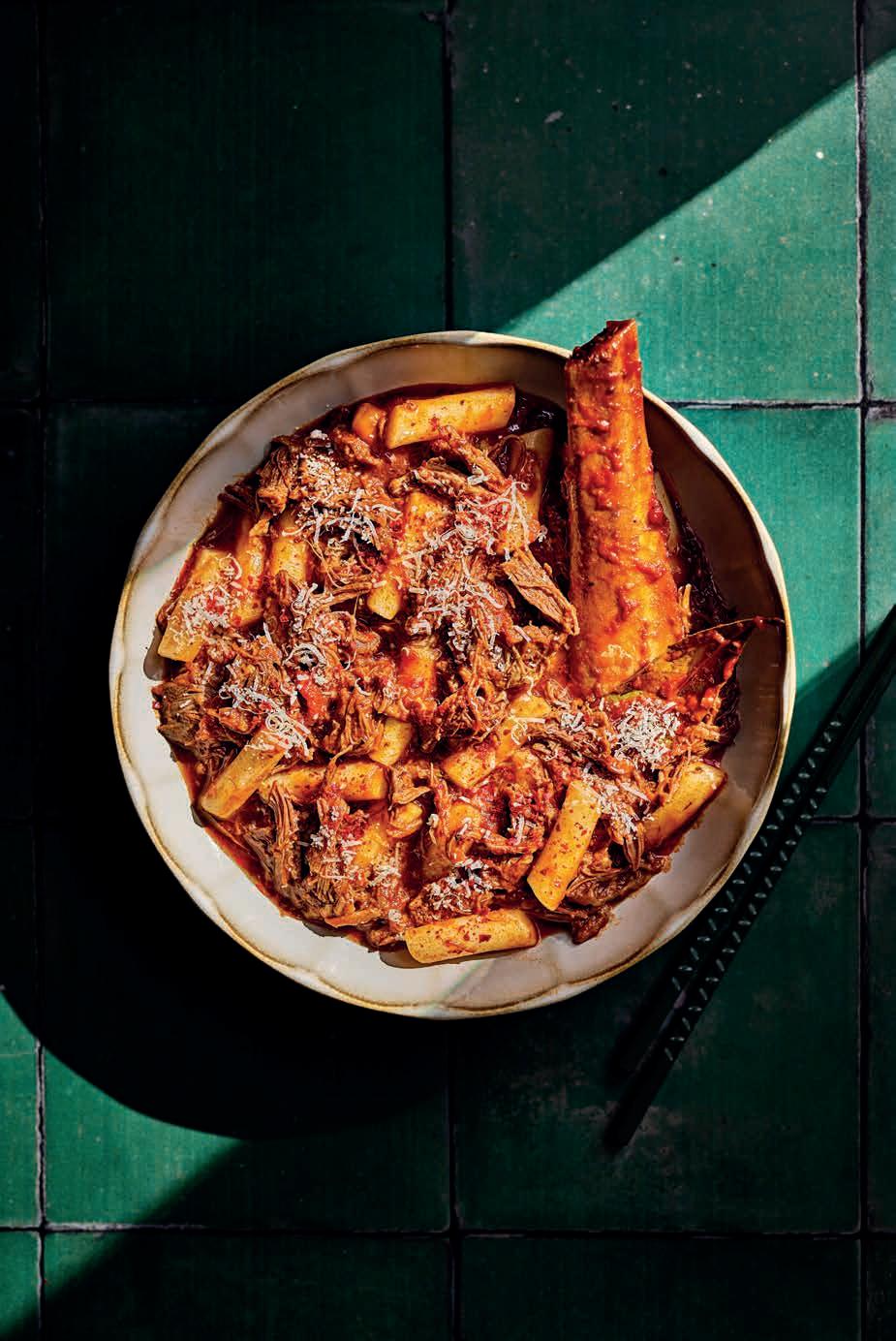
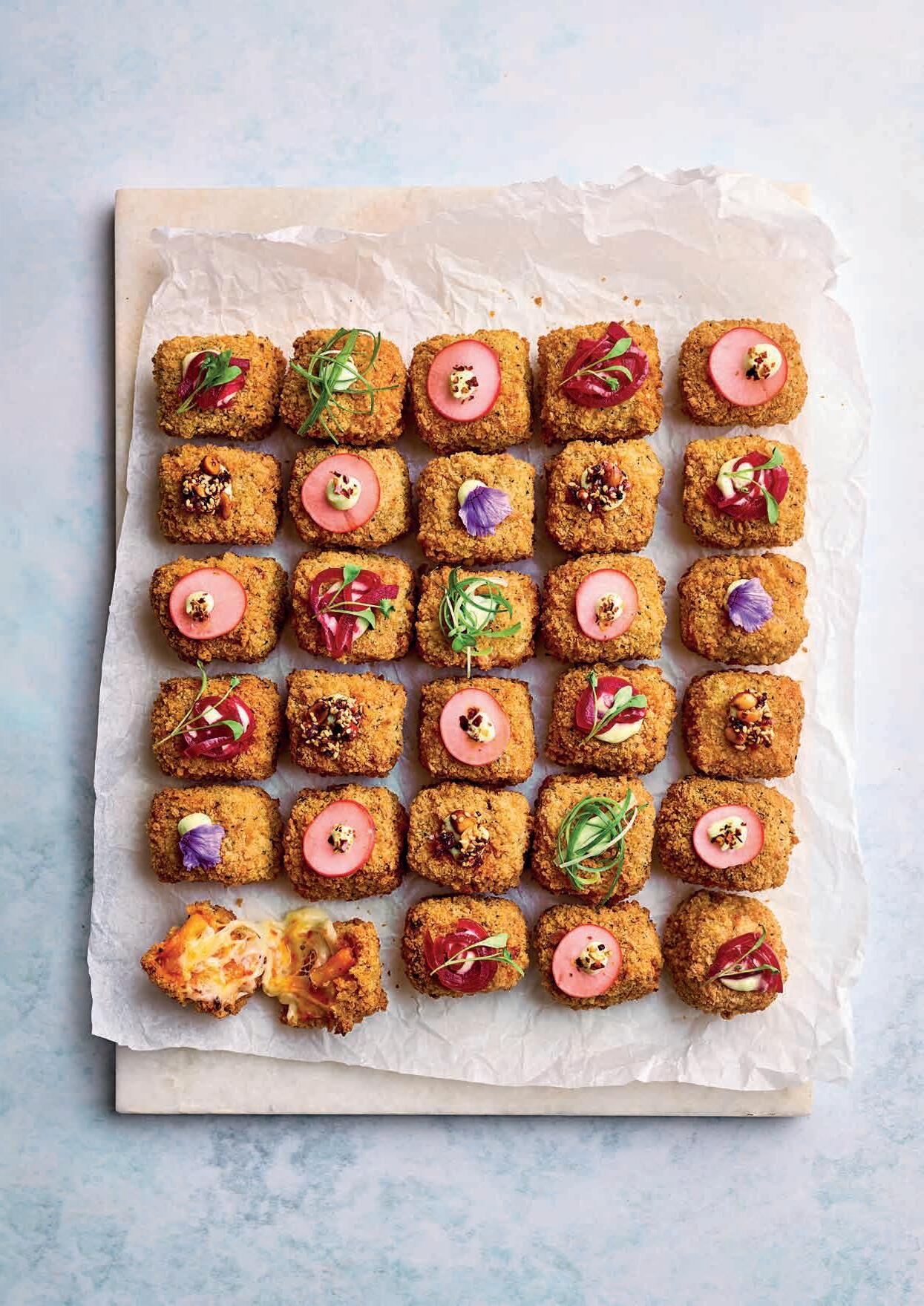
AMERICAN | KOREAN
MAC KIM CHEESE
PREP TIME: 20 minutes COOK TIME: 30 minutes approximately
MAC & CHEESE
50g macaroni
40g butter
40g plain flour
400ml milk
250g mozzarella, grated
250g cheddar, grated
50g parmesan, grated
50g gochujang paste
150g kimchi, chopped
METHOD
COATING
2 eggs
2 tbsp flour, seasoned
80g breadcrumbs
Oil
TEMPERATURE: Deep fry 180°C for 4-5 minutes
SERVES: 4
Cook the macaroni in a large saucepan of boiling salted water for 8–10 minutes. Drain well and set aside.
Melt the butter over a medium heat in a saucepan slightly larger than that used for the macaroni. Add the flour and stir to form a roux, cooking for a few minutes.
Gradually whisk in the milk, a little at a time. Cook for 10–15 minutes to a thickened and smooth sauce.
Remove the sauce from the hob, then add the cheese and gochujang and stir until it is well combined and melted.
Add the macaroni to the sauce along with the chopped kimchi and mix well. Transfer the mix into a 12 x 12 inch lined baking tray and allow to cool and set. Once set carefully remove the tray and cut the macaroni and kimchi slab into 2 inch squares.
Beat the 2 eggs in a bowl and place the seasoned flour and breadcrumbs in a separate bowls. One at a time dip the squares into the flour, then the eggs and then the breadcrumbs, making sure they are completely coated. Once breadcrumbed allow to rest and set for 15 minutes in the fridge.
To cook deep fry for 4 - 5 minutes at 180c until golden and crisp.
PORK BELLY
500g pork belly
800g chicken stock
1 tbsp ginger, sliced
2 garlic cloves, crushed
2 tbsp light soy sauce
1 tsp sugar
ITALIAN | KOREAN
MISO RAMEN CARBONARA
SOY EGGS
2 medium eggs
60g soy sauce
30g mirin
10g sugar
60g water
CARBONARA SAUCE
3 egg yolks
40g parmesan or pecorino, grated
¼ tsp cracked black pepper
2 tsp white miso
1½ tbsp warm pork cooking liquor
METHOD
Place the pork belly in a pot and add chicken stock, ginger, garlic, soy sauce and sugar.
Bring to a gentle simmer and cook for 1½–2 hours until tender but still firm.
Remove, chill under weight to compress, then pat the skin dry. Roast at 220°C or air-crisp until the skin blisters and becomes crunchy.
For soy eggs, boil eggs for 6 minutes, then cool in ice water. Peel and marinate in soy sauce, mirin, sugar and water until amber and savoury.
To make the sauce, whisk egg yolks, parmesan, black pepper and white miso. Loosen with warm pork liquor to create a smooth sauce.
NOODLES & FINISHING
200g fresh ramen noodles
Extra parmesan
Extra black pepper
1 pak choy
2 spring onion, sliced
Chilli oil (optional)
Boil noodles until al dente. Drain and toss immediately off-heat with the carbonara mixture until glossy.
Slice 150–200g of crispy pork and warm gently.
Place carbonara ramen in bowls.
Add pork slices and half a soy egg per portion.
Finish with lightly steamed pak choy parmesan, pepper, spring onion and optional chilli oil.
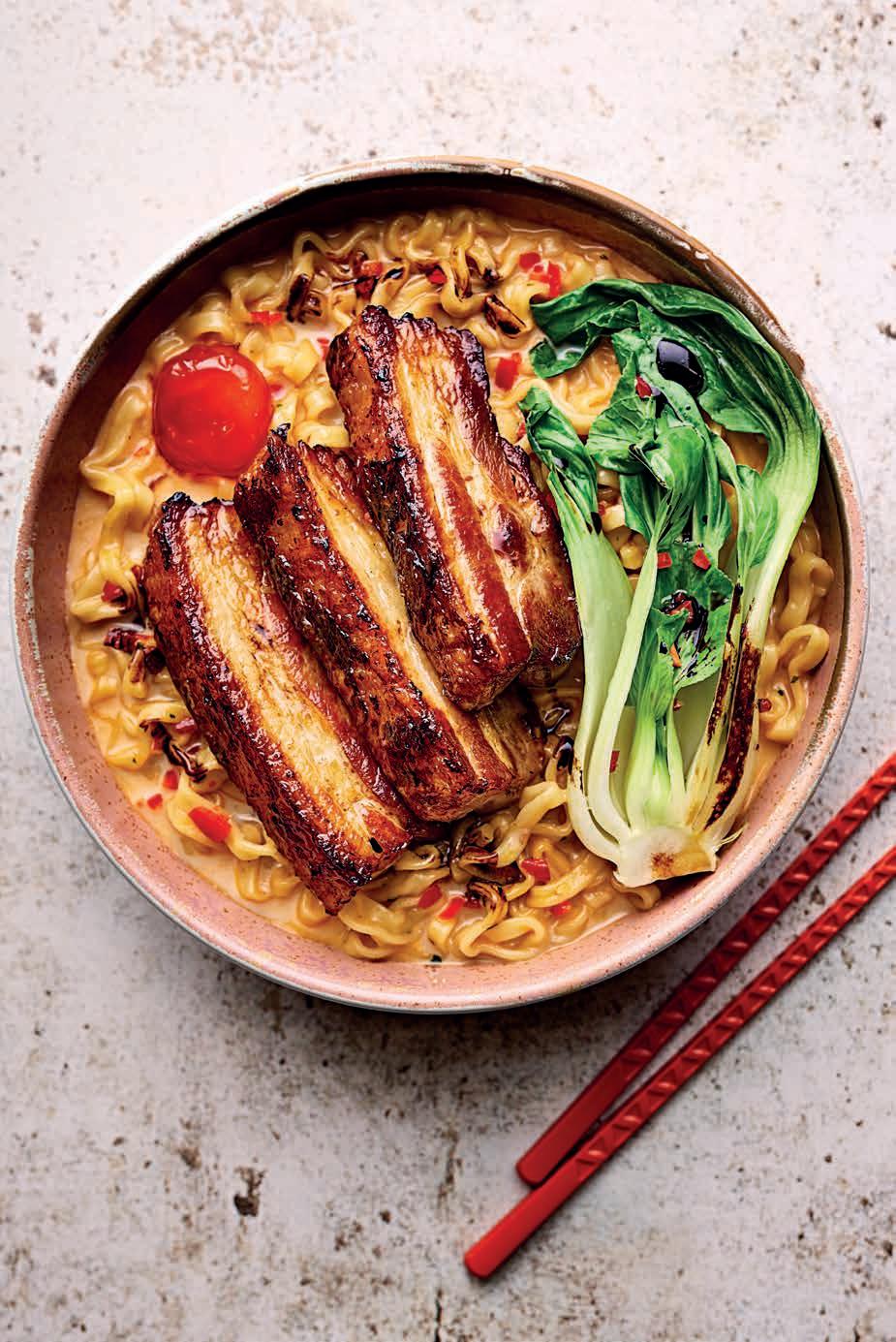
Crispy pork ramen carbonara with soy egg.