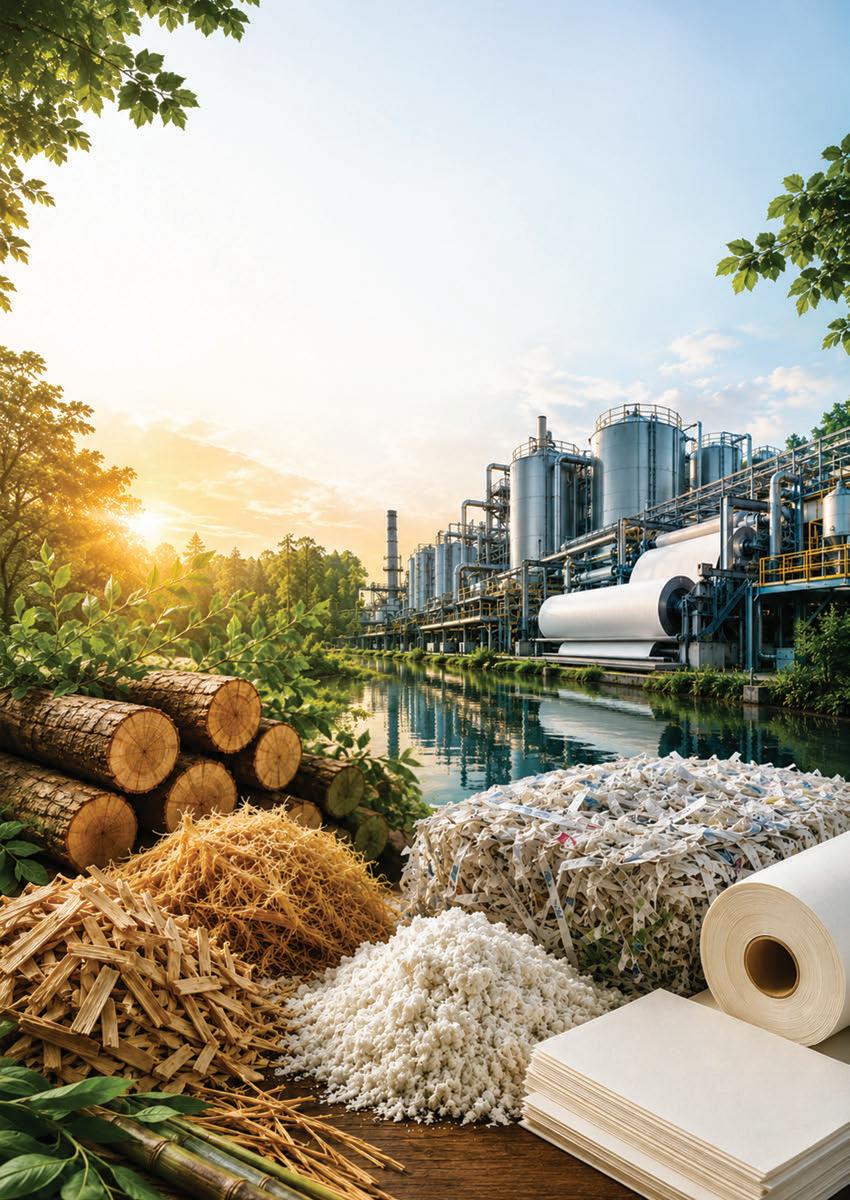
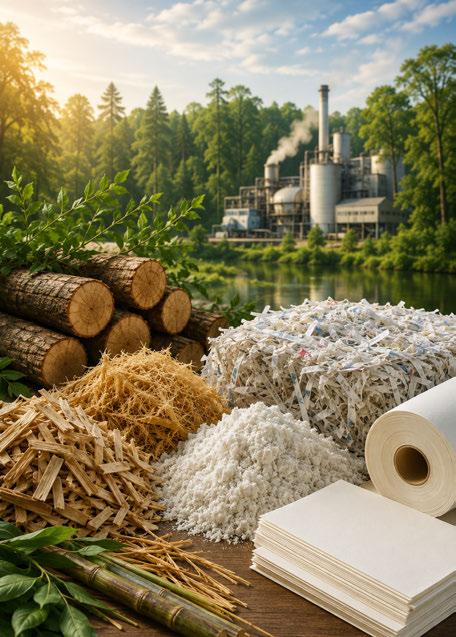
Managing Wood, Agro and Recycled Fiber for the Long Term
OUR PRODUCTS:
Virgin Top Liner • Rigid Boards • White Kraft Liner • E-commerce Paper Bag • Korean Kraft • High BF Kraft Paper 22-40 • Maplitho Paper • Bleach Kraft • Copier Paper Cup Stock Paper • Pharma Print • Bible Paper • Interleaving Kraft • Wedding Card Base Paper • Super Callender Kraft • Clay Coated Kraft • C1S • Interleaving Paper • Steel Mill Kraft • LWC
M/S Aroma Craft & Tissues Pvt. Ltd. Village Noorpur - Budpur, Manglore, Roorkee, Distt. Haridwar
M/S Shree Sanmati Auto Experts Pvt. Ltd. Muzaffarnagar, Meerut Road, (U.P.)
PROVIDE COST EFFECTIVE
SOLUTIONS TO THE PULP & PAPER INDUSTRY
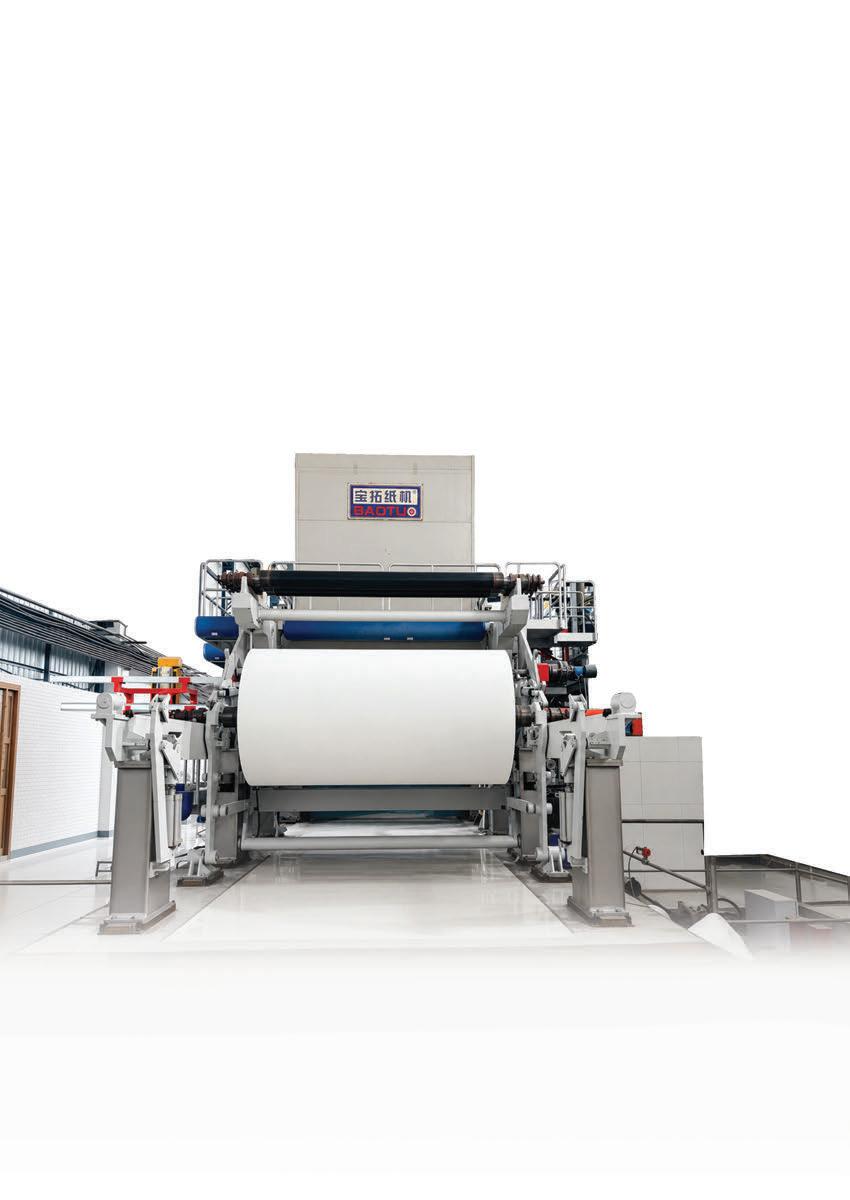
Leading supplier of consumables, components, assemblies and new and used paper machinery. We represent well-known manufacturers in the pulp and paper industry who are known for their quality and reliable products. This enables us to provide cost effective solutions to the pulp & paper industry.
June-July, 2026, Paper Mart
Strengthens Its Data Architecture and Technological Ecosystem to Support Future Innovations
Looks Beyond Price in Technology Investments; Prioritizes ‘Total Cost of Ownership’ Approach
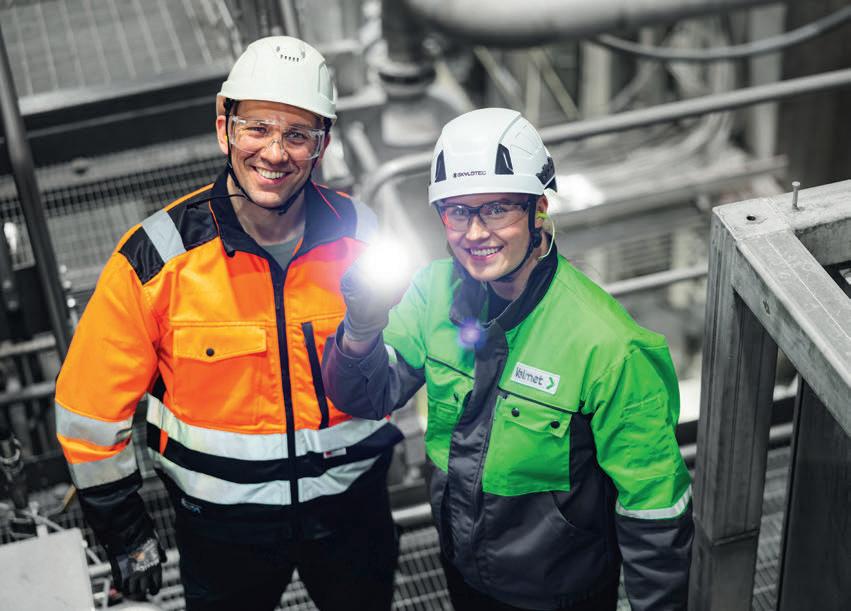
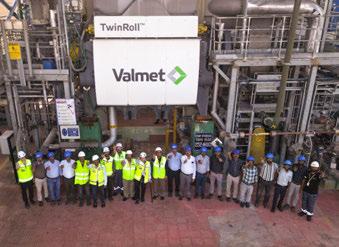
Valmet
Advocates for Integrated Machinery Architecture, Actionable Tools & System Optimization in Indian Mills
ANDRITZ
Reflects Indian Mills Prefers Incremental Upgrades Over Complete Technological Revamp
TNPL Builds a Resilient Circular Economic Model for Sustainable Growth
We are steadily moving beyond traditional writing and printing papers to build a resilient circular economy model, expanding our presence across premium paperboards, tissue paper products, and premium-grade cement.
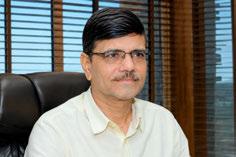
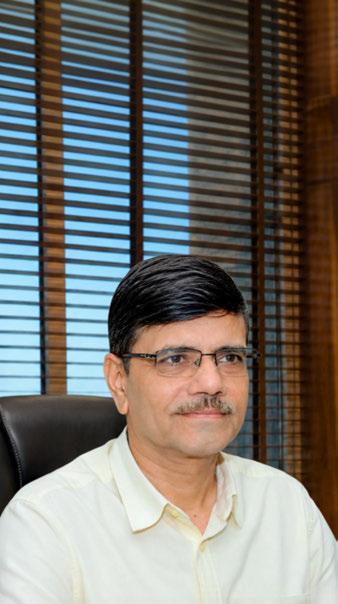
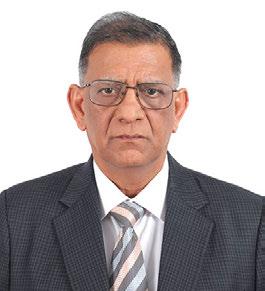
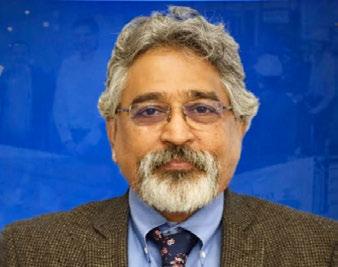
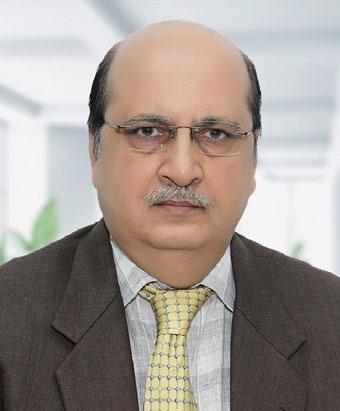
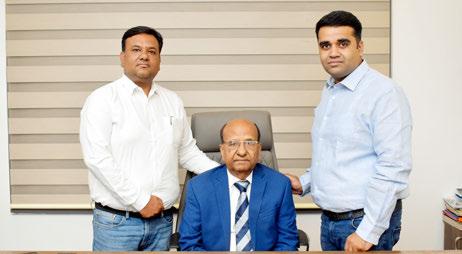
Mr. Kumar Jayant, IAS
Additional Chief Secretary/Chairman & Managing Director, Tamil Nadu Newsprint & Papers Ltd.
Paper Mart: Congratulations on being appointed as the Chairman and MD of TNPL. Tell us about your new role and how your previous experience in administrative services and other key governmental positions will help in current company’s growth and advancement?
Kumar Jayant: Thank you for the warm wishes. Assuming the leadership of Tamil Nadu Newsprint and Papers Limited (TNPL) is both a privilege and a significant opportunity to steer an industry pioneer towards its next phase of growth.
TNPL is globally recognized for its environmentally responsible manufacturing practices, transforming byproducts into value-added products across high-grade writing and printing papers, multi-layer packaging boards, advanced tissue paper lines, and premium grade cement. As Chairman and Managing Director, my primary
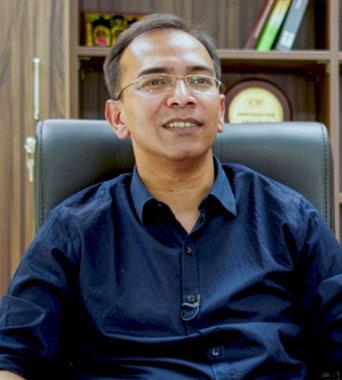
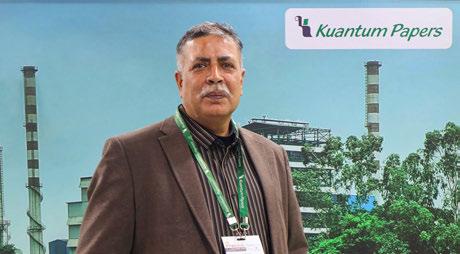
With over 34 years of experience in the Indian Administrative Service (IAS), Mr. Kumar Jayant has recently been appointed as the Additional Chief Secretary/Chairman & Managing Director, Tamil Nadu Newsprint & Papers Ltd (TNPL). In an exclusive interview with Paper Mart, Mr. Jayant shares TNPL is moving beyond traditional paper manufacturing to build a circular economic model. The company is driving its next phase of growth through infrastructure modernization, product innovation, and operational excellence, thereby expanding its market reach, accelerating capacity growth, and scaling its circular economy. Looking ahead, Mr. Jayant’s vision is to transform TNPL into a diversified global leader in sustainable paper, packaging, hygiene, and allied businesses while strengthening its position as India’s leading environmentally responsible paper manufacturer.
mandate is to drive strategic growth, infrastructure modernization, and operational excellence across our manufacturing units.
Over my 34-year career in the Indian Administrative
Service (IAS), spanning 22 assignments, including as Additional Chief Secretary, I have overseen large-scale financial, technical, and regulatory ecosystems. Drawing on leadership experience across sectors such as Information Technology, handlooms, and textiles, I intend to leverage this governance expertise to advance TNPL’s three strategic priorities.
Expanding Market Reach:
Strengthening the global footprint of TNPL’s premium printing papers and packaging boards, which are already exported to more than 60 countries.
Accelerating Capacity Growth: Commissioning our 100 TPD tissue paper production line to capitalize on expanding domestic and global hygiene markets.
Scaling the Circular Economy: Scaling our premium cement business by utilizing enriched in-process materials to produce premium cement, further strengthening TNPL’s sustainability commitment.
By combining the strengths of sound public sector governance with corporate agility, we will continue to modernize our steam and power infrastructure, expand our captive plantation initiatives, and ensure that TNPL remains India’s benchmark for sustainable, innovation-driven, and high-value industrial manufacturing.
PM: What made you decide to join the paper sector? How do you envision the future of the Indian paper industry?
KJ: The opportunity to lead TNPL as Chairman and Managing Director represents a meaningful continuation of my public service journey. As an administrator, my objective has always been to create sustainable economic value while ensuring long-term societal benefits.
The modern pulp and paper industry
occupies a unique position where advanced industrial manufacturing intersects with rural livelihoods, captive plantation, resource efficiency, and climate stewardship. TNPL has proven that a globally respected brand can thrive on circular economy principles and value-added manufacturing, transforming natural cellulose fiber from sugarcane and sustainably sourced wood pulp into premium paper, packaging boards, tissue products, and premium-grade cement.
Looking ahead, I envision a vibrant,
TNPL aspires to
adopt select rural hamlets and transform them into model communities by facilitating access to quality education, healthcare, livelihood opportunities, and essential infrastructure.
technologically advanced, and globally competitive future for the Indian paper industry, anchored on three key transformations:
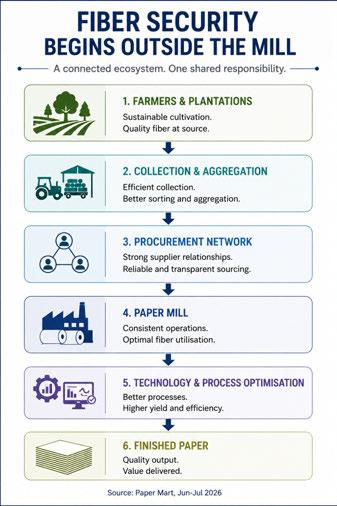
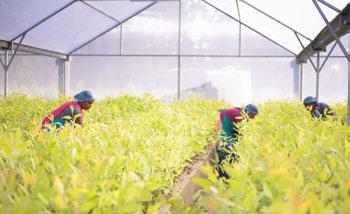
Sustainable Fiber Security: By expanding scientifically managed captive plantation initiatives, the sector can ensure a reliable and sustainable fiber supply while uplifting the farmers’ livelihood.
Accelerated Multi-Segment Growth: Steady demand for writing and printing paper, coupled with the rise of e-commerce, sustainable packaging, and hygiene awareness, is driving growth in premium
paperboard and tissue segments.
Hyper-Green Circular Operations:
The future of manufacturing lies in low-carbon, closed-loop operations that maximize water conservation, reuse, and the utilization of inprocess materials, reinforcing environmental stewardship and circularity.
By combining institutional governance with advanced manufacturing technologies and automation, the Indian paper sector is evolving far beyond its traditional role. It is steadily emerging as a cornerstone of the nation’s circular economy and sustainable industrial growth story.
PM: TNPL is not only a leading Indian paper mill but has been actively involved in CSR and other initiatives for the betterment of the state. How do you plan to take this legacy forward?
KJ: TNPL has been deeply committed to community development since its inception. Following the introduction of Section 135 of the Companies Act, 2013, the company established a comprehensive CSR policy aimed at enhancing the well-being of communities in and around our areas of operation.
Our CSR initiatives are primarily focused on five key pillars: Education, healthcare, community development and infrastructure, environment & soil quality, and culture & heritage preservation.
Over the years, TNPL has undertaken impactful programmes benefiting children, senior citizens, farmers, livestock rearers, unemployed youth, entrepreneurs, and spiritual communities through initiatives such as quality education, daily mobile medical camps, community medical centres, farmer capacitybuilding programmes, cattle care
camps, infrastructure development, skill training, and the renovation of historic temples, churches, and mosques.
As we move forward, our focus will be on making our CSR interventions increasingly need-based, measurable, and sustainable. We plan to undertake comprehensive community surveys to identify gaps and emerging needs, enabling us to transition from a broad-based approach to a more targeted and micro-level intervention strategy.
Looking ahead, TNPL aspires to adopt select rural hamlets and transform them into model communities by facilitating access to quality education, healthcare, livelihood opportunities, and essential infrastructure. Our objective is not merely to implement CSR projects, but to create lasting social impact and contribute meaningfully to inclusive and sustainable development across Tamil Nadu.
PM: What is your vision for the company and how do you plan on achieving it? Are there any major developments that we will witness in the coming years?
KJ: My overarching vision for TNPL is to transform the company into a highly diversified, multiproduct global leader in sustainable paper, packaging, hygiene, and allied businesses, while further strengthening our position as India’s benchmark for environmentally responsible industrial manufacturing.
We are steadily moving beyond traditional writing and printing papers to build a resilient circular economy model, expanding our presence across premium paperboards, tissue paper products, and premium-grade cement.
The industry can expect several significant developments from TNPL in the coming years such as
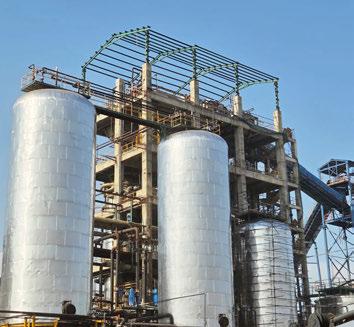
a 100 TPD tissue paper expansion at Unit-II, Mondipatti, where we have commissioned a INR 340 crore, 34,000 TPA state-of-the-art tissue paper facility, backed by our integrated hardwood pulp mill, to manufacture premium hygiene products for expanding domestic and international markets.
We are also coming up with plastic alternative innovation to
The industry can
expect several significant developments from TNPL in the coming years such as a 100 TPD tissue paper expansion, plastic alternative innovation, infrastructure modernisation, and scaling circular manufacturing by maximizing the utilization of enriched in-process materials for commercial premiumgrade cement.
address the growing demand for sustainable packaging. Our R&D and packaging board teams are developing TAMBAG paper carry bag, digital printing paper, liquid packaging boards, and barriercoated biodegradable boards for the retail, food service, and e-commerce sectors.
We are also undertaking infrastructure modernisation by implementing a INR 250 crore phased steam and power upgrade
at Unit-I, featuring a 125 TPH highpressure boiler, fuel handling plant, and accessories to improve energy efficiency, operational reliability, and lower carbon emissions.
As part of our long-term sustainability roadmap, we have commissioned 1MW rooftop solar power systems across both production units, reinforcing our commitment to renewable energy adoption and low-carbon manufacturing.
We are also scaling circular manufacturing by maximizing the utilization of enriched in-process materials for commercial premiumgrade cement. We are further strengthening the synergy between our paper and cement businesses and advancing TNPL’s circular manufacturing objectives.
Through these strategic investments, infrastructure expansions, product innovations, and an enhanced focus on captive plantation, TNPL is well-positioned to deliver sustainable, high-value growth while contributing meaningfully to Tamil Nadu’s industrial development and environmental stewardship.
PM: What is your outlook on the current scenario of the paper industry in terms of geo-political crisis, raw material volatility and price fluctuations, impacting the industry and what are your strategies for overcoming these obstacles?
KJ: The global paper industry is currently operating in an increasingly complex and volatile environment. Ongoing geopolitical uncertainties have disrupted international supply chains, resulting in elevated ocean freight costs, delays in the delivery of critical equipment, and fluctuations in global pulp markets. Simultaneously, domestic manufacturers continue to face
pressure arising from variability in raw material, chemical, and energy prices, coupled with increased competition from low-priced paper imports.
At TNPL, we view these challenges not as constraints, but as opportunities to strengthen our self-reliance, enhance operational resilience, and reinforce our longterm competitiveness.
To mitigate exposure to global market uncertainties and maintain sustainable margins, we are pursuing a comprehensive de-risking strategy across our manufacturing ecosystem:
Pulp Self-Sufficiency: TNPL is expanding captive plantations in Tamil Nadu and leveraging natural cellulose fiber from sugarcane, complemented by record hardwood pulp production at Unit-II, to strengthen raw material security, improve cost competitiveness, and support the sustained operation of our upcoming 100 TPD tissue paper line.
Thermal and Energy Autonomy: TNPL has undertaken a INR 250 crore steam and power modernization project, increasing the use of in-house methane gas, biomass, and alternate fuels for lime kilns to improve energy efficiency and reduce fossil fuel dependence.
Strategic Procurement and Spot Tendering: TNPL has adopted a dynamic procurement strategy, including spot tendering, to mitigate geopolitical supply chain disruptions, ensuring greater flexibility and uninterrupted availability of critical inputs through FY 2026–27 and beyond.
Eliminating Dependence on Imported LPG: To minimize exposure to international fuel market volatility, TNPL has eliminated its dependence on imported LPG by
adopting efficient electrical heating systems for industrial canteens and sustainable in-house energy solutions for guest house operations, strengthening operational continuity and supporting our sustainability objectives.
By progressively replacing external dependencies with domestic fiber security, integrated pulp capabilities, energy self-sufficiency, and circular manufacturing practices, TNPL is well-positioned to transform market volatility into a sustainable competitive advantage and continue
At TNPL, we believe that the future competitiveness of the sector will depend on
a synchronized approach encompassing advanced technologies, operational excellence, and progressive policy interventions.
delivering long-term value to all stakeholders.
PM: What technological advancements, operational improvements and policy reformation can further boost the paper industry?
KJ: To unlock the next phase of growth, the Indian paper industry must evolve from conventional manufacturing into a highly efficient, technology-driven and resource-conscious bio-economy. At TNPL, we believe that the future competitiveness of the sector will depend on a synchronized
approach encompassing advanced technologies, operational excellence, and progressive policy interventions.
The future of paper manufacturing lies in automation and intelligent production systems, with Industry 4.0, IoT-enabled monitoring, and AI-driven analytics optimizing fiber composition, chemical dosing, energy use, and process stability, while advanced barrier-coating technologies enable biodegradable, food-grade packaging solutions to replace single-use plastics and meet evolving consumer expectations.
Sustainable growth requires closedloop and circular manufacturing, supported by investments in oxygen delignification technologies, advanced process controls, and water conservation systems to reduce chemical consumption, improve resource efficiency, and lower environmental impact, while utilizing enriched inprocess materials for value-added applications to enhance self-reliance and circularity.
The sector would also benefit from forward-looking policies promoting organized and contract plantations on degraded and underutilized lands with appropriate agricultural status and incentives to ensure long-term fiber security, alongside stronger safeguards against unfairly priced imports and incentives for renewable energy, bio-energy, and green manufacturing to accelerate the transition to low-carbon, globally competitive operations.
By integrating smart manufacturing technologies, operational efficiencies, and growth-oriented policy support, the Indian paper industry has the potential to further strengthen its position as a globally competitive, environmentally responsible, and innovation-led manufacturing sector.
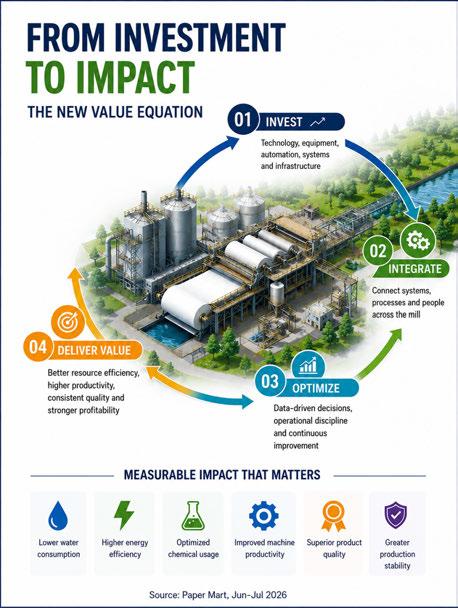
The New Value Equation
Extracting More from Every
Investment
Mill modernization has become the baseline. Comparable mills increasingly operate similar technologies. Sustained competitiveness now on how effectively investments are integrated, optimized, and translated into measurable operational performance.
For many years, modernization in the Indian paper industry was measured by the technologies a mill installed. Today, that measure is less meaningful. Comparable mills operate with similar process equipment, automation platforms, quality control systems, and resource management technologies, yet achieve markedly different operational outcomes. The difference lies in how effectively these systems are integrated into everyday operations, adapted to mill-specific conditions, and continuously optimized.
The Indian paper mills have reached this stage through different modernization paths. Large integrated manufacturers have built centralized operating environments where stock preparation, paper machines, utilities, quality control, and resource management function through connected digital platforms. TNPL describes this as a “one-stop” framework connecting operations “from pulping to finished paper.”
JK Paper similarly integrates its core manufacturing processes through DCS and QCS platforms, while Emami Paper has extended coordinated automation across production, energy, water, and finishing operations.
Other mills have adopted a more selective approach. Sripathi Paper & Boards continues to operate mature production assets while modernizing critical sections through DCS, QCS, online quality monitoring, process debottlenecking, and energy-efficient utilities. Rather than replacing entire production lines, the emphasis is on extending the
capability of existing assets through carefully planned interventions.
Investment philosophies have evolved alongside modernization. Capital expenditure is increasingly evaluated by lifecycle performance, operational flexibility, resource efficiency, and long-term reliability rather than equipment cost alone. Sripathi evaluates projects through Total Cost of Ownership (TCO), while JK Paper emphasizes lifecycle value and return on investment. Emami balances phased upgrades with integrated modernization, and TNPL combines large-scale expansion with continuous upgrades across existing operations. Different approaches, but a common objective: extracting greater value throughout an asset’s operating life.
Modernization has thus become the baseline. Competitive advantage increasingly depends on how effectively those investments perform once they become part of everyday operations.
Capability Is Only the Beginning
Advanced systems create capability. Extracting their full value requires continuous refinement as production requirements, raw material characteristics, process conditions, and customer expectations evolve. Capability, in other words, is only the starting point.
Performance is shaped as much by operating conditions as by installed equipment. Raw material variability, water quality, process chemistry, legacy interfaces, operator capability, and data interpretation all influence the value extracted from existing
systems. JK Paper identifies changing production requirements, raw material quality, operator skill levels, legacy equipment interfaces, and limited use of analytics among the principal constraints. TNPL similarly points to raw material variability, sensor fouling, and the operational complexities associated with extensive process-water recycling.
These constraints vary across mills. At TNPL, extensive water reuse substantially reduces freshwater consumption but also increases the complexity of process chemistry, demanding closer control over deposits, sensors, and system stability. At Sripathi Paper & Boards, groundwater quality places additional demands on water treatment systems, influencing chemical consumption and equipment performance. The same technologies, therefore, can deliver different outcomes under different operating conditions.
The human element remains equally significant. As automation expands and process data become more abundant, the ability to interpret information and act upon it assumes greater importance. JK Paper captures this relationship succinctly by emphasizing “effective implementation, integration, operator adoption, and continuous performance monitoring.” The observation shifts attention from technology itself to the operating practices that determine its effectiveness.
A similar concern emerges from the supplier side. Valmet attributes much of the unrealized potential
TECHNOLOGY IN PRACTICE
of advanced systems to the “Black Box Syndrome,” where “operators lack the deep system understanding required to trust and manipulate advanced controls.” The challenge is therefore not limited to installing sophisticated systems but enabling people to use them with confidence and consistency.
Individual systems may perform efficiently in isolation. Their greatest value emerges when they function as parts of a connected manufacturing system.
Integration Creates Value
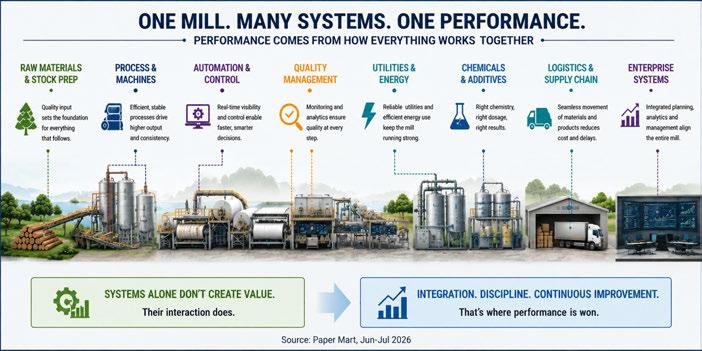
Individual systems create value only when they function together. Process equipment, automation platforms, and quality control systems form the production core. Utilities, chemical dosing, logistics, and enterprise management systems support and strengthen overall mill performance. Their greatest value emerges when information flows seamlessly across these functions, enabling faster decisions and coordinated process control.
At leading mills, integration extends well beyond centralized process control. TNPL links production, utilities, logistics, and enterprise
systems through a common digital framework covering operations “from pulping to finished paper.” JK Paper similarly integrates its core manufacturing processes through DCS and QCS platforms, while Emami coordinates process equipment, automation, chemical dosing, and utilities through centralized monitoring.
Integration also determines how quickly a mill responds to operational changes. At TNPL, deviations detected through the Quality Control System automatically trigger adjustments in process control, chemical dosing, and steam management. Similar synchronization extends to ERPlinked warehousing and utility operations, allowing production, inventory, and energy demand to respond as a unified system. The result is faster corrective action and greater process stability.
Integration also brings new challenges. Legacy equipment, biological treatment systems, and interfaces developed across different phases of expansion still demand manual coordination, particularly during grade changes and process transitions. Integration remains a
continuing process rather than a finished project.
This observation extends beyond individual mills. Valmet describes many paper mills as operating with “islands of automation,” where equipment supplied by different vendors communicates only within limited boundaries. The resulting fragmentation creates information silos, making it difficult for operators to visualize the complete process or fully exploit advanced optimization tools.
The distinction lies not in the number of automated systems but in the quality of their interaction. Connected systems improve production stability, utility optimization, product quality, and operational responsiveness. Where those connections remain incomplete, operators continue to rely on manual adjustments or localized optimization that benefits one section without improving overall mill performance.
Integration ultimately proves its value through operating results rather than system architecture. Those results provide the clearest measure of successful modernization.
TECHNOLOGY IN PRACTICE
Performance Is the Real Benchmark
The value of modernization is measured on the shop floor. Improvements in water consumption, energy efficiency, and chemical optimization provide one measure of modernization. Gains in machine productivity, product quality, and production stability provide another, offering a far more meaningful assessment than the sophistication of installed systems.
The benefits are reflected in different ways across mills. TNPL, for example, has reduced specific water consumption from 40 m³/ MT in 2016-2017 to 26 m³/MT in 2025-26 through water conservation, recycling, and process optimization, “making TNPL one of the most water-efficient bagasse-based mills in the world.” The mill has also achieved 100 percent power selfsufficiency, maintained chemical recovery efficiency above 97 percent, and recorded its highest-ever annual production of 6.34 lakh MT. Together, these gains illustrate how coordinated improvements across multiple systems strengthen overall mill performance.
Sripathi Paper & Boards presents a different model. Rather than replacing entire production lines, the mill has focused on targeted interventions with measurable returns. Energy-efficient vacuum blowers have reduced electricity consumption by 15-17 percent, while process debottlenecking and upgraded quality monitoring have strengthened both operational efficiency and product development. Freshwater consumption has been brought down to below 2 m³ per tonne, illustrating how selective modernization can produce substantial resource savings.
JK Paper reports improvements of 5-10 percent in energy efficiency, 10-20 percent in water consumption, and 3-8 percent in chemical optimization over the past three
to five years through automation and process control. Emami Paper likewise reports gains in productivity, runnability, product consistency, and water efficiency, with freshwater consumption reduced to 10.9 m³/ MT and sustained power and steam optimization enabling the mill to surpass successive PAT cycle targets.
These examples demonstrate that modernization is increasingly evaluated through measurable outcomes rather than the scale of investment. TNPL captures this philosophy by describing its objective as transforming “resource efficiency into a measurable competitive advantage.” The statement reflects a broader
shift across the industry, where technology is expected to deliver quantifiable improvements in production, quality, sustainability, and operating economics.
Performance gains, however, are not permanent achievements. They require continuous monitoring, disciplined execution, periodic upgrades, and informed investment decisions to sustain them over time. Those considerations are increasingly shaping the way mills evaluate future technology investments.
Technology Investments Are Becoming Operational Decisions Investment decisions have become increasingly operational. Mills
TECHNOLOGY IN PRACTICE
now evaluate projects by the improvements they deliver in process stability, resource efficiency, operational flexibility, and lifecycle value rather than by the equipment they add. Technology selection has become part of manufacturing strategy rather than a stand-alone capital exercise.
This shift is evident in the way mills evaluate modernization projects. Sripathi Paper & Boards assesses investments through Total Cost of Ownership (TCO), considering operating costs, maintainability, and ESG objectives alongside capital expenditure. JK Paper similarly evaluates projects through lifecycle value and return on investment, choosing between incremental improvements and integrated modernization according to the operational gains expected from each initiative. Emami follows a comparable approach, combining phased upgrades with larger modernization programmes where long-term benefits justify broader intervention. TNPL, meanwhile, balances integrated expansion with continuous incremental improvements that strengthen productivity and resource efficiency across existing operations.
Long-term value also depends on execution. Planning, compatibility with existing systems, phased implementation, operator preparedness, and postcommissioning optimization determine whether an investment achieves its intended outcomes. JK Paper summarizes the approach through “effective implementation, integration, operator adoption, and continuous performance monitoring.” Technology begins creating value only after it enters routine operation.
Supplier observations complement this changing investment philosophy. ANDRITZ notes that most Indian mills continue to favour incremental modernization because investments
are expected to deliver measurable operational improvements with manageable capital commitments. Valmet, however, cautions that decisions driven primarily by initial cost often result in fragmented multi-vendor architectures that become increasingly difficult to optimize over time. The balance, therefore, lies between immediate affordability and long-term operational efficiency.
Investments continue to be evaluated long after commissioning. Their success depends on how consistently they improve production, reduce variability, optimize resources, and adapt to changing manufacturing requirements. In that sense, investment decisions have become operational decisions.
The same philosophy is shaping the next phase of modernization, where the emphasis is shifting from expanding technology footprints to extracting greater value from every investment.
The Next Gains Will Come from Smarter Operations
Modernization is entering a more selective phase. Rather than expanding their technology footprint indiscriminately, mills are strengthening existing systems, improving process intelligence, reducing resource intensity, and enabling faster operational decisions. New technologies are increasingly expected to complement an established manufacturing ecosystem rather than function as isolated additions.
The priorities naturally differ across mills. TNPL identifies AI-assisted process optimization, digital twins, autonomous quality control, and advanced fiber utilization as the next areas of development, while emphasizing that these initiatives must strengthen operational excellence. JK Paper similarly highlights predictive analytics,
artificial intelligence, advanced automation, and sustainabilitydriven technologies, provided they deliver measurable gains in productivity, quality, and resource efficiency. Emami Paper focuses on deeper process automation, digital monitoring, energy optimization, and further reductions in water consumption. Sripathi Paper & Boards continues to prioritize automation, renewable energy integration, energy efficiency, and systematic modernization of existing assets.
Despite these different priorities, the objective remains consistent: extracting greater value from every tonne of fiber, every unit of energy, every cubic metre of water, and every technology investment. TNPL expresses this objective succinctly as resource efficiency through intelligent automation.
The same direction is reflected in supplier expectations. ANDRITZ sees future modernization being shaped by integrated solutions that simultaneously improve productivity and environmental performance. Valmet expects connected systems, advanced analytics, and decisionsupport tools to play an increasingly important role in helping operators convert process data into timely operational decisions. The focus, therefore, extends beyond acquiring new technologies to making better use of those already installed.
Modernization has significantly strengthened the technological capabilities of Indian paper mills. The next phase of improvement will depend on how effectively those capabilities are connected, managed, and continuously refined. Technology will continue to provide the foundation, but sustained competitiveness will increasingly be determined by the quality of execution on the shop floor.
ITC Paperboards and Specialty Papers Division Strengthens Its Data Architecture and Technological Ecosystem to Support Future Innovations
Paper Mart: Could you walk us through the current technology landscape in your mill, particularly the key systems deployed across process areas such as stock preparation, paper machines, automation, energy, water, and chemical control, and indicate whether these are fully integrated or implemented in a more selective manner?
Shailender Kumar Singh: ITC PSPD BCM Unit has evolved into a highly automated and digitally enabled manufacturing operation through sustained and longterm investments in process technology, automation, quality systems and Industry 4.0 initiatives over several years. We have consciously approached technology not as a collection of isolated tools, but as an integrated
In an exclusive interview with Paper Mart, Mr. Shailender Kumar Singh, Vice President, Unit Head, Bhadrachalam, ITC PSPD, shares that the Bhadrachalam (BCM) unit has evolved into a highly automated and digitally enabled manufacturing facility through sustained long-term investments in process technology, automation, quality systems, and Industry 4.0 initiatives. He emphasizes that the company’s technology deployment approach is guided by the core philosophy of ‘People, Process and Technology,’ thereby solving business problems, and not just adopted for the sake of it. As a result, most of the technologies implemented at ITC PSPD deliver meaningful value and are actively used. Going forward, the company aims to further strengthen its data architecture and technology ecosystem to ensure it remains resilient, secure, and capable of supporting future innovations.
One of the principles that has guided our digital transformation journey is that technology deployment cannot happen in isolation. Whenever we evaluate a technology, we look at it from three perspectives. First, the technical value it can create. Second, how we build the capability within the operating teams to effectively use and sustain it. And third, how it integrates into existing operational workflows. This approach helps ensure that utilization is not an afterthought but an inherent part of the deployment process itself.
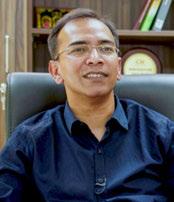
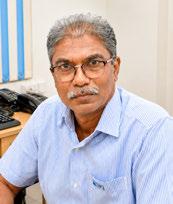
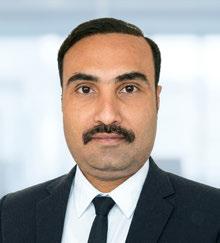
Mr. Shailender Kumar Singh, Vice President, Unit Head, Bhadrachalam, ITC PSPD
capability that supports safety, quality, productivity, sustainability and business competitiveness.
Across stock preparation and paper machine operations, advanced DCS and PLC-based control systems form the backbone of process automation. Automated refining controls, process historians, and AI/ML-based chemical dosage optimization systems help us manage the inherent variability associated with input furnish mix and fiber processing while ensuring process stability and quality consistency.
Our paper machines operate with a comprehensive automation stack that includes DCS, PLCs, Quality Control Systems (QCS), Advanced Process Control (APC) applications, Manufacturing Execution Systems (MES), web inspection systems and closed-loop controls for critical quality parameters. These systems enable us to maintain high levels of product consistency even at increasingly demanding customer specifications.
In utilities and energy management, we have deployed mill-wide energy monitoring systems, network load balancing capabilities and process optimization solutions. Similarly, for water management and environmental performance, we leverage mill-wide dashboards, online monitoring systems and analytical platforms that provide real-time visibility into key performance indicators and enable rapid root-cause analysis whenever deviations occur.
For chemical control, we have moved beyond traditional rule-based approaches in several areas. AI and machine learning models are used to recommend optimum dosage strategies based on incoming raw material characteristics, process conditions and target output properties. This allows us to proactively manage process variability while balancing quality, cost and sustainability objectives.
The technological approach is not defined by a preference for either incremental improvements or largescale modernization. Instead, we evaluate each opportunity on its own merits. Factors such as expected ROI, scalability, operational impact, strategic importance and future readiness all influence the investment decision.
Beyond manufacturing, digitalization extends into warehousing, logistics and supply chain operations as well. Automated Storage and Retrieval Systems (ASRS), Transport Management Systems (TMS), advanced planning platforms for demand and supply planning, and internally developed dispatch planning solutions have strengthened visibility and decisionmaking across the value chain.
From an integration perspective, the maturity is particularly high at the process-control level. Systems such as DCS, QCS, APC, MES and our centralized data historian are tightly integrated and operate as a connected ecosystem, enabling seamless data flow, advanced analytics and real-time decision support. At the broader enterprise level, integration across wood procurement, pulp manufacturing, paper production, utilities and customer-facing supply chain processes continues to evolve. This journey is being strengthened through phased deployment of digital platforms and the development of a modern data reference architecture that creates a scalable backend layer capable of
integrating diverse technologies in a secure and sustainable manner.
Overall, our focus has been on building an integrated digital foundation that not only improves current operational performance but also provides the flexibility required to adopt future technologies and business requirements.
PM: How would you assess the extent to which your installed technologies are being optimally utilized in day-to-day operations, and what factors, in your experience, prevent full utilization of these systems?
SKS: Today, the core automation systems deployed across the mill have become an integral part of day-to-day operations. In many ways, they form the backbone of how we run our processes. Over the years, as the workforce has become increasingly digitally enabled, systems such as DCS, QCS, APC, MES, web inspection platforms and process historians have become deeply embedded into operational routines. These systems are no longer viewed as standalone technologies but as essential enablers of process stability, safety, quality consistency and production reliability.
Beyond traditional automation, we have also seen significant adoption of advanced analytics, image and video analytics and AI/ML-based solutions. For example, machine learning algorithms are used to recommend optimum chemical dosages in pulp manufacturing, while process optimization systems help establish golden operating ranges for critical production parameters. Similarly, real-time reporting platforms, root-cause analytics tools and predictive models provide visibility into process performance and support faster decision-making.
One of the principles that has guided our digital transformation journey is that technology deployment cannot happen in isolation. Whenever we
TECHNOLOGY IN PRACTICE
evaluate a technology, we look at it from three perspectives. First, the technical value it can create. Second, how we build the capability within the operating teams to effectively use and sustain it. And third, how it integrates into existing operational workflows. This approach helps ensure that utilization is not an afterthought but an inherent part of the deployment process itself.
Having said that, technology adoption is never a static destination. While core automation systems have reached a high level of maturity, there are newer technologies such as advanced IoT deployments, edge analytics applications and emerging AI use cases that are still evolving. Their adoption levels naturally vary depending on the maturity of the use case, operational relevance and the confidence built around the solution.
In our experience, factors limiting full utilization are rarely technologyrelated alone. Inherent process variability, particularly in an agroforestry based industry, continues to be a challenge. Building digital capability across a large workforce, ensuring continuous change management and maintaining trust in AI-driven recommendations require sustained effort. Additionally, the reliability and maintainability of digital infrastructure remain important considerations, as adoption ultimately depends on the confidence that operators and engineers have in the accuracy and consistency of these systems.
Overall, we see utilization as a continuous journey rather than a one-time milestone. As technologies mature and user confidence grows, their role in day-to-day operations naturally expands, creating further opportunities for value generation.
PM: In your view, which technologies or systems within your mill are currently underutilized or not delivering their full potential, and what are the underlying reasons: whether
operational, economic, skillrelated, or linked to process variability?
SKS: At ITC PSPD, our approach towards technology deployment follows the core philosophy ofPeople First, Process Second and Technology Third. As a result, technology investments are typically undertaken only after there is a clear understanding of the business problem being solved and a strong alignment with operational requirements. This significantly improves adoption and reduces the likelihood of technologies remaining underutilized.
Our digital teams work very closely with operating teams to understand pain points and identify opportunities where technology can create meaningful value. Solutions are generally deployed only after we have confidence in their reliability, accuracy and ability to address a real business need. Consequently, most of the technologies that have been implemented today are delivering value and are being actively used.
However, there are certain areas where technologies continue to evolve and are yet to realize their full potential. Predictive maintenance is one such example. While we have achieved encouraging results in specific applications, scaling predictive maintenance across all equipment categories presents unique challenges. In highly reliable manufacturing environments, unplanned downtime events are already relatively infrequent. While this is operationally desirable, it creates challenges from a data science perspective because machine learning models require sufficient failure data for training and validation. Limited failure events can result in lower model confidence, higher false positives and difficulties in accurately demonstrating value.
Similarly, newer technologies such as enterprise-wide optimization platforms, workflow automation tools and generative AI solutions
continue to be evaluated selectively. While these technologies hold tremendous promise, their effectiveness depends heavily on identifying use cases where the business impact justifies the investment and operational effort required for deployment.
In some cases, underutilization may also arise because processes continue to evolve over time. Changes in raw material characteristics, process conditions or market requirements can alter the relevance of certain analytical models or optimization algorithms. Continuous recalibration and feedback from operating teams therefore become critical to sustaining value.
Ultimately, our experience has shown that technology utilization is rarely constrained by technology itself. More often, it is influenced by factors such as process complexity, data availability, business relevance, operational priorities and the effortto-reward ratio associated with a particular use case. Therefore, maintaining close collaboration between technology teams and operations remains central to unlocking long-term value from these investments.
PM: Despite increasing levels of automation, are there specific areas where manual intervention continues to play a significant role in your operations, and what drives the need for such overrides?
SKS: The pulp and paper industry is inherently complex, and while automation has transformed the way modern mills operate, there remain several areas where human expertise continues to play an important role. For instance, over the years, automation has delivered significant benefits in areas where process conditions are stable, measurable and suitable for closedloop control. However, there are also situations where operator judgment, experience and contextual understanding remain invaluable.
We are a company that started almost two decades ago with a vision to provide practical and long lasting solutions to the burgeoning paper industry in India by creating a fusion of chemistry applications and local industry environment and requirements.
Packaging & Board
Printing & Writing Recycled Fiber Enzymes
Internal Sizing & Surface Sizing
Retention and Drainage
Dry Strength Resin
Paper Machine Deformer and DE-AERATION
Surface Additives
Felt Cleaning and Conditioning Program
Microbiological & Deposit Control Program
Wet Strength Resin
Stickies Control program
Deinking chemicals
Enzymes
Starch(Native, Modified cationic/oxidized)
Coating thickener
Coating lubricant
Dispersants
Antisclants
Flocculants
Coagulants
Pulp mill Cooking-aid
Pulp mill Wash-aid
Odor control
TECHNOLOGY IN PRACTICE
Examples include grade change management, handling process upsets, trialing new specialty chemicals for various products or NPD and responding to unusual operating conditions. These situations often involve multiple interacting variables and dynamic process behavior that cannot always be fully captured through conventional automation strategies.
The need for manual intervention is typically driven by high process sensitivity, changing input conditions and the requirement to balance multiple operational objectives simultaneously. In such situations, experienced operators/managers on shopfloor are often able to interpret subtle process signals, contextual information and practical considerations that may not yet be fully represented within automated control systems.
Our approach is therefore not necessarily to automate every decision. Instead, we focus on augmenting human decision-making through digital technologies. In many cases, recommendation engines, advanced analytics platforms and AI-based advisory systems can provide operators with better insights and decision support without requiring full autonomous control. This allows us to combine the consistency of automation with the experience and judgment of our workforce.
We believe that the future of industrial operations lies not in replacing human expertise but in enhancing it. As AI and advanced analytics continue to mature, we expect many of these currently manual activities to become increasingly supported by intelligent decision-assistance systems. However, the human element will continue to remain an important part of managing complex manufacturing processes, particularly in industries characterized by significant raw material variability and demanding customer quality expectations.
PM: Which sections of your mill continue to face the greatest operational challenges or variability despite the presence of modern equipment and systems, and what are the key issues you encounter in these areas?
SKS: One of the important realities of the pulp and paper industry is that operational variability is not always a function of the technology deployed. Even with world-class equipment, advanced automation systems and sophisticated control strategies, variability remains an inherent part of the business because the primary raw material we process is wood, which is a natural material with significant variations in species, age, moisture content, fiber characteristics and seasonal availability.
At the same time, customer expectations demand greater consistency in quality, tighter specifications and superior performance characteristics. As a result, one of the industry’s biggest challenges is managing natural variability while consistently delivering uniform product quality.
In our view, the objective of technology is not necessarily to eliminate variability altogether but to build flexibility and adaptability into the manufacturing system. In fact, as we strengthen our engineering capabilities and introduce more advanced technologies, we often are able to challenge our systems by making the process intake greater raw material variability which saves preprocessing costs, enables us to take a wider range of decisions by eliminating process constraints and is good from a sustainability standpoint.
A good example is our pulp manufacturing process. Through advanced automation, auto machine learning-based chemical optimization and robust process controls, we have developed the capability to process a wider range of wood and furnish combinations
while maintaining industry-leading quality consistency. This flexibility becomes particularly valuable during periods of raw material constraints or changing supply conditions.
Similar operational challenges continue to exist in areas such as furnish variability management, stock preparation, paper formation, coating consistency and moisture control. Fiber characteristics can vary significantly depending on the incoming raw material mix, and these variations can propagate downstream unless appropriately managed.
To address these challenges, we have deployed a combination of advanced process controls, automated chemical dosing systems, machine learning algorithms and real-time quality monitoring solutions.
Similarly, our quality automation platforms provide continuous visibility into product quality and allow operators to identify and correct deviations before they impact the end product. The result is a manufacturing system that is not only more efficient but also significantly more adaptable to changing operating conditions.
Therefore, while variability remains an inherent characteristic of the industry, we increasingly view it as an opportunity to strengthen our operational capability and improve the flexibility of our manufacturing processes.
PM: How effectively are different systems within your mill (such as process equipment, automation platforms, chemical dosing, and utilities) integrated with one another, and where do gaps in coordination most impact overall performance?
SKS: Integration maturity has evolved significantly over the years and today represents one of the key strengths of our digital transformation journey.
At the process and equipment
TECHNOLOGY IN PRACTICE
level, integration is highly mature. The entire manufacturing process is governed through DCS and PLC-based automation systems, ensuring seamless coordination between equipment, control systems and process operations. These systems are further connected to centralized historian platforms where operational data is continuously collected, contextualized and made available for advanced analytics and decision support applications via our Process Historian and Data Lake architecture.
This creates a strong vertical integration architecture, where data flows seamlessly from the shop floor to analytical platforms and back into operational decision-making processes. Advanced process control systems, quality control systems, MES platforms and optimization applications are all connected through this digital backbone, enabling near real-time visibility and control across manufacturing operations.
Where the next phase of opportunity lies is in horizontal integration across functions and value streams. While significant progress has already been made, integration across utilities, pulp manufacturing, recovery operations, paper machines, supply chain systems and customer-facing processes continues to evolve.
Over the last two years, strengthening these interconnections has been a major focus area. The objective is not simply to connect systems but to create a common operating framework where decisions made in one area are automatically evaluated for their impact across the broader value chain. This becomes increasingly important when optimizing interconnected KPIs related to energy, water, production, quality and sustainability.
To support this vision, we are also working in a modern data reference architecture that provides a scalable and secure foundation for future
integration. As digital maturity increases, we expect the distinction between individual systems to become less relevant, with operations increasingly managed through integrated platforms that enable enterprise-wide visibility and optimization.
While vertical integration can be considered highly mature today, horizontal integration remains an important area of continuous development and represents one of the key levers for future value creation.
PM: Over the past three to five years, what measurable improvements have you achieved through technology deployment in terms of energy efficiency, water consumption, chemical usage, productivity, or product quality, and could you share specific examples or figures where possible?
SKS: Over the last five years, technology deployment has become an important contributor to our operational excellence journey and has delivered measurable improvements across productivity, quality, sustainability and financial performance.
In the area of energy efficiency, multiple digital initiatives have helped optimize power consumption across manufacturing processes and utility operations. Advanced monitoring systems, process optimization tools and energy management platforms have enabled better visibility into energy performance and supported targeted interventions across critical equipment and processes.
Water management has similarly benefited from increased digital visibility. Mill-wide monitoring systems, dashboards and analytical tools provide real-time tracking of consumption patterns and support proactive identification of improvement opportunities. These capabilities have strengthened our ability to manage one of
the industry’s most important sustainability metrics.
One of the most significant applications of advanced analytics has been in chemical optimization. We have deployed machine learning-based systems that evaluate incoming raw material characteristics and process conditions to recommend optimum chemical dosage strategies. These applications extend across pulping, bleaching and paper manufacturing operations and have helped improve both cost efficiency and process stability.
From a productivity perspective, we have implemented golden batch and process optimization systems that help identify the most effective operating conditions and ensure greater consistency in production performance. By continuously monitoring process behavior and recommending corrective actions, these systems contribute to higher operational stability and improved asset utilization.
Quality has also been a major area of focus. Our web inspection systems, image analytics platforms and quality control systems operate at extremely high machine speeds and provide real-time visibility into product quality. These systems are integrated with offline laboratory measurements, enabling detailed quality traceability at reel and jumbo levels. This not only improves defect detection but also enhances our ability to understand process-quality relationships and proactively prevent issues.
Collectively, our digital transformation initiatives have delivered a measurable impact on business performance through operational savings, productivity enhancement and process optimization. At the same time, these initiatives have strengthened our sustainability performance through ~300k MT of CO2e reduction and supported our broader objective of building a more resource-efficient manufacturing ecosystem.
TECHNOLOGY IN PRACTICE
While the benefits achieved so far are significant, we continue to view digital transformation as an ongoing journey and remain focused on identifying high-impact opportunities that can create both operational and strategic value.
PM: Have there been instances where technology investments did not deliver the expected outcomes, and what lessons have emerged from those experiences in terms of selection, implementation, or integration?
SKS: ITC PSPD’s digital transformation journey has always been guided by a clear philosophy: technology should be deployed to solve a business problem, not for the sake of it. As a result, we have generally been able to ensure that investments deliver meaningful value and are aligned with operational priorities.
Before any significant technology deployment, we invest considerable effort in understanding the business need, validating the use case, assessing technical feasibility and establishing ownership within the operating teams. This disciplined approach has helped minimize the risk of large-scale investments failing to deliver expected outcomes.
That said, over the years, we have learned that the success of a digital initiative depends just as much on people and processes as it does on the technology itself. Strong business ownership, early involvement of operators, effective change management and continuous governance are often the factors that determine long-term success.
Another important learning has been the need to validate solutions in a phased manner before scaling them across the organization. Pilot deployments allow us to refine models, improve integration with existing processes and build confidence among end users before wider adoption.
We have also learned that
Technology investment decisions are rarely a choice between cost and performance alone. In our experience, the right balance is achieved through a careful evaluation of business impact, scalability, strategic relevance and long-term value creation.
technology should complement existing workflows rather than create parallel systems that increase complexity. The most successful solutions are typically those that become seamlessly embedded into daily operations and are viewed by users as part of their normal way of working.
Overall, while individual projects may present implementation challenges or require multiple iterations before reaching maturity, our experience has reinforced the importance of maintaining a structured, valuedriven approach to technology deployment.
PM: When planning technology upgrades or investments, how do you approach the balance between cost and performance, and do you typically favor incremental improvements or more integrated, system-wide modernization?
SKS: Technology investment decisions are rarely a choice between cost and performance alone. In our experience, the right balance is achieved through a careful evaluation of business impact, scalability, strategic relevance and long-term value creation.
As a manufacturing organization, we naturally place significant emphasis on ensuring that investments generate measurable outcomes.
Consequently, we often favor phased and incremental improvements where value can be demonstrated quickly and risks can be managed effectively. This approach allows us to continuously improve operational performance while maintaining strong financial discipline.
At the same time, there are opportunities which require broader modernization efforts to unlock transformational value and create the foundation for future competitiveness. In such cases, we pursue integrated systemlevel upgrades when the strategic rationale is compelling and the longterm benefits are clear.
Therefore, our approach is not defined by a preference for either incremental improvements or large-scale modernization. Instead, we evaluate each opportunity on its own merits. Factors such as expected ROI, scalability, operational impact, strategic importance and future readiness all influence the investment decision.
Over the years, this balanced approach has allowed us to build digital maturity progressively while also making targeted investments in transformational capabilities when required. We believe this combination of pragmatism and long-term vision is essential for sustaining competitiveness in an increasingly dynamic business environment.
PM: Looking ahead, what do you believe will drive the next level of efficiency and competitiveness in Indian paper mills: greater adoption of new technologies, better utilization of existing systems, or stronger integration across processes? What specific changes would make the most meaningful impact in your own operations?
SKS: The next phase of competitiveness in the Indian paper industry will not be driven by any single technology. Rather, it will emerge from a combination of
better utilization of existing systems, stronger integration across processes and selective adoption of advanced digital capabilities.
Many organizations already possess a significant technology foundation. The greater opportunity now lies in unlocking more value from these investments by improving connectivity, integration and decision-making across the enterprise.
For us, one of the most important focus areas is the continued evolution of closed-loop optimization systems. Over the past several years, we have developed numerous analytical models and optimization algorithms. The next step is to progressively move towards greater levels of autonomous decision-making where appropriate as the confidence in these systems increases.
We also see significant potential in creating more comprehensive and interconnected digital representations/Digital Twins of our manufacturing processes that can support simulation, optimization and scenario planning. Such capabilities can help improve operational agility while reducing risk and resource consumption.
Another key priority is integrated KPI optimization across value streams. Traditionally, manufacturing functions have often optimized individual processes independently. The future lies in understanding and optimizing the interactions between energy, water, quality, productivity, sustainability and cost across the entire enterprise.
Equally important is workforce capability development. As technologies become more advanced, building digital fluency across the organization will be
essential. Data-driven decisionmaking must become embedded not only within specialist teams but across all levels of the organization.
Supporting all of these ambitions is the need for a modern, modular and scalable digital core. We are therefore continuing to strengthen our data architecture and technology ecosystem to ensure that it remains resilient, secure and capable of accommodating future innovations.
Ultimately, we see digital transformation not merely as an operational improvement initiative but as a strategic lever that enhances productivity, sustainability, agility and competitiveness. The organizations that successfully combine process expertise, engineering excellence and digital intelligence will be best positioned to thrive in the next decade of industrial transformation.
JK Paper’s Technology Deployment Relies on Effective Utilization, Integration, & Continuous Performance Monitoring
The key lesson for successful technology deployment depends not only on selecting the right technology and assumption considering overall impact but also on effective implementation, integration, operator adoption, and continuous performance monitoring.
In an exclusive interview with Paper Mart, Mr. Pavan Kumar Suri, Technical Advisor, shares that JK Paper Limited’s core processes such as stock preparation, paper machines, pulp mills utilities, chemical recovery, and water management are controlled through a centralized DCS/QCS platform. The company balances cost and performance in technologies by focusing on lifecycle value and ROI rather than upfront costs. In the last 3–5 years, the company has achieved improvements in energy efficiency, water consumption, and chemical optimization through advanced automation, process control, and resource management initiatives, improving its productivity and reducing downtime. The next level of competitiveness will come through better utilization of existing technologies and stronger integration across processes, supported by digitalization and AI-based analytics.
Paper Mart: Could you walk us through the current technology landscape in your mill, particularly the key systems deployed across process areas such as stock preparation, paper machines, automation, energy, water, and chemical control, and indicate whether these are fully integrated or implemented in a more selective manner?
Pavan Kumar Suri: Our mill operates at a high degree of automation and integration. Stock preparation, paper machines, pulp mills utilities, chemical recovery, and water management are controlled through a centralized DCS/QCS platform. Online monitoring is available for key quality, energy, and process parameters. While core production processes are fully integrated, some auxiliary
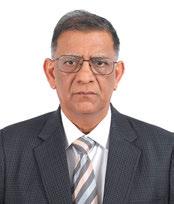
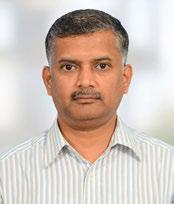
Mr. Pavan Kumar Suri, Technical Advisor, JK Paper Ltd.
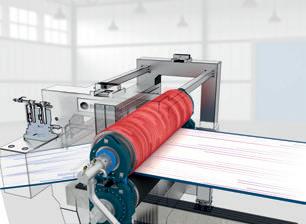
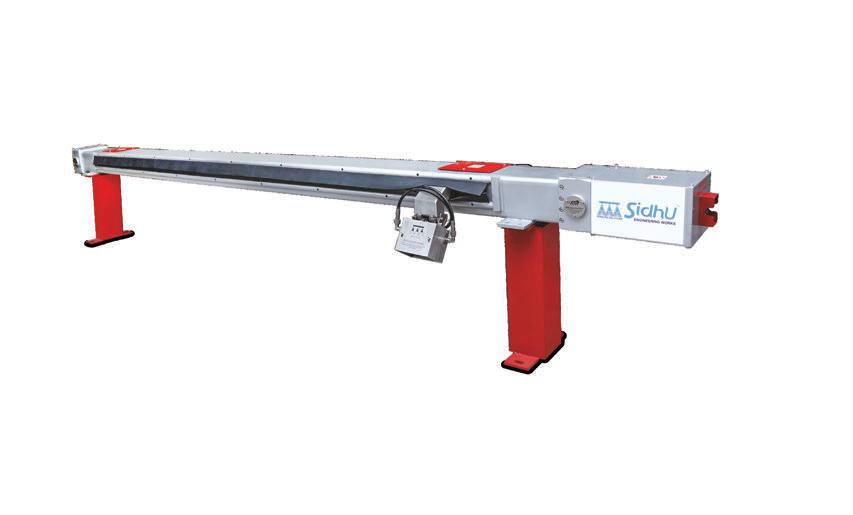
SIDHUMATIC ROBO CLEANER TO
• Robo assembly provides continuous movement of showers to ensure good coverage.
• Perfect equal cleaning performance over the entire fabric.
• No Nozzles overlap
• No Stripes marking on forming fabric
• Increased fabric life and save fabric costs
• Significantly reduced water consumption
• 92% than other conventional showers
• Auto synchronisation with M/s Speed
• Target cleaning available to remove particular sticky
Wire Robo Cleaner (Actual picture)
TECHNOLOGY IN PRACTICE
and support systems are selectively automated and interfaced with the central control system. We are continuously enhancing digitalization, process analytics, and energy optimization across the mill.
PM: How would you assess the extent to which your installed technologies are being optimally utilized in day-to-day operations, and what factors, in your experience, prevent full utilization of these systems?
PKS: Overall, we are utilizing a significant portion of the available technology capabilities; however, there is always scope for improvement. The main constraints to full utilization are changing production requirements, varying raw material quality, operator skill levels, legacy equipment interfaces, and the need to balance process stability with advanced optimization features. In some cases, lack of real-time data integration, training gaps, and limited use of analytics tools also prevent organizations from realizing the full potential of installed systems. Continuous training, digitalization, and performance reviews help improve utilization over time.
PM: In your view, which technologies or systems within your mill are currently underutilized or not delivering their full potential, and what are the underlying reasons: whether operational, economic, skill-related, or linked to process variability?
PKS: The most underutilized technologies are typically advanced process control, predictive maintenance, and data analytics tools.
The reasons for under utilization are usually operator adoption challenges, raw material variability, integration issues with older systems, and a stronger focus
In the last 3–5 years, we have achieved improvements in energy efficiency (5–10%), water consumption (10–20%), and chemical optimization (3–8%) through automation, process control, and resource management initiatives. We have also improved productivity through higher machine efficiency and reduced downtime, while quality consistency has benefited from advanced monitoring and control systems.
on production continuity than optimization. With better training and digital integration, these systems can deliver much greater value.
PM: Despite increasing levels of automation, are there specific areas where manual intervention continues to play a significant role in your operations, and what drives the need for such overrides?
PKS: Yes, despite high levels of automation, manual intervention remains important in areas such as raw material handling, finishing house, startup and shutdown operations, quality troubleshooting, maintenance activities, and handling process upsets.
These interventions are typically driven by raw material variability, changing customer requirements, unexpected equipment behaviour, sensor inaccuracies, or situations where operator experience and judgment can respond more effectively than predefined control logic. The objective is always to
minimize manual overrides while maintaining safety, quality, and production stability.
PM: Which sections of your mill continue to face the greatest operational challenges or variability despite the presence of modern equipment and systems, and what are the key issues you encounter in these areas?
PKS: The greatest challenges are typically in raw material handling and finishing house.
The main issues are raw material variability, quality consistency, and process stability. Despite modern technology, these areas require continuous optimization and close operational attention.
PM: How effectively are different systems within your mill (such as process equipment, automation platforms, chemical dosing, and utilities) integrated with one another, and where do gaps in coordination most impact overall performance?
PKS: Core process, automation, chemical, and utility systems are largely integrated through DCS/QCS platforms. However, integration gaps between legacy systems, maintenance data, quality systems, and energy management can sometimes impact optimization and decision-making. Better data connectivity and analytics remain key improvement opportunities.
PM: Over the past three to five years, what measurable improvements have you achieved through technology deployment in terms of energy efficiency, water consumption, chemical usage, productivity, or product quality, and could you share specific examples or figures where possible?
PKS: In the last 3–5 years, we have achieved improvements in energy efficiency (5–10%), water consumption (10–20%),
and chemical optimization (3–8%) through automation, process control, and resource management initiatives. We have also improved productivity through higher machine efficiency and reduced downtime, while quality consistency has benefited from advanced monitoring and control systems.
PM: Have there been instances where technology investments did not deliver the expected outcomes, and what lessons have emerged from those experiences in terms of selection, implementation, or integration?
PKS: Yes, some investments have delivered lower-than-expected benefits due to unrealistic assumptions during project evaluation. The key lesson is that successful technology deployment depends not only on selecting the
right technology and assumption considering overall impact but also on effective implementation, integration, operator adoption, and continuous performance monitoring.
PM: When planning technology upgrades or investments, how do you approach the balance between cost and performance, and do you typically favour incremental improvements or more integrated, system-wide modernization?
PKS: We balance cost and performance by focusing on lifecycle value and ROI rather than upfront cost alone. We typically implement incremental improvements for continuous optimization, but for major bottlenecks or strategic objectives, we prefer integrated modernization that delivers longterm operational and business benefits.
PM: Looking ahead, what do you believe will drive the next level of efficiency and competitiveness in Indian paper mills: greater adoption of new technologies, better utilization of existing systems, or stronger integration across processes? What specific changes would make the most meaningful impact in your own operations?
PKS: I believe the next level of competitiveness will come primarily from better utilization of existing technologies and stronger integration across processes, supported by digitalization and AIbased analytics. For our operations, the greatest benefits would come from improved process integration, predictive maintenance, energy optimization, and real-time performance monitoring rather than simply adding more standalone technologies.
TNPL’S Integrated Technological Approach Translates Into Performance Gain, Resource Efficiency and Market Competitiveness
In an exclusive interaction with Paper Mart, Mr. P. Prince Tholkappian, Chief General Manager (Production & Project Coordination), Tamil Nadu Newsprint & Papers Limited, shares TNPL’s technological approach is ‘highly-integrated’ than ‘selective’ where automation and digitalization are one-stop, end-to-end solutions, connecting various sections, from pulping to finished paper, under centralized digital frameworks. It balances high-capacity operations with the practical constraints, resulting in an integrated, resource-intensive mill that delivers tangible performance gains such as sustainability, resource efficiency, and market competitiveness. TNPL’s vision for “Smart Mill” is built on the foundation of horizontal and vertical integration, where process equipment, automation, and utilities function as a unified responsive ecosystem.
Mr. P.
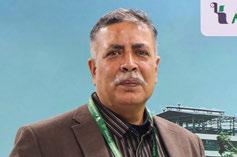
Prince Tholkappian, Chief General Manager (Production & Project Coordination), Tamil Nadu Newsprint & Papers Limited
Paper Mart: Could you walk us through the current technology landscape in your mill, particularly the key systems deployed across process areas such as stock preparation, paper machines, automation, energy, water, and chemical control, and indicate whether these are fully integrated or implemented in a more selective manner?
P. Prince Tholkappian: At TNPL, the technology landscape reflects a progressive transition from conventional process management to an integrated, data-driven manufacturing ecosystem aimed at optimizing resources across its writing & printing paper, paperboard, and tissue paper production lines. The key technology domains include stock preparation & pulping, paper machines, automation, energy & steam management, and water & chemical control.
TNPL employs advanced hardwood kraft pulping systems and collaborates with Valmet for state-of-the-art pulping technologies. These systems are designed to maximize fiber yield while ensuring efficient chemical recovery and resource utilization.
The mill operates high-speed, next-generation paper machines capable of producing multiple grades of paper. These machines are increasingly integrated with digital technologies that enhance operational predictability, process stability, and overall production optimization.
Automation forms the backbone of TNPL’s operational excellence. The mill utilizes a combination of Distributed Control Systems (DCS) and Quality Control Systems (QCS) to maintain consistent product quality, improve process control, and minimize production downtime.
TNPL has also invested significantly in technologies that reduce energy and steam consumption through continuous performance monitoring and regular energy audits. Modern Effluent Treatment Plants (ETP), along with process innovations for water recycling and reuse, have substantially lowered the mill’s water footprint.
The mill’s technology strategy is built on an integrated rather than selective approach. Automation and digitalization are implemented as end-to-end solutions, seamlessly connecting operations from pulping through finished paper production under centralized digital platforms.
These technology initiatives have delivered measurable improvements in sustainability, resource efficiency, and market competitiveness. TNPL has successfully reduced water consumption per unit of production while strengthening its overall environmental performance.
By networking equipment and leveraging Smart Sensors and Big Data Analytics, TNPL has optimized resource utilization, operational efficiency, and profitability. The mill has also implemented an Advanced Process Control (APC) system to reduce chemical consumption. Through periodic technology upgrades and continuous
Over the past five years, TNPL has utilized its Mill Expansion Plan and strategic technology interventions to convert resource efficiency into a measurable competitive advantage. By emphasizing digital process control and continuous innovation, the company has achieved industryleading performance benchmarks.
modernization, TNPL remains aligned with global quality standards, ensuring its competitiveness in an industry increasingly driven by sustainability, green technologies, and high-speed manufacturing.
PM: How would you assess the extent to which your installed technologies are being optimally utilized in day-to-day operations, and what factors, in your experience, prevent full utilization of these systems?
PT: At TNPL, assessing technology utilization is an ongoing process that balances high-capacity operations with the practical challenges of managing an integrated, resourceintensive manufacturing facility.
TNPL consistently maintains high levels of capacity utilization. The mill recently achieved a record production of over 6,34,000 MT (Paper – 4,34,294 MT; Paper Board – 2,00,075 MT). We evaluate technology performance through three key dimensions: operational consistency, resource efficiency, and
energy self-sufficiency.
Our automated systems, including the integration of Automated Storage and Retrieval Systems (ASRS) with ERP, have significantly streamlined high-volume logistics and inventory management. The effectiveness of these technologies is clearly reflected in our environmental performance. For example, specific water consumption has been reduced substantially from 40 m³/ MT in 2016-2017 to 26 m³/MT in 2025-26 through mill-wide water conservation initiatives and circular economy practices.
By deploying advanced AFBC boilers and modern fuel-handling systems, we ensure a reliable, 100% selfsufficient steam and power supply, which is essential for maintaining stable day-to-day operations.
While our technologies are highly advanced, certain operational factors can occasionally limit their full utilization:
Integration Bottlenecks: A higher number of stock keeping units (SKUs) combined with smaller order quantities can lead to underutilization of storage systems.
Process-Related Challenges: Extensive resource recycling, although environmentally sustainable, introduces technical complexities. For instance, continuous recycling of EOP water in the pulp mill results in heavy scale formation within equipment, increasing the likelihood of breakdowns and necessitating periodic maintenance shutdowns.
Raw Material Variability: Variations in the quality and availability of raw materials such as bagasse and wood, along with fluctuations in imported coal prices, create operational uncertainties that digital systems can effectively monitor but cannot completely eliminate.
PM: In your view, which technologies or systems
TECHNOLOGY IN PRACTICE
within your mill are currently underutilized or not delivering their full potential, and what are the underlying reasons: whether operational, economic, skillrelated, or linked to process variability?
PT: At TNPL, while we remain an industry leader in resource efficiency, certain advanced technologies and systems still face practical challenges that prevent them from achieving their full potential. Our assessment highlights a few key areas where opportunities for further optimization exist.
Predictive Maintenance & AI
Analytics: Although we have extensive sensor networks supported by DCS and QCS platforms, the transition from reactive and preventive maintenance to fully AI-driven predictive maintenance is still evolving. Large volumes of operational data are continuously generated, but the complete potential of Big Data Analytics to predict minor equipment failures before they result in downtime has yet to be fully realized.
Advanced Water Recycling Systems:
Despite achieving significant reductions in water consumption, complete closure of water recycling loops continues to be challenging. The utilization of recycled process water from the ETP is often moderated to maintain stable process chemistry and product quality.
Skill Gap in Data Interpretation (Skill-Related): While our operators possess strong expertise in papermaking, transitioning towards data-driven operations requires a different set of analytical skills. There is a continuing need to bridge the gap between conventional process expertise and the ability to interpret advanced analytical dashboards for real-time operational decisionmaking.
Process Chemistry Variability
At TNPL, we are evolving from a manufacturing organization that adopts technology into a technology-driven enterprise focused on producing sustainable products.
(Technical): Extensive recycling of process water, although environmentally sustainable, leads to the accumulation of dissolved solids and scale deposits. This variability in process chemistry can affect the sensitivity and accuracy of advanced sensors, generating signal “noise” that limits the effectiveness of sophisticated automated control systems.
PM: Despite increasing levels of automation, are there specific areas where manual intervention continues to play a significant role in your operations, and what drives the need for such overrides?
PT: At TNPL, while state-of-the-art automation forms the backbone of our production processes, human expertise continues to play a critical role in ensuring operational reliability. We consider automation as the ‘autopilot,’ while our operators serve as the ‘pilots’ who intervene whenever process conditions become unpredictable or require informed decision-making.
Areas where manual intervention remains significant include:
Raw Material Management (Bagasse & Wood Handling): Unlike wood-based mills, TNPL’s primary dependence on bagasse (sugarcane fiber) introduces considerable variability in raw material characteristics. Due to its fibrous
nature and high moisture content, bagasse can cause clogging or bridging in hoppers, making manual intervention necessary to clear flow blockages and maintain a consistent feed to the digesters.
Final Quality Inspection & Visual Defect Assessment: While Quality Control Systems (QCS) accurately monitor parameters such as GSM and moisture, certain visual attributes—including subtle shade variations and minor surface imperfections—still require the trained judgment of experienced paper technicians during final reel inspections.
Customized Finishing & Packaging:
Although our finishing operations increasingly utilize Business Process Automation (BPA), manual overrides are often required in cutting and palletizing processes when executing customized, short-run customer orders involving non-standard reel widths or specialized packaging specifications.
Maintenance of Recycled Water Systems: Extensive water recycling can result in scale deposits on sensors and pipelines. Until physical cleaning is carried out, operators are required to manually calibrate or temporarily override automated sensor readings that may be affected by mineral buildup, ensuring stable and reliable process control.
PM: Which sections of your mill continue to face the greatest operational challenges or variability despite the presence of modern equipment and systems, and what are the key issues you encounter in these areas?
PT: At TNPL, despite being one of the most technologically advanced paper mills in India, certain process areas continue to experience operational variability. These challenges arise not from limitations in the equipment itself, but from the complex interaction between nonconventional raw materials and the
TECHNOLOGY IN PRACTICE
highly integrated circular processes adopted across the mill.
As the world’s largest bagassebased paper mill, one of our greatest sources of variability originates from the raw material itself. Unlike wood chips, bagasse is a seasonal agricultural fiber with significant variations in pith content and moisture levels. Even with advanced de-pithing and wet-bulk storage systems, maintaining a consistently uniform fiber feed to the digesters remains challenging, placing additional demands on the automated control systems within the pulping process.
Our strong commitment to water circularity has enabled industryleading reductions in water consumption, but it also creates a tightly controlled process environment. In sections such as the bleach plant, continuous reuse of process water leads to the accumulation of dissolved solids and chlorides, increasing the risk of corrosion and equipment scaling. Even advanced DCS and QCS platforms cannot completely eliminate these effects without periodic physical maintenance and intervention.
Some of the key challenges encountered include raw material heterogeneity (operational) and sensor fouling (technical). The fibrous nature of bagasse can result in unexpected bridging within silos and uneven moisture distribution, often requiring manual adjustments to feed rates or operating speeds to maintain consistent pulp quality.
Similarly, in highly circular water systems, sensors measuring pH, conductivity, and flow are susceptible to rapid scale buildup. This can lead to data drift, where inaccurate sensor readings cause automated control systems to overcompensate, ultimately increasing process variability rather than reducing it.
PM: How effectively are different systems within your mill (such as process equipment, automation platforms, chemical dosing, and utilities) integrated with one another, and where do gaps in coordination most impact overall performance?
PT: At TNPL, the vision of a “Smart Mill” is founded on strong horizontal and vertical integration, where process equipment, automation platforms, and utility systems operate as a unified, responsive ecosystem.
Our integration strategy is built around a centralized digital backbone that seamlessly connects key operational areas:
DCS–QCS Integration: Our Distributed Control Systems (DCS) and Quality Control Systems (QCS) are closely integrated, enabling realtime feedback and process control. When deviations in paper GSM or moisture are detected, the system automatically initiates corrective actions such as adjusting chemical dosing and steam pressure within the utility systems.
ERP and Logistics Integration: Our ERP platform is fully integrated with the Automated Storage and Retrieval System (ASRS), allowing production data to flow directly into inventory management. This integration minimizes manual intervention across the supply chain while supporting just-in-time chemical procurement and efficient dispatch of finished products.
Energy–Process Synchronization: Our captive power plants and AFBC boilers are integrated with the mill’s steam demand monitoring systems. This enables the utility section to increase or reduce steam and power generation in response to the operational requirements of the paper machines, thereby maximizing overall thermal efficiency.
Despite these strong integrations, certain coordination challenges
remain, particularly at the interface between different generations of technology and across crossfunctional processes.
Legacy and Modern Equipment Integration: As older facilities, particularly at the Kagithapuram unit, are modernized, integrating legacy mechanical equipment with contemporary digital communication protocols can occasionally result in data latency. Although these delays are measured in seconds, they can affect the precision required during high-speed grade changes.
Chemical–Biological Integration in the ETP: While chemical dosing throughout the mill is highly automated, coordination between mill process variations and the biological performance of the Effluent Treatment Plant (ETP) continues to operate through a hybrid manual-digital approach. Rapid production grade changes can alter effluent characteristics faster than the biological treatment process can respond, requiring operator intervention to maintain treatment efficiency.
Cross-Plant Integration (Paper and Cement): TNPL’s unique “Byproducts-to-Wealth” model enables paper mill byproducts to be utilized in cement manufacturing. However, real-time coordination between byproduct generation in the paper mill and consumption at the cement plant still experiences minor scheduling gaps, occasionally resulting in inventory accumulation or variations in feed supply.
These coordination gaps have the greatest impact on resource optimization during transition periods such as grade changes and production start-ups. To further strengthen system integration, TNPL is actively exploring Industrial Internet of Things (IIoT) solutions to close these remaining gaps and move toward a truly seamless, end-to-end digital manufacturing ecosystem.
TECHNOLOGY IN PRACTICE
PM: Over the past three to five years, what measurable improvements have you achieved through technology deployment in terms of energy efficiency, water consumption, chemical usage, productivity, or product quality, and could you share specific examples or figures where possible?
PT: Over the past five years, TNPL has leveraged its Mill Expansion Plan and continuous technology interventions to convert resource efficiency into a measurable competitive advantage. Our emphasis on digital control systems and process innovation has enabled us to achieve industry-leading performance benchmarks.
We have recorded measurable improvements across key areas, including water consumption, energy efficiency and self-sufficiency, productivity and capacity, chemical usage and recovery, and overall product quality.
Through the implementation of advanced effluent recycling systems and closed-loop process water management, we have significantly reduced water intensity. Our specific water consumption for paper production has decreased from approximately 40 m³/MT to 26 m³/ MT, making TNPL one of the most water-efficient bagasse-based paper mills in the world.
By upgrading to high-pressure AFBC (Atmospheric Fluidized Bed Combustion) boilers and optimizing steam and power cycles, we have maintained 100% power self-sufficiency. In addition, the installation of Variable Frequency Drives (VFDs) and energy-efficient pumping systems has consistently reduced specific power consumption year after year.
Technology-driven debottlenecking initiatives at our Kagithapuram and Mondipatti units have significantly enhanced production capacity.
During FY 2025–26, TNPL recorded its highest-ever total production of 6.34 lakh MT, demonstrating the reliability of our integrated automation systems in sustaining high-speed, efficient operations.
The adoption of modern Oxygen Delignification (ODL) technology and advanced recovery boilers has further optimized our chemical recovery cycle. We consistently achieve chemical recovery efficiencies exceeding 97%, substantially reducing the requirement for make-up chemicals while lowering the overall environmental impact.
The implementation of advanced Quality Control Systems (QCS) with automated scanning technology has improved control over critical quality parameters such as GSM, moisture, and brightness. This has resulted in a noticeable reduction in internal waste (broke) and customerend rejections, while achieving a Customer Satisfaction Index (CSI) of 8.13 against the target score of 7, particularly for our premium writing and printing paper grades.
A notable example of our technology-driven “By-productsto-Wealth” initiative is our cement plant, which utilizes 100% of the lime sludge generated during the paper manufacturing process. Over the past three years, the plant has scaled up production to approximately 2.35 lakh MT of cement annually, transforming a major environmental liability and disposal cost into a profitable and sustainable revenue stream.
PM: Have there been instances where technology investments did not deliver the expected outcomes, and what lessons have emerged from those experiences in terms of selection, implementation, or integration?
PT: At TNPL, our digital transformation journey has been highly successful overall, but it has
also provided valuable learning experiences. Like any large-scale industrial organization, we have encountered situations where the gap between the expected technical performance and actual operational outcomes offered important insights for shaping future capital investment (CAPEX) decisions.
Instances of Sub-Optimal Outcomes
The “One-Size-Fits-All” Automation Challenge: During the initial phases of automation, certain imported control systems—originally designed for wood-based pulp mills operating in temperate climates— did not deliver the expected level of performance when applied to bagasse-based pulping. Variations in silica content and the unique fiber characteristics of sugarcane residue resulted in sensor drift, leading to inconsistencies in pulp quality despite the deployment of advanced technologies.
Predictive Analytics Without Full Utilization: We invested in advanced data acquisition and analytics platforms that generated large volumes of operational data. However, without a parallel investment in specialized data analytics expertise at the shopfloor level, these systems initially functioned more as monitoring tools than as the proactive decisionsupport systems we had envisioned.
Advanced Water Recycling Constraints: Certain investments in high-end water recovery and filtration systems encountered operational challenges because scaling within our highly circular water process proved more severe than anticipated by the equipment suppliers. This resulted in higher maintenance requirements and unplanned downtime, partially offsetting the anticipated economic benefits of improved water recovery.
Key Lessons Learned
Customization is Essential (Selection): We recognized that
TECHNOLOGY IN PRACTICE
technologies must be adapted to suit non-wood fiber processing conditions. As a result, we now prioritize technology partners who offer flexible control algorithms that can be customized for the unique characteristics of bagasse and locally available hardwood species.
The Importance of Human Capability (Implementation): One of our key learnings has been that technology delivers value only when supported by skilled people. Every major technology implementation is now complemented by structured competency development programs through our Learning and Development Centre, enabling operators to effectively interpret and utilize process data rather than simply respond to system outputs.
Holistic System Integration (Integration): We have moved away from implementing technologies in isolation. Experience has shown that improvements in one process area can create operational pressures elsewhere—for example, higher paper machine speeds placing additional demands on the effluent treatment system. Consequently, every major technology investment is now evaluated through millwide impact assessments before implementation.
Operational Reliability Over
Theoretical Efficiency: We now place greater emphasis on equipment robustness, operational reliability, and ease of maintenance rather than focusing solely on theoretical efficiency ratings. In the demanding environment of a paper mill, a system that consistently delivers 90% efficiency with high reliability often provides greater long-term value than one offering 95% efficiency but requiring frequent intervention due to sensitivity-related issues.
PM: When planning technology upgrades or investments, how do you approach the balance between cost and performance, and do you typically favor incremental
For TNPL, the future of competitiveness in the Indian paper industry will be shaped not by a single technology, but by the integration of digital intelligence, process innovation, and circular economy practices.
improvements or more integrated, system-wide modernization?
PT: At TNPL, our approach to technology investments is guided by a long-term vision of sustainable growth and resource circularity. Balancing cost and performance is not simply a financial decision; it is a strategic effort to align our “By-products-to-Wealth” philosophy with global competitiveness and operational excellence.
When evaluating new technologies, our focus extends beyond the initial capital cost to the Total Cost of Ownership (TCO) and the long-term gains in resource efficiency. We prioritize investments that deliver measurable reductions in specific consumption, whether in water (with a target of maintaining the benchmark of 26 m³/MT), energy, or chemicals.
As a global leader in bagasse-based papermaking, we give preference to technologies that can effectively manage high process variability. We believe that investing in robust, high-performance systems delivers greater long-term value through reduced downtime, improved operational reliability, and consistent product quality, which are critical for profitable, high-volume manufacturing.
While TNPL continues to maintain its existing assets through structured maintenance programs, our current CAPEX strategy places greater emphasis on integrated, system-wide modernization rather than isolated or piecemeal technology upgrades.
System-Wide Modernization (Project-Based Approach): For major transformation initiatives, such as the Mill Revitalisation Program (MRP) at Unit I and the Phase II expansion at Unit II, we adopt fully integrated technology solutions. This ensures that the pulping, paper machine, and recovery sections operate on a common digital platform, minimizing data silos and improving overall process coordination.
Strategic
Incremental
Improvements
(Continuous Improvement Approach): At the same time, we selectively implement incremental upgrades for targeted debottlenecking. Examples include deploying an Automated Storage and Retrieval System (ASRS) or upgrading specific Distributed Control System (DCS) nodes to enhance operational performance without requiring complete plant shutdowns.
Preference for End-to-End Solutions: We increasingly partner with technology providers capable of delivering integrated, endto-end solutions. This approach minimizes interface issues between multiple vendors while ensuring seamless synchronization across our automation platforms, including QCS, DCS, and ERP, enabling faster and more effective real-time decision-making.
Our investment philosophy is centered on building resilient and future-ready manufacturing ecosystems. We invest in comprehensive modernization whenever it has the potential to elevate our overall operational baseline, while using incremental technological improvements to maximize the performance and value
of our existing assets.
PM: Looking ahead, what do you believe will drive the next level of efficiency and competitiveness in Indian paper mills: greater adoption of new technologies, better utilization of existing systems, or stronger integration across processes? What specific changes would make the most meaningful impact in your own operations?
PT: For TNPL, the next phase of competitiveness in the Indian paper industry will not be driven by a single breakthrough technology, but by the convergence of digital intelligence and circular economy practices. While investment in new technologies remains important, the greatest gains in efficiency will come from how effectively these systems are integrated into everyday operations.
Key Drivers of Future Competitiveness
Deeper Integration over Standalone Adoption: The next level of operational excellence lies in stronger integration across processes. In a diversified manufacturing ecosystem like TNPL—which produces paper, paperboard, tissue paper, and cement—the objective is to evolve from having “automated sections” to creating a truly “autonomous
ecosystem.” For example, when the paper machine’s steam demand can automatically optimize boiler fuel usage while simultaneously adjusting effluent treatment parameters, the mill achieves a level of operational synchronization that significantly enhances resource efficiency and lowers overall costs.
Closing the Utilization Gap through AI: Greater competitiveness will also depend on maximizing the value of existing operational data. Indian paper mills are already rich in data but often limited in actionable insights. The transition from reactive monitoring to AI-driven predictive analytics will enable earlier detection of equipment issues, improve process stability, and better manage process chemistry—particularly in non-wood pulping, where raw material variability remains a key challenge.
Looking specifically at TNPL’s multiproduct operations, three initiatives would have the greatest impact:
Real-Time “By-products-toWealth” Integration: One of the most significant opportunities lies in establishing a fully integrated digital connection between our paper mill and cement plant. Automating the real-time movement of process by-products based on the cement kiln’s operating conditions would minimize inventory bottlenecks and
maximize the value derived from our by-products.
Advanced Fiber Morphology Control: As a global leader in bagasse-based papermaking, technology capable of continuously sensing and responding to fiber variability before it reaches the headbox would be transformative. Such capability would enable us to consistently achieve virgin-fiber quality standards while utilizing 100% agricultural residues, despite seasonal variations in raw material characteristics.
Digital Twin for Water and Chemical Systems: Developing a Digital Twin of our closed-loop water and chemical circuits would allow us to simulate the effects of water recycling on scaling, corrosion, and process chemistry. This would help us further reduce water consumption beyond the current benchmark of 26 m³/MT while safeguarding equipment reliability and process stability.
The future of the Indian paper industry lies in the evolution of the “Connected Mill.” At TNPL, our vision is to progress from being a manufacturing organization that utilizes technology to becoming a technology-driven enterprise that delivers sustainable, high-quality products through intelligent and fully integrated operations.
Emami Paper Mills Launches GrandPrint A4 High Brightness Paper
Emami Paper Mills has expanded its premium office paper portfolio with the launch of GrandPrint A4 High Brightness Paper.
Jun 23, 2026
Emami Paper Mills Limited has introduced GrandPrint A4 High Brightness Paper, a premium office paper designed to deliver enhanced brightness, sharp print quality, and professional presentation across a wide range of printing applications. The newly launched paper is engineered to provide superior clarity, vibrant output, and consistent performance.
Emami Paper Mills’ Roadmap to Technological Excellence: Continuous Upgradation, Selective Modernization
& Disciplined Integration
Paper Mart: Could you walk us through the current technology landscape in your mill, particularly the key systems deployed across process areas such as stock preparation, paper machines,
Among India’s most modern paper and paperboard producers, Emami Paper Mills Ltd. has built its Balasore complex around a philosophy of continuous upgradation, selective modernization and disciplined technological integration. In an exclusive interview with Paper Mart, Mr. Sushil Kumar Khetan, Wholetime Director & CEO, Emami Paper Mills, outlines the technology landscape across the mill, the systems that drive its competitiveness, and the company’s view of where the next level of efficiency for the Indian paper industry will come from.
Mr. Sushil Kumar Khetan, Wholetime Director & CEO, Emami Paper Mills
automation, energy, water, and chemical control, and indicate whether these are fully integrated or implemented in a more selective manner?
Sushil Kumar Khetan: At Emami
Paper Mills, technology is at the heart of how we serve our customers. Our approach combines continuous upgradation, selective modernization, and disciplined integration across operations to
deliver consistent quality, operational reliability, and products that meet evolving market requirements.
Our PM-3 is India’s best newsprint machine and among the best globally in terms of newsprint quality. It is equipped with a hydraulic headbox, twin-wire technology, and a back-to-back soft nip calendar, enabling the production of import-substitute newsprint with a high MD-CD ratio and superior bulk. This high MD-CD ratio ensures excellent runnability on high-speed newspaper printing machines. Operating at 1,100 mpm, PM-3 is the fastest newsprint machine in the country. It is supported by a state-of-theart 300 TPD Voith double-loop deinking plant that converts diverse wastepaper grades into clean, high-quality pulp for the production of premium newsprint from 100% imported wastepaper. The machine is fully automated with modern DCS and QCS systems and features fully automatic reel wrapping and packing for superior protection, product appearance, and delivery condition.
We have recently upgraded our PM-2 with a hydraulic headbox equipped with CD profiler, facilitating even pulp flow distribution for superior profile control. A new calendar with thermo-roll has been installed for improved calliper and surface finish. In addition to better profile control, finish, and overall product quality, this upgrade has increased the operating speed of PM-2 from 500 mpm to 550 mpm. Today, PM-2 produces premium pharma inserts for leading pharmaceutical brands in India, along with high-quality writing-printing paper. We are also set to launch our copier brand, “Emami Grand Print,” through a fully automated copier sheeting and packing line, further strengthening our presence in the premium office paper segment. We have also significantly upgraded PM-1, which is used for manufacturing specialty paper like oil & grease proof paper, interleaving paper and writing-
printing grades.
Our paperboard unit, with a capacity of 2,00,000 TPA, produces premium virgin and recycled paperboard for a wide range of premium and eco-friendly packaging applications. Commissioned in 2016 and subsequently upgraded, it is among the finest paperboard machines in the country. Its four-layer design enables superior fiber blending and precise control over bulk, smoothness, and stiffness. The unit is equipped with a dilution profiler for cross-directional basis weight control, a shoe press for improved dryness without compromising bulk, and advanced calendaring for consistent finish and calliper. The coating section is equipped with combi blade coaters (three for top side and one for the bottom) and electric IR heaters that deliver superior finish and smoothness in coated board. Scan showers are installed in the wire sections of all four forming layers, which help maintain a uniform moisture profile, defect-free sheet formation, and lower water consumption.
Across our production facility, our focus remains on delivering superior quality, product consistency, and customer-specific solutions across both commodity and value-added grades.
Our captive power plant is a key enabler of operational reliability and cost efficiency, supporting the mill with dependable and economical power and steam. The facility is equipped with SST 300 turbo generators with a total TG capacity of 33.5 MW, along with high-efficiency boilers aggregating 185 tph capacity with modern combustion and process control systems that optimize fuel use, improve energy performance, and support environmental compliance. The integrated power and steam generation setup ensures uninterrupted mill operations, high plant availability, and the flexibility needed to meet varying production requirements while keeping
manufacturing costs under control.
Our integrated DCS and QCS systems ensure stable production, consistent quality, and quick process response. On the sustainability side, mill-wide power and steam optimization, improved condensate recovery, VFDs, optimized pumps and blowers, compressor optimization, and reduced auxiliary load have helped us surpass the targets set under all three PAT cycles. Our water recycling and reuse systems have enabled us to achieve benchmark-level water consumption of 10.9 m3/tonne, well below the CPCB-prescribed limit of 15 m³/tonne and the Indian industry average. Chemical control is applied for all major chemicals in a processspecific manner to maintain product quality, optimize resource use, and ensure cost efficiency.
Emami Paper Mills has built a strong finishing and dispatch infrastructure. Our mill is equipped with advanced rewinding and sheeting facilities supplied by Milltex and Pasaban, complemented by automatic ream, bundle, and reel packing systems that provide excellent protection against moisture, dust, and handling damage while also improving the appearance of the finished product. In addition, our warehousing, racking, and dispatch systems support organized storage, traceability, faster loading, and efficient vehicle turnaround, strengthening our ability to deliver products reliably and on time.
Overall, our technology landscape is fully integrated where it adds value, enabling us to deliver reliable supply, consistent quality, product flexibility, and sustainable manufacturing with a strong customer focus.
PM: How would you assess the extent to which your installed technologies are being optimally utilized in day-to-day operations, and what factors, in your experience, prevent full utilization of these systems?
SKK: At Emami Paper Mills, we
TECHNOLOGY IN PRACTICE
assess technology utilization as a continuous and evolving process rather than a static benchmark. Across our mill, the core systems and equipment are operated at high levels of functional utilization in day-to-day production. The DCS ensures real-time coordination across machine sections, while the QCS provides continuous feedback on quality parameters, helping us to respond flexibly to market demand and input variation across different grades. The full benefit of advanced systems, however, depends on how effectively they are operated and maintained. That is why we place strong emphasis on skilled people, regular training, disciplined preventive maintenance, and close performance monitoring using plant data. Overall, our approach to keep raising the operating performance of our assets through disciplined execution and continuous improvement rests on three pillars: team capability, robust preventive maintenance, and data-driven performance monitoring.
PM: In your view, which technologies or systems within your mill are currently underutilized or not delivering their full potential, and what are the underlying reasons: whether operational, economic, skillrelated, or linked to process variability?
SKK: At present, there are no major technologies or equipment that are underutilized. The existing systems are effectively integrated into routine operations and are delivering the intended benefits in terms of production efficiency, quality control, and resource optimization.
That being said, certain facilities have been created with deliberate fungibility and are therefore used selectively depending on the product being manufactured. For example, the film size press in the paper machines is deployed when we produce writing and printing paper as well as specialty paper, while our state-of-the-art de-inking plants are
The key learning has been the importance of selecting technologies that are compatible with our process conditions, product mix, and long-term
operating objectives, while also ensuring proper integration, training, and maintenance support.
utilized during the manufacture of newsprint and recycled grades. This is by design and reflects our strategic approach to build operational flexibility, enabling us to respond more effectively to changing market conditions and product mix requirements.
PM: Despite increasing levels of automation, are there specific areas where manual intervention continues to play a significant role in your operations, and what drives the need for such overrides?
SKK: Our machines operate with a high degree of automation, and there are currently no areas requiring significant manual intervention beyond standard operational supervision. Any operator involvement is largely limited to routine monitoring, parameter verification, and normal process oversight to ensure stable and uninterrupted running. Experienced operator judgement remains valuable at points of transition — for instance during grade changeovers or when raw material characteristics vary — where it complements, rather than replaces, the automated control systems.
PM: Which sections of your mill continue to face the greatest operational challenges or variability despite the presence of modern equipment and systems,
and what are the key issues you encounter in these areas?
SKK: No major operational challenges or process variability issues are currently being experienced that cannot be effectively managed through our existing equipment and systems. The areas that naturally demand the closest attention are those most exposed to incoming raw material variability, particularly the recoveredpaper and de-inking streams, where consistency of furnish quality directly influences downstream stability. These are managed proactively through screening, cleaning and stock-quality control. At the same time, given the competitive nature of the industry, continuous technological upgradation, disciplined maintenance, and close process monitoring remain essential to sustain performance and improve further.
PM: How effectively are different systems within your mill (such as process equipment, automation platforms, chemical dosing, and utilities) integrated with one another, and where do gaps in coordination most impact overall performance?
SKK: The major systems in our mill are largely well integrated and operate in a coordinated manner. Process equipment, automation platforms, chemical dosing, and utilities are linked through centralized control and monitoring systems, which helps maintain stable operation, product consistency, and resource efficiency.
Where coordination matters most is at the interfaces between process sections, especially when raw material quality, grade changeovers, or operating conditions vary. In such cases, even a well-integrated system requires timely adjustment of parameters, chemical dosing, and utility balance to maintain optimal performance. Strengthening the flow and use of data across these interfaces is precisely where we see the greatest scope to push
TECHNOLOGY IN PRACTICE
integration to the next level.
PM: Over the past three to five years, what measurable improvements have you achieved through technology deployment in terms of energy efficiency, water consumption, chemical usage, productivity, or product quality, and could you share specific examples or figures where possible?
SKK: Over the past five years, Emami Paper Mills has achieved measurable improvements through a continuous process of technological absorption and process optimization across operations, which has helped reduce both water and energy consumption while improving productivity and product quality.
In the paper segment, installation of film size press in PM-3 has improved grade flexibility, while PM-2’s upgraded headbox with CD profiler, and new calendar have enhanced profile control, finish, and overall quality. In the board mill, scan showers in all four forming layers and the recent refiningsystem alignment have improved formation, consistency, and water efficiency. Supported by automation and testing systems, these initiatives have helped us achieve a freshwater consumption benchmark of 10.9 m³/tonne and improve runnability, reduce defects, and strengthen product consistency. Alongside these major upgrades, we have also pursued a series of incremental technological improvements across the mill, which have helped us steadily refine operations, improve stability, and extract greater value from existing assets.
On the energy side, the 7 MW captive solar project has increased the renewable share in our energy mix, while mill-wide power and steam optimization has helped us surpass PAT cycle targets. A notable milestone, though older than five years, has been the upgrade of our 15 MW TG to 18 MW, adding 3 MW of generation capacity and
We approach technology upgrades with a clear balance between cost, performance, and long-term operating benefit. Our preference is for investments that deliver productivity enhancement or measurable improvements in quality, energy efficiency, or resource conservation.
improving overall power efficiency.
PM: Have there been instances where technology investments did not deliver the expected outcomes, and what lessons have emerged from those experiences in terms of selection, implementation, or integration?
SKK: There have been no such instances where technology investments failed to deliver the expected outcomes; rather, the outcome often surpasses our expectation. This is because the investments have been preceded by careful evaluation, phased implementation, and alignment with operational requirements, which has helped ensure successful execution and realization of the intended benefits. The key learning has been the importance of selecting technologies that are compatible with our process conditions, product mix, and long-term operating objectives, while also ensuring proper integration, training, and maintenance support.
PM: When planning technology upgrades or investments, how do you approach the balance between cost and performance, and do you typically favor incremental
improvements or more integrated, system-wide modernization?
SKK: We approach technology upgrades with a clear balance between cost, performance, and long-term operating benefit. Our preference is for investments that deliver productivity enhancement or measurable improvements in quality, energy efficiency, or resource conservation. We have followed this practice from the very inception, and it has become a key driver of our sustainable growth.
We target incremental improvements when they can deliver quick gains. At the same time, where a stronger business case exists, we are open to more integrated expansion and system-wide modernization that can create a step change in efficiency, flexibility, and competitiveness over the longer term.
PM: Looking ahead, what do you believe will drive the next level of efficiency and competitiveness in Indian paper mills: greater adoption of new technologies, better utilization of existing systems, or stronger integration across processes? What specific changes would make the most meaningful impact in your own operations?
SKK: We believe that the next level of efficiency and competitiveness in Indian paper mills will be driven by larger capacities and by making the machines and their components act together through digital integration, disciplined use of data, and selective adoption of enabling technologies that shift the entire system to a higher, more stable performance level. Producers who successfully transition from traditional automation to data-driven smart mills — deploying AI-assisted controls, IoT-enabled sensing, and advanced analytics to improve efficiency, reduce process variability, and support sustainability targets — are best positioned to emerge as the industry leaders of the next decade.
Sripathi Paper & Boards Looks Beyond Price in Technology Investments; Prioritizes ‘Total Cost of Ownership’ Approach
In an exclusive interaction with Paper Mart, Mr. SVR Krishnan, CEO, Sripathi Paper and Boards Pvt. Ltd., shares that the technology upgrades/ capex investments are made very judiciously in the mill, considering the cost vs performance criteria, purpose alignment and the objective of the company. Keeping the ESG compliance in mind, the mill evaluates the total cost of ownership (TCO), rather than focusing solely on the upfront cost of equipment and machinery, when making purchasing decisions.
Mr. SVR Krishnan, CEO, Sripathi Paper and Boards Pvt. Ltd.
Paper Mart: Could you walk us through the current technology landscape in your mill, particularly the key systems deployed across process areas such as stock preparation, paper machines, automation, energy, water, and chemical control, and indicate whether these are fully integrated or implemented in a more selective manner?
SVR Krishnan: As on date Sripathi Paper & Boards mill is like “OneStop-Shop” for writing & printing papers, newsprint, kraft paper varieties and coated & uncoated packaging boards, with the capacity of 300 tonnes per day of paper and 500 tonnes per day of packaging boards. The paper machines are quite old but well maintained with the minimum required automation controls. The board machines are equipped with modern DCS, QCS and other on-line control systems.
The board machine #2 has been rebuilt by Bellmer, for the multi
fourdrinier wires and press section, with the incorporation of shoe press, in the year 2016-17 and this machine makes the best quality of the coated packaging boards and uncoated liner boards for the match industry.
Majority of the wet end equipment is supplied by Voith and AFT and the process and quality control systems by Valmet. Sripathi Paper and Boards also has the POM system by AFT, for faster quality and grade changes and with a typical ZLD plant, for all the grades of paper and board.
We don’t let out any process water outside, even on our own land. Our freshwater consumption is hardly 1500m3 per day, which works out to less than 2m3 per tonne, which is one of the lowest in the country, for a mill making multiple grades of brown, grey and white paper/ paperboard etc.
In the energy front, we have installed and commissioned energy efficient vacuum blowers on the
selected board machine and paper machine and have also installed and commissioned our first NRSW & RDF (Non-Recycled Solid Waste and Residue Derived Fuel) multi fuel boiler, with the capacity of 60 TPH from Thermax and 10 MW TG from Siemens. With this, we will be substantially reducing the fossil fuel/ coal consumption and dependence on the state grid.
PM: How would you assess the extent to which your installed technologies are being optimally utilized in day-to-day operations, and what factors, in your experience, prevent full utilization of these systems?
SK: The assets and the selected technologies are fully leveraged and utilised in day-to-day operations. As we are operating the mill in the water stressed region, the quality of the ground water is so hard that the load on the DM plant and RO systems is very high and the specific chemical consumptions are also
For any paper mill to operate on a continuous basis, they are well connected systems and integrated with one another. ... Stronger integration of the processes are more important these days for the design of the wellconnected factories/ manufacturing facilities. We need to be agile and swift in shifting the gears, to stay competitive.
TECHNOLOGY IN PRACTICE
higher, compared to others. We are working on these issues now with very renowned experts in the water chemistry field.
PM: In your view, which technologies or systems within your mill are currently underutilized or not delivering their full potential, and what are the underlying reasons: whether operational, economic, skillrelated, or linked to process variability?
SK: The machines are not delivering their full potential, with respect to their installed capacity, due to the issues related to the water chemistry and the under performance of the process and specialty chemicals, used in the stock preparation and also at the short circulation/ approach flow systems.
It is more related to the water resource/water scarcity and also the financial feasibility of an elaborate system for the freshwater treatment and Effluent Treatment Plant (ETP), in the given scenario of the market and the realisation for the paper mills.
PM: Despite increasing levels of automation, are there specific areas where manual intervention continues to play a significant role in your operations, and what drives the need for such overrides?
SK: There are minimum required levels of automation at the mill, and we need to have physical manual intervention, in the areas of raw material handling & sorting, paper tail passing and in the finishing house operations & material handling.
Ours being the ground floor machine, the broken handling during every web break is very labour intensive and time consuming. Sometimes the breaks at the dryer section, or the coater sections, take more than 30-40 minutes, which
otherwise would hardly take less than 10 minutes in most of the other mills.
With this kind of wastepaper quality coming down post COVID, and the waste paper prices keep going up due to various geo-political reasons, we need to go for the cheaper raw material alternatives and engage a good number of labourers for the sorting operations to maintain the required final product quality.
Old facilities like ours, having lower capacity machines, for each grade of production, do not have conveyors at every location for the reels and pallets movements. All the reels and the pallets are handled manually by
It is the Human Intelligence (HI) backed up by Artificial Intelligence (AI) that results in
Business Intelligence (BI).
contract labourers in all the finishing houses.
PM: Which sections of your mill continue to face the greatest operational challenges or variability despite the presence of modern equipment and systems, and what are the key issues you encounter in these areas?
SK: As already explained, the fresh water treatment plant and ETP face the greatest challenges, due to the poor fresh water quality/availability and the poor quality of the processed water, after the treatment plant.
Any correction of the layout and additional equipment is proving to be more expensive, in terms
of the shut/isolation requirement and the capex for both the plants, considering the complexity of the operation for making various grades at the same facility/ location.
PM: How effectively are different systems within your mill (such as process equipment, automation platforms, chemical dosing, and utilities) integrated with one another, and where do gaps in coordination most impact overall performance?
SK: All these are fundamental requirements now, for any paper mill to operate on a continuous basis, they are well connected systems and integrated with one another. It is to be mentioned here that the technology and the systems are selected only based on the design similarity, which can be easily swapped and balanced with respect to capacity with the downstream operation.
PM: Over the past three to five years, what measurable improvements have you achieved through technology deployment in terms of energy efficiency, water consumption, chemical usage, productivity, or product quality, and could you share specific examples or figures where possible?
SK: We have done many technological advancements like replacing the inefficient vacuum pulps with the vacuum blowers, with the saving of 15-17% energy, additional sheet cutter debottlenecking the conversion constraints to improve our on time delivery (OTD).
We are one of the paper mills which has the lowest fresh water consumption less than 2m3 per tonne, and has installed web detecting & defect identification cameras considering the issues with the process water quality/system deposits which cause holes and with
all these we have launched three new brands of packaging boards and two new brands of paper (one in kraft and one in writing & printing paper).
PM: Have there been instances where technology investments did not deliver the expected outcomes, and what lessons have emerged from those experiences in terms of selection, implementation, or integration?
SK: No such negative experience so far, as all the investments are very thoughtfully made.
PM: When planning technology upgrades or investments, how do you approach the balance between cost and performance, and do you typically favor incremental improvements or more integrated, system-wide modernization?
SK: Here, in Sripath Paper and Boards, technology upgrades/ capex investments are made very judiciously, considering the cost vs. performance, alignment with the purpose and objective of the company, by keeping the ESG (Environment, Social, Governance) compliance in mind. When we talk of cost, we consider the TCO (Total Cost of Ownership) not the cost of the equipment/ machinery alone.
PM: Looking ahead, what do you believe will drive the next level of efficiency and competitiveness in Indian paper mills: greater adoption of new technologies, better utilization of existing systems, or stronger integration across processes? What specific changes would make the most meaningful impact in your own operations?
SK: In my opinion, there must be the convergence of new/contemporary technology, policy governance and sustainability. While we talk about sustainability, it automatically covers the fullest leverage and utilisation of the existing assets and resources.
Stronger integration of the processes are more important these days for the design of the wellconnected factories/ manufacturing facilities. We need to be agile and swift in shifting the gears, to stay competitive.
It is the Human Intelligence (HI) backed up by Artificial Intelligence (AI) that results in Business Intelligence (BI). Hence my slogan for Success is “Triple P” (People –Planet- Profit) , take care of the first two ‘Ps’, and third ‘P’-Profit will follow.
Valmet Advocates for Integrated Machinery Architecture, Actionable Tools & System Optimization in Indian Mills
Paper Mart: Based on your experience across multiple paper mills, how would you describe the current deployment of core technologies and systems, and to what extent are these implemented in an integrated versus selective manner?
Ramesh Chandra Chirravuri: Most modern paper mills deploy a core technology stack consisting of a Distributed Control System (DCS), Quality Control System (QCS), and basic Distributed Scada. However, these are predominantly implemented in a selective, fragmented manner rather than fully integrated.
Mills often procure equipment, chemical dosing systems, and utilities from different OEMs, Mills have successfully stabilized basic machine runnability, improved basis weight and moisture profiles via modern QCS, and automated sequence controls for faster startups.
In an exclusive interaction with Paper Mart, Mr. Ramesh
Chandra Chirravuri, Head of Sales, Automation, Pulp & Paper Systems, Valmet, highlights that Indian paper mills earlier adopted a fragmented approach to technology investments, focusing on upfront machinery costs. Over time, the mill has gradually shifted to lifecycle value (opex) while adopting technologies. Valmet advocates three critical pillars for achieving stronger integration and better utilization of existing systems: a unified machinery architecture, deployment of actionable tools, and strategic partnerships with vendors and remote experts to unlock the next level of efficiency and performance in paper mills.
Mr. Ramesh Chandra Chirravuri, Head of Sales, Automation, Pulp & Paper Systems, Valmet
leading to “islands of automation.” This fragmentation creates communication silos, making it difficult for operators to get a holistic view of the process line.
PM: How effectively, in your observation, are these installed technologies being utilized in dayto-day mill operations, and what typically limits their optimal use?
RCC: While basic control loops are heavily utilized, advanced functionalities are often left dormant. Optimal use is typically limited by:
The “Black Box” Syndrome: A lack of tools and intuitive user interfaces makes systems feel unapproachable.
Skill Gaps: Operators often lack the deep system understanding required to trust and manipulate advanced controls.
System Discomfort: Because systems are not seamlessly integrated, operators revert to manual or baseline controls to maintain a false sense of stability, severely capping daily ROI.
PM: Which types of systems or technologies do you most often see underutilized at mills, and what are the common reasons behind this?
RCC: DCS, QCS, Advanced Process Control (APC), Condition Monitoring, and Data Analytics/Maneuver tools are the most heavily underutilized.
The reason being that massive amounts of raw data are collected, but it frequently goes unutilized due to a lack of contextualization tools. Without standard, easy-tounderstand dashboards, like those found in ‘Valmet DNAe UI’, raw data becomes noise. Mills simply lack the internal data-science skills to turn this data into actionable operational insights.
PM: Despite increasing automation, do you still observe significant manual intervention in mill operations, and what drives this in your view?
RCC: Despite increasing automation, significant manual intervention persists. This is driven by
unreliable third-party solutions and a fundamental lack of trust in automated loops during process upsets. When a fragmented system fails to predict a web break or a sudden change in furnish quality, operators lose faith and switch to manual mode. Furthermore, without integrated advanced controls, operators must manually adjust control parameters like stock or chemical flows or steam pressures to compensate for upstream variability. This will increase either economical losses or impart variability.
PM: From your interactions with mills, which process areas tend to face the most operational variability or inefficiency despite the presence of modern systems?
RCC: The wet end (wet end management), stock preparation, paper machines and bleach plants face the highest variability. Despite modern hardware, these areas are highly dynamic. Inefficiencies arise because mills often lack real-time, reliable analyzers (e.g., consistency, retention, and charge
TECHNOLOGY IN PRACTICE
measurements) integrated directly into the DCS logic. Without this tight integration, chemical dosing remains reactive rather than predictive, leading to chemical waste and fluctuating paper quality.
PM: How well are different systems, such as process equipment, automation, chemical dosing, and utilities, integrated in most mills, and where do gaps in coordination typically arise?
RCC: While process equipment and basic automation talk to one another, a severe coordination gap exists between core automation, chemical dosing, and utilities (steam/ power). Chemical and utility systems are often treated as independent subsystems. If the paper machine changes grade or slows down, the utility block or chemical skids do not automatically scale or optimize in real time. This lack of cross-functional integration results in energy spikes and chemical imbalances.
Modern systems like Valmet’s pulp to paper/board optimizer understands these needs and controls the process accordingly. Also, procurement of individual equipment for the purpose without understanding their interaction needs, often makes equipment under utilized.
PM: What kinds of measurable improvements have mills been able to achieve through technology deployment in recent years, and where do you see outcomes falling short of expectations?
RCC: Mills have successfully stabilized basic machine runnability, improved basis weight and moisture profiles via modern QCS, and automated sequence controls for faster startups.
However, outcomes fall short in predictive maintenance and specific energy/water consumption reduction. Mills expect technology to automatically lower costs, but
Mills often procure equipment, chemical dosing systems, and utilities from different OEMs, leading to “islands of automation.” This fragmentation creates communication silos, making it difficult for operators to get a holistic view of the process line.
without continuous optimization services and operator upskilling, the initial gains plateau rapidly.
PM: Have you encountered instances where technology implementations did not deliver expected results, and what were the key reasons in those cases?
RCC: When technology implementations fail to deliver expected results, it is rarely due to the hardware. The primary reasons include:
Poor Vendor Integration: Choosing cheap, siloed solutions that cannot natively communicate with the main DCS.
Lack of Lifecycle Support: Systems are left uncalibrated after the vendor leaves.
User Discomfort: If the software interface is overly complex, operators will bypass it entirely, rendering a multi-million-dollar investment obsolete.
PM: How do mills typically approach technology upgrades in
terms of cost, performance, and integration, and what trade-offs do you see most often?
RCC: Mills traditionally approach upgrades with a heavy focus on Capex (initial cost) rather than Opex (lifecycle value).
To save on upfront costs, mills often select a multi-vendor, fragmented approach. The trade-off is a massive loss in performance, difficult troubleshooting (vendors blaming each other), and an inability to scale into advanced AI/analytics because the underlying data architecture is broken.
PM: In your view, what will drive the next level of efficiency in Indian paper mills: greater adoption of new technologies, better utilization of existing systems, or stronger integration. What gaps need to be addressed to get there?
RCC: For Indian paper mills, the next level of efficiency will not come from buying entirely new machinery, but from stronger integration and better utilization of existing systems. To bridge this gap, mills must focus on three critical pillars:
Unifying the Architecture: Transitioning away from fragmented systems toward an integrated platform (like Valmet DNA DCS/QCS/ MCS/ANALYSERS) where process, quality, and electrification speak the same language.
Deploying Actionable Tools:
Implementing user-friendly analytics tools that convert hidden data into clear, visual operating guides for personnel.
Skill and Culture Transformation: Partnering with vendors for ongoing training and remote expert support to build operator confidence, eliminating the discomfort that keeps advanced systems underutilized.
ANDRITZ Reflects Indian Mills Prefers Incremental Upgrades Over Complete Technological Revamp
In an exclusive interaction with Paper Mart, Mr. Arun Thanga, Vice President - Sales & Technology, ANDRITZ Technologies Pvt. Ltd., (India), shares that large mills in India are looking for integrated technologies that are effective in day-to-day operations. The upgradation is primarily defined by capex and value addition, with mills preferring incremental upgrades over complete technology implementation.
Paper Mart: Based on your experience across multiple paper mills, how would you describe the current deployment of core technologies and systems, and to what extent are these implemented in an integrated versus selective manner?
Arun Thanga: Broadly, core technologies are deployed in a selective manner. However, bigger mills in India are looking for
integrated technologies.
PM: How effectively, in your observation, are these installed technologies being utilized in dayto-day mill operations, and what typically limits their optimal use?
AT: The installed technologies are used quite effectively in day-to-day operations.
PM: Which types of systems or technologies do you most often
see underutilized at mills, and what are the common reasons behind this?
AT: Since only essential technologies are being used in mills, there is no underutilization.
PM: Despite increasing automation, do you still observe significant manual intervention in mill operations, and what drives this in your view?
AT: Yes, there is quite a good amount of manual intervention in operations. This is mostly to do with the economics of the specific operations.
PM: From your interactions with mills, which process areas tend to face the most operational variability or inefficiency despite the presence of modern systems?
AT: The areas that face most operational variability or inefficiency are related to the inputs to the mills like raw material, water etc.
PM: How well are different systems, such as process equipment, automation, chemical dosing, and utilities, integrated in most mills, and where do gaps in coordination typically arise?
AT: These systems are quite wellintegrated and gaps in coordination are rare.
PM: What kinds of measurable improvements have mills been able to achieve through technology deployment in recent years, and where do you see outcomes falling short of expectations?
AT: Improvements have been seen in effective utilisation of raw material resources, utilities like water and steam, product quality improvement and reduction in emissions, effluents etc.
PM: Have you encountered instances where technology implementations did not deliver expected results, and what were the key reasons in those cases?
AT: There have been few cases where technology implementations have not delivered results, mostly due to improper initial requirements, lack of understanding of the preconditions etc.
PM: How do mills typically approach technology upgrades in terms of cost, performance, and integration, and what trade-offs do you see most often?
AT: Mills approaches are defined primarily by the capex, and value addition. They prefer incremental technology upgrades rather than complete technology implementation.
PM: In your view, what will drive the next level of efficiency in Indian paper mills: greater adoption of new technologies, better utilization of existing systems, or stronger integration. What gaps need to be addressed to get there?
AT: All these are essential for Indian mills to get into the next level of efficiency. But, focus could vary depending upon each mill’s requirement and outlook.
Pudumjee Paper Products Completes Its Capex Programme Worth Over INR 110 Crore
Pudumjee Paper Products Limited has successfully set up a solar power plant, installed an AFBC boiler and modernized certain important parts of three of the paper machines.
May 23, 2026
Pudumjee Paper Products Limited has successfully completed its capex programme worth over INR 110 crore for setting up of a solar power plant, installing an AFBC boiler and modernizing certain important parts of three of the paper machines.
The 15.4 MW solar power plant was operationalized in December 2025 at Bhalwani unit near Solapur, catering to about 35% of the company’s annual power requirement thereby reducing cost and carbon footprint by about 27,000 metric tonnes. The company is also in the process of making an application for environment clearance for the construction project at Mahad, due to changes in regulatory requirements.
The company continues to focus on manufacturing various biodegradable and compostable specialty
papers, having barrier properties to protect contents of the package. These papers are used as input for sustainable packaging solutions for various food products, pharmaceutical and related products, hospital supplies, hygiene sectors, confectionery etc., which are witnessing good growth in demand in the paper market.
Connecting Industries Creating Opportunities
The Future of Fiber Strategy
Managing Wood, Agro and Recycled Fiber for the Long Term
Fiber management now affects the long-term competitiveness of Indian paper mills as much as raw material availability. This story examines the different approaches mills are adopting to strengthen resource security and build resilient fiber ecosystems.
For decades, fiber discussions in the Indian paper industry largely revolved around availability. The central concern was securing enough wood, agro-residues and recovered paper to sustain production. While supply continues to remain a challenge, the nature of the problem has fundamentally changed. Fiber is no longer merely a raw material to be procured. It has become a business resource that affects competitiveness, resilience and longterm growth.
Why Fiber Has Become a Strategic Issue
The fiber challenge extends well beyond availability. Resource constraints, import dependence, and competing demand are making supply less predictable. At the same time, evolving regulations, changing customer expectations, and rising quality standards are forcing
mills to rethink how they manage fiber. Consequently, procurement decisions now extend well beyond purchasing and pricing. They determine a mill’s ability to maintain product consistency, optimise costs, manage supply risks and respond to market volatility.
One of the most significant structural changes has been the rapid rise of recovered fiber, particularly in packaging grades driven by the growth of e-commerce. According to Kuantum Papers, recovered paper today accounts for nearly three-fourths of the industry’s overall fiber basket, exposing Indian mills more directly to global markets, freight fluctuations and geopolitical uncertainties. Domestic collection systems have improved. However, inconsistent segregation, contamination and seasonal shortages continue to affect supply
reliability. Simultaneously, wood availability faces increasing pressure from competing industries such as plywood and MDF, while agroresidue availability remains closely linked to climatic conditions and alternative end uses.
Global policy developments are further reshaping the sourcing landscape. Ruchira Papers points to regulatory changes such as the European Union’s Waste Shipment Regulation, which seeks to retain recyclable fiber within Europe, making imported waste paper progressively more difficult for countries like India to access. Earlier, China’s National Sword Policy had already demonstrated how policy interventions in one geography can significantly alter global fiber flows. These developments indicate that imported fiber can no longer be treated as a predictable source of
FIBER STRATEGY
supply.
For virgin fiber producers, the challenge is equally structural. Star Paper Mills observes that India has historically faced persistent fiber deficits, reflected in continued imports of wood pulp, wood chips and recovered paper. More importantly, it argues that the country’s competitiveness is constrained by the absence of captive plantation models that are common in several major paperproducing nations, limiting mills’ ability to exercise long-term control over both fiber availability and cost.
Against this backdrop, fiber management has evolved into a boardroom issue rather than remaining solely an operational concern. Mills are no longer asking how to procure sufficient fiber; they are redesigning sourcing strategies to reduce uncertainty, diversify risk and strengthen resilience. The industry’s future will be shaped less by the fiber it uses than by how effectively it manages, secures and optimises it.
Three Models of Fiber Resilience
Rather than converging on a single solution, the Indian paper industry appears to be pursuing three distinct pathways towards fiber resilience, each reflecting different raw material realities, product portfolios, and long-term strategic priorities. These approaches are not mutually exclusive, nor are they defined by fiber type alone. Instead, they represent different philosophies for managing uncertainty, securing raw materials, and sustaining competitiveness.
Different routes, one destination: transforming fiber from a source of uncertainty into a source of competitive advantage.
For mills committed to virgin fiber, resilience is being built by strengthening the wood ecosystem itself rather than diversifying into alternative fiber sources. Investments
in social forestry, high-yielding clonal development, farmer engagement, and structured procurement networks are aimed at improving fiber availability and supply security.
Highlighting this integrated approach, Madhukar Mishra, Managing Director, Star Paper Mills, says, “For wood, we have a complete chain right from clonal multiplication and providing high-yielding clones to farmers, to a network of suppliers, agents, and own depots.”
However, the model also reflects the realities of India’s wood economy. While social forestry has significantly reduced dependence on government forest allocations, it offers limited control over pricing and supply volumes. Competition from industries such as plywood and MDF, fragmented landholdings, volatile wood prices, and long tree rotation cycles continue to constrain fiber security. As a result, inventory management and continuous improvements in plantation productivity are becoming critical elements of long-term wood strategy.
A second approach is to reduce dependence on any single fiber source by maintaining a balanced furnish portfolio. By combining the strengths of wood and agro-based fiber, mills are improving their ability
to respond to seasonal fluctuations, changing customer requirements, and evolving product specifications without compromising quality or operational stability.
Describing this philosophy, Jagdeep Hira, CEO–Operations, Kuantum Papers Limited, notes, “Our fiber strategy has always been dynamic, balancing seasonal availability, cost and fiber characteristics.”
This approach extends well beyond balancing the furnish mix. It includes strengthening farm forestry programmes, expanding high-yield clonal plantations and building closer relationships with farmers. Advanced process technologies then help mills manage fiber variability more effectively. Automation, AI-enabled process controls and improved fiber recovery systems help mills maintain pulp quality despite changing fiber characteristics. This allows sourcing flexibility to become a competitive advantage.
A third and increasingly important approach is the transformation of fiber sourcing from a procurement function into a strategic business capability. Rather than focusing solely on securing raw material at the lowest possible cost, mills are redesigning procurement systems around risk management, supply continuity, inventory planning, and
resilience.
Reflecting this approach, Jagdeep Singh, President, Ruchira Papers Limited, observes, “fiber sourcing is no longer viewed as a purely procurement function, but as a capability centred on risk management, operational resilience, and competitiveness.”
Recent global disruptions have accelerated this transition. Events such as the COVID-19 pandemic, freight volatility, tighter international regulations governing waste paper movement, and supply chain disruptions have demonstrated the limitations of traditional procurement models. Consequently, greater emphasis is now being placed on diversified sourcing, higher inventories, increased domestic procurement, and closer coordination between procurement and production teams to ensure uninterrupted operations even during periods of market disruption.
Taken together, these approaches signal a broader transformation in the industry’s thinking. Whether through strengthening the wood ecosystem, balancing multiple fiber streams, or building procurement resilience, the objective remains the same: reducing uncertainty, increasing control over fiber resources, and positioning fiber management as a source of competitive advantage rather than merely a procurement challenge.
Strategic Tensions Shaping Fiber Decisions
Although fiber strategies vary widely across the industry, the underlying decisions revolve around a common set of strategic tensions. Regardless of raw material mix, mills are confronting the same questions. How much control can be built into the fiber supply chain? How much flexibility should be retained? How much investment is justified today to secure tomorrow’s raw materials? And to what extent can technology compensate for fiber constraints?
One of the most defining tensions is control versus market dependence Indian paper mills have traditionally relied on open-market procurement. This has exposed them to seasonal shortages, price fluctuations and competition from other industries. Consequently, increasing efforts are being directed towards strengthening upstream control through social forestry, clonal development, farmer partnerships, collection centres, and dedicated procurement networks. The objective is not necessarily complete selfsufficiency, but reducing exposure to market uncertainty.
While Indian mills continue to rely largely on open-market procurement, Madhukar Mishra points out that “most other large paper-producing countries allow captive plantations, which enable planned harvesting and total control on costs.” Jagdeep Hira notes that the company’s long-term strategy is centred on developing a “wood-surplus ecosystem” through extensive social farm forestry, clonal plantations, and expanded collection networks.
The second tension is consistency versus flexibility. Product quality demands consistency, yet fiber availability demands adaptability. Mills therefore face the challenge of maintaining stable quality while responding to seasonal changes, shifting raw material economics, and evolving customer requirements. Rather than treating consistency and flexibility as opposing objectives, many are attempting to achieve both through balanced furnish strategies, tighter process controls, and improved operational discipline.
As Jagdeep Hira explains, “We have consistently maintained a 50:50 agro and wood-based furnish ratio, enabling us to leverage the strengths of both sources.” The objective is not simply to balance fiber types, but to retain the flexibility to respond to changing availability without compromising product quality. For
mills built around a single fiber source, flexibility takes a different form. Rather than changing the furnish mix, they rely on stronger plantations, better procurement systems and process optimisation to maintain consistency under varying supply conditions.
Another important tension is short-term cost optimisation versus long-term investment. Historically, procurement decisions were largely driven by immediate cost considerations. However, mills are now investing in initiatives whose returns may only become visible several years later: social forestry programmes, proprietary clonal development, farmer engagement, domestic pulp production, and expanded procurement infrastructure. These investments may not immediately reduce procurement costs, but they strengthen resilience against future supply disruptions.
Ruchira Papers offers a good example of this approach. During the COVID-19 disruption, the company diversified procurement, expanded domestic sourcing and maintained higher inventory levels despite rising costs. “We had to simultaneously manage three competing priorities: availability, cost and quality,” recalls Jagdeep Singh.
Perhaps the most significant change, however, is the growing role of technology in redefining fiber economics. Improvements in automation, process controls and fiber recovery are helping mills extract greater value from the same raw material base. Advances in pulping equipment, AI-enabled monitoring and chemical optimisation are further improving fiber utilisation. Technology is no longer just improving efficiency; it is improving fiber utilisation.
Kuantum Papers, for instance, attributes improved yield and process stability to AI-driven controls, advanced cleaning
FIBER STRATEGY
systems, and an upcoming Displacement Digester System, while Ruchira Papers highlights significant improvements in waste paper yield through advances in pulping equipment and process chemicals over the past two decades. Such developments suggest that future competitiveness will depend not only on securing more fiber, but also on extracting more value from every tonne of fiber available.
Viewed collectively, these tensions reveal that fiber strategy has evolved into a multidimensional management challenge. Success is no longer determined solely by access to wood, agro residues, or recovered paper. It depends on how effectively mills balance competing priorities, invest in capabilities, and integrate technology with supply chain strategy to build enduring resilience.
Beyond the Mill Gate
If the Indian paper industry’s fiber strategy has undergone one fundamental transformation, it is this: fiber security is no longer being built inside the paper mill. It is being created outside it.
For decades, fiber management largely began at the procurement stage. Today, it begins much earlier, with planting material, farmer engagement, plantation development, collection infrastructure and resilient sourcing networks. In other words, mills are no longer merely buying fiber; they are actively participating in creating it.
This change is most visible in the growing emphasis on developing long-term fiber ecosystems. Investments in social forestry, high-yield clonal development, farmer outreach and structured procurement networks are steadily replacing transactional sourcing models. Kuantum Papers, for example, has invested extensively in social farm forestry, high-yield clonal development and collection centres to strengthen long-term fiber availability, while Star Paper Mills has built an integrated wood value chain spanning clonal multiplication, farmer engagement and procurement networks. Together, these initiatives reflect a broader industry realisation that sustainable fiber security begins at the source rather than at the mill gate.
The changing strategy is also redefining where capital is being deployed. Traditionally, mills invested primarily in machinery, process improvements, and production capacity. Increasingly, however, they are investing in assets that do not produce paper directly, i.e., nurseries, superior planting material, plantation programmes, farmer partnerships, collection centres, and procurement infrastructure. These investments may not immediately increase production, but they significantly improve the reliability and resilience of the fiber supply chain over the long term.
This ecosystem approach is also prompting a reassessment of India’s dependence on imported fiber. Imported pulp and recovered paper continue to play an important balancing role, but they are becoming progressively less predictable due to geopolitical developments, freight volatility, and changing international regulations.
Jagdeep Singh observes that the European Union’s Waste Shipment Regulation will make imported waste paper difficult to access, reinforcing the need to strengthen domestic pulp production. Likewise, Kuantum Papers notes that imported fiber remains exposed to “geopolitical disruptions, freight fluctuations and quality inconsistencies.” The industry’s response, therefore, is to strengthen domestic fiber resources rather than depend more heavily on imports.
Technology, too, is assuming a different role in this transformation. Earlier, technological investments were largely expected to improve operational efficiency. Today, they are expected to extend the value of every tonne of fiber available. Advanced pulping systems, fiber recovery technologies and digital process controls are helping mills improve yield and maintain quality. They are also allowing greater flexibility in handling variable raw materials.
As Jagdeep Singh aptly remarks, the objective is to produce pulp with “minimum damage to the fiber,” while Kuantum Papers expects its Displacement Digester System to deliver higher pulp yield through improved cooking efficiency. Technology, therefore, is not replacing fiber; it is multiplying its value.
Collectively, these developments point towards an important transition in the industry’s competitive landscape. The next advantage is unlikely to come from discovering a new fiber source or securing cheaper raw materials alone. It will come from building stronger fiber ecosystems, integrating farmers, plantations, collection networks, technology, and procurement into a single, resilient value chain. In the years ahead, the mills best positioned for growth may not necessarily be those with the largest capacities, but those that
exercise the greatest control over the journey of fiber, from the field to the finished sheet.
Fiber as a Strategic Asset
The Indian paper industry’s fiber challenge now is not defined simply by the availability of wood, agro residues, or recovered paper. It is defined by how effectively mills can anticipate uncertainty, build resilience, and convert fiber management into a strategic capability.
Wood-, agro- and recycled fiberbased mills will naturally follow different paths. Yet all are working towards the same objective: stronger fiber security and greater resilience. fiber strategy is moving beyond procurement towards ecosystem development; beyond shortterm cost optimisation towards resource security; and beyond mill operations towards stronger integration with farmers, technology
providers, collection networks, and policymakers.
The transition is also redefining competitiveness. Historically, production capacity, machine speed, product quality, and manufacturing efficiency were the principal differentiators. However, another capability is emerging alongside them: the ability to secure, optimise, and sustain fiber resources in an environment characterised by growing demand, finite domestic availability, regulatory change, and global market volatility.
Ultimately, the future of the Indian paper industry may depend less on which fiber mills choose than on how intelligently they build, manage, and replenish the ecosystems that supply it. fiber is no longer merely the industry’s most important raw material. It is fast becoming one of its most important competitive advantages.
Kuantum Papers: Creating A Wood-Surplus Ecosystem for Consistent Fiber Availability and Cost Competitiveness
In an exclusive interaction with Paper Mart, Mr. Jagdeep Hira, CEO of Operations, Kuantum Papers Limited, shares that the Indian paper industry’s fiber landscape has become structurally more complex over the last decade. From a relatively balanced mix of agroresidues, bamboo, hardwood and recycled fiber, it has now evolved into a system dominated by recovered paper. Kuantum Papers has consistently maintained a 50:50 agro and woodbased furnish ratio, leveraging the strengths of both sources and ensuring flexibility in meeting customer and product requirements. The company has extensively invested in social farm forestry initiatives and high-yield clonal development programmes, building a strong supply chain network for both raw materials at optimal pricing throughout the year.
Mr. Jagdeep Hira, CEO of Operations, Kuantum Papers Limited
Paper Mart: How would you describe the current fiber landscape in India, and what major shifts have you observed in recent years in terms of availability patterns, pricing dynamics, supply reliability, and the balance between domestic sourcing and import dependence across different fiber sources?
Jagdeep Hira: The Indian paper
industry’s fiber landscape has become structurally more complex over the last decade. Earlier, there was a relatively balanced mix of agro-residues, bamboo, hardwood and recycled fiber which has now evolved into a system dominated by recovered paper, with increasing exposure to global markets and logistics risks. Currently, recovered paper contributes ~73-76% of
the overall fiber mix, while wood and bamboo continue to hold ~18-21%, with agro-residues accounting for a smaller but relevant share, i.e ~6-9%. The biggest structural change has been the industry’s shift toward recovered fiber, especially for packaging grades such as kraft paper, duplex board and containerboard due to the accelerated growth in the e-commerce segment.
Domestic collection systems have improved considerably, especially across urban India, yet challenges around contamination, inconsistent
Our fiber strategy
has
always
been dynamic,
balancing seasonal availability, cost and fiber characteristics.
segregation quality, OCC (Old Corrugated Containers) availability and seasonal shortages around monsoon and festive demand peaks continue to impact supply reliability. Agro-residue availability has improved in recent years with year-on-year bumper wheat crops, though it continues to be impacted by climatic conditions and competing end-use industries. Wood availability in India continues to be impacted by alternate industrial demand from plywood and MDF industries and also due to environmental government policies. However, paper mills in India are working extensively on ‘Social Farm Forestry’ to move towards being wood positive. Imported pulp and recovered paper have therefore become an important balancing mechanism for Indian mills, though it remains vulnerable to geopolitical disruptions, freight fluctuations and quality inconsistencies.
PM: How has your fiber mix evolved over time across wood, agro and recycled sources, and what have been the key drivers
behind these changes: whether related to cost pressures, raw material availability, product quality requirements, or strategic repositioning of your portfolio? If possible, could you also indicate the approximate shift in fiber proportions over the past few years?
JH: At Kuantum, we have always focused on creating a win-win ecosystem that supports both industry requirements and farmer prosperity.
Over the past several years, we at Kuantum Papers have consistently maintained a 50:50 agro and woodbased furnish ratio, enabling us to leverage the strengths of both sources and ensuring flexibility in meeting evolving customer and product requirements. Being located in one of India’s largest wheatgrowing regions has provided strong access to agro-residues, although climatic variations continue to influence availability and pricing dynamics. The evolution of our fiber mix has also been influenced by regional raw material optimization,
ESG commitments and initiatives aimed at addressing environmental concerns such as stubble burning.
On the other hand, we have strategically strengthened our woodbased ecosystem through extensive Social Farm Forestry initiatives and high-yield clonal development programmes. Our efforts have focused on developing and promoting high-yield Eucalyptus, Casuarina and Bamboo cultivation in the vicinity of our mill in Punjab and also the neighbouring state of Himachal. Today, our plantation initiatives support more than 19,000 farmers with the coverage of over 18,000 acres of land, reflecting our commitment towards building a secure and environmentally responsible fiber ecosystem.
PM: How do you approach fiber strategy within your organization, and to what extent is it influenced by product mix, grade requirements, and customer expectations, as opposed to market-driven constraints such as availability and price volatility?
Displacement Digester System (DDS)
Mist Chamber
Mini Hedge Garden
Paper mills in India are working extensively on ‘Social Farm Forestry’ to move towards being wood positive. Imported pulp and recovered paper have become an important balancing mechanism for Indian mills, though it remains vulnerable to geopolitical disruptions, freight fluctuations and quality inconsistencies.
JH: Our fiber strategy has always been dynamic, balancing seasonal availability, cost and fiber characteristics. Having an equal proportion of both agro and wood raw materials gives us an edge and allows us to cater to customer needs as per their end-product requirement. Stringent input and process controls, supported by state-of-the-art technologies, enable us to remain cost-competitive while maintaining superior quality standards.
We have also invested extensively in the development of high-yield clonal species that deliver superior wood fiber strength, supporting the growing demand for highperformance and value-added paper products.
Our manufacturing processes are backed by well-adapted technologies, enabling us to maintain stable input quality. This integrated approach ensures consistent product quality and allows us to respond effectively to the everevolving market and end-customer
requirements.
PM: How do you evaluate and balance trade-offs between cost efficiency, quality consistency, and supply security in fiber sourcing, especially during periods of volatility, and are there defined internal thresholds, benchmarks, or triggers that guide shifts in fiber sourcing or blending?
JH: Over the last 45 years of operations, we have built a very strong supply chain network for both agro and wood raw material sourcing, which enables us to get a steady supply at optimal pricing throughout the year. We also place strong emphasis on maintaining a consistent furnish mix, minimising variability in raw materials and ensuring uniformity in the final product.
Kuantum Papers has always been known as a frontrunner in best technological adoption. The integration of best-in-class automation, AI-driven controls and enhanced digital visibility across our pulp cooking and bleaching sections has further enabled us to closely monitor and effectively control critical process parameters, resulting in higher yield, lower variability and cost with enhanced quality of pulp.
We ensure that the best technology is in place, ensuring enhanced productivity, consistent quality and optimal pricing of the product.
PM: How is your approach evolving in terms of securing greater control over fiber sources through plantations, long-term contracts, or structured sourcing ecosystems, and what proportion of your fiber sourcing would you consider to be under long-term control versus market-dependent procurement? Additionally, how do you balance the need for control with the flexibility to respond to changing market conditions?
JH: The market will always remain
dynamic, and our strategies keep evolving with time due to multiple and varied consumers for both wood and agro furnish. Over the years, our long-term strategic approach has been to invest heavily in the development and expansion of clonal nurseries with the objective of creating a wood-surplus ecosystem within our operating regions. This also includes the development of collection centres across locations, ensuring adequate availability and cost competitiveness.
As of now, as stated earlier, our sourcing model currently remains largely market dependent. We would be exploring opportunities to increase the land bank and strengthen self-sufficiency, thereby reducing reliance on open-market procurement over the long term. Going forward, our strategies will evolve in alignment with supportive government policies and guidelines, particularly those encouraging farm forestry and forest lease reserve development.
PM: How do variations in fiber sources or blends impact key operational parameters such as process efficiency, yield, machine runnability, chemical consumption, and final product quality, and how frequently or
The biggest structural change has been the industry’s shift toward recovered fiber, especially for packaging grades such as kraft paper, duplex board and containerboard due to the accelerated growth in the e-commerce segment.
under what conditions are such adjustments typically made?
JH: Variability in fiber mix can significantly impact operational stability and process consistency. At Kuantum Papers, we have built a strong technological infrastructure to counter any variability impacting operational efficiencies.
Ensuring the right quality and consistency of input material remains a key priority for us and we ensure this with minimal changes in raw material mix.
PM: What are the key operational and logistical challenges you encounter in ensuring consistency and reliability of fiber supply across sources such as wood, agro residues, and recycled paper, how is your sourcing network structured (for example, through plantations, aggregators, depots, or import channels), and how do factors like region, seasonality, and infrastructure influence your strategy?
JH: The adoption of a secured and strategic procurement model, supported by long-term and volume-based contracts, has been a key focus area in avoiding any seasonal eventuality. Social Farm Forestry Plantations are a key
Kuantum Papers’ long-term approach is to invest in the development and expansion of clonal nurseries to create a sustainable woodsurplus ecosystem within its operating regions.
initiative adopted a few years back and we are continuously expanding that vertical.
We are also actively exploring strategic partnerships with primary producers to directly support and benefit the farmers. The organisation is making substantial investments in its Clonal Propagation Centre (CPC) as well as expansion in the dedicated plantation workforce to ensure direct reach, support and penetration at the grassroots level.
PM: To what extent are process improvements or technological interventions enabling you to
optimize fiber utilization or expand sourcing flexibility, and could you share specific examples, along with any measurable impact, where technology has helped mitigate fiber constraints or improve efficiency?
JH: Our facilities are equipped with state-of-the-art Centricleaning Systems up to the quadrant level, enabling effective impurity removal and improved fiber recovery. In addition, close-looping of process water systems supports resource optimisation and enhances overall operational sustainability. All paper machines are equipped with advanced CD profiling systems to maintain optimal moisture levels and reduce fiber utilisation. We also operate an integrated PCC plant, which enables efficient fiber replacement while maintaining product performance and cost competitiveness.
Further strengthening our technological capabilities, the DDS (Displacement Digester System) for cooking is being installed to ensure a better yield. The system is expected to be commissioned by the end of Q1 and is projected to deliver approximately 1% higher yield as compared to conventional cooking systems.
Agro Raw Material Yard
STAR PAPER MILLS
In an exclusive interaction with Paper Mart, Mr. Madhukar Mishra, Managing Director, Star Paper Mills Limited, shares that Star Paper Mills, a virgin wood-based paper manufacturer, leverages its singular fiber sourcing strategy by focusing on social forestry and high yielding clonal abilities. It uses inventory as a tool for balancing cost, quality and availability.
Paper Mart: How would you describe the current fiber landscape in India, and what major shifts have you observed in recent years in terms of availability patterns, pricing dynamics, supply reliability, and the balance between domestic sourcing and import dependence across different fiber sources?
Madhukar Mishra: Fiber landscape in India has been of perpetual shortfalls, as evidenced by imports of wastepaper, wood pulp and wood chips. Rising volumes of imports of waste paper etc. point to an increasing trend of supply deficit. More than shortfall, there is a serious
For wood, we have a complete chain right from clonal multiplication and providing high-yielding clones to farmers, to a network of suppliers, agents, and own depots.
issue of cost competitiveness. Most other large paper producing countries allow captive plantations which enables planned harvesting &
total control on costs.
PM: How has your fiber mix evolved over time across wood, agro, and recycled sources, and what have been the key drivers behind these changes: whether related to cost pressures, raw material availability, product quality requirements, or strategic repositioning of your portfolio?
MM: Star Paper Mills has been a virgin wood-based paper manufacturer and does not use any significant quantities of auxiliary fiber, be it agro or recycled fiber.
PM: How do you approach fiber strategy within your
Mr. Madhukar Mishra, Managing Director, Star Paper Mills Limited
organization, and to what extent is it influenced by product mix, grade requirements, and customer expectations, as opposed to market-driven constraints such as availability and price volatility?
MM: Strategy operates a bit differently in our case. Since we make only wood-based products, we tailor our products and cater to only those segments of the market that befit this kind of pulp. Given this situation, we get directly impacted by volatility in availability as well as prices of wood.
PM: How do you evaluate and balance trade-offs between cost efficiency, quality consistency, and supply security in fiber sourcing, especially during periods of volatility, and are there defined internal thresholds, benchmarks, or triggers that guide shifts in fiber sourcing or blending?
MM: Our manufacturing system, as well as products, are designed only with wood, and therefore there is no shift in fiber sourcing.
PM: How is your approach evolving in terms of securing greater control over fiber sources through plantations, long-term contracts, or structured sourcing ecosystems, and what proportion of your fiber sourcing would you consider to be under long-term control versus market-dependent procurement? Additionally, how do you balance the need for control with the flexibility to respond to changing market conditions?
MM: Historically, the Indian paper industry was dependent on government allocations of forests. As constraints began to appear in the availability and reliability of the source, Star Paper Mills in North India, and many other mills in South India, took to promoting social forestry.
Most mills currently do not depend on government allocations. However, in this model, there is no control
over cost as well as supply volume.
Just to cite a case, many other industries have come up and grabbed supplies to the detriment of paper mills which originally facilitated wood cultivation. Long term contracts are not yet successful in the Indian market because growers have small land holdings and there is high volatility in prices. There is also no flexibility in responding to changing demand as trees take five years to mature. It is not an annual crop, so you cannot change availability from season to season.
PM: How do variations in fiber sources or blends impact key operational parameters such as process efficiency, yield, machine runnability, chemical consumption, and final product quality, and how frequently or under what conditions are such adjustments typically made?
MM: The type of fiber used has implications on equipment used, plant design, process parameters and above all, the type of products that you can make. However, since Star Paper Mills is 100% wood-based, this is not an issue for us.
PM: What are the key operational and logistical challenges you encounter in ensuring consistency and reliability of fiber supply across sources such as wood, agro residues, and recycled paper, how is your sourcing network structured (for example, through plantations, aggregators, depots, or import channels), and how do factors like region, seasonality, and infrastructure influence your strategy?
MM: We do not use agro or recycled fiber. For wood, we have a complete chain right from clonal multiplication, providing high-yielding clones to farmers, to a network of suppliers, agents, and own depots.
PM: To what extent are process improvements or technological
interventions enabling you to optimize fiber utilization or expand sourcing flexibility, and could you share specific examples, along with any measurable impact, where technology has helped mitigate fiber constraints or improve efficiency?
MM: In terms of technology, the successful clonal multiplication of poplar and eucalyptus has been a great boon. It has enabled large scale cultivation with less use of land and, at the same time, greatly enhanced farmer revenues. Mills are now trying to develop faster rotation trees which will make social forestry even more attractive to farmers and reduce response time.
PM: What has been the most significant shift in your approach to fiber sourcing and management in recent years, and could you share a specific instance, particularly during a period of disruption, where you had to balance competing priorities such as cost, quality, and availability?
MM: Being a pure wood-based manufacturer, Star Paper Mills does not have too much flexibility. We do however try to use inventory as a tool for balancing cost, quality and availability. In terms of quality, unfortunately, it has been a down hill trend. The quality of wood used by industry has gradually declined over the last two decades.
PM: How do you see fiber strategy evolving for Indian paper mills over the next decade, particularly in terms of self-reliance, import dependence, and the potential move toward more flexible or fiber-agnostic operating models, and which fiber source do you believe has the most scalable future in India?
MM: For a country to have a competitive paper industry that caters to its growing requirements, we need captive plantations and increased paper recycling within the country.
Ruchira Papers Sees Fiber Management As A Strategic Capability
In an exclusive interaction with Paper Mart, Mr. Jagdeep Singh, President, Ruchira Papers Limited, highlights that fiber sourcing approach has transitioned from a ‘costfocused model’ to a more ‘resilience-driven strategy’. It is no longer viewed as a purely procurement function, but as a strategic capability centred on risk management, operational resilience, and long-term competitiveness. He shares that the company has diversified its procurement across multiple regions, expanded domestic sourcing, and worked closely with the production teams to optimize fiber blends and improve process efficiency. The mill has simultaneously managed three competing priorities: availability, cost, and quality to maintain its production continuity and fulfill customer commitments.
Paper Mart: How would you describe the current fiber landscape in India, and what major shifts have you observed in recent years in terms of availability patterns, pricing dynamics, supply reliability, and the balance between domestic sourcing and import dependence across different fiber sources?
Jagdeep Singh: The current landscape is mostly dependent on imported waste paper, domestic waste paper, and imported pulp. Our production of virgin pulp is just a fraction of our total requirement, so now we have to focus primarily on expanding domestic produce.
For waste paper, pricing is driven by dollar exchange rates and the export policies of supplying countries. For example, the European Union introduced a new regulation in 2024 called the European Union Waste Shipment Regulation (WSR), which aims at keeping scraps and
recyclables within the EU in order to boost domestic fiber supply and support local EU mills. With increased regulatory scrutiny, it will become progressively more difficult for countries like India to import EU waste paper.
PM: How has your fiber mix evolved over time across wood, agro, and recycled sources, and what have been the key drivers behind these changes: whether related to cost pressures, raw material availability, product quality requirements, or strategic repositioning of your portfolio? If possible, could you also indicate the approximate shift in fiber proportions over the past few years?
JS: We are increasingly focused on producing our own pulp. Our location gives us the advantage of access to affordable agro waste, which we convert into pulp. This provides insulation from external
market shocks, as our raw material costs are not directly linked to the price of the finished product. We are increasingly focused on producing our own pulp. Our location gives us the advantage of access to affordable agro waste, which we convert into pulp. This provides insulation from external market shocks, as our raw material costs are not directly linked to the price of the finished product.
Mr. Jagdeep Singh, President, Ruchira Papers Limited
PM: How do you approach fiber strategy within your organization, and to what extent is it influenced by product mix, grade requirements, and customer expectations, as opposed to market-driven constraints such as availability and price volatility?
JS: Over the years, the quality of agro fiber we produce has improved considerably. The average brightness was around 80% a decade ago; today we are producing at 85%. Tensile strength has also improved significantly since we moved away from hypochlorite bleaching to chlorine dioxide (ClO₂) — there is no longer any colour reversion in agro fiber.
Since we manufacture a wide variety of paper grades, pulp quality is critical to giving our paper machines the operational flexibility they require.
PM: How do you evaluate and balance trade-offs between cost efficiency, quality consistency, and supply security in fiber sourcing, especially during periods of volatility, and are there defined internal thresholds, benchmarks, or triggers that guide shifts in fiber sourcing or blending?
JS: For waste paper procurement, we have expanded our sourcing area and are now actively reaching Tier 3 towns and even rural centres. The only viable way to remain competitive on procurement costs is to widen our supplier base.
Additionally, we build up stock levels when prices are low, so we do not have to compete aggressively with other buyers in the market when rates tighten and mills are scrambling to meet their requirements.
PM: How is your approach evolving in terms of securing greater control over fiber sources through plantations, long-term contracts, or structured sourcing ecosystems, and what proportion
Our production of virgin pulp is just a fraction of our total requirement, so we have to focus primarily on domestic produce. For waste paper imports, pricing is driven by dollar exchange rates and the export policies of supplying countries.
of your fiber sourcing would you consider to be under long-term control versus market-dependent procurement? Additionally, how do you balance the need for control with the flexibility to respond to changing market conditions?
JS: For wood pulp, we have set up a dedicated R&D team with a plan to develop proprietary clones of trees suited to our local soil conditions and the specific pulp characteristics we require. Given the current surplus in food crop production across the country, we are confident that farmers will be more open to transitioning some of their land to tree cultivation. We are planning to introduce structured schemes that offer farmers better returns and a more stable income stream.
For agro fiber, it has already become a meaningful part of farm income — instead of burning crop residue, farmers now collect and sell it. We are also planning to incorporate rice straw fiber using dedicated boilers, which will help reduce our dependence on coal.
PM: How do variations in fiber sources or blends impact key
operational parameters such as process efficiency, yield, machine runnability, chemical consumption, and final product quality, and how frequently or under what conditions are such adjustments typically made?
JS: For the grades where we produce our own pulp, this is not an issue. However, in kraft paper production, when we use waste paper, three parameters are affected: yield, strength, and brightness. We have both chemical and mechanical systems in place to maintain product quality despite these challenges, ensuring that our customers receive a consistent product. However, quality corrections do impact our bottom line.
Our approach is therefore to standardise sourcing and incentivise reliable vendors to maintain consistency.
PM: What are the key operational and logistical challenges you encounter in ensuring consistency and reliability of fiber supply across sources such as wood, agro residues, and recycled paper, how is your sourcing network structured (for example, through plantations, aggregators, depots, or import channels), and how do factors like region, seasonality, and infrastructure influence your strategy?
JS: For wood and agro fiber, the main variation is in pricing depending on the crop yield; quality variation is minimal since both are virgin fibers.
For waste paper, which we source primarily domestically, the key challenges are quality inconsistency due to mixing of various fiber types during collection and supply disruptions caused by dependence on manual waste collection and sorting — during festivals, elections, or harvest seasons, supply typically drops sharply. The only mitigation is to anticipate these periods and build up inventory in advance.
The primary objective in fiber processing is to produce pulp with minimum damage to the fiber. Over the years, significant advances have been made in both equipment and process chemicals and yield from Indian waste paper alone has improved by approximately 10% over the past 20 years.
PM: To what extent are process improvements or technological interventions enabling you to optimize fiber utilization or expand sourcing flexibility, and could you share specific examples, along with any measurable impact, where technology has helped mitigate fiber constraints or improve efficiency?
JS: The primary objective in fiber processing is to produce pulp with minimum damage to the fiber. Over the years, significant advances have been made in both equipment and process chemicals. Yield from Indian waste paper alone has improved by approximately 10% over the past 20 years.
A major contributing factor has been our access to cost-effective Chinese technology — specifically the latest pulpers, pressure screens, and centrifugal cleaners. Western machinery is generally not viable at the scale at which Indian mills operate. Increasingly, Indian manufacturers are also producing state-of-the-art equipment locally, which is helping to reduce the capital expenditure required to improve fiber quality.
PM: What have been the most significant shifts in your approach to fiber sourcing and management in recent years, and could you share a specific instance, particularly during a period of disruption, where you had to balance competing priorities such as cost, quality, and availability?
JS: One of the most significant shifts in our fiber sourcing approach has been the transition from a predominantly cost-focused model to a more resilience-driven strategy. Disruptions such as COVID-19, freight rate volatility, and evolving global waste paper regulations underscored the importance of diversified sourcing and supply security.
A defining example was during the COVID-19 period, when imported waste paper supplies were severely disrupted due to container shortages and port congestion, while domestic collection also weakened as a result of lockdowns and a sharp decline in newspaper circulation.
We had to simultaneously manage three competing priorities: availability, cost, and quality. Waste paper prices surged, but maintaining production continuity and fulfilling customer commitments remained paramount.
In response, we diversified procurement across multiple regions, expanded domestic sourcing despite quality variability, and worked closely with our production teams to optimize fiber blends and improve process efficiency. In several instances, we absorbed higher short-term costs and maintained elevated inventory levels to ensure stable operations. That period fundamentally changed our mindset — fiber sourcing is no longer viewed as a purely procurement function, but as a strategic capability centred on risk management, operational resilience, and long-term competitiveness.
PM: How do you see fiber strategy evolving for Indian paper mills over the next decade, particularly in terms of self-reliance, import dependence, and the potential move toward more flexible or fiber-agnostic operating models, and which fiber source do you believe has the most scalable future in India?
JS: To sustain the demand of a country of our size, I believe we need to follow the path China has taken — placing greater emphasis on domestically produced pulp and systematically reducing our dependence on imported fiber. In 2017, China introduced the National Sword Policy, under which it significantly restricted imports of low-quality waste paper, tightening the permissible contamination level from 1.5% to 0.5%. It is only a matter of time before India adopts a similar policy, and we must be prepared for that eventuality.
Global Policies and Regulations To Ensure Fiber Management
‘‘China introduced the National Sword Policy, under which it significantly restricted imports of low-quality waste paper, tightening the permissible contamination level from 1.5% to 0.5%. It is only a matter of time before India adopts a similar policy, and we must be prepared for that eventuality.’’
‘‘The European Union introduced a new regulation in 2024 called the European Union Waste Shipment Regulation (WSR), which aims at keeping scraps and recyclables within the EU in order to boost domestic fiber supply and support local EU mills. With increased regulatory scrutiny, it will become progressively more difficult for countries like India to import EU waste paper.’’
Kamakshi Papers Commissions New Recycled Soft Tissue Paper Crescent Former Mill
Established in 1987 by the late Mr. Sudhir Garg, Kamakshi Papers Pvt. Ltd. began its operations in Uttar Pradesh by producing 12 TPD newsprint grades. In an exclusive interaction with Paper Mart, Mr. Ayush Garg, Mr. R.K. Agarwal, and Mr. Amol Agarwal, Directors of Kamakshi Papers Pvt. Ltd., shares that the company has diversified its portfolio over the years, producing 180 TPD of tissue paper, newsprint, and writing & printing paper segments using 100% recycled fiber, increasing its total capacity by fifteenfold. They further highlight the defining milestone in the company’s journey: the establishment of its new tissue paper mill, distinguished as India’s first recycled, soft tissue paper Crescent Former mill, underscoring Kamakshi Papers’ commitment to high-quality products, sustainable manufacturing, and lowemission operations.
Paper Mart: Please tell us about Kamakshi Papers Limited, its history and crucial milestones.
Ayush Garg: Established in 1987 by the late Mr. Sudhir Garg, a visionary, first-generation entrepreneur, Kamakshi Papers Pvt. Ltd. commenced operations with an initial production capacity of 12 metric tons per day (TPD) of newsprint. Anchored by disciplined growth, continuous modernization, and an unwavering commitment to quality, the company systematically expanded its operations, upgraded its technological infrastructure, and diversified into writing and printing paper grades to meet evolving market demands.
Following the untimely passing of its founder, Mr. Garg’s profound legacy has been seamlessly carried forward by his family and successors, ensuring both continuity of vision and strategic advancement.
A defining milestone in the company’s trajectory is the establishment of its new tissue paper mill, distinguished as India’s
first dedicated recycled soft tissue Crescent Former mill—which underscores Kamakshi Papers’ commitment to pioneering innovation and sustainable manufacturing.
Through decades of sustained expansion and technological sophistication, the company has scaled from its modest 12 TPD origins into an approximately 180 TPD diversified recycled paper mill.
This more than fifteen fold increase in capacity stands as a powerful testament to the organization’s enduring focus on operational excellence, quality assurance, and progressive growth.
PM: Brief us about your manufacturing units, technological setup and total production capacity.
R.K. Agarwal: Kamakshi Papers
Mr. Amol Agarwal (Left), Mr. R.K Agarwal (Centre) and Mr. Ayush Garg (Right), Directors, Kamakshi Papers Pvt. Ltd.
operates a highly efficient, circulareconomy production model utilizing a 100% recycled-fiber base. Through continuous capital reinvestment and modernization, the company has scaled now its total production capacity to approximately 180 TPD, (120 TPD MF Grade and + 60 TPD Soft Tissue) serving both domestic and international markets with a diverse portfolio of highperformance newsprint, premium writing and printing grades, and ecofriendly tissue products (including facial tissues, napkins, and kitchen towels).
Our advanced technological setup is anchored by automated fiber preparation, high-consistency de-inking, and automated quality control systems that ensure superior tensile strength, brightness, and surface finish. Notably, Kamakshi Papers pioneers environmental innovation with India’s first dedicated recycled soft tissue paper Crescent Former mill, combining high-speed web forming, Yankee dryers, and specialized creping systems to deliver exceptional bulk, softness, and absorbency. Supported by efficient closedloop water recycling and effluent treatment facilities, this sophisticated infrastructure ensures high quality standards while reinforcing our commitment to sustainable, lowemission manufacturing.
PM: What is your product portfolio and individual capacities of each segment?
Amol Agarwal: Our product portfolio comprises a wide range of high-quality paper and tissue paper products, including tissue paper jumbo reels, facial tissue base paper, toilet tissue base paper, napkin tissue base paper, kitchen towel base paper, customized tissue paper grades, carrier tissue paper for all type of disposable hygiene products, lotion coated soft tissue papers, newsprint, writing & printing paper, and book printing paper.
We cater to diverse customer requirements across hygiene, packaging, publishing, and industrial applications. With a strong focus on quality, innovation, and customer satisfaction, we continuously collaborate with our clients to develop customized products tailored to specific GSM, softness, absorbency, bulk, and strength parameters, ensuring optimal performance for their unique applications and market needs.
PM: Can you tell us about your market footprint in India? Do you export your products to international markets as well?
AG: With a strong focus on quality, innovation, and customer satisfaction, we continuously collaborate with our customers to develop customized products tailored to specific GSM, softness, absorbency, bulk, and strength parameters, ensuring optimal performance for their unique applications and market needs. Kamakshi Papers serves customers across multiple regions of India through a strong distribution and customer service network. Our products are widely used by tissue converters, FMCG companies, the hospitality sector, institutional customers, and retail tissue paper brands, enabling us to support a broad range of end-use applications with consistent quality and reliable supply.
The company continues to explore new domestic and international opportunities. We remain focused on expanding our presence in highgrowth markets while maintaining strong relationships with existing customers.
PM: What are your fiber (pulp) sourcing strategies and how do you ensure consistent raw material availability for your operations?
RA: Our fiber sourcing strategy is based on a 100% recycled-fiber model, diminishing dependence on
FACT FILE:
Name of the Mill: Kamakshi Papers Pvt. Ltd.
Year of Incorporation: 1987
Founder: Mr. Sudhir Garg
Top Management: Mr. Ayush Garg, Mr. R.K. Agarwal, and Mr. Amol Agarwal (Directors)
Corporate Headquarter: Laxmi Nagar, East Delhi, Delhi
Product Portfolio: Tissue paper jumbo reels, facial tissue base paper, toilet tissue base paper, napkin tissue base paper, kitchen towel base paper, customized tissue paper grades, carrier tissue paper for all type of disposable hygiene products, lotion coated soft tissue papers, newsprint, writing & printing paper, and book printing paper.
New Developments: Establishment of new tissue paper mill, distinguished as India’s first recycled soft tissue Crescent Former mill
Brand’s USP: Develop customized products tailored to specific GSM, softness, absorbency, bulk, and strength parameters, ensuring optimal performance for their unique applications and market needs.
Future Plans:
• Aggressive capacity expansion, product diversification, and pioneering technological integration
• Introducing value-added specialized grades such as medicalgrade carrier tissue paper and highbarrier flexible paper packaging.
• Industry 4.0 automation, artificial intelligence-driven energy recovery systems, and advanced closed-loop de-inking technologies
virgin wood pulp and supporting a sustainable circular economy. To ensure consistent raw material availability for our approximately 180 TPD manufacturing operations, we maintain a diversified sourcing network, consisting of imported waste paper procurement domestic waste paper suppliers, from both international and domestic recovery centers, and institutional aggregators, supplemented by strategic imports of premium recovered fiber grades. We have established long-term supplier relationships, rigorous quality control procedures, and strategic inventory management practices to mitigate supply disruptions and market volatility. This integrated approach ensures a reliable, traceable, and cost-effective fiber supply, enabling uninterrupted production and consistent product quality throughout the year.
PM: Does the growing geopolitical crisis and price fluctuations impact your business in terms of raw material availability, supply chain and deliveries?
AA: While geopolitical tensions and macroeconomic volatility present inevitable global supply chain challenges, Kamakshi Papers strategically mitigates these risks through a highly resilient, adaptive operational framework.
Because we supplement our domestic sourcing with premium grades of recovered paper imported from the West to achieve the high tensile strength required for our Crescent Former tissue mill, we are exposed to ocean freight volatility, container shortages, and extended maritime transit times.
We successfully insulate our manufacturing cycles from these international disruptions by maintaining a deeply entrenched domestic procurement network across India and utilizing data-driven,
buffered inventory management at our Gajraula facility, ensuring an uninterrupted raw material pipeline.
Furthermore, our highly diversified product portfolio—spanning newsprint, writing and printing grades, and high-margin soft tissue—coupled with our ability to produce premium-quality products from recycled-fiber base, gives us exceptional commercial agility, allowing us to rapidly optimize our product mix and remain highly cost-competitive even when global energy costs fluctuate or virgin-pulp products experience severe price shocks.
To systematically minimize these systemic risks, we actively maintain multiple diversified sourcing options, build strategic inventory levels, and implement efficient procurement planning, while closely monitoring global market trends and working proactively with our suppliers and logistics partners to guarantee seamless operational continuity and timely deliveries.
PM: Sustainability has become a necessary requirement for all businesses. How do you incorporate sustainability into your operations?
AG: At Kamakshi Papers Pvt. Ltd., sustainability is not merely a compliance requirement but the foundational core of our business model, driving a holistic framework across our entire production ecosystem.
We have completely decoupled our manufacturing from deforestation by operating on a 100% recycledfiber framework, utilizing exclusively recovered domestic and imported paper feedstocks to conserve vital forest ecosystems and divert thousands of tonnes of waste from landfills annually. This commitment is amplified by our landmark expansion into next-generation tissue manufacturing—distinguished
as India’s first dedicated recycled soft tissue Crescent Former mill— which pairs high-speed web forming with energy-optimized Yankee dryers and advanced steam-hood systems to drastically minimize our carbon footprint and energy consumption per tonne.
Furthermore, our water stewardship strategy incorporates advanced multi-stage effluent treatment plants (ETP) and sophisticated fiber-recovery loops, creating an eco-friendly, closed-loop system that continuously recycles processed water and significantly reduces freshwater intake at our Gajraula facility. Through automated quality control systems, continuous capital reinvestment, and process optimization, we minimize waste and chemical usage during de-inking and refining, ensuring maximum yield from recovered fiber while delivering premium-grade, highly biodegradable paper solutions that advance the global circular economy.
PM: Which is the growing segment in the paper industry? What are the demand drivers for this segment?
RA: The global and Indian paper industries are undergoing a profound structural shift, with the tissue paper & hygiene and packaging paper & paperboard segments emerging as the primary engines of market growth.
Driven by an impressive double-digit CAGR, the tissue paper segment in particular has rapidly transitioned from a niche luxury into an everyday essential, fueled by rising disposable incomes, rapid urbanization, and a heightened post-pandemic awareness of health, hygiene, and personal sanitation. This expansion is further accelerated by the explosive boom in e-commerce, fast-moving consumer goods (FMCG), and the hospitality and quick-service restaurant (QSR) sectors, all of which generate a massive, continuous
demand for high-volume paper napkins, kitchen towels, and protective paper packaging.
Crucially, stringent global regulatory crackdowns on single-use plastics, combined with a powerful consumer preference for circular-economy brands, have forced industries to aggressively substitute synthetic materials with biodegradable, paper-based alternatives. As a result, the market is experiencing an intense wave of premiumization, creating a lucrative, high-growth environment for forward-thinking manufacturers who can leverage advanced technologies—such as Crescent Former systems—to deliver premium-quality, high-absorbency tissue and packaging solutions derived from 100% recycled fiber.
PM: How do you view the future of the paper industry? What are your plans for the next 5–10 years?
AA: The future of the paper industry is defined by an irreversible shift toward the circular economy, where growth is decoupled from ecological degradation. Driven by rapid urbanization, intense regulatory pushbacks against single-use plastics, and heightened sanitation awareness, conventional commodity papers are giving way to high-value, eco-friendly segments— predominantly packaging and specialized tissue products. At Kamakshi Papers Pvt. Ltd., we view this evolution not as a challenge, but as an expansive landscape for innovation.
Over the next 5–10 years, our strategic vision focuses on capitalizing on this momentum through a three-pronged approach: aggressive capacity scaling, product diversification, and pioneering technological integration. Building on our foundation as India’s first
dedicated recycled soft tissue paper Crescent Former mill, our 5-year roadmap includes doubling our production capacity to meet skyrocketing domestic and international demands, while introducing value-added specialized grades such as medical-grade carrier tissues and high-barrier flexible paper packaging. Concurrently, our 10-year outlook integrates Industry 4.0 automation, artificial intelligencedriven energy recovery systems, and advanced closed-loop de-inking technologies.
By continuously engineering premium-bulk, high-performance paper solutions from a 100% recovered fiber base, Kamakshi Papers is positioned to lead the region’s sustainable manufacturing transition, delivering cost-effective alternatives to virgin pulp while consolidating our footprint as a globally competitive powerhouse.
Pakka Utilises INR 129.91 Crore for Capacity Expansion Under Project Jagriti
Pakka will invest INR 129.91 crore in capacity expansion and modernization under its Jagriti Project to strengthen integrated manufacturing operations.
May 06, 2026
Pakka has outlined a capital investment of INR 129.91 crore toward capacity expansion and infrastructure development under its ongoing Jagriti Project, as per its latest regulatory disclosure. The proposed investment will be funded through a combination of equity shares and warrants, with proceeds directed toward phased execution of the project over an estimated 18-month period.
The Jagriti Project is a comprehensive initiative aimed at expanding production capacity, upgrading existing facilities and enhancing backward integration at the company’s manufacturing site. Key components include installation of a new paper machine (PM-4), modernisation of existing machines, expansion of the pulp mill, development of captive power infrastructure and upgrades to utilities and effluent treatment systems.
The project is being implemented in multiple phases, covering facility upgrades, installation of new machinery and eventual integration and stabilization of operations. Certain elements have already been commissioned, while others remain under execution.
ITC Bhadrachalam Strengthens Operational Excellence Through Strategic Collaboration with Valmet
ITC Bhadrachalam is enhancing manufacturing efficiency and sustainability through its strategic collaboration with Valmet, focused on technology, reliability, and innovation. ITC has ordered a sixth wood chipping line from Valmet for the Bhadrachalam mill.
Jun 23, 2026
ITC’s Bhadrachalam pulp and paper mill is strengthening its operational excellence strategy through its long-standing partnership with Valmet, leveraging advanced technologies and technical expertise to improve productivity, reliability, and sustainable manufacturing.
The collaboration has supported the mill’s modernization journey by delivering technology-driven solutions that enhance operational efficiency and optimize production processes. According to Mr. T. S. Bhaskara Rao, General Manager at ITC Bhadrachalam, Valmet’s technical expertise and responsive support have helped minimize operational disruptions while maintaining high production standards.
Further strengthening the partnership, ITC has ordered a sixth wood chipping line from Valmet for the Bhadrachalam mill. Scheduled for commissioning by the end of 2026, the new line will increase chipping capacity, improve chip quality, and support the growing demand for paperboards and specialty papers.
As the pulp and paper industry increasingly embraces automation and sustainable manufacturing, the continued collaboration reflects both companies’ commitment to innovation, operational excellence, and future-ready production.
Jani Sales Commissions PM 3, Boosts Tissue Paper Capacity to 82,000 TPA
Jani Sales has commenced production at its PM 3 tissue paper machine, increasing its capacity and reinforcing its position in domestic and international markets.
Jun 01, 2026
Jani Sales has successfully commenced production on its PM 3 Tissue Paper Machine, marking a significant milestone in the company’s growth journey. With the commissioning of PM 3, the company’s total annual tissue paper production capacity has increased to 82,000 tonnes.
The expansion places Jani Sales among the top three tissue paper manufacturers in India, reinforcing its position in the domestic and international markets.
The company attributed the achievement to the support of its customers, employees, suppliers, partners and stakeholders, highlighting their collective contribution to its growth. Jani Sales said it will continue investing in technology, quality, sustainability and innovation to strengthen its product offerings and meet growing market demand.
JK Paper’s CMD Harsh Pati Singhania Elected As
ICC Chair
Mr. Harsh Pati Singhania has been elected Chairman of the International Chamber of Commerce. Prior to this role, he was the First Vice-Chair of the organisation.
Jun 11, 2026
Mr. Harsh Pati Singhania, the Chairman & Managing Director of JK Paper Limited has been elected Chairman of the International Chamber of Commerce. Mr. Singhania has served as ICC First Vice-Chairman, and takes over the helm from French business executive Philippe Varin who has been ICC Chair since June 2024.
Commenting on his election, Mr Singhania said, “It is a great honour to take on the role of Chair of the International Chamber of Commerce, an institution that has stood for more than a century as a force for open markets, trusted rules and human progress. I embrace this responsibility with humility and conviction, and with a clear sense of purpose: to ensure ICC remains a force for confidence in an uncertain world, and a champion of the power of business to make that world more open, resilient and prosperous.”
His appointment reflects ICC’s continued commitment to leadership that combines global expertise, private-sector credibility and a strong commitment to international cooperation.
Kuantum Papers Increases Its Capacity to 540 TPD; Undergoes
Upgradation & Set Up Lignin Precipitation Plant
Kuantum Papers Limited has received approval to increase its production capacity from 450 TPD to 540 TPD. The mill has also recently upgraded its PM 1, 2 & 4 and its recovery boiler and has increased its PCC plant capacity from 25,000 TPA to 50,000 TPA. The company has collaborated with Tanovis AG for the Lignin Precipitation Plant.
Jun 18, 2026
Kuantum
Papers Limited has announced that the mill has received approval for enhancing its paper production capacity from 450 TPD to 540 TPD. The company has also upgraded its PM 4 with advanced shoe press, hood, and calendering system to improve production, quality, and thermal efficiency. In addition to this, the mill has also upgraded its PM 1 & 2 with a dilution headbox, dryers and calendar section for increased production and a diverse range of specialty paper products. The recent upgradation & modification of PM 1, 2 & 4 has resulted in increased production capacity along with improvement in quality and expansion of value added product range.
Additionally, the company’s on-site PCC plant has been upgraded from 25,000 TPA to 50,000 TPA, and its 200 TPD recovery boiler upgraded from cascade to economiser for improved steam efficiency. The company has also stabilized its MACS System, under Project Nirmaan, for both agro & wood bleach sections, enhancing its pulp yield and reducing cost.
The mill also reports that it has eliminated its dependency on imported hardwood pulp as it has become self-reliant in wood raw material, thereby reducing the cost of production. Kuantum Papers currently produces 165 TPD of agro pulp and 200 TPD of wood pulp.
The company has also collaborated with Tanovis AG for the Lignin Precipitation Plant.Tanovis AG, is a Swiss company with global operations producing high-purity lignin based renewable products, encompassing industrial, health & nutrition fields. This plant is first-of-its-kind in the world, a full scale Lignin Precipitation System to separate the non-bio degradable lignin from the black liquor.
Photocourtesy:ICC
Baosuo and Orient Paper Sign Contract for High-Speed
Crescent Former
Orient Paper Industries Limited has signed a contract with Baosuo Enterprise for the installation of a Crescent Former technology with a design speed of 1800 mpm.
Baosuo Enterprise and Orient Paper Industries Limited have signed a contract for the installation of a Crescent Former with a design speed of 1800 mpm. The agreement, highlighted by Eng Hong Yeoh, reflects continued investment in advanced tissue manufacturing technology aimed at improving production efficiency and product quality.
Baosuo Enterprise. is a well-known corporation which specializes in machinery for tissue. Their products include paper machines, tissue converting machines, tissue packing machines and electric intelligent systems.
Dev Priya Industries Partners with ABB Exploring IE5 Induction Motors Technology for Long-term Value
Dev Priya Industries has been working closely with ABB to evaluate IE5 induction motor technology, focusing on operational efficiency and cost optimization.
Apr 30, 2026
DevPriya Industries has been working closely with ABB India to explore the shift towards the adoption of higher efficiency motors including the newly introduced IE5 induction motors, reflecting a growing intent within Indian industry to align performance with future-ready technologies.
Dev Priya Industries collaborated with ABB to evaluate IE5 ultra-premium efficiency motor technology in a real-industrial setting. The exercise was not just about testing performance, but about understanding how such technologies translate into measurable value in day-today operations. The pilot, conducted using a 30kW 4P IE5 induction motor, demonstrated encouraging results in the form of energy savings in the range of approximately 6%. These results were accompanied by operational flexibility, and improved thermal performance, all of which contribute to enhanced reliability and reduced lifecycle costs. These outcomes reinforce a broader industry insight that even modest efficiency gains can create meaningful impact when scaled across continuous operations.
Commenting on the new technology, Mr. Amit Gupta, Managing Director,Dev Priya Industries said, ‘‘The transition is aligned with the company’s long-term focus on operational efficiency and cost optimization, built on a long-standing partnership with ABB. This reflects a larger trend within
Indian industry where decisions are increasingly informed by lifecycle value, resilience, and sustainability considerations.’’
Mr. Sanjeev Arora, President – Motion business, ABB India & Regional Hub India and MEA - IEC Low Voltage Motors, added, “India is at an inflection point where growth and sustainability must advance together. By embracing nextgeneration technologies such as IE5 motors, Indian industry can set new benchmarks, demonstrating that efficiency, resilience, and responsible material sourcing can power the next wave of industrial progress.”
The collaboration between ABB and Dev Priya Industries illustrates how technology, when approached with a longterm perspective, can go beyond incremental gains to enable meaningful transformation. As India’s industrial sector continues to evolve, such approaches will be key to ensuring that growth is not only faster, but also leaner and cleaner.
KEZAD Group Signs Deal With Oryx Kraft Mill for UAE Paper Manufacturing Facility
KEZAD Group partnered with Oryx Kraft Mill Industries to develop a paper manufacturing facility in KEZAD Al Ma’mourah, with paper machine from Alliance International DWC LLC and SFT line from Andritz.
May 04, 2026
KEZAD Group has partnered with Oryx Kraft Mill Industries to develop a paper manufacturing facility in KEZAD Al Ma’mourah. The project will involve setting up a 107,309 square metre facility focused on paper manufacturing and ancillary activities, supporting downstream industrial growth and supply chain development in the UAE. The paper machine for the facility has been provided by Alliance International DWC LLC , and SFT line from Andritz.
NR Agarwal Industries Is Setting Up a INR 1,500 Crore Multilayer Board Plant
NR Agarwal Industries Ltd. is setting up a new Multilayer Board Plant (Unit VI), having a capacity of 1020 TPD. The paper machine is being upgraded to 1500 TPD and the estimated cost of the project is revised to approximately INR 1,500 crore.
May 12, 2026
NR
Agarwal Industries Ltd. is setting up a new Multilayer Board Plant (Unit VI), having a capacity of 1020 TPD.
The paper machine is imported from China for the upcoming multilayer board project at Dahej, Gujarat, and is being upgraded to 1500 TPD, equivalent to approximately 42,000 MT per month.
The company has also appointed a reputed foreign consultant for execution of the project and has initiated the
process for obtaining environmental clearance and other necessary approvals. The estimated cost of the project is revised to approximately INR 1,500 crore.
Georgia-Pacific Plans to Increase Its Premium Tissue Paper Capacity
As per the company’s media release, Georgia-Pacific has announced that it aims to increase its premium tissue paper capacity by planning to commission additional paper machines and associated converting equipment.
May 15, 2026
Georgia-Pacific has announced that it aims to increase the capacity of its premium tissue paper segment by planning to commission additional paper machines and converting equipment, as per the company’s media release. The investment would support long-term growth of the segment and begin initial operations in late 2028.
The investment will also expand the company’s market
presence and reinforce its position in the premium tissue segment, creating a value-added portfolio for the customers.
Ballarpur Industries Announces Leadership Changes in its AGM
Ballarpur Industries in its 79th annual general meeting has announced the takeover of the company by the resolution applicant-Finquest Financial Solutions Private Limited , and the subsequent appointment of the new Board of Directors in the company.
May 11, 2026
Ballarpur Industries in its 79th annual general meeting has announced the takeover of the company by the resolution applicant-Finquest Financial Solutions Private Limited , and the subsequent appointment of the new Board of Directors.
The chairman of the company further apprised the members for the efforts undertaken by the new management for revival of operations and preparation of pending financial statements.
The company provided a remote e-voting facility to its members to cast votes electronically. All the resolutions set
out in the notice were passed with requisite majority in the meeting.
Bindals Papers Mills Commissions BIOPAQ® IC Reactor in Muzaffarnagar
The new reactor will benefit in energy security, cost-efficiency and sustainability.
May 21, 2026
Bindals
Papers Mills Limited has commissioned a BIOPAQ® IC reactor in Muzaffarnagar. The new reactor will benefit in energy security, cost-efficiency and sustainability.
The new reactor ensures reliable COD reduction and waste water treatment performance. A major highlight is the consistent biogas generation, replacing furnace oil in lime kilns. This shift reduces fossil fuel dependency and helps cut carbon footprint. It also minimizes chemical treatment use during pre-treatment, saving cost and improving efficiency.
Commenting on the new technology, Mr. Ankur Bindal, Managing Director, Bindals Papers said, ‘’We are proud to
commission the BIOPAQ® IC reactor at Bindals Papers Mills in Muzaffarnagar. This project reflects our commitment to eco smart technologies and sustainable operations.’’
Metsä Group Inaugurates Tissue Paper Mill in Mariestad, Sweden
Metsä Group has inaugurated its expanded and modernised tissue paper mill in Mariestad, Sweden. The company invested EUR 370 million in the new mill, doubling its annual production capacity to approximately 145,000 tonnes.
May 26, 2026
Metsä Group marked the inauguration of its expanded and modernised tissue paper mill in Mariestad, Sweden, on May 26, 2026. The opening ceremony was conducted by external representatives together with Metsä Group and Metsä Tissue leadership.
Metsä Group has made significant investments in strengthening its tissue business in Europe. The EUR 370 million investment in Mariestad is one of the largest in the European tissue industry and reflects Metsä Tissue’s commitment to the future of the European hygiene and
tissue paper sector.
The renewed Mariestad mill doubles its annual production capacity to approximately 145,000 tonnes, strengthening the availability of high-quality tissue products in Scandinavia.
“By strengthening local production, we improve availability, reduce supply chain risks and support our customers across Scandinavia strengthening Metsä Tissue’s position as a trusted long-term partner to its customers,” says Ms. Sari Pajari-Sederholm, CEO of Metsä Tissue.
The modernised mill represents the latest technology in tissue production. It includes a new state-of-the-art tissue paper machine and three new converting lines for rolled and folded tissue products. These enable the efficient and responsible production of high-quality tissue papers for Metsä Tissue’s well-known brands, including Lambi, Serla and Katrin.
In addition to increased capacity and improved product quality, the investment significantly enhances the mill’s environmental performance by improved energy efficiency and reduces water consumption, lowering emissions per ton produced.
“With the Mariestad mill, we are setting a new benchmark
for modern tissue production in Europe. This investment combines high-quality tissue paper products, efficient production and improved environmental performance –all built close to our customers,” says Mr. Jussi Vanhanen, President and CEO of Metsä Group.
The Mariestad mill produces tissue papers used in a wide range of everyday applications, from household use to professional hygiene solutions. The expanded and modernised Mariestad mill started operations in the fall 2025 and is now fully operational, providing a strong foundation for future growth in Metsä Tissue’s business.
AFT Launches MaxPulping System for Recycled Fiber Processing
Aikawa Fiber Technologies (AFT) has announced the launch of MaxPulping™, a new pulping system designed for recycled paper and board processing.
May 13, 2026
AikawaFiber Technologies (AFT) has announced the launch of MaxPulping™, AFT’s new pulping system designed for recycled paper and board processing.
Developed to meet the growing demands of recycled fiber processing, MaxPulping combines modern system design with operational flexibility, helping mills improve efficiency, maintain fiber quality, and optimize total production performance. The modular system can be adapted to a wide range of raw material grades and mill requirements, making it suitable for both new installations and rebuild projects.
The key benefits of the MaxPulping system are operational flexibility, high efficiency, energy savings, easy maintenance and complete support, backed by AFT’s wear parts expertise and service capabilities. AFT has already introduced the MaxPulping system to the market, and the first customer installations are under way.
“MaxPulping is an important step in the continued expansion of AFT’s product portfolio,” said Mr. Timo Koivisto, CTO, AFT. “It allows us to support customers with a complete solution for recycled fiber pulping, backed by our expertise in stock
preparation, wear parts, and process optimization.”
With MaxPulping, AFT further strengthens its presence across the papermaking process by offering a complete pulping solution that includes core equipment, wear parts, and related services. With more than a century of experience in papermaking technologies, AFT continues to develop solutions that help mills improve productivity, sustainability, and process reliability.
Khanna Paper Integrates Voith DuoFormerD to Boost Paper Formation and Productivity
Khanna Paper strengthens manufacturing excellence by integrating Voith DuoFormerD technology, enhancing paper formation, printability, machine efficiency and operational performance significantly.
May 15, 2026
Khanna Paper Mills Ltd. has announced the integration of DuoFormerD by Voith Paper at its facility, marking a significant step toward advanced and future-ready paper manufacturing.
The technology upgrade is expected to deliver quality paper formation and printability, improved machine runnability and higher operational efficiency. The initiative also supports enhanced productivity and performance across multiple paper grades.
According to the company, the integration aims to improve formation index levels across products including Optima (OMP), Grafika (GSP), Elegance (ESP) and Copier grades, with
targeted improvements ranging between 21% and 22%.
Khanna Paper stated that the move reinforces its commitment to innovation, operational excellence and sustainable growth while strengthening PM4 performance capabilities toward 10,500 MT per month.
Kamakshi Paper Mill Achieves First Tissue Paper Reel Production Milestone
Kamakshi Paper Mill has produced its first tissue paper reel, with a GSM range from 11-40 GSM, marking a major milestone for the company.
Jun 18, 2026
Kamakshi Paper Mill Pvt. Ltd has commenced the operations of its new soft tissue paper machine, rolling out its first paper reel with the GSM range from 11-40 GSM. This marks a major milestone for the company. The facility features a tissue machine from Baotuo, China, stock preparation system from Voith India, and a Cheema boiler. The achievement marks the plant’s transition from commissioning to production and represents a key milestone in Kamakshi Paper Mill’s tissue manufacturing expansion.
Pakka Revises Project Jagriti CAPEX to INR 744 crore
Pakka has revised the capital expenditure of its ongoing Project Jagriti to INR 744 crore. The project cost includes land project, civil & structural work and site development among other expenses.
May 12, 2026
Pakka has revised the capital expenditure of its ongoing Project Jagriti to INR 744 crore. The project cost includes land project, civil & structural work and site development, plant & machinery, contingency, pre-operative expense and Interest During Construction (IDC).
The bifurcation is based on the revised Techno-Economic Viability (TEV) assessment and reflects the updated project configuration, including cost escalations on account of design changes, time overrun, and foreign exchange fluctuations.
The project includes installation of a new paper machine (PM-4) for the manufacture of paper and packaging products; upgradation and debottlenecking of existing paper machine(s), including PM-3; expansion and modernization of pulp mill and allied processing facilities; installation of captive power generation facilities along with associated utilities; development of chemical recovery, evaporation and related process systems; and upgradation of effluent treatment plant (ETP), utilities and other supporting infrastructure.
Out of the total cost, over 29 crore is being invested through equity shares, proposed to be utilized towards the capex and project mobilization, within 6 months from the date of receipt of funds. 25% shall be received on allotment of warrants ( i.e. over 99 crore) and shall be utilized towards initial capex and project mobilization within 18 months from the date of receipt of funds.The balance 75% shall be received on exercise by the proposed allottees and shall be utilized towards phased deployment towards project execution and expansion within 18 months from the date of receipt of funds. The total utilised cost will be over 129 crore.
The project is being executed in three phases with phase 2 being the most critical capital intensive for the project.
*Jagriti Project bifurcation
Stora Enso’s Oulu Mill Gets Internationally Recognized FSSC 220000
Certification
Stora Enso’s Oulu business unit is Finland’s first pulp mill to achieve FSSC 22000 (Food Safety System Certification), strengthening food safety assurance across its entire value chain. This marks another milestone for Oulu mill transitioning into one of Europe’s most advanced integrated packaging materials sites.
Jun 10, 2026
Stora Enso has announced that its Oulu business unit is Finland’s first pulp mill to achieve FSSC 22000 (Food Safety System Certification), strengthening food safety assurance across the entire value chain for packaging customers.
The internationally recognized certification demonstrates that the food safety management system at Stora Enso’s Oulu mill meets the stringent requirements of the food safety standard, now also in pulp production. The mill’s kraftliner production received this certification in 2021, and folding boxboard production in 2025 when production on the new consumer board line began. The certification marks another milestone in Oulu mill’s transformation into one of Europe’s most advanced integrated packaging materials sites.
Commenting on this new development, Mr. Matti Lielahti, Head of Stora Enso’s Oulu Business Unit, says, “This
certification demonstrates the high standards we apply throughout our production process and provides customers with additional confidence in the quality, safety and reliability of the materials they use. Achieving certification for pulp production is a unique milestone in Finland. All products are suitable for direct food contact. In addition, the Oulu mill pulp meets the requirements of the composting standard.’’
TNPL Enters into Tissue Paper Segment With ‘LUMEA’
TNPL has recently launched ‘LUMEA’, its new range of tissue papers, marking its entry into the tissue paper segment.
Apr 29, 2026
TNPL has recently launched ‘LUMEA’, its new range of tissue papers, following the installation of an Andritz tissue machine at its Unit II facility, marking the mill’s entry into the tissue paper segment.
Its range includes: LUMEA Dine, designed for the hospitality sector, offering high bulk and strong hold retention. It is engineered for consistent performance on high-speed lines. LUMEA Cleansey is developed for comfort, safety, and softness, with faster disintegration and septic safety, along with uniform GSM and caliper consistency, making it ideal for efficient rewinding and perforation. LUMEA Silken, a premium, ultra-soft, high-brightness tissue paper made from a high-quality fiber blend, suited for facial care applications. And lastly, LUMEA Ecovic that delivers high absorption and wet strength, designed for demanding cleaning environments.
TNPLhaslaunched‘LUMEA’,itsnewrangeoftissuepapers.
‘‘TNPL steps confidently into the tissue paper segment, strengthening its legacy of excellence. With advanced technology, and a focus on sustainability, the future is clear, poised for growth. TNPL moves towards a stronger, smarter tomorrow,’’ posted the company on its social media handle.
JK Paper Acquires Over 87% Equity Shares in Borkar Packaging
The company has increased its equity percentage by 15.40%, taking the company’s total shareholding in BPPL to 87.36%.
Jun 11, 2026
JK
Paper Limited has acquired 40,08,899 equity shares with face value of INR 10 each, representing 15.40% of the total paid-up share capital of Borkar Packaging Private Limited (BPPL). Post this acquisition, the company’s shareholding in BPPL has increased to 87.36%, rising its total ownership stake in the company and solidifying its position in the packaging sector.
Micro Fab Industries Supplies Air Cushion Headbox in Sri Lanka
The company is supplying air cushion headbox to Amit Papers for their esteemed clients in Sri Lanka.
May 12, 2026
Micro Fab Industries is strengthening its global partnership. The company is supplying air cushion headbox to Amit Papers for their esteemed clients in Sri Lanka.
The project highlights the significant upgrade for the customers who have earlier been a user of MFI open headbox.
‘‘At Micro Fab Industries, we believe in growing alongside our customers; continuously upgrading technology to match
their evolving production needs. From India to Sri Lanka, we remain committed to delivering performance, reliability, and long-term value,’’ posted the company on its social media handle.
Ittihad Paper Mill Upgrades its ‘OptiFiner Pro’ Refiners With ANDRITZ
Ittihad Paper Mill in Abu Dhabi has upgraded its ‘OptiFiner Pro’ refiners, customised by ANDRITZ TrueFlow plates.
Apr 20, 2026
Ittihad Paper Mill in Abu Dhabi has upgraded its ‘OptiFiner Pro’ refiners, customised by ANDRITZ TrueFlow plates. The key benefits achieved with this upgrade is up to 20 kWh/t of energy savings, consistent and predictable pulp quality, up to 50% longer plate lifetime, full utilization of refiner capacity and fast delivery and continuous support from ANDRITZ.
‘’This seamless cooperation with the Ittihad Paper Mill
LLC team has been central to project success,’’ posted the technology provider company on its social media handle.
Ishan Paryavaran Secures DAF Order From Paper Mill in Eastern India
Ishan Paryavaran Pvt. Ltd. wins order for patented rectangular DAF system from a major white paper mill in eastern India market.
Apr 21, 2026
Ishan Paryavaran Pvt Ltd (IPPL) has secured an order for its patented rectangular Dissolved Air Flotation (DAF) system, branded as IDR, from a large white paper mill in eastern India.
The order underscores growing customer confidence in IPPL’s capabilities in delivering efficient and reliable environmental solutions for the pulp and paper industry. The company attributes this win to its strong focus on technical competence, service quality, and a customer-centric approach.
The IDR system is designed to enhance wastewater treatment efficiency, making it particularly suitable for paper mills where process water management is critical. With this order, IPPL further strengthens its presence in industrial environmental solutions, particularly within the paper sector.
Krishna Engineers Installs High-Speed Press Section for Paper Project
Krishna Engineers has successfully installed a complete press section for a paper project, achieving high speed efficiency and strong performance.
May 06, 2026
Krishna Engineers, led by Co-Founder Ravindra Dhiman, has announced the successful installation of a complete press section for a paper project with a production capacity of 100 TPD. The system is operating at an impressive speed of 230 meters per minute, highlighting the company’s technical capability and focus on delivering efficient, highperformance solutions.
This milestone underscores the company’s commitment to providing future-ready engineering solutions to the paper industry. The achievement was made possible through the
collaborative efforts of its team and project partners.
Seshasayee Paper and Boards Eyes Growth Through Capacity
Expansion and Strategic Investments
The company is strengthening its long-term growth strategy through capacity additions, mill expansion and favourable global demand trends.
Jun 01, 2026
Seshasayee Paper and Boards Limited is positioning itself for its next phase of growth through strategic capacity expansion and investments aimed at meeting rising paper demand. The company has acquired the assets of Servalakshmi Paper, adding a facility with an expected production capacity of 75,000 tonnes per annum.
To further enhance output, Seshasayee Paper has secured environmental clearance for its Mill Development PlanIV (MDP-IV) at its Erode unit. The project, involving an investment of INR 270 crore, is designed to increase pulp and paper production capacities by 20%.
The expansion comes at a time when the global paper industry continues to demonstrate resilience. Global paper demand, which rose from around 420 million tonnes in 2023, is projected to reach 473 million tonnes by 2030, supported by growth in packaging, tissue and specialty paper segments.
JK Paper Wins Award for Highest Sales Growth in FY 2025–26
JK Paper Limited has won the Annual CMD Award for achieving the highest sales growth in FY 2025–26.
Jun 09, 2026
JK Paper Limited’s Packaging Board North Zone Team has won the Annual CMD Award for achieving the highest sales growth in FY 2025–26.
This accomplishment reflects the team’s relentless drive, strategic execution, customer focus, and unwavering commitment to excellence. The company’s performance has not only delivered business results but has also set a benchmark for growth and success.
‘‘This recognition is a testament to the collective efforts, dedication, and teamwork that continue to strengthen JK Paper’s leadership in the industry.We applaud the entire
team for this well-deserved honour and wish them continued success in reaching even greater milestones in the years ahead,’’ posted the company on its social media handle.
International Paper Breaks Ground for New Sustainable Packaging Facility in Mississippi, US
The USD 225 million greenfield facility, located less than 10 miles from International Paper’s existing Richland plant, is expected to begin construction in June 2026, with operations anticipated in the fourth quarter of 2027.
International Paper (IP) celebrated the groundbreaking of its new sustainable packaging facility in Rankin County, Mississippi, marking a major milestone in the company’s strategic growth and long-term investment in the region. May 26, 2026
The USD 225 million greenfield facility, located less than 10 miles from International Paper’s existing Richland box plant, will strengthen manufacturing and service capabilities across the Mid-South region.
Designed to improve reliability, product quality, and cost position, the new facility supports growth in key market segments while reinforcing the company’s commitment to operational excellence, sustainability, and customer-focused innovation.
The facility is expected to incorporate the latest advancements in manufacturing safety, automation, and operational efficiency, supporting International Paper’s ongoing commitment to delivering value for customers, shareholders, employees, and communities.
Commenting on the new facility, Mr. Keith Townsend, Group Vice President and General Manager, IP North America Packaging Solutions East, said, “This groundbreaking represents an important step forward for International Paper, our customers, and the communities we serve across the Mid-South. The Brandon facility will strengthen our manufacturing network with modern capabilities designed
to improve safety, reliability, and operational performance, while positioning us to support long-term growth and deliver even greater value to our customers.”
Construction is expected to begin in June 2026, with operations anticipated in the fourth quarter of 2027. Employees at the existing Richland facility are expected to transition to the new plant upon completion.
Micro Fab Industries Secures Headbox Order from Bhola Ram Papers & Power
Micro Fab Industries strengthens its presence in paper machinery solutions with a new SS316 headbox supply order for Bhola Ram Papers.
May 15, 2026
Micro
Fab Industries has announced the successful order acquisition for a 3250 mm SS316 Headbox from Bhola Ram Papers & Power Pvt. Ltd.
Designed using high-grade SS316 stainless steel, the headbox is aimed at improving operational reliability, corrosion resistance and paper formation quality. The equipment is expected to ensure uniform stock distribution across the entire 3250 mm machine width while supporting enhanced sheet formation and longer operational lifespan.
The company stated that the order reflects its continued focus on delivering high-performance machinery solutions that improve efficiency and productivity for modern paper mills.
Seshasayee Paper and Boards Invests INR 25 Crore Towards Augmentation of Copier Paper Conversion Facility
Seshasayee Paper and Boards Limited has approved a capital investment of INR 25 crore towards augmentation of copier paper conversion facility in Erode and Tirunelveli units, having a capacity of 2,55,000 TPA.
May 12, 2026
Seshasayee Paper and Boards Limited has approved a capital investment of INR 25 crore towards augmentation of copier paper conversion facility in Erode and Tirunelveli units. This enables the company to have increased participation in the copier market.
The project is planned for completion in 6 months from June
2026. There will be no change in the capacity that is currently 2,55,000 TPA.
SFE Installs 5 Yankee Cylinders in Saudi Arabia and Indian Paper Mills
Sharma Fabricators and Erectors (SFE) has successfully installed 5 Yankee Cylinders in prominent mills of India and Saudi Arabia in just 5 months, showcasing the company’ ability to execute complex installations with speed, precision, and reliability.
Jun 11, 2026
Sharma
Fabricators and Erectors (SFE), an EPC company, has successfully installed Yankee Cylinders at Crown Paper Mill- Ittihad Paper Mill LLC and Juthor Paper Manufacturing Co.- Middle East Paper Company (MEPCO) in Saudi Arabia. Apart from that, it has installed cylinders in Andhra Paper Limited in Rajahmundry; Tamil Nadu Newsprint And Papers Limited (TNPL) at Trichy; and Yash Pakka Ltd. in Faizabad.
A total of 5 cylinders have been installed in these mills with individual weights ranging from 80 MT- 140 MT and total cumulative load of~600 MT. The heavy-lift operations were conducted across the entire length and breadth of two countries within just 5 months.
It reflects the company’s strong commitment to clients, engineering excellence, and the ability to deliver under demanding conditions. This milestone places the company among the few players who are globally capable of executing such complex installations with speed, precision, and reliability.
Micro Fab Industries Commissions 25 TPD Tissue Paper Machine in Uganda
Micro Fab Industries delivers a 25 TPD tissue paper machine in Uganda, strengthening the company’s global footprint in paper machinery solutions and manufacturing capabilities.
Apr 27, 2026
Micro Fab Industries has executed a 25 TPD tissue paper machine project in Uganda, marking its continued expansion in international markets. The company said the machine is designed to deliver consistent quality, high softness, and operational efficiency, catering to rising demand for tissue products.
The project features precision control systems, energyefficient design, and durable construction to ensure longterm performance. The company highlighted that the
execution reflects its capability to deliver end-to-end paper machine solutions globally.
Sangal Papers Expands Capacity to 66,000 TPA, Strengthens Its Energy Infrastructure
The company has enhanced production capabilities and operational efficiency through capacity expansion and the commissioning of a new turbine.
Sangal Papers Ltd. has increased its installed production capacity to 66,000 tonnes per annum (TPA), marking a significant step in its growth strategy. The expansion is aimed Jun 01, 2026
at supporting higher output and meeting growing market demand.
In a parallel development, the company has successfully installed a 4.5 MW turbine, strengthening its power infrastructure and improving operational efficiency. The turbine is expected to enhance energy reliability and support sustainable manufacturing operations.
The initiatives underscore Sangal Papers’ focus on capacity enhancement, operational excellence and long-term growth.
Located in Mawana in Uttar Pradesh, Sangal Papers Ltd. is a paper-manufacturing unit incorporated in 1980 by Sangal family. It is a major manufacturer and supplier of newsprint
paper and other specialized grades of products. The mill has three machines and a series of advanced equipment. Machine 1 caters to writing & printing paper, activity/ high bulk and construction paper segment, machine 2 is engaged in newsprint paper manufacturing and machine 3 manufactures MG varieties.
TNPL Appoints Kumar Jayant as Chairman and Managing Director
Tamil Nadu Newsprint and Papers Limited (TNPL) has appointed Mr. Kumar Jayant, I.A.S., as the Chairman and Managing Director, bringing his extensive administration and leadership experience to the company.
Apr 30, 2026
Tamil Nadu Newsprint and Papers Limited (TNPL) has appointed Mr. Kumar Jayant, I.A.S., as the Chairman and Managing Director of the company after Dr. Sandeep Saxena I.A.S., ceases to be the Chairman and Managing Director of the company on retirement from service on 30th April, 2026.
He brings extensive experience to the company. Prior to this appointment as Chairman and MD, he served as Additional Chief Secretary/Chairman and Managing Director of Tamil Nadu Industrial Investment Corporation Limited (TIIC), and will continue to hold this position in addition to his new role.
He also held key positions in Tamil Nadu government including roles such as Additional Chief Secretary to Government, Principal Secretary, Commissioner, Member
Mr.KumarJayant,Chairman&MD,TNPL
Secretary, Director, Executive Director, Additional Secretary Director, District Collector, Joint Secretary, Joint Transport Commissioner, Joint Chief Electoral Officer, Administrator, Additional Collector, and Assistant Collector, bringing his vast administrative and leadership experience to the company.
Satia Industries Upgrades its PM3, Introduces Moulded Product Capabilities
Satia Industries Limited has upgraded its PM3 and has scaled up its cutlery segment with the introduction of moulded product capabilities.
May 23, 2026
Satia Industries Limited has upgraded its PM3, a key initiative to strengthen its operational backbone. With this move, the company aims to improve throughput, enhancing efficiencies, and structurally lowering costs, including meaningful gains in fuel efficiency. Currently, the company has a total installed capacity of over 2,00,000 MTPA.
The company is also scaling up its cutlery segment with the introduction of moulded product capabilities. The mill added five more cutlery machines in FY2025-26, taking the total machine number to 14. This move further strengthens the company’s shift towards sustainable packaging solutions and a
richer product mix, positioning it well in the packaging segment.
‘‘Looking ahead, FY27 will be a transition year as we execute key operational and capacity expansion initiatives. While cost pressures may persist in the near term, improving realizations, easing imports and the benefits of ongoing initiatives are expected to support performance in the long run, ” shares Mr. Chirag Satia, Executive Director, Satia Industries Limited.