2024 –2025
CUMMINGS SCHOOL RE VIE W
Message from the Dean
This past year was an important transition year for Cummings School of Veterinary Medicine. Following a remarkably high acceptance rate, we welcomed the largest entering class in the history of Cummings School—150 students—and launched a new D.V.M. curriculum. Part of our Strategic Vision 2030, these changes were several years in planning. We hired nearly a dozen new faculty, many specifically to help deliver the new program, and a new group of staff to support our students in labs, the classroom, and behind the scenes. Our community pulled together to meet the challenges and deliver a successful year for our students. Critical to supporting our future expansion, we completed renovations in our Hospital for Large Animals, made possible by a generous donation. The Department of Ambulatory Medicine and Theriogenology in Woodstock, Connecticut, added faculty and staff—and room to house them. More study space was created in the Webster Family Library, and we increased our use of the library for teaching. Planning for the expansion of other clinical spaces and the creation of a new Learning Center is well under way. The 2024–2025 Cummings School Review is filled with the many accomplishments of our students, staff, and faculty, illustrating our commitment to advancing animal and human health in a changing world. We recognize the importance of those we serve through our education, research and clinical care missions, and hope that they find their trust in us rewarded. Our successes are only possible with the support of the communities and individuals who believe in us. To all of them, we are truly grateful. Enjoy the stories within these pages—they are but one more chapter in the story of Cummings School of Veterinary Medicine.
Alastair Cribb, D.V.M., Ph.D., FCAHS Dean Henry and Lois Foster Professor
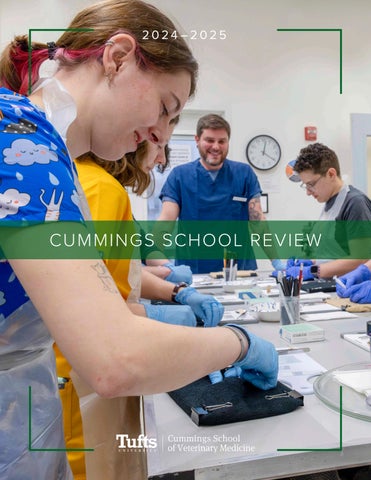
COVER PHOTO: Dr. Francisco Conrado, DACVP (center), assistant professor in the Department of Comparative Pathobiology, leads students through a pathology laboratory exercise. Photo: Jeff Poole
Exceptional Education
Delivering a New Curriculum THE CLINICAL REASONING THREAD COURSE
challenged and supported students from Day 1 to think and act like doctors. The course used clinical cases that were aligned with the basic science courses students were taking at the same time. Students analyzed histories, clinical pathology, diagnostic imaging, and other data. They determined next steps for diagnostics, balanced client budgets with medical priorities, and developed tentative diagnoses and treatment plans. Small-group discussions helped students refine their clinical reasoning, and sessions with faculty, referring veterinarians, and alumni provided real-world insights and alternative approaches. Students described the experience as transformative. They came to understand that a strong scientific background is essential for solving clinical problems and practicing high-quality veterinary medicine. Our faculty and staff in the Clinical Sciences and
A student puts their clinical skills to work.
Communication Thread took the plunge this year and developed our very first Objective Structured Clinical Examination—known as the OSCE. An OSCE is a hands-on practical exam in which students rotate through a series of timed stations where they must perform key clinical skills under observation and evaluation. The process began with a mock OSCE in the fall, giving students a preview of what the real exam would demand. With support from the entire school—and a bit of trepidation—the team launched the full OSCE in the late spring of 2025. Using the resources of the Joseph Kelley, D.V.M., Simulation Laboratory, the team created realistic models for procedures.
Photo: Jeff Poole
The entire school rallied behind the effort, with faculty and staff serving as evaluators or providing essential support behind the scenes. Students, understandably apprehensive, rose to the occasion—and discovered they were capable of more than they had imagined. Veterinary medicine presents daily real-life OSCEs, and we believe this experience is helping prepare our students to meet clinical challenges with competence and confidence. Melissa Mazan, D.V.M., DACVIM (LAIM), V93 Associate Dean of Professional Education
1
Student Awards American Kennel Club® Veterinary Outreach Scholarships Deirdre Givens Mandryk, D.V.M., V25, received an American Kennel Club® scholarship for research in canine health. Taylor Miller, V26, received an American Kennel Club® scholarship for research on expertise in breeding.
Deirdre Givens Mandryk, D.V.M., V25
Taylor Miller, V26
Humane Society Veterinary Medical Alliance Award Marisol Rivera-Ramirez, V26, was awarded the Veterinary Student Compassionate Care Scholarship by the Humane Society Veterinary Medical Alliance.
Marisol Rivera-Ramirez, V26
2
Photos: Deirdre Givens Mandryk, Victoria Miller, Aida Rivera-Ramirez
Exceptional Education
Welcoming New Faculty FACULTY BRING EXPERIENCE, expertise, and fresh perspectives to a school, sharing
a commitment to education and scholarship, research and innovation, and here at Cummings School, extraordinary clinical care. Meet our newest faculty.
Bernard Chi, D.V.M., DACVIM (Cardiology), Ph.D.
Ida Forzisi, D.V.M.
Nicole Freeman, D.V.M., V02
Nicole Gibbs, D.V.M.
Isabelle Louge, D.V.M.
Simone March, BVM&S
Prisca Noble, D.V.M., Ph.D.
Kayla Sample, D.V.M.
Marvin Schulte, Ph.D., Associate Dean for Graduate Education
Emily Wheeler, D.V.M., DACVAA
Laura White, D.V.M.
Photos: Jeff Poole, Massle Thach
3
Ariana Hinckley-Boltax, D.V.M., in the Joseph Kelley, D.V.M., Simulation Laboratory
Learning Assistance HELPING STUDENTS LEARN is a priority for Ariana
Knowing the importance of ensuring that our
Hinckley-Boltax, D.V.M., Last year, she brought two
graduates are ready on Day 1, Hickley-Boltax led
new resources to students to help with their training.
the design of a new tool in developing exams and
After finding medical illustrations lacking, she, in collaboration with Cummings School surgical faculty, created a new illustration of a complex suture pattern to help students learn a challenging veterinary procedure. Hinckley-Boltax shared, “The intradermal suture pattern is one of the most common methods for routine abdominal skin closures. It forms a foundation of a critical surgical skill.”
4
curricula—a prioritized list of clinical presentations most frequently seen in practice and those most urgent. The manuscript, “A prioritized list of veterinary clinical presentations in dogs, cats, and horses to guide curricular content, design, and assessment,” was published in the Journal of Veterinary Medical Education to inform curriculum design and exam blueprinting.
Photo: Jeff Poole
Exceptional Education
Getting into Character A CREW OF ACTORS AND FACILITATORS, including
In the course, first-, second-, and third-year D.V.M.
professors, administrators, alumni, and supporters
students learn core communication skills, with the goal of
of Cummings School, make guest appearances
mastering these four: empathy, nonverbal communication,
every semester to help train students in the art of
reflective listening, and asking open-ended questions.
communication as they practice finding the right
“Communication is one of the most important and
words, approach, and body language for optimal client
underrated skills of being a veterinarian. It’s a skill that
interactions. One of this year’s participants was William
every student will use in the profession, regardless of the
Rosenblad, D.V.M., V95, Cummings School’s 2025
species or track they choose,” said Julia Wilkinson, D.V.M.,
Henry E. Childers, D.V.M., Award recipient.
V10, clinical assistant professor and course director.
Actors and facilitators, including professors, administrators, alumni, and supporters, train students in communication skills. Photo: Wellesley Carminati
5
Spotlighting our Ph.D. Students Students in Cummings School’s Ph.D. in Biomedical Sciences program are busy pursuing their research interests, from A to Z. Accessible community veterinary medicine Agricultural virus/vaccination of concern to biodefense Animal models of infectious disease Animal well-being in animal-assisted services Community-based participatory research Ph.D. candidate Sergio Hernandez and Advisor Yi-Pin Lin, Ph.D. (right)
Comparative pathology and genetics Conservation medicine Disease ecology Eco-health Ecology of tick-borne pathogens Epidemiology of infectious diseases Equity issues surrounding companion animals Evolutionary immunology Host-pathogen interactions Human-animal interactions Human-wildlife conflicts in urban landscapes
Ph.D. candidate Kali Pereira and advisor Allen Rutberg, Ph.D. (right)
Human-wildlife interactions Immunology Infection-triggered autoimmunity Infectious disease Lyme borreliosis One Health Pastoralism Role of companion animals in families and communities Social determinants of health Surveillance Vaccine and diagnostic development
Advisors Amanda Martinot, D.V.M., Ph.D., DACVP, (left) and Marieke Rosenbaum, D.V.M., (right) with Ph.D. candidate Fernando Javier Vilchez Delgado
6
Veterinary and human public health Virology Zoonosis Photos: Jeff Poole
Exceptional Education
For the Love of Elephants MAIRÉAD RYAN, V27, credits her aunt for instilling in her a devotion to elephants
and their welfare. Ryan was awarded the 2024 Tufts Elephant Conservation Alliance (TECA) Fellowship to conduct research at the Reteti Elephant Sanctuary in Kenya. Inspired by the Tufts mascot, Jumbo, TECA was established to support elephant conservation efforts worldwide. TECA is a collaboration of faculty members from across Tufts schools and, for the past five years, has sponsored Tufts students in research related to elephant conservation. “I’m researching
Mairéad Ryan, V27, and an elephant named Craig, one of the last big tuskers
African elephants, taking an International Veterinary Medicine (IVM) course with public health students, and connecting with global health experts,” said Ryan. “This was an amazing opportunity to conduct research overseas that will directly benefit our mascot species. Through the fellowship, I can give back to the species and do something good for them.”
Being Prepared for Anything FOR THE 10TH TIME, Cummings School hosted the Disaster Animal
Response Course, a collaboration with the State of Massachusetts Animals Resource Team (SMART) and the Massachusetts Veterinary Medical Association (MVMA). The course was made possible with support from the Elizabeth A. Lawrence Endowed Fund. Dr. Lawrence,
Cummings School students working through an assignment during the Disaster Animal Response Course
a faculty member at Cummings School for many years and co-founder of the Tufts Center for Animals and Public Policy, dedicated her life to the relationship between animals and humans. In the course, alumni, faculty, and staff train students through lectures and, most importantly, hands-on learning. Organizations such as the Massachusetts Society for the Prevention of Cruelty to Animals (MSPCA) large animal rescue team and the Massachusetts Task Force 1 in Beverly, Massachusetts, offered field visits to reinforce the training. Photos: Emily McCobb, Sammy Njoronge
Cummings School students learning about disaster preparedness at the Massachusetts Task Force 1
7
Strike a Pose WILDLIFE CAMERAS used by students in our Master’s in
the thousands of images they collect. “It’s always fun to
Conservation Medicine (MCM) program make it possible
get these secretive glimpses of wildlife that we rarely get
to track and record the animals occupying our region.
to see, but it’s even more gratifying to see MCM students
Camera traps can help researchers monitor population
and alumni using our training to secure externships and
changes, look for rates of certain diseases, or simply see
jobs as these tools become more and more commonplace
who is living in an area. As part of the MCM program,
in wildlife research and conservation,” said Christopher
students learn how to set up and use wildlife cameras to
Whittier, D.V.M., Ph.D., V97, director of the MCM program.
answer research questions and effectively manage
A three-legged coyote (above left) was first seen on campus cameras before turning up several miles away on cameras in the yard of Christopher Whittier, D.V.M., Ph.D., V97. While initially Whittier was concerned about the animal’s ability to thrive without one of its legs, his cameras captured this photo as evidence that she may have been nursing coyote pups. Also pictured are a fisher staring into the camera and a deer walking through the woods.
8
Photos: Christopher Whittier
Exceptional Education
Jenise Joi Carter, D.V.M., V25, delivered the D.V.M. Class of 2025 address.
M.S. in Conservation Medicine graduates
Commencement 2025 CUMMINGS SCHOOL’S 43RD COMMENCEMENT ceremony was held May 18 on the Grafton campus. One
hundred thirty-six M.S., Ph.D., and D.V.M. degrees were awarded. Jenise Joi Carter, D.V.M., V25, selected by her peers to deliver the D.V.M. class address, reminded her fellow graduates, “Because of these shared fundamental moments over the past four years, we have gained not only a few letters after our names but also myriad intangible gifts to take with us.” The M.S. faculty address was delivered by Alison Robbins, D.V.M., V92, assistant teaching professor of infectious disease and global health. She advised graduates to “stick to your values, trust in your passions, and never give up.” This year, Cummings School awarded the emeritus/a designation to five recipients at Commencement, honoring retiring faculty who have given exceptional service to the university. The designation of emeritus/a was awarded to Carl Kirker-Head, Vet.M.B., DACVS, DECVS; Mary Labato, D.V.M., DACVIM (SAIM), V83; Cynthia Leveille-Webster, D.V.M., DACVIM (SAIM); Florina Tseng, D.V.M.; and Saul Tzipori, D.V.M., Ph.D., D.Sc., FRCVS.
Read more about Commencement 2025.
Photos: Jeff Poole
9
IN THEIR OWN WORDS:
Student Reflections, Class of 2025 “ I am working with the Animal Rescue League of New Hampshire (ARLNH) as community resource coordinator. I have the privilege of supporting people and animals both at the shelter via the Pet Food Pantry and in the community via the Companion Animal Assistance Fund for veterinary expenses—which might otherwise result in a family having to surrender their beloved pet.” —Jaimie Kender, VG24 (MAPP)
“ I’m so grateful to this program for setting me up to thrive in the conservation space and land an externship at Oregon Caves National Monument and Preserve, where I worked on researching various species of bats and salamanders. I really value the skills and experience I gained working for the National Park Service and will always look back on my time there fondly.” —Jessica Zulch, VG24 (MCM)
10
Photos: Jaimie Kender, Jessica Zulch
Exceptional Education
“ A favorite memory of mine was when I was in the ER and was asked if I wanted to be a dog catcher. I asked, ‘What’s that?’ and the next minute I know, I’m in the OR very literally catching newborn puppies from the surgeon, cleaning them, and patting them until they’re awake and yelping.” —Claire Armstrong, D.V.M., V25
“My most memorable experience at Tufts was on my internal medicine rotation, working with a lab who was diagnosed with endocarditis and mandibular osteosarcoma. This patient and owner taught me so much about being a veterinarian, and it was an experience that has affected my entire view of the profession.” —Jeanne Marie Cassidy, D.V.M., V25
“ I really appreciated all the help from Pam Houde [program administrator] during my time at Tufts at Tech. I was initially pretty nervous stepping into the role of a doctor for the first time, but Pam was very kind and patient and helped teach me about the flow of the hospital. She helped me numerous times and made the experience very enjoyable.” —Marc Klepacki, D.V.M., V25
Photos: Claire Armstrong, Jeanne Cassidy, Marc Klepacki
11
Cummings School Veterinary Diagnostic Laboratory Through the Years JOYCE KNOLL, V.M.D., PH.D., DACVP, associate
professor and clinical pathology section head, and Cheryl Stockman, assistant director, have been part of Cummings School Veterinary Diagnostic Laboratory for more than three decades, serving our hospitals and clinics. Originally called the Tufts Veterinary Diagnostic Lab, the lab opened its doors in 1979 and initially served 15 local veterinary practices. Over the years, the lab expanded to provide diagnostic services in microbiology, chemistry, cytology, and hematology to veterinary clinics across New England, in addition to zoos, aquariums, commercial breeders, lab animal facilities, biotech companies, and the veterinary school’s hospitals and clinics.
“It’s a great benefit to our patients to have these services in-house,” said Knoll. “Results are easier to interpret when clinicians are right there telling us what’s going on with the case and what questions they’re trying to answer. That communication back and forth is really
Joyce Knoll, V.D.M., Ph.D., DACVP, is an associate professor in the Department of Comparative Pathobiology.
important and facilitated by us all being here on campus together.”
12
Photo: Jeff Poole
Milestones
25 Years of Continuing to Educate THE MISSION OF THE TIMELY TOPICS in Internal
Leveille-Webster, D.V.M., DACVIM (SAIM), in 2019.
Medicine program follows its original mandate to offer
“The program helps practitioners gain familiarity with
continuing education for general practitioners in New
the clinicians at Foster Hospital so they know who
England and beyond, which is in line with the overall
they’re referring patients to and can put a face to a
mission of Cummings School to educate and broaden
name,” said Leveille-Webster. “The aim is to tell general
expertise among students, clinicians, staff, and the greater
practitioners about new things we’re doing and make
veterinary community.
it practical—something they can incorporate into their
Associate Professor Emerita Linda Ross initiated and organized the first Timely Topics in Internal Medicine conference in 1999 and passed the baton to Cynthia
practice. The more you know about a condition, the better you can make a clinical decision based on the current state of knowledge about that disease.”
Cynthia Leveille-Webster, D.V.M., DACVIM (SAIM), and Mary Labato, D.V.M., DACVIM (SAIM), V83 Photo: Jeff Poole
13
Clare Fellman, D.V.M., Ph.D., DACVIM (SAIM), DACVCP, and Ian DeStefano, D.V.M., DACVECC
Improving Antimicrobial Stewardship MULTIPLE FACULTY AT Cummings School are studying
resistant bacteria, which lessen the efficacy of
antimicrobial stewardship. Antimicrobial stewardship
prescribed medications, you may be too.
is when microorganisms, especially bacteria, become resistant to medications designed to eliminate them, such as antibiotics. In veterinary medicine, most recently with companion animals, this is an emerging and evolving field.
14
For decades, experts have been sounding the alarm about the presence and risks of antimicrobial resistance (AMR) in human medicine. Cummings School’s Clare Fellman, D.V.M., Ph.D., DACVIM (SAIM), DACVCP, and Ian DeStefano, D.V.M., DACVECC, are
People are in such close contact with their pets that
leading nationwide efforts to understand antimicrobial
research shows they may share flora, or tiny bacteria
stewardship and resistance in companion animals.
and other microorganisms, that inhabit the skin, gut,
“AMR is the perfect story to demonstrate One Health,
and even the environment of the home. If you or
which means the health of humans, animals, and the
your pet take an antibiotic or another antimicrobial
environment are connected. We know antibiotic use
medication, it can potentially change the flora you
in animals can cause the development of resistance,
both carry. And if your pet is carrying antimicrobial-
which can be shared with their owners and the Photo: Jeff Poole
Transformative Research
Kayla Sample, D.V.M., and Jennifer Grady, D.V.M., DABVP, V12
environment, and the same can happen if antibiotics
Medical Association, looked at urinalysis screening
are used in people with pets,” noted Fellman.
tools to validate best practices for veterinary clinics.
At Tufts at Tech Community Veterinary Clinic, Kayla Sample, D.V.M., and Jennifer Grady, D.V.M., DABVP, V12, are researching antimicrobial stewardship and access to care issues. Their paper, “Affordable in-house tests for bacteriuria can improve antimicrobial stewardship and access to care,” published in the Journal of the American Veterinary
Photo: Jeff Poole
“Antimicrobial stewardship aligns with Tufts at Tech’s mission, figuring out how to practice the best medicine while balancing financing,” Sample shared. “Clinicians can feel comfortable knowing that if they chose to plate urine in-house, it would be similar to the reference standard. We can decide when antibiotics should be sent home and when we can wait. This helps all vets.”
15
Award-Winning Presentation LAST YEAR, team members from Harrington Oncology Service at Henry and Lois Foster
Hospital for Small Animals’ (FHSA) attended and presented at the Veterinary Cancer Society (VCS) conference. Among the four presentations delivered by Cummings School’s team, oncology resident Sarah Adrianowycz, D.V.M., V20, won the VCS Robert S. Brody Award for Outstanding Oral Presentation for her presentation, “Genetic alterations do not differentiate canine oral and appendicular osteosarcoma.” Adrianowycz presented research on how canine osteosarcoma (bone cancer) of the jaw is molecularly different from osteosarcomas found in other parts of the body. She explained that the aim of the study, led by Assistant Professor Oncology residents Sarah Adrianowycz, D.V.M., V20, (center); Katilee Jacobs, D.V.M., (left); and Caitlin Jozwiak, V.M.D., (right) attended the Veterinary Cancer Society conference.
Heather Gardner, D.V.M., Ph.D., DACVIM (Oncology), was to analyze osteosarcomas at the molecular level to develop more advanced treatments and targeting therapies. Though rare in humans, this type of cancer is most often seen in teenagers, and treatment options are limited.
Learning How Urban Rats Spread Bacteria RESEARCHERS AT CUMMINGS SCHOOL studying
culture it, which was a challenge in this case because
leptospirosis examined rat behavior to show how different
Leptospira is considered a fastidious organism, meaning
populations are related and how their movement spreads
it has specific requirements for temperature, pH, and
the bacteria. A new paper, “Host population dynamics
nutrients,” said Rosenbaum.
influence Leptospira spp. transmission patterns among Rattus norvegicus in Boston, Massachusetts, US,” published in PLOS Neglected Tropical Diseases from Marieke Rosenbaum, D.V.M., V14, MG14 (MPH), is the result of a six-year study of rodents in Boston.
“Because we were able to do the culturing and the sequencing, we were able to look more closely at how the different strains of leptospirosis are related” she explained, “which helps us understand how the bacteria are getting transmitted between rats and rat populations
Rosenbaum and her collaborators employed advanced
in the city.” The researchers hope their findings will help
molecular techniques to figure out exactly what type of
guide rat control and human leptospirosis mitigation
leptospirosis was present in the rats. “The primary way to
efforts in urban settings.
get a full genomic sequence of a virus or bacteria is to
16
Photos: Steve Gulley, Jeff Poole
Transformative Research
Understanding Canine Muscle Loss IS YOUR THIN DOG losing muscle mass because of an
engineers at the Massachusetts Institute of Technology
underlying disease? Cachexia, a metabolic condition
to determine whether a blood test, ultrasound, or
that can be a side effect of heart disease, cancer, or
combination of both can be developed to detect
several other diseases, leads to muscle loss and weight
cachexia sooner and more consistently and to grade
loss that can’t be reversed. Veterinarians frequently
how advanced the condition is. If successful, said Yang,
discover it by feel, as there is no standardized test
results from this study in dogs could ultimately lead
for detecting it. By the time it is discovered, there
to similar approaches to develop a biomarker test in
are usually few options for slowing or reversing the
humans, who also develop cachexia in response to
process and the underlying disease causing it.
underlying heart disease, cancer, and other diseases.
Vicky Yang, D.V.M., DACVIM, Ph.D., V09, associate professor of clinical sciences, is working with
Dawn Meehan, a research assistant in the Yang Laboratory, runs tests. Photo: Jeff Poole
17
Solving Cancer Questions ELIZABETH ARNOLD
journals: Orbit, International Journal of Molecular Sciences,
Stevens Professor Cornelia
Frontiers in Veterinary Science, and Topics in Companion
Peterson, D.V.M., DACVP,
Animal Medicine.
Ph.D., is dedicated to finding cancer treatments by researching tumors that develop in Meibomian glands, the specialized oil-secreting Cornelia Peterson, D.V.M. DACVP, Ph.D.
glands of the eyelid. Peterson’s research concentrates on
genes that cause tumors in this gland, focusing on better understanding these tumors and finding therapies to treat them effectively. She recently published articles in four
Peterson shared, “The goal is to add to the literature. Prior to our study, there were only two cell lines of this type of tumor anywhere, and now we have added three additional cell lines. We characterized genetic signatures within the tumors and cell lines and saw how they respond to different chemotherapeutic agents in culture. We established cell lines from the patient tumors, and we can treat those tumor cells with different agents in a dish before we treat animal models and then move on to human patients.”
Better Detection of Veterinary Disease EMILY BRINKER, D.V.M., DACVP, assistant clinical professor, is the
lead author of an article she hopes will draw more attention and research into fibroblast growth factors (FGFs) and the advances they could bring to animal health. The article “Endocrine fibroblast growth factors in domestic animals” was published in the October
Emily Brinker, D.V.M., DACVP, is the lead author on an article published in the October 2024 issue of Domestic Animal Endocrinology.
2024 issue of Domestic Animal Endocrinology. Fibroblast growth factors are proteins in animal cells that impact certain biological processes. The paper is a comprehensive overview of studies into the FGF19 subfamily, including FGF15/19, FGF21, and FGF23. The paper highlights several significant findings from previous studies. For example, FGF23 is a biomarker of chronic kidney disease in both cats and dogs. FGF19 is being investigated as a biomarker of metabolic and cholestasis-related diseases. Treatment with FGF21 may also help alleviate metabolic conditions. “Current research in human and rodent models demonstrates the potential of these endocrine FGFs to target various diseases, including disorders of renal disease, chronic liver disease, obesity, and insulin resistance,” said Brinker.
18
Photo: Steve Gulley, Jeff Poole
Transformative Research
Tufts Veterinary Field Service Leads the Charge in Assisted Reproduction in Farm Animals REPRODUCTIVE MEDICINE, and specifically farm animal
Embryos from across the country and worldwide are
embryo transfer, is advancing rapidly, and at the heart
received almost daily at TVFS and stored at the clinic until
of the action is Tufts Veterinary Field Service (TVFS).
ready for transfer. From 2016 to 2021, TVFS averaged
Embryo transfers in cattle, in which an embryo from
nearly 500 bovine embryo transfers annually. The number
one cow is inserted into a recipient cow, is a powerful,
of transfers rose sharply over the past two years, with 775
advanced assisted-reproductive technique available for
completed in 2022 and 1,725 in 2023.
farm animals. This specialized service was first offered at TVFS around 2009 and increased significantly about five years ago with the rise in demand from beef and dairy producers.
Learn why embryo transfer is vital to our future food supply.
A clinician checks the canister for a frozen embryo straw location.
Photo: Jeff Poole
19
A REVEALing Program AS A FIRST-YEAR STUDENT at Cummings School, Lisa
The REVEAL Program brings research education
Freeman, D.V.M., Ph.D., DACVIM (Nutrition), A86, V91,
and opportunities to the fingertips of residents
NG96, planned to become an equine veterinarian and had
through mentoring and other endeavors under the
no interest in research until a professor invited her to take
auspices of the One Health approach, considering
part in a summer research project. That encouragement
the intersectionality of humans, animals, and the
and initial experience in research altered the course of
environment to tackle health issues. The program
her career. Now a professor, Freeman was instrumental
encompasses a variety of research opportunities open
in launching the Residents’ Enhanced Veterinary
to residents and often interns too. Freeman shared, “The
Education and Academic Learning (REVEAL) Program
REVEAL Program attracts veterinarians to academic and
with the support of a multidisciplinary team of faculty from
research careers to help solve One Health problems.”
Cummings School, Tufts University School of Medicine, Jean Mayer USDA Human Nutrition Research Center on Aging, and Tufts Office of Institutional Research.
REVEAL mentorship program directors Noa Berlin, D.V.M., DACVECC and Lisa Freeman, D.V.M., DACVIM (Nutrition) Ph.D., A86, V91, NG96
20
Photo: Jeff Poole
Transformative Research
Shedding Light on Rare Form of Hepatitis IN 10 YEARS, only 29 patients with granulomatous hepatitis (GH) have come to Henry and
Lois Foster Hospital for Small Animals (FHSA). The disease is so uncommon that very little is published about its presentation, symptoms, and best treatment options. The largest research study of dogs with this rare condition was initiated by Cynthia Leveille-Webster, D.V.M., DACVIM (SAIM), at FHSA when she started tracking commonalities among her GH patients. She gathered a team at FHSA to launch a retrospective observational study of all the GH cases treated at the hospital. The research paper “Characterization of clinical presentation, histological features, ultrasonographic findings, and survival in 29 dogs with granulomatous hepatitis” was published in the Journal of Internal Veterinary Medicine. Sasha, a beagle, became a key subject in the largest study of dogs with a rare form of chronic hepatitis.
A beagle named Sasha became a key subject in the study. Sasha’s case, and the study, helped Leveille-Webster and team determine that GH presents differently in dogs than does chronic hepatitis. “Our paper is the only paper that talks about what dogs respond to, really the first paper to look at treatment,” said Leveille-Webster. Sasha went into remission and has been tapered to a low dose of immunosuppressants and is going strong, her liver functioning normally.
Ready and Capable A NEW STUDY featured in the biomedical journal Science Translational Medicine
last year, titled “P13Kγ inhibition circumvents inflammation and vascular leak in SARS-CoV-2 and other infections,” showcases the capabilities of Tufts New England Regional Biosafety Laboratory (NERBL) at Cummings School to conduct COVID-19 research.
Amanda Martinot, D.V.M., DACVP, Ph.D.
“This manuscript demonstrates that we have these animal models up and running at Tufts to use for various purposes. We are ready and capable of running studies for other researchers,” said Amanda Martinot, D.V.M., DACVP, Ph.D., who led the research project in the NERBL. Martinot is co-director of the Comparative Pathology and Genomics Shared Resource and a veterinary anatomic pathologist. “The animal models are one piece of scientific evidence that a new cancer drug is working as predicted,” she said. “This particular drug serves as a proof of principle that repurposing existing drugs, such as cancer drugs, can potentially be of use for COVID treatment.” Photos: Carla DiGirolamo, Jeff Poole
21
The Fight Against Lyme Disease TACKLING LYME DISEASE takes Cummings School
that wild birds carry Lyme disease bacterial strains that
researchers in several directions. What carries the disease?
can infect humans and animals, they knew they had to
How is it transmitted? What about a vaccine?
dig deeper. The team found that thrush birds, including
For decades, scientists thought mice were the prime host for larval ticks. But other small mammals, like shrews, may play just as big a role in spreading Lyme disease. A recent study in the American Journal of Tropical Medicine and Hygiene by scientists at Cummings School suggests a range of small mammalian hosts—not just mice—spread the tick-borne disease. It turns out that, at least on Martha’s Vineyard, it is shrews that harbor the most disease-bearing young ticks. Assistant Research Professor Heidi Goethert, Sc.D., J93, noted, “An important part of this study is the fact that minor hosts that don’t
American robins, can spread Lyme disease bacteria. Lin noted, “If it’s a rarely found bird with Lyme disease bacteria, we don’t need to worry too much, but American robins are in everyone’s backyards.” Lin has been awarded a National Institutes of Health grant to study birds carrying Lyme disease. The five-year, $4 million NIH Research Project Grant (R01) will study how wild birds serve as hosts of the Lyme disease bacteria and birds’ immune responses to the pathogen. The research aims to develop more efficient prevention techniques to minimize the spread of Lyme disease from animals to humans.
feed a large percentage of the overall number of ticks in a
An engineered Lyme bacterial protein, CspZ, could
location can have a disproportionate responsibility for the
offer long-standing protection against Lyme disease
number of infected ticks they contribute.”
while requiring fewer vaccinations. Lin and a team of
It has long been held that rodents are the main carriers and spreaders of Lyme disease bacteria in nature. When Yi-Pin Lin, Ph.D., associate professor of infectious disease and global health, and his colleagues recently discovered
international researchers explored the mechanisms in preclinical models in a new paper published in Nature Communications. CspZ first emerged as a candidate when scientists were looking for proteins that might be evolutionarily conserved across different Lyme bacteria strains and so generate a broad protective response. Their latest study shows that the modified CspZ triggers an immune response targeting the CspZ protein’s exposed “Achilles heel.” “Vaccine development is a very long process, and when we’re doing experiments, 90% of the time they don’t work,” said Lin. “But having
On Martha’s Vineyard, shrews are the most common host for ticks. Mice and shrews typically contribute equally to the population of infected nymphs.
22
a vaccine is better than having no vaccine, so having collaborators who see problems differently helped us overcome challenges at each step.” Photo: Shutterstock
Transformative Research
A High Honor CUMMINGS SCHOOL’S Charles Shoemaker, Ph.D.,
was named a fellow of the National Academy of Inventors (NAI). Election as an academy fellow is the highest professional distinction awarded solely to inventors. Shoemaker’s work has revolved around developing antibody immunotherapeutics that can be targeted to prevent and cure disease. “His work has transformed lives, and we are proud of his induction into the National Academy of Inventors,” said Bernard Arulanandam, Ph.D., vice provost for research at Tufts and an NAI fellow.
Ph.D. student Fiona Lehmann and advisor Charles Shoemaker, Ph.D.
Avian Influenza in Dairy Cows Q&A DAVID HERNKE, D.V.M., V08, assistant clinical professor
and clinician at Tufts Veterinary Field Service in Woodstock, Connecticut, works with dairy farms in the northeastern United States to protect their cattle from avian influenza. “At least currently, cows don’t die from the disease, but it does negatively affect them in the long term. As more herds are affected, we may find that this changes,” Hernke said. Learn what Hernke knows about the David Hernke, D.V.M., V08, instructs students during a bovine laboratory.
Photos: Jeff Poole
current outbreak in the U.S. and how the H5N1 virus is affecting the nation’s cattle.
23
Agnes Varis University Professor Jonathan Runstadler, D.V.M., Ph.D., in the field.
Searching for Solutions From transmission to prevention to treatment, Cummings
ecology, virus evolution, and host immunity are sorely
School faculty, researchers, and clinicians are tackling the
needed.
questions around avian influenza—and getting noticed for their expertise. Global Influenza Threatens Conservation Agnes Varis University Professor Jonathan Runstadler, D.V.M., Ph.D., published an opinion piece in the journal Science discussing how the highly pathogenic avian influenza virus (HPAIV) known as H5N1 threatens animal conservation.
Worldwide, surveillance efforts are spotty, unreliable, and largely only targeted for specific opportunistic species. Comprehensive multiyear monitoring could provide the foundation for better gauging impacts on wildlife as well as on human hosts. Framing this approach through a One Health lens that considers the interconnected nature of human, animal, and environmental health may increase the urgency for more comprehensive surveillance efforts.
Runstadler asked the question: “What can be done in the face of such uncertainty?” He suggests that vastly improved surveillance and monitoring of wildlife
Read more.
populations to understand infection patterns, virus
24
Photo: Wendy Puryear
Transformative Research
High Praise The Journal of American Veterinary Medical Association’s 2024 Top Trends included Cummings School’s Wendy Puryear, Ph.D., and Jonathan Runstadler, D.V.M., Ph.D.
Most Cited in AJVR (American Journal of Veterinary Research) Jonathan Runstadler, D.V.M., Ph.D., and
Most Cited and Most Discussed in JAVMA (Journal of the American Veterinary Medical Association)
Wendy Puryear, Ph.D.
Wendy Puryear, Ph.D., and Jonathan Runstadler, D.V.M., Ph.D.
“The virus is out of the barn: The emergence of
“High-pathogenicity avian influenza in wildlife: A changing
HPAI as a pathogen of avian and mammalian wildlife around the globe.”
disease dynamic that is expanding in wild birds and having an increasing impact on a growing number of mammals.”
Jonathan Runstadler, D.V.M., Ph.D (left) and Wendy Puryear, Ph.D.
Photo: Jeff Poole
25
Pictured from left, Isabel Eisendrath, V26; Associate Professor Emeritus Mark Pokras, D.V.M., V84; and Amanda Gabryszak, D.V.M., V25, review an X-ray of a loon as part of a long-term research project at Cummings School of Veterinary Medicine.
Protecting the Loon Population Through Research SHINING A LIGHT on lead poisoning in loons comes from the years of work done by a longtime Cummings School
associate professor emeritus, Mark Pokras, D.V.M., V84, and his students. Pokras has been leading students in loon necropsies—the term for an animal autopsy—since the late 1980s. They examine every inch of the birds, looking for anything unusual. The students collect various samples of feathers, tissues, and stomach contents from each bird. Lead quickly enters a loon’s bloodstream from the stomach, causing weakness and neurological problems. Most animals die within a few weeks. Data from necropsies conducted by Pokras and his students showed that 48% of loon deaths in New Hampshire were the result of ingesting lead tackle. These findings encouraged New Hampshire and several other states to begin to regulate lead fishing gear.
26
Photo: Jeff Poole
Transformative Research
A Community One Health Index PH.D. CANDIDATE EVAN GRIFFITH, D.V.M, VG17, V21,
the components of a system, to develop a rapid
MG21 (M.P.H.), presented his research “Developing,
assessment tool called the Community One Health Index
piloting, and validating the Community One Health
(COHI). The index measures a community’s overall health
Index in Turkana County, Kenya” at last year’s World One
and well-being by collecting data on human, livestock,
Health Congress. Griffith has researched One Health
and environmental health. “The development of the
(the intersection of human health, animal health, and the
COHI is going to be revolutionary for such communities,
environment) solutions for pastoral communities in Kenya
informing One Health policies and supporting
over the past several years.
communities and organizations that are implementing
During his presentation, Griffith expounded on his use of “fuzzy cognitive mapping,” a way to visualize and quantify
One Health projects to focus on relevant indicators and evaluate their interventions effectively,” said faculty advisor Helen Amuguni, Ph.D., associate professor.
Ph.D. candidate Evan Griffith, D.V.M., VG17, V21, MG21 (M.P.H.), participates in a women’s focus group discussion in Nanam Village, Turkana County, Kenya.
Photo: Angela Opondoh
27
Inspiring Research and Innovation for 35 Years EACH FALL, OVER 50 STUDENTS and house
officers present their summer research findings at the annual Veterinary Research Day, offering the community a glimpse of all the groundbreaking veterinary research happening at Cummings School. Cheryl London, D.V.M., DACVIM (Oncology), Ph.D., V90, associate dean for research, shared, “We host Research Day to highlight the breadth of research being undertaken across our campus, ranging from basic laboratory work to clinical studies and international research.” It’s also a day to hear from the year’s Junior Faculty Research Award recipient. This
Summer research is presented on Veterinary Research Day.
year’s awardee, Ian DeStefano, D.V.M., DACVECC, assistant clinical professor, delivered the keynote speech “Bugs and drugs—my clinical research journey.”
A D.V.M. student talks through his research and findings with faculty and staff.
28
Photos: Jeff Poole
Transformative Research
Focus on Summer Research Kelsey Murphy, V27, analyzed biomarkers in RNA for early signs of canine osteosarcoma during a summer research program and presented her work at the National Veterinary Scholars Symposium and at Cummings School’s Veterinary Research Day.
Working across two Cummings School laboratories, Kiran Sarvepalli, V27, developed a protocol to detect pathogens in formalinfixed paraffin-embedded tissue samples during his summer research program.
Katherine Yang, D.V.M., V25, was one of three veterinary students selected nationwide to present at this year’s Association for Clinical and Translational Science conference. She presented her research on canine osteosarcoma from her project as part of Cummings School’s Student Summer Research Program.
Photos: Jen Finan, Kassandra Oldham, Amanda Wagner
29
1
2
4
3
30
5
Around Campus
1. Students and faculty have a new transitional classroom for learning, known affectionately as the “Jumbo Dome.” 2. Students in the M.S. in Conservation Medicine program radio track box turtles. 3. Celebrated by family and friends, V26 students received their white coats before heading into their fourth-year clinical rotations. 6
7
4. A powerful CT scanner was installed in Cummings School’s Hospital for Large Animals, offering a less stressful experience for animals and more capabilities for details diagnosis. 5. New students receive a warm welcome. 6. Our new teaching goats enjoy a sunny day. 7. The aurora borealis glows over our fields.
8
8. Students listen intently during a large animal teaching laboratory session. 9. Kayla Sample, D.V.M., found “Ducky” wandering on a busy street when she was volunteering at Amici Cannis, an organization that provides life-saving veterinary care to homeless animals and pets in Ecuador. 10. An owl perched in our release cage waits with dignity.
9 Photos: Katie Holmes, Jeff Poole
10
31
Making Geek Glam FOR THE PAST 10 YEARS, Cynthia Leveille-Webster, D.V.M., DACVIM (SAIM), has
combined veterinary medicine with science and engineering to inspire the next generation. Since pet ownership is so high in the United States, most kids have experienced that animal-human bond and emotional attachment to their own pets, explained Leveille-Webster, so she centers challenges around animals to land the kids’ attention. “I push engineering design challenges to kids cloaked in a clinical case they have to help us solve,” she said. Students working together at the Geek is Glam STEM Expo.
Leveille-Webster works with the Girl Scouts of Central and Western Massachusetts, the Geek is Glam STEM Expo at Worcester Polytechnic Institute, Boys & Girls Clubs, and YMCAs. She has an annual presentation at the STEM4Girls day at
UMass Dartmouth. “It’s always rewarding to present to students,” said Leveille-Webster. “They’re very excited and ask a lot of questions. I bring the fun and challenges of veterinary medicine to groups so that they at least think about engineering or veterinary medicine as a possibility.”
The Legacy of a Therapy Dog THROUGHOUT HIS EIGHT YEARS as a therapy dog, Bubba
Watson, a basset hound, brought comfort and support to patients, students, families, and workers from young to old. His owner and handler, Kellye Riani, recognized early on Bubba’s ability to pick up on people’s emotions—and he had a decorated history. He was an American Kennel Club® Champion and Canine Good Citizen® (CGC). Sadly, Bubba was diagnosed last year with canine lymphoma,
Ten-year-old basset hound pet therapy dog Bubba Watson with his owner, Kellye Riani
one of the most common cancers in dogs. His demeanor didn’t change, even while undergoing chemotherapy at FHSA, and he passed away a few weeks after his diagnosis. “The job of therapy animals is to make people smile. It can be very moving. It can also make you laugh, depending on what the animal is doing,” shared Deb Gibbs, veterinary technician and program director for Tufts Paws for People. “Bubba certainly made people smile. He was great with everyone and lit up the room by his appearance; people just laugh when they see him.”
32
Photos: Cynthia Leveille-Webster, Jeff Poole
Community
Supporting Community Medicine Initiatives FOR THE SECOND TIME, Cummings School professors Elizabeth Byrnes,
Ph.D., and John Byrnes, Ph.D., organized a local free health-care clinic for more than 350 human patients in partnership with Remote Area Medical (RAM). RAM is an organization that offers dental, vision, and medical care to those in need through pop-up clinics across the country. Several faculty members from Cummings School and the greater Tufts community volunteered alongside Members of Cummings School’s community gather to help staff at a Remote Area Medical clinic.
the Byrneses at the clinic. “Active citizenship is a part of the Tufts ethos. On a veterinary campus, you’d assume that all the volunteer work has to do with animals. Human-related volunteer work doesn’t seem on topic, but it certainly is,” shared Elizabeth Byrnes. “The health of the people in the community is equally important to us.”
A Deep Commitment “WHEN I WAS YOUNGER, I had this experience at the San Antonio Zoo where I
kept hearing a bird calling in an open aviary,” shared Chelsea Berkowitz, V26. This experience, and working at the San Antonio Zoo, City Year, and Wildlife Rescue & Rehabilitation, led her to pursue her D.V.M. at Cummings School. Berkowitz is the president of Tufts PrideSVMC (Pride Student Veterinary Medical Community), an organization that advocates for LGBTQ+ professionals in the veterinary community. “As someone in the LGBTQ+ community, it’s important to
Chelsea Berkowitz, V26, examines a female sheep at Cummings School’s farm.
me to support this community in whatever capacity I can,” said Berkowitz. “I am not the traditional student—I’m 32 and have had almost 10 years between undergrad and vet school,” she explained, “but all my experiences add together and will help me become a good doctor. I’ve worked with all different kinds of people, from wealthy donors to young adults who are experiencing homelessness and everyone in between. I like working with people, teaching and connecting with clients. This is where I want to be. I feel good knowing that veterinary medicine kept drawing me back.”
Photos: Chelsea Berkowitz, John Byrnes
33
Paula Dryden, scheduling coordinator at Luke and Lily Lerner Spay/Neuter Clinic, and Animal Control Officer Kevin Sullivan (right) outside Cummings School’s Lerner Clinic
Good Partners WHEN A RESCUED TOY POODLE named Sophie
pets for adoption and have our students use these
suffered from a bladder stone, Animal Control Officer
opportunities to develop surgical skills. “We are trying
(ACO) Kevin Sullivan called Paula Dryden, scheduling
to give them enough supervised experiences to
coordinator at Luke and Lily Lerner Spay/Neuter Clinic
feel prepared for caring for their patients when they
(Lerner Clinic). Dryden arranged cystotomy and spay
are the primary veterinarian. Shelters, rescues, and
surgeries for Sophie, who soon returned to health and
ACOs provide the caseload to make that happen.
was put up for adoption. “Lerner Clinic saved Sophie’s
Without those partnerships, we could not provide that
life,” said Sullivan. “She was adopted out to a special
experience for students,” said Laurence Sawyer, D.V.M.,
needs adult. It was absolutely incredible.”
V99, director of Lerner Clinic.
Cummings School’s Lerner Clinic has been partnering with local animal control officers, shelters, and rescue organizations for over 20 years. The goal is to ready
34
Photo: Jeff Poole
Community
The Magic of Tufts Wildlife Clinic SINCE 1983, TUFTS WILDLIFE CLINIC has been the destination for those who find injured, sick, or
orphaned wildlife. The clinic is run by a small crew, with the help of many enthusiastic volunteers. “The volunteers play a pivotal role in keeping the clinic functioning on a day-to-day basis,” said Whitney Stiehler, program administrator. “The volunteers are crucial to the overall operations of the clinic, and their generosity and selfless donation of their time allow our doctors and staff to focus on the medical needs of the patients and provide the essential teaching needed for our veterinary students.” One of those volunteers is Daniel Cui, A26. A Tufts University undergraduate, Cui is pursuing a double major in biology and art. He is a member of the Pre-Veterinary Society and the Boxing Club at Tufts and plans on attending veterinary school after graduation. “Working here, you hear the Daniel Cui, A26, is a volunteer at Tufts Wildlife Clinic.
good and tough aspects of being a vet,” said Cui. “Learning from veterinary students shifted my perspective on my approach toward work, what I’m curious about, the impact you can make as a veterinarian, and different areas of expertise. I’m more open-minded.”
Helping Dogs and Mushers at the Can-Am Crown International
Veterinary team performs mandatory comprehensive physical exams at the Allagash checkpoint of the 25-mile race.
FOR THE SECOND YEAR, a team from Cummings
Ambulatory Medicine and Theriogenology, staffed
School volunteered throughout the Allagash Wilderness
the three races to support the animals and teams.
at the Can-Am Crown International Sled Dog Races in Kent, Maine. Veterinary technicians Mike Santasieri, Joseph Kelley, D.V.M., Simulation Laboratory manager; Ashley Pope, oncology veterinary technician at Henry and Lois Foster Hospital for Small Animals; and Dr. Julia Berger, V20, assistant clinical professor in the Department of
Photos: Patrick Fitzgerald, Ashley Pope
“We’re there for the mushers and the dogs. The goal is to make sure they have a happy, healthy race so that the dogs and mushers get to keep doing what they love.” –Ashley Pope
35
A sphynx cat with a rare diagnosis was treated by multiple specialty services at Henry and Lois Foster Hospital for Small Animals.
Helping a Sphynx Cat With a Rare Diagnosis KAYLA PRENTICE, D.V.M., and Rachel Whitman, D.V.M., both residents at Henry and Lois Foster Hospital for Small
Animals, ruled out possible conditions for Milo, a sphynx cat. He tested negative for all likely conditions. “Kayla and I discussed typical suspects and why they didn’t add up,” said Whitman. “Even at that point, enteroinvasive E. coli was not on our list because we usually associate that with boxers and French bulldogs,” said Prentice. Anatomic pathologist Emily Brinker, D.V.M., DACVP, joined the case. Histopathology indicated intestinal granulomatous inflammation (or pyogranulomatous typhlitis). Brinker shared, “Granulomatous colitis is a rare disease that I know of mainly in dogs. It can happen in cats, but it’s very rare.” Once the diagnosis was confirmed by the presence of E. coli bacteria in the intestinal wall, a treatment was devised to get Milo back to health. “In cases like this, it is the team collaborative effort that helps solve the puzzle,” Prentice noted. “We’re very lucky to have really experienced and outof-the-box thinking pathologists on both teams.”
36
Photo: Paige Brown
Extraordinary Clinical Care
Getting Ernie Back to Health WHEN ERNIE , a 10-year-old Boston terrier, started
These tumors are not common, and radiation therapy
to take on a calmer demeanor and lose his
is normally the treatment. Celina Morimoto, D.V.M.,
rambunctiousness, his owner knew something was
DACVR, noted, “It’s a benign tumor that doesn’t spread,
off. The oncology team at Henry and Lois Foster
but it behaves in a bad way because it can cause
Hospital for Small Animals examined Ernie and
brain symptoms.” Ernie received 18 very specialized
diagnosed a macrodenoma—a noncancerous tumor
treatments, with the patient undergoing anesthesia.
in the pituitary gland. Both an ultrasound and his
Ernie tolerated his treatment like a champion and is on
symptoms were suggestive of Cushing’s disease
his way back to his old self.
(hyperadrenocorticism), a disease where there is an overproduction of steroids caused by either a pituitary tumor or, less commonly, an adrenal gland tumor. Radiation therapy was prescribed.
Veterinary technician Katie Lee holds Boston terrier Ernie, who completed his final chemotherapy treatment.
Photo: Jeff Poole
37
It Took a Team to Save Loki LOKI, A FRENCH BULLDOG, was diagnosed and
successfully treated at Foster Hospital for Small
“I always love when we get to collaborate with
Animals for a severe inflammatory bowel disease called
all the special expertise we have here to help
lipogranulomatous lymphangitis, a condition so rare that
animals,” said Linder. “We are the only veterinary
there are only a few published case reports in dogs.
center in New England that has a team of
Loki would go for days without eating, and when he did,
board-certified specialists in critical care, internal
he suffered from vomiting and diarrhea. “We had to go
medicine, surgery, anesthesia, and nutrition—
back to the basics, to give his body the best chance to rebuild and gain muscle. It was the only way to make sure he got all the essential nutrients he needed,” shared
all of which Loki needed. I’m so glad to have the opportunity to be a part of such an incredible
Associate Clinical Professor Deborah Linder, D.V.M.,
team of experts. And we’re so happy to see
DACVN, V09, GBS16, one of only approximately 100
Loki thriving now!”
board-certified veterinary nutritionists in the United States.
Deborah Linder, D.V.M., DACVN, V09, GBS16 (right), and colleagues in other specialty services collaborated to find the best treatment for Loki.
38
Photo: Jeff Poole
Extraordinary Clinical Care
Andrea Wang, D.V.M., V25, and Kara Fischer, D.V.M., V24, adopted a dog from Central America and named him Pollo.
A New Life for Pollo ANDREA WANG, D.V.M., V25, and Kara Fischer, D.V.M.,
initially thought that Pollo had heartworm, but there
V24, spent a week volunteering with AproVet Nicaragua,
were still questions. After a consultation with Purdue
a spay/neuter veterinary program. During an outreach
University, it was determined that in Pollo’s case there
day, they set up at a park to administer services to pets
was the presence of a parasite not commonly seen in
and any stray dogs and came across a curious, skinny
the United States, Acanthocheilonema reconditum. With
street dog with superficial skin wounds. The students
treatment, Pollo’s condition improved, and he is happy in
and veterinarian felt he should be seen back at the clinic,
his new home.
but he was reluctant to go with them. When offered the chicken he had been begging for, he followed them. After that, he was named Pollo, Spanish for chicken.
“The collaboration was fun because it was a bit of a mystery in terms of how all the problems interrelated, if at all,” noted Fellman. “We found assorted health
Wang and Fischer decided to adopt Pollo and bring him
problems that didn’t all have a single cause, but we
home. Pollo came to Foster Hospital for Small Animals for
needed the help of the different services and were able
several ailments. Led by Claire Fellman, D.V.M., Ph.D., small
to resolve most of them. We worked together to achieve
animal internist, other specialty teams were pulled in to
the diagnosis and determine what we could do to make
collaboratively assess and address Pollo’s issues. It was
Pollo feel better.”
Photo: Kara Fischer
39
Cummings School’s team, Amanda Prisk, V.M.D., DACVS (LA), (right of Henry), and veterinary technicians Katie Combs (left), Martha Barbone (right), visit Project Comeback and Henry, a 13-year-old quarter horse.
Community Rallies Around Rescue Horse IT TOOK A VILLAGE to rescue a rescue horse. Henry, a 13-year-old quarter horse from Project Comeback, came to
Hospital for Large Animals with enlarged bumps on his forehead that wouldn’t resolve with antibiotic treatment. A CT scan uncovered severe inflammation of the areas of connection between the bones of the head on both sides—a condition known as equine suturitis and exostosis. Amanda Prisk, V.M.D., DACVS (LA), suggested surgery to debride the area and flush the sinuses. The day after Henry’s surgery was performed, Prisk and her team began to see improvement. The swelling went down on Henry’s face, and he was visibly more comfortable. After six weeks in rehab, Henry was ready to rejoin his friends at Project Comeback. “Fortunately, with the treatment plan we chose, addressing Henry’s extensive suturitis aggressively from the beginning with surgery and postoperative medications to address inflammation, discomfort, and infection paid off,” Prisk shared. “There was potential that Henry could have needed repeated surgeries or not responded to the medications, but he responded so well.”
40
Photo: Jeff Poole
Extraordinary Clinical Care
Bringing a Rescued White-Tailed Deer Back to Full Health ANNABELLE, A WHITE-TAILED DEER rescued by the Massachusetts Division
of Fisheries and Wildlife, lost her mother at a very young age and could not be returned to the wild. When she was 8 weeks old, she started her new life at Buttonwood Park Zoo in New Bedford, Massachusetts. On a run through the pasture last year, Annabelle caught her leg in the rocks along a stream and badly fractured the elbow of her right front leg. Annabelle was referred to the orthopedic service at Henry and Lois Foster Hospital for Small Animals, where Mike Karlin, D.V.M., DACVS (LA), DACVS (SA), performed the successful surgery. It took Annabelle eight weeks before she had healed sufficiently to join the other five does at Buttonwood. Fortunately, she regained 100% mobility in her leg.
A white-tailed deer named Annabelle healed well after her surgery for a leg fracture.
Ravioli Survives and Her Pups Thrive TWO WEEKS BEFORE RAVIOLI, a Hungarian vizsla, was due to deliver
her puppies, her liver began to fail. Clinicians on the Emergency Medicine & Critical Care (ECC) team at Foster Hospital for Small Animals confirmed through bloodwork that Ravioli’s liver was being damaged. Ravioli and one of her miracle puppies, Junes, who is named after Junes Ossman, D.V.M., a resident in Cummings School’s Emergency Medicine & Critical Care service.
Pinpointing the cause was the challenge. Acute fatty liver of pregnancy is a rare complication in humans and has never been reported in dogs. Specialists from across Cummings School were tapped to save the puppies and return Ravioli to health after many unexpected twists and turns.
“Veterinary medicine is a very collaborative field. For Ravioli, I got every brain I could to give their opinion. I provided the information to make the most informed decision. Ravioli did all the heavy lifting,” shared Dr. Junes Ossman, ECC resident. Photos: Kimberly Barry, Katie Harding
41
Pictured from left, Cornelia Peterson, D.V.M., DACVP, Ph.D., Daniela Bedenice, Dr.med.vet., DACVIM (LAIM), DACVECC (Eq), and Jonathan Runstadler, D.V.M., Ph.D., received professorships.
Three Faculty Receive Professorships CORNELIA PETERSON, D.V.M., DACVP, PH.D.,
an assistant professor of anatomic pathology in the Department of Comparative Pathobiology, has been named the Elizabeth Arnold Stevens Professor; Daniela
“Professorships allow us to recognize people who are excelling,
Bedenice, Dr.med.vet., DACVIM (LAIM), DACVECC (Eq),
to hire additional faculty members,
a professor in the Department of Clinical Sciences,
and to free up resources that
has been named the Marilyn M. Simpson Professor; and Jonathan Runstadler, D.V.M., Ph.D., a professor
can be invested in other ways to
and chair of the Department of Infectious Disease
support research and teaching
and Global Health, has been named the Agnes Varis University Professor.
programs.” –Dean Alastair Cribb, D.V.M., FCAHS, Ph.D.
42
Photo: Jeff Poole
Partners in Support
Lifelong Dedication to Helping SHALIN LIU CAME FACE TO FACE with a water buffalo when she was 12 years old. Both stood still, taking in one
another. She felt no fear and sensed the same in him. She said of the experience, “From that day on, I knew that any kind of animal is like my family.” Liu’s decades of support for wildlife conservation, including funding the new Shalin Liu Professorship in Wildlife Medicine, are testament to her conviction. Maureen Murray, D.V.M., DABVP, V03, director of Tufts Wildlife Clinic, is the recipient of the inaugural professorship. On the impact of Shalin’s gift, Murray noted, “The challenges our wildlife face in a rapidly changing environment are only increasing. Fostering an appreciation for the value of nature and modeling for our students how they, as veterinarians, can care for our wildlife is more and more important. This professorship ensures that wildlife medicine and the related One Health concepts will continue to be an integral part of the Cummings School veterinary education.”
Maureen Murray, D.V.M., DABVP, V03, Shalin Liu Professorship in Wildlife Medicine recipient (right), with Shalin Liu
Photo: Jeff Poole
43
Maureen Murray, D.V.M., DABVP, V03, and team examine a red-tail hawk at Tufts Wildlife Clinic.
Caring for New England Wildlife THE BERNICE BARBOUR Wildlife Medicine Building has housed Tufts Wildlife Clinic (TWC) since 2001 and epitomizes
the support the Bernice Barbour Foundation has provided to Tufts Wildlife Clinic, as the nonprofit carries out its mission to provide medical care for wildlife throughout the Northeast. The foundation’s most recent grant will fund two wildlife medicine internships at TWC each year for the next three years, roles that are crucial to not only treating the animals at the clinic but also training new veterinarians in wildlife medicine.
“There are few organizations that have made such a large commitment to wildlife preservation as the Bernice Barbour Foundation. Their philanthropy has impacted the growth of the clinic, which continues to see more animals every year. We are so grateful that the Barbour Foundation continues to trust us to lead in this effort,” said Tracy Schmidt, Ph.D., director of Corporate and Foundation Relations for Health Sciences at Tufts University.
44
Photo: Jeff Poole
Alumni and Friends
2025 ALUMNI AWARDS
Congratulations to Tufts University Veterinary Alumni Association Award Winners
Outstanding Alumni Award, Suzan Murray, D.V.M., V91
Faculty Hall of Fame, Professor Emerita Florina Tseng, D.V.M.
The following faculty members were recognized with these awards of excellence at Cummings School’s annual Dean’s Dinner on May 16, 2025.
Zoetis Distinguished Veterinary Teacher Award
Henry E. Childers, D.V.M., Award
Artemis Award for Clinical Excellence
Nominated by both students and faculty members, the Zoetis Distinguished Veterinary Teacher Award recognizes outstanding instructors who, through their ability, dedication, character, and leadership, contribute to the advancement of the profession. Yuki Nakayama, D.V.M., V14
The Childers Award is given in honor of a former part-time faculty member “for sustained and extraordinary contributions to the education of Cummings School veterinary students by a part-time instructor.” Childers was an extraordinary part-time faculty member at Cummings School, and this award recognizes his contributions as well as the recipient. William Rosenblad, D.V.M., V95
Established by the Laszlo N. Tauber Family Foundation to recognize excellence in clinical practice, the recipient is selected based on their exemplary patient care, client communication, service, and professionalism from nominations by faculty peers. David Hernke, D.V.M., V08 (right)
Photos: Jeff Poole
45
One person horse owners reach out to for help is Tessa Archibald, A20, VG21 (MAPP). As an equine policy associate at the Animal Welfare Institute and manager of Homes for Horses Coalition, Archibald often receives calls from horse owners after a natural disaster like Hurricane Helen. “The MAPP program is about thinking critically, hands-on skills, developing policy, writing fact sheets and op-eds, being able to see other people’s perspectives, and learning to communicate with stakeholders in a way that maintains your own position while learning from theirs,” shared Archibald. “Realizing that just one voice can still Tessa Archibald, A20, VG21 (MAPP), is the manager of the Homes for Horses Coalition and is a policy associate for the equine program at the Animal Welfare Institute.
make a difference for horses—I learned that from MAPP.”
Her first patient was her own pet turtle. Although Olivia Chan, D.V.M., Ph.D., V03, was unable to cure him, the turtle sparked an interest in zoology that has endured since her childhood in Hong Kong. “I am doing a postdoc fellowship and residency to make me a better teacher and researcher,” said Chan. “My D.V.M. at Tufts [Cummings School] and Ph.D. at Hong Kong University opened my mind to experiences in international projects and different species. That sits well with what I’m doing now, and it’s a good place to consolidate and expand what I knew before, mainly on the research and clinical sides.”
Olivia Chan, D.V.M., Ph.D., V03, holds a discussion about veterinary preventive medicine in geriatric patients.
Why Sometimes Wildfires Benefit the Environment Sam Gilvarg, VG23 (MCM), a certified wildland firefighter, explained how fire can be useful to deter larger blazes and keep ecosystems healthy. “While we as humans perceive fire as generally being ecologically devastating,” said Gilvarg, “in the great ecological time scale—and even in the timeframe Sam Gilvarg, VG23 (MCM), on the front lines
46
of some of our more long-lived plants—a fire really is a minor inconvenience. [Some vegetation has] evolved with this fire, and some has come to depend on fire to complete their life cycle.” Photos: Tessa Archibald, Olivia Chan, Sam Gilvarg
Alumni in the Community
Collaborative Research Wins Award Jake Johnson, D.V.M., A19, V24, became the lead author of a research project titled “Non-ECG gated computed tomographic left atrium-to-aortic diameter ratio is not a sensitive discriminator for detecting left atrial enlargement in dogs.” He submitted the abstract to the 2024 American College of Veterinary Radiology (ACVR) Scientific Conference, was selected to present, and received the award for Best CT/MRI Oral Presentation. “I left Cummings School prepared to enter any facet of veterinary medicine. Getting that foundation clinically and didactically in cardiovascular medicine, I felt ready to take on the next challenge,” said Johnson. “In my internship at the North Carolina State University College of Veterinary Medicine, I continue to grow that knowledge base with the tools I gained from Tufts.”
Research led by Stephanie Venn-Watson, D.V.M., V99, is helping naval dolphins.
Discovering a New Essential Fatty Acid Originally, Stephanie Venn-Watson, D.V.M., V99, planned on medical school—until she met a veterinary epidemiologist. “His advice changed my life forever,” she recalled. “He told me that if I wanted to understand diseases, I needed to learn what diseases do in multiple species. If I understood that, I would understand how diseases work”. Transitioning into her current role as the translational medicine and research program director for the Navy’s National Marine Mammal Foundation, she and her team analyzed dolphin blood to identify molecules present in the healthiest dolphins. The team found that when they fed dolphins with chronic diseases diets higher in C15:0 (such as fatty
Jake Johnson, D.V.M., A19, V24, led a research project titled “Non-ECG gated computed tomographic left atrium-to-aortic diameter ratio is not a sensitive discriminator for detecting left atrial enlargement in dogs.”
fish), they became healthier. “Not all saturated fats are created equal,” said Venn-Watson. “C15:0 is a Goldilocks saturated fat that is anti-inflammatory and strengthens cells.” To put the significance of this discovery in perspective, the last essential fatty acid to be identified was Omega-3 in 1929.
Photos: Justin Chung, Emma Johnson
47
Save the Dates
Upcoming Events and Opportunities Cummings School Career Fair Saturday, October 25, 2025 #TuftsGivingTuesday Tuesday, December 2, 2025 go.tufts.edu/vetgivingtuesday25 Alumni Reception at American Association of Equine Practitioners (AAEP), Denver, Colorado Monday, December 8, 2025 Alumni Reception at Veterinary Meeting & Expo (VMX), Orlando, Florida Saturday, January 17, 2026 Alumni Reception at Western Veterinary Conference (WVC), Las Vegas, Nevada Monday, February 16, 2026 Alums, faculty, and students attending the annual AVMA (Association of Veterinary Medical Association) conference enjoyed a reception in Washington, D.C.
Alums and friends gathered at VMX in Orlando, Florida.
48
Photos: Suzanne Nebelung, Rachel Riani
Celebrating Cummings School Alums “ANIMALS HAVE ALWAYS BEEN A BIG part of my life,”
“Creating the fund was simple,” Anne added, “and
said Anne Stirlen, a longtime supporter of Cummings
the team at Cummings School was so helpful and
School of Veterinary Medicine. “All the pets that my
kind.” Every day, Anne’s dog and cats remind her of
late husband, Rick, and I have had, from dogs to cats
the richness that companion animals bring to their
to horses, filled our lives with joy and laughter.” Anne
families’ lives. “These comical, sweet, loving friends
established the Richard and Anne Stirlen Scholarship
are always a delight to come home to.”
to recognize her love for animals and commitment to support veterinary education now and in the future. In addition to supporting the fund today, Anne has included a gift in her estate plan to add to her scholarship. Stirlen’s scholarship honors Rick’s memory and celebrates two special Cummings School alums— Meghan DeLucia, D.V.M., DACVIM (SAIM), V07, and Adam Porter, D.V.M., DACVECC, V08, who have cared for many of their precious pets, in particular their beloved corgi, Jodie. “I am in awe of veterinarians like Meghan and Adam,” Anne said, “and I know that veterinary school can be challenging financially. I’m very happy to make that path a bit easier so the [scholarship] recipients can become wonderful vets, helping pets like mine have long, happy lives.”
Anne Stirlen with Doodle, her corgi Photo: Jake Belcher
Your gift assures Cummings School of Veterinary Medicine will continue to heal animals, help humans, and change lives. Thank you.
vet.tufts.edu/give 3
200 Westboro Road North Grafton, MA 01536
Photo: Jeff Poole
Stay updated with essential news (including tips for caring for your pet at home), inspiring success stories, the latest advancements in our groundbreaking research, and opportunities for you to contribute to the advancement of veterinary medicine that benefits animals throughout our region.
go.tufts.edu/vetenews