SUSTAINABILITY REPORT 2025
APRIL 2026
ACKNOWLEDGEMENT OF COUNTRY
Tourism Tropical North Queensland acknowledges the custodianship of the land and sea country by Aboriginal and Torres Strait Islander people, whose rich cultures, heritage values, enduring connections and shared efforts protect our natural assets for future generations. We pay our respects to Elders past, present and emerging.

1.WHY TTNQ EMBRACES SUSTAINABILITY
Geopolitical uncertainty, more extreme weather and the increasing demand for energy have dominated the news as we enter the new age of AI. For the tourism industry, the challenges of slowing economic growth have shifted attentions briefly, but the need to manage peak demand and demonstrate the positive role tourism can play in conservation and regeneration remains. The Lifetime of Greatness campaign was a great example in 2025 of how the industry can adapt to these changing trends.
For Tropical North Queensland, as a global leader in nature-based and eco-tourism the past twelve months have seen great leaps forward with the launch of our Guardian of the Reef campaign with Expedia and our global Lifetime of Greatness campaign helping to shift perceptions of the role tourism can play in conservation.
As a destination, while visitor numbers can reach 55,000 per day in peak season with a population of ~240,000, we face the challenge of insufficient visitors in many areas to support the economy and sustain our environmental efforts. On the Great Barrier Reef where visitors can only access 7% of the protected area, limits on visitor numbers from the early 1990’s zoning plans mean that numbers cannot exceed the carrying capacity of the Reef. We have, however, seen since 2016 a loss of more than 500,000 visitors to the Reef impacting on the funds generated through the Environmental Management Charge (EMC) that contributes to conservation, as well as the number of visitors participating in monitoring activities such as Eye on the Reef.
For TTNQ, balancing the positive role tourism can play in environment conservation, monitoring, and now regenerative tourism can be balanced
with proactive approaches to managing our environmental and social impacts through programs such as carbon reduction measures and certification. It is our bold ambition that:
EVERY VISITOR TO TROPICAL NORTH QUEENSLAND WILL MAKE A DIRECT CONTRIBUTION TO CONSERVATION
The tourism industry in our region contributes an estimated 55kg of Co2e per visitor per night, while this represents less than 7% of the region’s total emissions (EarthCheck & Griffith University, 2023) it is essential the industry maps its path to reach Net Zero emissions by 2050 and demonstrates the role tourism can play in socially and environmentally sustainable economic growth for the region.
In 2025, consumer trends were disrupted by the use of AI in decision-making, and travel patterns impacted by the continued expansion of new extralong range and fuel efficient narrow-body aviation fleets globally. Sustainable travel is embedded in the decision-making and purchasing funnel.
CLICK TO VIEW >> HOW WILL PEOPLE TRAVEL IN 2025?
The research indicates more consumers are choosing destinations and experiences that align
with their desire for deeper connections that leave positive impacts and support personal longevity by immersing themselves in wellness practices.
CLICK TO VIEW >> THE BIGGEST TRAVEL TRENDS TO EXPECT IN 2025
Consumers have become discerning, travelling more thoughtfully, more creatively, with greater intent, and they have become wise to greenwashing and vague sustainability claims seeking transparency and demanding that tourism is inclusive, restorative, reconciliatory and ultimately regenerative.
CLICK TO VIEW >> HOW TO TRAVEL BETTER IN 2025
Tourism Tropical North Queensland (TTNQ), as the Regional Tourism Organisation, brings together the industry and community as the custodians of a destination with our vision be a global leader in sustainable and regenerative tourism supporting thriving local communities.
1.1 DESTINATION VISION
A global leader in sustainable and regenerative tourism supporting thriving local communities.
1.2 DESTINATION MISSION
TTNQ supports this vision by being a highly valued and respected, results-driven organisation, working in partnership with our stakeholders to deliver worldclass, innovative destination marketing driving visitor spend year-round and supported by our community. That every visitor makes a contribution to conservation and leaves as a custodian of our region and its stories, sharing their experience globally.
TTNQ will support this mission by gaining recognition for the region and our industry contribution to conservation and regenerative tourism and sharing the stories of our industry globally to drive future visitation.




1.3 OUR PROMISE OF GREATER GOOD
Our region’s commitment to the Country, Communities, Culture, and Conservation is encapsulated in our ‘Promise of a Greater Good’ and in our brand promise that our visitors will see great, and leave greater:
We all have a desire to stay connected. To others. To the world. To nature.
Our people have been connected to this country for thousands of years.
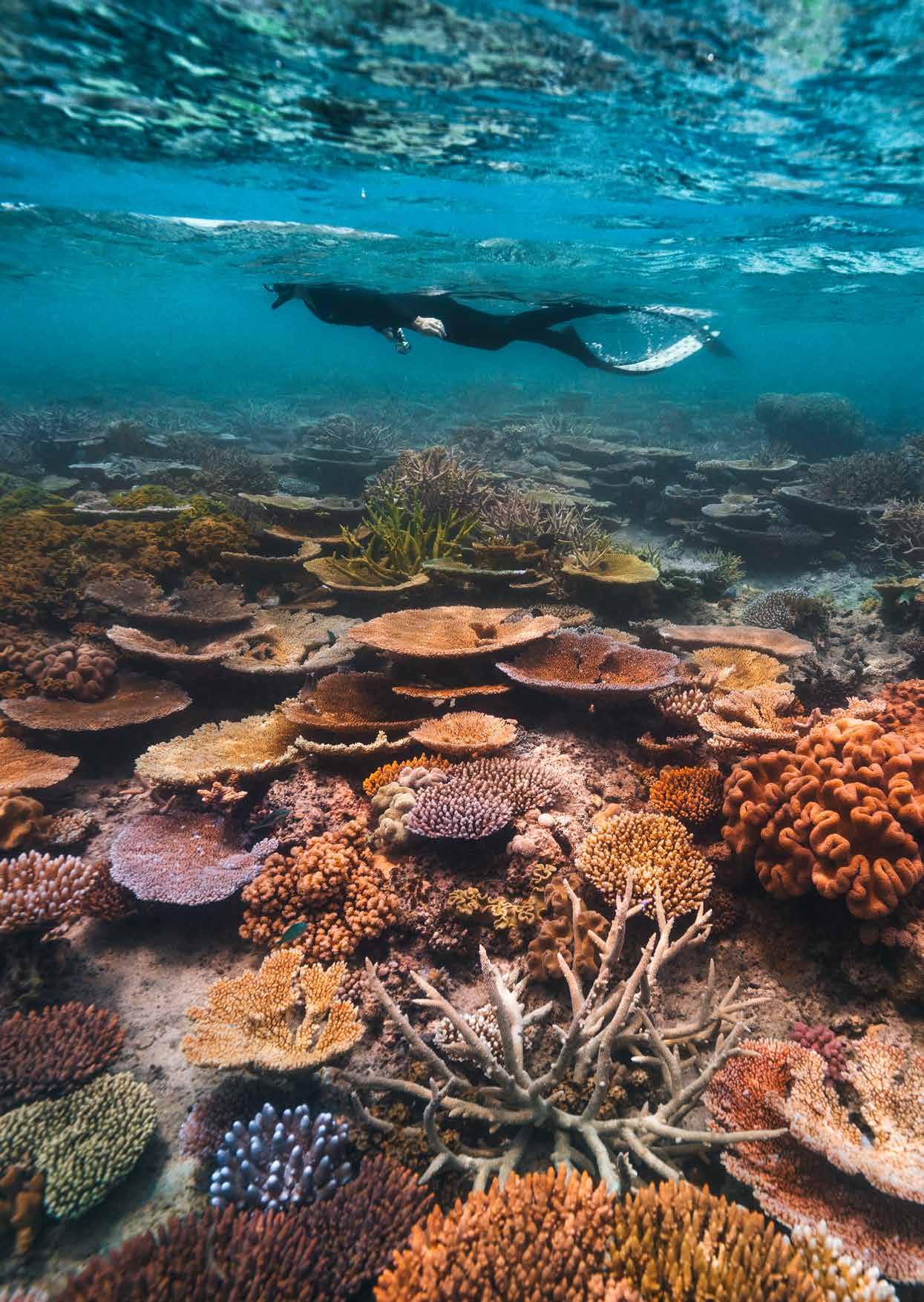
We have protected these fragile environments with care and respect – from the bordering savannah lands to the oldest tropical rainforest on earth, and the Great Barrier Reef.
Things have changed over the course of time, and in Tropical North Queensland, the change continues. As does our promise to keep adapting for the greater good of our planet, wildlife, communities, and people.
Protecting Earth is up to all of us and your travels here have a greater positive impact than you realise.
Your visit helps fund vital research and programs, which contribute to the ongoing preservation of these globally significant environments.
Highly trained guides, passionate scientists, and Traditional Custodians act as stewards of all these places. They not only share in-depth knowledge with you, they also collaborate on cutting edge environmental projects.
For decades, science and conservation have been behind the scenes. Now experiences encourage interactive participation in wildlife monitoring, reef research, rainforest regeneration, and cultural knowledge-sharing.
Our promise is to ourselves, to each other, to country, to protect one of the most important and biodiverse natural regions in the world for current and future generations.
Together we can do more.
This is Our Promise of Greater Good.
2.OUR SUSTAINABILITY FRAMEWORK
In this second edition of our Sustainability Report, TTNQ reflects on the progress made in the last 12 months and the work still to do. The Sustainability Report is part of our annual reporting framework to demonstrate leadership and a continued focus on sustainable tourism. We recognise that all tourism is on Country and under our new Reconciliation Action Plan restate our commitment to culturally appropriate and respectful tourism in our region.
Tourism Tropical North Queensland’s reporting framework, outlined in this our annual Sustainability Report, has been drawn from and aligns to the Australian Government’s National Sustainability Framework.
2.1 RESPECTING CULTURE
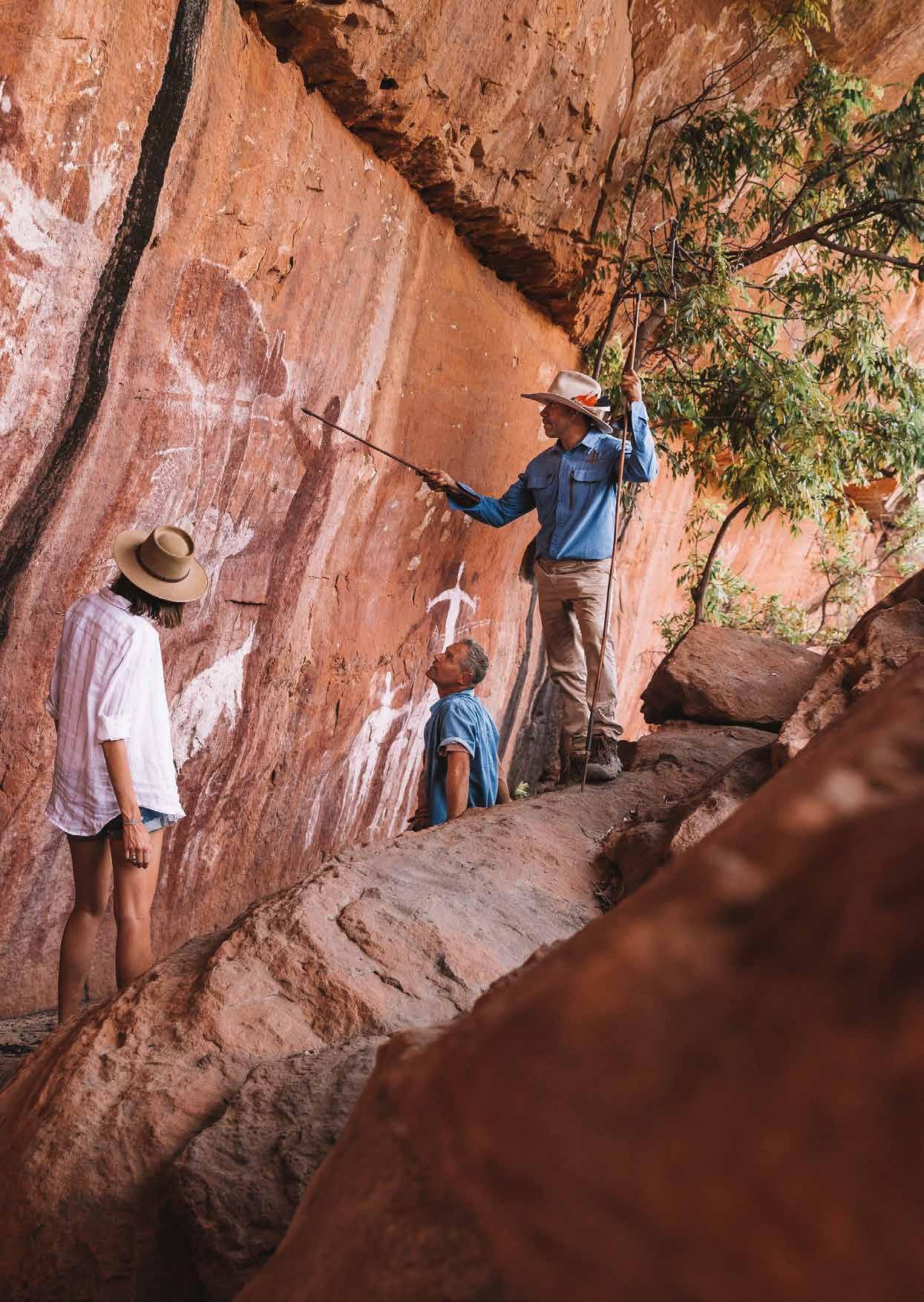
Aligned to the Tropical North Queensland First Nations Tourism Action Plan (FNTAP), the organisation’s targets and actions are focussed on the five priority action areas of Country, Culture, Community, Capacity, and Continuity. The core premise of the FNTAP is that all tourism is on Country and therefore has a responsibility to be sustainable.
PRIORITY GOALS
Recognising all tourism is on Country
More visitors engaging with and connecting to First Nations cultures
Implementing the TNQ First Nations Tourism Action Plan by 2032.
Increase the number of TTNQ members that formally acknowledge Country for visitors.
Increase the percentage of visitors having a First Nations experience.
Increase the percentage of domestic visitors to TNQ having an Indigenous experience.
MEASURE & RESULTS IN 2025
24% of FNTAP Actions are complete, and 76% are either ongoing or underway.
TARGETS
All FNTAP actions are complete and all TTNQ operators acknowledge Country in 2032.
Percentage of visitors having an indigenous experience increased from 14% (2024) to 17% (2025).
TARGET
Increase the share of visitors to TNQ having an indigenous experience to 30% in 2032. Double the percentage of people employed in tourism in TNQ that identify as indigenous from 6% to 12%.
Supporting Indigenous experiences to develop and grow
Increase in the number Indigenous operators and experiences in our region that are ATDW listed and the number of those that have achieved Best of Queensland Experiences recognition.
Support Indigenous experiences to grow and develop through the TNQ Indigenous Experiences Cluster.
TNQ now has 29 Indigenous experiences listed on ATDW, of which 10 have achieved ‘Best of Queensland’ Indigenous Experiences.
41 experiences now listed in our Deeper into Dreaming brochure.
TARGET
45 experiences are BoQE in 2032.
2.2 ENVIRONMENT & CLIMATE ACTION
Guided by the Regional Action Plan developed by EarthCheck and Griffith University for Tropical North Queensland—under the State-wide Climate Action Plan for Tourism in Queensland prepared for the Queensland Regional Tourism Network (QRTN)—TTNQ’s Environment and Climate Action approach is centred on measurable, evidence-based actions. These actions aim to reduce the region’s carbon footprint from 55 kg per visitor per day, while clearly mapping a pathway toward Net Zero emissions by 2050, in alignment with Australia’s national targets.
PRIORITY
Reducing energy consumption
GOALS
Support the TNQ tourism industry to measure and reduce their carbon footprint.
MEASURE & RESULTS IN 2025
24% of TTNQ members surveyed are offsetting their footprint *
TARGET
At least 20% offsetting in 2026.
Transition to renewables
Increase the percentage of TTNQ members using or generating renewables by 2026.
Reducing waste to landfill
Supporting our industry with strategies to reduce waste to landfill through cooperation and education
Restoring land and sea country
Increase the number of TTNQ businesses contributing to restoration projects to begin to close the gap in the pathway to Net Zero emissions by 2050.
* Based on the responses of our annual survey
35% of TTNQ members generating or using renewables *
TARGET
40% of TTNQ members using renewables in 2026.
While no waste audits were completed in 2025, it remains a priority action area for the Leaders Network.
TARGET
15 TTNQ members measuring and reducing waste to landfill in 2026.
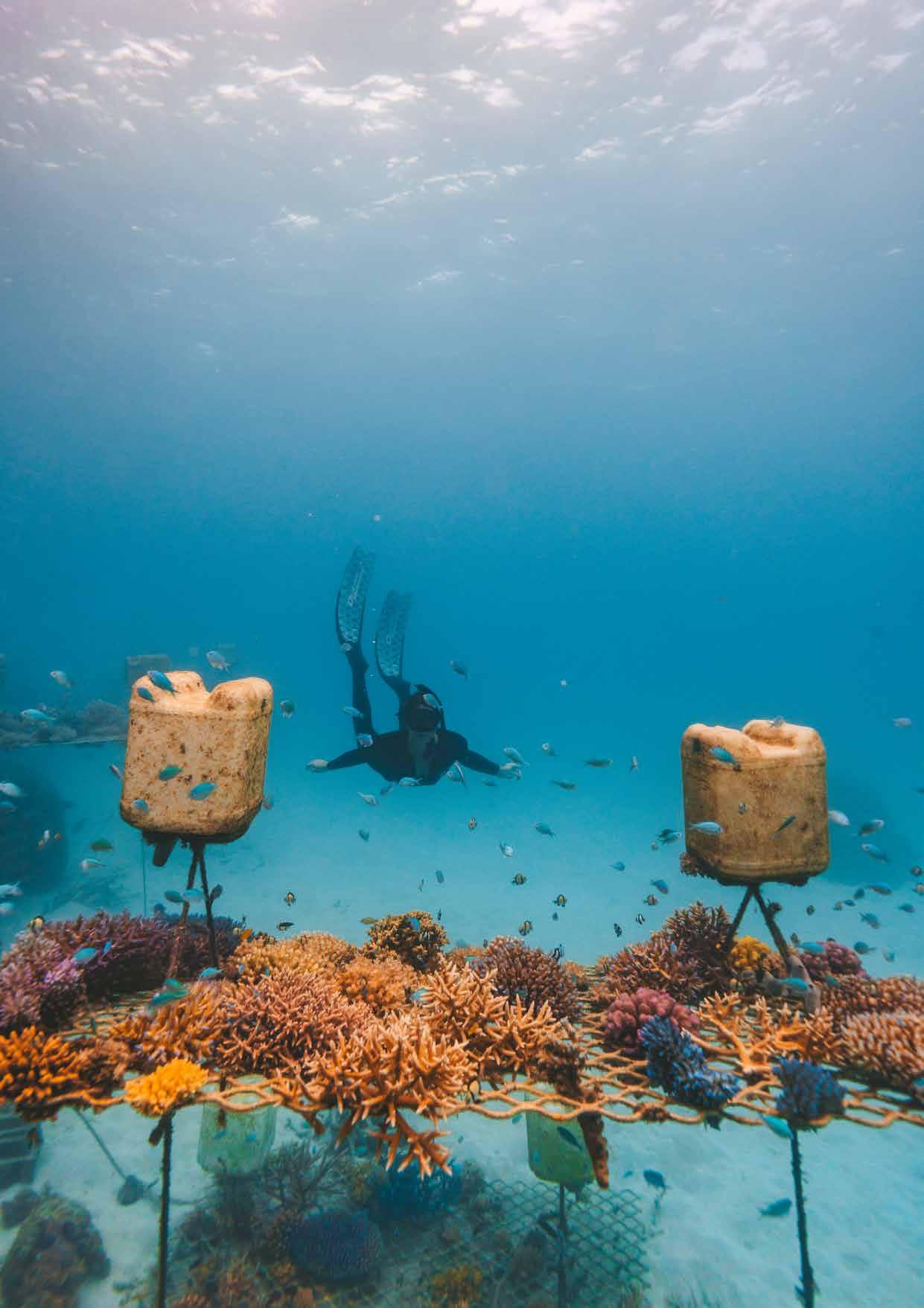
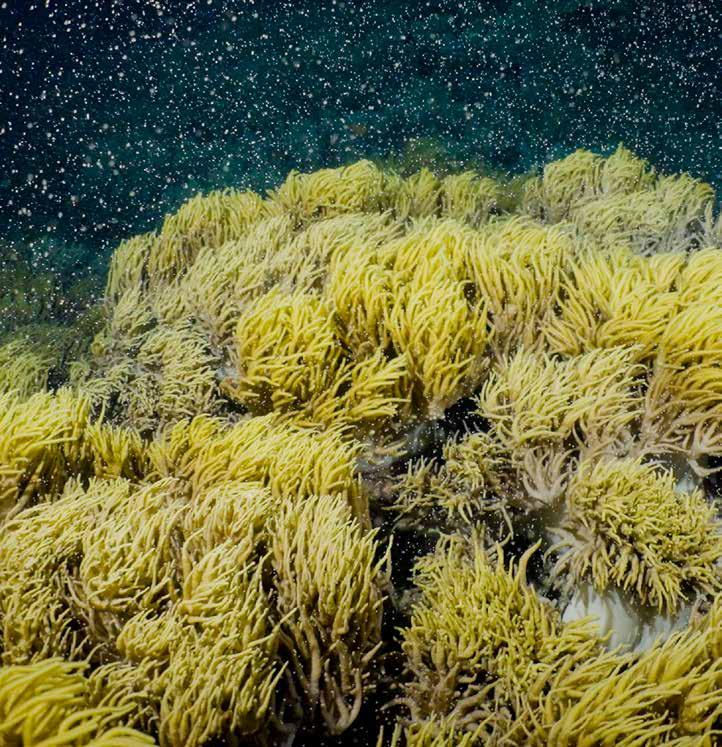
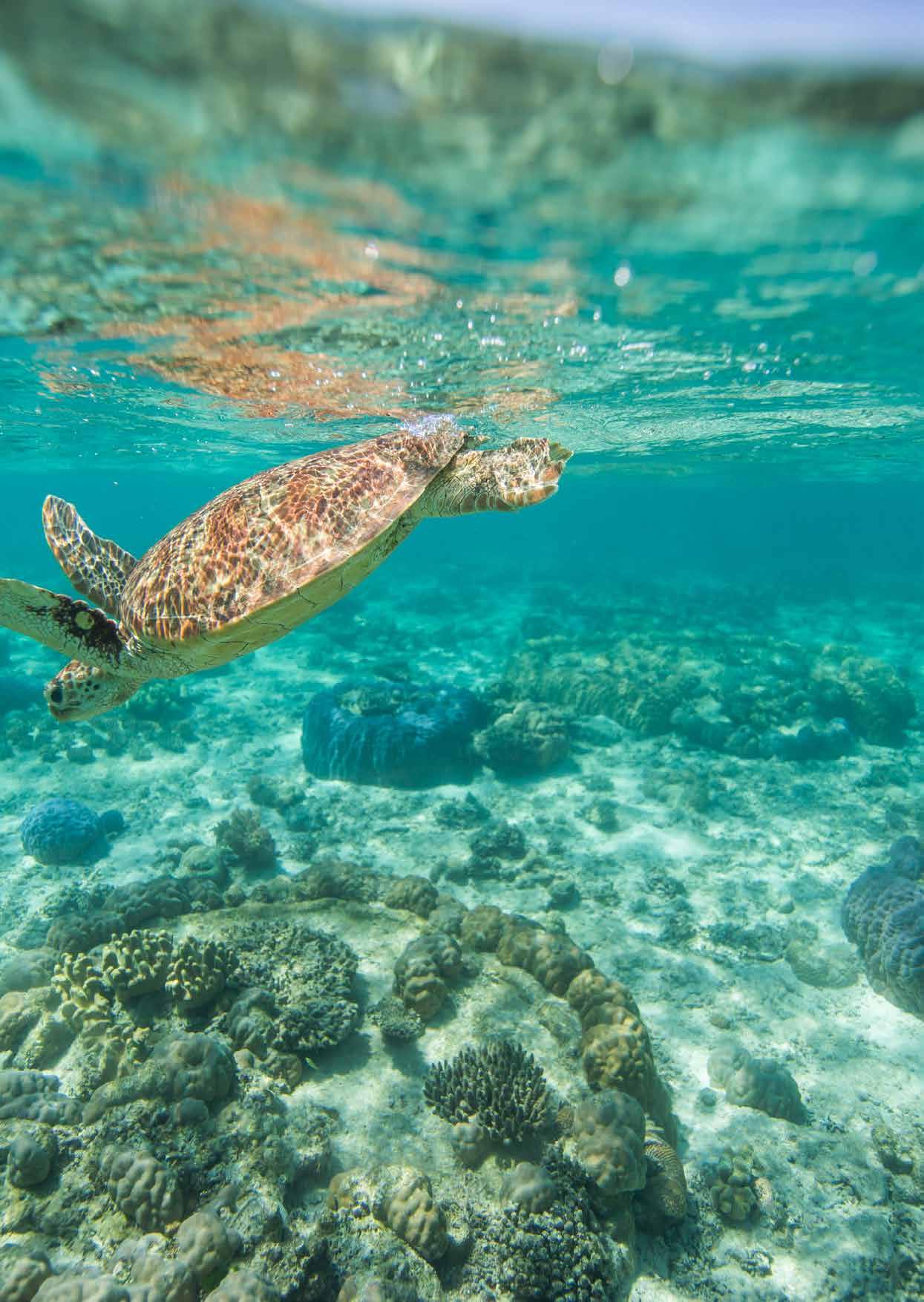
In partnership with Reforest, 20 members and events have planted 6,100 trees in restoration projects.
38 businesses contributed to local restoration projects and 43 businesses supported local projects via volunteering projects.
TARGET
At least 30 TTNQ members and events supporting restorations projects 2026.
2.3 CREATING A POSITIVE SOCIAL IMPACT
Tourism in our region has a long history of generating positive social impacts for communities from job creation to the preservation of culture and cultural sites of significance. As tourism in TNQ grows, it must maintain its social licence but ensure it maintains community support (measured through the TEQ Social Indicators research).
PRIORITY GOALS
Positive impacts on employment through tourism
Increasing the percentage of tourism jobs in emerging regions.
Increasing Indigenous employment in tourism.
MEASURE & RESULTS IN 2025
40% of all TTNQ activities support dispersal to emerging regions.
TARGET
Increasing share of regional nights outside of Cairns from 38% to 40% by 2045
Maintaining community support and social licence
Maintain community support for tourism as numbers grow over the next decade.
Accredited tourism businesses benefiting communities
Increase the number (and percentage of TTNQ members) adopting Ecotourism Australia and EarthCheck and/ or STAB accreditation.
The TEQ social indicators in 2025 show 53% support for tourism growth.
TARGET
Maintaining community support for tourism growth above 42%.
31% of TNQ operators have certification or accrediatation.
TARGET 25% of TTNQ members are accredited in 2026.
2.4 TAKING A MANAGED APPROACH
Key to the success of our region, and TTNQ’s approach to sustainability, is a managed approach where the region’s goals and targets are specific, measurable, achievable, relevant, and have a timeframe (SMART) and that the efforts of individuals are brought together to benefit the wider region. This starts with the overall ambition to get our industry onto the pathway towards Net Zero Emission by 2050.
Recognising 84% of the region’s carbon emissions result from air travel, TTNQ is supporting the growth of a Sustainable Aviation Fuel industry in our region, but we are not the key drivers of this. Therefore, our efforts remain focused on supporting our members where we have the greatest direct impact.
PRIORITY GOALS
A pathway to Net Zero emissions
Measuring our footprint
Maintaining a Network of Leaders
Map the region’s pathway to achieving Net Zero emissions by 2050 and support the industry to reach this goal.
MEASURE & RESULTS IN 2025
A regional model for carbon emissions is now in place and can be updated annually.
TARGET
From 55kg per visitor per day to 42kg by 2032.
Building resilience
Increase the number of TTNQ members that are measuring (and reducing) their carbon footprint, contributing to the wider regional targets.
Support the proactive businesses in our region to address their sustainability changes through a collective approach.
Attract funding to our region to increase the industry’s resilience to natural disasters and increase their sustainability with solar, battery storage, water tanks, etc.
From the TTNQ members surveyed 42% of respondents are measuring their footprint.
TARGET
Increase from 14% to 20% in 2026.
In its first year the Leaders Network grew to 113 TTNQ members.
TARGET
150 Sustainability Leaders in TNQ in 2026
TTNQ provided over 25 letters of support for projects related to environmental sustainability, site restoration and infrastructure improvements to reduce energy, water and waste by our members.
TARGET
15 businesses per annum accessing sustainability funding programs or investing in technology to reduce their carbon footprint and build their resilience to disasters.
As a region, our pathway to Net Zero Emissions requires a mix of industry-led efficiency gains, new technology including Sustainable Aviation Fuels (noting 84% of current emissions are from aviation), and offsetting. The diagram below gives an indication of the pathway needed for TNQ to reduce its current emissions from 55kg of Co2e per visitor per day (2.5M kg per day) in 2024, towards 2050. At 3%-5% annualised growth in visitor nights (and therefore emissions), assuming no change in technology or efficiency, and not including offsets, the region will be producing approximately 5.3M kg of Co2e per day in 2050.
Relying on technology improvements alone, including an increasing proportion of aviation fuel being SAF, reduces the footprint from the annual growth trajectory but only keeps emissions at current levels by 2050. This is on the assumption that SAF produced regionally will increase from 1% of aviation fuel in 2028 to 55% by 2050. Without industry efficiency gains and consumer and industry offsets, the region cannot reach Net Zero by 2050. A coordinated approach is needed to increase the take up by industry of efficiency measures (including carbon measurement frameworks such as ecoBiz, Strive for Sustainability, Quality Tourism Framework and EarthCheck) and increasing engagement of the industry and consumers in offsetting programs.
TTNQ PATH TO ZERO EMISSIONS 2025-2050
(Kilograms per day from TNQ Tourism)
1,000,000 2,000,000 3,000,000 4,000,000 5,000,000 6,000,000


3.TOP TTNQ-LED SUSTAINABILITY INITIATIVES
It is a privilege to call Tropical North Queensland home. As the Regional Tourism Organisation, TTNQ is dedicated to ensuring that every visitor leaves as a custodian of our region and its stories, thus protecting it for generations to come. Sustainability guides the way we think, the decisions we make and ultimately, the way we do business.
3.1 THE LIFETIME OF GREATNESS
Launched on World Earth Day 2025, The Lifetime of Greatness Project positioned the Great Barrier Reef as a living entity worthy of global recognition. The campaign nominated the Reef as the first non-human recipient of the United Nations Environment Programme’s Champions of the Earth Lifetime Achievement Award, reframing it as a guardian of the planet rather than solely a natural asset. Supported by scientists, First Nations ambassadors, government agencies, educators, influencers and the tourism industry, the initiative reached over 5 billion people worldwide and generated 1.3 million advocates in support of the Reef’s nomination ahead of the December 2025 awards.
3.2 TNQ SUSTAINABILITY LEADERS GROUP
Comprised of members who are committed to advance sustainable tourism in their operations. TTNQ continues to support these businesses through newsletters featuring regional case studies, current resources, networking opportunities and grant opportunities. This platform aims to foster the exchange of achievements, innovation, ideas and stories that champion sustainability for the destination.
3.3 MEASURING OUR REGIONAL TOURISM FOOTPRINT
Through the Queensland Regional Tourism Network (QRTN), TTNQ utilises the regional carbon accounting models developed by Griffith University and EarthCheck to continue guiding the industry transition to Net Zero. The framework is underpinned by TTNQ’s sustainability commitment and focuses on three key pillars:
a) a regenerative tourism approach that gives back to conservation,
b) industry-led innovation and circular economy partnerships, and
c) advocacy to support decarbonisation initiatives, including sustainable aviation fuel and the decarbonisation of the marine sector.
3.4 SUPPORTING ACCREDITATION AND CERTIFICATION
TTNQ continues to support members in achieving recognised eco-certification and accreditation, reinforcing Tropical North Queensland’s position as Australia’s leading region for accredited tourism operators. Certified businesses participate in the Sustainability Leaders Group, which provides targeted education, access to sustainability resources and exclusive opportunities, including decarbonisation coaching, industry promotion through media and trade channels, and support to access certification pathways and funding. To strengthen industry capability, TTNQ actively promotes relevant government grant programs, including the Queensland Government Tourism Business Capability Subsidy and Business Basics Grants, assisting operators to invest in sustainability training, data and reporting systems, and accreditation outcomes.
3.5 WATER WISE ACCORD
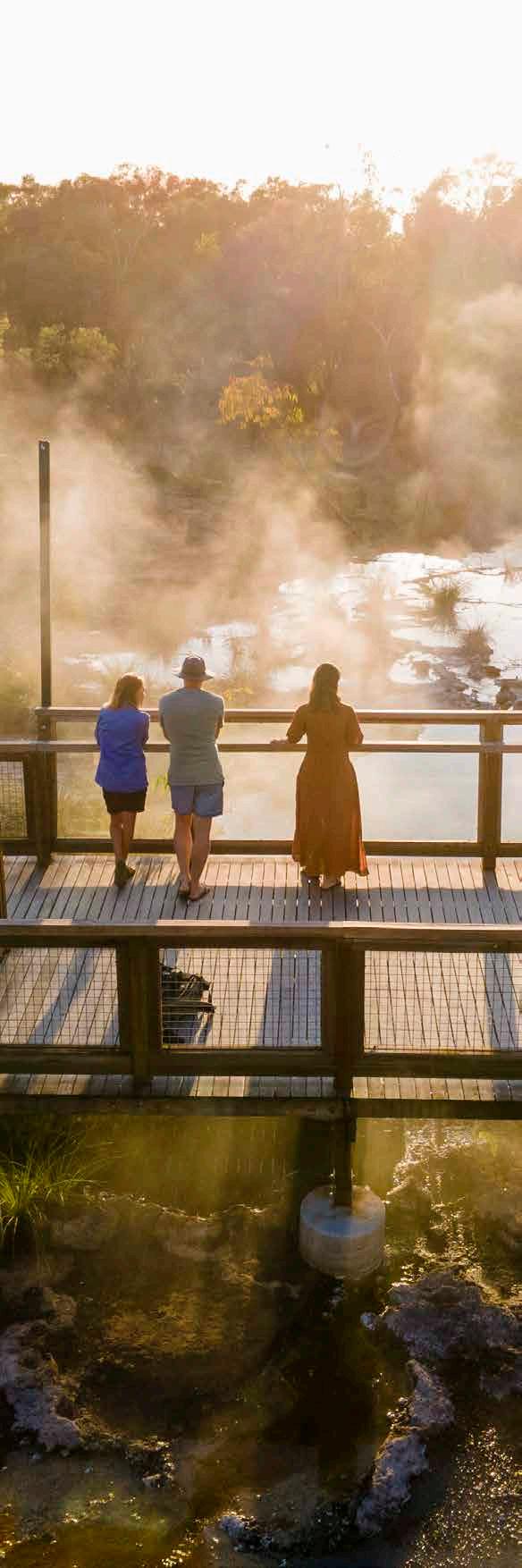
In 2025 TTNQ has guiding the region’s tourism industry to become more water wise through the Waterwise Hotels Accord, aligning environmental stewardship with strong ESG principles. Developed in partnership with Cairns Regional Council, the Accord supports operators to reduce water consumption, educate visitors and adopt practical efficiency measures, including smart technologies and improved operational practices. By fostering collaboration, sharing best practice and encouraging measurable resource savings, TTNQ is helping industry reduce pressure on local water infrastructure, strengthen climate resilience and protect the natural assets that underpin a sustainable, responsible visitor economy.
CASE STUDY: NOT A DROP IS WASTED
The Cakemaker 5000 is turning 12,000 litres of sewage into 11,000 litres of water for toilet flushing, irrigation and firefighting reserves each fortnight at Green Island Resort where reduce, re-use and recycle is the mantra for the Great Barrier Reef island’s operations.
This addition to the Resort’s sewage treatment plant has been nicknamed the Cakemaker as once the water is extracted it leaves behind a cubic metre of “cake” that is recycled into compost by a local biosolid recycler.
Other initiatives include a Food Digester recycling machine which reduces food waste by 90% and creates organic fertiliser for the resort’s nursery and local farms, while a compacter and baler tackles cans, cardboard and plastic so they can be efficiently delivered to recycling agents.
The Resort’s sewage treatment plant is one of the most sophisticated in Australia, processing some 30 million litres of treated wastewater each year. Water is a precious resource on the island, so no rainwater is collected to ensure it all goes to the island aquifer to support the vegetation. Instead, the Resort, which is in Ecotourism Australia’s Hall of Fame, has a desalination plant for potable water. The steep roofs of the Resort were designed to help channel the rain to the ground.
Solar generates more than one-quarter of the island’s infrastructure energy needs, including power for the navigational aids, research station and Telstra tower, and is supplemented by new technology diesel generators and fuel-efficient operations.

3.6 ONLINE SUSTAINABILITY RESOURCE HUB
TTNQ delivers an online Sustainability Hub that provides members with a centralised platform for sustainability resources, tools and support services. The Hub includes case studies, carbon accounting tools, carbon offset and biodiversity credit options, education resources, grant information and up-to-date guidance, enabling members to access, assess and act on current sustainability data and opportunities. The key content areas of the Sustainability Hub include:
Case studies
· Carbon Accounting Tools
The ‘Promise of a Greater Good’ resources
TTNQ Pathways to Sustainable Tourism resources
Carbon Offsetting/Biodiversity Credit Options
Education and Grants
Reforest Dashboard
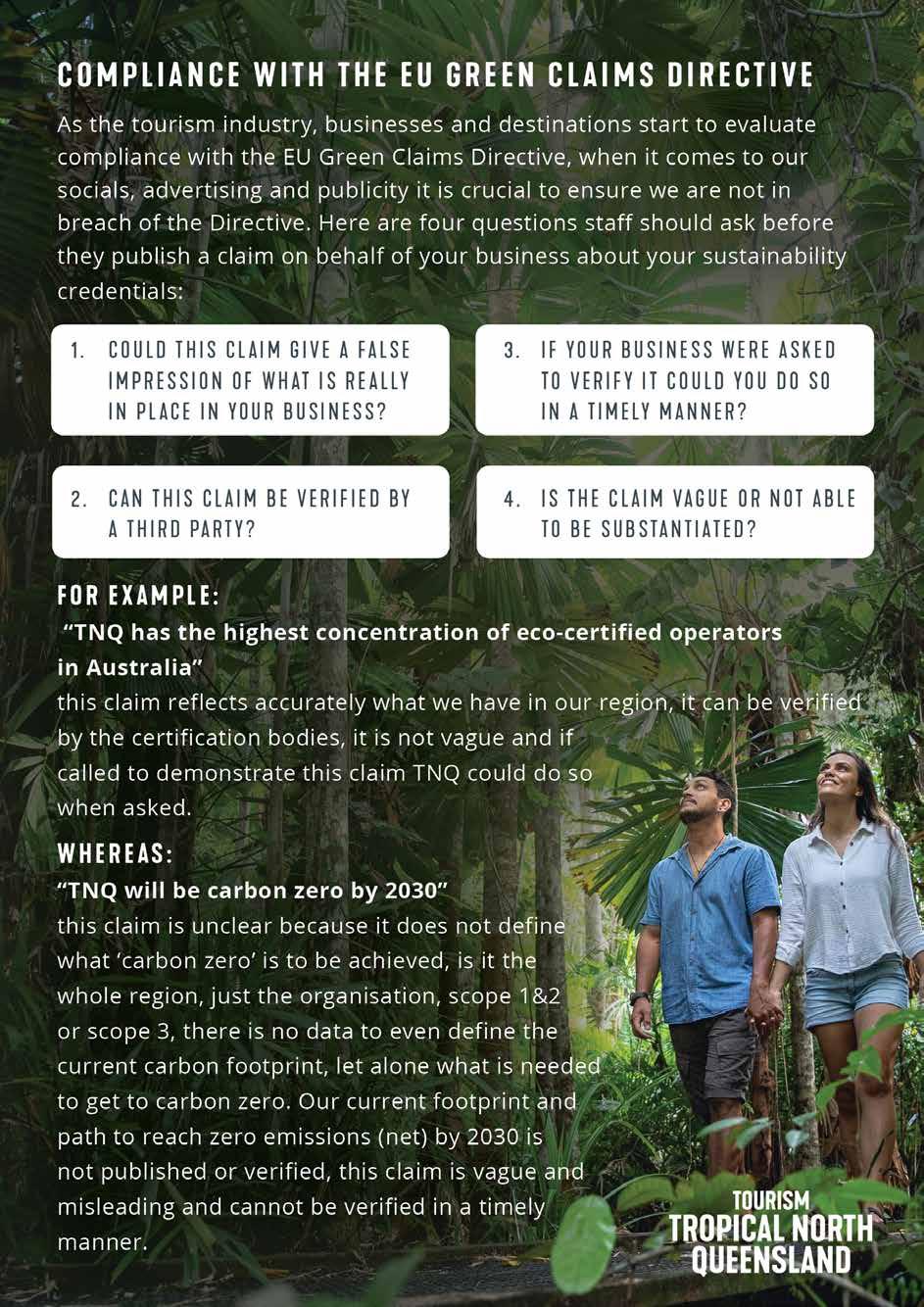
3.7 BACKING UP OUR GREEN CLAIMS
The 2024 EU Green Claims Directive means increasing scrutiny will be placed on tourism businesses to ensure they are not making false or misleading claims. TTNQ has rolled-out a ‘four-way test’ for green and sustainability-based claims to ensure region and our member are complying. The document is available for download on the TTNQ Sustainability Hub website.
3.8
CONSUMER ENGAGEMENT
To further our commitment, TTNQ actively supports members in integrating sustainability into the visitor experience within the framework of ‘the Promise of a Greater Good’, offering educational resources and opportunities to deepen the understanding of sustainability principles. Through targeted promotion and marketing initiatives, we highlight sustainable member businesses to raise visitor awareness and promote support for sustainable tourism options, maintaining an updated consumer site with relevant content.
CASE STUDY: FIGHTING WILDLIFE EXTINCTION
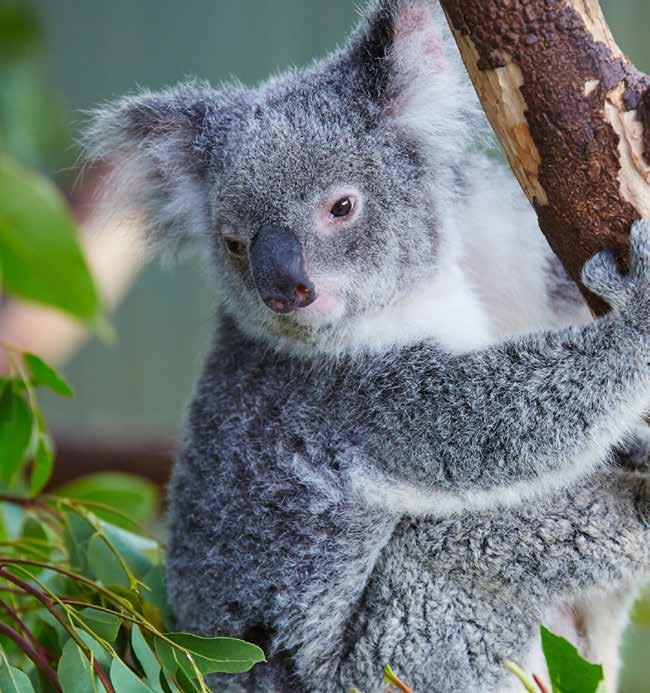
Koalas, frogs and bats are among the endangered animals to benefit from funding by the North Queensland Wildlife Trust with $64,800 donated to research and conservation groups in 2025.
The first doses of the newly approved koala chlamydia vaccines have been manufactured by a University of Sunshine Coast research team led by Professor Peter Timms and delivered to conservation partners for targeted vaccination of wild koalas. Chlamydia affects koala fertility and is one of the most significant drivers of koala population decline.
The cause of tumours in tree frogs is under investigation at the world’s first frog hospital, Frog Safe in Innisfail, and the Bat and Tree Society of Cairns is being assisted with the running costs of the Kuranda creche for endangered spectacled flying fox pups.
Established by the Freeman family who own and operate Hartley’s Crocodile Adventures, Kuranda Koala Gardens and Birdworld Kuranda, the North Queensland Wildlife Trust is focused on grass roots conservation efforts, hands-on wildlife care, critical habitat acquisition, conservation, research and preservation.
Visitors to the Freeman family attractions can actively contribute to the Trust, however, the most money is raised from a small levy on wildlife encounter photos offered at the parks and funding accumulated from the Containers for Change bottle recycling project.


3.9 REFOREST PARTNERSHIP
TTNQ continues to partner with Reforest to support locally delivered rainforest restoration programs in collaboration with Terrain NRM and Rainforest Rescue. This initiative enables tourism operators to take measurable local climate action by reducing operational carbon emissions while engaging visitors in efforts to minimise their travel footprint. Participating operators are provided access to a regional online dashboard that supports transparency and accountability by reporting on habitat restoration outcomes and verified carbon sequestration metrics, including the number of trees planted across restoration sites throughout the region.
CASE STUDY: RENEWABLE POWER
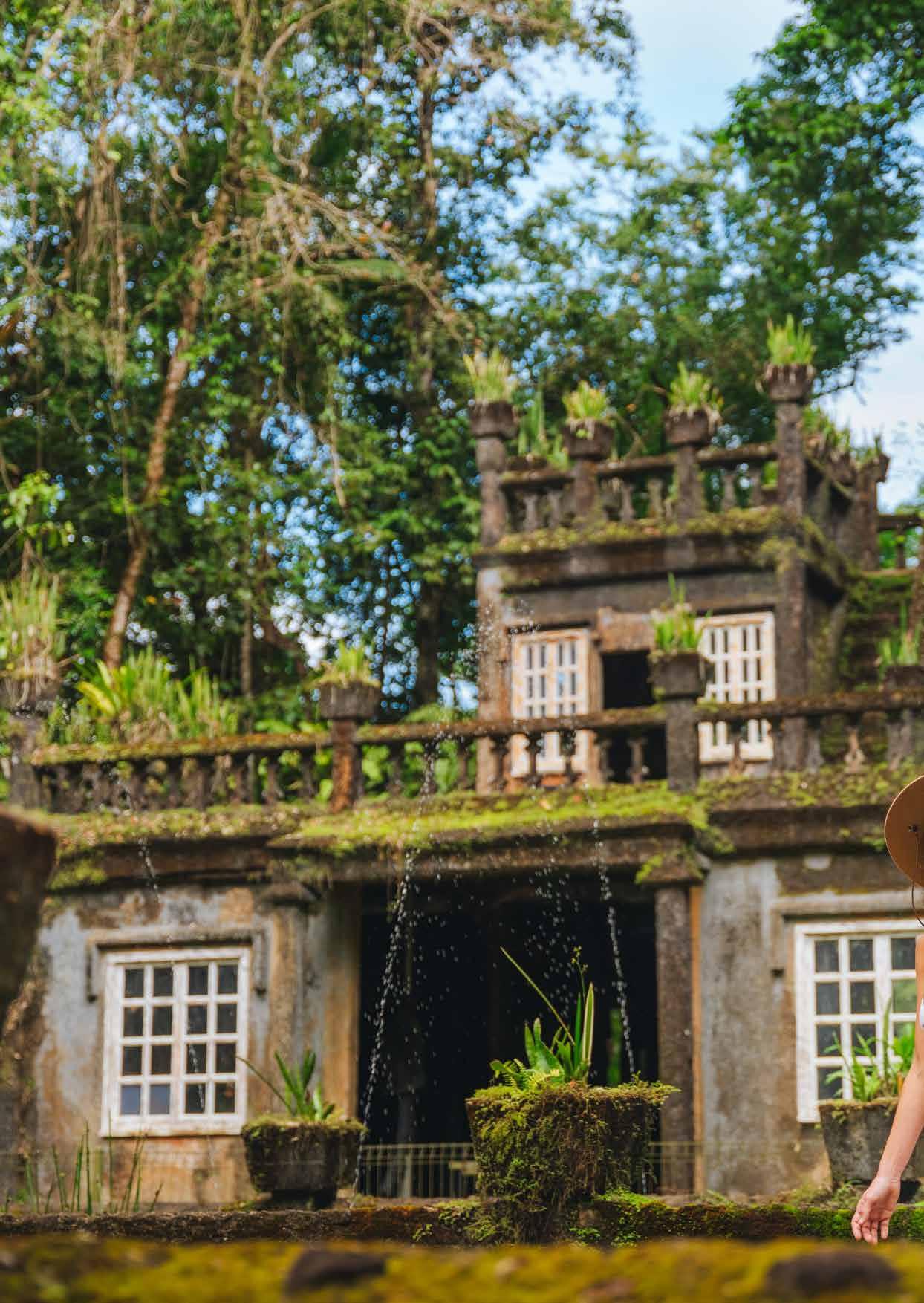
Energy independence is at the heart of Paronella Park’s commitment to sustainability and dates back to 1933 when the attraction’s founder Jose Paronella installed the north’s first river-driven hydro-electric system to harness the power of the property’s waterfall.
Current owners Mark and Judy Evans have added an extensive network of solar and battery systems to run the Park, five properties, accommodation for 15 staff and EV charging infrastructure. Their electric fleet – from cars to a wheelbarrow – is powered by the renewable energy and staff are encouraged to charge their vehicles at work to reduce their costs and emissions.
Guests can also charge their electric vehicles while they visit and make use of the renewable energy when they stay at a powered site in The Paddock Van Park which includes one night at no cost. The renewable power network extends to the Mena Creek Hotel and the cabins at The Park.
Sustainability is not about quick wins for Mark and Judy, instead it is a steady and thoughtful process. “It’s evolution, not revolution,” Mark says about the philosophy that has shaped more than three decades of action to create a living legacy at Paronella Park.
3.10 BUSINESS EVENTS CAIRNSCONNECT GREAT, LEAVE GREATER
In 2025, Business Events Cairns advanced the Connect Great, Leave Greater platform through practical initiatives that embed sustainability across event delivery and industry engagement.
In partnership with Reforest and the Cairns Convention Centre, event planners were connected to a local initiative to contribute to local tree planting which has now seen over 6,000 trees planted. This was integrated into all Business Events Cairns site inspections and famil programs, ensuring each visit delivered a positive environmental impact.
Targeted content was developed to showcase these initiatives and encourage planners to adopt similar practices, reinforcing the region’s sustainability credentials.
Low-emission transport solutions were demonstrated through the use of electric coaches by Tropic Wings during key programs, while trade engagement shifted towards locally sourced corporate gifts to support regional suppliers and reduce environmental impact.
A strong focus on social impact was delivered through collaboration with Rosies – Friends on the Street, incorporating team-building activities that directly support local communities. This commitment was further reflected in the Melbourne Showcase at 1 Hotel Melbourne, recognised as a Certified Sustainable Gathering for its measurable progress in reducing waste and minimising single-use plastics.
Through these actions, Business Events Cairns continues to position the region as a destination where sustainability is not only promoted, but actively delivered.

4.TTNQ’S PRIORITY ACTION AREAS IN 2026
4.1 TRACKING TOOLS FOR INDUSTRY IMPROVEMENT
TTNQ has established the Sustainability Leaders Cluster group comprising 113 operators, each with a level of eco certification and /or sustainability accreditation or an interest in improving their sustainability practices. This group of operators is actively implementing sustainable practices in their businesses and is promoted by TTNQ as an example to the rest of the industry via case studies and opportunities for B2B learning. Data collected from this group forms the baseline understanding of key emissions by the tourism industry in TNQ.
The target is for 150 operators to be in this group by June 2026.
4.2 STRENGTHENING “PROMISE OF GREATER GOOD” MESSAGE
Develop practical, high-impact ways for TTNQ to adopt Tourism Australia’s Green Is Our Gold framework and meaningfully integrate it with TTNQ’s Promise of Greater Good—while keeping the destination’s leadership positioning front-and-centre, by:
1. Aligning the narrative
2. Activating industry pathways
3. Proving impact through ESG reporting
4.3 RESPONSIBLE BUSINESS EVENTS
BECGBR’s sustainability priorities for 2026 focus on embedding responsible practices across the business events sector by supporting planners to adopt meaningful, regionally based CSR initiatives. This includes developing long-form sustainability content to guide event planners, creating practical regional checklists to support sustainable program delivery, producing sustainability-focused incentive and conference itineraries, and increasing participation in the Reforest carbon offset program among business events planners.
4.4 TTNQ CARBON FOOTPRINT
TTNQ has been embedding ESG principles across the organisation through the delivery of targeted sustainability initiatives and strong internal governance practices. These include waste separation, sustainable procurement and the continued offsetting of carbon emissions associated with our famil program. In 2025, TTNQ has formally measured and tracked its organisational carbon footprint, reinforcing its commitment to transparency, accountability and continuous improvement. By holding itself to the same standards it encourages across industry— carbon measurement, emissions reduction and credible offsetting—TTNQ is demonstrating leadership by example and strengthening its role as a steward of a sustainable, resilient visitor economy.