From Muscular Dystrophy and Spina Bifida to heart conditions and cancer, we’re there for it all.
Whatever the diagnosis, no matter the crisis, Chai Lifeline is there to support children and families through their most challenging moments. From individualized case management and hospital visits to home-based support, insurance advocacy, after-school programs, and unforgettable summers at Camp Simcha, our programs provide guidance, relief, and connection when everything feels uncertain.
Because no one should face illness or crisis alone.
Community Voice magazine is not responsible for the Kashrut or services provided by the advertisements. It is up to the consumer to verify the information.
Beyond the Headlines
A weekly glimpse into the Israel you won’t read about in the news
By Sivan Rahav Meir
Not Who We Are
Last week’s brutal murders, of Yamanu Binyamin Zelka in a Petach Tikva pizzeria and Destao Tzukal in Beersheva, both young men of Ethiopian origin, sent a wave of real, deep pain across the country. Adding to the shock and horror was the fact that the murders were perpetrated by gangs of teens, including even a 12-year-old. Some were quick to respond, “This is our society,” “This is our youth,” but that kind of sweeping, shaming narrative simply does not reflect Israel or its young people.
The way we respond to every wounded soldier, every fallen life, every hostage—that is the real story. These murders were a desecration of human life, but the national response was not apathy. It was sensitivity.
This week, two educators offered practical responses to the heinous murders. Rabbi Amir Dadon prepared a study sheet for his high school students in memory of the two victims. Alongside their photos, he wrote: “Most of us, thank God, are not in danger of committing murder. But in the language of Chassidut, everything we see is meant to reflect something back to us. It calls for introspection.”
Many of us are at risk of anger. Of losing control. Of being overtaken by rage. Rabbi Dadon asked his students to think about their anger—in a calm moment. To recognize it, to understand
it, and to learn to manage it. To remember: there are boundaries. There is right and wrong.
The Gemara teaches: “The world endures only because of those who restrain themselves in moments of conflict.” But how do you actually restrain yourself in the heat of the moment?
Here are some of the tools his students discussed:
Prepare a sentence, a verse, or a short prayer in advance, and repeat it so that it is accessible when you need it.
Imagine yourself ten years from now, being interviewed about this exact moment—what choice will you be proud of?
Try to redirect the anger. Become angry at the anger itself, and push it away.
Follow the advice of our sages: transform anger into compassion. Instead of getting angry at the person in front of you, try to feel for them.
Dr. Yechiel Harari, a teacher of Chassidut, offers a different perspective: we need to go a level higher. It’s not enough to focus on enforcement, punishment, or fighting drugs, alcohol and crime.
“We don’t need to teach children not to be violent,” he says. “Not to curse, not to hit, not to take revenge—that’s basic. That’s the minimum.”
What we need to teach, he says, is love. First, love of self. Every person is created in the image of God. And from there, love of others: to respect, to value, to want to do good, to elevate the world.
Think of the verse we read recently: “Love your fellow as yourself.” It assumes something fundamental—that a person loves themselves. These murderers did not love themselves. That’s where it begins.
“And when we live on that level,” he explains, “violence simply doesn’t belong. It becomes something distant, out of place. We need to aim higher. To lift people up. To set greater goals, not just, ‘Don’t get drunk,’ but, ‘Rise higher. Live your purpose’.”
Every Day Counts
The Counting of the days of the Omer, between Pesach and Shavuot, teaches us the significance of time.
When we count something, we recognize it’s importance. The Torah prescribes: “And you will count for yourselves . . . seven
complete weeks,” emphasizing that each of the days comprising these weeks is particularly precious.
We all know the popular maxim, “Time is money,” but there is more to it than that. As we count the 49 days between leaving Egypt and the revelation on Mount Sinai, we are made aware of just how important time is. Each day that we count represents a character trait we are meant to refine to be worthy of receiving the Torah. May we all recognize the unique quality and value of this particular day — and of every day to come.
An Ancient Text, a New Way of Thinking
How do we define wisdom, strength, wealth, honor?
The tractate of Avot invites us to reconsider how we think about these concepts.
During this period of the Counting of the Omer, between Pesach and Shavuot, it is customary to study one chapter of Pirkei Avot every Shabbat. This tractate from the Mishnah focuses on selfimprovement and character refinement, and by studying it during this time we prepare ourselves to receive the Torah on Shavuot.
Here is a fascinating excerpt that was studied recently in Jewish communities throughout the world:
Who is wise? He who learns from every person. Who is mighty? He who subdues his evil inclination.
Who is rich? He who rejoices in his lot. Who is honored? He who honors his fellow human beings.
Wow. Wisdom is defined not as the accumulation of knowledge but the ability to learn from others. True strength is self-control. True wealth is being satisfied with what we already have. And an honorable person is one who honors others.
Each of these statements radically overturns our traditional assumptions about success and invites us to work on ourselves and view our lives in a new way.
Translated by Yehoshua Siskin and Janine Muller Sherr
Sunday, May 10 8:00 PM
Anti-Zionists in disguise
By Moshe Phillips
The key to the credibility— or lack thereof—of a column in “The Philadelphia Inquirer” was a description of the co-authors.
An op-ed attacking AIPAC, authored by two Jews who oppose the existence of Israel as a Jewish state, would be unremarkable. Two people who hate Israel naturally also deeply despise AIPAC. Nothing surprising in that.
But an op-ed column attacking AIPAC by prominent figures in two mainstream American Jewish organizations—well, that’s something else entirely.
And that may explain what motivated the editors of a major daily newspaper, The Philadelphia Inquirer, to publish a harsh attack on AIPAC on April 24—and to hide the fact that its co-authors are avowed anti-Zionists.
The op-ed demanded that candidates for public office reveal whether they have received contributions from any political action committee linked to AIPAC. It didn’t include any call for candidates to disclose contributions from anti-Israel groups. That’s a curious double standard, to say the very least.
The key to the op-ed’s credibility—or lack thereof—was its description of the co-authors.
Christie Balka was identified as “a member of the Tikkun Olam Chavurah in Northwest Philadelphia.” The Hebrew name no doubt left the average Philadelphia Inquirer reader with the impression that it is a mainstream Jewish institution.
The byline did not explain what the “Tikkun Olam Chavurah” stands for. One has to go to its website to find out. There, the group defines itself as “an anti-zionist (sic), queer-led community,”—meaning that it is part of the tiny fringe in the Jewish community that opposes the existence of Israel.
Balka’s co-author was a local Reconstructionist rabbi, Mordechai Liebling. According to the website of the anti-Zionist organization “Jewish Voice for Peace,” he is a member of its “rabbinic cabinet.”
But Liebling’s byline on the oped didn’t mention that. There, he was identified as an ex-professor and “a former member of the Conference of Presidents of Major Jewish Organizations.” That lent credibility to the piece by linking Liebling to the mainstream American Jewish community’s major leadership group.
But is that an accurate description? Anybody familiar with the Conference of Presidents knows that it’s a coalition of Jewish organizations, not individuals. (The I.D. line also misstated the Conference’s name, but that’s the least of the problems here.)
Forty years ago, Liebling was hired as executive director of the Jewish Reconstructionist Foundation, a small Jewish organization that happened to be one of the 50-plus organizations in the Conference of Presidents. That position didn’t make him a “member.” It didn’t make him a
major Jewish leader. And it doesn’t change the fact that today, he is affiliated with an explicitly antiZionist organization. What’s more, no Reconstructionist movement affiliate is a current member of the Conference of Presidents. What other anti-Israel organizations is Liebling involved with?
The Prayers for Peace Alliance prominently features Liebling on its website. The hate group IfNotNow and CAIR are both “sponsors” of the Prayers for Peace Alliance. The Anti-Defamation League examines the leadership role that IfNotNow has played in anti-Israel protests in its article “Who are the Primary Groups Behind the U.S. Anti-Israel Rallies?” on the ADL website.
On the Prayers for Peace Alliance website itself are accusations of “Israeli military’s campaign of ethnic cleansing” and that “Zionism has ... produced a heavily militarized society in which a permanent state of occupation ultimately endangers everyone in the region.”
In 2009, Liebling was involved in the Jewish Fast for Gaza group, an entity that said their events were created “to call for a lifting of the blockade that prevents the entry of civilian goods and services into Gaza.” It was advocacy like this that led directly to the tragic easing of the blockade, allowing Hamas to rearm and expand its terror tunnel network. And we all know what that led to.
Lastly, as mentioned above,
Liebling is on the Jewish Voice for Peace’s Rabbinical Council. The ADL has described JVP as a “radical anti-Zionist” and an “anti-Israel activist group” in multiple publications. JVP does not support a twostate scenario, and it is not advocating peace talks and negotiations. JVP calls for an end to the State of Israel.
It’s easy to see just how radical JVP really is with even a very quick review of their website, where they call for the removal of Jews from Israel. The section reads: “We imagine Arab, Middle Eastern and Southwest Asian/North African Jews having ethical and safe access to return to their original homelands.”
Balka and Liebling may hate AIPAC, but their real beef is with Israel itself. The organizations with which they identify, Tikkun Olam Chavurah and Jewish Voice for Peace, and the others, oppose the very existence of the Jewish state.
The co-authors and the editors of the Inquirer should have been upfront about that.
Moshe Phillips, a veteran pro-Israel activist and author, is the national chairman of Americans For a Safe Israel (AFSI). A former board member of the American Zionist Movement, he previously served as national director of the U.S. division of Herut and worked with CAMERA in Philadelphia. He was also a delegate to the 2020 World Zionist Congress and served as editor of The Challenger, the publication of the Tagar Zionist Youth Movement. His op-eds and letters have been widely published in the United States and Israel.
After Three-Year Struggle, Israeli Asset Seizure Forces
Florida Husband to Grant Get
A three-year battle for a religious divorce came to an end this week for L., a U.S.-based woman who had been denied a get, after Israeli rabbinical authorities imposed financial sanctions on her husband’s assets in Israel.
The breakthrough was made possible through a joint effort between Yad La’isha: The Monica Dennis Goldberg Legal Aid Center for Agunot, part of the Ohr Torah Stone network, and the Agunot Division of the Israeli Rabbinical Courts. After identifying that the husband, who resides abroad, owned significant real estate and financial assets in Israel, legal action was taken to freeze those holdings.
L. and her husband had lived together in Florida for over a decade before separating in 2023, against a backdrop of reported domestic conflict. Despite pursuing legal action in rabbinical courts in the U.S. and even securing an order obligating her husband to grant a get, he refused to comply, instead making escalating financial demands in exchange.
With options in the U.S. exhausted, L. then turned to Yad La’isha for assistance to finally get things moving. Attorney and Rabbinical Court Advocate Tehila Cohen from Yad La’isha petitioned the Rabbinical Court in Haifa to impose liens on the husband’s Israeli assets and bank accounts. The court granted
the request, placing significant financial pressure on the husband.
Although the parties initially agreed to arbitration proceedings in the United States, the husband failed to cooperate, violating rulings and obstructing the process. In response, Israeli authorities escalated the case, issuing an additional ruling obligating the husband to grant a get under Israeli jurisdiction and advancing enforcement measures, including initiating receivership proceedings on the seized assets.
Facing the real prospect of losing his property in Israel, the husband relented. Just days before a scheduled court hearing, he appeared before the rabbinical court and agreed to grant the long-awaited get.
“This case once again demonstrates the powerful leverage of economic sanctions against recalcitrant husbands, even when they reside outside of Israel,” said Attorney Tehila Cohen. “Thanks to close cooperation with the Rabbinical Courts’ Agunot Division, L. is now free to move forward with her life. We will continue to pursue every available avenue to secure freedom and independence for women facing similar situations, in Israel and around the world.”
About Yad La’isha:
The Monica Dennis Goldberg Legal Aid Center for Agunot
Founded by Ohr Torah Stone in 1997, Yad L’aisha remains the largest, most comprehensive, and most experienced legal aid center in the world for agunot - Jewish women trapped in marriage by incapacitated or recalcitrant husbands who are refusing to grant them a Jewish divorce. In addition to legal aid, Yad La’isha also provides social workers and therapeutic support to. Through initiatives like the Playget theater group, Yad La’isha enables agunot to reclaim their narratives and live lives of dignity, self-sufficiency, and empowerment.
About Ohr Torah Stone
Ohr Torah Stone is a Modern Orthodox movement committed to illuminating the relevance and beauty of authentic Torah Judaism which is rooted in halakha, yet eternally relevant to contemporary life. Fueled by 32 educational institutions, social projects, outreach programs, and leadership development initiatives for men and women, OTS is having a transformative impact on Jewish life, learning, and leadership all over the world, educating and preparing the next generation to strengthen society, perfect the world, and serve as a light unto the nations.
For more information, please visit https:// ots.org.il/
This Mother’s Day, Magen David Adom Salutes the Mothers Saving Lives on the Frontlines While Raising Families
From October 7, responders to frontline paramedics under fire, mothers across Magen David Adom reflect a key element of Israel’s wartime emergency response
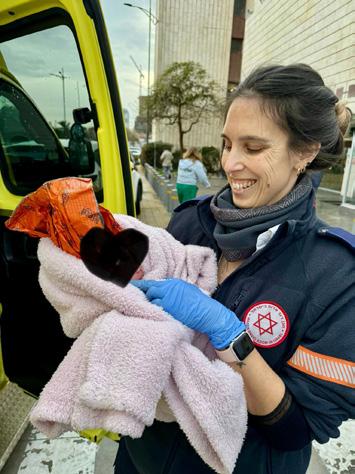
April 30, 2026, Tel Aviv - As Mother’s Day approaches, Magen David Adom (MDA), Israel’s national emergency medical service, is recognizing the extraordinary mothers within its ranks, women who dedicate themselves not only to their families, but also to saving lives of strangers on the frontlines of an ongoing war. From paramedics who treated victims on October 7 to young mothers saving lives on ambulance shifts while their husbands serve in reserve duty, these women epitomize deep commitment to serving their communities.
Across Israel, thousands of MDA volunteers and staff members respond to emergencies at all hours of the day and night, often under the threat of rocket fire, mass casualty incidents, and national crisis. Among them are mothers who balance the responsibility of providing critical, often lifesaving, care under challenging and highpressure conditions with the demands of raising children and caring for their families.
For many, this commitment has taken on even greater meaning in recent months, as MDA teams have continued operating under the pressures of war and ongoing security threats.
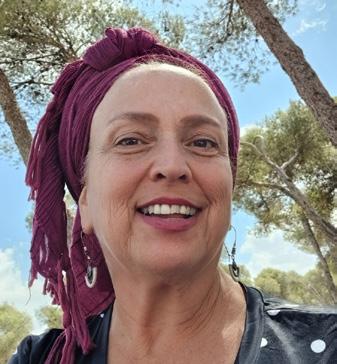
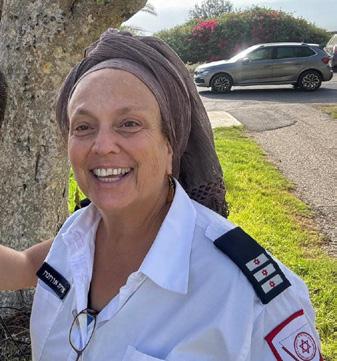
Orit Ohana, an MDA ambulance driver and paramedic from the Jordan Valley, serves as a reservist both for the Home Front Command and in MDA’s reinforcement unit as a paramedic. She is also a biology teacher, mother of seven, and grandmother of five, balancing family life with frontline service. On October 7, she drove south to treat injured victims of the massacre and immediately went on to serve as a medic on the northern border for three months.
“When I started volunteering at MDA, I was already a mother, and I’ve always seen myself as a mother first. I carry that with me into my work, the way I treat people, the way I see them. Balancing being a mother and a medic hasn’t always been easy, especially when my children were younger or during the war,
and at first they didn’t always understand the meaning behind it, but as they’ve grown, they’ve come to appreciate it more. For me, it was important to show my family that we are part of something bigger, that we have a responsibility to give to others, especially here in Israel, and over time I’ve seen how proud they’ve become, and how that sense of purpose shaped them, with three of my children going on to volunteer with MDA themselves.”
Avigail Danino, a paramedic and young mother from Beit Shemesh, was among the first on the scene of a deadly attack in her community. As an Anglo-Israeli raising a family while serving on the frontlines of emergency response, Avigail represents a growing group of young parents stepping forward to serve.
“Being both a paramedic and a mother is a constant balancing
act. For the past few years, my husband has been on reserve duty on and off, so when I am on shift or on call, I am grateful to
I’m out there saving lives. When I’m home, I make sure he feels all my love and knows he is my top priority.”
single mother of two daughters, Noam (15) and Gil (12), she has spent her career on the frontlines, including working as a paramedic while pregnant and leading teams through periods of war, while raising her family alongside it.
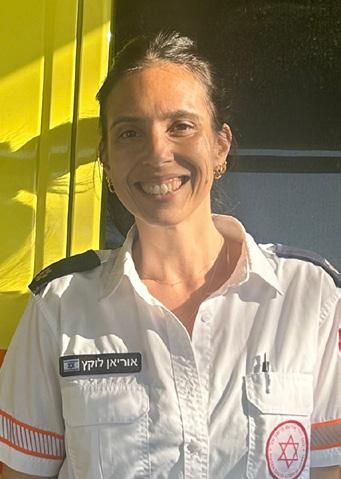
Orianne Lucatz, 42, from Kfar Netter, has been part of Magen David Adom for 23 years and today serves as a manager within the Sharon Region. A Hours
“My work at MDA is my spine. My daughters didn’t just grow up next to this world; they grew up inside it. They speak the language; they understand the responsibility, and they’re proud of it. Seeing their mother lead in a high-intensity, traditionally male-dominated environment, while raising them on her own, gives them the confidence to believe they can do anything.”
With more than 39,000 staff and volunteers nationwide, MDA continues to rely on individuals
S: 10AM - 4PM
M-TH: 9:30AM - 7PM
F: 9:30AM - 2PM
from all walks of life. On Mother’s Day, the organization takes a moment to recognize the unique strength and dedication of the mothers who serve, quietly balancing two of the most demanding and meaningful roles there are.
“The mothers of MDA represent an extraordinary combination of professionalism, dedication, resilience, and compassion,” said Shafir Botner, Magen David Adom’s chief paramedic. “Every day, they make the decision to step forward and serve, often under intense pressure, while continuing to care for their families at
home. MDA is committed to supporting them through flexible working models and a strong organizational framework, but it is their sense of responsibility and purpose that truly stands out. Their contribution, especially in times of war, is nothing short of remarkable.”
About Magen David Adom MDA is Israel’s emergency services system. A leader in mass-casualty response and in EMS technology, Magen David Adom treats and transports more than 1 million people to hospitals every year; collects, safety tests, and distributes nearly all the blood to Israel’s hospitals; and, through its affiliation with the Red Cross movement, responds to disasters around the world. For more information, visit afmda.org
YATAR: Israel’s Volunteer Tactical Vehicle Unit
Keeping the Fight Alive
YATAR is not a conventional military unit. It is an all volunteer force made up entirely of experienced reservists, combat veterans, medics, and specialists who have stepped forward to close critical security gaps.
Built as a rapid response tactical vehicle unit, YATAR operates across all of Israel’s borders as well as inside Gaza. Using high mobility ATVs, its teams patrol, intercept, rescue, and respond faster than traditional forces can.
Members of YATAR balance civilian lives with the demands of national defense. They train, deploy, and operate alongside regular security forces, responding within minutes to threats that emerge in remote terrain, desert corridors, border communities, and active combat zones.
Their vehicles are not standard transport platforms. Each ATV is equipped for both combat mobility and lifesaving evacuation, including stretcher systems and emergency medical gear, allowing forces to reach wounded soldiers where other units cannot.
Recognition and Expansion
In February 2026, YATAR was officially recognized as the fifth national rescue organization of the State of Israel by the Ministry of National Security.
This recognition formalized what had already been proven in the field.
Alongside this milestone, YATAR established a national rapid response standby unit in cooper-
ation with the Israel Border Police, expanding its operational reach and integration into Israel’s broader security response framework.
The Mission Is Not Over
The return of many hostages from Gaza brought a measure of national relief, but not closure.
Some hostages did not survive captivity. Their bodies remain in Gaza, and their families are still waiting to bring them home for proper burial.
Within YATAR, this is not viewed as a political issue, but as a moral obligation.
The mission to return every hostage, living or deceased, remains ongoing.
At the same time, the broader fight against terror continues. Organizations such as Hamas remain active, and the nature of the threat has evolved rather than disappeared.
YATAR forces continue to operate inside Gaza and across Israel’s borders, facing a reality that changes week by week.
A Border War in the Desert
Along Israel’s southern borders with Egypt and Jordan, a different type of conflict is unfolding.
Smuggling networks linked to terrorism and organized crime operate with speed, coordination, and deep familiarity with the terrain. Their primary advantage is mobility, particularly through the use of ATVs.
Their method is direct and efficient.
Smugglers on the Egyptian side load ATVs with weapons, drugs, and ammunition and approach the border fence. They then deploy large drones that carry the cargo over the barrier.
On the Israeli side, collaborators wait with their own ATVs, col-
lect the shipments, and disappear into the desert within minutes.
The same vehicle platform that YATAR uses to evacuate wounded soldiers is used by these networks to move weapons and explosives.
The difference lies not in the tool, but in its purpose.
Meeting the Threat on Equal Terms
For years, many security forces struggled to counter these operations due to the speed and terrain advantage of the smugglers.
By the time heavier or slower units arrived, the targets were gone.
YATAR changed that dynamic.
By deploying fast, trained ATV teams integrated with real time intelligence, YATAR became one of the only forces capable of physically intercepting these smuggling operations before they vanish.
Operating across sand, rocky terrain, and open desert corridors, the unit is able to pursue, intercept, and seize drones, vehicles, and weapons shipments in motion.
Each interception has immediate impact.
• Fewer weapons reach terror organizations.
• Fewer attacks are carried out.
• Fewer lives are placed at risk.
Quiet Work, National Impact
Much of YATAR’s activity remains outside public attention, but its impact is measurable.
By stopping smuggling routes, the unit disrupts supply chains that fuel violence across Gaza, Judea and Samaria, and within Israel itself.
By evacuating wounded soldiers quickly, it reduces the gap between injury and treatment, often
making the difference between life and death.
And by operating in areas where other forces cannot respond in time, YATAR functions as both a deterrent and a first responder. What Comes Next
YATAR continues to expand its operational capabilities, personnel, and geographic coverage. Its work is grounded in two principles.
Every civilian deserves protection.
Every fallen or captive Israeli
deserves to return home.
Until those conditions are met, the unit continues to operate.
Quietly, consistently, and without pause.
For those interested in understanding the unit’s work more closely, YATAR offers private briefings, field visits in Israel, and direct meetings with its leadership. To schedule a conversation: Staff Sgt. (Res.) Rom Cohen Head of External Relations, YATAR Israel Romcohen@yatarisrael.org +1-212-444-1709
Jerusalem Celebrates Layers of Jewish History Illuminated
Yerushalayim’s light rises as night falls upon its walls. Sites and historic landmarks come to life, and the city’s story is presented in a unique spectacle full of hope and renewal. The project, in partnership with the Israel Ministry of Tourism, illuminates the city, from the walls of the Old City to the High Light laser show and other iconic Jewish and historic landmarks.
The Israel Ministry of Tourism recognizes the project’s significant contribution to promoting tourism in Israel, and particularly in Jerusalem, the capital city. The Ministry has participated in its funding with a total of NIS 9.6 million over several years in order to enrich the visitor experience during evening hours and add a visual and experiential dimension to the city’s monuments and urban landscape.
On the occasion of Yom Yerushalayim, taking place on May 15, we present selected Jewish and historic sites included in the project.
Israel Ministry of Tourism
Selected Sites
Migdal David - Tower of David Jerusalem Museum
A historic and cultural site at the gateway to the Old City. The ancient citadel, built and expanded over centuries, served as an administrative and military center through many eras of Yerushalayim’s history. Today it houses the Museum of the History of Jerusalem, presenting 4,000 years of history through archaeological discoveries, works of art, multimedia presentations, and reconstructions spanning from the Canaanite period to the present. At night, spectacular sound-and-light shows are projected on the citadel walls.
High Light JLM - A Spectacle in Jerusalem’s Skies
An innovative sound-and-light show at the Haas Promenade, Armon HaNatziv, telling the story of Yerushalayim in three chapters: shalom, tefillah, and light. Using an advanced,
environment-friendly laser system, breathtaking effects are projected across the city’s skies.
Ophel, near Ir David and Har HaBayit
A fascinating archaeological area between Ir David and Har HaBayit, one of the most important sites for understanding the origins of settlement in Yerushalayim. Excavations have uncovered layers of habitation from Bayit Rishon through later historical periods. Visitors can walk Derech Olei HaRegel and take in a breathtaking view of Har HaBayit and the Old City.
Yad Avshalom
A monumental burial structure in Nachal Kidron, also known as Emek Yehoshafat, at the foot of Har HaZeitim. Hewn from rock and built in Hellenistic-Egyptian style, with a truncated pyramid and Greek columns, rising to approximately 20 meters tall, it is considered a rare example of first-century burial structures.
Montefiore, Yemin Moshe, 1857
Closely associated with the origins of modern Yerushalayim. Built at the initiative of Sir Moses Montefiore to help Jewish residents leave the overpopulation of the Old City. Designed in the Dutch style and brought from England, today it operates as a small museum and offers a panoramic view of the Old City and the walls of Yerushalayim.
Rothschild House - Batei Mahse Complex
The first modern Jewish neighborhood built within the Rova HaYehudi in the 19th century. The building, donated by Baron Wolf Rothschild, served as housing for rabbinical families. After the liberation of the Rova HaYehudi in 1967, the complex was the first to be rehabilitated. On the stone fence, the nevuah of Zechariah is inscribed: “The city streets will be filled with boys and girls playing there” (Zechariah 8:5).
Tachanat HaRuach
Migdal David - Tower of David Jerusalem Museum
High Light JLM
Yad Avshalom
Ophel archaeological area
Montefiore Windmill
A Needle, and a Mitzvah
“Tatty, I’ll be there soon.”
Every afternoon, almost like clockwork, Dovid Klein would stop by his elderly father’s apartment on his way home from work. Sometimes he brought groceries. Sometimes he fixed a flickering lightbulb. Sometimes he just sat and listened to the same stories he had already heard ten times before.
And truthfully? He cherished every minute.
His father, Reb Yaakov Klein, had become weaker over the years. Walking was difficult, everyday tasks was nearly impossible, and the loneliness of old age often hurt more than the physical pain.
Dovid tried to help however he could.
One Monday afternoon, Dovid accompanied his father to a doctor’s appointment. After checking bloodwork and reviewing the numbers carefully, the doctor looked serious.
“Mr. Klein,” he said gently, “your diabetes is getting worse. You’ll need a daily insulin shot from now on.”
Reb Yaakov sighed.
Then the doctor turned to Dovid. “Can you administer the injection every day?” Dovid nodded automatically. “Of course.” Dovid brought his father back to his apartment and headed home for the day. But when he arrived home and repeated the conversation to his wife, she nearly dropped the mixing bowl she was holding.
“You’re going to give your father a shot?” she asked in shock.
“Yes… why?”
“Dovid! It’s going to bleed! Isn’t
making a parent bleed a serious aveirah?” Dovid froze. He had completely forgotten. The Torah commands us to honor and fear our parents, and Chazal teach that causing a parent injury — even accidentally — is extremely serious. Suddenly, what had seemed like a simple medical task became a major halachic dilemma.
“You’re right,” he admitted nervously. “I didn’t think of that.”
That evening, Dovid picked up the phone and called the hotline of the Refuah B’Halacha Center.
Within minutes, he was speaking with a Rav.
Dovid carefully explained the entire situation. His father needed daily insulin injections. The doctor said it was essential. But he was worried about the halacha of drawing blood from a parent.
The Rav listened patiently and then asked an important question.
“Is it possible to arrange for a nurse or another person to administer the injection?”
Dovid sighed.
“Unfortunately, not right now. Insurance isn’t covering a nurse at the moment.”
The Rav continued.
“Is there anyone else who could do it? Another relative? A neigh-
bor? A friend?”
“No,” Dovid answered. “I’m really the only one helping him consistently, especially at the exact time he needs the shot.”
The Rav paused for a moment before answering.
“In that case, you may administer the injection.”
Dovid felt relieved — but still uncertain.
“Really? Even though it may cause bleeding?”
“Yes,” the Rav explained. “The Rama in Yoreh Deah 241:3 writes that when there is no one else available to help, a child may perform necessary medical procedures for a parent, even if it could involve drawing blood.”
Dovid thanked the Rav, but then another thought crossed his mind.
“Well… technically, I suppose I could hire someone privately if I paid out of pocket. It would be expensive, but possible. Would I be obligated to do that?”
The Rav answered calmly.
“No. Since there is no reasonably available person already present to help, this is considered a situation of ‘no one else available.’ The Minchas Yitzchak (Chelek 1 Siman 27) and Chelkas Yaakov (Yoreh Deah Siman 131) explain that one is not
obligated to spend significant personal funds in such a case merely to avoid doing the procedure himself.”
Dovid thanked the Rav warmly and hung up.
The next evening, with trembling hands and a nervous smile, Dovid prepared the insulin shot while his father sat nearby.
“You look more frightened than I am,” Reb Yaakov chuckled.
“I probably am,” Dovid admitted.
Carefully, he administered the injection exactly as the doctor had instructed.
Dovid winced.
But his father simply smiled.
“Thank you, my dear son,” he said softly. “Not every father is fortunate enough to have a child like you.”
At that moment, Dovid realized
something beautiful. What had first seemed like a frightening halachic problem had actually become one of the greatest opportunities of kibbud av he had ever experienced.
Sometimes, the very act that makes us nervous is the act that shows the deepest love.
At the Refuah B’Halacha Center, we are here to provide guidance for real-life challenges, big and small. Whether it’s a question about Shabbos, kashrus, or navigating difficult personal situations, our experienced Rabbunim are ready to listen and advise.
If you ever find yourself wondering about a medical halacha question — big or small, serious or just something that’s been on your mind — remember that you don’t have to figure it out alone. The Re-
fuah B’Halacha Center is here to help, with experienced rabbanim available to guide you through even the most sensitive or confusing situations.
We are here Sunday through Friday 8:00 am till 10:00 pm and erev Shabbos 10 minutes before candle lighting.
Refuah B’Halacha Hotline: 732 755 0851 or email us at www.refuahbhalachacenter.org
Operation Inspiration: Mitzvah Memory
Riding a bike requires a combination of skills such as balancing and knowing how to lean as you steer, plus the sensory awareness to ease onto the brake so you don’t fly over the handlebars. It can take some time to learn, but once you do, you rarely ever forget it. This is due one of the niflaos haBorei, the miraculous behavior of our brain. When we learn to ride a bike, we create neural pathways in our brains and this “muscle memory” remains with us. That’s why even many years later you can still negotiate the cycling requirements and you don’t forget how to do it. Another type of muscle memory, again, based in the brain, is called habitual autopilot, or automaticity. (That last word is pronounced aw-toh-mah-TIS-ih-tee, in case you were trying to sound it out in your head.) This type of muscle memory enables you to perform certain tasks without thinking about them. Think about driving a car. When you first start, everything has to be very deliberate. But over time, with repetition and practice, you don’t have to specifically focus on how hard to press the accelerator or the brake, and you’re able to gauge distances and turning results without conscious thought. You’re so used to driving that you can do it with less focus. Then, you can listen to music or carry on a conversation and still drive safely.
An even further extreme example of this is when you are so used to driving a certain way,
By Rabbi Jonathan Gewirtz
that even when you’re not going to that place, you will make the turn or head in the direction you’re used to. Imagine you’re heading home from work and you plan to stop at the supermarket. If you have to pass your street on the way to the market, it would not be unusual for you to turn onto your street and head home, forgetting that you wanted to go to the store. That’s because your brain is trained.
Dovid HaMelech said this happened to him. Wherever he was going, his feet took him to the Bais Midrash, because that was his go-to location. This power of the brain can and should be harnessed. Once we know this is how our brains work, we should utilize it to maximize our potential.
For example, one of the hardest things to do is watch our mouths. But if we consistently pay attention to what we’re saying, and avoid Lashon Hara or Ona’as Devarim (hurtful words), at a certain point it will become second nature to us. Then, even if we find ourselves close to saying the wrong thing, our habituated brain will sense the error and try to get us back on track. Before our mouths form words they shouldn’t, we’ll be second-guessing ourselves. Not only that, but soon, hearing similar words from others will bother us. We’ll be guarding our tongues, but it won’t
require the effort it did before.
How about going to, or listening to, a shiur? If you make it part of your daily routine, then when you get in the car you’ll switch it on. Not only that, if you don’t, you’ll miss it. It is literally, second nature. What’s second nature? Exactly what it sounds like. It’s not the natural response you’re born with, it’s one that you help create by practicing and repeating a certain pattern.
For example, when I was younger, I was very shy. I was also a good actor. I decided to ACT like I wasn’t shy, and now, well… let’s just say sometimes my wife wishes I wasn’t quite so friendly.
In Yiddishkeit we have something called the “Nekudas Ha-
bechira,” or the “point of free will.” This is what you need to consciously choose, rather than it being automatic. So, for example, for many of us, not eating a cheeseburger is not a difficult act. It would never cross our minds to do so. For a person just becoming religious, though, who’d grown up eating them his whole life, he has to make a conscious decision not to do so.
The more you make good choices and practice elevated behavior, the more you are able to modify your freewill default setpoint. As you watch your eyes, your mouth, your behavior, and more, the things you will or won’t do change. What was hard before can become automatic, and what
was impossible at a different stage in your life now becomes possible, with only a little effort.
As you progress, you are building neural pathways towards Hashem, and building muscle memory for mitzvos. It makes doing the right thing even easier, and pretty soon, what you never imagined you could do, you will be able to do without imagining!
What a wondrous gift from Hashem, to be used over and over. I hope we never forget it, just like riding a bike.
2026 – All Rights Reserved
Did you enjoy this column? Feedback is welcome and appreciated. E-mail info@JewishSpeechWriter.com to share your thoughts. You never know when you may be the lamp that enlightens someone else.
CHEDER MIAMI YACHAD
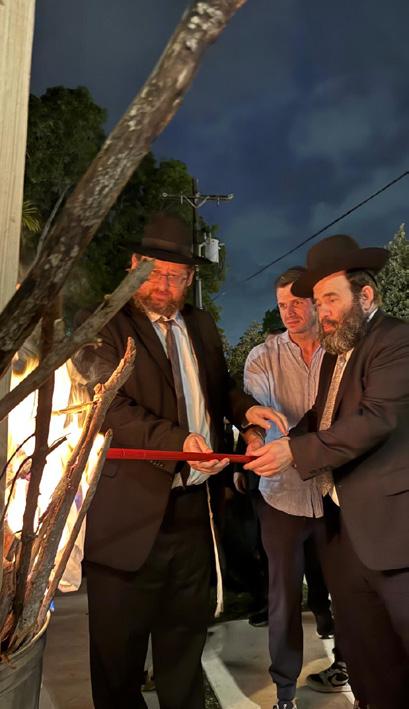
At the Cheder Miami Ahavas Torah Lag Biomer Madura Hadlaka
Rabbi Yaakov Burstyn Menahel, Cheder Miami
Mr Joel Kleiner
Top bidder of the Zechus to light the Madura
Rabbi Tzvi Neuhaus Rav, Ahavas Torah
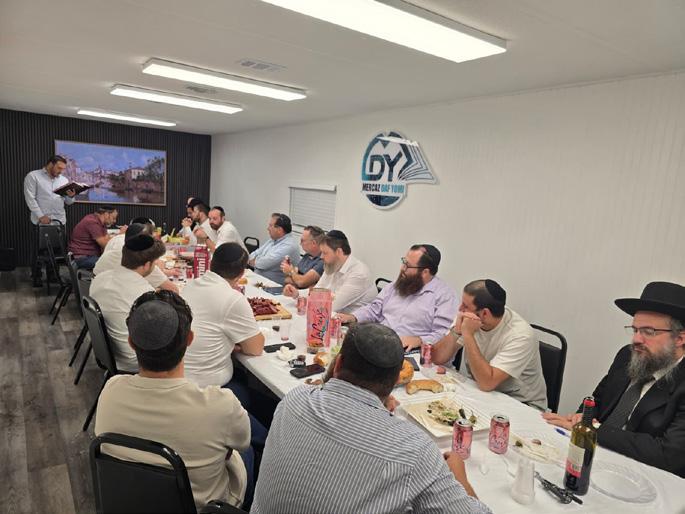
MDY IN WEST HOLLYWOOD
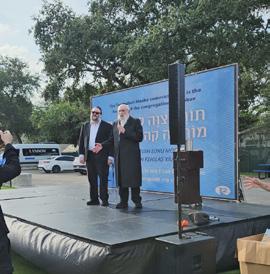
Keter Grand opening by the Miami square building in NMB
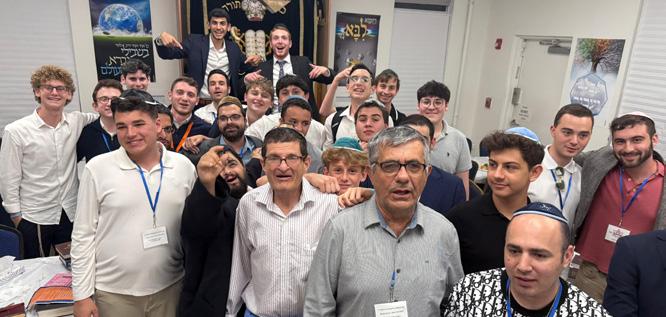
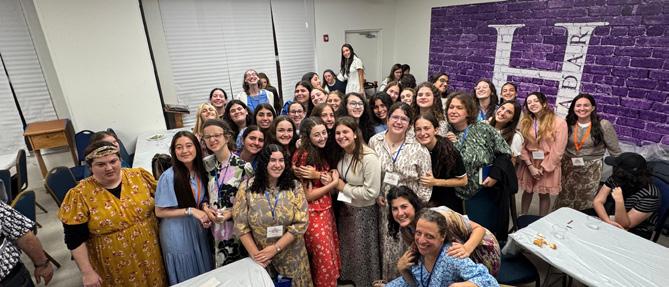
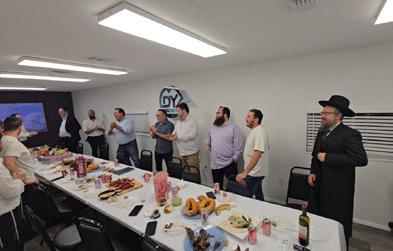
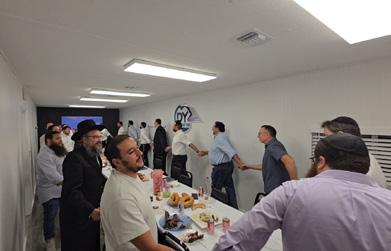
MDY branch in west hollywood hosted this Sunday a Siyum on Maseches Chullin
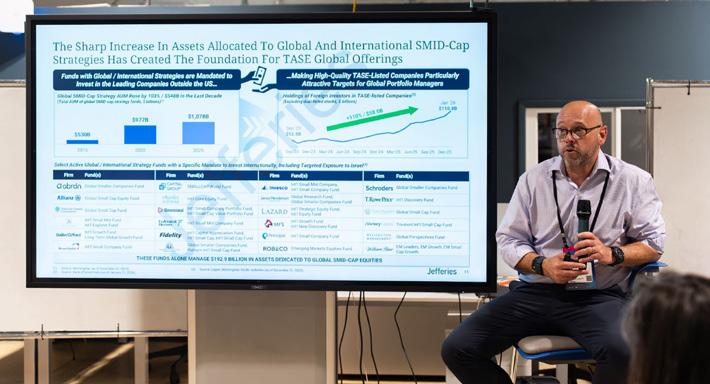
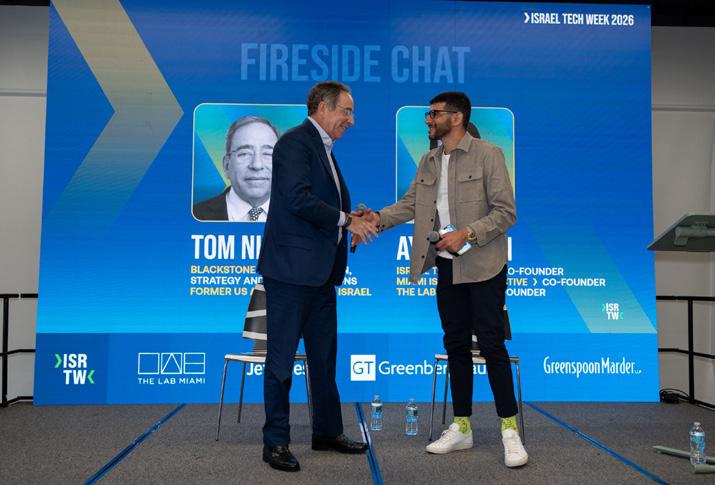
From Tel Aviv to Miami: The Growing Connection Between Israel Tech and South Florida
By South Florida Community Voice
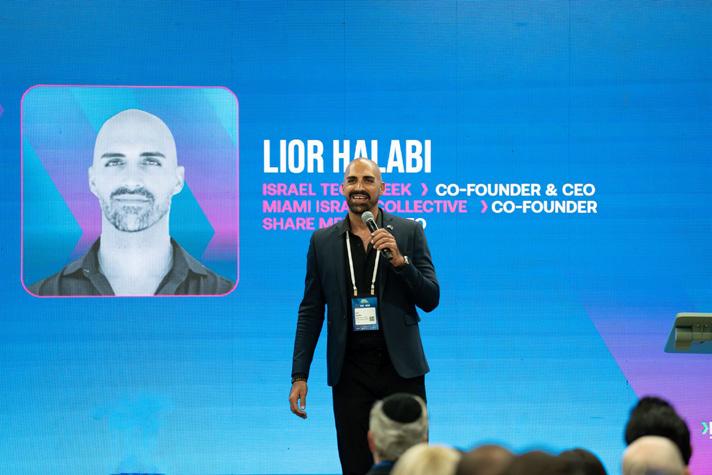
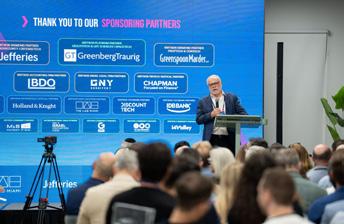
At last week’s Israel Tech Week in Miami, one thing was clear: the connection between Israel and South Florida has never been stronger.
“It’s as close as you can get to Israel without being there,” says Salomon Sredni, Managing Partner at Ocean Azul Partners. “It really feels like a mini Tel Aviv.”
A Growing Bridge Between Miami and Israel
Israel Tech Week has rapidly evolved into a major gathering point for entrepreneurs, investors, and innovators. The multi-day event brings together global venture capital firms, Israeli startups, Fortune 500 executives, and technology leaders for panels, networking, and deal-making.
With events spanning Miami, New York, and other major cities, Israel Tech Week focuses on industries ranging from artificial intelligence and cybersecurity to fintech, digital health, and climate tech. Its mission is simple: connect Israeli innovation with global capital and opportunity.
In Miami, that mission feels especially natural.
Meet the Investor: Salomon Sredni
At the center of this growing ecosystem is Ocean Azul Partners, a Miami-based venture capital firm that has become a key player in Israel-focused investing.
Founded in 2017, Ocean Azul focuses on early-stage investments,
Kiruv Mission:
Landow Jewish Academy is a kiruv school dedicated to the belief that every Jewish child should have Elite Academics and a school that inspires a love for Judaism We are committed to ensuring that financial concerns, fears about academic quality, or inadequate facilities never hinder a Jewish neshema from receiving a Jewish education
90% of LJA students previously attended public schools. Why do they make the switch? At LJA, we provide an exceptional academic experience alongside a heartfelt love for Torah, Israel, and a deep pride in being Jewish
K-5TH GRADE PASSING SCORES
AVERAGE OF READING AND MATH
Culture of Student Growth
We are committed to building students from their strengths and developing them through their weaknesses
We discover the passions of our students and develop them as a partner. Whether they are launching their own LLC, designing fashion lines, producing podcasts, creating original music or art, or participating in clubs, athletics, and extracurriculars, these experiences are not just an addition to their education they are the key element that enables our students to truly thrive
6TH GRADERS PASSING THE PERT COLLEGE ENTRANCE EXAM
COMMUNITY NEWS
from seed through Series A. The firm specializes in B2B software and deep tech, and notably, roughly 25%–30% of its portfolio is based in Israel.
“We currently have over a dozen portfolio companies in Israel,” Sredni explains. “If you want to be a real tech investor, you can’t ignore Israel. The level of innovation there is extraordinary.”
Why Israel?
Israel’s reputation as the “Startup Nation” is well-earned. With one of the highest concentrations of startups per capita in the world, the country consistently produces cutting-edge technologies and globally scalable companies.
But beyond the innovation itself, Sredni emphasizes something deeper: mindset.
“The resilience of Israeli founders is unbelievable,” he says. “I’ve taken pitch calls from entrepreneurs who are literally near Gaza or the Lebanese border—and they refuse to stop. They say, ‘We have to keep going.’”
That determination is not theoretical. In some cases, founders are simultaneously serving in military reserve duty while running companies.
“We had a CEO in our portfolio serving in special forces three days a week and running his company the other four,” Sredni shares. “It’s inspiring.”
A Portfolio Built on Innovation
One example from Ocean Azul’s portfolio is QBIQ, an AI-driven company transforming commercial real estate.
Traditionally, determining whether a tenant can fit into a
space requires time-consuming and expensive architectural planning. QBIQ changes that by using AI to generate instant “test fits,” allowing brokers and tenants to evaluate layouts in seconds instead of days.
“It used to take $10,000 and a week,” Sredni explains. “Now it takes 30 seconds.”
The Israeli Advantage
Beyond resilience, Israeli entrepreneurs bring a distinct cultural edge.
“They’re very direct,” Sredni says. “There’s real discussion, real back-and-forth. People challenge ideas openly, regardless of hierarchy.”
This openness, combined with Israel’s diversity—a blend of cul-
COMMUNITY SNAPS
tures, backgrounds, and perspectives—creates a unique environment for innovation.
“People think Israel is one thing,” he adds. “But it’s many things. That diversity is part of its strength.”
Miami: From Emerging Hub to National Tech Destination
While Israel has long been recognized as a global technology powerhouse, Miami’s tech ecosystem has been steadily developing for years through the efforts of local founders, investors, and organizations building across South Florida.
“When we started in 2017, Miami’s tech scene existed, but it wasn’t receiving the national attention it gets today,” Sredni recalls.
That visibility accelerated sig-
nificantly during COVID-19, when many entrepreneurs and investors from cities like New York and San Francisco began spending more time in South Florida.
“They came down and realized—why am I living somewhere else?” he says.
Today, Miami offers:
• A rapidly growing venture capital ecosystem
• A favorable business environment
• International connectivity
• And a diverse, welcoming culture
“It’s a true melting pot,” Sredni notes. “You can walk down one block and hear multiple languages—and no one cares where you’re from.”
Miami is increasingly becoming a central hub for Israeli innovation outside of Israel itself.
Looking Ahead
Both Israel Tech Week and Ocean Azul Partners are helping solidify Miami’s role as a global connector—linking Israeli technology with American capital and markets.
If current trends continue, South Florida may not just be a gateway, but a permanent home for the next generation of Israeli startups.
Let’s MEAT in Florida.
Celebrating Lag B’Omer with Joy, Resilience and Hope for the Future
By Dr. Chaim Botwinick
Lag B’Omer takes place on the 33rd day of the Counting of the Omer. It is celebrated and commemorated this year on the evening of Monday, May 4th and on Tuesday May 5th.
As we know, Lag B’Omer is marked by jubilation, joy and festivity following a period of semi-mourning. It commemorates the end of a devastating plague that killed an estimated 24,000 students and disciples of Rabbi Akiva as well as the death of Rabbi Shimon bar Yochai, the author of the Zohar; and when Bar Kokhba fought against the Romans during the Bar Kokhba Revolt which lasted from 132 to 135 CE.
There are a wide variety of fascinating customs, minhagim, and inspiring ceremonies that traditionally take place during Lag B’Omer.
In addition to concluding a brief period of semi-mourning which began with the counting of Sefirat HaOmer on Pesach, many people build bonfires, attend cook-outs, participate on hiking trips, share stories of heroism and enjoy the outdoors.
One of the most exciting, meaningful and exhilarating Lag B’Omer activities (for those living in Israel) is the annual pilgrimage to Har Meron, in the upper Galil, Rabbi Shimon bar Yochai’s resting place.
On Lag B’Omer, Har Meron is transformed into a massive sea of visitors from throughout the
world. A sight of unimaginable magnitude. In fact, the tremendous volume of visitors who visit the gravesite of Rabbi Shimon Ben Yochai on Har Meron has created a significant security and safety challenge for Israeli authorities. Unfortunately, this year, due to these security concerns, the Israeli authorities have reduced or limited the number of people they allow on Har Maron. In addition, large gatherings are curtailed and discouraged due to the current war with Hezbollah in Northern Israel and in Lebanon.
This very sad and disappointing reality is daunting at best – keeping in mind that as of the writing of this article, we are still experiencing a very fragile and tenuous ceasefire between Israel and Iran and between Israel and Hezbollah in Southern Lebanon.
When researching the historical events which occurred on Lag B’Omer and those which are now attributed to the chag, the findings are astonishing and inspiring.
As children, Lag B’Omer is all
about school trips, BBQ’s, bow and arrow contests and the building of supervised bonfires and fascinating storytelling of heroism and bravery.
Today, as adults, when we drill down a bit deeper into the historical significance of the holiday, we have these fond and beautiful memories; but what also emerges are a host of new inspiring events which impact acheinu beit yisrael in a variety of remarkable ways.
The lighting of bonfires, on Lag B’Omer symbolizes the fires that were set by Rabbi Shimon when he left the cave after hiding in it for 12 years in order to avoid Roman persecution. We actually read that following a long and difficult battle, the troops of Bar Kochba also emerged from their caves and lit fires in the evening to inform fellow fighters that they were indeed alive and that they survived the battle.
The stories and events of Lag B’Omer are that of profound faith in HaShem, heroism, martyrdom and gevurah – strength. In fact, one of the most inspiring and unknown facts about Lag B’Omer is that on that very day, the Israel Defense Forces was officially established in 1948 coinciding with the Declaration of the State of Israel.
This fact is no coincidence or accident as Lag B’Omer is a day that was associated with the end of a plague that affected Rabbi Akiva’s students and with the teachings of Rabbi Shimon Bar Yochai
both of whom are closely linked to the spirit of Jewish resilience, steadfastness and resistance.
It is also no coincidence that the establishment of the IDF’s predecessor divisions – the Palmach and Hagana, occurred on Lag B’Omer. This further reinforces our connection between the Chag, and the military brilliance and prowess of the IDF and that of our nation.
The popular phrase – Mi K’Amcha Yisrael means exactly what it suggests – who is like you Israel. We are indeed a nation of strength, resilience, bitachon in HaShem and achdut. And the holiday of Lag B’Omer is proof positive in support of this aspiration and reality.
By virtue of its relationship to these and other events, Lag B’Omer symbolizes the importance of Jewish peoplehood and identity, as well as its relevance to Eretz Yisrael, Am Yisrael and Medinat Yisrael.
This year, Lag B’Omer takes place in the midst of Israel’s war with Iran and Hezbollah. Who would have thought that this year Lag B’Omer would take place dur-
COMMUNITY NEWS
ing a time of anxiety, fear, uncertainty and unease for amcha.
This reality suggests that our precious Jewish country is in a state of limbo as we yearn for shalom, achdut and a bright light at the end of a long and arduous dark tunnel.
Nevertheless, we must continue to think positive and to celebrate the profound significance of Lag B’Omer and its relationship to our existential wellbeing.
It may not be one on the Shalosh Regalim or even close to the biblical or religious nature of other chaggim, but it does nevertheless resonate loud and clear that acheinu bnei yisrael are courageous, resilience, and with HaShem’s help will succeed in victory over our enemies.
Celebrating Lag B’Omer dur-
ing this defining moment in our history serves as a stark reminder that we are indeed a mamlechet kohanim, and an ohr laGoyim. We must continue on our path to glory and victory on behalf of our people and for those generations that follow.
In several weeks, we celebrate Chag Shavuot. What better reminder and example that achienu bnai yisreal stands together in strength and achdut than to celebrate the giving and the receiving of our precious Torah.
The fusing of Lag B’Omer with the significance of Chag Shavuot is a very inspiring and powerful thought. It is one which should imbue and empower us with, hope, resilience and joy. It should also provide us with
strength and bitacon. May Hashem bless achienu with true bracha, lasting shalom and unlimited achdut.
With warm wishes for an enjoyable, beautiful Shabbat and a joyous and safe Chag Shavuot.
About the Author:
Dr. Chaim Botwinick is an executive coach and educational consultant. He served as president/ceo of the central agency for Jewish education in Baltimore and Miami; and as master teacher, head of school and principal for a variety of Jewish day schools and yeshivot. As an influencer in education, Dr. Botwinick has published and lectured extensively on a variety of topics including strategic planning, resource development and leadership training. He is the co-founder LEV Consulting Associates and producer/ host of the Chinuch Horizons podcast series. Dr. Botwinick is the author of Think Excellence, Brown Books, 2011.
• DINE-IN
• SUSHI PLATTERS
• CATERING SETUP
10% DISCOUNTIF YOU BRING IN THE COMMUNITY VOICE MAGAZINE
• LIVE SUSHI STATION
• DELIVERY & PICKUP
Gratitude is not the solution. And it was never meant to be.
By Menachem Dahan, Psychotherapist - Bay Harbor Islands
Gratitude is one of the most powerful psychological and spiritual tools available to a human being. The impulse to reach for it in painful moments is not misguided. There is real wisdom in the instinct to pause, to look around, to recognize what is good even when what is hard feels overwhelming.
But gratitude can be asked to do something it was never designed to do. And when it is used not as a lens but as a lid, when it is placed over pain rather than alongside it, something important gets lost. Not because gratitude is wrong, but because the pain it is covering is real, and real things do not disappear simply because attention has been redirected elsewhere.
One of the more quietly damaging effects of this approach is what it does to the person who tries it and finds it does not work. They begin to wonder if something is wrong with them. If they were more grateful, would the pain lift? Are they failing at gratitude? Are they simply not trying hard enough? This is an unfair burden to place on someone who is already struggling. The problem is not the person. The problem is that gratitude was handed to them as a solution to something it cannot solve.
This confusion points to something worth naming directly. When gratitude is offered as a solution and it does not work, the problem is not the person reaching for it. The problem is that no amount of gratitude can make something that is real stop being real.
Denial in its gentler forms is still denial. It keeps a problem out of view, not out of existence. The moment attention returns, so does everything that was set aside. This is not a failure of willpower or positivity. It is simply how the interior life of a human being works.
A person is not a simple system. What is felt on the surface does not reflect the whole of what is happening inside. There are layers, and those layers are constantly in motion. The waves visible at the top of an ocean are real experiences and genuine feelings, but they are also just the entry point into something much deeper and more complex. To treat the surface as the full picture is to live at a permanent distance from oneself. And that distance, however comfortable it might feel, carries its own cost.
Discomfort, frustration, pain.
These experiences are not bugs in a person’s system. They are not punishments or signs that something has gone wrong. Most of the time, when something genuinely bothers a person, it is because something real is happening underneath. The internal landscape is shifting, and when it does, it is trying to send a signal. To override that signal with a practiced happiness, however sincere the practice, is to miss what the experience is trying to offer. It is to live through a managed and partial version of oneself rather than through the full thing.
This is not an argument against gratitude. Quite the opposite. The capacity to recognize goodness, to register blessing even in the midst of difficulty, is foundational to building a life of meaning. It is not the enemy of genuine living. The
distinction worth drawing is between gratitude as a practice and gratitude as an escape. One deepens a person’s relationship with their own life. The other temporarily narrows the view.
This points to something worth stating clearly about what working on mental health is actually for. The goal is not to remove pain from a person’s experience. It is to help a person access more of who they actually are. That means moving through the collected weight of experience rather than around it, understanding what walls were built and why, and learning over time to live from the inside out rather than from the outside in.
When a person operates from that kind of grounded internal place, something real shifts. Clarity increases. Confidence becomes less dependent on whether external circumstances are cooperating. Resilience stops being something that has to be performed and becomes something that is simply available. Calm follows, not because life has gotten easier but because there is more of the self present to meet it.
When something distressing happens, the instinct for many people is to resolve it as quickly as possible. Life narrows around the problem. Everything else gets put on hold. There is urgency, focus, and a sense that nothing else matters until this thing is handled. On the surface that can look like determination or practicality. But what is often actually happening beneath that urgency is something more layered.
To fully absorb a painful or uncomfortable experience feels like too much. So a person tries to eliminate the feeling, either by solving the problem as fast as possible or by finding ways to make believe it is not really that significant. Both strategies share the same motivation: keeping the feeling at a distance. And both tend to produce the same set of results. Extra stress. A sense of urgency that is not quite proportionate to the situation. Avoidance of the harder conversations and the more vulnerable admissions and communication that is rushed or closed off. The person often knows, somewhere not so far below the surface, that this is not really working. And that awareness, the knowledge that something is being avoided,
If
someone could guide us through it all… If only the questions had clear answers… If only this journey didn’t feel so overwhelming… For couples facing infertility, every day is a cascade of “if onlys.” With your support, miracles happen. Hundreds of
COMMUNITY NEWS
adds its own layer of weight on top of everything else.
This is the quiet compounding effect of denial. What began as one challenge quietly becomes several. There is the original problem, and then there is the emotional labor of managing the distance from it, and then there is the stress of knowing that distance is being maintained. A person carrying all of that is not in a position to think clearly or act from their best self. They are using most of their available resources just to keep things contained.
When a person can accept an issue as it actually is, not minimize it, not reframe it before it has been felt, not rush toward resolution before sitting with what is real, they are dealing with one thing instead of many. That is harder in the short term. Acceptance of something painful means feeling the pain. It means allowing shame or sadness or fear to have their actual presence without immediately moving to make them stop. But something important becomes available on the other side of that willingness. The energy that was going into management and avoidance can now go toward something more genuine and more useful.
And this is where gratitude steps in, not as a replacement for pain but as a companion to acceptance. Not as a way of looking away from the hard thing but as a tool for loosening the grip of denial. When a person is in avoidance mode, the problem feels total. It takes up all available space.
Gratitude, practiced honestly, does not minimize that. What it does is gently interrupt the tun-
nel vision. It asks a person to take in more of their life than just the part that is hurting. And in doing that, something shifts. The posture moves, almost without a person noticing, from pushing away to letting in. From bracing against reality to beginning to sit with it. That is the movement from denial to acceptance, and gratitude, used this way, is one of the most natural bridges between the two.
Once a person is in that more accepting place, the problem does not disappear, but it finds its actual proportion within the fuller picture of their life. It becomes one difficult part of something much bigger rather than the whole of everything. And from there, real work becomes possible.
And there is something else that becomes visible from that more accepting place. The present problem and whatever older wound it may be touching are not always the same thing, even when they feel fused. A distressing situation in the present often activates something deeper, a raw place from an earlier experience that was never fully processed, a tenderness that has been carefully protected for a long time.
When avoidance is the dominant mode, a person is often not really solving the present problem. They are protecting that older wound from exposure. The two become tangled, and the result is that neither gets the attention it actually needs. But when a person learns to accept the present situation honestly, space opens up. They can begin to see what belongs to now and what belongs to a much earlier time. That dis-
tinction, once a person can feel it, is clarifying in a way that changes how they move through difficulty. This same principle is not limited to painful or distressing moments. Many people find it equally difficult to fully receive what is good. A person who has learned to stay on guard does not always discriminate between a threat and a gift. Joy can feel as exposing as pain because both require a degree of openness. And a self that has learned to stay closed to stay safe will apply that same strategy across the board, sometimes without knowing it.
But when a person steps back and looks at the longer arc, something important becomes visible. Pain was not a mistake. Difficulty was not an oversight. G-d created a world that includes hardship, and that hardship was never incidental to what a meaningful human life looks like. The goal was never to build a life free of difficulty. It was to learn to live fully, within challenges and through them, carrying both the weight and the blessing at once, without needing to choose between them.
A person who begins to understand this stops spending their life managing the distance between themselves and their own experience. They are more present, more available, more themselves. And from that place, even the hardest things can be met with something that looks less like bracing and more like genuine engagement. That is when life becomes truly theirs. Menachem
Teach Florida Delivers Major Win to Expand Jewish Day School Capacity
After months of sustained advocacy, Teach Florida has secured a major breakthrough for Jewish day schools across the state.
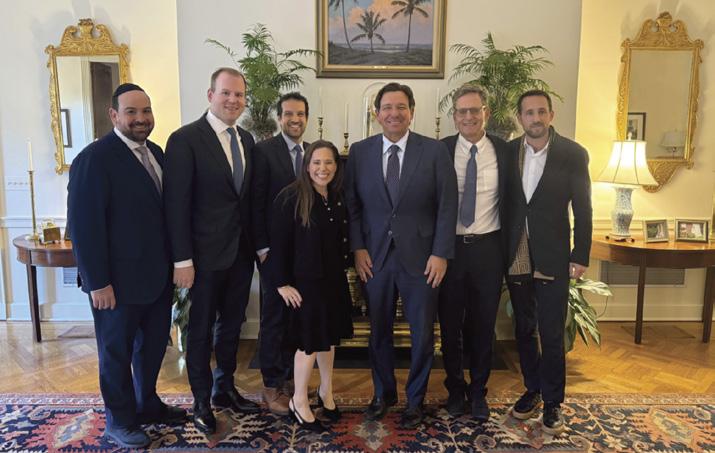
Governor Ron DeSantis signed SB 182 on April 20, a new law that removes one of the most significant barriers preventing small private schools from opening and expanding. The legislation eliminates local zoning hurdles that have long slowed growth, enabling schools to meet rising demand in South Florida and beyond.
The win comes at a critical moment. Across Florida, more families are choosing Jewish education, driven by growing Jewish communities, continued migration to the state, and expanded access to scholarships. But while demand surged, school capacity struggled to keep pace.
Teach Florida focused on that gap and delivered a fix.
Last year, more than 41,000 scholarship students in Florida did not use their awards, with lack of available seats cited as a leading reason. At the same time, approximately 77% of private schools in the state enroll 150 students or fewer, meaning most schools were directly affected by zoning barriers that made growth difficult.
For years, school leaders faced approval processes that could take 12 to 18 months and cost more than $150,000, even when buildings already met all fire and safety requirements. In some cases, schools were given conflicting or arbitrary rules that made expansion effectively impossible.
Teach Florida worked to change that.
Through coordinated advocacy, including a large-scale mission to Tallahassee that brought parents, students, rabbis, and school leaders directly to lawmakers, the organization helped elevate the issue and push it toward a solution.
Under the new law, which takes effect July 1, private schools serving 150 students or fewer can operate in commercial and mixed-use areas without going through local zoning approval, while still meeting 100% of fire and safety standards. The reform builds on earlier legislation that already expanded where schools can operate, creating a clearer and more practical path for growth.
The impact is immediate and far-reaching. By targeting the segment that represents roughly three-quarters of all private schools, the law directly supports the community-based schools
most likely to expand capacity quickly.
For families, that means more available seats, shorter waitlists, and real access to the scholarships already in their hands. For schools, it creates a viable path to grow alongside demand.
“This law will help more schools grow, create more classroom seats, and ensure that more Jewish students can access the education they deserve,” said Melissa Glaser, Executive Director of Teach Florida. “For too long, local zoning restrictions have prevented schools from opening where demand is greatest. Now, schools can finally grow where students need them most.”
With this reform, Teach Florida has not only removed unnecessary barriers, but it has also helped ensure that opportunity can translate into reality for thousands of families across the state.
Sunday to Thursday: 12pm - 10pm Friday: 11am - 3:30pm OPENING HOURS Scan the code to order!
FUN FACTS DID YOU KNOW THAT... KIDS ZONE KIDS ZONE
1. Octopuses have three hearts!
6. Honey can last for thousands of years.
2. Bananas are berries, but strawberries aren’t.
3. A giraffe’s tongue can be up to 20 inches long.
7. Some turtles can absorb oxygen from water through their bodies.
4. The Moon has “moonquakes,” just like Earth has earthquakes.
5. Penguins can jump several feet out of the water.
9. Rainbows are actually full circles.
8. Your brain uses about 20% of your body’s energy.
10. Elephants can feel vibrations through their feet.
Photo By albert kok
Photo By Charles J. Sharp
Photo By Eric Rolph
Photo By Muhammad Mahdi Karim
KIDS ZONE KIDS ZONE
Draw a line to connect the matching halves.
UNSCRAMBLE THE FOLLOWING
FUN RANDOM WORDS
TPUSOCO
YRBER
NMOO
AFRGFFEI
NGUIPEN
YHONE
RUTTLE
HETAPENL
RIBAN
NIBOWRA
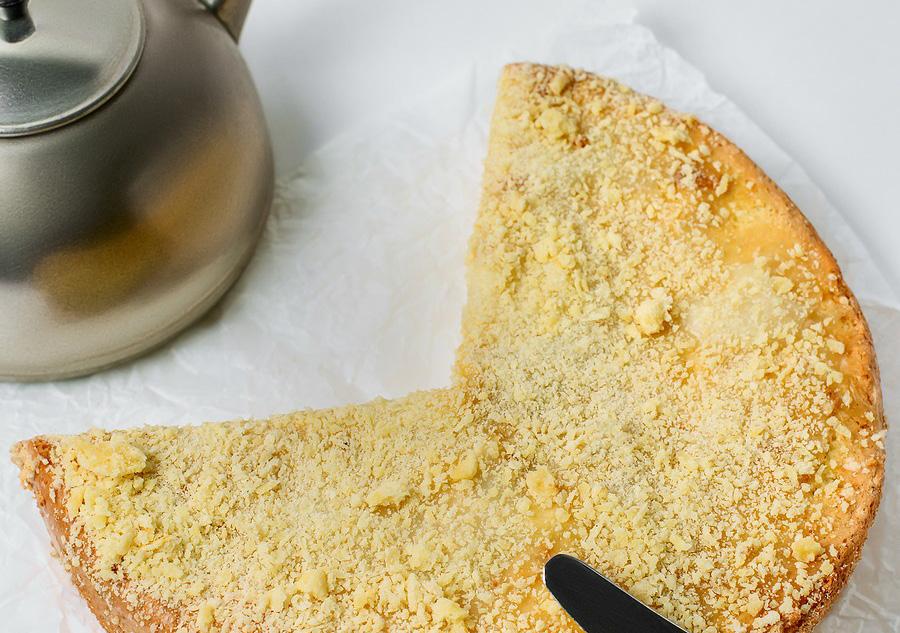
Gvina levana is an exceptionally soft and creamy cheese. Using gvina levana for cheesecake ensures a delicate cake. Tangy and slightly sweet, Israeli cheesecake is light and creamy. For those unable to find this Israeli treasure, Quark cheese is similar in texture and is readily available in most stores.
To avoid cracks in the top of the cake it is best to cover the pan with foil and bake in a water bath, but it will taste amazing either way.
Ingredients
• 2 cups graham cracker crumbs or cookie crumbs
• ½ cup melted butter
• 5 tablespoons sugar
• 1½ pounds gvina levana white Israeli cheese
• 1 cup sugar
• 1 cup sour cream
• ½ cup heavy cream
• Zest of 1 lemon
• 2 tablespoons fresh lemon juice
• 2 teaspoons vanilla extract
• 4 whole eggs
• Pinch of kosher or sea salt
Israeli Cheesecake
By Jamie Geller
Preparation
CRUST:
1. Mix crumbs, butter, and sugar together. Reserve half cup of mixture for topping cheesecake. Press remaining crumbs into the bottom of the springform pan. Chill the crust while making the filling.
CUSTARD:
2. Preheat oven to 350°F.
3. Either by hand or in a mixer at low speed, combine cheese, sugar, sour cream, heavy cream, lemon zest and juice, vanilla, eggs, and salt. Try not to whisk any air into the custard.
4. Pour into chilled crust. Place cheesecake into oven. Bake at 350°F for 40 to 50 minutes or until the center of cake is just a bit jiggly. Sprinkle reserved crumbs on top of cake and bake for an additional 15 minutes.
5. Turn off the oven and crack open the door. Allow cheesecake to cool in hot oven for 30 minutes.
6. Remove cheesecake and chill for 4 hours or overnight before serving.
Jamie Geller is the Chief Media and Marketing Officer at Aish. She is also a bestselling cookbook author, celebrity chef, television producer, and businesswoman. She’s the author of eight cookbooks and the founder of Kosher Media Network.
Courtney Kline
Rethinking Retirement Income: Stability, Growth and Flexibility
By Glen R. Golish
When it comes to retirement planning one of the biggest challenges families face is balancing three competing priorities: growth protection and reliable income. Many traditional strategies force trade offs by taking on more risk for growth or sacrificing returns for safety.
Today retirement planning is becoming less about chasing returns and more about creating structure. The most effective plans often combine multiple “buckets” within an overall strategy. Some assets are designed to create stable predictable income to cover core living expenses which becomes the “paycheck” bucket while other assets remain positioned for long term growth flexibility lifestyle goals or future generations to come.
One strategy increasingly used within this framework is the fixed indexed annuity which can provide a combination of market linked growth potential and downside protection.
At its core a fixed indexed annuity offers the opportunity to earn interest based on the performance of a market index such as the S&P 500 while protecting principal from market losses. This means that even during periods of negative market performance the value of the contract is not reduced due to those losses.
Protecting What You’ve Built
For many families especially those approaching or already in retirement protecting accumulated wealth becomes just as important as growing it.
One of the key benefits of this type of strategy is principal protection. The initial investment along with any credited earnings is safeguarded from negative market performance.
This can provide peace of mind particularly during volatile market cycles. When a portion of retirement income is structured as guaranteed income families often feel less pressure to react emotionally to market swings because core expenses are already covered through a predictable “paycheck”
allowing other investments more time to recover and grow.
Creating Predictable Income
Another major concern in retirement is ensuring that income will last for life.
Fixed indexed annuities can include features that provide guaranteed lifetime income helping reduce the risk of outliving one’s assets. This type of structure allows individuals to establish a baseline level of income that they know will continue regardless of market conditions.
In some cases the income benefit base grows at a guaranteed rate such as 4% or 8% and may increase further based on positive index performance. This creates a more predictable framework for future retirement income planning.
Flexibility and Control
Modern annuity designs have evolved to offer greater flexibility. Features such as penalty free required minimum distributions after the first year allow retirees to meet IRS requirements without disrupting their broader strategy. Clients can also choose from different index options and crediting methods helping tailor the strategy to their personal goals and risk tolerance.
Some options may also include enhanced income riders with additional benefits such as upfront
bonuses or accelerated growth of the income base helping strengthen long term income potential.
A Role Within a Broader Plan
It is important to understand that fixed indexed annuities are not designed to replace all other investments. Rather they can serve as one component within a diversified financial plan. When integrated properly they may help:
• Provide a stable income foundation
• Protect a portion of assets from market downturns
• Reduce pressure on investment portfolios
REAL ESTATE & FINANCE
• Create greater confidence in retirement planning
A Final Thought
Retirement planning is no longer just about accumulating assets. It is about structuring them effectively.
By combining growth potential with principal protection and guaranteed income features fixed indexed annuities can help bring more balance and predictability to retirement strategies.
For many families the goal is simple: not just to retire but to do so with clarity confidence and financial security.
About the Author:
Glen R. Golish is the Founder and CEO of G Wealth Strategies and a Forbes-recognized Top Financial Security Professional. He works closely with families on comprehensive financial and estate planning, including cross-border considerations for those navigating U.S. and Israeli planning needs.
Important Disclaimer:
Please seek qualified legal and tax advice before implementing any planning strategies, in conjunction with guidance from G Wealth Strategies. Contact Information:
3010 N. Military Trail, Suite 318, Boca Raton, FL 33431
A few years ago, I shared a story that’s worth repeating. One morning, a large manufacturing plant came to a sudden halt. All the machinery came to a grinding stop because the main electrical power source would not turn on. Production froze. The panic was building as they had a multimillion-dollar delivery that was due to be shipped by end of business that day. Engineers were called in. Consultants. Specialists. One after another, they examined the system, offered theories, ran diagnostics, and left without success. Time was running out.
Someone remembered a semi-retired old-timer who had spent decades working around equipment exactly like this. He arrived without ceremony. Walked the floor slowly. Climbed up on his ladder and pointed his flashlight into the machinery. He climbed back down, retrieved one screwdriver from his truck, climbed back up, and made a single 90-degree rotation on a screw. Suddenly, the entire facility roared back to life.
Two weeks later, the invoice arrived. It was for a twenty-five-thousand-dollar charge. The owner was furious! “This guy was in his factory for less than five minutes. That bill is outrageous.” He demanded a breakdown. A few days later, the response came via mail with a simple handwritten sheet that had two lines on it: “Service call to turn the screw: $250. Knowing which screw to turn: $24,750.”
That story, to me, sums up what
separates those who spin their wheels from those who make real progress. It’s not just about having tools, it’s knowing when and how to use them. In all my years in real estate and finance, I’ve seen too many people sit on the sidelinesnot because they lack the opportunities or instruments, but because they aren’t sure what to deploy when.
The amount of financing options, loan structures, and creative strategies available today is genuinely remarkable. This week, we financed an incredible deal for an investor who swooped in on an “allcash” offer. He purchased a property thirty percent below market because we were able to get him the cash he needed in less than a week. He plans to do some touchup work and flip it very quickly for a handsome profit.
I’ve watched self-employed borrowers, who made good money, give up on their dream of homeownership because banks repeatedly turned them down for years. Their accountant had done exactly what a good accountant should do - to minimize their taxable income - and suddenly they looked unfinanceable on paper. They weren’t. They just hadn’t found the right program or the right person to advise them.
A few weeks ago, a dejected man called me in desperate need of a way to consolidate his debt, but he kept getting turned down because of his low credit score. I am not exaggerating when I say that within thirty minutes of the start of our
call, we mapped out a perfect plan to help him accomplish all that he needed to do. Different tools, used appropriately, produce outcomes that look impossible from the outside.
People don’t miss opportunities because they lack ambition or resources. They miss them because they’re asking the wrong people, or no one at all. And the cost of that isn’t always visible. That’s what makes it so dangerous. You can’t easily measure a deal that never happened, a refinance that was never explored, or a property that sat on the market while you thought it over.
You might balk at the cost of expert advice, but the reality is that aligning yourself with the right guidance isn’t an expense, it’s an investment. The right guidance does not just save money. It drastically changes outcomes.
Shmuel Shayowitz (NMLS#19871) is a highly regarded Real Estate & Finance Executive, Writer, Speaker, Coach, and Advisor. He is President and Chief Lending Officer of Approved Funding, a privately held national mortgage banker and direct lender that has facilitated over $3 billion in mortgage funding. Shmuel has over twenty years of industry experience and holds numerous licenses and accreditations, including certified mortgage underwriter, licensed real estate agent, residential review appraiser, and accredited investor, to name a few. Shmuel has successfully navigated through many changing markets and business landscapes, making his market insights and experience well-coveted within the real estate industry. He can be reached via email at Shmuel@approvedfunding.com.
WHAT SHOULD I EXPECT TO PAY WITH UNITED REFUAH?
Members enjoy low monthly contributions, no provider networks, and clear, predictable cost-sharing. Eligible medical expenses are shared generously — without surprise increases, hidden fees, or confusing fine print.