















© The South Florida Community Voice Magazine. All rights reserved. Reproduction in printed or digital form in whole or in part in any form without prior written permission is prohibited. The publisher reserves all right to edit all articles for clarity, space and editorial sensitivities. Submissions cannot be returned to sender. The South Florida Weekly Magazine is not responsible for the cash flow of any advertised product or service that appears in these pages. The South Florida Community Voice Magazine assumes no responsibility for the content of articles or advertisements in this publication, nor for the content of books that are referred to or excerpted herein.
Community Voice magazine is not responsible for the Kashrut or services provided by the advertisements. It is up to the consumer to verify the information.

If you would like to discuss or learn more about compliance with Jewish Law , contact Stok Kon + Braverman to consult with one of our Dayanim and Rabanim

1 East. Broward Blvd. Suite 915 Fort Lauderdale, FL 33301

954.237.1777
stoklaw.com
Stok Kon + Braverman is a boutique full-service law firm with a stellar reputation for delivering personalized legal representation and devising creative legal strategies that allow us to pursue remarkable results on behalf of clients of all backgrounds in an array of matters, including:
• Commercial, Construction, Civil, Creditor’s Rights, Probate, IP Personal Injury, and Complex Litigation and Appeals
• Family Law, Divorce, and Custody
• Real Estate Transactions, from Development to Closings
• Immigration
• Trusts & Estates
• Mergers & Acquisitions, Finance & Lending, Corporate, Partnership, and LLCs
• Our lawyers can draft, advise, and negotiate every type of Contract and Agreement imaginable.
Our firm proudly represents individuals, families, nonprofits, small businesses, privately held and public companies, and multinational corporations. No matter who our client is, we make it our top priority to provide a unique experience at every stage of their legal dispute or transaction.
Our team of talented attorneys offers remarkable results to our clients by providing the personalized attention that only a small firm can offer, with the experience, expertise, and capacity of a big national firm.

• Estate Planning and Family Law (Halachic Wills, Prenups, and Divorces, including child support, custody, and gets)
• Marketing and Sales (avoid deceptive marketing and sales tactics)
• Following the Law of the Land, dina d’malchuta dina, in connection with taxes, zoning, and regulations
• Business Transactions
• Avoid prohibited payment or receipt of interest with Heter Iska
• Compliant Non-compete agreements
• Ensure timely and full payment of workers
• Honest weights & measures
• Fair pricing


Preparations for Pesach are in full swing at Tomchei Shabbos Florida, as volunteers continue packing and providing families across South Florida with Pesach essentials.
The warehouse has been active throughout the week, with teams working efficiently to prepare and ensure timely distribution ahead of Yom Tov.
Tomchei Shabbos supports families throughout Miami-Dade, Broward, and Palm Beach counties, providing essential food to those who rely on this support, especially during this time of year.
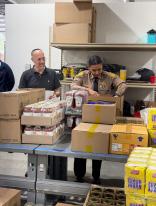
This week, Tomchei Shabbos was honored to welcome Sheriff Rosie Cordero-Stutz and Miami-Dade County Commissioner Mickey Steinberg, who joined volunteers on site to assist with packing efforts. The fact that community leaders of this level took time out of their busy schedules to volunteer is incredibly meaningful. Their presence not only highlights the growing need, but also reflects a strong

recognition of the vital role Tomchei Shabbos plays in supporting our community. We are truly grateful and thankful to have their support and involvement.
Pesach preparation presents unique challenges for many families. It goes far beyond the typical Shabbos preparation, requiring families to clear out their kitchens and restock from scratch all at once. Especially during Pesach, the cost of kosher food is significantly higher than throughout the year, making the financial burden extremely overwhelming.
Through the continued efforts of volunteers, supporters, and community leaders, Tomchei Shabbos is able to provide families with the resources they need to prepare for Pesach with dignity.
Even as preparations continue, the need has not slowed. Families are still reaching out every day, and requests for help continue to come in. The phones are constantly ringing with individuals and families looking for support.

OUR CAMPAIGN IS NOW LIVE , AND WE TRULY NEED YOUR HELP TO MAKE A DIFFERENCE. WITHOUT CONTINUED SUPPORT, WE CANNOT MEET THE GROWING DEMAND. EVERY DONATION, EVERY SHARE, AND EVERY ACT OF SUPPORT DIRECTLY IMPACTS FAMILIES WHO ARE RELYING ON US RIGHT NOW.

A weekly glimpse into the Israel you won’t read about in the news
By Sivan Rahav Meir
We are living through challenging days here in Isreal. The Home Front Command issues specific instructions how to ensure our physical safety. But our souls need to be protected too. How do we build a Mamad (safe room) for our souls?
I would like to share an inspiring idea I heard over Shabbat. We can think of the word Mamad as an acronym for the words: machshava (thought), maaseh (action), and dibbur (speech).
Our sages teach us that our souls find expression in three ways: in our thoughts, deeds, and speech. It is our responsibility to control these three areas and channel them in positive directions. If the news around us is overwhelming, then it’s important to enter the Mamad of the soul by strengthening ourselves and those around us with positive thoughts, actions, and deeds.
The choice is ours. When the siren goes off, should we read frightening news updates or a chapter of Tehillim? As we prepare for Pesach, should we communicate a sense of depression and despair, or try our best to create a cheerful atmosphere in our homes?
It’s certainly not easy. Every one of us has a critical role to play right now—those serving on the front lines and those in the rear, as well as every exhausted mother and every teacher trying to
teach classes on Zoom— all of us, from the three-year-old child to the ninety-year-old senior. May it be God’s will that we succeed in entering the spiritual Mamad of uplifting thoughts, actions, and speech.
Don’t Allow Pesach to Be Stolen from You
Rabbi Aviad Hezni writes as follows:
“This morning at a bus stop I heard two women saying that there is nothing to eat on Pesach. During the last few days, I have seen dozens of somewhat cynical social media posts regarding Pesach products, calories, and family squabbles. My friends, they are trying to steal Pesach from us!
“Pesach is the most revolutionary holiday in human history. Pesach is the holiday of a powerless nation that prevails over the world’s greatest superpower and
goes out from slavery to freedom with an abundance of miracles.
“Pesach is taking a chained and broken slave and whispering in his ear that he is not only a number. He has dreams, feelings, and phenomenal strength within himself. And, above all, he has God and a holy calling.
“Pesach is telling the next generation about the previous generations and how to walk in their ways by living according to their true faith.
“Pesach is a process of clarification, of discovering who we really are.
“Pesach is a holiday of simplicity: a little flour, a little water, and a quick bake in the oven. To know how to take pleasure from simple and unsophisticated things.
“So think about Pesach. Live Pesach. Don’t allow shallow conversation to steal your Pesach. Our ‘suffering’ comes from exaggerated cleaning or home improvement projects and from excessive shopping.
“Pesach halachot are important, yet simple and non-threatening. They are meant to encourage a process of spiritual growth and self-refinement. We can neither allow what is of secondary importance to become the main thing, nor allow Pesach to be stolen from us. Wishing all a joyful and kosher holiday.”
Parashat Tzav: The Virtue of Alacrity

In Parashat Tzav, this week’s Torah portion, even before we enter the details of the offerings, one word stands out: tzav. “Hashem spoke to Moshe, saying: Command Aharon and his sons, saying...” Generations of commentators pause over this word, tzav, and ask: Why does the verse not simply say “instruct”? Why not just “say”?
Rashi explains: “Tzav is an expression of urgency, for now and for future generations.”
There is a message here for Aharon the Kohen, and in fact for everyone who would follow
him, throughout the generations: respond with urgency. Embrace every spiritual task without delay. Many commentators develop from here an entire discussion about zerizut—spiritual eagerness and readiness—as the foundation of all meaningful action.
In Mesillat Yesharim, for example, zerizut appears as one of the first stages in a person’s inner spiritual growth.
Here is just one paragraph from there on the importance of this quality:
“You will see that human nature is very heavy, for physicality

is coarse. Therefore, a person is not naturally drawn to effort and labor. One who wishes to merit the service of the Creator, blessed be He, must overcome his own nature, strengthen himself, and act with alacrity. For if he abandons himself to his own heaviness, he will certainly not succeed.”
Want to read more by
Meir? Google The Daily Thought or visit sivanrahavmeir.com






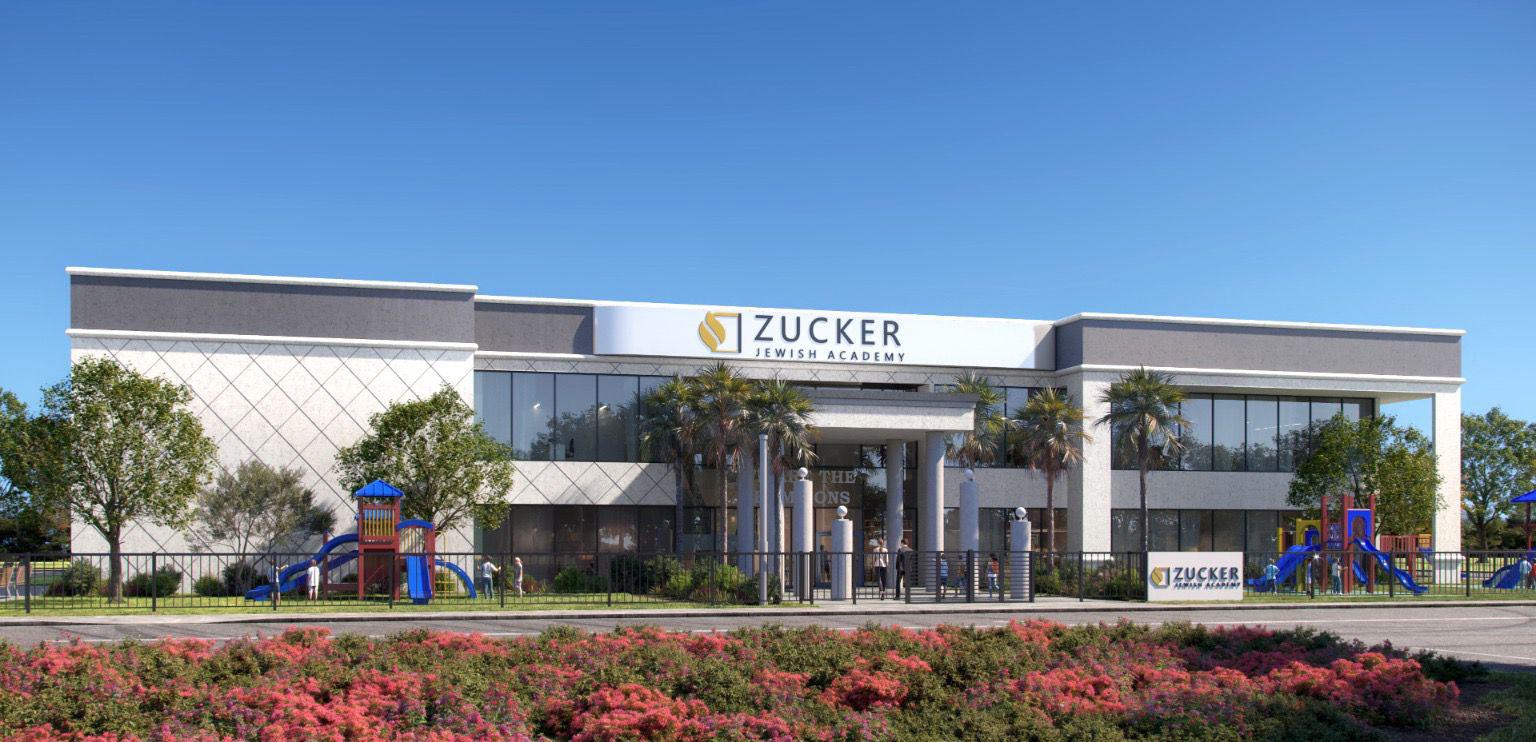
HOLLYWOOD, FL — Zucker Jewish Academy of Hollywood is moving to a newly renovated, expanded campus this fall, creating a state-of-the-art learning environment for its students. Renovations are already underway, and the upgraded campus will feature modern classrooms, a fully renovated gymnasium, advanced science labs, and flexible learning spaces designed to inspire curiosity, creativity, and confidence.
“Our current campus has served us beautifully, but as our school community has grown, it became clear that we needed a larger, more expansive campus — one that can accommodate current students, welcome new families, and provide exciting new programs and stateof-the-art facilities,” said Mrs. Stacy Berry, Principal of Zucker Jewish Academy. “By this fall, students will be learning in a space designed to further inspire curiosity, support their growth, and celebrate their unique strengths academically, socially, and personally.”
Zucker Jewish Academy combines rigorous, evidence-based academics with a warm, growthfocused environment rooted in Jewish values. Families choose the school for its combination of toptier academic rigor and a closeknit community where children feel safe, seen, and empowered.
“Every child is known, supported, and guided to become their strongest self,” said Rabbi A. Mitgang, Head of School. “The expanded campus, with its enhanced facilities, will allow students to explore STEM, arts,
literacy, athletics, and character development in a nurturing environment where Jewish values and identity are celebrated.”
Parents are enthusiastic about the move. “We always assumed we’d send our children to public school but when a friend told us about Zucker, we had to check it out,” said Yael Schultz. “Choosing Zucker has been one of our best parenting decisions. Knowing our children will be learning in this newly renovated campus this fall — with their outstanding staff and so many opportunities to grow and thrive — makes us even more confident we made the right choice.”
The upgraded campus will combine small, close-knit classes with modern, flexible facilities, giving every child the opportunity to reach their potential. From inquiry-based STEM projects to arts enrichment, athletics, and
Jewish studies, students will engage in programs designed to develop leadership, critical thinking, and a love of learning.
Zucker Jewish Academy is now enrolling students for the fall semester, offering families the chance to join a community where expert-led instruction reveals what children can truly achieve.
“This is a school where bright minds flourish,”Mrs. Evelyn Avni, Director of Student Success added. “Where rigorous academics meet enduring values — and this fall, students will experience all that in our newly renovated, expanded campus has to offer.”
Families interested in learning more or scheduling a tour are encouraged to contact the school directly. Zucker Jewish Academy’s new campus represents a bold step forward in its mission to prepare confident, accomplished leaders who are proud of who they are and who they can become.

We blend advanced skills-based academics with community and warmth. We build leaders of character who are curious, confident, and proud.

On Sunday, March 15, members of the Young Israel of Hollywood–Ft. Lauderdale community gathered for a moving and meaningful program titled “Create a Butterfly: In Remembrance of the Children Lost during the Holocaust.” The event was held in partnership with the global initiative known as The Butterfly Project. The program began with a powerful Dvar Torah delivered by Rabbi Yosef Weinstock, who reflected on the importance of remembrance in Jewish tradition and the responsibility of each generation to preserve the memories of those who perished. His words set the tone for a deeply reflective and emotional gathering dedicated to honoring the youngest victims of the Holocaust. Following the Rabbi’s remarks, Sandy Goldglantz, who hosted and facilitated the program, spoke about the profound impact of The Butterfly Project. She explained that the initiative is a global arts and education program whose mission is to create 1.5 million ceramic butterflies, one for each child murdered in the Holocaust. Through educational programming and hands-on memorial activities, the project seeks to transform Holocaust education from something abstract into something deeply personal and tangible. Participants learn about individual children who were killed and create a butterfly in their memory, helping ensure their stories are never forgotten while also teaching lessons about empathy, courage, and standing up against hatred and injustice.
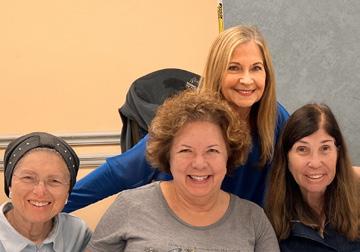
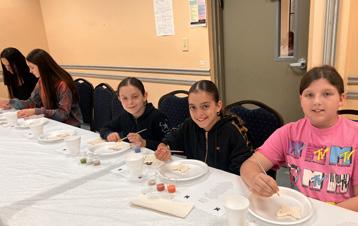
The afternoon’s program was generously sponsored by Howard and Carol Bienenfeld in loving memory of their son, Jared Bienenfeld, z”l, adding an additional layer of remembrance and dedication to the gathering. Nearly 30 participants registered for the event. Each person was given the name, photograph, and short biography of a child who perished in the Holocaust. After learning about the child’s life, participants carefully painted a ceramic butterfly in that child’s memory. Every butterfly created will become part of a memorial display in the synagogue, ensuring that the stories of these children continue to live on within the community. The symbolism of the butterfly is particularly meaningful. Inspired by a poem written by a child imprisoned in the Terezín concentration camp, the butterfly represents fra-
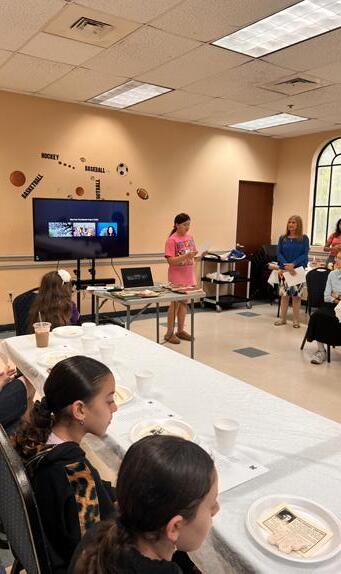
gility, transformation, and hope, reminding participants that even in the face of unimaginable tragedy, the human spirit can endure. By the end of the program, the room was filled not only with beautifully painted butterflies, but also with reflection, connection, and a shared commitment to remembrance.
Through this collective act of memory, the community helped give voice to children whose lives were cut tragically short. Each butterfly created that day stands as a small but powerful promise: that their memories will never fade and that future generations will continue to learn from the past and stand against hatred and intolerance.



Sunday to Thursday: 12pm - 10pm Friday: 11am - 3:30pm OPENING HOURS Scan the code to order!


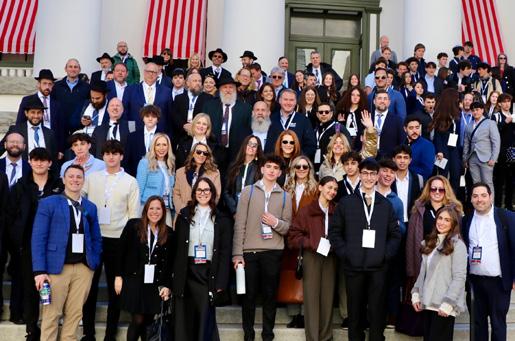
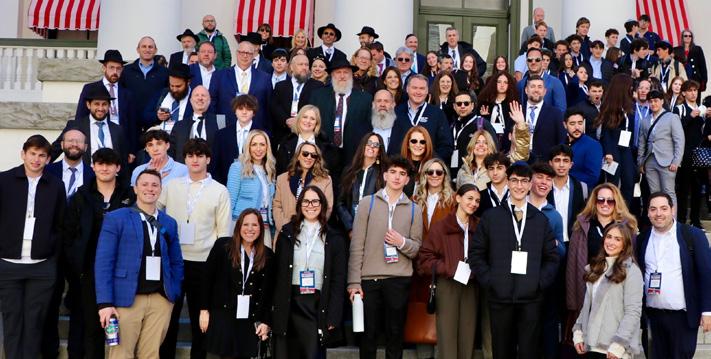
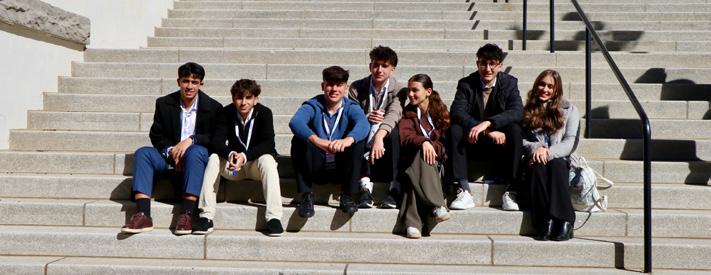
More than 150 parents, students, and school leaders traveled to Tallahassee with Teach Florida last week, transforming grassroots advocacy into real legislative progress for Jewish day schools.
The mission focused on expanding access to Jewish education while keeping schools safe and sustainable. Advocates met with state legislators, staff from Governor Ron DeSantis’ office, and Florida Education Commissioner Anastasios Kamoutsas to advance priorities critical to Florida’s Jewish community.
A central focus was zoning reform to remove barriers that prevent Jewish day schools and yeshivas from opening or expanding, especially in growing South Florida communities. In many municipalities, zoning rules have made it nearly impossible to open new schools, even as demand continues to rise — a reality now beginning to change.
Teach Florida leaders announced that Senate Bill 182, including key zoning reforms they championed, has passed — a major step toward expanding access. The legislation will allow smaller schools to open more easily, giving more families the opportunity to choose a Jewish education.
“This mission turned community priorities into legislative progress,” said Melissa Glaser, Executive Director of Teach Florida. “From school safety to expanding access and sustaining scholarship programs, lawmakers understand these issues directly
impact families and students across Florida.”
Advocates also pushed for $20 million in dedicated Jewish Day School security funding amid rising antisemitic incidents. In Florida alone, 353 antisemitic incidents were reported in 2024, underscoring growing safety concerns for Jewish students and schools.
“In the immediate aftermath of October 7, we made sure that every synagogue, every Jewish day school, every hospital that asked for security was provided it,” said Education Commissioner Kamoutsas. “Families should be able to raise their children,
give them the best education, and worship freely without discrimination.”
Advocates also emphasized sustaining Florida’s school choice scholarship programs, which serve more than 500,000 students statewide.
For South Florida participants, the mission was to ensure their communities could grow and thrive.
“We came to make sure our schools have the ability to grow and thrive,” said Jessica Schwartz, a mother of three from Hollywood. “Seeing support build for this legislation shows that our voices are being heard.”

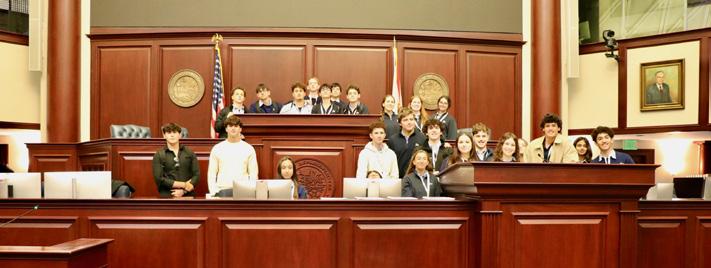
More than 70 high school students participated, many experiencing advocacy firsthand. Students met with elected officials, toured the House and Senate chambers, and shared their personal experiences.
“It was incredible to meet with elected officials and see how the political process works firsthand,” said Ashi Pelikow of Katz Yeshiva High School. “Being able to advocate for my school and the Jewish community was an experience I will never forget.”
The mission reflects growing civic engagement among Jewish day school families across Florida.
While progress is being celebrated, the work continues.
Lawmakers are finalizing the state budget, where security funding remains a top priority, and the zoning legislation is expected to be signed by the governor.
“This moment shows what is possible when a community comes together with a shared purpose,”
Glaser said. “Together, we can protect our schools, expand access, and build a stronger future.”


a better
As the American Jewish community continues to reel from the near massacre of Jewish preschool children last week at Temple Israel, senators will hold a confirmation hearing today for Sen. Markwayne Mullin to be the new secretary of Homeland Security. Our lawmakers must ask Mullin what he will do to keep Jewish and other faith communities safe.
The attempted shooting at Michigan’s Temple Israel ended well — at least, as well as such a story could end. Like so many Jewish institutions in America, Temple Israel invested heavily in private security personnel and systems. According to reports, the largest Reform synagogue in America employs multiple security guards daily and its employees had taken an active shooter training class weeks earlier. When the assailant rammed his car into the synagogue, the guards immediately engaged with and disabled the shooter.
But here’s the bad news. The money needed to keep Jewish communities (and other faith communities) safe is being held hostage by the political showdown over the Department of Homeland Security.
The Nonprofit Security Grant Program (NSGP) awards federal funds to religious institutions to bolster their security, like surveillance cameras, access control systems, gates and lighting, alert systems, staff training and security personnel. It’s the largest and
most direct way federal or state governments are protecting people in their pews. But, as it is, these funds are woefully inadequate to meet the security needs of the American Jewish community. In 2024, only 43 percent of applicants received NSGP funds out of nearly $1 billion in requests. That’s why we have urged Congress and the Trump administration to increase these funds to $500 million for fiscal 2026.
American Jewish communities are forced to pay what amounts to an antisemitism tax to provide essential, life-saving protection. With antisemitism on the rise, local police don’t have the resources to keep our community safe. Jewish communities pay north of $750 million per year to send their children to Jewish schools, attend synagogue and hold communal events safely.
The story at Temple Israel could have ended very differently if not for the quick thinking of the guards on the scene, as well as county officials and the FBI who work with Jewish institutions to train staff and private security guards.
We don’t have to imagine what that ending looks like. We saw it at the Tree of Life Synagogue in Pittsburgh, at California’s Poway Chabad and at Congregation Beth Israel in Colleyville, Texas. In recent days, there have also been violent attacks on synagogues in Canada, Norway and Belgium. Jewish communities in America
and elsewhere are on their highest alert, doing whatever we can to ensure that our freedom to worship is joined with a freedom from fear.
I wish the same could be said for politicians in Washington.
Kristi Noem’s Department of Homeland Security was beset by funding delays, dysfunction and a high level of partisan gamesmanship — even for Washington. Mullin’s nomination is an opportunity for the administration to start anew, and focus on keeping vulnerable communities safe instead of political theatrics.
As Mullin begins his confirmation process, members of the Senate Homeland Security and Government Affairs Committee on both sides of the aisle should press the nominee on his plans for ending the funding standoff, investing in vital security programs like the Nonprofit Security Grant Program, and prioritizing safety over politics.
If last week’s shooting isn’t a wake-up call to Congress to get its act together, I don’t know what is. We need Republicans and Democrats in Congress, together with those in the Trump administration who have boldly spoken out against antisemitism, to get together and deliver security and safety to American Jewish communities. Or, to put it another way, deliver the most basic thing citizens expect from our government.
Jewish communities and local police are doing their part. They are doing everything right. The least Congress can do is its job.

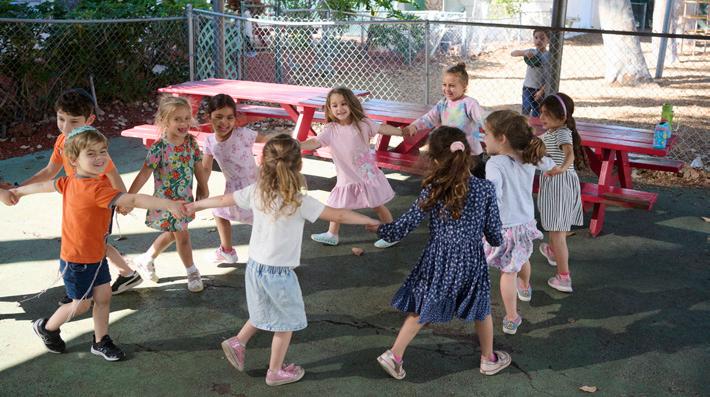
Over the past decade, Boca Raton and the surrounding South Florida area have quietly become one of the fastest-growing Torah communities in the United States. Families continue to relocate to the area, new neighborhoods are developing, and local yeshivos are expanding to meet the demand.
Alongside that growth, a new group of educators has begun arriving from communities across the country, teachers who came for an opportunity and discovered something much more.
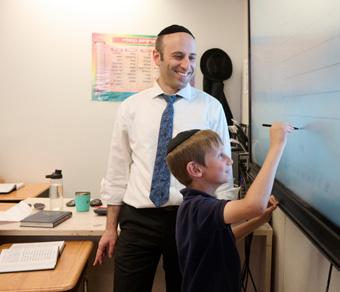
Middle school teacher Mr. Avraham Shilian was one of those educators.
“I saw that Torah Academy was really booming,” he recalls. “My biggest concern was that I grew up in a very strong Persian community, and I wasn’t sure what it would feel like being somewhere where the Persian community wasn’t the same size as what I was used to.”
Those concerns quickly faded.
“Every Shabbos I meet new people and make new friends,” Shilian says. “There’s always something happening, and the community has been incredibly welcoming.”
Like many who relocate from the Northeast, he also worried about Florida’s famously hot summers.
“I kept hearing ‘Florida heat, Florida heat.’ I thought I was going to melt,” he laughs. “But honestly, after going through my first summer here, it wasn’t nearly as bad as people made it sound. In New York the heat can be just as uncomfort-
able.”
What ultimately convinced him to make the move was a conversation with the yeshiva’s leadership.
“The first time I sat down with Rabbi Reuven Feinberg (Dean of Torah Academy of Boca Raton), it really made an impression,” Shilian says. “I felt like this was a place with a real vision.”
When he first arrived in Boca Raton, Shilian barely knew anyone. A few years later, he says, the story is very different.
“Now I feel completely part of the community. As my family has grown here in South Florida, the yeshiva has been with us every step of the way. Torah Academy really feels like a family. We are all in this together.”
That sense of warmth is something Mrs. Yehudis R. noticed immediately when she first visited the yeshiva.
“When I started looking into moving, I was searching for a community and a school that ap-
proached education with positivity and warmth,” she says. “I wanted my own children to be in a place where they were valued as individuals.”
During her visit to Torah Academy in Boca Raton, she saw exactly that.
“I immediately felt the warmth between the staff and the students,” Mrs. R. says. “I knew I wanted my children to experience that, and I hoped to be part of that mission as an educator.”
The support began even before she arrived.

“The administration helped guide me through the entire process,” she explains. “They answered questions about neighborhoods, housing, and the community, which made navigating the move from a distance much easier.”
Since relocating, Mrs. R. says both her professional and family life have flourished.
“My colleagues are incredibly supportive and collaborative,” she says. “And the pace of life here, along with the outdoor lifestyle, has been wonderful for my children.”
For Rabbi Reuven Feinberg stories like these reflect something larger happening in the Boca Raton Torah community.
“As the Torah community here continues to grow, we are seeing educators discover that Boca Raton offers an opportunity to be part of something meaningful,” he says. “Teachers who come here are not just taking a job. They are joining a community and helping shape the future of Torah education.”
For Shilian and Mrs. R., what began as a professional opportunity has become something deeper: a place in Boca Raton where their families, careers, and community have come together in unexpected ways.


Mrs. Klein, a proud mother of twelve, was deep into her Pesach preparations. But in her home, “preparations” meant something far beyond the basics. Mrs. Klein was a true chasidisha balabusta—her kitchen was a no-gebroks zone, tomatoes and peppers wouldn’t dare cross the threshold, and the mayonnaise? Homemade, of course—by no one other than herself.
Everything was running like a well-oiled (kosher l’Pesach) machine… until she glanced over at little Zevi.
Her youngest, just one year old, had already been through more than his share. Since birth, he had struggled with severe allergies. Mrs. Klein had gone from doctor to doctor, sleepless nights and worried days, until finally—baruch Hashem—she found the right specialist. He prescribed a special formula tailored to Zevi’s needs: dairy-free, gluten-free, gentle on his fragile system. It became his primary source of nutrition, and for the first time, Mrs. Klein could breathe.
One morning a few days before Pesach as Mrs. Klein was making Zevi’s bottle, she saw in the ingredients.
Corn.
Corn on Pesach?!
Her heart dropped.
How could she possibly bring kitniyos into her kitchen? How could she feed it to her child? The thought alone was terrifying. She felt completely stuck. She even briefly considered trying to dilute the formula—anything to avoid bringing corn into her home—but deep down she knew this was not a real option and could even be dangerous.
Then, like a small flash of light,
she remembered an article she had seen just last week in The Shopper—the Refuah B’Halacha Center.
“Baruch Hashem,” she said to herself, reaching for the phone. “They’ll know what to do.”
She called and was soon speaking to the Rav, carefully explaining the situation—her son’s condition, the formula, and the fact that there was simply no alternative.
The Rav listened patiently and then gently reassured her.
“The first thing to understand,” he began, “is that kitniyos is not chametz. Sephardim eat kitniyos on Pesach.”
Mrs. Klein quickly responded, her chasidisha accent coming through loud and clear: “But I’m not Sephardi!”
The Rav smiled. “True. The Rama (Orach Chaim 453:1) writes that Ashkenazim have the minhag not to eat kitniyos. However, in a case of need, the Chayei Adam permits it—such as in a situation of hunger or necessity.”
He continued, “Furthermore, the Mishnah Berurah (453:7) says that one who is sick may cook kitniyos. Why does he emphasize ‘cook’? It teaches us something deeper: even if the person has some food, but not enough or not suitable for their condition, they may still rely on kitniyos.”
The Rav paused to let that sink in.
“Your son,” he said softly, “is considered a choleh—he has a medical condition and is entirely dependent on this formula. For him, this is not a chumrah question; it’s a health necessity. And at his age, there is certainly no issue feeding him kitniyos. This is not comparable to giving a child an actual issur.”
Mrs. Klein felt the tension begin to ease.
But then another thought hit her.
“What about my kitchen?” she asked.
The Rav addressed that as well. “The Maharam Shik (siman 241) writes that you can designate a pot specifically for this purpose. It may be prepared in your Pesach kitchen without concern. And even if you don’t have a separate pot, you may use a regular Pesach pot—just wash it well afterward. There’s no need for kashering,” as brought down in Shemiras Shabbos Kehilchasah (40:80).
He added one final point. “It may even be preferable to prepare it in a consistent way each time, so there is no confusion during the busy Yom Tov days. Organization itself can prevent shailos.”
By now, Mrs. Klein was fully at ease.
She thanked the Rav warmly and hung up the phone with a sense of calm—and even a small smile.
This Pesach, her kitchen would still be chasidish. Still meticulous. Still full of care and kedushah.
But in one small corner, there would also be a quiet container of “kitniyos formula”—for her little Zevi.
And somehow, that didn’t make her kitchen any less beautiful. If anything, it made it even more so. In fact, as she went back to her preparations—checking lettuce, lining shelves, and coordinating the never-ending Yom Tov menu—she felt a deeper appreciation for what Pesach truly represents: not just stringencies and standards, but serving Hashem with wisdom, responsibility, and heart.

By Harry Glazer
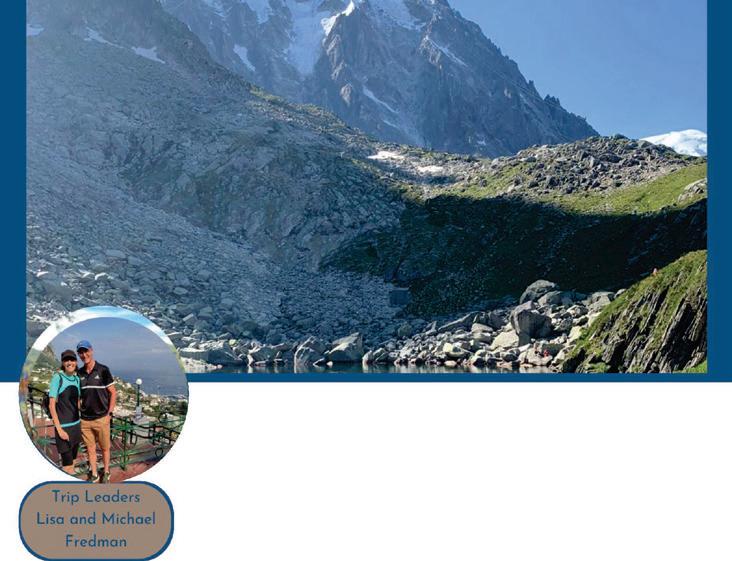
If you’re eager to experience the breathtaking beauty of Norway, the Canadian Rockies and the French Alps, but don’t want to “go it alone” or investigate and arrange all the aspects of the trip yourself, you definitely should check out the trips this summer offered by Dani’s Kosher Outdoor Adventures.
Dani’s Kosher Outdoor Adventures’ Fjords of Norway trip, July 29-August 6, enables participants to experience glacial walking and the FjordSauna, hike the fjords, ride the Flamsbana Scenic Railway (in 2014, Lonely Planet described this as the best train journey in the world!) and fjord ferries, and enjoy awe-inspiring views of mountains, narrow canyons, raging waterfalls and alpine lakes. The trip offers three walking/hiking levels with certified local guides and accommodations at VIP lodges in the heart of Sognefjord.
Kosher Outdoor Adventures is an Efrat-based initiative providing kosher vacations in Europe, North America and Israel. They offer an outdoors “on your feet” approach to sightseeing for shomer-Shabbat and kosher-observant adults aged 45-plus who are interested in affordable access to amazingly beautiful places. Bringing years of experience in running Jewish educational programs, Rav Dani Epstein of Efrat offers people the enjoyment of good company and a thrilling week of rejuvenation, discovery, fun, excitement and relaxation, while exploring the vistas and panoramas of the most beauti-

ful national parks in the world.
All Kosher Outdoor Adventure trips include regular minyanim, with a sefer Torah, Glatt Kosher healthy meals, inspiring Shabbat experiences, and group social experiences in memorable settings.
In the Fjords of Norway trip, participants will get to meet the Vikings at the Gudvangen Viking Village, take in the Stegastein Viewpoint over Aurlandsfjord, hike the Aurlandsdalen Valley (known as Norway’s Grand Canyon), visit the Norwegian Glacier Museum in Fjaerland and enjoy Jostedalsbreen National Park, experience Jostedal Glacier Lake, and much, much more.
But don’t just take my word on how well-rounded and well planned this nine-day trip will be. Listen to the reviews of people who have already traveled with Kosher Outdoor Adventures.
David Popper shared: “My hiking trip to the Fjords of Norway with Danny Epstein and Kosher Outdoor Adventures was an unforgettable experience—well organized, breathtakingly beautiful, and full of spiritual meaning. The variety of hike levels made it accessible to people of various fitness levels, and the accommodations, food, and guides were all top-notch. What made it truly special was the warm group, the religious atmosphere with three daily minyanim and frequent divrei Torah, and the deep sense of connection to Hashem’s creation throughout.” Popper is a 72-year-old retired gastroenterologist and his wife is a 70-year-old retired accountant. They split their time between Bay Harbor Islands, Florida and Yardley, Pennsylvania.
Tova Yellin of Teaneck, a pediatrician in Fair Lawn, stated: “I cannot say enough good things

about Kosher Outdoor Adventures. I went on their Norway Fjordland trip last summer. The scenery was stunning. The activities were all done on three levels, all with wonderful scenery and activities. However, the intensity and skill level was different for each group. Some people flowed between groups and others stayed with one intensity level. Everyone enjoyed it and felt that they did not miss out on anything. The trip was extremely well organized. We had Israeli chefs who made unique and wonderful meals every night. If you are an observant Jew who doesn’t want to sacrifice seeing beautiful nature and outdoor activities, all the while being in a totally observant environment, this group is for you!”
Brenda and Bill Weiner of Fair Lawn are both retired: He was a financial analyst on Wall Street working with several brokerage firms including BNP and Credit Suisse, and she was a senior managing director for Sterling National Bank. Brenda shared: “Dani ran one of the most organized tours we’ve ever experienced. He assessed every member’s strengths (and weaknesses) in terms of picking the correct trail. The three levels (advanced, intermediate and beginner designations) were perfectly appropriate for each group and proved to be a wonderfully rewarding experience. While the group was diverse, somehow Dani managed to accommodate everyone’s needs in terms of hiking, dining and providing leisurely and enjoyable entertainment when hiking was limited. His team was experienced, empathetic and a pleasure to work with. ”
Harriet Cabelly of West Hempstead, a social worker who partic-

ipated in three trips with her husband, Alan, commented: “Dani Epstein’s trips check off all the boxes. If you love nature and you want to be active and you want something off the beaten path, out of the main cities, this is it! And his trips are so very accommodating to people’s food needs.”
Dena Levie of Teaneck remarked: “I went on my first trip with KOA to Chamonix in the French Alps in the summer of 2021 and loved the people, magnificent scenery and kosher food. I have run missions to Israel for the past 13 years and I knew Dani was running a great program. Joining his team was a natural match for me. Dani’s love of the outdoors, appreciation of Hashem world and ability to organize is a perfect combination. Dani makes sure everyone on his trip is enjoying, eating well, and appreciating the world around them.”
Gwenn and Orrin Davis, formerly of Fair Lawn, now living in Florida, said: “We thoroughly enjoyed traveling last summer to Chamonix, and before that to Norway and to Banff with Dani Epstein and
Dena Levie, the very able tour operators of KOA. They provided a shomer Shabbos environment with kosher food and daily minyanim. KOA is a flexible, time-efficient, well organized tour company dedicated to their clients. Providing three hiking levels, knowledgeable guides, comfortable accommodations, great food and endearing camaraderie within the group, made our trip an accessible dream come true.”
Joan Sprung of Fair Lawn, shared: “The Canadian Rockies had always been high on my bucket list. This trip surpassed all my expectations. The scenery was magnificent—a real testimony to Hashem’s wonders. Good choice of hiking trails accompanied by very knowledgeable guides. The food was excellent and plentiful. The chef was successful in accommodating different dietary restrictions. Shabbos was lovely—inspiring shiurim, beautiful zemiros, and time for a nature walk and discussions. Everyone was extremely friendly and by the end of the trip we were like one big family.”
Sharon Wenger of West Hemp-




stead shared: “This past August was my third trip with KOA. The Canadian Rockies has been on my bucket list for a while and KOA ran an unbelievable trip. All I had to do was book my flight, and they took care of everything else. The week was truly amazing. The scenery and views were absolutely breathtaking. The hiking was exhilarating and we had wonderful hiking guides who made sure to accommodate for the various levels of hikers and walkers. The food was absolutely delicious and plentiful. What a treat to be able to travel knowing that your food is taken care of, and knowing that you will have a real Shabbos to share with others. Though I knew a few people going into the trip, I met many new
wonderful, very warm and inclusive people. I highly recommend KOA’s Canadian Rockies trip— worth every penny!”
Daniel Schwartz of Teaneck said: “My wife Jamie and I went on a hiking trip to Norway with Kosher Outdoor Adventures. We went with trepidation not knowing if the other attendees would be experienced hikers or if the food and accommodations would be acceptable. While we were 76 and 72 years old at the time, we remain physically active and outdoorsy, and most of our vacations are centered on active hiking, but not with a group such as KOA.
“To our pleasant surprise the trip was amazing. Norway was breathtaking, the hiking outstand-
ing, the accommodations very comfortable, and the food was delicious and healthy. The other attendees really made the trip special. If you enjoy the outdoors and are comfortable with challenging physical exercise, this trip is not to be missed. The program was finely tuned and every detail covered. Our best review is that we are going on another KOA hiking trip this year.”
For more information on the Canadian Rockies trip June 24-July 1, on the Fjords of Norway trip July 29-August 6, and on the Chamonix-French Alps trip August 11-18, please see: www.kosheroutdooradventures.com. This article is being reprinted with permission from the Jewish Link of NJ. Harry Glazer is the Middlesex County editor of The Jewish Link. He can be reached at harryglazer615@gmail. com and he welcomes reader feedback.






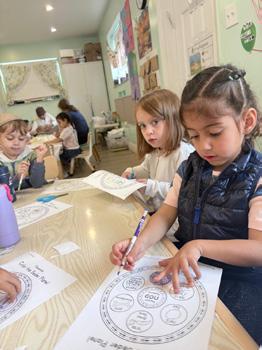
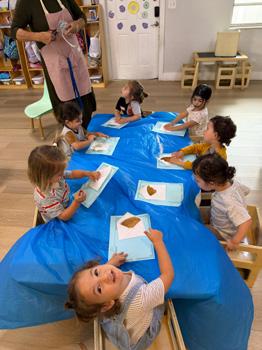
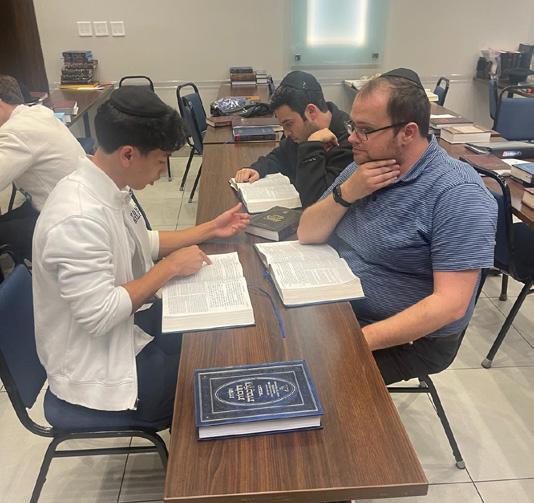
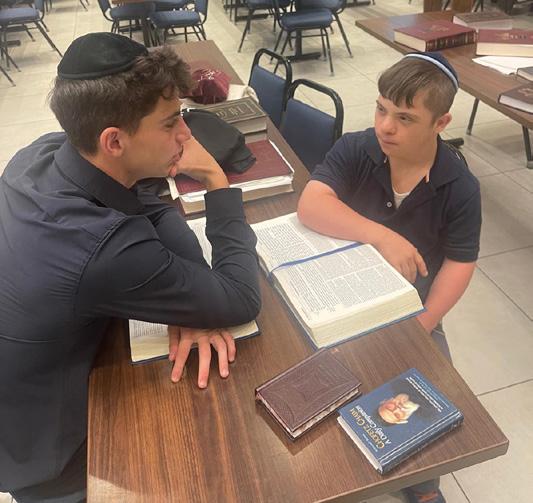
















“A few Passovers ago, I had an epiphany. I was knee-deep in the chaos of cleaning, hosting, and organizing a Seder. As a full-time professional, a mom, and an Orthodox Jew, my to-do list felt like a marathon, and my stress levels were high enough to reach the heavens. A holiday meant to inspire my children had instead become a quest to conquer “Mount Stressmore.” (And let’s not even talk about the memes featuring Jewish women during this time; they’re basically modern-day hieroglyphics narrating our collective struggle.)” - The Epic Seder, Chapter 1, The Epiphany.
I grew up Modern Orthodox, but I took a six-year pause from observance as a young adult. Eventually, through a lot of soul searching, I found my way back. I met my “frum-from-birth” husband and we started a family. But even with my background, the social pressures and the labyrinth of rules surrounding Pesach began to drive me into a panic.
Once our first two children arrived, the challenge of raising tiny humans while making Pesach became overwhelming. I was stressed. I looked stressed. Most importantly, my kids saw me stressed. I realized I didn’t want them to remember me, or the holiday, that way.
I decided to exercise that “self-discovery muscle” again. I dove back into the texts and the laws, and the message I found was clear: The Seder is for the children. It is for the future. My goal as a parent isn’t to just read a sto-
By Jennifer Romanoff
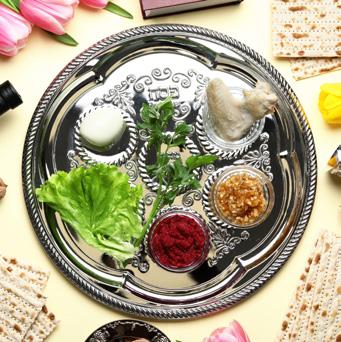
ry about leaving Egypt; it’s to inspire my children to feel like they were there.
That is how The Epic Seder was born. It started with a simple idea: one year, we ordered 100 plastic frogs and tossed them across the table during the plagues. It was an instant hit. The kids laughed, they stayed awake, and most importantly, they stayed at the table. That spark turned into a tradition. Each year we added more:
● Marshmallow “hail” flying across the dining room.
● A dramatic “Sea Splitting” race using blue towels on the floor.
● A Maror Charcuterie board where you can try maror in many different ways.
Ultimately, the book is more than just a collection of ideas; it’s a mindset shift. Instead of seeing the Seder as something to “get through,” it becomes a night to bond and learn in a way that resonates with everyone from toddlers to grandparents. It became a night to remind myself of my purpose and holy mission in this world. The energy became magnetic.
Our children weren’t just waiting for the meal; they were reciting the Haggadah with genuine enthusiasm. When guests started telling us, “This was the best Seder I’ve ever been to,” I knew we had to share this approach with the world.
Now, you might be asking yourself: ‘How can adding more to my “to-do” list possibly make me less stressed? Creating an entirely new routine sounds exhausting.’ I hear you. But the goal isn’t to add more labor; it’s to swap ‘busy work’ for ‘soul work.’ Here are a few practical ways I’ve learned to reclaim my time and my sanity:
First, remember that Pesach cleaning is not spring cleaning. For some reason, there is a generational itch to scrub the inside of bathroom cabinets, but I’m here to tell you: it isn’t necessary. Focus on the chametz. Clean what you must, tape off the rest, say your Kol Chamira, and call it a day. Now is not the time to organize the linen closet. If you have toddlers, you know that crumbs have inevitably found their way into every LEGO crevice. My advice? Deep-clean a few favorites, put the rest in ‘time out’ (locked away), and buy a few new toys specifically for the holiday. Next, audit your menu. Is it filled with recipes that require multiple steps and a mountain of dishes? Toss it. Stick to the classics: chicken, roast, potatoes, and a fresh salad. I know this is hard for those of us who love a complex recipe (guilty!), but unless you have a year-round Pesach kitchen

and three weeks of lead time, keep it simple. This leaves you with the margin to actually make the charoset with your kids or let them help you check the lettuce. Additionally, use the power of a soundtrack. Put on some inspiring music while you prep. Whether it’s Miami Boys Choir, Zusha, or even some rap (a common choice for us Baal Teshuvas!) music is a divine connector straight to the neshama. It elevates the mundane. One year, while mixing a simple four-ingredient cookie with some Pesach tunes in the background, I actually started to cry. Watching my kids get involved, the bigger picture finally dawned on me: I’m not just making dinner. I am shaping worlds. I am so lucky, and so grateful.
Lastly, and this is a big one,
make sure you include a pre-Seder nap or rest time for everyone. The whole family needs at least an hour to just be quiet and stay off their feet. It’s going to be a long night, and that extra rest is a game-changer. It might sound impossible for a Seder host, but if you’re truly invested in being less stressed, the time really does appear.
If you’ve gotten this far and you still feel overwhelmed and intimidated like I used to, know that there isn’t just one way to have a meaningful Seder. It takes practice to figure out what works and what doesn’t for your family. You have to remember: the Torah isn’t forcing us to be exhausted; it’s asking us to tell a story. If the telling of your story requires a nap and flying marshmallows, then so

be it!
I want to remind you that your children are watching you, and ultimately, they are the ones who will be carrying this tradition forward. That sparkle in your eye that comes from the depth of your soul will always shine brighter than your floors.
As Pesach approaches, I invite you to take your Seder to the next level. When our kids are laughing and participating, they aren’t just learning about Yetziat Mitzrayim; they are experiencing it. And that is what makes a Seder truly epic.
Join the Party: For interviews or inquiries, contact Jennifer at theepicseder@ gmail.com. You can find the ebook on Gumroad and Amazon Kindle. Let’s make this Pesach one to remember!
Stay in Canmore chalets and boutique hotels
Spectacular views of mountains, waterfalls and alpine lakes - Three walking/ hiking levels with certified local guides - Boat Ride on Lake Minnewanka, Gondola rides, Suspension bridge - Ra ing on the �ananaskis River - Fresh, healthy Gla �osher meals daily, daily minyan - Meet with the elders of the Bu alo Stone Tribe - Lively Shabbat atmosphere
- Group bonding with challah bake, kumsitz and more - Fun night activities
www.kosheroutdooradventures.com
(917) 334-0937
Dani Epstein (201) 645-4487 or +972 505538125 on WhatsApp








In Boca Raton, a powerful message emerges: in a war between those who glorify death and those who save lives, the difference is everything
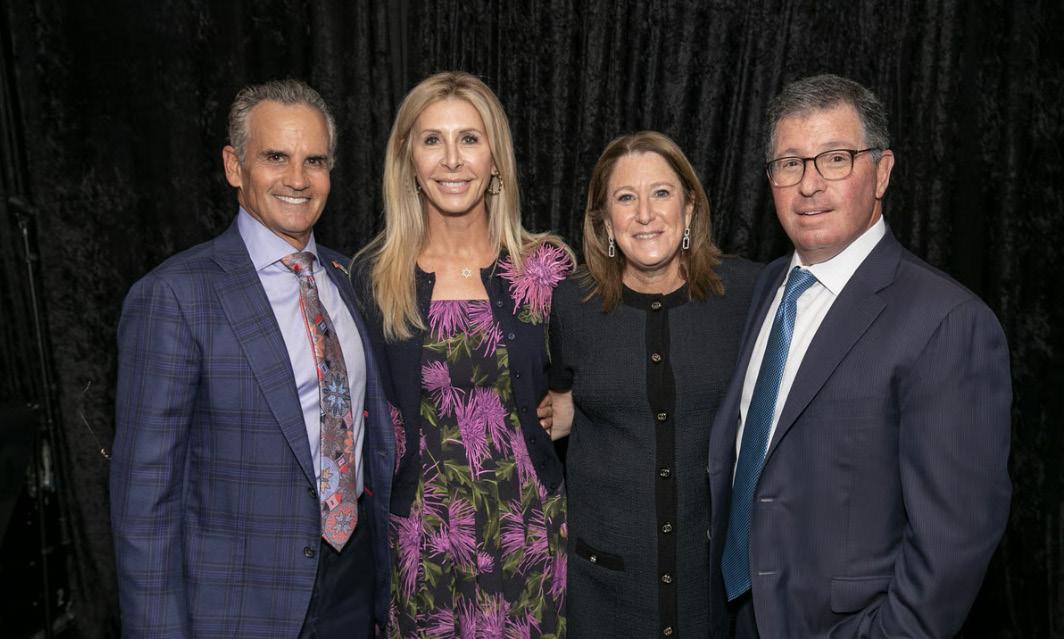
Michael Elrad and Douglas Murray. Credit: Jacek Gancarz
BOCA RATON, Fla. — As Iranian missiles continue to rain down on Israeli cities, sending families scrambling into bomb shelters, a very different story unfolded thousands of miles away in Boca Raton.
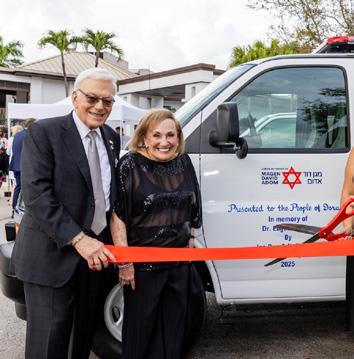
Inside St. Andrews Country Club, hundreds gathered not just to show support for Israel, but to stand behind the people who run toward danger when others run for cover: the medics of Magen David Adom.
While Israelis spent the night under threat of ballistic missiles, Magen David Adom’s more than 35,000 volunteer medics were on the ground responding to strikes, treating the wounded, and saving lives in real time.
That contrast, between those who seek to destroy life and those who dedicate themselves to saving it, became the defining theme of the evening.
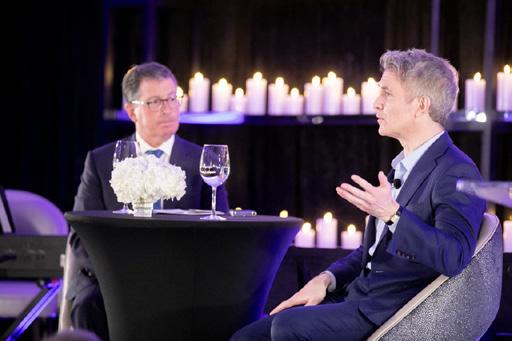
Featured speaker Douglas Murray, the bestselling author and journalist, gave voice to that divide. Drawing on years of studying terrorism and the aftermath of October 7, he described Iran and its proxies as part of what he called a “death cult,” one that glorifies destruction and celebrates violence.
But what struck him most, he
said, was the response on the Israeli side. Recalling a recent call with a friend sheltering in Tel Aviv during a missile barrage, Murray described how, even as danger loomed, she and others were singing and dancing to lift their spirits.
“I said to her: ‘You’ve just given me a thought. I’ve been calling these groups death cults for the last two years, and it’s happening again tonight: the world’s biggest death cult is trying to wage war on
the world’s greatest life cult, and the life cult’s going to win,’” he said.
That idea resonated deeply with the mission of Magen David Adom. Every day, MDA medics embody that “life cult” — rushing into missile zones, pulling victims from rubble, and delivering critical care within minutes. In a region where civilians are deliberately targeted, their work is often the difference between life and death.
“I have seen Magen David Adom’s operation in Israel. I know how valuable it is. I know how much the people of Israel value the work of this organization,” Murray said. Throughout the evening, that mission was front and center.
Events chairs Gregg and Lori Gottsegen, and Becky and Michael Elrad . Credit: Jacek Gancarz
A moving musical program and tribute to fallen heroes brought many in the room to tears, un-
derscoring the human cost of the ongoing conflict and the stakes of MDA’s work. Event chairs Lori and Gregg Gottsegen, and Becky and Michael Elrad emphasized that support from communities like Boca-Delray is not symbolic — it is essential.
“Throughout these challenging times, we are proud not only to support MDA — but to stand in true partnership with Israel’s national emergency services system,” they said. “Thank you for being here tonight, thank you for your unwavering commitment, and thank you for ensuring that when the next call comes — Israel is ready.”
Tamara Karu, national director of strategic philanthropy for American Friends of Magen David Adom, highlighted the community’s longstanding commitment and the urgency of the current moment.
“Boca-Delray community members have long been stalwart supporters of Magen David Adom, but as Israelis of all backgrounds face difficult times, the community’s commitment is more crucial and more appreciated than ever,” she said.
As the war continues, the contrast Murray described remains stark. On one side are those who celebrate death. On the other hand are the medics of Magen David Adom, who choose life every single day.
And as missiles fall across Israel, the choice is not abstract. It is between those who sanctify death and those who save lives. And in Boca Raton, that choice was clear.
Portugal Por ugal 9 days 9 days
classic and historic fishing villages; majestic mountain ranges and dense forests; vineyards in the Doro Valley, and more... 20 Oct 2026
Australia


Lacquering is a method used to protect and enhance the appearance of silver items, keeping them looking shiny and preventing tarnishing over time. Silver, while beautiful, is prone to oxidation when exposed to air, moisture, and light. This can result in tarnish, which is a dull, discolored film that forms on the surface of the metal. Lacquering silver items can help prevent this, ensuring their longevity and beauty.
Benefits of Lacquering Silver:
1. Prevents Tarnishing: The primary benefit of lacquering silver is its ability to prevent tarnish. The lacquer creates a barrier between the silver and the air, which reduces oxidation and preserves the item’s shine.
2.Enhances Appearance: Lacquer can give silver a glossy finish, making it appear new and shiny for longer. This enhances the aesthetic appeal of silverware, jewelry, and other silver items.
3. Easy Maintenance: With a lacquered silver item, cleaning becomes easier. The lacquer helps prevent dirt, fingerprints, and other contaminants from sticking to the surface, requiring less frequent polishing.
Types of Lacquer for Silver:
1. Clear Lacquer: This is the most common lacquer used for silver. It’s transparent, so it allows the silver’s natural color and shine to show through while still offering protection.
2. Colored Lacquer: Some specialized lacquers come in different hues, which can add a touch of uniqueness to the silver. These are often used for decorative purposes but can still offer protective qualities.
3.Matte Lacquer: For a more subdued, non-glossy finish, matte lacquer is available. This offers protection but gives the silver a soft, less reflective surface.
Maintenance of Lacquered Silver:
1. Regular Cleaning: Wipe down the lacquered silver with a soft, damp cloth to remove dust or
fingerprints. Avoid harsh chemicals or abrasive materials that could damage the lacquered finish.
2. Avoid Scratching: While lacquer protects silver from tarnishing, it is still prone to scratches or chips, especially if the item is used frequently. Handle lacquered silver carefully to preserve its finish.
Conclusion:
Lacquering silver items is an excellent way to preserve their beauty and protect them from tarnishing. We apply a high-quality lacquer to ensure your silver pieces stay shiny for years without the constant need for polishing. Whether it’s silverware, jewelry, or decorative items, lacquering is an effective solution to keep your silver shining brightly.












As we prepare to celebrate Pesach and the season of freedom, homes across South Florida begin to fill with a familiar kind of energy, lists being made, kitchens coming alive, and families getting ready to gather around the Seder table. It’s a time defined by tradition, connection, and joy.
But for many families, this season feels very different.
Behind the scenes, there are parents sitting at a hospital bedside instead of their dining room tables. There are children navigating treatments instead of preparing Four Questions. There are families carrying not only the emotional weight of illness, but the very real strain of medical bills, missed work, and ongoing uncertainty. While the world around them moves into celebration, they are often simply trying to get through the day.
As South Florida prepares for Pesach, the contrast can feel especially stark. For most, the coming weeks mean hours of cleaning, cooking, and gathering loved ones together. For others, the holiday arrives alongside a much heavier reality, one shaped by cancer, chronic illness, or medical trauma.
For these families, the idea of “freedom” can feel distant. Their calendars aren’t filled with menus and guest lists, but with hospital visits, chemotherapy sessions, and difficult decisions. The emotional toll is constant, and the financial pressure only adds to the burden.
Chai Lifeline Southeast works with families throughout the year, helping them regain a sense of balance in lives that have been turned upside down by illness. But as holidays approach, the need becomes more immediate and more visible. Chai Lifeline Southeast’s focus shifts to
ensuring that every family, no matter their circumstances, has the ability to experience a meaningful Yom Tov.
“For families facing a medical crisis, especially with a sick child, Pesach doesn’t always feel like a holiday of freedom,” explains Esther Leah Sandhaus, Director of Chai Lifeline Southeast. “For many, it’s simply another week of treatments. Our role is to step in and make sure there’s still space for light and dignity.”
That doesn’t always mean recreating a picture-perfect holiday. More often, it means meeting families exactly where they are and making sure they feel supported, seen, and cared for.
For some parents, something as basic as preparing their home for Pesach can feel overwhelming when they’ve been spending long days and nights in the hospital. Professional cleaning services can lift that burden, giving them one less thing to worry about.
For children, especially those who have been in and out of treatment, the holiday can feel like something they’re missing. Through Yom Tov shopping trips, volunteers step in to create moments of normalcy by helping kids pick out new clothing and reconnect with the excitement that should come with the season.
For families spending the Seder night in a hospital room, carefully prepared Seder kits ensure that the traditions aren’t lost. Even in a clinical setting, there is still a table, still a story, still a sense that this night is different.
And for many families, the financial strain of illness makes even basic holiday expenses difficult. Discreet financial assistance helps relieve that pressure, allowing parents to focus on their children rather than their bills.
But the support doesn’t end when
the Seder is over.
During Chol Hamoed, Chai Lifeline Southeast creates opportunities for families to step outside the world of appointments and treatments, even if just for a few hours. Outings to local attractions and personalized activities offer something rare but essential, a chance to simply be together as a family, without the constant presence of illness.
These moments may seem small from the outside, but for families living through a medical crisis, they are anything but. They create space to reconnect, to laugh, and to build memories that aren’t defined by hospital rooms or diagnoses.
At its core, this work is about more than services or programs. It’s about recognizing that while illness can take so much, it shouldn’t take away a family’s ability to experience moments of meaning, tradition, and even joy.
Pesach tells the story of moving from darkness to light, from hardship to hope. For the families Chai Lifeline Southeast serves, that journey is still unfolding. And while their circumstances may not change overnight, the presence of consistent, compassionate support can make that path feel a little less heavy.
Sometimes, freedom doesn’t look like a grand transformation. Sometimes, it’s found in a clean home, a new outfit, a Seder plate at a bedside, or a few hours spent laughing together outside of a hospital. And in those moments, even in the midst of everything, something shifts.
Chai Lifeline is an international organization providing social, emotional, and practical support to families facing illness, trauma, and loss. Locally, Chai Lifeline Southeast serves thousands of individuals and families across South Florida each year. To learn more, volunteer, or support their work, visit www.chailifeline.org/southeast or call 305-956-9990.




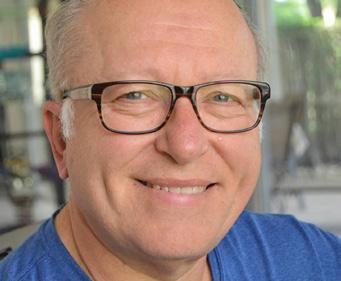
By Mr. Leslie Srolovits
Several weeks ago, I began writing an article regarding the persistent issue of talking in shul. While Rabbis, presidents, and gabbaim have struggled for years to curb chatter with limited success, it remains a significant problem.
I have always found it interesting that some shuls announce that parents should take restless children outside before a speech. Perhaps we should suggest that adults who feel the need to talk during davening take their conversations to the hallway. No one would be offended if individuals stepped out to converse, and doing so would serve as a better example for their children sitting next to them. The house of God is a holy place, it is not the venue to discuss the Super Bowl, the news, the stock market, or weekend plans.
It is particularly disturbing that those who talk throughout davening show a lack of respect for the sanctity of the synagogue and for those who wish to pray with sincerity and focus. This be-

havior is not limited to the men’s side of the mechitza. Coming to shul and talking nonstop is deeply disrespectful. While these individuals are undoubtedly kind and good people, they should consider the impact of their actions on others. Most would never disrupt a movie or a business meeting, yet they treat the synagogue differently. Shabbat services last only two and a half hours, a brief time to focus on heartfelt tefillot and set a positive example for the next generation.
We have 168 hours in a week to pick up the phone, send a text, or use WhatsApp to discuss whatever we want with friends. Does Hashem, our creator, not deserve silence for two and a half hours a week in his house? Whether it is kaddish, laining, or any other part of the davening, we must ask
ourselves if our conversations are truly that important. There is immense power in saying “Amein,” and the feeling of refraining from talk during services is truly exhilarating.
Now more than ever, given the current situation in Israel and around the world, we must daven with feeling and ask Hashem to protect all Jews near and far. If you are someone who struggles with talking during davening, I encourage you to try remaining “totally” silent for just one Shabbat. If you do, please let me know how it felt. You can reach me at LeslieSrolovits@ gmail.com. May our tefillot merit many blessings from Hashem for us and our extended families.
Mr. Leslie Srolovits is a retired banker / technology officer,




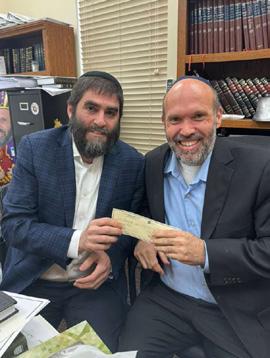
JGifts has launched a powerful Pesach campaign with a clear and urgent mission: to raise $500,000 and provide $1,000 KC Market gift cards to 500 local families who would otherwise struggle to afford groceries for Yom Tov.
At a time when the demand for assistance has reached unprecedented levels, this initiative goes far beyond food. It is about restoring dignity, preserving normalcy, and ensuring that every family can celebrate Pesach with a sense of calm, pride, and joy.
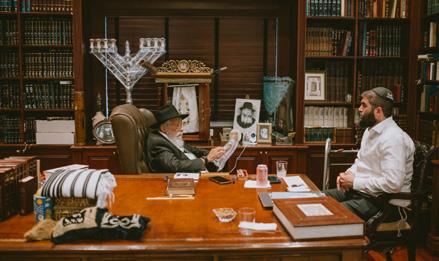
In partnership with KC Market and generous community donors, JGifts is stepping forward in a significant way. Rabbi Yossi Raskin, founder of JGifts, is once again leading this effort across South Florida, mobilizing resources and support to directly impact families in need. Through this campaign, recipients receive gift cards that look and function like any other—allowing them to shop for Pesach with dignity, without embarrassment or stigma.
To help drive participation and unite the community, JGifts is offering two special raffles. One winner will receive a dollar from the Rebbe, a meaningful and treasured gift. In addition, Yossi Gopin of KC Market has generously donated a $2,000 gift card, which will be awarded to one donor who contributes $18 or more. These raffles serve as an added opportunity to engage the broader community around a shared purpose.

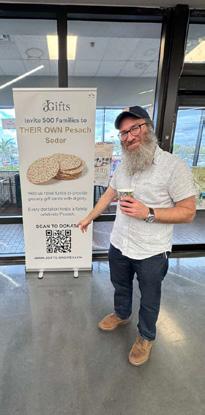
“This is such an important campaign,” said Gopin. “We see firsthand how many families are struggling, especially around Pesach. As a community, we have the ability to step up and make sure no one is left behind.”
The impact of JGifts is deeply felt by those who receive support. One local teacher shared, “The stress of not having money can be dehumanizing, but JGifts makes you feel like a mentch. You can walk into the store and shop like everyone else—and that feeling is

everything.”
This campaign is a call to action for the entire community. Every contribution brings JGifts closer to its goal of supporting 500 families and giving them the Pesach they deserve.
To support the campaign and make a difference, visit: https://jgifts.org/kc/ JGifts continues to serve as a vital lifeline for local families, providing not only financial assistance, but also dignity, hope, and a sense of belonging during Yom Tov. With the community’s support, this Pesach can be one of warmth, relief, and renewed strength for hundreds of families.






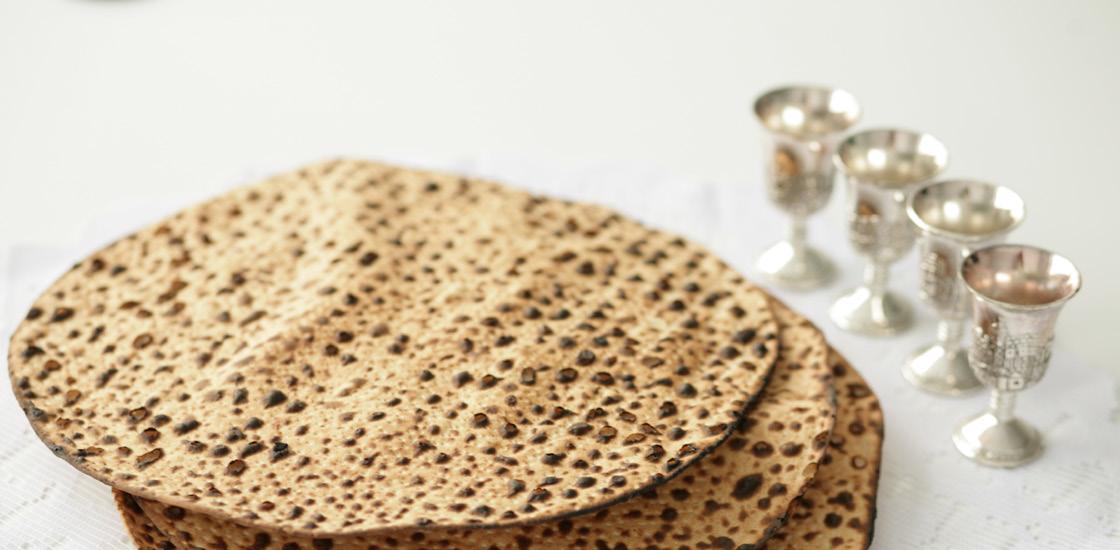
1. Matzah Can Be Square… or Round!
Most matzah today is square because it’s made by machines, but traditional handmade matzah is usually round—just like it was in ancient times.
2. 18 Minutes Only!
From the moment water touches flour, matzah must be mixed, rolled, and baked in under 18 minutes to stay kosher for Passover.
3. Super Hot Ovens
Matzah is baked in extremely hot ovens so it cooks quickly and doesn’t rise.
4. The Holes Have a Purpose
Those little holes aren’t random—they prevent the dough from puffing up and becoming chametz.
5. Only 2 Ingredients (Usually)
Classic matzah is just flour and water— nothing else!
6. Matzah Was Once Made in Homes
Before factories, families used to make matzah by hand in their own kitchens, working quickly together to beat the 18-minute rule.
7. Shmurah Means “Guarded” “Shmurah” matzah is watched extra carefully to make sure no moisture touches it before baking.
8. Matzah Pizza Exists!
Kids (and adults!) love turning matzah into pizza, nachos, or even lasagna during Passover.
9. It Lasts a Long Time
Because it’s dry and crispy, matzah can stay fresh for months if kept sealed.
10. It Teaches a Big Lesson
Matzah reminds us about humility—it’s flat and simple, unlike puffed-up bread.


By Jamie Geller
We loved the 2-ingredient bagels so much we decided to turn it into rugelach. With just a few more ingredients we made a delicious breakfast treat or dessert you can include as part of a healthy diet, no Jewish guilt included.
We kept it light by using apple butter and cinnamon for the filling, but you feel free to add the optional glaze for extra sweetness.

1. Preheat oven to 350°F. Line a sheet pan with parchment paper.
• 1⅓ 160 g cups self rising flour, plus more as needed
• 1 cup 200 g plain fat free Greek yogurt, plus more as needed
• ¼ cup store-bought apple butter
• 1 tablespoon cinnamon
• ¼ cup powdered sugar
• 2 teaspoons nonfat milk
2. Place flour and yogurt in a medium bowl; stir well with a spoon until just combined and then continue to knead dough by hand in the bowl until smooth, about 1 to 2 minutes. If dough is too sticky to knead, add 1 to 2 more tablespoons flour; let dough sit 5 minutes.
3. Place a large piece of parchment paper on a work surface; sprinkle with a little flour. Place dough on parchment paper; roll dough into a large, thin circle. Place a 10-inch plate upside-down on dough; trace around plate with
a knife to cut out a perfect dough circle.
4. Spread apple butter evenly over dough, all the way to edges; sprinkle with cinnamon. Slice dough into 8 even wedges, like a pizza. Working with one wedge at a time, roll dough tightly from the wide end to the pointy end; place on prepared pan and repeat with remaining dough to form 8 rugelach.
5. Bake until lightly browned, 15 to 20 minutes.
6.Meanwhile, to make glaze, in a small bowl, combine sugar and milk until slightly thick. Drizzle glaze over rugelach before serving.
Jamie Geller is the Chief Media and Marketing Officer at Aish. She is also a bestselling cookbook author, celebrity chef, television producer, and businesswoman. She’s the author of eight cookbooks and the founder of Kosher Media Network.
UptownGirlHeadwear.com
Sweat In Style!!
Quality Headscarves • Sun Visor Scarves • Cotton Caps • Snoods • Pre Tied Bandanas & Tichels For Fashion • For Frum • For Hair Loss Made in USA (718) 614 9604
Wine News!
The new ‘Noble Wines’ catalog has arrived, featuring our latest selection of premium wines. Request your free copy by mail. Just text or email your address and we’ll deliver it straight to your door. Text: (845) 716-8306 or email: news@noblewinesinc.com
Seeking 5–10k SF warehouse within one hour of Miami port. Must have 1–2 loading docks. Please call Nathan at 845-764-1755.
Top Handyman & Construction
848-318-6976, nikabrmv711@gmail.com
List your local business, services available, real estate opportunities, Help Wanted, & more!
Basic listing: $10/weekName, number and email address
Enhanced listing: $25/weekUp to 25 words (additional words $1/each)
Deadline:
Tuesday at 4pm for next week's issue
Contact: andrea@tsfcommunityvoice.com
In-Home Private Pilates for women to strengthen, realign, and ease pain. Personalized sessions and private events + Kosher Healthy Meal Prep. WellnessRena.com 305-404-3904 | WellnessRena@gmail.com
Computer, Laptop, iPad & iPhone Repair 954-367-3215
Free-Pickup-in-Aventura.FL
Coolstar Air
Service llc A/C Install & Repair (954) 200-1369 | coolstarair@yahoo.com
IT Tech Support & Low Voltage Services 561-331-1680 | barry@navonpro.com
MOVE TO NORTH FLORIDA
Most affordable housing in the entire state Esformes Hebrew Academy of Ormond Beach NOW HIRING
• Elementary teacher • Office manager • School Event Coordinator • Drama & Music, Coach Part-time and full-time positions
Quiet suburb School and shul community EsformesHebrewAcademy.org Email resume to chanidaytona@gmail.com
Bringing Sensitivity To The Mental Health Needs Of The Jewish Community
RAFAEL JAMES LCSW PSYCHOTHERAPIST (561) 903-2950
EMAIL: centerforempathyandhealing@gmail.com Florida Medicare & Florida Blue accepted
To place a Business Directory/Classified Listing contact: andrea@tsfcommunityvoice.com








4 bedrooms, 3 baths, 1,851sf
$7,800/M


The Olympus- 1-2 bdrms, 1.5-2 baths, 1000-1400sf Multiple Units available Starting at $199K
3 bdrms, 2 full baths, Pool, 1,905sf
$4,750/M H O L L Y W O O D
H O L L Y W O O D SOLD
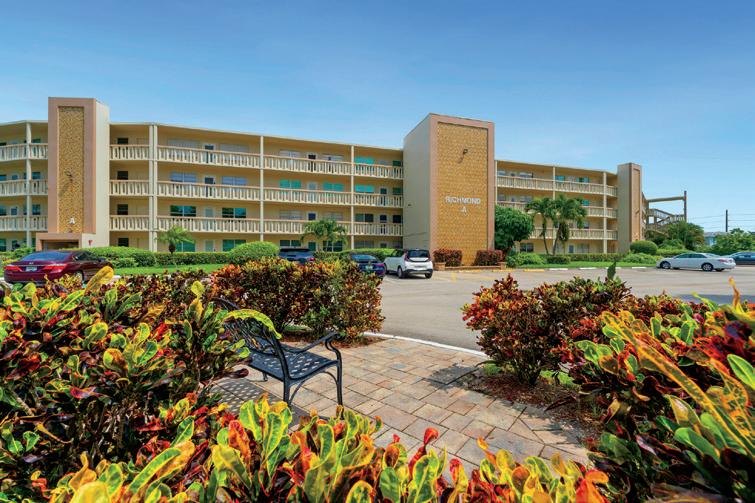
2 bdrms, 2 full baths, 1,000sf $239K
6 bdrms, 3.5 baths, 4,200sf, lot size 14,736sf
$1.995M

RENTED

The Spiaggia- 1 bdrms, 2 full baths, 927sf $3,500/M
Last week, we discussed how generational wealth begins with income and how protecting that income is the foundation of any strong financial plan.
But protecting income is only one side of the equation.
The next question is just as important:
How do you protect the assets that income creates?
Whether that means a primary residence, investment properties or a commercial real estate portfolio, the answer is the same. Property and casualty insurance plays a central role.
For many individuals and investors, insurance is something that gets put in place and left alone. Policies renew each year with minimal adjustment.
But assets do not behave that way.
Values change. Portfolios expand. Exposure and markets shift.
Over time, a quiet misalignment begins to form.
Commercial Real Estate Example
This misalignment becomes especially apparent in commercial real estate.
Portfolios are insured asset by asset, with limits stacked independently across properties. On the surface, this can feel conservative.
In reality, it is often inefficient. Coverage is frequently duplicated across locations that are not exposed to the same loss at the same time. Programs are built to satisfy
By Glen R. Golish
a point-in-time requirement, rather than reflect how risk actually behaves across a portfolio.
Sophisticated owners approach this differently.
They shift the focus from theoretical maximum exposure at each individual property to a more practical question:
What is the realistic loss scenario across the portfolio as a whole?
That shift is where meaningful improvements begin.
A well-structured program should mirror the way risk actually behaves.
For geographically diversified portfolios, losses are rarely correlated. Not every asset is impacted by the same event simultaneously.
This is where catastrophe modeling becomes a valuable tool in building a more efficient solution.
Coverage can be structured across the portfolio, rather than fully duplicated at every location.
The result is more intentional protection and translates into both stronger alignment and materially improved economics.
The current insurance market is creating a unique opportunity to revisit strategy across both personal and commercial lines.
After years of rising premiums, property markets are softening and increased carrier competition is driving real pricing relief.
Many individuals and investors are still sitting on policies put in place at the peak of the market.
As a result, we are seeing premium reductions of 30% or more. In certain situations, particularly where programs were inefficiently structured, improvements can exceed 50%.
For example, we recently delivered a 55% reduction for a $30 million high rise in Miami Beach, while also improving the overall structure. In residential markets, we are seeing average savings of 25%+ for homeowners.
This is a rare moment where both pricing and structure can be improved at the same time.
Insurance markets move in cycles. Favorable conditions do not last indefinitely.
A proactive review today can uncover:
Immediate premium savings
Structural inefficiencies
Opportunities to improve coverage without increasing cost
If your insurance has not been reviewed in the past 12 months, this is the time to do it.
If you would like to review your current program or explore potential improvements, we are always available to provide a complimentary consultation.

Wishing my family, friends, the community, and valued clients a Chag Pesach Kasher V’Sameach!
As we celebrate the Yom Tov of freedom and Hash-em’s great kindness, may every home be filled with simcha, bracha, and shalom.
May you and your family enjoy a beautiful, meaningful Pesach.




A few days ago, I was at a real estate conference filled with many familiar faces. There were people I’ve worked with over twenty years ago that I haven’t seen in ages. As I caught up with old associates, employees, and even friendly competitors, two of them stood out.
Every conversation they had circled back to “the good old days.” Every deal, every anecdote, and every story was anchored in what had happened decades ago. It came to a point where I started avoiding them at the conference because I had heard too many outdated and out-of-touch tales of yesteryear.
On the ride home, I started thinking about how they seemed frozen in time, while all the others in the room were fully engaged in the present and talking about their current experiences and dealings.
It made me think about the way we sometimes cling to past successes or failures and let them define us. It’s natural to reminisce. But when nostalgia turns into a full-time occupation, we risk disconnecting from the present. Those two colleagues, as I learned, had largely drifted out of being active in business. Meanwhile, others from the same era were enthusiastically networking, finding new opportunities, and shaping their future. The difference was striking.
By Shmuel Shayowitz
The lesson is clear: when we keep our focus fixed on what once was - whether a career high or a past setback - we risk losing sight of what’s possible now. The real estate industry, like life, is dynamic. The ones who thrive aren’t the ones who only look back at their best deals, they are the ones who ask, “What’s the next opportunity in front of me?” Your past can be a foundation, but you need to be careful that it shouldn’t be a weight that keeps you anchored.
I am reminded of that old driving adage. A cars windshield is large, facing forward, while the rearview mirror is drastically smaller. It’s there to guide you, but it’s not meant to be your main focus. We need to glance back occasionally, but our attention must stay forward, seeing what’s ahead.
In practical terms, this means setting new baselines. Don’t benchmark yourself against what was, benchmark against what’s ahead and where you want to go. It’s like setting a fitness goal. If you only aim for what you once achieved, you’re certainly limiting yourself. The world is constantly changing. You must adjust your standards and push forward.
The same applies to your financial goals. If you set your baseline too low – like a fixed conservative percentage for improving your fi-
nances, you’re not really growing. Your goals need to be ambitious. Your intentions need to help you better make and manage money. If you set a goal that challenges you, it pushes you to strive for more.
So, here’s my takeaway. Savor your memories, but don’t live in them. Your past benchmarks might have been great, but understand that they are not the ceiling. They are simply a stepping stone. Adjust your metrics and your aspirations so they stretch you toward the future, not just comfort you with the past. The market, and life, reward those who stay present while looking forward. Always keep our eyes on the road ahead.
Shmuel Shayowitz (NMLS#19871) is a highly regarded Real Estate & Finance Executive, Writer, Speaker, Coach, and Advisor. He is President and Chief Lending Officer of Approved Funding, a privately held national mortgage banker and direct lender that has facilitated over $3 billion in mortgage funding. Shmuel has over twenty years of industry experience and holds numerous licenses and accreditations, including certified mortgage underwriter, licensed real estate agent, residential review appraiser, and accredited investor, to name a few. Shmuel has successfully navigated through many changing markets and business landscapes, making his market insights and experience well-coveted within the real estate industry. He can be reached via email at Shmuel@ approvedfunding.com.