Community Voice magazine is not responsible for the Kashrut or services provided by the advertisements. It is up to the consumer to verify the information.
Beyond the Headlines
A weekly glimpse into the Israel you won’t read about in the news
By Sivan Rahav Meir
A Letter from New Zealand
The following is a letter I received from Rabbi Netanel Kaszovitz, rabbi of the Auckland Hebrew Congregation in New Zealand:
“Shalom, Sivan. You recently published a story about a small Jewish village that consisted of ten families. Every morning there was a minyan in the village because a man from each family felt responsible to ensure that there would be a minyan that day. But then another family moved to the village—family #11—and the next morning, there was no minyan. Everyone felt less responsibility towards the community.
“This past Pesach, we experienced in our community the very opposite situation. Even though we have a small community, there is a minyan, thank God, every Shabbat. But on the last day of Pesach, there was a huge rain storm. I was worried that there wouldn’t be a minyan that day.
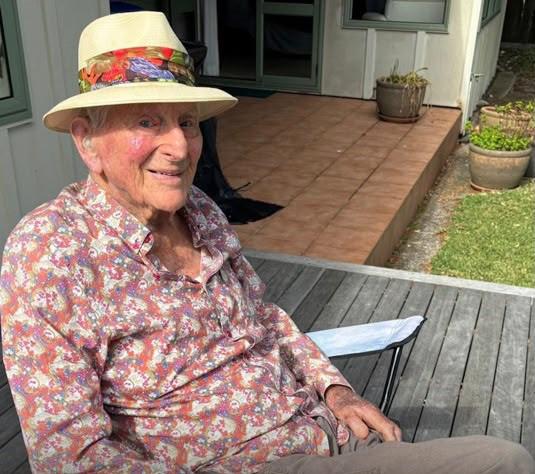
“Arnold is a 101-year-old member of our community. In just a few weeks, we will be celebrating his 102nd birthday. On the last day of Pesach, he woke up, noticed the weather outside, and said to his wife: “I’m worried that there won’t be a minyan today because of the weather.” So, he walked in the rain to join our minyan.
“When he arrived at shul, he told me why he had come that morning and I was amazed and moved. Over the course of the
prayer service, more and more people kept coming. Apparently, many had been worried about the weather so they had decided to come—specifically that day— to ensure that there would be a minyan.
“My wish is that each one of us should always feel as if he or she is the ‘tenth person for the minyan’— important, precious, and special!’
Have You Heard About These Ceremonies?
These days, in Kibbutz Be’eri, the homes damaged on October 7 are being torn down. But these demolitions are not only acts of clearing away ruins. They have become ceremonies of memory, grief, faith, and rebuilding.
Take Eli Sharabi. He came to see the place where his wife, Lianne, and his daughters, Noiya and Yahel, were murdered.
“It was important for me to be here,” he said as the demolition
began. “We are the Jewish people. We have a very special DNA — the DNA of rebuilding. I think that precisely in order to honor those who fell, I must move forward and build a life of action and meaning.”
Not far away, the home of Rachel Fricker was also demolished.
“A million emotions are mixed together,” she said as she watched the walls come down. “For twelve and a half hours, the terrorists were inside this house with me.”
Rachel arrived with rabbis and friends. “I recited Birkat Hagomel, the blessing said after surviving danger. I said Mizmor Letodah, a psalm of thanksgiving, and we raised a glass — to the home that was, and to the home that will yet be built.”
She shared another striking story. Not long ago, a rabbi asked to take ashes from her house for his son’s wedding, in keeping with the custom of placing ashes on the groom’s head as a remembrance of destruction. When he entered the house, he saw a fox. For those familiar with the story, it immediately called to mind Rabbi Akiva, who saw a fox emerging from the ruins of the Temple and understood it as a sign that the place would one day be rebuilt.
“It was a sign for me, too,” Rachel said.
After the ceremony, she returned to her caravilla in Hatzerim “with a feeling of peace, of closure.” Rachel, who also manages the Be’eri synagogue, added that a new, large synagogue
is soon to be built in the center of the kibbutz.
Then there is Avida Bachar, who managed Be’eri’s agriculture. On that morning, he lost his wife, Dana, his son, Carmel, and his leg.
“This was a home of life,” he said, standing opposite the tractor that had come to demolish his house. “You meet a woman, build a family, build a life — and in one second, everything is destroyed. But when you look at things from above, you say to yourself: We must build life and family again.”
Since October 7, Avida has carried with him everywhere what he calls his “crying towel.” He used it often at the ceremony, especially when his friends stood beside him and sang Shir LaMa’alot, A Song of Ascents, moments before the demolition began.
He also wanted to convey two messages: a firm security message to the outside — “I woke up. Gaza must cease to exist” — and a message of unity within: “For the first time, I got to know my people, and I am awed by their strength.”
Eli, Rachel, Avida — thank you for these words. They, too, are part of the rebuilding.
Parashat Korach: Be Yourself
Korach, whom we read about in this week’s Torah portion, became synonymous with dispute. He rebels against the leadership of Moshe and Aharon, and seeks to replace them. What happened to him? And what sometimes happens to us as well?
Rabbi Elimelech Biderman explains that this is a mistake that remains common to this day. After
COMMUNITY NEWS
all, Korach already had an honorable role. He was one of those responsible for the holy work in the Mishkan. But instead of focusing on his important position, he envied others and wanted to replace them. As Rabbi Biderman writes:
“If Korach had known that a simple person who fulfills his mission in this world is as important before the Creator as Aharon Hakohen when he enters the Kodesh Hakodashim, he would never have begun the dispute.”
Korach thought that striving higher meant replacing the person at the top. But the Torah portion reveals to us that being number one means excelling and investing yourself in the place that is right for you. You are important precisely when you are fulfilling your own
unique mission, carrying out the task of your life.
That is why the Torah portion turns to us and warns: “And he shall not be like Korach and his assembly.” Do not be jealous. Do not fight. Do not try to be someone else. Be the best version of yourself.
The Root of the Dispute
I recently heard an interesting take on Korach’s dispute.
Our sages explain: There is a “dispute for the sake of Heaven,” one that is important to navigate. But there is also a “dispute that is not for the sake of Heaven,” such as the one initiated by Korach and which is rooted in ego, a grasping for honor, and other ulterior motives.
In essence, Korach’s dispute was based on a quarrel he had with himself. He felt discouraged
and detached, and consequently failed to discover his own unique place and mission in life. The commentators explain that his wife was likewise frustrated with her situation, and she kept filling Korach’s mind with poisonous thoughts: You deserve more; you should be like Moshe and Aharon; you aren’t appreciated enough.
I encourage you to examine your interpersonal relationships, at home and at work, to determine whether you aren’t stirring up controversy in your surroundings because, at the root of it all, you are dissatisfied with yourself.
by Yehoshua Siskin and Janine Muller Sherr
A Partially Completed Torah That Survived the Holocaust
By Leslie Srolovits
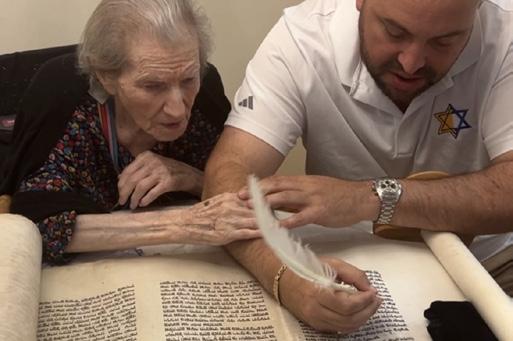
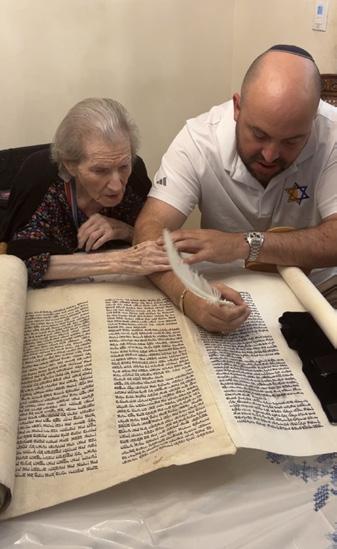
I have had the privilege of attending many Torah dedications in my lifetime, but this week’s event was uniquely special. Mr. Jonny Daniels, founder of the Survivor Torah Project and former IDF Staff Sergeant visited Queens with a partially completed Torah from the Holocaust. The project seeks out survivors globally to write one letter at a time until the scroll is finished. To date, Mr. Daniels has visited over a thousand survivors across thirty countries. This visit held significant meaning for my brother, George, and me because Mr. Daniels brought the Torah to our mother’s home. Our mother, Ilona Srolovits, who celebrated her 100th birthday this past March, sat in her dining room and chronologically recounted what she endured during the Holocaust as the oldest of seven children. Mom watched in horror as her mother and six-yearold sister Gittel were send to the gas chambers with a flick of a hand by yimach shimom Dr. Mengele. Watching her sit before the Torah and write a letter was a powerful testament to her faith and resilience. It was a deeply moving experience to see her contribute to this sacred project after surviving the darkest period in Jewish
history. The letter our mother was honored to write, while holding the arm of Mr. Daniels was ה. After writing the letter in the Torah our mother sang the Hatikvah in Hungarian which she learned in school before the war. Everything was videotaped and went to close to 120,000 Instagram followers of Mr. Daniels.
Mom has not walked since a hip replacement in October and for whatever reason walked multiple times with a walker the very next morning, which we were all amazed and baffled by. Our mother also received a very pleasant surprise on her birthday when President Donald Trump wrote her a letter congratulating for her 100th centenary birthday. Before receiving this letter, a governmental agency interviewed me for some background on our mother. What
really impressed me was the last paragraph – “Your bravery and fortitude during the unfathomable horrors of the Holocaust were truly remarkable. Please know that the Trump Administration remains committed to fighting the scourge of antisemitism and will always stand with the Jewish people”. Along with the letter Mom received a flag flown on the Capitol and lowered on her birthday. May we all have many simchas in our families that we can share with each other.
Leslie Srolovits is a retired Banker who lives in Boynton Beach Florida. The Survivor Torah Project Visits Holocaust survivors worldwide so each may add a letter to a Torah scroll begun — but unfinished — during the war. Visit WWW.SurvivorTorah.ORG for more information or how you can participate with this amazing project.
“It Will Hurt Children Like Mine”: Parents and Students Take Center Stage to Defend School Choice at Miami Press Conference
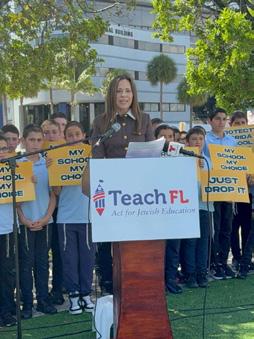
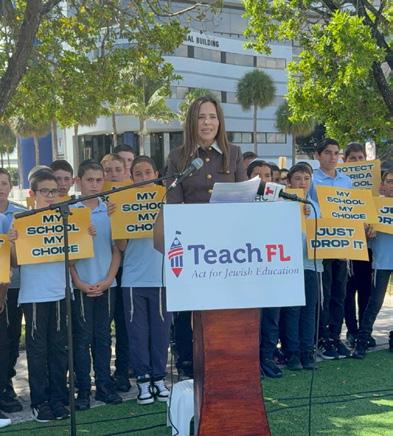
Local families, students, and education advocates gathered Thursday for a press conference organized by Teach Florida at the Lubavitch Educational Center, the largest Jewish day school in Florida, to unite against a new lawsuit aimed at blocking school choice in Florida. The event highlighted the deeply personal stakes of a Florida Education Association lawsuit that threatens vital scholarship programs relied upon by an estimated 900,000 students across the state.
Instead of policy debates, the heart of the conference belonged to the families whose educational futures hang in the balance.
Audrey Maman Bensoussan, a mother of four, delivered an emotional speech explaining how scholarships made Jewish education financially possible for her family. “Without that support, I simply would not have been able to give my children the Jewish education they are receiving today,” Bensoussan said. “It will hurt families like mine. It will hurt children like mine.”
Yonah Schwartz, an 11-year-old student, shared that he is set to transfer to a new school next year, a transition that will be completely impossible if his scholarship is blocked. “Not every kid learns the same way,” Schwartz told the crowd. “For me, changing schools means getting the chance to learn in a place that’s a better fit for me.”
Lily Glaser, a 10-year-old student at Brauser Maimonides
Yonah Schwartz speaks at the Teach Florida press conference at the Lubavitch Educational Center in Miami. Photo courtesy: Teach Florida
Lily Glaser speaks at the Teach Florida press conference at the Lubavitch Educational Center in Miami. Photo courtesy: Teach Florida.
Melissa Glaser, Executive Director of Teach Florida, at the press conference at the Lubavitch Educational Center in Miami. Photo courtesy: Teach Florida.
COMMUNITY NEWS
Academy who hopes to one day become a city mayor, emphasized how the program allows her to connect with her heritage every day. “At my school, I get to learn about my Jewish heritage, traditions, and values,” Glaser shared. “Every child is different, and every family is different. That’s why parents should be able to choose the educational environment that helps their child succeed.”
The theme of empowerment was echoed by other parents who refuse to let these opportunities slip away. Ailyn Weisleder, a mother of three who described her kids’ school community as an extension of her own family. Weisleder emphasized how school choice uplifts everyday communities. “Universal School
Choice has made that possible for our family,” Weisleder stated. “It gave us, and thousands of families across Florida, the ability to choose the education that fits our children, not just the school assigned to us by a zip code.”
Dr. Jim Rigg, representing the Archdiocese of Miami, focused his remarks on the human impact of the legal battle. “At its heart, this issue is not about institutions. It is about children and families,” Dr. Rigg noted. “We should be asking how to expand opportunities for these students, not how to take them away.”
Melissa Glaser, Executive Director of Teach Florida, which organized the event, summarized the collective mission of the day. “This is about protecting families, protecting opportunity,
and protecting a parent’s fundamental right to choose the best educational path for their child,” Glaser stated.
The event also featured solidarity remarks from Rabbi Benzion Korf of the Lubavitch Educational Center and former Congressman Peter Deutsch, who also founded one of Florida’s largest charter school networks. Advocates at the conference made it clear that this was just the beginning of the community’s efforts to ensure that no lawsuit strips families of their right to guide their children’s education.
About Teach Florida
Teach Florida, part of the Teach Coalition network, champions policies that strengthen and expand access to Jewish education across the state. Teach Florida serves as a leading voice for Jewish day schools and the families they serve throughout Florida.
Sunday to Thursday: 12pm - 10pm Friday: 11am - 3:30pm OPENING HOURS Scan the code to order!
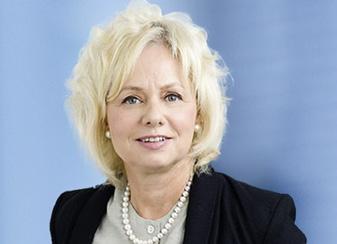
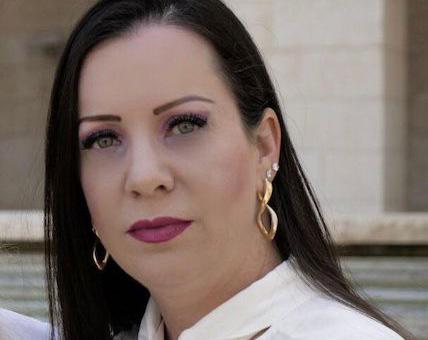
The Attorney General, Gali BaharavMiara, requested to revoke the parliamentary immunity of Knesset Member Tali Gotliv in order to prosecute her for allegedly publicizing the name of a senior Shin Bet official who is married to Kaplan protest leader Shikma Bressler.
We remind readers that, according to American sources, a phone call was “intercepted” between Bressler’s husband (the head of the Shin Bet Southern District), and Yahya Sinwar, the leader of Hamas, a few days before October 7th. The content of the call is unknown. MK Tali Gotliv claims that this call constitutes treason against the state.
MK Gotliv was summoned for police questioning but refused to appear, arguing that a Knesset member has immunity from investigation and prosecution for exposing information as part of her parliamentary work.
Yesterday, June 8, 2026, the Knesset Committee held a hearing to determine whether her immunity applies in this case. No decision has yet been made.
MK Tali Gotliv is a brilliant criminal defense attorney. She frequently appears in the media and is highly impressive in her knowledge, her sharp and rapid speech, and especially her keen intellect. Gotliv is a Likud Knesset member and has expressed her desire to serve as Minister of Justice in the next government, which, according to polls, is expected to be a Likud government.
The State Attorney’s Office fears
Gali vs. Tali
By Dr. Yeshayahu (Yishy) Bick
that Gotliv may indeed fulfill her ambitions. As Minister of Justice, she would “put the prosecution in its place” and likely promote the judicial reform. Advancing judicial reform is the nightmare of the prosecution and the Supreme Court. These two bodies have accumulated great and disproportionate power and are unwilling to “have their cheese moved.”
The wellknown solution for decades has been “tailoring legal cases” for any candidate for Minister of Justice in order to remove them from the path. This was done to Haim Ramon of the Labor Party and to Prof. Yaakov Neeman of Likud. The legal system closes ranks to eliminate any threat or danger to itself.
These legal bodies, never elect-
ed by the public, are becoming the new rulers. They call themselves “gatekeepers” who protect democracy, but in practice they trample the democratic system of three separate branches. The judiciary exploits its ability to determine the legal fate of citizens and “eliminates” its rivals using mafialike methods.
Consider what happens to a person indicted in court: all their strength and resources are devoted to the legal battle, which usually leaves a political figure or security official broken and crushed. Meanwhile, the prosecution never lacks funds for its battles (paid by taxpayers), and when a defendant is acquitted, the “casetailors” in the prosecution pay no price, neither financially nor professionally. Compensation to the acquitted defendant is paid by the citizens through taxes.
Furthermore, “casetailoring” is selective and discriminatory. The legal system decides who will stand trial and who will enjoy a pleasant and comfortable life.
The former Military Advocate General, Yifat TomerYerushalmi, who was dismissed from the IDF over the “Unit 100” affair and the leaking of an edited and misleading video to Channel 12, sits at home receiving the salary of an IDF major general and is not prosecuted, despite admitting to the act. Her actions caused Israel international damage equivalent to a terror attack.
The son of Gali BaharavMiara was filmed stealing an expensive
(Also published in Hebrew in ramatgannet.co.il, and in Givatayimnet.co.il newspaper in Israel)
Credit: Tomer Jacobson
Credit: Tali Gottlieb
Gali BaharavMiara
Tali Gotliv
private military vest belonging to a foreign volunteer. Gali ensured that her son would not stand trial.
Gali herself lied to the High Court of Justice several times, including in an affidavit claiming she had investigated the Military Advocate General and that TomerYerushalmi had not leaked the video to Channel 12. Gali is protected by Justice Yitzhak Amit.
Gali BaharavMiara was dismissed by Israel’s elected government, yet the High Court prevents her dismissal.
Gali is the Attorney General who is supposed to represent the government before the High Court, while also serving as head of the prosecution. Needless to say, she refuses to represent the ministers who appointed her (they are forced to hire private attorneys). Moreover, Gali joins the petitioners against the government.
Not only does she refuse to represent the government, she even decides to file legal actions against ministers. This is not the conduct of a “gatekeeper” but a constitutional crisis.
Gali approached former Shin Bet director Ronen Bar, demanding that his people find incriminating material on Minister Itamar BenGvir because she wants to prosecute him. Gali acts against the political
system. She opposes every government appointment. She functions as the head of the opposition.
Gali smeared Zini, the candidate for Shin Bet chief, and smeared Gofman, the candidate for Mossad chief. In both cases she failed, but left two outstanding IDF generals with stains that will follow them throughout their careers. This is a criminal pattern of behavior.
Gali demanded that the minority opinion of former Supreme Court President Asher Grunis override the majority opinion and disqualify General Gofman’s appointment. She forgot that Grunis himself ruled that she was unfit to serve as Attorney General.
Gali submitted a “secret affidavit” written by five former Shin Bet directors against the appointment of General Zini as Shin Bet chief. The High Court revealed the “secret document,” which turned out to be nothing more than a collection of newspaper clippings.
If that were not enough, we recall the case of MK (Rabbi and Attorney) Gilad Kariv, who leaked classified documents and protocols from a meeting of the Foreign Affairs and Defense Committee in which the Prime Minister briefed members, including sensitive information. Kariv was questioned by the Lahav 433 unit but was not
prosecuted due to parliamentary immunity (and also due to his affiliation with the Labor Party).
Gali does not act according to the law but according to her interpretation of the law. She invents legal rules to the point that even the High Court “throws her down the stairs” and reprimands her conduct. Justice Stein wrote in the Gofman ruling: “…we must not invent a legal rule that does not exist in reality or give legitimacy to such a rule.” An attorney with selfrespect would have placed a resignation letter on the government’s desk.
Gali does everything openly and brazenly. She is a victim of her own behavior. This is not a professional dispute but the powerlust of a woman without restraints.
Attorney Dina Zilber, former Deputy Attorney General, wrote a book titled In the Name of the Law, in which she shamelessly stated her doctrine: “We will take power away from the elected officials and transfer it to the bureaucrats, who will set the course.” Gali is implementing this delusional idea. This is how she understands democracy.
The boundaries of the Attorney General’s power must be redesigned. Gali must be dismissed.
Dr. Yeshayahu (Yishy) Bick yishybick@gmail.com
Thousands Gather in North Miami Beach for Historic Keren Olam HaTorah Event
NORTH MIAMI BEACH, FL —
Thousands of members of South Florida’s Torah community gathered in North Miami Beach for a powerful evening of inspiration, unity, and commitment to the future of Torah learning in Eretz Yisroel at a historic Keren Olam HaTorah event.
The gathering brought together some of the most prominent Torah leaders of our generation, including Harav Asher Weiss, Harav Yitzchok Ezrachi, Harav Don Segal, Harav Yaakov Hillel, Harav Avraham Salim, Harav Yosef Chevroni, and other distinguished rabbanim and roshei yeshiva. Hosted at Yeshiva Toras Chaim Toras Emes in North Miami Beach, the evening opened with welcoming remarks from Harav Binyomin Kamenetzky, who greeted the assembled Gedolim and attendees and emphasized the importance of supporting Torah institutions throughout Eretz Yisroel.
The atmosphere was filled with anticipation long before the program began. Bochurim gathered near the windows awaiting the arrival of the Gedolei Yisroel, while the hall quickly filled with community members eager to hear words of Torah and chizuk. Throughout
the evening, attendees joined together in heartfelt singing and expressions of achdus, reflecting the shared commitment to strengthening the Torah world.
A central highlight of the gathering was the address delivered by Harav Asher Weiss, author of the renowned Minchas Asher. Speaking before thousands, Rav Weiss shared powerful divrei chizuk and inspiration, encouraging attendees to recognize their responsibility in supporting Torah learning during a challenging period for many yeshivos and kollelim in Eretz Yisroel.
The event also featured Rabbi Yigal Cohen, one of Israel’s most influential Torah educators and head of the Yabia Omer educational network. Addressing the crowd, Rabbi Cohen spoke pas-
sionately about the importance of Torah study and the need for communities around the world to strengthen and sustain the Torah world in Israel.
The gathering was part of Keren Olam HaTorah’s international effort to provide critical support to yeshivos and kollelim throughout Eretz Yisroel. Established in response to significant government funding cuts, the organization has mobilized Jewish communities worldwide to help ensure that Torah institutions can continue operating and supporting tens of thousands of students and families.
Among those who helped host the gathering was Miami Beach businessman and philanthropist Yonel Fellous, who welcomed rabbanim, supporters, and communi-
ty members into his home as part of the evening’s events. Fellous is the founder of Modani Furniture, a company he built from a single Miami showroom into a nationally recognized brand with 17 locations across the United States. Born in France and arriving in Miami as a young entrepreneur, he has become known not only for his business success but also for his commitment to charitable giving and support of Torah institutions. Fellous has long emphasized that business success should be measured by one’s ability to give back, making his involvement in Keren Olam HaTorah a natural extension of the values that have guided both his company and personal life.
Following the event, Rabbi Yigal Cohen was seen meeting with Rabbi Malkiel Kotler, Rosh Yeshiva of Beth Medrash Govoha in Lakewood, as rabbinic leaders continued discussions regarding ongoing efforts to strengthen support for Torah institutions.
For many in attendance, the evening was far more than a fundraising event. It was a powerful demonstration of solidarity between South Florida’s Torah community and the yeshivos of Eretz Yisroel, reinforcing the message that the responsibility for sustaining Torah learning belongs to all of Klal Yisroel.
As attendees left the gathering, they carried with them a renewed sense of purpose and inspiration, united by a shared commitment to ensuring the continued growth and strength of Torah throughout Eretz Yisroel and the Jewish world.
Dressed for Surgery
Sarah had dreamed of becoming a nurse for many years. She admired the dedication of healthcare workers and wanted to spend her life helping others. After years of schooling, long nights of studying, and hands-on training, she finally completed her nursing program and was thrilled when she was hired by a large hospital.
At first, everything seemed to be going smoothly. Sarah worked in several departments and was able to maintain her standards of tznius. The hospital allowed her to wear a modest skirt as part of her uniform, and she felt comfortable balancing her professional responsibilities with her religious values.
Several months later, however, Sarah was offered an exciting opportunity. The hospital wanted to train her to assist in surgical procedures. It was a significant advancement in her career and would allow her to gain valuable experience in the operating room.
As she attended her orientation for the new position, her supervisor reviewed the operating room requirements.
“Everyone in surgery must wear the standard surgical scrubs,” the supervisor explained. “The clothing is designed for safety and cleanliness, and there are no exceptions.”
Sarah’s heart sank
She knew that the surgical scrubs consisted of loose-fitting pants and a scrub top. Until now she had always worn a skirt, and she felt uncomfortable with the idea of wearing pants. She under-
stood that this presented a serious tznius concern and did not want to compromise her religious principles.
For several days she worried about the situation. She did not want to lose the opportunity, but she also did not want to ignore an important halachic issue.
Finally, she decided to call the Refuah B’Halacha Center
After explaining her situation, she was connected with a Rav experienced in medical halacha. Sarah carefully described her position, the hospital’s requirements, and the fact that she would only need to wear the scrubs while working in the operating room.
The Rav listened attentively.
The Rav explained that, generally speaking, it is a serious halachic issue for a woman to wear pants. Besides concerns of tznius, several prominent poskim discuss that it may also involve the prohibition of Lo Yilbash—a woman wearing clothing associated with men, based on the Torah’s command of “Lo yihyeh kli gever al isha” (Devarim 22:5). Among the
poskim who address this issue are the Shevet HaLevi (2:63), Minchas Yitzchok (2:108), and Tzitz Eliezer (11:62), who write that women’s pants present both concerns of Lo Yilbash and violations of accepted standards of tznius.
“What should I do?” She asked. “The hospital says everyone must wear the surgical scrubs.”
The Rav thought for a moment and then offered practical guidance.
“The operating room has unique requirements,” he explained.
“Since the hospital insists on the surgical scrubs for safety reasons, you may wear the required scrub pants while working in the operating room. However, whenever possible, you should wear a modest skirt over the pants. Explain to the hospital that this is a religious accommodation and an important part of your beliefs.”
She felt relieved to have clear direction.
The next day she spoke with her supervisor. Nervously, she explained that as an observant Jewish woman she wished to wear a
COMMUNITY NEWS
skirt over her surgical scrubs as a matter of religious practice.
To her surprise, the supervisor was very understanding.
“As long as it does not interfere with safety requirements and remains properly secured,” the supervisor replied, “we can accommodate that.”
The hospital’s administration reviewed the request and approved it. Sarah was able to wear the required surgical scrubs while also wearing a modest skirt over them. The arrangement satisfied both the hospital’s policies and her Torah lifestyle.
A new role
Months later, Sarah was thriving in her new role. She had become a valued member of the surgical team and was grateful that she had
sought halachic guidance rather than trying to handle the situation on her own.
Looking back, she realized that many workplace challenges can seem overwhelming at first. Yet with proper guidance and open communication, solutions are often available.
At the Refuah B’Halacha Center, we are here to provide guidance for real-life challenges, big and small. Whether it’s a question about Shabbos, kashrus, or navigating difficult personal situations, our experienced Rabbunim are ready to listen and advise.
If you ever find yourself wondering about a medical halacha question — big or small, serious or just something that’s been on your mind — remember that you don’t
have to figure it out alone. The Refuah B’Halacha Center is here to help, with experienced rabbanim available to guide you through even the most sensitive or confusing situations.
Refuah B’Halacha Hotline: 732 755 0851 or email us at www.refuahbhalacha.org
We are here Sunday through Friday 8:00 am till 10:00 pm and erev Shabbos 10 minutes before candle lighting.
Operation Inspiration: Bad Dreams
By Rabbi Jonathan Gewirtz
One morning, my wife was very upset with me. Many of you may not find anything unique or special about this, but this was a different story. She wasn’t mad at me for something I did. She wasn’t mad at me for something I didn’t do. She was mad at me for something I did – in her dream.
She had a bad dream, which she retold to me, so I could understand just how much I upset her when I did what I didn’t really do, but she imagined that I did. Her dream revolved around a family trip to a distant location. When we arrived, after many hours of travel, she asked me to go to the store for food. I refused, and we were all starving that night. I reassured her that I would never do something like that. I don’t know that I convinced her, but she calmed down.
The odd thing was, the night before, I’d had a similar dream. I dreamed that I woke up on a Friday, and it was dark outside. I wasn’t sure exactly the time or whether it was morning or night. I panicked when I realized it was a Friday evening, or perhaps there were ten minutes to Shabbos, and we had done NO preparation.
Making the Cholent is one of my weekly Shabbos jobs, and I had not done that. But in my dream, I realized we’d prepared no food. No soup, no chicken, no potatoes or rice or vegetables. Nada. We had guests for Shabbos, but no food at all, and no time to do anything. It was downright terrifying.
It struck me that the dreams shared the similarity that we failed to prepare and therefore had nothing to eat. It reminded me of the words of Chazal: “One who busies himself on Erev Shabbos shall eat on Shabbos.” This refers not just to actual Shabbos, but to the Olam HaEmes, which is like a Shabbos. When a person enters that world, there is no more time to put up a soup or cholent, no chance to throw some chicken in the oven, and not even the opportunity to take some rolls out of the freezer.
Whatever you’ve “prepared” for that Shabbos meal, being the Torah and mitzvos you learned, lived, and kept, in this life, is what you will have when you get there. The table will be set and the items you sent ahead will still be hot and fresh and waiting upon it. But you can’t bring anything with you and there’s no market to run into, “just for a few items.”
I know this is something I’ve addressed before, about being prepared, but this time there’s an
added advantage. Normally, you can’t experience the future. When it happens, you live through it, and then it becomes the past. But you don’t have the ability to learn from your mistakes once you are passed the point of being able to make any more mistakes or choose to do it right.
In this case, though, my wife was upset, and I was distraught. Why? Because we lived through the terrible event that hasn’t happened yet, and hopefully never will. THAT gave us the unique opportunity.
When we get close calls in life, we realize that we need to change. If we pick up our phones while driving and veer out of our lanes, brought back to reality by the blaring horn of the eighteen-wheeler whose lane we encroached into, we will probably be scared enough to realize the folly of our errors and keep the phone down.
If we say something mean about another person, and then realize they were in the room, once we ascertain that they didn’t actually hear us and we breathe a sigh of relief, we will still be more cautious – for a time – about what we say about others.
I think Hashem sends this kind of event our way as a kindness, to get us back on track so we don’t forget to do the right thing. Dreams are another way He can send us this powerful message without actual damage. We get to go through the experience of regret for not having done some-
thing, or for having done it, without the actual physical ramifications.
In our case, the message Hashem shared with me, which I am sharing with you, is that it’s time to prepare for the future. Moshiach is around the corner, and we may not have many opportunities to prepare for it. We need to make the most of our time and capitalize on the chances we have to grow and achieve before the game comes to a close and all we can do is wistfully watch highlight reels. So be warned. You do not want to wake up one day and realize you were chasing the wrong dreams your whole life. That would be a never-ending nightmare.
Modesty Takes the Runway: Ohr High School Girls Shine at
On June 14, women from across South Florida gathered at the beautiful hall of Temple Moses for an unforgettable afternoon celebrating confidence, identity, and the beauty of living Jewish values.
Hosted by the JEC Ohr High School branch, a division of the Jewish Education Center of South Florida (JEC) founded by Rabbi Feder and sponsored by the Weisfeld Family Charitable Foundation, the Modesty Is Haute Fashion Show brought together students, families, community members, designers, vendors, and supporters for an event that was about far more than fashion. It was about helping young Jewish women recognize their worth, embrace their values, and step confidently into who they are.
Throughout the year, Ohr High School works with 11th and 12th grade girls, providing an environment where they explore Jewish values, leadership, personal growth, and their connection to Judaism. The program encourages participants not only to learn these values, but to live them with confidence in their everyday lives.
One topic that consistently sparks meaningful discussion among the girls is modesty. In a world where fashion often sends the message that more attention requires less clothing, the program sought to challenge that narrative by creating a runway where modesty is not only accepted, but celebrated. The goal was not simply to showcase modest fashion, but to demonstrate that confidence, beauty, and self-respect can flour-
“Modesty Is Haute”
ish when young women are encouraged to embrace their values.
The result was a stunning showcase featuring fashions from an impressive lineup of designers and boutiques, including Teri Jon, ByTess Collection, Fringe Florida, Double Jinx, Junee, Fame, Pluxe, Aleeza Paris, Miss Modest Miami, Jupe, CVRGE, ModesTee, Simcha Couture, Hannah Gabrielle, Malka Majesty, and Hana & Co. The girls were further pampered and prepared for the runway with professional makeup artistry by Malki Levin, helping them look and feel their very best.
For many of the girls, it was their first experience wearing modest clothing. What began as something unfamiliar quickly became an opportunity to discover confidence, individuality, and self-expression. By the time they stepped onto the runway, they were not simply modeling clothing—they were proudly expressing who they are and what they stand for.
Among the highlights of the af-
ternoon was a couture bridal gown designed and custom tailored by Simcha Couture, a South Florida designer specializing in bespoke modest bridal wear. Created especially for one of the girls in the program, the gown reflected the event’s message that modest fashion can be luxurious, sophisticated, and deeply meaningful.
As she walked the runway, her smile radiated confidence and joy. In that moment, the gown became more than a beautiful garment, it became a reflection of the event’s deeper purpose: helping young women recognize their beauty, value, and dignity through a Jewish lens.
Adding to the impact of the event, many of the outfits featured on the runway were generously donated by participating brands, allowing the girls to leave not only with cherished memories but also with clothing they were excited to wear in their everyday lives.
Guests enjoyed a vibrant shopping experience, exciting raffles, inspiring speakers, and delicious food generously provided by 17 Seventeen, La Vela, and Glyk Gelato.
The success of Modesty Is Haute was made possible through the dedication of volunteers, sponsors, designers, vendors, parents, and community members who believe in investing in Jewish youth and helping them thrive.
As the final model took her walk, one message remained clear: confidence is beautiful, values are timeless, and when young women are empowered to embrace both, their future is limitless.
On Self Trust.
By Menachem Dahan, Psychotherapist - Bay Harbor Islands
One of the most consistent threads running through clinical work with clients is a pervasive lack of self-trust. Many people look inward and find not a reliable companion but a damaged system, one they believe is working against them rather than for them.
Something feels fundamentally wrong, and the internal self comes to be seen as a liability rather than a resource. The feelings it produces seem misleading. The judgments it offers seem unreliable. The instincts it generates seem more likely to cause harm than to help. And so, often without full awareness, a person begins to treat their own inner world as something to be managed, overridden, or escaped rather than inhabited and trusted.
There are understandable reasons for this. People go through experiences in which their internal world, their instincts, feelings, and judgments, did not seem to serve them well. A decision made from the gut led somewhere painful. A feeling followed with conviction turned out to be misleading. A hope held with real sincerity ended in loss.
If anything, listening inward appeared to make things worse. The conclusion drawn from those experiences is logical enough: the last time trust was extended inward, things did not end well. So trust is withdrawn. Not dramatically, not always consciously,
but steadily. The internal self is demoted from guide to suspect.
This withdrawal shows up in two primary ways. The first is in emotional experience. Negative feelings, anxiety, doubt, frustration, sadness, come to feel like evidence of a wrong turn rather than a natural part of being alive. Discomfort stops being something to move through and becomes instead a verdict, a signal that something is broken, that the person has somehow failed or gone off course.
The feeling itself becomes threatening, not because of what it points to, but because the per-
son no longer trusts their ability to handle what it might mean. The second way self-distrust shows up is in decision making. Making choices becomes fraught when a person does not believe they will be capable of holding themselves together if things go wrong. Every decision carries with it the anticipation of potential regret, and regret feels unmanageable when there is no internal ground to stand on. It becomes far easier to let circumstances or other people decide. That disperses responsibility. If the choice was not fully one’s own, the consequences need not
be fully owned either. This pattern, while understandable, gradually erodes a person’s relationship with their own will, which only deepens the distrust over time.
To understand what rebuilding self-trust looks like, it helps to first understand what trust actually is. At its core, trust is the experience, both felt and earned, that a relationship can remain secure even when things feel uncertain. It is not the promise of a smooth path or a guarantee that nothing will go wrong. It is the lived knowledge that the connection itself will hold, that safety remains possible even in moments that do not feel clear or guaranteed.
Between two people, that trust is built through a combination of something intangible, a felt sense of reliability, and something accumulated over time, a history of showing up. The same is true of the relationship a person has with themselves.
Self-trust, then, is a person’s belief that they can keep themselves okay. Not free from pain, not immune to grief or loss or failure, but fundamentally intact through it. The belief that even when things go sideways, they will still be there, present to themselves, able to navigate, able to feel and then continue.
The problem is that many people have stopped believing this. Somewhere along the way, the evidence accumulated that they could not be counted on by them-
selves. That when the worst arrived, they would not hold. They anticipate, sometimes consciously and sometimes not, that genuine difficulty will simply undo them.
It will not. A person is far more resilient than their fears suggest. The capacity to withstand difficulty, anxiety, and loss is almost always greater than it appears when standing at the edge of an experience.
The dread of a feeling is frequently more debilitating than the feeling itself. People survive things they were certain would destroy them, and more than survive, they often find themselves changed in ways they did not expect. That is not a small thing.
But before that work can begin in earnest, something else is required. The reasons a person lost trust in themselves in the first place need to be taken seriously. In many cases, there were genuinely good reasons to pull back. Something happened, or many things happened, that made the inner world feel unreliable or even dangerous to listen to. Those experiences deserve to be examined honestly, not as evidence that the self is permanently broken, but as information.
What was it that went wrong? What did the self seem to promise that did not come through? What pain was the withdrawal of trust trying to protect against? Working through those questions, emotionally as much as intellectually, is not a detour from re-
building self-trust. It is the foundation of it. Trust that is rebuilt without that examination tends to be fragile, because the original wound remains underneath, still shaping things.
Once that ground has been tended to, a useful question emerges: what would someone who trusted themselves actually do here? Someone whose relationship with themselves felt whole rather than fractured.
That person, when anxious or doubtful, would not treat the feeling as a verdict. They would not run from it or immediately seek to drown it out. They would approach it with curiosity, asking what the feeling is pointing to, and then move through it rather than around it. By feeling, by questioning, by acting. The feeling becomes a messenger rather than a sentence.
When facing a decision they were afraid of getting wrong, that same person would not dissolve into anticipation of regret. They would acknowledge the fear and then ask what is actually underneath it. What makes regret feel so unmanageable? What does it mean to them to have chosen badly? And perhaps most centrally, what stands between them and the belief that they would still be okay if things did not go the way they hoped?
That is almost always the real question. The fear is rarely about the decision itself. It is about what the person believes will happen to them inside if things go wrong.
What self-trust ultimately produces is not an easy life but a livable one. A life that can be inhabited rather than managed from a careful distance. It allows a person to draw on the entirety of who they are rather than treating most of themselves as suspect.
There is a particular kind of peace that comes with this, not the peace of certainty, but the peace of knowing that whatever arrives, there is someone on the inside who will not leave. The internal world stops being something to escape and becomes, instead, a place to return to.
The pain that led to self-distrust was real. The experiences that made a person pull back
from their own inner world were not imaginary. They happened and they left marks. The withdrawal of trust was, in its own way, a reasonable response to what was lived through.
And yet life does not offer a version that goes around the self. The self will not always get things right. Feelings will sometimes mislead. Judgments will sometimes fail. Decisions made carefully and sincerely will still occasionally lead somewhere painful. That is not a design flaw.
What self-trust offers is not the promise that things will go well. It is the steadier, quieter assurance that no matter what happens, the self will be there. Completely, and
without condition, in the hardest moments. Not to make everything okay, but simply to remain. It will not fold in self-hate or wither into oblivion. It will be there as support for whatever challenging experience comes its way.
Now a person is free to live. To wander the world and all its moments. And when they need to, they can come home.
Menachem Dahan is a psychotherapist in South Florida. mdahanpsychotherapy.com
Kiruv Mission:
Landow Jewish Academy is a kiruv school dedicated to the belief that every Jewish child should have Elite Academics and a school that inspires a love for Judaism We are committed to ensuring that financial concerns, fears about academic quality, or inadequate facilities never hinder a Jewish neshema from receiving a Jewish education
90% of LJA students previously attended public schools Why do they make the switch? At LJA, we provide an exceptional academic experience alongside a heartfelt love for Torah, Israel, and a deep pride in being Jewish
K-5TH GRADE PASSING SCORES
Culture of Student Growth
We are committed to building students from their strengths and developing them through their weaknesses
We discover the passions of our students and develop them as a partner Whether they are launching their own LLC, designing fashion lines, producing podcasts, creating original music or art, or participating in clubs, athletics, and extracurriculars, these experiences are not just an addition to their education they are the key element that enables our students to truly thrive
6TH GRADERS PASSING THE PERT COLLEGE
The Pros and Cons of AI Technology in our Jewish Day Schools
On February 10, 2025, I posted a Times of Israel blog entitled: “Artificial Intelligence and the Ever-Changing Day School and Yeshiva Landscape“.
In response to the post, there were folks who felt that AI offers innovative, creative and inspiring 21st century opportunities. And, there were others who were adamantly against the use of AI technology in our Jewish day schools and were at best very skeptical about its value and utility.
The purpose of this article is not intended to inspire us to think strategically about the potential use and misuse of AI technology in our Jewish day schools and yeshivot.
First, it’s essential to note that our Jewish day school and yeshiva communities are currently in the throes of one of the most rapidly changing and complex information technology transformations in recent history. In fact, these challenges, not unlike other non-Jewish private schools are currently evolving at breathtaking speed and meteoric frequency, and they are now on a trajectory of unlimited scope, potential and magnitude.
Today’s technological advances have been evolving for many years and are only now being fully recognized as many of our schools “push the technology envelope” as never before imaginable. These evolutionary changes in our schools, are a mirror image of the
By Dr. Chaim Botwinick
challenges and realities which we are currently experiencing in our general society. But, at the end of the day, the question remains, is AI good or bad for our Jewish day schools and yeshivot? And, at what cost to our demand for high quality chinuch.
Conversely, the question must also be raised about how AI may negatively impact our Jewish day schools and yeshivot with irreparable damage.
Impact of AI Technology
The current and potential impact of AI technology in education is evolving at lightning speed.
Our general educational community is rapidly integrating AI in order to transform classroom learning, save teachers hours of prep time, and engage students in independent text study. These include interactive text exploration, enhancing teacher efficiency and differentiation, and adaptive learning paths.
It is therefore essential that our Jewish educational community understand its impact and potential application.
This does not necessarily suggest that our schools blindly jump into the fray in order to utilize AI, but rather be given the opportunity to more fully understand and appreciate its uses, misuses and responsible application, if they so choose.
I vividly recall the controversy in our yeshiva community when Google was first introduced as a new and exciting search platform. There were many heads of school, principals and Roshei Yeshiva who felt that it would comprise student intellectual curiosity, create a society of lazy dependent students and impact negatively on student learning and processing skills. Well, today I can’t think of one yeshiva or day school that does not rely heavily on Google searches for research, references and for administration as well as for creative and innovative instructional models in limudei kodesh and limudei chol . The one caveat is that it is used appropriately and responsibly and that there are strict guardrails for student and teacher use.
Several weeks ago, I heard a recorded podcast between several yeshiva heads of school who were comparing AI technology to cell phone use. Although it was a bit of a stretch, cell phone use is an entirely different animal. Yes, cell
COMMUNITY NEWS
phone devices as a valuable communication tool relies on technology, but that does not make them bad. What makes cell phone use challenging and at times problematic and even “dangerous” is the lack of supervision of children who use it, the ease in which it can be misused and the inability to continuously monitor student use.
As a result, today there are many Jewish day schools that are not only prohibiting cell phone use in their schools, but have also banned what’s now referred to as “kosher phones” as well.
Although it is not within the purview of this writer to support or reject this course of action, I can clearly understand why and how AI technology can be viewed as a potential threat.
Essentially, many schools are threatened by what they can’t control. Technology is at the top of that list.
The use or misuse of technology is a challenge of immense proportion, especially for those who are inexperienced or not trained in
its use. But like everything in life, the more we use it, and safeguard against it misuse, the greater the comfort zone.
Getting back to the challenge of AI, the parallel should be obvious. The use and application of AI technology can be both daunting
and profound.
The short and long-term impact of AI technology on the teaching-learning process is fascinating to say the least.
Our conversation should no longer be about whether technology should or should not be permitted or accepted in our Jewish educational institutions, or whether its uses are good or bad, “healthy” or “unhealthy”…… but, rather how we as a community utilize and celebrate the AI technological revolution as a beneficial 21st century reality and as an integral part of our educational community and society.
Friends, either way, AI is here to stay. The question remains, how do we control it as a useful tool as
opposed to running the risk of it controlling us?
This reality does not suggest that all AI technology is 100% beneficial or “safe” for our schools and students. Like all innovations, especially those that are ubiquitous such as AI or “super” AI technology, it is essential that our schools utilize these technologies responsibly and with high degrees of knowledge, understanding, insight, sensitivity, transparency and accountability. To be sure, “we still do not know what we don’t know” about AI. This means that there is much that we must learn before we are 100% comfortable with the technology. Parenthetically, reality begs the question – will we ever be com-
fortable with this technology?
In a February 2026 Times of Israel blog I referenced several impressive and enlightening articles on this topic. This includes the publication of Yeshiva University’s Torah To-Go, entitled “Illuminating the Future: Jewish Values and AI,” December 2024 Edition.
In that Issue, we are presented with an array of fascinating perspectives regarding moral responsibility, AI and halachic decision-making, and other AI related perspectives which impact upon our Jewish communities and their institutions.
It goes without saying that like all man- created innovations, technology requires specific “guardrails” in order to insure its
proper, ethical, moral, and legal application.
The Benefits and Red Flags of AI in our Jewish Day Schools and Yeshivot
With the recent explosion of Artificial Intelligence, our Jewish educational institutions are experiencing administrative and educational advances as never before imaginable. From record keeping, payroll and HR administration, maintenance contracts, inventory control, the purchasing of school material and supplies, the processing of student admissions, registration and teacher applicant interviews as well as comparative bids, to the processing and selection of scholarship applications, transcripts, report cards and accreditation requirements – AI technology, supported by its algorithmic complex formulations will eventually become an indispensable and a formidable reality.
In addition to the unlimited ways in which this technolog may improve and enhance our day school and yeshiva administrative processes, procedures, capacities and effectiveness, it also has tremendous power, capacity and capabilities to improve and enhance the education and learning-teaching process – in of our schools, our classrooms, in the community and in our homes.
Having said that, the impact of AI on quality assurances in education is still in its infancy; and, the jury is out regarding its actual impact on the quality of education, learning and instruction. But,
most experts do opine that the challenge of educational quality are currently being addressed and its gaps are now beginning to close fast.
AI Educational Applications
Not unlike its administrative utility, AI technology possess amazing educational applications and potential for student learning, teaching and instruction in our schools.
Several of these include, but are not limited to:
• Guided tutoring assistance;
• Class and lesson planning review; and, simulated testing, quizzes and academic assessments;
• Reference material for student learning and faculty instruction;
• Havruta study and the provision of Judaic reference material;
• Teacher/faculty performance assessments via algorithmic generated data and metrics;
• In-depth lesson and unit planning;
• Personalized learning material for special needs, gifted and talented students;
• Scalable and interpretation of academic grades and assessment scores;
• Test/assessment preparation;
• Coding for increased AI connectivity;
• Professional development (PD) programs and training modules spanning the entire curriculum;
• In-depth analysis and descrip-
tions of Jewish values, moral behavior and middot tovot;
• Jewish literacy including the teaching and learning of Hebrew language, as well as the teaching and learning of talmud, chumash, TaNach, mishna, navi and halacha;
• AI assistant teacher and AI guided substitute faculty; and,
• The identification of curricular gaps as they relate to curricular standards and outcomes-based assessments.
Potential Red Flags
Although it is essential to identify the variety of potential benefits of AI use in our schools, it is equally important to understand its dangers, pitfalls and limitations.
Several of these threats may include: stunting student cognitive development and intellectual curiosity, impairing critical thinking skills, loss of creativity, compromising data privacy, and the erosion of human connection in learning environments (socialization).
Are these “red flags” sufficient for us to distance ourselves from this technology? Probably not. But, they do strongly suggest that our Jewish educational establishment must engage in due-diligence prior to moving full steam ahead with AI technology and that guardrails and precautions must be in place. To be sure, we must understand and respect its uses, misuses and limitations.
Not doing so is very foolish and somewhat short-sighted.
Conclusion
As our Jewish day schools and yeshivot begin to experience AI use and its transformative application in both the school’s administrative and curricular domains, our communities and their educational institutions will be challenged to maintain the feverish pace of its growth and involvement in order to carefully utilize and exploit this powerful educational tool.
From a Jewish day school and yeshiva perspective, the next AI frontier will be to utilize AI ef-
fectively in the home, school and classroom without compromising high quality ethical or moral standards.
As we know, it is one level to understand, appreciate and embrace AI generated innovation; it’s another to learn how to use it and apply it effectively and responsibly as well as how to inspire its use in our schools.
At the end of the day, it’s all about the proper and appropriate application of AI, which may take decades to refine and improve. Until then, we must be extremely careful, cautious and circumspect about when, how and where we use AI technology in our Jewish educational institutions.
ABOUT THE AUTHOR
Dr. Chaim Botwinick is a senior executive coach and an organizational consultant. He served as president and CEO of the central agency for Jewish education in Baltimore and in Miami; in addition to head of school and principal for several Jewish day schools and yeshivot. As an Influencer, he has published and lectured extensively on topics relating to education, resource development, strategic planning and leadership development. Dr. Botwinick is Author of “Think Excellence: Harnessing Your Power to Succeed Beyond Greatness”, Brown Books, 2011
COMMUNITY SNAPS
YOM
Sterling silver and pure silver are both forms of silver metal, but they’re used differently because of how soft (or strong) they are.
Pure silver (fine silver) is 99.9% silver. It has a bright, almost white shine and doesn’t tarnish easily compared to other metals. The downside is that it’s very soft—so soft that it bends, scratches, and dents easily. Because of that, it’s not ideal for everyday items like rings, bracelets, or cutlery that get a lot of wear. It’s more common in bullion, investment pieces, and some specialty jewelry.
Sterling silver is 92.5% silver mixed with 7.5% other metals, usually copper. That small addition makes a big difference: it becomes much stronger and more durable while still keeping the beauty and luster of silver. That’s why most jewelry, flatware, and decorative items are made from sterling silver rather than pure silver.
One tradeoff is that sterling silver tarnishes more easily than pure silver because the added copper reacts with air and moisture. The tarnish is just a surface darkening, though, and can be polished off.
In short: pure silver = softer and more pristine, sterling silver = stronger and more practical for everyday use.
Gradation
KIDS ZONE KIDS ZONE
KNOW THAT...
FACTS ABOUT SUMMER CAMP DID YOU
1. The first organized summer camps began more than 150 years ago.
2. Many campers make lifelong friends at summer camp.
3. Campfires are a classic camp tradition, often featuring songs, stories, and marshmallows.
4. Some summer camps have special themes, such as sports, science, music, art, or outdoor adventure.
5. Many camps teach important life skills like teamwork, leadership, and problem-solving.
6. Swimming is one of the most
popular camp activities at camps with pools, lakes, or waterfronts.
7. Campers often try activities they’ve never done before, such as archery, canoeing, or rock climbing.
8. Summer camps usually encourage less screen time and more time spent outdoors.
9. Many camps have special traditions and cheers that campers remember for years.
10. Jewish summer camps help children connect with Jewish culture, traditions, Hebrew, and Israel while having fun with friends.
KIDS ZONE KIDS ZONE
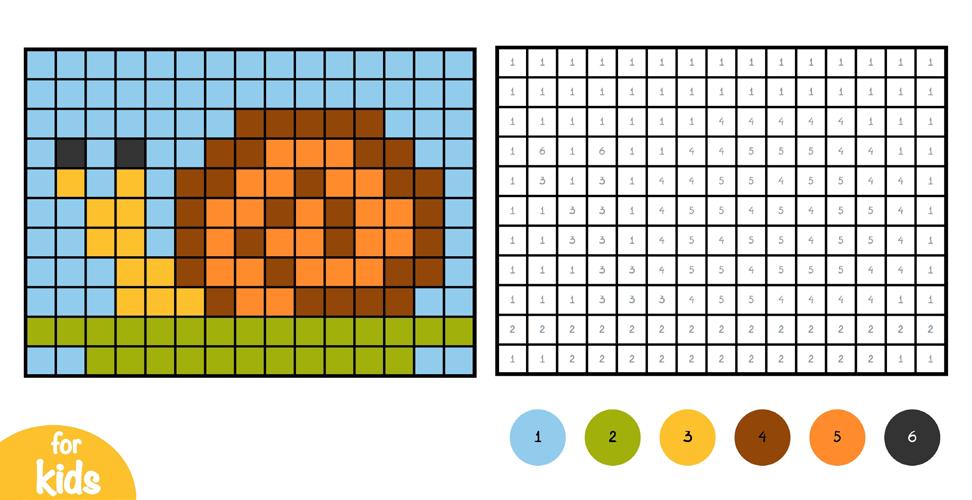
COLOR BY THE NUMBER
UNSCRAMBLE THE FOLLOWING WORDS RELATED TO SUMMER CAMP
Kefta Kebab Veggie Platter
By Jamie Geller
This colorful barbecue dish is the ultimate crowd pleaser with it’s incredible color, layout and powerful flavors!
For the meat, we used a traditional Turkish recipe incorporating sumac and hot red chili peppers. We combined lean beef with lamb to keep it healthier.
Ingredients
• 1 pound ground lamb
• 1 pound ground lean beef
• ½ onion minced
• 3 cloves garlic crushed
• 2 teaspoons cumin
• 2 teaspoons Jamie Geller Sumac
• ½ teaspoon salt
• ½ teaspoon pepper
• ½ cup chopped parsley
• ½ teaspoon crushed red chili peppers
• 2 red onions quartered
• 1 zucchini sliced
• 6 baby carrots
• 1 bunch asparagus
• 10 cherry tomatoes
• 10 mini peppers
Preparation
1. Get your grill nice and hot.
2. In a large bowl, mix the lamb, lean beef, onion, garlic, cumin, sumac, salt, pepper, parsley and chili pepper.
3. Remove a handful of the mixture and form the kebabs on skewers. If you don’t have skewers, form the kebabs into round patties, about half the diameter of a typical hamburger, although a bit thicker.
4. Grill the meat and veggies to your desired done-ness.
5. Build the platter by scattering the veggies evenly and placing the kebabs on top. With so many colors, it looks beautiful.
Jamie Geller is the Chief Media and Marketing Officer at Aish. She is also a bestselling cookbook author, celebrity chef, television producer, and businesswoman. She’s the author of eight cookbooks and the founder of Kosher Media Network.
What Happens If Your Most Important Employee Doesn’t Show Up Tomorrow?
By Glen R. Golish
Over the past two weeks, we have discussed some of the most important questions every business owner should ask. We talked about succession planning, business valuation, key employees and the importance of building a coordinated strategy for the future.
This week, let’s focus on a question that many business owners avoid:
What would happen if your most important employee suddenly became disabled, passed away or was no longer able to work?
For many businesses, the answer is uncomfortable.
While owners often insure buildings, equipment and inventory, they frequently overlook the people who make the business successful in the first place.
Every Business Has a Key Person
A key person is someone whose knowledge, relationships, leadership or expertise is critical to the company’s success.
It may be the founder. It may be a top salesperson.
It may be a partner, executive, project manager or family member who has spent decades building client relationships.
If that individual disappeared tomorrow, how much revenue would be affected?
How long would it take to replace them?
How much would it cost?
For many companies, the financial impact can be substantial.
The Hidden Risk
Most business owners understand the importance of protecting physical assets. Yet the loss of a key employee often creates a much larger financial disruption.
Clients may leave.
Projects may be delayed. Revenue may decline.
Recruiting and training a replacement can take months or even years.
In some cases, lenders, vendors or investors may become concerned about the future stability of the business.
The question is not whether a
key employee is valuable.
The question is whether the business is prepared if something happens to them.
How Key Person Insurance Works
Key person life insurance is designed to help protect a business from the financial consequences of losing a critical employee.
The business owns the policy, pays the premiums and is generally the beneficiary.
If the insured employee passes away, the death benefit provides immediate liquidity to the company.
Those funds can help:
• Replace lost revenue
• Recruit and train a successor
• Reassure lenders and creditors
• Support ongoing operations
• Protect the value of the business
In many cases, the liquidity created by key person insurance gives business owners time to make thoughtful decisions instead of rushed ones.
Planning for Stability
In Jewish tradition, we often speak about hachana preparation.
The strongest businesses are not those that assume everything will go according to plan. They are the ones that prepare for uncertainty before it arrives.
Key person insurance is not about expecting the worst.
It is about protecting what has been built.
A Final Thought
Many businesses have one or two individuals whose absence would create immediate challenges.
If your business depends heavily on certain people, it may be time to ask a simple question:
Have you protected the people who make your business successful?
Because while buildings, equipment and technology can often be replaced, relationships, leadership and experience are much harder to recreate.
And sometimes the most valuable asset on a company’s balance sheet isn’t listed on the balance sheet at all.
About the Author:
Glen R. Golish is the Founder and CEO of G Wealth Strategies and a Forbes-recognized Top Financial Security Professional. He works closely with families on comprehensive financial and estate planning, including cross-border considerations for those navigating U.S. and Israeli planning needs.
Important Disclaimer: Please seek qualified legal and tax advice before implementing any planning strategies, in conjunction with guidance from G Wealth Strategies.
Contact Information:
3010 N. Military Trail, Suite 318, Boca Raton, FL 33431 Office: 561-869-4600 | Cell: 561-239-9400 | www.gwealthstrategies.com
A client of mine was closing on an investment property, and we needed one final document from his insurance agent to be cleared for closing. It was nothing complicated, just a rider for renters’ loss coverage, which is very common. We asked for it on a Monday, and the broker said, “No problem, I’ll get it over.” Monday passed. So did Tuesday. By the time Friday arrived, the interest rate lock had expired, and the client had to pay for an extension. The paperwork was eventually delivered, but by then the damage was done. Thankfully, and appropriately, the insurance agent agreed to pay most of the extension fee, but it really didn’t have to get there. What should have been a simple request became an unnecessary expense. Almost everything we avoid charges interest. An important task does not sit quietly while we ignore it. It grows. The small bill we don’t address becomes a late fee. The unanswered email we don’t respond to becomes an apology. The uncomfortable conversation we don’t have becomes friction. The extra pound you don’t deal with today becomes the ten pounds you’re fighting next year. We tell ourselves that we are waiting for the right moment, the right mood, or the right approach. In reality, most of the time, we are just stalling, which is really borrowing temporary comfort from the future. And the future always collects… with interest.
This is true with money in the obvious sense. When you carry credit card balances, finance things you cannot afford, or keep snoozing bad financial habits instead of fixing them, you are paying for yesterday’s poor decisions again and again. Interest becomes the penalty for not
By Shmuel Shayowitz
dealing with reality sooner. (And while I am on the topic, for those with high credit card balances, please visit my friends and the hard-working team at www.kosherdebthelp.com)
Conversely, when money is positioned properly, interest can work for you instead of against you. Cash sitting idle may feel safe, but inflation quietly eats away at it. Disciplined investors understand that money should have a job. That might mean real estate, the stock market, or even leveraging it in other creative opportunities or ventures. Doing nothing is not always prudent. Sometimes doing nothing is just avoidance with a justification attached to it.
The same principle applies spiritually. There are certain issues in life that keep coming back to us. The same interaction. The same bad habit. The same relationship issue. We sometimes wonder why we keep facing the same challenge, but we are missing the point. For our own benefit, God keeps returning the lesson to us until we finally master it. But when we avoid it, it will always come back louder, more intense, and more expensive. And it’s not necessarily a punishment - it’s for our own alignment and character refinement.
There are only two real ways to stop paying a hefty avoidance tax. You either face the matter directly or you delegate it effectively. That could mean partnering with someone, hiring a coach or consultant, or literally paying someone to do it for you. But none of these options is foolproof. Sometimes, handing off something you do not understand can become another form of avoidance. If you have never mastered the process, you cannot define what success looks like, evaluate the result, or catch the problem before
it becomes costly. Good delegation comes after proficiency. Bad delegation is procrastination with an invoice attached.
There is also a practical reason why the hard thing feels so difficult at first. Your brain likes familiar patterns, even when those patterns are hurting you. The first time you make the call, have the conversation, check the numbers, or face the mess, your mind treats it like a threat. But when you do it again, the resistance weakens. Do it repeatedly, and a new pattern forms. That is what people mean when they say, “Choose your hard.” Discipline is hard now. Avoidance makes it much harder later.
So look honestly at where you are paying unnecessary interest. Is it in your debt? Your cash sitting idle? Your business development? Your health? I suggest you pick one place and act today, even imperfectly. Send the message. Make the call. Review the account. Ask for guidance. Move the money from sleep mode to work mode. The goal is not perfection. The goal is to stop letting interest cost you more than it should!
Shmuel Shayowitz (NMLS#19871) is a highly regarded Real Estate & Finance Executive, Writer, Speaker, Coach, and Advisor. He is President and Chief Lending Officer of Approved Funding, a privately held national mortgage banker and direct lender that has facilitated over $3 billion in mortgage funding. Shmuel has over twenty years of industry experience and holds numerous licenses and accreditations, including certified mortgage underwriter, licensed real estate agent, residential review appraiser, and accredited investor, to name a few. Shmuel has successfully navigated through many changing markets and business landscapes, making his market insights and experience well-coveted within the real estate industry. He can be reached via email at Shmuel@ approvedfunding.com.